Author: Alistair Nunn

Mission: Impossible 2 (2000)

Tom Cruise joins forces with his ego to take on Mission: Impossible 2

Director: John Woo

Cast: Tom Cruise (Ethan Hunt), Thandie Newton (Nyah Nordoff-Hall), Ving Rhames (Luther Stickell), Dougray Scott (Sean Ambrose), Brendan Gleeson (John C McCloy), Anthony Hopkins (Mission Commander Swanbeck), Richard Roxburgh (Hugh Stamp), John Polson (Billy Baird), Radé Sherbedgia (Dr Nekhorvich), William Mapother (Wallis), Dominic Purcell (Ulrich)

Okay. I love this franchise. Always have. But every franchise has its misfire right? Its Phantom Menace? Ladies and gentlemen: welcome to this total turkey. Can you believe this was the biggest box office hit of 2000? Has anyone watched it since then? Did anyone like it even then?

Anyway, the plot for what it’s worth, plays like Hitchcock’s Notorious if it had been roughly humped after a drunken dinner by The Fast and the Furious. Ethan Hunt (Tom Cruise) has to recruit the bizarrely named Nyah Nordeff-Hall (Thandie Newton), a society catburgler and sort of hot Raffles. Why? Well of course her ex-boyfriend and rogue MIF agent Sean Ambrose (Dougray Scott) has pinched a deadly virus and we need her to get back into his bed and trust to find out more so MIF can pinch it back before it hits the market. She’ll be ready to deceive a man though because “she’s a woman, she has all the training she needs” – or so says Anthony Hopkins’ half-asleep Mission Commander. 

Mission: Impossible 2barely has a plot though. Rarely has a film looked more like a story loosely written around some pre-determined action set-pieces. Much as I like Tom Cruise, no film looks more like a cocky vanity project than this one. The camera lingers on Cruise’s chiselled torso and general macho physicality like a lovestruck teenager. Remember when the MIF was a team organisation? Not anymore. Cruise is now a one man army, who barely needs the help of his two sidekicks (the job of one is to press keys on a computer, the other flies a helicopter. That’s it).

So the whole film is about making Cruise look good. From punching, to climbing freestyle up a cliff, to flashing the famous grin, to driving cars and bikes really fast, the whole film is blinded by his smile. Poor Thandie Newton and Dougray Scott can only watch as the Cruiser bestrides the film like a colossus, creeping about to find themselves dishonourable graves. Both performers are crushed by the weight of Cruise’s ego and the film’s front-and-centering of it. Newton can barely raise her performance above balsawood. Poor Dougray Scott not only gives an utterly bland performance, but was stuck on the set for so long by production delays he had to pull out of the first X-Men film, giving his role of Wolverine to an unknown West End actor by the name of Hugh Jackman. Ouch.

Perhaps as a reaction to the first film being seen as too confusing (it really isn’t…) the plot is almost laughably simple, verging on pointless. The film homages (rips off) other, way, way better films everywhere you look. So we get flirting-through-racing-fast-cars from GoldenEye. We get the almost the whole plot of Notorious with the woman sent to spy on her former lover by a handler who is now in love with her (the film even has an extended racecourse sequence). “I will find you” Cruise bellows at Nyah at one point like a low rent Last of the Mohicans. It doesn’t help that the film sounds like the writers spent about five minutes on the dialogue: “Damn you’re beautiful” Cruise tells Nyah. Well, be still my beating heart. This shit was penned by the writer of Chinatown for fuck’s sake.

The slight plot could probably be comfortably wrapped up in about an hour, if it wasn’t for the film’s constant (embarrassing) use of slow motion at every conceivable opportunity. I guess it’s meant to add style and depth, but it’s actually crushingly annoying and often gives us laughable moments (none more so than Cruise walking past a flaming doorway in slow motion for no reason). You just want to tell the film to get a bloody move on.

But then that is part of the John Woo style. Hard to believe this style of shooting an action film was once considered cool beyond belief. It looks so pretentiously, artily, self-importantly, thuddingly dull now. There are a huge number of action scenes here but none of them are particularly exciting, and none of them hugely memorable. There is a bit with a bike, a bit with cars, a shoot-out in a base, an infiltration of a big building. Yawn. Perhaps because Ethan Hunt feels less like a human, more like an empathy-free, ego-mad super soldier, it’s hard to care. In every other film, time is invested to make him appear human – here he’s an asshole who forces a woman to give her body for secrets, grins like a lunatic and slaughters people left, right and centre. It’s like he’s been given an arsehole upgrade from the first film (the third film would correct all this). 

The film has no humour whatsoever. It’s po-faced and serious and desperately in love with itself. I keep banging on Cruise, but I think I do blame him. Other than Hopkins, no one in the film can compete with his charisma which feels like a deliberate choice. Every single memorable thing in the film is done by him. No other character is allowed to contribute anything to the resolution of the problem. On top of that every character seems to have a Tom Cruise mask – meaning Tom also gets to play at least three other characters as well. 

John Woo shoots all this with a tedious flashiness that is completely empty. Logic is left lying battered and bruised on the sidewalk. By the time we get to the final resolution, we are desperate for Nyah (who has been used for sex, humiliated and infected with a deadly virus) to tell Cruise to get stuffed. Instead (after watching him gun down a pliant Sean Ambrose, who is never allowed to appear as a worthy adversary) they go on a sun dappled date in Sydney, with Cruise all but turning to the camera to wink. “Don’t you wish you were me?” he seems to be saying. Christ I really don’t.

The Elephant Man (1980)

John Hurt is sublime as the tragic John Merrick in The Elephant Man

Director: David Lynch

Cast: John Hurt (John Merrick), Anthony Hopkins (Dr Frederick Treves), Anne Bancroft (Madge Kendal), John Gielgud (Francis Carr-Gomm), Wendy Huller (Mrs Mothershead), Freddie Jones (Bytes), Dexter Fletcher (Bytes’ boy), Michael Elphick (Jim the porter), Hannah Gordon (Ann Treves), Helen Ryan (Princess Alexandra), John Standing (Dr Fox)

In the late 19th century, society was swept up in the story of a circus show freak, Joseph Merrick (renamed John here, as per Frederick Treves’ memoirs), saved from a life as a circus exhibit by Treves (a doctor at the London Hospital). Treves introduced him into society and formed a close friendship with him. Merrick died young (27) but his life became a sort of byword for struggling for dignity. The Elephant Man follows this journey.

John Hurt plays Merrick, with Anthony Hopkins as Treves, and the film is a pretty accurate reconstruction of the major events of Merrick’s life. The Elephant Man must have seemed like a strange proposition at the time. Produced by Mel Brooks! Directed by bizarro director David Lynch! About a man grotesquely deformed by nature! But what emerges put those doubts to shame, because this is a beautiful and emotional piece of film-making, guaranteed to put a tear in your eye. It’s an extraordinary and moving film, it’s almost impossible not to love.

In a career made up of playing characters who undergo enormous suffering, it’s fitting that one of John Hurt’s most famous performance sees him utterly unrecognisable under a mountain of make-up. (Acting in this was no fun either – Hurt worked alternate days to deal with the discomfort and stress, telling his wife “They’ve finally found a way to make me hate acting”). But what Hurt does here is extraordinary: under this mountain of make-up, the humanity, sweetness and tenderness of Merrick sings out. He’s a character you feel a total empathy for, with Hurt making him almost a gentle child, an innocent who learns to value himself and his own humanity. It’s mesmeric stuff.

Lynch’s film is all about the place Merrick holds in the world – and it’s not sure shy of showing it is one of exploitation and display. Sure, the circus life for Merrick is horrible under Freddie Jones’ freak-masker (Jones is magnificent here, alternating between weaselly, conniving, vulnerable, self-pitying and loathsome). But he’s plucked from this lower-class hell not for reasons of charity or loving care, but (initially) so that Treves can display him at medical conferences.

Even after demonstrating his sensitivity and artistic richness, Merrick is still rammed into a different treadwheel of society curiosity. Paraded before the rich and famous, his freakish appearance combined with his gentle, otherworldly, politeness and kindness becomes a new show in itself – something Treves himself (in a wonderfully played scene of introspection from Hopkins) slowly comes to realise. Alongside this, Merrick is still seen as fair-game by Elphick’s brutish night porter: if the hoi polloi can watch the freak, why can’t he parade him in front of working class customers at night? All this is intensely moving.

Does Merrick even realise that he is (in some ways) still a freak show, even while he collects photos of his new friends? The film is deliberately unclear: although it is clear that the (eventual) genuine friendship of Treves does lead Merrick to value himself as something more. The famous anguished cry (simply brilliantly played by Hurt) of “I am not an animal. I am a human being” after Merrick is chased into a train station bathroom by a crowd of scared and disgusted passengers is goose-bump inducing in both its sadness and its newfound moral force. From this point on, Merrick makes decisions for himself (for good or ill).

Lynch’s film walks a delicate balance around Merrick’s character and how much his life was a question of being exploited. Although the film does at times shoot Merrick with the slow reveal coyness of a monster movie, it never fails to regard him (and almost demand we do the same) with the utmost sympathy. In many ways, it shoots Merrick the same way people first seem him – a sense of shock followed by a growing appreciation that there is much more to see there than you might first suspect. 

That’s what works so well about Lynch’s inspired direction here – this is a sensitive, haunting and poetic film that wrings untold levels of sadness from Merrick’s life. Lynch reins in his more arty leanings very effectively. In fact, once you get over the film’s bizarre opening of Merrick’s mother being attacked (sexually assaulted?) by an elephant, the film relaxes into a classical style mixed with Lynch’s chilling eeriness and his games with time and mood (the timeline is particularly hard to work out in this film), while his sensitive handling of the macabre is perfect for this film’s storyline. While it’s easy to see this as the least “authored” of Lynch’s film, it’s possibly one of his finest and sets the groundwork for some of his later works, exploring humanity in the bizarre.

He’s helped as well by Freddie Francis’ simply beautiful black-and-white photography which brilliantly captures both the grime and the shine of Victorian London, with an inky darkness. Francis also embraces some of Lynch’s expressionistic style, and shoots the film with a real atmospheric sensitivity. It’s about perfect – and Lynch brings the outsider’s view to London that sees the entire city with a brand new eye. 

There are some sublime performances. Anthony Hopkins’ Treves is a masterclass in contrasted desires. He’s the sort of guy who can grab Merrick like a collector, but still shed a tear when he first sees him. Watching him slowly realise that he has used Merrick just as Bytes has done – within the confines of his Victorian paternalism – and grow to love him as a father does his son (feelings of course never expressed in words) is extraordinary. In the less flashy role, Hopkins powers a lot of the feelings of sadness the audience feel. Alongside him, a host of British legends do brilliant work, particularly Gielgud and Hiller as authority figures who slowly reveal themselves to have huge depths of compassion and understanding.

And what you end up with is a marvellous film. Brilliantly made, wonderfully filmed and hugely emotional with powerful, heartfelt performances from Hurt and Hopkins among many others. It’s extremely beautiful, and stirs the emotions wonderfully. You would struggle to get to the end of the film and not feel overcome with the final few moments, its sadness and the sense of regret. It’s possibly the most heartfelt of Lynch’s films – and also the one I enjoy the most.

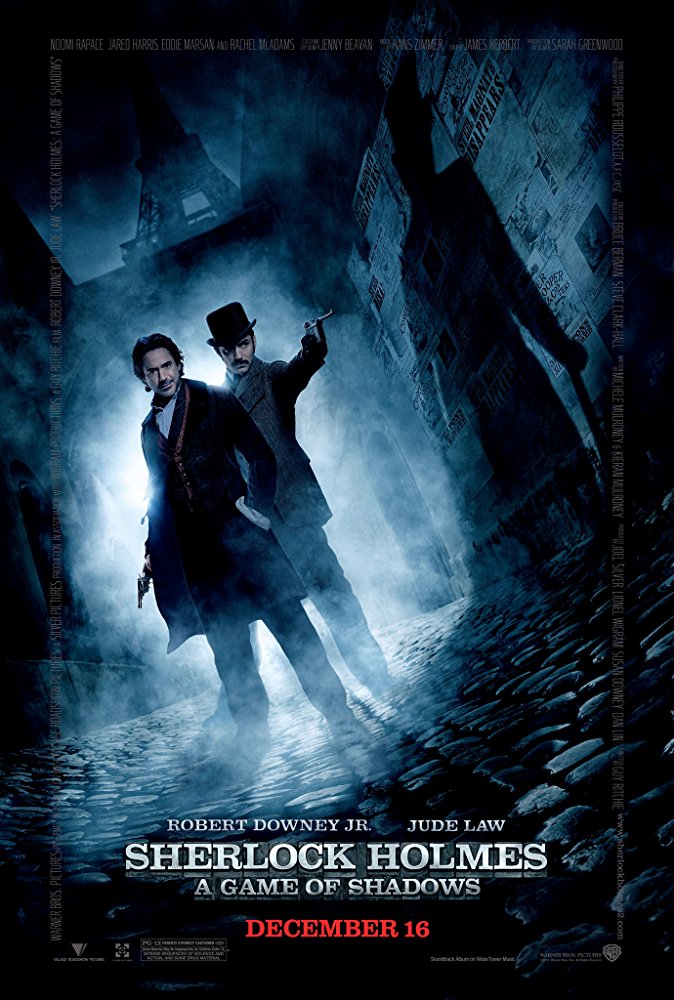
Sherlock Holmes: A Game of Shadows (2011)

Our heroes are on the run in Sherlock Holmes: A Game of Shadows

Director: Guy Richie

Cast: Robert Downey Jnr (Sherlock Holmes), Jude Law (Dr John Watson), Jared Harris (Professor James Moriarty), Noomi Rapace (Madame Simza Heron), Stephen Fry (Mycroft Holmes), Kelly Reilly (Mary Morstan), Rachel McAdams (Irene Adler), Eddie Marsan (Inspector Lestrade), Paul Anderson (Sebastian Moran), Geraldine James (Mrs Hudson), Thierry Neuvic (Claude Ravache)

Sequels are tricky beasts. You need to work out what people liked about the first film and double down on it, while also expanding the story in new and exciting ways. When I first saw Sherlock Holmes: A Game of Shadows in the cinema, I was very sceptical about whether this film managed that. But actually, viewing it a second time around (and almost seven years later), I enjoyed it a lot more than I remembered.

As Watson (Jude Law) prepares for his wedding to Mary Morstan (Kelly Reilly), Sherlock Holmes (Robert Downey Jnr) is consumed into an investigation targeting the “Napoleon of Crime” Professor James Moriarty (Jared Harris). A series of bombings across Europe is being blamed on anarchists – but is it in fact a scheme launched by Moriarty’s military-industrial complex to instigate a world war (from which he can make a profit)? Well what do you think?

Sherlock Holmes: A Game of Shadows doubles down most strongly on the relationship between Holmes and Watson. Recognising that the things from the first film everyone loved was the brotherly banter between these two, the sequel places it front and centre. While the first film felt the need to introduce a traditional love interest for Holmes, this film kills off Irene Adler in the first few minutes (despite this, poor Rachel McAdams has better material here than most of the first film). Instead the true “romantic” relationship of the film is Holmes and Watson, as they banter, bicker and make huge sacrifices to protect each other. 

It’s helped again by Downey Jnr and Law’s excellent performances and their strong chemistry. Saying this, the first half hour of the film thinks it’s funnier than it is, with its intermixing of Watson’s stag night with a series of Downey fights. There is a little too much brashness to it early on, without sufficient grounding in the warmth between the two characters. But once we hit the real action 40 minutes into the film, the balance between comedy, affection and peril is pretty effectively met.

And Ritchie directs some very fine action sequences here. There is an extraordinary sequence of a chase through the forest, which uses an exquisite mixture of hand held cameras, Steadicam, slow motion and half a dozen other tricks to deliver a series of striking and immersive shots. Yes it’s overblown and in-your-face but it works perfectly. The film is crammed with brash, powerful action scenes like this that really strike you between the eyes. 

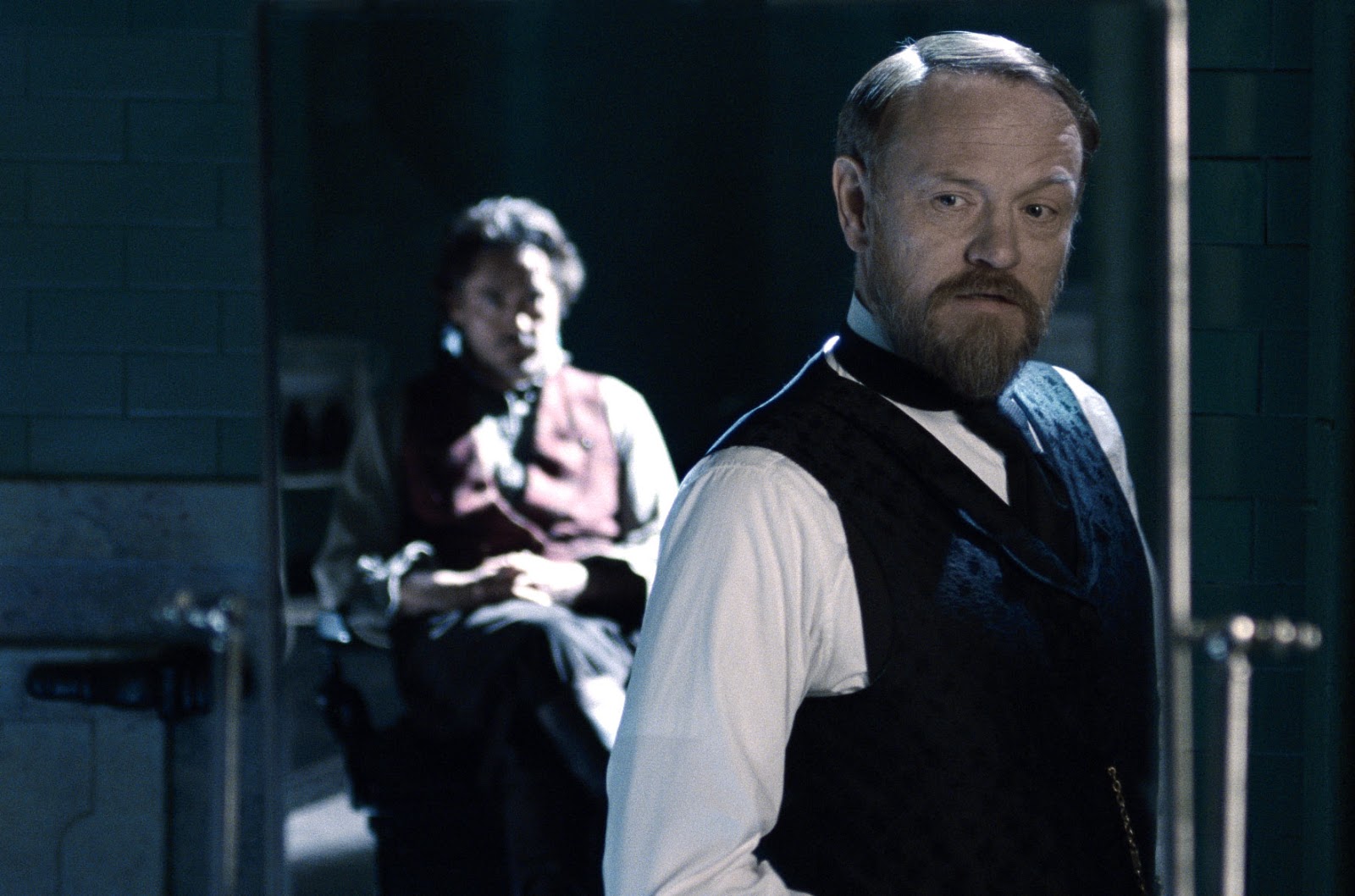
It also still keeps in touch with the original novels in a nice way. Some of the best dialogue scenes are those between Holmes and Jared Harris’ muscular but serpentine Moriarty (Harris is very good, a far stronger villain than the first film). These scenes use dialogue from the original stories extremely effectively. Meanwhile, its build towards its version of the Reichenbach fall is actually very clever, one that twists on the movie’s “calling card” of Holmes predicting every move of a fight before it begins by having Moriarty pull the same trick (which is in itself a neat scene).

Where the film does fall short amidst all this action and explosions and jokes (some good, some bad) is that we don’t get much in the way of investigation or deduction. There is a bit of sleight-of-hand and a touch of pocket picking, but most of the “deductions” are based on highlighting with the camera or dialogue objects that might as well be labelled “Important Plot Device”. Holmes doesn’t so much as investigate here as charge head first from one combat sequence or dangerous situation to another. There isn’t a lot of patience in his method here – and not a lot of patience in the film itself. But then this film is largely based on The Final Problem, probably one of the least “detective” of the stories in the cannon.

But Game of Shadows is very good fun, has some neat action sequences, is well shot and is more or less entertaining, even if some of the comedy suggests it’s a little too pleased with itself. Sure it loses some of the smaller-scale delights of both the books and original film in its rush to make sure you are wowed. But I enjoyed it a lot more the second time round, since I’d watched the original film more recently and was tuned up into what it was trying to do.

Patton (1970)

George C Scott triumphs as Patton in this excellent World War Two biopic

Director: Franklin J Schaffner

Cast: George C Scott (General George S Patton), Karl Malden (General Omar Bradley), Michael Bates (General Bernard Montgomery), Edward Binns (Lt General Walter Bedell Smith), Lawrence Dobkin (Colonel Gaston Bell), John Doucette (General Lucian Truscott), James Edwards (Sgt William Meeks), Frank Latimore (Lt Colonel Henry Davenport), Richard Münch (General Alfred Jodl), Morgan Paull (Captain Richard Jenson), Siegfriend Rauch (Captain Oskar Steiger), Paul Stevens (Lt Colonel Charles Codman), Karl Michael Vogler (Field Marshall Erwin Rommel), Peter Barkworth (Colonel John Welkin)

Patton was garlanded with eight Academy Awards in 1970, but rarely seems to get a mention when people list landmark best pictures. This is unfair, as Patton is a marvellous, intelligent, professional piece of film-making that rewards re-viewing: not least because, in George C Scott, it has one of those performances you simply must see, an extraordinary melding of actor and real man to such a great extent many people can’t believe they are seeing the real thing when watching newsreel footage of the actual Patton.

Patton is nominally a war film, but it’s actually an intriguing character piece. It follows the career of General George S Patton (George C Scott) during the course of the Second World War. Patton was a soldier’s soldier, a dyed-in-the-wool military man with a warrior’s instinct and a poet’s soul. The sort of man who berated men for not wearing proper uniform, then astounded them with thoughtful reflections on classical history. The film charts his command in Africa against Rommel, the invasion with Sicily (and feud with British counterpart Bernard Montgomery), his benching after striking a soldier suffering from shellshock in a military hospital, and his command of the Third Army during the Normandy invasion, including his pivotal role in the Battle of the Bulge.

With a script co-written by Francis Ford Coppola and Edmund North (later president of the Screenwriter’s Guild), Patton was a warts-and-all portrait of one of America’s most famous generals that came out amidst the country’s growing disillusionment with Vietnam. It was embraced by both sides of the argument because it very skilfully walks a tight-rope: for the hawks, there is enough of the “if we had more like him …” stance. For the doves, the film doesn’t shy away from Patton’s egomania, lack of tact and love of war (he even strongly advocates immediately turning on Russia – ‘cos they’ve already got all the men in Europe anyway – which you can interpret as visionary or insane depending on which side of the fence you are on).

At the centre of everything, George C Scott is quite simply a force of nature as Patton – I don’t think it’s an exaggeration to say this is surely one of the greatest Best Actor winning performances ever. Patton is in nearly every scene, and even the one’s he’s not in he’s the subject of every conversation, and Scott totally dominates the movie. You can’t put your finger on it, but he quite simply becomes Patton. It’s extraordinary, but the actor totally disappears and you feel you are watching some remarkable act of resurrection (fitting since Patton had a profound belief in reincarnation).

Scott’s Patton rages, he shouts, he goes into fits of childish egomania – but he’s also sensitive, intelligent and poetic. He can write a touching letter to the bereaved mother of his adjutant, expressing his sorrow, but also write how tragic it is that he will miss the wars to come. Scott is ramrod in his posture, and more than embraces the theatricality of Patton himself – when an adjutant tells the General sometimes his soldiers don’t know if he’s joking or not, the General softly replies “It’s not important for them to know. It’s important for me to know”.

It’s easy to eulogise over Scott at the expense of all else – but the film is so focused on Patton that he is intrinsically linked with the film’s success. The film is episodic, but every scene tells us something different about the man. Although since the film starts with one of the greatest opening scenes in movie history, we feel like we pretty much know him from the start.

It opens with an enormous American flag, in front of which Patton emerges in full dress uniform to encourage new soldiers to do their duty and, most of all, to “remember that no bastard ever won a war by dying for his country. He won it by making the other poor dumb bastard die for his country.” Scott famously refused to do this scene when told it would open the picture, as he felt nothing else in his performance could emerge from its shadow (they eventually told him it would go later in the film – no word on how he responded when he first saw the film!).

In a nut shell you get the whole movie. Is the giant American flag ironic or does the film really mean it? Patton is both strangely terrifying and also awe-inspiring, charisma, determination and force seeping from every pore of his body. Scott nails every detail of this speech, just as he nails every other part of the performance, while the camera work reinforces his mythic status (or his hubris depending on where you stand) as a symbol of Americana.

Schaffner’s direction of the film is easy to overlook, largely because it is refreshingly unflashy. It’s superbly professional –not a single scene falls flat. He marshals each scene with extraordinary effect, and manages the film’s difficult balancing act of sly satire and hagiography brilliantly. He also, within an epic canvas, works very well with actors – there are a host of great cameos in here, not least from Michael Bates as a preening Montgomery and Edward Binns as an exasperated Bedell Smith. Karl Malden is the only other really major character as Patton’s junior (later commanding) officer and he is perfect as the honest professionalism in contrast to Patton’s flash.

And the film gives us plenty of Patton’s flash. The man who loved war and combat, also loved performing – and does so with abundant skill. But the film isn’t afraid to show his warts: in Sicily he threatens to sack a general who refuses to risk his men’s lives on a risky operation, primarily motivated by Patton wanting to reach Messina before Montgomery. Later, when striking the scared soldier, his actions are tough to watch even as part of you sees his point about other men having been wounded in the line of duty (the playing of the soldier as a teary whiner probably doesn’t help). The film never fails to show that Patton’s worst enemy is his own arrogant lack of thought – he constantly shoots his mouth off with no thought for the impact.

The film is brilliantly constructed. The photography is excellent, the editing superbly marshals a long film of many individual scenes into a story that seems a lot tighter and forward moving than it probably is. Schaffner makes us feel we go on a clear journey with this character – helped as well by Jerry Goldsmith’s excellent score that conveys a great deal with ancient mythic weight, playing off Patton’s own belief in resurrection.

Patton is often forgotten a bit – but it is a great film, well made, brilliantly balanced, wonderfully written and directed. And at its centre: what a performance. George C Scott is simply astoundingly brilliant, completely transformed into the old general. His Oscar (which Scott declined, thinking awards phony) was as well-deserved as these things get. A wonderful film, a true epic, and a marvellous character study of an enigma – it deserves to sit near Lawrence of Arabia in the personal epic stakes (to which it has more than a few similarities).

Avengers: Infinity War (2018)

Josh Brolin is hero-villain Thanos in the latest chapter (and it really is a chapter) of the Marvel franchise Avengers: Infinity War

Director: Anthony & Joe Russo

Cast: Robert Downey Jnr (Tony Stark), Chris Hemsworth (Thor), Mark Ruffalo (Bruce Banner), Chris Evans (Steve Rogers), Scarlett Johansson (Natasha Romanoff), Josh Brolin (Thanos), Chris Pratt (Peter Quill), Benedict Cumberbatch (Dr Stephen Strange), Don Cheadle (James Rhodes), Tom Holland (Peter Parker), Chadwick Boseman (T’Challa), Paul Bettany (Vision), Elizabeth Olsen (Wanda Maximoff), Anthony Mackie (Sam Wilson), Sebastian Stan (Bucky Barnes), Tom Hiddleston (Loki), Idris Elba (Heimdall), Peter Dinklage (Eitri), Benedict Wong (Wong), Pom Klementieff (Mantis), Karen Gillan (Nebula), Dave Bautista (Deax), Zoe Saldana (Gamora), Vin Diesel (Groot), Bradley Cooper (Rocket), Gwyneth Paltrow (Pepper Potts), Benecio del Toro (Collector), William Hurt (Thaddeus Ross), Danai Gurira (Okota), Letita Wright (Shuri)

Well this is what it has all been building towards. Or at the very least, this is the start of what it has been building towards, since the film ends on a (slightly underwhelming as soon as you think about it) cliffhanger leadinginto the next film. You never reach the end in these movies – each one, while serving some of the story, is also a jumping-off point for the next one. Marvel’s Cinematic Universe is a triumph of long-form storytelling and juggling characters – but it’s also like a shark moving forward, promising us even more thrills and spills if we tune in next time.

This time the Avengers come together (and overcome inevitable personality clashes) to defeat Thanos (a motion-captured Josh Brolin). Thanos is a lunking purple beast who believes the universe is vastly overpopulated. The solution? Why kill half the universe’s population, so the other half can lead lives of perfect contentment on the remaining resources. How? Well he needs the Infinity Stones, six all-powerful gems that, together, will give him control of time and space. He just needs to wrestle them from their various hiding places.

Avengers: Infinity War has been called less of film and more an episode in a long running TV series. I think that’s fair. This film is in no way designed for anyone new to the saga to step in – half of the expansive cast are not even fully introduced. And actually it’s a good thing: we’re almost 20 films in now into this expanded universe, and if you are one of those critics sniffing that there wasn’t any concession made to the newcomer, well tough. One of the film’s strengths is that it understanding its playing to the galleries of long-established fans. Your enjoyment of the film will only increase the more Marvel films you’ve seen.

Unfortunately this sort of “dive straight in and to hell with the consequences” approach is also the root of the film’s weaknesses. This film’s primary aim is to juggle all its characters successfully, balancing its huge number of events and locations so they remain coherent, throwing in enough set pieces along the way for whoops and cheers. What it manifestly is not for is to tell a story about character or to give us striking visual images.

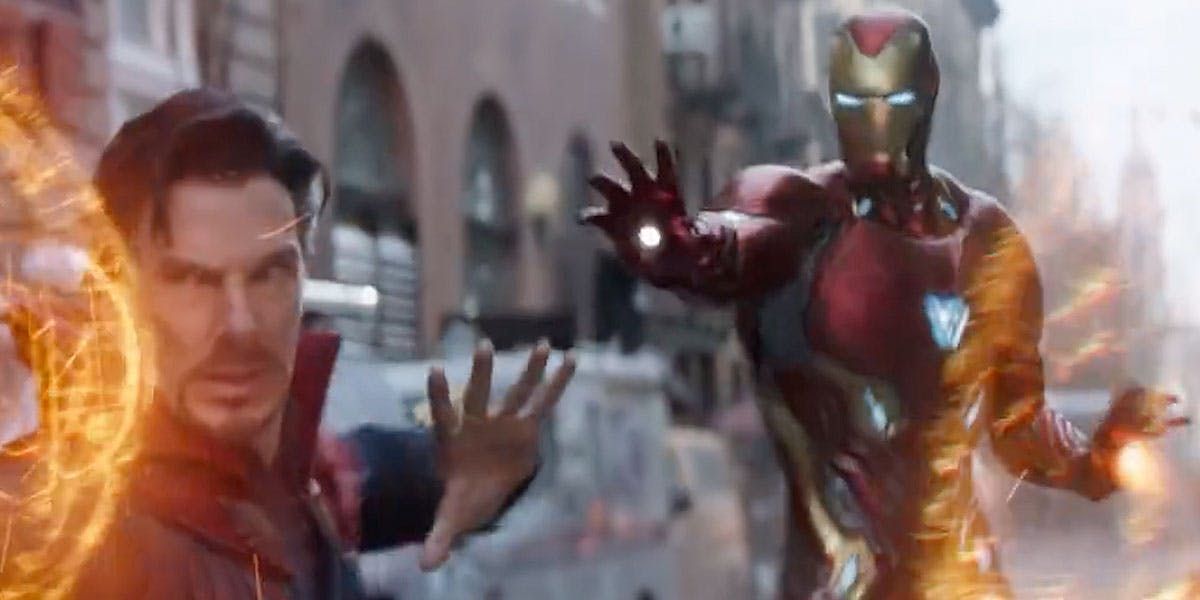
It’s like a mega, mega, mega budget all-action crossover episode of something. The excitement for the viewer is, say, Iron Man and Doctor Strange butting heads or Thor and the Guardians of the Galaxy exchanging comic riffs. It’s not designed for us to learn anything new about these heroes. In fact, the character beats are pretty formulaic. A standard arc generally goes like this: brief individual introduction doing something everyday, a meeting where much plot is quickly exchanged, bickering, a huge battle and some self sacrifice. Repeat. The film does nothing fresh on this formula which Joss Whedon introduced so well in The Avengers. If it ain’t broke, don’t fix it.

The difference with The Avengers was that it felt like a real novelty, and there was a smaller number of characters to bring together (it seems almost timid now to remember the original Avengers gang was only 6-7 strong – it’s almost 20+ now). Each character had more time and we got a much better sense of how their individual personalities affected the other. Here the Russos have to try and deal with the vast number of heroes by effectively breaking them up into 3-4 silos, giving even the most prominent ones probably no more than 20 minutes of screen time.

On top of which, despite the much vaunted “all bets are off” promotion of the movie, the action still has a stakes-free weightlessness to it. Yes some characters die, and while 1-2 of these might well stick, by the end of the film the main question is how many of the deaths will be reversed, not the impact of them. In fact the final sequence (which sees several deaths) slowly carries less and less weight the more you realise these deaths are really serving as a cheeky “how will they get out of that” moment.

Which is the dark secret of Avengers: Infinity War: it’s really nothing more than a trailer for its sequel. At the end of its vast running time – after all the functionally filmed action and odd decent one liner – you realise you have watched an extended prologue for the next film. That’s the one we’ve all been building for. The events of this film, in the long run, are the long road we need to take to get there.

This is not to say the film doesn’t have moments of enjoyment. The spectacle may not be filmed with much more than a derivative traditionalism, but it can’t help but be enjoyable. There isn’t much imagination about the implications of these heroes’ powers, in the way of say X-Men 2, but it’s still impressive to watch. Thor and Captain America get some pretty cool entrances. 

But I got the impression it must have been pretty boring to act in. Most of the vast cast have very little to do except a few one-liners and then punching. The character who most emerges as a three-dimensional figure is Thanos. Josh Brolin’s interpretation of the character as a sort of misguided humanitarian, who feels to do a great right he must do a greater wrong, yearns not for control of the universe but (in a perverse way) to save it. His quest for these stones is built like some sort of Arthurian epic, involving sacrifice and struggle. It would have been easy to make Thanos a sadistic maniac, but making him someone who believes he is doing the right thing is much more interesting. Essentially he’s the main character of the film.

Of the rest those that get the most to do are those with a connection with Thanos. Zoe Saldana as his adopted daughter turned foe Gamora gets some meaty emotional material, as does Chris Pratt as her would-be boyfriend Peter Quill (Pratt is the actor who probably gets the most “actorly” material in the film by far). Paul Bettany as Vision (the robot with an infinity stone in his head) gets to centre a plot that balances self-sacrifice with his love for Wanda Maximoff (Elisabeth Olson pretty good, even if her character oscillates between bad assery and weeping).

For the rest, it’s just their actor’s charisma that carries them through. Robert Downey Jnr gets a touching moment or two (most notably his reaction to another character’s distressed fear on facing death). Benedict Cumberbatch is great value as Strange. Chris Hemsworth gets to continue flexing his comic muscle as Thor. Others like Chris Evans are criminally wasted.

But then their time will come. Because there is another film in the pipeline – and if our heroes still feel slightly like they can survive anything up to and including getting crushed by a moon, it’s because we know that there are still movies to be made, and money for Marvel to take to the bank. And that’s probably the real nemesis of these expansive, bombastic films: the lack of danger is only going to continue while the studio doesn’t want to kill anyone major off. Hopefully that will change, but without it it’s still a film of the invulnerable hitting the inevitable.

Avengers: Infinity War is pretty good – but largely as a spectacle and because it superficially pays off what you were being hyped up to see in its action and character partnerships. But give it a year or so – and repeat viewings – and I think its stock will fall.  Because it doesn’t really do anything that unexpected, and most of its more daring movies are designed with loopholes to undo them. There are enough bright lights to entertain you (and I mostly was) but I don’t think there is much depth for you to swim in when you come back for a second dip.

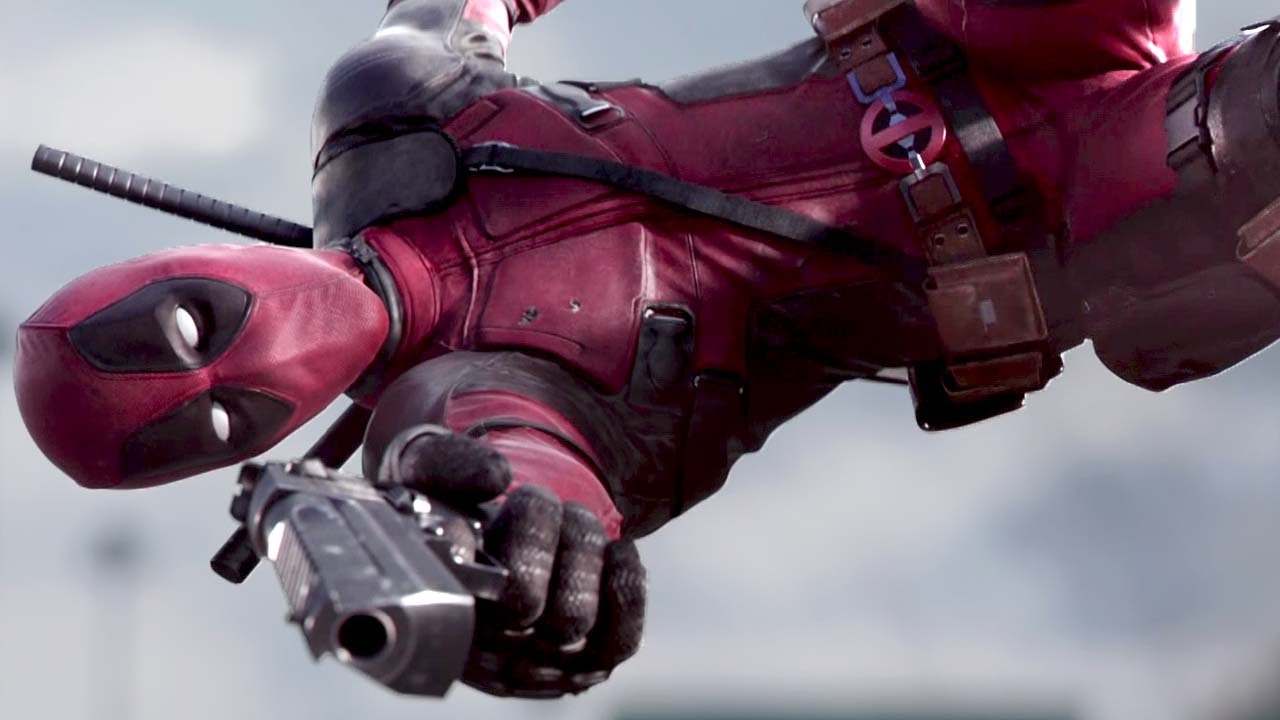
Deadpool (2016)

Ryan Reynold swings into action in slightly-pleased-with-itself comicbook satire Deadpool

Director: Tim Miller

Cast: Ryan Reynolds (Wade Wilson/Deadpool), Morena Baccarin (Vanessa), Ed Skrein (Francis Freeman/Ajax), TJ Miller (Weasel), Gina Carano (Angel Dust), Brianna Hildebrand (Negasonic Teenager Warhead), Stefan Kapičić (Colossus), Leslie Uggams (Blind Al)

One day (soon?) we’ll reach critical mass with comic book films. Eventually, when every single character who’s ever appeared in a frame of a DC or Marvel comic has appeared on the screen, we’ll surely wonder if we will ever see anything new again. Some may already feel this, so perhaps that explains why Deadpool, which, for all its faults, is a comic book film doing something different, made such a big impact.

Wade Wilson (Ryan Reynolds) is a mercenary who meets and falls in love with Vanessa (Morena Baccarin). Discovering he has terminal cancer, he leaves her so she does not have to watch him die, and signs up to a gruesome medical procedure designed to bring out dormant mutant genes that may cure him. It works but leaves him hideously deformed. Wanting revenge, he names himself Deadpool and hunts for a cure to his deformity – scared Vanessa would reject him without it.

What Deadpool does well is wittily flag up the familiar tropes of comic book movies. The film in fact follows each trope to the letter – but at least it has a foul-mouthed cheeky commentary. The big question you have to ask is, can a film really be that smart and different if it basically does something very traditional? If I tell you I’m going to perform a tired magic trick you’ve seen before, but I’ll do it while pointing up every single cliché of delivery, with panache, does it matter the magic trick is still as tired as I said it was at the start?

That’s what Deadpool is – the same old ideas, re-packaged in a different way, so juvenile and cheeky that for a beat or two it feels like something new, which it manifestly isn’t. It might not take itself seriously, but it also doesn’t really develop into something unique. The film opens with a neat comic riff on credits, listing not the actors but their generic character traits (“Love Interest”, “Brit Baddie”, “Comic relief” etc. etc.) – sure this is funny and smart, but doesn’t change the fact that the characters themselves are exactly that. 

Deadpool is a faux-clever film. It’s a cheeky piece of college humour: an X-Men film with swearing, sex, fourth wall breaking and gags about other films. There is a sort of witty enjoyment from Deadpool reminding us he knows he is in a movie. But most of the time, he basically behaves exactly like dozens of other lead characters in dozens of other films: he has an emotional arc of fear of rejection and embracing who he is that you’ve seen so many times before.

But the market is so saturated with films like this that the difference of presentation makes you feel for a moment you are seeing something new or clever – rather than essentially a very high budget, end-of-the-pier routine full of cheeky humour. Much of this is pretty funny by the way, but don’t kid yourself that it’s anything clever. And I don’t really think many of the gags here would stand up to repeated viewing – it’s basically just swearing and shocks. The writing is not great, its punchlines and shock beats giving the illusion of intelligent scripting.

Most of its success (in more ways than one) comes down to Ryan Reynolds. Reynolds campaigned for the film to be made for nearly a decade, and he totally nails the character. He thought up many of the best gags, and delivers the entire thing with whipper-snapper quickness and likeability. He gets the balance generally just right, and lands all the film’s big laughs. He’s very good.

But it’s an elevation of material that plays at being clever, while really just being an effective repackaging of the same-old, same-old. Remove the jokes and everything you would expect from a superhero origins story is present and correct. 

So maybe everyone was a little tired of the same old, same old from Marvel et al and wanted something different. That’s the explanation I can think of for why a pretty average film ended up so damn popular. The action when we get it is pretty good, there is some imagination behind the cameras, but it’s basically a teenager’s idea of the best film, like, ever rather than an actually very good film. It’s not reinventing the wheel, but it puts a nice shiny new tyre on it.

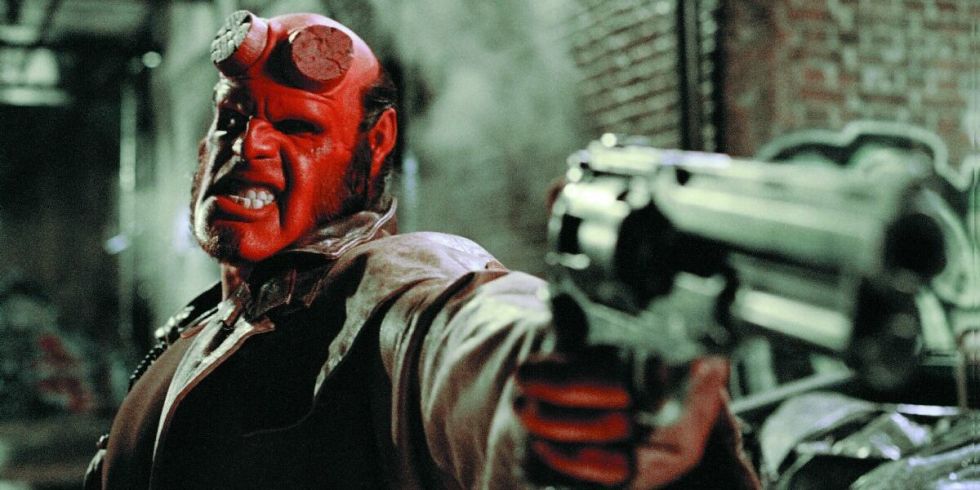
Hellboy (2004)

Ron Perlman fights the darkness in curio del Toro comic book flick Hellboy

Director: Guillermo del Toro

Cast: Ron Perlman (Hellboy), Selma Blair (Liz Sherman), Rupert Evans (John Thaddeus), John Hurt (Dr Trevor Bruttenholm), Karel Roden (Rasputin), Jeffrey Tambor (Tom Manning), Doug Jones (Abe Sapien), Brian Steele (Sammael), Ladislav Beran (Karl Ruprecht Kroenen), Bridget Hodson (Ilsa Haupstein), Corey Johnson (Agent Clay)

As little as 10 years ago, outside a few core characters like Batman, the X-Men or Spiderman, comic book movies were an odd curio hard to place in the mass market. Today of course, you can virtually get any character who has appeared in a cartoon strip up on the screen with a budget of millions. But back in 2004, Guillermo del Toro had to squeeze this project out on a smaller budget in order to get the studio to agree to make the film.

Hellboy has a particularly demented story. In 1945, the Nazis, working in partnership with Rasputin (Karel Roden) – yes thatRasputin, don’t even ask – attempt to open a portal to hell to, well I’m not quite sure what they want to do, but it probably involves the destruction of the world. Anyway, some humble GIs stop them and the only thing that comes through the portal is a little demon with an enormous stone fist. Raised by paranormal expert Dr Trevor Bruttenholm (John Hurt), this creature grows up into cigar-chomping secret-agent-for-the-FBI Hellboy (Ron Perlman), working on paranormal investigations. But when Rasputin returns from the dead it looks like all hell (literally) is about to break out.

Okay it should be pretty clear to you from that that Hellboy is an odd film. It’s very much from del Toro’s B-movie heart, and he invests this nonsense material with a great deal of directorial style and heart – a real “geek-boy-artist” job. Del Toro has a great deal of imagination and is able to strike a happy balance between enjoying the material and not taking it all too seriously. So he lets the film barrel along, throwing plenty of nonsense at the screen without worrying about trying to make it make real-world sense. In fact Del Toro is clearly so fond of the material that he basically shoots the whole thing like a comic book come to life. 

So the film is crammed with bright primary colours mixed with murky blacks, and Del Toro frames many key moments like comic book panels. It’s a film packed with striking images and scenes built around stuff that feels like it should teeter over into ridiculous camp all the time but never quite does. Its steam-punky styling instead manages to feel somehow both strikingly original visually and also strangely packed with integrity – like Del Toro made a very personal big-budget movie for his childhood, the sort of bizarro cult film that’s actually-quite-good and it’s going to win a huge following once people can find it for themselves (which is indeed what happened).

Del Toro’s other great principled stand was to ensure that Ron Perlman played the lead. Hellboy is a bizarre character – over six feet, red, horns, a tail – but what Perlman and Del Toro do so well is to make him some sort of Brooklynish chippy blue-collar worker with a kitchen-sink earthy wit. Perlman is clearly having a whale of a time playing this temperamental demon like some sort of longshoreman Han Solo, a brattish teenager and rebel with a world-weary cynicism. He’s crammed with contradictions (the demon who fights for good!) that Del Toro is keen to explore – and makes consistently interesting.

Because he’s such a different character, he energises a fairly traditional story and his character’s pretty standard personal-struggle-plotline (will he do the right or the wrong thing?). Perlman juggles all this really well, and gives a performance that is both dry and funny but also has moments of real heart and emotion. He even manages to sell his rather possessive love for Selma Blair’s (also pretty good) fellow orphan with pyrotechnical abilities as something heartfelt and caring, despite the fact that at one point he basically stalks her. It’s a rather wonderful performance.

The rest of the cast are a bit more of a mixed bag. Rupert Evans is saddled with the audience surrogate role – asking the questions we can’t ask – while Karel Roden’s lipsmacking performance as Rasputin never quite engages as a villain. Stronger roles come from Jeffrey Tambor as an officious FBI director and especially from John Hurt as Hellboy’s father-figure, the kind of quintessential ageing mentor that you can imagine his wards adoring. 

The rather silly plot doesn’t really matter. The importance here is the gothic chill of Del Toro’s style, mixed with his crazy “larger-than-life” dark comic book tone. And it works really well: the film is fun and witty, and if the storyline never really feels like it earns the “end of the world” threat (and builds towards an uninvolving duking out with a giant CGI monster), there are enough enjoyments along the way to make you want to make the journey.

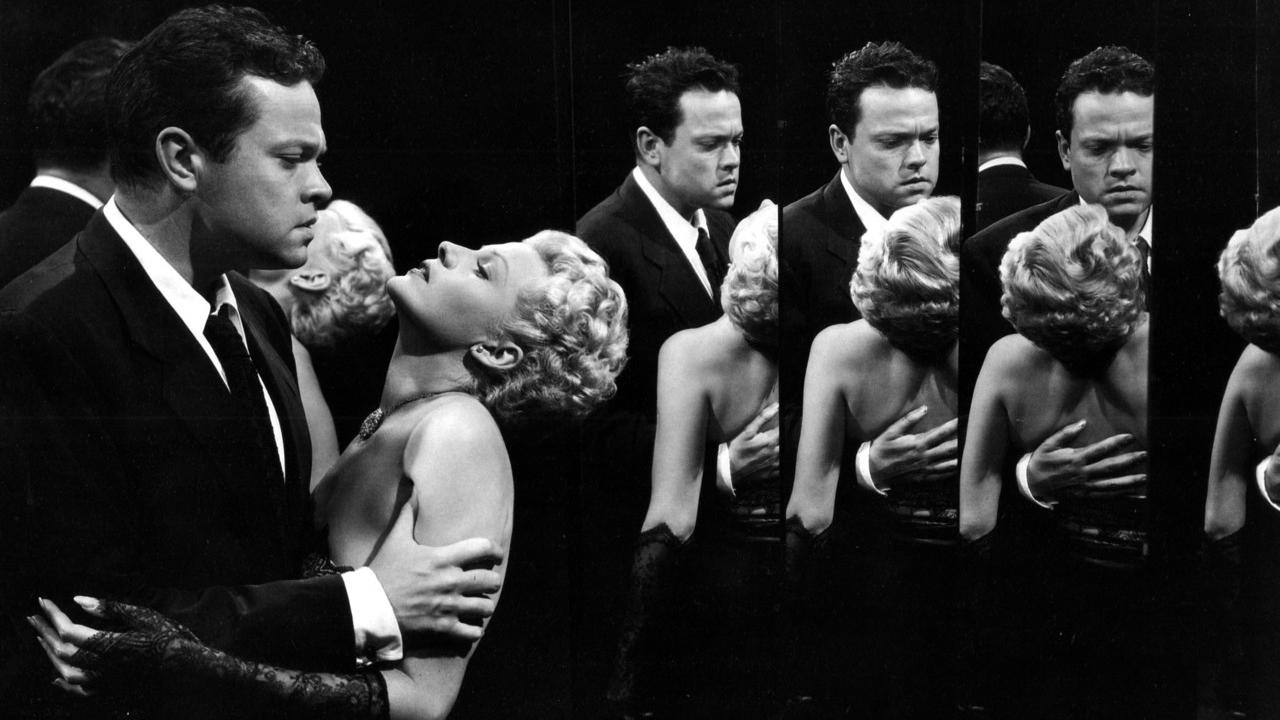
The Lady from Shanghai (1947)

Orson Welles and Rita Hayworth in hall of mirror mystery The Lady from Shanghai

Director: Orson Welles

Cast: Rita Hayworth (Elsa Bannister), Orson Welles (Michael O’Hara), Everett Sloane (Arthur Bannister), Glenn Anders (George Grisby), Ted de Corsia (Sidney Broome), Erskine Schilling (“Goldie” Goldfish), Carl Frank (DA Galloway)

Orson Welles’ career is littered with coulda, woulda, shoulda moments. The Lady from Shanghai is perhaps the most telling lost opportunity in all his extensive CV of recut products and studio interference. Unlike Touch of Evil, there remains no trace of the footage removed from the film by the studio – instead we are left with the remains of the picture that escaped rejigging.

Michael O’Hara (Orson Welles) is an Irish drifter, who saves the glamourous Elsa Bannister (Rita Hayworth) from muggers in a park. Attracted to him (perhaps), as he is to her, she hires him to work on a yacht she and her husband, famed lawyer Arthur Bannister (Everett Sloane), are sailing around the coast. During the voyage, O’Hara is approached by Bannister’s business partner George Grisby (Glenn Anders) with a deadly proposition – and is sucked into a web of cross and double cross.

The Lady from Shanghai is an odd curiosity. At the time it was condemned by critics as a scarcely coherent film noir, struggling to involve the audience in its ins and outs. Today it’s seen more as a missed opportunity classic, which Welles nearly managed to turn into a landmark film before the studio heads recut the entire thing over his head. The reality is probably somewhere in between.

Welles agreed to do the movie for nothing, in return for funding for his stage production of a Cole Porter musical based on Around the World in 80 Days. Stories change depend on who you talk to, but essentially Welles agreed to do the first piece of work that was chucked his way – which happened to be this moderate plot-boiler. Welles shot a lot of the film with an imaginative eye and provided several fascinating set-pieces. But was he really that interested in the film?

It’s hard to say. Certainly it makes you wonder when you look at his rather disengaged performance. Welles (unwisely) takes on an Irish accent and basically feels distracted and bored throughout – as if he felt the whole thing was beneath him. O’Hara becomes a pretty bland character whom it’s impossible to really develop an affinity for. Welles hardly looks cut out for the fighting he’s called on to do – has an actor in a good movie thrown a less convincing punches in a scuffle before?

Because the rest of the film is fairly good, by and large. The plot is almost impossible to follow, but that is partly the point – the growing number of double crosses are designed to feel like we are spiralling down a rabbit hole with O’Hara. But it’s the style it’s told with – brash and exciting camera shots, and an edgy jaggedness in performance and storytelling that alternates with a dreamy sense of unreality. Welles throws this all the wall, but somehow manages to hold it more or less together – perhaps helped by the fact that he treated it like a slightly disposable piece of pulp.

The film’s final act culminates in an extraordinary shoot-out in a hall of mirrors, with characters replicated over and over again in reflection, lines of them appearing as if from nowhere. There is a quirky surrealness about this, with reflections superimposed over each other, or armies of a single character marching towards the camera. Bannister’s walking stick movement, stiff and awkward, also really helps here as he starts to look like a pack of spiders. 

Of course Welles intended this sequence to be almost twice the length, but it was cut down by a bewildered studio. They also insisted that Welles insert a parade of close-ups of characters, in particular of Rita Hayworth, which was exactly contrary to Welles’ intention to use as many distancing long and medium shots. Welles’ original plan for the score was also ditched in favour of a rather flat, dull, traditional score.

But then there are the moments of exotic, heated sex that Welles managed to leave in. As our heroes sail off into the tropics, the bubbling sexual tension between O’Hara and Elsa boils over. It bubbles over into other relationships as well – does every man desire Elsa? Or are there other elements at play? The final offers for murder and money are almost deliberately hard to follow – is it all a summertime madness? As the plot becomes more and more odd, so the film begins to become more bizarre in its setting, finally heading into Chinatown and then an abandoned funfair.

Away from Welles’ weaker turn in the lead, there are some strong performances. Everett Sloane is fantastic as the sinister lawyer, propelling himself forward with walking sticks, his motives impossible to read. Glenn Anders is wonderfully slimy as a creepy lawyer, whose every line has some sort of cackling insinuation. Rita Hayworth brings a sexual charge to the film, mixing manipulation and genuine feeling.

These performances fit neatly into the film, which continues forward with its bamboozling plot. This story never quite engages the audience – and there isn’t quite enough in the film itself that has been left us to be sure that, even with the cut material put back in, it could have been a classic. But there are enough interesting notes in there to keep you watching – and the final sequence is extraordinary and haunting in its extravagant oddness. But I’m still not sure this is a major work – rather it seems to be a curiosity from a great director.

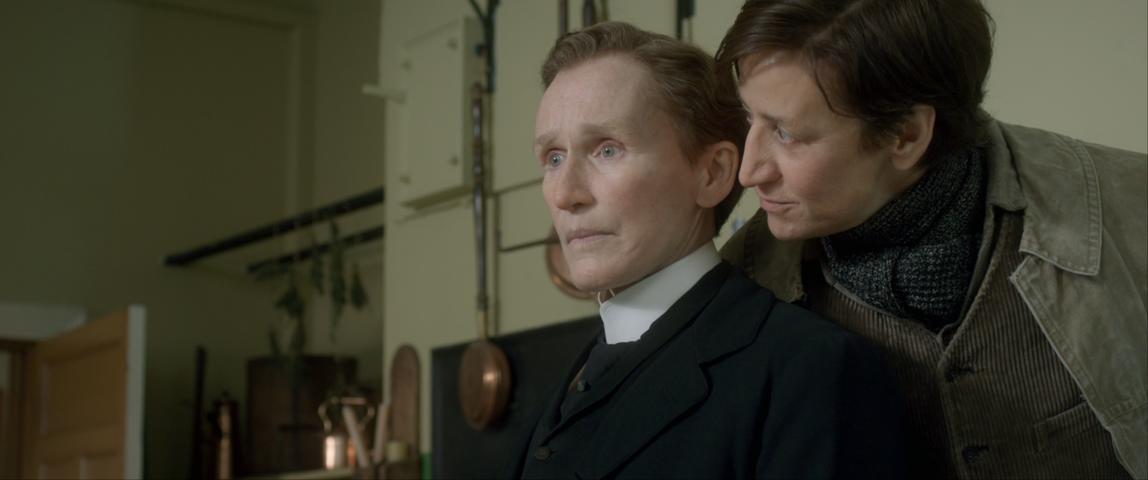
Albert Nobbs (2011)

Glenn Close plays a woman pretending to be a man in the curiously empty Albert Nobbs

Director: Rodrigo Garcia

Cast: Glenn Close (Albert Nobbs), Mia Wasikowska (Helen Dawes), Aaron Taylor-Johnson (Joe Mackins), Janet McTeer (Hubert Page), Pauline Collins (Mrs Baker), Brenda Fricker (Polly), Jonathan Rhys Meyers (Viscount Yarrell), Brendan Gleeson (Dr Holloran), Maria Doyle Kennedy (Mary), Mark Williams (Sean), Bronagh Gallagher (Cathleen Page)

Passion projects are funny things. Everyone has them. And sometimes, when you put them together, other people struggle to see what all the fuss was about. Few films fit that bill more readily than Albert Nobbs. This cross-dressing, Victorian gender curio was something Glenn Close spent decades trying to bring to the screen, after starring in the original play off-Broadway.

Albert Nobbs (Glenn Close) works as a butler at a middling hotel in late 19th-century Dublin. Nobbs keeps himself to himself and saves his tips and wages with the dream of buying his own tobacco shop. Nobbs also has another reason to cling to privacy: Nobbs is actually a woman, masquerading as a man in order to find work. Everyone at the hotel is totally fooled – but his world slowly begins to shift when he meets decorator Hubert Page (Janet McTeer), who similarly is a woman living as man, but who has her own business and a wife and family home. Page’s experiences make Nobbs begin to question this life of isolation – with disastrous consequences.

Albert Nobbs is a carefully filmed, respectful, dry and dull film. It’s nominally a film you might expect to have something to say about gender and sexuality – but its shyness around such matters, its lack of insight, its bashful awkwardness means it already looks like a museum piece. On top of which, most of the characters and situations it covers are frankly not particularly inspiring, dynamic or engaging. There isn’t actually much there to spark your attention.

Which it makes it even more surprising that Close was so drawn to this material. Why? It’s hard to say, as even her performance seems as buttoned up, oblique and distanced as the character she is playing (it doesn’t help that Nobbs is neither an interesting or engaging character, coming across like a person with an ill-formed personality, whom the viewer struggles to understand). You would expect her to have some sort of deep emotional bond with this character – but I’m not sure that really comes across.

The film fundamentally lacks the courage it needs to tackle issues of gender complexity. Nobbs has a troubled background of abuse and rape – but the story never really tackles this, instead using it as a lazy attempt to explain a confused sexuality. The film never really engages with the issue of whether Nobbs likes being a man or feels forced to do to make ends meet. It throws in a curveball scene where Nobbs relaxes on a beach walk wearing women’s clothes. But it never takes any step – even the most tentative ones – of Nobbs laying claim to relating more to being one gender or another. 

Nobbs doesn’t seem to identify as a trans man, a cis-gender woman disguising herself as a man for practical reasons in a patriarchal world, or as someone trying to live outside traditional gender constructs all together. It feels pretty uncomfortable with virtually any formulation along these lines, so avoids exploring any of them. It wants Nobbs to feel comfortable in women’s clothes, but also wants to admire Nobbs for living as a man, while also suggesting Nobbs is trapped by society. It’s a confused film.

In any case, the more time you spend with Nobbs the creepier Nobbs seems. It’s unfortunate that a large chunk of the film is given over to Nobbs’ confusingly motivated courtship of Mia Wasikowska’s maid. Throughout, Nobbs is strangely incapable of understanding any sort of emotional link between two people, and here seems unable to comprehend that Helen may have her own emotions and desires that don’t marry with Nobbs’ functional desire for a wife. This pursuit (seemingly to complete the picture of a desired future) creates an image of a stalker rather than someone really seeking a romantic connection. The fact that Helen and her rakish beau plan to swindle Nobbs hardly helps to make these characters likeable either.

Close’s performance doesn’t help with its locked in reverence. So it’s just as well that Janet McTeer bursts into the film with energy, (literally) baring all in seconds and bringing more vibrancy, dynamism and engagement in her scenes than the rest of the film put together. While Nobbs is a rather dull, empty vessel of a person, Page is a lesbian in a loving relationship, escaping marriage by pretending to be a man. That is a story I can get interested in, that can have relevance today: Nobbs’ isn’t. McTeer is excellent, and I wish the film her been about her.

Albert Nobbs is a worthy, but flat film shot with a slow reverence and delivering a story that promises much but completely fails to deliver. Aside from Janet McTeer’s wonderful performance there is very little reason to visit this film. In fact today its avoidance of even engaging with questions of gender and identity actually make it look rather gutless and pointless. A passion project that really makes no real sense.

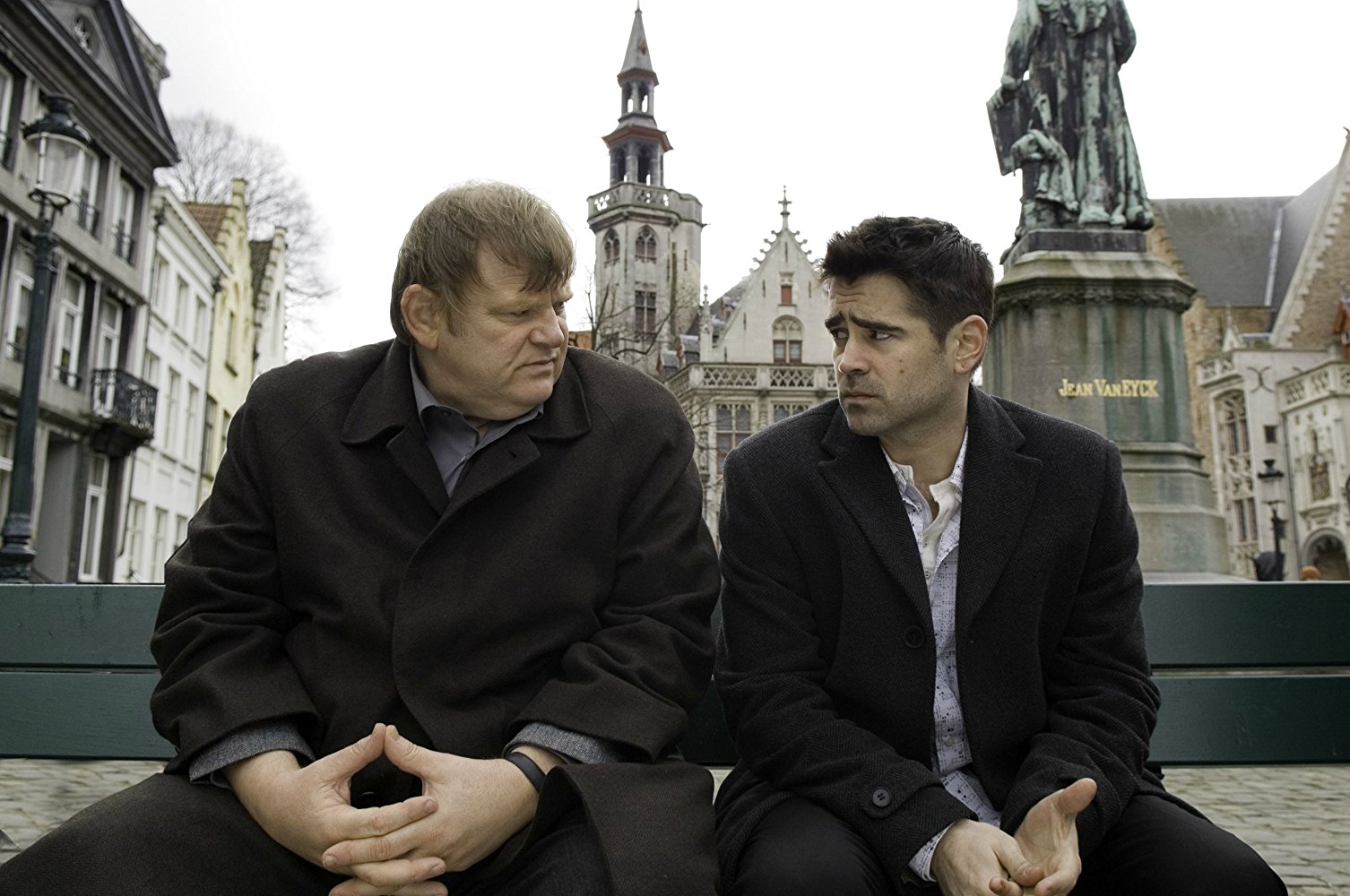
In Bruges (2008)

Brendan Gleeson and Colin Farell excel in hitman comedy In Bruges

Director: Martin McDonagh

Cast: Colin Farrell (Ray), Brendan Gleeson (Ken Daley), Ralph Fiennes (Harry Waters), Clémence Poésy (Chloë Villette), Jordan Prentice (Jimmy), Thekla Reuten (Marie), Jérémie Renier (Elrik), Anna Madeley (Denise), Elizabeth Berrington (Natalie Walters), Eric Godon (Yuri), Željiko Ivanek (Canadian)

Who hasn’t been dragged somewhere for sightseeing and culture, and longed to be somewhere else (anywhere else?). Most of us right? So how many of us are hitmen hiding out after a job gone wrong? Probably not that many (I hope!). It’s this mixture of the everyday and the bizarre that Martin McDonagh nails so well in his debut film, a sharp as nails, laugh-out-loud but also moving piece of work, possibly one of the sharpest written, well-made debut films you’ll find.

Ray (Colin Farrell) and Ken (Brendan Gleeson) have been sent to Bruges to hide out for a few weeks after a job gone horribly wrong in Dublin. Ken is fascinated by the city, its culture and buildings and enthusiastically buys a guide book. Ray responds like a surly, miserable kid and is desperately unimpressed with everything he sees. Their long weekend in the city becomes increasingly unusual and dangerous as they encounter angry tourists, a racist dwarf (Jordan Prentice) and a drug-dealing film assistant (Clémence Poésy), and dodge the rage of their boss Harry Waters (Ralph Fiennes).

In Bruges is a hilarious piece of film-making, with every scene featuring some moment of black humour, wry observation or un-PC laugh-out-loud comedy. It’s foul-mouthed, sometimes violent, very rude – but also deals with profound feelings of guilt and regret with a real humanity. McDonagh’s work expertly combines jet black comedy, with a warmth for its deeply flawed characters. It’s got a compelling, masterful story that packs character development, incident and intricate plot threads together with assured expertise.

McDonagh’s gift is to make you relate for all of these characters, all of whom are made to feel very real and human. It skilfully leads you to overlook their many flaws and embrace them as people. It says a lot that the most sympathetic, likeable person in the film is a multiple murderer with an (implied) cocaine habit. Everything we learn or see about the characters is designed to make us understand and relate to them more.

Ray initially seems little more than a foul-mouthed thug. But as the film progress – and thanks to Colin Farrell’s masterful performance of brashness covering deep insecurity and vulnerability – we learn he is a rather sweet, even loving man who has stumbled into a career he is deeply unsuited to. Farrell gets these switches perfectly – and his childishness is hugely endearing. From stropping around like a sulky teenager to bouncing up to a film shoot with a childish, excited shriek of joy, he defies expectations. McDonagh throws in a perfect note of tragedy once we find out the mistake Ray made – and suddenly Farrell’s performance overflows with guilt, self-loathing and an unbearable regret that makes you re-evaluate everything you’ve seen him do.

But then that is the whole film right there: it makes you laugh uproariously, then chucks you a curveball and before you know it you are hugely emotionally invested, with a huge sense of empathy for their slowly revealed depths. That goes for every character – even the nominal villains have a sadness, or a firm set of principles, or a certain dignity to them that makes you care. It’s a brilliant piece of writing and directing – and masterfully acted.

Brendan Gleeson plays the other lead in Ken: and few other actors could surely have managed to turn Ken into such a warm avuncular figure, a gentle giant who feels he has come to terms with his choice of career but experiences a subtle shift over the course of the film. Gleeson’s performance is sublime, warm and witty with a careful thread of sadness underneath it – it’s some of his best work. 

But then the whole cast is great. Prentice’s bitterness as the angry Jimmy is brilliant – and he is very funny – while Poésy’s gentle bad-girl is a terrific, radiant performance. The film also has third act dynamite with Ralph Fiennes’ Harry Waters, a foul-mouthed, furiously angry, tour-de-force character who shakes up the whole film – but who has a strange sense of nobility about him, even while he is (hilariously) effing and blinding left, right and centre.

And the film has a brilliantly anti-PC vein of humour. Jokes about drug-taking and dwarves. Foul-mouthed gags about every subject under the sun. Brilliant encounters with “large” American tourists (brilliantly paid off later in the film), jobsworth ticket sellers, angry tourists in restaurants – the film is crammed with hilarious moments. All of it is brilliantly funny because it comes naturally out of characters who feel real.

It’s also so thematically rich. As the characters stand in front of Hieronymus Bosch’s The Last Judgement, you realise that the entire film is a metaphor for purgatory, with Bruges’ medieval beauty carefully chosen to reflect this. Our heroes, laden down with sins, wait in Bruges for an unspecified length of time to discover where they will head next. Amends have to be paid, sins have to be reconciled – and all these threads come together brilliantly in a final, dream-like sequence that you suddenly realise the whole film has been carefully building towards from the start.

So the film, after a scabrous, brilliantly hilarious, darkly foul-mouthed start, slowly becomes something which (while still hilarious) is also a discussion of morality, principles and guilt. We see characters do things we might never have imagined them doing at the start, some are redeemed, others make principled decisions. And it’s really funny. I’m not sure Colin Farrell or Brendan Gleeson will ever be better than they are here. It’s a brilliant play script turned into a wonderful film. A classic.