Author: Alistair Nunn

Bonnie and Clyde (1967)

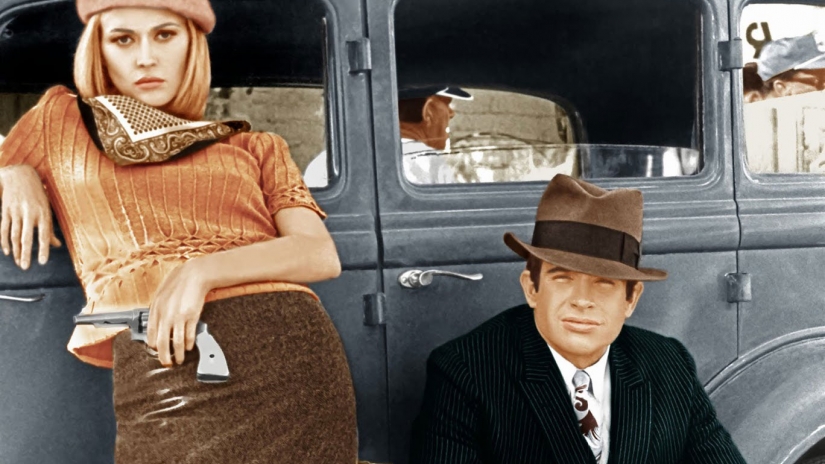
Faye Dunaway and Warren Beatty are the shallow, violent romantics Bonnie and Clyde

Director: Arthur Penn

Cast: Warren Beatty (Clyde Barrow), Faye Dunaway (Bonnie Parker), Michael J Pollard (CW Moss), Gene Hackman (Buck Barrow), Estelle Parsons (Blanche Barrow), Denver Pyle (Marshal Frank Hamer), Dub Taylor (Ivan Moss), Gene Wilder (Eugene Grizzard), Evans Evans (Velma Davis)
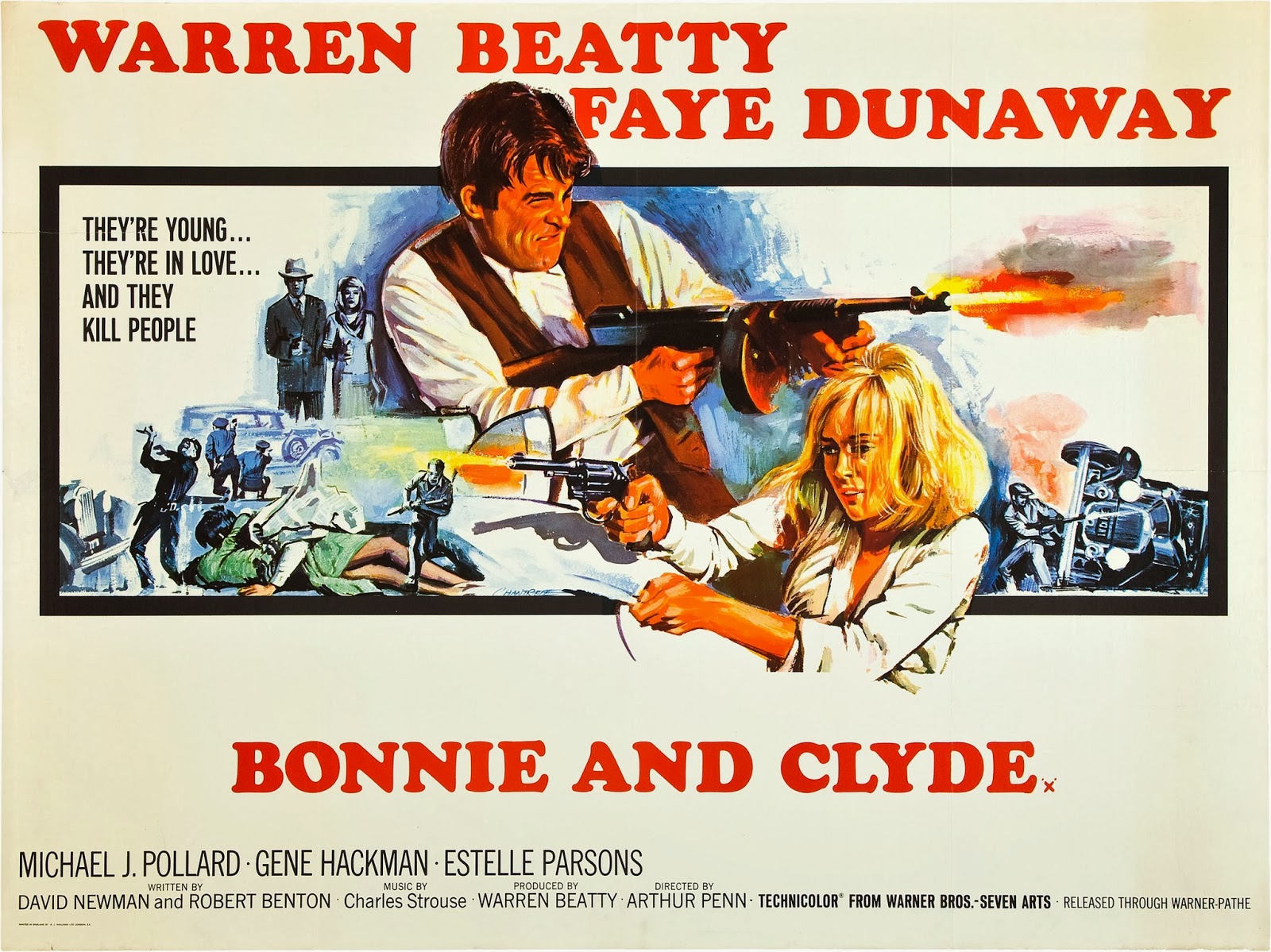
Bonnie and Clyde can lay claim to being one of the most influential American films ever made. It came out of a seismic cultural change in America, as old style Hollywood royalty faded out and a new generation stormed the barricades to make films that felt rougher, rawer and told complex stories in shades of grey. 

Clyde Barrow (Warren Beatty) and Bonnie Parker (Faye Dunaway): drifting youngsters, not interested in accepting a conventional life. They want to go where they please and take what they please. And if some people get hurt – well they can justify that to themselves. As the poster famously said: “They’re young. They’re in love. And they kill people”. In a deliberately disjointed narrative, where time is unclear, the two meet, head out together, commit crimes, stay on the run and are eventually killed by law enforcement. The story is simple – it’s the telling of it that matters.

Bonnie and Clyde latches on to a counter-culture vibe that was growing in strength at the time. But what the film does so brilliantly is subvert this. It invites us to identify to with the romantic, Byronic yearnings of its heroes, who see themselves as free spirits, living a life of idealistic, unconstrained excitement. But the film also has a clear eye on the trail of violence they leave behind them, their lack of regard for this and the impact on the victims. Because make no mistake, these dreamy killers get more and more violent as they go on.

The film turns these two killers into would-be celebrities – guys who want to project a certain image of themselves to the world (down to mailing the papers photos and poems about themselves). They enjoy the notoriety and their self-proclaimed mythology. Clyde walks into banks and gleefully announces he’s with the “Barrow gang”, as if half expecting someone to ask for his autograph. Later in the film, as Clyde reads their press coverage out loud, with CW Moss like a star-struck groupie, the film never forgets the two of them were basically nobodies, who wanted to feel like somebodies.

And it lets you enjoy the romance of this. There is something fairy-tale like in the film about Clyde picking up Bonnie from outside of her home, taking her into town for flirting and robbery. The whole film continues this dreamy logic, with time jumps and scenes that don’t necessarily link up directly with each other. 

But then the violence takes over. Wow is Bonnie and Clyde a film that lets you know about the impact of bullets. Gun shots don’t just maim or wing, they rip bodies apart. The japey feeling of their bank robberies gets dispelled about half an hour into the film when Clyde shoots a bank teller in the head from point blank range (“him or me”, he later tells his brother). The gang are so incompetent, that the film is frequently punctured by shoot-outs in which no mercy is shown to anyone. 

This is of course hard for the gang to reconcile with their self-image as Robin Hoods, so they mostly forget about it. Clyde won’t steal money from ordinary people (though he’ll happily steal cars, or beat a grocery store clerk into a coma). They playfully tease and taunt a captive US Marshal – until he spits in Bonnie’s face at which point violence ensues. Only at points do the gang seem to have the slightest idea of the dangers: after kidnapping Gene Wilder’s nervy car-owner and his fiancé, a happy-go-lucky Evan Evans (both excellent), merry conversations in the car with the gang are suddenly halted when Wilder admits he’s an undertaker – Bonnie immediately demands they are thrown out and the next shot is her weeping in a field. She doesn’t seem to understand the connection, but we can.

The film is superbly put together. Warren Beatty produced the movie practically from its inception. Robert Benton and David Newman’s script was intended as a French New Wave film – evident in its looseness, its lack of old-school values, its violence, its focus on naïve dreamers who choose the easy way out – but Beatty took the script, re-crafted it with Robert Towne (billed as special advisor) and decided the film needed an American director, not a Truffaut or Godard. He brought on board Arthur Penn, and the two worked together (fought together) closely to bring this radical, edgy, jittery, electric film to the screen. 

Penn and Beatty pushed themselves to some of their best work. Beatty is terrific as the vainglorious Clyde – whose determination in crime is matched by his impotence in the sack (the film wisely doesn’t overplay Clyde’s impotence as an ironic theme, but lets the audience draw its own conclusions). He also produced the film expertly. Penn’s direction is sublime, marrying the finest elements of French New Wave cinema with old-style Westerns.

The film is restless and energetic, and intermixes moments of fun and frivolity among the gang with ominous danger and violence. The camera jitters and shakes, while throwing us into the action – the film is masterfully edited – while at other points sailing on like a neutral observer. The film has a neat satiric edge, and Penn uses banjo music masterfully to ironically contrast with much of the action we see on the screen. The characters – all of them – seem to spend so much time talking about their press coverage because they have so little to say to each other. Even the lovers only really seem to find a moment of quiet devotion shortly before their death. It give you violence as entertainment, but also tells you effectively and quietly how appalling and dangerous violence is.

The acting is similarly extraordinary. Beatty is wonderful, as is Dunaway as an impossibly young, romantic Bonnie who adapts with alarming swiftness to killing and robbing. Michael J Pollard is excellent as the slightly simple, eager young car mechanic who hero-worships the couple. Hackman and Parsons are both excellent as Barrow’s older-but-not-wiser brother, and his wife who seesaws between resentment, fear and an imperious delight in her new-found infamy.

Penn’s brilliant film deconstructs the mythology of criminals to show the emptiness underneath, their shallow self-regard and lack of insight. It does this while still managing somehow to remain affectionate towards these two murderous dreamers. Bonnie and Clyde is a sublime modern Western, a commentary on fame, a dissection of violence and a great black comedy. Shot with youthful energy and an influential lack of traditionalism, it’s a film that always feels modern and necessary.
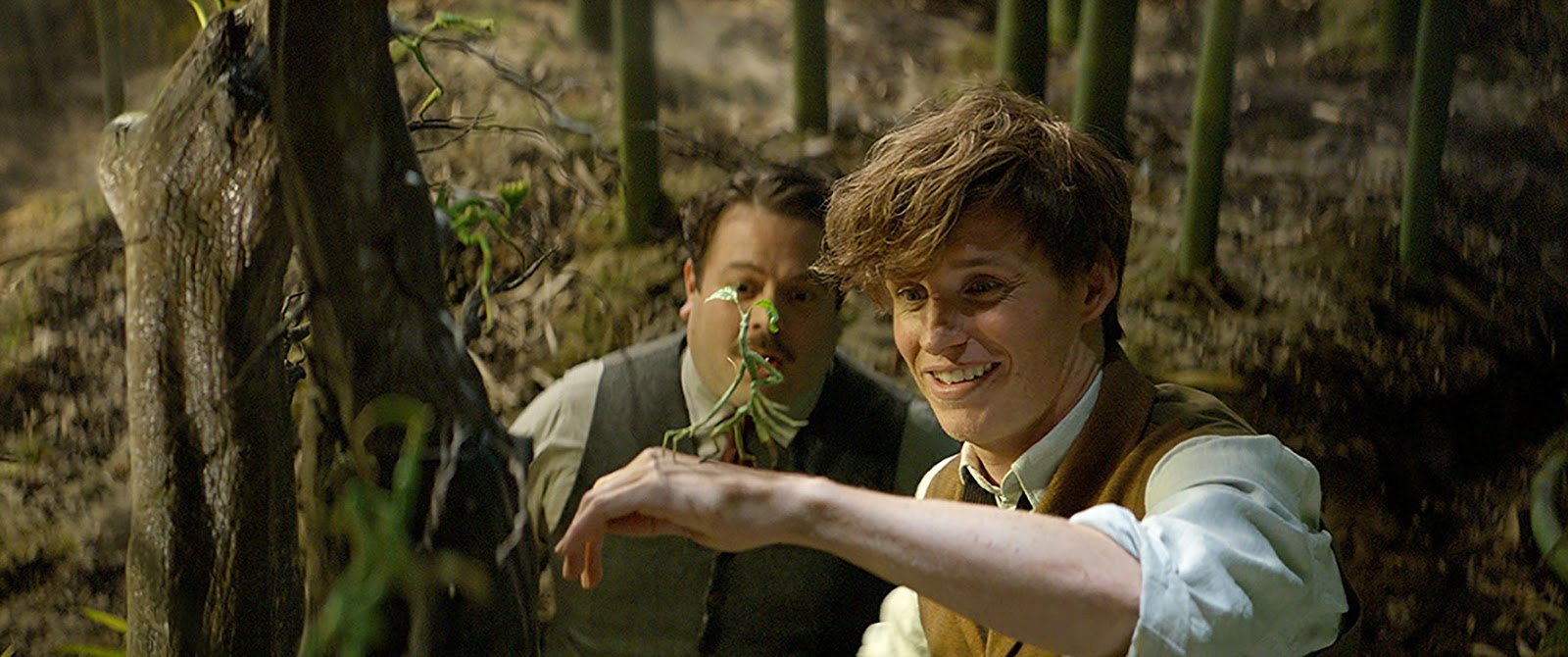
Fantastic Beasts and Where to Find Them (2016)

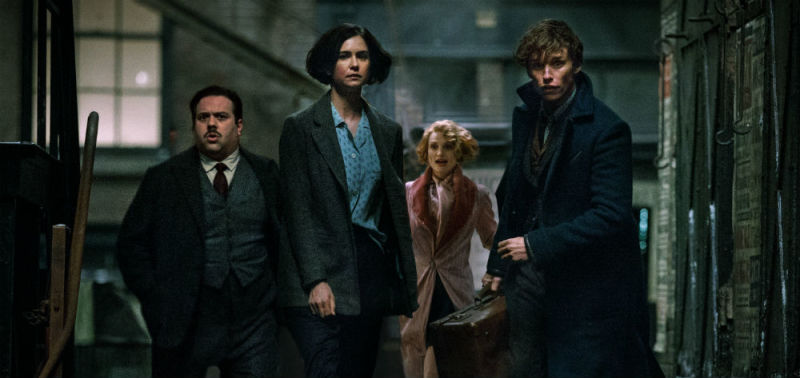
Eddie Redmayne and Dan Fogler uncover some Fantastic Beasts

Director: David Yates

Cast: Eddie Redmayne (Newt Scamander), Katherine Waterston (Tina Goldstein), Dan Fogler (Jacob Kowalski), Alison Sudol (Queenie Goldstein), Colin Farrell (Percival Graves), Ezra Miller (Credence Barebone), Samantha Morton (Mary Lou Barebone), Jon Voight (Henry Shaw Snr), Carmen Ejogo (President Seraphona Picquery), Ron Perlman (Gnarlack), Ronan Raftery (Langdon Shaw), Josh Cowdery (Henry Shaw Jnr), Johnny Depp (Gellert Grindelwald)

Eventually the gravy train had to come to an end. The Harry Potter franchise laid golden eggs for over a decade, until Rowling’s books came to an end. Just as well then that the incomparable JK Rowling had tonnes of invention left up her sleeve, and was keen to look at other elements of the Potterverse. So we got the creation of this sideways prequel, set in the rich backstory of the Harry Potter novels. And it is a bit of a treat.

In the 1920s, Newt Scamander (Eddie Redmayne) arrives in New York with a suitcase full of fantastic beasts. He’s there to return one of them home – but after a mix-up at a bank his suitcase ends up in the hands of muggle (or as the Americans put it “No-Maj”) and would-be baker Jacob Kowalski (Dan Fogler). As the escaped beasts cause chaos, demoted Auror Tina Goldstein (Katherine Waterston) works with Newt and Jacob to try and recapture the creatures, with the aid of Tina’s mind-reading sister Queenie (Alison Sodel). But is all the destruction truly caused by Newt’s creatures? Or are there darker forces at work? 

Fantastic Beasts is a charming spin-off, sustained by some endearing performances, its warm heart and stylish design. Whether the plot is quite strong enough to reward constant viewing as much as many of the Harry Potter films do, I’m not sure (I didn’t find its story particularly gripping the second time around), but I think there are enough incidental pleasures there to keep you coming back for more. It’s actually a film which will be interesting to re-evaluate after the later sequels emerge – there are many suggested threads set up in this one for exploration later.

It’s not a surprise that the initial plot around chasing and collecting the beasts is fairly basic, since it’s based on a slim handbook (itself based on a reference from the original Harry Potter stories) that Rowling published as a Comic Relief fundraiser. Besides the chasing around to capture the animals, it’s only really the backdrop for sight-gags, cute animals and (most importantly) our window for getting to know our leads.

And these leads are certainly well worth getting to know, with a string of excellent performances from the four principals. Redmayne anchors the film very well as the slightly dotty, professorial, socially awkward Newt, whose coy, bashful charm really endears him to the viewer. Dan Fogler is possibly even better as our viewer surrogate, an average New Yorker thrown into a mad world of magic who somehow manages to take it all in his stride and whose growing excitement and embracing of this demented wizard world makes you fall in love with him. He’s helped by a sweet, gentle and touching romance with the effervescent but lonely Queenie (a magnetic Alison Sudol). Katherine Waterston gets the trickiest part as the earnest, try-hard, play-by-the-rules Tina – but her growing fondness for Newt and his creatures works very well.

The moments of the film that focus on the interaction between these four are the finest of the film – as are those that allow us a glimpse of Newt’s wonderful creatures. Housed in a Mary Poppins-ish suitcase of infinite TARDIS-like depth, these beasts are brilliantly designed and wonderfully individual, from a cute mole-like Niffler (naughtily stealing shiny things like a magpie), to a horny Erumpent (like a hippo and rhino mixed), to the majestic Thunderbird, a sort of Eagle-Phoenix, soaring through the plains in Newt’s suitcase. Even the small Bowtruckle Newt carries in his pocket gets to develop a sense of personality. (And yes I had to look all these names up).

These creatures are both individualistic but also used for very specific purposes in the film, from lock-picking to a sort of bizarre self-defence weapon. Despite their horrific appearances, the film treats them with as much understanding sweetness as Newt does – even the dangerous ones are only dangerous when riled or threatened, and Newt’s protective nature helps us to feel as fond of them as he does.

Away from the beasts, the film largely focuses on setting up threads (and threats) for future films. A major sub-plot revolves around an anti-Magical society run by a stern-faced Samantha Morton. The film heads into darker territories here, with its references to both cults and the ill-treatment of children. Ezra Miller does well as Morton’s awkward, ill-treated adopted son, unable to escape from his oppression or express his frustration. Someone in this family is a powerful magical being called an Obscurus, and the film plays a neat game of bluff and double bluff around this.

It continues this game as it fills out the political magical world around Carmen Ejogo’s regal magical President. What game is Colin Farrell’s authoritarian Perceval Graves playing? What of the film’s opening references to dark wizard Grindelwald, and the suggested war that is bubbling under the surface in the magical world? All this darker stuff sits around the edges and margins of Newt’s beast-collecting storyline, occasionally seeping in (let’s not forget at one point Newt and Tina are literally sentenced to death for supposed crimes), but doesn’t overwhelm the lightness.

David Yates directs with a professionalism that comes from being hugely familiar with this world. His later sequences of Obscurus destruction are not always particularly different from other city-smashing scenes from other films. Not every plotline feels fully explored – Jon Voight playing a newspaper mogul and his two contrasting sons seems like a plot we could do without – but Yates does keep the film moving pacily forward, he gets the tone of light slapstick and family warmth and he still shoots the wonder of magic better than almost anyone.

Fantastic Beasts is a film that is perhaps a little too light and frothy to really be a classic – it juggles too many plots and doesn’t always bring them together well. It’s mixture of darkness and lightness is a little eclectic, and it sometimes feel very much like a film designed to set up future films effectively. But when it focuses on its four leads, it’s very strong indeed and all of them – particularly Fogler – are people you want to see more of. It even manages to end the film on both a genuine laugh and a heart-warming bit of romance, tinged with sadness. It’s a fine start to a new franchise.

Three Days of the Condor (1975)

Robert Redford goes on the run in conspiracy thriller Three Days of the Condor

Director: Sydney Pollack

Cast: Robert Redford (Joseph Turner), Faye Dunaway (Kathy Hale), Cliff Robertson (Director Higgins), Max von Sydow (Joubert), John Houseman (Wabash), Addison Powell (Leonard Atwood), Walter McGinn (Sam Barber), Tina Chen (Janice), Michael Kane (SW Wicks), Don McHenry (Dr Lappe)

Three Days of the Condor never leaves you in any doubt that the real villains are those in power – and the possibility of escaping the reach of organisations like the CIA is beyond all of us. Condor is damn well-made though – Pollack’s direction is nearly faultless in its taut claustrophobia – even if the film itself gets a bit lost in its confusing obliqueness.

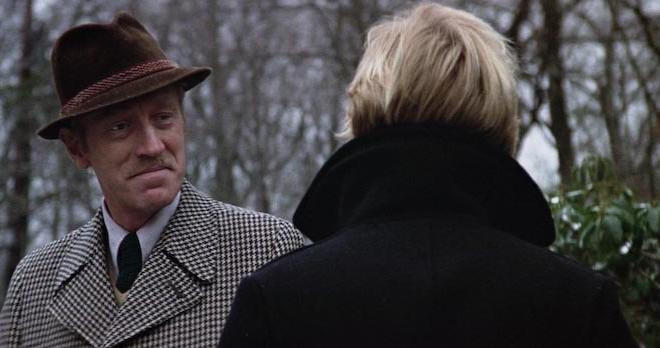
Joseph Turner (Robert Redford) is a quiet, boyish, Robert-Redfordish academic whose job is to read books published all over the world and report back to the CIA any familiarities with any secret operations past or present, or any good ideas from operations. One day, while out fetching lunch for his colleagues, he returns to find they have all been murdered by a hit-team led by a shadowy foreigner (Max von Sydow). Calling in the CIA, he finds he can’t trust anyone – and is forced to hide out by kidnapping a woman, Kathy Hale (Faye Dunaway), whom he bumps into in a shop.

Three Days of the Condor opens with an electric pace. The build-up to the assassination of Turner’s co-workers is extremely tense, while the immediate after effects – and Turner’s lost, confused terror – is brilliantly involving. The stream of conspiracy-laced events, and the unsettling lack of security about who to trust creates a terrific mood of paranoia. Pollack’s editing is tight, and the photography keeps the action naturalistic and eerily involving. It creates an unsettling drama where no one can be trusted. 

It taps perfectly into that 1970s vibe of the state being omniscient and inhumane – Turner’s CIA contact will only talk to him using his code name, shows no human interest in his deceased comrades and only asks if Condor himself is “damaged”. Later Turner chippily asks why a senior agent is addressed by his name, while he is only called Condor. 

Redford is very good as Turner – perfectly convincing as the bookish man thrust into circumstances where he is out of his depth, but whose innate abilities to think fast and adapt allow him to believably keep one step ahead of those pursuing him. The film has a love for the grimy Le Carre-ish detail of espionage, which it mixes well with its James Bondish elements of hitmen, violence and sex. The script has good lines, and several excellent set-pieces that trade in that queasy feeling of being out-of-depth.

The momentum of the first half however eventually gets bogged down in the “working out” of the conspiracy. This is a bit hampered by the early acts of the movie being focused more on atmosphere than on plot build-up. With the exact purpose and function of Redford’s CIA role only really being loosely explained quite late on – and the various inter-relationships of the assorted CIA bigwigs we see also not really being that clear – the final reveal of the wrong uns is murky and doesn’t quite justify the build-up. 

Part of this is the film’s 1970s vibe – its sense that the resolution is, in a way, less important than the downer atmosphere and conspiracy tension – but it’s also a bit of a narrative flaw. It’s hard to invest in a story that never really gets put together or explained properly, and doesn’t really give us a sense of the major stakes at play or the reasons why various characters do what they do. 

Other factors also have dated the film, principally the relationship of Faye Dunaway’s Kathy and Redford’s Turner. Now there is an odd Stockholm syndrome relationship if ever I saw one. From Kathy tearfully fearing rape and assault for most of the first ten minutes of their screen time together – and with no reason to believe the story Turner is peddling – sure enough within a few hours of knowing each other this pair end up in bed together. The film attempts to suggest Turner’s ability to understand her personality (in a way no-one else ever has naturally) through her photographs brings them together –but nevertheless it’s basically a hostage falling into bed with her kidnapper, about 20 seconds after she stopped crying, after he has just released her from being tied up and gagged in her own bathroom. 

I guess it helps when your kidnapper looks like Robert Redford – and the film uses Redford’s innate trustability well – but it’s a little unsettling. Kathy swiftly becomes Turner’s little helper – but you never really get a sense that the she is an actual character, or that the film even really needs her that much. Dunaway is a good actress and plays the part very well – but there is an unsettling submissiveness and even exploitation to her character that dates the movie (not that we have moved past films where female character’s principal role is to have sex with the hero to ease his pain). The best you can say for this character is that she has “pluck”.

It’s dumping Turner down into Kathy’s home where the momentum leaks out of the film slightly. It’s a film that feels like it’s going to be set-up as a chase movie with a spy tinge, but it never really turns into that. On top of which, it takes time away from properly developing Turner’s enemies. His possible CIA opponents, led by Cliff Robertson and John Houseman, don’t really come into focus as characters. The performer who does stand out – largely because of the wry world-weariness he brings to the role – is Max von Sydow as the hitman Joubert, a character I’d happily see more of (where was his spin off?). 

Three Days of the Condor is a well-made triumph of atmosphere – but the later sections of the film don’t quite live up to the build-up, and the film doesn’t quite snap together as much as you would like in the second half. It gets lost in its labyrinthine schemes and then doesn’t have a resolution that seems interesting enough to make satisfying narrative sense.  It’s got some great moments in it, but it’s a flawed film.

Black Narcissus (1947)

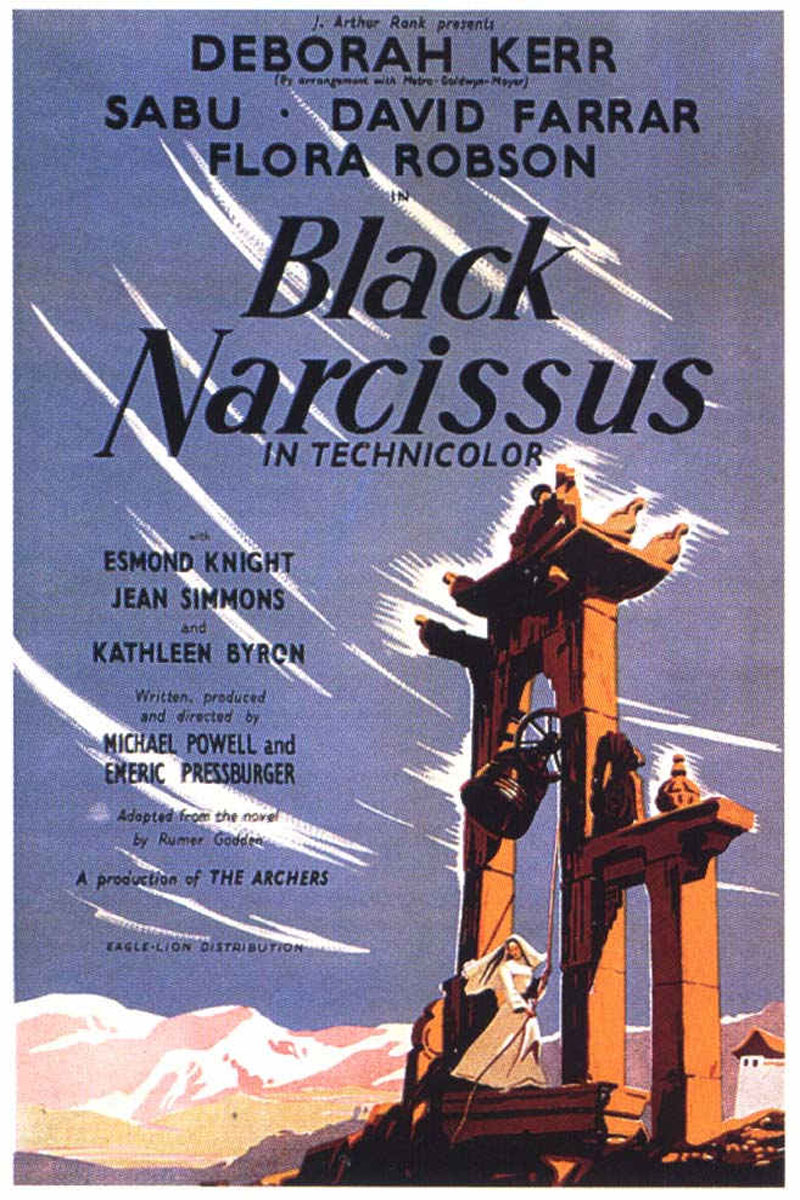
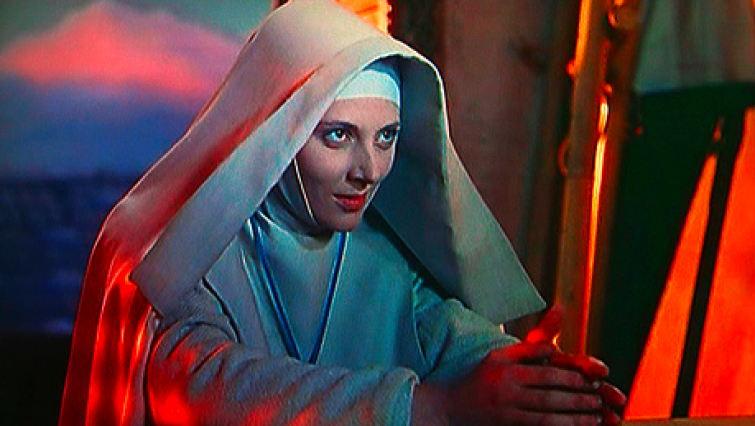
Deborah Kerr leads a community of nuns struggling with temptations in the classic Black Narcissus

Director: Michael Powell, Emeric Pressburger

Cast: Deborah Kerr (Sister Clodagh), Sabu (Young General), David Farrar (Mr Dean), Kathleen Byron (Sister Ruth), Flora Robson (Sister Philippa), Jenny Laird (Sister Honey), Judith Furse (Sister Briony), Esmond Knight (Old General), Jean Simmons (Kanchi), May Hallatt (Angu Ayah)

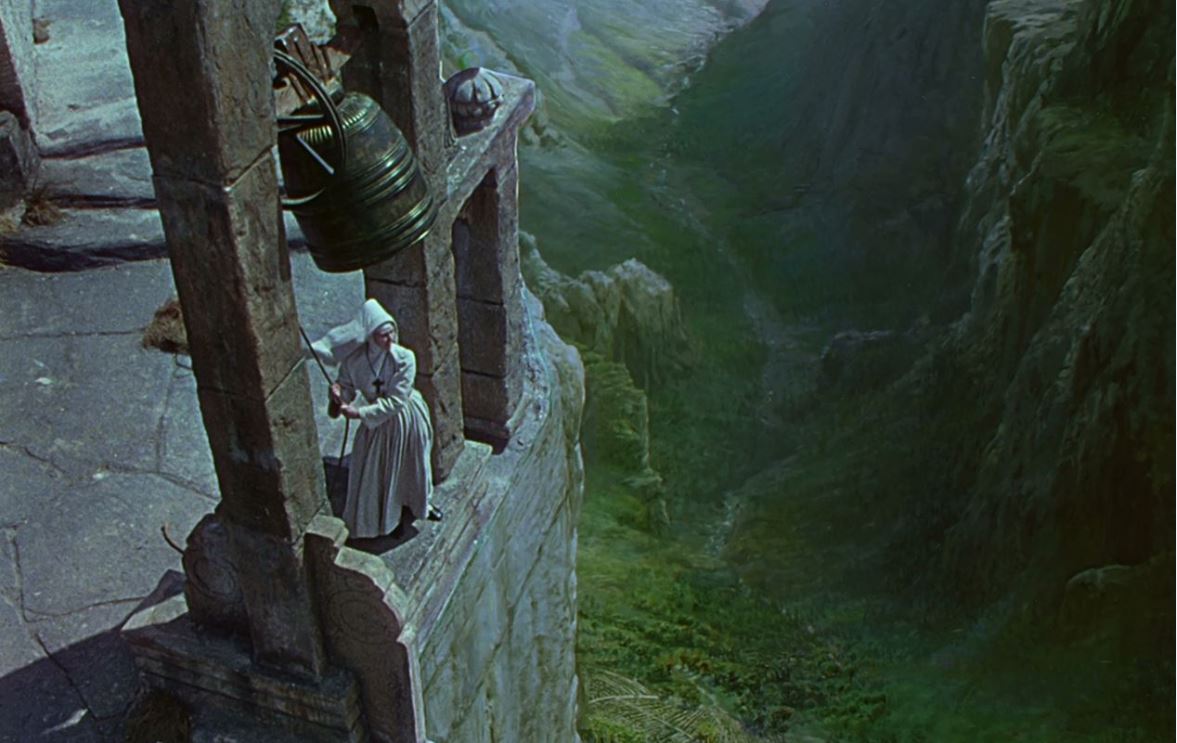
In 1947, people hadn’t seen anything like Black Narcissus. Its triumphant technicolour was like nothing that had been made before – and watching it now on a brand new, shiny restoration, it’s still overwhelmingly impressive. Alongside this beautifully shot action, we have a storyline surprisingly modern in its acute psychology and questioning of the strengths and weaknesses of human nature.

Sister Clodagh (Deborah Kerr) is given leadership of a group of nuns in a remote Himalayan harem building converted into a nunnery. But the isolation of the mountains and the strange atmosphere of the harem bring out weaknesses in the characters of the nuns, leading to profound challenges to their spiritual and mental well-being – not least Sister Ruth (Kathleen Byron), who becomes increasingly pre-occupied with local land captain Mr Dean (David Farrar).

Powell and Pressburger’s film is a brilliant, slightly hard to interpret, psychological gothic drama, a du Maurier-style sexually charged drama set in an exotic Indian location which the nuns struggle to understand. It’s a curious melange of scenes, often moving swiftly, sometimes only with narrow bridge scenes, meaning you soon get as lost in how much time has passed as the nuns themselves. Several key events take place off screen, and the native Indians are curious, unknowable and strangely intimidating in their distance and coolness.

All this is to help build the audience into feeling as unsettled as the characters themselves. It’s a film about the struggles between expression and repression. The two principal nuns – Sisters Clodagh and Ruth – both show elements of this. Both are drawn towards the earthy, manly but still patrician Dean, but both handle these emotions in very different ways – one by denying those feelings, another by trying to embrace them. All of this takes place in a distancing and intoxicating environment, where the convention rules of life seem suspended.

For Sister Clodagh, Dean serves as a bridge back to her own frustrated romantic feelings for an old flame – whose failure to propose guided her towards taking the veil – and elements of her warmer persona (witnessed by us in flashback). But Clodagh resolves never to make herself a slave to these feelings, and these moments of remembrance seem to make her cling all the more to her order – even while the film suggests that it is a strange mixture of pride, insecurity and fear as well as faith that motivates her.

By contrast, Sister Ruth – already acknowledged by the Mother Superior as not an obvious choice for the sisterhood – increasingly loses her grip first on her faith, then sanity, as she struggles with the feelings she clearly has for Dean. This quiet obsession has built up in her mind into representing all the desires for freedom and independence she feels while in the order. Where Clodagh resolves to cling closer to the repression of her feelings, Ruth rejects this very idea and determines to express herself – even as it costs her everything. 

This heated growing madness is powers the film – and Kathleen Byron provides most of the drama with a stunningly unhinged performance, which builds so quietly (almost in the background of the film) that it never becomes wearing and also surprises with the extent of her unhinged delusion. One particular night-time encounter with Clodagh sizzles with rival agendas – one woman using a lipstick, the other using a Bible. 

Powell (and it was Powell who largely directed these Archers pictures) uses a variety of techniques to develop this unease. Several shots are direct POV shots, with the audience becoming one of the characters, giving us the slightly unsettling feeling of being addressed by the actors. Quick tableaux editing gives us economic storytelling and a sense of events building swiftly towards a head (several sequences use a series of quick cuts of characters reacting to events). The camera uses a series of close-ups of sweaty foreheads or dizzying, vertigo inducing shots of the Himalayas to increase the unease. A later shot shows Sister Ruth moving through a shimmeringly filmed jungle, bringing a sense of confused eroticism to the picture.

Sexuality is a major theme of the film – and the characters have a series of acknowledged or unacknowledged sexual interests in each other. The music and camera work develop a sense of heated intensity on the mountain that suggests a simmering heat that unnerves the mind and throws open the temptations of physicality. Old wall paintings from the harem of bare-breasted women seem to be a constant presence – no wonder feelings are running high.

Jack Cardiff’s photography is simply extraordinary – it’s hard to believe none of this was filmed on location and most of it was shot in a studio – and this is still a film today that is hugely beautiful. The production by Alfred Junge is hugely impressive, with the nunnery a triumph of mismatched themes.

It’s not perfect. It’s a bit awkward to see actors blacking up. Some of the acting is quite OTT or stagy – in particular May Hallatt at points – and the film’s occasional delight in its visual appeal means its themes don’t always get the exploration that they deserve. One of the disadvantages of its deliberately vague timeline is that sometimes events happen too soon – or we don’t get enough sense of why they are happening. But these are blemishes.

This is a masterfully made picture, still beautiful to look at with impressive performances from Kerr, Byron, Farrar and many of the rest of the cast. It’s a surprisingly gothic melodrama by the end, with reds splashed across the screen with an imposing sense of threat. Still one that needs to be seen: and the end is so melodramatically gothic considering where the film started that the fact it doesn’t seem hugely jarring is an enormous tribute to the talents of those involved.

Suite Française (2015)

Matthias Schoenaerts and Michelle Williams love across the divide in this disappointing French Occupation epic

Director: Saul Dibb

Cast: Michelle Williams (Lucile Angellier), Kristin Scott Thomas (Madame Angellier), Matthias Schoenaerts (Oberleutnant Bruno van Falk), Sam Riley (Benoit), Ruth Wilson (Madeleine), Margot Robbie (Celine), Lambert Wilson (Viscount de Montmort), Harriet Walter (Viscountess de Montmort), Clare Holman (Marthe), Alexandra Maria Lara (Leah), Tom Schilling (Oberleutnant Kurt Bonnet), Eric Godon (Monsieur Joseph), Deborah Findlay (Madame Joseph)

The story behind the writing of Suite Française is compelling. Living in Nazi-occupied France, Irène Némirovsky began work on a five-novel series, Suite Française, which she intended to depict life in her homeland under German rule. She had only written two of the five books when she was arrested by the Gestapo as a Jew, and tragically died in Auschwitz. The books were written in a small notebook and kept by Némirovsky’s daughter while she moved from hiding place to hiding place evading the Nazis. Sixty years later, donating her mother’s papers to an archive, she deciphered the notebook and discovered the novels. They were published as a single volume to great success in 2004, regarded as an accomplished piece of literary fiction and a remarkable work of contemporary witness. 

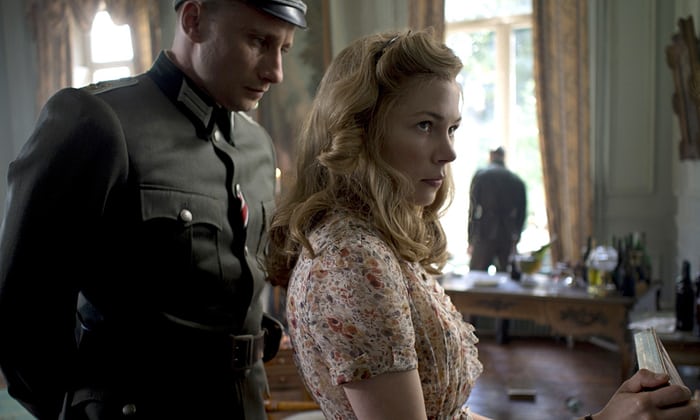
The short summary of the novel’s richness and complexity provided by this film can’t really compete. Based on the second of the two novels, the story takes place in a small French village in 1940. Following the arrival of the Germans, officers are billeted in people’s homes: Lucile Angellier (Michelle Williams) and her mother-in-law (Kristin Scott-Thomas) are assigned sensitive musician Bruno van Falk (Matthias Schoenaerts), while their neighbours, farmers Benoit and Madeleine (Sam Riley and Ruth Wilson), are forced to accommodate bullying officer Kurt Bonnet (Tom Schilling). As hostilities between the French residents and the German occupiers grow, so does the attraction between Lucile and Bruno, but Bonnet’s pursuit of Madeleine threatens to ignite the simmering tensions in the community.

Suite Française manages to turn its promising material into a conventional, chocolate box wartime romance – you can’t help but think that it does a great deal of disservice to the original novel. It’s filmed in an unremarkable style (there are at best 1-2 imaginatively done shots and sequences) and poorly paced. With its short runtime (barely more than an hour and a half), it constantly feels rushed. Quite simply it’s a story about simmering tensions in a confined environment – it needed more time for us to get a sense of the drama building, of the resentments between the Germans and the French growing. Because the film is so short we don’t get that at all.

Most notably, in a film about a romance between a French woman and a German officer, there is no sense at all of the risks that French women who started relationships with German officers were running. Besides a few small throw away lines, there is no sense of the physical danger and the social stigma that would be applied to these women. Instead, the tension of Lucile falling for Bruno seems to be based more on whether her mother-in-law will discover that she’s considering cheating on her (absent, unfaithful) husband. Even Celine the promiscuous farmgirl (a wasted Margot Robbie in a terrible wig) doesn’t seem to be running any risks of reprisals from the villagers when she’s banging a German officer in the woods.

This, however, is where the film’s rushing undermines it. If it had allowed us to develop a sense of the resentment, shame and loathing the occupied French felt for their German oppressors, a feeling of the whole town being willing to close doors on anyone they perceive as being too close to the  Germans, we could have felt a real danger for Lucile in flirting with a dalliance with Bruno. As well as giving the situation a bit of stakes, it would have made it a lot more emotionally engaging too. We could have witnessed her inner conflict at considering a romance with the enemy, and the emerging feelings between them would have had the conflict of a forbidden love. Instead the film rushes us as quickly as it can towards getting Bruno and Lucile into a passionate clinch, at times taking giant unsupported leaps forward in their relationship, so when it arrives it packs no punch.

This passionate clinch undermines the film. If it wasn’t going to take the time to really build the relationship through lingering glances and brief moments, convincingly charting the journey from hostility and suspicion to a forbidden attraction, it should have cut the relationship down to being something that tempts them both but which they cannot express. Have these two recognise a deep bond between them, a bond that in another time would have brought them together but cannot in the time of war. It’s a film where the only physical contact between them should feel like a window on what might have been – not a passionate locking of lips and sexy fondle or two. Think how much more affecting that might have been.

It would also have fit the structure of the film far better. As Lucile finally finds herself having to choose a side – deciding whether to help a renegade hunted by the Germans or not – her decision to sacrifice her chance of love with Bruno might have worked much better. Similarly, Bruno having to revert to the soldier taking responsibility for the growing persecution of the villagers would have been more affecting. (It further doesn’t help that the film doesn’t give time for Williams and Schoenaerts to build up an effective chemistry.) By chucking them into a clinch as soon as it can, the film undermines its message and also manages to make itself feel more like “Mills and Boon in Occupied France” than the serious tragedy it could have been.

When the film finally focuses on the battles between the French and Germans in its final third, it’s much more interesting than the slightly tired romance. Here we get tensions, stakes, drama – and finally a sense of the danger that being in this situation could have. After the rather soft focus romance that comes before, it really seizes the attention.

Williams does a decent job as Lucile, Scott Thomas could play her austere mother-in-law with hidden depths standing on her head (the film fumbles the unexpected alliance between these characters late on). Schoenaerts is a bit wasted in an underwritten role but does good work. The best performances largely come from the second tier: Lambert Wilson is excellent as the local Viscount who wants to try and work with the Germans but quickly finds himself out of his depth. Harriet Walter is similarly strong as his wife, as is Ruth Wilson.

But Suite Française could have been so much better than the movie that it actually becomes. A film that focused on the dangers of occupation and the tensions of a small community would have been great. A film that rushes through a Romeo and Juliet style romance, without building the sense of forbidden love, is a film that just doesn’t work.

Plenty (1985)

Charles Dance and Meryl Streep endure marital misery in the bleak, oblique and uninvolving David Hare drama Plenty

Director: Fred Schepisi

Cast: Meryl Streep (Susan Traherne), Charles Dance (Raymond Brock), Tracey Ullman (Alice Park), John Gielgud (Sir Leonard Darwin), Sting (Mick), Ian McKellen (Sir Andrew Charleson), Sam Neill (Lazar)

David Hare’s 1970s play Plenty looked at the impact of peace on the war generation. A “state of the nation” story on the growth of prosperity in the post-war era, and the return of many to the humdrum reality of life with Britain’s importance as a world power in rapid decline, led to isolation, anger and depression. It’s a shame that much of that really doesn’t come across in this buttoned-up, murky and unclear social drama, with a hard-to-follow plot and a hard-to-like central character.

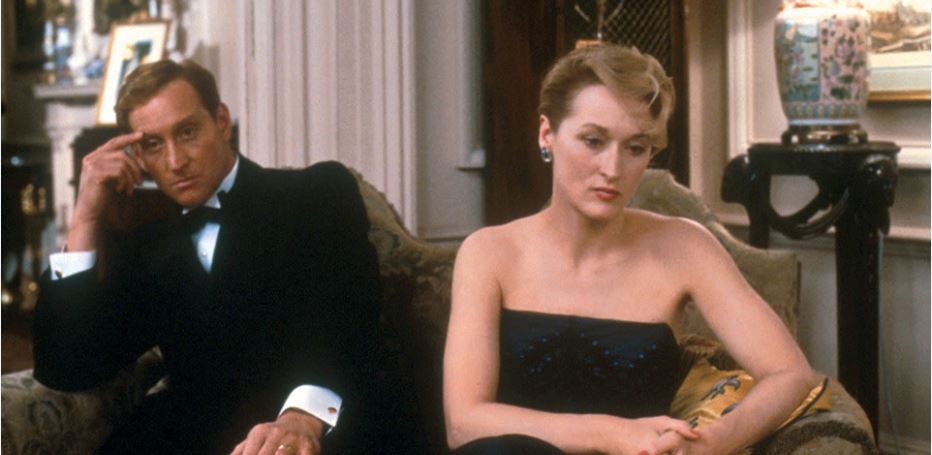
Susan Traherne (Meryl Streep) is an SOE courier in France during the Second World War, who has a one-night stand with fellow SOE operative Lazar (Sam Neill) which has a profound effect on her. After the war, she marries Foreign Office civil servant Raymond Brock (Charles Dance), but is unable to find a purpose and contentment in regular civilian life. As the years tick by, and their surroundings grow ever more plentiful, Susan becomes more and more unhappy, difficult and demanding.

The central issue with Plenty (I can’t comment on the play, having never seen it) is that Meryl Streep creates possibly one of the least likeable leading performance you are going to see. Perhaps mistaking Britishness for cut-glass chill – or perhaps it’s the character – Streep’s Susan is brittle, bitter, angry, annoying and infuriating. She complains about everything around her, she lashes out at people, she sulks and whines with no self-insight, she constantly makes life difficult for those around her (most of whom are unbelievably patient) and she is almost impossible to work out. 

While the film perhaps intends her to be as sort-of PTSD sufferer, with undiagnosed personality disorders, who cannot reconcile the shallowness of her life with the excitement of war service, I’m not sure this comes across. All we really see is her deeply irritating self. We don’t get a sense of her war service – we see her breakdown early in the film in France – and her relationship with Lazar remains so ill-defined we are unclear what impact it had on her, other than part of a halcyon memory. The film’s final scene is a flashback to the end of the war: Susan watching a sunrise on a French hill dreaming of her life being full of days like this. That scene would have been helpful earlier – it’s the only time we see her optimistic or likeable in the film, and it gets lost by placing it at the end. With it in order we could have warmed to her more.

Instead she remains a shrill presence, in a hard to relate to film that never really makes clear whether we are meant to empathise with Susan, or find her as frustrating as some of the characters do. The film also fails to make this enigma part of its viewing design – I don’t feel like having the lines blurred made the film a richer experience, just one it was harder to engage in. Schepisi’s directing style is very cold and distant – from the slow camera moves, to the tight close ups on Susan at key moments, to the deliberate lack of clear time line (each scene moves on weeks, months or years from the previous one with only a few design and dialogue hints to suggest the change).

Combined with Hare’s indefinable script – crammed with elliptical conversations, unclear emotional and dramatic points, and political points delivered with a querying shrug – it makes for a film that is very hard work to engage with – and doesn’t offer much to reward the viewer if they do. 

What pleasures there are come from the performers. Charles Dance is good as Susan’s long-suffering husband – far from a domineering patriarch, his only real crime seems to be that he is a bit boring. Ian McKellen makes a great cameo as a senior civil servant, coolly and calmly telling Susan the errors of her thinking. Sting is an odd choice (I suspect his presence helped the film get backing) and Tracey Ullman does tend to go too far as Susan’s bohemian but more emotionally restrained friend.

John Gielgud steals the show. He is simply superb as Brock’s boss, an old-school diplomat who is, at first, a figure of fun with his Edwardian values but whom events (in particular Suez) reveal to have firm principles. Gielgud also gets most of the film’s best lines, while his quiet air of polite dignity is both endearing and admirable. His delivery of the following line to a tedious bore of a party guest basically is the high point of the movie: “But perhaps before I go, I may nevertheless set you right on a point of fact. Ingmar Bergman is not a bloody Norwegian, he is a bloody Swede.”

But there aren’t enough pleasures like this in this overbearing, rather trying film that never really decides what point it’s trying to make. I think it’s something about wealth and discontent and the more selfish and scrambling build of the post-war generation towards Thatcherism. But I’m really not sure. And to be honest I’m not sure I care.

The Ox Bow Incident (1943)

Henry Fonda tries to change the fate of a lynching, in gripping social-issue drama The Ox Bow Incident

Director: William A Wellman

Cast: Henry Fonda (Gil Carter), Dana Andrews (Donald Martin), Harry Morgan (Art Croft), Frank Conroy (Major Tetley), Harry Davenport (Davies), Anthony Quinn (Juan Martinez), Francis Ford (Alva Hardwicke), William Eythe (Gerald Tetley), Mary Beth Hughes (Rose Swanson), Jane Darwell (Ma Grier), Marc Lawrence (Jeff Farnley), Paul Hurst (Monty Smith)

Spoilers: Can’t quite believe I am saying this about a film that is over 60 years old – but I’m going to give away the whole plot here. Because you can’t really talk about the film without it. It’s a film that’s well worth watching not knowing what is going to happen, so you are warned!

We all like to believe that, when push comes to shove, we live in a civilised world. That when the chips are down, we would behave nobly and stand for what was right. The Ox Bow Incident is a challenging western, because it defiantly says the opposite. The world is a cruel and judgemental place – and sometimes good people are ineffective, regular people panic and lash out and decent people pay the price.

Gil Carter (Henry Fonda) and Art Croft (Harry Morgan) ride into town. Cattle rustlers are plaguing the town and a popular rancher has been gunned down outside his home. With the sheriff absent and the judge ineffective, the townspeople take justice into their own hands. Led by a faux-Civil War major Tetley (Frank Conroy) and aggrieved friend of the dead rancher Jeff Farnley (Marc Lawrence), they form a posse and ride out to lynch the three suspects (Dana Andrews, Anthony Quinn and Francis Ford). Carter and Croft follow, reluctant, but worried that if they protest too much suspicion will fall on them.

The Ox Bow Incident is a film you keep expecting to make a veering turn towards positivity – you keep expecting it to suddenly draw breath and for everything to turn out okay. Instead, it’s a grim insight into how mob mentality can drive people into sudden and cruel actions. It’s equally a testimony to how ineffective protest and principles can be in the face of anger and revenge. It’s a Western that feels years ahead of its time – there is no romanticism here, just grim everyday life.

In many ways it’s a po-faced and serious morality tale, and revolves around one long scene where the lynch victims are tried by mob justice, plead for their lives, are given a brief respite to say their prayers, protests from a few men are swept aside, and then they are strung up. Every time the viewer starts to think righteousness will slow things down, the certainty of the mob stops decency from taking hold. It’s a slippery slope towards the deaths of men we find out almost immediately afterwards were completely innocent.

The Ox Bow Incident is a film that preaches – and it feels very stagy, a feeling increased by the obviousness of its sets and the intense chamber feeling of the limited locations and scenes. But it works, because it’s so brilliantly put together and so grippingly involving. Wellman’s film is trimmed to the bone, the writing is very strong with Lamar Trotti’s script bristling with moral outrage at humanity’s weakness and fear. It’s a story of injustice and mob rage – and it works because it manages to tell a compelling story while also dealing with universal themes.

Henry Fonda listed this as one of his few early performances he felt was good. Fonda is often remembered as the archetype of American justice, so it’s fascinating here to see how ineffective and compromised Carter is. Carter knows what they are doing is wrong – but he lacks the decisiveness, strength of will or character to persuade people. In fact, his main contributions are quiet comments, or sniping from the wings of the action. 

It’s an inversion almost of Twelve Angry Men’s juror #7 – Carter can’t lead us to justice, because he’s a bit too afraid, a bit too weak, a bit too compromised. At the end, as he reads Martin’s final heartfelt and forgiving letter (beautifully filmed by Wellman with Croft’s hat obscuring Carter’s eyes while he reads, a shot that has multiple symbolic meanings), he projects not moral force but the shame and guilt of a man who, when it came down to it, didn’t have the determination to do what was right. It’s a perfect comment on what a writer may have felt was happening all over in 1943.

The real advocate of justice is Harry Davenport’s humane shop-keeper – but he can’t persuade anyone (Davenport is excellent). Instead, all the big personalities are leading the lynch mob, from Frank Conroy’s bullying Major, who just wants to see the action and stamp his domination on others, to Jan Darwell’s vile honking old woman excited by the killing, to Marc Lawrence’s just plain angry Farnley. Everyone who knows what they are doing is wrong – like Tetley’s weak-willed son (well played by William Eythe) – are just too weak, scared or uncharismatic to do much more than vainly protest. Their regular joe victims (all three actors are excellent as in turn, decent, old and confused and suspiciously alien) don’t stand a chance.

The Ox Bow Incident is a perfect little morality tale, crammed with brilliant performances and moments. It even has the guts (for the time) to reference that most lynchings didn’t have white victims, and introduces a sympathetic black honorary padre who is equally powerless. It’s a film that really feels like it came from an era when the world was going to hell in a handbasket, but it speaks to all ages. Because our fear and readiness to attack – and punish – those people we see as different hasn’t gone away. It’s chilling to think that the world hasn’t changed and this story could just as easily be transposed – with no changes – to half a dozen locations around our world today.

Marathon Man (1976)

“Is it safe?”: Laurence Olivier interrogates Dustin Hoffman in Marathon Man

Director: John Schlesinger

Cast: Dustin Hoffman (Thomas “Babe” Levy), Laurence Olivier (Dr Christian Szell), Roy Scheider (Henry “Doc” Levy), William Devane (Peter Janeway), Marthe Keller (Elsa Opel), Richard Bright (Karl), Marc Lawrence (Erhadt), Fritz Weaver (Professor Biesenthal)

The 1970s were the era of the conspiracy thriller. These were deliberately enigmatic, almost opaque, mysteries in which a humble individual was thrown up against sinister forces, backed by equally shady governments. Marathon Man is a stylish (if rather impenetrable) mystery that offers some gripping moments but gets bogged down a little too much in pleasure at its edginess, darkness and professional assurance.

Thomas “Babe” Levy (Dustin Hoffman) is a post-graduate student working on a re-evaluation of the McCarthy era, partly aimed at clearing his father’s name (who committed suicide while under investigation). Babe’s brother Henry “Doc” (Roy Scheider) works for a shady government organisation, and has recently narrowly avoided assassination twice in France. Doc suspects the killers were sent by renegade-Nazi Dr Christian Szell (Laurence Olivier). Szell’s New York-based brother was recently killed in a car crash, and with his death Szell has lost vital access to his cash reserve of diamonds in a New York bank, which he needs to maintain his safety in Uruguay.

I hadn’t seen Marathon Man for several years, and I was struck by how long it takes to get going: it takes a solid 45 minutes to get to the point. Huge swathes of the opening act of the film is all about getting the set-up and atmosphere, rather than establishing the story. It also seems to be about setting up as complex as possible a context for a film that boils down to a pretty straightforward plot. Nearly all the action that Doc gets up to in Europe is pretty much impossible to work out and never seems to tie in with the rest of the plot once it starts (exciting as it is to watch him dodge assassination attempts). Even the marathon running of the hero, and his relationship with Marthe Keller’s mysterious swiss woman doesn’t in the end really tie in that closely with the story.

But then that’s often the way with Marathon Man. It’s a film in love with atmosphere, its Hitchcockian tricks and its brooding creepiness more than with logic, story or even (really) character. It’s pretty hard to work out what’s going on, and the muttered plot revelations and Schlesinger’s grimy, often deliberately obscure, filming style doesn’t always help the humble viewer work things out. It wants to be like other 70s thrillers and juggle huge events – but it’s actually a rather small-scale, humble film telling a deliberately dreary story, scored with a very 70s combination of electronic noises and plonking piano notes. Plot wise it never really explains what is it about, and gets so bogged down in cross and double cross that it eventually loses its own way.

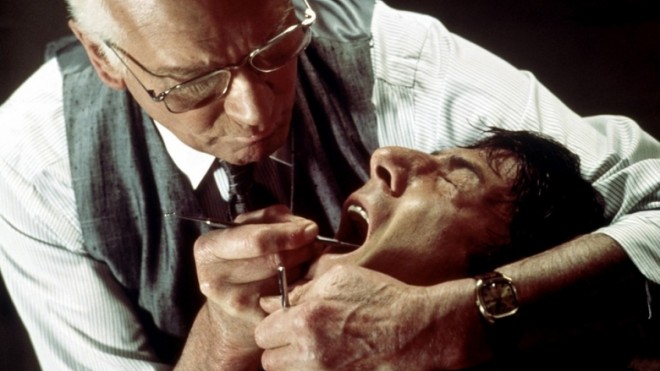
Where the film does succeed is its individual scenes. Mention Marathon Man and anyone who has heard of it will immediately say “the dental torture film?” They might even say “Is it safe?”. Marathon Man’s dramatic centre-piece is this unnervingly taut torture scene (not too graphic it has to be said – gosh violence in films has moved on since 1976!) where Szell questions Babe (just the one question repeated over and over again) while using his dental skills to “encourage” Babe to answer (ouch!). Ever been even slightly squeamish about going for a dental check-up? This probably isn’t the film for you (heck even one of Szell’s murderous henchmen can’t watch). 

Schlesinger shoots this scenes extremely well, with the camera lingering effectively on everyday dental tools that become dreaded torture devices. Schlesinger builds sequences around action and violence very effectively: escape attempts by Babe are gripping and fight scenes are extremely tense, particularly Doc’s fending off of an assassin in a Paris hotel room.

That scene also highlights another effective part of Schlesinger’s direction of the film: his use of bystanders. The life and death struggle between Doc and an assassin is witnessed across the street by a wheelchair-bound old man powerless to intervene. The opening road-rage deaths of Szell’s Nazi brother and a furious New York Jew are intercut constantly with the reactions and confusions of people in New York’s streets. In the film’s finest scene, Szell has to undertake a terrifying (for him) walk through New York’s Jewish quarter to collect and value his diamonds. His paranoia and fear of being recognised mean he sweatily watches every face. When he is recognised by an old woman – who shrieks for help from bemused passers-by – you really feel Szell’s fear that this woman will turn the mass of watching New Yorkers into a lynch mob. The bystanders really add depth to the film’s paranoia – they are both dangerous and also help to isolate the characters.

The film’s main strength is Laurence Olivier’s stand-out sinister performance as the Mengele-like Szell. Terrifyingly cold, paranoid and sadistically proud, Szell is a truly great villain, and Olivier channels all his Shakespearean experience into turning him into an iconic villain. The film also really works matching Olivier’s imperious old-schoolishness with Hoffman’s edgy, brittle method (the famous anecdote from the film was Olivier’s aghast reaction to Hoffman’s decision to prepare for the torture scene by not sleeping for three days: “Dear boy, would it not be easier to just act?”).

Hoffman is actually very good in the film as a man out of his depth from the start who slowly becomes as hardened and dangerous as the people chasing him. In fact Hoffman, is so involving and empathetically frightened in this film (his desperate range of answers to “Is it safe” are really affecting) that you overlook that he is clearly far too old to be playing a college graduate. Roy Scheider is similarly good as his domineering, but loving spy brother.

But it’s Olivier’s mastery of nastiness that really makes the film lodge in your mind. Schlesinger’s film is often long-winded, opaque and confusing, but Olivier delivers a master-class in imperious nastiness. Szell is a nightmare image of the well-spoken, polite monster and Olivier’s eyes carry a spark of intense menace. Honestly I could happily watch just the scenes he is in – particularly that masterfully performed street walking scene – and be happy to stick with that. The rest of the film is often a bit of a murky mess, but when Oliver is at the centre you forget all that. Marathon Man is a conspiracy thriller so confusing I think it confuses itself – but in the individual scenes it often brilliantly captures dread, discomfort and fear.

Crash (2005)

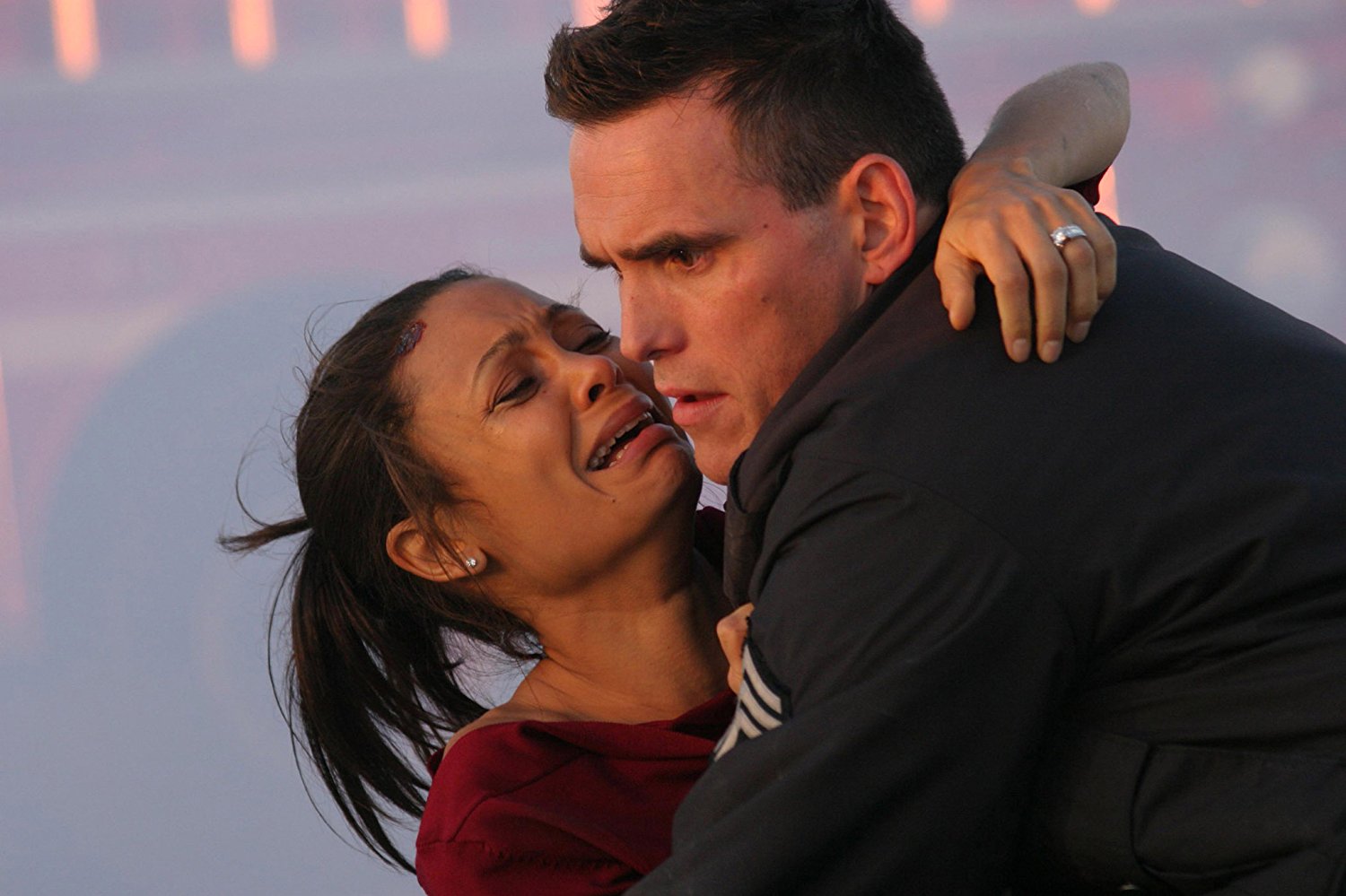
Matt Dillon and Thandie Newton deal with racism in tedious best picture disaster Crash

Director: Paul Haggis

Cast: Sanda Bullock (Jean Cabot), Don Cheadle (Detective Graham Walters), Matt Dillon (Sgt John Ryan), Jennifer Esposito (Ria), Brendan Fraser (DA Rick Cabot), Terrence Howard (Cameron Thayer), Ludacris (Anthony), Thandie Newton (Christine Thayer), Michael Peña (Daniel Ruiz), Ryan Phillippe (Officer Tom Hansen), Larenz Tate (Peter), Shaun Toub (Farhad), Bahar Soomekh (Dorri), William Fichtner (Flanagan), Keith David (Lt Dixon), Bruce Kirby (‘Pop’ Ryan), Beverly Todd (Mrs Waters)

If you had to name the least popular Best Picture winner, there is a fair chance the name you’d come up with Crash. Crash was a surprise winner in 2005, beating out Ang Lee’s tender gay-cowboy classic Brokeback Mountain. Crash was a little independent movie, filmed in and around Los Angeles, that seemed to be tackling big themes – racism, humanity, fate, blah blah blah. To be fair, Paul Haggis’ film is giving it a go. But what you get is just hugely, well, average. It’s not a film that has aged well, and it’s not a film that has enough depth to it to overcome the general cynicism towards it.

The film follows a kaleidoscope of events in Los Angeles, each of which revolves around clashes between different races, with stories that are shown to interlink. So we have an ambitious DA (a miscast Brendan Fraser) and his wife (a pretty good Sandra Bullock) carjacked by two gangbangers (Ludacris and Larenz Tate). A TV director (Terrence Howard) and his wife (Thandie Newton) are pulled over then assaulted by a bigoted cop (Matt Dillon), despite the fears of his nervous liberal partner (Ryan Phillippe). A locksmith (Michael Peña) deals with racial suspicions from the DA’s wife, and from a Persian shop owner (Shaun Toub), who is himself the victim of racial abuse. A cop (Don Cheadle) and his partner (Jennifer Esposito) investigate two undercover cops who shot each other, monitored by the DA. And so it goes on.

Crash could be pretty much relabelled Racism Actually. In fact, it shares a lot of traits with Richard Curtis’ loosely assembled series of shaggy dog stories, feeling as they do like off-cuts and half assembled scraps of ideas from Haggis’ writing desk. But what he ends up wheeling out here is a manipulative, cliché-filled pile of earnest claptrap, in which basically a series of unpleasant characters behave unpleasantly towards each other. You can see why the ageing academy might have warmed to it – it’s a film that looks at racism, by exploring how, gosh darn it don’t you know “everybody is a little bit racist” sometimes. 

On top of that, Haggis’ film relies overwhelmingly on coincidence and the tired “we are all linked together” clichés. It wants to try and make big statements about the prejudices and victimisation that we all suffer in our different ways – but it delivers them in such a clumsy and manipulative way your nose ends bruised by the number of points hit on it. For starters, do people really throw around racial slurs as readily and immediately as the characters in this film do? Surely the real danger of racism is not the people who shout racist nicknames and get angry immediately – isn’t the real danger of racism its incipient nature, the quiet whispers behind closed doors or the barriers gently but firmly put in the way? 

This film turns racism into something loud, obvious and crass. And then it produces a film that does the same thing. The script is full of scenes which never feel real, – every conversation in the piece turns into a clumsy series of “we all hold prejudiced views” or “I’ve got more depths than you think” statements that always feel fake. Not once do the characters sound like real people. It’s the sort of clumsy, crappy, thuddingly worthy film-making that ostentatiously believes itself to be great film-making, when in fact it’s as average as cornflakes.

Even the more effective moments only work because they are so manipulative: the confrontation at gunpoint between the locksmith and shop owner, and the rescue of Thandie Newton from a burning car by Matt Dillon’s brutish cop. When they are happening, these moments are strangely gripping – but literally the instant they finish, you are struck by how Haggis has filmed them in such an operatic, balls-to-the-wall way you would have to work pretty hard not to be swept up in them. Effective manipulation is still manipulation – and manipulation really shouldn’t be this easy to spot. Certainly not within seconds of it happening.

But nearly all the characters are so simple and cookie-cutter that, despite the quality of the acting, you never connect with them. It doesn’t help that Haggis’ unsubtle screenplay is desperate to point up “surprise” personality twists – the “you think they are like this, but look: here they behaving totally differently. People are more complex than you think!” card is played so often it starts getting worn out. All of this serves to boil down to a trite message that when we try and get along with each other everything eventually might work its way out. Oh please, give me a break.

The acting, though, is actually pretty good. Sure Brenda Fraser is horribly miscast, and Don Cheadle is stuck with a terrifically boring cop who has to hold some of the narrative threads together, but there are plenty of decent performances. Sandra Bullock gets to show she has some solid dramatic chops, Thandie Newton is a pretty much a revelation as a seemingly shrewish wife, Terrence Howard mines a lot out of a clichéd middle-class black man going through a mid-life crisis. Ludacris and Lorenz Tate are excellent as the two gangbangers, although their dialogue and actions never feel real at all. Michael Peña is very endearing as just about the only outright likeable character. Dillon got a lot of praise (and an Oscar nomination) as the racist cop and he is fine (though dozens of actors could do what he does here), even though the character is thin as paper and relies on having the two of the best impact scenes.

Dillon’s character is a good example of the film’s moral shallowness. Perhaps it’s the #MeToo era, but do I think that Dillon’s clearly racist manner and his sexual assault on Newton’s character is cancelled out because he saves her from a fire and treats his dying Dad well? I mean, what is this sort of laziness? The film says “ah ha look viewer you thought he was a bad guy, but look at his depth”. So forget the sexual assault because he saved his victim’s life the next day. Wow. Don’t get me started on the contrived weighting of the scales the film puts together so that our opinion is shifted on Phillipe’s good cop. The film is full of this sort of clumsy, ham-fisted, chin stoking, liberal garbage that feels overwhelmingly patronising.

But then this is a film that doesn’t trust you to think. It is the ultimate middle-class, hand-wringing exercise in “oh if only we could fix the world through good things” nonsense. It shouts and shouts and shouts at you about racism, but never really tells you anything other than that bad-tempered, ignorant people will do bad-tempered ignorant things. It smugly says “of course we are better, but guess what viewer, this sort of thing does happen”. Only of course the script is so thin, the general film-making so thuddingly average and unsubtle, the story and morality so shallow, that its preachy hectoring only really serves to turn you off.  Anyone with a brain will get the message within the first 10 minutes. The film takes another hour and a half to catch up with you. The worst Best Picture winner ever? It’s gotta be up there.

The Great Gatsby (2013)

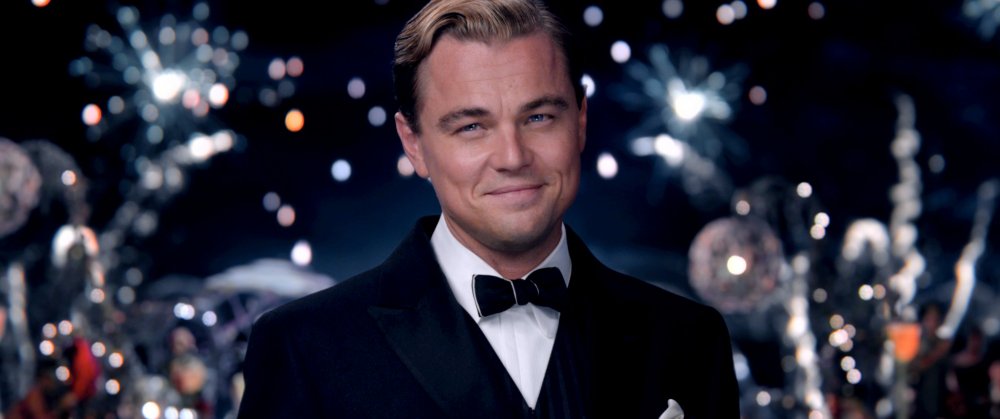
“Hello old sport”: Leonardo DiCaprio is The Great Gatsby

Director: Baz Luhrmann

Cast: Leonardo DiCaprio (Jay Gatsby), Tobey Maguire (Nick Carraway), Carey Mulligan (Daisy Buchanan), Joel Edgerton (Tom Buchanan), Elizabeth Debicki (Jordan Baker), Isla Fisher (Myrtle Wilson), Jason Clarke (George Wilson), Amitabh Bachchan (Meyer Wolfsheim), Jack Thompson (Dr Walter Perkins), Adelaide Clemens (Catherine)

The Great Gatsby is possibly the great American novel. I’ve only read it once, but I certainly admired its beautiful prose, capturing of an era of American life and understanding of the fragility behind America’s love of success. Baz Luhrmann is clearly a fan, as he spent years putting together this passion project, presenting the biggest, brashest version of Fitzgerald you are ever going to see.

Nick Carraway (Tobey Maguire) is a young writer turned bonds salesman in 1920s New York. He lives across the bay from his cousin, Daisy (Carey Mulligan) and her husband Tom Buchanan (Joel Edgerton), a brash old-money man carrying on an affair with Myrtle (Isla Fisher), the wife of his garage mechanic. Carroway’s next-door neighbour is the sumptuously wealthy, but mysterious, Jay Gatsby (Leonardo DiCaprio) whose parties and generosity are legendary. As Carraway gets to know Gatsby (as much as anyone can), he discovers that Gatsby has a deep, near obsessive, love for Daisy.

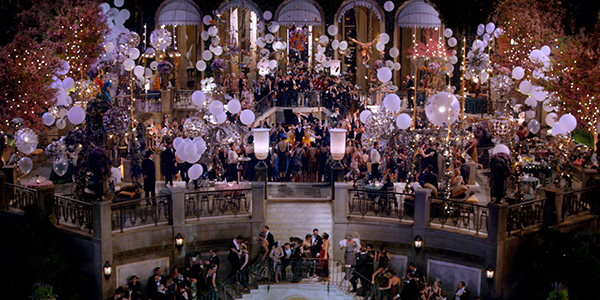
Luhrmann’s film is a technicolour explosion that uses many of the techniques you’ll be familiar with from any of director’s other films. The camera is a whirligig of motion. The colours are bright and primary. The whole tone of the film (certainly for its first hour) is larger than life. The narrative has been tweaked to take on the tone of a Greek Tragedy, with the loud noise, fast camera moves and speedy pace all inverted in the latter half to invoke sadness and tragedy. And of course, the music is deliberately anachronistic, mixing modern genre music with 1920s sounds.

Sometimes this high-budget technicolour brilliance does feel like it is partly getting in the way of the deeper themes that lie within the original. But that might be partly because the novel’s themes are so reliant on internalised feelings, unsaid or guessed emotions, and deeply purple prose, that these are ideas which are very hard to translate to the screen.

There is something to be said for Luhrmann turning one of the pillars of 20th-century American culture into a spiritual sequel to Moulin Rouge!. And Moulin Rouge! is what the film strongly resembles, not only in design, but its romantic structure, poetic retelling, high drama, sense of impending doom and danger behind the bright lights, assault on class and the way it stands in the way of true love, and the lack of freedom in our lives. Both even have sad, reflective authors book-ending events.

So your enjoyment of the film is probably going to depend on how you feel about Luhrmann’s OTT style. Love Moulin Rouge! and Romeo + Julietand you will probably find something to enjoy here (and you’ll also notice his love of tragic love stories). Saying that, of those three, Gatsby is the one the carries the least depth to it, which is intriguing as it probably mines the most psychologically rich source material. While Luhrmann understands that the book is about the real emotions masked by explosive parties and opulence – the film often feels as choked by these things as the characters do.

This is partly because I feel both Maguire’s and Mulligan’s performances don’t quite work. Maguire is so stripped back, quiet and passive he almost disappears – you don’t get a sense of Carraway as either a shrewd observer or someone wrapped up in events: instead he’s a passenger, like the plot contrivance Gatsby sometimes treats him as. Similarly, Mulligan is slightly overwhelmed by the movie, not giving a strong enough performance for her to break through. The film powers forward with such momentum and brashness, it squashes her.

It’s probably why the most successful lead performance by far comes from DiCaprio. He’s perfectly cast as Gatsby: so good in fact you wish he was in a more thoughtful, relaxed film that would give him a more of a chance to breathe. DiCaprio perfectly encapsulates the desperation just beneath Gatsby’s surface, the fear and uncertainty that lies under his suave urbanity. He completely gets the character, understands he is a showman presenting a front to the world because that’s what he thinks the world wants, but who is, in his own way, as empty and lost as the world of bright lights he is offering people. It’s an excellent performance.

Luhrmann’s work with DiCaprio is what gives the film it’s centre and, for all the colour, noise and joy of the first 40 minutes or so, it finds its heart in the moments of acting and character interplay as the Gatsby-Daisy-Tom love triangle comes to a head. This scene, with its bubbling emotions, high stakes and tension is like an oasis of calm in the high-faluting scenery that surrounds it. But then this is a film where the smaller moments actually come across as richer than the larger ones – partly helped by the fact that Joel Edgerton and Elizabeth Debicki both give excellent performances as the key supporting characters. 

The Great Gatsby captures the feel of Fitzgerald rather well, but for all the dialogue of the book placed over the film in voiceover, it never quite manages to capture the spirit of the book in the same way. It looks wonderful, and its dynamic filming is certainly enjoyably impressive, but it doesn’t quite become a film that deals in emotions and depth. It flashes and fizzles but it never lets us really soak in its ideas and themes. It’s all too much at times, and the tragic sadness at the heart of the story, of this lost boy trying to live the life of a man, never comes out as it should. An interesting and entertaining film, but not one that will last.