Author: Alistair Nunn

Sherlock Holmes (2009)

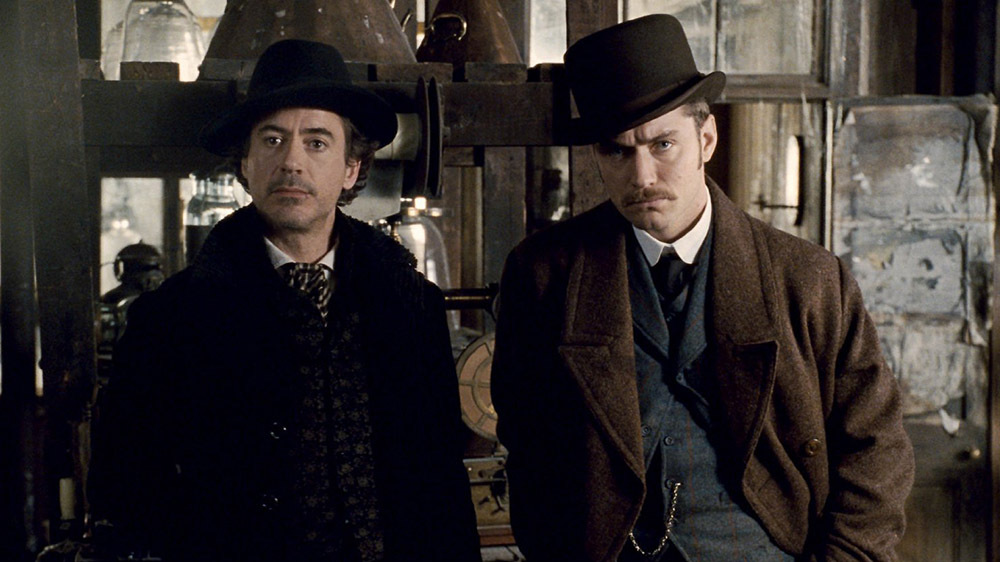
Robert Downey Jnr and Jude Law made a great odd couple in Sherlock Holmes

Director: Guy Richie

Cast: Robert Downey Jnr (Sherlock Holmes), Jude Law (Dr John Watson), Rachel McAdams (Irene Adler), Mark Strong (Lord Henry Blackwood), Kelly Reilly (Mary Morstan), Eddie Marsan (Inspector Lestrade), Hans Matherson (Lord Coward), James Fox (Sir Thomas Rotheram), Geraldine James (Mrs Hudson), William Houston (Constable Clark), William Hope (Ambassador Standish)

I don’t think there has been a single character brought to the screen more often than Sherlock Holmes. Sure there are certain tent-pole performances (Rathbone, Brett, Cumberbatch) that people automatically think of when you say “Sherlock Holmes”, but there are hundreds of others. It’s a character that survives constant re-imagination. In fact, you could argue it’s pretty much vital to bring something of your own to the table when putting together a Sherlock Holmes dramatisation. It’s what made Sherlock so successful. And it’s something that works very well here.

Sherlock Holmes (Robert Downey Jnr) is part Bohemian artist, part mad scientist, part kickboxer. The sort of guy who can think so far ahead he can plan out an entire fight in his mind before it even begins. He’s partnered up with determined, smart, handy-with-a-sword Dr Watson (Jude Law). With Watson preparing to move out of 221B to marry Mary Morstan (Kelly Reilly), they take on their last case: defeating creepy Dracula-lite Lord Blackwood (Mark Strong), who claims to have returned from the dead and wants to take over the British Empire. Along the way they are helped (or hindered) by the mysterious Irene Adler (Rachel McAdams) an old flame of Holmes’.

Guy Ritchie’s rollicking adventure is actually a huge amount of fun that, underneath the crashes and bangs, actually has a really strong respect for the original stories (the film is littered with references and quotes from the originals, none of which feel shoe-horned in except maybe Rachel McAdams’ Irene Adler, perhaps because the producers felt Holmes needed a love interest to stop any worries that he might be a bit too much in love with Watson). Ritchie has crafted a Holmes-Watson relationship that repositions them as a sort of odd-couple surrogate brothers, a marriage of equals (and make no mistake, a marriage is basically what this Holmes and Watson have). It’s big and silly, but then so were the original stories (The Creeping Man anyone?). 

Ritchie is a film-maker it’s easy to find faintly annoying, with his faux-geezer attitudes, his bizarre philosophical views and his love of the poor-taste gag. But on this film he’s basically a director-for-hire rather than putting his own story together and, you know what, putting this director into a studio strait-jacket is actually pretty good. It smacks some disciple on him, makes him drop his indulgent and poor-taste jokes and instead brings his strengths as a director – his sense of pace, his eye for a witty image, his rollicking sense of fun – to the fore. That’s probably why this is his most enjoyable and best film. 

It’s a film that mainly works because Downey Jnr and Law make a terrific pairing as Holmes and Watson. They have great chemistry, they spark off each other extremely well as performers and they really give the sense of two life-long devoted friends. Both actors are very good here. The film hits these notes of male friendship extremely well – a mixture of mocking and abuse, mixed with devotion and loyalty. The film gets the balance of these things exactly right: from debates to fights, you really get a sense that these two are honorary brothers, almost a bickering old married couple. 

In fact, the whole film revolves quietly around this relationship coming under threat (as Holmes sees it) of Watson leaving Holmes to get married – although, nicely, the film makes clear his fears of Mary are completely unfounded. Part of the dual engine of the film is Holmes continuing to tempt Watson into getting more and more involved with his cases, because he doesn’t want to lose his friend. It’s actually quite sweet. As are the protective feelings both have for the other: Watson knows Holmes puts himself at ridiculous risks, in turn Holmes shows a gentle worry for Watson’s gambling addiction (a popular Sherlockian society interpolation from references in the story).

All this warm, brotherly stuff from two excellent performers is built into a dramatic, thrillingly shot, series of action and detection scenes. The film’s big gimmick is Holmes’ ability to use his analytical abilities to accurately predict the outcome of fights (which the film communicates with slow motion and forensic narration by Downey Jnr, before staging the entire fight again at real time). It’s actually a fairly neat way of turning his deductive abilities into a visual language. Alongside this, plenty of this great fun – exciting or, as in Holmes’ battle with a 7ft giant, funny. All hugely entertaining.

Placing the focus on this relationship and the action does mean that the mystery elements of the plot get a bit short-changed. The story is a rather silly series of near-Dracula style high-Gothic mysteries that may or may not be real (all these occult references more than echo The Young Sherlock Holmes!). There isn’t much in the way of the small intricate puzzles of the early stories here – but then plenty of the later ones became increasingly hyper-real Gothic stories, so I guess that is fine. Mark Strong does a decent job as the villainous Blackwood, using his sinister looks and imperious voice extremely well. 

It also looks wonderful – the photography and set design is marvellous – and the score by Hans Zimmer must be one of his best ever, a sprightly mix of Irish music, Westerns and Music Hall. Ritchie directs it with a wonderfully, tongue-in-cheek, entertaining sprightliness, like Sherlock Holmes meets Indiana Jones. Holmes more than survives his re-imagination as an action superhero – and in fact he brings across a lot of the tone and character of the original book along with him. A terrific entertainment and a more than worthy entry to the Holmes movie cannon.

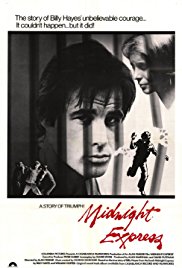
Midnight Express (1978)

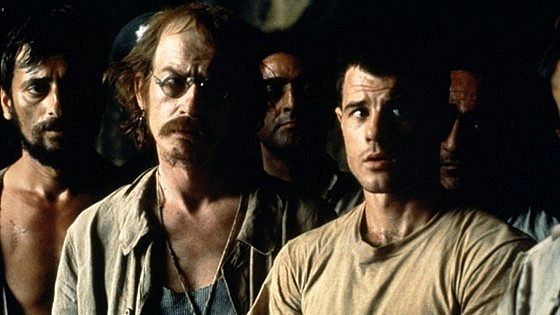
Brad Davis and John Hurt find themselves in melodramatic hell in Midnight Express

Director: Alan Parker

Cast: Brad Davis (Billy Hayes), Randy Quaid (Jimmy Booth), John Hurt (Max), Paul L Smith (Hamidou), Irene Miracle (Susan), Bo Hopkins (Tex), Paolo Bonacelli (Rifkin), Norbert Weisser (Erich), Mike Kellin (Mr Hayes), Peter Jeffrey (Ahmet), Kevork Malikyan (Prosecutor)

Ever wondered why “Turkish prison” was, for a long time, practically a synonym for “hell on earth”? A big reason is this film’s box-office success, a heavily fictionalised version of the experiences of Billy Hayes (Brad Davis), a young American caught smuggling hashish out of Turkey and eventually sentenced to 30 years in a prison notorious for violence, torture and rape. The film covers Hayes’ imprisonment, his alliances with fellow prisoners loud-mouthed American Jimmy (Randy Quaid) and sensitive, strung-out Englishman Max (John Hurt), and his ill-treatment at the hands of sadistic guard Hamidou (Paul L Smith). It’s not exactly a light watch.

Midnight Express was an unexpected controversial sleeper hit. Many felt the film was grossly violent, horrible, and borderline racist towards its Turkish characters. Looking back now, the violence is (with a few exceptions) no more than you might expect – but the attitude the film takes towards its Turkish characters really sticks out.

There is barely a Turk in this who isn’t crooked, sadistic, greedy, ugly or stupid (or a combination of all five). The depiction is so unsettlingly bad, the real Billy Hayes apologised at the time (he was joined years later by the film’s producers and writer, Oliver Stone). Many of the Turks are lascivious anal rapists, while the whole film has a queasy unease about homosexuality. The real Billy Hayes engaged in relationships with other men in prison – the film’s Hayes kisses a fellow prisoner in the shower but then shakes his head and leaves. A 1970s audience could cope with seeing a man flogged or tortured – but in no way could they be expected to watch two men making out.

Other than these unsettling black marks, Midnight Express is a taut, well-made, melodrama. And I say melodrama because both Stone and Parker frequently go over the top. After a friend is betrayed to a horrible fate by a Turkish prisoner, Hayes freaks out, violently beats the Turk, gouges his eyes and then (in almost laughable slow-mo) bites his tongue out and spits it across the room. Later, he is finally allowed to receive a visit from his girlfriend – she presses her breasts up against the glass while a near catatonic Hayes tearfully masturbates (“I wish I could make it better for you baby” she sighs, tearfully). Yes both those sequences are as OTT as they sound.

But when it calms down, Parker crafts a pretty affecting story. It cuts Hayes a lot of slack – I found it hard to feel sorry for a dumb, drug-smuggler who assumes his American passport will let him off with a slap on the wrist. I can’t be alone in thinking that someone who breaks the law deserves to pay some sort of price. To be fair, I think the film partly shares this view: it fast-forwards through most of Hayes’ original term, and only really hits into full misery once his sentence is arbitrarily extended by 27 years. I think Parker and Stone believe this switches the moral right to Hayes, who had served his term only to be hit with a sudden draconian change weeks before release. 

A lot of the film’s impact comes from Brad Davis’ impassioned performance as Hayes. There is something very sensitive and gentle about Davis, a real vulnerability that the film seizes upon to great effect. He looks like a bewildered lost soul, and Davis’ performance is scintillating first in its confusion, then his distress and anger. 

There are decent performances from the rest of the cast, with John Hurt standing out as the gentle Max. Garlanded with awards, Hurt is perfect as the straggled, beaten down, but still cynical and surly Max – and of course Hurt’s natural affinity for suffering works perfectly for a character who goes through the wringer. Quaid also does decent work as a thoughtless loudmouth, as does Kellin as Hayes’ impotent father. It’s also nice to see a small cameo from Peter Jeffrey as a well-spoken half-English paedophile in the prison’s psychiatric ward.

It’s a shame that Midnight Express too frequently goes too far, as it’s got an almost medieval understanding of suffering. The prison is a grim world of its own, where the prisoners largely self-police and acts of petty revenge are common. Later in the film, Hayes is sent to the film’s psychiatric ward, a hellish basement where prisoners walk in drugged-up dumbness pointlessly round and round a stone pillar.

Moments like this are far more impactful because they avoid the extremities of the rest of the film. Most of what we see isn’t true – Hayes’ story and his escape was vastly different, and the film exaggerates both his naïveté and his suffering – but it still works extremely well. Parker fought to end the film simply, rather than the all-action escape sequence filmed and this works wonderfully (it’s basically a Third Man homage, by way of Robert Altman’s The Long Goodbye) – although it still finds another moment for a threat of anal rape in the final ten minutes.

Midnight Express is a decent film, but not a pleasant one – and it leaves a slightly sour taste in the mouth, for all the competence with which it is made. Parker and Stone frequently go too far, and the reek of homophobic racism still comes off the film. However it is certainly a good piece of technical film-making and has some marvellous performances in the mix.

Three Colours: Red (1994)

Irène Jacob gives a soulful performance in Kieślowski’s crowning achievement Three Colours: Red

Director: Krzysztof Kieślowski

Cast: Irène Jacob (Valentine Dussault), Jean-Louis Trintignant (Joseph Kern), Jean-Pierre Lorit (Auguste Bruner), Frederique Feder (Karin), Samuel LeBihan (Photographer), Marion Stalens (Vet), Teco Celio (Barman)

Spoiler warnings: I wouldn’t usually do this for a film that was made over 20 years ago, but discussing this film is almost impossible without covering the entire plot so – be warned! This is a rich viewing experience you should discover for yourself.

Kieślowski’s great trilogy wraps up with Three Colours: Red, a fascinating, moving, intriguing puzzle of a film that opens itself up to countless interpretations. It’s a film that seems to be about a great many things, but wears its intelligence and insight very lightly, never hammering points home or getting too wrapped up in its own smartness. It’s primarily a story and never forgets that. It also pulls together threads and themes from the entire trilogy hugely effectively. It’s a great movie.

Valentine (Irène Jacob) is a student in Geneva, funding her time at university through part-time modelling. After accidentally hitting (but not killing!) a dog with her car, she meets the dog’s owner, retired judge Joseph Kern (Jean-Louis Trintignant). Joseph is spending his time in isolation from the world, listening to his neighbours’ phone calls, more out of a judge’s habit of finding out secrets than any truly malicious intent. Valentine challenges this blatant disregard of privacy, and she and Joseph begin to form an increasingly strong bond. 

Red is a beautiful film, wonderfully made and rewards constant analysis. Kieślowski described this as the hardest film of the trilogy to write, and you can see why. Dealing with themes of fraternity, it ties this in closely with love (romantic and otherwise). The entire film shows the strengths of people coming together, specifically Valentine and Joseph who develop a bond that enriches their lives. This is contrasted throughout with Valentine’s domineering boyfriend on the other end of the phone-line, and modern communication in general that builds distance between people. Joseph, a man distanced himself from all others, finds his humanity once he opens himself to considering other people as people.

Kieślowski’s film also plays interesting games with narrative and time. A seemingly minor character, Auguste, a lawyer training to become a judge, is slowly shown to share a huge number of life events with Joseph’s youth. The question that bubbles over the film is, is this a coincidence or are Auguste and Joseph somehow linked? Is Auguste in some way the same person as Joseph – some sort of reincarnation? Is this fate or chance or mere coincidence? Is Joseph, living like some lonely old-testament God in complete isolation, somehow trying to move events to correct errors in the past – to try and find some contentment for Auguste (whose conversations with his girlfriend he has been listening to) so that he avoids the life Joseph has led?

I like this idea. It appeals a lot to me, not least as I started to feel that Joseph was almost some sort of Prospero, using phone taps as his own private Ariel to know everything happening around him and then (more benignly perhaps than Prospero) using this to improve the lives of those close to him. Perhaps. There is even a seemingly magic storm at the end of the film that brings several characters together, not least the leading couples from the previous two films in the trilogy. It’s also a storm that, it is suggested, will bring Valentine and Auguste together.

It’s a romantic flourish at the end of the film that speaks of the possibilities for the future (though typically of this intriguing series, it’s a flourish that comes out of a ferry accident that kills over a thousand people – you can’t get something for nothing in this world, and no romantic story is straight forward). It’s also a natural development of the strong romantic link between Joseph and Valentine. If Joseph and Auguste are (essentially) versions of the same person, it’s a further suggestion that (in another life) Joseph and Valentine would certainly have fallen in love (to match the platonic love that develops between them). This interpretation of love joining people together is seen as well in the lead couples from Blue and White also surviving the accident.

Or is this all coincidence? Kieślowski plays the mystery and depth so lightly – lets these points float out or be lightly stated without tub-thumbing – that it leaves it all gently to the viewer’s imagination. You can make of it what you will: the story works just as effectively if you ignore all the things I just discussed. Joseph as the isolated, austere man who finds a warmth in himself awakened by the generosity and compassion of Valentine. All this stuff could just be the working of chance.

But either way, the film is about fraternity: people coming together, and communication and compassion making us human. Irène Jacob is wonderful as the endearing, romantic and empathetic Valentine, her brightness and humanity shining through. Jean-Louis Trintignant is superb as the judge, whose careful veneer of distance and coldness is punctured throughout the film. The scenes these two share are beautifully done: conversations that throb with emotion under the surface. Kieślowski again directs these scenes with a masterful minimalism, using differing heights and levels (they are very rarely on the same level, usually one sits or stands above the other) to show the dynamics subtly change between the two. These height differentials – with Valentine often kneeling at Joseph’s feet – also suggest a growing intimacy between the two characters. 

Technically the film is a marvel. It is lusciously filmed by Piotr Sobociński. The presence of red throughout is very well done and adds a poetic brilliance to the images. Kieślowski in particular shoots sunrises and sunsets with an astounding beauty, and uses light to add a huge emotional depth and beauty to private conversations. Zbigniew Preisner’s score is marvellous, a lyrical, beautiful series of compositions that rewards constant re-listening.

Red is a marvellous, thought-provoking and humane film crammed with wonderful and involving ideas, and brilliantly gives you loads to think about both narratively and thematically. It’s a warm and moving story, with darker elements that make those parts seem richer. With two marvellous performances at its centre, it’s brilliantly directed by Kieślowski (who tragically died shortly after the film’s release), with grace, poetry and passion. It looks wonderful, it sounds marvellous and it always make you think. It’s a masterpiece.

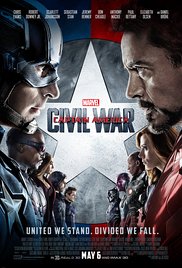
Captain America: Civil War (2016)

Captain America and Iron Man stand-off in overblown Captain America: Civil War

Director: Anthony and Joe Russo

Cast: Chris Evans (Steve Rogers), Robert Downey Jnr (Tony Stark), Scarlett Johansson (Natasha Romanoff), Sebastian Stan (Bucky Barnes), Anthony Mackie (Sam Wilson), Don Cheadle (James Rhodes), Jeremy Renner (Clint Barton), Chadwick Boseman (T’Challa), Paul Bettany (Vision), Elizabeth Olsen (Wanda Maximoff), Paul Rudd (Scott Lang), Emily VanCamp (Sharon Carter), Tom Holland (Peter Parker), Frank Grillo (Crossbones), William Hurt (Thaddeus “Thunderbolt” Ross), Daniel Brühl (Helmet Zemo), Martin Freeman (Everett K Ross), Marisa Tomei (May Parker), John Kani (T’Chaka), John Slattery (Howard Stark), Hope Davis (Maria Stark), Alfre Woodward (Mariah Dillard)

Captain America: Civil War is another explosive entry in the MCU, and is even more stuffed than usual, with nearly all our Avengers thrown into the mix – with the added twist that they fight each other! Yup it’s time for another playground argument: “If X fought Y, which one would win?!” That’s the main thrust of Captain America: Civil War, but it’s actually a distraction from the real plot. The much hyped fight at the airport (and the build-up to it) is a rather dull hour in the middle that distracts from a richer, more interesting film.

There is dissent in the ranks of the Avengers. The UN wants them to sign the “Zukovian Accords” – an agreement that they will work only under the direction of the UN. For Tony Stark (Robert Downey Jnr) this legal framework for their actions is essential – but Steve Rogers (Chris Evans) argues that the Avengers need to have the freedom to go where they are needed, not only where they are told. In this tense situation, a bombing in Vienna is swiftly blamed on Roger’s old friend Bucky Barnes (Sebastian Stan), who has become the brain-washed killer The Winter Soldier. In disagreement with Stark about the Accords and determined to protect Bucky, Steve quickly finds himself on a collision course with Tony.

The central idea here is actually fairly interesting: are superheroes people with a higher duty or just a group of vigilantes? Should they follow the direction of politicians – or be free to go where they are needed, when they are needed? How much accountability should they hold? If, in saving the world, dozens of civilians should die in the aftermath, is that acceptable or not? These are the ideas that lie under the arguments that the characters – principally Captain America and Iron Man – have. 

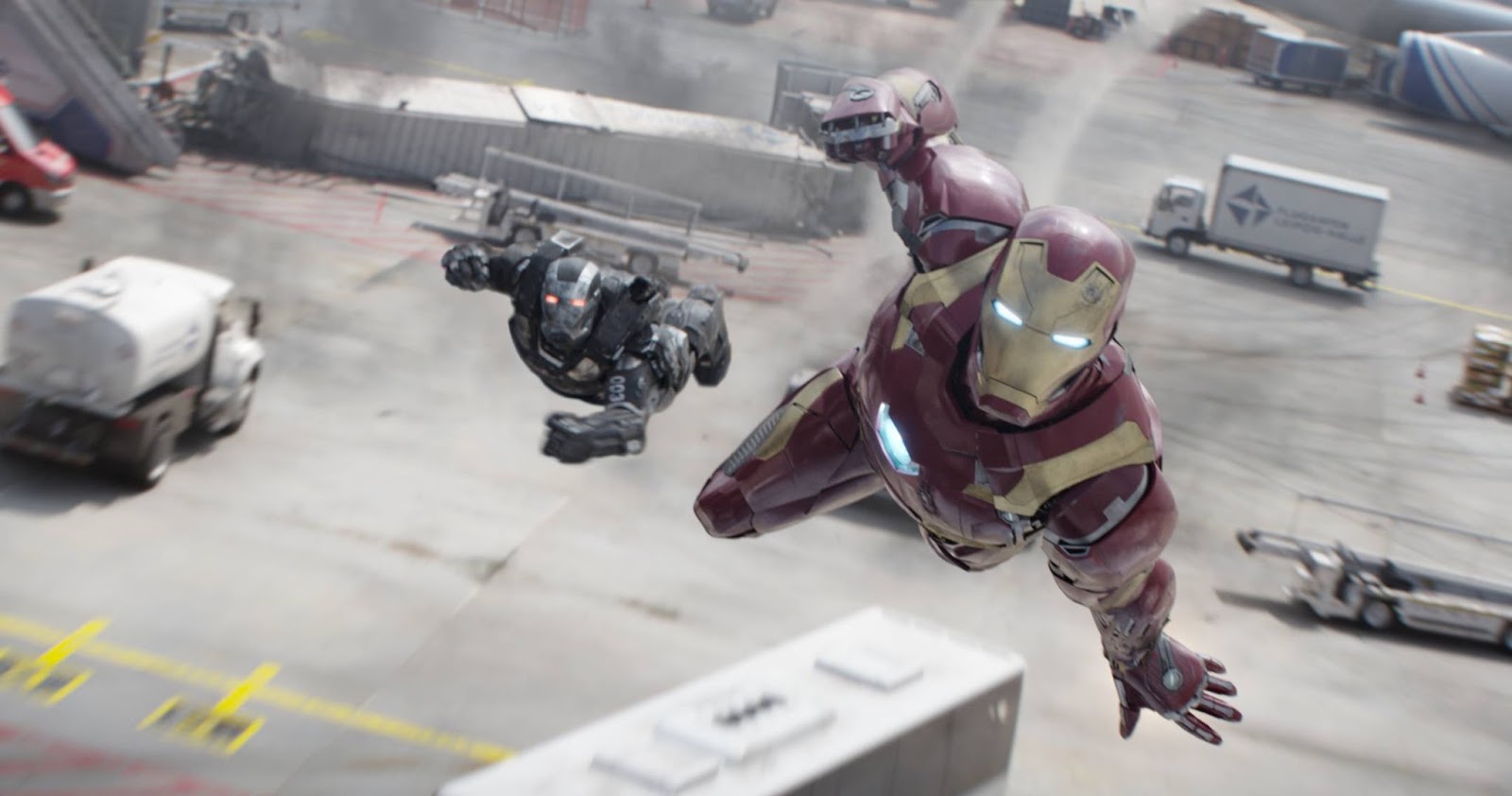
The first 40 minutes set this up nicely: an operation goes wrong, people are killed and the Avengers are confronted with footage of the collateral destruction they have caused while saving the world. But these ideas get left behind as the film gets caught up with pushing our characters into an artificial-feeling battle so destructive that an entire airport gets trashed by the “let’s cool our actions” team while trying to stop the “we should be independent” faction.

It would have been really nice to have these ideas explored in more depth, rather than a few moments here and there. Essentially, the film hires Alfre Woodard to deliver a top-notch performance as a mother whose son was Avengers collateral damage, to convince Tony things need to change, and leaves it at that. Steve’s counter-argument gets laid out swiftly – though he strangely makes no reference to the fact that the previous film saw a very similar “government organisation” revealed as the source of all evil in the Marvel world. It’s quick beats like this that set up this collision – but only Tony and Steve get any chance to express any form of developed views (in a few very well acted scenes). The motivations of the rest of the Avengers seem under-developed.

But that’s the problem with Captain America: Civil War: it’s seriously overstuffed. With some of these plots and characters removed, we could have actually had a very rich, thematic story.

The whole “Zukovia Accords” plot also has to constantly juggle for space with leftover “Winter Soldier” plotline from the previous two films. Truth be told, the latter is the more interesting, dealing with actual emotions, friendships and loyalties – chiefly the bond between Bucky and Steve (very well illustrated in a few brief, well played scenes). It’s this dilemma of whether Bucky can be held responsible for things he did under mind control that becomes the film’s key question. This plot line works far more effectively as it basically involves only three of the characters and feels like it has genuine things at stake, in a way I just can’t feel about the forced “civil war” angle. 

But it’s that civil war angle that the film is being sold on – and it’s what the middle section of the film is given over to. The big, airport-wrecking battle between the two sides is well shot, has good special effects and throws in plenty of neat one-liners. But what it completely lacks is any sort of dramatic tension or any stakes. As our heroes indestructibly bounce around while swapping light banter you never feel that this battle really amounts to anything. The sides don’t seem that far apart, or really that different – in fact the whole thing feels like playground horseplay.

The big battle is even undermined by the fact that we’ve already seen our heroes fight each other at least twice already in small combinations – and in all these cases, bodies are thrown about mercilessly but no one suffers more than a few scratches. Even after a character falls hundreds of feet to the ground, he’s later shown as basically being absolutely fine. The big battle is supposed to be the exciting showpiece, but it’s basically just big filler. A load of noise, where nothing really happens and no-one really feels at any risk, with no real consequences (all the emotional consequences emerge from the smaller scale final confrontation which would be unchanged if this airport fight was removed).

The film only really recovers again once that fight is benched, and we wind up with three of our heroes squaring off over very personal issues. This also brings to the fore the Daniel Brühl’s fascinating character, a very different type of villain: someone whom the film plays a neat game of misdirection with. The film reveals one of its themes as revenge, and how much it can dominate or twist our lives. This is given voice through a wonderfully written and played scene between Brühl and Boseman (very dynamic as the future Black Panther, dealing with grief over the murder of his father).

That scene gives an insight into the film’s real strengths: the small moments. The bits where the overblown fighting can be put to one side and we can see these characters (and the very good actors who inhabit them) talk. Moments like this carry more humanity, interest and tension than a thousand sequences of a giant Ant-man. In these moments, Downey Jnr and Evans are both terrific. Evans was born to play this part, making Rogers adamantine in his decency and nobility without being wearing, and also demonstrating an increasing streak of an old-soul who is tired of listening to other people and wants to make his own choices. Downey Jnr increasingly makes Stark a man hiding resentments, fears and doubts under a veneer of cool. Several other excellent performances also burst around the margins of the film (I’d single out Mackie who is excellent as the loyal Sam).

It’s just a shame Captain America: Civil War wastes some strong material in the prolonged set-up – and then enactment – of its superhero feud. Enjoyable as it can be to see this sort of stuff from time to time, after a while it’s tedious to watch invulnerable people taking pot shots at each other with no discernible impact. A single conversation with stakes – with a doubt about whether a friendship will hold or not – has more tension and excitement than a hundred sequences of heroes hitting each other. There is a more interesting story here – but between the action and the obligatory set-ups for future Black Panther and Spiderman movies (excellent as Boseman and Holland are in these roles) it doesn’t quite reach its potential.

Concussion (2015)

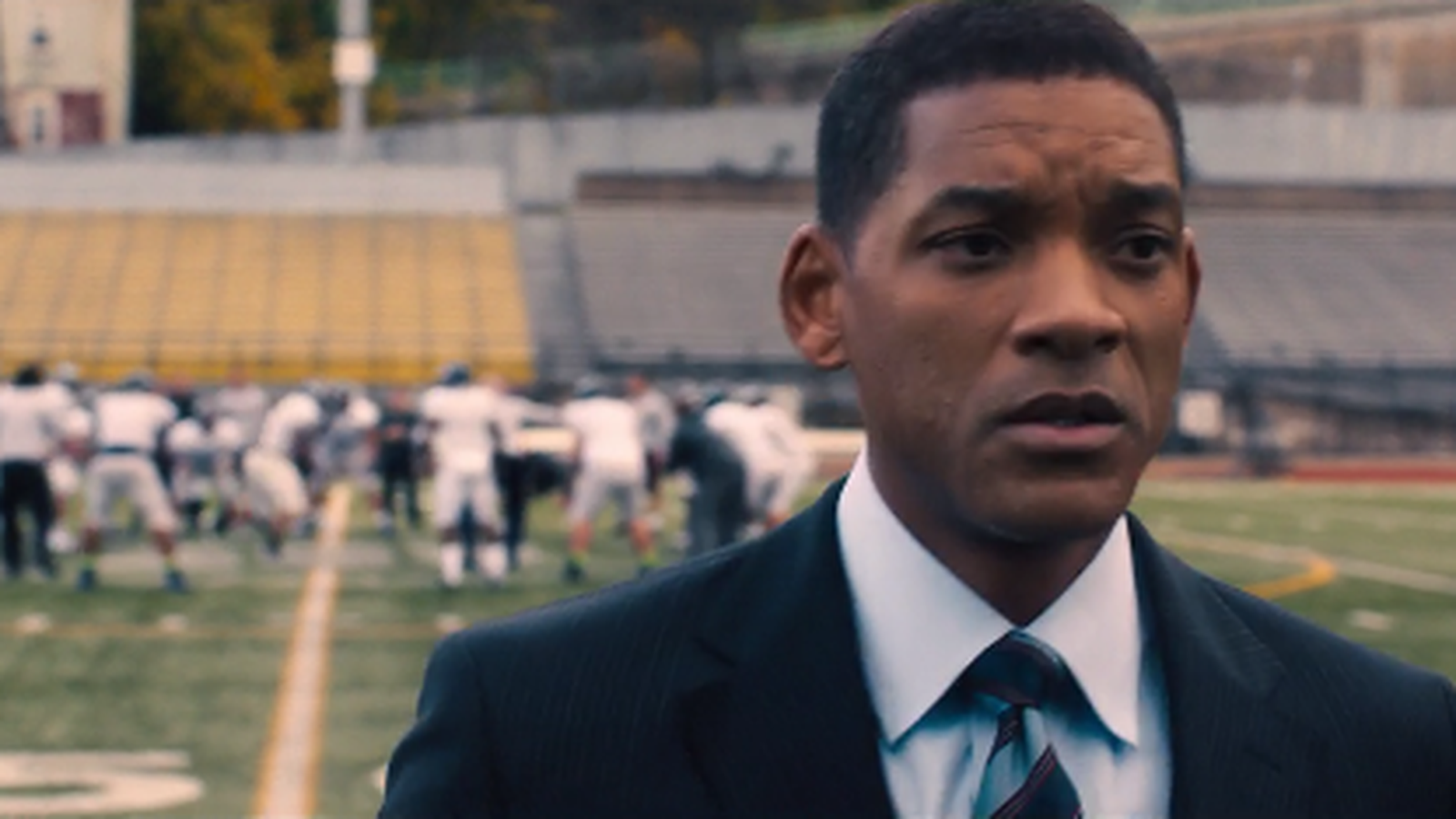
Will Smith takes on the NFL in solid but uninspired true-life story Concussion

Director: Peter Landesman

Cast: Will Smith (Dr Bennet Omalu), Alec Baldwin (Dr Julian Bailes), Albert Brooks (Dr Cyril Wecht), Gugu Mbatha-Raw (Prema Mutiso), David Morse (Mike Webster), Arliss Howard (Dr Joseph Maroon), Mike O’Malley (Daniel Sullivan), Eddie Marsan (Dr Steven T DeKosky), Adewale Akinnuoye-Agbaje (Dave Duerson), Stephen Moyer (Dr Ron Hamilton), Richard T Jones (Andre Waters), Paul Reiser (Elliot Pellman), Luke Wilson (Roger Goodell)

In 2002, Pittsburgh pathologist Dr Bennet Omalu (Will Smith) carried out an autopsy on deceased former Pittsburgh Steelers centre (and American Football legend) Mike Webster (David Morse). What he discovered – that the high speed impacts of American football massively increased the chances of players suffering serious brain damage and debilitating mental conditions – was to change his life, and lead to a six-year battle to get his research acknowledged by the NFL. This film dramatizes this story – with the obligatory inventions and dramatic changes (Landesman describes the film as “emotionally true” if not “factually true”).

Concussion is a fairly straight-forward, rather uninspired “one man’s struggle” kind of film. There isn’t much in it, to be honest, that is particularly unique or different from films of this type we’ve seen before. We’ve pretty much all seen the trope of a man pushing to get himself heard against the scorn, disbelief and anger of those who need to hear him the most. Does Concussionadd anything new to that? No not really.

Peter Landesman shoots the film with a methodical, workmanship that hits all the expected beats. The whole film plays like Michael Mann’s The Insider-lite: with the difference that the NFL never really convinces as an actual threat in the way Big Tobacco does in that film. The film falls over itself to repeatedly tell us how powerful the NFL is but never really shows us in the film how that power might work. When the FBI drum up charges against Omalu’s mentor, you never get the sense that this is being directed by the NFL themselves. They are simply never that dangerous an opponent.

Maybe because this is a film that doesn’t want to run the risk of saying America’s beloved sport is dangerous. It wants to blame bad eggs rather than an institutional failure – hence the repurposing of former player Dave Duerson as a sort of braggart bully. The characters playing the NFL heads are relegated to TV screens in the corner. It never wants to really look at the risks of this institution wilfully burying evidence their sport is dangerous, or question whether this sport is even a good idea. Throughout the world of sport, there are ungoing debates about the health risks of sport, from the danger of heart conditions to early onset dementia in football players from heading the ball. This film fails to really tap into any of this.

As such, there isn’t really any dramatic force behind the film: it doesn’t manage to suggest Omalu is in danger and it doesn’t want to turn the NFL into actual antagonists. It treads a weary middle ground. If the NFL was really positioned as a threat, then the pervasive presence of its stadium in Pittsburgh would be sinister. It isn’t for all Landesman tries to shoot it in that way.

Despite this though, Will Smith is very good as Omalu. The film’s version of the doctor seems a little different from the quirky, socially awkward real-life Omalu. But Smith nails the home-run scenes of Omalu raging at his research being disregarded. (In real life it was easy for the NFL to dismiss Omalu by using his Nigerian heritage (his ‘otherness’) quietly against him. The film doesn’t touch upon this by the way.) Smith has all the charisma the role needs and brings it a certain James-Stewartish moral decency.

The rest of the cast don’t get much else to play with. Alec Baldwin is pretty good as a former NFL doctor trying to ease his conscience (although his accent got some criticism). Gugu Mbatha-Raw has a fairly thankless role as the supportive wife, but does it well. Albert Brooks might be a bit too much at times as Cyril Wecht, but David Morse plays Mike Webster with sensitivity.

The film is not always that subtle. Shots of Webster haunting Omalu are a bit much. Omalu’s unhappiness and frustration are telegraphed using familiar clichés, from raging impotently at stony faced law officers, to trashing a room in his still-under-construction dream home in Pittsburgh (having read the source book it’s hard to believe the real Omalu ever did something like this). The timeline of the film isn’t always clear. There is a little too much lingering on funerals and tear-stained relatives for easy emotional hits.

The main issue is that Concussiondoes nothing special and doesn’t manage to make its familiar structure feel particularly fresh. It’s just a very, very familiar type of story told with no real unique imagination. Although Smith is very good, it’s not quite enough.

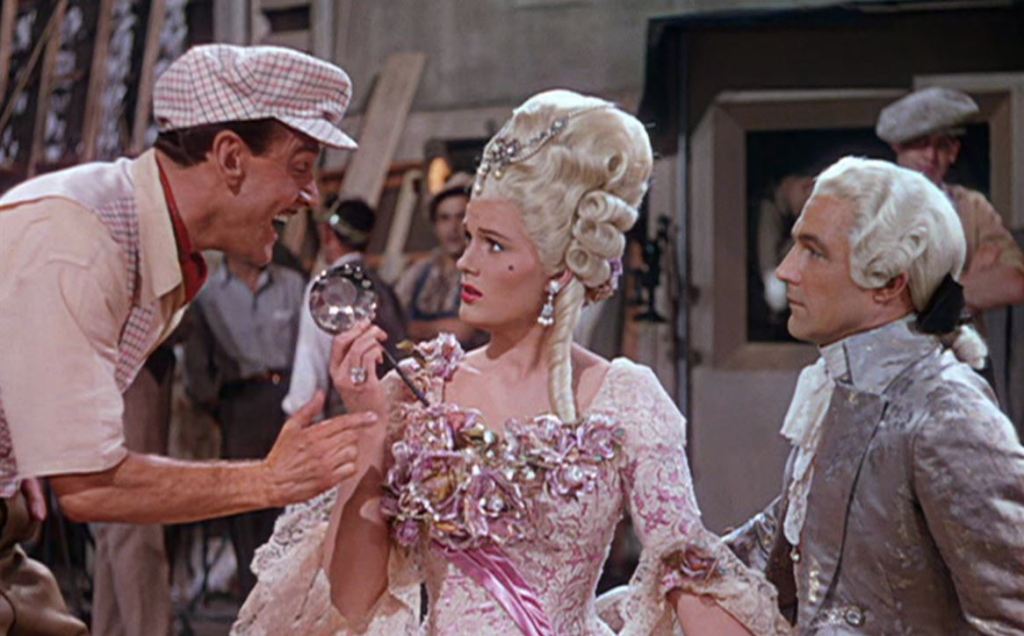
Singin' in the Rain (1952)

Singin' in the Rain (1952)

The most beloved of all musicals gives you a burst of pure enjoyment no matter when it plays

Director: Stanley Donen, Gene Kelly

Cast: Gene Kelly (Don Lockwood), Debbie Reynolds (Kathy Selden), Donald O’Connor (Cosmo Brown), Jean Hagen (Lina Lamont), Millard Mitchell (RF Simpson), Cyd Charisse (Woman in the green dress), Douglas Fawley (Roscoe Dexter), Rita Moreno (Zelda Zanders)

Is there a more loved musical than Singin’ in the Rain? Is there a more famous musical from Hollywood’s golden age? That second point is particularly interesting, as this was possibly the last of the big Hollywood song-and-dance films – most of the rest that followed were film versions of Broadway hits. Singin’ in the Rain also has that “late discovery” quality: inexplicably not nominated for Best Picture (or hardly any other Oscars), it was for many years considered a second tier musical behind works like An American in Paris. Now it stands tall over the lot of them.

Singin’ is a film assembled from a collection of songs MGM held the rights to. The songs were given to Kelly, Donen and the screenwriters with the instruction to “come up with a movie”. What they came up with was this delightful film-about-films. Don Lockwood (Gene Kelly) and Lina Lamont (Jean Hagen) are the biggest stars of the silent screen in Hollywood, whose careers are in trouble overnight when sound is introduced. He can’t really act and she has a voice like nails on a blackboard. But Lockwood can sing and dance – so why not make their latest film a musical? Especially since the talented Kathy Selden (Debbie Reynolds), who Lockwood has fallen in love with, can sing and act and can dub Lina’s voice. What could go wrong?

There are few more purely enjoyable films than Singin’ in the Rain. Nearly every scene has a moment designed to make you burst out in a smile, be it a cracking line of dialogue, a piece of prodigious dancing skill or the simple warmth and joy of the leading actors. Every second something delightful seems to happen. The entire film is an explosion of gleeful joy in the sheer exuberance of singing and dancing. Kelly’s choreography brilliantly uses everyday props and pieces of furniture to give the numbers an exciting everyday charm. It gives the songs an immediate “gotta dance” energy. How could you not like it?

Threading these songs around a structure of Hollywood taking on sound for the first time was a brilliant idea. The recreation of the acting styles and technology of Hollywood is brilliant. Lockwood is a hopelessly stagy actor, hideously artificial in his gestures, while poor old Lina Lamont is horrendously wooden with an awful voice, and a complete lack of any talent. Jean Hagen as Lina Lamont is in many ways the butt – but she’s so demanding, bullying and selfish we don’t mind that most of the jokes are on her.

The shift towards sound in Hollywood is actually interesting as well as hilarious. Where do we place the mikes? How should the actors get used to speaking into a mike? How do we cancel out the background sound? What do we do with loud props? One of the highlights is the screening of this film-within-a-film to an audience for the first time. All the terribleness Lockwood and Lamont gets revealed. In a particularly genius moment, the sound of the picture gets out sync with the picture, with the voices seeming to come out of the young actors’ mouths to hilarious effect.

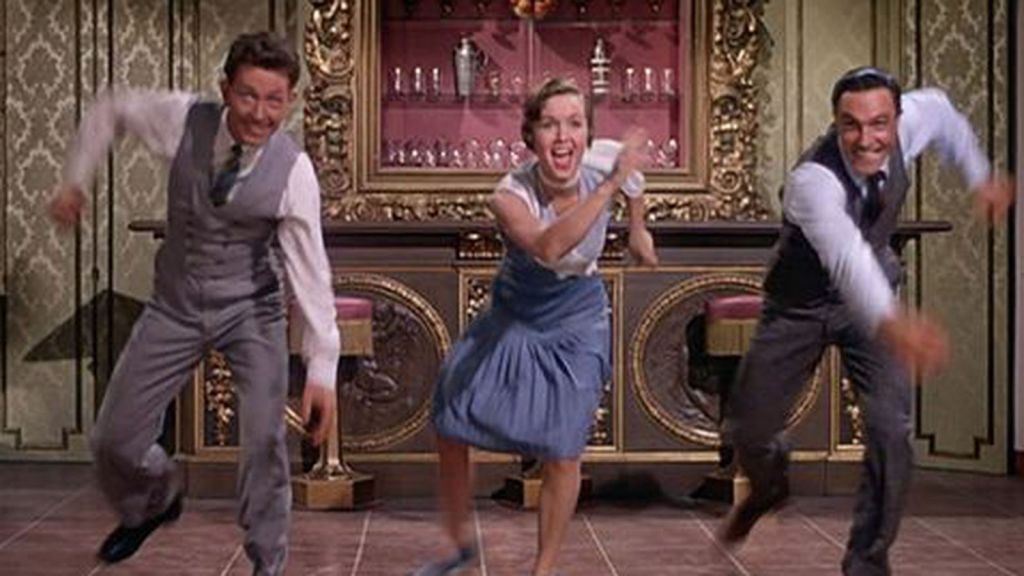
Alongside this we get some of the finest song-and-dance routines in the history of the movies. Donald O’Connor is electric as Cosmo and his dance routine for “Make ‘em Laugh” is an astounding early pace-setter in the film: how does he do what he does here? O’Connor goes bouncing off walls, swirling in circles on the floor, springing from place to place without a single pause for breath. Most of this number (like many of the others) is done in one take with electric pace. And that’s the film just warming up.

Debbie Reynolds famously described doing Singin’ as being (along with childbirth) one of the hardest things she’d ever done in her life. You can see that in ‘Good Morning’, another electric three-way number with herself, Kelly and O’Connor – she is pounding the floor to keep up with these two masters (and does a brilliant job). She was pushed to the extremes by Kelly who privately considered her a not quite strong enough dancer. Kelly dropped her from Broadway Ballet Medley, a complex ballet-heavy (as per all Kelly films from On the Town onwards – a sequence that I must confess I find a little dull). She’s still excellent – charming, sprightly, light, glorious fun – but it did mean Kelly re-worked the main number to showcase just himself.

Ah yes. ‘Singin’ in the Rain’. This sequence of the film is probably wedged in everyone’s mind. Even if they’ve never seen the film, people are familiar with Gene Kelly, soaked to the skin, dancing through puddles and swinging around lampposts. Kelly is of course marvellous in this sequence (hard to believe he was apparently suffering from the flu at the time) and the number has complete charm to it – that carefree vibrancy of realising you are falling in love. Especially as Lockwood’s ego is finally being put to one side in order to celebrate feelings he’s having for another person. But the whole scene is just sheer cinematic magic. And for something so famous, you never get tired of it. 

But then Kelly has pure star-quality here. Lockwood is a charming, handsome and smooth film star – but the film is happy to puncture his pomposity, or demonstrate in its opening sequence the self-aggrandising version of his early career (“Always dignity!”) with the reality of faintly embarrassing and dignity-free stage and stuntman work. Kelly is so charming you don’t mind that the film gives him an easy ride, considering Lockwood is actually quite selfish.

Singin’ in the Rain is pretty close to perfect. Even though I find some of the ballet stuff a little boring myself, it’s still filmed and shot with skill. It’s a pet discussion between film experts to ask how much of the film was directed by Kelly and how much of it was done by Donen. I guess it doesn’t really matter except to cinephiles, as the film is just beautifully directed: light, frothy, fun and with real technical expertise – the slow crane shot at the end of the famous number is justly famous. The pace is spot on, and the film is hilarious. Its understanding of filmmaking really pays off in the sequences that chronicle early film making.

So why did this film not get recognised at the time? Well to be honest, there were probably too many movies like this out at the time. It was a lot easier to miss in the crush of mega-MGM movies. It followed on the coat-tails of An American in Paris which had worn a huge number of Oscars (and was pushed back into cinemas in place of Singin’ in the Rain). Singin’ was still a big hit – but it perhaps needed film-fans to embrace it because it so perfectly married a love of Hollywood with the technicolour delight of 1950s musicals. Either way, Singin’ in the Rain is a delightful masterpiece which is guaranteed to pop a smile on your face. No matter the weather.

Apocalypse Now (1979)

Martin Sheen heads into insanity in Coppola’s epic pretentious masterpiece Apocalypse Now

Director: Francis Ford Coppola

Cast: Martin Sheen (Captain Willard), Marlon Brando (Colonel Kurtz), Robert Duvall (Lt Col Kilgore), Frederic Forrest (Chef), Albert Hall (Chief), Sam Bottoms (Lance), Laurence Fishburne (Mr Clean), Dennis Hopper (Photojournalist), GD Spradlin (Lt General Corman), Harrison Ford (Colonel Lucas), Scott Glenn (Captain Colby), Christian Marquand (Hubert de Marais), Aurore Clément (Roxanna Sarrault), Jerry Ziesmer (Mysterious Man)

During the 1970s, the director was king in Hollywood. Get a reputation as a visionary director, and Tinseltown fell at your feet. You could spare no expense to put together ambitious, thought-provoking, epic films. If you wanted to shoot on location at huge cost, or reconstruct elaborate sets for single shots, for a huge runtime that catered as much to your ideas of being an artist as it did to crowd-pleasing narrative, then Hollywood would give you keys. It didn’t last: several massive bombs (combined with the huge box office take of Star Wars) shattered the mystique of the director as an ego-mad, flawless genius who had to be indulged, and persuaded Hollywood the future was in big-budget, mass-produced action films (welcome to the 1980s, Hollywood’s nadir).

Apocalypse Now wasn’t one of those flops, like (most infamously) Heaven’s Gate. But, by golly gosh, it really could have been. In fact, in many ways it should have been. It has all the hallmarks: a huge runtime, filmed over a colossal period of time in a difficult location, a plot that mixes action, war and thrills with impenetrably pretentious musings on mankind’s dark soul. A maverick director throwing his own very personal vision at the screen, and damn the consequences. It’s a miracle Apocalypse Now wasn’t a career apocalypse for everyone. It escaped because, despite everything, it more or less gets the balance right between plot and character and pretention and faux-philosophy.

The film is famously a transposing of Joseph Conrad’s Heart of Darkness into Vietnam. Captain Willard (Martin Sheen) is ordered to head down the river to “terminate with extreme prejudice” rogue Special Forces Colonel Kurtz (Marlon Brando), who is conducting his own vigilante war. On the boat trip down the river, Willard encounters a host of increasingly bizarre and surreal scenes, from war-mad Colonel Kilgore (Robert Duvall) to a seemingly leaderless battle over a bridge, a playboy bunny show and a compound of ex-French colonials. And that’s before he even arrives at Kurtz’s compound and things get really strange.

Apocalypse Now is almost impossible to separate from the bizarre, tortuous route it took to get to the screen. Originally scheduled for a few months, the film took over a year to complete. A typhoon destroyed all the sets in the first two months. Original star Harvey Keitel was dismissed after a week (as his performance wasn’t right): his replacement, Martin Sheen, had a near-fatal heart-attack partway through filming. Marlon Brando not only turned up the size of a buffalo but refused to learn (or even speak) his lines. A year into production, the film had no ending. Coppola put his entire fortune up as collateral to complete the film. It was a nightmare.

But yet somehow what emerged has a sort of force-of-nature quality to it. Even though parts are basically pretentious rubbish, despite the fact I have twice fallen asleep in this film, despite the fact it is far from being a film that trades in complex ideas and offers profound insights, it still has a hypnotic quality about it. It’s done with a real force of commitment, a genuine labour of love, a film that doesn’t leave anything in the locker room but throws it all at the screen. The quality of what lands may sometimes be questionable, but the commitment with which it is thrown is beyond doubt.

And in a world of cookie-cutter films, it’s hard to have anything but respect and regard for a film that is so defiantly its own animal, that tells its story in its unique way. It’s perhaps one of the first “experience” films: no film could of course communicate what it was like to serve in Vietnam, but this film perhaps gets close to the surreal, drug-fuelled madness in that conflict.

Because Apocalypse Now is a very surreal film. Its plot is extremely thin, and each section of its (mammoth) runtime is all about experiencing another element of the American experience. In the commentary, Coppola talks about the river trip being partly a journey from the present into the past, a journey back not only into the history of the conflict (and its different stages) but also the regressing of mankind itself into a more primitive, malleable, basic state. It’s a big lump for a film to bite off – and I’m not sure if the idea really comes across without you knowing it. The real impression you get is of rules of society being left further and further behind.

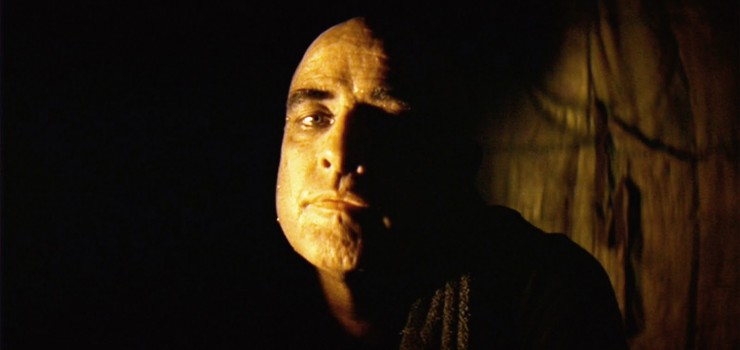
The arrival at Kurtz’s compound is the fufillment of this increasingly unnerving story. We’ve seen the madness on the journey, the pointlessness, and the bemused, carefree confusion of the crew. But at the camp we get the overblown, decadent lunacy of Kurtz. Brando dominates the final 30 minutes of the film, although his monologues are meaningless drivel, the sort of intellectual point-scoring you could hear in a sixth form debating society. To be honest, iconic as Brando’s appearance is, his performance of mumbling battiness is actually a little awful (like one big practical joke from the actor) and the film’s momentum grinds to a halt while he babbles on. 

In fact, so self-indulgent is Brando that in a way it’s a sort of tribute to Coppola’s mastery of cinema that he makes this pompous character make any sense at all – or that he makes this sort of nonsense even remotely watchable. But again it’s the hypnotic pull of the film: Coppola builds towards a chilling, haunting final sequence of Willard and Kurtz’s final confrontation intercut with The Doors’ The End and the real-life slaughtering of an ox by a crowd of real-life villagers (they were going to kill the animal anyway but offered to do it for the camera). Coppola somehow turns all this into iconic cinema, even though, viewed objectively, it’s overblown, indulgent, pretentious rubbish.

The whole film is a testament to hewing compelling filmmaking out of breathtaking insanity. After the film departs in the boat, most of reason, sense and conventional story-telling depart with it. Information only gets conveyed through rambling monologues from Willard. The crew of the boat get into scraps that reflect heightened versions of the American experience in Vietnam – from a war crime as the crew shoot-up what turns out to be an innocent boat, to an attack from unseen tribesmen with spears from the mists of the shore. Sam Bottoms, as surfer-turned-GI Lance, is our guide of a sort here – as he gets more stoned, so narrative logic departs with his senses. 

What keeps the film going throughout is the masterful film-making. Coppola shoots the bizarreness with brilliant, visionary imagination. As a social theorist he’s pretty basic – man is, by the way, a savage animal and the Americans didn’t know what they were getting themselves into in ‘Nam – but as a film-maker he’s one of the best. Who else could have made three hours of episodic boat journeys so strangely compelling? The film is crammed full of great scenes and moments which rarely feel like they tie together – in fact, they could almost be watched in any order – and there is barely a character in there, but the film feels like its throwing you into the madness of Vietnam. 

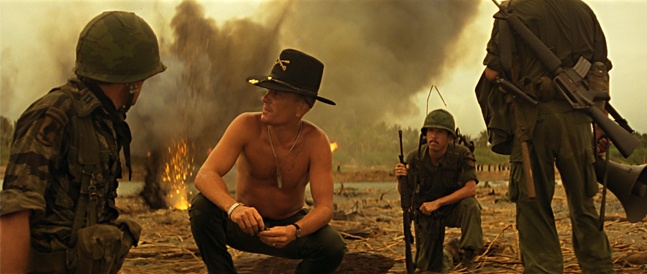
Even the sequence with a bit more narrative is still laced with absurdity. Kilgore’s helicopter assault on a village – and its use of Wagner blaring from helicopters to scare the Vietcong – is justly famous. This is a bravura film-making – and as much a tribute to the astoundingly amazing editing and sound work of Walter Murch as it is the photography of Coppola. Like most of the rest of the film it is visually outstanding, but it also has the film’s best writing (in the quotable but also strangely subtle characterisation of Kilgore) and also the film’s most iconic performance in Robert Duvall. Duvall is terrific as the war-loving, but strangely childish Kilgore, obsessed with surfing and with an ability to live totally in the moment. 

This sequence doesn’t hesitate in showing both the brutality of war – and also the insanity of our commanders. Kilgore is genuinely dreading the end of the war, and you can see why he would since he is clearly having a whale of a time bombing places. Kilgore is a lovable, quotable badass doing what needs to be done – but the film doesn’t forgot that he is also an insane soldier with no off-switch. And Apocalypse Now never really glamourises war, for all the excitement and beauty of watching those helicopters come over the horizon.

It’s the artistry in its film-making, and the genuine effort and work that helps make it a demented classic. Walter Murch’s sound design and editing is possibly flawless – this might be the best edited and sound designed movie ever – from the opening moment when the helicopter blade sounds transform into a hotel room fan you know you are seeing something special. Scenes such as Willard’s hotel-room breakdown hum with intensity as they feel genuinely real – that scene in particular feels like Martin Sheen exposing part of his tortured psyche at the time. Sheen is by the way perfect as Willard, a slightly unknowable killer with dead eyes and a dead soul, still aware of the vileness of his world.

Apocalypse Now is a sprawling batty film – and in many ways an intellectually empty one straining at a depth that ain’t there. But somehow, for all that, it still is a masterpiece. Which is in itself a bit of a miracle as it really should be a disaster. It’s pretentious. It’s overlong. It’s very full of its own importance as a work of art (the re-insertion of the long-winded political discussion at the French Plantation into the Redux version doesn’t help). Some of its performances are plain ridiculous, verging in Brando’s case on outright bad. But yet, it’s delivered with such force of conviction, it’s so wonderfully assembled, so hauntingly shot and edited, that it hammers itself into your brain. You literally can’t forget it, for all its many, many flaws. Despite yourself, you find yourself forgiving it an awful lot – a lot more than you might expect. A mess, but also a classic.

Three Colours: White (1994)

Zbigniew Zamachowski confronts the problems of revenge in Kieślowski’s Three Colours: White

Director: Krzysztof Kieślowski

Cast: Zbigniew Zamachowski (Karol Karol), Julie Delpy (Dominique Vidal), Janusz Gajos (Mikolaj), Jerzy Stuhr (Jurek), Aleksander Bardini (Lawyer), Grzegorz Warchol (Elegant man), Cezary Harasimowicz (Inspector), Jerzy Nowak (Old farmer), Jerzy Trela (Monsieur Bronek)

The second film in Kieślowski’s ambitious thematic trilogy probably couldn’t be much more different from the first. Whereas Blue was a romantic tragedy, this is a sort of bitter comedy, a kind of anti-farce if you like. Here, the themes of equality are much more about getting even rather than all men being equal. Just as Blue looked at the negativities of liberty, this looks at the dark side of equality, and the blinkered tunnel vision we follow in order to get ourselves even.

Polish hairdresser Karol Karol (Zbigniew Zamachowski) is divorced in Paris by his French wife Dominique (Julie Delpy). In quick succession, Dominique strips him of his home, access to their bank account, his passport and his share of the business, and takes another lover. Reduced to homeless penury on the streets of Paris, Karol finally finds a way to get home to Warsaw by befriending sad-sack successful businessman Mikolaj (Janusz Gajos), a fellow Pole, on the Métro. With Mikolaj’s help, Karol finds himself back home and soon in a position to start scheming his revenge.

White is, let’s be honest, a lot less of a triumph than Blue. That was a film that combined stunning visuals, directorial invention, profound depth and emotion. It was a story that looked at universal themes from a fascinating series of new angles. White,however, is more of a shaggy dog story. It feels like it’s aiming for some sort of Chaucerian fable, but it never really goes anywhere in particular, and it never really engages as much as it should while it tries to get there. While it’s not unentertaining film, it’s at best a good one rather than a great one.

My main problem is that Dominique’s character just never clicks. Why does she do the things she does? No idea. We are never given any insight into her character – she remains a cipher, bordering on a trope of the wicked beautiful seducer. Why does she jilt Karol? Surely it can’t be because of his (rather obvious) impotence ever since he arrived in France, and felt isolated in his new home? Why does she take such a delight in persecuting him, even down to audibly having sex with her lover when he calls her (“Perfect timing” she says before getting frisky)?

It’s hard not to get the sense of a film which has a slight suspicion of women. I don’t imagine that this a suspicion Kieślowski  in any way shares – sensitive and humane portrayals of women are central to his films (not least Blue) – but when the only female character in this is the distant and unknowable Dominique it’s not good. Without any sense of why she has done the things she does, it’s hard to feel comfortable with the semi-comic destruction of her Karol plans.

But then that is part of the film’s point: Karol is obsessed (without even really knowing it) with his wife. Not even so much with revenge for that matter – just getting the chance to take on his wife in a one-sided struggle makes him feel closer to her. The only possession he takes home from Paris is a bust that reminds him of his wife (and which he painstakingly repairs after it is smashed to pieces). Much as tries to build a new life, it’s a monofocus – he only gets what he gets in order to use the resources against his ex-wife. 

So equality is in Kieślowski’s design, not a good thing. Shy, sweet Karol basically ends up entrapping himself and his wife in equally frustrating positions: she in prison, he faking his own death without a penny. What was the point for Karol? No wonder he looks up at her in prison with tears rolling down his face – he’s still in love and he’s got nothing to really show for his equality, other than their joint misery.

All of this sits alongside Kieślowski’s brilliant understanding of post-Cold-war Poland, a bustling land of opportunity to make a quick buck, where simple peasant farmers can be bamboozled out of their land by smarter guys who know businesses from the West are just dying to buy up properties. Karol shares this understanding of Poland. No wonder he’s all at sea in the rest. The instant he arrives back he’s delighted, relaxed and more confident – “I’m home!” he cries joyfully, even when his first view on arriving in Poland is a mass rubbish dump. 

Moments like that show Kieślowski’s dry comedy. There are plenty of other moments, helped by Zamachowski’s pretty lovable performance of the naïve-but-growing-in-confidence Karol. Karol and Mikolaj (an excellent Janusz Gajos) put together quite an excellent double bill of bromance laced with darker themes of depression (it’s no real surprise who Mikolaj is talking about when he tells Karol that he will help him if Karol can help his “friend” who wants to die but can’t kill himself). Karol’s hapless fate in Paris raises a few smiles, as does his surreal escape stuffed in a suitcase.

But there aren’t quite enough of them. Too much of the film either doesn’t connect or hold together. I could have certainly done without Karol’s sexual prowess returning once he is confident and rich in Poland (yawn!). Dominique’s non-character remains a serious problem, and there just isn’t enough meat on the bones here. Compared to the richness of the first entry in the series, this feels remarkably empty. It’s also a lot less visually arresting and imaginatively done than the first film: I’m already struggling to remember any of the visuals.

Kieślowski may well have wanted a sort of anti-comedy to be the pivot of his trilogy, but it doesn’t really work here. He ends up with something that feels so slight and underdeveloped that it doesn’t stick with the viewer, and doesn’t engage them either. While it has moments, as you would expect from a great director, and some very good actors, it doesn’t have nearly enough of them.

Mary, Queen of Scots (1971)

Vanessa Redgrave and Glenda Jackson are the feuding queens in Mary, Queen of Scots

Director: Charles Jarrott

Cast: Vanessa Redgrave (Mary, Queen of Scots), Glenda Jackson (Elizabeth I), Patrick McGoohan (James Stuart, Earl of Moray), Timothy Dalton (Lord Henry Darnley), Nigel Davenport (Earl of Bothwell), Trevor Howard (Sir William Cecil), Daniel Massey (Robert Dudley, Earl of Leicester), Ian Holm (David Rizzio), Andrew Keir (Ruthven), Robert James (John Knox), Katherine Kath (Catherine d’Medici), Frances White (Mary Fleming), Vernon Dobtcheff (Duke of Guise)

So here we are, back in the Tudor history craze of late 1960s Hollywood. Charles Jarrott directed, following up his efforts in Anne of the Thousand Days with this professionally mounted, handsome and rather personality-free film adaptation. It occasionally falls a bit too much in love with its luscious romanticism – and it falls hard for Mary herself, surely one of the worst queens ever – but despite all that, it has an entertaining quality that never lets you down.

The film picks up with the recently widowed Mary (Vanessa Redgrave) essentially being chucked out of France after the death of her husband the King, and swiftly being sent back to Scotland to take up the throne there. Problem is: the very Catholic Mary isn’t exactly the choice of the lords of Scotland – led by her bastard brother James Stuart (Patrick McGoohan). Mary’s Catholicism also threatens to destabilise the relationship with Protestant England – particularly because she is the nearest successor to Elizabeth I (Glenda Jackson). But Mary lacks Elizabeth’s tactical understanding of ruling and is guided by her heart – leading her into a disastrous marriage with feckless alcoholic Henry Darnley (Timothy Dalton).

Mary Queen of Scots is a stately picture, which uses its location shots, costumes and production design to tell its familiar story with a sweep and relish that effectively hides the lack of inspiration in its film-making. Just as in Anne of the Thousand Days, Charles Jarrott shows he’s a fine producer of middle-brow entertainment, safe costume dramas that aren’t going to challenge anyone’s perceptions or give you any real wow moments of filming. He’s happy to set the camera up and let the actors do their thing, with the script ticking off the great events.

That’s what you get here. It’s a film that could have been a lot more of an exploration of the rivalries and different life philosophies of its feuding queens. But it doesn’t quite connect with that. This is partly because it can’t quite bring itself to engage with the reality of Mary herself, preferring the popular romantic image. The film doesn’t want to admit that many of Mary’s decisions were, to put it bluntly, completely misguided bordering on wrong. It is in love with her romantic image – and not as enamoured with Elizabeth’s wiser, more pragmatic, manipulative rule. It’s this rule by heart rather than head the film finally holds up for praise.

It doesn’t help that Vanessa Redgrave feels miscast in the lead role. Redgrave is too sharp an actor to convince as someone as easily led and foolish as Mary. She looks too shrewd, she feels too smart. Redgrave compensates by speaking softly and giving a lot of love-struck eyes to various male actors (principally Nigel Davenport’s bluff, masculine Bothwell), but it doesn’t quite work. It’s like she’s struggling to find the character – and to find the balance in a film that doesn’t want her to be seen as too stupid, while the viewer is left slapping their foreheads at every action she carries out.

This feeling stands out all the more with Glenda Jackson’s casting as Elizabeth. Having just finished playing the same role in a landmark six-part TV series, Elizabeth R(which covered a lot of the same ground), Jackson here confirms that she was the definitive Elizabeth. As smart and shrewd an actress as Redgrave, Jackson’s natural firmness marries up very well with these qualities to make the perfect Virgin Queen. There have been so many others who have taken on the role, but Jackson is simply perfect in this role – she becomes Elizabeth. Her Elizabeth is clever, manipulative, cunning but also quick tempered, capable of great wisdom but prone to moments of passionate lashing out.

The rest of the cast is a familiar parade of character actors – British actors of this generation made a living from films like this! Timothy Dalton stands out as a foppish, clearly useless Darnley (here reimagined as a syphilitic bisexual with anger management issues), as does Ian Holm as a cool-headed, would-be power behind the throne David Riccio, who meets a tragic end. Daniel Massey does a decent job as Leicester (though I can’t shake memories of Robert Hardy in the same role in Elizabeth R – was he busy at the time?), Trevor Howard gets saddled with a lot of plot as Burghley. Up in Scotland, Patrick McGoohan has a lot of fun as a scheming Earl of Moray.

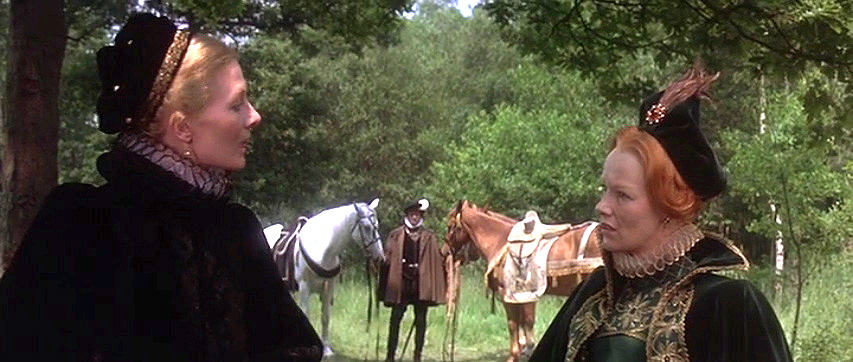
All of these actors fit comfortably into the slightly browned, grainy photography style of films of this type, and the screenwriters hammer together plenty of incident alongside dramatic invention. The focus on the soap opera of Mary’s three marriages (she’s widowed in the opening moments of the film) leaves plenty of scope for invention, from Darnley and Riccio’s affair to the inevitable non-historical meeting between Mary and Elizabeth – it seems like every drama going from Schiller onwards has invented a meeting between these two as a dramatic highpoint.

This final scene captures the lack of thematic depth to the film. In a film that had focused more on really comparing the differences between the two, this could have been the culmination of a debate running through the film (can you rule with a brain but not a heart?). Instead it misses the trick, and becomes a final game of one-up-man-ship, which the film allows Mary to win because she is the more romantic figure. 

It’s well mounted and assembled like many other films like this – but it’s not the best of its genre, and you do sometimes wish for something that had a little more meat on its bones.

Harry Potter and the Deathly Hallows Part 2 (2011)

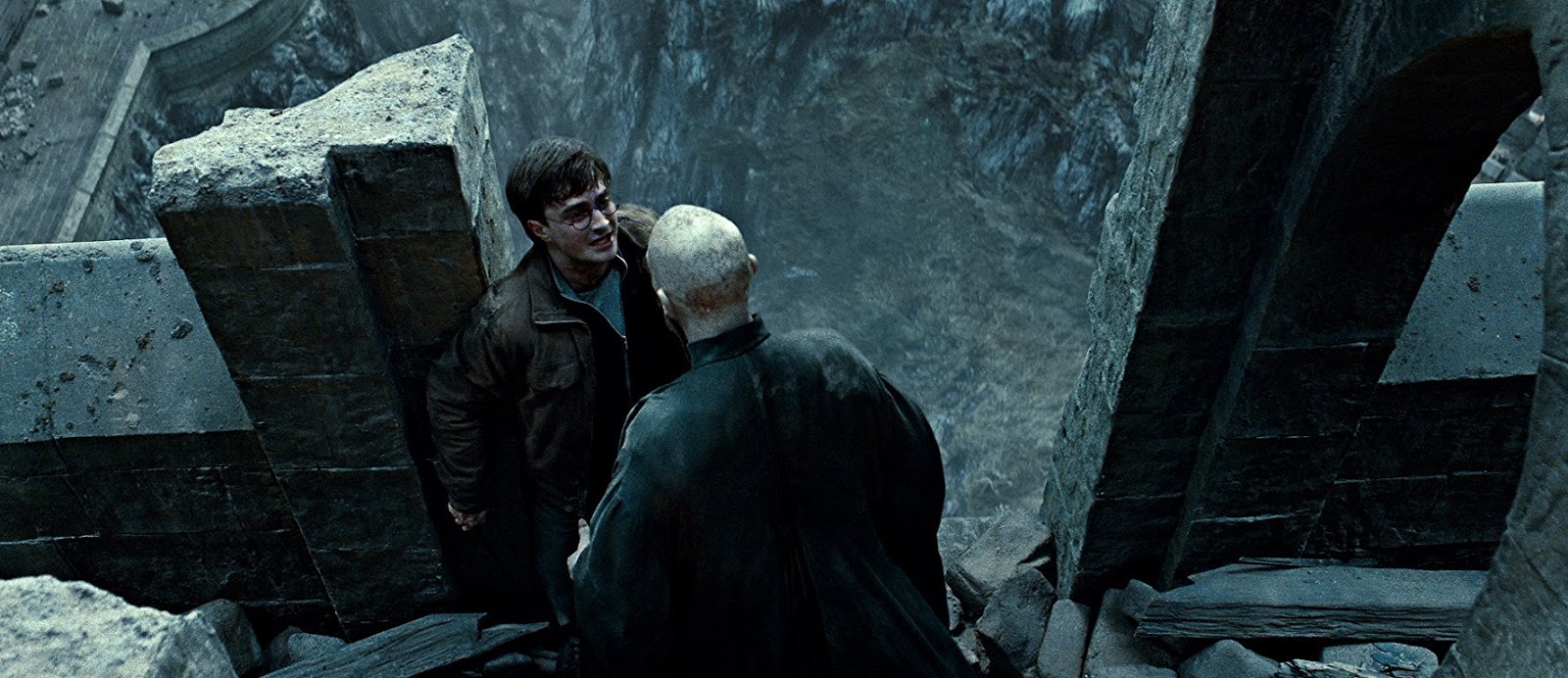
Harry and Voldemort prepare for their final showdown in Harry Potter and the Deathly Hallows Part 2

Director: David Yates

Cast: Daniel Radcliffe (Harry Potter), Rupert Grint (Ron Weasley), Emma Watson (Hermione Grainger), Helena Bonham Carter (Bellatrix Lestrange), Jim Broadbent (Professor Slughorn), Robbie Coltrane (Hagrid), Ralph Fiennes (Lord Voldemort), Michael Gambon (Albus Dumbledore), John Hurt (Ollivander), Jason Isaacs (Lucius Malfoy), Gary Oldman (Sirius Black), Alan Rickman (Severus Snape), Maggie Smith (Professor McGonagall), David Thewlis (Remus Lupin), Emma Thompson (Professor Trelawney), Julie Walters (Molly Weasley), Mark Williams (Arthur Weasley), David Bradley (Argus Filch), Ciarán Hinds (Aberforth Dumbledore), George Harris (Kingsley Shacklebolt), Gemma Jones (Madam Pomfrey), Kelly MacDonald (Rowena Ravenclaw), Helen McCrory (Narcissa Malfoy), Miriam Margolyes (Professor Sprout), Geraldine Somerville (Lily Potter), Adrian Rawlins (James Potter), Warwick Davis (Griphook/Professor Flitwick), Matthew Lewis (Neville Longbottom), Evanna Lynch (Luna Lovegood), Bonnie Wright (Ginny Weasley), James Phelps (Fred Weasley), Oliver Phelps (George Weasley), Domhnall Gleeson (Bill Weasley), Clémence Poésy (Fleur Delacour), Guy Henry (Pius Thicknesse), Nick Moran (Scabior), Natalie Tena (Tonks)
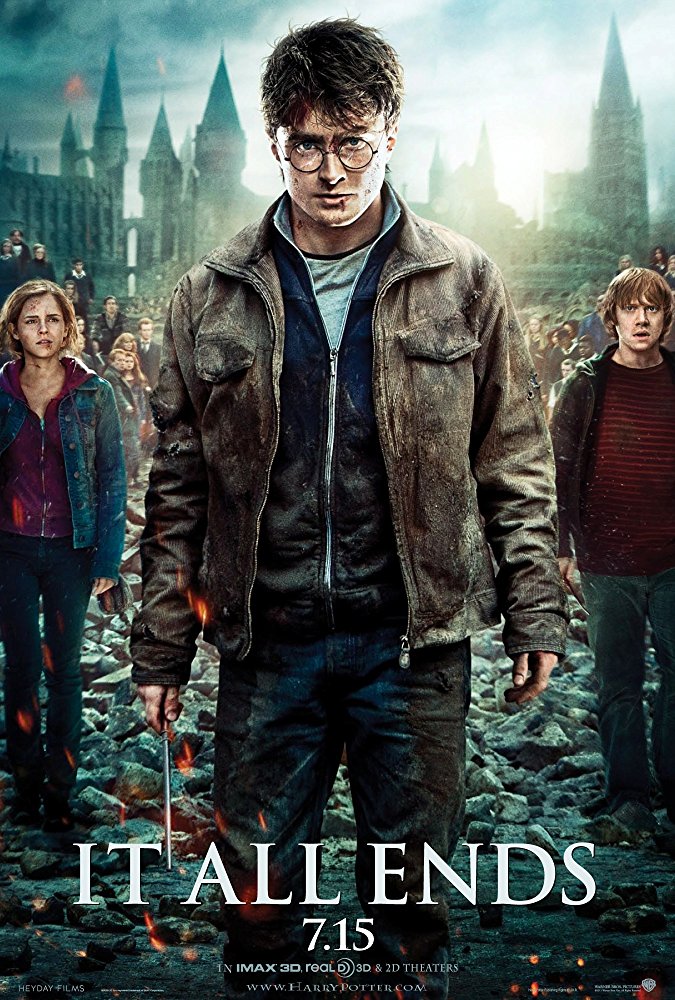
And so here we are. After 19 hours and 40 minutes, the Harry Potter franchise draws to a close in the rubble of Hogwarts. The franchise goes out swinging for some big hits – and it misses some of them – but at least it’s trying. If this turns out to be one of the least satisfying films in the franchise (at best the 6th best Harry Potter film), it’s not because they haven’t thrown anything at it.

The film adapts just under the last half of JK Rowling’s final novel. In an interesting structural twist, it actually ends up covering just over one day of time: between our heroes breaking into Gringotts Bank and the final confrontation between Harry and Voldemort, less than 24 hours has taken place. Nothing is really made of this in the film, but it’s an interesting thought. In fact Yates’ film is full of interesting half-thoughts that never go anywhere. More than any other film in the series, this is one where it is essential you’ve read the book before viewing it. Without the book you don’t get any of the rich context for most of the events.

This all culminates, for me, in the way the film falls apart in the last 20 minutes or so. This final section of the film changes, or cuts, so much of the book’s thematic depth, so many of its plot strands and explanations, that every time I see it I feel my disappointment starting to rise. I don’t want to be the guy who says “just shoot the book” – but if any film could have stuck with the book it’s this one. Why did they cut and change so much of this stuff? Did they really think, after almost 11 years and 20 hours of screen time, we wouldn’t have the patience for some of the more complex things from the book? Did they really feel that they had to stamp their own distinctive vision on it? Anyway, here are the things that always annoy me about this film:

1. Dumbledore’s backstory gets forgotten

Okay this is a minor one – and the film does leave some hints in. But for GOODNESS’ SAKE, they cut this book into two films, spent ages in the first film talking about the mysteries of Dumbledore’s dark past, then just as we meet Dumbledore’s brother Aberforth (a neat turn from Ciarán Hinds) and are about to get an explanation, Harry basically says words to the effect of “I’m not worrying about that. And neither should you folks. On with the film”.  

Even the Ghost of Dumbledore doesn’t get to explain any of this stuff. All the careful mood build of Part 1 is just thrown away. The book is about learning about death, the futility of the search for power, and humility. Dumbledore’s backstory of failed ambition is a massive part of this – and it gets dropped. It’s not like we didn’t have time in a series that has churned out films pushing up to three hours in length. I mean why put all that stuff in the first film, if you aren’t even going to reference it at all in the second film?

2. The Deathly Hallows get benched

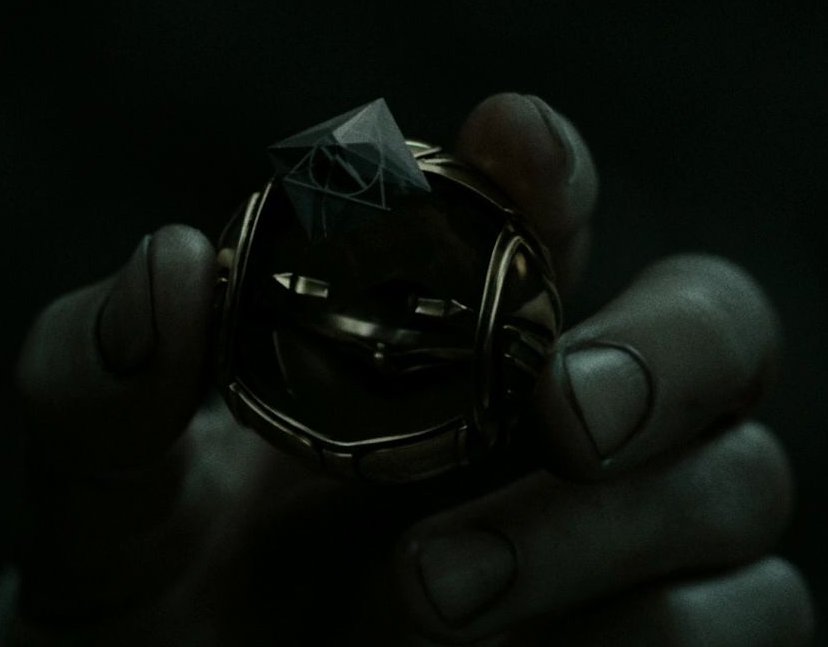
Again wouldn’t be quite so bad if we hadn’t spent a huge amount of time in the first film talking about them – but are the words Deathly Hallows even mentioned here? Instead, just like Voldemort, the film is seduced by the elder wand, focusing everything on the ownership of this MacGuffin. The point of the book is that all this stuff is a chimera –and that the real point is learning that death should not be feared but accepted at the proper time. 

As it is, this never gets built on – and the importance of the resurrection stone (including why it tempted Dumbledore so much) never gets explained. Rather it just comes down to who controls the powerful thing, with none of Rowling’s richer themes.

Harry ends up controlling all three here but we never really get the sense of Harry controlling them all, or understand his decision to throw away the stone, or his realisation that death is not to be feared but accepted.

3. Neville gets blown away

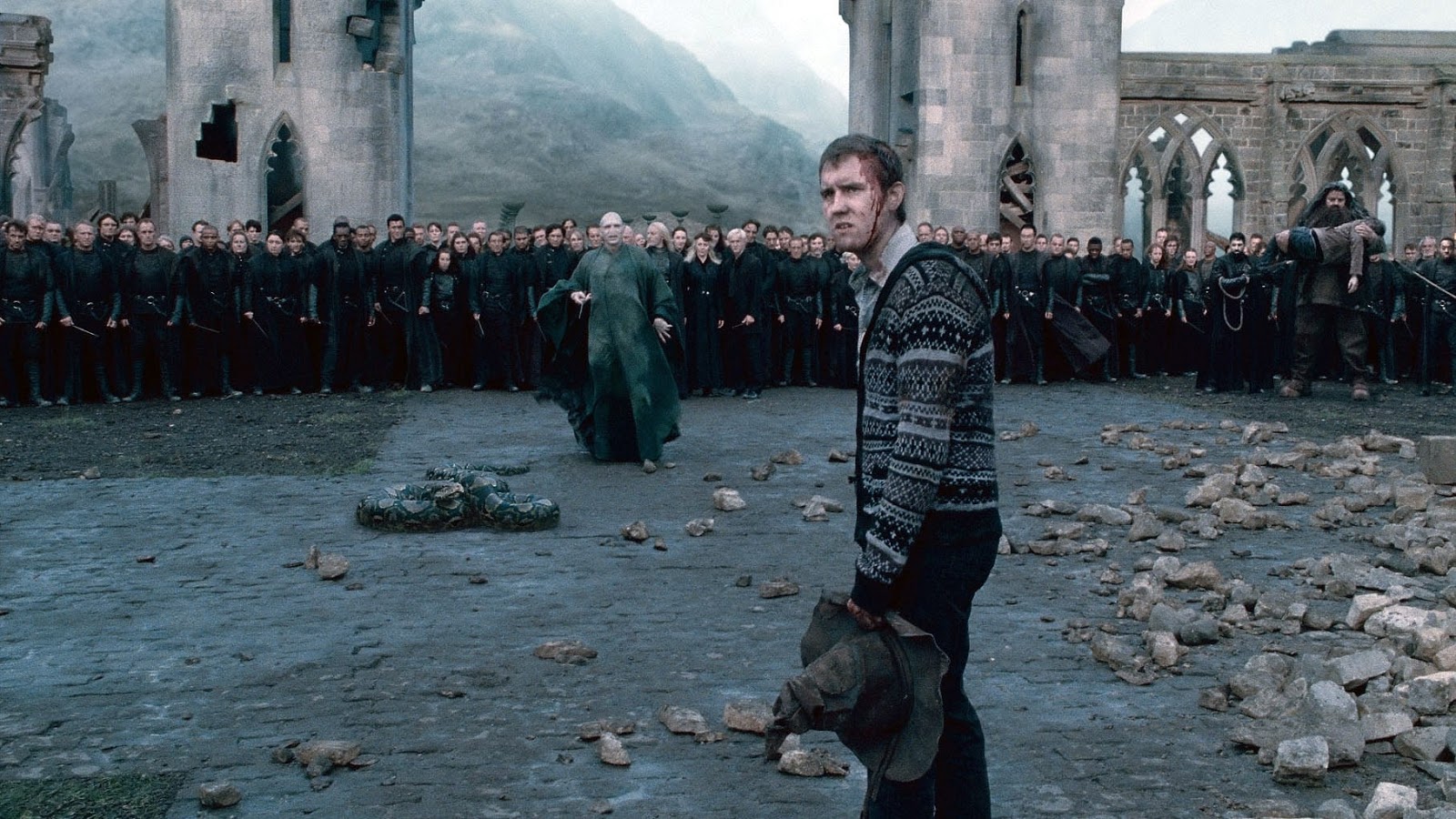
Gotta feel sorry for Matthew Lewis (who is very good here). Reading the book he must have been thrilled: “So I pull the sword out of the sorting hat and then in one move cut the head off the snake like a total bad ass”. This should have been a great moment (it’s an iconic one from the book). Instead Neville gets blasted and, presumably to give them something to do, Ron and Hermione spend ages trying to kill the snake (intercut with Harry and Voldemort fighting) until finally Neville gets to lop that head off – by which point the moment has well and truly passed.

 4. No one mentions Voldemort keeps making the same mistakes

In the book, Harry has a beautiful moment where he basically tells our Tom that he’s made the same mistakes over and over again. Namely that, by killing Harry, who sacrificed himself for love, he made exactly the same mistake as he did with Harry’s mother and now cannot harm any of those Harry died for (i.e. the rest of the cast). It’s a great moment, where finally Harry understands what the novels have been building towards. Doesn’t merit a mention.

Neither does Voldemort’s childish obsession with famous things – he is consumed with belief in the power of a wand, he can’t let go of associating his horcruxes with famous things and the lineage of iconic wizards, etc. etc. Voldemort is basically a big, silly, empathy-free, sulky teenager – the film misses this point entirely.

Instead of explanations and depth, the film reduces Harry and Voldemort’s final clashes into dull punchy-bashy stuff. The director clearly fell in love with the visual idea of Harry and Voldemort’s heads merging together while apparating. This is a visual image that I hate because it (a) feels like showing off and (b) would only work if they were semi-reflections of each other – which they certainly aren’t. They are polar opposites. It’s a flashy effect that actually makes no thematic sense what-so-bloody-ever.

5. Voldemort goes out like a 3D special effect

Perhaps not a surprise in a film, but Voldemort gets killed and disintegrates into a huge puff of 3D-film smoke. I hate this. I hate it. I really, really, really hate it. I’ll tell you why:

  • The spells used in the duel are really unclear – it’s a great moment in the book that Voldemort’s killing curse rebounds against Harry’s disarming curse – instead we get the bright lights.
  • Voldemort dreads death more than anything – and Rowling’s writing of his body falling dead to the ground like any other normal dead guy taps exactly into what Voldemort spent his whole life struggling against. It’s a beautiful irony.
  • No one knew if Voldemort was dead or not the first time because he disappeared. In the book he is killed, by his own curse, in front of everyone and his body is left behind for everyone to look at and say “yup. Guy is dead”. Not here. Here he blows up in a puff of smoke in front of no witnesses. Did Harry just head back into the great hall and say “Okay guys. Take my word for it. He’s dead. He just is. Trust me on this. It’s not like last time. Totally dead. Promise.”

Wow. Okay that’s not really a review is it? That’s just like a disappointed fan whining “I don’t like it because it is different”. But my point isn’t that this is bad because it’s different. It’s bad because it takes stuff from the original and changes it AND NOT FOR THE BETTER. Moments that worked beautifully, or carried so much weight in the original are bastardised crudely for no clear reason.

As I say, after almost 18 hours and a life time (for many viewers) of growing up with these characters: surely we could have given the film a bit more time and allowed some actual intelligent context from the books to creep in? Surely we had the patience for Harry getting to point out to Voldemort how wrong he is? Everyone in the audience was ready for that right? If there was one film people were probably willing to dedicate three hours of their life too, in order to see it done properly it was this one, right? Rather than rushed by in a little over two?

But no this film goes always, always, always for the big spectacle. Not that this always work: Yates doesn’t shoot the battle hugely well. Aside from one excellent sequence which shows our three heroes trying to get across the castle courtyard, while chaos rages around them (beautifully scored as well), the battle is unclear, dingy and not hugely exciting. Again, I’d have liked to have had a bit more of this – to get some moments with this huge cast doing stuff in the battle (especially since they are ALL back – kudos to the producers there).

It’s a real, real shame because honestly parts of this movie are really, really, really good. Tom Felton is cracking again as Draco – and the film gives real development time to showing the impact all this has on the Malfoy family with genuine empathy. The break-in at Gringotts is exciting and fun – as well as giving Warwick Davies his best moment in the series as two-faced Griphook. Inventions and flourishes, such as Harry having visions of an enraged Voldemort slaughtering the staff of Gringotts in fury, are chilling.

Some moments of the book are carried across really well, in particular Snape’s escape – a powerfully filmed sequence of bravery from the pupils, and some great work from Maggie Smith. Yates really understands how to get moments of magic to work: the creation of the shield around Hogwarts is totally spine-tingling. When the film sits and breathes it generally gets it right. Fiennes is terrific still as Voldemort, serpentine, arrogant, unsettling. He gets some lovely moments here – from fury, to pained fear (as horcruxes bite the dust) to an almost-funny-awkward-mateyness as he tries to seduce Hogwarts pupils to his side (his awkward hug of Draco is terrific).

The three leads are of course great. Daniel Radcliffe could certainly have delivered the more complex moments of the book if he had been given the chance. He even does his best to sell the slightly awkward coda “19 years later”: a controversial sequence, it makes a great footnote in the book but it was always going to be a tough ask to make three teenagers look like 40 year olds convincingly, particularly when we are nearly as familiar with their faces as our own.

There are some troubling and failed moments in this film, stuff that doesn’t work. But then there is this:

Oh wow. For all that the film changes stuff from the books for the worst – this is a moment it unquestionably does better. And a massive, massive part of this has to be down to Alan Rickman. Rickman was told this backstory from the start of the films – and he delivers it with a passionate commitment here. Helped by brilliant score, and fascinating re-editing of moments from previous films seen from new angles, Rickman delivers the reveal of Snape’s heartbreaking moments perfectly.

Was I tired? Was it the added impact of Rickman’s own depth? I don’t know but I shed tears watching this again. It’s just a beautiful, beautiful, beautiful piece of film making. Everything in it works perfectly: directing, writing, music, editing, filming and above all the acting. It’s just sublime. For all the film misses the point elsewhere it finally totally gets it here. I would take this moment over dozens of moments of Harry and Voldemort fighting each other.

And yes this Harry Potter film might miss the point, and it might bungle the ending, and it might well fail to carry across the richness and intricate plot explanations of Rowling’s original. Yes it gets bogged down in “who controls this wand” and yes it misses the point completely about the film being about learning to overcome a fear of death and defeat (something Voldemort totally fails to do) but then it has moments where it works wonderfully like this. 
But in these films we got a beautiful franchise, with some excellent films. It’s always going to reward constant viewing. And it will always move the viewer. And it’s always going to be great.

Always.