Author: Alistair Nunn

The Color of Money (1986)

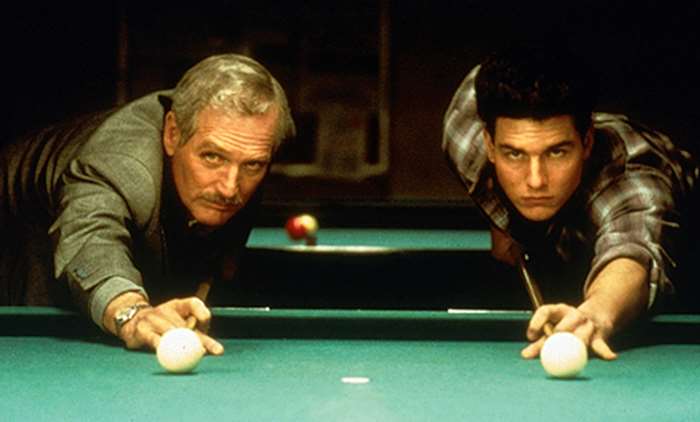
Newman and Cruise set the table in The Color of Money

Director: Martin Scorsese

Cast: Paul Newman (“Fast” Eddie Felsen), Tom Cruise (Vincent Lauria), Mary Elizabeth Mastrantonio (Carmen), Helen Shaver (Janelle), John Turturro (Julian), Bill Cobbs (Orvis), Forest Whitaker (Amos), Keith McGready (Grady Sessions)
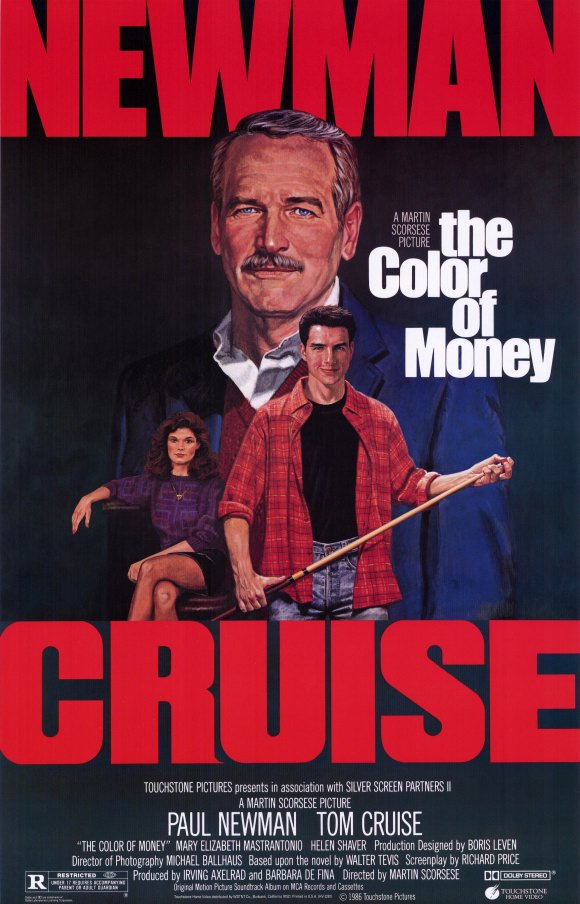
The Hustler is one of Newman’s most iconic roles. It’s remembered for his cocksure cool, leaning across the table and dispatching balls with a twinkling smirk. What people don’t remember is that The Hustler is actually more of a kitchen-sink drama than a Rat Pack party. It deals with depression, assault, corruption, injustice and suicide. It’s not even remotely a laugh a minute. The Color of Money is a belated sequel, that feels made by people who remember their impression of what The Hustler was, but don’t actually remember the tone of the film itself. But then, Scorsese intended from the very start to make an entertainment to showcase a star, so I’m sure he knew that making a real tonal companion to the original film was always going to be a no-no.

It’s 25 years since “Fast Eddie” Felsen (Paul Newman) was banished from pool clubs throughout the land by gangsters. He now earns a living selling booze to clubs, largely so he can hang out pool clubs and mentor and stake the ‘hustler’s and stars of tomorrow. The kid who catches his eye is Vincent Lauria (Tom Cruise) an exceptionally gifted pool player with a cocksure confidence and a love of the game, that perhaps reminds Eddie more than a little of himself. Vincent, and his girlfriend Carmen’s (Mary Elizabeth Mastrantonio) grifting skills leave a lot to be desired: but Eddie sees promise and takes them out on a road trip to train them up and make a fortune.

It’s a fitting title, as it’s pretty clear that The Color of Money was the main thing on Scorsese’s mind when he made this. Don’t get me wrong, this is an enjoyable and well-made star vehicle, but it’s also the only time Scorsese was a hired gun working for a star who made films he grew up watching. Scorsese has spoken openly that his main aim here was to bring it in on time and on budget (he made it faster and cheaper than that), in order to help win studio backing for The Last Temptation of Christ. (Ironically of course, most people have far fonder memories of The Color of Money than that film, but then this is a film designed to entertain not challenge.)

It’s a fairly traditional and even predictable storyline. The mentor and the mentee, the latter jaded but rediscovering some of his old fire from the callow exuberance of the other. To be honest not very much actually happens in the film other than pool games and some predictable feuds before the final reconciliation. Inevitable lessons are learned and understandings are achieved. Compared to The Hustler, this is a very callow piece of work indeed, a straight entertainment vehicle that takes the fun, memorable beats of the original and crafts a whole film around them. In many ways you could argue it’s as much a sort of spiritual sequel to Newman’s work in The Sting as anything else.

But Scorsese shoots the hell out of it, so there is always something to look at. No end of editing and camera tricks are used for the pool games, which are shot like action sequences. Swift pans, tracking shots, sharp camera spins are all used to turn a game of knocking nine balls into pockets into something epic. Interesting shots abound, especially several sequences where a camera is mounted on a car bonnet to product an odd Steadicam effect. This is work way beyond a journey-man-pro director, but compared to Scorsese’s other works it’s minor. Scorsese opens the film by delivering a voiceover introducing nine-ball-pool, but the film never feels personal.

What it is, is a triumph for its two leading men. The year before Newman had won an honorary ‘career’ Oscar, which he accepted with a slight air of surprised resentment. No wonder, since he won a ‘real’ Oscar a year later for this reprise. To be honest, the film doesn’t ask anything particularly demanding of Newman, compared to the heights he had achieved in, for instance, The Verdict. It’s a lot of charm and aged confidence, mixed with a mentor exasperation and an unspoken concern that his powers are fading. Newman does spice things up with some interesting character work – there is a great scene when Eddie berates himself for being suckered by pool shark Amos (also a beautiful cameo from Forest Whitaker), humiliated for having lost his touch. But, whereas the first film was a below-the-skin character study, this is more like a victory parade for a charismatic star who even signs off the film by stating “I’m back!”. He’s great but not challenged.

Cruise raises game as he always does when working with legends (see also his work with Hoffman and Nicholson). The film captures perfectly both his cocksure confidence and the gentleness and vulnerability that Cruise manages to hide beneath it. You only need to see how vulnerable and scared Vincent is of being abandoned by the more sophisticated Carmen, to know that his karate moves with a pool cue while singing along to Werewolves of London is a front of a young man wanting to look like a big one to the world. Mastrantonio is pretty good in a fairly simplistic role, that is essentially a twist on a hooker-with-a-heart-of-gold.

The Color of Money offers up fairly predictable charms and plot twists and no real surprises at all. While its original film was a piece of neo-realism tinged social drama, this is a brash entertainment, stuffed with pop songs and charismatic actors doing their thing. All pulled together by a director who wanted to prove he could make something as glossy and empty as the next man. Entertaining but forgettable.
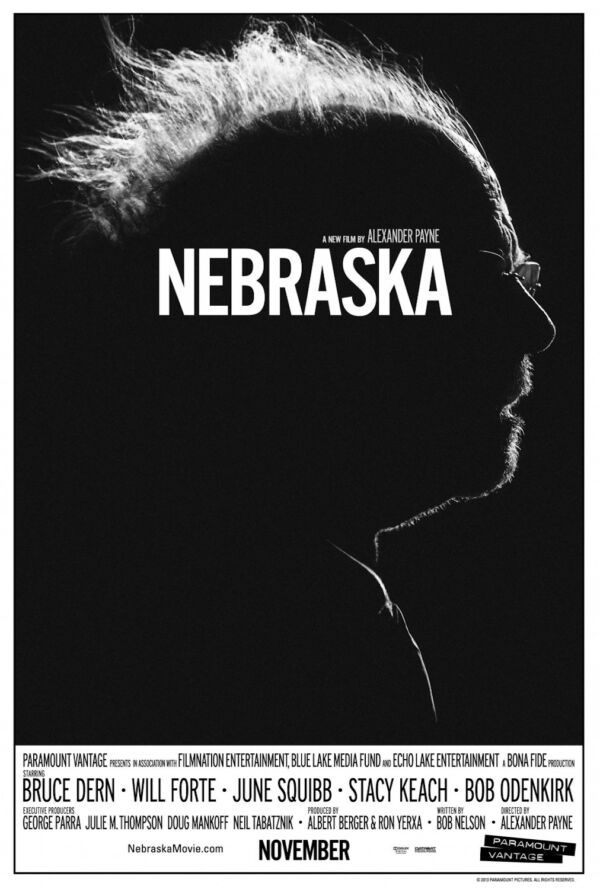
Nebraska (2013)

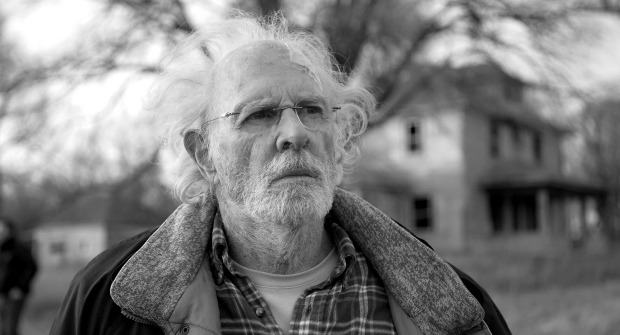
Bruce Dern excels in Alexander Payne’s masterful Nebraska

Director: Alexander Payne

Cast: Bruce Dern (Woody Grant), Will Forte (David Grant), June Squibb (Kate Grant), Bob Odenkirk (Ross Grant), Stacy Keach (Ed Pegram), Mary Louise Wilson (Aunt Martha), Angela McEwan (Peg Nagy), Rance Howard (Uncle Ray), Devin Ratray (Cole), Tim Driscoll (Bart)

Woody Grant (Bruce Dern) is an ageing alcoholic on the edge of senility. Receiving a circular from a magazine company, he becomes convinced he has won a million-dollar sweepstake – despite his family telling him he definitely hasn’t. Eventually, son David (Will Forte) agrees to drive him to Lincoln, Nebraska, to ‘claim’ the prize. Along the way, they visit Woody’s family in Hawthorne, Nebraska – and the whole town swallows whole the idea that Woody has won the sweepstakes. Despite the best efforts of David, his mother Kate (June Squibb) and brother Ross (Bob Odenkirk), both family members and townsfolk come forward with claims for this fictional money. All this while the family themselves come to understanding about each other and their past.

Alexander Payne’s Nebraska is gently paced, meditative, but has lasting impact. Shot in a gorgeous black-and-white, this is a road movie, an odd buddy film, a family drama and a comedy of misunderstandings. All this comes together, in a way perhaps only Payne could do it, into something that at first seems like a bitter-sweet look at a dysfunctional family, but slowly reveals itself into something far more heartfelt than you expect. Nebraska carefully builds a portrait of a family that feuds, but is fundamentally loyal, even while carrying private resentments.

It all revolves around Woody himself, who at first seems to be the typical bad Dad: distant from his sons, dismissive of his wife, a history of drinking. His marriage to Kate seems based more on longevity rather than any love. Approaching senility has only accentuated, it seems, his stubbornness and self-obsession. He’s crochety and fixated on his own needs. But, despite all this – and this is a huge credit to Dern’s sympathetic performance – there is a gentleness to him. For all his negatives, he’s vulnerable and even naïve. He assumes people are telling him the truth. Later Kate will angrily denounce his grasping family, has Woody never said ‘no’ to anything he was asked to for. And you can believe it. He is a character who we see in more and more of a human light.

It comes across in the relationship with David. In an equally beautifully judged performance by Will Forte, David’s motivations for this road journey change. At first it seems an attempt to end an idee fixee, but it becomes more and more about spending time with a man he realises he loves more than he thought. Perhaps that’s because Forte’s sad-sack gentleness has more of an echo of the inner meekness of Dern’s Woody. David has more than a few similarities to Woody – a disappointing career, a failed relationship (unlike Woody’s generation, separation is a lot more feasible), a sense that his life has been a disappointment. But Payne’s film flourishes, because it becomes about David’s discovery of a kindred with his father he hasn’t acknowledged for years.

A lot of that comes from seeing the world his father grew up. A small American town, with more than a touch of The Last Picture Show, where everyone seems either stuck-in-a-rut or happy to drift. Everyone knows everyone, and there are no entertainments except feuds and sharing every piece of gossip. But, above that, David also discovers more about his father’s background: his hopes and dreams, his acts of kindness but also his acts of selfishness. His awkward relationship with his family, and the reasons behind his dysfunctional but strangely contented relationship with his wife.

All this comes together in that very Payne-ish way that is both heart-warming, slightly sentimental but genuinely moving. Above all it works, because everyone one in it feels very relatable and true. David is a highly understandable guy, a quiet fellow who hasn’t quite cracked how life works, but wants to rekindle a relationship with his father. Woody wants to cling to anything that might help him feel he has control over his own life. The saga of the fictional money starts as an item pushing the two men apart, but actually draws them closer as others in the town seek to take advantage (most nastily, the excellent Stacy Keach, claiming to be a former business partner).

That’s what helps make, what could have been a comedy about a clueless Quixote and his reluctant Sancha Panza, into something really moving. Payne may tease Woody – and even allow him to say some quite unpleasant things (his indifference as a young man to having children is a tough thing for any father to say to his son) – but he never makes him a joke. He’s just a man who seems to be looking back at his life, not quite sure how he got there. With David as an audience surrogate, wondering the same thing in turn – and half wondering whether he is going the same way.

And, of course, the film is funny. Woody and David make a wonderful flying trip to Mt Rushmore (“It looks unfinished…Lincoln hasn’t even got an ear” is Woody’s summary of it). June Squibb is very funny as David’s surprisingly foul-mouthed mother, for whom a road trip is a wonderful chance to remember all the conquests she might have made back in the day. David’s constant pleas for Woody to not mention his “win” – and the town’s total buying of this urban rumour – is very well done.

But it mixes with genuinely moving moments. Squibb’s Kate may be frustrated and fed-up with Woody, but she will defend him to the end and tenderly kisses his forehead while he sleeps. It mixes with genuine touches of regret: the extended Grant family sit and watch football together, mutely starring at the television, barely communicating. This isn’t nostalgic, but it is faintly sad about how life so quickly life can trap us into familiar patterns.

And the performances are of course sensational. Dern is incredibly heartfelt, communicating huge amounts of little dialogue and watery eyes. Fonte is superb as a man who believes he has had enough of his father, only to have his perceptions change. Squibb is both funny and heart-breaking, Odenkirk exasperated but tender, Keach a bully scared of his own empty life. It’s one of Payne’s signature works, a gentle character study that starts giving you one perception and develops into giving you a very different one. It’s one of his finest films.

The Big Country (1958)

Gregory Peck rides into town in The Big Country

Director: William Wyler

Cast: Gregory Peck (James McKay), Jean Simmons (Julie Maragon), Carroll Baker (Patricia Terrill), Charlton Heston (Steve Leech), Burl Ives (Rufus Hannassey), Charles Bickford (Major Henry Terrill), Alfonso Bedoya (Ramon Gutierrez), Chuck Connors (Buck Hannassey), Chuck Hayward (Rafe Hannassey)

From the very first frame when that score kicks in, you know you are in safe hands. The Big Country is a big film, and big entertainment. When I re-watched it I hadn’t seen it for years. I loved it. It’s a slab of prime Hollywood entertainment, not perfect, but it’s one of those films that always delivers.

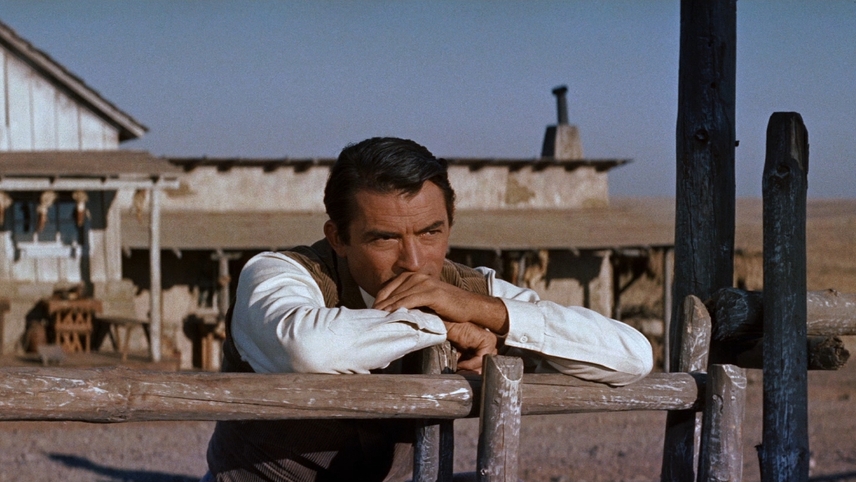
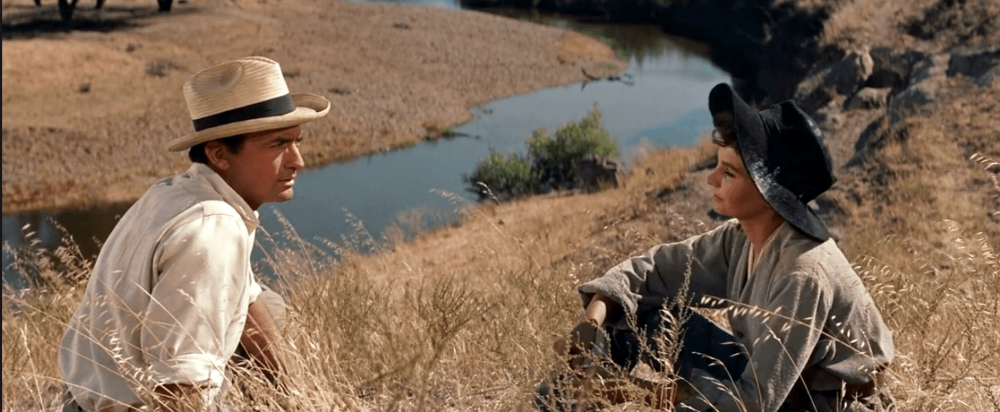
It’s the American West, and James McKay (Gregory Peck) arrives in town to marry Patricia Terrill (Carroll Baker), daughter of local landowner Major Henry Terrill (Charles Bickford) who is in the middle of a turf feud with patriarch of a cowboy clan, Rufus Hannassey (Burl Ives). This is a town where men-are-men and a harsh word is met with a sock to the mouth. It’s a world where McKay is out of step: a seasoned naval captain, with more experience than anyone, he couldn’t care less what people think of him and won’t be goaded into doing something foolish. His self-assurance and strength of character are interpreted as wimpy yellow-belly-ness by nearly everyone, including Patricia and Terrill’s macho foreman Steve (Charlton Heston). Only local schoolteacher Julie Maragon (Jean Simmons) understands him. But as events come to a head, only McKay has the strength of character to step up and try resolve things without mass bloodshed.

The Big Country is the classic set-up: a stranger in town, who has the guts to stand up. The only difference here, is that McKay has the guts to stand up and not conform to the macho bullshit being driven by the two feuding patriarchs. Both of these men are, of course, far more similar than they would admit, being perfectly contrasting personalities. Charles Bickford plays a genteel man with the principles of a thug, while Burl Ives plays a thug with the principles of a genteel man. No wonder they can’t get on, both see in each other qualities they most likely despise in themselves.

Compared to them, McKay looks like the very model of twentieth century liberal coalition building. Or at least McKay is a liberal who packs a punch, since it’s pretty clear Peck is probably the toughest son-of-a-bitch in the town. What’s glorious in McKay – and Peck’s sensational performance of reserved warmth and wry amusement, mixed with world-weary sufferance – is that you get a definite sense he’s seen way worse than this before. A man who has sailed around the world for decades, in the hardiest conditions, who has been keelhauled and saved men from sharks, recognises this for the slightly pathetic parochial dust-up it really is, and has no interest – or need – to put his life or the lives of others at risk to make crude points about his manliness.

If only, the film argues, we could all be as confident in our own skin. McKay keeps his cool in a way no-one in film, except perhaps Tracy in Bad Day at Black Rock, has managed so successfully. He laughs off his irritation at a hazing from the Hannassey’s – and makes clear, as the Terrill’s saddle up to fight back, that in doing so they are not acting in his name. He won’t make a fool of himself by trying to ride a wild horse in front of a crowd. He won’t rise to Steve’s provocation for a punch-up in front of the entire Terrill gang. McKay is a man who only needs to prove things to himself: so he’ll tame that horse in front of no crowd and swear the only witness to secrecy. He’s not one to brag.

And if it’s a fight that Steve wants, he’ll give him one on his own time and his own terms – those being a dusky morning in private. Wyler shoots one of the greatest fights of all time, an exhausting slugging match between Peck and Heston, played out mostly in long shot that soaks up the dawn Western atmosphere, as the two men fight themselves to an exhausted score-draw, with each punch landing with a punishing wallop. There is something very compelling about this unflashy, in-the-dust, clash of two alpha males, and the strange sense of respect that grows between them (as well as the dry wit of the script – “You certainly take your time to say goodbye”, Heston deadpans after this exhausting ‘I’m leaving but first this’ fight).

It also showcases how well Wyler uses sound (or the lack of it), the fight taking place often in a longshot silence that somehow makes the dusty scuffle even more effective. Silence also comes into play brilliantly to stress McKay’s isolation when first the Terrill men ride away to extract vengeance and then the disgusted Patricia closes the front door on him, leaving him standing in magnificent isolation on the porch. Silence will also come effectively into play during the late act ride of various characters through a white chalk lined gorge and to stress the danger that the kidnapped Julie is under when being held by the Hannassey’s.

The final act brings all the threats of danger and threat together into a brilliantly tense final confrontation. This sequence showcases, not only Peck’s granite principles and nobility, but also gives excellent opportunities for Ives to explore hidden depths in Old Hannassey (it surely helped him win the Oscar for Supporting Actor) and his dumb son Buck (excellently played with a swaggering arrogance by Chuck Connors) who is all mouth and no trousers.

Sure, at times the film overplays the anti-violence card. It’s particularly noticeable as it sometimes wants to have its cake and eat it, favouring probably a sort of gun-toting liberalism, of the “I could kill you but I want to make it so I don’t have to” variety. But then the film would be a heck of a less effective if we weren’t so convinced that Peck was as tough as they come and that his unwillingness to throw himself into events thoughtlessly is a mark of his unparalleled strength. Again, Wyler uses silence as effectively as sweeping camera movements and that brilliant score, to suggest moral strength.

There is probably very little tension about where the romantic plotlines are going, but both Carroll Baker and Jean Simmons are very good as two very different, but equally strong, women (although both women allegedly found Wyler’s perfectionist Kubrickian retakes on set extremely trying). But it still works a treat because of the strength of the acting, and its strongly scripted characterisation.

That and I’ve hardly mentioned the score, by Jerome Moross, which is powerful and famous you’ll instantly know it even if you’ve never seen the film. The Big Country is a Western where the hero has the strength to stick to his principles while still getting the job done. It’s superbly acted by Peck, with Simmons, Baker, Heston, Ives, Bickford and Connors all excellent in support. Wyler combines visual and a compelling story into a film that, while at points a little long, is still a bona fide classic. Again I’ll say: I loved it.

Doctor Zhivago (1965)

Julie Christie and Omar Sharif are star cross’d lovers in Lean’s epic but flawed Doctor Zhivago

Director: David Lean

Cast: Omar Sharif (Dr Yuri Zhivago), Julie Christie (Lara Antipova), Geraldine Chaplin (Tonya Gromeko), Rod Steiger (Victor Komarovsky), Alec Guinness (Lt General Yevgraf Zhivago), Tom Courtenay (Pasha Antipov/Strelnikov), Siobhan McKenna (Anna Gromeko), Ralph Richardson (Alexander Gromeko), Rita Tushingham (The Girl), Bernard Kay (Bolshevik), Klaus Kinski (Amoursky), Noel Willman (Razin), Geoffrey Keen (Professor Kurt), Jack MacGowan (Petya)

Boris Pasternak’s Doctor Zhivago is one of the seminal 20th century novels. Smuggled out of the USSR after being refused publication, it became an international sensation and led directly to Pasternak winning the Nobel Prize (although the USSR insisted he turn it down). A film was only a matter of time – and who else would you call but David Lean, master of the pictorial epic, to bring the novel about the Russian Revolution to the screen. Lean – with his masterful Dickensian adaptations – was perfect in many ways but Doctor Zhivago, for me, is the least satisfying of his ‘Great Films’. It’s strangely empty and sentimental, lacking some of the novel’s strengths zeroing in on its weaknesses.

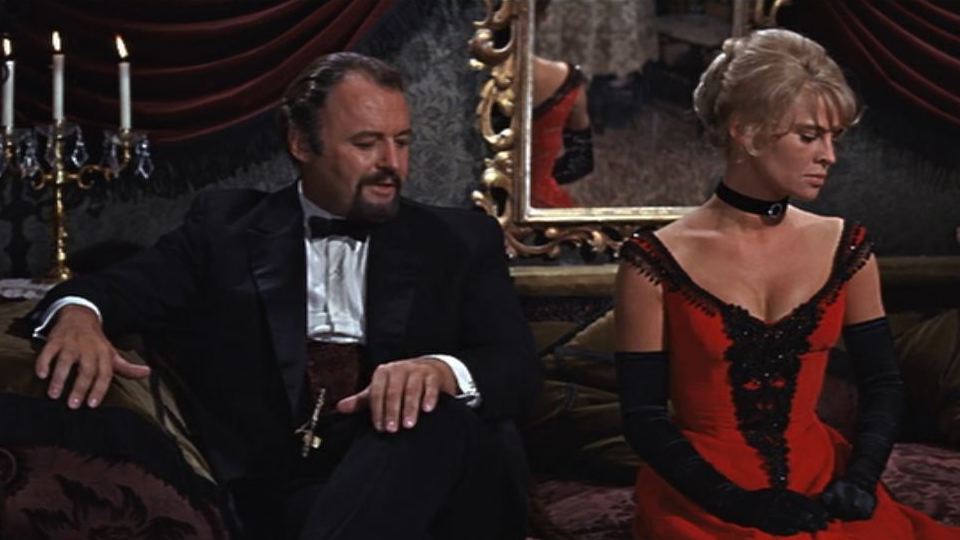
Yuri Zhivago (Omar Sharif) is training to be a Doctor in the years before the outbreak of the First World War. Married to Tonya (Geraldine Chaplin), the daughter of his father’s old friend Gromeko (Ralph Richardson), Yuri is part scientist, part poetic free-thinker. Events throw him together with Lara (Julie Christie), a young woman whose fiancé Pasha (Tom Courtenay) has ties to the revolutionaries, while she is trapped in an abusive relationship with the amoral Komarovsky (Rod Steiger). But are all these troubles worth a hill of beans in a country about to tear itself apart?

There are many things you can’t argue with in Lean’s film. It is of course unfailingly beautiful. Ironically filmed in Fascist Spain, it’s gorgeously lensed with a luscious romanticism by Frederick Young (who won his second Oscar for a Lean film). It’s not just pictorial beauty either: Young frequently makes wonderful uses of splashes of Monet red to dapple the frame. From poppies in a field to the ubiquitous communist imagery on uniforms and walls. There are some wonderfully cool blues employed for the snow, while slashes of light pass across eyes with a gorgeous lyricism.

Romance is the name of the game, with everything working overtime to stress the star cross’d lovers plot. Maurice Jarre’s score – in particular its balalaika inspired Lara’s Theme – mixes Russian folk inspirations with an immortal sense of longing. It plays over a film that, while very long, often feels well-paced, even if (just as the novel) its episodic and at times rambling. Lean’s direction of epic events revolving around personal loves and tragedies is still exquisite in its balance between the grand and intimate. The film is wonderfully edited and a fabulous example of long-form storytelling.

So, what’s wrong with Doctor Zhivago? In a film with so much to admire, is it possible Lean and co spent years working on something only to bring the word but not the spirit to the screen? The key problems come round to Zhivago himself. This is man defined by his poetic soul. His poetry becomes a sensation after his death. His balalaika is a constant companion, and his playing of it an inherited gift (which even has major plot implications). Inexplicably, the film has not a single word of poetry in it (when it had Pasternak’s entire back catalogue to work with) and Zhivago never so much as strums the strings of his balalaika. It’s like filming Hamlet and then making him a mute.

The problem is, removing the character’s hinterland makes him a rather empty character. Zhivago is a liberal reformer, in sympathy with the revolution but not it’s methods. This should be at the heart of understanding his character, but like his poetry the film has no time for it. Instead, Zhivago is boiled down into a romantic figure, nothing more. He has no inner life at all, a blank canvas rather than an enigma.

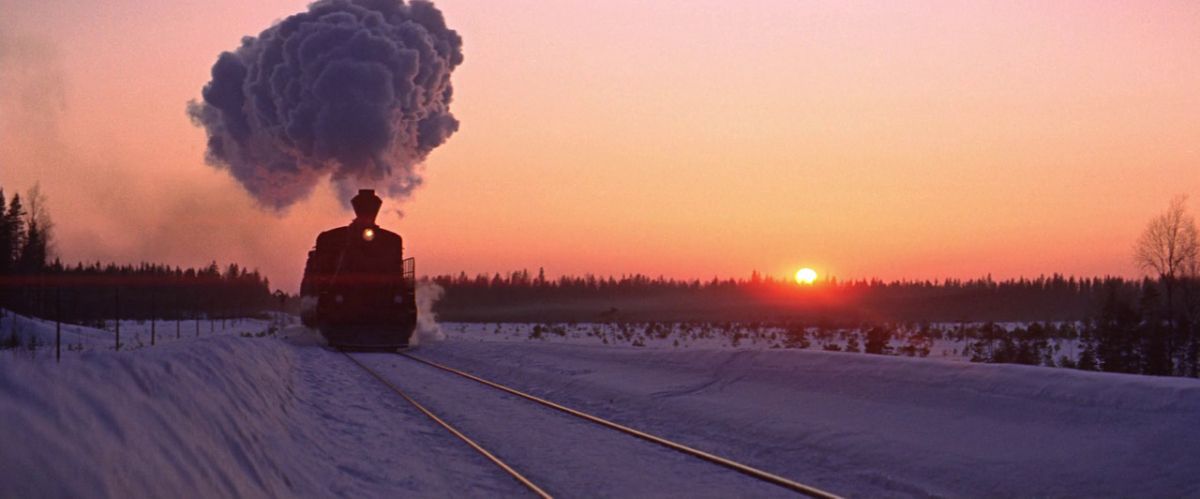
Suddenly those long lingering shots of Sharif’s puppy-dog eyes end up carrying no real meaning. They aren’t the windows to his soul, only a big watery hole with not much at the bottom. Sharif is awkwardly miscast – and lacks the dramatic chops O’Toole bought to Lawrence – but it’s not completely his fault. His character has had his depth removed. When we see him struggling at the front, trapped on a long train ride to Siberia or forced to work with partisans, he’s not a man who seems to be considering anything, but just buffeted by fortune, neither deep or thoughtful enough to reflect on the world around him. That’s not really Pasternak’s intention.

Instead, the film boils the novel down to his plot-basics and, in doing so, removes the heart of what got the book banned in the first place. Lean misunderstood the future of Soviet Russia so much, he even chose to end the film with a romantic rainbow at the foot of a waterfall. The horrors of the civil war and the revolution are largely there briefly: a gang of deserting soldiers unceremoniously frag their officers and Zhivago frequently stares sadly at villages burned out by Whites or Reds (or both). But the film is more of a romance where events (rather than politically and social inevitability) gets in the way of the lovers – like Gone with the Revolution.

By removing the more complex elements – and the poetic language of Pasternak – you instead have the rather soapy plotline (with its contrivances and coincidences) left over. Again, it’s Hamlet taking only the events and none of the intellect or language. (And Pasternak’s novel didn’t compare with Hamlet in the first place.) Both Zhivago and Lara are shot as soft-focus lovers, with Julie Christie styled like a perfectly made-up slice of 60s glamour. It’s a grand scale, but strangely empty romance, because both characters remain unexplored and unknowable – in the end it’s hard to care for them as much as we are meant to do. For all the epic scale, small moments – such as an aging couple sharing a cuddle late at night on a train floor – carry more impact. How did the director of Brief Encounter – a romance that speaks to the ages for its empathy – produce such an epic, but empty, posture filled romance as this?

Julie Christie does fare better than Sharif – she’s a better actor, and her character has a bit more fire and depth to her. But she’s not in the picture enough, and Lean quietly undersells the terrible trauma of her eventual fate. Ironically, the smaller roles are on surer ground. Geraldine Chaplin is rather affecting as Zhivago’s wife, a dutiful and caring woman who her husband loves but is not besotted with. Ralph Richardson is witty and moving in a tailor-made role as her eccentric father. Tom Courtenay landed the films only acting Oscar nomination as the reserved and conflicted Pasha. Rod Steiger is very good as the mass of greed, selfishness and barely acknowledged shame as Komarovsky. Alec Guinness is bizarrely miscast as Sharif’s younger brother (!) but handles some of the film’s duller scenes well (Lean’s decision to have him never speak on screen except in the film’s framing device works very well).

There is a lot of good stuff in Zhivago, but this is a neutered and even slightly shallow film, that’s far more about selling a romance than it is telling a true adaptation of the themes of the novel. In Lawrence, Lean showed us multiple aspects of a conflicted personality to leave us in doubt about who he really was. In Zhivago, he just presents a rather empty person and seems unsure if he wants to use to ask who he is. The film concentrates on making the romance sweeping and easily digestible. What it doesn’t make us do is really care for them as people.

Wings (1927)

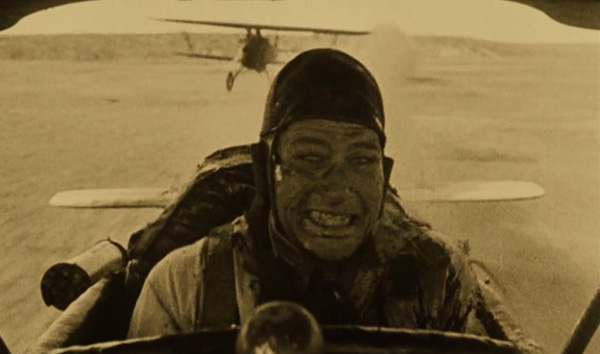
Charles Rogers, Clara Bow and Richard Arlen are in a wartime love triangle of sorts in the first ever Best Picture winner Wings

Director: William A Wellman

Cast: Clara Bow (Mary Preston), Charles Rogers (Jack Powell), Richard Arlen (David Armstrong), Jobyna Ralston (Sylvia Lewis), El Brendel (Herman Schwipf), Richard Tucker (Air Commander), Gary Cooper (Cadet White), Gunboat Smith (Sergeant), Henry B Walthall (Mr Armstrong), Roscoe Karns (Lt Cameron)

As the first ever Best Picture winner – and the only silent winner (until The Artist almost 85 years later) – Wings will always have a place in history. Is it the greatest silent film ever made? Of course not. In fact, it’s odd looking at Wings as a ‘Best Picture’ winner: with its rollicking action sequences, odd slap-stick comedy and slightly sentimental romance, it’s far more of a crowd-pleaser than the sort of film we think of as an Oscar winner. But it’s also filmed with an invention and verve that looks light years ahead of many other early winners – and a very enjoyable piece of story-telling.

It’s the First World War and Jack Powell (Charles Rogers) and David Armstrong (Richard Arlen) are both rivals for the affections of the beautiful Sylvia Lewis (Jobyna Ralston). Sylvia actually prefers David – but both she and David are too noble to let disappoint Jack when both men enlist as pilots. Jack has also failed to notice that his delightful neighbour (literally the “girl next door”) Mary Preston (Clara Bow) is in love with him, and that she is perfect for him. Jack and David train as pilots – a dangerous profession – and head for the front and become best friends and comrades in arms. Mary follows them to serve as a nurse – but Jack is still convinced he is in love with Sylvia, completely ignorant of the fact she is engaged to David. Will these romantic problems solve themselves, while the two men fly into dog fights in the skies?

Wings is a fabulous reminder of how dynamite and dynamic Hollywood could be before the Talkies and those years of reduced camera movement to capture live sound, with more stately editing and composition that continued to hold influence over film-making for much of the next fifteen years. I loved the visual invention of this film. Wellman pushes the camera into unusual positions and uses some truly unique shots. In an early scene Wellman straps the camera to a swing David and Sylvia are sitting in. We swing and sway with the swing, in an advance feel for what it’s going to be like in the dogfights to come. When Jack runs into frame, he actually looks wild rather than the characters on the swing (fitting considering his personality).

Wings is full of invention like this. It has a hugely influential tracking shot, which zooms across a number of tables and couples in a Parisian restaurant, getting closer and closer towards and intoxicated Jack and finally zooming in on his champagne glass. This is the sort of stuff you wouldn’t see in a Hollywood movie again for decades to come.

It all carries across into the dog-fighting scenes that will come. Wellman shot the film among the skies, with cameras following the action, others strapped to the planes to capture the actors faces (who are really up there!). Clouds are frequently used to communicate the speed the planes were moving at. Hundreds of stunt and military pilots took part in these re-staged battles which are still, despite the advances since, hugely impressive. Wellman, a former WW1 pilot, even took to the skies himself briefly when a pilot fell ill. Planes swoop, dive into clouds and plummet to the ground trailing smoke. It’s all shot with a boy’s own adventure and makes for gripping action.

The film is also a realistic look at the horrors of war, something Wellman was extremely aware of. When the action gets down into the trenches it doesn’t shirk in showing the costs of warfare, close-ups and tracking shots capturing the violence and human cost. Bodies slump in death. A tank looms over the camera. There are moments of realism: a sergeant, marching along the road, nudges a resting private only to discover (as his body slumps forward) that the man is dead. At first the sergeant marches on then he turns back, salutes and gently puts out the man’s cigarette. It’s a thoughtful little moment of human reaction in a film full of them.

It sits alongside an almost Pearl Harbor-esque plotline of romantic entanglements and confusion. Charles Rogers’ Jack is an enthusiastic, passionate but almost wilfully blind, bowled along with passion for anything that takes his interest from Sylvia to flying to his friendship with David. There is something quite sweetly old-fashioned – almost a fairy tale – about David and Sylvia keeping quiet about their love, so as to give Jack something to survive for. Richard Arlen is more restrained, but gives a decent performance. There is more than a hint of the homoerotic between Jack and David, the more exhibitionist acting style of the silent movies lending itself to an idea that the real love affair here is between these two rugged pilots (who wrestle, cuddle and even kiss), but that’s probably wishful thinking. Saying that though, the film is surprisingly daring: that French restaurant clearly has gay couples among its clientele (not to mention later a brief pre-code nude scene for Clara Bow).

But it’s still a straight-laced action film, where men are men with a key sub-plot of Mary’s unrequited love for Jack. Clara Bow, one of the biggest stars in Hollywood, landed top billing as Mary and you can almost feel her physical pain at her obvious devotion going unnoticed time and time again. Mary is basically a saint – and the film misses a chance to really explore her experiences as a Nurse on the Western Front – and to be honest her plot line is rather shoe-horned in to give a bit of feminine interest to an otherwise male-heavy plot.

It’s part of what makes Wings at times overlong. There is a slimmer two hour or so film about wartime flyers waiting in here, but Wellman’s film tries to do so much (war is hell, love, romance and rivals turned friends) that the run time balloons up to fit it all in. That stunning restaurant shot is part of an otherwise rather pointless extended “comic” sequence, involving Jack getting pissed and gleefully watching champagne bubbles (that fill the screen) before being saved from a French floozy by Mary, that outstays its welcome. The sequence largely exists to give Clara Bow something to do, but is neither particularly funny or memorable.

Certainly not compared to the action, or the moments of sadness and melancholia from the war. Gary Cooper, in one of his first roles, supplies a one-scene turn as an ace pilot who immediately dies in a training accident: we are never allowed to forget the dangers and loss of war. When our two heroes leave their lucky charms behind before flying out on one more mission, you know that things won’t go well. Wings ends with a tragic mistake and a sad homeward return coda where we really feel the cost of loss. It’s a film that maybe wrapped up in flag-waving heroics and daring-do, but has lots of genuine heart beneath the action. Sure, it’s overlong with a rather obvious romance, but it’s got more than a little brain among the thrills.

Gaslight (1944)

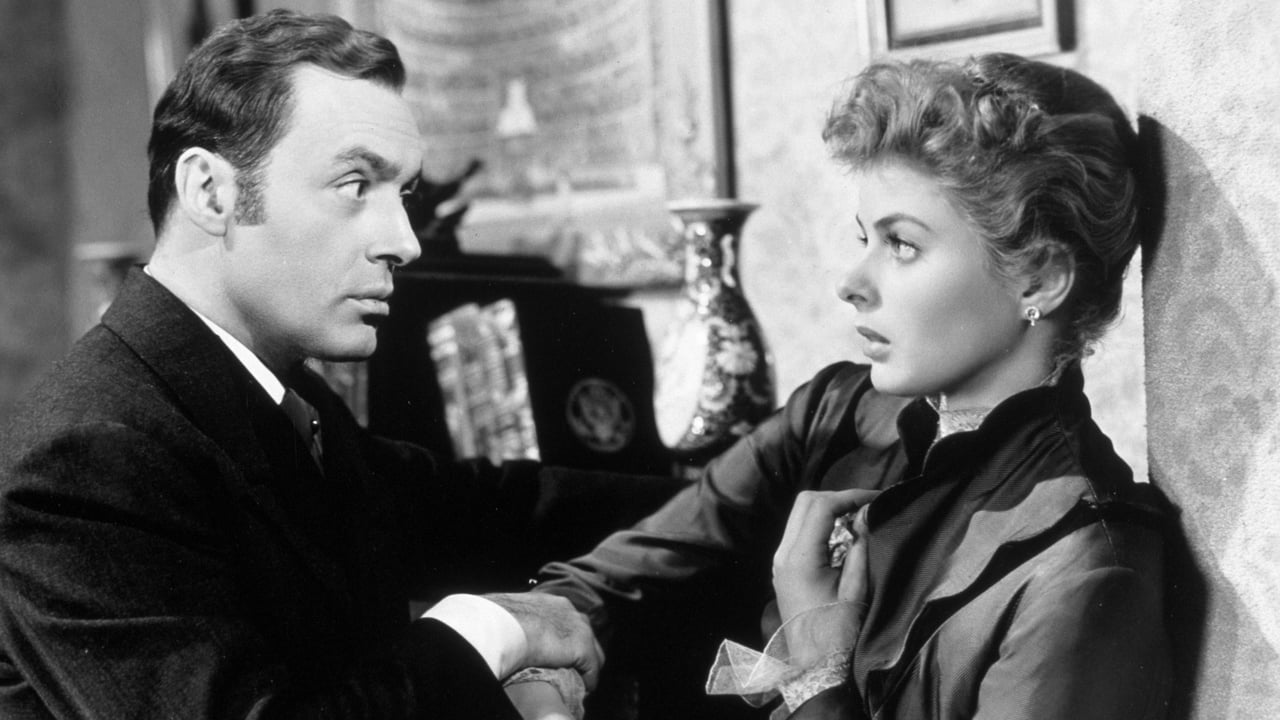
Charles Boyer and Ingrid Bergman excel in Cukor’s cinematic staging of Gaslight

Director: George Cukor

Cast: Charles Boyer (Gregory Anton), Ingrid Bergman (Paula Alquist Anton), Joseph Cotton (Brian Cameron), May Whitty (Miss Bessie Thwaites), Angela Lansbury (Nancy Oliver), Barbara Everest (Elizabeth Tompkins), Emil Rameau (Maestro Guardi), Edmund Breon (General Huddleston), Halliwell Hobbes (Mr Mufflin), Heather Thatcher (Lady Mildred Dalroy), Lawrence Grossmith (Lord Freddie Dalroy)

Spoilers: Spoilers here in for Gaslight both film and play

Paula Alquist (Ingrid Bergman) has terrible memories of finding her aunt, a world-famous opera singer, murdered in their home on Thornton Square when Paula was just fourteen. Years later she falls in love with, and marries, the charming Gregory Anton (Charles Boyer) who suggests she returns to London and her old home. To save his wife’s nerves, Gregory has all her aunt’s property moved into the attic. But then Alice starts to lose items, Gregory tells her she moves things and has no memory of it and at night she sees the gaslight dim and hears strange creaks in the attic. Is she slowly going mad as her husband insists? Or is she – and this is where the word comes from – being gaslit into thinking so by a husband who isn’t as nice as he seems?

Adapted from Patrick Hamilton’s play, George Cukor’s bring a sumptuous version of the iconic story of a decent wife manipulated by a bad husband to the screen (MGM allegedly tried to destroy all copies of a British version from 1940 so this could be the ‘only’ adaptation). While the original play is a claustrophobic one-set affair, using minimal characters and taking part in a narrow window of time, the film expands and deepens the stories timeframe and uses a host of locations to build-up Paula’s isolation and mounting insecurity. It’s a subtle and extremely well-handled costume-noir thriller, that holds it cards close to the chest and is powered by excellent performances.

It also makes several genuine improvements to the original play. There, the villainous husband is trying to drive the wife mad so he is no longer constrained by her presence while he searches the house he has purchased for missing jewels. It’s not clear why the villain has saddled himself with a wife (when his life would be much easier if he was a single man). The film improves this immeasurably by making marriage to the wife an essential prerequisite to the villain gaining entry to the house. This one change unknots many problems with the original play and also raises the stakes considerably, by increasing the personal connection to events from the wife.

Giving a traumatic backstory to the re-named Paula (all the names are changed from the play), also gives Ingrid Bergman far richer material in her Oscar-winning role. Bergman’s Paula is already nervous and vulnerable from the start, and her desperate need for love and security draws her inevitably towards a man who, even before we work out he’s a wrong ‘un, offers her a sort of fatherly reassurance. Bergman’s heartfelt performance also contains a streak of independence and determination: she struggles painfully with knowing she isn’t insane, even while being told she might be. The film also gives her a greater sense of agency, and Paula’s final act payback works as well as it does, because Bergman has made her gentleness so under-stated earlier, that her sudden iron and fury are even more striking.

Opposite her is an equally fine performance from Charles Boyer. Boyer inverts his charm and suaveness into a ruthless opportunist, devoid of morals, who takes a sociopathic delight in his own cleverness, even as he semi-regretfully mentally tortures and manipulates his wife. He’s never less than charming – making it all the more unsurprising that Paula places as much faith in him as he does – but the little marks of danger and control are there throughout. Cukor uses a wonderful shot early on of Paula disembarking from a train, at which point a hand enters frame and grasps her arm – it’s revealed as Anton, but a brilliant indicator of his threat and controlling nature. Truth is, Gregory is insane, and Boyer subtly suggests this throughout: there is another lovely shot from Cukor late on where studio lights are reflected in Boyer’s eyes giving him an insanely intense gaze.

It all revolves around finding those diamonds. If there is one area that film is slightly weaker is that it doesn’t actually dedicate much time to that dimming gaslight or those creaking floorboards at night. It feels like a beat that should be hit more regularly (a montage would have helped no end), a more constant presence would have helped make it a more convincing continual dread for Paula.

But its counter-balanced by the expansion of the film to multiple locations where Gregory manipulates Paula to disgrace herself in public. From a lost broach in the Tower of London to an evening soiree where she is made to appear as if she has stolen a watch, it all helps to tip Paula more and more into believing she is losing her mind. Again, Cukor keeps the focus within all this finery very much on our two leads, reproducing for us as much as possible the growing claustrophobic fear that is consuming Paula that was as at the heart of the stage production.

The moments away from this are slightly less strong. Joseph Cotton has a thankless role (with an awkward mid-Atlantic accent) as a police inspector, who smells a rat or two. The ‘investigation’ moments around this are often heavy handed, and labour under the sort of exposition that the scenes between Gregory and Paula skilfully avoid. Basically, Inspector Cameron barely has a personality, meaning he never really develops beyond being just a plot device.

Conversely, a character who takes on a great deal more presence is Angela Lansbury’s star-making turn as a sultry, defiantly sexual maid, parachuted into the house for goodness-only-knows what reason (!) by Gregory, who takes every opportunity to undermine her mistress. It’s a brilliantly pointed little performance from Lansbury, full of sass and smirk (it got her an Oscar nomination in her first movie) that adds even more to the feeling of Paula being a stranger in her home.

Gaslight is all smartly directed with Cukor, brilliant as always with actors, adding more visual flair than he often does with his fog-filled London and noir-tinged Edwardian home. With strong performances and many changes that materially improve the original material, it’s a fine adaptation.

Spencer (2021)

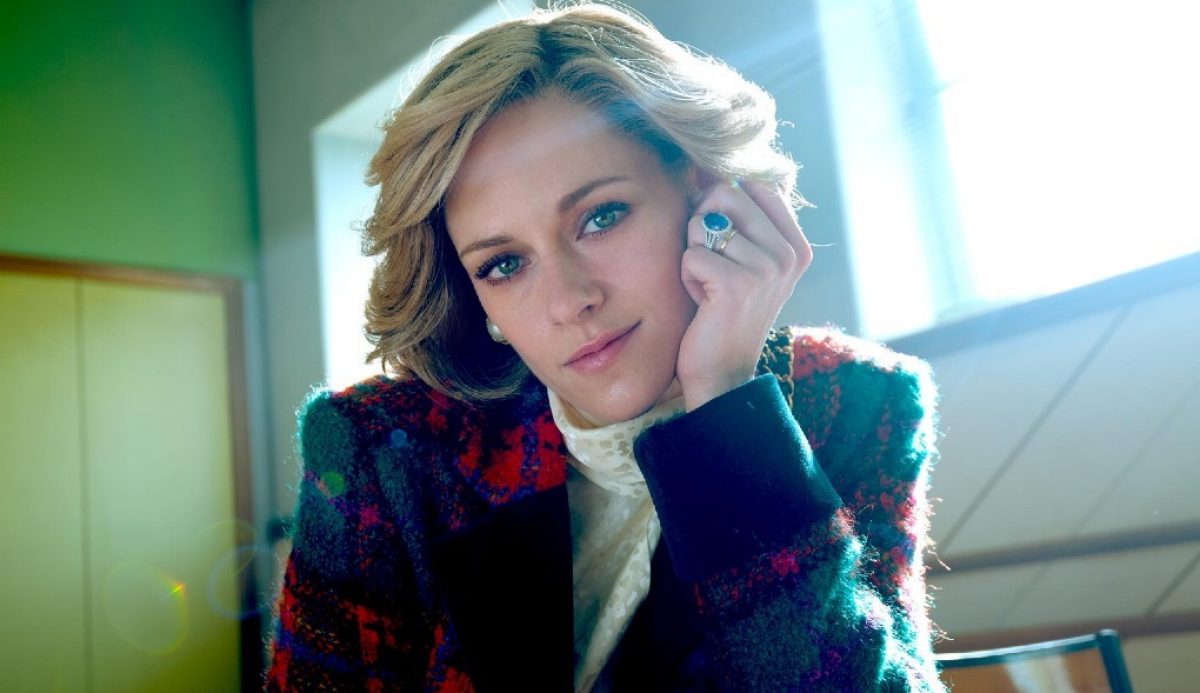
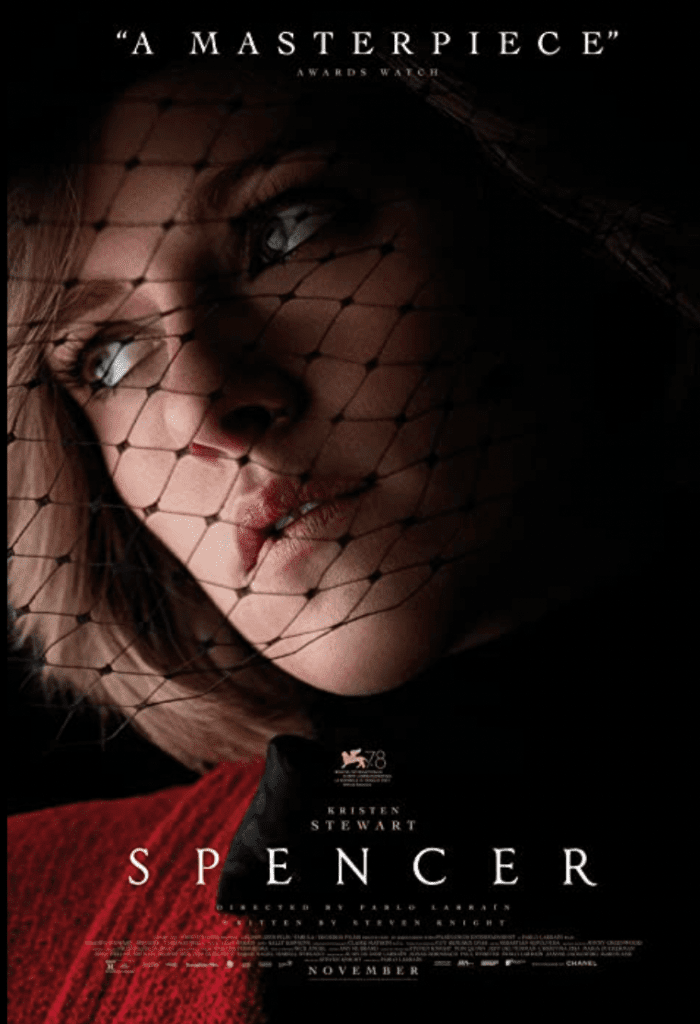
Kristen Stewart channels the People’s Princess in Spencer

Director: Pablo Larrain

Cast: Kristen Stewart (Diana, Princess of Wales), Timothy Spall (Major Alistair Gregory), Jack Farthing (Prince Charles), Sean Harris (Chef Darren McGrady), Sally Hawkins (Maggie), Jack Nielsen (Prince William), Freddie Spry (Prince Harry), Stella Gonet (Queen Elizabeth II), Amy Manson (Anne Boleyn)

There is no more famous fairy-tale-gone-wrong in history than Prince Charles and Diana. It’s been explored in countless books, memoirs and films. It’s the meat of Netflix’s The Crown. Interest in it has been rekindled again after Prince Harry’s royal resignation. It’s a fable (also what this film claims to be, based, it claims, on “a true tragedy”) that will only become more of a legend. At its centre is Diana, a figure idealised and enshrined by a tragic early death, who had all the warmth, lovability and public humanity the more reserved Charles lacked. Diana’s romanticism has always helped her be remembered as the hero of this tragedy, with Charles the villain. You’ll see no difference in opinion here. Spencer is a fantastia on Diana that feels like it has been squeezed out of the pages of a host of sentimental pro-Diana memoirs from the likes of Paul Burrell.

Set over a three-day Christmas holiday at Sandringham, around 1991, the film follows a disastrous holiday of psychological depression, despair and isolated crisis for Diana (Kristen Stewart) as her marriage to Charles (Jack Farthing) finally, irretrievably, collapses. Over those days, Diana hides in her room, throws up meals, is treated with stony silence from the Royal family and quietly bullied by Sandringham equerry Major Gregory (Timothy Spall). Her only friends are besotted loyal dresser Maggie (Sally Hawkins) and avuncular chef Darren (Sean Harris) and her only moments of happiness are with her two young sons, giving her the only taste she has of a normal life.

If there is one thing Spencer does very well, it is giving an insight into how overbearing and crushing depression can be. Diana is erratic, frequently tearful, prone to fantasies and suffers through prolonged periods of self-loathing, exhibiting as chronic vomiting after every meal and possible self-harm. Stress makes her sharp and waspish with those she doesn’t trust and almost overwhelmingly needy with those she does. Larrain visualises this with muted pallets and drained colours, showing this world in the same oppressive, depressing light as Diana see it, while Johnny Greenwood’s excellent score makes superb use of a series of unsettling chords to constantly put us ill at ease.

The downside is, the film so completely consumes the Diana-side only, that it feels like being crushed to death by a collapsing mountain of “People’s Princess” bargain-bucket memoirs. Diana is always the victim and never at fault. The film takes an idealised view of her as “one-of-us” chewed up and spat out by an uncaring system, with the Windsors as monstrous gargoyles. (A bit rich considering she’s the daughter of an Earl). Charles is cast firmly as a cold-fish and villain, heartlessly openly carrying on an affair, gifting the same pearls to Camilla as he does Diana. Where Diana is warm and playful with the children, Charles is cold and authoritative, angrily tutting at William’s failures at shooting. Where she has a natural touch with people, Charles is cold and dictatorial.

It is, basically a one-sided vision of this story. That would be fine if the film had suggested that what we are seeing is Diana’s depression-filtered perception of the world – her perception told her surroundings were like, cold, cruel and oppressive. But there is no suggestion that we are seeing this, no extenuating circumstances or slight doubts raised to suggest that there may be different interpretations of these events or that there were two people in this marriage, both in different ways at fault.

It’s something The Crown has carefully – and skilfully – done, by demonstrating these are two people never in love with each other in the first place, with no common interests and outlooks. Spencer could have delved more into helping us understand how this situation came about. It isn’t interested in doing this: as far as the film is concerned, Charles is an unfaithful bastard (Jack Farthing’s channels his Warleggen from Poldark, playing every scene with a razor-blade growl) intent on gaslighting his wife. It doesn’t seem fair.

And lord knows, I’m sorry for Diana who should never have agreed to marry a man she was unsuited to and in love with another woman from day one. There is a film to be made (eventually) about Diana which explores the fascinating puzzles in her identity. The woman who loathed the press but also was an expert manipulator of public opinion, who yearned for privacy but loved public and private devotion. Spencer doesn’t explore any of this, instead presenting a simplified, romantic vision of a woman exactly as you would expect to see from a cliched TV movie. At heart, in fact, that’s what Spencer is – a slushy made-for-TV-movie shot like an arthouse film.

That’s perhaps why its full of such ridiculous flourishes. We’ve obviously talked about the stone-cold Royals. We get cod psychology – “Where the fuck am I?” are Diana’s opening lines, hammering home for us (in case we are about to miss it) that her tortured psychology is the heart of the film. As the Royal Court arrives at Sandringham, their cars drive over the dead body of a pheasant – symbolism you see! Diana reads a book about Anne Boleyn – and sure enough she is soon literally communing with a ghost of the beheaded Queen, both of them claiming themselves as victims of a cruel king who loved someone else. Everything in the film is heavy-handed and designed to push Diana as the faultless victim and the Royals as scowling monsters.

Kirsten Stewart gives a decent impersonation of Diana – vocally she’s spot-on – but for me she struggles in the shadow of Emma Corrin’s extraordinarily transformative work in The Crown – a show that also gained a lot more emotional insight into this story than the film even begins to achieve. It’s shot with a real arthouse style, but at heart it’s a silly and shallow film that never tries to understand either Diana’s inner life or how her marriage became what it was.

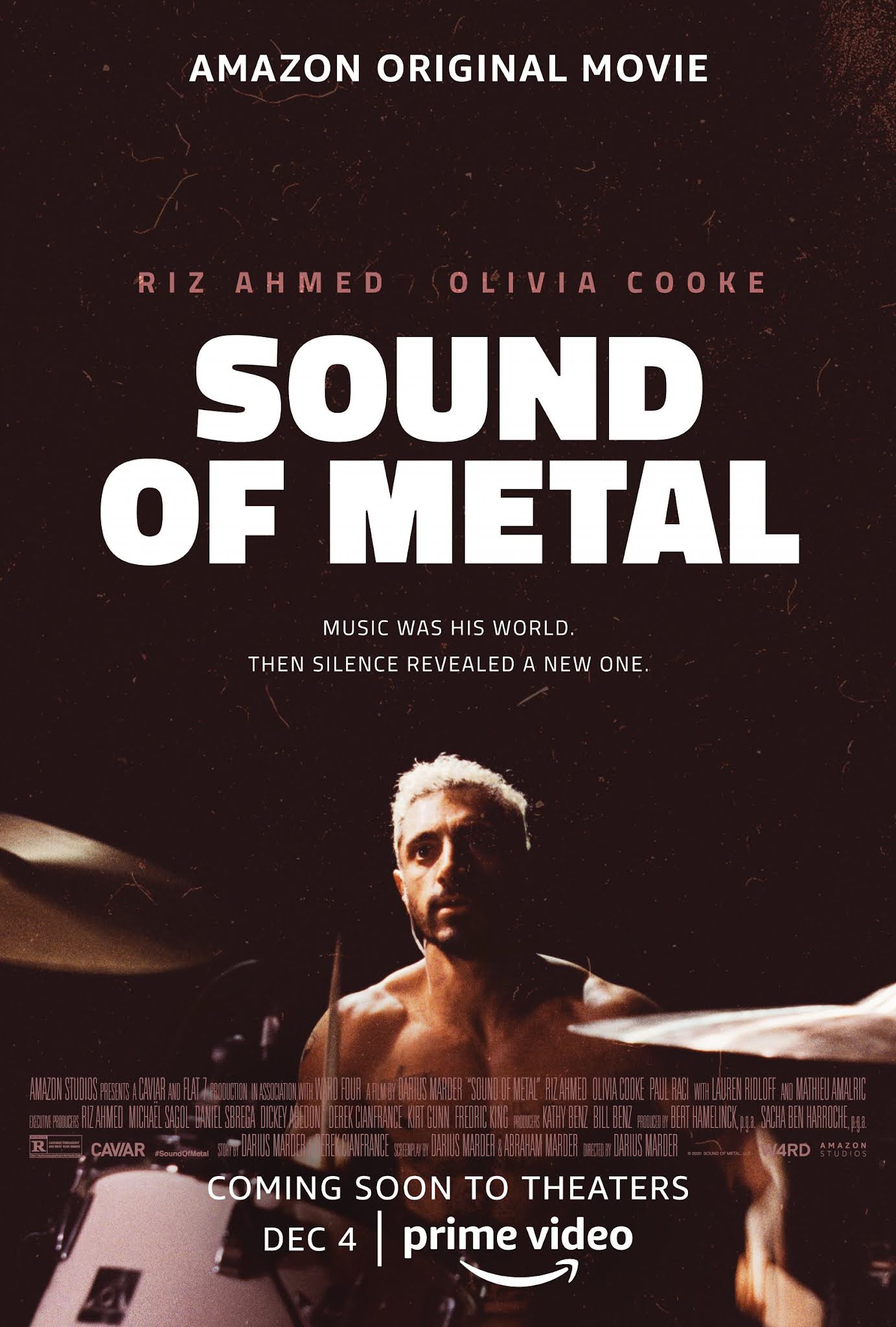
Sound of Metal (2020)

Riz Ahmed as sudden deafness means he can no longer hear the Sound of Metal

Director: Darius Marder

Cast: Riz Ahmed (Ruben Stone), Olivia Cooke (Lou Berger), Paul Raci (Joe), Lauren Ridloff (Diane), Mathieu Amalric (Richard Berger)

Spoiler Warning: Much of the end resolution of Sound of Metal is discussed here – so watch it first!

Ruben Stone (Riz Ahmed) is a recovering drug addict and drummer in heavy metal duo Blackgammon with his singer girlfriend Lou (Olivia Cooke). Touring together, their life is made up of performing gigs across the States. That changes overnight when Ruben suddenly loses his hearing, with a diagnosis confirming 80% of his hearing is gone and what’s left may only disintegrate further. With Ruben sliding into depression, Lou helps him find a place in a deaf recovering drug addict camp run by Joe (Paul Raci). There Ruben must learn to adjust to a life without hearing – and decide whether or not he will undertake a hugely expensive ocular implant surgery to try and restore some vestige of his hearing.

Sound of Metal is an extremely thought-provoking and highly immersive piece of cinema. It’s extraordinarily well-edited and shot and its sound design is faultless. I can think of few other films that so successfully throws the viewers into its main character’s experience. Much of the opening Act is a stressful, tense and even terrifying, watch as Ruben’s isolation, fear and frustration is powerfully communicated to the audience. An early morning routine is shown first from a “hearing” perspective then the next day in chilling silence. Sign language goes untranslated onscreen until Ruben has learnt it, we can barely see the notes Lou is forced to scribble to communicate with him. It all gives a powerful sense of the terror and loneliness of Ruben’s isolation.

The film also skilfully enters the debate around the treatment of disability. Joe’s colony is founded on the principle that deafness should not be ‘treated’ as an illness or a problem to be fixed, but instead as a part of a person’s identity, with presents challenges which can be rewardingly overcome. It’s an attractive and admirable idea, and the points the films make about removing the stigma and shame of disability (a perverse shame consumes Ruben about his deafness). But on the flip side, if you had lost your hearing wouldn’t you be attracted to a surgery that might help restore part of that? Is that wrong – even if it’s a betrayal of what Joe believes in?

The real issue is Ruben’s motivation for continuing to pursue surgery: because he is ashamed of being deaf. One of the beauties of the film is how it avoids straight forward and trite solutions to its problems. There are no simple answers and no Hollywood endings in Sound of Metal. All the characters make mistakes, and many remain unresolved. Obvious narrative tropes are side-stepped: it looks like Ruben is travelling the familiar arc of self-loathing into evangelical convert. This predictable narrative is avoided. Someone can still be a warm supporter of other people and yet also lie and cheat to make improvements in their own lives.

It’s the secondary plot in Sound of Metal: Ruben, an addict, becomes addicted to the idea of hearing again. Told early by a doctor – and the film is a damning indictment of the money-first nature of American healthcare – that a treatment might cure him, Ruben fixates on this. He ignores the risks (it will destroy his remaining hearing) and negatives (it will never be like actually hearing again) and disregards and ignores any other options. In turn, you can argue Joe – so concerned with his evangelical stance and maybe even a little smug in his purity – fails to identify Ruben’s personality flaws and places undue pressure on him to swiftly follow directly in Joe’s footsteps.

All of which makes Sound of Metal sound rather depressing. But it truthfully isn’t. It’s just a film that’s beautifully in tune with real life. It understands that relationships and friendships can change and drift apart over time, due to changes of circumstances, without heartbreak or resentment. That the person we need at a particular point in our life, might not be the person we need later in life. Ruben is a complex, troubled person, but he’s also a decent, good one quick to offer acts of great generosity and kindness. It’s the part of his personality that would make a good teacher of deaf children (a role he engages in with delight while living in Joe’s camp). But it sits alongside an addict’s tendency to put his own desires first and assume others will fit in with them.

In some ways the film is a dramatization of mourning. Ruben must learn to mourn the loss of his hearing and this ending of his dreams of becoming a star – even with his implants he will never have the same affinity for music as he had before. We see him go through shock, pain, anger, depression and the film shows him just beginning the process of acceptance and hope at its conclusion. But the film doesn’t lie about this being a difficult and challenging journey – and one where mistakes will litter the path.

As Ruben, Riz Ahmed gives an outstanding performance. Fully committed – he spent months learning to drum and speak ASL – Ahmed is powerfully emotional, and much of the film’s success in immersing us in the horror of finding yourself suddenly isolated, scared and confused is due to the rawness of his performance. Ruben is a man of strong feelings and loyalties, loving and caring but also angry and defiant. You understand every inch of his frustration, even if you sometimes want to slap him for being selfish. Just as good is Olivia Cooke as Ruben’s supportive and fragile girlfriend Lou. Paul Raci – son of death parents, playing a character heavily derived from his personal story – is superbly genuine as the caring but overly evangelical Joe, a mentor who blinds himself to things in his protégé he doesn’t want to see.

Sound of Metal is beautifully shot and filmed by Marder. It expertly builds our empathy with Ruben and his situation – helped hugely by Ahmed’s superb performance – and allows us to feel an uncomfortable fraction of what it must be like to find yourself suddenly isolated in the world. It enters with fascinating points on both side, into a very even-handed debate on disability and its treatment (or not), but never forgets it is also telling a very real, human and emotional story. Side-swiping conventional narrative tricks, it’s highly engaging, a superb piece of technical film-making and brilliantly done.

Short Cuts (1993)

Anne Archer and Jack Lemmon are just two of many intersecting lives in Altman’s Short Cuts

Director: Robert Altman

Cast: Andie MacDowell (Ann Finnigan), Bruce Davison (Howard Finnigan), Julianne Moore (Marian Wyman), Matthew Modine (Dr Ralph Wyman), Anne Archer (Claire Kane), Fred Ward (Stuart Kane), Jennifer Jason Leigh (Lois Kaiser), Chris Penn (Jerry Kaiser), Lili Taylor (Honey Bush), Robert Downey Jnr (Bill Bush), Madeleine Stowe (Sherri Shepard), Tim Robbins (Gene Shepard), Lily Tomlin (Doreen Piggot), Tom Waits (Earl Piggot), Frances McDormand (Betty Weathers), Peter Gallagher (Stormy Weathers), Annie Ross (Tess Trainer), Lori Singer (Zoe Trainer), Jack Lemmon (Paul Finnigan), Lyle Lovett (Andy Bitkower), Buck Henry (Gordon Johnson), Huey Lewis (Vern Miller)

Helicopters fly over Los Angeles, spraying against medflies. Beneath them, people’s lives entwine over the course of a couple of days. It could only be an Altman film. The man who turned the whole of Nashville into a set for, repeats the trick here with a brilliantly handled adaptation of a series of Raymond Carver short stories into one single inter-linked narrative, that explores a full gamut of emotions in that strange race we call humanity.

The son of TV commentator Howard (Bruce Davison) and his wife Anne (Andie MacDowell) is hospitalised after he is accidentally clipped by the car of waitress Doreen (Lily Tomlin). He’s treated by Dr Ralph Wyman (Matthew Modine), currently feuding with artist wife Marian (Julianne Moore). Marian befriends clown Claire (Anne Archer), who is horrified when her husband Stuart (Fred Ward) and his friends decide not to let finding a dead body spoil their fishing trip. Marian’s sister Sherri (Madeline Stowe) is becoming increasingly exasperated with philandering cop husband Gene (Tim Robbins), who is having an affair with Betty (Frances McDormand) estranged wife of Stormy Weathers (Peter Gallagher) who flew one of those helicopters spraying medflies. That’s not even mentioning a furious baker (Lyle Lovett), a sexually frustrated pool cleaner (Chris Penn) and his phone-sex worker wife (Jennifer Jason Leigh) or Howard’s unreliable father Paul (Jack Lemmon).

There aren’t many directors in Hollywood who could throw this many plates onto sticks and keep them spinning. Certainly very few who could make it look as easy as Altman does. With no less than twenty leading characters spread out across at least nine storylines, many of which intersect but without those taking part of them being aware of it, this is such a carefully woven tapestry even a single loose thread could have led to the entire image unravelling into a sorry collection of fabric. The fact it doesn’t, and the film moves so confidently and vibrantly from place-to-place, shifting from perspective to perspective without ever once confusing or alienating the audience, demonstrates this is the work of a master at the top of his game.

Altman’s verité style is at its best here. There is no need for flash or intrusive cinematic tricks, when the entire film is a brilliant expression of the potential of cinematic narrative. Altman’s camera, with its observational stillness, is perfectly matched with masterful editing (the film is superbly assembled by Geraldine Peroni) that not only makes this a coherent whole, but also finds every trace of reaction and nuance from the characters. Time and time again the camera (and the editing) searches out and finds that little moment of reaction that adds a whole world of depth to the story.

Because, like some of Altman’s best films, this is all about a cascade of little moments that combine into one beautifully enlightening whole. Each story demonstrates a different facet of the human experience, but what they all have in common is the unpredictability of how events many turn out and how people may react to them. There is a wonderful unknowability about people which the film captures. Just when we think we have a person sussed, they will do or say something we don’t expect. A philanderer’s wife will be amused by his cheating than horrified. An abusive baker will have depths of kindness. Feuding couples will find they have more in common than not.

There’s also darkness and sadness. The film is largely anchored by the increasingly heart-string tugging collapse of Howard and Ann’s son – and the pain that can lie in parent-child relationships is also seen in the dysfunctional relationship between jazz singer Tess (Annie Ross) and her talented but depressed celloist daughter Zoe (Lori Singer). As Ann, Andie MacDowell gives one of her finest performances as a powerless mother desperate to do the right thing, her fear and vulnerability as touching as her pain is devastating. Somehow, it’s all the more affecting by knowing how distraught Lily Tomlin’s Doreen would be if she knew the terrible impact of her very minor accident was.

That’s another beauty of this tapestry. As characters ‘guest’ in each other’s stories, we don’t see them in black-and-white but as ordinary people doing their best. Tim Robbins’ cop would probably seem a selfish rogue agent in the eyes of several characters, but as we see more of his home life (dysfunctional but strangely loving), it’s hard not to warm to him. We understand why Ralph (Matthew Modine) is a bit distant with the Finnegans, because he’s distracted by concerns that his wife is having an affair. We can’t be angry at Doreen, because we know she’s such a decent person.

The film doesn’t shy away from the darkness of people, not less the slow bubble of sad-eyed depression in the eyes of Chris Penn, jealous of the people his wife (a very good Jennifer Jason Leigh) talks dirty to down a phoneline – a bubble that will burst before the film’s end. Peter Gallagher’s cocksure and charming pilot has the potential in him to do something quite unpleasant to his wife. Even Tim Robbins’ cop seems only a few degrees from potentially taking the law into his own hands.

Short Cuts is wonderfully constructed – and never feels overbearing or overlong despite its great length – but it’s not perfect. It’s very hard not to notice today that it’s view of the great melting pot of Los Angeles is overwhelmingly white. Nearly every single woman takes her clothes off at some point (Julianne Moore famously does an entire domestic argument nude from the waist down, which is making a point about the impact of long-term marriage but still Modine is fully clothed). Altman at times lets his cynicism (and even slight condescension) for some characters show a little too clearly.

But, despite those flaws, Short Cuts is an almost perfect example of smorgasbord story-telling in cinema. And no one else could surely have done it with such ease and wit as Altman did.

No Time to Die (2021)

One final mission for Daniel Craig in No Time to Die

Director: Cary Joji Fukunaga

Cast: Daniel Craig (James Bond), Lea Seydoux (Dr Madeleine Swann), Rami Malek (Lyutsifer Safin), Lashana Lynch (Nomi), Ben Whishaw (Q), Naomie Harris (Eve Moneypenny), Jeffrey Wright (Felix Leiter), Christoph Waltz (Ernst Stavro Blofield), Ralph Fiennes (M), Billy Magnussen (Logan Ash), Ana de Armas (Paloma), David Dencik (Dr Valdo Obruchev), Rory Kinnear (Bill Tanner)

Remember when Daniel Craig was cast as Bond? Remember that CraigNotBond campaign, based largely on Craig being blonde? For about five minutes there was doubt about the franchise… and then Casino Royale became one of the best Bond films ever made. Craig is, clearly, one of the greatest Bonds ever, so No Time to Die, his sign-off for the role was always going to be a big movie. It’s at times exciting and gripping, but also a strange beast, partly straining at the confines of the franchise at others desperately trying to service all expectations.

It’s five years after the events of Spectre (you’d assume the less said of that the better, but unfortunately that film is absolutely at the heart of No Time to Die so we can’t dodge it). And it’s five years since James Bond (Daniel Craig) abandoned Dr Madeleine Swann (Lea Seydoux), believing she had been responsible for luring him into a Spectre ambush. Today, Spectre agents steal a biological weapon from MI6. A retired Bond, living off the grid in Jamaica, is recruited by Felix Leiter (Jeffrey Wright) to hunt it down for the CIA but MI5, and their new 007 (Lashana Lynch), are also on the trail. Plots within plots are slowly revealed and it seems all roads lead back to Madeleine and her childhood escape from a scarred killer, the mysterious Safin (Rami Malek). Just when Bond thinks he’s out, they drag him back in…

I have very mixed feelings about No Time to Die. You have to admire the skill and expertise with which it has been made. It looks absolutely gorgeous. The action set-pieces are full of ingenuity and excitement – in particular a duel between Bond and Safin’s agents in a mist-filled Norwegian forest. The opening action set-piece, in a picturesque classic Italian town, with Bond leaping off bridges and bringing out the Aston Martin for one final spin, is a doozy.

But do you remember when Bond was, y’know, escapist fun? Or even really just fun? If there is one thing I’d argue that No Time to Die isn’t, it’s fun. Yes lots of exciting things happen, but it’s also a rather maudlin film. It’s got a weary end-of-days feeling and a slight air of self-importance. Its absurd length doesn’t help puncture this. Unlike almost any other Bond film, I have a hard time imagining watching this again: it’s probably a better film than, say, The Spy Who loved Me, but honestly which one would you rather watch on a Sunday afternoon?

But Daniel Craig is superb: the ultimate expression of his wryly amused but guarded and distant Bond, a man constantly worried about lowering his defences and letting anyone in, hiding pain under an insolent grin but secretly desperate for an emotional connection. It’s clear he is one of the great Bonds. He also feels rooted Fleming. Fleming’s Bond was never a super-hero, but a flawed, lonely man, often muddling through, far more vulnerable and emotional than people remember. No Time to Die has a lot of echoes of Fleming, which is no bad thing.

No Time to Die buries itself in the emotional world of Bond. This is as close as you going to get to a character study of our super-agent. So much so that the action (and even the presence of a Bond villain) feel like only a contractual obligation. I would love it if they had made a final, indie-tinged film on a small budget where we saw Craig’s Bond wrestling with complex feelings and trying to work out what it’s all about. More of Bond playing kids’ games with Leiter in a Jamaican bar, or preparing a child’s breakfast in the morning (scenes where the film literally has its heart). It makes No Time to Die an often poorly structured and ill-focused film (factors that contribute to its length) that’s trying to be about Bond but also be BOND. It’s a circle the film can’t really square.

The Bond franchise has always slavishly followed whatever the latest big trend in cinema was so No Time to Die doubles down in following the Marvel series, by retroactively converting all of Craig’s Bonds into one single Bondverse, with No Time to Die as its Avengers Endgame. Problem is, this was all thought of far too late, feels hideously thrown-together with no thought, and means both this film and Spectre had to bend over backwards to retroactively fill out now crucial back story.

As a result, we get the bloated runtime as the film needs to set up a personal back story, explore an emotional arc, establish a new threat and thread in huge set pieces. The writing and structuring aren’t deft enough to do this as well as Marvel does. The result is something three hours long but still feels hard to follow. Craig’s best film – Skyfall – worked because it was basically a stand-alone entry. The series (and the character) works best as a mission-focused individual.

Many elements of the story introduced here make little or no sense. Safin – in a truly awful performance by a whispering Rami Malek, straining to look intimidating – is possibly the worst, most incoherent Bond villain ever. His motivation makes no sense: at first he seems focused on eliminating only those who murdered his family; his rants about collateral damage in no way squares with his plan to unleash genocide via a bio-weapon. His “we are two sides of the same coin” confrontation with Craig feels like a feeble attempt to recapture the magic of the confrontation with Bardem in Skyfall.  An opening sequence suggests a plot-defining link between him and Swann which has promise but goes almost no-where (when they finally meet again mid-film, she doesn’t even know who he is).

A braver film would have dumped this bio-hazard nonsense and placed issues of family at its heart: a hero uncertain about settling down, the villain a person desperate to find a new family. This would have placed the link between Safin and Swann at its centre, and also allowed an even more intriguing exploration of Bond’s character by contrasting him directly with a villain explicitly focused on the same preoccupations. Instead, the comparison isn’t there and Swann remains an incoherent character – alternately weak and strong as required by the plot. Craig and Seydoux also have no real chemistry and look physically mismatched (Seudoux’s youthful looks make Craig look older than he is). Compare their chemistry with that between Craig and Ana de Armas (in a knock-out guest slot, the film’s most fun moment).

Instead it feels like a film where every single idea has been thrown at the frame and all of them made to stick. Lashana Lynch has some fine charisma, but basically nothing to do as the new female 007 (the part actually feels like a bone the franchise has tossed at diversity – Bond even gets the 007 title back part-way through). There are constantly plots within plots within plots, like a dementedly rushed series of 24. Bond goes AWOL, then AWOL from AWOL, then he’s in then out then in again from MI6. A more tightly structured story would have dared to cut some of the flab, but No Time to Die is only part way towards being the brave break from tradition it needs to be.

Sure, it takes daring decisions: it has a tragic ending and shock deaths punctuate the film. But while it needed to be a smaller, intimate story with a sombre mood, it still throws in ridiculous villains, bases on islands, armies of goons and a world-ending threat. These things honestly don’t really work together and contribute to making the film too long and too sombre to be any fun. It’s a film that’s only part way to being what it wants to be, but still obsessed with being what it thinks it should be. An awkward Frankenstein that I’m not sure will have as much shelf life as its maker’s hope.