Category: Action film

The Flash (2023)

The Flash (2023)

The final death rattle of the DCU franchise, a terrible film fill of bad storytelling and lousy gags

Director: Andy Muschiette

Cast: Ezra Miller (Barry Allen/The Flash/Young Barry Allen/Evil Barry Allen), Michael Keaton (Bruce Wayne/Batman), Sasha Calle (Kara Zor-El/Supergirl), Michael Shannon (General Zod), Ron Livingston (Henry Allen), Maribel Verdú (Nora Allen), Kiersey Clemons (Iris West), Antji Traue (Faora-Ul), Ben Affleck (Bruce Wayne/Batman), Jeremy Irons (Alfred)

This is how it ends. Not with a zippy bang, but a stumbling fart. The Flash is, quite simply, one of the most dreadful, misguided messes you are likely to see: the final sad, rammed-together-by-committee piece of pandering from a franchise declared DOA before the film was even released. Could The Flash have worked if the DCEU had been a success? Its defenders might say yes, but let’s be honest: no. And not just because of Ezra Miller. Though God that didn’t help.

Anyway the plot. We meet Barry Allen/The Flash (Ezra Miller), fighting crime with the Justice League. Because the DCEU was in a rush (and never bothered to make an origins film allowing muggles to understand who the hell he is), after an action-packed opening we are basically rushed at dizzying speed through his backstory (the sort of thing Marvel, back in the day, would have spent two films building). Allen’s Dad (Ron Livingston) is in prison for the murder of his Mum (Maribel Verdú) though he’s innocent. Allen works out he can go back in time to change this. He does but then (naturally) ruins the past. He finds himself back in Man of Steel time which – we are hurriedly told – is the same time he got his powers. The grief that made Barry a hero in our timeline didn’t happen here so the Barry of this timeline is, to put it bluntly, a complete prick. He’s also changed lots of other fan-pleasing stuff, lost his powers, wiped most of the DCEU characters from history (no loss) and has to team up with a different Batman (Michael Keaton) to train his past self and save the world.

First and foremost – who thought it was a good idea to make a film that depends on this much knowledge of a character who has never had a film made about him before? Marvel’s Spiderman got away with jumping over the origins story because we’d already seen it twice. Joe Regular Public has no bloody idea who Barry Allen is. They aren’t ready to be introduced to his backstory like it’s established, famous stuff and watch it being twisted upon. Or watch a plot twist about the granting of its powers unfold at the same time as we are told when we event got them in the first place. It’s totally bizarre – it’s like the film is throwing in call-backs to films that never happened.

This sort of plot, watching our hero change the past, needs us to actually have lived through the past with that hero. To understand the emotional impact it’s had on him and to have watched him mature. Instead, we get all this stuff dumped on top of us and then watch a version of a character we don’t really know teach another version of that character how his powers work without us having been given any knowledge ourselves of how those powers work, meaning we are as ignorant as he is.

It doesn’t help that we’re given no reason to bond with Barry Allen – any of them. Firstly, let’s get the elephant out of the room. We now know what will prevent a Hollywood studio cancelling a troubled star: if they have invested $200 million on a film in which they appear in every single frame. Miller is sort of beyond toxic now: someone who has stolen, assaulted women, groomed minors, proclaimed themselves an Indigenous messiah and faced multiple arrests and restraining orders. If this film had cost $20 million it would never have been released. Hell, if it had cost $75 million like the tax-written-off Batgirl, it would have been spiked. But DC and Warner had too many eggs in the Ezra basket so hoped we might forget they were asking us to bond with a literal criminal.

Leaving that aside though: all iterations of Barry Allen seem pretty awful people. The first is selfish whiner with poor empathy. The second is an absolute douchebag, a character so irritating he manages to make the original look like a wise mentor. The third who pops up later is a 2D man-child. Nothing Barry does is engaging or sympathetic, but yet the film assumes we love him as much as those working on it clearly do.

This multiple iterations could have worked if we had seen Barry mature over multiple films and then gone back to meet the “initial” version of himself. It makes no impact when we have no bond with the character. The film assumes emotional connections with characters and totems that simply don’t exist. For example, Future Barry is furious Past Barry uses a cherished teddy bear (his dead mother’s last gift) as a dartboard target. That might mean something if we’d seen Barry carry this totem for a couple of films: The Flash has to give us all the information about the totem (including its existence) within thirty seconds. It’s a small example of the film’s topsy-turvy nonsense.

While sprinting to introduce a franchise, it also indulges in piles of fan-bait nostalgia. The most obvious is, of course, the return of Michael Keaton as Batman. Perhaps due to Miller’s toxic nature, the film played this angle up big time in its trailers. But it’s nostalgia that only really means something to people in their 40s and 50s and literally sod all to most of today’s audience. Every second Keaton appears on screen it “homages” the Burton pics – he can’t take a crap without hearing Elfman’s music, the visuals are littered with references and Keaton wearily says things like “let’s get nuts”. Keaton looks like he hates himself for saying yes to the (presumably) truckloads of money he was paid to be here.

He only doesn’t win “most disengaged actor” because we have a thinking-of-his-castle Jeremy Irons and Michael Shannon trotting through the film practically wearing a t-shirt saying “by contractual obligation”. Shannon centres a CGI filled smackdown that inevitably ends the film’s penultimate act, before the multiple Allens disappear to a CGI world of parallel universes and dead actors recreated by the power of special effects and the desire of deceased actor’s estates to earn a tasteless quick buck (there is something really tasteless about Christopher Reeve’s appearance in particular).

The CGI in this film, by the way, is some of the worst you are ever going to see in a tentpole release. Never mind the uncanny valley of its array of nostalgia cameos or the blurry, explosion in a paint-shop vision of alternate realities, crammed with utterly unconvincing CGI clones of its actors. Watch Barry’s rescue of babies from a collapsing hospital in act one – these are hellish figures of uncanny unreality, looking like nothing less than the spawn of Satan. Let them fall Barry, let them fall!

That’s before we even start on the crazy morality of this film. It’s idea that that past is sacrosanct and must never be changed fits it’s worship at the altar of nostalgia – after all it’s the film where a film from 1989 is treated like a holy text. It could have worked if the film had committed to its idea that we have to learn to let go of our grief and that heroes need moments of tragedy to set them on the path to greatness. But after witnessing all this, our Barry at the film’s end… changes the past AGAIN to save his Dad. Did he learn nothing? What kind of message is this?

But then this sort of muddled nonsense probably comes from the length of time the film gestated: it was in development for nearly a decade. So long, that its star became a toxic criminal, a separate TV-show about the Flash was developed, screened for eight seasons, adapted this very story and ended and the franchise this was meant to be part of died. The Flash emerges from this rubble as a catastrophic piece of contractual obligation. The death rattle of a franchise, which was released because its studio had invested so much in it, it was desperate to make something back. It’s a film no-one wanted to make, release or see. A test case for the nightmare modern franchise box-office film-making is.

The Killer (2023)

The Killer (2023)

Fincher’s lean, spare film is a perfectly constructed thriller and an intriguing character study

Director: David Fincher

Cast: Michael Fassbender (The Killer), Tilda Swinton (The Expert), Charles Parnell (The Lawyer), Arliss Howard (The Client), Kerry O’Malley (Dolores), Sophie Charlotte (Magdala), Emiliano Pernia (Marcus), Gabriel Polanco (Leo), Sala Baker (The Brute)

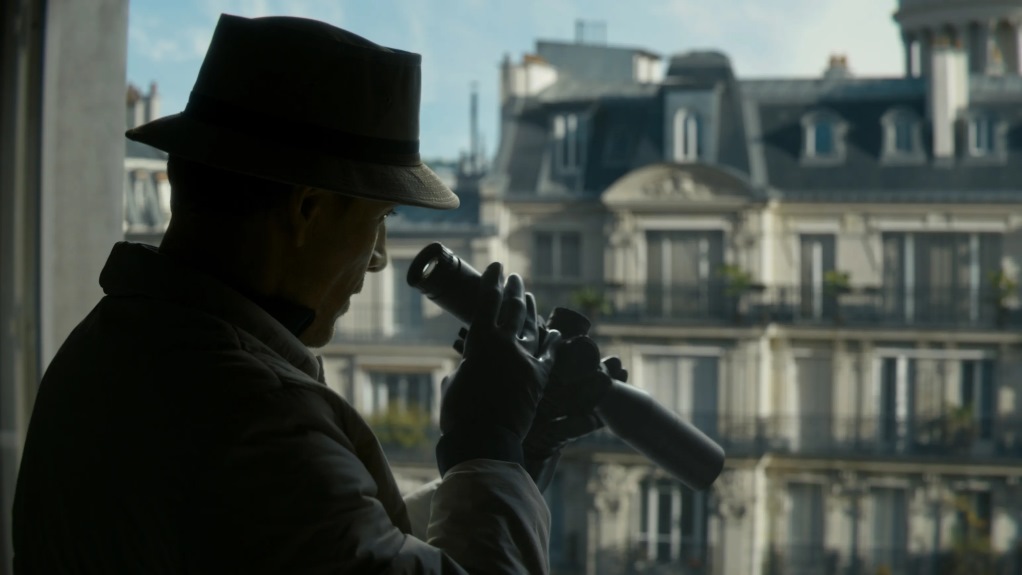
A man sits in monastic silence, starring out of a window at the best hotel in Paris that money can buy. He moves only to sleep, exercise with a monotonous rigour and consume a carefully calculated daily calorie amount from McDonalds. He wears gloves all the time, never moves from the sheeting he lays across surfaces and sometimes assembles and reassembles his rifle. He’s a nameless hitman for hire (Michael Fassbender) and a freak accident on this job will shatter his world of pristine order and leave him hunted by his employers and on a campaign of revenge to guarantee his safety.

The Killer is a lean, slimmed-down thriller full of Fincher’s love for procedure and detail, that delights in every beat of its detailed look at how a professional killer might go about his daily business. Be it lock-ups crammed with mountains of equipment, from guns to false number plates and endless zip-bound folders of fake IDs (all using character names from 70s and 80s TV shows) to the practised ease with which he penetrates even the the highest security building with an Amazon purchased card copier and light-fingered pick-pocketing. All of it assembled with Fincher’s pin-point precision and clockwork eye for detail.

On the surface, you might expect The Killer to be a sort of twist on Le Samouri, Melville’s look at a zen-like hitman. The Killer seems to fit much of the bill. Embodied with an athletic suppleness by Fassbender (his body seems to be almost elastic in the parade of physical stretches and exercises he performs, not to mention the fingertip press-ups he relentlessly pumps his whipper-thin body through). But Fincher gives us a seemingly never-ending insight into the Killer’s inner-mind, via a prolonged (near continuous) monologue of his inner thoughts, ideologies and mantras that dominate much of the film (the first twenty minutes plays out in near on-screen silence, just watching Fassbender and listening to his voiceover).

What’s fascinating is this interior monologue is only a shade away from a stream of corporate middle-management think. (It’s even implied the Killer was originally recruited while training as a lawyer). There are mantras with the air of an assassin’s version of positive thinking (“Stick to your plan. Anticipate, don’t improvise. Trust no one. Never yield an advantage. Fight only the battle you’re paid to fight.”) and passive-aggressive demands to hit a personal standard (“Forbid empathy. Empathy is weakness. Weakness is vulnerability.”). Far from the glamour of an unknowable force acting to a mystical code, this Killer sounds alarmingly similar to a self-doubting white-collar worker using Sun Tze to plan out his pitch meetings.

Beneath the sheen of Fincher’s beautifully dark film, is the suggestion we are watching a character study of a man perhaps only partially aware that his life, and his inner picture of who he is, is falling apart. For starters, despite his mantra of perfection and continued assurance of ‘every detail covered’ and ‘every angle anticipated’, our Killer makes a host of errors. Almost everything we see him do goes wrong in some-way: from that initial hit that takes out the wrong target, to stabbings that leave victims bleeding out faster than he intended, doses of knock-out drunks that are incorrectly calculated, house invasions that fail to surprise the victim… The mantra is clearly an ideal not quite a reality and the Killer’s greatest strength actually turns out to be his ability to improvise in unexpected circumstances.

In addition, for all he maintains he acts only professionally and things are never personal, the entire film chronicles a campaign of revenge in which he takes out a host of targets for personal reasons. The idea of the killer as a man separate from connections is already shattered from his obvious distress, returning to his home in the Dominican Republic after his botched hit, to find his girlfriend seriously assaulted and hospitalised. Michael Fassbender’s mastery of micro-features throughout the film, suggests waves of doubt and insecurity flooding behind the eyes of a man who has tried to master himself as an unfeeling violent limb of faceless masters.

As such, The Killer is a sort of pilgrim’s progress of a man discovering small, unexpected elements of himself while as impassively as possible knocking off anyone he considers a threat (effectively anyone who might know where he lives). No attempt is made in this to make the Killer entirely sympathetic – he ruthlessly kills at least one completely innocent person, and doesn’t hesitate to murder those he has identified, no matter how much he might sympathise with them.

But the monastic chill he aspires to is cracking. You can see it in his conversation with “The Expert” played with a mix of relish and resignation by Tilda Swinton. A professional killer like him, the Expert has not let this stand in the way of “a normal” life outside her trade. She’s married, is a popular regular at a posh restaurant and has achieved a level of compartmentalism the Killer can only dream of. Is the envy and self-doubt in his eyes as he listens to her emotionally articulate reflection on the life they have chosen?

Fincher’s film quietly explores this alongside some skilfully assembled sequences. In many ways the film mirrors its lead character: limber, dedicated, obsessive, executing its sequences with clockwork exactitude and following a fit-bit like a metronome. But it’s also a dark character study of a man (perhaps) realising how empty he has made himself, drowning out doubts with the music of The Smiths. Fassbender is the perfect actor for this, few matching his skill to be both blank and overflowing with suppressed emotion at the same time.

It makes The Killer a fascinating film, a Fincher film that feels at first like a minor work but offers more and more depths for reflection. On one level an auteur John Wick, which brilliantly outlines each trick of its expert lead character. On another level, a sort of dark character study of a man in the midst of an epic breakdown, falling back on mantras and mottos, processing his doubts and guilt through the only thing he really knows how to do: kill people.

Venom (2018)

Venom (2018)

Totally unoriginal and standard comic book caper, saved only by its inventive lead performance

Director: Ruben Flesicher

Cast: Tom Hardy (Eddie Brock/Venom), Michelle Williams (Anne Weying), Riz Ahmed (Carlton Drake/Riot), Scott Haze (Roland Treece), Reid Scott (Dan Lewis), Jenny Slate (Dora Skirth)

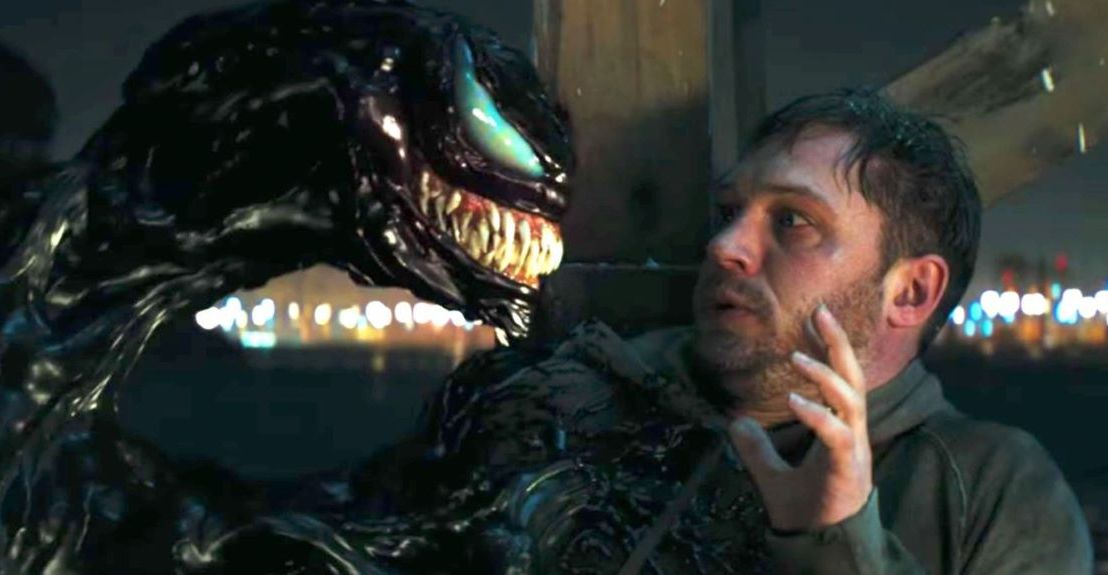
Did this film catch me in a good mood? Much to my surprise I rather enjoyed this dopey attempt to bring fanboy-fav villain Venom to the big screen. Last seen adding to the silliness in the utter mess that was Spider Man 3, the outer-space slime who possess its host returns as an anti-hero. Sure, he likes to eat people and suchlike, but when push-comes-to-shove he’s on our side helping to keep our world safe. Safe sums up Venom, which offers a series of set-pieces none of which are troubled with originality. What makes it stand out is the delight Tom Hardy brings to the role.

Hardy is Eddie Brock an investigative journalist framed by the film as a success who gets unlucky, but embodied by Hardy as a loser (it’s the first sign of Hardy’s originality butting up against the film’s obviousness). Fired after his investigation into shady goings-on at Biotech company Life Foundation – run by charismatically cold billionaire Carlton Drake (Riz Ahmed) – Brock goes from hero-to-zero and his fiancée, lawyer Anne Weying (Michelle Williams) leaves him after finding out he stole from her to gain access to Life Foundation. Brock continues his investigation after homeless people start to go missing. They were unwilling test subjects in Drake’s attempt to bond human beings to mysterious alien symbionts. Eddie is infected with one of the symbionts, Venom, the two of them forming an uneasy partnership in their body share. Will they work together to save the Earth?

Most of the success in Venom is exclusively down to Hardy. Where the film zigs, Hardy zags. Venom clearly wants a traditional, handsome, charismatic journalist hero, the sort of guy who puts the greater good first and only fails when he’s let down. Hardy plays him as a grungy odd-ball with a whiny voice, frames most of his decisions as taking the easy path and is happy to show him backing down from challenges. Hardy then pounces on the chance to counter-balance this with Venom, a gravelly id-machine that ends up playing like the dark underbelly of Brock’s hidden desires.

The most interesting parts of the film by far is the internal conversation between these two Hardy performances. Venom is the foul-mouthed monster who wants to indulge himself, Brock is the passive timid figure forever asking Venom to behave himself. Hardy gives the film a sort of gay subtext as frenemies Brock and Venom settle into an odd-couple life partnership. At one point Venom infects a second character: how does he “re-enter” Eddie? Through a passionate kiss between the Venomised second host and Brock. The two of them spark off each other like a feuding married couple, with Venom’s decision to protect the Earth based eventually on ‘liking’ Eddie.

It’s the main original beat in the film that Hardy seizes upon to make its heart. His performance is droll, playful, physically committed, strangely funny and rather sweet. It’s a heck of a lot better than the film deserves and its leaning into making its personality-split lead a weakling and a monster who effectively, unspokenly, fall-in-love feels very different from things we’ve seen elsewhere.

Which is good because almost everything else has been seen and done elsewhere. Fleischer largely fails to make any of the action sequences particularly new or interesting. There is a punch-up in an apartment (which does see Hardy bouncing around the room with a symbiote induced athleticism), a traditional car chase full of car smash-ups that Flesicher is so excited about he presents the smash-ups occurring multiple times from different angles. A SWAT team chases Venom around a building before a Terminator 2 style tear-gas filled foyer smackdown – with the hero imploring the killing machine he’s working with not to hurt anyone. (The humanising of Venom does have echoes of the taming of Arnie’s Terminator).

As in multiple Marvel films the villain is a dark echo of the hero. Riz Ahmed coasts through a barely written role of an egotistical Steve Jobs type, before merging with a-properly-Evil symbiote intent on loosely defined global destruction. This inevitably leads to a prolonged film-closing CGI-smackdown, as two opponents with the same skills face-off to control the launch of a rocket. No interesting comparisons or contrasts are drawn between Brock and Drake who gets only a whiff of motivation.

There are more interesting beats – though again not quite original – with Michelle Williams’ former fiancée who is given both a few proactive beats and a highly likeable and sympathetic new boyfriend in Reid Scott’s Dan Lewis (playing against the sort of smug roles he is often cast in). These fine actors bounce well off Hardy – and share in his delight in dopey humour and slapstick, noticeably in a posh restaurant sequence that sees Hardy sink himself in a lobster tank and eat the inhabitants.

Away from this though Venom is nothing special. So why did I enjoy it? Because I suppose in its derivativeness it at least offers brain-relaxing fun and it’s lifted to a slightly higher level by Hardy’s inventive approach. Aside from him there is almost nothing original, interesting or different here – but yet I enjoyed it while it passed the time.

Heart of Stone (2023)

Heart of Stone (2023)

Dull franchise-starter shamelessly rips off every other successful action franchise it can think of

Director: Tom Harper

Cast: Gal Gadot (Rachel Stone “Nine of Hearts”), Jamie Dornan (Parker), Sophie Okonedo (Nomad “King of Hearts”), Matthias Schweighofer (Jack of Hearts), Paul Ready (Bailey), Jing Lusi (Yang), BD Wong (King of Clubs), Alia Bhatt (Keya Dhawan), Archie Madekwe (Ivo), Enzo Cilenti (Mulvaney), Jon Kortajarena (The Blond), Glenn Close (King of Diamonds), Mark Ivanir (King of Spades)

Heart of Stone is the first in a planned Mission: Impossible/James Bond style super-franchise for Netflix. You can’t miss this, as the entire film plays out like it’s been assembled from scenes salvaged from the cutting room floor of those series. Pretty much every single idea in Heart of Stone has been played out before (often more than once) and every single action scene has been performed, shot and edited elsewhere and better. Heart of Stone is really prime Netflix filler, the sort of brainless eye-candy that can play in the corner of a room while you scroll through your phone. Worryingly, one day, all films might be like this.

Gadot plays Rachel Stone. She’s a strictly “stay-in-the-van” tech expert for a MI6 team. Apparently set in a world where the security services aren’t predominantly made up of bland white guys from the same universities, the team consists of Parker (Jamie Dornan), Bailey (Paul Ready) and Yang (Jing Lisu). But she’s also “Nine of Hearts”, a super-agent of The Charter, a group of secret agents who use a super-computer (the Heart) to predict all outcomes and prevent disaster. When the Heart is under threat, Rachel has no choice but to reveal her identity – via a kick-ass fight scene naturally – to try and protect this super-computer which could destroy the world from falling into the wrong hands.

I’ll say one thing for Heart of Stone – it does a neat reveal of a surprise (but guessable) villain. Other than that? You’ve seen it all before. Many, many, many times – usually done better. When a battle atop a zeppelin makes you think “Hey, didn’t The Rocketeer do this a lot better almost 30 years ago?” you know your film is in trouble. Heart of Stone is like a gruesome Frankenstein’s monster, where every single stitch can be clearly seen. A Bondish opening credits sequence is stitched to a series of M:I risky stunts, with fights and car chases from Bourne and more than a dash of better TV shows like Alias and Person of Interest. It’s put together with a perfunctory box-ticking which only reminds you how many years of care goes into the franchises it’s ripping off.

Everything unfolds in Heart of Stone pretty much as you would expect it. When a character pulls out a photo of the doll’s house he’s planning to buy for his niece’s birthday, you know he’s doomed. When the Charter sends agents to infiltrate a base, but leave Gadot behind, you know you’re about to watch a “wrong door” routine. Inevitably we get a “you’re off the case” dressing down for Stone from her boss. A secondary villain is clearly an ally in waiting. Characters are defined with thinly sketched traits. Glenn Close ticks the box of “inexplicable big-name cameo”, popping up to lean on a fireplace.  It’s all drearily, depressingly unimaginative and predictable.

I ended up letting my mind wander aimlessly around the nonsense of this world. How does the Charter fund itself? How secret is it – everyone seems to know about it and after the early distress about Gadot blowing her cover it then charges about with barely a token effort at subterfuge. Why would an organisation called the Charter name some (but not all) of its agents after cards? Are there four separate branches in different places for the four “decks”? Are the numbers randomly assigned – since “Jack” seems to work for “Nine”. Why choose a codename system that takes three words to spit out (it even slows Stone down at a vital point trying to explain who she is)? Are Aces all low?

The fact I spent so much time thinking about this sort of thing kind of says it all. I would feel sorry for Gal Gadot at the centre of this except, as a producer, she must have had a say in how this derivative mess was put together. She’s woefully miscast in a role that exposes all her limitations rather than playing to her strengths. Gadot simply hasn’t got the charisma and comic timing to play a wise-cracking maverick: she’s at her best as earnest and well-meaning (see Wonder Woman where she plays a sweet innocent), but here as a sort of would-be Ethan Hunt she’s a washout. Every second she’s on screen only reminds you how good Tom Cruise is at this sort of thing.

She can do a stunt or two, to be fair. It’s unfair perhaps to say that all the big, risky stunts are all too clearly performed in front of a greenscreen or by a double, but Gadot can throw a punch. But Stone is a bland, aimless, patchwork character, whose every reaction seems like it’s guided more by what the script needs at that moment rather than any consistent logic. The entire cast more-or-less falls into the same uninspired bucket, either going through the motions (Sophie Okonedo) or not given enough to do (Paul Ready is probably best-in-show here, making a lot of a some fairly duff lines and predictable plot arcs). Perhaps, since the audience has a decent chance of finishing every line before the characters do, the actors were as disheartened as we are watching it.

The most depressing thing about Heart of Stone is it looks like a grim look into the future. As Hollywood writers strike against the threat of AI, is it possible that all films will one day be put together with the robotic predictability of Heart of Stone? Even the title sounds like a ChatBot came up with it.

Rocky III (1982)

Rocky III (1982)

Rocky needs to build his way back to the top – again – in this boxing buddy movie

Director: Sylvester Stallone

Cast: Sylvester Stallone (Rocky Balboa), Talia Shire (Adrian Balboa), Burt Young (Paulie Pennino), Carl Weathers (Apollo Creed), Burgess Meredith (Mickey Goldmill), Tony Burton (Duke Evers), Mr T (Clubber Lang), Hulk Hogan (Thunderlips)

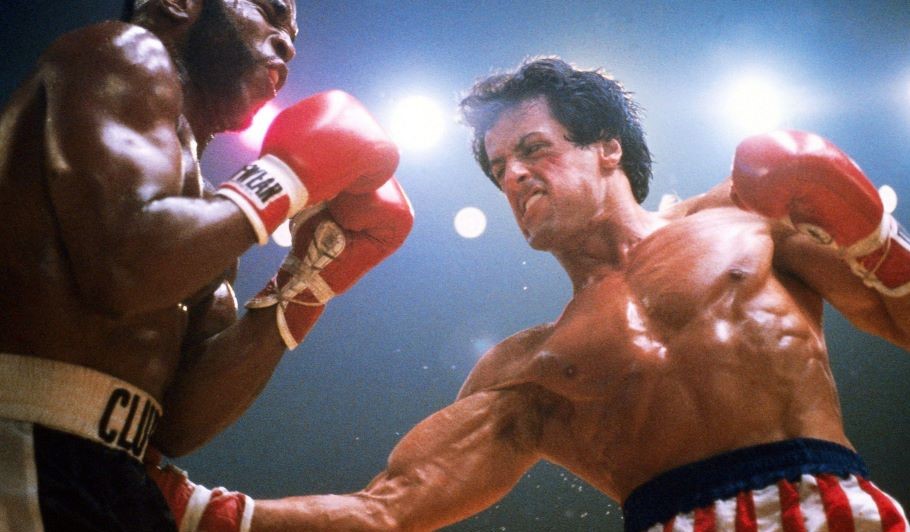
Life is good for Rocky Balboa (Sylvester Stallone)! Ten successful title defences and he is literally on-top of the world. Time to hang up his gloves right? Wrong of course. He’s challenged by hungry new up-and-comer Clubber Lang (Mr T), a brutal, never-beaten machine. Dismissive to all around him, Lang says Rocky has never taken on a proper challenger: turns out he’s right as Mickey (Burgess Meredith) only put Rocky up against challengers he knew he could beat. Lang takes Rocky apart in the fight – not before indirectly causing a fatal heart-attack for Mickey – and Rocky is a broken man. Who else can bring him back from the brink than his old frenemy, the Count of Monte Fisto himself, Apollo Creed (Carl Weathers)?

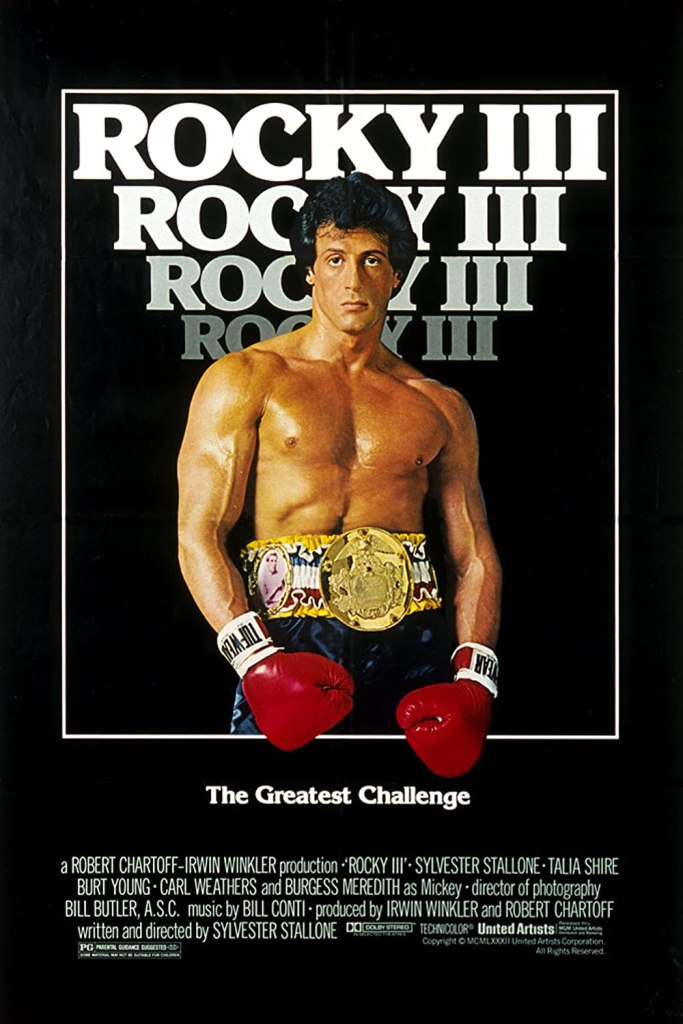
Rocky III confirms that there are in only so many plots available for a Rocky film. This one shakes the formula up by having Rocky start at the top, then fall to the bottom, then rise back up again. But it’s the same story, now taking place in a slightly different style to the first two. Any sense of kitchen-sink drama is gone from Rocky III. You can see it in the body of Stallone, now a chisselled, Michelangelo sculpture. This is a cartoon with a happy ending, and the fact it’s entertaining doesn’t hide that the whole franchise was leaving reality behind.

Saying that, Rocky III makes a bigger push for tragedy than either of the other two. Stallone leans heavily into incoherent blubbing as Rocky cradles the body of his surrogate father, Mickey dying with one last growling word of wisdom. It’s, of course, the moral of all film mentors that they must eventually kick the bucket so their proteges can take their place. It shakes Rocky up like nothing before. That and the beating he takes from Lang, in a brutal one-sided beat-down.

One of the film’s claim to cult fame is of course the casting of Mr T as Clubber Lang. Growling and scowling like a cartoon heavy, with some punchy one-liners (“I don’t hate Balboa. I pity the fool!”), it’s a part that works due to Mr T’s charisma. Stallone shoots Clubber Lang like some sort of fighting lion, frequently employing slo-mo to focus in on Lang’s scowling face and flying fists, the soundtrack echoing with his roar. Mr T is the series best villain, a man so loathsomely cocky (literally no one likes him, not the crowds, the commentators, his fellow boxers…) that he propositions Adrian, shoves Apollo before the first fight and gives Mickey a heart attack.

You needed someone like that to bring together Apollo and Rocky as a super-team. Rocky III is the series first buddy-movie. It’s hard not to see something faintly homoerotic in Weathers and Stallone, bodies greased and rippling in muscles, eyeing each other up, running along beaches or the faintly sexual air to Weather’s delivery of lines about wanting a “special favour” from Rocky “after the fight”. No wonder there isn’t much time for Adrian in the film – what chance could she have when these two have such a mutual appreciation society going on? – with Talia Shire’s best scene as a sounding board for Rocky’s confession of fear about stepping back into the ring against Lang.

Saying that, the inevitable training sequence – this is the film with the quest for “the Eye of the Tiger” – is great value. It’s fun to watch Rocky pick-up Apollo’s signature Muhammad Ali style quick feet and Weathers is very good as the former champ taking vicarious revenge who forms a genuine friendship with his old rival (I love it when Apollo shadowboxes in excitement when Rocky begins to turn the final fight in his favour). Of course, montage takes Rocky from down-hearted dope (suffering from slo-mo visions which play like a half-arsed panic attack) to freeze-frame triumph. (I’ll also say Rocky III rather neatly mocks Paulie’s kneejerk racism about training with ‘these people’).

To get to these expected beats, Stallone first needed to pad out the run time – and slight plot. Surely that’s the only reason for the bizarre Act One ‘exhibition’ match which sees a complacent Rocky fight an exhibition match against wrestler “Thunderlips” (a terrible cameo from Hulk Hogan), the sort of sequence you keep thinking must be a dream but is in fact real. We also get an initial training montage structured like a modern morality play, Rocky’s lazy prep for fighting Lang sees him living like a Hollywood hotshot, while Lang trains with a monastic dedication. No surprise who is going down in the ring (even if the first fight wasn’t only thirty minutes into the film).

The rematch though doesn’t disappoint, taking its lead from Ali’s rope-a-dope from the Rumble in the Jungle. And the real coda, which is all about friendship, is sweeter than this comic book, Roy of the Rovers film has any right to be. Rocky III replays some of the elements of the first two films, this time as a comic strip, but by focusing on a bromance (and throwing in a properly hissable pantomime villain) despite the fact you know it lacks any inspiration, you’ll still punch the sky when Rocky turns that final fight and leave the film whistling Eye of the Tiger.

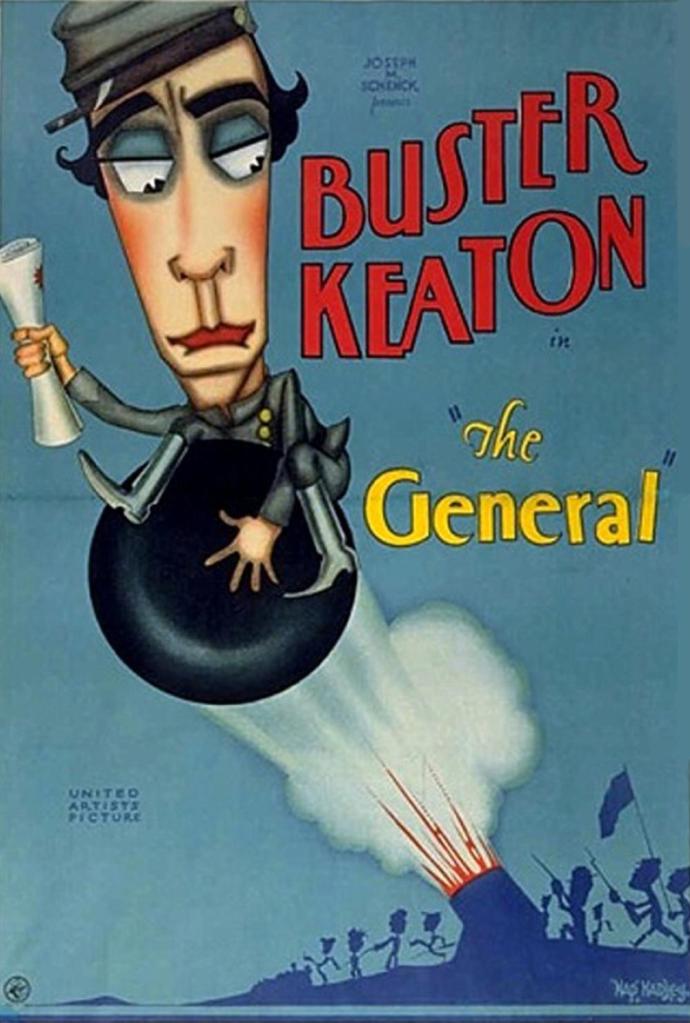
The General (1927)

The General (1927)

Keaton’s masterpiece, less of a comedy and more an inspiration for hundreds of action films

Director: Buster Keatson & Clyde Bruckman

Cast: Buster Keaton (Johnnie Gray), Marian Mack (Annabel Lee), Glen Cavander (Captain Anderson), Jim Farley (General Thatcher), Frederick Vroom (Southern General), Charles Smith (Mr Lee), Frank Barnes (Annabel’s brother), Joe Keaton (Union General)

The General frequently features in the lists of greatest comedies of all-time. It’s a bit of a misnomer: while The General has its fair share of jokes, it’s really a sort of action film. A Mad Max: Fury Road with gags, the greatest chase you’ll ever see and one of the most dynamic stunt spectaculars ever made. It’s Keaton’s apogee, one of the most influential and greatest films ever made. If you’ve ever seen a stunt-filled epic, you’ve seen something that takes inspiration from the tireless physical tricks Keaton pulled here and the stunning, cinematic grace he films it with. The General is a classic that is instantly, and constantly, rewarding.

Keaton plays Johnnie Gray, a respected engine driver of the South with two loves in his life: Annabel (Marian Mack) and his steam engine The General. He’s about to propose to Annabel when the Civil War breaks out. She wants him to enlist: he tries his best but is rejected, unbeknownst to him, because the army considers him more valuable as a train driver. Mistakenly seen as a coward by Annabel, she vows never to speak to him again. A year later The General is hi-jacked by Union soldiers as part of a surprise offensive. Johnnie gives chase in a second engine, The Texas, unaware Annabel is aboard the kidnapped General. The wild chase takes Johnnie North then South again to bring Annabel home and report to the Confederate army the approaching attack.

The General was the most expensive film Keaton’s company had ever made. No expense was spared in bringing two period-accurate engines to the screen, with everything shot in location (in Oregon, admittedly, due to the Tennessee not being keen on staging a Civil War Keaton comedy) and all executed in perfect period detail. The film contained the most expensive single shot ever mounted – costing a whopping $42,000, it would show a real bridge collapse and hurl a real engine into a real river (Keaton filmed in long shot, with real horses moving around near the bridge, to stress this was a real stunt not a model). Despite all this, the film was a box-office disappointment.

Why? Well frankly, I’m not sure the world was ready for something that promised itself as being a comedy set during what was still a raw scar in the American psyche. The marketing material also promised more laughs than you can shake a stick at – a misrepresentation of a film that is more a stunt-filled poem than a slapstick riot. For those expecting The Navigator, The General was a disappointment. For us today, it is one of the great American films, a piece of cinematic mastery.

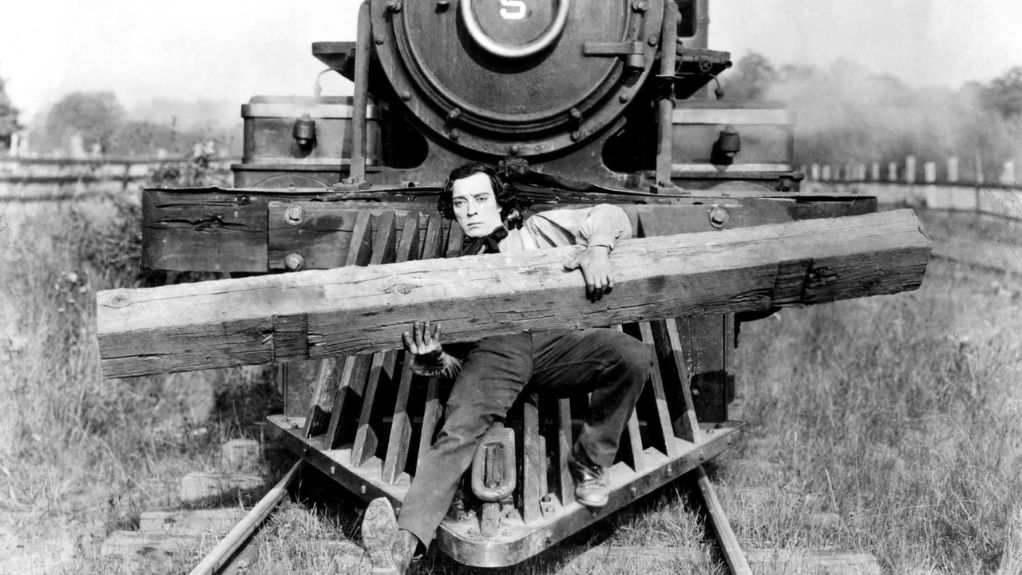
The General is for a large chunk of its run-time (almost 40 of its just under 80 minutes) a glorious chase, in which every sequence show-pieces invention at high-speed. The majority of the stunt filled tricks were executed by Keaton himself, surely at some considerable risk to life and limb. As you watch him bound over railway carriages, dive through port holes, sprint alongside steaming trains or sit atop the hurling railway sleepers to remove obstructions, you can only marvel at his physical dexterity and commitment.

Keaton’s character is also subtly, and impressively, different from his other roles. These were often defined by their haplessness – would-be detectives and empty-headed heirs. But within his professional sphere, Johnnie is a master. He knows the capabilities of engines and dynamics of the railroad better than anyone. He is relentless and endlessly inventive in overcoming myriad problems just as he can use his knowledge to place near-insurmountable barriers in the way of his pursuers.

The opening of the film stresses the respect people hold him in – he’s hero-worshipped by children, greeted warmly by all and has no doubts about asking Annabel to marry him. Sure Johnnie can get pre-occupied and miss the bigger picture – a few times, he is almost left behind by the steaming train while resolving problems on the line – and away from the train, especially when he joins the soldiers in the film’s finale, he suffers from the same clumsy, cluelessness as Keaton did fighting to defend his ship in The Navigator. But he’s also brave, indefatigable, ingenious and relentless. He’s more of a model for every action hero maverick since than you could imagine.

And those stunts! Keaton was a master film-maker, framing the action to accentuate its speed, scale and reality. The camera runs alongside the train, demonstrating its speed by showing objects move by. The action is frequently framed in medium and long shot to demonstrate its scale and the grandness. This goes for Keaton bounding across carriages and for simple gags, such as the famous shot of a forlorn, jilted Johnnie sitting on a drive rod of the moving train, lifted up and down as it shunts forward. The complexities of this chase are always made clear and camera angles are key to the various attempt each train makes to stop the other. This is placed above the standard comedic reaction close-ups audiences expected – but make for a richer, more rewarding film.

In fact, watching the film, you can grow to admire Johnnie so much you start to wonder what he sees in Annabel. Perhaps Keaton, to an extent, wondered the same. Annabel is kidnapped, tied up, caught in a bear trap, tossed around in a sack and doused in engine water. Is this woman being partially punished by the film? After all, it’s her demand that Johnnie turn his life upside down to fight in (what we know) will be a brutal war – and her kneejerk condemnation of him – that sets events in motion. Does she need this humbling to learn her lesson? It perhaps helps her and Johnnie become an ever more effective partnership on their flight back South, setting traps and keeping the engine going (with the odd comic misunderstanding, one of which sees Johnnie running down then back up a hill to reboard the train) that leads to their eventual reconciliation.

Interestingly, what’s less comfortable with The General today is its avoidance of the core issues of the civil war. Slavery never rears its head, and the film takes a largely sympathetic view of the romantic Southern gentlemen vs the nefarious Northerner, with their under-hand schemes. Peter Kramer, in an excellent BFI book, lays out a compelling argument that The General exposes, especially through its final battle sequence which sees real people die and a hapless Johnnie charging into heroics like a lost child, the dangerously blind embrace of violence in the South and a subtle criticism of a horrific war that led to so many needless deaths. While there might be beats of that under the surface here (especially if you are familiar with the shocking death toll of the war), it’s not enough to overcome the generally sympathetic view of the Confederacy and its leaders.

But politics is not at the heart of Keaton’s film. The appeal for him, just as for Johnnie, was that engine and, by extension, the glory of the chase. Only someone who loved trains as much as Keaton could have made such a guilty pleasure of plunging one thirty feet to its doom on camera. And in Johnnie Flynn he created a genuinely little-guy hero, a character who shared his dynamism and pluck and, above all, his love for all things mechanical.

The General isn’t a comedy really – there are few real belly laughs in it, and the film is played straight by all and sundry, devoid of reaction shots. Its laughs come in shock at its audacity, its epic scale and from how much it causes you to invest in the trials and tribulations of its lead character. It’s an action film that you embrace with fervent love, because it’s pure, unadulterated, cinematic beauty. It’s a masterpiece.

Mission: Impossible: Dead Reckoning Part 1 (2023)

Mission: Impossible: Dead Reckoning Part 1 (2023)

Action and impossible stunts continue to deliver entertainment in Cruise’s running and jumping franchise

Director: Christopher McQuarrie

Cast: Tom Cruise (Ethan Hunt), Hayley Atwell (Grace), Ving Rhames (Luther Stickell), Simon Pegg (Benji Dunn), Rebecca Ferguson (Ilsa Faust), Vanessa Kirby (Alanna Mitsopolis), Esai Morales (Gabriel), Pom Klementieff (Paris), Henry Czerny (Eugene Kittridge), Shea Whigham (Jasper Briggs), Cary Elwes (Director Denlinger), Greg Tarzen Davies (Degas), Frederick Schmidt (Zola Mitsopolis), Charles Parnell (NRO Director), Mark Gatiss (NSA Director), Indira Varma (NRO Director)

When they promote Mission: Impossible films, the stunts are front-and-centre. So much so that the film’s life-risking (what else?) stunt of the Cruiser driving a motorbike off a cliff and parachuting to safety was not only in every trailer but they even released a social medial film showing how it was done. Mission: Impossible films are thrill rides – and knowing what you are going to get doesn’t reduce the excitement of getting it. There’s plenty of excitement in Dead Reckoning Part 1 but that desire to entertain doesn’t always work when the film tries to tackle more emotional content.

Dead Reckoning starts, Hunt for Red October-like, with the sinking of a radar-invisible Russian sub (there is even a neat twist on that film’s switch from Russian to English). The disaster is caused by its AI supercomputer, known as The Entity. While intelligence agencies compete to control it, the Entity uses its ability to predict every outcome to plot world domination. The only threat it predicts? Ethan Hunt (Tom Cruise) of course. Ethan will stop at nothing to destroy this threat, in a country-hopping adventure with his regular team (Ving Rhames, Simon Pegg and Rebecca Ferguson) that rotates around mysterious thief Grace (Hayley Atwell) and a ruthless old enemy of Ethan’s, Gabriel (Esai Morales).

Dead Reckoning is, of course, huge fun. Shot over years, due to Covid (responsible for its budget ballooning to an eye watering $300 million) it never lets events go on too long without throwing in a twist and turn filled set-piece which plays off its lead characters’ skill under pressure. Despite the vast numbers of set-pieces, you rarely shift in your seat, because each is paced to perfection with just the right balance between tension and wit. That long shooting process also means its villainous AI plotline (clearly the makers binged on AI drama Person of Interest beforehand) seems zeitgeist rather than something from science fiction.

The film is a masterclass in shooting action. The recent Indiana Jones film threw in a seemingly never-ending three-way car chase. Dead Reckoning probably dedicates more time to its jaunt through the streets of Rome, but it’s always clever enough to keep shifting gears. We go from shoot-out, to Cruise and Atwell handcuffed together and awkwardly sharing the driving, to switching of cars (a ludicrous yellow mini which even Ethan can’t work out, impotently turning the windscreen wipers on and off), pratfall spins down the Spanish steps, all with a free-wheeling sense of improvisational fun that only comes from months of careful storyboarding and determination to never settle for “things move fast until they stop”.

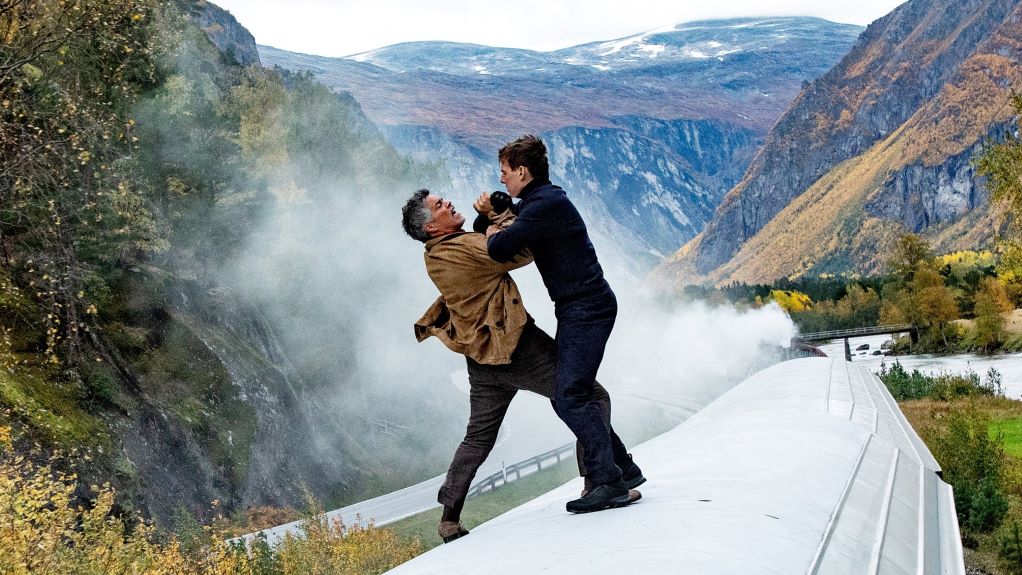
Dead Reckoning is a reminder that no-one since Buster Keaton puts themselves through as much as Cruise does (it seems fitting the finale builds towards the biggest train crash since The General). It’s Cruise’s USP: he does it for real. Even at 60 he pushes himself in the way few actors have ever done. Run full-pelt through the streets of Venice? Climb along the roof of a speeding train? Fight two actors half his age in a cramped corridor? You can sort of understand why the film doesn’t shirk on dialogue paying tribute to Cruise/Ethan’s superhuman determination and endurance (and the film is a further reminder Ethan’s only flaw is caring too damn much).

Let’s not forget also Cruise pretty much produces and co-directs these missions. Dead Reckoning is a triumph of the producer’s art – McQuarrie and Cruise are practised experts at pulling together locations, resources and expertise. They are equally ace at assembling tense sequences that don’t involve death-defying stunts. A first act cat-and-mouse chase around a huge Dubai airport sees Cruise tracking Atwell, while dodging a US government team sent to capture him, while Pegg hunts for a suspicious bag, while Cruise is also tracked by Morales. None of this involves stunt work (although Cruise and Atwell both learned how to perform sleight-of-hand tricks in camera) just timing and an ability to constantly present events in a dynamic way. This is consummate box-office ride assembly, marshalled to perfection with all the skill of expert showmen.

The set pieces are so gripping, it sometimes draws your attention a little bit too much to how perfunctory all the joins can be. A host of British actors (Gatiss, Varma and rent-a-villain Cary Elwes) gather in a room to throw plot statements at each other. The conversations between the team are often dominated by the narrative need to establish who will go where and why. The script has a tendency to demonstrate how people feel by having them bluntly state it (“My friends matter more to me than anyone!”). When trying to be human, rather than a thrill ride, it can stumble.

It’s perhaps why the moments that aim for tragedy feel like they land slightly awkwardly, as if you aren’t quite sure how sad you should be feeling. Dead Reckoning throws in an emotional mid-act that strains for a depth a film primarily designed to entertain popcorn munchers, isn’t quite able to deliver on. Put simply, the film can’t afford to have Ethan get caught up in grief when ten minutes later we need an exasperated Cruise to jump off a mountain. This ride don’t stop for anyone.

The film also suffers from the characters spending the entire runtime chasing a mysterious key which they have no idea the purpose of, but the audience has had explained to us in that opening Russian prologue. This is a series that thrives best on carefully concealing things from us, on the characters having a card or two up their sleeves. It somehow doesn’t quite work that we are more aware of the bigger picture than the characters. It makes Dead Reckoning feel like an extended opening act.

But this ride is fun enough for now. Atwell is charming, funny and has superb chemistry with Cruise; Morales is a chillingly arrogant villain, Klementieff enigmatically vicious as a near-wordless henchman. Whigam and Davies are good fun as contrasting agents vainly chasing the uncatchable Ethan. And above them all is Cruise: jumping, running, diving, punching and generally putting life-and-limb on the line, all to entertain us. Maybe he is a bit mad, but it’s impossible not to applaud him.

Indiana Jones and the Dial of Destiny (2023)

Indiana Jones and the Dial of Destiny (2023)

Is there a place for Indy in the 2020s? The nostalgia-tinged would-be epic doesn’t provide an easy answer

Director: James Mangold

Cast: Harrison Ford (Indiana Jones), Phoebe Waller-Bridge (Helena Shaw), Mads Mikkelsen (Jurgen Voller), Antonio Banderas (Renaldo), John Rhys-Davies (Sallah), Toby Jones (Basil Shaw), Boyd Holbrook (Klaber), Ethann Isidore (Teddy Kumar), Karen Allen (Marion Ravenwood), Shaunette Renée Wilson (Mason), Thomas Kretschmann (Oberst Weber), Olivier Richters (Hauke)

Okay let’s get the elephant out of the room: It’s better than The Kingdom of the Crystal Skull. Yes folks, we have a new fourth-best Indiana Jones film. Is that something to celebrate? Indiana Jones and the Dial of Destiny makes some of the same errors as the previous valedictory effort, but at least it learned a few things and it’s been made by people who clearly love Indy. But they loved it too much, creating an often overblown, hellishly overlong, everything-but-the-kitchen-sink film which never just jump when it can flip, spring, bounce then explode at the end of it.

It opens with a (younger) Indy (Harrison Ford) battling Nazis in the dying days of the Second World War, trying to save a train full of precious artefacts. After defeating them, we flash forward to 1969 with Indy now a retiring archaeology professor to disinterested students in New York’s Public University, out of a place in an era where man has stepped on the moon. Grouchy, separated and fed-up, Indy’s life gets disrupted one more time when his god-daughter Helena Shaw (Phoebe Waller-Bridge) turns up on the hunt for Archimedes’ Dial. Indy knows about this dial as it was also the obsession of Nazi physicist Jurgen Voller (Mads Mikkelsen), last seen on that train in 1945 and now the brains behind the NASA moon landings. Indy and the unscrupulous Helena end up in a duel with Voller to find the dial – the prize being what Voller believes is a chance to change history.

Back in the day, Raiders of the Lost Ark was largely made so Spielberg and Lucas could show they could make an action-packed, crowd-pleaser quick and cheap. Today The Dial of Destiny is one of the most expensive films ever made (lagging only behind assorted Avengers films, the recent Star Wars trilogy and various other franchise entries). So much mony to make something less than half as good.

What this has allowed is Mangold and co to act like kids given the keys to their parents’ car. The Dial of Destiny is an explosion of Indy ideas, all rammed into the film willy-nilly. It’s made by people who feel this is their only chance to make an Indy film and don’t want to miss the opportunity to include every idea they’ve ever had.

We end up with a film that feels both far too long and yet strangely rushed. The Dial of Destiny would be immeasurably improved if about twenty minutes (at least) had been cut from its run-time and its poorly sketched thematic ideas condensed down. Its narrative structure has one too many quests, with Indy and Helena forever searching for a thing that leads to a thing that leads to yet another thing. An entire sequence, involving a pointless cameo from Banderas as a one-legged diver, would have been better slashed to ribbons or cut altogether. Every single one of the mega-budget chase sequences go on at least 2-3 minutes too long, straining the interest.

At the same time, the film manages to feel rushed. Ideas are presented and then taken nowhere at all. We see Indy tipping most of a bottle of whisky into his coffee in the morning – this suggested alcoholism never rears its head again. Voller is working in partnership (it seems) with the CIA, but their motives for this are never explained and Voller calmly ditches them part way through the film. Indy is framed for murder, but this plot thread is judicially abandoned by the time we get to the end. John Rhys-Davies literally pops up to drive Indy to an airport and make a trailer-friendly speech.

Most strikingly, all the films blaring action and endless bangijg stuff buries the most interesting plot thread of a tired, depressed Indy who no longer knows his place is in the world. The film solves Shia LaBeouf’s toxic unpopularity by having Mutt die in Vietnam, giving Indy a burden of guilt and grief. This is an Indy who has fallen from his Princeton heights, as ancient to his students as the artefacts he lectures about. It’s a thread though that the film only intermittently remembers, so crowded out is it by overlong chases, so that when the film’s conclusion returns to it as a major motivator for Indy it feels forced.

In any case, the film’s action set-pieces peak with the 1945 opening section with a digitally de-aged Ford and Mikkelsen facing off on a speeding train. I think the de-aging effect is very well done (though Indy speaks with Ford’s current 80-year-old voice), and this sequence has a sort of nostalgic charm to it and at least it feels of a piece with the originals. Not that its perfect: it’s overlong and overblown of course – a castle explodes, Indy runs over the top of a speeding train – and looks like something created with blue-screens and digital effects rather than in reality. (It’s also clear a digitally de-aged Ford head has been placed on a stunt double at key points.)

But it’s a bright-spot. There are others: Harrison Ford, again, is perfect for the role – crusty, resigned but still with the glamour of excitement in his eyes. He and the film don’t back away from his advanced age – Indy looks more vulnerable than ever – and Ford sells the moments he’s allowed in the film’s breakneck speed to reveal Indy’s emotional turmoil. He also has a great chemistry with Phoebe Waller-Bridge, who effectively channels Han Solo as an immoral adventurer who learns about decency. Mikkelsen’s mastery makes him an impressive villain.

I’ve been really hard on this film. It is fun I promise. I laughed and at times I was thrilled. But it is too much. Even the settings of the chases offer a sensory and time overload: a chase around a ticker-tape parade in New York onto a subway (with Indy on a horse) has an overload of visual details. A chase through the streets of Marrakesh goes on forever – and is over-built with our heroes chasing Voller while also being chased by Helena’s gangster-former-fiancee. film culminates in a final sequence which is just about not as silly as aliens – but by any other score is incredibly silly.

Essentially The Dial of Destiny is undermined by fan love. Mangold is a good director but doesn’t know where to stop. The film leans into nostalgia too hard but, above all, it offers far too much bang for your buck. The film is frequently at its most effective in its quieter, character-driven moments. Like Crystal Skull, it mistakes bigger for better. It’s still a more entertaining and a better film than Crystal Skull – but, somehow, its excessive overindulgence makes you feel strangely disappointed.

The Three Musketeers (1973) / The Four Musketeers (1974)

The Three Musketeers (1973) / The Four Musketeers (1974)

A film of two halves, in more ways than one: the swashbuckling original and its dark sequel

Director: Richard Lester

Cast: Michael York (d’Artagnan), Oliver Reed (Athos), Frank Finlay (Porthos/O’Reilly), Richard Chamberlain (Aramis), Raquel Welch (Constance Bonacieux), Jean-Pierre Cassel (Louis XIII), Geraldine Chaplin (Anne of Austria), Charlton Heston (Cardinal Richelieu), Faye Dunaway (Milady de Winter), Christopher Lee (Count de Rochefort), Simon Ward (Duke of Buckingham), Spike Milligan (Bonacieux), Roy Kinnear (Planchet), Georges Wilson (Captain de Treville)

All for one and one for all! The Three Musketeers is probably the greatest adaptation of Dumas’ rollicking classic, a wonderful mix of swashbuckler, romance and Hellzapoppin comedy, that never takes itself particularly seriously and is crammed with actors having a whale of a time. It’s not quite a send-up, but it’s also not quite a straight re-telling either. Instead, it’s gunning all-out for entertainment – and it succeeds most of the time.

d’Artagnan (Michael York) arrives in Paris in 1625 desperate to join the musketeers. After various adventures along the way – including a rivalry with suavely villainious Rochefort (Christopher Lee) – the impulsive young man forms a friendship (after bumps in the road) with the famed musketeers Athos (Oliver Reed), Porthos (Frank Finlay) and Aramis (Richard Chamberlain). Falling in love with the unhappily married Constance (Raquel Welch), maid to Queen Anne (Geraldine Chaplin), d’Artagnan and his friends are dragged into foiling a plot by the ambitious Cardinal Richelieu (Charlton Heston) to use the ingenious Milady de Winter (Faye Dunaway) to expose the Queen’s infidelity with the Duke of Buckingham (Simon Ward). Will our heroes manage to foil the scheme in time?

The Three Musketeers adapts the first third or so – the most famous and by far the most enjoyable part – of Dumas’ novel. With an irreverent script by Flashman author George MacDonald Fraser, its framed as a rollicking romp with a tongue-in-cheek humour. Richard Lester, famed for his cheeky Beatles comedies (and the film was originally envisaged as a vehicle for the Fab Four), added his trademark scruffy, opportunistic comedy.

The film is awash with muttered asides – many of them well delivered by Roy Kinnear’s exasperated servant Planchet – that are only just picked up by the sound mix. My favourite? d’Artagnan bursting into a room full of guards, yanking a rug with a yell in an attempt to upend them, succeeding only in tearing the corner off it, then immediately jumping out of a window, leaving the bemused guards one of whom plaintively mutters “He’s torn our carpet” – I find this funny on multiple levels, from York’s all-in energy to the stillness of the shot, to the underplayed sadness of the punchline.

Lester’s film is full of long-shot gags – passengers in litters being dropped in a lake, d’Artagnan swinging on a rope to knock someone off a horse, missing and falling in the mud or his jump from a third storey window only to immediately reappear having landed on a (anachronistic) window cleaner cart. While the film does have its moments of drama, danger and intensity, it doesn’t ease up on visual humour, or gags (“This ticket is for one man” “I am one man. This is a servant”). It’s all part of Lester’s plan to make a fast-paced, pantomimic entertainment in which nothing is intended to ever be too serious.

It’s all played with maximum commitment by the cast, all of whom buy into the films’ tone. Michael York leaves very little in the locker-room with a performance full of youthful bravado, lusty hurrahs and naïve, winning eagerness. It’s a very hard balance to get right but he is never overbearing, but provides a relatable, likeable lead. He’s physical commitment to a series of Buster Keaton style gags is also commendable. He sparks a rather sweet romance with Raquel Welch, who is not the world’s strongest actress, but gamely delivers a series of pratfalls as the eternally clumsy Constance.

Around these two, a series of experienced actors delight in larger-than-life roles. Reed brings a surly intensity to Athos, a reminder of how great a career this charisma laden actor could have had. Finlay gives a Falstaffian joie de vivre to Porthos. Chamberlain (with little to do) strikes a gamely romantic figure as Aramis. As the baddies, Heston clearly enjoys subverting his grandiosity as the scheming Cardinal, Dunaway has a kittenish sensuality as Milady and Christopher Lee is so perfect as the debonair Rochefort that his eye patch (unmentioned in Dumas) has become de rigour for every Rochefort performance afterwards.

The Three Musketeers is crammed with swashes being buckled. The sword fights come thick and fast and are all shot in a series of impressive locations (the camera work of David Watkin, design of Brian Eatwell and costumes of Yvonne Blake do a wonderful job creating a sumptuous period setting). At times they do look a little ragged today – producers the Salkinds ran a tight budget, and there are multiple reports of the slightly-under-rehearsed fights leading to near-serious injury (this slapdash preparation would lead to tragic consequences when Roy Kinnear was killed on the belated second sequel 15 years later). But the actors enter into them with a firey commitment (a little too much so in Reed’s case according to the terrified stuntmen) and rumbunctious energy that really sells these as gripping action. They are also give a certain air of peril that gives just enough weight to the film.

The Three Musketeers has moments of dated clumsiness – the bizarely arty slow-mo opening with blurred motion feels totally out-of-keeping with the rest of the film – and not all the jokes land (Spike Milligan in particular is completely over-indulged in the film’s least successful comic moments). Not every performance works – Chaplain in particular is weak as Anne of Austria – and not all the jokes pay off. The musical score by Michael Legrand, catchy as it is, sometimes overeggs the “isn’t this all such fast-paced fun” angle. But the stuff that lands, really does well and there is more than enough fun, action, adventure and rollicking good humour to keep you entertained on a weekend afternoon.

And then there were two (or rather four)

There is always a twist in the tale. At some point while making The Three Musketeers the Salkinds realised they would never get it ready for the Paris premiere. But they could get half the film ready. So, they released that and cheerily announced at the end a sequel was already in the can. Problem was no one had mentioned it to the cast, who discovered they had shot an entire movie for free. A court case exploded, which the Salkinds lost, settling with actors and leading to a new clause being inserted into all contracts for actors preventing such a dodge happening again.

The Four Musketeers covers the second, less famous, much less fun part of Dumas’ novel. Rather like novel, it’s a rambling affair that lacks the compelling narrative thrust (We’ve got to get those diamonds and save the Queen!) which made The Three Musketeers so entertaining. It doesn’t help that its also considerably darker, serious and bleaker as bodies pile up and things get serious.

This makes the sequel a very different beast to the first. Energetic heroism prevented villainy in the first film, but here it often fails . Milady (Faye Dunaway) has sworn revenge and is ordered by Cardinal Richelieu (Charlton Heston) to assassinate Buckingham (Simon Ward). Along the way she kidnaps Constance (Raquel Welch) and seduces d’Artagnan (Michael York) seduced. The Musketeers rescue Constance, fight at La Rochelle and do their best to defend Buckingham – but nothing goes to plan, especially after Athos (Oliver Reed) realises Milady and his criminal ex-wife (thought dead) are one-and-the-same.

The Four Musketeers keeps up the humour, but it is frequently at odds with the darker film it sits in. Gone is the high-paced musical score of Michel Legrand, replaced with a lyrical series of melodies by Lalo Schifrin. It’s telling that Welch – whose comic clumsiness was a large part of the first movie – appears only briefly here. Similarly, Cassell’s shallow monarch (dubbed by Richard Briers) pops up just once, Roy Kinnear’s Planchet isn’t in the first hour and Spike Milligan’s free-wheeling improvisation is missing completely (in that case, no bad thing).

The film feels tonally at odds with the first film and even, at times, with itself. The Three Musketeers was full of sword fights but no deaths – here sword strokes are lethal. As the Musketeers comically bounce around at La Rochelle sight gags abound – but it feels at odds with a film where the death is very real. The more realistic feel means some set pieces – such as Rochefort and d’Artagnan fighting on an inexplicably frozen lake in the height of Summer – become harder to swallow.

Some performers do flourish. Oliver Reed comes into his own as an increasingly dark and vengeful Athos, giving into temptations of shocking revenge. Faye Dunaway laces her role with cold, murderous fury. They have most of the film’s most compelling scenes – but the incredibly dark ending (which involves our heroes actively perpetrating judicial murder with a terrified victim) while loyal to the book, feels far too heavy for a pair of films that started with Buster Keatonish comedy.

The loyalty to the book and the commitment to follow it is partly to blame. There is a reason why most adaptations chuck away this section of the book. It lacks a clear narrative line for emotional connection and is highly episodic. d’Artagnan, in the book, does indeed sleep around after Constance disappears – but when the film requires their relationship to be the emotional heartbeat, is it a good idea to have him jump into bed with two women within days of her disappearance?

Lester announces the more sombre parts by filming them in a very framed, artful way inspired by the old masters, with a static camera and medium shot, reliant on Schifrin’s maudlin music. He’s far more at home with the comic business delivered by Finlay (very good) and Chamberlain (still with nothing to do). At other points he surrenders initiative to legends like Heston (suavely menacing), Lee (whose Rochefort steps up a level in lip-curling contempt) and Dunaway.

The finest thing on display are the sets and the sword fights, which are even more desperate, ragged and violently dramatic than last time (when Rochefort and d’Artagnan stop in one to take a breath, you are not remotely surprised given the total commitment we’ve seen). The action set pieces all look really impressive and staged with confidence and brio. It’s just a shame that much of the rest of the story feels like its being told by a natural comic trying hard to be King Lear, but not able to resist throwing a few gags in. It makes for an entertaining, but tonally messy film that feels it has come from a totally different place than its flawed but fun predecessor.

John Wick: Chapter 4 (2024)

John Wick: Chapter 4 (2024)

It’s got almost no plot but what it does have is mesmeric, balletic fighting – for three hours

Director: Chad Stahelski

Cast: Keanu Reeves (John Wick), Ian McShane (Winston Scott), Donnie Yen (Caine), Bill Skarsgard (Marquis Vincent Bisset de Gramont), Laurence Fishburne (The Bowery King), Clancy Brown (The Harbinger), Hiroyuki Sanada (Shimazu Koji), Shamier Anderson (Mr Nobody), Lance Reddick (Charon), Rina Sawayama (Shimazu Akira), Marko Zaror (Chidi), Scott Adkins (Killa Harkan), Natalie Tena (Katia)

John Wick (Keanu Reeves) wants revenge against The High Table, the shadowy criminal organisation that (for various reasons) wants to punish him for various transgressions. The High Table are raising the stakes, giving the psychotic Marquis (Bill Skarsgard) carte blanche to destroy John, including levelling the Continental hotel of John’s ally Winston (Ian McShane). With destruction all around him, hunted by two deadly assassins the blind (and old friend) Caine (Donnie Yen) and the relentless dog-loving Nobody (Shamier Anderson), John’s only chance of survival is an arcane ritual duel between him and the Maquis.

John Wick: Chapter 4 is, in many ways, less a film and more an experience. Over stretched at nearly three-hours, its effectively three mammoth fights scenes (in Osaka, Berlin and Paris) loosely stitched together with a plot that doubles down on the arcane ritual of the franchise’s criminal underbelly. It was also a massive hit, the franchise’s biggest yet. Why? Because John Wick: Chapter 4 speaks a little bit to all of us who are bored with endless big-budget, special effects filled action films where nothing is real.

In John Wick: Chapter 4 you watch real people – stunt men and actors who have clearly trained for eons – set about a series of awe-inspiring action set-pieces with stunning realism. There is the same visceral thrill of watching Reeves dish out beatings as there was watching Gene Kelly dance steps: in both cases we are watching a master at work, turning his expertise into cinematic realism in front of our eyes.

So, in some ways, it doesn’t matter there is no real plot in John Wick 4 or that the characters are lightly sketched. Because we are here for elaborate, stunt filled fight scenes in the Osaka Continental. To see Donnie Yen move with the fluidic grace of a ballet dancer. To be gripped by Reeves punching his way through a brutal brawl with a fat-suit clad Scott Adkins (a martial arts superstar himself) in a neon lit Berlin nightclub. To watch Reeves fight his way up the Rue Foyatier steps, fall back down them, then fight back up again. Why these things are happening doesn’t really matter. It’s about the beautiful realism of watching actors actually do them.

That’s what powered this film to a record-breaking haul. Its why Reeves spent time in development, Steve McQueen like, ripping lines out of the script (he says little more than 500 words in the whole three hours). Who wants to see a monologue when a Reeves weary half-shrug on having to fight his way back up those stairs speaks volumes? When we need a break from the action, the script throws in some tense verbal show-pieces that Skarsgard chews up as a politely psychotic bully or McShane and Fishburne riff on with cod-Shakespearean grandeur.

It’s all thrown together with a great deal of style by Chad Stahelski, who has grown in cinematic confidence the more of these films he has directed. It takes some balls to effectively open the film with a homage to one of the most famous edits of all time from one of the greatest films ever made, as Fishburne blows out a match to cut to the desert sun rising. But then, I’m here for a film that wears its love for Laurence of Arabia on its sleeve (and even shoots a sequence on the actual location of Lean’s classic). Alongside this, Stahelski continues to find new ways to shoot this mayhem: from tracking shots, Steadicam immediacy to a sprawling birds-eye view (inspired by computer games) that tracks Wick taking out a building full of baddies.

There are a few thematic links in the film that brings the series full circuit. Wick’s two frenemies are reflections of himself. Donnie Yen – very cool – reflects Wick’s love for family, with his “doing the bare minimum” actioning to protect his daughter, while Shamier Anderson’s softly-spoken Nobody reflects Wick’s famous dog love. John Wick: Chapter 4 also hints at the existential crisis of its hero – when you are literally taking on the entire criminal world, leaving hundreds of bodies in your wake, what chance is there that this will ever end?

It’s these little grace notes that keep the film grounded enough for us to care about Wick while he slices his way through another army of thugs. But it’s not why you are there. John Wick 4 can easily – perhaps best – be watched in chunks. Soak in one action scene, have a breather, and then throw yourself into another. Because these are some of the best, coolest, most relentless action scenes you will ever see, executed with a stunning skill. And that is what differentiates John Wick at a time when everything else feels sterile. There might be far too much of it, but at least it is life.