Category: Action film

Seven Samurai (1954)

Seven Samurai (1954)

Superb, archetypal action-adventure men-on-a-mission film: Kurosawa’s masterpiece, brave, bold and thrilling film-making

Director: Akira Kurosawa

Cast: Toshiro Mifune (Kikuchiyo), Takashi Shimura (Kambei Shimada), Daisuke Katō (Shichirōji), Isao Kimura (Katsushirō Okamoto), Minoru Chiaki (Heihachi Hayashida), Seiji Miyaguchi (Kyūzō), Yoshio Inaba (Gorōbei Katayama), Yoshio Tsuchiya (Rikichi), Bokuzen Hidari (Yohei), Yukiko Shimazaki (Rikichi’s wife), Kamatari Fujiwara (Manzō), Keiko Tsushima (Shino), Kokuten Kōdō (Gisaku)

I’ve often been a Kurosawa sceptic. But it’s hard to stay critical, when he made a masterpiece as near perfect as Seven Samurai. It’s one of those films that is long (the favoured cut is nearly three and a half hours) but never once drags. Kurosawa directs with such intelligence, skill and pace, you can’t help but be swept up in it. It’s one of the finest action epics ever made, but also has a rich vein of sadness and melancholy. After all, the samurai may fight the good fight, but they always lose.

In the sixteenth century, a farming village is under-threat from a bandits, rogue samurai turned ronin, who plan to steal the harvest. To protect themselves, the village elder (Kokuten Kōdō) declares they need samurai of their own (and since the farmers have little to offer, they better “hire hungry samurai”). They recruit a team of seven, led by experienced Kambei (Takashi Shimura), who accepts out of nobility. Among the team is wild-card peasant-turned-wannabe-Samurai Kikuchiyo (Toshiro Mifune). The seven arrive in the village and prepare for battle: but, even when working together, no one ever completely forgets the rigid societal boundaries of Japanese culture.

Seven Samurai is a wonderful character study, a sublime action film and complex and engaging exploration of Japanese history and society. It also has a perfect three act structure, it’s run time expertly divided into the samurai’s recruitment, preparation and defence of the village. This careful construction counters that epic run time – each act tells an almost self-contained story, meaning the film’s momentum never slackens.

It’s bought together by a director making a perfect fusion between Japanese cinema and his American and European influences. Kurosawa had never been shy about his admiration for directors like Ford and Hawks. You see elements of cowboy flicks throughout: from the set-up of the villagers as homesteaders, the samurai as the cavalry and the rogue ronin as the Indians, down to sweeping camera shots and vistas straight from Ford (the kinetic energy of Stagecoach is surely an influence). His Western influences always made Kurosawa more digestible than (for example) Ozu.

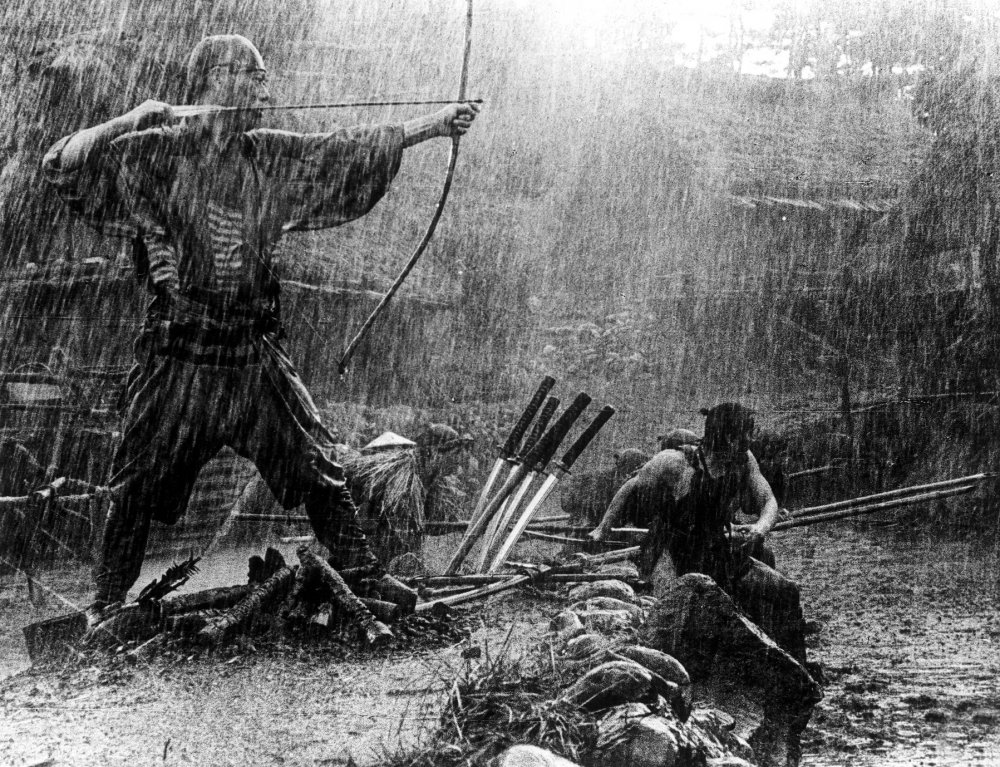
Seven Samurai is an also electric employment of Eisenstein style techniques of skilful editing, dissolves, fast cutting and an embracing of the language of cinema. Kurosawa accentuates action with slow motion: when Kambei dispatches a bandit (in his superb introduction scene), the body falls seemingly forever, death building in impact. Zoom cuts introduce locations, bringing us closer and closer to events. Kurosawa shot the battles with three cameras (a master and two roving cameras) allowing him to capture the kinetic action of his rain-soaked finale. Brilliant montages introduce concepts, characters and themes. It’s a masterclass.

It’s also masterful at quickly sketching character. We know from his first introduction – a brilliant cold-open fifteen minutes or so into the film – that Kambei is a man of both shrewd tactical awareness and puts duty before superficial pride, by his willingness to shave his hair so he can pass as a monk to rescue a child. (The gasps of those watching say it all at this willing acceptance of a cultural mark of shame). Kyūzō is introduced duelling with wooden swords. Why don’t we swop to real blades says his opponent: because you’ll die, Kyūzō matter-of-factly describes, his matter-of-fact bluntness and lack of bragging backed up by his immense skill when the chap dies seconds later. Gorōbei’s shrewdness is shown by the ease he dodges Kambei’s ambush test, just as Kikuchiyo’s rawness is when he blunders straight into it (and promptly loses his temper). Little moments like this abound, in a film stuffed with clever character beats.

The film presents a Japanese culture where concepts of honour and self-sacrifice sit awkwardly alongside regimented hierarchical and societal rules. The samurai can’t help but look down on the peasants – even while they see it as their duty to protect the weak. The villagers, in turn, look at the samurai as barely-to-be-trusted potential oppressors or dangerous parasites who steal their land and daughters (or both). Much of the film’s second act, as the samurai train the villagers to resist the attack, is about these two communities learning to respect each other. But it’s a tenuous alliance, held together by circumstance: when the dust settles, the surviving samurai are no longer welcome.

The samurai are a dying breed. Kambei knows the future belongs to people who provide industry and food. Samurai principles of honour and duty, pride in their skill, is also increasingly irrelevant in a world where the gun decides conflict. The ronin have three rifles and these deadly weapons are no respecter of skill or honour (none of the seven are bested in conflict, but all who fall do so to a bullet). Perhaps this is why the samurai cling to their principles and their honour. They know the world they knew is dying away and that there may be no place for them in the new.

This conflict is given a human shape by Kikuchiyo. Played with an electric, charismatic wildness by Toshiro Mifune (allowed to let rip, he’s a breath-taking explosion of jagged movements, eccentric line deliveries and unbound energy), Kikuchiyo is neither peasant nor samurai. Bought up from working stock – carrying stolen papers of nobility to try and pass himself off as samurai – he’s also rejected by his farmer peers for his warrior status. This makes him a character who can expose hypocrisies on both sides: denouncing the farmers pleading for help but cowering from the samurai; then angrily arguing samurai selfishness and pride have left the peasants with little choice but to horde food and riches to survive.

Not that Kurosawa is shy of admiration for the samurai. Yes, the flaws of their class are exposed – and we see more than enough their potential for arrogance, pride and violence. But the seven also contain a collection of their best traits. Takashi Shimura is brilliant as Kambei: selfless and honourable who takes on the task to honour the peasant’s offering all they can (however little that be). Heihachi (played by an ebullient Minoru Chiaki) represents generosity and warmth. Kyūzō (an enigmatic Seiji Miyaguchi) is awash with self-effacing warrior skill, shrugging off his feats with simple matter-of-fact statements. Shichirōji and Gorōbei are loyal and thoughtful warriors, Katsushirō (a charming Isao Kimura) a decent man eager to prove his worth. These are the best of their class.

They’ll need to be to win in this desperate action. Their preparation carefully outlines the obstacles facing to defence of this village – and to corral the villagers to defend their property. Houses outside the village walls are abandoned (Kambei seeing down a near rebellion on this, with threats of immediate justice), a raid on the ronin’s base aims to reduce their numerical advantage, the difficulty of turning the terrain against superior numbers repeatedly made plain. Kurosawa’s visual storytelling means the action when it comes is not only captivating, but completely understandable.

And what action. Seven Samurai can take its place on any list of the greatest war films ever made. The final hour features attack-after-attack on the village, interspersed with raids, skirmishes and derring-do. Both Kyūzō and Kikuchiyo take solo missions out of the village, though Kikuchiyo’s hunt for glory, even while he captures a rifle, leaves part of the wall undefended and leads to tragedy (Kambei is furious at this failure in discipline). It culminates in a rain-soaked final stand, shot with an all-absorbing power and engrossing kinetic energy.

The samurai sacrifice much for the village. But for what thanks? A peasant disguises his daughter as a boy, because he assumes, if discovered, the samurai will instinctively rape her. When the ronin don’t arrive as expected, the peasants grumble that the samurai are eating more than their fair share. As the samurai fall, their deaths are marked with a decreasing lack of notice (the final deaths don’t even gain on-screen funerals). With victory assured, the peasants return to their crop and don’t even lift a hand to wave the samurai goodbye.

It seems like poor reward for people who have sacrificed so much. But then that’s part of the point Kurosawa is making. Some samurai chose honour. Some choose the opposite. But they are always relics of a feudal system that is being left behind by events and the modern world. Its not just guns that will take them eventually. It’s a sadness that adds an even richer vein to this gripping, superb action drama. Kurosawa’s films may have flaws – but he doesn’t put a foot wrong in Seven Samurai.

The Fugitive (1993)

The Fugitive (1993)

An innocent man goes on the run in the one of the finest thrillers of the 90s

Director: Andrew Davis

Cast: Harrison Ford (Dr Richard Kimble), Tommy Lee Jones (US Marshal Sam Gerard), Sela Ward (Helen Kimble), Joe Pantoliano (US Marshal Cosmo Renfro), Jereon Krabbé (Dr Charles Nichols),Andreas Katsulas (Fredrick Sykes), Daniel Roebuck (US Marshal Bobby Biggs), Tom Wood (US Marshal Noah Newman), L Scott Caldwell (US Marshall Erin Poole), Johny Lee Davenport (US Marshall Henry), Julianne Moore (Dr Anne Eastman), Ron Dean (Detective Kelly), Joseph Kosala (Detective Rosetti), Jane Lunch (Dr Kathy Wahlund)

I think there are few things more terrifying than being accused of something you didn’t do. How can you hope to prove your innocence, when no one listens and there isn’t a scrap of evidence to back up your story? How dreadful again if the crime you are accused of, that everyone thinks you are guilty of, is the brutal murder of your wife? The double blow of everyone thinking you guilty, while the real killer walks free. What would you do to clear your name? And how much harder would that be, if you were also on the run from the law who are eager to prep you for the electric chair?

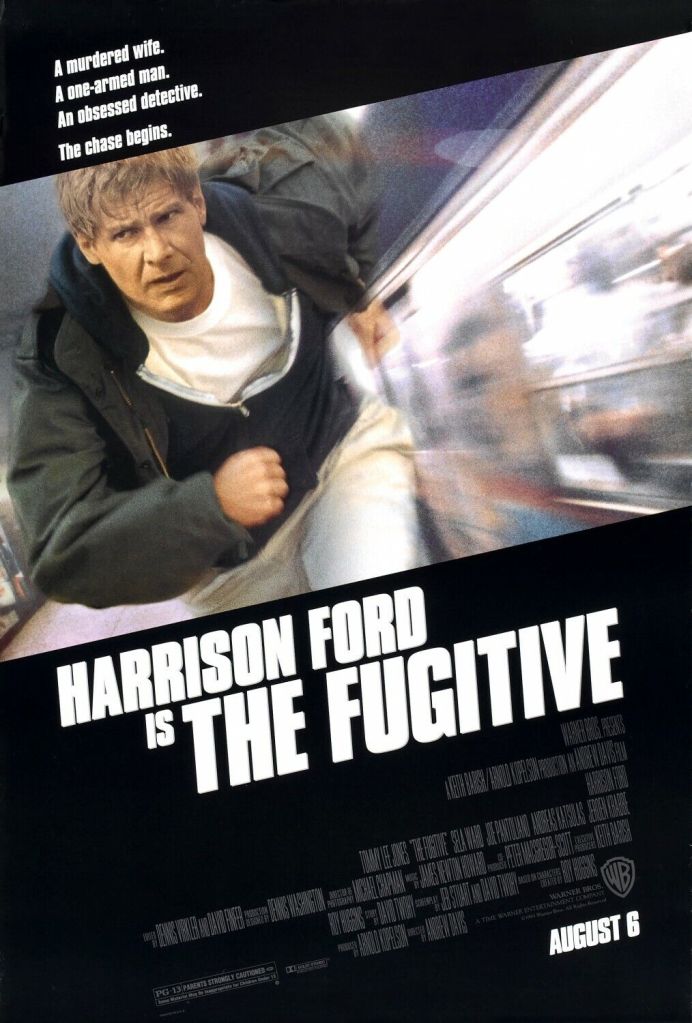
It’s the key idea of The Fugitive, adapted from a hit 60s TV show, and undoubtedly one of the best thrillers of the 90s. Harrison Ford is Dr Richard Kimble, on death row for the murder of his wife Helen (Sela Ward). In transit to prison, an accident caused by a convict’s escape attempt gives him a chance to escape. Returning to Chicago, Kimble is determined to hunt down the mysterious one-armed man he knows murdered his wife and work out why. Problem is, he’s being chased down by a team of US Marshals led by the relentless Sam Gerard (Tommy Lee Jones), who’s not interested in Kimble’s guilt or innocence, only in catching him.

The Fugitive is propulsive, involving and almost stress-inducing in its edge-of-the-seat excitement. It’s a smart, humane and gripping thriller, both a chase movie and an excellent whodunnit conspiracy thriller. It’s one of those examples of Hollywood alchemy: a group of people coming together at the right time and delivering their best work. It’s comfortably the finest work of Andrew Davis, a journeyman action director, who delivers work of flawless intensity, perfectly judging every moment. It’s shot with an immediacy that throws us into the city of Chicago and its surroundings (Davis was a resident of the city and worked with photographer Michael Chapman to bring the real city to life on screen) and the film never lets up for a moment.

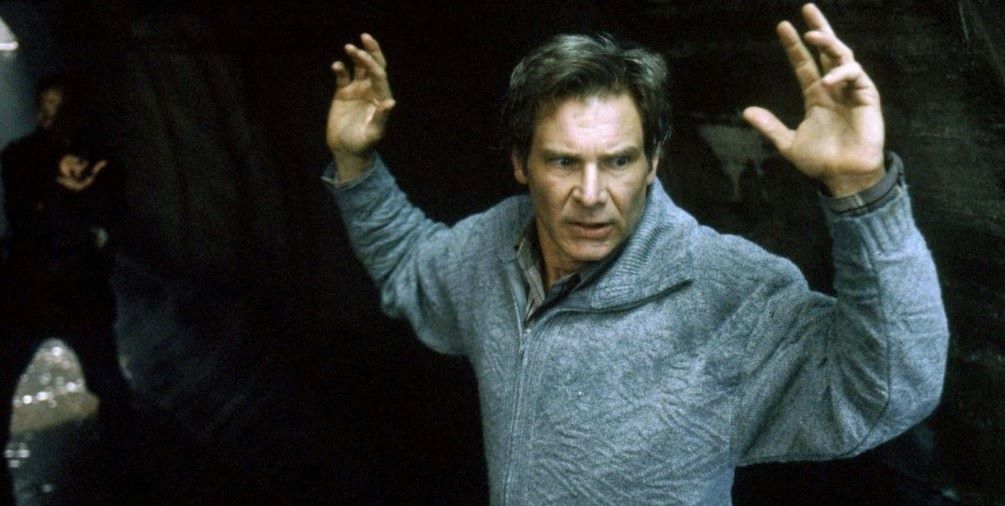
It gains hugely from the casting of the two leads. No actor can look as relatably harassed as Harrison Ford. Determined but vulnerable – there is a marvellous moment when Ford squirms with suppressed fear rising in an elevator filled with cops – Ford makes Kimble someone we immediately sympathise with. He’s smart – evading police, forging IDs, inveigling himself into hospitals to access amputee records – but constantly aware of the danger he’s in, brow furrowed with worry, narrow escapes met with near-tearful relief. Ford excels at making righteousness fury un-grating – the film makes a lot of his boy-scout decency – and never forgets Kimble is a humanitarian doctor, putting himself frequently at risk to save lives, from pulling a wounded guard from wreckage during his escape or saving a boy from a missed diagnosis in the hospital where he is working as a cleaner.

You need a heavyweight opposite him, which the film definitely has with Tommy Lee Jones. Jones won an Oscar for his hugely skilful performance. It would have been easy to play Gerard as an obsessed, fixated antagonist. Jones turns him into virtually a dual protagonist. Much as we want Kimble to stay one step ahead of the law, we respect and become bizarrely invested in Gerard’s hunt for him. Jones is charismatic as the focused Gerard, but also a man far more complex than he lets on. He genuinely cares for his team, takes full responsibility for their actions and finds himself becoming increasingly respectful of Kimble, even entertaining the idea of his innocence.

Not that an unspoken sympathy will stop him doing his job. When Kimble pleads his innocence at their first meeting his (iconic) response is “I don’t care”. Later, he doesn’t hesitate to fire three kill-shot bullets at Kimble when nearly capturing him in a government building – Kimble saved only by the bullet-proof glass between them. Jones never loses track of Gerard’s dedication above all to doing his job (the investigation he starts into Kimble’s case is motivated primarily by it being the most efficient way to work out where Kimble might go). But the edgy humour and pretend indifference hide a man passionate about justice and with a firm sense of right and wrong.

These two stars make such perfect foils for each other, it’s amazing to think they spend so little time opposite each other. Davis makes sure those few meetings have real impact, starting with their iconic early face-off at the top of a dam. A gripping chase through the bowels of this concrete monster, it’s also a brilliant establishing moment for how far both men will go: Gerard will continue the hunt, even after losing his gun to Kimble in a fall – because he has another concealed, ready to hand; Kimble won’t even think about using a gun and will go to the same never-ending lengths to preserve his chance at proving his innocence, by jumping off that dam.

The film implies they recognise these similarities in each other. Perhaps that’s why Kimble even eventually bizarrely trusts Gerard as a disinterested party – even while he remains terrified of Gerard catching up with him. The unpicking of (what turns out to be) the conspiracy behind Helen’s death is carefully outlined and surprisingly involving (considering it rotates around sketchily explained corporate shenanigans) – largely because Davis has so invested us in Kimble’s plight.

That’s the film’s greatest strength. Everything draws us into sharing Kimble’s sense of paranoia: that one misspoken word or bad turn could lead to his capture. Scored with lyrical intensity by James Newton Howard, it’s tightly edited and only gives us information when Kimble gets it. We only learn information about the night of the murder as he remembers or uncovers it. Davis twice pulls brilliant “wrong door” routines, where both editing and the careful delivery of information to us at the same time as Kimble makes us convinced that raids are focused on him, when they are in fact looking at someone else entirely.

This sort of stuff makes us nervous, worried for Kimble – and hugely entertained. I’ve seen The Fugitive countless times, and its relentless pace, constant sense of a never-ending chase and the brilliance of its lead performers never make it anything less than utterly engrossing. There is barely a foot wrong in its taut direction and editing and it’s crammed with set-pieces (the dam face-off, a chase through a St Patrick’s Day parade, a breathless fight on an elevated train) that never fail to deliver. It’s a humane but sweat-inducing thriller, a near perfect example of its genre.

The Woman King (2022)

The Woman King (2022)

Punchy historical action epic is very entertaining (if not hugely original narratively) as well as being a triumph of representation

Director: Gina Prince-Bythe

Cast: Viola Davis (General Nanisca), Thuso Mbedu (Nawi), Lashana Lynch (Izogie), Sheila Atim (Amenza), John Boyega (King Ghezo), Hero Fiennes Tiffin (Santo Ferreira), Adrienne Warren (Ode), Jayme Lawson (Shante), Masali Baduza (Fumbe), Angélique Kidjo (The Meunon), Jimmy Odukoya General Oba Ade), Thando Dlomo (Kelu), Jordan Bolger (Malik)

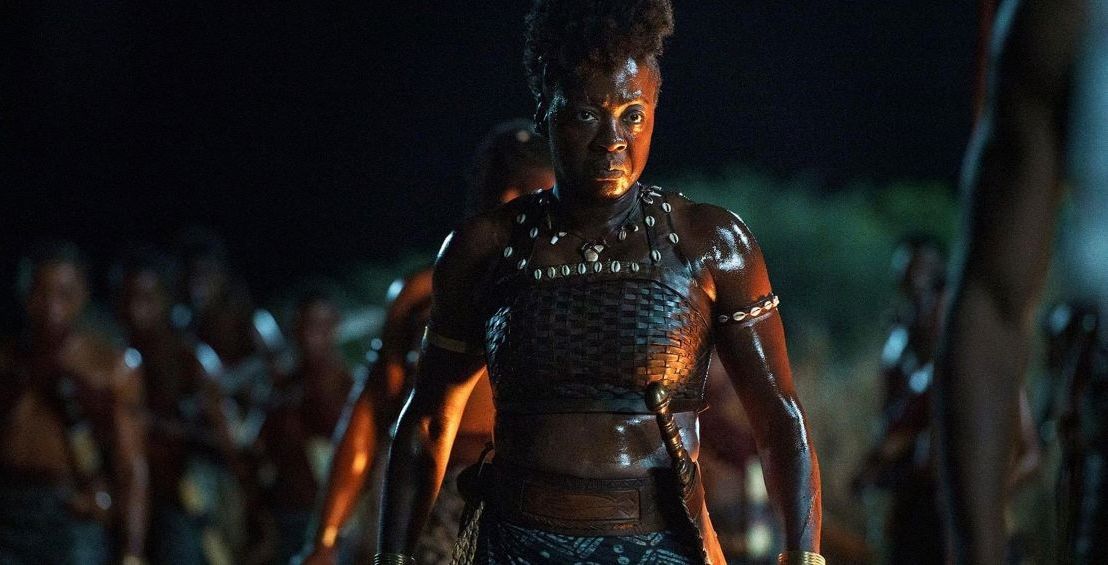
It’s 1823 in the West African Kingdom of Dahomey. The kingdom is trapped in the middle of a host of competing interests: most notably the rival Oyo empire and the European slavers controlling the region’s main port. Dahomey depends for its security on the Agojie, an elite group of women warriors commanded by their respected general Nanisca (Viola Davis). War brews between Dahomey and Oyo, and Nanisca is pushing King Ghezo (John Boyega) to end Dahomey’s involvement in the slave trade. At the same time, a new Agojie recruit, Nawi (Thuso Mbedu) brings memories of past traumas flooding back to Nanisca – might she and Nawi have some lost bond?

The Woman King is a pulsating action film, a mixture of Braveheart and Black Panther (it even has a cold open, as the Agojie storm an Oyo village to save captured Dahomey citizens bound for the slave ships, that feels like a straight lift from the latter film’s opening). Proudly celebrating both women and black people (men are very much in secondary roles, while the only white character is a hypocritical slaver played with relish by Hero Fiennes Tiffin), it’s a punch in the solar plexus for what’s been a male-dominated genre.

Watching it I suddenly realised, half-way through, that if the film had been made 10 or 15 years ago, the plucky new recruit having to prove she belonged among the Agojie would have been played by a white actress. There would have been a flashback to the child being found by the Agojie and then a montage of her searching from fear to longing to emulate the women around her. Like Cruise in The Last Samurai, she would have become the best-of-the-best, accepted by her new black sisterhood. It’s a triumph that Hollywood no longer needs stories like this filtered through white eyes before they would even consider bringing them to the screen.

Instead, the focus is strongly on a story that wants to celebrate the rich culture and history of African kingdoms. Dahomey’s civilisation, advanced farming and irrigation, egalitarian culture and humane religious and spiritual practices, are shown in loving detail. Their tenuous position as a small kingdom surrounded by rivals is carefully presented, just as the corrupting nature of European powers is made clear. It is they who have turned slavery – an ever-present in African history – into an industry that dominates the African economy and has led to a subtle devaluation of human lives that many Africans openly collaborate in.

In this, Prince-Bythe’s tightly directed film juggles a coming-of-age story for Nawi with a coming-to-terms story for Nanisca. It’s a film that manages to present both in the context of a series of action set-pieces and exciting training montages (the Agojie effectively have to complete a massive obstacle course to qualify as a member of the sisterhood). To be honest, much in the film isn’t really that original, more a remix of set-pieces and ideas from similar films. What makes it stand out is the representation and the context where it is taking place.

It also allows impressive actors to take on roles way outside of public expectations. None more so than Viola Davis, whose pumped up physique shatters any perceptions of what you might expect. This is a tour-de-force role from Davis, as she plays a defiant and strong woman, secretly terrified of trauma in her own past (and worries about her own weakness) who leads by charismatic example, but is just as capable of unjust slap-downs. She’s a woman struggling to embrace all facets of herself, doing so in the spotlight of a whole country looking to her for leadership. It makes for a powerful performance from Davis, perfectly fusing her skill at playing matronly warmth, imperious distance and deep reserves of determination and courage.

There are similarly excellent performances from a uniformly strong cast, with Lashana Lynch a stand-out as a courageous fighter who surprises herself with her mentorship abilities. Thuso Mbedu gives a star-making turn as Nawi, a young woman who matches Nanisca for bull-headedness and suppressed self-doubt, who reveals herself as a natural leader. Shelia Atim is excellent as Nanisca’s level-headed trusted number two, while John Boyega walks perfectly a fine-line of a man teetering between being a wise leader and a playboy.

They are helped by a film that may lack originality in its plotting and structure, but makes up for that with its warmth for its characters, and the gritty, involving realism of its shooting. Prince-Bythe keeps the pace of the film running smoothly and stages each of the film’s many set-pieces with a dynamism that keep you on the edge of your seat. She also successfully manages to incorporate some searching material around Nanisca’s past traumas without being exploitative.

Historically, the film is a little dubious, walking a carefully curated line on Dahomey’s involvement in slavery (in many ways it might have been better if the film was set in a fictional kingdom inspired by Dahomey). It doesn’t dwell on the Agojie chaining up their captives to be shipped to the slavery markets. It pushes an anti-slavery message strongly – but ignores the historical fact that the real Ghezo continued in the trade until the bitter end. (Legitimate points could have been made about his right to the same compensation as plantation owners elsewhere.) There is a complex, difficult story here that the film romanticises into something with cleaner rights and wrongs.

But, with a history of poor representation and white-only-lens view on African culture in film, you can forgive a film aiming to redress that balance. Strongly directed, exciting and crowd-pleasing, with well-drawn characters played with real skill by a very strong cast, it might recycle many ideas from other films, but it does it with a compelling freshness.

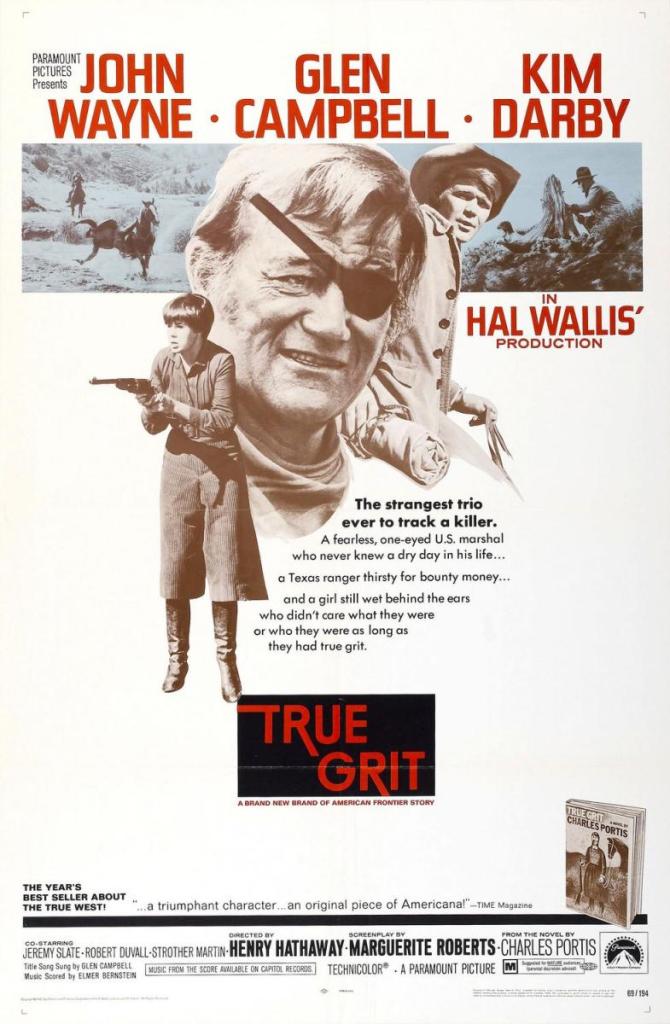
True Grit (1969)

True Grit (1969)

The Duke wins an Oscar in this solid Western (already old-fashioned in 1969) put together with a professional solidity

Director: Henry Hathaway

Cast: John Wayne (Reuben “Rooster” Cogburn), Glen Campbell (La Boeuf), Kim Darby (Mattie Ross), Jeremy Slate (Emmett Quincy), Robert Duvall (Lucky Ned Pepper), Dennis Hopper (Moon), Alfred Ryder (Goudy), Strother Martin (Colonel Stonehill), Jeff Corey (Tom Chaney), John Fiedler (Daggett)

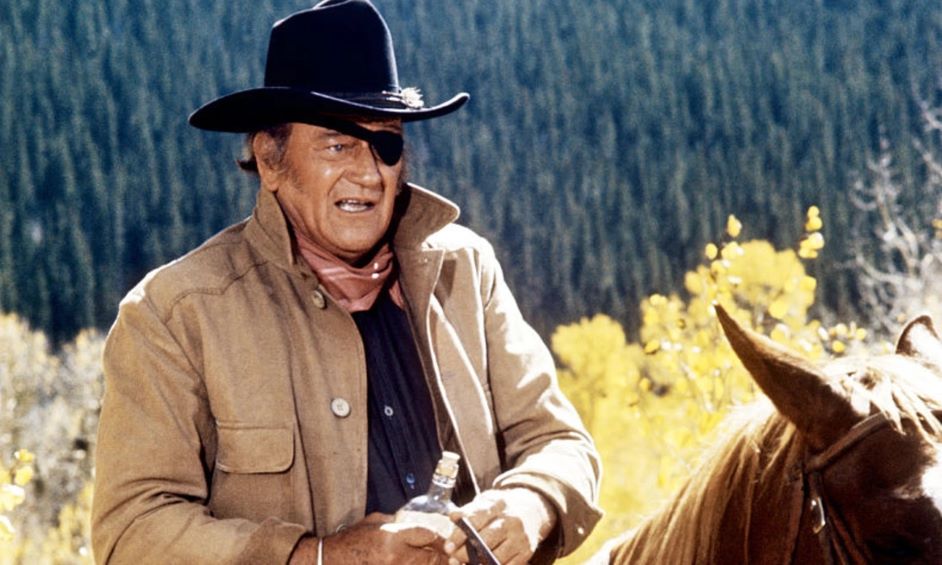
By 1969 John Wayne had been pulling his six shooters against rascals and rapscallions for thirty years, ever since making one of the all-time great entries in Stagecoach. He’d been an American icon, box-office gold and practically the Mount Rushmore of Hollywood. What he never really had was recognition that, underneath the drawl, he was a fine actor who knew his business. He’d only had the single Oscar nomination in 1949, so by 1969 there was a sentimental urge to correct that – especially since illness had already seen the Duke (one of the first major stars to be open and frank about his cancer and urge others to get checks) lose a lung a few years previously.

And correct that they did, as Wayne beat out two respected thespians (the perennially unlucky Burton and O’Toole) as well as the whipper-snapper stars of Midnight Cowboy (the sort of cowboy film the Duke would never even consider making!) to scoop the Best Actor prize for taking a character-role lead (all Wayne roles are lead roles) in True Grit. Wayne was “Rooster” Cogburn, a hard-drinking but hard-riding, always-gets-his-man US Marshal, hired by Mattie Ross (Kim Darby) the teenager daughter of a murdered father to track down his killer Tom Chaney (Jeff Corey). Rooster develops an avuncular relationship with Mattie, despite his penchant to get pissed and (of course!) eventually proves he has the ‘true grit’ that made Mattie hire him in the first place.

True Grit is a traditional yarn, directed with a smooth competence (but lack of inspiration) by Henry Hathaway. It must have felt quite a throwback in 1969: you could imagine it pretty much would have been shot-for-shot identical if it had been filmed in 1949 (especially since Wayne had been playing the veteran since at least Fort Apache). Compared to other major Westerns made that year – Butch Cassidy and the Sundance Kid and, especially, the grim nihilism of The Wild BunchTrue Grit looks like the cosiest film imaginable. It even shies away from the book’s ending where Mattie loses an arm after a snake bite (something the, frankly superior, Coen Brother’s remake would not do 40 years later).

It does feel odd to see Wayne, that bastion of old-school Hollywood, sharing the screen with New Hollywood icons like Dennis Hopper (playing a yellow-bellied squealer at the baddies hideout) and Robert Duvall (a belated villain, looking uncomfortable in this genre saddle-flick as a bad-to-the-bone gang leader). But Hathaway makes sure it’s The Duke’s show. Which it is from start-to-finish.

Rooster isn’t really a stretch for Wayne. Compared to his work in The Searchers and Red River, Cogburn is a cosy and straight-forward hero, a straight-shooter who always holds to his word. But it’s a perfect showpiece for his charisma. Wayne shows a decent comic-timing (he has a nice line in deadpan reactions, particularly when he meets Mattie’s famed lawyer Daggett for the first time, discovering far from the imposing figure he imagined he’s actually the mousy John Fiedler) and there’s just a little hint of lonely sadness in Rooster as he talks about the family who left him or the homes he’s never known.

Wayne also has a lovely chemistry with Kim Darby, the relationship flourishing in a rather sweet big-brother-“little sister” (as Rooster calls her) way. Although of course it takes time to form: Rooster spends most of the first half of the film trying his best to shrug her off so he can hunt down the gang Tom Chaney runs with (and collect the bounty for them) unencumbered. The two of them form a tenuous alliance with Texas Ranger La Bouef, who is far keener to deliver Chaney to another state for a higher bounty than that offered for the killing of Mattie’s father.

La Bouef is played with try-hard gameliness by singer Glen Campbell, largely hired to commit him to singing the film’s best-selling theme tune. To be honest, he makes for a weak third wheel – but it’s hard not to hold it against Campbell when he charmingly later said he’d “never acted in a movie…and every time I see True Grit I think my record’s still clean!”. Far better is Kim Darby, who gives a spunky tom-boyish charm to the shrewd and persistent Mattie who is far too-smart to either by cheated by short-changing landlords or to be ditched from the trail by Rooster and La Bouef.

It’s Wayne’s film though, and a final act face-off with the villains shows that there were few people better with a gun on screen (his one-handed shotgun twirling reload while riding a horse is surely the envy of Schwarzenegger’s similar move in Terminator 2). The whole enterprise is carefully framed to showcase Wayne and he rises to the occasion. Think of it like that, and it hardly matters that Hathaway offers uninspired work behind the camera and fails to provide either any moments of visual interest or dynamism (or work effectively with the weaker actors).

True Grit is an entertaining, second-tier Wayne film, lifted by his charisma and enjoyment for playing a larger-than-life gravelly cool-old-timer and cemented in history by his reward with that sparkling gold bald man. Compared to other Westerns – both before and at the time – it’s traditional, straight-forward and unchallenging. But it’s fun, has some good jokes and offers decent action. And it’s a reminder that no one did this sort of thing better than the Duke.

Drive (2011)

Drive (2011)

Neon, darkness and shades of grey fills the screen in a film that’s practically the definition of cult

Director: Nicholas Winding Refn

Cast Ryan Gosling (Driver), Carey Mulligan (Irene Gabriel), Bryan Cranston (Shannon), Albert Brooks (Bernie Rose), Oscar Isaac (Standard Gabriel), Christina Hendricks (Blanche), Ron Perlman (Nino Paolozzi), Kaden Leos (Benicio Gabriel)

Impassive and supernaturally calm, the Driver (Ryan Gosling) sits with the car engine purring. In this five-minute window he is the get-away driver who will go to any length. Outside of that, criminals are on their own. Its one of the simple rules he lives by. He never compromises. Until, of course, he finds something worth compromising for. That would be his neighbour Irene (Carey Mulligan) and her young son Benicio (Kaden Leos), trying to make ends meet while her husband Standard (Oscar Isaac) is in prison. The Driver helps them – and feels compelled to go on helping them when newly released Standard (trying to go straight) does one more job to get out from under the thumb of his criminal friends. That last job is always the worst one isn’t it? Particularly when crime lords as ruthless as Bernie (Albert Brooks) and Nino (Ron Perlman) are involved.

Drive won Refn the best director award at Cannes (after a huge standing ovation). It’s not hard to see why. This film is so overflowing with style, uncompromising cool and unreadable enigma it was practically a cult classic before it was even released. Layered in a mix of 70s and 80s chic – with its electric pink titles, John Carpenter-ish Los Angeles visuals and counter-culture smarts – it echoes cutting-edge crime drama from the punk years of Hollywood (it’s practically a remake of The Driver for starters!), by way of touches of Melville crime drama and Spaghetti Western anti-hero. Scored to a mix of ambient beats and electronic rock, it’s the dictionary definition of style.

It keeps you on your toes from the start. Its opening not only explores the Driver’s incredible skills (speed, manoeuvring, ingenious evasions and knowing when to go slow, he can do it all) it also sets us up for the whole film. Shot largely alongside the Driver in the car, we zip through streets and understand the determination (and hints of danger) under his impassive surface. That prologue is the whole movie in capsule – a careful wait, a sense of a fuse being list, touches of humour to distract us (the Driver’s precision with his gloves) and brilliant misdirection when his focused  attention to listening to a football game on the radio pays off in spades when we see his plans revealed.

Much of the first 40 minutes carefully develops the Driver’s surprisingly contented life: his happy acquiescence in the racing dreams of his fixer and mechanic boss Shannon (an ingratiating Bryan Cranston), who the Driver likes so much he doesn’t care that Shannon regularly swindles him; a soft, unspoken half-romance with Irene (Carey Mulligan, truthful and with a strength beneath the vulnerability); and a big-brother bond with her son Benecio. In another world this could have been a film where a loner learns to make a connection and finds love.

But it ain’t that film. The troubles start with Standard’s release from prison. Skilfully played by Oscar Isaac as well-meaning but essentially hopeless, Standard’s problems become Irene and Benecio’s problems. That one last job goes south – as they always do – in an orgy of cross, double cross and increasingly graphic violence. And the burning propulsive energy that lies under Drive, just like that purring engine in the films opening, is let rip.

What we get in the second half is dark, nihilistic and violent. Oh, good Lord, is it violent. Bone crunchingly, skull shatteringly, blood spurtingly violent. Because when gangsters get pissed off, they play for real. And it turns out, when the Driver finds something to care about, he plays for real as well. Refn’s eye for violence is extremely well-judged. We see just enough for it to be horrifying, but the worst is done via sound and editing (the Driver’s almost unwatchable assault on a goon in a lift puts almost nothing on screen, but the squelches and crunches on the soundtrack leave nothing to the imagination).

Refn’s trick is to combine lashings of indie cool and ultra-violence with a deceptively simple story that allows plenty of scope for interpretation. Drive has a sort of mythic, Arthurian quest to it, with the Driver as a sort of knight errant, defending a damsel in distress. But it’s also a grim crime drama, with a man at its centre who brutally kills without a second thought. This all depends on the enigmatic Driver at its heart. No other actor alive can do unreadable impassivity like Ryan Gosling – this could almost be his signature role. He’s ice-cool and professional, but also rather child-like and gentle.

Is he a guy dragged down by his own worst impulses? His jacket has a large scorpion on its back, echoing the old fable of the frog and the scorpion. Rather than one or the other, the Driver feels like both in one. A frog who wants to carry everyone over the river, but whose poor instincts and capacity for violence acts as the scorpion that destroys him. Where does he come from? What is his past? The film ends with a series of enigmatic shots that, to my eyes, suggest a supernatural quality to him. I sometimes toy with the idea he’s a sort of fallen angel, constantly protecting the wrong people like he has a scorpion curse on him. Refn’s gift is to craft pulp with psychological intrigue.

Drive is a very cool film – and Carey Mulligan and Ryan Gosling’s careful playing gives it a lot of heart, just as Albert Brooks’ marvellously dangerous gangster gives it a sharp, unpredictable edge. It rips its eye through the screen, with pace, speed and iconic imagery, all splashed with a pop art cool. But it’s not just a celebration of style: it’s also a dark romance, a tragedy and an exploration of a character who may be his own devil or may not even be human at all. Either way, its intriguing and exciting. Can’t ask for much more than that.

The Hunt for Red October (1990)

The Hunt for Red October (1990)

Shailing into Hishtory! The Hunt for Red October is the finest Tom Clancy adaptation made

Director: John McTiernan

Cast: Sean Connery (Captain Marko Ramius), Alec Baldwin (Jack Ryan), Joss Ackland (Ambassador Andrei Lysenko), Tim Curry (Dr Petrov), Peter Firth (Ivan Putin), Scott Glenn (Commander Burt Mancuso), James Earl Jones (Admiral James Greer), Jeffrey Jones (Skip Tyler), Richard Jordan (National Security Advisor Jeffrey Pelt), Sam Neill (Captain Vasily Borodin), Stellan Skarsgård (Captain Viktor Tupolev), Fred Dalton Thompson (Rear Admiral Joshua Painter), Courtenay B Vance (PO Jones)

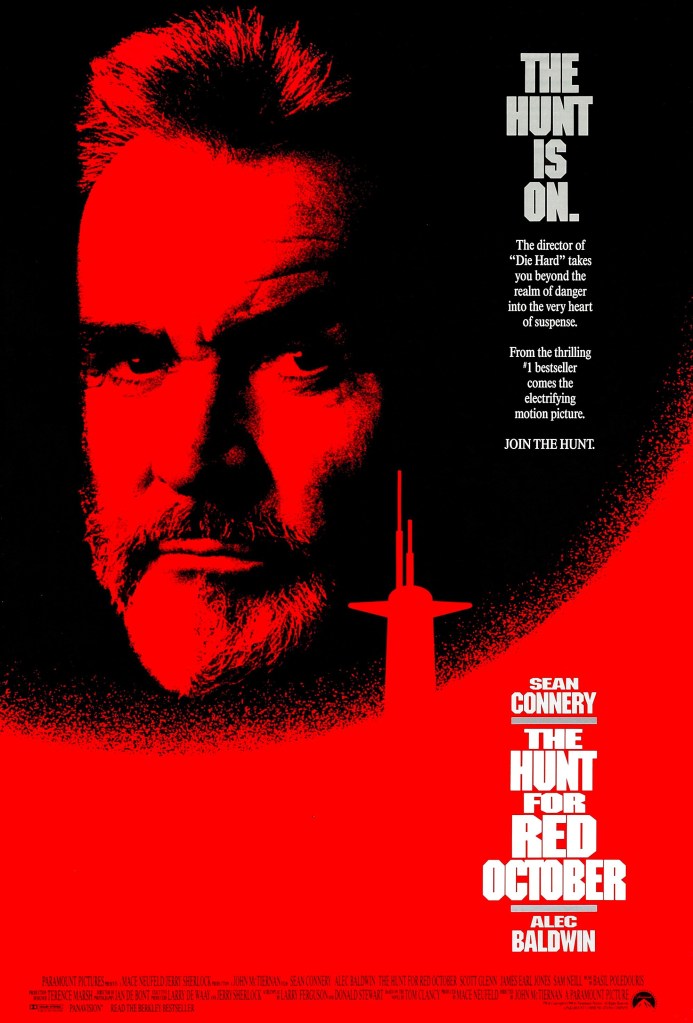
“We shail into Hishtory!” It’s the film that launched a thousand Sean Connery impressions. Only Connery could get away with playing a Soviet submarine captain with the thickest Scottish accent this side of Lithuania. He only took the role – from Klaus Maria Brandauer – at short notice, but he’s a pivotal part of the film’s success. The Hunt for Red October is a superb film, the finest Tom Clancy adaptation ever made and one of the cornerstones of the submarine genre. It expertly mixes beats of conspiracy, espionage, naval adventure and even touches of comedy, into a superbly entertaining cocktail.

Connery is Captain Marko Ramius, the USSR’s finest naval captain, given command of The Red October on its maiden voyage. The Red October is equipped with a technical miracle: a “caterpillar drive” that uses a water powered engine to run silently, making it invisible to sonar. So why is the entire Russian fleet being scrambled to find and sink the submarine? Could it be, as the USSR tells the US, that Ramius has gone mad and plans a nuclear strike? Or is it, as CIA analyst Jack Ryan (Alec Baldwin) argues, because Ramius plans to defect and bring the technological marvel with him?

Of course, we know Connery plans to defect. After all, we’ve already seen him murder shifty political officer Ivan Putin (Peter Firth – to whom alphabetical billing is very kind) and tell his handpicked crew of officers, led by loyal second-in-command Borodin (Sam Neill, so dedicated to affecting a Russian accent it’s as if he felt he needed to do in on behalf of himself and Connery) that there is no turning back. The film’s expert tension – and it rachets it up with all the precision of a well-oiled machine – is working out how. How will Ramius evade the Russian fleet? How will he manage to arrange his defection without communicating with the US? And will he and Ryan – unknowingly working together – persuade the US not to blow The Red October out of the water?

With McTiernan, in his prime, at the helm it’s not a surprise the film is expertly assembled. The parallel plot lines are beautifully intercut. Our two heroes, Ramius and Ryan, face very different obstacles (dodging Soviet torpedoes vs patiently making his case to sceptical superiors mixed with risky long-range travels to far-flung US subs) but somehow seem to be building a bond before they even meet. Ryan is an expert on Ramius and his career, while his thoughtful, good-natured decency is exactly the sort of American Ramius tells his crew they need to meet (as opposed to “some sort of buckaroo” – a word Connery relishes).

McTiernan isn’t just an expert mechanic though. There are lovely touches of invention and magic here. The Hunt for Red October has possibly one of the finest transitions ever. Connery, Neill et al start the film speaking in Russian. Ramius meets with Firth’s Putin (great name) in his quarters to open their orders. The two chat briefly in Russian, then Putin reads from Ramius’ copy of the Book of Revelations. As Firth reads (in fluent, expertly accented Russian), McTiernan slowly zooms in on his lips until he reaches the word “Armageddon” (the same in both languages) – the camera then zooms out and both Firth and Connery continue the scene in English (Firth switching mid-shot from Russian to English without missing a beat). It’s a beautifully done transition, rightly a stand-out moment.

But then it’s a film full of them. Many rely on Connery’s performance, superb as Ramius (this was his career purple patch, where one effortlessly excellent performance followed another). Ramius has a grizzled sea-dog charm and a twinkle in his eye, but he’s also nursing a private grief and pain that motivates his defection. He can be demanding of his men, but also inspires loyalty – that “We Shail into Hishtory!” pep-talk speech is delivered perfectly (and McTiernan makes Soviet sailors singing the Soviet anthem a punch-the-air moment even though (a) we know they are technically the bad guys and (b) we know Ramius is lying through his teeth in his speech). But he is always a commander, Connery investing him with every inch of his movie star cool.

Ramius is also an interesting reflection, in a way, of Ryan. Played with a great deal of young-boy charm by Baldwin (and also wit, Baldwin dropping impersonations of other cast members into the film – including a stand-out Connery), Ryan is brave, determined but also slightly naïve and out-of-his-depth. But like Ramius he respects his “enemy”, is open to negotiation, thinks before he acts and wants to save lives. The two even share similar upbringings. The film triumphantly shows a desk man, spreading his wings and doing stuff he couldn’t imagine: the guy who tells an air hostess in an early scene he can’t sleep on flights due to fear of turbulence, will later have himself dropped into the sea from a perilous helicopter flight, steer a Russian sub and duke it out with the last Soviet hard-liner standing in The Red October’s missile room.

McTiernan shoots Ryan’s conversations like combat scenes: quick reversals and cross shots and even whip pans and zooms. It ratchets up the tension and drama in these sequences – and allows him to play it cooler in the sub shots which (with its more constrained set) where patient studies of tense faces follow sonar reports of the approach of torpedoes or enemy subs. Sound is a triumph in Red October – every ping or sonar shadow is sound edited to perfection, with much of its tension coming from their perfect rising intensity.

It builds towards a superb resolution as several plot threads come together in a dramatic face-off that gives us everything from sub v sub to gunfights, with tragedy and triumph all mixed in. It’s a perfect ending to a film that is a masterpiece of plotting and construction, acted to perfection by the whole cast (Connery and Baldwin, but also Jones, Neill, Glenn – perfect casting as a no-nonsense naval captain – and several reliable players in smaller roles). McTiernan directs with exceptional pace and excitement, it’s sharply scripted and technically without a fault – from its gleaming Soviet sub (with church like missile room) to brilliantly edited sound-design. It’s a joy every time I watch it.

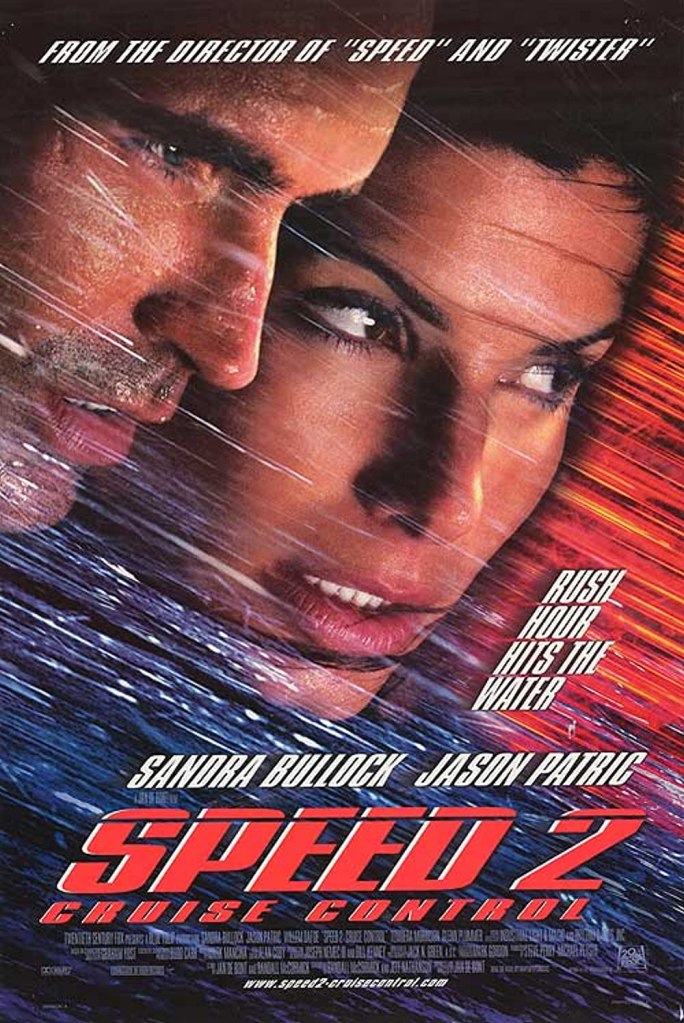
Speed 2: Cruise Control (1997)

Speed 2: Cruise Control (1997)

It seemed like such a good idea at the time… Keanu Reeves wisely passed on Speed 2 – so should you

Director: Jan de Bont

Cast: Sandra Bullock (Annie Porter), Jason Patric (Alex Shaw), Willem Dafoe (John Geiger), Temuera Morrison (Officer Juliano), Glenn Plummer (Maurice), Brian McCardie (Merced), Christine Firkins (Drew), Mike Hagerty (Harvey), Colleen Camp (Debbie), Lois Chiles (Celeste), Royale Watkins (Dante)

In 1996 Keanu Reeves turned down a huge salary for Speed 2. Everyone in Hollywood thought he was mad. On June 13th 1997, Speed 2 was released. On June 14th everyone thought Keanu Reeves was a genius. It’s quite something when one of your best ever career moves was not doing a movie. But God almighty Keanu was right: time has not been kind to Speed 2 – and even when it was released it was hailed as one of the worst sequels ever made. It’s like de Bont and co sold their souls for Speed and in 1997 the Devil came to collect.

Keanu’s Jack Traven is clumsily replaced by Jason Patric’s Alex Shaw – although the dialogue has clearly only had the mildest tweak as Shaw has inherited Traven’s job, friends, personality and girlfriend Annie (Sandra Bullock – elevated to top billing but even more of a damsel-in-distress than in the original). Alex and Annie are wrestling with making a long-term commitment – see what I mean about this script only be mildly tweaked? – when they decide to take an all-or-nothing cruise. Shame the cruise liner is hijacked by deranged computer programmer turned bomber Geiger (Willem Dafoe). With the boat powering through the water towards a collision on shore, can Alex save the day?

You’ve probably noticed the disparity between the title Speed and the setting: a slow-moving cruise liner. At one point, Alex asks how long it would take an oil tanker to move out of a collision course with the liner – “At least half hour – that’s not enough time!” he’s told. The very fact that a debate whether 30 minutes will be enough time in a flipping film about speed shows how far this sequel has fallen. How did anyone not notice this?

Pace is missing from the whole thing. The script is truly dreadful. Paper-thin characters populate the cruise liner, none of whom make even the slightest impression. At one point a character breaks an arm and then immediately shrugs off the injury to steer the ship. The script is crammed with deeply, desperately unfunny “comedy” beats. Bullock’s character seems to have transformed into a ditzy rom-com wisecracker – with a “hilarious” running joke that she’s a terrible driver (geddit!??!) – and, instead of the charming pluck she showed in the first film, is now an irritating egotist. She still fares better than poor Patric, who completely lacks the movie star charisma of Reeves and utterly fails to find anything that doesn’t feel like a low-rent McClane rip-off in his character.

It’s like de Bont forgot everything he knew about directing in the three years between the two films. If anything, this feels like a well below average effort from a novice director. The humour is dialled up with feeble sight gags and the film takes a turgid 45 minutes to really get going (most of which is given over to derivative romantic will-they-commit banter between Patric and Bullock).

de Bont basically flunks everything. He fails the basic directing test of confined-spaces thrillers like this by never making the geography clear to the viewer. I challenge anyone to really understand how characters get from A to C on this boat. The long introductions are supposed to establish these basics (see Die Hard for a masterclass in this), but here you haven’t got a clue about what’s where or why some locations are more risky than others. There is a spectacular lack of tension about the whole thing – it’s not really clear what Dafeo’s lip-smacking, giggling, leech-using (yes seriously) villain actually wants or how his scheme works, and the momentum of the boat towards unspecified destruction is (a) hard to see on the open water with no fixed point to compare the speed with and (b) even when we get that, not exactly adrenalin fuelled anyway.

de Bont’s comedic approach to much of the material might have worked if he had any sense of wit or comic timing in his direction. Or if Patric had been more comfortable with the wit the part requires. Bullock instead feels like she has to joke for all three of them, to disastrous effect. There are a couple of semi-comic sidekicks sprinkled among the supporting players, but none of them raises so much as a grin. The film can’t resist implausible in-jokes, like bringing back Glenn Plummer’s luckless character to have his boat swiped by Alex (they even leave in a mildly altered “what are you doing here?” line, as if they didn’t realise until shooting it that Keanu wasn’t going to be there).

It ends with a loud crash of a boat into the shore which cost tens of millions of dollars (at the time one of the most costly stunts ever) but just looks like a fake boat ripping through a load of backlot buildings. It’s a big, loud, dull, slow ending to a film that looks like it was made by people who had no idea what they were doing but enough power to ignore anyone who might have been able to point out what they were doing wrong. Speed 2 remains the worst sequel ever. Reeves went off to make The Matrix. Who’s the idiot?

Speed (1994)

Speed (1994)

Thrills never came faster (or as much on a bus) as they did in Speed one of the greatest action films of the 90s

Director: Jan de Bont

Cast: Keanu Reeves (Jack Traven), Dennis Hopper (Howard Payne), Sandra Bullock (Annie Porter), Jeff Daniels (Harry Temple), Joe Morton (Lt Herb McMahon), Alan Ruck (Doug Stephens), Glenn Plummer (Maurice), Beth Grant (Helen), Hawthorne James (Sam), Carlos Carrasco (Ortiz)

For most of the 90s, nearly every action film made was promoted as “Die Hard in/on an X”. We had determined, maverick heroes fighting alone against the odds on trains, planes, mountains, aircraft carriers, Alcatraz… You name it, it was Die Hard-ed. But which one was the best? It might just be Die Hard on a Bus – or rather Speed. A never-ending rush of propulsive excitement, Speed is one of the most entertaining films of the 90s. It’s possibly the best high-concept actioner ever made and if you don’t come out of it with a sort of daffy grin on your face there’s something wrong with you.

“Pop quiz, hotshot. There’s a bomb on a bus. Once the bus goes 50 miles an hour, the bomb is armed. If it drops below 50, it blows up. What do you do?” And there’s the whole set-up right there. Detective Jack Traven (Keanu Reeves) is the hotshot, who has already foiled mad bomber (Dennis Hopper’s scheme to hold a lift full of hostages for ransom. Now, for round 2, he’s got to try and keep a bus moving over 50mph through the streets of Los Angeles. Helping him out is passenger Annie Porter (Sandra Bullock) who takes the steering wheel, and best friend Detective Harry Temple (Jeff Daniels) who’s trying to find the bomber. It’s pedal to the metal all the way.

The fact that Speed is as good as it is, is a miracle. Graham Yost’s original script had the bus not going above 20mph (it was called Minimum Speed – and sounds hilariously like the Father Ted spoof where Dougal was trapped on a milk float that couldn’t go below 5mph). It was set entirely on the bus and ended with it exploding into the Hollywood sign. The hero was a wise-cracking smart-ass John McClane type, the bomber was revealed to be his friend Harry and one of the passengers was a cowardly lawyer who met a grizzly end. Die Hard director John McTiernan passed on this unpromising mess, recommending his regular cinematographer Jan de Bont instead.

De Bont – in what remains the only good movie he directed – helped restructure the film into three acts: hostages in a falling lift, hostages in a speeding bus, hostages in an out-of-control subway train. Joss Whedon rewrote the dialogue (Yost generously attributes “98.9% of the dialogue” to Whedon). The bomber became a separate character – with the insane energy of Dennis Hopper behind him. Bullock’s part became a combination love interest and comic sidekick. And Keanu Reeves’ Jack Traven, from being a McClane knock-off, turned into an earnest, dedicated, insanely brave and determined police-officer. And that lawyer was turned into Alan Ruck’s out-of-his-depth wide-eyed tourist. Boom: suddenly, we had a film that felt a little unique.

From there, what made it work was the propulsive pace. An opening act with a lift in peril, sets up the race against time, perilous stakes and dangerous risks (powered by an effective strings and drums soundtrack by Mark Mancina). There is a perfectly poised battle of wits between Hopper’s mastermind bomber and Reeves’ cop. Split second decisions and acts of chance have life-saving consequences. The dialogue is just the right side of cracking wise, with enough earnestness to temper the spice. The whole first act makes a hell of a movie in itself. Like the best of the Bond pre-credit sequences, you could go home happy at the end of it – and having never even seen a bus.

But hang about because that bus is well worth waiting for. More wildly exciting than a one-vehicle chase scene has any right to be, de Bont brilliantly cranks the tension up and never lets go. You’ll grip the edge of your seat as Traven races through town and down the freeway to try and get to the bus before it hits that ominous 50mph – even though, of course, we know there is no chance of him succeeding. Because, after all, if he did Reeves wouldn’t need to jump from a car to a bus at 50mph. de Bont – a skilled cinematographer – has the camera duck and weave among the traffic so hard you’ll feel the g-force throwing you back in your seat.

That’s before we even have the bus itself charging through traffic, with the reluctant Annie at the wheel. Throwing itself through crowded streets, around hair-pin bends and over huge gaps in unbuilt freeways, the entire film is basically an opportunity to gorge yourself on an unlikely vehicle doing gripping stunts at insane speeds. We also get the peril of Jack’s attempts to defuse the bomb on the run – when, inevitably, the fuel tank is damaged the film has the wit enough for Annie to say “what, you felt you needed another challenge?”. It’s, frankly, exciting, expertly shot and edited stuff.

And it also works because the characters are lightly – but very warmly – sketched. Reeves – at the time still best known as “Dude”-ing his way through Bill & Ted – shaved his hair to look more like Hollywood’s idea of an action hero. But what makes him stand out is the sincerity, politeness and rather endearing determination to save lives and serve his community. It’s the trademark Reeves sweetness that has made countless action films afterwards work – he’s never an alpha male or a ‘damn the consequences’ maverick. Bullock became an overnight mega-star with a performance overflowing with charm and wisecracking girl-next-door vulnerability. No one did lip-smacking villiany like Hopper. Daniels is great and the bus was crammed with reliable character actors who craft people we care about from crumbs.

That and the relentless excitement of almost every scene. I’ll agree that the third act resolution on the speeding subway train effectively just re-treads elements of the first two acts. Is it any wonder that Speed 2 was such a disaster when even the original can’t go through less than two hours without repeating itself? But you won’t care, because if the film doesn’t have you firmly in its grip by then, there must be something wrong with you.

De Bont never again even got near the outstanding quality of this ultimate thrill ride. But then, when you’ve touched action-thriller perfection, does that matter? Speed is the best high-concept, Die Hard rip-off ever made – so much so that you feel a bit churlish mentioning that as part of its DNA. Superbly paced, totally gripping and guaranteed to leave you with a big cheesy grin on your face, I’ve seen it more times than I can count and still I feel floored by it. You’ll believe a bus can fly.

Rise of the Planet of the Apes (2011)

Rise of the Planet of the Apes (2011)

You’ll believe an ape can talk in this brilliant relaunch of a franchise that had become a joke

Director: Rupert Wyatt

Cast: Andy Serkis (Caesar), James Franco (Dr Will Rodman), Freida Pinto (Dr Caroline Aranha), John Lithgow (Charles Rodman), Brian Cox (John Landon), Tom Felton (Dodge Landon), David Oyelowo (Steven Jacobs), Terry Notary (Rocket/Bright Eyes), Karin Konoval (Maurice), Richard Ridings (Buck)

It was always a concept some found hard to take seriously. Actors, in heavy make-up, pretending to the Ape masters of Planet Earth. It didn’t help that, after the first few films in the Planet of the Apes franchise the quality took a complete nosedive. Quite a lot for Rise of the Planet of the Apes to overcome: could it take this staple of popular culture and make it not only not a joke, but something people actually wanted to see? Well yes it certainly could. Rise is an intelligent, cinematically rich, surprisingly low-key and brilliantly done relaunch.

It has the advantage of course of decades of special-effects development. Gone are the days of Roddy McDowell in a monkey suit. Now motion capture can literally transform an actor into a chimp. In a way that other Planet of the Apes films never could, it can make the Apes the centre of the film. And if you are going to call for an actor who can help you bring life to a motion capture created character, who else are you going to call but Andy Serkis?

Serkis plays Caesar, the ape who (those of us familiar with the franchise know) will become the founder of the Ape civilisation. The first Ape who stood up and said “No”. He’s the son of Bright Eyes, a chimp who receives ALZ-112, an experimental drug designed to cure Alzheimer’s. Its invented by Dr Will Rodman (James Franco), desperate to cure his father Charles (John Lithgow). The experiment goes wrong and Bright Eyes is killed – but not before giving birth to Caesar, who inherits unnatural levels of intelligence from the drug. Will protects and raises Caesar, treating him as a son. But when Caesar is taken from Will and placed in an abusive ape sanctuary, he begins to see it as his mission to help his fellow apes. The revolution starts here.

Rise – for all it has a computer effect in almost every frame – works because it is small-scale intimate story. For a film full of nothing but effects, it feels remarkably like a sort of sci-fi relationship drama. It’s effectively about a child learning to become a man and find his own destiny, leaving behind a loving (but ineffective) father who, unknowingly, is blocking his progress, to stand as his own man (or rather ape). The motion capture is so stunningly well-done you forget that you are looking at a special effect for in almost every frame, and instead accept Caesar as our lead character.

Wyatt’s film eases us into this, centring Will (played with a generosity and warmth by James Franco) as our lead character and filtering our perception of Caesar through his eyes, as he grows up in his suburban house and learns to climb in San Francisco’s Redwood forests. The careful shift to making Caesar our central character – complete by the time we see him imprisoned in the dangerous environment of the ape sanctuary – is so masterfully done, that we hardly notice that large chunks of the second half of the film take place in wordless silence among the apes, Caesar’s thoughts and emotions communicated only by body language, expressive eyes and hand gestures.

To get that to work, you need a stunning actor behind it. Serkis’ performance is extraordinary: he used motion capture to become an ape, exactly capturing the physicality but also marrying it with real human emotions. We can look at Caesar’s face at any point and know exactly what he’s thinking and feeling. His joy in his home, his protective fury when a confused Charles is assaulted by a furious neighbour, his distress at being locked away, his fear and confusion at his new surroundings his hardening resolve and his determination to liberate his fellow apes. This is extraordinary stuff.

It’s not just Serkis. Every ape has a talented actor behind it. Notary is a master of ape physicality, Konoval creates a beautifully wise and tender orangutan, Ridings finds loyalty and tenderness in a gorilla, Christopher Gordon a psychotic energy to abused lab-rat ape Koba. The marriage between actor and ape is perfect, and means we are completely on their side against mankind (be it in the lab or the ape sanctuary) they are up against. Wordless sequences of Caesar’s ingenuity: establishing himself as the Alpha with shrewd combat tactics, winning friends with cookies, stealing drugs to gift the other apes his own intelligence (their silent wonder at their interior worlds expanding is brilliantly done) and finally leading a revolt (including that goose-bumps rousing “No!”) is superb.

Wyatt’s skilful, calm and controlled visual storytelling is a triumph in making the determination of a CGI Ape a punch-the-air moment. Wyatt makes each Ape as much – sometimes more – of a character than the humans and weaves an emotionally complex story for Caesar. This isn’t about an angry Ape leading bloody revolution. This is a confused, gentle teenager trying to work out who he is. Is he Will’s son or his pet (do sons normally wear leashes in public)? Is he a dreamer or a leader? And, above all, is a man or an ape? When push comes to shove, where will his loyalties lie?

This makes for emotionally rich stuff – so much so that when the Apes make a final act stand for freedom on the Golden Gate Bridge, you’ll shed tears over the self-sacrifice of one of their number. It’s also an intriguing look at humanity, none of whom come out as well as they could. The ‘good’ people – like Will and ape sanctuary worker Rodney – are kind but ineffective (everything Will does goes horrifically wrong, despite his best intentions). The ‘bad’ – Oyelowo’s money-first Drugs Company CEO or Cox and Felton as abusive ape sanctuary owners – are corrupt, selfish and greedy. No wonder the apes, stuck in a hole and only pulled out to be sold for drugs trials, feel so angry.

It’s not perfect. There are some clumsy, awkward homages to the original film (the worst being Felton shrieking “it’s a mad house!”) that don’t pay off. The human characters are at times two dimensional. But that doesn’t matter when the story-telling around the chimps is so superbly done. Wyatt fills the film with effects, but focuses so completely on character and emotion that it never feels like that for a moment. Rise is a small, intimate film about personal growth and a struggle for limited freedom. It helps make it a powerful and highly effective one – and easily superior to every Apes film made since 1968. A superb start to what became a wonderful trilogy.

Thor: Love and Thunder (2022)

Thor: Love and Thunder (2022)

Injokes, backslappery and smugness abound in this terrible Thor adventure

Director: Taika Waititi

Cast: Chris Hemsworth (Thor), Natalie Portman (Dr Jane Foster/Mighty Thor), Christian Bale (Gorr the God Butcher), Tessa Thompson (Valkyrie), Jaimie Alexander (Sif), Taika Waititi (Korg), Russell Crowe (Zeus), Kat Dennings (Dr Darcy Lewis)

Okay. Part way through this desperately unfunny tonal mess I wondered: if I had to choose would I watch this again, or Thor: The Dark World? I can’t quite believe it, but I’d rather watch that functional, forgettable, mundane film. At least it doesn’t make me angry as it drifts past my eyes. And I say that as someone who loved Thor: Ragnarok. Thor: Love and Thunder is terrible. So, unlike Star Trek, it looks like even numbered Thor films are awful – so at least Thor Five should be a doozy.

Thor (Chris Hemsworth) is in a state of ennui – although that doesn’t stop him restoring his buff form after we last saw him as a coach potato in Avengers: Endgame. He doesn’t know what to do with his life: he has (and I can’t believe the film doesn’t make this obvious joke considering its jukebox score) “lost that lovin’ feelin’”. Will the arrival of bereaved father Gorr (Christian Bale), and his mission to butcher all Gods because they don’t answer your prayers, give him meaning? Or will it be the chance to finally rekindle his love for Jane Foster (Natalie Portman) when she unexpectantly lands back in his life? However, it’s not the Jane he remembers: unknown to him, she’s dying from cancer, but his old hammer Mjolnir is keeping her alive, transforming her into a female version of Thor.

Thor: Love and Thunder is a bit like attending a victorious Thor: Ragnorak after-show party. Everyone there thinks everything they say is like the funniest thing ever and the air rings to the sound of backs being slapped. It takes everything that it believes worked best in that film and dials it up to eleventy thousand. Waititi doubles down on his quirky, off-the-cuff, shoulder shrugging humour at every turn and you get the feeling that no one once tapped him on the shoulder and said “you know that’s funny to us on set, but are we sure that will be funny in the audience?”

Because, based on the audience I saw it with, it wasn’t. I think I chuckled about three times in the film. Which considering it takes every single bloody opportunity to tell a joke, is damning. Perhaps it fails to land because, unlike in Ragnarok or other Waititi films, its like he’s surgically removed anything emotional or gives a weight to the gags. He’s also sacrificed much of his trademark sweetness. Instead, this is full of incredibly knowing, tip-the-wink gags at the audience, as if trying to say “hey it’s okay, we can’t take this seriously, comic books are all silly, silly shit”.

And you know, that’s fine many people take these things too seriously. But what worked about Thor: Ragnarok was it balanced a quirky sense of humour with genuine stakes and real emotional quandaries. This however is just a tonal mess. We have an opening scene dealing with child death, that shifts swiftly into knock-about farce. A leading character dying of cancer sitting alongside a pair of screaming goats. It is revealed Jane is effectively draining her life source using the hammer (that it is keeping her alive and killing her at the same time). Here’s a chance to explore the cost of heroism and finding a purpose in life (after all isn’t Thor supposed to be depressed? Wouldn’t Jane make a good contrast here?). instead, the film constantly retreats to playing the humour card (worst of all unfunny humour!), as if Waititi perhaps thinks this genre stuff is silly and slightly below him.

Ragnarok allowed moments of impact: this film shits all over any moment of potential emotional reality. Hemsworth’s Thor used to be a guy with a strong moral purpose and seriousness, but allowed to stretch his wings with comedic sharpness. Now he’s a buffoon who interrupts a speech to distraught parents with gags. Any attempt to build an arc of a hero who is internally lonely and searching for purpose is constantly smashed by self-consciously irreverent humour. It says a lot that Thor’s axe Stormbreaker feels as much a character as anyone else – although the film is overly pleased with the gag of the axe being jealous of Thor’s doe-eyes at his old hammer.

The entire film feels like it’s been plotted out in about four minutes. Presumably Waititi was confident “hilarious” off-the-cuff inspiration would solve any problems. Christian Bale struggles manfully with his villain – but it’s like no one gave him the memo that the film was a piss-take. Tedious detours fill the plot – like an un-funny Guardians of the Galaxy cameo at the start, a tiresome trip to an orgy-tastic God planet and the screeching giant goats which feels like a joke whose punchline has been cut. A major plot point about a wish granting Eternity God is suddenly introduced to establish a secret plan for the villain. It’s like no one gave a damn.

Waititi doubles down on funny stuff that worked in small doses in Ragnarok by stretching it past any point of humour here. Liked Neill, Damon and Lesser Hemsworth playing bad actors in that film? Well, you get bucket loads of it here with Melissa McCarthy as a Fat Hela (that’s the joke: she’s fat). Liked Korg’s overly literal asides? Well, he’s in seemingly every second of the bloody film here, including narrating it. Russell Crowe pops up for a cameo that everyone clearly feels was hilarious but really looks like a big-name actor amusing himself with a borderline racist Greek accent. The film is crammed with this crap.

Hemsworth does okay I suppose, but in many ways the film feels as much of an ego-trip for him as it does Waititi. Natalie Portman gets to do some some fun things, but comedy isn’t her natural forte and she struggles with getting the zing in the dialogue that Tessa Thompson manages. It builds towards a big ending where Thor weaponises children and then the film lands on an utterly unearned emotional ending at a secret place – as if Waititi suddenly remembered his films work best when they have a heart – at the centre of the universe that is so easy to reach you wonder why people didn’t go there much earlier in this franchise. Even the final explanation of the title feels thrown in at the last minute and I’ve no idea what we are supposed to make of Thor’s character arc in this film.

The lack of heart is what is missing here. There is nothing heartfelt or emotionally true really in this. Nothing to give you warm feelings or to make you say “ahh”. Instead there are just endless, endless smug insiderish-gags. This is a piece of shit and the silent reaction it got from the full audience I saw it with says it all. A smug, tonal mess by a director who is over-indulged and unrestrained and forgets that humour works best when grounded with some sense of drama. I’d definitely rather watch Thor: The Dark World again.