Category: Action film

Speed (1994)

Speed (1994)

Thrills never came faster (or as much on a bus) as they did in Speed one of the greatest action films of the 90s

Director: Jan de Bont

Cast: Keanu Reeves (Jack Traven), Dennis Hopper (Howard Payne), Sandra Bullock (Annie Porter), Jeff Daniels (Harry Temple), Joe Morton (Lt Herb McMahon), Alan Ruck (Doug Stephens), Glenn Plummer (Maurice), Beth Grant (Helen), Hawthorne James (Sam), Carlos Carrasco (Ortiz)

For most of the 90s, nearly every action film made was promoted as “Die Hard in/on an X”. We had determined, maverick heroes fighting alone against the odds on trains, planes, mountains, aircraft carriers, Alcatraz… You name it, it was Die Hard-ed. But which one was the best? It might just be Die Hard on a Bus – or rather Speed. A never-ending rush of propulsive excitement, Speed is one of the most entertaining films of the 90s. It’s possibly the best high-concept actioner ever made and if you don’t come out of it with a sort of daffy grin on your face there’s something wrong with you.

“Pop quiz, hotshot. There’s a bomb on a bus. Once the bus goes 50 miles an hour, the bomb is armed. If it drops below 50, it blows up. What do you do?” And there’s the whole set-up right there. Detective Jack Traven (Keanu Reeves) is the hotshot, who has already foiled mad bomber (Dennis Hopper’s scheme to hold a lift full of hostages for ransom. Now, for round 2, he’s got to try and keep a bus moving over 50mph through the streets of Los Angeles. Helping him out is passenger Annie Porter (Sandra Bullock) who takes the steering wheel, and best friend Detective Harry Temple (Jeff Daniels) who’s trying to find the bomber. It’s pedal to the metal all the way.

The fact that Speed is as good as it is, is a miracle. Graham Yost’s original script had the bus not going above 20mph (it was called Minimum Speed – and sounds hilariously like the Father Ted spoof where Dougal was trapped on a milk float that couldn’t go below 5mph). It was set entirely on the bus and ended with it exploding into the Hollywood sign. The hero was a wise-cracking smart-ass John McClane type, the bomber was revealed to be his friend Harry and one of the passengers was a cowardly lawyer who met a grizzly end. Die Hard director John McTiernan passed on this unpromising mess, recommending his regular cinematographer Jan de Bont instead.

De Bont – in what remains the only good movie he directed – helped restructure the film into three acts: hostages in a falling lift, hostages in a speeding bus, hostages in an out-of-control subway train. Joss Whedon rewrote the dialogue (Yost generously attributes “98.9% of the dialogue” to Whedon). The bomber became a separate character – with the insane energy of Dennis Hopper behind him. Bullock’s part became a combination love interest and comic sidekick. And Keanu Reeves’ Jack Traven, from being a McClane knock-off, turned into an earnest, dedicated, insanely brave and determined police-officer. And that lawyer was turned into Alan Ruck’s out-of-his-depth wide-eyed tourist. Boom: suddenly, we had a film that felt a little unique.

From there, what made it work was the propulsive pace. An opening act with a lift in peril, sets up the race against time, perilous stakes and dangerous risks (powered by an effective strings and drums soundtrack by Mark Mancina). There is a perfectly poised battle of wits between Hopper’s mastermind bomber and Reeves’ cop. Split second decisions and acts of chance have life-saving consequences. The dialogue is just the right side of cracking wise, with enough earnestness to temper the spice. The whole first act makes a hell of a movie in itself. Like the best of the Bond pre-credit sequences, you could go home happy at the end of it – and having never even seen a bus.

But hang about because that bus is well worth waiting for. More wildly exciting than a one-vehicle chase scene has any right to be, de Bont brilliantly cranks the tension up and never lets go. You’ll grip the edge of your seat as Traven races through town and down the freeway to try and get to the bus before it hits that ominous 50mph – even though, of course, we know there is no chance of him succeeding. Because, after all, if he did Reeves wouldn’t need to jump from a car to a bus at 50mph. de Bont – a skilled cinematographer – has the camera duck and weave among the traffic so hard you’ll feel the g-force throwing you back in your seat.

That’s before we even have the bus itself charging through traffic, with the reluctant Annie at the wheel. Throwing itself through crowded streets, around hair-pin bends and over huge gaps in unbuilt freeways, the entire film is basically an opportunity to gorge yourself on an unlikely vehicle doing gripping stunts at insane speeds. We also get the peril of Jack’s attempts to defuse the bomb on the run – when, inevitably, the fuel tank is damaged the film has the wit enough for Annie to say “what, you felt you needed another challenge?”. It’s, frankly, exciting, expertly shot and edited stuff.

And it also works because the characters are lightly – but very warmly – sketched. Reeves – at the time still best known as “Dude”-ing his way through Bill & Ted – shaved his hair to look more like Hollywood’s idea of an action hero. But what makes him stand out is the sincerity, politeness and rather endearing determination to save lives and serve his community. It’s the trademark Reeves sweetness that has made countless action films afterwards work – he’s never an alpha male or a ‘damn the consequences’ maverick. Bullock became an overnight mega-star with a performance overflowing with charm and wisecracking girl-next-door vulnerability. No one did lip-smacking villiany like Hopper. Daniels is great and the bus was crammed with reliable character actors who craft people we care about from crumbs.

That and the relentless excitement of almost every scene. I’ll agree that the third act resolution on the speeding subway train effectively just re-treads elements of the first two acts. Is it any wonder that Speed 2 was such a disaster when even the original can’t go through less than two hours without repeating itself? But you won’t care, because if the film doesn’t have you firmly in its grip by then, there must be something wrong with you.

De Bont never again even got near the outstanding quality of this ultimate thrill ride. But then, when you’ve touched action-thriller perfection, does that matter? Speed is the best high-concept, Die Hard rip-off ever made – so much so that you feel a bit churlish mentioning that as part of its DNA. Superbly paced, totally gripping and guaranteed to leave you with a big cheesy grin on your face, I’ve seen it more times than I can count and still I feel floored by it. You’ll believe a bus can fly.

Rise of the Planet of the Apes (2011)

Rise of the Planet of the Apes (2011)

You’ll believe an ape can talk in this brilliant relaunch of a franchise that had become a joke

Director: Rupert Wyatt

Cast: Andy Serkis (Caesar), James Franco (Dr Will Rodman), Freida Pinto (Dr Caroline Aranha), John Lithgow (Charles Rodman), Brian Cox (John Landon), Tom Felton (Dodge Landon), David Oyelowo (Steven Jacobs), Terry Notary (Rocket/Bright Eyes), Karin Konoval (Maurice), Richard Ridings (Buck)

It was always a concept some found hard to take seriously. Actors, in heavy make-up, pretending to the Ape masters of Planet Earth. It didn’t help that, after the first few films in the Planet of the Apes franchise the quality took a complete nosedive. Quite a lot for Rise of the Planet of the Apes to overcome: could it take this staple of popular culture and make it not only not a joke, but something people actually wanted to see? Well yes it certainly could. Rise is an intelligent, cinematically rich, surprisingly low-key and brilliantly done relaunch.

It has the advantage of course of decades of special-effects development. Gone are the days of Roddy McDowell in a monkey suit. Now motion capture can literally transform an actor into a chimp. In a way that other Planet of the Apes films never could, it can make the Apes the centre of the film. And if you are going to call for an actor who can help you bring life to a motion capture created character, who else are you going to call but Andy Serkis?

Serkis plays Caesar, the ape who (those of us familiar with the franchise know) will become the founder of the Ape civilisation. The first Ape who stood up and said “No”. He’s the son of Bright Eyes, a chimp who receives ALZ-112, an experimental drug designed to cure Alzheimer’s. Its invented by Dr Will Rodman (James Franco), desperate to cure his father Charles (John Lithgow). The experiment goes wrong and Bright Eyes is killed – but not before giving birth to Caesar, who inherits unnatural levels of intelligence from the drug. Will protects and raises Caesar, treating him as a son. But when Caesar is taken from Will and placed in an abusive ape sanctuary, he begins to see it as his mission to help his fellow apes. The revolution starts here.

Rise – for all it has a computer effect in almost every frame – works because it is small-scale intimate story. For a film full of nothing but effects, it feels remarkably like a sort of sci-fi relationship drama. It’s effectively about a child learning to become a man and find his own destiny, leaving behind a loving (but ineffective) father who, unknowingly, is blocking his progress, to stand as his own man (or rather ape). The motion capture is so stunningly well-done you forget that you are looking at a special effect for in almost every frame, and instead accept Caesar as our lead character.

Wyatt’s film eases us into this, centring Will (played with a generosity and warmth by James Franco) as our lead character and filtering our perception of Caesar through his eyes, as he grows up in his suburban house and learns to climb in San Francisco’s Redwood forests. The careful shift to making Caesar our central character – complete by the time we see him imprisoned in the dangerous environment of the ape sanctuary – is so masterfully done, that we hardly notice that large chunks of the second half of the film take place in wordless silence among the apes, Caesar’s thoughts and emotions communicated only by body language, expressive eyes and hand gestures.

To get that to work, you need a stunning actor behind it. Serkis’ performance is extraordinary: he used motion capture to become an ape, exactly capturing the physicality but also marrying it with real human emotions. We can look at Caesar’s face at any point and know exactly what he’s thinking and feeling. His joy in his home, his protective fury when a confused Charles is assaulted by a furious neighbour, his distress at being locked away, his fear and confusion at his new surroundings his hardening resolve and his determination to liberate his fellow apes. This is extraordinary stuff.

It’s not just Serkis. Every ape has a talented actor behind it. Notary is a master of ape physicality, Konoval creates a beautifully wise and tender orangutan, Ridings finds loyalty and tenderness in a gorilla, Christopher Gordon a psychotic energy to abused lab-rat ape Koba. The marriage between actor and ape is perfect, and means we are completely on their side against mankind (be it in the lab or the ape sanctuary) they are up against. Wordless sequences of Caesar’s ingenuity: establishing himself as the Alpha with shrewd combat tactics, winning friends with cookies, stealing drugs to gift the other apes his own intelligence (their silent wonder at their interior worlds expanding is brilliantly done) and finally leading a revolt (including that goose-bumps rousing “No!”) is superb.

Wyatt’s skilful, calm and controlled visual storytelling is a triumph in making the determination of a CGI Ape a punch-the-air moment. Wyatt makes each Ape as much – sometimes more – of a character than the humans and weaves an emotionally complex story for Caesar. This isn’t about an angry Ape leading bloody revolution. This is a confused, gentle teenager trying to work out who he is. Is he Will’s son or his pet (do sons normally wear leashes in public)? Is he a dreamer or a leader? And, above all, is a man or an ape? When push comes to shove, where will his loyalties lie?

This makes for emotionally rich stuff – so much so that when the Apes make a final act stand for freedom on the Golden Gate Bridge, you’ll shed tears over the self-sacrifice of one of their number. It’s also an intriguing look at humanity, none of whom come out as well as they could. The ‘good’ people – like Will and ape sanctuary worker Rodney – are kind but ineffective (everything Will does goes horrifically wrong, despite his best intentions). The ‘bad’ – Oyelowo’s money-first Drugs Company CEO or Cox and Felton as abusive ape sanctuary owners – are corrupt, selfish and greedy. No wonder the apes, stuck in a hole and only pulled out to be sold for drugs trials, feel so angry.

It’s not perfect. There are some clumsy, awkward homages to the original film (the worst being Felton shrieking “it’s a mad house!”) that don’t pay off. The human characters are at times two dimensional. But that doesn’t matter when the story-telling around the chimps is so superbly done. Wyatt fills the film with effects, but focuses so completely on character and emotion that it never feels like that for a moment. Rise is a small, intimate film about personal growth and a struggle for limited freedom. It helps make it a powerful and highly effective one – and easily superior to every Apes film made since 1968. A superb start to what became a wonderful trilogy.

Thor: Love and Thunder (2022)

Thor: Love and Thunder (2022)

Injokes, backslappery and smugness abound in this terrible Thor adventure

Director: Taika Waititi

Cast: Chris Hemsworth (Thor), Natalie Portman (Dr Jane Foster/Mighty Thor), Christian Bale (Gorr the God Butcher), Tessa Thompson (Valkyrie), Jaimie Alexander (Sif), Taika Waititi (Korg), Russell Crowe (Zeus), Kat Dennings (Dr Darcy Lewis)

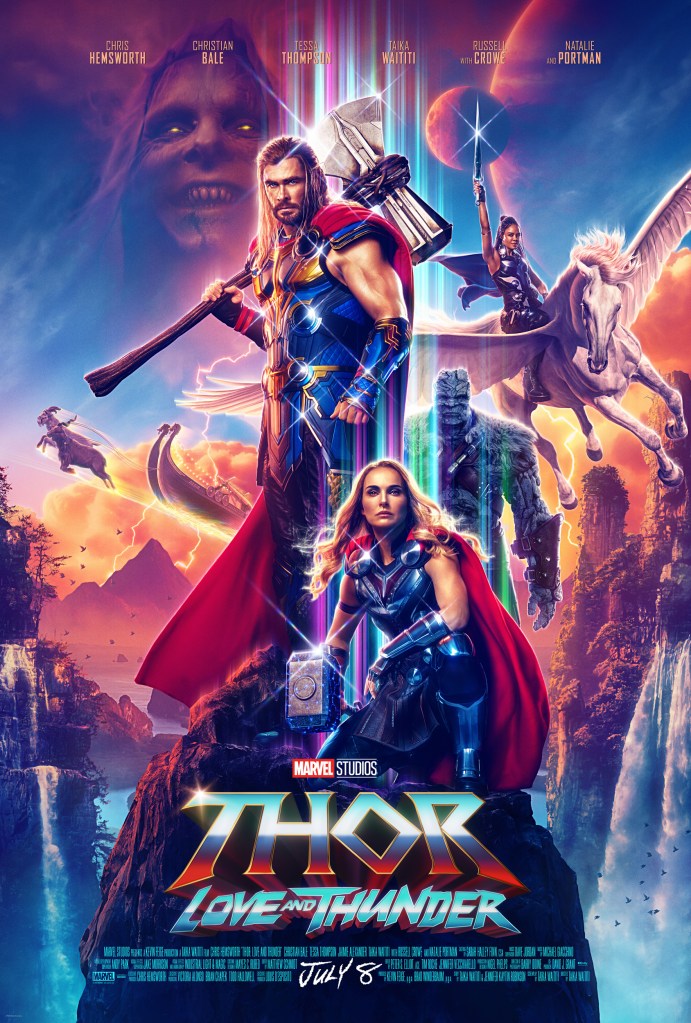
Okay. Part way through this desperately unfunny tonal mess I wondered: if I had to choose would I watch this again, or Thor: The Dark World? I can’t quite believe it, but I’d rather watch that functional, forgettable, mundane film. At least it doesn’t make me angry as it drifts past my eyes. And I say that as someone who loved Thor: Ragnarok. Thor: Love and Thunder is terrible. So, unlike Star Trek, it looks like even numbered Thor films are awful – so at least Thor Five should be a doozy.

Thor (Chris Hemsworth) is in a state of ennui – although that doesn’t stop him restoring his buff form after we last saw him as a coach potato in Avengers: Endgame. He doesn’t know what to do with his life: he has (and I can’t believe the film doesn’t make this obvious joke considering its jukebox score) “lost that lovin’ feelin’”. Will the arrival of bereaved father Gorr (Christian Bale), and his mission to butcher all Gods because they don’t answer your prayers, give him meaning? Or will it be the chance to finally rekindle his love for Jane Foster (Natalie Portman) when she unexpectantly lands back in his life? However, it’s not the Jane he remembers: unknown to him, she’s dying from cancer, but his old hammer Mjolnir is keeping her alive, transforming her into a female version of Thor.

Thor: Love and Thunder is a bit like attending a victorious Thor: Ragnorak after-show party. Everyone there thinks everything they say is like the funniest thing ever and the air rings to the sound of backs being slapped. It takes everything that it believes worked best in that film and dials it up to eleventy thousand. Waititi doubles down on his quirky, off-the-cuff, shoulder shrugging humour at every turn and you get the feeling that no one once tapped him on the shoulder and said “you know that’s funny to us on set, but are we sure that will be funny in the audience?”

Because, based on the audience I saw it with, it wasn’t. I think I chuckled about three times in the film. Which considering it takes every single bloody opportunity to tell a joke, is damning. Perhaps it fails to land because, unlike in Ragnarok or other Waititi films, its like he’s surgically removed anything emotional or gives a weight to the gags. He’s also sacrificed much of his trademark sweetness. Instead, this is full of incredibly knowing, tip-the-wink gags at the audience, as if trying to say “hey it’s okay, we can’t take this seriously, comic books are all silly, silly shit”.

And you know, that’s fine many people take these things too seriously. But what worked about Thor: Ragnarok was it balanced a quirky sense of humour with genuine stakes and real emotional quandaries. This however is just a tonal mess. We have an opening scene dealing with child death, that shifts swiftly into knock-about farce. A leading character dying of cancer sitting alongside a pair of screaming goats. It is revealed Jane is effectively draining her life source using the hammer (that it is keeping her alive and killing her at the same time). Here’s a chance to explore the cost of heroism and finding a purpose in life (after all isn’t Thor supposed to be depressed? Wouldn’t Jane make a good contrast here?). instead, the film constantly retreats to playing the humour card (worst of all unfunny humour!), as if Waititi perhaps thinks this genre stuff is silly and slightly below him.

Ragnarok allowed moments of impact: this film shits all over any moment of potential emotional reality. Hemsworth’s Thor used to be a guy with a strong moral purpose and seriousness, but allowed to stretch his wings with comedic sharpness. Now he’s a buffoon who interrupts a speech to distraught parents with gags. Any attempt to build an arc of a hero who is internally lonely and searching for purpose is constantly smashed by self-consciously irreverent humour. It says a lot that Thor’s axe Stormbreaker feels as much a character as anyone else – although the film is overly pleased with the gag of the axe being jealous of Thor’s doe-eyes at his old hammer.

The entire film feels like it’s been plotted out in about four minutes. Presumably Waititi was confident “hilarious” off-the-cuff inspiration would solve any problems. Christian Bale struggles manfully with his villain – but it’s like no one gave him the memo that the film was a piss-take. Tedious detours fill the plot – like an un-funny Guardians of the Galaxy cameo at the start, a tiresome trip to an orgy-tastic God planet and the screeching giant goats which feels like a joke whose punchline has been cut. A major plot point about a wish granting Eternity God is suddenly introduced to establish a secret plan for the villain. It’s like no one gave a damn.

Waititi doubles down on funny stuff that worked in small doses in Ragnarok by stretching it past any point of humour here. Liked Neill, Damon and Lesser Hemsworth playing bad actors in that film? Well, you get bucket loads of it here with Melissa McCarthy as a Fat Hela (that’s the joke: she’s fat). Liked Korg’s overly literal asides? Well, he’s in seemingly every second of the bloody film here, including narrating it. Russell Crowe pops up for a cameo that everyone clearly feels was hilarious but really looks like a big-name actor amusing himself with a borderline racist Greek accent. The film is crammed with this crap.

Hemsworth does okay I suppose, but in many ways the film feels as much of an ego-trip for him as it does Waititi. Natalie Portman gets to do some some fun things, but comedy isn’t her natural forte and she struggles with getting the zing in the dialogue that Tessa Thompson manages. It builds towards a big ending where Thor weaponises children and then the film lands on an utterly unearned emotional ending at a secret place – as if Waititi suddenly remembered his films work best when they have a heart – at the centre of the universe that is so easy to reach you wonder why people didn’t go there much earlier in this franchise. Even the final explanation of the title feels thrown in at the last minute and I’ve no idea what we are supposed to make of Thor’s character arc in this film.

The lack of heart is what is missing here. There is nothing heartfelt or emotionally true really in this. Nothing to give you warm feelings or to make you say “ahh”. Instead there are just endless, endless smug insiderish-gags. This is a piece of shit and the silent reaction it got from the full audience I saw it with says it all. A smug, tonal mess by a director who is over-indulged and unrestrained and forgets that humour works best when grounded with some sense of drama. I’d definitely rather watch Thor: The Dark World again.

Top Gun: Maverick (2022)

Top Gun: Maverick (2022)

You’ll feel the need for speed in this triumphant better-than-the-original sequel

Director: Joseph Kosinski

Cast: Tom Cruise (Captain Pete “Maverick” Mitchell), Miles Teller (Lt Bradley “Rooster” Bradshaw), Jennifer Connelly (Penny Benjamin), Jon Hamm (Vice Admiral Beau “Cyclone” Simpson), Glen Powell (Lt Jack “Hangman” Seresin), Monica Barbaro (Lt Natasha “Phoenix” Trace), Lewis Pullman (Lt Robert “Bob” Floyd), Ed Harris (Rear Admiral Chester “Hammer” Cain), Val Kilmer (Admiral Tom “Iceman” Kazansky), Charles Parnell (Rear Admiral Solomon “Warlock” Bates)

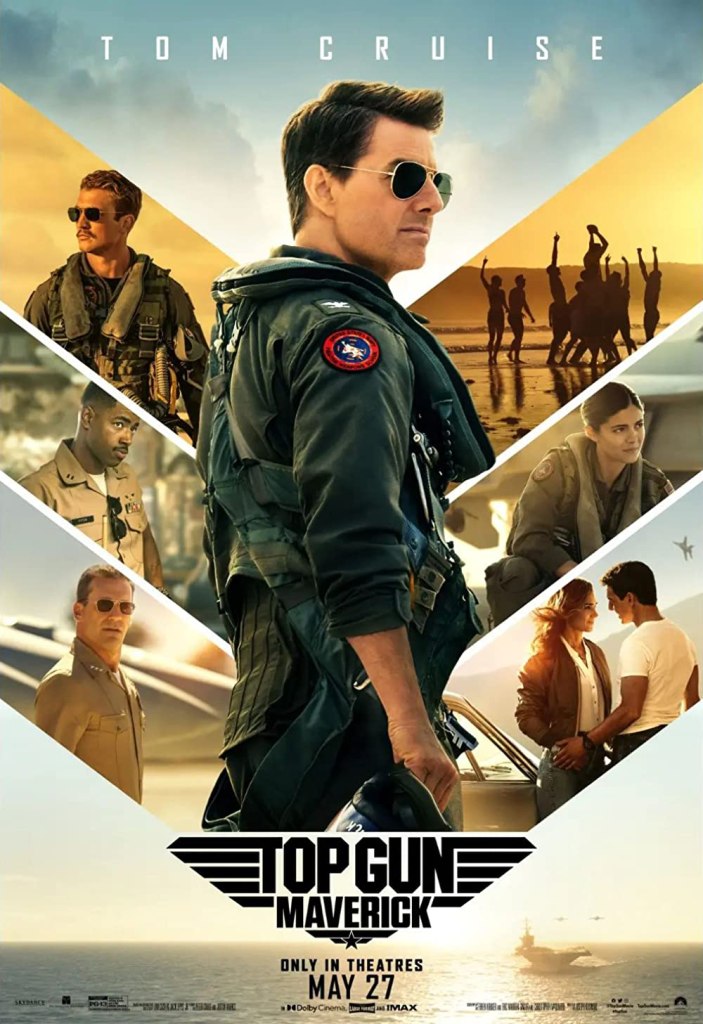
It’s been 38 years since Tom Cruise last felt that need for speed. Top Gun is a sentimental favourite, partially because its the ultimate brash, loud, Reaganite 1980s Hollywood film. But (whisper it), it’s not actually – and never has been – a very good film. Perhaps though that’s all for the best: Top Gun has so little of merit in it, it offers an almost completely blank canvas for a sequel. It helps the team create Top Gun: Maverick, a film so insanely entertaining it should carry some sort of health warning.

Decades have passed and Pete “Maverick” Mitchell (Tom Cruise) is pretty much the greatest pilot in the world, deliriously skilled at everything in the cockpit and pretty much hopeless at anything outside it. He’s distrusted by all his superiors except his old wingman Iceman (Val Kilmer). Thanks to Iceman he is selected to train the next generation of pilots at TOP GUN for an impossible mission to take out a nuclear plant in a “hostile nation” (clearly Iran). One of that next generation is Bradley “Rooster” Bradshaw (Miles Teller), son of Maverick’s late best friend “Goose”, the guilt for whose death Maverick never recovered from. After Maverick tried to prevent Rooster from following in his father’s footsteps – not able to stand the thought of being responsible for the deaths of both his surrogate brother and son – can the two overcome their problems?

Top Gun: Maverick was delayed from hitting cinema screens for nearly two years thanks to Covid. Cruise resisted all opportunities to sell it to streaming: a decision vindicated by the supreme big-screen entertainment it offers. This one you really do need to see on the big screen. Its aerial footage is so stunning it makes the original look like tricycles on training wheels. Combined with that though, and unlike the original, Maverick has a thoughtful and engaging emotional storyline, with characters who change through well thought out emotional arcs.

But I’ll be honest, the staggering, visceral enjoyment of these plane sequences is probably the principal thing you’ll immediately take out of the film. Working from a training programme partly devised by Cruise, the film shows the impact of punishing G-forces by… actually putting the actors in planes travelling at these huge speeds. Unlike Top Gun, with its blue-screen cockpit shots, there is no doubt Cruise, Teller et al are actually in the planes as they bank at impossible speeds. Partially shot by the actors themselves – sitting the camera up in their cockpits – the film literally shows you the scenery flashing by. It’s Cruise’s mantra of doing it for real taken to a stunning degree. It’s the simple old-fashioned joy of knowing almost everything you see is real.

The mission this time is far more detailed: effectively it’s a steal from Star Wars, our heroes required to fly through a narrow ravine (below the radars of surface to air missiles) before climbing a steep bank and using their laser targeting to successfully blast a small access port. (It won’t surprise you to hear that on the final mission one character has to “use the force” when their targeting laser fails). Maverick’s training programme pushes the pilots to the limit, while his extraordinary flight skills quickly win their awe (in the first session he challenges all the pilots to take him down in a simulated dogfight, with everyone shot down doing 200 press-ups – Maverick does zero, everyone else 200+). Kosinski shoots with a cool clarity that makes you feel you are being punched by G-force.

But Top Gun: Maverick would just be a showcase for cool planes without its emotional heart. And it’s the intelligent and involving story that makes it work. Cruise is at his charismatic movie star best as Maverick – he knows exactly how to win the audience over – but his cocksure confidence is underpinned by a growing sense of fear at the risks he puts others through. Unlike the navy, his main concern is to get the pilots back alive and his guilt-ridden treasured memory of Goose is the hallmark of a man who never managed to put ends before means. He’ll take any risk himself, but balks at taking chances with anyone else’s life.

It’s what drives his troubled relationship with Rooster. The two have a surrogate father-son relationship, fractured by Maverick’s attempt to keep Rooster safe out of the cockpit. (Pleasingly, Rooster does not hold Maverick responsible for his father’s death, only for derailing his career.) The relationship between these two – Cruise’s Maverick quietly desperate to rebuild some sort of familial connection and Rooster shouldering resentment for a father-figure he clearly still loves – is handled with a great deal of tact and honesty. It really works to carry a wallop.

It’s also part of how Maverick’s place in the world, and decisions in life, are being questioned. As made clear in a prologue where he thumbs his nose at a sceptical Admiral (no one scowls like Ed Harris) by taking a prototype jet out for test run, he’s both a relic and a guy who doesn’t know when to stop (he wrecks the jet by pushing past the target of 10 Mach by trying to go another .2 faster). Unlike Iceman – a touching cameo from a very ill Val Kilmer that leaves a lump in the throat – Maverick never fit in within a military organisation (“They’re called orders Maverick”). He’s lonely, his past failed relationship with Jennifer Connelly’s Penny just one of many roads-not-taken. (There is no mention of Kelly McGillis’ character.) In a world of digital drones, he’s an analogue pilot flying by instinct: his days are numbered.

This is proper, meaty, thematic stuff explored in a series of involving personal arcs which by the end not only leaves you gripped because of the aerial drama, but also genuinely concerned about the characters. I can’t say that about the original. Top Gun: Maverick is not only a thematically and emotionally richer story – carried with super-star charisma by Cruise – than the original, it’s also more exciting and more punch-the-air feelgood. This sort of thing really is what the big screen is for.

Top Gun (1986)

Top Gun (1986)

Cruise flies into movie super-stardom in this fun-but-much-worse-than-you-remember flying film

Director: Tony Scott

Cast: Tom Cruise (Lt Pete “Maverick” Mitchell), Kelly McGillis (Charlie Blackwood), Val Kilmer (Lt Tom “Iceman” Kazansky), Anthony Edwards (Lt Nick “Goose” Bradshaw), Tom Skerritt (CDR Mike “Viper” Mitchell), Michael Ironside (LCDR Rick “Jester” Heatherly), John Stockwell (Lt Bill “Cougar” Cortell), Barry Tubb (Lt Leonard ”Wolfman” Wolfe), Rick Rossovich (Lt Ron “Slider” Kerner), Tim Robbins (Lt Sam “Merlin” Wells), James Tolkan (Cdr Tom “Stinger” Jardian), Meg Ryan (Carole Bradshaw)

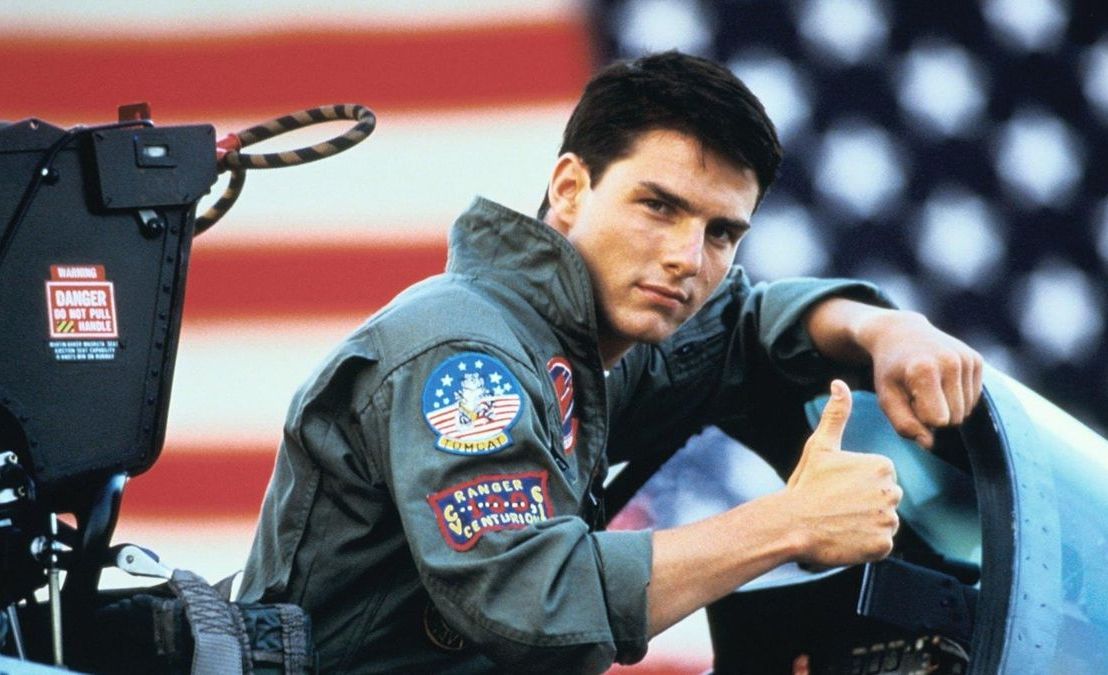
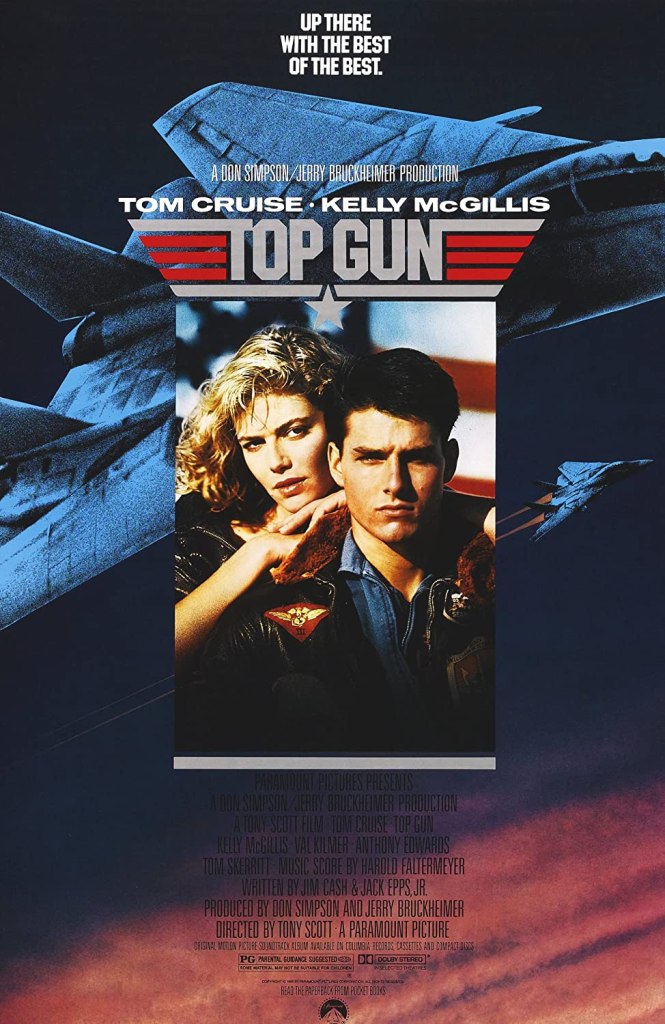
“I feel the need: the need for speed!” Those words lit up mid-80s cinema screens with one of the biggest hits of the decade. Top Gun is still one of Cruise’s most iconic films, its blasting rock-and-roll soundtrack, beautifully backlit romance and cocksure go-getting self-confidence making it one of the definitive Reaganite 80s films ever made. Its legacy is so all-consuming, it’s always a surprise when you sit down to watch it what a fundamentally average it is.

Its plot, such as it is, can be summarised thus: Tom Cruise cockily flies planes and romances Kelly McGillis until Goose dies. Then he flies planes with the same level of skill but slightly more humility and commits to Kelly McGillis. It all takes place in TOPGUN, the navy’s dog-fight training school for elite pilots. Cruise is Pete “Maverick” Mitchell, super-confident best-of-the-best. Kelly McGillis is the astrophysicist and civilian instructor on the course whose heart melts for Tom’s boyish charms. Anthony Edwards is the doomed Goose (he might as well have a skull and crossbones hanging over him – he’s even got a loving wife and son back home). Val Kilmer is Cruise’s rival pilot, super-professional “Iceman”. The training is fast-paced, macho and culminates in a clash with a (conveniently unnamed) country that definitely isn’t the USSR.

There are three things undeniably great about Top Gun. The songs from Kenny Loggins and Berlin are top notch, full of soft-rock sing-along bombast. Scott shoots the hell out of scenes and the sun-kissed beauty framing the various airplanes and aircraft carriers is superb. With its fetishistic worship of the manly glory of the navy and its equipment, the film had full military backing, a huge boon it exploited for wonderfully executed scenes of dogfights and faster-than-sound planes (Scott even paid $25k to get an aircraft carrier to change course – writing a cheque there and then – so a sunset shot would look better). And of course there is Tom Cruise.

Top Gun is the foundation stone in the Church of Tom Cruise, defining a persona Cruise would effectively riff on for huge chunks of his career. Pete Mitchell is so cocksure he’s even called Maverick. But, as well as being arrogant and over-confident, he’s preternaturally skilled, boyishly enthusiastic, strangely vulnerable, yearns for affection, wins people over with a grin and goes through a crisis of confidence that sands down his negative qualities while never touching his courage, skill and likeability. Cruise cemented his eye-catching charisma and relatability: audiences wanted to be him or be with him. A huge chunk of its massive success is down almost exclusively to what a star Cruise is and how easily he makes this hackneyed stuff work.

The rest is a bizarre mix of half-formed plot ideas, weakly sketched characters and a plot so shallow it almost doesn’t deserve the name. Top Gun is all about a cool guy flying planes accompanied by some excellent songs. There is no depth to its character exploration. There is a dim suggestion Maverick needs to mature (with Goose as the sacrificial lamb to prompt that development) but it’s barely explored. It has no shrewdness in its look at the risk-taking intensity of flying or the type of personalities it might attract. The training is awash with familiar tropes: hotshots, grizzled trainers (two of them in Skerritt and Ironside!) mixing growls with behind-his-back grins at Maverick’s pluck. His rival is the anthesis of Maverick, but (gosh darn it!) he eventually learns to respect him.

The central romance seems thrown in because a film like this needs it – it’s very much An Officer and a Gentlemen in the skies. Maverick’s true emotional love story is with Goose – this surrogate brother/uncle providing Maverick’s only friendship and the vicarious family this Cruise archetype character secretly longs for. But gosh darnit, it’s Hollywood so gotta have a beautiful woman for our hero to manfully seduce. Poor Kelly McGillis looks rather uncomfortable in her ill-shaped and poorly developed character, while her love scenes with Cruise are acted with a slobbering over-intensity that suggests both of them are trying too hard (he constantly kisses her tongue first, which is gross). Perhaps they wanted to really go for it in the hope viewers would overlook the obvious homoerotic tensions of most of the film.

Oh those tensions! Top Gun drips with gleaming, tanned half-naked men squaring up to each other in dressing rooms – and that’s not even mentioning the infamous volleyball sequence (where only Edwards, bless him, wears a t-shirt). Characters forever utter variations on “I’ll nail his ass” lines. Iceman and Maverick take part in a homoerotic-tension fuelled rivalry that culminates in an explosive dog-fight climax and a loving embrace on the deck of an aircraft carrier.

It’s hard to tell how much all this was a joke, and how much Scott, Bruckheimer and Simpson just didn’t notice in the middle of all their glistening, back-lit, fast-paced shooting of military muscle (in every sense) how gay it might look. Maybe they thought people wouldn’t notice either amongst all the military machinery (this must be Michael Bay’s favourite ever film). Top Gun’s aerial footage is super impressive (though it is funny noticing now that famous daredevil Cruise clearly does all his cockpit shots in front of a green screen) even if the whole film feels like an MTV video to promote its knock-out songs.

Top Gun is still fun, even if that’s mostly mocking the nonsense and emptiness it’s built upon. Nothing much really happens, its plot so flimsy it barely stands up against the Mach-9 force of its planes. But it’s got Cruise at his blockbuster best – and when you’ve got that you don’t really need anything else. It’s poorly written, junkfood trash all framed in a fetishistic beauty – but it’s sort of goofy, stupid, empty fun.

WaterWorld (1995)

WaterWorld (1995)

As the waters rise, the world sinks down – and WaterWorld went down with it in the very average mega-budget sci-fi

Director: Kevin Reynolds

Cast: Kevin Costner (The Mariner), Dennis Hopper (The Deacon), Jeanne Tripplehorn (Helen), Tina Marjorino (Enola), Michael Jeter (Old Gregor), Gerard Murphy (The Nord), RD Call (Atoll Enforcer), Kim Coates (Drifter #2), John Fleck (Smoker Doctor), Robert Joy (Smoker Ledger), Jack Black (Smoker Pilot), Zakes Mokae (Priam)

In 1995 they called it “Kevin’s Gate”. Costner cashed all – and I pretty much mean all – his superstar chips to make Waterworld, a sort of water-logged Mad Max crossed with a Leone Western, starring himself as a nameless mutant with gills behind his ears. You needed to be the Biggest Box Office Star in the World to get that one up and running. But then Costner’s last “all-in” bet had been Dances with Wolves – and that won seven Oscars. What could do wrong?

Waterworld has been pretty much defined – then and now – as the (at the time) most expensive film ever made, which went on to be a damp squip, a box-office stinker. It’s not that: it’s a solid, entertaining-enough B-movie with some neat Dystopian ideas. In 2500, the world has been completely flooded after the polar ice caps melted. Mankind exists in rusted boats and small floating camps on the ocean. Dry land is a myth and actual soil is worth a fortune. Costner’s Mariner ends up protecting Helen (Jeanne Tripplehorn) and her adopted daughter Enola (Tina Marjorino), as Enola has (handily tattooed on her back) a map to the last piece of dryland left in the world. But Enola’s map is hunted by the Smokers, and their maniacal leader The Deacon (Dennis Hopper), who want to claim Dry Land for themselves.

Waterworld largely lives on as a hugely successful stunt show at Universal Studios (I’ve seen it and it is amazing – all the exciting bits of the film, done in about fifteen minutes) that has been running non-stop since 1995 (other shows, based on more successful movies, have long since disappeared). It focuses on all the stuff that’s good about the film. Kevin Reynolds’ can shoot the heck out of action scenes and professional stuntmen really know their business. The best sequences in Waterworld involve pounding action – jet ski chases, the Mariner’s transforming trimaran, jet skis flying over walls and diving under water, stunning boat chases – and they are great.

They also exploit, in their rusted crap-sack props, one of the film’s other triumphs, it’s detailed world-building design. Sure, it owes a heavy-debt to the cobbled-together semi-steam-punk of Mad Max, with rust that covers everything, adapted wet-suits and rags (augmented with various pieces of fishing equipment and light fabrics) that characters wear, the bashed out colours contrasted with the glorious blue of the water. But the film never looks anything less than an outre mad-house. Throw in James Newton Howard’s very effective score – romantic and mournful when required, but then pounding with heroic action beat – and you’ve got elements of a decent movie.

But decent is all it ever is. Because, aside from the novelty of being set on water (a hugely time- and money-consuming expense, that partly explained why the film went zillions of dollars over budget), there isn’t anything that new about the story. A gruff outsider is roped into grudgingly protecting a mother and a daughter, but then his heart-is-melted – just as the villains turn up to snatch the daughter away. The villains are cartoonish monsters (Dennis Hopper seems to be on a mission to counter the water-logged misery of most of the rest of the performers by acting as much as possible), who are either ingenious or incompetent depending on the requirements of the script. The quest for the land-of-plenty is so familiar, you could scribble it down on a postcard in advance.

The question is, why did Costner want to make this? It’s not even a part that showcases him very well. I’ve always found Costner’s mega-stardom a bit of a mystery: once he graduated from more young, naïve parts (such as in The Untouchables), action films more and more exposed his slightly blank sulkiness as an actor. Perhaps due to the pressure of Waterworld (he worked non-stop, six day weeks, mostly on or in the water, for six months), perhaps due to his inability to find any warmth in a role he clearly sees as an Eastwoodish man-with-no-name, he largely comes across as sullen and hard-to-engage with. This is double hard for a film set in a dystopian future, where we really need to understand and relate to the hero in order to get into the world.

The rest of the cast follow his lead – no one, apart from maybe Hopper, really looks like they want to be there and most of them give of a sense of suffering under the constant threat of accidentally drowning. Tripplehorn isn’t helped by playing a dull, functionary, by-the-numbers character although Marjorino does get to have a bit of spark as plucky Enola. None of the characters step out of the formulaic surroundings of the film they have been trapped in.

You can have a bit of fun with the film’s wonky science. The Mariner is introduced pissing into a bucket and converting the piss into drinking water: cool character establishing moment, but since the salt quota of piss is higher than sea water, why not just convert the sea water? (I’m staggered at the idea that, in 500 years, no one has discovered a way to make sea water drinkable). If the polar ice caps melted, they would not flood the world as much as this. Would an oil tanker and fleet of jet skis really have managed to eek out the 235k cubic metres of oil it carried for 500 years? (How do they even convert it into petrol?) Where are all the fish? Why is the Mariner the only one with deep sea diving equipment – especially when he has flipping gills and doesn’t need it?

But hey, it’s only a movie. Waterworld eventually became profitable: but not till after it had cemented itself in the public perception as an uber-stinker. Really, it’s not that different from Avatar in its functional story, it just made a worse job of selling its big-budget effects as must-see moments. Costner’s alleged megalomania on set didn’t help (re-writing scenes, ordering special effects cover his receding hairline, falling out with Reynolds during editing – so much so Reynolds walked out), but really Waterworld isn’t terrible, just a huge lump of soggy okay. But that Universal Stunt Show? It’s the bee’s knees.

Jurassic World: Dominion (2022)

Jurassic World: Dominion (2022)

It squeezes so many characters in, it totally forgets to make room for plot, invention or anything new at all

Director: Colin Trevorrow

Cast: Chris Pratt (Owen Grady), Bryce Dallas Howard (Claire Dearing), Laura Dern (Dr Ellie Sattler), Jeff Goldblum (Dr Ian Malcolm), Sam Neill (Dr Alan Grant), Isabella Sermon (Maisie Lockwood), DeWanda Wise (Kayla Watts), Mamoudou Athie (Ramsay Cole), Campbell Scott (Dr Lewis Dodgson), BD Wong (Dr Henry Wu), Omar Sy (Barry Sembène), Justice Smith (Franklin Webb), Daniella Pineda (Dr Zia Rodriguez)

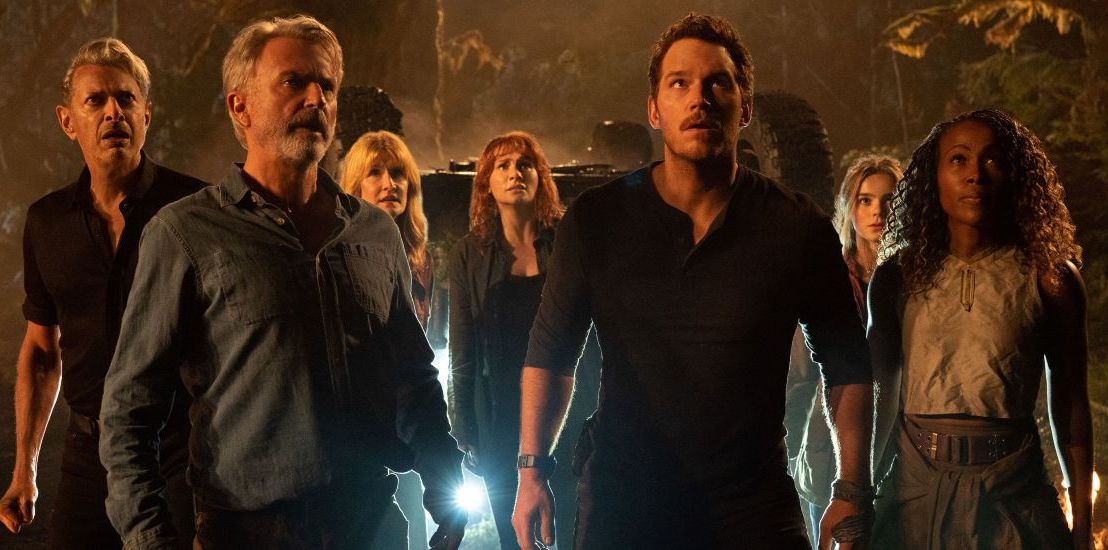
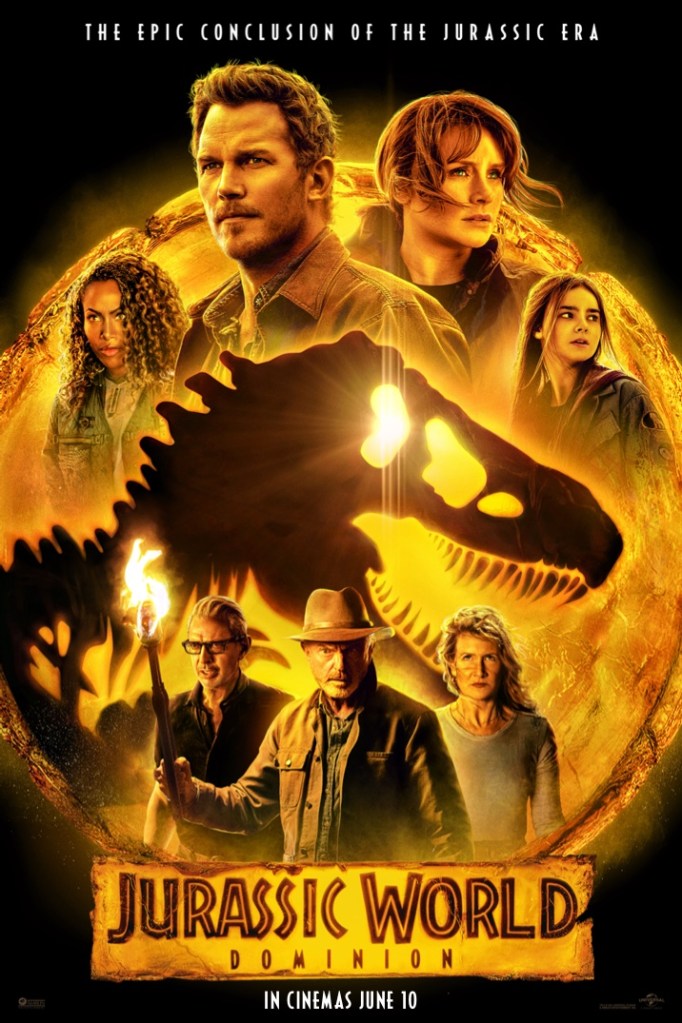
As I was leaving the cinema, I heard a twelve-year old talking about which of the dinosaurs in the movie was their favourite. Then they said: “it was a bit samey though wasn’t it?”. I’m not sure I can beat that precocious nail-on-the-head judgement. Nothing happens in Jurassic World: Dominion you’ve not seen many times before in the franchise. Underneath the flash, Jurassic World: Dominion is a tired retread, crowbarring in references from better films left, right and centre, all to hide that there are no new ideas here.

Owen Grady (Chris Pratt) and Claire Dearing (Bryce Dallas Howard) have dedicated their lives to protecting human clone Maisie Lockwood (Isabella Sermon) from the grasp of corporations. When she’s kidnapped by foot-soldiers of clearly-evil-corp BioSyn (they even have “Sin” in their name), they pull out all the stops to get her back from BioSyn’sNorthern Italy research compound. Meanwhile, Drs Ellie Sattler (Laura Dern) and Alan Grant (Sam Neill) are investigating genetically modified locusts which are destroying every crop in the Southern USA – except those using BioSyn seed. All roads lead to that Italian compound – where Dr Ian Malcolm (Jeff Goldblum) is employed as a contrarian philosopher – to try and stop BioSyn’s nefarious schemes.

You know what struck me when I wrote that summary? I didn’t use the word dinosaurs. The prehistoric beasties are pretty superfluous. Sure, they down a plane and our heroes dodge them in various places (BioSyn’s compound doubles as a dinosaur refuge). But, seeing as the last film ended with dinosaurs escaping into the wild and becoming part of our everyday lives… this sequel takes the concept nowhere. Bar an opening news report montage (showing, among other things, pterodactyls – yes, I know they’re not dinosaurs – stealing a bride’s bouquet) and a Star Wars style under-ground market where dino-pets and fighting-pit beasties are traded on the black market, Dominion finds almost nothing to do with this.

In fact, Dominion struggles to find anything to do at all. It’s an extremely loosely plotted mess of a film that feels like two vaguely (very, very vaguely) connected plotlines rammed together in a way designed to shoe-horn in as many legacy characters and call-backs as possible. Laura Dern gets the bulkiest (and only plot essential) role among the returning trio. Sam Neill feels dragged along for the ride (Grant serves literally no narrative purpose) and, while Goldblum gets most of the best lines (delivered in his trademark, improvisational oddness), Malcolm merely splits the role of “inside man” with another character so cursorily introduced and vaguely motivated he feels like he was only there because covid made some of the other actors unavailable for parts of the filming.

The legacy framing is so lazy that all three of these characters essentially wear the same costumes as they did in Jurassic Park. Everyone in universe seems to know who they are (Which I find highly unlikely) and the film bends over backwards to introduce clumsy links between them and the characters from the first two Jurassic World films in ways that feel forced.

The film slowly consumes itself with references back to previous films, linked by sequences that feel ripped out from other hits. Owen and Claire’s opening plotline plays out like an odd Mission: Impossible spy thriller, including a Bourne-ish roof top chase (with Owen haring away on his trademark motorbike from killer velociraptors – the film’s only exciting set-piece, and even that is ripped from other films) with Claire transformed into a semi-adept free-runner. The dino-market is essentially Mos Eisley, by way of that Kamono Dragon fighting pit from Skyfall. By the end a host of famous set-pieces from Jurassic Park and Jurassic World are effectively re-staged or openly referenced and props (such as Nedry’s shaving foam can) are reverentially pulled out.

Any interesting ideas raised are swiftly crushed. Maisie’s concern that, as a clone, she isn’t a real person is fascinating, but the film forgets it in seconds. The villain (a neat Steve Jobs parody from Campbell Scott) spends a fortune capturing Maisie – but when she escapes (thanks to a key to her cage being helpfully left on a table in front of her) he makes literally no attempt at all to recapture her. It’s stressed to us that the whole world is looking for Maisie and that if she is found it will be dangerous for her – by the end of the film she’s doing a press conference and no one gives a damn. The moral implications of a ‘mother’ cloning herself and curing her clone child of a life-ending disease in the womb, is thrown on the table and then ignored.

The whole film revolves around ridiculous coincidences. Villains run away and then helpfully return to ludicrously unsafe places, purely because the plot requires it. Stupid decisions are made right, left and centre. Plot armour ruthlessly protects the expected. The dinosaurs are just irrelevant set dressing: we are told no less than three times the Gigantasaurus is “the biggest hunter there’s ever been”: solely to build up an inevitable face-off with the T-Rex. The deadly locust plot is such a naked attempt to motivate shoe-horning in legacy characters, the film doesn’t even bother to explain what it’s about or what the baddies plan was.

At one point Laura Dern says something to the effect of “we shouldn’t live in the past, we should aim for the future”. Imagine if this slightly lumpen rehash of its better predecessors had done the same.

Everything Everywhere All At Once (2022)

Everything Everywhere All At Once (2022)

The multi-verse is at risk of ending – and only a disenchanted woman running a laundromat can save the day in this inventive science-fiction

Director: Dan Kwan, Daniel Scheinert

Cast: Michelle Yeoh (Evelyn Quan Wang), Stephanie Hsu (Joy Wang), Ke Huy Quan (Waymond Wang), James Hong (Gong Gong), Jamie Lee Curtis (Dierdre Beaubeirdre), Tallie Medel (Becky Sregor), Jenny Slate (Debbie), Harry Shum Jnr (Chad), Biff Wiff (Rick)

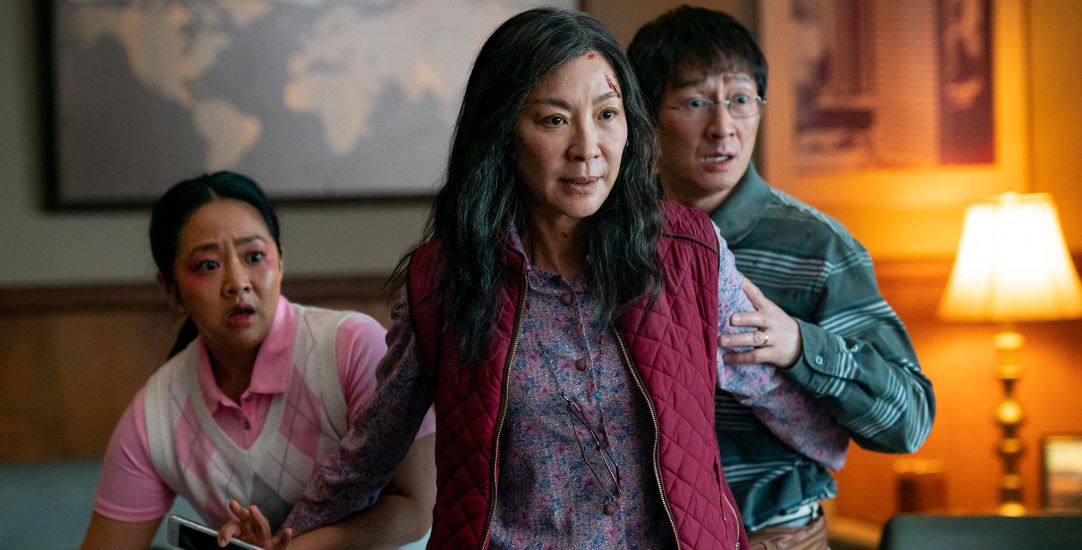
Evelyn Wang (Michelle Yeoh) has lots on her plate: running her laundromat, completing tax returns for a demanding IRS agent (Jamie Lee Curtis), her waning marriage to goofy husband Waymond (Ke Huy Quan) and drifting relationship with lesbian daughter Joy (Stephanie Hsu), not to mention her fear of the disapproval of her demanding father (James Hong) – its Everything Everywhere All at Once as it is: no wonder she struggles to cope when discovering from an alternate version of her husband that she, and she alone, is the key to saving the entire multi-verse from destruction.

Everything Everywhere All at Once is an endlessly inventive, imaginative and unique spin on everything from science fiction to philosophy, via the struggles of an immigrant family, familial dynamics and love, death and the universe itself. Did I mention it’s got jokes as well? There isn’t anything quite like EEAAO out there, and if the film does lose energy at an inflated runtime of 145 minutes, at least that’s because it must have been a struggle knowing what to cut.

In the mythology of EEAAO, Evelyn lives in just one of a myriad different realities. Every time a decision is taken, a new reality branches off, spawning innumerable different realities. If Evelyn can imagine it, then somewhere in another universe it happened. She should be a film star, a martial artiste, a chef, a blind singer, a pizza sign spinner…there are realities where mankind never evolved or where they evolved with hot dogs for fingers (a joke the film is a way too pleased with and seriously outstays its welcome).

With some technology from the “Alpha” universe – the first universe to discover alternate realities, where Evelyn and Waymond were pioneering scientists – Evelyn can access the memories and skills of her alternates. All she – and others with the right training and equipment – need to do to become experts at anything in seconds is to build a mental link to that reality by performing a highly improbable act. Whether that’s getting four consecutive papercuts, eating a lipstick, swallowing a model frog or – in a comic highlight – Evelyn fighting to stop an opponent shoving an “Employee of the month” award shaped like a dildo up their bottom in public (you’re not going to see that in many movies) – it’s a brilliant comic device that raises belly laughs a plenty.

EEAAO knocks spots off the recent Doctor Strange sequel (that made almost nothing of its parallel universe concept) by not only presenting radically different worlds (in this universe Evelyn is a pinata! Here she’s a rock!), but also exploring how the path-not-taken can have a mesmerising and inspiring/depressing impact. Evelyn – a woman who (justifiably?) believes she has achieved nothing, is both fascinated or heart-broken to see realities where her accomplishments are titanic. EEAO is superbly thought-provoking when it explores the emotional impact of questioning your choices, when you see turning right rather than left could have been the first step on a path of astonishing glory and success and, even, a completely different personality.

This leads into the film’s second half which, after the comic energy of the first, dives into a philosophical debate about the nature of choice. The villain attempting to destroy reality is motivated not by rage or power-lust – but simply by the fact that jumping to a billion realities has persuaded them it all means nothing. Everything is basically a combination of atoms that, with a few pushes and pulls, can turn from one thing to anything else. This nihilistic view of the world – what does it matter killing one person when there are billions of other versions of them, many of them ‘better’ – and balancing it with a more humanitarian view, becomes the film’s key debate.

It’s also rooted in the film’s opening, which is does a marvellous job of exploring universal family questions, while still grounded in the experience of an immigrant family. Evelyn and Waymond, having moved to America in search of their dreams as youngsters – and wound up running a laundromat – struggle to balance their relationship (her growing irritation at his perpetual optimism, his alienation from her cynicism) and, particularly in Evelyn’s case, understanding her more Westernised daughter. Two generations with very different experiences, struggling to understand each other.

On top of which, many of these problems are universal. Generational conflicts: the grandpa who can’t be told his granddaughter is gay, because her mother isn’t sure how he will react. The mother and daughter who have lost the ability to communicate and reduced to saying increasingly cruel things to each other (there is a shocking moment when Evelyn tries to tell her daughter she loves her but instead chastises her for getting fat). Waymond tries to hold things together but is too gentle and ineffective to do anything.

All of this is bundled together in a film stuffed with inventive and hilarious sequences. There are kick-ass fights (one involving Alpha-Waymond and a fanny-pack – bum-bag to us Brits – which has to be seen to be believed), hilarious segues, brilliant parodies of other films (2001, Ratatouille and In the Mood for Love for starters): and then the film will hit you for six with a genuinely heart-breaking moment. I will say there is almost too much good stuff here – ten minutes trimmed from the film would work wonders, and the continued trips back to Hot Dog Hands reality is a joke stretched to absolute breaking point – but better too much than too little.

At the heart of this fabulous work from The Daniels are superb performances, none more so than a career best turn from Michelle Yeoh. Channelling everything Yeoh has ever done in her career into a single film, she of course can handle the astonishing action but also displays an emotional depth and complexity that will break your heart. She’s bitter and trapped, then will shift on a sixpence to agonised guilt and longing. She’s astonishingly good. There is brilliant support from Hsu as her trapped and troubled daughter and Ke Huy Quan (last seen in The Goonies) is heart-breakingly endearing, funny and wonderfully sweet as her good-natured husband (like Yeoh he also plays multiple variants – from confident to cold and distant). James Hong is wonderful as her austere father and Jamie Lee Curtis is having a ball as a bullying IRS agent turned villain’s heavy.

When the major flaw in the film is that it is too damn long, you know you are onto a good thing. There are more ideas in a few minutes here than in the entire runtime of such things as the Doctor Strange sequel. Superbly directed with wit, energy and compassion by the Daniels and with a career-defining role for Michelle Yeoh, Everything Everywhere All At Once is destined to take its place as a year defining cult hit.

Hancock (2008)

Hancock (2008)

Will Smith goes against type as an arrogant superhero in this deeply flawed would-be satire

Director: Peter Berg

Cast: Will Smith (John Hancock), Charlize Theron (Mary Embrey), Jason Bateman (Ray Embrey), Eddie Marsan (Kenneth “Red” Parker Jnr), Jae Heard (Aaron Embrey)

Back in 2008, everyone was entertained by the idea that the most charming man in the world was pretending to be an arrogant, entitled arsehole. Sadly, in 2022, when Will Smith is synonymous with entitled public slapping, the joke feels a little different.

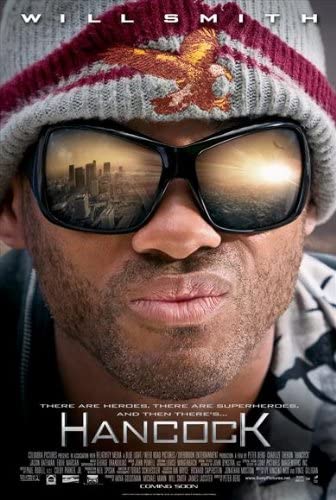
In Hancock, Smith plays the eponymous superhero, a drunken dickhead, who saves people without giving a damn about them or the millions of dollars of damage he causes while doing so. When he saves the life of PR man Ray (Jason Bateman) – wrecking a train in the progress – Ray decides to help Hancock change his image. His wife Mary (Charlize Theron) is less than happy about it – but is there a deeper mystery to her discomfort?

Needless to say there is: and the reveal of what it is marks a tonal shift in a messy film that never quite knows what it is. But that’s because the entire film is basically a sketch thinly stretched out over 85 minutes. What if Superman was real and also a complete arsehole? What would an irresponsible, drunken, unpleasant hero be like? And hell, wouldn’t we stop thanking him and instead start getting really pissed off when he trashes a freeway and several buildings, while chasing some trigger-happy bank robbers?

That’s basically the core of the film: setting up the unlikeable hero, watching him tell people to go to hell and use his powers against people who annoy him. See him get humiliated by going to prison (Ray’s genius PR idea to get people on Hancock’s side) and then eventually resolving a bank robbery with excessive, awkward politeness. It’s one joke. Don’t get me wrong, it’s a good joke. It would make a great recurring gag on Saturday Night Live or something. But it never manages to be anything more than that.

Peter Berg’s film radically shifts gear for the final thirty minutes or so. A second superhero is introduced, a poorly explained and illogical backstory is shoe-horned in and info dumps of character background start to get dropped in (the entire backstory, plot and motivation of Eddie Marsan’s nominal villain is explained in an overheard TV broadcast). What had been a farce suddenly turns into a clumsily intense relationship drama between two people with no chemistry. It ends in a final fight in a hospital which features blood, shooting, tears and a joke about a hand being sliced off. It’s all over the place.

Will Smith just about holds it together: and the fact that he managed to make this not-particularly-funny or rewarding film into the fourth biggest hit of its year is a tribute to what Box Office Gold he was at the time. It’s a decent role for him, and Smith does the humour well. But, after his frank autobiography on his dark side (not to mention that infamous slap), it feels less like Smith playing against type, and more him exposing parts of his own personality. But he carries the entire film with gusto, even if he can’t make the final tonal mess work.

Berg’s direction pitches between way-too-intense and flatly-comedy-free. He drills into emotion in the final act, as if he’s forgotten that this was supposed to be a super-hero satire – but totally fails to bring enough character or reality to the story for its seriousness to work. For the first half, he struggles to bring much personality to the film (I suppose that is Smith’s job). It becomes a film that raises the odd smile but, despite its very short length, outstays its welcome.

Bateman is good value as the do-good PR man (strangely, he’s introduced as a real hotshot, even though it seems he’s completely useless based on nearly everything we see him do). He has a strange chemistry with Charlize Theron, wasted in an incoherent part. No one else gets a look in.

Tonally, Hancock is a mess with a few good gags (Hancock casually tossing a beached whale back into the sea, hitting a yacht, is funny). Its novelty appeal in 2008 – “Look! Will Smith can be mean!” – has disappeared today. Nothing in it is remotely memorable, making a decent joke never anything more than functional. It falls apart in the final stretch as it reaches for a depth it isn’t strong enough to deliver. Can you believe this was one of the biggest hits of 2008? Has anyone really watched, or thought about it, since?

Widows (2018)

Widows (2018)

Sexism, racism and corruption get mixed in with crime drama in McQueen’s electric heist film

Director: Steve McQueen

Cast: Viola Davis (Veronica Rawlings), Michelle Rodriguez (Linda), Elizabeth Debicki (Alice), Cynthia Erivo (Belle), Colin Farrell (Jack Mulligan), Brian Tyree Henry (Jamal Manning), Daniel Kaluuya (Jatemme Manning), Jacki Weaver (Agnieska), Carrie Coon (Amanda), Robert Duvall (Tom Mulligan), Liam Neeson (Harry Rawlings), Jon Bernthal (Florek), Garret Dillahunt (Bash), Lukas Haas (David)

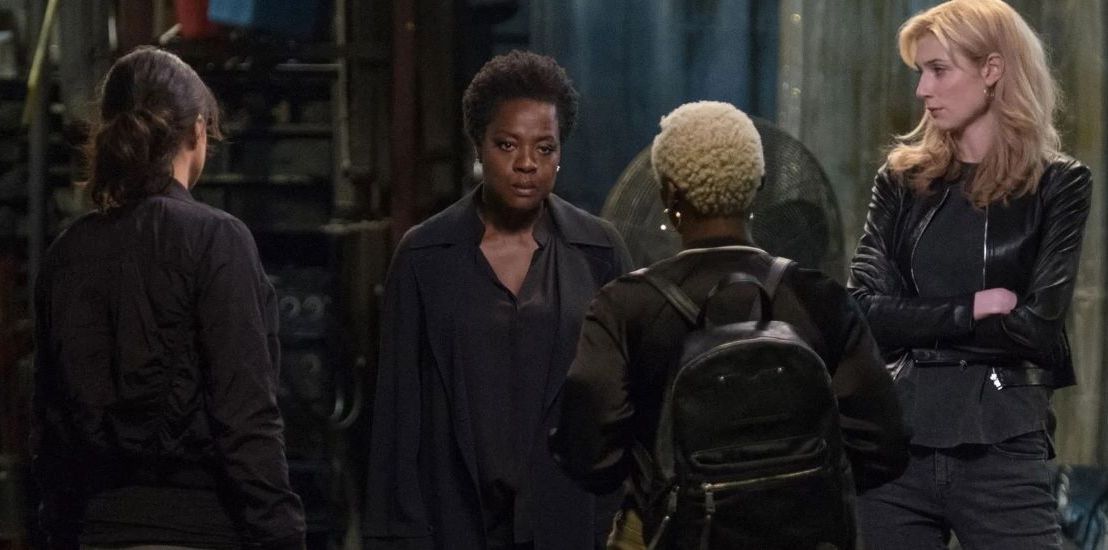
A getaway goes wrong and Harry Rawlings (Liam Neeson) and his criminal gang all wind-up dead and their loot burned up. Their last job was cleaning out the election fund of gangster-turned-electoral-candidate Jamal Manning (Brian Tyree Henry). Manning believes he’s owed a debt by Harry’s widow Veronica (Viola Davis). On the hock for millions, Veronica has no choice but to recruit the widows of Harry’s gang to help her pull off the next job Harry planned: cleaning out the campaign fund of Manning’s electoral rival Jack Mulligan (Colin Farrell).

Adapted from an 80s British TV mini-series, Widows has been run through Steve McQueen’s creative brain, emerging as a compelling, beautifully shot crime drama mixing social, racial and gender commentary with blistering action. It takes a traditionally masculine genre – the crime caper – and places at its heart a group of women motivated by desperation and survival rather than the lure of lucre.

What’s particularly interesting is that none of these women fit the bill of the sort of person you expect to arrange a daring heist. Viola Davis’ Veronica is a retired teachers’ union rep; Elizabeth Debicki an abuse victim, treated terribly by her husband and selfish mother; Michelle Rodriguez a shop owner desperately trying to give her kids a chance, despite her husband’s reckless gambling. Even the driver they hire, played by Cynthia Erivo, is a hairdresser and babysitter. These women are a world away from the ruthless criminals you’d expect to pull off this kind of operation.

It’s probably why they are routinely underestimated and patronised by men. Veronica is advised clear her debt by selling either everything she owns and disappear. As with the rest of the women, the world expects her to put up and shut up. These are women defined by their husbands and the expectation that their needs are subordinate to others’. Debicki’s Alice is all-but pushed into escort work by her demanding mother, while Rodriguez’s Linda is blamed by her mother-in-law for her husband’s death. But these women have a steely survival instinct that makes them determined and (eventually) ruthless enough to take this job on.

Davis is superb as a determined and morally righteous woman, whose principles are more flexible than she thinks. She efficiently (and increasingly sternly) applies her organisational skills to planning the heist, pushing her crew to adapt her own professionalism. Davis wonderfully underplays Veronica’s grief, not only at the loss of her husband but also the recent death of her son (shot by police officers while reaching to answer his phone behind the wheel of an expensive car – in front of a wall of Obama “Hope” posters, a truly striking visual image).

Her co-stars are equally impressive. Debicki has mastered the mix of vulnerability and strength behind characters like this (how many times has she played suffering, glamourous gangster molls?). Her Alice gains the self-belief to push back against those exploiting her. Rodriguez beautifully balances grief at the loss of her husband with fury at the financial hole he has left her in. Erivo gets the smallest role, but makes Bella dry, loyal and sharp. All four of them use the way men underestimate them – seeing them as widows, wives, weak or sex objects – to plan out their heist.

The reversal of gender expectations crosses over with the social political commentary McQueen wants to explore. This sometimes works a treat: the flashback to the shooting of Veronica’s son is shockingly effective. But the film’s dives into the Chicago political scene and the deep class divisions in the city don’t always have the impact they should. There is a marvellous shot – all in one take, mounted on the car bonnet – as Farrell’s Mulligan travels (in a few minutes) from a photo op in a slum back to his palatial family home, emphasising how closely extreme wealth and poverty sit side-by-side in America.

Both candidates are corrupted in different ways. Jamal Manning – a knife behind a smile from Brian Tyree Henry – is a thug talking the talk to line his pockets. Farrell’s Mulligan has more standards – and you wish for more with this fascinating put-upon son part on-the-take, part genuinely wanting to help. His domineering dad – an imperiously terrifying Robert Duvall, who wants to backseat drive his son in office – demeans his son, shouts racial slurs and bullies everyone around him. Politics: your choice is the latest off-spring of a semi-corrupt dynasty or a literal criminal.

But the film doesn’t quite find the room to explore these issues in quite as much detail as you feel it could: it’s a strong hinterland of inequality, but you want more. McQueen however, does have a gift for unique character details that speak volumes: the women’s operation is shadowed by an electric Daniel Kaluuya, as Manning’s calm yet psychotic brother, who listens to self-education podcasts on Black history and shoots people without a second thought. He, of course, underestimates the women as much as everyone else. That’s as much of a political statement as anything else: none of the men in this film seem to even begin to think that they could be in a world which is truly equal.

The film adds a late act reveal that doesn’t quite work – and the film as a whole is trying to do a little too much – but it’s a confirmation of what a gifted and superb film-maker Steve McQueen is. McQueen shoots even conventional scenes in unique and interesting ways – check out his brilliant use of mirrors throughout – uses editing superbly to set tone and is brilliant at drawing the best from talented actors. Widows is crammed full of terrifically staged scenes and gallops along with pace and excitement. It’s a fine example of a great director turning a genre film into something deeper.