Category: Ancient Rome film

Gladiator II (2024)

Gladiator II (2024)

Gonzo sequel sits firmly in the shadow of the illustrious predecessor it tries to imitate time and time again

Director: Ridley Scott

Cast: Paul Mescal (Lucius Verus/Hanno), Pedro Pascal (Marcus Acacius), Connie Nielsen (Lucilla), Denzel Washington (Macrinus), Joseph Quinn (Emperor Geta), Fred Hechinger (Emperor Caracalla), Derek Jacobi (Gracchus), Tim McInnerny (Thraex), Alexander Karim (Ravi), Peter Mensah (Jubartha), Lior Raz (Viggo), Matt Lucas (Master of Ceremonies), Rory McGann (Tegula)

There’s nothing particularly wrong with Gladiator II. In many ways, it’s a big, silly, perfectly inoffensive swords-and-sandals flick, with the violence dialled up. But as a sequel to Gladiator – a film that married scale with a hugely relatable emotional story about one man’s quest to avenge his family and unite with them in the afterlife – it’s not even in the same league. Gladiator II’s biggest problem is that when it tries to do something different from Gladiator it usually fails and when it hues close to the original, it only reminds you what a good film that was and how you’d honestly much rather watch that again.

Gladiator II picks up 16 years after the first film. The nephew of the late Commodus, Lucius (Paul Mescal) lives with his wife in the last free city of Numidia. That ends when the city is taken by a Roman army, under the command of General Marcus Acacius (Pedro Pascal) and Lucius’ wife is killed. Lucius, taken as a slave, of course arrives in Rome and becomes a gladiator in the service of the ambitious, unscrupulous wheeler-dealer Macrinus (Denzel Washington). Macrinus has schemes to exploit the fragile Empire, ruled by brothers Geta (Joseph Quinn) and Caracalla (Fred Hechinger). General Acacius and his wife, Lucius’ mother Lucilla (Connie Nielsen), also plan to overthrow the Emperors. And Lucius also plans revenge against Acacius and all of Rome in that order.

Gladiator II is awash in echoes from the first film. It gives Lucius mostly the same motivation as Maximus. It opens with a big Roman battle. It rushes to get Lucius back into the Colosseum, via a few reluctant bouts in the provinces. He is accepted as a leader by the other gladiators, marshalling them like troops. Connie Nielsen gets the same plot and versions of the same “visiting the hero in prison” scenes. There is a lot of talk about the power of the mob. Hands are frequently rubbed in the dirt. The famous quotes (“Strength and honour!”) are paraded out. Lucius cos-plays as Maximus for the film’s big ending. The final scene shows a survivor searching in the dirt of the Colosseum. Just when you think the film has at least not shown us a shot of a hand stroking some wheat… Gladiator II even chucks that in. It’s a big bit of nostalgia IP dressed up as homage.

But Gladiator II only seems to understand the surface elements of what made the first film successful – not the heart. Gladiator was a very simple story: it was a film about a man who deeply loved his late wife and son, determined to carry on living until he avenged them. Sure there were plot mechanics about the future of the Empire and “The Dream of Rome” – but this was window dressing to a plot focused on very real emotions, about caring for your loved ones. Maximus was carefully crafted as an honourable, decent man, a reluctant warrior who fought because he must. This narrative simplicity is completely lost in Gladiator II, a film so awash with subplots, schemes and shady deals that it becomes hard to follow – and eventually to care – who is on whose side and why.

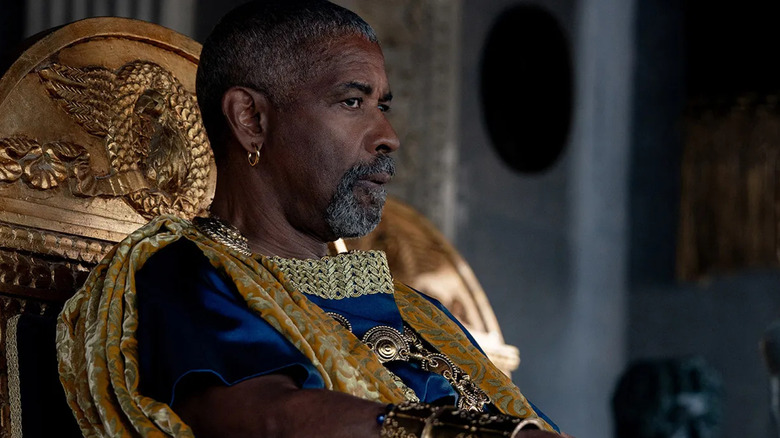
There are at least four competing schemes at play in Gladiator II, each fighting for screen time like rats in a trap. It’s at best a bloody stalemate. The character who emerges best from all this is Macrinus. Based on the first Moorish Emperor of Rome (a fascinating, if short-lived, figure) he’s played with a meme-courting bombast by a clearly having-fun Denzel Washington (his rolling pronunciation of the word “Pol-leetic-sah!” designed to launch a thousand GIFs). A flamboyant figure, he effectively mixes elements of both Proximo and Commodus from the first film with the larger-than-life amorality of Washington’s Alonzo Harris (if Harris was a slightly camp Roman aristocrat). Most of the film’s enjoyable moments revolve around his increasingly brazen manipulations, first of a corrupt senator (an enjoyably sleazy Tim McInnerny) then the two deranged and incompetent Emperors. Every other plotline eventually falls into the shadow of Washington’s scenery-chewing excess (by the time Macrinus is using a character’s severed head as a prop to intimidate the Senate, you realise you just have to go with it).
Gladiator II though needs to split its focus between these multitudinal plot lines, to the detriment of all of them. The emperors fiddle and feud while Rome burns. Various soldiers and senators line-up familiar plots to restore the republic. Lucius, the character we are supposed to relate to the most, is the one who starts to lose our interest. Paul Mescal does an effective job as this growling, surly figure, even if he doesn’t quite have the force to pull off his final late-act speeches. But the film rushes his elevation to leader among the gladiators so quickly it feels unearned – as well as stuffing the film with a multitude of sidekicks so anonymous they blur into one, so much so you won’t even notice (or care) when they start to bite the big one.

On top of which, Lucius zigs-zags through motivations with all the logic of a charging rhino. He goes from wishing he was dead, to fighting desperately for life, to vowing revenge on one man to suddenly changing his mind, to leading a proto-Spartacus inspired revolt to ditching the idea, to denouncing his mother and birth-right until suddenly he doesn’t, to half-heartedly resenting Macrinus to announcing he only lives to see him die, from rejecting Maximus to cos-playing him – how are we supposed to keep up with this? The fact he’s a man of very little words doesn’t help.

When he does speak it’s never particularly punchy. Scarpia’s workman-like dialogue gives him a clumsy rallying cry – “Where we are not where death is. Where death is, we are not” – which manages to be both leaden word-soup and spectacularly unrallying. The film recognises this by having Lucius ditch it late on for a rousing cry of – what else? – “Strength and honour”. Scarpia’s script, along with its muddy plotting, is full of deathly, forgettable pap; as well as riffing so determinedly on Gladiator that you’d think not a day went by in the bowels of the Colosseum without a wistful discussion about Maximus. Gladiator II also manages to pee across several ideas at the heart of Gladiator, from the potential implication that Maximus may have cheated on his wife to father Lucius (even Russell Crowe questioned that one) to the idea that at the end of the film they buried him in the Colosseum, which seems like the last thing they’d do.

In fact, I started to think that Ridley Scott’s main motivation for doing Gladiator II was to chuck in all the gonzo ideas he couldn’t make work (or find the budget for) in the first film. A fight with a mad rhino. A flooded arena full of ships (with added sharks – how these were caught and conveyed in-land to the arena just doesn’t even bear thinking about). Lucius and his fellow prisoners take on man-eating poorly-CGI’d baboons (Lucius’ position as leader largely stems from him biting one of these beasts before strangling it to death). Outside the arena, heads, hands and arms are hacked off and Scott effectively opens the film with a re-stage of the battle of Jerusalem from Kingdom of Heaven – only the siege towers this time are on ships charging the sea walls.

All of this is pretty well done, don’t get me wrong. Scott can do historical epic on screen like few others. But Gladiator II actually suggests that where he lucked out on Gladiator was keeping it simple with a strong story. Gladiator II feels something where attention has been lavished on the scale and the bombast, but that plot and character have been rushed. The film is about 15 minutes shorter than Gladiator while telling a story twice as complex, a mixture that doesn’t work well. In fact, the main feeling I had coming out from it was that I didn’t need to see it again and if I could re-watch Gladiator and pretend this didn’t exist at all, I might be a happier man. Gladiator II lives so absolutely in the shadow of its predecessor, that its flaws become more apparent through the constant invitation the viewer is made to compare and contrast them. This one won’t echo to 2030 let alone eternity.
Megalopolis (2024)

Megalopolis (2024)

Coppola’s ambitious epic commits the cardinal sins – boring, hard to follow and immensely tedious

Director: Francis Ford Coppola

Cast: Adam Driver (Cesar Catilina), Giancarlo Esposito (Mayor Franklyn Cicero), Nathalie Emmanuel (Julia Cicero), Aubrey Plaza (Wow Platinum), Shia LaBeouf (Clodio Pulcher), Jon Voight (Hamilton Crassus III), Laurence Fishburne (Fundi Romaine), Jason Schwartzman (Jason Zanderz), Kathryn Hunter (Teresa Cicero), Dustin Hoffman (Nush Berman), Talia Shire (Constance Crassus Catilina)

I wanted to like it. Honestly I did. I really respect that Coppola was so passionate about this dream project that he pumped $120 million of his own money into it to make it come true. You can’t deny the ambition about a film that remixes modern American and Ancient Roman history, within a sci-fi dystopia. But Megalopolis is a truly terrible film. Coppola wanted to return to the spirit of 1970s film-making: unfortunately what he’s produced is one of the era’s self-indulgent, overtly arty, unrestrained and pretentious auteur follies where an all-powerful director throws everything at the screen without ever thinking about whether the result is interesting or enjoyable.

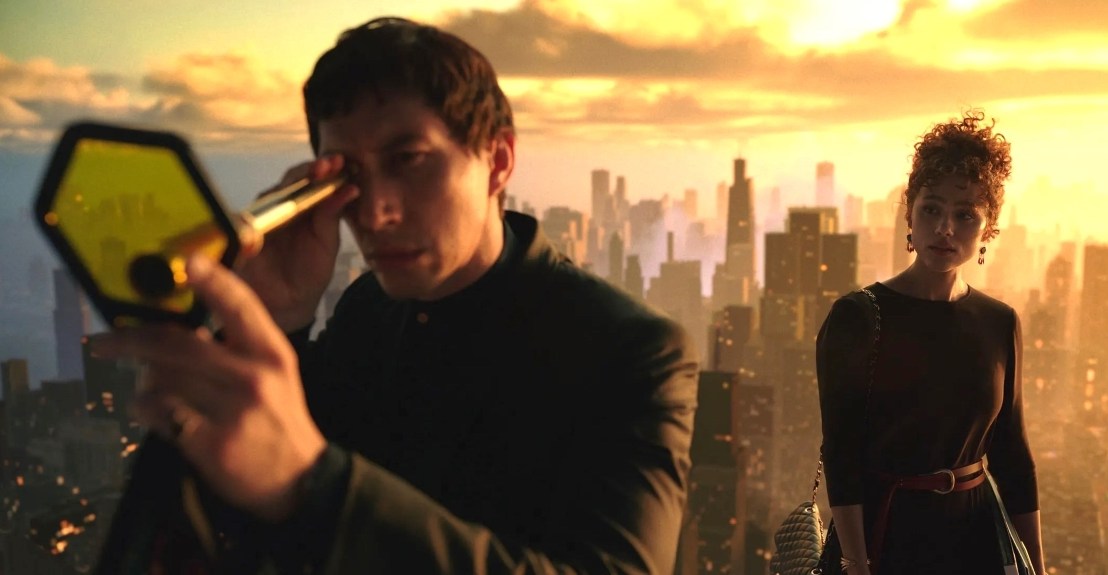
In New Rome (basically New York), Cesar Catilina (Adam Driver) is a visionary architect and inventor, who created ‘megalon’, a sort of magic liquid metal. His vision is to use it make a glorious new Rome. He’s opposed by Mayor Cicero (Giancarlo Esposito) who wants to focus spend on practicalities rather than castles-in-the-sky. This leads to a series of increasingly dirty political flights between Catilina, Cicero and Catilina’s cousin Clodio Pulcher (Shia LaBeouf) the degenerately populist nephew of super-wealthy banker Crassus (Jon Voight), who is married to TV star and ambitious social climber (and Catiline’s former girlfriend) Wow Platinum (Aubrey Plaza). Catilina is also in a tentative relationship with Cicero’s daughter Julia (Nathalie Emmanuel). Or yes and he can mysteriously stop time. Somehow. Even he doesn’t know how.

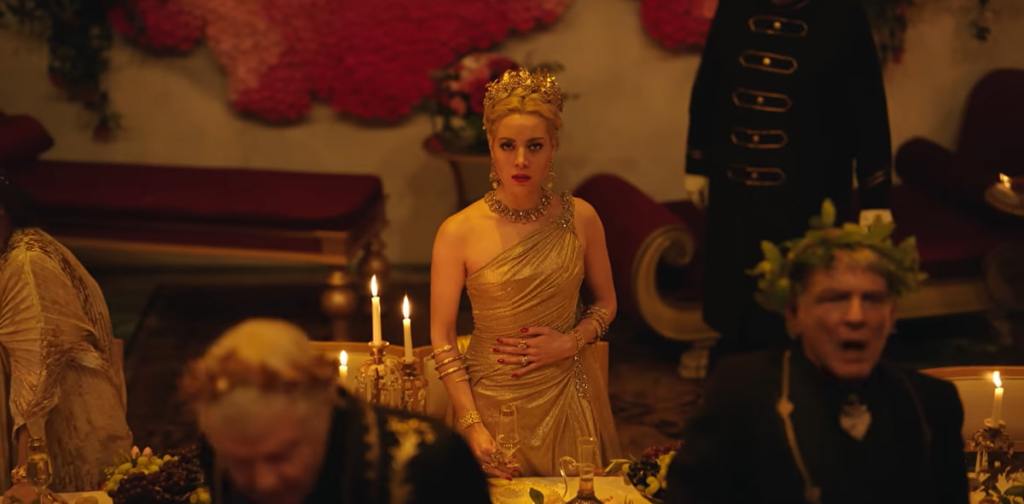
The film is a sympathetic portrait of Catiline, a powerful Roman who (probably) caused a scandal by shagging a Vestal Virgin then attempted to mount a coup with a heavily pandering populist set of promises which led to his suicide (after defeat in battle) and his followers being executed by then-consul Cicero. Megalopolis’ version mixes this with elements of Caesar’s career and remixes Cicero, Claudius Pulcher and Crassus into versions of their historical forbears. It’s a neat idea, but it’s utterly bungled in delivery. Megalopolis is a film practically drowning in pretension, bombast and self-importance, its script stuffed with faux-philosophy and clumsy political points, its Roman history crude and obvious.

It feels pretty clear Megalopolis should be three to four hours and has been sliced down to two and a quarter. The problem is it feels like it goes on for four hours and practically the last thing I could imagine wanting as the credits roll was watching yet more of this nonsense. The most striking thing about Megalopolis is how boring it is (I nearly dropped off twice – and I was in an early evening showing). It hurtles through a series of impressive-looking-but-dramatically-empty set-pieces that often make no real narrative sense and carry very little emotional force. Characters are introduced with fanfare and then abruptly disappear (Dustin Hoffman’s fixer gets a big moment then literally has a building dropped on him) and the final forty minutes is so sliced down it loses all narrative sense.

Megalopolis feels like a bizarre art project, a collage of influences, opinions, concepts and inspirations, as if Coppola had been collecting ideas in a scrapbook for forty years and then put them all in. His heavily-penned script forces clunkingly artificial lines into its character mouths, frequently feeling like a chance to show off his reading list. Marcus Aureilus, Goethe, Rousseau and Shakespeare among others showily pop-up, alongside speeches from the real Cicero. Driver even does a (to be fair pretty good) rendition of Hamlet’s ‘To be or not to be’ soliloquy, though it’s a sign of the film’s self-satisfied literariness that I can’t for the life of me work out why he launches into this at a press conference. Laurence Fishburne delivers the occasional narration with such poetic clarity, you almost forget it’s full of dull, gnomic rubbish, straining at adding depth to bland, fortune-cookie level statements.

It’s not just literary influences. The film is awash with pleased-with-itself cinematic references. Most obviously, Metropolis homages abound in its design, while Coppola’s breaking the film up with stone-carved chapter headings is a silent-film inspired touch. As well as Lang, there are clear nods-of-the-head to Abel Gance’s Napoleon (most obviously in its troika shots) while the smorgasbord of influences checks off everything from Ben-Hur to Vertigo to The Greatest Show on Earth (and damningly not as good as any of those, even DeMille’s clunker). All of this is combined with a wild mix of cross-fades, double exposures, sixties-style drug-induced fantasies and half a dozen other filmic techniques that are all very impressive but feel like a young buck looking to impress, rather than providing a coherent visual language for the film. Catiline’s time-stop abilities are some sort of clumsy stand-in for the powers of the film director – calling cut whenever he wants – but what we are supposed to make of the point of this in a film as randomly chaotic as this I have no idea.

The entire tone is all over the place. A scene of tragic maudlin grief will immediately be followed by sex farce. An attempted murder by a Buster Keaton inspired pratfall. A speech so overburdened with philosophical and literary allusions it practically strangles the person speaking it will lead into a joke about boners. The cast splits into two halves: one seems to have been told this is a serious film which requires deathly sombre, middle-distance-starring pontificating; the other half that they are making a flatulent satire. The random mix of acting styles has the worst possible effect: it makes those in the first camp seem portentous and dull; and those in the second like stars of an end-of-pier adult pantomime.

Driver makes a decent fist of holding this together, even if Catiline is an enigmatic, hard-to-understand character whose aims and motivations seem as much a mystery to Coppola as they do to the poor souls watching. But he can deliver a speech with conviction and seems comfortable mixing soul-searching with goofy dancing. Nathalie Emmanuel, though, is utterly constrained by taking the whole thing so painfully seriously that the life drains out of her. On the other side, Aubrey Plaza is the most enjoyable to watch by going for out-right-comedy as a vampish, power-hungry woman who uses her body to dominate men. Shia LaBeouf also goes so ludicrously overtop as a faithful version of the seriously weird Claudius Pulcher – he engages in cross-dressing, murder, incest and drums up crowds by quoting Trump and Mussolini – that it’s either daring or just as much of an unbearably self-satisified art project as the rest of the film depending on your taste.

But the main problem with Megalopolis is that its smug, pat-on-the-back, aren’t-I-clever artistic self-indulgence makes the film painfully slow and terrifically boring. How could a film that features riots, assassination attempts, orgies, murders, an actual meteor strike and magic time-stopping be as dull as this? When everything is thrown together without no emotional coherence whatever. Characters we don’t relate to or understand, who are either po-faced ciphers or flamboyant cartoons, stand around and quote literature at each other, while the director tries a host of flashy tricks he’s liked from other movies and never gives us an honest-to-God reason to give a single, solitary fuck about anything that’s actually happening at any point to anyone in the film.

It is perhaps the ultimate auteur folly. A director creating something that only appeals to him, at huge expense (and I suppose at least he paid for it himself rather than wrecking a studio) where no one was allowed to say at any point “this makes no sense” or “this is heavy-handed” or “this scene doesn’t mesh at all with the one before it”. Instead, it throws a thousand Coppola ideas at the screen, in a film designed to appeal to pretentious lovers of art-house cinema who like to tell themselves Heaven’s Gate is the greatest film ever made or the artform peaked with Melieres and it was all down-hill from there.

To approach the film in its own overblown style: whenever an auteur crafts, Jove plays dice with the Fates to decide on the cut of the cloth for Destiny’s Loom: should it come up sixes, the Muses smile, but should it be Snake Eyes, Pluto himself shall claim his due from those who would seize Promethean fire.

That makes as much sense as chunks of the film.

Cleopatra (1934)

Cleopatra (1934)

DeMille’s blockbuster is a fun, camp spectacle with plenty of his suggested sex and naughtiness

Director: Cecil B DeMille

Cast: Claudette Colbert (Cleopatra), Warren William (Julius Caesar), Henry Wilcoxon (Marc Anthony), Joseph Schildkraut (King Herod), Ian Keith (Octavian), Gertrude Michael (Calpurnia), C Aubrey Smith (Enobarbus), Irving Pichel (Apollodorus), Arthur Hohl (Brutus), Edwin Maxwell (Casca), Ian Maclaren (Cassius), Eleanor Phelps (Charmion), Leonard Mudie (Pothinos)

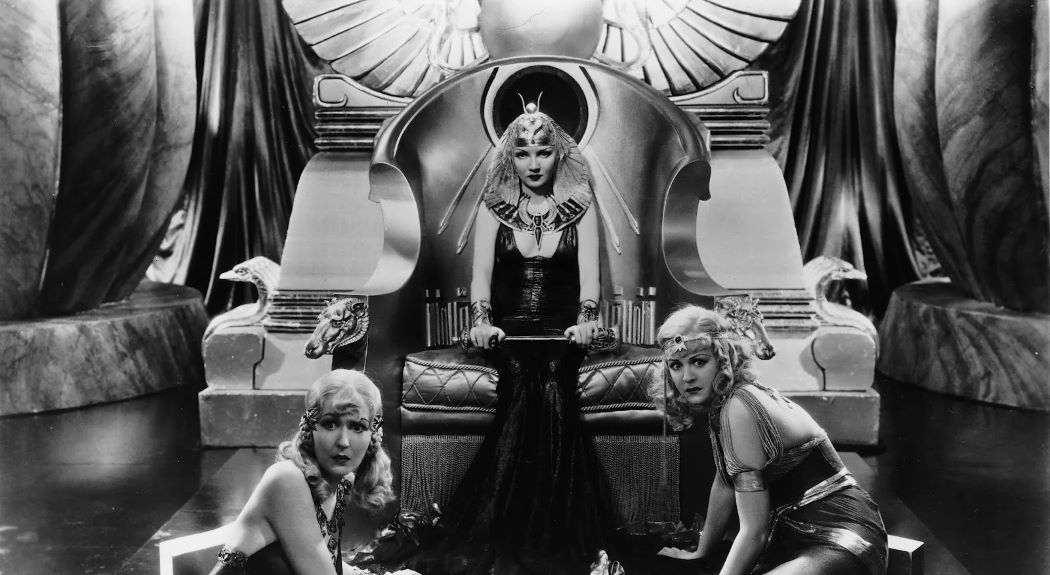
When a sand-and-sandals epic opens with a not-particularly-disguised naked woman cavorting erotically with incense, you know you are in Cecil B DeMille territory. Thirty years before the ill-fated Taylor-Burton epic, DeMille’s Cleopatra was the box-office hit of 1934. It was also a stompingly silly film, crammed with hammy performances and sexual imagery which it got-away-with in those pre-code days because it was an important historical subject taking place on humongous sets. But Cleopatra is also extremely good fun, a film so camply delighted in its naughtiness (and bowling along with such pantomimic energy) that it knocks spots off the turgid 1963 flop.

This Cleopatra follows pretty much the same structure (literally in half the time). Cleopatra (Claudette Colbert) is at war with her brother for the throne of Egypt. Smuggled into the presence of Julius Caesar (Warren William) wrapped in a carpet, she reveals the evil machinations of her rival Pothinus (Leonard Muddie) and seduces Caesar (possibly more with the prospect of controlling Egypt, since this Caesar is a power-mad cold-fish). When Caesar is dispatched by conspirators during the Ides of March, Cleopatra’s focuses on man’s-man Marc Anthony (Henry Wilcoxon) who is very open to her seduction. Before they know it though, the two are at war with envious technocrat Octavian (Ian Keith) who marches all of Rome to Cairo to crush the two. Bring on the asps!

DeMille shoots all this with relentless energy and pace, though not quite enough that you don’t notice the dialogue clunking out of the actor’s mouths (“You and your Friends, Romans, Countrymen…” a bitter Octavius observes about Anthony’s funeral oration). Cleopatra, like many of the Great Showman’s finest films (of which this is unquestionably one) gives us all the sex and smut we could possibly want, disguised in its classic setting. Cleopatra absolutely drips in lust and is crammed with suggestive imagery from top to bottom.

From that cavorting incense-carrier, we cut to the rooms Cleopatra has been kidnapped from. These look like nothing less than the aftermath of a kinky orgy, including a hog-tied servant who looks like he’s passed out in an asphyxiation sex-game. Colbert models a series of deep-dive dresses that leave little to the imagination. Poor, randy Marc Anthony doesn’t stand a chance (we know he’s a hot-blooded man because he never goes anywhere without his two barking greyhounds). Cleopatra even dresses at time like some musicals starlet, trailing billowing fabric behind her as she descends stairs.

Meeting her on her pleasure barge (this ship is practically Tardis-like in its interior dimensions) he’s treated to the sort of show that wouldn’t be out of place in Amsterdam’s Red-Light district. Scantily-clad ladies cavort, dancers dressed in skin-tight leopard skin are marshalled by a whip-carrying ring-master, while they cavort and engage in (literal) cat-fights until broken up by a crack of the whip. All the time Cleopatra reclines on a silk-covered bed, Colbert’s eyes flashing unmistakable “come hither” glances. No wonder the randy sod quickly finds himself going all-in on Egypt.

Along with sex, the film mixes in plenty of action. Caesar’s assassin is rather imaginatively filmed through a POV shot (“You? You too Brutus?!” Warren William intones in despair), as daggers fly in. The forthcoming battles are teased in an early scene where Caesar, bored with an Egyptian delegation, fiddles with various models of siege engines. All of these come into play in the film’s later sequences, that sees a parade of fast-cut war scenes overlaid: siege engines fire, armies plough at each other over deserts, ships clash at sea, men drown in agony. Much like the epic scale of Cleopatra’s court and barge, the film doesn’t skip on the epic conflict.

Between these two tent poles, we basically get a soap dressed to-the-nines in sandals, short skirts and armour. Claudette Colbert in a banner year (this was one of three hits she had, and she won the Oscar for It Happened One Night) is sultry, playful and if she never feels for even-one-minute like a figure from antiquity, at least she has that in common with the rest of the cast. She gives Cleopatra a charismatic energy that makes her believable as a figure round whom all else revolves. Wilcoxon plays Anthony with a thigh-slapping, hail-fellow-well-met quality. Warren William underplays as Caesar – which can make him look dull in a film as overblown as this – but makes for an effectively cold and calculating man.

Egypt, in its voluptuous naughtiness makes all Rome look rather dull though. Our capital is introduced in a house-party where the conspirators pose and moan like hammy matinee performers, stroking their historically incorrect beards, while the ladies bitch like New York housewives gleefully spreading catty gossip. Octavian is re-imagined as whining middle-manager, a weasily Ian Keith constantly moaning about never getting enough attention and clearly far-too inhuman to ever be stirred by Cleopatra the way the lusty Anthony is. With the frame of the film being classic antiquity, we can even pretend this is somehow serious drama when really it’s just Dallas.

These actors march their way through a series of break-ups and get-togethers, punctuated by moments of silly drama. (Cleopatra, Hamlet-like, even stabs Porthinus through a curtain seconds before he can assassinate Caesar!) But it all kind of works because you suspect nothing is really taken that seriously. DeMille is making a big pageant here, a walloping epic of lusty suggestion, powered by larger-than-life performances. It’s meant to fill you with excitement and awe, to make you gasp in awe. It doesn’t really matter that we get a shit-stirring King Herod (a smirking Joseph Schildkraut) or an Enobarbus who puffs like a regimental sergeant-major (C Aubrey Smith, giant of beard). It’s all about the spectacle, the drama and showmanship. And no one really does that sort of stuff better than Cecil B DeMille.

Cleopatra (1963)

Cleopatra (1963)

The biggest epic of them all – and one of the most infamous – is a mess but at times entertaining

Director: Joseph L Mankiewicz

Cast: Elizabeth Taylor (Cleopatra), Richard Burton (Mark Antony), Rex Harrison (Julius Caesar), Roddy McDowell (Octavian), Pamela Brown (High Priestess), George Cole (Flavius), Hume Cronyn (Sosigenes), Cesare Danova (Apollodorus), Kenneth Haigh (Brutus), Andrew Keir (Agrippa), Martin Landau (Rufio), Robert Stephens (Germanicus), Francesca Annis (Eiras), Isabelle Cooley (Charmian), Jacqui Chan (Lotos), Andrew Faulds (Canidius)

One of the most legendary epics of all time – for all the wrong reasons. Cleopatra is the mega-budget extravaganza that nearly sunk a studio, years in its shambolic, crisis-hit making that turned its stars into a celebrity brand that changed their lives forever. Painfully long, it’s a rambling, confused film that feels like something that was filmed before anyone had the faintest idea what the story they were trying to tell was. Then, just when you consider giving up on it, it will throw in a striking scene or intelligent performance and you’ll sit up and be entertained. Just never quite enough.

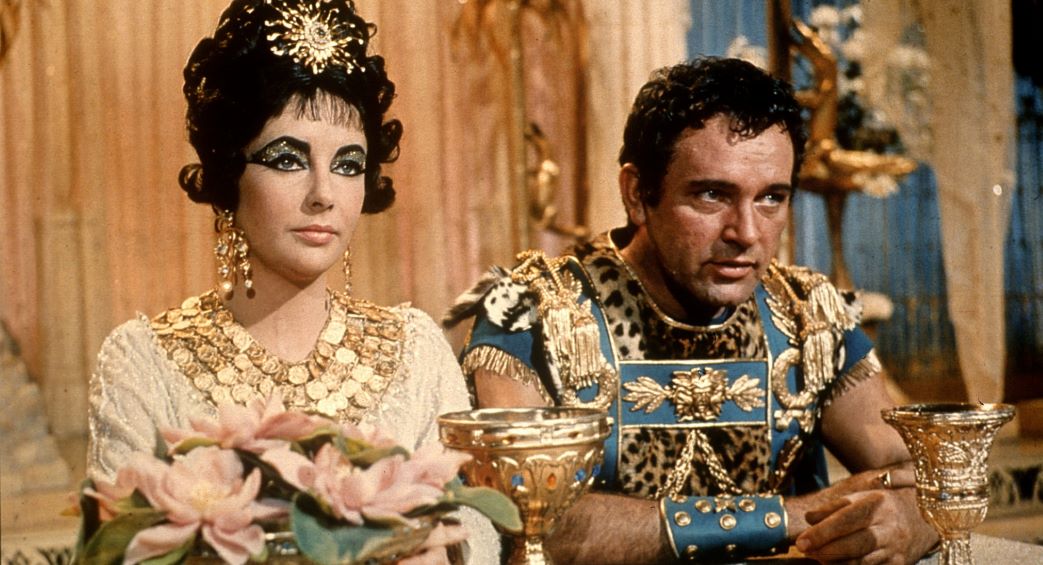
In its four hours it covers eighteen years. Julius Caesar (Rex Harrison) arrives in Egypt after victory over his rival Pompey at the Battle of Pharsalus. There he quickly becomes enamoured with Cleopatra (Elizabeth Taylor), the cunning, intelligent witty sister of bratty Pharoah Ptolemy XIII (Richard O‘Sullivan). Caesar takes Cleopatra’s side in the civil war for the Egyptian throne and takes her as a second wife, having a son (and potential heir) with her. Made dictator for life, he and Cleopatra return to Rome – where is assassinated. A friendless Cleopatra finds herself drawn towards Caesar’s deputy Mark Antony (Richard Burton), the two of them starting a passionate affair that will tear the Roman world apart and lead them into a civil war against Caesar’s politically astute but coldly realpolitik nephew (and official heir) Octavian (Roddy McDowell).

Cleopatra’s shoot – and the hullabaloo of press interest around it – is almost more famous (and perhaps more interesting) than the film itself. After a long gestation, filming started in London under the direction of veteran Rouben Mamoulian, with Taylor on board (for a bank-busting fee) with Peter Finch as Caesar and Stephen Boyd as Antony. Then it all fell apart. Taylor caught meningitis in the cold conditions, nearly died and the film nearly collapsed. The script was rewritten (again), Mamoulian, Finch and Boyd all left. Joseph L Mankiewicz came on board to write and direct, London filming (and all the sets) was junked and production moved to Rome. This all took a year.

In Rome, Rex Harrison and Richard Burton joined the cast as shooting began again practically from scratch. The planning however had been so laborious that Mankiewicz hadn’t been able to finish the script. So, instead, he decided to start shooting what he had and write the rest as he went. Sets were built for unwritten scenes and money continued to pour down the drain. This also meant a huge amount of hanging around for all concerned, spare time Burton and Taylor used to start a tabloid-filling affair which became the talk of the world. After nearly two years of filming, the studio ended up with millions of feet of film, a feud over whether to release two films or one long one and no-one with any real idea why they had made the film in the first place.

And God you can tell watching it. Cleopatra is an over-extended, rather unfocused mess that feels like the compromise product it is. What is this film trying to say? No one seems to know, least of all Mankiewicz. Is this an elegy to the loss of the Roman republic? Hardly when Caesar is presented as sympathetically as he is. Was the film looking to explore Antony and Cleopatra as tragic lovers or deluded would-be emperor builders? God alone knows. Is Cleopatra a temptress or a genius, a chancer or a political genius? No idea. Her infinite variety here is basically to be whatever the scene requires at the time, all wrapped up in Taylor’s effortless charisma.

Mankiewicz’s script – presumably written and then filmed almost immediately in many cases – falls back onto what he was comfortable with. Dialogue scenes are frequently over-written and over-long, so intricately constructed it was impossible to cut them down and still have them make sense.  The man who rose to the height of his profession directing witty conversation pieces in rooms, tried to do the same with his three leads in these massive sets. Acres of screen time stretch out as combinations of three leads spout mountains of dialogue at each other, often to very little dramatic impact. To keep the pace up, the film is frequently forced to take huge time-jumps.

Empires rise and fall in the gaps between scenes, armies assemble and are defeated in the blink of an eye. At one point Caesar and Cleopatra find a murdered character in the garden – the impact rather lost on the audience as this character is never mentioned before or after this. Years fly by and characters swiftly report off-screen events of momentous import, from Antony’s marriage and peace with Octavian to Caesar’s victory over Ptolomy. Caesar himself is murdered – Kenneth Haigh leads a series of stalwart British character actors in glorified cameos – in a silent ‘vision’ witnessed by Cleopatra, that cuts to Antony’s briefly shouting (unheard) his funeral oration (this at least means we don’t need to hear cod-Shakespearean dialogue in either scene).

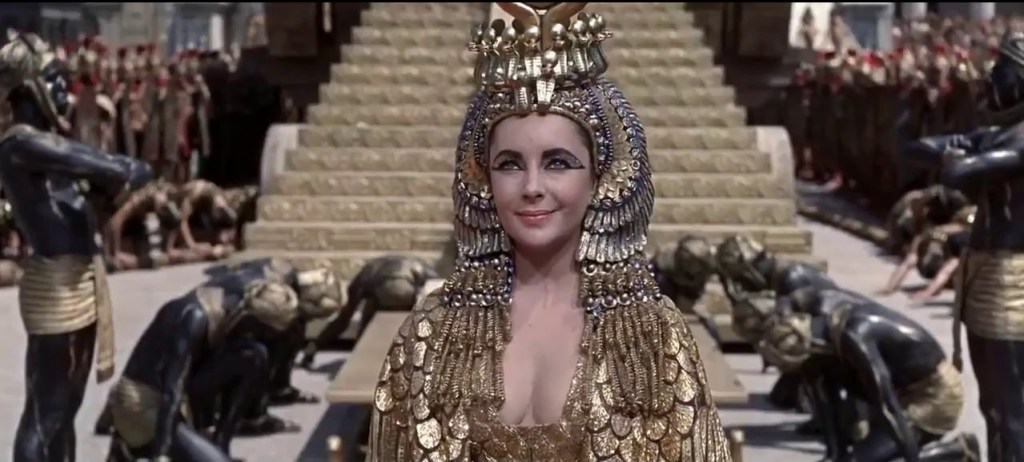
The other thing that couldn’t be cut was the film’s epic scale. Cleopatra’s entrance to Rome plays out nearly in real time, a never-ending procession of flights of fancy parading into the capital capped with Taylor’s cheeky grin at the end of it at Cleopatra’s panache. The battle of Actium looks impressive – with its boat clashes, flaming ships and colliding vessels – so much so that you almost regret we don’t get to see more of Pharsalus and Philippi than their aftermaths. The huge sets are striking, as are the legion of costumes Taylor has to change into virtually from scene to scene.

Of course, what people were – and always are – interested in is how much the fire off-stage between Burton and Taylor made it to the screen. I’ve honestly always felt, not much. Perhaps by this point both actors were too fed up and punch-drunk from the never-ending project. Perhaps they simply didn’t have any interest in the film. Burton falls back on grandstanding – he confessed he felt he only learned how to act on film from watching Taylor. Taylor is undeniably modern in every frame, but she somehow manages to hold a rather loosely defined character together, so much so that you forget she’s fundamentally miscast.

Of the leads Rex Harrison emerges best as an avuncular Caesar whose well-spoken wit hides an icy interior overflowing with ruthlessness and ambition. The film loses something when he departs just before the half-way mark. (It’s a mark, by the way, of the film’s confused structure that Burton only appears an hour into the film – and that for an inconsequential “plot update” chat with Caesar’s wife Calpurnia). There are decent turns from Cronyn as Cleopatra’ advisor, Pamela Brown as a Priestess, Andrew Faulds as a gruff Agrippa and even George Cole as Caesar’s trusted, mute servant. Best in show is probably Roddy McDowell’s ice cold Octavian – like a version of Harrison’s Caesar with all charm removed – who would have certainly been an Oscar nominated if the studio hadn’t screwed up his nomination papers.

Cleopatra still ended up with multiple Oscar nominations – even some wins – but took years to make back the money blown on it. At four hours, it bites off way more than it can chew and vey rarely comes together into a coherent shape. Scenes alternate between too short and way too long and three leads with very different acting styles struggle to make the best of it. You feel watching it actually sorry for Mankiewicz: it’s not really his fault, the scale of this thing would have sunk any director. Cleopatra has flashes of enjoyment, but much of it drags for the viewer as much as it did for those making it.

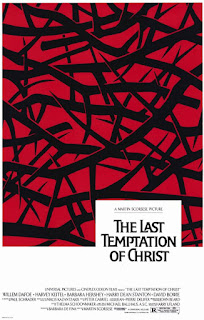
The Last Temptation of Christ (1988)

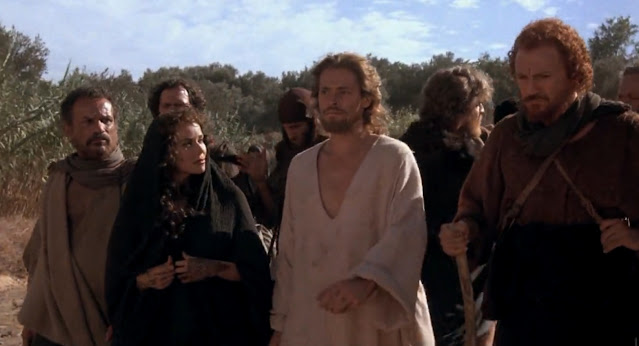
Last Temptation of Christ header
Willem Dafoe plays the Son of God in Scorsese’s supremely controversial The Last Temptation of Christ

Director: Martin Scorsese

Cast: Willem Dafoe (Jesus Christ), Harvey Keitel (Judas), Barbara Hershey (Mary Magdalene), Harry Dean Stanton (Saul), David Bowie (Pontius Pilate), Verna Bloom (Mary), Barry Miller (Jeroboam). Irvin Kershner (Zebedee), Victor Argo (Peter), Andre Gregory (John the Baptist), Nehemiah Persoff (Rabbi), Tomas Arana (Lazarus), Gary Barsaraba (Andrew), Juliette Caton (Girl Angel)

There are few films as controversial as this. Scorsese’s earthy adaptation of Nikos Kazantzakis’ The Last Temptation of Christ has lived its whole life under the shadow of the parade of traditionalists, conservatives and evangelists who have called for everything from the negative being destroyed to the death of its director. All this is rooted in the film’s quest – as in the book – for the human in Jesus, the saviour who was both mortal and divine. As part of this, it showed him expressing anger, doubt and of course, presented him with temptation and threw him into the dirty, working-class world where he made his ministry.

The film follows the life of Jesus (Willem Dafoe) pretty much as per the Gospels, with several interjections and reinterpretations (some of which seem designed to piss off the faithful). We meet Jesus as a carpenter who crafts crosses for Roman crucifixions by day, plagued by voices and fits at night. He knows he has a purpose but is scared of what it might be. Eventually he finds it, encouraged by Judas (Harvey Keitel) his most faithful disciple and a passionate campaigner against the Romans. The last temptation itself fills the final act of the film. On the cross, a disguised Satan comes to Jesus and offers him the chance to leave behind being the messiah and live a normal life: marriage, children and content old age surrounded by family.

The Last Temptation of Christ is Scorsese’s wrestling with his faith. It’s a highly personal, defiantly modern and daring version of the gospels that strongly invests in the notion that true faith is only possible if we also have doubt to overcome. And it applies this logic to Jesus, who is shown here as far more grounded, human and flawed than He has ever been in the movies (or anywhere else). Voiceovers communicate His constant doubts and insecurities – and even His resentments about not understanding what God intends for him.

Where other Biblical epics are old, stodgy and stiff, The Last Temptation profoundly challenges its viewers. This is not a picture postcard world. Jesus’ surroundings are humble and dirty. His disciples are simple men – Judas, the only one with any form of intellect, attacks them as clueless yes-men. But it’s a film that stresses the humanity of Jesus. It wants us to admire him even more, because He needed to overcome the same internal demons we all confront. This is not a saviour unbent in purpose, but battling always. It asks us to try and relate ourself to Jesus in a new way, to ask how we might have felt and whether we would have been strong enough to take on that mantle.

Played with extraordinary passion and fire by Willem Dafoe, this is a Jesus who is scared, reluctant, shows flashes of bitterness and anger but struggles to put all this aside to embrace His destiny and purpose as the Messiah. On other words, He’s far more human than we’ve seen before. He’s also rough and unprepared, in many ways, for His ministry. We see His first attempt at preaching – having, with half-confidence, half-apprehension told Judas He’s sure God will give Him the words – which is carefree, impassioned and amateurish but full of inspirational fire. He doesn’t quite convey the message He’s aiming for, but it is enough to win the devotion of several of the men who will become his disciples.

Scorsese shoots this, as he shoots many of the scenes among the crowds, with an immediacy and urgency, using a mobile camera and throwing us in among those listening to Jesus’ words. John the Baptist’s ministry by the lake is a near-orgy of religious ecstasy (with added nudity), full of wild emotion and jubilant singing – all of which drops out on the soundtrack to just the lapping of the river, as Judas and John meet. (It’s a brilliant moment that shows the world-stopping impact of revelation). Scorsese mixes this with scenes of a spiritual stillness and gentle mysticism. During his time in the desert – during which Jesus sits inside a perfect circle, which He draws free hand in the dirt – He encounters, in scenes of haunting unknowability, temptation from Satan in the form of a snake, a lion and a jet of fire.

It’s a starting point for Jesus’ embarking on a series of miracles and world-changing preaching. Controversially, even now, He is still uncertain of what He is meant to – he tells Judas (who remains a constant confidante) that God only gives Him small parts of the total picture as He needs them. He comes from the desert inviting his disciples to war – against Satan, and to bring God’s word to the world. It seems another provocative image – Jesus brandishing an axe in one hand, His own heart (plucked from His chest before the disciples) in the other – and it’s one of the points in the film where I feel Scorsese overplays his hand. I’m not quite sure what he is suggesting here, as Jesus calls his disciples to war, unless it’s a campaign of muscular Christianity.

It competes with several other images and sequences that infuriated many. Some of these are too much: Jesus crafting crosses and even helping the Romans (in the film’s opening) nail a victim too one is far too much, a tasteless attempt to show a flawed man. Waiting to apologise to Mary Magdalene (a delicate Barbara Hershey) for his part in this, He sits while she services a roomful of men one after another. Moments like this always feel a little too much, even if it’s a more genuine insight into what Mary Magdelene’s life was actually like than we normally get.

But the Temptation itself is fascinating and moving – if a little too long. There was of course outrage at seeing Jesus marry and make love to Mary Magdelene, rejecting his purpose for a life of normality. Surely, if Jesus could be tempted by anything it might have been this: the man who never knew a moment of the life you and I lead, given a chance to experience it. With Satan – passing himself off as a young female guardian angel – guiding him, the vision sees Jesus age into an old man. Satan presents a plausible argument: man and Earth can live in a simple happiness, if they forget the demands of God in heaven.

The very idea of Jesus either deceived by Satan for a time – or seriously considering abandoning His divine purpose – is anathema to many, but again it re-enforces Scorsese’s view that doubt is essential for faith. That we can only commit the supreme act of commitment to God, if we are uncertain about doing it in the first place. And Jesus’ re-devotion at the end to his mission truly gives a sense of “It is being accomplished” in a way few other films have managed.

Ideas like this – and the earthy, vigorous nature of Jesus’ world – dominate the film and dare and push the viewer. Dafoe is superb – and Harvey Keitel excellent as a politically committed Judas, here not betraying Jesus, but taking on the harder role (that of betrayer – Jesus even tells him he is not strong enough for such a role, so has the easier part in dying). It’s shot with a brilliant modernism and has a superb score from Peter Gabriel, stuffed with lyrical etherealism and making use of several contemporary instruments. It sometimes overplays its hand, but as a personal work of a director juggling his own doubts, fears and faith on screen, it’s perhaps one of the most extraordinary religious films ever made.

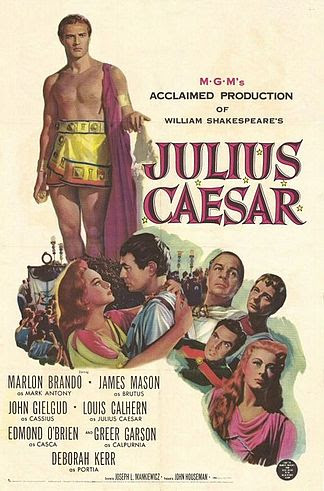
Julius Caesar (1953)

Mason and Gielgud confront Brando in Hollywood’s faithful Shakespeare adaptation Julius Caesar

Director: Joseph L Mankiewicz

Cast: Marlon Brando (Mark Antony), James Mason (Brutus), John Gielgud (Cassius), Louis Calhern (Julius Caesar), Edmond O’Brien (Casca), Greer Garson (Calpurnia), Deborah Kerr (Portia), George Macready (Marullus), Michael Pate (Flavius), John Hoyt (Decimus Brutus), Douglass Watson (Octavius)

Hollywood has always been in awe of Shakespeare. For large chunks of Hollywood’s Golden Age, it was felt the Bard’s mighty words could only be performed in a certain way by certain actors and that it somehow besmirched the Bard to put him on celluloid. It’s partly why there are few truly radical productions of Shakespeare on screen. By 1953 Orson Welles had directed inventive, challenging productions of Macbeth and Othello that reworked Shakespeare for cinematic effect, but these had been met by horror by some critics (‘how dare he change things!’). Julius Caesar fit the mould in many ways for how Hollywood felt Shakespeare should be done – traditionally, respectfully and by a cast of trained theatre actors. Then they threw in a curve ball by casting Brando as Mark Antony.

It’s hard now to really understand the hesitancy (and outright snobbery) from many about the very idea of Brando doing Shakespeare. This was the mumbling Stanislavsky-trained star of Streetcar, the earthy, T-shirt wearing slab of muscle that yelled “Stella!” – who on Earth did he think he was? Shakespeare is for plummy accents, focused on poetry. Brando took a huge risk taking this role on. But, today, his performance feels fresh, vivid and in many places strikingly modern.

Brando bought a more relaxed, natural style – and, yes he also affected a slightly plummy Brit accent – and bought a emotional realism to the most exhibitionist of Shakespeare’s great roles. (Let’s not forget, most of Antony’s part is a massive public speech). Brando creates an Antony who is passionate, loyal, committed – but also cunning, manipulative and very aware of the effect he is attempting to generate in that famous speech. He delivers the speech with aplomb, but concentrated as much on the emotion of what he was saying as the poetry of how he said it. It makes for an excellent marriage between two different styles of theatre, and Brando’s powerhouse delivery (Oscar nominated) carries real energy and dynamism.

It sits within a very traditional production, carefully shepparded to the screen by Joseph L Mankiewicz. Mankiewicz was a two-time Oscar winner for Best Director – but his reputation was largely formed on his mastery with dialogue and actors, rather than any visual sensibility. Julius Caesar is intelligently and faithfully bought to the screen – albeit with little cinematic flourish – shot with a moody black-and-white (designed to ape news-real footage and add further dramatic urgency to the action) on sets that were leftover at the studio from Quo Vadis. (Some of the busts are hilariously out of place – pretty sure Brutus has a bust of the Emperor Hadrian in his home, quite something seeing as he died 160 years before Hadrian was born.)

Mankiewicz by and large lets the play speak for itself.  What Shakespeare wrote, he largely says, and there is little in the way of message in a play that has been reversioned to almost any oppressive regime you can imagine. A few flourishes diverge from the text. He radically simplifies Acts 4 and 5 of the play (particularly the Battle of Philippi and the consecutive suicides of Brutus and Cassius), reducing these down to little more than half an hour. Wisely he focuses on the more dramatic Acts 1-3. The scheming is tense and moody, the assassination swift and brutal. The crowd scenes in Rome bustle with an immediacy and vibrancy – the camera often sits among the plebians during the speeches, encouraging us to share their feelings and reactions to the speeches. Antony is made a calculating and cunning figure – consciously waiting for certain reactions: he even, in one directorial flourish, enters bearing Caesar’s corpse during Brutus oration.

Mankiewicz’s main strength is in working with actors. Although Brando claimed the plaudits, the play is actually centred around Brutus, the intellectual of good intentions drawn into a conspiracy for the best intentions who finds principles and coups make for impossible bedfellows. The film’s finest performance is from the simply superb Mason, who was born to play tortured decent patricians like this and creates a Brutus stuffed with doubt, pride, arrogance, uncertainty and a little touch of fear. His patrician voice is perfect for this “most honourable of all the Romans”, and he sets about murder as the deeply unpleasant task it is, guided by his assumption that he-knows-best. The little moments are brilliantly done: from his petrified nerves at the assassination to his pious sermons on morality to Cassius to his tenderness and care for his wife and servants. It’s a wonderful performance.

To complement him, Mankiewicz recruited one of the greatest Shakespearean actors living as Cassius. Gielgud hadn’t done a film for over ten years (he always felt the cinema to be a minor art), and Julius Caesar was the only opportunity he had to capture one of his great Shakespearean performances on film until Prospero’s Books nearly 40 years later. It’s fascinating to watch a film where the old school (in Gielgud) and new school of acting (in Brando), both bring their own approaches to Shakespeare. This is Gielgud’s finest Shakespearean performance on camera – he must surely have learned more about acting on camera from Mason and Brando – the first time his style moved away from ‘singing the verse’ towards something more emotional, his Cassius a bitter, manipulative man who starts the film holding all the cards and ends up with none of them.

Watching these three powerhouse performers work is a treat – and also to see their styles merging and playing off each other. Mason is the perfect fusion of the realism of Brando and theatricality of Gielgud. Brando learned huge amounts from Gielgud, frequently consulting him on delivery. Gielgud surely took as much from Brando on adding greater emotion and realism into his screen performances, shirking the declamatory style that often makes him grand but unconnectable. The other actors around them offer versions of these styles: O’Brien stands out best as a shrewd and cunning Casca, Calhern tries a little too hard to be grand as Caesar, Kerr and Garson are a bit too theatrical in thankless parts as “the wives”.

Julius Caesar as a whole though is a lean, pacey and intelligent staging of the play, directed unobtrusively but professionally, very well acted by the cast. While Mankiewicz does nothing radical here – look at Orson Welles Othello and there you’ll see how the language of cinema can add a whole new perspective to Shakespeare, in a way this film never does. But while not radical, it focuses on story and character really well. The set-piece moments – the speeches, the murder, the plotting – are staged with urgency, energy and drama. Mainstream Hollywood still wasn’t ready for radical reworking of Shakespeare (this got lots of Oscar noms, Welles Othello was a flop), still seeing him as someone best cast in marble – but with Julius Caesar Hollywood took baby steps towards suggesting there could be a different future.

Ben-Hur (1959)

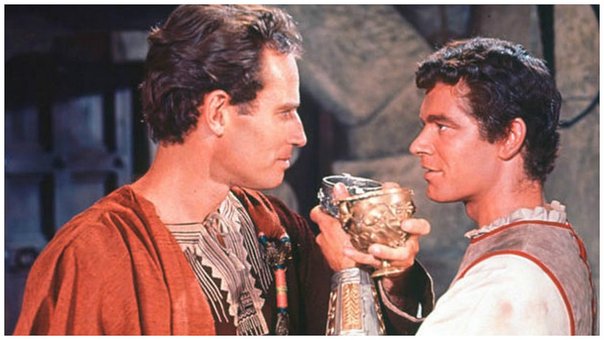
Charlton Heston fights for freedom in the large scale but strangely empty Ben-Hur

Director: William Wyler

Cast: Charlton Heston (Judah Ben-Hur), Jack Hawkins (Quintus Arrius), Haya Harareet (Esther), Stephen Boyd (Messala), Hugh Griffith (Sheik Ilderim), Martha Scott (Miriam), Cathy O’Donnell (Tirzah), Sam Jaffe (Simonides), Finlay Currie (Balthasar), Frank Thring (Pontius Pilate), Terence Longdon (Drusus), George Relph (Tiberius Caesar), Andre Morell (Sextus)

Ben-Hur is big. Hammering home its monumentalism, the poster features the colossal stone-carved title dwarfing the people below. It’s the sort of Hollywood epic where the numbers – 10,000 extras! 2,500 horses! Over a million props! 1.1 million feet of film! 11 Oscars! – are as much a part of what you are sitting down to watch as the characters and story. Ben-Hur sits at the apex of the Hollywood Biblical epic: three and a half hours long, the most expensive film ever made (at the time). Age hasn’t always treated it kindly, and its eleven Oscars give it a sort of classic status it’s very hard for the first-time viewer to reconcile with what you actually see on the screen. Fundamentally, Ben-Hur is part spectacle, part pageant: some striking sequences linked together by the twee and the forgettable. Entertainingly middle-brow and over honoured, it’s a classic mostly because of what it represents rather than what it is.

Adapted from General Lew Wallace’s best-selling doorstop (he basically invented the airport novel, decades before the first airport ever opened), the story follows the fortunes of Jewish prince Judah Ben-Hur (Charlton Heston) in the early years of the first millennium. Ben-Hur grew up regarding Roman officer Messala (Stephen Boyd) as a brother. But when Ben-Hur refuses to help Messala identify Jewish insurgents, their friendship comes to an end. Before we know it, Messala suses trumped up charges to send Ben-Hur in chains to a life rowing as a galley slave while his mother Miriam (Martha Scott) and sister Tirzah (Cathy O’Donnell) are imprisoned. Ben-Hur survives the galleys – even becoming the adopted son of Roman Consul Quintus Arrius (Jack Hawkins). When he returns to Jerusalem, will he take his revenge on Messala? Or will the teachings of the mysterious preacher spreading the word of God change his life?

For bursts of its (huge) run-time Ben-Hur is gripping, exciting stuff. The action when it comes is superbly done and some of the moments of high-emotion really hit the spot. But it’s impossible to avoid that, for large chunks of time in-between, Ben-Hur is ponderous, overlong, more than a bit self-important and a little twee. Frequently the film grinds to a halt to parade its numbers: after all we need a long intro to the chariot race so we can see all those extras and horses. Things like this frequently don’t drive forward the story, or help the pace: but Ben-Hur was at least as much about wowing the audience as it was about telling a story.

William Wyler was offered more money than any director in history to bring it to the screen. He produces a film as faultless in its professionalism, as it is impersonal. Wyler – a director who worked best with actor-led stories – struggled with the vastness of Hur: his visual compositions often an awkward attempt to mix the width of the frame with the intimacy of two characters talking. His style doesn’t help here: the heaviness of the cameras made them difficult to move, making many of the conversation scenes of the film rather flat and dull to look at. Wyler doesn’t put a foot wrong, but it feels more like a competent professional ticking boxes.

It’s the big set piece moments – of which there three – which really have stuck in people’s minds. Those would be: the early scenes with Messala/Ben-Hur, the naval battle sequence and the chariot race. Outside of those moments – which are all, in their own ways, very memorable – it’s amazing to me every time I watch it how much of the film I fail to remember. I certainly had forgotten how damn much of the movie is left post Chariot race (over 45 minutes!), the film dragging on through the Miriam/Tirzah leprosy sub-plot intercut with moments from the life of Jesus (often with dialogue of the “He’s giving a Sermon on that Mount” variety). There are several moments in the film where events play out at great length inversely proportional to their interest.

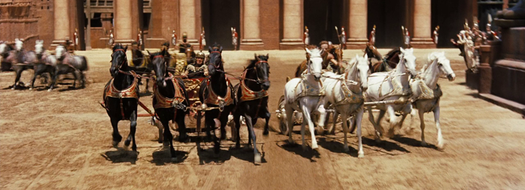
But those set-pieces are great. The chariot race alone probably made the film the success it is. It’s ten minutes of compelling drama, gripping stunts: a feast of tight editing, dynamic camera work and thundering sound effects. Shot by a second unit – although, to be fair, supervised in its planning and editing by Wyler – it’s the heart of the movie. Viscerally enjoyable, it perhaps stands out because it’s the most earthy, exciting, real thing in a movie that can be rather stagy and turgid.

Running it close is the naval battle sequence – show-casing a gravely Jack Hawkins – very well-done (and disguising its water tank shooting origins), particularly because Wyler keeps most of the focus on the slave rowers in the bowels of the ship. While fire and arrows fly up top, and boarding parties clash, it’s from the slaves perspective that we see a vessel approach to ram the ship – and their terror at drowning that we feel. It’s another fine use of the epic big-screen. With virtually no dialogue, it’s also a triumph of visual story-telling, communicating a host of emotions and actions with brilliant efficiency.

The Messala/Ben-Hur sequences have stuck in the mind for other reasons. Long-running debates exist about who actually wrote the script. The credit goes to Ken Turnberg, but Gore Vidal long claimed his fingerprints were on most of the dialogue. (Wyler and Heston disagreed, giving the credit to playwright Christopher Fry – Heston even thanked Fry in his Oscar acceptance speech.) Vidal liked to claim he directed Boyd to play these scenes as if Messala was a spurned lover of Ben-Hur – taking an equal delight in claiming Heston had no idea of this subtext. Wyler argued he had no memory of this, and denied any such direction to Boyd took place. The truth will never really be known, but to me the idea of the writer on a film like this taking creative control seems a stretch.

Anyway, it adds a frisson to the scenes – and its undeniable there is more than a touch of camp to them. To be honest I think a lot of this is due to Stephen Boyd’s OTT performance as Messala. He plays every single scene at a ludicrous pitch – throughout the chariot race he makes Dick Dastardly look the model of underplaying – and I can well imagine Vidal enjoyed taking advantage of his over-emphasis in these sequences to spin an amusing story of sneaking in a homo-erotic subtext.

The acting in general is fairly mundane – for all the film won two Oscars for its performers. Heston (in his only nomination) was named Best Actor. He’s a monumental actor, best used in roles that could have been chiselled from marble, but this is not his best (look to Khartoum, Agony and the Ecstasy or Planet of the Apes for starters). Much like Boyd he’s prone to over-emotionalism (most of the last 40 minutes feature him throwing his face into his hands), intermixed with moments of stony po-facedness. Hugh Griffith won the other Oscar (insanely generous considering he beat out Scott and O’Connell in Anatomy of a Murder) and his hammy, black-face is increasingly uncomfortable. Few of the other performers make much of an impact (although I enjoyed seeing an unbilled John Le Mesurier as a Roman doctor).

The one thing about Ben-Hur that lives up to its grandness is Miklos Rosza’s brilliant -and hugely influential – score. A brilliant mix of the inspiring epic, the grandiose and the deeply spiritual, you can hear its DNA throughout the works of John Williams and several others. It’s one of the longest scores of all time (three hours of music!) but it captures the tone of every scene perfectly, helping to build the overall effect.

It even manages to make some of the Jesus sequences work. The film is never more twee than when it touches on the Bible. Jesus is only ever shown from behind, but always as the classic long-haired, beatific figure, practically floating through the ether. Sequences that show the nativity, the sermon on the mount and the crucifixion have a Sunday School earnestness about them, largely free of drama and seem designed to be as inoffensive (and uninteresting) as possible. It’s when the film is as its most self-consciously earnest.

And Ben-Hur is a very earnest film. A professional job – with a director wrestling all those numbers – it’s got some striking sequences but even more flat, twee and forgettable moments. With acting that ranges from overly-earnest to just over the top, its classic status is more about what it is. The largest, most expensive, most honoured film of the Biblical epic genre. Its’ most famous for all those Oscars and the chariot race: in other words ten minutes of its screen time and garlands from a ceremony we often say honours the wrong films. Judged on film merits, Ben-Hur is not the best but not the worst. But it’s more about all its numbers, the vast array of things in it. It represents Big Studio investment: it’s about money. No wonder Hollywood garlanded it with so many Oscars.

The Eagle (2011)

eagle header
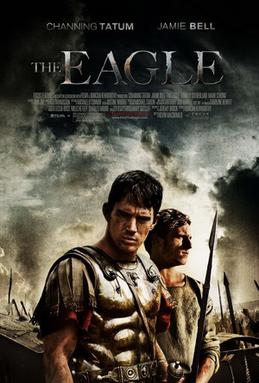
Jamie Bell and Channing Tatum on a spectacularly un-fun adventure in The Eagle

Director: Kevin Macdonald

Cast: Channing Tatum (Marcus Flavius Aquila), Jamie Bell (Esca), Donald Sutherland (Marcus’ Uncle), Mark Strong (Guern/Lucius Caius Metellus), Tarah Rahim (Prince of the Seal People), Denis O’Hare (Centurion Lutorius), Douglas Henshall (Cradoc), Paul Ritter (Galba), Paul Ritter (Galba), Dakin Matthews (Legate Claudius), Pip Carter (Tribune Placidus), Ned Dennehy (Chieftan)

Rosemary Sutcliff’s The Eagle is one of the classic young adult stories of all time. An enjoyable odd-couple-turned-brothers-in-arms series, with plenty of action and adventure it arrives on screen as a dark, gloomy and above all not-really-fun-at-all story that doesn’t seem to know whether it’s aiming for a boys-own yarn or an adult adventure. It basically fails to make either work.

In Roman Britain AD 140, Marcus Flavius Aquila (Channing Tatum) is a young centurion whose father was one of the commanders of the Ninth Legion, which disappeared twenty years before somewhere in the North. Now Marcus is working to save his family honour – but his career as a centurion is cut short after he is injured almost single-handedly saving his garrison from attack. Depressed, he resolves to head north to try and find his father’s legion’s missing eagle standard – accompanied only by his strong-willed slave Esca (Jamie Bell), who hates Rome but owes his life to Marcus who saved him from execution in the gladiatorial ring. Heading North they find the eagle is in the hands of a savage tribe of warriors, who take no quarter.

Kevin Macdonald’s film probably should work like a Bernard Cornwell novel remixed in Roman Britain – or, better yet, like a proto-Simon Scarrow novel. There should be a growing sense of odd-couple bond – or at least chemistry – between Marcus and Esca as unlikely allies who become even more unlikely friends. Sadly, Macdonald misjudges the mood and instead turns the film into a grimly serious, mud spattered and miserable travel saga, which slowly drains any sense of enjoyment out of the story and its mission.

Instead, Esca and Marcus seem to hate each other’s guts for most of then movie until the plot finally absolutely demands that they lay down their lives for each other – at which point, an unearned switch takes part. Rather than an amusing “opposites attract”, men on a mission banter that the film sort of needs, instead everything is morose, angry and very, very serious. By the time the film hits the sort of banter tone it needed at the start, the credits start to roll.

It’s not helped by the choices of the two lead actors. Tatum is at his most “serious” here, with none of the playfulness and lightness that can make him an engaging presence. Instead he’s muscle bound and frowning, dispatching enemies without a second thought and forever gloomily reflecting on his father’s lost honour. Bell gets the tone slightly more on point, but he’s given almost nothing light to work with, instead having to juggle guilt and resentment at the oppression his people face and his part in it. With the dreary photography, all this misery finally starts to wear the viewer down.

Where’s the enjoyment of all this adventure? I get the film wants to make a serious point about the cost of empire and conquest, but did that have to be at the cost of any sense of fun? At least the film does take an interesting decision to make all the Romans American – reflecting the fact that America is “the new Rome” – but it doesn’t really take these revelations anywhere.

Not that you would really want it too as this is supposed to be an adventure story. Instead it’s a gloomy trip of two angry people in extreme cold and mud to grab a metal eagle, punctured by darkly framed fights, dully assembled dialogue scenes and a bubbling dislike between the two lead characters that never flowers into respect until far too late. By making neither of the two lead characters particularly likeable, we never really invest in their journey – and in the end just plain don’t care about what happens to them or if they ever get that eagle at all. For an adventure story, this is one trip you’ll insist you’d rather stay at home and guard the base.

Spartacus (1960)

Kirk Douglas leads the campaign for freedom in Spartacus

Director: Stanley Kubrick

Cast: Kirk Douglas (Spartacus), Laurence Olivier (Crassus), Jean Simmons (Varinia), Charles Laughton (Gracchus), Peter Ustinov (Batiatus), Tony Curtis (Antoninus), John Gavin (Julius Caesar), John Dall (Marcus Glabrus), Nina Foch (Helena Glabrus), John Ireland (Crixus), Herbert Lom (Tigranes Levantus), Charles McGraw (Marcellus), Joanna Barnes (Claudia Marius), Woody Strode (Draba), Paul Lambert (Gannicus)

You can’t talk about Spartacus without saying it can you? Did the team working on the film realise that, for all the big names, spectacles and sweeping that the film’s definitive contribution to popular culture would be the sound of a hundred men all claiming to be the slave leader? But it’s the moment you think of more than any other when the film comes up – and there’s not many films that can claim to have contributed such an instantly recognisable moment to our cultural heritage. It’s not the film’s only merit though: this is grand, entertaining, old-school Hollywood epic-film making.

In the last decades of the Roman Republic, Spartacus (Kirk Douglas) is a young man born a slave, purchased by gladiator trainer Batiatus (Peter Ustinov) to learn how to thrill the crowds and kill his opponents. There he falls in love with slave-girl Varinia (Jean Simmons) and clashes with the regime of the training school. Revolt however stirs when rich nobleman Crassus (Laurence Olivier) arrives at the school and demands a fight to the death of his entertainment – as well as purchasing Varinia. In the aftermath, Spartacus leads a revolt – which grows into a huge army that soons puts all of Rome at risk. But a risk is also an opportunity: certainly it is for Crassus, who sees this as his chance to bring the Republic under his control.

Spartacus is a grand piece of film-making, shot on a huge scale, a labour of love for Kirk Douglas as producer. Upset at being denied the lead role in Ben-Hur, Douglas decided to make his own Roman epic – and to make something even grander than that Oscar-winning epic. Everything was thrown at the screen: grand locations, huge sets, star actors and a sweeping epic score. Alex North’s classically tinged score – with it’s distinctive employment of Roman instruments and echoing of both the intimidating splendour of Rome and the bucolic happiness of the liberated slaves – is proper old-school Hollywood score-making, that helps set the scene for the film’s epic sweep.

And Spartacus is epic – and epic entertainment. While it’s possibly a little too long, it knows when to spice up events with a battle, love scene or bit of political skulduggery. There are multiple story lines going on in this film, and interestingly they don’t all intersect. It’s easy to see Spartacus – and his struggle for freedom – as the real story of the film. But for most of the Roman characters, this is an embarrassment or sub-plot. There is a whole other story happening around the struggle to preserve Roman Republicanism – with Crassus as the face of oppression and his opponent Gracchus the slightly soiled but still vaguely democratic face of the old system. Both plots only rarely come together, and while that of Spartacus captures the heart strings, a lot of the film’s narrative drive is in the Roman conspiracies.

Perhaps this is because in the entire rebellion only Spartacus and Varinia qualify as really having personalities. And those personalities are basically flawless. Spartacus is almost saint-like in his nobility, a guy who never does anything wrong and whose only mistake is trusting others in a shifting world. Douglas does a great job of performing a character who is practically a living legend – and he completely convinces as the sort of leader his people would follow to the end. His relationship with Jean Simmons is also touchingly sweet and innocent – the film is very good at capturing the sense of how stunted the emotional lives of slaves have been, and the powerful joy they can find in the freedom of simple intimacies so many of us take for granted.

But the slaves themselves are frequently (whisper it) rather dull. Many of them might as well be sitting around the camp fires singing Kumbaya. Bar a brief moment at the start, no suggestion of taking vengeance raises its head. The liberated slaves sing, clap hands and gaze with joy. Children play and people frolic in the fields. Tony Curtis – good value as Crassus’ ex-bodyman, a learned man and entertainer of children – stages a magic show, with patter that could have come straight out of a Brooklyn street. Other than him, none of the slaves register as personalities. A tint of darkness, or moments of fury or even dangerous rage against their oppressors would have made a world of difference. But this is a simple film, where the slaves are building a utopia.

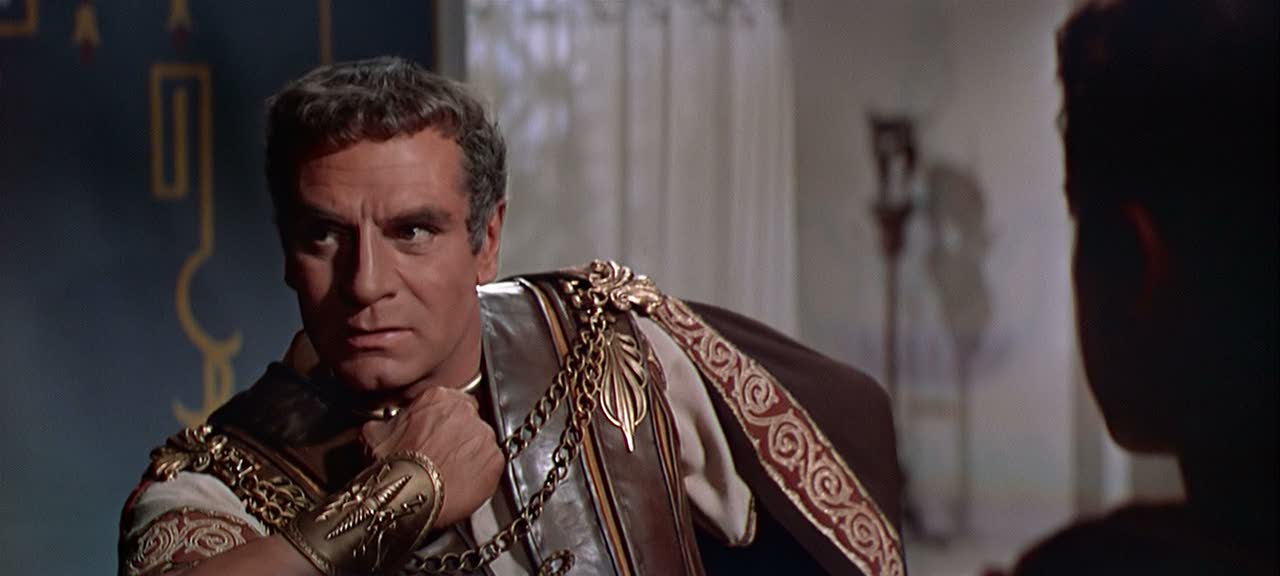
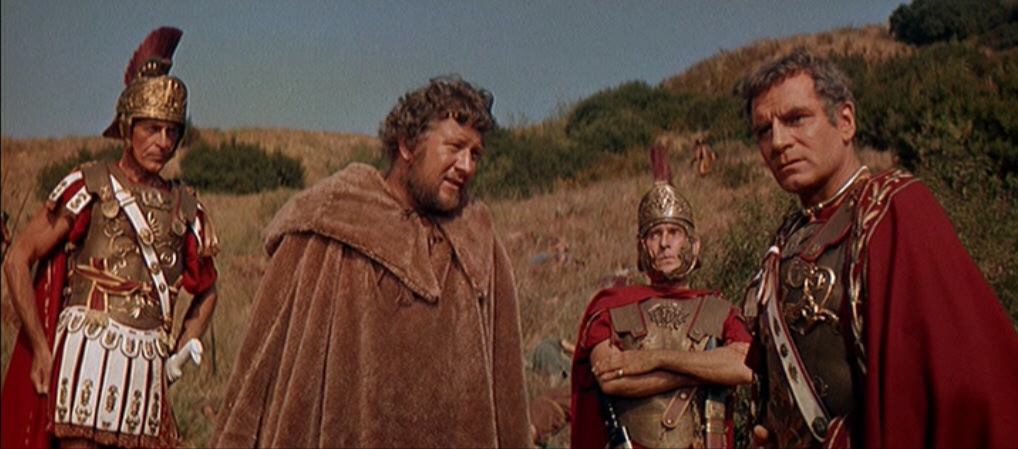
That’s probably why the film is more interested in the politics of the Romans. It’s certainly where the big name actors end up. Olivier is at his prowling, imperialist best – a heartless slice of ambition determined to bend events to his will. Against him, Charles Laughton with an impish cheek, a slightly corrupted air, as the man-of-the-people. These two conduct their own political battle of cut-and-thrust that Spartacus barely realises is happening. This manoeuvring is the real dramatic heart of the film, powered by these actors strengths (John Gavin and John Dall as their lieutenants look and sound very plodding against the playful archness of Olivier and Laughton).

That’s partly the point of Dalton Trumbo’s script (Douglas famously broke the Hollywood Blacklist by crediting Trumbo for his work on the film). While Rome plays politics, real people are fighting and dying for liberty – and will eventually find themselves crucified with nothing left but their pride and sense of freedom. It’s that feeling that probably lies behind the enduring love for this film.

It is perhaps Kubrick’s most universally beloved film. Interestingly though, it’s also the one Kubrick was least proud of. It’s true the film lacks much of his personal touch. While directed with flair and skill, parts of it could really have been made by any number of directors (not something you could say, for example, about The Shining or Barry Lyndon). Kubrick often quietly, albeit gently, disowned the film (he said he never knew what to say when people asked him about it). It’s the only Kubrick film where he was a “gun for hire”, subservient to the vision of the producer. His interest you feel is in the smaller moments – moments such as Woody Strode’s excellent cameo as a Gladiator (many of the strongest moments with the slaves in the tyranny of the Gladiator school, where life is meaningless and cheap). Really, it’s Douglas’ film – it’s similarities to The Vikings for example is striking – and while a poor advert for auteurism, it’s still a great advert for entertainment.

Kubrick’s greater interest in human failings and shades of grey perhaps explains why the Romans emerge as the more interesting characters. Spartacus’ lack of flaws were an intense frustration to him. Perhaps that’s why Peter Ustinov (who won an Oscar) is the films stand-out character. As gladiator owner Batiatus, Ustinov is devious, playful, amoral, ambitious, without principle, dryly witty but somehow still has touches of decency. The most colourful character in the piece is also the one most coated with shades of grey.

*It’s an advert for what makes Spartacus lastingly engaging and interesting whenever you watch it – even if the cry of “I’m Spartacus!” and the decency and honour of the slaves is always going to be what stirs the emotions and tugs the heartstrings. Douglas set out to make one of the greatest “sword and sandal” epics. He succeeded.

Gladiator (2000)

Russell Crowe dominates in Ridley Scott’s Oscar-winning Gladiator

Director: Ridley Scott

Cast: Russell Crowe (Maximus Decimus Meridius), Joaquin Phoenix (Emperor Commodus), Connie Nielsen (Lucilla), Richard Harris (Emperor Marcus Aurelius), Oliver Reed (Proximo), Derek Jacobi (Senator Gracchus), Djimon Hounsou (Juba), Tomas Arana (General Quintus), Spencer Treat Clark (Lucius Verus), David Schofield (Senator Falco), John Shrapnel (Senator Gaius), Rolf Moller (Hagen), Tommy Flanagan (Cicero), David Hemmings (Cassius)

When Gladiator hit the big-screen the swords-and-sandals epic genre was dead. A relic of the early days of technicolour Hollywood, where the widest possible screens were designed to tempt audiences away from the television and into the movie theatre, Roman epics were often seen as stodgy things, usually carrying heavy-handed Christian themes while gleefully throwing as much of the decadence of the empire on the screen as possible. Gladiator changed all that, bringing an emotional and psychological complexity to the genre, as well as a rollicking good story and some brilliant film-making. An Oscar for Best Picture confirmed the genre was back.

In 180 AD General Maximus Decimus Meridius (Russell Crowe) commands the final battle of the Roman forces to conquer the German tribes and bring them under the control of the Emperor Marcus Aurelius (Richard Harris). The humble, dutiful and principled Maximus is a natural leader and the son Marcus Aurelius wishes he had, rather than the son he has the insecure and ambitious Commodus (Joaquin Phoenix). When the Emperor decides that Maximus not Commodus will succeed him – with the brief to restore the Roman republic – Commodus murders the Emperor. When Maximus refuses to give Commodus his loyalty, the new Emperor sentences him and his family to death. Maximus escapes, although he is badly injured, but arrives too late at his home to save his wife and son from death. Collapsing, the General is taken by slavers, healed by fellow slave Juba (Djimon Hounsou) and sold to the North African Gladiator school of Proximo (Oliver Reed). Maximus will play the Gladiator game – because he longs to have his revenge on Commodus.

Gladiator is superbly directed by Ridley Scott, who perfectly mixes the epic scale of the drama with the intimate, human story at its heart. The film looks absolutely fantastic from start to finish, with the superb visuals backed by a breathtakingly beautiful score by Hans Zimmer and Lisa Gerrard that skilfully uses refrains and themes to instantly identify the core emotions in the audiences mind. These themes are associated with emotional beats that immediately plug us into the interior thoughts and emotions of the characters. 

It works because of the emotional truth at its heart. Basically it’s a love story between a man and his dead wife, and isn’t afraid to explore the depths of love that we feel for those closest to us and our pain of their loss. Maximus’ wife and child are represented in silent flashbacks and by two small icons Maximus carries with him on campaign. When, late in the film, he is reunited with these items his raw, tearfully quiet joy carry as much force as any real reunion would do. What drives the film is less a drive for revenge – although there is no doubt this is a motivator for Maximus – but of a continued sense that he must fulfil all his duties (in this case restore the Republic as his surrogate father wished) before he can return to his wife and son (i.e. die).

It’s that which makes the film so easy to invest in emotionally, and which makes Maximus (a hardened killer) so easy to relate to. If he was just a raging man out for revenge, the film would carry a leaner harsher look. But he is instead a man motivated by love, who yearns to be with his family again. Mortality hangs over the entire film – the first shot of the film, famously of the hands in the wheat, have buried themselves in the consciousness because we can all relate to a man who longs to lay down his labours and be with the people he loves. Christianity doesn’t appear too much in Gladiator (unlike older Hollywood Roman epics) but faith is there in spades. And Maximus will do nothing that will jeopardise a reunion with his family in heaven.

This deeply involving story of a man who remains faithful to the memory of his wife – and Scott wisely removed any love plot with Lucilla, which would have felt like cheatingso strongly does the film build Maximus’ love for his wife – that audiences are happy to go with the film through all the violence that follows. Gladiator hit the sweetspot of having something for everyone, from emotion to action. And the action is brilliant. The opening battles is hugely impressive, from its scale to the imaginative interpretation of Roman tactics. It’s trumped by the more raw and ragged action that comes in the Gladiatorial ring, as Maximus transfers his brutal efficiency at war into the ring for the amusement of the crowd.

Like all Gladiator films and series the film successfully has its cake and eats it – so we get a sense of the horror of people fighting to the death for our entertainment, while also heartily enjoying watching our heroes kick ass. The sequence that uses this most effectively, as Proximo’s outmatched Gladiators follow Maximus’ strategic experience and military training to defeat a group of deadly chariot fighters, would-be a stand out in any movie.

The film further works due to the assured brilliance of the Oscar-winning Russell Crowe in the lead role. Crowe exudes natural authority as a general – he genuinely feels like the sort of man that first his soldiers and then his fellow Gladiators will follow to the bitter end. Crowe also dives deep into the soulful sadness at the heart of Maximus, the romantic longing and the searing pain of the betrayal and murder of his family. It’s a performance of immense, small-scale intimacy that also never once gets over-shadowed by the huge spectacle around him. I’m not sure many other actors could have pulled it off.

But the whole cast is extremely strong, Scott encouraging great work across the board. Joaquin Phoenix in particular takes the villain role to a bravely unusual place. His Commodus, far from a sneering Caligula, is in fact a weak, anxious, jealous even strangely pitiable man, so insecure and riven with envy for others that he becomes twisted by it. But we never lose a sense of the humanity at his heart, the sense of a little boy lost, scared by the world around him. It makes sense the Connie Nielsen’s Lucilla – walking a difficult line as a character who has to play both sides – could both fear and hate him but still love the fragile little brother she still senses in him.

Scott’s trusting of experienced pros – many you feel hungry for an opportunity like this – is clear throughout the whole cast. Richard Harris was pulled out of a career slump and reinvented here as an elder statesman, with a wry, playful and eventually moving performance as Marcus Aurelius. Scott’s biggest risk was pulling Oliver Reed from a life better known for drinking bouts to play Proximo. Playing his best role for almost thirty years, Reed reminded us all for one last time that as well as a chat-show joke he was also a powerful and dominant performer, his Proximo a snarling scene stealer. Reed’s death – his final scenes completed with special effects – made this a better tribute than he could have ever imagined.

There are few feet placed wrong in Gladiator. As an action spectacular it’s faultless, but this works because of the truth and love at its heart. It creates an epic that is emotionally involving as it is exciting to watch. The reconstruction of Rome is hugely impressive and Scott paces the film perfectly, letting its force grow along. You never once feel thrown by its scope, and so completely does it wrap you up that, as it becomes more operatic in the final act, the film is never at risk of losing you. It deserves to be remembered with the best of the Hollywood epics.