Category: Autobiographical films

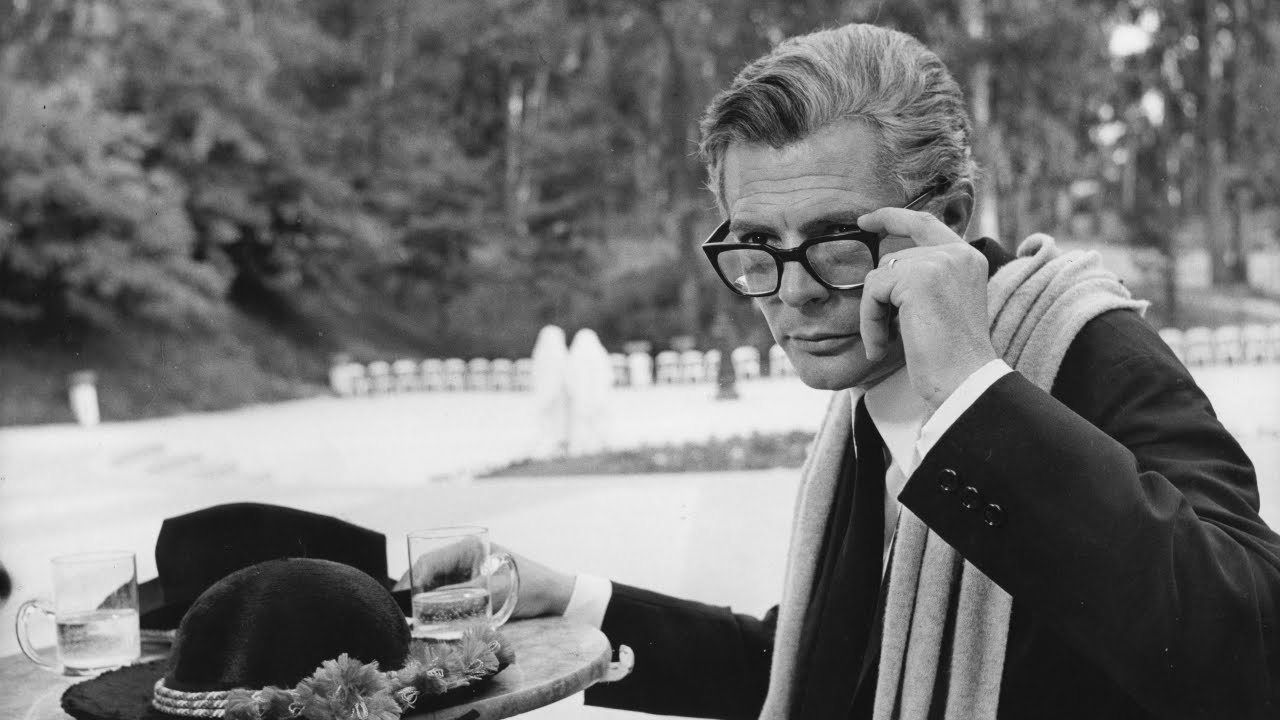
8½ (1963)

Marcello Mastroianni plays a version of the director in Fellini’s inspiring

Director: Federico Fellini

Cast: Marcello Mastroianni (Guido Anselmi), Anouk Aimée (Luisa Anselmi), Rossella Falk (Rossella), Sandro Milo (Carla), Claudia Cardinale (Herself), Guido Alberti (Pace – Producer), Jean Rougeul (Carini Daumier), Mario Pisu (Mario Messabotta), Barbara Steele (Gloria Morin), Madeline Lebeau (Herself), Eddra Gale (La Saraghina), Ian Dallas (Maurice, clairvoyant’s assistant)

If there is a single director associated with self-reflecting films its Federico Fellini. Frequently recognised as one of the greatest and most influential directors of all time, many of his films use baroque imagery and a masterful interplay of reality and fantasy to delve deep into both its director’s own subconscious and the swirling pressures and internal conflicts that make us the people we are. is, perhaps, the greatest expression of this style of film-making, a giddy sensory delight that demands investment and wisdom to unpeel its layers and give you a chance of finding its meaning.

Frequent Fellini collaborator Marcello Mastroianni plays Guido, a thinly veiled portrait of Fellini himself. Like Fellini, Guido is a successful and visionary director, facing pressure to come up with his ‘next masterpiece’ after the glorious success of his previous film (in Fellini’s case La Dolce Vita). Like Fellini, Guido is struggling to work out exactly what statement he wants to make next, instead allowing himself to become distracted by personal issues and day-dreaming flights of fancy (literally so in the film’s opening, where Guido imagines himself flying through the sky before being tethered and pulled to earth by his producer). Most of all these distractions revolve around women, from his wife Luisa (Anouk Aimée), his mistress Carla (Sandro Milo) and recurring daydreams of Claudia Cardinale (playing herself) who could just be the muse he is looking for. 

To me one of the things that can make a film great, is when the ideas in it are not obvious and tired, but when they defy obvious characterisation but throw themselves open to further thought and different interpretation depending on your mood. definitely meets this criteria, combined with the fact that it’s beautifully made and very entertaining.

Fellini’s deep dive into his own subconscious is deeply involving and intriguing. The film dances from beat to beat between reality, memory and fantasy – often leaving the lines blurred about which of these we are watching at any one time. That’s part of Fellini’s idea, that our minds are complex enough to exist on all three plains at the same time, to juggle within ourselves what’s real, what we remember, what we imagined or wished could happen and how we create our own versions of all these. 

In the build-up to the film, Fellini famously struggled to identify what he wished to make and what it should be about. But while you could say that Fellini turned this creative block into a film – that, when unsure about what to make a film about, he made a film about a director who didn’t know what to make a film about – that’s to suggest a vagueness in its execution that isn’t the case. Fellini knows exactly what he’s doing here: every scene serves its purpose to explore the ennui and feelings of entrapment that an artist feels, both in his life and his craft. Far from being ambling, the film is carefully constructed and brilliantly focused.

Guido is hounded at every corner by people wanting something from him. Be it producers demanding progress, extras looking for roles in his film, actors demanding insight for their characters to his mistress looking for his attention or his wife demanding more focus from him on their marriage. The film is Guido attempting to identity among all these demands what he needs and wants from his own life – and how to build on that. It’s telling that most of Guido’s fantasies that litter the film revolve around his demands for other people to service him – be that romantically, literally or spiritually. Is part of the point of the film that we are all selfish to some extent? 

It’s the film’s exploration of day-dreaming fantasy that gives it some of its most extraordinary work, coupled with Fellini’s superb and striking visuals. The opening sequences of Guido imaging literally flying out of a traffic jam (and away from the stares of the other drivers) into the freedom of the sky – before being literally pulled back down to Earth – shows how these flights of fancy give us windows into our own desires. Guido’s a confused man looking for focus and something to believe in – his constant fantasies of Claudia Cardinale seem in part longing for her to solve his creative problems, part sexual, part almost motherly, as if she can take some decisions away from him.

Other fantasies – such as an imagined conversation with a priest for spiritual guidance – lean on finding the sort of structure his life seems to be missing. (And also, in a fantasy confession of his ennui to the same priest, perhaps a need again to be told what to do.) Most of his fantasies though revolve around romance. He imagines his wife and mistress sharing anecdotes before dancing away arm-in-arm. Most famously, an extended sequence shows Guido imagining a harem containing all the woman in his life, where he is the centre of attention – and women who age beyond his interest are politely banished upstairs “to be well looked after”. The women range from long-standing crushes and mistresses, to half-glimpsed dancers and an air hostess with a sexy voice. 

There is a striking honesty about Fellini putting something like this on film – and then use the fantasy he is displaying to both comment on and criticise his own internal fantasies. In the fantasy, unlike real life, his wife is an almost maternal figure (Guido has already jumped at one point in his reverie earlier in his film, to remember his mother only for her to turn into his wife), the women address Guido with harsh truths about everything from his character to his sexual performance, a revolt breaks out in the fantasy harem at Guido’s banishing of early crushes as they age (one which Guido stamps out). The harem is further set within his childhood home, adding a whole other layer of odd sexuality to it, as part of the women’s duties are to bath and wash him exactly as his grandmother did as a boy. It’s a sequence that lays itself open to multiple interpretations, but never feels exploitative or sleazy.

Large chunks of the rest of the film take place in a hard-to-define space between dream, memory and reality. Frequently scenes shift in nature half way through – Guido is followed throughout the film by a critic-turned-screenwriter, full of criticism of the intellectual shallowness of his work who, mid-rant, he imagines taken away for execution by some toughs. Gentle tracking shots around the retreat Guido is staying at – scored with a mixture of classical music and Nina Rota’s wonderful score – trip a line between real and imaginary in the sights we see. Conversations are intercut with imagined moments or might simply be happening in a pretence rather than a reality.

If it sounds like a difficult view, it’s not. Because for all the intelligent analysis of the ennui that can come from a creative block and the internalised struggle to find a balance between all the impulses that pull on us, it’s also a hugely entertaining film. Funny, wise and superbly acted. Mastroianni is brilliant as Guido, in turns giddy and world-weary, confused and resigned then ambitious and dreamlike. The rest of the cast are also excellent, with Anouk Aimée delightful as his long-suffering wife and Sandro Milo hugely entertaining as a needy but largely ignored mistress.

Fellini’s dives into memory also add both a richness and an emotional heft to the film. There are some beautifully nostalgic sequences that head back into the past. Guido’s childhood is explored with a series of wonderful vignettes. From his childhood in a wine distillery with his grandmother and aunts, full of playful energy, to the first stirring of a sexual awakening watching a prostitute dance on the beach (a quite extraordinary scene of playful flirtation, but still rather oddly innocent in its way). These scenes have captured the imagination of directors across the globe, with their power and ability to capture both the nostalgia of recollection, but also a distant magic of memory and the impact these still have on us in the present. But no body does this better than Fellini.

The best thing that can be said about is that I can imagine watching it hundreds of times, and each time seeing something fresh and new about it. And it works because its ideas are profound without being pretentious and easy enough to engage with, while never shallow. It brings depth and richness to complex internal struggles and repackages these into a rich experience that enlightens both memory and creativity. A great movie.

Marriage Story (2019)

Scarlett Johansson and Adam Driver are an estranged couple in Marriage Story

Director: Noah Baumbach

Cast: Scarlett Johansson (Nicole Barber), Adam Driver (Charlie Barber), Laura Dern (Nora Fanshaw), Alan Alda (Bert Spitz), Ray Liotta (Jay Moratta), Azhy Robertson (Henry Barber), Julie Hagerty (Sanda), Merritt Wever (Cassie), Wallace Shawn (Frank), Martha Kelly (Nancy Katz)

It’s a scenario that more and more marriages in our modern world head towards – divorce. And it’s never easy to separate from something that has dominated your life for years, and the more that bonds two people together, the harder to pull them apart. As the film says, “it’s not as simple as not being in love any more” – and the complex emotional bonds that form between people, and the inability we have to switch these on and off like lights, are what drive Noah Baumbach’s film, heavily influenced by his own real-life divorce from Jennifer Jason Leigh.

Nicole Barber (Scarlett Johansson) is a former child-star who has built a career as a respected theatre actor in tandem with her husband Charlie Barber (Adam Driver), an acclaimed and visionary theatre director. Living in New York with their young son Henry (Azhy Robertson), their marriage is dissolving with Nicole frustrated at Charlie’s selfishness, just as Charlie is angered by what he sees as her refusal to take full responsibility for her career choices. As mediation fails, Nicole returns to LA for a role in a TV series, taking Henry with her. With divorce papers filed in LA, the couple engage in a cross-state legal battle for custody and finances, with their positions increasingly weaponised into hostile encounters by their respective legal teams. No one is coming out of this one unscathed.

Baumbach’s film is tender, sympathetic and offers a fine line of arch comedy and even farce (at points), that works over time to be as even-handed as it possibly can. The film’s sympathies are aimed not solely at husband or wife, but at the couple themselves wrapped up in the hostile, money-spinning world of divorce where, it’s strongly implied, the only real winners are the lawyers making thousands of dollars spinning out clashes as long (and as aggressively) as possible in order to cement their positions and keep their industry going.

The film is a solid denunciation of the entire industry that has grown up around divorce, where it’s seemingly impossible to find any arrangement alone without lawyers giving it a legal force, or to come out without that process consuming most of the wealth of the couple. Even worse in this case, the main battle-ground becomes the rights of each parent to access to their son, Henry’s college fund disappearing into a legal battle and the child becoming the centre of both fraught attentions and an unseemly competition for affection between both parents, effectively offering bribes for preferential responses from their son. All in order to prove that their link to him is the stronger.

The tragedy of all this – the way the system seems designed to turn personal relationships poisonous and bitter – becomes Baumbach’s focus. Brilliantly the film starts with a voiceover from both Nicole and Charlie in turn, over a montage, stressing the wide list of things they loved about their partner in the first place: part, it is revealed, of a mediation session that ends in disaster and Nicole’s walkout. But the closeness, the bond, the intimacy of these two people is revisited time and time again in the film. Legal dispute scenes and lawyer confrontations are followed by perfectly friendly home visits and regretful conversations. Legal meetings are bizarrely punctuated by coffee with conversation from the lawyers suddenly turning light and breezy. Then, as events hit a courtroom, moments like Charlie’s failure to properly install a car seat are spun out by lawyers as evidence of his risky disregard of his child’s safety while Nicole’s glass of wine after work becomes incipient alcoholism. 

For a film about divorce, it’s striking that it’s the process of divorce that turns the couple’s relationship increasingly toxic (culminating in a brutal scene where each throws increasingly personal and cruel abuse at each other for other five minutes). Sure there are resentments and anger at the front, but these are kept under reserve and still allow the couple to chat and negotiate amicably when they’re by themselves. As soon as the lawyers are involved, the mood steadily turns worse and worse. 

This is part of the film’s attempt to present the couple even-handedly. I’d say it only partially succeeds at this – with a 55/45 split in favour of Charlie, who is presented as the most “victimised” by the system, as the New York man having to prove he has a link to his now-LA-based-son. While Nicole does get a fantastic monologue (brilliantly performed by Johansson, full of regret, apology, anger and confusion) where she outlines Charlie’s selfishness, distance and probable (later confirmed) affair to her lawyer, the focus soon shifts to Charlie’s travails in the system. It’s him hit by a blizzard of demands from court and lawyer. It’s him who is separated from his son. It’s him who pays the biggest financial burden. It’s him who takes the biggest blows and has to bend his whole life to try and claim a residency in LA. It’s not a surprise Baumbach marginally favours his surrogate, but it does leave you wanting a few more scenes – especially in the latter half of the film – for the impact on Nicole.

However you keep on side with both halves of the couple thanks to the superb performances from Johansson and Driver. Johansson is both fragile and acidly combative, a woman who feels she has led someone else’s life for far too long. Driver is a bewildered gentle giant, but carrying a long streak of self-justifying self-obsession, clearly believing himself the only victim, but deeply hurt by the situation he finds himself in.

Supporting him are three very different lawyers. Laura Dern is on Oscar-winning form as Nicole’s brash, confident, ruthless defender with a smile so practised it’s hard to tell when it’s false or when it’s true. Alan Alda is endearing – but also gently out of his depth – as Charlie’s more conciliatory first lawyer (in one brilliant moment, Charlie interrupts a lengthy joke from Alda’s Bert during a sidebar with the frustrated put down “sorry Bert am I paying for this joke?”) while Ray Liotta channels De Niro roughness as his fiercely competitive second lawyer.

Marriage Story is a bittersweet, superbly made, moving but occasionally strangely funny story of a couple falling out of love and trying to find the way of converting that into a functioning co-parenting friendship. Throughout it’s not the couple, but the system making money from their dysfunction, that’s to blame in this marvellously written and superbly played drama.

Pain & Glory (2019)

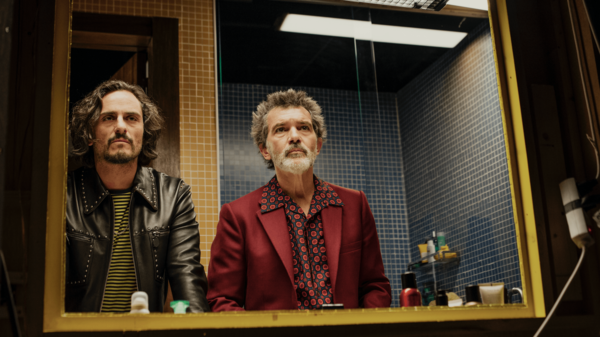
Antonio Banderas excels as a version of the director in Almodóvar’s Pain & Glory

Director: Pedro Almodóvar

Cast: Antonio Banderas (Salvador Mallo), Penélope Cruz (Jacinta Mallo), Nora Nacas (Mercedes), Asier Etxeandia (Alberto Crespo), Leonardo Sbaraglia (Federico), César Vicente (Eduardo), Cecilia Roth (Zulema), Julieta Serrano (Older Jacinta Mallo), Raúl Arévalo (Salvador’s father)

Every artist in time reflects on his roots, and many explore these reflections in their medium of choice. The master of this in the world of cinema was Fellini, and any film that riffs upon the biography of auteur directors is destined to be described as Fellini-esque. That’s an appropriate title for Pedro Almodóvar’s Pain & Glory, which explores Almodóvar’s childhood spiced with a fictionalised version of himself in the present day, struggling with lack of drive and against a series of crippling illnesses. It makes for a gently structured, quietly moving picture shot with a classic simplicity but filled with genuine emotional feeling.

Salvador Mallo (Antonio Banderas) is our Almodóvar substitute, his body falling apart from a range of illnesses and diseases that have prevented him from directing a film for years. Asked to present a screening of a classic film of his from almost thirty years ago, he contacts the lead actor of the film Alberto Crespo (Asier Etxeandia) who he has not spoken to since making the film. The two quickly re-bond – helped by Mallo’s curiosity about trying the heroin of which Crespo is a habitual user. Mallo finds the drugs not only help to ease his pain, but also bring back a flood of memories about growing up with his mother Jacinta (Penélope Cruz) as a poor peasant boy, educated in a convent school and teaching a young labourer Eduardo (César Vicente) to read and write.

Almodóvar is best known for a electric, dynamically assembled films but he is also a patient and intelligent craftsman and sensitive director with an eye for pace, and Pain & Glory is a far more meditative piece, as befitting the sense that both Almodóvar and Mallo are reflecting on their entire lives. The general structure fits in to a well-worn template of such films, with Mallo dealing with dissatisfaction and frustration in the present day but, through memories, finding a sense of peace and an ability to move on and reconnect with his life and work. But familiar as it is, it is a template that works exceptionally well – and I felt a real sadness and frustration that Mallo is drawn towards the superficial, short-term, comfort that drugs bring him when he is unable to write and direct films.

While I find some of the films attitudes towards drugs a little unsettling (Crespo seems willing to kick them at will, which I find rather hard to believe and even a bit irresponsible), it does show that this is a false nirvana for Mallo and that the more time he spends (as he eventually recognises) wallowing in this rather than finding avenues for artistic creation, is time wasted. Crespo (very well played by Asier Etxeandia, despite the character being a bit of a cliché) may well be a great actor – his performance of a Mallo short story memoir carries real emotional weight – but he is a lightweight human being, the very opposite of the far more deeper feeling (and thinking) Mallo. 

It’s that exploration of Mallo’s personality, art and how the two relate to his memories of his past that really powers the movie. Mallo is of course played by Almodóvar’s muse Antonio Banderas – and this might well be the greatest performance of Banderas’ career. I’m sure he has never been as sensitive, gentle, soft, tender and vulnerable as is here. Looking thinner and more delicate than ever before, Banderas keeps emotion carefully in check but playing constantly in the eyes. He’s fabulous, a wonderfully humane and beautiful performance.

Matching this quality, the sequences that really kick into gear in the modern storyline are those that carry real emotional meaning for Mallo/Almodóvar. The first is a meeting between Mallo and former lover Federico (Leonardo Sbaraglia, quite excellent – tender, heartbreaking and real) , which is an intensely personal, gently played, sad but also affectionate and hopeful conversation about a relationship loved and lost, which belongs in the past but which can bring a certain contentment in the future. It’s also a scene that demonstrates how the past sometimes stays better in the past, and that quieter reflections on lost relationships can be better and richer than restarting them. 

This also mixes in well with Mallo’s yearning to be free to continue his creative output, unburdened by disease and illness, mixed with a loving guilt for his mother who sacrificed so much to give him chances in life and whom he feels he failed in her final years (despite spending them caring for her in his home). The later sequences showing Mallo looking after his mother (a wonderful performance by Julieta Serrano) hum with an intimacy and emotional honesty that work all the better for the film’s careful interweaving of past and present.

Extended flashbacks – driven perhaps by Mallo’s exploration of his past fuelled by drugs – chronicle his childhood with his mother, marvellously played by Penélope Cruz, Almodóvar’s other muse. Cruz’s maternal, caring but strong-willed embodiment of Mallo’s mother is exquisite, from singing while washing laundry at the lake to sadly encouraging her son to believe convent school is his best chance of a full education. It’s clear that Mallo’s mother believes she knows what is best for her son – and, as a late sting shows, sometimes mean she takes drastic decisions without her son’s knowledge. The flashbacks cover everything from Mallo’s education to his first infatuation (and realisation of his sexuality) with a young married labourer who he teaches to read and write.

Pain & Glory explores all these memories with a touching intimacy but also a clear-eyed reality, and Almodóvar’s honesty in these scenes and with his own feelings about his past and how it has powered his art have a real emotional force to them. With superb performances throughout the cast, the film is a testament to the restraint and careful lack of flash, of a director willing to explore his life without flash or bangs. At one point Mallo opines “a great actor is not the one who cried, but the one who knows how to contain the tears”. It could be a strapline for the whole movie.

Roma (2018)

Alfonso Cuarón’s beautifully filmed semi-auto-biography

Director: Alfonso Cuarón

Cast: Yalitza Aparicio (Cleo), Marina de Tavira (Sofia), Fernando Grediaga (Antonio), Jorge Antonio Guerrero (Fermín), Marco Graf (Pepe), Daniela Demesa (Sofi), Diego Cortina Autrey (Toño), Carlos Peralta (Paco), Nancy García (Adela), Verónica García (Teresa), José Manuel Guerrero Mendoza (Ramón)

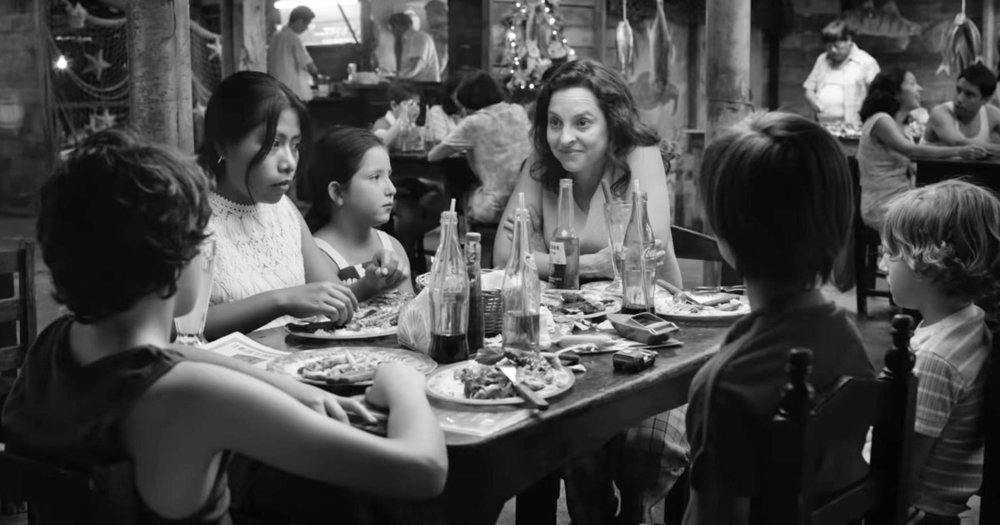
All great artists come from somewhere. Experiences fashioned and moulded them. And great storytellers often feel an urge to dramatise and explore their own backgrounds, to bring these events that formed them as artists to life for a wider audience. It’s what Alfonso Cuarón does here with his semi-autobiographical Roma, a Federico Fellini-inspired meditation on events from his own childhood and upbringing, filmed with magnificent, patient lushness.

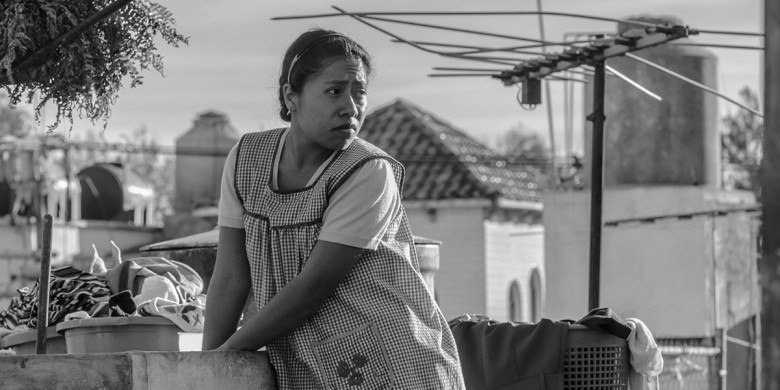
Despite its semi-autobiographical nature, Roma actually revolves not around the young version of Cuarón (he in fact is hard to identify in the film, but is probably the imaginative younger son Pepe) but Cleo, the family’s live-in maid. Set in 1970-1, the household comprises a middle-class Mexican family (husband a doctor, wife a chemist) and three live-in servants. The film follows a year or so in the life of the family and Cleo, including her surprise pregnancy and the repercussions of that on Cleo, as well as the impact of troubles in the marriage of the parents Antonio and Sofia. 

Cuarón’s debt to Fellini’s semi-autobiographical films, which turned his own childhood and career into a sort of filmmaker’s fable, is clear – heck even the title itself is a clear nod to Fellini’s own childhood story also titled Roma. It’s a poetic presenting of a version of events that may have happened to the filmmaker, and it feels personal and filled with meaning.

This Roma is a lusciously filmed, gorgeously meditative, visual treat. Shot in crisp and clear black and white, the camerawork is sublime – slow and gentle, carefully following events. Several shots use a slow dolly shot in an arc, to give the feeling of your head turning to take in scenes and the events within them. Cuarón presents a string of arresting and beautiful images, and the film’s lyrical observational tone – like a gentle Mexican Mike Leigh fable – lets the action soak over the viewer and lure you into caring for the characters and the events. 

I say that, because actually very little happens for large chunks of this film, other than following the lives of the family and the everyday events they deal with, from cleaning up dog’s mess from the drive, to trips to the cinema. It’s this air of ordinariness, this lack of event, that gives the themes bubbling under the surface a lot of their strength – namely the shock pregnancy of Cleo and the clear marriage break-up taking place between the two parents. These darker themes – as well as the potential political radicalism of one minor character – are dangerous undercurrents that threaten, but don’t overwhelm, the normality of many of the events. Cuarón lets them play as subtext, while keeping the event and drama to a minimum – this helps make the drama feel extremely real.

However, it also means that when these themes start to pay off into more traditionally dramatic events in the final quarter of the film, it carries a surprising and sudden emotional force that caught me off guard. Somehow, from just living in and among this extended family, and essentially observing their day-to-day life, it set me up to invest even more in the turmoil that threatens their happiness, as those darker currents that had been kept under the family’s (and the film’s) radar burst up onto the surface. So suddenly, at the end of the film, I found myself actually choking back a few tears at the genuine and real emotion that the film suddenly gives us.

This is helped by the naturalistic performances of the cast of non-professional actors. I often feel that the reality of performances like this, this neo-realism approach of encouraging people to play versions of themselves, a la Bicycle Thieves, is as much to a tribute to the patient, gentle and subtle direction of the film-makers as it is to the actors. Cuarón certainly worked with his cast here – shooting the film sequentially to help the actors develop their performances as the film’s story itself develops. Saying that, Yalitza Aparicio is intriguing as the dedicated maid and I was extremely taken by the strength of Marina de Tavira as the mother holding her family together.

What I found less successful about the film was the fact that this story is meant to be about Cleo, but I’m not sure what we really learn about her. Cuarón partly covers her lack of experience by reducing her dialogue to a minimum and letting her eyes convey her story. It’s just I’m not sure what story there really is. Events happen to her – and clearly take an emotional toll – but it never feels (to me) that we get an insight into her character, to her real inner life. We get glimpses but she remains a slight cipher for events that happen to her: what impact do they have on her? How does she change? What does she learn? Crude as “learning” can be in drama, Cleo feels basically the same at the end of the film as she does at the beginning. 

In fact if this film was in English, or set in England, I can imagine it being savaged for its presentation of the servant as a woman who seems to define nearly all her life by her dedication and service to her employers. There is a certain sweetness at Cleo being treated like one of the family, and covered in warmth and affection, but she still gets ordered to clear dog shit off the drive. If Downton Abbey is often criticised for the paternalistic view the employers have of the lower classes (sweet as it is to see the care and concern Sofia treats Cleo with), surely this film is guilty of it as well? The film also flips this with those same lower classes integrating their own contentment with those of their masters. At times Roma feels like a man paying tribute to his nanny by saying “she went through terrible things, but the important thing was she was always there for us”. Which somehow points exactly at how much he really knew about this person, even if the film seems to show the warts and all of her life. 

Roma is a beautiful and poetic exploration of a childhood – but it feels like it has the understanding of a child. It doesn’t really scratch below the surface to give us the adult perspective, to interpret what the adults are thinking and feeling. It treats the audience like the children – we see things, but we don’t get down into the emotional depths of its characters’ stories. Don’t get me wrong – there are scenes laced with emotional force – but it’s because scenes such as tragic childbirth or danger to children are going to carry emotional force regardless. It doesn’t feel like the depth is connected to the characters. For all the time we spend with Cleo, I couldn’t describe at all what she is like or who she really is (except maybe “long suffering”, “dedicated” or “kind”). For all the film’s beauty, charm, poetry and joy it’s somehow, ever so slightly, empty.

All That Jazz (1979)

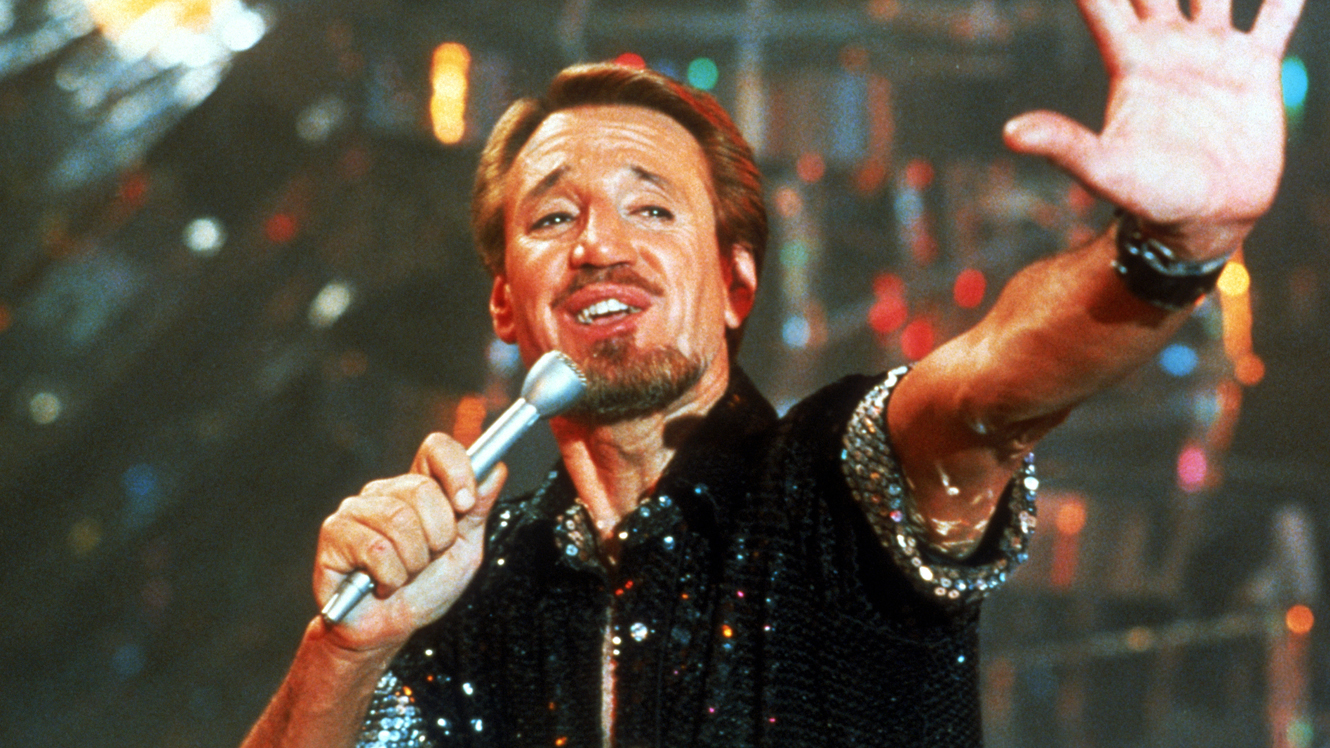
Roy Scheider plays the director Bob Fosse in a barely-veiled-at-all autobiographical film All That Jazz

Director: Bob Fosse

Cast: Roy Scheider (Joe Gideon), Jessica Lange (Angelique), Leland Palmer (Audrey Paris), Ann Reinking (Katie Jagger), Cliff Gorman (Davis Newman), Ben Vereen (O’Connor Flood), Erzsebet Foldi (Michelle Gideon), David Marguiles (Larry Goldie), Michael Tolan (Dr Ballinger), Max Wright (Joshua Penn), William LeMassena (Jonesy Hecht), Deborah Geffner (Victoria Porter), John Lithgow (Lucas Sergeant)

It’s revealing when a director makes an autobiographical film. There are insights to be found about the sort of person they are – and the sort of person they want to present themselves as to the world. And All That Jazz is possibly the most striking autobiographical film ever made. You have to have a towering amount of ego to make a film showing yourself as a deliriously talented polymath, generally liked by everyone. And then you have to have a giddy self-awareness to give your semi-fictional doppelganger all your titanic faults, selfishness, cruelty and flaws. Let’s not even get into the psychology of turning your own death into a musical number, eight years before it happened.

Just like Bob Fosse, Joe Gideon (Roy Scheider) is a hugely influential choreographer and director who has changed the face of Broadway musicals before going on to become the Oscar-winning director of a string of critically acclaimed films. He is also a workaholic, addicted to a string of prescription drugs, a never-ending smoker, with a strong of failed marriages and affairs behind him. Just like Bob Fosse, in 1975 Gideon is staging his ground-breaking original production of a musical (Fosse was directing Chicago which clearly inspired the unnamed musical here), starring his ex-wife (and mother of his daughter) Audrey Paris (Leland Palmer, a frequent Fosse collaborator), living with his girlfriend Kate Jagger (played by Ann Reinking, who was Fosse’s real life girlfriend at the time). At nights and weekends he is editing The Stand-Up (a version of Fosse’s film about stand-up Lenny Bruce titled Lenny starring Dustin Hoffman). When he has a near fatal heart attack part way through this, Gideon starts to sink. Fosse on the other hand used the experience to write this movie. 

All That Jazz is an electric piece of film-making, full of Fosse’s dynamism. It’s not only crammed with fabulous song and dance numbers (some of the best Fosse work you’ll see) but it’s beautifully edited and paced. Fosse holds it all together so brilliantly you never feel the thing teeter on the tightrope like Gideon does (the first image of the film is appropriately Gideon walking a tightrope). It perfectly captures the high intensity, killer pressure of maintaining this constant state of activity, and suggests how much Fosse (clearly) believed his own life was a performance, every moment constructed and staged for maximum impact. 

And that’s what you wonder about the film. Does Fosse hate himself, love himself or some combination of both? It’s something the film just teases, with Gideon indulged in a series of fantasy-tinged cryptic conversations with Jessica Lange (another Fosse conquest allegedly) as some sort of angel dressed in white. Here Gideon of course flirts and charms as only he can, while answering with ambiguous amounts of truthfulness a series of questions about love, his background, his wishes and dreams. But even when he says these things, there is the half smile that suggests it’s only part of the story. Or maybe Gideon himself doesn’t even know where life ends and the story begins.

Fosse’s film is just about perfectly structured. Repeatedly we see Gideon going through the same daily ritual when he wakes up: Vivaldi, shower, cocktail of prescription drugs, eye drops, slap hands, “It’s a show time!” (with an ever increasing struggle to keep the energy up). As the tempo of this repeated introduction changes through the film, you get a perfect idea of the state of Gideon’s mind and mood – and his relentless attempt to turn his own life into a perfect performance.

In among all this, perhaps no film has ever showed a better understanding of the pressures of creating a Broadway musical. The opening sequence follows a series of exhausting auditions from literally hundreds of dancers desperate for a role in Gideon’s show, slowly being whittled down to the chosen few. The rehearsals are a punishing series of deconstructions as the dancers strive to match Gideon’s perfectionism. Rehearsal rooms are crammed, sweaty and uncomfortable. The money men hover over every scene, with an eye on protecting their investment. And then, we see the results suddenly of Gideon’s work with a Chicago-ish dance routine so sexually charged it is positively indecent. It’s genius on at least three levels.

The film revolves around Gideon, and the amount of time squeezed out of his personal life by his never-ending, passionate work commitments. Leland Palmer is excellent as his loving but deeply frustrated wife, supportive but all too aware of Gideon’s selfishness. The bond between them feels strong, real and above conventional marriage. Ann Reinking is equally marvellous as his lover, protégé, partner and you name it. Between these three characters there is a hugely warm performance from Erzsebet Foldi as Gideon’s shrewd but loving daughter. Fosse isn’t afraid to sprinkle real moments of family warmth in, as if trying to show Gideon all the things he is missing out on – one particularly outstanding moment is a song-and-dance routine Reinking and Foldi perform for Gideon after the premiere of his film The Stand-Up, as entertaining as it is charming.

But the film’s secondary motor, after Fosse’s directing brilliance (seriously, there are few Hollywood directors so undervalued, the man is a genius) is Roy Scheider as Gideon. I can’t really imagine a more bizarre sounding bit of casting: Jaws Chief Brody as a song-and-dance man, the world’s greatest (even slightly camp) choreographer. But Scheider is simply sublime in this role. It’s a towering, landmark performance of total commitment. He’s achingly human, supremely sad but also overflowing with warmth, humanity and humour while also being repeatedly selfish, difficult and demanding. It’s a performance of total absorption.

By time of the finale number (a truly bizarre version of Bye Bye Love, renamed Bye Bye Life, in which Gideon lives his final moments in a fantasy world, singing and dancing his way towards death in front of an audience of faces from past and present) the whole thing is so wonderfully overblown it doesn’t really matter. The film’s passage into the surreal and fantasy as Gideon gets increasingly ill (while showing less and less regard for his own health) will be a bit much for some, but I was honestly so into it that I didn’t care. 

Because the film is about this acute piece of self-analysis from the director, a Fellini-inspired sort of musical , in which the understanding (or lack thereof) we get of Gideon, and which he gains about himself, is most important. His conversations with Lange’s angel of death are intriguing and as informative about the man he really is as the man he wants to be. 

Fosse’s film is simply supremely well directed (Kubrick called it one of the best films he ever saw). Fosse’s editor (playing himself in the film as the editor of The Stand-Up) said if Fosse had actually died during the making of the film, he would have made sure his death was filmed and edited into the movie. I can believe it. The only musical you’ll ever see which doubles as a confession and a condemnation, which turns death and surgical procedures into wham bam musical numbers, and which never becomes maudlin or sentimental about the self-inflicted disaster the director is putting on himself – it’s brilliant.

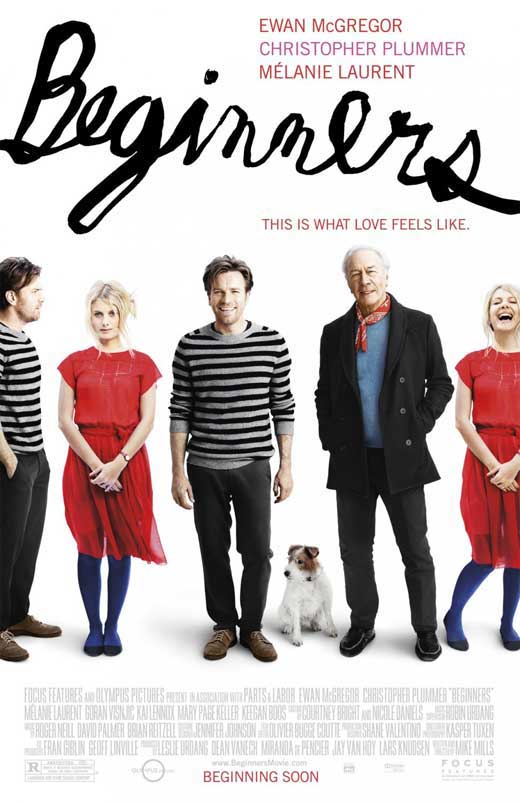
Beginners (2010)

Christopher Plummer and Ewan McGregor are a father and son building a bond in quirky fable Beginners

Director: Mike Mills

Cast: Ewan McGregor (Oliver Fields), Christopher Plummer (Hal Fields), Mélanie Laurent (Anna Wallace), Goran Višnjić(Andy), Mary Page Keller (Georgia Fields), Kai Lennox (Elliot), China Shavers (Shauna)

Oliver Fields (Ewan McGregor) is a reserved man who has struggled to hold a relationship down because of his own emotional distance. His world is shaken when his father Hal (Christopher Plummer) comes out at the age of 75, after the death of his mother, and proceeds to lead an active life in the gay scene of LA, including taking on a boyfriend, Andy (Goran Višnjić). After his father’s death, reflecting on Hal’s love of life and increasing emotional honesty makes Oliver consider his own life and start to tentatively consider a relationship with a French actress, Anna (Mélanie Laurent).

This heavily auto-biographical film was based on the life and experiences of writer-director Mike Mills. It has moments of genuine sweetness and light, occasionally undermined by the slightly smug quirkiness that creeps into the story at several points. Mills sometimes tries a little too hard as a director, using montages of stock footage to place years into context and to add a quirky sheen to the drama.

In fact it’s that quirk that often gets in the way of the drama in the film, Mills relying too often on meet-cutes, a dialogue Oliver has (in subtitles) with his dog, jolly picture montages, the cartoons Oliver draws on themes like “The History of Sadness”, the achingly clever-clever graffiti Oliver sprays on walls etc. etc. Maybe I am just cold of heart but this sort of stuff gets on my nerves rather than awakening my warmer feelings. Clearly I’m getting old.

Someone who isn’t getting old is Hal. Played with Oscar-winning bravado and joie de vivre by Christopher Plummer, the film gets most (if not all) its emotional mileage out of Hal’s embracing of life and his equally profound regret at the years of concealment and emotional distance he inflicted on others. One tearful moment sees the extremely sick Hal holding Oliver’s hand on a bed, sadly reflecting he wanted to do this throughout Oliver’s childhood but didn’t feel he could. 

The film carefully positions Hal’s late acceptance of his personality and explosion of embracing life as an inspiration, and contrasts it with Oliver’s buttoned up repression. To be honest, someone as repressed and traditional as Oliver might well have taken slightly longer (you suspect) to deal with the fact that his dad comes out after the death of his mother – but then this is basically a father-son romance, so you can’t blame Mills for trimming down this expected drama. 

Instead the story focuses largely on Oliver learning to open his heart to a relationship with Melanie Laurent’s French actress (a relationship by the way so impossibly quirky the two of them meet at a fancy dress party – he’s dressed as Freud, she can only communicate through writing notes because she has laryngitis. To be fair it’s marginally less irritating than it sounds). This story is cross-cut with flashbacks to Hal’s last few years that illustrate different lessons Oliver learned from his dad.

This is all rather artfully and gently done, but very traditionally structured. The flashback material with Hal is far stronger and Christopher Plummer’s mix of playfully raging against the dying of the light and gentle emotion and sadness overwhelms the modern plotline. It’s hard to get wrapped up in Oliver’s stumbling shoot-yourself-in-the-foot courtship of Anna, when you have Plummer ripping through a beautiful monologue on how he was desperate not to be as distant as his own father. Even the jokes get overwhelmed – nothing in Oliver’s storyline is as amusing as Hal raving over garage music.

The real interest to be honest is in the relationship between Hal and Oliver, and the late blooming of emotional honesty and love between them (Oliver claims he can barely remember Hal from his childhood, and flashbacks confirm this). Even this however could have had more impact if the film had allowed more of this distance to be seen in the film, as we then lose the impact of the two characters starting to bond. 

In fact I’d love to have seen more of Hal and Oliver together, perhaps more intercut with flash-forwards about Oliver learning to accept love and joy into his life in the same way Hal did in his final years. Reversing the format, effectively. The warmest bond in the story is between Hal and Oliver and this seems a little lost. Ewan McGregor does his best, but he feels slightly constrained by the role, as if aware that he had the pressure of playing the director’s own life story. Melanie Laurent is adorable as Anna, but she feels like the sort of character one only meets in movies – beautiful, sexy, cute, showing the sort of incredible patience for the timid, confused, difficult Oliver that never happens in real life (in my experience).

Such a format change would also mean more Christopher Plummer, which is never a bad thing – and certainly wouldn’t be here, in one of Plummer’s finest performances: fun, witty, warm, kind, sad and gentle with a very touching relationship with his much younger lover (played very well by a sweetly naïve Goran Višnjić). It’s Plummer’s film and he rides above a story that often seems a little too unoriginal and quirky than you might have expected.

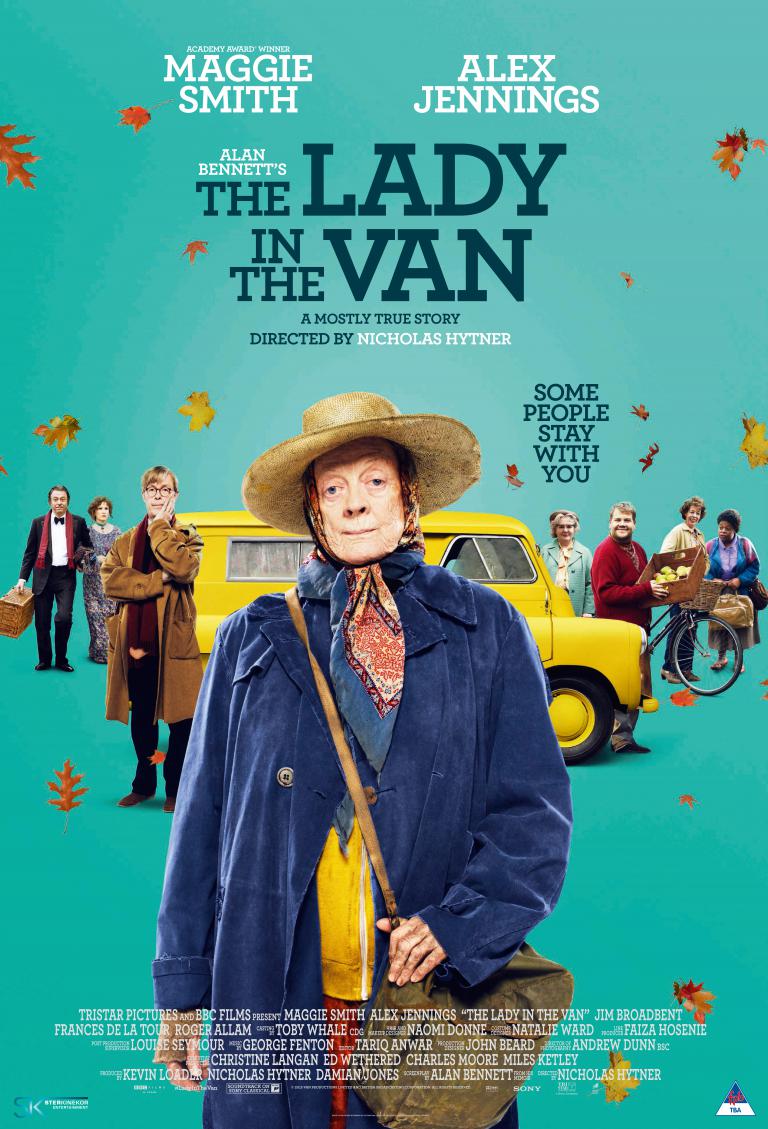
The Lady in the Van (2015)

Maggie Smith and Alex Jennings tearing up the neighbourhood

Director: Nicholas Hytner

Cast: Maggie Smith (Miss Shepherd), Alex Jennings (Alan Bennett), Roger Allam (Rufus), Deborah Findley (Pauline), Jim Broadbent (Underwood), Claire Foy (Lois), Frances de la Tour (Ursula Vaughan Williams)

This screen adaptation of Alan Bennett’s play is entertaining and a feast of good acting, even if not a lot actually really happens in it. Nicholas Hytner directs, as he did with the original National Theatre production, with Maggie Smith also reprising her role as the titular bag lady. Interestingly the theatrical device of two versions of Alan Bennett  (as the narrator) is also carried over from the film, with Alex Jennings playing both Bennett and his “Bennett the Author” persona.

Mary Shepherd (Maggie Smith) is an elderly bag lady who lives out of a broken down van which she insists painting a garish bright yellow. Befriended by ‘neighbour’ Alan Bennett (Alex Jennings) she moves the van onto his drive – and stays for 15 years. The film chronicles their unlikely friendship, as well as Bennett’s conflict with himself over his motives (in this and in everything else) and slowly reveals Mrs. Shepherd’s background.

It’s a witty and entertaining meandering film that oddly feels rather like the biggest budget home movie in the world, a sort of National Theatre party with the action taking place in Alan Bennett’s real home, Hytner himself popping up as an un-named character (as well as appearing on screen at the end with the real Bennett) and its dozens of cameos from British theatre, not least cameo appearances from all the cast of The History Boys (a rather distracting eye-spy game when you notice it). This doesn’t make it not fun – its a delight to see so many great actors at work – it just feels a little odd.

What probably keeps this from being impossibly smug is that it is actually a very acute (and self accusatory) examination of the author himself and the nature of writing. Bennett is not afraid at every point to question his motives and to accuse writers of exploiting those around them for material. Of course this is slightly distanced by the device of the “two” Alan Bennett’s, but this is pretty much essential to dramatise a conversation a man has with himself without using voiceover. Alex Jennings is, by the way, terrific in both roles – a wonderful mimic, but also really understands the psychology of the part and makes the contrasts between the two Bennett’s immediately clear.

Maggie Smith though is the star here and she is a shining one. She brings not only her usual wit and comic timing to the part,but she also is able to demonstrate with a few beats, or a small aside, years of pain and loneliness. She makes a woman who is basically quite unpleasant and difficult, into someone you care deeply about. A late sequence of her playing the piano – music being something she has avoided for years – is deeply moving because of the simplicity and genuine feeling she plays the moment with.

Hytner directs with a smooth unfussiness and a great deal of polish – I’ve always thought he is a natural at film directing, and he resists the temptation for visual flashiness. It goes without saying that he is a superb actors director. The final act of this film however doesn’t quite click into place – the comment on giving Miss Shepherd “the ending she would have wanted” doesn’t quite work and the final conversion with a decreased Miss Shepherd a scene too far. It’s an anecdote rather than a story – and a good anecdote well told – but not something I can imagine wanting or needing to see again.