Category: Best Picture winner

Anora (2024)

Anora (2024)

Superb mix of tragedy, farce and social commentary laugh-out-loud-funny then suddenly deeply moving

Director: Sean Baker

Cast: Mikey Madison (Anora “Ani” Mikheeva), Mark Eydelshteyn (Ivan “Vanya” Zakharov), Yura Borisov (Igor), Karren Karagulian (Toros), Vache Tovmasyan (Garnick), Aleksei Serebryakov (Nikolai Zakharov), Darya Ekamasova (Galina Zakharova), Lindsey Normington (Diamond), Ivy Wolk (Crystal)
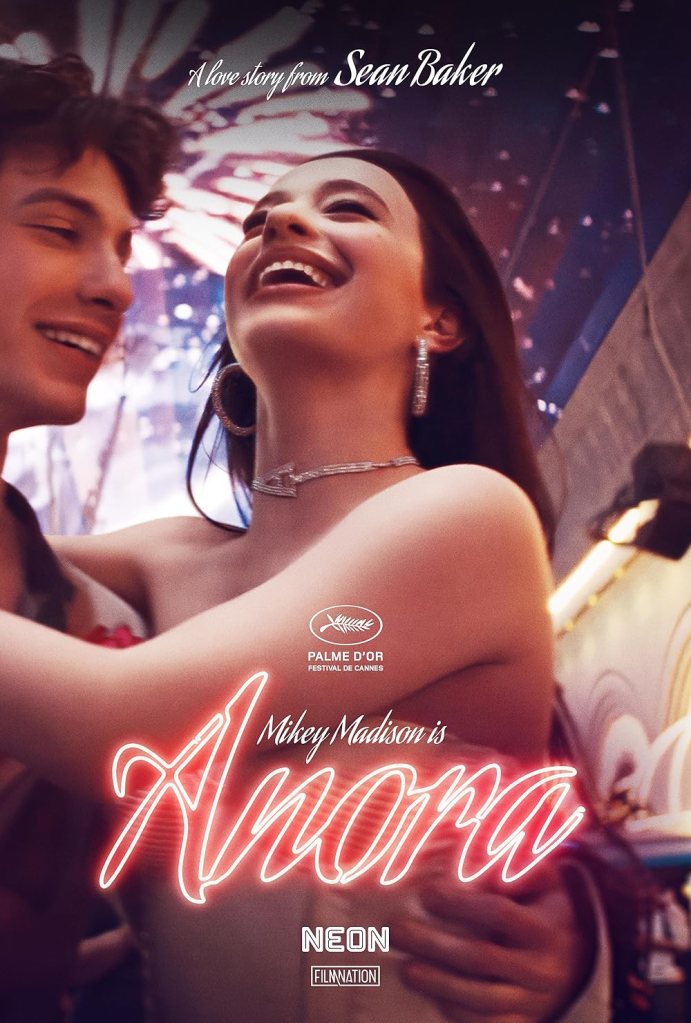
Who doesn’t love a Cinderella story? A plucky young woman comes from nothing to find a life of love and riches she never dreamed of is at the heart of dozens of fairy tales. And films for that matter: it’s impossible to not think about Pretty Woman when watching Anora. In fact, you could argue the at-times surprisingly charming, laugh-out-loud funny but cold-eyed realism of Anora is a Pretty Woman corrective, as if Richard Gere woke up a few days later, introduced Julia Roberts to his friends and family and immediately wondered what the hell he had done.

Not just that but Mikey Madison’s beautifully performed force-of-life Ani (real name Anora, but she doesn’t like it) feels far more like a high-end-stripper-and-occasional-sex-worker than Julia Roberts. She’s 24-years-old, living in Brighton Beach and working in a glossy Manhattan strip club. One night the manager asks her to entertain Ivan (Mark Eydelshteyn), the dissolute, immature son of an extraordinarily wealthy Russian oligarch, because she can speak Russian. Ivan is taken with Ani, paying her $15,000 for a week as his girlfriend that peaks (after a hedonistic stay in Las Vegas) in a marriage proposal. Eloping, Ani returns home believing her life has changed forever. That illusion is shattered when Ani’s godfather Toros (Karren Karagulian), and heavies Garnik (Vache Tovmasyan) and hired muscle Igor (Yura Borisov) turn up at their home (really, of course, Ivan’s parent’s home) under strict instructions that the marriage must come to end. Over a long 24 hours of exasperation, farce and slow realisations our Cinderella story collapses.

Anora is a brilliant film, superbly directed by Sean Baker. You’d expect a film of cold-eyed social realism – and there are elements of this in Anora – but it’s also a hugely loveable, charming, surprisingly hilarious and deeply felt film, perfectly paced as its story develops across a series of events that beautifully lead into each other. A lot of its success comes from Mikey Madison’s extraordinary performance, one of those star-making force-of-nature roles where you start off liking her and end up loving her. Madison is warm but prickly and spikey, vulnerable but determined, worldly but naïve, someone who fights her corner to the end but can’t see any change at forming her own future. Madison embodies all this perfectly, switching from wide-eyed naïve delight at her luck, to spitting, incandescent fury when defending her rights, to an increasingly desperate disillusionment mingled with self-disgust as her dreams collapse around her.

Similar to his previous films, Baker presents the world of sex work with understanding and compassion. There is nothing leering about the lens of Anora, even as it opens with a pan (sound tracked to a disco remix of Take That’s Greatest Day) along a row of dancer. Baker understands the professional drudgery of exotic dancing, the hard work and effort needed to give each client the best experience. Ani is a master of ‘put the client first’ patter, her sing-song Brooklyn accent filled with awe at their dull lives, helping her clients believe they are special. What’s striking about Anora is this a world Ani needs to be ‘saved’ from as such – she’s comfortable with her profession, is good at it and understands it’s limits – but it one where she has subconsciously learned her value as a person is directly related to her body and what she is willing to do with it, complex feelings that return at the film’s conclusion with shattering impact.

What she doesn’t truly understand perhaps is people in the long-term. So swept up and impressed with Ivan’s ostentatious wealth, she misses all the clues to his true character. Anyone who still moves around his apartment by letting his feet slide across the floor, who doesn’t know where the water in the house is kept, plays video games obsessively and hurls himself into sex with the rabbit-like intensity of a horny teenager is about a million miles away from the app developer she first imagines he is. Ivan – very well played by Mark Eydelshteyn – might be sweet, excitable and full of joie de vivre, but he’s also staggeringly immature, extremely selfish and barely thinks about anyone other than himself. Or maybe Ani does notice, but she’s so used to being part of a perverse service industry, she assumes this is normal. Ivan may profess to love Ani, but he is the grasping, self-obsession of a spoilt teenager who no-one has ever said no to.

Baker’s care and regard for his characters is beautifully done – in fact what’s striking about Anora is how characters who at first feel peripheral and marginal are organically grow, emerging over time as crucial figures. In fact, what’s striking about it is that it becomes very much a film about class: about the have and have-nots and how all of us – from put-upon fixer to stripper – have more in common with each other than with the super-rich, to whom everyone else are nothing but staff, there to meet their needs. There is only a small degree of difference between the cleaner Ivan teases while she cleans his floors and Ani who he teases while she allows him to get his end away in bed.

This become clear when the film enters it’s hilarious second act, as Ivan’s godfather Toros (a side-splitting performance by Karren Karagulian as man on the verge of a nervous breakdown) can barely hide his resentment at being Ivan’s dogsbody – while still terrified at how his super-powerful parents could ruin Toros’ life in seconds (and clearly wouldn’t think twice about it). Such is their power, Toros leaves his own child’s christening to clean up Ivan’s mess – and its clear he’s been doing this his whole life (his first appearance is easy to miss, ordering Ivan’s drunken friends to get off the sofa at the debauched New Year’s party he throws). Equally good is Vache Tovmasyan as the increasingly bemused Garvik, medicine addled and slowly losing his composure over one never-ending night.

What these characters have in common – along with Yuro Borisov’s Igor, hired muscle like Ani valued only for his physicality – is that to their employers they are less people and more items of furniture or household utensils. Ivan is no different from his tyrannical parents, who may deplore their son’s selfish wastefulness but have never done anything to stop it. Anora’s tragedy (among the comedy) is watching (and Mikey Madison does this beautiful in a series of micro reactions) Ani release only the thinnest slither of affection makes her any different from Ivan’s cleaner. To Ivan, she’s a status symbol – an attractive woman, great in bed who his hangers-on can be impressed by, a tool for rebellion, marrying her the ideal fuck an immature teenager can imagine for the parents he fears and resents.

Baker’s film unfolds all this with astonishing skill, but also an overwhelming energy and joy – and I have to stress again, that Anora’s middle section is hilariously funny, much more so than many conventional comedies – but also an empathy that eventually lands with a devastating and surprising force. Mikey Madison’s extraordinary performance deeply invests in Ani, understanding how her spiky exterior hides a vulnerable interior she rarely exposes. Every performance is outstanding – kudos also to Yuri Borisov who so subtly draws Igor’s quiet decency under his thuggish exterior, that his growing prominence in the film feels completely natural.

Anora is a film that deconstructs the reality of Cinderella stories. But it’s also a film that feels very much about the world today, where all of us have our lives directed and influenced by the super-wealthy in ways we have become so used to, we don’t even notice it anymore. It’s more obvious with strippers, cleaners, fixers and hired muscle. But if Ivan’s parents sank a business, how many families would be drowned in the waves? Under the heartfelt characters, the superbly paced drama, the farce and the emotional moments, Anora captures a universal truth about our modern age that all of us, like Ani, have tried to close our eyes against.
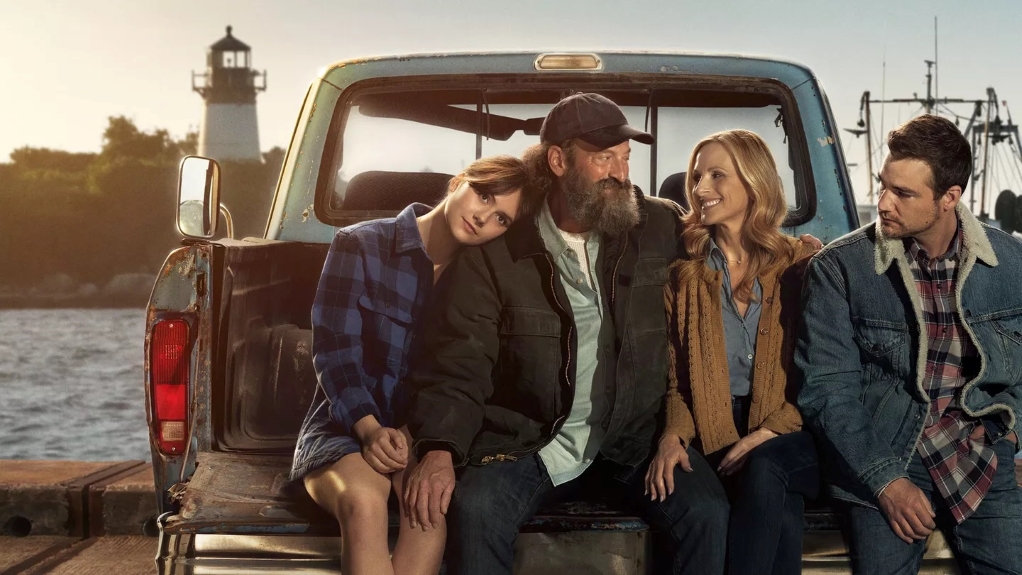
CODA (2021)

CODA (2021)

Surprise Oscar-winner is reassuring, unsurprising feel-good fare, charming but crammed with familiar beats

Director: Sian Heder

Cast: Emilia Jones (Ruby Rossi), Marlee Matlin (Jackie Rossi), Troy Kotsur (Frank Rossi), Daniel Durant (Leo Rossi), Eugenio Derbez (Bernardo Villalobos), Ferdia Walsh-Peele (Miles), May Forsyth (Gertie)

Ruby Rossi (Emilia Jones) feels like she has been working her whole life. The only hearing person in a deaf family, she’s both translator and interpreter. She works early morning shifts on their fishing ship with her father, the imposing-but-playful Frank (Troy Kotsur), and older brother Leo (Daniel Durant), and butts heads with her former-beauty-queen mother Jackie (Marlee Matlin). After graduating from high school, Ruby assumes this will be the rest of her life: until music teacher Mr Villalobos (Eugenio Derbez) helps her discover her gift for singing and, suddenly, a new future of Berkle Music College is possible. But can she balance the conflicting demands of her family and dreams?

CODA is an eminently likeable, thoroughly unchallenging film. If someone dumped a pad down in front of you and asked you to guess, sight unseen, what its main plot beats would be, pretty much anyone who has ever seen a movie would nail 90% of them. But it’s a well-told, charming small-scale story, with a positive perspective on disability and tugs heartstrings with the assured skill of a master. In the end it doesn’t really matter that nothing in it is remotely surprising, challenging or unexpected, because it delivers exactly the emotional response the viewer is likely to want from it.

It’s a film about communication. The Rossi’s need Ruby’s ability to hear, and her ease with spoken English, to navigate the world around them in the fastest, smoothest way. Ruby, meanwhile, is struggling to communicate her own passions, after a lifetime of adapting herself to her family. Unlike them, she wants more than a life on the docks. This guilty conflict with the family she adores ironically makes her constantly avoid communication both with her family and her music teacher (investing his personal time and money in her) about the pressure slowly crushing her.

These increasingly conflicted desires and choices form the film’s heart. Will Ruby make her own life, or stay with her family for as long as they need her? It’s not helped by the fact that her talent (out of all the talents in the world) is one her family can’t fully share in, meaning they struggle to understand her dilemma. (Her mother outright sees Ruby’s singing as nothing more than teenage rebellion – stating if her parents were blind, Ruby would have embraced painting). On top of which, Ruby’s genuinely loving (but insular) family have been her whole world for as long as she can remember.

The Rossis are vibrant and warm-hearted with a salty sense of humour and a stubborn independent streak. Jackie and Frank are so infatuated with each other (even after decades of marriage) they frequently engage in noisy sex (much to the embarrassment of Ruby, when a visit from a would-be boyfriend is interrupted by some extremely loud, bed pounding coitus from next door). They delight in teasing each other – from Leo and Ruby’s inventive sign-language insults for each other to the hilariously intentionally explicit sign-language safe-sex lecture Frank gives Ruby and her prospective boyfriend. But they are also a tight-team, seeing themselves as having to fight for their place in the world and discussing problems with the low income of the fishing business as a unit.

CODA is keen to establish the Rossis not as victims or people the audience should feel sorry for, but as a warm and loving family of everyday working-class Americans, who just happen to be deaf. It’s part of the film’s challenging of perceptions around disability. Frank continues a fishing business started by his father, which he intends to hand to his son, and (eventually) steps up to become a leader in his community. Jackie is a chippy, opinionated woman who still loves the glitz and glamour of her old beauty pageant days while getting stuck into managing the family’s new business interests. All of them are vibrant and romantic, sexual people, confident in themselves and who they are, far from the passive recipients of charity and help that so many disabled people in film have been.

But CODA dodges more challenging questions around disability. It never really engages with the implication that the Rossi family have got so used to having a full-time, free translator, that they have become disconnected from the world around them. I can’t help but feel there is a germ of a more interesting film here about the family (however inadvertently) allowing themselves to be cut off from others. They have let their ability to lip-read slip, filter all their communication with anyone outside the family through Ruby, and have grown so used to her manning the radio for their fishing business that they can’t run the boat effectively without her (leading to inevitable coastguard trouble).

It’s also had a knock-on effect in the fishing community: the other fishermen have clearly never had to really build a relationship with the Rossi’s (after decades, no one on the docks has learned even the most rudimentary sign language or any communication techniques like moving lips clearly when speaking). Jackie is outright resentful of the hearing wives of the other fishermen and neither she nor Frank can imagine actually running a business without Ruby’s to handle literally all the verbal communication involved. The closest the film comes to addressing this is Leo angrily telling Ruby the family aren’t helpless – they managed before she was born and they will if she leaves. But the film doesn’t want to explore the implication that the Rossis allowed themselves to slip into a comfort zone that ultimately proves isolating and even damaging for them.

CODA does get some good material from their struggle to engage with music (even if this is an uncomfortable cliché for some in the deaf community). There are well-staged moments, such as the Rossis attending Ruby’s graduation concert, where we “hear” what they hear (nothing) and need to judge the performance, like they do, from the reactions of those around them. A scene where Frank finally appreciates part of his daughter’s skill by feeling the vibrations of her singing is done with real emotional force. However, it cheats by feeding this into an off-stage conversion where the family switch (overnight) from hesitant to “all-in” for a classic last-minute-dash to get Ruby to her audition.

That’s representative of CODA shifting away from more complex, challenging themes and issues for a heart-warmingly positive tale, familiar from dozens of movies past. Saying that, Heder does a good job pulling together the familiar elements, and Troy Kotsur (Oscar winning) and Marlee Matlin both give emotionally rich performances as the parents. Ruby is excellently played by Emilia Jones – who spent months learning sign language in order to perform the part and improvise with the other actors. But CODA feels like a gentle, consensus film full of pleasant moments and reassuring insights that love will overcome, which perhaps explains why it won an Oscar in a year of more divisive films. There is nothing in it that could possibly rile you up or shake your faith in the decency of ordinary people. CODA is a film designed to wrap around you like a comfort blanket.

Titanic (1997)

Titanic (1997)

Cameron’s film is easy to knock, but is a triumph of romance, scale and real-life tragedy

Director: James Cameron

Cast: Leonardo DiCaprio (Jack Dawson), Kate Winslet (Rose DeWitt Bukater), Billy Zane (Cal Hockley), Frances Fisher (Ruth DeWitt Bukater), Kathy Bates (Molly Brown), Gloria Stuart (Old Rose), Bill Paxton (Brock Lovett), Suzy Amis (Lizzy Calvert), David Warner (Spicer Lovejoy), Danny Nucci (Fabrizio De Rossi), Victor Garber (Thomas Andrews), Bernard Hill (Captain Smith), Jonathan Hyde (J Bruce Ismay)

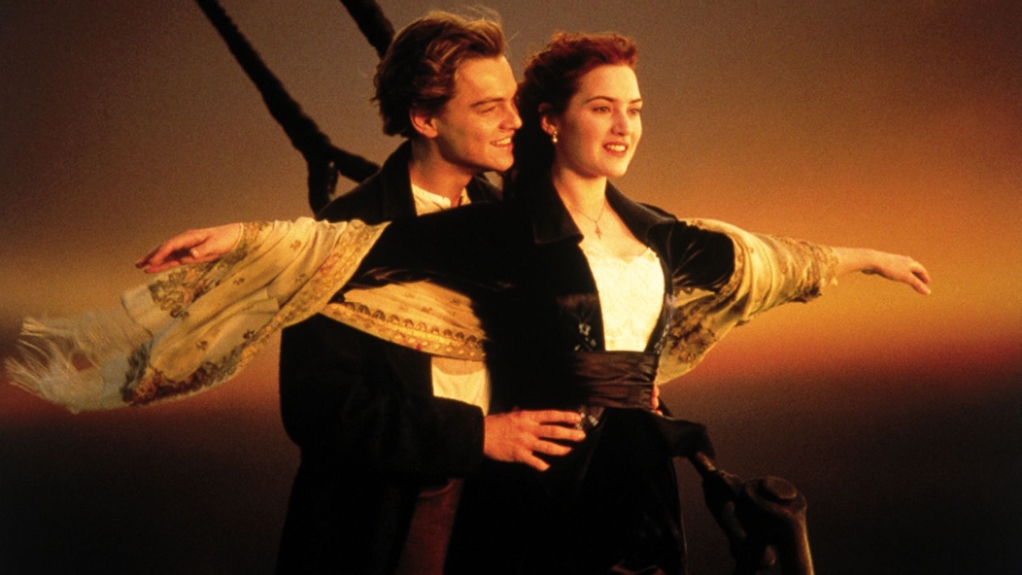
Get on any ship, and I guarantee you’ll see two people at the bow standing, one in front of the other, with their arms stretched out. If that doesn’t tell you something about the lasting impact of Titanic nothing will. Titanic was a sensation: top of the box office for months with the sort of repeat-viewing producers dream of; My Heart Will Go On went platinum and half the world was in love with Leonardo DiCaprio. It won 11 Oscars, made a billion dollars and is a film everyone knows even if (hard to believe) they ain’t seen it. James Cameron took an enormous punt on TitanicRomeo and Juliet meets disaster movie on legendary ship – and it paid off in spades. Because, no matter your cynicism, you can’t deny he created a film millions of people invested in to an extraordinary scale, staged with the epic sweep, gorgeous detail and pounding disaster thrills that channelled David Lean, Luchino Visconti and Irwin Allen all at once.

Rose DeWitt Bukater (Kate Winslet) is destined for a life of dutiful, unimaginative marriage with spoilt millionaire Cal Hockley (Billy Zane) when she boards Titanic as a first-class passenger in Liverpool on 10 April 1912. Also boarding the ship (but in steerage) is drifter and would-be artist Jack Dawson (Leonardo DiCaprio). When he saves her from taking her own life by jumping from the ship, they form a bond which flourishes into a love that will change both their lives. But not as much as the iceberg the ship is ploughing relentlessly towards across the Atlantic.

It’s very easy to take a pop at Titanic. Its romance sometimes succumbs to Mills and Boon cliché and Cameron’s script has more than its fair share of clunky lines (it’s one of those rare Best Picture winners with no screenplay nomination). Plenty of people hated it in a fit of inverted snobbery as a whole generation took this modern romance to its heart. But Titanic reveals the truth of the magic of movies: it uses a traditional romance to build our emotional investment in the sinking and the lives of ordinary passengers, more successfully than any other Titanicfilm had before or since.

Cameron knew the mountain he had to overcome. After all, this was the most famous disaster since Pompeii: where was the tension? So, he opens with a modern-day setting, a treasure hunt among the real ship’s ruins, with the hilariously named Brock Lovett (a game Bill Paxton in a thankless role) searching for a priceless diamond, the Heart of the Ocean. His only link: the older Rose (a plucked-from-retirement performance of charm and hidden fire from 87-year-old Gloria Stuart), who becomes our window to the past. This allows the audience to be told the geekily excited “ain’t it cool” details of the sinking with the same sort of distance we’re used to thinking about it. The film then becomes a lesson in making us learn, like Brock, this wasn’t an anecdote but a horrific disaster that killed 1,500 real people (made worse because we know exactly what’s going to happen to this ship every step of the way). The MacGuffin is intended to look as trivial as it does by the film’s end.

His key tool for this was his Romeo and Juliet love story told, for all its airport-novel lack of originality, with a vibrant, earnest intensity. Helped by fantastic chemistry between two talented actors, you have to work hard not to care for Rose and Jack (no accident those initials). And through their eyes, the whole ship comes to life, Just as the special effects camera sweep through the ruins, turns it from a ghost shop into a living breathing place, where ordinary, real-life dramas play out in every corner. It’s a perfectly judged entry point for bringing history to compelling life, playing on emotions we’ve all felt: love and fear of death.

The film splits neatly into two acts. The first is the romance and, whatever you say, it’s a cinematic romance for the ages in its old-school sweep. As we watch them bounce round the ship, make each other laugh, dance and fall in love, the utter lack of cynicism is really winning. It’s so overwhelmingly genuine and heartfelt, you can’t help feeling it yourself. Both help each other find new depths: for Rose, the willingness to embrace her own choices, for Jack a maturity and responsibility he’s lacked. Bathed in golden cinematic light and backed by James Horner’s superb score, they become two people we really invest in being together. It’s so earnest and honest it even gets away with otherwise ridiculous scenes like “draw me like one of your French girls Jack”.

Both the leads carry-off it off superbly. No mean feat considering the challenge of making the film – not least being submerged for weeks in freezing cold water during night shoots. Kate Winslet makes Rose burst with life from the depths of fear and doubt, effortlessly carrying much of the movie. It’s often overlooked that Rose drives much of the pace of the romance, as well as clearly being the more sexually and romantically experienced partner. Leonardo DiCaprio – who found it a burden for years, as it turned him from proto-DeNiro to heartthrob pin-up – gives an infectious energy to Jack’s fortune-cookie mantras, while growing in authority as the film progresses towards disaster.

Cameron fills his golden-hued recreated Titanic with the sort of detail we’ve not seen since The Leopard. Sure, his view of the haves and have-nots is hardly subtle (from ruthlessly posh, heartless Brits to plucky, happy-go-lucky Irish working-class), but it makes it very easy to relate to the injustice, bullying and casual snobbery. In Rose’s fiancée Cal, Billy Zane unselfishly plays an utter rotter: a coward, a snob who mocks Picasso and has never heard of Freud, a bully who treats Rose like a pet dog and puts his own needs (and safety) first at every turn. Titanic might be a ship of goodies and baddies (most egregiously in its clumsy slandering of First Officer Murdoch, a clumsy mis-step Cameron later apologised to Murdoch’s family for), but it’s undeniably alive.

It’s that quality of life which makes the sinking of the ship so horrifyingly intense. Cameron’s extraordinary second-half of the film – effectively a souped-up, horrifying remake of A Night to Remember (including quoting shots from that film) – never lets us treat this like a historical curiosity. Instead, it hammers home in intense, tragic detail, the shocking loss of life and the desperate, futile attempts of so many people to survive. Told in close to real-time, superbly edited and practically dripping in freezing water, it’s terrifying in its unstoppable intensity. Suddenly the scale of this mighty ship shrinks into an ever smaller world of fear. Events advance with horrifying speed, as the ship slowly then terribly quickly, disappears, made worse by our knowing in advance every step.

Cameron breathes life into dozens of small tragedies that surround Titanic. The band that played on. The Irish mother who puts her children to bed, knowing they cannot escape. The wealthy elderly couple who lie together while the water washes up around them. The hysterical children separated from their weeping father who remains on board. The priest who spends his dying moments comforting his flock. The camera catches moments of terror in the eyes of people we have seen fleetingly in the film. Titanic drains any sense of perverse excitement at the disaster from you. By the time the survivors are pleading for rescue in the freezing Atlantic, you’ll be as shell-shocked and shaken as the witnesses in the lifeboats.

Watch Titanic with your cynicism parked, and it is an extraordinary piece of epic, romantic film-making. The cinematography, production design, costumes and editing are all perfect and James Horner’s inspiring score takes the film’s slightly mushy romance to a higher level. There are great performances from the likes of Kathy Bates and Victor Garber. And the second half grips like a horrific vice, never letting go. There’s a reason this film gripped the hearts of the whole world in 1997: it knows exactly what it is trying to do and excels at doing it. And never, in any film, has a historical disaster hit a viewer with as much punch as Titanic does.

Nomadland (2020)

Nomadland (2020)

Poetic and surprisingly moving, this Best Picture winner is light on plot but deep on meaning

Director: Chloé Zhao

Cast: Frances McDormand (Fern), David Strathairn (Dave), Linda May, Charlene Swankie, Bob Wells, Peter Spears, Derek Endres

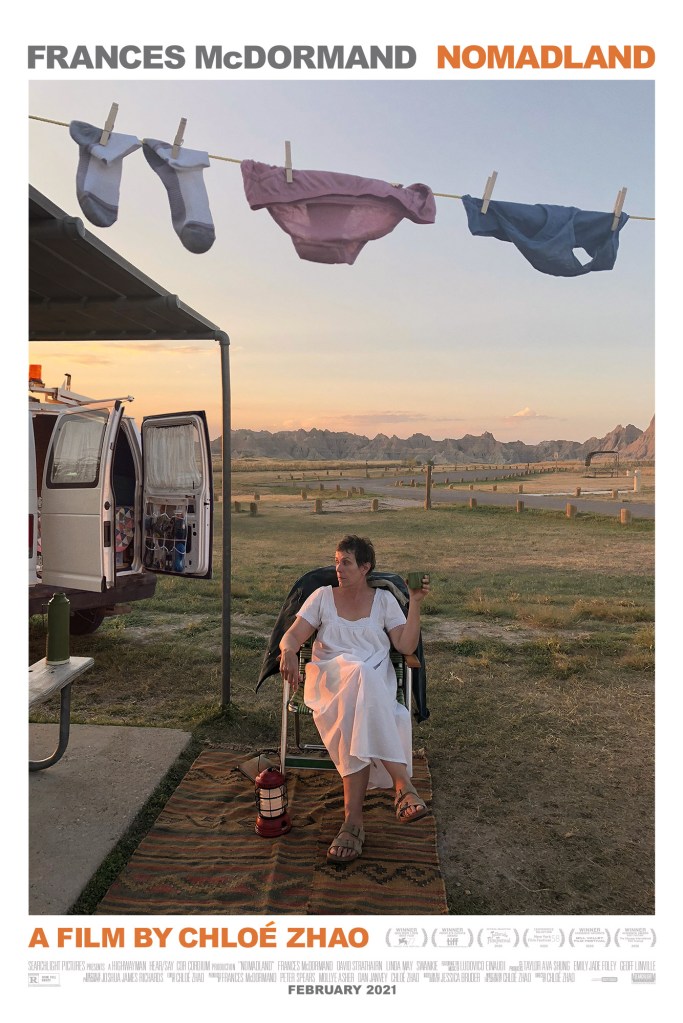
We all have ideas about what life should look like in the 21st century. Settled job, dream home, the rooted life. It’s what we are expected to be working towards – but it’s not for everyone. Nomadland, Chloé Zhao’s Malick-influenced road movie explores the lives of those who decide to live off that beaten track. The modern nomad, who chooses flexibility to move their home from place to place and don’t want to be tied down by bricks-and-mortar. It makes for a meditative, soulfully poetic film with a quietly mesmeric power.

Fern (Frances McDormand) is recently widowed, childless and has lost her job after the gypsum plant in Empire, Nevada closes. But, far from down-hearted, Fern is determined to lead a new life without the fixed commitments of her old one. She sells most of her possessions, kits out a van as a travel home and begins to drive across the country, taking seasonal jobs as and where she stops. She finds herself part of a warm and supportive community of nomads, who help to learn how to flourish in this unconventional home life.          

Nomadland winning Best Picture is as close as the Oscars have come to giving an award to Terence Malick. It’s hard not to feel his influence over the camera’s languid worship of the beauty of the Badlands, or its characters quiet searching for higher in life, via a communing with nature. Zhao’s film is a very effective and surprisingly moving character study, with only the smallest smidgen of a plot, but full of feeling. Radiantly shot by Joshua James Richards, it finds an orange-tinged beauty in a dawn and dusk and tiny moments of joy in rain falling in your face. All contrasted with the dull oppressiveness of buildings, those four walls shutting out nature.

Zhao’s film goes a long way in challenging neat assumptions we might have about this lifestyle. “I’m not homeless I’m houseless” Fern states and she politely – but firmly – turns down well-meaning offers of charity. The decision to move from place-to-place is not one enforced by poverty or failure. Instead, this is a rich, vibrant, supportive community that looks out for each other and share a legitimate (and refreshing) view of the world. Who says you need to spend your life chasing the dollar and building up a debt to have a fixed slice of real-estate you can sort of call your own?

This is particularly true in our post-recession world. Nomadland starts with the final collapse of an industrial community, now a ghost town. Many of the nomads find seasonal work that is often manual and low-skilled. Fern’s first job (of many) is working at an Amazon dispatch location, where jolly team leaders burst with enthusiasm met with smiling indifference by the (often older) staff. Fern’s travel is shaped around moving to key locations for seasonal work – Amazon, a campsite, a short-order chef job, beet processing… The economic situation is poor, but this is a way of playing the system to get a higher level of freedom, without debt or financial pressures.

It’s a key subject of a talk given to fellow nomads by Bob Wells, an influential advocate of the nomad life-style (one of any people playing versions of themselves). It’s part of a series of events at a nomad event – a sort of convention – where people gather to share experiences, advise and life-hacks. Ever needed to know how to change a tyre or what size bucket you should use for your built-in toilet? Wonder no more! On the road people come together in a way they never would in more regular life. With everything transient and nothing fixed, friendships and connections are more intense, constantly in that first glow of excitement.

That’s the pay-off of choosing this lifestyle. Everything is transient. Close friendships form, but you might not see the other person for months at a time. While phones help you to keep in touch, day-to-day you see completely different people from place-to-place. It will never be completely clear where you might be to your family. However, the short-lived intensity of connections can lead to a closeness and intimacy that might otherwise take months – a friend of Fern’s confides she has terminal cancer but regrets nothing, with a warmth and trust that would normally takes years to form not weeks.

It’s implied as well that the more short-lived intensity of friendships fits more with what the slightly taciturn and guarded Fern wants from life. Frances McDormand makes her friendly, ready with a smile, good company – but she is always slightly reserved and guarded. She will give sympathetic ears and invite confidences. But she is also a woman determined to live by her own rule. Having lived most of her life in one place in a happy marriage, a conversation with her sister (who bails her out with a loan to repair her van) reveals she was always prone to not look back when a decision was made. It’s the same with deciding to live on the road as moving to Empire – Fern knows her own heart and mind, and will fully commit to that.

This is despite temptations, the main one she faces being David Strathairn’s (the only other professional actor in the film) Dave, a fellow nomad who makes no secret of his romantic interest in her. Sweetly played by Strathairn, Dave pursues Fern and dangles the possibility of a more fixed and traditional life. They are close, but Fern has lived that life of marriage and rejected already the idea of a family. And, as McDormand makes clear in her soulful eyes, if that life was ever on the cards, it would have been with her husband not this new man, nice as he is.

Nomadland, like Fern, can see the dangers and problems. A van breaking down in the middle of nowhere is a major danger, a broken plate a potential disaster – Fern painstakingly reassembles it, not wishing to spend the money to replace it. Low temperatures and bad weather can make it uncomfortable – although she (smilingly) rejects an offer from a garage owner to sleep inside. But it also understands living this lifestyle is a legitimate choice, filled with rich possibilities. You only need to see Fern joyfully travel to the coast or get wrapped up in the embrace of the vibrant community she finds on the road to see that you could do immeasurably worse with your life.

Zhao’s film has a documentary realism to it, that comes from its deep immersion in real nomad communities. It makes copious use of real nomads playing versions of themselves, giving a rich feeling of authenticity to every moment. It also means we gain a real understanding of the idea that goodbyes are never final in this world, that there is always the prospect of seeing someone again “down the road”. The film’s poetic empathy, its warmth and the vibrant humanity of its characters makes it film that creeps up on you and has a surprising, but profound, power.

The Broadway Melody (1929)

The Broadway Melody (1929)

Forgettable Best Picture winner, the musical that helped bring sound to Hollywood looks simplistic today

Director: Harry Beaumont

Cast: Anita Page (Queenie Mahoney), Bessie Love (“Hank” Mahoney), Charles King (Eddie Kearns), Jed Prouty (Uncle Jed), Kenneth Thomson (Jacques Warriner), Eddie Kane (Zanefield), Edward Dillon (Stage Manager)

The early years of sound in Hollywood were difficult. Before sound, movies were often visual treats, crammed with inventive and imaginative camera moves. Watch some of the silent movie masters, and you’ll be blown away by the majesty and creativity of their vision. Then came sound. And to capture sound on movies, you held the camera as still as possible while the clunky sound recording equipment struggled to work. For years, all that visual invention was history and movies became flat, dull looking and clumsy.

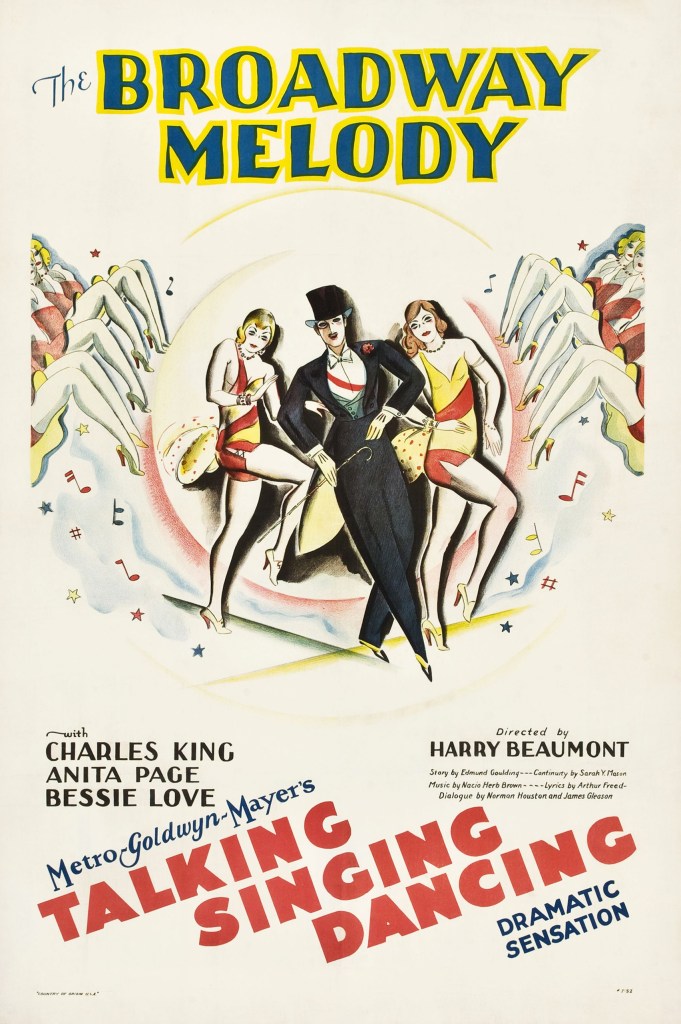
But that didn’t affect the thrill audiences had at hearing synchronised sound. I mean wow! Could you imagine a painting talking to you? That would be incredible. Imagine it singing and dancing. You’d be blown away. It’s that context you need to bear in mind when watching The Broadway Melody. How did this fundamentally average, largely forgotten, flatly shot film win Best Picture? Because, quite simply, no one had seen anything like it before. This revolutionised cinema – and while that might look inexplicable now, it was like splitting the atom as far as Hollywood was concerned.

The plot, such as it is, is very minor. The Mahoney sisters, Queenie (Anita Page) and Hank (Bessie Love) arrive on Broadway to become stars with the support of Eddie Kearns (Charles King) who is engaged to Hank. But, don’t you know it, Eddie falls in love with Queenie and she with him. Who will end up with whom? And will the sister’s close relationship survive their love for the same man?

The Broadway Melody starts with an orgy of overlapping sound, music and speech all filling a Broadway office, as if trying to hammer home to the viewers how amazing all this is. And it probably was amazing. The filmmakers literally had to work out how to record sound as they went. Sets were rebuilt after takes to improve the sound conditions. Technology was tweaked and reworked. The actors performed their scenes over and over again to get the best recording. It must have been punishing to make.

Visually it’s hugely un-interesting. Shot almost entirely in mid-shot, the actors stand as still as possible so that the microphones can pick up every word (moving and talking was almost impossible). There are moments dialogue is less clear, in particular when actors turn away from camera. Storytelling is hugely influenced by silent cinema – there are even intertitle cards to announce different locations. The script is often just an excuse to move from one musical number to another. The film even stops to effectively stage a Broadway show, including shots of the programme introducing each act.

None of the songs comment on the actions and emotions of the characters. Instead, they are all established by the actor’s saying words to the effect of “I heard a great song – wanna hear it?”. Some of the songs are good and the singing of Kearns and Love in particular is fine. But they are snippable moments, not storytelling. It was to be a few years before film musicals did something more than filmed karaoke, and used songs to express character’s inner emotions.

There is a certain charm about The Broadway Melody though, for all its faults and it’s not the turkey you might have been led to believe. Sure, it’s primitive, but it has a certain bounce to it and the playing of the three leads is surprisingly committed. Its attitudes are surprisingly modern, reflecting its pre-code status. It doesn’t punish its characters for their ‘transgressions’ and is quite emotionally honest about the impact of a man falling in love with the beloved sister of his fiancée on all concerned. Other things have dated less well, in particular a camp costumier and Uncle Jed’s comic stammer, both played for dubious laughs.

But the romance plotline is surprisingly complex. There are moments of rawness in The Broadway Melody. Queenie (well played by Anita Page) is plunged into a self-loathing depression by her feelings for her sister’s fiancée, spiralling into the arms of a playboy – not the sort of reaction you expect from someone presented as “the sensible one”. Hank who reacts not with fury, but with a genuinely quite moving emotional desolation at realising her very existence is keeping the two people she loves most from being happy.

The real love story here might be between the two sisters, both desperate not to hurt each other. Bessie Love gives a very fine (Oscar-nominated) performance as Hank, torn up with guilt and surprisingly vulnerable, who eventually makes huge sacrifices. There is a very effective late breakdown scene for Love, after she deliberately burns her bridges with Eddie for her sister’s sake. The films finest moments are covered in the sad, regretful guilt between these two sisters, and a film focused more on this and less on the musical numbers would have more going for it today. As it is it manages at points to elevate its conventional love triangle.

The musical numbers are the real problem though: very much staged exactly as if the camera was filming an actual Broadway show from the middle of the stalls. In mid-shot, the camera is pointed at the numbers and the actors dance their way through them. You better like the title song by the way, because you are going to hear it performed three times in the first 40 minutes. It’s not really storytelling – and all of the dancing would be effortlessly bested by other films in the next few years. None of the numbers have zing or interest and end up bumping up the runtime.

It’s easy to be critical of The Broadway Melody. Sadly, time has dated it since the one thing that made it stand out was the sound. Now that we have literally heard-it-all-before and better in the decades since, the actual thing that now draws attention is its dull filming, middling story and repetitive musical numbers. Not a disaster as some claim, but a very forgettable film – one for completists.

Sunrise: A Song of Two Humans (1927)

Sunrise: A Song of Two Humans (1927)

The visual language of cinema is redefined for Hollywood, with this expressionistic, fairy-tale, silent masterpiece

Director: FW Murnau

Cast: George O’Brien (The Man), Janet Gaynor (The Wife), Margaret Livingston (The City Woman), Bodil Rosing (Maid), J Farrell MacDonald (Photographer), Ralph Sipperly (Barber), Jane Winton (Manicurist), Arthur Housman (Obtrusive gentleman), Eddie Boland (Obliging gentleman)

It’s 1928 and Hollywood has a neat idea. How about an annual awards ceremony toasting the best the industry has produced in the last year? But how on earth do you decide the “best” film? Isn’t comparing war films to arthouse films like comparing apples and oranges? The solution? An award for Outstanding Production and another for Best Unique and Artistic Picture. FW Murnau’s revolutionary silent movie, Sunshine: A Song of Two Humans, was the first and last winner of the latter category: a movie so technically inventive and astonishingly cinematically literate that its influence has seeped into almost every frame of footage shot by the movies ever since.

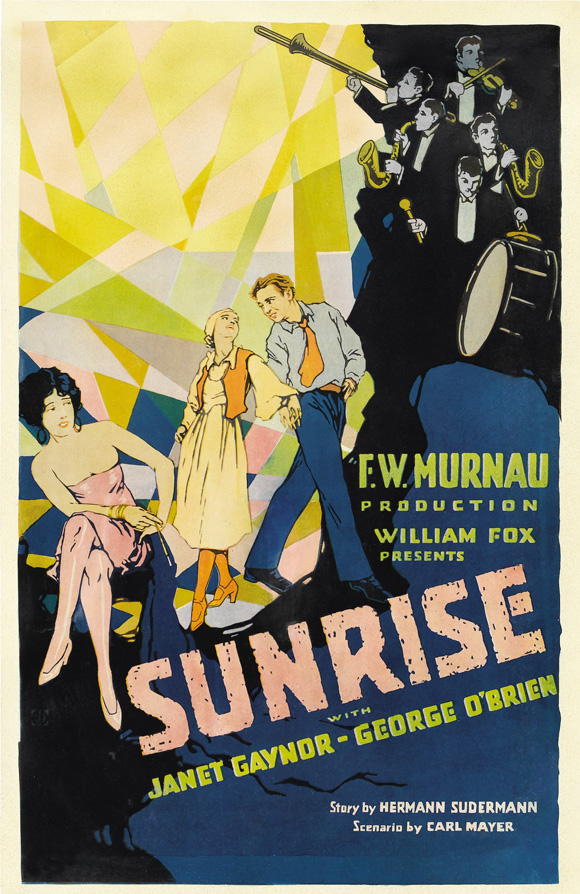
It would be fair to say Sunrise is less a narrative, more a quiet piece of expressionist art. Its plot is incredibly slim, essentially a fairy tale. In an unspecified country village (presumably in America, but it might as well be from the Brothers Grimm), a married man (George O’Brien) falls in lust with a floozy from the big city (Margaret Livingston). Before he can take the infatuation any further than canoodling by a country lake, he’s got to get rid of his wife (Janet Gaynor). He takes her out on a boat, planning to “get her drowned”, but can’t go through with it. She works out his intent though and runs. He follows her and they wind up in the big city, where a series of encounters helps them remember they actually do love each other. When they return to the village, she briefly seems lost in a genuine boating accident, before a fairy tale ending.

That’s what Sunrise is: a fairy tale. Murnau aimed at universality in his film. Namesless every people and generic, fantastic locations. A dreamlike structure and pace. It would have a monster who becomes a prince, a damsel in distress who saves the day and a wicked “crone” who wants to shatter their happiness. This is all part of turning it into a universal fable. It makes for a beautiful simplicity in narrative that is surprisingly effective if you surrender yourself to it. No one is going to mistake it for Tolstoy or Zola (for all it’s Therese Raquin remix), but you might just mistake it from something from Hans Christian Anderson.

This atmosphere benefits even more from Murnau’s artistry. One of the true founding fathers of cinema, Murnau believed in the power of images. (He died with the advent of sound – somehow that seems sadly fitting for a director whose poetic visual power would have sunk forever under the fixed rigidity of Hollywood movie cameras capturing sound.) Sunrise has fewer intertitles than almost any other silent movie. Most are concentrated in the film’s first 20 minutes, establishing plot and character. Then it relies almost entirely on the power of images.

Sunrise may be a slight story, but cinematically it’s a heavyweight. Today, transitions, flashbacks, montages, superimposed images and vivid panoramas are just part and parcel of film. But many of these techniques date from the work of Murnau, and Hollywood really woke up to them with his first American film. Sunrise is immaculately shot – photographers Charles Rosher and Karl Struss would also win one of those Oscars – a series of beautifully composed images, with a free flowing camera that looks normal today but reinvented the industry back then. Few other films, except maybe Citizen Kane, can claim to be as influential on cinematic technique.

Look at the opening montage of the big city. What seems like a straightforward fixed shot was a triumph of invention. The city was a carefully constructed set, with the shot combining forced perspective of a model train, dwarf extras and intelligent angles and camera positioning to create a vibrant, overhead shot of city life quite unlike anything anyone had seen before. (Rochus Gleis’ Oscar-winning art design is superb.) The city, when we see it in more depth, is a fascinating collection of architectural influences contrasting beautifully with the village’s homespun ruralism.

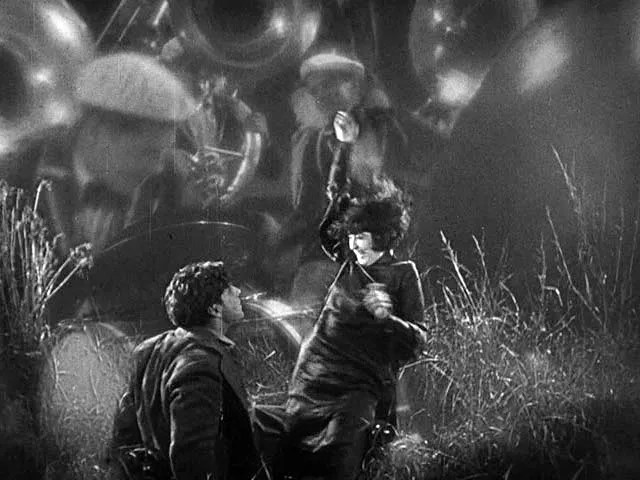
The camerawork and editing is sublime, its use of superimposed images truly extraordinary. As the man meets his fancy woman by a lake, they lie back and look at the stars. Above them, in the night sky, images of the city are imposed that stress its energy, excitement and raw sex appeal (can-can dancers and the like). It’s almost like our lovers are watching an actual movie.

Later the imposition will be reversed: after reconciling in the city, man and wife walk down a busy street – without a cut, as they walk, the street fades away and is replaced by the country fields of their home. In most cases, the imagery throws the character’s inner longings up on the screen for the viewer to digest. It doesn’t stop there. Images at various points show the city woman imposed standing behind the man as he debates killing his wife (again those inner thoughts given visual life). As the man lies back on his bed and stares at his wife, water is superimposed on top of him – it’s clear what he is thinking.

Murnau shoots with an expressionistic, early-morning brilliance, the man working home from his assignation – his slumped back and shoulders (George O’Brien joked his back did most of the work) telling us everything about his mood, in contrast with the brilliance of the surroundings, which we realise he finds as overwhelming as we do (he even gets slightly lost in the frame).

The possible drowning is a masterclass in cutting – moving swiftly from the man’s furrowed brow, as he builds up to what he must do, and the wife’s growing realisation of what he has in mind. A big part of the film’s poetic beauty is how this point of no return is an entrée to a love story. Reunited in the city, the two walk into a church and witness a wedding: the ceremony reminds them of the one they once shared, and Murnau captures the two of them emerging from the church just before the married couple, cementing the rebirth of their marriage. It’s an overwhelmingly optimistic view of love and the durability of the human spirit.

The film’s long second act of hijinks in the city can strain the patience of some. It’s effectively the couple’s second honeymoon, from having their photos taken (a candid moment of genuine love) to dancing at a Moulin Rouge style club where the man captures an escaped pig (yes seriously). It’s dreamlike (the camera work, especially in the club, reflecting this) but undoubtedly low on plot and drama. But it’s charming in its simplicity and in Murnau’s little touches of wit – the couple’s attempt to hide a damaged statue in the photographer’s studio is surprisingly funny.

It all leads us back to the narrowly averted tragedy of the final act as – irony of ironies – the newly reconciled couple are swept up in a genuine storm on the river that nearly sweeps the wife to her death. The man is distraught – so much so his homicidal rage is often overlooked him. Anyone seriously considering bumping his wife off is not well adjusted, and his reaction to the presumed loss of his wife it to attempt to strangle his lover.

This doesn’t intrude on the optimism of the tale and Murnau’s desire to present a fairy-tale like restoration of domestic bliss (after all, darker things happen in Brothers Grimm), all of which ends with an art deco sunset that kisses the frame. O’Brien’s body language may seem crude today, but it perfectly communicates the tempest at the heart of the man’s doubt. Gaynor has a beautiful innocence to her (she won an Oscar as well). Together they play enraptured love without being cloying, and are equally convincing during the rage and accusation.

Murnau, inexplicably, didn’t get an Oscar (not even a nomination), but Sunrise is a testament to his artistic brilliance with cinema. Effectively, he created a new grammar for this language, a superb use of visuals, effects, editing and production to lift a slight story into the realms of high art. Which is what Sunrise is: an arthouse poem, a visual feast that will linger with you long after its runtime has elapsed. Its influence has touched so many parts of cinema, that you might wonder today what all the fuss is about. But everything from your arthouse darling to your favourite Marvel blockbuster owes Sunrise a debt.

Gone with the Wind (1939)

Gone with the Wind (1939)

For decades unchallenged as the best loved Hollywood film ever made, but showing some signs of its age, it’s still an undeniable marvel

Director: Victor Fleming

Cast: Vivien Leigh (Scarlett O’Hara), Clark Gable (Rhett Butler), Leslie Howard (Ashley Wilkes), Olivia de Havilland (Melanie Hamilton), Thomas Mitchell (Gerald O’Hara), Evelyn Keyes (Suellen O’Hara), Ann Rutherford (Careen O’Hara), Barbara O’Neil (Ellen O’Hara), Hattie McDaniel (Mammy), Butterfly McQueen (Prissy), Oscar Polk (Pork), Rand Brooks (Charles Hamilton), Carroll Nye (Frank Kennedy), Jane Darwell (Mrs Meriweather), Ona Munson (Belle Watling), Harry Davenport (Dr Meade)

For most of the twentieth century, if you asked people to draw up a list of the greatest Hollywood films of all time, you can be pretty sure this would be close to the top. A landmark in Hollywood history, everything about Gone with the Wind is huge: sets, run time, costs, legend. It’s crammed with moments that have developed lives of their own in popular culture. Its score from Max Steiner – luscious and romantic – is instantly recognisable, practically Hollywood’s soundtrack. It’s the most famous moment in the lives of virtually all involved and for decades whenever it was released, it raked in the cash. But as we head into the twenty-first century, does GWTW (as it called itself even at the time) still claim its place at the head of Hollywood’s table?

It’s the love child of David O. Selznick. Never mind your auteur theory: GWTW credits Victor Fleming as the director, but parts of it were shot by George Cukor (the original director, who continued to coach Leigh and de Havilland), William Cameron Menzies (the legendary art director, who shot the Atlanta sequences) and Sam Wood (who covered for an exhausted Fleming for several weeks). This is a Selznick joint from top to bottom. GWTW is possibly the ultimate producer’s film: a massive show piece, where not a single cent isn’t up on the screen. Huge sets, vast casts, colossal set pieces, thousands of costumes and extras. It’s an extravaganza and Selznick was determined that it would be an event like no other. And a hugely entertaining event it was.

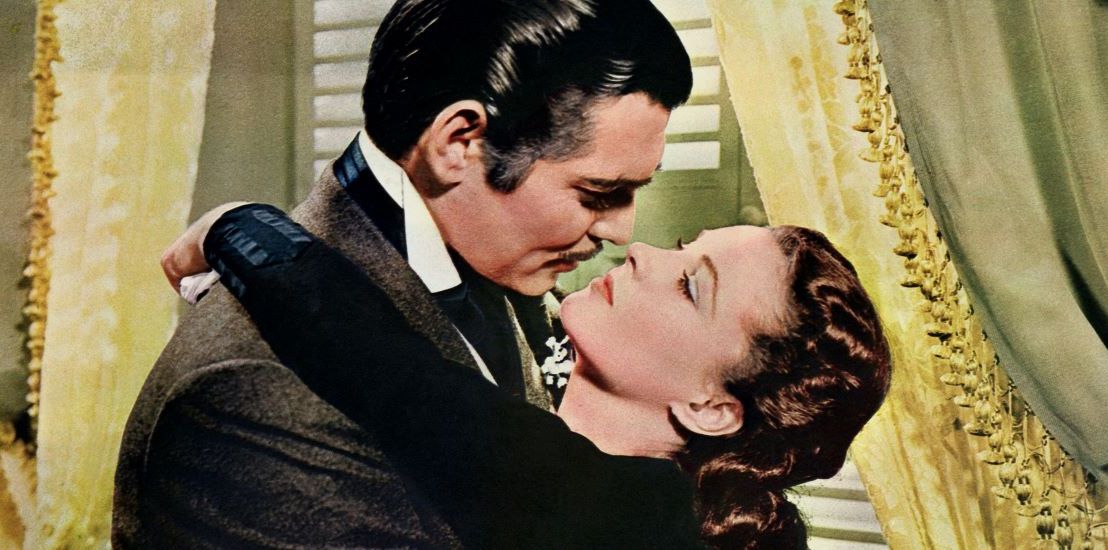
It would also be scrupulously faithful to Margaret Mitchell’s novel, with a dozen screenwriters working on it (including Selznick). GWTW was the ultimate door-stop romance novel. Set in Atlanta, Georgia, the entire film is a no-holds barred “Lost cause” romance of the South during the Civil War and Reconstruction. Scarlett O’Hara (Vivien Leigh) is the passionate, wilful daughter of a plantation owner, desperately in love with Ashley Wilkes (Leslie Howard), who is attracted to her but all set to marry his cousin Melanie (Olivia de Havilland). Also interested in Scarlett is playboy Rhett Butler (Clark Gable). Romantic complications are set to one side when the Civil War breaks out, bringing disaster to the South. As the war comes to its end will Scarlett and Rhett find love, or will Scarlett’s fixation on Ashley continue to come between them?

GWTW’s casting was the sort of national obsession not even the casting of a superhero gets today. Every actress in Hollywood seemed to screen test for Scarlett O’Hara, with Selznick playing the search for all the publicity it was worth. No one suggested Vivien Leigh. But, lord almighty, Leigh was placed on this Earth to play Scarlett O’Hara. GWTW is dominated by Leigh, dripping movie star charisma. She would be synonymous with the role for the rest of her life, and it’s no exaggeration to say this one of the greatest acting performances in movie history. Leigh balances a character stuffed with contradictions. Scarlett is wilful and vulnerable, impulsive and calculated, childish and dependable, selfish and generous, spoilt and sensible, romantic and realistic… But Leigh balances all this with complete ease. It’s an act of complete transformation, an astonishingly confident, charismatic and complicated performance.

There was no debate about who would play the romantic hero, Rhett Butler. He basically was Clark Gable. And Gable was perfect casting – so perfect, he was almost too scared to play it. But he did, and he is sublime: matinee idol charismatic, but also wise, witty and vulnerable (it’s easy to forget that Rhett is really in the traditional “woman’s role” – the ever-devoted lover who sticks by his woman, no matter how badly she treats him, spending chunks the latter half of the film halfway to depressed tears). For the rest, Leslie Howard was oddly miscast as Wilkes (he seems too English and too inhibited by the dull role) but Olivia de Havilland excels in a generous performance as Melanie, endearingly sweet and loyal.

These stars were placed in a film production that’s beyond stunning. Shot in glorious technicolour, with those distinctive luscious colours, astonishingly detailed sets were built (plantations, massive dance halls, whole towns). Everything about GWTW is designed to scream prestige quality. It lacks directorial personality – the best shots, including a crane shot of the Civil War wounded or a tracking shot on Leigh through a crowded staircase, seem designed to showpiece the sets and volume of extras. It’s a film designed to wow, crammed with soaring emotions and vintage melodrama. Nothing is ever low key in GWTW: disasters are epic, love is all-consuming passionate clinches. They built stretches of Atlanta so they could burn it down on camera. It’s extraordinary.

And much of GWTW is extremely entertaining. Especially the first half. It’s an often overlooked fact that if you ask people to name things that happen in GWTW, nearly everything (bar the film’s final scene obviously) they will come up with is in the first half. Rhett behind a sofa in the library? Atlanta on fire? Rhett and Scarlett at the ball? Scarlett surrounded by admirers at a garden party? “I’ll never be hungry again?” All before the interval. The first half is a rollicking, fast-paced rollercoaster that takes us from the height of the South to the devastation after the war. It grabs you by the collar and never lets go, supremely romantic, gripping and exciting.

The second half? Always duller. Bar the start and finish of the second half (nearly two hours in all), it’s a Less memorable film. Sure, it has the O’Hara’s in extreme poverty, Scarlett reduced to converting a curtain into a dress to glamour up some cash to keep Tara. It’s got Ashley and Melanie’s adorably sweet reunion. And it’s got possibly the most famous line ever in movies “Frankly my dear, I don’t give a damn” (not to mention “Tomorrow is another day”).

Other than that? It’s a bitty, plot-heavy series of forgettable, episodic moments which you feel really should have been cut. Who remembers Frank Kennedy? Or Scarlett’s lumber mill? Rhett pushing his daughter in a pram? The London sequence? There is a solid hour of this film which is flatly shot, dully paced and devoid of anything memorable at all. GWTW owes all its beloved reputation to the first half: and to be fair you’ll be so swept up in that you’ll give the film a pass for its middling second act. After all you get just about enough quality to keep you going.

But what about the elephant in the room? GWTW, like no other beloved film, has a deeply troubling legacy. They were partly aware of it at the time – after all, every racial epithet was cut, as is every reference to the KKK (it’s referred to as a “political meeting” and Rhett and Ashley’s membership is glossed over) and we never see the attack they carry out on a shanty town of former slaves. But GWTW remains, in many ways, a racist film peddling an unpleasant and dangerous mythology that the “Lost Cause” of the South was all about gentlemanly fair play, rather than coining it off plantations full of enslaved workers.

GWTW, in many ways, plays today a bit like a beloved elderly relative who comes round for dinner and then says something deeply inappropriate half-way through the main course. The dangerous mythology is there from the opening crawl which talks of the South as a land of “Cavaliers and cotton fields” where “Gallantry took its last bow…[full of] knights and their ladies fair, of Master and Slave”. The third shot of the film is a field of smiling slaves, working in a cotton field. Hattie McDaniel won an Oscar (at a segregated ceremony) and she is wonderfully warm as Mammy, but her character is another contented underling. At least she seems smarter than the other main black characters, Pork and Prissy: both are like children reliant on the guidance of their masters.

The Cause of the South is luscious and romantic, as are the people who fight it. Nearly every Yankee we see is corrupt, ugly and greedy, rubbing defeat in our heroes’ faces. It’s not quite Birth of a Nation, but the second half has a creeping suspicion of freed black people. A carpetbagger from the North is a smug, fat black man who mocks wounded Southern soldiers. Scarlett’s walk through the streets of a rebuilt Atlanta sees her startled and mildly hustled by black people who no longer know their place. Every prominent black character is sentimental about the good old days. GWTW would make an interesting double feature with 12 Years a Slave.

It’s this dangerous and false mythology that makes the film troubling today. It’s why you need to imagine the entire thing with a massive asterisk – and why you should be encouraged to find out more about the era than the fake and self-serving fantasy the film peddles as reality. But for all that, GWTW is so marvellous as a film that it will always be watched (and rightly so), even if it was always a film of two halves and only becomes more controversial in time. But watch it with a pinch of salt, and it is still one of the most gorgeous, sweeping and romantic films of all time: that’s why it still remains, for many, the definitive “Hollywood” film.

Everything Everywhere All At Once (2022)

Everything Everywhere All At Once (2022)

The multi-verse is at risk of ending – and only a disenchanted woman running a laundromat can save the day in this inventive science-fiction

Director: Dan Kwan, Daniel Scheinert

Cast: Michelle Yeoh (Evelyn Quan Wang), Stephanie Hsu (Joy Wang), Ke Huy Quan (Waymond Wang), James Hong (Gong Gong), Jamie Lee Curtis (Dierdre Beaubeirdre), Tallie Medel (Becky Sregor), Jenny Slate (Debbie), Harry Shum Jnr (Chad), Biff Wiff (Rick)

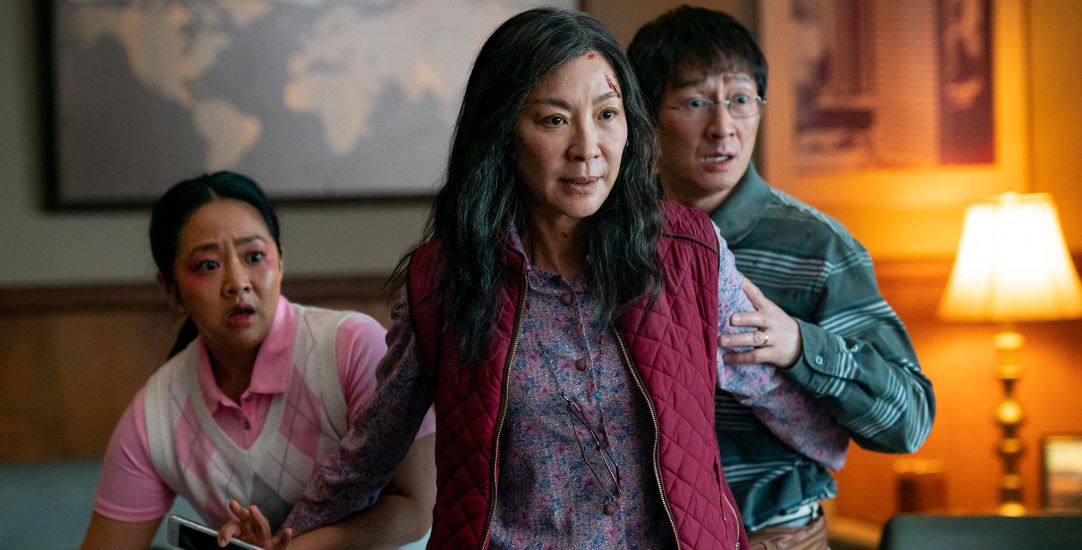
Evelyn Wang (Michelle Yeoh) has lots on her plate: running her laundromat, completing tax returns for a demanding IRS agent (Jamie Lee Curtis), her waning marriage to goofy husband Waymond (Ke Huy Quan) and drifting relationship with lesbian daughter Joy (Stephanie Hsu), not to mention her fear of the disapproval of her demanding father (James Hong) – its Everything Everywhere All at Once as it is: no wonder she struggles to cope when discovering from an alternate version of her husband that she, and she alone, is the key to saving the entire multi-verse from destruction.

Everything Everywhere All at Once is an endlessly inventive, imaginative and unique spin on everything from science fiction to philosophy, via the struggles of an immigrant family, familial dynamics and love, death and the universe itself. Did I mention it’s got jokes as well? There isn’t anything quite like EEAAO out there, and if the film does lose energy at an inflated runtime of 145 minutes, at least that’s because it must have been a struggle knowing what to cut.

In the mythology of EEAAO, Evelyn lives in just one of a myriad different realities. Every time a decision is taken, a new reality branches off, spawning innumerable different realities. If Evelyn can imagine it, then somewhere in another universe it happened. She should be a film star, a martial artiste, a chef, a blind singer, a pizza sign spinner…there are realities where mankind never evolved or where they evolved with hot dogs for fingers (a joke the film is a way too pleased with and seriously outstays its welcome).

With some technology from the “Alpha” universe – the first universe to discover alternate realities, where Evelyn and Waymond were pioneering scientists – Evelyn can access the memories and skills of her alternates. All she – and others with the right training and equipment – need to do to become experts at anything in seconds is to build a mental link to that reality by performing a highly improbable act. Whether that’s getting four consecutive papercuts, eating a lipstick, swallowing a model frog or – in a comic highlight – Evelyn fighting to stop an opponent shoving an “Employee of the month” award shaped like a dildo up their bottom in public (you’re not going to see that in many movies) – it’s a brilliant comic device that raises belly laughs a plenty.

EEAAO knocks spots off the recent Doctor Strange sequel (that made almost nothing of its parallel universe concept) by not only presenting radically different worlds (in this universe Evelyn is a pinata! Here she’s a rock!), but also exploring how the path-not-taken can have a mesmerising and inspiring/depressing impact. Evelyn – a woman who (justifiably?) believes she has achieved nothing, is both fascinated or heart-broken to see realities where her accomplishments are titanic. EEAO is superbly thought-provoking when it explores the emotional impact of questioning your choices, when you see turning right rather than left could have been the first step on a path of astonishing glory and success and, even, a completely different personality.

This leads into the film’s second half which, after the comic energy of the first, dives into a philosophical debate about the nature of choice. The villain attempting to destroy reality is motivated not by rage or power-lust – but simply by the fact that jumping to a billion realities has persuaded them it all means nothing. Everything is basically a combination of atoms that, with a few pushes and pulls, can turn from one thing to anything else. This nihilistic view of the world – what does it matter killing one person when there are billions of other versions of them, many of them ‘better’ – and balancing it with a more humanitarian view, becomes the film’s key debate.

It’s also rooted in the film’s opening, which is does a marvellous job of exploring universal family questions, while still grounded in the experience of an immigrant family. Evelyn and Waymond, having moved to America in search of their dreams as youngsters – and wound up running a laundromat – struggle to balance their relationship (her growing irritation at his perpetual optimism, his alienation from her cynicism) and, particularly in Evelyn’s case, understanding her more Westernised daughter. Two generations with very different experiences, struggling to understand each other.

On top of which, many of these problems are universal. Generational conflicts: the grandpa who can’t be told his granddaughter is gay, because her mother isn’t sure how he will react. The mother and daughter who have lost the ability to communicate and reduced to saying increasingly cruel things to each other (there is a shocking moment when Evelyn tries to tell her daughter she loves her but instead chastises her for getting fat). Waymond tries to hold things together but is too gentle and ineffective to do anything.

All of this is bundled together in a film stuffed with inventive and hilarious sequences. There are kick-ass fights (one involving Alpha-Waymond and a fanny-pack – bum-bag to us Brits – which has to be seen to be believed), hilarious segues, brilliant parodies of other films (2001, Ratatouille and In the Mood for Love for starters): and then the film will hit you for six with a genuinely heart-breaking moment. I will say there is almost too much good stuff here – ten minutes trimmed from the film would work wonders, and the continued trips back to Hot Dog Hands reality is a joke stretched to absolute breaking point – but better too much than too little.

At the heart of this fabulous work from The Daniels are superb performances, none more so than a career best turn from Michelle Yeoh. Channelling everything Yeoh has ever done in her career into a single film, she of course can handle the astonishing action but also displays an emotional depth and complexity that will break your heart. She’s bitter and trapped, then will shift on a sixpence to agonised guilt and longing. She’s astonishingly good. There is brilliant support from Hsu as her trapped and troubled daughter and Ke Huy Quan (last seen in The Goonies) is heart-breakingly endearing, funny and wonderfully sweet as her good-natured husband (like Yeoh he also plays multiple variants – from confident to cold and distant). James Hong is wonderful as her austere father and Jamie Lee Curtis is having a ball as a bullying IRS agent turned villain’s heavy.

When the major flaw in the film is that it is too damn long, you know you are onto a good thing. There are more ideas in a few minutes here than in the entire runtime of such things as the Doctor Strange sequel. Superbly directed with wit, energy and compassion by the Daniels and with a career-defining role for Michelle Yeoh, Everything Everywhere All At Once is destined to take its place as a year defining cult hit.

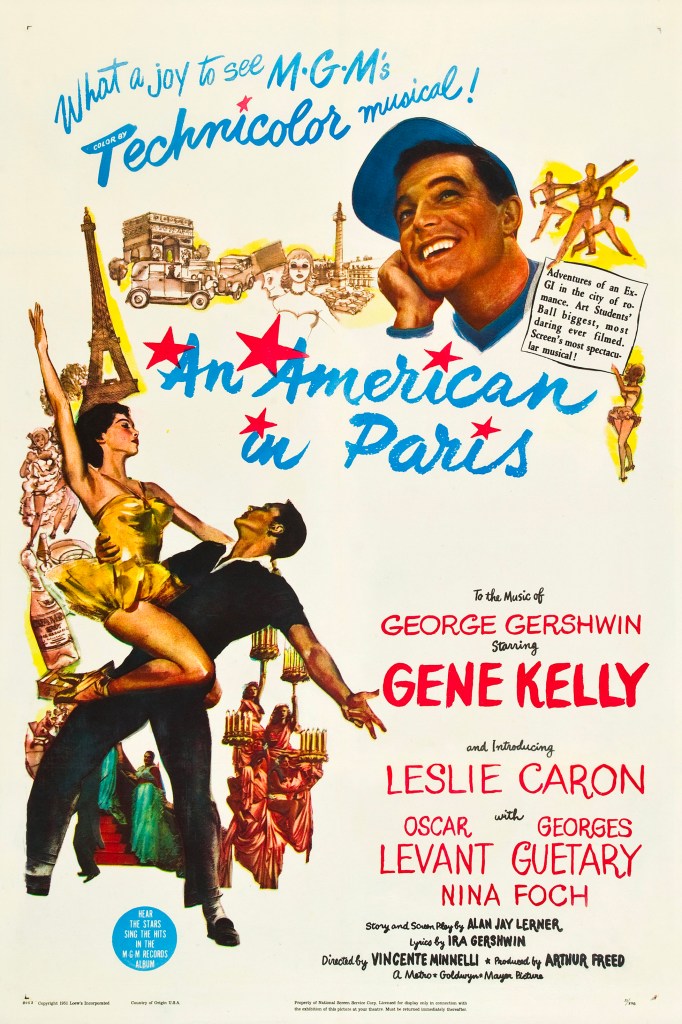
An American in Paris (1951)

An American in Paris (1951)

Romance, love and a lot of dancing in this charming Best Picture winning musical

Director: Vincente Minnelli

Cast: Gene Kelly (Jerry Mulligan), Leslie Caron (Lise Bouvier), Oscar Levant (Adam Cook), Georges Guétary (Henri Baurel), Nina Foch (Milo Roberts), Eugene Borden (Georges Mattieu)

“This is Paris. And I’m an American who lives here!” Those are almost the first words you hear in this charming but light and frothy Best Picture winner. They are pretty much an indicator of the loosely constructed, lightly plotted film that unspools. With the rights to the back catalogue of Gershwin, a story was swiftly thrown together to give us a reason to watch Gene Kelly and friends dance and sing their way through them. Tapping into a post-war romanticism about the delights of Old Europe, An American in Paris is a hugely entertaining technicolour delight that blew audiences away.

That American is Jerry Mulligan (Gene Kelly), an ex-GI hanging around in Paris to try and make his dreams of being an artist like Renoir and Toulouse-Lautrec come true (one glance at his paintings is enough to know he has no chance). His best friend is fellow ex-pat, ageing ‘child prodigy’ pianist Adam (Oscar Levant). Adam’s friend is Henri (Georges Guétary), a famous French singer (and war hero!). Henri is engaged to Lise (Leslie Caron), who meets Jerry by chance, neither knowing who the other is. Doncha-know-it Jerry and Lise fall in love. All this while Milo (Nina Foch), a wealthy would-be patron, longs to make Jerry her companion. How will these romantic complexities play out?

The story is by Alan Jay Lerner, but it can’t have taken him more than a long afternoon to come up with it: two friends unknowingly love the same woman, which will she choose? There is the odd sparkling piece of dialogue, but really this is a showcase for three things: Gershwin, Kelly’s dancing and Paris. Pretty much in that order, since the film is almost completely shot on a Studio backlot  (there are some brief second unit shots of the actual locations). Kelly objected at first to the lack of location shooting (“Ever tried dancing on cobble stones?” a producer pointed out), but actually it works for a film that is basically a fantasia on the city of romance, at points literally taking place in dream-like Parisian streets.

Constructed on a huge set (with some ingenious technical effects to expand the heights of the buildings, like Jerry’s apartment) the film is basically one delightful dance sequence after another, shot with a technicolour richness by Minnelli. We get introduced to our three male leads – Jerry, Adam and Henri – in overlapping voiceover, their faces unseen, as the camera roams over their Parisian locale. (We also get a neat repetition three times of the same joke as a camera settles on someone who nearly fits their description only to be told “no that’s not me”).

From there they meet each other and burst into a richly dynamic all-singing, all-dancing rendition of By Strauss in a classic Parisian café, that uses every prop going.  (It later gets mirrored with an equally amusing ‘S Wonderful where, unknowingly, Jerry and Henri sing of their love for the same woman, while a stressed Adam who knows the truth puffs seemingly a whole pack of cigarettes at once). Not to be out down, as Henri describes his fiancée to the boys, we see Caron perform a series of ballet steps each of them styled differently to reflect the different facets of her personality.

Kelly took on much of the choreography work and the film is a tribute to his grace. The man could move like almost no one else. One of the best bits of choreography in the film isn’t even a musical number: after his introduction Jerry gets out of bed in his tiny apartment and, with a stunningly witty musical grace, rearranges all the furniture from ‘night-time’ (bed) to ‘day-time’ (table and chairs). It’s just about a perfect bit of physical choreography, one of my favourite in the movies and at least as beautiful in its way (if not more so than) Jerry and Lise ballet stepping to Love is Here to Stay under a Parisian bridge. Not to complain about this number, which is a hugely influential routine of two dancers moving increasingly in rhythm with each other, shot with a luscious romantic beauty by Minnelli.

The numbers are so good, you give a pass to the fact that Jerry behaves like a bit of shit. His paintings are hilariously – and I believe intentionally – third-rate rubbish (he’d barely manage to land a job as a postcard painter), so its clear his aspirations to art are a fantasy. It’s also clear that Milo can’t seriously be interested him as an artistic prospect, as opposed to a bed one. Jerry of course knows this, but he still blows hard and cold on her with a slightly shabby selfishness. He’ll take her money for an apartment and whisk her away to a masked ball when he’s feeling low. But he’ll also flirt shamelessly with Lise right in front of Milo and her friends, and then act with a churlish “what’s the problem” harshness in the car with a tear-stained Milo on the way home.

I’m not sure how sorry the film wants us to feel for Milo, but one look at Nina Foch’s fragile face and her wobbling voice a few seconds away from tears as she deals with humiliation from her possible-boyfriend, always puts me on her side (at least at that moment). Jerry is borderline stalker in his pursuit of Lise, chasing her down in the café he has been bought to by Milo (after spending large chunks of the evening starring uncomfortably at Lise), dragging her into a dance and then pestering her later at her workplace into a late night meal. Just as well she loves him. Honestly if Kelly wasn’t so charming, you’d give Jerry a slap. Or a restraining order.

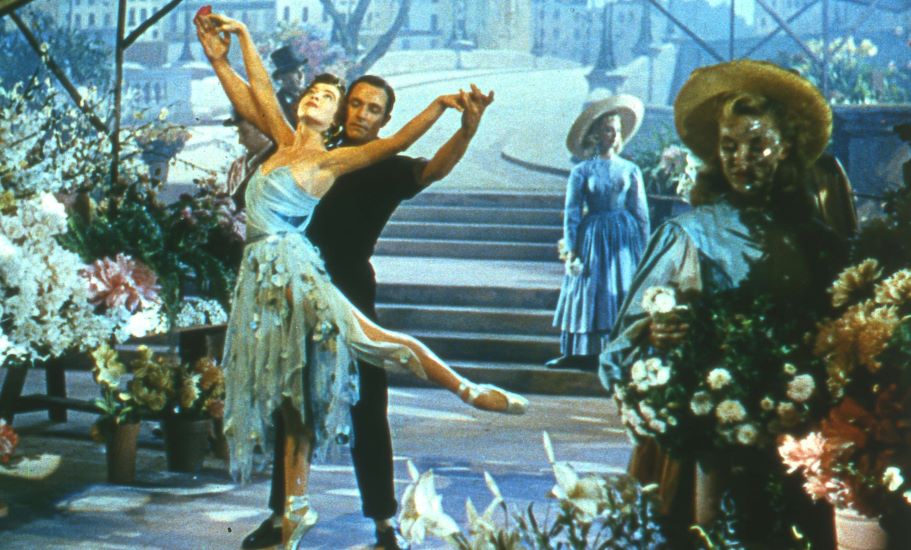
An American in Paris saves its final flourish for its last act: a seventeen minute ballet, taking place in a mix Jerry’s memories and wishes after it seems he and Lise will be kept apart for ever. Choreographed by Kelly, there isn’t anything else really like this in the movies (until La La Land stole the idea). Minnelli and Kelly sit in the ballet in a deliberately artificial Paris, essentially Jerry’s paintings bought to life and mixed with those of his artist heroes. This sequence is at times a little indulgent (some reviewers have unkindly compared Kelly’s desire to dance a ballet to a clown gracing us with his Hamlet) but it’s beauty and dynamism means it rewards investing in it.

Because Kelly and Caron (who is admittedly incredibly raw here as an actor) are wonderful dancers and the choreography here showcases them to perfection. Partially retelling the events of the film, partially telling its own romantic fantasia of a couple bought together and pulled apart, it’s a perfect mixture of several dancing styles and emotions and looks stunning, in its hyper-realistic design.

It makes for a unique ending to a classic musical that gets a bit overlooked – possibly because of the brilliance of Singin’ In the Rain that followed a year later, but was a flop compared to this mega-hit – but is an explosion of superb musical entertainment. Sure, the story is slight – only Nina Foch gets anything approach a hard-hitting role – but the joy is grand. Kelly is charm itself, Levant and Guétary very good in roles that riff on their personas and the whole thing will have you tapping toes and clicking fingers.

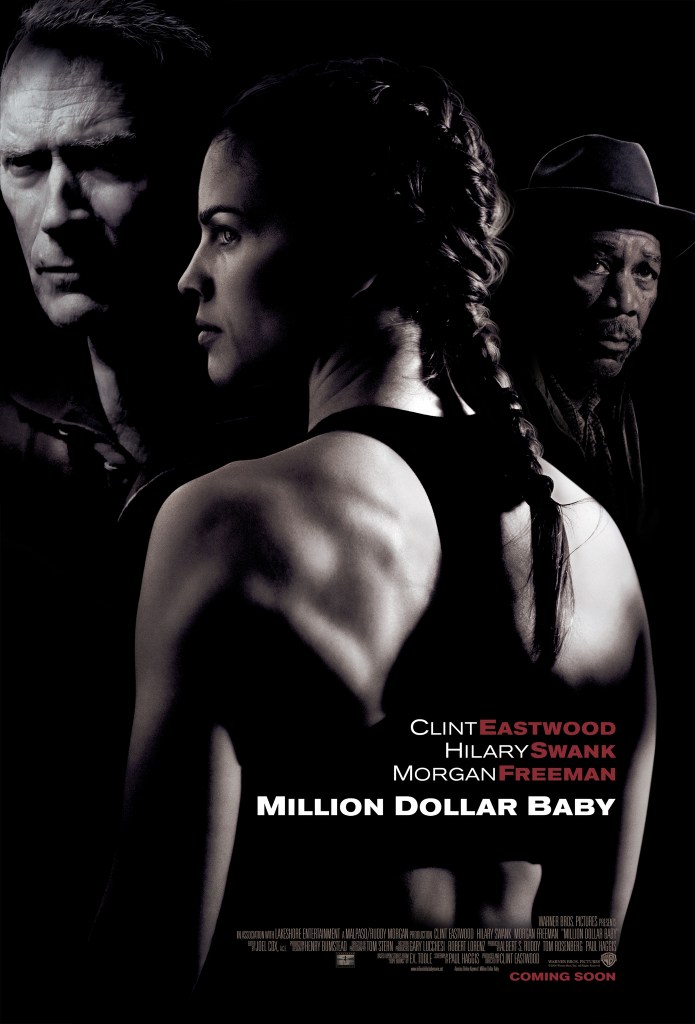
Million Dollar Baby (2004)

Million Dollar Baby (2004)

Oscar-winning sucker punch (literally) movie as a woman goes against the odds to make her boxing dreams come true

Director: Clint Eastwood

Cast: Clint Eastwood (Frankie Dunn), Hilary Swank (Maggie Fitzgerald), Morgan Freeman (Eddie “Scrap-Iron” Dupris), Jay Baruchel (Dangerous Dillard), Mike Colter (“Big” Willie Little), Lucia Rijker (Billie “The Blue Bear” Osterman), Brian F. O’Byrne (Father Horvak), Anthony Mackie (Shawrelle Berry), Margo Martindale (Earline Fitzgerald), Marcus Chait (JD Fitzgerald), Riki Lindhome (Mardell Fitzgerald), Michael Pena (Omar), Benito Martinez (Billie’s manager)

Spoilers: I thought the end of Million Dollar Baby was pretty well known, but when I watched it with my wife, I realised half-way through she had no idea where it was going. I’ll be discussing it, so consider yourself warned!

We know what to expect from most Sports stories don’t we? A plucky underdog fights the odds and emerges triumphant, winning the big match or going the distance when everyone doubted them. So it’s not a surprise Million Dollar Baby was marketed as a sort of female-Rocky. It had all the ingredients: Swank as a dreamer from the wrong-end-of-the-tracks, tough but humble and decent; Eastwood as the grizzled trainer; a working-class backdrop; a struggle to put their pasts behind them on the road to glory. Then, imagine what a sucker punch the final act of the film is when you suddenly realise you’ve not been watching a feel-good drama, but the entrée to a heart-wrenching euthanasia story.

Maggie Fitzgerald (Hilary Swank) has spent months persuading grouchy boxing trainer Frankie “I don’t train girls” Dunn (Clint Eastwood) to train her. Frankie suffers from a string of lifelong regrets, from the daughter that returns his letters unread to not ending a fight decades ago that saw best friend Eddie (Morgan Freeman) blinded in one eye. Frankie’s resistance is eventually worn down by Maggie’s persistence and the two form a close bond. Maggie is on fire in the ring – until a foul punch leads to a terrible fall leaving her paralysed from the neck down. With Maggie having lost everything that gave her life meaning, how will Frankie respond when she asks him to end her life?

Of course, the clues should be there earlier that we are not about to settle down for a triumphant Rocky II-style yarn. Eastwood’s (self-composed) maudlin score constantly works against the action, until we realise it is sub-consciously preparing us. Expectations are overturned: Frankie’s reluctance to let his fighter “Big” Willie (Mike Colter) go for a title shot – hesitation that lasts so long, eventually Willie hires a new manager – is shown to be misjudged when Willie wins. Dunn spends hours in church every day, plagued with guilt about misdeeds he can’t begin to put into words. Maggie’s family are not a supportive working-class bubble, but trailer-trash dole-scum who react to Maggie buying them with house with fury as it may affect their (unmerited) benefit cheques. We even get several shots of the stool that will eventually play a crucial role in crippling Maggie.

What the film is actually building to in its opening 90 minutes is not a story of triumph, but how a close relationship builds between a man who has lost his family and a woman whose family is a grasping horror story. Eastwood charts this with a carefully judged pace, delivering one of his finest performances as the guarded and grouchy Frankie, who uses his gruff exterior to protect himself from the possible hurt of emotional commitment. Because it’s clear Frankie actually cares very deeply, frequently going the extra mile to help people, even while complaining about it.

It’s that buried heart, that draws him towards the determined and good-natured Maggie. Rather like Frankie, Hilary Swank makes clear in her committed performance Maggie’s optimism and enthusiasm is as much of a shield as Frankie’s gruffness. She knows that she’s nothing to her family except a meal ticket and her entire life seems to have been one of loneliness, working dead-end jobs to funnel money to her mother at the cost of any life of her own. Switching away from her grinning enthusiasm leaves her in danger of staring at her own life and seeing what a mess it is.

With their two very different shields, these two characters are exactly what the other needs and one of the film’s principle delights is to see them slowly confiding in each other, sharing their vulnerabilities and filling the void their own families have left in their lives. This all takes place inside a conventional “sports movie” structure, which writer Paul Haggis almost deliberately doubles down on, as Maggie builds her skills, via training montages and Frankie starts to relax about sending people into the ring to have seven bells beaten out of them and dreams about one more shot.

This all means it hurts even more when that (literal) sucker punch comes. Eastwood’s film doesn’t shirk from the horrors of Maggie’s disability – re-enforced by the previous 90 minutes establishing how crucial movement and reflexes are to boxing, and how this element in particular helps give her life meaning. She’s covered with bed sores, can’t breathe without a respirator, it takes over an hour to lift her into a wheelchair (which she cannot operate) and eventually her infected leg is amputated. Her family visit only to get her to sign over her assets (she tells them where to get off). She is reduced to biting through her own tongue to try and bleed to death, meaning she is left sedated to prevent self-harm.

It’s all more for Frankie to feel guilty about. Although the film could have given even more time to exploring the complex issues – and moral clashes – around the right to die, it does make very clear the crushing burden of guilt and the impact his final decision will have on him. In fact, it would have benefited from spending more time on this and giving more time to O’Byrne’s priest (who quite clearly states that it’s wrong), to help give more definition to the arguments around assisted suicide (I wonder if Eastwood’s agnostic views came into play here).

Perhaps the film spends a little too long on its initial – even deliberately formulaic – rags-to-riches boxing story. In its boxing club vignettes, you can see the roots of the film in a series of short stories by former boxing trainer FX Toole. Mackie’s cocky boxy and Baruchel’s gentle intellectually disabled would-be boxer run through the film play like short story anecdotes. The narrative is linked together by narration from Morgan Freeman. It’s a natural fit for Freeman – essentially a semi-reprise of Red in Shawshank – and fits him like a glove (it was no surprise he won an Oscar). But trimming this content could have given more time to the films closing moral dilemma.

Which doesn’t change the impact it has. Eastwood’s low-key style – with its drained-out colours and piano chords – make a perfect fit, and its expertly played by himself and Swank (who also won an Oscar). Even on a second viewing, Million Dollar Baby still carries a real impact, particularly as you appreciate how subtly the sucker punch that floored so many viewers first time around is built up to.