Category: Box office bomb

Donnie Darko (2001)


Welcome to the weirdness: Donnie Darko ultimate 00’s cult hit

Director: Richard Kelly

Cast: Jake Gyllenhaal (Donnie Darko), Jena Malone (Gretchen Ross), Mary McDonnell (Rose Darko), Holmes Osborne (Eddie Darko), Katherine Ross (Dr Lilian Thurman), Maggie Gyllenhaal (Elizabeth Darko), Daveigh Chase (Samantha Darko), James Duval (Frank), Drew Barrymore (Karen Pomeroy), Patrick Swayze (Jim Cunnningham), Noah Wyle (Dr Kenneth Monnitoff), Beth Grant (Kitty Farmer)

Donnie Darko was a surprise cult hit. In fact, it was such a cult hit that Kelly made a “director’s cut” version of the film five years later. Funnily enough, the Director’s Cut was largely rejected by the very people who loved the first film. Why? Well probably because the film was loved because it was so weird. It was so esoteric, so hard to understand, so much of its logic unclearly defined, that much of that love was based on trying to work out what the hell is going on in it – and the director’s cut supplies lots of answers, ruining the game! 

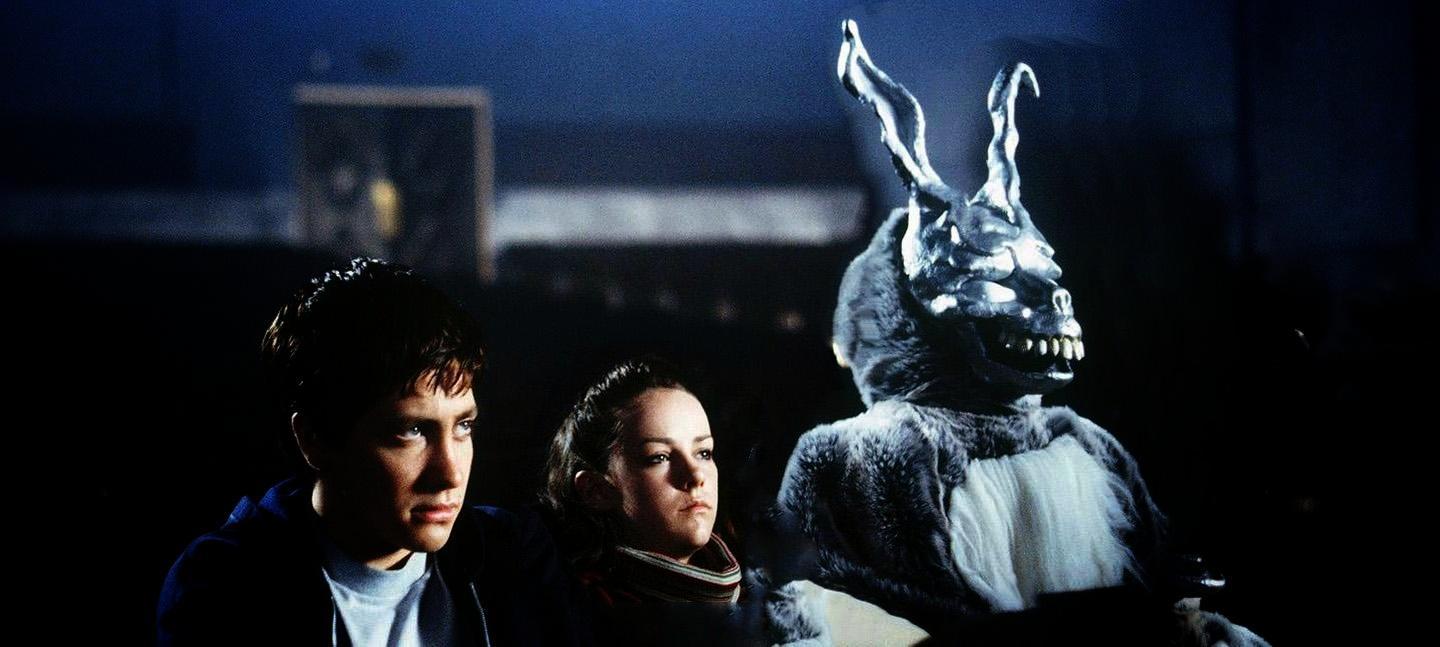
In 1988, troubled teenager Donnie Darko (Jaky Gyllenhaal) sleepwalks out of his house onto a local golf course and meets with a mysterious figure in a gruesome rabbit costume – “Frank”. Frank tells Donnie the world will end in 28 days, 6 hours, 42 minutes and 12 seconds. Donnie sleeps on the golf course overnight – and returns home to find a jet engine has crashed through his bedroom. Plagued by strange visions and hallucinations, and visitations from Frank, is Donnie suffering from schizophrenia or is he genuinely in a position to save the world? And is there a danger from the way Frank is starting to influence Donnie’s actions?

Richard Kelly’s film is a bizarre, inventive, dreamy, creepy oddball flick that deliberately never really explains what the hell is going on. Never mind the mystery of Donnie’s mental state – the film’s confusing structure, its unexplained elements of time-travel, mind-control and predestination, all of this is just left hanging out there. It’s actually a testament to how much restriction can sometimes be the mother of invention. Kelly was told that the film could not be longer than a couple of hours, meaning a lot of the more traditional explanation (reintroduced for the director’s cut) was removed to keep the run-time down. But the great thing is, this actually leaves it very open for the viewer to create their own idea of what the film is about and what is going on. It really works.

This is particularly because Kelly manages to marry the clever-clever weirdness with a real emotional investment in the characters. Not just in Donnie either: his family are all extremely well-drawn, who we grow to care for over the course of the film, from his cheery father to his loving but frustrated mother, brilliantly played by Mary McDonnell. Equally strong is Maggie Gyllenhaal as Donnie’s sister. These characters, along with dozens of other characters quickly established, but all feeling very real, are what keep you interested in the film. If it was just oddness and alienating weirdness, it would be hard to care. But this is a story that mixes science fiction oddness with genuine family drama heart.

There is a lot of oddness in there though. Frank is a character practically designed to be iconic, a twisted giant rabbit like a demonic Harvey. Combined with this are a series of curiously unsettling images and storylines. So we get Donnie with visions of streams of transparent liquid streaming out of people’s chests – possibly their future paths leading them forward. We get Donnie facing strange barriers, that seem to repel and reflect his world. Donnie is plagued with strange visions and increasingly unsettling instructions from Frank. He carries out a series of impossible feats under Frank’s direction. There are elliptical conversations about time travel and physics and while the film drops hints it never explains a damn thing. So when you finally get to the end – well lord alone knows what happens, but you’ll certainly have a hell of a lot of fun trying to work it out.

Around this, the film cuts rather a neat parody of teenage life in the 1980s and the 1980s Brat Pack films. Actors like Drew Barrymore and Noah Wyle have a lot of fun as closeted liberal teachers struggling in a school is run by an oppressive, fiercely religious set of governors. But not as much fun as Beth Grant as a PE cum civics teacher, both blinkered in her love of traditional education (and “safeguarding our youth” from the dangers of literature) while in love with Patrick Swayze’s smug self-help guru (whose bullshit “conquer your fear” videos and mantra are a superb spoof). The film has a nice eye for the politics of school classes, and placing this end-of-world fear into the all-consuming self-importance of teenage life works very well.

Throughout Kelly shoots with a confidence that belies his “first-time film director” status. Yes there is the occasional overly clever camera shot that you get from someone enjoying the toy set for the first time, but there is lots of terrific stuff. His assembly of events is brilliant, he works with actors very well indeed.

But the other factor that really makes the film work is Jake Gyllenhaal’s superb performance in the lead role. Gyllenhaal gets the balance between Darko’s vulnerability and his (possible) darkness absolutely spot-on. He manages to turn himself perfectly into a gangly, awkward, nervous kid – totally believable as the sort of young man unsure of where he stands in the world and angry. It feeds perfectly into the mystery of the film. Is Donnie a dangerous schizophrenic? Or is he right in thinking he might be important? Gyllenhaal captures all this, but also really makes us care for Donnie, turning him into someone truly sensitive and confused (helped as well by a very good Jena Malone as his awkward love interest). It’s a brilliantly distinctive performance that captures a true idea of teenage difficulties.

Any maybe that’s also why Donnie Darko works so well. Because it’s as much about teenage awkwardness and not knowing what you are doing here and why, as it is all the bizarre and unexplainable pseudo-science, time travel and predestination paradoxes that the film allows to play around the edges. It places at the centre of a brilliant science fiction drama, a real human and emotional story that feels very real and grounded and like something we have all experienced at one time in our lives. It’s a puzzle and mystery that also has a heart. It’s a difficult trick to pull off – so difficult Kelly has failed to pull it off again since.

Flash Gordon (1980)


Flash Gordon: Sometimes words fail you

Director: Mike Hodges

Cast: Sam J Jones (Flash Gordon), Melody Anderson (Dale Arden), Max von Sydow (Ming the Merciless), Topol (Hans Zarkov), Ornella Muti (Princess Aura), Timothy Dalton (Prince Barin), Brian Blessed (Prince Vultan), Peter Wyngarde (General Klytus), Mariangela Melato (General Kala), Richard O’Brien (Fico), John Osborne (Arborian Priest), Philip Stone (High Priest Zogo), John Hallam (General Luro)

Well. If almost 40 years on, Flash Gordon is a cult favourite and beloved by millions, then there is hope yet for Jupiter Ascending. By any objective standards, Flash Gordon is a terrible film. But it gets a pass from millions because it’s one people have grown up with. I dread the same reaction to The Phantom Menace from those people whose first exposure to Star Wars was through that film.

Ming the Merciless (Max von Sydow) rules the planet Mongo and decides to destroy the Earth for his own amusement. Disgraced ex-NASA scientist Hans Zharkov (Topol) is the only man on Earth who believes a series of natural disasters are the actions of invaders from space. Zharkov flies a rocket into space to find them – accompanied, for strange reasons, by professional football star “Flash” Gordon (Sam J Jones) and travel agent Dale Arden (Melody Anderson). Arriving at Mongo, they encourage its citizens – especially the forest people led by Prince Barin (Timothy Dalton) and the hawkmen led by Prince Vultan (Brian Blessed) – to unite and rise up against Ming.

Yup you read that right. It’s all as barmy as you might expect. Any film that asks to believe Brian Blessed can fly is always going to be odd. Flash Gordon does at least have its tongue firmly in its cheek. The whole thing is as camp as Christmas. In an age where science fiction and comic books are treated like holy texts, it is at least interesting to see a film that treats its source material with such a breezy lack of respect. The entire film is an exercise in high camp, cheaply put together, that refuses to take anything seriously and actively encourages the respected actors in its cast to take the piss.

So what is Flash Gordon? Is it a big old joke? Yes it probably is. No one is taking it seriously. The actors clearly think it’s a pile of campy rubbish. The producers seem determined to throw as much technicolour cartoon colours at everything as possible. The film is so cartoonish it all but has “Pow!” and “Thwack!” appear on screen as punches land. At a time when Star Wars (and it’s hard to believe it, but George Lucas only made Star Wars because he couldn’t get the rights for this) took its space opera roots rather seriously, this seemed to miss the point completely. It’s a would-be Star Wars rip off that has nothing in common with the tone of the thing its ripping off. Usually that would be a good thing: here I’m not sure it is.

So the dialogue is terrible, the plot line makes no real sense, the film barrels around telling jokes against itself as inopportune moments. Characters shrug off events with no problems at all – at one point a character undergoes brainwashing torture: two scenes later he’s fine (“I just didn’t think about it” he gleefully tells someone. It’s never mentioned again.) The special effects, even for the time, are shockingly bad (the backdrops are sub-Doctor Who. The costumes and design are ludicrously overblown, like an explosion in a campy dressing-up box. It’s a terrible display of excess married with a complete lack of understanding about what made the things it’s trying to rip off successful in the first place. But yet, and yet, and yet it’s still in a terrible, terrible, terrible way quite good fun.

But perhaps the most interesting thing about its campy rubbishness, is how much odd sexual stuff creeps in under the radar. There are also lashings of sadomasochism, incest, orgasms, sex dens, threesomes, swinging, voyeurism – acres of cheeky sexual humour. Ming has a ring that can induce orgasms (it’s so effective on Dale Arden that it’s even commented only Ming’s daughter has had such a response). Ming has a harem, full of opiates to encourage “performance”. There are references to pleasure planets and sex toys. Ming’s daughter is whipped while tied to a bed by Ming’s henchmen (while Ming watches eating some popcorn). The arborians have a bizarre ritual which seems laced with wanking references. It never stops. At least they had some fun.

Some of the actors are also clearly enjoying themselves. Of course Brian Blessed throws himself into it: an actor who never knowingly underplays, Blessed rips through a bizarre role that sees him perform in a jockstrap with some unconvincing wings. Timothy Dalton channels Errol Flynn. Max von Sydow chews the scenery and virtually everything else in sight as a campy, moustachio-twirling Ming. Peter Wyngarde has a great voice and uses it to marvellous effect as pervy security chief Klytus, while Mariangela Melato plays his dominatrix assistant. There are bizarre, eclectic casting choices: so we get Look Back in Anger author John Osborne playing a high priest, Blue Peter’s Peter Duncan as an initiate, and Richard O’Brien (of course!) playing – well to be honest himself.

Sam J Jones is of course simply awful as Flash (wooden, dull and confused). Melody Anderson isn’t a lot better as Dale Arden, while Ornella Muti gets some awful dialogue which she does at least deliver with some conviction (sometimes too much: “Not the BORE WORMS!” sticks in the mind as a bizarre moment of over such over conviction that it simply becomes funny). It’s a bizarre mix of acting styles and overblown, fourth-wall leaning. It’s so bad, I suppose, that to many people it’s good. But actually it gets a little overbearing.

Because nothing is taken seriously at all, the film actually becomes a bit wearing after a while. The writer later regretted playing everything for laughs: it removes any stakes from this ridiculous film. It says a lot that Brian Blessed – the most overblown actor in it – is the only one who really emerges with dignity intact. Blessed at least knows it’s utter crap and plays it like he’s taking the piss in every scene. He commits so fully to the scenery chewing that it sort of works. The rest of the cast can only aspire to his levels of camp. Flash Gordon is a terrible film. But age and fondness have been kind to it, and made it remembered as something better than it is. It’s a misfiring gag with some great Queen songs. It goes on forever, it looks awful but it fails utterly as anything but a joke. But hell maybe that’s enough.

The Golden Compass (2007)


How did it all go wrong? The disastrous production of Philip Pullman’s The Golden Compass

Director: Chris Weitz

Cast: Dakota Blue Richards (Lyra Belacqua), Nicole Kidman (Mrs Coulter), Daniel Craig (Lord Asriel), Sam Elliott (Lee Scoresby), Eva Green (Serafina Pekkala), Jim Carter (John Faa), Clare Higgins (Ma Costa), Tom Courtenay (Farder Coram), Derek Jacobi (Magisterial Emissary), Simon McBurney (Fra Pavel), Jack Shepherd (Master of Jordan College), Ian McKellen (Iorek Byrnison), Freddie Highmore (Pantalaimon), Ian McShane (Ragnar Sturlusson), Kathy Bates (Hester), Kristin Scott Thomas (Stelmaria)

After the success of The Lord of the Rings, bookshops were stripped of all epic fantasy novels with a cross-generational appeal by film producers, their mouths watering at the prospect of having another billion-dollar licence to print money. Nearly all of these projects bombed, but I’m not sure any of them bombed harder than this, an attempt to kick-start a trilogy of films based on Philip Pullman’s both loved and controversial His Dark Materials books. What went so completely wrong?

Pullman’s trilogy is set in an alternative-Oxford, where people all have Dæmons, part of their soul that lives outside their body in animal form. It’s a world where the Magisterium, a powerful organisation, suppresses all free thought, in particular all investigation into the mysterious particle dust. Lyra Belacqua (Dakota Blue Richards) is an orphan raised in Jordan College, who saves the life of Lord Asriel (Daniel Craig), who is investigating Dust in the North. Leaving the college with the mysterious Mrs Coulter (Nicole Kidman), who may or may not be involved in a series of child kidnappings, she eventually finds herself drawn more and more into setting right the problems of her world.

The Golden Compass is a film that pleased no-one. Fans of the book generally hated it. The people who hated the books hated it. The people who hated what they had been told the book was about hated it. Why did the studio decide to make a film in the first place about a book series they seemed to know was controversial from the start? If they didn’t really want to embrace the themes of the books, why bother? Pullman’s books are partly adventure stories, partly intricate world building, partly spiritual discussions – and yes partly atheist tracts with a strong anti-Establishment-church bent (with a more general regard for genuine faith). To put it bluntly, that’s a lot of ideas to try and squeeze into a film – particularly a film well under two hours.

So The Golden Compass is a mess that feels like it’s been put together by committee. It’s been cut to within an inch of its life – scenes jump incredibly swiftly from event to event, often with the barest of clunky explanation voiceover (“We’re going to see Lord Faa, King of the Gyptians”) to tell you what’s going on. Pages and pages of dialogue and character seem to be lost. We are constantly told Lyra is “special” but never shown anything that supports or explains this. An Eva Green-voiced infodump opens the film: clearly the producers were thinking about Peter Jackson’s masterful opening to The Fellowship of the Ring, which skilfully introduces everything. This introduction though is about removing all the mystery and magic of the story as soon as possible by stating it bluntly up-front.

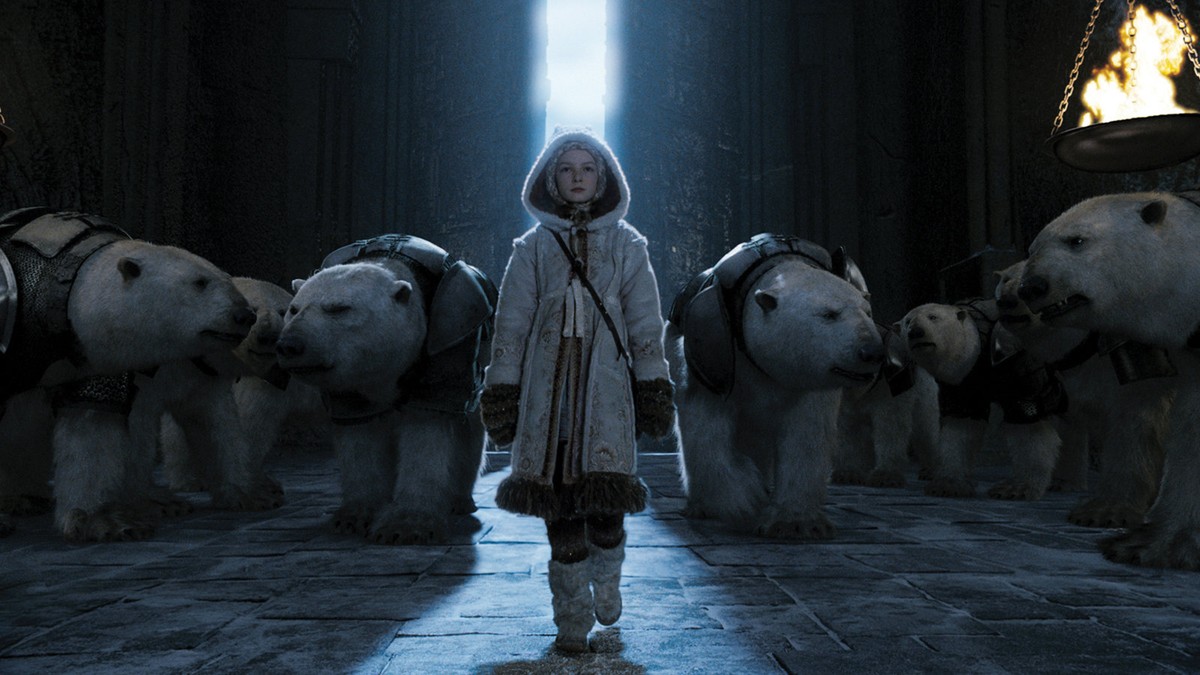
The biggest mess is of course the way the film avoids all reference to Pullman’s religious themes. No reference is made at all to the Magisterium being a church. No reference is made at all to religion or faith. Iorek is clearly being held in a Russian Orthodox painted church – but the building is referred to throughout as an “office”. Derek Jacobi plays one of the principal Cardinal antagonists of the third book – no reference is made to his office. The Magisterium is instead just a “shady organisation” – a controlling gestapo-type organisation, with black uniforms and creepy Albert Speer style buildings. The questions of Dust and original sin – so central to the motivations of the story – are completely unexplained, meaning the child kidnapping and sinister intercission the villains are carrying out makes no sense at all. How on earth they planned to continue not talking about religion in their planned third film is a complete mystery.

This rushing is the problem throughout the film. Stuff just happens really, really quickly for no real reason. Characters pop up to introduce themselves for later films, or to drop clunky exposition. Tom Courtenay explains what an aleitheometer is for us (the film constantly brings up this “Golden Compass” and its future-telling properties, without ever really making them feel important for anything that happens in the film). Eva Green flies in to say she’s a witch and how pleased she is to meet Lyra and promptly flies off. Daniel Craig name checks Dust, gets captured then disappears. Sam Elliott introduces his rabbit Dæmon and shoots a couple of things. None of this gets any chance to grow and develop – and you end up not caring about any of these characters. Nearly every plot event from the first book is kept in – but so rushed you don’t give a toss.

The structure of the film has also been changed from the book, and not for the better. The film (probably thinking about later films) increases the presence of the Magisterium throughout – but without really making their antagonist role clear. Lyra and Iorek’s defeat of Iorek’s usurper Ragnar is moved to before the final defeat of the Gobbler’s ice base – this doesn’t make a lot of sense. If Iorek now commands an army of bears, why doesn’t he bring them along for the final battle? Lyra instead wanders up to the base like an idiot, and the film extends the release of the children from the ice base into a big battle in order to give us a Lord of the Rings style finish. It doesn’t matter that nothing in the film feels like it’s building plotwise or dramatically towards this battle – it’s there you feel, because Lord of the Rings had battles and people loved that, so let’s get one in here. 

In fact the film builds towards nothing, because it has been cut so poorly, and is such a terrible compromised product, that everything the books are building towards has been removed from it. So the entire thing makes no bloody sense. The clash with the church and organised religion doesn’t work because all reference to faith has been cut. There are mutterings about a “war” coming, but no one says what it might be about. There is a loose crusade to save the kidnapped children – but we don’t understand either side of this. The cruelly ironic ending of the book, with Lord Asriel’s real plan revealed, is deleted altogether from the film – because the studio didn’t want a “downer” ending. As a result the film just suddenly ends (after a clunky “We’ll go home one day after this, and this, and this, and this, and this, and after we’ve solved all the problems of the world” speech).

Studio interference reeks off this whole film. It’s been cut to ribbons. Ian McKellen and Christopher Lee were parachuted into the cast in order to make the film feel more like Lord of the Rings. McKellen sounds completely wrong as a mighty armoured bear (original casting Nonso Anozie would have been perfect). Lee chips in a single line in what is painfully obviously an addition from re-shoots. Anything potentially different or interesting is cut out. In fact anything that was unique about Pullman’s original books is cut out: as much is done as possible to make Pullman’s story as identikit and standard as hundreds of other bland fantasy dramas. As if they hadn’t realised the book was potentially really controversial in the more traditional parts of the US market, it seems like the studio only really read the books once the film was shot, suddenly realised they had made a massive mistake, and tried to reduce the danger as much as possible by making the film as bland as they possible could.

Chris Weitz is completely unsuited for directing it – and he actually feels like a hostage the more you read about the film’s turbulent production – but it’s not all bad. Dakota Blue Richards is actually pretty good as Lyra – she’s got a certain magic charisma. The set design is pretty terrific – even if it is a lot more steampunk than I pictured the novel as being. The special effects are pretty goods – the Dæmons are well done, and the puff of gold Dust they turn into when someone dies is striking. Some of the adult casting is pretty good – Kidman is just about perfect, Craig is pretty good, Sam Elliott stands out as Lee Scoresby. There are some neat cameos as well – I would have liked to see Jacobi get to tackle the third book, Eva Green is wasted, Tom Courtenay is pretty good. It just all rushes by so quickly. You don’t get the chance to get to know anyone fully. If the book was a bit episodic, this takes that worst element of it and ramps it up to eleven.

The Golden Compass tanked. It tanked so hard, New Line Cinema didn’t really recover. All plans for future films were scrapped. However, it is important in another way. In presenting such a horrifically neutered, stripped-down version of the story, it persuaded a lot of people that books rich in world building and content like this needed much longer than a traditional film to be brought to life. It helped persuade George RR Martin that TV was the way to go when selling the rights for Game of Thrones. And His Dark Materials will now live again as a 10 part TV series in the near future. For all its many, many failures – we owe it something.

The Thing (1982)


The men of an Antarctic base encounter a deadly force from space in The Thing

Director: John Carpenter

Cast: Kurt Russell (MacReady), Wilford Brimley (Blair), TK Carter (Nauls), David Clennon (Palmer), Keith David (Childs), Richard Dysart (Dr. Copper), Charles Hallahan (Norris), Peter Maloney (Bennings), Richard Masur (Clark), Donald Moffat (Garry), Joel Polis (Fuchs), Thomas Waites (Windows)

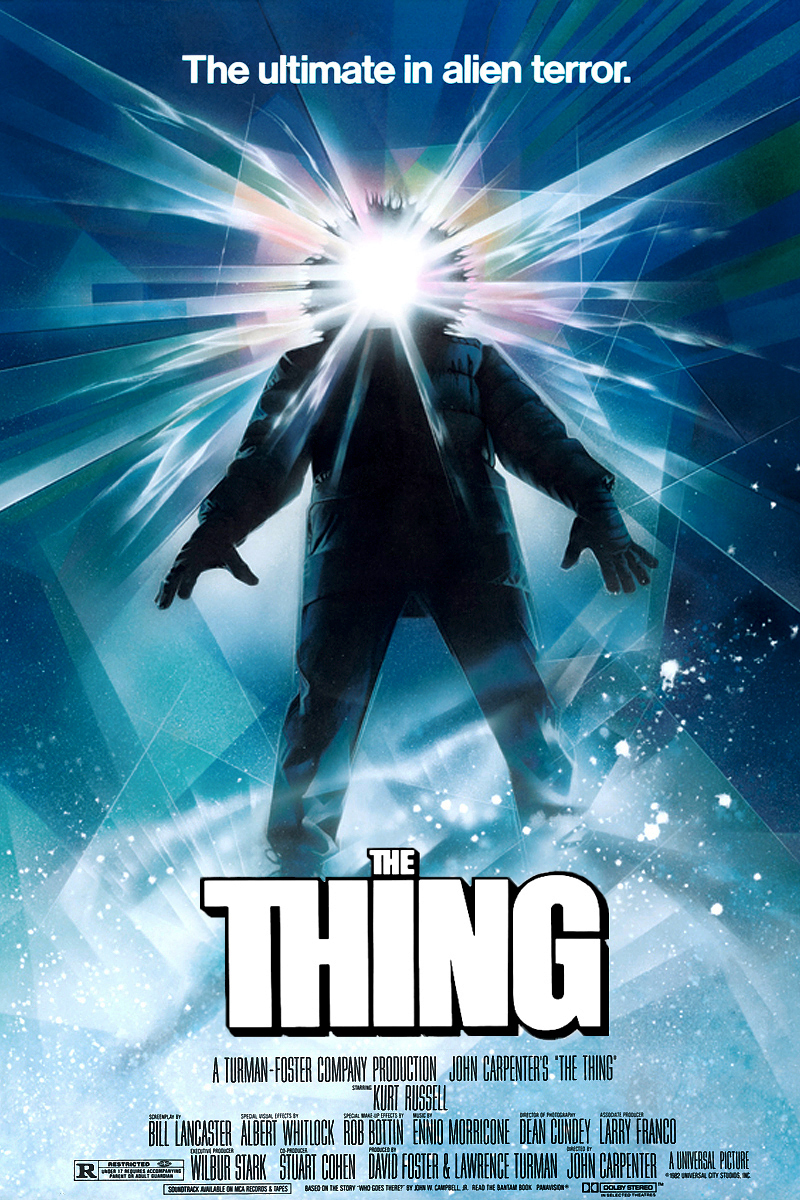
In a curious coincidence, The Thing was released on the same day as Blade Runner. Both have since gone on to become landmark science fiction films, hugely influential to future film makers. Both have scenes that linger in the memory, and have ambiguous endings fans have discussed for decades. Both were also disastrous box office bombs and with negative critical reactions.

The Thing is a creeping masterpiece of sci-fi, body horror and paranoia. On an Antarctic base, an American research team rescues a dog being pursued by two Norwegians from a base close-by (the two Norwegians are both killed, one accidentally, one shot dead after firing at the Americans). Investigating the Norwegian base to see what happened, they find it destroyed and a series of grisly corpses, including one with two faces. Soon it becomes clear the Norwegians fell victim to an alien who has the power to perfectly copy and replace living organisms. The Americans realise they are trapped on the camp, with no idea who them may now be a “Thing” rather than human.

John Carpenter’s creepy, atmospheric horror film is an endlessly gripping thriller that rewards constant rewatching. Its shot with an unnerving simplicity of movement, with the focus getting tighter and tighter. We start with an unsettling helicopter shot taking in the panorama of Antarctica but, before long, the action is confined to single rooms in the American camp, with our leads shouting suspiciously at each other. The whole film is underplayed by an eerie Ennio Morricone score that really gets under your skin with its haunting electronic strains. It’s a classic by any definition of the word, and it never, ever gets old or tired: I’ve seen it a dozen times, and each time new small moments grab me, shots enchant me – and it never fails to be tense, unnerving and scary.

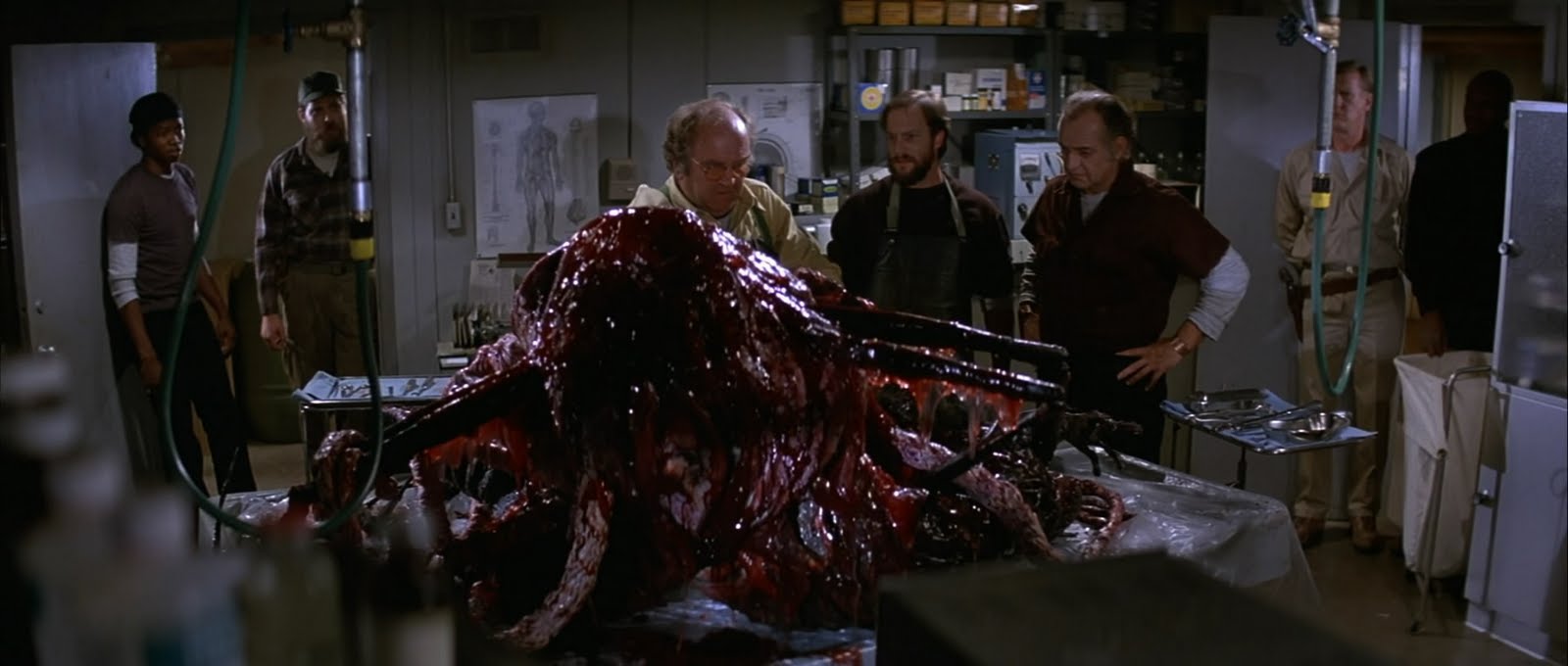
“You’ve got to be fucking kidding” a character states at one point. It’s pretty easy to imagine that this was the reaction of the critics at the time, at the onslaught of body horror. The Thing’s process of absorption is not only disgusting (usually involving flesh and skin peeling back to reveal all sorts of crazy shit), but its defence mechanisms involve similar depths of insane grossness. By the time our heroes are incinerating replacements with a ruthless lack of concern, we’ve already seen chests turn into massive tooth jaws, a dog Thing peel its own face off, and a head of a Thing separate itself from a burning body, grow spider legs and scuttle away. You’ve got to be fucking kidding indeed.

The Thing is pretty much a landmark in prosthetic work (you’ve never seen anything like this before). And the body horror still packs a major punch – I couldn’t eat my sticky bun while the Dog Thing ripped itself apart in the middle of a kennel early on (those poor other dogs by the way…). Some of the most effective stuff is actually the smaller scale moments – there is a great moment where a Thing grabs another character by the face and hand and face merge together. It has a truly yucky feeling to it. It’s all so carefully constructed and inventive that it haunts and fascinates. But if it was just a parade of gross images and nightmare fuel it wouldn’t have lasted. What makes it work is that it has a cracking story and a great set of characters. 

Carpenter collects a terrific group of actors, headlined by Kurt Russell. Russell’s MacReady is the perfect lead for this sort of film, a grizzled maverick slacker who reveals (when the shit hits the fan) the natural charisma of the born leader, the only man there able to make the hard calls. He even has a perfect little introduction scene, playing chess with a computer (whose voice makes it the only female character in the film incidentally). Having narrowly lost the game against a tactically more cunning opponent, he pours his drink into its workings, effectively destroying the game board. That gives you a pretty accurate idea of where the film is going. The whole film is Macready’s struggle against an opponent who is cunning, brilliant and (almost literally) faceless – is it any wonder he decides that destruction could be the only way to win? 

The rest of the cast give a lot of depth to their otherwise trope-based characters. In particular, Dysart, Brimley, David, Hallahan, Moffat and Masur stand out for creating unique feeling characters, each of them feeding into the growing paranoia that infects the camp. Because that’s what makes this film last: it’s a brilliant study of paranoia, suspicion and a group of macho men (to varying degrees) squabbling aggressively with each other in a confined space. Carpenter really captures this sense of twisted group dynamics – establishing plenty of tensions and personality flaws and clashes even before the horror begins. It feels like a real cold war movie: interlopers in our midst, but we don’t know who they are. It’s a slow burn that really pays off when the action explodes in the second half of the movie. 

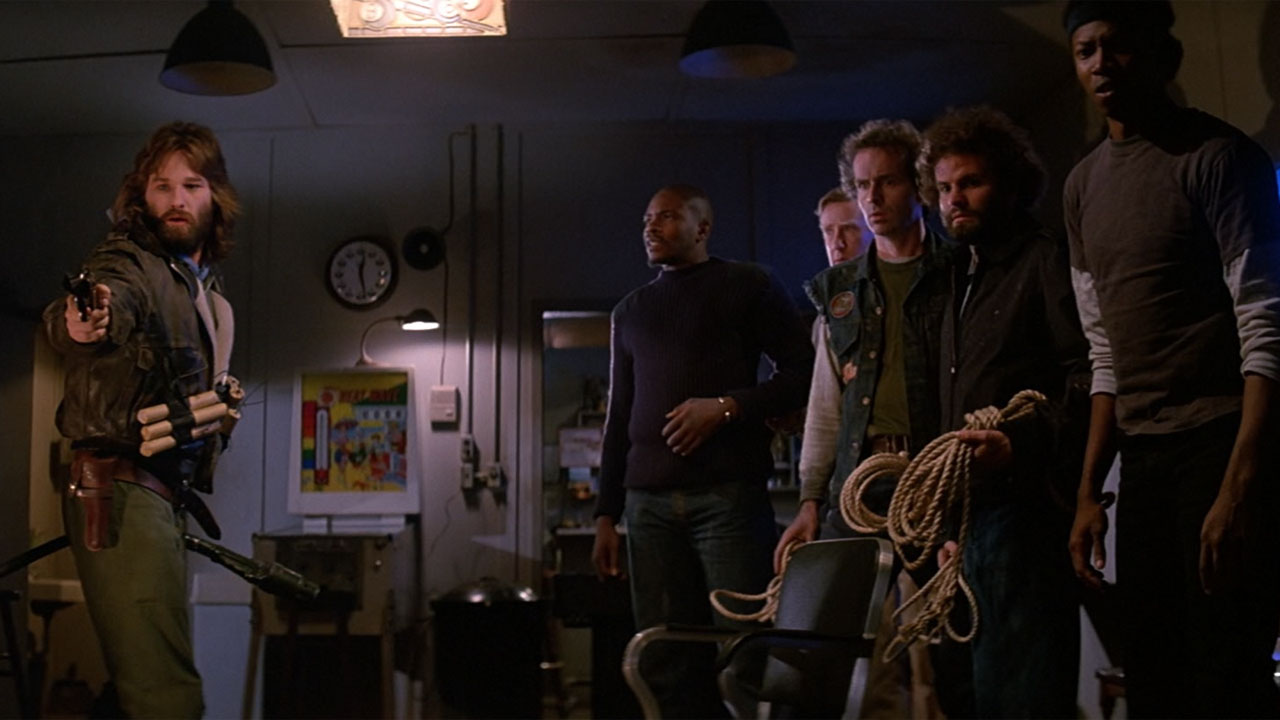
And that pay-off is compelling. A particularly masterful sequence involves a series of blood tests (now a hoary old stable of these things, but at the time something really new). MacReady essentially ties up all the other remaining characters (living and dead) and sticks a scolding hot wire into a blood sample from each man. The idea being the blood of any Thing will react aggressively to the “attack”. Carpenter really lets this scene build slowly – not least because MacReady is holding all the men at dynamite and gun point. The slow build-up reveals a few innocent men, each untied to help Macready. Then just as MacReady (and the audience) begin to relax – someone fails the test and the scene jumps into body horror chaos. Completing the tests after that is a near wordless sequence of jump cuts from test to test, with the number of untied men slowly growing. It’s brilliantly done: slow – quick – slow. Perfect tension drama. It’s the centrepiece of the whole damn movie.

The other thing Carpenter really understands is that set-ups like this are perfect discussion fodder for fans. Just as we love to debate whether Deckard is a replicant or not, there are plenty of similar points in this film. Most of this revolves around Blair, the first to work out the danger the Thing will cause if it reaches civilisation: when does he become infected? How many of his actions are human, how many Thing? At one point MacReady visits him (isolated in a hut) and finds him sitting calmly asking to come back in. Creepily beside him, an unused noose hangs from the roof: it’s not commented on in the scene at all, but it speaks volumes for possible interpretations. This sort of stuff throws itself open to a debate for the ages – the film enigmatically provides enough clues without definitive answers. It does this for a number of events – deaths go unexplained, materials are destroyed and we never find out by whom. The film is full of shady events, of key moments happening off camera, of mysteries going as unanswered for the characters as they do for the audience. Ripe for you to add your own interpretation.

The final scene of the film continues this: the surviving characters sit in the burning wreckage of their base. For all they know, either or neither of them may, or may not, be Things. But it hardly matters: the cold is coming in and we (and they) know anyone left in these conditions will be frozen in a matter of hours. So you get this brilliantly low-key, weary but charged exchange:

Survivor #1: Maybe we shouldn’t.

Survivor #2: If you’re worried about me…

Survivor #1: If we’ve got any surprises for each other, I don’t think we’re in much shape to do anything about it.

Survivor #2: Well, what do we do?

Survivor #1: Why don’t we just… wait here for a little while… see what happens?

So – the question stands? Who is a Thing and who isn’t? It’s a perfect, unsettling, final frame discussion point – and one that has kept feeding debate for years.

The Thing is a nasty, grimy, tense, unsettling, gruesome, gory, yucky, scary, paranoia-inducing masterpiece. It’s easily the best thing John Carpenter ever made (its failure at the box office seemed to break the director’s spirit, as nothing he did ever again reached this). As a slow-burn, cold war flavoured conspiracy and suspicion story it’s out of the top drawer – it captures perfectly the psychosis and fear that can be brought on by trapped isolation. It’s crammed with perfectly formed scenes. It has a terrific, nearly nihilistic feel to it – even the most competent of the men (MacReady) is way out of his depth here. Our alien nemesis is a master of psychology and tactics. So is the film.

Star Trek: Nemesis (2002)


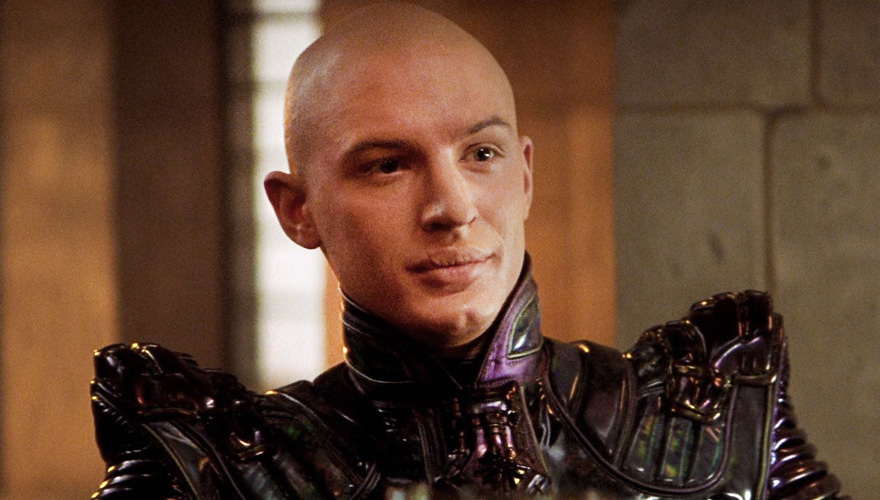
Tom Hardy plays a clone of the young Patrick Stewart in Star Trek: Nemesis. You can tell he’s identical ‘cos he’s got no hair

Director: Stuart Baird

Cast: Patrick Stewart (Captain Jean-Luc Picard), Jonathan Frakes (Commander William Riker), Brent Spiner (Lt Commander Data), LeVar Burton (Lt Commander Geordi LaForge), Michael Dorn (Lt Commander Worf), Gates McFadden (Dr Beverley Crusher), Marina Sirtis (Deanna Troi), Tom Hardy (Shinzon), Ron Perlman (Viceroy), Dina Meyer (Commander Donatra), Kate Mulgrew (Admiral Janeway)

There are few things in the Star Trek franchise with as poor a reputation as Star Trek: Nemesis. It’s as close as the series got to a franchise-killer, a film that bombed so colossally (the first ever Star Trek film to lose money at the box office) that it seemed to end not only the movie series but all planned television projects. Since then, it has been remembered as an incoherent, poorly plotted mess, crammed with terrible writing and direction and shoddy action. Is this memory fair? Well yes and no.

Picard (Patrick Stewart) and Data (Brent Spiner) have their sense of self thrown: first by Data’s discovery of an identical, unadvanced prototype of himself called B-4 (also Spiner) and then by Picard discovering on a mission to Romulus that the new leader of the Romulan Empire is a clone of his younger self, going by the name Shinzon (Tom Hardy). Having assassinated the Romulan government, Shinzon plans to give freedom to his “Reman brothers”, the slave race that raised him from childhood. But he also has sinister aims for the Federation…

This is a horrendously compromised product, cut to ribbons by the studio to get as close as possible to two hours as possible, regardless of the impact on plot or characters. Why? Because it was released at the same time as Lord of the Rings: Two Towers and the plan was all the people who didn’t want to see that would choose Nemesis instead. I won’t start to explain here all the reasons this plan was stupid. Suffice it to say, it didn’t work and meant we ended up with a gutted mess that jumps as quickly as it can to action set-pieces, many inadequately filmed on the cheap.

It also doesn’t help that Stuart Baird was brought on board to direct: a self-proclaimed “non-fan” who proudly announced he hadn’t watched any Trek before. A fresh perspective is great – but come on, if it’s the fourth film with the cast, following 175 episodes, you’d think some respect for the past would be good, right? Instead, Baird seems contemptuous of the whole genre and has no tonal understanding of Star Trek. The actors constantly struggle to keep their characters as consistent as possible, while events and actions keep spinning wildly out of whack. I could start nit-picking Star Trek errors (why is Worf here? Why is Wesley back in Starfleet? What’s happened to Data’s emotion chip? Why does no-one mention Data’s evil brother Lore? Picard was not always bald. Etc. etc. etc.) but I’d be here all day.

Anyway, if they were going to bring a new face on board, could they not have found a better director than Baird? Some of the sequences of this film are so wonkily filmed they look cheaper than they probably were. Any scene involving hand-to-hand fighting is cursed with poor shots and bizarre slow motion straight out of 1970s TV. They all look absurdly slow and cheap. The Romulans are redesigned as ludicrously camp, partly green skinned, heavily made-up softies. Shinzon and the Remans sashay around in noisy rubber costumes like space gimps. Baird has no sense of comic timing and virtually all the overtly “funny” parts of the film fall on their arse. The wedding scene is one long sequence of slightly embarrassing faux-comedy – the sort of thing that will confirm to any sceptic that loving Star Trek is desperately sad.

But the main problem is the plot. Shinzon is a character who should be really interesting: for starters, he’s played by the excellent Tom Hardy. He should be casting a dark light on Picard, with a feeling that these are men only a few degrees apart, or that Shinzon is a kind of renegade son pushing to find his own place in the universe. All lost in the edit. Shinzon’s back story and aims make no sense, and by the end his character degenerates into a motiveless nutter. If he’s all about freeing the Remans (a goal achieved at the start of the film) why does he want to destroy Earth? If his focus is on Picard why does he constantly delay capturing him? What would have worked was if the Enterprise were trying to stop Shinzon destroying Romulus, or if Shinzon’s focus was exclusively on Picard and we had more of a sense of Shinzon being a “dark Picard”. Instead he’s just a nutter with a homicidal plan for Earth which comes out of nowhere.

Badly structured as the Shinzon plot is, at least this has some decent scenes between Hardy and Stewart. However the B-4 plot makes little sense at all, while also providing an unfortunate opportunity for Spiner to play “simple Data”, like an android Rain Man. In terms of where he fits into Shinzon’s plan or the rest of the plot, B-4 makes no sense and provides no real contrast to Data or comment on the Picard/Shinzon relations. He should, of course, be another repeat of the theme of Picard seeing a disagreeable version of himself. But this never comes together. It just gets used for jokes or for Spiner to show-off. Neither option is that appealing.

This thematic material keeps getting constantly lost. It’s cut so badly that it often makes the film empty and unsatisfying. You keep wanting thematic juice: our heroes confronting dark versions of themselves, or the struggle of dealing with your lack of uniqueness in the galaxy. But the film only wants to sketch these in roughly in order to keep moving forward to action scenes. The worst of these is a prolonged car buggy chase on a primitive planet that not only takes ages, it’s desperately dully and makes no real sense at all when you think about (for starters, if the baddies wanted B-4 to be found, why break him up and sprinkle the bits all over a dangerous planet?). 

This means that, despite the title, we never get the sense of there being an actual nemesis in this film. Shinzon never really feels like a reflection of Picard. The film just tells us he’s a baddy, because, hell he just is. You can practically tick off the standard list of villain quirks. Lack of patience? Check. A creepy attitude to women? Check. Killing a subordinate for failing? Check. Any prospect of making him an interesting, different type of character gets pushed out in favour of the simple.

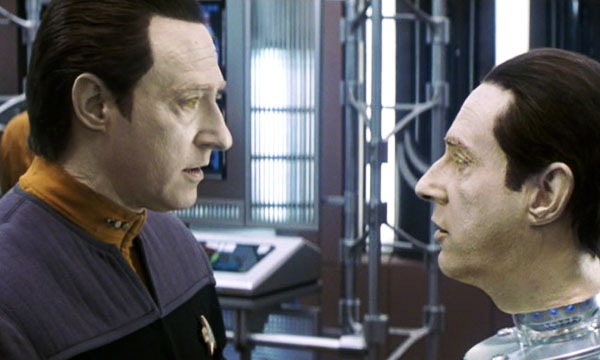
That’s many paragraphs saying what’s wrong. But it’s not all bad. Honestly it isn’t. In fact, there are some nice moments in there. There are some good character beats, and the cast are working hard to make these moments land. In particular, there are some lovely exchanges between Picard and Data, while Geordi gets more to do in this film than most of the last few (including some actual moments exploring his friendship with Data, often lost in the films). Picard feels more like the enlightened explorer and intellectual character from the TV show here than he did in any of the other films. When we are allowed to relax and breathe, the film touches on an elegiac, end-of-an-era quality (see scenes like that below).

Also, as awful as the buggy chase sequence is, the final space battle (while a clear lift from Star Trek II) is exciting and well filmed, and also showcases our characters’ professionalism. The hand-to-hand combat bits are hopeless, and Picard’s final “man on a mission” assault strains credibility. But Data’s final sacrifice is quite moving – especially the quiet moments afterwards where the rest of the cast respond to it. It’s sad because you know more of this warm interplay is on the cutting room floor with the thematic material of the film – leaving this neutered disappointment instead. Which is a shame because there is some decent material here – and some enjoyable moments. There is also a terrific score.

Star Trek: Nemesis is not as bad as you may remember. I mean, it’s a long way short of the best Star Trek films – but it’s got its moments. It’s made by a director who doesn’t understand (or care) about the franchise, but the cast do their best to hold it together. It’s a thoroughly compromised film, ruined by too many people trying to make a film that did too much, and it was clearly intended as a jumping off point for the next film (which never happened), but for all this, there is just about enough to keep a fan entertained – although probably not a non-fan. And if nothing else, this is the last chance to see the cast of one of the best sci-fi shows ever made.

Poseidon (2006)


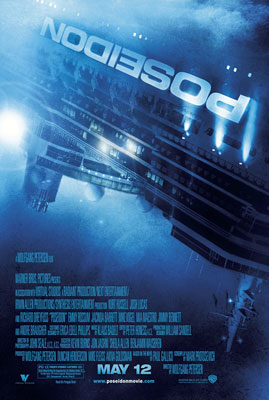
Our characters (such as they are) struggle from cliche to cliche in Poseidon

Director: Wolfgang Peterson

Cast: Josh Lucas (Dylan Johns), Kurt Russell (Robert Ramsey), Jacinda Barrett (Maggie James), Richard Dreyfuss (Richard Nelson), Emmy Rossum (Jennifer Ramsey), Mike Vogel (Chris Saunders), Mia Maestro (Elena Morales), Kevin Dillon (Lucky Larry), Freddy Rodriguez (Marco Valentin), Andre Braugher (Captain Michael Bradford)

In the 1970s the big tent-pole movies were all disaster films. They were the superhero films of their day. They also followed a very clear formula: big stars, big man-made structures, big crashing natural forces sweeping away man’s pride. Lots of death and tear jerking, with sub-plots for each character that could have been pulled out of an episode of EastEnders.

Poseidon is a remake of sorts of The Poseidon Adventure – but with plot and characters changed (not for the better). There is a ship called the Poseidon. It’s hit by a tsunami. It gets overturned, trapping the survivors at the top (now the bottom) of the ship. While most wait to be rescued, our heroes decide to climb down (now up) the ship to the hull to escape. Of course, not all of them will make it!

You notice I didn’t mention any characters there. That’s because what this film laughably calls its characters are so crudely drawn, they barely qualify as human beings, let alone characters. They exist purely to get into trouble. We spend only the most rudimentary time getting to know them before they (and their loosely defined characteristics) start dropping like flies. This is an anti-actor film – literally anyone off the street could play these parts, so disinterested is the film in them.

So we’ve got Kurt Russell as an over-protective father and Emmy Rossum as his semi-rebellious daughter. Will they grow closer together over the film? You betcha. Will Russell learn to accept the place his daughter’s boyfriend has in her life? Of course. Will “I work better alone” professional gambler Josh Lucas learn that he needs other people? Nope. Just kidding of course he does. Will suicidal architect Richard Dreyfuss discover a new love of life? See where I’m going?

In fact it’s so completely predictable you can take a pretty good guess who will make it and who won’t based solely on the opening few minutes. Some of its decisions lack any form of sensitivity. Any character from a remotely racial minority? Let’s just say that their chances are not good (Dreyfuss needs to actually kick Rodriguez’s waiter down a shaft so he doesn’t drag the others down – I thought at first “there’ll be consequences to that” – but nope it’s never mentioned again). Anyway, all the surviving characters are loaded white guys. One of them does need to make “the ultimate sacrifice” to save the others but, again, their identity can be pretty much worked out in the opening minutes. The most unpleasant character in the film? Yup he dies.

In fact you watch the film and feel sorry for the actors. Not only are the characters wafer-thin, but they spend so much time silently underwater or getting soaked, they look like they are suffering a lot for nothing. The focus is entirely on the mechanical progression from set-piece to set-piece, all of which stink of familiarity. So we get the long swim under water (of course someone gets trapped!), the impassable ravine that needs crossing (of course someone is stuck on the other side), the claustrophobic tunnel (of course one of the characters has claustrophobia). There is even a bit where the terminally stupid fucking kid wanders off and needs to be rescued. Is there anything new in this? It’s a re-tread of every disaster film ever.

Wolfgang Peterson directs all this with a professional detachment and disinterest that makes you want to cry that he once made Das Boot. If there is one thing he knows, it’s shooting confined spaces (see not only Das Boot but also Air Force One) and he makes the onslaught of water look pretty good. But this is such a piece of hack work, you despair that he clearly needed the money. The special effects are pretty good I guess (although the CGI ship looks totally dated), but it’s a staid, dead, predictable film.

It only really works in an “it passed the time watching it in two chunks over a couple of breakfasts” way. Because there is literally nothing new, interesting, unique, intelligent, imaginative, dynamic or individual about it, it passes in front of your eyes like a bland wall-paper. Compared to the classic disaster films of the 1970s it’s not fit to lace their explosions. Totally empty, unchallenging rubbish.

Anonymous (2011)


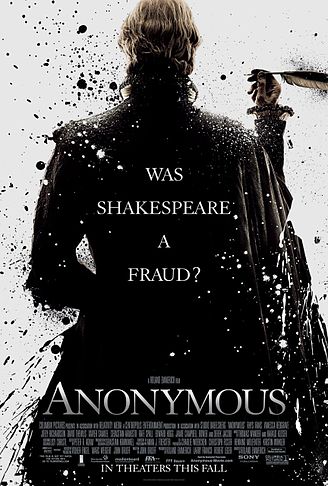
Did the Earl of Oxford write Shakespeare (spoilers: No of course he didn’t.)

Director: Roland Emmerich

Cast: Rhys Ifans (Edward de Vere, Earl of Oxford), Vanessa Redgrave (Queen Elizabeth I), Sebastian Armesto (Ben Jonson), Rafe Spall (William Shakespeare), David Thewlis (Lord Burghley), Edward Hogg (Robert Cecil), Xavier Samuel (Earl of Southampton), Sam Reid (Earl of Essex), Jamie Campbell Bower (Young Oxford), Joely Richardson (Young Elizabeth I), Derek Jacobi (Himself), Mark Rylance (Henry Condell), Helen Baxandale (Anne de Vere)

Many people would say that, for as long as there has been Shakespeare, there have been arguments about who wrote him. But that would be wrong. Because at the time everyone knew it was Shakespeare. Murmurings grew in the nineteenth century, but it’s only in our bizarre more recent times, when everyone wants to feel that they are smarter than anyone else, that conspiracy theories have taken hold. This film dramatizes one of the most famous conspiracy theories – and takes it to the bonkers extreme, chucking in royal incest, bastard claimants to the throne and blood purity, like it’s desperate to be some sort of poetry-circle Game of Thrones.

Edward de Vere, Earl of Oxford (Rhys Ifans) is a genius. He has written hundreds of plays, despite never (it seems) setting foot in a theatre. When he does one day, he suddenly thinks – hang about I should get these on the stage! Looking for someone to put their name to the work, he approaches a reluctant Ben Jonson (Sebastian Armesto) before credit is high-jacked mid performance by drunken dullard William Shakespeare (Rafe Spall). Oxford continues producing the plays through Shakespeare, carefully using them to influence the crowd to support the Earl of Essex’s (Sam Reid) campaign to succeed Queen Elizabeth (Vanessa Redgrave) and win her away from the influence of the Cecils (David Thewlis and Edward Hogg). 

It’s not often you get a film that is both a stinking, insulting piece of propaganda garbage, but on top of that is also a terrible film full stop. Anonymous is such a film. This mind-numbingly stupid, childishly idiotic film is probably the best case that Shakespeare wrote Shakespeare to come out of Hollywood. Because, after watching this film, you’ll sure as shit be convinced it wasn’t someone as tedious, pompous and arrogant as Edward de Vere, Earl of Oxford. Unbelievably Emmerich and co thought they were making a film that would reset the table of Shakespeare debate. The only thing that will need resetting will be your table after you’ve overturned it in fury.

Our film’s Shakespeare goes crowd surfing in an Elizabethan mosh pit. Seriously.

The Oxfordian theory is yet another garbage “alternative history” that puts forward a candidate claimed to have “really wrote Shakespeare”. The central conceit usually goes something like this: Shakespeare was from a middle-class background, grammar school educated, never travelled and generally lacked the academic chops to write the plays. He was simply too common to be a genius. Ergo someone super smart must have done so instead.

The Oxford theory was put forward at the turn of the last century by (and I’m not making this up) Thomas Looney (yes it is literally a Looney Theory). It argues that Oxford was well travelled, well-educated and known as a poet so must have written the plays and poems. Shakespeare was hired to put his name on the plays because it was too shameful for an Earl to write for the theatre. Of course this doesn’t explain why Oxford had the sonnets released under Shakespeare’s name while allowing his own (not so good) poems to circulate freely – but facts never stopped these people. Oxford also inconveniently died in 1604, before the likely composition (and first performance) of over a third of the plays, but again never mind eh? 

Anyway, I’ll get into the film in a second, but I’ll leave you with this. All contemporary evidence points to Shakespeare being the author of Shakespeare’s plays. All evidence we have indicates he was recognised as the writer by his contemporaries. The much vaunted travel knowledge rests on a few well-known city names and landmarks (who could possibly have known Venice had a bridge called the Rialto? Oh I don’t know, maybe anyone hanging out in taverns in international trading-hub London?) and includes howlers like Bohemia having a coastline and it being possible to sail between Milan and Verona. All evidence of research (far too hard work for the Looneys) into typography and the composition of the plays points to Shakespeare or at least that many of the works were composed after Oxford’s death. I would also add that the bollocks (which this film explores) of Shakespeare not spelling consistently is no great surprise when standardisation of spelling was still over 100 years away. Anyway…

The clueless bumbling playwrights of the time.

Anonymous is well designed. It’s well shot. There are some decent costumes. Rafe Spall is okay as a ludicrously crude, shallow and dumb Shakespeare. Nothing and nobody else emerges from the film with any credit. It’s got the intellectual rigour of a child. It understands virtually nothing about the Elizabethan state. It even turns Elizabeth I (played direly by Vanessa Redgrave and a little bit better by Joely Richardson in flashback) into a hormonal idiot, a sex-obsessed harlot banging out bastards left, right and centre while wailing about how much she needs the man she loves. Even its understanding of theatre is crap. It is crap.

At the forefront of this steaming pile of manure is Rhys Ifans, utterly mis-cast from start to finish as super-genius Oxford. Ifans is bland, disengaged and bottled up, his manic potential completely wasted. Oxford comes across as an arrogant arsehole, talking down to fellow playwrights, ignoring his daughter, soaking up vicarious adulation from the crowd as if it was his right, and merrily putting his full weight behind an agenda stressing government should be left to those born to it, rather than the nouveaux rich Cecils. If an unpleasant prick like Oxford was soul of the age, it’s just as well time has moved on.

This viewpoint is all part of the film’s charmless embracing of the Looney theory that the plays are all a carefully constructed pro-Essex, pro-elitist propaganda machine, designed to manipulate the masses into staying in their place. To make this work, the film plays merry hell with history. Because nothing works better for a film claiming to be “true” history than to change established historical facts to better fit its story. Essex is repositioned as anti-James VI of Scotland, while the Cecils are shown to be advocates for his succession from day one. It hardly seems necessary to say that this was the complete opposite of their positions. The film can’t claim to be telling us the “real story” while simultaneously changing events left, right and centre to better fit its agenda.

Historical fast-and-looseness continues with Elizabeth I. Needless to say, half the male cast are her children – Essex, Southampton and (of course) even Oxford. This allows for lots of icky sex as an unknowing young Elizabeth and Oxford bump-and-grind. Even without the incest, this scene would still be revolting beyond belief. If this film has any claim to fame, it will be remembered as the film where the Virgin Queen performed fellatio on young Oxford (a weaselly Jamie Campbell Bower, dire as ever) while he recited Shakespearean sonnets. I watched this with a group of friends and this scene was met by horrified mass shrieking.

Mother and son share a post-coital moment

The land of the Elizabethan theatre doesn’t fare much better. Shakespeare’s contemporary playwrights are, to a man, plodding mediocrities dumb-founded that a play can be written entirely in verse. Poor Ben Johnson (Sebastian Armesto struggling manfully with a terrible part) in particular gets it in the neck, Oxford haughtily telling him he “has no voice”. Shakespeare is not only an idiot, he’s also money-grubbing, illiterate and (the film heavily implies) even murders Christopher Marlowe when he “works out the truth”. 

But that’s the thing about this film: it really doesn’t give a shit about facts. By the time we reach the Essex rebellion and the film has changed the one categorical fact we have linking Shakespeare to the rebellion (his company performed Richard II privately for Essex’s friends the night before) you’ll have ceased to care. (The film substitutes Richard III instead and claims the hunchbacked king was created as a portrait of Robert Cecil – never mind that the character had already appeared in two plays by this point…) The Tower is the centre of some sort of all-powerful police state that alternates between scarily efficient and ludicrously incompetent depending on the demands of the script.

Amidst this firebombing of history, the film weaves its pointless conspiracy theory. So of course, Oxford is not only the greatest writer ever, but as Elizabeth’s son he’s also the true King of England. He is such a special snowflake genius, he’s even (in the film’s most stupid scene) shown writing and performing (as Puck) A Midsummer Night’s Dream aged 14. In a skin-crawlingly shite scene, Oxford searches for a play to give to Johnson while the camera pans along shelves of masterpieces he has casually knocked out. I would argue the plays have clearly been written by someone with an intimate understanding not only of theatre but the strengths and weaknesses of the company of actors originally performing them – but then this is a film that turns Richard Burbage into a harassed theatre manager, so what would be the point. By the end of the film, the announcement is made that all evidence linking Oxford to the plays will be destroyed and he will be forgotten. So you see the very fact that there is no evidence that this ever happened, is in itself evidence.

I realise I’ve not even mentioned the framing device of this film. The film opens in a Broadway theatre – and rips off the idea from Henry V that we are watching a play performance that becomes ever more realistic. Notable Oxfordian Derek Jacobi (playing himself) even narrates, neatly shitting on the memory of the same function he served in Branagh’s Henry. I love Sir Derek, but honestly a little of that love died during this film as he sonorously intones this lunatic nonsense. He’s not the only one of course – Mark Rylance (another believer) shamelessly pops up for a cameo. Needless to say, at the end of the “performance” the crowd in the Broadway theatre leave in stunned silence. I like to think that, rather than having their perceptions of the world shaken, they were just stunned such an epic pile of fuckwitterey garbage made it to the stage.

Oh Sir Derek. How could you? How could you?

Or the screen for that matter. This is a dire, stupid film, poorly acted and woefully directed by a tone deaf director. Roland Emmerich, hie thee back to disaster porn! Everyone in it is pretty awful, the script not only stinks, it makes no sense, half the scenes are borderline embarrassing. Even if it wasn’t about a pretty distasteful Shakespearean authorship theory, this would still be a truly terrible film, a narrative and performance disaster. The only good thing about it is, the film is so bad, its conspiracy theory so unbelievably ludicrous, its fast-and-looseness with history so plain that, far from re-setting the table for Shakespearean studies, it seems to have fatally holed the Oxfordian theory below the water line. It’s offensive because it wants to peddle its bizarre agenda as true history, while simultaneously changing the historical events at every opportunity. Just fucking awful.

Mary Shelley's Frankenstein (1994)


Kenneth Branagh struggles to bring Mary Shelley’s Frankenstein to life

Director: Kenneth Branagh

Cast: Robert De Niro (The Creature), Kenneth Branagh (Victor Frankenstein), Tom Hulce (Henry Clerval), Helena Bonham Carter (Elizabeth), Ian Holm (Baron Frankenstein), John Cleese (Professor Waldman), Aidan Quinn (Captain Robert Walton), Richard Briers (Grandfather), Robert Hardy (Professor Krempe), Trevyn McDowell (Justine Moritz), Celia Imrie (Mrs Mortiz), Cherie Lunghi (Caroline Frankenstein)

In 1994 Kenneth Branagh was the heir of Laurence Olivier: a man who could act, direct and produce, who never had a false step, whose every film was a success. In other words he was ripe for a kicking, and Mary Shelley’s Frankenstein was the stick used to beat him. It was practically the founding text of “Branagh-bashing”, for a time one of the favourite sports of the British press.

Victor Frankenstein (Kenneth Branagh) grows up obsessed with defeating death, traumatised by the death of his mother. Training as a doctor in Vienna, after the murder of his mentor Professor Waldmann (an effectively serious John Cleese), he uses the body of the murderer to create the Creature (Robert De Niro) – but, horrified by what he has created, he flees home to Geneva. While the Creature comes to terms with being an outcast, Victor marries his sweetheart Elizabeth (Helena Bonham Carter) – only for her to become a target when the Creature vows revenge.

Okay the good stuff about this film: the production design is terrific, the Frankenstein house in particular a marvellous set. It’s also a very faithful adaptation, pretty much following the book (apart from a late, horribly melodramatic “Bride of Frankenstein” sequence). Branagh gets some affecting moments out of the film, particularly in the calmer moments – De Niro gives an interesting performance and the retention of the Walton framing device in the Arctic is well done. There is a good film in here. But it’s buried completely under the overblown shouting, swooping cameras and booming music that covers the rest of the film.

Contrary to his reputation as a purveyor of intricate Shakespeare adaptations, Branagh has always been a lover of big movies, who brings an operatic intensity to cinema. The problem is he goes too far here. This is at times so ridiculously overblown and frenetic in its tempo, you start to think Branagh is trying too hard, desperate to make a big budget smash. Wanting to make a big, gory, gothic horror film, he dials everything up to eleven, and the sturm und drang eventually becomes a tale full of sound and fury signifying nothing.

Interestingly, this intensity is particularly overbearing in the Frankenstein scenes, rather than those focusing on the Creature. Several scenes are filmed with the camera swooping round in circles over long intense takes, while the score thunders away. This principally happens in scenes of high emotion – the deaths of Frankenstein’s mother and his mentor Waldmann are both operatically overblown (in the latter Branagh literally cranes up and screams “No!”). Eventually it all becomes too much. You are crying out for everyone to take a breath and just deliver a line calmly.

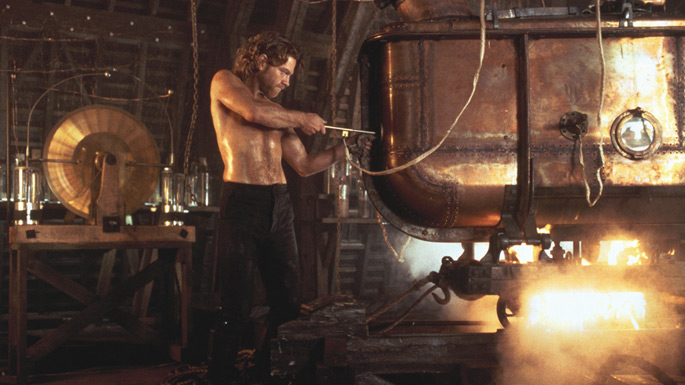
Now I can see what Branagh is doing here. He’s looking to emulate the high-Gothic semi-camp of 1930s horror films. That’s the charitable explanation for why he spends the entire Creature-birthing scene running round topless (he must have spent ages on that chest), with Patrick Doyle’s score booming away, while the camera swoops and sweeps around him. Branagh is partly channelling Colin Clive’s mad scientist from James Whale (he even bellows “Live!” in pure Clive style twice in the film), but by going for overwhelming bombast in his performance, he misses out on making the character relatable. Now Victor is a selfish asshole of course, but we should at least relate to him a little bit: I’m not sure many people can in this film.

It’s a real shame because there is in fact, under the frantic editing and dizzying camerawork, a quieter, more intelligent film trying to get out. Branagh’s Frankenstein is a man deep in trauma about death, unable to cope with losing people, whose fear becomes a dangerous obsession. The romance between Victor and Helena Bonham Carter’s sweetly innocent Elizabeth has a lot of warmth (the chemistry is also excellent: no surprise to hear that the actors started a long term relationship on the set of this film). There are moments here meditating on life and death, but they constantly get lost in the next ridiculous bloody action scene, or explosion of overblown acting.

Similarly, De Niro mines a lot of confused sympathy from the Creature – probably because he seems the quieter and more “normal” person, for all his scars and acts of murder. The sequence with the Creature looking after the family of a blind man (a decent Richard Briers) sees De Niro mine a great deal of vulnerability and innocence from his situation. The contained camera work and restrained acting make these the finest scenes in the film, more memorable than any of the blood and guts that fill the final half hour.

De Niro and Briers: Your only chance to see Travis Bickle and Tom Good share a scene

And those blood and guts are a problem, because this is not a scary film. Not even one little bit. Instead it’s either ridiculous or juvenile – in a sequence where a character literally has their heart ripped out by the Creature, Branagh can’t resist not only having the Creature holding it up to the camera, but for the camera to jump to a close up of the heart literally beating in its hand. Not scary, not gross, just stupid and childish. At any points of tension we get the pounding music and running around and shouting like a Gothic Doctor Who. If only Branagh had taken a breath and treated the material more calmly and sensibly we could have ended up with something creepy and spooky, rather than garish.

It’s a real, real shame because honestly there are some good things in this movie. I’ve mentioned De Niro, but Tom Hulce is also terrific as Clerval and Bonham Carter very good as Elizabeth. There are moments of real class in the design and production – I’ve lambasted Patrick Doyle’s score a bit, but there are some very good tracks in here. The problem, much as it massively pains me to say it because I love him, is Branagh. His performance and direction is just too much: too giddy, too overblown, too frantic, too overwhelming. The film comes across less as a tribute to old style melodramatic horror movies, more a very intelligent gifted man talking down at fans of the genre, giving them what it appears the genre is about on the surface, rather than the depths that actually appeal to people. Despite its merits, the film is not alive, but dead inside.

Love's Labour's Lost (2000)


Shakespeare meets Musicals in Kenneth Branagh’s Love’s Labour’s Lost

Director: Kenneth Branagh

Cast: Alessandro Nivola (King Ferdinand of Navarre), Alicia Silverstone (Princess of France), Kenneth Branagh (Berowne), Natascha McElhone (Rosaline), Carmen Ejogo (Maria), Matthew Lillard (Longaville), Adrian Lester (Dumaine), Emily Mortimer (Katherine), Timothy Spall (Don Armado), Nathan Lane (Costard), Richard Briers (Nathaniel), Geraldine McEwan (Holofernia), Richard Clifford (Boyet), Jimmy Yuill (Constable Dull), Stefania Rocca (Jaquenetta)

Love’s Labour’s Lost is one of Shakespeare’s lesser-known comedies. There is a reason for that – it’s simply not that good (it’s certainly the weakest Shakespeare play Branagh has brought to the screen). I’ve sat through some turgid, and terminally unfunny, stage productions of the play in the past – but this movie version presented something different, as Branagh plays fast and loose with the script and turns it into an all-singing, all-dancing musical, with only the barest sprinkling of Shakespeare dialogue.

LLL isn’t really about anything. The King of Navarre (Alessandro Nivola), invites his three best friends (Kenneth Branagh, Adrian Lester and Matthew Lillard) to join him in three years of academic study, during the course of which they will forsake all female company. Of course, no sooner than the deal is made but the Princess of France (Alicia Silverstone) and her three companions (Natascha McElhone, Emily Mortimer and Carmen Ejogo) arrive in Navarre. Will love blossom to prevent the plans of the King? You betcha.

It’s slight stuff. The play always feels a little bit unfinished – it ends with the lovers separated (or as the play puts it “Jack hath not Jill”) but with hints of hope. It’s oddly structured – more like the first part of a series of plays than a standalone (the lovers don’t get together until almost Act 4, and the men and women spend very little time together). There is a series of dull sub plots revolving around the academics of Navarre, with whole scenes made up of obscure Latin jokes. As the icing on the top, a clown and a foppish Spaniard form a bizarre love triangle with a busty country wench. None of these plots is really resolved at the end. It’s a play that focuses a lot more on floral dialogue and intricate poetry rather than narrative.

Branagh addresses a lot of these problems by simply trimming the play to the absolute bone. I would guess at least 65% of the dialogue has been cut – probably more. Although this means some roles are now so small they feel like sketches (in particular many of the more working-class characters and academics), it does mean that this has a bit more narrative thrust and energy than most productions. Moving the setting to 1939 also gives a good context to the play, and places the political issues into an understandable context. It also gives a tension to underlie the lightness of the rest of the play. Branagh manages to remove most of the cumbersome exposition dialogue by replacing it with a series of 1930s-style cine-news reels (spryly voiced by Branagh himself). He even resolves the “cliffhanger” ending of the play with a similar device (reflecting the tonal shift at the end of the original play), which helps to ground the otherwise lightweight play in a very real world, where war carries a cost.

Of course, the main invention was to replace the intricacy (and obscurity!) of some of the dialogue with song and dance routines. The songs are carefully chosen from the great musical composers of the 1930s and 40s, and are delicately interwoven with the dialogue. Now for the purist this could of course be a source of fury, but when the material is one of the weaker plays, getting this “greatest hits” version of the text alongside some excellent songs works really well.

The song and dance numbers also have a certain charm about them. Most of the cast are not especially talented singers and dancers – only Nathan Lane and Adrian Lester have song and dance experience (and it certainly shows when Branagh allows them to let rip). The actors went through an extensive “musicals boot camp”, which certainly taught them the steps, but the musical numbers still retain a charming amateurishness about them. Sure it helps a truly gifted dancer like Adrian Lester stand out, but it’s also quite sweet to see actors like Richard Briers tripping the light fantastic. (Check Lester out at around 3:10 in the video below).

The real issue with some of the actors chosen is less with their song-and-dance strength, but that their acting strength doesn’t quite cut the mustard. Branagh’s delivery and comic timing is spot on, and McElhone is a worthy adversary cum love interest for him; but Nivola and Silverstone are a little too out-of-their-depth to bring much more than blandness to their key roles. Amongst the supporting roles, Nathan Lane stands out in making Costard actually quite funny, but Lillard mistakes gurning for wit. Mortimer and Ejogo are engaging but have precious little screentime.

The film is shot with Branagh’s usual ambition on a set that has a deliberate air of artificiality about it, evoking the classic 1930s studio musical. All exteriors deliberately feel like interiors, and there are homages aplenty, from Singin’ in the Rain to Ethel Merman. Each musical number has its own unique feel and the majority are shot with Branagh’s usual love of long-take. Some of the numbers stick in the head longer than others – but that’s just the nature of musicals. Particularly good are I Won’t Dance, I Get a Kick Out of You, I’ve Got a Crush on You, Cheek to Cheek and a steamy tango to Let’s Face the Music and Dance.

LLL doesn’t want to do anything more than entertain – and sometimes it probably tries a little too hard to be light and frothy, as if Branagh was consciously kicking back after the mammoth undertaking of his uncut Hamlet. Perhaps that is why LLL appealed to him – Shakespeare comedies don’t get less treasured or more inconsequential than this, so he had total creative freedom to do what he liked, in a way that a Twelfth Night or a Much Ado About Nothing wouldn’t allow him. It’s the sort of film you need to plug into the mindset of – and some aren’t going to be able to do that. It’s not a perfect film, but the lightness Branagh handles things with pretty much carries it through.

Perhaps that lightness however is slightly the problem: in Branagh’s previous films he found a perfect mixture between influential reimaginings (Henry V), wonderful crowd-pleasers (Much Ado) and reverential labours of love (Hamlet). People probably expected something else from him than a high-budget, lightly amateur musical with precious little Shakespeare in it. I think this partly explains the hesitant response this has received from the public and critics since: it’s just such an unlikely ideal that people didn’t seem to know how to respond to it.

Of course, as anyone who has sat through an average production of the play can tell them, they weren’t missing much from what has been cut – and this is still an infectiously funny, frothy concoction. It may have a slightly mixed acting bag – some of the leads are underpowered, while some strong actors like Timothy Spall are underused – but the actors do seem to be enjoying themselves, and this enjoyment basically communicates to the audience. It’s not a concept that could have worked with a long running time, but it sure works for the short term. It’s an odd concept – and it was a huge box office bomb – but it’s one that works.

Independence Day: Resurgence (2016)


Independence Day 2: Not a Resurgence but a wake.

Director: Roland Emmerich

Cast: Liam Hemsworth (Jake Morrison), Jeff Goldblum (David Levinson), Jessie Usher (Dylan Hiller), Bill Pullman (President Tom Whitmore), Maika Monroe (Patricia Whitmore), Sela Ward (President Elizabeth Lanford), William Fichtner (General Joshua Adams), Judd Hirsch (Julius Levinson), Brent Spiner (Dr Brakish Okun), Charlotte Gainsbourg (Dr Catherine Marceaux)

Sometimes your first instincts in films are great. They help you to try new things and unearth new favourites that can find a place in your heart. And sometimes your first instincts are bollocks. You see a film and, for whatever reason, you were in the right mood and you think “well that was great!” Then you come back to watch it a few months later and your second reaction is “What the hell was I thinking?”. Such a film was Independence Day: Resurgence for me.

The plot is alarmingly simple. Probably because it’s essentially the same plot as the first film. Twenty years after the events of Independence Day, mankind lives in peace and prosperity and has rebuilt the world, with a new global military armed with alien technology ready to repel any future attacks. Of course the attack comes… Soon mankind is on a ticking clock (“We were wrong. We only have 1 hour left to save the world!”)…

Okay. I did enjoy this in the cinema. I confess. Then I watched it again and released it was complete bollocks. Totally pointless sequel that adds literally nothing to the first film.

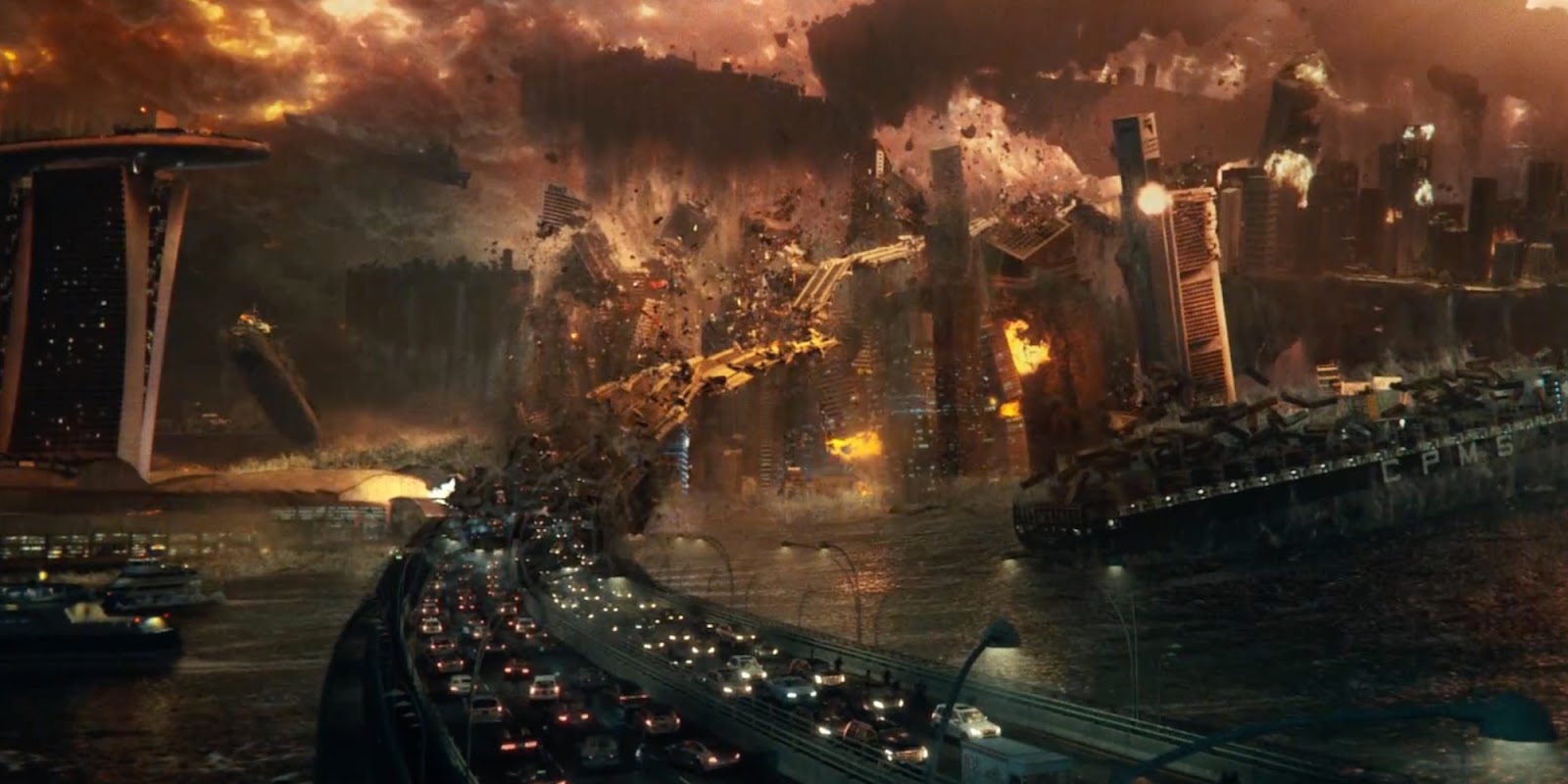
First off this film is essentially a remake rather than a sequel. A first alien ship (different species) arrives and there is panic. An attempt at communication rebuffed (theirs not ours this time). Warnings about an imminent attack are ignored. The aliens destroys several cities (mankind has been busy, as many of the landmarks destroyed in the first film have been reconstructed in perfect detail to get mashed again). A human counterattack ends in dismal failure. Even the goddamn ending of the film is once again a final battle at the salt flats, with the clock ticking. One of our heroes sacrifices themselves. It’s the Fourth of July – need I go on?

The only things that they haven’t carried across are the charm and thrills of the original. In fact there is nothing here to interest anyone who doesn’t have fond memories of the first film: the new characters are largely forgettable, most of the sequences are commentaries on the first film. Resurgence captures none of the twisted sense of awe and wonder of the original Independence Day – the shock of seeing aliens arrive, the terror they unleash, the helplessness of mankind. The action sequences (particularly the assault on the alien spaceship) have none of the sense of danger that makes the same sequences in the original so exciting – it just makes you want to re-watch the first film but not in a good way.

Instead the film aims BIG. Everything is BIGGER. Mankind has planes that fly in space, ray guns and moon bases. The aliens have a ship that’s not the size of city, but the size of a continent! Half the world is wiped out in minutes! The alien attack all takes place in one day! We’ve only got one hour to save the world from having its core drained! It’s all pushing to make the film more EXCITING! It fails. Not only is everything familiar, but everything is so rushed that there are none of the moments for reflection the first film has. Half the world is wiped out in this film and no-one takes even a minute to think about the impact of that.

It’s not just content from the last film that is familiar. This film reveals the aliens are a sort of hive mind with – you guessed it – a Queen. Is it essential for every single bloody alien film to have a queen? Ever since Aliens the idea has been done to absolute death. Needless to say, our heroes (having seen films before) work out that if they take down the Queen, all the other aliens will shut down. Familiar? Only to everyone who has ever seen a film before.

The film’s sexual politics are also all over the shop. It proudly boasted in advance it would feature a gay relationship. But the gay couple in this are safely sexless: not a single line of dialogue hints too heavily at their homosexuality and the closest they get to showing physical affection is to hold hands briefly (the point being of course, if they were too gay it wouldn’t sell abroad).

Secondly, and even more uncomfortably, at some point it was clearly decided a cross-racial relationship wouldn’t play well either. It would make sense to me if the two children from the first film had grown into love interests for each other – and if they were both white I am certain this would have happened. But this film introduces a whole new (white) suitor for Whitmore’s daughter. Hiller’s adopted son? No love interest for him at all. In fact Dylan is relegated to the role of the charisma-free straight-shooter, with Liam Hemsworth given the coveted role of the charismatic maverick who has the courage to think outside of the box and save us all. This is even more cowardly than the film’s shyness around its gay characters.

Independence Day: Resurgence is a lifeless film. It has just enough fun about it for those who remember the first film to watch it with a sense of nostalgic glee. But it has none of that film’s wit, none of its tension, none of its sense of mankind overcoming impossible odds. Despite all the hand-waving towards the unity of the world, even more than the first film this might as well be “America Vs. Aliens”. It caught me in a good mood at the cinema, with the right nostalgic mindset. But whereas Jurassic World(for instance) mixes nostalgia with genuine wit and excitement, this is a film that never comes to life. It’s DOA. Far from a resurgence, it’s a wake.

It’s also pretty hard to forgive it for this marketing abomination. Daley Blind for starters has not won twenty league titles. As for Wayne’s acting. Jesus Christ…