Category: Box office bomb

The Legend of Tarzan (2016)


The Legend of Tarzan: The King of the Jungle takes on the MCU style. And loses.

Director: David Yates

Cast: Alexander Skarsgård (Tarzan/John Clayton III), Margot Robbie (Jane Porter Clayton), Samuel L. Jackson (George Washington Williams), Christoph Waltz (Captain Leon Rom), Djimon Hounsou (Chief Mbonga), Jim Broadbent (Lord Salisbury), Simon Russell Beale (Mr Frum)

Every so often you seriously wonder what the point of a film was. Are movie studios so desperate for a franchise that literally anything that has any kind of name recognition is considered a money-spinning franchise in the waiting? Welcome to the latest feeble attempt to jumpstart an epic franchise: the first (and surely last entry) in the Tarzan-verse.

In the late 1880s, the Belgians are carrying out terrible acts in Africa, spearheaded by ruthless Captain Leon Rom (a painting-by-numbers Christoph Waltz). To get hold of diamonds held by an H Rider Haggard gang of natives, he needs to lure Lord John Clayton III (better known as the legendary Tarzan) back into the jungle. But John (Alexander Skarsgård) has tried to put his life as the King of the Jungle behind him (for reasons never really made clear) and only once his wife Jane (Margot Robbie) is put at risk does he begin to reclaim what he has lost.

Was there any real demand for a Tarzan movie? Perhaps even more to the point, was there any audience for one? Since, I imagine, today most people only  on-screen Tarzan viewing experience was watching the Disney animated version, it’s hard to understand who the makers of this film imagined was going to engage with a confused, clichéd movie part dull origins story, intercut with a “rediscovering your roots” plot. And that’s the first of the major errors the film makes.

So determined is the film not to jump straight in with the context of who Tarzan is, that it keeps dribbling away from the actual plot to cram in small (confusing) moments establishing who his parents were, how he met Jane, how they left Africa etc. etc. etc. This stuff is far more interesting than any of the tiresome diamonds / kidnapped wife / White Man Saving Africa nonsense in the main plot, making all the “main” action feel like a sidetrack; not to mention that you’re several flashbacks in before you have any idea how Tarzan has ended up as a stuffed-shirt sitting in a clichéd London, slurping tea with his little finger extended, rather than swinging from vines in the jungle.

The film assumes a level of Tarzan-legend knowledge in its audience I sincerely doubt most viewers had, and the lag while you wait to catch up through the flashbacks is frustrating. The final product is a confused mess with no clear vision about what film it actually wanted to be. If it film wants to deal with the legend, why not just do that – and if it wants to introduce the origins, why doesn’t it just do that? Instead it’s neither one thing nor the other.

Mixed in with some feeble, faux superhero heroics is some clumsy post-colonial criticism of the Belgians’ terrible Congo record, but it goes nowhere in particular. A week on from watching it, I can’t remember what it was about at all. Stuff sort of happens, and there is a vague idea Tarzan is trying to save the Congo, but the film never kicks into gear. Events happen without any real narrative thrust – our heroes and villains literally meander down a river towards no-where in particular. It doesn’t help that almost every narrative beat in the film is completely predictable – this is the epitome of safe, uninspired film-making and storytelling, as if everything has been carefully honed in focus groups and committees.

A large part of the problem is Skarsgård’s lifeless performance in the lead role. Clearly bulging muscles and decent features were all the part really required, because there’s nothing in the way of character. He’s supposed to be a man who has lost touch with his past, confused and ashamed about his background. The film is building towards his emotional acceptance that his gorilla mother was his true mother. It’s a viable, if not especially original, plot – but it falls flat, simply because Skarsgård just isn’t interesting enough. His stilted performance conveys no inner pain or turmoil. Who cares who his mother was? Skarsgård doesn’t seem to, and neither did I.

It doesn’t help that all the rest of the actors (I mean all of them) are more interesting, eye catching presences. Jackson and Waltz are such seasoned pros they invest their paper-thin characters with their own charisma, though each of them could do what they are asked to here standing on their heads. Margot Robbie is actually rather radiant as Jane – even though she is never much more than a (defiant) damsel-in-distress.

The Legend of Tarzan is, at best, okay. It’s desperate to turn Tarzan into some sort of all-action superman, a competitor for the Marvel universe. But it focuses so much on trying to fill out the backstory and beef up the action that it fails to make a film with any characters in it we really care about. Instead this is the blandest, B-movie cornpuff you are likely to see and so instantly forgettable you’ll barely remember each scene as you watch it. It’s enjoyable enough but totally unsurprising, uninspired and fundamentally totally forgettable.

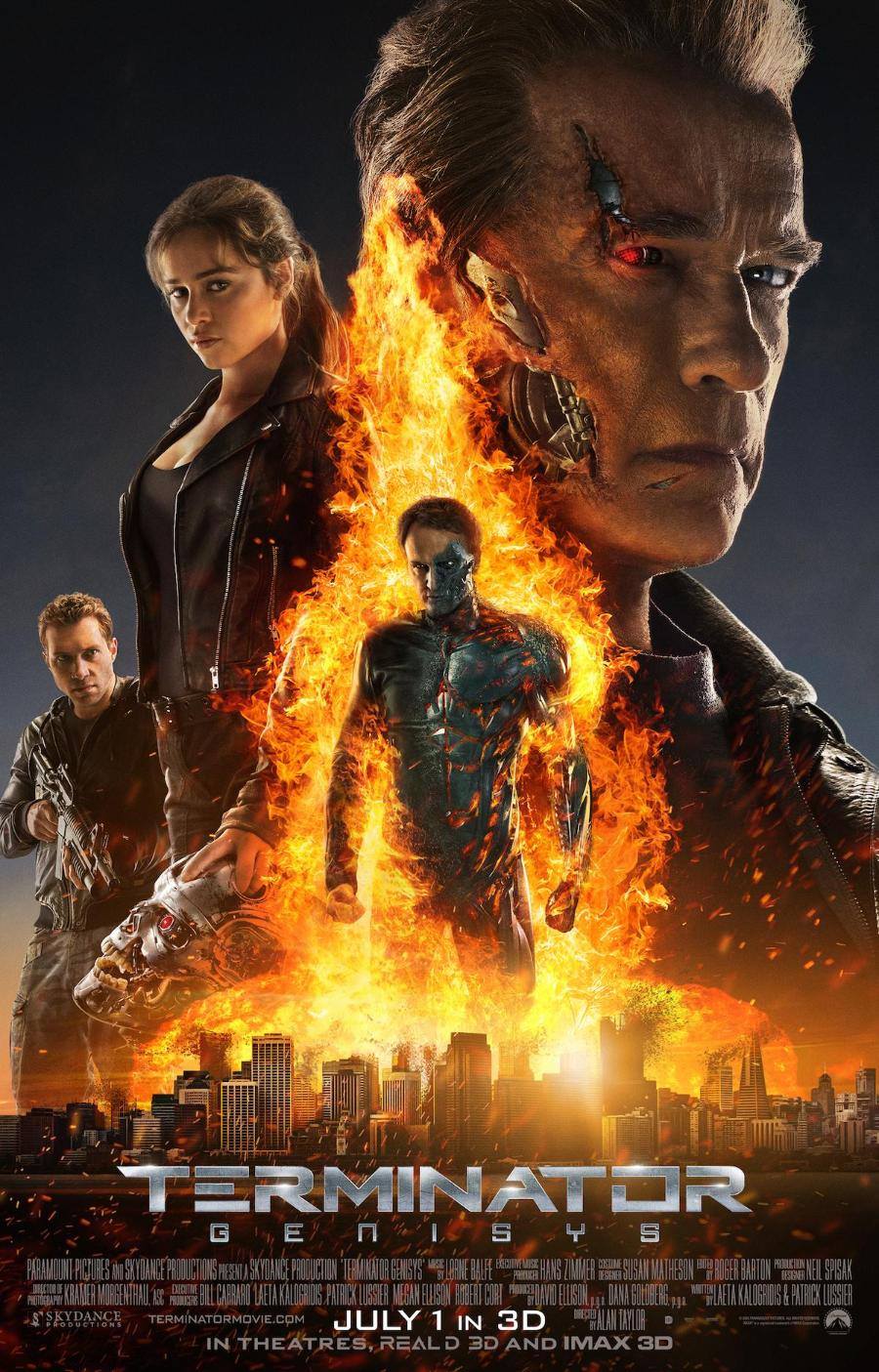
Terminator Genisys (2015)


Arnie saddles up (again) as The Terminator, this time with Emilia Clarke in tow. Reboot or remake?

Director: Alan Taylor

Cast: Arnold Schwarzenegger (Pops), Jai Courtenay (Kyle Reese), Emilia Clarke (Sarah Connor), Jason Clarke (John Connor), JK Simmons (O’Brien), Dayo Okeniyi (Danny Dyson), Matt Smith (Alex/Skynet), Courtenay B Vance (Miles Dyson), Byung Hun Lee (T-1000)

Every few years, Hollywood convinces itself the Terminator franchise is a licence to print money just waiting for exploitation. Since the late 90s, three movies and one TV series have attempted to relaunch the franchise. Each has underperformed, and left plans for sequels abandoned. Terminator: Genisys is the latest in this trend, the first in a planned trilogy that will never be made. As such, it’s a type of curiosity, a film that sets up a new timeline and introduces mysteries never to be answered.

Once again, the film starts with John Connor (Jason Clarke) sending Kyle Reece (Jai Courtenay) back in time to save his mother Sarah (Emilia Clarke) from deadly Terminators sent to destroy her and prevent Connor from being born. But when Reece arrives, he finds the past he was expecting altered and that Sarah was already saved years before from a first Terminator, by a re-programmed one nicknamed Pops (Arnold Schwarzenegger). Our heroes find themselves adrift in a timeline dramatically altered from the one they expected, and transport themselves to 2017 to combat Skynet once more.

It says a lot that the most original and daring thing about this movie is that no-one at any point says “Hasta La Vista, Baby”. Aside from that, the film is a Frankenstein’s monster, assembled from the off-cuts of previous franchise entries. The familiar lines are trotted out once more: I’ll Be Back, Come With Me if You Want to Live, Get Out and many more. The structure of the film limply settles into the same basic set-up we’ve seen since Terminator 2, while the big set pieces have an air of inevitability about them. This is a lazy, half-baked claim to re-invent the franchise that essentially copies and repeats everything from previous films with only a few small changes of angle. You can admire briefly the skill that has re-created moments from the original film, and be impressed by the effects that show a newly-young Schwarzenegger fighting his grizzled future self – but it will largely just make you want to watch the first film again.

This stench of familiarity is despite the huge, seemingly-inventive loopholes that the film, Bourne Legacy like, jumps through in order to try and justify its existence. The Terminator franchise has become so scrambled with alternative timelines, paths not taken, and film series cancelled that it spends almost the first hour carefully recreating events from previous movies, with some major tweaks and changes to allow a new “timeline” to burst up and act as a jumping off point for this movie. By the time the complex timeline politics has been put in place, the film has barely an hour of its run time left – at which point it needs to introduce its two antagonists and give our heroes a mission. The timeline is truncated, the villain is under-developed and the mission the dullest retread of the plot of Terminator 2 possible: a race to get to a building to blow it up. Yawn.

Is it any wonder that people shrugged at this movie? Even it can’t imagine a world outside the confines of its franchise rules. It reminds you what a small world the Terminator universe is. There’s little more than 3-4 characters, Skynet is always the adversary, time travel always seems to involve variations on the same people, the future is always the same blasted wasteland. The films always degenerate into long chases, compromised by our heroes’ attempts to change the future. So many Arnie Terminators have been reprogrammed by the resistance now, you wonder if any of them are left fighting for Skynet. What seemed fresh and daring in the first two films, now feels constrained and predictable. To find life in this franchise, it needs to do something genuinely different, not go over the same old ground over and over again.

The tragedy of this film is that the one unique thing it had – the identity of its main villain – was blown in the trailer of the film. Taylor was apparently furious at this undermining of a twist his film takes time building up. It ought to have been a shock for audiences to find out the franchise’s saviour-figure, John Connor, was instead the film’s villain – instead anyone who’d seen a trailer knew all about it before the opening credits even rolled. They even put it on the flipping poster! On top of which, the trailer carefully checks off all the major set pieces up to the final  30 minutes. Is it any wonder so many people gave it a miss at the cinema? Shocks left unspoiled, such as Matt Smith (strangely billed as Matthew Smith) revealed to be the embodiment of Skynet, are so dull and predictable they hardly counted as twists.

There is little in there to bolster the plot. The action is shot with a dull efficiency. The film is edited together with a plodding mundanity. Schwarzenegger once again goes through the familiar motions, but surely we have now seen enough of this character, which could in fact be holding the franchise back. Emilia Clarke looks bored, Jai Courtenay (an actor who came to prominence with a warm and intelligent performance in Spartacus: Blood and Sand) is again cast as a charisma free lunkhead, with attempts to add shading to his character only adding dullness. Jason Clarke lacks the charisma for the cursed role of John Connor (every film has seen a new actor take on the role).

Reviews claimed the plot was too complex for the audience: not the case. The plot is clear enough – it’s just dull and engaging. It never gives the viewer a reason to invest in the story. Terminator: Genysis is a ploddingly safe, predictable and routine piece of film-making, from a franchise that desperately needed reinvention. But so long as average and uninventive filmmakers – Jonathan Mostow, McG, Alan Taylor – are entrusted with its future, it will always be a franchise with no future. It’s time it was terminated. Hasta La Vista, Baby.

Twin Peaks: Fire Walk With Me (1992)


Laura Palmer and Dale Cooper trapped in Twin Peaks nightmare halfway house between this world and the next

Director: David Lynch

Cast: Sheryl Lee (Laura Palmer), Ray Wise (Leland Palmer), Mädchen Amick (Shelly Johnson), Dana Ashbrook (Bobby Briggs), Phoebe Augustine (Ronette Pulaski), David Bowie (Phillip Jeffries), Eric Da Re (Leo Johnson), Miguel Ferrer (Albert Rosenfield), Pamela Gidley (Teresa Banks), Chris Isaak (Special Agent Chester Desmond), Moira Kelly (Donna Hayward), David Lynch (Gordon Cole), Kyle MacLachlan (Special Agent Dale Cooper), James Marshall (James Hurley), Frank Silva (BOB), Kiefer Sutherland (Agent Sam Stanley), Grace Zabriskie (Sarah Palmer)

Twin Peaks was a mystifying, but very short lived, sensation. Its first series gripped America with its whodunit mystery around who killed Laura Palmer: it was an early 90s Broadchurch with added mysticism and twisted Lynchian psychosis. Just like Broadchurch, the second series stumbled from disaster to disaster as the answer to the mystery was revealed. Though this plot line was dark, disturbing and haunting, effectively contrasted with the surreal humour of the rest of the show, large chunks of the episodes were, to be honest, terrible. As Lynch’s attention turned elsewhere, the show fumbled through half a season of increasingly bizarre, pointless, laughable and plain rubbish episodes, before rallying at the end with a return to the mysterious dwelling on the nature of evil that the series is now best remembered for.

Twin Peaks is a rare anomaly – a show whose most die-hard fans would probably admit at least a quarter of the episodes were terrible. Ratings had dropped off a cliff as the series went on (sure enough it was cancelled). The cast and crew knew the show had lost something – several actors, most notably Lara Flynn Boyle (here replaced by Moira Kelly) refused to appear in the film. Even the show’s star, and Lynch surrogate, Kyle MacLachlan only agreed to return for this film for a few brief scenes (requiring an urgent re-write). However, Lynch’s interest in the concept had clearly been awakened during his writing and filming of (what would become) the final episode, surely one of the most surreal, unsettling, bizarre, intriguing and disturbing episodes of TV ever screened.

Twin Peaks: Fire Walk With Me was Lynch’s final reclaiming of the series from the toilet it had dropped into. It also served partly as a “retcon” to tie the foundations of the original series plotline into the mythology the show had deepened in its final few episodes (built upon many surreal elements Lynch had introduced in the first episodes, otherwise hinted at rather than explored). As much of this mythology was unsettling, this movie very much follows that mood, losing much (if not all) of the dark, surrealistic humour that contrasted the darkness so well in the series. Twin Peaks: Fire Walk With Me is a strange movie that is more like an expanded extra episode of the series, rather than a stand-alone. It makes no attempt at all to appeal to anyone who hasn’t seen every episode of the series: I’d go so far to say it’s almost completely impenetrable without having sat through all of Twin Peaks.

The film explores two plot-lines: the first an investigation by FBI Agent Chester Diamond (Chris Isaak) into the murder of Teresa Banks, a plotline referred to many times in the series. The film then flashes forward a year to cover the final few days of the original murder victim Laura Palmer (Sheryl Lee) and her relationship with her father Leland Palmer (Ray Wise), who is possessed by a demonic presence known as BOB, driven by it to perform acts of sexual and physical violence. Laura is aware – and terrified – of the existence of BOB (a greasy haired face from a thousand nightmares) but seems unable to recognise that BOB and her father are one and the same. It’s the discovery of this in the film that will help to tip her over the edge into despair.

If the film is about anything other than expanding the mythology around BOB and the mysterious “Black Lodge” between dimensions, where evil and violence abound, it’s about the damaging impact of domestic abuse. The film intensely explores the personality damage Laura (an excellent and fully committed Sheryl Lee, leaving nothing in the locker room in a performance of fearless intensity) has suffered as a result of years of sexual abuse from her father (Ray Wise equally good as his personality veers wildly between gentle father and possessed evil rapist). Laura’s fractured psyche is the root cause, Lynch makes clear, of her sexual promiscuity, drug addiction and flashes of cruelty. She’s even aware of the damage, as seen in her desperation to protect others (especially the gentle Donna) from being sucked into the nightmare of her life.

The unremitting bleakness of Laura’s disastrous life is intermixed with the horror of the scenes where we witness Leland’s destructive behaviour to her, while the final scene of her eventual murder is haunting in its skilful nightmare imagery and suggestive editing. Lynch’s direction remains humane and tender, and despite putting Sheryl Lee through the ringer she never feels exploited. Instead, the film has an incredible empathy for both her suffering, and the confused, damaged actions she is driven to carry out. It gives us an understanding of the damage that can be done to even the strongest seeming people by abuse.

Alongside this, Lynch unleashes the full range of dark surrealism through a series of disturbing images to build up his mystical backstory. This is a flat out horror film, with twisted images of monkeys, blood and forests guaranteed to haunt your dreams. Nearly every scene in Twin Peaks re-positions the often quirky town of many of the episodes as a nightmareish world of neon, darkened rooms and twisted sexual and physical violence. The portrayal of Laura Palmer’s fragile heart is as intensely moving as it is intensely filmed, while the views behind the red curtain into the hellish underbelly of Twin Peaks’ mystical mythology will stick with you for some time – and is sure to be central to the new third series.

Twin Peaks: Fire Walk With Me was met with intense hostility when it was released: “It’s not the worst movie ever made,” the New York Times review read, “it just seems to be”. David Lynch publically stated he had clearly done when the network couldn’t do, and successfully killed Twin Peaks. Of course that wasn’t the case – with the new third series finally coming to the screen 25 years after the screening of this film. The re-evaluation of the film has only grown in the intervening period. The nightmarish content (and the final scenes of the series) – the wicked BOB, the nightmare of the Black Lodge and the Red Room, the elements of psychological horror – these are the things that Twin Peaks is remembered as being about: the rotten core of the sweet pie of the town.

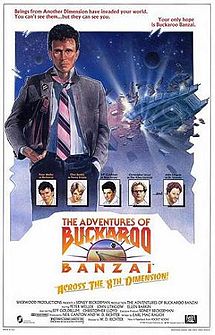
The Adventures of Buckaroo Banzai Across the 8th Dimension (1984)

Some of the costume choices in this image probably help you to see what oddness you have in store…

Director: WD Richter

Cast: Paul Weller (Buckaroo Banzai), John Lithgow (Dr Emilio Lizardo/Lord John Whorfin), Ellen Barkin (Penny Priddy), Christopher Lloyd (John Bigbooté), Clancy Brown(Rawhide), Jeff Goldblum (New Jersey), Vincent Schiavelli (John O’Connor), Robert Ito (Professor Hikita), Carl Lumbly (John Parker)

Okay so watching that was strange. If you looked up “cult movie” in the dictionary you would probably see an embedded video of this film. It’s so cult it has literally no interest at all in appealing what so ever to anyone outside of its established sci-fi crowd. If Star Wars was sci-fi for the masses, this is camp sci-fi for the cultish elite.

The plot is almost impossible to relate but Buckaroo Banzai (Paul Weller) is a polymath genius – surgeon, rocket scientist, rockstar – who perfects a device that can travel through solid matter and dimensions. But creating the device makes him a target for a race of aliens, led by Lord John Whorfin (John Lithgow) who live in the gaps between dimensions and want to use the device to escape.

The film is part straight-laced 1940s sci-fi serial, part tongue-in-cheek romp, part comic book, part satire. In fact it’s nearly impossible to categorise, which is certainly in its favour: you’ve certainly never seen anything like it before. It’s bursting with ideas and straight faced humour and clearly had an influence on sci-fi still today (for starters there are more than a few beats of Moffat-era Doctor Who here, while Banzai himself would fit in as The Doctor). It bursts out of the screen with a frentic energy, not massively concerned with narrative logic or consistency, its solely focused on being entertaining. It throws the kitchen sink at the screen with all the passion of fan fiction.

Despite all this I think you have to have a very certain sense of humour and set of interests to really enjoy it – and I’m not sure that I did. If you don’t have an encyclopedic knowledge of comic books and sci-fi you’ll probably feel like you are missing something (and you probably are). I’m also not sure there is much there to attract the “muggle” fan – Weller plays the lead with a smoothness and a charming straightness but he’s not the most interesting of characters (to be brutally honest). Lithgow counter balances him by going utterly over the top in a performance of ridiculous Mussolini-like bombast. But it’s not completely engaging. Basically if you don’t love it within the opening 25 minutes, you aren’t going to won over by anything else that happens. Every frame of the film is setting itself up as a chance for cult fans to speak to each other.

It actually rather feels like you are being invited to a party but then are left with your nose pressed up against the window. All the actors are clearly having a whale of a time with the other-the-top setting and bizarre half-gags. But I’m not sure all that enjoyment really travels across the screen to the viewer. While it’s sorta sweet in it’s almost sexless innocence (Birkin plays the lost twin of Banzai’s wife but there’s never a hint of real sexual buzz anywhere). Characters sport guns and hang around in a nightclub, but Banzai’s gang are essentially a group of 11 year olds who have taken adult form. So it’s gentle and has an innocent chumminess, but also a bit hard to engage with it.

I think in the end I just found it a little too eager and straining to be an outlandish, deliberately cultist film – it’s like an inverted elitest piece of modern fiction, that uses narrative tricks, devices and style to make itself harder for the regular viewer (or reader) to be part of its experience. So while this is something very different and almost insanely off the wall, it’s also something that is never going to move you or appeal in the way Empire Strikes Back will do.

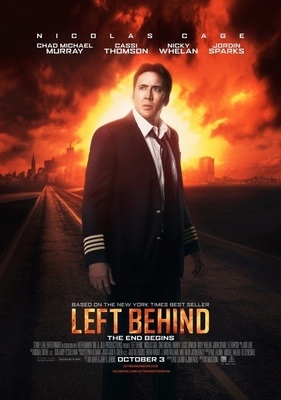
Left Behind (2014)


Nicolas Cage snores through this disaster of a movie

Director: Vic Armstrong

Cast: Nicolas Cage (Rayford Steele), Chad Michael Murray (Cameron “Buck” Williams), Cassi Thomson (Chloe Steele), Nicky Whelan (Hattie Durham), Jordin Sparks (Shasta Carvell), Lea Thompson (Irene Steele)

Christian film making. Bible dramatisations can have a certain strength and weight to them. But when it tries to reach into the realm of the blockbuster (inevitably involving the Antichrist somewhere along the line – he would have popped up in the never-made sequel to this piece of excrement) – it never gets it right, po-faced amateurishness taking over as it tries to tell a story that “will appeal to the kids”.

I can hardly bear to remember it, but Left Behind is about the Rapture. In a flash of light, the good people and all the kids in the world disappear leaving only their clothes behind (heaven is a naked place apparently). The bad and the unbelievers (shame on them!) are LEFT BEHIND!!!! The film focuses on some people on a plane. The plane flies around a bit while they panic. Then it lands. Then the film finally ends. There is no plot as such. Every character has been plucked from a stock catalogue: the lothario pilot, the slutty stewardess, the wisecracking New Yorker, the savvy journalist, the plucky daughter… Drinking is essential for viewing the film.

This is an incomprehensible, pointless film devoid of plot or suspense that drifts clumsily from event to event, never building towards any point or resolution. It was clearly intended as the first film in a series, and therefore feels no need to attempt to function as a stand-alone film. In fact the entire film feels like an extended first act – and with tighter story telling it could have been that. What actually happens in this movie? A bunch of people disappear. Cage lands a plane. That’s it. Nothing else really happens. Even the concept of the Rapture having even taken place is basically only a guess by some of the characters: they haven’t got a clue.

In fact, that’s another reason why this film is both terrible and dull. Because bugger all else happens in the story, it’s promoted as the “Rapture movie”. So we at home know straightaway what has happened, but the film drags out its protagonists working it out and then suddenly has them reaching a conclusion based on the watch inscription of a vanished co-pilot and a “BIBLE STUDY” note in the diary of a vanished stewardess. The wait for them to work it out is dull – and then the reasons for their conclusions so swiftly raced through they make no sense.

For a Christian film, as well, the story alternates between heavy handed dwelling on crosses and other paraphernalia, and a bizarre presentation of the overtly religious, who all seem to be either cranks, sanctimonious or both. The film is so ineptly made that it’s clearly not their intention to present the religious like this – it just comes out that way.

Nicolas Cage stars in this film. I can only assume that this was in the midst of his financial problems and that the offer for a huge slice of the budget was too good. Never mind autopilot, he’s barely awake, plodding through the film with a dead-eyed stare, mouthing the direlogue and clearly wishing he could be raptured out of the movie. Even on the poster he looks bemused and confused about why he’s there. The rest of the actors are so non-descript that this turd is basically their career highlight.

Leaving aside the acting, it’s a hideously made, cheap-as-chips movie with D-list actors stumbling around wobbly sets. It has no sense of humour, no sparkle but is directed with a hamfisted seriousness. The “action” and “thrills” are laughably flat and have less pazzaazz than an episode of Thunderbirds. But taking pot shots at this crap is like shooting dead fish floating in a barrel. It is horribly, horribly, horribly bad, bordering on inept. Even the most blindly devout Christian couldn’t find a message in this. With friends like these God doesn’t need enemies.

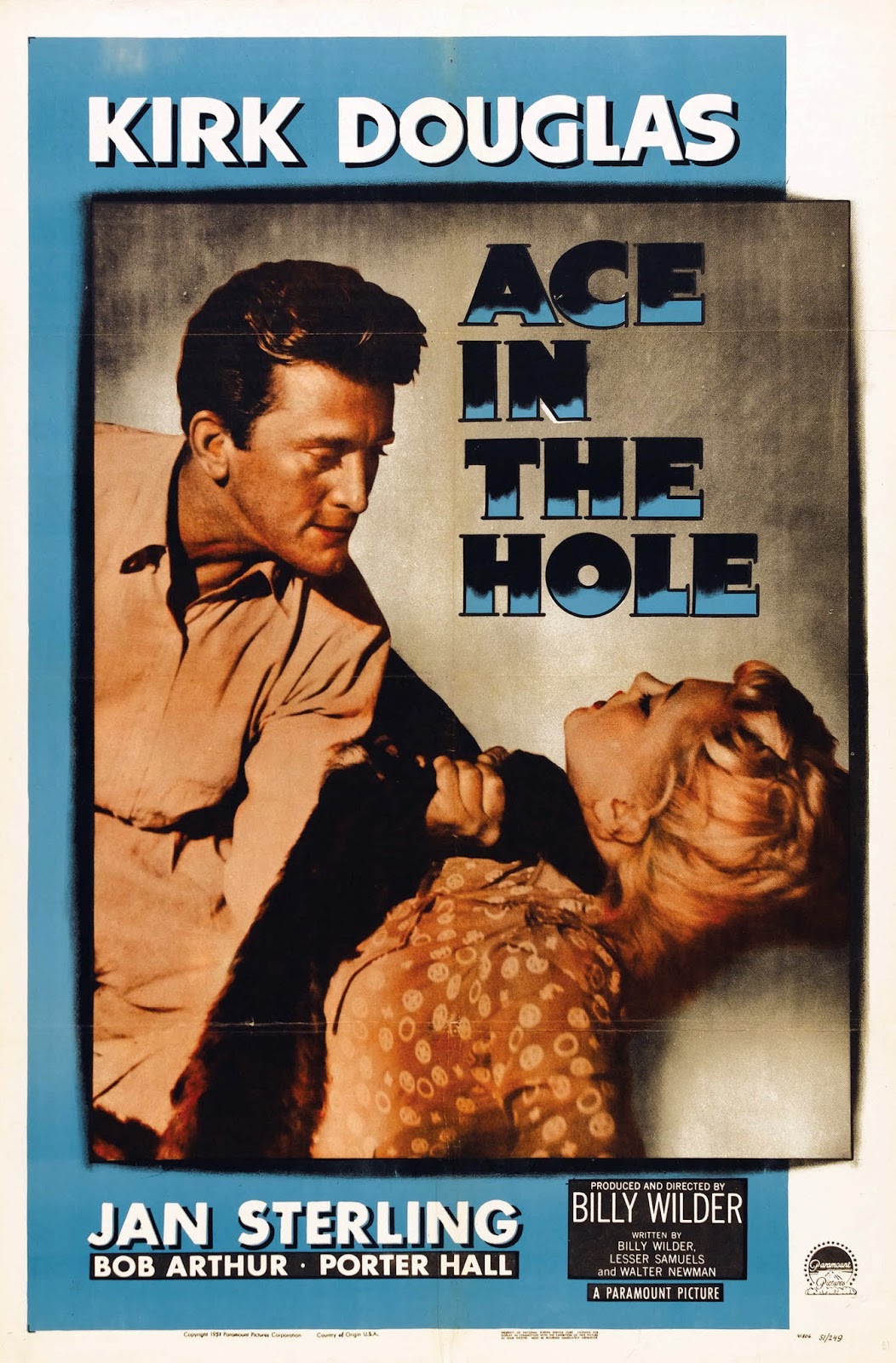
Ace in the Hole (1951)


Kirk Douglas surveys the horrors he has willingly unleashed in Billy Wilder’s bitter beyond belief media satire

Director: Billy Wilder

Cast: Kirk Douglas (Chuck Tatum), Jan Sterling (Lorraine Minosa), Robert Arthur (Herbie Cook), Porter Hall (Jacob Q. Booth), Frank Cady (Mr Federber), Richard Benedict (Leo Minosa), Ray Teal (Sheriff Kretzer), Robert Arthur (Herbie Cook)

Ace in the Hole was Wilder’s first big flop as a director. It’s not surprising that the media savaged it and claimed it was ridiculous. This is a film way, way, way ahead of its time, a stinging indictment of the ruthless obsession of the media with selling stories rather than reporting them, of spinning out crises to sell newspapers. It’s Fake News decades ahead of its time, a gutter journalism film released at a time when the media was totally trusted. Is it any wonder contemporary critics claimed they couldn’t recognise their trade here? Now it’s practically the way every journalist on film is portrayed.

Charles Tatum (Kirk Douglas) is a big-city reporter fired by a host of newspapers for offences ranging from alcoholism to libel to sleeping with the boss’s wife. Arriving in Albuquerque, New Mexico, he wangles a job on the local paper aimed to eventually encounter a story he can spin into a national media sensation, a crisis with a “human interest story”. A year later, he stumbles upon a cave-in that has trapped a man, Leo Minosa (Richard Benedict), below the surface. Believing this is the story that he can get him back his seat at the high table, Tatum seizes control of the rescue operation, insisting a quick and easy plan is dropped in favour of a week long public drilling operation. Tatum’s reporting of the event becomes a media sensation and in days the abandoned town is full of reporters and rubberneckers.

What’s astonishing here is that this is one of the few films I can think of that is totally devoid of sentiment or hope. It’s ruthlessly cynical where virtually every character is irredeemable, and no suggestion of redemption exists. The only major character who seems normal is Leo himself, although that is largely because his bland non-descriptness (well portrayed by Richard Benedict) and childlike, homespun dependency on those around him make him a near blank anyone can project feelings onto. Wilder’s hard-bitten cycnicsm, bordering on anger with the media and their audience, pulls no punches without descending into polemic – ironically it keeps the human interest, while never compromising the dark satire.

It’s a savage attack not just on journalism and the mass media, but human nature itself. The media stirs up a storm of excitement and drama around one man’s fate solely to make money – and Tatum himself is the worst form of manipulative gutter press, with no interest in truth, investigation or even journalism, only a shark-like love of the main event. But Wilder shows that the people just lap up this exploitative press storm – the growing crush of on-lookers, the bated breath as each update comes in, the literal carnival set up on the site, specially chartered trains – everyone wants to feel part of this story, to vicariously feel the emotions of those the event is actually happening to. It’s virtually a prediction of Twitter.

At the heart of this is Tatum, played with maximum forcefulness and dark charisma by Kirk Douglas in surely one of his finest performances. What Douglas does here that is so skilful is to never make Tatum an out-and-out villain. He plays it with a subtle suggestion of self-loathing: the quietly suggested need for alcohol, the revulsion he feels for those around him whom he sees as reflections of his own moral emptiness. At the same time, if Tatum has morals he long since stopped listening to them. Every time it looks like Tatum has realised what he has done, he reverts back to keeping the story going. Douglas’s dynamism also brings Tatum’s relentless drive and determination to life with real power. Tatum is easily able to cow, bully and bribe those around him into making him the funnel of the story. Never once do you question why all around Tatum bow to his will – his force of personality is so great you have no choice. Despite the hints of self-loathing, Douglas isn’t afraid to play Tatum as a reprehensible man – not bad or evil, just totally self-serving and selfish.

Jan Sterling I was less sure of at first, but actually this is another incredibly brave performance of uncompromising hardness. Lorraine is trapped in a marriage with a man she does not love, in the middle of nowhere, having believed she was marrying into something very different. But even with those provisos, her lack of interest in her husband’s safety and her focus on getting as much cash out of the tourists as possible (to finance her departure to the city) is astonishingly ruthless. Out of all the characters, she is the one who is immediately aware of what game Tatum is playing, and (with his advice) she is the most capable of exploiting the public excitement for her own gain. While she has elements of a femme fatale, Sterling’s performance seems more bitterly cynical than manipulatively feminine.

Wilder’s cynical and hard-nosed film is a brilliantly written deconstruction of the American dream, packed with wonderful lines and sharply drawn characters. It scrapes away at the surface of its characters to reveal the rot underneath – even Tatum’s photographer Herbie degrades from idealist to acolyte – and then blames us all for the mess. It shows us the disgusting ease with which our feelings can be manipulated to sell anything, then shows how gleefully we want to be feel part of an event: shots are filled with details like spectators carrying candy-floss while praying for Leo’s safety.

And then there is a complete lack of redemption – or even suggestion of it. Decent characters are peripheral, and far outnumbered by Tatum and his like. The resolution of the crisis does not go according to Tatum’s plan. It’s almost astonishing in its bleakness and in Tatum’s confused reaction to it and his lack of clear-cut guilt. Again, it’s Douglas’ skill and Wilder’s uncompromising direction: I actually had to watch it twice to catch the shading Douglas and Wilder give Tatum’s reactions to events finally going out of his control – and I still don’t know to what extent self-loathing trumps frustration and disappointment.

This is a masterful media satire and a wonderful, thought-provoking film, surely one of Wilder’s finest. It should be a lot better known than it actually is. I haven’t stopped thinking about it in days and I’m already looking forward to seeing it again. And, if anything, it is getting more relevant every single day.

The Alamo (2004)

“Remember The Alamo!” Problem was the movie going public didn’t

Director: John Lee Hancock
Cast: Dennis Quaid (Sam Houston), Billy Bob Thornton (Davy Crockett), Jason Patric (James Bowie), Patrick Wilson (William Barret Travis), Emilio Echevarría (Antonio López de Santa Anna), Jordi Mollà (Juan Seguin), Leon Rippy (Sergeant William Ward)

“Remember the Alamo!” was the famous war cry of the Texan rebels fighting to make Texas an independent state from Mexican rule. Problem was, fast forward 90 odd years and it seems not enough people did. This lovingly reconstructed re-telling of the doomed attempt to defend The Alamo (a sort of Western Zulu with a downer ending) was a box-office disaster.

In 1836, a civil war raged in Mexico, which then included Texas. American immigrants and other groups fought to make Texas an independent state, with an eye on later joining the United States. A small force is sent to garrison the Alamo, a key fort recently captured from the Mexicans. But the Mexicans and their President Santa Anna are descending on the Alamo in full military force…

The Alamo is a pretty decent film. It’s not a classic and at times it’s a rather staid and straight-laced history lesson, po-facedly cramming in as much as it can within its running time. But it’s got many merits, not least the fact that it’s willing to focus on character rather than action, and embraces the fact that sieges tend to be rather long, dull affairs punctuated by moments of sheer terror.

Billy Bob Thornton gives a sharply intelligent and thought-provoking reading of Davey Crockett, playing him as man painfully aware that he is a legend, and wearily trying to balance this with also being a “normal” person, with the same fears and desires as other men. He plays Crockett as a gentle, even rather sensitive soul, a good listener, sharply self-critical and scared that he can’t live up to the reputation he has. As he says at one point: “If it was just me, simple old David from Tennessee, I might drop over that wall some night, take my chances. But that Davy Crockett feller… they’re all watchin’ him.” At one moment (in a scene that the film overplays by returning to at least twice in flashback), Crockett plays the violin on the ramparts to battle the Mexican drums, giving a brief Shawshank-like moment of freedom through the power of art.

The two main leads don’t disappoint alongside him. I enjoyed Patrick Wilson’s stiff-necked William Travis, whose cold and formal manner slowly reveals a decent man and a brave leader (though no master tactician). Jason Patric also manages to land just the right side of rogueish as a drunken James Bowie, the men’s leader of choice. Dennis Quaid has the dullest, least developed part as a larger-than-life Sam Houston. Impressive as these characterisations are, the film doesn’t really have time for anyone else to make an impression – while Emilo Echevarria’s Santa Anna is little more than cardboard cut-out of villainy.

The film’s main problem is its reverent regard for the moment in history that it is covering. For starters, its makers assume everyone shares this: there is no opening crawl, or scene setting voiceover, to tell us where we are, what’s going on and when. The filmmakers assume us to be as au fait with Texan independence as they are. I had to literally stop the film for a good ten minutes and read some quick timelines of Texan independence, as well as skim a few Wikipedia pages on Texan history, so I could follow the storyline.

Secondly, it’s so keen to cover all the major historical events, that at points it’s more than a little dry. Its slow pace has the upside of really allowing us to get to know the characters at its centre (the original run time was closer to 3 hours, which would have allowed many of the background characters to come to life as well). But with the runtime cut down, combined with the assumptions made about the viewer’s historical knowledge, it sometimes becomes a little tricky to either engage with the drama fully or to completely understand what’s going on.

The recut of the film after disastrous test screenings also means that the film has what feels like a tacked on “happy ending”, with the last twenty minutes given over to the (very shortened) Houston campaign against the Mexicans and Santa Anna’s capture. The film rockets through this, barely pausing to explain tactics or events, seemingly wanting to give meaning to the sacrifice at the Alamo. Some half-hearted attempts are made to contrast slaughter of the Mexican soldiers with that of the Alamo defenders, but not much.

But this is not a bad film by any means, just a fatally compromised one. It’s trying to be an intelligent, grown-up piece of film making – a character study out west – but it’s also trying to be an action film. It doesn’t quite succeed in being either, but it’s at its best as a character study, helped by some really strong, thoughtful performances. Hancock isn’t, to be honest, an original enough director to bring to life the epic scope and sweep that the film needs, but it’s clear he cares about this a lot. In fact that’s the best thing about this film: it’s clear that everyone in the film cared deeply about this story and desperately wanted this film to be a classic.

It’s a shame that this story is one that seems to have less relevance to the masses today, and that this film can’t quite coalesce all the efforts of everyone involved into something really memorable.

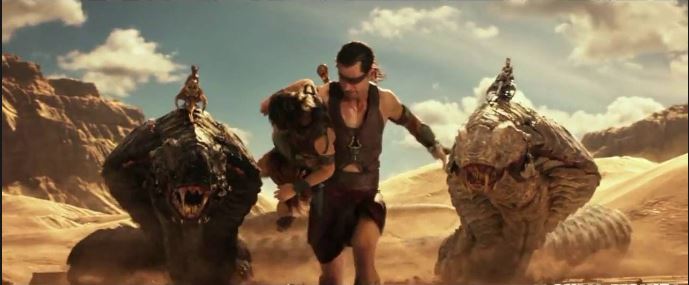
Gods of Egypt (2016)

Just your standard Giant Meets Boy Gets Chased by Female Assassins Riding Giant Worms Story. Really didn’t anyone learn anything from Dune?

Director: Alex Proyas
Cast: Nikolaj Coster-Waldau (Horus), Gerard Butler (Set), Geoffrey Rush (Ra), Benton Thwaites (Bek), Chadwick Boseman (Thoth), Elodie Yung (Hathar), Courtenay Eaton (Zaya), Rufus Sewell (Urshu), Bryan Brown (Osiris)

Oh good lord where to begin. It’s not so much that this is a terrible film – although it is. It’s not offensive or unpleasant. It’s just a film that is almost impossible to take seriously whatever. It’s a fat, bloated, overblown mess where the plot makes almost no sense, the design is totally ridiculous, the acting bored or unengaging, and the directing totally lacking any charisma. It’s a film you can only laugh it, except for the fact that it’s so lamentably badly that it’s not even that funny. There is so little joy in the making of this bloated fart of a picture, that even as a joke it falls flat.

As far as I can tell, in a fictionalised ancient Egypt the Gods live among men. Horus’ coronation as the new king is interrupted by his uncle Set who seizes the throne, removes Horus’ eyes and sets about turning the realm into a dictatorship. He has some sort of overall plan but I’m really not sure what it was. Something to do with immortality or something. The film barely cares so neither should you. Set is a baddie. Horus is supposed to be a goodie, I guess, but he is such a humourless, arrogant, cold and (above all) boring God you probably won’t give a toss about him.

The film is a disaster almost from start to finish. In a decision that guarantees giggles every few minutes, the Gods are all 9 feet high, making the humans look like chippy midgets. Poor forced perspective hammers home this ridiculousness every few seconds. If this didn’t make the Gods silly enough, they also have some bizarre metal “battle modes” they transform into, which along with some piss poor special effects makes them look like refugees from Mighty Morphin Power Rangers. The colours are bright and primary and the sets all have the sheen of CGI, lacking any substance. The design decisions cross swiftly from daring into dumb. If you ever wanted to see a flying chariot pulled by winged scarabs or to see mix and match female hitmen ride giant worms chasing a giant and his normal sized friend, well hallelujah your day has come, this is the film for you.

The script, such as it is, is a loosely connected series of incoherent events. The acting is simply awful. Coster-Waldau completely lacks the big screen presence to carry the movie, his upper crust arrogance from Game of Thrones here comes across as insufferable and dull. Thwaites comic relief is about as funny as a hernia and his quest to save his true love has all the drama of running to catch a bus. Boseman aims for wisdom and grace but delivers camp and affectation in a truly terrible performance. Butler does at least have a bit of charisma, even though Set is such a poorly defined character he’s impossible to get interested in. Various other actors chip in autopilot performances for the cash. The female characters are little more than props. Geoffrey Rush needs a new agent: seriously how much money does he need?

The biggest problem though is it isn’t quite ridiculous, campy or shite enough to be a camp classic. Instead it’s just boring. It doesn’t have the sort of cosmic sweep or visual splendour to give you something to look at. Instead it’s loud, boring and stinks like animal droppings. That’s the worst thing of all: not even as a camp classic will this be remembered. Simply crap.

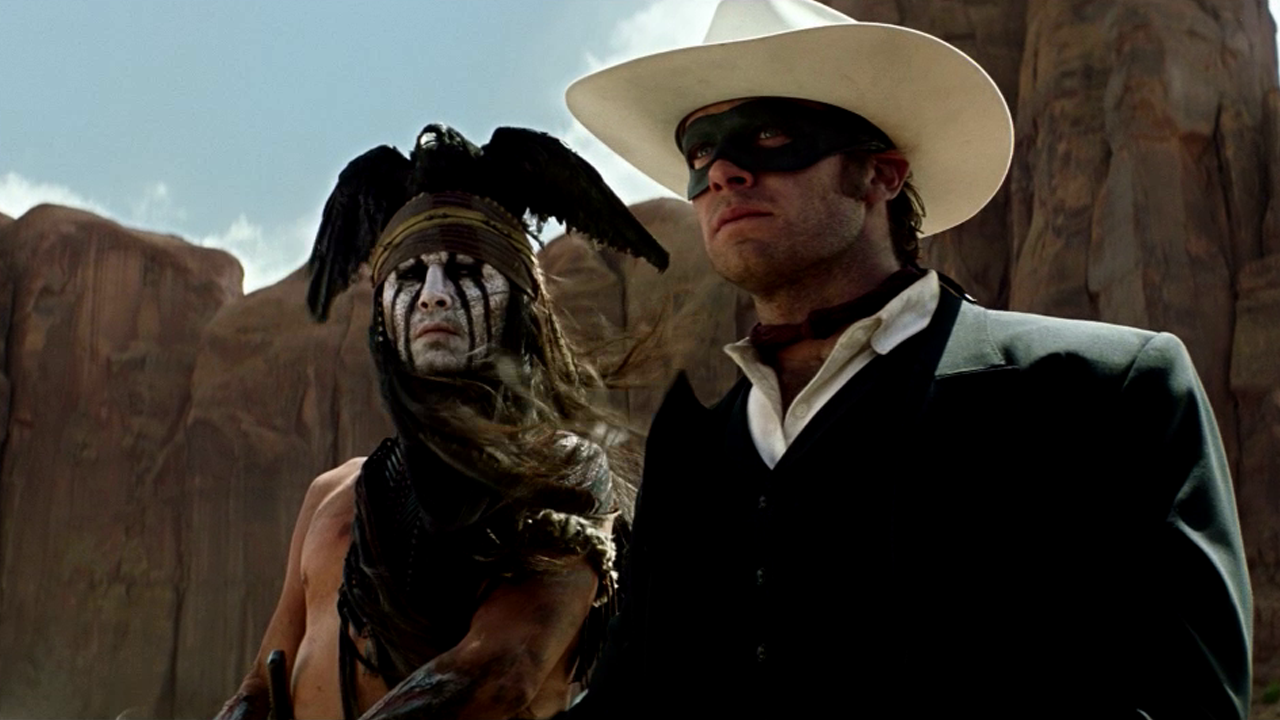
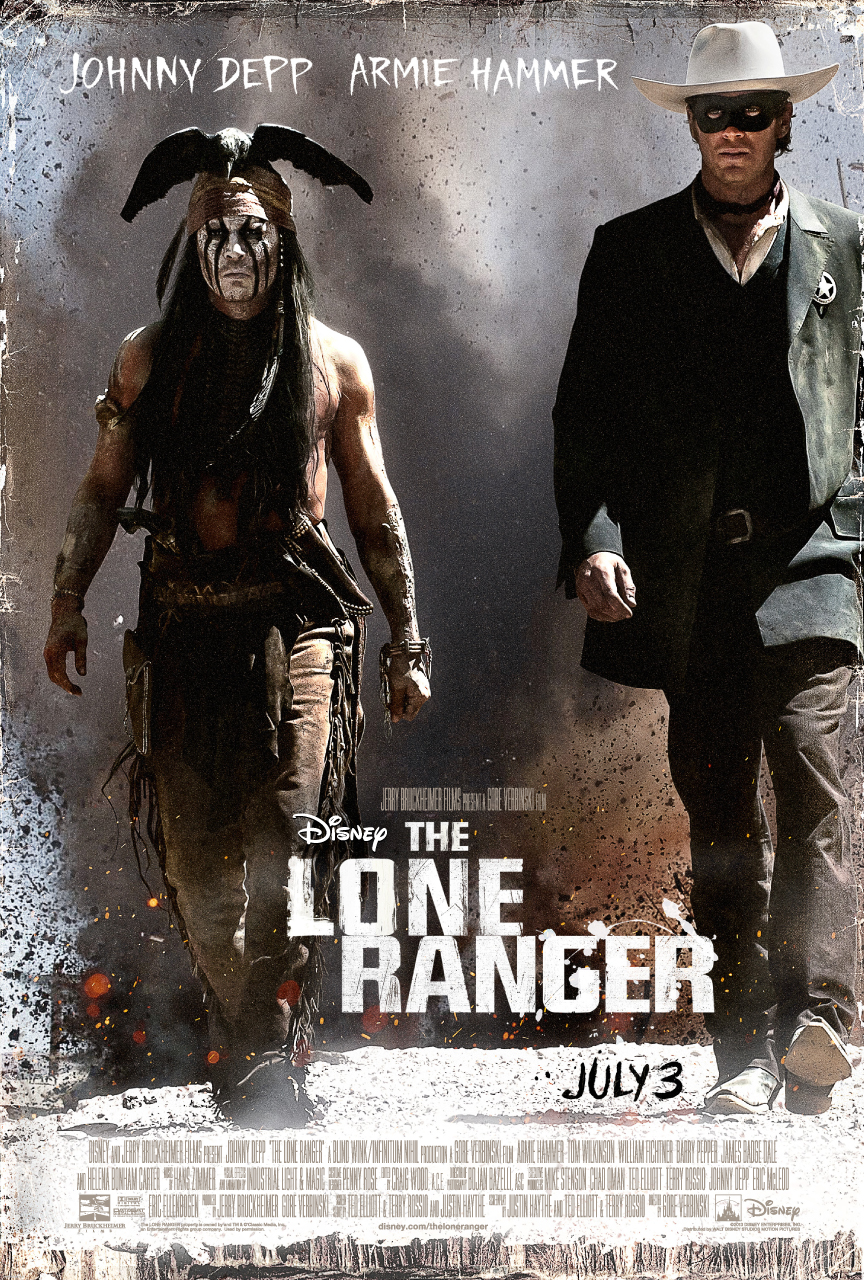
The Lone Ranger (2013)

Johnny Depp works overtime to make this film unpopular. He succeeded.

Director: Gore Verbinski
Cast: Johnny Depp (Tonto), Armie Hammer (John Reid), William Fichtner (Butch Cavendish), Tom Wilkinson (Latham Cole), Ruth Wilson (Rebecca Reid), Helena Bonham-Carter (Red Harrington), James Badge Dale (Dan Reid), Barry Pepper (Captain Jay Fuller)

In 2013 this big budget misfire produced a record loss for Disney. Spiralling out of control the film cost a bomb then blew up like one at the box office much to the delight of film critics and audiences alike who enjoy nothing more than watching some suits and A-list stars fall flat on their face. Reviews were damning and the film took its place as one of the ultimate box office turkeys.

All of which is a little unfair, as to be honest this isn’t really that bad a film. Which is not to say it’s that good either, because it ain’t. It’s an average B picture with a huge budget and an over inflated running time, but it has a decent Act 1 and Act 3 and ends with an excellent train chase sequence that I enjoyed so much I watched it again immediately after the film finished.

So what are the problems? The main one for me is Johnny Depp, who here is at the absolute peak of his wave of replacing acting with a bunch of mannerisms and quirky moments. This is one of the most irritating Depp performances on film, his Tonto a pile of odd costumes, muttered gags and winks to the audience. I can see Depp is amused, but I’m not sure anyone else is. I also suspect Depp announced this was how he was going to play the role and if Verbinski didn’t like it he could get stuffed.

But other than that, Armie Hammer is rather sweet and endearing as the straight as an arrow Ranger, displaying a lot more wit than Depp’s painted showing off. Ruth Wilson does her best with a truly thankless damsel in distress role. Tom Wilkinson, William Fichtner and Barry Pepper present three very different villains. Helena Bonham Carter gives a bizarre performance as a madam with ivory legs (yes you read that right.).

The film’s main problem is it is far too long and too poorly structured. The opening act is engaging and introduces the characters effectively with a decent action scene or two, but it starts to overdo its welcome after 40 minutes or so. A framing device of Tonto narrating the story to a child in the 1920s offers nothing more than padding and more Depp showing off. Act 2 meanders around slowly, working up to showing that all the suspicious people in the film are working together, draining the momentum out of the film. Shock baddie reveals are only surprising to those of us who have never seen a film before.

However the film is partly redeemed by its final 30 minutes, in particular an astonishingly high octane, exciting and fun train chase sequence, brilliantly cut to the Lone Ranger theme that gives every character a chance to shine and both grips the viewer and leaves them with a smile on their face. Shame the rest of the film can’t match it, but it’s still better than many others manage.

A single sequence doesn’t make it a classic, and an engaging actor (Hammer) who creates a character that you care about doesn’t keep the attention throughout the whole 140 minutes, but it’s far from a disaster and much better than many successful big budget hits. Shame about Depp. And sorry for those who loved turkeys. This is just an average film. In about 10 years it will probably be getting a re-evaluation.