Category: British Films

Pride and Prejudice (2005)


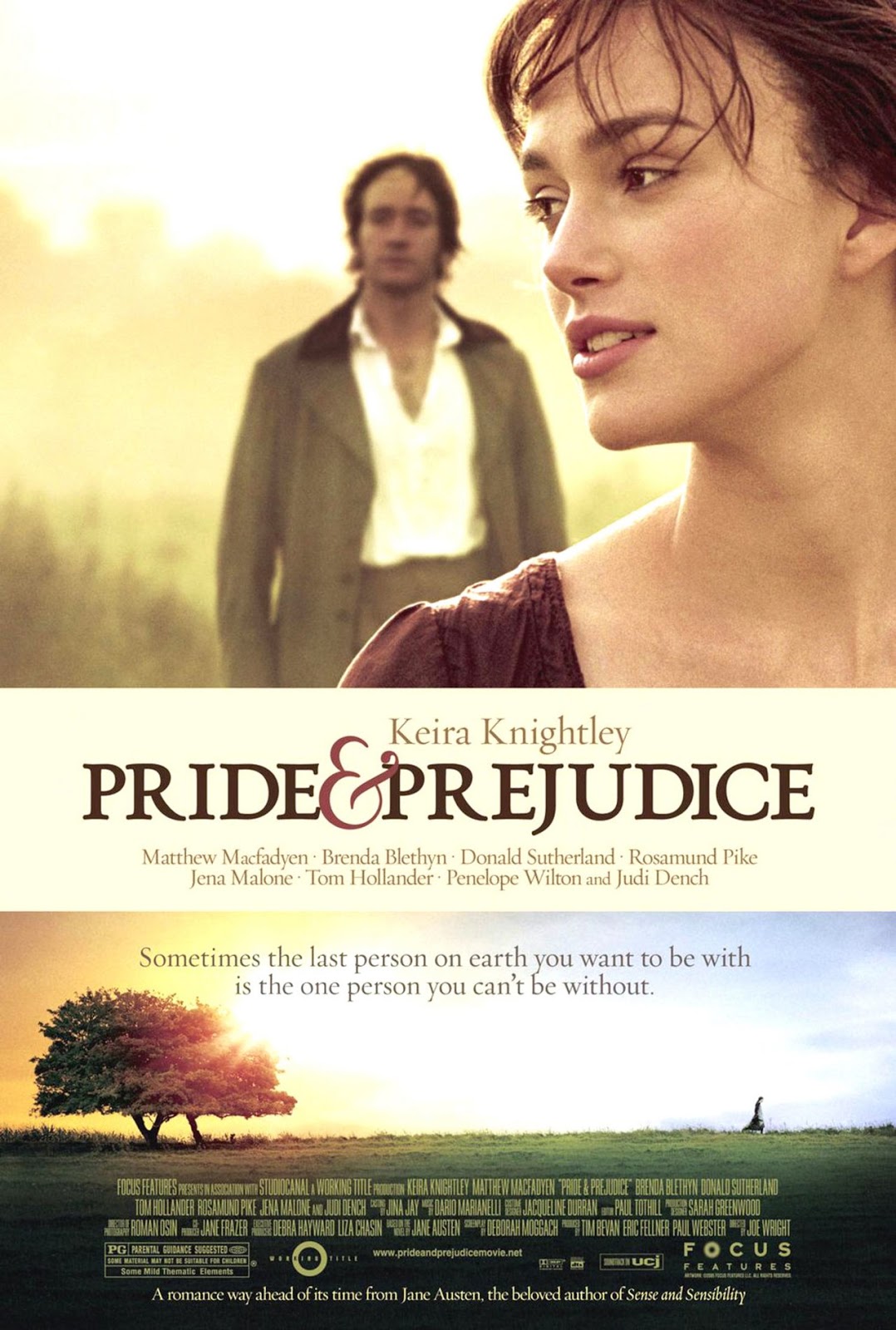
Keira Knightley and Matthew Macfadyen are drowned in the shadow of the BBC adaptation of Pride and Prejudice

Director: Joe Wright

Cast: Keira Knightley (Elizabeth Bennet), Matthew Macfadyen (Mr Darcy), Brenda Blethyn (Mrs Bennet), Donald Sutherland (Mr Bennet), Tom Hollander (Mr Collins), Rosamund Pike (Jane Bennet), Carey Mulligan (Kitty Bennet), Jena Malone (Lydia Bennet), Talulah Riley (Mary Bennet), Judi Dench (Lady Catherine de Bourgh), Simon Woods (Mr Bingley), Tamzin Merchant (Georgiana Darcy), Claudie Blakely (Charlotte Lucas), Kelly Reilly (Caroline Bingley), Rupert Friend (Mr Wickham), Penelope Wilton (Mrs Gardner), Peter Wight (Mr Gardiner)
I’ve written before about certain books having been adapted so successfully there feels very little point rolling out another. If ever an adaptation set this principle, it’s the 1995 BBC adaptation of Pride and Prejudice. Not only did it perfectly capture the spirit and style of the book, with perfect scripting and direction, but the two lead actors – Jennifer Ehle and especially Colin Firth – were simply perfect (for all his achievements, the first line of Firth’s obituary will forever be “Darcy Dies”.)

So Joe Wright and his team were already climbing a mountain when they announced plans to make a new adaptation of Jane Austen’s most beloved novel. What they’ve produced in the end is a well-made, handsomely mounted film full of visual invention – that has been pretty much rejected by nearly everyone I know who loves Austen. It’s a film that, in attempting to plough its own furlough, has ended up not really pleasing anyone: for the casual viewer it’s an entertaining but forgettable watch. For the Austen fan it’s just plain not right.

Structurally the film places Elizabeth’s relationship with Darcy slap bang at the centre, and has little to no interest in anything else. This leads to major themes and relationships being neglected or outright abandoned in some bizarre cut choices. The film wants to front-and-centre Lizzy’s increasing isolation – so Jane is dispatched from the film for almost over an hour. Even more oddly, Wickham is cut down to a few spare scenes – which makes her passionate sympathy for him and anger against Darcy make very little sense. All this isolation also means we never really understand the social implications and importance of marriage – in fact the whole thing is basically turned into a Cinderella romance: Rich Man Meets Poor Girl (And No One Else Matters). 
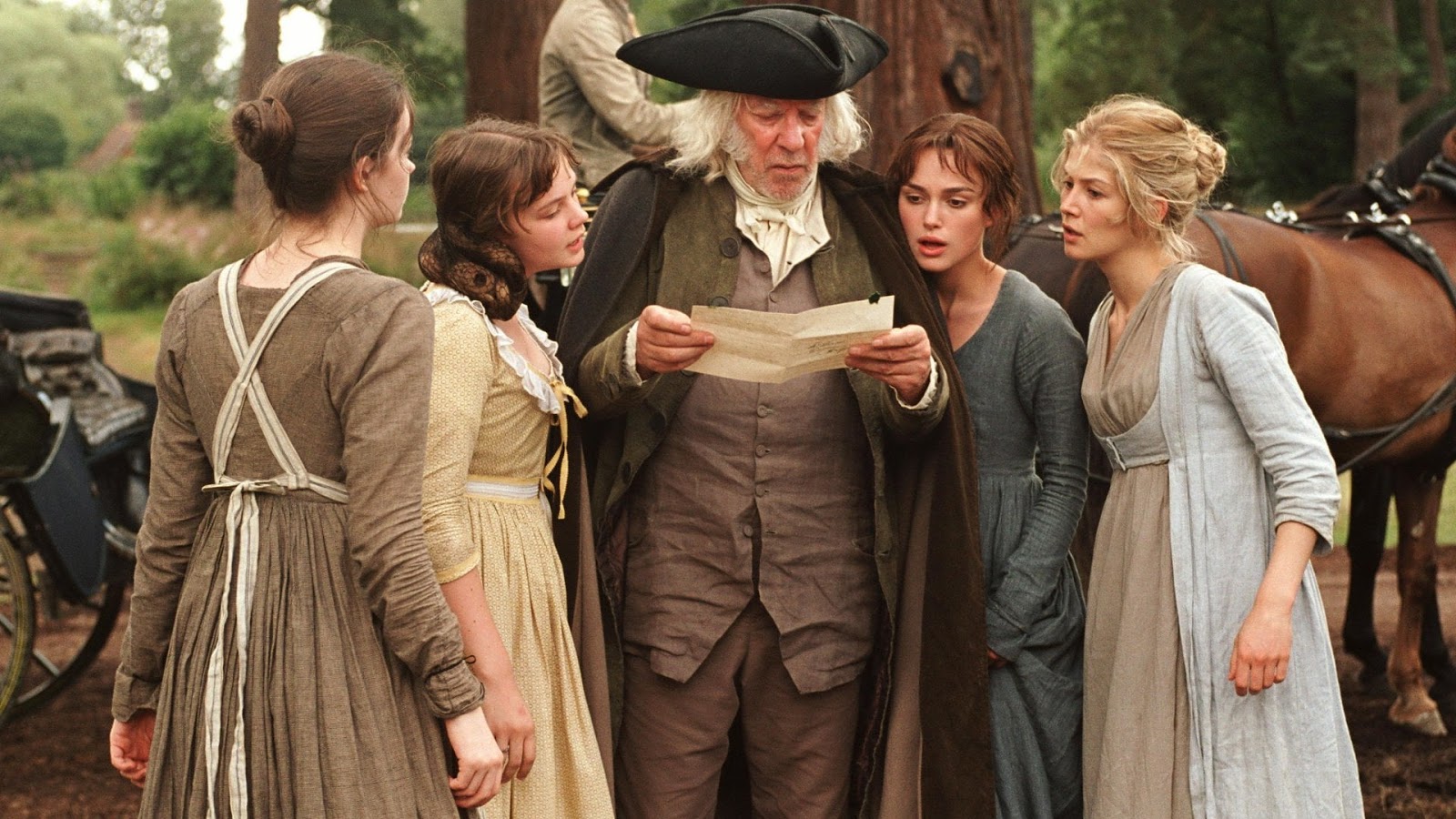
Which means a lot of the focus for the film lands on Keira Knightley. Is there a more controversial actor in film than Knightley? Oscar-nominated for the role, among my Austen-loving friends I have found only revulsion against her performance. She plays it with spirit but too much of a modern sensibility. She’s fine, but she’s just not convincing: she doesn’t look like her, she doesn’t have her warmth and wit and seems more like she’s wandered in from some sort of “flirty girls” comedy. Nothing really communicates the character’s intelligence and wit – and Knightley probably looks a little too modern for the whole thing to work. 

On top of that the film doesn’t want her to be too unsympathetic at any point, so dials down her judgemental nature, and also reduces any possibility of us judging her partiality for Wickham by mostly removing him from the film. However, this also removes many of the obstacles from the plot that stand in the way of romance.

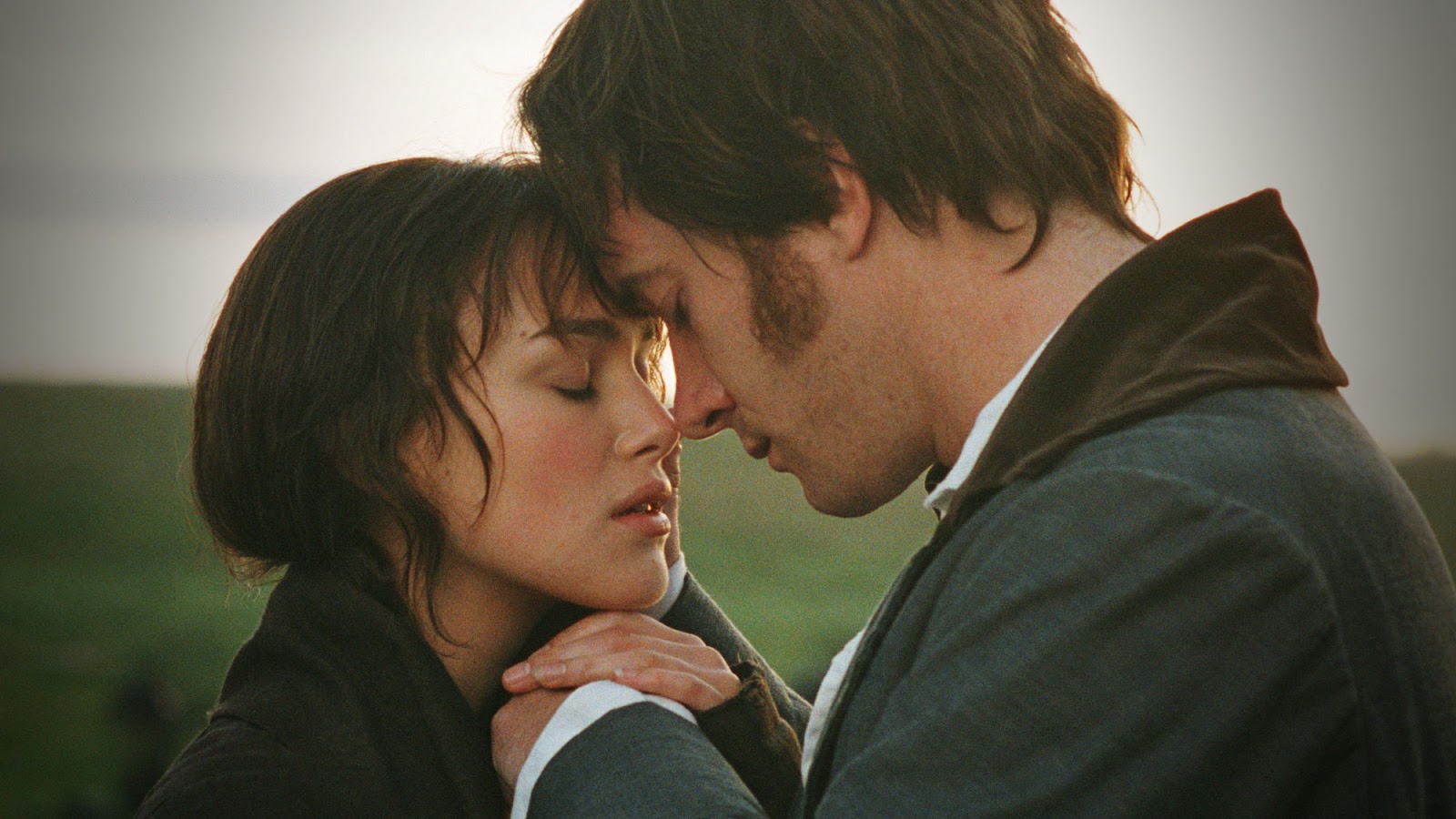
Matthew MacFadyen does a decent job as “Nice Guy In A Period Drama”, but the character is just wrong for Darcy. Like Lizzy’s tendency to rush to judgement, Darcy’s apparent coldness and snobbery have been watered down to almost invisibility. His first announcement of love is so genuine, so gentle, so loving that you are amazed that Elizabeth dismisses him out of hand. It’s no surprise this Darcy turns out to be a decent bloke, the edges of the character have been completely shaved off. This puts a big old dent in the plot, reduces his character development, and ruins the impact of sweet later moments like Darcy’s uncertainty when the two meet at Pemberley. 

There are some good performances though. Tom Hollander is very funny as a social-climbing Mr Collins. Donald Sutherland gets so much warmth and twinkly good humour out of Mr Bennet that Wright even ends the film on him (another odd choice, but never mind). Judi Dench could play Lady Catherine standing on her head. Rosamund Pike is rather good as Jane – she totally feels right for the period. Brenda Blethyn largely manages to avoid turning Mrs Bennet into a complete stereotype. Saying that, Simon Woods portrays a version of Bingley so bumbling, tittering and awkward you are amazed either Jane or Darcy could be interested in him, let alone bear to spend time with him.

But then large chunks of the film feel odd. The screenplay works overtime to turn the film into a straight-forward star-crossed lovers story: so it’s Darcy and Elizabeth all the way, and the film is desperate to make them both likeable from the off. And if that means that, in a film called Pride and Prejudice, both the pride and the prejudice have to be junked to make sure even the stupidest audience member will like the hero and heroine, well that’s apparently a price worth paying. Lowering the Bennets’ social status as far as the film does, also turns the story into a full-on Cinderella territory. Darcy and Bingley are so posh an entire room falls silent when they walk in – in comparison the Bennets are so poor they share their house with pigs.

Ah yes the pigs. Why? The Bennets aren’t paupers. If they were, why would Collins want the place? Why would they be invited to the ball? Why would Bingley and Darcy even consider them as partners? Why would a family so aware of impressions have a home that is literallyfull of shit all the time? Why is Mr Bennet scruffy and unshaven – and why doesn’t anyone care? Who designed this? If the Bennets are so fixated on getting good marriages why do they literally live in a pig sty? It’s a visual idea that undermines the whole story.

I’m not joking. Here is a pig walking through the Bennet house.

It’s full of things like this that don’t feel right. The film junks most of the language of the original book, which makes it sound jarring (it even re-works Darcy’s first proposal: “in vain I have struggled, it will not do…” – large numbers of Austen lovers I know can recite those lines verbatim. This film apparently thought it could create a better version. It couldn’t). Large chunks of the film happen in the rain like some sort of version of Wuthering Heights. Why is that? Is it because professions of love in the rain are romantic in a Mills and Boonish sort of way? Or is it an echo back to Firth’s wet shirt?

Emma Thompson’s sublime adaptation of Sense and Sensibility demonstrated that it is completely possible to adapt an Austen novel into a two-hour film and still preserve the characters, relationships, major events and themes of the book, while also making a story that stands on its own two feet for non-Austen-ites. This film bungles its attempt to do the same. 

But there are things Wright gets right. The camera work and transitions are lovely. A long tracking shot that weaves in and around the ball early in the film, taking in every single character is not only a technical marvel but really gets across a feeling of what these hectic and bustling social events are like. There is a beautiful time transition at Longbourn, as Elizabeth rotates on a screen and the camera takes on a POV shot, showing the seasons changing each time the camera revolves around through 180 degrees. The cinematography is luscious and Wright – his first film – shows he was more than ready for the step-up from TV.

It’s just a shame that the film they made doesn’t quite work. It doesn’t capture the sense of the book. It doesn’t capture the sense of the characters. It makes bizarre and just plain wrong choices. It’s a decent film, but it is not a good adaptation of the novel. And that’s a major problem, because if you are going to adapt something as widely loved and revered as this, you better bloody well understand the novel – and I don’t think enough people here did. It’s told with a sweeping romantic style – but they are adapting the perception of Pride and Prejudice rather than the actual story. The chemistry and romance aren’t there: the film even ends with an odd sequence of Sutherland and Knightley, probably because there was better chemistry between these two than the two leads. It’s a film that basically doesn’t work at all.

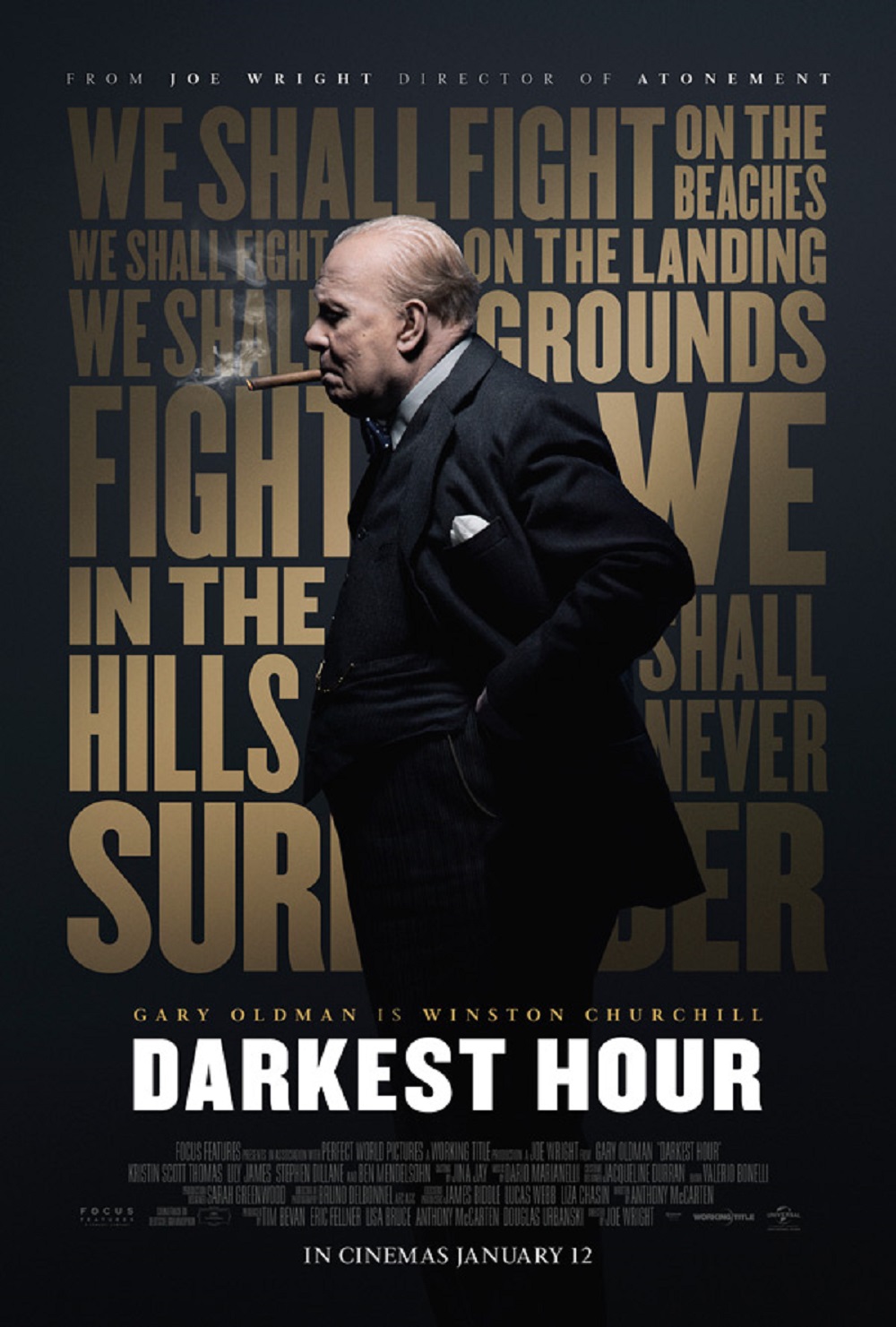
Darkest Hour (2017)


Gary Oldman, rather surprisingly, rather is Churchill during his Darkest Hour

Director: Joe Wright

Cast: Gary Oldman (Winston Churchill), Kristin Scott Thomas (Clementine Churchill), Lily James (Elizabeth Layton), Ben Mendelsohn (George VI), Stephen Dillane (Lord Halifax), Ronald Pickup (Neville Chamberlain), Samuel West (Anthony Eden), David Schofield (Clement Atlee), Malcolm Storry (General Ironside), Richard Lumsden (General Ismay), Joe Armstrong (John Evans), Adrian Rawlins (Air Chief Marshall Dowding), David Bamber (Vice-Admiral Ramsay)

One of my favourite ever TV series is Winston Churchill: The Wilderness Years, a chronicle of Churchill’s time out of government (basically 1929-1939). It covers the political clashes between Churchill and his rivals brilliantly, as well as giving us a real feeling for Churchill’s own personality and flaws and featured a brilliant performance from Robert Hardy. Darkest Hour takes off almost where that series ends – and I think it might just be a spiritual sequel. And, for all its flaws, I might even grow too really like it.

Joe Wright’s Darkest Hour is a beautifully filmed, imaginatively shot retelling of the crucial first month of Churchill’s premiership. Wright uses a great device of flashing the date up (in an imposing screen-filling font) as each day progresses. Apart from brief moments, the action rarely leaves Whitehall, with the focus kept tightly on the politics at home. Will Churchill win over the war cabinet to continue the war, or not? It revolves around dialogue shot with tension and excitement, and is structured key Churchill speeches: each carrying all the emotional impact you could expect and beautifully performed, with goose-bump effect by Gary Oldman.

Because yes, this film’s one piece of genuine excellence, and what it is really going to be remembered for, is the brilliance of Oldman’s performance. This is one of those transformative performances where the actor disappears. Of course it’s helped by the make-up, but there is more to it than that. The voice, the mannerisms, movement, emotion – as a complete recreation of the man it’s just about perfect. Whatever the film’s flaws, Oldman nails it. Sure it’s larger than life – but so was Churchill.

Oldman’s Churchill is irascible, demanding and temperamental – but he’s also warm and humane. In one beautiful moment he conducts a conversation with an un-encouraging Roosevelt, where his features seems to shrivel and shrink with despair, while his voice keeps up the optimism. Moments of gloom hit home, but there is also humour (and Oldman is actually rather funny in the lead role). There’s moments of pain, guilt and depression – it’s terrific.

However it does mean some of the other actors scarcely get a look in. Kristin Scott Thomas in particular gets a truly thankless part, no less than four times having to counsel a depressed Churchill with variations on “You’re a difficult but great man and your whole life has been leading to this moment” speeches. Lily James actually gets a more interesting part as Churchill’s admiring secretary, getting the chance to be frightened, awed, amused and frustrated with the Prime Minister – and she does it very well, even if her part is a standard audience surrogate figure.


The characters are neatly divided in the film: they are either pro- or anti-Churchill. The “pro” characters largely get saddled with standing around admiringly around the great man (Samuel West gets particularly short-changed as Eden becomes Churchill’s yes man). The “anti” characters mutter in corridors about how unpredictable and dangerous he is, how he could wreck the country etc. etc.

To be fair to the film, it does at least treat the doubts of Halifax (Stephen Dillane – all clipped repression, he’s excellent) and Chamberlain (Ronald Pickup – serpentine and tactical, although Chamberlain’s hold over the Tory party was nowhere near as great as this film suggests) as legitimate concerns. It does weight the dice in favour of Churchill, and we don’t get enough time to fully understand the reasons why peace with Hitler might have seemed reasonable in 1940 (tricky to get across to a modern audience so aware of Hitler’s status as evil incarnate). But Halifax’s stance that it was better to cut your losses than fight on to destruction is at least treated sympathetically, rather than making him a spineless weasel (as others have done).

The film really comes to life with the conflict between the Halifax-Chamberlain alliance and a (largely alone) Churchill. The cabinet war room clashes have a fire, energy and sense of drama to them that a lot of the rest of the film doesn’t always have. It sometimes drags and gets lost in filling the time with “quirky” moments with Churchill. There is a bit too much domesticity that feels irrelevant when we know the fate of the nation is at stake.

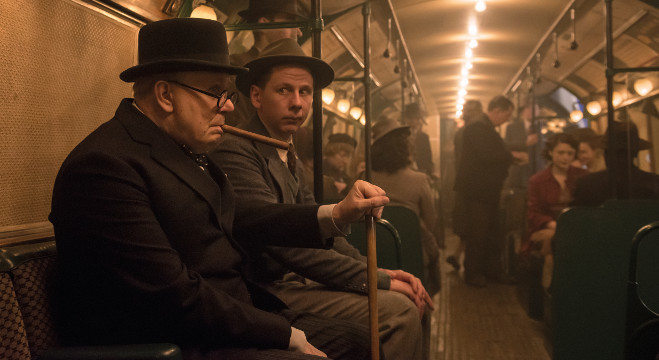
But then this is a sentimental film. Not only is it in love with Churchill (we see some blemishes, but his air of perfection goes unpunctured), but it uses devices that feelas you are watching them like sentimental film devices. None more so than Churchill bunking down on a tube train to exchange encouraging words with regular people and for them to tearfully recite poetry at each other. In fact it’s a testament to Oldman that he largely gets this hopelessly fake-feeling scene working at all.

Wright’s film makes a point later of demonstrating that – reporting back to the Tory party the results of this conversation – Churchill uses the names of the people he met, but completely replaces their words with his own. But it still gets itself bogged down in this sentimentality – including a teary end caption on Churchill being voted out of office. Every scene with Churchill and Clementine has a similar chocolate box feel, as does a late scene with George VI (who seems to flip on a sixpence between pro and anti-Churchill – although Ben Mendholsen is very good in the role).

Darkest Hour is an extremely well-made film. It’s told with a lot of energy – and it has a simply brilliant lead performance. Joe Wright finds new and interesting ways to shoot things: there are some great shots which frame Churchill in strips of light surrounded by imposing darkness. But its not brilliant. It will move you – but that is largely because it recreates actual real-life, moving events (who can listen to Churchill without goosebumps?). But it’s given us one of the greatest Churchill performances and it’s worth it for that if nothing else. And, for all its flaws, and the safeness of its storytelling, I actually quite liked it – and I think I could like it more and more as I re-watch it.

Suffragette (2015)


Votes for Women is the cry in this bad movie made about an important issue

Director: Sarah Gavron

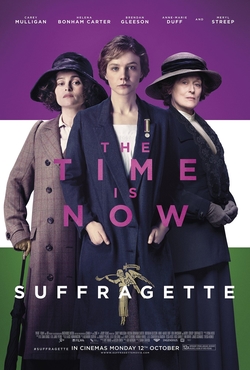
Cast: Carey Mulligan (Maud Watts), Helena Bonham Carter (Edith Ellyn), Anne-Marie Duff (Violet Miller), Romola Garai (Alice Haughton), Ben Whishaw (Sonny Watts), Brendan Gleeson (Inspector Steed), Samuel West (Benedict Haughton), Meryl Streep (Emmeline Pankhurst), Adrian Schiller (David Lloyd George), Geoff Bell (Norman Taylo r), Finbar Lynch (Hugh Ellyn)

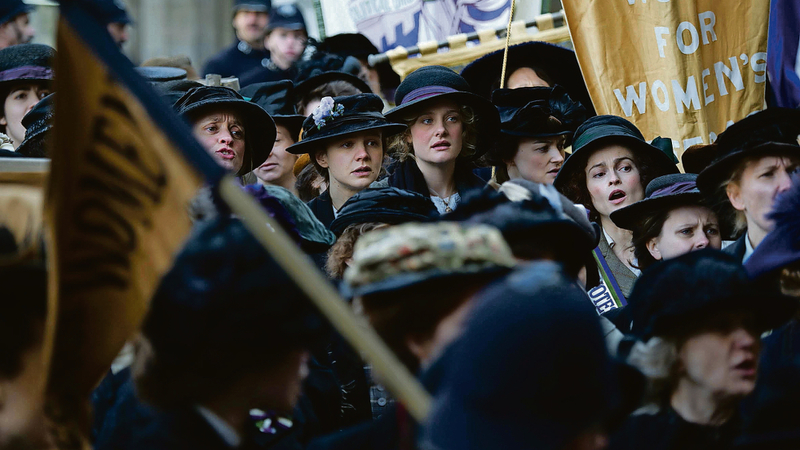
Votes for Women was a historic movement that looked to settle a gross injustice. It’s a major issue brimming with importance: and Lord doesn’t Suffragette know it. In fact, Suffragette is practically a textbook example of an important issue being turned into a bad film. Clunky, weighed down with its own bombast and stuffed to the gills with clichés, Suffragette fails to move and makes its vital political points seem leaden and dull.

Maud Watts (Carey Mulligan) is a young washerwoman, who one day finds herself accidentally swept up in a suffragette protest. Before she knows it, her friend Violet Miller (Anne-Marie Duff) has inveigled her to give testimony at a parliamentary hearing, where she meets Edith Ellynn (Helena Bonham Carter). Ellyn believes that peaceful struggle will lead nowhere and violent action is the only way to get what they want. As the violence escalates, Inspector Steed (Brendan Gleeson) is tasked to infiltrate and bring down the suffragette movement.

It should be more interesting. But Suffragette is a sluggish “issue drama” whose every frame drips with the self-importance of people who feel they aren’t just making a film, they’re making a “statement”. This feeling infects everything, from the heavy-handed dialogue (too many scenes feel like speechifying rather than dialogue) to the obvious characterisations. Nothing in the film ever really rings true, and nothing ever really grips. On top of that sloppily written, it doesn’t really have any dramatic structure and events eventually peter out.

Mulligan’s saintly character – as a kind of suffragette every woman – goes through everything from abuse from her boss, to losing her home and children, to being force-fed in prison. It strains credulity – particularly as she’s playing some fictional archetype. The truly noble suffragettes are all working-class and put-upon, while Romola Garai’s upper-class wife quickly turns her back on the cause when things get risky. Bar Brendan Gleeson’s humane Inspector and Finbar Lynch’s decent husband (and even he performs an act of betrayal), every single man in this is a bastard – a paternalistic liar, a wife-beater, a bullying husband or an abusive boss. It’s just too bloody much. The film seems not to trust its audience to understand the story unless it’s acted out by a series of caricatures, as if we can’t appreciate that gender equality is a good thing in itself without a saintly sad-faced girl being mistreated by a series of misogynist ogres.

Mulligan is rather good but her angry denunciations and points during her scenes with Gleeson just sound like she’s mouthing research from the writer. The end result is, despite all the things Maud goes through, you just don’t really care about her. She feels like an empty character. Even the end of the film doesn’t revolve around her: Emily Davison is reintroduced just in time for the conclusion at the Derby. Why not just make a film about Davison? Why did they feel the need to place this uninteresting fictional character at the heart of it? Did they just feel it had to be a working class hero?

Because the script tries to cover every single element of the suffragette movement, it often feels like a box-ticking exercise. Meryl Streep gets the best tick, popping up to deliver a single speech as Emmaline Pankhurst before disappearing. But the collection of events thrown together don’t convince. Helena Bonham Carter does her very best to make Edith’s radicalism seem compelling and thought-through, but even that seems like a tack-on rather than something that really teaches us about any of the characters. Moral questions around violence and protest are almost completely ignored, and the film doesn’t really distinguish between those (essentially) willing to kill and those who wanted to protest within the law.

On top of its mediocre writing, the film is also only competently directed – its pace is often way off and sluggish, and most of the scenes are shot with an unimaginative televisual eye, mixed with standard “throw you into the action” shots for major protests. It all contributes to the entire venture not coming to life at all. For such a huge issue, and for all the importance it’s being treated with here, it just seems lifeless and rather dull.

This is despite the decent acting (Anne-Marie Duff is excellent, as are most of the rest of the principals) and the efforts of all involved. But it’s just not engaging. The most moving and gasp-inducing moment is the end credits roll of dates where countries gave women the vote (1970 for Switzerland!) – but when the most moving thing you see in the film could have cut and pasted from a Wikipedia page you are in trouble.

But what can you say about a drama about women’s rights where the male Inspector comes out as the most interesting and nuanced character? That just doesn’t feel right. And that’s the problem with Suffragette. Nothing feels right. Everything feels off. The history doesn’t ring true, the characterisations feel forced, the events seem predictable and clichéd. There’s nothing to really get you impassioned here – other than with frustration about a bad movie fudging an important subject.

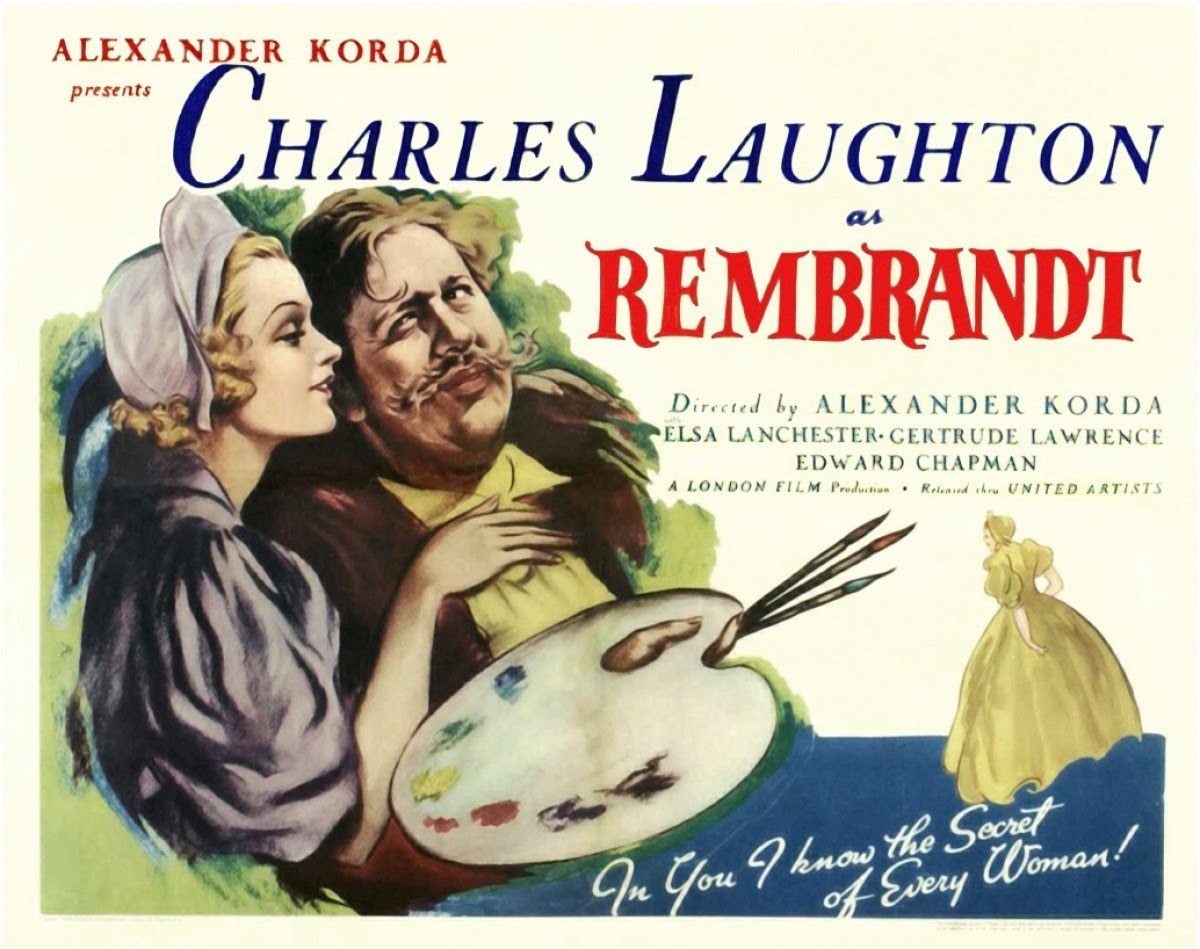
Rembrandt (1936)


Charles Laughton excels as the great artist Rembrandt

Director: Alexander Korda

Cast: Charles Laughton (Rembrandt van Rijn), Gertrude Lawrence (Geertje Dircx), Elsa Lanchester (Hendrickje Stoffels), Edward Chapman (Carel Fabritius), Walter Hudd (Frans Banning Cocq), Roger Livesey (Beggar Saul), John Bryning (Titus van Rijn), Sam Livesey (Auctioneer), Allan Jeayes (Dr Tulip), John Clements (Govaert Flinck), Raymond Hartley (Ludwick), Abraham Sofaer (Dr Menasseh)

There are many artists I really love, but right near the top is Dutch master Rembrandt van Rijn. Rembrandt is remembered as being misunderstood in his own lifetime – which is sort of true. In fact, Rembrandt’s style fell out of favour and he basically went on a rags-to-riches-back-to-rags story not helped by constantly living outside of his means. Rembrandt actually follows the great man’s life pretty faithfully – and it even dances effectively around Rembrandt’s unusual domestic set-up.

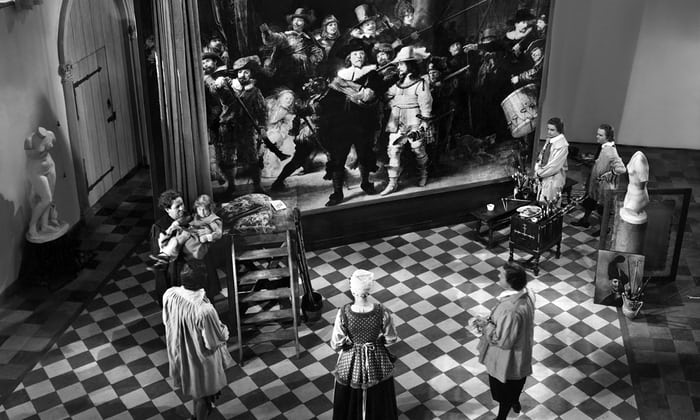
The film begins with the death of the artist’s wife Saskia, and the rejection of The Night Watch by the Amsterdam militia. These events start a slow downward spiral for Rembrandt (Charles Laughton) towards a lack of fashion and an increased poverty. The film covers his consecutive relationships with Geertje Dircx (Gertrude Lawrence) and Hendrickje Stoffels (Elsa Lanchester), before ending shortly before the artist’s death.

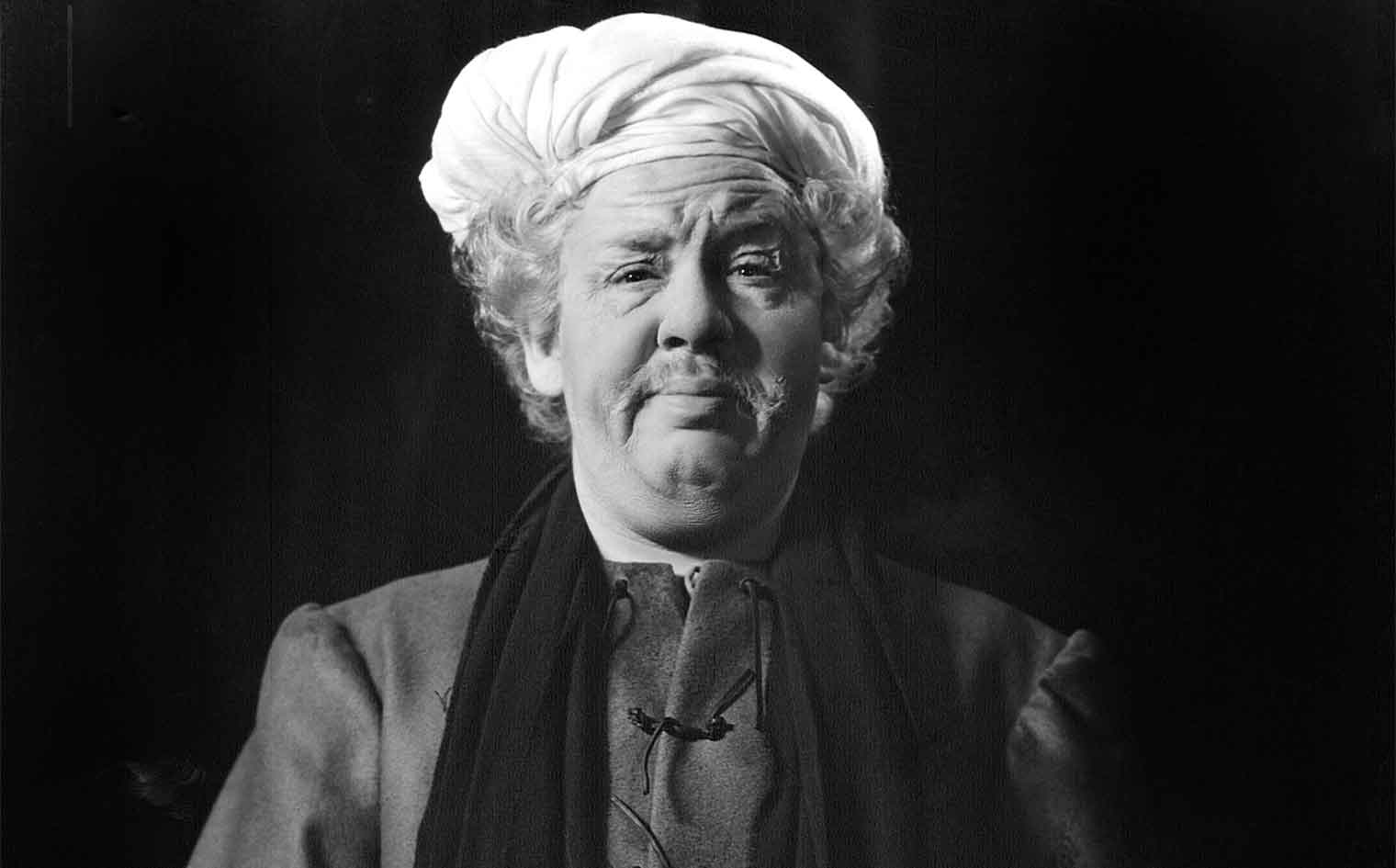
The film is dominated by Laughton’s magnificent performance in the lead role. Laughton can effortlessly bring to life the impression of genius. His Rembrandt is an observant, quick-witted and sharply intelligent man, whose eyes observe everything and records it for future use. Of course, for the look of Rembrandt, Laughton had a hell of a lot to go on – few artists did as many self-portraits as Rembrandt. But what Laughton manages here is to capture the essence of the artist – that sense of wry amusement and a slightly bumptious insolence you get from a Rembrandt self-portrait. 

Laughton also gives a warm humanity as well. In a wonderfully naturalistic performance, his Rembrandt is by turns gentle, amused, slightly naughty, wise – but always feels human. Korda’s film focuses on a part of his life, rather than the whole, which allows us to focus on the painter finding a more unique style and some domestic happiness – but only doing so after losing his wife and professional respect. He’s compelling to watch here, like the painter come to life: you can totally believe him, from when he’s berating the Guild for not understanding The Night Watch, to his befuddled hopelessness with money.

Korda’s film focuses on the personal rather than exploration of art – probably a good thing, since the style and grandeur of the original paintings is nearly impossible to capture in black-and-white academy ratio. This however works a charm, as we get two very contrasting lovers for Rembrandt, demonstrating different sides of his personality. Gertrude Lawrence excels as a shrewish, domineering Geertje Dircx, a woman who seems to take control of Rembrandt and his family after his wife’s Saskia’s death as if she is entitled to the role (interestingly Saskia doesn’t even appear in the film). A few weeks after Saskia’s death, Lawrence’s Geertje settles into the embrace of Rembrandt (who drifts into the relationship) with all the entitlement of an heiress.

By contrast Elsa Lanchaster portrays an earthier, gentler Hendrickje Stoffels, younger and more naïve than either Rembrandt or Geertje. If the first relationship saw Rembrandt as a man having his life organised for him, this second sees him sharing the role of parent. Having said that, while he obviously looks on Hendrickje with a loving fondness – and delights in making her happy and contented – it’s Hendrickje who effectively works out a dodge for the broke Rembrandt to keep trading art, and it’s she who takes runs the business for him. It’s a perfect marriage of personalities.

Although of course marriage is the one thing it can never be. Rembrandt was forbidden from re-marriage due to a complex arrangement in Saskia’s will: and a jilted Geertje quickly moves to have Hendrickje branded a whore. Considering it was filmed in the middle of the Hays Decency code, the film takes quite a modern stance on Rembrandt’s two long standing affairs: it’s clear that we are not meant to sympathise with the hypocritical burgomasters who denounce his love life (“It’s not fair. Why should he get away with it?” one of them moans). 

The narrative parallels this pair of romances with the world of art and commerce. Noticeably Rembrandt often seems more comfortable with those of a similar class to himself: he chats amiably with a beggar he hires as a model (a perfect little cameo from Roger Livesey), and similarly flirts with a woman from his home town at a bar with a confidence he never seems to manage with either of his other love interests. The film pivots around this return to Rembrandt’s family home, with the film suggesting the artist used this time to reassess his life and aims – before returning refreshed to shake up both his art and home life. Korda’s film argues that Rembrandt’s own rejections and losses gave him a far greater understanding and appreciation for his craft – and its power – than he otherwise would have had.

Korda films all this with a lushness, with the sets, costumes and visuals constantly reminiscent of the styles of Rembrandt’s own work. Just as Laughton plays Rembrandt as a very grounded, humane character, so the film avoids sweeping melodrama to portray a very low-key and gentle story, that feels sweetly lacking in high-blown artistic intensity. It’s perhaps best summed up by the closing scene, where an ageing Rembrandt – taken for an old nobody by some young bucks in an inn – smiles serenely, enjoying the company and quoting Scripture at them with gentle satisfaction. He’s the contented, humane master – the man who seemed to capture the age and changed painting for ever. And then he borrows money off a friend (who asks him to please spend it on food) and heads straight to the paint shop. A slave to an obsession, but a man who still inspired love and affection – what could be more human than that?

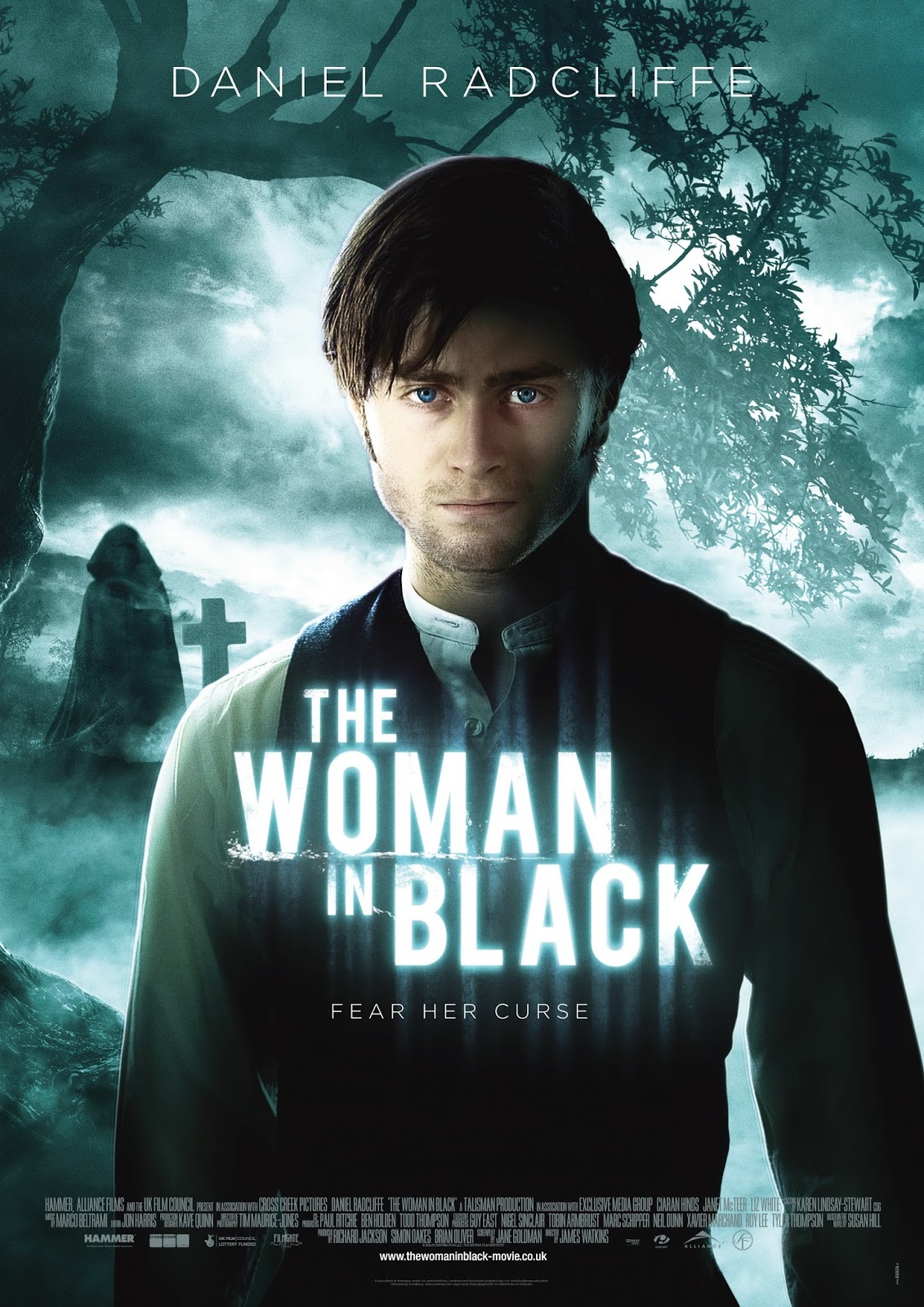
The Woman in Black (2012)


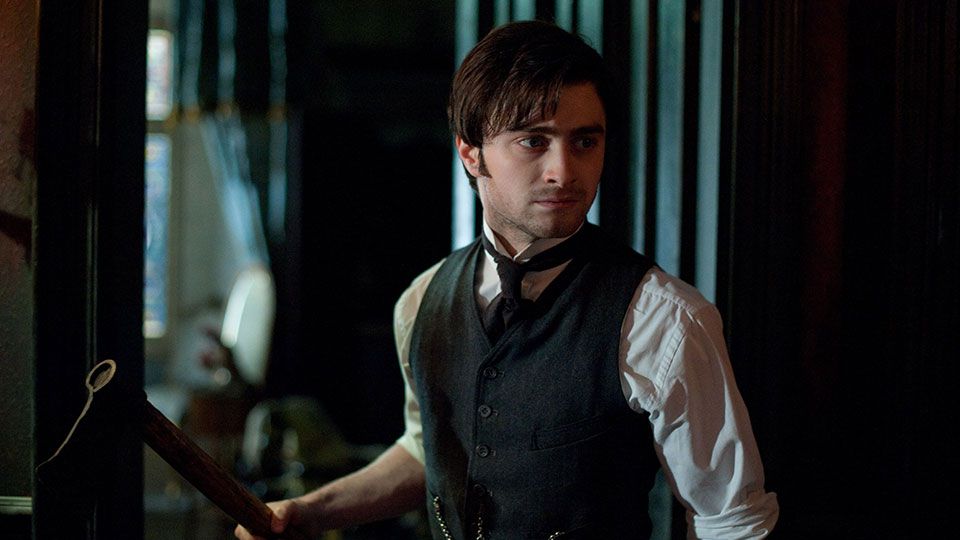
Daniel Radcliffe sneaks round a haunted house in the creepy but not haunting The Woman in Black

Director: James Watkins

Cast: Daniel Radcliffe (Arthur Kipps), Ciarán Hinds (Sam Daily), Janet McTeer (Elizabeth Daily), Liz White (Jennet Humfyre), Roger Allam (Mr Bentley), Tim McMullan (Jerome), Jessica Raine (Joseph’s nanny), Shaun Dooley (Fisher), Mary Stockley (Mrs Fisher), David Burke (PC Collins)

Susan Hill’s 1983 novel is a favourite modern ghost story – not surprising then, after a stage adaptation has been packing them in in the West End since 1987, that it hit cinema screens. Arthur Kipps (Daniel Radcliffe) is a widowed solicitor whose wife died giving birth to their son (now four years old). He is sent to an abandoned house in the countryside to review documents before the property is sold. The villagers nearby are hostile and wish him to leave. At the house he hears strange noises and sees a woman in black starring at him. Gradually the horrific nature of the house, and the curse on it, becomes clear.

The Woman in Blackis an effective and atmospheric scare-a-thon. It feels very creepy, it looks pretty good, it makes very good use of the sort of inherent terrifying nastiness you find in porcelain dolls, music boxes, creaking chairs, chintzy wall-paper and the wind whistling through the trees. It carries a lovely air of foreboding, and the shots (where we get them) of the woman in black herself carry a great feeling of menace and maliciousness. 

What is just as good though is its slim running time, because, effective as its jumps are, they are all structured in the same way. We get the haunted house late at night. We get Daniel Radcliffe walking round it slowly, breathing heavily, the camera carefully following him. We get slow camera movements around rooms until they begin to rest on an object or something appears in the corner of a frame. And then we get a crash of music and something flashes in front of the camera briefly. It’s a standard “boo” haunted house technique. Sure it’s very well pulled off indeed, and works great when it’s happening, but it’s a basic trick, using a sudden noise and distracting movement. 

Its good craftsmanship to make the same surprise (basically) constantly startling – but it’s like being on a rollercoaster. You can see each dip coming time and time again. You know exactly what’s going to happen, that you going to be plummeted down. And then when it happens you still have the adrenaline, driving your fear. But will you be scared after the rollercoaster has finished? Nope. 

That’s where the film’s sort of horror fails. There is nothing really lingering about this. Even when watching it late at night (as I did) it didn’t leave me unsettled five minutes after it finished. Effective horror films – The Shining – leave us with images and ideas that haunt us for years to come. This one barely lasts seconds. Compare it too, say, Blink, the classic Doctor Who episode. This comes up distant second-best. That works because it has a simple but brilliant idea (statues move!) and it has a brilliantly simple-but-very-hard-to-do way to avoid getting caught (don’t blink!). This just has things jump out at you. All the time.

This film is twice as long but has half the scares and dread of that. But all the film-makers can really think to do with this idea of a child-killing ghost is turn it into a “boo” monster. Charles Dickens’ The Signalman uses a premonition ghost like this to ominous effect – the ghost appears, that’s it. That’s all the haunting you need. Do you need the ghost moving around a house jumping out at Radcliffe? Nope. You start to feel the film-makers couldn’t think how to really extend this idea to fill a film (even one as short as 90 minutes), so needed to pad it out with no less than two extended sequences of Radcliffe creeping round a haunted house, sweating.

In the lead Daniel Radcliffe does his best but, to my eyes, seems hopelessly miscast. For starters he is manifestly far too young to be playing the father of a four-year-old child. Secondly, Arthur Kipps’ emotional trauma and depression seem to be just out of Radcliffe’s range – I’m not sure that Radcliffe is quite the actor I think of for world-weary misery. Now he does a decent job, but he neither looks nor feels quite right for the part. 

he Woman in Black is a B-movie done rather well, but a B-movie and nothing more. It exists to spook you and to make you jump. But, if it aspires to anything else, it never achieves it. As soon as it is finished you’ll never feel a need to see it again – and nothing from it will stick with you even an hour later. It’s a good atmosphere piece, but that’s really all it is. It’s as far from giving you a sleepless night as it could get.

A Day in the Death of Joe Egg (1971)

Janet Suzman and Alan Bates balance the pressure of bringing up a paralysed daughter in A Day in the Death of Joe Egg

Director: Peter Medak

Cast: Alan Bates (Bri), Janet Suzman (Shelia), Peter Bowles (Freddie), Shelia Gish (Pam), Joan Hickson (Grace), Elizabeth Robillard (Jo), Murray Melvyn (Doctor), Constance Chapman (Moonrocket lady)

The playwright Peter Nichols’ daughter Abigail was born in 1960, suffering from severe physical and mental disabilities, requiring 24-hour care from her parents. Nichols transformed the experience into a play about two parents who struggle to care for their daughter, and spin out little fantasy conversations with their child, indulging in flights of fancy even while her father wonders if it is even worth carrying on with looking after a child who will never experience any improvement or independent life.

Alan Bates plays the husband Bri, a put-upon teacher at a boys’ school, prone to flights of comic fantasy. Bri feels increasingly frustrated about the unacknowledged strain their handicapped daughter Jo is placing on his marriage to Shelia (Janet Suzman), whose focus is almost exclusively on looking after their daughter. The couple use often surreal black humour to cope with the constant pressure of caring for the child.

The excellent Indicator blu-ray contains a fascinating interview with Peter Nichols, who clearly didn’t care for the film. He found it off-balance, too emotionally overwrought, too realist and essentially too depressing. He’s probably right. The play is a finely balanced mixture of near stand-up comedy and marital grief. Bri’s comic moments are vaudeville fantasy sequences, with funny accents and larger-than-life characters pulled together. This toying with the fourth-wall just can’t be translated in to cinema here, instead the film downplays the dark humour and humanity of the piece, and instead makes it a rather heavy-handed and glum watch.

Bates still has many of the essentially comic funny voices and character-based routines – there are sequences where he acts out the roles of various doctors and priests who have consulted on Jo in the past. But his performance is just a little too eccentric, a little too out-there, a little too twitchy – frankly it makes him hard to engage and empathise with. Maybe it’s the changing times that haven’t helped, but Bri’s constant whining that his sex life has been destroyed just doesn’t sound right.

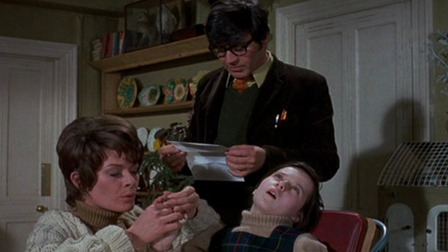
Of course, Nichols is using this whining to touch upon the damage done by the pressure of constantly caring for a daughter who will never show any signs of improvement and never be capable of communicating with her parents. Nichols knows of what he speaks: he and his wife eventually hospitalised their daughter (and had two other children) – and he believes the parents should have done the same in his play. By making the entire focus of their life a child who is, essentially, an object (twice at opposite ends of the film she is pushed into a room slumped over a wheelchair), it’s clear the couple are causing no end of damage to their emotional lives. Maybe it’s just heavier going as well because the film features a real child – while the play used theatrical invention to represent the child.

The film slightly unbalances itself by moving away from black humour to emotional impact. Maybe part of this is due to Janet Suzman’s astonishingly strong performance as Shelia, a part she invests with great layers of emotion and hope, constantly refusing to give up hope that one day Jo may respond. Suzman has one extremely emotional speech, recounting a moment where Jo pushed over some play blocks, which she delivers with a teary, earnest, simplicity to the camera which is profoundly moving. It probably makes Bates’ performance seem a little more irritating than it actually is, because she is strong.

And that is a problem with the film, because in order for it to work you need to bond with both parents. You need to share and be inspired by Shelia’s hope, while at the same time see that Bri’s more realistic perceptive, and his dark longings to end Jo’s life of suffering, are in many ways just as legitimate. The film is all about this issue of euthanasia – conversations dance around it constantly – and it largely manages not to fall either side of the issue. There are points on both sides – and the real issue is should the parents find some other way to get support and help with caring for their daughter? Instead you don’t quite bond with both parents the way you need too. You feel Bri is a bit too sharp, and that Shelia is a bit too unrealistic in what she believes in.

The second half of the film introduces most of the secondary characters, particular Freddie and Pam (expertly played by Freddie Bowles and Shelia Gish), giving us a fresh perspective on the events. Freddie is bluntly concerned in a jolly way with doing what he can to help and urges the couple to consider hospitalisation. Pam, however, behaves with the awkward embarrassment many of us are ashamed to admit we feel when confronted with the seriously paralysed. We also get to see more of Joan Hickson (the only cast member from the original stage production) as Bri’s brassy and difficult mother, whose attempts to help largely only serve to increase tensions.

It slowly becomes clear though that this is a film about the collapse of a marriage under pressure, even more than about caring for a disabled child. But shorn of much of its humour – the fantasy sequences don’t really work, because they feel a little too heightened and overplayed – the film turns the play into something really quite bleak. It’s frankly a little too depressing and overbearing to really enjoy. It has plenty of good performances, but doesn’t really open up the play and instead turns it into an intense, rather overbearing chamber piece. A film that loses its balance from the stage version, and instead becomes something quite glum, in which Bates’ Bri doesn’t really win our sympathy as you feel he should do. It’s a tougher watch than Nichols intended – surely why he wasn’t really happy with it.

Ten Rillington Place (1971)


Richard Attenborough brings the killer John Reginald Christie to life in Ten Rillington Place

Director: Richard Fleischer

Cast: Richard Attenborough (John Reginald Christie), Judy Geeson (Beryl Evans), John Hurt (Timothy Evans), Pat Heywood (Ethel Christie), Isabel Black (Alice), Robert Hardy (Malcolm Morris), Geoffrey Chater (Christmas Humphreys), André Morell (Judge Lewis), Tenniel Evans (Detective Sergeant)

Films about real-life serial killers have that eternal problem: how far can they go in giving us answers? How much can we ever really understand why a killer does what they do? Is there any way of really putting ourselves in their shoes – and do we really want to? Ten Rillington Place avoids a lot of these issues by making no attempt to give understanding to Christie at all, simply presenting his actions, and by putting the focus on the tragic death of Timothy Evans.

In a miscarriage of justice Timothy Evans (John Hurt) was tried and executed for the murder of his wife Beryl (Judy Geeson) and their baby daughter in 1950. The real murderer? The man who lived downstairs, John Christie (Richard Attenborough), a socially maladjusted, softly spoken man who confessed to killing at least eight people three years later at his trial for murdering his wife. Christie had an uncanny gift for gaining the confidence of desperate women, would offer to perform illegal (and free) medical procedures (such as abortions), during the course of which he would gas them with carbon monoxide, strangle them, possibly carry out acts of necrophilia and then bury them in his garden or in the walls of his house. Evans never suspects until far too late that Christie is the killer and, scared that he will be accused, follows Christie’s advice to the letter – advice that will only make him look all the more guilty.

Richard Fleischer’s chillingly documentary-style film-making goes into forensic detail on the events of the murder of Beryl Evans and her daughter, and the wrongful conviction of Timothy Evans for the crime – largely on the basis of Christie’s testimony at Evans’ trial. Fleischer shoots the film with a deeply disciplined restraint, a calm documentary style that avoids any sensation lingering on the crimes, but still carries great emotional impact.

The film covers the period from Evans moving into the flat above Christie, Christie’s murder of Beryl, Evans panicked flight to Wales on Christie’s advice, his series of confessions to the police, his trial and execution. Book ending the film we get a scene with Christie murdering his neighbour Muriel Eady – a terrifying demonstration of Christie’s murder rituals, as well as an indicator of how easily he could gain the trust of his victims. What it strikingly doesn’t try to give us is any psychological explanation for why Christie did what he did. There are no revealing flashbanks, no cod-psychology. Instead we just see a killer, kill people. We might get an idea of what he gets out of it, but no explanation of what turned him to it. The film is all the more powerful for it. 

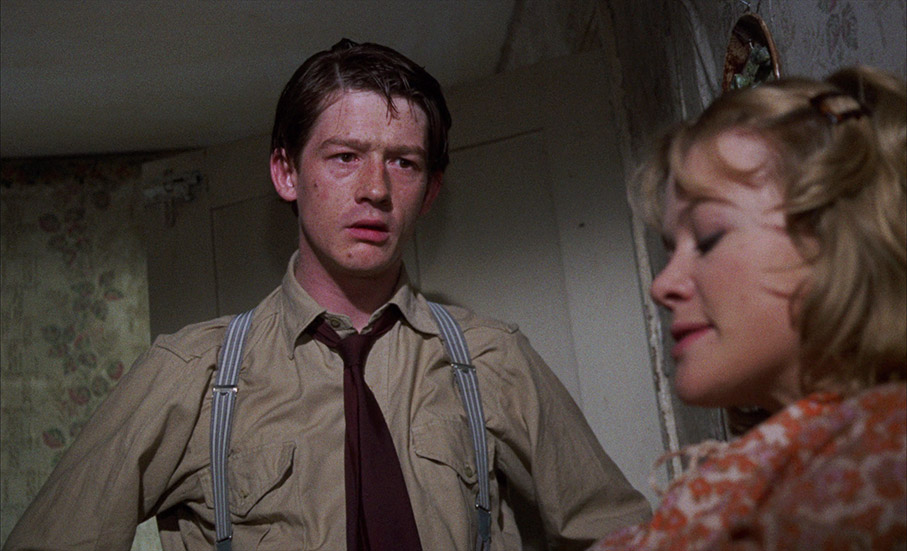
Instead the focus is on the victims, and the Evans story is heart-rending, partly because of Fleischer’s calm, sensitive direction, but mainly due to John Hurt’s astonishingly powerful performance. The film, and Hurt, don’t shy away from the qualities that made Evans seem like such a natural fit for a murderer at his trial. He’s a compulsive liar. He brags. He fights and argues with a fury. He’s not really that sympathetic a guy at first. But he’s certainly innocent. Hurt brilliantly demonstrates his vulnerability and simplicity – Evans was illiterate and almost unbelievably trusting, a liar who fell victim to a superb, manipulative liar.

His shock and slowly growing realisation of the nightmare he is in are incredibly moving, as is his powerful grief when he finds his wife killed – and his trusting innocence when he turns (unknowingly) straight to his wife’s killer for advice on what to do. Every action Evans takes in the film makes you want to jump in and urge him to do something – anything – different.  Unsympathetic as he is at the start, by the conclusion you almost can’t bear to watch him incriminate himself with each action. Hurt is sublime, with his weak manner, his confusion, his touching faith that it will all be okay and his feeble mantra of “Christie Done It” – it’s one of the greatest performances in his career.

Judy Geeson gives a marvellously emotional performance as Beryl Evans. Geeson has the perfect look for the part, and she completely embodies a woman who has found herself in a difficult situation, in love with a weak man. You understand completely how she is drawn towards Christie as a confidant, and why she would feel the desperation to abort a child she and Evans could never afford. Her eventual murder is horrifying in its struggle and desperation, the growing horrible realisation in her eyes that she is in mortal danger – this is a particularly strong sequence, difficult to watch for the viewer, as we know what a terrible series of decisions she is making. 

Fleischer’s film was motivated by a very firm anti-death sentence stance. The scene of Evans’ execution is shocking in its brutal suddenness. Shot with a handheld camera and in a single take (in near silence other than Hurt’s deep breathing), the execution is over and done with in less than a minute – from Evans sitting in a room, to the reveal of the executioner’s noose next door and the terrible drop (with a jump cut straight to Christie stretching his back). It’s a brilliantly low-key, but resoundingly powerful scene that sticks with you for all time.

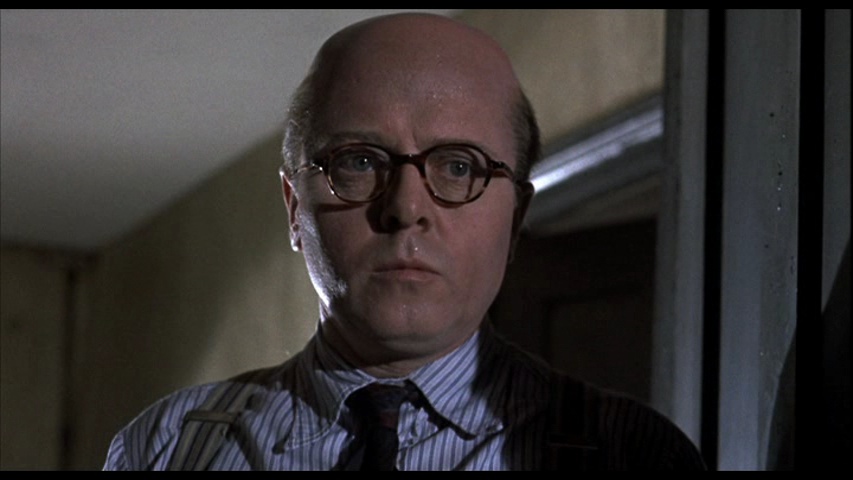
All this way and we’ve not mentioned Richard Attenborough’s transformative performance as Christie. Attenborough presents the softly spoken monster as a bland, empty non-entity, a man who has almost nothing to make him stand out from the crowd. He never makes the part into a great monster or any sort of domineering force of nature. In partnership with Fleischer, he shows Christie was a total blank canvas of a man, “evil” only in the most mundane and uninteresting way. He’s so mild-mannered, you can see why so many women trusted him. Attenborough is chillingly blank throughout, in a deeply unsettling performance of crushing mundanity. He’s brilliant in this film – Attenborough was completely committed to its anti-death penalty stance – and he avoids the temptation of trying to explain or make sense of Christie. 

That’s the trick of the film – Christie is not a special man. He performs dreadful acts, but he is a nothing of a person, devoid of motive (the lack of motive is something those at Evans’ trial use most to argue against Christie’s possible guilt), a totally forgettable man who committed crimes memorable only for their cruelty. Fleischer, and Clive Exton’s careful, thoroughly researched script, is simply superb in presenting Christie with all his filthy blankness, Rillington Place in all its crushed lack of colour, and the murders in un-flashy documentary sadness. Ten Rillington Place is an engrossing true-life story that turns a miscarriage of justice into a Greek tragedy. It’s a much overlooked classic.

Belle (2013)


Gugu Mbatha-Raw is the mixed race daughter making waves in society in Amma Asante’s underwhelming pseudo-historical film Belle

Director: Amma Asante

Cast: Gugu Mbatha-Raw (Dido Elizabeth Belle), Tom Wilkinson (William Murray, Lord Mansfield), Sam Reid (John Davinier), Emily Watson (Lady Elizabeth Mansfield), Sarah Gadon (Lady Elizabeth Murray), Miranda Richardson (Lady Ashford), Penelope Wilton (Lady Mary Murray), Tom Felton (James Ashford), James Norton (Oliver Ashford), Matthew Goode (Captain Sir John Lindsay), Alex Jennings (Lord Ashford)

The British film industry produces a constant stream of costume dramas, many covering alarmingly similar ground on the aristocracy or wealthy of the Georgian period onwards. It’s to be commended then that Belle takes a similar plot, but from a radically different direction. Here, a famous real painting of a white and mixed-race pair of ladies becomes the jumping off point for a drama about an illegitimate mixed-race daughter of a wealthy family.

Dido Elizabeth Belle (Gugu Mbatha-Raw) is the daughter of naval captain and a slave in the West Indies. After his death, she his raised by her uncle William Murray (Tom Wilkinson), Earl of Mansfield, and his wife (Emily Watson) to raise her as their own alongside their niece Elizabeth (Sarah Gadron). Belle is treated as an equal among the family, but is not allowed to dine with guests or move freely in society. However, Belle has inherited a fortune from her father – unlike Elizabeth – and quickly finds herself a source of interest from the younger sons of the nobility. Meanwhile Lord Mansfield, the Chief Justice, is asked to rule on the slave ship Zorg case (where slavers threw their slaves overboard in a storm), a case that brings passionate abolitionist John Davinier (Sam Reid) into Belle’s life and makes her start to re-evaluate society’s attitude to her.

Belle is a formulaic costume drama, given an imaginative twist by placing a black woman at its heart. It explores issues around the imbalanced attitudes of British society at the time (and since), and the hypocrisy and racism that bubbles under the surface of the British gentry. Belle is rejected by all and sundry – until knowledge of her wealth becomes known, at which point many of these objections are choked back to secure her money. The film gets much mileage out of Belle slowly comparing her position first to the black servants around her and then to the slaves who lost their lives on the Zorg.

However, what undermines Belle is that it is a work of fiction – and it feels like it’s hiding it. What we do know about the real Belle (which isn’t much) doesn’t relate at all to what we see in the film. She wasn’t an heiress. She didn’t fall in love with an abolitionist lawyer – Davinier was not the aspiring son of a cleric, but a French steward. Elizabeth probably wasn’t a penniless relative. Mansfield’s credentials as a proto-Abolitionist and reformer were never in doubt – by the time of the Zorg case he had already passed a ruling 10 years earlier that there was no basis for slavery in British law. Belle actually lived in Mansfield’s house until his death as effectively a housekeeper and semi-secretary (the very fate she rejects in the film). The film’s lack of interest in historical fact even affects small details – at one point James Norton’s pleasant but empty Oliver boasts his father has purchased him a commission as a Captain in the Navy, virtually the only institution in Georgian England which promoted solely on merit! (This annoyed me a lot more than it should have.) 

Belle is not a true story by a long stretch – but that doesn’t stop it proclaiming a “what happened next” series of captions at the end. It could have got away with this in a way other non-historical films have, if its story itself was more compelling. But instead Belle offers a merely serviceable story, offering a unique prospective on the aristocracy but largely using it to tell a fairly conventional “love across the social divide” story. Honestly, for large chunks of the film you could replace Belle with any slightly shameful second daughter, and the story would remain largely the same.

Which is a shame because it feels like it wastes something really interesting – and also wastes Mbatha-Raw’s star-making turn. She is excellent – sweet and naïve, but growing in confidence, determination and wisdom, gaining the strength of will to shape her own destiny. The film introduces interesting themes as Belle begins to question the attitudes of her family – do they accept her because they must? Would they be as open to a black stranger? – but these themes don’t quite coalesce into something really solid and coherent. Instead they are trotted out, but we don’t really feel we learn anything.

Similarly, the case of the slave ship Zorg seems rather loosely defined. We don’t get a real sense of public pressure or interest in the case, or really understand the essentials of what the case involved. Instead, it’s used primarily as a tool to question the attitudes of Lord Mansfield, and whether he has the ability to expand his obvious love for Belle into a wider statement of man’s equality. Tom Wilkinson is very good as Mansfield – prickly, but essentially decent and caring under a gruff surface – even if the role can hardly be a challenge for him. But the film doesn’t really manage to make a really compelling argument about what it is trying to say, other than slavery is of course bad.

Elsewhere, the film takes simple shots and shoots fish in the barrel. The Ashton family are introduced to stand in for British society. Lord Ashton is brisk and businesslike and interested only in maintaining the status quo. Lady Ashton – played by Miranda Richardson at her most coldly standoffish – only cares about securing wealth for sons. Of those sons, James Norton gets the most interesting part as the decent but shallow Oliver. Poor Tom Felton though: his character might as well be Draco Malfoy in period costume, all but spitting out ‘Mudblood’ at Belle. None of these performances offer anything different from what we’ve seen before.

That’s part of the problem with Belle – it wastes an interesting idea by slowly turning it into a more conventional story, primarily focused on who is Belle going to marry, rather than the implications of a black woman in a racist society, or the hypocrisy of that society being only willing to accept her when she has money. Despite some good acting – Penelope Wilton and Emily Watson also give tender performances – and a star-turn in the lead, it’s not really that interesting a film. You keep expecting it to burst into life, but it never does: for such a film offering a fresh perspective on history, you don’t feel like you’ve learned anything new about Georgian society at the end of it.

My Week with Marilyn (2011)


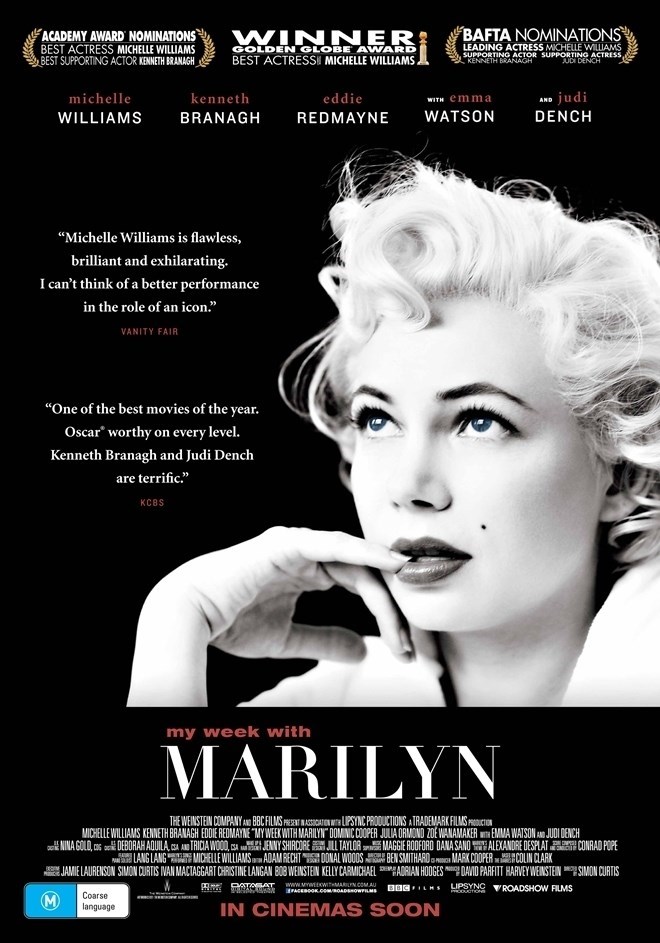
Michelle Williams navigates the world of fame as Marilyn Monroe, escorted by Eddie Redmayne

Director: Simon Curtis

Cast: Michelle Williams (Marilyn Monroe), Eddie Redmayne (Colin Clark), Kenneth Branagh (Laurence Olivier), Judi Dench (Sybil Thorndike), Emma Watson (Lucy), Dominic Cooper (Milton H. Greene), Derek Jacobi (Owen Morshead), Dougray Scott (Arthur Miller), Toby Jones (Arthur P Jacobs), Julia Ormond (Vivien Leigh), Zoë Wanamaker (Paula Strasberg), Michael Kitchen (Hugh Perceval), Philip Jackson (Roger Smith), Simon Russell Beale (Cotes-Preedy), Robert Portal (David Orton), Jim Carter (Barry), Richard Clifford (Richard Wattis), Gerard Horan (Trevor)

In 1956 Laurence Olivier was the greatest actor in the world; Marilyn Monroe was the biggest star (and sex-symbol) in the world. Surely when they came together to make a movie, it would be cinema gold. It wasn’t. Olivier directed and starred with Monroe in The Prince and the Showgirl, an almost impossibly slight puff piece, partly assembled (so rumour goes) so Olivier could sleep with Monroe. But it turned out Monroe’s fragile psyche and Stanislavkian approach to acting was incompatible with Olivier’s well-honed craft. The two did not get on.

Simon Curtis’ gentle, at times charming, but basically very lightweight film follows the making of the film through the eyes of Colin Clark. Clark, son of the famous art critic Kenneth Clark, was a naïve, romantic young man keen for a career in the movies through his father’s contacts. Hired by Olivier’s production company, Clark is tasked to take care of Monroe throughout the film. He becomes increasingly fascinated and infatuated with her as they spend more and more time together.

The film is based on Clark’s diaries, and he is played by Eddie Redmayne at his most fresh-faced. The problem with Clark is that, to be honest, rather than a young man on a journey of self-discovery, he comes across a little like a social-climbing creep and borderline stalker. Clark recounts a short-lived friendship that obviously had huge importance to him – but the film doesn’t want to deal with the fact it probably meant virtually nothing to Monroe, beyond some company during a lonely time. 

It’s not helped by the fact Clark comes across slightly like a pushy groupie, the self-proclaimed guardian of Monroe’s needs – qualifications barely justified by his actions. The film wants us to think he got closer to the magic of celebrity than anyone, but he feels like a stranger with his nose a little closer to the portcullis. Quite frankly, Colin is the least interesting character in his own story, and Redmayne fails to really give him much depth for us to engage with. Instead he remains a slightly unsettling inverted snob, manipulated by Monroe. The film, you feel, just doesn’t get this. At the end someone tells Colin he is “standing taller” than when he first met him (the implication being the relationship has made a man of him – as if spending a bit of downtime with a celebrity was the only route to emotional maturity). But rather than being part of a sweet star-crossed romance, Colin feels like someone creepily attaching himself to someone vulnerable. 

However, Michelle Williams is very good as Marilyn, capturing a real sense of her emptiness and insecurity. She perfectly captures Monroe’s physicality and vocal mannerisms. She is very good at capturing Monroe’s sense of permanent performance, of her glamour, kindness and innocence, mixed with her maddening vulnerability and (inadvertent?) selfishness. It’s a fine performance – better than the film deserves. 

Because the film is afraid of remotely criticising Monroe at all – or really engaging with the deep psychological reasons for her depression, or addressing the possibility that part of her appeal was her slight blankness that any desires could be projected onto. Instead, the film suggests, she’s sad because men just use her. Apart from Colin of course. His kissing, skinny-dipping and sharing a bed with her are entirely unmotivated by any lustful yearnings.

The film is in love with Monroe, presenting her just as Colin saw her – perfection. In fact, just as Dougray Scott’s put-upon Arthur Miller says, she was probably exhausting and all-consuming. She certainly sucks the naïve Colin into her orbit, in a way he (or the film) hardly notices or understands. It wants us to think of this as a romance – in fact, Monroe’s fragility created a neediness that meant she didn’t feel she needed to consider other people, so overwhelmingly concerned was she with her own brittleness. The film essentially believes she was a star, so is basically allowed to do what she wants. The fact that she did so with an air of gentle vulnerability means the film gives everything she does a pass.

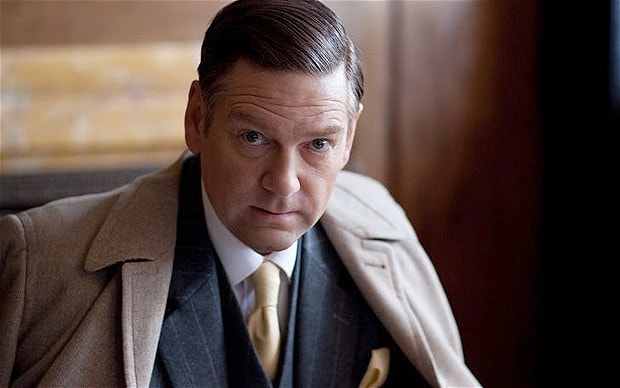
So it’s rather hard not to sympathise with Olivier’s growing frustration with Monroe’s unreliability. Kenneth Branagh triumphs as Olivier, surely the role he was born to play: very funny, but also with a patrician charm and all-consuming arrogance. Branagh taps into Olivier’s vulnerability, his sense that he may not be able to communicate his acting strength into movie stardom, that he is yesterday’s man. For all her difficulty, Monroe had that “star quality” that makes her the centre of your attention. I’d argue Olivier almost certainly had the same – but the film is so in love with Monroe, it needs to slightly bring Olivier down. Branagh, however, is so good that he constantly punctures the film’s attempt to force Olivier into a less sympathetic role than the one it indulges Monroe with.

My Week with Marilynis far from terrible – it’s just a rather empty film. It has a terrific cast with these British star actors all offering fine pen portraits of assorted actors, producers and agents. The film however is slight, and so in love with its fairy-tale elements, it doesn’t notice that Clark’s story is slightly more creepy and certainly a lot more emotionally empty than the film wants it to be. It wants to take us behind the curtain of a 20th-century icon – instead it accidentally shows how impenetrable their screens are, and how easy it is for ordinary people to persuade themselves that the most fleeting of contacts was something special.

The Loneliness of the Long Distance Runner (1962)

The Loneliness of the Long Distance Runner (1962)

Class struggles makes it harder to win the race in this excellent kitchen-sink drama

Director: Tony Richardson

Cast: Tom Courtenay (Colin Smith), Michael Redgrave (Governor), Avis Bunnage (Mrs Smith), Alec McCowen (Brown), James Bolam (Mike), Joe Robinson (Roach), Dervis Ward (Detective), Topsy Jane (Audrey), Julia Foster (Gladys), James Fox (Gunthorpe), John Thaw (Bosworth)

In the 1960s British film made waves when it started to turn away from upper-class, costume-laden dramas, and accents started to be heard that weren’t cut-glass and RP. Few of these films ran (literally) further from this than The Loneliness of the Long Distance Runner.

After the death of his father, Colin Smith (Tom Courtenay), a working-class young man, is drawn into a life of petty crime. Sent to borstal for his re-education, his skill at long-distance running catches the eye of the Governor (Michael Redgrave). The Governor hopes to use Colin to win the five-mile cross-country run in the joint sports challenge day he has arranged with the local private school. But will Colin play ball, or will he stick to his own principles of never playing “their” game?

The Loneliness of the Long Distance Runner is in many ways a sort of British Rebel Without a Cause, but without the glamour. Instead, Colin is a council house lad, angry at the world (but not quite clear why) and brought low by the theft of £70. The film showcases Colin as a sort of anti-authority hero, a man who just simply doesn’t want those bastards telling him what to do. He’s not violent or dangerous, he’s more sullen, fed-up and laced with anger and contempt at a world that short-changed his father. 

He finds himself in the confines of borstal, an institution all about rules, regulations and changing people to match what society expects of them: everything Colin hates, and spends the film pushing against. Unlike the anti-hero of Alan Sillitoe’s other seminal kitchen sink drama, Saturday Night and Sunday Morning, Colin isn’t out for what he can get – while that film’s lead was more frustrated the system didn’t work enough for him, Colin wants no system at all. He wants freedom to make his own choices and define his own life – and his rebelling is all about that.

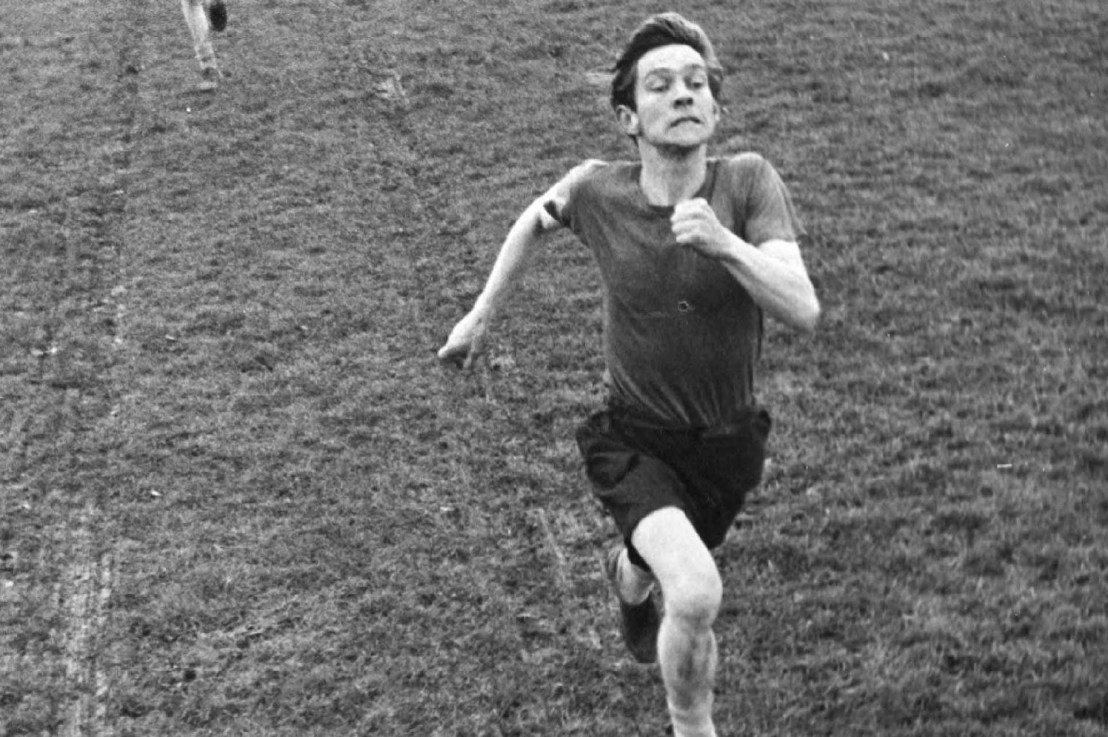
What’s intriguing about Silitoe’s story is Colin has a genuine gift for running. Richardson shoots the sequences of Colin running through the country (granted special permission to go unattended by the Governor) with a lyrical freedom. It’s as if, while running, Colin can put the world aside for a moment, to focus on his own independence. Silitoe gives Colin the means to move up in the world – but to do so he has to fall in with the desires of his “betters”. Therein lies the film’s conundrum.

It helps a great deal that Michael Redgrave is terrific as the Governor – the very picture of hypocritical and self-serving authoritarianism, interested in the boys only so far as they can serve his ends. The slightest misdemeanour and punishment is absolute – with the boy banished back to the bottom rung of the borstal, and ignored by the Governor. 

Richardson shoots the borstal as a confining series of small spaces, a real contrast to the broad, open spaces Colin runs through. The flashback scenes that showcase Colin’s life of petty crime are shot with an intense realism, on-location in Nottingham streets. These scenes are perhaps slightly less engaging and interesting than those at the borstal: their content is pretty similar to other kitchen-sink dramas, and they seem more predictable (for all their engaging direction and acting) than other parts of the film.

The real success of the film is largely due to Tom Courtenay, making his film debut. It would be easy to be annoyed by Colin, an inarticulate and chippy lad who hates the system without actually being engaged enough to understand why. But Courtenay brings the part a tenderness and surly vulnerability, and for all his childish rebellion, his barely expressed feelings of grief and anger at his father’s death strike a real chord. Given a sum of money in compensation, largely frittered away by his mother (Avis Bunnage also excellent) on her fancy man, Colin symbolically burns part of it, then spends the rest taking himself, a friend and two girls to Skegness. Colin’s relationship with Audrey is sweetly, and gently organically grown – and Courtenay brings a real vulnerability to a confession of his own virginity.

Courtenay makes Colin’s principles and issues understandable to us – and relatable – even though it’s tempting to encourage him to play along with the Governor, win the race and seize and opportunity to better himself from that. But what Courtenay makes clear, is that doing that would be a sacrifice Colin’s own sense of self – and that would be a defeat.

The Loneliness of the Long Distance Runner is a terrific kitchen-sink drama, built around an empathetic lead performance, that gives you plenty to think about. It’s shot with a poetic beauty by Richardson and photographer Walter Lassally. Finally, some credit must go to the casting director – not only Courtenay, but James Bolam and (uncredited) John Thaw and James Fox fill out the cast in prominent roles. Keep an eye on those guys: they might have futures ahead of them y’know.