
Category: British Films

The Lady in the Van (2015)

Maggie Smith and Alex Jennings tearing up the neighbourhood

Director: Nicholas Hytner

Cast: Maggie Smith (Miss Shepherd), Alex Jennings (Alan Bennett), Roger Allam (Rufus), Deborah Findley (Pauline), Jim Broadbent (Underwood), Claire Foy (Lois), Frances de la Tour (Ursula Vaughan Williams)
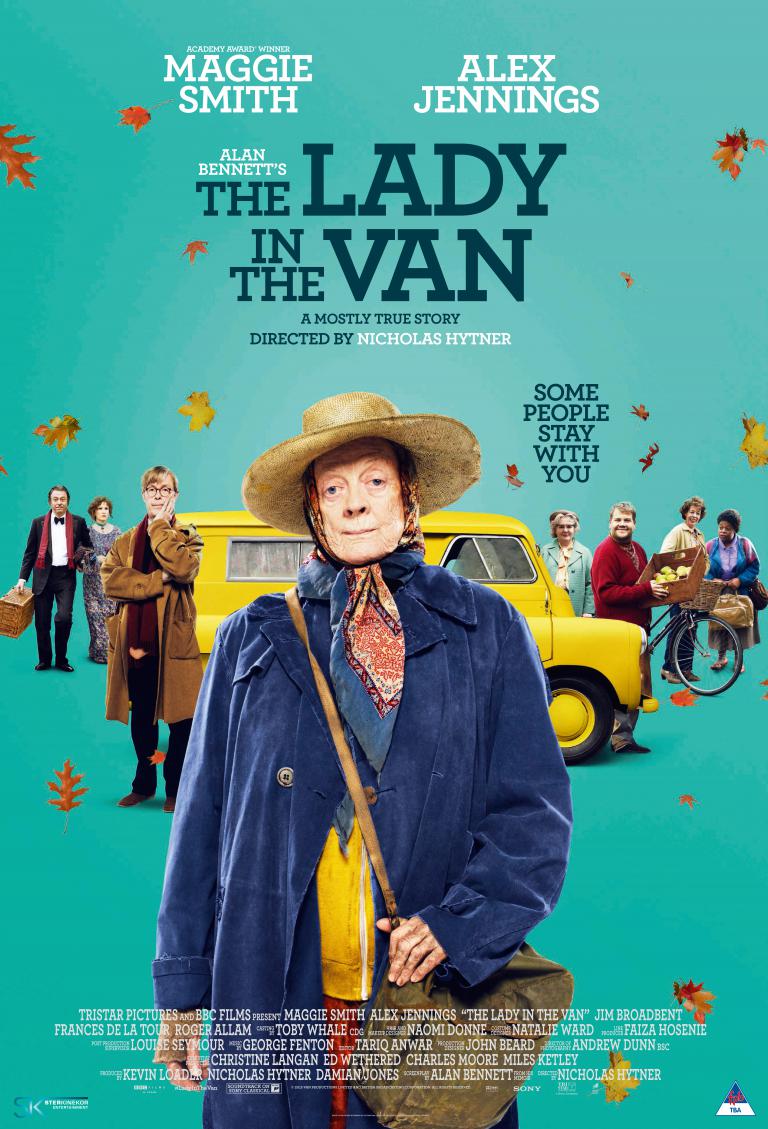
This screen adaptation of Alan Bennett’s play is entertaining and a feast of good acting, even if not a lot actually really happens in it. Nicholas Hytner directs, as he did with the original National Theatre production, with Maggie Smith also reprising her role as the titular bag lady. Interestingly the theatrical device of two versions of Alan Bennett  (as the narrator) is also carried over from the film, with Alex Jennings playing both Bennett and his “Bennett the Author” persona.

Mary Shepherd (Maggie Smith) is an elderly bag lady who lives out of a broken down van which she insists painting a garish bright yellow. Befriended by ‘neighbour’ Alan Bennett (Alex Jennings) she moves the van onto his drive – and stays for 15 years. The film chronicles their unlikely friendship, as well as Bennett’s conflict with himself over his motives (in this and in everything else) and slowly reveals Mrs. Shepherd’s background.

It’s a witty and entertaining meandering film that oddly feels rather like the biggest budget home movie in the world, a sort of National Theatre party with the action taking place in Alan Bennett’s real home, Hytner himself popping up as an un-named character (as well as appearing on screen at the end with the real Bennett) and its dozens of cameos from British theatre, not least cameo appearances from all the cast of The History Boys (a rather distracting eye-spy game when you notice it). This doesn’t make it not fun – its a delight to see so many great actors at work – it just feels a little odd.

What probably keeps this from being impossibly smug is that it is actually a very acute (and self accusatory) examination of the author himself and the nature of writing. Bennett is not afraid at every point to question his motives and to accuse writers of exploiting those around them for material. Of course this is slightly distanced by the device of the “two” Alan Bennett’s, but this is pretty much essential to dramatise a conversation a man has with himself without using voiceover. Alex Jennings is, by the way, terrific in both roles – a wonderful mimic, but also really understands the psychology of the part and makes the contrasts between the two Bennett’s immediately clear.

Maggie Smith though is the star here and she is a shining one. She brings not only her usual wit and comic timing to the part,but she also is able to demonstrate with a few beats, or a small aside, years of pain and loneliness. She makes a woman who is basically quite unpleasant and difficult, into someone you care deeply about. A late sequence of her playing the piano – music being something she has avoided for years – is deeply moving because of the simplicity and genuine feeling she plays the moment with.

Hytner directs with a smooth unfussiness and a great deal of polish – I’ve always thought he is a natural at film directing, and he resists the temptation for visual flashiness. It goes without saying that he is a superb actors director. The final act of this film however doesn’t quite click into place – the comment on giving Miss Shepherd “the ending she would have wanted” doesn’t quite work and the final conversion with a decreased Miss Shepherd a scene too far. It’s an anecdote rather than a story – and a good anecdote well told – but not something I can imagine wanting or needing to see again.
Trainspotting (1996)

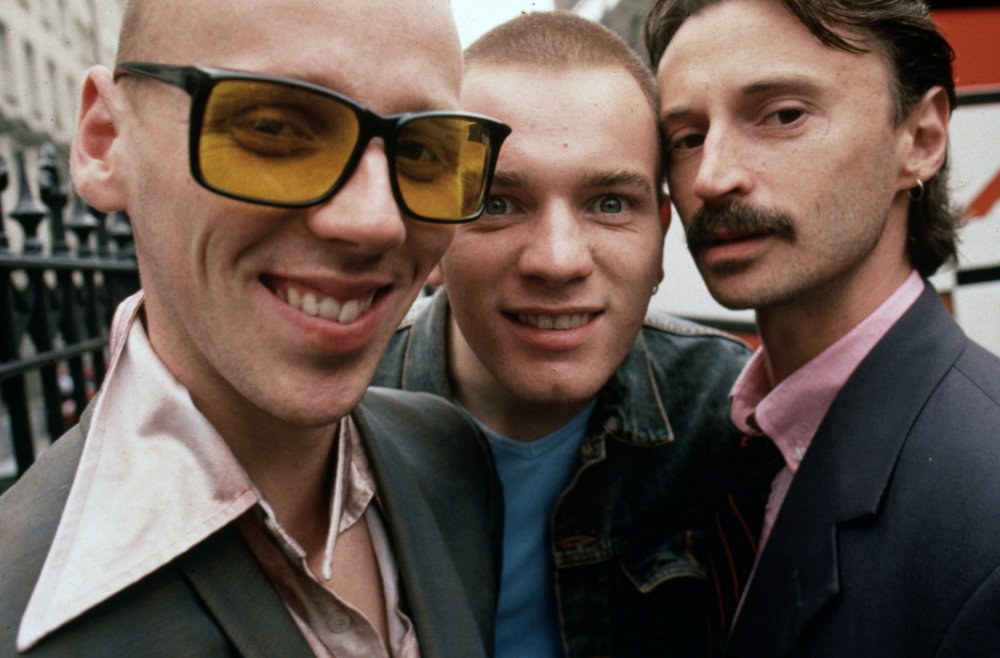
Another happy day in Edinburgh… Ewen Bremner, Ewan McGregor and Robert Carlyle define their careers in the mid-1990s phenomenen

Director: Danny Boyle

Cast: Ewan McGregor (Renton), Ewen Bremner (Spud), Jonny Lee Miller (Sick Boy), Robert Carlyle (Begbie), Kevin McKidd (Tommy), Kelly Macdonald (Diane), Peter Mullan (Mother Superior), Eileen Nicholas (Mrs. Renton), James Cosmo (Mr. Renton), Shirley Henderson (Gail Houston), Stuart McQuarrie (Gav), Irvine Welsh (Mikey)

Surprise, surprise the Drug’s Don’t Work. They just make you worse. Honestly, watching Trainspotting you would have to be a Grade A moron or wilfully missing the point to ever imagine that this film could, in any way what-so-ever, be endorsing the life of heroin addiction. The unbalanced, unreliable, sickly-looking, soul crushingly blank-eyed losers in this film are no-ones idea of an aspiration. The fate of Tommy alone, starting the film as a health freak and ending it as a smacked out, paper thin, wasting AIDS victim could only encourage the truly unbalanced to take up drugs.

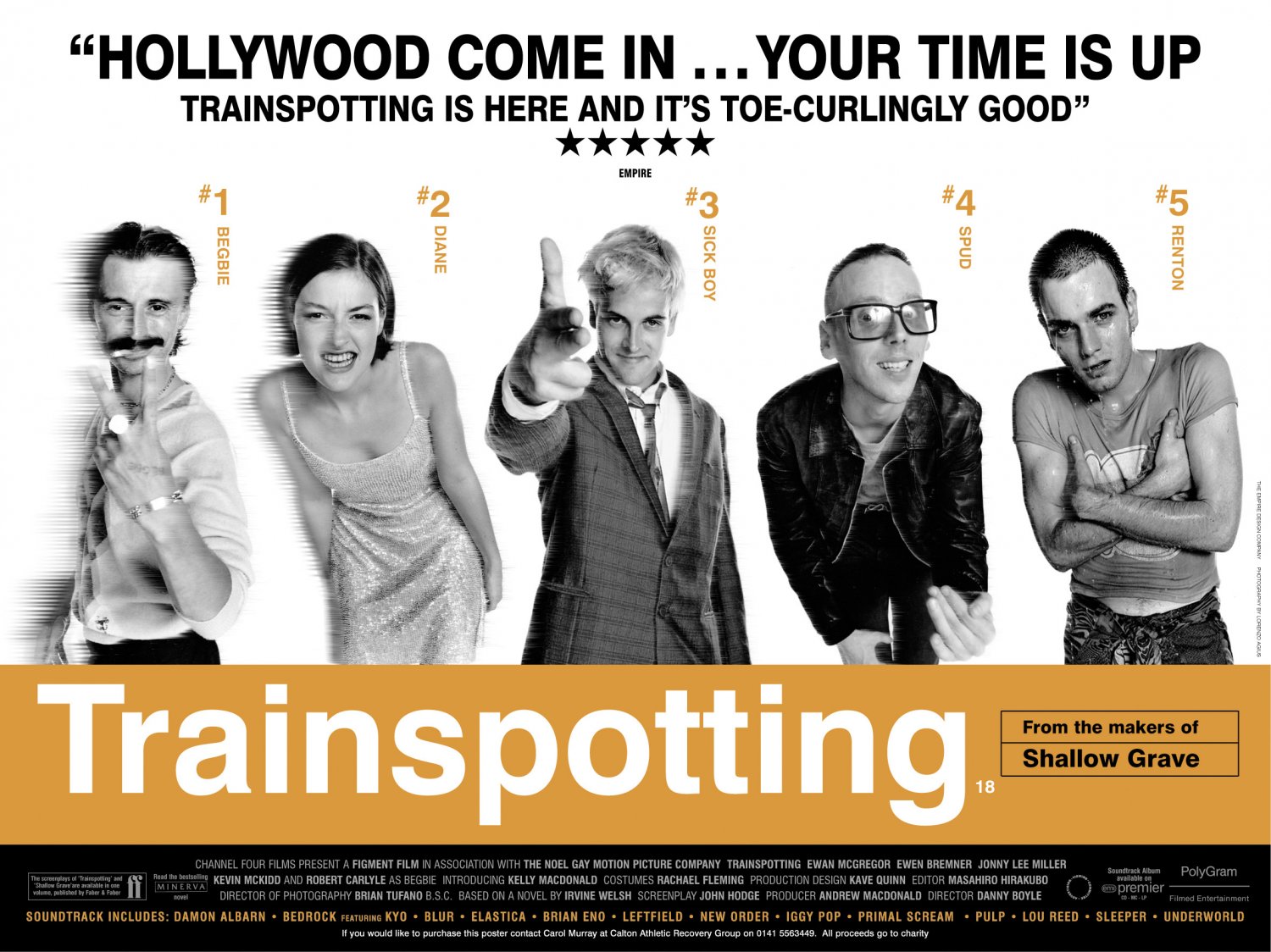
You must know the story: Ewan McGregor is our “hero” Renton, a junkie with delusions every so often (the film implies this has occurred multiple times) of going clean, kicking the habit only to find that he is always drawn back in – largely it seems due to his own weak personality. Fellow junkies include Spud (Ewan Bremner), Sick Boy (Jonny Lee Miller) and later (tragically) Tommy (Kevin McKidd). On the edge of their junkie circle (not a user) is psychotic Begbie (Robert Carlyle) who doesn’t need drugs when he can get a high from starting a bar fight. The basic plot is slim in this whipper sharp film where experience is all – Renton goes clean, gets sucked back in, misses prison, goes cold turkey, escapes to London, gets sucked back into a drug deal. That’s basically it. What’s important here is the experience.

This is possibly one of the best films about addiction ever seen (I watched it in a double bill with The Lost Weekend which actually works out as a pretty natural combo). Boyle and screenwriter Andrew Hodge aren’t scared to show that drugs at times can be fun (after all if they didn’t make you feel good part of the time why would you do them?) and they can give colour to life (particularly to the shallow non entities this film centres on). The is even a strange family warmth to Renton and friends getting smacked out in an otherwise disgusting dilapidated drug pit, listening to Sick Boy dissect the Sean Connery Bond films. This is then brilliantly counterbalanced by the appalling lows – from the truly unsettling dead baby, abandoned and unfed in said drug den, to Renton’s appalling cold turkey. 

Perhaps the most remarkable thing here is that Danny Boyle directs with such verve and with a gleeful delight for every single shooting and editing trick in the book, but the film never feels like a triumph of style over substance, or as if the tricks are the centre of the director’s attention. Instead throughout the whole film you can tell the heart of the film makers – and therefore the heart of the viewer – is also focused on the story and the characters. So we get a film that crackles with energy, with a sense of youthful vitality (that is vital to understanding its characters), has an attractive anti-society message – but also reminds us that the perils of following this kind of counter culture life can be truly horrifying.

At the centre of this film is Ewan McGregor, who I don’t think has ever found a role that he could seize and bring to life as successfully as he did with this one. McGregor is captivating, managing to skilfully demonstrate without any judgement a man who believes he is strong, but is in fact desperately weak. His performance is so charismatic that you hardly notice that Renton is, actually, a pretty nasty person. High or not he has a barely concealed contempt for nearly everyone around him, his reaction to the baby death is shockingly cold, his treatment of Tommy laced with indifference, his pronouncements to the audience overflow with self-regard and delusion. But you just don’t notice.

What you do notice is that Robert Carlyle’s Begbie is a total nutter. Just like McGregor, I think Carlyle struggled to find a role that matched this one, probably not helped by the string of psychos he was offered by casting directors. Carlyle again actually isn’t in the film that much, but he nails how terrifying total self belief can be when matched with a complete lack of any moral sense. In fact most of the cast have hardly ever been better. Excellent support also comes from Peter Mullan, Eileen Nicholas, James Cosmo, Shirley Henderson and Stuart McQuarrie while Irvine Welsh pops up as low rent dealer.

Electric film making with a heart, I don’t think even Danny Boyle has topped this. There is something strangely perfect about this film – anything more and it might out stay it’s welcome, but every scene has something magic in it, some little touch that stays in the mind – either performance, dialogue, direction or all three. It looks fantastic and seemed to define its era. So fingers crossed for the sequel. No pressure…