Category: British politics

Peterloo (2018)

Mike Leigh’s passionate but dry, overlong film brings the Peterloo massacre to life

Director: Mike Leigh

Cast: Rory Kinnear (Henry Hunt), Maxine Peake (Nellie), Pearce Quigley (Joshua), David Moorst (Joseph), Rachel Finnegan (Mary), Tom Meredith (Robert), Simona Bitmate (Esther), Karl Johnson (Lord Sidmouth), Sam Troughton (Mr Hobhouse), Roger Sloman (Mr Grout), Alastair Mackenzie (General Byng), Neil Bell (Samuel Bamford), Lisa Millet (Jemima Bamford), Philip Jackson (John Knight), John-Paul Hurley (John Thacker Saxton), Tom Gill (Joseph Johnson), Lizzie Frain (Mrs Johnson), Ian Mercer (Dr Joseph Healey), Nico Mirallegro (John Bagguley), Danny Kirrane (Samuel Drummond), Johnny Byron (John Johnston), Tim McInnerny (Prince Regent), Vincent Franklin (Reverend Etlhelstone), Jeff Rawle (Hay), Philip Whitchurch (Colonel Fletcher), Martin Savage (Norris), Al Weaver (Hutton)

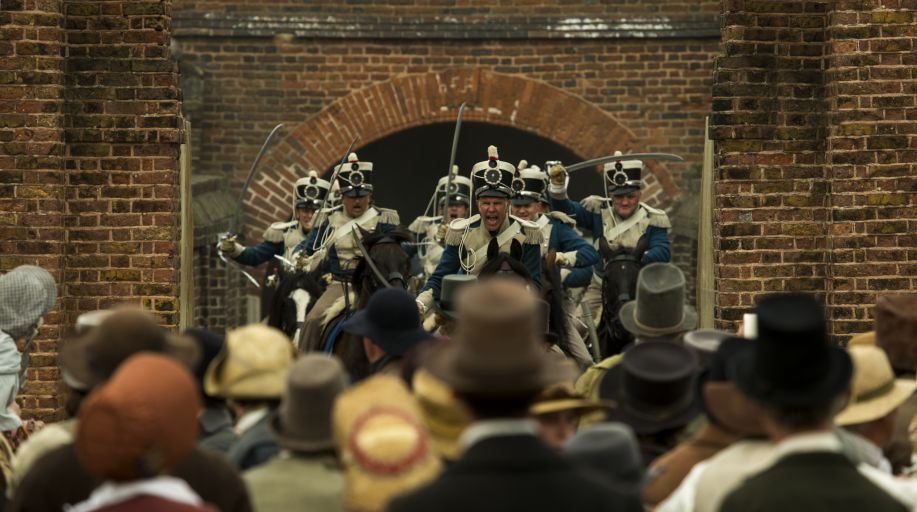
Perhaps one of the most pivotal moments in the struggle of the working classes to gain political and social rights was the Peterloo massacre of 16th August 1819, at St Peter’s Field in Manchester. At a meeting of over 60,000 people, officials ordered first the mounted yeomanry and then soldiers to attack and break up the crowd. At least 15 people were killed and hundreds more wounded, either from the indiscriminate sabre blows from the yeomen (probably drunk) and soldiers (unable to control the panic), or crushed in the frantic attempt to escape from the confined square. The immediate reaction from the authorities was praise at breaking up this “Bonapartist” piece of revolutionary nonsense. The lasting effect was condemnation of the brutality shown towards a peaceful demonstration and the massacre becoming a major cause celebre. It was ultimately influential in the passing of the Great Reform Act, which greatly extended the franchise and rebalanced much of Parliament (at this point so unbalanced by age old tradition that while some tiny hamlets returned MPs, the whole of Manchester had no representation).

It’s still an emotive subject for many today, and with this reverent film, overflowing with anger at the hypocrisy and injustice of the ruling classes, you can’t doubt that Mike Leigh and the makers of Peterloo are among them. But however sincere their personal passion about the subject is, what they fail to bring to the film is any real dramatic impetus to make us care. Instead this is an inert, over-long, often (if I am being completely honest) tedious film that takes nearly an hour to get going and then only offers flashes of dramatic interest before culminating in the massacre itself (very well shot and staged, but still itself a rather distant viewing experience).

 A large reason for this is the film is so reverential towards the campaigners for liberty, that the overwhelming majority of their scenes are given over to very good actors giving spirited renditions of actual speeches and pamphlets at a series of political meetings, shot with a reverent simplicity by Leigh. Much as it is can be interesting to hear quotes from things like this, by the time we are onto our twelfth political speech covering similar ground, delivered with another bout of fiery passion, you’ve started to glaze over. What we don’t get from many of these campaigners is any reason to really care about them – either as people or as part of a movement. Instead the film ends up like a cinematic Rushmore, carving their representations into celluloid for us to gaze up at in awe.

A similar fate befalls the working-class characters in the film, who are lacking any real character or story at all and whose main function seems to be to exist so we can experience both their misery and their awakening political awareness. Our main family is a group of mill workers, with Maxine Peake (does anyone do “hard-pressed working class stoicism hiding pain” better than Peake?) as the matriarch, welcoming her son home from Waterloo. These people talk at each other, quoting various current issues and bemoaning the hardness of living at a time of near universal poverty – but other than the fact that they are poor and suffering we are given very little reason to care for them. Like the rest of the working-class characters, they seem more like passengers in the film, meaning when the swords start flying, it’s actually very hard to get worked up as much as we should as members of this family are hacked down. 
The one exception in the entire campaign-side of the narrative comes with the introduction of “Orator” Henry Hunt, a prosperous middle-class man who became a famed agitator for working men’s rights. Wonderfully played, with a an air of arrogant grandiosity mixed with genuine commitment to the cause, by Rory Kinnear, Hunt shakes up the pattern the film settles into over its first hour. Acutely aware of his position as the nominal head of a national movement, Hunt has little patience (and even a touch of class-based distance) from the mostly lower middle-class campaigners he mixes with in Manchester (while never being anything less than scrupulously polite), and his fish-out-of-water awkwardness around them raises several laughs (the only ones of the film). Scenes in which he imposes his own conditions on the internal politics of the Peterloo meeting (who will speak, who will be on the podium, will there be weapons in the ground) not only feel more real than anything else we’ve seen in the film, but they are also far more entertaining and engaging than anything else connected to the massacre’s build-up.

Leigh was perhaps so hidebound by wanting to honour the men who campaigned for liberty that, other than with the larger-than-life Hunt, he seems too restricted dramatically – as if adding too much of that essential for drama, conflict, would somehow undermine them. Ironically he has far greater freedom with the authorities – and the film’s more engaging sequences (outside of those with Hunt) are all based around the arguments, clashes, plots and fury of the various levels of authority in the country, from the corpulent Prince Regent through the Home Office to the local magistrates.

The film gets more juice from its righteous anger at the unfairness, arrogance and hypocrisy of these men than it does from almost everything else. It also gives the actors playing these roles far more to work with. Karl Johnson stands out as a stammering but adamantine Home Secretary Lord Sidmouth, paternalistic but totally unwilling to budge an inch. The real stars, however, are the magistrates we follow in Manchester, each introduced trying a trivial case (drinking an employer’s wine, an argument over a watch, stealing a coat) with ludicrous hard-line punishments (flogging and imprisonment, transportation and execution respectively). Played with a lustful relish by Philip Whitchurch, Jeff Rawle, Martin Savage and most expressively of all Vincent Franklin (who nearly goes too far with the lip smacking, until a scene later we see even the Home Office officials eagerly reading his latest dynamite dispatch with a barely suppressed chuckles at his OTT rhetoric), these characters argue the fine points of law and lustily denounce the working classes with such fire and energy that you conversely get more wrapped up in their scenes than almost anything else in the film. Maybe Leigh felt he had greater freedom to create characters and drama here, but it does feel unbalanced.

All that said, the massacre itself when we reach it is brilliantly staged, immediate, deadly, meticulously reconstructed and filmed with a documentary anger at its brutality. You can sense the creeping tension throughout the film and the explosion of violence afterwards, for all the problems of the film, is genuinely horrifying. In fact it wraps you up so much, I wish the film had dealt more with the aftermath of the clash (there is a very good scene as stunned journalists walk St Peter’s Field with horrified fury) and the impact it had, rather than the film wrapping up swiftly with funeral of one of its working-class characters (it’s not a surprise which one).

But then that’s part of the whole film’s problem. It feels like a missed opportunity. It’s a stately civics lesson, a film that hammers home the importance of what it is presenting to you, but never really gives you a reason to invest in the real stories and passions behind the history. Instead it presents everything as important, because it is, rather than making it important to us. It feels at the same time a film that is preaching to the choir who already know this history back-to-front, and also a dry history lesson introducing it to a new audience. Either way it fails. Despite one or two good scenes, a dull, underwhelming, preachy disappointment.
Plenty (1985)

Charles Dance and Meryl Streep endure marital misery in the bleak, oblique and uninvolving David Hare drama Plenty

Director: Fred Schepisi

Cast: Meryl Streep (Susan Traherne), Charles Dance (Raymond Brock), Tracey Ullman (Alice Park), John Gielgud (Sir Leonard Darwin), Sting (Mick), Ian McKellen (Sir Andrew Charleson), Sam Neill (Lazar)

David Hare’s 1970s play Plenty looked at the impact of peace on the war generation. A “state of the nation” story on the growth of prosperity in the post-war era, and the return of many to the humdrum reality of life with Britain’s importance as a world power in rapid decline, led to isolation, anger and depression. It’s a shame that much of that really doesn’t come across in this buttoned-up, murky and unclear social drama, with a hard-to-follow plot and a hard-to-like central character.

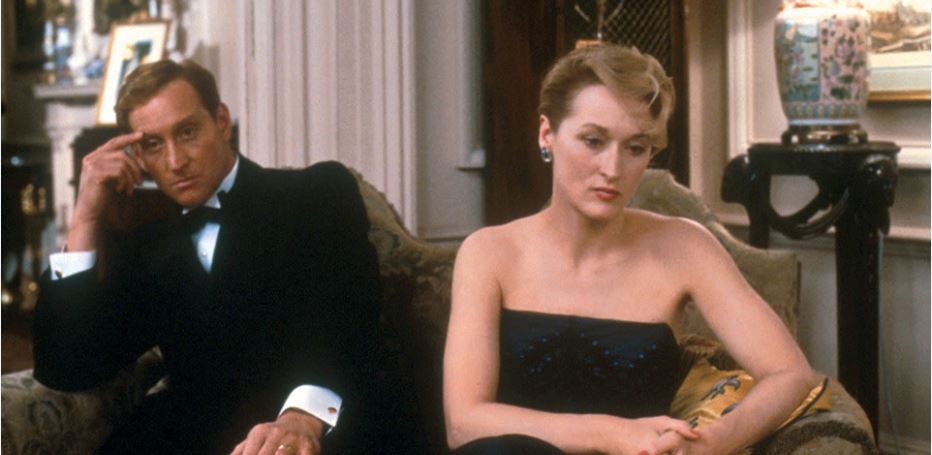
Susan Traherne (Meryl Streep) is an SOE courier in France during the Second World War, who has a one-night stand with fellow SOE operative Lazar (Sam Neill) which has a profound effect on her. After the war, she marries Foreign Office civil servant Raymond Brock (Charles Dance), but is unable to find a purpose and contentment in regular civilian life. As the years tick by, and their surroundings grow ever more plentiful, Susan becomes more and more unhappy, difficult and demanding.

The central issue with Plenty (I can’t comment on the play, having never seen it) is that Meryl Streep creates possibly one of the least likeable leading performance you are going to see. Perhaps mistaking Britishness for cut-glass chill – or perhaps it’s the character – Streep’s Susan is brittle, bitter, angry, annoying and infuriating. She complains about everything around her, she lashes out at people, she sulks and whines with no self-insight, she constantly makes life difficult for those around her (most of whom are unbelievably patient) and she is almost impossible to work out. 

While the film perhaps intends her to be as sort-of PTSD sufferer, with undiagnosed personality disorders, who cannot reconcile the shallowness of her life with the excitement of war service, I’m not sure this comes across. All we really see is her deeply irritating self. We don’t get a sense of her war service – we see her breakdown early in the film in France – and her relationship with Lazar remains so ill-defined we are unclear what impact it had on her, other than part of a halcyon memory. The film’s final scene is a flashback to the end of the war: Susan watching a sunrise on a French hill dreaming of her life being full of days like this. That scene would have been helpful earlier – it’s the only time we see her optimistic or likeable in the film, and it gets lost by placing it at the end. With it in order we could have warmed to her more.

Instead she remains a shrill presence, in a hard to relate to film that never really makes clear whether we are meant to empathise with Susan, or find her as frustrating as some of the characters do. The film also fails to make this enigma part of its viewing design – I don’t feel like having the lines blurred made the film a richer experience, just one it was harder to engage in. Schepisi’s directing style is very cold and distant – from the slow camera moves, to the tight close ups on Susan at key moments, to the deliberate lack of clear time line (each scene moves on weeks, months or years from the previous one with only a few design and dialogue hints to suggest the change).

Combined with Hare’s indefinable script – crammed with elliptical conversations, unclear emotional and dramatic points, and political points delivered with a querying shrug – it makes for a film that is very hard work to engage with – and doesn’t offer much to reward the viewer if they do. 

What pleasures there are come from the performers. Charles Dance is good as Susan’s long-suffering husband – far from a domineering patriarch, his only real crime seems to be that he is a bit boring. Ian McKellen makes a great cameo as a senior civil servant, coolly and calmly telling Susan the errors of her thinking. Sting is an odd choice (I suspect his presence helped the film get backing) and Tracey Ullman does tend to go too far as Susan’s bohemian but more emotionally restrained friend.

John Gielgud steals the show. He is simply superb as Brock’s boss, an old-school diplomat who is, at first, a figure of fun with his Edwardian values but whom events (in particular Suez) reveal to have firm principles. Gielgud also gets most of the film’s best lines, while his quiet air of polite dignity is both endearing and admirable. His delivery of the following line to a tedious bore of a party guest basically is the high point of the movie: “But perhaps before I go, I may nevertheless set you right on a point of fact. Ingmar Bergman is not a bloody Norwegian, he is a bloody Swede.”

But there aren’t enough pleasures like this in this overbearing, rather trying film that never really decides what point it’s trying to make. I think it’s something about wealth and discontent and the more selfish and scrambling build of the post-war generation towards Thatcherism. But I’m really not sure. And to be honest I’m not sure I care.

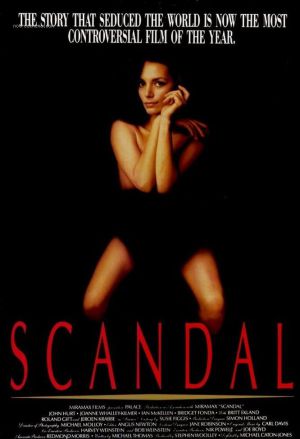
Scandal (1989)

Joanne Whalley and John Hurt get unwisely wrapped up in the Profumo affair in Scandal

Director: Michael Caton-Jones

Cast: John Hurt (Stephen Ward), Joanne Whalley (Christine Keeler), Bridget Fonda (Mandy Rice-Davies), Ian McKellen (John Profumo), Leslie Phillips (Lord Astor), Britt Ekland (Mariella Novotny), Jeroen Krabbé (Eugene Ivanov), Daniel Massey (Mervyn Griffith-Jones), Roland Gift (Johnny Edgecombe), Jean Alexander (Mrs Keeler), Deborah Grant (Valerie Hobson), Alex Norton (Inspector), Ronald Fraser (Justice Marshall), Paul Brooke (Sergeant), Keith Allen (Reporter)

In 1963 the British Government was nearly destroyed by a sex scandal. John Profumo, Minister for War, was widely suspected of conducting an affair with Christine Keeler (a former show girl turned society figure) at the same time as she was sleeping with Russian naval attaché Eugene Ivanov. Profumo denied it to the House of Commons. A few weeks later he confessed he had lied and resigned from Parliament. The scandal shook the country to the core, and led to an exhausted Harold MacMillan’s resignation as PM. As the scandal span out to reveal sex parties in country homes, the country couldn’t get enough of the discovery that large numbers of the upper classes enjoyed nothing more than swinging, orgies and indiscriminate sex laced with sado-masochism. 

Scandal reconstructs the build-up to and eventual explosion of controversy around this affair, focusing on Keeler (Joanne Whalley) and Stephen Ward (John Hurt), the society osteopath and friend to the rich and famous who had worked out that if he found and coached attractive young girls, Henry Higgins-style, into engaging and fun companions, he could swiftly move up the social ladder by giving the rich and powerful people they could sleep with. When the Profumo affair blew up, it was Ward who was left holding the parcel: abandoned by his rich and powerful friends, Ward was placed on trial as a pimp, vilified in court and in the press, and eventually committed suicide the night before the court case finished (which convicted him in absentia of living off immoral earnings).

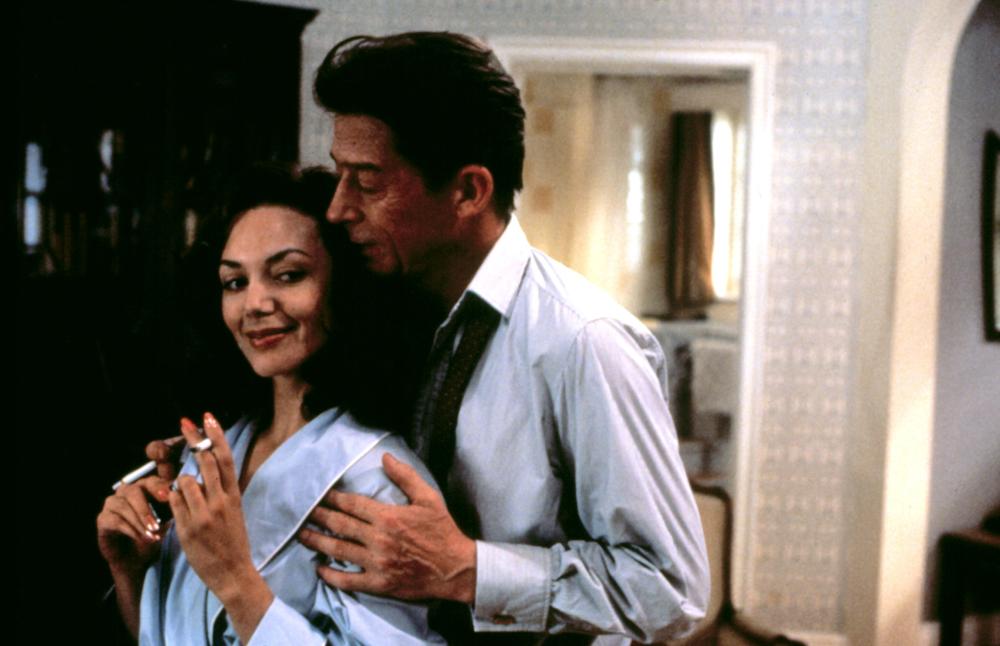
It’s this miscarriage of justice that Scandal zeroes in on – and the film does a good job of showing that Ward basically didn’t really do anything that wrong. He didn’t mistreat the girls, he thought he was helping them improve their lives and he didn’t attempt to blackmail his friends. His own sex drive seems curiously disconnected (he was clearly more of voyeur) and if anything, John Hurt (excellent as always) plays him as a slightly sad social-climber. A sort of Horace Slughorn of sex, far more excited by his bulging address book, access to the exclusive clubs of London and calling lords of the land by their matey nicknames, than by all the nooky.

Scandal however is a rather unemotional, unengaging and distant film. It’s hard to get too wrapped up in, as it too often goes for documentary checklist rather than real character engagement. On top of that, it’s often rather unclear – it’s tricky to tell the exact timelines, it’s hard to see often how some events relate to others, it’s unclear in particular how Christine Keeler’s relationship with jazz promoter and drug dealer Johnny Edgecombe led to exposure. It’s a film that’s both in love with telling the facts and so blinded by them that it doesn’t turn them into an engaging story.

But then perhaps part of this is because looking back today, it’s hard to see what all the fuss was about with the Profumo affair. After generations where government ministers have been accused of everything from toe-sucking to performing a sex act on a dead pig, it’s hard not to look at the Granddaddy of all government sex scandals and not think it rather quaint. Today it would barely merit more than few news cycles: and Profumo would certainly have been back in the cabinet within two years. Even the spy angle (was Profumo leaking secrets to Keeler, who in turn leaked them to Ivanov?) was widely (and almost immediately) discredited at the time. 

Not that the seismic impact really comes across anyway in the film. This is partly because the film focuses on Ward and Keeler in particular. For the two of them, there wasn’t much at stake – until their lives were destroyed. In fact, for most of these people at the various dodgy parties – other than embarrassing tittle-tattle – there wasn’t much at stake. A film that gave more space to Profumo – and really made-clear what he was running the risk of losing here, particularly after he lied to Parliament – might have made it clearer the dangers that all involved were inadvertently running.

But that would have been to dent the film’s purpose of showing Ward and Keeler as essentially innocents abroad. Joanne Whalley has a particularly difficult job as a Keeler so thoughtless, short-sighted and self-obsessed, she verges on the dim. Whalley makes her bright, engaging and fun-loving, but never with a whiff of sense. By the time Keeler is blurting out totally unconnected Profumo facts when speaking to the police about her relationship with Edgecombe, you can tell she doesn’t have a chance.

The film’s real strength though is John Hurt’s masterful performance as Stephen Ward. Hurt’s pock-marked face and ruddy complexion (going through a difficult divorce he allegedly spent most of the filming struggling with alcoholism) and slightly sweaty desperation are perfect for the role. A natural victim as an actor, he makes Ward always slightly desperate, always trying too hard, always the grammar-school boy pushing his nose up against society’s window. He’s a super creepy Henry Higgins grooming girls for a “better life” (his genuine belief!) and getting himself an entrée into posh society at the same time.  

Ward, the film argues, didn’t feel he was ever doing anything wrong – and he realises far too late that society, his posh friends and the government don’t agree. “It’ll blow over” he reassures Ivanov: totally wrong. Ward basically was a hedonist who wanted people to have a good time – and was thrilled to be invited to the party. When the shit hit the fan, he was dumped with the blame. It’s an angry note that the film – with its obsession with covering so much ground – fumbles slightly: it wants to be a searing indictment of the hypocrisy of the upper classes, but it fudges the emotional connection so much that you can’t feel it as much as you should.

Instead Scandal just sort of simmers rather than boils. It doesn’t communicate what a sea change this was in how Britain viewed its politicians and upper classes – from hereon they were always seen as men with feet of clay – and it doesn’t get the audience feeling as angry or engaged with things as you might expect. It has a lot of sex in it but (perhaps deliberately) it’s not sexy – the orgy scenes would make a great mood killer – and it seems to miss the hedonistic tone that dominated the class at the time. 

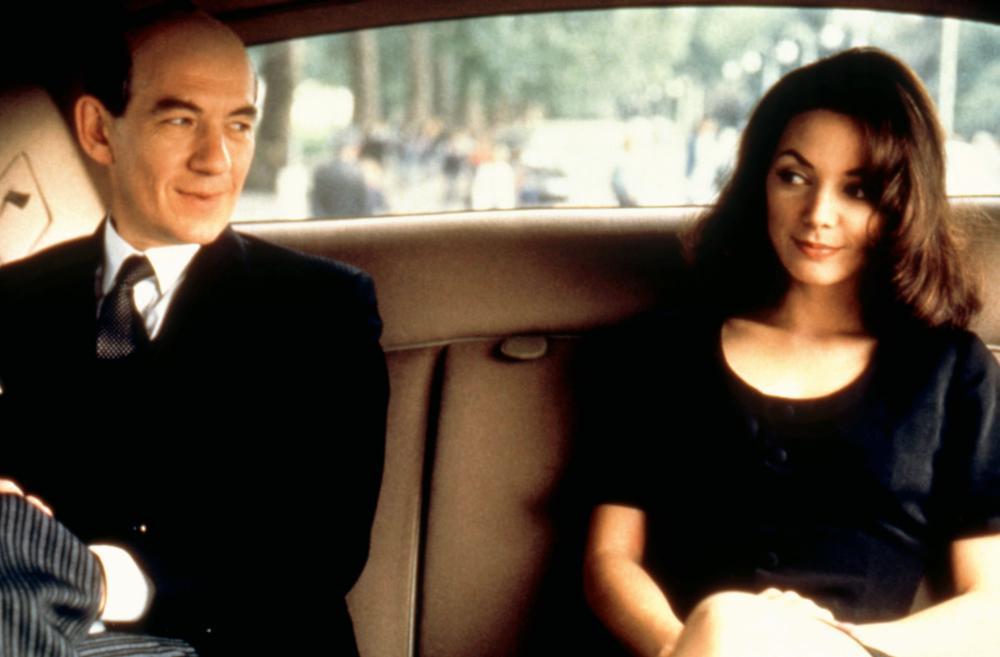
There is some decent directing – a scene of Mandy Rice-Davies and Christine Keeler preparing for a night on the town is particularly well done – and some strong acting, not least from Ian McKellen is a slimy Profumo (rumour has it a recently de-closted McKellen was keen on the role as it was the most hetrosexual role he could imagine playing!). But it never quite clicks together into something really emotionally engaging. And it isn’t quite as clear and easy to follow as you need. Structuring the story as a kind of love story between virtually the only people in the story who don’t have sex together is interesting – and Hurt and Whalley are good – but it’s just not quite a good enough film for what it wants to do.

Darkest Hour (2017)


Gary Oldman, rather surprisingly, rather is Churchill during his Darkest Hour

Director: Joe Wright

Cast: Gary Oldman (Winston Churchill), Kristin Scott Thomas (Clementine Churchill), Lily James (Elizabeth Layton), Ben Mendelsohn (George VI), Stephen Dillane (Lord Halifax), Ronald Pickup (Neville Chamberlain), Samuel West (Anthony Eden), David Schofield (Clement Atlee), Malcolm Storry (General Ironside), Richard Lumsden (General Ismay), Joe Armstrong (John Evans), Adrian Rawlins (Air Chief Marshall Dowding), David Bamber (Vice-Admiral Ramsay)

One of my favourite ever TV series is Winston Churchill: The Wilderness Years, a chronicle of Churchill’s time out of government (basically 1929-1939). It covers the political clashes between Churchill and his rivals brilliantly, as well as giving us a real feeling for Churchill’s own personality and flaws and featured a brilliant performance from Robert Hardy. Darkest Hour takes off almost where that series ends – and I think it might just be a spiritual sequel. And, for all its flaws, I might even grow too really like it.

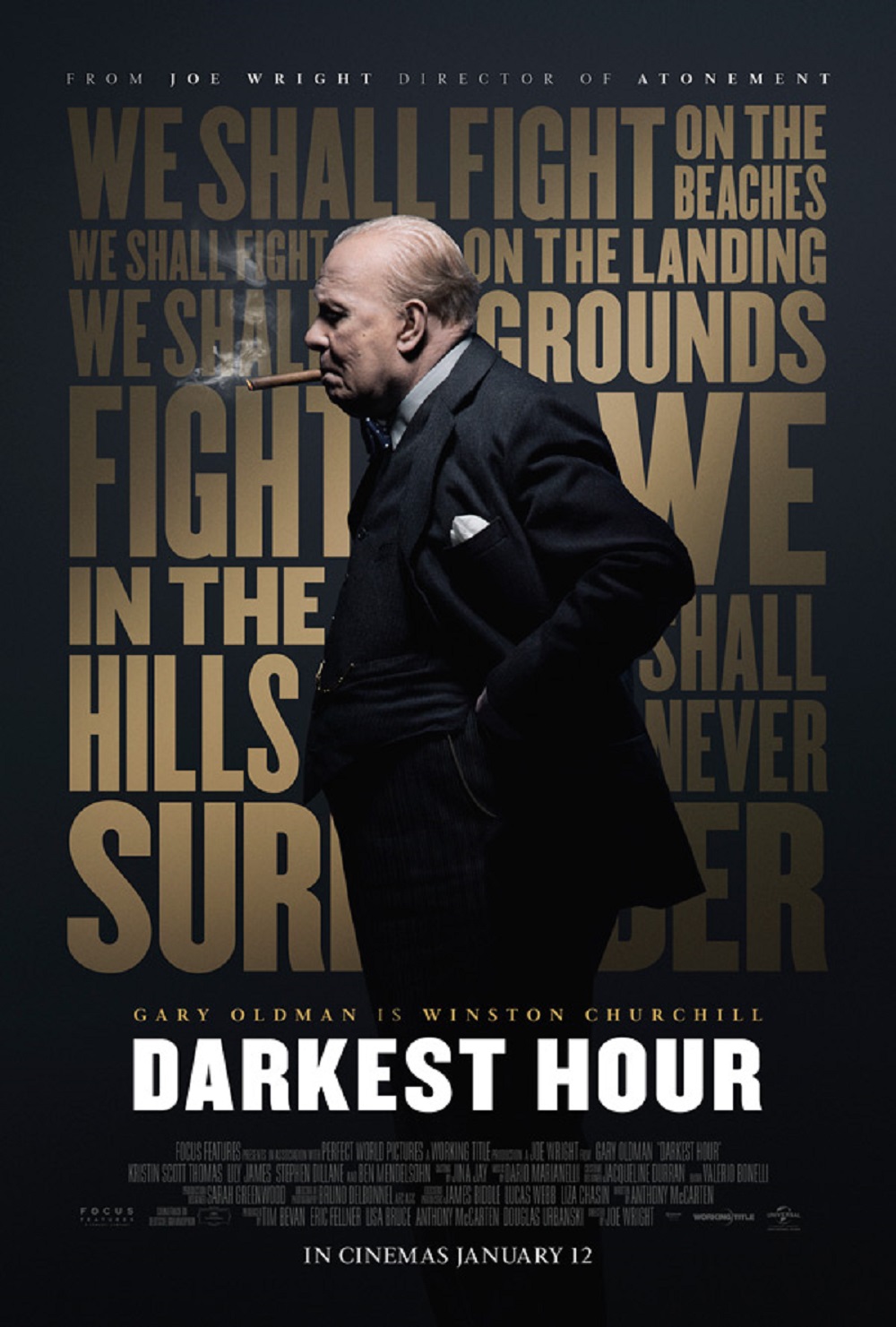
Joe Wright’s Darkest Hour is a beautifully filmed, imaginatively shot retelling of the crucial first month of Churchill’s premiership. Wright uses a great device of flashing the date up (in an imposing screen-filling font) as each day progresses. Apart from brief moments, the action rarely leaves Whitehall, with the focus kept tightly on the politics at home. Will Churchill win over the war cabinet to continue the war, or not? It revolves around dialogue shot with tension and excitement, and is structured key Churchill speeches: each carrying all the emotional impact you could expect and beautifully performed, with goose-bump effect by Gary Oldman.

Because yes, this film’s one piece of genuine excellence, and what it is really going to be remembered for, is the brilliance of Oldman’s performance. This is one of those transformative performances where the actor disappears. Of course it’s helped by the make-up, but there is more to it than that. The voice, the mannerisms, movement, emotion – as a complete recreation of the man it’s just about perfect. Whatever the film’s flaws, Oldman nails it. Sure it’s larger than life – but so was Churchill.

Oldman’s Churchill is irascible, demanding and temperamental – but he’s also warm and humane. In one beautiful moment he conducts a conversation with an un-encouraging Roosevelt, where his features seems to shrivel and shrink with despair, while his voice keeps up the optimism. Moments of gloom hit home, but there is also humour (and Oldman is actually rather funny in the lead role). There’s moments of pain, guilt and depression – it’s terrific.

However it does mean some of the other actors scarcely get a look in. Kristin Scott Thomas in particular gets a truly thankless part, no less than four times having to counsel a depressed Churchill with variations on “You’re a difficult but great man and your whole life has been leading to this moment” speeches. Lily James actually gets a more interesting part as Churchill’s admiring secretary, getting the chance to be frightened, awed, amused and frustrated with the Prime Minister – and she does it very well, even if her part is a standard audience surrogate figure.


The characters are neatly divided in the film: they are either pro- or anti-Churchill. The “pro” characters largely get saddled with standing around admiringly around the great man (Samuel West gets particularly short-changed as Eden becomes Churchill’s yes man). The “anti” characters mutter in corridors about how unpredictable and dangerous he is, how he could wreck the country etc. etc.

To be fair to the film, it does at least treat the doubts of Halifax (Stephen Dillane – all clipped repression, he’s excellent) and Chamberlain (Ronald Pickup – serpentine and tactical, although Chamberlain’s hold over the Tory party was nowhere near as great as this film suggests) as legitimate concerns. It does weight the dice in favour of Churchill, and we don’t get enough time to fully understand the reasons why peace with Hitler might have seemed reasonable in 1940 (tricky to get across to a modern audience so aware of Hitler’s status as evil incarnate). But Halifax’s stance that it was better to cut your losses than fight on to destruction is at least treated sympathetically, rather than making him a spineless weasel (as others have done).

The film really comes to life with the conflict between the Halifax-Chamberlain alliance and a (largely alone) Churchill. The cabinet war room clashes have a fire, energy and sense of drama to them that a lot of the rest of the film doesn’t always have. It sometimes drags and gets lost in filling the time with “quirky” moments with Churchill. There is a bit too much domesticity that feels irrelevant when we know the fate of the nation is at stake.

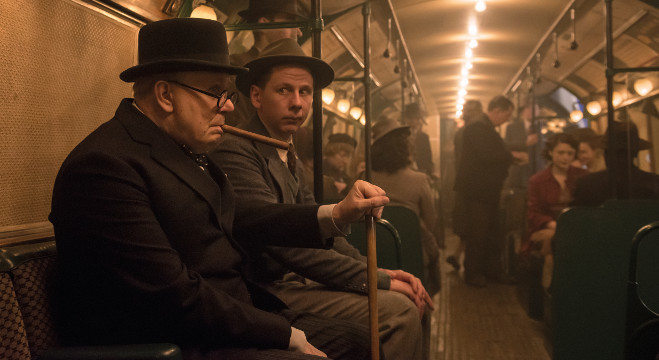
But then this is a sentimental film. Not only is it in love with Churchill (we see some blemishes, but his air of perfection goes unpunctured), but it uses devices that feelas you are watching them like sentimental film devices. None more so than Churchill bunking down on a tube train to exchange encouraging words with regular people and for them to tearfully recite poetry at each other. In fact it’s a testament to Oldman that he largely gets this hopelessly fake-feeling scene working at all.

Wright’s film makes a point later of demonstrating that – reporting back to the Tory party the results of this conversation – Churchill uses the names of the people he met, but completely replaces their words with his own. But it still gets itself bogged down in this sentimentality – including a teary end caption on Churchill being voted out of office. Every scene with Churchill and Clementine has a similar chocolate box feel, as does a late scene with George VI (who seems to flip on a sixpence between pro and anti-Churchill – although Ben Mendholsen is very good in the role).

Darkest Hour is an extremely well-made film. It’s told with a lot of energy – and it has a simply brilliant lead performance. Joe Wright finds new and interesting ways to shoot things: there are some great shots which frame Churchill in strips of light surrounded by imposing darkness. But its not brilliant. It will move you – but that is largely because it recreates actual real-life, moving events (who can listen to Churchill without goosebumps?). But it’s given us one of the greatest Churchill performances and it’s worth it for that if nothing else. And, for all its flaws, and the safeness of its storytelling, I actually quite liked it – and I think I could like it more and more as I re-watch it.

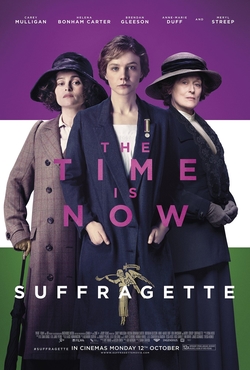
Suffragette (2015)


Votes for Women is the cry in this bad movie made about an important issue

Director: Sarah Gavron

Cast: Carey Mulligan (Maud Watts), Helena Bonham Carter (Edith Ellyn), Anne-Marie Duff (Violet Miller), Romola Garai (Alice Haughton), Ben Whishaw (Sonny Watts), Brendan Gleeson (Inspector Steed), Samuel West (Benedict Haughton), Meryl Streep (Emmeline Pankhurst), Adrian Schiller (David Lloyd George), Geoff Bell (Norman Taylo r), Finbar Lynch (Hugh Ellyn)

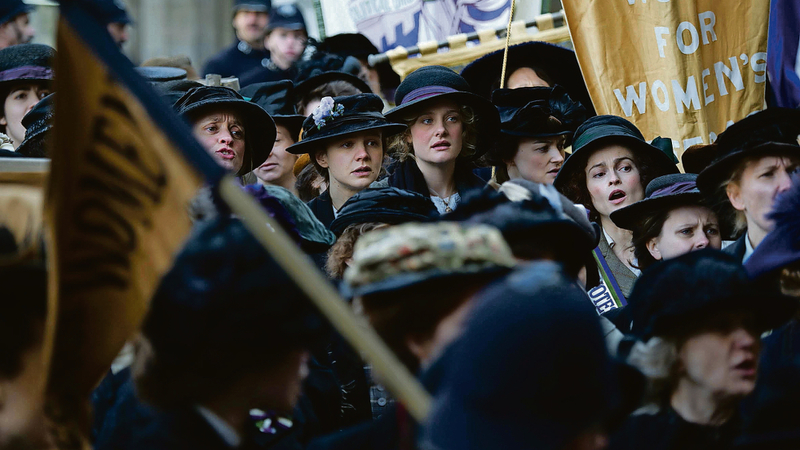
Votes for Women was a historic movement that looked to settle a gross injustice. It’s a major issue brimming with importance: and Lord doesn’t Suffragette know it. In fact, Suffragette is practically a textbook example of an important issue being turned into a bad film. Clunky, weighed down with its own bombast and stuffed to the gills with clichés, Suffragette fails to move and makes its vital political points seem leaden and dull.

Maud Watts (Carey Mulligan) is a young washerwoman, who one day finds herself accidentally swept up in a suffragette protest. Before she knows it, her friend Violet Miller (Anne-Marie Duff) has inveigled her to give testimony at a parliamentary hearing, where she meets Edith Ellynn (Helena Bonham Carter). Ellyn believes that peaceful struggle will lead nowhere and violent action is the only way to get what they want. As the violence escalates, Inspector Steed (Brendan Gleeson) is tasked to infiltrate and bring down the suffragette movement.

It should be more interesting. But Suffragette is a sluggish “issue drama” whose every frame drips with the self-importance of people who feel they aren’t just making a film, they’re making a “statement”. This feeling infects everything, from the heavy-handed dialogue (too many scenes feel like speechifying rather than dialogue) to the obvious characterisations. Nothing in the film ever really rings true, and nothing ever really grips. On top of that sloppily written, it doesn’t really have any dramatic structure and events eventually peter out.

Mulligan’s saintly character – as a kind of suffragette every woman – goes through everything from abuse from her boss, to losing her home and children, to being force-fed in prison. It strains credulity – particularly as she’s playing some fictional archetype. The truly noble suffragettes are all working-class and put-upon, while Romola Garai’s upper-class wife quickly turns her back on the cause when things get risky. Bar Brendan Gleeson’s humane Inspector and Finbar Lynch’s decent husband (and even he performs an act of betrayal), every single man in this is a bastard – a paternalistic liar, a wife-beater, a bullying husband or an abusive boss. It’s just too bloody much. The film seems not to trust its audience to understand the story unless it’s acted out by a series of caricatures, as if we can’t appreciate that gender equality is a good thing in itself without a saintly sad-faced girl being mistreated by a series of misogynist ogres.

Mulligan is rather good but her angry denunciations and points during her scenes with Gleeson just sound like she’s mouthing research from the writer. The end result is, despite all the things Maud goes through, you just don’t really care about her. She feels like an empty character. Even the end of the film doesn’t revolve around her: Emily Davison is reintroduced just in time for the conclusion at the Derby. Why not just make a film about Davison? Why did they feel the need to place this uninteresting fictional character at the heart of it? Did they just feel it had to be a working class hero?

Because the script tries to cover every single element of the suffragette movement, it often feels like a box-ticking exercise. Meryl Streep gets the best tick, popping up to deliver a single speech as Emmaline Pankhurst before disappearing. But the collection of events thrown together don’t convince. Helena Bonham Carter does her very best to make Edith’s radicalism seem compelling and thought-through, but even that seems like a tack-on rather than something that really teaches us about any of the characters. Moral questions around violence and protest are almost completely ignored, and the film doesn’t really distinguish between those (essentially) willing to kill and those who wanted to protest within the law.

On top of its mediocre writing, the film is also only competently directed – its pace is often way off and sluggish, and most of the scenes are shot with an unimaginative televisual eye, mixed with standard “throw you into the action” shots for major protests. It all contributes to the entire venture not coming to life at all. For such a huge issue, and for all the importance it’s being treated with here, it just seems lifeless and rather dull.

This is despite the decent acting (Anne-Marie Duff is excellent, as are most of the rest of the principals) and the efforts of all involved. But it’s just not engaging. The most moving and gasp-inducing moment is the end credits roll of dates where countries gave women the vote (1970 for Switzerland!) – but when the most moving thing you see in the film could have cut and pasted from a Wikipedia page you are in trouble.

But what can you say about a drama about women’s rights where the male Inspector comes out as the most interesting and nuanced character? That just doesn’t feel right. And that’s the problem with Suffragette. Nothing feels right. Everything feels off. The history doesn’t ring true, the characterisations feel forced, the events seem predictable and clichéd. There’s nothing to really get you impassioned here – other than with frustration about a bad movie fudging an important subject.

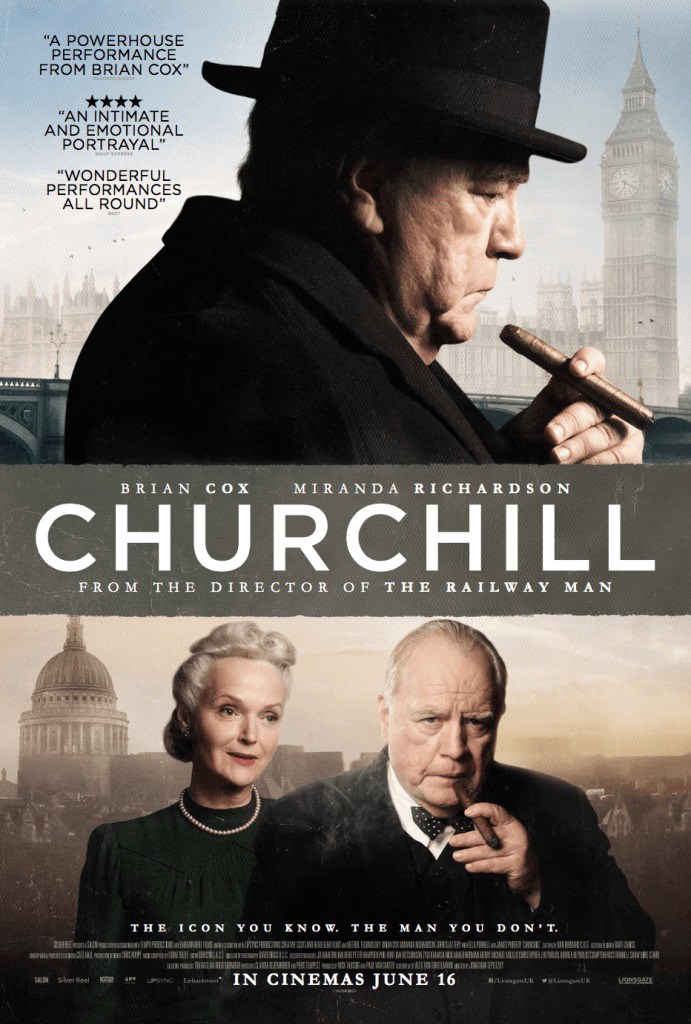
Churchill (2017)


Brian Cox does his very best Greatest Britain as Churchill

Director: Jonathan Teplitzky

Cast: Brian Cox (Winston Churchill), Miranda Richardson (Clementine Churchill), John Slattery (General Dwight D. Eisenhower), James Purefoy (King George VI), Ella Purnell (Helen Garrett), Richard Durden (Jan Smuts), Julian Wadham (Field Marshall Bernard Montgomery), Danny Webb (Field Marshall Alan Brooke), Jonathan Aris (Air Field Marshall Trafford Leigh-Mallory)

Someone should open a club: The Churchill Club. Every actor who’s played the Great Man gets instant membership. President the late Robert Hardy (seven times!). Other members? You name it: Finney, Gambon, Burton, Spall, Gleeson, Russell Beale, West, Hoskins… Think of a shorter, slightly rotund British character actor and inevitably they’ve had a go. Even the decidedly non-rotund, non-short, non-British John Lithgow aced the role in Netflix’s The Crown. With Gary Oldman also making his pitch this year in Darkest Hour, this film sees renowned character actor Brian Cox join the club. 

1944. Its three days before D-Day and Winston Churchill (Brian Cox) is getting cold feet. Haunted by memories of Gallipoli, he fears that the attack on Northern France will lead to disaster and oceans of blood. Against the advice of his Generals Montgomery (Julian Wadham) and Brooke (Danny Webb), he attempts to push General Eisenhower (John Slattery) to change the plans. As depression takes its grip on him, only his wife Clementine (Miranda Richardson) can get through to him. 

Churchill is a bit of a mess. It’s pretty well acted but highly televisual, shot with a self-conscious flourish that only emphasises its micro-budget. Teplitzky is in love with the cross-fade (or even worse the half fade) – constantly cutting from place to place for brief moments in the middle of scenes, often for lingering shots of actors staring out to sea or walking through fields. The action is often framed oddly, in long shot with full bodies in shot framed between ground and sky. Other scenes are filmed flatly – when Montgomery addresses his army, no amount of slow pans can hide that it consists of about 20 men.

On top of that, every single scene is scored within an inch of its bloody life. Now I love the power of film music, but this goes too far. The score is bland, predictable and unimaginative and just not that interesting to listen to. When it’s dropped heavy-handedly on top of every single scene it makes you want to scream. It’s also often completely misjudged or inappropriate – as gentle romantic piano swells during a key discussion between Churchill and the King, you almost expect them to kiss. 

That’s before we get started on the script, which is instantly forgettable. Alex von Tunkleman wrote a long running column in the Guardian on historical accuracy (or not) in films. Talk about a hostage to fortune, when you try to write your own film… I’ll go into historical issues in a bit, but there are lots of little things that feel wrong from Smuts (Deputy PM Of South Africa!) following Churchill around like some sort of valet too Montgomery addressing the Prime Minister to his face as “Churchill”. Stuff that just doesn’t feel quite right. The script also relies on a fictional “young secretary” who eventually speaks truth to the great man and wins his respect. Von Tunkleman is no writer of snappy dialogue, the film too often feeling like a wonky history lesson than a drama.

Historically the film does explore a different side of Churchill – enough to ruffle the feathers of the millions of Churchill fans out there. It focuses on his depression and self-doubt, within the framework of a period when he was starting to become sidelined by America. It also focuses on his little known opposition (certainly initially) to D-Day (he favoured a second front opened in Europe’s “soft underbelly” of Italy) – although it certainly expands this last-minute opposition for dramatic effect. I’m pretty sure he was on board by this point (however initially reluctant)!

What the film looks like it might do (but never quite does) is really explore some of Churchill’s laws and vulnerabilities – to look at the negatives and see how overcoming (or dealing with these) made him a great man. It touches heavily on Churchill’s depression – the “black dog” – with a desperately worried Churchill retiring to his bed to despair, praying for bad weather to prevent the landing and bawling out his secretary. Churchill is frequently wrong or mistaken, and the film captures much of the frustration his generals had with this talented amateur. It also isn’t afraid to show that, with American muscle driving the war, Churchill was becoming more of a mascot than a major orchestrator of allied strategy.

It’s a shaded portrait, but the film is eventually seduced by Churchill’s magnestism – a King’s Speech style final radio broadcast is all swelling regard, and a coda of Churchill waving his hat on a beach towards France hammers home his legendary status – miles away from its careful look at his growing irrelevance (and his concerns about this) early in the film. For all we have characters constantly stressing to Churchill his time is passing, the film can’t help finishing with a flourish that hammers home his centrality.

Churchill is flat and unimaginative but it does have an energetic, engaging performance from Brian Cox. While not in the first rank of Churchills, he captures the charisma, without slavishly imitating the famous voice. His Churchill, with his depression and doubt, also feels different: a slightly counter-establishment actor like Cox fits nicely with this. It’s an assured, charismatic performance hampered by the material. The rest of the cast feed off scraps though Miranda Richardson is assured as a twinkly level-headed Clementine. Richard Durden also deserves mention as gruffly supportive Smuts, as does James Purefoy as a gentle George VI.

Churchill means well – but fails. It’s aiming to question some of the reverence we have for the past, but ends up falling between stools, in the end too in love with the myth, but too critical to please the die hards. Flatly filmed and woodenly written, too many scenes fade from memory too quickly. Brian Cox (and Winston) deserved better.

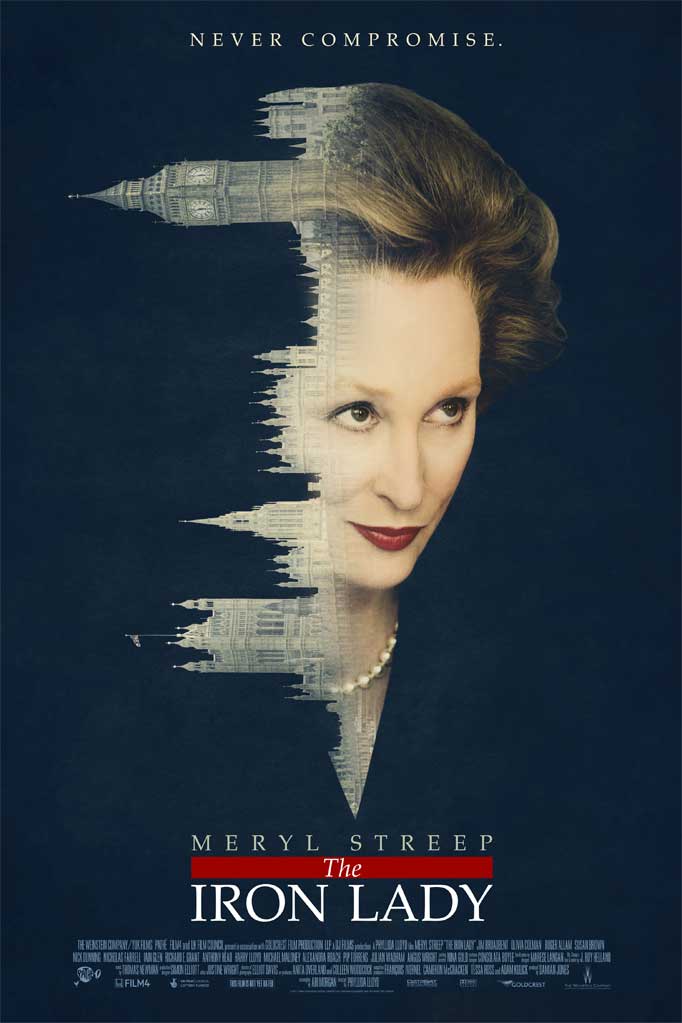
The Iron Lady (2011)


Meryl Streep impersonates the Iron Lady to excellent effect in this otherwise bland and forgettable, compromised mess of a picture

Director: Phyllida Lloyd

Cast: Meryl Streep (Margaret Thatcher), Jim Broadbent (Denis Thatcher), Olivia Colman (Carol Thatcher), Roger Allam (Gordon Reece), Nicholas Farrell (Airey Neave), Iain Glen (Alfred Roberts), Richard E. Grant (Michael Heseltine), Anthony Head (Sir Geoffrey Howe), Harry Lloyd (Young Denis Thatcher), Michael Pennington (Michael Foot), Alexandra Roach (Young Margaret Thatcher), John Sessions (Edward Heath)

In British politics has there been a figure as controversial as Margaret Thatcher? A domineering Prime Minister who reshaped the country (for better or worse depending on who you speak to), crafting a legacy in the UK’s politics, economy and society that we will continue to feel for the foreseeable future, she’s possibly one of the most important figures in our history. It’s a life rich for a proper biographical treatment; instead, it gets this film.

The film’s framing device is focused on the ageing Thatcher (Meryl Streep), now dealing with onset dementia and having detailed conversations with her deceased husband Denis (Jim Broadbent). Cared for by her daughter Carol (Olivia Colman), she reflects on her political career and the sacrifices she made personally to achieve these. Woven in and out of this are Thatcher’s increasingly disjointed memories of her political career.

The most surprising thing about this film is how little it actually wants to engage with Thatcherism itself. Perhaps aware that (certainly in the UK) Thatcher remains an incredibly divisive figure, the film’s focus is actually her own struggles with grief and approaching dementia. Her career as PM is relegated to a series of flashbacks and short scenes, which fill probably little more than 20-30 minutes of the runtime, shot and spliced together as a mixture of deliberately subjective memories and fevered half-dreams. Can you imagine a film about Thatcher where Arthur Scargill and the miners’ strike doesn’t merit a mention? You don’t need to: thanks to The Iron Lady it now exists. 

Perhaps Thatcher’s politics were considered to “unlikeable” – certainly, one imagines, by its writer and director – to be something to craft a film around, so it was thought better to brush them gently under the table. Instead the focus is to make Thatcher as sympathetic as possible to a viewer who didn’t share her politics, by concentrating on her struggles against sexism in the 1950s and her struggles with age late on. Why not accept what Thatcher stood for and make a film (for better or worse) about that? Perhaps more material on her actual achievements in office were shot and cut (the film does have a very short run time and underuses its ace supporting cast), but the whole film feels fatally compromised – which is more than a little ironic since it is about a woman famous for her lack of compromise.

In fact it’s rather hard to escape the view that Roger Ebert put forward: “few people were neutral in their feelings about [Thatcher], except the makers of this picture”. It’s a film with no real interest in either politics or history, the two things that defined Thatcher’s entire life. And as if to flag up the mediocre nature of the material they’ve chosen, it’s then interspersed with too-brief cuts to more interesting episodes from Thatcher’s life than those we are watching. Only when the older Thatcher hosts a dinner party and launches into a blistering sudden condemnation of Al-Qaeda and support of military action against terrorism (followed by her casual disregard of a hero-worshipping acolyte) do we ever get a sense of finding out something about her, or of seeing her personality brought to life.

The film’s saving grace is of course Meryl Streep’s terrific impersonation of Thatcher. I call it impersonation as the film so strenuously avoids delving into the events and opinions that shaped Thatcher that Streep gets very little opportunity to really develop a character we can understand, or to present an insight into her. Her performance as the older Thatcher – losing control of her mannerisms, deteriorating over the course of the film – is impressive in its technical accomplishment, but that’s largely what it remains. As the film doesn’t allow us to really know Thatcher, and doesn’t work with what defines her, it largely fails to move us when we see her weak and alone. So for all the accomplishment of Streep’s work, I couldn’t say this was a truly great performance – certainly of no comparison to, say, Day-Lewis as Lincoln or Robert Hardy as Churchill. I’d even say Andrea Riseborough’s performance in TV’s The Long Walk to Finchley told us more about the sort of person Thatcher was than Streep does here.

Despite most of the rest of the cast being under-used though, there are some good performances. Jim Broadbent is very good as Denis Thatcher, although again his performance is partly a ghostly collection of mannerisms and excellent complementary acting. However the chemistry between he and Streep is magnificent and accounts for many of the film’s finest moments. Olivia Colman does sterling work under a bizarre fake nose as a no-nonsense Carol Thatcher. From the all-star cast of British actors, Roger Allam stands out as image-consultant Gordon Reece and Nicholas Farrell is superbly calm, cool and authoritative as Airey Neave. Alexandra Roach and Harry Lloyd are excellent impersonating younger Thatchers.

The Iron Lady could have been a marvellous, in-depth study of the politics of the 1980s, and a brilliant deconstruction and discussion of an era that still shapes our views of Britain today. However, it wavers instead into turning a woman defined by her public role and views into a domestic character, and brings no insight to the telling of it. By running scared of Thatcher’s politics altogether, it creates a film which makes it hard to tell why we should be making a fuss about her at all – making it neither interesting to those who know who Thatcher is, nor likely to spark interest in those who have never heard of her.