Category: Christian film

Angels with Dirty Faces (1938)

Angels with Dirty Faces (1938)

Cagney lets rip in this classic gangster film which is all about its barn-storming ending

Director: Michael Curtiz

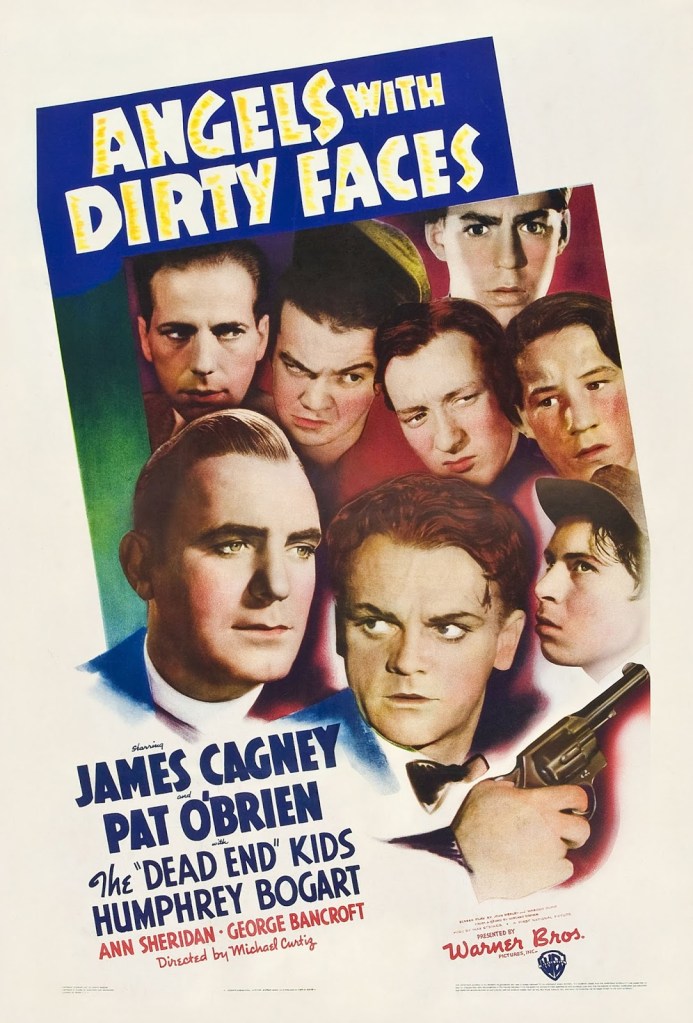
Cast: James Cagney (Rocky Sullivan), Pat O’Brien (Father Jerry Connolly), Humphrey Bogart (Jim Frazier), Ann Sheridan (Laury Martin), George Bancroft (Mac Keefer), The Dead End Kids
It has perhaps the most famous ending of all gangster films. Faced with his final few minutes on Death Row, charismatic gangster Rocky Sullivan meets with his oldest friend, Father Jerry O’Connell. Rocky is a hero to the kids on the block, and Father Jerry pleads with him: go the chair yellow and just maybe you can help turn these kids away from a life of crime. No way Rocky is going to lose his pride – until the final few moments, when suddenly he collapses into a morass of whimpering fear and terror. Did he decide to listen to Jerry’s pleading? Or did he really go yellow after all?

It’s the question that you are meant to take from Angels with Dirty Faces, a superb example of the gangster genre, brilliantly directed by Michael Curtiz. And it works so well because quite simply no other actor in the history of film could have pulled it off as well as Cagney does. If you have any doubts about whether Cagney deserves to stand as one of the truly greatest film actors of all time, this film erases them. 

Cagney is simply superb as Rocky. Has there ever been a gangster who was so charismatic, so magnetic, so strangely decent in his way, who plays in the corrupt world of crime but has his own absolutely rigid moral code? Few other actors could have you so ready to believe he would ruthlessly pull the trigger at the drop of the hat, and yet would still be someone you’d consider inviting round for dinner. Every single scene hinges on his brilliance as a performer, and his interaction with each character is superbly judged. He is an unapologetic bad guy, a man who openly says that he isn’t sure he is capable of empathy in the same way as normal people, yet he also has a fierce sense of loyalty and doesn’t hesitate to take the rap for others or to put himself in harm’s way to protect those he feels loyalty towards.

It’s all part of the intriguing moral puzzle of the film, that rather bravely inverts the idea of good and evil that the Hays Code mandated. On the surface this is a Board approved plot of two kids from the wrong end of the block, one who ends up good one who ends up bad, with the bad one getting his comeuppance and the good saving souls all around. But scratch the surface and actually this is a film that is making far more subtle points about a world that is in shades of grey. For starters, the most faithful and loyal character in the film is the hoodlum Rocky. 

But more than that, the film stresses that the margin between priest and criminal is very thin indeed. Repeatedly it’s stressed that Jerry is only a priest – rather than a fellow criminal graduate of the reform system like Rocky – because he was able to run away faster from the police during their days of mayhem as tearaway boys. It only takes chance and a few lucky turns, and the priest owes his ability to find God and the good life solely because the criminal happily took the whole rap as a Kid. The priest and the criminal work almost hand-in-hand trying to encourage the local kids to engage more in their community (even if they are teaching subtly different lessons) and their friendship is unaffected by the events of the film. 

Much as the film is building a traditional narrative of crime being attractive but not in the end paying, it is also subtly suggesting that good and evil perhaps coexist in harmony more than we might think (or might be comfortable to acknowledge). Which brings us back to the title I guess: Jerry is an angel with a dirty face from his flawed childhood, but in a way Rocky himself is an angel whose face is covered with the muck of crime. Both characters have lives that have crime and misdemeanours behind them, even if they have eventually chosen different routes.

Curtiz’s film allows this commentary to bubble subtly and cleverly under a host of wonderful scenes and carefully composed sequences. The highlight of which might well be an extraordinarily well made extended shoot out scene, as Rocky faces his final show down with the cops after one crime too many. But it’s a peak of a series of superb sequences that make excellent use of framing and intent. Curtiz even makes the Dead End Kids – a group of, I’ll be honest, rather irritating child actors, whose fates I find it hard to get worked up about – reasonably engaging. There are several other fabulous performances, not least a wonderfully snivelling turn from Humphrey Bogart as a cowardly and corrupt lawyer with more than a few criminal connections.

It all comes back to that final sequence as events catch up with Rocky and the electric chair awaits. Cagney is simply brilliant in this scene, a perfect steel front of composure and pride that we are invited to question whether it cracks or he does so deliberately. Curtiz shoots the sequence in shadow play (apart from one shot of Rocky’s hands clinging desperately to a radiator) – to meet the Hays Code rules about what you could and couldn’t show on screen, the chair being a no – but it works superbly and Cagney’s powerhouse but also restrained performance nails it perfectly. While you like to think Rocky has done the “right thing” you can’t be sure – and it’s that question that hangs over it that helps cement this as a brilliant inversion of the black-and-white morals of the era: we like to think decency has prevailed, but maybe it’s all just being yellow after all…
Philomena (2013)

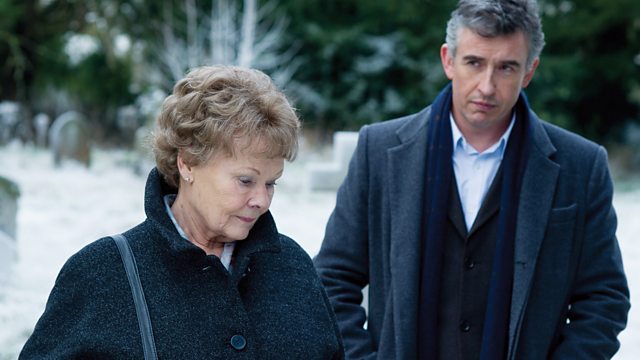
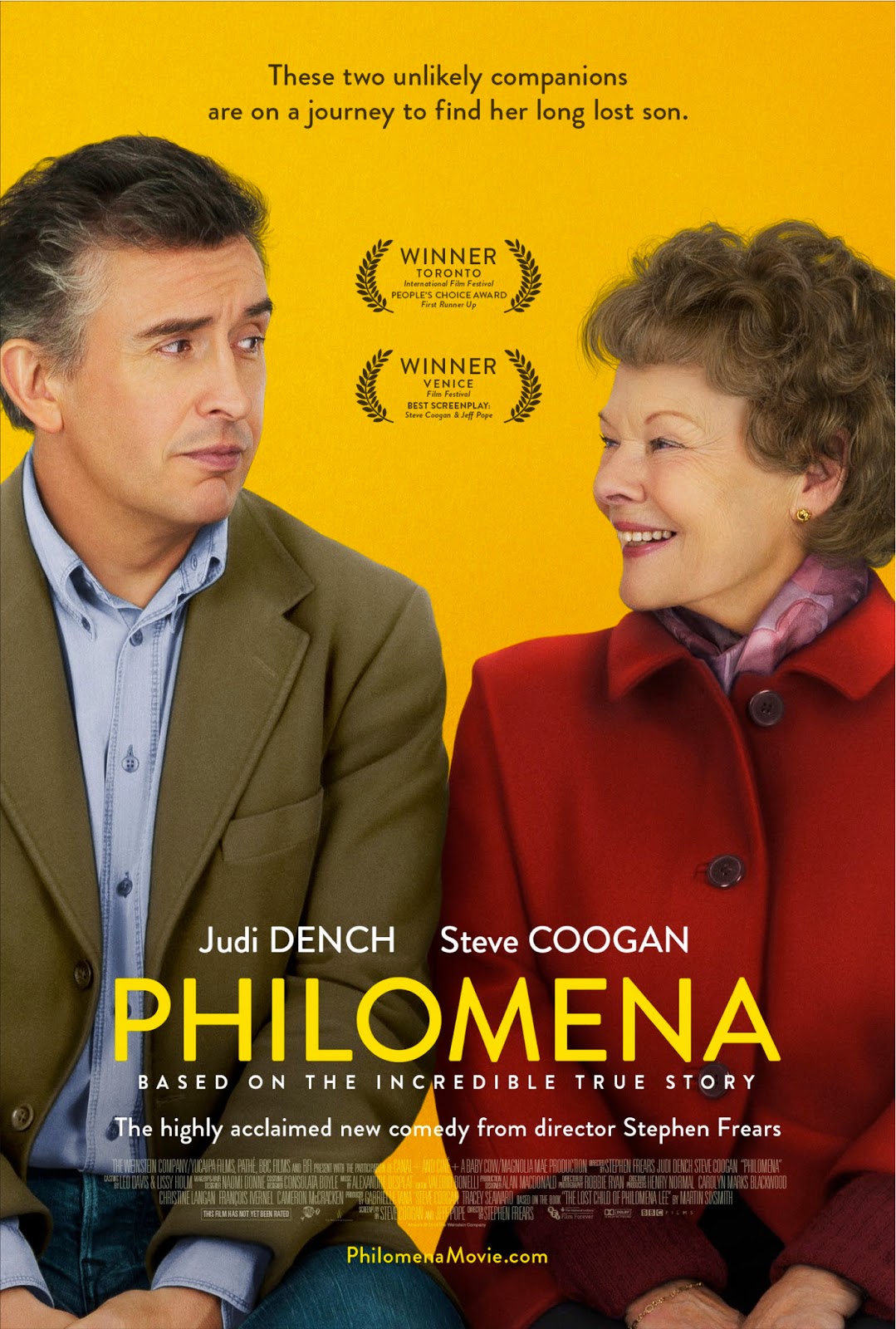
Judi Dench and Steve Coogan go on a road trip into the past in Philomena

Director: Stephen Frears

Cast: Judi Dench (Philomena Lee), Steve Coogan (Martin Sixsmith), Michelle Fairley (Sally Mitchell), Barbara Jefford (Sister Hildegarde), Anna Maxwell Martin (Jane), Mare Winningham (Mare), Sophie Kennedy Clarke (Young Philomena), Kate Fleetwood (Young Sister Hildegarde), Sean Mahon (Michael Hess), Peter Hermann (Pete Olsen)

Describing Philomena as a sort of odd-couple buddy road movie with a heart seems like exactly the sort of trite journalistic spin that Coogan’s Martin Sixsmith spends most of the film deriding. But it’s a pretty accurate label, in this heartfelt and entertaining film that mixes looking at Irish church scandals, with both the shallowness and promise of journalism and a heartfelt meditation on the virtues of forgiveness.

Martin Sixsmith (Steve Coogan), a former government spin doctor, dismissed from his position is struggling to find a new purpose for himself in writing and journalism. After a chance meeting with waitress Jane (Anna Maxwell Martin) at his editor’s New Year party, he is introduced to her mother Philomena Lee (Judi Dench) an Irish woman whose son was given up for adoption by the convent Philomena had been sent to over 50 years ago. She has spent years trying to find him, but made no progress. At first Sixsmith is dismissive of this human interest story, but slowly begins to invest in the story, as he and Philomena travel to the US to try and find her lost son.

Philomena is a film that doesn’t pull punches in its moral outrage at the decisions made by convents in Ireland in the 1950s to separate ‘sinful’ mothers from their children and find them new homes. The distress of the young Philomena is clear, and the steps the church took to put barriers in the path of helping these children and their parents reuniting (from burning records to bare-faced lies) are as infuriating as their moral superiority is outrageous in its hypocritical cruelty. But it’s not a film that wants to make a simple or political point. 

If the film has a problem with religion, it’s with the institutions that run it, not the faith itself. For all her ill-treatment, Philomena’s faith has been unshaken by all that has happened to her, and she like the film can separate the flaws of individuals from the principle of faith. The film may take aim at the Catholic church for making people feel sex is something dirty and shameful, but it won’t turn its guns on God himself. Near the film’s conclusion, Philomena even rebukes Martin for his rage (on her behalf) against the nuns who treated her wrongly, pointing out that she is the victim not him and that how she chooses to respond to it is her business – and if she chooses reconciliation and forgiveness that is her choice.

It’s a part of the films light and shade, very well drawn out in Steve Coogan and Jeff Pope’s script that mixes serious reflections on such matters as truth, faith and forgiveness with some good jokes and entertaining banter. The film deviates considerably from the true story it was based on – Philomena in real life never went to America – but in doing so it unlocks the story as a filmic narrative. The odd mother-son type relationship that the distant and cynical Sixsmith and the warm and engaging Philomena develop as they travel America gives the film heart, not least as Philomena constantly surprises Sixsmith with her worldliness and socially moderate views. The two characters end up bonding in a way that is straight out of a Movie-101 but it stills very real and touching.

A lot of that works so well because of the chemistry between the two leads. Judi Dench is just about perfect as Philomena. Dench expertly mixes the twinkle and charm of Philomena’s incessant Irish patter and capacity for small-talk (and fascination with everything from Mills and Boon to hotel toiletry) with a devastating emotional vulnerability and aching pain at the loss of her child, which has clearly been part of her life for so long she has learned to a certain degree to live with it. In one of her greatest screen performances, Dench will have you laughing one minute then spin on a sixpence with genuine emotional devastation or a capacity for forgiveness and reconciliation that seems impossible after what she has been through. The film builds real affection for both her old-world politeness charm and Irish loquaciousness and her emotional strength of character.

She’s well matched with Coogan, who uses his deadpan archness to excellent effect as Sixsmith. Although the film is called Philomena, it’s Sixsmith who represents the audience, and it’s his expectation of being emotionally manipulated by the story that we share at the start – and his growing investment in it that we also share. Coogan keeps the details very small, but along with a skill at delivering deadpan one-lines, he also has a considerable capacity for moral outrage and genuineness (well hidden) that serves the film very well. Sixsmith starts the story as self-pitying, supercilious and interested only in selling the story – the fact he ends it so bound up in rage at the treatment of Philomena, is a testament to Coogan’s skills for subtle character development.

Frears’ directs with a small-scale sharpness of camera and lack of flash that has been at the foreground of so many of his films, letting the focus lie on story and character. The road movie sequences that this film highlights so much are little triumphs of small-scale character story-telling, and while the jokes they feature – and even the emotional points they make – are familiar they are delivered with such grace and feeling they nearly all land.

Perhaps reflecting Coogan’s experience with the British media, it’s Fleet Street that emerges as the most 2D here, with Michelle Fairley playing a tabloid editor interested only in the story, delighting in tragic twists as they will make for even better headlines. It’s the film’s only real crudeness, but packaged within such a well-acted and richly entertaining whole, that makes a strong case for forgiveness not vindication being the true path to inner peace, it doesn’t seem to matter.

The Song of Bernadette (1943)

Jennifer Jones sees visions of the Virgin Mary in the moving The Song of Bernadette

Director: Henry King

Cast: Jennifer Jones (Bernadette Soubirous), Charles Bickford (Abbé Dominique Peyramale), Williem Eythe (Antoinie Nicoleau), Gladys Cooper (Marie Theresa Vauzou), Vincent Price (Vital Dutour), Lee J. Cobb (Dr Dozous), Anne Revere (Louise Casteror Soubirious), Roman Bohnen (François Soubirous), Mary Anderson (Jeanne Abadie), Aubrey Maher (Mayor Lacade), Linda Darnell (Virgin Mary)

“For those who believe in God, no explanation is necessary. For those who do not believe, no explanation is possible.”

With these words, this worthy religious epic from the Golden Age of Hollywood kicks off its retelling of how visions of the Virgin Mary from one poorly educated peasant girl, Bernadette Soubirous, turned Lourdes from a backwater near the French-Spanish border into one of the most important Catholic pilgrimage sites in the world. It’s material that you could fairly expect to be pretty dry and sanctimonious stuff. But, surprisingly, it’s rather affecting and engaging work – and, although made with a certain workmanlike competence, carries enough touches of grace to lift it up into the second tier of the Hollywood firmament.

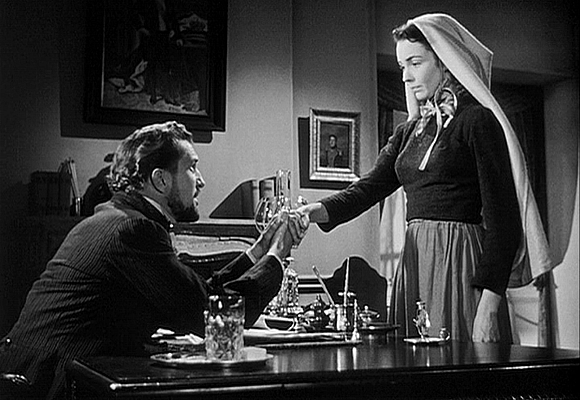
Bernadette Soubirous is played by Jennifer Jones – in one of her first screen roles, for which she became at 25 one of the youngest Best Actress Oscar winners ever. Until her visions begin, she is just an average peasant child, struggling with asthma, her parents (Anne Revere and Roman Bohnen) struggling with poverty, failing at religious school under the strict tutelage of Sister Marie Theresa (Gladys Cooper), and generally looking ahead to a life very much like any other. But visions of the Virgin Mary (played by an unbilled Linda Darnell) bring belief and devotion into her life, and she reports the content of the visions (and her discussions with the Virgin Mary) with an honest simplicity and consistency that wins many backers, not least local priest Abbé Peyramale (Charles Bickford). But the local officials of Lourdes, led by local prosecutor Vital Dutour (Vincent Price), concerned that these visions will impact plans for the town’s development and anxious about the hysteria they could encourage in the simple-minded, try their best to restore what they see as reason over the intoxication of faith.

Faith really is the word of the day in Henry King’s at-times stately, but also shrewdly worldly drama that mixes divine intervention and belief with a fair-hearing for the doubters and the arguments of reason. The miracles, when they come, are followed with several characters – not least Lee J Cobb’s coolly rational doctor – outlining the alternative explanations for why these people may suddenly feel they have been cured. Later Dutour complains wryly that it only takes a handful of cures among the thousands that come for everyone to continue to want – or need – to believe. 

But the film sides squarely with the truth of Bernadette’s visions, not least by stressing at every turn her honesty, guilelessness and principle. Questioned by various church officials – many of them terrified of being duped by a con, having been stung in the past – she sticks with an honest openness to the same version of the story over and over again. Peyramale – initially just as sceptical – is won over to belief by Bernadette’s sudden knowledge of such matters as the immaculate conception, when she seemed barely aware of what the Holy Trinity was while studying at school. 

King – a largely middle-of-the-road director, but who marshals his resources well here – clearly takes inspiration from Carl Dreyer’s films on similar topics of faith and visions in his shooting of Bernadette. Bright light and intense close-ups that study every inch of her rapture help convey the spirituality of her visions. When Bernadette leads groups to her visions – none of whom can see what she sees – light radiates around her and over her, but seems to barely touch those she is with. The cinematography by Arthur C Miller is beautiful, a brilliant use of light and darkness to skilfully sketch both the poverty of Bernadette’s background and the radiance of her visions.

The mood of the film is also helped be Jennifer Jones’ impressive performance. Bernadette is, in many ways, potentially one of the least interesting and dynamic characters in the film, but Jones pulls off the immensely difficult task of making someone stuffed with decency, innocence and honesty into an actually compelling and endearing character. A protégé of David O Selznick (whom she later married), Jones earned her place in the film with her ability to invest Bernadette with humanity, avoiding any hint of cynicism in her performance while never becoming grating either.

It contributes to a beautiful telling of the story, backed by a series of excellent supporting performances. Charles Bickford landed an Oscar nomination as the kindly, decent priest whose initial scepticism and concern that the crowd is being manipulated is washed away by growing belief. Lee J Cobb is very good as a stoutly rationalist doctor. Anne Revere (also nominated) has a protective warmth as Bernadette’s mother.

The film’s finest supporting roles though come from Vincent Price and Gladys Cooper. Price is superb as the man of science and reason who worries over the implications of fanaticism and the damage hysteria can cause, but is never simply prejudiced or Dawkinsish in his religious doubts. King’s film treats his concerns with a genuineness that makes both the character more interesting and the film more balanced. Cooper is brilliant as a Salieri-like nun, enraged with envy and jealousy that after years of devotion and suffering it is not she but Bernadette who gets the visions.

And why did Bernadette get those visions? The film is not crude enough to suggest why – Bernadette herself apologises for the trouble she has caused and her unworthiness – but it’s clear that it’s her very innocence and sincerity that makes her worthy of them. The design – and impressive score by Alfred Newman – helps to make the film feel as profound as it does, but it’s the balance that the film handles its characters with that makes it engrossing. There are no simple heroes or villains, just as there are no simple solutions. Like the film says at the start, it’s a question of faith. Those who do not wish to believe can marshal as many arguments in their favour as those who want nothing more than to trust in faith. It makes for a fine, balanced, engaging and well-made classic.

The Prince of Egypt (1998)

Animated DeMille epics in the rather brilliant The Prince of Egypt

Director: Brenda Chapman, Steve Hickner, Simon Wells

Cast: Val Kilmer (Moses), Ralph Fiennes (Ramesses II), Michelle Pfeiffer (Tzipporah), Sandra Bullock (Miriam), Jeff Goldblum (Aaron), Danny Glover (Jethro), Patrick Stewart (Pharaoh Seti), Helen Mirren (Queen Tuya), Steve Martin (Hotep), Martin Short (Huy), Ofra Haza (Yocheved)

When Dreamworks Studio was put together by three Hollywood mega hotshots (Katzenberg, Spielberg and David Geffen), Jeffrey Katzenberg, former head of Disney, finally got the chance to make his animated version of The Ten Commandments. The Prince of Egypt was the first project under the Dreamworks animation label – and it was intended to beat Disney at its own game. It succeeded – so well that many people think it actually is a Disney film. Is that a good thing?

Anyway, the story should be familiar. In Ancient Egypt, Moses (Val Kilmer), the child of Jewish slaves, is adopted by Pharaoh (Patrick Stewart) as a baby after being found in the bulrushes. Moses grows up as brother to Ramesses (Ralph Fiennes) the future Pharaoh – until the shock of finding out his heritage leads him to flee Egypt. But an encounter with the burning bush (voiced again by Kilmer) gives him a new mission – back to Egypt to demand of Ramesses “Let My People Go”. Will he succeed? Well: There Can Be Miracles (When You Believe).

It helps you to believe in miracles when a film looks as gorgeous as this one does. The animation is amazing, not just because of its quality and richness, but the imagination of its images. From the framing of Pharaoh and later Rameses around the Egyptian architecture around them, to an extraordinary dynamic shot of Moses throwing his sandals from the room when encountering the burning bush, to the haunting interpretation of the killing of the firstborn, it’s brilliant. 

It doesn’t stop there either, with the final parting of the Red Sea awe-inspiring in its scale. But the film does equally beautiful work with the smaller, more intimate moments: each character feels real and lived in, and the film perfectly captures smaller moments of affection, love and hurt with genuine emotional force. It’s a terrifically well-made film.

And of course it has a classic story – it’s literally stood the test of time. So imaginative are the visuals – and so impressive is its scope and scale – that it almost dwarfs the DeMille style it’s quietly apeing. In fact, I’d worry whether it is a film that will have greater appeal to movie-lovers and parents than perhaps it does to children. There isn’t much in the way of humour – even the film’s nominal comic characters, a pair of cynical Egyptian priests (and near con artists) voiced by Steve Martin and Martin Short, are on the side of the oppressive baddies. There are a few decent songs in there – I rather like the Les Miserables style oomph of “Deliver Us” – and the film makes great use of the beautiful voice of the late Israeli singer Ofra Haza. But there is no getting around that this is a serious piece of film-making, with nary a comic camel in sight.

But this is no bad thing at all, and I think it stands The Prince of Egypt in good stead as it’s a film you’ll like more the older and more mature you are watching it. Not least the wonderfully complex relationship it explores between Moses and Ramesses – these two wild young men start as carefree kids (the first thing we see them do is smash up a temple building site in the film’s most cartoonish sequence, a sort of Wacky Races chariot drag race), and each become dramatically changed by responsibilities. Moses ascends to a higher plane of responsibility and humanity – but Ramesses finds himself forced into defending to the death a system of government he seemed at best disinterested in as a young man.

The film actually carries a great deal of sympathy for Ramesses. It’s in many ways a tragedy of the brother relationship between these two princes of Egypt getting shattered by events. But Ramesses is a lonely, almost needy figure, who needs Moses’ affection and respect. Ralph Fiennes mines a lot of vulnerability for this man struggling to fill his father’s shoes, who just wants Moses to chuck this whole prophet business in and go back to being his only friend. Ramesses becomes a complex, vulnerable and rather sad man – unable to deal with the pressure of his role and desperate to revitalise a lost connection with Moses, the hatred he eventually feels for his former brother born almost exclusively from rejection. 

Moses isn’t quite as interesting a character – he’s more of a waster who becomes a stand-up guy – but the film successfully builds an aura about him. It struggles a bit more with those Old Testament morals: we are meant to condemn Pharaoh’s slaughter of the Jewish firstborn that opens the film, but God’s massacring of the the Egyptian firstborn (for all Moses’ discomfort with it) is presented as being primarily the fault of the Egyptians’ stubbornness.

But then that steers us into theological territory, which no animated epic for kids can really manage to set new ground with. Instead, let’s focus on the many things the film does right. First and foremost that striking visual imagery and beautiful animation, and the depth and shading it gives to the characters. The all-star cast do extremely well – even Jeff Goldblum is fairly restrained – and it’s got some great songs. It deserves to be shown as often as The Ten Commandments on the television.

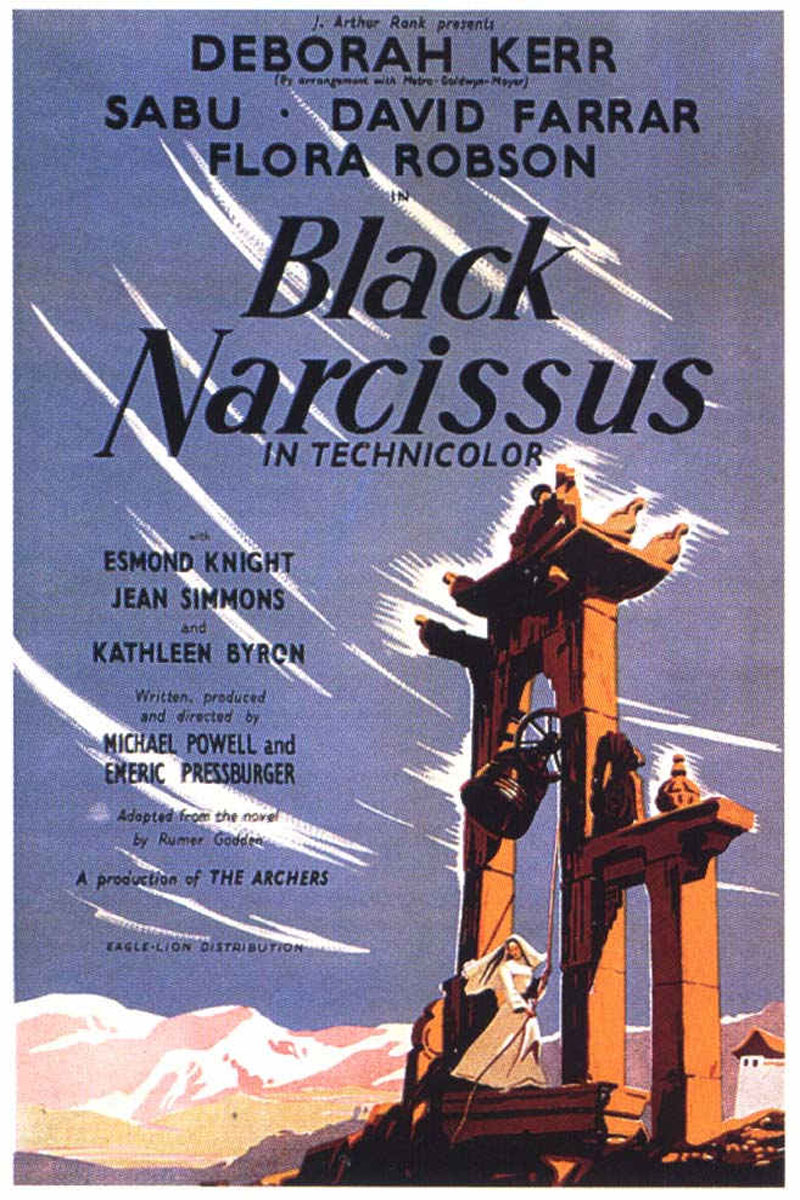
Black Narcissus (1947)

Deborah Kerr leads a community of nuns struggling with temptations in the classic Black Narcissus

Director: Michael Powell, Emeric Pressburger

Cast: Deborah Kerr (Sister Clodagh), Sabu (Young General), David Farrar (Mr Dean), Kathleen Byron (Sister Ruth), Flora Robson (Sister Philippa), Jenny Laird (Sister Honey), Judith Furse (Sister Briony), Esmond Knight (Old General), Jean Simmons (Kanchi), May Hallatt (Angu Ayah)

In 1947, people hadn’t seen anything like Black Narcissus. Its triumphant technicolour was like nothing that had been made before – and watching it now on a brand new, shiny restoration, it’s still overwhelmingly impressive. Alongside this beautifully shot action, we have a storyline surprisingly modern in its acute psychology and questioning of the strengths and weaknesses of human nature.

Sister Clodagh (Deborah Kerr) is given leadership of a group of nuns in a remote Himalayan harem building converted into a nunnery. But the isolation of the mountains and the strange atmosphere of the harem bring out weaknesses in the characters of the nuns, leading to profound challenges to their spiritual and mental well-being – not least Sister Ruth (Kathleen Byron), who becomes increasingly pre-occupied with local land captain Mr Dean (David Farrar).

Powell and Pressburger’s film is a brilliant, slightly hard to interpret, psychological gothic drama, a du Maurier-style sexually charged drama set in an exotic Indian location which the nuns struggle to understand. It’s a curious melange of scenes, often moving swiftly, sometimes only with narrow bridge scenes, meaning you soon get as lost in how much time has passed as the nuns themselves. Several key events take place off screen, and the native Indians are curious, unknowable and strangely intimidating in their distance and coolness.

All this is to help build the audience into feeling as unsettled as the characters themselves. It’s a film about the struggles between expression and repression. The two principal nuns – Sisters Clodagh and Ruth – both show elements of this. Both are drawn towards the earthy, manly but still patrician Dean, but both handle these emotions in very different ways – one by denying those feelings, another by trying to embrace them. All of this takes place in a distancing and intoxicating environment, where the convention rules of life seem suspended.

For Sister Clodagh, Dean serves as a bridge back to her own frustrated romantic feelings for an old flame – whose failure to propose guided her towards taking the veil – and elements of her warmer persona (witnessed by us in flashback). But Clodagh resolves never to make herself a slave to these feelings, and these moments of remembrance seem to make her cling all the more to her order – even while the film suggests that it is a strange mixture of pride, insecurity and fear as well as faith that motivates her.

By contrast, Sister Ruth – already acknowledged by the Mother Superior as not an obvious choice for the sisterhood – increasingly loses her grip first on her faith, then sanity, as she struggles with the feelings she clearly has for Dean. This quiet obsession has built up in her mind into representing all the desires for freedom and independence she feels while in the order. Where Clodagh resolves to cling closer to the repression of her feelings, Ruth rejects this very idea and determines to express herself – even as it costs her everything. 

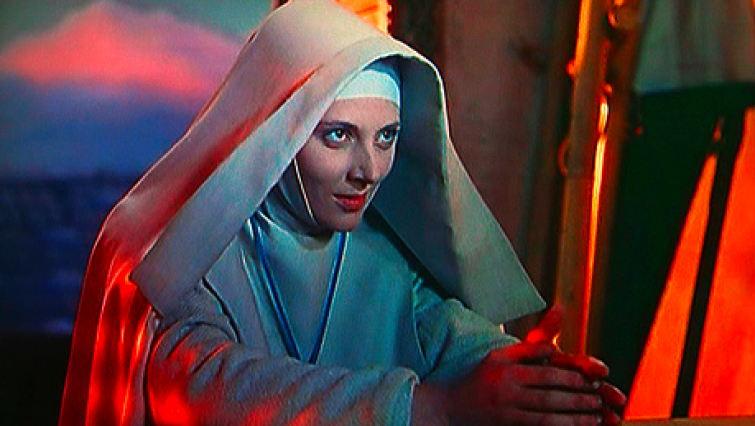
This heated growing madness is powers the film – and Kathleen Byron provides most of the drama with a stunningly unhinged performance, which builds so quietly (almost in the background of the film) that it never becomes wearing and also surprises with the extent of her unhinged delusion. One particular night-time encounter with Clodagh sizzles with rival agendas – one woman using a lipstick, the other using a Bible. 

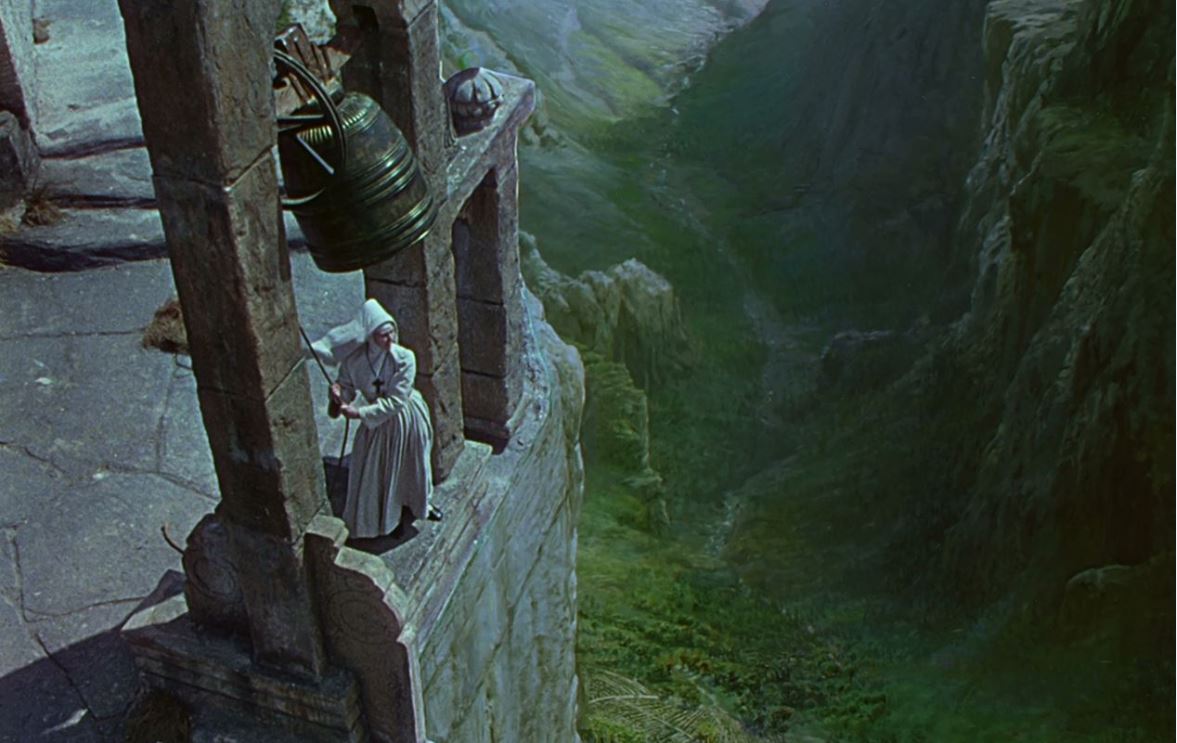
Powell (and it was Powell who largely directed these Archers pictures) uses a variety of techniques to develop this unease. Several shots are direct POV shots, with the audience becoming one of the characters, giving us the slightly unsettling feeling of being addressed by the actors. Quick tableaux editing gives us economic storytelling and a sense of events building swiftly towards a head (several sequences use a series of quick cuts of characters reacting to events). The camera uses a series of close-ups of sweaty foreheads or dizzying, vertigo inducing shots of the Himalayas to increase the unease. A later shot shows Sister Ruth moving through a shimmeringly filmed jungle, bringing a sense of confused eroticism to the picture.

Sexuality is a major theme of the film – and the characters have a series of acknowledged or unacknowledged sexual interests in each other. The music and camera work develop a sense of heated intensity on the mountain that suggests a simmering heat that unnerves the mind and throws open the temptations of physicality. Old wall paintings from the harem of bare-breasted women seem to be a constant presence – no wonder feelings are running high.

Jack Cardiff’s photography is simply extraordinary – it’s hard to believe none of this was filmed on location and most of it was shot in a studio – and this is still a film today that is hugely beautiful. The production by Alfred Junge is hugely impressive, with the nunnery a triumph of mismatched themes.

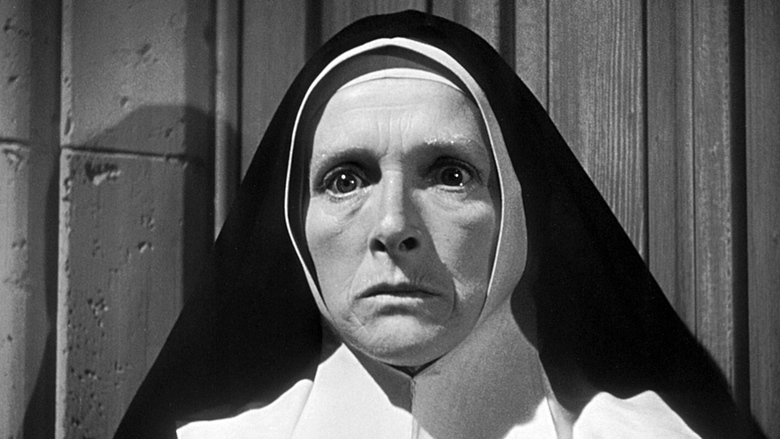
It’s not perfect. It’s a bit awkward to see actors blacking up. Some of the acting is quite OTT or stagy – in particular May Hallatt at points – and the film’s occasional delight in its visual appeal means its themes don’t always get the exploration that they deserve. One of the disadvantages of its deliberately vague timeline is that sometimes events happen too soon – or we don’t get enough sense of why they are happening. But these are blemishes.

This is a masterfully made picture, still beautiful to look at with impressive performances from Kerr, Byron, Farrar and many of the rest of the cast. It’s a surprisingly gothic melodrama by the end, with reds splashed across the screen with an imposing sense of threat. Still one that needs to be seen: and the end is so melodramatically gothic considering where the film started that the fact it doesn’t seem hugely jarring is an enormous tribute to the talents of those involved.

Silence (2016)


Andrew Garfield struggles with questions of faith in Martin Scorsese’s Silence

Director: Martin Scorsese

Cast: Andrew Garfield (Father Sebastião Rodrigues), Adam Driver (Father Francisco Garupe), Shinya Tsukamoto (Mokichi), Liam Neeson (Father Cristóvão Ferreira), Tadanobu Asano (The Interpreter), Ciarán Hinds (Father Alessandro Valignano), Issey Ogata (Inoue Masashige), Yoshi Oida (Ichizo), Yōsuke Kubozuka (Kichijuri), Nana Komatsu (Monica/Haru), Ryo Kase (João/Chokichi)

Martin Scorsese is well known as the director of the finest gangster and crime films ever made. But interestingly, he also has quite the sideline in searching religious epics – and in fact many of his films, not least Mean Streets and The Departed, dwell on feelings of Catholic duty and guilt, questions of doubt and faith. Silence, a book published in 1971, zeroes in on these questions by placing priests in impossible situations and seeing how their faith is tested.

In the 1630s, Japan begins a campaign of persecution against Christian converts. Jesuit priest Father Ferreira (Liam Neeson) witnesses his flock undergoing torture for their faith. Word reaches the Catholic church that Ferreira has committed apostasy. A few years later, Fathers Rodrigues (Andrew Garfield) and Garupe (Adam Driver) volunteer to head to Japan to continue the mission of spreading the world, and to find out the truth about Ferreira, who had been their mentor. In Japan, they find a dangerous and violent world where Christians face gruelling persecution. Both men find their faith tested – and God’s silence deafening.

Silence is a film that received a slightly sniffy review on release – but what were people expecting? This is a quiet, meditative, beautifully made film that raises profound questions around faith, identity and Christianity – and is brave enough to let people develop their own answers. It’s a slow-paced, thoughtful and (for such a dynamic film-maker) very calmly filmed work, that feels like it carries a great deal of personal investment – Scorsese’s interests in the effort and struggle required by faith, and about how few clear-cut answers there are in our understanding of religion.

On those terms, I found myself both engrossed by it – much more than I was anticipating. Scorsese combines astounding visuals and use of sound (and silence) to create a hypnotic film. The mists of Japan have rarely looked so beautiful, and the film’s astounding cinematography uses it to maximum effect to create a series of stunning images. One marvellous shot of a crucified man removed from his cross and carried to his funeral pyre is very moving in its simplicity and echoes Caravaggio’s Deposition from the Cross. At other times, silence is skilfully introduced, just as moments of seeming quiet are never truly silent. It’s a marvellously made film.

Within this beautiful framework, Scorsese explores ideas of faith and apostasy. How does faith work? How much is our communication with God private and how much does it need to be made public? Would you renounce your calling to save others – even if it meant turning your back on God? How much of all this is God listening into? How much is the act of conversion a selfish one, spreading your own glory? How many sacrifices are worth the celebration of faith – and what is the ultimate aim and reward of martyrdom? How can we even define martyrdom – and does it always revolve around death, or a can it be a private death of the spirit? 

These are fascinating ideas, and the film presents a series of viewpoints on each of these, while never offering a definitive answer. While this is a film about men who question their faith, it is not a film asking the viewer to question theirs. If you hold faith, different solutions and answers will present themselves, and your own personal beliefs will guide what you feel is right and what is not. Some people you may find unforgiveable – others you may find foolish or even conceited in their faith, while others will find the same men brave and principled.

Scorsese directs all this with an astonishing sense of control and quiet reflection, letting the film breathe and never allowing melodrama to overwhelm reflection, or the character story. The film is unflinching in watching the matter-of-fact drowning, crucifiying and other killings of Christians, but it never feels like its making cheap points, strange as it is to see such visual beauty given to horror. It’s asking us how much of this we could sit and watch without agreeing to abandon something we believe passionately in as the ultimate truth.

Andrew Garfield performs with a passionate earnestness and absolute commitment. In many ways, as the reactive centre of the film, he has the least interesting part (and therefore fewer opportunities to shine than the rest of the cast) but he is very good in a difficult internalised role, and makes us invest in every step of Rodrigues’ tortured journey of increasing doubts and fears. 

Driver has a flashier part, but does very well as a priest who wears his heart on his sleeve – and voices doubts, but also flashes of anger. He provides a lot of the initial energy, and demonstrates again what an intelligent and instinctive actor he is. Neeson as the fallen priest is able to invert his own reputation for mentors, while leaving the question open of how much his placidity and co-operation with the authorities is brain-washing or hiding far different feelings.

Scorsese recruits some of the cream of Japanese acting, and they deliver uniformly strong performances. Shinya Tsukamoto is excellent as Rodrigues’ mirror image, a man quick to denounce to save his own skin, but carries a kernel of faith at his centre. Tadanobo Asano is wonderfully controlling as Rodrigues’ interpreter, while Issey Ogata is outstanding as the leading prosecutor of the Japanese government, a man who seems a harmless, wizened old man, but whose eyes (and chamelonic body) are able to rearrange itself swiftly into looks of contempt and loathing.

Silence is a serenely made film, one that really wants to speak to those with Christian faith. Like the works of Carl Dreyer, it engages intelligently with themes around faith. I’d be fascinated to see what those who hold a stronger faith than mine make of it. But I thought this posed a series of compelling, and searching, questions about the unknowability of God – of his silence, but that silence not necessarily being indifference. It charts how hope can be found from despair – and how sacrifices we sometimes make for the greater good can also lead to new ways we can understand ourselves. It’s a very mature, brave and compelling piece of film making.

The Robe (1953)


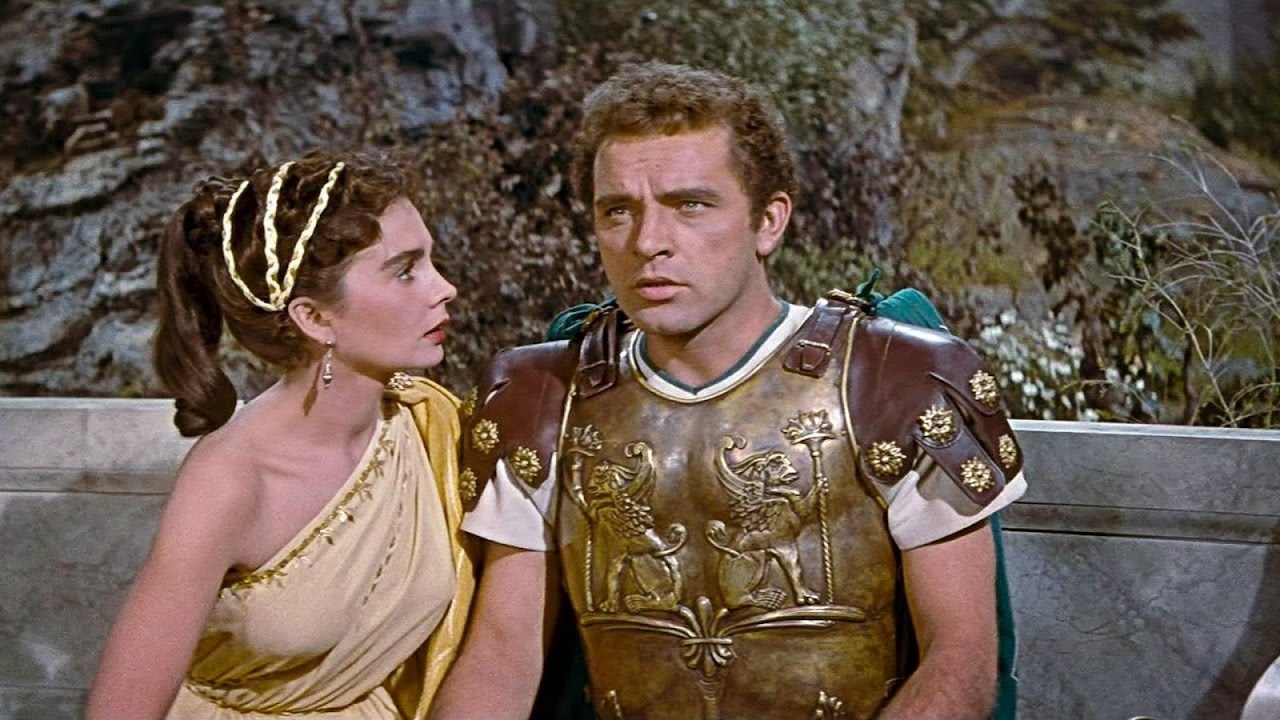
Richard Burton puts on his best “worried with a hint of madness” face as he explains Christianity to Jean Simmons and the viewers.

Director: Henry Koster

Cast: Richard Burton (Marcellus Gallio), Jean Simmons (Diana), Victor Mature (Demetrius), Michael Rennie (Peter), Jay Robinson (Caligula), Dean Jagger (Justus), Torin Thatcher (Senator Gallio), Richard Boone (Pontius Pilate), Betta St John (Miriam), Jeff Morrow (Paulus), Ernest Thesiger (Tiberius)

In 1953, Hollywood was running so scared of TV they needed a magic cocktail to win viewers back to the big screen. They settled on their main advantages over TV – a very big screen, colour and a lot of money. Sweeping epics were born – but in order to get as many people in as possible, gotta make sure it’s an important piece of filmmaking as well. What’s more important than religion?

Marcellus Gallio (Richard Burton) is a carefree playboy Tribune, interested only in splashing his cash on bets and slaves. After betting against heir-to-the-throne Caligula (Jay Robinson) for rebellious slave Demetrius (Victor Mature) – plus charming away Caligula’s betrothed Diana (Jean Simmons), also Marcellus’ childhood sweetheart – he is banished to Palestine. Marcellus is soon ordered to crucify a humble carpenter from Nazareth, leader of a new religion that Demetrius swiftly converts to. After being confronted by his former slave atop Calvary, Marcellus finds himself wracked with guilt about his actions – and on a journey towards conversion and martyrdom. The Robe of the title is the Turin shroud, here a red rag macguffin passed from pillar to post.

By any objective standards, The Robe is a pretty terrible film. It’s long, self-important, slow, talky, episodic, poorly-structured and, above all, boring. Despite its length, nothing much really happens. Marcellus is a waster, he crucifies Christ, he feels guilty, he goes a bit barmy, he converts, he dies. That’s kind of it. When important moments happen, they flash past so quickly you start to think you missed something – I rewound Marcellus’ crucial conversation with St Peter where he finally converts as I assumed I’d missed something he changes his mind so quickly. I hadn’t.

The whole film is full of sudden, juddering changes like this. Marcellus and Diana are estranged for years – next thing we know they are in each other’s arms. Demetrius is a convert after one glance. Within seconds of screentime, Marcellus goes from unconcerned to wracked with guilt over Christ’s death. The whole first scene sets up Caligula as an antagonist only to have him disappear for almost an hour. Demetrius is suddenly being racked in a dungeon in Rome. The film keeps slowing down for lots of Christian reflection on the righteousness of the holy message.

Oh blimey, the Christian message of the film is not subtle. The film drips with sanctimony and wearying self-importance, with no trick missed. Angelic voices, light from the sky, actors staring upwards with awe, impossibly sweet youths frolicking with joy, wise old buffers droning on: it’s all here, every single note you would expect of the classic Hollywood “Swords, sex, sandals and sanctimony” epics. It’s all ridiculously on the nose, with Burton reduced to having to carry the entire weight of Christianity seemingly on his shoulders, with only the most bland and forgettable of lines to support him. Nothing eases up right into the final moments, when Marcellus and Diana walk towards the camera as the background fades away to be replaced by clouds. Yeah we get it: they are off to heaven. The big thing the film struggles to get across in all this is why the Christian message had such appeal to Marcellus and others, or why these people might have put so much at risk for it, but this sort of thing is beneath the film’s clumsy interest, as if any actual analysis would be sinful.

Burton, bless him, struggles through the role with the slightly disconnected air of a man who thinks the entire film is beneath him (he famously called the role “prissy”). He must have been stunned to get an Oscar nomination. But to be fair it’s a really tough part, with Marcellus required to go from a sort of relaxed dissoluteness, via disconnected pride, to a sort of catatonic series of fits before back to serene peace. Saying that, Burton’s fits over the robe itself aren’t going to win any awards for subtlety, done with a wild eyed hamminess that looks impossibly old fashioned today. But it’s all comparable – next to Robert Taylor in Quo Vadis, Burton feels like the height of emotional realism. It’s not helped that he’s paired a lot of the time with Victor Mature, who acts throughout with a sort of balsawood earnestness that requires a great deal of middle distance staring in awe. The video below gives a good idea of both performances. Watch how wildly varied the writing is of Burton’s part and feel a little bit sorry for him.

Very few of the other performances make positive impressions. Jean Simmons as Diana is such a bland, forgettable character that her conversion only really makes sense because we have learnt so little about her over the course of the movie. Jay Robinson goes for overblown as Caligula but instead sounds like a shrieking child in a pretty woeful performance. 

These two failed performances add to the film’s problems. Caligula is such a non-presence for most in the film that, as the nominal antagonist, his lack of impact makes the film shapeless, lacking any “villain” we can hate or provide any sort of obstacle for Marcellus to struggle against. Similarly Diana is so bland and anonymous a personality, that we neither root for their relationship, nor experience any concern for its outcome.

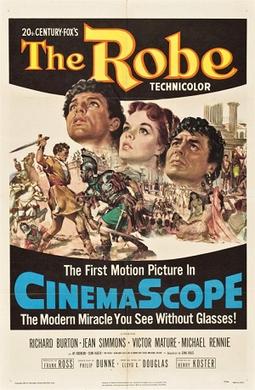
The film is directed and framed in an equally dull way. Its only claim to fame today is its status as the first film to be released in Cinemascope. This ultra-wide screen was intended to be another rival to TV – never mind the little box, look at the mighty vistas! But the importance of widescreen hangs over every creative decision of the film. Nearly every shot in Koster’s turgid direction is either middle or long, with the camera held static, focused on getting as much of the background in as possible, the actors often reduced to focus or foreground interest around the scale. It’s no wonder few performances break through this overbearing backdrop.

Every so often you get moments where you think the film is going to burst in life. They’re rare but they are there. There is a great scene between Demetrius and a man revealed (eventually, but it’s pretty obvious from the start) to be Judas Iscariot fresh form Gethsemane (Michael Ansara as Judas might, in two minutes of screentime, give the best performance in the film). Marcellus has a pretty good (if inexplicable) sword fight with a former rival. A mission is launched to rescue Demetrius. But every time something happens like that, the film immediately doubles back into heavy-handed symbolism and dull, unrevealing chat, all of which is focused on hammering home the message. 

The Robe is an impossibly dated religious epic, worthy, dull and lacking any real interest or reason to watch it. Its star seems a little embarrassed to be there. No-one else makes any impact. It’s directed with a flatness that turns it into a series of lifeless paintings. Its story turns a major moment of history into a boring, inconsequential series of events. It lacks even the campness that many epics of this genre carry that make it a good tongue-in-cheek watch. It’s just a yawnathon from start to finish, a crushingly tedious saga that has all the subtlety of being hit across the face by a prayer book for over two hours.