Category: Coming of Age film

City of God (2003)

Violence is a way of life in Fernando Meirelles calling card sensation City of God

Director: Fernando Meirelles, Katia Lund (co-director)

Cast: Alexandre Rodrigues (Rocket), Leandro Firmino (Li’l Zé), Phellipe Haagensen (Benny), Douglas Silva (Li’l Dice), Jonathan Haagensen (Shaggy), Matheus Nachtergaele (Carrot), Seu Jorge (Knockout Ned), Jefechander Suplino (Clipper), Alice Braga (Angélica), Emerson Gomes (Stringy), Edson Oliveira (Older Stringy)

After Parasite’s win for Best Picture, it’s easy to remember the last foreign language film that made such a comparative impact at the Oscars – and it didn’t even win anything! Capturing the public imagination, City of God is that most American of things: a gangster film. Chronicling the life and death danger of the lawless slums of Rio de Janerio in the 1960s and 1970s, the film is an electric mixture of Latin and US film-making, a compelling shot of adrenalin that captured the imagination of the film-going public and made many Hollywood films look staid and dull. 

Shot on location with a largely non-professional cast, the film uses as our window into this world aspirant photographer Rocket (Alexandre Rodrigues), who has a front-row seat for an emerging (true life) gang war that erupts in the slumps between unstable psychopath Li’l Zé (Leandro Firmino) and his rival Carrot (Matheus Nachtergaele) and bereaved former sniper turned bus conductor and killer Knockout Ned (Seu Jorge). Starting at the end, the film rewinds through time and moves from perspective to perspective in a series of dynamic short stories that slowly merge and meld together to complete the film’s whole.

The film is directed by Meirelles (who got an Oscar nomination) and Katia Lund (who didn’t). Meirelles invited Lund to collaborate with him on the project, and is generally credited with the film’s look, editing style, frenetic pace and distinctive style of sharply exposed Latin colours mixed with the look of a rock video, all dynamic angles and immersive action. Lund bought her documentary realism to the film, as well as working closely with the actors and helping to shape their parts of the story. Agreeing to take a specific “co-director” credit probably cost Lund the nomination, and it feels inexplicable she was unrecognised today, even more so since Lund has pioneered several successful TV series based around the world of the film.

Controversy aside, it’s a high water-mark certainly for Meirelles who has never quite managed to match it since (The Constant Gardener remains his best work since, marrying the dynamism here with one of Le Carré’s most emotional and strongest stories). With its lashings of Scorsese, Tarantino and De Palma (among others), City of God remains a hugely engaging and engrossing gangster flick that really feels like it captures the threat and grimy reality of the streets of Brazil. Each section of the city we see feels like a lawless wild west, where guns rule, the police have no say and a whole population of ordinary people keep their heads down and just try to avoid getting caught (literally) in the crossfire. 

In this world violence is endemic, life is a short and brutish cycle of slaughter where danger leads inevitably to death, short-termism is the norm and a series of essentially childish young men see the excitement of crime turn into the brutality of a life of violence. None more so than the film’s vicious dark heart, Li’l Zé a young man with a flickering temper, a love of violence and death, barely able to relate to other people, unanchored in the world whose life is a self-destructive quest to be the biggest fish in his pond. Played with a swaggering panache by Leandro Firmino (and a chilling coldness as a child by Douglas Silva), the self-named Li’l Zé dominates the film as the sort of life-wire threat Joe Pesci used to be for Scorsese, never certain whether he will laugh or shoot.
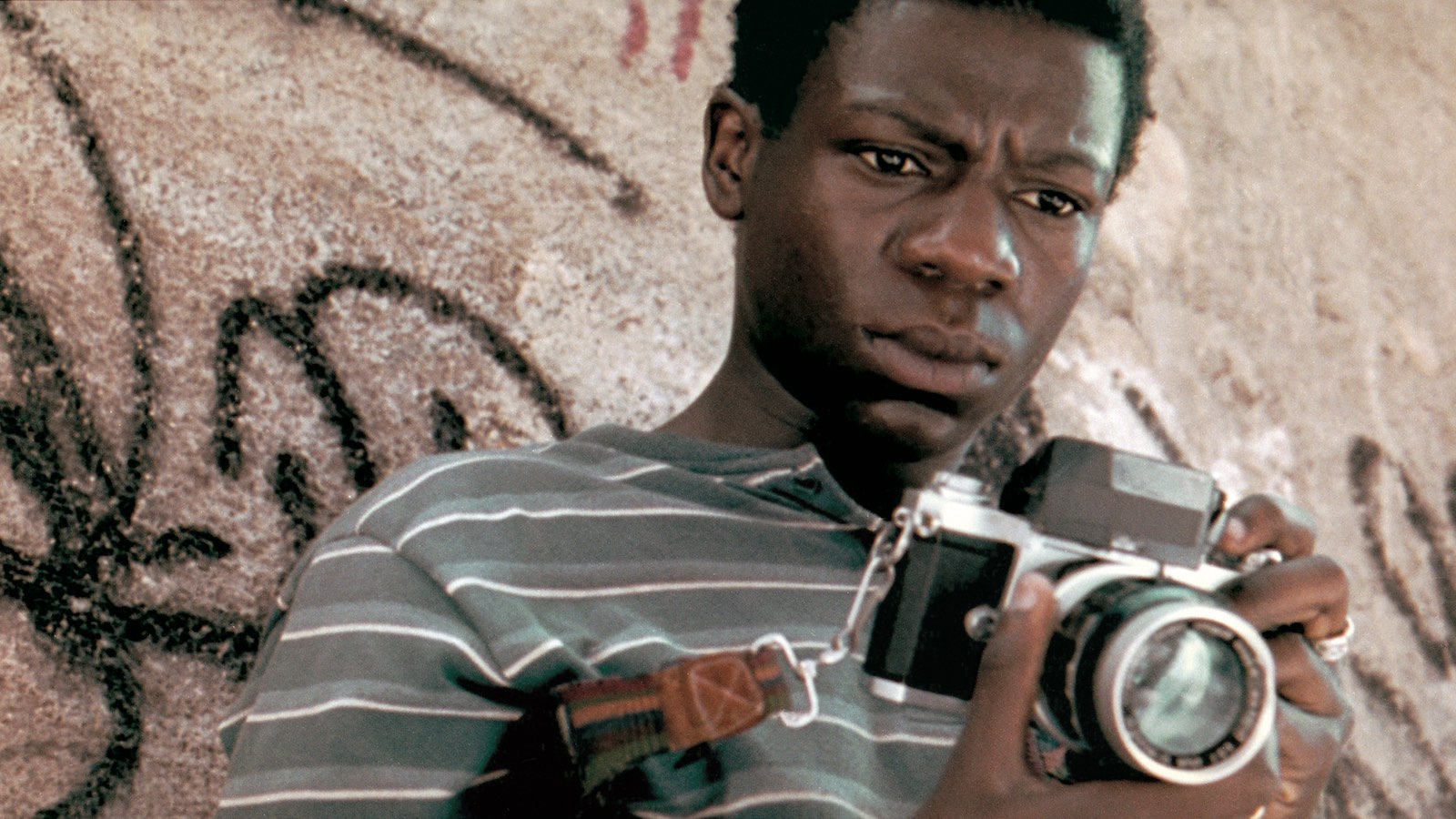
Which makes him perfect for the unpredictability of the slums, where everyone wants to be a hood, drugs are rife and crime and murder is a legitimate way of living. The film splices together several short story narratives to illustrated this with Altmanesque confidence. Each section of the film is introduced as “the story of X”, all of them expanding from the starting story based around three wanna-be-hoodlums whose mixed fates reference everything from The Third Man to A Bout de Souffle. From this the film organically expands, using Li’l Zé as the fulcrum who hinges every other story around him towards disaster. It’s neatly cross-cut as well, starting the end before rewinding through a neat transition shot into the past to explain how we got where we are.

There seems to be no good deeds in the city. The most likeable character, Benny, is himself a gangster (and Li’l Zé’s only friend and restraining influence) who is fun-loving and cool while not adverse to theft and murder when needed. Kingpin Knockout Ned starts out as a man of good intentions, determined to clean up the town that has left him bereaved and hurt, but becomes consumed by the dark impact of violence. All the time, many of these gangsters are in love with their public image both the awe and fear they inspire in those around them as the most powerful people in the neighbourhood, and from their growing coverage in the press.

It’s a cycle that seems doomed to repeat itself, not least through the film’s introduction of “The Runts” a group of trigger happy pre-teen would-by gangsters, who roam through the streets waiting their chance to turn small stick-ups into a criminal empire. They are no more than following in the footsteps of Li’l Zé, shooting his gun and experiencing murder at their age and now zeroing on owning the whole slum. It’s the dark ambition of capitalism playing out on the streets.

The film works however as framing it around the jaunty, relaxed narrative of Rocket gives it the feeling of a series of shaggy dog stories and coming-of-age tales (and the film carefully mixes in among the gangsters plenty of reminiscences from Rocket around his teenager upbringing, his first love and his passion for photography). With someone as easy-going as Rocket as our guide, the film never becomes overbearing or depressing but instead as entertaining and engrossing. In a way it’s a shock to remember it features as much killing (including of a child) and mayhem as it does, as well as a world-weary nihilism too it that the odd person may escape the streets, but the general world there will never change. 

A staggeringly confident piece of film-making, City of God remains an exciting and compelling piece of cinema.
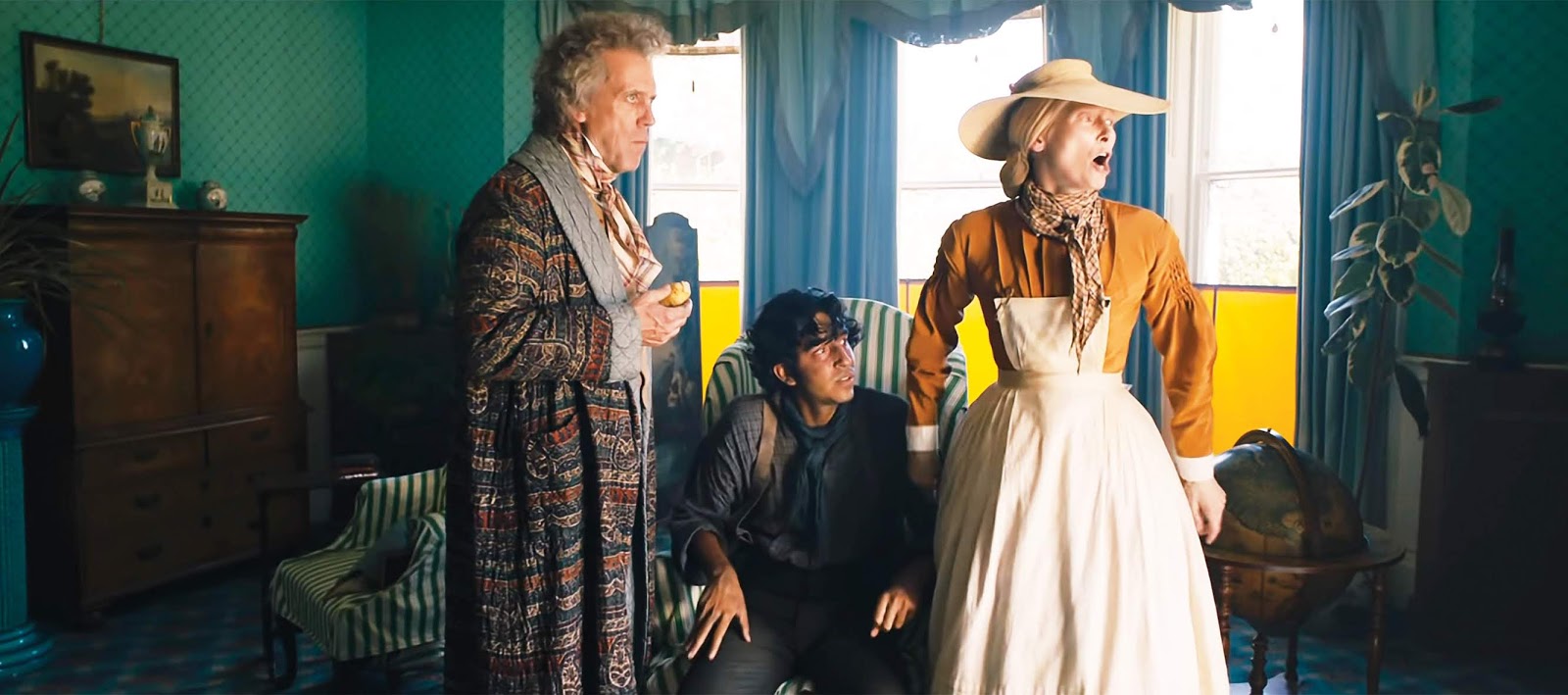
The Personal History of David Copperfield (2019)

Dev Patel makes a charming lead in this Dickens adaptation that finds the comedy but misses the heart

Dir: Armando Iannucci

Cast: Dev Patel (David Copperfield), Tilda Swinton (Betsey Trotwood), Hugh Laurie (Mr Dick), Peter Capaldi (Mr Micawber), Ben Whishaw (Uriah Heep), Paul Whitehouse (Mr Peggotty), Aneurin Barnard (James Steerforth), Daisy May Cooper (Peggotty), Morfydd Clark (Dora Spenlow/Clara Copperfield), Benedict Wong (Mr Wickfield), Darren Boyd (Mr Murdstone), Gwendoline Christie (Jane Murdstone), Anthony Welsh (Ham Peggotty), Rosalind Eleazar (Agnes Wickfield), Nikki Amuka-Bird (Mrs Steerforth), Anna Maxwell Martin (Mrs Strong)

If Charles Dickens ever had a favourite child, it was probably David Copperfield. His novel – heavily inspired by events in his own life and upbringing – is an epic masterpiece, part coming-of-age story, part heart-warming family saga, part social satire. It’s quite a challenge to boil down its hundreds and hundreds of pages – and multiple plot points and characters – into less than two hours, but that’s the task Armando Iannucci takes on here. Does it work?

Well, to be honest, not quite. There is a lot to admire here, I’ll say that straightaway. And maybe I’m hard on it as I’ve read (or listened to) the novel at least three times. But for me this version drains out the heart of the novel. It zeroes in on the comedy – and there are several scenes and characters that are inarguably funny – but in doing so it removes or peels away anything bittersweet or with even a hint of sadness. It’s funny, but also a strangely empty and unengaging version of the story that it’s hard to get invested in and finally seems to drag.

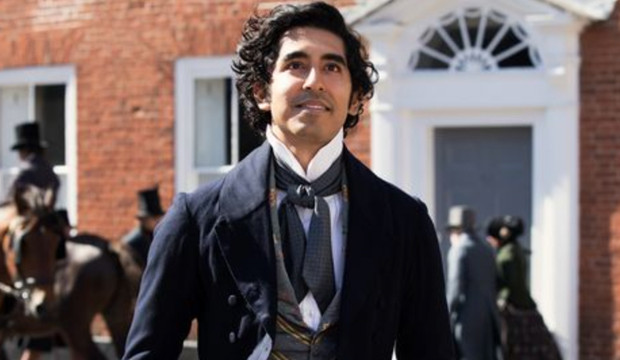
Iannucci uses a terrific framing device, inspired by Dickens’ own public readings of his work. The film opens with Copperfield (a wonderfully jovial and engaging Dev Patel) publically introducing his novel to a theatre full of people which, with a flourish, disappears as he walks into the scenery and into his own past. Iannucci sprinkles his film with little flourishes like this to remind us of the semi-created nature of what we are watching, from Mr Murdstone’s hand looming into the Peggottys’ boat to pluck Copperfield into the next scene, through to the use of projected imagery at key points to fill in visually backstories the characters in the scene are relating.

The book has been well pruned and structured – and this is in some ways a triumph of compression, since it ticks off nearly all the main storylines of the plot (with some changes) and includes all the main characters. The real purist will decry such things as the loss of Barkis and Mr Micawber’s famous lines, or the translation of Mr Creakle into a factory owner or Rosa Dartworth into Steerforth’s mother. But these are necessities of adaptation and much of the storyline remains the same (if abbreviated). The script punches up the comedy a great deal – Iannucci has been vocal in his feeling that Dickens does not get the appreciation he deserves as a comic writer.

The script also digs up a few gems in the novel – Copperfield’s nervousness in reading, his inability to read to Murdstone’s gaze, is imaginatively reinterpreted as dyslexia. The semi-Freudian longing he feels for the warmth and innocence of his lost childhood is neatly captured by casting Morfydd Clark (very endearing and charmingly ditsy) as both his mother and his first love Dora. There are several laugh-out loud moments and a charmingly freewheeling love for absurdity.

But what doesn’t work is that the heart and soul of the novel has been stripped out. There is, to put it frankly, no pain or difficulty here. The tears in Dev Patel’s eyes at the end of the film as he closes his recital with the audience and reflects on the triumphs and losses of his life feel unearned. Put frankly nothing seems that hard, for all poverty rears its head at time. Even the Murdstones are less fearsome and cruel than they need to be. Worst of all, anything of any real emotional depth or tragedy from the book is removed. The two key tragic deaths of the book are actively reversed here, with both Dora and Ham surviving at the end. The complexities of Copperfield’s feelings for Dora and Agnes are resolved with immense ease for a traditional happy ending in a garden of the heroes surrounded by friends and families (exactly the sort of happy ending that Greta Gerwig gently poked fun at in Little Women). 

It’s all boiled down and told for jokes and the emotional engagement just isn’t there. Dev Patel enters the film too early – Copperfield is a young adult before he even heads to his aunt’s house – meaning the lost, vulnerable sense of sad childhood turning into a happy one is completely lost, and Copperfield’s fragility is too quickly brushed aside. Mr Micawber (a funny turn from Capaldi, but far too wheedling) is played so much for laughs that his essential decency and kindness is lost in favour of a man who spends his life borrowing cash. Too often humour is the first and only port of call, and finally it crushes the heart out of the story.

There are triumphs in the film’s cast. Hugh Laurie is simply outstanding as Mr Dick – warm, funny, wise, surreal, eccentric, half a philosopher, half an engaging and excited child – it’s Laurie’s finest performance ever on film. Benedict Wong is very funny as the alcoholic Mr Wicklfield. Tilda Swinton has great fun as a battleaxe but wise Miss Trotwood. Nikki Annuka-Bird could cut glass as Mrs Steerforth. Aneurin Barnard makes for a charmingly dissolute Steerforth. Ben Whishaw is terrific as the unctuous and ambitious Uriah Heep. The colour-blind casting works a treat to bring a range of wonderful actors in.

It’s just a shame the story doesn’t translate as well. There is a theme somewhere in here of Copperfield trying to work out his identity (much prominence is given to his multiple names and nicknames) but it never really takes flight, serving as a fig leaf of an arc rather than an actual arc. It’s a film full of jokes and fine moments – but with no heart, and no real engagement with the audience, it ends up feeling far longer than reading the book.

Little Women (2019)

March Sisters: Assemble! For Greta Gerwig’s superlative adaptation of Little Women

Director: Greta Gerwig

Cast: Saoirse Ronan (Jo March), Emma Watson (Meg March), Florence Pugh (Amy March), Eliza Scanlen (Beth March), Laura Dern (Marmee March), Timothée Chalamet (Laurie), Meryl Streep (Aunt March), Tracy Letts (Mr Dashwood), Bob Odenkirk (Father March), James Norton (John Brooke), Louis Garrel (Professor Friedrich Bhaer), Chris Cooper (Mr Laurence)

Spoilers: Such as they are but discussion of the film’s ending (or rather Greta Gerwig’s interpretation of it) can be found herein…

There are few novels as well beloved as Louisa May Alcott’s Little Women. So much so – and so successful have been the numerable adaptations, not least Gillian Armstrong’s 1994 version – that it’s hard to see what a new adaptation could bring to the story that hasn’t been covered before. A new window on the story is triumphantly found though in Greta Gerwig’s fresh and vibrant adaptation, blessed with some terrific performances, and telling its own very distinctive version of the story.

Gerwig’s version crucially starts off in the sisters’ adult lives: Jo (Saoirse Ronan) in New York struggling to make it as a writer, while Meg (Emma Watson) nurses the ill Beth (Eliza Scanlon) back home with Marmee (Laura Dern), and Amy (Florence Pugh) encounters their childhood friend Laurie (Timothée Chalamet) in Paris. This is intercut with the story of their growing up in Massachusetts, with the past story line eventually catching up with the present day. 

If that sounds like it should make the story hard to follow, don’t worry – this is astonishingly confident work from Gerwig, wonderfully directed with zest, fire and imagination (making her exclusion from the Best Director list at the Oscars even more inexplicable – chalk that up I guess to sexism against pictures about “girls” and the fact it’s not as overtly flashy as the rest of this year’s nominees). This takes a familiar book, and fires it up with all the energy of independent, modern cinema, creating something that feels hugely fresh and dynamic. The cross cutting between the two timelines work beautifully – not only is it always perfectly clear, but it also makes for some wonderful contrasts between events in the past and present. None less than the recovery of Beth from TB being followed (with an almost shot-by-shot echo in its filming) by the reactions to Beth’s death. Inventions like this add even greater depth and meaning to the moments and hammer home some terrific emotional high points. 

Gerwig’s style throughout the film invests the story with a great energy, particularly in creating the warm bohemian attitude of the March family. This really feels like a family – conversations between them are fast, people talk relaxedly over each other, the chemistry is completely real, and the camera captures in its movement the warmth and energy of these characters who are completely comfortable in each other’s presence. It’s no surprise that Laurie is taken so quickly with this family, or wants to be part of it. Gerwig invests the family with a dynamic, excited sense of freedom and urgency. Helped by the warm glow that the childhood sections of the film are shot with, these scenes hum with a glorious sense of familial warmth and excitement. 

The camera often moves with careful, but perfectly planned, movement through scenes, mixed in with moments of fast movement – following Jo through streets, or the playful exuberance of Jo and Laurie’s first meeting (and dance) at a society ball. It’s a vibe that carries across to the performances, anchored by Saoirse Ronan’s fabulous performance as Jo. Fervent, intelligent, idealistic but also stubborn, prickly and difficult, Ronan’s Jo carries large chunks of the film, with the character skilfully mixed in with elements of Louisa May Alcott. Ronan most impressively suggests a warmth and familial love for Laurie at all times, that never (on her side) tips into a real romantic feeling. She also has superb chemistry in any case with the excellent Timothée Chalamet, who is just about perfect as a dreamy, but quietly conventional in his way, Laurie.

Gerwig’s primary rejig – and a reflection of the new structure she is chosen – is to allow more screen time to Amy, usually the least popular of the four sisters. She’s also helped by a sensational performance by the Oscar-nominated Florence Pugh as Amy, who not only plays a character perfectly from her mid-teens to her early twenties, but also invests the character with huge amounts of light and shade. The film gives a great deal of time to Amy’s time in Paris – her frustration with living in Jo’s shadow, her longing for her own artistic career (and recognition of her conventional talent – brilliantly established by a wordless glance Pugh gives an impressionist painting compared to her own literal effort) and her own romantic feelings and dreams. Cross cutting this with her past actions – her more temperamental and less sympathetic moments (burning Jo’s book!) that have pained generations – gives the audience far more sympathy and understanding for her. Pugh is also pretty much flawless in the film.

There are a host of superb performances though, with Watson capturing the duller sense of conventional duty in Meg, but spicing it with a sad regret for chances lost; Laura Dern is wonderfully warm as Marmee, but mixes in a loneliness and isolation below the surface; Chris Cooper and Meryl Streep sparkle in cameos. There is barely a false step in the case.

All the action eventually boils towards the ending – and Gerwig’s bravest and most unconventional decisions, in subtly adjusting the final conclusion of the story. At first it seems that the cross cutting of the story has short changed heavily the Bhaer-Jo relationship (Bhaer appears only in the first half an hour of the film and the end), as it cannot lean too heavily on romance when many in the audience will still be expecting a Jo-Laurie match up. 

But Gerwig actually uses this as a skilful deconstruction of the novel. Always feeling that Alcott desired Jo to be a single author – but inserted the marriage to Bhaer at the end to help sell the book – Gerwig effectively has Jo do the same thing. At a crucial moment in the final scenes, we cut to Jo negotiating with her publisher (a droll cameo by Tracey Letts), who insists on a happy ending. Cue a “movie style” chase to intercept a departing Bhaer (shot with the golden hue of the past, while Jo’s meeting with the publisher has the colder colours of the present). Our final shot shows Jo watching her book being printed, cross cut with a golden hued vision of “Jo’s” school with husband in tow. 

It’s a genius little touch, as it’s subtle enough to allow viewers to take the happy ending as it appears in the surface, but smart and clever enough to make the movie unique and different from the other versions (and that ending from the 1994 version is hard to top!). It may undermine the final relationship – and offend those who like the idea of Jo deciding she wants something different than she at first thought – but in its freshness it can’t be challenged. It also makes for a film from Gerwig that is both fresh and exciting and also bracingly and thrillingly in love with Alcott and her work.

Jojo Rabbit (2019)

Taika Waititi directs and is an imaginary Hitler in his coming-of-age/Nazi Germany satire Jojo Rabbit

Director: Taika Waititi

Cast: Roman Griffin Davis (Johannes “Jojo Rabbit” Betzler), Thomasin McKenzie (Elsa Korr), Scarlett Johansson (Rosie Betzler), Taika Waititi (Adolf Hitler), Sam Rockwell (Captain Klenzendorf), Rebel Wilson (Fraulain Rahm), Alfie Allen (Lt Finkel), Stephen Merchant (Deertz), Archie Yates (Yorki)

A comedy set in Nazi Germany? Well if there is one thing you need to get right, it’s the tone. Taika Waititi’s comedy about a boy with an imaginary friend who just happens to be a version of Adolf Hitler more or less does so – although I’d argue it’s less a comedy and more of a terrifying condemnation of the horrific powers of indoctrination. But that sells a lot less well in trailers doesn’t it?

Set in late 1944, the boy in question is Johannes (Roman Griffin Davis – a revelatory performance) a ten-year old who wants to be a passionate Nazi but is undone by his own underlying sweetness. Not that it stops him believing everything he’s told by the regime and its theories around Jews, re-enforced by his imaginary best friend, a childishly stroppy version of Adolf Hitler (played by Waititi himself). Nicknamed Jojo Rabbit after his failure to kill a rabbit on a Hitler Youth indoctrination camp, then later blowing himself with a grenade meaning he can no longer qualify for military service, Jojo sees his dreams of becoming the ultimate Aryan fading away. Things become even more conflicted when he discovers his secretly anti-Nazi mother Rosie (Scarlett Johansson) is hiding a teenage Jewish girl Elsa (Thomasin McKenzie) in the walls of his late sister’s bedroom.

Waititi’s film returns to his affectionate roots of coming-of-age stories but in an entirely different setting – here the child must grow up by learning to reject the vile ideologies that have been hammered into him by the system. Waititi shoots the entire film from the perspective of the child’s view of the world, meaning the horrors of the war are kept largely at a distance from us (until a sudden and terrible event brings them overwhelmingly into frame). The Nazi world around Jojo looks like some glorious Enid Blyton summer, the colour of which only gradually disappears from the film as event proceed. It’s a neat visual way of capturing the child’s innocence.

This also means many of the characters are seen from Jojo’s perspective. Most obviously Adolf Hitler (the imaginary one), played with gleeful comic gusto by Waititi, is far from the actual dictator but is a sort of ten-year-old’s idea of what he might be like, childish, oddly innocent in places, prone to strops – but also has enough darkness in him (which emerges more and more as the film goes on) to show that he is still part of the hateful ideology the real Hitler promoted. Similarly, Jojo’s first impression of Elsa is shot and framed like some sort of creepy horror film – matching the ideas that have been indoctrinated into him by the regime that the Jews are a near-Satanic threat.

That indoctrination is a big part of the film’s primary themes. An early sequence at a Hitler Youth camp is less funny – even if it does have moments of brash comedy and some good jokes – more horrifying for the mantra of violence, race hate and slaughter that the regime is preaching almost every second that its representatives appear on screen. It’s actually chilling seeing this group of impressionable kids succumbing so completely to the excitement of this relentless onslaught of propaganda. The passion that the Nazis inspire is wonderfully caught by Waititi in the credits, with Leni Reifenstahl footage beautifully recut to the Beatles singing in German – it’s hard to miss the parallels. (The film makes some neat use of modern music, with David Bowie also popping up).

Jojo however is still a sweet, kind, generous boy under the surface – however much he has swallowed the constant message from his government that he should aspire to being a cold eyed killer. Waititi’s message is that there is still hope in the roots of next generation, however much the current generation does it’s best to mess that up. It’s something that his mother – exquisitely played by an Oscar-nominated Scarlett Johansson with a wonderful sense of playfulness hiding an intense sadness – clings to desperately, knowing the sweet boy she loves is still largely there, however twisted he is by a cruel ideology.

It’s the relationship with Elsa that helps bring that out, with Thomasin McKenzie wonderful as an initially hostile young girl, determined to never be a victim, who softens and thaws as she senses the kindness in this boy. Her hiding is all part of Rosie’s own defiance of the regime and its oppression, the horrors of which – from random searches to executions – slowly begin to creep into the film. 

If there is a problem with the film, it is that the darker elements of this film – and there are many – often play a little awkwardly against the more comedic and even farcical elements. Waititi as an actor gets the tone right – but others, particularly Rebel Wilson as an oppressive Nazi – head too far into unfunny, tonally flat farce. Sam Rockwell does a decent job as a German army officer, even if his obvious bitterness for the war effort and contempt for Nazism makes him an unlikely candidate to be running an indoctrination camp, but even he veers sometimes too far onto the side of flat farce. Other than Waititi, only Stephen Merchant as an officious Nazi official – including a running joke of continuous Heil Hitler greetings – gets the balance right between comedy and darkness.

It’s a balance the film doesn’t always make very successfully – but it’s balanced by the warmth that it feels for Jojo, the excellence of Griffin Davis and McKenzie’s performances, and the moments of genuine shock and trauma that surprise the viewers and head the film openly into very darker territory. Less a comedy and more a plea to allow children to be children, not victims of the views and desires of adults, it’s a thought provoking film.

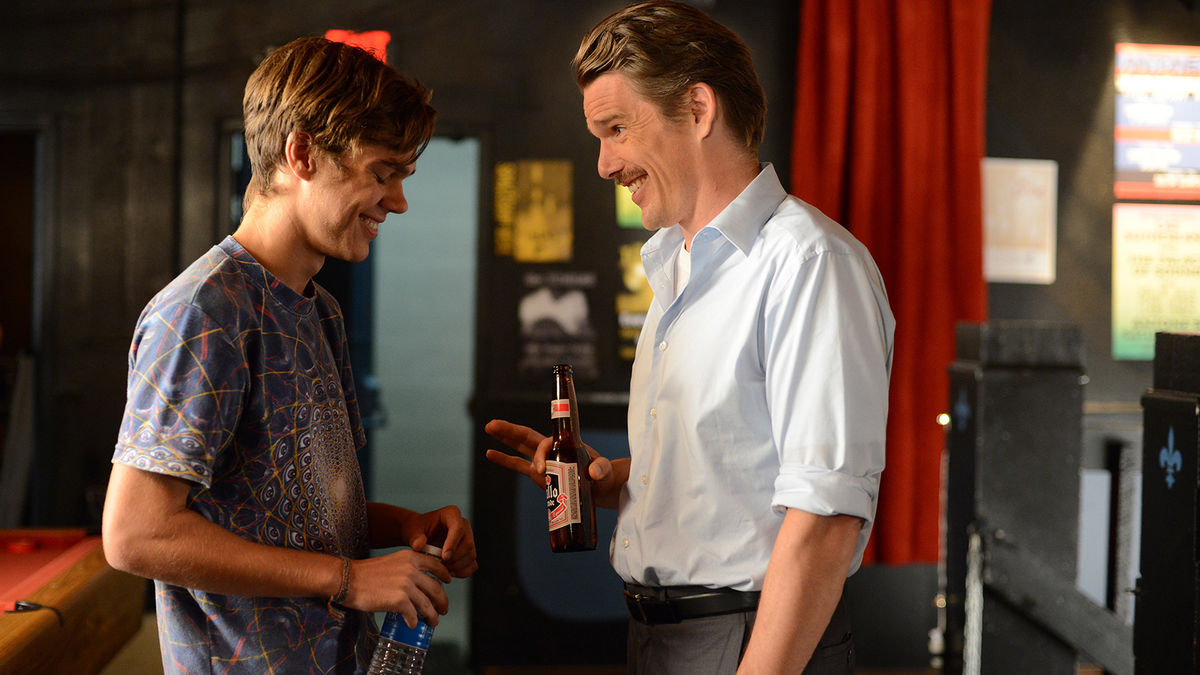
Boyhood (2014)

Ellar Coltrane grows up before our eyes in Richard Linklater’s 12-years-in-the-making Boyhood

Director: Richard Linklater

Cast: Ellar Coltrane (Mason Evans Jr), Patricia Arquette (Olivia), Ethan Hawke (Mason Evans), Lorelei Linklater (Samantha Evans), Libby Villari (Catherine), Marco Perella (Bill Welbrock), Brad Hawkins (Jim), Zoe Graham (Sheena)

If there is one thing we can all relate to, it’s the trials and tribulations of growing up, that shift from being a child to an adult. It’s the subject of Richard Linklater’s film Boyhood, which follows the growing up of Mason Evans (Ellar Coltrane) from the age of 6 to 18 and his relationship with his divorced parents Olivia (Patricia Arquette) and Mason (Ethan Hawke) and his sister Samantha (Lorelei Linklater). What is however most striking about Linklater’s film is that it was shot over a staggering period of time, 12 years in fact, meaning that Ellar Coltrane and Lorelei Linklater literally grow up on screen before our eyes.

It makes for an almost unrepeatable power over any other film dealing with the same subject, by letting all the actors naturally grow older over the length of the film. Suddenly it becomes not just a film dealing with an idea, but instead a real life dramatisation of the process of ageing, becoming some sort of emotional scrap-book or album, a type of film version of the trick of making a drawing move by quickly flicking the pages of a notebook. It adds an air of depth and reality to the whole film that gives it a universal strength and appeal. It’s an actual slice of real life, it’s unrepeatable and profoundly well done and immersive.

Linklater was given near creative freedom to shoot the film – with the small yearly budget for shooting the film being squirrelled away into various studio accounts. Linklater creates a film with a lack of actual drama that makes it feel even more like a part of life. There are precious few “narrative points” or dramatic tools in the overall film, with the exception maybe of Olivia’s hard drinking second husband Marco (Bill Welbrock). Instead, the issues that Mason (and Samantha) deal with have a universal relevance. These are the sort of events – the sort of conversations – that any child could have growing up. Far from making the film dull, this serves to increase its power.

Linklater based each year’s filming script on the events and feelings that were going on in the life of Ellar Coltrane at the time (although he had a clear idea of the final scene and shot), which perhaps also helped to draw such a series of deeply felt and real performances from Coltrane. The intimacy of the story also brilliantly makes each scene feel engrossingly real, precisely because everything is grounded in reality and nothing in some sort of overarching film narrative.

It’s a film entirely about capturing the rhythms and beats of real life and Linklater’s style allows moments of spontaneity, of naturalness and reality. Nothing in the film ever feels forced. You could argue that it also leads to a film that is almost restrainingly unambitious – it’s about as grounded as you can get, and barely has a structure as such at all beyond time passing. But that would be to miss the point – and the very fact that the film ignores virtually all the clichés of filmmaking narrative and storytelling is something to be praised than to be criticised. 

The film works so well due to the commitment of all involved, not least Arquette and Hawke as the parents. Arquette won nearly every award going (including the Oscar) as the mother, and her performance is a testament to the film’s strengths. It totally eschews the loud moments of acting, the look-at-me Oscar bait that the role could have had, to instead focus on a quiet, sad dignity – but also warmth and loving regard for her children. There is no studied pretence to the role at all, but instead Arquette seems to play instead the moments of joy, tinged with disappointment at moments and chances lost from early motherhood, that you can imagine everyone feeling. It’s a bravely real performance, stuffed with moments of searing, heartfelt emotional truth.

Hawke is just as good as the father, a man who slowly comes to terms with his own responsibilities and adulthood over the course of the film. Starting as still something of a would-be beatnik and playboy, we see him slowly – especially after a second marriage – grow up and accept the role of an adult and a parent, while still clinging to the idea of dispensing fatherly/brotherly wisdom to his son.

If Linklater’s film does have a flaw it’s on this focus of father-son. There really was nothing to stop this from being Childhood rather than Boyhood, but instead it’s the story of the son (and with a particular stress on his bond with his absent father) that is at the heart of the film. It’s perhaps reflecting the angle that Linklater himself bought to the story, but its shame the film doesn’t try and be more even handed by allowing us to get a greater sense of how time and childhood affected both Mason and Samantha, rather than filtering Samantha’s experience through Mason’s perspective. It also means that Mason’s relationship with his mother is downplayed in favour of the bond between father and son, a general preoccupation with male relationships that runs through the film.

It’s a minor flaw I suppose, more of a missed opportunity – and less tasteless than a clumsy sequence where Oliva inadvertently motivates a Mexican immigrant to change his life, something he is profoundly grateful for years later but which she seems uncomfortably unaware of – but then this is a film that gets so much else right. Linklater’s live-action time-lapse film is a work of art that is probably unrepeatable, and is so low-key and normal that it carries a force and relevance few other films can.

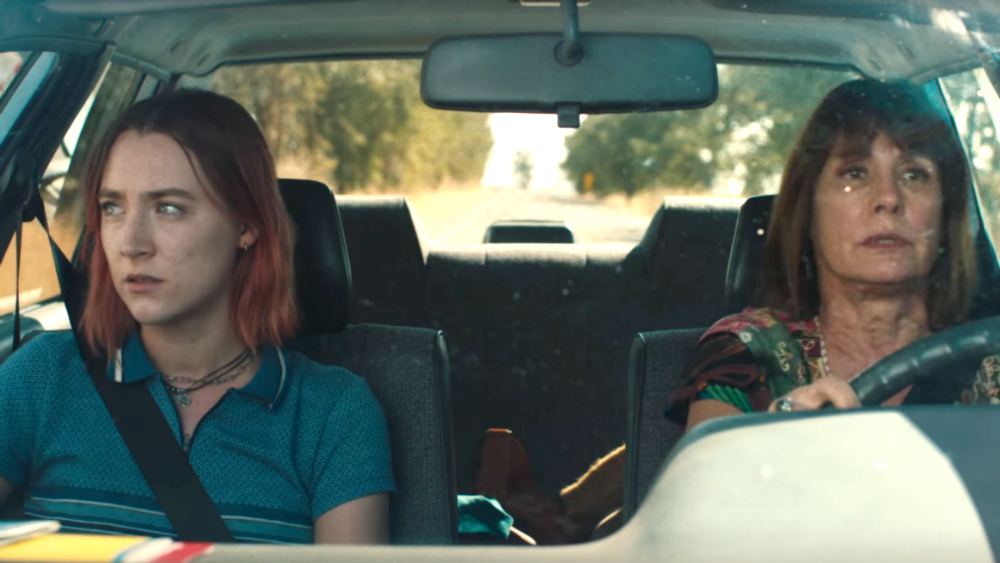
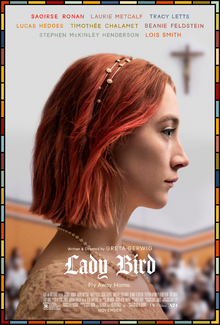
Lady Bird (2017)

Saoirse Ronan and Laurie Metcalfe are mother and daughter with more in common than they think in Lady Bird

Director: Greta Gerwig

Cast: Saoirse Ronan (Christine “Lady Bird” McPherson), Laurie Metcalfe (Marion McPherson), Tracy Letts (Larry McPherson), Lucas Hedges (Danny O’Neill), Timothée Chalamet (Kyle Scheible), Beanie Feldstein (Julie Steffans), Lois Smith (Sister Sarah Joan), Stephen McKinley Henderson (Father Leviatch)

In Sacramento, California, in 2002 Christine “Lady Bird” McPherson (Saoirse Ronan) is a self-consciously assured teenager, constantly pushing to define herself as new and original, down to giving herself a new name (“Lady Bird”) and playfully enjoys pushing against the limits of what is acceptable at her Catholic school. She however butts heads with her mother Marion (Laurie Metcalfe), a hard-working nurse, supporting the family as her husband Larry (Tracy Letts) is unemployed and out-of-step skills-wise with the jobs market. Mother and daughter though are strikingly similar people, independent minded but with a streak of loving kindness.

It’s the relationship between these two characters that is the heart of Gerwig’s gently made coming-of-age (of a sort) drama. The key scenes that power the film are both the clashes and moments of fun between these two. There are feuds and angry words – but they often sit-by-side with a loving regard and a shared world perspective. Gerwig gets superb performances from both actors, with Ronan every inch the difficult teenager, full of promise but overwhelming with arrogance and mistakes that constantly hurt those around her. Metcalf is equally good as a woman weighed down with cares, who constantly makes time for others – and therefore finds her daughter’s lapses into selfishness all the more infuriating as they fly in the face of everything she values in life.

The film opens with a fight between these two that just seems to capture the moment. After a long drive to a perspective college, they finish an audiobook of The Grapes of Wrath both overcome with emotion from the stories end. Seconds after it finishes, Lady Bird goes to turn the radio on, her mother asks for a moment of reflection – and we are off from a shared emotional experience into a mother-daughter row. Setting the tone of how many of these will go – and the characters they display in the film – Lady Bird impulsively throws herself out of the car when she feels she is unable to come up with a decent comeback to a point. It’s a plaster cast she will wear for a large part of the film – and an example of the impulsive addiction to terrible decisions that seems to be constantly on the edge of ruining her friendships and chances.

A lot of this material is, to be honest, pretty standard stuff for movies of this genre. And Lady Bird herself is at times a rather irritating and even annoying lead character, one who seems to be constantly hurting people around her with very little regard for their feelings and seems to be continually forgiven regardless. Her treatment of her best friend Julie (a fine performance of endearing sweetness by Beanie Feldstein) sees her drop her and then pick her back up again with a suddenness that feels like it has missed the hurt and pain she has caused.

But then other parts work so well because the script approaches them with a quirky eye for a good joke and a sharp line. There are some very fine jokes among the script, a high point being a PE teacher turned drama director who directs his plays in the exact way he would plan out a football game. Little moments of character observation and behavioural ticks often strike home and frequently raise a smile.

But it also carries across the same observational honesty to less savoury attitudes of being a teenager. The selfishness, the feuding. Lady Bird’s sexual awakening of course happens with a self-obsessed arrogant would-be-poet aiming at a higher plane of intelligence (played with an assured arrogance by Timothée Chalamet). Lady Bird’s striving to constantly to be more or have more than she has always feels very teenager – life can’t just be what she has, she must need or be destined for greater things, or to improve in some way, to make it to the college she wants, to find some deeper meaning, to live a life that expands beyond her horizons and make her stand out.

But, the film suggests, she actually seems destined to become someone more like her mother –decent, kind, gentle, perhaps with a greater artistic calling, but fundamentally a thoughtful person. One early boyfriend – very well played by Lucas Hedges – who is revealed as unsuitable in a way not-at-all surprising when you consider he is the lead actor of the school drama group – is someone she accepts and comforts with a complete emotional openness. Her father’s travails in the job market is something she feels great empathy for. When returning to the company of her friend Julie, she is warm, caring and full of energetic affection.

It makes for a gentle and engaging film – perhaps nothing you haven’t really seen before, but presented with a lot of assurance and freshness by Gerwig, who is a director with an eye for the moving moment (a scene where Tracy Lett’s father sees his son go-up for the same job as him – a job for which the son is more qualified – is unmatched in its sad mix of acceptance and pride) and more than a taste for the eccentric comedy that brings spark to the drama. Powered by two excellent performances by Ronan and Metcalfe, Lady Bird may, like many teenagers, be difficult to like sometimes but has lots of promise.

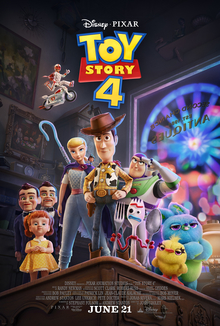
Toy Story 4 (2019)

Woody is tempted by a new life in Toy Story 4

Director: Josh Cooley

Cast: Tom Hanks (Woody), Tim Allen (Buzz Lightyear), Annie Potts (Bo Peep), Tony Hale (Forky), Keegan-Michael Key (Ducky), Jordan Peele (Bunny), Christina Hendricks (Gabby Gabby), Keanu Reeves (Duke Caboom), Ally Maki (Giggle McDimples), Joan Cusack (Jessie)

Probably the hardest thing about making the fourth film in an acclaimed, perfectly-formed trilogy (yup) is justifying its existence in the first place. That’s basically the main task that faces Toy Story 4 – does it manage to exist without ruining the other three? And was there any need to go back to a story that had already been pretty much finished perfectly.

After the third film, Woody (Tom Hanks), Buzz (Tim Allen) and friends are now settled with their new child, Bonnie (an imaginative 6 year old). But Woody is being played with less and less, and is struggling with the adjustment from being Andy’s most important toy to becoming a little-used toy in the box. Taking it upon himself to accompany Bonnie to her first day at kindergarten, he sees her use an art-class to turn a spork into a toy – a toy that quickly comes to life as Forky (Tony Hale). As Bonnie’s parents try to ease her anxiety about starting kindergarten by taking her on a road-trip, Woody obsessively tries to train the reluctant Forky – who doesn’t want to be a toy – in how to be a favourite toy.

When Toy Story 4 rapped up, I basically said I didn’t really need to see it again. That’s quite a sad statement to make considering the original trilogy of films are so damn good. But this never really feels like it does justify its existence. Toy Story 3 finalises the whole saga so well with Woody and the other toys coming full circle, having helped Andy grow up and now being passed to Bonnie to help her deal with her childhood. It’s a beautiful, heart-warming story – and there isn’t a need to see what happens next. 

Toy Story 3 ended with Woody accepting that Andy has grown up, choosing to stay with his friends as a toy rather than going to college with Andy. But here we need to hit the reset button so that Woody is now missing Andy and his previous status – but is also in denial about this. I think there is something in this that is working towards Woody working out whether he wants to continue with a life of dedicated service or whether he wants to move on and change his life completely. Of course the scales are weighted a bit by the fact Woody is no longer a favourite toy and – worse! – is gathering dust in a cupboard. But it’s all a bit unclear and gets a bit lost.

Part of this is the amount of time given over to Forky, a rather trying and faintly irritating “comic” character, whom I could certainly have done without. He exists primarily as a motivation for Woody to remain at the funfair the road-trip gets stuck at, but the long stretch of time they spend apart means the mentor-mentee relationship the film starts with trails off and disappears for a large chunk of the film. As a mirror on Woody, the part is a failure.

In fact most of the plot gets stuck at the funfair along with the road trip, as the film introduces Gabby Gabby (voiced by Christina Hendricks) a voice-box doll from the 1950s with a misfunctioning voice box who has lived her life in an antiques store and dreams of being a real toy. Gabby’s obsessive belief that gaining a working voice-box (from Woody!) will get her the love of a child drives most of the rest of the film, a slightly rambling action-adventure that features Woody, Buzz and a gang of newly-met toys breaking in, then out, then back in to the antiques store. It’s a sprawling series of adventure scenes, that seems a million miles away from the film’s original opening of Bonnie dealing with going to school for the first time.

In fact, poor Bonnie gets almost completely shelved after the first act of the film, along with the rest of the original cast who barely appear. Jessie, Rex, Slinky Dog, Hamm and co are left “guarding the base”, hardly having any impact on the film and kept separate from Woody and Buzz for ages. Since the first three films revolved so heavily around the “family” mechanism of the group of toys, to shelve most of them into background characters seems a real shame. 

Instead the film starts to focus on Woody’s fear of being “a lost toy” – something put sharply into perspective by him re-encountering Bo Peep (Annie Potts) his sometime love-interest from films 1 and 2 (not present at all in 3). With a “nine years earlier” flashback opening the film, showing Bo Peep being gifted on to a new child, the film catches up with her having escaped from Gabby’s antiques store and now leading a free life, without a child, doing what she wants, when she wants. There is some decent chemistry between the two, but more could have been made of showing Woody slowly seeing that there are positives in not having a child as well as the negatives he has always associated it with. But like so many things in the film, with so much going on and so many new characters being introduced, the thematic issues get lost.

There is just too much plot. Essentially Forky exists to give Woody a reason to remain at the funfair. Gabby exists as an obstacle to stop them leaving. The funfair is a sort of existential trap for the heroes. But everything just bogs down the film, making the storyline increasingly top heavy. Buzz seems to have taken a step or two down in intelligence. Most of the new characters don’t engage as well as the old ones, even though Keanu Reeves has great fun as a nervous stunt toy. But the film has no economy, it gets crowded over with events.

Which is a shame as there is a simple thematic story here of Woody accepting that one stage of his life has finished and he needs to move on to the next. There was, I am sure, a way of telling this story that didn’t feature all these new characters, the confusing setting and the overlong adventure sequences. There was a way of doing this in parallel with Bonnie needing to grow up a little and start going to school. Of making it harder for Woody to think about leaving, because he has the whole family of toys with him (rather than on the sidelines). But the film doesn’t do it. It’s all too often flat footed, slow and missing the emotional target. It’s Toy Story so there are good moments. But they should have stopped at three.

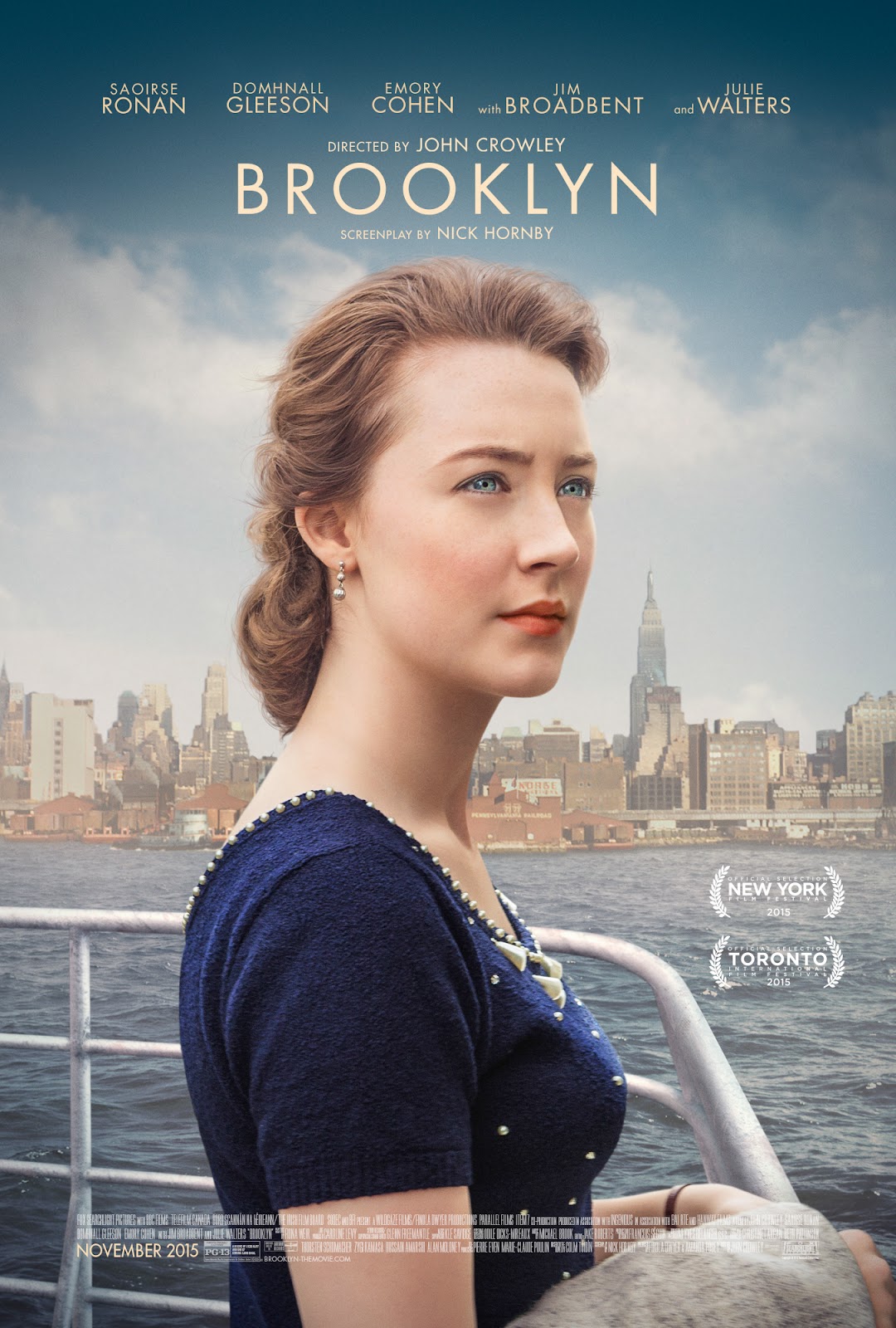
Brooklyn (2015)

Saoirse Ronan excels as an Irish immigrant in the USA, torn between two loves

Director: John Crowley

Cast: Saoirse Ronan (Ellis Lacey), Emory Cohen (Tony Fiorello), Domhnall Gleeson (Jim Farrell), Jim Broadbent (Father Flood), Julie Walters (Mrs Kehoe), Brid Brennan (Miss Kelly), Eva Birthistle (Georgina), Fiona Glascott (Rose Lacey), Jane Brennan (Mrs Lacey), Jessica Paré (Miss Fortini), Emily Bett Rickards (Patty), Nora-Jane Noone (Shelia), Eve Macklin (Diana), Jenn Murray (Dolores), Eileen O’Higgins (Nancy)

In the 1950s, Irish immigrants flocked to Brooklyn to build themselves a new life. Those who made the move often found themselves torn between two worlds – the lure of the new life they were building across the water, and the pull of the land of their fathers. Brooklyn, based on a successful novel by Colm Tóibín, places this conundrum in an intensely dramatic context by making the conflicting calls on its central character as much romantic as they are emotional.

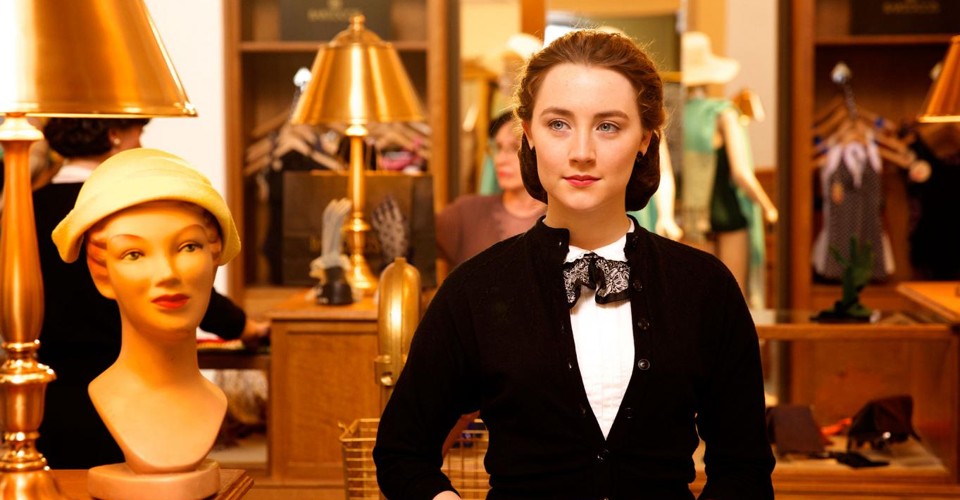
Ellis Lacey (Saoirse Ronan) is our homesick young woman, eager to build a new life in America. Sponsored by kindly priest Father Flood (Jim Broadbent, with more than a passing resemblance to Tóibín) and living in the boarding house of kindly-but-no-nonsense Mrs Kehoe (Julie Walters, in a role surely written for her) she finds work in a department store and trains at night as book keeper. She meets and falls in love with a sweet Italian American plumber Tony (Emory Cohen), but when tragedy occurs back in Ireland, on her return there she is strongly drawn to her homeland and to kindly, handsome Jim Farrell (Domhnall Gleeson). Which life will Ellis choose?

You can see why Brooklyn was so popular with Oscar voters, and why it struck such a chord with so many people. It’s reassuringly, warmly, old-fashioned, a big-hearted, brightly filmed, gorgeously mounted “woman’s picture”, the sort of story that Hollywood studios churned out in the 1940s and 1950s (you know, those sort of “who will she choose!” films). Crowley pulls the material together however with real emotional force, married with an interestingly different (if gently touched upon) theme of the immigrant experience.

Helped by a very good script by Nick Hornby, Brooklyn is not only emotionally moving but also much funnier than you might expect. Part of this is deliberate choice, expanding parts of the novel (particularly the dry humour of Mrs Kehoe, seized upon with relish by Julie Walters) that bring the funny, but also from the warmth, regard and humanity it invests its characters in. Ellis is a character so well drawn, whose feelings are so real, that we end up feeling deeply invested in her, and all the more ready to respond to her quick intelligence and dry (but gentle) wit. 

It’s a gift of a part for Saoirse Ronan, who is quite simply outstanding as a quiet, sheltered woman who grows, changes and decides to create her own destiny before our very eyes. (Helped by Hornby’s script again, which uses the Ireland-USA-Ireland structure to pinpoint many dramatic bookends and contrasts that Crowley subtly, and not forcefully, brings to the screen.) Ronan’s intelligence and her conflicting desires are clear in every scene, while her eyes seem able to communicate reserves of emotional depth. In two cultures where it isn’t easy for a woman to define her own destiny, Ronan brilliantly shows the difficulties many woman had in understanding or expressing what they want, in a world where they haven’t been set-up to think like that.

The film also doesn’t make it easier for her by making her two suitors – while radically different men – both such charming, lovely guys. Cohen’s Tony is a boyish enthusiast, full of hopes and dreams, who seems to represent everything that America has to offer Ellis. Domhnall Gleeson’s Jim is decent, honourable, kind, old-fashioned man who represents everything that she realises her Irish culture has for her – tradition, decency and a sense of self. It also speaks to how well drawn Ellis is by the film, and how deeply well-though out Ronan’s performance is, that it makes perfect sense that these two very different men would be drawn to her, and that both bring out different parts of her personality, which never feel contradictory.

It works as well because we’ve lived through everything Ellis has. She is present in nearly every scene in the film, and we see her change from a shy, scared, frightened woman on the boat from Ireland who needs to be cared for by an experienced emigrant fellow passenger (a very good cameo from Eva Birthistle) to a woman who flourishes in her new surroundings and the opportunities she is given. We need to feel that connection with her, since some of her behaviour (if it came from a man) would probably be seen as quite shabby indeed. But because we have such an understanding of her inner life – and because Ronan has such an empathetic and expressive face – we understand the reasons for her conundrum.

It’s that conundrum that lies at the centre of the film, and to be honest what dominates it. It works because it is done with such emotional truth (aided by Michael Brook’s excellent, heart-string tugging score that mixes American sounds with Irish folk to glorious affect), but the film is primarily a nostalgia romance. While it’s very setting makes you think about the immigrant life, it has very little to say really about either the cultural phenomenon or the impact it has on either the USA or Ireland (a charity Christmas meal for former Irish railway workers now all homeless is as close as it gets to talking about long-term integration). It doesn’t really matter, because the central story sweeps you up so much, but it does make the film more of a romance than the grander claims made for it by some as some sort of commentary on Irish immigration.

But there’s nothing wrong with such a handsome, romantic, emotional drama, or one that feels so reassuringly old-fashioned, even as it is made with touches of wit and confidence. Making some welcome comments on feminism, and led by Saoirse Ronan at her finest, it’s still a triumph of old-style, romantic, women’s pictures that you’d have to be pretty cold not to feel some sort of warming in your cockles by the end of it.

How Green Was My Valley (1941)

Donald Crisp and Sara Allgood raise Roddy McDowell in How Green Was My Valley

Director: John Ford

Cast: Walter Pidgeon (Mr Gruffydd), Maureen O’Hara (Angharad Morgan), Donald Crisp (Gwilym Morgan), Roddy McDowell (Huw Morgan), Sara Allgood (Beth Morgan), Anna Lee (Bronwyn), Patric Knowles (Ivor), John Loder (Ianto), Barry Fitzgerald (Cyfartha), Rhys Williams (Dai Bando), Morton Lowry (Mr Jonas), Arthur Shields (Mr Parry), Richard Fraser (Davy), Frederick Worlock (Dr Richards)

John Ford is by far-and-away best known for his Westerns, many of which are classics. So it’s a bit of a surprise that Ford always claimed the film closest to his heart was this occasionally sentimental drama about a young boy growing up in a Victorian Welsh mining town. Perhaps it was partly because, despite winning four Best Director Oscars, this was the only time Ford directed a Best Picture winner.

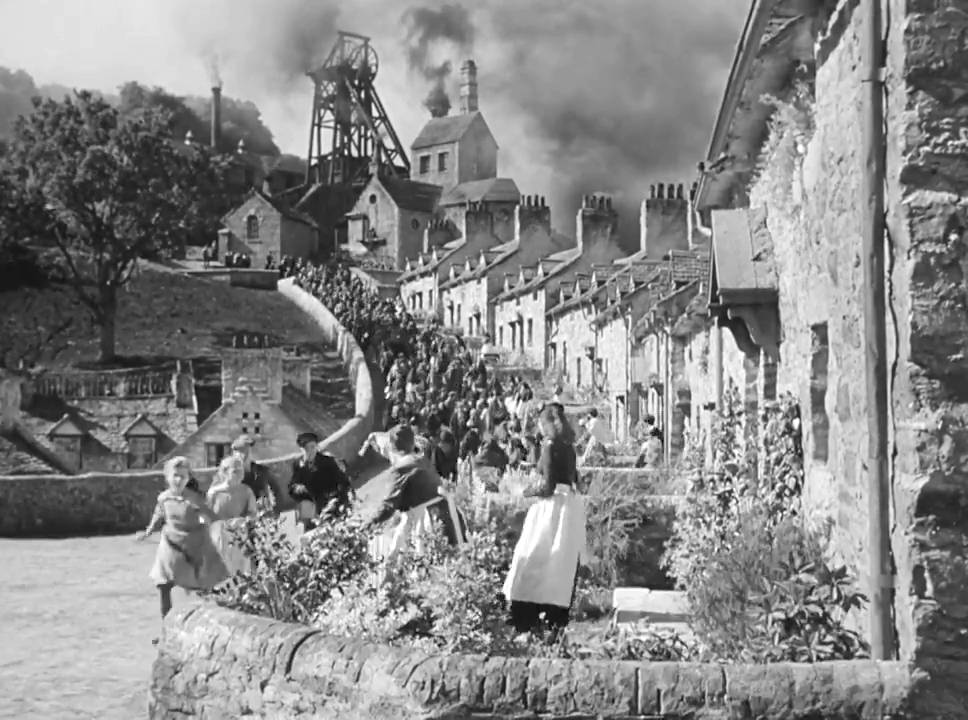
Following the remembrances of young Huw Morgan (Roddy McDowell), the youngest son (of several) of Gwilym Morgan (Donald Crisp), long-running foreman at the mine. The village is beautiful and life seems idyllic – until harsh economic conditions start to take their toll on the village. Wages are cut, moves towards unionisation are harshly resisted by the management, one-by-one the sons are laid off in favour of cheaper labour and the slag of the mine slowly turns the village into a dirty, stained mess. At the same time, the village is shown to be increasingly insular and judgemental, distrusting of outsiders, and suspicious of the preacher Mr Gruffydd (Walter Pidgeon) and the attraction between him and Huw’s sister Angharad (Maureen O’Hara) – made worse after she marries. Huw’s youthful innocence and naivety are met with an increasing attack from reality.

Ford’s film is today a controversial choice for Best Picture – among the films it beat were The Maltese Falcon and, most strikingly of all, Citizen Kane. It’s tough for any film to hold onto the same level of public affection, when it’s widely seen to have robbed a film commonly held up as one of the best (if not the best) of all time. But How Green Was My Valley is no travesty of an Oscar-winner. On its own merits it’s a solid, impressive, sentimental piece of episodic film-making that won’t disappoint you, even if it doesn’t inspire as much as it should.

John Ford directs a handsomely mounted film, full of luscious monochrome shots. It’s a shame that the original plans for the film – to shoot on location in Wales in technicolour – were prevented by World War Two, as the sweep of the real locations would have added a real epic scope to the drama, not to mention make the decline of the village even more obvious visually. But the recreation of the Welsh mining village they planned to film in (in Malibu of all places!) is faultlessly impressive, and Ford creates a real Celtic charm in his shooting of the film.

Celtic is perhaps the key word here as, along with the location, the other thing that ended up jettisoned in the film was its Welshness. There is precious little – if anything – Welsh about this film. It contains one Welsh actor (Rhys Williams), and Ford’s cast use a parade of actors ranging from an attempt at Welsh from Crisp to an imperious mid-Atlantic drawl from Walter Pidgeon. Most actors however settle solidly for something close to Irish – and it’s pretty clear to me that Ford, proud of his own Irish heritage, basically saw this a story of the old country forcing its sons to head to the new country, in the same way his own parents emigrated. It also makes sense for casting the film – there seemed to be precious few Welsh actors in Hollywood at the time, but a parade of Irish actors. 

But look past the film’s complete lack of Welshness – not to mention its presentation of the Morgan’s family home as far more clear and spacious than it would have been in real life – and pretend this is an almost Irish story, and you can focus on the film’s strengths. Although presented with sentiment and nostalgia, How Green is actually a more coldly realistic film than that. While shot with a luscious regard for the past, the film’s themes work to undermine this as much as possible – dealing with disillusionment, depression, unemployment and societal collapse. While Huw may remember the past as being a glorious country, we can see from the tumoils of his family that it was far more complex than that.

Of his siblings, most lose their jobs at the mines and are forced to emigrate. One who remains loses his life due to the mine’s working practices. Their father buries his head in the sand, and refuses to support any moves towards unionisation or the worker’s attempt to improve their lot. The family relies totally on the mine, but by the end of the film have been more-or-less destroyed by it. Even Huw’s sister Angharad, who has a good marriage to the son of the mine owner, finds herself trapped in a loveless marriage with her affections for Gruffydd the source of cruel comment from the village. The valley may be green on the surface, but it’s far darker underneath. 

And poor Huw either doesn’t notice, or doesn’t care. After struggling through bullying from a teacher at school, he finishes school and is awarded a scholarship – only to reject it in favour of remaining to work in the mine, having learned all the wrong lessons from his life (and to the horror of his father). Ford stresses Huw’s youthful naivety by not ageing up Roddy McDowell (very good) at all as Huw – Huw remains forever a 12-year-old-boy, even as events race on. It’s a neat capturing of both the older Huw (who narrates) imagination of what he was like, and also serves to stress how Huw’s nostalgia is framing the story we are seeing. It also makes Huw seem even weaker and vulnerable than he is – a shot of Huw labouring in the mine behind a seemingly giant cart hammers home his weakness – Ford shoots many scenes with low-angle lenses to make us visually emphasise with Huw and to see the world from his perspective.

How Green’s main weakness is its hesitation to commit to either the cold reality, or the hazy nostalgia that the film’s filming style uses. It lands between the two stools, wanting to tell us the truth while also wanting us to leave with a warm feeling towards the simpler times of the past. It’s perhaps not helped in this by the episodic nature of the script, which moves from event to event without much in the way of overarching narrative. It makes for a film that leans even more towards a slightly maudlin view of the past as a series of entertaining stories, which serves to cover even more the darker themes of the film.

Ford’s cast are a mixed bag. Donald Crisp is superb as the father, part imperious patriarch, part loving father – and won the Oscar. Equally good is Sara Allgood as his wife, the ideal loving mother that a son would remember, but with a spine of steel. Maureen O’Hara brings a passionate romanticism to Angharad, while Barry Fitzgerald and Rhys Williams are entertaining as a drunken trainer and his boxer protégé. Mnay of the rest of the cast though are weaker, with Walter Pidgeon rather stolid as Gruffydd and many of the actors playing Huw’s brothers reduced to balsawood under the burden of odd accents and earnest characterisation.

Ford’s film is a very good one that, if it catches you in the right mood, will certainly move you. I am not sure it caught me in the right mood on any of the occasions I saw it, but I appreciate its technical assurance and excellent direction. It fails to really find an effective balance between its darker tones and its nostalgic outlook, but it still works for all that. It’s not Welsh but it is a good film.

Call Me By Your Name (2017)

Timothée Chalamet and Armie Hammer are lovers drawn together in Call Me By Your Name

Director: Luca Guadagnino

Cast: Timothée Chalamet (Elio Perlman), Armie Hammer (Oliver), Michael Stuhlbarg (Professor Perlman), Amira Casar (Annella Perlman), Esther Garrell (Marzia), Victoire Du Bois (Chiara)

First love is a story everyone can relate to. Call Me By Your Name unfolds an engrossing early romance, where precocious 17-year old Elio (Timothée Chalamat) discovers his bisexuality through his deep attraction to his professor father’s (Michael Stuhlbarg) summer research assistant, 24-year old Oliver (Armie Hammer). An attraction which, over a long hot summer in Northern Italy in 1983, finally leads to a deep romantic and sexual bond forming between the two.

Refreshingly, Guadagnino’s film is relentlessly positive and devoid of tension or disapproval. You’d expect a romance such as this – especially a gay one – to lead to an eventual outburst of furious disapproval from someone or tear-filled remonstrations that what the couple have isn’t wrong. These are avoided completely, for something that feels intensely real and convincingly grounded, especially as it follows Elio’s stumbling attempts to identify his own sexuality and understand how his feelings affect him. 

This is also a showcase for acting, a film like this living or dying on the chemistry between the two lead actors, and Chalamet and Hammer have this in spades, suggesting from the very start a deep bond, that grows in emotional intensity. The relationship is a slow dance, with both of them blowing hot and cold at different times. Oliver’s first tentative approach is resoundingly rebuffed by Elio, only for Elio’s fascination with Oliver to grow into a deep unexpressed longing, which Oliver is nervous about responding to for a host of factors, from the age difference to his residence in Elio’s parents’ house. Even after the two come together, Elio’s confusion about his own feelings leads him to turn colder before the two finally find an equilibrium that works. 

It’s also a classic coming of age story, as Elio moves out of adolescence and into adulthood. Elio never feels like a traditional teenager in the first place, a musical prodigy and talented autodidact who seems to have read nearly everything (“Is there anything you don’t know?” Oliver jokingly says at one point after Elio explains the detailed history of a war memorial). But in other ways he is the same as any other teen: sex-obsessed and confused, spending a lot of time with two female friends who he seems to be unsure of his feelings are towards, indulging in explorative sexual fantasies and fumbled exploration of his own and others’ bodies, working out what he likes and what he doesn’t.

It leads to a superb performance from Chalamet (youngest ever nominee for Best Actor at the Oscars), who perfectly captures both the intelligence of Elio, and his confused lack of understanding of who or what he is. Chalamet’s body language – a mixture of awkward teen and assured adult, is a perfect physical expression of his part-adult, part-child psyche. Like any teenager, he’s at times selfish, greedy or plain annoying. But at many others he’s sensitive, delicate, vulnerable and desperate to express his love. Chalamet juggles all these competing emotions and hormonal drives brilliantly, and his face is a true instrument of expression, a sliding kaleidoscope of confused urges that compels your attention.

It’s a perfect match-up with Hammer, who is superb as just the sort of boisterous, confident, exciting and sexy presence you can imagine being drawn towards. But Hammer also laces Oliver with a tenderness, a concern and a gentleness beneath his joie de vive that really expands the character’s soul and makes him not just a force of vibrancy but also a genuinely lovely man. Hammer is very careful (as is the film) to avoid the possibility of Oliver being seen as a seducer, and it does this by giving him a touching restraint as well as manipulation-free openness, an honesty and an emotional freeness that helps make him more often the pursued rather than the pursuer.

Guadagnino lets this gentle love story unfold over a luscious, gorgeous Italian summer, with his camera drifting contentedly around the two lovers and their environment, as much a part of the dance of their initial attraction. The film is resolutely “in the moment” and has no flashbacks, flash forwards or any real reference to any narrative events outside of what we see on screen. It unfolds gracefully and naturally, with the camera work largely taking an unflashy but still warm view on everything we see.

Guadagnino deliberately treats much of the central romance element with reserve, avoiding too much nudity and panning discretely away from sexual encounters between the two. (I will say though, that he has no such reserve with Elio’s heterosexual encounters, where female nudity and sex are shown in full.) It does successfully preserve a sense of innocence and purity in the relationship – and keeps the focus on the fact that this love between the two is about them becoming better people, who understand themselves better, through the relationship. 

This positive message is reinforced by the acceptance of Elio and Oliver from all in the film, including Elio’s parents. Michael Stuhlbarg in particular has a scene near the end of the film of wonderful power – cementing his status from this film as a dream dad – with a speech to his son so full of acceptance, encouragement and love that you’ll feel your heart melt. Both Elio’s parents are very aware of the relationship and tacitly encourage it: according to this film at least, if you’re young and gay, growing up in a Bohemian, academic household does make your life easier! (Even Oliver comments that Elio has no idea how lucky he is.)

This film is also refreshing for its lack of casualties. Sure the two girls Elio and Oliver flirt with are disregarded swiftly, and the film gives only a little time to their rather shabby treatment, but generally it’s a film about learning who you are by spending time with someone else. And if that includes a few moments of teen awkward sexual exploration that are almost unbearable to watch (a scene with a curious Elio and a peach is a case in point, replete with queasy sound effects) then so be it.

Call Me By Your Name is a terrific coming-of-age tale, emotionally honest, true and mature and directed with a graceful ease and unshowy skill that is a testament to the deep confidence and grace of its director. With two superb performances and some excellent support work, it’s a glorious summer movie of love that will speak to you regardless of sexuality.