Category: Crime drama

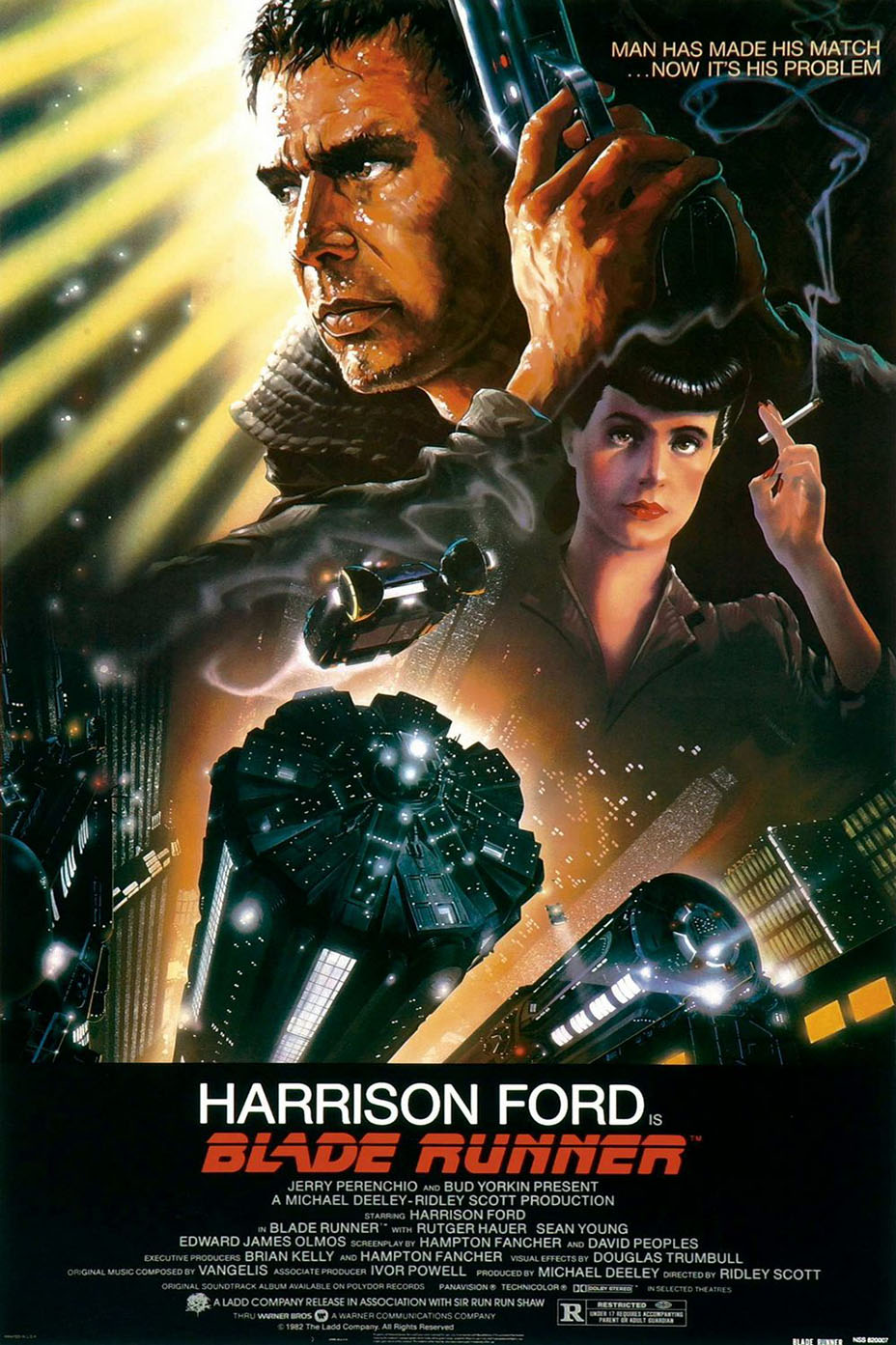
Blade Runner (1982)


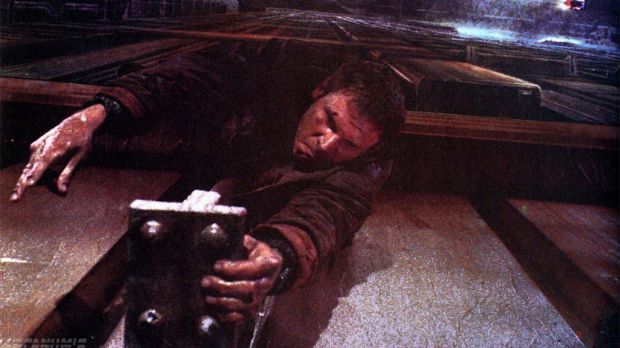
Harrison Ford hangs on for dear life in Blade Runner

Director: Ridley Scott

Cast: Harrison Ford (Rick Deckard), Rutger Hauer (Roy Batty), Sean Young (Rachael), Edward James Olmos (Gaff), M. Emmet Walsh (Harry Bryant), Daryl Hannah (Pris Stratton), William Sanderson (JF Sebastian), Brion James (Leon Kowalski), Joe Turkel (Dr Eldon Tyrell), Joanna Cassidy (Zhora Salome)

Everyone knows Blade Runner surely? And everyone has a viewpoint on its central mysteries. Why for a film largely ignored on release? Because as well as being tight and engaging, this is a rich thematic film, crammed with mystery and enigma. And there are few things more engaging than a film that succeeds in being as open to interpretation as possible.

In 2019 a dystopian, polluted Los Angeles is a launch pad for the wealthy to head out into the new colonies in the stars. Off-world, the unpleasant tasks are carried out by artificial humans known as replicants. Replicants are banned from returning to Earth – but a group of five led by soldier Roy Batty (Rutger Hauer) have come to Earth looking to extend their pre-programmed limited lifespans (no more than five years). On Earth, Rick Deckard (Harrison Ford) is reinstated as a Blade Runner, an agent whose job is to ‘retire’ (i.e. kill) replicants on Earth. Deckard is reluctant, having an increasing distaste for his work, but begins to hunt and eliminate the replicants.

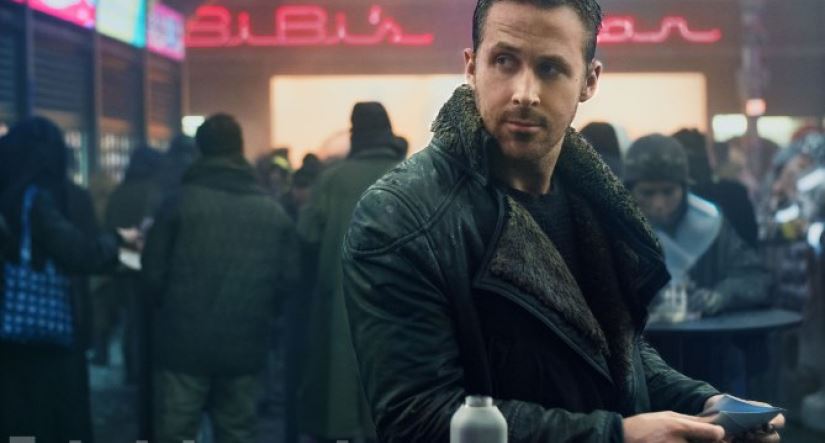
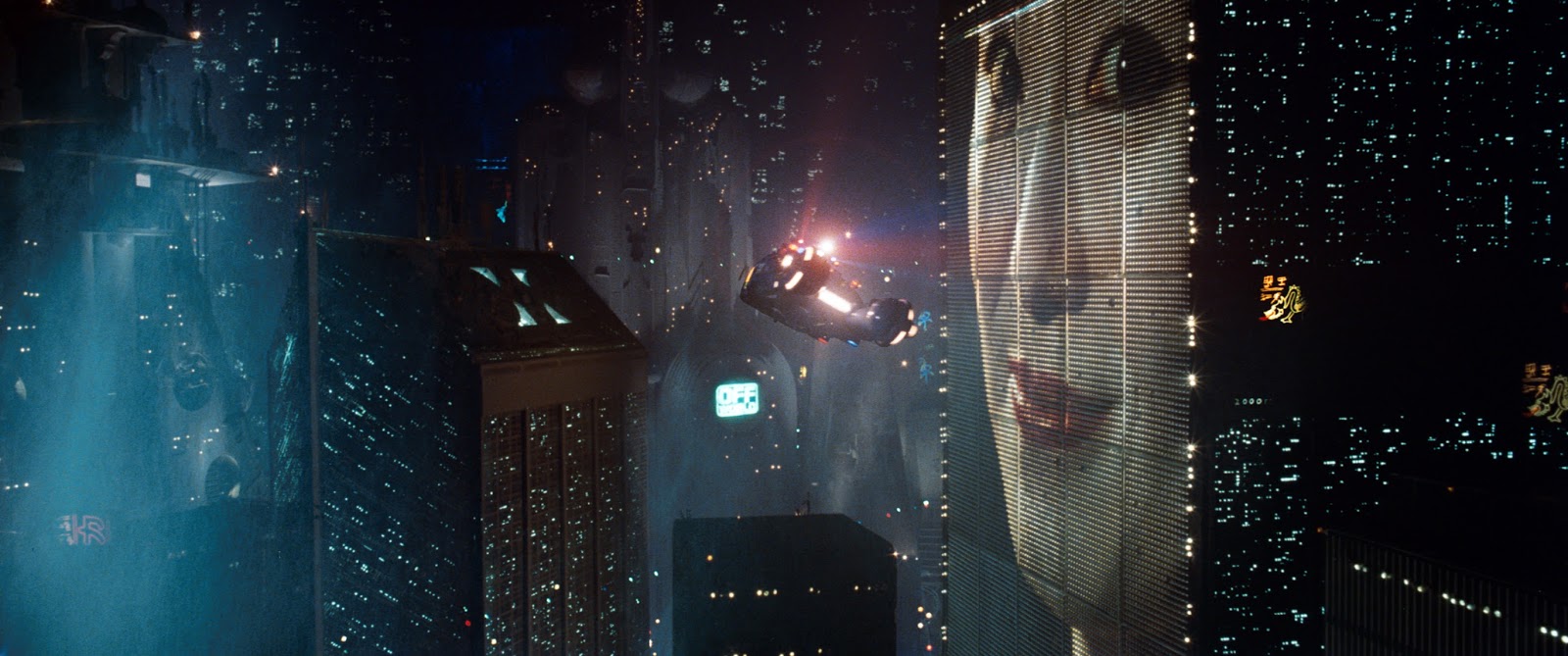
Blade Runner may be one of the most influential science fiction films ever made. Its look and style influenced virtually every other dystopian future you’ve seen in any other film since. Tall, run-down buildings. Overbearing corporate advertising. Flashing neon lights. Terrible weather. Everything dark all the time. Poverty and degeneracy on every corner. You’ve seen it in every dystopian future since. Visually, the film is a landmark, a testament to Ridley Scott’s graphic artistry.

But that wouldn’t be enough for Blade Runner to last the course. When released it was perhaps too elliptical and hard to categorise – equal parts dystopian thriller, noir detective story, sci-fi morality tale, dark romance – for audiences to really understand. Certainly the studio didn’t. After disastrous test screenings, it was re-cut. So began a fable of slice and dice that made Blade Runner perhaps second only to Brazil in the annals of re-versioned films.

The release included an overtly “happy ending” (bizarre images of our heroes driving into a blissful countryside, totally at odds with the rest of the film) and a disengaged voiceover from Harrison Ford that eradicated all the film’s subtlety. This was the only version for 10 years until a “Director’s cut” was released. This removed these elements, retooled scenes and introduced the famous “unicorn dream” sequence (of which more later). Fifteen years after that, Scott finally found the time to work on a “Final cut” which presented the film as Scott had intended it – with all its mysteries and questions intact. Has there been any other film with so many different “official” versions?

Anyway, was it worth the struggle? Certainly. While you could argue it is predominantly a triumph of style, Scott laces the film with a sense of mystery and profundity that makes it a rich and rewarding viewing experience. It’s a trim detective thriller that also questions the nature of humanity. It is a perfectly formed elliptical mystery, an archetypal cult film that engrosses the viewers to such an extent that 30 years later there is still a healthy debate about what the film means.

Humanity is =the key issue. The human characters are functional, cold, distant and unengaging. The hunt for the replicants (who are basically slaves) is brutally and unremorsefully executed. The replicants have been designed to learn and grow but cruelly had their lives capped to stop them taking advantage of this. Their world is polluted, tawdry, soulless and lost.

Meanwhile, the replicants exhibit far more (whisper it) humanity than the aloof human characters, ]despite the fact we are repeatedly reminded they cannot feel empathy. Clearly this is not completely true. And, the film argues, if an artificial human can display loyalty, fear, love, anger and pain, what actually is the difference between that and a “real” person. If a replicant can only be identified after dozens of questions in a test, can they really be that different from a human being?

Questions about this coalesce around Deckard. If the film has remained such a part of cultural discussions, it’s partly because of the fun of theorising about his true nature. Is he a replicant? Scott’s insertion of Deckard’s unicorn dream (implying the origami unicorn left by Gaff at the film’s end shows Gaff knows Deckard’s dream, meaning the dream is an implant in an artificial mind) very much suggests so. There is a case to be made either way, both of which work.

Deckard’s ruthless replicant hunt is deliberately juxtaposed with their own warm feelings. Deckard grows in humanity and reluctance as the film progresses – is this him becoming more human, or is it is humanity emerging? His coldness and reserved hostility contrast with the vibrancy of Batty, Pris and the replicants. In many ways, he fits in as the quintessential human in this world – a vague discomfort with what he is doing, but no real hesitation about continuing. Thematically, it makes more sense if Deckard is human – that he represents dehumanisation (and gradually realising it) while the replicants become more human.

However, clues are sprinkled throughout that Deckard is not what he appears. His distance from other characters. The treatment he receives from his co-workers. The photographs that fill his apartment (replicants enjoy photos as it gives them a sense of a past). His bond with Rachael. His relentlessness – and the fact that he is clearly considered expendable by the police. Then there is the rich irony: the best way of hunting down replicants is to create a hunter replicant. Either way, it’s a debate and conversation that sustains the film – and allows multiple interpretations of every scene.

It’s a debate that feeds into the main theme of the film: humanity, free will and our God complex. Batty, the dying replicant searching for new life, confronts his maker – a distant, arrogant man with no interest in his creation. And kills him. But Batty feels more human than any other character. He shows more affection, frustration, anger and grief than anyone else. His last words (the famous “tears in rain” speech) had such cultural impact because it has such poetic joy and depth to it. They are lines enthused with a desire to live, a romantic vitality. It’s the most poetic moment in the film and it comes from someone who isn’t “real”. What more sign do we need that the replicants are human? If we can create poetry in a machine, does it stop being a machine?

Empathy is the quality the replicants are judged on – but as we see replicants dispatched with little sense of regret, and then witness Batty and Leon’s grief for their fallen comrades, or Pris’ ease with man-child Sebastian, the lack of empathy from humans is all the more clear. Deckard is a fascinating character as he falls between two stools – either a human who has buried empathy, or a replicant discovering empathy. Strange and disjointed as the relationship between Deckard and Rachel is (and there is an uncomfortable moment where Deckard gets too physically forceful) it fits into this – are these two artificial people discovering the ability to bond? Or is it an emotionally stunted human finding himself drawn towards someone who feels more real than the other humans?

What makes the film work is that it doesn’t hammer home, these issues. It allows us to make our own minds up. It frames the action within a noirish detective thriller, laced with mood and awesome visuals. It’s sharply and sparingly written, with real intelligence. For all its discussions about humanity, it does feel at times a cold film – but it’s so rich in suggestion and implication that it doesn’t really matter. Yes you could argue the implication and playful suggestion imply more depth than actually exists, – but the film gets away with it, because it works so well.

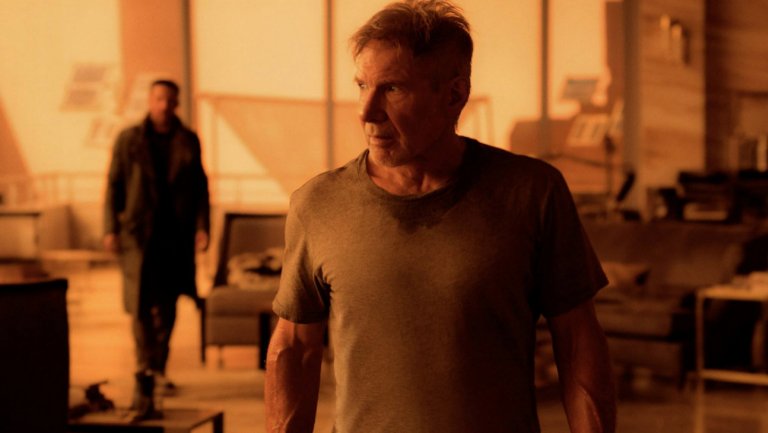
Rutger Hauer gives easily the finest performance as Batty (he allegedly wrote the famous speech on the day). Batty is the most vibrant and dominant force in the film, who goes on the most engaging emotional arc. For me the dark secret of the film is Harrison Ford is slightly miscast– he’s aiming for moody, Bogartish disillusionment, but he comes across more disengaged (he’s strikingly better in Blade Runner 2049). I think Ford struggled with the character – it’s a role better suited to a John Hurt or James Caan, rather than Ford’s more conventional (if world-weary) magnetism – he’s not a natural fit for a bitter cynic. Olmos, Cassidy, Walsh, Sanderson and James give strong support.

Blade Runner is a visual triumph and a rich experience. Its story is compelling, but the real richness is the thematic layers under its skin. Scott created a film open to interpretation, and that’s what really grabbed the imagination. It marries mystery with curiosity and avoids pretension, becoming intriguing and engrossing. Scott has rarely made a film with such intense ideas and poignant confusion before. You could argue the final cut leans too far one way in the central mystery, but there is more than enough eerie richness under that – helped by Vangelis’ unsettlingly grand score – to keep people viewing and talking about it for another 30 years.

Hell or High Water (2016)


Chris Pine and Ben Foster carry out a series of personally motivated bank robberies in Hell or High Water

Director: David Mackenzie

Cast: Jeff Bridges (Marcus Hamilton), Chris Pine (Toby Howard), Ben Foster (Tanner Howard), Gil Birmingham (Alberto Parker), Marin Ireland (Debbie Howard), Katy Mixon (Elsie), Kevin Rakin (Billy Rayburn)

In West Texas, two brothers – divorced father Toby Howard (Chris Pine) and his ex-con brother Tanner (Ben Foster) – carry out a series of early morning raids on branches of the Texas Midlands Bank. Their robberies are investigated by Texas Ranger Marcus Hamilton (Jeff Bridges) working his last case before retirement, and his partner Alberto Parker (Gil Birmingham). The brothers however are motivated by more than just a desire for money – and these motivations drive them to ever more desperate and dangerous actions.

Hell or High Water is a fine piece of skilled professional film-making. The story is tightly scripted, and Mackenzie’s direction marries up a modern outlook with the style of a classic John Ford western. But, for me, it reaches for a thematic richness that isn’t quite there. It’s in the same territory as No Country for Old Men but it never achieves that film’s complexity. It creates characters we care about, and the story keeps us gripped, but it lacks that certain extra dimension that profoundly moves us. It tries to tell itself (and us) that it’s a profound exploration of themes around life and death, but it never really reaches these feelings – its grasp is less than its reach.

But it’s still a hugely enjoyable and impressive movie. Mackenzie’s direction is superb, detailed and smooth, and he is able to bring to life both the drama and the action. The story has an old school heist quality, with our gangsters sort of proto-Robin Hoods, naïve enough for us to invest in their actions, but dangerous enough for us to understand why events spin outside their control. Sheridan’s script is full of punchy lines and genuine emotional weight. The plot line gets a bit bogged down in the ins and outs of the reasons why our ‘heroes’ are doing what they are doing, but there is an emotional truth to it that really works.

The film also creates a wonderful sense of Texas as a land that seems to have only just moved on from the Wild West. Everyone in the film seems to be either packing heat or wearing a Stetson (or both). Genuine cowboys guide cattle across a road. The rangers have an old school gruffness about them, staking out banks from across the road in saloon bars that don’t seem to have moved on from the days of Wyatt Earp. At the slightest sign of danger, ordinary people reach for their guns and start shooting. Everything takes place in dusty countries, or rural feeling towns. I can barely remember seeing a computer or mobile phone. The whole film feels slightly out of step with the modern world.

It also draws some very fine performances from its actors. Chris Pine may never have been better than as reluctant bank robber Toby. Toby is a classic western outsider, a man who is working to protect his family and preserve their future – often by dangerous means – but accepts that this family life he is building has no place for him in it. Pine brings the part a finely judged sadness, a sense of a man without a place in the world. Ben Foster is equally good as his firecracker brother, a damaged anarchist at heart whose love of impulsive danger will have fatal consequences.

The heart of the movie though is Jeff Bridges’ ranger, a marvellous portrait of gruff-old school machismo. Bridges invests this role throughout with a humane decency, an anger at the distress and violence. His friendship with his partner Alberto (a touching Gil Birmingham) provides much of the affectionate heart of the movie, their good natured joshing and banter a continual source of humour. Bridges’ world-weary, out-of-time quality matches perfectly with the timeless mood of the movie. It’s a beautifully judged, simple, unshowy performance.

It’s a beautifully judged combination of crime and family thriller, while its ability to balance the old-school feeling and aesthetic of West Texas with a punchy modern-feeling tale of the greed of bankers, works extremely well. It’s got a dark Butch Cassidy feeling to it, and the film’s focus is tightly kept on the four leads, allowing the audiences understanding of them to grow and develop. By the conclusion of the film, your loyalties will be firmly divided between both the law and robbers, summed up best by a beautifully played elegiac final scene, laced with regret, sadness and tension.

But despite all this, it never quite breaks out of its pulpy roots to become something else in the way that No Country for Old Men manages to do. Wonderful character study as it is, it feels like a film that wants to make a broader, spiritual comment about the American way and modern masculinity. It doesn’t quite manage to do this. I don’t feel that this film really succeeds in suggesting it is about much more than what’s on the surface.

But that doesn’t matter so much, when the surface is so strong and as well directed, acted and written as this. If Hell or High Water is, at the end of the day, just a smart cops-and-robbers story, it’s certainly one that’s full of freshness and intelligence and grips your interest from start to finish. In a world where Hollywood churns out over-promoted average films, it stands out as something far more heartfelt, expertly crafted and hugely enjoyable.

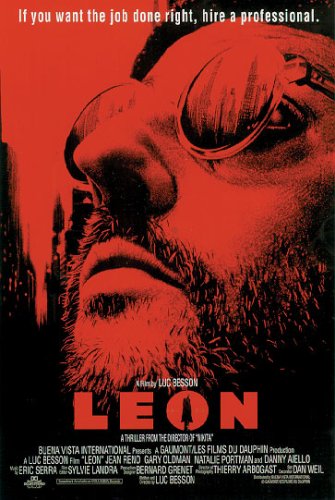
Leon (1994)


Jean Reno teaches Natalie Portman the ways of death in classic romantic thriller Leon

Director: Luc Besson

Cast: Jean Reno (Leon), Natalie Portman (Mathilda), Gary Oldman (Norman Stansfield), Danny Aiello (Tony), Michael Badalucco (Mathilda’s Father), Ellen Green (Mathilda’s Stepmother)

Luc Besson is an interesting film-maker, part visionary, part pulpy stylist. He has undeniable talent and visual flair, but far too often wastes this on trashy and juvenile comic book films, with a teenager’s preoccupations rather than a focus on story and character. One of the few exceptions to this is Leon, a film that marries his vibrancy with a heartfelt story.

Leon (Jean Reno) is a professional hitman working in New York, a dedicated professional with the stunted emotional maturity of a young teenager. One day the family of his next door neighbour is ruthlessly slaughtered by demented, drug-dealing cop Norman Stansfield (Gary Oldman), leaving only precocious 12-year Mathilda (Natalie Portman) alive. Despite his concerns about involving himself in the world, Leon takes Mathilda in – and these two outcasts develop a deep emotional bond, part mentor-pupil, part father-daughter, part celibately romantic.

In many ways, Leon should be an uncomfortable viewing experience. It’s a film that explores the growing emotional and sexual awakening of two characters, one of whom is a 12 year old girl, the other a hitman in his 40s. In fact it’s hard to imagine it even being made today by a Hollywood studio (it was controversial enough at the time). However, it works because the characters are so skilfully established. The 12 year old is precociously mature emotionally and sexually for her age, the man is so emotionally stunted and childlike in his outlook on the world he effectively feels like a 14 year old. The sexual interest is all from the girl, and is constantly batted gently aside (with a confused lack of understanding) by an adult who doesn’t understand the adult world and its feelings. As such, the film manages to side-step the creep factor and turn itself into a sort of touching fable.

It further works because our two leads give such terrific performances. Jean Reno perfectly understands Leon’s childish appreciation of the world, his touching faith in other people (his father-figure Tony is clearly swindling him), his simple delight in things (his wide-eyed appreciation of Singin’ in the Rain is very endearing). He’s naïve and has a child’s lack of understanding of violence and its impact. He’s focused so tightly on his narrow world, he’s clearly never developed any real emotional understanding of the wider world. Reno creates a character who is a seasoned killer who feels like a under developed teenager – emotionally and sexually he’s pretty close to being a 12 year old himself. His interest in Mathilda is rooted more in an elder brother/sister relationship. You get the feeling sex has never even really entered his mental equation. It’s a masterful performance, effortlessly cool but also stirringly real, sweet, vulnerable.

Equally brilliant is Natalie Portman’s enthralling performance as Mathilda. She creates a character who is sexually daring, seemingly far more adult and savvy than Leon in many ways, but is still recognisably a vulnerable child. She’s spiky and defiant, but this hides a deep rooted sensitivity and a desperation for love and affection. Her continued expression of sexual interest in Leon is as much rooted in a desire to feel part of a genuine caring family unit as it is some desire to initiate sexual contact. Her performance is perfectly nuanced and searingly real. Portman also feels both simultaneously adult and childish, so she never feels as out of place.

The film also works because it feels like a slightly unworldly drama. The rules of this world seem slightly fairy-tale like. It happens in a dreamy New York, with shady gangster chiefs, corrupt cops and hitmen moving serenely from location to location, with seemingly no intrusion of “real” people into this equation. The world seems oddly off-kilter, a self-contained fantasy where Leon is some sort of gentle ogre and Mathilda an Alice in Wonderland. While it’s set in a real place, Besson’s film feels like a sort of violent bedtime story. It becomes harder for sex in this context to seem threatening.

Instead, despite the killing and slaughter, this is a sweet and even slightly sentimental love story, about two souls who have an inherent understanding of each other. It’s a deep bond that transcends their ages and social conventions. Besson really understands this, and it’s what motivates and powers the film. They switch roles between child and adult smoothly: So one moment Leon is almost fatherly, teaching the basics of sniper work to Mathilda, the next she teaches him to read. There are undertones of sexuality, but the feeling is that neither of these characters really understands the complexities and realities of sex, because one is too young and the other is too emotionally immature.

Besson’s film making around this is sublime. The film is stylish beyond belief, the camera and editing fluid and dynamic. Action scenes hum with tension and excitement. The violent confrontations (of which there are many) are brilliantly done. Besson draws extraordinary, heartfelt performances from the two leads and creates a wonderfully moving fantasy-tinged world. His invention and pulp style brings a unique feel to what is a heartfelt, rather tender story. It’s a perfect marriage of style and content, where both complement each other. The story feels heartfelt, the execution gives it a swaggering extra dimension.

The tender reality of Reno’s and Portman’s performances – and the marvellous gentleness which Besson films this with – allows other parts of the film to go fully over-the-top. This is not least the case with Gary Oldman’s ramped-up-to-eleven Stansfield, a Grade A nutter. Oldman leaves nothing in the dressing room here, completely letting rip. In a way a performance of such utterly demented excessiveness should be absurd. But with the other performances feeling so genuine, and Besson’s fairy-tale styling, means Oldman feels a perfect part of this world, the dark monstrous heart of a corrupted land. In any other context it wouldn’t work, but here it really does.

Leon is a very tender, exciting and emotionally moving film – a great example of stylish film making married to a genuinely moving storyline between two people who feel like realistic, three dimensional characters. Both the style and the heart of the story complement each other perfectly. It’s a terrific piece of film making, with three performances at the heart each on their own way a stand-out. It must surely be Luc Besson’s finest ever film – and a height he’s very rarely ever reached again.

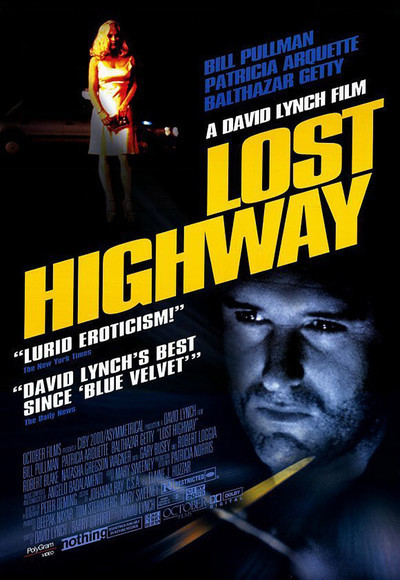
Lost Highway (1997)


Bill Pullman goes out of his mind in David Lynch’s deliberately weird Lost Highway

Director: David Lynch

Cast: Bill Pullman (Fred Madison), Patricia Arquette (Renee Madison/Alice Wakefield), Balthazar Getty (Pete Dayton), Robert Loggia (Mr Eddy/Dick Laurent), Robert Blake (The Mystery Man), Gary Busey (Bill Dayton), Lucy Butler (Candace Dayton), Michael Massee (Andy), Richard Pryor (Arnie)

It wouldn’t be a David Lynch film unless the plot was impossible to explain, but here goes. Fred Madison (Bill Pullman) and his wife Renee (Patricia Arquette) marriage is on the rocks. The couple start receiving packages containing camcorder videos of their home. These videos become increasingly more and more personal and intimate. The final video shows Fred murdering Renee. Imprisoned, Fred suffers from headaches and then overnight he transforms into another person, Pete Dayton (Balthazar Getty). Released back into the world, Dayton encounters the glamorous Alice Wakefield (Arquette again). Then things get even weirder. Yup that’s right: weirder.

Lost Highway is probably Lynch at his most obscure and baffling. Like a lot of Lynch films, it’s a question of taste. What do you want to get out of a film? If it’s a puzzling mystery then this might be the film for you. Lost Highway is like an impossible jigsaw, or a landscape with no frame of reference: trying to judge what the overall actual picture is, is nearly impossible. Traditional film making elements, such as story and character, are subservient here.

So whether you like Lost Highway will probably come down to how much you are willing to accept everything you see is constantly being dismantled and repositioned by the film. It strikes a less successful balance between this “Lynchian” material and more traditional storytelling than Blue Velvet or Mulholland Drive (both, I would argue, superior films). However, for those willing to run with a mystery, Lost Highway is a baffling but intriguing watch – unsettling, unnerving, but fascinating.

So what is it about? Now I confess I needed to read up a little bit, but the best way to understand the film is as some sort of elliptical, dreamlike fantasy created by its lead character. It seems pretty clear that the majority of the film is, at best, subjective recollection or out-and-out fantasy. A little too much attention is paid in the film to a line from Fred Madison that he dislikes video cameras as he prefers to “remember things my own way rather than how they happened”. A fairly on-the-nose statement, but a clear mission statement for a film if I ever I saw one.

In fact, Fred Madison is so keen to remember the world only as he sees it that, he literally becomes someone else to build some sort of internal fantasy world where he can win the girl. But Fred/Pete is such a screwed up, confused person he can’t even get his own fantasy world right –impressions from the real world keep draining in. At least, that’s a fair interpretation. The film of course deliberately keeps things open: is this some fantasy Fred has while trapped in his cell? Or is there some sort of metaphysical transformation that fades into the real world? Is there an element of this story being circular and self-perpetuating? Is there any reality to it at all? How much you engage with these questions is a pretty good indication of what you’ll make of this film.

Whatever your response to it, as a piece of film-making it’s a very impressive piece of work. All the usual Lynchian touches are here: the strident and discordant lighting at key moments, the intelligent and daring use of music, the intermingling of design from the modern world and Americana of the 1950s, not to mention the moments of extreme violence and graphic sex. Lynch uses unsettling camera angles and sudden tilts of angle and sound to constantly keep the audience on their toes and questioning what they are seeing. Disturbing and haunting imagery, a testament to Lynch’s painter’s eye, is perfectly judged. Confusing as this film is, it offers a parade of intriguing images.

It’s an important landmark in Lynch’s filmography: a flowering of ideas he had been dabbling with since Twin Peaks, of mysticism, perversion and human darkness, and a jumping off point for haunting, almost illogical films to come like Mulholland Drive. The Mystery Man (unsettlingly played by Robert Blake – not least as this is the last film Blake made before his conviction for murdering his own wife) is a haunting, perfect Lynchian character – unsettling in appearance and confusing in intention. Is he a real person, or a mystical force? Is he some sort of external expression of evil driving Fred on, or is he part of Fred’s fractured mind?

Patricia Arquette plays two very different femme fatales, but to what extent are they reimaginings or reversionings of each other? It’s a very good performance from Arquette, playing someone who is not quite a real person, nor quite a fantasy, who feels like a character from a film moving into a real world, which itself is probably a fantasy. Just writing this sentence shows what a crazy film this is.

For the rest of the performances, there is a good mix of the genuine and the artificial. Bill Pullman, at his most understated, is perfect to ground the film, while Balthazar Getty gives a fine, detailed performance as a character who is similar and slightly different to Fred. Robert Loggia mixes ferocity and a bizarre tenderness as a character who may or not be a foul-mouthed gangster. These performances add a level of heart to the film, allowing a bit for freedom for the strangeness.

Lynch’s Lost Highway isn’t a masterpiece – it’s perhaps too self-consciously oddball and unusual, too reliant on mood and atmosphere to make up for its lack of story and characterisation. It is however intriguing, a brilliant puzzle, even though it doesn’t really allow you to invest emotionally in it at all. You can admire it as a mystery, but you can never really open your heart to it. It’s a film that is daring and dangerous, but it’s also one that, for all its erotic sex and tortured psyches, never really feels like it’s about real people with real feelings. It’s a mixture that, as I’ve said, works better in Mulholland Drive. But this is a very good staging post to that film.

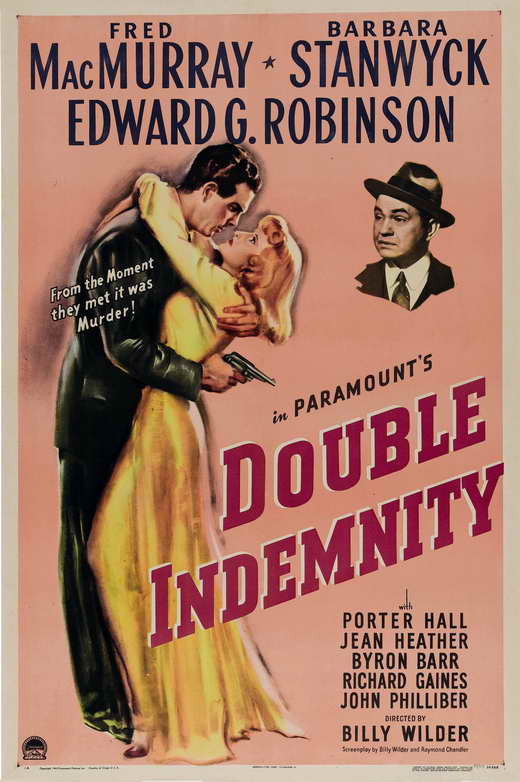
Double Indemnity (1944)

Barbara Stanwyck is the dark force beyond Fred MacMurray in Wilder’s classic Double Indemnity

Director: Billy Wilder

Cast: Fred MacMurray (Walter Neff), Barbara Stanwyck (Phyllis Dietrichson), Edward G. Robinson (Barton Keyes), Porter Hall (Mr Jackson), Jean Heather (Lola Dietrichson), Tom Powers (Mr Dietrichson), Bryon Barr (Nina Zachett), Richard Gaines (Edward Norton)

In the wake of the Second World War, morally complex and dark (in every sense of the word) stories spoke to a nation coming to terms with what it had been through. Out of this was born a new genre: film noir. Double Indemnity might just be the best example and one of Billy Wilder’s best films.

Walter Neff (Fred MacMurray) is a bored insurance salesman, smitten with the sexually alluring Phyllis Dietrichson (Barbara Stanwyck), wife of a potential client. When she suggests that, with his help, they could get rid of her husband and collect a massive insurance payout on his death, Neff is quickly won over. But murder is a hard thing to get away with – particularly when Neff’s colleague and close friend Barton Keyes (Edward G Robinson), the best investigator in the business, smells something amiss in the ‘accident’.

Double Indemnity is one of those films that it’s easy to forget was as influential as it was, precisely because it’s narrative and filmic techniques have been so comprehensively imitated in a host of films since. But imagine: this was one of the very first real film noirs. It was one of the first films that used shadows and darkness as effectively as this to reflect mood and atmosphere. It was the one of the first films to use a femme fatale as prominently (and unapologetically) as this. It’s also one of the first films where sex permeates almost everything you see in the picture.

Phyllis is a woman who understands the power of sensuality, who is well aware of how she can use her body and aloof mystery to get what she wants out of men. But even more than that, Stanwyck’s wonderfully cold performance suggests she hardly seems to care about anything at all: in fact the impression is almost that she is locked into moving forward, passing through husbands and lovers, leaving men dead on the wayside. That’s the magic of Stanwyck in this film: can you remember a character as unremittingly, unapologetically sinful, manipulative and conscience-free as this?

Of course Fred MacMurray’s Walter Neff is the perfect rube for this fiercely intelligent and determined woman. MacMurray’s slight B-movie blandness – his lack of star quality, his everyday, folky unimaginativeness – is perfect for the overconfident, slightly smarmy, laziness of Neff. It’s never said outright, but you suspect that the attraction of the danger Phyllis offers is escape from his own dull life. Does he love Phyllis? I would say almost certainly not – but is he horny for her? You better believe it. It’s a man on the cusp of a mid-life crisis getting a chance to throw himself into a sex-driven affair.

What do these two think of each other? Both of them seem barely capable of trusting each other, using sex and flirting almost as a filler between bouts of mutual suspicion. Does she care for him even a little behind her use of him? And does he feel anything like a bond with her inbetween the bouts of sex? They stumble so quickly into the plan that it almost feels like they are going through the motions – she is so used to manipulation and murder, it’s all she knows; he is so bored with his life that the excitement of violence and murder with his sex seems impossible to resist.

And Wilder lets sex run through this whole film. From Phyllis’ long descent down her flight of stairs at her first entrance to the irresistible anklet, everything about Stanwyck in this film is about the power of her sex. The dialogue exchanges between Neff and Phyllis crackle with magnetism. Later, Wilder skilfully shoots a sex scene without showing a thing: we cut from the two of them kissing on a sofa, to their positions shifted, Phyllis fixing her dress and Neff reclining smoking.

It helps that the dialogue is scintillating. Each exchange is packed with crackling and quotable lines. You get a perfect marriage here between Wilder’s acerbic cynicism and dry wit, and Raymond Chandler’s arch, spiky, carefully constructed dialogue, with its gritty poetry. I mean just watch the exchange here – perfection.

And they write some knock-out speeches too – but then you would if you had an actor as brilliant as Edward G. Robinson to deliver them.

Neff’s voiceover uses the technique where it should be used – not to tell us information any well informed viewer can already work out for themselves, but to allow us insight into Neff himself and his situation, that complements and develops our appreciation of the picture (it’s also beautifully well delivered by MacMurray). I’d also add it’s the same conceit as Sunset Boulevard – its lead character narrates the film mortally wounded – and it works just as well here, stressing the disaster that hangs over every action by our anti-heroes.

Added to this, the film looks beautiful. The shadows have an all-consuming inky depth. Cinematographer John Seitz is not afraid of turning the lights down and down, and the darkness absorbs and consumes the whole picture. It allows striking lighting effects – the blinds that seem to be in every room allow slits of light through them that draw lines across the faces and bodies of the actors (as many viewers have commented, it also has the effect of making half the characters appear like they are behind bars). The darkness looms in from the corners of the frame, trapping the leads into the action – and into their own disastrous decisions.

Wilder’s skilful camera placement is what makes this film really work. He presents action constantly in challenging and different ways, never doing the expected. During the actual murder (committed while Phyllis drives), the camera never looks at Neff committing the crime, but closely follows the look of almost sensual satisfaction on Phyllis’ face: she never once looks at what is happening in the seat next to her, but her face makes us experience the killing in an even more disturbingly intimate way than watching it would be.

But what makes this film truly brilliant and unique is that its main relationship isn’t even the one you expect. Neff and Phyllis may have an electric physical relationship, but the real romance in the film is between Neff and his colleague Keyes. These two share a deeply close and personal bond. Theirs is a friendship that skirts around a platonic romance – made sharper of course as Keyes is the only man who stands a chance of working out what exactly is going on. There is a fine visual motif throughout of Neff lighting matches (with his thumb!) for Keyes – a gesture that feels both manly and intimate.

Keyes is played by a career-best Edward G. Robinson. Robinson blazes through the big speeches – but with a confident skill that never makes them feel like showboating moments. He gives Keyes an eccentric brilliance, mixed with a delicate humanism. To be that good at sniffing out wrongdoing and deceit from his fellow men, you can’t help feeling that he must have a pretty good idea about what human fallibility feels like. It’s this warm human understanding that Robinson does so brilliantly. It’s also what helps to make this relationship so moving. It’s hard not to share the obvious awkward discomfort MacMurray gives to Neff when he feels as if he is letting down his friend, and betraying the trust between them.

It’s this that makes Double Indemnity stand out. It’s a film that’s actually about the relationship between two men – part friendship, part father-and-son, part romantic – their love for each other, which happens to have an irresistible femme fatale thrown into the middle. It feels like a very unique and different approach – a touch of Wilder magic if you will – that makes the film stand out. It’s also what lies behind the link it has with audiences, the human interest that makes you come back again and again to this film about two ruthless killers.

This is a film in which everyone was at their best. MacMurray never did anything again to match it, Stanwyck seized the part with such commitment that she spawned countless imitators, Robinson is just magnificent. Wilder’s direction is perfect, the film looks ravishing, the script is to die for. Double Indemnity may not only be the most influential film noir ever. It might also be the best.

Fallen (1998)


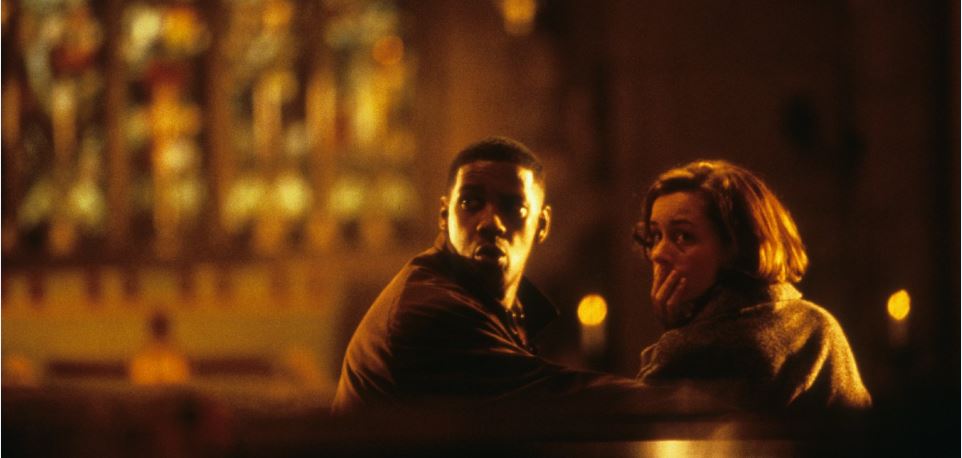
Denzel Washington and Embeth Davidtz on the run from a nasty Demon in Fallen

Director: Gregory Hoblit

Cast: Denzel Washington (Detective John Hobbes), John Goodman (Detective Jonesy), Donald Sutherland (Lt. Stanton), Embeth Davidtz (Gretta Milano), James Gandolfini (Lou), Elias Koteas (Edgar Reese), Gabriel Casseus (Art Hobbes)

Every so often, a film comes round that you know, while you watch it, is a fairly average, unspectacular piece of film-making. But for some reason something about the film just clicks with you and you end up enjoying something basically nothing special. For me, Fallen is one of those films.

What’s particularly nice about having this film as a bit of a guilty pleasure is, I’m pretty sure, most people have never heard of it. Detective John Hobbes (Denzel Washington) has recently been present at the execution of a notorious serial killer. Moments before his death, the killer grabs his hand and mutters a message in a strange language. As a copycat killer continues the crimes – and begins to frame Hobbes – the detective slowly realises his nemesis is no man, but a demon, able to possess humans by touch. He failed to possess Hobbes – and now wants to destroy his life.

There is nothing really new here: Hobbes is straight out of film noir, while the plotline of his mentally handicapped brother raising a son is pure TV-movie of the week. The demon possession idea is not exactly new (although it’s snazzily shot) and the demon quickly heads the way of most creatures in these films: foul-mouthed and delighting in sex and violence. There is a secret underground movement of those aware of the demons on Earth (fortunately we only see one of them) combatting their evil. Nothing really new.

But Fallen makes these elements seem somewhat fresh. The idea of the demon moving from person-to-person via touch is very interestingly presented. At one point Hobbes has a conversation with the demon, as it switches from host to host. Later Gretta (Embeth Davidtz) is pursued down the street by the demon, moving swiftly from person to person in a chain of touching hands. The various actors do a good job of conveying a single consistent character for the demon (fortunately he favours possessing recognisable character actors from US TV drama). Hoblit’s direction has plenty of these interesting new ways of presenting things. He’s also able to keep a good air of menace throughout the film.

It’s not perfect of course. The investigation of the demon’s background hits all the familiar beats from Dante to the Bible. Hobbes must be the only person in the world who (having decoded a message) has to ask A NUN whether the word “Apocalypse” means anything to her. A detective who has never heard of the word apocalypse? Times have changed: it’s the sub-title to a bad X-Men film now. At least one character is so obviously set-up as a candidate for long-term possession, you immediately suspect he’s innocent.

But the film has a fine closing scene, and a decent twist which plays with your initial expectations. It also gives you plenty of clues throughout (from the first shot of the film) about how the action might play out, more than enough for you to work it out for yourself. The idea of the “final confrontation in the wilderness” is again a familiar one, but the supernatural element makes this feel different. It’s actually a twist I didn’t see coming first time around (I was young at the time, not sure if I would be caught again today) – but it’s well presented and doesn’t cheat the audience.

Probably the main reason the film works so well though is Denzel Washington. Here is an actor giving a performance probably beyond the material, encouraging others to lift their game. He perfectly captures both Hobbes’ dedication and his purity of soul, with plenty of little touches that never feel heavy handed. He makes the plotline with his brother hugely sweet. He gets the balance just right between scepticism and dawning horror. It’s a real professional performance that plays off his charisma very well – imagine how awful it would have been with Keanu Reeves in the lead.

But I love that twist ending, and I’m a sucker for these demonic possession films (like disaster films or period epics) so I’ve seen this 3-4 times and really enjoyed it each time. As well as Washington, John Goodman and Embeth Davidtz give very good performances, and there is always enough mystery that you never feel you are racing  far ahead of the film (of course we know from day one it’s about demonic possession, but the characters never feel dense catching up with us). Fallen is a high quality piece of B-movie thrills. If you haven’t heard of it, do check it out.

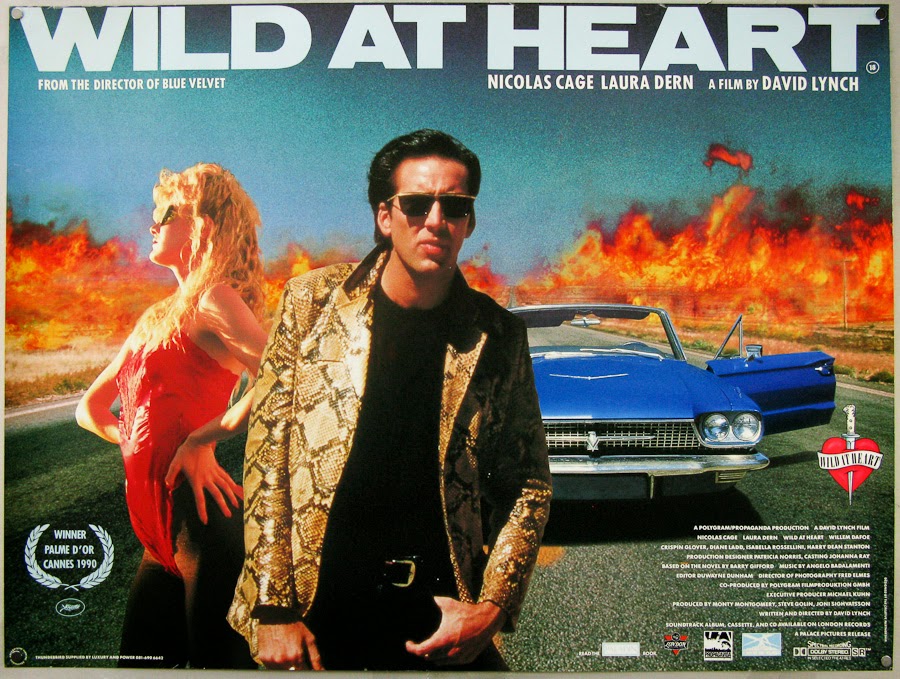
Wild at Heart (1990)


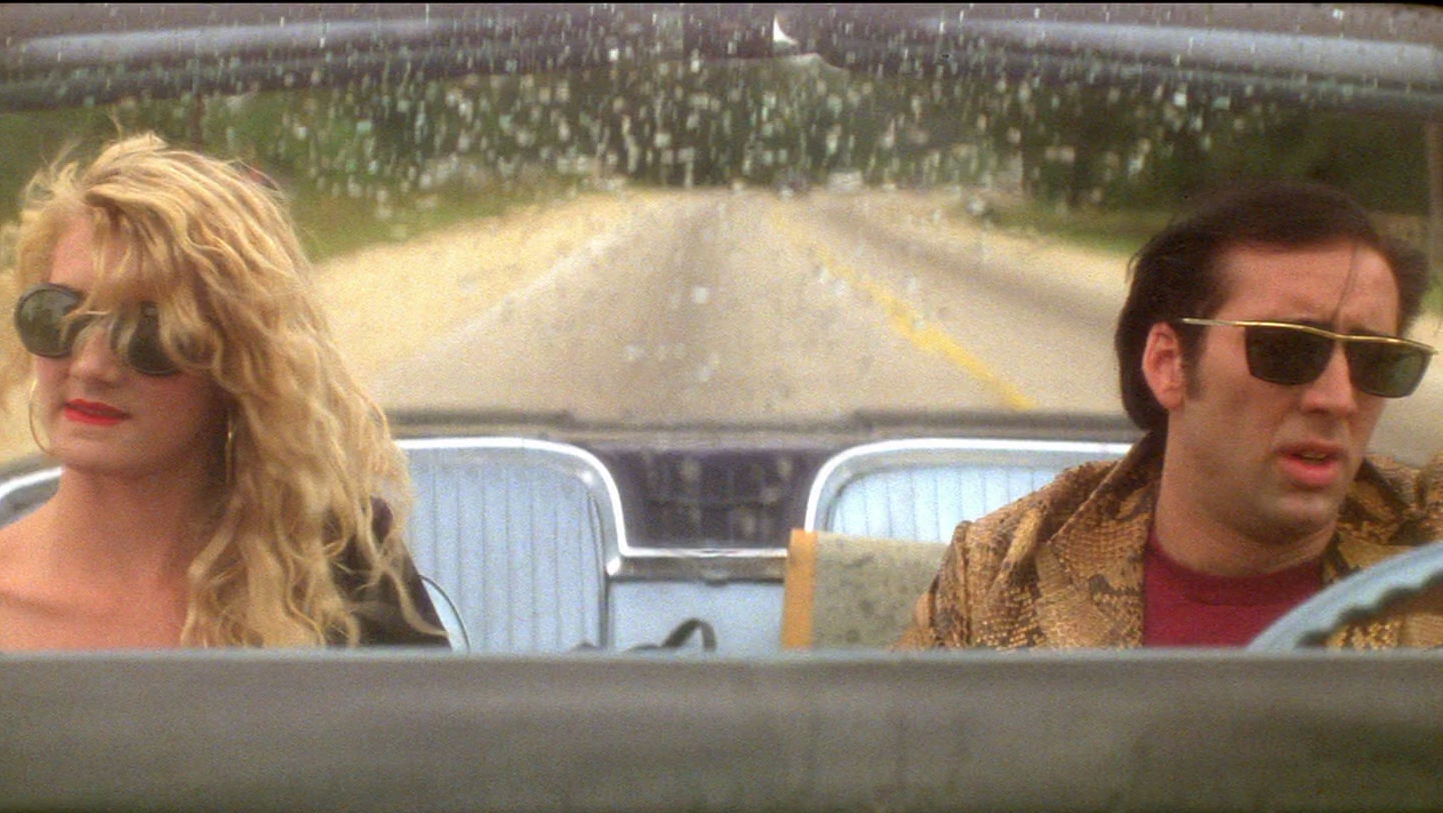
Laura Dern and Nicolas Cage in the hideously empty Wild at Heart

Director: David Lynch

Cast: Nicolas Cage (Sailor Ripley), Laura Dern (Lula Pace Fortune), Diane Ladd (Marietta Fortune), Harry Dean Stanton (Johnnie Farragut), J.E. Freeman (Marcello Santos), W. Morgan Sheppard (Mr Reindeer), Willem Dafoe (Bobby Peru), Crispin Glover (Dell), Isabella Rossellini (Perdita Durango), Sherilyn Fenn (Car Accident Girl), Sheryl Lee (Good Witch)

David Lynch is an eccentric film director. I think that is a fair comment. At his best, he combines his “view askew” look at the world with genuine comedy and pathos. At other times, his films disappear down a self-reverential rabbit-hole that seems designed to frustrate and alienate the viewer. Wild at Heart is the latter type of movie.

Sailor Ripley (Nicolas Cage) is released from prison after his self-defence response to a knife-wielding man at a party turns into a homicidal fury. The knifeman may (or may not) have been hired by Marietta (Diane Ladd), mother to Sailor’s “girl” Lula Pace Fortune (Laura Dern, Ladd’s real life daughter) a woman with a sexually troubled background of abuse, who is in the middle of a sexual awakening. Together they go on a road trip to – well just kinda to get away I guess.

I’ve got to confess I really hated this movie. I only stuck with it to the end, because (a) it wasn’t that long and (b) I wanted to have actually watched the whole thing before I laid into it in this review. This film is the absolute worst elements of Lynchian oddness and gore mixed with pop-culture references to the 1930s through to the 1950s.

In fact it’s a film that is so totally obsessed with these two things that there is literally no room in it for any real plot or emotion. Instead it’s full of pointless, smug and irritating visual and audio quotes from Elvis to The Wizard of Oz, and empty characters played by showboating actors giving massive performances under ostentatious make-up, all to hide the fact that the film (for all its bombast) is a shallow as a puddle. It’s a horrible piece of intellectual fakery, that pretends to be about deep profound themes about love and death but tells us nothing about them. In the end it gets more delight from Dafoe blowing his head off with a shotgun than it does from anything to do with its so-called themes.

Lynch piles on the violence for the sake of it, all in the name of parodying the aggression that lies under his apple-pie surface Americana. This worked in Blue Velvetbecause the contrast was so great, and the characters (for all their larger-than-life qualities) felt real. Here, everything feels artificial. A constant visual image of fire and flames runs through the story – it’s a reference back to the murder (it’s not a surprise to say) of Lula’s father (burnt alive on the orders of his wife it turns out). This adds nothing at all to our understanding of anything – particularly since Marietta is the most obviously corrupt and hypocritical character from the start, drawing attention in such a ham fisted way to her past misdeeds, and the impact of them, hardly seems necessary.

The film is full of signs of man’s inhumanity – the brutal shootings, the torture of Harry Dean Stanton’s luckless PI (toned down considerably from the original cut), Sailor’s brutal murder at the start, a road accident peopled with twisted bodies – but it’s all so bloody obvious. We get it David, the world is bad and people suck. Just because you’ve shot this with some tricky angles and carry it across with a tongue-in-cheek delight at your own naughtiness doesn’t make this a masterpiece. It just highlights the shallow emptiness you are peddling as art.

The rampant self-indulgence spreads to the actors. You’d think Cage would be perfect for Lynch right? Wrong. His hideously self-conscious performance of overt oddity here just makes his performance all the more unbearable. Diane Ladd gives the sort of performance many call brave, but is really just about shouting and smearing lipstick all over her face. By the time Willem Dafoe turns up with ludicrous teeth, ripping into the scenery, you’ve lost all patience. The only person who emerges with any credit is Laura Dern, who at least invests her characters with some level of humanity and sweetness. Everyone else (everyone!) is a stock cartoon drawing.

But even Dern is cursed with Lynch’s awful sexual abuse sub-plot, which is genuinely offensive in its trite shallowness and in its suggestion that having sex with your uncle as a young teenager will turn you into a real goer later in life. Did he really deal with the same themes with such sensitivity in Twin Peaks? As for the so-called romantic happy ending – it’s unearned in any way by the film, which has treated the subject with scorn. The film’s dark wit isn’t even particularly funny – everything is so dialed up to eleven, that all the comic beats get smothered in over acting or over stylised dialogue and action.

Wild at Heart won a flipping Palme d’Or (to be fair the announcement was booed). But don’t be fooled. This is a film pretending an intellectual depth it never gets anywhere near to achieving. It’s a horrible, pathetic, cruel and empty film that thinks it’s a satire on the dark heart that lies at America’s soul. It’s not. It’s just a cartooney, self-important lecture which mistakes oddity and eccentricity for heart. Lynch is a talent for sure, but here his talents are sorely misdirected into indulgent, childish emptiness and faux profundity. Don’t watch it.

12 Angry Men (1957)


Henry Fonda must win over 12 good men and true in 12 Angry Men

Director: Sidney Lumet

Cast: Henry Fonda (Juror #8), Lee J Cobb (Juror #3), Ed Begley (Juror #10), E.G. Marshall (Juror #4), Jack Warden (Juror #7), Martin Balsam (Juror #1), Jack Klugman (Juror #5), Joseph Sweeney (Juror #9), John Fiedler (Juror #2), Edward Binns (Juror #6), George Voskovec (Juror #11), Robert Webber (Juror #12)

A young man is on trial for murder. The jury retires to consider. On the first vote, only one man (Henry Fonda) questions his guilt. The other jurors are convinced they are right – can Fonda turn them around?

Who hasn’t done jury service and dreamed of being Henry Fonda? 12 Angry Men is perhaps the most compelling courtroom drama ever, for that very reason: hardly any of us are judges or lawyers, but we’ve all got a decent chance of doing jury service. What would we do in this situation? How thoughtful would we be about the evidence? And, of course, that little stab of ego – could we be charismatic and persuasive enough to sway a room of people? I think this is why this film sticks with people and has become such a persuasive part of our popular culture – we all wanna be Fonda.

12 Angry Men is a film that I feel touches perfection. I thought quite heavily about whether I could identify any flaws in it at all: the closest I got at was the shot Lumet throws in of the suspect (a sweet looking kid). I suspect this shot was required so that the 50s audience could be confident that Fonda was crusading for someone who at least looked innocent (although it always makes me think, since so many of the other jurors make snap decisions, why doesn’t at least one of them look at that cute kid and think “he ain’t no killer…”). Aside from that, I don’t think there is a single mis-step in the filming, acting or writing of the film – and how many times can you say that?

Lumet is a director who doesn’t get a lot of public recognition. He subordinates his skills to the requirements of the story, rather than an auteur who imposes his style. This works perfectly for this compelling slow-burn. Lumet’s expert filming quietly lets the actors and dialogue stand front-and-centre, while cleverly using his camera language and shot choices to amp up the tension.

At first, Lumet uses wider and high angle shots, allowing us to get a sense of the room and the characters. But the real effect of this plays out over the rest of the film, as Lumet slowly moves to tighter angles at POV height, until the final sequences are played out over a series of close-ups cutting from juror to juror, at low angles. What this achieves brilliantly is to make the film feel tighter and more claustrophobic – the room feels like it’s actually shrinking in on the jurors as they argue. You can get a sense of it in the videos below, both early and later in the film.

The film also works so brilliantly because it offers a brilliant insight (and critique even?) of the legal system. The one legal professional we see is a bored judge. All references to the unseen lawyers mention either their showmanship or inadequacy. Even the jury system is subtly called into question: several of the jurors are motived more by prejudice and personal experience than by any analysis of the evidence. Others are flawed in other ways; #12 switches sides indecisively three times while #7 is so impatient and bored with the whole process, he follows the direction of the least resistance. Without #8, a decision would have been made with no discussion at all. Even the very process of taking the vote is shown to root many of the jurors down to “sides” and creates an atmosphere of competition that becomes as important as seeing justice done. And in a system of trial by your peers, only #4 in any way identifies himself as sharing the background of the man on trial. Is this a perfect system?

These ideas, though, are skilfully interwoven in the background of a gripping legal thriller. 12 Angry Men is completely objective. We never see the witnesses whose performance is the cause of such analysis. We never see the scene of the crime. We don’t have any confirmation at all that either side is right. It’s a film about the importance of reasonable doubt – and the need to be absolutely certain before sending someone to the chair. Fonda feels that doubt – and persuades the other jurors of it – but we never know if he was right or not. We never know if any of the suppositions in the jury room are true – the important thing is how high the possibility is that they might be true – and how much that affects our willingness to convict.

The film is one brilliant set-piece after another, as each piece of evidence is interrogated. I honestly can’t decide which one I like the most. What makes it work is the variation of how each case is presented. The film is as comfortable with the drama of #8 flinging a replica of the “unique” murder weapon onto the table, as it is with a careful dialogue-led dissection of the eyesight of a key witness. Who can resist Fonda limping around an approximation of the next-door neighbour’s flat to see if he can cover a certain distance within a certain time. It helps that the dialogue is incredibly rich – it has to convey a lot of information, but also manages to sketch out each of the characters so swiftly and carefully that each of them feels real.

And we’ve come all this way and not even mentioned the performances. Again, each viewing gives me a chance to appreciate a new performance: my eye was caught on this viewing by Robert Webber’s seemingly cool and collected advertising man, who has far less certainty than he projects. Needless to say each actor is brilliant. Fonda (who also produced) is the very image of moral authority – as well as a generous collaborator on the movie. Is this his best performance? It’s got to up there – #8 is a humanitarian, but he’s never smug or self-serving, just a man who feels a strong sense of his own obligation.

If Fonda is the superego, Cobb’s #3 (the primary antagonist, if there is such a thing) is the ego – raging, elemental, decisive, unshaken in his beliefs. Cobb’s performance veers the closestto a little too stagy, but it’s a character that demands it. His bluster and swaggering are vital to the character in order to make his later emotional collapse work as well as it does – and #3’s final emotional disintegration really rings true. It’s a ferociously intense performance.

Each actor gets his chance to shine. Voskovec’s sensitive immigrant has a wonderful speech on the responsibility of passing judgement. The most barnstorming speech is Begley’s racist outburst late in the film. It’s beautifully done as this loud-mouthed bully explodes with frustration, then slowly and even rather sadly collapses as he talks on and on, each sentence making him weaker and weaker, more defensive and vulnerable. But it’s never a scene about just one man – the reactions are as well judged as everything else. And I can’t tell you how much I love #4’s “I have [listened to you]. Now sit down and don’t open your mouth again” one-line response which caps the scene.

In fact just mentioning #4 brings on my love of E.G. Marshall’s performance in this film. #4 should be one of the least engaging characters in the film – coldly analytical, professional, assured and clear minded. But he’s always human, never an antagonist, but a respected citizen – the only one of the jurors who is motivated by judgement rather than prejudice. I love his calmness, his cool lack of regard for #3 and #10’s loud-mouthed berating, his patient, studied explanation of his convictions. I adore his calm puncturing and counterview of each point Fonda puts forward, until he is finally won over – and its his winning over which makes the film work. If this thoughtful, intelligent man has doubts, shouldn’t we all?

But I repeat they are all great. Jack Warden’s #7 is totally convincing as (the film’s real villain?) a man indifferent to right and wrong when compared to his own needs. Balsam’s decent but ineffectual #1 is the perfect mediocrity in above his head. Sweeney’s wry, observant and shrewd #9 is a delight (Sweeney was the only member of the original TV play to be retained). Fiedler’s #2 grows in moral force throughout, belaying his quiet appearance. Klugman’s #5 is quietly defiant and conflicted. Binn’s #6 reveals himself as a mild, humble and honourable man.

I think I could watch 12 Angry Men every week of the year. It’s brilliantly filmed (how could I not mention the oppressive rain soundtrack that accompanies the latter part of the film) and wonderfully directed. The script is simply perfect, Reginald Rose expanding and enriching his original TV adaptation. The acting is nearly flawless from all concerned. It’s, quite simply, a great movie. I simply can’t imagine anyone not reflecting on this movie when heading into jury service. It subtly comments on the legal system, but never gets bogged down in this, telling a gripping and compelling story about things we never see. It’s pretty damn near close to perfection.

The Girl on the Train (2016)


Emily Blunt on a commute into danger in the underwhelming Girl on the Train

Director: Tate Taylor

Cast: Emily Blunt (Rachel Watson), Rebecca Ferguson (Ann Watson), Haley Bennett (Megan Hipwell), Justin Theroux (Tom Watson), Luke Evans (Scott Hipwell), Allison Janney (DS Riley), Edgar Ramirez (Dr Kamal Abdic), Lisa Kudrow (Martha), Laura Prepon (Cathy)

Rachel Watson (Emily Blunt) is a lonely, divorced alcoholic who takes the train into New York every day to spy on her husband (Justin Theroux) and his new wife (Rebecca Ferguson), whose house the train passes. However, she also becomes obsessed with the seemingly happy marriage of her ex’s neighbours (Luke Evans and Haley Bennett), who live an apparently Instagram-perfect life of coffee on the balcony and candlelit sex in their perfect living room (with the curtains conveniently left open – everyone leaves their curtains open in this film, no matter what they are doing). When the picture-perfect wife goes missing, she inveigles her way into their lives to try and help.

This is not a good film. It’s not a terrible film, but it’s a flat and lifeless one – a plot-boiler that simmers along without ever really getting exciting.  The story feels like it’s been pulled together from crumbs swept from the table of Gillian Flynn. It’s a hotchpotch mess, tangled, unclear and not that interesting. I can’t be the only person un-intrigued by the mystery of who shags who among the middle classes. Even a murder doesn’t spice it up. The small cast makes many mysteries obvious – when one character is found to be pregnant, but two of the three male characters we’ve been introduced to have been ruled out, you don’t need to be Poirot to work out who the father might be. Even the title is a call back to better thrillers, with its Girl with the Dragon Tattoo styled title.

The story drifts on and on, never really getting anyway or explaining anything properly. It doesn’t help that it’s mediocrely filmed. Look at the lean, compelling and sharp film David Fincher made of (the much better) Gone Girl. Then look at the murky, plodding, dull execution here. Particularly damningly it’s a shock to find out this is less than 2 hours, because it feels a hell of a lot longer.

The story has been switched from the book’s original London to somewhere outside Manhattan, which doesn’t help either. There is something quite small scale and domestic about the story that the sweeping vistas and huge houses of wealthy American suburbia don’t match up with. The very concept of the film – seeing into houses from commuter trains paused at signals – doesn’t even work removed from London’s architecture (the train in this film stops regularly on a huge expanse of track due to rail works that go on for ever and ever). Edgar Ramirez’s psychiatrist keeps the name Kamal Abdic (with its suggestion of middle Eastern roots) but now seems to be Mexican. Everyone in the film looks like a fashion model. Lots of other small moments just don’t make sense in the way they would have done in the original setting.

Emily Blunt is pretty good in the lead role, much better than the film deserves. Okay the drop-dead gorgeous Blunt doesn’t even remotely look like the overweight, sweaty alcoholic described in the book. But she nails her drunk acting, and carries the emotional heft of the film rather well, with an engaging vulnerability. She is, perhaps, even a little too engaging – the book’s original version of her character is apparently pretty unlikeable. The script trims away her needy obsessiveness, and creepy stalker tendencies. But Blunt is a little too likeable, and a little too sophisticated (despite prosthetic eyebags), to really convince as the pathetic Rachel. The switch to America doesn’t help here either – basically Brits make better losers than Americans tend to.

The rest of the cast are okay, but there is hardly a stand out among them. I have to admit I found Haley Bennett and Rebecca Ferguson (with their identikit blond hair dyes) hard to tell apart at times (this may be due to staying up all night watching the 2017 British election the night before).

By the end, when the killer is revealed (with a graphically suggestive flashback) you’ll find it hard to really care. In fact the final reveal is so clumsily put together all the implications aren’t clear at all. It’s a load of fuss about nothing. Taylor is trying to turn a pulpy novel into an arty thriller – but he doesn’t have the cinematic know-how to do it. He’s far too bland and middlebrow. Maybe that makes him a suitable match – a derivative director for a derivative book – but it hardly helps make this a good film. If he’d gone for a more B-movie approach, playing up the dark satire you could find in the story, then we could have had something interesting here. But he didn’t and we don’t.

Donnie Brasco (1997)


Pacino and Depp deliver low-key, carefully controlled, sensitive performances: how often do you get to write that?

Director: Mike Newell

Cast: Al Pacino (Benjamin “Lefty” Ruggiero), Johnny Depp (Joseph Pistone/Donnie Brasco), Michael Madsen (Dominick “Sonny Black” Napolitano), Bruno Kirby (Nicky Santora), Anne Heche (Maggie Pistone), James Russo (“Paulie” Cersani), Željko Ivanek (Tim Curley), Gerry Becker (Dean Blandford), Robert Miano (Al “Sonny Red” Indelicato), Tim Blake Nelson, Paul Giamatti (FBI Technicians)

The Mafia film genre is a crowded market, so it’s a brave film maker who enters it with something a little different. But we get that with Donnie Brasco, which focuses on the bottom rungs of the Mafia ladder, suggesting that being a low-ranking member of “this thing of ours” is in many ways quite similar to being a corporate drone in the big city, only with more killing.

Joseph Pistone aka Donnie Brasco (Johnny Depp) is an undercover FBI agent, infiltrating the New York Mafia. He wins the trust of “Lefty” Ruggiero (Al Pacino), a Mafia hitman. Drawn deeper into the Mafia world, the pressure builds on Pistone/Brasco, who slowly becomes more and more indistinguishable from the criminals he spends his time with – and feels guilty about the deadly fate Lefty will meet if the Mafia discover he inadvertently introduced a rat into the family.

Newell’s film (from Paul Attanasio’s excellent script) is a dry deconstruction of the gangster life, bringing it closer to the grind of the 9-5. The criminals put in long hours to earn the income they need to push up to those above them. Class distinctions abound – in one scene, Sonny Black (a good performance of ambition and resentment from Michael Madsen) forces a smile onto his face while mob bosses laugh openly at his dress sense. Lefty whines like a mule about everything from his lack of recognition to how put-upon he is (never has a mantra about 26 hits over a lifetime sounded more like complaints about constant filing requests). He could easily be mistaken half the time for a harrassed office junior who never made the grade. When violence comes, it’s sudden, graphic, confused and brutal – a hit in a basement goes far from smoothly with one victim struggling for his life while another screams in pain.

On the other hand, the gangsters are also suggested to be maladjusted teens who never grew up. The more time Donnie spends with them, the less and less capable he becomes of relating to (or even communicating with) his wife and family. The gangsters have a routine lack of empathy for each other and treat the rules of “our thing” like a boys’ clubhouse. Many of their actions have an ill-thought-out juvenility to them: Sonny at one point steals a lion for Lefty as a gift – in a bizarre scene immediately afterwards, Lefty and Donnie feed it hamburgers through the window while it sits in the back seat of Donnie’s car. On a work-trip in Florida, the gangsters behave like kids – mucking around in the pool, delightedly going down waterflumes, burying Lefty in the sand on the beach while he sleeps. Even Lefty is overcome like a star-struck teen when meeting a famed Florida boss.

It’s not surprising that Donnie and Lefty, both outsiders in a way, are drawn together as kindred spirits in this strange, unbalanced world. Donnie obviously is an FBI agent, but Lefty is a world-weary old-timer, with a sense of honour who seems (apart from his ease with killing and violence) to be the most “normal” of the gangsters. The film is a careful construction of the growth of loyalty between these characters – particularly the slow development of Donnie’s feelings of genuine friendship towards Lefty. What’s effective is that this is a gradual process without a definable key moment. Instead, it becomes rather touching as Donnie starts to avoid moving closer to better “contacts” in order to remain close to Lefty. Donnie Brasco might be one of the few films that really gets a type of male friendship, and the unspoken emotional bonds that underpin them.

Perhaps the best things about Donnie Brasco are the two wonderful performances we get from actors who never knowlingly underplay. Watching this and Ed Wood is a reminder of the actor Johnny Depp could have been, before clowning in Pirates of the Caribbean seemed to shatter his focus. Brasco/Pistone is a brilliantly low-key presentation of a fractured personality. At first, the differentiation between the two personalities is distinct and clear – but as the film progresses, Depp allows the two to almost c/ollapse into each other. Everything from his body language to his manner of speaking slowly repositions itself as he becomes more consumed by the gangster world. Depp is also very good at not losing track of Pistone’s horror at murder and violence, while allowing the Brasco persona to take part in its aftereffects. The quiet building of guilt in his eyes at the fate he is creating for Lefty is also gently underplayed, making it more effective.

However, this is Al Pacino’s movie. It’s certainly Pacino’s last great performance: with the added frisson that he’s Michael Corleone demoted to the bottom rung of the ladder, Pacino is magnetic. Lefty is a put-upon whiner, who still has a charisma of his youth that draws Donnie (and others) in. A man of strong moral principles, who treats Donnie with a fatherly regard, uncomfortable with much of the ostentation of his fellow gangsters, he’s also a ruthless killer who blithely shrugs off his killing of an old friend. All Pacino’s bombast is only rarely deployed for impact – instead Lefty is a low-key, almost sad figure, whose chance in life has passed by.

One extraordinary scene late on deserves particular mention. I won’t spoil things too much, but Lefty prepares to leave the house after a phone call full of bad news. Carefully, sadly, he smartens himself up then returns (after saying goodbye to his wife) to gently remove his valuables and leave them in a drawer for his wife – he even carefully leaves the drawer ajar so she can find it. Setting himself before leaving the house, he takes a small look around. It’s a beautifully gentle scene, which could be overloaded with meaning from another actor, but Pacino plays it with such quiet but intense focus, and such careful precision it works brilliantly. Take a look at the scene here (warning spoilers!)

Newell’s strength as an actor’s director is apparent in all the performances, and Donnie Brasco is a film of many wonderful scenes and moments. The film never loses track of the danger of undercover heart – and several striking scenes have Pistone close to being discovered. The film is not perfect: the aim of the FBI investigation, and the impact Donnie’s work are never really made clear and the scenes involving Pistone’s homelife feel far more predictable and conventional than the rest of the movie (Anne Heche has a thankless part). But when it focuses on the two leads, and their dynamism together, it’s a damn fine film. It’s not going to challenge Goodfellas as a story of low-key hoods, but it’s certainly a worthy addition to cinema’s mafia films.