Category: François Truffaut

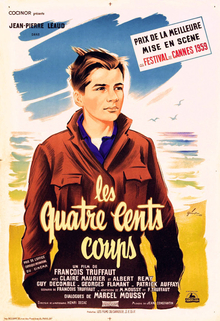
The Four Hundred Blows (1959)

The Four Hundred Blows (1959)

Injustice, oppression and disregard fill the life of a young ‘Truffaut’ in this marvellous coming-of-age story

Director: François Truffaut

Cast: Jean-Pierre Léaud (Antoine Doinel), Albert Rémy (Antoine’s father), Claire Maurier (Antoine’s mother), Guy Decomble (“Sourpuss”, the teacher), Patrick Auffay (René Bigey), Georges Flamant (Monsieur Bigey), Pierre Repp (English teacher), Daniel Couturier (Betrand Mauricet), Luc Andrieux (Gym teacher), Robert Beauvais (School director)

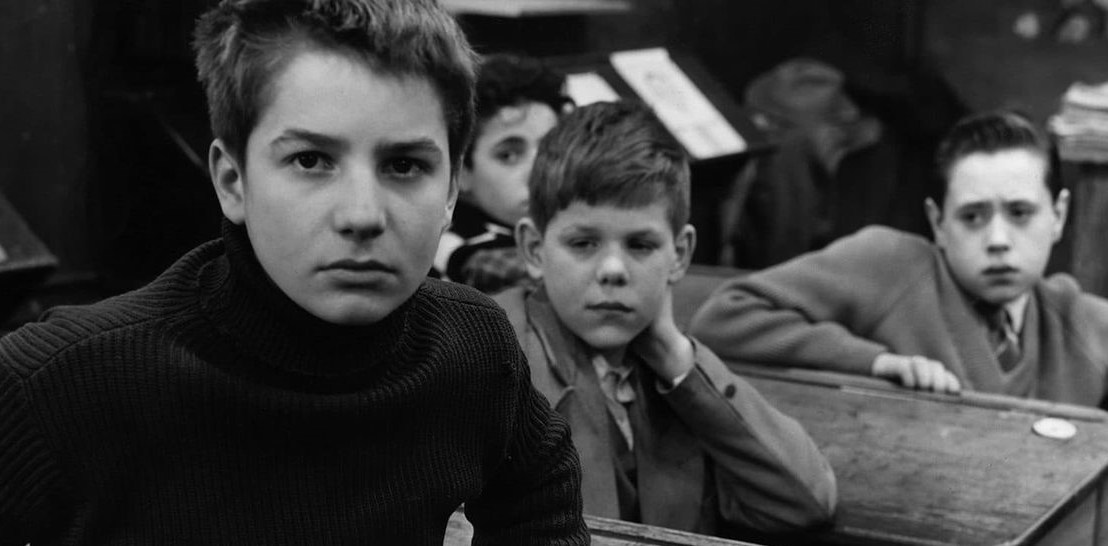
Truffaut’s first film, shot when he was just 26 years old, is not only one of the finest debuts ever, it’s also one of the films most in touch with being a child. Heavily based on Truffaut’s own troubled childhood, it’s a beautifully told exploration of how much children can be misunderstood by adults and what a cage, of circumstances outside of your control, childhood can become.

Antoine Doinel (Jean-Pierre Léaud) is a 12-year-old living in a cramped apartment with his parents, who have a tempestuous relationship and alternate between half-interested mateyness and exasperation with their son. Antoine is marked at school as the class trouble-maker and constantly finds himself in scrapes, only increasing the perception of him as a tearaway and lost cause. Eventually packed off to a reform school (basically a borstal), only his imagination and love of books and film (qualities no one sees in him but us) give him any hope.

What’s with that title? In French it’s Les Quatre Cents Coups in reference to the expression “faire les quatre cent coups” which roughly translates as “raising hell”. The alternative English title of Wild Oats (which to be honest isn’t much better) was rejected. But perhaps it’s for the best. The 400 Blows has a poetic gorgeousness about it: it reminds us of Waugh’s powerful quote from Brideshead Revisited about the destructive impact of circumstances and misguided interventions on the tragic Sebastian: “a blow, expected, repeated, falling upon a bruise”. And what is Antonie’s life but 400 blows hammering down, repeatedly and expectedly on the same bruise?

This is a kid who never catches a break. From the opening scene, as the kids pass around a page torn from a naughty calendar, it’s him who gets caught with it – because he starts doodling artistically around her eyes. He’s distracted from his punishment homework by one of his father’s (brief) bursts of friendly interest. Worried, he skips school the next day then invents a ridiculous lie of his mother dying to cover it, cementing the impression he is a habitual liar. When he quotes his beloved Balzac in a school essay competition, he is thrown out of the class for plagiarism. After stealing a typewriter, he’s caught when he tries to return it. The kid cannot get a break.

It’s a hugely sympathetic and moving insight into Truffaut’s own childhood. He too was raised, largely in indifference, by two parents who seemed uncertain they wanted him. Like Antoine, he discovers the man he thinks is his father actually isn’t. He also he spent eight years living with his grandmother, because his mother wanted an abortion not a child, and witnessed his mother’s extramarital romances. Truffaut to spent much of his time with his closest friend Robert Lauchney (here appearing as René Bigey – Lauchney worked on the film’s crew).

But, also like Antoine, Truffaut was passionate about imagination and the arts. Antoine reads Balzac’s Le Père Goriot (smoking an illicit cigarette – after all he’s French) and it makes such a powerful impression he can quote large chunks of it from memory in a school essay and builds a candle-lit shrine at home to the author (with his usual luck, the candle nearly burns down the cramped flat). The cinema is his other big escape. He takes every opportunity to visit, staring at the screen with wonder, stealing film posters (he swipes an image of Harriet Andersson in Summer with Monika) and finding an outlet for his imagination and intelligence that the real world never offers.

This is a child who requires attention, focus and encouragement to bring out his vibrancy and creativity. What he gets are orders to take the bins out and stupefyingly boring lessons of endless repetition mixed with abuse at school. Home life has only flashes of happiness: Antonie’s childish, giggling joy when his parents take him to the film, and laughing in the car as they remember the film on the way home, is the only time he seems to smile in their presence. At others, his mother mixes irritation with sudden bursts of affection that are really bribes for good behaviour.

He is bought to life in an extraordinary performance from Jean-Pierre Léaud. Found from a pool of 200 applicants from a newspaper advert, Léaud transformed Truffaut’s idea of Doinel. Truffaut saw him as more overtly fragile, timid and artistic. Léaud has all of that – but matches it with a defiance, a bravery and a slight resentment that makes his vulnerability all the more affecting. He is the sort of kid you see as a tearaway but, look closer, you’d see the soul of an artist.

Léaud’s performance is guided with a great deal of delicacy and skill by Truffaut – so successfully that he and Truffaut would collaborate five more times on films about Antoine’s future life. His part was largely unscripted, Truffaut outlining the plot and scene and then encouraging him to use his own words. It’s gloriously effective in a beautifully naturalistic late scene, when Antoine (the camera focused solely on him), responds to a series of questions from an unseen psychiatrist about his past, including an abashed cheeky giggle when asked about his sexual experience.

The 400 Blows also helped to kickstart what would become the French New Wave. Truffaut – and cinematographer Henri Decaë – shot the film with an on-the-streets naturalism that gave a large dollop of documentary realism to a narrative film. Decaë’s roving camera, moving easily and naturally through the streets, tracking the movement of the children, is also reminiscent of the very act of being a child, where life is often one of wild drifting and aimless but purposeful running through streets. The wide angles capture the everyday details of the Paris in a way that feels intimate and real, and also manage to hammer home the cramped apartment the Doinels live in (Antonine’s bedroom, Harry Potter like, is basically a cupboard under the stairs next to the bin).

It all builds towards the film’s extraordinary ending. Thrown into a reform school, essentially told by his mother she doesn’t want him to come home, barred from seeing his friend René, asked to choose which hand he wants to be slapped with by the teachers and forbidden access to the books and films he loves, Antoine does what he has done all his life. He runs.

Running from a football match, evading a pursuing teacher, Truffaut gives us two long tracking shots of extraordinary beauty but also profoundly openly to interpretation. Antoine runs through the countryside, the camera keeping pace with him, his feet pounding on the grass and pavement. We are joining him in his flight, running free alongside him. Then he arrives at his destination – and the camera tracks him as he walks across the beach until finally he sees the sea. He wades – and then turns to look directly at us, Truffaut freeze-framing and zooming in.

Are we being challenged? After all, perhaps we are all complicit in the wretched judgement Antonine has faced. Or is this him welcoming us, accepting us, acknowledging us as his co-conspirator and escapee? Who quite knows. What we do know is that The Four Hundred Blows set Truffaut on the path to being one of the world’s leading directors – and is a stunning, sympathetic and heart-breaking insight into the struggles and injustice that childhood can consist of.

The Last Metro (1980)

The Last Metro (1980)

Passion, privacy, tension and terror all come to head in Truffaut’s stately theatrical occupation epic

Director: François Truffaut

Cast: Catherine Deneuve (Marion Steiner), Gérard Depardieu (Bernard Granger), Jean Poiret (Jean-Loup Cottins), Heinz Bennent (Lucas Steiner), Andréa Ferréol (Arlette Guillaume), Paulette Dubost (Germaine Fabre), Sabine Haudepin (Nadine Marsac), Jean-Louis Richard (Daxiat), Maurice Risch (Raymond Boursier)

The curtain parts and we are introduced to a magic world of imagination and drama play out before us on stage. But how can the actors immerse themselves in this, while such huge drama plays out in the real world? It’s the dilemma of the Montmatre theatrical troupe in Paris during the Occupation. With war raging with all its complex moral choices and dangers, how can you focus on the art within – or for the matter process the complex emotional entanglements in an already claustrophobic profession only made worse by the perils of Nazi occupied Paris and their pet collaborators.

Truffaut’s film is called The Last Metro as it recalls a period during the occupation when hundreds of thousands of people crowded into Parisian theatres to stay warm at night before rushing to catch the final train home before the curfew. The Montmatre Theatre is run by Marion Steiner (Catherine Deneuve), a film star turned stage actor struggling to keep the theatre going in the absence of her Jewish theatre-director husband Lucas (Heinz Bennett) – who, unknown to anyone else, is hiding in the theatre basement. Bernard Granger (Gérard Depardieu) is her new lead actor for their latest Ibsenesque production: but his presence will stir powerful feelings in the embattled Marion.

Truffaut’s film steers away from his other more famous work – the sort of vibrancy and romance of earlier films like Jules et Jim or The Four Hundred Blows or the inventive playfulness of Day for Night. Instead, The Last Metro is a more formal, classically shot, interior piece that revels in small moments and touches of emotional investment so subtle and glancing some viewers might not even notice them. It’s also – surprisingly for cinema’s leading cineaste – a film deeply in love with the mechanics and backstage drama of theatre, subtly contrasting the claustrophobia and intensity of such spaces with the oppressive world-shrinking and glance-over-your-shoulder anxiety of occupation.

It’s also a superb character study, with a quite brilliantly complex and compelling performance from Catherine Deneuve. A starlet with a double burden – not only keeping the theatre alive, but also her husband – Marion is a woman pulled so hard and so overwhelmingly in so many competing directions, it’s taking every ounce of her control to hold herself together. Facing financial pressures, censorship pressures and the constant fear that a single wrong word could see her theatre ripped away from her and her husband discovered and killed, she maintains a cold and professional veneer that rarely, if ever, slips.

So little does it, that Bernard – played with an effortlessly underplayed grace and charm by Gérard Depardieu that belies his Rugby-player bellicosity – is, for the most part, blissfully unaware of Marion’s growing, unspoken, attraction to him. A love she seems hardly able to acknowledge herself, not least because it feels like an even deeper betrayal now of her husband, hiding out in the basement and utterly dependent on her, than it would in peacetime.

Lucas – a wonderful Heinz Bennent – is himself teetering on the edge of falling apart from the sustained effects of acute cabin pressure. Never leaving the damp theatre basement – apart from surreptitious trips to the stage late at night – Lucas’ attitude to his enforced imprisonment moves from a larkish boys-own adventure into an increasingly bitter resentment. Directing the show from afar – a drain has been hooked up so he can listen in on rehearsals – he provides late night feedback to Marion to accompany the detailed handwritten notes he ‘left behind’. Mapping out future productions on his cell walls, Lucas avoids the suspicion that the constant pressure of concealing him has tipped their relationship from romance to one of anxiety-ridden responsibility.

It contrasts with the play the company is performing: where, in typical Ibsen style, the lead is a tragedy tinged woman, suffering memory loss, who falls into a deep but mutually painful love with her son’s tutor. Even from the rehearsals, Marion begins to feel some bleed of this dramatic relationship into her real world: she asks Bernard to not touch her during rehearsals, as if worried that this moment of physicality could lead to consequences she cannot control.

Touch is a key sensation in The Last Metro – as if moments of physical contact and intimacy carry even more weight in a world where no one can be trusted and every word must be carefully watched. Bernard uses a repeated routine of palm reading to try and seduce (with mixed results) a series of women (most notably lesbian production designer Arlette – strikingly played by Andréa Ferréol – who, in a lovely flourish, he describes as longing for “like a warm croissant”). Physical contact – the light caress of a face and hands – is crucial to the film. Truffaut’s camera zooms in on moments where hands take each other, either in longing, understanding or – in a sequence where Marion journeys to Gestapo headquarters – with the threat of imminent violence.

Closing distance is particularly important in a period where all contact must be carefully judged and measured. Collaborators, like powerful press chief Daxiat, will use the smallest slight or word out of place to justify pulling your world down. Played with a hissable vileness by Jean-Louis Richard, Daxiat is a pompous, self-important, two-faced and vindictive man parroting Nazi slogans and revelling in his power to destroy careers. But, small man though he is, the Occupation gives him power – when Bernard angrily confronts him for his rudeness about Marion in his review, its Bernard who Marion is furious at for his recklessness.

It’s because hanging over every moment – and constantly playing in Deneuve’s expressive eyes – is the dread of what will be found if her theatre is searched or how doomed her husband will be if it is closed. Finding a play that passes muster with the censors and pleases the masses is literally a matter of life and death.

Truffaut echoes the claustrophobia of occupied France in his shooting of the cramped backstage world – and he and Suzanne Schiffman in their screenplay add to this with their look at backstage politics and affections between actors, stagehands and crew. Even the outside is shot like an interior – and Truffaut never bothers to make the locations feel like anything other than sets, as if the whole world is a claustrophobic theatre – with extensive use of mid and close-up shots and subtle tracking shots that maintain the theatrical effect.

It does make for a film that can feel stately and a little too heritage – and its undeniable you miss some of the energy of Truffaut’s other films (you can’t imagine his idol Hitchcock ever shooting a frame of The Last Metro­ – or what he would have made of its luxurious pace). Its subtle energy is sometimes so easy-to-miss that it can be easy for parts of the film to pass you by. Plotlines – such as Bernard’s support of the resistance – sit awkwardly at times within the framework, and the film’s boiling down of Vichy France to (essentially) one bad apple told a story about Occupation that was very pleasing to the French self-image (no wonder if was a massive hit).

The Last Metro is at times a little too in-love with its cultural heritage and the quiet professional skill of its making. But, it counter-balances this with some involving and subtle work from all its principles and director: and in Denevue (especially) and Depardieu it had two of the greatest actors in French cinema at the top of their game. Multi-layered and demanding, it’s a film that makes you work from its newsreel opening to its fourth-wall, metatextual ending, riffing on romantic entanglements, art, burdens and the oppression of occupation. Perhaps too knowingly prestige to be great, but still an essential watch.

Jules et Jim (1962)

The film that launched a thousand menages: Jules et Jim

Director: François Truffaut

Cast: Jeanne Moreau (Catherine), Oskar Werner (Jules), Henri Serre (Jim), Vann Urbino (Gilberte), Boris Bassiak (Albert), Marie Dubois (Thérèse), Michel Subor (Narrator)

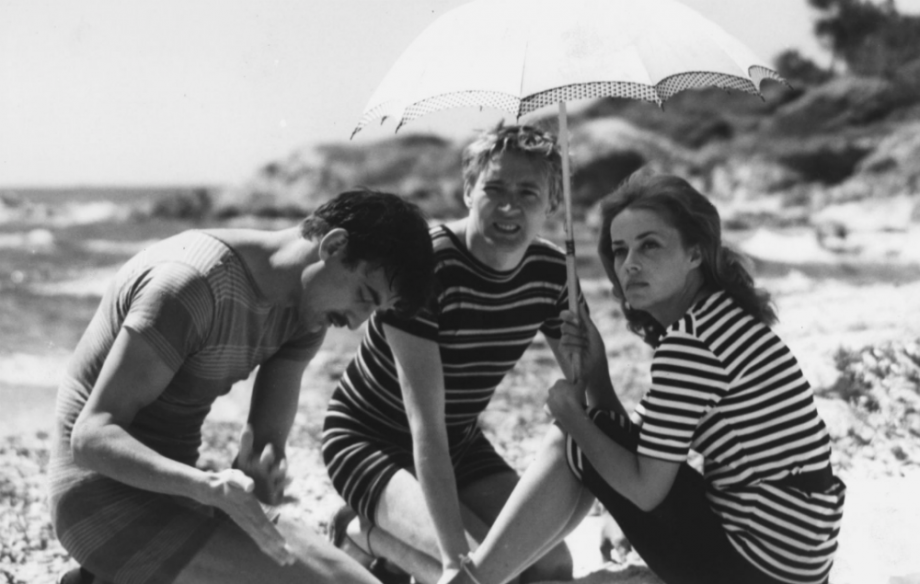
Of all the films of the French New Wave, Jules et Jim was the one that really captured the global imagination. Its success rode came not only from its embracing of the new French style, but also from the way it captured some of the mood starting to build across the world in the 1960s. Truffaut’s third film, it turned its then 29-year-old director into one of the most renowned directors in the world. Filmed with verve and imagination, it still holds up brilliantly today as well.

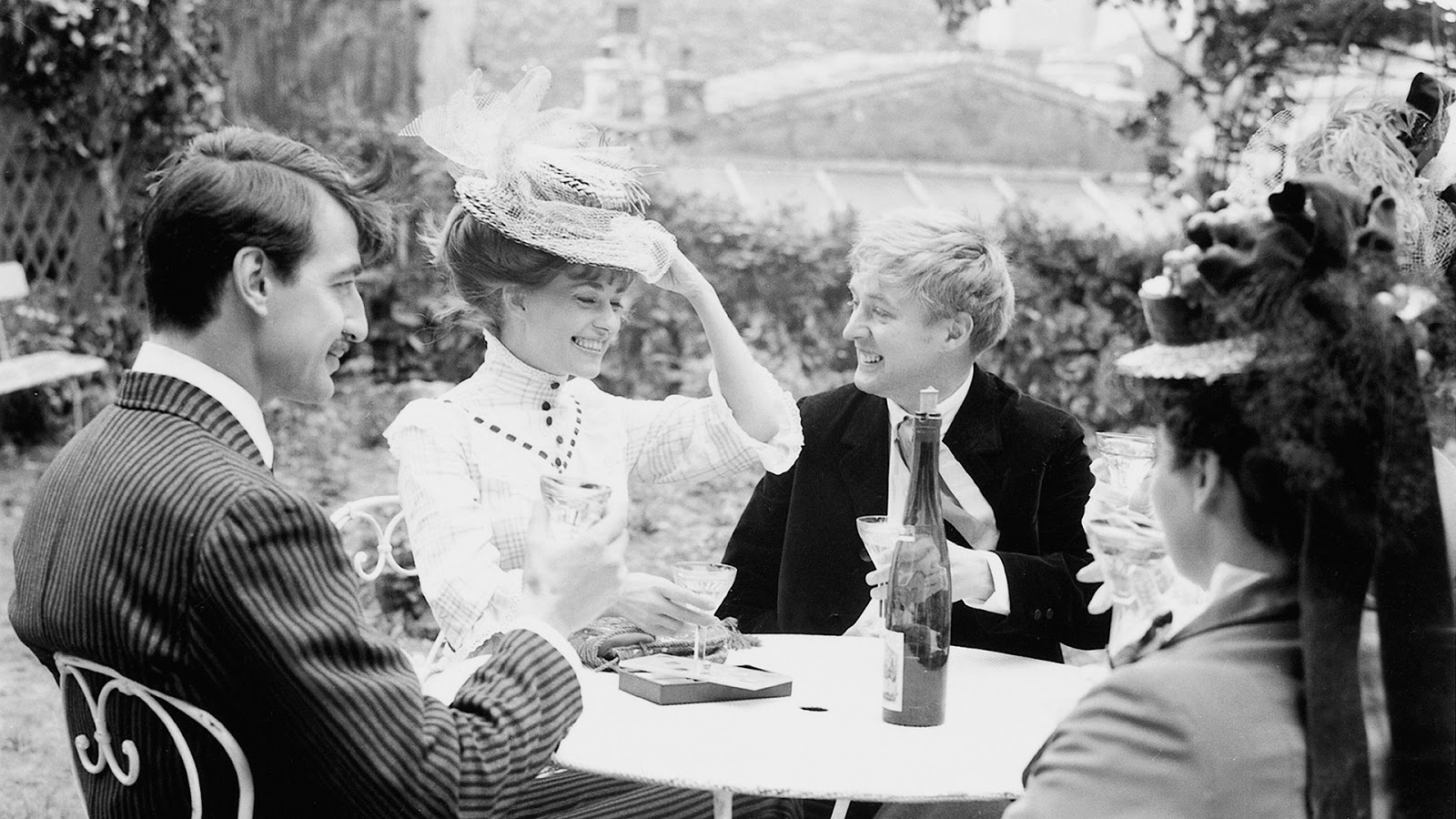
In Paris in the years before the First World War, French bohemian Jim (Henri Serre) and shy Austrian writer Jules (Oskar Werner) become best friends. They share everything – the arts, sport and occasionally women – and the bond between them is unshakeable. When both men meet Catherine (Jeanne Moreau), a free-spirited, extremely bohemian young woman, they both fall in love – although the infatuated Jules is the first to admit it. Both men fight for their countries in the Great War and return to civilian life: Jules marries Catherine and they have a daughter. But home life cannot keep Catherine bound down, and a visit to Jim throws the three of them into a curious but warm menage-a-trois. But can such bliss last forever?

Truffaut’s film is playful, vibrant and overflowing with style. While other French New Wave films prior to this had focused on sending the camera out into the streets and capturing the lives of everyday Parisians, Truffaut’s film mixes this with period trappings. Utilising the dynamic camera work of his peers, Truffaut throws in carefully selected newsreel footage and still photography. But all this material is edited with modern forcefulness, Truffaut using a range of freeze frames, wipes, dolly shots and several other editing and camera tricks to make this period story feel astonishingly fresh. The film is fast paced and brilliantly made, and Truffaut’s camera roves like an engaged but playful observer – a feeling added to by the use of a subtly wry narration.

According to legend, Truffaut found a copy of Henri-Pierre Roché’s semi-autobiographical novel in a charity bin and fell hard for the book. It’s a mark of Truffaut’s ability to judge the time he lived in, that he saw how clearly this story of bohemian free love in the 1920s would speak so strongly to the atmosphere of the 1960s. It’s a story that feels more dated today – and at times it’s hard not to feel a little bit annoyedby the very knowing, arty, exhibitionism of its characters, and the way they are very consciously living life as a performance – but it chimed like a bell back then. And the slight air of artificiality about many of the characters throughout gives even more of a jar of real emotion when they respond naturally to tragic and upsetting events.

Truffaut’s film – blessed with a simply sublime score from Georges Delerue, which captures the tone of the film perfectly – becomes a brilliant exploration of the freedom and imprisonment that comes from living your life for every new experience, and never settling. All three of the characters, to various degrees, refuse to settle for convention but are constantly striving for a marvellous new experience. Even the character least affected by these feelings, the more sensitive and weaker Jules, is willing to adapt and change his life constantly just so he can remain part of this circle and keep Catherine (with whom he is besotted) in his life.

Ah yes Catherine. Jeanne Moreau gives the sort of performance here that seems to define an entire generation. Again, today, Catherine’s constant striving for new experiences and addiction to the buzz of infatuation comes across at times as (to be honest) selfish. But she is also an electric figure, overflowing with life and joie-de-vivre. Moreau’s every scene is breathtakingly eye-catching – and Truffaut recognises this with carefully timed freeze-frames where the camera seems to soak in her beauty and dynamism as much as Jules and Jim. Moreau’s performance is truly iconic, like a force of nature, almost impossible to categorise – she is loving, selfish, brave, scared, flirtatious, bashful – and impossible to repeat.

It’s also clear why someone as unpredictable and all-consuming as Catherine gains the ever-lasting devotion of two close friends. Truffaut brilliantly captures both the hopeless devotion of these two men to this woman, and also the slight tinge of unspoken sexual bond between each other. Both men delight early in the film in each other’s permanent company, of this fact being recognised by all, and write each other poetry and stories. The film implies the fascination and longing both men have for Catherine, but also suggests that the strongest, most lasting bond is the one between the two men. Perhaps it is this that makes them so willing to settling into their menage – and certainly why, as Catherine’s interest in first one then the other waxes and wanes, it is each other’s company that they start to long for.

Of course that doesn’t mean that Jules doesn’t stay devoted to Catherine, a woman who gives him days of sunshine mixed with weeks of polite warmth. Oskar Werner is brilliantly sweet, gently naïve and vulnerable as Jules, filled with wit and tenderness but one of life’s passengers. He’s a man who follows rather than leads, or moves between the two other people in his life following the lead of first one or the other. The stronger willed Jim, played with a hardness and worldly realism by Henri Serre, is the one who both has the strength of character to hold Catherine longer and the will to turn away from her (even if for a short time).

The first half of the film is a marvellous explosion of relaxed joy, of pre-war innocence and youthful exuberance. It’s truly a young person’s film – and Truffaut’s  dynamic filming, inventive framing and giddy editing really captures this – and the film progresses much as life does into a middle age still clinging to the freedom of youth (like Europe attempting to recapture the innocence before the Great War) before beginning the descent towards the horrors to come of the 1930s. The film’s tragic conclusion has the sadness of a world lost, touched with the ridiculousness that seems inevitable for its exhibitionist characters. It makes for a marvellous and breathtakingly giddy ride, that (even if it looks at time dated in its very 1960s vibe) still carries a great deal of delight, joy and above all fun. Truffaut’s greatest achievement and most famous film still makes for a quite a calling card.

Day for Night (1973)


Jean-Pierre Léau and Jacqueline Bisset are the leading actors in FrançoisTruffaut’s film making masterpiece Day for Night

Director: François Truffaut

Cast: Jacqueline Bisset (Julie Baker), Jean-Pierre Aumont (Alexandre), Valentine Cortese (Séverine), Jean-Pierre Léaud (Alphonse), Dani (Lilane), François Truffaut (Ferrand), Alexandra Stewart (Stacey), Jean Champion (Bertrand), Nathalie Baye (Joëlle), David Markham (Dr Nelson), Nike Arrighi (Odile), Bernard Ménaz (Bernard)

François Truffaut is perhaps the greatest example of a critic turned film maker. A noted French film expert, he made a splash when he turned to film directing and became one of the leading figures of the French New Wave. This movement was seen as a rejection of old-school, literary melodramas of French cinema, instead embracing social issues and using the techniques of cinema in new and imaginative ways. Truffaut later stated though he was not a revolutionary, but a man who wanted to make stories that were important to him, using all the tools of cinema available. And as a man who loved cinema – and worshipped the great directors of yesteryear – what story could be more important to him than the making of films themselves?

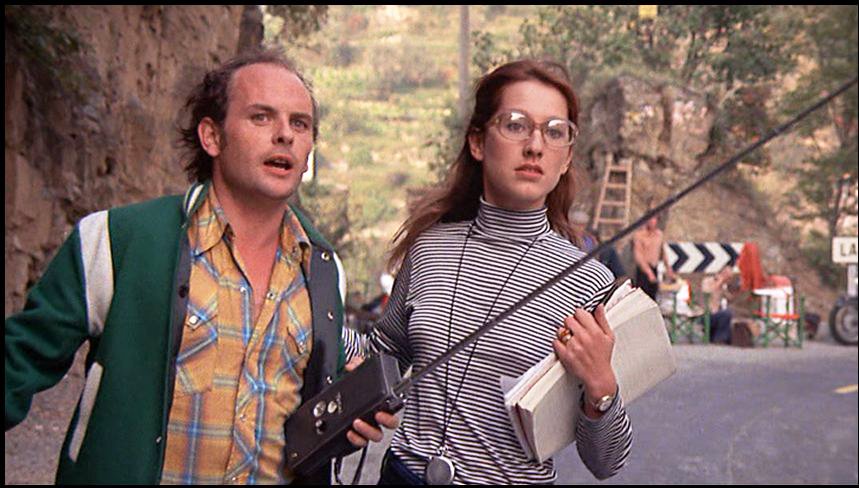
Day for Night (the term means to place a filter on the camera in order to shoot scenes set at night, during the day) is set during the production of Meet Pamela, a melodrama starring gentlemanly screen icon Alexandre (Jean-Pierre Aumont), increasingly fragile screen diva Séverine (Valentine Cortese), neurotic young star Alphone (Jean-Pierre Léaud) and British film star Julie Baker (Jacqueline Bisset) recovering from a nervous breakdown. The film is directed by Ferrand (Truffaut himself), working in close collaboration with the crew (many of them played by the real life crew of Day for Night) not least passionate cinephile script-editor Joëlle (Nathalie Baye). The film is plagued by compromise, reshoots and actor-induced difficulties, with Ferrand and his crew constantly forced to rewrite and adjust the story to compensate.

Day for Night is partly a gentle, satirical farce on movie-making (it even has a documentary camera crew, following events around), but really it’s a deeply romantic, wonderfully engaging, desperately sweet homage to cinema and movie making itself. In fact, I can’t imagine anyone who loves movies not loving this film. It’s a charming warts-and-all, behind-the-scenes look at how a movie is made, and what motivates the people who make it. The fact that it’s really funny, and has some wonderfully engaging characters in it, is the icing on the cake.


Truffaut places himself at the centre of the film in more ways than one. Obviously he’s playing the director – the still-centre of the film, who constantly must address and overcome a string of practical problems, from actors disappearing to malfunctioning props and (in one stand-out moment) a cat who refuses to lick milk from a saucer. But the film also places Truffaut the man at its heart: Ferrand’s love of cinema is Truffaut’s own. Three times we see Ferrand dreaming at night (it’s possible it’s even the same night – each set-up is the same). We see snippets of the dream before its full content is revealed: it’s a memory of the boy Ferrand (based on Truffaut’s own childhood) going to cinemas at night to steal still photos of Hollywood masterpieces (in this case Citizen Kane). Cinema is such a powerful, all-embracing part of Truffaut’s life that even as a child he had to worship at its alter, and commit theft to take a small part of it home with him.

This love of cinema runs through the whole film. Joëlle (a truly wonderful performance from Nathalie Baye: smart, sweet, engaging and sexy) can imagine leaving a man for a film but never vice-versa. The props man, Bernard, loves the tricksy solution search to overcome filming problems – and clearly carries a yearning to be on screen himself. The film is packed with longing stories of the golden age of Hollywood: at one point Ferrand drives around his set, bemoaning the loss of the era of studio-made films. It’s a film that celebrates the artisans of film, perhaps even more than artists. It’s an insight into what all those little jobs on the credits actually are, and the heroes are frequently carpenters, script editors, assistants, soundmen, extras directors… In fact all the problems of the film are caused by the actors themselves, the self-absorbed public face of an industry that is built on the love and dedication of the working people behind them.

The actors in the film do, however, contribute most of its comedic and romantic elements. Neurotic, needy matinee idol Alphonse (Jean-Pierre Léaud in a neat performance of childish self-obsession), fawns possessively over his girlfriend Liliane, who he treats as part lover, part sister, part surrogate mother. Frequently he disappears or melodramatically announces that he is finished with acting. He contrasts nicely with Alexandre (a gentlemanly and endearing Jean-Pierre Aumont), who goes through the film with a professional calmness, laced with charm, who is never late and never causes any trouble, but enjoys gossip – and quietly lives with a far younger male tennis player.

Jacqueline Bisset (again hugely engaging – it’s hard not to fall in love with the people in this film) perfectly captures both the attractive likeability and vulnerability of the person who lives their whole life in the spotlight, in a thinly veiled portrait of Julie Christie. She has a natural ease with the assistants and crew – but it’s her fragile mental state that has the insurance companies worried. It’s easy to see why she might feel like that, as the film set is a hot bed of flirtation and casual one-night stands – at one point even called out as such by an outraged assistant-director’s wife. What’s “nice” about the affairs though is their relative lack of long-term drama – short term tears and tantrums are swiftly forgotten, as everyone pulls together to make the film.

The drama of film creation is the magic here. The film is bookended by elaborate set-ups for a street scene (the film even playfully doesn’t reveal at first that what we are seeing is a film-within-a-film) – one carefully rehearsed, the other reshot with the set covered in snow to help cover up the reasons for an urgent reshoot. A scene between the father and the daughter-in-law is conceived, written, rehearsed and shot in one sequence – all in response to Ferrand and Joëlle’s perceptions of the dynamics between the actors. Ferrand, behind his quietness, is ruthless in using things for the film – one character finds their heartfelt confessions about the emptiness of life pushed under their door the next day as lines integrated into the script. It’s not cruel – and that’s the best thing about this film, it’s never cruel or bitter – it’s just the way of the game, the way we struggle to create art.

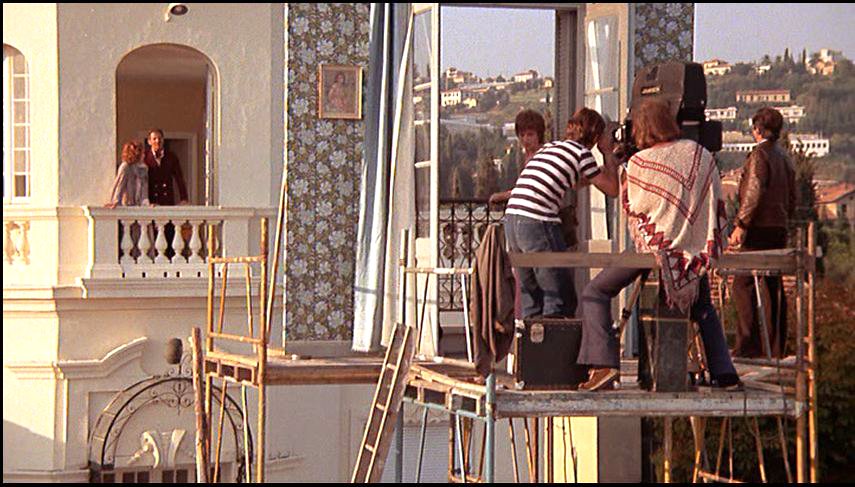
And the struggle is what is clear here. Ferrand bemoans in voiceover that every film starts with him wanting to make the best film he can, but always seems to end as a salvage job. Much time is spent setting up a complex ballroom sequence, which circumstances later require to be cut. Séverine (a winningly bright performance of diva self-parody from Valentina Cortese) frequently struggles with lines and blocking, regularly bringing the film to a halt – at one point her lines are stuck on a wall out of camera shot. It’s another example of the exposure of film magic – at one point a window and part of a wall is built on a scaffolding to give the impression of a building – only what will appear on camera is built, everything else is scaffolding. 

Interestingly, the film all this effort and work is being put into looks like a pretty forgettable melodrama. It’s in many ways another piece of comedic self-parody – Truffaut’s Ferrand is filming a thinly veiled version of Truffaut’s own The Soft Skin (I’m indebted to the Criterion Collection blu-ray special features for that titbit) – but it’s also a sign of how art and compromise go hand-in-hand. The final film is hewn from the circumstances of its making: it might not be what was intended at the start, but it’s the best we can do with the marble the artist has been given. Sure Meet Pamelalooks pretty average – but the important thing is the love invested in making it. If this goes into an average film, the same level (perhaps more) goes into a great one.

Day for Night is the perfect film for film aficionados. It’s warm, funny and moving. It’s crammed with wonderful performances. It’s shot with a playful expertise. It has a marvellous score by Georges Delerue – part actual score, part score recordings for Meet Pamela – and Truffaut keeps the whole light confection perfectly intact, never letting it burst or sink. It’s a masterclass in film crafting, which is about the craft behind making a film. It’s like peeking behind the magic curtain. It’s brilliant.