Category: Jordan Peele

Nope (2022)

Nope (2022)

Be afraid of looking in Jordan Peele’s puzzling but less enlightening horror suspense film

Director: Jordan Peele

Cast: Daniel Kaluuya (Otis Jnr “OJ” Haywood), Keke Palmer (Em Haywood), Steven Yeun (Ricky “Jupe” Park), Brandon Perea (Angel Torres), Michael Wincott (Antlers Holst), Wrenn Schmidt (Amber Park), Keith David (Otis Haywood Snr), Donna Mills (Bonnie Clayton)

Spoiler warning: Peele loves to keep ALL the plot details on the QT – so I discuss more than he would want, but hopefully not enough to spoil the plot.

Jordan Peele’s previous horror films brilliantly married up genuine chills with acute social commentary. Plot details have often been kept under wraps – after all half the joy of watching Get Out or Us the first time is working out what the hell is going on. Nope continues this trend, but for the first time I feel this is to the film’s detriment. I actually think Nope would be improved if you know going into it that this was Peele’s dark twist on Close Encounters of the Third Kind (with added body horror). Instead, Nope plays its enigmatic cards so close to its chest that it ends up never having a hand free to punch you in the guts.

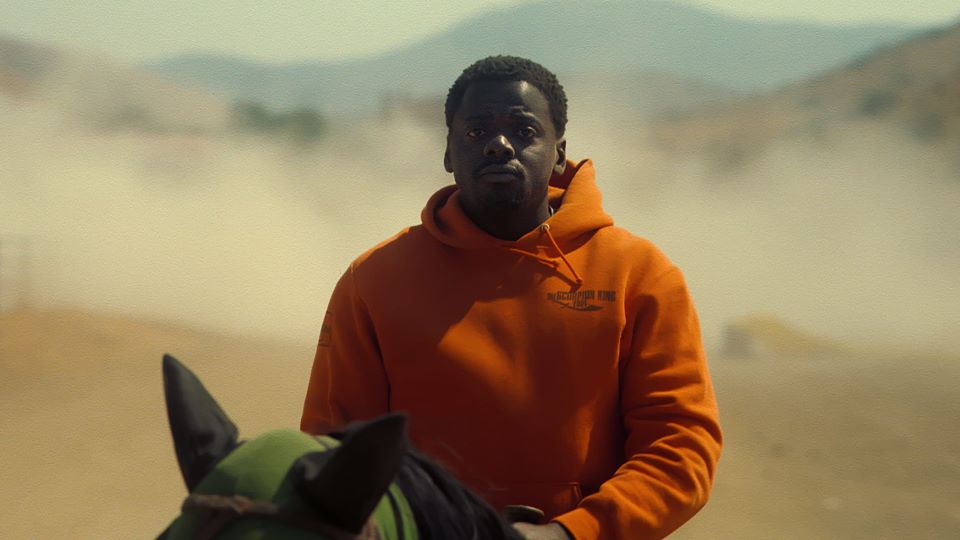
Pensive and guarded Otis Jnr (Daniel Kaluuya) – known, unfortunately, as OJ – and his exuberant wanna-be-star sister Em Haywood (Keke Palmer) are trying (with differing levels of enthusiasm) to keep their father’s Hollywood horse handling business alive after his freak death from a coin falling from the sky (everyone assumes it fell from a plane). The business is struggling, with OJ forced to frequently sell their horses to their neighbour, a former child star turned ranch theme-park owner, Ricky (Steven Yeun). Their lives are altered however when they discover a huge UFO living in a cloud near their ranch, sucking up horses (and other animals) and spitting out any inorganic remains. Seeing this as their path to fortune (and in Em’s case fame) they try and capture the UFO on film.

Nope is all about our compulsive need to look. Nothing draws our eyes like spectacle – and what could be a bigger spectacle than a huge saucer in the sky that eats people? It doesn’t matter if we know we shouldn’t, our eyes are drawn up (now imagine if Peele had been able to call the film Up!). We want to be part of the big event, whether that’s seeing the latest blockbuster at the big screen or rubber-necking at a roadside accident. Nope hammers this point home, when it becomes clear you are only at danger from the saucer when you look directly at it. Spectacle literally kills!

This is all an inversion of the mid-West America that starred at the skies in wonder in Close Encounters. There the Aliens capped the film with a glorious light show with awe and wonder from the humans watching. Here the appearance in the sky is a prelude to sucking you up, digesting you and vomiting out blood and bits of clothing a few hours later. Despite this, Ricky tries to make an entertainment show out of the creature (something he, of course, learns to regret), and OJ and Em find little reason to re-think their attempts to capture the animal on screen.

Peele’s film takes a few light shots at social media culture. Of course our heroes’ first instinct is to reach for their phones (they are looking for that “Oprah shot” that will guarantee fame and fortune). OJ at least is largely motivated by the cash influx his struggling business needs – Em wants the fame. But the film still attacks the shallow “main event-ness” of social media, where having the best and most impressive thing to show off (for a few seconds) is the be-all-and-end-all.

Peele remains too fond of these characters to judge them too harshly. But he has no worries about taking shots at the fame-and-money hungry Ricky, or a TMZ reporter who arrives at the worst possible moment and dies begging to be handed his camera so he can record the moment. Arguably Ricky would have made a more interesting lead: a man chewed up and spat out by the fame machine and angling for a second chance, who thinks he’s way smarter than he actually is.

The film opens with a chilling shot of what we eventually discover was the bloody aftermath of the disastrous final filming day of Ricky’s sitcom from his childhood-acting days, Gordy’s Home. Gordy was a chimp living with an adopted family: until the chimp actor snapped in bloody fury. It sets up a sense of danger, but the plot never quite marries it up with the main themes of Nope. Parallels are thinly drawn with Ricky’s attempt to commercialise this infamous tragedy, but it feels forced: the whole section plays like a chilling short story inserted into the main narrative. And the film never explores in detail the lesson from this bloody tragedy, that we underestimate the dangers animals can pose (despite the film being littered with creatures).

Instead, Peele settles for a stately reveal of his plot. It takes almost an hour for the film’s true purpose to become clear, but it lacks the acute and darkly funny social commentary that made his previous films so fascinating while they took their time showing you their hand. Interesting points are made about how black people are (literally) whitewashed out of Hollywood’s history (the Haywoods claim to be descended from the black jockey featured in the first ever moving film made in America). But it’s a political point that sits awkwardly in a satire (about something else!), and Peele overstretches the opening without making the central mystery compelling enough.

There are, however, fine performances from the actors, Kaluuya’s shuffling physique – slightly over-weight, the troubles of the world weighing him down – is matched with his charismatically sceptical looks. Keke Palmer is engaging and funny as his slap-dash sister, and the warm family bond between these two works really well. It never quite makes sense that someone as publicity-averse as OJ would really want to become a social media sensation, but you can let it go.

There is lots of good stuff in Nope – it’s beautifully filmed and assembled and once it lets you in on its plans, it has a strong final act. But its social commentary isn’t quite sharp or thought-provoking enough – people are shallow and love spectacle and social media, who knew – and neither the mystery or the plot are quite compelling enough. It’s told with imagination and Peele has a fascinating and unique voice: but Nope isn’t much more than a solid story well told.

Us (2019)

Lupita Nyong’o prepares to take on the dreaded Us

Director: Jordan Peele

Cast: Lupita Nyong’o (Adelaide Wilson), Winston Duke (Gabe Wilson), Shahadi Wright Joseph (Zora Wilson), Evan Alex (Jason Wilson), Elisabeth Moss (Kitty Tyler), Tim Heidecker (Rosh Tyler), Yahya Abdul-Mateen II (Russel Thomas), Anna Diop (Rayne Thomas), Madison Curry (Young Adelaide)

Jordan Peele’s Get Out is a tough film to follow. Smart, socially aware, funny, scary and haunting, it’s both one of the best horror films in years, and also one of the finest films made about modern America. It means his follow-up has some tough shoes to fill. Us perhaps doesn’t quite fill them as well, but judged on its own terms it’s another example of what a witty, skilled and intelligent film-maker Jordan Peele is and how skilfully he is able to both defy and define genre tropes.

The less you know about the plot the better, but Lupita Nyong’o plays Adelaide Wilson, a woman returning with her family to spend a holiday at Santa Cruz beach. While her husband Gabe (Winston Duke) and children Zora (Shahadi Wright Joseph) and Evan (Jason Wilson) are filled with excitement about the trip away, Adelaide fears returning to the location where she traumatically got lost one night in a hall of mirrors and encountered what felt like a doppelganger of herself. But as strange coincidences begin to mount up on their holiday, Adelaide begins to fear her whole family may in fact be in great danger…

Us mixes moments of unbearable tension with beats of almost slapstick humour. But, like Get Out, it’s also a film that leaves you grasping at the implications of its setting and ideas and opens up an ocean of possible interpretations and meanings. There is no chance at all Jordan Peele is a one-hit wonder, because this film is a blindingly good, brilliantly made chiller/thriller that stays with you once you leave the cinema. 

It has such an impact largely because Peele is such an immersive and mesmerising director. His mastery of the tricks and turns of the genre are obvious, but what really makes this go the extra mile in effectiveness is his brilliant understanding of cinema. The camera work here is superb: he knows exactly how long to let a shot linger, exactly how a slow zoom or pull out can build tension and fear to such excellent effect, how the right choice of music can give a scene anything from an ominous Omen­-like terror to a streak of black comedy (there is one musical choice that is so perfectly hilarious and yet bleakly dark that it will have you laughing out loud despite the horror of the scene it accompanies). Us is a superbly made film by a master movie-maker, with every moment giving some imaginative flourish or striking image.

Us is also a film that works because of its depth and the humanity of its characters. Each character is given establishing moments – big and small – that immediately ring true and allow you to understand and relate to that person in seconds. Peele’s horror comes not from blood and guts – which is present but never exploitative (this is a million miles away from a mindless slasher) – but from watching people we have grown to care for and like going through ghastly events. A prolonged home invasion sequence is almost unbearable to watch in the chilling hopelessness of the family caught up in it: and it works because the empathy we have built up for these people allows us to put ourselves immediately into their shoes. The film has a brilliant understanding of our universal fears, from not being safe in our homes to being powerless to protect our children, and uses these for great effect.

The second half of the film (thankfully!) doesn’t continue this unbearable, stomach pulling dread (if it did you wouldn’t be able to watch it) and probably segues more into science-fiction-thriller territory. Not that that’s a problem as the film remains gripping and compelling throughout. It also delves further into the fascinating themes that Peele is confident enough to place on the table without feeling the need to hammer home an interpretation or meaning for the viewer. There are questions here throughout about the underbelly of America, the unspoken questions of class that run through the country. “We are Americans” the ‘villains’ of the film proudly state at one point – and the more we learn about them, the more we understand about why they cling to this idea of belonging. And of course why they feel the way they feel about their country.

What is class in America? How is this nation divided by the haves and the have nots – and how does it affect the decisions people make about their lives? What impact does commercialisation and the need to both have things and to be part of something have on us? What in modern America can both bring us together and drive us further apart? These are questions that run throughout the film – without clear cut answers – but challenge you to think for yourself.

The performances in amongst all this are brilliant. Lupita Nyong’o probably won’t get the awards recognition she deserves here for an extraordinary performance of empathetic gentleness and distress hardening into a grim determination to do whatever is necessary to protect her family. Nyong’o has a double role in the film, and this second performance is equally wonderful, a triumph not only of physical acting but also of tortured psyche. Winston Duke is equally good as a lovable doofus of a husband, while Wright Joseph and Evan Alex give exceptional performances as their children. 

Peele throws in a late narrative twist – effectively signposted throughout – which challenges many of our assumptions about what we have been watching, but doesn’t distract from the social questions he has been tackling throughout the film in a subtle way. Once again his narrative control is flawless and the depth he can suggest behind horror tropes is staggering. Us is perhaps more of a fairground ride than Get Out, more about the terror of being chased and the black comedy of ordinary people fighting back with extreme violence, but it’s a damn entertaining one and leaves you with more to think about the longer you reflect on it.

Get Out (2017)


Daniel Kaluuya finds himself well out of his depth in Get Out

Director: Jordan Peele

Cast: Daniel Kaluuya (Chris Washington), Allison Williams (Rose Armitage), Catherine Keener (Missy Armitage), Bradley Whitford (Dean Armitage), Caleb Landry Jones (Jeremy Armitage), Stephen Root (Jim Hudson), Lakeith Stanfield (Logan King), Lil Rel Howery (Rod Williams), Marcus Henderson (Walter), Betty Gabriel (Georgina)

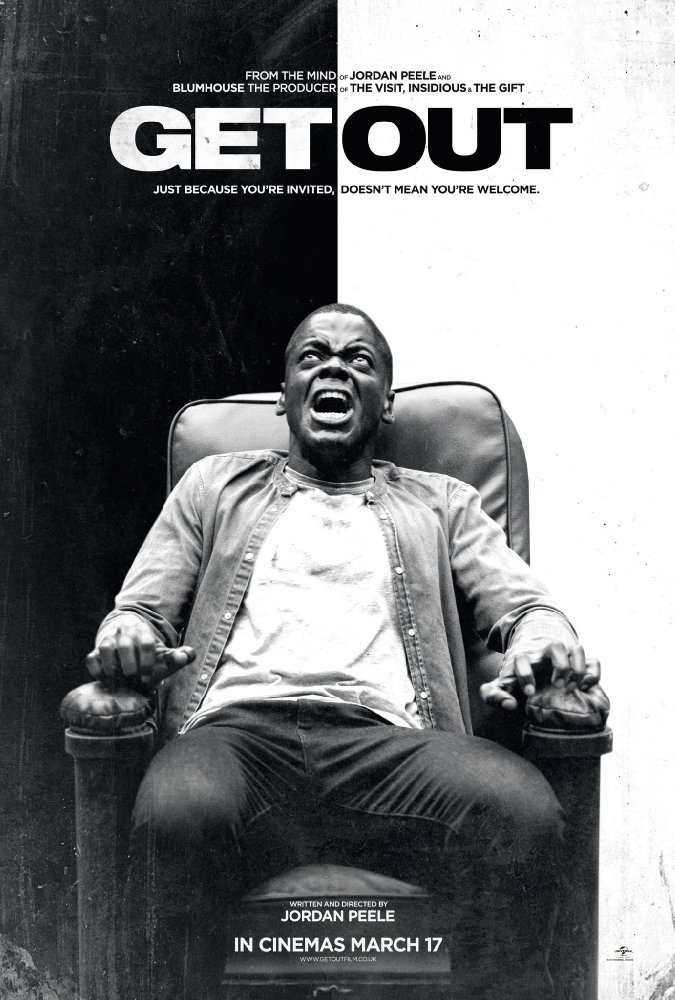
Really great genre film-making transcends its genre, while demonstrating all its strengths. Get Out is nominally a horror film, but strangely it didn’t feel quite like that while I was watching it. It’s more of a horror-inflected social drama with lashings of satire and commentary on race in America. It’s a smart, deeply unsettling film, which really makes you think about how racism has subtly developed in America over the past 100 years. It also manages to feel very much like a film caught at the turning point between Obama and Trump.

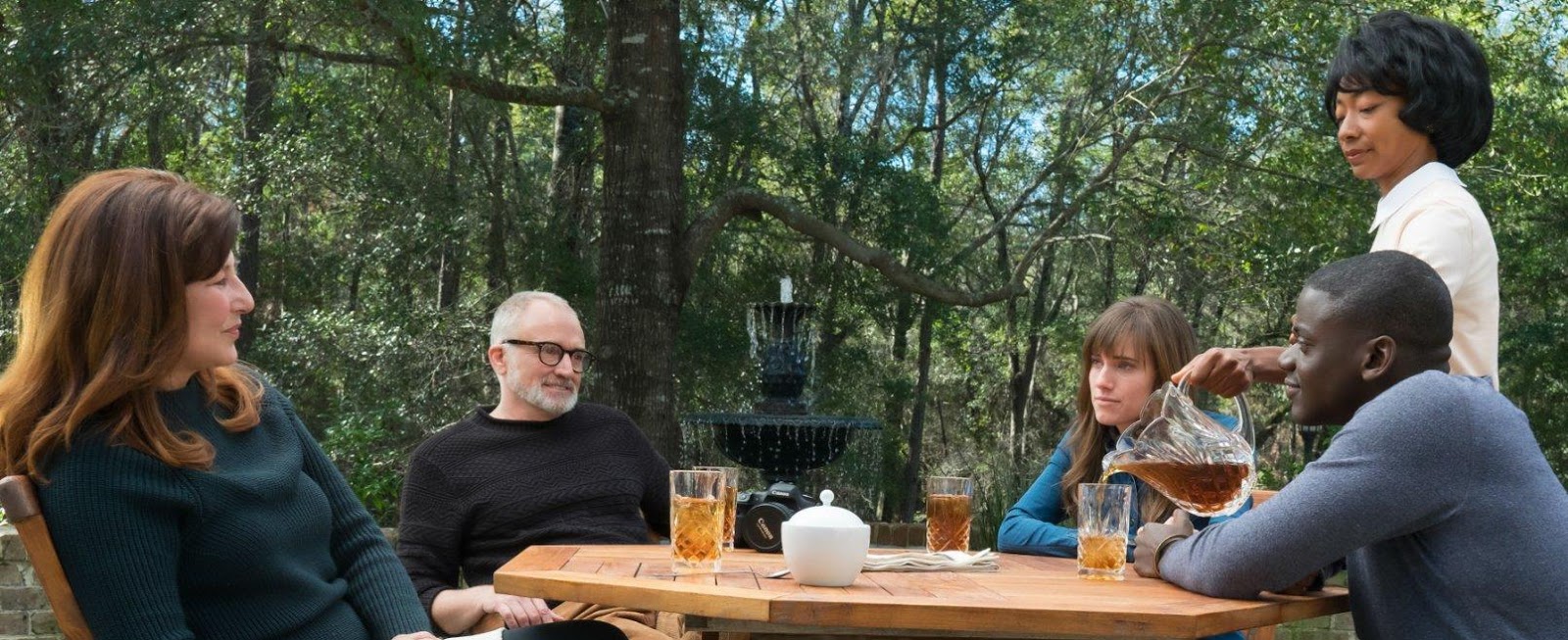
Chris Washington (Daniel Kaluuya) is a young, black photographer dating wealthy white Rose Armitage (Allison Williams). He reluctantly agrees to spend the weekend with her family on their countryside estate. Rose’s parents, neurosurgeon Dean (Bradley Whitford) and hypnotherapist Missy (Catherine Keener) are almost overly welcoming and in expressing their liberal credentials. Chris is doubly unsettled that the Armitages’ house has two black workers, both of whom seem alarmingly compliant. The weekend coincides with an annual get-together the Armitage family hosts, where the guests (all rich and white) make comments to Chris admiring his physique, build, sporting ability and genetic advantages. Chris can sense something is wrong – but can’t even begin to guess the mystery at the heart of the Armitage house.

Get Out is, more than anything else, a film about racial politics in America. It trades in the unsettled discomfiture some liberal white people feel when they actually have to interact with a black male from a different background, and then inverts this into a horror. But it rings true: the father so keen to be seen as liberal he uses the phrase “my man” repeatedly, praises Obama, shows off his “multi-cultural art”, delightedly repeats stories about Jesse Owens; the guests at the party who pinch Chris’ muscles, and praise his physique. It feels like a situation where Chris is invited but not welcome. 

In turn, it also inverts the discomfort some black people feel in white middle-class society. Chris finds his hosts patronising and condescending in their desire to be seen as open-minded. He’s uncomfortable at the black staff. Every second in the house reminds him that he doesn’t belong there. But the genius of Peele is that this could be nothing to do with anything except seeing a black man being constantly made aware of his difference in an unfamiliar milieu. 

Chris though, being basically a decent guy, does what any polite person in a minority tends to do: he works overtime to put his hosts at ease. He keeps quiet, he smiles, he laughs at jokes,  he tries to gently drift away. As almost the sole black person, he’s lost and out-of-his-depth and comfort zone (he’s reluctant about even going). All the other black people he meets are strange – Peel brilliantly shows the mixed messages from the servants in particular. In one brilliant sequence Georgina, the maid, says everything is fine while smiling and simultaneously crying. A black party guest dresses and behaves like the rest of the white people around him: has he just completely assimilated or is there something sinister going on here? Chris might guess more – but until it’s too late he decides to batten down the hatches and ride out an awkward weekend.

The house has plenty of mystery – there is a throw-away reference to a locked off-limits basement. Early in the film the couple hit a deer with their car: the police demand to see Chris’ ID even though he wasn’t driving, to the outrage of Allison. It’s a brilliantly eerie opening that hints at danger to come, both in the corpse of the deer and the suspicion of the police. It’s a brilliant touch to explore the barely acknowledged underlying racism of some middle-class Americans – this liberal elite would be horrified to hear the suggestion that they are anything but open-minded, but in fact have deeply paternalistic, two-tier beliefs that have subtly developed since the end of segregation.

The film is played superbly by the whole cast. Bradley Whitford brilliantly inverts his Josh Lyman persona. Catherine Keener is a sort of warm Earth Mother figure, with darkness and control under the surface. Both characters seem suspicious and yet are both so open and direct in what they say, you think it’s almost too obvious to assume they are villains. Caleb Landry Jones as their son is both full of alpha-male welcome and strange, violent and scornful looks and yearnings. Allison Williams as Chris’ girlfriend seems a strange presence in this household, but her honest sympathy for Chris, and her growing realisation with him that something is wrong, is the one thread Chris has to hang onto.

The star-turn of the movie is of course though Daniel Kaluuya as Chris. A young British actor, he’s superb here in a reactive role, trying to persuade himself everything is fine. His unease and insecurity are brilliantly done, as are the surface humour and reserved politeness he uses to disguise this. In a paranoid film, he is going out of his way to not appear paranoid. His relief in seeing any other black people – and then confused discomfort at their behaviour – is endlessly brilliant. As the plot progresses, Kaluuya takes Chris to some dark and emotional places, conveying both despair, fury and pain brilliantly. 

Peele’s film is not perfect. Introduce a character as a hypnotist and you are probably tipping the hat a little too soon – though to be fair, Peele even lampshades this by having Chris’ friend Rod (a hilariously endearing Lil Rel Howery) immediately point this out. The explosion of violence when it comes at the end is gratifying, but a little too much almost for a film about lack of power. The DVD contains an alternative ending that is, in fact, far better and more appropriate, which continues this theme (and is what I expected the ending to be as the film entered its final act) but was replaced because Peele felt (he says on the commentary) it needed a more upbeat ending.

Get Out though is both an excellent paranoia thriller with lashings of horror, and also a brilliant satire on race in America. Trading on the comedy of embarrassment, it has genuine things to say about how the racial divide hasn’t really gone away at all. Both funny and also deeply terrifying, its final reveal of what is going on is brilliant and also rings very true – as well as casting new light on several scenes we have already seen. Peele is a first-time director – but based on this he certainly won’t be one and done.