Category: Directors

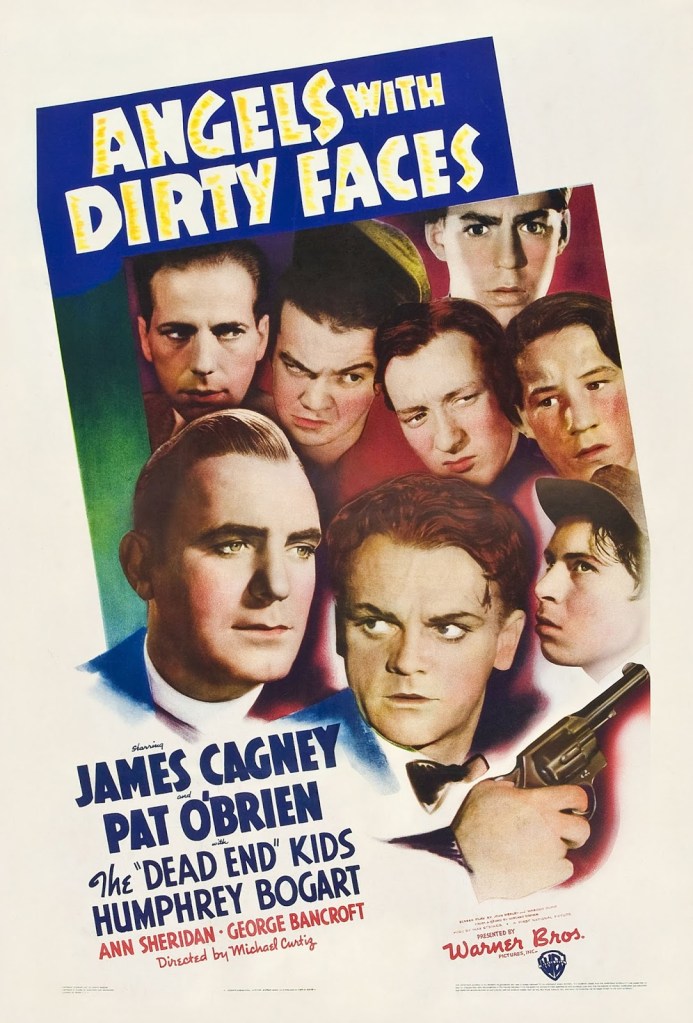
The Public Enemy (1931)

The Public Enemy (1931)

Cagney’s first landmark gangster film, still a propulsive and gripping thriller

Director: William A Wellman

Cast: James Cagney (Tom Powers), Jean Harlow (Gwen Allen), Edward Woods (Matt Doyle), Joan Blondell (Mamie), Donald Cook (Mike Powers), Leslie Fenton (Nails Nathan), Beryl Mercer (Ma Powers), Robert Emmett O’Connor (Paddy Ryan), Murray Kinnell (Putty Nose)

The gangster film has been popular as long as there have been movies. And if there was an actor that first became synonymous with the hair-trigger violence of the underclasses, it was James Cagney. The Public Enemy was Cagney’s big-break, a career shift from the song-and-dance films that had been his bread-and-butter before this. Cagney seizes the opportunity with relish – and helped set a template that everyone from Tony Montana to Tommy Vito have followed ever since.

Tom Powers (James Cagney) is an impulsive, violent, ambitious small-time crook who gets more and more embroiled in the world of crime, from his boyhood in the 1900s to the introduction of prohibition in the 1920s. Partnered with his lifetime-long best friend Matt Doyle (Edward Woods) – and despite the disapproval of his straight-laced brother and war vet Donald (Mike Powers) – Powers rakes in the crash as an enforcer for Paddy Ryan’s (Robert Emmett O’Connor) liquer business. But when the gang war breaks out, the dangerously impulsive Powers finds himself in the middle of a situation he can no longer control.

Cagney amazingly wasn’t the first choice for Powers. In fact, he started shooting the film playing the terminally dull nothing-part of Matt Doyle, with Edward Woods playing Powers (the two child actors at the start of the film playing their young versions, specially cast for their resemblance to Cagney and Woods, remain noticeably the wrong way round). Cagney’s charisma tore up the screen in the rushes – far overshadowing the bland Woods – and the call came from the top: “Swop these guys round!” And so film history was born.

As silence turned to sound in the movies, so the style of acting that the movies required grew and changed. Originally sound was the preserve of the well-spoken, crystal clear, the mic needs to capture every word, diction of the classically trained actor (half the cast in the film continue to speak with cut-glass, Mid-Western clarity). Cagney was something else. A little spitball of energy, who rushed through the lines, who threw in his own accented casualness, who dropped letters from words, who felt real and alive. 

It’s astonishing watching this what a brilliantly modern actor Cagney is: the little psychological touches that speak to Powers’ many hang-ups and insecurities. The commitment to any bit of business required. The method dedication to doing things for real (not least his insistence that at one point Donald Cook punches him for real). His Powers is a brilliant portrait of searing nervous energy – that lifetime of dance training paid off in spades in Cagney’s mastery of physicality – and ruthless thoughtlessness, spiced with a touch of smartness (“Your hands ain’t so clean. You killed and liked it. You didn’t get them medals for holding hands with the Germans” he sneeringly tells his brother). It’s a masterful performance of magnetism that holds so much influence with films to come you’ll retrospectively see touches of Cagney in nearly every dangerous psycho played by actors such as Pacino, De Niro and Pesci.

Wellman’s film is also hugely influential, practically laying the ground work for the structure of gangster morality tale – from those first trivial involvements in crime, the getting deeper, those terrible relationships (often with a girl with a pauncheon for dangerous men), the isolation and the fall. Wellman shoots it with a brilliant eye for action – there are majestic chases, gun fights and punch ups that still entertain today (for all their slightly old fashioned look). As a piece of pulp story telling this is damn high class.

But the other trick is that some of the best scenes are those away from the action. Powers clashes with his brother are brilliantly done. An early sequence in which as a boy Powers wordlessly takes the strap from his strict father (a scene that is echoed years later in Scorsese’s Goodfellas, with Powers a clear prototype for both Tommy and Henry in that film) is brilliant. Most famously of all, the breakfast sequence when a bored and frustrated Powers shoves a grapefruit in the face of the (legitimate) complaints of a girlfriend. Watching it today it’s amazing to think how influential this scene was – audiences hadn’t really seen anything like it.

And it works as a dance with the devil because Wellman and Cagney both know that we might not want to spend time with Powers, but a part of us wants to see this working-class grasper and charismatic fun-loving criminal to succeed and get-ahead. You end up rooting a bit for him – even though you know, with the Hays Code in place, that Powers won’t still be standing by the end of the film. The executives were so worried about audiences being a little too keen on Powers, they added a sanctimonious message about the dangers of crime to the start of the film.

Fast-paced, pulpy, violent and full of excellent scenes with a real eye for how America grew and changed over the first 25 years of so of the 20th century, Wellman’s Public Enemy is a masterclass of film-making – and about a zillion times more influential than many of the prestige films released at the time. But it also works so well because Cagney is one of the best there is, not just in the gangster films, but films themselves. A performer you can’t tear your eyes away from who turns a pulp character into a sea of complexity, he’s as much one for the ages as the picture.

Goodfellas (1990)

Pesci, Liotta and De Niro embrace the life of crime in Scorsese’s masterpiece Goodfellas

Director: Martin Scorsese

Cast: Ray Liotta (Henry Hill), Robert DeNiro (Jimmy Conway), Joe Pesci (Tommy DeVito), Lorraine Bracco (Karen Hill), Paul Sorvino (Paulie Cicero), Frank Sivero (Frankie Carbone), Frank Vincent (Billy Batts), Tony Darrow (Sonny Bunz), Mike Starr (Frenchy), Chuck Low (Morrie Kessler), Frank DiLeo (Tuddy Cicero), Samuel L. Jackson (“Stacks” Edwards), Catherine Scorsese (Tommy’s mother), Michael Imperioli (Spider), Debi Mazar (Sandy)

If there is one film loved more than any other in Martin Scorsese’s filmography, it’s probably Goodfellas. It’s a seismic high-point, not just in its genre – the greatest gangster film ever made since The Godfather Part II – but in film-making, it’s influence and legacy seeming to hung over everything ever since, not least the next-great gangster epic The Sopranos (with which it shares a whopping 27 actors, most notably Lorraine Bracco, Michael Imperoli, Frank Vincent and Tony Sirico). But, on top of all that, Goodfellas works so well because it is a masterpiece of both style and substance, a superbly inventive film that uses all the tricks of cinema to tell a fascinating and brilliantly paced morality tale.

“As far back as I can remember I always wanted to be a gangster”. So says Henry Hill (Ray Liotta), our Irish-Italian guide (and those heritage distinctions are very important in this world) who joins the wrong crowd as a teenager in the 1960s and winds up a strung-out, cocaine-addicted wreck in the 1980s caught by the cops and turned for states evidence, fleeing to an obscure life in witness protection with his long-suffering wife and sometime-accomplice Karen (Lorraine Bracco). Along the way though, Hill loves the glamour and greed of the gangster life, it’s excitements and boys-club rules, guided by his mentor the terrifyingly ruthless Irish-Italian Jimmy “the Gent” Conway (Robert DeNiro), psychopathic fellow gangster Tommy DeVito (Joe Pesci) and menacingly quiet capo Paulie Cicero (Paul Sorvino – never better). 

Scorsese’s film is an electric celebration of movie making, partly why it’s so beloved of film buffs. Scorsese marshals all the weapons in his considerable arsenal as filmmaker. We get jump cuts. We get freeze frames (each marking a significant moment in Hill’s life). We get sharp editing. We get unreliable narration. We get dizzyingly brilliant long-shots and tracking shots (none more so famous than Henry and Karen’s arriving at a club – from travelling from the back door, through the kitchen and into the best table at the club all in one wonderful shot). We get Scorsese’s brilliant use of music, his perfectly placed camera, his brilliance in knowing when to hold his shots, his mastery of lighting (an early hit is so bathed in red it feels like digging a grave in hell). This film was the master at his ultimate height, inspired by everything from the New Wave to old-school 1930s gangster films.

He was also perfect for the material, as no one perhaps understood this world better than Scorsese: and that’s the seductive good and the terrifying bad. Back to that shot of Karen and Henry arriving at the club. The whole sequence – the deference with which Henry is treated, his cool comfort with power, the exclusiveness and special treatment of the whole thing – that smacks of the sort of ultimate party we can only dream of. For most of the first half of the film, Scorsese totally understands why this life is so appealing and exciting. Sure there is violence. There’s danger. But there’s also comradeship. There’s doing anything you want all the time (so long as you stick within the clubs rules). There’s being treated by a God by those around you. Who wouldn’t enjoy that? Is there any wonder Henry saw this as he was growing up and, more than anything, wanted a part of it? In voice-over Karen makes it clear, all this violence and power and being asked to hide guns by your boyfriend is sexy. Who cares about the implications, give me a slice of that pie.

Without understanding this glamour, the film could never show the dark depths of the underbelly of gangsterism. Strangely, perhaps because this is a blue-collar film (the highest gangster we see, Paulie, is still only a few steps away from the street), it’s easier for viewers to give these guys a pass for their behaviour (in a way no one did with Scorsese’s spiritual sequel, his white-collar crime movie The Wolf of Wall Street). Don’t be fooled. Scorsese hints at it with the opening prologue, with Henry, Jimmy and Tommy pulling over a car to brutally finish off (with a spade, knife and gun) a body of a yet-to-be-revealed victim in the back of a car. These ain’t good guys, and for all Henry is shocked by the capacity of violence from the other two he does nothing to stop it.

Because violence is what powers this film, it can happen anytime, it can happen to anyone and your killers always come to you smiling as friends. The gangster code preaches all the time about never betraying your friends, never ratting. But these guys stab each other in the back all the time. There is no honour among thieves. Every hit comes seconds after friendly enquiries and laughs. When Jimmy masterminds a brilliant heist, so paranoid and distrusting is he of those he did the crime with that he has them all killed (a masterful cut montage). Later in the film, strung out on cocaine and terrified of the law Henry treats every meeting like it’s the entrée to him being killed. Even Karen isn’t safe – witness the brilliantly oblique scene late in the film when Jimmy offers her some coats ‘they’re just round the corner’ – is it a hit? Are the coats real? Who knows…

Loyalty is only extended at best to one or two figures. Jimmy (Robert DeNiro in imperious form, terrifyingly cold and also generously ceding the best moments to his co-stars) seems to have a never-ending patience for the psychopathic, instinctive violence of his best friend Tommy. Played with a petrifying Oscar-winning flourish by Joe Pesci, Tommy is like a murderous Rumpelstiltskin, a brutal killer and wired murderer who can explode at any moment. Witness the famous “Funny how?” scene – it plays superbly off Tommy’s unpredictability, his hair-trigger possibility to either laugh with you or shoot you. Much of the film’s problems for our ‘heroes’ – not less that body in the boot of the car – stems from Tommy’s capacity for thoughtless violence. 

Scorsese directs these scenes with such unbearable tension, that any romance of the early sequences of the young Henry Hill disappears. How could you even begin to imagine spending time in a room with these violent, soulless men who kill each other at the drop of a hat? Despite all this, never for one moment until the very end does Henry even consider leaving this world behind. Like so many of the characters in The Sopranos the addiction of this world of power is just way, way too much and if that means a short life then, hell, so be it. Even at the end on witness protection, Henry’s punishment is that he is forced to live a normal life like a no-body (or rather like the rest of us) while balancing the guilt of betraying the people he left behind. Loyalty is a complex thing, but always one-sided in the Gangster world.

As Hill Ray Liotta gives the finest performance of his career. Henry is part wide-eyed naïve dreamer unaware that his dream is a nightmare, and loving every minute of it. Liotta’s Hill is an addict to everything he touches – danger, violence, infidelity and most damagingly of all the mountains of cocaine he is consuming by the 1980s. Compared to the other gangsters, he’s a decent guy – but only in the sense he hesitates (slightly) in the face of murder. He’s selfish, greedy, strangely likeable oddly sympathetic but you feel he gets everything he deserves. Just as good is Lorraine Bracco as his wife Karen, too aroused and infatuated with the bonuses the crime life brings her to listen to her conscience. 

Scorsese’s film is a masterpiece that completely understands that the gangster life is, at the end of the day, a series of boys who never grew up who espouse concepts like duty, honour and faith but live lives of greed, petty murder, vengeance and savagery. Sure walking on the dark side can be fun, can be exciting and can bring you some immediate bonuses. But it also leaves your soul as cold as Jimmy’s or as blackly non-existent as Tommy, the sort of guy who can pour affection on his mother while shrugging off her worries about what that terrible smell is in the boot of his car. These guys are having fun for half the film, until they aren’t, but don’t get seduced by the fun of it. Scorsese knows only too well that they’re going where the film started: a red light washed grave in the middle of nowhere.

Silver Linings Playbook (2012)

Bradley Cooper and Jennifer Lawrence in an unusual love story Silver Linings Playbook

Director: David O. Russell

Cast: Bradley Cooper (Pat Solitano Jnr), Jennifer Lawrence (Tiffany Maxwell), Robert De Niro (Pat Solitano Snr), Jacki Weaver (Dolores Solitano), Anupam Kher (Dr Cliff Patel), Chris Tucker (Danny McDaniels), Julia Stiles (Veronica), Shea Whigham (Jake Solitano), John Ortiz (Ronnie)

David O. Russell is a director it’s easier to admire than fall in love with. I can see why actors come back to work with him time and again – he’s clearly an actors’ director who crafts stories that give them chances to shine. But his films often have an archness about them, while I find too many of them settle for a sort of middle-of-the-road quirky cool. I’ve never really, truly, loved any of them – even if I have enjoyed them while watching them. The closest I think I’ve got is Silver Linings Playbook.

Pat Solitano (Bradley Cooper) is released from psychiatric hospital, after being confined for assaulting his ex-wife’s lover, into the care of his parents Pat Snr (Robert De Niro), unemployed now making a living as an underground bookmaker, and Dolores (Jacki Weaver). Suffering from a host of compulsions connected to his bipolar disorder, Pat is fixated on winning back his wife. To do so, he enlists the help of Tiffany (Jennifer Lawrence), the widow of a policeman who died in a road traffic accident, who has her own borderline personality disorder and has been dealing with her grief through a parade of casual sexual encounters. Together they enter a dance competition – Tiffany because she always wanted to, Pat because Tiffany has offered to take Pat’s letters to his wife if he says yes and because Pat wants to prove to his wife that he has changed. But is there more than mutual convenience between the two?

Silver Linings Playbook is an unusual romance, that also explores themes of mental health and compulsions and how thin the lines can be between what we consider healthy and not healthy. When does obsession tip over into something that should be treated? Pat is the sort of guy who wakes his parents up to furiously denounce the Hemingway book he has just finished reading in one sitting (a scene played exuberantly for laughs – including Pat smashing a window by throwing the book out of it) but it quickly tips into danger when in a similar mania he awakens the entire neighbourhood at 3am tearing the house apart for his wedding video, accidentally hits his mother, and ends in a tear filled scuffle with his dad. Similarly, Tiffany’s tendencies towards aggression and self-destruction frequently put her in situations both funny and dreadfully damaging.

But just as close to this, we have Pat Snr’s addiction not only to gambling, but also to a raft of superstitions designed to better his chances of winning (and which dominate large parts of his life). Dolores seems obsessed with maintaining peace and order in the family. Pat’s brother has an almost savant tendency to speak his mind, causing more harm than good. Every character in this seems to have their own psychological hang-ups, with resulting problems.

But the film marries this up with an actually quite sweet romantic story between two damaged souls, both very well played by Cooper and Lawrence. This was the film where Cooper repositioned himself as a major actor of note. His performance here is a perfect mixture of charm, pain, confusion, frustration, insight and self-destructive monomania. He’s both funny and deeply moving, sweet and also slappable, gentle but with a capacity for unpredictability. He’s a terrific performance, deeply affecting. It also helps he has fabulous chemistry with an Oscar-winning Jennifer Lawrence. Lawrence’s Tiffany is a vulnerable soul, desperate to appear as tough and impossible to harm as possible and not caring about any of the collateral damage. She’s as brittle as she seems rigid, and as desperate for affection as she pretends to be uncaring about it.

The film throws these two together with an obvious spark from the start, and brilliantly uses their preparation for a dancing contest to show them growing closer together physically and emotionally, as well as adding a purpose to their lives and giving them a common goal to work towards. There is a rather nice gentleness, amongst all the chaos of this film, that something as simple as taking up a new hobby can help to ground two people.

The film builds the romance gently, carefully showing it developing organically and leaving us to guess at what point the bond between these two enrichens and deepens from an instant connection to something more profound. It’s sure got a lot to overcome, with Pat’s obsessive focus on his wife and Tiffany’s compulsion for meaningless sex and her own desire to destroy promising relationships (she almost immediately alienates the surprisingly gentlemanly Pat with an offer of casual sex on their first meeting). With a gentle slow-burn, the film builds towards something that ends up being rather moving.

Russell’s adaptation of the original novel is well-structured and entertaining and his unfussy, stylish direction brilliantly creates an enjoyable mode. De Niro (in what many people called a joyous return to form) and Weaver are both very good as the parents (both were Oscar nominated – this is one of the few films to be nominated in each acting category) and there is hardly a weak beat in the cast. After several quirky, indie-cool, rather distant films, this is possibly the most fun and the most heart-warming Russell has ever been. It’s a career high. Heck even Chris Tucker is really good. And I’d never thought I’d say that.

Tootsie (1982)

Dustin Hoffman plays somewhat against type in the marvellous Tootsie

Director: Sydney Pollack

Cast: Dustin Hoffman (Michael Dorsey/Dorothy Michaels), Jessica Lange (Julie Nichols), Teri Garr (Sandy Lester), Dabney Coleman (Ron Carlisle), Doris Belack (Rita Marshall), Charles Durning (Les Nichols), Bill Murray (Jeff Slater), Sydney Pollack (George Fields), George Gaynes (John van Horn), Geena Davis (April Page)

It sounds like a movie idea from hell: “We’ll get Dustin Hoffman to play a struggling actor who can only get a job when he dresses as a middle-aged woman and auditions for a daytime soap. Hilarious misunderstandings will follow…” But you’d be wrong: Tootsie is an absolute delight: not only a wonderful comedy, but a touching love story and an acute commentary on sexism and the compromises women are forced to make to get the same opportunities as men. It’s a wonderful, smart, thought-provoking film.

In a role that draws on more than a little self-parody, Dustin Hoffman plays Michael Dorsey, a dedicated, demanding, difficult actor who has alienated so many people across Broadway and Hollywood with his unwillingness to compromise that he can’t land a job. When his friend Sandy (Teri Garr) flunks an audition on a General Hospital-style daytime soap, Michael thinks “what the hell” and puts himself forward for the role under the disguise of the middle-aged “Dorothy Michaels”. Surprisingly he finds he lands the job: and realises that women’s lot on the masculine film-set is not a happy one, evading sexual approaches, treated like idiots and generally encouraged to not pipe up. Intelligent, clever fellow-cast member Julie Nichols (Jessica Lange) hides her light under a bushel. At first Michael enjoys the respect he wins, but as Dorothy increasingly becomes a feminist icon he’s plagued with guilt at the lies and deceptions he’s practising.

It’s the sort of idea that should be either patronising today (a man learns about feminism by walking in a woman’s shoes!) or inadvertently toe-curling. The fact that it isn’t (and I’ve watched this film with women who have enjoyed it a great deal, so I’m not completely guessing here!) is a tribute to the film’s lightness of touch, combined with a neat sense of the ridiculous, along with the emotional truth and genuineness that the film is handled with. It neither preaches nor mocks but simply focuses on telling the story and allowing us to draw our own conclusions. It also has a script packed through with some absolutely cracking jokes, all of which are delivered straight.

Central to its success is Dustin Hoffman, who plays the entire role completely straight. His Michael is a neat self-parody in his abrasive difficulty – but he’s also shown to be a concerned and genuine friend to Teri Garr’s delightfully ditzy Sandy, urging her to have more confidence (little realising how difficult it is for women to impress male casting directors if they behave with the confidence of men). Sure he’s not above clumsy passes to women at parties, but he’s no dinosaur or sexist. And becoming Dorothy Michaels is an opportunist moment of eagerness to show he has range and can get work if severed from his terrible reputation, rather than having any cruel or mocking motivations.

And what Hoffman does so well here is that Dorothy becomes her own personality. And that Michael immediately recognises that Dorothy, with her assurance, her kindness, her unwillingness to take nonsense, but her serene confidence, is a much better person than he is. She refuses to be trapped into either of the two roles the director intends for her (love interest or shrew) but insists her role in the hospital soap be treated like a dedicated professional, not defined by her sex – which makes her exactly the sort of role-model women around her (and eventually across America) have yearned for. Somehow as well, the film gets us to invest in what a great person Dorothy is, even as we know it’s really Michael in disguise – and Hoffman never, ever plays the part for laughs.

The casting allows the film to get a number of hilarious shots at the fast-paced, poorly-written, cheaply sexist nonsense that goes into daytime soaps. The director of the show is a roving lothario (played with all the smarm at his command by Dabney Coleman), who opposes Dorothy’s casting because she is not attractive enough, talks over the women in the cast and expects affairs as part of his salary. The show’s leading man is an aged actor (played with an oblivious sweetness by George Gaynes) who expects to kiss every woman in the show and is totally unable to learn lines. The plots of the soap are a joke, and the actresses are frequently placed into demeaning situations that real nurses and administrators (the only roles of course women can play in a hospital!) would never do.

Becoming horrified by this, Dorothy/Michael encourages the other women in the cast to break out from this – not least Julie Nichols, beautifully played by Jessica Lange as an intelligent, sensitive woman forced into pretending to be an airhead so as not to disturb the men around her. Lange is superb in this role, and so radiant that of course Dorothy/Michael finds himself falling in love with her – a complexity that constantly intrudes on the sisterly bond that Julie increasingly feels for Dorothy…

And that’s another source of guilt for Michael, who is (despite it all) a good guy, and slowly works out that there is no way of extracting himself from all this without hurting people’s feelings (not least when Julie’s sweetly charming widowed dad – played wonderfully by Charles Durning – starts to have feelings for Dorothy). Michael doesn’t want to hurt anyone – not even Sandy, with whom he finds himself stumbling into a one-night stand that he can’t work out how to reverse out of because he’s so desperate not to damage their friendship (something that he of course ends up damaging anyway). It’s a film that brilliantly balances these personal struggles with wider pictures.

Because, as Michael is aware, he’s himself guilty of using women by stealing the cause of feminism by pretending to be a woman. He’s perpetrating a con on the whole of America, and can’t work out a way to back out. The solution he does finally find is a comic tour-de-force – while finding time to still focus later on the real, emotional impact on those who have come closest to Dorothy – and gently indicates how lives can move on.

Sydney Pollack has probably never directed a film as smart, touching and wise as this one (he also puts in a hilarious cameo as Michael’s frustrated agent). It’s a film that could have been just a comedy about a man in drag, but in fact ends up raising profound issues about sexism, feminism and relationships that still feel relevant today. It’s almost certainly Hoffman’s greatest performance – honestly, he’s sublime here, it’s a once in a lifetime performance – and there is barely a wrong beat in it. The cast fall on the great script with relish – Garr was never better and Bill Murray has a superb unbilled supporting role as Michael’s acerbic, playwright housemate. You’ll laugh, you’ll cry, you’ll think and you’ll want to watch it again. Can’t say better than that.

Gosford Park (2001)

Cruelty, snobbery and viciousness – just another night at Gosford Park

Director: Robert Altman

Cast: Eileen Atkins (Mrs Croft), Bob Balaban (Morris Weissman), Alan Bates (Mr Jennings), Charles Dance (Lord Stockbridge), Stephen Fry (Inspector Thompson), Michael Gambon (Sir William McCordle), Richard E. Grant (George), Derek Jacobi (Probert), Kelly Macdonald (Mary Maceachran), Helen Mirren (Mrs Wilson), Jeremy Northam (Ivor Novello), Clive Owen (Robert Parks), Ryan Phillippe (Henry Denton), Kristin Scott-Thomas (Lady Sylvia McCordle), Maggie Smith (Constance, Countess of Trentham), Emily Watson (Elsie), Claudie Blakely (Mabel Nesbitt), Tom Hollander (Lt Commander Anthony Meredith), Geraldine Somerville (Lady Stockbridge), Jeremy Swift (Arthur), Sophie Thompson (Dorothy), James Wilby (Freddie Nesbitt)

We’ve always fancied ourselves that when Brits make films in America – think John Schlesinger’s brilliant analysis of New York hustlers in Midnight Cowboy – they turn the sharp analytical eye of the outsider on American society. But do we like it when America turns the same critical eye on us? Gosford Park is a film surely no Brit could have made, so acutely vicious and condemning of the class system of this country, without the hectoring that left-wing British filmmakers so often bring to the same material, it’s just about perfect in exposing the hypocrisy and cruelty that undermines our class system. You’ll never look at an episode of Downton Abbey the same way again.

In November 1932, Sir William McCordle (Michael Gambon) hosts a shooting party at his country house. McCordle is almost universally despised by his relatives and peers – most especially his wife Lady Sylvia (Kristin Scott-Thomas) – but tolerated as his vast fortune from his factories basically funds the lives of nearly everyone at the house party. While the upper classes gather upstairs, downstairs the servants of the house led by butler Jennings (Alan Bates) and housekeeper Mrs Wilson (Helen Mirren) order the house to meet the often selfish and thoughtless demands of the rich. The house is rocked midway through the weekend, when a murder occurs overnight. With motives aplenty, perhaps the new maid Mary (Kelly Macdonald) of the imperious Countess Trentham (Maggie Smith) has the best chance of finding the truth.

First and foremost, it’s probably a good idea to say that this is in no way a murder-mystery. Robert Altman, I think, could barely care less about whodunit. While the film has elements that gently spoof elements of its Agatha Christie-ish settings, Altman’s interest has always been the personal relationships between people and the societies they move in. So this is a film really about the atmosphere of the house and most importantly how these people treat each other. Altman despised snobbery, and in a world that is fuelled by that very vice, he goes to town in showing just how awful and stifling so many elements of the class system really were.

“He thinks he’s God Almighty. They all do.” So speaks Clive Owen’s Robert Parks, valet, of his employer the patrician Lord Stockbridge (Charles Dance, excellent). You’ve got the attitude right there: the rich see themselves as a different species to those pushing plates around and cleaning clothes below stairs. The idea of there being anything in common is laughable. Slight moments of casual conversation between servant and master in the film are governed by strict laws and carry a quiet tension. 

It’s so acute in its analysis of the selfishness, snobbery, cruelty and arrogance of the British class system that each time I watch it I’m less and less convinced that Downton Abbey (the cuddliest version of this world you could imagine) creator Julian Fellowes had much to do with it. This film is so far from the “we are all in this together” Edwardian paternalism of that series, you can’t believe the same man wrote both. All the heritage charm of Downton is drained from Gosford, leaving only the cold reality of what a world is like where a small number of people employ the rest.

Upstairs the hierarchy is absurdly multi-layered. Everyone is aware of their position, with those at the top of the tree barely able to look those at the bottom in the eye, let alone talk to them. The rudeness is striking. Maggie Smith (who is brilliant, her character totally devoid of the essential kindness of her role in Downton Abbey has) is so imperiously offensive, such an arch-snob, she can only put the thinnest veil over her contempt when she deigns to speak to her inferiors. Her niece, played with an ice-cold distance by Kristin Scott-Thomas, embodies aloofness, selfishness and casual cruelty.

Ivor Novello (Jeremy Northam, superb) – the one real person in the film, and a film star – is treated like a jumped up minstrel player, with characters falling over themselves to make snide comments about his career. His guest Morris Weissman (an excellent Bob Balaban), a Hollywood film producer, is treated with similar contempt – when reluctant to divulge details of the film he is in England researching (a Charlie Chan film) for fears he will spoil his plot, the Countess bluntly informs him “oh, none of us will see it”. Later, as Novello plays the piano (essentially singing for his supper) only the servants are pleased – most of the upper classes endure it under sufferance (“Don’t encourage him” the Countess says when there is a smattering of applause). You can see why, after only a few hours in the house, Weissman whispers to Novello: “How do you put up with these people?”

The servants themselves are bits of furniture, or barely acknowledged at all. Altman doesn’t shoot a single scene without a servant present, but this often hammers home their irrelevance to the upper classes (it’s made even more effective by seeing actors like Bates, Jacobi, Grant, Macdonald, Owen and Watson essentially being treated as extras). There are no bonds between upstairs and downstairs at all. Any upset witnessed on either side is responded to with silence. When Emily Watson’s Elsie (a brilliant performance of arch awareness of her place) momentarily forgets herself and speaks out at the dinner table, it’s treated like she has crapped on the floor – needless to say her career is finished.

The servants however echo the pointless rituals and ingrained hierarchy of their masters below stairs. For ease (!) the house servants insist the visiting servants are only addressed by the names of their employers not their own names. At their dinner table, their seating reflects the hierarchy of their employers. Many of the servants are more grounded and “normal” than the upstairs types, but they are as complicit in this system continuing as anyone else. They simply can’t imagine a life without it, and accept without question their place at the bottom rung of the house. 

Ryan Phillippe, later revealed as an actor masquerading as a servant (for research), immediately shows how hard it is to move between the two social circles. The servants despise him as a traitor who may leak secrets about their views of the employers. The guests see him as a jumped up intruder, even more vulgar than Novello and Weissman. His later humiliation is one of the few moments that see both sides of the social divide united (it’s fitting that it is an act of cruelty that reinforces the social rules that brings people together). 

The focus is so overwhelmingly on the class system – with Altman’s brilliant camera work (the camera is never still) giving us the sense of being a fly-on-the-wall in this house – that you forget it’s a murder mystery. Here the film is also really clever, archly exposing the harsh realities of the attitudes held by your standard group of Christie characters. Dance’s Lord Stockbridge in a Christie story would be a “perfect brick” but here we’ve seen he’s a shrewd but judgemental old bastard. The film throws in a clumsy Christie-style incompetent police detective, played by Stephen Fry. This is possibly the film’s only real misstep as Fry’s performance touches on a farcical tone that seems completely out of step with the rest of the film. But the Christie parody is generally wonderful, exploding the cosy English world the public perception believes is behind Christie (even if the author herself was often darker than people remember!).

It’s a hilarious film – Maggie Smith in particular is memorable, from cutting down her fellow guests, to judgementally tutting at shop-bought (not homemade) marmalade – but it’s also a film that creeps up on you with real emotional impact. Kelly Macdonald is very good as the most “everyday” character, who takes on the role of detective and has superb chemistry with Clive Owen’s dashing valet. But the film builds towards a heart-rending conclusion – a conclusion that, with its reveal about the darker side of Gambon’s blustering Sir William, feels more relevant every day – that shows the secret tragedies and dark underbelly of these worlds, with a particularly affecting scene between Atkins and Mirren (Mirren in particular is such a peripheral figure for so much of the film, that her final act revelations and emotional response carries even more force).  It’s heart rending.

Gosford Park is a film continually misremembered as either a cosy costume drama or a murder mystery. It’s neither. It’s a brilliant analysis of the British class system and a superb indictment of the impact and damage it has had on people and the country. Hilarious, brilliantly directed by Altman with a superb cast – it’s a masterpiece, perhaps one of the finest films in Altman’s catalogue.

Once Upon a Time In Hollywood (2019)

Brad Pitt and Leonardo DiCaprio have fun in Tarantino’s appalling Once Upon a Time in Hollywood

Director: Quentin Tarantino

Cast: Leonardo DiCaprio (Rick Dalton), Brad Pitt (Cliff Booth), Margot Robbie (Sharon Tate), Al Pacino (Marvin Schwarz), Emile Hirsch (Jay Sebring), Margaret Quailey (Pussycat), Timothy Olyphant (James Stacy), Julia Butters (Trudi Fraser), Austin Butler (“Tex” Watson), Dakota Fanning (Squeaky), Bruce Dern (George Spahn), Mike Moh (Bruce Lee), Luke Perry (Wayne Maunder), Damian Lewis (Steve McQueen), Brenda Vaccaro (Mary Alice Schwarz), Nicholas Hammond (Sam Wanamaker)

Spoilers: I’ll discuss the film’s final 40 minutes in detail. I mean when you watch it you can guess where it’s going. But those final moments are truly central to my visceral hatred of this film.

There seems to be three eras of Tarantino movies. The first (Reservoir Dogs, Pulp Fiction and Jackie Brown) saw him work with pulpy themes focused on strong stories and character development. The second (Kill Bill and Grindhouse) saw him indulge his fascination with the B-movie and low-rent TV of his childhood. His third (Inglorious Basterds, Django Unchained) sees him making strange revenge fantasies on behalf of other groups. Once Upon a Time is a marriage between his second and third eras. And I hated it. I hated, hated, hated, hated it. I genuinely can’t remember seeing a film I hated more at the cinema (maybe Transformers: Revenge of the Fallen). It’s a self-indulgent, tasteless, overlong, smug, unbearable pile of pleased with itself shit. It’s grotesque and it left me feeling dirty.

The plot (such as it is) follows three days in the lives of fictional Hollywood-turned-TV actor Rick Dalton (Leonardo DiCaprio) and his stunt double Cliff Booth (Brad Pitt), Dalton’s best friend, chauffeur and personal assistant who can’t get a job in Hollywood due to his terrible reputation. Dalton lives next door to Roman Polanski and his wife Sharon Tate (Margot Robbie). On Feb 8th 1969, Dalton is offered a role in spaghetti westerns and preps for his next episodic TV show. On Feb 9thDalton shoots the pilot of Lancer a new TV western (and a real TV show) as the baddie, suffering a crisis of confidence about his career and talent. Meanwhile Booth does some odd jobs and has an odd encounter with the Manson family. Intercut with this are scenes of Sharon Tate going about her everyday life, including joyfully watching one of her films in the cinema. Finally we join the action after a time jump on August 8thas, after returning from filming in Italy, Dalton and Booth get drunk and high and accidentally waylay the Manson gang on their way to Sharon Tate’s house and – this being now Tarantino’s thing – brutally and bloodily murder the three Manson family killers.

Sigh. I think a question now has to be asked about what Tarantino’s problem is. As I realised where this film was going, my heart sank. This sort of revenge porn is, I’ll be honest, revolting, demeaning, tasteless and, leaving all else aside, not Tarantino’s place. It also demeans and cheapens the actual tragedies that happened to real people. Just as shots of Hitler’s head being machine-gunned to pieces in Inglorious Basterds while Jewish-American paratroopers machine-gunned a room of Nazi’s seemed to be grossly inappropriate, lowered the victims to the level of the killers and cheapened the actual deaths of real people in the Holocaust, making them seem like weak victims (as well as hardly being Tarantino’s place being neither Jewish or having any connection to the Holocaust) so it’s equally tasteless here. He just about gets away with it in Django Unchained, a black revenge thriller from a director who is not black and has littered his scripts with the “n-word” as all these guys were at least fictional people. But here it’s just grotesque.

We pride ourselves now that we have left the Gladiatorial ring behind, or that we no longer gather round on a Bank Holiday weekend to watch a convicted criminal being hung, drawn and quartered. But as I watched the Manson killers being bludgeoned to death, mutilated by a dog, their Glasgow kissed skulls crushed against a mantelpiece and immolated by flame thrower, I thought we’re not that far off. It’s basically a pornographic level of violence, that the film excuses because the Manson killers were bad guys (don’t get me wrong they were) but asking us to take pleasure in killing, is basically what Manson himself asked his followers to do. I find watching this sort of stuff not only feels like it cheapens the actual brutal, tragic murders of an eight-month pregnant Tate and her three friends, but also lowers me the level of the killers themselves. Tarantino’s films increasingly feel like the director himself would be fully on board with that episode of Black Mirror (“White Bear”) – where a killer is tortured everyday by tourists, and then has her mind wiped so she can go through it every single day – being turned into a reality.

In fact Once Upon a Time in Hollywood is a worrying voyage into the man’s soul, and what I saw there was partly this muddled vanity and obsession with revenge (I mean who gives him the right to take revenge on behalf of others? Someone please tell me? There is an arrogance to that I find deeply unattractive), partly the tragically boring geeky tedium of the video-store nerd, mixed with a loving regard for white men and a worrying lack of interest (bordering on contempt) for anyone different.

I loathed and despised the final forty minutes of this film, but to be honest the opening two hours are not a lot better. This film is almost three hours long and contains about thirty minutes of plot if that. What it mostly is, is a chance for Tarantino to indulge to a ludicrous degree his obsession with low-rent culture of the 1950s and 1960s. To show off his knowledge of obscure films of the age (he’s heard of The Night They Raided Minsky’s you know…) and recreate in painstaking detail pastiches of the type of TV shows he grew up watching. These sequences seem to go on forever and ever, with the odd good line and decent gag not suddenly making it anything other than increasingly tedious.

What he really, really, really needs is a collaborator to tell him when less is more and certainly when too much is too much. The first two thirds of the film seem to stretch on for an indulgent eternity, and their content reveals more and more of the director’s obsession. White men are idealised and the old-school values of Hollywood, the world of the studio and simpler non-PC times are looked back on with a fussy nostalgia. The film takes every opportunity for Booth and Dalton to lambast hippie culture and the growing anti-establishment of the era, and has every character we meant to like yearning for the good old days.

Bruce Lee appears in the film, here interpreted as a braggart arsehole, showing off to the stunt men, who is humiliated by Cliff in a brawl. It’s a scene that amuses for a second and then makes you uncomfortably realise you are watching the most prominent non-white person in the film being put into his place by a middle-aged white man. It’s got more than a hint of racism to it. And Tarantino claims to be a fan of Bruce Lee! By contrast, while the film brutally murders the Manson killers, James Stacy (played by Timothy Olyphant here) the chiselled white-male star of Lancer, a man later jailed for repeated child molestation, is treated with a laudatory romance. Guess there are different rules for white guys who starred in Tarantino’s favourite shows. Whither the revenge saga where his victims mutilate him eh?

Women don’t get a better deal in this film. Sharon Tate is essentially an elevated extra, although Tarantino gets one lovely sequence out of her watching her latest film – a playful swinging 60s spy caper with Dean Martin – in a cinema and gleefully enjoying both the film and the audience reaction with a childish, delighted grin. But then a lot of the success of this is due to Robbie’s marvellous performance. Tarantino himself does his best to ruin it with his foot fetish, throwing Margot Robbie’s naked feet into virtually every shot. Aside from this, the film shoots and treats Tate like a teenager observing someone they have a crush on, romantically idealising her without ever getting anyway near understanding her or scratching the surface of her personality, instead following her with doe-eyed devotion.

But at least she gets lines. Every other woman in this is either a slut or murderer (or both) from the Manson cult, a shrew (like Booth’s dead wife and Kurt Russell’s stunt manager’s wife) or a bimbo (like Dalton’s eventual Euro-wife). There is no in between. It’s a film for men, written by a man, where the men take centre-stage, and a smugly held up as never doing anything wrong, with the film uncritically indulging their vices as symptoms of their tragedy of being left behind by a more progressive and changing country.

Both Pitt and DiCaprio enjoy swaggering twists on their images. DiCaprio overacts wildly, in an overly mannered performance full of actorly quirks (he has a stammer so we know he’s a sensitive soul deep down!), that riffs on other performances of his and largely involves shouting and swearing. Even scenes of emotional vulnerability carry a method fakeness about them – but then Once Upon a Time is a film with no heart, so it’s not surprising that when one of its characters tries to show one, the film stumbles spectacularly into artificiality. Pitt fares better, with a performance of McQueen like-cool, even if the film seems to believe that even if Cliff did kill his wife (as many believe) it’s fine because she was clearly a bitch.

All of this is shot with a flatness and lack of visual interest that is surprising for Tarantino, usually a much more vibrant director. Maybe he was just echoing the TV styles at the time. Maybe he was saving the fireworks for his orgy of (what he would call) cathartic violence at the end. Maybe it’s just a pretty mundane film. Maybe if Tarantino wasn’t the film-buffs darling, more people would call out his flatness and lack of imagination behind the camera and the soulless flatness of much of the films shooting and pacing. Its mediocrity and smug wallowing in the culture of yesteryear is appalling.

Because Once Upon a Time is a teenager’s film, and worst of all, a teenage bore. It’s got a major crush on Sharon Tate, but barely any interest in her personality. It drones on endlessly about geeky knowledge and old film and television that no one else knows anything about so that it sounds interesting and cool. It takes a childish, immature, sickening delight in fantasising about killing bad people in the most horrific ways it can possible imagine. It thinks it’s really clever and profound, but it’s actually a horrible, horrible film that’s also really tedious and which leaves a deeply unpleasant taste in the mouth, while demeaning the real-life victims of a crime by spinning some ludicrous revenge fantasy around them. It morally offended me after two hours of boring me. I hated it. I hated it. I really, really, really, really hated it. I hated it so very much.

The Letter (1940)

Bette Davis plots doom and death in The Letter. Can she be caught?

Director: William Wyler

Cast: Bette Davis (Leslie Crosbie), Herbert Marshall (Robert Crosbie), James Stephenson (Howard Joyce), Frieda Inescort (Dorothy Joyce), Gale Sondergaard (Mrs Hammond), Bruce Lester (John Withers), Elizabeth Earl (Adele Ainsworth), Cecil Kellaway (Prescott), Sen Yung (Ong Chi Seng)

The “woman’s picture” was a popular genre of the 1940s, a catch-all for stories that centred around women dealing with domestic issues in the home or in relationships, with the lady herself the driving force of the narrative. There were several stars who excelled in this wide-ranging genre, but the best was perhaps Bette Davis. This melodrama is a superb example of exactly this sort of female-led narrative, focusing in on its heroine making catastrophic decisions that lead to terrible consequences.

On a plantation in Malaya, in the late 1930s, Leslie Crosbie (Bette Davis) the wife of gentle plantation owner Robert (Herbert Marshall) guns down a man, Geoff Hammond, who comes to visit her in her home alone. She insists to her husband, and their lawyer Howard Joyce (James Stephenson), that she was defending her honour. The trial for murder feels like a formality – until Joyce’s clerk Ong Chi Seng (Sen Yung) informs him that Hammond had a Eurasian wife (Gale Sondergaard) who has a letter from Leslie to the dead man which casts a very different light on the affair. Because “affair” is the right word: the letter implies Leslie invited the man to visit her while her husband was out. Mrs Hammond will hand the letters over to the authority – unless Leslie and Joyce cough up a huge sum of money to stop her.

The Letter is a film with two marvellous book-end scenes. The first is a beautifully shot and assembled murder sequence, where Wyler’s camera moodily pans through the sleeping native workers on the plantation – dappled by moonlight – until it finds itself drawn towards the steps of the plantation house by the sounds of gunfire. It’s a superbly marshalled sequence that mixes stillness and quiet from the start with a sudden explosion of noise, reflected in the shift in editing from slow camera movements to fast cuts. Nothing else in the film quite matches it until we reach the final sequence that mirrors it with Bette Davis heading back outside into the moonlight, where a terrible and violent surprise awaits her.

And you can enjoy that because no-one did these brutal, arrogant, high-society queens as well as Bette Davis. Davis is superb here, bringing just the right touch of melodrama to balance the intensity of Leslie’s selfish desperation to get away with what we immediately know is an act of murder. Leslie Crosbie is entitled, arch and a natural liar who carefully builds a series of alternative stories (each of them less believable than the one before) which she spins carefully with a mix of vulnerability and a dash of feminine weakness, to try and get away with murder. It’s a domineeringly strong performance that powers the entire film and Wyler draws a wonderful arch cruelty from her, just below the surface of her acceptable female hobbies of knitting and dinner planning. 

Wyler balances this with the two men around her, both of whom are under her spell to different degrees. Herbert Marshall is very good as her husband, a generous, loving, naïve soul who believes his wife without question until he later realises he shouldn’t. Marshall does an excellent job with making this hen-pecked weakling intriguing, not least in his later passive-aggressive response when discovering most of his fortune has been blown to save his wife from a certain death sentence.

The other man is her lawyer Howard Joyce, played with a patrician reserve by James Stephenson. Oscar-nominated for the role, Stephenson’s Joyce doubts everything he is told from the very start, but somehow allows himself to be dragged along with the cover-up that slowly develops. Whether this is out of pride, or whether this is because he is himself somehow under some sort of erotic spell that she emits is left open to question. Either way, Stephenson puts a wonderful growing aghast horror behind the role as his professional and moral scruples are challenged more and more.

The chicanery of Davis’ character in the film is of course helped by her being white and rich, and prejudices against Hammond (not to mention the reception his Eurasian wife expects to gets if she comes forward) are most of the mainstay of the case in her defence. Joyce basically speaks platitudes about professional integrity, while all but knowingly defending a murderer (he in fact goes out of his way to give himself plausible denial and avoids questions). The film manages to present the native workers on the plantation – and Joyce’s clerk – as something a bit more than this, as perhaps the only people in the film with actual integrity.

But of course Davis gets away with it, because she can pay to do so, but the film finds other ways to punish her (as these women’s pictures usually do for adultery). The film’s final sequences see Davis’ character slowly collapse from arrogant certainty into moral and mental torture, before almost willingly marching towards certain danger. Wyler’s film is a great vehicle for her, but it’s also superbly made and shot and captures the sweaty lack of justice in the British Empire with perfection.

Master and Commander: The Far Side of the World (2003)

Russell Crowe captains in the marvellous Master and Commander: The Far Side of the World

Director: Peter Weir

Cast: Russell Crowe (Captain Jack Aubrey), Paul Bettany (Dr Stephen Maturin), James D’Arcy (First Lt Thomas Pullings), Robert Pugh (Master John Allen), Max Pirkis (Midshipman Lord William Blakeney), Max Benitz (Midshipman Peter Myles Calamy), Lee Ingleby (Midshipman Hollom), Richard McCabe (Mr Higgins), David Threlfall (Preserved Killick), Billy Boyd (Barret Bonden), Bryan Dick (Joseph Nagle), Joseph Morgan (William Warley), George Innes (Joe Plaice), Mark Lewis Jones (Mr Hogg)

There’s a reason so much of our everyday language comes from naval terms. There was a time when Britannia ruled the waves: and for almost as long we’ve had a history of stories of great fictional sailors. If your archetype is Hornblower, then following close behind is Patrick O’Brian’s 21-novel sequence following the career of Captain Jack Aubrey and his surgeon/spy friend and colleague Stephen Maturin. There have been many, many attempts to bring this series to the screen, but you could never have expected that the eventual film would be as triumphant as this. I saw this film on my birthday years ago – the same day I was thrown a surprise birthday party – and I enjoyed it so much that just seeing that would have been treat enough, even without the surprise party (which was also marvellous).

It adapts elements from several O’Brian books – principally elements of the first, Master and Commander,and the tenth, The Far Side of the World, (hence the unwieldy title). The film throws us into the mid-point of Aubrey’s (Russell Crowe) career, with the captain of the Surprise tasked with protecting British interests in the Southern oceans from the onslaught of the French ship Acheron during the Napoleonic wars. Early skirmishes find Aubrey and the Surprise on the back foot, out-matched and out-gunned by the more modern, sleeker, more powerful French ship (quickly known as “the Ghost” by the crew, stunned at her ability to catch the Surprise on the hop). As well as following Aubrey’s struggle to best the Acheron, the film also explores the complex relationships on board during the dangerous mission, and specifically Aubrey’s close friendship with Stephen Maturin (Paul Bettany), ship’s surgeon, naturalist, sceptic and his confident.

Peter Weir’s film is, I’ll say it here, a masterpiece of both boys-own adventure and action, but also of the intriguingly warm and human relationships (and also the stresses and strains) that come when you throw a group of nearly two hundred men in close confines together for months at a time. It’s also a masterclass in authentic world creation. You can see in seconds the time, effort, research and imagination that have gone into recreating the world, the rules and the structure of the ship and its crew – and it has paid off in spades. There is not a foot put wrong, either in the recreation of the ship described in the books (the early shots of the film, the camera panning through the decks of the ship, capture everything from the geography of the ship to the names of the individual cannons) or the world of the navy. 

Weir’s film is technically superb. The photography is beautiful, the sound and editing totally immersive. Weir understands the detail counts for nothing, if the actual action of sailing, the dramatization of man’s struggle with the wind and water, isn’t engrossing. Not a single sequence in the film that shows the ship at sea – struggling with wind, tides, storms, fog and mist – falls flat. You feel like you are there, being buffeted by wind and rain, living every beat of the dangers the men face from the elements. The professionalism and skill of the sailors is brilliantly captured by the actors – who practically lived as sailors for the months of filming – and, with the music superbly worked to complement the adversity the sailors overcome, the scenes of naval skill are brilliantly done. I love them – it almost makes me want to become a sailor (almost). 

Master and Commander also works as a superb study of men, and brilliantly brings to life the two heroes from the book. Russell Crowe is wonderful as Aubrey, the film expertly using his charisma. Aubrey is a natural leader who adjusts and adapts his style to meet the needs of the men he deals with. He’ll share pun-filled gags at the dining table about his personal encounters with Nelson – but follow it up with a sincere anecdote of Nelson’s patriotism when he sees that something else is needed to avoid disappointing a young midshipman. With some men he’ll take a firm line, with others he will try words of encouragement. He’s an inventive and flexible thinker, able to adapt his plans and ways of working to meet new challenges and shows no pride or rigidity in his planning.

We also find out much about him from his genuine, heartfelt friendship with Stephen Maturin, his intellectual surgeon. Embodied damn-near perfectly by Paul Bettany, in one of those performances that feels like the character has literally walked from the pages of the book. Maturin and Aubrey’s friendship gives the film its heart. Genuinely close, with the one often teasing the other (usually around naval rules and regulations, around which Maturin displays a playful lack of understanding) they also speak freely to each other, and with honesty. When Maturin feels Aubrey is pushing the crew too hard in his obsession to best the Archeron he will speak up; when Aubrey feels the need to remind Maturin that a promised naturalist trip to the Galapagos will need to be cancelled due to the demands of war (“We do not have time for your damn hobbies sir!”) he feels no reluctance to say so. It’s a friendship that bobs and weaves through the tensions that come from almost permanent contact, but it’s a true, very strong bond that sees both men going to great lengths in the film to make sacrifices of the things they hold dearest for the sake of each other. 

And we see a lot of how they think in their shared mentorship of young midshipman (barely a teenager) Lord Blakeney, played with a superb assurance by Max Pirkis. From Aubrey, Blakeney learns the confidence, authority and flexibility needed for command. From Maturin he learns the intellectual curiosity and humanity that broadens and widens his horizons. It’s a reflection that, as a team, the two men make one marvellous man. 

Weir’s film also shows that the pressures of command and responsibility, worn so lightly (it seems at times) by Aubrey, can also crush men. As if in contrast to Blakeney’s growing confidence, the film also throws in Midshipman Hollom (played with tragic weakness by Lee Ingleby), a man approaching his thirties who has missed all the opportunities to become the man he would want to be. Nervous, weak, eager to please but insecure and uncertain of himself – exactly the qualities that automatically alienate sailors yearning to put their faith and trust into a leader – Hollom is a man who can listen to everything Aubrey has to say about becoming a leader, but has not the strength of character to implement it. And, strikingly, the film also shows that this weakness alienates not only the men who look to him for leadership, but also his companions and even (to a degree) Aubrey himself. In a single storyline, the weaknesses and dangers of this self-contained world (and the impact it can have on people) are superbly captured.

The film works alongside all this because its sense of adventure, of derring-do, of gripping, fist pumping bravery, skill and excitement of high-seas adventure grip the audience completely. There has never been a better film made about naval warfare or ships at sea (and there probably never will be). Mix that in with a superb story of personal relationships and men under pressure at sea (and the cast is uniformly brilliant), with sacrifice and also good fellowship at every turn, and you’ve got a simply faultless film. Master and Commander failed to launch a new franchise – and that has to be one of the greatest losses to film history that I can imagine. Weir’s direction is simply superb, Crowe and Bettany are perfect and the film is a brilliant adventure. I could watch it every day and never get tired of it.

The Boxer (1997)

Daniel Day-Lewis returns from 14 years in prison in this passionate but obvious film about the Troubles in Ireland, The Boxer

Director: Jim Sheridan

Cast: Daniel Day-Lewis (Danny Flynn), Emily Watson (Maggie), Brian Cox (Joe Hamill), Ken Stott (Ike Weir), Gerard McSorley (Harry), David Hayman (Hamill’s aide), Ciaran Fitzgerald (Liam)

Daniel Day-Lewis and Jim Sheridan collaborated before this on the stirring, passionate and angry In the Name of the Father, a film that acutely analysed the impact of the Troubles on ordinary people. That film was about a miscarriage of justice that ruined lives. This film tries to cover similar ground, but somehow the force of the narrative never really comes together as much as it should.

The Boxer himself Danny Flynn (Daniel Day-Lewis) is released from prison after 14 years, due to his peripheral involvement with the IRA. He’s guilty for sure, but has played the game inside and refused to name names. He comes out still in love with Maggie (Emily Watson) – but she is married to another man currently in prison (putting her out of bounds by the code pushed by the IRA). Making things more complex, her father Joe (Brian Cox) is a leading IRA man currently part of negotiations with the British government. Danny and his former trainer Ike (Ken Stott), now a struggling alcoholic, decide to reopen the local boxing gym, making it a denomination free facility for all the community. But their efforts to try and build bridges are not welcomed by all – not least local IRA enforcer Harry (Gerard McSorley) who makes it his mission to destroy Danny.

Why does The Boxer not work as well it should do? It’s got nothing to do with the commitment of the cast, all of whom offer excellent performances. Day-Lewis, inevitably, spent almost three years in preparation learning to be a boxer. It’s just a shame that the script doesn’t really give anyone here something interesting to play with. Instead it makes fairly familiar points about the dangers when we let hatred govern our lives, and carefully sorts and packages most of its characters into goodies and baddies, while making sure in every single scene we are always told exactly what we should be thinking and feeling.

It’s a flaw that I’ve often found in other of Sheridan’s films. He’s a passionate but rather blunt director, full of righteous anger and a determination to make films that carry a social message. But he often makes these points without subtlety or imagination. Here we get an Ireland shot almost completely in a washed-out blue, with the tensions of a community increasingly simplified down into rotten apples playing on the fears and resentments of different groups to continue the spiral of hate.

In the middle of this, Sheridan places a love story between Day-Lewis and Watson’s character that both of them play with a tender commitment and an emotional vulnerability, but which never really invests the audience. It always feels too heavily built on cinematic contrivance – with its long separation, new relationships and social obstacles put in the way. Much as Day-Lewis and Watson give it their all, they never manage to make it feel anything other than it is – a rather tired “movie” love story, that moves it characters through familiar beats.

More interesting than this by far are the real tensions in a community that is tired of violence and wants to move on, but keeps on getting dragged back into old ways because there is simply too much history to overcome. The most interesting character by far is Brian Cox’s IRA bigwig, a man carrying a burden of blood from the past but has an actual desire to see the country change. A film about a man like this, trying to walk a tightrope between negotiations with the British and keeping his own furious foot-soldiers in line (when all they want to do is to bomb something) would have carried real impact. Sadly, it’s too often relegated to the margins of the story while the film follows the immediate social impact of Danny trying to find a third way between war and surrender.

Peaceful co-operation is what Danny wants, and the gym for all people in the Belfast community is how he intends to go about it. Boxing itself is peripheral to the film – what really matters is that idea of bringing people together, of giving them something they can all own and feel some pride in. It’s an idea that Ike believes in above all things, and the prospect of recreating it with Danny’s release from prison gives his life real meaning (Ken Stott is very good as a character who is something of a cliché but still carries a real emotional wallop). Ike and Danny’s vision offers the community a possibility of moving on – something some are not ready to take on.

Not least Harry, played by a quietly fuming Gerard McSorley, prowling scenes like a man who can’t wait to hit someone. The film does at time suggest that there are “good” IRA and “bad” IRA chaps (with Harry firmly in the bad), but it does at least show that these extremists are a danger to everyone, not least the people they claim to protect. Harry’s prejudice towards Danny is motivated above all by his fear of Ireland’s way of life changing, and in that way it forms a decent expression of the film’s core message about the difficulty – but essentialness – of moving on.

Sheridan’s film is a cry for hope and opportunity at a difficult time – and its alarming watching it now to remember what a ghastly place Northern Ireland was at this time, when it’s so well known today as the Game of Thrones backlot. It’s just a shame that the story feels like such a – well – story. The film feels like a slightly over-cooked melodrama, and as the character clashes you expect and the twists you can see coming start to work their way into the narrative, it feels like the central story of a man wanting to make a better life for himself and his neighbourhood gets lost in the mix.

And it does. That’s the basic weakness of The Boxer in the end. For all of Day-Lewis’ skill and Watson’s emotional truth, their story just ends up feeling not that important, you feel that the more interesting things are happening on the margins: Cox’s IRA man feels more worthy of a film, while Stott gets some of the most electric moments of emoting. Sheridan’s film has fire in it, but it ends up burning up his main narrative, while the story relies too heavily on melodrama and cliché. Eventually it fizzles out and you end up not feeling as outraged as you should. Where the true story of In the Name of the Father helped control Sheridan’s spoon-feeding tendencies, here the fictional story allows full reign for the sort of narrative twists that end up feeling a little too tired and obvious.

Blue Jasmine (2013)

Cate Blanchett dominates the screen in Blue Jasmine

Director: Woody Allen

Cast: Cate Blanchett (Jasmine Francis), Sally Hawkins (Ginger), Alec Baldwin (Hal Francis), Peter Sarsgaard (Dwight Westlake), Louis CK (Al Munsinger), Andrew Dice Clay (Augie), Bobby Cannavale (Chili), Michael Stuhlbarg (Dr Flicker), Aldren Ehrenreich (Danny Francis)

Every so often an actor intersects with a director and, such is the actor’s brilliance, they seem to take the film by the scruff of the neck and almost carry the director along to success. Such is the case with Blue Jasmine, a film so seized upon, so wonderfully played and brilliantly observed by a truly phenomenal (she won every award going) Cate Blanchett, you feel Woody Allen just let the camera record her work and carefully built the film around her.

Allen’s film, easily one of his best of his troubled later years, is a modernised remix of Streetcar Named Desire. After a Ponzi scheme scandal leads to her husband Hal’s (Alec Baldwin) arrest and suicide, Jasmine (Cate Blanchett) finds herself landing in the poor end of San Francisco and sharing a house with her sister Ginger (Sally Hawkins). Ginger’s marriage to Augie (Andrew Dice Clay) collapsed after Hal’s dirty dealings destroyed their lottery win landfall. Jasmine, teetering on the edge of a nervous breakdown, living half in the present and half in an imagined version of her own past, soon clashes with Ginger’s new boyfriend Chili (Bobby Cannavale) and eventually finds hope for a second chance with diplomat Dwight (Peter Sarsgaard) who is oblivious to her background.

The parallels between Blue Jasmine and Streetcar should be pretty clear to anyone reading that summary, and Allen draws some neat modernisation parallels (and thankfully, and wisely, drops the rape plotline that ends that play) between the two. Placing Blanche/Jasmine as the trophy wife of a corrupt businessman, who has shut her eyes to his dealings and let her own intellect drain away in shallow frippery, works really well. Not least dramatizing very well the cultural shift from this extreme wealth (detailed in a series of cleverly interwoven flashbacks) to the relative poverty of normal life.

But the film really works from the super-intelligent, hyper-brilliant, eye-catching wonderfulness of Cate Blanchett in the lead role. This is one of those performances for the ages, a tour-de-force of fragility, self-pity, self-deception, hostility, undirected anger, desperation and pain that dominates and shapes the entire movie. Blanchett is particularly effective because she never, ever overplays the role, but let’s these complex, contradictory emotions play constantly behind her eyes and slowly seem to dribble out until they dominate her entire body. Several times, Allen plants the camera and allows us to simply watch Blanchett go through various stages of mental collapse in front of our very eyes, with this amazing actress able to seemingly fall apart in slow motion in front of us.

Jasmine is a complex and fascinating character, in some ways hugely unsympathetic. She’s a massive snob, she certainly feels the world owes her something (she flies into San Francisco first class complaining she has had to sell everything just to make ends meet, while dragging Louis Vuitton luggage behind her), she lies when she needs to and treats everyone around her with a slight air of condescension. But she’s also  incredibly vulnerable, and carrying a great deal of guilt and pain, as well as only barely able to deal not only with the loss of her privileged lifestyle, but also her growing (but denied) realisation that the price of the lifestyle wasn’t worth the having it. 

The film throws her into a series of contexts that show her at her best and worst, as victim and as fantasist. Getting a job at a dentist’s reception desk – a job she seems to only barely have the patience or aptitude for – she is forced to see off the unwelcome advances of her creepy boss (played with a passive aggressive sleaziness by Michael Stuhlbarg) with horror. Later though, she wilfully deceives Dwight (a fine performance of assured arrogance by Peter Sarsgaard) about her background and character. She is partly right in her assessment of her sister Ginger having a very low opinion of herself, so only pairing herself with men who treat her badly; but Chili is also right about her having no regard or time for her sister when she was wealthy.

The use of flashbacks throughout the film works very well to show us Jasmine before and after her economic crash. What’s fascinating is that her fragility is an ever-present, kept suppressed under a shower of gifts, but quickly coming to the fore when Hal’s (has there been a better role for Baldwin than this jovial, greedy cheat?) serial infidelity is bought to her attention. It also serves to remind us to keep Jasmine at a certain distance, her own evaluations of what her past life was like frequently not squaring with the version we see.

All of this hinges on Blanchett’s brilliant work, but she’s not alone in delivering a fine performance. As her blousy sister, moving like a weathervane from person to person, changing her opinions quickly depending on her recent experiences, Sally Hawkins is possibly at her best here as well. Andrew Dice Clay is excellent as an honest Joe who hovers over the film like an object of destiny. Bobby Cannavale does some very good work as a feckless but sort-of honest Stanley Kowalski.

Allen’s direction is calm and almost in awe of Blanchett, and that’s fair enough because whatever you look at, it comes back to her striking genius in the film. Blue Jasmine may remove some of the depth that Blanche has (with her life of pain and guilt in the play’s backstory) but it substitutes that with a gripping exploration of a long-running mental collapse that is so movingly and superbly brought to life by Blanchett you can’t help but be engrossed by it.