Category: Directors

Queen Christina (1933)

Queen Christina (1933)

Garbo is at her best in this luscious, romantic, beautifully filmed historical epic

Director: Rouben Mamoulian

Cast: Greta Garbo (Queen Christina), John Gilbert (Antonio Pimental de Prado), Ian Keith (Count Magnus Gabriel De la Gardie), Lewis Stone (Axel Oxenstierna), Elizabeth Young (Countess Ebba Sparre), C. Aubrey Smith (Aage), Reginald Owen (Prince Charles Gustav), David Torrence (Archbishop), Gustav von Seyffertitz (General), Akim Tamiroff (Pedro)

What could be more perfect casting than Garbo as Queen of Sweden? In Queen Christina she plays the eponymous queen, daughter of legendary martial monarch Gustavus Adolphus, killed in the never-ending European bloodbath that was the Thirty Years War. Coming to the throne as a child of six, almost twenty years later she’s ready for peace in Europe. But, after a lifetime of duty, she’s also ready for something approaching a regular life. But her lords need her to do something about providing an heir, ideally by marrying her heroic cousin Charles Gustav (Reginald Owen) despite the fact she’s conducting her latest secret affair with ambitious Count Magnus (Ian Keith). One day Christina sneaks out of town, dressed as a man and meets (and spends several nights with – the disguise doesn’t last long) Spaniard Antonio de Pradro (John Gilbert) in a snowbound inn. Returning to court she has a difficult decision: love, duty or a bit of both?

Queen Christina is a luscious period romance with Garbo in peak-form. It’s a masterful showpiece for a magnetic screen presence and charismatic performer. Queen Christina gives Garbo almost everything she could wish: grand speeches, coquettish romance, Twelfth Night style romantic farce, domineering regal control and little-girl lost vulnerability. Garbo brings all this together into one coherent whole, and is a dynamite presence at the heart of Queen Christina. Garbo nails the show-stopping speeches with regal magnetic assurance, but will be delightfully girlish when giggling with lovers. Her nervousness that her femineity could be unmasked in any moment with Antonio in the inn is played with a charming lightness that’s deeply funny, while the romantic shyness and honesty she displays with him is pitched just right. Garbo also manages to make the queen never feel selfish even as she is torn between desire and duty.

She’s at the centre of a beautifully assembled film, gorgeously shot by William H Daniels, with dynamic camera movements, soaking up the impressive sets and snow-strewn locations. Rouben Mamoulian’s direction is sharp, visually acute and balances the film’s shifts between drama and comedy extremely well – it’s a remarkable tribute that considering it shifts tone and genre so often, Queen Christina never feels like a disjointed film or jars when it shifts from Garbo holding court in Stockholm, to nervously hiding under her hat in a snowbound inn to keep up the pretence she’s just one of the guys. (How anyone could be fooled for even a moment into thinking Garbo was a boy is a mystery).

It’s a relief to Antonio to find she isn’t one of the guys, since he’s more than aware of the chemistry between the two of them when he thinks she is one. There more than a little bit of sexual fluidity in Queen Christina, with Garbo’s Queen clearly bisexual, sharing a kiss with Elizabeth Young’s countess in ‘a friendship’ that feels like a lot more. Even before escaping court, Christina’s clothes frequently blur the line between male and female, as does the way she talks about herself. She is after all, very much a woman in a man’s world. Garbo brilliantly communicates this tension, her face a careful mask that only rarely slips to reveal the strain and uncertainty below the surface. You can see it all released when she stands, abashed, nervous (and unequivocally not a boy) in front of Antonio, as if showing her true self to someone for the first time.

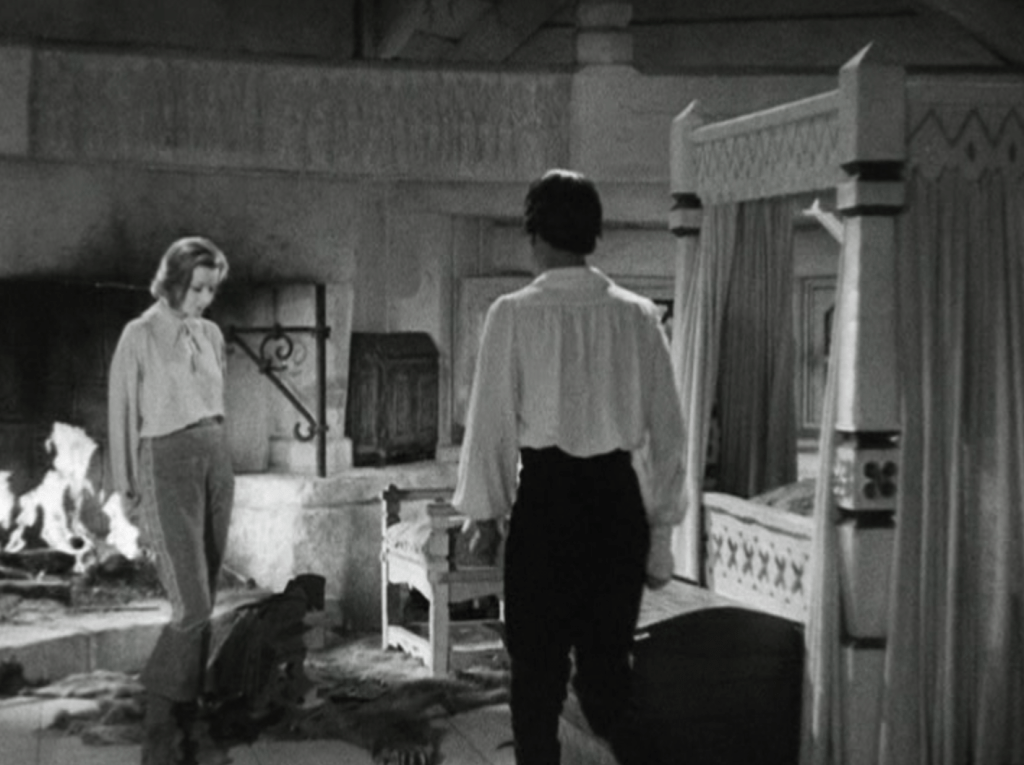
Seizing not being the figurehead of state but her own, real, individual is at the heart of one of Queen Christina’s most memorable sequences. After several nights of passionate, romantic love making with Antonio, Christina walks around the inn room where, for a brief time, she didn’t have to play a role. With metronomic precision, Mamoulian follows Garbo as she gently caresses surfaces and objects in the room, using touch to graft the room onto her memory, so that it can be a place she can return to in her day-dreams when burdened by monarchy. It’s very simply done, but surprisingly effective and deeply melancholic: as far as Christina knows, the last few days have been nothing but in an interim in a life where she must always be what other people require her to be, never truly herself.

But then if she never saw Antonio again, there wouldn’t be a movie would there? He inevitably turns up at court, presenting a proposal from the Spanish king – which he hilariously breaks off from in shock when he clocks he is more familiar with the Queen than he expected. John Gilbert as Antonio gives a decent performance – he took over at short notice from Laurence Olivier, who testing revealed had no chemistry with Garbo – full of carefully studied nobility. He and Garbo – not surprising considering they long personal history – have excellent chemistry and spark off each other beautifully. He also generously allows Garbo the space to relax as Christina in a way she consciously never truly does at any other point in the film.

The rumours of this romance leads to affront in Sweden, from various lords and peasants horrified at the thought of losing their beloved Queen – and to a Spaniard at that! (Queen Christina makes no mention of the issue of Catholicism, which is what would have really got their goat up – an Archbishop shouts something about pagans at one point, but he might as well be talking about the Visigoths for all the context the film gives it). The shit is promptly stirred by Ian Keith’s preening Count Magnus, making a nice counterpart to Gilbert’s restrained Antonio. It also allows another showcase for Garbo, talking down rioting peasants with iron-willed reasonableness only to release a nervous breath after resolving the problem.

Queen Christina concludes in a way that mixes history with a Mills-and-Boon high romance (there is more than a touch of campy romance throughout). Mamoulian caps the film with a truly striking shot, the sort of image that passes into cinematic history. Having abdicated into a suddenly uncertain future, Christina walks to the prow of the ship carrying her away from Switzerland. Mamoulian holds the focus on Garbo and slowly zooms in, while Garbo stands having become (once again) a literal flesh-and-blood figurehead, her eyes gloriously, searchingly impassive leaving the viewer to wonder what is going on in her head? Is she traumatised, hopeful, scared, regretful, determined? It’s all left entirely to your own impression – and is a beautiful ending to the film.

Queen Christina was a big hit – bizarrely overlooked entirely at the Academy Awards, which makes no sense to me. It’s beautifully filmed by Mamoulian who finds new, unique angles for a host of scenes and at its heart has a truly iconic performance by Garbo. If you had any doubts about whether she was a great actress, watch Queen Christina and see how thoughts and deep emotions pass briefly across her face before being replaced by a mask of cool certainty. It’s a great performance from Garbo and a lusciously conceived historical epic.

United 93 (2006)

United 93 (2006)

Heartfelt, gripping and traumatic recreation of 9/11, superbly directed and edited

Director: Paul Greengrass

Cast: Christian Clemenson (Tom Burnett), Cheyenne Jackson (Mark Bingham), David Alan Basche (Todd Beamer), Peter Hermann (Jeremy Glick), Corey Johnson (Louis J. Nacke, II), Daniel Sauli (Richard Guadagno), Richard Bekins (William Joseph Cashman), Michael J. Reynolds (Patrick Joseph Driscoll), Peter Marinker (Andrew Garcia), David Rasche (Donald Freeman Greene), Erich Redman (Christian Adams), Khalid Abdalla (Ziad Jarrah), Lewis Alsamari (Saeed al-Ghamdi), Jamie Harding (Ahmed al-Nami), Omar Berdouni (Ahmed al-Haznawi), Ben Sliney (Himself), Patrick St Esprit (Major Kevin Nasypany), Gregg Henry (Colonel Robert Marr)

On 11 September 2001, the world changed. A glance at the Manhattan skyline brings back memories of the Twin Towers, now memorials to the thousands killed. United 93 is a memorial of another sort, an outstanding docudrama following the fateful journey of the only hijacked plane which didn’t hit its target. The passengers of United Airlines Flight 93 bridged two worlds: when they left the ground, American Airlines Flight 11 was four minutes from the North Tower. Just over an hour later, the passengers made their desperate attempt to seize control of their plane in a world a million miles away from the one they took off in. United 93 catches the terror of that moment where no one could comprehend events. Our full understanding only makes the film more heart-racingly, terrifyingly tragic.

Greengrass had pioneered this style of filmmaking in the past – most notably Bloody Sunday, his recreation of the 30 January 1972 firing on a civil rights march in Derry by British soldiers. For United 93 he approached events in rigorous detail, after copious research and hours of discussion with family members, air-traffic controllers and military responders (many of whom play themselves in the film). FAA operations manager Ben Sliney (9/11 unbelievably his first day on the job) even plays himself in a key role. The passengers were played by a series of unknown supporting players – correctly it was judged it would have felt wrong if the likes of Clooney or Pitt had led the fightback.

United 93 marries this careful recreation of events with the masterful tension-building of a skilled director. United 93 is highly immersive film in its fast-paced, handheld camerawork and sharp editing (much of this team also worked on Greengrass’ Bourne films). Greengrass understands he doesn’t need to resort to melodrama or manipulation to make us feel it. We learn little about the passengers, the early camerawork and editing stressing their everyday anonymity. But knowing their fate, it’s impossible not to wish you could warn them. When a passenger sprints to make the flight, you want to stop him. When the plane’s door closes, it’s gut-wrenching.

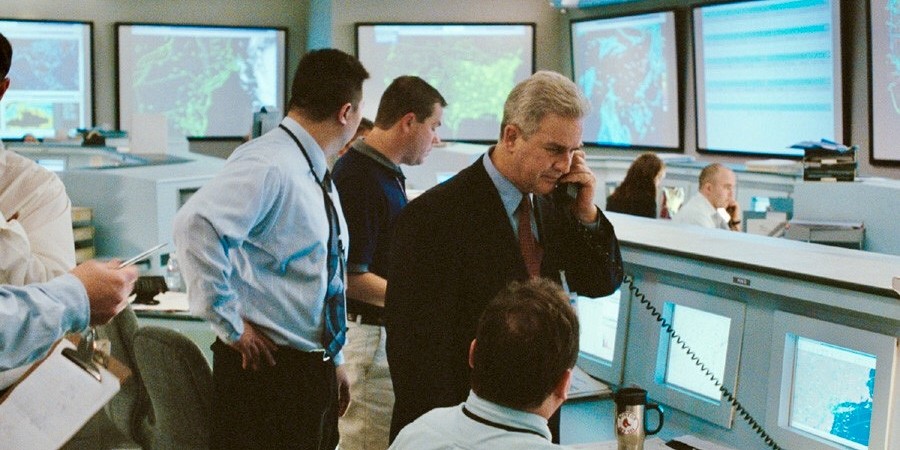
United 93 splits its narrative into two halves. The first focuses on events on the ground – while on the flight, the passengers are largely unaware the largest terrorist attack in history is happening around them. Those on the ground can’t even find the procedure guide for a hijack, never mind the unthinkable idea of planes converted into flying bombs. There was no playbook for 9/11, which becomes all too clear throughout the chair-arm grasping tension of watching people try to interpret events we know inside-out. Alongside this, Greengrass keeps carefully within the bounds of taste – the collision with the South Tower is seen from air traffic control at JFK, the camera panning across to watch the horrified faces of the crew at the moment of impact, the world changing before their eyes.

Greengrass doesn’t shirk on the chaos, uncertainty and disbelief that crippled decision making and the response to the unfolding horror. United 93 matches the lack of clarity on the day, throwing us into this pressure cooker of misinformation. The report of the number of hijacked planes zig-zags from three to a possible twelve (it is confidently reported as five consistently by the military). American Airlines 11 is consecutively reported: crashed, missing, presumed flown into the North Tower, unaccounted for and finally airborne. There are terrifyingly small number of military response planes jet available (barely enough to patrol Brooklyn, let alone the East coast). Air traffic controllers try to interpret garbled communications from hijacked (or possibly not) planes.

What emerges – a point Greengrass strives not to present politically – is the complete absence of central direction. Much of the response is disorganised – the inability to locate a missing military liaison means FAA and Eastern Air Defence barely communicate for a large chunk of the disaster – and air traffic controllers across multiple states only share information on their own initiative. Any political leadership is completely absent: the commander of Eastern Air Defence spends almost the entire crisis on the phone desperately trying to locate the President or Vice President for rules of engagement against hijacked passenger planes. Ben Sliney is forced to take a unilateral (way above his paygrade) decision to close American airspace.

This lack of central direction is eventually what motivates the passengers, as they slowly realise through phone calls with loved ones on the ground, exactly what their captors intend. As Tom Burnett says, no one is coming to save them. Most of the second half takes place entirely on United 93 as we watch in real time the passengers grapple with a simple choice: die when the plane hits its target or risk their lives to retake it. Greengrass makes clear their aim is to survive – one of the passengers, a light aircraft pilot, is picked to fly the plane. What’s superb about United 93 is that these actions are both astonishingly brave, but also realistic. United 93 doesn’t turn the passengers into superhuman martyrs and avoids Hollywood-ised speeches – even Todd Beamer’s ”let’s roll” is a throw-away line. Instead, it makes them ordinary, brave people doing all they can to stay alive. (Although the film’s interpretation of one German passenger, convinced cooperation with the terrorists will save them, rightly drew criticism for its unfair judgement)

United 93 similarly avoids definitive statements about the terrorists. It isn’t afraid to show their misguided faith. It even shows cell-leader Ziad Jarrah calling his girlfriend to tell her he loves her. But it doesn’t shirk on their ruthless fanaticism, from their murder of the pilots to the suicidal determination of their last stand against the passengers. Greengrass’ film argues the hijackers failed due to their inexplicable delay of almost 46 minutes to hijack the plane (the other cells carried out their hijacks almost as soon as the seatbelt lights were off), suggesting Jarrah lost his nerve. It’s this delay – leaving them 50 minutes’ flight from their presumed target (the Capitol) rather than 20 – that gave the passengers time to understand their situation and make a plan to try and save themselves.

The final desperate struggle to reclaim the plane is a brutal, extremely hard to watch, superbly executed sequence, made immeasurably worse by the fact we know it will fail (the film’s final shot pans away from a close-up of a desperate struggle for the plane’s steering wheel to the ground moving closer). Greengrass presents the facts as they are and by doing so makes it even more powerful. A polemic that went overboard in patriotic hagiography would have carried less impact. United 93 is overwhelmingly, unbearably moving because it forces us to imagine what we would do in that situation. It’s a film made up of the confusion, fear and grim, desperate determination of ordinary people, and in the end few things have more impact with a viewer than that.

Autumn Sonata (1978)

Autumn Sonata (1978)

The great Bergmans collaborate in a raw powerful film that does cover familiar Bergman ground

Director: Ingmar Bergman

Cast: Ingrid Bergman (Charlotte Andergast), Liv Ullmann (Eva), Lena Nyman (Helena), Halvar Björk (Viktor), Erland Josephson (Josef), Gunnar Björnstrand (Paul), Georg Løkkeberg (Leonardo)

In the history of Swedish cinema, there was one mighty collaboration the world was waiting for. The Bergmans (no relation) Ingmar and Ingrid, two generations of iconic Swedish filmmaking, to work together for the first time. It’s ironic that when it finally happened – and Autumn Sonata was the final time both Bergman’s worked on a project exclusively intended for cinema – it came during Ingmar’s self-imposed exile, meaning it was shot in Norway via a German company (and with a title originally in German) with British and American money. But one thing you couldn’t change: this would bring Ingrid back to the artistic Euro-film-making of her own Hollywood exile and that Ingmar wouldn’t flinch on his forensic, emotionally traumatic style for the legend.

Ingrid plays Charlotte, a famed classical pianist whose entire life has been her career, with brief stop-offs between concerts for marriages and kids. It’s meant she’s not seen her now-adult daughter Eva (Liv Ullmann) for over seven years. And that she’s also missed most of Eva’s affectionate-but-passionless marriage to Viktor (Halvar Björk) and the entire life (including birth and funeral) of her grandson Erik. Charlotte also has no idea Eva has moved her disabled younger sister Helena (Lena Nyman) from the nursing home Charlotte deposited her in years ago into her own home. A visit brings mother and daughter together again for an awkward reunion that turns into a cathartic emotional outpouring, as Eva unbottles decades of resentment, anger and pain.

Autumn Sonata revolves around this extended confrontation scene, which takes up a sizeable portion of Ingmar Bergman’s thoughtful, measured film where conversations are all too clearly ticking time bombs leading to revelations that might be best unsaid. It fixates powerfully on the damage parents can inflict on their children and the shattering pain children can cause their parents. It’s a film about the brutal, challenging complexities of family and the unspoken resentments they can cause on those within them, who see their own opportunities and freedoms eaten into by a never-ending stream of demands and expectations from ‘loved ones’.

It’s a feeling familiar to all three of the principles. Ingmar was all-too-aware of his difficult relationship with both his parents and his children, Ullmann wrote about her self-perceived failings as a mother while Ingrid’s elopement with Roberto Rossellini in the 40s led her to not seeing her own daughter for almost five years. And it plays into this incredibly raw film which, while it covers familiar Ingmar ground, is played with such powerful, visceral commitment from its leads (held grippingly in frame by Ingmar’s regular collaborator Sven Nykvist), that it’s still one of his tougher watches.

Ingrid is superb as Charlotte, a woman who arrives in the remote vicarage home of her daughter, bursting with glamour. Assured, certain and utterly confident of her position as the centre of any room, Charlotte has a tendency to narrate her own life, self-assuredly mapping out her actions (from what to wear to the decision to gift Eva a car) and basks in advance in the positive reactions she anticipates. Charlotte maps her life out in terms of concerts and recitals (constantly, when Eva asks about an event from her childhood, Charlotte will ground herself by referring to a performance from that time). She automatically assumes maestro status in the house, including listening to Eva’s piano playing, moving her aside to take over and lecturing her on how the piece should be played.

She’s also though a woman deeply uncomfortable with emotion and emotional commitment. It’s an insight into how distant and unconnected Eva’s childhood must have been (brief flashbacks show Charlotte’s politely affectionate utter lack of interest in the young Eva) that what’s motivated her to visit Eva is to distract herself from the unpleasant burden of dealing with her recent husband’s death. Not grief or the need for comfort mind: it’s the experience of dealing with the events connected to the death that’s unsettled her. Her refusal to engage with anything emotional continues, from avoiding the topic of Eva’s dead son entirely to reacting to something close to barely concealed irritation at discovering her disabled daughter Helena in the home: she didn’t come here to be reminded about this other difficult emotional bond she’d outsourced to a professional.

Charlotte’s emotional coldness and distance under her warm confidence is brilliantly embodied by Ingrid. She’s a woman so overwhelmingly focused on her career she probably should never have had children at all (and perhaps regrets doing do), wasn’t remotely interested in Eva and Helena’s father (a decent, bank-manager sort played silently by Erland Josephson in flashbacks) and wants nothing from this visit except to feel better about herself. The lacerating home truths unleashed on her, see Ingrid’s composure fracture in shock, guilt and regret, her eyes becoming wells of shamed emotion.

Equally brilliant is Liv Ullman, perhaps even more so. Ullmann appears at first mousey, dowdy, humble and deferential – her husband opens the film with a heartfelt monologue about her being convinced she is not worth loving and that he only regrets he has never been able to persuade her otherwise. The cause for this becomes clear as Eva releases years of pent-up fury and anger at her mother’s oscillating from ignoring her to bursts of obsessive attention focused on coaching Eva into becoming what Charlotte wants her to be (Ingrid is fantastic at establishing Charlotte’s dumb-founded amazement that these times she fondly remembers were in fact purgatory for her daughter). Ullman’s delivery of this is powerful, viciously resentful and overwhelmingly painful.

This confrontation is the centre of Autumn Sonata but Ingmar knows that, despite what happens in Hollywood, moments like this don’t cure festering boils. In fact, our great gift as humans is to forget, re-form and move on. The film’s coda sees both women doing this: Charlotte feels her shame, but in a one-sided conversation with her agent (a wordless cameo from Gunnar Björnstrand) has already begun the process of self-justifying self-mythologising of her past. Similarly, having released years of frustration, Eva returns to her compromising self, drafting letters of apology to her mother. Or perhaps these are springs of hope? Somehow in Bergman it’s hard to think so.

You can argue that all of this very familiar to Bergman watchers: and it is (the presence of Ingrid is probably what cements it as one of his best-known films). But this is also a thought-provoking work in its own right. Autumn Sonata suggests we may try to confront or deal with things that have caused us pain. But in reality, the long, continual work of doing so is too much or us: we revert instead to compromise, adjustment and familiar patterns. Flashpoints carry emotional and dramatic weight, but life is made up of forgetting. It’s a powerful closing idea in this viciously raw piece of film-making from Ingmar, that draws such heart-breaking and emotional performances from Ingrid and Ullman.

Frankenstein (1931)

Frankenstein (1931)

Iconic monster film, dark expressionist nightmare that totally reinvented the novel’s public image

Director: James Whale

Cast: Colin Clive (Henry Frankenstein), Mae Clarke (Elizabeth Lavenza), John Boles (Victor Moritz), Boris Karloff (The Monster), Edward van Sloan (Dr Waldman), Frederick Kerr (Baron Frankenstein), Dwight Frye (Fritz), Lionel Belmore (The Burgomaster), Marilyn Harris (Maria)

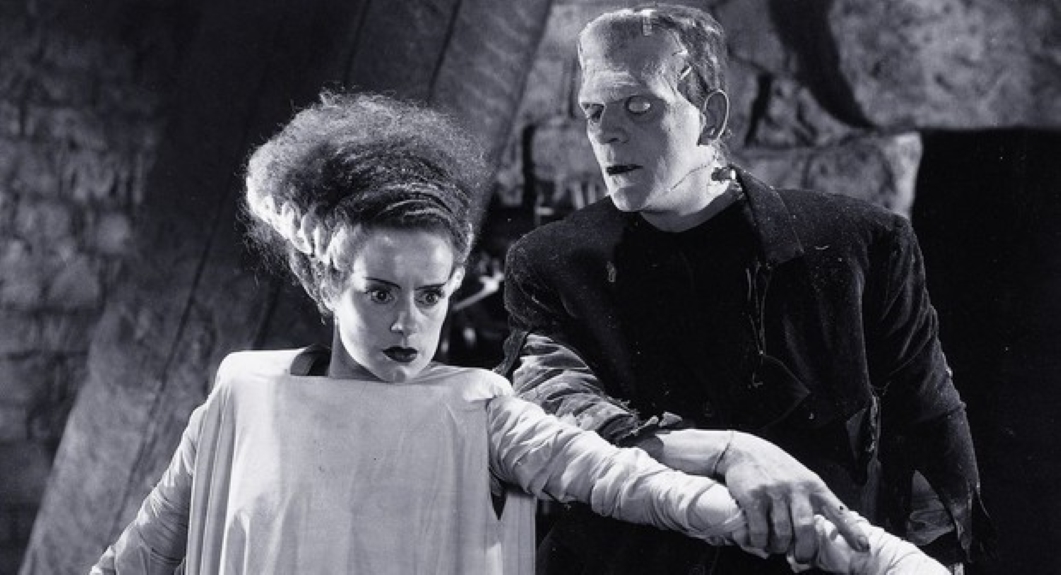
Has any film shaped the popular idea of a book more than Frankenstein? Ask anyone to describe the monster or the book itself, and you’ll not have to wait too long until you start to hear about bolts in the neck, thunder-struck gothic castles, hunchbacked assistants and labs stuffed with bizarre electrical equipment. Of course, none of that is actually in Mary Shelley’s The Post Modern Prometheus. But it is a key part of James Whale’s creative vision in this Hollywood hit. In fact, so much of a hit that it and its army of sequels led to whole generations convinced Frankenstein was the name of the monster, not his creator.

Frankenstein in fact bears almost no similarity to the original novel at all, checking off a few plot points and duplicating some character names. Other than that, it’s very much its own thing, a big expressionistic nightmare, with everything dialled up as high as those lightening-catching electrical machines can cope with. Henry Frankenstein (Colin Clive) – you’ll note the film even changes his name to the more relatable Henry, with Victor given to his dull-as-dish-water pal Moritz (John Boles) – won’t settle down and marry fiancée Elizabeth (Mae Clarke). Instead, he dreams of creating life, to become like God! And to follow that dream, he’ll dig up bodies, steal laboratory brain specimens from his mentor Dr Waldmann (Edward van Sloan) and stitch them together into a creature (Boris Karloff). But then misunderstandings and ill treatment leads to a series of terrible events.

James Whale’s film is a triumph of atmosphere; its images and visual creativity so haunting it’s not a surprise it effectively overwhelmed the novel. Inspired by German expressionist cinema – you can see the fingerprints of Cabinet of Dr Caligari and Fritz Lang all over it – Whale sets this monster tale in a world of towering, angular buildings, looming shadows and vast steampunk (long before it came into fashion) labs in damp-lined medieval castles. There is a strange timeless quality to Frankenstein: it opens with a shadow-laden graveyard dug up by Henry and his assistant Fritz (Dwight Frye), but the village feels like it is set in almost any time from the late nineteenth to early twentieth century (the costumes in particular are a real hodgepodge). Perhaps this was part of Whale’s intention, to create a timeless metaphor for man’s reach exceeding what’s sensible, to disastrous consequences?

It’s also interesting that, for all the warning of the terrors to come the film opens with from Edward van Sloan (who also portrays Waldmann), we actually end up siding with the creature. A lot of this is due to Boris Karloff’s excellent performance. Without a word of dialogue, Karloff makes this lumbering result of stitched together bits and pieces, into something vulnerable, frightened and child-like, whose violent acts only emerge from tragic misunderstandings or gross provocations. Karloff’s physicality is frequently gentle and timid, the few strangled sounds he makes sound almost scared, and his awkward stumbling resembles a deadly, confused toddler. He needs parenting, not chasing down by a mob.

The film’s key moment is Frankenstein introducing the creature to the daylight – the camera following those towering vertical lines of the set up to into a skylight, with the enchanted creature reaching his arms up to try and touch this magic ball of light. Then Frankenstein smugly slaps it shut and Fritz shoves a torch into the poor creature’s face. The monster may be introduced with all the elements of dread – Whale’s classic introduction a series of striking cuts that pull us closer and closer to the reveal of his restitched head – but it doesn’t take long before you feel really sorry for it. Even if it does have a ‘criminal mind’ stitched into it (a development so out of tone with the treatment of the monster, it feels like a fig leaf to reassure the producers it must be the baddie).

Not least because Frankenstein himself is hardly that sympathetic. Colin Clive – a long-term collaborator with Whale – grabs this larger-than-life part and runs with it, oscillating from scenery-chewing self-aggrandizement (his celebratory screaming has rightly passed into cinematic legend) to self-pitying excuses. It’s telling he never takes a jot of responsibility for either creating the monster, or for his inattention and poor treatment of it directly causing the tragedy it unleashes. Unlike his book counterpart, his arrogance requires witnesses – Elizabeth, Victor and Waldmann – to his experiments, entirely due to his arrogant fury at Waldmann’s questioning his sanity. His first solution, as soon as the creature becomes challenging, is to euthanise it and he never confesses to the lynch mob that take on the creature in the film’s final act that he is its creator.

The lynch mob is responding to the creature’s accidental drowning of a small girl. Again, this killing stems from a misunderstanding. Young Marie – the only person in the film who doesn’t react with horror when she sees the creature, suggesting she instead sees a kindred spirit – invites the delighted creature to join her in a game, tossing flowers into the river. Clapping his hands in delight, the creature joins in for a scene directed with bucolic beauty by Whale – right up until the flowers run out and the creature tosses Marie in instead, only to find she doesn’t float artistically.

As the creature flees in confused panic, Whale cuts to the raucous wedding celebrations in the Frankenstein village, which comes to a crashing close as Marie’s father walks with her body through the crowd, that turns from joy to shock around him. It’s one of several striking moments of fluidic camera work in Frankenstein, Whale employing a tracking shot that follows and partially rotates around the father, while keeping him tightly central in the frame as he walks through the crowds. There are similar moments of dynamic camerawork throughout the film, Whale using every opportunity to make this gothic nightmare world as immersive as possible.

The hyper reality of Frankenstein means it doesn’t really matter that much of the skylines are all too clearly cloth (I like to think Whale deliberately kept the multiple points where the cloth has bunched up in shot to stress the artificiality), since everything about this is dialled up to eleven, from performances, to setting to the grandly staged windmill-finale, hugely impressive in its flame-licked excitement. In fact, it’s all so overblown and gothic, in its set design, shooting and performance that the most grounded, human thing in it is Karloff’s beautifully played creature himself. That feels like no accident and makes Frankenstein a surprisingly subversive film. And also perhaps, even though it strips the creature of much that makes him a character in the novel, made him a modern icon.

Dial M for Murder (1954)

Dial M for Murder (1954)

Second-tier Hitchcock thriller, with some interesting flourishes and entertaining moments

Director: Alfred Hitchcock

Cast: Ray Milland (Tony Wendice), Grace Kelly (Margot Mary Wendice), Robert Cummings (Mark Halliday), John Williams (Chief Inspector Hubbard), Anthony Dawson (Charles Alexander Swann), Leo Britt (Party goer), Patrick Allen (Detective Pearson)

Tony Wendice (Ray Milland) is in a bind. A former tennis pro turned barely-successful sports goods seller, he loves the high life. Unfortunately, he’s running through cash like water – and, worst of all, most of it isn’t even really his but the property of his socialite wife Margot (Grace Kelly). And Margot is in the middle of an affair with trashy fiction writer, American Mark Halliday (Robert Cummings). An affair Tony knows all about, having stolen Margot’s love letters to anonymously blackmail her. But his new scheme is somewhat more permanent: blackmail disreputable Charles Swann (Anthony Dawson) into murdering Margot at a time when Tony has a perfect alibi. Sadly, things don’t go to plan – when do they ever? – and with Swann skewered in the back with a pair of scissors, Tony hurriedly improvises pining a pre-meditated murder charge on Margot all while avoiding the suspicions of Chief Inspector Hubbard (John Williams).

In his later extended interviews with Francois Truffaut, Hitchcock gave less than a few minutes to talking about Broadway-adaptation Dial M, describing it as, at best, a one-for-the-money assignment or sort of warm-up for Rear Window. He was similarly dismissive about the film being shot for 3D, which he described as a ‘nine-day wonder’ which he joined on the ninth day. Hitchcock had a tendency to play up to ideas of his genius, laying sniffy dismissal on what were viewed by critics as his lesser works (although Truffaut said Dial M grew on him every time he saw it). Actually, while Dial M does have the air of an assignment to it, there are some neat little Hitchcock touches it that, while not making it a classic, does make it an entertaining way to spend a Sunday afternoon.

After all, not many other directors would have so relished Swann’s body sliding down onto a small pair of scissors. Or found so many fascinating angles for shooting a (mostly) single-set, from lofted over-head shots that give Tony’s detailing to Swann of his elaborate plan a God-like force to crashingly tight close-ups on the phone Tony will use to dial in his alibi. Hitchcock also adds more than a little sexual energy to the play. There Margot’s affair is very much in the past, as opposed to here being very much keenly anticipated by Grace Kelly’s sensual stare over a newspaper to a clock counting down her assignation with Halliday. Hitchcock also avoided the sort of tedious ‘duck now!’ shots that has made 3D a joke in cinema-going circles, framing shots with a great deal of depth, placing key objects in different depths of field in the shot.

Dial M For Murder itself though, even with these little Hitchcock touches, tends to feel exactly like what it is: a well-heeled adaptation of a Broadway entertainment that is far more about plot, procedure and Christie-lite mystery than character or themes. (Actually, a mechanical operation like Dial M might well have appealed to Hollywood’s greatest ever proponent of the masterfully constructed tension piece more than her cared to admit). It’s a page-turner, Airport-novel transposed into glitzy, breezy entertainment where we get to flirt with someone completely naughty and wicked, but can be pretty sure the ‘howdunnit’ will become clear to everyone in the play, not just us (after all, the idea that Hitchcock – or anyone – will let Grace Kelly be executed for a crime she didn’t commit is of course preposterous).

Dial M plays very much into the Hitchcock playbook, where tension arises not from what we don’t know, but from the fact we know a little bit more than most of the characters. Just like Vertigo revealing its mystery surprisingly early, or watching a bomb tick down in Sabotage while its victims remain oblivious, we know from the start that this is all a scheme designed to entrap Margot. We know all the time exactly what Tony has done and the tension lies solely in working out whether Halliday or Inspector Hubbard will work it out and how they might manage to get Tony to pay for it. (There are also some echoes of Strangers in a Train, from Tony’s tennis-playing background to his sociopathic crime swop with Swann).

Tony is played with a suave, smugness by Ray Milland, which is just about likeable enough for a bit of you to want the selfish, shallow, self-obsessed Tony to get away with it. Milland won’t allow a slightly smug grin to disappear from his face – except in a burst of twitchy nerves when a stopped watch makes him concerned that he’s going to miss a vital phone call back home to establish his alibi during the attempted murder – and never once does he appear troubled by morality. In fact, he thinks rather sharply on his feet, pivoting in seconds from surprise at Margot’s survival to smoothly improvising a very convincing story, framed to (literally) hang Margot in. It’s an effective, enjoyable, pantomime-hissable performance which Milland has a lot of fun with.

He gets most of the film to himself, since Kelly is given a role that gives her little to do – although it does showcase her ability to communicate a great deal from looks alone, from her excitement at a future liaison, to growing fear as the police net draws around her. She’s certainly a far more magnetic performer than the bland Robert Cummings who has little about him to suggest he could set Grace Kelly all aflutter. The other key roles were filled out with actors from the original production: Anthony Dawson’s weasily opportunist Swann is perfectly convincing as the sort of cove who’d agree to murder to make his life easier while John Williams’ cements the image of the unflappable pipe-smoking detective who understands far more than it looks and lulls suspects into making fatal mistakes with an avuncular reassurance.

Dial M For Murder offers plenty of entertainment, even if it’s largely just a fairly routine plot-driven mechanical puzzle, spruced up by the odd inventive shot and engaging performance. But Hitchcock was probably right, that it sits very much in the second tier of his work.

Gladiator II (2024)

Gladiator II (2024)

Gonzo sequel sits firmly in the shadow of the illustrious predecessor it tries to imitate time and time again

Director: Ridley Scott

Cast: Paul Mescal (Lucius Verus/Hanno), Pedro Pascal (Marcus Acacius), Connie Nielsen (Lucilla), Denzel Washington (Macrinus), Joseph Quinn (Emperor Geta), Fred Hechinger (Emperor Caracalla), Derek Jacobi (Gracchus), Tim McInnerny (Thraex), Alexander Karim (Ravi), Peter Mensah (Jubartha), Lior Raz (Viggo), Matt Lucas (Master of Ceremonies), Rory McGann (Tegula)

There’s nothing particularly wrong with Gladiator II. In many ways, it’s a big, silly, perfectly inoffensive swords-and-sandals flick, with the violence dialled up. But as a sequel to Gladiator – a film that married scale with a hugely relatable emotional story about one man’s quest to avenge his family and unite with them in the afterlife – it’s not even in the same league. Gladiator II’s biggest problem is that when it tries to do something different from Gladiator it usually fails and when it hues close to the original, it only reminds you what a good film that was and how you’d honestly much rather watch that again.

Gladiator II picks up 16 years after the first film. The nephew of the late Commodus, Lucius (Paul Mescal) lives with his wife in the last free city of Numidia. That ends when the city is taken by a Roman army, under the command of General Marcus Acacius (Pedro Pascal) and Lucius’ wife is killed. Lucius, taken as a slave, of course arrives in Rome and becomes a gladiator in the service of the ambitious, unscrupulous wheeler-dealer Macrinus (Denzel Washington). Macrinus has schemes to exploit the fragile Empire, ruled by brothers Geta (Joseph Quinn) and Caracalla (Fred Hechinger). General Acacius and his wife, Lucius’ mother Lucilla (Connie Nielsen), also plan to overthrow the Emperors. And Lucius also plans revenge against Acacius and all of Rome in that order.

Gladiator II is awash in echoes from the first film. It gives Lucius mostly the same motivation as Maximus. It opens with a big Roman battle. It rushes to get Lucius back into the Colosseum, via a few reluctant bouts in the provinces. He is accepted as a leader by the other gladiators, marshalling them like troops. Connie Nielsen gets the same plot and versions of the same “visiting the hero in prison” scenes. There is a lot of talk about the power of the mob. Hands are frequently rubbed in the dirt. The famous quotes (“Strength and honour!”) are paraded out. Lucius cos-plays as Maximus for the film’s big ending. The final scene shows a survivor searching in the dirt of the Colosseum. Just when you think the film has at least not shown us a shot of a hand stroking some wheat… Gladiator II even chucks that in. It’s a big bit of nostalgia IP dressed up as homage.

But Gladiator II only seems to understand the surface elements of what made the first film successful – not the heart. Gladiator was a very simple story: it was a film about a man who deeply loved his late wife and son, determined to carry on living until he avenged them. Sure there were plot mechanics about the future of the Empire and “The Dream of Rome” – but this was window dressing to a plot focused on very real emotions, about caring for your loved ones. Maximus was carefully crafted as an honourable, decent man, a reluctant warrior who fought because he must. This narrative simplicity is completely lost in Gladiator II, a film so awash with subplots, schemes and shady deals that it becomes hard to follow – and eventually to care – who is on whose side and why.

There are at least four competing schemes at play in Gladiator II, each fighting for screen time like rats in a trap. It’s at best a bloody stalemate. The character who emerges best from all this is Macrinus. Based on the first Moorish Emperor of Rome (a fascinating, if short-lived, figure) he’s played with a meme-courting bombast by a clearly having-fun Denzel Washington (his rolling pronunciation of the word “Pol-leetic-sah!” designed to launch a thousand GIFs). A flamboyant figure, he effectively mixes elements of both Proximo and Commodus from the first film with the larger-than-life amorality of Washington’s Alonzo Harris (if Harris was a slightly camp Roman aristocrat). Most of the film’s enjoyable moments revolve around his increasingly brazen manipulations, first of a corrupt senator (an enjoyably sleazy Tim McInnerny) then the two deranged and incompetent Emperors. Every other plotline eventually falls into the shadow of Washington’s scenery-chewing excess (by the time Macrinus is using a character’s severed head as a prop to intimidate the Senate, you realise you just have to go with it).

Gladiator II though needs to split its focus between these multitudinal plot lines, to the detriment of all of them. The emperors fiddle and feud while Rome burns. Various soldiers and senators line-up familiar plots to restore the republic. Lucius, the character we are supposed to relate to the most, is the one who starts to lose our interest. Paul Mescal does an effective job as this growling, surly figure, even if he doesn’t quite have the force to pull off his final late-act speeches. But the film rushes his elevation to leader among the gladiators so quickly it feels unearned – as well as stuffing the film with a multitude of sidekicks so anonymous they blur into one, so much so you won’t even notice (or care) when they start to bite the big one.

On top of which, Lucius zigs-zags through motivations with all the logic of a charging rhino. He goes from wishing he was dead, to fighting desperately for life, to vowing revenge on one man to suddenly changing his mind, to leading a proto-Spartacus inspired revolt to ditching the idea, to denouncing his mother and birth-right until suddenly he doesn’t, to half-heartedly resenting Macrinus to announcing he only lives to see him die, from rejecting Maximus to cos-playing him – how are we supposed to keep up with this? The fact he’s a man of very little words doesn’t help.

When he does speak it’s never particularly punchy. Scarpia’s workman-like dialogue gives him a clumsy rallying cry – “Where we are not where death is. Where death is, we are not” – which manages to be both leaden word-soup and spectacularly unrallying. The film recognises this by having Lucius ditch it late on for a rousing cry of – what else? – “Strength and honour”. Scarpia’s script, along with its muddy plotting, is full of deathly, forgettable pap; as well as riffing so determinedly on Gladiator that you’d think not a day went by in the bowels of the Colosseum without a wistful discussion about Maximus. Gladiator II also manages to pee across several ideas at the heart of Gladiator, from the potential implication that Maximus may have cheated on his wife to father Lucius (even Russell Crowe questioned that one) to the idea that at the end of the film they buried him in the Colosseum, which seems like the last thing they’d do.

In fact, I started to think that Ridley Scott’s main motivation for doing Gladiator II was to chuck in all the gonzo ideas he couldn’t make work (or find the budget for) in the first film. A fight with a mad rhino. A flooded arena full of ships (with added sharks – how these were caught and conveyed in-land to the arena just doesn’t even bear thinking about). Lucius and his fellow prisoners take on man-eating poorly-CGI’d baboons (Lucius’ position as leader largely stems from him biting one of these beasts before strangling it to death). Outside the arena, heads, hands and arms are hacked off and Scott effectively opens the film with a re-stage of the battle of Jerusalem from Kingdom of Heaven – only the siege towers this time are on ships charging the sea walls.

All of this is pretty well done, don’t get me wrong. Scott can do historical epic on screen like few others. But Gladiator II actually suggests that where he lucked out on Gladiator was keeping it simple with a strong story. Gladiator II feels something where attention has been lavished on the scale and the bombast, but that plot and character have been rushed. The film is about 15 minutes shorter than Gladiator while telling a story twice as complex, a mixture that doesn’t work well. In fact, the main feeling I had coming out from it was that I didn’t need to see it again and if I could re-watch Gladiator and pretend this didn’t exist at all, I might be a happier man. Gladiator II lives so absolutely in the shadow of its predecessor, that its flaws become more apparent through the constant invitation the viewer is made to compare and contrast them. This one won’t echo to 2030 let alone eternity.

Thor (2011)

Thor (2011)

Branagh lives his dream by making the most comic-book, bombastic Shakespeare-homage ever

Director: Kenneth Branagh

Cast: Chris Hemsworth (Thor), Natalie Portman (Dr Jane Foster), Tom Hiddleston (Loki), Anthony Hopkins (Odin), Stellan Skarsgård (Dr Erik Selvig), Kat Dennings (Darcy Lewis), Clark Gregg (Phil Coulson), Rene Russo (Frigga), Colm Feore (Laufrey), Ray Stevenson (Volstagg), Idris Elba (Heimdall), Jaimie Alexander (Sif), Josh Dallas (Fandral), Tadanobu Asano (Hogun), Jeremy Renner (Hawkeye)

If you’d told people after Henry V that one day Kenneth Branagh would direct a high-octane comic book movie about a Norse God who bashes things with a hammer, you’d have been laughed outta town. But Branagh was who Marvel called to launch the Thor franchise – and doncha know it turned out to be a pretty shrewd choice.

Thor (Chris Hemsworth) is the arrogant son of Odin (Anthony Hopkins) and heir to the throne of Asgard, the planet that keeps peace in the Universe. After an attempt by Asgard’s old enemies, the Frost Giants, to re-capture a stolen super-weapon, Thor leads a reckless attack on their homeworld that threatens to shatter a hard-won peace. Disappointed and furious, Odin strips Thor of his powers and banishes him to Earth, where the fallen God of Thunder must learn humility to be worthy of regaining his powers. On Earth, he falls in love with gifted scientist Jane Foster (Natalie Portman), while on Asgard the realm falls under the control of his brother Loki (Tom Hiddleston), who manipulates events to make his own claim for both the throne and their father’s love.

You can sort of see the Shakespearean bits bubbling away there. Fathers and sons, ambition and power, tragic flaws. Destiny verses desire. Loki as a mix of Edmond, Iago and Cassius. Thor as a Prince Hal earning the maturity to lead. Odin as a kindly Lear. Hell, you could see Thor washing up on the shores of New Mexico, like Twelfth Night’s Viola, forced to pretend to be something he isn’t. He even has his own mini-Falstaff, in gluttonous warrior Volstagg. It’s a heightened story of Kings and Queens, Tempest-style magic and Hamlet­-style family intrigue. Marvel, of course, partly hired Branagh to bring attention to this (effectively, paying Branagh for his Shakespeare-street-cred to make an otherwise snigger-worthy concept of Norse Gods in space get taken seriously), Thor does a great job of bringing this out without drowning the fun.

And of course, for those paying attention, Branagh had been dying to do bombastic nonsense for years. Shakespeare had disguised that Branagh adored loud crashes, big bangs, showy camera work (half of Thor is done in Dutch angles, apeing comic books) and pounding soundtracks. His Hamlet is crammed with half a dozen genres, from romance to action and Mary Shelley’s Frankenstein showed he could fly over the top with the best of them. But he’s also an actor’s director, and he draws performances here from Hemsworth and Hiddleston in particular that would lay the groundwork for making these two of the most popular actors in the whole damn franchise.

Thor above all does a brilliant job of making us care for a lead character initially presented as a likeable but arrogant, immature and cocky hit-first-think-later warrior, cavalier about people’s lives. There is a very funny humiliation conga inflicted upon Thor on arriving on Earth (a classic rule-of-three gag) leaving him successively tasered, tranquilised by a syringe in the ass and knocked over by reversing car. It’s a brilliant way of breaking the haughty – the Mighty Thor, who trashed an army of Frost Giants, laid low by a middle-aged doctor yanking down his hospital pants. But it all sets us on a path for caring about him, helped by how chivalrous and polite he is with Portman’s winning Dr Foster. Sure, he’s still dripping with hubris – assuming once he gets his hands on his hammer Mjolnir again, everything will be as it was – but at wider traces of humanity emerge we start to care for him.

It’s cemented by a very effective scene where Branagh proves his worth as a director of actors. After failing to lift said hammer – being, at this point, unworthy due to having not really learned anything – Thor sits alone in an interrogation room, visited by a disguised Loki. Hemsworth is very good in his scene: he suddenly makes Thor humbled, fragile, accepting his failures, not lashing out but tearfully apologising for his past behaviour, meekly asking to just be allowed to come home then bravely accepts his permanent banishment. It’s actually an effectiveportrait of overcoming hubris: Thor’s true heroism isn’t trashing Loki’s rent-a-robot that is the film’s penultimate foe. It’s accepting, in his depowered state, his role in the battle is to stay out of the way and help get people out of the way before offering his own life as a sacrifice if he will end the robot’s rampage.

If Thor, in Hemsworth’s gently sweet and funny performance, overcomes hubris, Loki succumbs to it. Tom Hiddleston’s charisma here (cemented by his excellent turn in The Avengers) helped him become Marvel’s most popular anti-hero. Like Thor, he’s a complex character: a second brother who secretly resents his brother’s prominence, wants his father’s love, learns things about his past which make him lean into his worst instincts, all to try and be what he mistakenly thinks his family wants. Hiddleston carries all this angst and tragedy with real skill, while also filling the role with wit and playfulness: it’s a great, star-making turn.

It’s a sign of the film’s surprising complexity that it’s hero and villain switch perspectives over its course. Thor starts by dreaming of destroying the Frost Giants to impress Odin while Loki counsels restraint. He ends it by making enormous personal sacrifices to protect them from a genocidal plan unleashed by Loki who wants to prove he’s as tough as Thor. The film ends not with a hero triumphant, but alone and grieving losses. It’s stuff like this that makes Thor a truly interesting, engaging film in a way other MCU outings are not.

And a lot of it comes from Branagh’s skill with actors. Thor might not offer the greatest acting challenges to the rest, but Hopkins in particular was better here than he had been for years (he credited Branagh with helping him rediscover his passion for acting) and Portman and Skarsgård bring a lot of humanity to thinly written roles. Sure, in other ways Thor is less special: it’s action set-pieces are, by and large, fairly uninspired and run-of-the-mill, the small town trashed by a robot looks and feels like a backlot stunt show, some of the comedy lands flatly. But when it focuses on the character drama of two contrasting brothers and their love for their father it’s feels more real and engaging than a host of more technically adept comic book movies.

Thor gets over-looked in the MCU rankings. But it’s a surprisingly thoughtful, well drawn character study about worthiness not being about muscle and force, but on your wisdom, compassion and humility and putting other people before your own needs and desires. All captured in a magic hammer that is otherwise impossible to pick up. Branagh’s film gets that, with added bombastic comic book thrills. Thor has entertained me each time I’ve seen it and will go on doing so.

Anora (2024)

Anora (2024)

Superb mix of tragedy, farce and social commentary laugh-out-loud-funny then suddenly deeply moving

Director: Sean Baker

Cast: Mikey Madison (Anora “Ani” Mikheeva), Mark Eydelshteyn (Ivan “Vanya” Zakharov), Yura Borisov (Igor), Karren Karagulian (Toros), Vache Tovmasyan (Garnick), Aleksei Serebryakov (Nikolai Zakharov), Darya Ekamasova (Galina Zakharova), Lindsey Normington (Diamond), Ivy Wolk (Crystal)

Who doesn’t love a Cinderella story? A plucky young woman comes from nothing to find a life of love and riches she never dreamed of is at the heart of dozens of fairy tales. And films for that matter: it’s impossible to not think about Pretty Woman when watching Anora. In fact, you could argue the at-times surprisingly charming, laugh-out-loud funny but cold-eyed realism of Anora is a Pretty Woman corrective, as if Richard Gere woke up a few days later, introduced Julia Roberts to his friends and family and immediately wondered what the hell he had done.

Not just that but Mikey Madison’s beautifully performed force-of-life Ani (real name Anora, but she doesn’t like it) feels far more like a high-end-stripper-and-occasional-sex-worker than Julia Roberts. She’s 24-years-old, living in Brighton Beach and working in a glossy Manhattan strip club. One night the manager asks her to entertain Ivan (Mark Eydelshteyn), the dissolute, immature son of an extraordinarily wealthy Russian oligarch, because she can speak Russian. Ivan is taken with Ani, paying her $15,000 for a week as his girlfriend that peaks (after a hedonistic stay in Las Vegas) in a marriage proposal. Eloping, Ani returns home believing her life has changed forever. That illusion is shattered when Ani’s godfather Toros (Karren Karagulian), and heavies Garnik (Vache Tovmasyan) and hired muscle Igor (Yura Borisov) turn up at their home (really, of course, Ivan’s parent’s home) under strict instructions that the marriage must come to end. Over a long 24 hours of exasperation, farce and slow realisations our Cinderella story collapses.

Anora is a brilliant film, superbly directed by Sean Baker. You’d expect a film of cold-eyed social realism – and there are elements of this in Anora – but it’s also a hugely loveable, charming, surprisingly hilarious and deeply felt film, perfectly paced as its story develops across a series of events that beautifully lead into each other. A lot of its success comes from Mikey Madison’s extraordinary performance, one of those star-making force-of-nature roles where you start off liking her and end up loving her. Madison is warm but prickly and spikey, vulnerable but determined, worldly but naïve, someone who fights her corner to the end but can’t see any change at forming her own future. Madison embodies all this perfectly, switching from wide-eyed naïve delight at her luck, to spitting, incandescent fury when defending her rights, to an increasingly desperate disillusionment mingled with self-disgust as her dreams collapse around her.

Similar to his previous films, Baker presents the world of sex work with understanding and compassion. There is nothing leering about the lens of Anora, even as it opens with a pan (sound tracked to a disco remix of Take That’s Greatest Day) along a row of dancer. Baker understands the professional drudgery of exotic dancing, the hard work and effort needed to give each client the best experience. Ani is a master of ‘put the client first’ patter, her sing-song Brooklyn accent filled with awe at their dull lives, helping her clients believe they are special. What’s striking about Anora is this a world Ani needs to be ‘saved’ from as such – she’s comfortable with her profession, is good at it and understands it’s limits – but it one where she has subconsciously learned her value as a person is directly related to her body and what she is willing to do with it, complex feelings that return at the film’s conclusion with shattering impact.

What she doesn’t truly understand perhaps is people in the long-term. So swept up and impressed with Ivan’s ostentatious wealth, she misses all the clues to his true character. Anyone who still moves around his apartment by letting his feet slide across the floor, who doesn’t know where the water in the house is kept, plays video games obsessively and hurls himself into sex with the rabbit-like intensity of a horny teenager is about a million miles away from the app developer she first imagines he is. Ivan – very well played by Mark Eydelshteyn – might be sweet, excitable and full of joie de vivre, but he’s also staggeringly immature, extremely selfish and barely thinks about anyone other than himself. Or maybe Ani does notice, but she’s so used to being part of a perverse service industry, she assumes this is normal. Ivan may profess to love Ani, but he is the grasping, self-obsession of a spoilt teenager who no-one has ever said no to.

Baker’s care and regard for his characters is beautifully done – in fact what’s striking about Anora is how characters who at first feel peripheral and marginal are organically grow, emerging over time as crucial figures. In fact, what’s striking about it is that it becomes very much a film about class: about the have and have-nots and how all of us – from put-upon fixer to stripper – have more in common with each other than with the super-rich, to whom everyone else are nothing but staff, there to meet their needs. There is only a small degree of difference between the cleaner Ivan teases while she cleans his floors and Ani who he teases while she allows him to get his end away in bed.

This become clear when the film enters it’s hilarious second act, as Ivan’s godfather Toros (a side-splitting performance by Karren Karagulian as man on the verge of a nervous breakdown) can barely hide his resentment at being Ivan’s dogsbody – while still terrified at how his super-powerful parents could ruin Toros’ life in seconds (and clearly wouldn’t think twice about it). Such is their power, Toros leaves his own child’s christening to clean up Ivan’s mess – and its clear he’s been doing this his whole life (his first appearance is easy to miss, ordering Ivan’s drunken friends to get off the sofa at the debauched New Year’s party he throws). Equally good is Vache Tovmasyan as the increasingly bemused Garvik, medicine addled and slowly losing his composure over one never-ending night.

What these characters have in common – along with Yuro Borisov’s Igor, hired muscle like Ani valued only for his physicality – is that to their employers they are less people and more items of furniture or household utensils. Ivan is no different from his tyrannical parents, who may deplore their son’s selfish wastefulness but have never done anything to stop it. Anora’s tragedy (among the comedy) is watching (and Mikey Madison does this beautiful in a series of micro reactions) Ani release only the thinnest slither of affection makes her any different from Ivan’s cleaner. To Ivan, she’s a status symbol – an attractive woman, great in bed who his hangers-on can be impressed by, a tool for rebellion, marrying her the ideal fuck an immature teenager can imagine for the parents he fears and resents.

Baker’s film unfolds all this with astonishing skill, but also an overwhelming energy and joy – and I have to stress again, that Anora’s middle section is hilariously funny, much more so than many conventional comedies – but also an empathy that eventually lands with a devastating and surprising force. Mikey Madison’s extraordinary performance deeply invests in Ani, understanding how her spiky exterior hides a vulnerable interior she rarely exposes. Every performance is outstanding – kudos also to Yuri Borisov who so subtly draws Igor’s quiet decency under his thuggish exterior, that his growing prominence in the film feels completely natural.

Anora is a film that deconstructs the reality of Cinderella stories. But it’s also a film that feels very much about the world today, where all of us have our lives directed and influenced by the super-wealthy in ways we have become so used to, we don’t even notice it anymore. It’s more obvious with strippers, cleaners, fixers and hired muscle. But if Ivan’s parents sank a business, how many families would be drowned in the waves? Under the heartfelt characters, the superbly paced drama, the farce and the emotional moments, Anora captures a universal truth about our modern age that all of us, like Ani, have tried to close our eyes against.

Letters From Iwo Jima (2006)

Letters From Iwo Jima (2006)

Thoughtful, sensitive, respectful and insightful war-movie – one of Eastwood’s best

Director: Clint Eastwood

Cast: Ken Watanabe (General Tadamichi Kuribayashi), Kazunari Ninomiya Private Saigo), Tsuyoshi Ihara (Lt Colonel Baron Takeichi Nishi), Ryō Kase (Private Shimizu), Shidō Nakamura (Lt Ito), Hiroshi Watanabe (Lt Fujita), Takumi Bando (Captain Tanida), Yuki Matsuzaki (Private Nozaki), Takashi Yamaguchi (Private Kashiwara), Eijiro Ozaki (Lt Okubo)

Eastwood’s original plan for his Iwo Jima epic was to tell the story from both perspectives, like a sort of Tora, Tora, Tora on the beaches. But, as the amount of story expanded and expanded, he decided to make two films (it helps being a Hollywood Legend when you change your mind like this). The American story would be covered in the melancholic-but-traditional Flags of Our Fathers, focusing on the soldiers who rose that famous flag on the peak of Mount Suribachi. For the Japanese story, Eastwood would do something more daring: tell the story in Japanese, entirely from their perspective presenting their military culture not as wicked or misguided but as a legitimate mantra as prone to extremes as the American one.

Letters From Iwo Jima is equally melancholic as its partner film, helped by its elegiac music score from Michael Stevens and Kyle Eastwood. It’s shot in a coldly austere, sepia-toned monochrome – there is barely any colour in it – and large chunks of it play out in gloomy subterranean quietness where the only sound of war is the artillery ground-pounding above the entrenched Japanese soldiers. This is the apogee of Eastwood’s moody, restrained style – perhaps he recognised and admired the reserve and formality in Japanese culture. Letters From Iwo Jima seems at first unfussy and objective so it’s a surprise how affecting and humane it becomes, all while seeing the virtues and deep flaws in a military system where the individual mattered a lot less than the whole.

Iwo Jima was a brutal fight to the death over an island less than 12 mi2, a grey rock in the Pacific that’s only value was as an air strip for launching bombing raids on mainland Japan. Over 110,000 American soldiers took on 20,000 Japanese defenders in a campaign expected to last just a few days, but dragged out over a punishing 36. The relentless Japanese defence resulted in over 25,000 American casualties and c. 90% fatalities for the Japanese. Letters From Iwo Jima explores the mentality of an army that almost completely accepted (from commanding officers down to junior privates) their destiny, no their duty, was to not survive the island’s defence.

The defence’s success is due to the skilled command of General Tadamichi Kuribayashi, a remarkable, restrained performance of relentless determination mixed with deep humanity from Ken Watanabe (unfairly snubbed at the Oscars). Kuribayashi over-rules his senior officers desire for a bayonet charge against the overwhelming American landing forces on the beaches. He knows this traditional attack would lead to suicidal instant defeat for the out-numbered, out-gunned Japanese. Instead Kuribayashi orders a tunnel network built across the island, to allow hit-and-run attacks designed to inflict maximum casualties. Rather than committing suicide at their posts on defeat, soldiers were ordered to withdraw from indefensible positions to continue the fight for as long as possible.

This strategic defence-in-depth strategy is denounced by several of his senior officers as either defeatism or American-sympathy. Kuribayashi knows victory is impossible – he arrives on the island writing a letter to his wife stating he will not live to see her again. But he also knows his tactic is the only way to slow down the American juggernaut. In his opinion, protecting Japan from air attack for a few more weeks is worth sacrificing his and all the lives of the 20,000 men under his command.

Kuribayashi respects Americans – flashbacks show his happiness in the 30s as a military liaison in California, his easy friendships with American officers and desire for co-operation with the USA. But in the same scene he unquestioningly (though with a warm smile) says he will serve his country no matter what. He’s a man of principle and honour, and even if he doesn’t agree with the war, he is for Japan right-or-wrong and will not think twice about giving his life in its service. This attitude soaks through the Japanese soldiers, and Letters From Iwo Jima presents it largely without moral judgement. There are shocking moments where defeated soldiers in Suribachi, weep as they looks at photos of their loved ones while clasping live grenades to their chest so that they may die at their post rather than live with the shame of failing their country. But, the film subtly asks, how different is this from the self-sacrifice countless American war films have (rightly) praised in their soldiers?

The difference is cultural. Very few American soldiers would choose suicide in a cave rather than the thought of confronting their families as defeated men. For Japanese soldiers, this is the ultimate strength, a view shared not just by incompetent, trigger-happy bullies like Captain Ito but right up to Kuribayashi himself who never considers for a moment surrender and living, choosing a suicidal night attack with his last soldiers and suicide on the last piece of earth on Iwo Jima that could still be just about considered Japanese. That’s an institutional expectation of total self-sacrifice, even when the sacrifice is completely symbolic, that has no real comparison in Western militaries.

The soldiers – as we hear in their letters, read to us in voiceover – love their families and they relate to a wounded GI from Oklahoma who talks about his mother (a slightly twee moment in another wise subtle film), but they also believe that the whole (Japan) is far more important than the individual (themselves). Trees should always be sacrificed to slow the fire and protect the forest. Letters From Iwo Jima may show the dangerous excesses this produces in the most fanatical, but doesn’t denounce this extreme penchant for sacrifice or give a clumsy moment of realisation that it is inherently ‘wrong’. Neither does it present Western, individual ideals as superior (indeed the few American soldiers seen are a mixed bag, as much prone to vengeful violence as their opponents).

Letters From Iwo Jima follows Private Saigo (very well played with a bewildered sense of fear and growing desire to live by Kazunari Ninomiya), the character closest to acting as a criticism of the Japanese mindset. A baker, who wants to see his wife and new-born child, he doesn’t really want to die on the island, but never questions it is his duty to do so. And his objections to suicidal orders or kamikaze attacks isn’t grounded in their senselessness but that they run contrary to Kuribayashi’s wider orders. Even our most relatable (to Western eyes) character, one who eventually accepts the idea of surrender when all is lost, is still part of the same culture where placing your own needs and desires before the whole is considered deeply shameful.

Perhaps this thoughtful, non-judgemental exploration of Japanese culture is why Letters From Iwo Jima (unusually for American war films) did very strong business in Japan. Unlike the eventual death cult of Nazism (see the exceptional Downfall), where suicide came from bitter pride and fear, here it’s the ultimate, terrible-but-logical outcome for a mentality that turned a small island into a respected world power. It’s not presented as a freakish aberration or some sort of national genetic character flaw: it’s in many ways a sort of perverse nobility which has, like all noble systems, advocates who are broad-minded and empathetic and those who are prejudiced and fanatical. Letters From Iwo Jima’s strength is it never presents it as inherently evil, rather a choice with good and bad outcomes.

Eastwood’s superbly directed film, perhaps one of his finest, is full of such thoughtful, unjudgmental reflections on duty and service and what loyalties to something larger than ourselves drive us to do. Shot with an austere, haunting chill and superbly played by a faultless cast, Letters From Iwo Jima is an earnest, mature piece of work and a quite extraordinarily unique war film.

Benediction (2021)

Benediction (2021)

Davies’ final film is a beautifully made, deeply sad, exploration of the long-term impact of trauma

Director: Terence Davies

Cast: Jack Lowden (Siegfried Sassoon), Peter Capaldi (Older Siegfried Sassoon), Simon Russell Beale (Robbie Ross), Jeremy Irvine (Ivor Novello), Kate Phillips (Hester Gatty), Gemma Jones (Older Hester Gatty), Ben Daniels (Dr Rivers), Calam Lynch (Stephen Tennant), Anton Lesser (Older Stephen Tennant), Tom Blyth (Glen Byam Shaw), Matthew Tennyson (Wilfred Owen), Geraldine James (Theresa Thornycroft), Richard Goulding (George Sassoon), Lia Williams (Edith Sitwell), Julian Sands (Chief Medical Officer)

Few generations carried scars as deep as that which saw millions of their fellows mown down in the endless bloody slaughter of World War One. For us, whatever understanding of the horrors of that conflict we have is often filtered through the war poets, who fought in unimaginable conditions. Terence Davies’ final film explores the life of Siegfried Sassoon (Jack Lowden, ageing into Peter Capaldi) whose life never escaped the shadow of those terrible sights and awful losses.

Benediction is a sombre, mellow, deeply sad portrait of a man who spent a lifetime searching for something, anything to fill the void the war had left in him. Following Sassoon’s life in a series of tableaux-style scenes that mix poetry reading, period music, news footage with flash-forwards to the tetchy, weary older man he will become, it’s a sad, reflective work that presents memory as a sort of prison that consigns everyone to a life sentence. Davies catches this beautifully in his stately, melancholic film where survival guilt goes hand in hand with bitter regret at missed opportunities.

It opens with Sassoon’s protest against the war – denouncing its content from his first-hand experience. Saved from the possibility of a firing squad by influential friends (chief among them, Simon Russell Beale’s good-natured Robbie Ross) Sassoon is dispatched to an Edinburgh military hospital to “recuperate”. There he meets and falls in love with the sensitive, shy poet Wilfrid Owen (Matthew Tennyson), a love he is scared to confess. After Owen is killed, Sassoon commits himself to a series of romantic relationships with selfish, bitchy men including Ivor Novello (a marvellously supercilious Jeremy Irvine, whose eyes are stone cold) and the shallow, vain Stephen Tennent (Calam Lynch, full of Bright Young Thing smugness, turning into a lonely, tragic Anton Lesser). As an older man, he converts to Catholicism and struggles to understand his son George (Richard Goulding).

Davies’ film posits a Sassoon who never recovered from grief at the death of Wilfrid Owen and could never truly forgive himself for being too timid to express his feelings. Davies films Sassoon and Owen in scenes that sing of unspoken intimacy, from an overhead shot of a swimming pool dip that feels like a pirouette, to the matching body language they exhibit while sitting watching a variety show at the hospital. They laugh and dance together, but at parting Sassoon cannot move himself beyond a tightly clasped handshake and a whispered urge to stay a few minutes longer.

In discussions with his doctor and friend Rivers (a lovely tender cameo from Ben Daniels), Sassoon tearfully talks of his fear of expressing his own emotions. Perhaps this, coupled with his self-blame, is why Sassoon placed himself in so many relationships with such transparently flamboyant shits? Davies certainly seems to suggest so: Sassoon had less fear of “being himself” when he was with arrogantly confident men like Novello and Tennant. Did he also, the film suggests, feel so crippled with regret and survivor guilt, that he couldn’t believe himself worthy of the love of gentle, decent men, such as the Owen-like Glen Byam Shaw (Tom Blyth).

Sassoon becomes a man who can never fully escape the never-ending hurt of memories. Even as an older man, Davies shows Capaldi’s Sassoon sitting in his garden, the background replaced by news footage of slaughter in the trenches. It’s mixed in with the shame Sassoon felt at his “stand” against the war being, in the end, a moment that changed nothing. Davies further paints his poetry as declining post-war, as if parts of his creative life never survived the shocks he experienced.

And always he hopes something might make him whole again. Sassoon races through these false dawns during the film: relationships with men, marriage to Hetty (Kate Phillips as the younger Hetty is nearly as oppressed with unspoken sadness as Sassoon), the birth of his son – all fail to deliver. So as an older man – in a neat CGI transition during a 360 camera move – Davies transforms Lowden to Capaldi as he tries Catholicism (there is another wonderful cut that takes us from young Sassoon’s silver military cross being dropped into a river, that transitions into the grey-suited older Sassoon lying in a crucifix position on the floor of a church).

But the tragedy of Benediction – and there is no denying it’s a deeply sad and even slightly depressing film – is none of these attempts fill his soul. The older Sassoon – sharp, prickly and with a stare that goes on and on from Capaldi – snaps at things he doesn’t understand, cruelly dismisses the older Tennant and bitterly complains at the lack of recognition his later work received. He’s a man desperate for companionship, but comfortable only on his own.

It’s particularly sad having seen the brighter, passionate and warm man he was. Much of Benediction succeeds due to an exceptional performance by Jack Lowden. Lowden brilliantly conveys Sassoon’s lingering depression and loss under the surface of every interaction. The cheery wit that covers the self-loathing that leads him into destructive relationships and painful situations is as well captured as the self-deceiving optimism he had that everything could be different. Lowden ends the film with an extraordinary emotional moment – filmed in tight one-shot by Davies – where we see, one the last day of the war, his impossible burdens lead him to a single, quiet, emotional outburst of the vast reams of pain that then continued to burn inside him for the rest of his life.

Benediction is about guilt, loss, regret and denying yourself opportunities at happiness and joy through an internal determination that it is not for you. There is something profoundly personal in this – Sassoon’s life in this film, mirroring many of the regrets Davies spoke of in his own life – a fact increased by the heartfelt, gentle construction of the film with its melancholic air and rich sense of empathy for its subject. As a final work, it’s a fitting tribute to both the poet and its director.