Category: Disney film

Enchanted (2007)


Amy Adams excels as Disney heroine in the real world Giselle in Enchanted

Director: Kevin Lima

Cast: Amy Adams (Giselle), Patrick Dempsey (Robert Philip), James Marsden (Prince Edward), Susan Sarandon (Queen Narissa), Timothy Spall (Nathaniel), Idina Menzel (Nancy Tremaine), Rachel Covey (Morgan Philip)

With Disney devoting themselves full-time to remaking their back catalogue of classics, replacing animation with live actors, it’s nice to be reminded how imaginative combining animation and live actors can actually be. Enchanted is an original story, packed with charm and feel-good warmth – and for my money it’s streets ahead of the production-line remakes churning out of Disney.

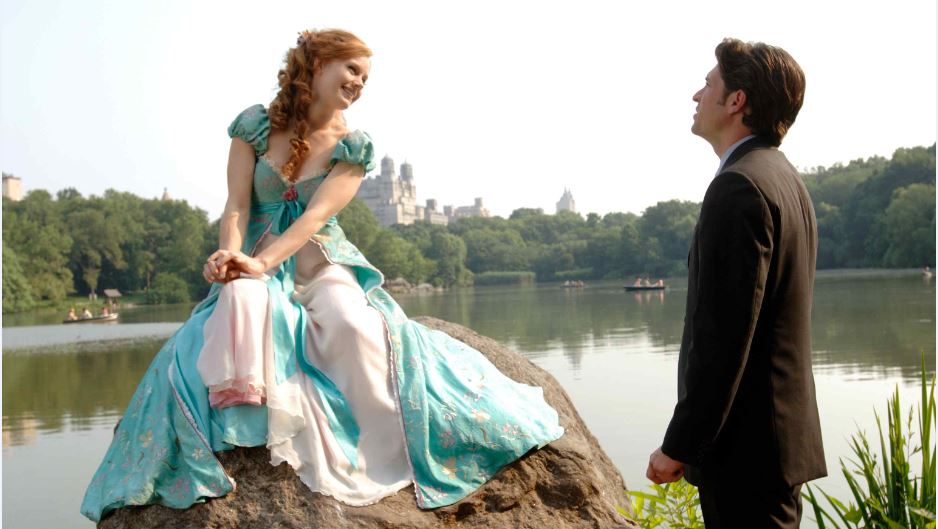
In the animated world of Andalasia, Giselle (Amy Adams) is the classic Disney heroine – singing joyfully, talking with animals, all the usual trappings. She falls (instantly, of course) in love with the dashing Prince Edward (James Marsden), but Edward’s cruel step-mother Queen Narissa (Susan Sarandon) is determined to thwart the match so she can retain the crown. On Giselle’s wedding day, Narissa pushes her through a magic well to a place where there are no happy endings: modern day New York. Stuck in the real world, Giselle meets quietly disillusioned family lawyer Robert (Patrick Dempsey) and his 6 year old daughter Morgan – can Giselle adjust to the modern world? Can Edward save her? And will she want to go back?

The star turn is Amy Adams, and she is terrific. This is one of those performances that looks easy, but is in fact extraordinarily difficult. She simultaneously plays a fairytale character in the real world, with a cartoon’s outlook and understanding, but also subtly deepens and enriches this character with real world traits, developing and growing her personality to become someone who feels “real”. She does this without jarring gear changes or sudden swings – and holds both these characterisations together simultaneously. So Giselle’s fundamental personality doesn’t change, while her outlook and understanding changes dramatically. She’s endearing, a wonderful light comedian, and her singing and dancing is terrific. It’s not too much of a jump to say she basically is the movie.

And an enchanting movie it certainly is, one part affectionate recreation of Disney, one part affectionate send-up. Relocating the conventions and style of a Disney movie to the real world allows a lot of fun, as Giselle musters the animals of New York to help her clean (pigeons, rats and flies) or recruits the people of Central Park into an extended song and dance routine while Robert looks on with bemused confusion. It helps that the songs are so well written – Alan Menken and Stephen Schwartz’s tunes are basically classic Disney tunes with a satirical bent, which means it’s perfectly possible to enjoy both for what they are and for the dry commentary they offer on Disney.

In fact that’s why the film works so well: it is so blinking affectionate. There is no cruelty about it and none of the tedious “smarter than thou” referencing of, say, Shrek. Instead it teases Disney, while simultaneously understanding the vast majority of us love these films: that if we had the chance, as Nancy does, we might well jack in the real world for a fairytale. We don’t want “gags for the grown-ups” or dumb film references: if a film concentrates on making itself sincere and engaging, it will engage both adults and children at the same time.

The film really successfully bowls along, full of entertaining charms and gags. In fact the appeal of the fish-out-of-water plotline with Giselle is so effective the sub-plot around the villainous Queen Narissa actually becomes less interesting. While the presence of a villain of this type is a pretty central part of the Disney structure, it never quite comes together here – it feels like something inserted due to the rules of the genre rather than an organic part of the story. Now it is essential there is some peril to propel the story forward, but Narissa just isn’t quite interesting enough (and the final battle with a CGI dragon, while a great recreation of similar moments isn’t really gripping). Fundamentally the emotional and dramatic culmination of the film is Giselle realising what she wants – and it’s this compelling human story that powers the film.

But this is a niggle in a charming and very funny film. Amy Adams is of course the star, but Patrick Dempsey very successfully adds warmth to the “stick-in-the-mud” straight man who flourishes as the film progresses (in a nice touch, he slowly takes on the very singing, dancing, cartooney traits he finds so bemusing in Giselle). James Marsden has huge fun as the gently egomaniacal Prince Edward, providing many of the film’s belly laughs with his unreconstructed fairy-tale hero view of the world.

Enchanted works so well because it’s both a subtle commentary on Disney fairytale films and also a marvellous fairytale itself. With a terrific performance from Amy Adams (how did she not get an Oscar nomination for this?) and some cracking songs, the film is wonderfully entertaining, making some gentle fun of its genre, while also celebrating it. It only wants to entertain and enchant you – and it certainly succeeds.

Beauty and the Beast (2017)


Dan Stevens and Emma Watson faithfully recreate almost shot-by-shot a much better cartoon

Director: Bill Condon

Cast: Emma Watson (Belle), Dan Stevens (The Beast), Luke Evans (Gaston), Kevin Kline (Maurice), Josh Gad (LeFou), Ewan McGregor (Lumiere), Stanley Tucci (Maestro Cadenza), Ian McKellen (Cogsworth), Audra McDonald (Madame de Garderobe), Gugu Mbatha-Raw (Plumette), Hattie Morahan (Agathe)

hhBeauty and the Beast was released at the perfect time. The generation who grew up watching the original could now take their children – or revisit the fond memories with their parents. It was a chance for everyone to wallow in sentimental nostalgia. Disney knew its market would be people who wanted something as close as possible to what they remembered: they certainly delivered.

Surely you know the story by now? But in case you’ve been living under a rock for your entire life: Belle (Emma Watson) is the beautiful but bookish village girl who dreams of a something more than this provincial life. When her father Maurice (Kevin Kline) is imprisoned by a horrific Beast, Belle volunteers to take his place and stays in the castle. The Beast and all his servants are enchanted and only true love can break the spell – will Belle and the Beast fall in love?

I would ask why Disney feels the need to make what are effectively shot-by-shot remakes of their animated classics, but the fact this raked in almost a billion dollars at the box office kinda answers that question. But make no mistake, creatively this is karaoke: a few small flourishes have been thrown in, but effectively it’s a faithful recreation of a film that was already pretty much perfect to begin with. In fact, watching it, the only real emotion I felt was a desire to watch the “real” thing again. Damningly, twice my wife and I stopped to look up the equivalent scenes from the original on YouTube: in every case they were better.

That’s the big problem. Of all these remakes, only The Jungle Book was a genuine reimagining of the original. This one follows Cinderella and hews as close as possible to the film you’ve already seen. The plot is identical. The song and dance sequences are the same. The characterisations are the same. Hell, half the line readings are the same. It’s a film that is so dependent on people’s affection for the original that it’s terrified of offering anything too different from it. In which case – why not just watch the original? Would you rather look at a poster or the actual Mona Lisa?

Condon has thrown in some new pieces here and there to get an extra 30 minutes of action. One decent invention does involve the spell also causing the villagers to forget the castle exists, which is neat. The others add less. Belle has been turned into as much of an inventor as her father and, in one particularly bizarre sequence, invents the washing machine. There is a rather confused sequence involving a magic book which allows the Beast to go anywhere in the world (the witch clearly left a plethora of magic devices behind to entertain the Beast) – raising the question of why he needs that enchanted mirror, since he can apparently physically travel through both space and time with his Tardis-book. LeFou is subtly reimagined as gay – but this is very quietly done so as not to damage the film’s box-office potential in some markets.

There is a rather clumsily done storyline around Belle’s mother dying of plague when she was a baby, which also adds nothing. The film may possibly be trying to construct some kind of clunky commonality between the Beast and Belle with their parental traumas, but a dead mother with a rose fetish shares little with the stereotypical Cold Abusive Aristocrat father the Beast has – and anyway, they’re already giving them plenty of common ground through the good stuff they’ve lifted straight from the original film. Nothing else new really stands out.

In fact, the film is so studiously faithful, you get annoyed when it deviates from the original – particularly as it invariably does scenes less well. The final battle between Gaston and the Beast suffers horribly, with the emotional narrative of the fight thoroughly muddled, in contrast with the original’s clear and efficient storytelling. In the original, the Beast despairs and refuses to save himself from Gaston’s attack until he sees Belle. Here, he’s sort of defending himself and sort of not, and Belle is given some action nonsense, and Gaston’s death is turned from a clean narrative (one treacherous thrust hits home, then in sadistically going for the second he falls to his death) into a strange sequence where he stands and brutally shoots at the Beast repeatedly until the stonework beneath him randomly collapses and send him plummeting to his doom.

None of this, however, compares to the butchering of the moment when Belle discovers the library. In the original this is an endearingly sweet moment, with the Beast overcome with excitement at giving Belle a gift she really wants. The audience shares in his delight, and is charmed by his touching anxiety that she will like it, just as they share in her wonder at the discovery. It’s a major moment in the growth of their relationship. Here it’s thrown away – the Beast shows her the library in a fit of irritation at her pedestrian Shakespeare tastes. The film gives all the time and emotional weight to the tedious “magic book” sequence, where they travel to the “Paris of my childhood” and discover that, yup, Belle’s mum died of plague. Well that was both depressing and uninteresting…

Anyway – take a look at those two library scenes…

The acting is pretty good. Emma Watson does a decent job, particularly considering the pressure on her. She performs the songs prettily, although they don’t soar the way they did when performed by someone with the vocal power of Paige O’Hara. Her Belle is thoughtful but has a level of defiance and independence that’s been stepped up from the original. Dan Steven’s Beast is much more of a prince under a ghastly shell – unlike the original he’s literate, can dance and is well spoken (which makes his moments of animalism and his soup eating failure stick out all the more). The rest of the cast are fine – Ewan McGregor is as flamboyant as you’d expect, Emma Thompson sings the song very well, Kevin Kline makes a lot of Maurice. However for each of them, there are moments when you remember fondly that the animators invested the originals with more emotion.

The one member of the cast who does stand out is Luke Evans. How is the guy not a star yet? Sure the swaggering braggart Gaston might be the best part in the whole film, but Evans nails it with all the energy and egotism you would expect. His scenes are the best in the film by far, and he’s the only one who manages to do something a little different with his role.

Of course it looks fabulous, but it feels somehow a little bit empty. All the things that move you are done (mostly better) in the original – in fact, a major part of why they move you is the memory of the original. The acting is pretty good and it’s well filmed and made – the design is terrific. But honestly, with the original out there what’s the point? Why would you watch this rather than the other one? It’s not as moving, it’s not as exciting, it’s not as funny, it’s not as charming. All it does is to try and recreate the original as closely as possible. You can stage Hamlet thousands of times and each production would be different, but Disney can’t stage Beauty and the Beast twice without replicating it.

If you want it to exactly match your memories, without being quite as good, it’s the film for you. If you want a Disney live-action film that feels like something original, watch The Jungle Book.

Moana (2016)


Maui and Moana conquer the seas in this wonderfully fun Disney yarn

Director: Ron Clements, John Musker

Cast: Auli’i Cravalho (Moana), Dwayne Johnson (Maui), Rachel House (Tala), Temuera Morrison (Tui), Jermaine Clement (Tamatoa), Nichole Scherzinger (Sina), Alan Tudyk (Hei-Hei)

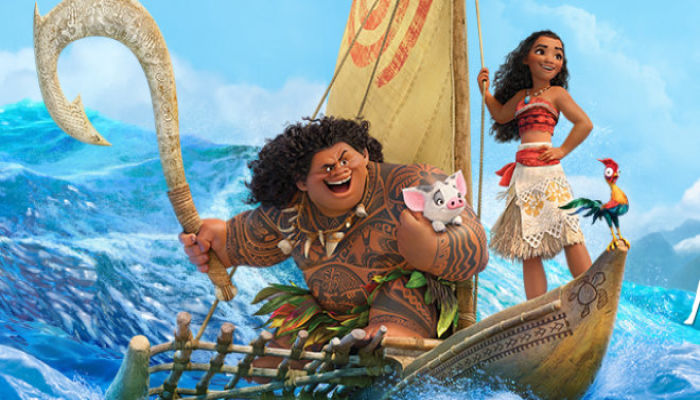
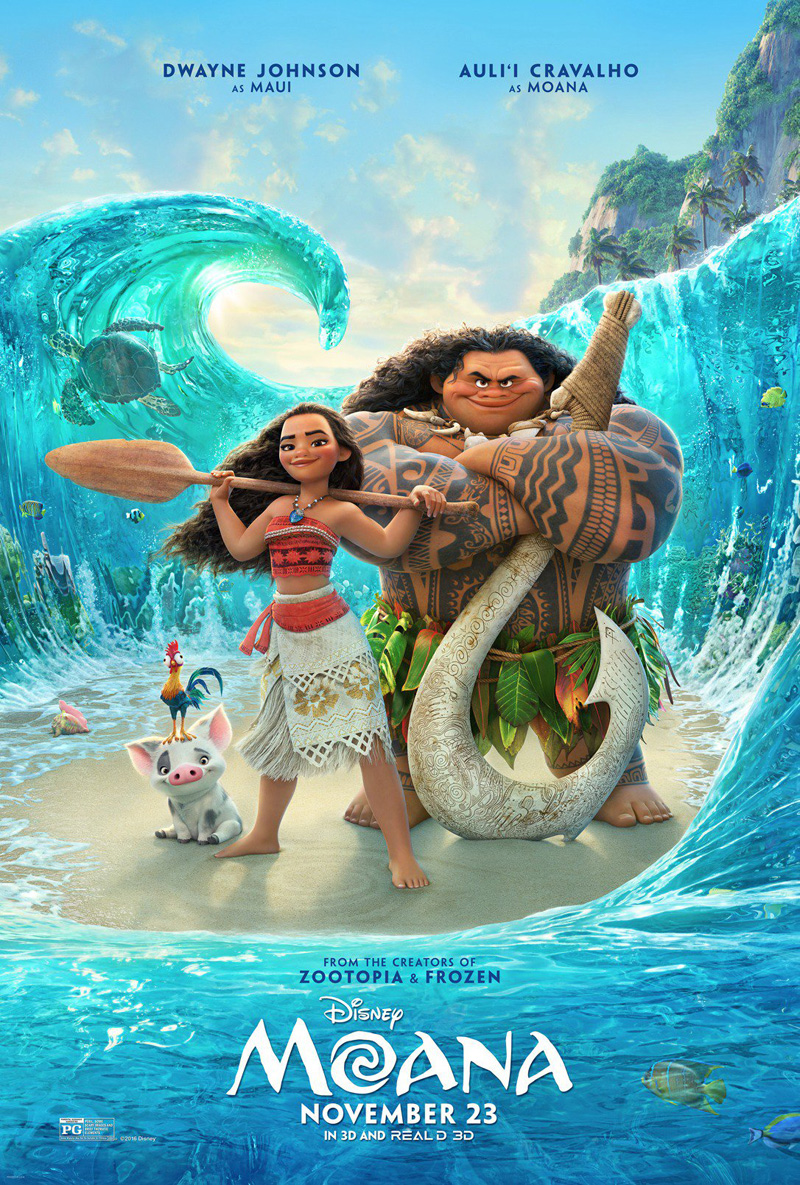
Once upon a time, the demi-God Maui (Dwayne Johnson) stole the heart of the island goddess Te Fiti, in order to give it to humanity. But he was attacked by the lava demon Te Kā and lost the heart and his magical fishhook. A thousand years later, Moana (Auli’I Cravalho), the daughter of the chief of her small island, grows to be a teenager who dreams of exploring beyond the reef. When her island’s crops start to fail, the Ocean chooses her to leave the island to find Maui and restore Te Fiti’s heart, in order to restore health to the world.

Moana is a charming, engaging and witty Disney movie, with strong, well-drawn characters, that immerses itself in its Polynesian mythology setting. What works about it – and what always puts Disney above its competitors – is that the film is interested in telling a story about characters who have real concerns and depth. Compare it to other, more stunted, “joke”-focused animations, produced by companies like Dreamworks, to see how far above those films it is. There are very few jokes here that will date (perhaps one about tweeting) – instead it’s a film that recognises its content for the adults doesn’t need to be sly film references or cheeky gags: a strong plot and engaging characters will entertain all generations.

One of the reasons the movie works so well is because Moana herself is a sympathetic, engaging heroine with dreams and aspirations, but who is still deeply respectful of her background. She’s not a rebellious teen, but someone who wants to improve the world around her, and is beautifully voiced by Cravalho. As such, she’s not only a great role model (take note parents!), but someone you end up totally rooting for. It also helps that she has a wonderful chemistry with Maui (very well voiced by a charmingly sparkling Johnson) – the film quietly subverts the expected Mentor/Pupil relationship between the two, as each teaches the other lessons both practical and spiritual.

Moana learns many of the lessons Disney picked up from Frozen. Like that film, it follows a free-spirited, independent-minded young woman not defined by a romantic interest. Its focus is on the lead overcoming a task to save her world. And it is built around an extremely catchy, very good song. How Far I’ll Go, Moana’s signature song (refrains of which are built into many of the other songs), is a sensational, powerful and tear-prickling power ballad about being yourself and following your own heart. It is remarkably easy to sing along with and carries a great message. It’s also got a brilliant popular appeal – I was stunned to see the YouTube video of it has over 141 millionhits (would that this site had so many). Many of the other songs are similarly excellent, especially the extremely hummable You’re Welcome (the songs are brilliantly composed by Lin-Manuel Miranda, Opetaia Foa’I and Mark Mancina).

Its visuals are outstanding, the animation terrific. I also really liked the way Clements and Musker embraced the strengths of silent characters, and the expressiveness animation can bring to characters. The Ocean, a clear character here who influences events, is nothing more than a shaped concentrated wave with no features, but has an expressiveness that makes it one of the wittiest characters in the film (memories of the carpet from Aladdin spring to mind). Similarly, the silent, dim-witted chicken Hei-Hei supplies many of the film’s laugh-out-loud moments. Maui’s body tattoos (wonderfully illustrated), moving and communicating silently with Maui throughout the movie, are terrifically innovative and feel unique.

Moana has a looseness and coolness to it that makes it an enjoyable, perfect viewing for a Saturday night. The storytelling is brilliantly done and the final confrontations are shot with a daring vibrancy that betters many action films. Clements and Musker have a mastery of the material that creates a gripping and involving story and characters. In many ways, it doesn’t do anything too unique or different from past Disney movies, but it tells the story with such charm and imagination that you’ll get totally wrapped up in it.