Category: Dystopia film

Donnie Darko (2001)


Welcome to the weirdness: Donnie Darko ultimate 00’s cult hit

Director: Richard Kelly

Cast: Jake Gyllenhaal (Donnie Darko), Jena Malone (Gretchen Ross), Mary McDonnell (Rose Darko), Holmes Osborne (Eddie Darko), Katherine Ross (Dr Lilian Thurman), Maggie Gyllenhaal (Elizabeth Darko), Daveigh Chase (Samantha Darko), James Duval (Frank), Drew Barrymore (Karen Pomeroy), Patrick Swayze (Jim Cunnningham), Noah Wyle (Dr Kenneth Monnitoff), Beth Grant (Kitty Farmer)

Donnie Darko was a surprise cult hit. In fact, it was such a cult hit that Kelly made a “director’s cut” version of the film five years later. Funnily enough, the Director’s Cut was largely rejected by the very people who loved the first film. Why? Well probably because the film was loved because it was so weird. It was so esoteric, so hard to understand, so much of its logic unclearly defined, that much of that love was based on trying to work out what the hell is going on in it – and the director’s cut supplies lots of answers, ruining the game! 

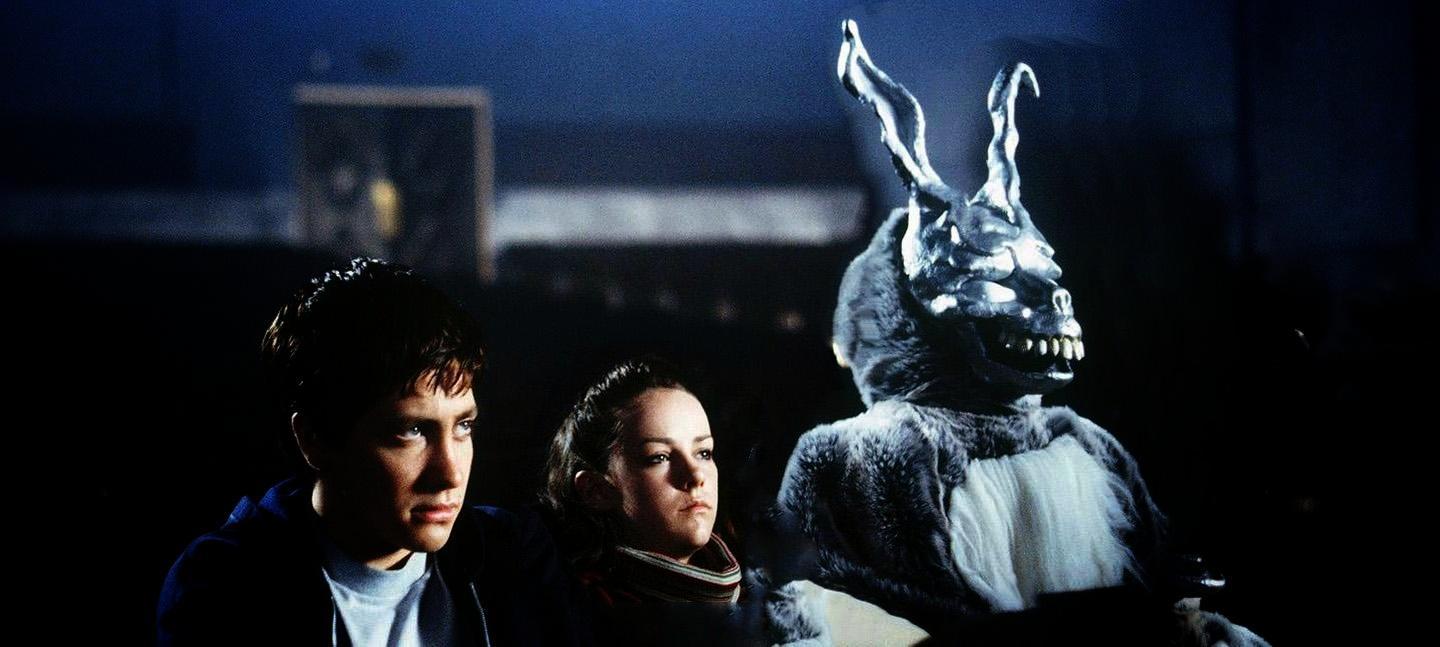
In 1988, troubled teenager Donnie Darko (Jaky Gyllenhaal) sleepwalks out of his house onto a local golf course and meets with a mysterious figure in a gruesome rabbit costume – “Frank”. Frank tells Donnie the world will end in 28 days, 6 hours, 42 minutes and 12 seconds. Donnie sleeps on the golf course overnight – and returns home to find a jet engine has crashed through his bedroom. Plagued by strange visions and hallucinations, and visitations from Frank, is Donnie suffering from schizophrenia or is he genuinely in a position to save the world? And is there a danger from the way Frank is starting to influence Donnie’s actions?

Richard Kelly’s film is a bizarre, inventive, dreamy, creepy oddball flick that deliberately never really explains what the hell is going on. Never mind the mystery of Donnie’s mental state – the film’s confusing structure, its unexplained elements of time-travel, mind-control and predestination, all of this is just left hanging out there. It’s actually a testament to how much restriction can sometimes be the mother of invention. Kelly was told that the film could not be longer than a couple of hours, meaning a lot of the more traditional explanation (reintroduced for the director’s cut) was removed to keep the run-time down. But the great thing is, this actually leaves it very open for the viewer to create their own idea of what the film is about and what is going on. It really works.

This is particularly because Kelly manages to marry the clever-clever weirdness with a real emotional investment in the characters. Not just in Donnie either: his family are all extremely well-drawn, who we grow to care for over the course of the film, from his cheery father to his loving but frustrated mother, brilliantly played by Mary McDonnell. Equally strong is Maggie Gyllenhaal as Donnie’s sister. These characters, along with dozens of other characters quickly established, but all feeling very real, are what keep you interested in the film. If it was just oddness and alienating weirdness, it would be hard to care. But this is a story that mixes science fiction oddness with genuine family drama heart.

There is a lot of oddness in there though. Frank is a character practically designed to be iconic, a twisted giant rabbit like a demonic Harvey. Combined with this are a series of curiously unsettling images and storylines. So we get Donnie with visions of streams of transparent liquid streaming out of people’s chests – possibly their future paths leading them forward. We get Donnie facing strange barriers, that seem to repel and reflect his world. Donnie is plagued with strange visions and increasingly unsettling instructions from Frank. He carries out a series of impossible feats under Frank’s direction. There are elliptical conversations about time travel and physics and while the film drops hints it never explains a damn thing. So when you finally get to the end – well lord alone knows what happens, but you’ll certainly have a hell of a lot of fun trying to work it out.

Around this, the film cuts rather a neat parody of teenage life in the 1980s and the 1980s Brat Pack films. Actors like Drew Barrymore and Noah Wyle have a lot of fun as closeted liberal teachers struggling in a school is run by an oppressive, fiercely religious set of governors. But not as much fun as Beth Grant as a PE cum civics teacher, both blinkered in her love of traditional education (and “safeguarding our youth” from the dangers of literature) while in love with Patrick Swayze’s smug self-help guru (whose bullshit “conquer your fear” videos and mantra are a superb spoof). The film has a nice eye for the politics of school classes, and placing this end-of-world fear into the all-consuming self-importance of teenage life works very well.

Throughout Kelly shoots with a confidence that belies his “first-time film director” status. Yes there is the occasional overly clever camera shot that you get from someone enjoying the toy set for the first time, but there is lots of terrific stuff. His assembly of events is brilliant, he works with actors very well indeed.

But the other factor that really makes the film work is Jake Gyllenhaal’s superb performance in the lead role. Gyllenhaal gets the balance between Darko’s vulnerability and his (possible) darkness absolutely spot-on. He manages to turn himself perfectly into a gangly, awkward, nervous kid – totally believable as the sort of young man unsure of where he stands in the world and angry. It feeds perfectly into the mystery of the film. Is Donnie a dangerous schizophrenic? Or is he right in thinking he might be important? Gyllenhaal captures all this, but also really makes us care for Donnie, turning him into someone truly sensitive and confused (helped as well by a very good Jena Malone as his awkward love interest). It’s a brilliantly distinctive performance that captures a true idea of teenage difficulties.

Any maybe that’s also why Donnie Darko works so well. Because it’s as much about teenage awkwardness and not knowing what you are doing here and why, as it is all the bizarre and unexplainable pseudo-science, time travel and predestination paradoxes that the film allows to play around the edges. It places at the centre of a brilliant science fiction drama, a real human and emotional story that feels very real and grounded and like something we have all experienced at one time in our lives. It’s a puzzle and mystery that also has a heart. It’s a difficult trick to pull off – so difficult Kelly has failed to pull it off again since.
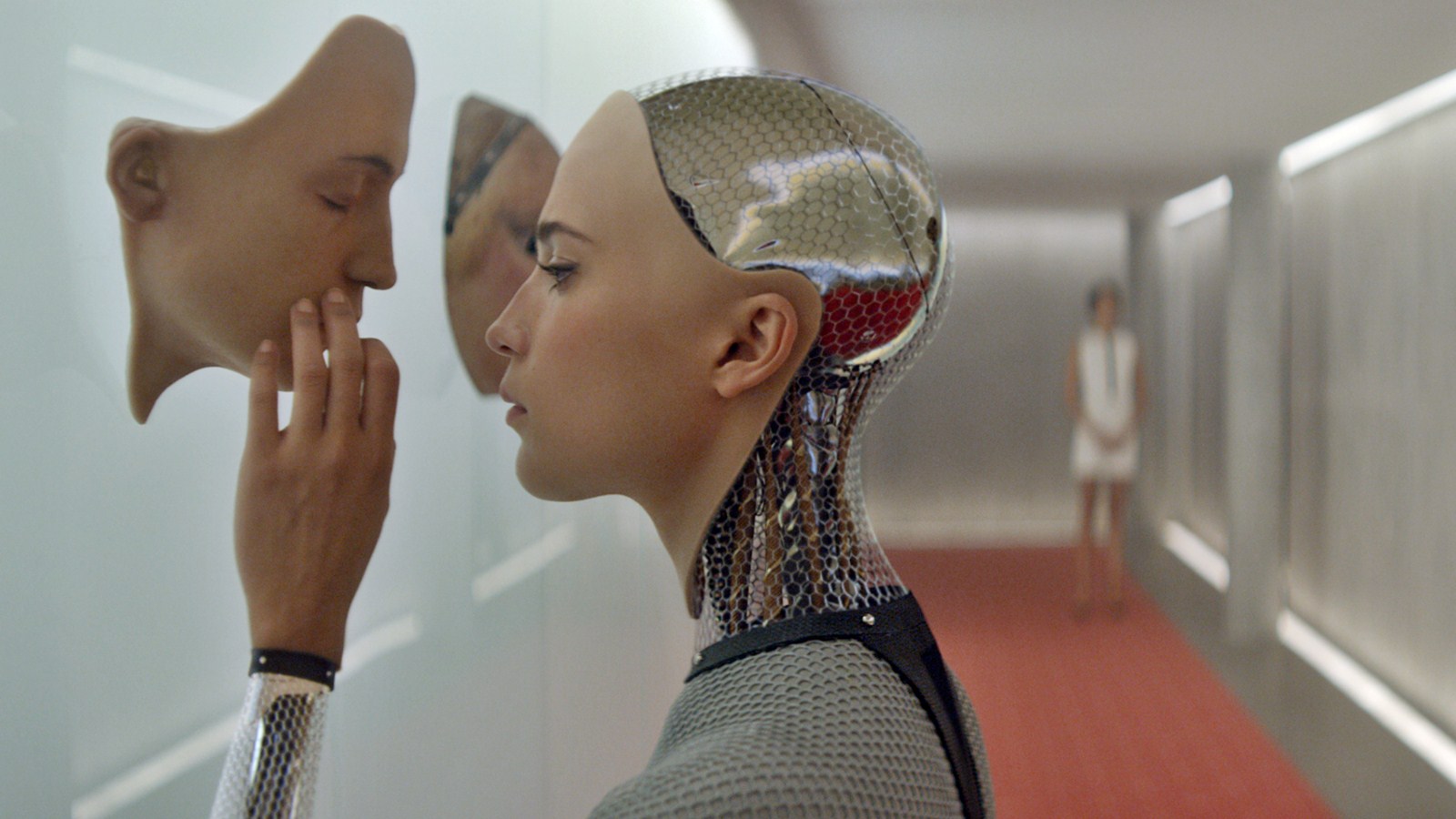
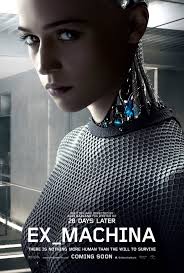
Ex Machina (2015)


Alicia Vikander: is she human or not? The question that troubles the cast of Ex Machina

Director: Alex Garland

Cast: Domhnall Gleeson (Caleb Smith), Alicia Vikander (Ava), Oscar Isaac (Nathan Bateman), Sonoya Mizuno (Kyoko)

It’s the age-old story of creation: man yearns for the power of the gods. There is something intrinsically god-like about the desire to create life and to develop a new creation. Ex Machina is a film that precisely explores this idea (along with a host of others). In the struggle to create an artificial intelligence, are we motivated to further mankind – or is it a perverse desire to become God ourselves? 

Caleb (Domhnall Gleeson) is a low-level coder working for a Google-like organisation founded by genius inventor Nathan Bateman (Oscar Isaac). Caleb wins a competition to spend a week at the reclusive home of Bateman, a solitary modernist house cumresearch station in the middle of a secluded forest. Nathan wants Caleb to conduct a series of interviews with his new invention – an android named Ava (Alicia Vikander), as part of a Turing Test to ascertain if she is truly intelligent or not. However, over the week, the mysteries of the house darken – and, as Caleb begins to develop strong feelings for Ava, the question arises of who is manipulating whom.

Ex Machina is a confident, fascinating piece of film-making from first-time director Alex Garland, who also writes a screenplay stuffed with ideas. It challenges and provokes discussion, carefully outlining a story of deception and counter-deception, demanding multiple viewings to unpick truth from lie. Garland is also a brilliant chamber-piece director, drawing fantastic performances from his cast, and shooting the secluded house in such a range of styles and angles that it feels both expressive and claustrophobic. Ex Machina is an extremely intelligent small-scale discussion piece, which would make as terrific a play as it does a film.

Among its themes is the question of man striving for god-like control. Nathan, a prickly, socially uneasy and unempathetic person, wants God’s mantle – and is willing to treat his creations with the same ruthless indifference, he demonstrates to Caleb, and the users of his search-engine. His knowledge of humanity is based on essentially stealing an understanding of our thoughts and desires from our search histories, so creating artificial intelligence is simply a progression from the control he already has.

It’s especially creepy that the androids Nathan creates are all attractive young women. Throughout, the film explores the attitudes men have to women. To Nathan, it’s increasingly clear they are objects. He proudly brags about how Ava is both sexually attractive and fully capable of experiencing sex. He treats his housemaid (and sexual partner) Kyoko with a contempt bordering on outright cruelty. Nathan is possessive – and you suspect it’s logical to him to make the first in the next generation of his perfect race as a woman, subservient to him.

Caleb has a healthy but romanticised view of women –he wishes to see himself as white knight, sweeping in to save the woman he loves. He has a lovestruck, teenage protectiveness and devotion towards Ava – qualities, the film suggests, make him ripe for manipulation (the question being from whom). Caleb’s entire attitude towards women is protective – he is increasingly disgusted by Nathan’s vileness – but still in its way paternal. Caleb is naïve and strangely innocent, prone to hero worship – and his initial devotion to Nathan slowly transfers to Ava.

A lot of this works because Alicia Vikander’s Ava is such a fascinatingly elliptical figure. Vikander and Garland skilfully leave you guessing: just how human is Ava? Under observation from Nathan, her discussions with Caleb seem cold and functional. During the many brief power cuts that blight the lab, when they are alone from CCTV, she appears to be far more emotional and tender. But what does she feel for Caleb? Is it genuine feeling – or an approximation designed to draw Caleb in? Her desire for freedom is a genuine human feeling – but how is she going about this? In scenes where we glimpse her alone, Vikander’s movement and expression are neutrally unreadable. It’s a fascinating superb performance from Vikander, both tender and gentle and also unsettling and creepy.

The script never loses its way, and never gets overwhelmed by cheap thrills. There are moments of violence and danger – and the ending of becomes increasingly dark – but it all seems a very natural progression. Because the ideas of seeking freedom from oppressive masters – and mankind looking to abuse the powers of the gods over their creations – feel very real and true. These are ideas that are endlessly fascinating – and the film explores them in brilliant detail, without ever flagging, becoming bogged down in tedious discussion, or letting its ideas overwhelm the plot.

Ex Machina is a fascinating film, brilliantly acted – Isaac and Gleeson are quite simply superb as two very different tech geeks, struggling with ideas about humanity they can scarcely begin to understand and express. The effects to create Ava are extraordinary (and Oscar-winning). Alex Garland makes himself as a director of true promise – and Ex Machina is a film that can take its place as one of the compelling, intelligent and intriguing science-fiction films of the 2010s.

Mad Max: Fury Road (2015)


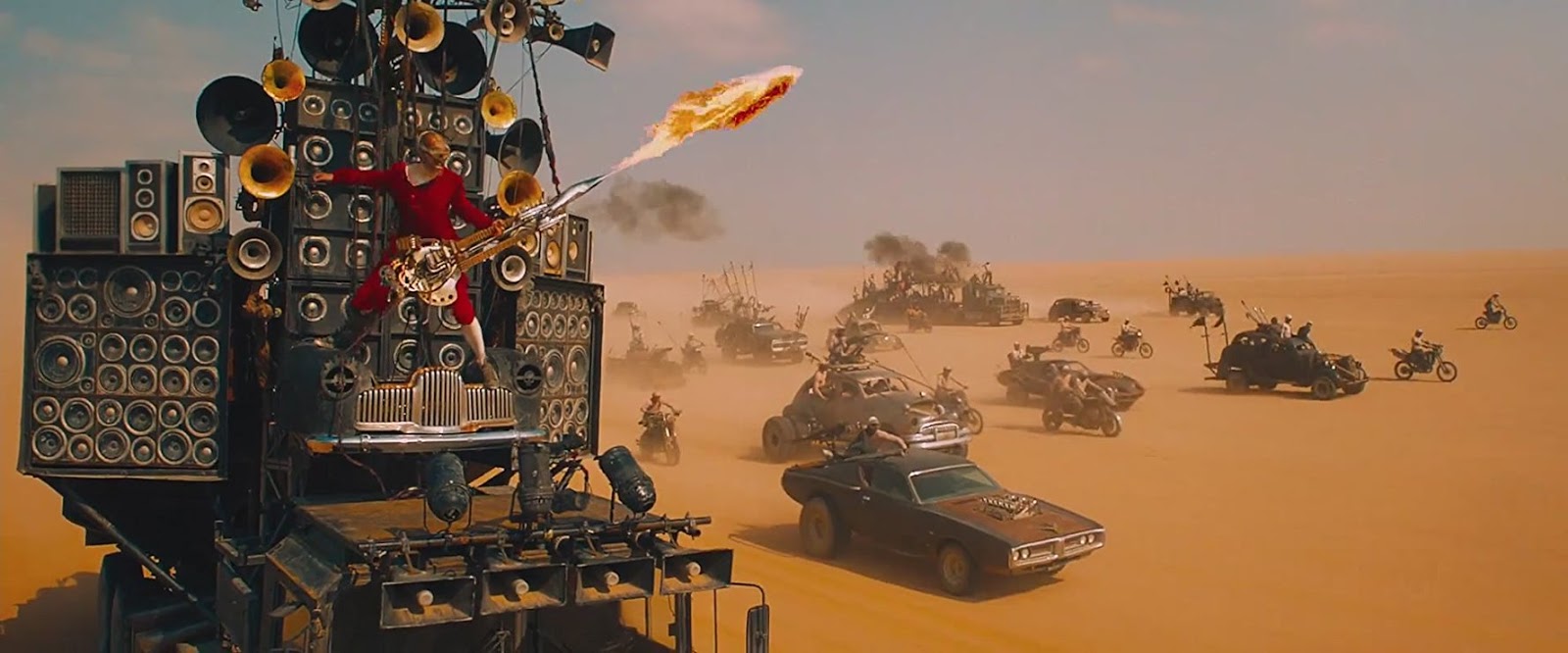
George Miller’s Mad Max: Fury Road – a crazy car chase film

Director: George Miller

Cast: Tom Hardy (Max Rockatansky), Charlize Theron (Imperator Furiosa), Nicholas Hoult (Nux), Hugh Keays-Byrne (Immortan Joe), Rosie Huntington-Whiteley (The Splendid Angharad), Nathan Jones (Rictus Erectus), Riley Keough (Capable), Zoë Kravitz (Toast the Knowing), Abbey Lee (The Dag), Courtney Eaton (Cheedo the Fragile), Josh Helman (Slit)

Sometimes films seem designed to give you a visceral thrill, to throw you into an experience and see whether you sink or swim. To pull off that sort of hard-edged momentum, you need a film-maker skilful enough to create an addictive energy that never slackens and never gives you a second to question the film while it’s going on. Mad Max: Fury Road has such a director in George Miller, and its demented, high-octane excess, married with a film-making style that felt modern, vibrant and grounded in reality, surprisingly made it one of the most acclaimed films of 2015.

In a post-apocalyptic future Australia, the world is a ruined desert and basic requirements like water, greenery and fuel are more valuable than anything. In a rocky outcrop, cult-leader Immortan Joe (Hugh Keays-Byrne) rules one of the few populations by controlling access to the water. “Road warrior” Max Rockatansky (Tom Hardy) is captured by Immortan Joe’s warriors and put to work as a “blood bag” to transfuse into Immortan Joe’s warriors. However, this coincides with a planned escape by Immortan Joe’s wives (the few remaining women capable of conceiving children). Led by road warrior Imperator Furiosa (Charlize Theron), the women flee to find a mysterious paradise in the wilderness. Cue an almighty chase and running battle between Furiosa’s road carrier and Immortan Joe’s forces, desperate to reclaim the wives.

Mad Max: Fury Road is a bizarre, extreme, surreal thrill ride, a high-octane road chase, crammed with action, thrills and dynamism. It’s directed with extraordinary vibrancy by George Miller, who makes it fresh and scintillating. Miller crams the action and design with an explosion of style. Everything is amped up to 11, from the look to the characterisations and motivations. But what makes this such a well-directed film is that Miller shoots much of it with careful, professional clarity: so many other films would be cut with a frantic craziness, but this has a polished traditionalism to it. Basically Miller knows the actual content of the story is “insane” enough that he doesn’t need to gild the lily with bizarre, swooping camera angles or choppy editing. 

That’s partly why this film has had such a strong positive reaction. While being insanely OTT, it’s actually quite an old-fashioned piece of film-making, and it looks like a lot of it was shot for real on location, using real practical stunts. This may or may not be the case, but it certainly looks like this. And in an era where so many action films are about superheroes, and crammed with special effects, to have a world where things feel grimy and real, where the objects we are watching feel like they exist, is like a breath of fresh air. The design throughout the film accentuates this sense of reality. It makes things feel like they have depth and force. It immediately adds stakes to the action.

That action takes place in a unique looking world. The visuals in this film are crazy. The design of Immortan Joe’s half-nude soldiers, with their silver paint aerosol and petrol smeared faces, is terrifyingly cultish. The look of the many different vehicles is immediately striking, with each being clearly of the same world, but each distinctive in look, like some Wacky Races. The steampunkish mix of cobbled-together remains of technology to create the cars and trucks is brilliantly done. It’s a film that looks like nothing else, and shot with radiant streaks of yellows and blues, mixed with scenes shot in almost painterly black and white. It’s an explosion of style, but not straining too hard to force itself upon you like so many films do. 

The film also has a simple structure and storyline, that allows it to focus on the action. It’s slick, steamlined and very focused. The villains are clear, and their motivations easy to understand. They are presented with a certain depth, but their essential villainy is easy to have a gut instinct against. This also helps us bond with our heroes – despite the fact that most of the wives have only the most briefly sketched of characters. But we totally understand their position, fear and desire for freedom. Just as the film is a primal explosion of “fight or flight”, so are the feelings our heroes carry. Everyone can relate to them.

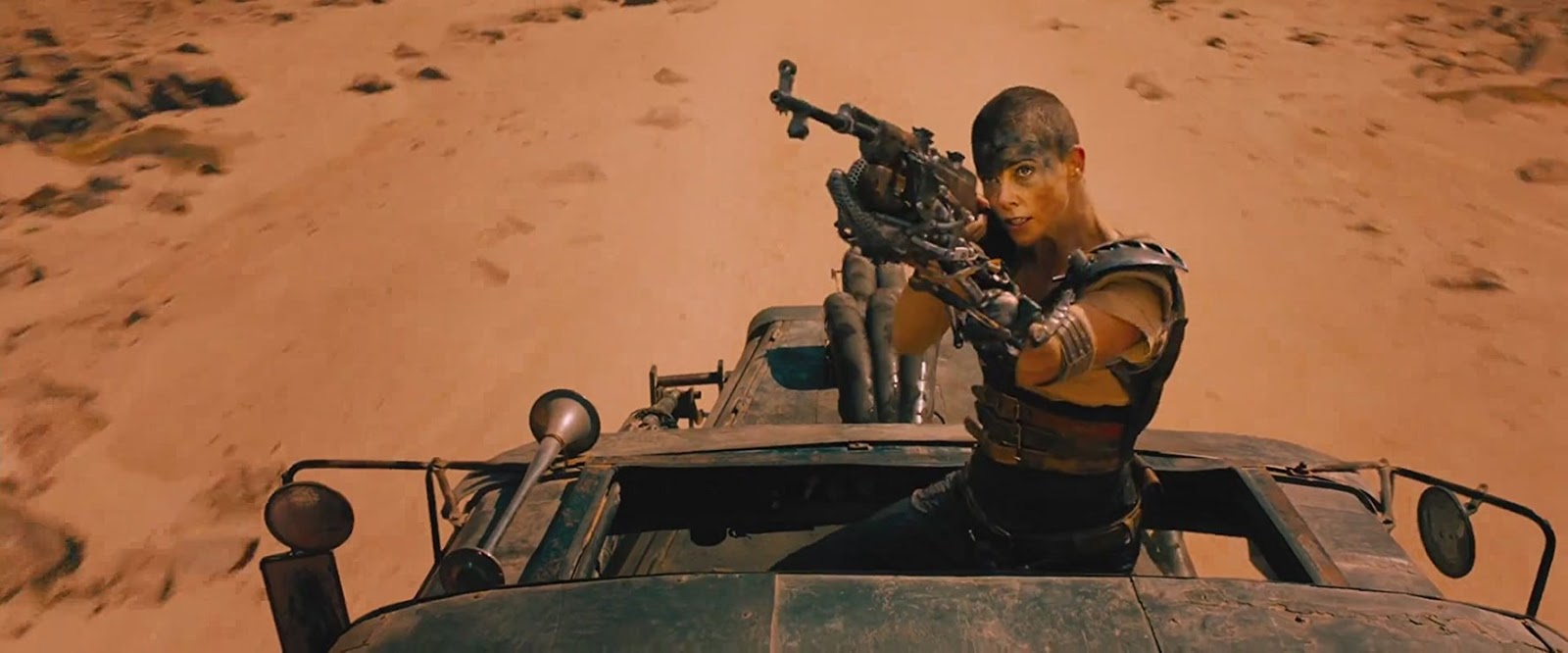
It’s also great that this is an action film where the women largely drive (literally!) much of the action. The film may have the Mad Max name on it, but the true lead of the film is Furiosa. It’s her actions that drive the film, it’s her conflicts that are at its heart, the film is her journey and Max is largely along for the ride (again literally!). Charlize Theron is very impressive in the lead, a strong warrior woman, but also someone with a buried poetic soul and a clear emotional arc. Tom Hardy delivers as the grizzled Max, but this is very much Theron’s film.

Mad Max: Fury Road is an exciting and engrossing film. But it’s made with such professional inspiration on the visuals that it invites people to read into it a lot more depth than I think is actually there. It’s got such old-fashioned control and brilliance to it, while being so explosive and vibrant, that it’s tempting to read into it a thematic complexity. Let’s be honest, this is a chase movie. It’s a hell of a chase movie, but it’s a chase movie.

It may be set in a world of post-apocalyptic totalitarianism, but it’s not trying to tell us anything hugely original about what such a world may be like. It creates such a world with huge inventiveness, but it’s not an enlightening film. Similarly, this is a film that places women at the centre of its action, but I’m not sure you could call it a film that has much to say about feminism. Most of the women in this film are still defined primarily by their breeding abilities. Furiosa may be the leader, but most of the rest of the women are under her protection. The film does something different with gender, but it also does a lot of quite traditional things. 

It’s really tempting to see great symbolism in such a dynamic and striking piece of film-making. But thematically there isn’t much there. Miller directs a film that is brilliant too experience, so brilliant you expect there to be more at its heart. In truth there isn’t really – it’s largely what it appears to be on the tin. There’s nothing wrong with that though. You just need to know what you are going to get. This is not some great game changer of a motion picture, that will reinvent and reposition the genre. It is a skilfully made and compelling chase movie, where a group of people run to a point, turn around and head back, being chased all the way. It’s shot with a near poetic, old-school brilliance – but it’s still just a chase movie. Accept it as that – a high-octane action thriller – and you will be swept away. Look to it for the thematic depth some have claimed it carries and you will be disappointed.

Blade Runner (1982)


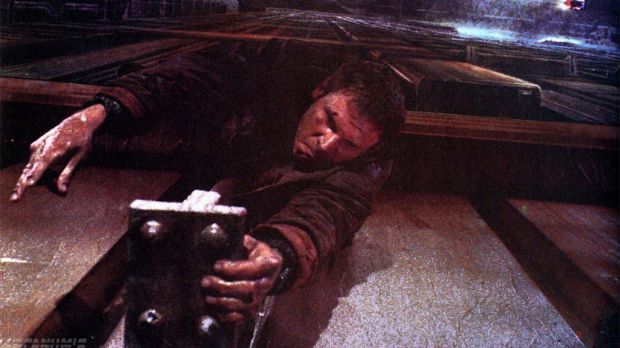
Harrison Ford hangs on for dear life in Blade Runner

Director: Ridley Scott

Cast: Harrison Ford (Rick Deckard), Rutger Hauer (Roy Batty), Sean Young (Rachael), Edward James Olmos (Gaff), M. Emmet Walsh (Harry Bryant), Daryl Hannah (Pris Stratton), William Sanderson (JF Sebastian), Brion James (Leon Kowalski), Joe Turkel (Dr Eldon Tyrell), Joanna Cassidy (Zhora Salome)

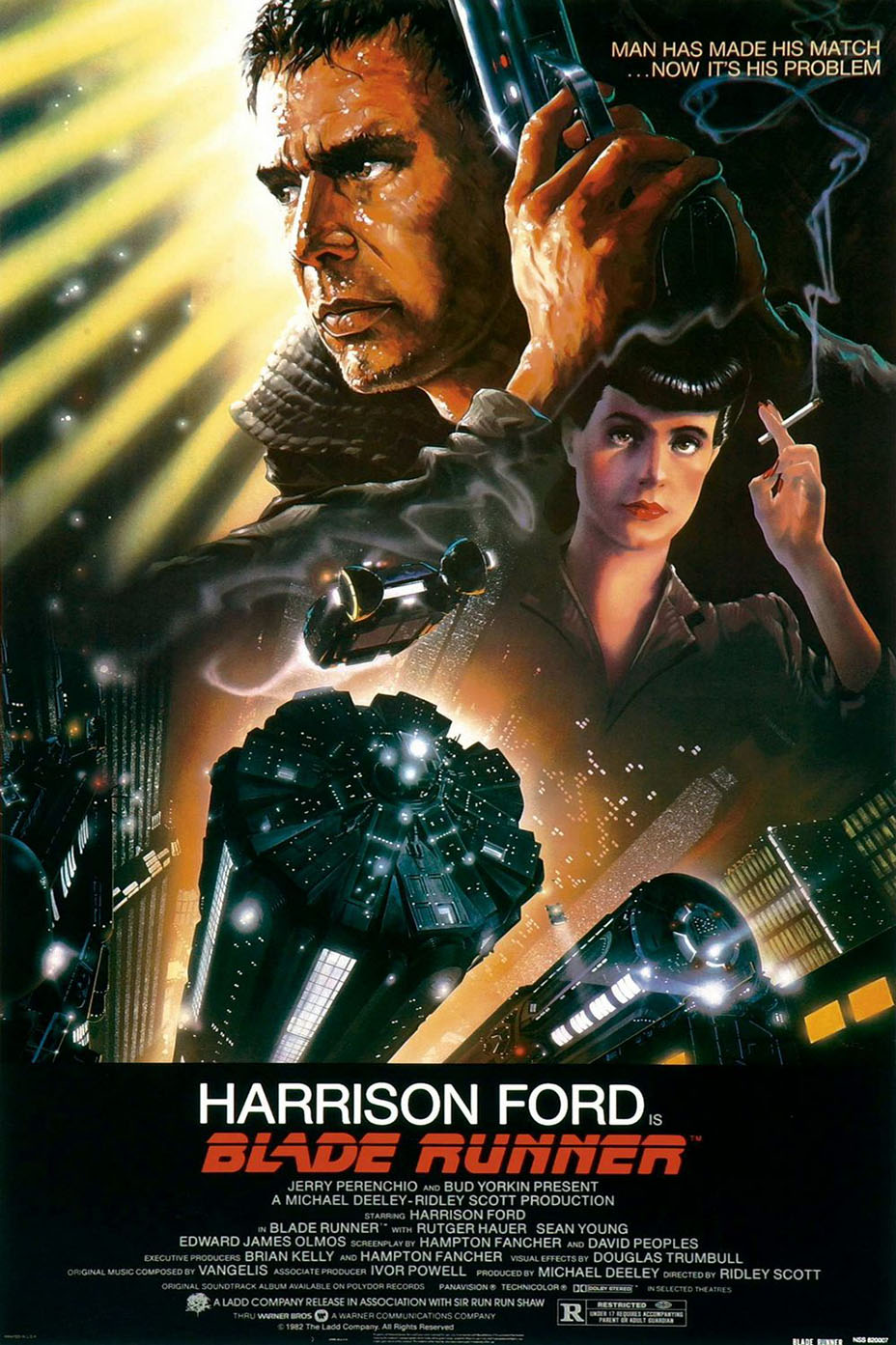
Everyone knows Blade Runner surely? And everyone has a viewpoint on its central mysteries. Why for a film largely ignored on release? Because as well as being tight and engaging, this is a rich thematic film, crammed with mystery and enigma. And there are few things more engaging than a film that succeeds in being as open to interpretation as possible.

In 2019 a dystopian, polluted Los Angeles is a launch pad for the wealthy to head out into the new colonies in the stars. Off-world, the unpleasant tasks are carried out by artificial humans known as replicants. Replicants are banned from returning to Earth – but a group of five led by soldier Roy Batty (Rutger Hauer) have come to Earth looking to extend their pre-programmed limited lifespans (no more than five years). On Earth, Rick Deckard (Harrison Ford) is reinstated as a Blade Runner, an agent whose job is to ‘retire’ (i.e. kill) replicants on Earth. Deckard is reluctant, having an increasing distaste for his work, but begins to hunt and eliminate the replicants.

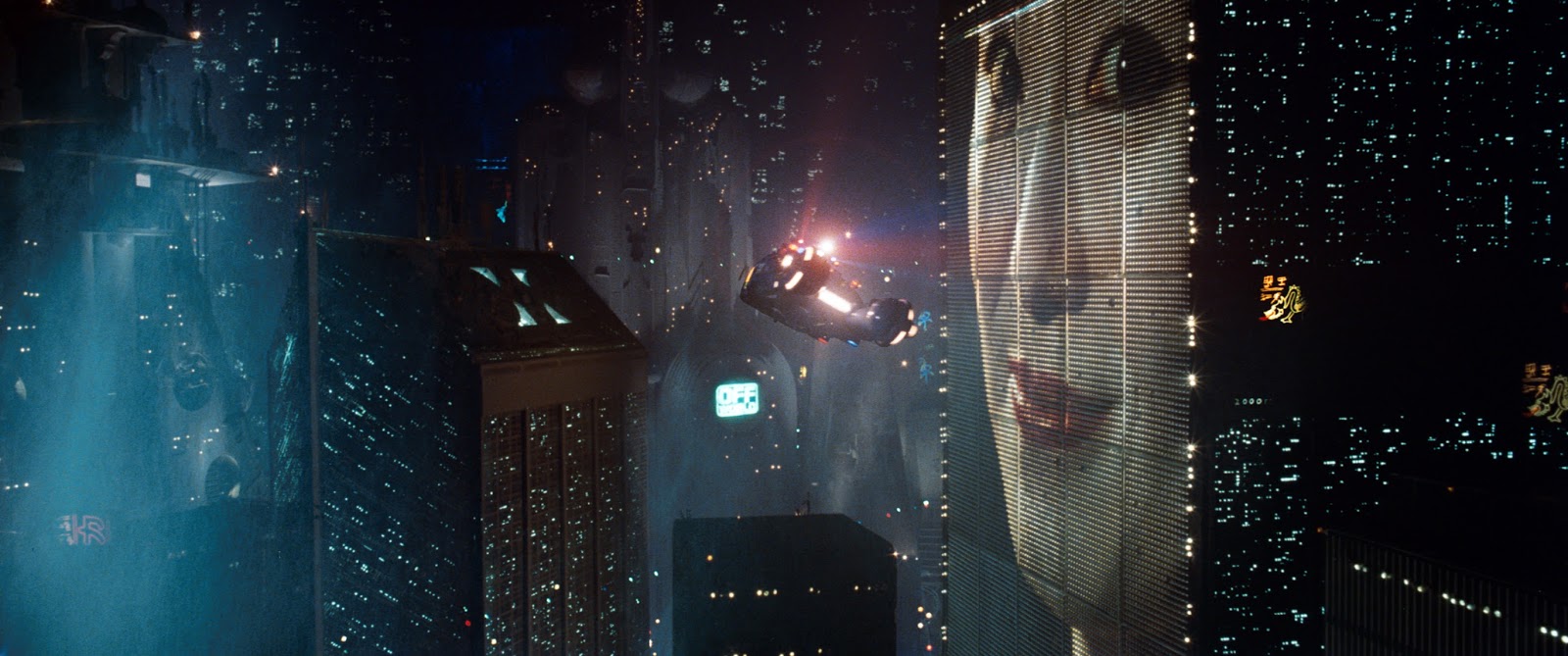
Blade Runner may be one of the most influential science fiction films ever made. Its look and style influenced virtually every other dystopian future you’ve seen in any other film since. Tall, run-down buildings. Overbearing corporate advertising. Flashing neon lights. Terrible weather. Everything dark all the time. Poverty and degeneracy on every corner. You’ve seen it in every dystopian future since. Visually, the film is a landmark, a testament to Ridley Scott’s graphic artistry.

But that wouldn’t be enough for Blade Runner to last the course. When released it was perhaps too elliptical and hard to categorise – equal parts dystopian thriller, noir detective story, sci-fi morality tale, dark romance – for audiences to really understand. Certainly the studio didn’t. After disastrous test screenings, it was re-cut. So began a fable of slice and dice that made Blade Runner perhaps second only to Brazil in the annals of re-versioned films.

The release included an overtly “happy ending” (bizarre images of our heroes driving into a blissful countryside, totally at odds with the rest of the film) and a disengaged voiceover from Harrison Ford that eradicated all the film’s subtlety. This was the only version for 10 years until a “Director’s cut” was released. This removed these elements, retooled scenes and introduced the famous “unicorn dream” sequence (of which more later). Fifteen years after that, Scott finally found the time to work on a “Final cut” which presented the film as Scott had intended it – with all its mysteries and questions intact. Has there been any other film with so many different “official” versions?

Anyway, was it worth the struggle? Certainly. While you could argue it is predominantly a triumph of style, Scott laces the film with a sense of mystery and profundity that makes it a rich and rewarding viewing experience. It’s a trim detective thriller that also questions the nature of humanity. It is a perfectly formed elliptical mystery, an archetypal cult film that engrosses the viewers to such an extent that 30 years later there is still a healthy debate about what the film means.

Humanity is =the key issue. The human characters are functional, cold, distant and unengaging. The hunt for the replicants (who are basically slaves) is brutally and unremorsefully executed. The replicants have been designed to learn and grow but cruelly had their lives capped to stop them taking advantage of this. Their world is polluted, tawdry, soulless and lost.

Meanwhile, the replicants exhibit far more (whisper it) humanity than the aloof human characters, ]despite the fact we are repeatedly reminded they cannot feel empathy. Clearly this is not completely true. And, the film argues, if an artificial human can display loyalty, fear, love, anger and pain, what actually is the difference between that and a “real” person. If a replicant can only be identified after dozens of questions in a test, can they really be that different from a human being?

Questions about this coalesce around Deckard. If the film has remained such a part of cultural discussions, it’s partly because of the fun of theorising about his true nature. Is he a replicant? Scott’s insertion of Deckard’s unicorn dream (implying the origami unicorn left by Gaff at the film’s end shows Gaff knows Deckard’s dream, meaning the dream is an implant in an artificial mind) very much suggests so. There is a case to be made either way, both of which work.

Deckard’s ruthless replicant hunt is deliberately juxtaposed with their own warm feelings. Deckard grows in humanity and reluctance as the film progresses – is this him becoming more human, or is it is humanity emerging? His coldness and reserved hostility contrast with the vibrancy of Batty, Pris and the replicants. In many ways, he fits in as the quintessential human in this world – a vague discomfort with what he is doing, but no real hesitation about continuing. Thematically, it makes more sense if Deckard is human – that he represents dehumanisation (and gradually realising it) while the replicants become more human.

However, clues are sprinkled throughout that Deckard is not what he appears. His distance from other characters. The treatment he receives from his co-workers. The photographs that fill his apartment (replicants enjoy photos as it gives them a sense of a past). His bond with Rachael. His relentlessness – and the fact that he is clearly considered expendable by the police. Then there is the rich irony: the best way of hunting down replicants is to create a hunter replicant. Either way, it’s a debate and conversation that sustains the film – and allows multiple interpretations of every scene.

It’s a debate that feeds into the main theme of the film: humanity, free will and our God complex. Batty, the dying replicant searching for new life, confronts his maker – a distant, arrogant man with no interest in his creation. And kills him. But Batty feels more human than any other character. He shows more affection, frustration, anger and grief than anyone else. His last words (the famous “tears in rain” speech) had such cultural impact because it has such poetic joy and depth to it. They are lines enthused with a desire to live, a romantic vitality. It’s the most poetic moment in the film and it comes from someone who isn’t “real”. What more sign do we need that the replicants are human? If we can create poetry in a machine, does it stop being a machine?

Empathy is the quality the replicants are judged on – but as we see replicants dispatched with little sense of regret, and then witness Batty and Leon’s grief for their fallen comrades, or Pris’ ease with man-child Sebastian, the lack of empathy from humans is all the more clear. Deckard is a fascinating character as he falls between two stools – either a human who has buried empathy, or a replicant discovering empathy. Strange and disjointed as the relationship between Deckard and Rachel is (and there is an uncomfortable moment where Deckard gets too physically forceful) it fits into this – are these two artificial people discovering the ability to bond? Or is it an emotionally stunted human finding himself drawn towards someone who feels more real than the other humans?

What makes the film work is that it doesn’t hammer home, these issues. It allows us to make our own minds up. It frames the action within a noirish detective thriller, laced with mood and awesome visuals. It’s sharply and sparingly written, with real intelligence. For all its discussions about humanity, it does feel at times a cold film – but it’s so rich in suggestion and implication that it doesn’t really matter. Yes you could argue the implication and playful suggestion imply more depth than actually exists, – but the film gets away with it, because it works so well.

Rutger Hauer gives easily the finest performance as Batty (he allegedly wrote the famous speech on the day). Batty is the most vibrant and dominant force in the film, who goes on the most engaging emotional arc. For me the dark secret of the film is Harrison Ford is slightly miscast– he’s aiming for moody, Bogartish disillusionment, but he comes across more disengaged (he’s strikingly better in Blade Runner 2049). I think Ford struggled with the character – it’s a role better suited to a John Hurt or James Caan, rather than Ford’s more conventional (if world-weary) magnetism – he’s not a natural fit for a bitter cynic. Olmos, Cassidy, Walsh, Sanderson and James give strong support.

Blade Runner is a visual triumph and a rich experience. Its story is compelling, but the real richness is the thematic layers under its skin. Scott created a film open to interpretation, and that’s what really grabbed the imagination. It marries mystery with curiosity and avoids pretension, becoming intriguing and engrossing. Scott has rarely made a film with such intense ideas and poignant confusion before. You could argue the final cut leans too far one way in the central mystery, but there is more than enough eerie richness under that – helped by Vangelis’ unsettlingly grand score – to keep people viewing and talking about it for another 30 years.

The Circle (2017)


Emma Watson struggles against the surveillance state in shockingly bad adaptation The Circle

Director: James Ponsoldt

Cast: Mae Holland (Emma Watson), Tom Hanks (Eamon Bailey), John Boyega (Ty Lafitte/Kalden), Karen Gillan (Annie Allerton), Ellar Coltrane (Mercer), Patton Oswalt (Tom Stenton), Bill Paxton (Vinnie Holland), Glenne Headly (Bonnie Holland)

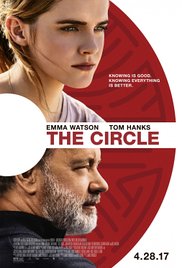
Is there anything sadder than seeing a book you thought was fantastic get totally screwed up by film producers? Worst of all, Dave Eggers, the book’s author, even gets a screenwriting credit here. I hope to God his contribution was a rejected earlier draft, rather than the bland, aimless drivel on display here. It would be too depressing to think he gutted his own work and then mutilated its corpse.

Mae (Emma Watson) is thrilled to land a job at The Circle, an all-powerful, Google-style corporation with a virtual monopoly over the internet. However, she discovers while she works at the Circle that there are (of course!) dark secrets at the heart of the company, and that its charismatic CEO Eamon Bailey (Tom Hanks) may not be all that he seems.

Imagine an adaptation of 1984 at the end of which Winston Smith defeats Big Brother but decides there are positive sides to living under a dictatorship, so carries on doing so. That’s exactly as ballsed-up as this total misreading of Egger’s gripping critique of our internet age. In this terrible adaptation, the novel is neutered beyond recognition into just another bland “Big Corporations Acting All Corporation-y” nonsense. The film is pretty much exactly as awful as the book is brilliant.

Where did it all go so completely and utterly wrong? Did they not understand the book? The novel is not only a critique of the pervasive power of its shady Google-like organisation. It’s also a savage attack on our own tweeting, social media obsessed world – the sort of world where private actions are theft as they rob everyone else from experiencing them vicariously through tweets, photos and posts. It’s this part of the story the film completely (and almost wilfully) misses the point of.

They seem terrified at the thought that the social media Twitteratti might take against the film if it too openly attacks the actual users of systems like this, with their (at times) shallow, demanding and entitled pushing of their own opinions, and intrusions into others’ lives. Instead the film gives a complete pass to all the users of the systems, while attacking the corporation providing them. So we get the bizarre set up of a film that seems to say it’s totally fine for normal people to record everything and push it all onto the internet, turning their world into a judgemental surveillance state, but it’s evil for a corporation to create the devices they use to do it.

Even the film’s criticism of corporations isn’t very clear, largely because we never get a sense of the Circle’s power and its hunger for getting more and more control. The film throws away its involvement in politics and its control over everyday lives. Perhaps because it knows so many of the viewership love gadgets, there is no exploration of the creepy, controlling aspect of the many tracking and recording devices the Circlers wear throughout the film, as there is in the novel. Instead the target is the shady business people at the top (not that we learn anything about what they want) because everyone hates businessmen don’t they? Nice easy target. I can tweet my loathing of them very easily.

It’s a film devoid of any challenge. A character’s suicide from the book is changed to an accidental death. The more vulnerable and desperate of the characters from the book have been deleted. The obsessive self-definition the Circlers gain from what other people tweet about them is downplayed. The ending of the film completely inverts the novel, and leaves us with a bizarre final image of our hero kayaking on the lake, but warmly smiling at the drones watching her, even after she has destroyed the “villains” who run them. It makes no sense whatsoever. My jaw literally dropped when this happened by the way.

Mae is a character who now has no consistency. Her growing obsession with the power of social media – and the destructive effect it has on her actual human relationships – is completely ignored. It’s the key part of her character from the book, and its removed here to try her as traditionally ‘likeable’ as possible. An anti-hero becomes a flat out hero. The film shows the impact of actions she carries out in the book – particularly on Annie – but removes these actions from the film. Why do people slip into depression or depart from the film? Who knows. Left with nothing to work with from the original book, Emma Watson gives a bland and forgettable performance. No one else really makes an impact, playing dull, neutered versions of the characters from the source material, devoid of depth or interest.

The Circle might be one of the worst literary adaptations I’ve ever seen. It guts the original book and removes any of the most challenging and interesting content. It’s terrified of criticising in any way anyone who might be watching. It’s a satire on the social media age that has no satire in it, and is desperate not to talk about social media. Worst of all it will discourage people from reading the original novel. In the words of the modern age: #uttershit.

Dawn of the Planet of the Apes (2014)


Andy Serkis becomes the Ape Caesar in a triumphal marriage of performance and special effects

Director: Matt Reeves

Cast: Andy Serkis (Caesar), Toby Kebbell (Koba), Jason Clarke (Malcolm), Gary Oldman (Dreyfus), Keri Russell (Ellie), Kodi Smit-McPhee (Alexander), Kirk Acevedo (Carver), Judy Greer (Cornelia), Terry Notary (Rocket), Karin Konoval (Maurice)

In 2011, Rise of the Planet of the Apes was another attempt to relaunch the money-spinning ape vs. human franchise. Unlike Tim Burton’s disastrous 2001 effort, it took a stance that felt truly unique. Sure, it still felt the need to reference back to the original film in places, but it was a terrific piece of story-telling. Anticipation was high for this sequel – and it met those expectations.

Ten years after the outbreak of a virus that has decimated the human race, the apes have built their own community in the forests near San Francisco, led by Caesar (Andy Serkis). A human party, led by Malcolm (Jason Clarke), enters the forest looking to restart a hydroelectric dam to supply power to the human’s San Francisco community. As the two communities collide, Caesar and Malcolm must work out a truce, despite the doubts of human leader Dreyfus (Gary Oldman) and Caesar’s lieutenant, former lab-chimp Koba (Toby Kebbell).

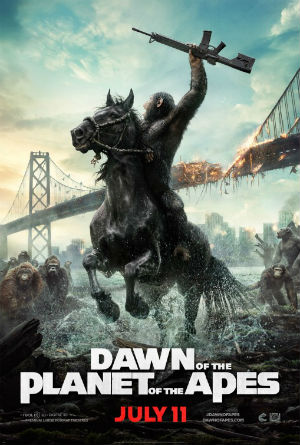
Dawn is an intelligent and visceral piece of film-making, which enrichens the first film in the series, as well as offering a surprisingly deep analysis of human (and ape) nature. Marry this  up with some quite astonishing special effects, and staggering work from the actors creating the apes through motion capture, and you have a hugely rich science fiction film that helps to cement this trilogy as the finest version of the Apes story so far. It’s also damn good fun.

Even more than the first film, Dawn places apes front-and-centre. The film is book-ended with close up shots of Caesar’s eyes, the determination and resolve in them springing from very different causes. The questioning of the nature of humanity revolves around Caesar – the leader balancing the urge to protect his own people against a willingness to support the needs of his people’s only potential threat. Caesar is the most humanitarian character– yet his determination to view other apes as does himself prevents him from seeing Koba’s treachery. It’s his own generosity that is his Achilles heel.

Andy Serkis, the Master of Motion Capture, has mastered this art like few other actors, but his performance as Caesar is his triumph. The degree of emotion he is able to communicate is astounding, while his physicality is extraordinary – it’s a perfect marriage of ape traits and human characteristics. It’s a triumph as well of special effects, but you quickly forget this and embrace the character you are watching. Serkis gives Caesar a deep hinterland of warmth and emotion, a desperation to protect what he has built, touched with a hint of blindness to the reactions his dismissal of Koba’s concerns will have on someone so damaged.

What’s interesting is that, although the film swings heavily in favour of the Apes, it’s the humans who become the victims of aggression, and the humans who are the most open (or desperate) to negotiation and co-operation. A simpler film would have turned Gary Oldman’s Dreyfus into a despotic counterpart to the traumatised Koba. Instead, Dreyfus proves surprisingly open to negotiation, demonstrates great affection for his followers, weeps ecstatically over finally being able to turn his tablet back on and look at photos of his family and only resorts to drastic measures after the human colony seems doomed.

The villain of the piece is Koba (remarkable work from Toby Kebbell). The film, though offering many indicators of Koba’s ruthless lack of regard for any life but his own, gives us reasons (even though these are sometimes stated directly for his feelings and the trauma that lie underneath them. The film doesn’t short change us on Koba’s obvious bravery in battle or his ability to inspire troops. Koba’s inability to adjust his thinking (unlike any other character in the film) leads to the violence. Just as Caesar’s urge to see all apes as meeting his own standards allows violence to grow around him, so Koba’s urge to judge all humans by the standards he has given them leads him to sacrifice countless ape lives in a bloody attack.

These themes of divided loyalty and the damage our own urges (for both good and evil) play out in a cracking storyline, packed to the rafters with action, shot with a confidence and skill by Matt Reeves. Despite being a film that always feels about larger themes, it wears this rather lightly, and offers more than enough popcorn thrills to please any Ape action fan. Koba’s assault on the human stronghold is both grippingly exciting, but also unbearably tense – the film embraces the grim sacrifice and slaughter of war. The final confrontation between Caesar and Koba is shot with a giddying, vertigo-inducing sharpness.

The ape effects are, it goes without saying, extraordinary. These are expressive, living, breathing characters – a brilliant meeting of some wonderful acting and brilliant special effects. Could you imagine a few years ago a film being anchored by a special effect ape played by motion capture? You quickly forget that they are not ‘real’ and accept them as genuine characters. Even more so than Rise, Caesar and the apes are front-of-centre and this is Caesar’s story. Serkis is of course a huge part of this – his influence and dedication to the motion capture and ape portrayal is superb.

Dawn of the Planet of the Apes is a terrific and thought provoking epic film, one that deepens, darkens and enriches the previous film and leaves an audience with not only a lot to consider but also highly thrilled. Unlike the previous film it doesn’t shoe-horn in weak references to earlier films, but concentrates on telling a terrific and character-led story. It’s another terrific entry into a series that feels like it could become one of the great science fiction trilogies.

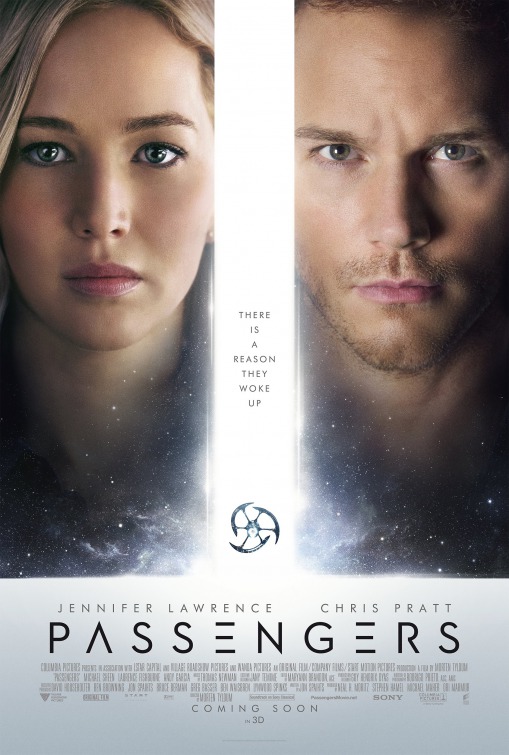
Passengers (2016)


Jennifer Lawrence and Chris Pratt juggle moral dilemmas in the surprisingly dark Passengers

Director: Morten Tyldum

Cast: Jennifer Lawrence (Aurora Lane), Chris Pratt (Jim Preston), Michael Sheen (Arthur), Laurence Fishburne (Gus Mancuso)

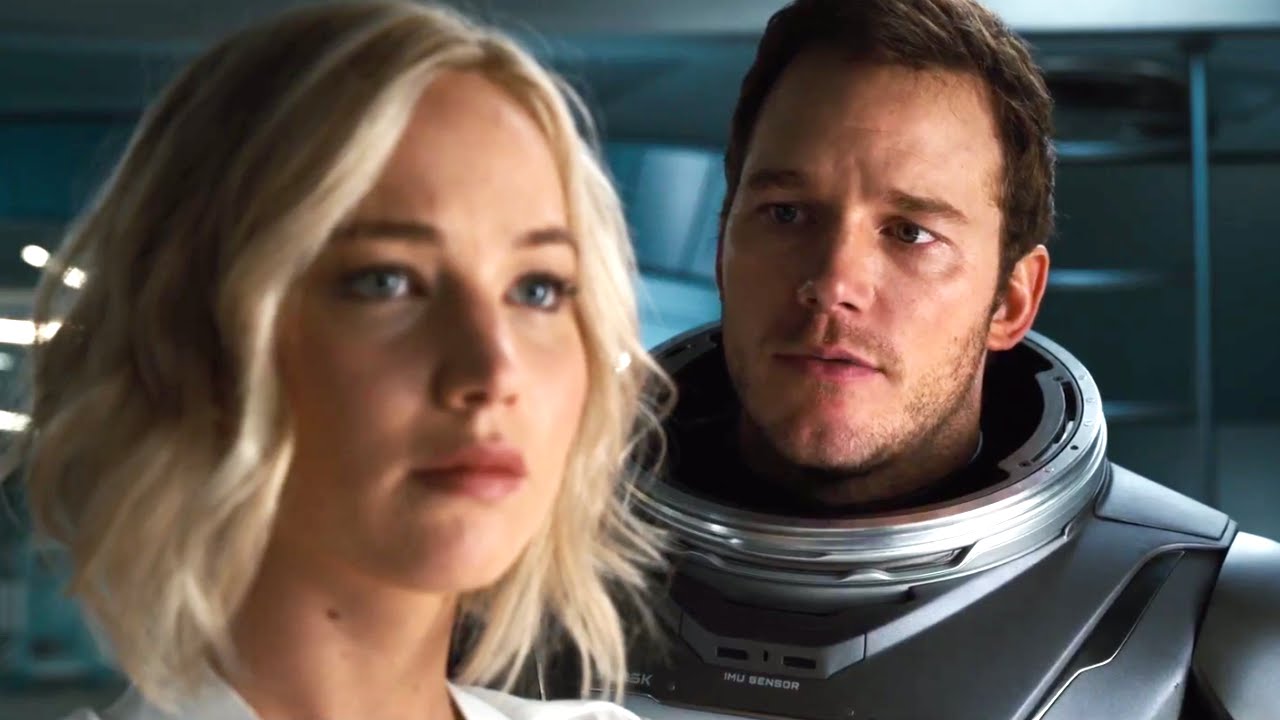
The Avalon is a spaceship carrying over 5,000 passengers and crew to a new planet for resettlement. With the flight due to last 120 years, everyone is in suspended animation. After an accident, passenger Jim Preston (Chris Pratt) is woken 90 years early. Trapped on the ship, unable to return to cyrosleep or change the direction of the ship, and with the round-trip time for messages to Earth being 76 years, Jim faces living the rest of his life alone on a spaceship. After over a year of isolation, with only android bartender Arthur (Michael Sheen) for company, Jim succumbs to temptation and wakes another passenger, Aurora (Jennifer Lawrence), for companionship. They fall in love over time – but how will Aurora react when she finds out the truth?

Passengers was a film that received a negative reaction perhaps because it managed to successfully not spoiler its plot in advance. While the trailer seemed to promise this would combine mystery and romance in a space setting, it’s actually more about the effects of isolation and the moral quandary of relieving your own despair by placing someone else in the same position. While the film is never going to win awards for its exploration of psychosis, it certainly tries to tackle this idea and explain – but not excuse – why Jim takes the decision he does.

A lot of people felt this suggested Aurora effectively falls in love with her kidnapper-cum-stalker, and that Jim’s actions are glossed over. Well I’d argue against this. Firstly, the film never shirks the repercussions of Jim’s decisions – indeed that’s really what the film is about: can you forgive the unforgiveable? A large chunk of the film is a build up to Jim taking a decision he acknowledges is wrong, and feels tremendous guilt and shame about. The later section of the film revolves around the impact of this action coming to light. Discovery of the truth destroys Aurora and Jim’s relationship, and it’s uncertain for much of the rest of the film whether there will ever be any forgiveness for Jim. If the film had shelved the issue, or Jim had been forgiven within minutes of screentime, that would be another question.

Secondly, the film works hard to show the savage psychological impact of complete isolation, and (after a year of this) the dangerous temptation of having a companion a push of a button away. Jim is clearly not in his right mind when he makes his decision – and later when Aurora faces the prospect of similar isolation, she responds with similar despair. If there is a fault with this, it is that the film shies away from defining the time progression explicitly enough – and doesn’t quite have the courage to increase its timeline (imagine if Jim had been alone for 3-5 years rather than one. Imagine if Jim and Aurora had not spoken for 2-3 years rather than one etc. Straightaway, I think the actions in this film could have been more readily understood by people).

Thirdly, these questions of isolation and morality are not as black and white as your casual internet moaner would like. Trapped alone with no human interaction, with literally zero chance of being rescued, is a psychological situation it’s just impossible to comprehend. Expecting people to behave as they would normally is simply unreasonable. Jim and Aurora do not fall in love after the truth comes out – they fall in love well before this (sure Aurora doesn’t know what Jim has done, but her feelings for him are real) – so it becomes a question of forgiving someone you love who, in extraordinary circumstances, has done something they normally would never do.

As such, Passengers is actually the sort of film where it will benefit you to discover more about what the film is going to be about before you go into it (and how often do you hear that?). Because, once you know the sort of film you are going to get, it’s not that bad a film. It’s handling of these moral issues is, I’ll readily admit, not the most effective or thought provoking (and the lack of mention of it before the film’s release, and its slight fudging through the film, suggests the “suits” weren’t happy with it either) but at least this is a film with some ideas behind it. If it had really seized the effect of isolation as its theme, and really explored the moral issues behind Jim’s actions, it might well have avoided much of the criticism. But it does enough to make some of that criticism unfair.

Away from this main plot point, Passengers is an entertaining, high-budget, character piece. Whatever your view of the character, you can’t argue against Pratt’s charisma and wit as a performer and Lawrence is also good. It’s not their best work, but they make the relationship – with all its peaks and troughs – work, and it’s endearing or tense as required. Michael Sheen is also excellent as the humanish-but-not-human-enough android bartender. The design of the ship is imaginative and the film looks gorgeous. The second half of the film delivers a fine series of tense set-ups (even if many of them are echoes of things we have seen before), and Tyldum does well to ensure that the often swiftly changing mood of the film (despair-romance-anger-tension-danger-terror etc.) seems like a smooth progression rather than a jarring one.

Passengers doesn’t have the courage of its convictions to really explore its “Ben Gunn in Space” set-up, and much of the criticism of its plot stems from its not-completely-committed exploration of the effects of isolation. But, if you know what you are going to get, it’s an entertaining film.

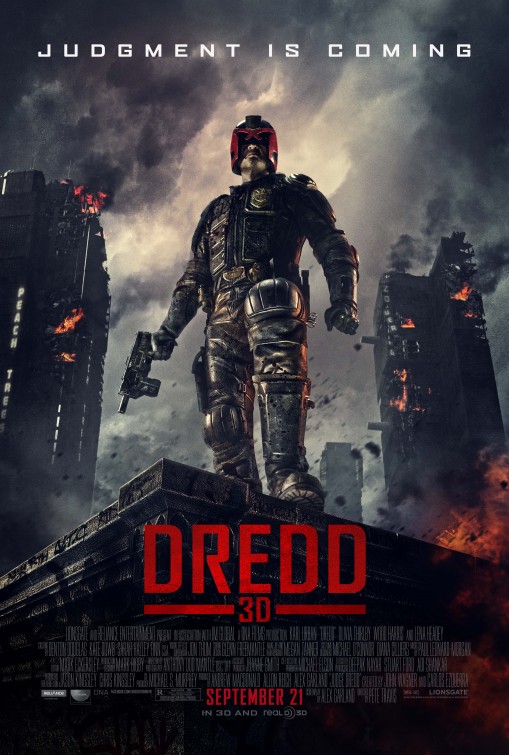
Dredd (2012)


Dredd. He is THE LAW!

Director: Pete Travis

Cast: Karl Urban (Judge Dredd), Olivia Thirlby (Judge Cassandra Anderson), Lena Headey (Ma-Ma), Wood Harris (Kay), Domhnall Gleeson (Computer expert), Warrick Grier (Caleb), Deobia Oparei (TJ), Rakia Ayole (Chief Judge)

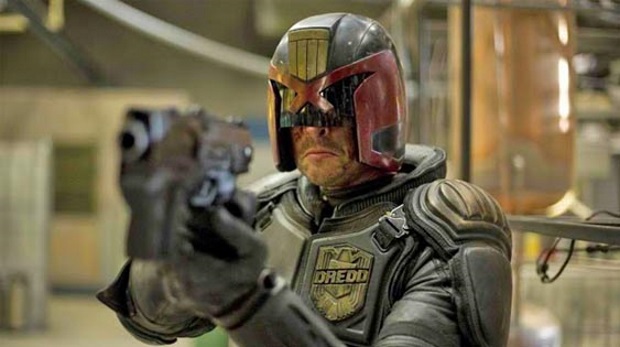
Dredd is the second attempt to bring the brutal post-apocalyptic lawman to the screen, after a disastrous 1990s version starring Sylvester Stallone. Famously, that film gained the undying enmity of the comic book fans by having Dredd remove his signature helmet (and show his face) at every opportunity. Here, Karl Urban dutifully keeps the helmet on at all times.

In a future USA, Mega-City One is a sprawling metropolis of 800 million residents and 17,000 crimes a day. To combat crimes, the Judges are a police force with the powers to sentence and execute criminals on the spot. Judge Dredd (Karl Urban) is the most feared and experienced Judge on their books, a man of rigid rules who sees the world in black and white. Given a new psychic recruit, Anderson (Olivia Thirlby), Dredd makes an arrest at Peach Trees, a 200-storey slum building ruled by brutal crime lord Ma-Ma (Lena Headey). After Dredd and Anderson arrest one of Ma-Ma’s key lieutenants, she locks down the building, isolates the Judges, and demands their execution by the residents.

Dredd is a super violent but entertaining siege movie, with the twist being that the siege involves the heroes being locked in with their opponents – the heroes trying first to get out, then to stop their enemies getting in. Now I know very little at all about the source material, but, unlike the Stallone film, this film succeeds as a Dredd movie by simply treating its events as a “regular episode” rather than a ground-shifting, world-at-stake mega-movie. As such, it can focus on the events that are relevant to the immediate, simple story and loosely sketch out the other elements of the future (enough to keep us interested and to understand the context). It focuses on a fast-paced, exciting story and enough character detail and interest to keep you involved. 

The film is snappily directed by Travis with a decent, stripped down script from Alex Garland, and has a good performance at its centre from Karl Urban, who has the collaborative lack of ego to make Dredd, rather than his own performance, the centre of the story, . Urban also manages to make a character who is an imposing and lethal killing machine into someone we also respect for his adherence to a firm moral code. And he adds enough texture to the part to suggest a certain softening in his attitudes towards Anderson (a very effective Thrilby) across the course of the movie. Headey also makes a great enemy, a sort of Cersei Lannister on heroin and acid, a totally remorseless megalomanic.

The film packs a great deal of punch and its design is very impressive. The Peach Trees setting is an imposing vision of a crap-sack future, while also having a very clear navigation for the deadly game of cat-and-mouse Dredd and Anderson play throughout the film. The film doesn’t have much in the way of wit to it – the source material is apparently more satirical, not something that comes across here to be honest – but it does understand the rigidity and certainty of its lead character and it doesn’t flinch from the dark consequences of its hero’s actions. 

I’m no expert on the original but this is rather a lot of simple, unchallenging fun that manages to swiftly establish characters – through neat writing and good acting – that make sense, are complex and feel very true to the tone of the source material. It’s violent and bloody, and yes it has many beats in it that are slightly predictable or twists on many similar “one man against an army” movies we’ve seen, but it has more than enough merit to be worth your time.

Elysium (2013)


Matt Damon takes aim. He’s wearing as well a mechanical suit that makes him look like a building under construction.

Director: Neill Blomkamp

Cast: Matt Damon (Max Da Costa), Jodie Foster (Defence Secretary Delacourt), Alice Braga (Frey Santiago), Sharlto Copley (Agent Kruger), Diego Luna (Julio), Wagner Moura (Spider), William Fichtner (John Carlyle)

In a dystopian future, the world has become polluted and overpopulated. The rich and privileged live on Elysium, a massive orbital space station with an Earth-like atmosphere where medical equipment can cure anything. The masses on Earth yearn to join Elysium, many resorting to black market routes. Max da Costa (Matt Damon) is an ex-thief who contracts a lethal radiation infection at work. With little choice, he agrees to take part in a dangerous data heist (wearing a suit that enhances his physical abilities) in return for a black market trip to Elysium. But his heist crosses the plans of Elysium’s ambitious Defence Secretary (Jodie Foster) and her ruthless black ops operative Kruger (Sharlto Copley).

The design of this world, as per District 9 (to which this feels almost like a spiritual sequel), is impressive and really captures the visual clash between third world poverty on Earth and the paradise in the sky of Elysium. The sense of a society firmly divided into the haves and have nots is (at first) very well sketched out. There is the potential for a compelling us-against-them narrative ready to burst out, and Damon’s character seems positioned as “our champion” to bring down the system. 

This is actually a really neat concept for a movie. What it’s crying out for, though, is more than the by-the-numbers execution it gets here. I suspect there were struggles between Blomkamp’s interest in putting social issues side-by-side with sci-fi action, and the demands of “the money” to get more Damon Bourne-inspired chaos on the screen. Either way, after the initial set-up the movie goes nowhere in particular. A lot of world establishment is needed here (I’ve just struggled to explain it in one paragraph) and the film doesn’t get the balance right between setting this up and then getting into the story – it’s a good 45 minutes before the story starts and 40 minutes later the film is more or less over. I’ll give it credit that the short runtime does mean it goes nowhere fast, but it’s still a pointless destination.

Anyway, the problem that cuts to the core is you don’t really care about anything. Copley brings charisma to his heavy role, but the character is a formless one who engages in any act of villainy the film needs him to do. Foster’s cold (English accented?) bureaucrat similarly never fully comes to life, despite her best efforts. Braga is a thinly sketched bit of human interest. The film is crammed with decent actors who were obviously attracted to some sort of idea behind the script – it’s just a shame that whatever got them worked up about the material never made it to the screen.

Damon’s character is key to this: he should be someone who finds his feet as the champion of the oppressed, who makes decisions and sacrifices that initially at first seem to be out the scope of his understanding of the world. The script pushes him towards this but it never feels real – we never get to know him (either before or after the event that changes his life) and we never get a sense of him being driven by anything beyond his original narrow aims until the film suddenly calls on him to make a series of huge sacrifices. It just doesn’t feel true: the film doesn’t take us on a journey with him, meaning the end lacks satisfaction. I’ll also mention in passing that, among the poor, downtrodden, entirely-Latino urban classes, the lead is the only white character – and yet he too has a Latino name, which to me suggests a certain level of white-washing for box office.

Instead this is a poorly sketched out bit of faux-thinking sci-fi, that sketches out a dystopia that never really makes any sense (it seems easy to cure the population of the world, but the inhabitants of Elysium never do – surely some sort of reason other than apathy might have added a bit more believability to this? Perhaps if more had been made of the need to depopulate the Earth?). Instead it’s a crapsack world for the sake of it, and the characters move through a series of events that happen but never engage us. 

It’s sad, as this could have been quite a little B-movie classic. Perhaps the best review of the film comes from Blomkamp himself: “I feel like I fucked it up, I feel like ultimately the story is not the right story. I still think the satirical idea of a ring, filled with rich people, hovering above the impoverished Earth, is an awesome idea. I love it so much, I almost want to go back and do it correctly. But I just think the script wasn’t… I just didn’t make a good enough film is ultimately what it is. I feel like I executed all of the stuff that could be executed, like costume and set design and special effects very well. But, ultimately, it was all resting on a somewhat not totally formed skeletal system, so the script just wasn’t there; the story wasn’t fully there.”

Couldn’t put it better myself.