Category: Family drama

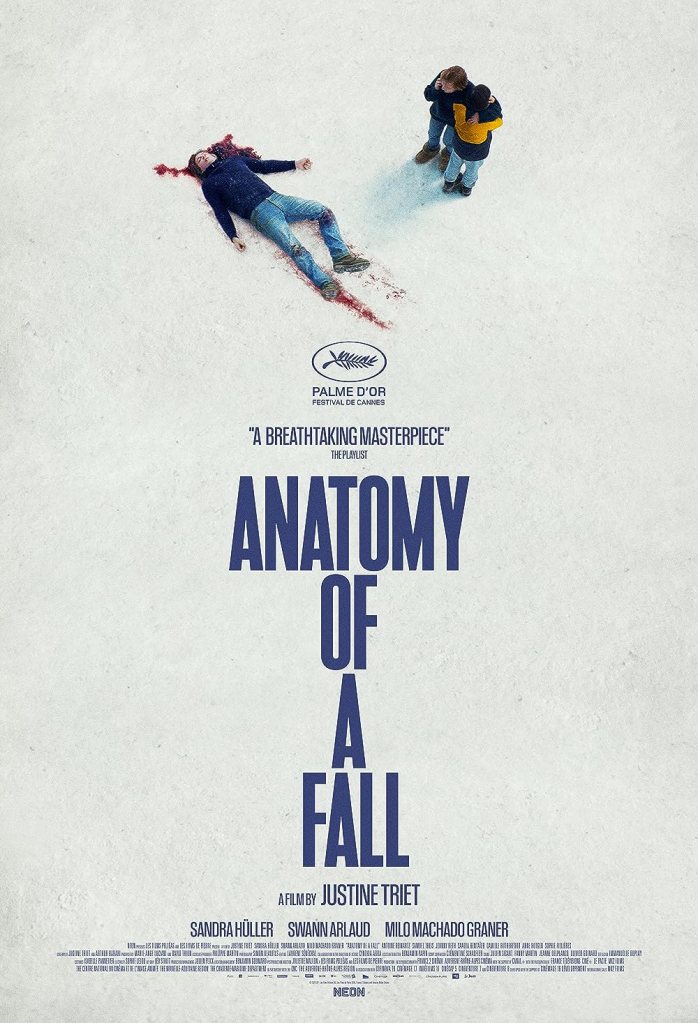
Anatomy of a Fall (2023)

Anatomy of a Fall (2023)

Brilliant courtroom drama, full of enigmatic questions around the nature of truth

Director: Justine Triet

Cast: Sandra Hüller (Sandra Voyter), Swann Arlaud (Vincent Renzi), Milo Machado-Graner (Daniel Maleski), Antoine Reinartz (the Prosecutor), Samuel Theis (Samuel Maleski), Jehnny Beth (Marge Berger), Saadia Bentaieb (Nour), Camille Rutherford (Zoé Solidor), Anne Rotger (the President)

What is a trial? A forum for discovering the truth? Or a theatre where the best story wins? Anatomy of a Fall, Justine Triet’s Palme d’Or winning courtroom drama, explores this and takes its place as one of the finest courtroom films made. Complex, fascinating and compelling, it asks searching questions about the unknowable nature of truth. Presenting only perspectives, recollections and conflicting inferences based on the same handful of facts, it places the viewer in the same position as the jury: ultimately we must choose a version of the truth “we can live with”.

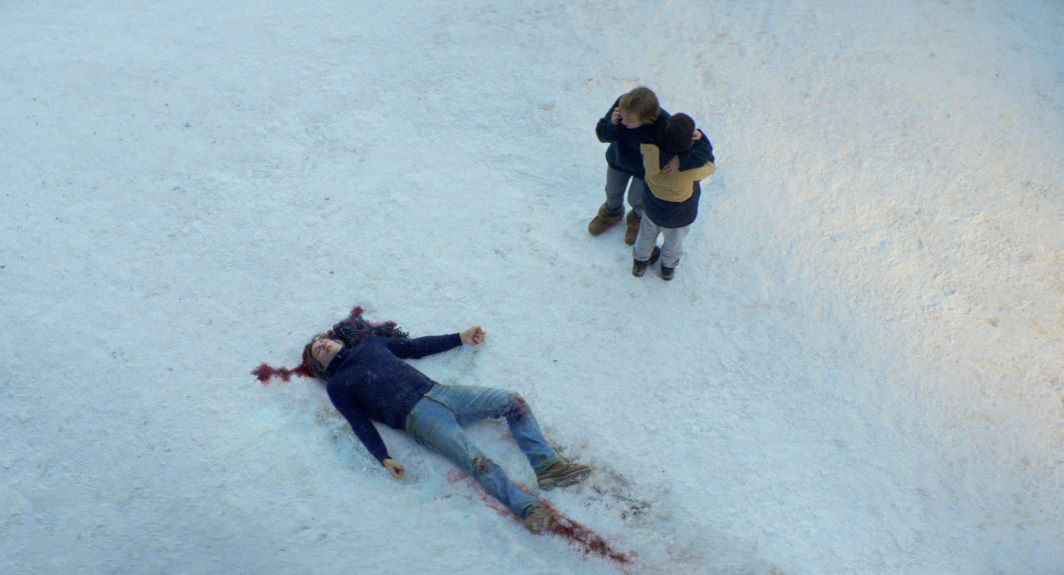
The trial revolves around the death of Samuel Maleski (Samuel Theis), lecturer and amateur house renovator, discovered dead by his son Daniel (Milo Machado-Graner) having fallen from the attic of their Grenoble chalet. Did he fall, jump or was he pushed? Suspicions fall on the only suspect: his wife, famous novelist Sandra Voyter (Sandra Hüller). Sandra’s story doesn’t quite stack up and her assurance that they were in a difficult but loving relationship isn’t supported by the facts. A dramatic court case begins, in which both the prosecutor (Antoine Reinartz) and Sandra’s lawyer, old friend Vincent (Swann Arlaud), lay out compelling, but utterly conflicting versions of Sandra and Samuel’s marriage, with their son Daniel (the only real witness) caught horrifically in the middle.

Anatomy of a Fall only shows us facts that a jury could have. We open no more than an hour before the fateful event, with Sandra’s interview at home with a young student (Camille Rutherford) halted by an unseen Samuel playing an instrumental cover of 50 Cent’s P.I.M.P. at deafening volume. Is his playing of loud music an everyday event (as Sandra says) or a passive aggressive move designed to disrupt the interview of a wife he is jealous of? We don’t know because we never get to see their subsequent confrontation, as we follow Daniel walking his dog, returning find Samuel’s body.

This sets the tone for the superbly uneasy courtroom drama that follows. Throughout, Samuel is literally a ghost. The film finally shows him only when a recording he made of a vicious argument between the couple is played to the courtroom. Triet cuts from the courtroom to a flashback so we can see Sandra and Samuel’s increasingly heated conversation, where he condemns her for selfishly dominating their lives, while she accuses him of a martyr complex and blaming her for his own failures. But the second the recording hits a disputed physical clash we cut back to the courtroom and hear only the sounds themselves and their interpretations from prosecution and defence.

Those interpretations are effectively stories, and Anatomy of a Fall makes it clear a compelling and relatable story is essential. Taking a leaf from Anatomy of a Murder (a clear inspiration), it’s less the facts and more the presentation that is likely to win either conviction or acquittal. Vincent carefully coaches Sandra on her version of events – the loving relationship turned sour by her husband’s depression, bought on by his guilt for the accident that left their son visually impaired – advising her on tone, wording and when to stress certain points and which to avoid. He flatly tells her an accident is something “I don’t believe” and stresses their only chance is to establish Samuel’s suicidal intent. Lawyers aren’t paid to find the truth: they are paid to secure verdicts.

There is an added complexity as Sandra, a German, must conduct the trial in French, her third language, rather than her preferred second language of English. Language is itself a topic of debate in the marriage – her French husband Samuel accuses Sandra of forcing him and French-speaking Daniel to meet on her preferred ground of English, rather than improve her French. She counters that English makes them all equal, speaking a second language. In the trial, Sandra struggles to articulate her points, floundering for precise words. Eventually the pressures of the trial force her to revert to English, which is then translated for the rest of the court.

Superbly played by Sandra Hüller, Sandra is an assured professional, struggling to understand how she has ended up in this position. She can be distant and doesn’t suffer fools gladly. Unspoken as it is, it’s clear for police and prosecution she doesn’t fit their profile of a grieving widow. Every beat of Hüller’s performance is brilliantly open to interpretation: is she anxious about the pressure on her son, or scared about what he might say? Is she filled with stoic regret or did she never care for her husband? Even when she switches to English in the court, is this a result of pressure or because it is easier for her to elaborate a story in this language?

The truth is increasingly sidelined. We see no reconstruction of the possible crime, only two (both convincing) versions of it presented with models and computer graphics that outline first a murder then a suicide, both plausibly explaining how a suspicious blood splatter appeared on a shed. A psychiatrist arguing passionately for Samuel’s clear-headedness and determination to live, is blamed by Sandra for getting him hooked on anti-depressants. Sandra’s novels are dragged into the trial (on the excuse that she has talked extensively about their autobiographical content) – was her use of Samuel’s idea from his abandoned novel theft or agreement? We can never be sure.

This struggle for the best story has an increasingly damaging impact on their son Daniel. Beautifully played by Milo Machado-Graner, Daniel is a quiet, sensitive, precocious young boy, whose accidental visual impairment becomes crucial. Certain at first of what he saw and heard, we see his certainty crumble during police-escorted reconstructions at the scene (the loud music making what he claimed he heard from where, impossible). On the stand he tries to reconcile his love for both his parents with knowledge of their arguments. At home with his mother, he becomes increasingly withdrawn and closer to his court-appointed guardian Marge (a superbly conflicted Jehnny Beth).

It is Marge who gives voice to, perhaps, Anatomy of a Fall’s central message. The truth is, in the end, the story we choose to believe, the one we can live with. Anatomy of a Fall presents us with multiple choices but no definitive answers. It is up to us to listen to the evidence and decide on Sandra’s guilt or innocence. Triet’s superb film throws in a final additional mystery with a late piece of evidence that is even more open to interpretation than anything else, a story that could be argued as a late realisation or an elaborate lie. We even see Samuel again, as the witness recounts words they claim he said, but this time we just see him lip synching to the audio of the witness’ testimony – are words literally being put into his mouth? The truth is what we make of it, and as subjective as any story.

Anatomy of a Fall is a brilliant courtroom drama and a scintillatingly human story with a superbly enigmatic performance from Sandra Hüller at its heart. Triet and Arthur Harari’s script is sharp and marvellously balances objective and subjective facts. Triet directs with a tight, pacey assurance, with a striking series of final images that remain open to viewer interpretation as to who is protecting whom and why. Fascinating, compelling and open to endless reconsideration and reinterpretation, Anatomy of a Fall can take its place as one of the definitive courtroom dramas on film.

Sansho the Bailiff (1954)

Sansho the Bailiff (1954)

Mizoguchi’s masterpiece, a stirring, humane fable tinged with the tragedy of the real world

Director: Kenji Mizoguchi

Cast: Kinuyo Tanaka (Tamaki), Kyōko Kagawa (Anju), Eitarō Shindō (Sanshō the bailiff), Yoshiaki Hanayagi (Zushiō), Ichirō Sugai (Minister of Justice Niō), Ken Mitsuda (Fujiwara no Morozane), Masahiko Tsugawa (Zushiō as a Boy), Masao Shimizu (Taira no Masauji), Chieko Naniwa (Ubatake), Kikue Mori (Priestess), Akitake Kōno (Tarō), Ryōsuke Kagawa (Donmyō Ritsushi)

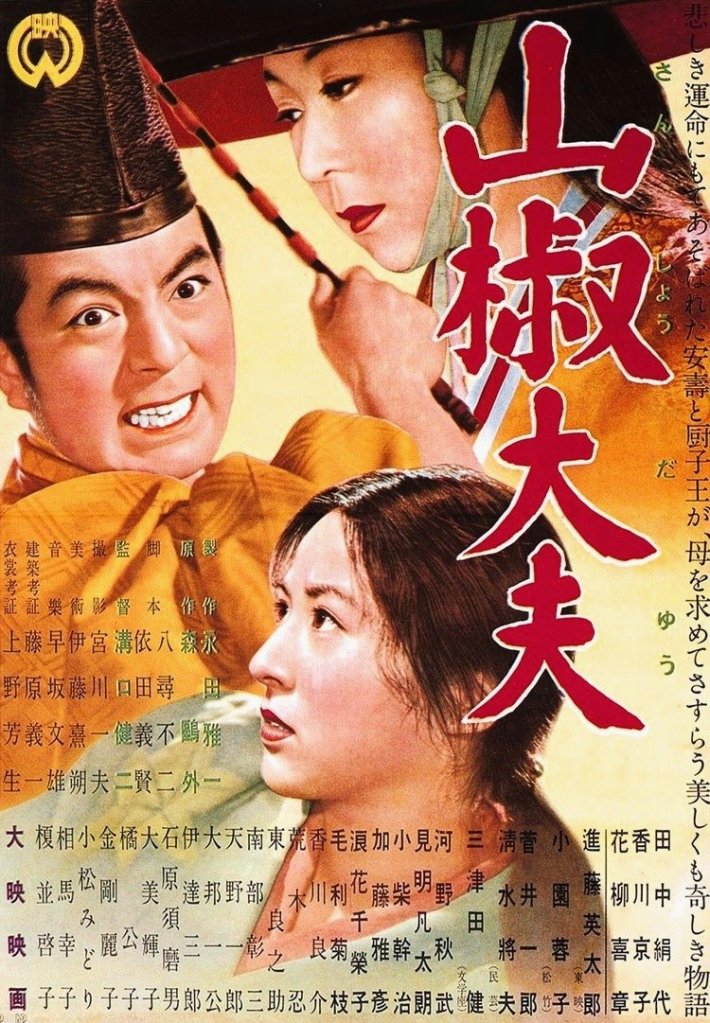
You could imagine the lead characters of Sansho the Bailiff as Hansel and Gretel. There is a fairy tale quality to Sansho the Bailiff, combined beautifully by Mizoguchi with a throbbing humanism. Imagine a fairy tale named after The Wicked Witch of the Gingerbread House then spliced with the trauma of captivity. Mizoguchi’s film is a gorgeous, deeply moving and heartbreaking fable, that yearns for us to hold to our inner goodness but shows the terrible struggle to sustain this in a cruel world and the terrible costs we go through for glimmers of hope.

Based on an old Japanese folktale, an eleventh century feudal official is unjustly dispatched into exile. He leaves his family with a mantra: “without mercy, man is a beast. Even if you are hard on yourself, be merciful to others.” A few years later, while travelling, his wife Tamaki (Kinuyo Tanaka) and children are tricked and sold into slavery. Tamaki becomes a prostitute on the island of Sado, her children slaves on the estate of the brutal Sansho (Eitarō Shindō). As young adults, the son Zushiō (Yoshiaki Hanayagi) has buried his humanity as a cruel overseer but his sister Anju (Kyōko Kagawa) still clings to hope and her father’s principles. Can Zushiō’s principles be reborn, despite the brutality of their surroundings?

Mizoguchi’s film is a masterpiece on man’s capability to inflict suffering and cruelty, most particularly on women. Although full of qualities of a classic folk tale, Sansho the Bailiff is grimly realistic and unflinching about the suffering that slavery can inflict and remarkably unblinking in the human cost escaping from such a world can be. There are no fairy tale endings in Sansho, no clear victories, no satisfying conclusions. For every flash of hope, there is the grim realisation of the cost others have paid to achieve it. In particular, women carry an appalling burden of sacrifice.

The family is cruelly invaded in Sansho suffering a double separation – first the other members from the father, then the wrenching separation of mother from children. Shot throughout with a calmly controlled focus by Mizoguchi, with long takes combined with carefully controlled angles that frequently give a terrible distance to events, making the viewer feel powerless to prevent them. Tamika – played with extraordinary humanity and depth of emotion by Kinuyo Tanaka – suddenly understands what is happening and responds with a desperate struggle (which sees her faithful servant unceremoniously dumped off a boat to drown) while her children struggle hopelessly on land. Superbly subtle editing and framing that stresses distance (placing mother and children at opposing ends of the frame in alternate shots) only add to the sense of a family being torn apart.

This is as nothing to the grim world of Sansho’s estate. Slaves who do not work are beaten. The children are thrown into a shack and bluntly told to work or die. Anyone attempting to escape the estate is brutally branded. Old retainers at the end of their working life are expelled to die in the hills. Even Sansho’s son Tarō (Akitake Kōno) can’t bear life on the estate, refusing to brand recaptured slaves (much to the contempt of his father) and leaving for a life as a priest. Mizoguchi wants to show us a world where humanity has no concern for its brothers and sisters. Later we will see no one in power really gives a damn about the morality of estates like Sansho.

In this environment, the son gives up and makes the sacrifices he needs to survive. He becomes dead-inside, forgetting his father’s words and killing his humanity, the man Tarō refused to be. He will brand a recaptured slave (an old man who welcomed him on his arrival years ago) without a second glance. Yoshiaki Hanayagi’s eyes are dead, his spirit a curled animal which has forgotten itself. It’s his sister Anju, beautifully played with sensitivity and hope by Kyōko Kagawa, who clings to their past life and the belief that they can return to it.

To make that return, it’s Anju who will make terrible sacrifices. Sansho the Bailiff is awash with the cost of the world’s cruelty and lack of humanity on women. Tamika is torn from her children, her faithful servant drowned. On Sado, Tamika’s desperate attempt to escape and find her children sees her dragged back to the brothel and hamstrung to prevent her trying again. The dream of seeing her children again – captured in a beautiful sequence as she hobbles to the top of a cliff and sings notes of her sad song of longing for her children – becomes almost a curse, a continual beating on a bruise that will never heal, a longing others will taunt her with.

Memory lies through Sansho the Bailiff like a golden thread. Moments of quiet nature remind Tamika of her husband. His words will be constantly repeated by his family, the last-remaining link to an old life and principles that feel impossible to sustain in their new one. To close your mind to memory and the past, as Zushiō does, is to kill part of yourself. Tamika’s song of yearning is a new memory link. These memory links are strong – they have to be to try and sustain us.

And the words of her song travel. A new slave in the estate speaks of the sad song, to Anju’s delight – finally contact of a sort with her mother. In a moment of magical spiritualism, the words Tamika sang on the cliff seems to travel across the wind to be heard by her children at their lowest point. Zushiō in particular seems to wake from a deep sleep, and suddenly finds the humanity he had so brutally repressed. Mizoguchi shoots these moments with the same affecting simplicity – but it’s that carefully composed, painterly minimalism that gives them such huge power.

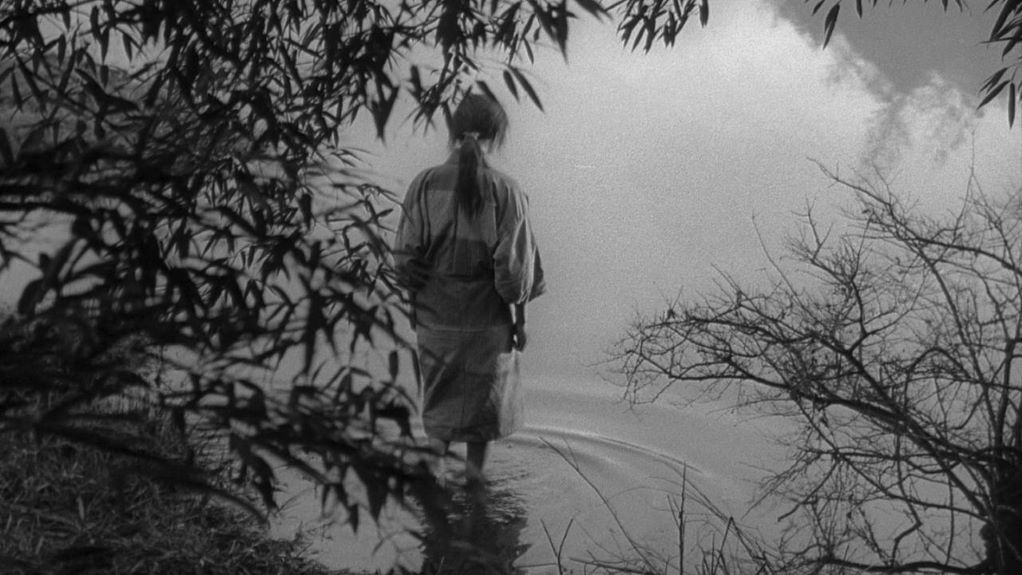
This powerful minimalism is nowhere more effective than Anju’s supreme sacrifice (the fate of women in Mizoguchi’s world). Giving Zushiō the chance to escape, Anju becomes aware that torture for knowledge of where her brother went is inevitable. With serene certainty she walks into the river to drown herself, moving with a sense of freedom she has not known for years. In a single shot we see her walk until Mizoguchi cuts away then back to show bubbles calmly rising to the surface of the water. It is an act of love, stunningly simple and hugely moving – and apiece of a world where freedom and any trace of goodness can only come about through irreversible sacrifices.

Like a folk tale Zushiō is restored to his father’s office, but finds he can make few changes. Slavery is abolished at Sansho’s estate – but the system cannot really be changed. The slaves know this to – they take their chance to sack the estate, aware that fortune’s wheel could return them once again to servitude. Sansho learns nothing from the events, and the suspicion is the next governor will pardon him (after all he brings more revenue in than anyone else). Sansho is the real world and he is inescapable – so much so he even owns the name of a film in which he is a minor player.

It builds towards the final conclusion on a windswept beach, perhaps one of the most heart-rending moments on film. In a Western film, this would be a scene of joyful reconciliation in which two damaged people heal through sharing grief. Mizoguchi had lived through the horrors of war and knew this would have been a lie. Reuniting doesn’t wash away the pain or heal the wounds – physical or spiritual – and doesn’t change the world. It’s just two people on a beach, clawing towards a moment of peace in a difficult world.

Sansho the Bailiff is clear-eyed and realistic about a world where people hurt each other and care nothing. Told with a classic, artistic simplicity, it is both a deeply moving and deeply spiritual piece, a great humanistic artist making his ultimate statement on the nature of the world. An essential film.

Apu Sansar (1959)

Apu Sansar (1959)

Satyajit Ray’s trilogy comes to close with another masterfully done small-scale story of hope and loss

Director: Satyajit Ray

Cast: Soumitra Chatterjee (Apu), Sharmila Tagore (Aparna), Alok Chakraborty (Kajal), Swapan Mukherjee (Pulu), Dhiresh Majumdar (Sasinarayan), Sefalika Devi (Sasinarayan’s wife), Dhiren Ghosh (Landlord), Tusar Banerjee (Bridegroom), Abhijit Chatterjee (Murari)

As he stands, consumed with despair, watching a train rush perilously close to him, does Apu (Soumitra Chatterjee) remember when he ran with excitement after the trains as a boy? Apu Sansar, the conclusion of Ray’s breathtakingly humanist trilogy, concludes another cycle in Apu’s life; one touched, as with the previous ones, with loss, tragedy and a dream of hope. Beautifully filmed, simple but deeply affecting, it’s a breath-taking culmination of this masterful trilogy.

Apu (Soumitra Chatterjee) is now a young man longing for a career as a writer in Calcutta. Attending the marriage of his friend Pulu’s (Swapan Mukherjee) cousin Aparna (Sharmila Tagore), he finds himself surprisingly roped into the role of groom to take the place of the unsuitable intended (as part of Hindu tradition to prevent the risk of Aparna never marrying). Returning with Aparna to Calcutta – and a life of poverty she is unused to – their romance flourishes into a happy marriage, until tragedy strikes leading to Apu tumbling into years of drift and depression.

Apu should be used to tragedy by this point. In Ray’s series, death has always raised its deadly force in his life. In Pather Panchali his beloved sister passed away from sudden illness. In Aparajito the death of his mother leaves Apu stricken with guilt and grief. It’s natural that Ray’s subtle trilogy continues to look at how closely tragedy and sadness dog hope and contentment. Tragedy this time strikes Apu out of the blue, a searing, raw pain that Ray conveys to us almost entirely through a series of still, tender shots of Soumitra Chatterjee’s face as Apu’s world falls apart around him.

Ray’s film, with its beautiful observational style and low-key camera work (and use, at several points, of low angles) reminded me sharply on this viewing of Yasujirō Ozu. Apu Sansar follows in Ozu’s footsteps in its careful, focused study of the lives of ordinary people and how whole worlds of love, hurt and joy can be contained within small rooms. Unlike Pather Panchali or Aparajito, there are few shots of the widening countryside or the scale of the cities. Instead, Apu’s world seems smaller and more intimate, its focus on his apartment and a few other locations, site of momentous events that will shape his life.

Marriage is at the heart of that. His relationship with Aparna has an inauspicious start, Apu roped in as a husband due to the mental incapacity of Aparna’s intended. (There are hints that the possibility of a replacement husband being expected lie behind the last minute, out-of-the-blue invite Apu receives from his friend Pulu which, if true, does add a slightly more manipulative quality to his amiable college friend). The two of them don’t know each other and have little or no idea if they even have anything in common. Their first night together is one of slightly awkward, exploratory talking and it leaves the viewer wondering if common ground can be found.

But Ray sketches out the development of this relationship into something strong, living and (eventually) heartbreaking with a mastery of little touches and his skill with montage and transition. Aparna is at first thrown by the poverty of Apu’s life in Calcutta (similarly to the Dickensian nature of Aparajito he lives in a rain-soaked apartment on a month-to-month basis). But she sets to work to turn this place into a home and soon little touches abound that denote their growing closeness. A cigarette pack hidden under Apu’s bed that Aparna has written a message in, pleading him to smoke only after meals. Late night conversations – which involve a brilliant Ray cut as the camera zooms into the fan between them and out again as a transition finds them sitting again opposite each other on a different night. The pleasure Apu takes in buying her the smallest gifts and the pride Aparna has in turning his home into something cleaner and more decent.

The future seems bright for them. In Ray’s trilogy the future and the march of time and civilisation has often been represented by trains. This theme continues masterfully in Apu Sansar, however this time with the train taking on a more sinister, dangerous presence. Apu’s apartment overlooks a major railway junction his home frequently invaded by the sounds of the train and an onslaught of smoke from the engines. Rather than offering tempting possibilities, this increasingly feels like an intrusion, an outside force intruding into the haven that Apu and Aparna are trying to create.

This sense of invasive menace is captured exquisitely in a beautiful but haunting shot as Apu stands on his balcony – the train sounds build and then smoke from the engines pours across the balcony and seems to envelop Apu. His home can be a place of wonder and beauty, but its harmony is always under siege from transportation that, like time, relentlessly moves forwards. It’s the train that will carry Aparna away from Apu, back into the countryside for her fateful lying in before giving birth. It’s a gift of a toy train – a chance at a future together – that Apu’s son will throw in his face five years later. It’s the same train, that dangerous future finally left behind, that Aparna’s father will clutch to him as Apu heads into a more hopeful future. Throughout trains intrude, threaten and signal danger and separation for Apu.

Soumitra Chatterjee is excellent as this young man who has seen so much, learned so many things, but also seems destined to repeat the mistakes of the past. Like his father he is a dreamer, planning a loosely autobiographical novel and beginning to exhibit the same Micawber-like expectations that something will turn-up. Perhaps over time, without tragedy, Aparna might have become his mother, beaten down with the burdens of being the sensible rock for a flighty man unable to settle.

Perhaps tragedy is what is needed for Apu – Apu Sansar is notable for its lack of romanticism for poetic longings and its favouring of embracing actual responsibilities. There are few other films where the destruction of a nascent novel could be met with such bitter-sweet acceptance. Certainly, no Western films, where the dream of having it all is baked in. The Apu Trilogy is partially about accepting things as they are and taking on your responsibilities: dreams and self-focused desires have no place in that. After all the trilogies hero, perhaps even more so than Apu, is his mother Sabarjaya who gave everything to give Apu opportunities.

Apu finally accepts his place in this cycle after years of denial and grief by seeking to build a relationship with a son he has never met. Ray charts this slow thawing between strangers with a delicacy and emotional force striking in its simplicity. It’s really striking to me how each film in this trilogy is slightly shorter than the one before, as Ray mastered that less really can be more with every frame: that sometimes the emotional force of a single glance can be greater than that of a tracking shot. Apu Sansar is a film brimming with confidence, from a director who has mastered his aim and subject. A heart-breaking, but also heart-warming, conclusion to a great trilogy.

The Lesson (2023)

The Lesson (2023)

Sinister family mystery, full of good moments that don’t come together into something that really works

Director: Alice Troughton

Cast: Daryl McCormack (Liam Sommers), Richard E. Grant (JM Sinclair), Julie Delpy (Hélène Sinclair), Stephen McMillan (Bertie Sinclair), Crispin Letts (Ellis)

Liam Sommers (Daryl McCormack) strides onstage for an interview about his literary debut, that has set the world alight. How did he get the inspiration to write about a domineering patriarch in a rich country house? Flashback to Liam’s summer spent as an English tutor to Bertie (Stephen McMillan), who is trying to get into Oxford to impress his domineering father JM Sinclair (Richard E Grant), Britain’s leading literary novelist. The Sinclair household bubbles with suppressed grief over the accidental drowning of JM and Hélène’s (Julie Delpy) older son Archie in their private lake. As Sinclair puts the finishing touches to his new novel – and ropes in Liam to help him as “final lap amanuensis”, what secrets will Liam uncover about this family?

The Lesson revolves heavily around its oft-repeated pithy mantra from JM Sinclair – “Great writers steal”. So often is this repeated, that it drains much of what little surprise there might be about the true origins of JM Sinclair’s latest tome. It’s a fitting mantra from the film that feels like a mood piece, assembled from little touches of other filmmakers (Kubrick for starters), reassembled into something just a little too pleased with its reveals and secrets-within-secrets structure, but is well enough made that you are willing to cut it some slack.

Effectively all filmed in a single location, the Sinclair’s luscious house (a mix of the modern and the classical) set amongst rich private grounds, it’s well directed by Alice Troughton, who makes effective use of angles and transitions (particularly its cuts back and forth between the working practices of Sinclair and would-be novelist Liam, which subtly stress both their similarities and differences) to enhance mood and an air of unknowable menace. The camera drifts with a chilling intimacy across the fateful lake, giving it a sense of ominous power and mystery.

The film is at its strongest in its opening sections (like Sinclair’s novel, it is divided into three parts with short prologues and epilogues). Within a self-contained theatrical space, tensions and resentments between the family are carefully but not pointedly outlined. The father who switches between indifference, annoyance and gregarious enthusiasm. The mother who feels like both a dutiful supporter and a resentful slave. The prickly, difficult son scared of affection, who attempts (unsuccessfully) to ape his father’s authoritarianism, but is crying out to be hugged. Troughton skilfully cuts between these characters, frequently positioning them at opposing sides of the frame, setting them at visual odds with each other.

In the middle of this, Liam becomes an out-of-place, equally unreadable presence. Very well played by Daryl McCormack, full bluntness mixed with inscrutability, Liam is impossible to categorise and totally outside the upper-class formality of the Sinclair home (with its servants, home fine-dining accompanied with classical music and casually displayed artwork). He’s Irish, working-class, Black and sexually ambiguous. But he’s also hard for us to read: is his admiration for Sinclair something that could tip into resentful violence? Does he really like Bertie, or does he see him as a tedious, brattish child? As the prologue sets up, is he an innocent or a destructive, vampiric presence?

These beats are neatly set up in The Lesson’s opening parts, added to by the presence of a Pinteresque butler (a fiercely polite Crispin Letts) whose status and loyalties prove equally hard to read. Liam’s slowly becomes an intimate figure in the house, moving from a servant occasionally allowed to dine with the family, to Sinclair’s IT consultant, proof-reader and one-sided sounding-board for conversations about his novel, becoming an object of sexual fascination for Bertie and Hélène and given the late Archie’s clothes to wear (adding an Oedipal frisson to his flirtation with Hélène).

Ambiguity however slowly gives way as The Lesson continues, as it fails to weave its initial jarring mood into a reveal that feels truly satisfying, logical or surprising. This effect is magnified by the fact the more time we spend with Sinclair, the more it’s made clear he is less complex than we think, but simply an egotistical monster. Richard E Grant has huge fun with this larger-than-life braggart, a man so competitive that he feels compelled to aggressively slap down Liam’s draft novel as “airport trash” and smilingly telling him he has “done him a favour” by encouraging him not to write. But Sinclair’s monstrous, bullying self-importance sign-posts a little too clearly where the plot is heading.

The final reveal that we have been witnessing a secret plot unfold in front of us feels like a flawed attempt to add a narrative coherence to a series of events that would be impossible to pre-plan. This also relies on chance events and skills (events hinge on Liam’s near-photographic memory). The final ‘answer’ is also too clearly sign-posted from the opening, leaving you expecting a rug-pull that never comes.

The Lesson has a good sense of atmosphere in its opening half and some strong performances – Julie Delpy is very effectively unreadable as the enigmatic Hélène – but for all its sharp direction, its plot is too weak to be truly rewarding on a first viewing or give you a reason to want to return for a second lesson. Despite some good scenes, a bravura Grant and a subtle McCormack, the resolution of its quiet atmosphere of tension and inscrutability doesn’t quite ring true.

The Silence (1963)

The Silence (1963)

Bergman’s third film in his “faith” trilogy, is an intriguing Sartresque puzzle

Director: Ingmar Bergman

Cast: Ingrid Thulin (Ester), Gunnel Lindblom (Anna), Jörgen Lindström (Johan), Birger Malmstein (Waiter), Håkan Jahnberg (Hotel porter)

Two sisters, Esther (Ingrid Thulin) and Anna (Gunnel Lindblom), mother to ten-year-old Johan (Jörgen Lindström), are travelling home on a train through Europe. Ester, a translator, is already ill and her health takes a sharp downturn, leading to the group being forced to rest in a hotel in a town called Timoka, in an unnamed (fictional) European country. Anna resents what she sees as the judgemental expectations of her older sister and sees her obligation to care for her as a burden. Over a few days in the hotel, the two sisters move awkwardly around each other, avoiding addressing their problems while struggling in a country where neither of them speak the language.

The Silence was the third, and final, film in Bergman’s loose thematic trilogy on the absence of God in the modern world. It’s also possibly his most bleak and Sartre influenced work so far, a film of oppressive silence (devoid of music, the only noises coming from objects in the rooms of the hotel) with events occurring in a disturbing, slightly surreal world, where the normal rules of human interaction seem to be hold. Perhaps that’s because the characters move, like ghosts, through a world where they have no ability to communicate other than stumbled words and hand gestures, residing in a hotel where there seems to be no timescale on how long they are (or have been) there.

It also feels like an entrée to Persona, Bergman’s next major work. Like that, The Silence revolves around a symbiotic relationship between two women, who together seem to form two halves of one personality. Esther is intellectual, reserved but also vulnerable and adrift, dependent on others for help and frequently resorting to drink to dull her pain. Anna is more earthy, sensual but insecure, resentful and feels judged by others, finding temporary peace in casual sexual encounters. Both sisters are locked in a relationship that feels both disconnected and mutually dependent, constantly clashing with each other but living in worlds defined by their feelings for the other.

They are played majestically by two performers at the height of their powers. Thulin seems cold but conveys great depths of pain and suffering beneath what seems like her confidence and assurance. Thulin’s expressive face communicates great emotional turmoil, even with only the slightest movements and gestures. It’s a beautifully delivered performance of a woman who is unknowable, distant, difficult but also highly sympathetic. Lindblom’s physical assurance is counter-balanced by the great uncertainty she manages to communicate in every beat of Anna’s life. Her general demeanour of icy chill, interrupted with emotional breakdowns which alternate rage with tears and hysterical laughter, is faultlessly delivered.

These two characters increasingly feel trapped inside a world where they can’t easily communicate, with the threat of turmoil constantly rumbling on the margins. This unnamed country teeters on the edge of war – tanks and other military equipment make constant intrusions on the streets and the train tracks and the rumble of planes can be heard in the air. They are also rendered increasingly mute and isolated by their inability to speak the language. Communication with people around them is impossible and understanding is only fractured.

This is where Bergman’s views on God slowly take their form. For, as he observed in other films in the trilogy, what is this world but one where we strain in vain for the voice of God? Isn’t that like being adrift in a country where the language is unknown? And if, as Bergman so heartily expresses elsewhere, God is love what does it mean that this film revolves around character who have such negative to indifferent opinions on others. Ester may love – as she argues – Anna, but Anna has interpreted this love as smothering and oppressive her whole life and rejects Anna utterly. Anna seems disinterested in her son Johan (who Ester yearns to be closer to, but can never quite find the way to close the gap) and impatient with her sister. Not only are the characters trapped in a world of silence, they are also trapped in circles of loveless relationships.

It’s striking then that this was Bergman’s most sexual film so far. Bizarrely – for a film as austere, glum and challenging as The Silence – it was a box-office hit. This was, in large part, connected to its comfort with sex scenes. Anna watches a couple sat next to her having passionate (and beautifully lit) sex in an opera house, before engaging in wordless (of course) intercourse with a waiter (Anna even mentions the benefits of the man not understanding a word she says). The more frustrated Ester masturbates alone – no coincidence that she later speaks of her disgust with the sexual act and its bodily fluids. This is a film without love but with a lot of base, meaningless, carnal love in it – all part of a Godless world leaning into its nihilistic close.

The Silence is extraordinary in its filmic confidence. It’s exquisitely shot by Sven Nykvist, his camera (far more mobile than almost any time before in Bergman) tracks down corridors and through rooms of its luxurious but chillingly empty hotel (you can see The Silence’s influence on Kubrick’s The Shining). It uses light, shade and shadow in strikingly meaningful ways, arcs of light suggesting a host of underlying emotions and unspoken longings.

The Silence is a film that invites analysis and theorising, partially because its characters speak in such gnomic, Bergmanesque mysteries. Some have theorised Johan is in fact Ester’s child, raised begrudgingly by Anna, now longed for by his real mother at her end. Some have suggested Ester and Anna are such contrasting sides they may in fact be the same person (traces of Lynch’s Mulholland Drive) others see an incestuous longing in Ester for her sister. Bergman increases the unknowing mystery by presenting much of the film from the perspective of the precocious (not many children read Turgenov) but innocent Johan, a child who sees but cannot interrogate the actions around him.

It makes The Silence feel like a bridge from one era of Bergman to the next. The last hurrah of his spiritual study, before a series of films that would explore the interconnected lives of women whose desires, needs and dependencies motivate and merge into each other. That makes it a fascinating and vital milestone in Bergman’s development – as well as another extraordinary, haunting and fascinating work from a great director.

Shine (1996)

Shine (1996)

Middle-brow and safe biography that takes easy choices and makes reassuring points

Director: Scott Hicks

Cast: Geoffrey Rush (David Helfgott), Armin Mueller-Stahl (Peter Helfgott), Noah Taylor (Young David Helfgott), Lynn Redgrave (Gillian), Googie Withers (Katherine Susannah Prichard), John Gielgud (Sir Cecil Parkes), Sonia Todd (Sylvia), Nicholas Bell (Mr Rosen), Alex Rafalowicz (Child David Helfgott)

A hugely talented pianist, David Helfgott (played by Noah Taylor then Geoffrey Rush) trained at the Royal College of Music in the late 1960s but developed schizoaffective disorder, a condition that stalled any music career. What happened next is debated, but according to Shine years of mental institutes and sheltered housing eventually led to rediscovery and a life turned round by marriage to Gillian (Lynn Redgrave). This provided a happy home to Helfgott, who had grown up under the domineering hand of his father Peter (Armin Mueller-Stahl), a Polish-Australian who had narrowly escaped the Holocaust and disowned his son after he travelled, against his wishes, to Britain.

Shine repackages Helfgott’s life into a crowd-pleasing triumph-against-adversity biopic which plays fast and loose with facts. Shine makes no mention of Helfgott’s first marriage, it’s portrayal of his father as a misguided tyrant has been disputed by other members of Helfgott’s family and the level of estrangement Helfgott had from his family (his brother claimed David continued to live with the Helfgott family after his return) has been strongly disputed. Shine smooths off all rough edges and emphasises dramatic potential in others to create its stereotypical heart-warming tale.

What it also does is turn Helfgott’s life into a middle-of-the-road biopic, a highly convention film full of expected arcs (struggle, triumph, collapse, triumphant return) and directed with a middlebrow assurance by Hicks. It’s a film that flatters to deceive, offering only cursory insight into its subject and ends with a sentimental scene in which we are all-but-invited to join the characters in a standing ovation for a Helfgott comeback performance (which the film doesn’t even show us).

Shine has almost no interest in Helfgott’s illness, what bought it on, how it developed or what he and those around him did to help him function in society (his marriage to Gillian gets barely ten minutes of the film’s runtime). It has very little interest or insight into music – other than Rachmaninov being ‘very hard to play’ and some guff about finding the heart behind the notes which sounds full of import because anything said by John Gielgud sounds important. It takes a fascinatingly conflicted character like Peter Helfgott and bends over backwards to make him as two dimensional as possible, with only a brief throw-away line that leans into how quite possibly his views on the importance of family might just have been affected by the slaughter of the rest of his in the Holocaust. Everything is designed to make us feel that standing ovation is earned.

The film gets a much better performance than it deserves from Armin Mueller-Stahl as Peter Helfgott. Here is an actor with more compassion and insight into his role than either the film or the director has. On the surface everything Peter does is appalling; controlling what his son plays, demanding he wins competitions, blocking opportunities for progress, beating him in a rage twice and throwing him out of the house. But Mueller-Stahl plays the fragility and vulnerability under Peter exquisitely. This is a man so terrified about losing his family that he goes to extraordinarily damaging lengths to hold it together. So much so he destroys it.

And you understand that in every moment of Mueller-Stahl’s sensitive and immaculately judged performance. He looks at his son with tenderness and adoring love. His eyes dance with fear at the prospect of David going out alone into a world he thinks is dangerous. Its fear that leads him to react with violence – the terror of weakness pours from Mueller-Stahl. It’s a rich, layered, superb performance which seems almost smuggled into a film that does it’s very best to present Peter Helfgott as a controlling, destructive bully who (it believes) was the root cause of David’s illness.

The drama of the film – most of its first hour – revolves around the clash between this domineering father and the young Helfgott, played by Noah Taylor. It tells a very familiar story: the quiet, but talented son and the monster behind him, but does it solidly enough. Quiet, mumbling and shy – but with subtle traces of condition we know will seize him later in life, Taylor is marvellous. The training sequence at the Royal Academy, again familiarly reassuring for its pupil-mentor set-up, also allows a lovely showcase for an-almost-swansong role for Gielgud, sparkling, wry and charming.

It’s strange than that the Best Actor awards were poured onto Geoffrey Rush who only appears in two scenes before taking over the role at the 67-minute mark (of a 100-minute film). Rush, then unknown internationally, gives the sort of grand performance beloved of awards ceremonies. I admire Rush enormously: but Shine is all technique and no insight. Rush twitches, talks at a thousand miles a minute and plays the piano like a natural. Never once is he given the opportunity to really get inside what motivates Helfgott. He doesn’t even get the main dramatic meat of the film (he shares one brief scene with Mueller-Stahl). It’s ironically like a note-perfect but professionally smooth piano recital: the sort of role you feel Rush could actually have done standing on his head.

Shine even fudges moments of stand-up-and-cheer. Helfgott has been told he cannot play a piano because it affects his nerves. We frequently see him starring wistfully at a piano. The film opens with a rain-soaked Helfgott barging into a closed café hoping to be allowed to use the piano. The film is clearly building towards the moment when Helfgott plays the piano in that café, wowing the clientele with his virtuosity after a clumsy initial test playing of a few keys. We should have been wondering: does he still have it after all these years? We’re not because Hicks has thrown away Helfgott’s first playing of the piano in years five minutes early by having him hammer the keys with brilliance in a piano in his hostel (the instrument subsequently locked by his annoyed host). Why not have the piano locked from the start, sitting in his room, present but out of reach? Wouldn’t that have made it even more triumphant when Helfgott played like a master in that café one evening?

It’s cack-handed moments like that exposes the weakness in Shine, a film that flatters to deceive, offering only the most conventional and safe perspectives on a life. It boils things down to goodies and baddies and simplifies mental problems into being solved by just a little love and affection.  It’s a film that wants us to applaud Helfgott – and, by extension, to feel better about ourselves. But Shine offers very little in the way of insight or understanding and boils all its events down into easily digestible narrative homilies. It’s middle-brow filmmaking of the middlest kind.

Steamboat Bill Jnr (1928)

Steamboat Bill Jnr (1928)

Keaton struggles to win his father’s approval in this brilliantly fast-paced farce

Director: Charles Reisner (& Buster Keaton)

Cast: Buster Keaton (William Canfield Jnr), Ernest Torrance (William Canfield Snr), Marion Byron (Kitty King), Tom McGuire (John James King), Tom Lewis (Tom Carter), Joe Keaton (Barber)

Steamboat Bill Jnr was meant to be a return to glory after the box-office disappointment of The General. Unfortunately for Keaton it shared all the traits of his previous film. An artistic triumph, today seen as one of the great silent comedies: but at the time an expensive misfire that hammered the final nail into Keaton’s filmmaking independence. Before he was swallowed by the MGM machine, Steamboat Bill Jnr was the last pure Keaton film, the last display of the master’s gravity defying stuntwork and all-in physical gag commitment.

Keaton is the forgotten son of paddle steamer operator William “Steamboat Bill” Canfield (Ernest Torrance) whose craft, the Stonewall Jackson, is being put out of business by the cutting-edge steamer The King named after its wealthy owner JJ King (Tom McGuire). William Jnr is a disappointment to his manly father: he’s clumsy, polite, decent has a pencil moustache (but not for long) and plays the ukelele. What kind of son is that? Worst of all, he falls in love with Kitty King (Marion Bryon), daughter of Steamboat Bill’s love rival. Can his son prove his worth when disaster piles on disaster and a cyclone hits the town?

Steamboat Bill Jnr is Keaton at his best. Although it has a romance plotline, this wisely plays second fiddle to the sort of role Keaton was born to play: slightly naïve and foolish sons, who are disappointments to their father. With his sad sack, impassive face and earnest, try-hard determination, Keaton was guaranteed to win the sympathies of the masses and Steamboat Bill Jnr is the fine-tuned ultimate expression of this classic Keaton role. He’s horrendously unlucky – he seems destined to trip over and activate vital levers or if he opens a door it will inevitable send someone tumbling off the boat – and at every turn well-meaning attempts to win his father’s favour backfire. It’s a superb exploration of a key theme in Keaton’s life and work – the struggle to win the regard of a domineering father in his own line of work, something Keaton had faced in his own life.

But despite that, like all the best Keaton heroes, he never, ever gives up. Adversity is milk-and-drink to him and, despite everything, his ingenuity and determination always wins out. He may look like a clueless, slightly ridiculous college kid adrift on a boat, walking around in his over-elaborate uniform: but the final reel, which shows him hooking up the boats systems via ropes and pulleys so he can control it singlehandedly proves it certainly wasn’t lack of attention that lay behind his mishaps.

And what’s really wrong with being a clearly middle-class kid who hasn’t spent much time on boats? It’s not like he’s a dandy or a layabout – he just doesn’t fit the mould his father expects – that of a flat-capped, oil-stained, tobacco chewer (and who knows not to swallow it!) never happier than when getting his hands dirty. Ernest Torrance is very good as this exasperated working-man, whose ideas of what counts as “manly” are very narrow (barely extending beyond the mirror) and sees any deviation in his son as highly suspicious metropolitan laxness.

Perhaps he feels his son looks too much like his puffed-up, slightly dandyish rival JJ King (an effective Tom McGuire). There is more than a touch of class warfare between these two, as well as a romantism that values the run-down-but-reliable Stonewall Jackson (right down to its Civil War era name) and the overly-polished-can’t-trust-it King. There are echoes (and not just in the names) in the generational family feud of Our Hospitality­ – not least in the fact that marriage seems destined to eventually bring the two families together in something approaching love and harmony.

Marion Byron gives a decent performance as Kitty – even if the film has little interest in her beyond love-interest device, including the inevitable moment where she becomes convinced Keaton’s character has let her down and decides to snub him. This snubbing takes place in a very funny scene of missed meetings and attempted evasions on the street; although this scene is itself a shadow of father and son meeting at the station, the son writing he will be recognisable by his white carnation, a flower everyone arriving at the train seems to be wearing (not helped by Keaton losing his).

Eventually matters proceed to blows and the arrest of Canfield Snr (and an attempted break-out foiled by the son’s inability to get his father to trust him) before the town is blown away in one of the great Keaton set-pieces. Rain and bad weather peppers the final thirty minutes of the film – including an exquisite sight gag when Keaton steps into a puddle and disappears up to his waist – and erupts into a cyclone that rips buildings apart, blows others across fields and raises the waters to wreck the paddleboats and wash other buildings out to sea.

And this storm is the centrepiece of another peerless display of Keaton’s physical determination and courage in the name of comedy. He gets trapped in a hospital bed blowing through the streets (after the building rips away to reveal him, a stunning in camera trick). He walks at almost 45 degrees against the wind. And, most famously, he stands in the perfect spot for the window of the façade of a house to save him when it falls on top of him. For this final stunt – insanely dangerous by any standards – even Keaton would later reflect on the suicidal risks he took. Either way, it’s a brilliantly elaborate set-piece (a riff on another set-piece from an earlier short) and a clear sign no-one did better than Keaton.

And no-one did. Watching Keaton bound like a squirrel up and down a paddle boat and dive into the flooded river, you know you are watching someone who really understand both the beauty of visual imagery and the peerless excitement of reality on film. Steamboat Bill Jnr combines this with a strong story, full of characters to root for and stuffed with sight gags (from a parade of hats stuffed on Keaton’s head, to a shaving from his father Joe) that make you laugh time and again. It’s a tragedy that this, one of his finest comedies, would also be his last where he had creative control.

Aparajito (1956)

Aparajito (1956)

Generational clashes lie at the heart of Ray’s heartbreaking second entry in his Apu trilogy

Director: Satyajit Ray

Cast: Kanu Banerjee (Harihar), Karuna Banerjee (Sarbajaya), Smaran Ghosal (Adolescent Apu), Pinaki Sengupta (Young Apu), Ramani Sengupta (Uncle Bhabataran), Charuprakash Ghosh (Nanda-babu), Subodh Ganguli (Headmaster), Moni Srimani (School inspector), Ajay Mitra (Shibnath), Kalicharan Roy (Akhil)

Satyajit Ray initially saw Pather Panchali as a one-off, a story from the works of Bibhutibhushan Bandyopadhyay, not the start of a multi-film fable on the life of its young protagonist. But, such was the impact of Ray’s debut, it almost demanded a continuation of the story. Ray then adapted parts of two Bandyopadhyay novels, re-shaping them into a tale of Apu’s late childhood and adolescence, that difficult crossing point between childhood and adulthood. In doing so, he created a film full of life but also profoundly moving and quietly devastating. Rich, confident and powerful, Aparajito may just be even more affecting than its forbear.

Beginning a few years after the conclusion of Pather Panchali Apu (played as child by Pinaki Sengupta and later as an adolescent by Smaran Ghosal) lives in the holy city of Varanasi with his dreaming father Harihar (Kanu Banerjee) and tireless mother Sarbajaya (Karuna Banerjee). Apu is still the same inquisitive, observant, fascinated child he ever was and when his father’s death leads to mother and son returning to the country, he excels at the local school. Winning a scholarship to college at Calcutta, Apu he finds Sarbajaya’s love for him smothering, just as she is heart-broken by his growing distance and reluctance to write or return to visit her.

This universal story of children struggling to outgrow their parents and their parents longing to help them grow but desire to keep them close, a situation causing pain on both sides, that gives Aparajito it’s huge emotional force. We can totally understand why Apu, swept up in the excitement of Calcutta and forging of his own life (one that has the promise of being so much more dynamic than his parents), begins to feel the ties of duty to his mother (almost alone in the world without him) constraining. At the same time, having witnessed the never-ending sacrifice, patience and quiet devotion of Sarbajaya to her son, we want to slap him for his selfishness and lack of thought.

Ray’s film is superb at making us understand the impossible burdens Sarbajaya has taken on herself to raise her son. Ray constantly frames Sarbajaya in the act of waiting: in Varanasi we never see her outside of the courtyard of their shared tenement block, constantly preoccupied with household tasks. Ray frames Sarbajaya frequently in doorways, visually presenting her as someone constantly waiting on the outskirts, shadows cast across her – someone vital for ensuring order, but easy to forget on the outskirts of rooms. It also serves to make her look constantly trapped and overburdened with duty, shadows constantly cast across her.

These burdens magnify for Sarbajaya after the death of Harihar. Apu’s decent father is still a dreamer who lacks the dedication and drive to make something of himself. Do memories of his father’s desire to become a writer ending in a fever in a tenement block, subconsciously drive Apu later? Harihar collapses near the holy river, ill from the damp of the city that he trudges through barefoot night and day, hitting the ground in a shadow lit passageway – much like his wife, as if the city has crushed him with its burdens.

The city seems very different to the young Apu. Ray’s camerawork is gentle, full of leisurely sideways pans, which serve to make the city appear to us as it does to Apu: a never-ending stream of visual wonders. Pans across the riverbanks of the Ganges, full of beautiful temples and river vistas look as magical to us as they do to the young boy. Similarly, the Dickensian hustle and bustle of the city itself, full of streets and alleyways that Apu and his friends rundown with glee feel like treasure-troves of adventure, rather than the never-ending streets trudge they look like when we see them from Harihar’s perspective.

Ray’s camera frequently brings us back to the searching, questioning, fascinated eyes of young Apu, always expanding his horizons. Education and the wonders that books bring him, far beyond the horizons of his mother who can only think about how to bring about tomorrow, offer a similar excitement. Young Apu excels at school and delights in trying to share the wonders he has learned – about science, astronomy and geography – with his mother. Ray shows a mastery of simple montage as years fly by in minutes as we see each of Apu’s passions before a masterful transition with a slow zoom in and out on a lit candle carries across years from Apu as a child to an adolescent.

An adolescent who feels the pull of a world away from what he increasingly sees as the smothering pull of his mother. It is, of course, impossible to watch this without feeling how unfair – but also how natural – this is. Your heart breaks as Apu heads off to Calcutta with only a single cursory glance back to his devoted mother. The mother who still packs his bag, gives him her savings – and asks him to come home as often as he can. You can understand why a young man finds this constraining, even as you want to tell him how sharp his regrets will be as Sarbajaya’s health begins to fail (naturally, the boy falls asleep as his mother timidly confesses her fear of old age and sickness to him).

Apu loves his mother, there is no doubt about that. One vacation, arriving at the train station to return to Calcutta, he decides to turn back (claiming he missed the train) to spend one more day with his mother. He still relies on her wisdom and unreserved love and he thinks often of her in the city. But he’s a teenager and wants his freedom. Sarbajaya even understands this, just as her heart breaks for the loss of and loneliness his departure brings. Is there a sadder shot in the movies as Ray focuses on Sarbajaya slowly sinking down as Apu walks away to his future?

The impact is only increased by the gloriously moving, hollow-eyed performance of Karuna Banerjee, exhausted but untiring in her work to protect family and home. It’s a performance of quiet, bubbling grief and loss tightly packed under optimism and support for her son – a grief that only the audience sees. Smaran Ghosal is also very fine as the adolescent Apu, a boy we can never dislike for very naturally wanting to forge his own path, in a performance that feels extraordinarily real.

The humanity shines out again in Ray’s follow-up to his debut. Moving confidently from location to location, in a novelistic structure translated perfectly to the screen, Aparajito is rich, beautifully told and carries real, unbearable emotional punch for anyone who has ever been a parent or child. Another masterwork in a mighty trilogy.

Pather Panchali (1955)

Pather Panchali (1955)

Satyajit Ray’s first film in his glorious Apu trilogy is one of the finest neo-realist films about childhood ever made

Director: Satyajit Ray

Cast: Kanu Banerjee (Harihar), Karuna Banerjee (Sarbajaya), Subir Banerjeee (Apu), Uma Das Gupta (Durga), Chunibala Devi (“Auntie” Indir Thakrun), Shampa Banerjee (Young Durga), Reba Devi (Sejo Thakrun), Aparna Devi (Nilmoni’s wife), Tulsi Chakraborty (Schoolteacher), Binoy Mukherjee (Baidyanath Majumdar)

The filming of Panther Panchali is almost as famous as the film itself. Ray set up on the first day of shooting having never made a film before, working with a cinematographer who had never shot a roll of film before and two inexperienced child actors he had not auditioned. He shot the sequence of quiet, observant young Apu (Subir Banerjeee) and his rebellious older sister Durga (Uma Das Gupta) walk in awed wonder through a field to discover a train whooshing by. Ray later wrote he learned more that day “than from a hundred books”. You can tell: so majestical, magical and mesmerising is the sequence (admittedly the one we see in the film was a reshoot) you can’t believe it was made by a novice. It was the centre-piece of Ray scrapping together funding for the rest.

Pather Panchali was adapted from the novel Bibhutibhushan Bandyopadhyay – in a stunning act of loyalty, Bandyopadhyay’s widow turned down a large sum from a production company for the rights because she had promised them to Ray. Ray turned it into a masterful slice of life, that expressed everything he had worshipped from the neo-realism of Rossellini and De Sica (The Bicycle Thieves, which Ray adored, is surely Pather Panchali’s father) and the detailed, masterful camerawork of Jean Renior (who Ray and photographer Subrata Mitra had witnessed at work on The River). It became Ray’s calling card, and a pivotal moment in Indian cinema, a masterpiece that helped redefine the artistic boundaries of the country’s film industry as well as an award-winning international hit.

It’s a sedate, gentle, un-bombastic but quietly moving and engrossing drama focused on the nitty-gritty of life. Set in a small Indian village in the 1910s, we follow the lives of pre-teen Apu, a dreamer who takes after his Micawberish father Harihar (Kanu Banerjee) and his close relationship with his sister Durga, whose penchant for rebellion and stealing causes no end of strive with their harassed mother Sarbajaya (Karuna Banerjee). The family lives in poverty and Sarbajaya carries the burden, driven to quiet, repressed despair at the stress of constantly making ends meet and increasingly resentful of Harihar’s elderly relative “Auntie” Indir (Chunibala Devi) who she sees as taking but offering nothing. Despite, this we follow the childish delight Apu and Durga see in the world around them, a world in which darkness eventually (inevitably) intrudes.

Some have argued Ray’s film – and the subsequent films that followed in this landmark trilogy – had such international impact because it fit naturally into international perceptions of India as a rural, poverty-stricken nation. But that’s to do a disservice to the emotional humanism of Ray’s work and the universal themes of childhood, family and the fears of not being able to provide for it.

Pather Panchali, for all the lyrical beauty which Ray shoots it with, is cold-eyed and serious about poverty. There is nothing noble and sentimental about having no money to afford food. The strain of it is carving lines into the face of Sarbajaya, reduced to quietly pawning what possessions they have and frustratingly berating the dreaming Harihar who believes a career as a writer is just round the corner. The shame of poverty is a major theme: Sarbajaya cares nothing if Harihar’s employers are made aware of the family’s desperate need to for the money they owe him, but she will not countenance the shame of accepting charity from neighbours. Debts are repaid as a priority, at several points a relative’s offering of a few rupees is adamantly refused and Sarbajaya is appalled and shocked by Durga’s habit of stealing fruit from a local orchard owned by the village elders.

That orchard was once the property of Harihar – and its more than implied he was conned out of it by the villagers over imaginary debts. Its where we first encounter the young Durga, a delightful, playful and inquisitive child, running free and unashamedly stealing fruit and bringing it home for herself and “Auntie”. Its just another reason for Sarbajaya to resent the presence of this old woman in her household, as well as the close bond “Auntie” has with both her children, with Sarbajaya constantly playing the role of harsh authority figure.

The constant refrain of the train whistle at crucial points from the distant train tracks serves as a reminder of the possibility of change and escape. But it also means to the children a wider world of excitement and opportunity. Pather Panchali is about a child’s eye view of the world – we are literally introduced to the child Apu with a close-up shot of his eye has Durga wakes him for school. Ray’s film carefully follows their experiences and innocence, where every day presents the possibility of adventure and wonder. The struggles of the adults are unknown for them.

Pather Panchali is a great film about childhood. Apu and Durga run through fields, play and fight, share a deep and caring bond. They follow sweet sellers, wonder at the arrival of theatre troupes and brass bands, stare in awe at projected images of Indian landmarks. The entire village and its countryside is a wonderland to them, and the problems of life are something that they don’t need to concern themselves with. Ray shoots the film with a realism tinged with a pre-Tarvoksky love for the beauty of nature: lingering shots follow raindrops on lakes, the willowy blowing of plants in the fields and the movements of nature.

Through it all he draws superb performances from the children, frequently cutting to reaction shots that ground us in a children’s-eye-view of the world. It’s all there in the magic of that pursuit of the train. The freedom of the fields, the joy of running, the mystery of distant sounds and then the impactful glory of the train itself. Alongside this, there is a beautifully judged score by Ravi Shankar that captures both the mood of this humble village life, but also the exurberance of childhood.

It can’t last though. Mortality and tragedy intrude on this life. And just as Ray shot joy with a simplicity that carried a magical pull, so he calmly and unobtrusively observes pain and suffering in a way that will tear your heart out. The film’s episodic look at life becomes darker and more painful, rewarding the patient viewer (and you do need patience for Ray’s leisurely pace) with a powerful connection with the characters – and a final shot that leaves you longing to know what will happen to them.

Beautifully paced, atmospheric and immersed in a world that feels very real, Pather Panchali feels like the work of a master, not the plucky work of debutante. Perhaps that was a result of the nearly two years Ray took to make the film (he couldn’t believe his luck that the children did not noticeably age), allowed him the time few film-makers have to find every single moment of beauty in his story. Or perhaps he was simply that good to begin with. Either way, it became a landmark film – and led to a swiftly answered call for the story of Apu to be continued.

Rocco and His Brothers (1960)

Rocco and His Brothers (1960)

Visconti’s realistic family epic simmers with the dangers of split loyalties, but is mixed on gender politics

Director: Luchino Visconti

Cast: Alain Delon (Rocco Parondi), Annie Girardot (Nadia), Renato Salvatori (Simone Parondi), Katina Paxinou (Rosaria Parondi), Roger Hanin (Duilio Morini), Spiros Focas (Vincenzo Parondi), Claudia Cardinale (Ginetta), Paolo Stoppa (Tonino Cerri), Max Cartier (Ciro Parondi), Rocco Vidolazzi (Luca Parondi, Alessandro Panaro (Franca), Suzy Delair (Luisa), Claudia Mori (Raddaella)

Visconti was born into a noble Milanese family: perhaps this left him with a foot in two camps. He could understand the progress and achievement of northern Italy in the post-war years, those booming industry towns which placed a premium on hard work, opportunity and social improvement. But he also felt great affinity with more traditional Italian bonds: loyalty to family, the self-sacrificing interdependency of those links, and the idea that any outsider is always a secondary consideration, no matter what. It’s those split loyalties that power Rocco and His Brothers.

Rocco (Alain Delon) is one of five brothers, arriving in Milan from the foot of Italy looking for work with his mother Rosaria (Katina Paxinou). The hope of the family is second brother Simone (Renato Salvatori), a sparky pugilist destined for a career as a boxing great. But Simone can’t settle in Milan, too tempted by the opportunities he finds for larceny and alcohol. He falls in love with a prostitute, Nadia (Annie Girardot), until she rejects him and then he drifts ever downwards. Rocco, always putting family first, inherits his place first as a boxer than as Nadia’s lover. Problem is, Simone is not happy at being replaced, and the three head into a clash that will see Nadia become a victim in the twisted, oppressive, family-dominated loyalty between the two brothers.

Rocco and His Brothers is a further extension of Visconti’s love of realism – but mixed with the sort of classical themes and literary influences that dominated his later period pieces, themselves in their stunning detail a continuation of his obsession with in-camera realism. Filmed in the streets of Milan, where you can feel the dirt and grit of the roads as much as the sweat and testosterone in the gym, it’s set in a series of run-down, overcrowded apartment blocks and dreary boxing gyms that you could in no way call romantic.

This ties in nicely with Visconti’s theme. Rocco and His Brothers is about the grinding momentum of historical change – and how it leaves people behind. In this case, it’s left Rocco and Simone as men-out-of-time. Both are used to a hierarchical family life, where your own needs are sacrificed to the good of the family and every woman is always second best to Momma. While their brother Ciro knuckles down and gains a diploma so he can get a good job in a factory, Simone drifts and Rocco bends over backwards to clean up the mess his brother leaves behind. Naturally, Simone and Rocco are the flawless apples of their mother’s eye, Ciro an overlooked nobody.

The film focuses heavily on the drama of these two. And if Visconti seems split on how he feels about the terrible, destructive mistakes they make, there is no doubting the relish of the drama he sees in how it plays out. Rocco, by making every effort to make right each of the mistakes his brother makes, essentially facilitates Simone’s collapse into alcoholism, criminality and prostitution. Simone flunks a boxing contract? Rocco will strap on the gloves and fulfil the debt. Simone steals from a shop? Rocco will leave his personal guarantee. Simone steals from a John? Rocco will pay for the damage.

Caught in the middle is Nadia, a woman who starts the film drawn to the masculine Simone but falls for the romantic, calm, soulful Rocco. Wonderfully embodied by Annie Girardot, for me Nadia is the real tragic figure at the heart of this story. Whether that is the case for Visconti I am not sure – I suspect Visconti feels a certain sympathy (maybe too much) for the lost soul of Simone. But Nadia is a good-time girl who wants more from life. Settling down to a decent job with Rocco would be perfect and he talks to her and treats her like no man her before. Attentive, caring, polite. He might be everything she’s dreaming off, after the rough, sexually demanding Simone.

Problem is Nadia is only ever going to be an after-thought for Rocco, if his brother is in trouble. Alain Delon’s Rocco is intense, decent, romantic – and wrong about almost everything. He has the soul of a poet, but the self-sacrificing zeal of a martyr. He clings, in a way that increasingly feels a desperate, terrible mistake, to a code of conduct and honour that died years ago – and certainly never travelled north with them to the Big City. When Simone lashes out at Nadia with an appalling cruelty and violence, making Rocco watch as he assaults her with his thuggish friends, Rocco’s conclusion is simple: Simone is so hurt he must need Nadia more than Rocco does. And it doesn’t matter what Nadia wants: bros literally trump hoes.

Rocco does what he has done all his life. He wants to live in the south, but the family needs him in the north. He wants to be a poet, but his brother needs him to be a boxer. He loves Nadia but convinces himself she will stabilise his brother (resentful but trapped, she won’t even try, with tragic consequences). All of Rocco’s efforts to keep his brother on the straight-and-narrow fail with devastating results. Naturally, his mother blames all Simone’s failures on Nadia, the woman forced into trying to build a home with this self-destructive bully. Rocco’s loyalty – he sends every penny of his earnings on military service home to his mother – is in some ways admirable, but in so many others destructive, out-dated indulgence.

And it does nothing for Simone. Superbly played by Renato Salvatori, he’s a hulk of flesh, surly, bitter but also vulnerable and self-loathing, perfectly charming when he wants to be – but increasingly doesn’t want to. His behaviour gets worse as he knows his brother is there as a safety net. It culminates in an act of violence that breaks the family apart: not least because Simone crosses a line that Ciro (the actual decent son, who Visconti gives precious little interest to) for one cannot cross and reports him to the police.

That final crime is filmed with a shocking, chilling naturalism by Visconti, horrific in its simplicity and intensity. But I find it troubling that Visconti’s core loyalties still seem to be with the out-of-place man who perpetrates this crime and his brother who protects him, rather than female victim. Rocco and His Brothers could do and say more to point up the appalling treatment of Nadia, or at least make clearer the morally unforgiveable treatment she receives from both brothers (she’d have done better disappearing from Milan after Simone’s attack and never coming back, not playing along with Rocco’s offensive belief that Simone’s assault was a sort of twisted act of love).

Saying that, this is a film of its time – perhaps too much so, as it sometimes feels dated, so bubbling over is it with a semi-Marxist view of history as a destructive force. But it’s shot with huge vigour – the boxing scenes are marvellous and their influence can be felt in Raging Bull – and it ends on a note of optimism. The film may have disregarded Ciro, but there he is at the end – happy in his choices, settled, making a success of his life. Rocco and Visconti may see the drama as being exclusively with the old-fashioned brothers, making their counterpoint a paper tiger, but it ends with him – and (I hope) a reflection that Ciro’s path may be duller and safer, but also nobler and right.