Category: Family film

Harry Potter and the Philosopher's Stone (2001)


Daniel Radcliffe gets sorted in the first of the franchise Harry Potter and the Philosopher’s Stone

Director: Chris Columbus

Cast: Daniel Radcliffe (Harry Potter), Rupert Grint (Ron Weasley), Emma Watson (Hermione Granger), John Cleese (Nearly Headless Nick), Robbie Coltrane (Rubeus Hagrid), Richard Griffiths (Vernon Dusley), Richard Harris (Albus Dumbledore), Ian Hart (Professor Quirrell), John Hurt (Mr Ollivander), Alan Rickman (Severus Snape), Fiona Shaw (Petrunia Dursley), Maggie Smith (Minerva McGonagall), Julie Walters (Molly Weasley), Tom Felton (Draco Malfoy),  Zoe Wanamaker (Madame Hooch), David Bradley (Argus Filch), Warwick Davis (Filius Flitwick)

In 2001, I was in my first year at university. I went to the cinema to watch this new, much-hyped children’s-fantasy film. I’d never heard of this Harry Potter fella going into it – so must have been one of the few people watching who was coming to it completely fresh. I was swept up in the film’s story when I first saw it. But how does it stand up watching it again decades later?

Well it’s a long bloody film. I was actually amazed this is nearly two-and-a-half hours long. Strewth. I mean this is the slightest and most childlike of Rowling’s books. Did it really need such a bum-numbing run-time to bring it to the screen?  I guess it needed a lot of that time, because there is a heck of a lot of backstory and wizarding world to introduce very early on – and the film explains this in very careful, loving detail. 

But Columbus’ world building here is excellent. I think it’s easy to forget how much pressure must have been riding on this film. How many imaginations worldwide did this need to satisfy? Not only that, but this had to cater for, and build towards, a host of sequels, some of which hadn’t even been written yet (other than in Rowling’s brilliant mind). But the film succeeded in bringing this wizarding world enchantingly to life. There is a delight in every magical sequence, or trick, produced in the film – so many that poor Daniel Radcliffe must have swiftly exhausted his repertoire of “awe-inspired” faces. But the film’s loving reconstruction of the world of the book is perfect, and the fact that it not only didn’t alienate people, but that so much of it has become integral to the popularity of the books as well, says a lot.

Later films would get more daring and imaginative in bringing book to screen – with Rowling’s full support – but this first one probably did need to hew pretty close to the original book in order to hook and secure that fan-base. So while Kloves’ screenplay may feel at time like a mixture of transcription and rewording rather than a true work of adaptation, it meets the needs of this first film.

The design elements of the film were also spot on. Much of the wizarding world would be radically overhauled design-wise in The Prisoner of Azkaban, but the foundations are all here. John Williams’ score was also pretty much perfect from the start so winningly constructed and so perfectly matched with the mood of the book that it has also become an integral part of the Harry Potter world.

But, watching the film back, it’s clear still that this is one of the weakest films in the series. Part of this is of course is that it’s also the most simple and childish of the books – Rowling would immeasurably enrichen and deepen the series with each book – but when placed in context with the rest of the franchise efforts, this does seem like a brighter, more colourful, Roald Dahlish, traditional children’s film. Again, a lot of this is faithful replication of the book – but considering how children embraced the later more emotionally mature films, it would not have been a disaster to include more of that material here.

The other main issue with the film is quite simply that it is averagely directed and rather mundanely filmed. It’s a bit of a shock to be reminded that Oscar-winning photographer John Searle shot this film, as it’s ludicrously over-bright and conventionally framed. In fact, it lacks any real visual interest at all, looking more like a child’s picture book than any form of motion picture. There is hardly a shot or visual image in the film that sticks in my head – and I am literally writing this as the credits roll on the movie. As a piece of visual storytelling, it’s pretty mundane.

Similarly, Chris Columbus is a solid but uninspired film maker. He marshals events on camera with a reliably safe pair of hands, unspectacular and undemonstrative. But he doesn’t have any real dynamism as a film maker – perhaps that’s why the material never really feels like his own. When the series did have a film maker with vision in Alfonso Cuaron (in Prisoner of Azkaban), the difference in imagination and vision was immediately striking – so much so the two directors who followed Cuaron effectively trod in his footprints.

But Columbus may well have been what this franchise needed at this stage: a safe pair of hands, who could work with the studio and the producers and shepherd to the screen a series of films that would be running for over a decade. Much as other names bandied around to direct at the time would have been better film-makers, I can’t imagine them having the “safe pair of hands” quality that Columbus did, providing the solid foundation from which the series could later grow – let’s be honest could you imagine Terry Gilliam successfully kick-starting a huge-franchise series like this?

And let’s not forget either the casting gifts Columbus left the film-makers with here. Have three child stars ever been better chosen than Radcliffe, Grint and Watson? And indeed all the other young actors, all but one of whom stayed with the series to the end? The triumph of choosing not just the talent, but the level headedness, was quite something. And the three actors here are very good. 

Grint probably wasn’t better than he was here – his natural comic timing becoming an overused tool in later films, but here he’s charming, likeable and endearing. Watson is raw but a good mix of know-it-all and vulnerable feeling. Radcliffe gets a rough ride in a hugely challenging part – and yeah he’s not yet an actor here – but he does very well, considering how often he is called on to look amazed, and how many deep feelings of isolation, loneliness and confusion he is called upon to show during the film. Not one kid in a thousand could do what he does here. Columbus got magnificent work from the entire child cast – and that alone is enough to give him a pass.

The adult cast is of course pretty much perfect. Robbie Coltrane is a stand-out as a loveable Hagrid, immensely cuddily and endearingly sweet – perfect casting. Rickman was of course similarly inspired casting, Smith was perfect, Harris an unusual choice but one that worked. Ian Hart’s twitchy nervousness gets a bit wearing, but it’s not an easy part. Griffiths and Shaw embrace the cartoonish Roald-Dahl-bullying of the Dursleys. Pretty much every casting choice is spot on.

Harry Potter and the Philosopher’s Stone is the least deep and rich of the Harry Potter films, but it had a hell of a difficult job to do. And what I have to remember is that I was one of the uninitiated who sat in the cinema to watch it and needed all that introduction. Any film that has to get Muggles like me up-to-speed while keeping the die-hard fans happy faces a very difficult task. I think you can say, for all the later films surpassed it, that Philosopher’s Stone managed that in spades.

The Muppet Christmas Carol (1992)


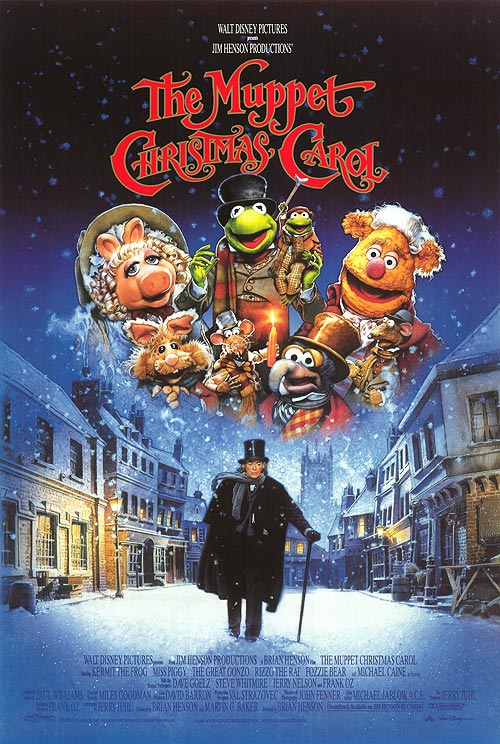
Michael Caine with some of his best ever co-stars in The Muppet Christmas Carol

Director: Brian Henson

Cast: Michael Caine (Ebenezer Scrooge), Kermit (Bill Cratchitt), Miss Piggy (Emily Cratchitt), Gonzo (Charles Dickens), Rizzo the Rat (Himself), Statler and Waldorf (Jacob and Robert Marley), Fozzie Bear (Fozzie Wig), Dr Bunsen Honeydew & Beaker (Charity Collectors), Sam the Eagle (Schoolmaster), Steven Mackintosh (Fred), Meredith Braun (Belle), Robin Weaver (Clara)

There have been many adaptations of Charles Dickens’ beloved novel. Surely few people would disagree – this is the best one. If you don’t love this film I’ll just say it – there is something wrong with you. That’s it. There is no hope for you. Just give up, pack up and go home. Because no Christmas is complete without this film. It’s brilliant. 

It’s also perhaps the version that feels the closest to Dickens’ plot – which is remarkable considering 90% of the parts are played by puppets. But what they do so well here is bring the film back to the roots of the novel – it follows the plot pretty much spot on, the setting and design feel brilliantly Dickensian, and it even introduces Dickens as a character. And who better to play the great Victorian showman than the Great Gonzo? Gonzo anchors the film brilliantly, and is both really funny and delivers an awful lot of text from the original book. This actually feels more like a slice of Dickens than nearly any other adaptation you can think of – I’m sure he would have loved it.

That’s why the film works – it has a mix of brilliant muppet humour in it (and there are some really laugh out loud moments) but it’s also a pretty straight adaptation. There are moments where the fourth wall is leaned on, but the content is never mocked. So you get all the fun moments around the edges, but you still get an extremely strong story that has worked for over 100 years. Thank goodness they pulled away from the original idea of parody and played it straight with a smile!

One of the main reasons it works so well is Michael Caine’s superb performance in the lead role. When Caine agreed to do the movie, he was straightforward about his intentions: “I’m going to play this movie like I’m working with the Royal Shakespeare Company. I will never wink, I will never do anything Muppety. I am going to play Scrooge as if it is an utterly dramatic role and there are no puppets around me.” That is totally what he does. Because Caine walks the balance so well, he plays the moments of comedy with great humour, but also the emotional force of Scrooge’s journey.

Caine so totally believes in and respects the world he is working in, that he brings the entire audience with him. If Caine can, with a totally straight-face, treat talking to a small bunny singing carols with as much integrity as he does sharing a scene with Laurence Olivier, all the rest of us can as well. Just think how the film’s mood would have been wrecked if Caine had winked at the camera, or said something like “I told you to only blow the bloody doors off” – the careful balance of the film would have been wrecked in a moment.

I think you can safely say this is one of Caine’s finest films: he’s got fantastic comic timing – his scowly ill-humour for the first third of the film is a delight – but he makes the later scenes genuinely moving. It almost seems like he inspires the muppets around him – Kermit and Miss Piggy’s later scenes dealing with the death of Tiny Tim are genuinely tear inducing (is this the only production of Christmas Carol where Tiny Tim isn’t insufferable?). The Muppets are all brilliant here (if Caine is going to treat them as real actors, I certainly am as well!).

That’s why the film works – it’s really emotionally moving. The muppets inspire a huge residual affection in everyone, and the film mines this brilliantly. So we get pleasure from seeing them – look there’s Fozzie Bear and Sam the Eagle! – and then feel their pain when they are sad. The film gets the balance just right on the muppets’ essential anarchy: at one point Sam the Eagle needs to be reminded that he is playing a Brit, Rizzo frequently forgets he’s playing a role, Animal seems unable to play the gentle music the script plays for at Fozziewig’s party… The film is crammed with small moments like this.

And it all works because it is held within a fine piece of straight storytelling – a faithful adaptation of Dickens, with a brilliant lead performance. It’s also very well made – inventively shot with a real sense of mood and atmosphere and brings memorable scene after memorable scene. There is barely a frame of the film where there isn’t something delightful, entertaining, thought-provoking or all three to spot. It carries emotional weight, it’s laugh-out-loud funny, you’ll fall in love with the characters. Caine sets the tone brilliantly, and raises the game of everyone involved – it’s an impossibly difficult acting task that no one in a muppet film has ever pulled off as well again. 

It’s one of the greatest Dickens adaptations, one of the sweetest comedies you’ll see, and one of the greatest Christmas movies ever made. On top of that it’s a brilliant musical, with some fantastic hummable songs (though the cutting of Love Is Gone from the DVD edition – too sad apparently –makes you sigh for Disney’s corporate soul). No Christmas would be complete without it. A must-watch classic.

The Golden Compass (2007)


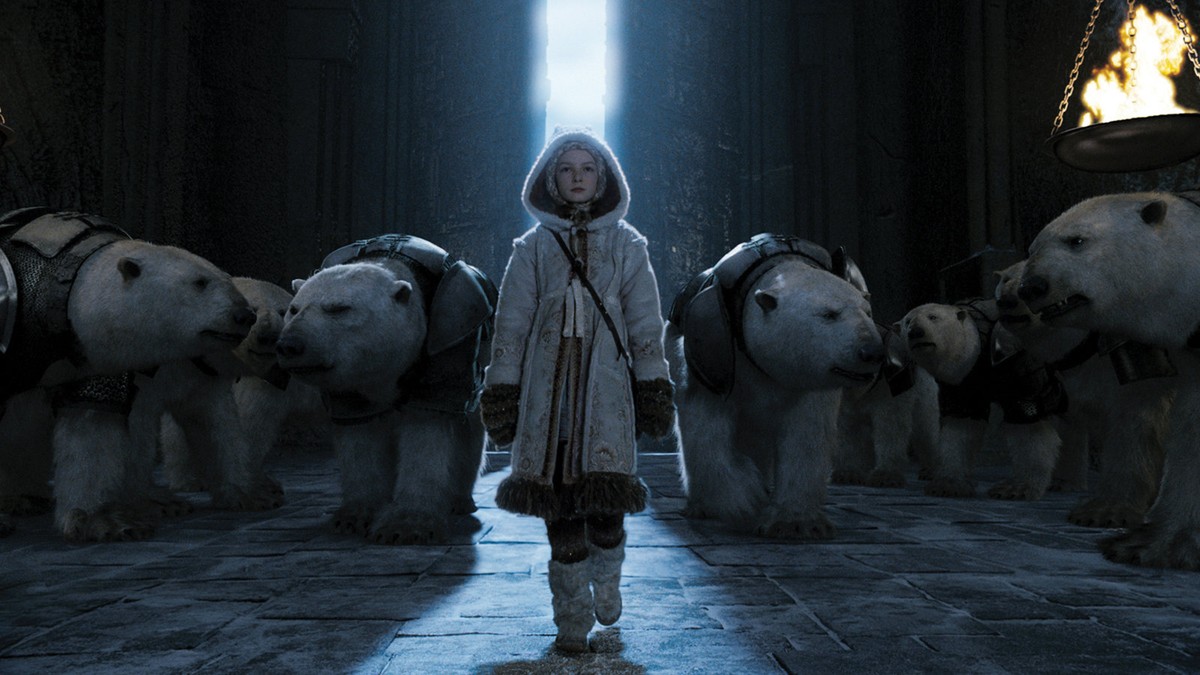
How did it all go wrong? The disastrous production of Philip Pullman’s The Golden Compass

Director: Chris Weitz

Cast: Dakota Blue Richards (Lyra Belacqua), Nicole Kidman (Mrs Coulter), Daniel Craig (Lord Asriel), Sam Elliott (Lee Scoresby), Eva Green (Serafina Pekkala), Jim Carter (John Faa), Clare Higgins (Ma Costa), Tom Courtenay (Farder Coram), Derek Jacobi (Magisterial Emissary), Simon McBurney (Fra Pavel), Jack Shepherd (Master of Jordan College), Ian McKellen (Iorek Byrnison), Freddie Highmore (Pantalaimon), Ian McShane (Ragnar Sturlusson), Kathy Bates (Hester), Kristin Scott Thomas (Stelmaria)

After the success of The Lord of the Rings, bookshops were stripped of all epic fantasy novels with a cross-generational appeal by film producers, their mouths watering at the prospect of having another billion-dollar licence to print money. Nearly all of these projects bombed, but I’m not sure any of them bombed harder than this, an attempt to kick-start a trilogy of films based on Philip Pullman’s both loved and controversial His Dark Materials books. What went so completely wrong?

Pullman’s trilogy is set in an alternative-Oxford, where people all have Dæmons, part of their soul that lives outside their body in animal form. It’s a world where the Magisterium, a powerful organisation, suppresses all free thought, in particular all investigation into the mysterious particle dust. Lyra Belacqua (Dakota Blue Richards) is an orphan raised in Jordan College, who saves the life of Lord Asriel (Daniel Craig), who is investigating Dust in the North. Leaving the college with the mysterious Mrs Coulter (Nicole Kidman), who may or may not be involved in a series of child kidnappings, she eventually finds herself drawn more and more into setting right the problems of her world.

The Golden Compass is a film that pleased no-one. Fans of the book generally hated it. The people who hated the books hated it. The people who hated what they had been told the book was about hated it. Why did the studio decide to make a film in the first place about a book series they seemed to know was controversial from the start? If they didn’t really want to embrace the themes of the books, why bother? Pullman’s books are partly adventure stories, partly intricate world building, partly spiritual discussions – and yes partly atheist tracts with a strong anti-Establishment-church bent (with a more general regard for genuine faith). To put it bluntly, that’s a lot of ideas to try and squeeze into a film – particularly a film well under two hours.

So The Golden Compass is a mess that feels like it’s been put together by committee. It’s been cut to within an inch of its life – scenes jump incredibly swiftly from event to event, often with the barest of clunky explanation voiceover (“We’re going to see Lord Faa, King of the Gyptians”) to tell you what’s going on. Pages and pages of dialogue and character seem to be lost. We are constantly told Lyra is “special” but never shown anything that supports or explains this. An Eva Green-voiced infodump opens the film: clearly the producers were thinking about Peter Jackson’s masterful opening to The Fellowship of the Ring, which skilfully introduces everything. This introduction though is about removing all the mystery and magic of the story as soon as possible by stating it bluntly up-front.

The biggest mess is of course the way the film avoids all reference to Pullman’s religious themes. No reference is made at all to the Magisterium being a church. No reference is made at all to religion or faith. Iorek is clearly being held in a Russian Orthodox painted church – but the building is referred to throughout as an “office”. Derek Jacobi plays one of the principal Cardinal antagonists of the third book – no reference is made to his office. The Magisterium is instead just a “shady organisation” – a controlling gestapo-type organisation, with black uniforms and creepy Albert Speer style buildings. The questions of Dust and original sin – so central to the motivations of the story – are completely unexplained, meaning the child kidnapping and sinister intercission the villains are carrying out makes no sense at all. How on earth they planned to continue not talking about religion in their planned third film is a complete mystery.

This rushing is the problem throughout the film. Stuff just happens really, really quickly for no real reason. Characters pop up to introduce themselves for later films, or to drop clunky exposition. Tom Courtenay explains what an aleitheometer is for us (the film constantly brings up this “Golden Compass” and its future-telling properties, without ever really making them feel important for anything that happens in the film). Eva Green flies in to say she’s a witch and how pleased she is to meet Lyra and promptly flies off. Daniel Craig name checks Dust, gets captured then disappears. Sam Elliott introduces his rabbit Dæmon and shoots a couple of things. None of this gets any chance to grow and develop – and you end up not caring about any of these characters. Nearly every plot event from the first book is kept in – but so rushed you don’t give a toss.

The structure of the film has also been changed from the book, and not for the better. The film (probably thinking about later films) increases the presence of the Magisterium throughout – but without really making their antagonist role clear. Lyra and Iorek’s defeat of Iorek’s usurper Ragnar is moved to before the final defeat of the Gobbler’s ice base – this doesn’t make a lot of sense. If Iorek now commands an army of bears, why doesn’t he bring them along for the final battle? Lyra instead wanders up to the base like an idiot, and the film extends the release of the children from the ice base into a big battle in order to give us a Lord of the Rings style finish. It doesn’t matter that nothing in the film feels like it’s building plotwise or dramatically towards this battle – it’s there you feel, because Lord of the Rings had battles and people loved that, so let’s get one in here. 

In fact the film builds towards nothing, because it has been cut so poorly, and is such a terrible compromised product, that everything the books are building towards has been removed from it. So the entire thing makes no bloody sense. The clash with the church and organised religion doesn’t work because all reference to faith has been cut. There are mutterings about a “war” coming, but no one says what it might be about. There is a loose crusade to save the kidnapped children – but we don’t understand either side of this. The cruelly ironic ending of the book, with Lord Asriel’s real plan revealed, is deleted altogether from the film – because the studio didn’t want a “downer” ending. As a result the film just suddenly ends (after a clunky “We’ll go home one day after this, and this, and this, and this, and this, and after we’ve solved all the problems of the world” speech).

Studio interference reeks off this whole film. It’s been cut to ribbons. Ian McKellen and Christopher Lee were parachuted into the cast in order to make the film feel more like Lord of the Rings. McKellen sounds completely wrong as a mighty armoured bear (original casting Nonso Anozie would have been perfect). Lee chips in a single line in what is painfully obviously an addition from re-shoots. Anything potentially different or interesting is cut out. In fact anything that was unique about Pullman’s original books is cut out: as much is done as possible to make Pullman’s story as identikit and standard as hundreds of other bland fantasy dramas. As if they hadn’t realised the book was potentially really controversial in the more traditional parts of the US market, it seems like the studio only really read the books once the film was shot, suddenly realised they had made a massive mistake, and tried to reduce the danger as much as possible by making the film as bland as they possible could.

Chris Weitz is completely unsuited for directing it – and he actually feels like a hostage the more you read about the film’s turbulent production – but it’s not all bad. Dakota Blue Richards is actually pretty good as Lyra – she’s got a certain magic charisma. The set design is pretty terrific – even if it is a lot more steampunk than I pictured the novel as being. The special effects are pretty goods – the Dæmons are well done, and the puff of gold Dust they turn into when someone dies is striking. Some of the adult casting is pretty good – Kidman is just about perfect, Craig is pretty good, Sam Elliott stands out as Lee Scoresby. There are some neat cameos as well – I would have liked to see Jacobi get to tackle the third book, Eva Green is wasted, Tom Courtenay is pretty good. It just all rushes by so quickly. You don’t get the chance to get to know anyone fully. If the book was a bit episodic, this takes that worst element of it and ramps it up to eleven.

The Golden Compass tanked. It tanked so hard, New Line Cinema didn’t really recover. All plans for future films were scrapped. However, it is important in another way. In presenting such a horrifically neutered, stripped-down version of the story, it persuaded a lot of people that books rich in world building and content like this needed much longer than a traditional film to be brought to life. It helped persuade George RR Martin that TV was the way to go when selling the rights for Game of Thrones. And His Dark Materials will now live again as a 10 part TV series in the near future. For all its many, many failures – we owe it something.

Addams Family Values (1993)


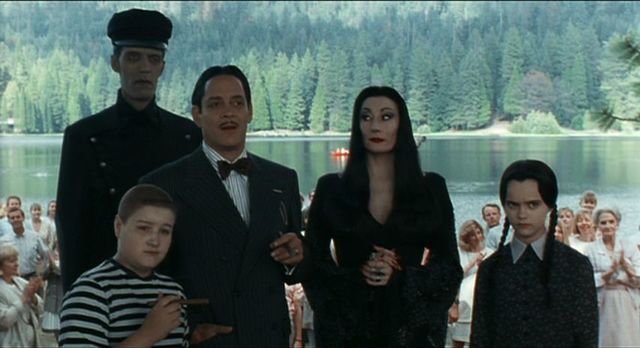
The Addams Family Values: Goth meets summer camp fun in this engaging comedy

Director: Barry Sonnenfeld

Cast: Anjelica Huston (Morticia Addams), Raúl Juliá (Gomez Addams), Christopher Lloyd (Uncle Fester), Joan Cusack (Debbie Jellinsky), Christina Ricci (Wednesday Addams), Carol Struycken (Lurch), Jimmy Workman (Pugsley Addams), Carol Kane (Grandma Addams), David Krumholtz (Joe Glicker), Peter MacNicol (Gary Granger), Christine Baranski (Becky Martin-Granger)

The Addams Family was a serviceable family comedy about a bizarre group of Halloween style characters, who delighted in leading lives of cartoony horror. It drifts along, and was a big hit, but its sequel Addams Family Values is several times smarter, more confident and funnier. As a comedy family saga mixed with cartoon creepiness, it’s hard to beat.

Celebrating the birth of their new child (“He has my father’s eyes” / “Take those out of his mouth”), Morticia (Anjelica Huston) and Gomez (Raúl Juliá) hire a new nanny, Debbie Jellinsky (Joan Cusack) to care for the baby. On her advice, they also decide to send the insanely jealous Wednesday (Christina Ricci) and Pugsley (Jimmy Workman) to a summer camp – needless to say they do not fit in with the All-American, Apple-Pie ideals championed there. Debbie meanwhile has wicked designs on becoming the widow of their rich Uncle Fester (Christopher Lloyd).

Addams Family Values gets a lot of comic juice out of some very witty set-ups. Everyone involved in the film feels more relaxed and happy to let the comedy breathe. Sonnenfeld lets the set-ups come naturally and allows the characters to come to the fore. Every joke in the film comes from watching the characters bounce off their circumstances. Of course, a lot of this comes from the fact the film doesn’t need to do any of the heavy lifting of introducing the world or the characters – it rightly assumes we know what we are getting from the start – but it still makes the film hugely entertaining.

A lot of the humour comes from the brilliant summer camp plotline, with its passive-aggressive, jolly-hockey-sticks owners (a very funny Peter MacNichol and Christine Baranski) and their naked favouritism for the popular kids. Placing the Addams children into a world of normal teenage politics and the forced jollity of adults who would rather still be one of the popular kids at school is a brilliant touch. This clash of values makes for no end of comic glory, culminating in a disastrous Thanksgiving play, which is a triumph of the sad and overlooked over the popular kids (because who watching any film favours the popular kids?).

Christina Ricci is brilliant in this – her deadpan sense of comic timing is spot-on. Every scene and every one-liner is stand-out. The film even finds time for a sweetly semi-romantic plotline between her and loser Joe Glicker (David Kumholtz, also very good as the kind of kid who likes to read A Brief History of Time). Ricci ends up carrying a lot of the film’s comic material, and she’s so perfect in the role that to a lot of us she will always be Wednesday Addams, never mind what she does.

The summer camp plotline is so drop-dead funny and memorable, it rather overshadows the film’s actual plot about Debbie’s attempts to seduce and murder Fester. Sonnenfeld struggles to make this main plot come to life – his real delight is in the sketch-based comedy of the summer camp and the Addams’ love for the grotesque and the extreme. Having said that, Joan Cusack is wickedly sexy and funny as a heartless social climber.

Anjelica Huston and Raúl Juliá remain divinely perfect as a couple so besotted they can barely look at each other without bursting into a steamy tango, or an avalanche of flirtatious foreign language banter. Juliá rips into the dialogue with a flamboyant gusto, and he’s a perfect foil for Huston’s supercool, arch one-liners. Sonnenfeld never lets the introduction of a baby affect their comic darkness in any way, which is a perfect set-up for comedy.

Addams Family Values is terrific good fun and always keeps you laughing. It’s a load better than the original, and has some terrific comic set-pieces in. Sure it’s got a pretty basic plot, but it’s directed with a wicked dryness by Barry Sonnenfeld and its cast are now completely comfortable in their eccentric characters. The tone always seems spot-on between the surrealist darkness and the childish, cartooney horror. It’s a very entertaining film.

Stardust (2007)

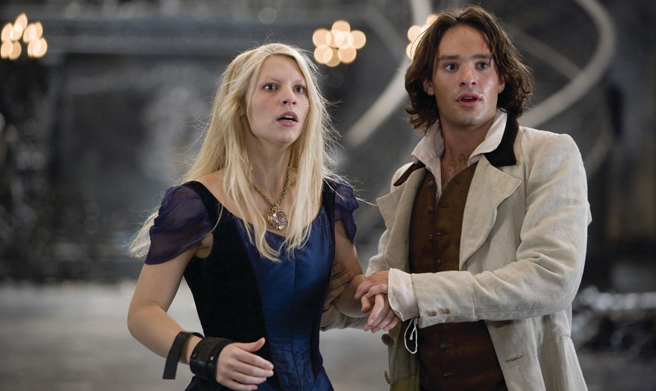
Claire Danes plays a star and Charlie Cox a village boy in charming adventure fairy-tale Stardust

Director: Matthew Vaughn

Cast: Claire Danes (Yvaine), Charlie Cox (Tristan), Michelle Pfeiffer (Lamia), Mark Strong (Prince Septimus), Robert De Niro (Captain Shakespeare), Sienna Miller (Victoria Forester), Jason Flemyng (Prince Primus), Rupert Everett (Prince Secundus), Kate Magowan (Una), Ricky Gervais (Ferdy), Peter O’Toole (King of Stormhold), Joanna Scanlan (Mormo), Sarah Alexander (Empusa), Nathaniel Parker (Dunstan Thorn), Henry Cavill (Humphrey), Dexter Fletcher (Skinny Pirate), Ian McKellen (Narrator)

Stardust is loosely adapted from Neil Gaiman’s novel of the same name, an adult fairy tale refashioned into a crowd pleasing family film: a warm and genuine adventure story, stuffed with romance, excitement and drama.

Tristan (Charlie Cox) is a dreamy young man in the village of Wall, which neighbours the mystical and forbidden world of Stormhold. In love with the selfish Victoria (Sienna Miller), Tristan vows to travel to Stormhold and bring her back a fallen star. However, the star has landed in the form of a beautiful young woman, Yvaine (Claire Danes), and the two of them find themselves on a difficult journey to return to Wall. Along the way they must dodge the witch Lamia (Michelle Pfeiffer) who wishes to sacrifice Yvaine to regain her beauty, and the surviving sons of the late king of Stormhold, particularly the ruthless Septimus (Mark Strong), who need Yvaine’s necklace to claim the throne.

What works about Stardust is that it has an air of whimsy about it, without ever feeling whimsical or corny. It’s a grown-up fairy tale, in the sense that it has some black humour and acknowledgement of sex, but really it’s more of a charming adventure story in a fantasy setting, which manages to keep its tongue in its cheek and not take itself too seriously. Matthew Vaughn’s direction has a very light touch and never allows this soufflé of a film to either puff itself up too much, or to deflate. Instead it rolls along with a giddy charm, with a delightful odd-couple love story at the centre. It’s a film that totally gets its tone spot-on, helped by confident direction and a wonderful score.

Charlie Cox plays romantic lead Tristan with a great deal of charm and really captures the romance at his centre. He also manages that extremely difficult task of being likeable – you can’t help but warm to him despite the fact that his self-awareness is completely off for a large chunk of the film. Claire Danes is equally good as the prickly Yvaine, hiding a great capacity for emotion and longing under a defensive exterior. Their romance is of course highly traditional – they bicker because they love each other! – but both actors carry it off with a great deal of style. You can’t help but want them to get over their problems and get together.

The romantic plotline is also never overwhelmed by the faintly Pythonesque comedy that surrounds it, particularly from the ghostly chorus of deceased Princes of Stormhold. Vaughn produces a great cast of comic actors for this group, while entrusting Mark Strong with the lion’s share of the screentime as the dashing decoy antagonist. In fact, the construction of the film’s narrative is rather neatly done, as this plotline of the inheritance of Stormhold is largely kept separate narratively from the romantic Tristan/Yvaine storyline, with the intersections only occurring at key points.

The real antagonist of the film however is Michelle Pfeiffer’s witch Lamia, Pfeiffer offering a neat portrait of vanity intermixed with cruelty. It’s a very decent inversion of a “movie star” glamour performance, and Pfeiffer’s heartless ruthlessness is a very nice contrast with Tristan’s altruistic openness. In fact Pfeiffer is very good in this film: she gets the balance so right that Lamia constantly keeps you on your toes as to how villainous or not she may be. I’m not quite sure that the film quite manages to completely bring the two characters plot lines together to provide a really effective narrative drive to the film, but she certainly works as an effective antagonist.

The film’s structure is a combination shaggy dog story and classic quest structure, which allows each sequence to take on its tone and structure, from thriller to comedy, depending on the characters involved. What threads this together is the growing (and very sweetly structured) love story between Tristan and Yvain which keeps the momentum up as the film moves from location to location, with cameo roles sprinkled throughout, without the film losing momentum (though it is probably 15 minutes too long). The film’s comfort with letting it sequences expand is clear with Robert De Niro’s Captain Shakespeare, a feared cloud pirate whose secret desires are not so secret as he might think. The film delights in essentially extended jokes like this – but it gets away with it because these jokes manage to be quite funny (De Niro in particular turns in a very good comic performance).

It’s a film that manages to remain distinctive and original, while appealing to a wide audience, which is quite some trick to pull off. It also manages to do this without losing its distinctive rhythm, which is both endearing and enjoyable. The “rules” of its world are clearly established, and while many of the actors are slightly tongue in cheek, they never laugh at their characters but only gently tip the wink at the audience. This freedom largely comes from the conviction and honesty Danes and Cox endow the central characters with, to ground the film. It alsohas a great sense of emotional intelligence to it, and brings a lot of depth to the characters. It also helps that it’s brilliantly designed, looks ravishing and is full of several delightful performances.

There’s lots of terrific stuff in this film, with a very sweet story at its centre. In fact this sweetness is probably the secret of its success: it never takes itself very seriously, it dances lightly from scene to scene and never allows itself to become too overblown. It’s got a terrific cast and is well directed, with a snappy bounce. At moments it does feel a little long, and some sequences overstay their welcome a bit too much – but the central characters are so winningly played that you don’t really mind. Sure this is not a masterpiece, but it has a sort of magic about it, the charm, excitement, adventure and romance, all mixed together with such confidence that it’s a pleasure to watch.

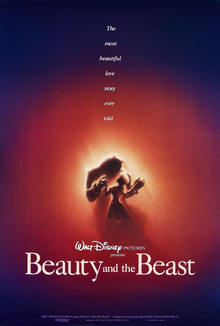
Beauty and the Beast (1991)


The original and the best: Disney’s animated classic Beauty and the Beast

Directors: Gary Trousdale, Kirk Wise

Cast: Paige O’Hara (Belle), Robby Benson (The Beast), Richard White (Gaston), Jerry Orbach (Lumière), David Ogden Stiers (Cogsworth), Angela Lansbury (Mrs Potts), Bradley Pierce (Chip), Rex Everhart (Maurice), Jesse Conti (Le Fou)

After decades of average or forgettable films, in the early 90s Disney had a sudden renaissance. From 1989 to 1998, the studio was a veritable hit factory, with films from The Little Mermaid to Mulan, via classics like The Lion King and new ideas like Hercules all being lapped up by audiences. Perhaps the most widely loved (and maybe even the best!) of this era was Beauty and the Beast.

Like all the best Disney films, the story is traditional with a modern twist. Belle (wonderfully voiced by Paige O’Hara) is a young woman in a small provincial town who wants so much more than spending her time dodging the unwanted attentions of handsome local hero Gaston. When her eccentric father Maurice is imprisoned in a mystical castle by a terrifying Beast (Robby Benson, who combines sensitivity and ferocity), she agrees to take his place, while the Beast (and his enchanted servants) all hope she might break the spell placed on them by falling in love with him.

This was the first animated film to ever be nominated for Best Picture, back in the days of only five nominees and it was hard to sneak onto the list if you weren’t a heavy-going “important” piece of film-making. If that’s not a testament to its greatness, I’m not sure what is. It’s one of the best mixes of Disney magic: charming, delightful, sweet, funny and exciting. It has a heroine who feels real, independent and relatable and a hero you empathise with, even while he behaves badly. It’s got a villain who first seems an arrogant blow-hard before his real brutishness is revealed. All this in a very romantic, engrossing storyline, with a host of supporting characters it’s impossible not to like.

So why does this work so well? It’s sweepingly, lusciously drawn and it drips romance and humanity. Everything stems from those central characters, and the amount of empathy we feel for them. Like all great films, this knows without characters we invest in, nothing else works – no matter how many great numbers and funny lines there are (and there are plenty of both!).

Belle could have easily been either a flighty romantic or an aloof autodidact, but the film crafts her into a grounded romantic, dreaming of more but knuckling down and dealing with the hand life has dealt her. Facing a life of captivity she resolves to do what she can to make her life bearable. She’s determined and independent and exhibits genuine intellectual curiosity alongside her empathy. She feels real, and you invest in her reactions to things because those reactions feel normal.

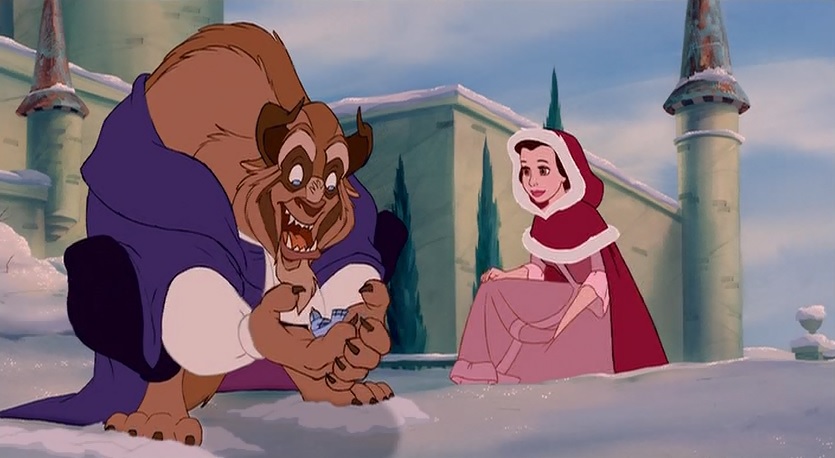
An even bigger challenge is the Beast, but it’s triumphant in the handling of this tricky character. He is ferocious, but the film quickly and efficiently makes clear his anger is based in pain and vulnerability, and intense isolation. Careful shots establish his self-loathing – his slashing of a painting of his pre-transformation face couldn’t be much clearer. Even at his most furious, we gets quiet moments of vulnerability. The animation of the Beast is perfect – his face is fierce, but his eyes are wonderfully expressive. His facial features at key moments relax and fold in to show someone far more gentle. He’s like everyone on a first date, scared to express his deeper feelings. The animators marvellously capture both his power and surprising delicacy. His boyish enthusiasm is infectious – his excitement in gifting Belle the library is heartwarming. In fact he’s so endearing and engaging a character, I think everyone feels a twinge of disappointment when he is replaced by a human being in the final scenes!

Revolving around these two is a wonderful cast of engaging characters. The primary servants in the plot – Lumière, Cogsworth and Mrs Potts – are all strong, unique and three-dimensional characters with more than enough depth to eschew their basic character traits (Cogsworth’s name even rhymes with jobsworth, Lumière is a charming rogue and Mrs Potts a motherly matron) to become characters we end up caring deeply for, that feel real.

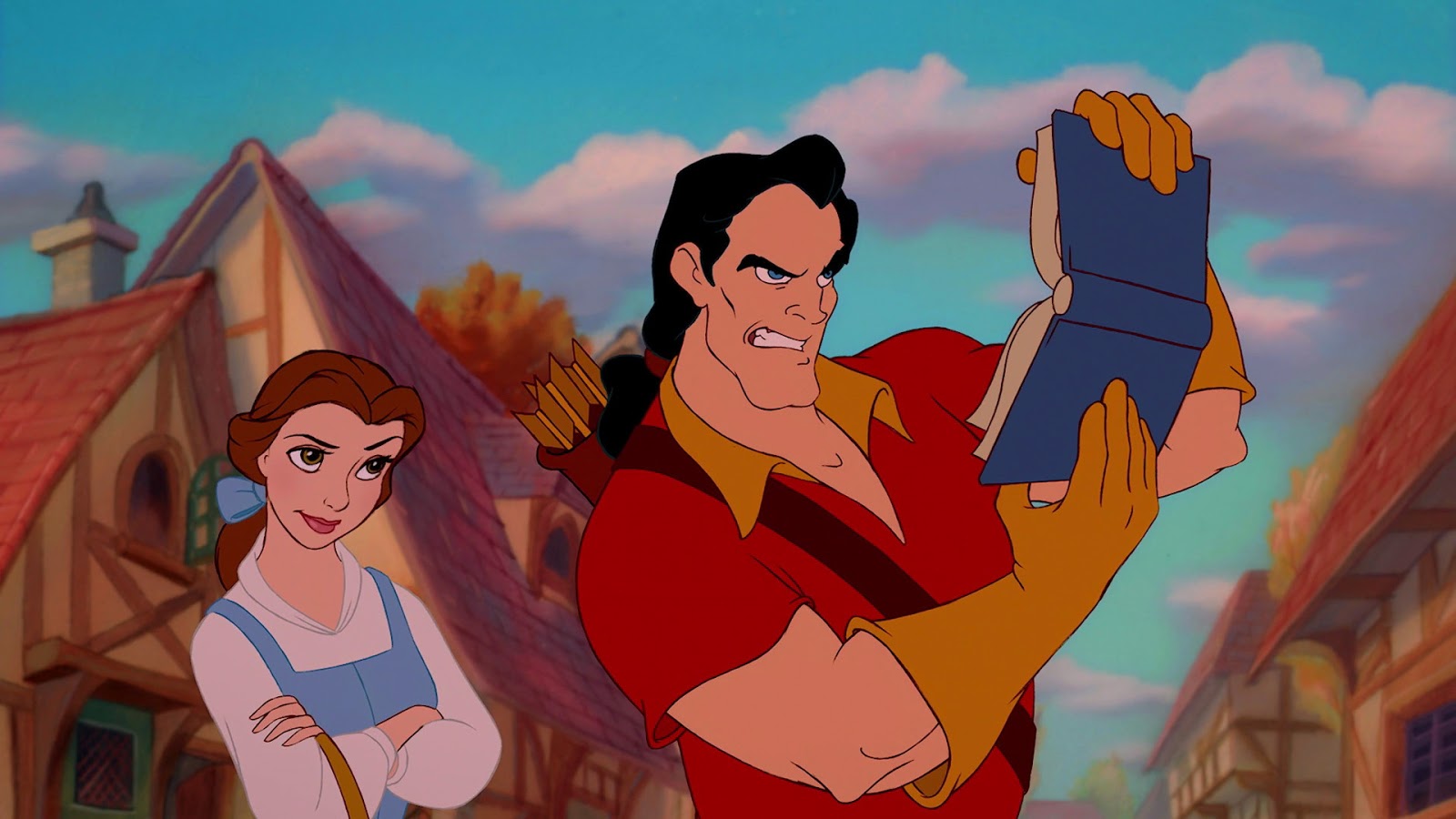
The film also borrows from Jean Cocteau’s La Belle et la Bete to create the character of Gaston, possibly one of the most interesting villains in Disney. Drawn with a certain conventional handsomeness (although he looks smug enough for you know he’s a wrong ‘un from the start), Gaston is a character who questions many of the assumptions made linking popularity and handsomeness with goodness. He’s also a character who grows measurably darker through the film due to his own choices, rather than being inherently villainous from the start.

It’s all part of the richness of the world the film creates – everything feels natural and all the characters real and understandable. Maybe that’s partly why it works so well – it’s a film that is animated, rather than a cartoon. With a tight plot, good pacing and a clear focus, it’s focus is on emotion and characterisation, and it avoids cheap laughs, with comedy growing organically. Because the characters themselves are so compelling, the events carry huge dramatic force – when Belle is threatened by wolves, we genuinely fear for her; when the heartbroken Beast can barely rouse himself to fight Gaston we are overwhelmed with pity and concern.

Warmth and humanity in the drawing of the characters, makes their stories so affecting

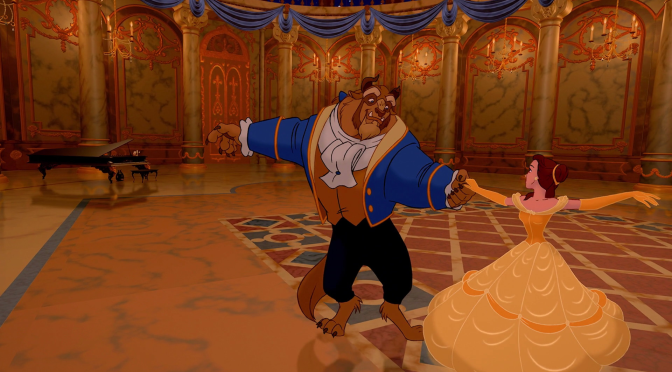
Of course it is also a cartoon, and much of the triumph of it is based in the animators’ successes. The imagery is gorgeous, the detail in each frame is wonderful, the design of the castle is fantastic (we’ve already talked about the influences of Cocteau’s film, but it’s clear again here). The famous ballroom scene is wonderful – the “camera work” marvellous, the creation of the ballroom awe inspiring (genuinely we all thought it was real at the time!). Time and again the filmmakers use inspired framing and composition that conveys the emotion. The performances they draw from their characters is exceptional – the expressiveness given to all of the characters, from Belle and the Beast to the faceless tankards in the castle, is brilliant. You can freeze-frame any single scene from the movie and be able to instantly identify how every character feels.

The famous ballroom, a sweeping series of camera shots and a landmark in computer illustration

This is the true Disney magic: this world is real, because everyone in it feels so alive. It captures your heart, from its marvellous stained-glass opening telling the backstory, to the triumphant swelling score that meets the ending. I’ve barely mentioned the songs, but each one is brilliant, an instantly recognisable, pleasurable earworm – in fact, this film may have the best songs of any Disney film in the canon. Beauty and the Beast is so good that, never mind being nominated for best picture, it arguably would have won in many years (it lost to The Silence of the Lambs: it’s hard to imagine a film more tonally different!). Endlessly enchanting, charming, warm, funny, moving and exciting, this is a masterpiece and a landmark in Disney animation.

Enchanted (2007)


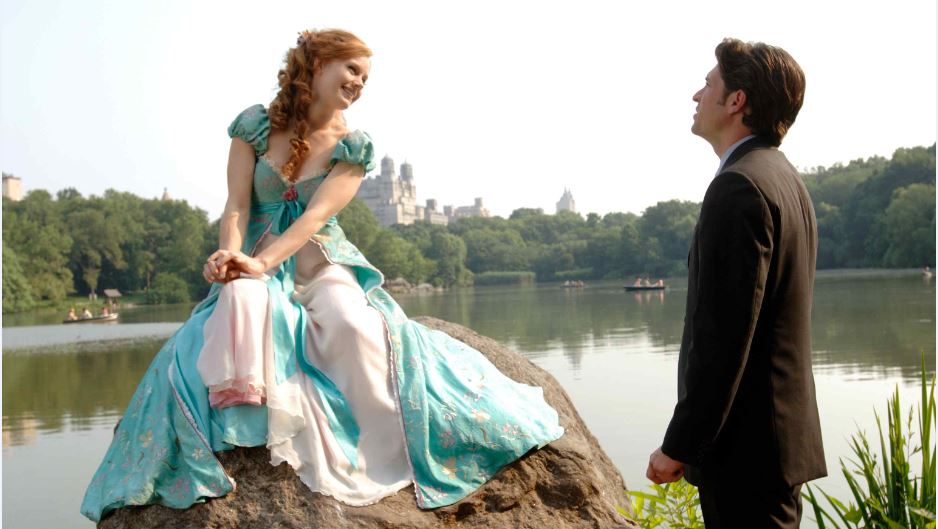
Amy Adams excels as Disney heroine in the real world Giselle in Enchanted

Director: Kevin Lima

Cast: Amy Adams (Giselle), Patrick Dempsey (Robert Philip), James Marsden (Prince Edward), Susan Sarandon (Queen Narissa), Timothy Spall (Nathaniel), Idina Menzel (Nancy Tremaine), Rachel Covey (Morgan Philip)

With Disney devoting themselves full-time to remaking their back catalogue of classics, replacing animation with live actors, it’s nice to be reminded how imaginative combining animation and live actors can actually be. Enchanted is an original story, packed with charm and feel-good warmth – and for my money it’s streets ahead of the production-line remakes churning out of Disney.

In the animated world of Andalasia, Giselle (Amy Adams) is the classic Disney heroine – singing joyfully, talking with animals, all the usual trappings. She falls (instantly, of course) in love with the dashing Prince Edward (James Marsden), but Edward’s cruel step-mother Queen Narissa (Susan Sarandon) is determined to thwart the match so she can retain the crown. On Giselle’s wedding day, Narissa pushes her through a magic well to a place where there are no happy endings: modern day New York. Stuck in the real world, Giselle meets quietly disillusioned family lawyer Robert (Patrick Dempsey) and his 6 year old daughter Morgan – can Giselle adjust to the modern world? Can Edward save her? And will she want to go back?

The star turn is Amy Adams, and she is terrific. This is one of those performances that looks easy, but is in fact extraordinarily difficult. She simultaneously plays a fairytale character in the real world, with a cartoon’s outlook and understanding, but also subtly deepens and enriches this character with real world traits, developing and growing her personality to become someone who feels “real”. She does this without jarring gear changes or sudden swings – and holds both these characterisations together simultaneously. So Giselle’s fundamental personality doesn’t change, while her outlook and understanding changes dramatically. She’s endearing, a wonderful light comedian, and her singing and dancing is terrific. It’s not too much of a jump to say she basically is the movie.

And an enchanting movie it certainly is, one part affectionate recreation of Disney, one part affectionate send-up. Relocating the conventions and style of a Disney movie to the real world allows a lot of fun, as Giselle musters the animals of New York to help her clean (pigeons, rats and flies) or recruits the people of Central Park into an extended song and dance routine while Robert looks on with bemused confusion. It helps that the songs are so well written – Alan Menken and Stephen Schwartz’s tunes are basically classic Disney tunes with a satirical bent, which means it’s perfectly possible to enjoy both for what they are and for the dry commentary they offer on Disney.

In fact that’s why the film works so well: it is so blinking affectionate. There is no cruelty about it and none of the tedious “smarter than thou” referencing of, say, Shrek. Instead it teases Disney, while simultaneously understanding the vast majority of us love these films: that if we had the chance, as Nancy does, we might well jack in the real world for a fairytale. We don’t want “gags for the grown-ups” or dumb film references: if a film concentrates on making itself sincere and engaging, it will engage both adults and children at the same time.

The film really successfully bowls along, full of entertaining charms and gags. In fact the appeal of the fish-out-of-water plotline with Giselle is so effective the sub-plot around the villainous Queen Narissa actually becomes less interesting. While the presence of a villain of this type is a pretty central part of the Disney structure, it never quite comes together here – it feels like something inserted due to the rules of the genre rather than an organic part of the story. Now it is essential there is some peril to propel the story forward, but Narissa just isn’t quite interesting enough (and the final battle with a CGI dragon, while a great recreation of similar moments isn’t really gripping). Fundamentally the emotional and dramatic culmination of the film is Giselle realising what she wants – and it’s this compelling human story that powers the film.

But this is a niggle in a charming and very funny film. Amy Adams is of course the star, but Patrick Dempsey very successfully adds warmth to the “stick-in-the-mud” straight man who flourishes as the film progresses (in a nice touch, he slowly takes on the very singing, dancing, cartooney traits he finds so bemusing in Giselle). James Marsden has huge fun as the gently egomaniacal Prince Edward, providing many of the film’s belly laughs with his unreconstructed fairy-tale hero view of the world.

Enchanted works so well because it’s both a subtle commentary on Disney fairytale films and also a marvellous fairytale itself. With a terrific performance from Amy Adams (how did she not get an Oscar nomination for this?) and some cracking songs, the film is wonderfully entertaining, making some gentle fun of its genre, while also celebrating it. It only wants to entertain and enchant you – and it certainly succeeds.

Beauty and the Beast (2017)


Dan Stevens and Emma Watson faithfully recreate almost shot-by-shot a much better cartoon

Director: Bill Condon

Cast: Emma Watson (Belle), Dan Stevens (The Beast), Luke Evans (Gaston), Kevin Kline (Maurice), Josh Gad (LeFou), Ewan McGregor (Lumiere), Stanley Tucci (Maestro Cadenza), Ian McKellen (Cogsworth), Audra McDonald (Madame de Garderobe), Gugu Mbatha-Raw (Plumette), Hattie Morahan (Agathe)

hhBeauty and the Beast was released at the perfect time. The generation who grew up watching the original could now take their children – or revisit the fond memories with their parents. It was a chance for everyone to wallow in sentimental nostalgia. Disney knew its market would be people who wanted something as close as possible to what they remembered: they certainly delivered.

Surely you know the story by now? But in case you’ve been living under a rock for your entire life: Belle (Emma Watson) is the beautiful but bookish village girl who dreams of a something more than this provincial life. When her father Maurice (Kevin Kline) is imprisoned by a horrific Beast, Belle volunteers to take his place and stays in the castle. The Beast and all his servants are enchanted and only true love can break the spell – will Belle and the Beast fall in love?

I would ask why Disney feels the need to make what are effectively shot-by-shot remakes of their animated classics, but the fact this raked in almost a billion dollars at the box office kinda answers that question. But make no mistake, creatively this is karaoke: a few small flourishes have been thrown in, but effectively it’s a faithful recreation of a film that was already pretty much perfect to begin with. In fact, watching it, the only real emotion I felt was a desire to watch the “real” thing again. Damningly, twice my wife and I stopped to look up the equivalent scenes from the original on YouTube: in every case they were better.

That’s the big problem. Of all these remakes, only The Jungle Book was a genuine reimagining of the original. This one follows Cinderella and hews as close as possible to the film you’ve already seen. The plot is identical. The song and dance sequences are the same. The characterisations are the same. Hell, half the line readings are the same. It’s a film that is so dependent on people’s affection for the original that it’s terrified of offering anything too different from it. In which case – why not just watch the original? Would you rather look at a poster or the actual Mona Lisa?

Condon has thrown in some new pieces here and there to get an extra 30 minutes of action. One decent invention does involve the spell also causing the villagers to forget the castle exists, which is neat. The others add less. Belle has been turned into as much of an inventor as her father and, in one particularly bizarre sequence, invents the washing machine. There is a rather confused sequence involving a magic book which allows the Beast to go anywhere in the world (the witch clearly left a plethora of magic devices behind to entertain the Beast) – raising the question of why he needs that enchanted mirror, since he can apparently physically travel through both space and time with his Tardis-book. LeFou is subtly reimagined as gay – but this is very quietly done so as not to damage the film’s box-office potential in some markets.

There is a rather clumsily done storyline around Belle’s mother dying of plague when she was a baby, which also adds nothing. The film may possibly be trying to construct some kind of clunky commonality between the Beast and Belle with their parental traumas, but a dead mother with a rose fetish shares little with the stereotypical Cold Abusive Aristocrat father the Beast has – and anyway, they’re already giving them plenty of common ground through the good stuff they’ve lifted straight from the original film. Nothing else new really stands out.

In fact, the film is so studiously faithful, you get annoyed when it deviates from the original – particularly as it invariably does scenes less well. The final battle between Gaston and the Beast suffers horribly, with the emotional narrative of the fight thoroughly muddled, in contrast with the original’s clear and efficient storytelling. In the original, the Beast despairs and refuses to save himself from Gaston’s attack until he sees Belle. Here, he’s sort of defending himself and sort of not, and Belle is given some action nonsense, and Gaston’s death is turned from a clean narrative (one treacherous thrust hits home, then in sadistically going for the second he falls to his death) into a strange sequence where he stands and brutally shoots at the Beast repeatedly until the stonework beneath him randomly collapses and send him plummeting to his doom.

None of this, however, compares to the butchering of the moment when Belle discovers the library. In the original this is an endearingly sweet moment, with the Beast overcome with excitement at giving Belle a gift she really wants. The audience shares in his delight, and is charmed by his touching anxiety that she will like it, just as they share in her wonder at the discovery. It’s a major moment in the growth of their relationship. Here it’s thrown away – the Beast shows her the library in a fit of irritation at her pedestrian Shakespeare tastes. The film gives all the time and emotional weight to the tedious “magic book” sequence, where they travel to the “Paris of my childhood” and discover that, yup, Belle’s mum died of plague. Well that was both depressing and uninteresting…

Anyway – take a look at those two library scenes…

The acting is pretty good. Emma Watson does a decent job, particularly considering the pressure on her. She performs the songs prettily, although they don’t soar the way they did when performed by someone with the vocal power of Paige O’Hara. Her Belle is thoughtful but has a level of defiance and independence that’s been stepped up from the original. Dan Steven’s Beast is much more of a prince under a ghastly shell – unlike the original he’s literate, can dance and is well spoken (which makes his moments of animalism and his soup eating failure stick out all the more). The rest of the cast are fine – Ewan McGregor is as flamboyant as you’d expect, Emma Thompson sings the song very well, Kevin Kline makes a lot of Maurice. However for each of them, there are moments when you remember fondly that the animators invested the originals with more emotion.

The one member of the cast who does stand out is Luke Evans. How is the guy not a star yet? Sure the swaggering braggart Gaston might be the best part in the whole film, but Evans nails it with all the energy and egotism you would expect. His scenes are the best in the film by far, and he’s the only one who manages to do something a little different with his role.

Of course it looks fabulous, but it feels somehow a little bit empty. All the things that move you are done (mostly better) in the original – in fact, a major part of why they move you is the memory of the original. The acting is pretty good and it’s well filmed and made – the design is terrific. But honestly, with the original out there what’s the point? Why would you watch this rather than the other one? It’s not as moving, it’s not as exciting, it’s not as funny, it’s not as charming. All it does is to try and recreate the original as closely as possible. You can stage Hamlet thousands of times and each production would be different, but Disney can’t stage Beauty and the Beast twice without replicating it.

If you want it to exactly match your memories, without being quite as good, it’s the film for you. If you want a Disney live-action film that feels like something original, watch The Jungle Book.

Time Bandits (1981)


Time travelling roguery in Time Bandits 

Director: Terry Gilliam

Cast: Craig Warnock (Kevin), David Rappaport (Randall), Kenny Baker (Fidgit), Malcolm Dixon (Strutter), Mike Edmonds (Og), Jack Purvis (Wally), Tiny Ross (Vermin), John Cleese (Robin Hood), Sean Connery (Agamemnon), Shelley Duvall (Pansy), Katherine Helmond (Mrs Ogre), Ian Holm (Napoleon), Michael Palin (Vincent), Ralph Richardson (Supreme Being), Peter Vaughan (Winston), David Warner (Evil), Jim Broadbent (Compere)

After leaving Monty Python, each Python went their own way. Terry Gilliam had been the slightly odd one, the eccentric animator who played the weirdos at the edge of the frame. Time Bandits would be pivotal in repositioning him as an ambitious, visionary director with a striking visual sense. It would also allow him (and co-writer Michael Palin) to create a fairytale fable with something for all ages, a film about a child’s view of the world which adults could embrace.

Kevin (Craig Warnock) is a dreamer, a young kid adrift in his parent’s materialistic world. Until one night a gang of dwarves calling themselves “Time Bandits” emerge out of his bedroom cupboard. They have a map that allows them to travel through time and use it to commit crimes and then escape to different centuries. Kevin joins them in their adventures, but none of them know they have attracted the attention of the Evil Genius (David Warner) who wants to use the map to escape his prison and recreate the world in his own image.

I still remember watching this film when I was younger and really enjoying (I must have watched it dozens of times). I have to say it holds up extremely well. Sure Craig Warnock isn’t the most inspired child actor of all time, but he has a wide eyed innocence and enthusiasm that anchors the film really well. Gilliam’s direction is brilliantly good – wild and inventive, like a punk-rock fairytale. The dwarfs make an inspired grouping, each embracing the once-in-a-lifetime chance of playing leading roles.

The main reason for the film’s success is Gilliam. His work is extraordinarily detailed and imaginative, while his visual sense makes shots that cost hundreds of pounds look like millions. Huge swathes of the film are shot with a low-angle lens that allows us to see everything from the perspective of our heroes, and also makes each of these larger-than-life events seem even more awe-inspiring. The design of the film is extraordinary, with striking images confronting you at every turn, either a recreation of events or the bizarre visuals of the “time of wonder”.

And those visuals are outstanding. Can you think of any other film where a knight on horseback bursts out of a bedroom cupboard, charges around the room in medium shot, and then gallops off through a field that has suddenly replaced the bedroom wall? How about an ogre who lives on a ship that is then revealed to be a hat for a giant who lives underwater? Evil’s Fortress is a swaggeringly brilliant triumph of production design, while his goat skulled, tall, hooded monsters must surely have been playing in JK Rowling’s mind when she came up with the Dementors.

The design also echoes the possibility that this is all a child’s fantasy. A careful look at Kevin’s bedroom shows pictures of everything we encounter. The final confrontation with Evil takes place on a set clearly inspired by the Lego bricks, chess board and toys that litter Kevin’s bedroom. 

The playful tone is also reflected in its lampooning of the “adult” world of technology for its dull materialism: Kevin’s parents watch a bullying gameshow (compered by a demonic Jim Broadbent) while sitting on armchairs still in their plastic wrapping. Evil’s obsessions all revolve around lasers and the microchip.

Away from all this, the film has a simple structure. It’s basically a series of really rather fun historical sketches, linked together by an engaging fantasy narrative. These scenes attracted guest star performers, all of whom excel (though it is odd to see them get top billing – Cleese is on screen for about three minutes, but gets top-billing!). 

The guest stars are terrific – Holm is hilarious as a chippy, height-obsessed Napoleon; Cleese very funny as a visiting-Royal-inspired Robin Hood, treating all around him with condescension; Ralph Richardson brings an absent-minded imperiousness and dry wit to his role as God; Connery sprinkles a touch of movie-star bravado as a kindly, gentle Agamemnon (the uncommented on joke being the movie’s ideal father figure is most famous for sacrificing his daughter…). 

If any performer high-jacks the film it’s David Warner as a dry-witted, viciously ego-maniacal Evil Being, getting most of the best lines. A sequence where he obliterates several underlings for minor transgressions hums with dark humour (and punchlines with the accidental obliteration of another minion off screen, met with a sheepish “Sorry”). On top of that, Warner brings just the right level of sinister child’s-nightmareish quality to the role, helped by a striking costume design that makes him look the love-child of a crocodile and a car engine.

The leads of the film (Kevin and the bandits) are extremely well drawn by Palin’s script, each of them with sharply distinctive personalities. David Rappaport (allegedly incredibly unpopular with the others due to his haughty disregard for them) is perfect as the arrogant self-appointed leader, but Jack Purvis is a stand-out as the warmly brave Wally. More than a few commentators have pointed out that the Bandits all serve as representatives of the members of the Monty Python troop, which adds another level of fun watching the film.

Time Bandits is electric good fun. I have no doubt I might find more to criticise without the memory of enjoying it so much when I was younger. Some of the sketches work less well than others – the scene with the ogre doesn’t quite work, and the ending, twistedly funny as it is, does feel slightly abrupt is. But the film never outstays its welcome, and it’s put together with such glee and accomplishment that there is always a line or an image that sticks with you. It’s a dark fairytale for children of all ages – and making something the whole family can enjoy is really quite a feat. Palin and Gilliam would have put together a sensational series of Doctor Who.

Moana (2016)


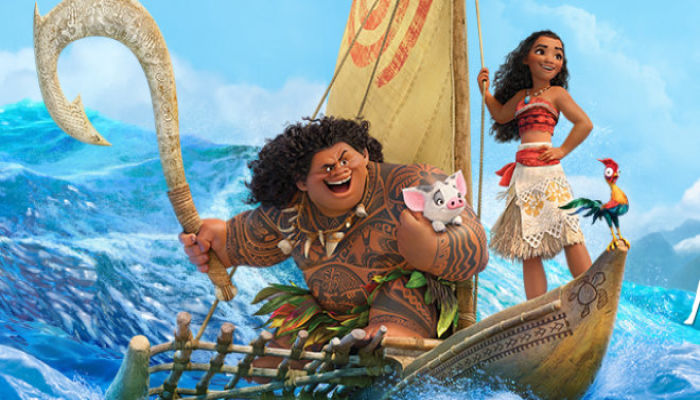
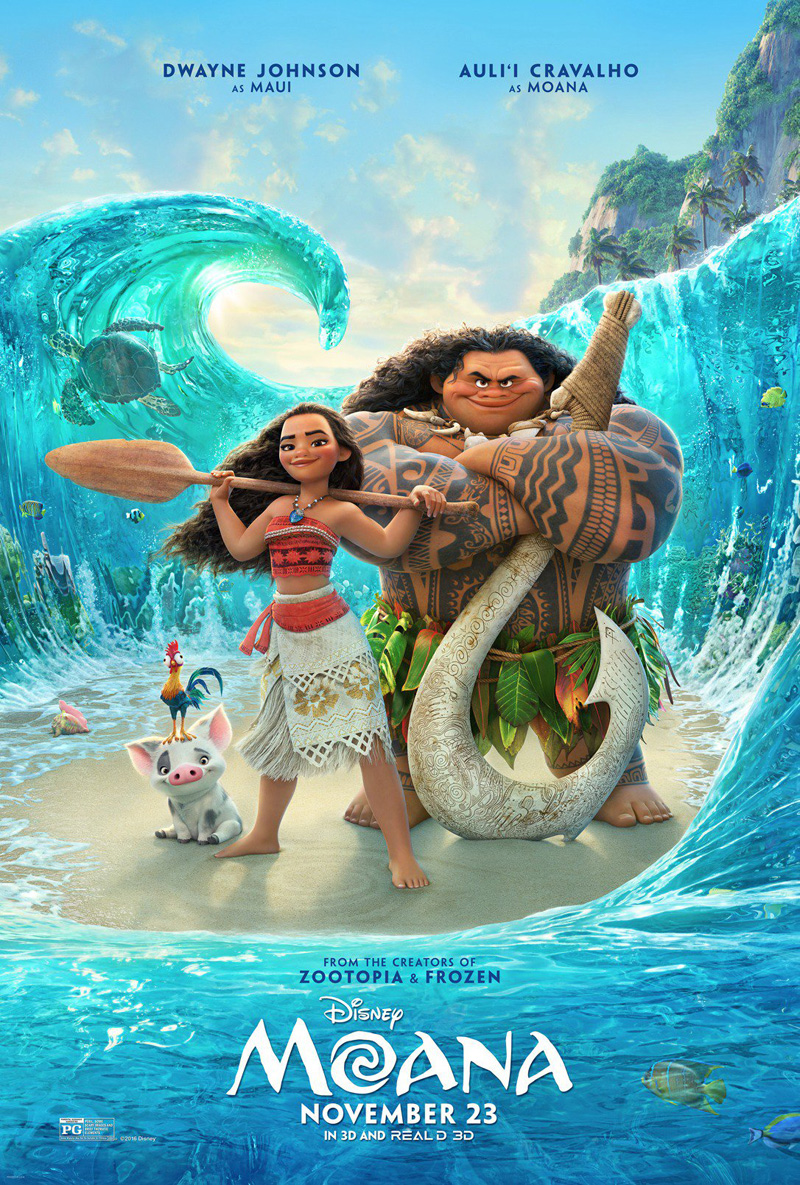
Maui and Moana conquer the seas in this wonderfully fun Disney yarn

Director: Ron Clements, John Musker

Cast: Auli’i Cravalho (Moana), Dwayne Johnson (Maui), Rachel House (Tala), Temuera Morrison (Tui), Jermaine Clement (Tamatoa), Nichole Scherzinger (Sina), Alan Tudyk (Hei-Hei)

Once upon a time, the demi-God Maui (Dwayne Johnson) stole the heart of the island goddess Te Fiti, in order to give it to humanity. But he was attacked by the lava demon Te Kā and lost the heart and his magical fishhook. A thousand years later, Moana (Auli’I Cravalho), the daughter of the chief of her small island, grows to be a teenager who dreams of exploring beyond the reef. When her island’s crops start to fail, the Ocean chooses her to leave the island to find Maui and restore Te Fiti’s heart, in order to restore health to the world.

Moana is a charming, engaging and witty Disney movie, with strong, well-drawn characters, that immerses itself in its Polynesian mythology setting. What works about it – and what always puts Disney above its competitors – is that the film is interested in telling a story about characters who have real concerns and depth. Compare it to other, more stunted, “joke”-focused animations, produced by companies like Dreamworks, to see how far above those films it is. There are very few jokes here that will date (perhaps one about tweeting) – instead it’s a film that recognises its content for the adults doesn’t need to be sly film references or cheeky gags: a strong plot and engaging characters will entertain all generations.

One of the reasons the movie works so well is because Moana herself is a sympathetic, engaging heroine with dreams and aspirations, but who is still deeply respectful of her background. She’s not a rebellious teen, but someone who wants to improve the world around her, and is beautifully voiced by Cravalho. As such, she’s not only a great role model (take note parents!), but someone you end up totally rooting for. It also helps that she has a wonderful chemistry with Maui (very well voiced by a charmingly sparkling Johnson) – the film quietly subverts the expected Mentor/Pupil relationship between the two, as each teaches the other lessons both practical and spiritual.

Moana learns many of the lessons Disney picked up from Frozen. Like that film, it follows a free-spirited, independent-minded young woman not defined by a romantic interest. Its focus is on the lead overcoming a task to save her world. And it is built around an extremely catchy, very good song. How Far I’ll Go, Moana’s signature song (refrains of which are built into many of the other songs), is a sensational, powerful and tear-prickling power ballad about being yourself and following your own heart. It is remarkably easy to sing along with and carries a great message. It’s also got a brilliant popular appeal – I was stunned to see the YouTube video of it has over 141 millionhits (would that this site had so many). Many of the other songs are similarly excellent, especially the extremely hummable You’re Welcome (the songs are brilliantly composed by Lin-Manuel Miranda, Opetaia Foa’I and Mark Mancina).

Its visuals are outstanding, the animation terrific. I also really liked the way Clements and Musker embraced the strengths of silent characters, and the expressiveness animation can bring to characters. The Ocean, a clear character here who influences events, is nothing more than a shaped concentrated wave with no features, but has an expressiveness that makes it one of the wittiest characters in the film (memories of the carpet from Aladdin spring to mind). Similarly, the silent, dim-witted chicken Hei-Hei supplies many of the film’s laugh-out-loud moments. Maui’s body tattoos (wonderfully illustrated), moving and communicating silently with Maui throughout the movie, are terrifically innovative and feel unique.

Moana has a looseness and coolness to it that makes it an enjoyable, perfect viewing for a Saturday night. The storytelling is brilliantly done and the final confrontations are shot with a daring vibrancy that betters many action films. Clements and Musker have a mastery of the material that creates a gripping and involving story and characters. In many ways, it doesn’t do anything too unique or different from past Disney movies, but it tells the story with such charm and imagination that you’ll get totally wrapped up in it.