Category: Fantasy film

Hellboy (2004)

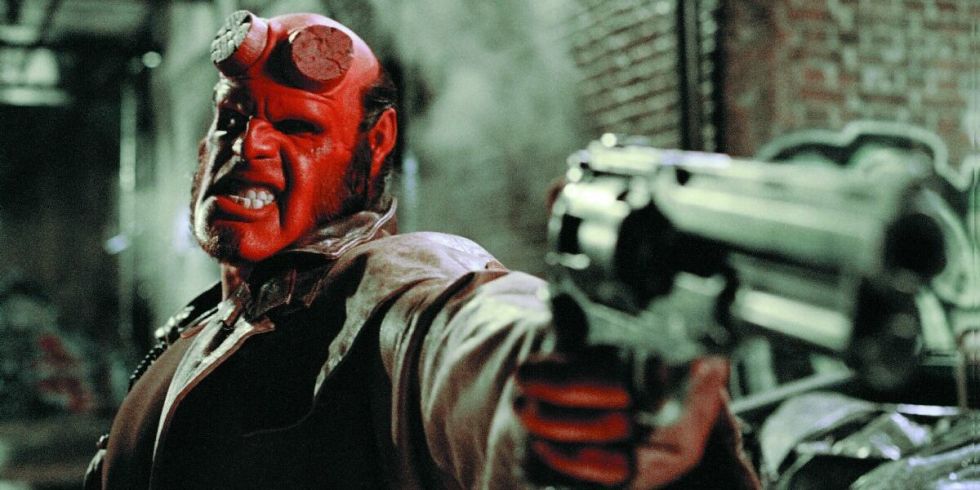
Ron Perlman fights the darkness in curio del Toro comic book flick Hellboy

Director: Guillermo del Toro

Cast: Ron Perlman (Hellboy), Selma Blair (Liz Sherman), Rupert Evans (John Thaddeus), John Hurt (Dr Trevor Bruttenholm), Karel Roden (Rasputin), Jeffrey Tambor (Tom Manning), Doug Jones (Abe Sapien), Brian Steele (Sammael), Ladislav Beran (Karl Ruprecht Kroenen), Bridget Hodson (Ilsa Haupstein), Corey Johnson (Agent Clay)

As little as 10 years ago, outside a few core characters like Batman, the X-Men or Spiderman, comic book movies were an odd curio hard to place in the mass market. Today of course, you can virtually get any character who has appeared in a cartoon strip up on the screen with a budget of millions. But back in 2004, Guillermo del Toro had to squeeze this project out on a smaller budget in order to get the studio to agree to make the film.

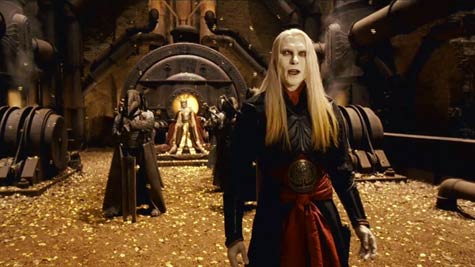
Hellboy has a particularly demented story. In 1945, the Nazis, working in partnership with Rasputin (Karel Roden) – yes thatRasputin, don’t even ask – attempt to open a portal to hell to, well I’m not quite sure what they want to do, but it probably involves the destruction of the world. Anyway, some humble GIs stop them and the only thing that comes through the portal is a little demon with an enormous stone fist. Raised by paranormal expert Dr Trevor Bruttenholm (John Hurt), this creature grows up into cigar-chomping secret-agent-for-the-FBI Hellboy (Ron Perlman), working on paranormal investigations. But when Rasputin returns from the dead it looks like all hell (literally) is about to break out.

Okay it should be pretty clear to you from that that Hellboy is an odd film. It’s very much from del Toro’s B-movie heart, and he invests this nonsense material with a great deal of directorial style and heart – a real “geek-boy-artist” job. Del Toro has a great deal of imagination and is able to strike a happy balance between enjoying the material and not taking it all too seriously. So he lets the film barrel along, throwing plenty of nonsense at the screen without worrying about trying to make it make real-world sense. In fact Del Toro is clearly so fond of the material that he basically shoots the whole thing like a comic book come to life. 

So the film is crammed with bright primary colours mixed with murky blacks, and Del Toro frames many key moments like comic book panels. It’s a film packed with striking images and scenes built around stuff that feels like it should teeter over into ridiculous camp all the time but never quite does. Its steam-punky styling instead manages to feel somehow both strikingly original visually and also strangely packed with integrity – like Del Toro made a very personal big-budget movie for his childhood, the sort of bizarro cult film that’s actually-quite-good and it’s going to win a huge following once people can find it for themselves (which is indeed what happened).

Del Toro’s other great principled stand was to ensure that Ron Perlman played the lead. Hellboy is a bizarre character – over six feet, red, horns, a tail – but what Perlman and Del Toro do so well is to make him some sort of Brooklynish chippy blue-collar worker with a kitchen-sink earthy wit. Perlman is clearly having a whale of a time playing this temperamental demon like some sort of longshoreman Han Solo, a brattish teenager and rebel with a world-weary cynicism. He’s crammed with contradictions (the demon who fights for good!) that Del Toro is keen to explore – and makes consistently interesting.

Because he’s such a different character, he energises a fairly traditional story and his character’s pretty standard personal-struggle-plotline (will he do the right or the wrong thing?). Perlman juggles all this really well, and gives a performance that is both dry and funny but also has moments of real heart and emotion. He even manages to sell his rather possessive love for Selma Blair’s (also pretty good) fellow orphan with pyrotechnical abilities as something heartfelt and caring, despite the fact that at one point he basically stalks her. It’s a rather wonderful performance.

The rest of the cast are a bit more of a mixed bag. Rupert Evans is saddled with the audience surrogate role – asking the questions we can’t ask – while Karel Roden’s lipsmacking performance as Rasputin never quite engages as a villain. Stronger roles come from Jeffrey Tambor as an officious FBI director and especially from John Hurt as Hellboy’s father-figure, the kind of quintessential ageing mentor that you can imagine his wards adoring. 

The rather silly plot doesn’t really matter. The importance here is the gothic chill of Del Toro’s style, mixed with his crazy “larger-than-life” dark comic book tone. And it works really well: the film is fun and witty, and if the storyline never really feels like it earns the “end of the world” threat (and builds towards an uninvolving duking out with a giant CGI monster), there are enough enjoyments along the way to make you want to make the journey.

Fantastic Beasts and Where to Find Them (2016)

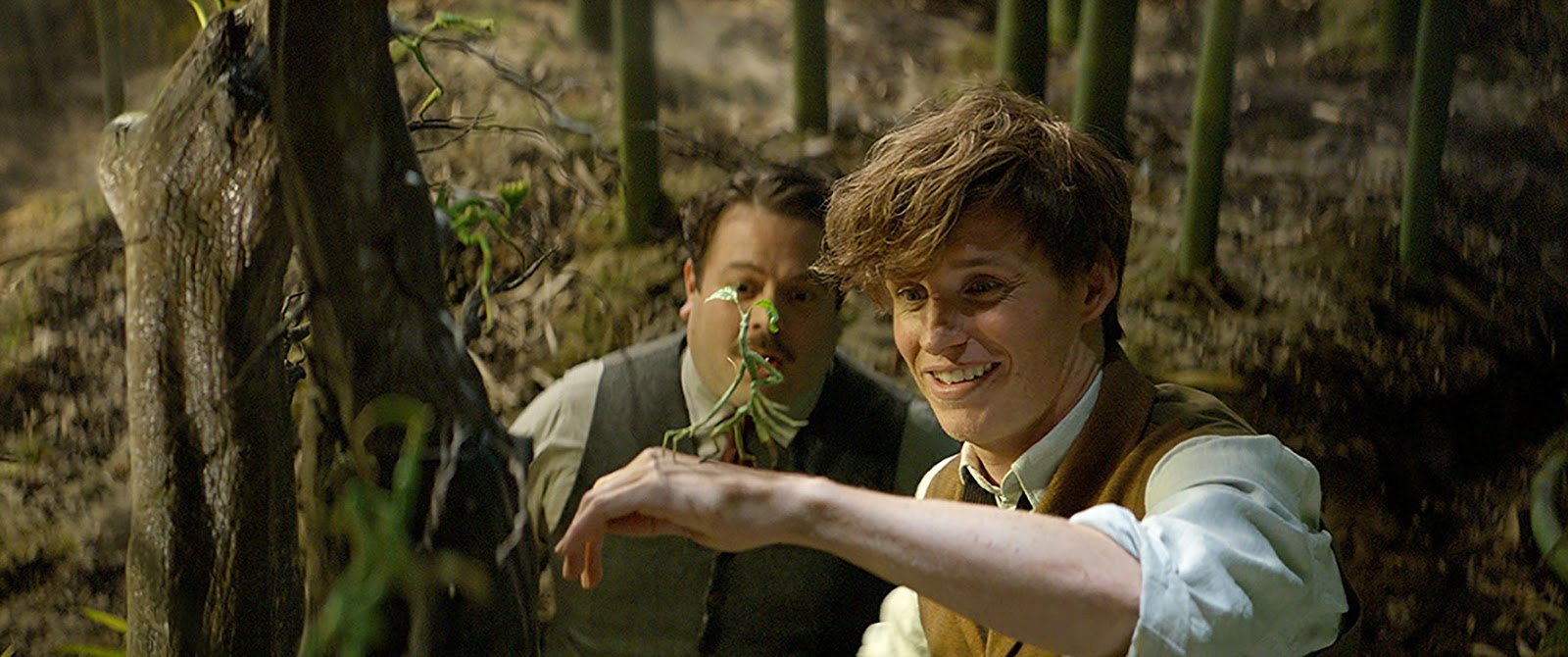
Eddie Redmayne and Dan Fogler uncover some Fantastic Beasts

Director: David Yates

Cast: Eddie Redmayne (Newt Scamander), Katherine Waterston (Tina Goldstein), Dan Fogler (Jacob Kowalski), Alison Sudol (Queenie Goldstein), Colin Farrell (Percival Graves), Ezra Miller (Credence Barebone), Samantha Morton (Mary Lou Barebone), Jon Voight (Henry Shaw Snr), Carmen Ejogo (President Seraphona Picquery), Ron Perlman (Gnarlack), Ronan Raftery (Langdon Shaw), Josh Cowdery (Henry Shaw Jnr), Johnny Depp (Gellert Grindelwald)

Eventually the gravy train had to come to an end. The Harry Potter franchise laid golden eggs for over a decade, until Rowling’s books came to an end. Just as well then that the incomparable JK Rowling had tonnes of invention left up her sleeve, and was keen to look at other elements of the Potterverse. So we got the creation of this sideways prequel, set in the rich backstory of the Harry Potter novels. And it is a bit of a treat.

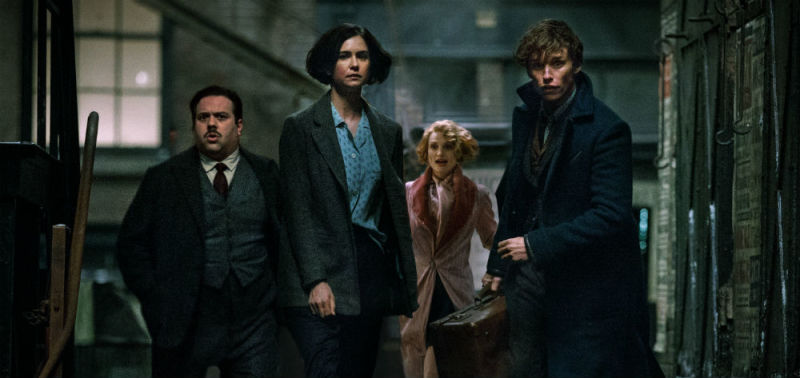
In the 1920s, Newt Scamander (Eddie Redmayne) arrives in New York with a suitcase full of fantastic beasts. He’s there to return one of them home – but after a mix-up at a bank his suitcase ends up in the hands of muggle (or as the Americans put it “No-Maj”) and would-be baker Jacob Kowalski (Dan Fogler). As the escaped beasts cause chaos, demoted Auror Tina Goldstein (Katherine Waterston) works with Newt and Jacob to try and recapture the creatures, with the aid of Tina’s mind-reading sister Queenie (Alison Sodel). But is all the destruction truly caused by Newt’s creatures? Or are there darker forces at work? 

Fantastic Beasts is a charming spin-off, sustained by some endearing performances, its warm heart and stylish design. Whether the plot is quite strong enough to reward constant viewing as much as many of the Harry Potter films do, I’m not sure (I didn’t find its story particularly gripping the second time around), but I think there are enough incidental pleasures there to keep you coming back for more. It’s actually a film which will be interesting to re-evaluate after the later sequels emerge – there are many suggested threads set up in this one for exploration later.

It’s not a surprise that the initial plot around chasing and collecting the beasts is fairly basic, since it’s based on a slim handbook (itself based on a reference from the original Harry Potter stories) that Rowling published as a Comic Relief fundraiser. Besides the chasing around to capture the animals, it’s only really the backdrop for sight-gags, cute animals and (most importantly) our window for getting to know our leads.

And these leads are certainly well worth getting to know, with a string of excellent performances from the four principals. Redmayne anchors the film very well as the slightly dotty, professorial, socially awkward Newt, whose coy, bashful charm really endears him to the viewer. Dan Fogler is possibly even better as our viewer surrogate, an average New Yorker thrown into a mad world of magic who somehow manages to take it all in his stride and whose growing excitement and embracing of this demented wizard world makes you fall in love with him. He’s helped by a sweet, gentle and touching romance with the effervescent but lonely Queenie (a magnetic Alison Sudol). Katherine Waterston gets the trickiest part as the earnest, try-hard, play-by-the-rules Tina – but her growing fondness for Newt and his creatures works very well.

The moments of the film that focus on the interaction between these four are the finest of the film – as are those that allow us a glimpse of Newt’s wonderful creatures. Housed in a Mary Poppins-ish suitcase of infinite TARDIS-like depth, these beasts are brilliantly designed and wonderfully individual, from a cute mole-like Niffler (naughtily stealing shiny things like a magpie), to a horny Erumpent (like a hippo and rhino mixed), to the majestic Thunderbird, a sort of Eagle-Phoenix, soaring through the plains in Newt’s suitcase. Even the small Bowtruckle Newt carries in his pocket gets to develop a sense of personality. (And yes I had to look all these names up).

These creatures are both individualistic but also used for very specific purposes in the film, from lock-picking to a sort of bizarre self-defence weapon. Despite their horrific appearances, the film treats them with as much understanding sweetness as Newt does – even the dangerous ones are only dangerous when riled or threatened, and Newt’s protective nature helps us to feel as fond of them as he does.

Away from the beasts, the film largely focuses on setting up threads (and threats) for future films. A major sub-plot revolves around an anti-Magical society run by a stern-faced Samantha Morton. The film heads into darker territories here, with its references to both cults and the ill-treatment of children. Ezra Miller does well as Morton’s awkward, ill-treated adopted son, unable to escape from his oppression or express his frustration. Someone in this family is a powerful magical being called an Obscurus, and the film plays a neat game of bluff and double bluff around this.

It continues this game as it fills out the political magical world around Carmen Ejogo’s regal magical President. What game is Colin Farrell’s authoritarian Perceval Graves playing? What of the film’s opening references to dark wizard Grindelwald, and the suggested war that is bubbling under the surface in the magical world? All this darker stuff sits around the edges and margins of Newt’s beast-collecting storyline, occasionally seeping in (let’s not forget at one point Newt and Tina are literally sentenced to death for supposed crimes), but doesn’t overwhelm the lightness.

David Yates directs with a professionalism that comes from being hugely familiar with this world. His later sequences of Obscurus destruction are not always particularly different from other city-smashing scenes from other films. Not every plotline feels fully explored – Jon Voight playing a newspaper mogul and his two contrasting sons seems like a plot we could do without – but Yates does keep the film moving pacily forward, he gets the tone of light slapstick and family warmth and he still shoots the wonder of magic better than almost anyone.

Fantastic Beasts is a film that is perhaps a little too light and frothy to really be a classic – it juggles too many plots and doesn’t always bring them together well. It’s mixture of darkness and lightness is a little eclectic, and it sometimes feel very much like a film designed to set up future films effectively. But when it focuses on its four leads, it’s very strong indeed and all of them – particularly Fogler – are people you want to see more of. It even manages to end the film on both a genuine laugh and a heart-warming bit of romance, tinged with sadness. It’s a fine start to a new franchise.

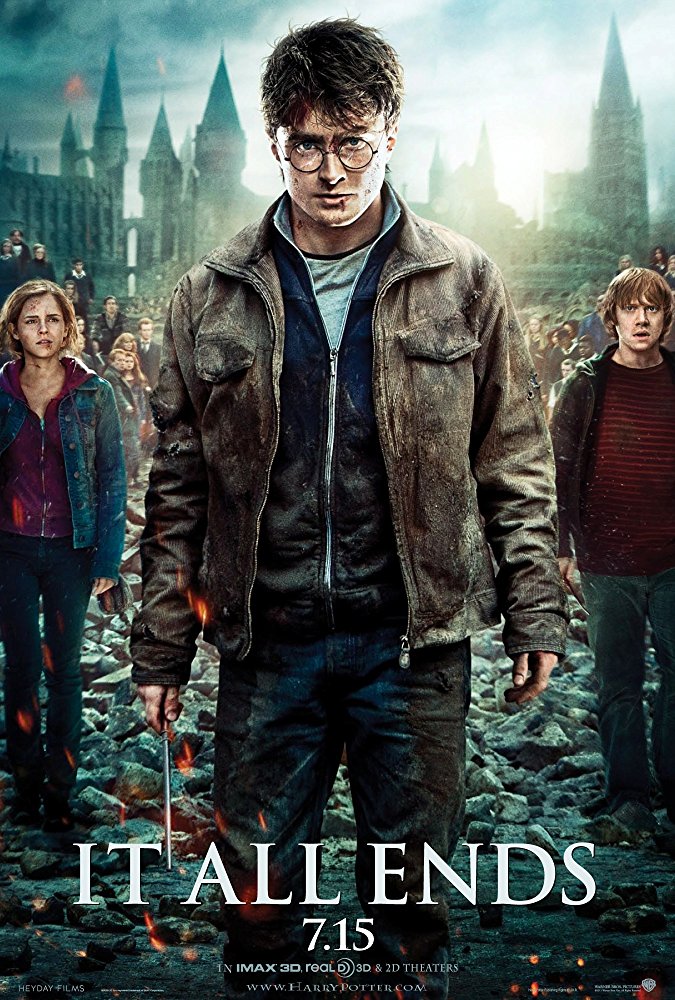
Harry Potter and the Deathly Hallows Part 2 (2011)

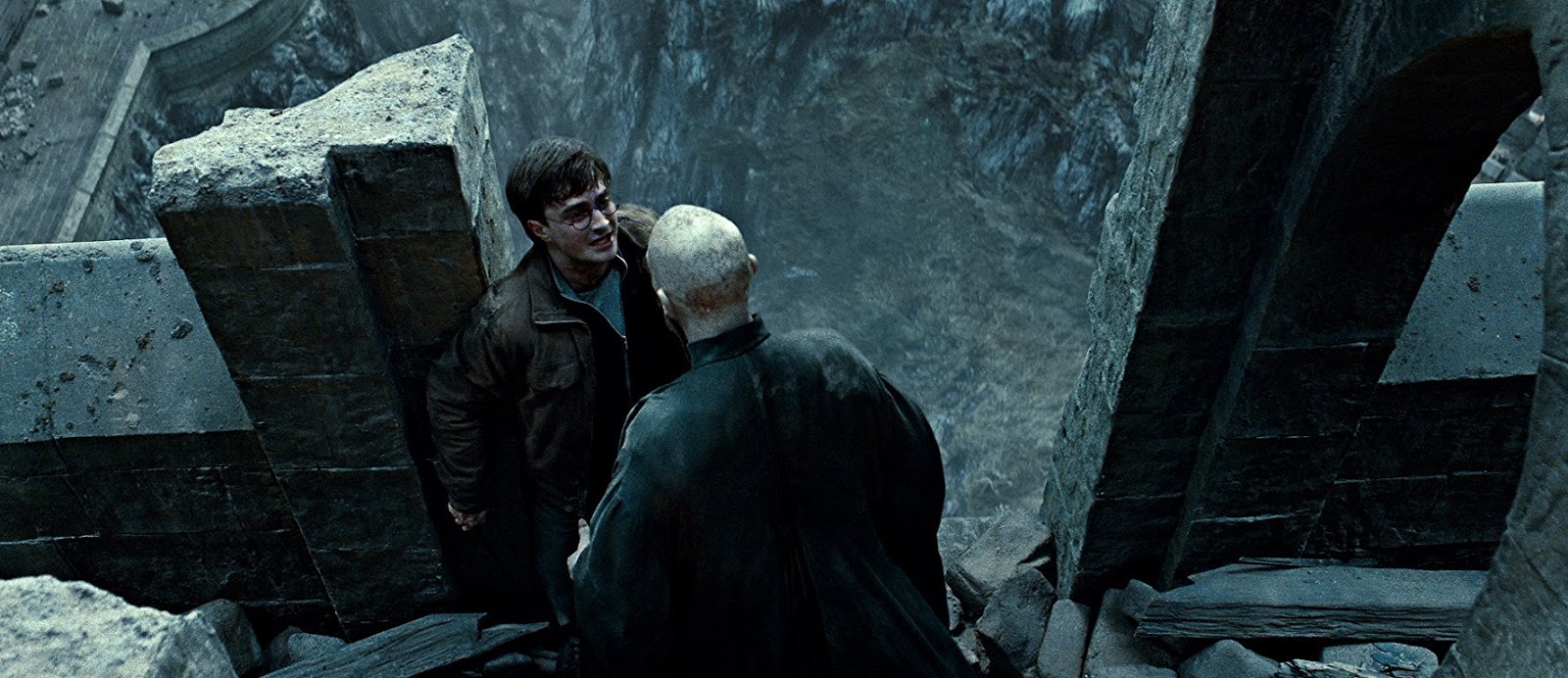
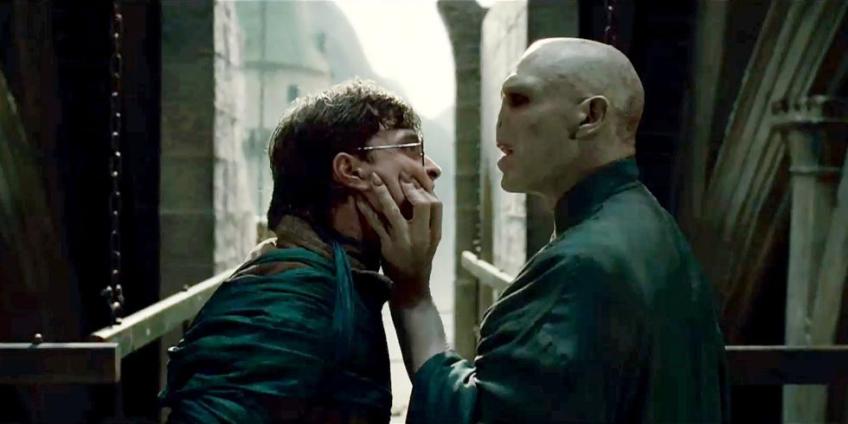
Harry and Voldemort prepare for their final showdown in Harry Potter and the Deathly Hallows Part 2

Director: David Yates

Cast: Daniel Radcliffe (Harry Potter), Rupert Grint (Ron Weasley), Emma Watson (Hermione Grainger), Helena Bonham Carter (Bellatrix Lestrange), Jim Broadbent (Professor Slughorn), Robbie Coltrane (Hagrid), Ralph Fiennes (Lord Voldemort), Michael Gambon (Albus Dumbledore), John Hurt (Ollivander), Jason Isaacs (Lucius Malfoy), Gary Oldman (Sirius Black), Alan Rickman (Severus Snape), Maggie Smith (Professor McGonagall), David Thewlis (Remus Lupin), Emma Thompson (Professor Trelawney), Julie Walters (Molly Weasley), Mark Williams (Arthur Weasley), David Bradley (Argus Filch), Ciarán Hinds (Aberforth Dumbledore), George Harris (Kingsley Shacklebolt), Gemma Jones (Madam Pomfrey), Kelly MacDonald (Rowena Ravenclaw), Helen McCrory (Narcissa Malfoy), Miriam Margolyes (Professor Sprout), Geraldine Somerville (Lily Potter), Adrian Rawlins (James Potter), Warwick Davis (Griphook/Professor Flitwick), Matthew Lewis (Neville Longbottom), Evanna Lynch (Luna Lovegood), Bonnie Wright (Ginny Weasley), James Phelps (Fred Weasley), Oliver Phelps (George Weasley), Domhnall Gleeson (Bill Weasley), Clémence Poésy (Fleur Delacour), Guy Henry (Pius Thicknesse), Nick Moran (Scabior), Natalie Tena (Tonks)
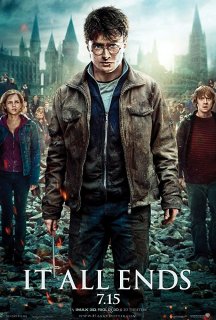
And so here we are. After 19 hours and 40 minutes, the Harry Potter franchise draws to a close in the rubble of Hogwarts. The franchise goes out swinging for some big hits – and it misses some of them – but at least it’s trying. If this turns out to be one of the least satisfying films in the franchise (at best the 6th best Harry Potter film), it’s not because they haven’t thrown anything at it.

The film adapts just under the last half of JK Rowling’s final novel. In an interesting structural twist, it actually ends up covering just over one day of time: between our heroes breaking into Gringotts Bank and the final confrontation between Harry and Voldemort, less than 24 hours has taken place. Nothing is really made of this in the film, but it’s an interesting thought. In fact Yates’ film is full of interesting half-thoughts that never go anywhere. More than any other film in the series, this is one where it is essential you’ve read the book before viewing it. Without the book you don’t get any of the rich context for most of the events.

This all culminates, for me, in the way the film falls apart in the last 20 minutes or so. This final section of the film changes, or cuts, so much of the book’s thematic depth, so many of its plot strands and explanations, that every time I see it I feel my disappointment starting to rise. I don’t want to be the guy who says “just shoot the book” – but if any film could have stuck with the book it’s this one. Why did they cut and change so much of this stuff? Did they really think, after almost 11 years and 20 hours of screen time, we wouldn’t have the patience for some of the more complex things from the book? Did they really feel that they had to stamp their own distinctive vision on it? Anyway, here are the things that always annoy me about this film:

1. Dumbledore’s backstory gets forgotten

Okay this is a minor one – and the film does leave some hints in. But for GOODNESS’ SAKE, they cut this book into two films, spent ages in the first film talking about the mysteries of Dumbledore’s dark past, then just as we meet Dumbledore’s brother Aberforth (a neat turn from Ciarán Hinds) and are about to get an explanation, Harry basically says words to the effect of “I’m not worrying about that. And neither should you folks. On with the film”.  

Even the Ghost of Dumbledore doesn’t get to explain any of this stuff. All the careful mood build of Part 1 is just thrown away. The book is about learning about death, the futility of the search for power, and humility. Dumbledore’s backstory of failed ambition is a massive part of this – and it gets dropped. It’s not like we didn’t have time in a series that has churned out films pushing up to three hours in length. I mean why put all that stuff in the first film, if you aren’t even going to reference it at all in the second film?

2. The Deathly Hallows get benched

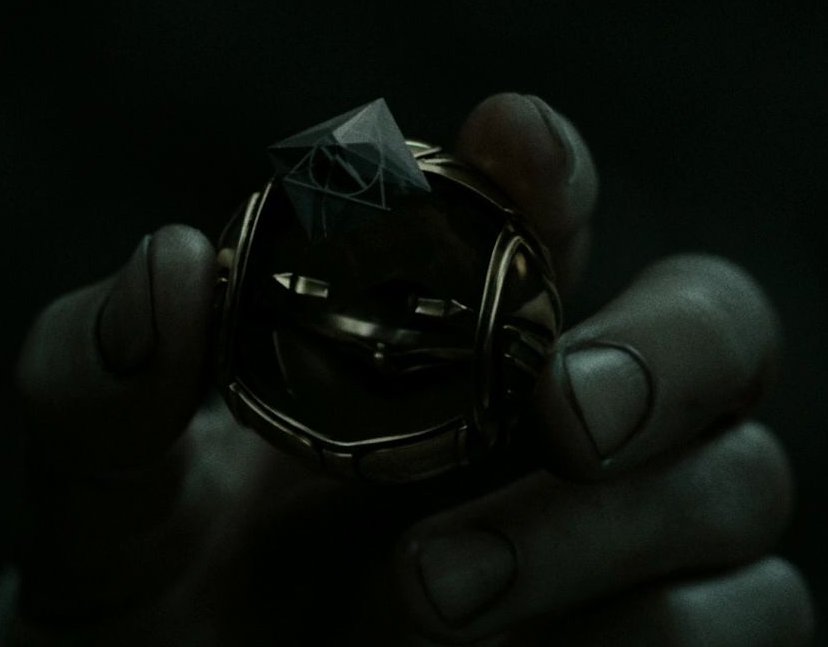
Again wouldn’t be quite so bad if we hadn’t spent a huge amount of time in the first film talking about them – but are the words Deathly Hallows even mentioned here? Instead, just like Voldemort, the film is seduced by the elder wand, focusing everything on the ownership of this MacGuffin. The point of the book is that all this stuff is a chimera –and that the real point is learning that death should not be feared but accepted at the proper time. 

As it is, this never gets built on – and the importance of the resurrection stone (including why it tempted Dumbledore so much) never gets explained. Rather it just comes down to who controls the powerful thing, with none of Rowling’s richer themes.

Harry ends up controlling all three here but we never really get the sense of Harry controlling them all, or understand his decision to throw away the stone, or his realisation that death is not to be feared but accepted.

3. Neville gets blown away

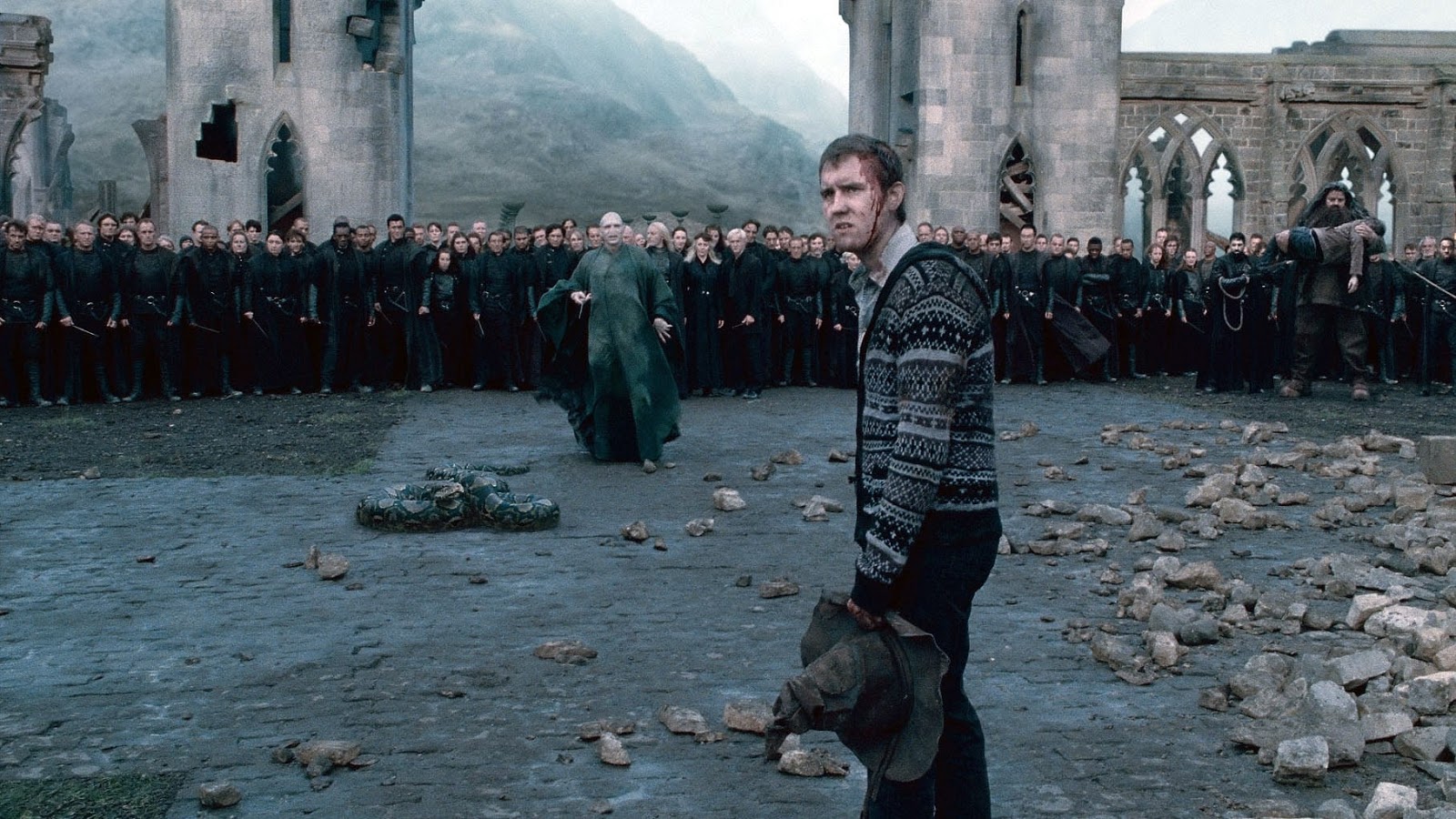
Gotta feel sorry for Matthew Lewis (who is very good here). Reading the book he must have been thrilled: “So I pull the sword out of the sorting hat and then in one move cut the head off the snake like a total bad ass”. This should have been a great moment (it’s an iconic one from the book). Instead Neville gets blasted and, presumably to give them something to do, Ron and Hermione spend ages trying to kill the snake (intercut with Harry and Voldemort fighting) until finally Neville gets to lop that head off – by which point the moment has well and truly passed.

 4. No one mentions Voldemort keeps making the same mistakes

In the book, Harry has a beautiful moment where he basically tells our Tom that he’s made the same mistakes over and over again. Namely that, by killing Harry, who sacrificed himself for love, he made exactly the same mistake as he did with Harry’s mother and now cannot harm any of those Harry died for (i.e. the rest of the cast). It’s a great moment, where finally Harry understands what the novels have been building towards. Doesn’t merit a mention.

Neither does Voldemort’s childish obsession with famous things – he is consumed with belief in the power of a wand, he can’t let go of associating his horcruxes with famous things and the lineage of iconic wizards, etc. etc. Voldemort is basically a big, silly, empathy-free, sulky teenager – the film misses this point entirely.

Instead of explanations and depth, the film reduces Harry and Voldemort’s final clashes into dull punchy-bashy stuff. The director clearly fell in love with the visual idea of Harry and Voldemort’s heads merging together while apparating. This is a visual image that I hate because it (a) feels like showing off and (b) would only work if they were semi-reflections of each other – which they certainly aren’t. They are polar opposites. It’s a flashy effect that actually makes no thematic sense what-so-bloody-ever.

5. Voldemort goes out like a 3D special effect

Perhaps not a surprise in a film, but Voldemort gets killed and disintegrates into a huge puff of 3D-film smoke. I hate this. I hate it. I really, really, really hate it. I’ll tell you why:

  • The spells used in the duel are really unclear – it’s a great moment in the book that Voldemort’s killing curse rebounds against Harry’s disarming curse – instead we get the bright lights.
  • Voldemort dreads death more than anything – and Rowling’s writing of his body falling dead to the ground like any other normal dead guy taps exactly into what Voldemort spent his whole life struggling against. It’s a beautiful irony.
  • No one knew if Voldemort was dead or not the first time because he disappeared. In the book he is killed, by his own curse, in front of everyone and his body is left behind for everyone to look at and say “yup. Guy is dead”. Not here. Here he blows up in a puff of smoke in front of no witnesses. Did Harry just head back into the great hall and say “Okay guys. Take my word for it. He’s dead. He just is. Trust me on this. It’s not like last time. Totally dead. Promise.”

Wow. Okay that’s not really a review is it? That’s just like a disappointed fan whining “I don’t like it because it is different”. But my point isn’t that this is bad because it’s different. It’s bad because it takes stuff from the original and changes it AND NOT FOR THE BETTER. Moments that worked beautifully, or carried so much weight in the original are bastardised crudely for no clear reason.

As I say, after almost 18 hours and a life time (for many viewers) of growing up with these characters: surely we could have given the film a bit more time and allowed some actual intelligent context from the books to creep in? Surely we had the patience for Harry getting to point out to Voldemort how wrong he is? Everyone in the audience was ready for that right? If there was one film people were probably willing to dedicate three hours of their life too, in order to see it done properly it was this one, right? Rather than rushed by in a little over two?

But no this film goes always, always, always for the big spectacle. Not that this always work: Yates doesn’t shoot the battle hugely well. Aside from one excellent sequence which shows our three heroes trying to get across the castle courtyard, while chaos rages around them (beautifully scored as well), the battle is unclear, dingy and not hugely exciting. Again, I’d have liked to have had a bit more of this – to get some moments with this huge cast doing stuff in the battle (especially since they are ALL back – kudos to the producers there).

It’s a real, real shame because honestly parts of this movie are really, really, really good. Tom Felton is cracking again as Draco – and the film gives real development time to showing the impact all this has on the Malfoy family with genuine empathy. The break-in at Gringotts is exciting and fun – as well as giving Warwick Davies his best moment in the series as two-faced Griphook. Inventions and flourishes, such as Harry having visions of an enraged Voldemort slaughtering the staff of Gringotts in fury, are chilling.

Some moments of the book are carried across really well, in particular Snape’s escape – a powerfully filmed sequence of bravery from the pupils, and some great work from Maggie Smith. Yates really understands how to get moments of magic to work: the creation of the shield around Hogwarts is totally spine-tingling. When the film sits and breathes it generally gets it right. Fiennes is terrific still as Voldemort, serpentine, arrogant, unsettling. He gets some lovely moments here – from fury, to pained fear (as horcruxes bite the dust) to an almost-funny-awkward-mateyness as he tries to seduce Hogwarts pupils to his side (his awkward hug of Draco is terrific).
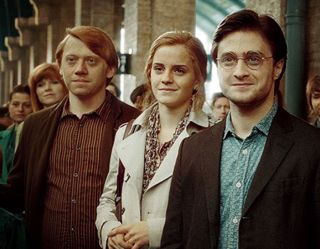
The three leads are of course great. Daniel Radcliffe could certainly have delivered the more complex moments of the book if he had been given the chance. He even does his best to sell the slightly awkward coda “19 years later”: a controversial sequence, it makes a great footnote in the book but it was always going to be a tough ask to make three teenagers look like 40 year olds convincingly, particularly when we are nearly as familiar with their faces as our own.

There are some troubling and failed moments in this film, stuff that doesn’t work. But then there is this:

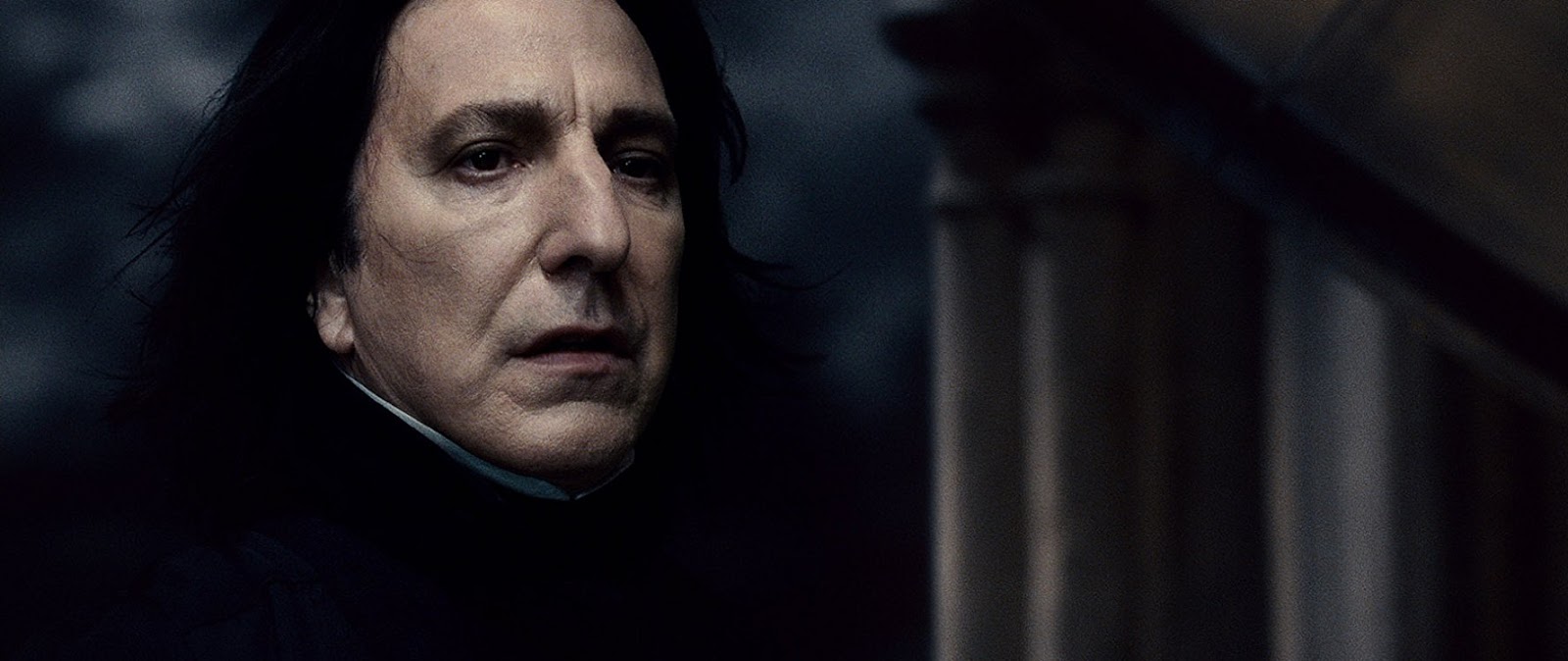
Oh wow. For all that the film changes stuff from the books for the worst – this is a moment it unquestionably does better. And a massive, massive part of this has to be down to Alan Rickman. Rickman was told this backstory from the start of the films – and he delivers it with a passionate commitment here. Helped by brilliant score, and fascinating re-editing of moments from previous films seen from new angles, Rickman delivers the reveal of Snape’s heartbreaking moments perfectly.

Was I tired? Was it the added impact of Rickman’s own depth? I don’t know but I shed tears watching this again. It’s just a beautiful, beautiful, beautiful piece of film making. Everything in it works perfectly: directing, writing, music, editing, filming and above all the acting. It’s just sublime. For all the film misses the point elsewhere it finally totally gets it here. I would take this moment over dozens of moments of Harry and Voldemort fighting each other.

And yes this Harry Potter film might miss the point, and it might bungle the ending, and it might well fail to carry across the richness and intricate plot explanations of Rowling’s original. Yes it gets bogged down in “who controls this wand” and yes it misses the point completely about the film being about learning to overcome a fear of death and defeat (something Voldemort totally fails to do) but then it has moments where it works wonderfully like this. 

But in these films we got a beautiful franchise, with some excellent films. It’s always going to reward constant viewing. And it will always move the viewer. And it’s always going to be great.

Always.

Jason and the Argonauts (1963)


The Argonauts take on dreadful monsters in Jason and the Argonauts. You gotta love it.

Director: Don Chaffey

Cast: Todd Armstrong (Jason), Nancy Kovack (Medea), Gary Raymond (Arcastus), Laurence Naismith (Argus), Niall MacGinnis (Zeus), Michael Gwynn (Hermes), Douglas Wilmer (Pelias), Jack Gwillim (King Aeëtes), Honor Blackman (Hera), John Cairney (Hylas), Patrick Troughton (Phineus), Nigel Green (Hercules)

Watching this film it’s impossible not to get swept up in childish glee. It’s one of the most gloriously entertaining, wonderfully imaginative and brilliantly enjoyable films ever made. Watch this at the right age and it’s got you for life. Its best remembered of course for its wonderful Ray Harryhausen stop-motion effects – but to be honest the whole film is a brilliantly assembled package from start to finish, full of thrills and spills. I love it, I’ll always love it, and it’s got to be one of the best adventure stories ever filmed. Not much point writing more is there? But I guess I will.

The plot hews fairly closely (give and take) to the mythology. Pelias (Douglas Wilmer) seizes the Kingdom of Thessaly. Terrified of a prophecy that says a child of King Aristo of Thessaly will take the throne from him, he kills Aristo’s daughter at the temple of Hera (Honor Blackman). Outraged, Hera becomes the protector of Aristo’s surviving son Jason (Todd Armstrong), and 20 years later he returns. Jason needs to prove himself if he is to re-take the throne, and decides to find the legendary Golden Fleece in the distant land of Colchius. He builds the greatest ship ever – the Argus – and holds games to find the finest crew in Greece. But danger awaits!

If any film is associated the most with Ray Harryhausen, it’s this one. So it’s almost a shock to realise he didn’t direct it, and that the monster moments are carefully placed only at key moments – and that a lot of the rest of the film relies on human action. Jason and the Argonauts is so good because all these elements are brilliantly put together and superbly staged, with an old-school, boys-own adventurousness. How can you not enjoy this film?

The Harryhausen effects are astonishingly good, and their stop-motion brilliance have a grounded reality to them. The staggering copper monster Talos is fabulous – grinding joints, groaning weight and size. The shrieking harpies that plague Patrick Troughton’s put-upon Phineas have an unpleasant, grasping dirtiness to them. The Hydra guarding the fleece is a rattlesnake-like vicious beast. All brilliant. I love them all – just sequences to dream of.

But the highlight is of course the skeletons’ battle. Oh wow. This sequence still holds up so well. It took Harryhausen years in the making and planning, but really paid off. The skeletons are terrifying in their cold-eyed ferocity. For skulls, Harryhausen gives their faces a lot of expressiveness. I just love this sequence – it speaks to the child in all of us. And there is something extra magical from knowing that the sequence was put together frame-by-frame and the live action shots carefully choreographed to match-up with it. Not for nothing did Tom Hanks namecheck this film when presenting Harryhausen with an honorary Oscar. 

These sequences really work though because the film has a wonderful Sunday-morning-serial briskness to it. Pacily directed by Don Chaffrey, the film motors so swiftly through its plot that you are surprised to find it’s only about an hour and a half. Its story structure is not always perfect: apart from Jason and Arcastus most of the rest of the Argonauts are so briefly introduced (despite the recruitment Olympics montage at the start) you’ll find them hard to tell apart. The arc of the story is often a little messy, and iIn fact it’s easy to forget the film ends on a cliffhanger (the sequel was never made) and that Douglas Wilmer’s sinister Pelias is totally forgotten after the first half an hour. But it’s so well done it doesn’t matter. 

But Chaffey keeps the events moving forward so well, the tone so perfectly balanced between heroics, gods debating and thigh slapping jokiness that the film’s tone and momentum never slackens, with the Harryhausen monster sequences as exciting tent-poles in the film’s action. A lot of this feeling is carried across from Bernard Herrmann’s excellent score, a hummable mixture of bombast and slightly eerie mysticism that reflects and compliments the action throughout.

The film is extremely well-made and put together. The Gods as these gigantic figures living in Olympus (Jason is not a lot bigger than the chess pieces they use to guide the wars of the humanity) are great fun: Niall MacGinnis is a very 1960s idea of Zeus (the gods would be hot younger guys today, not tubby Brits), but gives it a headmasterly briskness. Honor Blackman is very good as a proud but caring Hera – the use of the Argus’ headpiece as her voicepiece works really well. It’s quite something that all this interference from the Gods never feels silly at all.

Todd Armstrong and Nancy Kovacks are, to be honest, pretty wooden as the leads but that seems to be what the film needs. Armstrong does a very neat line in middle-distance staring. Gary Raymond has a lot more fun as a scheming Arcastus. The film also manages to shuffle some perceptions: Nigel Green’s Hercules is more of a roisterer than the great warrior (and, with his meat-headed over-confidence, causes more problem for the Argonauts than most). Other performances are perfect adventure-story ham: Jack Gwillim chews the scenery outrageously as King Aeëtes, which kind of matches up with the overblown hyper-reality of the skeleton fight.

Talking about this film, it’s hard not to treat it as a sequence of scenes that I really love. But every scene in it has something. I love the moment where Hylas proves his worth via clever stone-skimming. The approach to the clashing rocks – and the intervention of Poseidon to hold the rocks apart – is brilliant. Hermes’ disguise being unveiled. Hercules doing something decent by staying behind on an island to look for a missing Hylas. All those brilliant Harryhausen sequences.

There is something about this film that is just endlessly and constantly entertaining. No matter your age, it’s a film for every single generation of children (young and old!) to enjoy. It’s simply marvellous, and Chaffey and Harryhausen deliver it wonderfully. Every scene is exciting, the pace never slackens, the special effects are brilliant. But on top of that, it’s a brilliantly put together, well directed, beautifully scored film. It’s exciting, it’s gripping, it’s wonderfully entertaining. I’m gutted they never made that sequel (although since Jason and Medea’s story is literally all down-hill from here, it’s probably just as well).

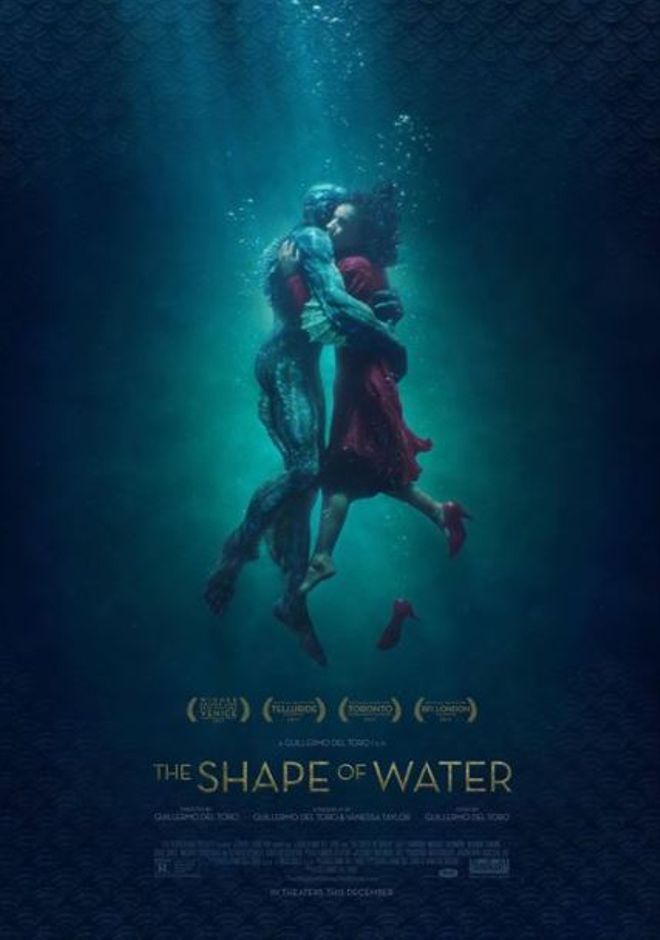
The Shape of Water (2017)


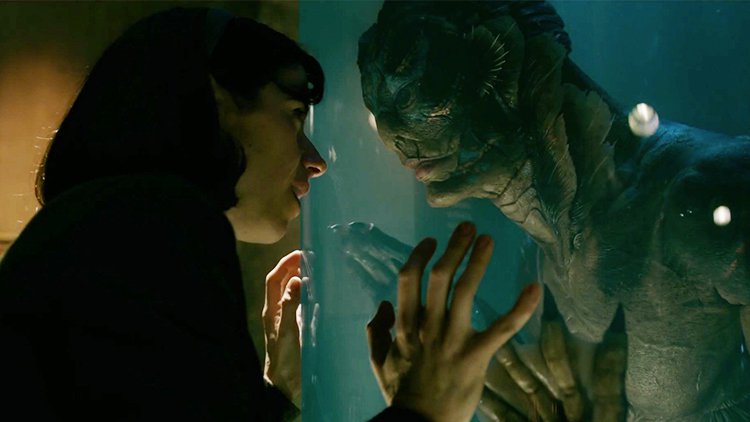
Sally Hawkins and Octavia Spencer work together to save a misunderstood creature in The Shape of Water

Director: Guillermo del Toro

Cast: Sally Hawkins (Elisa Esposito), Michael Shannon (Colonel Richard Strickland), Richard Jenkins (Giles), Doug Jones (The Creature), Michael Stuhlbarg (Dr Robert Hoffstetler), Octavia Spencer (Zelda Delilah Fuller), Nick Searcy (General Frank Hoyt), David Hewlett (Fleming), Lauren Lee Smith (Elaine Strickland)

Guillermo del Toro: part arthouse director, part thumping action director, who else could have made both Pan’s Labyrinth and Pacific Rim? The Shape of Water falls firmly into the former category, and continues the director’s long-standing interest in fairy-tales and fables, creating adult bedtime stories filled with romance and wonder, but laced with violence and human horror (and it’s always the humans who are the monsters). The Shape of Water has been garlanded with huge praise – but yet I’m not quite sure about it. Just not quite sure.

In 1962 in Baltimore, Elisa Esposito (Sally Hawkins) is a mute cleaner working in a government facility with her colleague, friend and effective translator Zelda (Octavia Spencer). Her only other friend is her neighbour, a gay out-of-work advert artist Giles (Richard Jenkins). The research facility takes delivery of a strange amphibious creature (Doug Jones), captured in the wild by sinister CIA man Richard Strickland (Michael Shannon). While Strickland and lead scientist Dr Hoffstetler (Michael Stuhlbarg) conduct tests on the creature, Elisa befriends it – the two of them drawn together by their isolation and inability to communicate verbally. When the decision comes from above to dissect the creature, Elisa decides to help it escape. 

The Shape of Wateris an adult fairy-tale that uses the structure, rules and heightened reality of the bedtime story. So we have Elisa as “the Princess without a voice”, the government facility as the evil castle, the creature as a mixture of damsel in distress and knight errant, and Michael Shannon’s vile government spook as a sort of perverted evil Queen. While the film is set in 1962, it’s aiming for a fantasy world feeling: Elisa and Giles even live above an old-school movie cinema, while the facility itself is a dank, subterranean concrete prison, part medieval dungeon, part industrial complex, dressed in a retro-1950s style. There’s no denying the film looks fantastically impressive.

The plot hinges on the growing bond between Elisa and the creature, which flourishes first into a mutual friendship, then semi-romance and finally into a full-blown relationship. If there is one part of the movie which I felt didn’t quite work, it was the build between friendship and love. While del Toro does some excellent work showing these two bonding over a common lack of language – she teaches him some basic sign language, they both share a love of music – I felt the jump between friendship and sexual attraction seemed a little big.

Del Toro films it all beautifully – and his empathy for both characters is very moving. But the film wants us to feel this deep connection for (and between) the two characters – and I’m just not sure I did. I’m not sure the film gives the time it needs for this development. Great as Michael Stuhlbarg’s (and excellent as his conflicted performance is) character is, could the film have removed his sub-plot and invested more time in the relationship? Yes it could – and I think this could have made a stronger movie. This is of course a personal reaction – I’m sure plenty of people will be bowled over by the romance of the film – but I didn’t quite buy it. For all the soulfulness of the film, I just didn’t find myself investing in this relationship as it built as much as I should.

This is despite Sally Hawkins’ expressive acting as Elisa. I find Hawkins a bit of an acquired taste: she is a little too twee, something about her eyes and vulnerable smile is a little too head-girlish. Of course that sprightly gentleness works perfectly here, but the character is more interesting when del Toro explores her depths, her desire and well-concealed resentfulness under a cheery exterior (practically the first thing we see her do is masturbate in the bath – a daily ritual timed to the second via egg timer, functionally getting these feelings out of the way before the day ahead). Hawkins mixes this gentle exterior and passionate interior extremely well throughout the film.

The principal supports are also excellent. It’s no coincidence that del Toro makes our heroes all outsiders: a mute, a black servant and an ageing gay man. As well as showing why these characters might be drawn together, it’s also a neat parallel commentary on attitudes of the time – Octavia Spencer in particular makes a huge amount out of a character that is effectively a voice for Elisa half the time, investing the part with a huge sisterly warmth.

Richard Jenkins is both very funny and rather sweet as a man scared of being alone and frightened about doing the right thing. Most of the film’s laughs come from him – but so does a large degree of its heart. Jenkins gets some fantastic material – from hints that he has been fired for social and sexual misdemeanors from his Mad Men-ish former job, to his growing realisation that his hand-drawn art is being left behind in a world embracing photography (“I think it’s my best work” has never sounded like a sadder mantra), and above all his hopelessly sad infatuation with the friendly barman at a local diner (the sort of hopeless crush you feel he must realise isn’t going to go anywhere good – but still manages to be endearing before it gets there).

Del Toro’s dreamy fable has plenty of potential monsters and obstacles in it – from government suits to Russian heavies – but the main antagonist is Shannon’s Strickland. Great as Shannon is in this role as a menacing heavy with a hinterland of insecurities and self-doubt, it’s a character that feels a little obvious. He’s the monster, you see! It’s a heavy-handedness the film sometimes uses – not least in its occasional references to the race politics of the era – that weights the deck, and tries to do a little too much of the work for the audience. Again, a film with one fewer sub-plot might have allowed this character greater depth. As it is, his vileness is established from the first second, which means the metaphor of his hand with its increasingly rotten, gangrenous fingers seems a little to on-the-nose.

But The Shape of Water is a labour of love, and a testament to love – and del Toro reminds us all what a luscious and romantic filmmaker he can be. The later romantic moments between Elisa and the Creature have a beauty to them – not least the moments when they immerse themselves together in water. Other moments are too obvious: an imagined song-and-dance routine is so signposted in advance that it carries little emotional impact. In fact, the film’s main fault may be it is too predictable: most of its plot developments I worked out within the first few minutes – but it sort of still works. After all, fairy-tales are predictable aren’t they?

Del Toro has made one from the heart here. It’s not a perfect film – it’s not a masterpiece, and I think it’s a less complex and affecting work than the brilliant Pan’s Labyrinth – but it’s made with a lot of love and a lot of lyrical romanticism. It looks absolutely astounding. It’s actually surprisingly funny and wonderfully acted: Richard Jenkins probably stands out, and my respect for Octavia Spencer continues to grow. Del Toro is gifted filmmaker, and he is working overtime here to make a romantic, sweeping, monster movie cum adult fairy-tale. All the ingredients are there: but somehow I didn’t fall in love. Did I miss it? Maybe I did. And I can’t think of much higher praise than I’m more than willing to go back and look again and see if I get more of a bond with it next time. But, for all its moments of genius, I found the delight was on the margins rather than the centre.

Hugo (2011)


Martin Scorsese’s Hugo: a kids film in name only

Director: Martin Scorsese

Cast: Asa Butterfield (Hugo Cabret), Chloë Grace Moretz (Isabelle), Ben Kingsley (Papa Georges), Sacha Baron Cohen (Inspector Gustave Dasté), Ray Winstone (Claude Cabret), Emily Mortimer (Lisette), Jude Law (Mr Cabret), Helen McCrory (Mama Jeanne), Michael Stuhlbarg (René Tabard), Christopher Lee (Monsieur Labisse), Frances de la Tour (Madame Emilie), Richard Griffiths (Monsieur Frick)

Martin Scorsese isn’t exactly the first name you think of when your mind turns to directors of children’s films. So perhaps it makes sense that, in Hugo, he directed a children’s film aimed at virtually anyone except children. A huge box-office flop, Hugo was garlanded with awards and critics’ acclaim – but I’d be amazed if you find any child with a DVD of it. It’s a film made by a passionate lover of cinema, aimed at lovers of cinema, which just happens to have a child at the centre of it. 

Hugo Cabret (Asa Butterfield) is an orphan, living in the Paris train station fixing the clocks, and attempting to fix a curious automaton which his late father (Jude Law) had taken from the Paris museum to repair. After being caught by Monsieur Georges (Ben Kingsley) stealing parts from his toy shop in the station, Hugo must earn back his confiscated notebook on the workings of the automaton. Hugo starts a friendship with Georges’ god-daughter Isabelle (Chloë Grace Moretz), and together they begin to investigate the mysterious past of Papa Georges – and his connection with the early days of cinema.

Any understanding of what makes a good film for children is missing here. It’s not exciting, it’s not engrossing, it’s not particularly fun, it doesn’t place the child (really) at the heart, and most importantly it doesn’t have a story children can relate to. The characters spend a lot of time talking about the glorious adventure they’re on – but none of the excitement translates to the screen. Instead the action creeps forward uncertainly, with the motivations of Hugo himself unclear. There are half hearted attempts to aim at a universal fear children can relate to – losing your parents and searching for new ones – but the film doesn’t run with it. 

Its real interest is the power of the movies. So Hugo’s story gets lost halfway through the film, as Scorsese focuses in on the redemption of famed cinema auteur and pioneer Georges Méliès. The children’s adventure is nothing more than visiting a library to find out who Méliès was – after that, they are effectively superfluous to the story. Details about Hugo’s relationship with his father, or with his distant uncle, are completely dropped – and the automaton that seemed like it held the key to Hugo’s purpose, becomes a MacGuffin. It’s a film about a giant of cinema, made by a giant of cinema.

So let’s put aside the marketing of this film as children’s film. The only element of the film that feels remotely like it is part of some sort of kids’ flick is Sacha Baron Cohen’s slapstick, funny-accented railway inspector – and as such Cohen’s hammy mugging sticks out like a tiresome sore thumb. The rest of the film is what you would expect from a cinema enthusiast making a film about the movies – a glorious, loving recreation of old silent movies and the methods of making them, shot and told with a sprinkling of movie magic. 

The film looks wonderful. The cinematography is gorgeous, the production design astounding. It’s beautifully made and has a light and enchanting score. Scorsese goes all out to homage the shots and set-ups of old silent movies. In fact the film only really comes to life in its second half, where flashbacks show the methods Méliès used to make his films. The recreation of scenes from these old classics is brilliantly done – and Scorsese’s designers delight in filling the screen with the sort of colour that you couldn’t find in the original. The photography also goes out of its way to give these scenes the sort of colour tinted look that the hand-painted prints of old movies had. Even the editing is designed as much as possible to replicate these old films.

Truly, these sequences are delightful – and Scorsese’s joy in making them is evident in the camerawork, and the emotional force he gives to Méliès’ story (helped as well by Ben Kingsley’s sensitive underplaying as the depressed genius). It’s just a shame that he couldn’t get as engaged with the first part of the film. Hugo’s story is largely dramatically inert – in fact the whole plotline around Hugo feels like a hook on which to hang the second half of the film. As if Scorsese couldn’t make the second part of the film without making the first. 

That’s why this film doesn’t work for children, but works better for film-loving adults. The ins and outs of Hugo’s early story just aren’t that interesting – and we aren’t given any real reason to relate to Hugo or to feel any empathy for his journey (whatever that might be). In fact the film stretches this plot line long past any actual content – already I’m struggling to remember exactly what happened in the first hour of the film. This is no comment on the performances of Butterfield or Moritz, who are both very good (even if Moritz is saddled with sub-Hermione Grainger character traits). While it always looks great, it never really finds the heart to get us engaged with Hugo.

So Hugo is a film for cinema-fanatics. Scorsese directs with great invention – but it’s all too clear where his heart is: and that’s why the film failed so spectacularly as a kids’ film. Compare this to Toy Story 3say, and it’s clear which one most children are going to want to watch. However, if you want to see Scorsese make a charming film about his passions, one that is overlong but looks gorgeous, that playfully recreates the silent cinema era, even while its narrative is basically pretty dramatically inert, you’ll love it. There are moments in this film to treasure – it’s just not really for kids. Just because Scorsese made a film without someone’s head in a vice or zipped into a bodybag, doesn’t suddenly mean he’s going to find a new audience.

Harry Potter and the Deathly Hallows Part 1 (2010)

Harry and friends are on the run in the excellent Harry Potter and the Deathly Hallows Part 1

Director: David Yates

Cast: Daniel Radcliffe (Harry Potter), Rupert Grint (Ron Weasley), Emma Watson (Hermione Granger), Helena Bonham Carter (Bellatrix Lestrange), Robbie Coltrane (Rubeus Hagrid), Ralph Fiennes (Lord Voldemort), Michael Gambon (Albus Dumbledore), Brendan Gleeson (Mad-Eye Moody), Richard Griffiths (Vernon Dursley), John Hurt (Mr Ollivander), Rhys Ifans (Xenophilius Lovegood), Jason Isaacs (Lucius Malfoy), Bill Nighy (Rufus Scrimgeour), Alan Rickman (Severus Snape), Fiona Shaw (Petunia Dursley), Timothy Spall (Peter Pettigrew), Imelda Staunton (Dolores Umbridge), David Thewlis (Remus Lupin), Toby Jones (Dobby), Tom Felton (Draco Malfoy), Peter Mullan (Yaxley), Evanna Lynch (Luna Lovegood), Julie Walters (Molly Weasley), Mark Williams (Arthur Weasley), Bonnie Wright (Ginny Weasley), Helen McCrory (Narcissa Malfoy), George Harris (Kingsley Shacklebolt), Clémence Poésy (Fleur Delacour), Domhnall Gleeson (Bill Weasley), Warwick Davies (Griphook), Nick Moran (Scabior), Guy Henry (Pius Thicknesse), David O’Hara (Albert Runcorn), Sophie Thompson (Malfada Hopkirk), Steffan Rhodri (Reg Cattermole), Simon McBurney (Kreacher)

The final book of the Harry Potter series made its own slice of film history: it was the first time a book was adapted in two films to “get the whole story of the book across” (or to make double the box office cash – take your pick). There was scepticism about creating a film about the first half (or so) of The Deathly Hallows, as a large chunk revolves around our heroes walking around the countryside, confused, lost and adrift. Instead, Harry Potter and the Deathly Hallows Part 1 turns this material into one of the richest, most engaging and best films in the series. Any film that expands a throw-away reference from the books to Hermione removing her parents memories of her, into an affecting opening scene showing Emma Watson doing the same is really inventively playing with the original source material.

David Yates takes on his third Harry Potter film – and this is possibly the best he filmed. In fact, the whole film feels fresher and different – perhaps because it’s the only film to not have a single scene at Hogwarts. Instead our characters are out in the forest and on the run – and the film has completely different vibe, immediately lending it a uniqueness. Equally, it isn’t shy about pointing out our heroes are all-at-sea. Harry doesn’t really know what he is doing, or where to start with his self-imposed quest: and surely when Ron angrily asks why Dumbledore didn’t tell him more (or if Harry wasn’t even listening properly) he’s voicing some of the questions of the audience.

This film, more than any other, focuses on the relationship between the leading three characters. While getting an idea of their friendship and loyalty to each other, we also get a sense of the tensions and envy between them. Not least in Ron’s grudging acceptance that he is the number two. Rupert Grint has been slowly building under David Yates’ films from a comic relief character to an increasing (slightly surly) teenage insecurity and troubled sexual maturity. 

This really pays off in this film: Ron is bitter and jealous. These feelings might be exacerbated by the necklace the characters must take turns wearing, but it’s just bringing to the surface Ron’s darker feelings of inadequacy: and Yates even brings them to the screen in a necklace-induced vision of a naked (but artfully concealed in smoke!) Harry and Hermione alternately making out and rubbishing Ron. It’s a plot point that covers Ron overcoming his resentment and cementing his position in the gang. It’s very well done – and Rupert Grint is very good.

Equally good is the gently sad, mutually affectionate relationship between Harry and Hermione. Alone together for large chunks of the film, the characters’ bond is firmly established, the chemistry between the two actors never clearer. The film plays with the subplot it’s been suggesting for a while of a potential deeper relationship between Harry and Hermione: not least in its beautiful silent dancing sequence to Nick Cave in the tent (one of the best ever entirely invented scenes in the series) that is friendly, but with a hint of the possibility of something more – something the characters seem to consciously decide to bench. This sort of emotional reality is what makes the film really stand out. It turns the “camping trip” of the novel into something more profound and engrossing – I’d say this is the only sequence that really outdoes the books altogether in the entire series.

But of course there is still plenty of action, and humour, a highpoint for both being our heroes infiltrating the Ministry of Magic, disguised as ministry employees. Playing the adult disguises of our heroes brings out three hilarious and sharply observed physical performances from David O’Hara, Steffan Rhodri and Sophie Thompson. In fact, the film has a bit of a thing for disguises, from a disfigured Harry (who may or may not be recognised by Draco, in another piece of excellent acting from Tom Felton as a terminally out-of-his depth and terrified Malfoy), to the opening scenes featuring half the cast being disguised as Harry. Daniel Radcliffe excels in this sequence, playing versions of most of the young cast with real wit and skill.

Yates allows a creeping sense of imminent danger to hang over the whole picture, straight from the off. A “conference of baddies” at Malfoy manor shows us Voldemort (the ever sinister Ralph Fiennes) re-establishing his murderous villainy from the start – and also belittling and mocking poor Lucius Malfoy (a crushed Jason Isaacs). From there, via a gripping escape from Harry’s home, to a wedding scene that quickly collapses into a terrifying attack from Death Eaters, it’s a film full of excitement.

Yates shoots this with tension and edge. A sequence with Harry and company fleeing through the forest from snatchers is so well-done, so intense and immersive, that they used it for the poster. This sequence uses really interesting camera work and tracking shots – in fact the whole film is very well filmed and extremely well-paced. It’s also got an eye for the real nastiness of regimes like Voldemort’s: people like Umbridge (an increasingly Himmlerish Imelda Staunton) flourish, while bullying thugs like Yaxley (an intimidatingly excellent Peter Mullan) rule the roost.

Kloves script sets up a lot of the fascinating back-story from the novel, not only around Dumbledore but also the Deathly Hallows themselves (I’ll not mention for now that most of this build-up is fumbled in the last film). There is a beautiful animation sequence establishing the history of the Deathly Hallows, which is an artistic highlight. The slow unveiling and revealing of facts is wonderfully done – and rewards the patient viewer.

The film culminates in a final sequence at Malfoy manor that carries a great wallop of emotional torment and dread (first torture scene in a Potter movie for those interested…). Surprisingly a lot of this emotional force comes from Dobby the elf – irritating as he was in Chamber of Secrets, here he gets a few scenes that carry real emotional force. 

Harry Potter and the Deathly Hallows Part 1 is possibly the only Harry Potter film that is an actual improvement on its original source material (there I said it). I think it’s a brilliant film, a film which carries real emotional weight and has genuine things to say, not just about good and evil, but also about the sort of teenage angst and yearnings we’ve all had. The three leads are all excellent, and there is barely a bum note in the whole thing.

Harry Potter and the Half-Blood Prince (2009)


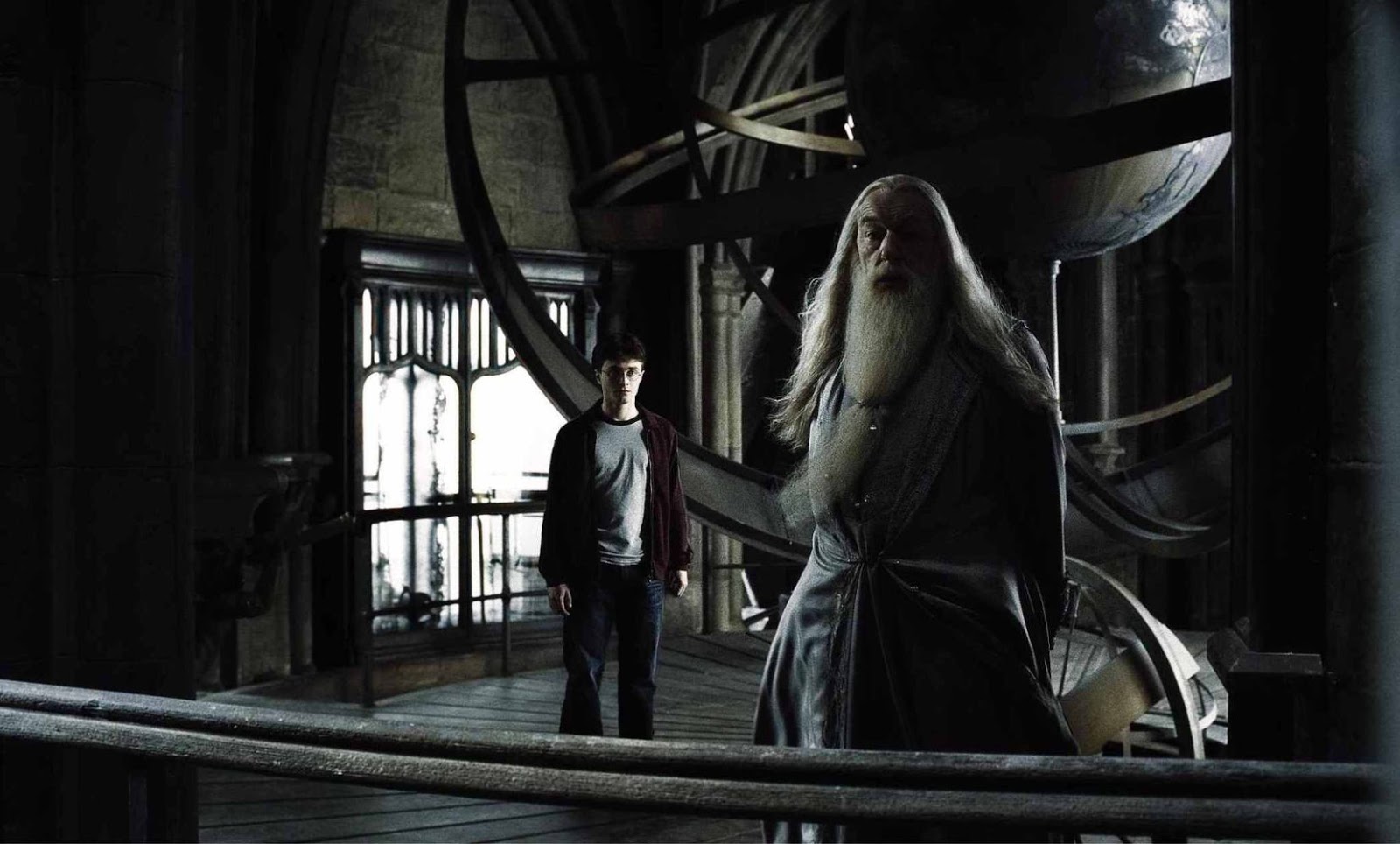
Harry and Dumbledore prepare for war in Harry Potter and the Half-Blood Prince

Director: David Yates

Cast: Daniel Radcliffe (Harry Potter), Rupert Grint (Ron Weasley), Emma Watson (Hermione Grainger), Helena Bonham Carter (Bellatrix Lestrange), Jim Broadbent (Horace Slughorn), Robbie Coltrane (Rubeus Hagrid), Michael Gambon (Albus Dumbledore), Alan Rickman (Severus Snape), Maggie Smith (Minerva McGonagall), Timothy Spall (Peter Pettigrew), David Thewlis (Remus Lupin), Julie Walters (Molly Weasley), Mark Williams (Arthur Weasley), David Bradley (Argus Filch), Tom Felton (Draco Malfoy), Gemma Jones (Madam Pomfrey), Evanna Lynch (Luna Lovegood), Helen McCrory (Narcissa Malfoy), Natalia Tena (Tonks), Bonnie Wright (Ginny Weasley)

Harry Potter and the Half-Blood Prince is perhaps the least stand-alone of the Harry Potter novels. Intended as a bridge into the final book (and carrying a lot of mystery), for obvious reasons it also has no Dumbledore-explains-the-plot-to-Harry chapter at the end (making it unique in the series). It also has the series’ least interesting MacGuffin – the identity of the Half-Blood Princehimself being considered of such little note here that it barely gets a mention in the film. But despite all this, the highly experienced Harry Potter crew deliver another exciting, dramatic and fully engaging film.

While I may not have thought David Yates was a natural film director, I have to say in this film his cinematic craft has really kicked into gear. There are images of fascinating depth and beauty here, and the film is beautifully shot by Bruno Delbonnel (Oscar-nominated). Like never before, Hogwarts seems like a place of inky greens and deep soulful shadows. The camera often allows characters’ faces to fill the middle of the frame, while still giving us depth of vision of the world around them. Carefully composed shots show the rich detail of plenty of objects, from dead birds to photographs. It’s a luscious film.

It also has a sad nostalgia to it: it feels like it’s about things coming to an end. Unlike any other film in the series, there are very few scenes of hi-jinks in Hogwarts. Comic relief characters like Neville and Hagrid are noticeable by their (mostly) absence. 

Instead the film looks at that sad half-way house between being a child and an adult. Or rather, the responsibilities and duties of an adult being thrust onto a child. Obviously Harry is scarcely ready to take on his mantle of chosen one – and feels bereft and lonely. But, in a neat contrast, Draco Malfoy is also being pushed into a task he is far too young for, and ill-suited to. The film could have actually made more of pulling out the contrasts between these two characters – although time is always at a premium in these films, with so much of Rowling’s plot to squeeze in.

Despite this, Tom Felton gives his finest performance in the series as a tortured and deeply scared Draco Malfoy, who for the first time seems like just a normal, insecure boy terrified of the dark acts he feels he has to do. The film gets a lot of emotional mileage out of this (more than it does, actually, from Harry’s predicaments) and Felton’s expressive agony and tearful lack of control for the first time make him someone we can relate to, and feel sorry for.

It also brings out different character traits in other characters, not least the protective side of Snape. Alan Rickman gets one of his meatiest roles in the series here, wonderfully playing multiple different emotions and motivations under a cold inscrutable surface. His character is a constantly intriguing shift of feelings – but it’s clear he does, in his way, care for Draco’s safety (just as he does for the other children in his care). Rickman also gives a brilliant sense of Snape’s moral uncertainty, and his every look suggest waves of emotion under tight control. It’s a wonderful performance of suggesting a lot under the surface while not doing a lot. Not to mention Rickman also manages to skilfully leave everything open for debate as to Snape’s true motives.

It’s striking how many of the series regulars come into prominence here. Not just Felton and Rickman, but this is also Gambon’s finest performance. By now Gambon had pretty much nailed Dumbledore, giving the part a great deal of compassion and quiet moral force. His sad urging for Draco to ask for his help near the end of the film is rather moving, as are the soft, sad tones Gambon drops throughout the film suggesting Dumbledore’s pain and guilt. Gambon gets a perfect balance between a twinkly charm and a quiet authoritativeness that works wonderfully.

Surprisingly however, what works less well is Harry’s plotline. Daniel Radcliffe is underpowered and slightly underwhelming, a little too sullen and sulky to really win our sympathy (Radcliffe himself has named this as his least favourite performance). It doesn’t help either that there is no chemistry between him and Bonnie Wright as Ginny Weasley. Wright, bless her, is not a strong actor and she constantly undersells each of these scenes – unable to bring the sort of bright, sexy playfulness her book equivalent has. Instead both she and Radcliffe feel sulky and awkward, and the romantic scenes between them (of which there are many) fall flat time and time again. Once you notice this total lack of spark between them you can’t see anything else!

Radcliffe has far more chemistry with Emma Watson – but she and Rupert Grint (along with many of the rest of the younger cast) have very little of any real consequence to do. The dysfunctional middle of the film, with Radcliffe and Wright flirting, drifts all the time, meaning the focus of the film zeroes in on the “adult-character” plots. Yates and screenwriter Steven Kloves do their best to add drama and excitement to a book where most of the dramatic high points are Dumbledore and Harry either watching memories, or Harry using a book to do much better at potions.

And by and large they succeed. Action sequences are added: the opening attack on the Millennium Bridge by Death Eaters is terrific, and there is an exciting (if totally plot free) attack by Death Eaters on the Weasley home. Yates again sells the moments of awe: there are some beautiful shots in Voldemort’s cave hideaway, and once again he makes Dumbledore’s power a true jaw-hits-the-floor moment. 

Half Blood Prince is beautifully filmed and well directed, even if one of its primary sub-plots doesn’t really work. There are some terrific performances: Felton, Rickman and Gambon possibly do their best work here, while Jim Broadbent is wonderfully funny but also touchingly sad and rumpled as Slughorn. It’s not Radcliffe’s finest hour, but it’s a film that works very well as an entrée to the series’ final arc. And it really captures a sense of morose sadness, mourning and regret wonderfully effectively – the final sequences carry real emotional weight. It’s a fine film – and one of Rowling’s favourites as it turns out.

Crouching Tiger, Hidden Dragon (2000)


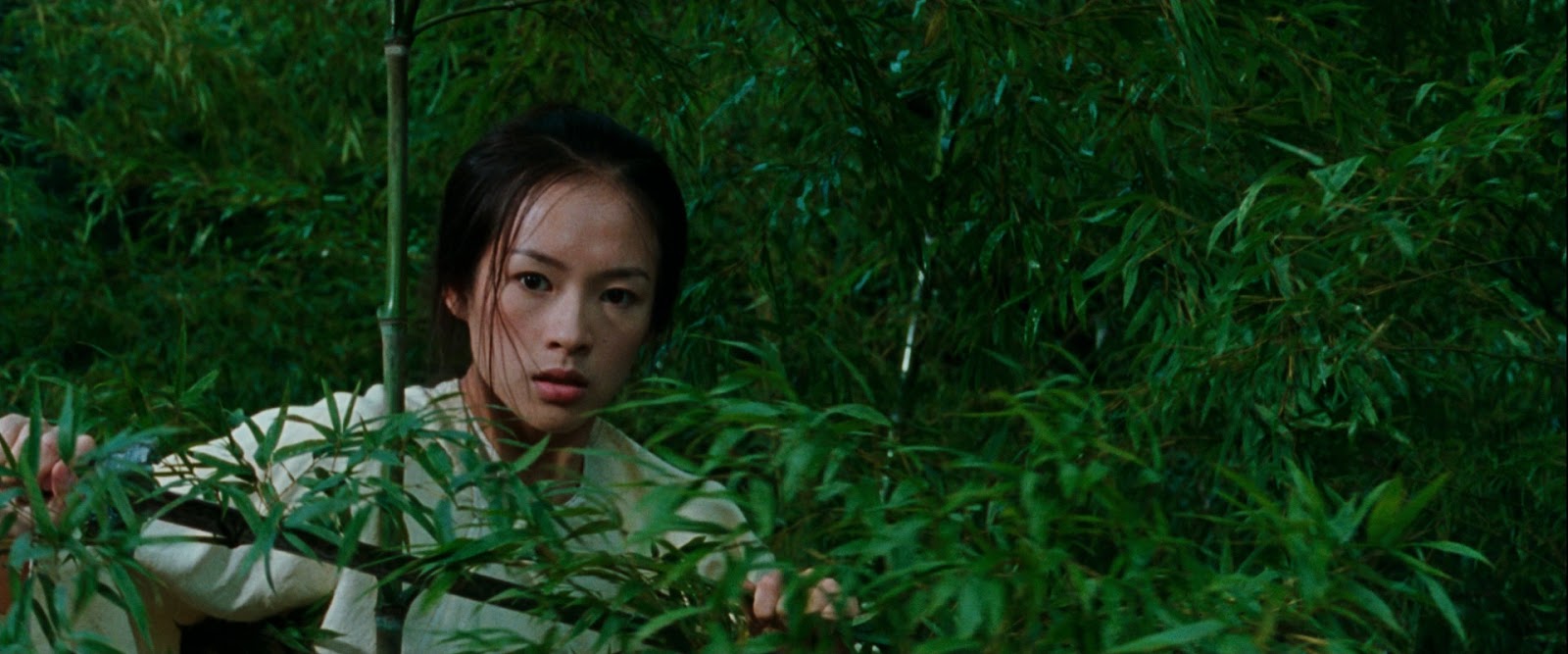
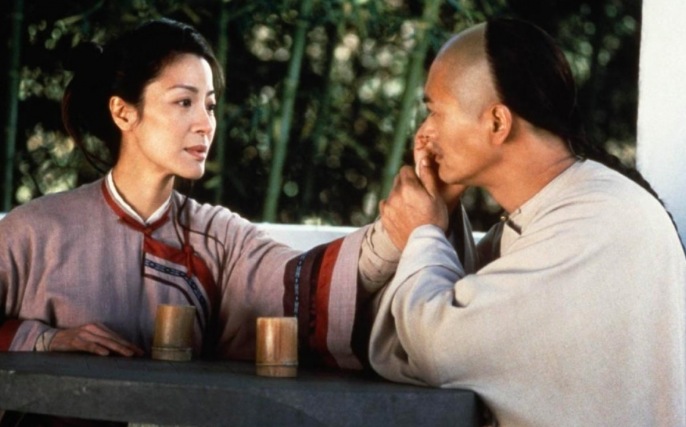
Michelle Yeoh and Zhang Ziyi defy gravity and danger in Crouching Tiger, Hidden Dragon

Director: Ang Lee

Cast: Chow Yun-Fat (Li Mu Bai), Michelle Yeoh (Yu Shu Lien), Zhang Ziyi (Yu Jiaolong), Chang Chen (Luo), Cheng Pei-pei (Jade Fox), Suhung Lung (Sir Te), Li Fazeng (Governor Yu), Gao Xi’an (Bo), Wang Deming (Prefect Cai Qiu), Li Li (May)

Ang Lee is the sort of director who can turn his hand to anything – is there a director with a more eclectic CV? From costume dramas to comic book films, coming-of-age 1970s stories to gay cowboys, he seems able to do everything. But the film that cemented him as a blockbuster director was Crouching Tiger, Hidden Dragon, an awe-inspiring, visually stunning, beautifully made martial arts film, told with a poetic grandiosity that opened the West’s eyes to a whole genre of film-making.

Li Mu Bai (Chow Yun-Fat) is looking to give up the warrior lifestyle, and surrenders his legendary sword “Green Destiny”. Mu Bai asks Yu Shu Lien (Michelle Yeoh), a professional bodyguard, to guard the sword on its way to its new owner. Mu Bai and Shu Lien have long held feelings for each other, but her late fiancée being Mu Bai’s best friend led them to never act on (or truly speak of) their love. The sword is stolen by a mysterious warrior, soon revealed to be the daughter of the local governor, Yu Jiaolong (Zhang Ziyi). Jiaolong has been trained by Jade Fox (Cheng Pei-pei), who murdered Mu Bai’s former master. Gradually the sword becomes the centre of a complex clash between these characters, of conflicting emotions and desires.

Despite its gravity-defying visuals, what Crouching Tiger, Hidden Dragon is really about – and perhaps why it works as well as it does – is contrasting the principles and standards of two different generations. Li Mui Bai and Yu Shu Lien have both lived lives governed by restraint and self-denial, not least in denying their own love. Jiaolung and Luo, on the other hand, are far more willing to act on their emotions – even if these lead to destructive consequences. It’s the human stories like this that ground the drama and make it something with heart that you can invest in.

Jiaolong isn’t willing to tame her wild spirit, and Lee’s film explores within it the nature of mentor-mentee relationships, and the level of confinement that comes from training: Jade Fox wants to control Jiaolong, and both resent each other for the restrictions they have placed on each other. Mu Bai wants to train Jiaolong – but she doesn’t want to submit herself to a master. Mu Bai has spent his whole life searching for Jade Fox to avenge his master. The shadows that masters place over their apprentices hang over the whole movie.

It’s also a refreshing movie that places women so firmly at the centre. Its central figure is Jiaolong, a young woman with an instinctive mastery of the art of Wudang – and she has the fiery defiance and impulsiveness you would expect of a traditional male figure. Jiaolong is a loving but damaged figure, confused and poisoned by Jade Fox’s resentment. She can love with great feeling and also feel a prickly resentment towards the same person – a feeling she expresses time and again. Zhang Ziyi is terrific in the role, an electric screen presence, it’s impossible to take your eyes off her.

She is contrasted throughout the film with Shu Lien, expertly played by Michelle Yeoh. Shu Lien has lived years of control over her feelings, but carries great reserves of emotion. Yeoh’s eyes are crowded with emotion, and she conveys a great sharpness. Shu Lien is a shrewd, kind but reserved character – someone who realises too late the price she has paid. For all the combat in the film, you feel that the real clash is between these two women and how they have chosen to live their lives.

In the lead male roles, Mu Bai is played with a serene calm by Chow Yun-Fat. Yun-Fat is so reserved that he’s not always as interesting as he could be – despite having a few beautifully played moments. Chang Chen as Lo is a more conventional romantic figure, but he has a lot of charisma – and it’s also a refreshing balance that he is both the more traditionally “female” character in the relationship, but also feels like a worthy partner for Jianlong.

But the thing that makes the film really memorable is its extraordinary beauty. Ang Lee is a master at marrying up marvellous, dynamic images with intelligent, thematic plotting. The battle scenes are of course the most memorable, and they are truly striking, wonderfully choreographed by Yuen Woo-ping. These defy gravity and are extraordinarily graceful in timing and movement – as striking and genuinely beautiful to watch as they are exhilarating. They look marvellous and Lee films them with a disciplined simplicity to allow us to appreciate their beauty. 

On top of that, the overall design and feel of the film is wonderful. Every scene is carefully framed and beautifully composed. Tan Dun’s score is marvellous (amazingly the whole lot was composed, produced and recorded in just two weeks) and really helps to strength the emotions in the scenes themselves. Lee’s masterful direction never loses track of the emotions and relationships that underpin the action sequences, and makes them develop and grow organically from the story, rather than fight scenes for the sake of it.

Crouching Tiger works because it has a strong story, while showing some beautiful and breathtaking fight sequences, the likes of which many people had never seen before. It’s a well-paced movie, that packs a lot into a tightly controlled run time and its thematic richness gives every scene something to reward the viewer with. The real hero here is Ang Lee. Lee is not just a director who can deliver action, he is a man with an intimate emotional understanding. In particular, he has shown in his films an empathy and warmth towards women, and an appreciation of their worldview, in a way few other male directors have managed. Crouching Tiger still stands up – it’s still strikingly different, well acted, looks gorgeous and has a lot of emotional investment.

Harry Potter and the Order of the Phoenix (2007)


Harry Potter and friends prepare to face the Dark Lord in Harry Potter and the Order of the Phoenix

Director: David Yates

Cast: Daniel Radcliffe (Harry Potter) Rupert Grint (Ron Weasley), Emma Watson (Hermione Grainger), Helena Bonham Carter (Bellatrix Lestrange), Robbie Coltrane (Hagrid), Ralph Fiennes (Lord Voldemort), Michael Gambon (Albus Dumbledore), Brendan Gleeson (Mad-Eyed Moody), Richard Griffiths (Vernon Dursley), Jason Isaacs (Lucius Malfoy), Gary Oldman (Sirius Black), Alan Rickman (Severus Snape), Fiona Shaw (Petunia Dursley), Maggie Smith (Minerve McGonagall), Imelda Staunton (Dolores Umbridge), David Thewlis (Remus Lupin), Emma Thompson (Sybill Trelawney), Julie Walters (Mrs Weasley), Mark Williams (Arthur Weasley), Robert Hardy (Cornelius Fudge), Tom Felton (Draco Malfoy), Matthew Lewis (Neville Longbottom), Evanna Lynch (Luna Lovegood), Katie Leung (Cho Chang), David Bradley (Argus Filch), Natalie Tena (Tonks), George Harris (Kingsley Shacklebolt)

By the fifth film, the Harry Potter franchise was really on a roll – and a lot of the core creative team that would carry the series through to the final film were in place. It’s particularly striking how much a distinctive look and tone the series now had, that is both different from the books and a logical extension of them. It’s also the film where I think the series finally decided it would tell it’s own version of Rowling’s story, rather than an exact staging. 

Rather than simply tightening the plot of Rowling’s mammoth book, Order of the Phoenix decided to rework the story to deliver what it wanted to do. Vast amounts of Hogwarts material is ruthlessly cut, including large sections of Ron and Hermione’s sub-plots. The film streamlines the story, reducing Harry’s feelings of isolation in the story (the film instead centres the importance of friendship and loyalty). And despite turning one of the longest books in the series into the shortest film, this captures the sense of the book excellently. It clearly identifies the key themes that drive Rowling’s series and runs with these very effectively. This film, more than any others so far, shows the deep bonds of loyalty that connect not just the central trio, but also the other members of the school. The Dumbledore’s Army sequences have a wonderful sense of camaraderie about them – these people genuinely feel like a group of friends.

These sequences also give Daniel Radcliffe some great material to play with. Harry clearly would make a hell of a teacher – Radcliffe makes him encouraging and supportive, capable of drawing the best out of his students. Radcliffe does his expected excellent job all the way through this film. His ability to play scenes of grief and longing has increased dramatically – his reaction to the death of Sirius Black is really well done. But he also presents Harry as essentially a warm and caring person – exactly the polar opposite of the man Voldemort has become. It’s another terrific performance.

Order of the Phoenix was David Yates’ first film as a director of the series – Yates has gone on to direct all the subsequent outings in the Potterverse – and part of the reason he seems to have cemented the role is that he gives a perfect mixture of Columbus, Cuarón and Newell. He can juggle elements of Rowling’s story, he works very well with actors, he has enough creativity and vision as a director to present this world in interesting new ways. He’s a perfect combination of a number of skills from the previous directors – and he really runs with that legacy here.

Order of the Phoenix is a dark and gorgeously shot movie, with a tight story structure (it’s the only film not written by Steven Kloves, and Michael Goldenberg’s fresh take on the film I think really helps). Every scene has a painterly brilliance, and scenes simmer with tension and paranoia – Yates doesn’t lose track of the fact that Harry is being persecuted by the authorities for taking an unpopular stance on Voldemort’s return. 

Yates establishes his intention to turn this into a notably darker episode from the very start, opening with a vicious Dementor attack (redesigned to make them more fluid). This is followed quickly by a show trial at the Ministry. Then to a darker, gloomier Hogwarts now a den of unjust rules (the expulsion of Thompson’s gentle Sybil Trelawney is a particular fine heartstring-tugging moment), and cruel punishments. It’s a film that never allows us to forget death has entered Harry’s world. By the time we hit the final battle sequences in the Ministry of Magic, we know our heroes are putting their lives on the line. Scary as this is, we also appreciate the bonds of love that have taken them there all the more.
A lot of the creep and cruelty of the film emerge from Imelda Staunton’s Dolores Umbridge. Staunton is brilliantly cast as the twee ministry official who hides a ruthless viciousness, buttressed by a sociopathic conviction that whatever she does must be right. Staunton’s soft politeness is the perfect vehicle for showing Umbridge’s sadistic cruelty. Umbridge is the worst form of politician –blindly following the orders of any authority figure who can promote her on their coat-tails. The design of her character is similarly spot-on: she dresses almost exclusively in fluffy pink knitted suits, and her office is an explosion of pink, china plates and fluffy animal pictures. Staunton is almost unbelievably vile in her smug, condescending moral emptiness.

It’s further evidence of what a brilliant job this series did with casting. By this point, truly great actors were appearing in this film while sharing less than a dozen lines between them: Thewlis, Gleeson, Smith, Thompson and even Coltrane get remarkably little do in this film, but still seize your attention. Wonderful performances also come from the less famous names: George Harris gives a brilliant twinkly wisdom and gravity to Kingsley Shacklebolt while Robert Hardy (quietly excellent in the previous films) gets some more material to showcase his skills as the wilfully blind Fudge.

Of the other stand-outs, Helena Bonham Carter is brilliantly malevolent as the psychotic Bellatrix. Jason Isaacs gets some marvellous moments of smooth patrician wickedness as Malfoy. Gary Oldman is the ideal roguish father-figure as Sirius, the actor’s obvious bond with Radcliffe really coming across. Gambon is very comfortable now as Dumbledore, really showing the authority behind his Dumbledore’s eccentricity.

Then you have actors who dominate from mere minutes of screen-time. Fiennes again delivers in a short scene at the close of the picture. And then of course we get Rickman: he makes so much of such brief moments as Snape. He has probably the two biggest laugh-out-loud moments (both totally reliant on his delivery of non-descript words like “Obviously”). His occlumency classes with Harry showcase him at his best: trying to help, but unable to overcome his essential bitterness and resentment. These sequences are wonderfully contrasted with Harry’s comfort as a teacher to his friends: by contrast Snape is dismissive, impatient and unsympathetic.

The film finds moments of humanity and comedy throughout. Rupert Grint finally gets to show another side of Ron, as Ron matures slightly into a loyal wing-man , who makes it clear he will not countenance criticism of Harry in his hearing. And while this is a dark film, it’s also the one that deals with Harry’s growing romantic feelings for Cho – and he gets a beautifully played little romance that reminds us that Harry is (at the end of the day) still a nervous kid. It’s a film that understands friendship and love and their importance.

So it’s why the final battle sequence in the Ministry of Magic works so well. Tense and dangerous, we also root overwhelmingly for the courage of the kids. The work Yates had done on the wizard battles really pays off – they have a greater sense of choreography than ever before, while the apparating (in a trailing, misty, fast-moving cloud) really adds a fantastic visual element. Little shots work so well – I love the cut from Harry fighting alongside Sirius to his friends crouching behind a rock staring up at their friend in awe. It’s a beautiful reminder that what Harry is doing is so brave.

Of course, the film ends in the series’ first truly gripping wizard fight as we finally get Dumbledore taking on Voldemort. It was a great sequence in the book – and is translated wonderfully to the screen with a series of gripping visuals. There are brilliant beats throughout and we learn about the characters. We see Voldemort’s targeting of the defenceless Harry throughout, the way Dumbledore puts himself in the way of danger (including angrily throwing Harry backwards with magic when he steps forward). Above all you see Harry’s own courage (and his impulsiveness motivated by caring so much).

Order of the Phoenix is another excellent entry into a series that flourished and became richer the longer it went on. Yates showed that he was in tune with the fundamental ideas of Rowling’s writing and that he was able to marry excellent performances with impressive visuals. It’s brilliantly made – shot wonderfully, very well edited with a marvellous score – and is an impressive and muscular piece of film making. Very impressive.