Category: Fantasy film

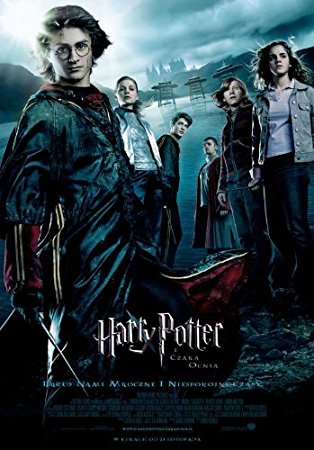
Harry Potter and the Goblet of Fire (2005)


Our heroes face an increasingly dark future in Harry Potter and the Goblet of Fire

Director: Mike Newell

Cast: Daniel Radcliffe (Harry Potter), Rupert Grint (Ron Weasley), Emma Watson (Hermione Granger), Robbie Coltrane (Rubeus Hagrid), Ralph Fiennes (Lord Voldemort), Michael Gambon (Albus Dumbledore), Brendan Gleeson (“Mad-Eye” Moody), Jason Isaacs (Lucius Malfoy), Gary Oldman (Sirius Black), Miranda Richardson (Rita Skeeter), Alan Rickman (Severus Snape), Maggie Smith (Minerva McGonagall), Timothy Spall (Peter Pettigrew), Frances de la Tour (Madame Maxime), Mark Williams (Arthur Weasley), Robert Pattinson (Cedric Diggory), David Tennant (Barty Crouch Jnr), Jeff Rawle (Amos Diggory), Tom Felton (Draco Malfoy), Robert Hardy (Cornelius Fudge), Roger Lloyd Pack (Barty Crouch), David Bradley (Argus Filch), Clémence Poésy (Fleur Delacour)

After Alfonso Cuarón announced he would only direct one Harry Potter film, the producers faced a stiff challenge. The third Harry Potter film had been the best so far, and elevated both the acting and design into a far more filmic, epic position than before. Could Mike Newell match this in Goblet of Fire? Sure he could.

If nothing else, Goblet of Fire is a triumph of adaptation. Used to the page-to-screen translations of the earlier films, it was expected that the film would be split into two parts. Instead Newell and screen-writer Steven Kloves turned Rowling’s huge fourth book into a tightly structured and focused film that places Harry’s emotional journey firmly at its centre, and includes only the things that support the building of that story. 

Goblet of Fire is a film of fascinating contrasts. In fact, it’s probably the lightest, most ‘teenage’ of the films, while also containing a dark final chapter and more death than we’ve had so far in the series. But this film is actually rather funny and allows its characters to focus on the challenges and stresses of growing up, with only a few flashes of danger and darkness – before they get wrapped up in the battle against Voldemort that will dominate the next few films.

So this is the film where we get crushes, where Harry and Ron struggle to get dates for the ball, where we get a sense of Hermione not only growing up – but growing in confidence. Harry develops a hopeless crush on Cho Chang – his “Willyougotoballwithme” hurried date proposal is all too familiar to most men, as is his “oh no never mind not a problem” when she (reluctantly) says no. Meanwhile, Ron struggles to understand his own hormonal feelings towards Hermione. It’s all well done and very funny. The ball itself is a highlight of teenage awkwardness, as well as genuinely feeling like a teenage party (including a sort of wizarding mosh pit). 

This teenage awkwardness carries across into Harry’s involvement in the Tri-wizard Tournament, a series of stirring set-pieces against dragons, mer-people and a wicked ever-shifting maze. The tournament offers a range of puzzles Harry needs to solve – more than enough opportunity to allow other characters to get involved. Neville Longbottom particularly moves to the fore for the first time – not only embracing dancing (hilariously nearly every boy is as embarrassed by it as you might expect) and landing a date, but also using his knowledge of plants to help Harry, and we get increased insight into his own tragic backstory. It’s great to see Matthew Lewis being able to stretch himself – and show the roots of the good young actor he’s become.

The film spends a lot of time on family roots, both tragic and happy, in particular fathers and sons. We have no fewer than four father/son match-ups in these films, and each gives us a slightly different perspective on family relationships. Mark Williams’ matey but loving Arthur Weasley gets more screen time than ever before, and Williams develops him into a protective but warm patriarch. Contrast that with the troubled coldness the Crouches show each other – and the swift speed with which Barty Crouch denounces his own son. We get a glimpse of the sort of father Harry could have had with a brief ghost appearance of Harry’s parents. The strongest father-and-son relationship we get to see is that between the Diggorys, an immeasurably proud father and a perfect son.

Mentioning Amos Diggory means we have to bring up one of the most extraordinary acting cameos in the entire series: Jeff Rawle’s work here is brilliant. Is there a more moving moment in the franchise than his uncontrollable grief when Cedric is killed? His anguished crying of “That’s my boy” will haunt many a viewer for years to come. It’s a measure of the brilliance Mike Newell had with actors, and the shrewdness of the casting throughout. Would anyone else have thought of George Dent from Drop the Dead Donkey for this King Lear-like cameo? Would anyone else have thought of Trigger as strict disciplinarian, Barty Crouch (Roger Lloyd-Pack is terrific). The film also shrewdly cast David Tennant about five minutes before he became one of the most popular actors in the country, for an excellent malevolent cameo of pride and bitterness.

The acting throughout is terrific – Mike Newell has the reputation of an actor’s director, and he really shows it here. The three leads are no longer children but teenagers, and they feel like it. Radcliffe plays Harry with increasing maturity and emotional depth, balancing with nuance and quiet confidence the light comedy of Harry’s hormonal yearnings, his fear during the tournament, and his terror and resolve during the confrontation with Voldemort. It’s quite a range he has to go through here, and this features his best performance so far.

Similarly, Grint increases his comedic range with a sullen, teenage I-don’t-want-to-admit-I’m-interested-in-girls series of exchanges. Watson demonstrates her obvious chemistry with both her co-stars, and also does a great job of showing Hermione’s growing emotional maturity and confidence. Many of the other regulars continue to do great work, with Gambon really settling into this role of Dumbledore (although his fury when Harry’s name emerges from the Tri-wizard cup seems strangely out of character). 

The new cast members as always offer plenty. Miranda Richardson delivers a lot of comic flourishes, and snappy media pot-stirring, as gossip columnist Rita Skeeter. Brendan Gleeson carries all the charisma you would expect as a maverick, perhaps even unbalanced Mad-Eyed Moody. In a further testament to the excellent casting directors here, Robert Pattinson (five minutes before his fame exploded) is very good as a suave, handsome, slightly cocky but charming Cedric Diggory.

The film though is building towards its surprising gear-change late in the story – and the introduction of Voldemort, murder and death into a film that until now has been an engaging and amusing action film and teenage comedy. Perfect casting for Voldemort was secured with Ralph Fiennes. Of course Fiennes could play Voldemort standing on his head, but his softly-spoken suaveness and patrician charm is absolutely perfect for the role. You really get a sense of ice running through his blood, and his cold cruelty and arrogance. Fiennes is pretty much iconic in this role. 

The final sequence itself is brilliantly done, a thrilling and terrifying sequence, which really hammers home the extent of Harry’s powerlessness and vulnerability – while the brutal, instant dispatching of Cedric immediately changes the ball game for the rest of the series. The scene is brilliantly shot with a series of blacks and greens for mood and offers a sensational conclusion, as well as an expertly shot duel between Harry and Voldemort that established the filmic language for all subsequent duels that were to come.

Goblet of Fire is another example after Prisoner of Azkaban of a great piece of franchise film-making. It’s not quite as stand-alone, or as perfectly dramatically formed, as the previous film – but that’s because this one ends, like none of the other films before, on a cliffhanger. For the first time, this series wasn’t offering an opponent and obstacle that could be overcome and left behind at the end of the film. Here the baddies win – and the feeling going forward is that, with the help of friends and family, we can battle the evil, but it will still be there. It’s an engaging, funny and very well-structured film, packed with decent twists, and ends with a humdinger of a scene in a film that has already had plenty of excellent moments. Harry Potter is surely one of the best franchises there is.

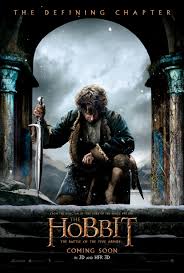
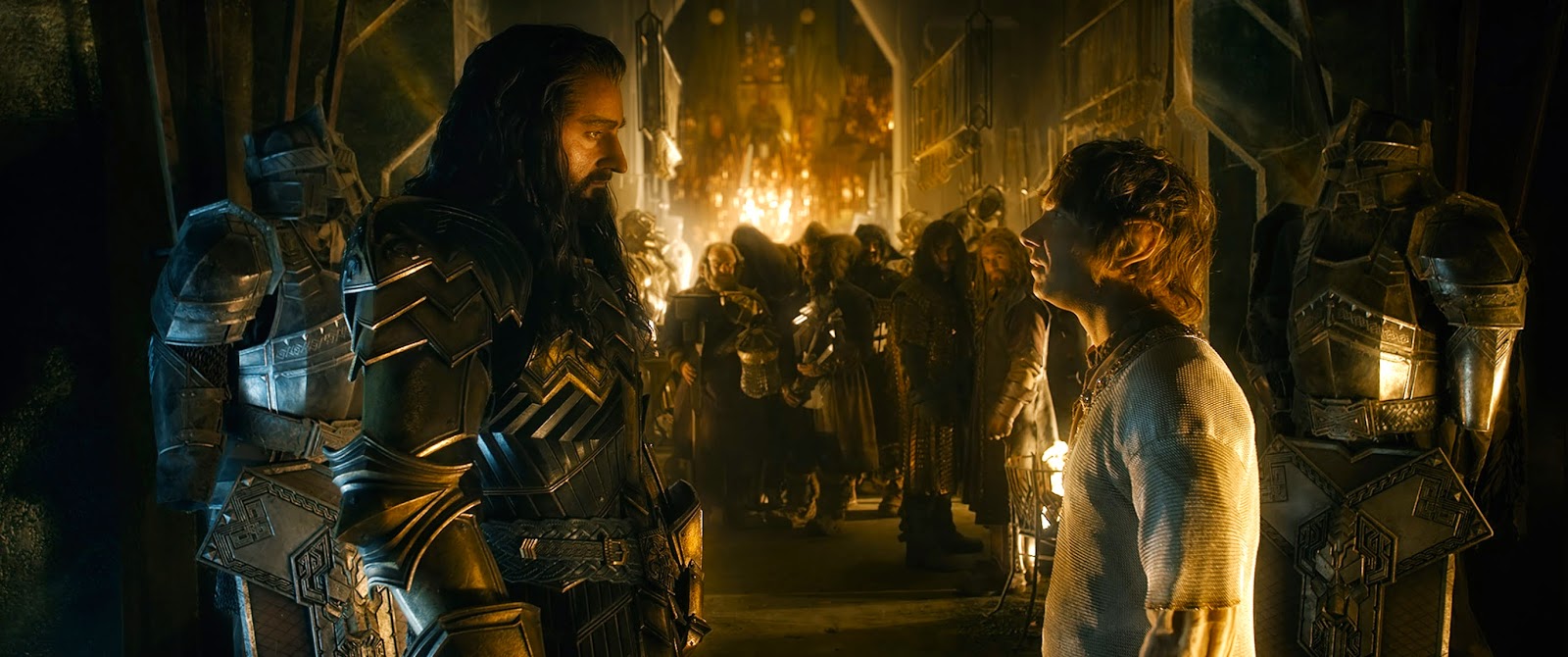
The Hobbit: The Battle of the Five Armies (2014)


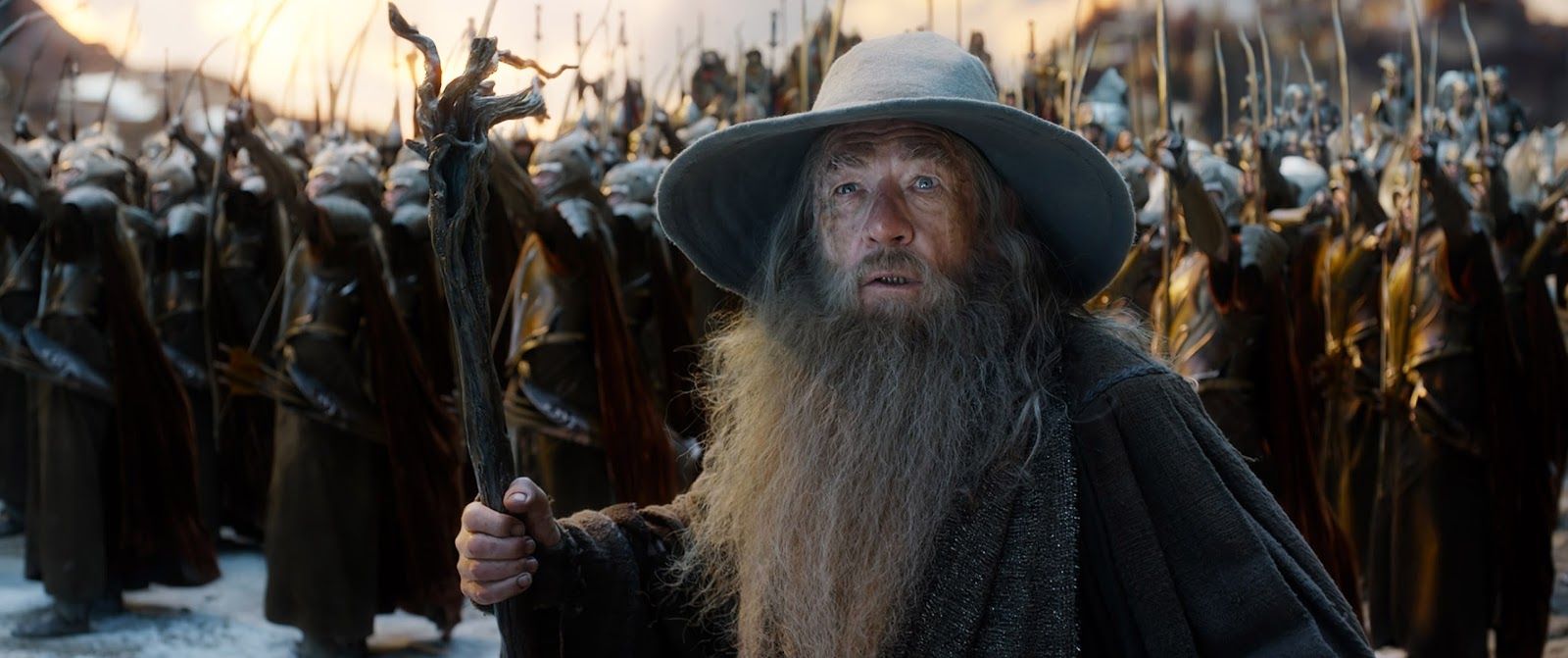
Gandalf prepares to take on many foes – not least the script and editing – in The Hobbit: The Battle of the Five Armies

Director: Peter Jackson

Cast: Martin Freeman (Bilbo Baggins), Ian McKellen (Gandalf), Richard Armitage (Thorin Oakenshield), Luke Evans (Bard), Evangeline Lilly (Tauriel), Orlando Bloom (Galadriel), Aiden Turner (Kili), Lee Pace (Thranduil), Ken Stott (Balin), Cate Blanchett (Galadriel), Ian Holm (Old Bilbo), Graham McTavish (Dwalin), Christopher Lee (Saruman), Hugo Weaving (Elrond)

I feel like I’m running out of things to say about this desperately flawed trilogy – but here we go… Peter Jackson finally finishes his great contractual obligation, serving up another film that expands out a slim couple of chapters of a children’s book into something that strains so heavily for the feel of something epic and world shattering, it feels like a constipated man struggling on the loo.

We’ve finally made it to the Lonely Mountain. Smaug is killed by Bard (Luke Evans) during his attack on Lake Town, while Thorin (Richard Armitage) seizes control of the fortune under the mountain. However, the mountain now becomes a struggle point between the dwarves and their allies: Bard and his people and Thranduil (Lee Pace) and his elves, who are all looking to gain control of its treasures. While Bilbo (Martin Freeman) attempts to make an increasingly maddened Thorin see sense, Gandalf (Ian McKellen) brings warning of an imminent attack by an army of Orcs – will this mutual enemy bring our heroes together at last?

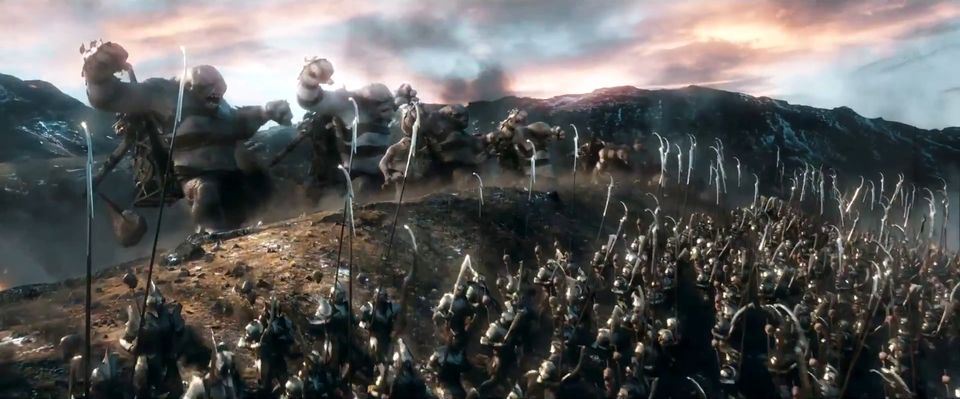
The Battle of the Five Armies is the moment where you knew this sprawling, sausage-fest of a trilogy had lost what soul it had. Almost the entire runtime is given over to battle sequence, seems to go on forever and ever with no respite. We see a host of clashes that carry none of the poetry of The Lord of the Rings, and a host of characters we don’t really know fighting with each other. Frankly, it’s hard to care. It looks great, but it’s just empty spectacle, sound and fury signifying absolutely nothing at all. In fact, it’s all so unclear that watching this movie for a third time I still have absolutely no fucking idea what this battle is even about! What are the Orcs doing? Why are they attacking? 

As always character moments are constantly sacrificed. The dwarf company are ruthlessly trimmed of screen time–even Ken Stott’s Balin doesn’t get much of a look, bizarre as he’s been established previously as Thorin’s confidant. Apparently James Nesbitt nearly wept when he saw this film – not surprising since he must barely be on screen for more than five minutes. Crucial moments that should make us care about these characters are constantly lost: Thorin’s descent into madness occurs completely off camera, Gandalf’s struggle to keep the peace gets glanced over, Bilbo nearly gets completely lost in the shuffle from special effect to special effect.

Tragically, far too much screen time is given to two characters Jackson has parachuted into the film. Weaselly Lake Town official Alfrid is given seemingly endless scenes of “comic relief” – a shame since he’s about as funny as being hit in the mouth by a hammer. I understand Jackson must find this character funny, and that he felt some comic relief was needed amongst all the fighting – but quite frankly he’s wrong. Alfrid is not funny – I think you’d go a long way to find anyone who liked him – and secondly if they needed comic relief characters, why not let one of the dwarves fill that function rather than introducing a new character 2/3rds of the way into the story? 

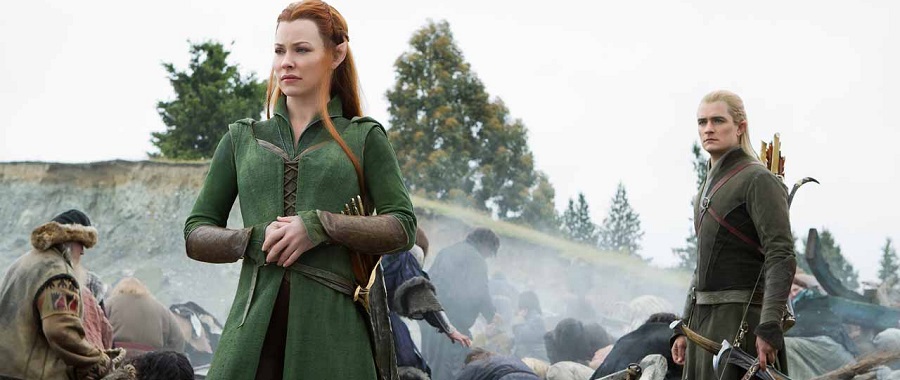
The second character who gets far too much to do is our old friend Legolas. The elf’s plot line is given never-ending minutes of screen time, his struggles and conflicts given (it feels) even more screentime than Bilbo’s. Do we really need to see Legolas searching for the orcs? Do we really need to see him doing ridiculously impossible feats in the middle of combat? Are we given any reason to care about him at all, other than the fact we remember him from Lord of the Rings?

Legolas’ inclusion demonstrates almost everything wrong in this series. Did Jackson include so much of him because he didn’t need to think quite so much about what to do with the character, being already so familiar with him? When Legolas (at best a secondary supporting character in the story) has his battle with some random Orc, intercut (and even prioritised in the edit) over Thorin’s climactic battle with Azog, the clash the entire trilogy has been building towards, you know something is seriously wrong.

On top of which, Legolas’ inclusion undermines Jackson’s other big invention, the Legolas-Tauriel-Kili love triangle. Really this should be a Tauriel-has-to-marry-Legolas-but-wants-to-marry-Kili structure – that at least would work, right? We’d understand her struggle and division – and it would add a lot more weight to her feelings for Kili. Instead, Jackson is worried this might make Legolas look unsympathetic – so instead Tauriel is sorta in love with both with them, a confused, messy structure that makes no real sense. To add insult to injury, when Tauriel and Kili are threatened by random nasty Orc, who saves the day? Legolas. Who fights Tauriel’s battles for her? Legolas. Jackson introduces a love triangle, and then undermines it because he doesn’t want to criticise his beloved character. He introduces a female character, only to reduce her to a victim obsessed with lurve. It’s a disaster.

You feel Jackson threw in this plot because not a lot actually happens in this movie. Doubly annoying then that so many plots we do care about disappear so swiftly. The Arkenstone, the cause of so much struggle, is completely forgotten half-way through. The fate of Bard and the Lake Town survivors is glossed over. The dwarves get benched from the action for ages. The plotline around the Necromancer is wrapped up with embarrassing and confusing swiftness. Thorin’s plotline is rushed together at the edges, with the focus constantly on getting more fighting in shot.

It’s a real shame that the actors don’t get the time they deserve to really let their performances flourish. Armitage is, as always, superb as a Thorin who loses himself in greed and desire for gold, and becomes cruel and bitter before remembering his nobility. Martin Freeman is still great as Bilbo, honest, normal and delightful despite being given little to do. Ian McKellen still has all the Gandalf qualities of wisdom and grandfatherly authority. Among the rest of the cast, Luke Evans continues to be a stand-out as the noble Bard.

There are moments of action that really work. Smaug’s attack on Lake Town is the film’s dramatic highlight – shame its over in 12 minutes. But it’s brilliantly shot, has moments of heroics and looks great. Thorin and Azog’s battle really works because Thorin is just about the only character in the film we really care about. But much of the rest of the fighting is just silly – gravity-defying bashing (Legolas and Saruman are particularly guilty of this) or never-ending struggles in the battle itself – in which by the way, only men seem to be allowed to be seen doing anything brave.

The Battle of the Five Armies is in many ways a fitting conclusion to the series. Millions of dollars are spent on making a brilliantly designed and shot series of images. But no time is spent on making us care about anything. We invest almost nothing emotionally in the story at all. While we might be a bit sad at seeing people die, we know so little about many of them their deaths hardly stick with us. Why did Jackson not see this? Yes Lord of the Rings was a masterpiece and tough act to follow – but when you see the love and care dripping from every frame of that 12 hour trilogy, and then you move to this mess, you can’t help but think: where did it go wrong? It’s not a complete disaster – the films are always watchable – but they could have been so much more. Instead, they’re the bloated, incoherent footnotes to a great trilogy.

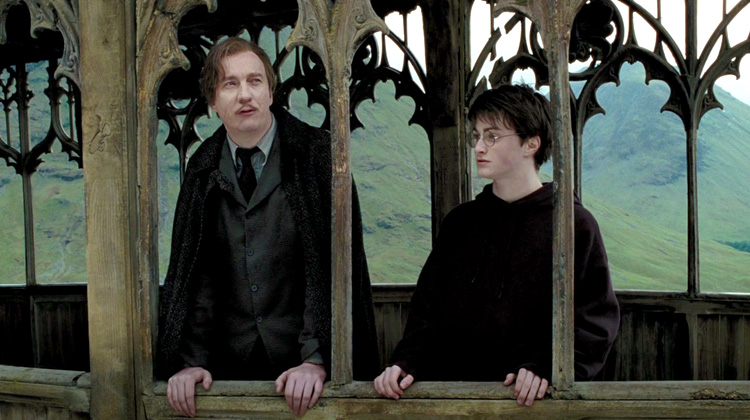
Harry Potter and the Prisoner of Azkaban (2004)


Harry Potter friends confront wanted killer Sirius Black in Harry Potter and the Prisoner of Azkaban

Director: Alfonso Cuarón

Cast: Daniel Radcliffe (Harry Potter), Rupert Grint (Ron Weasley), Emma Watson (Hermione Granger), Julie Christie (Madam Rosmerta), Robbie Coltrane (Rubeus Hagrid), Michael Gambon (Albus Dumbledore), Richard Griffiths (Vernon Dusley), Gary Oldman (Sirius Black), Alan Rickman (Severus Snape), Fiona Shaw (Petrunia Dursley), Maggie Smith (Minerva McGonagall), Timothy Spall (Peter Pettigrew), David Thewlis (Remus Lupin), Emma Thompson (Sybill Trewlawney), Julie Walters (Molly Weasley), Mark Williams (Arthur Weasley), Tom Felton (Draco Malfoy), David Bradley (Argus Filch), Robert Hardy (Cornelius Fudge), Pam Ferris (Marge Dursley)

Well this is more like it. The first two films set the tone and established the universe. But Prisoner of Azkaban – filmed after a year’s break from the back-to-back filming of the first two films – is such a notable step-up in quality from the previous films, it completely stands alone as a marvellous piece of cinematic storytelling, not just as part of a franchise.

Why is this? Well I think the answer is pretty clear. After the solid, but unspectacular, direction from Chris Columbus, the reins were handed to a gifted filmmaker in Alfonso Cuarón. Harry Potter and the Prisoner of Azkaban has all the visual invention and dynamism the first two films lacked. Alongside that, Cuarón tells the story with a brilliant mixture of light and dark. For the first time, the adaptation also escaped the need to dramatise everything in the book onto the screen – this film is a good 20 minutes shorter than Chamber of Secrets but immeasurably superior.

Prisoner of Azkaban looks fantastically gorgeous, and is brilliantly shot. The production and costume design has been spruced up, to give the film a sort of steam-punk 1950s look, as if the wizarding world had slightly arrested a few decades behind the rest of the world. Cuarón was also one of the first directors in the series who seemed relaxed enough to let the children act like children – so we get scenes of them mucking around in the dormitory or dressed with a teenage coolness. Hogwarts becomes a castle of shadows and gloom, in a magical, wintry whiteness and Scottish Highlands shades of greens and blues. More than any of the previous films, its a world that feels ‘real’ and lived in. It’s a style that would dominate all the remaining films: Cuarón essentially set the tone for the rest of the series to come.

It also helps that Cuarón was blessed with perhaps the strongest of Rowling’s stand-alone stories, a tight and taut thriller that reaches a surprising conclusion and features playful use of things like time travel and illicit magic. Cuarón, however, really embraces the emotional core of that story, and allows all these characters to expand in richness and depth. Harry faces real torment and anger when confronted with the story of the death of his parents, and his desperate yearning to have some sort of connection with them is a key thread that runs through almost every scene.

The film highlights the growing flirtation and connection between Ron and Hermione. Hermione herself is increasingly shown as a level-headed, empathetic young woman, who really understands the feelings of her friends. Several other characters are allowed to show depths: don’t forget this is the film where we see Snape’s first reaction when confronted with a werewolf is to put himself between it and the children. Rickman, by the way, is brilliant in this film, giving us the first hints of the deep and abiding feelings Snape held for Harry’s mother in his bitter anger at Sirius.

As always the film introduces some fantastic new characters into the mix. Gary Oldman is simply superb as Sirius Black, bringing to life his torment and rage, but most especially Blacks warmth and generosity (as well as his boyish enthusiasm). It was a major change of pace for Oldman, who has credited the film with changing his image in Hollywood away from one-note villain. Emma Thompson is very funny as (possibly) delusional divination teacher Sybil Trelawney. David Thewlis though waltzes off with the movie as a sad-eyed Remus Lupin, a man who clearly has known great losses. Thewlis plays Lupin with a caring, scruffy charm, an ideal teacher and mentor – generous but also firm when needed. It’s impossible not to end the film caring deeply for him. He’s terrific – it’s a real shame he never got another real showpiece scene in the rest of the franchise.

This is also our first introduction to Michael Gambon as Dumbledore – a replacement for the late Richard Harris. Gambon plays the part with a curious twinkly cheekiness, and a greater physical robustness, along with a faint Irish twang which feels like a homage to Harris. It’s a slightly uncertain start, but Gambon’s unusual, slightly-faded-hippie take on the part stands out from Harris’ austere wise-man very nicely. His lightness makes the moments of power all the more awe-inspiring. It also rather fits in with the tone of Cuarón’s slightly off-beat style.

Cuarón has a real eye for the offbeat gag – from a cleaner almost being blown away by a monster’s howl in the Leaky Cauldron, to the kids eating animal sweets in their dormitory, to Dumbledore’s off-camera delay tactics with Fudge (“Well it is a very long name minister” he says when asked to sign something), there are many delightful sight and sound gags throughout the film to make it a joy to discover. His balance of this with the heart of the story is brilliant: the inflation of Pam Ferris’ vile Aunt Marge is both brilliantly funny, but also clearly motivated by the revolting things she openly says to Harry about his parents. It’s a great balance the film pulls off time and time again.

The film is wonderfully structured and beautifully paced. It’s got a very clear five act structure, and thematic thread running through the whole film of grief and needing friends to help cope with this. The parts of the book that don’t contribute to this have been skilfully trimmed down. Cuarón then brilliantly interweaves set-piece moments, many of them introduced with an off-the-wall inventiveness, such as the umbrella dancing in the wind before the storm-swept Quiddich match (is there any health and safety in this school at all by the way?).

By the time you hit the final sequences, thanks to the film’s structure, you’ve no doubt about the revolting dangers of the Dementors. These spectral creatures are returned to again and again by Cuarón’s careful editing, as we see them drifting around the borders of Hogwarts, killing flowers and freezing lakes by their very presence. These terrifying creatures are the creepy stuff of nightmares – and Cuarón doesn’t flinch from this. It also makes Harry’s successful conjuring of a Patronus at the film’s conclusion a stirring and triumphant moment, a suitable triumphal ending to the film.

Cuarón’s direction of this film re-set the table for the entire franchise. Both Mike Newell and David Yates would follow in his footsteps, and present the world as Cuarón imagined it: dark blacks, and muted primary colours, as much a world of creepy, unsettling threat and danger, as it was of delight and wonder. From this point on the films would start to stand on their own feet, focusing on exploring the themes and emotions of Rowling’s story, rather than covering every scene. Prisoner of Azkaban is the best of the Harry Potter films and the most important landmark in the series. It’s not just a great Harry Potter film, or a great fantasy film or kids’ film. It’s a great film.

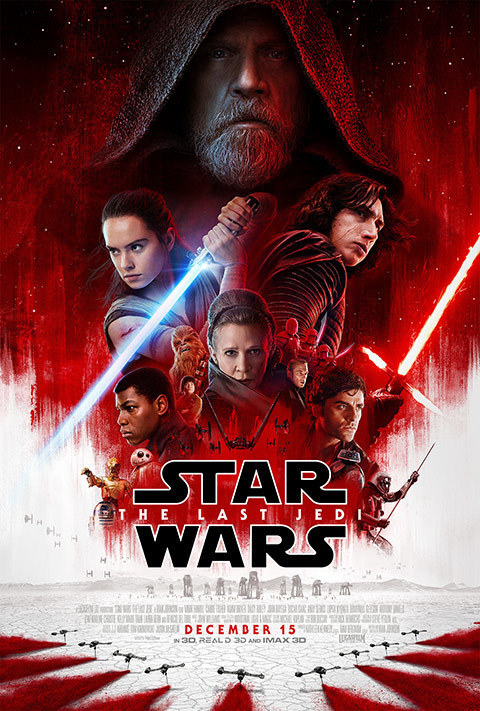
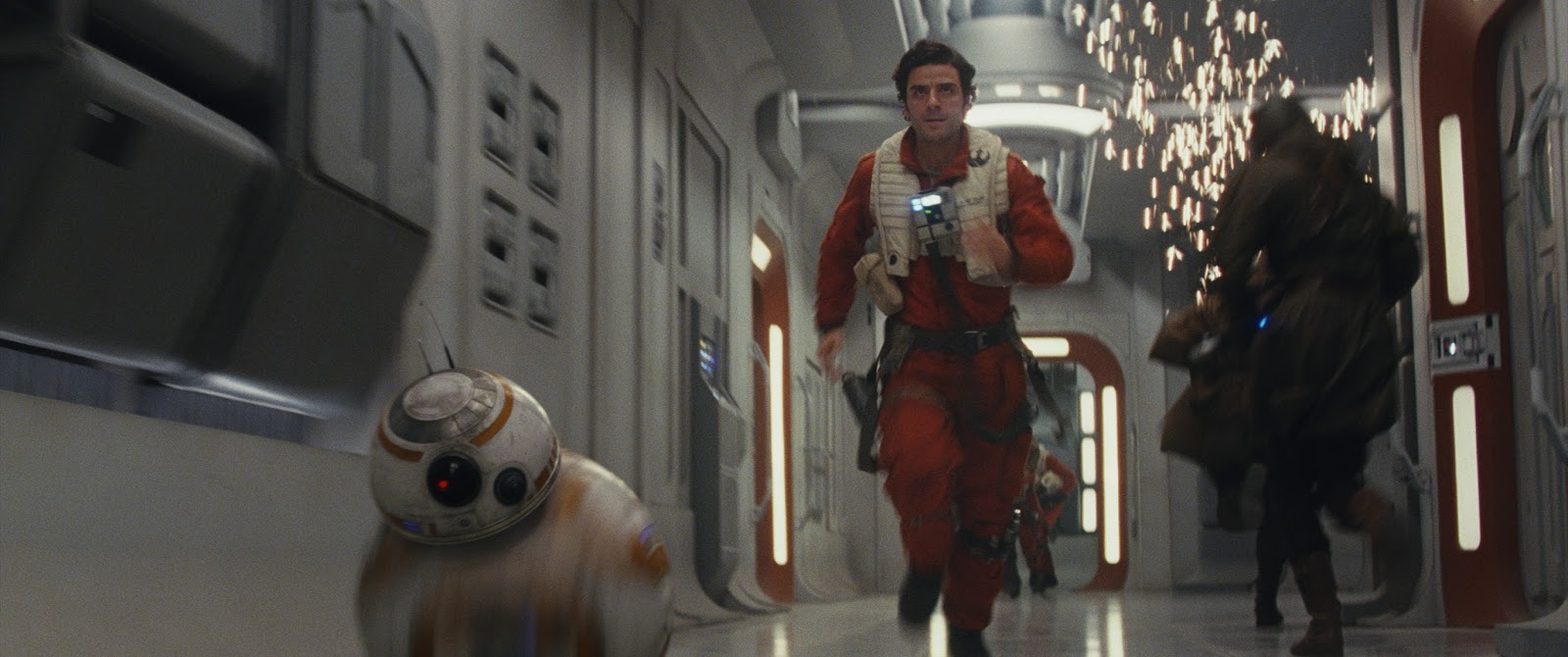
Star Wars: The Last Jedi (2017)


Could Daisy Ridley be The Last Jedi in this controversial new Star Wars chapter

Director: Rian Johnson

Cast: Mark Hamill (Luke Skywalker), Carrie Fisher (General Leia Organa), Adam Driver (Kylo Ren), Daisy Ridley (Rey), John Boyega (Finn), Oscar Isaac (Poe Dameron), Kelly Marie Tran (Rose Tico), Andy Serkis (Supreme Leader Snoke), Lupita Nyong’o (Maz Kanata), Domhnall Gleeson (General Hux), Laura Dern (Vice Admiral Amilyn Holdo), Benecio del Toro (DJ), Gwendoline Christie (Captain Phasma), Anthony Daniels (C-3PO), Frank Oz (Yoda)

Spoilers! OK I’m really trying my best to not have too many spoilers in here, but you know it’s pretty much impossible. So you should do what I do and go to the see the film knowing almost nothing about it. That would be much better than reading any reviews!

It’s pretty clear the Star Wars franchise is going to be with us for some time. So eventually it’s going to have to move past telling similar stories, with familiar characters, in very familiar settings, and branch out into something new and a bit more daring. Star Wars: The Last Jedi is an attempt to do this. Is it completely successful? No, probably not. Does it try and push the franchise into a slightly new direction? Yes it does.

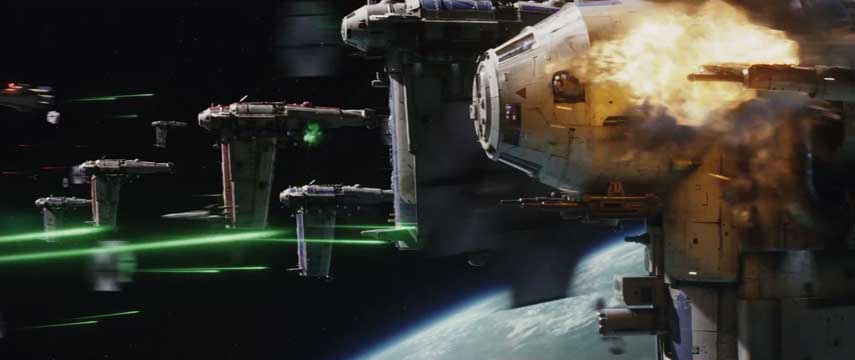
The film starts moments after the end of The Force Awakens. Rey (Daisy Ridley) has met with Luke Skywalker (Mark Hamill) on the remote planet he has spent the past decade hiding on. She believes (as do we!) that he will train her in the ways of the Jedi – instead he tells her to leave, and firmly states that the Jedi are a failed organisation that don’t deserve to continue. Meanwhile, during a speedy evacuation of the resistance base – covered by a suicidally reckless military operation by Poe Dameron (Oscar Isaac) that costs the lives of dozens of resistance ships and pilots – General Leia Organa (Carrie Fisher) is incapacitated, and the surviving rebel ships find themselves relentlessly pursued by the First Order. While the new leadership of the resistance seems to be offering no alternatives, Poe and Finn (John Boyega) hatch a plan to travel to a distant planet and recruit a codebreaker, to help them hack into the First Order flagship and disable the tracker it’s using, allowing the fleet to escape.

The Last Jedi is a film that has had a mixed reception from the fandom. After spending a couple of days thinking about it, this might be because the film so completely inverts expectations and refuses to play it safe. It’s a film about loss and disillusionment, but also about hope against adversity. It would have been very easy to transform Luke into a new Yoda, to make Poe and Finn heroic guys whose actions save the rebellion over the heads of their stuffed-shirt commanders. To build Kylo Ren further towards a redemption arc. These are all things you could expect – none of them happen.

Subverting these expectations has angered a lot of people – fascinatingly the same people who complained The Force Awakens was too similar to Star Wars. So I guess that kinda shows you can’t keep the Internet happy – so why even try. The main issue has been the re-imaging of Luke Skywalker. The man the first trilogy presented as the universe’s bright-eyed-boy, our new hope: here he’s a bitter, depressed man who has lost hope and his love for the Jedi. He’s a man who confesses to dark thoughts, who it transpires considered acts of murder, who has failed at almost everything he’s touched since the conclusion of Return of the Jedi. This is a big turnaround for the franchise’s hero, and yes it is jarring. Is this what people expected after the end of Force Awakens? It sure ain’t.

But, after the play-it-safe Rogue One and the thrilling remember-what-you-used-to-like-before-the-prequels joy of The Force Awakens, the franchise needed something like this. A shake-up, a repositioning of the universe. It’s not always bright and hopeful, and our heroes are flawed people who make huge mistakes. It’s in many ways a logical extension: if Rey is the new hope, than something must have gone wrong with the old hope. Luke has failed totally in the same way both his mentors (Yoda and Obi-Wan) did – he encouraged and honed the viper-in-the-nest.

As that viper-in-the-nest, we’ve got the terrifically complex Kylo Ren. Ren’s path in this film is the most inverted, unexpected and unusual development in the series so far. Adam Driver was superb in Force Awakens, and he’s great here once again as a very different type of villain. Ren is strong in the force, but in almost every other way he’s hugely weak: a sullen, moody man-child, straining for greatness, a tearful brat easily led, driven by his emotions, trying to take on a mantle of greatness he is psychologically ill-equipped for. He seems barely aware of what he wants from life, except for a vague wish to pull the world down – like any teenager, angry at his parents, which is what he is.

Pulling the world down seems to be Rian Johnson’s aim as well. An early attack wipes out the resistance leadership – Admiral Ackbar! No! – and the resistance itself is eventually reduced to a single ship, desperately running from the far stronger First Order. Never mind Empire Strikes Back, the resistance has never been so pummelled, its military achievements so minor. Even their one victory in the film – the destruction of a fearsome First Order ship – carries such a huge cost of men and equipment that Leia strips Poe of his rank for even attempting it. Thereafter, the only victory the resistance can hope for is to survive. No other Star Wars film has ever allowed such monumental failure to be the main plotline for our heroes. Johnson is clearing the decks and resetting the tables – he even wraps up lingering mysteries from The Force Awakens with such abruptness you wonder if he wanted to kill parts of the Internet dead.
Failure also ekes through the Poe/Fin subplot. Every single decision these characters take in this film is wrong, misguided, hugely costly or all three. If the film does have a major flaw it’s that Finn’s journey to the gambling planet is a cul-de-sac of plot development, that could have easily hit the cutting room floor and probably cost the film very little indeed. It never really goes anywhere, other than to allow Johnson to make some points about arms traders selling weapons to both the First Order and the resistance. It also introduces into the mix Benecio del Toro’s fantastically annoying, overly-twitchy performance as the hacker DJ – Del Toro seems to be getting more and more prone to “Deppism”, where a good actor succumbs to twitches and quirks rather than acting.

What is most interesting about this plot-line though is its very pointlessness. The plan (major spoiler here) doesn’t work at all, in fact it leads to many, many, many more resistance lives being lost, and wrecks Hondo’s secret plan which would have saved everyone’s lives. The film doesn’t quite have the courage to pin the blame for this disaster directly on Poe and Finn. In fact the film gets a bit confused here about the message it wants Poe to learn – it’s something about costly actions in war not being worth mindless sacrifice, but then this is a film that at its conclusion celebrates another character making a huge sacrifice. Unclear? A bit. Anyway: the point however is: you can’t imagine previous Star Wars films allowing our characters to so completely fuck up here as Poe and Finn do – and give them no moment of triumph to make compensation later in the film. 

What this does though, is Rey to be repositioned at the real hope – although the film goes about inverting her as well, with several suggestions that she is far more open to the dark side of the force might have thought. Daisy Ridley is very good as Rey, juggling conflicting pulls on her personality, her desire to redeem both Ren (and there is a great sexual chemistry between these two) and Luke, and the different directions these desires pull her in. Rather than seeing the force as a binary good/bad thing, Rey seems to want to find a balance between the two of them. Johnson explores this via a number of visually interesting scenes, not least Rey in a cave from the dark side, full of endless reflections. It’s an unexpected re-working of the Luke/Yoda relationship and works very well.

The Last Jedi is not a perfect film. For all its interesting inversion of old tropes, and the lack of triumph it allows our characters, it’s way too long. It could easily have been cut down by half an hour at least. Although some plots are designed to be expectation-defying dead-ends, they still end up feeling less than interesting (and ripe for fast forwarding on later viewings). Despite an attempt to include some scenes of deliberate humour, the film has less spark and joie de vivre than many of the other entrances in the franchise. Structurally, it’s not always clear what the timeline of events is between the different locations (weeks seem to go past for Rey, while only hours go by in the rebel fleet), and some of the points the film wants its characters to learn are unclear or hard to understand (I genuinely don’t know what Poe was supposed to have learned by the end of this film).

Its strength though are the characters – building on the groundwork from The Force Awakens(and very differently from Rogue One) this film is full of characters we care about. John Boyega and Oscar Isaac continue to excel as Finn and Poe (and still have great chemistry, shippers…) – Boyega in particular is quite the star. Ridley and Driver are superb. Hamill was never the strongest actor in the world, but he gives his most complex performance yet as Luke. The film mostly rattles along very nicely, and has plenty of action and excitement as well as “race against time” structure that works very well. Interestingly, its main handicaps are that it defies expectations almost a little too much (so it demands second viewing and reflection) and that it’s overlong and at times unclearly structured. But as a step forward for the franchise it’s still a good thing. A new hope indeed.

Coda: The film’s main sadness is the premature death of Carrie Fisher. One problem watching the film was that two or three times I was convinced that the film was about to show us Leia’s death. Johnson avoids changing the film from its original plan (Episode IX was intended to be “The Leia film” after films focusing on Han Solo and Luke), but it does seem a shame that Fisher’s good work wasn’t crowned by the sort of iconic final scene she deserves. The Episode IX planned will now never happen – but it would have been great to see Fisher really head centre stage in that film. RIP.

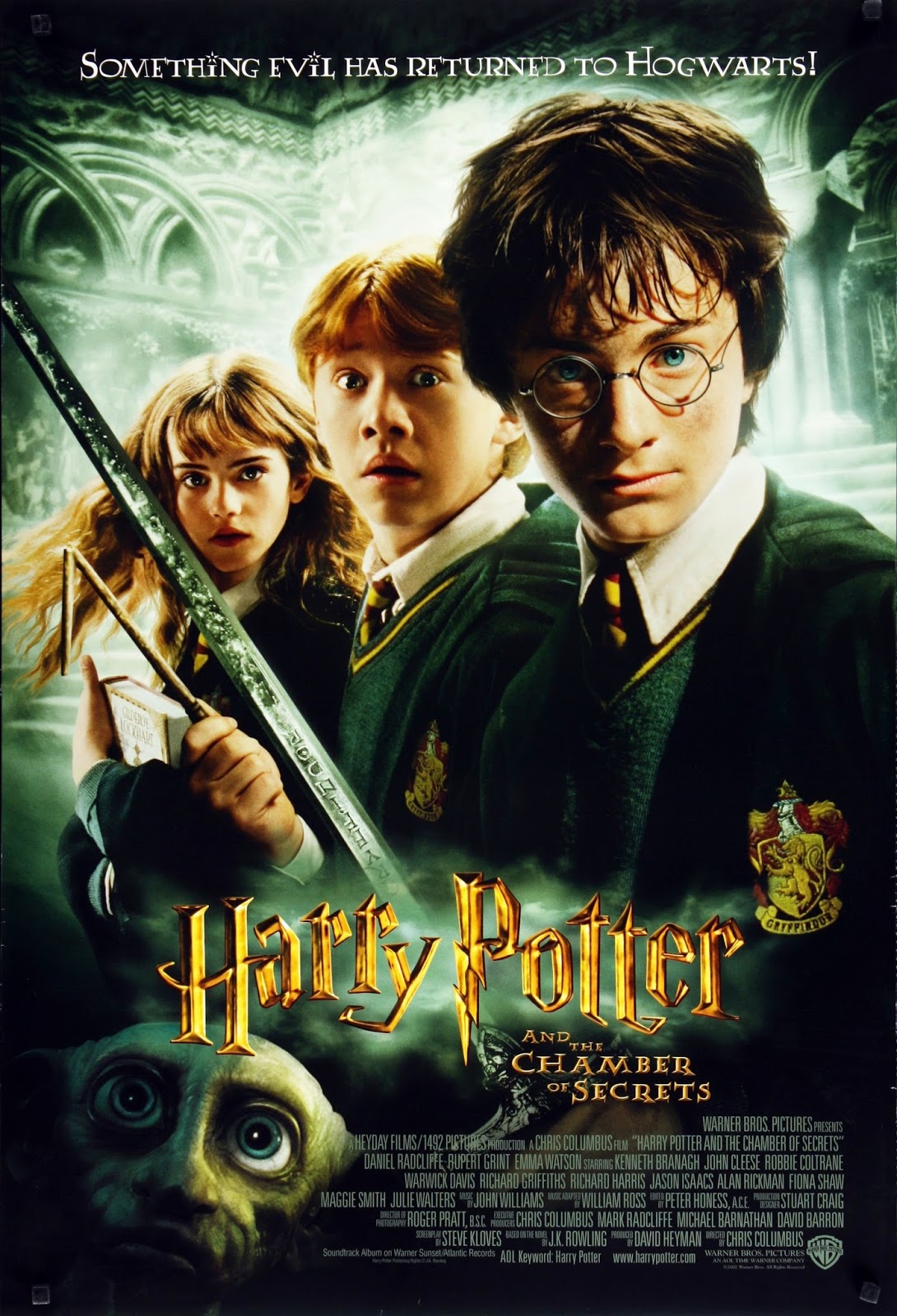
Harry Potter and the Chamber of Secrets (2002)


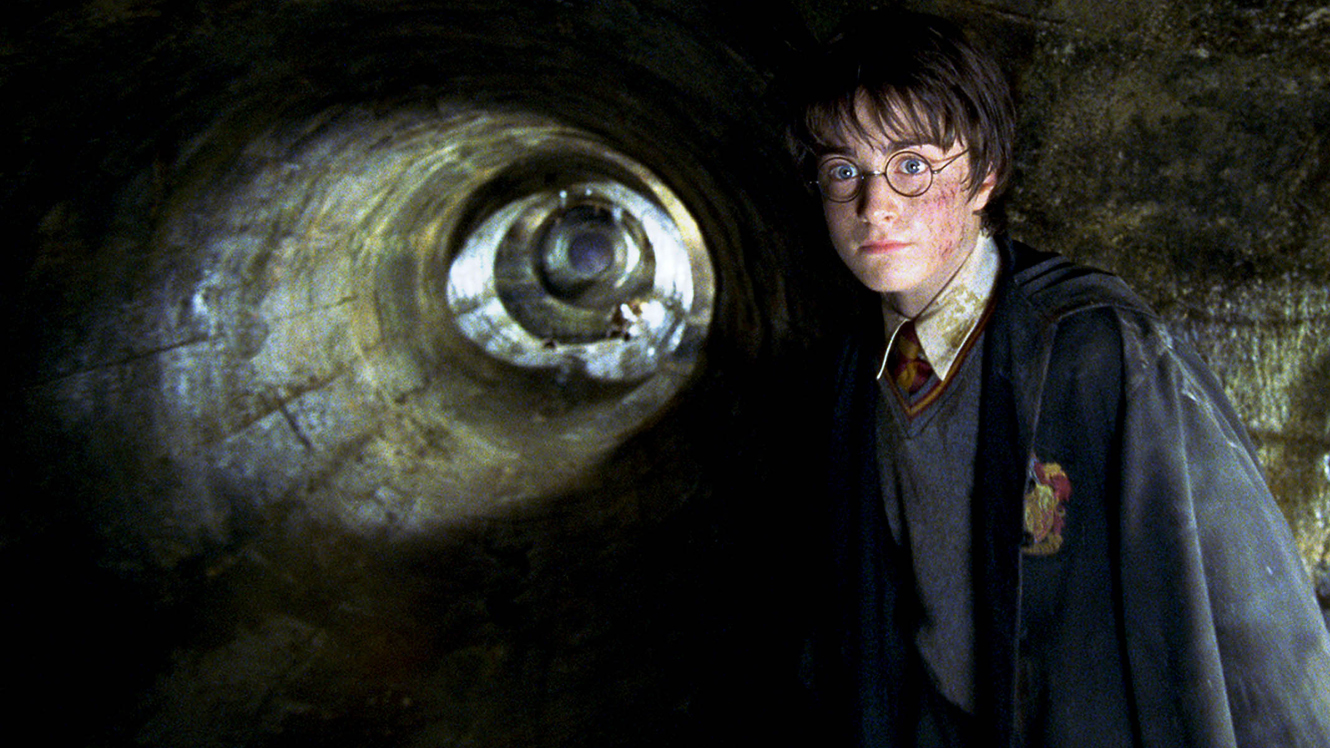
Daniel Radcliffe discovers dark goings on in the bowels of Hogwarts in Harry Potter and the Chamber of Secrets

Director: Chris Columbus

Cast: Daniel Radcliffe (Harry Potter), Rupert Grint (Ron Weasley), Emma Watson (Hermione Granger), Kenneth Branagh (Gilderoy Lockhart), John Cleese (Nearly Headless Nick), Robbie Coltrane (Rubeus Hagrid), Christian Coulson (Tom Riddle), Richard Griffiths (Vernon Dusley), Richard Harris (Albus Dumbledore), Jason Isaacs (Lucius Malfoy), Miriam Margolyes (Professor Snout), Alan Rickman (Severus Snape), Fiona Shaw (Petrunia Dursley), Maggie Smith (Minerva McGonagall), Julie Walters (Molly Weasley), Mark Williams (Arthur Weasley), Tom Felton (Draco Malfoy),  David Bradley (Argus Filch), Toby Jones (Dobby), Gemma Jones (Madam Pomfrey), Robert Hardy (Cornelius Fudge), Matthew Lewis (Neville Longbottom), Julian Glover (Aragog)

Another movie, and time for another everyday school year for Harry and friends: classes, exams, sports days and saving the entire population of the school from a grisly death. It’s a tough job but someone has to do it right? So welcome to the second Harry Potter film, that mixes the fun of flying cars and tricky elves with giant spiders and ferocious snakes.

Chris Columbus and team went virtually straight from the first film into making this one, and it’s pretty clear they had learned a lot from the last one. Sure, Columbus is still a safe pair of hands rather than an inspired director, but there is a bit more flair from cast and crew here. It also manages to look a lot less like a primary colour explosion or an illustrated version of the book, and more like a piece of film-making. Maybe this can be attributed to new cinematographer Roger Pratt, who gives the film a far more imaginative palette of darks blacks mixed with beautiful core colours (no surprise he returned to shoot Goblet of Fire). In addition, both design and costumes are far more adult and less Dickensian-robey than I remembered (though there’s still a way to go until we get to the steampunk 50s look of Prisoner of Azkaban that would dominate the rest of the films).

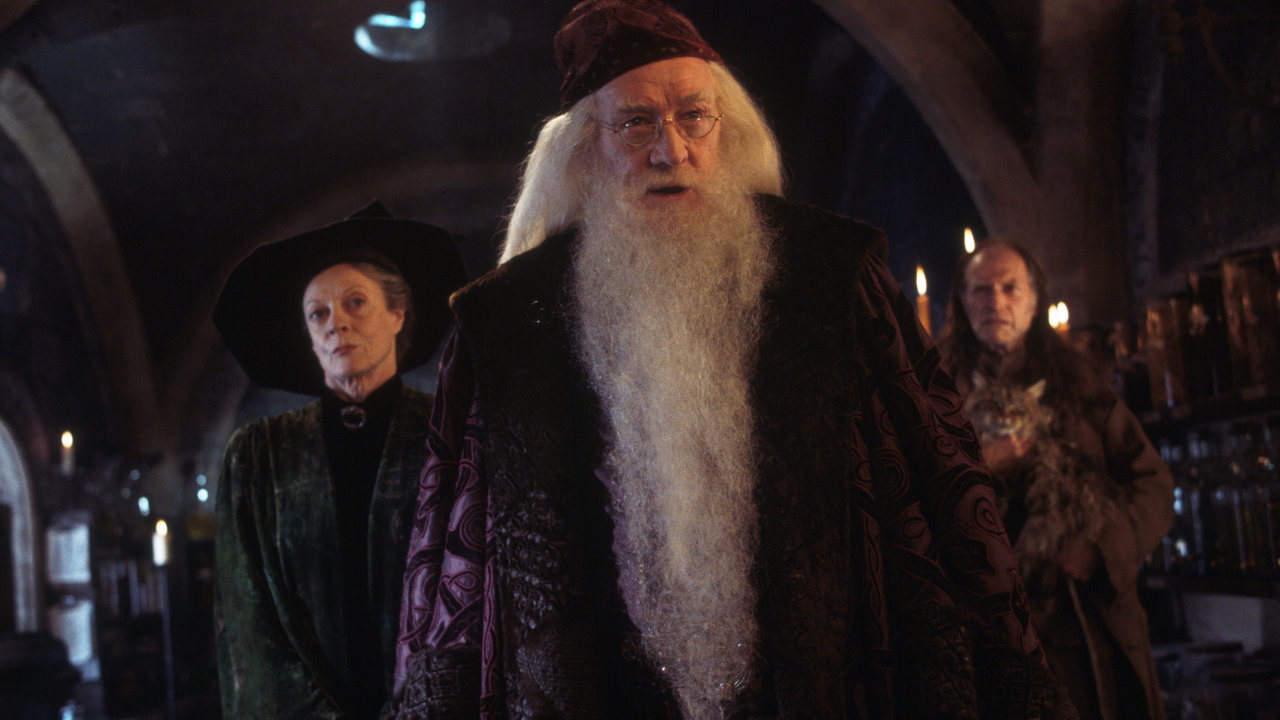
It also helps that the introduction to the wizarding world was covered so well in the first film. In fact, this is the last film where anyone felt it necessary to shoe-horn recaps into the dialogue, reminding us of who (and what) everything is. A particular moment of irritance for me is the first entry of Dumbledore and McGonagall: met with Harry breathlessly saying their names – just in case you were one of those people who didn’t contribute to the $1billion the first film made worldwide, or who hadn’t read any of the books by this point.

Anyway, Columbus got the principles out of the way in the first film so he could focus a bit more on this slightly darker, more developed story (just as Rowling was able to do in the books). The mystery of the Chamber of Secrets is more compelling than that around the Philosopher’s Stone in Potter’s first outing, and this is the film where we properly meet the series antagonist Voldemort – here played with a smarmy, casual cruelty by Christian Coulsen (it’s a shame this didn’t lead to bigger things for Coulsen). Radcliffe gets the chance to get his teeth into a decent final confrontation – and also the series’ first big action set-piece, quite well-shot with a creepy menace – as he takes on a basilisk.

In fact Radcliffe is much stronger in this movie – more relaxed, more confident and embracing Harry’s essential decency and sense of honour (the qualities that are always duller to play as an actor). He’s still struggling a bit at the moments that call for real emotion – but he does very well here indeed. Most importantly, you believe him and everything he does – which is quite something for a child actor to accomplish. 

He gets more depth and range to play with than Rupert Grint who was already being shoehorned into being gurning comic relief. There are few faces Grint isn’t asked to pull in this movie – and get used to that sad-sack downward grin, or the teeth-clench of terror, because these are going to become major weapons in his arsenal. Watson doesn’t actually get a lot in this movie, but even by this point it was becoming clear that she was pretty much a perfect fit for the character. 

The series also confirmed it had great roles for the cream of British acting – and that it was going to be a fine pension plan for most of Equity. Jason Isaacs plays the wicked Lucius Malfoy with relish and a scowling, patrician pride – no wonder he became not only a regular in the series, but one of its champions. He’s very good here indeed, as is other new addition Mark Williams, a perfectly charming shambolic dad as Arthur Weasley.

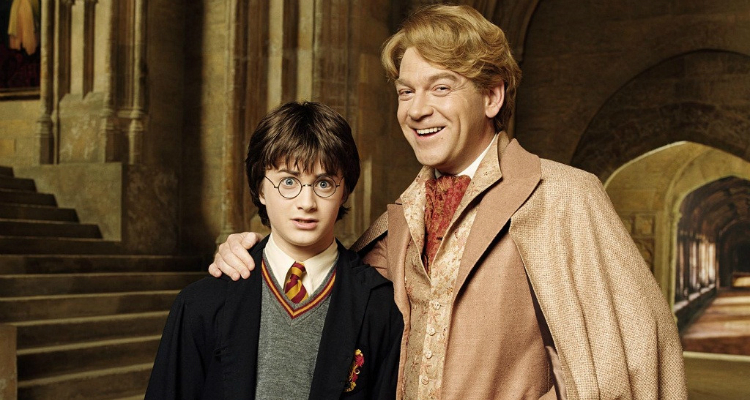
The show however is carried off by Kenneth Branagh as Gilderoy Lockhart. Branagh offers a performance close to of self-parody of his public perception, as a swaggering self-promoter, a preening egotist who can’t help but brag about his (almost non-existent) achievements and accomplishments. Branagh is deliriously funny as Lockhart, not only getting a lion’s share of the best scenes, but also bringing out some delicious comic rebuttals from the rest of the teachers – not least Rickman and Smith – who clearly can’t stand Lockhart. It’s a great performance – cocky, old-Etonianesque, full of surface charm and puffed up pride, but with a nasty selfish mean steak just below the surface.

It all feels part of the generally more free and engaging direction this film takes compared to the first one. Some of the best actors from the first film get relegated in screentime, but it shows the greater confidence the filmmakers have in the kids. The film really begins to introduce the ideas of good vs evil and the principles of friendship, humanity and love that differentiate Harry from Voldemort. Columbus isn’t quite the director to bring all this together into an epic vision, but he is good enough to deal the cards effectively. He gives it enough pace and shine so that we are never bored, though we’re also never wowed.

Despite the increased darkness and greater emotional depth, Columbus never loses track of the sense that he is making a family entertainment. He may still not be able to bring an artistic flourish to events, but he balances the light and dark very well. Not least the fact that the racism under the surface of the wizarding world emerges here. In the first film Voldemort alone was the villain, but in this one we first hear the term “mud blood” bandied about to describe Muggle-borns. We also find out that the wizarding world has its own slave class in elves (given a sometimes irritating Jar-Jar Binks-lite face by Dobby, a character with far more appeal to the kids than the parents). These are complex ideas – and all part of the world becoming richer.

Harry Potter and the Chamber of Secrets is still in the lower tier of Harry Potter films, but it’s a significant step-up from the first film. Visually it’s richer and more interesting. The stakes are higher, the themes deeper and more intriguing. It’s still very much a children’s film, and it still inclines towards being an over-faithful adaptation – it’s a bum-numbing 2 hours and 40 minutes so keen is it to not leave anything out – but this has far stronger material in it than the first film, and is a sure sign that this series was building a foundation it could flourish from.

Harry Potter and the Philosopher's Stone (2001)


Daniel Radcliffe gets sorted in the first of the franchise Harry Potter and the Philosopher’s Stone

Director: Chris Columbus

Cast: Daniel Radcliffe (Harry Potter), Rupert Grint (Ron Weasley), Emma Watson (Hermione Granger), John Cleese (Nearly Headless Nick), Robbie Coltrane (Rubeus Hagrid), Richard Griffiths (Vernon Dusley), Richard Harris (Albus Dumbledore), Ian Hart (Professor Quirrell), John Hurt (Mr Ollivander), Alan Rickman (Severus Snape), Fiona Shaw (Petrunia Dursley), Maggie Smith (Minerva McGonagall), Julie Walters (Molly Weasley), Tom Felton (Draco Malfoy),  Zoe Wanamaker (Madame Hooch), David Bradley (Argus Filch), Warwick Davis (Filius Flitwick)

In 2001, I was in my first year at university. I went to the cinema to watch this new, much-hyped children’s-fantasy film. I’d never heard of this Harry Potter fella going into it – so must have been one of the few people watching who was coming to it completely fresh. I was swept up in the film’s story when I first saw it. But how does it stand up watching it again decades later?

Well it’s a long bloody film. I was actually amazed this is nearly two-and-a-half hours long. Strewth. I mean this is the slightest and most childlike of Rowling’s books. Did it really need such a bum-numbing run-time to bring it to the screen?  I guess it needed a lot of that time, because there is a heck of a lot of backstory and wizarding world to introduce very early on – and the film explains this in very careful, loving detail. 

But Columbus’ world building here is excellent. I think it’s easy to forget how much pressure must have been riding on this film. How many imaginations worldwide did this need to satisfy? Not only that, but this had to cater for, and build towards, a host of sequels, some of which hadn’t even been written yet (other than in Rowling’s brilliant mind). But the film succeeded in bringing this wizarding world enchantingly to life. There is a delight in every magical sequence, or trick, produced in the film – so many that poor Daniel Radcliffe must have swiftly exhausted his repertoire of “awe-inspired” faces. But the film’s loving reconstruction of the world of the book is perfect, and the fact that it not only didn’t alienate people, but that so much of it has become integral to the popularity of the books as well, says a lot.

Later films would get more daring and imaginative in bringing book to screen – with Rowling’s full support – but this first one probably did need to hew pretty close to the original book in order to hook and secure that fan-base. So while Kloves’ screenplay may feel at time like a mixture of transcription and rewording rather than a true work of adaptation, it meets the needs of this first film.

The design elements of the film were also spot on. Much of the wizarding world would be radically overhauled design-wise in The Prisoner of Azkaban, but the foundations are all here. John Williams’ score was also pretty much perfect from the start so winningly constructed and so perfectly matched with the mood of the book that it has also become an integral part of the Harry Potter world.

But, watching the film back, it’s clear still that this is one of the weakest films in the series. Part of this is of course is that it’s also the most simple and childish of the books – Rowling would immeasurably enrichen and deepen the series with each book – but when placed in context with the rest of the franchise efforts, this does seem like a brighter, more colourful, Roald Dahlish, traditional children’s film. Again, a lot of this is faithful replication of the book – but considering how children embraced the later more emotionally mature films, it would not have been a disaster to include more of that material here.

The other main issue with the film is quite simply that it is averagely directed and rather mundanely filmed. It’s a bit of a shock to be reminded that Oscar-winning photographer John Searle shot this film, as it’s ludicrously over-bright and conventionally framed. In fact, it lacks any real visual interest at all, looking more like a child’s picture book than any form of motion picture. There is hardly a shot or visual image in the film that sticks in my head – and I am literally writing this as the credits roll on the movie. As a piece of visual storytelling, it’s pretty mundane.

Similarly, Chris Columbus is a solid but uninspired film maker. He marshals events on camera with a reliably safe pair of hands, unspectacular and undemonstrative. But he doesn’t have any real dynamism as a film maker – perhaps that’s why the material never really feels like his own. When the series did have a film maker with vision in Alfonso Cuaron (in Prisoner of Azkaban), the difference in imagination and vision was immediately striking – so much so the two directors who followed Cuaron effectively trod in his footprints.

But Columbus may well have been what this franchise needed at this stage: a safe pair of hands, who could work with the studio and the producers and shepherd to the screen a series of films that would be running for over a decade. Much as other names bandied around to direct at the time would have been better film-makers, I can’t imagine them having the “safe pair of hands” quality that Columbus did, providing the solid foundation from which the series could later grow – let’s be honest could you imagine Terry Gilliam successfully kick-starting a huge-franchise series like this?

And let’s not forget either the casting gifts Columbus left the film-makers with here. Have three child stars ever been better chosen than Radcliffe, Grint and Watson? And indeed all the other young actors, all but one of whom stayed with the series to the end? The triumph of choosing not just the talent, but the level headedness, was quite something. And the three actors here are very good. 

Grint probably wasn’t better than he was here – his natural comic timing becoming an overused tool in later films, but here he’s charming, likeable and endearing. Watson is raw but a good mix of know-it-all and vulnerable feeling. Radcliffe gets a rough ride in a hugely challenging part – and yeah he’s not yet an actor here – but he does very well, considering how often he is called on to look amazed, and how many deep feelings of isolation, loneliness and confusion he is called upon to show during the film. Not one kid in a thousand could do what he does here. Columbus got magnificent work from the entire child cast – and that alone is enough to give him a pass.

The adult cast is of course pretty much perfect. Robbie Coltrane is a stand-out as a loveable Hagrid, immensely cuddily and endearingly sweet – perfect casting. Rickman was of course similarly inspired casting, Smith was perfect, Harris an unusual choice but one that worked. Ian Hart’s twitchy nervousness gets a bit wearing, but it’s not an easy part. Griffiths and Shaw embrace the cartoonish Roald-Dahl-bullying of the Dursleys. Pretty much every casting choice is spot on.

Harry Potter and the Philosopher’s Stone is the least deep and rich of the Harry Potter films, but it had a hell of a difficult job to do. And what I have to remember is that I was one of the uninitiated who sat in the cinema to watch it and needed all that introduction. Any film that has to get Muggles like me up-to-speed while keeping the die-hard fans happy faces a very difficult task. I think you can say, for all the later films surpassed it, that Philosopher’s Stone managed that in spades.

The Hobbit: An Unexpected Journey (2012)


Martin Freeman goes on An Unexpected Journey in the first of Peter Jackson’s deeply flawed trilogy

Director: Peter Jackson

Cast: Martin Freeman (Bilbo Baggins), Ian McKellen (Gandalf), Richard Armitage (Thorin Oakensheild), Ken Stott (Balin), Graham McTavish (Dwalin), Aidan Turner (Kili), Dean O’Gorman (Fili), James Nesbitt (Bofur), Cate Blanchett (Galadriel), Hugo Weaving (Elrond), Christopher Lee (Saruman), Ian Holm (Old Bilbo), Elijah Wood (Frodo Baggins), Sylvester McCoy (Radagast), Andy Serkis (Gollum), Manu Bennett (Azog the Defiler), Lee Pace (Thranduil), Benedict Cumberbatch (Necromancer)

The little-loved Hobbit films are finished now. This may be a controversial statement, but looking back at the three films now, An Unexpected Journey is clearly the best of an average bunch, the only one that feels like it has some sort of story arc, where the padding isn’t too overbearing and we get some character moments. Despite all that, it’s (bless) a bit of a mess. A tragic missed opportunity, which are like bloated windy farts that follow through.

So. It’s three films. We all know it shouldn’t be. We all know it’s a slight kids’ book. So let’s take it as read that even this, the best of the bunch, is an over-extended three hour expansion of six chapters (six bloody chapters!) of the original kids’ fable. Never, at any point, does this feel like it needs to be a long film. Where is the depth and passion in this film? It’s a slow, slow, quick, quick, slow paced splat, which takes ages and ages and ages to get going and then runs through as many set-piece action scenes as possible. 

Why did Peter Jackson make these films? Honestly, watching it you feel he had a gun to his head. He can’t bring any love or depth of feeling to huge chunks of the film. The action scenes feel put together by a choreographer and designed to be as loud and broad as possible, rather than because they are being put together by a storyteller. 

Thirteen dwarves? This is one of the main reasons Jackson was worried about making this film. How could he make these characters distinctive? How could he build plot arcs and storylines for each one? The answer was he couldn’t. So he didn’t even bother. Now I know the Tolkien fans would have hit the roof, but for goodness’ sake would it not have been better for the good of the film to cut the number of dwarves down? So we could get to know them a bit? Because large numbers of these dwarves are indistinguishable from the other. Throughout the course of this film, as a stand-alone viewing experience, only Thorin and Balin stand out in any way as immediately recognisable. They are the only two who you can always identify. The rest? They just all mash into one. They don’t even really have distinctive moments. They are just a mass.

So you watch the overblown, overextended and yawn-worthy action and chase scenes and you just can’t get wrapped up in them. Because all we are doing is watching huge, time-consuming sequences with a mass of characters we can’t tell about, and even when we do, we don’t have any emotional connection to them. The dwarves are all sort of refugees I guess, which gives us some sort of link to them, but it’s the same back story for each one. It’s indistinctive and unclear. If Jackson had gone with his gut and cut some of these out, then the extended running time could have been used to build establishing character moments, to give pay-offs and plot arcs for them. Instead, he kept them all – and never develops any of them.

Those action scenes do go on forever. I know they all come from the book, I get it, but there is no tension in any of them. Dwarves bounce, twirl and fly all over the place. Never at any point do they really feel like they are in danger. A run over the field from some wolves – yawn. The chase sequence through the Goblin kingdom in a mine – double yawn. The second is particularly bad as it brings back strong memories of the LOTR sequence in the Mines of Moria, which had a hundred times the excitement and thrills of this. 

In fact that reminiscence is a big problem for a large chunk of the film. The Hobbit is a kids’ book, but The Lord of the Rings is an adult fantasy novel. The attempt to tie these two different tones and genres of novel is a constant hiccup. So we get the dwarves pratting around and bouncing about, in moments that seem childish and cheap. And then we get doom-laden conversations, and dark over-blown musings about the stakes of the world – stakes that don’t tie in, in any way, with the content of the action, adventure story we are seeing in the film. Then there are blatant, clumsy references back to the original – did anyone else groan when Elijah Wood wandered onto the screen? Appearances from Blanchett, Weaving and Lee are all shoe-horned in. At least Ian Holm gets to do some lovely narration. But all these moments simply remind you that you could be watching a better film trilogy than this.

But despite all this, An Unexpected Journey isn’t all bad. Yes it hares about so quickly, with no depth at all, at great over blown length, but it has its moments and it is just about entertaining enough. Jackson can still do some of these moments well – the flashback that opens the film to Smaug’s attack on the mountain is very well done; in fact it has more inspired film-making and tension than nearly anything else that follows. Yes the arrival of the dwarves takes a lot longer to get going than the film needs – but at least it’s pretty charming, and Jackson’s whimsical love of Hobbiton is pretty clear. Shame I don’t think he brought any more invention or sense of charm to much of the rest.

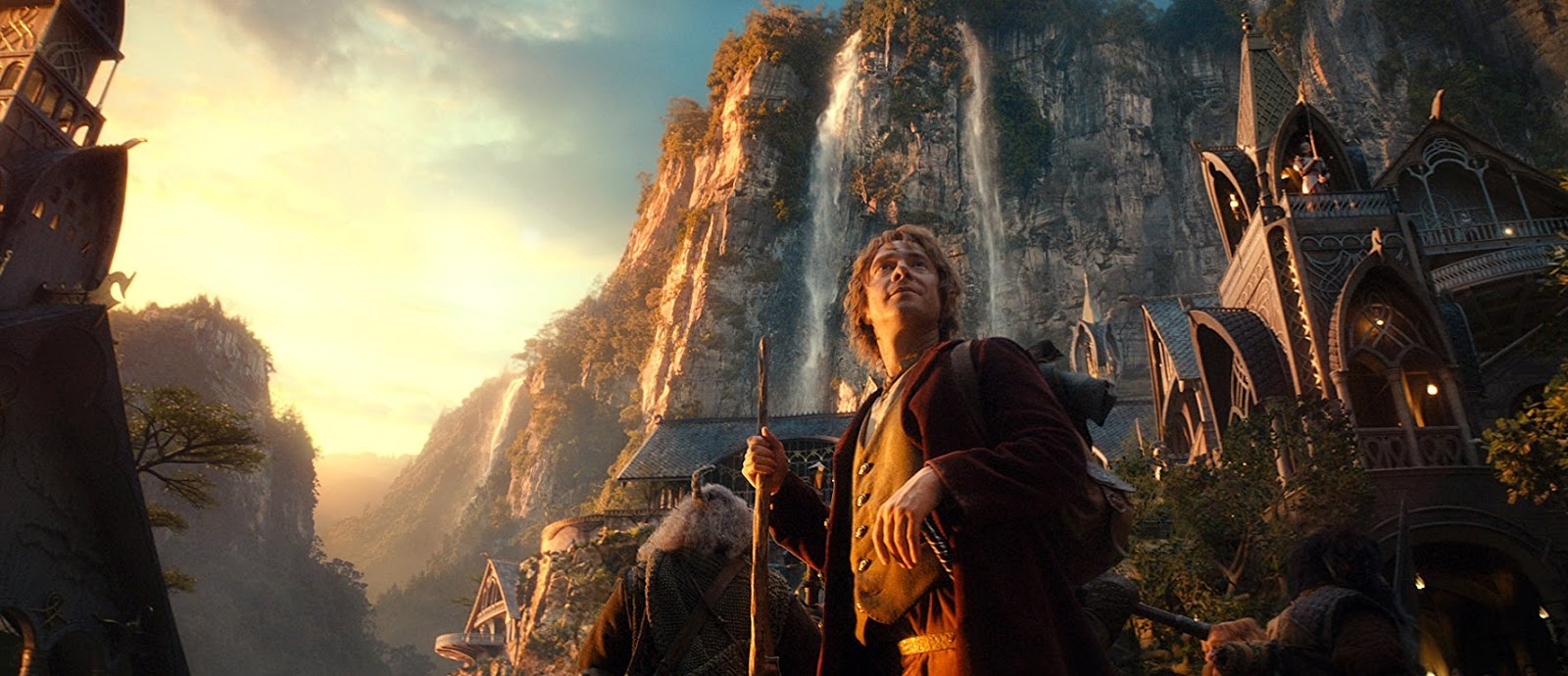
It’s also helped by the fact there are some damn fine performances in there. Martin Freeman is just about perfect casting as Bilbo; he’s charming, vulnerable, slightly-out-of-his depth, brave, very English – he’s great. Ian McKellen practically is Gandalf by now, and he hasn’t lost his understanding of the character’s slightly grubby, grandfatherly charm. Richard Armitage as Thorin is brilliant, mixing a gruff, maverick quality alongside his pride and resolution – and his intense sense of loyalty. Of the rest of the cast, not many get a look-in, being either cameos or underdeveloped, but Ken Stott stands out as the kindly, wise Balin.

The film is also possibly the only one of the three that truly stands alone in some way. It has some form of plot arc behind it in the relationship between Thorin and Bilbo, and the lack of trust Thorin has for Bilbo, his unwillingness to accept him into the group. Similarly, Bilbo has to learn to embrace his role with the dwarves and his place in the company. This is actually a pretty touching and carefully done dynamic, that culminates not only in the film’s most involving (and tellingly low-key) action sequence, but also a tender moment of acceptance from the previously stand-offish Thorin (brilliantly sold by Armitage). 

This is a great plot arc. It also has a negative impact on the next two films – because this is the emotional climax in many ways of the trilogy – and it came in the first film of three! With this major emotional plot line between two of our core characters resolved by the end of the first third of the sequence, what is there to do with the rest of it? It’s a major loss for the rest of the trilogy. 

But for this stand-alone film it works well. Because it reminds you there is some heart in this film – heart missing from the next two films – because it is founded on an understandable emotional bond. The rest of the company may be indistinguishable, but at least Thorin and Bilbo move us. The best moments in these films are founded on feeling and character investment. Andy Serkis makes a great return as Gollum in an entertaining exchange with Freeman. The clash between Thorin and Azog is the most engrossing in the film because it has a genuine history to it established in the film, that a zillion clashes with the Goblin King, or a pack of wolves or faceless goblins never do. 

The Hobbit: An Unexpected Journey is a decent movie. It has flashes of excellence in it. It’s got some good performances. Peter Jackson is still able to shoot a decent scene, even if you don’t really feel his heart is completely in it. The performances are uniformly good, and some are excellent. But the whole thing feels like an overblown missed opportunity. There was a chance to do something magic here with this Hobbit series. But this wasn’t it. You can’t cast the same trick twice.

The Golden Compass (2007)


How did it all go wrong? The disastrous production of Philip Pullman’s The Golden Compass

Director: Chris Weitz

Cast: Dakota Blue Richards (Lyra Belacqua), Nicole Kidman (Mrs Coulter), Daniel Craig (Lord Asriel), Sam Elliott (Lee Scoresby), Eva Green (Serafina Pekkala), Jim Carter (John Faa), Clare Higgins (Ma Costa), Tom Courtenay (Farder Coram), Derek Jacobi (Magisterial Emissary), Simon McBurney (Fra Pavel), Jack Shepherd (Master of Jordan College), Ian McKellen (Iorek Byrnison), Freddie Highmore (Pantalaimon), Ian McShane (Ragnar Sturlusson), Kathy Bates (Hester), Kristin Scott Thomas (Stelmaria)

After the success of The Lord of the Rings, bookshops were stripped of all epic fantasy novels with a cross-generational appeal by film producers, their mouths watering at the prospect of having another billion-dollar licence to print money. Nearly all of these projects bombed, but I’m not sure any of them bombed harder than this, an attempt to kick-start a trilogy of films based on Philip Pullman’s both loved and controversial His Dark Materials books. What went so completely wrong?

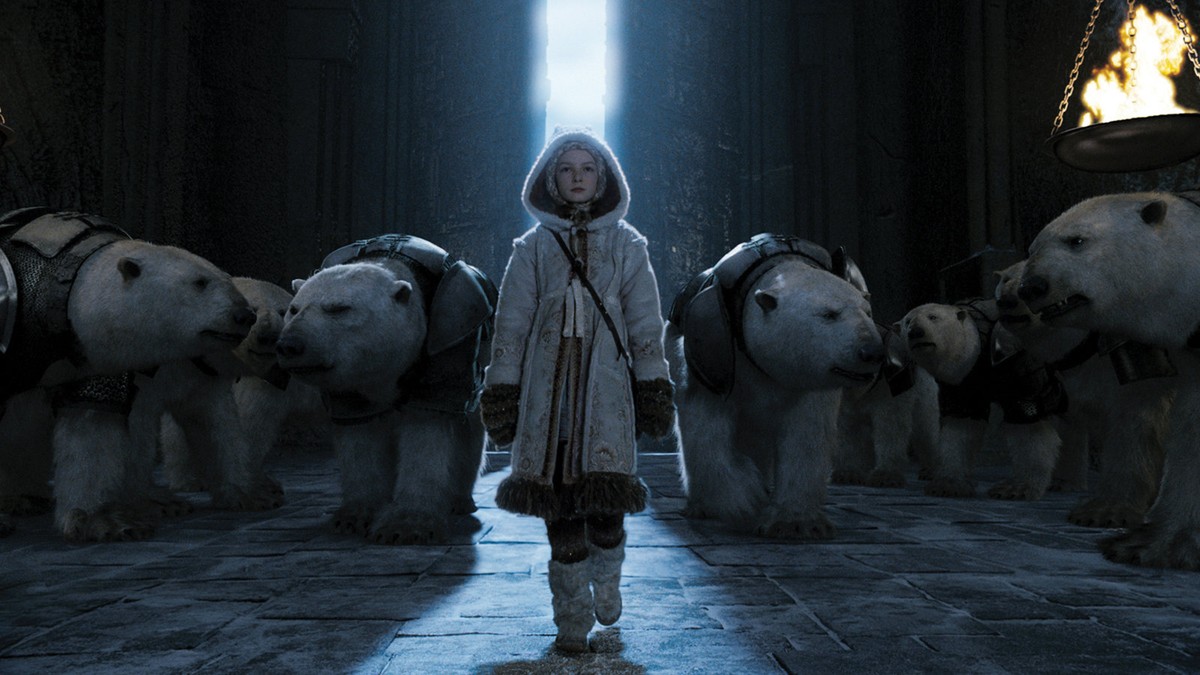
Pullman’s trilogy is set in an alternative-Oxford, where people all have Dæmons, part of their soul that lives outside their body in animal form. It’s a world where the Magisterium, a powerful organisation, suppresses all free thought, in particular all investigation into the mysterious particle dust. Lyra Belacqua (Dakota Blue Richards) is an orphan raised in Jordan College, who saves the life of Lord Asriel (Daniel Craig), who is investigating Dust in the North. Leaving the college with the mysterious Mrs Coulter (Nicole Kidman), who may or may not be involved in a series of child kidnappings, she eventually finds herself drawn more and more into setting right the problems of her world.

The Golden Compass is a film that pleased no-one. Fans of the book generally hated it. The people who hated the books hated it. The people who hated what they had been told the book was about hated it. Why did the studio decide to make a film in the first place about a book series they seemed to know was controversial from the start? If they didn’t really want to embrace the themes of the books, why bother? Pullman’s books are partly adventure stories, partly intricate world building, partly spiritual discussions – and yes partly atheist tracts with a strong anti-Establishment-church bent (with a more general regard for genuine faith). To put it bluntly, that’s a lot of ideas to try and squeeze into a film – particularly a film well under two hours.

So The Golden Compass is a mess that feels like it’s been put together by committee. It’s been cut to within an inch of its life – scenes jump incredibly swiftly from event to event, often with the barest of clunky explanation voiceover (“We’re going to see Lord Faa, King of the Gyptians”) to tell you what’s going on. Pages and pages of dialogue and character seem to be lost. We are constantly told Lyra is “special” but never shown anything that supports or explains this. An Eva Green-voiced infodump opens the film: clearly the producers were thinking about Peter Jackson’s masterful opening to The Fellowship of the Ring, which skilfully introduces everything. This introduction though is about removing all the mystery and magic of the story as soon as possible by stating it bluntly up-front.

The biggest mess is of course the way the film avoids all reference to Pullman’s religious themes. No reference is made at all to the Magisterium being a church. No reference is made at all to religion or faith. Iorek is clearly being held in a Russian Orthodox painted church – but the building is referred to throughout as an “office”. Derek Jacobi plays one of the principal Cardinal antagonists of the third book – no reference is made to his office. The Magisterium is instead just a “shady organisation” – a controlling gestapo-type organisation, with black uniforms and creepy Albert Speer style buildings. The questions of Dust and original sin – so central to the motivations of the story – are completely unexplained, meaning the child kidnapping and sinister intercission the villains are carrying out makes no sense at all. How on earth they planned to continue not talking about religion in their planned third film is a complete mystery.

This rushing is the problem throughout the film. Stuff just happens really, really quickly for no real reason. Characters pop up to introduce themselves for later films, or to drop clunky exposition. Tom Courtenay explains what an aleitheometer is for us (the film constantly brings up this “Golden Compass” and its future-telling properties, without ever really making them feel important for anything that happens in the film). Eva Green flies in to say she’s a witch and how pleased she is to meet Lyra and promptly flies off. Daniel Craig name checks Dust, gets captured then disappears. Sam Elliott introduces his rabbit Dæmon and shoots a couple of things. None of this gets any chance to grow and develop – and you end up not caring about any of these characters. Nearly every plot event from the first book is kept in – but so rushed you don’t give a toss.

The structure of the film has also been changed from the book, and not for the better. The film (probably thinking about later films) increases the presence of the Magisterium throughout – but without really making their antagonist role clear. Lyra and Iorek’s defeat of Iorek’s usurper Ragnar is moved to before the final defeat of the Gobbler’s ice base – this doesn’t make a lot of sense. If Iorek now commands an army of bears, why doesn’t he bring them along for the final battle? Lyra instead wanders up to the base like an idiot, and the film extends the release of the children from the ice base into a big battle in order to give us a Lord of the Rings style finish. It doesn’t matter that nothing in the film feels like it’s building plotwise or dramatically towards this battle – it’s there you feel, because Lord of the Rings had battles and people loved that, so let’s get one in here. 

In fact the film builds towards nothing, because it has been cut so poorly, and is such a terrible compromised product, that everything the books are building towards has been removed from it. So the entire thing makes no bloody sense. The clash with the church and organised religion doesn’t work because all reference to faith has been cut. There are mutterings about a “war” coming, but no one says what it might be about. There is a loose crusade to save the kidnapped children – but we don’t understand either side of this. The cruelly ironic ending of the book, with Lord Asriel’s real plan revealed, is deleted altogether from the film – because the studio didn’t want a “downer” ending. As a result the film just suddenly ends (after a clunky “We’ll go home one day after this, and this, and this, and this, and this, and after we’ve solved all the problems of the world” speech).

Studio interference reeks off this whole film. It’s been cut to ribbons. Ian McKellen and Christopher Lee were parachuted into the cast in order to make the film feel more like Lord of the Rings. McKellen sounds completely wrong as a mighty armoured bear (original casting Nonso Anozie would have been perfect). Lee chips in a single line in what is painfully obviously an addition from re-shoots. Anything potentially different or interesting is cut out. In fact anything that was unique about Pullman’s original books is cut out: as much is done as possible to make Pullman’s story as identikit and standard as hundreds of other bland fantasy dramas. As if they hadn’t realised the book was potentially really controversial in the more traditional parts of the US market, it seems like the studio only really read the books once the film was shot, suddenly realised they had made a massive mistake, and tried to reduce the danger as much as possible by making the film as bland as they possible could.

Chris Weitz is completely unsuited for directing it – and he actually feels like a hostage the more you read about the film’s turbulent production – but it’s not all bad. Dakota Blue Richards is actually pretty good as Lyra – she’s got a certain magic charisma. The set design is pretty terrific – even if it is a lot more steampunk than I pictured the novel as being. The special effects are pretty goods – the Dæmons are well done, and the puff of gold Dust they turn into when someone dies is striking. Some of the adult casting is pretty good – Kidman is just about perfect, Craig is pretty good, Sam Elliott stands out as Lee Scoresby. There are some neat cameos as well – I would have liked to see Jacobi get to tackle the third book, Eva Green is wasted, Tom Courtenay is pretty good. It just all rushes by so quickly. You don’t get the chance to get to know anyone fully. If the book was a bit episodic, this takes that worst element of it and ramps it up to eleven.

The Golden Compass tanked. It tanked so hard, New Line Cinema didn’t really recover. All plans for future films were scrapped. However, it is important in another way. In presenting such a horrifically neutered, stripped-down version of the story, it persuaded a lot of people that books rich in world building and content like this needed much longer than a traditional film to be brought to life. It helped persuade George RR Martin that TV was the way to go when selling the rights for Game of Thrones. And His Dark Materials will now live again as a 10 part TV series in the near future. For all its many, many failures – we owe it something.

Addams Family Values (1993)


The Addams Family Values: Goth meets summer camp fun in this engaging comedy

Director: Barry Sonnenfeld

Cast: Anjelica Huston (Morticia Addams), Raúl Juliá (Gomez Addams), Christopher Lloyd (Uncle Fester), Joan Cusack (Debbie Jellinsky), Christina Ricci (Wednesday Addams), Carol Struycken (Lurch), Jimmy Workman (Pugsley Addams), Carol Kane (Grandma Addams), David Krumholtz (Joe Glicker), Peter MacNicol (Gary Granger), Christine Baranski (Becky Martin-Granger)

The Addams Family was a serviceable family comedy about a bizarre group of Halloween style characters, who delighted in leading lives of cartoony horror. It drifts along, and was a big hit, but its sequel Addams Family Values is several times smarter, more confident and funnier. As a comedy family saga mixed with cartoon creepiness, it’s hard to beat.

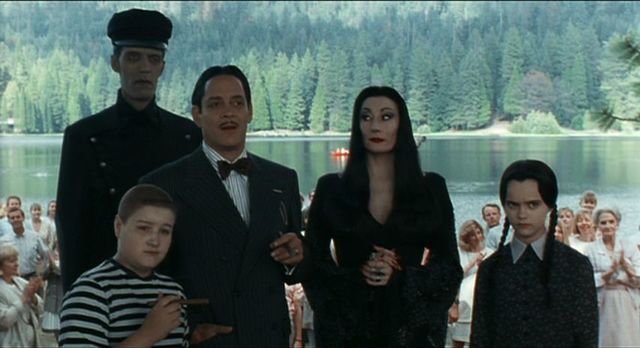
Celebrating the birth of their new child (“He has my father’s eyes” / “Take those out of his mouth”), Morticia (Anjelica Huston) and Gomez (Raúl Juliá) hire a new nanny, Debbie Jellinsky (Joan Cusack) to care for the baby. On her advice, they also decide to send the insanely jealous Wednesday (Christina Ricci) and Pugsley (Jimmy Workman) to a summer camp – needless to say they do not fit in with the All-American, Apple-Pie ideals championed there. Debbie meanwhile has wicked designs on becoming the widow of their rich Uncle Fester (Christopher Lloyd).

Addams Family Values gets a lot of comic juice out of some very witty set-ups. Everyone involved in the film feels more relaxed and happy to let the comedy breathe. Sonnenfeld lets the set-ups come naturally and allows the characters to come to the fore. Every joke in the film comes from watching the characters bounce off their circumstances. Of course, a lot of this comes from the fact the film doesn’t need to do any of the heavy lifting of introducing the world or the characters – it rightly assumes we know what we are getting from the start – but it still makes the film hugely entertaining.

A lot of the humour comes from the brilliant summer camp plotline, with its passive-aggressive, jolly-hockey-sticks owners (a very funny Peter MacNichol and Christine Baranski) and their naked favouritism for the popular kids. Placing the Addams children into a world of normal teenage politics and the forced jollity of adults who would rather still be one of the popular kids at school is a brilliant touch. This clash of values makes for no end of comic glory, culminating in a disastrous Thanksgiving play, which is a triumph of the sad and overlooked over the popular kids (because who watching any film favours the popular kids?).

Christina Ricci is brilliant in this – her deadpan sense of comic timing is spot-on. Every scene and every one-liner is stand-out. The film even finds time for a sweetly semi-romantic plotline between her and loser Joe Glicker (David Kumholtz, also very good as the kind of kid who likes to read A Brief History of Time). Ricci ends up carrying a lot of the film’s comic material, and she’s so perfect in the role that to a lot of us she will always be Wednesday Addams, never mind what she does.

The summer camp plotline is so drop-dead funny and memorable, it rather overshadows the film’s actual plot about Debbie’s attempts to seduce and murder Fester. Sonnenfeld struggles to make this main plot come to life – his real delight is in the sketch-based comedy of the summer camp and the Addams’ love for the grotesque and the extreme. Having said that, Joan Cusack is wickedly sexy and funny as a heartless social climber.

Anjelica Huston and Raúl Juliá remain divinely perfect as a couple so besotted they can barely look at each other without bursting into a steamy tango, or an avalanche of flirtatious foreign language banter. Juliá rips into the dialogue with a flamboyant gusto, and he’s a perfect foil for Huston’s supercool, arch one-liners. Sonnenfeld never lets the introduction of a baby affect their comic darkness in any way, which is a perfect set-up for comedy.

Addams Family Values is terrific good fun and always keeps you laughing. It’s a load better than the original, and has some terrific comic set-pieces in. Sure it’s got a pretty basic plot, but it’s directed with a wicked dryness by Barry Sonnenfeld and its cast are now completely comfortable in their eccentric characters. The tone always seems spot-on between the surrealist darkness and the childish, cartooney horror. It’s a very entertaining film.

Pacific Rim (2013)


Idris Elba, Charlie Hunnam and Rinko Kikuchi are cancelling the Apocalypse in Pacific Rim

Director: Guillermo del Toro

Cast: Charlie Hunnam (Raleigh Becket), Idris Elba (General Stacker Pentecost), Rinko Kikuchi (Mako Mori), Charlie Day (Dr Newt Geiszler), Max Martini (Hercules Hansen), Robert Kazinsky (Chuck Hansen), Ron Perlman (Hannibal Chau), Clifton Collins Jnr (Tendo Choi), Burn Gorman (Dr Gottleib), Diego Klattenhoff (Yancy Beckett)

Film can be a beautiful and thought-provoking art-form. But sometimes, gosh darn it, you just want to leave the works of the great artists behind and watch a big, loud film in which giant robots hit giant monsters. Over and over again. In lurid, glorious, high colour detail. That’s pretty much the life and career of Guillermo del Toro. Make something like Pan’s Labyrinth. Then follow it up with something so wildly, tonally different you won’t believe it’s from the same guy: Pacific Rim.

In 2013, huge monsters (Kaiju) emerge from an interdimensional portal at the bottom of the Pacific Ocean. As they destroy cities left, right and centre, mankind is pushed to the limit. Eventually they develop Jaegers – giant robots controlled by two pilots, whose minds are linked together and used to drive the Jaeger’s movements. In 2020, Raleigh Becket (Charlie Hunnam) leaves the Jaeger force, commanded by General Stacker Pentecost (Idris Elba), after his brother and co-pilot is killed by a Kaiju. By 2025, the world governments decide to cut the funding of the Jaeger programme – forcing Pentecost to call Becket out of retirement and team him with his adopted daughter Mako Mori (Rinko Kikuchi) to launch a final, desperate, assault on the portal with the few remaining Jaegers, in an attempt to stop the ever-increasing number of Kaijus for good.

Pacific Rim is loud. It is silly. Its plot is a collection of clichés and offcuts from other movies. Some of the acting in it is ludicrously bad, over-the-top, poorly accented or all three. It looks and sounds like a direct-to-DVD movie made on a massive budget. Yet, despite all this, it’s really, really good fun. The ultimate guilty pleasure. Deafeningly dumb, but somehow it sort of knows this, and it knows you know it, so it just gives you what you wanted when you sat down – bangs, bashes and silly dialogue. Maybe this all works because Del Toro is actually a real director: he can shoot this nonsense with a sense of flair and scale, and is confident enough as a storyteller to just accept he’s making a dumb film and doesn’t need to try and pile some spurious depth on it, but just run with the emptiness.

Pacific Rim gives you this: some truly sublime robot vs. monsters battling in a variety of beautifully shot locations, in particular downtown Hong Kong. I mean, who wouldn’t love seeing this smashy super-action? The robots basically look really cool, the monsters are really imaginative, it’s tonnes of fun. Of course the battles are silly, there is always “one more weapon” to use that is bigger and better than anything they’ve used before (so why not do that from the start?). Del Toro also shoots the fights with a surprisingly calm camera, that makes the action the frantic lead, rather than the normal thing you see in these films, with the camera flying around all over the place. They’re edited really well. The score is great. The battles don’t overstay their welcome, and the characters at the centre of the Jaegers are always kept front-and-centre. Who wouldn’t love them?

The plotline of the film has a B-movie directness, which del Toro manages to fill with some depth. It’s a film about co-operation and learning to work together. This should be pretty wearingly obvious – okay it is – but somehow it strangely moving in the film. The Jaegers literally need two people to work together so closely they share a mind to operate it. The whole Jaeger programme only works from intimate co-operation. Characters feud and argue – but the film is about them learning to overcome these differences and work together. The film hammers home the fatality rate of this war with kaijus so well, that you end up really caring for sacrifices and risks these people are running. When Jaeger pilots start dying, I find it actually rather moving in its brutal suddenness. 

At lot of this comes from the wonderful, hero-worshipping, film style del Toro uses. Look at shots such as when (in flashback) Idris Elba’s Penthouse climbs out of a Jaeger, framed by the sun behind him – he looks like some sort of ultimate hero. The Jaeger pilots all have their own distinctive themes, and are framed and shot with idealism and adoration. Sure their personal issues are the most rampant form of clichéd melodrama – but it’s sold with complete conviction, and told with such unabashed simplicity, that you end up caring for it. 

This is despite the fact that most of the acting is pretty below par. Idris Elba is the one major exception – the only one with the charisma to sell such basic plots as “dying of brain tumour” and to make chuckle worthy lines like “we are cancelling the apocalypse” sound like rallying cries, rather than seriously awful crap. Charlie Hunnam, by comparison, has nowhere near that level of charisma and Raleigh Becket is probably the most forgettable lead character you’re going to see in a movie like this. Robert Kazinsky is pretty awful as his rival Jaeger pilot (his accent is dreadful). Charlie Day and Burn Gorman are hit-and-miss as the comic sidekick scientists. Rinko Kikuchi is however pretty good – and with her “drift” memory loss she has probably the film’s most affecting sequence.

But this isn’t a film of subtle character work or sharp scripting. It’s got a B-Movie aesthetic, but it delivers it totally honestly. Basically, Guillermo del Toro is a good enough director to be comfortable with making a really, really good bad movie, Pacific Rim is deeply silly and stupid, but it is a lot of fun and its characters (despite their pretty forgettable or clichéd nature) are still people you really invest in. Del Toro pulls off a neat trick filming this, perhaps because the film is so sweetly honest, and unabashed, about what they are doing here. It’s got a heart-warming message about co-operation. It never feels exploitative. It’s got a childish sweetness about it, a real family robot basher. It’s the best bad movie you’ll ever see.