Category: Female led film

The Color Purple (1985)

The Color Purple (1985)

Spielberg’s film has many strengths but is a little too sentimental and can’t always grasp everyday horror

Director: Steven Spielberg

Cast: Whoopi Goldberg (Celie Harris-Johnson), Danny Glover (Albert Johnson), Adolph Caesar (Ol’ Mister Johnson), Margaret Avery (Shug Avery), Rae Dawn Chong (Mary ‘Squeak’ Agnes), Oprah Winfrey (Sofia), Akosua Busia (Nettie Harris), Willard Pugh (Harpo Johnson), Dana Ivey (Miss Millie), Desreta Jackson (Young Celie)

The Color Purple was Spielberg’s first foray into making ‘grown-up’ movies. He still seems like an odd choice for it today: author Alicia Walker was very hesitant, until ET proved to her Spielberg could make a film with empathy for a minority outsider. Producer and composer Quincy Jones actively courted Spielberg for the role – after all, this was a period where a mainstream film about the lives of Black people was rarely made without a white POV character (effectively, Spielberg filled that role instead). The Color Purple has several things about it that are hugely effective: but I found it much less moving than many others have. It feels like a film trying too hard, pushing its beats too firmly, sometimes timid and (interestingly) struggling to grasp the horror of relentless, everyday cruelty with the same understanding it gives explosive, violence.

Adapted from Walker’s Pulitzer-prize winning novel, it follows the life of Celie (Whoopi Goldberg) in the opening decades of the twentieth century. The victim of sexual abuse from her father (with whom she has two children, taken from her at birth) she is effectively sold to Mister Johnson (Danny Glover), a terminally inadequate man who violently takes out his frustrations on her. Forcibly separated from her beloved sister Nettie (Akosua Busia), Celie waits for years until she finds closeness with her husband’s lover, singer Shug Avery (Margaret Avery). Meanwhile, her adopted wider family encounter tragedy of their own, not least Sofia (Oprah Winfrey) the strong-willed wife of Johnson’s son Harpo (Willard Pugh) who unjustly finds herself persecuted by the law.

You can’t doubt the passion that’s gone into making The Color Purple. There is much to admire in it, not least the richness of its photography. Several sequences are profoundly affecting. The film constantly places Celie in a vulnerable position – the film’s opening constantly frames Celie and her husband together to stress his height and strength and to accentuate her vulnerability. This slowly inverts in the film as Celie starts to find a strength of character and independence. But the heightened trauma of her forced separation from her sister and the violence her husband is capable of is hard-to-watch.

It also works thanks to a subtle, low-key and tender performance from Whoopi Goldberg as Celie. With impressive restraint, Goldberg creates a woman beaten down by relentless misery who, for years, not only accepts domestic violence as something she deserves but as a regular part of the world (she even advises Harpo that he should exert control over Sofie with his fists). It’s genuinely affecting when, after over an hour, Goldberg finally smiles and begins to flourish as someone takes notice of her for who she is in her friendship with Shug. When years of pent-up fear and anger finally burst out of Celie, Goldberg really sells this cathartic moment that hits home all the more because of her quiet reserve of her performance.

In fact, the film is awash with fine performances. Danny Glover is very good as the weak-willed Mister Johnson, exerting the only power he has (domestic) with brutal force but treating others around him either with love-struck awe (Shug) or deferential fear (his father). Oprah Winfrey is excellent as a strong-willed, independent woman whose force-of-nature personality protects her at home but condemns her in a wider world that still revolves around racism. Margaret Avery carefully develops a woman who at first feels arrogant and self-absorbed into one revealed to be full of humanity (indeed it’s hard to understand what she ever saw in the pathetic Johnson). Adolph Caesar suggests sadism behind every sneer and muttered line as Mister Johnson’s appalling father.

These performances elevate a film that gets a lot right. The Color Purple understands how ashamed the abused can feel: from the guilt Celie feels at her father’s sexual abuse to the cowed, hollow person who feels she is ugly and worthless after years of oppression. It successfully displays a world where women are commodities, bought and sold by fathers and husbands with no say in their own lives. In this male-dominated world, Mr Johnson effectively rules his household like a plantation, treating his wife and children as he pleases. The camera doesn’t flinch when punches lash out.

But The Color Purple is also a sentimental film. Quincy Jones’ overly-empathetic score rings out over every scene, constantly telegraphic what we are meant to be feeling, choking the action. Some moments of humour land: a running-joke about the hapless Harpo falling through the roofs he tries to repair or Mr Johnson’s failed attempt to cook breakfast for Shug (and her furious rejection of this burnt slop) is refreshing. But the faint comic air given to Sofie’s post-jail employer Miss Milley, most crucially at her panic at the prospect of driving herself home alone leading her to insist Sofie breaks off re-uniting with her children after years of separation to take her home, works less well.

What’s fascinating about The Color Purple is that Spielberg, too me, can’t quite fully grasp casual everyday cruelty. Those petty acts of selfish cruelty, and the constant, demeaning talking-down and psychological cruelty of belittling people everyday. There is something about this relentless, unseen, low-key, damaging abuse that’s a little outside his world view. He understands the drama of slaps, punches and rapes but the everyday grind of an abusive partner effectively telling you every day you’re stupid and worthless is something the film can’t grasp (interestingly, the closest it can get to it is in trauma Johnson’s father has given his son). Tiny, reflexive, almost casual acts of cruelty and power play don’t quite land (in many ways, Johnson sleeping through his son’s wedding, is an act of cruel dominance not a gag) in the ways the violence does.

There has been criticism that a Black director should have taken on the project (and that’s fair) but really, I feel what this needs is a female director. Someone who could appreciate, in a way I don’t feel Spielberg quite can, the powerlessness of being a real outsider in a male-controlled world, constantly in danger. Because, in many ways, that constant disparagement is what has crushed Celine, even more than her husband’s fists. Instead the film is more comfortable with highlight moments of oppression, rather than continual misery. It can ‘t deliver on the grim grind of many years, it prefers the key moments that have immediate impact but lack the mortar binding them together.

It’s not the only part of the film where Spielberg blinks. The novel’s sexuality is stripped out, the romantic relationship between Shug and Celine almost completely ejected (you can feel the film’s discomfort whenever sex rears its head – Spielberg has never filmed sex with anything other than awkward embarrassment). It’s a loss of nerve Spielberg has acknowledged, in a film which leans hard into a sentimental and ‘all problems solved’ ending (that even gives a level of redemption to Mr Johnson that the novel avoided).

That’s the flaw with The Color Purple. There is something too well-planned and careful about it, a film building towards key points but which does that at the cost of a lot of the truth that underpins its characters. In the end it offers easier, more digestible versions of every theme it covers. It’s acting and filming is frequently first-class, but as a result I found it far less moving than I feel it should be.

Places in the Heart (1984)

Places in the Heart (1984)

Overcoming adversity and racism are themes not always successfully balanced in Benton’s family epic

Director: Robert Benton

Cast: Sally Field (Edna Spalding), Lindsay Crouse (Margaret Lomax), Danny Glover (Moze Hardner), John Malkovich (Mr Will), Ed Harris (Wayne Lomax), Amy Madign (Viola Kelsey), Yankton Hatten (Frank Spalding), Gennie James (Possum Spalding), Lane Smith (Albert Denby), Ray Baker (Sheriff Royce Spalding), Terry O’Quinn (Buddy Kelsey), De’voreaux White (Wylie)

Partially based on his own childhood memories, set in Texas 1935 as the Depression grips America, Robert Benton’s Places in the Heart is a tear-jerking tale of overcoming adversity, mixed with an earnest attempt to look at Southern racism. It’s often a little heavy-handed in the former, and a little fudged (if very well-meaning) in the second. Places in the Heart is a frustrating film with a genuinely engaging, engrossing story that, for various reasons, the film never manages to quite bring into focus, for all the undoubted skill in its making.

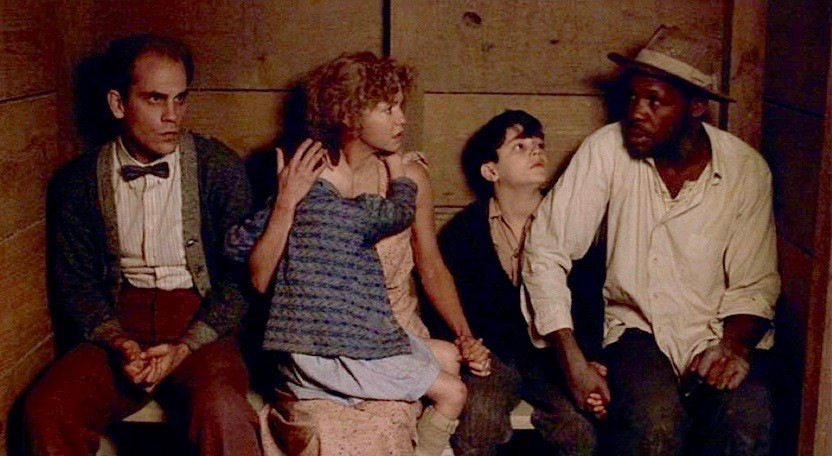
Sally Field plays Edna Spalding, a widow after her sheriff husband (Ray Baker) is accidentally shot and killed by a drunken Black teenager (promptly brutally lynched by the Klan the same day). With the bank pushing to foreclose on the farm she can no longer afford, poverty and homelessness seem certain until a chance meeting with Black drifter Moze (Danny Glover) offers hope. Moze is an experienced cotton worker, and he coaches Edna through getting the fastest cotton crop of the season (and the $100 prize for that feat). Edna and her children throw themselves into the task, and she starts to build a new family with Moze and blind war-veteran lodger Mr Will (John Malkovich). But will weather, the Klan and the banks allow it?

Benton’s film is, in many ways, a master-class in constructing a framework of highly impactful scenes. Places in the Heart is carefully paced with metronomic precision to give us an impactful, powerful scene roughly every ten minutes. From the shockingly sudden shooting of Sheriff Spalding and Edna cleaning his deceased body on her dining room table it gives us scenes that build perfectly to showcase high impact moments. Confrontations, tornadoes that place children in peril, triumphant confrontations with arrogant bankers and facing down corrupt cotton sellers, inevitable fireworks after a disastrous double date and heart-rending racist attacks. It’s a film almost completely constructed of tent-pole moments, to illicit maximum impact.

However, where it fails are the moments in-between. It’s so focused on nailing those big moments, that it allows the emotional journey that should inter-connect them (and make the story truly satisfying) to falter. The clearest example is Malkovich’s blind Mr Will: in no more than three scenes he goes from a man bitter at his disability, dumped on Mrs Spalding by a family who can’t be bothered to care for him, resenting her ‘hooligan’ children to risking his life to becoming their surrogate uncle. It’s a tribute to Malkovich that he sells this lightning fast emotional turn-around, but a more patient film would have spent this change feel organic (rather than, essentially, relying on a tornado act-of-God to complete the arc).

Similarly lightning fast work covers the bond between Edna and Moze: swiftly we go a few scenes from her greeting him with slightly less racist discomfort than her sister, to Jean-Valjean-like claiming she asked him to deliver to a friend the silver spoons he steals from her house, to him becoming another surrogate uncle to the kids and treated in the house like an equal (he notably doesn’t cross the door threshold for the first hour of the film). Now you can admire the efficiency here – for example, the film is good at establishing without fanfare the rope aids hung up around the farm to help Mr Will (vital for a later confrontation). But you can also regret that it is so keen to get to the emotionally cathartic moments, it skims on showing us the journey (after all, a one hundred mile walk seems less impressive if you only see the start and end).

Part of the problem is Benton keeps dragging us away from these engaging plotlines to wallow in a side-plot involving Mrs Spalding’s sister and her wayward husband’s affair with a school teacher. This storyline barely intersects with events on the Spalding farm, in no way serves as a commentary on events there (a braver film would have contrasted it with a romantic relationship between Edna and Moze, which you can be sure would not have been as genteelly resolved as that affair in a South as racist as this). All it really does – for all the efforts of Crouse (Oscar-nominated, presumably due to her husband-slapping confrontation scene), Harris and Madigan, it’s meandering, dull and feels pointless even while you are watching it.

And it always takes us away from the real interest on the farm. The depiction of triumph over adversity is fairly straight-forward – with a host of hissable strawmen, led by Lane Smith’s patronisingly sexist banker – but it’s told with such professional skill it can’t help but land.  Who doesn’t enjoy a woman who never believed she amounted to anything, suddenly discovering an inner-fire and sense of purpose she never knew. You may notice the similarity to Sally Field’s other Oscar-winning role (Norma Rae). Her performance here is cut from the same cloth, only this time she can’t find the same naturalness: she is frequently mannered, precise and actorly when she should feel raw, grounded and real.

The real daring interest here is the way the film tries to address racism. You can’t deny there is a certain romanticism in its looks at the Ol’ South, but its balanced with putting on screen something of the real horrors of racism. Perhaps even more shocking than the sudden shooting of Sheriff Spalding is the sight of young Wylie’s disfigured body dragged behind a truck full of gun-totting racists. (And that this is objected to, not for the violence, but for the poor taste of dragging a dead man to Spalding’s wake). Needless to say there is no investigation or punishment for this crime whatsoever.

Moze’s story captures some of the perils of being Black in Depression-era Texas. Danny Glover, in the film’s finest performance, perfectly captures both the anger of the unjustly oppressed and the fear (and shame of that fear) that death could come from the wrong word or looking at someone the wrong way. Moze constantly shuffles himself to the back, casting his-eyes down and changing the timbre of his voice to something slower and more humble when confronted with white men of power. It’s markedly different from the warmth, decency and sharp opinions he shows with people he trusts. And Places in the Heart’s most appalling moment is when he is confronted with the white-hooded face of the South’s ‘defenders’.

At times this sometimes over-balances a film that, at heart, wants to be optimistic. (As you can tell, all too clearly, from its bizarre, overly demonstrative, deliberately dream-like ‘we-can-all-be-the-same’ ending which must have felt meaningful to Benton but to me feels shockingly trite). Moze’s suffering is shown with real compassion, but he is still presented as a character who magically shows up at exactly the time he is needed and then disappears when his task is done. It’s a film that imagines a utopia where a desperate mother, a blind white man and a Black man can learn all men are equal, while struggling to accept that this is nestled in a land riddled with Klan racists where the n-word is so casually used it doesn’t even raise an eyebrow. In the end cold, hard reality is a little too much for Places in the Heart to digest.

Norma Rae (1979)

Norma Rae (1979)

Heartfelt political drama, with a powerful lead performance, which works surprisingly well

Director: Martin Ritt

Cast: Sally Field (Norma Rae Webster), Ron Leibman (Reuben Warshowsky), Beau Bridges (Sonny Webster), Pat Hingle (Vernon), Barbara Baxley (Leona), Gail Strickland (Bonnie Mae), Morgan Paull (Wayne Billings), Robert Broyles (Sam Bolen)

At their best, Trade Unions remind us we are never stronger than when we work together. That’s never needed more than ever when confronted with the crushing, soul-destroying working conditions of an unfettered industry. Norma Rae was based on the true story of Crystal Lee Sutton, a North Carolina textiles worker who fought tooth-and-nail to gain Trade Union representation for her factory. Fictionalised here as Norma Rae Webster (Sally Field), Norma Rae covers her political awakening and her channelling her inbuilt sense of justice and fairness and her quickness to anger, towards the constructive goal of changing the lives of her and her community.

Martin Ritt’s conventional but heartfelt biopic may not reinvent the wheel when it comes to telling life stories, but throws itself into all-consuming righteous indignation at the staggering unfairness of the American economic model. The factory at the heart of Norma Rae wouldn’t look out of place in a Victorian-set movie. Deafeningly loud, machines whir non-stop, the air full of cotton spores clogging up lungs, breaks sharply controlled (making an emergency personal call is a disciplinary offence), dismissal possible at the slightest whim, pay kept at rock bottom, workers with medical conditions forced to work through under threat of dismissal… the ghastly, oppressive, miserable textiles factory is like nothing more than a workhouse.

And it is a captive workforce because the workers there have no other choice. The entire community lives in the factory’s orbit, with no other opportunities in the vicinity. The town feels only a few steps up from a shanty town in the factory grounds, people living and dying in its shadow. Even the shift supervisors are only a rung or two up from those they manage. No wonder that anyone who takes a job monitoring the other workers is treated like a snitch. There are no prospects, no hope of change and nothing to look forward to: only day-after-day constantly grinding out clothing for minimal wages (that have not kept track with inflation) while the bosses get richer.

Despite this though, everything is set up to keep the status quo going. Many of these Southern workers have swallowed the management kool-aid that anyone arriving from the North talking about unions are commie, anti-American agitators. Particularly when they are New York Jews like Reuben Warshowsky (Ron Leibman). The factory owners do the absolute minimum to meet the requirements of Warshowsky’s legally-entitled inspection, or to ensure the workers rights to vote for representation. Local authorities, such as the Church, collaborate in maintaining the status quo. And Norma Rae doesn’t look-away from how the racism is used. The local preacher can’t decide if he is more at aghast at the idea of a union meeting in his church hall, or that the meeting will be non-segregated. The factory bosses shamelessly peddle the lie that a union is a tool for Black people to take control of the factory and drive white workers out.

But Ritt’s film clings to the hope that good people can change things, with reasoned argument and passion. That’s embodied in Sally Field’s Norma Rae. Previously best known for sitcom The Flying Nun (her character did exactly what the title says), Field seemed left-field casting as a trailer-trash single mother to three children from three different fathers, turned firebrand political agitator. But Field’s performance was an (Oscar-winning) revelation. She makes Norma Rae both a firecracker of perseverance and determination, but also acutely aware of her vulnerability, Field never losing track of the anxiety that makes her resolute stand-taking all the more impressive.

Martin Ritt’s film skilfully and economically sketches out her character from the start, helped by Field’s skilled playing. We are introduced to her impulsively and furiously berating both her supervisor and the factory’s tame doctor after the never-ending noise of the machine leaving her mother deaf, with no thought of her tenuous position. Later she will berate her own shallowness in sleeping with a married men – then infuriate him with accusations of selfish, ill-treatment of his wife. In a few short scenes, Field establishes a character with principles, a sense of honour and a fierce sense of justice but also prone to rash and kneejerk decisions.

Field’s performance soaks in righteous indignation but also has an emotionality under the surface. When arrested, she struggles like a wild animal to avoid putting in the car before taking on a stoic defiance in jail – only to break down in tears after being bailed. Field creates a women fiercely resilient and unshakeably resolute once she has found a purpose, with a strong sense of justice.

These are qualities recognised by Leibman’s visiting union organiser. Norma Rae draws a fascinating and extremely restrained platonic romance between these two who, despite their surface differences, are soulmates in the relentless focus, all-consuming dedication to justice. But both are spoken for: Warshowsky to a fiancé in New York, Norma to the man she has only just married, the decent-but-utterly-ineffectual Sonny (Beau Bridges). Their unspoken, subtle dedication to each other over late-night union work (which never spills out, even during a playful lake swimming session) is a restrained, very effective beat in a movie that keeps its fireworks for politics.

The film highlights the slow grinding of changing minds and energising people to fight for their own freedoms. Ritt highlights, in a series of underplayed meeting scenes, a host of characters sharing their stories, their faces showing them come to the realisation almost in that moment of how shabbily they are treated. He balances this with real moments of showmanship, that carry even more impact due to the underplayed nature of the rest of the movie.

Most famous, of course, is Norma Rae’s impassioned (literal) stand on principle as the management find a dubious reason to dismiss her. (Ritt frequently uses Field’s shorter statue to powerful effect, surrounding her with larger, overbearing men.) Standing on a table, she refuses to budge, clutching a hastily hand-written sign that just states the word ‘union’. In many ways, it’s a bread-and-butter heart-soaring moment, but Field and Ritt expertly sell emotion, from Field’s quivering, emotional determination to the workers slowly one-by-one shutting down their machines in solidarity.

Solidarity is what it’s all about, in a film that is more sympathetic and admiring of organised labour than almost any other Hollywood effort (it would make a fascinating double bill with On the Waterfront). Directed with effective restraint by Ritt with a power-house performance from Field, it’s also interesting to watch at a time when many in America are calling for a return to American industrial life like this but without any call for guarantees for the rights of workers. Norma Rae could be even more relevant in the years to come.

Materialists (2025)

Materialists (2025)

Smug, contrived and misguided romantic comedy with a self important air

Director: Celine Song

Cast: Dakota Johnson (Lucy Mason), Chris Evans (John P), Pedro Pascal (Harry Castillo), Zoë Winters (Sophie), Marin Ireland (Violet)

In the modern world, what do we look for most in a partner? To professional matchmaker Lucy Mason (Dakota Johnson) “the math is simple” (strap in folks, that’s a phrase you’ll hear a lot): we want someone who ticks plenty of our boxes, offers financial and social security as well as being the right height with the right level of charm. Love, you’ll notice, doesn’t play a role in that. So, what’s Lucy to do when she starts a relationship with ‘unicorn’ Harry (Pedro Pascal), exactly the sort of charming, super-wealthy and tall guy women dream of, just when her ex-boyfriend John (Chris Evans), part-time-actor-and-waiter, suddenly resurfaces in her life. How strong will her principles to make the best deal possible be?

It sounds like the set-up for a romantic comedy. And honestly, it would have made a perfectly good one. Our heroine would be warm and charming even as she professed her cynicism, and the plot focussed on the whimsically old-fashioned concept of matchmaking would have gradually led her to embrace love (along with, inevitably, the poor but adorable love interest.) But Celine Song’s follow-up to Past Lives is a scrupulously dry character study, that wants you to think it’s got a deep and meaningful message about relationships in the world today, but eventually pedals the same rom-com message you imagine it would call trite.

But in a rom-com, the audience knows they’re watching a candyfloss fantasy – Song tries to staple the same “abandon realism here” kind of ending onto her ponderously, pretentious story, despite it contradicting the heroine’s entire personality and the characters’ painstakingly spelled out obstacles, and doesn’t seem to have noticed it makes the whole thing a complete dog’s dinner.   

Putting it simply: I didn’t particularly like Materialists, found its smugly superior attitude irritating, its final message deeply confusing, and felt it eventually chickened out of making a real point about modern dating. It’s an art-house film, dressed as a rom-com, trying to fool you into thinking it’s a state-of-the-nation film while letting its lead end up in a reassuring fantasy that only happens in the movies.

Partly based on Song’s experience as a match-maker, the most interesting content in Materialists is its exploration of what makes people choose who to date. I think this is a very interesting topic: at a time when people find it harder to meet (and the financial demands of the modern world harder to cope with), hundreds of thousands of people will be making relationship decisions based on cold hard financial and social facts. And yeah, some of them probably do feel guilty about that, much as Materialists suggests.

But exploring the loneliness of modern life isn’t Song’s goal. Lucy’s clients (bar one) are deliberately awful caricatures – who cares why someone like that would be looking for love, right? The film is solely here for Lucy’s Great Dilemma: How far will she go in a relationship with a box-ticking man she likes, but whom she doesn’t love. (A more challenging version of Materialists might have left out Evans’ unbelievably-handsome-and-decent penniless actor, and just really explored this dilemma for Lucy.)

But instead, the love triangle offers an easy get-out card for Lucy. Because, unlike her clients, Lucy has already met her perfect match. In fact, while her desperate and deluded clients just want to meet someone who can stand to be at the same table sa them, Lucy has two gorgeous, considerate, tall, charming men begging her to let them commit their lives to her. (And who, by the way, can believe a charming, six-foot multi-millionaire who looks like Pedro freaking Pascal can’t get a date?) She’s got the lovely Harry, whose stunning Manhattan penthouse she gazes at awe-struck, like Lizzy Bennett at Pemberly. And there is literally nothing wrong with John, aside from his lack of income (he’s the only actor in the world who doesn’t have an agent and doesn’t want commercial work) – he’s kind and decent  and trying to follow a dream. It makes her conundrum a false fantasy.

That’s one of the worst things about Materialists which, in many ways, is even less risky and daring than flipping Pretty Woman. It talks a big game about dating and relationships being economic and social decisions. It bangs on endlessly about this topic but, deep down, clearly doesn’t believe in it at all. Because even an astute analyst of people’s personalities (as Song can be) isn’t brave enough to make a film that commits to its initial proposition. Instead, Song sets up a parade of straw-man arguments that Lucy’s experiences can knock down to reach the ‘correct’ decision.

Ah Lucy. This mystifyingly motivated character who Dakota Johnson struggles to make coherent sense from. It’s not helped by Johnson’s breathy, evenly paced delivery that makes it very hard sometimes to work out what her character is meant to be thinking or feeling. Her air of dead-eyed professional monotone makes sense for her interactions with clients, but her colourless delivery of nearly all her lines made it almost impossible for me to work out when her character’s views change.

It’s not completely Johnson’s fault that Lucy is a deeply irritating character, but it would take a significantly more charismatic actor to make you overlook what a self-pitying, self-loathing waif she is, whose fundamental selfishness isn’t softened by constantly telling us she knows how selfish she is. Are we supposed to be rooting for her, when she essentially treats John (Evans, very likeable, sweet and witty) as an emotional-comfort-blanket, who can be dropped when she gets bored with him? Even when John calls her out on this, by the next sentence he’s absolving her for it.

Then in order to provoke her epiphany, the film clumsily introduces a sexual assault plotline for a supporting character, which exists solely to give Lucy the equivalent of “man-pain” – honestly, if the same plot was put in a film with a male lead, the socials would be burning up with cries of foul. This plotline is ludicrous from start to finish, while simultaneously treating a genuinely serious issue in dating like a ‘problem-of-the-week’ that can be solved with a hug. No male writer could have gotten away with the shallow, clumsy, plot-contrived development – and I don’t think Song should either.

Materialists takes place in a crazy world, where a dating firm has offices across the world, where the Manhattan police don’t respond to harassment call-outs from rapists, where everyone is paying tens of thousands of dollars to hook-up and John seems to be the only poor person. It’s dripping with smug assurance at its own cleverness, while offering a sort of moral message identical to a Sanda Bullock 90s romcom (but with fewer gags and chemistry). It’s frequently ponderous, stuffed with overly mannered dialogue and goes on forever. Having a Michael Haneke inspired closing shot, doesn’t change the fact the scene itself could have come straight out of The Runaway Bride. Materialists was not good.

Moonstruck (1987)

Moonstruck (1987)

Charmingly romantic comedy with little touches of Shakespeare in its celebration of family love

Director: Norman Jewison

Cast: Cher (Loretta Castorini), Nicolas Cage (Ronny Cammareri), Olympia Dukakis (Rose Castorini), Vincent Gardenia (Cosmo Castorini), Danny Aiello (Johnny Cammareri), Julie Bovasso (Rita Cappomagi), Louis Goss (Raymond Cappomagi), John Mahoney (Perry), Feodor Chaliapin (Old man), Antia Gilette (Mona)

People do strange things all the time. We don’t always understand why, so why not say it’s a midsummer madness caused by the moon. Moonstruck seizes that old superstition of blaming the position of our nearest celestial neighbour for sending us all a bit barmy, and weaves it into a film that’s both a playfully eccentric romantic comedy and a sweet tribute to the power of a family’s loving bonds. John Patrick Shanley’s (Oscar-winning) script pulls these strings together so well, it’s not a surprise it’s the sort of a film that frequently ends up on people’s ‘favourite film’ lists.

Loretta Castorini (Cher) is an Italian-American widow, living with her parents, who is starting to wonder if she is cursed with spinsterhood. As the moon reaches its bright zenith, she agrees to marry her terminally dull, utterly unromantic boyfriend Johnny (Danny Aiello), because anything’s better than nothing (despite the fact he seems to see her as much a substitute for his mother as a romantic partner). She agrees to mend the bad blood between him and his younger brother Ronny (Nicolas Cage). Ronny is a picture-postcard of an eccentric, a one-handed baker (blaming his brother for that) prone to melodramatic fits of rage and outbursts of Operatic passion. Loretta and Ronny – blame that moon – are instantly smitten with each other. Who is going to sort that out?

It all pulls together into a sort of modern fairy tale, where everything has an air of gently heightened reality. It’s also the sort of thing that wouldn’t seem out-of-place in Shakespeare’s lightest comedies: people fall in love on a sixpence, feuds are fixed in minutes, cheating spouses instantly return to their wives and jilted suitors smile and join in the celebratory drinks. In this world of theatrical, fairy-tale comedy, it’s quite easy to buy that an exceptionally bright moon is sending everyone a little bit crazy (like Shakespeare’s Dream lovers in the forests outside Athens, going through one crazy doped-up night before settling suddenly into two loving couples) and eventually you just run with it in Jewison’s charming film.

With a script full of witty lines and theatrical bits of bombast (which Cage in particular, inevitably, rips through), Moonstruck is also one of those endlessly charming, relaxing and pleasant films where fundamentally everyone is at-heart decent. Sure, mistakes are made throughout; harsh words and truths are spoken, but within a film where everyone cares for each other. Ronny may (rather unjustly) blame his brother for briefly distracting him at work into losing his hand, but deep down he’s just waiting for an excuse to forgive his brother. Loretta may have a prickly relationship with her mother, but it’s roots are really firm and based around both protecting the other from knowledge of the knee-jerk philandering of her father. It takes the influence of the moon to suddenly spark these people into a few days of crazy behavior that changes their lives and leads them to re-address their relationships with each other.

It also makes Loretta, in an Oscar-winning comedic turn from Cher, face up to the fears about where her life is going. In a performance that is remarkably unglamourous – Cher plays every inch of the reliable window settling into spinsterhood and the film never falsely ‘transforms’ her – Cher invests Loretta with a deep fear and resignation below her surface of reliability and unflappability. Loretta is so used to being practical and dependable, organising the lives of everyone (even patiently instructing the confused Johnny on how to propose marriage), part of her romantic relief with Ronny is being able to let rip a more sensual and vulnerable part of herself. Cher lets the mask slip, as if having had love potion dripped into her eyes, letting her express her deeper feelings.

It makes sense then that she should fall in love with someone as self-willed and resistant to being mothered as Ronny. In an early role that straight away captures Nicolas Cage’s willingness to rip into a scene (what other actor would feel like such a natural fit for a lovably blow-hard, one-handed, baker melodramatically prone to threatening no end of harm on himself?), Ronny has all the sort of wildness and uncontrolled energy and excitement the rest of Loretta’s life doesn’t have. And he doesn’t want her to fill a surrogate role for another family member – he wants her to be part of an equal relationship on her own terms with him.

It’s probably the sort of relationship Loretta’s parents had at one point. Before her mother Rose (another Oscar-winner, Olympia Dukakis) become cynical and shut-off from her husband Cosmo (Vincent Gardenia). Cosmo has let his decency get squashed under a fear of growing old, clinging to a younger girlfriend (Anita Gillette) who he conducts an affair more out of habit more anything. No wonder Rose considers flirting with John Mahoney’s constantly-jilted professor (in a touch that hasn’t aged well, he keeps trying to date his students), but not going the whole hog, while Cosmo tries to feel young again by doubling-down on his quietly dying affair.

What’s surprising then is that Moonstruck bubbles all this romantic back-and-forth into a warm celebration of familial love. While romantic bonds are firey, they are transient – the bonds of family last. Moonstruck culminates in the family putting the sort of romantic divisions that have kept them apart aside to come together in a warm celebration: like Shakespeare’s lovers they have woken up and found out everything is in fact fine. There’s something really reassuring and hopeful about this – that our feuds and divisions can bring us together as much as they can tear us apart.

It’s another reason as well why this is a popular film. It’s helped of course by John Patrick Shanley’s well-crafted script, and the terrific playing of the actors. Cher and Cage both have great chemistry and get the tone of the eccentric but touchingly tender unlikely romance just right. Dukakis and Gardenia are both funny and sweet as their parents, Aiello gives a very generous performance as a dutiful-boy-who-never-grew-up and there’s a scene-stealing cameo from Feodor Chalipin as Loretta’s eccentric grandfather. Above all, Moonstruck is a playful, feel-good film that doesn’t take itself too seriously and lives you feeling hopeful that everything can work itself out – even when the magic of the moon sends us a little crazy.

Johnny Belinda (1948)

Johnny Belinda (1948)

Small-town drama is a beautifully done exploration of prejudice with excellent performances

Director: Jean Negulesco

Cast: Jane Wyman (Belinda MacDonald), Lew Ayres (Dr Robert Richardson), Charles Bickford (Blackie MacDonald), Agnes Moorehead (Aggie MacDonald), Stephen McNally (Locky McCormick), Jan Sterling (Stella), Rosalind Ivey (Mrs Poggerty), Dan Seymour (Pacquet), Mabel Paige (Mrs Lutz), Alan Napier (Defence Attorney)

Small towns. Sometimes they’re safe, cosy little havens of the familiar. And sometimes they’re bitchy places of resentment and suspicion where everyone judges everyone else’s business. In an environment like that, it doesn’t pay to be different. Belinda MacDonald (Jane Wyman) is as different as they come: a deaf and dumb young woman, who (despite her intelligence and warmth) everyone assumes is a mentally deficient. Just as different, in a way, is Dr Richardson (Lew Ayres), a compassionate, well-educated man who forms his own opinions and is oblivious to other’s prejudices. Life’s going to be tough for this pair.

Dr Richardson is the only person in this small Canadian fishing town who can see the bright, vivacious young woman Belinda is. With his support, her father Blackie (Charles Bickford) rediscovers his love for a daughter, who he always blamed for her mother’s death in childbirth, while her austere aunt Aggie (Agnes Moorehead) thaws and proves her loyalty. Belinda will need them when she is raped by the popular Lucky (Stephen McNally) and trauma leaves her unable to remember who is responsible for the resulting child. The town, of course, blames Dr Richardson.

Johnny Belinda has all the ingredients of a melodrama: but it surprises as a mature, sensitive and moving story about real people. It’s amazing to see a 40s film this frank about rape and an illegitimate child, that lays not a finger of reproach on the victim, instead turning its fire on the small-minded judgements of those around her. It’s also striking it doesn’t define Belinda solely as a victim, either of deafness or rape. She gives birth to a child she dearly loves, refuses to let what’s happened haunt her and sees her life as one with blessings rather than curses. But neither is she an angelic character, being at times as capable of mistakes and quick judgements as the rest of us.

It helps that Jane Wyman (in an Oscar-winning turn) gives a perfectly judged performance. She’s never winsome or cloying, but fills Belinda with an uncomplaining grit to make the best of things, matched with a growing joy as her opportunities expand, from her discovery of sign language to the birth of her child. In complete silence (Wyman intensively learned sign), Wyman employs her expressive eyes to communicate a range of emotions from wonder to joy to fear to pain and grief (including a wordless rendition of the Lord’s Prayer). Belinda is a character we deeply empathise with, but never we nor the film treat her as an object of charity.

That also springs from Ayres’ Dr Richardson, a genial, kindly man whose inability to see the worst in people makes him a target-in-waiting for gossip. His less than regular attendance at Church has already raised question. Add his academic earnestness – and Ayres wonderfully embodies a man quietly passionate about making a difference – and you’ve got someone who doesn’t fit in a town that respects manly ruggedness. Richardson doesn’t pick up on this at all – just as he doesn’t even notice the clearly besotted devotion of his housekeeper Stella (an excellent portrait of quiet desperation by Jan Sterling).

Gossip is soon flying that Richardson is too close to Belinda. A trio of judgemental old woman, like Irish banshees, frequently stand on street corners to share little tit-bits of meanness.  The town punches down on outsiders, fitting people into insultingly simple brackets. It’s partly why immigrant shop-owner Pacquet (Dan Seymour) becomes the ringleader of a morality lynch mob: he’s all too aware it otherwise won’t be long before he’s the target again. No one, of course, can imagine for a moment that the carefree, rugged Lucky (Stephen McNally, a wonderful portrait of utterly smackable shallow vileness) could be the sort of cruel, cowardly cad he is.

A cad who takes notice of a newly confident Belinda – and not in a good way. Part of Johnny Belinda’s power is you can sense the latent danger in those eyes on a newly radiant and confident Belinda at a town shindig, the shy wallflower turned smiling young woman enjoying the music through feeling the vibrations of a violin string (a lovely moment, played with a real burgeoning wonder by Wyman). It’s a mark of the cruelty of the world that this confidence just makes Belinda a target for the vile Lucky.

Again, it’s a mark of Johnny Belinda’s success that the cruelty of what happens hits so hard. Rarely have I despised a film villain as much as Lucky, perhaps because he’s so weak, snivelling and arrogant – the sort of guy so arrogant and stupid he crows over the good-looks of his illegitimate son. He’s a picture of the real villains out there: the weak, stupid and shallow who always get passes from those around them.

Johnny Belinda creates deep, engaging characters. Charles Bickford’s Blackie is presented as first as a gruff, careless father. But the film – and Bickford’s performance – slowly unpeels him as a tender, caring and decent man. The sort of man whose first instinct is to protect, who delights in his unexpected grandson and is thrilled with the excitement of sign language. Similarly, Agnes Moorehead gives a terrific performance as a woman who seems at first a bullying harridan, but becomes a pillar of familial strength. (Both of them and Ayres were Oscar nominated, Johnny Belinda one of the few films to get nominations in every acting category).

This affecting story of people who feel real and three-dimensional, is well directed with restraint and care by Jean Negulesco (easily his finest film) and shot with a real beauty in its rugged Canadian sea-town visuals by Ted McCord. Max Steiner’s excellent score mixes emotional melody with sea shanty influences. It’s a world where intense but very real emotions help ground a story of rape, murder, scarlet letters and court cases into something that feels real and relatable.

Johnny Belinda feels like an overlooked gem, a sort of perfect example of Hollywood issue film where the ‘issue’ isn’t pounded over our head but built organically into the plot. One where characters surprise us with developments that feel real, embodied by a series of excellent actors at the top of their game. It’s a small gem that deserves to be better known.

Firebrand (2024)

Firebrand (2024)

Atmospheric film attempts to redefine Katherine Parr, but fails to make a successful dramatic case

Director: Karim Aïnouz

Cast: Alicia Vikander (Katherine Parr), Jude Law (Henry VIII), Eddie Marsan (Edward Seymour), Sam Riley (Thomas Seymour), Simon Russell Beale (Bishop Stephen Gardiner), Erin Doherty (Anne Askew), Ruby Bentall (Cat), Bryony Hannah (Ellen), Junie Rees (Princess Elizabeth), Patsy Ferran (Princess Mary)

For years people had this muddle-headed idea that Henry VIII was a jolly fat-man with a charmingly eccentric habit of constantly marrying the wrong woman. In fact, this homicidal tyrant was one of history’s definitive arseholes, his hands scarlet red with the blood of anyone who annoyed him (including at least two of his wives). His last wife, Katherine Parr, is similarly often remembered as a dutiful matron than a dynamic and intelligent woman (who wrote a book on theology and ruled as regent for several months).

Firebrand is a noble attempt to challenge that narrative, drawing focus towards Katherine Parr’s (Alicia Vikander) zeal for religious reform and the near-fatal attention it brought her from the hard-core traditionalists around Henry VIII (Jude Law) not least Bishop Stephen Gardiner (Simon Russell Beale). This reimagining of the final months of Katherine Parr’s marriage to the bloated tyrant tries its very best to reclaim her as a major figure in the founding of the Church of England and if, in the end, it doesn’t quite manage this, it’s still good to have Katherine reclaimed from history’s trivia corner – and links her closely to the eternally popular Elizabeth I (poor Mary remains a dowdy fanatic, played by a gloomy looking Patsy Ferran – feminist sympathy can only go so far.)

Aïnouz does give Firebrand a freshly claustrophobic and sinister feel behind the costume details (bringing the sort of outsider eye that Kapur bought to Elizabeth). It has an imposing, doom-laden score of moody strings and sudden, discordant noise, frequently presenting the English countryside not as lush environment, but misty place pregnant with unknown menace. It’s a fine mood setter for a land where reformist religious practices are ruthlessly suppressed by a religiously conservative king (Henry’s only interest in reform being what he personally could get out of it – in his case a divorce and a mountain of monastery cash).

In the candlelit gloom of the court, the capricious king makes life as unpredictable and dangerous as he is. Henry is accompanied everywhere by a group of fawning hangers-on, whose job is to whooping up the court to collapse into hysterics whenever the king says anything approaching a joke. The most effective thing about Firebrand is it’s presenting of a Henry VIII who is one part Harvey Weinstein to two parts Josef Stalin. Jude Law gives a masterclass in preening cruelty and psychopathic bullying, as man so used to getting what he wants even the slightest suggestion he can’t sends him into a spiral of spittle-flecked rage. Firebrand plays up his corpulence, the suppurating stench of his ulcers (Law, in method style, wore a cologne that stank of piss during filming) making this king a million miles from the broad-shouldered Holbein image.

Henry paws openly at attractive court ladies and delights in humiliating those around him. He uses physicality as a weapon of control, constantly grasping people by the fae or neck to draw them towards him. Law is superbly cruel and domineering, while being pathetically needy, demanding complete and total affection from his wife and yo-yoing between randy affection and assault if he doubts for a second anything other than her complete devotion.

If only the film was able to make as compelling a case for Katherine Parr’s undoubted qualities, as it does for the King’s negatives. Alicia Vikander has a hard job – Katherine is rarely, if ever, not under observation so must constantly hide her thoughts and emotions behind a stoic shield. But it’s a shield that partly deadens her performance. Firebrand only finds a few moments, at its start, for Katherine to truly be herself, in the presence of Erin Doherty’s passionate firebrand Anne Askew (whose Protestantism overlaps with a socialistic political view which doesn’t quite ring true for Tudor England).

Vikander and Doherty’s relationship is one of the film’s most interesting, with more than a hint of romance between these two reformers, one who has never compromised and another who compromised so much she literally married her persecutor. Aside from that, Vikander has to work hard to try and communicate her fierce commitment to reform behind her eyes – something that’s a lot harder than using her skill at telegraphic her hatred and fear of Henry. Her management of the king does provide moments of interest, notably a fascinating sequence when Katherine publicly humiliates a potential mistress in order to re-spark the king’s interest in her (Henry, like other egotists, liking nothing more than young women fighting over him).

But Firebrand struggles to translate Katherine’s religious views into either something politically compelling or dramatic. Instead, it largely resorts to working hard to tell usthat Katherine was a feminist icon, the inspiration for Elizabeth I and the true mother of the Church of England – rather than showing it. It also has to awkwardly rework the actual historical events to facilitate this.

As such, we have her roundly rejecting the advances of Sam Riley’s lecherously ambitious Thomas Seymour (in real life she immediately married him on Henry’s death – showing even intelligent people can fall for terminally selfish idiots), arrested, imprisoned and threatened with burning (in real life Katherine avoided this by publicly submitting utterly to Henry’s ‘superior’ judgement in all things religious) and an optimistic ending of her and Elizabeth planning a feminist protestant utopia (as opposed to Elizabeth’s affair with Seymour that permanently fractured their relationship). Firebrand ends with a paean to how Parr’s writing laid the foundations of Anglicanism, which feels quite a reach to make from one book.

Strangely however, the film’s biggest historical deviation of fact – her final solving of her Henry problem – despite being a clearly fictional flourish is surprisingly satisfying (not least because of the vileness of Law’s Henry) and manages to ring spiritually true for what a parade of people (and Katherine as well probably) would have liked to do to the murderous maniac if given the chance. But it’s also too little, too late in a film that otherwise is a little too dry, a little too lacking in narrative drive. For all it wants to build up the reputation of Katherine Parr, it gives Vikander far too little meaty content to really play with while ceding much of the interest to its wallowing in the cruelty of the king.

Kitty Foyle (1940)

Kitty Foyle (1940)

Odd romantic fable, with a star-turn, that doesn’t seem to fully realise how judgemental and puritanical it is

Director: Sam Wood

Cast: Ginger Rogers (Kitty Foyle), Dennis Morgan (Wynnewood Strafford), James Craig (Dr Mark Eisen), Eduardo Ciannelli (Giono), Ernest Cossart (Pop), Gladys Cooper (Mrs Strafford), Odette Myrtil (Delphine Detaille), Mary Treen (Pat), KT Stevens (Molly)

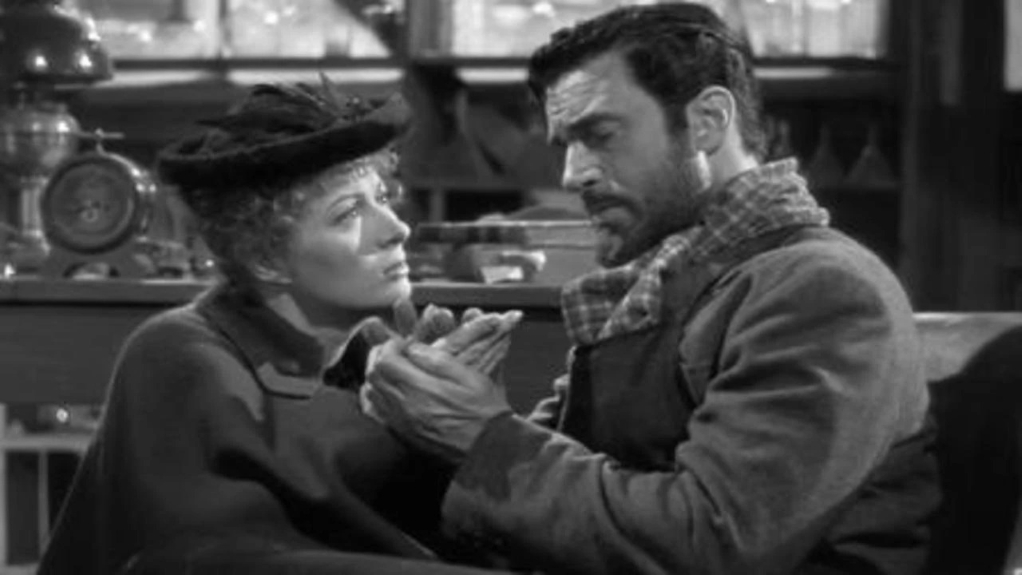
“Ginger Rogers did everything Fred Astaire did…[but] backwards and in high heels”. So goes the famous quote about the famed dance pairing. But Ginger Rogers also did something Fred Astaire never did: she won an Oscar. That was Best Actress for Kitty Foyle, a reminder that Rogers was the girl-next-door who was a fine actor, accomplished dancer and natural comedienne. Rogers is great in Kitty Foyle, an otherwise fairly average, at times painfully dated ‘women’s picture’ where flashes of wit conceal character flaws the film is unaware of and a series of frequently depressing messages about love and women’s choices.

In the early 1930s, Kitty Foyle (Ginger Rogers) is a young Philadelphia woman enjoying the opportunities the new world of emancipation gives her. Working as a secretary for a small magazine, she and its editor Wynnewood Strafford IV (Dennis Morgan) fall in love – but he lacks the courage to propose to a woman far below his family’s social standing. Moving to New York, Kitty works in a fashionable department store and meets with Dr Mark Eisen (James Craig). The two begin a tentative relationship – until Wyn returns and proposes, which Kitty eagerly accepts.

However, since the film plays out in flashback from 1939, we already know the Wyn-Kitty marriage is doomed to divorce since Wyn is re-married (with a kid!). Indeed, we’ll learn Kitty left her marriage because she felt the social differences between her and Wyn were insurmountable, in her (secretly) divorced state becoming engaged to Dr Mark. Kitty Foyle plays out a cliffhanger question: which of these two men will Kitty choose? Of course, there is zero tension in this decision – is there any chance at all that in a Production Code film, Kitty will choose a rich married family man over a hard-working doctor who we are introduced to tending to the poor of New York gratis?

Nevertheless, Kitty Foyle is structed through a series of snow globe-inspired flashbacks, narrated by Kitty’s reflection (who objects to herself being tempted by Wyn’s offer – hammering home the implicit moral judgement the film soaks in, even Kitty’s reflection thinks she’s a hussy). These snow-globe framed flashbacks are one of the most interesting things about Kitty Foyle today – largely because, if you think of 40’s snow globe flashback films your mind immediately turns to Citizen Kane (both from RKO!). It’s hard not to wonder if Orson Welles and/or Herman J. Mankiewicz remembered the device when they put their script together?

The other most interesting thing about Kitty Foyle is that neither Kitty nor the film can even pretend to raise much interest in its Code-approved romantic figure, Dr Mark. Fair enough, since Dr Mark is a crushing prig and self-important bore. Played with a humour-free smugness by James Craig, he’s the sort of guy who enjoys sitting on buses passing superior medical opinions about those around him. On his first date with Kitty, he unilaterally cancels a dinner to sit at home and play cards – which he later reveals was a moral test for all his first dates to see whether a potential partner is a gold-digger (it’s amazing he’s single). We get very little sense he is remotely interested in the real Kitty, instead preferring an idealised version of her as a potential assistant-in-all-but-name. In nearly every sense, he’s is the sort of stuffy, self-important, worthy man most comedies of the era saw the heroine’s apologetically jilt to enjoy true love with Cary-Grant.

Of course, Wyn is no Cary Grant. Played by Dennis Morgan with a wonderful sense of shallowness, he’s far too easily-led behind his charm for that. Wyn is a weak man, who struggles to take responsibility for (or make) his own choices. That doesn’t change the fact that Kitty has a passion for him she never once raises for Dr Mark. Kitty Foyle essentially agues his weakness and social status as the scion of a banking family (he is, we are not allowed to forget, the third man to bear the name Wynnewood Stafford), could never make him an appropriate match for the reassuringly middle-class Kitty.

There is a real inverted snobbery around Kitty Foyle, where the upper-classes of Philadelphia (represented, among others, by Gladys Cooper as Wyn’s imperious mother) can only-just-about suppress their discomfort about Kitty’s lower standing. (Their suggestion, when presented with the fait accompli of Kitty-Wyn’s marriage is to suggest Kitty attends a finishing school). Saying that, the family don’t object to the marriage and (in their own way) their suggestions are based around helping Kitty. The two-way snobbery is neither they nor Kitty can imagine a middle-ground: she is just as adamant she will not change anything about herself, as they can’t imagine accommodating her middle-class interests. The film wants us to blame Wyn for his upper-class background and spreads a depressing message that the classes should never mix.

Brutal assumptions people make about each other are at the heart of Kitty Foyle – and the film has absolutely no idea about this. The film never once questions the character flaws of certainty that lead Kitty, Wyn and Mark to all reach (false) conclusions about others. Kitty brutally decides, no matter what Wyn says, that she will divorce him because she doesn’t believe he will give him his wealth. And maybe she’s right – but she never asks him and makes a series of selfish decisions about their life that he has every right to be at least involved in. Kitty Foyle sees absolutely no issue with this, which you can bet its bottom dollar it would if the shoe was on the other foot. The is probably the only romance from Hollywood’s golden age that condemns true love in favour of cold-headed pragmatism and sensible (not passionate) choices.

All of this doesn’t mean that Ginger Rogers isn’t very good, as she carries virtually single-handedly the whole film. Kitty is feisty, determined, smart, shrewd, funny and brave. It gives her opportunities for light comedy and serious emotions. She’s very funny in comedy sequences, such as Kitty’s accidental pressing of the burglar alarm rather than stock room button on her first day on the job in a New York department store (I blame the woeful design flaw in putting these poorly-labelled buttons right next to each other!). But she’s also quietly heart-breaking in the film’s final segment where she faces a series of painful events. Rogers invests these with a quietly melancholic sadness laced with real dignity. It’s a fine performance that lifts an otherwise mediocre film.

It’s also a mediocre film that opens with a jaw-droppingly anti-feminist sequence to explain why girls are working. A series of silent flashbacks play out in silent-film-style dumb-show openly mocking suffragettes and the misguided passions of women for freedom that took them away from a live of ease being looked after by doting husbands. The whole point seems to be how unwise they were to fight to be foisted into a world of hard work and not being given a seat automatically on public transportation. It left me wondering how far into this script Katherine Hepburn got before she turned it down?

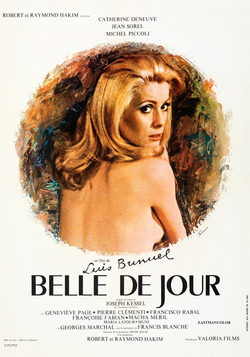
Viridiana (1961)

Viridiana (1961)

Luis Buñuel’s brilliant, multi-layered satire is a superb, darkly hilarious, masterful film

Director: Luis Buñuel

Cast: Silvia Pinal (Viridiana), Francisco Rabal (Jorge), Fernando Rey (Don Jaime), Margarita Lozano (Ramona), Victoria Zinny (Lucia), Teresita Rabal (Rita), José Calvo (Don Amalio), José Manuel Martín (“El Cojo”), Luis Heredia (“El Poca”), Joaquín Roa (Don Zequiel), Lola Gaos (Enedina), Juan García Tiendra (“El Leproso”)

In the 1960s, Luis Buñuel was invited back Spain after years of creative exile to spearhead a new wave of Spanish filmmaking. He produced a film that not only bit the right-wing hand that fed it, it snapped it clean off and chewed it up. Viridiana must have been the last thing the authorities had in mind. Gloriously exposing the guilt and vanity of the upper classes and charity, it was lambasted by the Catholic church for blasphemy and showed an organised world teetering on the brink of chaos, with the powerful either perverts or playboys, the poor singularly ungrateful for the paternalistic patronage they receive and our lead character a hopelessly naïve former nun. Not surprisingly it was instantly banned and Buñuel never made a film in Spain again.

Viridiana (Silvia Pinal) is our naïve nun, called to her uncle Don Jaime’s (Fernando Rey) home for one last visit before her confirmation. Don Jaime though has plans: Viridiana has an extraordinary resemblance to his late wife and Don Jaime intends to first get her to cos-play his wife and then marry him. Or failing that, to drug her and rape her. Guilt stops him from the rape – but doesn’t stop him from claiming he did it, a lie he instantly (fatally) regrets but which leads her to abandon her dreams of becoming a nun. In the aftermath, Viridiana and her cousin (Jaime’s bastard son) Jorge (Francisco Rabal) divide the estate, with Viridiana aiming to continue her religious ideals through excessively generous charity with quietly resentful local paupers, who she has a vision of turning into a religious commune. It does not turn out well.

Viridiana benches much of the surrealism of Buñuel’s most famous work, but it loses none of his acute social satire and ability to inject the absurd with sharp dark humour. It makes Viridiana a startingly complex work, brilliantly assembled by an artist where every frame has a different idea, all of which comes together into a darkly entertaining whole. Its not hard to see why the strictly Catholic Fascist Spain found the film so outrageous, with its mocking of religious imagery (from the crucifix that becomes a flick knife to the famous scene of the paupers forming a drunken, pose-perfect, tableau of Da Vinci’s The Last Supper), it’s acknowledgement of a host of fetishes and perversions among the upper-classes (orgies, feet, hinted necrophilia, incest) and the utter ineffectiveness of any system, no matter how charitable, to control the human spirit, with the poor frequently resentful under their veneer of deferential gratitude.

Viridiana splits neatly into two acts, both revolving around a complex relationship with guilt and how it guides our actions. Don Jaime (a superb performance of corrupted grandeur from Fernando Rey) is a lonely man, plagued with guilt and regret over his wife’s death, locking himself away in a time-locked country pile like a perverted Miss Havisham. In private he fetishistically admires her clothes (which he blasphemously keeps like holy relics) and admires his feet in her shoes. He’s fascinated by Viridiana’s resemblance to his late wife and fantasises that she might be persuaded to renounce the cloth to live as his wife.

With the convenience of his servant Ramana – an equally lonely, repressed soul tenderly played with a burgeoning sexual desire by Margarita Lozano – he guilt-trips Viridiana into dressing for one night in his wife’s bridal clothes, drugs her drink and takes her to bed. He even arranges the sleeping Viridiana into the exact pose his wife had when she was before him, adding hints of necrophilia to an already disgusting assault. Shame stops him from committing the deed and guilt then corrupts both of them. Don Jaime at his selfish lie, Viridiana at her indirect role in her uncle’s death and the forced abandonment of her vocation.

Inheriting her uncle’s home, alongside playboy cousin Jorge (Jaime’s bastard son, who he has barely met), Viridiana redirects this guilt into a commune for the poor and needy, where charity, work and faith sit side-by-side. Her efforts to essentially introduce a benign feudal church-system contrasts with Jorge’s modernising efforts, introducing electricity and other mod-cons. Buñuel demonstrates the discomfort of these two worlds with a beautifully assembled scene where Viridiana’s leads a group pray intercut with a series of shots of acts of manual labour (hammers smashing walls, cement splatted on bricks etc.), making he prayer meeting (which we know the attendees think is a pile of bunkum) seem even more outdated and ineffective.

Viridiana isn’t cruel about these characters though – it looks at them as real people, with faults and virtues, some good some bad. It’s also remarkably clear-eyed about charity. There is something performative about Viridiana’s efforts, as well as a clear sense it is as much for her (subconsciously – she’s too naïve for cynicism) as it is the welfare of the beneficiaries. Those beneficiaries are a brilliant series of pen portraits of people who take offered charity, but resent the paternalistic attitudes that come with it. The working classes are not passively grateful for religious charity – but they are smart enough to take a meal ticket. No wonder the church was furious: Viridiana ruthlessly exposes the lip-service the downtrodden give religious charity, while refusing to reshape their lives and views according to instruction.

The peasants remain earthy, irreverent and full of their own pleasures and prejudices. Despite Viridiana’s best efforts they abuse a (possibly leperous) beggar, tying a cowbell to him so they can hear him coming. When left alone in the grand house, they do what many of us might well do in their place: like teenagers resentful at their parents, they throw a drunken party and trash the place. Viridiana’s ‘dinner-party’ scene is Buñuel’s masterclass in riotous joy that slowly turns darker and more dangerous. Mockery leads to over-indulgence, anger and eventually violence. Viridiana will discover to her cost her attempts at kindness has done nothing to change their basic characters and it is as likely for someone to be downtrodden and deeply unpleasant as it is for them to be decent.

Charity in Viridiana doesn’t really change the world. It can improve lives, but not the system. And using it to shape people into what you want them to be is doomed to failure. The peasants are (mostly) not bad people, they just don’t feel want to reshape themselves into pious substitute nuns for Viridiana as a pay-off for room and board. Jorge is distressed to see a working dog tied to a cart and forced to run alongside it. He impulsively buys the dog – which to its original owner is not a pet but a working animal that must own its keep. Jorge clearly feels good about saving this dog: but seconds after he walks away with it, Buñuel pans across to another identical dog running behind a cart. Who was this charity for? The dog or for Jorge? The peasants of Viridiana? And did this one act change anything? And for some charity is entirely self serving: Viridiana visits Don Jaime solely out of thanks for his charity in paying for her time in the convent – surely an act only carried out for Jamie’s own perverted reasons.

None of this is what the Church or Spanish state wanted to hear. A downtrodden class that isn’t grateful to its leaders for lifting them up, but resents them for their patronising strictures. Lords of the manor, one of whom is a lonely pervert, the second a libidinous playboy who sleeps with multiple women. A deeply religious woman, who is completely naïve and fails utterly. And an ending – an ending Buñuel was ordered to change from the script and in doing so made even more suggestive and blasphemous – that implies the household will settle into a sexual menage.

It’s brilliantly, pointedly not what he was asked for – and stunning condemnation of the flaws in an entire system, caught in a brilliant parable. It’s superbly directed by Buñuel, by now a master of camerawork and editing with a beautifully judged performance by Silvia Pinal who makes Viridiana someone we deeply admire even as every decision she makes seems doomed for disaster. It’s a fiercely challenging, involving and complex work and infinitely rewarding for reviewing and patient consideration – no wonder Spanish critics later named it the greatest Spanish film ever made.

Three Coins in the Fountain (1954)

Three Coins in the Fountain (1954)

The first big travelogue hit, full of beautiful images and a nice song – and almost no plot

Director: Jean Negulesco

Cast: Clifton Webb (John Frederick Shadwell), Dorothy McGuire (Miss Frances), Jean Peters (Anita Hutchins), Louis Jourdan (Prince Dino di Cessi), Rossano Brazzi (Giorgio Bianchi), Maggie McNamara (Maria Williams), Howard St. John (Burgoyne), Kathryn Givney (Mrs. Burgoyne), Cathleen Nesbitt (Principessa)

Did you ever visit the Eternal City and wondered why the Trevi Fountain seems to be full of small change? Well, a large chunk of the responsibility probably lies with this film. Three Coins in the Fountain, the very first Cinemascope travelogue super smash, meanders from our heroes chucking a coin into the fountain in line with the local myth that it means they will, one day, return to Rome. I can’t blame them – pretty sure I did the same when I was there. Whether many people have ever tossed a coin wishing to return to Three Coins in the Fountain is another question.

But Three Coins in the Fountain, a picturesque romance as shallow as the fountain itselfmade the idea internationally famous (it doesn’t trouble itself, by the way, with the fact only two of them actually toss a lira in). The story from there is as thin as paper. Our three leads are American secretaries: Frances (Dorothy McGuire) works for famed expat author John Frederick Shadwell (Clifton Webb) whom she secretly loves, Anita (Jean Peters) is seeing out her final weeks in the American embassy before flying home to a fictional fiancée, training up her replacement Maria (Maggie McNamara). Anita can’t afford to marry her Italian translator beau Giorgio (Rossano Brazzi) with his family of thousands to support. Maria sets her cap at Prince Dino (Louis Jourdan), ruthlessly researching and copying his views and opinions on everything from art to playing the piccolo.

Will these three relationships end well? What do you think! Drama in any case largely takes a complete back seat to the film’s main focus: filling the screen with the gorgeous architecture of Rome (and Venice as a two-for-one, thanks to a brief stop-off in Dino’s private plane) and basically giving the American cinema-going public a mouth-watering chance to see in glorious technicolour sights they had only previously seen in black-and-white photos. If 20th Century Fox and director Jean Negulesco didn’t have some shares in the Italian tourist industry squirreled away somewhere, I’ll eat my Panama hat.

Surely one of the most forgettable Best Picture nominees of all time, Three Coins in the Fountain did win two Oscars for its most memorable features. The first was Milton Krasner’s picture-postcard cinematography, making Rome look like the sort of place you’d jump on the first plane to get to. The other was Jule Styne and Sammy Cohn’s charming little ditty Three Coins in the Fountain (the velvet vocals of a surprisingly unbilled Frank Sinatra must have helped here). You can enjoy the finest moments of each in the film’s opening three minutes that plays the entire song (endlessly refrained again throughout the film) while the camera glides through the most beautiful sights of Rome. Truthfully, the rest of the running time is more of the same with added soap suds.

The plot lines are so slight and insubstantial it almost feels mean to poke critical holes in them. Few moments in this film ever ring true, but then this is the sort of luxurious fairy tale where American secretaries live in what seems to be a five-star hotel with panoramic views and work jobs that are really just time-fillers for their real quest of finding husbands. (The sexual politics of Three Coins in the Fountain, where women can’t imagine any other life horizon than typing up a gruff employer’s dull thoughts, and dream of swopping that for setting up house-and-home for a wealthy man, is as dated today as Anita and Maggie seemingly working for the 50s equivalent of USAID). Three Coins in the Fountain knows though the romantic plots are just there to keep us occupied between the postcards, and so long as they don’t offend or bore the viewer they’ve done their job.

Dorothy McGuire invests all the charm she can in playing a role written as a fussy busy-body interfering in her friend’s romantic lives and pining for Clifton Webb’s John Patrick Shadwell but seems oblivious to the fact that he is all too clearly coded to be what gossip columnists of the day called ‘a confirmed bachelor’. Their resolutely sexless ‘companionship’ contrasts with Jean Peter’s Anita giving a lusty fire to her flirtation with Giorgio (an underused Rossano Brazzi, who got a much better go round at this sort of thing in David Lean’s vastly superior Summertime). Various artificial obstacles are placed in their way (a modern film, unburdened by the Hays Code, would have leaned more into hints of a pregnancy scandal in Anita’s otherwise inexplicable decision to leave Rome).

Finally, Maggie McNamara gives a lightness of touch to a hilariously transparent campaign of romantic deception launched by Maria to win the heart of Prince Dino. Dino is, of course, deeply hurt that ‘the only woman I can trust’ has been lying to him – but I couldn’t help but feel most men at the time would jump like Casanova in heat on a woman who smilingly repeated back their own opinions to him with total conviction. Louis Jourdan, like Clifton Webb, charmingly offers up the sort of Euro-charm he was called to produce for most of the 50s.

There are amusing moments in Three Coins. Webb (clearly having a nice holiday in between dialling in his trademarked waspy socialite) is always pretty good value, and his arch glance through Maria’s charade is as grin-inducing as Frances being seen as so destined to become a frustrated spinster that Shadwell’s maid gives her a cat so she won’t be alone. Giorgio’s family eagerness to practically shove Anita into a wedding dress the second they meet her is almost as funny as watching the clueless Anita fail to control Giorgio’s truck as it rolls wildly downhill (inexplicably she tries to put it into gear rather than, oh I don’t know, hitting the brakes…)

But moments like this are few and far between in an otherwise gentle amble through the tourist hotspots of Rome. (The Venice shots, hilariously, see all the actors appear in brief scenes in front of projected images – clearly just the camera crew got that trip.) Negulesco keeps it all flowing forward like the pro he was, but by the time it ends you’ll be left with a vague longing to stroll around the streets of one of the world’s most beautiful cities – and only a vague idea about whether there was any other point to the film you just watched.