Category: Film about friendship

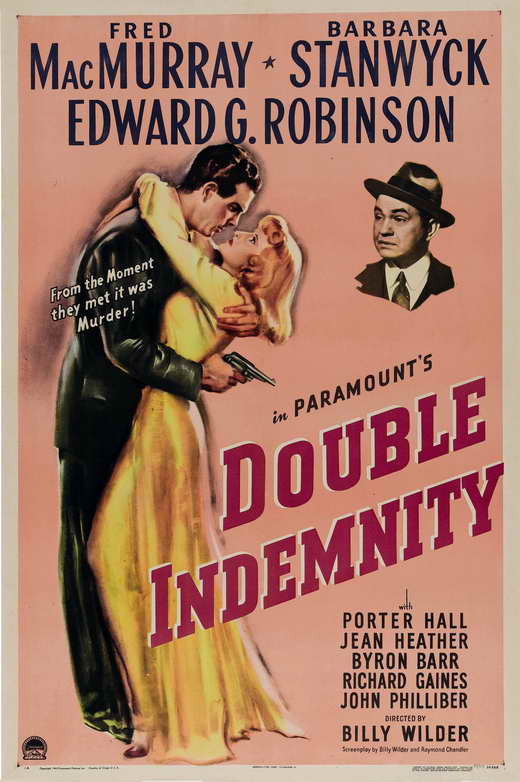
Double Indemnity (1944)

Barbara Stanwyck is the dark force beyond Fred MacMurray in Wilder’s classic Double Indemnity

Director: Billy Wilder

Cast: Fred MacMurray (Walter Neff), Barbara Stanwyck (Phyllis Dietrichson), Edward G. Robinson (Barton Keyes), Porter Hall (Mr Jackson), Jean Heather (Lola Dietrichson), Tom Powers (Mr Dietrichson), Bryon Barr (Nina Zachett), Richard Gaines (Edward Norton)

In the wake of the Second World War, morally complex and dark (in every sense of the word) stories spoke to a nation coming to terms with what it had been through. Out of this was born a new genre: film noir. Double Indemnity might just be the best example and one of Billy Wilder’s best films.

Walter Neff (Fred MacMurray) is a bored insurance salesman, smitten with the sexually alluring Phyllis Dietrichson (Barbara Stanwyck), wife of a potential client. When she suggests that, with his help, they could get rid of her husband and collect a massive insurance payout on his death, Neff is quickly won over. But murder is a hard thing to get away with – particularly when Neff’s colleague and close friend Barton Keyes (Edward G Robinson), the best investigator in the business, smells something amiss in the ‘accident’.

Double Indemnity is one of those films that it’s easy to forget was as influential as it was, precisely because it’s narrative and filmic techniques have been so comprehensively imitated in a host of films since. But imagine: this was one of the very first real film noirs. It was one of the first films that used shadows and darkness as effectively as this to reflect mood and atmosphere. It was the one of the first films to use a femme fatale as prominently (and unapologetically) as this. It’s also one of the first films where sex permeates almost everything you see in the picture.

Phyllis is a woman who understands the power of sensuality, who is well aware of how she can use her body and aloof mystery to get what she wants out of men. But even more than that, Stanwyck’s wonderfully cold performance suggests she hardly seems to care about anything at all: in fact the impression is almost that she is locked into moving forward, passing through husbands and lovers, leaving men dead on the wayside. That’s the magic of Stanwyck in this film: can you remember a character as unremittingly, unapologetically sinful, manipulative and conscience-free as this?

Of course Fred MacMurray’s Walter Neff is the perfect rube for this fiercely intelligent and determined woman. MacMurray’s slight B-movie blandness – his lack of star quality, his everyday, folky unimaginativeness – is perfect for the overconfident, slightly smarmy, laziness of Neff. It’s never said outright, but you suspect that the attraction of the danger Phyllis offers is escape from his own dull life. Does he love Phyllis? I would say almost certainly not – but is he horny for her? You better believe it. It’s a man on the cusp of a mid-life crisis getting a chance to throw himself into a sex-driven affair.

What do these two think of each other? Both of them seem barely capable of trusting each other, using sex and flirting almost as a filler between bouts of mutual suspicion. Does she care for him even a little behind her use of him? And does he feel anything like a bond with her inbetween the bouts of sex? They stumble so quickly into the plan that it almost feels like they are going through the motions – she is so used to manipulation and murder, it’s all she knows; he is so bored with his life that the excitement of violence and murder with his sex seems impossible to resist.

And Wilder lets sex run through this whole film. From Phyllis’ long descent down her flight of stairs at her first entrance to the irresistible anklet, everything about Stanwyck in this film is about the power of her sex. The dialogue exchanges between Neff and Phyllis crackle with magnetism. Later, Wilder skilfully shoots a sex scene without showing a thing: we cut from the two of them kissing on a sofa, to their positions shifted, Phyllis fixing her dress and Neff reclining smoking.

It helps that the dialogue is scintillating. Each exchange is packed with crackling and quotable lines. You get a perfect marriage here between Wilder’s acerbic cynicism and dry wit, and Raymond Chandler’s arch, spiky, carefully constructed dialogue, with its gritty poetry. I mean just watch the exchange here – perfection.

And they write some knock-out speeches too – but then you would if you had an actor as brilliant as Edward G. Robinson to deliver them.

Neff’s voiceover uses the technique where it should be used – not to tell us information any well informed viewer can already work out for themselves, but to allow us insight into Neff himself and his situation, that complements and develops our appreciation of the picture (it’s also beautifully well delivered by MacMurray). I’d also add it’s the same conceit as Sunset Boulevard – its lead character narrates the film mortally wounded – and it works just as well here, stressing the disaster that hangs over every action by our anti-heroes.

Added to this, the film looks beautiful. The shadows have an all-consuming inky depth. Cinematographer John Seitz is not afraid of turning the lights down and down, and the darkness absorbs and consumes the whole picture. It allows striking lighting effects – the blinds that seem to be in every room allow slits of light through them that draw lines across the faces and bodies of the actors (as many viewers have commented, it also has the effect of making half the characters appear like they are behind bars). The darkness looms in from the corners of the frame, trapping the leads into the action – and into their own disastrous decisions.

Wilder’s skilful camera placement is what makes this film really work. He presents action constantly in challenging and different ways, never doing the expected. During the actual murder (committed while Phyllis drives), the camera never looks at Neff committing the crime, but closely follows the look of almost sensual satisfaction on Phyllis’ face: she never once looks at what is happening in the seat next to her, but her face makes us experience the killing in an even more disturbingly intimate way than watching it would be.

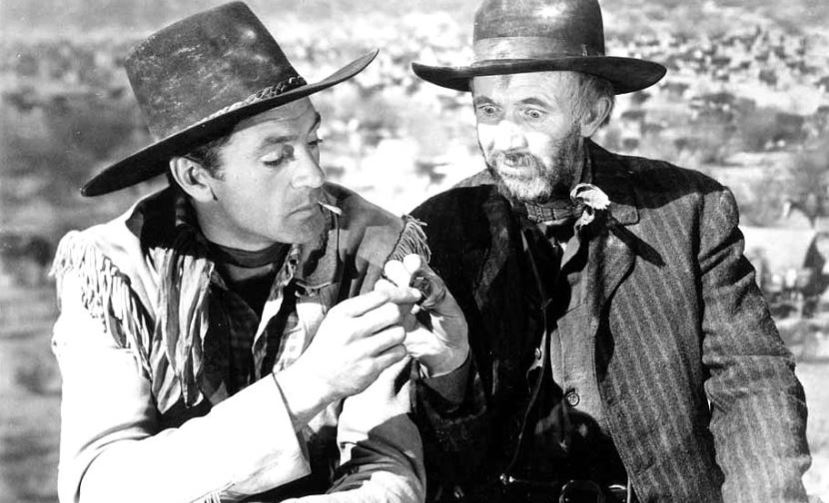
But what makes this film truly brilliant and unique is that its main relationship isn’t even the one you expect. Neff and Phyllis may have an electric physical relationship, but the real romance in the film is between Neff and his colleague Keyes. These two share a deeply close and personal bond. Theirs is a friendship that skirts around a platonic romance – made sharper of course as Keyes is the only man who stands a chance of working out what exactly is going on. There is a fine visual motif throughout of Neff lighting matches (with his thumb!) for Keyes – a gesture that feels both manly and intimate.

Keyes is played by a career-best Edward G. Robinson. Robinson blazes through the big speeches – but with a confident skill that never makes them feel like showboating moments. He gives Keyes an eccentric brilliance, mixed with a delicate humanism. To be that good at sniffing out wrongdoing and deceit from his fellow men, you can’t help feeling that he must have a pretty good idea about what human fallibility feels like. It’s this warm human understanding that Robinson does so brilliantly. It’s also what helps to make this relationship so moving. It’s hard not to share the obvious awkward discomfort MacMurray gives to Neff when he feels as if he is letting down his friend, and betraying the trust between them.

It’s this that makes Double Indemnity stand out. It’s a film that’s actually about the relationship between two men – part friendship, part father-and-son, part romantic – their love for each other, which happens to have an irresistible femme fatale thrown into the middle. It feels like a very unique and different approach – a touch of Wilder magic if you will – that makes the film stand out. It’s also what lies behind the link it has with audiences, the human interest that makes you come back again and again to this film about two ruthless killers.

This is a film in which everyone was at their best. MacMurray never did anything again to match it, Stanwyck seized the part with such commitment that she spawned countless imitators, Robinson is just magnificent. Wilder’s direction is perfect, the film looks ravishing, the script is to die for. Double Indemnity may not only be the most influential film noir ever. It might also be the best.

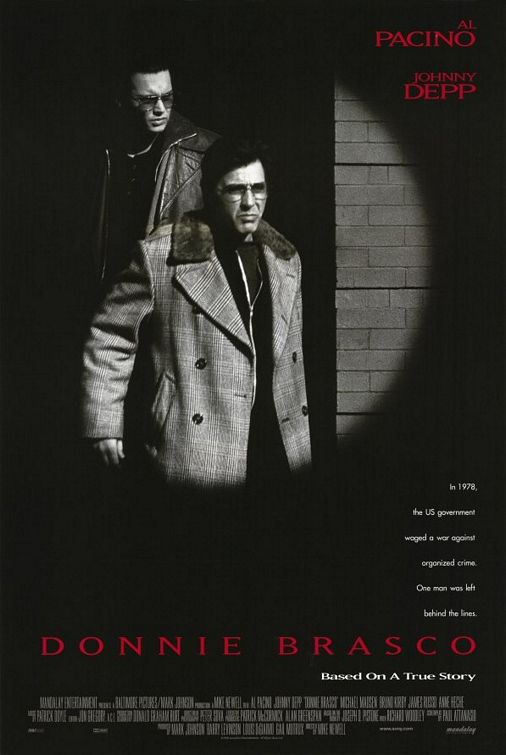
Donnie Brasco (1997)


Pacino and Depp deliver low-key, carefully controlled, sensitive performances: how often do you get to write that?

Director: Mike Newell

Cast: Al Pacino (Benjamin “Lefty” Ruggiero), Johnny Depp (Joseph Pistone/Donnie Brasco), Michael Madsen (Dominick “Sonny Black” Napolitano), Bruno Kirby (Nicky Santora), Anne Heche (Maggie Pistone), James Russo (“Paulie” Cersani), Željko Ivanek (Tim Curley), Gerry Becker (Dean Blandford), Robert Miano (Al “Sonny Red” Indelicato), Tim Blake Nelson, Paul Giamatti (FBI Technicians)

The Mafia film genre is a crowded market, so it’s a brave film maker who enters it with something a little different. But we get that with Donnie Brasco, which focuses on the bottom rungs of the Mafia ladder, suggesting that being a low-ranking member of “this thing of ours” is in many ways quite similar to being a corporate drone in the big city, only with more killing.

Joseph Pistone aka Donnie Brasco (Johnny Depp) is an undercover FBI agent, infiltrating the New York Mafia. He wins the trust of “Lefty” Ruggiero (Al Pacino), a Mafia hitman. Drawn deeper into the Mafia world, the pressure builds on Pistone/Brasco, who slowly becomes more and more indistinguishable from the criminals he spends his time with – and feels guilty about the deadly fate Lefty will meet if the Mafia discover he inadvertently introduced a rat into the family.

Newell’s film (from Paul Attanasio’s excellent script) is a dry deconstruction of the gangster life, bringing it closer to the grind of the 9-5. The criminals put in long hours to earn the income they need to push up to those above them. Class distinctions abound – in one scene, Sonny Black (a good performance of ambition and resentment from Michael Madsen) forces a smile onto his face while mob bosses laugh openly at his dress sense. Lefty whines like a mule about everything from his lack of recognition to how put-upon he is (never has a mantra about 26 hits over a lifetime sounded more like complaints about constant filing requests). He could easily be mistaken half the time for a harrassed office junior who never made the grade. When violence comes, it’s sudden, graphic, confused and brutal – a hit in a basement goes far from smoothly with one victim struggling for his life while another screams in pain.

On the other hand, the gangsters are also suggested to be maladjusted teens who never grew up. The more time Donnie spends with them, the less and less capable he becomes of relating to (or even communicating with) his wife and family. The gangsters have a routine lack of empathy for each other and treat the rules of “our thing” like a boys’ clubhouse. Many of their actions have an ill-thought-out juvenility to them: Sonny at one point steals a lion for Lefty as a gift – in a bizarre scene immediately afterwards, Lefty and Donnie feed it hamburgers through the window while it sits in the back seat of Donnie’s car. On a work-trip in Florida, the gangsters behave like kids – mucking around in the pool, delightedly going down waterflumes, burying Lefty in the sand on the beach while he sleeps. Even Lefty is overcome like a star-struck teen when meeting a famed Florida boss.

It’s not surprising that Donnie and Lefty, both outsiders in a way, are drawn together as kindred spirits in this strange, unbalanced world. Donnie obviously is an FBI agent, but Lefty is a world-weary old-timer, with a sense of honour who seems (apart from his ease with killing and violence) to be the most “normal” of the gangsters. The film is a careful construction of the growth of loyalty between these characters – particularly the slow development of Donnie’s feelings of genuine friendship towards Lefty. What’s effective is that this is a gradual process without a definable key moment. Instead, it becomes rather touching as Donnie starts to avoid moving closer to better “contacts” in order to remain close to Lefty. Donnie Brasco might be one of the few films that really gets a type of male friendship, and the unspoken emotional bonds that underpin them.

Perhaps the best things about Donnie Brasco are the two wonderful performances we get from actors who never knowlingly underplay. Watching this and Ed Wood is a reminder of the actor Johnny Depp could have been, before clowning in Pirates of the Caribbean seemed to shatter his focus. Brasco/Pistone is a brilliantly low-key presentation of a fractured personality. At first, the differentiation between the two personalities is distinct and clear – but as the film progresses, Depp allows the two to almost c/ollapse into each other. Everything from his body language to his manner of speaking slowly repositions itself as he becomes more consumed by the gangster world. Depp is also very good at not losing track of Pistone’s horror at murder and violence, while allowing the Brasco persona to take part in its aftereffects. The quiet building of guilt in his eyes at the fate he is creating for Lefty is also gently underplayed, making it more effective.

However, this is Al Pacino’s movie. It’s certainly Pacino’s last great performance: with the added frisson that he’s Michael Corleone demoted to the bottom rung of the ladder, Pacino is magnetic. Lefty is a put-upon whiner, who still has a charisma of his youth that draws Donnie (and others) in. A man of strong moral principles, who treats Donnie with a fatherly regard, uncomfortable with much of the ostentation of his fellow gangsters, he’s also a ruthless killer who blithely shrugs off his killing of an old friend. All Pacino’s bombast is only rarely deployed for impact – instead Lefty is a low-key, almost sad figure, whose chance in life has passed by.

One extraordinary scene late on deserves particular mention. I won’t spoil things too much, but Lefty prepares to leave the house after a phone call full of bad news. Carefully, sadly, he smartens himself up then returns (after saying goodbye to his wife) to gently remove his valuables and leave them in a drawer for his wife – he even carefully leaves the drawer ajar so she can find it. Setting himself before leaving the house, he takes a small look around. It’s a beautifully gentle scene, which could be overloaded with meaning from another actor, but Pacino plays it with such quiet but intense focus, and such careful precision it works brilliantly. Take a look at the scene here (warning spoilers!)

Newell’s strength as an actor’s director is apparent in all the performances, and Donnie Brasco is a film of many wonderful scenes and moments. The film never loses track of the danger of undercover heart – and several striking scenes have Pistone close to being discovered. The film is not perfect: the aim of the FBI investigation, and the impact Donnie’s work are never really made clear and the scenes involving Pistone’s homelife feel far more predictable and conventional than the rest of the movie (Anne Heche has a thankless part). But when it focuses on the two leads, and their dynamism together, it’s a damn fine film. It’s not going to challenge Goodfellas as a story of low-key hoods, but it’s certainly a worthy addition to cinema’s mafia films.