Category: Films about business

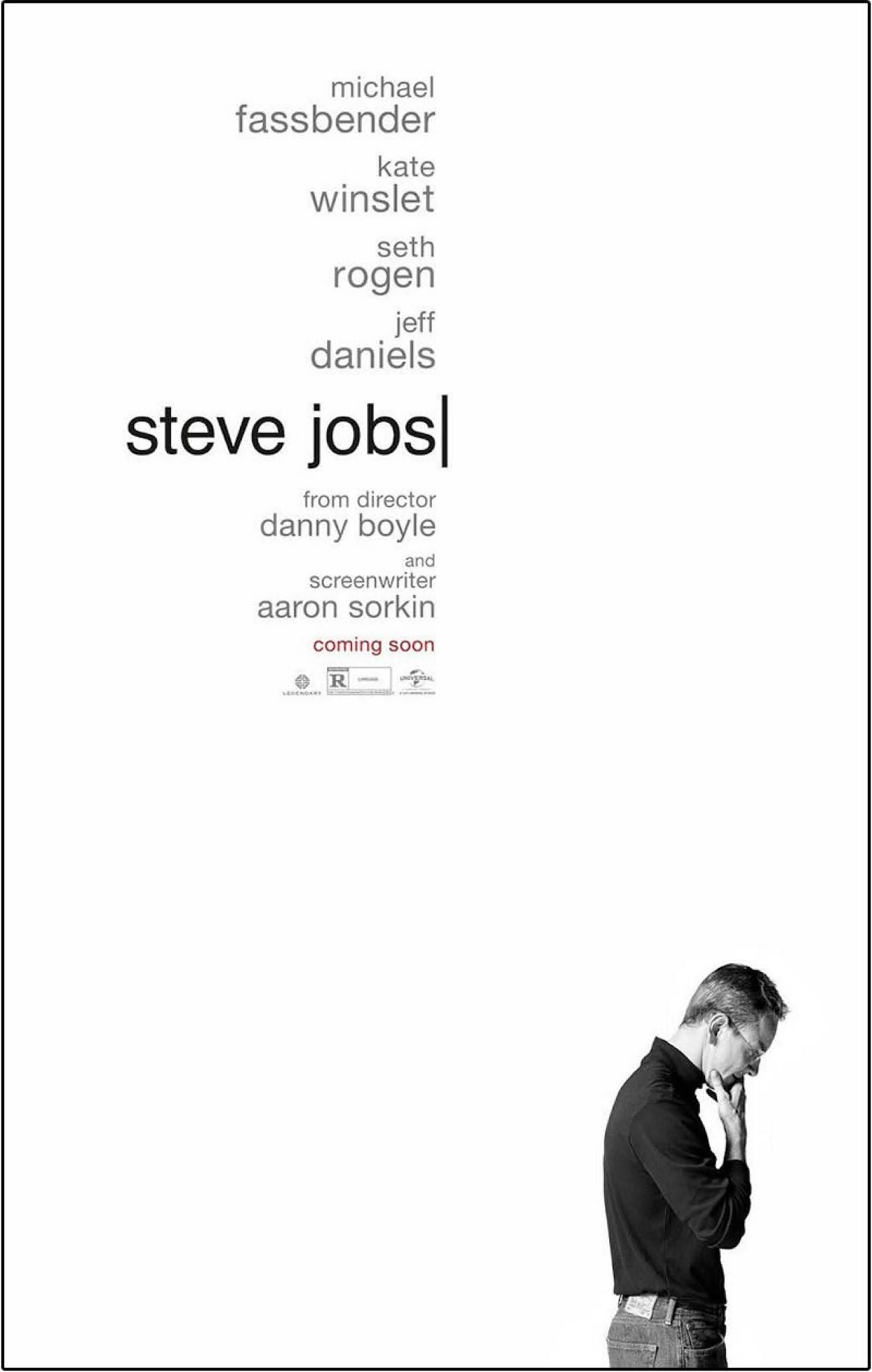
Steve Jobs (2015)

Michael Fassbender excels in Danny Boyle’s superb Sorkin scripted biopic Steve Jobs

Director: Danny Boyle

Cast: Michael Fassbender (Steve Jobs), Kate Winslet (Joanna Hoffman), Seth Rogan (Steve Wozniak), Jeff Daniels (John Sculley), Katherine Waterston (Chrisann Brennan), Michael Stuhlbarg (Andy Hertzfield), Perla Haney-Jardine (Lisa Brennan aged 19), Makenzie Moss (Lisa Brennan, aged 5), Ripley Sobo (Lisa Brennan, aged 9), Sarah Snook (Andy Cunningham)

The art of movie biography shouldn’t be slavishly covering every second of the subject’s life. It should be capturing their essence. Steve Jobs does exactly that, a superb distillation of its subject’s life and personality through focusing on the preparation for three vital project launches: the Apple Macintosh in 1984, the NeXT Computer in 1988 and the iMac in 1998, each playing out in real time. The contrasting (and continuing) clashes and tensions at each event – personal and professional – tells us more about the man and his impact than a cradle-to-grave biopic ever could.

It also helps that Steve Jobs has an electric script from Aaron Sorkin. Sorkin approached the project not like a film, but as a classic three-Act play. Steve Jobs is an explosion where all the special effects are the words, held together by pulsating ideas and a sense of rhythm musicians would envy. This is Sorkin at his absolute best, a script with zip and jokes but also a profound understanding of exactly the sort of tunnel-visioned visionary perfectionism Jobs encapsulated, all wrapped up with a beautifully judged emotional through-line. Only Sorkin can make just actors delivering dialogue as dynamic and edge-of-the-seat as a car chase.

And (like The Social Network) his intensely intellectual style, and sense for the frustration of the super-intelligent at the rest of us for not keeping up, is perfect for this tale of the creation of the future of computing. Sorkin uses product launches as a window into how fresh idea can be accepted (or not) by the world. The battles over them, with the focus on small details that communicate the big picture and the difficulties of making others understand the visionary core that makes something work is crucial – and brilliantly delivered here. That’s perfect for Sorkin, who is gifted at making big-picture passionate thinkers sound as brilliant as they are.

But what makes Steve Jobs perhaps his most compelling script, is that he adds an emotional undertone to it. Jobs was a visionary, who understood better than the customer what they really wanted. But he was also a flawed individual. Sorkin’s script makes clear that, like his computers, he was a closed system. Just as the Macs were designed to only work with their own software and not interface with others (Jobs’ gospel, the exclusivity of the product being what makes it special), so Jobs himself built his own conception of the world and refused to let anything outside that influence it, or allow any external factors to change his mind. Decide he was loyal to someone, and nothing they do will shakes that. Decide another has betrayed him, and the system locks them out.

Central to this is Jobs’ relationship with his unacknowledged daughter. From the 5-year-old he reluctantly spends time with, to the young girl he starts to form a carefully emotionally managed bond with to the 19-year old who finally tells him how much she resents his closed-system management of their relationship. Sorkin’s script brilliantly balances an insight into why Jobs might have acted like this (bound up in issues with his birth parents) and the emotional impact it has on the daughter (the hugs not returned, the words not said). Jobs isn’t a bad man – although the script doesn’t shy away from his selfishness, or the appalling things he said about Lisa’s mother in the press – or a straight-forward terrible dad. He’s just not quite capable (or willing) of giving the emotional commitment needs. It’s written tenderly with a great deal of empathy for both father and daughter.

This emotion is further bought out by Boyle’s dynamic humanism at the helm. It’s a reminder of what a great theatre director Boyle is: this film is basically one of the most dynamic plays you’ll ever see, fast cuts and graphics intermixed with extended one-shot dialogue scenes that allow his actors to flourish. Boyle employs on-screen graphics and montage to move us between the product launches, but isn’t afraid to let his camera serve the dialogue, with the exchanges brilliantly cut to the rhythm of the dialogue.

He also sets out a space for the actors to deliver uniformly superb performances. Front and centre is Michael Fassbender’s transformational performance. He communicates Jobs’ brilliance and his ruthless determination to never compromise. It’s a performance of messianic intensity, but also extremely grounded and real – and, like Sorkin, he understands the heart of the film is the father-daughter relationship. Fassbender carefully hides Jobs’ emotional need, just as he understands the dynamism that wouldn’t allow a hint of vulnerability and arrogance that judges everyone as second-best to himself. He’s a tough, difficult, uncompromising man – but also an egalitarian one, (eventually) willing to acknowledge his flaws, the biggest being his fear of emotion.

Equally brilliant is Kate Winslet as Joanna Hoffman, Jobs’ long-time confidante and ‘work-wife’, manager of each of the launches and a combination of mentor, conscience, counsellor and parent. Jeff Daniels is excellent as the businessman who goes from mentor to unforgiven rival. Seth Rogan gives his finest dramatic performance as Steve Wozniak, here a decent man and computing genius, who lacked Jobs’ ability to “play the orchestra” and shape events to his will.

It’s all wrapped up in a gripping film that feels like a fusion of theatre and film. If it has a problem, it’s that many will find its focus on the nuts-and-bolts of Apple hard to follow (and I confess, the script makes me understand the drama without understanding the product). But its strength is in understanding visionaries, their ability to shape ideas that wouldn’t occur to the rest of us – and the selfishness, and the damage that causes, that often goes hand-in-hand with that. With scintillating acting, skilful direction and, above all, a superb script, Steve Jobs is sharp and engrossing drama.

The Player (1992)

Tim Robbins is the ultimate heartless Hollywood exec in Altman’s vicious satire The Player

Director: Robert Altman

Cast: Tim Robbins (Griffin Mill), Greta Scacchi (June Gudmundsdottir), Fred Ward (Walter Stuckel), Whoopi Goldberg (Detective Susan Avery), Peter Gallagher (Larry Levy), Brion James (Joel Levison), Cynthia Stevenson (Bonnie Sherow), Vincent D’Onofrio (David Kahane), Dean Stockwell (Andy Sivella), Richard E. Grant (Tom Oakley), Sydney Pollack (Dick Mellon), Lyle Lovett (Detective Paul DeLongpre), Gina Gershon (Whitney Gersh), Jeremy Piven (Steve Reeves)

Hollywood: it’s a hell of a place. Sharks ain’t got nothing on studio power-brokers, hunting product to sell. After all, not a single letter of “Art” appears in “Hollywood”. Griffin Mill (Tim Robbins) hears 50,000 pitches a year and gives the green light to ten or twelve. Mill is plagued with death threats. Confronting the writer (Vincent D’Onofrio) he believes responsible, he kills him in a fight. Can he get away with murder and successfully romance the writer’s artist girlfriend June (Greta Scacchi)? And, even more importantly, can he protect his job from hotshot executive Larry Levy (Peter Gallagher)?

Robert Altman had been working outside of the studios for well over two decades after negative experiences creating his critically acclaimed but hard-to-digest masterpieces (including McCabe and Mrs Miller and The Long Goodbye, the sort of films only Altman could make). His career had drifted during the 1980s, as his edgy, ‘disciplined ill-discipline’ approach (with overlapping sound and roving cameras) moved out of fashion. The Player was not only his payback expose on the studio system, with the exec a sociopath, but also his triumphant comeback to the frontline of film-making (he earned several awards, including a nomination for Best Director).

The Player is nominally a comedy, but in the way of Altman it also fits half a dozen other labels: from film noir to corporate satire. Above all it’s a maverick’s view of a system designed to produce product (Mill constantly speak of his films like this – he would love our modern age of “content”). The studio’s offices are lined with posters from classic Hollywood – but the studio produces the most crowd-pleasing cookie cutter movies you can imagine. It’s all about squeezing in all the ideal elements a film must have: “Suspense, laughter, violence. Hope, heart, nudity, sex. Happy endings. Mainly happy endings.” (In a neat subversive twist, these are of course all present in The Player – but then it’s to be expected when what we are seeing might actually be a film within a film).

Film pitches all have an air of desperation, every idea boiled down to simple, easily digestible slogans. It’s nearly always a combination of two other films – “Out of Africa meets Pretty Woman!” – or involves the biggest stars (“Julia” and “Bruce” were those two stars – and both actors hilariously spoof themselves in the film’s climactic sequence). Ahead of its time, the film even features a pitch (from a cameoing Buck Henry) for The Graduate 2, a nostalgia tinted exploitation of the IP with all the original cast, that basically sounds like the sort of thing they’d actually make today.

There is no place for film-making as an art – any idea that can’t be compressed into 30 seconds is worthless. Mill’s knowledge of film is patchy at best, his attempt to make small talk about Bicycle Thieves boiling down to “Perhaps we should remake it?”. The film (possibly the film within a film within a film), Habeas Corpus, pitched by Richard E Grant’s pretentious writer (“No stars! No pat Hollywood endings!”) is only attractive because it has the wisp of Oscar about it (and Oscars mean Big Bucks). Even then, Mill plans to rework the whole film into exactly the sort of pat-Hollywood romantic thriller Grant’s character claims to hate (no character will support this decision more than Grant’s sellout writer). The only person who seems to actually watch films is Fred Ward’s studio head-of-security – and at least half of his references are met with blank incomprehension. When Griffin makes a speech donating the studio’s old films to a cultural library, his words about art and culture are incredibly hollow.

This vicious satire of the shallow culture of Hollywood – Larry Levy’s up and coming executive attends AA solely to network, not because he has a drink problem – is wrapped up in a beautiful noir framework, that’s brilliantly a few degrees off reality (for reasons that later become clear). Deluged by death threats from (he surmises) a disgruntled writer, Griffin meets the man he suspects – a pretentious holier-than-thou wannabe, played with chippy fury by Vincent D’Onofrio – who he beats to death in a neon-lit carpark, after a dig too far about Mill’s job security (as nothing threatens these guys more than the prospect of being drummed out of town).

Altman’s film wonderfully echoes the neon lit shadows of classic noir, while building a homage filled trap around Mill, desperate to escape punishment. Mill of course has killed the wrong man – and his stalker knows it – and his own heartless-but-effortlessly-cool business dealings are contrasted with his efforts to avoid the dogged pursuit of a police department (led, in a curious but just-about-effective piece of casting, by Whoopi Goldberg) correctly convinced he is guilty. The film asks, how much does morality intrude on Mill, when he’s led his whole life trampling people: isn’t literally killing someone only the next step up from all that metaphorical killing he’s been doing?

His one weakness is falling in love with his victim’s girlfriend, an artist played with a breezy sexiness by Greta Scacchi. Scacchi’s June is intriguingly unknowable – how much does she suspect Mill, and how much does she even care? – and the dance of seduction and suspicion between them is highly effective, culminating in a tastefully, imaginatively but highly sensually shot sex scene (built from Scacchi’s refusal to do a nude scene – instead the nudity comes from a full frontal of Robbins emerging from a mud bath).

Scacchi’s June feels like halfway between a real person and a movie construct – and that’s a deliberate effect in a film which, the ending suggests, may well have been a movie within a movie. Mill takes a pitch in the final moments from his actual blackmailer, who outlines the very film we have been watching, a pitch Mill accepts on condition the film (he?) gets a happy ending: cue Mill arriving home to June and the two of them using the same pat Hollywood pay-off lines to greet each other, we just saw Bruce Willis and Julia Roberts mouth in Mill’s happy-ending for Habeas Corpus. Apply the logic of a film to all the action and it suddenly makes sense on a whole new level, as a beautifully judged exploration of the very crowd-pleasing elements Mills praises, repackaged in a sharp and bitter satire.

Tim Robbins performance of restrained amorality is vital to the film’s success. In his career, any weakness is deadly – a mantra he applies to his interactions with the police and with June. Mill is so eerily controlled – fear is the only emotion he categorically shows, guilt never crosses his mind – you start to wonder if he even has a real personality. But, in the movie’s structure, he’s both a real person and also a construct whose life echoes scenes from the movies whose posters fill his office.

Altman balances these ideas of truth and reality perfectly within the studio satire. The film is astonishingly well-made, all Altman’s trademarks of overlapping dialogue and roving camera present and correct. It opens with a hugely confident seven-minute tracking shot around the studio, which feels like a real “I’m back!” statement – and is beautifully and wittily done. The film is crammed with dozens of celebrities playing themselves (they were given no dialogue and encouraged to improvise scenes), all of them keen to show they were in on the joke.

The Player is dark, witty and very clever, one of Altman’s sharpest and most enjoyable films. Crammed with echoes of film noir and a brutal expose of Hollywood business practice, it’s very well performed and keeps just enough lightness and humanity (it encourages to empathise, but not sympathise, with Mill, for all his amorality) to also be entertaining. One of the great films about Hollywood.

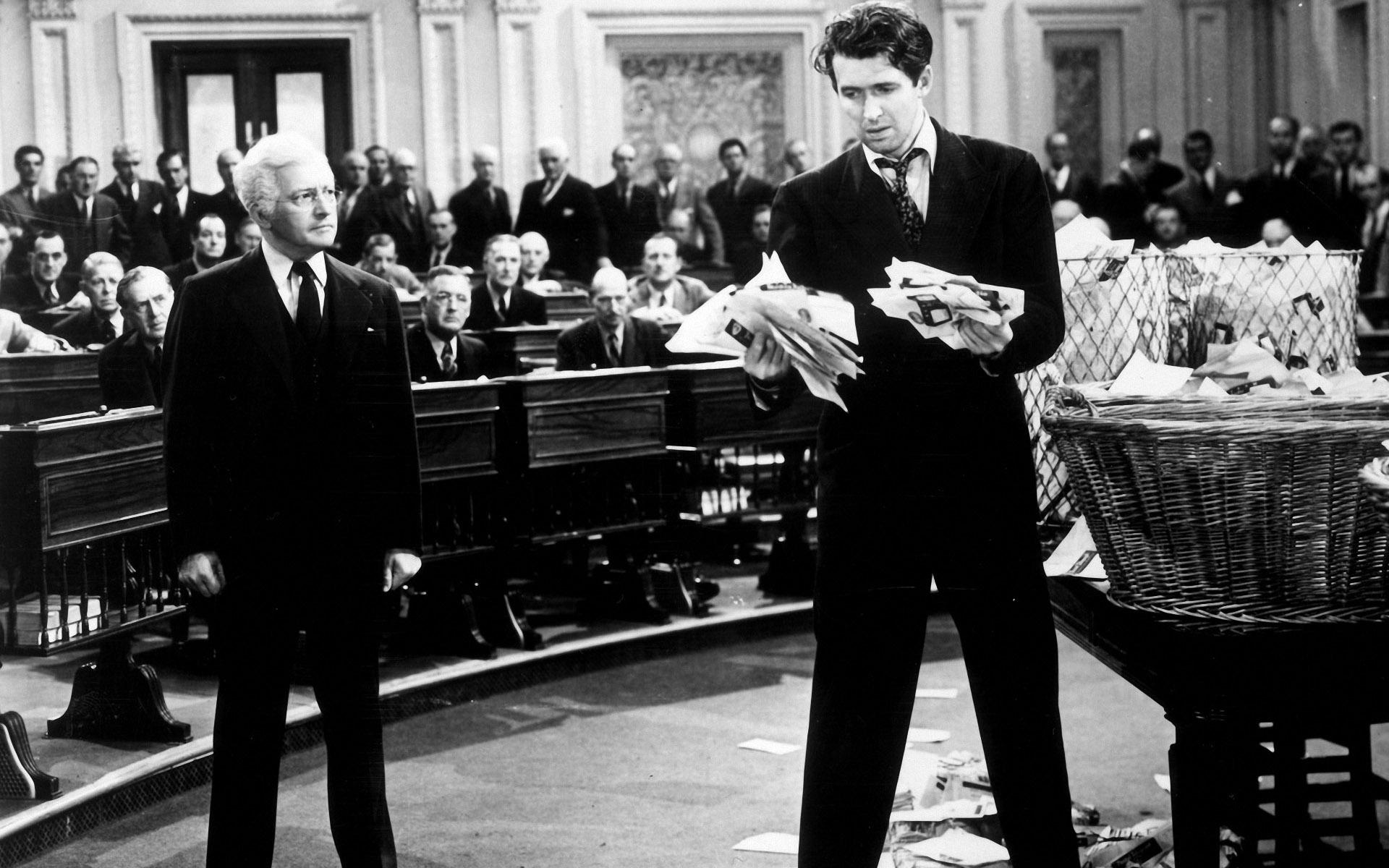
Mr Smith Goes to Washington (1939)

James Stewart campaigns for truth and justice in Capra’s classic Mr Smith Goes to Washington

Director: Frank Capra

Cast: James Stewart (Jefferson Smith), Jean Arthur (Clarissa Saunders), Claude Rains (Senator Joseph Harrison Paine), Edward Arnold (Jim Taylor), Guy Kibbee (Governor Hubert “Happy” Hopper”), Thomas Mitchell (“Diz” Moore), Eugene Pallette (Chick McGinn), Beulah Bondi (Ma Smith), H.B. Warner (Senate Majority Leader), Harry Carey (President of the Senate), Astrid Allwyn (Susan Paine)

Capra’s film are known, above everything, for their fundamental optimism about life, friendship and the American Way. Few films cemented that opinion more than Mr Smith Goes to Washington, the quintessential “one man in the right place can make a difference” movie. And where else would that one man need to be, but Washington? Where laws are framed and ideals come to die. It’s our hope that those at the heart of the political system are there for the good of the people. Of course, even Capra knew most of them were there to line their pockets and do their best for powerful business interests. So who can blame Capra for a little fantasy where naïve, innocent but morally decent Jefferson Smith decides enough is enough?

In an unnamed mid-Western State (the story the film is based on named it as Montana), the junior senator unexpectantly dies. The Governor (Guy Kibbee) needs a new man. Should he go for a reformer or the latest stooge put forward by political power broker in the State Jim Taylor (Edward Arnold). A tricky choice, so he splits the difference by appointing Boy Rangers leader Jefferson Smith (James Stewart) – because he’s wholesome and clean but also naïve enough to manipulate. Jeff heads to Washington, under the wing of Senator Joseph Paine (Claude Rains) – but Paine is in the pocket of Taylor.

Taylor and his cronies want an appropriation bill forced through that includes a clause to build a dam in their state. The dam will be built on land secretly bought up by Taylor and others, making them a fortune from public money. When Jeff announces in the Senate a bill to host a national boy’s summer camp on that same land, it throws a spanner in the works. Despite threats and bribes, Jeff refuses to go along with the shady deal over the dam, so they set out to destroy his reputation. With the help of his secretary Clarissa Saunders (Jean Arthur), Jeff mounts an epic filibuster in the Senate to clear his name, stop the dam and reveal the political corruption in his state.

Capra’s film is earnest, well-meaning and at times even a little bit sanctimonious and preachy – but it gets away with it because it’s also so energetic, honest and fun. It’s strange watching it today to think that the Senate at the time responded so poorly to it. Leading public figures either denounced it’s view of government and even tried to have it banned. Ironically of course, it probably inspired more people to get involved in Government than any other movie.

That was bad news for the corrupt political machines that ran so many parts of America at the time. Capra’s film is remarkably open-eyed about how these machines worked. Powerful business interests at the centre, with a raft of politicians in their pay – from Governors and senators on down. Jim Taylor – very well played with a swaggering, crude, bullying tone by Edward Arnold – only has to snap his fingers to get things done. During the film he mobilises the press, the police, the fire service and an army of heavies to enforce his will in the state and suppress free speech. The Governor (a neatly tremulous Guy Kibbee) is so firmly in his pocket, he can barely tie his shoe-laces without Taylor directing it. Senator Paine is patrician, dignified and has every inch of respectability – but he is soaking in filth up his neck from contact with Taylor.

It’s this system the film has a quiet anger about. Whatever happened to having “a little bit of plain, ordinary kindness – and a little lookin’ out for the other fella too”? Capra’s sprightly film also makes clear that we both don’t look too closely at how our government is really run and are very quick to hoover up any story we get from our political masters and accept it as gospel. An honest, decent man in the middle of all this is as unlikely a sight as you can imagine.

But that’s what these people get with Jefferson Smith – and discover someone who should be easy to manipulate, but doesn’t understand the rules of the game he’s playing. Instead Jeff thinks they are all there to help other people, not to themselves. Now you can argue, as some critics have, that law-making is the art of compromise – and that once the dam is under way, the benefits it will produce to Jeff’s home State (in terms of employment and energy) will be huge. So why shouldn’t Jeff bow down and move his boys camp in order to let the Bill go through?

Well the point is that Jeff isn’t opposed to the dam – he’s opposed to the corrupt profiteering that will spring out of it, and the way the cesspool of Washington (amongst all those fine monuments he so adoringly looks at) doesn’t care. This is a filibuster campaign to put honesty and decency back into American politics – and what’s not to like about that? It’s a film that firmly believes that one good man in the right place (that’s both Jeff and the President of the Senate, who tacitly encourages him) can change the day and save the country from itself.

There was of course no one better for such a job than Jimmy Stewart (and surely it’s this film that made him “Jimmy” to one and all). Capra had James Stewart in mind from the start – and it’s a perfect role for him, an iconic performance that stands as surely one of his greatest roles. Stewart has the skill to make Jeff endearing but not saccharine, naïve but not frustrating, innocent but not a rube, gentle but determined. Despite its corniness (and some of the film is very corny) you relate to his reverence for Lincoln’s memorial and the Capital. Stewart’s homespun charm is perfect, but it’s matched with the steel he could give characters. There is an adamant quality to his filibuster, his refusal to back down and go along with injustice. The final quarter of the film that deals with the filibuster is quite superb stuff, Stewart delivering some very-well written speeches with commitment, passion and bravura. It’s no understatement to say the film would work half as well as it does without him.

But then the entire film is also a feast of great acting, all sparked by a superb script from Sidney Buchman which mixes razor-sharp dialogue with wonderful speeches. Jean Arthur (who actually gets top billing) is very good as a cynical Washington insider who rediscovers her ideals – and finds her heart melting – under Jeff’s honest influence. Claude Rains gives one of his finest performances as the patrician Paine, a man who tries to close his eyes to his own corruption, but swallows down his own guilt and shame every day. Harry Carey gets a twinkly cameo as an amused and supportive President of the Senate. (Both actors were nominated for the Oscar, but lost to Thomas Mitchell for Stagecoach who also appears here in a fun turn as the drunken but principled reporter Diz).

Capra keeps the pace up perfectly, and his direction handles both smaller scale scenes of romance and idealism, with the larger scale fireworks of the Senate (a superb set, that looks so convincing it’s amazing to think it was built on a sound stage). His biggest trick here is to create a film that, in many ways, is a political lecture, but never makes it feel like one. Instead it delivers it’s messages on truth, justice and the American way with such lightness – but yet such pure decency – that it all works. It helps a great deal that the film doesn’t shy away from the corruption and – apart from a final turn that saves the day – resists melodrama and contrivance. Charming, funny but also thoughtful and committed, Mr Smith Goes to Washington is one of Capra’s very best.

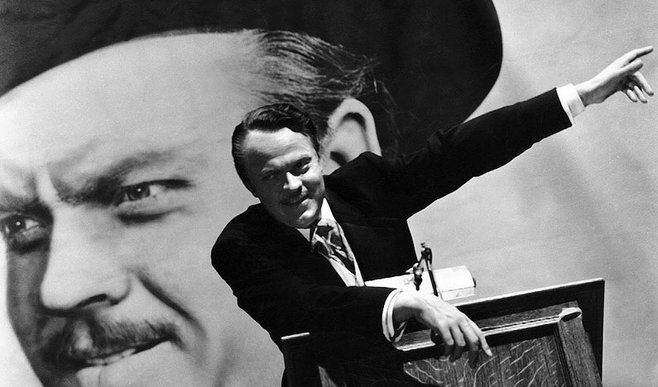
Citizen Kane (1941)

Orson Welles changes film history as Citizen Kane

Director: Orson Welles

Cast: Orson Welles (Charles Foster Kane), Joseph Cotton (Jedediah Leland), Dorothy Comingore (Susan Alexander Kane), Agnes Moorehead (Mary Kane), Ruth Warwick (Emily Monroe Norton Kane), Ray Collins (Jim W Gettys), Erskine Sanford (Herbert Carter), Everett Sloane (Mr Bernstein), William Alland (Jerry Thompson), Paul Stewart (Raymond), George Coulouris (Walter Parks Thatcher), Fortunio Bonanova (Signor Matiste), Harry Shannon (Kane’s father)

Writing about Citizen Kane is rather like writing about the Mona Lisa. Both are works of art so famous and influential that you are intimately familiar with them even if you’ve never seen them. But what makes them such constant delights is that, leaving everything else aside, the Mona Lisa is beautiful to look at – and Citizen Kane is hugely enjoyable to watch. Welles’ masterpiece – frequently hailed as the greatest film ever made – is about as close to perfection as you can get.

Entire books have been written about seemingly every aspect of the film’s creation. Welles’ original intention was to call the film American. It’s a fitting title. Citizen Kane is perhaps the finest film ever made on the corruption that ambition, money and power bring to the American spirit. Kane starts out as a pioneering idealist, but his fatal flaw his is need for power. That need to seize control of everything extends from buying all the art he can find in Europe to controlling the lives of all around him. It’s the mentality that will force his second wife into an opera career she is hopelessly unsuited for. It will eventually leave him sitting alone in his huge mansion, surrounded by wealth but bereft of friends. A large part of the American Dream is about “making it big” – and few make it bigger than Kane, and have so little to show for it at the end.

The film is a character study of ambition and power, using a framing device of the late Kane’s final word: “Rosebud”. What did he mean? Will finding out provide the key to understanding this powerful, elliptical man? A reporter (William Alland) aims to find out by interviewing key people from Kane’s life. From their recollections, the story of Kane’s life slowly comes together in a non-linear style. Charles Foster Kane (Orson Welles) as a young child inherits one of the world’s largest gold mines. Coming of age, Kane decides to use his wealth to become a press baron. He builds a news empire and runs for Governor – but the public revelation of his affair with amateur singer Susan (Dorothy Comingore) ruins his campaign. He builds a mansion on a man-made mountain, Xanadu, but is isolated and friendless in the echoing rooms of his own mausoleum.

You can argue the same thing happened to Welles himself. Citizen Kane is his own mausoleum, the only time in his life when everything went right. Also, probably the only time Welles’ attention stuck to something long enough to deliver. Welles memorably called working on a film set “the biggest electric train set any boy ever had”, and the entire film is saturated in his creative glee at trying so many new tricks. Citizen Kane bought to the forefront so many methods of film-making, its influence has been so pervasive on film today, that it’s hard to see how revolutionary it appeared at the time.

Welles worked with cameraman Gregg Toland to push the film into a whole new visual language, deeply influenced by German expressionistic film. It’s a beautiful film to look at, and each shot is covered with meaning, Welles’ eye for the theatrical image matched with Toland’s genius for visual language.

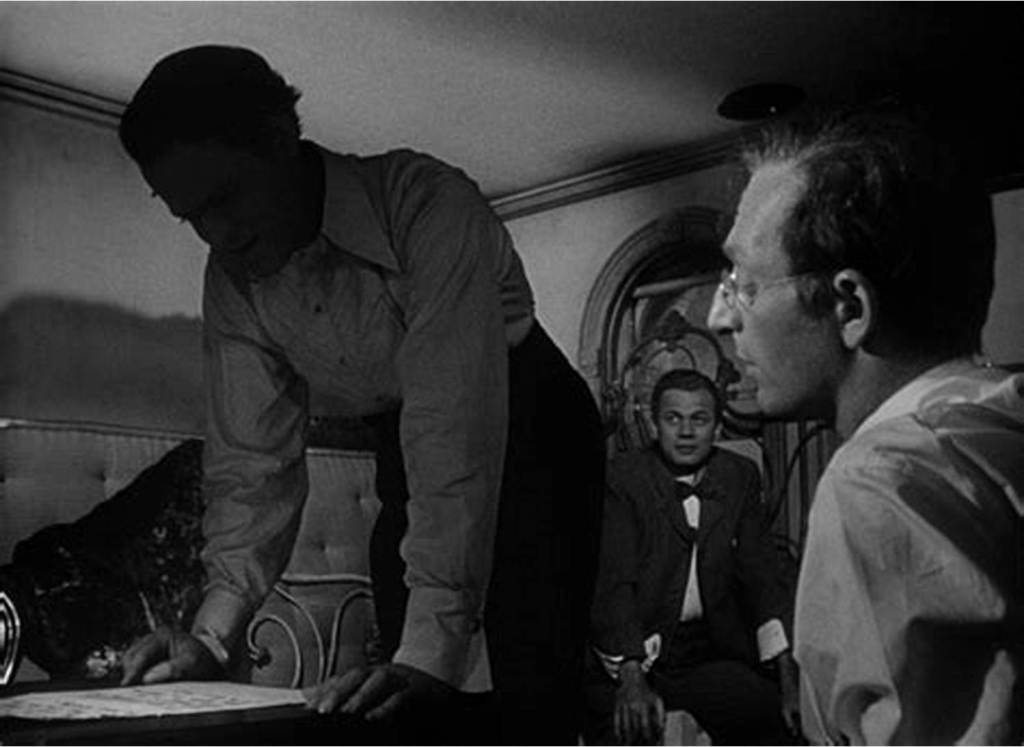
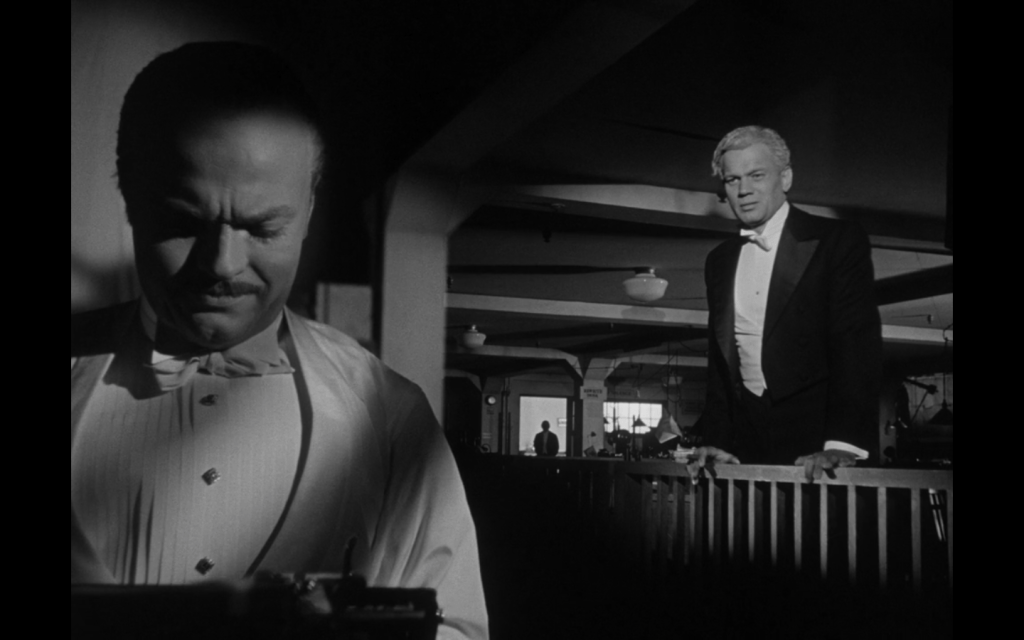
Citizen Kane is rarely thought of as a noir film, but it’s possibly the most noirish film you’ll ever see. Watching it again I was struck with how often shadows dominate the screen. Faces are frequently obscured, most famously in the projection room scene, where Thompson receives his instructions to find out what “Rosebud” means. But at key moments, faces disappear into black – while preparing his “Statement of principles” that will fill the front page of Kane’s first edition at the Inquirer, his face is lost in murky darkness. We hear what he is saying, but what is he thinking at this moment? It’s impossible to tell. Long shadows and inky black segments fill the frame frequently – it’s a film that gives a true feeling of darkness and unknowability at its heart.

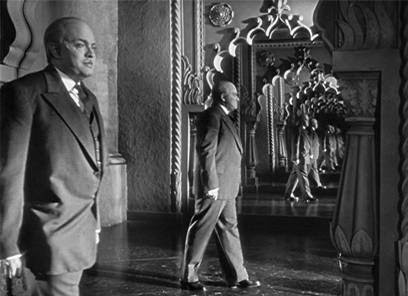
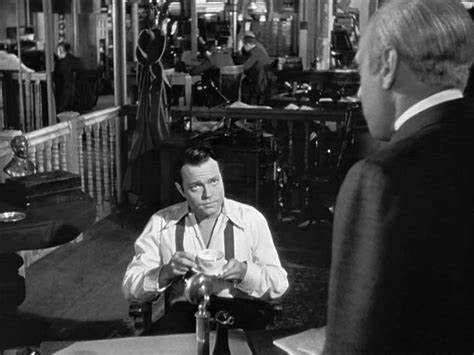
This is mixed with the theatrical flourish of its constant deep focus. Almost unheard of at the time, every shot of Kane is in perfect focus. It makes for visual compositions inspired by theatre, and ripe with dramatic meaning. Kane’s parents and his guardian William Parks Thatcher (George Coulouris) organise the future of the young Kane in the foreground, while we see the child playing outside in the show through a window. The deep focus turns Xanadu into a museum of lost chances and dreams, and the Inquirer newspaper office into an increasingly dark corridor of ambition, with people’s fates decided in foreground while we see them trapped in the background.

If that wasn’t enough, Toland uses angles Hollywood films hadn’t dreamed of. For some scenes, trenches were dug into the set and the camera placed in it, allowing the camera to stare up, with the actors towering over us. Citizen Kane is often claimed to be the first film where ceilings needed to build for the sets, as Toland’s angles and camerawork frequently made them visible. It’s not completely true, but it speaks to the visual impact of the film. Nothing really like this had been widely seen before. And I’ve not even mentioned the soaring, swooping tracking shots that pass through signs and buildings, the sort of inspired movement of the camera so many directors before had avoided in favour of stationary recording of the story. It’s visionary stuff.

The same was true for the film’s sound and music. Welles used his experience from radio to turn the soundscape of the film into something truly different. In radio, all cuts are managed by sound, but film had traditionally used only visuals to mark edits. Here, sound is used as often as visuals. When Kane runs for Governor, the sound and vision cut seamlessly from Leland on the stump for Kane to Kane finishing the same speech at a cavernous rally. Early in the film, the words “Happy Christmas” are skilfully cut together to leap forward years. Bernard Herrmann’s spare but perfect score, rather than laid over every scene, only comes in (as on radio) where emotional or transitional change is needed.

But then this is a film that uses editing as a way to tell story that few films before had tried. The sequence showing the collapse of Kane’s marriage to President’s niece Emily Monroe Norton (Ruth Warwick) is the perfect example. Over about two minutes of screen time we see several short scenes, all set at the breakfast table. Each scene shows a progressive step in their relationship collapsing, from loving exasperation to annoyance to anger to mute loathing. The scenes are no more than 20-30 seconds each, but the film perfectly moves from one to the other. The music slowly changes from a romantic waltz to a cold discordant rhythm. Transitions are marked by wipes. In each scene the actors move further apart at their breakfast table, the dialogue becomes harsher, sharper and more confrontational as the room they sit in becomes grander. In a few moments, an entire marriage story is told. It’s quite simply marvellous. The sequence is bookended by matching camera movements, gliding in and then out from the room.

You could speak for pages and pages (as indeed people have) about what a marvel Kane is. Welles’ vision and willingness to push the boundaries created an environment where all his collaborators worked to achieve their best, set free from the restrictions of more traditional moviemaking to stretch themselves as artists in a way rarely allowed. But it’s easy to forget what a marvellous story Citizen Kane is, what an entertaining and brilliantly constructed film it is and how every scene has something that delights and enthrals.

There’s controversy over who wrote the script. Welles and Herman J Mankiewicz are credited – although arguments have been made that each deserved the lion’s share. Whoever did create it, the script is quite simply superb. Economic, but packed with wonderful lines and some extraordinary speeches (Mr Bernstein’s speech about a powerful memory of a young woman he saw once from a distance is quite simply one of the best small-scale speeches you’ll see). Every scene is brilliantly assembled, and gives fabulous material to an extraordinary cast of actors.

It makes for a compelling character study, wrapped into a series of brilliantly done vignettes. Each set of recollections – from Thatcher, business manager Mr Bernstein (Everett Sloane), old friend Jedidah (Joseph Cotton) and ex-wife Susan (Dorothy Comingore) – makes for a fabulous series of self-contained scenes, each gaining richer and deeper meaning with every subsequent reflection that follows. There are so many sensational scenes I hardly know where to begin: you could write an essay about each one. Thatcher’s serio-comic reflections of the roguishly cheeky Kane are wonderful. Bernstein’s memories of the chancer coming good – with a brilliantly playful celebration scene – wonderfully entertaining. Jedidah and Susan’s far more tainted reflections of the man’s flaws make for wonderfully constructed drama, presenting a corrupted and bullying Kane. In every scene there is a beautiful moment of dialogue or drama which sticks in the memory.

The acting is equally good. Cotton settles into the groove many of his finest roles would fit into – the never-quite-grew-up schoolboy, who slowly realises his hero has feet of clay. Comingore is wonderfully fragile and then increasingly bitter as Kane’s ill-used second wife, forced into a humiliating career because Kane won’t be married to a failure. Sloane is charmingly loyal, with beautiful moments of profound sadness, as Bernstein. Coulouris is brilliantly funny as the exasperated Thatcher. Ray Collins’ is smooth and unabashed as Kane’s political rival. Agnes Moorehead is tinged with sadness and ambition for her son as Kane‘s mother.

But at the heart of Citizen Kane – in every sense – is Welles. His handpicked crew was some of the best in the business – but it was Welles’ inspiration, his willingness to imagine techniques and approaches un-attempted before, that encouraged them to their finest work here. With the magnetic force of personality that was his hallmark, he inspired everyone to give their very best. And he led from the front. The film is a triumph of drama, tragedy and comedy, directed with sublime grace. Welles the actor is perfectly cast, the part almost a riff on his own cult of personality, the mix of pride and overweening ambition and little-boy cheek crossed with self-destructive laziness. Welles’ performance is faultless in the film, taking Kane from the smirking chap happy to lose a million dollars a year (“at the rate of a million dollars a year I’ll need to close this place…in 60 years”) to the bloated old man, trashing his wife’s room after she walks out. Perfect.

The only tragic note about Citizen Kane is that this wasn’t the first in a career of non-stop genius from Welles. Instead, flaws in his own personality, combined with his ability to make enemies and lack of ability to focus on the task in hand, increasingly consumed Welles, making him eventually a lost great, a man wandering from film set to film set, taking on small roles for cheques that might one day help him make a film. But he’ll always have Kane, the sort of film that is a marvel which can never, ever disappoint. With every scene a classic, every moment compelling, every beat in it perfectly judged, its influence stretching to almost every film made since the late 1940s – it deserves its place as the greatest film of all time.

Once Upon a Time in the West (1968)

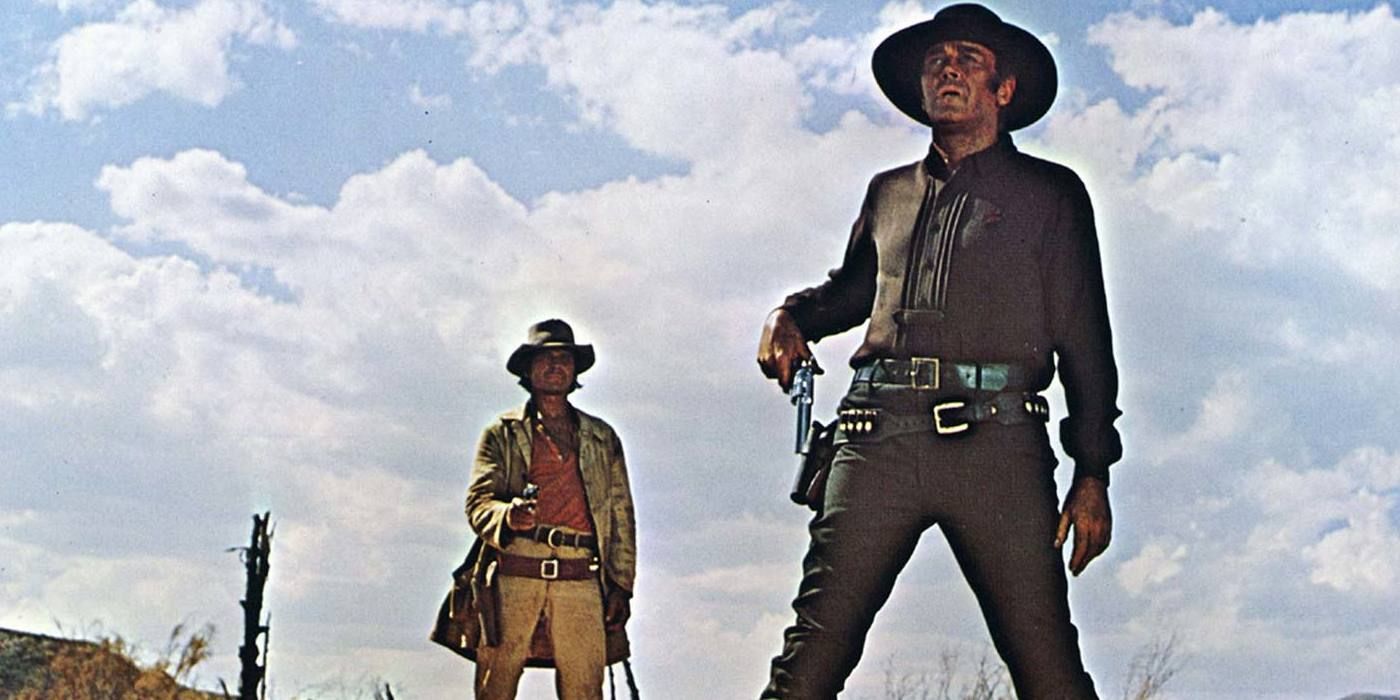
Fonda and Bronson prepare to face off in Leone’s epic Once Upon a Time in the West

Director: Sergio Leone

Cast: Henry Fonda (Frank), Claudia Cardinale (Jill McBain), Charles Bronson (“Harmonica”), Jason Robards (“Cheyenne”), Gabrielle Ferzetti (Morton), Paolo Stoppa (Sam), Marco Zuanelli (Wobbles), Keenan Wynn (Sheriff), Frank Wolff (Brett McBain), Lionel Stander (Barman), Woody Strode (First Gunman), Jack Elam (Second Gunman), Al Mulock (Third Gunman

Sergio Leone’s Westerns were always based, first and foremost, on his own love for the genre – and the great filmmakers, from John Ford onwards, who made them. Returning to the genre for the final time – putting on hold (for what turned out to be nearly fifteen years) his plans for a New York gangster film – Leone wanted to make his final, and ultimate, tribute to the Hollywood western. Collaborating with Bernardo Bertoloucci and Dario Argento (now there is an odd trio!) on the scripting, Leone’s final Western is a sweeping, grandiose, operatic Western littered with visual quotations from films he loved.

The story rather takes second fiddle to the general ambiance and visuals, but it never bothered Leone to have only the sketchiest of plots stretched across the many hours of his movies. The railroad is being built across America – changing the face of the West as it goes. Frank (Henry Fonda), hired gun of crippled railway tycoon Morton (Gabrielle Ferzetti), guns down farmer Brett McBain and his children. He had been sent to threaten them to clear off the land of Sweetwater. But why? And how will the return of McBain’s new wife Jill (Claudia Cardinale) – now heir to all of Frank’s holdings – affect their plans? And why does the mysterious “Harmonica” (Charles Bronson) – a shadowy gunman with no name have such an interest in events, and in Frank in particular? And will criminal gunman Cheyenne (Jason Robards) and his gang – blamed for the McCain killings – be able to establish their innocence?

The answers to all these questions come slowly – and often confusingly – in this long, slow but – as with many Leone films – engrossing Western, which features 3-5 minutes of Morricone build-up and extreme close-up before even the slightest action. This makes it very easy to mock, and perhaps by this point Leone had started to believe too heavily that he was an artist daubing in genre, rather than a purveyor of entertainments. Certainly, Once Upon a Time in the West is consciously weighted down with its own importance, it’s ominous sense of events heading to a pre-ordained conclusion and its half-hearted attempt to depict itself as sitting at a crossroads in American history, as technology squeezed out the old West.

But somehow you give Leone’s film a pass for all its many faults because it’s assembled with such unrivalled skill and breathtaking pizzazz. Sure the film is only half as smart as it thinks it is, but when at its strongest it offers unrivalled entertainment. Leone also mastered here his balance between the slow, tense, agonising build-up to violence – followed by its sudden and brutal enactment. 

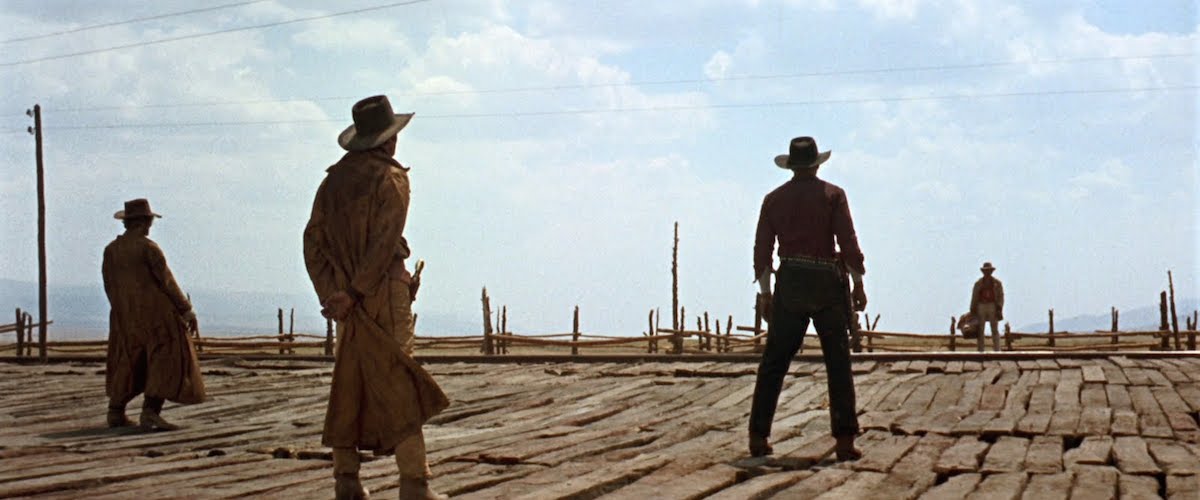
Never is that more clear than in the film’s opening ten minutes which features three gunmen (among them Ford favourite Woody Strode and reliable minor bad-guy Jack Elam) waiting at a train station for what turns-out to be the arrival of Charles Bronson’s “Harmonica”. The three gunmen sit, waiting, in silence. Around them the everyday sounds of windmills, buzzing flies and dripping water builds and relapses with all the dread of distant thunder. Leone’s camera crashes in for long, intense close-ups, as if drilling down into the souls of these bored men, the camera studying every detail of their faces. After almost ten minutes – during which the credits roll – “Harmonica” arrives. And promptly shoots all three men dead in seconds. You know it’s coming, but the tension and expectation of this confrontation makes the entire sequence compelling. 

It’s a trick that Leone repeats time and time again. Effectively the whole film is only prolonged extension of this sequence – the inconsequential back-and-forth of the lacklustre plot all really about giving us a chance to drill down into the character of Henry Fonda’s bad-to-the-bone Frank, while we wait for the inevitable gunfight between him and “Harmonica”. Leone’s film is a triumph of mood, filled with sweeping beautiful camera shot and luxiously paced editing, all mixed down with some stunning scoring from Ennio Morricone.

Once Upon a Time echoes a fairy tale in its title, and that’s what it is. For all that Leone attempts to throw in plotlines around progress, the influence of big money and the new order leaving gunmen behind, really everything it knows about America is taken from movies. Leone litters the film with visual quotes from High Noon, Shane and dozens of others, most especially Ford (he even insisted in transplanting some of the scenes to be shot at Monument Valley, which led to merry hell trying to get the other Spanish-shot locations to visually match). The entire film unfolds like a dream. At about the half way mark in particular – this might be due to cuts to be fair – the narrative suddenly becomes almost deliberately unconnected, key events seemingly skipped over and sudden character reversals taking place. There is a rumbling sense of everything in the film being artificial and the characters themselves being manipulated by something larger than them (like a film director!).

This is further heightened by “Harmonica” himself. Played with an empty blankness by Charles Bronson – the camera zooms into his expressionlessly craggy face endlessly as if searching for meaning – “Harmonica” is an almost mystical presence. He’s always in the right place at the right time, seems to be the only person in the film who knows what’s going on and Leone even shoots him regularly sliding into frame, as if the camera has stumbled upon him at the least expected times. Perhaps Bronson’s lack of real character helped make him perfect for this near-mystical presence. It also fits in with the shamanic feeling of a film where frequently not much happens at great length, but the inconsequential moments of events are filmed with a pregnant importance.

Compared to him the other principles are painted in earthy tones. Robards makes his bandit – who switches allegiances and escapes from undefined imprisonment several times in the movie – a jovial, grimy figure with a rogueish temperament. Claudia Cardinale – in what passes for a strong female character at the time – is a whore with a heart of gold who may, or may not be willing to do anything to ensure her own survival (the film is unclear). Is she a ruthless woman using sex as a weapon? Or is she the sort of radiant Earth-mother that the new West needs? Or is she a bit of both? The film isn’t really sure.

What it is sure about is that Fonda’s Frank is the meanest of the mean. Looking lean and tough, Fonda revels in the chance to play a villain – and not just any villain, this grinning sadist is so mean the first thing he does is gun down a child on screen. Leone loved Fonda – and above all he wanted those “baby blue” eyes to be the thing the viewers see as unspeakable deeds take place, expecting the cry of “Jesus Christ, that’s Henry Fonda!” Frank is a bully and tirelessly ambitious, and if we never get a real sense of what motivates him, it’s balanced by Fonda’s charismatic viciousness in the role.

It’s a pointer though to the fact that this is not a film about the West – as always the strange mixture of accents, faces and locations never makes the film feel for one moment like a real slice of America – but rather a film that is aiming to reflect the romance of movies. It’s a piece of Americana, that is really a love letter to other films. Perhaps it’s one of the first post-modern films ever made? But really your appreciation of the film can only really be complete if you have seen a lot of Westerns. Then it’s fairy tale like logic, and Leone’s operatic style and languid pace suddenly make sense. It’s not a film deep in meaning, other than perhaps our own love for cinema and the story it tells.

Chinatown (1974)

Jack Nicholson struggles against the system – and loses – in Chinatown

Director: Roman Polanski

Cast: Jack Nicholson (JJ Gittes), Faye Dunaway (Evelyn Cross Mulwray), John Huston (Noah Cross), Perry Lopez (Lt Lou Escobar), John Hillerman (Russ Yelburton), Darrell Zwerling (Hollis Mulwray), Diane Ladd (Ida Sessions), Roy Jenson (Claude Mulvihill), Roman Polanski (Man with Knife), Joe Mantell (Lawrence Walsh), Burt Young (Curly), James Hong (Kahn)

“Of course I’m respectable. I’m old. Politicians, ugly buildings and whores all get respectable if they last long enough.” So says Noah Cross in the superlative Chinatown, the sort of the film you’ll want to start watching again the second it ends. Cross is of course a respectable businessman and an absolute monster. And his mantra applies just as much to Los Angeles as envisioned by Polanski and writer Robert Towne. It’s a corrupt, dirty place where terrible, appalling things are regularly allowed to happen but everyone pretends the place is fabulous. It’s such a sublime film, while also so bleakly, despairingly dark that you are surprised you fall in love with its excellence.

In 1937 private detective JJ “Jake” Gittes (Jack Nicholson) is hired – or so he thinks – by the wife of Water Board director Hollis Mulwray (Darrell Zwerling) to investigate his infidelity. When he does seem to uncover it, he founds not only was his client not Evelyn Mulwray (Faye Dunaway), but that shortly after his pictures appeared in the press (without his knowledge), Hollis himself winds up dead, having drowned in a dry river bed. What does this all mean? And how does Evelyn’s father (and Hollis’ business partner) Noah Cross (John Huston) play into this all? Gittes investigates further, to uncover shady schemes to manipulate the cities water supply for profit, under-handed business deals and unspeakable family crimes that leave lives shattered.

Polanski’s film has such a timeless wonder about it, perhaps because it was filmed with such careful and beautifully designed classicism that it has never dated. Seen at the time as a film told in the style of the classic film noirs (although it is of course full of blazing LA sunshine), but crammed with a darkness and corruption classic Hollywood shied away from it now seems to take its place as the most masterful of Hollywood mysteries. It’s recreation of 1930s detail is perfect, while its film making is restrained, controlled, unflashy but creates an atmosphere of simmering mystery and tension behind every frame. It’s a masterfully restrained piece of film-making that deals with matters of shocking horror.

And tension there should be as this explores the darkest underbelly of America. With Jerry Goldsmith’s sublime music score under every beat – riffing on classic Hollywood tunes, but with a haunting faded grandeur that suggests a whole melancholic world going to the wall – the film looks like classic, beautiful America but uses that to counter-frame terrible, heartless acts. LA is corrupt from top to bottom. Businessmen are asset stripping the city and its surroundings to line their own pockets. Wealth brings total immunity from all sorts of crimes, regardless of how foul they are. Even family ties are polluted by terrible lusts and greed. And for Gittes, Chinatown is representative of this – a one word reference to his career as a cop, where his ability to do any good at all was forever compromised by corruption.

Jack Nicholson’s performance as Gittes is central to the film’s success. He’s in every scene and the story is told entirely from his point-of-view – so much so that when he is knocked out, Polanski slowly fades out sound and picture. Nicholson is best known for his flamboyance, but here he brilliantly underplays too present a complex picture of an idealist disguised as a cynic. Gittes tries his best to coolly accept the world is what it is, and even that he is just trying to get what he can out of it. But he’s in fact a decent and honourable man with a deep-rooted sense of morality, who struggles in the world because it’s ill-suited for a guy who just wants to do the right thing. He has a sort of outdated charm and nobility about him, an almost courtly gentleness at times, and only lashes out in anger when he feels is either being lied to or his sense of honour impugned. He has a natural sympathy for the little guy and for all he may try to spin the sort of cynical Marlowesque dialogue, you don’t feel his heart is really in it. He is a dreamer who wants to believe.

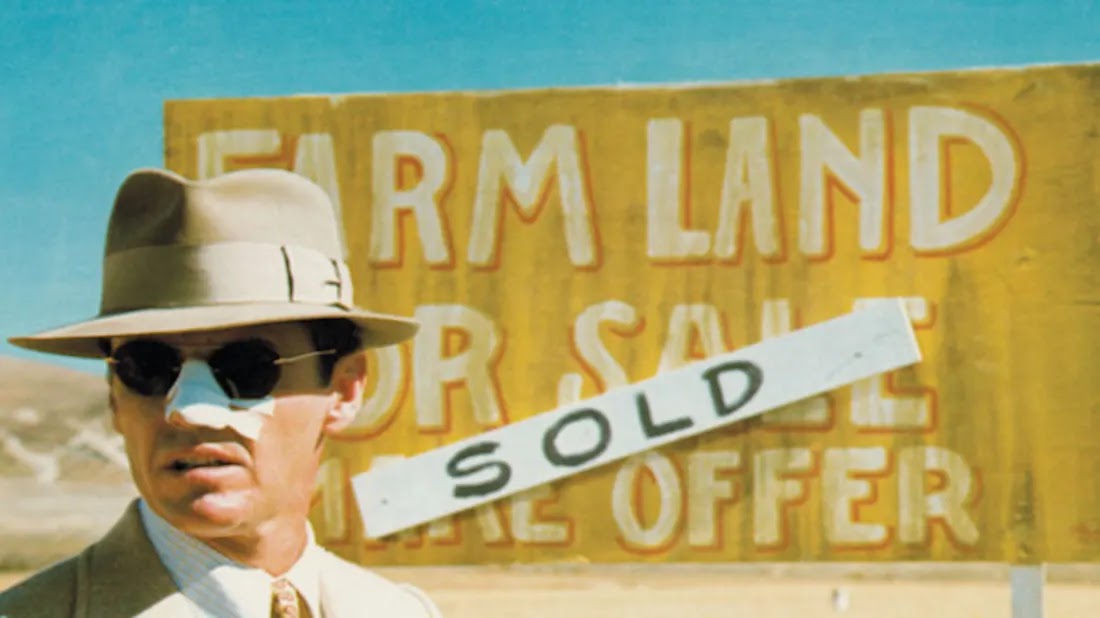
And he’s totally ill-suited to this world he ends up with. Gittes uncovers every inch of the mystery – but nothing he does has any positive impact. He completely fails to protect anyone, his attempts to ensure happy endings end in disaster, he’s regularly beaten to a pulp (most famously having his nose slit by a cameoing Polanski as a weasily little hoodlum) and he’s at sea when dealing with most of the characters of the film. Even his carefully built emotional armour breaks down, leaving him vulnerable to making even more mistakes. There are perhaps few characters so ineffective – and again it’s a credit to Jack Nicholson’s charisma that he makes this character feel like such a proactive figure.

Gittes senses at all times that there is some dark secret underpinning all these events he encounters. But he’s too innocent to begin to suspect the horrors that Evelyn has put up with at the hands of her abusive father. Faye Dunaway brings a marvellous fragility and vulnerability to a character who transcends the traditional femme fatale. (Dunaway famously hated both Polanski and working on the movie). At first seeming imperious and even suspicious, the film slowly breaks her character down into a wounded and vulnerable woman putting on a front, determined to try and protect herself but doomed to forever be the victim.

And Noah Cross is the dark heart of this. Played with a sensational sense of gentility masking supreme corruption and greed by John Huston, Cross is genteel and polite while being ruthless and grasping. He also reveals himself capable of huge, destructive acts, indifferent to the pain this causes and utterly implacable in his vileness. Huston’s performance – he’s only in three scenes – embodies the terrible dark heart of America, where money and power it seems can let you get away with anything you want, no matter who knows. (And I love the way he persistently mispronounces Gittes name, turning it into a growling Anglo-saxon “Gits”.)

Robert Towne’s superb screenplay is perfectly paced and pieces together an intricate and fascinating plot where every small detail mounts together into a devastating whole. It’s a film that demands careful watching, and that revels in small details and character beats that gain greater impact the more you see the film. Brilliantly, the macguffin here is water – the control of a substance that should be a right for every man, becoming a superb metaphor for the theft from ordinary Americans of justice and their country. 

The film culminates – as you feel it must when watching it – in a nihilistic ending where evil triumphs and good loses out. “Forget it Jake – it’s Chinatown”, goes the famous closing line. It works so superbly, because in Towne’s and Polanski’s vision of America here, there is no chance of the right thing winning out if the powers that be would have otherwise. With Jake’s Chinatown career in the police force becoming emblematic of everything that’s wrong in American justice, sure it makes sense that his return there as a private eye would see the same outcome. Towne pushed for a more upbeat ending, but Polanski knew – correctly – that only the shock of murder could end this tale, especially a murder that would have no repercussions.

Polanski’s direction is faultless, cool, calm, wonderfully observant with a superb sense of the 1930s – the film looks beautiful – and using the sunlight and brightness of LA to stress that just because we can see clearly, doesn’t mean we understand what we are looking at. With one of the greatest scripts ever – and a superb performance by Jack Nicholson in one of his finest roles – this is one of the best mysteries in Hollywood history, a timeless classic.

The Apartment (1960)

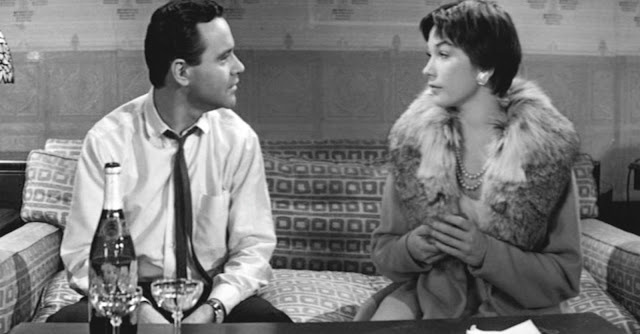
Jack Lemmon and Shirley MacLaine in an unusual relationship in the brilliant The Apartment

Director: Billy Wilder

Cast: Jack Lemmon (CC “Bud” Baxter), Shirley MacLaine (Fran Kubelik), Fred MacMurray (JD Sheldrake), Ray Walston (Joe Dobisch), Jack Kruschen (Dr Dreyfuss), David Lewis (Al Kirkeby), Edie Adams (Miss Olsen), Hope Holliday (Mrs Margie MacDougall), Joan Shawlee (Sylvia), Naomi Stevens (Mrs Mildred Dreyfuss)

How do you get ahead in business (without really trying)? Well a good way of going about it might be just farming your New York apartment out so your bosses can take ladies who aren’t their wives there. It works for CC Baxter (Jack Lemmon) – known to all his superiors as “Buddy” – who makes his apartment freely available on rotation to a host of executives as bolt holes for their mistresses. Just arrange a start and finish time, pick up the key from under the mat, and Baxter will keep out of the way. However, things get complex for Baxter when the Head of Personnel, Sheldrake (Fred MacMurray), demands exclusive use of the apartment – and when it turns out his mistress is none other than Fran Kubelik (Shirley MacLaine), the lift attendant Baxter himself has fallen in love with.

The Apartment is a brilliant mix of bitter social satire and comedy. It’s striking that the film is remembered as a sort of dark romantic comedy, as I think I’d be hard pressed to think of a film with as bitter a view of America and its values. Baxter and Kubelik make for a sweet couple (eventually) but the pair of them are in awe of the American dream. This working dream is however a complete fake, one in which the rich and powerful take what they want and those at the bottom bend over backwards to assist them, praying that the next big job or the next big marriage is round the corner. 

Wilder’s film skewers the ambition and manipulation behind the American dream. Baxter, a down-trodden schmo, works in an office where hundreds of workers sit in lines entering data like worker ants. (The sequence was Wilder’ visual tribute to King Vidor’s 1928 The Crowd). Acclaimed French art director Alexander Trauner (thegenius behind Les Enfants du Paradise) created the effect with intelligent use of false perspective (those at the back are little people made to look far away), and Baxter’s office is a triumph of capitalist indifference made flesh. The big wigs (the only ones with individual offices) are interested only in getting what they want and value nothing more than the keys to the executive bathroom.

It’s Mad Men before its time. A drunken Christmas party is a picture of debauchery, a hotbed of drinking and sex. Kubelik can hardly operate her lift without getting her bottom pinched by an executive. At the apex is Sheldrake the personnel manager, brilliantly played by Fred MacMurray as a heel who thinks he’s reasonable. Sheldrake is the personification of selfish indifference, interested only in getting what he wants all the time. He strings along both Kubelik and Baxter with empty promises (of marriage and promotion), constantly with the fixed smile of the uncaring professional, glancing at his watch during illicit dates with Kubelik and interested in Baxter only as long as he can gain access to his apartment.

As the owner of that apartment, Jack Lemmon is superb as the nebbish Baxter. No one could look or sound more like a struggling nobody like Lemmon, the film brilliantly playing on his relatable every-dayism. With his head jutting forward, his voice and manner always too eager to impress, to ingratiate, he’s the American dreamer ground down by the reality of having to get ahead. It works so brilliantly due to Lemmon’s charm, even though many of the things Baxter does in the film are slightly unpleasant. He’s ambitious, but only because he feels like it’s the only chance he has. But deep down Baxter is kind, he’s playing the role that he thinks he needs to play to make a success of life – so you never stop kind of loving him, even as he enables cheating spouses and good-time girls (at least one of whom is a not-even veiled spoof of Wilder’s bette noir, Marilyn Monroe).

But Baxter is one of us, he’s a down-trodden, a bit clueless and so his good intentions are constantly misdirected. So we care about him, just as we care about Kubelik, wonderfully played by Shirley MacLaine. She’s sweet and endearing, full of quirky charm and endearing sparkiness. But it covers the pain of all misused mistresses, constantly being strung along by their lovers with the promise that yes, eventually, they will leave their wives. The film heads into dark territory with the impact this has on Kubelik but even after all this, she still gives Sheldrake yet another chance. Because, in Wilder’s world, it’s hard to turn your back on how the world works.

It’s the same rules of the world that leave Baxter sitting outside his apartment in the rain, waiting for his boss to “finish”, or spend the night walking the streets or being stood up at the theatre because his prospective date is his boss’ mistress. But despite all this, the film is funny, partly because the set-up is in itself funny and Wilder laces the cynicism with plenty of humour (acidic or otherwise). There are hilarious misunderstandings – all of Baxter’s neighbours think he is the ultimate party animal – and relatable comedy of the lonely, with Baxter’s TV dinners and imaginative use of tennis rackets to strain spaghetti.

The film also throws together a neat romantic plot between Baxter and Kubelik that’s underplayed, endearing and feels truthful. Many people have criticised the ending as feeling tacked on and betraying the coldness of the film’s social satire. But I think it’s there throughout – this is a film that has a fury for the cruelty of capitalism and people like Sheldrake, but no end of affection for the real people who are trapped at the bottom of it. Baxter and Kubelik are never the film’s targets and always the film’s heart. Their eventual happy ending – with the film’s famous closing line of “shut up and deal” – might seem like it flies in the face of the acid of the film, but that’s to overlook the heart that underpins all their interactions.

The Apartment is a near perfect mix of both comedy and drama, dealing with deep and dark themes with an assured and gentle touch, with a wonderful script by Wilder and IAL Diamond. With its two lead roles filled with a brilliant aplomb by Lemmon and MacLaine, plus superb support from MacMurray and Oscar-nominated Jack Kruschen as Baxter’s next-door neighbour, it’s still a superb treat.

Inception (2010)

Leonardo DiCaprio caught between dreams and reality in Inception

Director: Christopher Nolan

Cast: Leonardo DiCaprio (Dom Cobb), Joseph Gordon-Levitt (Arthur), Marion Cotillard (Mal Cobb), Ellen Page (Ariadne), Tom Hardy (Eames), Ken Watanabe (Saito), Dileep Rao (Yusof), Cillian Murphy (Robert Fischer), Tom Berenger (Peter Browning), Pete Postlethwaite (Maurice Fischer), Michael Caine (Professor Stephen Miles), Lukas Haas (Nash), Tallulah Riley (Disguise woman)

What is reality? It’s a question that for many of us never comes up. But in the artificial and exciting world of film, it’s a legitimate question. These worlds we watch unspooling before us on the cinema screen, so large, so real, so exciting. Could we get lost in them? And how much do the films we love echo the dreams that fill our nights, the movies we create in our mind to keep our brain active during those hours of complete physical inactivity? And what happens when the world of imagination and possibility becomes more compelling, more comfortable – and perhaps more real – to us than the actual flesh-and-blood world around us? These are ideas tackled in Inception: the blockbuster with a brain. 

Set in some unspecified point in the not-too-distant future, Dom Cobb (Leonardo DiCaprio) and his partner Arthur (Joseph Gordon-Levitt) are “extractors”, shady corporate espionage experts who use experimental military technology to enter shared dream states with their targets. While in their dreams, they have complete access to their subconscious mind, where secrets can be extracted. A wanted man in the States, Cobb is forced to ply his trade despite his yearning to return home to his children. After a job goes wrong, their would-be target Saito (Ken Watanabe) hires the pair to take on a far more challenging role: rather than extract an idea he wants them to plant one – a technique called “inception” – into the mind of a business rival (Cillian Murphy) to get him to dismantle his father’s empire. To do the job, Cobb needs a new team, including dream “architect” Ariadne (Ellen Page), dream identity forger Eames (Tom Hardy) and dream compound chemist Yusof (Dileep Rao) – and needs to try and control his own dangerous subconscious version of his late wife Mal (Marion Cotillard) who is determined to destroy his missions.

Just a plot summary should give an idea of the twisty-turny world of imagination and ideas that Christopher Nolan mixes in with big budget thrills and excitements, in the most original sci-fi/philosophy film marriage since The Matrix. Of course it helps when you have the clout of having directed a hugely successful comic book series, but Nolan was brave enough to trust that an audience for this sort of action-adventure caper wanted to have their brains stretched as far as their nerves. So he creates a dizzying and challenging piece of escapism that plays around with the audience’s perceptions and understanding of the nature of dreams. 

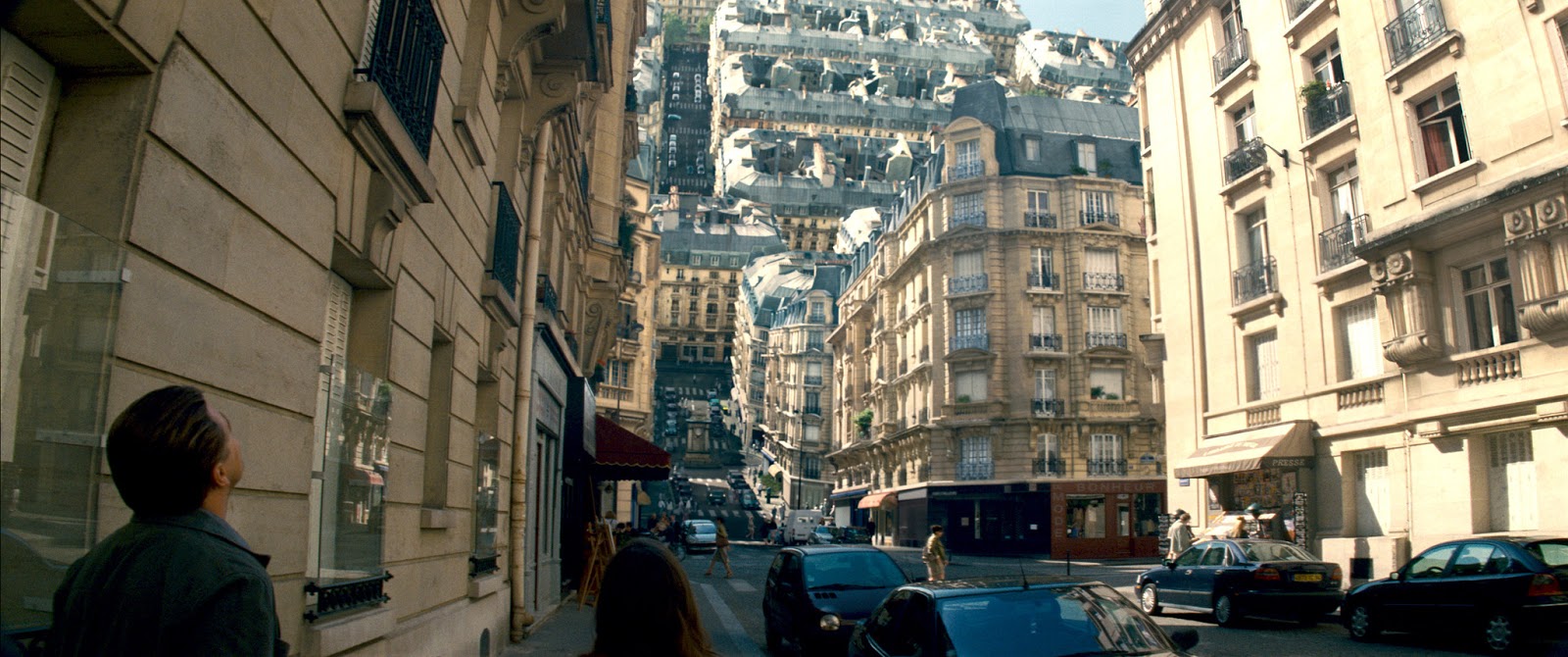
In the world of dreams, the film is a fabulous tight-rope-walk of dazzling concepts. Here everything is possible, with Nolan throwing at us worlds from film fantasy: intricate Samurai houses, brawling third-world streets, luxurious hotels, Bond-style winter bases and entire cities that literally fold, bend and reinvent themselves around the film’s dreamers, worlds that defy conventional rules of physics and time. This world is presented with genuine visual panache at every point, Nolan’s mastery of the language of film leading to a sensational series of slight-of-hand tricks and compelling set-pieces, all the while making you question which events are real and which are dreams or even dreams within dreams. In these worlds, the characters have the ability to literally shape a world to meet their needs, and the dangerous attraction of these worlds – even if they are not real – is the dark temptation that hangs over every frame. 

Because it’s those ideas beneath the action that give the film depth as well as excitement, that ability to ask questions and openly invite the audience to begin theorising themselves to fill in any blanks. Within the world of Inception, characters can create dream states within dreams, to share one person’s dream while simultaneously all being inside the dream of someone else. These multiple levels are cleverly established as being as much of a risk for the characters in getting confused as they are for the audience, with the characters carrying personal “totems” to help them judge if what they are seeing is reality or not. This is made all the more difficult by the establishment that your subconscious will manifest people to populate the dream worlds – and these will turn on invaders they detect in the dream.

All of this tunnels down into the deep limbo of our subconscious – and also introduces as a concept Nolan’s fascination with time. In dreams, time moves at a different pace, and this differential becomes all the greater as you descend down levels in dreams within dreams. A few minutes can become an hour in a dream and become almost a day in the dream within it – and years within the dreams beyond that. This is brilliantly demonstrated by Nolan in the film’s dazzling central sequence as the film intercuts between three timelines in three different dreams – each impacting the other.

It’s another masterful touch – the impact of actions on dreamers’ bodies in the level above can be felt in their world. A slap to the face in the real world can send someone in the dream flying across a room. A bucketful of water turns into a tidal wave in the dream. The dreamer falling in the world above removes gravity in their dream (giving Joseph Gordon-Levitt a cult fight scene in a gravity free world that sees him gracefully leaping from floor to ceiling to wall). The visuals are extraordinary, but the intriguing logic of the inter-relation between reality and the dreams – and the way dreams struggle to explain external effects – lend all the more credence to the mixing of reality.

But then, as Nolan suggests, isn’t that film after all? In dreams we move from location to location and struggle to remember the journey in between. We find ourselves doing tasks and not knowing how we started. Chases, faulty logic, sudden reversals and changes – these are the rules of film, it’s editing slicing out the boring bits and focusing on the reality. We are dropped into the middle of Cobb’s story and only slowly find the backstory, a gun filled chase through an African city is almost indistinguishable from similar sequences in the dreams. The final sequence of the film is a purposefully cut series of images that are very true to the rules of film, but feel alarmingly close to the rules of dream (unsettling us about whether what we see at the end is truth or dream, a debate that continues today). It makes for fascinating stuff, as well as a commentary on film itself.

Nolan’s film is gloriously entertaining, even if in its haste at points it does fail to explain how certain events and concepts truly work – but doesn’t really matter so compelling is the journey. The cast, enjoying the chance to mix action hijinks with genuine characters and dialogue are very strong, with DiCaprio anchoring the film wonderfully as the conflicted, lonely, defensive and daring Cobb. Hardy made a name for himself in a cheekily flirtatious performance, which sparks wonderfully with Gordon-Levitt’s more po-faced Arthur. Page creates a character both naïve and at times almost gratingly intrusive. Cotillard makes a difficult balance look easy playing a character part real and part dream figure. Watanabe is archly dry as the investor. There isn’t a weak link in there.

It may at times move too fast and not always make itself completely clear. It might be a bit too long in places and take a little too long to make its point – but it’s ambitious, challenging, intriguing film-making that rewards repeated viewing. Not least with its cryptic ending in which we are forced to ask how much of what we have seen is real and whether – like Cobb perhaps? – we should even care at all if the end result is so positive. With the fascinating world of dreams – and the rules there that we encounter – it gives us a firm grounding for the its meditation of the dark attraction of fantasy, embodied by the genial wish fulfilment of the movies where adventure lies around each corner and the heroes triumph.

Ford v Ferrari (Le Mans '66) (2019)

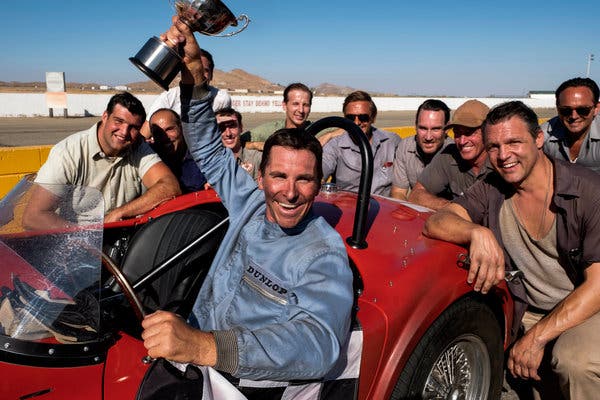
Christian Bale as maverick driver Ken Miles in the functional but fun Ford v Ferrari

Director: James Mangold

Cast: Matt Damon (Caroll Shelby), Christian Bale (Ken Miles), Jon Bernthal (Lee Iacocca), Caitriona Balfe (Mollie Miles), Tracy Letts (Henry Ford II), Josh Lucas (Leo Beebe), Noah Jupe (Peter Miles), Remo Girone (Enzo Ferrari), Ray McKinnon (Phil Remington), JJ Feild (Roy Lunn), Jack McMullen (Charlie Agapiou)

There are few more exhilarating things than going really, really damn fast. It’s a primal glee that James Mangold’s racing film Ford v Ferrari (or Le Mans ’66 as it seems to be known over here) taps into, roaring with exciting, fast-paced energy lashed onto a good old buddy movie as two plucky underdogs get the chance to overturn the champs and claim the title. It’s the story of any number of sports movies, but it still works here. It ain’t broke, after all.

It’s the early 1960s and the sales of the Ford Company are down: the baby boomers don’t want to be driving the dull, safe cars of their parents. They want something super sexy. Despite his hesitation Henry Ford II (Tracy Letts) is persuaded the best way to get that sexy image is to get a racing car – and if he can’t buy Enzo Ferrari’s (Remo Girone) company, then by hell he’ll spend whatever it takes to give Ford the best racing team in the world. Targeting the Le Mans 24 hour race, he recruits retired-driver-turned-designer Caroll Shelby (Matt Damon) to mastermind building a car – and Shelby recruits demanding, prickly, maverick Brit driver Ken Miles (Christian Bale) to help him design it and then drive the thing. But what to do when Miles’ blunt plain-speaking and individuality looks like it won’t make him the best spokesman for selling Ford cars?

On the surface Ford v Ferrari is pretty much your standard Sports film. Two teams, an underdog and a champion, a pair of mavericks who think outside the box, the struggle for success – met with initial failure before victory – all told through a familiar structure of brothers-in-arms, obstructing suits, supportive wives at home and plenty of carefully detailed expert recreation of sporting events. It’s a collection of familiar ingredients, but very well mixed together by Mangold (one of Hollywood’s finest middle-rank directors, a sort of heir to Lumet).

The real twist however is that the rivalry is not really about Ford and Ferrari. In fact the film might have been better titled Ford vs Ford. Because the main thing standing in the way of Shelby and Miles isn’t Ferrari – with whom they actually have a rivalry built on mutual respect – but with the bottom-line, sales-first suits who are backing them. It’s a parallel with everything where sales and the buck count more than anything, but you feel Mangold might well have related it most to Hollywood producers. What is Ken Miles, but the genius auteur director who the money-men just won’t trust to churn out the mass-market product they need to lift the share price? Henry Ford (very drily played by Tracy Letts) may have one visceral moment of excitement when placed in the passenger seat of a fast car – but fundamentally he doesn’t give a damn about the sport at all, except how it could help him shift a few more Mustangs.

Shelby and Miles’ struggles are not with the car, the engineering problems or Ferrari – they’re with the Ford VPS (in particular Josh Lucas’ incomparably smarmy Leo Beebe, a corporate man to his fingertips who probably bleeds stock tips) who want a product they can sell, far more than a product that can win. Obstacles are constantly thrown towards Shelby and Miles from their bosses – everything from engine design to race strategy receives a series of notes, comments and instructions from the Ford hierarchy. The choice of driver is most important of all – and they don’t want the demanding Ken Miles behind the wheel of their car. Because mavericks like that don’t sell Mustangs.

As Miles, Christian Bale gives a performance of pure enjoyment. Juggling a version of his own natural accent (which sounds odd – part cockney, part scouse – but works brilliantly) Bale gives the part just the right amount of that peculiar chippy Britishness, that resentment of people in authority, that hostile reaction to the stench of bullshit. Driven, determined but totally unwilling to suffer fools – exhibited almost immediately with him dressing down a prat who isn’t a good enough driver to handle the sports car he’s purchased – Miles is clearly never going to be the company man Ford wants. But with his passion for “that perfect lap”, his determination to work night and day to achieve that and – in a nice change – his warmth for his family and equal decision making with his wife (a slightly thankless part for Catriona Balfe) he’s a character you quickly take to your heart. It’s a great, charisma-led performance from Bale, who also gets nearly all the best lines.

It does suck a bit of the oxygen from Damon, who plays the straight-man as Shelby who is just as passionate but can (just about) speak Corporatese. With a Texan drawl, Damon does the legwork of the movie extremely generously, quietly driving many of the scenes and handling much of the more emotional arc of the movie. The two actors form a superb chemistry – peaking with a hilarious fight scene, your chance to see Batman clobber Jason Bourne with a loaf of bread (both actors, famous for muscular fight scenes, clearly enjoy a fight scene straight out of Bridget Jones). It’s a bromance that really works – and carries at certain points a genuine emotional force.

Mangold packages this material perfectly – and the racing sequences are brilliantly done, engrossing, speaker-shaking displays of racing, fabulously edited. The film itself is probably too long, and the sections away from the race track are sometimes so familiar in their structure and tone that they sometimes drag a little bit, as if the fierce momentum of the racing scenes can’t carry across to the rest of the film. But with fine performances and expert handling, this is certainly a number you’ll be happy to test drive.

Quiz Show (1994)

Ralph Fiennes excels as the man who as the answers he shouldn’t have in Quiz Show

Director: Robert Redford

Cast: John Turturro (Herb Stempel), Rob Morrow (Richard Goodwin), Ralph Fiennes (Charles Van Doren), David Paymer (Dan Enright), Paul Scofield (Mark Van Doren), Hank Azaria (Albert Freedman), Christopher McDonald (Jack Barry), Elizabeth Wilson (Dorothy Van Doren), Mira Sorvino (Sandra Goodwin), Allan Rich (Robert Kintner), George Martin (Chairman Oren Harris), Paul Guilfoyle (Lishman), Martin Scorsese (Martin Rittenhome), Barry Levinson (Dave Garroway)

Imagine, if you can, a time when we trusted everything we saw on television. When whole nations crowded around to watch a show, and would run home to make sure they didn’t miss it. When the people appearing on the box in the corner were like members of the family invited into our home. In our cynical age of streaming and distrust, such ideas are impossible to imagine. Now we doubt anything we are shown on the box – and the first brick in that wall fell into place with the rigged quiz show scandals on American television in the 1950s.

Twenty-One is the biggest hit on NBC, with reigning champion Herb Stempel (John Turturro) correctly answering every question that comes his way. But the show’s sponsor, Geritol, is worried: Stempel’s ratings are at a plateau, and they feel the show needs a new champion. So producers Dan Enright (David Paymer) and Albert Freedman (Hank Azaria) look to recruit the sort of face of Twenty-One the sponsors want – and find him in clean-cut, Ivy league, charming Columbia League instructor (or “Professor” as they insist on calling him – and Van Doren’s move from reminding him he hasn’t qualified for that title, to happily accepting it is telling in itself) Charles Van Doren (Ralph Fiennes). 

They offer Van Doren the chance to win the show by telling him the answers in advance, while offering Stempel a career in television if he will agree to throw the next edition of the programme. Both men are plagued with indecision, but Stempel throws the game and Van Doren provides the correct answer to his final question – the exact same question he had been asked at his audition. Van Doren, seduced by the fame, quickly agrees to be given the answers in advance of the show, but the unreliable Stemple is dropped by NBC and instigates Grand Jury proceedings. The records are sealed but this piques the interest of Congressional lawyer Richard Goodwin (Rob Morrow), who begins to see the potential to “put television on trial” – while being deeply conflicted by his growing friendship with Van Doren, keen to be seen as co-operating with any investigation.

Quiz Show remains Redford’s finest directorial achievement by far, a rich, fascinating, beautifully made film with a profoundly rewarding and engrossing reflection on fame, television and the media in 20th-century America. Told at a gentle but compelling pace, probably the strongest weapon in its arsenal is a fantastically literate, well-constructed, dryly amusing and affecting script by Paul Attanasio. Scenes are beautifully assembled, crammed with well observed character beats and wonderfully quotable lines. It’s a script that would stand up extraordinarily well as a play itself, and Redford allows it plenty of room to breathe in his assured, unshowy and perfectly judged direction.

This is a film that analyses exactly how truth and entertainment are supposed to be inter-related. The rigging of quiz shows – and it was systematic across a range of shows on all channels – was a detailed lie to the American people. But, the film asks, what was the real harm of this? What are these quiz shows for? Tests of intellectual attainment or pieces of entertainment for the masses? As Scorsese’s Geritol executive says, people weren’t watching the questions, they were watching the money. 

And money is where the villainy lies in this film. For a film rich in period detail, Redford makes clear that there is a definite sense of class that underlies all the action. Decisions are made on the show based on selling things – advertising hours and Geritol products. And there are people in this show – the heads of corporations like NBC – who are making millions out of peddling rigged entertainment shows to the people. And when the chips come crashing down, it’s not these executives who are in the firing lines; it’s the little people who were the face of the enterprise – the contestants themselves – who pay the price.

It’s the exact opposite of what Goodwin wishes to achieve when he starts his investigation. He wants to add some moral force, some legislative control, to what you can and cannot present as fact and fiction on television. What he fails to understand – and what the film does – is that deep down people don’t want this. They want the excitement and the thrills – and at the end of the day wouldn’t care less if they never found out everything presented to them was carefully scripted. This lasts today: do we care that comedy sketches are not improvised but carefully scripted? Do we care if game show contestants are carefully pre-selected? Again, as Scorsese’s sponsor representative states, all any investigation will accomplish is TV shows figuring out other ways to get the high ratings: and simpler questions and less erudite competitors will be the way to go.

Because it’s all the glamour and excitement and drama we like to watch, not displays of intellectual accomplishment. It’s something the film understands – and something that comes across very clearly in Ralph Fiennes’ exquisitely well-judged performance as Charles van Doren. A genuinely intelligent, decent man, Fiennes’ performance works so well because he makes clear that under the WASPish, patrician decency of van Doren is a fundamental shallowness, a laziness and hunger for the quick buck and easy success. Constantly, Fiennes’ confident grin and easy manner hide his unease and guilt at his conduct. But he clearly can’t help himself, a Faust wrapped up in his pact.

After all what would his father – the famous poet and academic Mark van Doren, played with a beautiful ease, grace, intelligence and iron-clad honesty by Paul Scofield, a sublime actor at the top of his game – think of this all if he found out? The scenes between the two men – one the proud, loving but quietly demanding father, the other the successful, shallow, quietly desperate son – are the film’s strongest moments, consumed with the tension of the unspoken. We can see the pressure of familial expectations reflected elsewhere in Herb Stempel’s wife’s disappointment at finding that Stempel himself was a coached as much as van Doren.

John Turturro goes larger as Stempel, a bitter and frustrated man addicted to the attention and glamour TV has bought him which he has always felt has been denied him. Stempel’s desire for fame, his assumption of a persona in the public eye which is part studied, part eagerness to please his audience, gets to the heart of TV’s power. It’s the box in every room, and it can turn the ordinary into the extraordinary. It’s a box with the potential to weave magic – and it’s the tricks behind the magic that are difficult to see. For all we know the magician doesn’t saw the assistant in half (as Hank Azaria’s crude producer puts it), it makes it hard to enjoy the trick when you know it is one.

It’s ideas like this that the film gets to  so cleverly, and which turns the American quiz show into an intelligent metaphor for the corrupted ambition of America itself. The dream is to get to the top, and this was a way of offering a short cut for it – and all to help big business sell its products and make money. This is the subversive truth at the heart of Quiz Show, but it’s easy to forget as we, like the American people, have the obvious villains of the ordinary contestants be crucified by the media, rather than those who really profited. Redford’s film is smart enough to constantly remind us of this, to humanise the contestants and to show the darker elements underneath. Quiz Show is a great film.