Category: Films about gender

Emilia Perez (2024)

Emilia Perez (2024)

Controversial arthouse film which clumsily tries to do to many things, many of them not well

Director: Jacques Audiard

Cast: Zoe Saldaña (Rita Mora Castro), Karla Sofía Gascón (Emilia Pérez/Juan “Manitas” Del Monte), Selena Gomez (Jessi Del Monte), Adriana Paz (Epifanía Flores), Édgar Ramírez (Gustavo Brun), Mark Ivanir (Dr. Wasserman)

Sometimes a film comes along that manages to annoy everyone. Emilia Pérez seems to have achieved that unwanted goal. Jacques Audiard’s Cannes Jury Prize winner is a wild, audacious piece of film-making that misses as much as it hits. It’s also been bashed as a musical full of people who can’t really sing, denounced as transphobic, and savaged by Mexicans. Perhaps Emilia Pérez shows us the downside when an auteur French director works with Netflix who accidentally promote what would have otherwise been a little-seen arthouse film into the heart of a culture war. I don’t think Emilia Pérez intends to be racist or transphobic (but yeah most of the cast can’t sing), but it does deal with these issues at times very clumsily. It’s also a curious mish-mash that places a transitioning character in a traditional “hard-to-escape-your-past” plot.

That transitioning character is Emilia Pérez (Karla Sofía Gascón), formerly a notorious drug-lord. With the (initially coerced) aid of crusading lawyer Rita Mora Castro (Zoe Saldaña), Emilia succeeds in faking her death, moving her family to Switzerland to protect them, extricating a fortune from her criminal empire and flying to Israel for her operation. Four years later, Emilia finds she can’t live without her children and Rita is roped back into retrieve her wife Jessi (Selena Gomez) and kids and move them in with their “aunt” Emilia. Simultaneously Emilia, wanted to be cleansed of her criminal past, starts a foundation to “discover” the graves of those killed in Mexico’s drug wars. But returning to a world she left behind only makes it harder for Emilia to escape her criminal past.

Emilia Pérez: an Audiard crime story with songs! Audiard described it as an opera fantasia, and I feel it was his intention for nothing in it to be treated as traditionally “real”. The characters frequently burst into song or throw themselves into dream-like dance sequences to express complex feelings. Aside from the film’s explosive, guns-blaring conclusion, filmed on isolated, dusty, abandoned houses and roads, key scenes are tightly shot on sparse sets with very little back lighting, giving them a dreamy black-box effect. Emotions are as heightened as the (sometimes clumsy) lyrics and the film throws itself into every dialled-up event with a comic-book energy.

All of which means Emilia Pérez is an acquired taste and, like many ambitious films that zig when they should zag, fails as often as it hits the jackpot. Its finest scenes are the key song-and-dance numbers, all left in the hands of Zoe Saldaña (excellently torn between idealism, fear, cynicism and regret with complex feelings about her dubious employer). Saldaña is a dynamic and fearless dance performer, throwing herself into synchronised movements through a Mexican market in the film’s opening “El Alegato” and dominating the film’s central show-piece, an athletic, sensual dance around and over tables at a charity ball in “El Mal”.

But even Saldaña falls foul of the film’s largest musical failing: with the exception of Selena Gomez (who struggles with a Mexican accent so terrible, even non-Spanish speakers can tell it’s awful) no one in the cast can really sing. Criticism like that somehow feels shallow when you apply it to an arthouse film, but it’s legitimate. The cast largely go for fast-paced, Henry-Higgins-ish, rhythmic speaking, big on husky intensity but not exactly something you would sit and listen to. Gascón is a particularly poor singer, especially noticeable with the operatic high notes she is frequently given. Even the controversial AI-upgrade her voice was given in post-production can’t help her.

Throw into that the clumsiness of some of the lyrics. For a film dealing with as sensitive an issue as this, are lyrics like “Man to woman or woman to man? Man to woman. From penis to vagina” really a good idea? Is a song about Emilia’s son singing about how her smell reminds him of his Dad (body smell being a hot topic for this community) tasteful? Since this issue (the perception of bodily odours) is a key issue for the trans community, writing a whimsical song about it rather suggests Audiard and team didn’t really do enough to wrap their heads around controversial issues.

Perhaps that’s because Emilia Pérez is, at heart, a classic “just when I thought I was out…” movie that tries to spice up the formula by having its gangster character be a trans woman (the partial implication of a sex change being a type of disguise is another hot-topic issue the filmmakers should have got themselves familiar with). It does, I think, make for a fresh take to see even incredibly macho, hardened killers can have longings like Emilia – and Gascón’s performance is actually at its best showing the fear that lies below the aggression before Emilia’s transition, and when embracing her tearful joy at the success of her operation. But the point remains this is a film not looking to make a real statement on transgender issues, or even demonstrating any real interest in the experience of being trans. It is instead just using a trans identity as a new context for a familiar “starting a new life” storyline. With minimal changes, Emilia could have undergone extensive plastic surgery or gone into witness protection and it would have made few changes to plot or themes.

It is interesting to get a trans character who is not always completely sympathetic (although I get that the community find it a blow upon a bruise to finally get a film with a trans lead, and she’s as a morally questionable and unlikeable as this). Emilia’s desire to restart her life away from crime is fatally undermined by refusing to make the sacrifices needed. Slowly she drags her family back in (passing herself off, Mrs Doubtfire-like, as her own sister), reconnects with the criminal underworld (albeit for humanitarian reasons) and reverts to the threats and violence she used in her old life (when, let’s not forget, she had a plastic bag slammed over Rita’s head to motivate her).

Emilia Perez also never explores the outrageous moral stance of a murderer in a new life, using their knowledge to “help” their victims by “discovering” the graves of people she ordered put in the ground. In fact, the only person affected by Emilia’s past crimes whom the film shows her encountering is the widow of an abusive husband (who is actually grateful to the gangsters for saving her the trouble). It scrupulously avoids any contact with, say, a grieving relative of one of her past victims. Similarly, the film avoids engaging with Emilia’s appalling emotional manipulation of her family. Karla Sofía Gascón gives a committed performance, but she is not able to coalesce all these complicated feelings into a character that feels real and the film constantly veers awkwardly between giving her implied criticism and absolution.

Audiard offering not exactly the most flattering image of Mexico was the final nail in the film’s coffin, even if to be honest it’s his nationality as the face of a film about Mexico (Paz is the only Mexican involved) that has probably raised most hackles. Emilia Pérez has moments where Audiard’s impressive film-making stands out, a dance number captures your imagination or there is a flash of compelling acting. But then it will segue into the sort of scenes we’ve seen in hundreds of crime movies, or songs so out-there they raise the wrong sort of gasps. Emilia Pérez might not be intentionally trying to be racist or transphobic, but it certainly handles both themes with real clumsiness. Fundamentally, it’s a traditional plot told in an outlandish style, over-exposed into a world of criticism that Audiard (who has basically apologised if people don’t like the movie) and his collaborators just weren’t ready for. The film itself? Good moments, bad moments, but not worth all the fuss.

Queen Christina (1933)

Queen Christina (1933)

Garbo is at her best in this luscious, romantic, beautifully filmed historical epic

Director: Rouben Mamoulian

Cast: Greta Garbo (Queen Christina), John Gilbert (Antonio Pimental de Prado), Ian Keith (Count Magnus Gabriel De la Gardie), Lewis Stone (Axel Oxenstierna), Elizabeth Young (Countess Ebba Sparre), C. Aubrey Smith (Aage), Reginald Owen (Prince Charles Gustav), David Torrence (Archbishop), Gustav von Seyffertitz (General), Akim Tamiroff (Pedro)

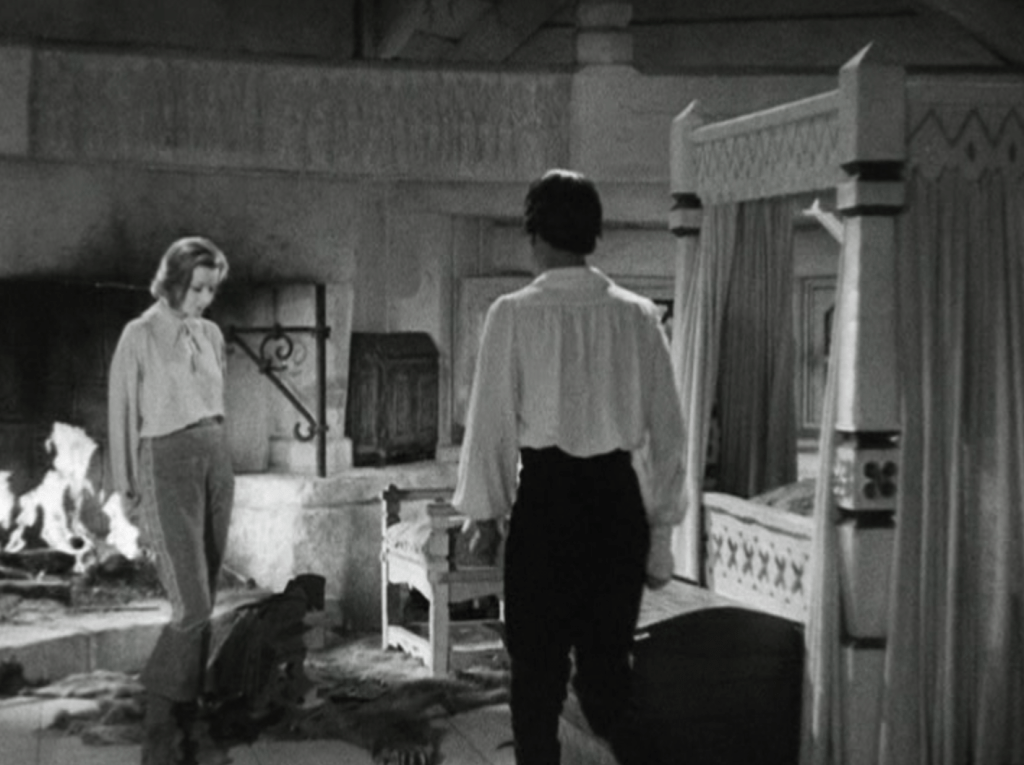
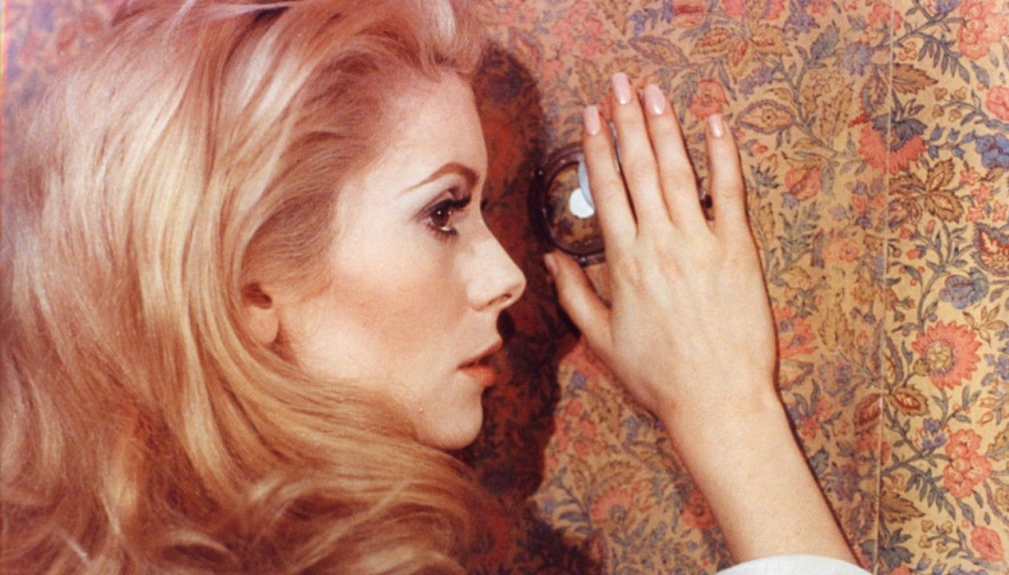
What could be more perfect casting than Garbo as Queen of Sweden? In Queen Christina she plays the eponymous queen, daughter of legendary martial monarch Gustavus Adolphus, killed in the never-ending European bloodbath that was the Thirty Years War. Coming to the throne as a child of six, almost twenty years later she’s ready for peace in Europe. But, after a lifetime of duty, she’s also ready for something approaching a regular life. But her lords need her to do something about providing an heir, ideally by marrying her heroic cousin Charles Gustav (Reginald Owen) despite the fact she’s conducting her latest secret affair with ambitious Count Magnus (Ian Keith). One day Christina sneaks out of town, dressed as a man and meets (and spends several nights with – the disguise doesn’t last long) Spaniard Antonio de Pradro (John Gilbert) in a snowbound inn. Returning to court she has a difficult decision: love, duty or a bit of both?

Queen Christina is a luscious period romance with Garbo in peak-form. It’s a masterful showpiece for a magnetic screen presence and charismatic performer. Queen Christina gives Garbo almost everything she could wish: grand speeches, coquettish romance, Twelfth Night style romantic farce, domineering regal control and little-girl lost vulnerability. Garbo brings all this together into one coherent whole, and is a dynamite presence at the heart of Queen Christina. Garbo nails the show-stopping speeches with regal magnetic assurance, but will be delightfully girlish when giggling with lovers. Her nervousness that her femineity could be unmasked in any moment with Antonio in the inn is played with a charming lightness that’s deeply funny, while the romantic shyness and honesty she displays with him is pitched just right. Garbo also manages to make the queen never feel selfish even as she is torn between desire and duty.

She’s at the centre of a beautifully assembled film, gorgeously shot by William H Daniels, with dynamic camera movements, soaking up the impressive sets and snow-strewn locations. Rouben Mamoulian’s direction is sharp, visually acute and balances the film’s shifts between drama and comedy extremely well – it’s a remarkable tribute that considering it shifts tone and genre so often, Queen Christina never feels like a disjointed film or jars when it shifts from Garbo holding court in Stockholm, to nervously hiding under her hat in a snowbound inn to keep up the pretence she’s just one of the guys. (How anyone could be fooled for even a moment into thinking Garbo was a boy is a mystery).

It’s a relief to Antonio to find she isn’t one of the guys, since he’s more than aware of the chemistry between the two of them when he thinks she is one. There more than a little bit of sexual fluidity in Queen Christina, with Garbo’s Queen clearly bisexual, sharing a kiss with Elizabeth Young’s countess in ‘a friendship’ that feels like a lot more. Even before escaping court, Christina’s clothes frequently blur the line between male and female, as does the way she talks about herself. She is after all, very much a woman in a man’s world. Garbo brilliantly communicates this tension, her face a careful mask that only rarely slips to reveal the strain and uncertainty below the surface. You can see it all released when she stands, abashed, nervous (and unequivocally not a boy) in front of Antonio, as if showing her true self to someone for the first time.

Seizing not being the figurehead of state but her own, real, individual is at the heart of one of Queen Christina’s most memorable sequences. After several nights of passionate, romantic love making with Antonio, Christina walks around the inn room where, for a brief time, she didn’t have to play a role. With metronomic precision, Mamoulian follows Garbo as she gently caresses surfaces and objects in the room, using touch to graft the room onto her memory, so that it can be a place she can return to in her day-dreams when burdened by monarchy. It’s very simply done, but surprisingly effective and deeply melancholic: as far as Christina knows, the last few days have been nothing but in an interim in a life where she must always be what other people require her to be, never truly herself.

But then if she never saw Antonio again, there wouldn’t be a movie would there? He inevitably turns up at court, presenting a proposal from the Spanish king – which he hilariously breaks off from in shock when he clocks he is more familiar with the Queen than he expected. John Gilbert as Antonio gives a decent performance – he took over at short notice from Laurence Olivier, who testing revealed had no chemistry with Garbo – full of carefully studied nobility. He and Garbo – not surprising considering they long personal history – have excellent chemistry and spark off each other beautifully. He also generously allows Garbo the space to relax as Christina in a way she consciously never truly does at any other point in the film.

The rumours of this romance leads to affront in Sweden, from various lords and peasants horrified at the thought of losing their beloved Queen – and to a Spaniard at that! (Queen Christina makes no mention of the issue of Catholicism, which is what would have really got their goat up – an Archbishop shouts something about pagans at one point, but he might as well be talking about the Visigoths for all the context the film gives it). The shit is promptly stirred by Ian Keith’s preening Count Magnus, making a nice counterpart to Gilbert’s restrained Antonio. It also allows another showcase for Garbo, talking down rioting peasants with iron-willed reasonableness only to release a nervous breath after resolving the problem.

Queen Christina concludes in a way that mixes history with a Mills-and-Boon high romance (there is more than a touch of campy romance throughout). Mamoulian caps the film with a truly striking shot, the sort of image that passes into cinematic history. Having abdicated into a suddenly uncertain future, Christina walks to the prow of the ship carrying her away from Switzerland. Mamoulian holds the focus on Garbo and slowly zooms in, while Garbo stands having become (once again) a literal flesh-and-blood figurehead, her eyes gloriously, searchingly impassive leaving the viewer to wonder what is going on in her head? Is she traumatised, hopeful, scared, regretful, determined? It’s all left entirely to your own impression – and is a beautiful ending to the film.

Queen Christina was a big hit – bizarrely overlooked entirely at the Academy Awards, which makes no sense to me. It’s beautifully filmed by Mamoulian who finds new, unique angles for a host of scenes and at its heart has a truly iconic performance by Garbo. If you had any doubts about whether she was a great actress, watch Queen Christina and see how thoughts and deep emotions pass briefly across her face before being replaced by a mask of cool certainty. It’s a great performance from Garbo and a lusciously conceived historical epic.

The Substance (2024)

The Substance (2024)

Twisted body horror isn’t quite the feminist statement it thinks it is, but still a unique film

Director: Coralie Fargeat

Cast: Demi Moore (Elizabeth Sparkle), Margaret Qualley (Sue), Dennis Quaid (Harvey), Edward Hamilton (Fred), Gore Abrams (Oliver), Oscar Lesage (Troy), Christian Erickson (Man at diner)

Getting old in Hollywood is not kind. Particularly for women. Elizabeth Sparkle (Demi Moore), a big star of the 90s, now eeks out a living as exercise queen for a daytime TV show. But TV exec Harvey (Dennis Quaid) decides people don’t want to watch a woman in her 50s and unceremoniously gives her the boot. Fearing a life of lonely irrelevance, miles from the limelight, Elizabeth accepts an invitation to try ‘The Substance’. This black-market drug creates a ‘younger, more beautiful, more perfect’ version of you – birthed from your spine. Taking the drug, Elizabeth spawns Sue (Margaret Qualley), a 20s version of herself who promptly lands her old job on the exercise show.

The two must swop places every week, one living their life (either in obscurity or vicariously enjoying much-lusted after career success) the other lying comatose on the bathroom floor. At first the balance works, but they soon grow to resent each other: Sue despises Elizabeth’s self-loathing bitterness while Elizabeth becomes consumed with envy at Sue’s hedonistic success. Quickly the balanced life between the two collapses, leading to inevitable disaster.

The Substance is one of those films you can pretty much guarantee people will remember about 2024. Pretty much everything in it is dialled up to eleven, a crazy mix of The Picture of Dorian Gray and Cronenberg-body horror (particularly The Fly) by way of David Lynch. Fargeat shoots it with a deliberate grindhouse intensity, revelling in the vast amounts of icky body horror, gallons of blood and guts, often filmed in a mix of dream-like drifting and trashy exploitation.

It’s a sharply directed, extremely intense film from Coralie Fargeat (who also scripts), punchy, vicious and darkly hilarious. It’s also been shot to be almost as uncomfortable to watch as possible. The camerawork is frequently disjointed, full of disconcerting jerky close-up. Nightmare Lynch-style dream horror images pop-up, along with haunting Mulholland Dr style floating heads and Kubrickian homages. Every moment of body horror is accompanied with revolting, squelching sound-effects. You’ve rarely seen anything as intensely, bizarrely OTT as this, the film carefully designed to get audiences either screaming “fucking hell!” or hiding their eyes behind their popcorn.

The film’s most successful moments are these moments of shocking body horror. Created from a host of ingenious practical effects (The Substance surely is destined for a make-up Oscar), the film superbly creates everything from green-fluid soaked birthing scenes to the grim disintegration of various body parts that slowly ages Demi Moore into a wizened babushka to the final hellish Elephant Man by way of the The Fly inspired ending. It’s superbly done, deeply unsettling, but blackly entertaining in its extremity. And The Substance is incredibly extreme, pulling absolutely no punches in this blood-soaked, Angela Carteresque fairy-tale horror.

Fargeat draws an extremely committed performances from Demi Moore, given the sort of acting challenge she never got when she was the biggest star in Hollywood, playing a woman so consumed with ingrained self-loathing and disgust (having so completely swallowed the ideology that your personal value is directly connected to your appearance) that she would rather live as a recluse in the shadow of another version of herself than build a new life. There is an extraordinary scene where a panic stricken Elizabeth prepares for a date with an old schoolfriend (possibly her last chance at a normal life) but is so consumed by self-loathing and doubt about her appearance (painfully ironic, since she of course looks great) that she goes through multiple attempts at make-up up in the movie, each time rubbing it off with such increasing fury that by the end she’s virtually sand-papering her face as if trying to erase herself from existence.

Just as fine is Margaret Qualley as the ‘perfect’ version of Elizabeth, but who has just the same self-loathing and insecurity as the original. It’s a similarly committed performance by Qualley, a carefully studied, surprisingly vulnerable performance while also being ruthlessly ambitious and self-indulgent, which embraces the hyper-sexualised expectations of young women in Hollywood. Dennis Quaid also throws in a fun cameo as a lasciviously camp, OTT executive full of ruthless, heartless bonhomie who sees women only as window-dressing for perverts. After all it’s an industry that forgets: from the opening montage of Elizabeth’s Hollywood star going from eagerly photographed to forgotten, through to the insultingly trivial gift stuffed in her hands as she is dismissed.

But The Substance’s satire is often rather forced and obvious (right down to Quaid’s exec being called Harvey). It feels like it misses a trick by having its only female character being a woman who has so swallowed the ageist views of Hollywood, she literally can’t imagine questioning it. So much so, her clone equally embraces life as a sex object. While The Substance invites us to understand the poison of this world independently, there is virtually no commentary on the unjust sexism within the film. In fact, The Substance so echoes the leering camera angles and pervy shots of the worst kinds of sexist cinema that sometimes it’s a bit hard to see it as satire and (as the camera stares at Qualley’s butt or down her top) more as just reality.

At no point do Elizabeth or Sue make any form of realisation about how they have been indoctrinated to only understand themselves as being worth something so long as they look like a pin-up. While The Picture of Dorian Gray understood the temptations of a selfish hedonism even when we know its wrong and The Fly was all about the damaging impact of ambition, for all its pointed smirking fun The Substance is at heart more of a pulpy gore-show revelling in extreme than a sort of social satire.

In fact the more you watch The Substance the more you think it’s real inspiration is Whatever Happened to Baby Jane and the ‘hag-horror’ of the 60s. A star name of yesteryear, takes on a role that riffs on their loss of youth and beauty, throwing them into an ever more twisted tale of obsession and revenge. You could argue The Substance trusts us to see for ourselves that all this rampant sexism is wrong: but you could also quite happily watch the film and assume it was Elizabeth’s vanity that caused all the problems, not the system that inoculated it in her.

There is another version of The Substance that could match its pulpy love of horror thrills with a bit more of an insightful commentary on gender politics. But the fact the film ends in an explosion of blood that makes The Shining look positively restrained (a sequence that goes on too long in an overlong film), you suspect its real heart is actually in creating shocking images rather than really exploring the issues it wants you to think it is addressing.

Poor Things (2023)

Poor Things (2023)

Distinctive, challenging and hilarious film that mixes social issues with quotable dialogue

Director: Yorgos Lanthimos

Cast: Emma Stone (Bella Baxter/Victoria Blessington), Mark Ruffalo (Duncan Wedderburn), Willem Dafoe (Dr Godwin Baxter), Ramy Youssef (Max McCandles), Christopher Abbott (Alfie Blessington), Kathryn Hunter (Madame Swiney), Jerrod Carmichael (Harry Astley), Hanna Schygulla (Martha von Kurtzroc), Margaret Qualley (Felicity), Vicki Pepperdine (Mrs Prim), Suzy Bemba (Toinette)

“It’s Alive!” cries Frankenstein as his creation is sparked to life before abandoning it to become a revenging monster. Yorgos Lanthimos’ Poor Things imagines a different creature – nurtured (admittedly as part of an eccentric experiment), maturing at an accelerated rate, discovering physical and intellectual stimulation and deciding they can’t get enough of either of them. Adapted from Alastair Gray’s novel, Poor Things is a vibrant and challenging film that, for all its sex, is a feminism-tinged Frankenstein that says no to societally enforced ideas of shame and conformity.

In Victorian London, Bella Baxter (Emma Stone) is the creature, a stumbling, barely articulate young woman when she is introduced to trainee doctor Max McCandles (Ramy Youssef) by her guardian (her “God”) Dr Godwin Baxter (Willem Dafoe). “Bella” is resurrected corpse – the body of a suicidal pregnant woman, the brain of the child she carried. Developing at an accelerated rate, Bella is both Godwin’s experiment and his surrogate child. But as Bella discovers the pleasures of the body and the wonders of the world around her, she wants to experience life outside of the house. Eloping – with the agreement of her guardian – with roguish lawyer Duncan Wedderburn (Mark Ruffalo), Bella discovers not only sensual pleasures but deeply engaging intellectual pleasures across Europe, determined to become her own woman defined by no-one.

Poor Things is practically a dictionary definition of a Lanthimos epic (fish-eyed lenses, spidery text captions, a jarring mix of period and modern) and is almost impossible to categorise. It is, in turn, serious and thought-provoking, laugh-out-loud funny, uncomfortable and challenging. Shot in a deliberately artificial manner, its cinematography and sets reminiscent of Bram Stoker’s Dracula, it’s Victorian but also a remix of everything from Metropolis to the mansion at the heart of Sunset Boulevard, here turned into a Dr Moreau style den of freakishly spliced animals. It makes for something wildly, unpredictably unique visually, a smorgasbord of the real, the overblown and plain weird.

With a sharp script by Tony MacNamara, crammed with quotable lines (sometimes Lanthimos has a bit too much of an eye on creating GIF moments) Poor Things reinvents itself as constantly as its hero. Opening in rich black-and-white to chronicle Bella’s early years, it explodes into a gorgeously expressive Powell and Pressburger colours as she experiences the world. It superbly mixes the real with the weird, shaping its collection of bizarre characters into living-breathing people while keeping the world around them a melting-pot of styles and genres.

Poor Things has been attacked by some as semi-pornographic or exploitative. In fact, it’s a complex and daring look at female empowerment. On first discovering the pleasures of, well, self-pleasure (with a selection of vegetables), Bella is immediately told such things are not done in polite society. But Bella refuses to see “furious jumping” as shameful, but just a source of pleasure and experience like any other. If she takes pleasure in the act with someone, why should be ashamed? And if she makes all the decisions about what does and doesn’t happen with her body, who should judge her?

Bella is a curious hybrid her whole life: the body and feelings of an adult, with a swiftly developing brain, absorbing understanding of the world around her swiftly. Like a child she lashes out at the rules Godwin and his protégé Max place over her (partly for her protection, partly to continue their psychological development experiment). But this comes from her increasing frustration at having her horizons limited by these men, deciding what and who she can see. Lanthimos takes clear from the start Bella can take as much sensual pleasure in feeling fallen leaves under her body or watching fireworks in the sky as anything else and doesn’t feel she should be denied it.

Poor Things sees Bella demanding, and then making, her own decisions – and to hell with expectations. Whether throwing plates at dinner because she wants to leave or choosing to run away to Europe with caddish Duncan for the experience of it, she shall make her own choices. Decisions being made for her, infuriate her: Max’s refusal to let her leave or Duncan’s decision to take her, unannounced, on a cruise. Bella will talk to who she wants and experience anything she finds curious. If she decides to go on the game in Paris in a high-class brothel (on the basis that she enjoys sex, the hours are short and it pays well) who gives a damn if Duncan is appalled. He doesn’t – for all he might like to think so – own her.

These are complex and challenging ideas, as Bella jokes she has become “the means of her own production”. But Bella believes the only thing in the world should make us ashamed is the suffering of others: witnessing a slum in Alexandria she is moved to tears at the indifference that lets children die in poverty, with only platitudes for these “poor things”. And you can see her point: why flinch at personal misconduct but not even blush at the idea of others dying because of our inaction. That’s why she doesn’t want to be constrained by societies ideal, be that enjoying sex, reading Marxism, dancing all night long or wanting to punch a baby that won’t stop crying in a restaurant.

All these complex ideas are brilliantly captured in Emma Stone’s extraordinary performance. It is, of course, a physical marvel, her body slowly, jerkily, developing, but also a rivetingly complex embodiment of a hugely complex personality, absorbing everything around her, processing it and then shaping it into her own world view. It’s reflected in the gorgeous eccentricity of her dialogue – she is “a changeable feast” of views, peppering her sentences with astute (and funny) unique metaphors “finding being alive fascinating”. She makes Bella determined, naïve, exceptionally wise and insightful, uncertain, kind and unforgiving. It sits perfectly at the heart of a film about a woman refusing to be ashamed and determined to better the world around her. It’s a brilliant creation.

One of many in the film. Godwin, a hideously disfigured famous surgeon, was the subject of his own father’s experiments (Godwin describes with matter-of-fact scientific curiosity a series of repugnant surgical experiments, including the removal of organs to discover if the body needs them – “turns out we do”). Godwin seems at first a blinkered mad scientist, but in Dafoe’s brilliantly layered performance, a humanitarian with a sense of fair play is revealed, who genuinely cares for his creation and refuses to stand in her way. Although she calls him “God” he is far from a messianic tyrant, instead refusing to repeat the mistakes of his own tyrannical parent.

He contrasts neatly with Ruffalo’s rake. Ruffalo has a whale of a time in a ‘leave nothing in the locker room’ performance of comedic excess. Duncan seems at first a threatening rake, but becomes infatuated with the mysterious Bella (something she finds more and more wearing), crumbling from worldly-wise playboy to a spoilt schoolboy whining about things he can’t have. Ruffalo inverts Bella’s development: as she becomes more mature, he degenerates into a dependent child.

Which fits because Poor Things is a Frankenstein-in-reverse story of a woman not being defined by men. Those who try fail, left to choose either to support her or flail against her rights. Lanthimos’ work is striking, original and hugely dynamic, brilliantly mixing striking visuals with searching questions. Why shouldn’t women feel the same lack of shame in their bodies and accomplishments as Bella does? It’s an urgent question – that’s getting lost in discussions about the films. Often as wildly funny as it is freakily weird, its deliberate artificiality and anachronisms help create a film that is a playground of ideas. I’m still working out what I feel about it all now – and how refreshing to have a film as bold as that to consider?

Maestro (2023)

Maestro (2023)

Well filmed and acted Bernstein biopic, that doesn’t really get to the heart of its subject

Director: Bradley Cooper

Cast: Carey Mulligan (Felicia Montealegre), Bradley Cooper (Leonard Bernstein), Sarah Silverman (Shirley Bernstein), Gideon Glick (Tommy Cothran), Maya Hawke (Jamie Bernstein), Matt Bomer (David Oppenheim), Vincenzo Amato (Bruco Zirato), Michael Urie (Jerry Robbins), Brian Klugman (Aaron Copland), Zachary Booth (Mendy Wager)

You can’t fault his ambition. In bringing the family life of legendary composer, conductor and cultural icon Leonard Bernstein to the screen, Bradley Cooper pulls out all the stops in a medley of inventive staging mixed with single shot trust in actors. Maestro is, in many ways, a perfect capturing of Bernstein: dazzling, giddy film-making that never lets you really peek into its subject’s soul. It’s a hugely impressive sophomore effort, but not quite fully satisfying as a film.

It opens with the life-changing night in 1943 when a 25-year-old Leonard Bernstein (Bradley Cooper) stands in (with no rehearsal) to conduct the New York Philharmonic at Carnegie Hall for a packed crowd and millions listening on the radio. From there, Bernstein never stops his ascent, becoming one of the world’s leading conductors and a composer who triumphs in every genre. He also marries successful actress Felicia Montealegre (Carey Mulligan), in a marriage full of mutual love and support. But Bernstein is the epicentre of his own fame, whose primary sexual attraction is to men. Over the decades, his marriage bends, fractures and reforms as Bernstein’s numerous affairs and party-filled lifestyle increasingly alienate the loyal Felicia.

Maestro is shot with all the zest and energy Bernstein himself was full of. Cooper keeps the pace the brisk and frequently transitions between scenes with a bravura trust that we can keep up. We see Bernstein receive the phone call for that fateful stand-in performance in his apartment: jubilant, he runs out the door (stopping only to playfully slap the bottom of his lover David en route), the camera taking an angle above to watch the pyjama-clad Bernstein run through a series of halls and emerge into the auditorium of Carnegie Hall.

It’s one of several transitions that mix reality and fantasy. Felicia will turn around from Leonard, during a flirty date in an empty theatre, to stride forward to applause from a packed audience. Felicia and Leonard run from a snobby garden party straight into a theatre (again with an overhead shot tracking them in a single smooth cut) where dancers from On the Town pirouette on stage as a visual representation of Bernstein explaining his work, the dancers eventually luring Leonard, Felicia and several other characters into an impromptu ballet. It’s a playful mix of reality and fantasy. At other times, the film skips years in seconds, successes dizzyingly referenced in throwaway lines.

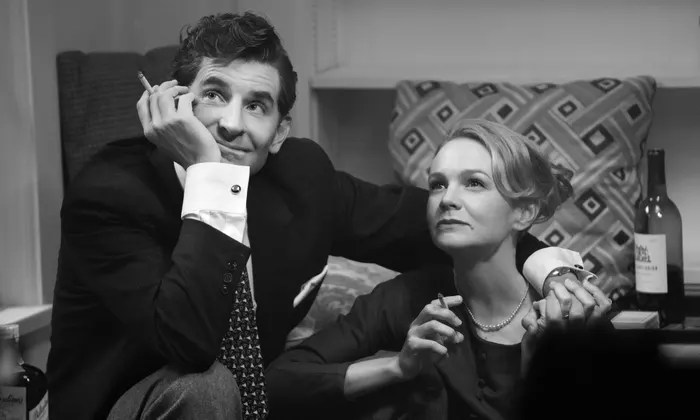
The film’s focus is Leonard and Felicia’s complex, multi-layered marriage. Two people, in many ways soulmates, deeply stress-tested by Leonard’s frequent selfishness. Cooper, in a remarkable physical transformation (his capturing of Bernstein’s voice, mannerisms and conducting style is faultless) makes the composer a force of nature, high on his own genius: garrulously charming, a man who can focus all his attention on one person as easily as he can absent-mindedly drop another. The sort of man who excitedly introduces his fiancée to his lover David (a sensitive Matt Bomer) and then abashedly apologises immediately after for springing the news on him.

It’s part of the message of that On the Town ballet: living with Bernstein is a never-ending, dizzying pile of social engagements that doesn’t stop ever. Felicia feels she is ready for that: but the drift of Bernstein’s primary emotional commitment away from her and towards protégé Timothy Cothran (Gideon Glick) deeply hurts her. It’s part of Bernstein’s increasing lack of care to at least pretend to keep his promiscuity under semi-wraps, including awkwardly dismissing unspecified “rumours” that have distressed his daughter Jamie (Maya Hawke, very good) as nothing more than “jealousies”.

As Felicia, Carey Mulligan delivers what might just be a career best performance. Luminous, she makes Felicia savvy, loving but realistic about the “sacrifices” loving Bernstein involves. It’s a marriage where she is often in Bernstein’s shadow – at one point literally so, a shot showing Bernstein’s giant conducting shadow dwarfing Felicia in the wings. Mulligan’s performance mines deep emotional depths, Cooper frequently showcasing these in long, still takes. Most strikingly, a dynamite argument in New York after the opening of Bernstein’s Mass plays out in one visceral shot as Mulligan conveys the release of years of tension, in angry home truths. She is also heart-breaking during the film’s affecting chronicle of Felicia’s cancer, another striking single-shot scene showcasing Mulligan’s skill at letting all pain play behind her eyes while talking to visiting friends.

Maestro is about the underlying strength between these two who always turn to each other at hours of need or emotional triumph. Felicia’s successes on stage are shared with Bernstein, while it’s she who accompanies him (after their unofficial split) to his ground-breaking Mahler concert in Ely (another virtuoso sequence, directed and acted by Cooper with aplomb). Bernstein abandons his career – and all other relationships – to nurse Felicia, their bond finally something that could not be shaken by his thoughtlessness.

However, Maestro fails at times to really show how this relationship buckled. The giddying speed with which it moves through events means the middle act and, in particular, the sense of Bernstein’s numerous affairs gets lost. When Felicia finally does erupt, it’s easy to think it’s due to one late night and Bernstein holding his lover’s hand during the Mass premiere, rather than years of slow emotional distancing. It’s one time when a montage, stressing the repetitive nature of Bernstein’s self-obsession, would have really made a positive impact.

It’s also a film that focuses so much on the relationship, it leaves Bernstein himself a curious enigma. Strangely, despite sampling Bernstein compositions throughout the film, its almost as dismissive of his musical theatre work as it implies Bernstein himself was. West Side Story gets barely a passing mention, On the Waterfront is bundled up with “film scores” and almost nothing of the rest of his work is placed in any form of context. The epic Mahler concert in Ely is brilliantly restaged, but its artistic importance never explained and it’s easy to come out of the film not really appreciating either Bernstein’s cultural or musical impact.

Instead, Bernstein remains somewhat of an enigma, a charismatic figure who, for all the excellence of Cooper’s performance, remains a showman we never get to really know, someone capable of great care and intimacy (he’s extraordinarily tactile) for people, but also keeps them (and us) at a distance. The affairs have a veil tastefully drawn over them. There is very little overtly gay content in Maestro, which feels a conservative choice.

It’s hard not to think at times Cooper is more focused in Maestro on demonstrating his own directorial invention and pushing himself to never go for the obvious shot. Maestro is a dazzling dive into the playbox of film technique – it changes in aspect ratio and colour stock to reflect the cinematic era (though an odd decision for a film about a composer, that never explores his connection to cinema) and offers a host of interesting visual compositions and daring long-takes. Cooper and especially Mulligan are superb, but it’s a film that perhaps leaves more questions in the mind. A dazzling piece of film-making, but not always a dazzling piece of story-telling.

Persona (1966)

Persona (1966)

Bergman’s masterpiece, a fascinatingly brilliant Rorschach test that challenges and rewards the viewer

Director: Ingmar Bergman

Cast: Bibi Andersson (Alma), Liv Ullman (Elizabet Volger), Margareta Krook (Doctor), Gunnar Björnstrand (Herr Volger), Jorgen Lindstrom (Boy)

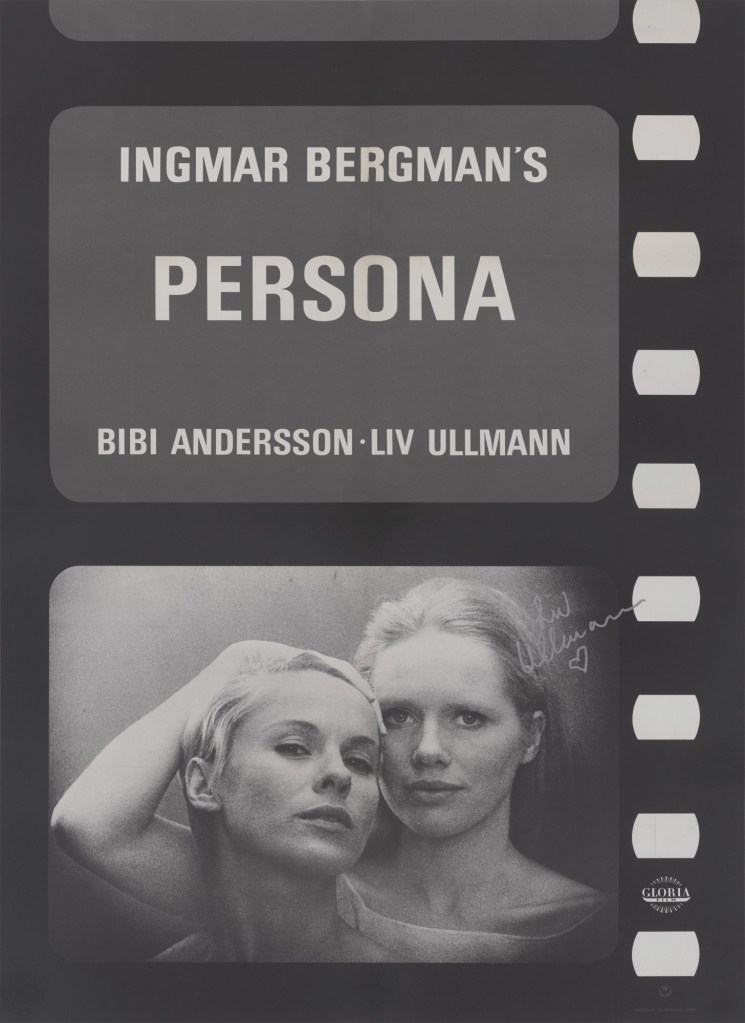
Even Bergman considered Persona a moment he “had gone as far as I could go…touched wordless secrets that only cinema can discover”. Persona, Bergman’s most consciously artistic and psychologically challenging work is a mass of contradictions and puzzles that defies easy categorisation (even Bergman claimed to be only half sure what definitively was happening). A whirling mix of themes, haunting moments and unknowable incidents all within a framework that constantly reminds us we are watching a film, Persona has been influencing, challenging and fascinating viewers for over 60 years. If cinema’s Everest is Citizen Kane, Persona is its K2.

The plot seems simple. Famed actress Elizabet Volger (Liv Ullman) fell silent for a minute during a production of Electra, then carried on. A day later she stopped speaking and hasn’t spoken since. Her doctors can’t find an answer so she is sent to an island to recuperate, with the support of a nurse, Alma (Bibi Andersson). On the island, Alma fills the silence with long monologues that become more and more confessional, intimate and personal. Does Elizabet betray these confidences in a letter to her doctor? Does Alma plot revenge? Are these events even happening? As the personalities of the two women blur, merge, swop and consume each other the film fractures (at one point literally so) until we are left as uncertain of who and what is real as perhaps the women themselves.

There is, in some ways, no understanding Persona. It perhaps best resembles a cinematic Rorschach test. I’d argue it’s a fool’s journey to stare at it for a definitive answer. Different days, different moods, different conditions will make the picture re-shape and resemble something else. Bergman has created a film devoid of traditional ‘clues’, that provides no trace of an ‘answer’, but instead asks – demands? – us to take away only what we choose.

Throughout, Bergman makes it vitally clear film is a constructed, artificial representation of reality. Persona starts and ends with film literally spooling through a projector, the arc lights cranking up to project a reality. The opening prologue is a host of suggestive images which may, or may not, relate to what we are about to watch. Their meaning is almost deliberately vague – much as the epilogue’s brief shot of Bergman and crew shooting the film is – but it lets us know beyond doubt this is a subjective presentation of a series of images, not real life. Perhaps reading meaning into it is as impossible a task as trying to interpret the contents of a library from the page of a single book.

Which is to say, I think Bergman is both inviting us to interpret the film but also warning us that this isn’t a jigsaw, but a deliberately obtuse and open-ended work, our experience of it controlled by the director. Film is after all a dream – a world where we think we move freely, but in fact we never do. Which might make you think Persona is Bergman’s punking the world, a Thermot’s Last Theorem designed to infuriate. It isn’t because it’s made with such grace, humanity and honesty.

To understand Persona you can only discuss – and wonder – at the complex, multi-layered themes and decide which speaks most to you on the day. A lot of this boils down to how you are affected by the breathtaking, seismic performances from Andersson and Ullman. Playing two characters whose identities merge, shift, mirror and absorb each other both performers give outstandingly intelligent, infinitely challenging and unreadable performances. For Andersson the film is virtually a monologue, where the more Alma talks, the more our grasp on who (or what?) she is slips through our fingers. Ullman’s impassive face, awash with micro-expressions (caught in scintillating close-ups) constantly disorientates – is that a sneer or a smile? Is that head-turn impatience or a desire to know more?

At several points I find myself falling into the trap Bergman lays of wanting to categorise the film, as I became convinced first one than the other of these women was just an element of the psyche of the other. It’s not as simple as that. They are both the same and different, two people and one. Bergman frequently frames their bodies overlapping and, in one horrifying moment, their face literally merged half-and-half. Elizabet, we think at first, is a near vampiric figure sucking the life out of Alma, drawing confessions from Alma to restore herself. Then Elizabet becomes a ghostly figure, moving in the margins of Alma’s life, a horrific silent figure from her subconscious holding her back. Then you feel Alma to be nothing more than Elizabet’s id, demanding her right to be independent.

The unreadability of the film becomes ever more acute at the half-way point. After an enraged Alma deliberately leaves Elizabet to cut her foot on glass, the film pauses, burns away and then restarts with an echo of its earlier montage. Has the story restarted? Did all or any of what went before actually happen? Or is everything from this point a cinematic fantasy? Later in the film Bergman throws in a sequence with Alma and Elizabet back in the hospital before returning to the island – is this a flashback or a dream or a vision or something else entirely?

Bergman’s mastery of horror comes to the fore. The haunting repeated shot of Elizabet embracing Alma from behind, the two of them starring into a mirror (and the camera) at times seems sexually charged, at others disturbingly possessive at others supernaturally controlling. Is Bergman’s point that the context of an image can change its meaning? These hazy definitions of truth and reality lie throughout. The confrontations between the two taking on an increasingly surreal nature.

In a stunning sequence, Bergman repeats the same Alma monologue twice, one focused solely on Elizabet (her face contorted with pain as she hears of her rejection of a child), the second on Alma (now dressed identically to Elizabet), Alma’s bitterness now taking on a totally different light. Alma, back in nurses’ outfit, confronts Elizabet screaming that she is her own person even as her words collapses into an incoherence that might as well match Elizabet’s silence. Which is projection and which reality? When they leave at the film’s end, do they go their separate ways or merge? Does Alma imagine herself with Elizabet’s husband, or when Elizabet’s husband recognises Alma as his wife is he tipping the nod to us?

Bergman gives no clear reasons for Elizabet’s silence. It could be connected to horror at the world’s terrors (Vietnam and the Holocaust are referenced). It could be shame at her own post-natal depression. It could be that the silent Elizabet is a projection of the Alma-Elizabet’s own turmoil and isn’t real in the first place. After all the hospital we are introduced to Elizabet in doesn’t feel like a real place but a sparsely dressed film set (and shot like it).

Sex weaves it’s way tellingly through the film. The sexual bond between Alma and Elizabeth, physically, seductively close and possibly sleeping together is clear. Alma relates a hugely erotic monologue about an orgy she and a friend initiated on a beach, the only time she describes herself a purely happy and content. Is this her memory or a fantasy of Elizabet’s? If Alma is Elizabet, is this what she longs for or the thing she finds missing now from her own life? Alma talks of wanting a family – but in a haphazard, casual way and has already had an abortion. Elizabet has a son but doesn’t want him – is Alma what she dreams she could be, or is Elizabet the truth Alma doesn’t want to face? At various points both, all or nothing of the above could be true.

The film opens with a mysterious boy starring at a blurred series of images of female faces. We never learn who he is (theories abound from Elizabet’s son to Bergman himself). He wakes seemingly from the dead, but perhaps he is given life by the film. Perhaps, Bergman is saying, Alma and Elizabet are themselves given life only by the film. That both of them are fictious illusions, as unreal as the blurred pictures on the wall. Persona is the sort of film only a director of pure courage could have made. An object that fascinates and frustrates but always leaves you wanting to reconsider and reposition it to see if the picture becomes clearer or if new truths are presented if you look at it from a different angle. Maybe Elizabet is a succubus. Maybe Alma is an angry inner self, longing to escape and liver her own life. Maybe Alma is the silent actress. Maybe Elizabet longs for the simpler life of the nurse. Perhaps every single idea is true and perhaps none of them are. That’s part of the mystery that makes Persona one of the greatest films ever made.

Barbie (2023)

Barbie (2023)

Fabulously pink comedy with serious – and very earnest – things to say on sexism and gender

Director: Greta Gerwig

Cast: Margot Robbie (Barbie), Ryan Gosling (Ken), America Ferrera (Gloria), Will Ferrell (Mattel CEO), Ariana Greenblatt (Sasha), Kate McKinnon (Weird Barbie), Issa Rae (President Barbie), Alexandria Shipp (Writer Barbie), Emma Mackey (Physicist Barbie), Hari Nef (Dr Barbie), Sharon Rooney (Lawyer Barbie), Kingsley Ben-Adir (Basketball Ken), Simu Liu (Tourist Ken), Ncuti Gatwa (Artist Ken), Michael Cera (Alan), Rhea Pearlman (Ruth Handler), Helen Mirren (Narrator)

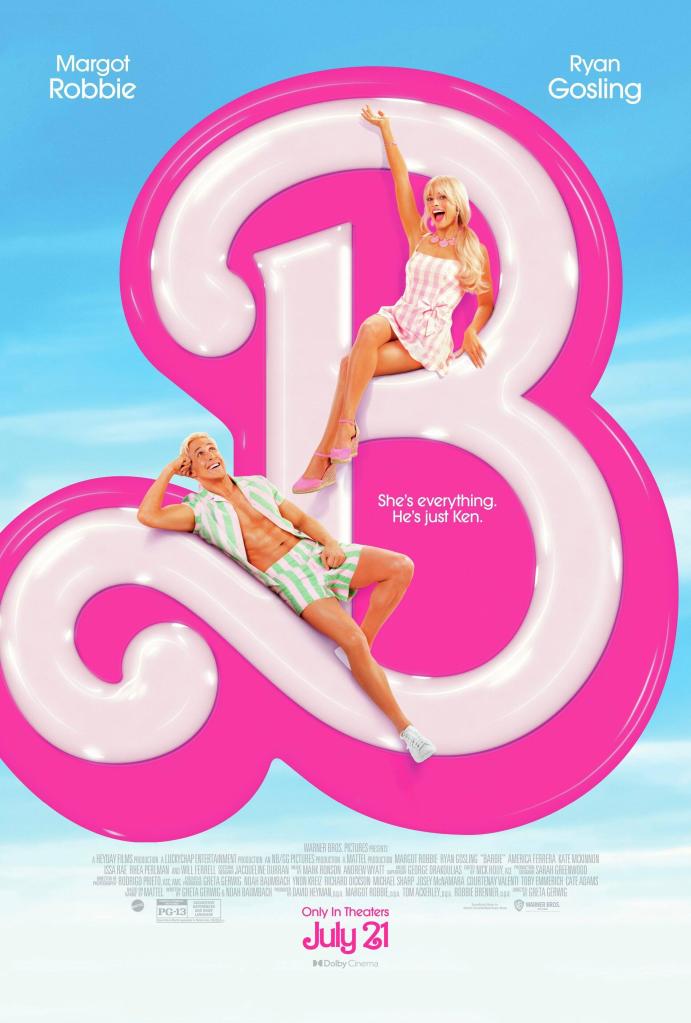
Who knew that the film which sparked the most conversation in 2023 about the roles of men and women would be one launched by a toy company, with the goal of selling toys? Barbie feels a little like a project happily hijacked. In another world this could have been a straight-forward, Adventures of Barbie flick, designed only to get kids crying out for that Margot Robbie Barbie to be appearing under the Christmas tree. Instead, thanks to the team of Gerwig and Robbie, this is a self-reverential, witty, smart and highly engaging look at gender politics which also manages to be a fun, gag-filled evening out at the cinema.

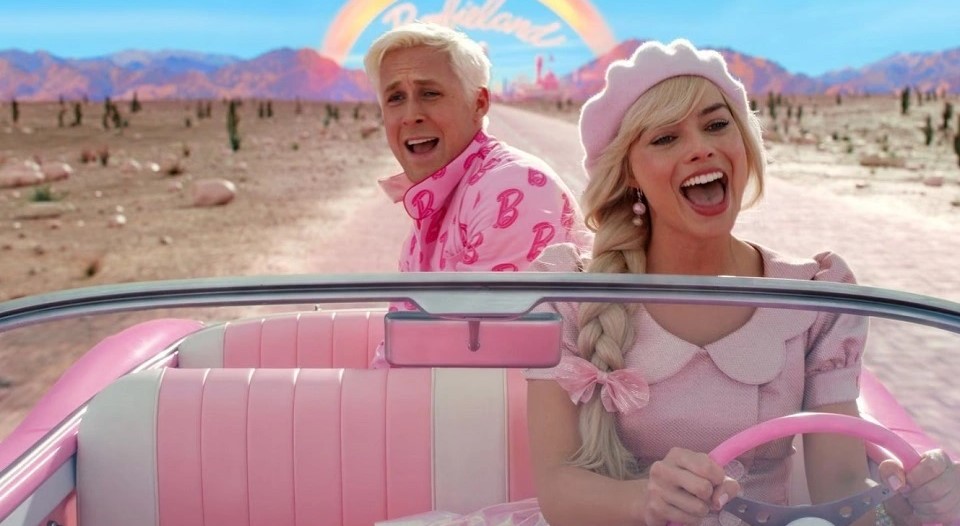
Stereotypical Barbie (Margot Robbie) leads a blissful life in Barbie-Land, where every day is the best day ever. Every Barbie knows they’ve inspired change for the better for women in the Real World. Everything is perfect until one day Barbie starts thinking about Death. Before she knows it, she has flat feet, cellulite and a crisis of confidence. The only way to fix this? A journey to that Real World to meet with the child who’s playing with her. But Barbie and Ken (Ryan Gosling) find the Real World very different from what they expected: all women’s problems are not solved and Ken discovers The Patriarchy, a wonder he is determined to bring back with him to Barbie-Land. Can Barbie save Barbie-Land and help rebuild a relationship between moody teenager Sasha (Ariana Greenblatt) and her mother Gloria (America Ferrera) in the real world?

Barbie’s sharp playfulness mixes heartfelt messages on gender politics with the sort of joyful fish-out-of-water stuff beloved of family films where a naïve figure from our childhoods finds the real world a much harsher, more cynical place than they expected. Barbie’s expects our world to reflect of the female-dominated  Barbie-Land is immediately exploded. Arriving in California, the reaction to an attractive woman roller-skating along a beach is remarkably different to what she’s used to. Wolf whistles, a parade of sexualised comments from construction workers (not a woman among them, to her shock) and a world where nearly all the top jobs are held by men.

Barbie addresses head-on whether a doll can really be an aspirational figure. In a surprisingly complex manner, Gerwig’s film looks at the pros and cons. Teenage Sasha doesn’t think Barbie has shown her world of possibilities, but instead sees her as a puppet of corporate America presenting a veneer of opportunity to women, while pushing them back into a box marked “pretty woman”. (This deadpan tirade provokes one the film’s many laugh-out loud lines as Barbie bemoans she can’t be a fascist as “I don’t control the railways!”.) Barbie may be able to do any job under the sun but this encourages attainment and also piles expectations on young women. If you can be almost anything at all, doesn’t that make it even the obligation to be something even more of a burden?

The real world is also a revelation – in a different way – to Ken. In our world, Ken discovers men (and possibly horses, Ken isn’t sure) rule though a marvellous thing called “the patriarchy”. Watching the Kens become infected by toxic masculinity, becoming high-fiveing bros who down beers, mansplain and call all the shots, is both funny and also a continuation of the film’s earnest exploration of gender politics. You can see, unpleasant as he becomes, that Ken might well want a piece of that action, coming from a world where men are so marginal they don’t even have homes (after all Mattel never made “Ken’s Dream House”). It’s also a neat gag that the other Barbies are easily brain-washed into accepting demeaning Stepfordish roles (dressed almost uniformly as French maids or in bikinis) because the confidence with which the Kens express their rightful place as masters-of-the-universe is literally mesmerising.

It’s also a neat part of Gerwig’s commentary here that the crucial factor to breaking out of this state is all about embracing the pressures of being expected to do it all: of being clever but not a know-it-all, ambitious but not a monster, raising a family but also having a career etc. If Barbie-Land in its beginning is a sort of vision of utopian feminism, then its salvation lies in accepting and embracing the struggle of marrying together a raft of contradictions and expectations. Sure, this isn’t exactly reimagining the wheel and its fairly easily digestible stuff – but it also rings true and you can’t argue with the connection its made with people.

All of which might make you think ­Barbie might be a po-faced political lecture. Fortunately, not the case when every point is filled with laugh-out-loud, irreverent humour expertly delivered by a cast clearly having the time of their lives. They are led by Margot Robbie, sensational in bringing to life a character who begins the film feeling like a doll made flesh and ends it as a three-dimensional character who embraces the contradictions of life. Robbie, who produced and set out much of the film’s agenda, is fabulous – funny, endearing, heartbreakingly vulnerable and extraordinarily sweet, mixing light comedy with genuine moments of pathos.

Equally good is Gosling playing the almost preternaturally stupid Ken with a winning sense of self-mockery, walking a brilliant line presenting a character who is (at times) the nominal villain but also a lost soul. Barbie also employs him and Robbie in some outstanding song-and-dance routines, deliciously performed and exquisitely funny. The other Barbies and Kens are uniformly excellent in their winning mix of initial shallowness and growing emotional depth while America Ferrera and Ariana Greenblatt are immensely winning as a mother and daughter overcoming a divide.

Barbie is also an explosion of delightful design and superb eye-for-detail, in its pitch-perfect recreation of a host of Barbie toys and props in real-life size, all thrown together with the perfect level of pink presentationalism. Drily narrated by an unseen Helen Mirren, every scene has a winning gag or laugh-inducing piece of business, especially when poking fun at the naïve optimism and artificiality of the Barbie world. Saying that, the film stumbles when it blurs the lines in the real world, which is half presented straight, half as a weirdly Wes-Andersonish oddity, particularly in the Mattel building and its corporate board, who are played as even more cartoonish than the actual toys populating Barbie-Land.

Barbie though generally works because it successfully mixes a heartfelt, earnest look at gender politics and the pressures on women with great gags, winning performances and a bouncy sense of off-the-wall fun that ensures nothing gets too serious. From its 2001 style opening, through its pink-led-primary colour settings, to its song-and-dance and larger-than-life-but-grounded performances, it’s a treat and in particular a triumph for its originator, producer and star Margot Robbie.

The Piano (1993)

The Piano (1993)

Searing emotion, passions and fascinating enigmas abound in Campion’s brilliant landmark masterpiece

Director: Jane Campion

Cast: Holly Hunter (Ada McGrath), Harvey Keitel (George Baines), Sam Neill (Alisdair Stewart), Anna Paquin (Flora McGrath), Kerry Walker (Aunt Morag), Genevieve Lemon (Nessie), Tungia Baker (Hira), Ian Mune (Reverend), Peter Dennett (Head seaman), Cliff Curtis (Mana)

What’s really striking about The Piano is how literary it feels, despite the fact it’s an entirely original cinematic work. Every moment of Campion’s intelligent, beautifully constructed, often enigmatic and unreadable film feels like it has been plucked from the pages of a lost Booker Prize winner. Juggling themes of feminism and sexual awakening alongside colonial and masculine thinking, it’s a richly beautiful film awash with superb performances and a heightened, literary reality buried inside a film grounded in the mud and squalor of reality. It remains Campion’s finest achievement.

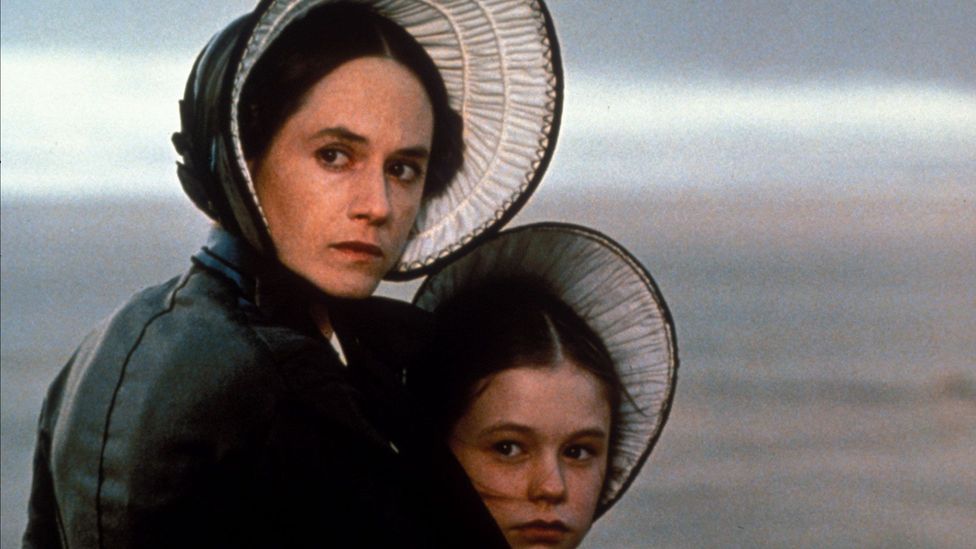
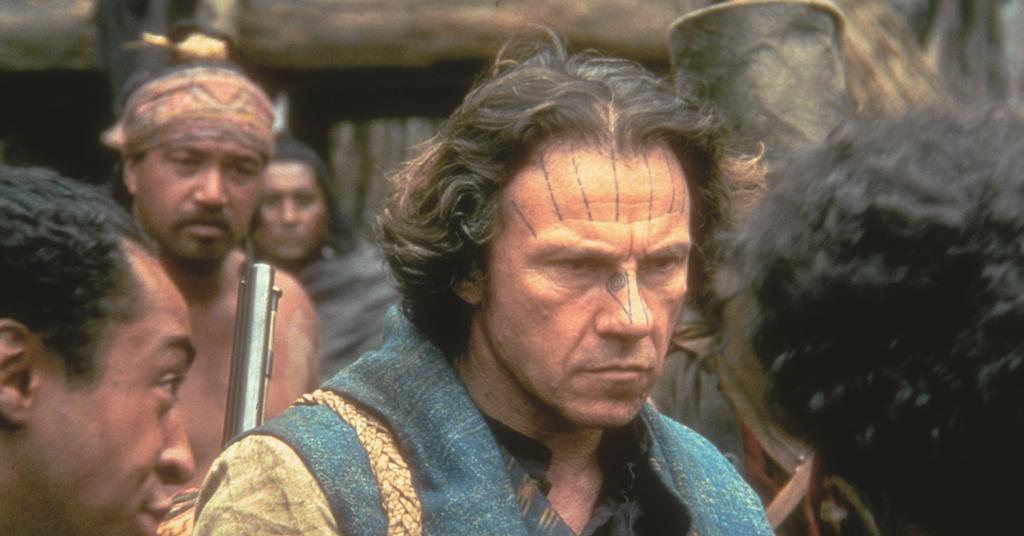
Ada McGrath (Holly Hunter) and her nine-year-old daughter Flora (Anna Paquin) arrive on the coast of nineteenth-century New Zealand. Having refused to speak since the age of six, Ada communicates through sign language and the precocious Flora. Silent in person, her treasured piano gives her a voice and allows her to express passions she otherwise keeps carefully controlled. Ada is to marry landowner Alisdair Stewart (Sam Neill), but he baulks at carrying the huge piano from the shore to his home through the forest. Instead, it falls into the possession of neighbour George Baines (Harvey Keitel). George, besotted with Ada, offers her the chance to earn it back one key at a time, in return for allowing him to “do things” while she plays it in his house. The arrangement leads to a complex, sexual love triangle between Ada, George and Alisdair that will see passions explode.

I wonder sometimes if The Piano is a bit of a problem for some campaigners today. You can discover plenty of retrospective reviews that find it hard to mask their disappointment that the film doesn’t offer a more pointed condemnation of its two male characters. Many want The Piano to show Ada rejecting Alisdair as a repressed potential rapist and George as a manipulative sexual predator. But Campion is telling a far more nuanced, feminist story than this easy-to-swallow structure. The Piano is not about pigeon-holing people into easily definable roles. Rather it looks at how unexpected bonds can rise and how darker, deeper passions can flair in unexpected ways.

Because George’s at-first manipulative, outrageous offer actually awakens something unexpected in Ada. George is perfectly played by Keitel as outwardly a lump of inarticulate, labouring flesh but inwardly far more sensitive and strangely poetic – and his desire is based as much on a curious romantic longing and a sensitive fear of rejection. His requests are often based around the briefest of physical touches, the desire to see Ada’s shoulders and legs. He’s timid, shy and becomes increasingly open about his feelings for her.

Even more strikingly, Ada discovers that (after initial shock) she enjoys the bartering negotiation of the arrangement (offering more in-depth contact for a higher number of keys) and finds her ability to provoke desire in George both sexually liberating and exciting. So much so that, when George ends the arrangement (recognising that he cannot get what he really wants – Ada’s love – as long as it stands), her reaction is one of anger, more like a spurned lover, then a relieved victim.

This simmering desire is at the heart of Campion’s passionate work. Rewatching it’s striking how vital touch is in the film, how much it is linked to emotional and sexual connection. Campion focuses in extreme close-up on George stroking Ada’s skin through a tiny hole in her stockings – to her initial shock and increased pleasure. The slightest contact of hands between these two carries an emotional and sensual charge. It’s exactly the lack of this that becomes impossible not to notice in the relationship between Ada and Alisdair. Contact between them is minimal and when it occurs it carries darker meanings: most obviously the impotent, frustration Alisdair half-heartedly uses with Ada, then in the rain-soaked fury he will unleash when her betrayal is revealed.

Ada increasingly uses touch to control. She caresses and strokes Alisdair’s naked body at night – never allowing him to touch her in return – both to manipulate him but also, partly, to satisfy her own newly-discovered itch for sexual power, just as she grew to give herself over totally to the hold she had over George. Dressed in restrictive black, that covers almost her whole body, The Piano is about a flowering of a newly confident and sexually awakened woman from a repressed shell.

The language of the body ties into this. Campion reverses the expectations of nudity. Instead, it’s the male form of George we first – and almost predominantly – see. It turns this physically imposing man into someone vulnerable and sensitive. Like a romantic lover, he cleans the piano naked. He will reveal his body to Ada with shyness. When they first make love, he focuses on her pleasure rather than his own. He contrasts with the stiff-backed Alisdair, trapped in his formal clothes (compared to George’s indigenous tattoos and garments) who, even when Ada seduces him, uncomfortably tries to pull his trousers up over his bare buttocks.

Alisdair – superbly played by Sam Neill in a challenging role – is not a bad man, just a deeply unimaginative, repressed and self-satisfied one. He sees a woman’s duty as wife and nothing else. Just as he can only see the Māori on the land around them as simple savages, clinging to naïve superstitions (he cannot understand why they do not wish to sell or farm the land their ancestors are buried on), so he can find no common ground with Ada. He’s even subconsciously aware the piano is a means of emotional expression she refuses to share with him, causing him to do everything he can to remove it from his house with the same loathing he would have for a rival. But he’s also a timid, needy soul – witnessing George and Ada coupling, he watches from his concealment with a curious mix of envy, longing and sadness at something he will never have.

The Piano places Ada at the centre of this complex junction of feelings and emotions. Played with awards-laden brilliance (including the Oscar) by Holly Hunter, this is a woman who never speaks but whose complex emotional journey is always clear. Stubborn, difficult and demanding, we learn this is defence mechanism against a world she has so cut herself off from, so much so she has literally refused to speak for decades. Her piano is the only outlet she allows herself in a world with strict rules for women. Finding something alternative to this is a frightening and alluring prospect.

It’s one not necessarily understood by her daughter Flora (a brilliant Oscar-winning performance by Anna Paquin) who is so precocious in some ways – forcefully communicating her mother’s wishes – and so young in others. Flora understands little – with fateful consequences – of the emotional and sexual tangles around her and, like a child, often accepts the path of least resistance. She also sees the strong bond between mother and daughter as threatened by the presence of George – in a way she cannot comprehend, even after spying their intimacy together.

Campion’s film superbly ties these literary themes into a film of complex enigma and aching beauty (it’s beautifully filmed by Andrew McAlpine). The film is aided enormously in its emotional charge by the radiantly lyrical score by Michael Nyman (his distinctive sound makes the film sound like the finest film Peter Greenaway never made). The Piano offers challenging, thought-provoking and intriguing scenes at every turn, powered by a brilliant script and wonderful performances. Avoiding the obvious, it’s power and reputation has rightly only grown in the decades since its filming.

Women Talking (2022)

Women Talking (2022)

A worthy attempt but a misfire, that frustratingly fails to grapple with deeper feminist issues, settling for a safer, less challenging consensus

Director: Sarah Polley

Cast: Rooney Mara (Ona), Claire Foy (Salome), Jessie Buckley (Mariche), Judith Ivey (Agata), Ben Whishaw (August), Frances McDormand (Scarface Janz), Shelie McCarthy (Greta), Micelle McLeod Mejal), Kate Hallett (Autje), Liv McNeil (Nietje), Emily Mitchell (Miep), Kira Guloien (Anna)

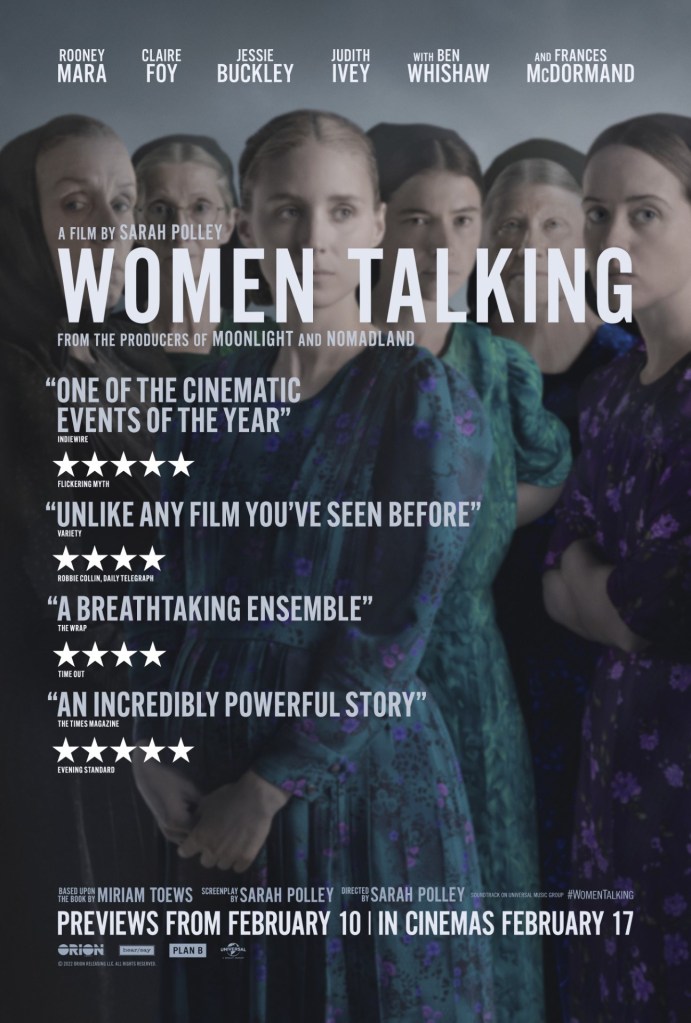
In 2010, the women of an isolated Mennonite community discover they have been victims of a policy of systemic drugged rape by the men, every night for decades. All this remains unknown until a man is caught in the act and the attackers arrested. The other men go to the city to bail them out, informing the women they will be expected to forgive on their return. The women hold a vote about what to do: do nothing, stay and fight or leave. When the vote is tied between the latter two options, the women decide the final choice will be in the hands of a small group of their number, who will debate in the community’s hay loft.

All of this happens, in voiceover, in the film’s opening few minutes. It all sounds more engaging, challenging and dynamic than what actually happens in the film. I saw Women Talking with my wife, who is passionate about the issues this film wants to deal with. We were both united in our view of the film: Women Talking is full of talking, but no one really says anything. It’s a missed opportunity that fails to convert its undeniably powerful premise – or the committed and passionate performances of its cast – into something that really successfully grapples with, and comments on, the issues, with a cast of characters who feel more like devices than fully-rounded people discovering their voices and freedom.

It’s a film that should have the urgency of a time-bound debate and the passion of a group of women discovering that they have the power to make decisions themselves. But the film feels slow (much longer than its two hours), flat and theoretical where it should be filled with debate and different ideas. It has moments of power and speeches of tragedy, but it doesn’t manage to make this something truly revolutionary.

The film would have been more interesting if it had been about everything covered in that opening monologue. In this community the women are kept illiterate, have never been allowed to be part of any decision-making and are so oppressed they don’t even have language to understand what sexual assault is. There was a fascinating film waiting to be made about these women working out exactly what had happened to them – imagine the heart-rending conversations that must have involved – and discovering they were just as capable of reaching decisions in their own right as men. Of finding their voice and freedom.

Now that is a film about feminism I want to see! I wanted to see these women who have never even considered ideas about independence and self-determination discovering they could do that. Just having a vote in a community like this one is an astonishing revolutionary act – it shouldn’t be so blandly passed over as this film does. How did these women even realise that they could decide for themselves what they to do with their lives?

Instead, we get a film where actual debate is surprisingly neutered. Frances McDormand’s character is the voice of conservatism, but walks out of the debate after five minutes and never comes back. With her gone, no counter-arguments are raised, no voice given to help understand why people (and many of them have done so) would choose to stay in relationships even after they know the truth. McDormand’s character is almost certainly wrong – the women should get out of this awful place – but we should at least hear her say why she wants to stay and the film should trust us to understand that listening to her viewpoint isn’t the same as agreeing with it.

In fact, it would have been fascinating to hear why so many women in the community heard about the systemic rape and yet voted to stay. The hay-loft debates should hum with the exchange of ideas. We should hear different viewpoints. Many people voted to stay and do nothing: why? Let’s hear what makes these women accept what’s happened to them. Are they institutionalised, love their husbands despite their faults or can’t imagine leaving their homes no matter the cost? We don’t know. It’s like the film makers were worried that a debate which actually included all potential viewpoints would have been seen as reducing the horror. In reality, however, it’s essential.

There is also a fascinating discussion to engage with about justice and forgiveness – particularly given the film’s setting in a religious community that preaches forgiveness. The men have demanded the women forgive. Ona (Rooney Mara) declares early on that forced forgiveness cannot be real. But instead of engaging with this, that throwaway is all we get. It’s a deep question which we often grapple with in the wake of terrible crimes. Whole books have been devoted to people who can or cannot forgive those who’ve committed terrible crimes against them or their loved ones. There’s so much this film could have delved into with its cast of women who’ve been told all their lives they must forgive – but it had no interest.

Instead, the film wants to make things easy. It completely shirks any debate of religion. This is a community of women whose entire understanding of the world is founded on the Bible and religious instruction. But yet God, faith and Christian ideas barely come up. It’s briefly mentioned that leaving the community means exile from heaven – but that is benched and never raised again. It should be at the heart of their considerations. There isn’t even a debate about whether their community’s teachings are legitimate (since they are partly based on systemic rape, we can guess not).

In the end rather than really tackling themes, we get conversations which do little but make the same point over and over again. Some of these speeches are undeniably powerful, and the performances of Foy and Buckley in particular are strong, but they are weakened by the lack of depth to the characters.

Women Talking is full of words but never says as much as you are desperate for it to do. The actors do a fine job with the passionate speeches and bring a lot of power to this chamber piece. But it’s frustrating that we feel robbed of seeing these women realise they have the power to choose and instead circles a highly emotive but ultimately slightly unrevealing discussion intercut with on-the-nose shots of fields, playing children and empty kitchen tables. It manages to avoid focusing on anything potentially interesting or engaging and feels like a worthy missed opportunity.

Milk (2008)

Milk (2008)

A political pioneer is lovingly paid tribute to in van Sant’s heartfelt biopic

Director: Gus van Sant

Cast: Sean Penn (Harvey Milk), Emile Hirsch (Cleve Jones), Josh Brolin (Dan White), Diego Luna (Jack Lira), James Franco (Scott Smith), Alison Pill (Anne Kronenberg), Victor Garber (Major George Mascone), Denis O’Hare (State Senator John Briggs), Joseph Cross (Dick Pabich), Stephen Spinella (Rick Stokes), Lucas Grabeel (Danny Nicoletta)

Harvey Milk was the first openly gay man elected to public office in the United States. Milk is a passionate, accessible and lovingly crafted biopic from Gus van Sant, which aims to restore this crucial figure back to the heart of public consciousness. van Sant covers a lot, but he crafts a film that hums with respect and a great deal of life. It also gains a huge amount from Sean Penn’s extraordinary and compassionate Oscar-winning performance, which embodies the spirit of this political pioneer.

Milk, in many ways, takes a traditional biopic approach, attempting to capture all the major events of Milk’s life in just over two hours. We follow Milk (Sean Penn) from closeted office worker, starting a relationship with Scott Smith (James Franco) to San Francisco and becoming part of a vibrant gay community – although one still facing an onslaught of discrimination and persecution from the authorities. Milk determines to change things, eventually elected as City Supervisor in 1977. From there he fights against the anti-gay Proposition 6 and pushes for change, until his murder by fellow City Supervisor Dan White (Josh Brolin) in November 1978.

Milk makes a strong statement about the dangers faced by the gay community in this period of American history. It opens with a montage of newsreel footage showing the impact of raids and the reaction to Milk’s murder. It explores in detail the vicious backlash against gay rights across America, with Florida among several states passing legislation to repeal rights. There is a creeping sense of danger throughout, from Milk walking down a dark street looking over his shoulder, to the everyday prejudice characters encounter on the streets. Above all perhaps, it strongly demonstrates the powerful sense of shame people were driven into about their sexuality, most powerfully in a young man who cold-calls Milk begging for help. Milk fascinatingly explores the tensions within the gay community and its representatives – split between radicals, like Milk and his friends, and the more traditional elite worried someone “too gay” will alienate people.

It’s a beautifully shot, loving recreation of 1970s San Francisco, fast-paced, insightful and informative. As Harvey Milk, Sean Penn gives an extraordinary, transformative performance. Penn’s careful study has beautifully reproduced Milk’s mannerisms and vocal tics, but above all he has captured a sense of the man’s soul. Penn presents Milk as fiery but caring, loving but sometimes selfish, passionate but reasoned, both an activist and a politician. He’s a man determined to make life better, so young men don’t feel the shame he felt growing up – not a hero or a superman, just someone who feels he can (and should) make a difference. Penn’s energetic performance mixes gentleness with a justified vein of anger at injustice.

And he has a lot to be angry about. The film’s finest sequence is Milk’s duel with Senator John Briggs (waspishly played by Denis O’Hare) over Proposition 6. van Sant skilfully re-constructs the debate, but also carefully elucidates the high stakes and the impact its passing would have had. van Sant’s film is frequently strong not only at reconstruction but also in using drama to inform and, above all, to bring to life the sense of hope people had that the struggle could lead to change.

The film grounds Milk firmly within his relationships and friendships, while exploring clearly the issues that motivated him so strongly. To do this, the film shies away from Milk’s polyamorous relationships, grounding him in a series of long-term relationships, some functional and some not. It presents Scott Smith (sensitively played by James Franco) as Milk’s lost “soul-mate” (the couple split over Milk’s all-consuming focus on campaigning) – perhaps van Sant’s attempt to keep the film as accessible as possible by introducing a more traditional element. Smith is contrasted with Jack Lira (Diego Luna), a sulky and immature man equally alienated by Milk’s focus.

Those personal relationships are extended to explore the tensions and fractured friendship between Milk and his eventual murderer Dan White. You’d expect the film to recraft White as a homophobic killer. Instead, it acknowledges White’s crime was largely motivated by factors other than gay rights, primarily his mental collapse and his sense of aggrievement over a workplace dispute. Sensitively played by Josh Brolin, White is presented as a man’s man suffering from a deep sense of inadequacy and insecurity (the film openly suggests he may have been closeted himself). Milk’s mistake is misunderstanding the depths of this man’s insecurities and never imagining the lengths they might drive him to. Brolin is very good as this troubled, if finally unsympathetic, man.

Milk of course fully anticipated being murdered – it was just he expected a homophobic slaying at a rally, rather than an office shooting by an aggrieved co-worker. One of the clumsier devices used in the film is its framing device of Milk recording his will a few days before his unexpected murder, a device that seems to exist solely to allow Penn to pop up and explain things more fully at points the film can’t find another way to expand. But again, it might be another deliberate attempt by van Sant and writer Dustin Lance Black to make a film as accessible as possible, by falling back on traditional biopic devices (including its semi-cradle-to-grave structure), just as he aims to shoot the film in a vibrant but linear and visually clear style, avoiding overt flash and snappy camera and editing tricks.

Perhaps that’s because the film generally knows it doesn’t need to overplay its hand to capture emotion (when it does, it’s less effective: you could argue its slow-mo murder of Milk to the sound of Tosca is far less affecting than the look of shock and horror that crosses Penn’s face a moment earlier when he realises what is about to happen – a cut to black might have worked more effectively here). Actual footage of the candlelit vigil after his murder, mixed with reconstruction, is simple but carries real impact. Throughout the film, real-life stories pop-up time and again of prejudice and pain, which move with their honesty. Above all, it becomes a beautiful tribute to a passionate, brave and extraordinary man who left the world a better place than he found it.