Category: Films about grief

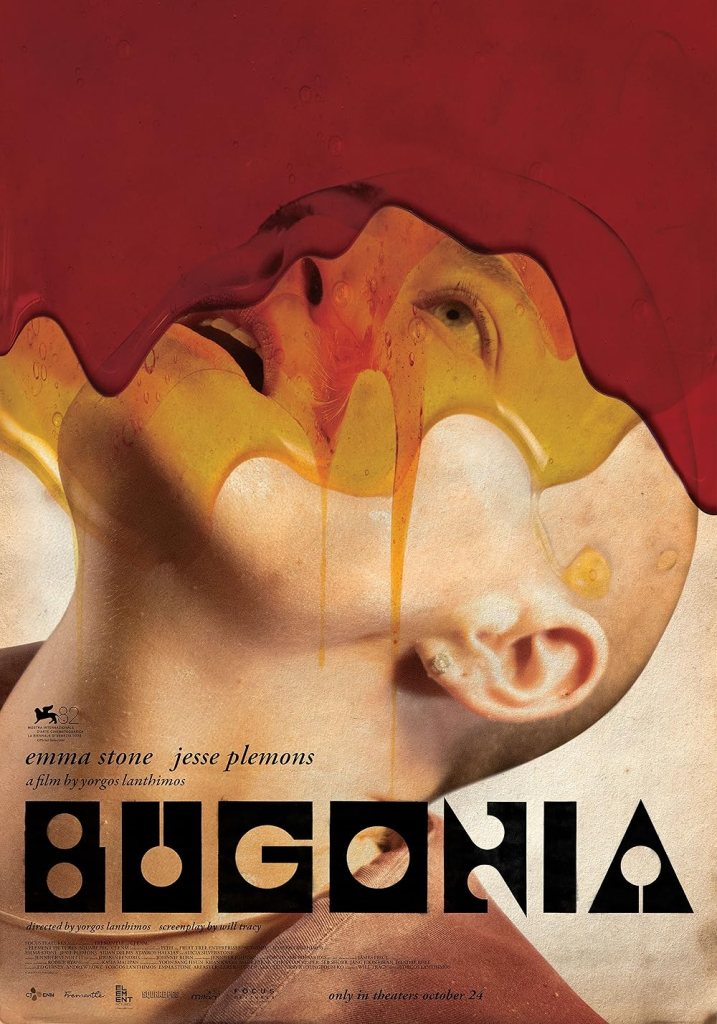
Bugonia (2025)

Bugonia (2025)

Satire, kidnap drama, politics and more combine in Lanthimos’ partially successful thriller

Director: Yorgos Lanthimos

Cast: Emma Stone (Michelle Fuller), Jesse Plemons (Teddy Gatz), Aidan Delbris (Don), Stavros Halkias (Casey), Alicia Silverstone (Sandy Gatz)

The world sometimes feels like its racing towards hell in a handcart And those on the bottom surely can’t help but look at the super-rich and wonder what on Earth do I have in common with them? But some, maybe particularly beaten down by life, may conclude something different: I’ve got nothing in common with the super-rich, because they are literally not of this Earth. That they are mysterious aliens who walk among us, planning to wipe us out. Bugonia takes a deep dive into the troubled, damaged psyche that can embrace the worm-hole of conspiracy theory, as well as the uncaring platitudes of the mega-companies that (maybe) rule the world.

Michelle Fuller (Emma Stone) is the CEO of Auxolith, an all-powerful pharmaceutical company that operates (at times) right on the fringes of legal. She becomes the target of beaten-down beekeeper Teddy Gatz (Jesse Plemons) and his loyal learning-disabled cousin Don (Aidan Delbris). Teddy is certain Michelle is from the planet Andromeda, that she can contact her mothership through her hair and that her mission is to wipe out mankind. Locking her in the basement of his farm-house, they enter into a mix of interrogation, battle of wills and wits and fluctuating power balances. Is Teddy deranged, vulnerable or misguided? Is Michelle scared victim, arch-manipulator or heartless CEO?

All this plays out, often in tight close-up, in Lanthimos’ jet-black comedy, which is two parts social satire to one part blisteringly nihilistic view of humanity and our future. As Burgonia’s carefully oscillates from one side to another, its political views and stances can be hard-to-perceive, but it certainly suggests Lanthimos has hardly the highest hopes for future. This helps make the film fresh, engaging and challenging. It’s constant cuts from one ‘side’ to the other, also means these two rivals rarely share the same frame, visually imposing their distance and rivalry – Lanthimos even uses non-complementary framing to place them awkwardly together, two people with no common ground.

While Teddy nominally holds the cards as the kidnapper, he’s so clearly such a weak, scared, vulnerable character (often framed weakly within the film) it’s hard not to feel sorry for him. Similarly, Michelle may go through some truly ghastly treatment as Teddy tries to unmask her ‘secret identity’, but remains such a forceful, dominant character (“I’m a winner and you are a fucking loser” she rants at Teddy at one point), framed with such utter assurance, her bland corporate indifference to others and willingness to manipulate the fault-lines in her kidnappers relationships (especially the gentle, child-like Don) never make her feel like a victim but just as dangerous as Teddy.

Teddy’s crazy, flat-Earth-mindset (and Lanthimos punctures each chapter with a view of an increasingly flat Earth, which is at first a darkly comic hat tip and then takes on a second chilling meaning late on) ranting and raving is presented as both darkly funny and also unsettling in how he can use it to justify any violence. Sure, it’s funny that he shaves Michelle’s head and covers her with cream to ‘weaken her influence’, or with gentle earnestness stresses he leads the human resistance to Andromeda (membership currently two). Slightly less funny that he insists he and Don chemically castrate themselves so as not to be seduced, or that pumps Michelle full of over 400 volts to try and unmark her (all while insisting her is a humanitarian, but as an alien Michelle technically has no human rights).

But then Michelle’s corporate coldness is rarely absent. She may remember all her staff’s name with a practised efficiency, but there is a degree of empathy missing in her, replaced with pragmatic hardness. As it becomes clear Teddy’s selection of her is (perhaps) more connected to her drugs companies treatment of his mother (Alicia Silverstone), her blasé assurances that everything was done legally and lack of any real guilt speaks volumes.

Lanthimos always keeps us guessing with Michelle: at moments she will switch from fear and vulnerability, to suddenly snapping back with utter authority, absorbing all the power in the room from the frequently hapless Teddy. Teddy in fact increasingly resembles a lost little boy (he even cycles through town with the relentless pedal-turning speed of a toddler), way-out-of-his-depth and at times all but deferring to Michelle’s advice about her own kidnapping.

Bugonia becomes a dance, not only between truth and fiction, but between two strikingly very different people, one so accustomed to power than even when in a nominally powerless situation they don’t feel anything but a winner, the other a desperate, scraggy haired loser who seems unable to really process what he should do to win a hand where he seems to hold all the aces. To make it work you need two electric actors: Lanthimos has this in spades with two trusted collaborators.

Stone’s ability to switch between corporate fear, desperate negotiation and earnest insincerity are as striking as her ability to keep her character so utterly, eventually terrifyingly, unknowable. In every second of Bugonia you can never be certain exactly what sort of person Stone is playing, her sociopathic assurance both understandable in the situation but also deeply unsettling. Plemons’ gives Teddy a child-like earnestness and desire to do the right thing that underpins his unhinged, ludicrous conspiracy theories, making him someone we both pity and understand is capable of doing terrible things for reasons he can justify to himself. Credit also goes to Aidan Delbris’ affecting performance as the gentle, easily-led Don.

Bugonia may well over-play its hands at points. It’s hard not to expect some sort of twist coming our way – I’m not sure how many people will be surprised by how the film plays out. It’s nihilistic ending feels a little too hard-edged and pointed for a film that hasn’t, until that point, embraced that level of flat-out cynicism. A clumsy introduction of a cop with a shady past is thrown in merely (it seems) to give us another reason to feel sorry for Teddy. Lanthimos’ at points engages, not always successfully, in a level of body horror that wouldn’t feel out of place in the excesses of Cronenberg. But then there are moments of real wit: the paralleled cuts of both Teddy/Don and Michelle going through their fitness regimes, a painfully uncomfortable bolognaise meal that tips into a full-out barney between the two stars, it’s unsettling near-finale in Michelle’s office and the playful realisation that much of the truth was there from the start, but hidden.

Bugonia might be a little too scatter-gun and self-consciously crazy to be a really effective satire, but with two terrific performances and an unsettlingly tense shooting style from Lanthimos (with echoes of everything from Dreyer to Hitchcock) there is enough of interest there to keep your mind bubbling even after it’s hard-hittingly sour ending.

Cat on a Hot Tin Roof (1958)

Cat on a Hot Tin Roof (1958)

Excellent acting almost saves a neutered, inverted version of Williams’ powerhouse play

Director: Richard Brooks

Cast: Elizabeth Taylor (Maggie Pollitt), Paul Newman (‘Brick’ Pollitt), Burl Ives (‘Big Daddy’ Pollitt), Jack Carson (‘Gooper’ Pollitt), Judith Anderson (‘Big Mama’ Pollitt), Madeleine Sherwood (Mae Flynn ‘Sister Woman’ Pollitt), Larry Gates (Dr Baugh), Vaughn Taylor (Deacon Davies)

There is a fun little anecdote of Tennessee Williams running into a crowd of people lined around the block to catch Cat on a Hot Tin Roof at their local multiplexes and loudly begging them “Go home! This movie will set the industry back 50 years!” You can sort of see why Williams was a bit pissed. It’s a miracle really that Cat on a Hot Tin Roof works at all. The studio snapped up this Broadway mega-hit and promptly instructed Richard Brooks to remove all the content that worked with a bunch of New York Times readers, but wasn’t going to fly in a mid-West fleapit. What we end up with is a curious, mis-aligned, neutered work that arguably inverts several of Williams’ points and is reliant on its incredibly strong, charismatic acting to work.

Brick (Paul Newman) is a former College sports star, now adrift in life, trapped in an unhappy marriage with Maggie (Elizabeth Taylor) who he resents and blames for the suicide of close friend Skipper. All Maggie’s attempts to rediscover any love is met with cold, blank disinterest as Brick hits the bottle big-time. Maggie keeps up the front of wedding bliss, as she is determined they will win their share of the inheritance from Brick’s father ‘Big Daddy’ (Burl Ives) who believes he’s merely under-the-weather, but is in fact dying. This news is also being kept from his devoted (but privately barely tolerated by Big Daddy) wife Big Mama (Judith Anderson), while Brick’s brother’s Gooper (Jack Carson) and his wife Mae Flynn (Madeline Sherwood) makes aggressive pitchs to cement Big Daddy’s fortune for themselves.

This simmering Broadway adaptation of a Southern family weighted down by lies (or mendacity as they love to call it), concealments and barely disguised resentments, was a smash hit but a very mixed film. It’s weighed down by both too much respect of the theatrical nature of the play, and too little interest in its actual message. Richard Brooks’ production largely restricts itself to interspersing wider shots with some reaction shots and sticks very much to its ‘same location for each act’ set-up. It’s a surprisingly conservative and safe re-staging of a hit play.

Despite Brooks’ liberal re-writing of the dialogue (of which more later), it remains a very theatrical rather than cinematic piece, largely devoid of imaginative editing or photography. The attempts to ‘open up’ the piece introduced by Brooks feel pointless or add very little (such as witnessing the accident where Brick breaks his leg or travelling to the airport to see the arrival of Big Daddy’s plane). Compared to the inventive and dynamic use of single-location shooting in Lumet’s 12 Angry Men, Cat on a Hot Tin Roof feels considerably more stately and reserved, and is far less successful in using the tricks of cinema to successfully build tension and conflict.

What it shares however with 12 Angry Men is the electric acting. Elizabeth Taylor gives one of her finest performances, her Maggie bubbling with sexual and emotional frustration, reduced to hurling physical and verbal punches at Brick in an attempt to get any sort of emotional rise out of him. She makes Maggie, for all her desperation and confusion, surprisingly sympathetic. Taylor manages to be both selfish and domineering while also showing how broken up Maggie is with shame and guilt. It’s a detailed, intense, passionate performance.

It also works perfectly opposite Paul Newman’s brooding intensity as Brick. This is the handsome, blue-eyed legend inverting his charisma into something insular, at times merely starring in self-loathing into the middle distance as other speak at him, only rarely rising to let rip at others with contempt and fury. Newman is a force of quiet, emotional anger, even if (stripped of his character’s primary motivation) he comes across at times like a spoilt child who never really grew up rather than the tortured man trapped in a lie of a life, that Williams intended (Brooks even frames him at one point with a high-school football of himself behind him, his past literally haunting him).

Burl Ives would certainly have won an Oscar for this, if he hadn’t won that year for The Big Country. Recreating his Tony Award winning role, he’s a whirligig force of nature as Big Daddy, bullishly insistent on getting his own way, shrugging off with irritation his wife’s affection (an effectively unsettled Judith Anderson) and hiding his own fear at oncoming death in a relentless pursuit of the future. Ives also nails Big Daddy’s outstanding late speeches, investing them with a deep sense of melancholy and sadness under the bombast and strength. It’s a great performance. Jack Carson is perfectly, anonymously uninteresting as ‘other son’ Gooper and Madeline Sherwood hits the beats of shrill hostility she’s asked for as his wife Mae Flynn.

That these performances work so well is a tribute to the underlying strength of a play that has been radically, almost disastrously, lobotomised by Brooks into something that flattens, blurs and (at points) radically inverts the intention. Putting it bluntly, Williams’ original used Brick’s unspoken (perhaps even subconscious) homosexual attraction to Skipper as the root cause of his disastrous marriage and booze-laden depression. Maggie, all too-aware of her husband’s sexual orientation, fumes in frustration at his lack of interest in making the inheritance-required babies. Even Big Daddy suspects this massive unspoken secret at the heart of a family. The fact this remains unspoken to the end, that the characters carry on with the fake fiction of the Pollitt dynasty is a damning indictment of the hypocrisy of American family life.

That wasn’t going to wash in Hollywood. No hint of Brick’s homosexuality could be allowed: in fact, Newman’s heteronormative virility is repeatedly stressed (at one point he even embraces Maggie’s dressing gown in romantic longing). It weakens both characters – for all the skill of Newman and Taylor, it makes both characters shallower, two people letting sulks and pride stand between happiness, rather than two people trapped into a doomed cycle. The film resolutely associates happiness with love and duty to the family unit, emphatically not what Williams’ play suggested.

No wonder he was pissed. A daring play about Southern family hypocrisy and buried secrets, where the burden of the family is a deadweight crushing people is turned into a straight (in every sense) celebration of it. It makes the play a conservative, reassuring lie, as much as a mendacity as the characters talk about. So maybe Williams was right to berate that crowd. Still it pissed Brooks off mightily: he pithily retorted it was a bit rich of Williams to kick up such fuss over a film which made him very wealthy. I guess at least there Brooks makes a strong point.

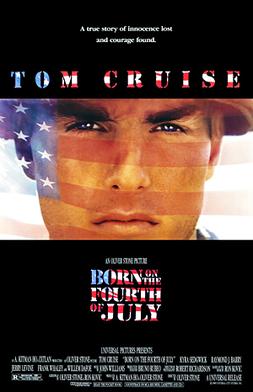
Born on the Fourth of July (1989)

Born on the Fourth of July (1989)

Passionate polemic against Vietnam, with a committed central performance – tough, angry viewing

Director: Oliver Stone

Cast: Tom Cruise (Ron Kovic), Willem Dafoe (Charlie), Kyra Sedgwick (Donna), Raymond J Barry (Eli Kovic), Jerry Levine (Steve Boyer), Frank Whaley (Timmy), Caroline Kava (Patricia Kovic), Cordelia Gonzalez (Maria Elena), Ed Lauter (Commander), John Getz (Major), Michael Wincott (Veteran), Edith Diaz (Madame), Stephen Baldwin (Billy), Bob Gunton (Doctor)

Ron Kovic and Oliver Stone shared the feelings of many of their generation: a deep and abiding feeling of betrayal about the war they were sold in Vietnam. Kovic entered Vietnam a passionate true-believer in the cause; he left a traumatised veteran, paralysed from the waist-down, facing a difficult journey of guilt and discovery that would lead him into a career of anti-war activism. Stone too left Vietnam, wounded and affected with PTSD. The two had collaborated on a screenplay of Kovic’s autobiography in the 70s, before funding fell through: Stone vowed he would make the film when he had the power: the success of Platoon and Wall Street gave him that.

It’s not a surprise, considering the understandable passion that went into it, that Born on the Fourth of July is a polemic. You can argue it’s a heavy-handed and virulent one: but then it’s hard to argue with the catastrophic impact over a decade of American foreign policy decisions had on generations across several countries. Could it have been anything else? Born can be an uncomfortable and relentless watch, and subtlety (as is often the case even in Stone’s best work) can be hard to spot. But is that a surprise when the whole film feels like a ferocious, cathartic cry of pain?

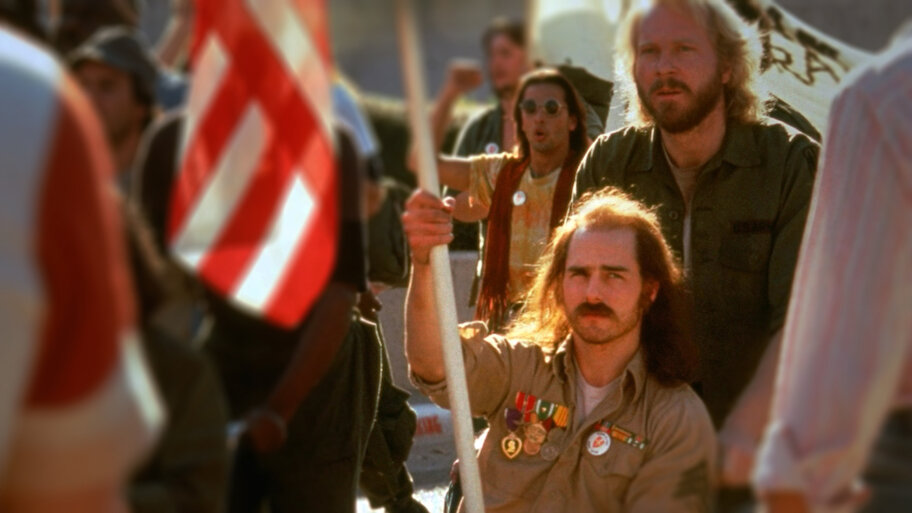
It follows a mildly fictionalised version of Kovic’s life (Kovic’s willingness to adapt his life, drew some fire at the time – particularly as he was considering a run for Congress) starting with his childhood, through his teenage enlistment, the shocking horror of Vietnam, his limited recovery in under-funded veteran hospitals, his growing discomfort with the attempt by some (including his passionately conservative mother) to celebrate sacrifices he increasingly feels were misguided and wrong, culminating in his joining the ranks of the same long-haired protestors he spoke of disparagingly earlier.

Through it all, Kovic is played with a searing intensity by Tom Cruise. Cruise was a controversial choice – seen as little more than a cocky cocktail juggling, jet piloting, superstar (despite measured, subtle turns in The Color of Money and Rain Man). It feels a lot more logical today, now that Cruise’s Day-Lewis commitment to projects is well-known. It’s a raw, open and vulnerable performance with Cruise expertly inverting the cocksure confidence of his persona (and the earlier scenes), to portray a man deeply in denial at his injuries (internal and external), with resentment, anger and self-loathing increasingly taking hold of him.

Kovic is a man who never gives up: be that a misguided (and in the end almost fatal) attempt to defy medical advice that he will never walk again, to embracing the anti-war cause with the same never-say-die attitude he signed up to the military with. What Stone and Cruise bring out, is the huge cost to Kovic of working out the fights worth having: from his student days training days on hand for a wrestling bout he loses, to is military career, to activism, it’s a long, difficult journey.

It’s a performance that understands the crippling burden of guilt. Cruise commits to Kovic’s rage, but always keeps track of the vulnerable, damaged, scared soul underneath. He never allows us to forget this is a man eating himself up, not with resentment at his injury, but guilt at his actions in Vietnam – from being part of a mission that pointlessly machine-gunned women and children, to his own accidental shooting of a fellow marine. As you would expect from Stone, Born’s view of Vietnam is bleak: pointless, disorganised missions, led from the rear by incompetent or uncaring officers, where the only victims are innocent civilians or GIs.

That’s perhaps the key about Born. Kovic is not motivated primarily by his injuries. Those are the results of the risks he chose and, to a certain degree, he accepts them. What motivates him is guilt: throughout he is haunted by the crying of the Vietnamese baby he was ordered to leave in the arms of its deceased mother while also struggling to accept his guilt at his friendly fire killing. These feelings fuel his self-loathing, and his anger rightly develops against the lies he was told that led him to commit those acts.

Stone’s film is unrelentingly critical of the mythologising of armed American intervention, and the assumption (often parroted by those who stay at home) that it can never be anything other than completely righteous. It’s a society where (as happens in the film’s opening) children play at soldiers, watch parades of veterans (the young Kovic fails to clock the flinching of these veterans – one played by the real Kovic – at rifle fire, seeing only what he wants to see) and, as young men, are sold tales of duty, sacrifice and heroism. Kovic is too young and fired-up to notice the reluctant pain of his veteran dad (a superbly low-key Raymond J Barry), clearly struggling with his own trauma.

Much as the film paints one of Kovic’s friends in a negative light – like a young Gecko he heads to college, states all this talk of Communism conquering the world is propaganda bullshit and sets up a burger chain where he brags about fleecing the customers and groping the female staff – it also can’t but admit that when it came to Vietnam, he was right. Similarly, Stone is critical of Kovic’s ambitious, apple-pie Mom (Caroline Kava, in a performance of infuriatingly smug certainty) who won’t hear a word against the war and demands achievement from her son, constantly stressing it must have been worth it.

It’s not a surprise one of Born’s most cathartic moment is when Kovic – Cruise’s performance hitting new heights of unleashed resentment – rails late-at-night at his Mom, calling out her upbringing of unquestioning patriotism and saintly conformity as nothing but an ocean of bullshit. It’s an outpouring that has been welling up since his return, looking for the right direction: snapping at protestors, doctors, his younger brother who dares to oppose the War. Born is about a man coming to terms with why he is so angry and finding the appropriate target: and it becomes the system that sent him on this journey, starting with his mother and onto his own government.

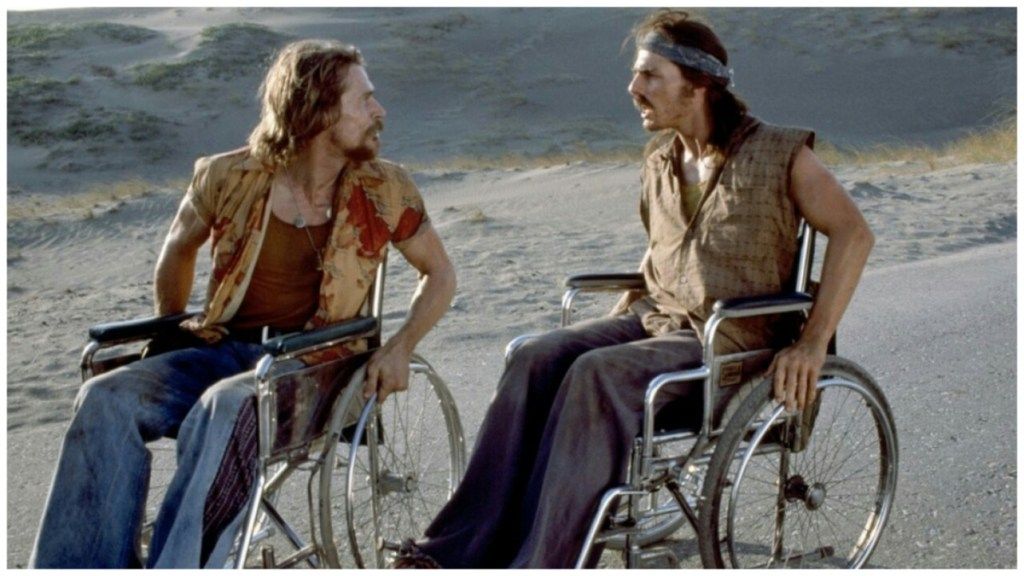
This would be the government that provides shabby hospitals, full of broken-down equipment, whacked out attendants and overworked, underqualified doctors.  Stone’s camera pans along wards piled with rubbish and rats. The conditions here are, in many ways, worse than the Mexican villa where Kovic finds himself struggling to re-adjust, surrounded by other paralysed veterans (among them Willem Dafoe, as a seemingly mentor-like figure with uncurdled rage just below the surface). Stone’s film never once loses its righteous fury at how a generation was let down by its leaders on every level.

So it’s not surprising Born is a fiercely polemic work. And, yes, that does sometimes reduce its interest and make it an unrelentingly grim watch (Stone isn’t interested in putting any other side of the argument in here). But it’s extremely well made (Robert Richardson’s excellent photography uses tints of red, white and blue at key points to brilliantly stress mood) and you can feel the heart Stone (who won a second directing Oscar for this) put into it. Its impact comes down to how much you engage with the passionate, furious argument its making: connect with it and it’s a very powerful film.

Love Story (1970)

Love Story (1970)

Smash-hit romance that I found forced, smug, tiresome and very mediocre

Director: Arthur Hillier

Cast: Ali MacGraw (Jenny Cavilleri), Ryan O’Neal (Oliver Barrett IV), John Marley (Phil Cavilleri), Ray Milland (Oliver Barrett III), Russell Nype (Dean Thompson), Katharine Balfour (Mrs Barrett), Sydney Walker (Dr Shapeley), Tommy Lee Jones (Hank Simpson)

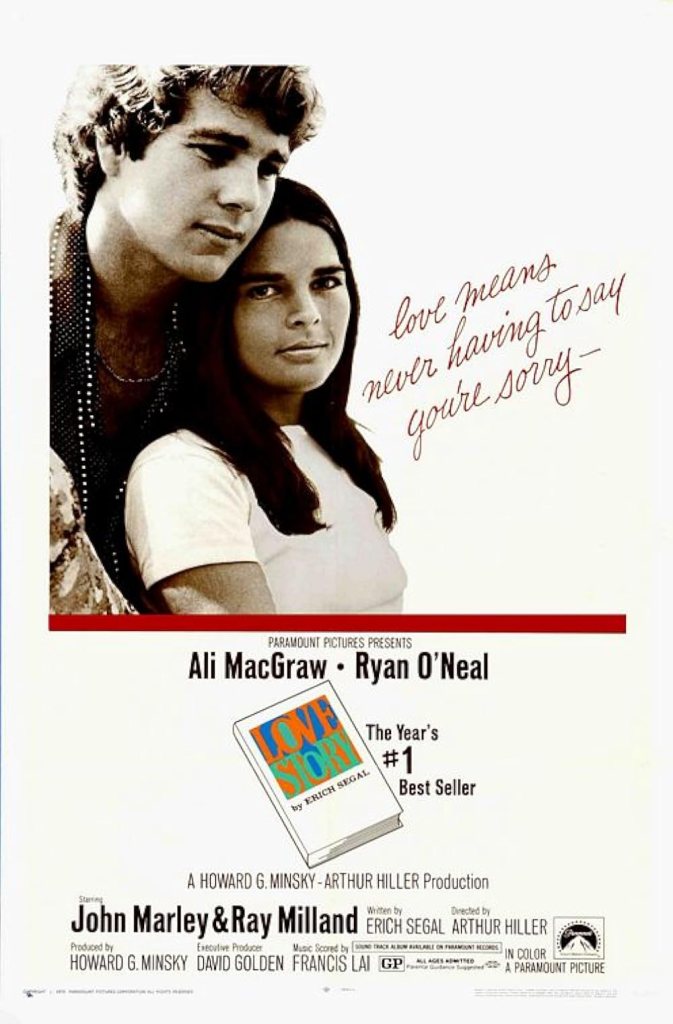
Right from the top Love Story tells you it ain’t Happy Story, as grieving Oliver Barrett (Ryan O’Neal) wistfully asks in voiceover what you can say about a 25-year-old girl who died. The girl, we quickly work out, is Jenny Cavilleri (Ali MacGraw) and the fact we all know she’s doomed didn’t stop Love Story turning into a mega-hit. But a mega-hit isn’t a good film: and Love Story, to tell the truth, is not a good film. And, in the spirit of its mantra  “Love means never having to say you’re sorry” I’m not apologising for that (it also sounds like the sort t-shirt friendly message you might see an abusive spouse wearing).

Oliver comes from a wealthy background, with expectations from his father (Ray Milland) that he will follow in the Barrett family footsteps, to study in Barrett Hall at Harvard and join the Supreme Court. Jenny is the daughter of a baker (John Marley) who dreams of becoming a musician. They meet at college, fall in love and want to marry. Oliver’s father asks his son to wait, Oliver says no, is cut off and he and Jenny work to put him through Harvard (to inevitable success). He gets a high-powered job, she gets a terminal illness. Let the tissues come out.

Anyway, Love Story charts the star-crossed romance between O’Neal and MacGraw, defining their careers and melting the hearts of millions. But to my eyes, this dull, distant, dreary romance lacks charm. The dialogue strains to try and capture a Hepburn-Tracy sparky banter, but it’s as if writer Erich Segal has heard about what a screwball comedy is without ever having actually seen one. O’Neal calling MacGraw a bitch within 180 seconds of the film starting doesn’t feel like a spiky banter, but just plain creepy. All the way through the film’s sentimental courtship, the dialogue consistently makes its characters sound sulky, whiny and self-involved.

This isn’t helped by the fact that both actors lack the charisma and energy these sorts of parts need. Both end up sounding infuriatingly smug and their leaden dialogue clunks out of their mouths, stubbornly refusing to come to life. When the emotion kicks in, neither can go much further than wistful stares with the hint of a tear, which isn’t much of a difference from their forced laughter and studied embraces. Put bluntly, both O’Neal and MacGraw do little to breathe life into the Romeo and Juliet construct the film totally depends on. Watching it with my older, cynical eyes… I quickly lost patience with this pair. I also find it hilarious that O’Neal himself married age 21, divorced by 23 and essentially said the whole thing was a youthful mistake.

Is it really that unreasonable for his father to suggest that perhaps Oliver shouldn’t rush into marriage with a girl he has literally just met? It wouldn’t take much reangling to see Oliver as a Willoughby-type, leading on a love-struck young woman in a selfish act of rebellion. Certainly, I can’t help but see Oliver as (to a certain extent) a stroppy, entitled rich-kid rebelling against his Dad. Just as I can’t help but feel, when he aggressively tells Jenny to mind her own business when she broaches a reconciliation, that he’s more than a bit of a prick. But then, the film keeps vindicating him, by implying his Dad must be an arsehole because he’s rich and reminding us that of course love means never saying you’re sorry.

As for Oliver’s whining about his money problems, being forced (can you believe this!) to actually work to make his way in life – give me strength. Clearly, we are meant to side with him when he is incredulous that Harvard’s Dean refuses to grant him a scholarship (on the grounds they are for academically gifted poor kids, not scions of the Founding Fathers with Daddy Issues). But Holy Smokes, Oliver reacts like a brat who no-one has never said no to before. He even has the gall to complain that he is the real victim of the economic status quo. Every time he bangs on about the difficulties of paying for Harvard (even after Jenny dutifully abandons her dreams to help pay for him), I literally shouted at the screen “sell your car you PRICK” (how many coins would this high performance, expensive to run, classic car get him?). The film never really tackles Oliver’s sulky lack of maturity (he can’t even get through an ice hockey match without throwing a hissy fit), not helped by O’Neal even managing to make grief feel like sulking.

To be honest Jenny isn’t much better. This is a ‘character’ where quirk takes the place of personality. From her forced nick-name of “Preppy” for Oliver (better I suppose than his early nick-names for her, most of which use the word bitch), to her pretentiously shallow love of classical music (she knows all the classics and that’s about it). Her whimsical insistence about calling her dad ‘Phil’ because she’s such a free spirit. MacGraw’s limitations as an actress and flat delivery of the dire-logue accentuate all these problems, preventing Jenny from ever feeling anything other than a rich-kid’s wet-dream of what a boho pixie-dream girl from the sticks might be like.

You can probably tell that the film got my back up so much, I felt like giving up on love. Everything in the film is smacking you round the head to make you feel the feelings. Its vision of New York is a snow-soaked Narnia where it’s always Christmas. The Oscar-winning song soaks into the syrupy soundtrack. I suppose it’s interesting to be reminded of an era where the husband is told about his wife’s fatal illness before she is (and warned not to tell her). But so much else about Love Story had me reaching for a paper bag.

Surprisingly distant, dull, led by two unengaging actors speaking terminally flat dialogue, it was nominated for seven Oscars and made millions. But the longer this Love Story hangs around, the less interesting it seems. A love story that feels like it will only move those who have never seen a love story before.

The Return (2025)

The Return (2025)

The Odyssey retold as an exploration of trauma and guilt in a rich and rewarding film

Director: Uberto Pasolini

Cast: Ralph Fiennes (Odysseus), Juliette Binoche (Penelope), Charlie Plummer (Telemachus), Tom Rhys Harries (Pisander), Marwan Kenzai (Antinous), Claudio Santamaria (Eumaeus), Ayman Al Aboud (Indius), Amir Wilson (Philoetius)

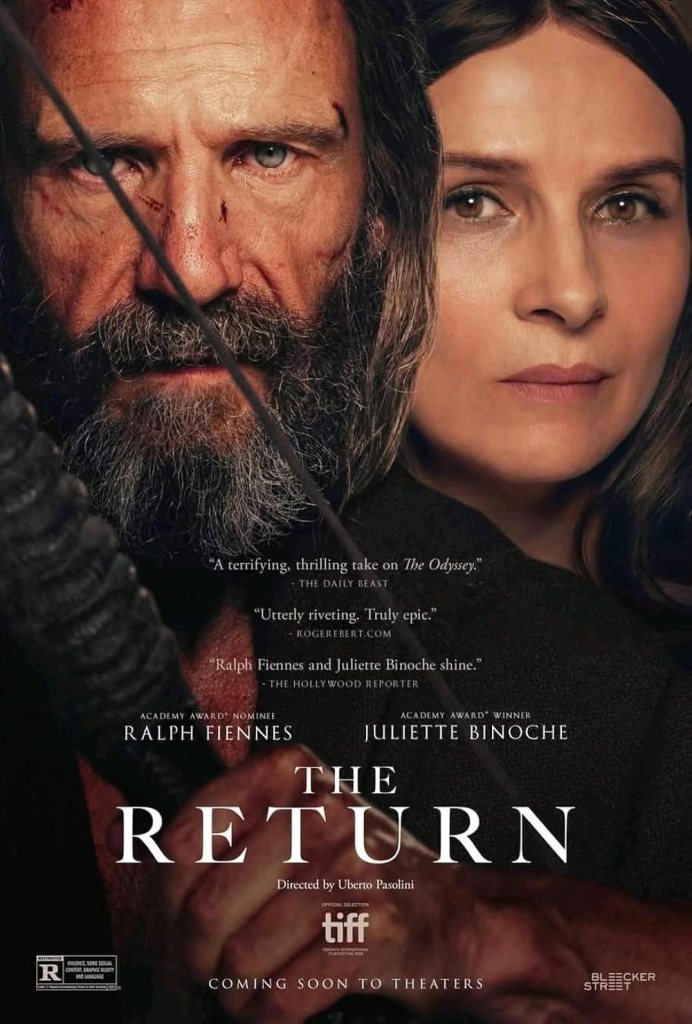
War can tear your soul apart, even if it’s become an ancient clash of legend: the memory of the deeds you did and the lives (both friend and foe) you left behind can haunt you. The pain of guilt and trauma swims behind the expressive eyes of Ralph Fiennes’ Odysseus in this unique adaptation of Homer’s famous tale of the longest journey home. A version that, as the title suggests, jettisons the journey itself (along with all those Gods) focusing instead on the spiritual journey a soul must take to come-to-terms with things seen and done and to face the consequences on those left behind. Pasolini’s film does this with expressive, melancholic beauty, bringing a unique vision to a story told many times before.

A shipwrecked Odysseus is washed, naked, up on the shore of his kingdom of Ithica – although its heavily implied this is an accident as he is clueless at first to where he is. In fact, lying naked on the beach, suggests the cunning old warrior has in many ways been born again: this time to face the pain of those he left behind. That doesn’t just include his wife Penelope (Juliette Binoche) waiting fruitlessly for years for word of his whereabouts, but also his bitter son Telemachus (Charlie Plummer) who deeply resents his absent father. It’s also the people of his kingdom, now poor and ravaged, the cream of a generation lost under his leadership, the island pillaged by a parade of cruel suitors for Penelope desperate to claim the kingdom. So great is Odysseus’ guilt he continues to conceal his identity – perhaps worried as much at confronting the truth about himself as he is the myriad people on the island with reason to hate him.

The Return replays Homer as an exploration of war trauma and PTSD. In many ways it has more in common with William Wyler’s The Best Years of Our Lives than Wolfgang Petersen’s Troy. No matter the era, it’s never easy for warriors to find a place in a world of peace they left far behind. Powered by a deeply affecting, sensitive performance from Fiennes, The Return centres a man beaten down by shame and regret, barely able to look others in the eye. This is the lasting impact of conflict. While the war at Troy is already being mythologised by the young, Odysseus’s stories focus on the ordinary citizens of Troy, who longed for peace and met their end in fire and blood. Fire and blood, what’s more, that he visited upon them.

Mix that in with the constant memory of the boatloads of Ithica’s finest young men, who have not returned with him, their souls lost in conflict and at sea. No wonder Odysseus feels solely tempted to forget himself, to become just another anonymous beggar. The Return is the tragedy of an incredibly smart, cunning man shamed that his gifts are harnessed best for death and destruction. In battle he is ruthlessly efficient, using the strengths of others against them, constantly identifying every possible advantage.

It’s a fate that he – and Penelope – fear may absorb their son. Telemachus, played with a frustrated petulance by Charlie Plummer, has watched his father’s kingdom fall apart, felt abandoned by both his parents (one to war, the other to stoic silent) and straining at the leash to do something to prove himself. If that means testing how far the parade of Penelope’s suitors will go, so be it – even if their patience with this boy becoming a man is wearing fatally thin. Tension hangs over The Return: will Telemachus follow in those footsteps Odysseus so bitterly regrets – will violence consume the next generation as much as the first?

What it will do is leave more victims behind. Juliette Binoche – with an instinctive chemistry, gives a deeply humane but fascinatingly cryptic performance – simmers with the never-ending pressure of trying to keep home and family together, very aware her own home is now awash with dangerous men she can only just control. Binoche is a tight-wound bundle of tension, suppressed fear and unacknowledged anger at her betrayal. This is a woman clinging to hope of her husband’s return, as it offers the only escape from the trap he has left her in – and if that means forcing his hand so be it.

Ithica has become a ragged island. Pasolini’s visuals for the film, influenced by Baroque artwork in its parade of barely-clothed nudes in rural settings and run-down classical wrecks, not only look gorgeously artful but successfully conveys the impression of a kingdom on its last legs. With everyone thinly clothed and living in shacks, Odysseus’ palace crumbling and lives being cheaply taken whenever the suitors fancy, it’s clear the world he left behind has disintegrated. The suitors are largely a gang of louts, increasingly fed-up with waiting (‘This fuckin’ place!’ Tom Rhys Harris’ Pisander petulantly whines at one point after getting lost in a futile chase through the maze-like woodland). They are fragilely led by Marwan Kenzai’s Antinous, whose tragedy is that he genuinely loves Penelope. In another life, indeed, you can imagine him making a considerate and kind husband if unreturned affection hadn’t made him bitter.

These ideas and concepts bring a fresh vision to The Odyssey, grounding this adaptation in a world of post-traumatic guilt and the horror of violence, devoid of gods and monsters. Fiennes, his body muscled up like a burnt and tanned roll of taut rope, is a warrior struggling against awakening. We all know eventually he will of course – but the enormous psychological burden of once again using your wit and ingenuity to efficiently slaughter other people is always palpable. It doesn’t matter if the targets ‘deserve’ it: the psychological damage remains the same.

The Return explores all the subtly, with beautifully measured performances from Fiennes and Binoche and impressive supporting turns not least from Claudio Santamaria as Odysseus’ old servant, shrewdly aware of his master’s identity earlier than he admits and determined to rouse the king to take responsibility for his actions. Sombre, wonderfully filmed and a compelling reimagination of the myth, it’s a unique view of Greek mythology that carries real emotional impact.

I’m Still Here (2024)

I’m Still Here (2024)

Subtle, low-key but powerful condemnation of oppression with a fabulous lead performance

Director: Walter Salles

Cast: Fernanda Torres (Eunice Paiva), Selton Mello (Rubens Paiva), Guilherme Silveira (Marcelo Rubens Paiva), Antonio Saboia (Adult Marcelo Rubens Paiva), Valentina Herszage (Vera Paiva), Maria Manoella (Older Vera Paiva), Luiza Kosovski (Eliana Paiva), Marjorie Estiano (Older Eliana Paiva), Barbara Luz (Nalu Paiva), Gabriela Carneiro da Cunha (Older Nalu Paiva), Cora Mora (Maria Beatriz Facciolla Paiva), Olívia Torres (Older Maria Beatriz Facciolla Paiva), Pri Helena (Zezé), Fernanda Montenegro (Older Eunice Paiva)

In 1970 Brazil was controlled by a military dictatorship who tried to hide their unjust and violent methods from the public eye. Many people were taken from their homes to never be seen again, such as Rubens Paiva (Selton Mello), a former congressman and political opponent. Now working as a civil engineer, he is taken from his home by plain clothes military officers to help with unspecified enquiries. His wife Eunice (Fernanda Torres) is later also arrested, along with her teenager daughter, questioned and imprisoned for over a week then released with no word of Rubens fate. Eunice is left, bereft of answers as to what has happened to her husband, holding their family together, struggling for decades to try and get some sort of news of her husband’s fate.

Walter Salles’ heartfelt film captures the struggle of a whole nation to find answers in the story of one family – a story that achieved national fame in Brazil. And one personally known to Salles, who was himself (as a kid) a guest in the Paiva’s home and knew Rubens, Eunice and their children. His determination to tell this story with the dignity and truth it deserves is a major part of I’m Still Here’s success. It also gains real power from the focus it gives to the enduring difficulty of calmly, methodically rebuilding your families life in the face of terrible tragedy. As the title says, in many ways I’m Still Here is about persisting in the face of oppression, not letting your family collapse, to not just accept the new life forced on you, to carry on and not crumble.

It does this by keeping the film surprisingly low-key. I’m Still Here deals in subtle intimidation, the velvet glove, more than it does the iron fist. The threat of approaching oppression is signalled subtly by the military helicopters flying loudly over Eunice’s head while she swims in the film’s opening. Her older daughter is part of a general stop-and-search out with friends that carries more than an air of possible violence. When the military police arrive, dressed informally, it’s not clear at first they are there to arrest Rubens. They are scrupulously polite and deferential and only show flashes of firmness (insisting no one else leave the home). The dictatorship’s method is to hide its brutality behind a screen of everyday politeness.

Salles condemns it using the same weapons, where the film’s underplaying helps it carry even more emotional force. There is very little in the way of either triumphal emotional beats or show-stopping speeches and no moments of horrific violence. Instead, this is a film where the triumph is dealing with your pain in such a way to protect what you can of your children’s innocence and defend what you have left. Fernanda Torres’ exceptional performance works on the basis of its quietness, its refusal to exhibit the wild emotional volatility others expect, but is full instead of the resolute determination to carry on in the face of everything life has to throw at you.

Torres’ performance is a masterclass in the small and subtle. This is a mother putting on a front of normality, only sharing a few words with her older daughters because the sheer danger of what is happening is not for ‘the ears of the little ones’. She is determined to protect as much normality for her young children as she can, and if this means she must hide in her husband’s office to shed a few tears before returning to fix her daughter’s doll and prepare her children for bedtime, she will. Because collapsing into grief and guilt is exactly what the dictatorship wants: it wants people cowed and scared, so Eunice will smile in the face of overwhelming adversity and pain.

It’s telling that I’m Still Here’s focus is less on Eunice’s campaign – of which we see very little: a few meetings, a photoshoot and a final reveal – and instead the quiet drama of salvaging a personal life from a world upside down. With her husband disappeared, Eunice literally cannot access their shared bank account (even when it is whispered to her that Rubens is dead, she still would need a formal death certificate to do this), with most of their savings tied up in a huge track of land Rubens had planned to develop. Suddenly their house, near to the beaches of Rio, can no longer be an open-doored haven: the location of a key that can lock their car gate turns from being forgotten to being essential. Throughout these quiet obstacles, you feel Fernanda Torres’ Eunice eternally stamping down the immense pressure to simply scream her pain and frustration out for all to hear.

There is a true nobility in this lowkey bravery. Only moments of horror creep in, such as the murder of a family pet. It feels particularly noble since, along with Eunice, we have seen a glimpse of the horrors. I’m Still Here’s prison sequence sees Eunice and her daughter escorted to a military facility with black bags over their head, for days of relentlessly focused interrogation in rooms devoid of daylight. For over a week Eunice only gains information about her daughter from snatches of clues from a sympathetic guard and listens from her cell to screams in a prison where even frequent washing can’t remove all the blood from the floor. This dictatorship hides its brutality, but only slightly, and if some of its agents seem polite they still unquestioningly follow cruel orders.

I’m Still Here flourishes in its focus on the everyday work to hold things together, that it almost doesn’t need its two codas one set in 1996 the other in 2014. But these briefer moments do provide true moments of power: the first seeing Eunice finally getting a copy of her husband’s certificate and the final featuring a powerful cameo from Fernando Montenegro (Torres’ mother) as an aged Eunice who, suffering from Alzheimers, finally lets a flash of her pain cross over her face. And while they seem at times to be gilding the lily, their presence re-enforces the courage involved in simply carrying on and preserving in the face of oppression, even over the course of many decades.

It’s that power that makes I’m Still Here, a quiet and unflashy film told with remarkable restraint, as effective as it is. Directed with a subtle but heartfelt hand by Salles, it also allows Fernanda Torres the room for a restrained but deeply moving performance that throbs with humanity. It’s quietness and calm in the face of oppression makes it a powerful indictment of dictatorship.

Nosferatu (2024)

Nosferatu (2024)

Eggers’ wonderfully atmospheric remake is creepy, haunting and quite extraordinary

Director: Robert Eggers

Cast: Bill Skarsgård (Count Orlock), Lily-Rose Depp (Ellen Hutter), Nicholas Hoult (Thomas Hutter), Aaron Taylor-Johnson (Friedrich Harding), Willem Dafoe (Professor Albin Eberhart von Franz), Emma Corrin (Anna Harding), Ralph Ineson (Dr Wilhelm Sievers), Simon McBurney (Herr Knock)

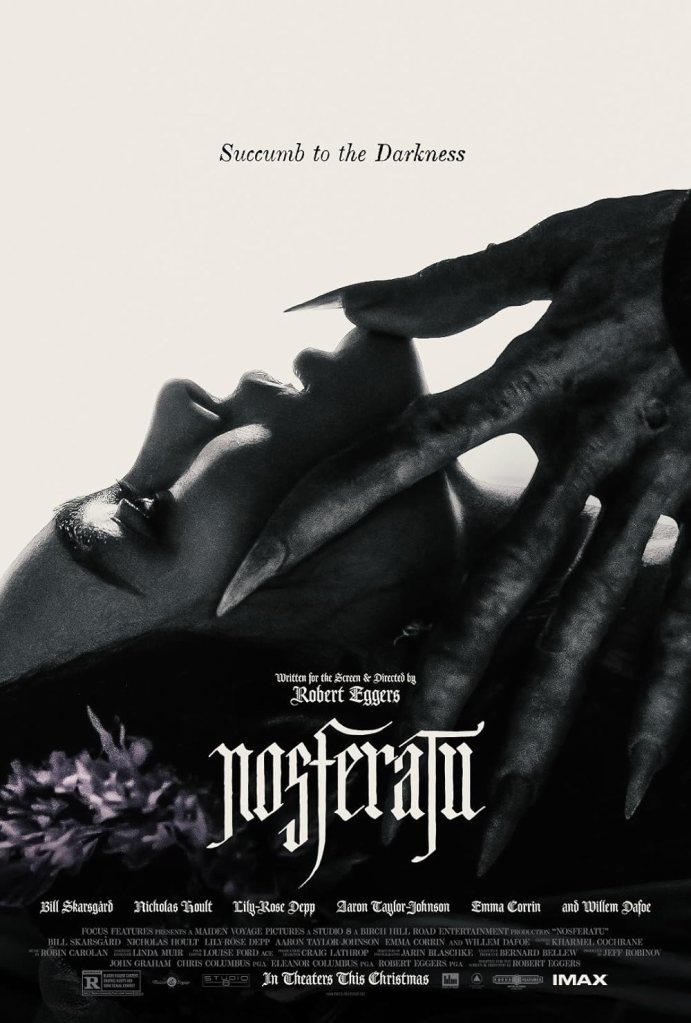
Robert Eggers dreamed so long of his own version of FW Murnau’s seminal vampire film (and Bram Stoker copyright infringement) Nosferatu, it was originally announced as his second film. We had to wait a bit longer, but it was well worth it. Eggers’ experience helped him create a film infinitely richer than I suspect he would have made ten years earlier. Nosferatu is an astonishing, darkly gothic, richly rewarding film, glorious to look at and a fiercely sharp exploration of the subtexts of both sources. It can never match the original’s seminal impact, but celebrates and elaborates it.

The story hasn’t changed dramatically from the one Murnau ripped off from Stoker. In Wisborg, junior solicitor Thomas Hutter (Nicholas Hoult) leaves his beloved wife Ellen (Lily-Rose Depp) for Transylvania and a lucrative land deal with the mysterious Orlock (Bill Skarsgård) that could lead to a comfortable life for him and his new wife. Unfortunately, there are three things he doesn’t know: firstly, the Orlock is a ravenously cruel vampire, with extraordinary supernatural powers; second his employer Knock (Simon McBurney) is an occultist worshiper of Orlock; thirdly, Orlock has used his mental powers for years to terrorise and groom Ellen from afar and Hutter’s presence is the final step in his scheme to control her. It won’t be long until a deadly curse plagues Wisborg.

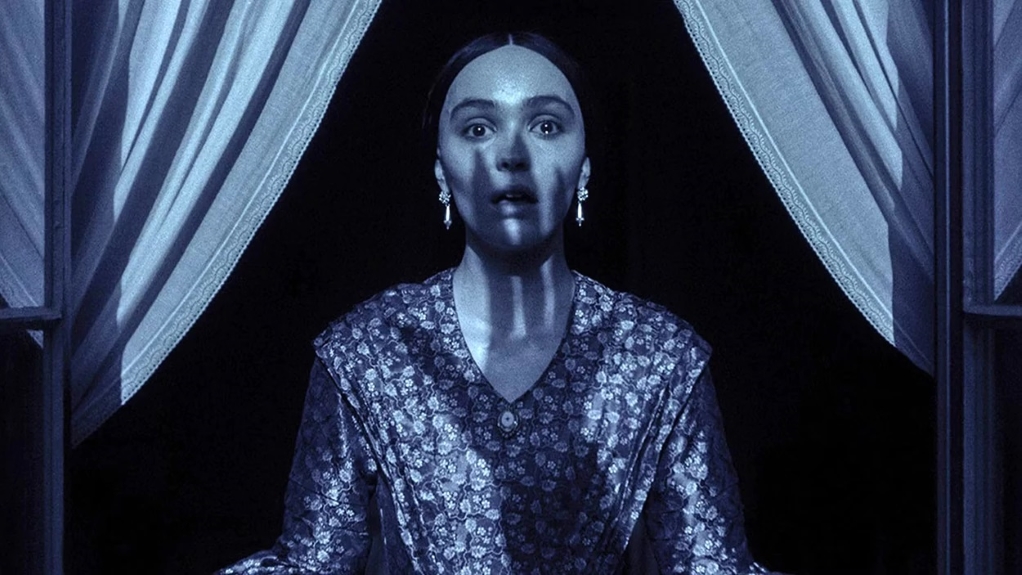
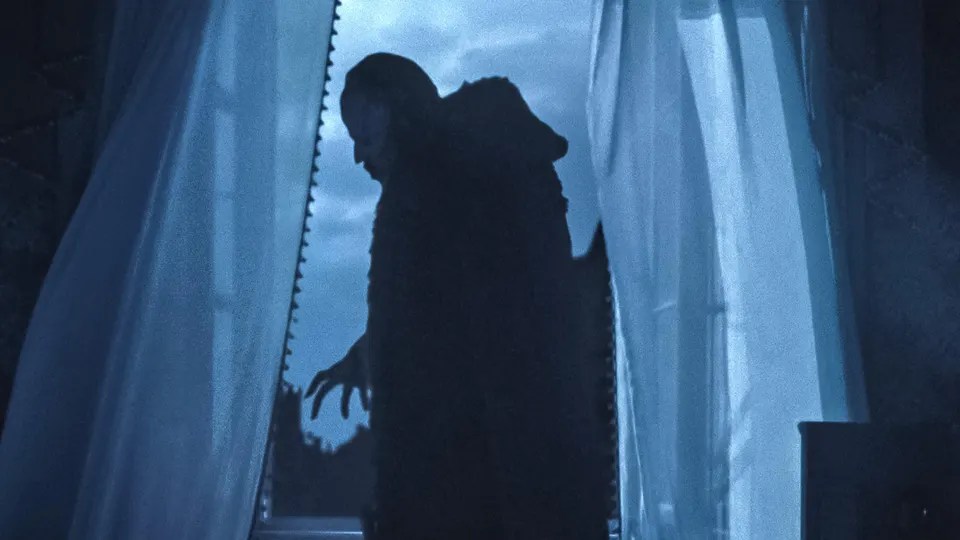
Egger’s dark (but extremely beautiful) gothic film drips with atmosphere, gloomy shadows rolling over its elaborate sets, the drained out night-time shots reminiscent of the tinted black-and-white beauty of the original. The entire film is soaked in love for silent-era horror, with homages to Murnau, Dreyer, Sjöström and so many others I couldn’t begin to spot them all – though I loved Orlock’s gigantic shadowy hand creeping Murnau’s Faustus-like over Wisborg. The film drowns in folk horror, from its snow-capped Transylvanian countryside dripping in unspeakable hidden evils to the unreadable motives of a mysterious Transylvanian village.

At its heart is an exploration of the sexual undertones of the vampire legend. Orlock’s assaults leave his victims are overwhelmingly sexual, with Orlock’s body thrusting forward while he drains the blood of his groaning victims. That’s not to mention Orlock’s revolting sexual manipulation of Ellen. Nosferatu leans heavily into Stoker’s dark sexual awakening subtext. Orlock’s psychological manipulation has left Ellen traumatised, torn between dark sexual desires and romance with Hutter. Nosferatu opens with a dark (dream?) sequence, as Ellen rises with sensual sighs from sleep, drawn towards Orlock’s seductive shadow in sheet curtains, before joining him outside for something that looks an awful lot like sex before Eggers cuts with a jump scare shot, our first glimpse of Orlock.

This is an Orlock radically different from Max Schreck’s original. While he shares his long nails and angular posture, here he is no-more-or-less than a decayed, rotting corpse. His body is covered in sores of decayed skin, with everything (including his penis) halfway to the compost heap, his bony legs and hips positively skeletal. There are homages to his Vlad the Impaler roots, from his fur-lined uniform coat (that like the rest of him has seen better days) to his surprisingly well-groomed moustache. But there isn’t a trace of the handsomeness of so many Draculas – this Orlock is possibly even more repulsive to look at than the rat-faced monstrosity of the original.

Skarsgård’s make Orlock a truly ruthless figure, delighting in his natural cruelty. With Hutter his looming, shadowy menace offers not a jot of home comforts, working to terrify a man who he sees as a perverse romantic rival. (His hallucinatory blood-sucking assault on Hutter is filmed in a manner reminiscent of rape). Throughout, he treats almost everyone he encounters with contempt and lofty disgust and takes a sadistic delight in torturing Ellen’s friend Emma Harding’s family, culminating in a truly shocking scene of grizzly horror. While the original Orlock was almost feral, like his rats, this one is a monstrous decayed sorcerer with a never-ending hunger and sadistic desire to play with his food.

He also has something the original never had: a voice. Skarsgård spent weeks in training to develop this (digitally unaltered) vocal range, a rolling bass-rumble which wraps itself around a raft of Dacian dialogue. Eggers’ gives him immense supernatural skills, in a film dripping with occult magic. Simon McBurney’s Knock (a remarkable performance) is a lunatic drowning in it: covered with dark markings, biting the heads of pigeons and communicating with Orlock by sitting naked in a Pentecostal star. His brain has been flushed out by Orlock’s mental power (who treats him like dirt) and the vampire’s hypnotic voice overwhelms the senses: just a few sentences drains Hutter of willpower (Nicholas Hoult’s fear is so palpable here you could almost touch it). Orlock’s malign influence can twist people or make them suddenly ‘wake’ with no idea of where they’ve been.

The power of his influence twists and distorts emotionally and physically. Lily-Rose Depp captures all this in a remarkable physical and vocal performance, as Ellen falls victim to Orlock’s mental manipulations. Depp throws herself into the most violent fits since Linda Blair: her body spasming, her voice distorted into an Orlock-mirroring gurgle, her eyes rolling back, her inhibitions falling away and blood weeping from deeply disgusting places, especially her eyes. Depp’s performance is extraordinarily committed, her fear and self-disgust at her manipulated sexuality (eekily from childhood) by the Count as tender as he hatred of him is sharp and all-consuming.

It’s never clear how far the vampire wants to screw Ellen, and how far he wants to consume her (Eggers even suggests, towards the end, that Orlock may even welcome his own destruction – perhaps the rapacious hunger is too much?). What is different from the original is Orlock and the plague he brings with him are different. While the original was a destructive force of dark nature, this Orlock is focused exclusively on punishing Ellen, with a literal plague striking down Wisborg.

In the face of this beast, the powers of science and reason are powerless (as Aaron Taylor-Johnson’s delicately performed Harding discovers, refusing to believe until its far too late). Like Murnau’s original, the powers of science and reason (such a key weapon against the vampire in Stoker) are useless. Even rationalist Dr Sievers (a fine performance by Ralph Ineson, channeling Peter Cushing and Michael Hordern) – a man so calm even the insanity of Knock can’t flap him – chucks in the towel and calls in Willem Dafoe’s barnstorming Professor von Franz (here considerably more effective than his counterpart), a scientist turned alchemist with deep occult knowledge.

But it can’t change the fact this is not a war between two sides, but a deeply personal struggle between Orlock and Ellen, with Hutter torn between them. Eggers’ focus on this personal story at the heart of a dark twisted legend adds a genuine freshness – and makes a superb counter-balance to the lashings of gothic horror the film soaks in. It makes for a superb remake that contrasts and comments on the original while telling its own story of dark, corrupted manipulation. Eggers’ direction is faultless in its atmospheric unease and there are superb performances from Skarsgård, Depp, Hoult and the rest. It’s a powerful work, overflowing with silent horror atmosphere while also feeling very modern that has the potential to haunt our nightmares as much as the original.

Don’t Look Now (1973)

Don’t Look Now (1973)

Atmospheric, heart-rendering and beautifully constructed supernatural film, an emotional look at grief

Director: Nicolas Roeg

Cast: Julie Christie (Laura Baxter), Donald Sutherland (John Baxter), Hilary Mason (Heather), Clelia Matania (Wendy), Massimo Serato (Bishop Barbarrigo), Renato Scarpa (Inspector Longhi), Leopoldo Trestini (Hotel manager), Giorgio Trestini (Woekman)

We tend to trust our senses, don’t we? We like to see the world as something solid and factual, that we can process and understand with rational thought. What we don’t have time for is the idea of a sixth sense about the world beyond us. We can’t measure that, so we prefer to ignore those feelings. Don’t Look Now is partially about the terrible consequences of ignoring gut-instincts about the unexplainable, as well as the terrible, all-consuming horror of grief. On top of that it’s a horrifying quasi-ghost story, a moving portrait of marriage and a terrifyingly beautiful image of Venice that’s quite unlike anything else on film.

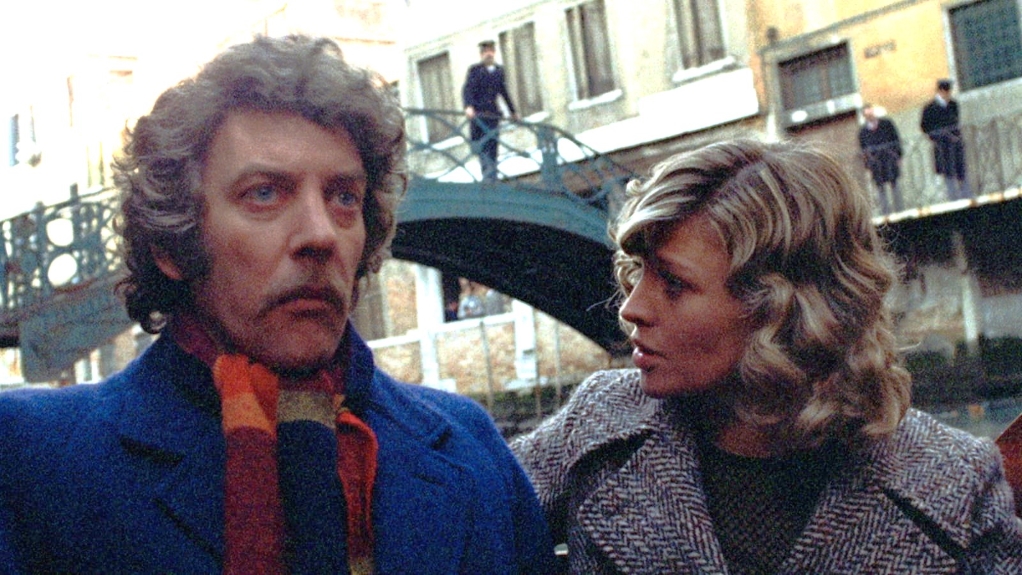
John (Donald Sutherland) and Laura Baxter (Julie Christie) are in Venice, a few months after the death of their daughter in a tragic drowning accident. John is busying himself at work restoring a church, Laura is looking for distraction from grief. Chance leads to a meeting between Laura and two mysterious sisters (Hilary Mason and Clelia Matania), one of whom claims to have second sight and to be able to ‘hear’ messages from the Baxter’s late daughter. Laura is desperate to believe, but John is resolutely unconvinced. But it’s John who starts seeing visions of a child in a red coat – a red coat just like the one their daughter was wearing when she drowned – and becomes increasingly troubled by strange coincidences and feelings.

Roeg’s stunning film is a masterpiece of atmosphere. Shot in vivid colours in a coldly intimidating Venice – which Roeg manages to make feel both beautiful and deeply, disturbingly unknowable and dreadfully intimidating. Don’t Look Now constantly unsettles and disorientates you, a gorgeous city hosting an insidious gothic mystery. It’s a masterfully edited film, that uses our ‘knowledge’ of the language of cinema to disorientate us, forcing us to form associations between images by juxtaposing them together (for instance, Roeg cuts from John casting doubts on the motives of the sisters to them laughing joyfully something that context makes us see as sinister).

The clue in Don’t Look Now is in the title – once we are told to look at something, we’ve got an overwhelming desire to stare straight at it. John’s mind is mind sending a plethora of subconscious warnings: but the more his mind says ‘don’t look’, the longer he stares. He should be picking up on the visual signals from Roeg’s extraordinary design: Don’t Look Now is awash in red. In almost every scene, splashes of striking crimson abound – from coats, to bags, to signs, to everyday objects, to blood – as if the film itself is trying to warn him (at one crucial moment, he even turns away from a street of green fronted shops and cafes, to charge down a street lined with red ones). Don’t Look Now is the tragedy of a man with great powers of intuition who comprehensively ignores them because it’s the rational, sensible thing.

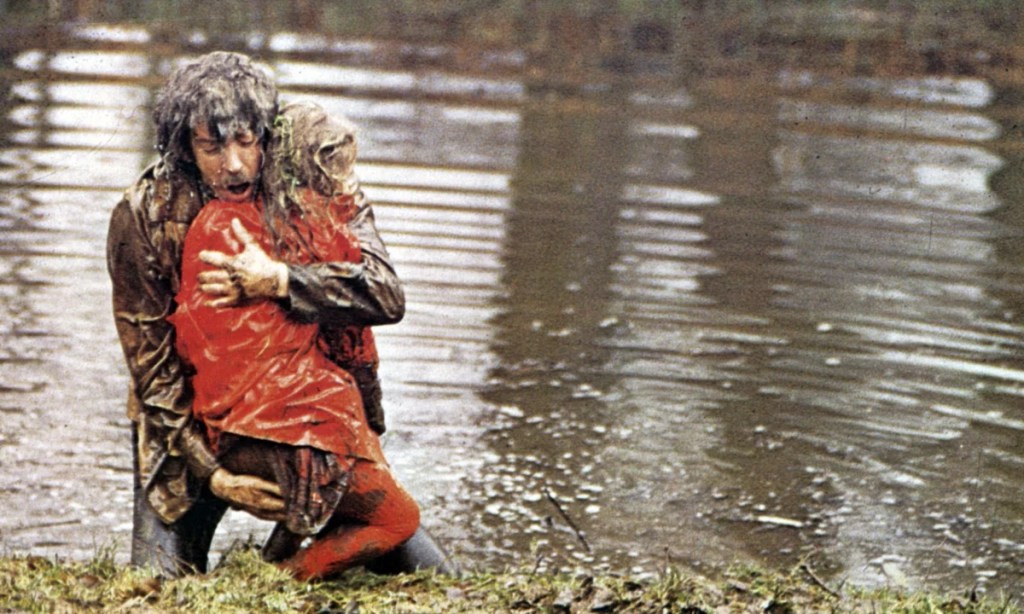
Already he has been warned of the dangers of ignoring his instincts. Roeg opens the film with the drowning of the Baxter’s daughter, while her parents rest indoors after a large Sunday meal. It’s a sequence of ominous, intense anxiety and terrifying, gut-wrenching impact as we cut back and forth between the daughter playing outside (with broken glass and lost balls floating on ponds), to John and Laura continuing casually talking while a slide frame of the Venetian church John is working on soaks in spilled water and the red of a girl’s coat in the image bleeds across the it (as much a prescient warning of John’s danger, as it is of his daughter’s). A distracted John is finally unable to resist the of danger he is feeling – racing instinctively to the pond, but too late to prevent tragedy.

The heart-rendering, raw pain as John fishes his daughter from the pond – the elemental roar from Donald Sutherland being almost unwatchable – caps a deeply affecting sequence in Don’t Look Now’s profound and tender study of grief and the strain it places on a loving relationship. Sutherland and Christie give beautifully judged, profoundly humane and sympathetic performances as shell-shocked people, barely able to process tragedy and looking for anything to distract them from the crushing grief that is hollowing them out. Grief in this wintery city is practically a third wheel in the relationship, an unspoken mix of regrets (and recriminations, Laura at one point blaming John’s lax rules for their daughter’s death) and barely expressed pain.

This doesn’t detract from the deep love they still feel from each other. Don’t Look Now’s (in)famous sex scene carries the erotic charge it does, because it genuinely feels like a long-married couple reconnecting physically, intimately familiar with each other’s bodies. Brilliantly, this sense is actually increased by Roeg intercutting from their love-making to their post-coital dressing, somehow the act of them half-watching each other put their clothes on being as loving as what they did before. Both have a deep desire to protect the other: John is distracting himself from his grief by ‘looking after’ Laura, while she re-focuses on an intense desire to protect her remaining family.

Laura at first feels the more vulnerable of the two: her emotions rawer (she collapses in distress after her first encounter with the sisters), her need for spiritual connection – either lighting candles in the Church, or desperately trying to believe she can communicate with their late daughter – much greater. It’s only when they are separated (after she rushes home to see their son after an injury at school) that the depths of John’s vulnerability and fragility become clear. Without her to distract him, he quickly seems to fall apart: becoming paranoid, increasingly fixated on possible disasters, ever-more obsessed with his glancing images of that girl in the red coat.

Roeg presents much of the world exactly as John sees it, and his masterful framing and editing of key moments and sequences both leave us in as much doubt about what is real as John is, suckering us into making the same mistakes he does. Again, our trust of how visual images are presented works against us, just as John misinterprets and misunderstands premonitions as events literally happening at that moment. It’s what lies behind his obsessive hunt for his ‘kidnapped’ wife, after seeing her on a boat on the canal hours after she flew back to England. Later events will demonstrate how disastrously he has misinterpreted these warnings.

John is drawn into an ever-more Kafkaesque nightmare (there is a lovely touch that, the more distressed John becomes, the more his Italian evaporates – in his element at the church, rebuilding frescoes, he’s fluent – at other times he can barely string a sentence together). A sinister police inspector – Roeg deliberately not correcting Renato Scarpa’s phonetic delivery of his English dialogue, making it unsettingly ‘wrong’ – seems sympathetic, but has John watched. The off-season city empties out (even the Baxter’s hotel closes), becoming a ghost town of echoey, identical streets which John hurtles down. The dark mystery of a serial killer haunting Venice becomes more prominent, concluding in the film’s horrifying reveal of what lies under that red coat, John realising all too late the skills of intuitive understanding that make him a skilled restorer of fragmented mosaics, was the same ignored intuition warning him of the dangers first to his daughter then himself.

Don’t Look Now is not only a masterpiece of atmosphere and superb editing and structure, it’s also Roeg’s most humane and tender work. It’s a deeply affecting portrait of a loving marriage struggling with grief – with extraordinary performances from Christie and Sutherland – and the way our longings combat with our rational mind to confound us. Set in a Venice that is eerily, ghostly and unsettling, it’s a haunting, powerful and superb piece of film-making.

A Real Pain (2024)

A Real Pain (2024)

Delightful and enjoyable character study, slight but very well acted by well-cast leads

Director: Jesse Eisenberg

Cast: Jesse Eisenberg (David Kaplan), Kieran Culkin (Benji Kaplan), Will Sharpe (James), Jennifer Grey (Marcia), Kurt Egyiawan (Eloge), Liza Sadovy (Diane), Daniel Oreskes (Mark)

Life is tough. David (Jesse Eisenberg), a new father and successful seller of internet advertising space, finds social situations incredibly challenging. They aren’t a problem for his cousin Benji (Kieran Culkin), an impulsive, charming but troubled man who sits somewhere on an undiagnosed spectrum. The two were once as close as brothers, but growing up (as far as you can say Benji has) led to them drifting apart. After their death of their Holocaust-surviving grandmother – who Benji felt was closer to him than anyone – they travel to Poland, as part of a Holocaust-themed tour group, to commemorate her.

Eisenberg’s film is a witty, heartfelt, sharply scripted character study that’s slight on plot, but works very effectively as slice-of-life film-making. A Real Pain isn’t about solving problems, but acknowledging them (or not). It looks at how challenging and complex life, with its different ages and the changes those inflict on us and those around us, can be overwhelming. Above all, it’s an involving and engaging exploration of the relationship between two people who could not be more different, but are (or were once) held together by deep, unbreakable bonds.

This is despite sometimes finding the other person both loveable and deeply frustrating. That best sums up Benji, a charismatic man who feels things very, very deeply – and doesn’t see any reason to filter those feelings. In a fabulous, magnetic performance, Kieran Culkin makes him a guy who is fun personified until he isn’t. Benji connects with the tour group in a way David can’t: at their first meeting he absorbs details about them with a passionate interest, he ropes them into confidences and larking around for photos, he makes them laugh. He’s memorable, fun and lights up a room.

But he’s also deeply troubled. There is clearly some form of mental health issue with Benji – anything from Tourettes to autism via ADHD. Benji is scrupulously, passionately honest all the time. Which is fine when he is joking around: much more of a problem when he explodes in a furious tirade about the dark-irony of a Jewish Holocaust tour-group travelling first class on a Polish train. His explosions of passionate, vigorous outrage often showcase his failure to understand basic social norms (those rules that govern how far we go when we are annoyed), meaning he often ends up pushing things like a five-year-old who doesn’t realise the impact of his words.

He’s a man who always displays what he feels: after visiting a concentration camp he literally shakes with uncontrollable sobbing; when he wants a moment’s reflection in a graveyard from tour guide James (an excellently restrained, very funny Will Sharpe) he’ll launch into a massively critical tirade about James losing the ‘real people’ behind a blizzard of historical facts. But, strangely, during this passionately felt but excessive tirade (which is excruciatingly embarrassing), he’ll be as equally genuine when he praises James’ tour as he was when lambasting the picture-postcard view of the Holocaust he feels the tour can get lost in. And you can’t help but feel that he has a point, that the link between tourism box-ticking and real historical life-and-death is a bit uncomfortable. But you probably wouldn’t express it at such awkward, skin-crawling length as Benji does.

Culkin’s performance has echoes of his role in Succession – Benji shares Roman Roy’s impulse control, bouncy lack of focus and disregard for what people think about him (although, unlike Roman, that’s more because he genuinely can’t seem to understand people might respond to stuff differently to how he would). But Culkin also mines Benji’s vulnerability and desperation for affection. He’s a loud, bouncy man because he’s terribly, deeply lonely. He frequently wraps David in affectionate laddish embraces as if he’s scared he’ll run away. He clings to the memory of his bond with his grandmother and is distressed at a casual statement from David that suggests it might not have been as close as he believes. He constantly keeps on the go, seeking out new people and experiences, because he’s clearly deeply distressed at the idea of being alone with his own thoughts.

It makes him a fascinating contrast with David, who seems at first more nervous and anxious than Benji but turns out to be far better adjusted – just forgettable opposite the electric Benji. It’s a great performance by Eisenberg, nervous, twitchy and flummoxed by the world. David behaves like most of us would: nervous about Benji’s exhibitionism, worried about what people think about him and anxious about the people he loves. Sure, there’s a bit of Woody Allen-ish comedy to David (the sort of guy who leaves innumerable voicemails whenever there is the slightest change to his travel plans), but he feels like a real guy trying to make the general pressure of life work.

And a lot of that pressure comes from what a joy and a burden Benji can be. Benji can make him laugh but no-one else, but who (as he confesses in a stand out, single-take emotional speech by Eisenberg) he switches between wanting to be him (who wouldn’t want to make friends that easily?) and hating him (who wouldn’t be frustrated by a guy as unpredictable as that?). But, above all, he’s anxious and worried about a cousin who can’t look after himself and secretly struggles the daily turmoil of real life. It’s a whole extra burden he’s carrying, worrying about what this unpredictable, troubled man might do to himself.

Eisenberg’s leans into a thematic idea that the responsibility to life a happy, pain-free life is even more pressure-inducing for Jewish people living in the shadow of these unspeakable horror. There are teasing moments where this processing a traumatic legacy among the mundane burdens of life, looks like it might drop into place – from the second generation American immigrant couple who feels it’s their duty to live a good life, to the Rwandan convert Eloge (very well played by Kurt Egyiawan) who finds a peace in Judaism he’s never found elsewhere – but somehow it never quite clicks into focus. 

A Real Pain is a film stronger on the small details than thematic big pictures.  It wonderfully stages this very male relationship, where both men focus on shared memories and banter so they don’t need to talk about real feelings. And it gives plenty to celebrate in this delightful character study of two complex characters excellently played by Eisenberg and Culkin (Eisenberg has written two perfect roles for actors with very specific ranges). It’s a very intimate character study that makes you think about how each of us try to cope with everyday burdens, packed with moments that will make you both laugh and think. Eisenberg but just be an even better writer-director than he is actor.

Ghost (1990)

Ghost (1990)

Romance and the afterlife come together in a very earnest, but rather endearing, mega-hit

Director: Jerry Zucker

Cast: Patrick Swayze (Sam Wheat), Demi Moore (Molly Jensen), Whoopi Goldberg (Oda Mae Brown), Tony Goldwyn (Carl Bruner), Rick Aviles (Willie Lopez), Vincent Schiavelli (Subway ghost)

The biggest smash hit of 1990, Ghost turned Demi Moore into one of Hollywood’s biggest star, transformed ‘Unchained Melody’ into one of the most popular songs of all time and turned pottery into a hobby everyone thought they should try at least once. You wouldn’t have predicted any of this when you were pitched Ghost, helping to explain why nearly everyone in Hollywood turned it down. After all who wants a romantic film where the hero is six feet under and ectoplasmic by the end of the first act? Throw in that the film was directed by Jerry Zucker, best known for a parade of spoofs, comedies and farces and the smart money was on a bomb waiting to happen. Guess again.

Sam (Patrick Swayze) and Molly (Demi Moore) are a loving couple, living in New York: she’s a sculptor, he’s a banker (the sort of contrasting professions only Hollywood romantic couples have). They have big plans for the future; plans cut short when Sam is killed by a mugger. But Sam doesn’t move on with the bright heavenly light. Instead, he sticks around on Earth, wanting to be near Molly and desperate to find out who killed him. Something that’s hard to do when he can’t touch or move anything and no one can see or hear him except other ghosts. Two things change his (after)life – discovering his murder was only the tip of a pile of shady dealings at his bank that puts Molly in danger and fake-psychic Oda Mae Brown (Whoopi Goldberg) who isn’t quite as fake as she thought.

Ghost is extremely earnest and surprisingly endearing. Despite what the doubters said, from Romeo and Juliet to Titanic nothing gets people invested in a romance more than a tragic end. Ghost merely reshuffles the deck by placing this death at the start, then explores the on-going grief of two deeply bonded people, wrenched apart. It mixes that with familiar romance tropes: it doesn’t let Sam’s demise get in the way of the old “he just can’t say I love you too” chestnut (a Han Solo-ish ‘Ditto’ is his preferred response), inevitably finding a way to flip this in a later plot point.

Sure, it’s easy to giggle at the soft-focus obviousness of the lovey-dovey material between Swayze and Moore, but you can’t doubt their commitment or their natural chemistry. The film’s ace-in-the-hole of ‘Unchained Melody’-sound-tracked pottery turning into earth-rocking rumpy-pumpy is parody-bait, but kind-of-works in its soapy earnestness in showing how much they hunger for each other’s touch. (You could say it can’t be that good since they seem to fly through foreplay to climax in the time it takes a not-that-long song to play). Both actors are quite under-rated: Moore is perfectly tender and fragile (she was partly chosen for her ability to cry on a six-pence) but also tough and determined when the situation calls for it, while Swayze charmingly develops his character from cocky junior-master-of-the-universe to a deeper, more rounded man after he ceases to be alive.

Having stressed so much their tactile love in the film’s first act, it makes the afterlife hit harder. In this film haunting has the potential for a being a dull chore (the rules of haunting here were wonderfully parodied in BBC’s Ghosts sitcom): ghosts are stuck in whatever clothes they died in (without all the blood), can’t touch anything in the real world and end up sitting around waiting for they’re-not-sure-what. Dead Sam carries on one-sided conversations, tags behind Molly when she drives places and watches time go by so slowly. Ghost captures rather well the weakness of this situation: Sam sees all sorts of danger unfolding for Molly, but there is literally nothing he can do about it (a desperate Swayze thrashing his hand through things trying to stop them, plays rather well).

Ghost gets some brief meta-physical fun out of the lack of logic in ghosts being able to walk through walls and pass their hands through objects but can sit in chairs perfectly fine and never sink through floors (basically, don’t ask, as also parodied in Ghosts). It even chucks in some mildly-disturbing POV shots of what it looks like to Sam as he walks through someone else (icky basically). You can’t keep a high-flyer down though and Sam masters ‘ghost skills’ after what seems like a few hours training from an unbalanced poltergeist (a wonderfully twitchy Vincent Schiavelli), allowing him to interact with objects in the real world (he basically becomes an invincible superhero – and the ease he masters this makes me wonder why every single ghost can’t put aside an afternoon to learn how to do it. They’ve got the time after all!).

Of course, you couldn’t make a film about a man who can’t talk to anyone. Ghost has a trump-card in the Oscar-winning Whoopi Goldberg, having a whale of a time in a terrific comic performance as a hustling fraudster who unknowingly turns out to be a real psychic, eventually pushed into helping Sam. Goldberg provides nearly all of the film’s laughs – and her mad-cap energy makes an excellent contrast with the earnest leads – with her fast-talking frustration at the constant stream of interjections she hears from Sam (making conversations with other people rather challenging). It’s a role with several comic set-pieces, not least a crowded séance full of ghosts desperate to be heard, but also with heart as Oda Mae becomes a better person despite herself.

She does this of course by helping Sam root out exactly why he was murdered. The reveal of Sam’s secret nemesis will be a shock only to someone who has never seen a film before. Of course, his even cockier colleague and best friend (played with a sleazy desperation by a marvellously weasily Tony Goldwyn) is behind the shady financial dealings Sam was uncovering. Just to hammer home how much we loath Goldwyn’s Carl, he’s also a whiner, a guy who loves flashing his cash and makes some none-to-subtle topless moves on our grieving Molly. How dare he!

Ghost builds itself to a neat final confrontation that proves surprisingly affecting in its honesty (dead means dead) and its optimistic view of the afterlife as a place where love still lives on. Sure, it’s a bit corny and its weakness for teary, soft-focus romance is easy to poke fun at. But you can’t argue that it doesn’t work: it’s romantic, sweetly played, funny when it means to be (Goldberg is excellent) and surprisingly optimistic and feel-good.