Category: Films about grief

Small Things Like These (2024)

Small Things Like These (2024)

Profoundly sad film of the impact of small acts, with a soul-searching lead performance

Director: Tim Mielants

Cast: Cillian Murphy (Bill Furlong), Eileen Walsh (Eileen Furlong), Michelle Fairley (Mrs Wilson), Emily Watson (Sister Mary), Clare Dunne (Sister Carmel), Helen Behan (Mrs Kehoe), Zara Devlin (Sarah), Mark McKenna (Ned), Agnes O’Casey (Sarah Furlong)

Sometimes the only hope for change, is that the balance of small acts of kindness outweighs the mass of indifference and blind-eye-turning. Claire Keegan’s acclaimed novella is about exactly such a moment. In the small town of New Ross, Wexford, just before Christmas in 1985, coal merchant Bill Furlong (Cillian Murphy) works hard to provide for his family and look out for those around him. Bill is struggling with insomnia, haunted by memories of his mother’s (Agnes O’Casey) death when he was a boy. One day he witnesses something unsettling at the local convent: a young woman (Zara Devlin) begging not to be left there. A few days later he arrives at dawn to find her locked in the coal shed. The Mother Superior (Emily Watson) assures him it is nothing to worry about and sends him on his way with a giant tip. But Bill can feel in his bones something is not right.

Small Things Like These is a sombre investigation of how an appalling scandal like the Magdalene Laundries could continue for years. The convent’s influence touches every inch of the town. Social life revolves around the Church and even organise the town’s Christmas lights. They run the school – with the Mother Superior heavily implying Bill’s actions will have a profound impact on his children’s educational prospects – and they are treated with awed deference from everyone. You slowly realise many people know things are not right at the Convent – but no one wants to rock the boat (Bill’s wife even begs him not to and the pub landlady warns him to put his own family first).

In a world like this, bad things flourish because people don’t want to put themselves and their loved ones at risk. People must hear the wailing of babies from the convent and decide to keep walking. It’s not just the convent: New Ross is full of people looking the other way to poverty and misfortune. Bill quietly does his best to help people – a generous Christmas bonus for his workers, a handful of whatever change he has to a young boy walking home alone – but even he can only look on in slack-jawed sorrow when he sees a shoeless child in the middle of the night drinking from a cat’s bowl.

Mielant’s film brilliantly captures not only the drab, gloomy atmosphere of this poor Irish town – every shot is soaking in shades of grey, brown and coal dust black – but also the grim sense of things constantly being watched passively from a distance. The film is awash of shots that frame events through doorways or at a distance, be it from across the street or in mirrors or reflections. Small Things Like These is an oppressive, claustrophobic film, largely taking place in dusk or night-time darkness, where things go unspoken and unconfronted.

The burden of inaction has had a huge impact on Bill, in a mesmerising performance by Cillian Murphy. Quiet, awkward and shy, Murphy makes Bill weighed down by an impossible burden of sadness. Large chunks of the film simply allow us to study Murphy’s face, and few actors can convey inner turmoil as beautifully as Murphy can. You feel there is a poet’s soul buried in Bill, in Murphy’s eyes haunted with an impossible melancholia: Murphy brilliantly embodies a quiet, decent man who knows the world isn’t right but is deeply torn about what he can do about it, while haunted by his own lingering childhood pain at witnessing his mother’s death and never knowing his father.

It’s interesting that this past is one of the most brightly filmed parts of Small Things Like These. Bill’s natural empathy towards the young woman he encounters at the convent – and his desire to care and provide for his own family – is rooted in his own past. Growing up without a father, the child of the maid of a wealthy family, we realise it is only due to an act of decency that Bill’s life developed as it did. As a single, unmarried woman, his mother could easily have ended up in the Magdalene Laundries herself, with Bill taken at birth to be fostered by strangers. It’s only the kindness of her employer (a tender Michelle Fairley) that saved him – though Bill still grew up bullied and mocked for his illegitimacy.

Perhaps Bill realises more the lucky escape he had, when confronted by Emily Watson’s chillingly authoritarian (under a mask of genial indulgence) Mother Superior. What would his life have been like if his mother had been crushed by someone like this fierce woman, resolute in her self-righteousness? Bill’s shame and guilt is superbly conveyed by Murphy as he leaves with a previously disputed bill settled in full (and then some) and a promise of future favours to come. The message is clear: this is how the world works and Bill should get with the programme.

That’s how wicked deeds flourish among decent people. Small Things Like These may spin an old-fashioned Edmund-Burke-inspired line, but it’s hard not to argue with its honesty, conviction and the air of impossible sadness that drips from every frame of it. At points it’s decision to leave so much unspoken does create more ambiguity than I think it intends. In particular, the music choices for some flashbacks imply shocking revelations that never arrive. Which are in fact utterly counter to the film’s eventual, slightly open-ended, reveal of Bill’s past (contrary to the more explicit book) but this a refreshingly quiet, thoughtful and meditative film (with a brilliant, grief-stricken lead performance) – that in its gentle way carries real emotional force but leaves you feeling hopeful.

Benediction (2021)

Benediction (2021)

Davies’ final film is a beautifully made, deeply sad, exploration of the long-term impact of trauma

Director: Terence Davies

Cast: Jack Lowden (Siegfried Sassoon), Peter Capaldi (Older Siegfried Sassoon), Simon Russell Beale (Robbie Ross), Jeremy Irvine (Ivor Novello), Kate Phillips (Hester Gatty), Gemma Jones (Older Hester Gatty), Ben Daniels (Dr Rivers), Calam Lynch (Stephen Tennant), Anton Lesser (Older Stephen Tennant), Tom Blyth (Glen Byam Shaw), Matthew Tennyson (Wilfred Owen), Geraldine James (Theresa Thornycroft), Richard Goulding (George Sassoon), Lia Williams (Edith Sitwell), Julian Sands (Chief Medical Officer)

Few generations carried scars as deep as that which saw millions of their fellows mown down in the endless bloody slaughter of World War One. For us, whatever understanding of the horrors of that conflict we have is often filtered through the war poets, who fought in unimaginable conditions. Terence Davies’ final film explores the life of Siegfried Sassoon (Jack Lowden, ageing into Peter Capaldi) whose life never escaped the shadow of those terrible sights and awful losses.

Benediction is a sombre, mellow, deeply sad portrait of a man who spent a lifetime searching for something, anything to fill the void the war had left in him. Following Sassoon’s life in a series of tableaux-style scenes that mix poetry reading, period music, news footage with flash-forwards to the tetchy, weary older man he will become, it’s a sad, reflective work that presents memory as a sort of prison that consigns everyone to a life sentence. Davies catches this beautifully in his stately, melancholic film where survival guilt goes hand in hand with bitter regret at missed opportunities.

It opens with Sassoon’s protest against the war – denouncing its content from his first-hand experience. Saved from the possibility of a firing squad by influential friends (chief among them, Simon Russell Beale’s good-natured Robbie Ross) Sassoon is dispatched to an Edinburgh military hospital to “recuperate”. There he meets and falls in love with the sensitive, shy poet Wilfrid Owen (Matthew Tennyson), a love he is scared to confess. After Owen is killed, Sassoon commits himself to a series of romantic relationships with selfish, bitchy men including Ivor Novello (a marvellously supercilious Jeremy Irvine, whose eyes are stone cold) and the shallow, vain Stephen Tennent (Calam Lynch, full of Bright Young Thing smugness, turning into a lonely, tragic Anton Lesser). As an older man, he converts to Catholicism and struggles to understand his son George (Richard Goulding).

Davies’ film posits a Sassoon who never recovered from grief at the death of Wilfrid Owen and could never truly forgive himself for being too timid to express his feelings. Davies films Sassoon and Owen in scenes that sing of unspoken intimacy, from an overhead shot of a swimming pool dip that feels like a pirouette, to the matching body language they exhibit while sitting watching a variety show at the hospital. They laugh and dance together, but at parting Sassoon cannot move himself beyond a tightly clasped handshake and a whispered urge to stay a few minutes longer.

In discussions with his doctor and friend Rivers (a lovely tender cameo from Ben Daniels), Sassoon tearfully talks of his fear of expressing his own emotions. Perhaps this, coupled with his self-blame, is why Sassoon placed himself in so many relationships with such transparently flamboyant shits? Davies certainly seems to suggest so: Sassoon had less fear of “being himself” when he was with arrogantly confident men like Novello and Tennant. Did he also, the film suggests, feel so crippled with regret and survivor guilt, that he couldn’t believe himself worthy of the love of gentle, decent men, such as the Owen-like Glen Byam Shaw (Tom Blyth).

Sassoon becomes a man who can never fully escape the never-ending hurt of memories. Even as an older man, Davies shows Capaldi’s Sassoon sitting in his garden, the background replaced by news footage of slaughter in the trenches. It’s mixed in with the shame Sassoon felt at his “stand” against the war being, in the end, a moment that changed nothing. Davies further paints his poetry as declining post-war, as if parts of his creative life never survived the shocks he experienced.

And always he hopes something might make him whole again. Sassoon races through these false dawns during the film: relationships with men, marriage to Hetty (Kate Phillips as the younger Hetty is nearly as oppressed with unspoken sadness as Sassoon), the birth of his son – all fail to deliver. So as an older man – in a neat CGI transition during a 360 camera move – Davies transforms Lowden to Capaldi as he tries Catholicism (there is another wonderful cut that takes us from young Sassoon’s silver military cross being dropped into a river, that transitions into the grey-suited older Sassoon lying in a crucifix position on the floor of a church).

But the tragedy of Benediction – and there is no denying it’s a deeply sad and even slightly depressing film – is none of these attempts fill his soul. The older Sassoon – sharp, prickly and with a stare that goes on and on from Capaldi – snaps at things he doesn’t understand, cruelly dismisses the older Tennant and bitterly complains at the lack of recognition his later work received. He’s a man desperate for companionship, but comfortable only on his own.

It’s particularly sad having seen the brighter, passionate and warm man he was. Much of Benediction succeeds due to an exceptional performance by Jack Lowden. Lowden brilliantly conveys Sassoon’s lingering depression and loss under the surface of every interaction. The cheery wit that covers the self-loathing that leads him into destructive relationships and painful situations is as well captured as the self-deceiving optimism he had that everything could be different. Lowden ends the film with an extraordinary emotional moment – filmed in tight one-shot by Davies – where we see, one the last day of the war, his impossible burdens lead him to a single, quiet, emotional outburst of the vast reams of pain that then continued to burn inside him for the rest of his life.

Benediction is about guilt, loss, regret and denying yourself opportunities at happiness and joy through an internal determination that it is not for you. There is something profoundly personal in this – Sassoon’s life in this film, mirroring many of the regrets Davies spoke of in his own life – a fact increased by the heartfelt, gentle construction of the film with its melancholic air and rich sense of empathy for its subject. As a final work, it’s a fitting tribute to both the poet and its director.

Martha Marcy May Marlene (2011)

Martha Marcy May Marlene (2011)

Durkin’s debut is atmospheric but not quite satisfying enough look at the danger of cults

Director: Sean Durkin

Cast: Elizabeth Olsen (Martha/Marcy May), John Hawkes (Patrick), Sarah Paulson (Lucy), Hugh Dancy (Ted), Brady Corbett (Watts), Christopher Abbott (Max), Maria Dizzia (Katie), Julia Garner (Sarah), Louisa Krause (Zoe)

When 22-year-old Martha (Elizabeth Olsen) surfaces after two years off-the-grid, seeking help from her sister Lucy (Sarah Paulson) and Lucy’s husband Ted (Hugh Dancy), they think she’s still the same slightly selfish screw-up she’s always been. But unknown to them, Martha has spent those missing years rechristened as Marcy Man in a patriarchal Manson-like cult in the Catskills run by charismatic Patrick (John Hawkes). As Martha attempts to readjust, she is haunted by flashbacks to the cult and a growing paranoia that her escape from Patrick’s clutches might only be temporary.

Durkin’s debut film is a masterclass in unsettling atmosphere. With its gloomy photography and stretches of unsettling silence, it never lets the viewer relax. Lucy and Ted’s luxury country house ends up feeling as unsafe and uncertain as the cult’s rickety farm. Well-handled cuts take us suddenly from present to flash-back – for example, a cut sees Martha dive from Ted’s boat to land in the waterfall near the cult’s farm. Auditory and visual transitions run throughout the whole film – Martha’s sleeping positions in the house suddenly mirrored in flashbacks, or food preparation in one timeline transitioning to the same task in the other. It makes everything feel as disjointed and jagged to us as it does to Martha.

This unsettling uncertainty, where the “safe” environment of Lucy and Ted’s house increasingly mirrors the unsafe world of the cult, is a neat way of suggesting the struggle of people like Martha to truly escape. It also complements a very effective, star-making turn from Elizabeth Olsen. At times hostile, Martha is just as likely to withdraw, Olsen showing her deeply unsettled by everyday acts like her sister combing her hair (an act reminiscent to her of the cult’s sexual abuse), or blankly not comprehending the society’s everyday rules. Desperate for reassurance, she still clings to the cult’s empty mantras, lashing out with furious venom when she feels vulnerable. It’s a soulful, damaged and delicate performance that carries much of the film.

Martha Marcy May Marlene captures the horrific, insidious manipulation of the cult. John Hawkes is very good as a quietly charismatic, intimidating man who, without ever raising his voice, controls every situation he is in through self-confidence and absolute certainty. The cult is firmly hierarchical, with Patrick at the top, men below and women at the bottom, serving the men – from cooking food (and not eating so much as a crumb until they are finished) to taking part in partner-swapping orgies watched by Patrick. All women are initiated into the cult through a “cleansing” ritual – being drugged by the other women, then raped by Patrick and they and the other members are brain-washed into pride at being “chosen” for Patrick’s wisdom.

Durkin leaves the nature of the cult deliberately ill-defined, in itself a comment on the shallow emptiness of these movements and the intellectual mediocrity of their leaders. When a row develops over dinner, Martha responds to the (admittedly smug) Ted by angrily parroting the cult’s empty, depth-free anti-money and anti-capitalist statements. The cult roughly follows the Manson Family playbook in breaking into homes and stealing (or worse) to fund its activities. Its main function is dehumanising its members, so they will think nothing of killing and abandon all personal boundaries. Martha still suffers from the latter: used to sleeping in communal rooms, she thinks nothing of wandering into Ted and Lucy’s room and lying down to sleep on their bed while they noisily have sex in the other half of it (they are not pleased, much to her bemusement).

There is good stuff here – which makes it disappointing that the film ends up, for me, feeling slightly unsatisfying. We get no real sense of what made Martha join this cult, or who she was before it sunk its claws into her. We also get very little sense of what made Martha decide to escape. The film suggests maybe her reaction to the murder of the owner of one of the wealthy homes they break into: but since the film later suggests that murder (and Patrick’s teaching that killing is somehow doing people a favour) is a fairly regular occurrence in the cult, this also feels unlikely.

The film also avoids really diving into interesting questions about readjustment and de-programming from traumatic experiences. For all it brings Martha’s PTSD to the fore, it doesn’t really show much development in either Martha’s feelings towards the cult or her understanding of her experiences. Now it’s true the road to recovery isn’t a straight line of narratively smooth continual healing, but a long, complex journey with many setback. But as a film, focussing solely on this part of her life ends up rather repetitive, like we’re struck watching just part of a longer story.

Durkin’s film is instead really a study of paranoia – Martha’s growing, unspoken, fear that the cult is coming for her and her family. But for those fears to really work, we need to feel the cult is capable of pre-meditated murder – the only killing we see is sudden and unprepared, other house entries showing the cult go to great lengths to be undetected. The film caps with a deliberately ambiguous sequence that may or may not be a mix of reality, chance, coincidence and Martha’s paranoid fears. But it’s a sequence that feels like it’s been created to conclude the film, rather than something that grows organically throughout, blunting some of its impact.

It’s a shame as there is a lot to like in this impressive, atmospheric debut, not least Durkin’s coldly unsettling direction, Olsen’s terrific performance and very good supporting turns from an exasperated-but-patient Sarah Paulson as Lucy and Hawkes’ dark, quiet charisma. But Martha Marcy May Marlene eventually boils down to telling you that being in a cult is traumatic, without really exploring the nuances of the struggle to overcome that or what pulls you into that situation in the first place. By focusing on paranoia, it feels like it tells only part of a wider, more interesting story.

Fanny and Alexander (1982)

Fanny and Alexander (1982)

Bergman’s gorgeous final film, a sublime family saga, that leaves you thinking for days

Director: Ingmar Bergman

Cast: Bertil Guve (Alexander Ekdahl), Pernilla Allwin (Fanny Ekdahl), Ewa Fröling (Emilie Ekdahl), Jan Malmsjö (Bishop Edvard Vergérus), Gunn Wållgren (Helena Ekdahl), Erland Josephson (Isak Jacobi), Jarl Kulle (Gustav Adolf Ekdahl), Allan Edwall (Oscar Ekdahl), Pernilla August (Maj), Mona Malm (Alma Ekdahl), Börje Ahlstedt (Carl Ekdahl), Christina Schollin (Lydia Ekdahl), Harriet Andersson (Justina), Stina Ekblad (Ismael Retzinsky), Mats Bergman (Aron Retzinsky), Gunnar Björnstrand (Filip Landahl)

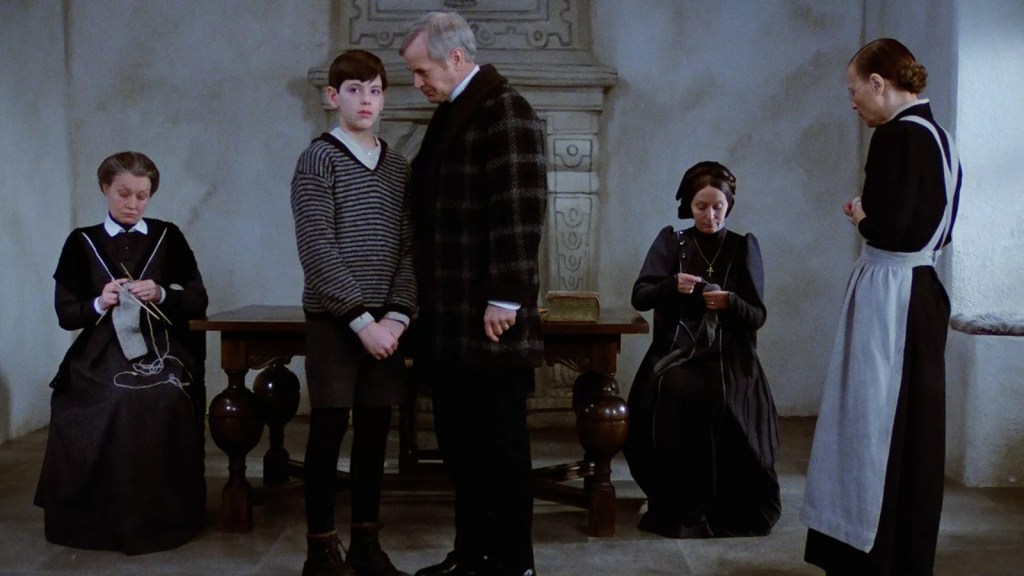
After many years (and masterpieces) Bergman wanted to move on from film: but before he went, there was time for one more magnum opus, a sprawling family saga that would throw a host of his interests (death, family, sexual openness, God, theatre, infidelity, the unknowable) onto one grand, sprawling canvas. Fanny and Alexander would be a truly personal film, featuring a young protagonist with more than a passing resemblance to Bergman himself. Despite this it’s an irony Bergman might like that the finest version of this film we have is actually a five-hour recut for television (the limits of run-time from distributors being one of many things Bergman was tired of). That version is a beautiful, life-affirming, gorgeous piece of film-making, an extraordinarily humane story tinged with the supernatural told on a luscious, Visconti-like scale. It’s a fitting sign-off from a master.

In 1907, the wealthy Ekdahl family live in a luxurious apartment block, their rooms filled with the rich detail of their love of art and culture. Ten-year-old Alexander’s (Bertil Guve) father Oscar (Allan Edwall) and mother Emilie (Ewa Fröling) run the Ekhdal theatre, where his wealthy grandmother Helena (Gunn Wållgren) once performed. After a fabulous Christmas celebration, Oscar dies after a stroke while rehearsing the role of the Ghost in Hamlet. After a period of mourning, Emilie remarries to the older Bishop Edvard Vergérus (Jan Malmsjö), who turns out to be a domestic tyrant, obsessed with the letter of religious and family law. Will Alexander, his younger sister Fanny (Pernilla Allwin) and their mother escape from Vergérus’ controlling clutches?

What really strikes you first and foremost about Fanny and Alexander is its gorgeous warmth – hardly the first quality you traditionally associate with Bergman. It opens with a prolonged (over an hour) Christmas celebration, with the family and their servants eating, laughing, telling stories and dancing through their gorgeously furnished apartment. It should feel indulgent (and I suppose it is), but this warm reconstruction of an at-times-flawed, but fundamentally loving and vibrant family is actually deeply moving and heart-warming.

The Ekdahls have a bohemian freedom, with their love of theatre and art (only Uncle Carl, a manic depressive businessman, feels slightly out-of-place and even he takes the children to one-side during the festivities to entertain them by blowing out candles with his farts). Their house is charmingly egalitarian, with the servants treated as part of the family, loyalty they return. The theatre troupe (led by Bergman regular Gunnar Björnstrand in his final, small, role) – are equally part of this extended family, the theatre a second magical home where the children take small roles in various productions and delight in the stagecraft and costumes behind-the-scenes.

Fitting a Bergman family (and the Ekdahl’s share some elements with parts of Bergman’s family) they are extremely forward-looking in their morality. Uncle Gustav Adolf (played with bombastic, gentle charm by Jarl Kulle) is a notorious ladies man, but goes about it with such innocence and near-childish openness his patient wife Alma (Mona Malm) indulges him because in all other respects he’s a loving husband and father, and his overall fidelity to her is never in doubt. Alma restricts herself to a single slap of his new lover, maid Maj, but otherwise treats her like a sister. Pernilla August is hugely endearing as this caring young woman, swiftly absorbed into the wider Ekdahl family who value her care for others. The Ekdahl’s have no time for conventional morality, led from the front by matriarch Helena (Gunn Wållgren is fantastic as this wordly-wise, ideal grandmother figure) who has lived a life of sexual openness with her husband and values people not societal conventions.

Oscar, their father (wonderfully played by Allan Edwall as a bashfully mediocre actor and a quietly shy but warm man) takes his role as the leader of this company very seriously, but with a light touch (modestly bemoaning his lack of statue compared to his father). Bergman uses a myriad of small moments to make this father an ideal parent, not least a late-night fantastical story he improvises for the children, spun around their nursery room chair, one of the most tender moments of parent-child bonding in the movies. (This despite hints that Oscar, who has allowed the younger, more sensual Emilie to conduct her own affairs, might not be their true father).

The stunning production and costume design (which won Oscars for Anna Asp and Marik Vos-Lundh) are essential for creating this immersive, rich and vibrant life: one which will be exploded in Dickensian tragedy by the death of Oscar and the arrival of the Murdstone-like Edvard Vergérus (played with chilling, smug hypocrisy by Jan Malmsjö under a fake smile) who is everything the Ekdahls are not. Where they are warm and egalitarian, he is cool and elitist, he is a prude with no regard for art and his home is in bleached-out puritan stone, devoid of personal touches – it literally looks like a different world to that we’ve spent the first few hours in, full of untrustworthy people (like Vergérus’ maid played by a wonderfully two-faced Harriet Andersson).

Vergérus is all about control, something we suspect from the start with his aggressively tender manhandling of Alexander, his hand slamming into the back of his neck. He worms his way into the affections of Emilie – a woman who, with her earth-shattering wails over the body of Oscar, is clearly vulnerable in her raw grief (Ewa Fröling is extraordinary as this gentle figure, prone to appalling judgement and unexpected strength of character) – and then sets out their marriage terms with controlling agendas, not least that in arriving in his house, she and her children must shed every inch of their previous life, from personal connections to the knick-knacks they have grown to love. He’s a poor advert for a God Alexander is already cursing for taking his father (his attic, filled with crumbling religious symbols, feels of a part of Bergman’s world where God is at best a passive observer, at worst a near malicious presence).

Bergman makes clear Vergérus is a man who genuinely believes he is doing the best for his family and that the moral lessons he hands out, at the end of a cane, to Alexander are essential. A weak man who mistakes bullying for strength. In many ways the fact he is not vindictive just weak and convinced of his own moral certainty (re-enforced by his fawning family, who treat him like a sort of prophet). Sure, he’s capable of anger, anti-Semitic slurs and little acts of cruelty, but Malmsjö shows him as a man who is trying, in his own wrong-headed way, to win the love of his adopted wife and children and can’t understand why he is not met with gratitude and love.

Perhaps it’s this sudden dropping into a cold world (one not dissimilar from Bergman’s own troubled relationship with his priest father – in fact you leave Fanny and Alexander wondering if Bergman hated his own father as much as Alexander who literally prays for his death) that so sparks Alexander’s own links to a mystic world around him. There is a rich vein of something other throughout Fanny and Alexander, from the statues Alexander watches move in the opening sequence (not to mention the haunting spectre of Death he witnesses in the same moment), to Oscar constantly appearing to Alexander like Hamlet’s Ghost. Is this haunting Alexander’s guilt at this failure to face his dying father on his deathbed, or a link to a world beyond our understanding?

After all Oscar’s Ghost greets Helena at one point, the two entering into a loving conversation. And he’s not the only supernatural touch around Fanny and Alexander. Family friend (and Helena’s lover) the Jew Isak (a rich performance by Bergman regular Erland Josephson) lives in a house full of mystic puppets that might be able to breath and walk. Isak perhaps uses magic to help smuggle the children out of Vergérus’ house (making them appear in two places at once), while his androgenous son Ismael (played by a woman, Stina Ekbad) is implied to having the spiritual power to channel Alexander’s hatred of Vergérus into actual supernatural revenge in the real world (another classic literary touch, that plays on spirituality and the Mad Woman in the Attic in Jane Eyre).

Fanny and Alexander is an extraordinary film, I feel I have only begun to scratch its surface here. It’s both a Dickensian family fable and a semi-benevolent Ghost story. It’s a family saga and a careful look at a particular time and place. It’s funny and moving. It really feels like one final mighty effort from a master.

Pan’s Labyrinth (2006)

Pan’s Labyrinth (2006)

Superb fantasy film, full of heart, visual imagination and beautiful story-telling, truly one from the heart

Director: Guillermo del Toro

Cast: Ivana Baquero (Ofelia), Sergi López (Captain Vidal), Maribel Verdú (Mercedes), Doug Jones (The Faun/The Pale Man), Ariadna Gil (Carmen), Álex Angulo (Doctor Ferreiro), Manolo Solo (Garcés), César Vea (Serrano), Roger Casamajor (Pedro), Pablo Adán (Narrator/Voice of the Faun)

What do you do when your world is terrible? Sometimes the only way to survive is to embrace your own world, even if that world has its own darkness and terrors. Guillermo del Toro’s masterful Gothic fairy tale mixes the terrors of Francoist Spain with one of untrustworthy magic and monstrous spirits and compellingly balances bleak horrors with the chance of hope. Visually stunning, thematically rich and heartbreakingly emotional, Pan’s Labyrinth is a Grimm’s fairy tale bought shockingly up-to-date, a uniquely heartfelt film from a distinctive director.

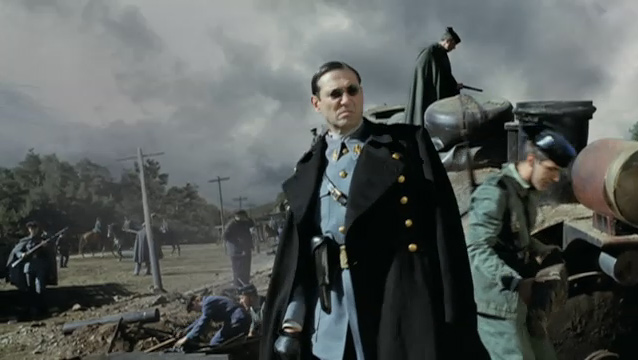
It’s 1944 in the woods of Spain and the Reds are still fighting their lonely crusade against Franco’s fascists. Captain Vidal (Sergi López) is here to stamp out these rebels and has summoned his heavily pregnant wife Carmen (Ariadna Gil) and twelve-year old step-daughter Ofelia (Ivana Baquero) to his distant command post so that he can be present at the imminent birth of his son. Ofelia hates the punctilious and coldly obsessive Vidal (rightly so – he’s capable of coldy indifferent but shocking acts of violence) and escapes more-and-more into her fairytale books. One night, she wanders into an old maze and encounters a Faun (Doug Jones), who tells her she is the long-lost princess of the fairy kingdom and must perform three tasks to return home. Ofelia now exists in two worlds: an increasingly Gothic fairy one of and a real one of violence, ruled by her monstrous father-in-law.

Pan’s Labyrinth is a beautifully balanced film of multiple interpretations. It’s never clearly stated whether Ofelia’s fairytale world is ‘real’ of a product of her imagination. It’s clearly a way a scared girl could process real world traumas – the death of her father, the appalling Vidal, the horrors of war around her – with many elements of the fairy world reflecting things happening around her. But on the other hand, the mandrake root the Faun gives her to help heal her sick mother by placing it under her bed has an immediate impact and Ofelia’s magic chalk and the labyrinth itself offer secret doorways that allow her to escape Vidal in the film’s final act (or perhaps a by then disoriented and drugged Vidal is just mistaken). Essentially, you are left to embrace the idea you prefer – much as it is implied Ofelia herself chooses the version of her life she wishes to embrace.

Choosing for yourself and not blindly following orders is one of the key lessons of Pan’s Labyrinth. The ‘real’ world of Franco’s Spain is full of regimented orders to be blindly obeyed without question. In this it has the collaboration of the Church – at Vidal’s dinner-party, a subservient priest self-satisfyingly fills his plate with food while shrugging off concerns of the starving poor – and Fascism echoes Church mantras (one of Vidal’s lieutenants repeats the same propaganda ‘prayer’ to Franco over-and-over again while he hands out the bread ration to the cowed villagers). Franco’s Spain is one of order and regimen, where individuality and choice is stamped out.

And there are echoes of this in Ofelia’s fantasy world. Played with a gentleness, vulnerability and strikingly earnest decency by Ivana Baquero, Ofelia refuses to accept the world must be the way it is (unlike her mother who has sadly accepted it must). But her fairy world, the Faun – expertly portrayed by Doug Jones’ lithe physicality – is a far from gentle guide. Creaking from the wood he is formed from, he’s sinister, mixes vague statements with subtly presented orders and constantly holds information back while presenting Ofelia with tight rules for her tasks. Just as Fascism takes choice away real world, the Faun presents Ofelia with a book that reveals the future (but only one page at a time) and her tasks increasingly demand complete obedience, under the threat of punishment.

This is not a comforting world. Ofelia – who at one-point wears costumes reminiscent of those other famous children in dark, surreal and dangerous fantasy-worlds Alice and Dorothy – confronts a vile toad and, most chillingly, an albino child-eater with eyes in his stigmata hands who lives in a room decorated with nightmare reflections of the real horrors of the 40s (most strikingly a Holocaust-reminiscent pile of children’s shoes). For all its fantastical, it’s also very much a nightmare version of a real-world that could have been dreamed up by a child processing horrors.

Pan’s Labyrinth celebrates individuality and choosing for yourself. Ofelia’s story is one of increasingly taking her own choices: from refusing to accept her mother’s new husband, to escaping into her fantasy world (twisted as it is), to finally outright refusing the increasingly dark instructions of the Faun. It’s in doing this that she can eventually prove herself a true hero, someone who does not accept the established order but can make her own decisions.

This makes her a contrast to Vidal. Truly he is one of cinema’s most loathsome monsters. In a superbly controlled performance by Sergi López, Vidal isn’t repulsive because he is a larger-than-life, sadistic monster but because he is a small, inadequate bully who has controls his small world in order to make himself feel important. Vidal is obsessed with order and detail – introduced tutting at the 15-minute-late arrival of his wife, his office is filled with the gears of the mill and he fetishistically cleans his pristine uniform, shaves himself and repairs his father’s watch. This watch – the only memoir he has of his hero father, who died when he was a baby – is the root of his obsessions, Vidal desperate to become his father and pass on his own toxic legacy of ancestor worship to his son. It’s striking that, as Vidal’s world collapses around him, his clothing and body becomes more and more scarred, bloody and disordered – his external appearance resembling the monster within.

In Vidal’s world everything fits neatly into place, governed by his Fascist ideology. Carmen – a fragile Ariadna Gil, struggling to accommodate to a world of harsh choices – is of interest to him only because of the baby she carries. He operates the mill as a tightly organised regime, in which the rebels are unwanted ghosts in the machine. He uses violence ruthlessly but as a tool, not with sadistic relish. He brutally beats a suspected rebel to death with a bottle with robotic indifference and tortures suspects with a practised patter. To him, everything is justified if it is obeying an order. So much so, that he literally cannot understand the refusal of Dr Ferreiro (in one of the film’s most moving moments) to blindly follow orders, no matter the consequences.

Dr Ferreiro (a beautifully judged performance by Álex Angulo) is one of two figures whose independent thought Vidal is unable to recognise, even when they are under his nose. His maid Mercedes (Maribel Verdú, one of the passionate hearts of the film) is fiercely independent, the sister of the rebel leader and working subtly against Vidal. She forms a bond with the gentle Ofelia while showing that refusing to be part of a blind system is a crucial part of humanity. She also provides possibly one of the most satisfying moments in cinema during a confrontation with Vidal.

Del Toro’s film beautifully balances these fascinating ideas of choice and independence within its brilliantly evocative design. It’s a beautifully shot film, in a gorgeous array of Velazquez-inspired tones, its moody darks and blues gorgeously captured by Guillermo Navarro while its design work is extraordinary in its texture and detail. But it’s a classic because del Toro’s superb creativity and quietly emotional direction. Pan’s Labyrinth makes us really care for this child just as it makes us despise the cruelty of her step-father. Combined with gorgeous design, del Toro’s film truly comes from the heart, a loving, very personal tribute to the power of stories and individual choices. The film is so powerful, you even forget that it opens as it ends, and that we know in our heart-of-hearts how this journey will finish. Nevertheless, Pan’s Labyrinth ends on a note of joy and acceptance so pure, it could only be from the fantasy world not the real one.

The Big Chill (1983)

The Big Chill (1983)

Heart-warming, engaging and moving ensemble drama, low-key and all the better for it

Director: Lawrence Kasdan

Cast: Tom Berenger (Sam Weber), Glenn Close (Sarah Cooper), Jeff Goldblum (Michael Gould), William Hurt (Nick Carlton), Kevin Kline (Harold Cooper), Mary Kay Place (Meg Jones), Meg Tilly (Chloe), JoBeth Williams (Karen Bowens), Don Galloway (Richard Bowens)

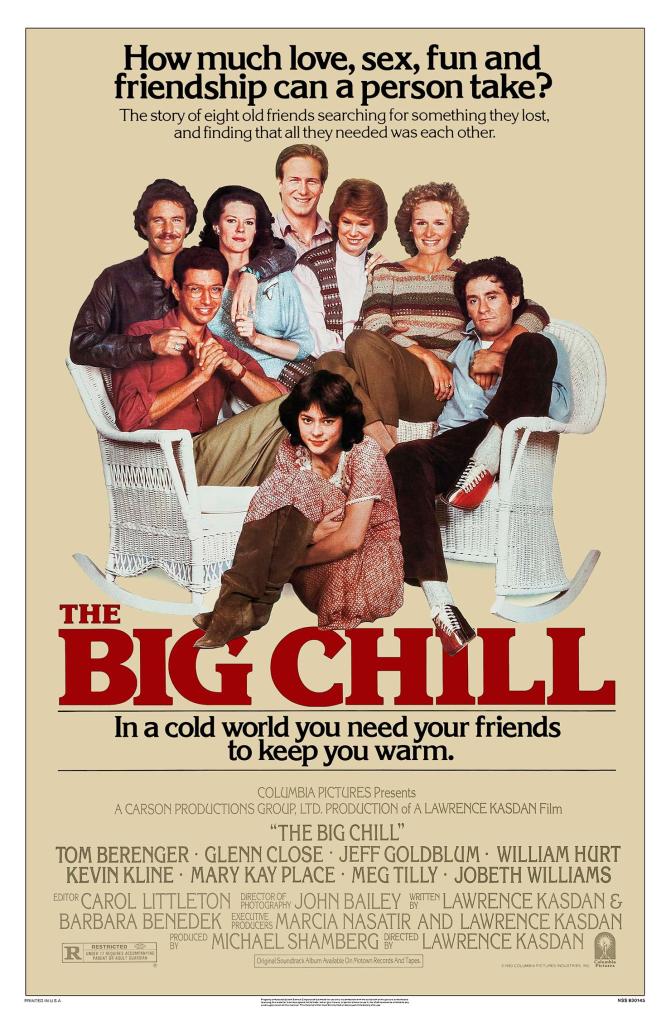
Growing up is hard, isn’t it? The older you get, the harder it is to cling on to the idealism of your younger days. The past can wind up feeling both very familiar and a very different country indeed. It’s something a group of thirtysomething college friends start thinking about when they gather for the funeral of their friend Alex (the famously cut-from-the-film Kevin Costner, seen only via close-ups of his hands and chest while being prepped by an undertaker). Spending a weekend together they reminisce, argue and remind each of why (and if they are still are) friends.

Kasdan’s sharp script, full of sparkling dialogue and rich (if at times familiar) character arcs attracted a smorgasbord of the cream of 80s American film acting, all of whom give fabulously relaxed, extremely genuine performances, largely devoid of grandstanding. The disparate range of career and life-choices the friends have made influenced an armada of ‘college-reunion’ stories, but it’s a trope that works because Kasdan knew it offered such a rich potential for drama.

The Big Chill is the definitive ensemble piece, delightful because it’s structured not around heavy-handed, overtly dramatic clashes, but everyday conversations full of observational humour and low-key emotional truths. There isn’t really a plot as such in The Big Chill: the pleasure comes from Kasdan pulling off the near-impossible trick of making us feel we have been invited to share the fun rather than watching, with our noses pressed up against the window, a film where the actors are having more fun than us. The Big Chill feels truthful, universal and eventually moving because it is so down-to-earth. We’ve all had social groups where we feel absolute loyalty and love for its members, while still being capable of finding them earth-shatteringly infuriating.

Most of them have traded their youthful idealism to change the world for a Reaganite cash-grasping. Sam (Tom Berenger) stars in a hit Magnum PI style TV drama. His former partner in left-wing politics Harold (Kevin Kline) owns a successful running shoes business (named Running Dog in a subtle pop at his own selling out) while his wife Sarah (Glenn Close) is a successful doctor. Michael (Jeff Goldblum) writes shallow celebrity pieces for glossy magazines, Meg (Mary Kay Place) has traded being a public defender for real-estate law. Karen (JoBeth Williams) wanted to be a writer, but instead married an ad executive Richard (Don Galloway).

All of them feel their late friend Alex represents the path they could have taken: a genius scientist who turned down all academic promotions to focus on social work and his old principles. Not that this seems to have made Alex happy. The most like Alex’s seems to be Nick (William Hurt). A former radio-psychiatrist, left impotent after Vietnam, who jacked in his career and is now a drifting drug addict. It’s never quite said, but you can feel the concern of the rest of the group that Nick feels destined to be the next funeral they gathering for.

Much of the tension comes from Nick – largely because he feels more willing to touch nerves the rest are happy to leave unprodded. This is a group that works hard to maintain harmony – after all, Sarah’s affair with Alex hasn’t dented Harold’s genuine grief or his love for his wife, and no one else wants to address it. But there are clear tensions and resentments under the surface: small grudges or irritations many perhaps coming from that uncomfortable feeling of the group seeing their own self-recriminations reflected back at them in their friends faces.

Nick is the only one who raises the scary spectre that decade-old events hold this group together, not their lives today. If they all met for the first time now, would they even be friends? Nick is also willing to take pot-shots at their tendency to self-pitying regret and to provoke the romantic and sexual tensions the others are happy to keep unremarked or compromise on. (Even Jeff Goldblum’s seemingly provocative Michael, avoids trouble by scrupulously taking nothing seriously.)

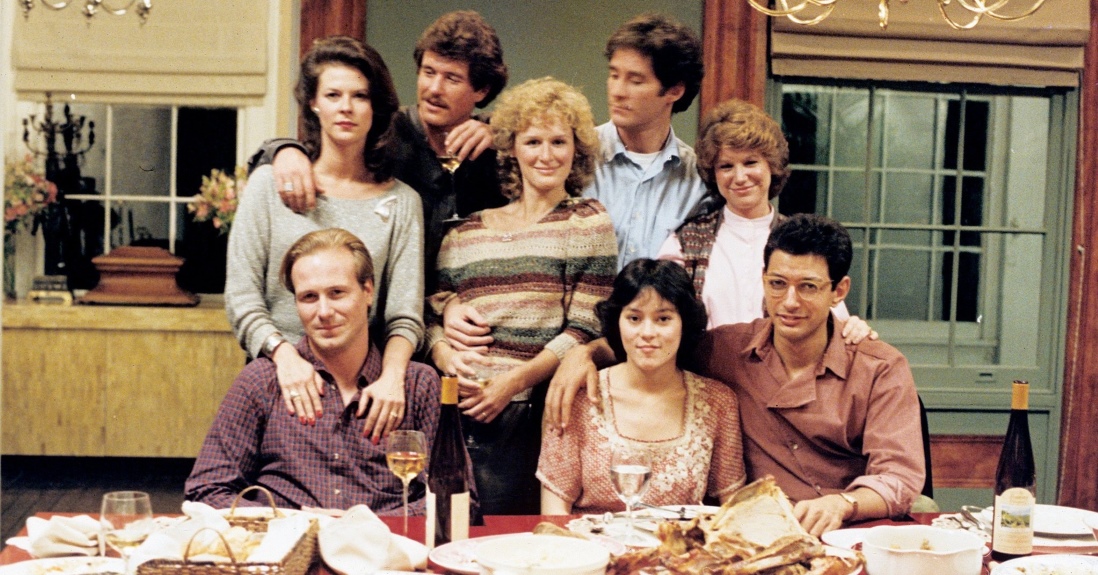
What makes The Big Chill such a lovable film, despite this, is this doesn’t fracture the group but are islands of tension within a sea of genuine friendship and warmth. Kasdan’s insistence that the company spend a longer time than usual in rehearsal – famously the cast cemented their chemistry via an almost five-hour, Mike Leigh-style, in-character improvisation, involving cooking and eating a dinner together – paid off in spades. They genuinely feel like life-long friends, sharing in-jokes, teasing each other, looking out for each other and making generous offers of help.

There is a lot to laugh at because it feels so universal. We’ve all mucked around with friends while cooking and cleaning. When the group gather to teasingly cheer along with the opening credits of Sam’s cheesy TV show (to his good-natured embarrassment) it makes us laugh because we recognise the affection. The hilarious absurdity of Harold, Nick and Sam chasing a bat out of the attic feels real. Just as the emotions hammer home – Harold’s grief in his eulogy for Alex, Sarah’s tears at a meal, Nick’s tragic middle-distance gloom or Karen’s private ennui among her friends.

It’s all helped by superb performances. JoBeth Williams is excellent in, arguably, the film’s most challenging role, deeply unhappy with where her life has gone, wanting to pretend she can seize the day but not having the conviction to see it through. Goldblum is drily witty but distant as the group’s closest thing to an outsider, Berenger affectingly modest at his sell-out success, Place quietly desperate as a woman whose body clock is ticking down. Kline is very funny and sweet as a man desperate to help those around him, while Close in the flashier (and Oscar-nominated) part as the group’s nominal ‘mother figure’, far more deeply affected by Alex’s death than she is willing to let on.

Perhaps best of all is Hurt, vulnerable, gentle and quietly lost as Nick, his pain manifesting itself in occasional bear-prodding outbursts, but who will quietly apologise the next morning with a gentle, unremarked hug. He also forms a warm and genuine bond with Alex’s younger girlfriend Chloe, played with a sparky energy by Meg Tilly, who (not surprisingly) sees a lot of Alex in him.

Kasdan’s film gently explores the tensions of a group of adults unsure about where their life has taken them, but it does so in a warm and charming structure that makes us really care for the characters all of whom are expertly and humanly drawn. It’s lack of explosive melodrama is a large part of its success, helping ground the film as something relatable that we can feel a real bond with.

Cries and Whispers (1972)

Cries and Whispers (1972)

Bergman’s heart-rendering, challenging and compelling family drama: a slice of raw pain

Director: Ingmar Bergman

Cast: Harriet Andersson (Agnes), Ingrid Thulin (Karin), Liv Ullmann (Maria), Kari Sylwan (Anna), Anders Ek (Isak, the priest), Inga Gill (Aunt Olga), Erland Josephson (David), Henning Moritzen (Joakim), Georg Årlin (Fredrik)

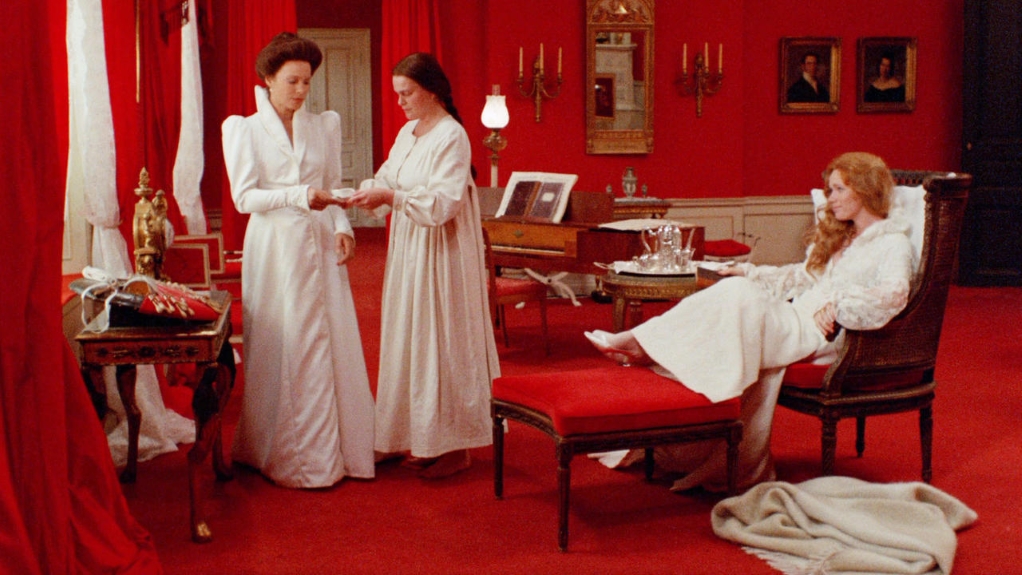
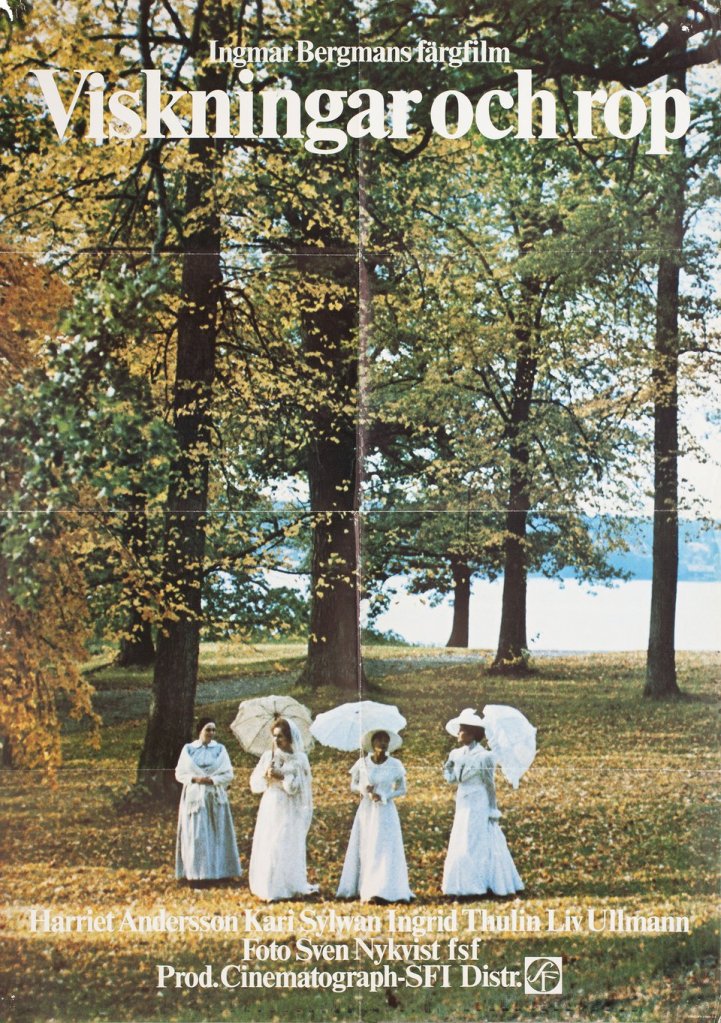
It came to Bergman in a dream: a red-lined room, where four women dressed in white whisper intimate secrets to each other. It became one of his most elliptical, horrifying and haunting films, a cryptic puzzle about life and death, faith and despair, love and hate, sex and violence and almost every human experience in between, all filmed within an imposing (and beautifully shot) red-walled house that turns more-and-more into a nightmareish Satre-style trap. Cries and Whispers sits alongside Persona as one of Bergman’s most successful reaches for the sublimely unknown and if it doesn’t quite touch Persona’s astonishing mastery, it’s remarkable by every measure.

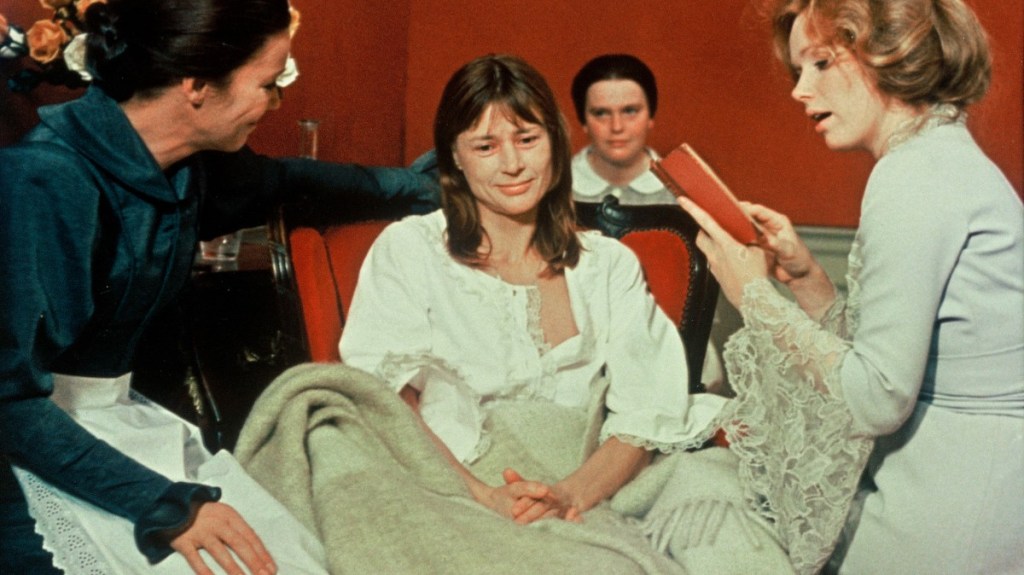
Two sisters gather to nurse a third as she goes through the final days of a long, painful illness. Karin (Ingrid Thulin), the oldest, is professional, distant and repressed; Maria (Liv Ullman) the youngest is sensual, flighty and slightly selfish. The dying Agnes (Harriet Andersson) yearns for love and affection, but is a natural outsider. Agnes is most devotedly cared for by the maid Anna (Kari Sylwan), a young woman who lost a child a few years ago. As Agnes’ final days approach, all four mull on life, their decisions and choices, each trying to grasp some understanding about the great mystery of life.

Cries and Whispers feels like a savage slash of raw pain. Perhaps no other film in Bergman hits like such a punch to the gut. In this red-lined house, everyone is silently screaming behind the whispers (literally so in Agnes’ case, the film opening with Harriet Andersson writhing in wordless agony on her bed for an almost unbearable shot held for almost four minutes). All four of these characters are carrying mountains of disappointment, despair and disillusionments on their shoulders, none of them able to see a way out of the constant grind of simply struggling through existence. You could argue that Agnes has the easiest path in death.

The overbearing red walls – not to mention the fades to ‘red-out’ that seem to drown out the faces of the four women as each stares into the camera before their own memory or dream is staged by Bergman – begins to feel increasingly like a trap. The lack of natural light adds even more to the sense that this is taking place in some sort of prison or oppressive womb, cooking up traumas. There doesn’t seem to be any escape from this pressure-cooker atmosphere (rather like the claustrophobic trappings of The Silence and Persona), with reality starting to fracture and dissolve.

It becomes clear there are decades of unspoken tensions between the three sisters. Karin and Maria seem to be tending for their system more out of duty than love: Maria sleeps through her watch, while Karin feels like a dutiful professional rather than a loving sister. There is precious little sense of intimacy between them. So much so, that both sisters will utterly reject (in a late dream sequence that topples into a nightmare) even the hint of tenderness or contact with the deceased Agnes (Maria will run, screaming, at the very idea). It’s the same between Maria and Karin, who seemingly have nothing except blood in common.

But then they could hardly be two more contrasting women. Liv Ullman is superbly multi-layered as a woman who feels at first flirtatious and light-hearted but emerges as manipulative and selfish with a rich vein of self-loathing, compensated by a malicious pleasure in hurting other people. Her sexual fascination with Erland Josephson’s aloof doctor is based less on his qualities and more on his frank deconstruction of her physical flaws, accentuated by the deep pain and distress the affair causes her husband. Similarly with Karin, she alternates between reaching out to in shared sisterly closeness, then denying she ever felt or said such things a day later.

Like other Bergman films there is dark implication of incest in the relationship between Maria and Karin. In their moments of reconciliation, their physicality (all stroking and kissing) stinks of sexuality, their unheard whispers incredibly suggestive. Is this a foul secret what that has made Karin so deeply disgusted by physical intimacy? This is after all a woman who (in a flourish where I feel Bergman goes too far) cuts her vagina with a piece of glass and defiantly smears the blood over her face in front of her husband to prevent him from claiming his conjugal rights.

Ingrid Thulin is extraordinary as Karin, a deeply repressed woman utterly bereft in the world, who secretly yearns for closeness and contact. She seems though to have a very little idea how to build emotional bridges with people, her manner reserved and cold, unable to even treat the dying Agnes as anything other than a duty. If Maria quietly delights in making people feel bad and is disturbed by feelings of warmth, Karin is unable to even begin to arouse feelings of any sort from other people. She lives in an isolation that has left her deeply unhappy.

Strangely, Agnes herself might even be the happiest – and she’s dying. Agnes is the only person Bergman allows to narrate her own flashbacks (the other three are all introduced in voiceover by Bergman himself). Beautifully played by Harriet Anderson as a woman full of hope, despite the appalling pain of her illness, she is a strange beacon of contentment. The priest at her wake (a beautifully delivered monologue from Anders Ek) even confesses he cannot help but question the strength of his own faith compared to the spirituality of Agnes. What sign is there of God in this world when he punishes with such excruciating pain the purest person in the film?

Harriet Andersson’s performance is not only almost unbearably in its raw physical commitment to pain, but also a quietly moving in its emotion. Agnes is a woman longing to be closer to her sisters – envying Maria’s closeness to their mother as a child (the mother is also played by Liv Ullman) – feeling closer to her mother only when observing her in solitary moments of pain. Her happiest memory is of the three sisters as adults, contently laughing together on a swing. This willingness to embrace love – always a matter of key importance to Bergman – singles her out from the two-faced Maria or the repressed Karin.

It also explains the link to Anna, played with a quiet observance by Kari Sylwan. Frequently silently, moving through the frame or performing duties, Anna is the only person in the house who categorically loves and respects Agnes. It’s she who cares for her, who tends her, nurses her through her pain and most readily responds to her desire for closeness. There is, in fact, a hint of sexual familiarity between the two – it’s very possible to imagine them as lovers. Do Agnes’ family recognise – and envy – that breach of distance, that leads them to offer only the smallest reward for her service and a curt dismissal after Agnes’ death?

Or are Anna’s motives as clear cut and noble as they appear? Grieving the (clearly relatively recent) death of a child, perhaps Anna uses Agnes to fill emotional holes in her own life. Her dream-like fantasy of Agnes’ after death rotates around Anna taking almost complete possession of her deceased mistress, dismissing the sisters and cradling the dying Anna in a pieta like grasp that resembles a mother and child rather than lovers. Is Anna desperately using this moment of death, just as Karin and Maria do, to fulfil longings in herself?

All these ideas are superbly explored in Bergman’s beautifully paced and powerful work, like the best of his films a hauntingly intriguing and challenging work that lingers long in the mind after it finishes. With four very different, but extraordinary performances, at its heart it may at times be a little too intellectual and Bergman may at times go a little too far, but for its extraordinary exploration of raw, vicious pain it can be hard to beat. A challenging but extremely necessary film.

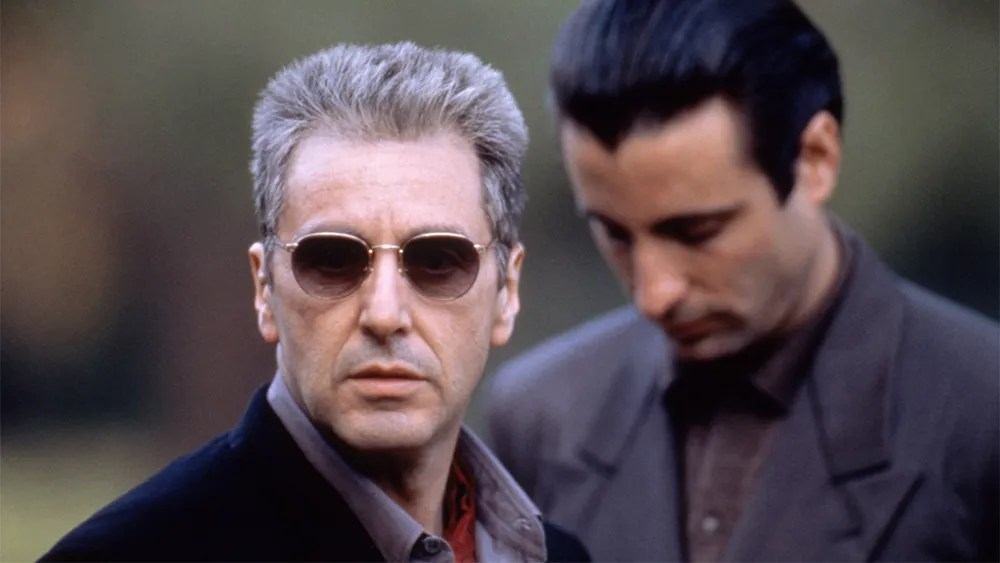
The Godfather Part III (1990)

The Godfather Part III (1990)

The third film in the series is a decent effort – but pales in comparison to the others

Director: Francis Ford Coppola

Cast: Al Pacino (Michael Corleone), Diane Keaton (Kay Adams-Corleone), Talia Shire (Connie Corleone), Andy Garcia (Vincent Corleone), Eli Wallach (Don Altobello), Joe Mantegna (Joey Zasa), George Hamilton (BJ Harrison), Bridget Fonda (Grace Hamilton), Sofia Coppola (Mary Corleone), Raf Vallone (Cardinal Lamberto), Franc D’Ambrosio (Anthony Corleone), Donal Donnelly (Archbishop Gilday), Richard Bright (Al Neri), Al Martino (Johnny Fontane), John Savage (Father Andrew Hagen), Helmut Berger (Frederick Keinszig), Don Novello (Dominic Abbandando), Franco Citti (Calo)

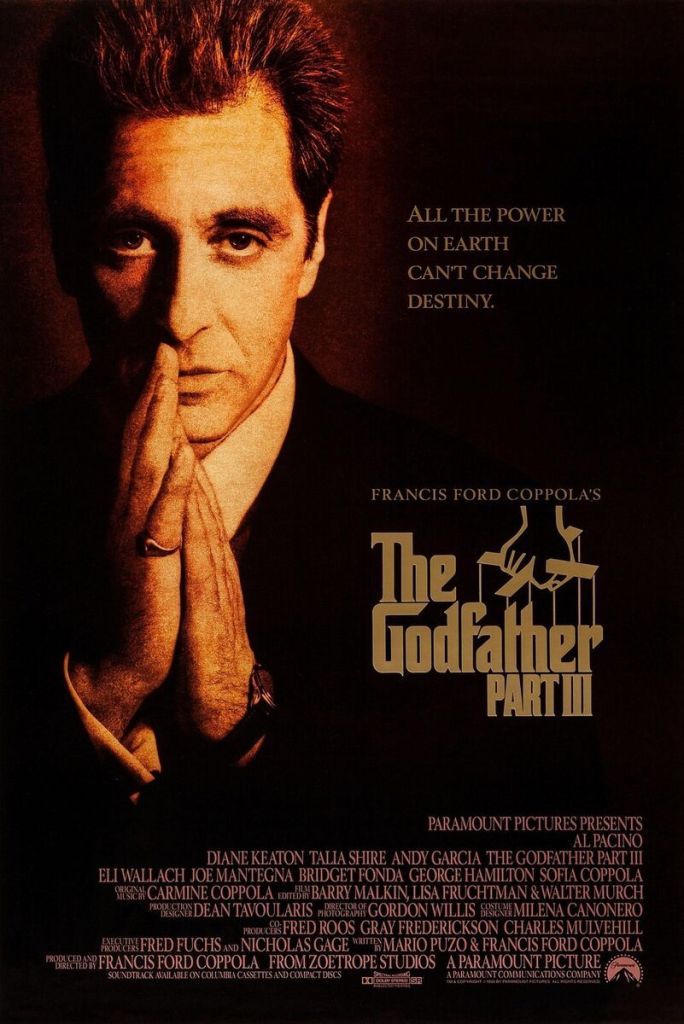
Coppola wanted to call it The Godfather Coda: The Death of Michael Corleone. He got his wish decades later with a belated re-edit release. But at the time, the studio wasn’t having it: this would be a full-blown Third Part to The Godfather. Problem is, those are some very big shoes to step into and The Godfather Part III wasn’t the genre-defining masterpiece its predecessors was. Instead, it’s a decent, melancholic gangster film with touches of King Lear. However, when you are following the sublime being “pretty good” winds up looking like “pretty awful”. The Godfather Part III became the infamous “fuhgeddaboutit” chapter in the saga, the one for completists and those who watch out of duty. On its own merits its fine, but perhaps it was a doomed venture from the start.

It’s 1979 and Michael Corleone (Al Pacino) has aged and mellowed. All his life he’s talked about getting out, and now it seems he finally has. He’s set up a charitable foundation, he’s been honoured by the Vatican and is rebuilding relationships with his children: daughter Mary (Sofia Coppola), now head of his foundation and son Anthony (Franc D’Ambrosio), an opera singer. Even Kay (Diane Keaton) is speaking to him again. Michael is grooming Vincent (Andy Garcia), illegitimate son of his brother Sonny, to take over the reins of the crime family. But then, they drag him back in. Bailing out the Vatican Bank, Michael finds is double-crossed by a collection of Euro-banking crooks, corrupt Church leaders and rival Mafiosi. Will he survive the dangers a return to Sicily will bring?

The unspoken secret of The Godfather is that everyone was always there for the money: they just also had something to prove the first two times and the fire in their bellies to turn gangster grist into cinematic beauty. Fast forward 15 years later, and there hangs an air of “give the studio what it wants” about Part III, coupled with a willingness to rest on laurels. Coppola agreed to do it because his last few films were bombs and he needed the money. Pacino demanded – and got – a massive sum. Keaton coined it. Robert Duvall asked for $1.5 million, didn’t get it and walked. Coppola agreed to turn the script around in lightening time to rush the film to the screen for the inevitable box-office and awards bonanza. No one involved really did the film for either love or passion.

Coppola’s script, written to a deadline, is torn awkwardly between two plots, neither completely satisfactory. His interest lies with the question of whether absolution (of any sort) for Michael is possible. This is the film Coppola wanted to make, but it keeps losing ground though to the other, a complex conspiracy thriller, riffing on real-life events in the Vatican. This conspiracy is frequently dense, difficult to follow and (frankly) not particularly interesting as it trudges through Papal politics and investment banking, seeming existing to provide faces for the inevitable violent montage of inventive hits.

A Part III that zeroed in on Michael himself, his guilts and shame, would have been both distinctive and unique. But The Godfather Part III fudges this. Crucially, the Michael we see here – for all he would have mellowed with age – feels very different from the cold, buttoned-down, calculating figure from the first two. Pacino – perhaps remembering the pressure of Part II that left him exhausted – invests it with more “hoo-hah”. This twinkly Michael, smiles to hide his regrets – when you feel, in reality, years of pressure would have turned him into even more of a murderous Scrooge. I also can’t believe he would be this close to his now adult children. Pacino embraces the moments of raw pain when they come, but this character just doesn’t quite mesh with his previous performances (and his hair looks just plain wrong).

The rushed production further fatally holed this personal plot below the water-line. Duvall was originally intended to serve as the film’s ‘antagonist’, the film planned as a very personal battle between the last two ‘brothers’. Duvall’s departure ripped the heart out of this script, his role redistributed between George Hamilton’s anonymous lawyer, Talia Shire’s Connie (now turned inexplicable consigliere) and Eli Wallach’s treacherous Don Altobello. None of these make any real impact. Rushed production also meant Winona Ryder dropped out of the crucial role of Michael’s daughter, Coppola taking the (disastrous) last-minute decision to cast his daughter Sofia instead.

Sofia Coppola has suffered more than enough from lacerating reviews of her performance (the level of vitriol poured on her is shocking to read today). Let’s just say, while a great director, she is no actor. But then, neither really is Franc D’Ambrosio playing her brother. Both children never become either interesting or dynamic presences. Since their relationship – and the flowering of it – with Michael is crucial to the film’s emotional impact, it’s a fatal flaw. No matter how hard Pacino works, these scenes just don’t ring true. There is no sense of decades of anger and resentment. The drama seeps out of the family scenes and Mary becomes such a flat and two-dimensional character that her impact on the other principle characters never engages.

Sofia Coppola similarly struggles in her romantic scenes with Andy Garcia, again despite his best efforts. Garcia is the best thing in the film, full of cocksure confidence and instinctive cunning, channelling the best elements of Sonny and Michael into a character we’d dearly like to see more of. His facing down of two murderous home-invading hoods is the film’s most memorable moment while Garcia also does excellent work charting Vincent’s slow acceptance of the tragic sacrifices – the killing of parts of your nature – that being ‘the Godfather’ demands. Diane Keaton is also excellent as a far more seasoned and stronger Kay than we’ve seen before.

The Godfather Part III has several fine moments, even if it never coalesces into anything more than a decent film. Coppola restages with assurance and poise versions of previous scenes from the saga – a Little Italy festival assassination, Sicilian countryside violence, an assassin surreptitiously moving through a quiet building, Kay closing a door by choice, the montage of killings – mixed with large scale moments (a helicopter attack on a crime boss meeting is the film’s most ‘action moment’). He works really hard to channel a sense of melancholy: Michael is crippled with diabetes, plagued with guilt for his brother’s death, running to stand still and do the right thing. Pacino’s strongest moments are these moments of rawer emotion: his cloister confession to the future Pope is a masterclass in letting simmering pain suddenly rush to the surface.

But The Godfather Part III always feels like a perfunctory re-heat of key moments, not quite mixed successfully with a redemption (or lack of) tale. This film needed to be a more sombre, focused story about an army of chickens coming home to roost. It needed a stronger sense of Michael desperately scrambling to bring back together the family he was so desperate to protect that he destroyed it. Instead, it’s torn between recapturing old glories and being hampered by fudged attempts to provide emotional depth, linked to a poor structure, unfortunate casting choices and lack of focus. It’s not a bad film – but it is not a great one. And for the third in the greatest series of all time, that wasn’t good enough.

Maestro (2023)

Maestro (2023)

Well filmed and acted Bernstein biopic, that doesn’t really get to the heart of its subject

Director: Bradley Cooper

Cast: Carey Mulligan (Felicia Montealegre), Bradley Cooper (Leonard Bernstein), Sarah Silverman (Shirley Bernstein), Gideon Glick (Tommy Cothran), Maya Hawke (Jamie Bernstein), Matt Bomer (David Oppenheim), Vincenzo Amato (Bruco Zirato), Michael Urie (Jerry Robbins), Brian Klugman (Aaron Copland), Zachary Booth (Mendy Wager)

You can’t fault his ambition. In bringing the family life of legendary composer, conductor and cultural icon Leonard Bernstein to the screen, Bradley Cooper pulls out all the stops in a medley of inventive staging mixed with single shot trust in actors. Maestro is, in many ways, a perfect capturing of Bernstein: dazzling, giddy film-making that never lets you really peek into its subject’s soul. It’s a hugely impressive sophomore effort, but not quite fully satisfying as a film.

It opens with the life-changing night in 1943 when a 25-year-old Leonard Bernstein (Bradley Cooper) stands in (with no rehearsal) to conduct the New York Philharmonic at Carnegie Hall for a packed crowd and millions listening on the radio. From there, Bernstein never stops his ascent, becoming one of the world’s leading conductors and a composer who triumphs in every genre. He also marries successful actress Felicia Montealegre (Carey Mulligan), in a marriage full of mutual love and support. But Bernstein is the epicentre of his own fame, whose primary sexual attraction is to men. Over the decades, his marriage bends, fractures and reforms as Bernstein’s numerous affairs and party-filled lifestyle increasingly alienate the loyal Felicia.

Maestro is shot with all the zest and energy Bernstein himself was full of. Cooper keeps the pace the brisk and frequently transitions between scenes with a bravura trust that we can keep up. We see Bernstein receive the phone call for that fateful stand-in performance in his apartment: jubilant, he runs out the door (stopping only to playfully slap the bottom of his lover David en route), the camera taking an angle above to watch the pyjama-clad Bernstein run through a series of halls and emerge into the auditorium of Carnegie Hall.

It’s one of several transitions that mix reality and fantasy. Felicia will turn around from Leonard, during a flirty date in an empty theatre, to stride forward to applause from a packed audience. Felicia and Leonard run from a snobby garden party straight into a theatre (again with an overhead shot tracking them in a single smooth cut) where dancers from On the Town pirouette on stage as a visual representation of Bernstein explaining his work, the dancers eventually luring Leonard, Felicia and several other characters into an impromptu ballet. It’s a playful mix of reality and fantasy. At other times, the film skips years in seconds, successes dizzyingly referenced in throwaway lines.

The film’s focus is Leonard and Felicia’s complex, multi-layered marriage. Two people, in many ways soulmates, deeply stress-tested by Leonard’s frequent selfishness. Cooper, in a remarkable physical transformation (his capturing of Bernstein’s voice, mannerisms and conducting style is faultless) makes the composer a force of nature, high on his own genius: garrulously charming, a man who can focus all his attention on one person as easily as he can absent-mindedly drop another. The sort of man who excitedly introduces his fiancée to his lover David (a sensitive Matt Bomer) and then abashedly apologises immediately after for springing the news on him.

It’s part of the message of that On the Town ballet: living with Bernstein is a never-ending, dizzying pile of social engagements that doesn’t stop ever. Felicia feels she is ready for that: but the drift of Bernstein’s primary emotional commitment away from her and towards protégé Timothy Cothran (Gideon Glick) deeply hurts her. It’s part of Bernstein’s increasing lack of care to at least pretend to keep his promiscuity under semi-wraps, including awkwardly dismissing unspecified “rumours” that have distressed his daughter Jamie (Maya Hawke, very good) as nothing more than “jealousies”.

As Felicia, Carey Mulligan delivers what might just be a career best performance. Luminous, she makes Felicia savvy, loving but realistic about the “sacrifices” loving Bernstein involves. It’s a marriage where she is often in Bernstein’s shadow – at one point literally so, a shot showing Bernstein’s giant conducting shadow dwarfing Felicia in the wings. Mulligan’s performance mines deep emotional depths, Cooper frequently showcasing these in long, still takes. Most strikingly, a dynamite argument in New York after the opening of Bernstein’s Mass plays out in one visceral shot as Mulligan conveys the release of years of tension, in angry home truths. She is also heart-breaking during the film’s affecting chronicle of Felicia’s cancer, another striking single-shot scene showcasing Mulligan’s skill at letting all pain play behind her eyes while talking to visiting friends.

Maestro is about the underlying strength between these two who always turn to each other at hours of need or emotional triumph. Felicia’s successes on stage are shared with Bernstein, while it’s she who accompanies him (after their unofficial split) to his ground-breaking Mahler concert in Ely (another virtuoso sequence, directed and acted by Cooper with aplomb). Bernstein abandons his career – and all other relationships – to nurse Felicia, their bond finally something that could not be shaken by his thoughtlessness.

However, Maestro fails at times to really show how this relationship buckled. The giddying speed with which it moves through events means the middle act and, in particular, the sense of Bernstein’s numerous affairs gets lost. When Felicia finally does erupt, it’s easy to think it’s due to one late night and Bernstein holding his lover’s hand during the Mass premiere, rather than years of slow emotional distancing. It’s one time when a montage, stressing the repetitive nature of Bernstein’s self-obsession, would have really made a positive impact.

It’s also a film that focuses so much on the relationship, it leaves Bernstein himself a curious enigma. Strangely, despite sampling Bernstein compositions throughout the film, its almost as dismissive of his musical theatre work as it implies Bernstein himself was. West Side Story gets barely a passing mention, On the Waterfront is bundled up with “film scores” and almost nothing of the rest of his work is placed in any form of context. The epic Mahler concert in Ely is brilliantly restaged, but its artistic importance never explained and it’s easy to come out of the film not really appreciating either Bernstein’s cultural or musical impact.

Instead, Bernstein remains somewhat of an enigma, a charismatic figure who, for all the excellence of Cooper’s performance, remains a showman we never get to really know, someone capable of great care and intimacy (he’s extraordinarily tactile) for people, but also keeps them (and us) at a distance. The affairs have a veil tastefully drawn over them. There is very little overtly gay content in Maestro, which feels a conservative choice.

It’s hard not to think at times Cooper is more focused in Maestro on demonstrating his own directorial invention and pushing himself to never go for the obvious shot. Maestro is a dazzling dive into the playbox of film technique – it changes in aspect ratio and colour stock to reflect the cinematic era (though an odd decision for a film about a composer, that never explores his connection to cinema) and offers a host of interesting visual compositions and daring long-takes. Cooper and especially Mulligan are superb, but it’s a film that perhaps leaves more questions in the mind. A dazzling piece of film-making, but not always a dazzling piece of story-telling.

The Sixth Sense (1999)

The Sixth Sense (1999)

Shyamalan’s opus has just enough to reward re-watching after the world learned its secret

Director: M. Night Shyamalan

Cast: Bruce Willis (Dr Malcolm Crowe), Haley Joel Osment (Cole Sear), Toni Collette (Lynn Sear), Olivia Williams (Anna Crowe), Donnie Wahlberg (Vincent Grey), Glenn Fitzgerald (Sean), Mischa Barton (Kyra Collins), Trevor Morgan (Tommy), Bruce Norris (Mr Cunningham)

Does this film have the most famous twist of all time? M. Night Shyamalan’s opus is so dominated by its final reveal (look away now) that Bruce Willis was is in fact a ghost, that every single viewing of it afterwards is focused on watching every second and seeing if you can spot the joins. I’m not sure if that has made for a long shelf-life or not for The Sixth Sense, an otherwise surprisingly sweet Stephen King-ish story of a child coming to terms with a miraculous power. Is there much more to The Sixth Sense by a third viewing though – can the magician’s trick land a third time?

I’d say just about. A year on from the shooting of famed child psychologist Dr Malcolm Crowe (Bruce Willis) by a former patient he failed to help, his traumatised wife Anna (Olivia Williams) has stopped speaking to him and Malcolm needs redemption. Could he find it with the case of troubled ten-year-old Cole Sear (Haley Joel Osment). Cole, despite his obvious good nature, is frequently moody and terrified by curious incidents. His mother Lynn (Toni Collette) despairs as Cole seemingly refuses to talk to her. Can there be truth in Cole’s belief that he can see, and talk with, dead people?

The Sixth Sense has the reputation of a supernatural chiller. But, bar a few jump scares as ghosts walk across screen to sudden, loud musical notes, it’s actually a far more gentle story. In Shyamalan’s world the ghosts are not malevolent or cruel – they are simply confused, lost souls (of course “some of them don’t even know they’re dead”) with unfinished business. They are, in other words, rather like the rest of us – and Cole’s realisation of this is actually rather sweet.

This humanity is the real triumph of the film, helped enormously by the untricksy care Shyamalan unfolds his story with. While almost every film he made since teetered from disappointment to disaster (with ever more desperate attempts to recapture the rug-pull zeitgeist to ever diminishing returns from increasingly savvy audiences), The Sixth Sense is a reminder of the road not taken. If Shyamalan had focused on small-scale, intimate character dramas like this he could have had quite the CV. His camera work is careful, often unobtrusive, gentle in its slow, immersive movement and he backs aware almost entirely from fast cutting. The Sixth Sense is really a spooky fairy tale.

It also creates an environment for four impressive actors to tackle four challenging roles. From Olivia Williams, whose marvellously detailed performance of utterly naturally not reacting goes a huge way to maintaining the film’s delicate tightrope to the (Oscar-nominated) Toni Collette, who superbly channels deep motherly love and pained helplessness under a blowsy exterior.

Bruce Willis (who only took the film on under contractual obligation) gives possibly his finest performance here. Suppressing his natural cocksure confidence into suppressed confusion and guilt, he convinces as an expert plagued with self-doubt. It’s a quiet, expressive performance that’s a tribute to the acting chops Willis had when he was moved beyond smirks.

It’s also a very supportive performance that helps bring the best out of a gifted child actor. Haley Joel Osment carries a large chunk of the film. He’s vulnerable and scared but also older than his years, alternating between the innocent excitement of a child and the weary reflection of a much older man. He creates a character you both want to comfort and also cheer for his growing strength. Shyamalan works with both actors to continually subtly shift the power balance between them without ever showing the film’s hand.

Because, of course, Cole knows the truth from the start – no one is better at spotting these things than him, and his unwillingness to speak to Malcolm within ear shot of others (such as during their first real consultation while his mother prepares dinner in the kitchen) speaks volumes. No wonder he keeps shooting him those looks of pity and concern which we, at first, interpret as fear.

You can’t escape that the film’s pretence, on repeated viewing, demands the viewer to reach some tenuous conclusions on how Ghosts operate. I think there is just enough there to suggest – from the sudden appearance and disappearance of ghosts – that they operate like we do in a dream, suddenly finding themselves in places with no memories of how they got there. They can move some objects, but only if they allow themselves to “see” them. They imagine what their own appearances are (the film implies Malcolm always appears in his blood soaked shirt to Cole, it’s just we see Malcolm’s perception of himself as a suited psychiatrist) and are subconsciously drawn towards people who can see them or who they have unfinished business with. The pretence just about sustains itself.

But is there more to the film than that? Pleasingly – and a little to my surprise – there is. While The Sixth Sense is more spooky than terrifying, that’s because it’s a film where helping and caring for people is the answer. No matter how horrific looking the ghosts seem, they are really scared people looking for help. This realisation – and the way Cole seemingly decides to commit his life to helping them – is actually extremely affecting. It’s a basic message of not judging a poltergeist by its cover, that really works.

It’s these beats that really work on a second or third viewing. I would trade the whole “he’s a ghost” twist for that gorgeous final scene between Collette and Osment in a car, where he finally confesses and shares a family secret from the grave to Collette’s initial confusion, anger and then emotional release. It’s a beautiful scene (it surely nailed Collette an Oscar nomination) and is the finest moment of Shyamalan’s career. It also shows the heart of the film – this is a parent-son film (with two parents), that’s about learning to love and accept. Everything else is really just set-dressing.

The magic trick (and Shyamalan hints at the sleight of hand he’s pulling by having Malcolm perform a similar distraction trick) may lose its mystique, but it then allows you to focus on the emotion that made you care about the trick in the first place. And, let’s be honest, the emotional heart is really what made the film a phenomenon. Any film can have a rug-pull twist – but it only really connects if people already cared about what they were watching. The Sixth Sense focuses on making sure we invest and it’s that which makes the film last, when all the glitz of the trick has faded.