Category: Films about grief

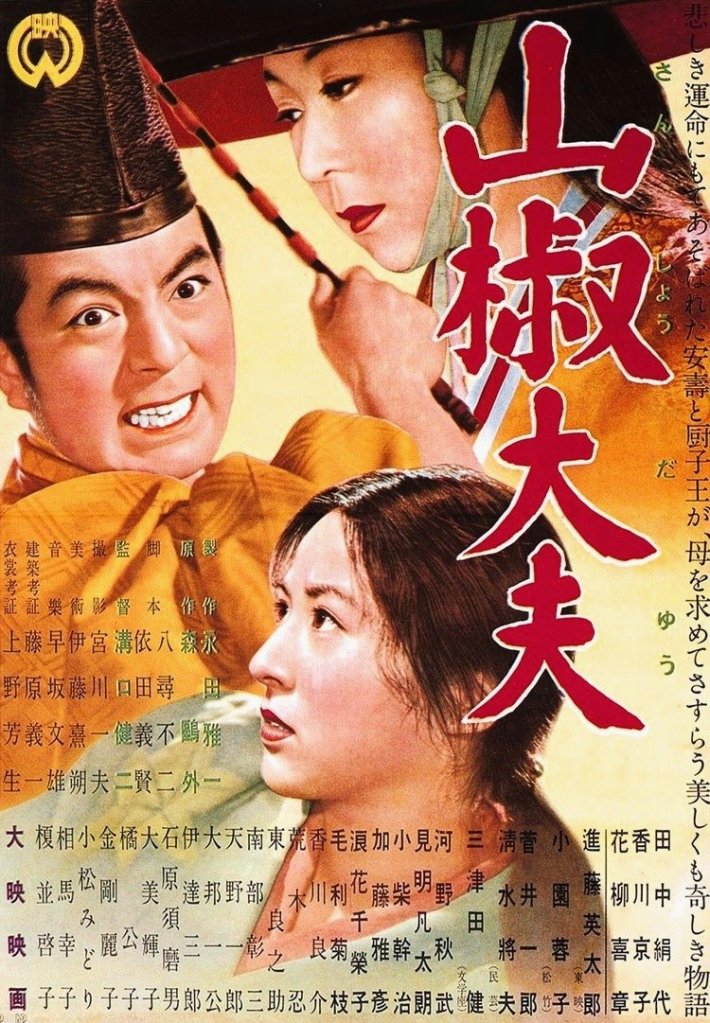
Sansho the Bailiff (1954)

Sansho the Bailiff (1954)

Mizoguchi’s masterpiece, a stirring, humane fable tinged with the tragedy of the real world

Director: Kenji Mizoguchi

Cast: Kinuyo Tanaka (Tamaki), Kyōko Kagawa (Anju), Eitarō Shindō (Sanshō the bailiff), Yoshiaki Hanayagi (Zushiō), Ichirō Sugai (Minister of Justice Niō), Ken Mitsuda (Fujiwara no Morozane), Masahiko Tsugawa (Zushiō as a Boy), Masao Shimizu (Taira no Masauji), Chieko Naniwa (Ubatake), Kikue Mori (Priestess), Akitake Kōno (Tarō), Ryōsuke Kagawa (Donmyō Ritsushi)

You could imagine the lead characters of Sansho the Bailiff as Hansel and Gretel. There is a fairy tale quality to Sansho the Bailiff, combined beautifully by Mizoguchi with a throbbing humanism. Imagine a fairy tale named after The Wicked Witch of the Gingerbread House then spliced with the trauma of captivity. Mizoguchi’s film is a gorgeous, deeply moving and heartbreaking fable, that yearns for us to hold to our inner goodness but shows the terrible struggle to sustain this in a cruel world and the terrible costs we go through for glimmers of hope.

Based on an old Japanese folktale, an eleventh century feudal official is unjustly dispatched into exile. He leaves his family with a mantra: “without mercy, man is a beast. Even if you are hard on yourself, be merciful to others.” A few years later, while travelling, his wife Tamaki (Kinuyo Tanaka) and children are tricked and sold into slavery. Tamaki becomes a prostitute on the island of Sado, her children slaves on the estate of the brutal Sansho (Eitarō Shindō). As young adults, the son Zushiō (Yoshiaki Hanayagi) has buried his humanity as a cruel overseer but his sister Anju (Kyōko Kagawa) still clings to hope and her father’s principles. Can Zushiō’s principles be reborn, despite the brutality of their surroundings?

Mizoguchi’s film is a masterpiece on man’s capability to inflict suffering and cruelty, most particularly on women. Although full of qualities of a classic folk tale, Sansho the Bailiff is grimly realistic and unflinching about the suffering that slavery can inflict and remarkably unblinking in the human cost escaping from such a world can be. There are no fairy tale endings in Sansho, no clear victories, no satisfying conclusions. For every flash of hope, there is the grim realisation of the cost others have paid to achieve it. In particular, women carry an appalling burden of sacrifice.

The family is cruelly invaded in Sansho suffering a double separation – first the other members from the father, then the wrenching separation of mother from children. Shot throughout with a calmly controlled focus by Mizoguchi, with long takes combined with carefully controlled angles that frequently give a terrible distance to events, making the viewer feel powerless to prevent them. Tamika – played with extraordinary humanity and depth of emotion by Kinuyo Tanaka – suddenly understands what is happening and responds with a desperate struggle (which sees her faithful servant unceremoniously dumped off a boat to drown) while her children struggle hopelessly on land. Superbly subtle editing and framing that stresses distance (placing mother and children at opposing ends of the frame in alternate shots) only add to the sense of a family being torn apart.

This is as nothing to the grim world of Sansho’s estate. Slaves who do not work are beaten. The children are thrown into a shack and bluntly told to work or die. Anyone attempting to escape the estate is brutally branded. Old retainers at the end of their working life are expelled to die in the hills. Even Sansho’s son Tarō (Akitake Kōno) can’t bear life on the estate, refusing to brand recaptured slaves (much to the contempt of his father) and leaving for a life as a priest. Mizoguchi wants to show us a world where humanity has no concern for its brothers and sisters. Later we will see no one in power really gives a damn about the morality of estates like Sansho.

In this environment, the son gives up and makes the sacrifices he needs to survive. He becomes dead-inside, forgetting his father’s words and killing his humanity, the man Tarō refused to be. He will brand a recaptured slave (an old man who welcomed him on his arrival years ago) without a second glance. Yoshiaki Hanayagi’s eyes are dead, his spirit a curled animal which has forgotten itself. It’s his sister Anju, beautifully played with sensitivity and hope by Kyōko Kagawa, who clings to their past life and the belief that they can return to it.

To make that return, it’s Anju who will make terrible sacrifices. Sansho the Bailiff is awash with the cost of the world’s cruelty and lack of humanity on women. Tamika is torn from her children, her faithful servant drowned. On Sado, Tamika’s desperate attempt to escape and find her children sees her dragged back to the brothel and hamstrung to prevent her trying again. The dream of seeing her children again – captured in a beautiful sequence as she hobbles to the top of a cliff and sings notes of her sad song of longing for her children – becomes almost a curse, a continual beating on a bruise that will never heal, a longing others will taunt her with.

Memory lies through Sansho the Bailiff like a golden thread. Moments of quiet nature remind Tamika of her husband. His words will be constantly repeated by his family, the last-remaining link to an old life and principles that feel impossible to sustain in their new one. To close your mind to memory and the past, as Zushiō does, is to kill part of yourself. Tamika’s song of yearning is a new memory link. These memory links are strong – they have to be to try and sustain us.

And the words of her song travel. A new slave in the estate speaks of the sad song, to Anju’s delight – finally contact of a sort with her mother. In a moment of magical spiritualism, the words Tamika sang on the cliff seems to travel across the wind to be heard by her children at their lowest point. Zushiō in particular seems to wake from a deep sleep, and suddenly finds the humanity he had so brutally repressed. Mizoguchi shoots these moments with the same affecting simplicity – but it’s that carefully composed, painterly minimalism that gives them such huge power.

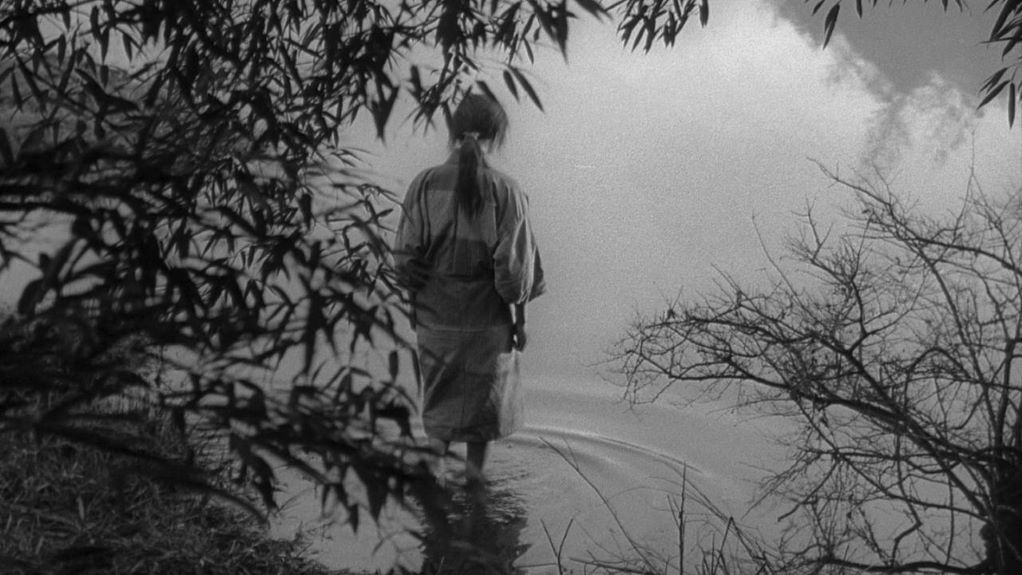
This powerful minimalism is nowhere more effective than Anju’s supreme sacrifice (the fate of women in Mizoguchi’s world). Giving Zushiō the chance to escape, Anju becomes aware that torture for knowledge of where her brother went is inevitable. With serene certainty she walks into the river to drown herself, moving with a sense of freedom she has not known for years. In a single shot we see her walk until Mizoguchi cuts away then back to show bubbles calmly rising to the surface of the water. It is an act of love, stunningly simple and hugely moving – and apiece of a world where freedom and any trace of goodness can only come about through irreversible sacrifices.

Like a folk tale Zushiō is restored to his father’s office, but finds he can make few changes. Slavery is abolished at Sansho’s estate – but the system cannot really be changed. The slaves know this to – they take their chance to sack the estate, aware that fortune’s wheel could return them once again to servitude. Sansho learns nothing from the events, and the suspicion is the next governor will pardon him (after all he brings more revenue in than anyone else). Sansho is the real world and he is inescapable – so much so he even owns the name of a film in which he is a minor player.

It builds towards the final conclusion on a windswept beach, perhaps one of the most heart-rending moments on film. In a Western film, this would be a scene of joyful reconciliation in which two damaged people heal through sharing grief. Mizoguchi had lived through the horrors of war and knew this would have been a lie. Reuniting doesn’t wash away the pain or heal the wounds – physical or spiritual – and doesn’t change the world. It’s just two people on a beach, clawing towards a moment of peace in a difficult world.

Sansho the Bailiff is clear-eyed and realistic about a world where people hurt each other and care nothing. Told with a classic, artistic simplicity, it is both a deeply moving and deeply spiritual piece, a great humanistic artist making his ultimate statement on the nature of the world. An essential film.

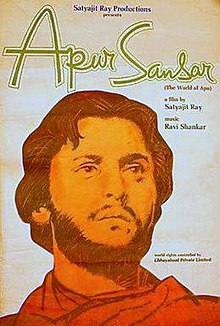
Apu Sansar (1959)

Apu Sansar (1959)

Satyajit Ray’s trilogy comes to close with another masterfully done small-scale story of hope and loss

Director: Satyajit Ray

Cast: Soumitra Chatterjee (Apu), Sharmila Tagore (Aparna), Alok Chakraborty (Kajal), Swapan Mukherjee (Pulu), Dhiresh Majumdar (Sasinarayan), Sefalika Devi (Sasinarayan’s wife), Dhiren Ghosh (Landlord), Tusar Banerjee (Bridegroom), Abhijit Chatterjee (Murari)

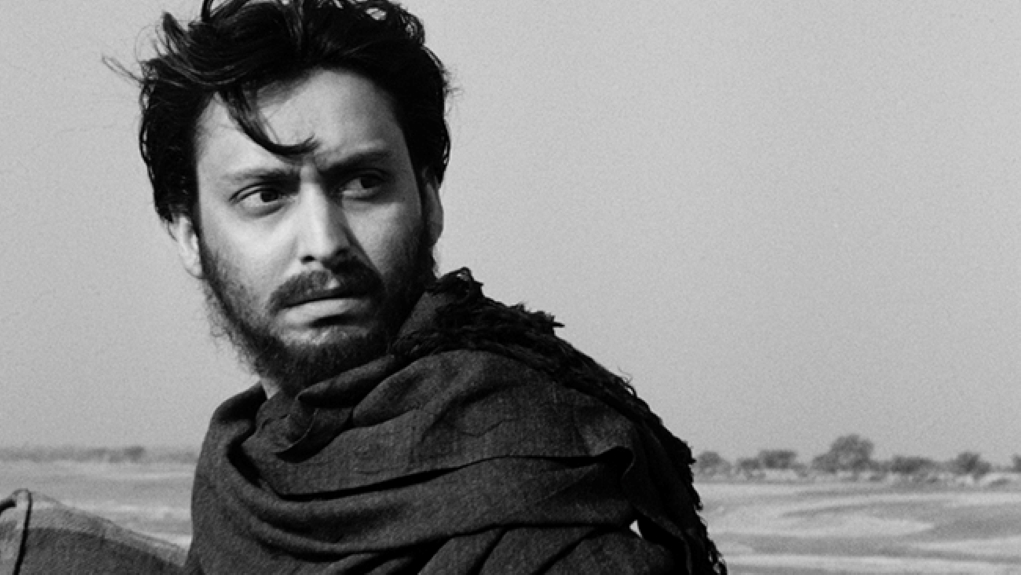
As he stands, consumed with despair, watching a train rush perilously close to him, does Apu (Soumitra Chatterjee) remember when he ran with excitement after the trains as a boy? Apu Sansar, the conclusion of Ray’s breathtakingly humanist trilogy, concludes another cycle in Apu’s life; one touched, as with the previous ones, with loss, tragedy and a dream of hope. Beautifully filmed, simple but deeply affecting, it’s a breath-taking culmination of this masterful trilogy.

Apu (Soumitra Chatterjee) is now a young man longing for a career as a writer in Calcutta. Attending the marriage of his friend Pulu’s (Swapan Mukherjee) cousin Aparna (Sharmila Tagore), he finds himself surprisingly roped into the role of groom to take the place of the unsuitable intended (as part of Hindu tradition to prevent the risk of Aparna never marrying). Returning with Aparna to Calcutta – and a life of poverty she is unused to – their romance flourishes into a happy marriage, until tragedy strikes leading to Apu tumbling into years of drift and depression.

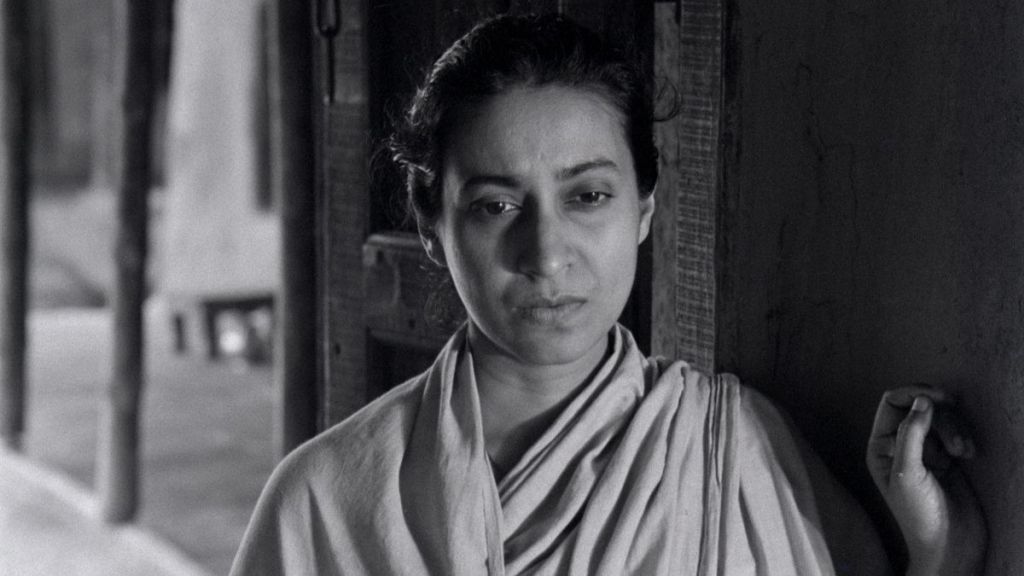
Apu should be used to tragedy by this point. In Ray’s series, death has always raised its deadly force in his life. In Pather Panchali his beloved sister passed away from sudden illness. In Aparajito the death of his mother leaves Apu stricken with guilt and grief. It’s natural that Ray’s subtle trilogy continues to look at how closely tragedy and sadness dog hope and contentment. Tragedy this time strikes Apu out of the blue, a searing, raw pain that Ray conveys to us almost entirely through a series of still, tender shots of Soumitra Chatterjee’s face as Apu’s world falls apart around him.

Ray’s film, with its beautiful observational style and low-key camera work (and use, at several points, of low angles) reminded me sharply on this viewing of Yasujirō Ozu. Apu Sansar follows in Ozu’s footsteps in its careful, focused study of the lives of ordinary people and how whole worlds of love, hurt and joy can be contained within small rooms. Unlike Pather Panchali or Aparajito, there are few shots of the widening countryside or the scale of the cities. Instead, Apu’s world seems smaller and more intimate, its focus on his apartment and a few other locations, site of momentous events that will shape his life.

Marriage is at the heart of that. His relationship with Aparna has an inauspicious start, Apu roped in as a husband due to the mental incapacity of Aparna’s intended. (There are hints that the possibility of a replacement husband being expected lie behind the last minute, out-of-the-blue invite Apu receives from his friend Pulu which, if true, does add a slightly more manipulative quality to his amiable college friend). The two of them don’t know each other and have little or no idea if they even have anything in common. Their first night together is one of slightly awkward, exploratory talking and it leaves the viewer wondering if common ground can be found.

But Ray sketches out the development of this relationship into something strong, living and (eventually) heartbreaking with a mastery of little touches and his skill with montage and transition. Aparna is at first thrown by the poverty of Apu’s life in Calcutta (similarly to the Dickensian nature of Aparajito he lives in a rain-soaked apartment on a month-to-month basis). But she sets to work to turn this place into a home and soon little touches abound that denote their growing closeness. A cigarette pack hidden under Apu’s bed that Aparna has written a message in, pleading him to smoke only after meals. Late night conversations – which involve a brilliant Ray cut as the camera zooms into the fan between them and out again as a transition finds them sitting again opposite each other on a different night. The pleasure Apu takes in buying her the smallest gifts and the pride Aparna has in turning his home into something cleaner and more decent.

The future seems bright for them. In Ray’s trilogy the future and the march of time and civilisation has often been represented by trains. This theme continues masterfully in Apu Sansar, however this time with the train taking on a more sinister, dangerous presence. Apu’s apartment overlooks a major railway junction his home frequently invaded by the sounds of the train and an onslaught of smoke from the engines. Rather than offering tempting possibilities, this increasingly feels like an intrusion, an outside force intruding into the haven that Apu and Aparna are trying to create.

This sense of invasive menace is captured exquisitely in a beautiful but haunting shot as Apu stands on his balcony – the train sounds build and then smoke from the engines pours across the balcony and seems to envelop Apu. His home can be a place of wonder and beauty, but its harmony is always under siege from transportation that, like time, relentlessly moves forwards. It’s the train that will carry Aparna away from Apu, back into the countryside for her fateful lying in before giving birth. It’s a gift of a toy train – a chance at a future together – that Apu’s son will throw in his face five years later. It’s the same train, that dangerous future finally left behind, that Aparna’s father will clutch to him as Apu heads into a more hopeful future. Throughout trains intrude, threaten and signal danger and separation for Apu.

Soumitra Chatterjee is excellent as this young man who has seen so much, learned so many things, but also seems destined to repeat the mistakes of the past. Like his father he is a dreamer, planning a loosely autobiographical novel and beginning to exhibit the same Micawber-like expectations that something will turn-up. Perhaps over time, without tragedy, Aparna might have become his mother, beaten down with the burdens of being the sensible rock for a flighty man unable to settle.

Perhaps tragedy is what is needed for Apu – Apu Sansar is notable for its lack of romanticism for poetic longings and its favouring of embracing actual responsibilities. There are few other films where the destruction of a nascent novel could be met with such bitter-sweet acceptance. Certainly, no Western films, where the dream of having it all is baked in. The Apu Trilogy is partially about accepting things as they are and taking on your responsibilities: dreams and self-focused desires have no place in that. After all the trilogies hero, perhaps even more so than Apu, is his mother Sabarjaya who gave everything to give Apu opportunities.

Apu finally accepts his place in this cycle after years of denial and grief by seeking to build a relationship with a son he has never met. Ray charts this slow thawing between strangers with a delicacy and emotional force striking in its simplicity. It’s really striking to me how each film in this trilogy is slightly shorter than the one before, as Ray mastered that less really can be more with every frame: that sometimes the emotional force of a single glance can be greater than that of a tracking shot. Apu Sansar is a film brimming with confidence, from a director who has mastered his aim and subject. A heart-breaking, but also heart-warming, conclusion to a great trilogy.

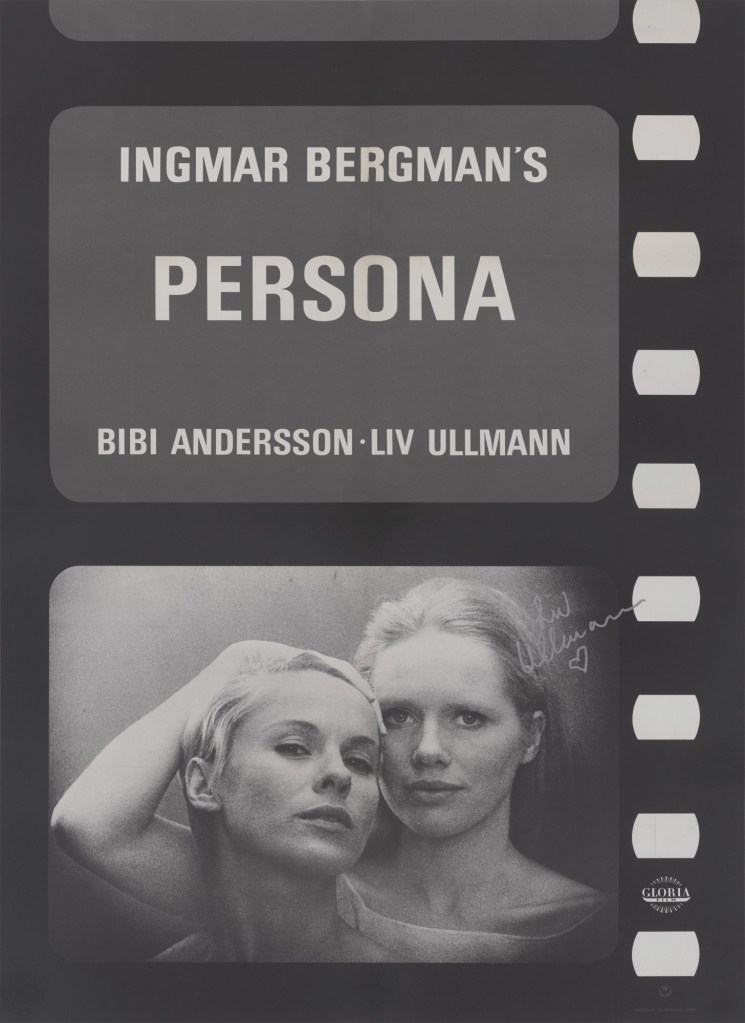
Persona (1966)

Persona (1966)

Bergman’s masterpiece, a fascinatingly brilliant Rorschach test that challenges and rewards the viewer

Director: Ingmar Bergman

Cast: Bibi Andersson (Alma), Liv Ullman (Elizabet Volger), Margareta Krook (Doctor), Gunnar Björnstrand (Herr Volger), Jorgen Lindstrom (Boy)

Even Bergman considered Persona a moment he “had gone as far as I could go…touched wordless secrets that only cinema can discover”. Persona, Bergman’s most consciously artistic and psychologically challenging work is a mass of contradictions and puzzles that defies easy categorisation (even Bergman claimed to be only half sure what definitively was happening). A whirling mix of themes, haunting moments and unknowable incidents all within a framework that constantly reminds us we are watching a film, Persona has been influencing, challenging and fascinating viewers for over 60 years. If cinema’s Everest is Citizen Kane, Persona is its K2.

The plot seems simple. Famed actress Elizabet Volger (Liv Ullman) fell silent for a minute during a production of Electra, then carried on. A day later she stopped speaking and hasn’t spoken since. Her doctors can’t find an answer so she is sent to an island to recuperate, with the support of a nurse, Alma (Bibi Andersson). On the island, Alma fills the silence with long monologues that become more and more confessional, intimate and personal. Does Elizabet betray these confidences in a letter to her doctor? Does Alma plot revenge? Are these events even happening? As the personalities of the two women blur, merge, swop and consume each other the film fractures (at one point literally so) until we are left as uncertain of who and what is real as perhaps the women themselves.

There is, in some ways, no understanding Persona. It perhaps best resembles a cinematic Rorschach test. I’d argue it’s a fool’s journey to stare at it for a definitive answer. Different days, different moods, different conditions will make the picture re-shape and resemble something else. Bergman has created a film devoid of traditional ‘clues’, that provides no trace of an ‘answer’, but instead asks – demands? – us to take away only what we choose.

Throughout, Bergman makes it vitally clear film is a constructed, artificial representation of reality. Persona starts and ends with film literally spooling through a projector, the arc lights cranking up to project a reality. The opening prologue is a host of suggestive images which may, or may not, relate to what we are about to watch. Their meaning is almost deliberately vague – much as the epilogue’s brief shot of Bergman and crew shooting the film is – but it lets us know beyond doubt this is a subjective presentation of a series of images, not real life. Perhaps reading meaning into it is as impossible a task as trying to interpret the contents of a library from the page of a single book.

Which is to say, I think Bergman is both inviting us to interpret the film but also warning us that this isn’t a jigsaw, but a deliberately obtuse and open-ended work, our experience of it controlled by the director. Film is after all a dream – a world where we think we move freely, but in fact we never do. Which might make you think Persona is Bergman’s punking the world, a Thermot’s Last Theorem designed to infuriate. It isn’t because it’s made with such grace, humanity and honesty.

To understand Persona you can only discuss – and wonder – at the complex, multi-layered themes and decide which speaks most to you on the day. A lot of this boils down to how you are affected by the breathtaking, seismic performances from Andersson and Ullman. Playing two characters whose identities merge, shift, mirror and absorb each other both performers give outstandingly intelligent, infinitely challenging and unreadable performances. For Andersson the film is virtually a monologue, where the more Alma talks, the more our grasp on who (or what?) she is slips through our fingers. Ullman’s impassive face, awash with micro-expressions (caught in scintillating close-ups) constantly disorientates – is that a sneer or a smile? Is that head-turn impatience or a desire to know more?

At several points I find myself falling into the trap Bergman lays of wanting to categorise the film, as I became convinced first one than the other of these women was just an element of the psyche of the other. It’s not as simple as that. They are both the same and different, two people and one. Bergman frequently frames their bodies overlapping and, in one horrifying moment, their face literally merged half-and-half. Elizabet, we think at first, is a near vampiric figure sucking the life out of Alma, drawing confessions from Alma to restore herself. Then Elizabet becomes a ghostly figure, moving in the margins of Alma’s life, a horrific silent figure from her subconscious holding her back. Then you feel Alma to be nothing more than Elizabet’s id, demanding her right to be independent.

The unreadability of the film becomes ever more acute at the half-way point. After an enraged Alma deliberately leaves Elizabet to cut her foot on glass, the film pauses, burns away and then restarts with an echo of its earlier montage. Has the story restarted? Did all or any of what went before actually happen? Or is everything from this point a cinematic fantasy? Later in the film Bergman throws in a sequence with Alma and Elizabet back in the hospital before returning to the island – is this a flashback or a dream or a vision or something else entirely?

Bergman’s mastery of horror comes to the fore. The haunting repeated shot of Elizabet embracing Alma from behind, the two of them starring into a mirror (and the camera) at times seems sexually charged, at others disturbingly possessive at others supernaturally controlling. Is Bergman’s point that the context of an image can change its meaning? These hazy definitions of truth and reality lie throughout. The confrontations between the two taking on an increasingly surreal nature.

In a stunning sequence, Bergman repeats the same Alma monologue twice, one focused solely on Elizabet (her face contorted with pain as she hears of her rejection of a child), the second on Alma (now dressed identically to Elizabet), Alma’s bitterness now taking on a totally different light. Alma, back in nurses’ outfit, confronts Elizabet screaming that she is her own person even as her words collapses into an incoherence that might as well match Elizabet’s silence. Which is projection and which reality? When they leave at the film’s end, do they go their separate ways or merge? Does Alma imagine herself with Elizabet’s husband, or when Elizabet’s husband recognises Alma as his wife is he tipping the nod to us?

Bergman gives no clear reasons for Elizabet’s silence. It could be connected to horror at the world’s terrors (Vietnam and the Holocaust are referenced). It could be shame at her own post-natal depression. It could be that the silent Elizabet is a projection of the Alma-Elizabet’s own turmoil and isn’t real in the first place. After all the hospital we are introduced to Elizabet in doesn’t feel like a real place but a sparsely dressed film set (and shot like it).

Sex weaves it’s way tellingly through the film. The sexual bond between Alma and Elizabeth, physically, seductively close and possibly sleeping together is clear. Alma relates a hugely erotic monologue about an orgy she and a friend initiated on a beach, the only time she describes herself a purely happy and content. Is this her memory or a fantasy of Elizabet’s? If Alma is Elizabet, is this what she longs for or the thing she finds missing now from her own life? Alma talks of wanting a family – but in a haphazard, casual way and has already had an abortion. Elizabet has a son but doesn’t want him – is Alma what she dreams she could be, or is Elizabet the truth Alma doesn’t want to face? At various points both, all or nothing of the above could be true.

The film opens with a mysterious boy starring at a blurred series of images of female faces. We never learn who he is (theories abound from Elizabet’s son to Bergman himself). He wakes seemingly from the dead, but perhaps he is given life by the film. Perhaps, Bergman is saying, Alma and Elizabet are themselves given life only by the film. That both of them are fictious illusions, as unreal as the blurred pictures on the wall. Persona is the sort of film only a director of pure courage could have made. An object that fascinates and frustrates but always leaves you wanting to reconsider and reposition it to see if the picture becomes clearer or if new truths are presented if you look at it from a different angle. Maybe Elizabet is a succubus. Maybe Alma is an angry inner self, longing to escape and liver her own life. Maybe Alma is the silent actress. Maybe Elizabet longs for the simpler life of the nurse. Perhaps every single idea is true and perhaps none of them are. That’s part of the mystery that makes Persona one of the greatest films ever made.

The Lesson (2023)

The Lesson (2023)

Sinister family mystery, full of good moments that don’t come together into something that really works

Director: Alice Troughton

Cast: Daryl McCormack (Liam Sommers), Richard E. Grant (JM Sinclair), Julie Delpy (Hélène Sinclair), Stephen McMillan (Bertie Sinclair), Crispin Letts (Ellis)

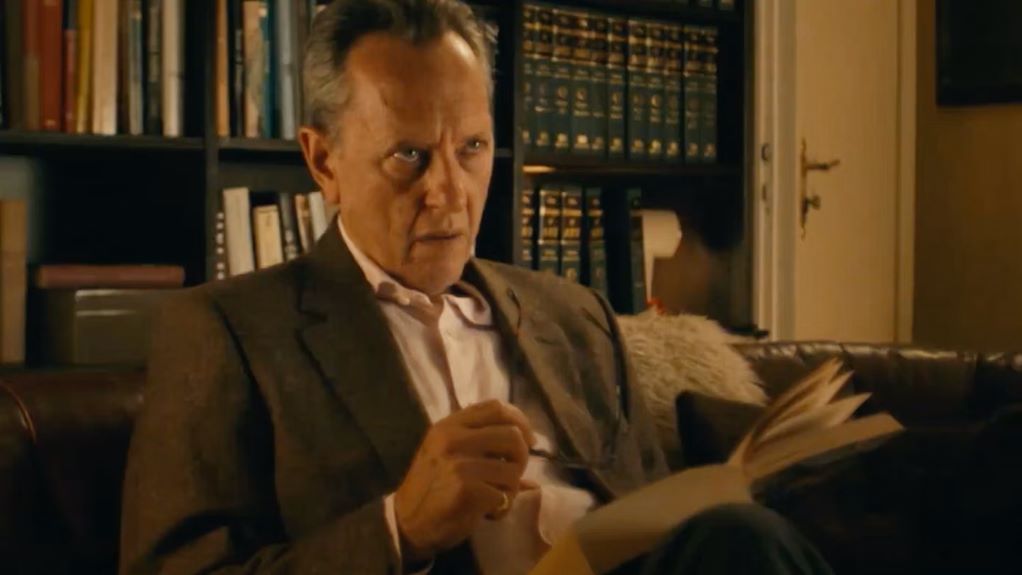
Liam Sommers (Daryl McCormack) strides onstage for an interview about his literary debut, that has set the world alight. How did he get the inspiration to write about a domineering patriarch in a rich country house? Flashback to Liam’s summer spent as an English tutor to Bertie (Stephen McMillan), who is trying to get into Oxford to impress his domineering father JM Sinclair (Richard E Grant), Britain’s leading literary novelist. The Sinclair household bubbles with suppressed grief over the accidental drowning of JM and Hélène’s (Julie Delpy) older son Archie in their private lake. As Sinclair puts the finishing touches to his new novel – and ropes in Liam to help him as “final lap amanuensis”, what secrets will Liam uncover about this family?

The Lesson revolves heavily around its oft-repeated pithy mantra from JM Sinclair – “Great writers steal”. So often is this repeated, that it drains much of what little surprise there might be about the true origins of JM Sinclair’s latest tome. It’s a fitting mantra from the film that feels like a mood piece, assembled from little touches of other filmmakers (Kubrick for starters), reassembled into something just a little too pleased with its reveals and secrets-within-secrets structure, but is well enough made that you are willing to cut it some slack.

Effectively all filmed in a single location, the Sinclair’s luscious house (a mix of the modern and the classical) set amongst rich private grounds, it’s well directed by Alice Troughton, who makes effective use of angles and transitions (particularly its cuts back and forth between the working practices of Sinclair and would-be novelist Liam, which subtly stress both their similarities and differences) to enhance mood and an air of unknowable menace. The camera drifts with a chilling intimacy across the fateful lake, giving it a sense of ominous power and mystery.

The film is at its strongest in its opening sections (like Sinclair’s novel, it is divided into three parts with short prologues and epilogues). Within a self-contained theatrical space, tensions and resentments between the family are carefully but not pointedly outlined. The father who switches between indifference, annoyance and gregarious enthusiasm. The mother who feels like both a dutiful supporter and a resentful slave. The prickly, difficult son scared of affection, who attempts (unsuccessfully) to ape his father’s authoritarianism, but is crying out to be hugged. Troughton skilfully cuts between these characters, frequently positioning them at opposing sides of the frame, setting them at visual odds with each other.

In the middle of this, Liam becomes an out-of-place, equally unreadable presence. Very well played by Daryl McCormack, full bluntness mixed with inscrutability, Liam is impossible to categorise and totally outside the upper-class formality of the Sinclair home (with its servants, home fine-dining accompanied with classical music and casually displayed artwork). He’s Irish, working-class, Black and sexually ambiguous. But he’s also hard for us to read: is his admiration for Sinclair something that could tip into resentful violence? Does he really like Bertie, or does he see him as a tedious, brattish child? As the prologue sets up, is he an innocent or a destructive, vampiric presence?

These beats are neatly set up in The Lesson’s opening parts, added to by the presence of a Pinteresque butler (a fiercely polite Crispin Letts) whose status and loyalties prove equally hard to read. Liam’s slowly becomes an intimate figure in the house, moving from a servant occasionally allowed to dine with the family, to Sinclair’s IT consultant, proof-reader and one-sided sounding-board for conversations about his novel, becoming an object of sexual fascination for Bertie and Hélène and given the late Archie’s clothes to wear (adding an Oedipal frisson to his flirtation with Hélène).

Ambiguity however slowly gives way as The Lesson continues, as it fails to weave its initial jarring mood into a reveal that feels truly satisfying, logical or surprising. This effect is magnified by the fact the more time we spend with Sinclair, the more it’s made clear he is less complex than we think, but simply an egotistical monster. Richard E Grant has huge fun with this larger-than-life braggart, a man so competitive that he feels compelled to aggressively slap down Liam’s draft novel as “airport trash” and smilingly telling him he has “done him a favour” by encouraging him not to write. But Sinclair’s monstrous, bullying self-importance sign-posts a little too clearly where the plot is heading.

The final reveal that we have been witnessing a secret plot unfold in front of us feels like a flawed attempt to add a narrative coherence to a series of events that would be impossible to pre-plan. This also relies on chance events and skills (events hinge on Liam’s near-photographic memory). The final ‘answer’ is also too clearly sign-posted from the opening, leaving you expecting a rug-pull that never comes.

The Lesson has a good sense of atmosphere in its opening half and some strong performances – Julie Delpy is very effectively unreadable as the enigmatic Hélène – but for all its sharp direction, its plot is too weak to be truly rewarding on a first viewing or give you a reason to want to return for a second lesson. Despite some good scenes, a bravura Grant and a subtle McCormack, the resolution of its quiet atmosphere of tension and inscrutability doesn’t quite ring true.

Aparajito (1956)

Aparajito (1956)

Generational clashes lie at the heart of Ray’s heartbreaking second entry in his Apu trilogy

Director: Satyajit Ray

Cast: Kanu Banerjee (Harihar), Karuna Banerjee (Sarbajaya), Smaran Ghosal (Adolescent Apu), Pinaki Sengupta (Young Apu), Ramani Sengupta (Uncle Bhabataran), Charuprakash Ghosh (Nanda-babu), Subodh Ganguli (Headmaster), Moni Srimani (School inspector), Ajay Mitra (Shibnath), Kalicharan Roy (Akhil)

Satyajit Ray initially saw Pather Panchali as a one-off, a story from the works of Bibhutibhushan Bandyopadhyay, not the start of a multi-film fable on the life of its young protagonist. But, such was the impact of Ray’s debut, it almost demanded a continuation of the story. Ray then adapted parts of two Bandyopadhyay novels, re-shaping them into a tale of Apu’s late childhood and adolescence, that difficult crossing point between childhood and adulthood. In doing so, he created a film full of life but also profoundly moving and quietly devastating. Rich, confident and powerful, Aparajito may just be even more affecting than its forbear.

Beginning a few years after the conclusion of Pather Panchali Apu (played as child by Pinaki Sengupta and later as an adolescent by Smaran Ghosal) lives in the holy city of Varanasi with his dreaming father Harihar (Kanu Banerjee) and tireless mother Sarbajaya (Karuna Banerjee). Apu is still the same inquisitive, observant, fascinated child he ever was and when his father’s death leads to mother and son returning to the country, he excels at the local school. Winning a scholarship to college at Calcutta, Apu he finds Sarbajaya’s love for him smothering, just as she is heart-broken by his growing distance and reluctance to write or return to visit her.

This universal story of children struggling to outgrow their parents and their parents longing to help them grow but desire to keep them close, a situation causing pain on both sides, that gives Aparajito it’s huge emotional force. We can totally understand why Apu, swept up in the excitement of Calcutta and forging of his own life (one that has the promise of being so much more dynamic than his parents), begins to feel the ties of duty to his mother (almost alone in the world without him) constraining. At the same time, having witnessed the never-ending sacrifice, patience and quiet devotion of Sarbajaya to her son, we want to slap him for his selfishness and lack of thought.

Ray’s film is superb at making us understand the impossible burdens Sarbajaya has taken on herself to raise her son. Ray constantly frames Sarbajaya in the act of waiting: in Varanasi we never see her outside of the courtyard of their shared tenement block, constantly preoccupied with household tasks. Ray frames Sarbajaya frequently in doorways, visually presenting her as someone constantly waiting on the outskirts, shadows cast across her – someone vital for ensuring order, but easy to forget on the outskirts of rooms. It also serves to make her look constantly trapped and overburdened with duty, shadows constantly cast across her.

These burdens magnify for Sarbajaya after the death of Harihar. Apu’s decent father is still a dreamer who lacks the dedication and drive to make something of himself. Do memories of his father’s desire to become a writer ending in a fever in a tenement block, subconsciously drive Apu later? Harihar collapses near the holy river, ill from the damp of the city that he trudges through barefoot night and day, hitting the ground in a shadow lit passageway – much like his wife, as if the city has crushed him with its burdens.

The city seems very different to the young Apu. Ray’s camerawork is gentle, full of leisurely sideways pans, which serve to make the city appear to us as it does to Apu: a never-ending stream of visual wonders. Pans across the riverbanks of the Ganges, full of beautiful temples and river vistas look as magical to us as they do to the young boy. Similarly, the Dickensian hustle and bustle of the city itself, full of streets and alleyways that Apu and his friends rundown with glee feel like treasure-troves of adventure, rather than the never-ending streets trudge they look like when we see them from Harihar’s perspective.

Ray’s camera frequently brings us back to the searching, questioning, fascinated eyes of young Apu, always expanding his horizons. Education and the wonders that books bring him, far beyond the horizons of his mother who can only think about how to bring about tomorrow, offer a similar excitement. Young Apu excels at school and delights in trying to share the wonders he has learned – about science, astronomy and geography – with his mother. Ray shows a mastery of simple montage as years fly by in minutes as we see each of Apu’s passions before a masterful transition with a slow zoom in and out on a lit candle carries across years from Apu as a child to an adolescent.

An adolescent who feels the pull of a world away from what he increasingly sees as the smothering pull of his mother. It is, of course, impossible to watch this without feeling how unfair – but also how natural – this is. Your heart breaks as Apu heads off to Calcutta with only a single cursory glance back to his devoted mother. The mother who still packs his bag, gives him her savings – and asks him to come home as often as he can. You can understand why a young man finds this constraining, even as you want to tell him how sharp his regrets will be as Sarbajaya’s health begins to fail (naturally, the boy falls asleep as his mother timidly confesses her fear of old age and sickness to him).

Apu loves his mother, there is no doubt about that. One vacation, arriving at the train station to return to Calcutta, he decides to turn back (claiming he missed the train) to spend one more day with his mother. He still relies on her wisdom and unreserved love and he thinks often of her in the city. But he’s a teenager and wants his freedom. Sarbajaya even understands this, just as her heart breaks for the loss of and loneliness his departure brings. Is there a sadder shot in the movies as Ray focuses on Sarbajaya slowly sinking down as Apu walks away to his future?

The impact is only increased by the gloriously moving, hollow-eyed performance of Karuna Banerjee, exhausted but untiring in her work to protect family and home. It’s a performance of quiet, bubbling grief and loss tightly packed under optimism and support for her son – a grief that only the audience sees. Smaran Ghosal is also very fine as the adolescent Apu, a boy we can never dislike for very naturally wanting to forge his own path, in a performance that feels extraordinarily real.

The humanity shines out again in Ray’s follow-up to his debut. Moving confidently from location to location, in a novelistic structure translated perfectly to the screen, Aparajito is rich, beautifully told and carries real, unbearable emotional punch for anyone who has ever been a parent or child. Another masterwork in a mighty trilogy.

Asteroid City (2023)

Asteroid City (2023)

Anderson’s quirk filled film is a triumph of his own style but lacks the depth of his best work

Director: Wes Anderson

Cast: Jason Schwartzman (Augie Steenbeck/Jones Hall), Scarlett Johansson (Midge Campbell/Mercedes Ford), Tom Hanks (Stanley Zak), Jeffrey Wright (General Gibson), Tilda Swinton (Dr. Hickenlooper), Bryan Cranston (Host), Edward Norton (Conrad Earp), Adrien Brody (Schubert Green), Liev Schreiber (J.J. Kellogg), Hope Davis (Sandy Borden), Stephen Park (Roger Cho), Rupert Friend (Montana), Maya Hawke (June Douglas), Steve Carell (Motel manager), Matt Dillon (Mechanic), Hong Chau (Polly), Willem Dafoe (Saltzburg Keitel), Jake Ryan (Woodrow), Grace Edwards (Dinah), Aristou Meehan (Clifford), Sophia Lillis (Shelly), Ethan Josh Lee (Ricky)

Every time I go and see a Wes Anderson film, I hope I might fall in love again. Eventually, I’ll find something in Anderson’s overly distinctive, quirky style that I love as much as The Grand Budapest Hotel. Maybe the romantic in me is dying, because I think its never going to happen. Certainly it doesn’t with Asteroid City a film I sat watching thinking “I know some people will love this more than life itself, but for me sitting here it feels like waiting for the rapture”.

Asteroid City is another of Anderson’s films that’s an intricate puzzle box where the pieces shift like the brightly coloured squares on a Rubrik’s cube. It’s filtered through several layers of remove: we watch a 50s TV announcer (Bryan Cranston) introduce a stage performance of a playwright’s (Edward Norton) long-running play that is itself an entrée to a wide-screen, technicolour production of a host of eccentrics, including a recently widowed photographer (Jason Schwartzman), his grouchy father-in-law (Tom Hanks), a glamourous Hollywood star (Scarlett Johansson) and several others accompanying their kids to a remote town in the desert for a young stargazing and science competition co-sponsored by an army general (Jeffrey Wright), when the whole town is thrown into quarantine after a stop-motion alien drops in, looks around and flies off.

Somewhere in Asteroid City there is an interesting, slightly sad, meditation on grief, loss and ennui struggling to get out. The alien arrival makes everyone question the nature of the universe and their place in it. It’s easy to see the influence of Covid on a town flung into quarantine, and the resulting state of uncertainty throwing everyone off kilter. We are following a man who has recently lost his wife, being played in this film-within-a-play-within-a-TV-show by an actor who was (we discover) recently lost his own partner. At one point this actor asks the director if he is ‘doing it right’, if he is getting the emotion or the author’s intention: “just tell the story” the director (Adrien Brody) responds. I think that’s part of a message about just live and let the big questions take care of themselves, of trusting that we can do our loved ones proud. That’s an interesting, rewarding point.

But it’s lost in Anderson’s pitiless device, his never-ending quirk and the deliberately distancing, artificial nature of his world and the monotonous, arch delivery his script, camera work and editing imposes on a series of actors. What this film desperately misses is a leading player with the strength and independence of a Ralph Fiennes or a Gene Hackman: someone who can bring depth and a sense of reality to the stylised Anderson world, while still delivering something perfectly in keeping with his tone. To put it bluntly, Schwartzman is, to put it bluntly, not a sufficiently engaging or interesting actor to communicate his character’s inner turmoil under the surface which the film’s inner meaning requires. He too naturally, and trustingly, settles into the Anderson rhythm.

In this crucial role, he’s a misfire. With our leading player too much of an artificial character, someone we never believe is anything other than a construct of the film’s author, inhabited by a collaborator who doesn’t bring the independence or new vision the director needs, the more the deeper emotional layers of the film are drowned. Instead, the film becomes a crushing onslaught of style and trickery, devoid of any sense of reality at any point.

It eventually makes the film feel overly smug, too pleased with-itself, too taken with its intricate, tricksy construction. It is of course a triumph of art design and the photography is gorgeous, from the black-and-white of the TV studio and theatre, to the 60s tinged, artificial world of Asteroid City, crammed with its obviously fake skylines and vistas and technicolour inspired feel. That at least its impossible not to admire. But it’s also a mighty artificial trap that enfolds the entire film – and eventually the audience – in a world of weightless, arch, eyebrow-cocked commentary that promises a lot but winds up saying almost nothing of any interest.

There are performances to admire. Scarlett Johansson is very droll and finds some depths as an star actress struggling with a concealed depression. Tom Hanks looks most like the actor who feels like he can break out of the Anderson mould and discover some genuine emotion. Jeffrey Wright demonstrates few actors can do Anderson dialogue better than him, Bryan Cranston very droll and perfectly observed as Ed Murrow style TV man and Adrien Brody is loose, fun and inventive as the play’s director. But yet its everything inside this framework that feels somehow empty.

What I want from Anderson is someone to come in and shake him up, to point out that he is not betraying his aesthetics or style by injecting a small dose of reality and humanity into it. When he has done that in the past – moments in Rushmore, The Royal Tenenbaums and, above all, The Grand Budapest Hotel – he has delivered movies that are inventive, fun and playful but also carry real, lasting emotional impact. When he delivers in-jokes like Asteroid City, it feels like a party you have been invited to where everyone speaks in some made-up language they’ve not told you about in advance. And after not very long, all you want to do is to get up and leave.

Pather Panchali (1955)

Pather Panchali (1955)

Satyajit Ray’s first film in his glorious Apu trilogy is one of the finest neo-realist films about childhood ever made

Director: Satyajit Ray

Cast: Kanu Banerjee (Harihar), Karuna Banerjee (Sarbajaya), Subir Banerjeee (Apu), Uma Das Gupta (Durga), Chunibala Devi (“Auntie” Indir Thakrun), Shampa Banerjee (Young Durga), Reba Devi (Sejo Thakrun), Aparna Devi (Nilmoni’s wife), Tulsi Chakraborty (Schoolteacher), Binoy Mukherjee (Baidyanath Majumdar)

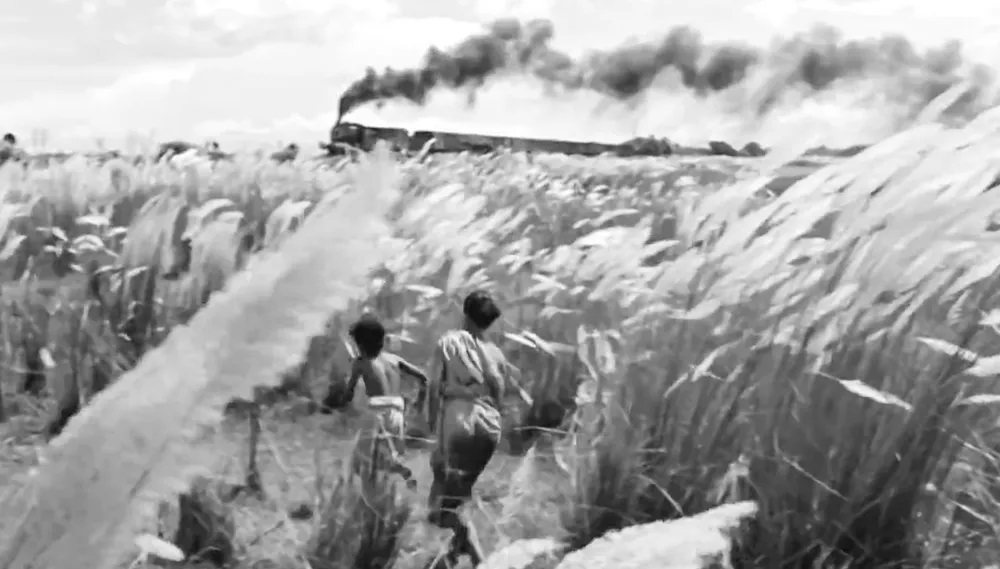
The filming of Panther Panchali is almost as famous as the film itself. Ray set up on the first day of shooting having never made a film before, working with a cinematographer who had never shot a roll of film before and two inexperienced child actors he had not auditioned. He shot the sequence of quiet, observant young Apu (Subir Banerjeee) and his rebellious older sister Durga (Uma Das Gupta) walk in awed wonder through a field to discover a train whooshing by. Ray later wrote he learned more that day “than from a hundred books”. You can tell: so majestical, magical and mesmerising is the sequence (admittedly the one we see in the film was a reshoot) you can’t believe it was made by a novice. It was the centre-piece of Ray scrapping together funding for the rest.

Pather Panchali was adapted from the novel Bibhutibhushan Bandyopadhyay – in a stunning act of loyalty, Bandyopadhyay’s widow turned down a large sum from a production company for the rights because she had promised them to Ray. Ray turned it into a masterful slice of life, that expressed everything he had worshipped from the neo-realism of Rossellini and De Sica (The Bicycle Thieves, which Ray adored, is surely Pather Panchali’s father) and the detailed, masterful camerawork of Jean Renior (who Ray and photographer Subrata Mitra had witnessed at work on The River). It became Ray’s calling card, and a pivotal moment in Indian cinema, a masterpiece that helped redefine the artistic boundaries of the country’s film industry as well as an award-winning international hit.

It’s a sedate, gentle, un-bombastic but quietly moving and engrossing drama focused on the nitty-gritty of life. Set in a small Indian village in the 1910s, we follow the lives of pre-teen Apu, a dreamer who takes after his Micawberish father Harihar (Kanu Banerjee) and his close relationship with his sister Durga, whose penchant for rebellion and stealing causes no end of strive with their harassed mother Sarbajaya (Karuna Banerjee). The family lives in poverty and Sarbajaya carries the burden, driven to quiet, repressed despair at the stress of constantly making ends meet and increasingly resentful of Harihar’s elderly relative “Auntie” Indir (Chunibala Devi) who she sees as taking but offering nothing. Despite, this we follow the childish delight Apu and Durga see in the world around them, a world in which darkness eventually (inevitably) intrudes.

Some have argued Ray’s film – and the subsequent films that followed in this landmark trilogy – had such international impact because it fit naturally into international perceptions of India as a rural, poverty-stricken nation. But that’s to do a disservice to the emotional humanism of Ray’s work and the universal themes of childhood, family and the fears of not being able to provide for it.

Pather Panchali, for all the lyrical beauty which Ray shoots it with, is cold-eyed and serious about poverty. There is nothing noble and sentimental about having no money to afford food. The strain of it is carving lines into the face of Sarbajaya, reduced to quietly pawning what possessions they have and frustratingly berating the dreaming Harihar who believes a career as a writer is just round the corner. The shame of poverty is a major theme: Sarbajaya cares nothing if Harihar’s employers are made aware of the family’s desperate need to for the money they owe him, but she will not countenance the shame of accepting charity from neighbours. Debts are repaid as a priority, at several points a relative’s offering of a few rupees is adamantly refused and Sarbajaya is appalled and shocked by Durga’s habit of stealing fruit from a local orchard owned by the village elders.

That orchard was once the property of Harihar – and its more than implied he was conned out of it by the villagers over imaginary debts. Its where we first encounter the young Durga, a delightful, playful and inquisitive child, running free and unashamedly stealing fruit and bringing it home for herself and “Auntie”. Its just another reason for Sarbajaya to resent the presence of this old woman in her household, as well as the close bond “Auntie” has with both her children, with Sarbajaya constantly playing the role of harsh authority figure.

The constant refrain of the train whistle at crucial points from the distant train tracks serves as a reminder of the possibility of change and escape. But it also means to the children a wider world of excitement and opportunity. Pather Panchali is about a child’s eye view of the world – we are literally introduced to the child Apu with a close-up shot of his eye has Durga wakes him for school. Ray’s film carefully follows their experiences and innocence, where every day presents the possibility of adventure and wonder. The struggles of the adults are unknown for them.

Pather Panchali is a great film about childhood. Apu and Durga run through fields, play and fight, share a deep and caring bond. They follow sweet sellers, wonder at the arrival of theatre troupes and brass bands, stare in awe at projected images of Indian landmarks. The entire village and its countryside is a wonderland to them, and the problems of life are something that they don’t need to concern themselves with. Ray shoots the film with a realism tinged with a pre-Tarvoksky love for the beauty of nature: lingering shots follow raindrops on lakes, the willowy blowing of plants in the fields and the movements of nature.

Through it all he draws superb performances from the children, frequently cutting to reaction shots that ground us in a children’s-eye-view of the world. It’s all there in the magic of that pursuit of the train. The freedom of the fields, the joy of running, the mystery of distant sounds and then the impactful glory of the train itself. Alongside this, there is a beautifully judged score by Ravi Shankar that captures both the mood of this humble village life, but also the exurberance of childhood.

It can’t last though. Mortality and tragedy intrude on this life. And just as Ray shot joy with a simplicity that carried a magical pull, so he calmly and unobtrusively observes pain and suffering in a way that will tear your heart out. The film’s episodic look at life becomes darker and more painful, rewarding the patient viewer (and you do need patience for Ray’s leisurely pace) with a powerful connection with the characters – and a final shot that leaves you longing to know what will happen to them.

Beautifully paced, atmospheric and immersed in a world that feels very real, Pather Panchali feels like the work of a master, not the plucky work of debutante. Perhaps that was a result of the nearly two years Ray took to make the film (he couldn’t believe his luck that the children did not noticeably age), allowed him the time few film-makers have to find every single moment of beauty in his story. Or perhaps he was simply that good to begin with. Either way, it became a landmark film – and led to a swiftly answered call for the story of Apu to be continued.

Winter Light (1963)

Winter Light (1963)

Faith is thoughtfully questioned in Ingmar Bergman’s spare, bleak and striking masterpiece

Director: Ingmar Bergman

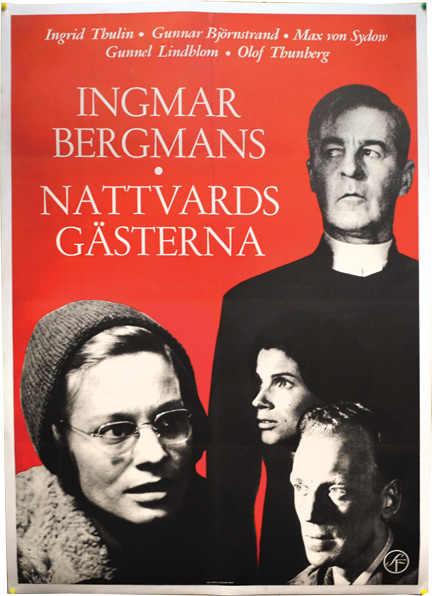
Cast: Gunnar Björnstrand (Pastor Tomas Ericsson), Ingrid Thulin (Märta Lundberg), Gunnel Lindblom (Karin Persson), Max von Sydow (Jonas Persson), Allan Edwall (Algot Frövik), Kolbjörn Knudsen (Knut Aronsson), Olof Thunberg (Fredrik Blom), Elsa Ebbesen (Magdalena Ledfors)

It would surprise many to hear Bergman held Winter Light in the highest regard among his films. An austere chamber piece, largely set in a cold, naturally lit church, it’s the middle chapter of his thematic trilogy on faith and it serves to correct any sense of hope left remaining from in Through a Glass Darkly. Winter Light – with its lead character a semi-biographical combination of Bergman’s father (himself a Lutheran Pastor) and Bergman himself – begins with a robotic preaching in a Church and ends firing up another such sermon to an empty Church. This is a world where, if there ever was a God, he has long since gone silent and disappeared over the horizon.

You could argue Tomas Ericsson is the most ill-suited priest in the history of cinema. He’s played with a peevish, grumpy lack of hope, inspiration or joy, self-loathing seeping from every pore by Gunnar Björnstrand in what might just be his finest hour. Björnstrand, more comfortable with comedy, struggled with this counter-casting (and his cold, which was written into the script), the bottled-up pressure of the role almost shattering his friendship with Bergman. Following a single afternoon in Ericsson’s life, Winter Light charts his complete disillusionment with his faith, his utter failure to provide spiritual comfort to parishioners and his mix of dependence, indifference and contempt for schoolteacher and some-time lover Märta (Ingrid Thulin), herself a needy, unhappy woman content to play second-fiddle to Tomas’ deceased wife.

Tomas’ faith in God has long since vanished. Winter Light is his own Gethsemane, a parade of painful events and conversations where he waits desperately for some sort of sign or word from the Almighty and is left instead wondering, like Christ, why God has forsaken him. Tomas has become bitter, self-obsessed and self-loathing, going through the motions with a dwindling congregation and unable to muster even the faintest bit of belief in the words that pass his lips.

Winter Light follows up ideas of Through a Glass Darkly (Tomas even talks of a “Spider God”, a destructive force at the centre of a world made of pain). There is an echo throughout of the idea that, if God is love, then letting love into your life (or acknowledging the existence of Love in the world) is proof enough that there is a God, even if he is now silent. If so, Tomas’ rejection of any form of love goes hand-in-hand with his rejection of faith. If he felt love, it was for his late wife – and her death matches the decease of his faith in God. Now he angrily slaps away offers of affection with the same contempt he addresses towards questions of faith.

That offer of love comes from Märta, a mousey teacher trapped under an unflattering hat, the bags under her eyes and spinsterish clothes. She’s played in a performance of sustained, emotive brilliance by Ingrid Thulin. Märta captures her feelings for Tomas – right down to her acknowledgement that she knows he does not love her – in a sprawling, stream-of-consciousness letter (which Tomas has delayed reading – and when he does, he scrunches it into a frustrated ball).

That letter is conveyed to us in a stunning, almost interrupted, seven-minute take where Bergman focuses the camera on Thulin in close-up who delivers the contents of the letter straight to camera. This is a tour-de-force from Thulin, by terms unblinking, honest, self-denying, pained, resigned, hopeful and frustratingly simpering, a masterclass that marks one of Winter Light’s most striking moments of directorial and actorly technique. Few actors could pull this scene off with the grace and emotional commitment Thulin brings to it – and still leave us understanding why Tomas later, with anger frustration, cruelly tells her he has simply had enough of her all-forgiving love.

There is no place for that sort of saintly, Christ-like, love in Tomas’ life. His focus remains his own self-loathing. When meeting with Jonas (Max von Sydow – even more carved from granite than normal, his fixed stillness contrasted with Björnstrand’s twitchy unease), who has come to Tomas for spiritual reassurance to help overcome suicidal thoughts, Tomas can only complain of his own lack of faith. Tomas fails utterly to offer any solace to Jonas, a further mark of his own failure as both a priest and human. Jonas’ suicidal misery at the dread of oncoming Armageddon in the nuclear age, becomes grist to Tomas’ own misery and our priest in turn feels no shame in turning to Märta immediately for reassurance and comfort.

The only person who seems to have considered the nature of faith is disabled sexton Algot (a marvellous performance by Allan Edwall). Algot reflects that the suffering on the cross was not Christ’s true sacrifice – after all that was over in hours. The real suffering was hearing God’s silence on that cross, of the horror of suddenly thinking your life’s work may have been a waste of time, that he evangelised for someone silent or indifferent or worse. It would tie in directly with Tomas’ own doubts – except it’s pretty certain Tomas isn’t listening to him.

Maybe that’s partly the problem. We don’t listen to God, because we no longer expect him to talk. At one point, Tomas asks why God has fallen silent while behind him light suddenly pours through the Church window. Is that a sign of a sort? If it is Tomas doesn’t look and when he does, he doesn’t think. Instead, he contributes to the silence of God – as the closest thing to his vessel he fails to listen, fails to help and focuses only on his own pain.

Winter Light is a gorgeous film, full of striking light and shade by cinematographer Sven Nykvist. It’s also a bleak, grim, hopeless film, the best hope it can offer being God might have been real but he’s long since turned his back on us, just as we’ve turned out back on him. It’s magnified when we reject the thing he might have left for us, love itself. Winter Light is intensely thought-provoking, but rivetingly intelligent in the way the best of Bergman is. Björnstrand is superb and Thulin is extraordinary, in a film that carries worlds of meanings in its spare 80 minute runtime.

Freud (1962)

Freud (1962)

This intriguing film makes an excellent attempt at exploring the nature of thought

Director: John Huston

Cast: Montgomery Clift (Sigmund Freud), Susannah York (Cecily Koertner), Larry Parks (Dr Joseph Breuer), Eric Portman (Dr Theodore Meynet), Susan Kohner (Martha Freud), Eileen Herlie (Ida Koetner), Fernand Ledoux (Dr Charcot), David McCallum (Carl von Schlosser), Rosalie Crutchley (Amalia Freud)

Few thinkers had as much impact on the 20th century as Sigmund Freud. For generations, Freud’s theories on psychology and sexuality were defining texts shaping perceptions of our inner world. John Huston was fascinated by his work, translating its spirit into this thought-provoking, if at times clinical, film that focuses on a few key years in Freud’s life and does its very best to communicate the thought behind the theory, while being careful to never delve too far into thornier matters. (Despite the poster’s blaring tagline “He dared to search beyond the flesh!”).

Freud is played by Montgomery Clift, whom we meet in 1885 Vienna as a young doctor. Freud’s theories that physical ailments might have a psychological cause are widely dismissed by the medical establishment, represented by smug Dr Meynet (Eric Portman). However, Freud is convinced the secret of treating neurosis lies within – not least since he recognises symptoms of neurosis in his own dreams, haunted by half-memories of his mother and complex feelings for his father. Working with his mentor Dr Joseph Breuer (Larry Parks), Freud explores hypnosis to access patients’ repressed feelings, working closely with Cecily Koertner (Susannah York), a young woman who has inexplicably lost the ability to walk. Slowly Freud begins to form a theory of sexuality in children, as well as discovering guided discussions and word association to be more effective than hypnosis.

Huston’s film is shot in luscious black and white by Douglas Slocombe, composed of a mixture of images that balance painterly influences with surrealist nightmares. Freud and Koertner’s dream sequences are shot with a grainy intensity, a series of chilling images ranging from Freud being dragged towards his enthroned mother by a roped dwarf to Koertner’s mother domineering a beach from a grand tower. These surrealist touches tear through a film that otherwise presents a more earnest exploration of Freud’s theorising. It serves as a necessary contrast to the constraining formality of 19th-century Vienna, where inner passions and feelings are routinely stamped down.

Freud studiously explores the evolution of its subject’s thinking, in particular through his analysis of the fictional Cecily (standing in for several patients). Played with gusto by Susannah York, the film carefully structures her psychological make-up as a detective mystery to be slowly peeled away, with wrong-turns, false dawns and incorrect assumptions abounding. Initially treated with caring patience by Breuer’s hypnosis, slowly Freud replaces his mentor first as a doctor and then (to his subtle discomfort) as the subject of Cecily’s transposed attractions. These interior searches, eventually culminating in Freud’s first experiments of psychoanalysis and word association, are fascinating moments that pivot the film, with convincing false conclusions regularly introduced to constantly challenge the viewer’s assumptions.

It leads to the formulation of Freud’s Oedipal theories that cross a Rubicon his mentor cannot. In that, Breuer is joined by most of the medical profession. Huston’s film is strong on the stuffy self-confidence of the establishment, too hide-bound by its own ideas to recognise genius in their midst. Portman’s grandiose Dr Meynet gently, but firmly and devastatingly, rubbishes any nascent idea that neurosis patients are anything other than idlers and whingers. Meetings where Freud presents papers offer choruses of raucous boos and naked fury (at one point a dignified doctor literally stands up and spits at Freud’s feet in disgust). Hypnosis, with its vague medical support for its method is used as something close to a parlour trick by an otherwise supportive Dr Charcot (Fernand Ledoux) to pass physical symptoms from patient to patient, demonstrating the symptom is psychological even as he does nothing to understand the cause.

The path to decoding the human mind – as the film firmly believes Freud’s theories have done, hammered home by Huston’s narration which opens and closes the films and intermittently provides an internal monologue for Freud – is a bumpy one. Freud is frequently disturbed by the implications of his investigations. A young solider – a fragile David McCallum – alarms him when, under hypnosis, he reveals a deep, sexual longing for his mother via the fondling of a mannequin (naturally concealed under his father’s uniform). Freud’s closeness to his mother – a marvellous Rosalie Crutchley – becomes wrapped up in his theories, his dreams and memories haunted by half-remembered encounters and longings that cause him great unease.

Much of the clarity of this unease – and the tension as the unsettling implications of Freud’s nascent beliefs become more apparent – owes its success to Clift’s performance in the lead role. Clift was in extremely poor health at the time, still suffering from the effects of a near fatal car crash (including cataracts that affected his vision). An addiction to painkillers and alcohol had shot his memory to pieces. He struggled to remember lines (so much so the studio attempted to sue him for the film’s many delays), but his soulfulness appears to glorious effect. He makes Freud a profound and troubled but artistic thinker, a humanitarian full of empathy which also makes him a conduit for guilt and shame. His impassive face makes him the perfect listener but does not hide his own torment. It’s a marvellous performance, one that manages to convey the power of thinking.

Unfortunately, its genesis is also bound up in the story of the film’s making, that has often dwarfed the film itself in discussions about this intriguing movie. Huston – increasingly angry at Clift’s unreliability, compounded by his alpha-male disgust at Clift’s homosexuality – bullied the actor relentlessly during the film’s making, forcing him into take-after-take after every line flub to the increased anger of the other actors (York, in particular, was outspoken in her disgust at this). Huston had also originally written a script with Jean-Paul Sartre but, not surprisingly, the two were incompatible, Sartre eventually having his name removed from the credits.

It’s a shame these stories have dominated the discussion of the film, as it is a rich, intriguing work directed with a thoughtfulness by Huston that helps it become a thoughtful and patient film, rather than a triumphalist one (the film lacks either a eureka moment or a closing triumph, leaving Freud still rejected by the establishment and quietly visiting his father’s grave, having come to terms with his own feelings). With a marvellous performance by Clift – even if his treatment on set was shocking – it’s an intelligent, intriguing and well-handled exploration of a complex theme. It’s more than a curiosity, it’s a measured and serious film with flashes of surrealism that engages intelligently with important themes.

Babel (2006)

Babel (2006)

Iñárritu’s grandiose film aims for a big statement about humanity, but settles for something simpler

Director: Alejandro González Iñárritu

Cast: Brad Pitt (Richard Jones), Cate Blanchett (Susan Jones), Gael Garcia Bernal (Santiago), Rinko Kikuchi (Chieko Wataya), Adriana Barraza (Amelia Hernandez), Kōji Yakusho (Yasujio Wataya), Boubker Ait El Caid (Yussef), Said Tarchani (Ahmed), Mustapha Rachidi (Abdullah), Elle Fanning (Debbie Jones), Nathan Gamble (Mike Jones), Clifton Collins Jnr (Border police officer), Peter Wight (Tom), Harriet Walter (Lily), Michael Maloney (James), Satoshi Nikaido (Detective Kenji Mamiya)

“Only connect” was the epigraph of Forster’s Howards End. It’s an idea Alejandro González Iñárritu attempts to bring to the screen in Babel. Across three countries, he shows how small events in one plotline have drastic impacts in others. It makes for an undeniably beautiful film-making experience – but also a film straining for import, that hectors and belabours obvious points and relies far more on random events occurring due to foolishness and stupidity than the vagaries of fate or humanity.

In Morocco, Abdullah (Mustapha Rachidi) buys a rifle from a neighbour to protect his goats. His young sons practice with it by taking pot-shots at a tourist bus. They hit Susan (Cate Blanchett), whose husband Richard (Brad Pitt) is left desperately trying to get her medical help in a remote Moroccan village. The incident means their nanny, Amelia (Adriana Barraza) with whom they have left with their children in the US, has to take them with her to Mexico for her son’s wedding, where events at the border spiral out of control. Meanwhile, in Tokyo, the original owner of the rifle Yasujio Wataya (Kōji Yakusho) struggles as a single father with his deaf teenage daughter Chieko (Rinko Kikuchi), who is dealing with grief and her burgeoning, frustrated sexuality.

I often find Iñárritu’s films a mixed bag. Babel is no different. There is a lot to admire here. There’s also just as much to be frustrated about. First the good. Iñárritu does an excellent job intercutting a film which moves from location to location and (it becomes clear) timeline to timeline, without ever confusing the audience or revealing plot details in one timeline until it becomes vital in another. We discover one entire storyline of the film takes place not in tandem but after the events of another plotline (which concludes where the other begins). The film is beautifully shot by Rodrigo Prieto, with Morocco unexpectantly filmed with a perfectly fitting dusty blue hue, Mexico in warmer tints that become oppressive and Tokyo with a sort of neon-noir.

The film’s first half does an excellent job of world and relationship building. Abdullah’s two young sons are head-strong, rash children entrusted with a weapon they lack the maturity to handle. The family’s desperation to hide their responsibility for the tragedy they have inflicted on Richard and Susan becomes terrifyingly engrossing – not least when we see the slap-and-trigger happy casual-brutality of the investigating forces. Similarly, Brad Pitt does a sterling job as a husband driven to ever-increasing desperation, impotent rage and grief as a husband powerless to help his dying wife in a remote village with poor communication and innumerable cultural barriers.

Iñárritu turns an intriguing eye on Mexico as a land met with looks of both wonder and terror by the Amelia two young charges. Young Mike is enthralled by the sights and sounds then sickened into tears when a game of ‘catch the chicken’ ends in a brutal decapitation. Amelia’s family is warm, friendly but also prone to thoughtless impulsiveness, made worse by a justifiable feeling of persecution from their wealthy neighbours across the border. The wedding though, for all the flashes of cultural confusion, is a vibrant and joyful event shot with a lyrical beauty.

The same poetic beauty extends to the Tokyo plotline, which is a sort of pilgrim’s progress for Chieko (excellently played in a superb mix of vulnerable and resentful by an Oscar-nominated Rinko Kikuchi) through a long few days in Tokyo. From feuding, aggressively, with referees at a volleyball, to clumsy attempts to seduce boys (alienated by her deafness) and, in one staggeringly awkward scene, a very much-older (and horrified) dentist, Iñárritu follow’s Chieko stumbling attempt to discover herself, leaving the revelation of the causes of her ennui for a final, near wordless sequence. Iñárritu experiments with sound, putting us into Chieko’s deaf isolation by draining sound in and out (noticeably in a late-night disco).

Communication and language are barriers for all the characters – hence the film’s grandiose title. Grandiose feels the word, as Babel makes a big swing making a relatively simplistic statement: the world would be a better place if we all listened to each other. Unfortunately, the script repeatedly falls back on tropes and narrative contrivances to make this message work. Two of the storylines – Mexico and the Moroccan family – hinge on aggressive, macho cops as disrupters. In a series of character developments I just don’t buy, Richard’s bleeding-out wife is treated as a tedious inconvenience by a busload of Brit tourists who essentially demand Richard leaves his wife to die so they can back to their hotel for dinner (I literally cannot imagine an entire busload of people behaving like this – god knows how the world responds to them when Susan’s bleeding out in a Moroccan village inexplicably becomes a major world news story).

There is also a half-hearted attempt to suggest guns are destructive forces. While it’s true a rifle purchase is the instigating factor – and Iñárritu makes a lot of one of the kids smashing up the rifle in a scene of heavy-handed import – it doesn’t really fly. Honestly, the main message I started to take out was that immature or stressed people make stupid, impulsive decisions in stressful situations. The kids shooting live ammunition at a tourist bus is an appalling act of immaturity. Santiago – a character set up as a time bomb from the start in an edgy performance by Gael Garcia Bernal – has a disastrous, impulsive meltdown bred out of booze and bravado at the Mexican border, that ruins the lives of everyone around him. Stranded in the desert, Amelia will make an equally disastrously poor decision with terrible consequences she can never turn back.

Eventually, Babel starts to feel like a film full of contrivances that mistakes ambitious range and variety of locations for actual depth. Essentially it has very little to say about the human condition other than looking for a little love or understanding. The four plot lines are fairly tenuously linked together, and impact each other only in the sense of each instigates the events of another. The film fails to create a tapestry of cause and effect and fails to weave its events back together for a conclusion. For all there are moments of effective tension and drama, and great deal of visual and visceral beauty, everything feels a little too forced, a little too on-the-nose.

That’s not to say there aren’t great performances or moments of great flair from Iñárritu. Adriana Barraza is fabulous as a proud mother and caring nanny, driven to her absolute limits. But it’s not as complex, revelatory or revealing as it thinks it is. It makes for a film that looks and feels like epic but carries only a simple and reassuring message.