Category: Films about mental health

The Hunchback of Notre Dame (1939)

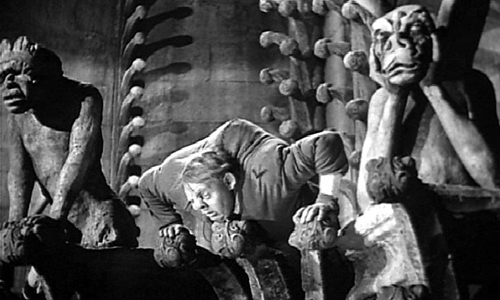
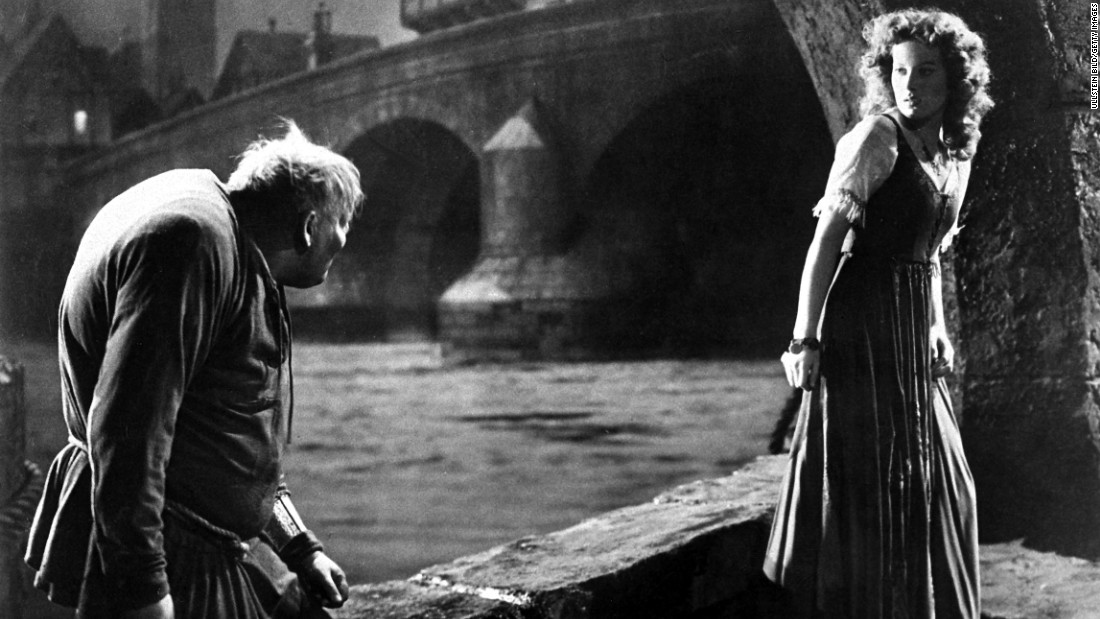
Charles Laughton looks on with longing as The Hunchback of Notre Dame

Director: William Dieterle

Cast: Charles Laughton (Quasimodo), Cedric Hardwicke (Jean Frollo), Thomas Mitchell (Clopin), Maureen O’Hara (Esmeralda), Edmond O’Brien (Pierre Gringoire), Alan Marshal (Captain Phoebus), Walter Hampden (Archbishop Claude Frollo), Harry Davenport (King Louis XI), Katherine Alexander (Madame de Lys), George Zucco (Procurator)

Victor Hugo’s gothic romance–slash-tragedy has been turned into a film so often, it’s a wonder anything that happens in it remains a surprise. But this 1939 version is perhaps the most influential, where Hollywood decided to throw money at the fable and try and make something as close as possible to the spirit of the book. But of course with a happyish ending on the end – because, you know, it’s still Hollywood!

In 1470s Paris, the city is caught between the pressures of religion and new developments such as the printing press. In the centre of the city is the Cathedral of Notre Dame – where the bells are operated by foundling Quasimodo (Charles Laughton), a deformed hunchback driven deaf by the constant ringing of the bells. His benefactor, Judge Jean Frollo (Cedric Hardwicke), is running a vicious campaign to cleanse the city of the gypsies and beggars that make up a large part of its underbelly – but he’s hit for six when he falls in love (or rather lust) with beautiful gypsy woman Esmeralda (Maureen O’Hara). But he’s not alone – equally smitten are naïve young poet Gringoire (Edmond O’Brien), arrogant Captain Phoebus (Alan Marshal), and Quasimodo himself. When Esmeralda rejects Frollo’s advances she soon finds herself in danger – and her only hope of safety comes from unexpected sources.

Dieterle’s background in German expressionism and silent cinema shines through in this visually striking and opulent studio production, with its superbly marshalled crowd scenes, brilliant use of near-impressionistic shadows and fabulous camera work that drifts over the impressive (and hugely expensive) set. Dieterle mixes this technical expertise with a real sense of emotion and character development, helped by some terrific performances from the cast. It’s a film that motors through the story of the novel, but skilfully repackages it as both a fascinating semi-romance and a sort of urban tragedy, as well as a subtle mediation on love and lust.

At the centre of it, you have Charles Laughton giving probably the definitive performance of the hunchback. Sweating under layers of make-up and an artificial hump, Laughton is nearly unrecognisable as the bell-ringer. His triumph is to make a gentle, tragic character emerge from make-up that suggests more Frankenstein’s monster than tragic hero. Nearly wordless for the first hour and a half of the film, Laughton does his magic with an expressiveness that speaks volumes of the loneliness in Quasimodo. Tenderly, he watches people knowing he can never be part of their lives – and look how excitedly he bursts out when he finally gets a chance to speak to Esmeralda one-on-one. Suffering punishment on the wheel, Laughton’s eyes convey the numb acceptance of pain as his natural state of affairs. But he also manages to bring out the gentle, childlike qualities of Quasimodo. It’s a wonderful, wordless, expressionistic performance – a triumph of physical acting and wonderfully judged emotional vulnerability.
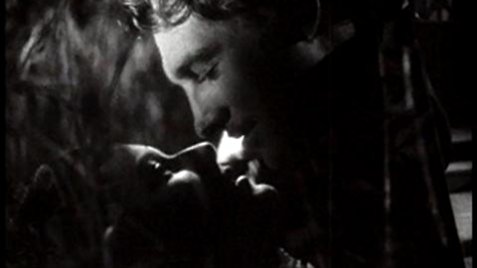
The rest of the cast match Laughton stride-for-stride. Censor demands at the time required that Frollo be removed from his position (in the novel) as Archbishop, so the book-version of the character is split in two here. Archbishop Frollo is the sort of pious bore who can keep the Hayes committee happy. But Cedric Hardwicke gets to play the invented evil brother Judge Jean Frollo, the lecherous hypocrite from the novel. An authoritarian ascetic, Hardwicke’s Judge Frollo is lean, mean and utterly ruthless – and totally in denial about both his lustful feelings and hypocrisy. Hardwicke is virtually an archetype of the sinister authoritarian, but he manages to never chew the scenery. Incidentally, knowing the two characters are basically split from the original book, does allow moments of fun imaging the moral debates between the two as a sort of split personality discussion.

But there are plenty of other good performances as well – not least from Maureen O’Hara, who is charming and engaging enough to make you believe that the whole male cast is in love with her. Edmond O’Brian goes large at times with the passionate romance, but he does a very good job in the role. Thomas Mitchell is good value as the leader of the beggars, Clopin. There are strong performances across the whole film.

All these performances are framed within a fabulous design. The trouble and expense that has gone into the construction of the set is inspiring, the sweeping gothic arches and towers giving every shot something exquisite to look at. It also gives never-ending options for camera placement and impressionistic imagery for Dieterle. It works as well – the gloomy, imposing towers of Notre Dame are captured with real artistry, while the shadow it casts over the whole city of Paris serves as a constant reminder of the oppression the city lives in.

Dieterle also brilliantly films the crowd scenes, getting a superb sense of visceral emersion from these sequences. Whether the camera is in the mix, or flying above the crowds from the tops of Notre Dame, these scenes look equally fantastic. Dieterle handles the more action-related scenes with particular skill – Quasimodo’s rescue of Esmeralda from a death sentence is particularly well staged in its dynamism and graceful filming. 
Not every beat works. The portrayal of Louis IX as a sort of kindly old uncle seems off-piste from the very start. The early sequences sometimes get bogged down too quickly in set-up rather than getting into the action. Alan Marshal is rather wooden as Captain Phoebus, although the film goes surprisingly far in suggesting the dark desires and predatory sense of danger that comes from the character. Some of the beggar court sequences get similarly stuck in kitsch.

But these are minor beats. It’s a film that really understands emotions and makes the dramatic thrust work. It also has a dark sexual power, not least in Hardwicke’s Frollo: a seething mess of frustrated desires. It never loses sight of the sadness at the heart of its central character’s story, of his loneliness and isolation, and manages to communicate this brilliantly in every scene where the character appears – he is trapped by his muteness, his ugliness or his sadness at every turn. It’s a development that never fails to be engrossing and finally moving. It’s a film that is brilliantly assembled with real technical skill, very well acted and wonderfully directed.
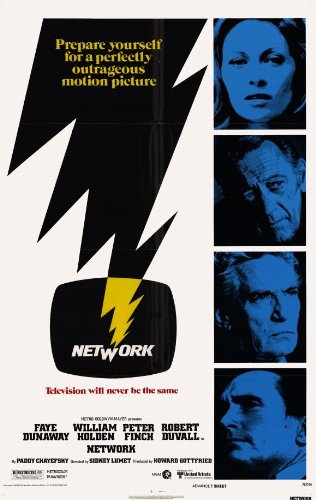
Network (1976)

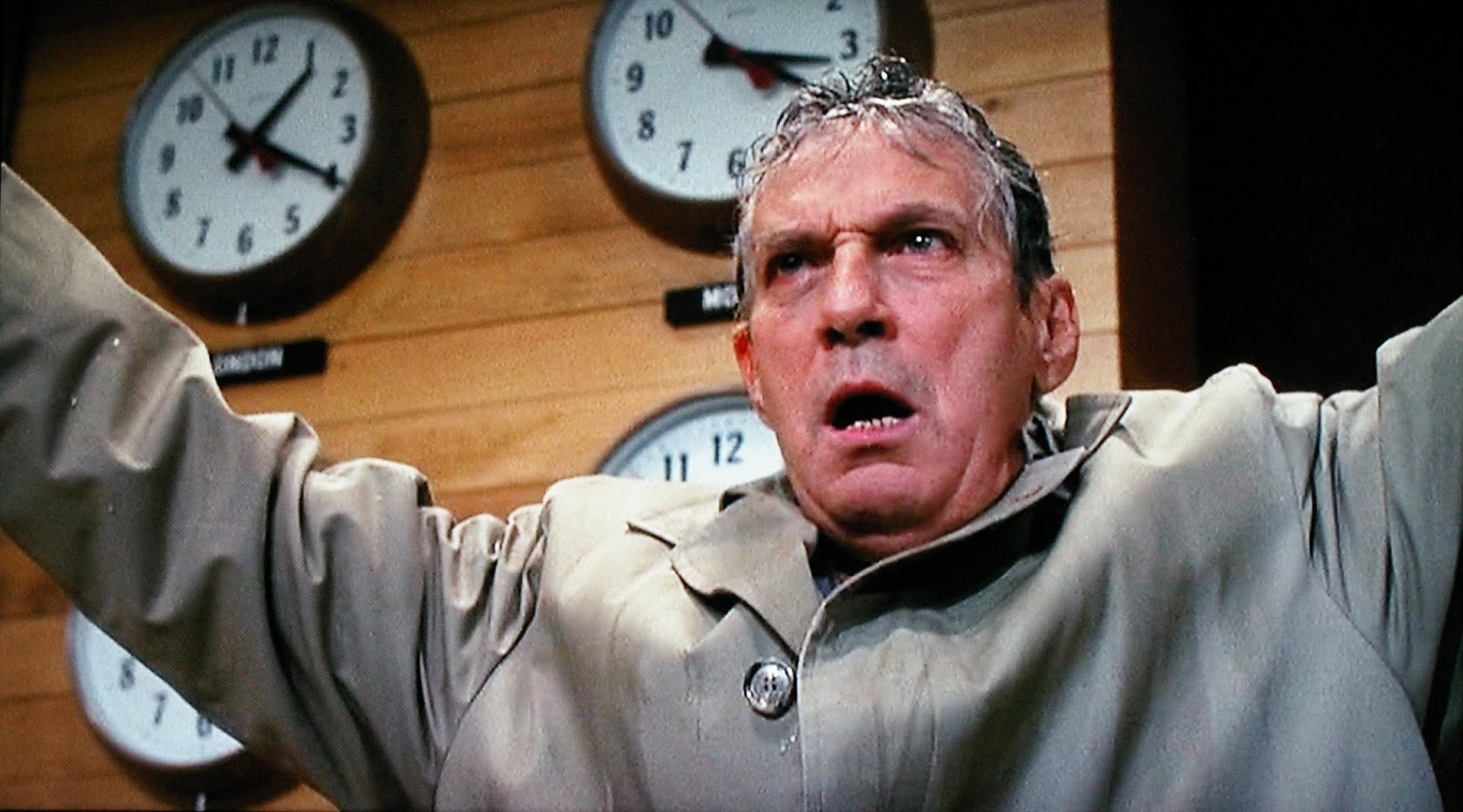
Peter Finch rants and raves in media satire masterpiece Network

Director: Sidney Lumet

Cast: Faye Dunaway (Diana Christensen), William Holden (Max Schumacher), Peter Finch (Howard Beale), Robert Duvall (Frank Hackett), Wesley Addy (Nelson Chaney), Ned Beatty (Arthur Jensen), Beatrice Straight (Louise Schumacher), Jordan Charney (Howard Hunter), William Prince (Edward Ruddy), Lane Smith (Robert McDonough), Marlene Warfiedl (Laureen Hobbs)

Is there any movie ever made that has been more prescient than Network? So spot-on was its vision of television becoming pushed to extremes by its obsession with ratings that when it was screened a few years ago for a group of teenagers in America, they allegedly didn’t realise it was meant to be a satire. I’m also pretty sure you would have to go a long way to find a better written movie – it’s no surprise that this has been converted into a successful play, it’s basically one already.

In the 1970s, UBS is a struggling TV network trying to find a niche among the giants. Its news show is losing its timeslot in the ratings – which is bad news for its respected anchor Howard Beale (Peter Finch). Informed he will be fired due to falling ratings, Beale goes on air and casually announces he will blow his brains out live on air next week. When this sends the ratings rocketing, the network sends him back on air, encouraging him to speak his mind more rather than just report the facts. When Beale suffers a full blown breakdown, his anti-establishment rants touch a public nerve and Beale becomes a ratings smash – with the news show taken over by ambitious Diana Christensen (Faye Dunaway), Head of Entertainment, who turns it into a bizarre light entertainment show, with the increasingly unhinged Beale the main entertainment. It’s perfect for everyone – so long as the ratings hold…

Network could so easily have become a shrill, OTT satire. Writing down the plot summary there, it even reads like that – a big, stupid, pleased-with-itself film that hits its points hard and where every character is a grotesque caricature. But that’s not the case here. This is a brilliantly written film – Paddy Chayevsky is surely one of the greatest writers in film history – a fiercely intelligent piece of satire, which most importantly crafts its characters with empathy and understanding. Some of them may be larger than life, and some of them may do things that are just this side of heightened reality, but at heart they all feel real. The film is shot through with heart and a sense of realism that underpins the razor sharp satire.

And that satire is all around the world of television. So astonishingly prescient is the film about the rise of reality TV, ratings obsessed and lacking in real soul, that many of its jokes pass by almost unrecognised today. Respected news producer Max Schumacher’s throwaway line about an hour of network TV drama being made up of films of car chases (and crashes) from the police? Done to death already. The idea (again unthinkable in the 1970s) that a news anchor could litter the air with their own opinions on the news and current affairs – half the anchors in America now run their shows like editorial pieces. The concept that the public could be entertained by watching someone clearly not completely normal, throwing crazed statements at the camera – it could only be a fantasy right? A TV network completely in thrall to its corporate masters, following the line from the bosses? Yup surely that could never happen.

What Chayevsky does so well is turn these into masterpieces of rhetoric. Some of the greatest speeches ever written in film appear here, and they work because not only do they showcase some superb writing, but also every moment is crammed with ideas and real genuine feeling. Howard Beale may well be as mad as hell and not going to take it any more – but he articulates his reasons for feeling this with an acute emotional reality. Schumacher’s paens to the changing world of television, and his own lost place in it, are beautifully done. Diana’s ratings obsessed spewing of TV related facts and figures is sharply underpinned by our awareness all the time of the emotional reality of her near-inevitable emotional breakdown (surely only a few years at most down the line).

Given these lines, the acting is extraordinary (it won three of the acting Oscars in 1967). There isn’t a duff beat or performance in this film, and the delivery of the high-blown dialogue is simply outstanding, brilliantly directed by Lumet who was always a highly skilled director of actors. In fact, Lumet is often easy to overlook here, but his understanding of the material, and handling of its message and delivery, is a big reason for why it never becomes overbearing or trying. Away from the leads, he also gets superb performances from Duvall (chilling and on the verge of rage in every scene as the corporate suit who really calls the shots), Beatty (who had basically one speech, worked a day, and got an Oscar nomination) and Straight as Schumacher’s wife (who went one better than Beatty and won the Oscar for her one scene – the shortest Oscar-winning performance ever at just a few minutes).

Peter Finch won a posthumous Oscar for his role in this film – ill health restricted his “mad as hell” speech into only two takes (an extraordinary thought when you watch it). Beale is a gift of a part, an intelligent, compelling piece of showmanship – but Finch’s gift is to make the part feel real and human under the genius dialogue. The early scenes showcase Beale clearly struggling with depression, under the smiles, and already starting to crack. I love the way Lumet often frames Finch during these scenes – in group scenes he’s often to the edge of events, and he only slowly comes to the fore to gain a close up. Heck most of his first outburst on television is only seen by us on a viewing monitor in the control room (only the viewer seems to be listening by the way – the technicians are either gossiping or mechanically going through the motions of running the live broadcast, including countdowns to commercials).

Finch basically steals the movie, because you can’t shake from your mind his delivery of scenes like this one:

It’s even harder to believe that so many actors turned down the role – perhaps worried that it would seem like a pantomime role. One of those actors was William Holden – and thank goodness he did, because his grounded, bitter, crumpled, but still idealistic Max Schumacher is one of the film’s highlights. Holden gives one of his greatest performances – often overlooked under the flashy roles of Finch and Dunaway – making Schumacher the still centre of the film and, by its end, something approaching its powerless voice of conscience. 

Faye Dunaway (also Oscar-winning) makes a great deal of the demonic role of Diana Christianson, the representative of the next generation of TV producers, concerned only with ratings over morals. It’s probably the least “real” of the characters, but Dunaway finds the vulnerability and fragility carefully hidden under Diana’s chilly self-confidence and ruthlessness. 

It’s Diana who drives the film, overseeing the transformation of the news hour into a bizarre variety show (including a soothsayer, amongst a host of eccentric magazine feature slots) where Beale is bought on to rant about the emptiness of our world and the horrors of our soulless age like some sort of dancing bear, his inevitable fainting fits greeted by roars of applause. (“What are you?” asks the warm up man of the studio audience “We’re mad as hell and we’re not going to take it anymore!” they delightedly cheer back).

The film runs a particularly dark streak alongside this with Diana’s plan to build a solid hour of entertainment every week from an embedded camera crew following the exploits of a gang of radical Marxist black-pantherist terrorists. The film gets a lot of slightly more obvious satirical material from this – the terrorists quickly lose their Marxist principles in hilarious fights around things like negotiating syndication rights – but its vision of television turning real-life horrors (repackaged) into entertainment for the masses is only a few degrees shy of where many channels have ended up today. 

That’s the whole film – sharply intelligent about where the world is heading, but balancing this with a genuine sense of humanity and emotional intelligence around its characters. If Chayevsky’s screenplay – or Lumet’s direction – hit us over the head with the points the film was trying to make, we’d quickly switch it off. Instead it makes its points with wit and a sense of reality that makes it both horrifying and entertaining. But then it would always have its place in film history with that dialogue and the acting it inspires from the cast. Most of the actors give their best ever work here, and the script is one of the finest around. As for the view of television – well, if we haven’t reached where Network was by now, it’s surely only a few minutes in the future.

Ship of Fools (1965)

Simeone Signoret and Oskar Werner are just part of the kaleidoscope of humanity in Ship of Fools

Director: Stanley Kramer

Cast: Vivien Leigh (Mary Treadwell), Simeone Signoret (La Condesa), José Ferrer (Siegfried Rieber), Lee Marvin (Bill Tenny), Oskar Werner (Dr Wilhelm Schumann), Elizabeth Ashley (Jenny Brown), George Segal (David Scott), José Greco (Pepe), Michael Dunn (Carl Glocken), Charles Korvin (Captain Thiele), Heinz Rühmann (Julius Lowenthal), Lilia Skala (Frau Hutten), Barbara Luna (Amparo), Christiane Schmidtmer (Lizzi Spokenkieker), Alf Kjellin (Freytag), Werner Klemperer (Lt Huebner)

Stanley Kramer was the man who went his own way in Hollywood. Struggling to find work after returning from the Second World War, he set up his own production company which quickly specialised in critically acclaimed “message” films. It’s the sort of film making that hasn’t always aged well. Kramer’s style hasn’t often either – even at the time he was seen as achingly earnest and worthy. Ship of Fools was the sort of perfect project for him: a massive best-selling novel about a huge subject, humanity itself. It was about big themes and it felt really important. It was perfect Kramer material.

In 1933, a ship sails from Mexico back to a newly Nazified Germany. On board, the passengers and crew blithely continue their own personal dramas and obsessions – it really is literally a “ship of fools”, as we are informed in the film’s opening by wry observant German dwarf Carl Glocken (Michael Dunn) who serves as an occasional chorus. On board: a faded Southern Belle (Vivien Leigh) desperate to recapture her youth; a failed baseball player (Lee Marvin) bitter that his career never took off; a young artist (George Segal) intent on only drawing serious subjects to the frustration of his girlfriend (Elizabeth Ashley); a bigoted, bullying Nazi (JoséFerrer) trying to start an affair with an attractive younger blonde (Christiane Schmidtmer); a Jewish jeweller (Heinz Rühmann) who thinks the Nazi party can’t be that dangerous; and ship’s doctor Willi Schumann (Oskar Werner) who finds himself increasingly fascinated with La Condesa (Simeone Signoret), a drug addict and a social campaigner being transported to prison in Spain. Truly, the whole world is on board this boat! (Or so you can imagine the poster saying).

The success of the individual moments in Ship of Fools rise and fall depending on the level of engagement you feel in each of these stories. It’s a curious mixture of tales, some of them dancing around deeper meanings, some playing like dark farce, some plain self-important rubbish. What’s abundantly clear is Kramer feels this is all leading towards meaning something, though whether he gets anywhere near expressing what this something is really isn’t clear. In fact the only real categorical message I could take about this is that humanity has a tendency to fiddle whole Rome burns – and that of course the Nazis are bad. 

There is an attempt to suggest a world in microcosm – and some have argued that the smorgasbord of characters are basically like facets of one person’s personality – but really what many of these stories are deep down are soapy pot-boilers, brought to life by good writing and fine acting. Kramer marshals all these events with a professional smoothness: there is something quite admirable about the fact he clearly sees the director’s role as more like a producer’s, someone there to service the story and actors more than to cover the film with flash. It might not make for something compellingly visual, but it is refreshing.

What Kramer is less successful with is the heavy-handed importance the film gives its serious moments. Most infamous is a moment when Glocken and Jewish trader Julius Lowenthal are sitting on the veranda, listening to the band while chatting about current affairs in Germany. “There are nearly a million Jews in Germany. What are they going to do? Kill all of us?” Julius jovially states – the band music obviously ends the second he stops speaking, filling the screen with a chilling silence. It’s the sort of moment that is supposed to make us feel the chill of the oncoming storm – but instead feels manipulative and portentous. Every moment like that lands in the same way – the film is delighted with its exploration of these shallow people, very pleased with knowing the Nazi destruction is on the way. 

This self-important bombast dates the picture more than anything else in it. Nothing dates as badly as pretension. It’s a film that feels like it’s been made very consciously to make you think, and which wears its attempt to capture every level of society – from poor Spanish workers to rich Nazis – very heavily. It also makes obvious points: naturally the only true act of self-sacrifice comes from a poor Spanish worker, while the rich passengers can scarcely look past their own concerns. 

When it isn’t being self-important, the film too often finds itself mired in soapy rubbish. The plotline featuring George Segal as a failing artist and Elizabeth Ashley as a frustrated girlfriend is tedious beyond belief, a slog through the worst kind of coupley drama that adds very little to the film. A further plotline around the companion of a wheelchair-bound intellectual, obsessed with an exotic dancer on the ship, could sit just as easily in Coronation Street as it could in a highbrow drama like this.

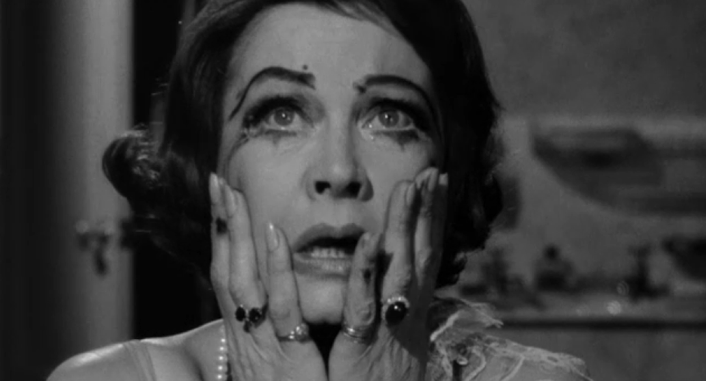
Despite all this, I have to say much of the acting is very strong – even if many of the actors are cast very much to type. Vivien Leigh, in her last performance, struggled with immense psychological difficulties during shooting, but brings a heartfelt realism to divorced Southern belle Mary Treadwell (an even more heartfelt version of her Blanche DuBois than in Streetcar). Kramer also allows her one of the film’s few moments of imaginative spontaneity when she suddenly bursts into a Charleston before stumbling back to her hotel room. 

Carrying a lot of the film’s emotional weight are Oskar Werner and Simeone Signoret (both Oscar nominated) as an unlikely romantic coupling. Werner brings great depth and sadness to the world-weary doctor who finds himself irresistibly drawn to Simeone Signoret’s Countess. Signoret channels her distant, fragile imperiousness from Les Diabloques and Room at the Top to marvellous effect as a woman struggling with an indolent drug addiction but who feels a genuine responsibility to the world. The quiet scenes between these two are the closest the film gets to touching some distant meaning, even if it never quite gets there – and again the points deep down are fairly straight forward.

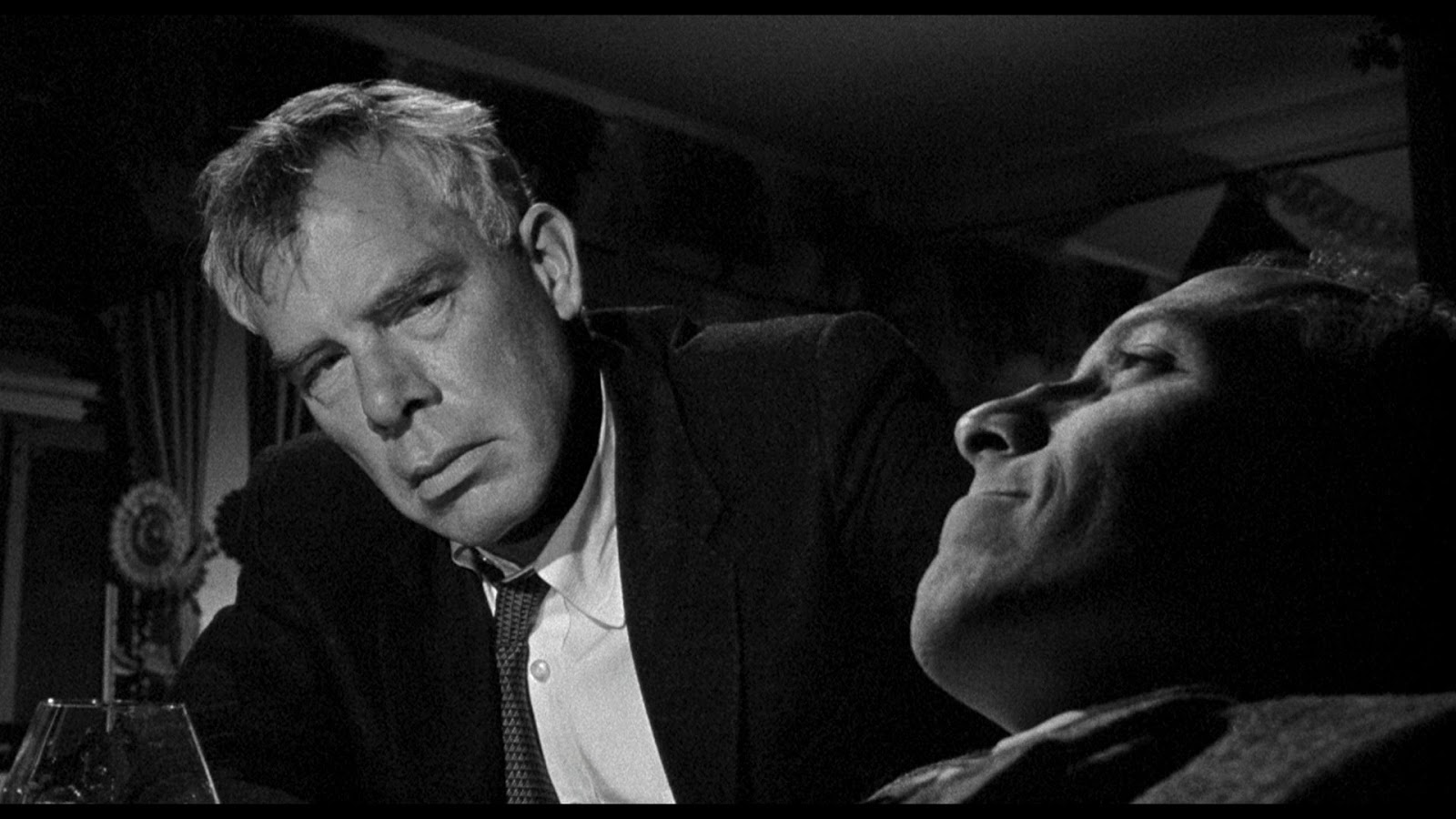
For the rest of the cast, there is hardly a weak link. Heinz Rühmann, in his only English-speaking role, campaigned heavily for the role of Jewish trader Julius and he is magnificent. José Ferrer swaggers convincingly as bullying Nazi Siegfried, even if he is saddled with the most obvious, poorly written, character. Michael Dunn (also Oscar nominated) makes a lot of his role as charming chorus and commentator. Lee Marvin is terrific as the frustrated and bitter baseball player. Charles Korvin gives a lot of depth to the thoughtful and compassionate captain.

Ship of Fools has plenty of moments of enjoyment. But as a whole it’s always a little self-consciously important, too determined to push you to be aware of the messages it wants you to take home. As the final shot sees a camera crane inexorably down onto a swastika you feel smacked around the face with the film wanting you to know that the darkness was just around the corner. The dread of Nazism should hang over the film like a shroud but instead it feels so repeatedly stressed to us that it loses all impact. The film wants us to know that we know more than the characters, and goes out of its way to remind us so that we can pat ourselves on the back when we spot the irony. Despite much of the quality of acting and dialogue, it gets wearing after a while.

Loving Vincent (2017)

Douglas Booth becomes a painting in the unique Loving Vincent

Director: Doreta Kobiela, Hugh Welchman

Cast: Douglas Booth (Armand Roulin), Jerome Flynn (Paul Gachet), Saoirse Ronan (Marguerite Gachet), Helen McCrory (Louise Chevalier), Chris O’Dowd (Joseph Roulin), John Sessions (Père Tanguy), Eleanor Tomlinson (Adeline Ravoux), Aidan Turner (Boatman), Robert Gulaczyk (Vincent van Gogh)

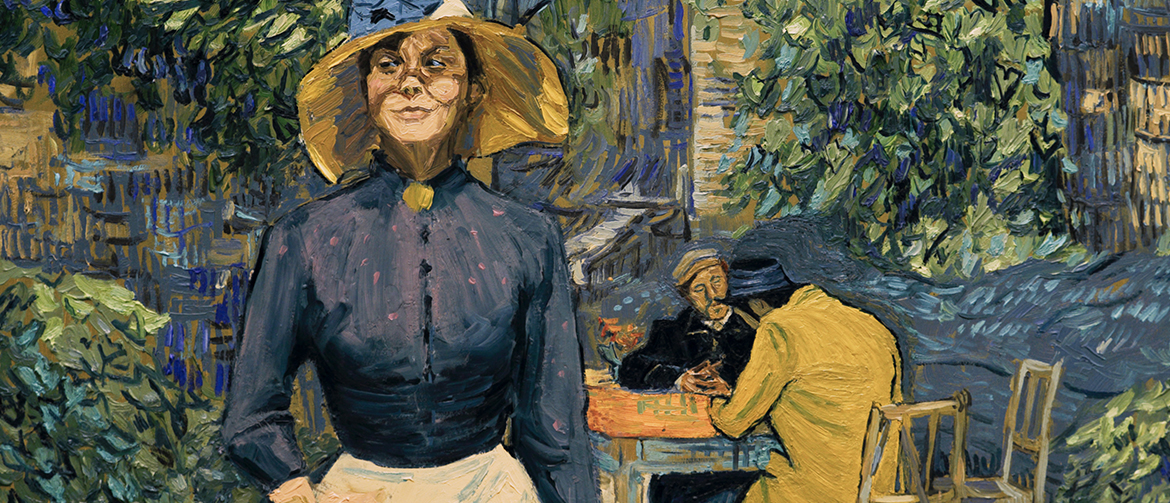
Now this is something very different. It’s a common turn of phrase to praise a well-photographed film by saying every frame looks like a painting. Well Loving Vincent is a film where every single frame is literally a painting. A beautifully painted pastiche collection of van Goghs, painted over a combination of motion capture and photographs of real locations. And, as you would expect, it is beautiful. 

The film covers events year after the suicide of Vincent van Gogh (Robert Gulaczyk). Armand Roulin (Douglas Booth) tries to deliver van Gogh’s last letter to his brother Theo. Roulin’s father Joseph (Chris O’Dowd) is also concerned that there is more to the death than meets the eye, as van Gogh had written to him that all was well in his life. Roulin travels first to Paris and then to Auvers-sur-Oise, where van Gogh spent his final days, talking to those who knew him, including his landlady Adeline Ravoux (Eleanor Tomlinson), his art supplier Père Tanguy (John Sessions), the daughter of his doctor Marguerite (Saoirse Ronan) and finally Dr Gachet (Jerome Flynn) himself. 

Loving Vincent looks simply beautiful. Its quality is astonishing. The film was shot on green screen with actors. Van Gogh’s paintings were then overlaid as backgrounds for the action. The film was carefully edited, then every frame in the final film was turned into a single hand painting – with real paint. 65,000 hand-painted frames. It’s astonishing – you’ve never seen anything like this before. The style, the homages to van Gogh, the respect and craft behind reproducing his distinctive look – it’s marvellous. Every single image in the film demands you linger upon it and soak it in.

I simply haven’t ever seen a film like this before. I can’t imagine any film like this being made again (for starters it took years to make). It demands to be seen if you have any interest in art or any interest in cinema as a visual artform. It’s so impressively done, you start falling in love with its artistry. It’s also got a poetic visual beauty to it. The flashbacks showing van Gogh’s last few days are put together with a black-and-white pencil-drawn style, which contrasts beautifully with the primary colours of the present day. The film walks a brilliant tightrope line between “real” and dreamlike wonder – final shots of van Gogh or sequences of Roulin dreaming feel like real visual expressions of inner thoughts in their greater expressionist vibrancy.

If there is a weakness to the film, it is that (whisper it) there isn’t much actually to it once you look past the visuals. It’s truly unique in look and feel but the story it delivers is fairly traditional and even (at times) a little flat. Despite being soaked in van Gogh I’m not sure you learn too much about him or his art from the film, and the film shies away from its more interesting topics. The dialogue or plotting rarely ventures above the average.

Perhaps one of the most interesting themes of the film is the struggle of the characters to understand and appreciate the difficulties of depression: that suffers can be optimistic one minute, and consumed with world-ending self-loathing the next. It would have been more interesting if the film had engaged more with this theme, rather than trying to build a rather flat murder mystery around van Gogh’s death. It also would have felt more true to the actual struggles of the artist – crikey, this material was spun out into an excellent Doctor Who episode, which feels like it managed to get more understanding of van Gogh than this film manages.

The acting however is pretty good – Douglas Booth anchors the film every well as the nominal detective figure, struggling with his own guilt over abandoning van Gogh. Saoirse Ronan is very good as a sad love opportunity lost for van Gogh, Eleanor Tomlinson radiant as his friendly hostess, Jerome Flynn tragically guilt-ridden and envious as Dr Gachet. It may not be a film that really gives actors the opportunity to let rip, but it’s still good.

The main question over Loving Vincent is whether there is enough to it to make it more than an art experiment, or a curiosity. Plot and storyline wise it’s a very traditional, rather straightforward film, but it carries a germ of depth in there. And then the film looks so uniquely marvellous that you can’t deny it a certain place in film history. Because you won’t see anything like this again, and if you have any love for the artist or art in general, you have to check it out. Every frame is literally a painting.

Rain Man (1988)

Tom Cruise and Dustin Hoffman go on a road journey of personal discovery in Rain Man

Director: Barry Levinson

Cast: Dustin Hoffman (Raymond Babbitt), Tom Cruise (Charlie Babbitt), Valeria Golino (Susanna). Jerry Molen (Dr Bruner), Ralph Seymour (Lenny), Michael D Roberts (Vern), Bonnie Hunt (Sally Dibbs)

Rain Man poster1988 wasn’t a vintage year at the Oscars, so perhaps that explains why this functional film ended up scooping several major awards (Picture, Director, Actor and Screenplay). Rain Man is by no means a bad film, just an average one that, for all its moments of subtlety and its avoidance of obvious answers, still wallows in clichés.
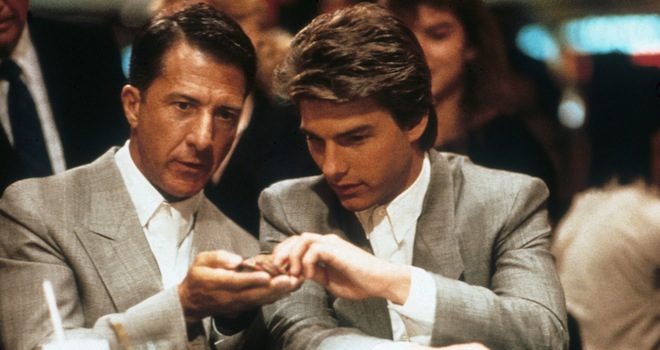
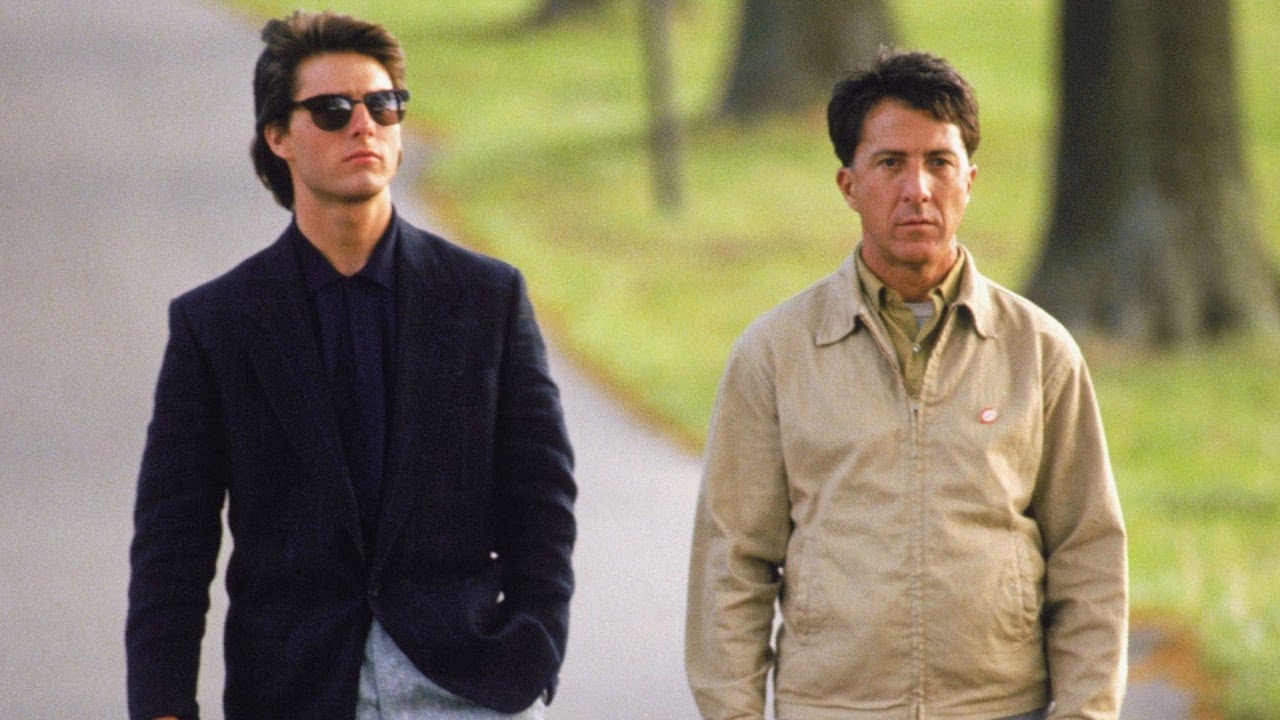
Charlie Babbitt (Tom Cruise) is a cocksure car dealer (he’s Cruise to the max) whose latest deal is spiralling down the toilet when he hears his father has died. Charlie had long since cut all links to his father, so he’s not surprised to be left only a car. But he is intrigued the money has been placed into a trust – and is shocked and furious to discover he has an autistic brother Raymond (Dustin Hoffman) he never knew about. After essentially kidnapping Raymond in order to claim his share of his father’s fortune, the two end up in a cross country road trip where Charlie slowly learns more about Raymond and their shared past and begins to soften in his view of his brother.

Rain Man is basically the sort of movie where two characters go on a road trip and have a personal journey of discovery, offering the sort of twists and character developments that are only really going to be surprising to someone who has never seen a movie before. But despite that, it does do something interesting, avoiding the standard Hollywood cliché of Raymond discovering depths or learning to overcome part of his condition: he is basically the same at the end of the film as at the beginning.

Instead all the change and journey is in Charlie Babbitt. The film carefully and unobtrusively develops Charlie over the course of the film so that he evolves away from the selfish, greedy yuppie we first encounter, who seems incapable of building emotional links with the people around him. Instead, as he learns to care (in every way) for another person, he also discovers reserves of love and a yearning for connection in himself that he never knew he had before. 

This all sparks off his interaction with Raymond – and his growing acceptance of Raymond for who he actually is, rather than who he wants him to be. This happens slowly – and Charlie can intermix tenderly teaching Raymond to dance with using him to count cards in Las Vegas – but you can plainly see the difference in his character from his reactions when he says hello to his girlfriend earlier (flirtatious but distant) with how he greets her when they reunite later in the film (warm, loving and open). It’s a gradual but very natural development shift that is the real heart of the film.

This works due to a terrific performance from Tom Cruise. Cruise has possibly never been better than he is here. His role is not about glamour or flash, but about carrying the narrative and emotion of the story. Cruise is sensational, quietly carving out a gradual and intelligent character development over a period of time that avoids all the flashy tricks and obvious “emotional” moments you expect. Cruise isn’t afraid to be unlikeable either at points in the story.

That’s what the real emotional connection with the viewer is in this story, and that’s the real arc that the film captures. However it’s Dustin Hoffman who attracted the real plaudits for his performance as the autistic Raymond. Interestingly Hoffman was initially tapped for the role of Charlie, but quickly worked out Raymond was the flashier part. 

Hoffman’s performance is a masterpiece of virtuoso transformation, and his capturing of the quirks and mannerisms of an autistic man are perfectly done. He convinces utterly. But, by the nature of the character, there is no real emotional or character work here. The performance is one that is largely a collection of extremely successful mannerisms. It’s rather like watching an expert juggler successfully juggle twenty things for over two hours. Hoffman doesn’t drop a single thing, but it’s a series of actor tricks rather than a complex acting performance of emotion and character. 

Rain Man did give an insight into autism for many in the 1980s for the first time. Its influence may perhaps have been too great – it’s now become almost standard for an autistic savant in movies to be a maths genius with amazing memory – but in the film, it’s carefully structured to serve as a starting point for Charlie to begin to see Raymond as a human being rather than an object. The film itself sets out a similar stall, encouraging the viewers to see those with autism as people with their own feelings – however much they struggle to understand or express these, as Raymond does. 

What it does very well is to subtly and sensitively explore Raymond’s situation. The medical professionals in the film are never demonised (as they so easily could have been) but are as concerned about Raymond as Charlie becomes. Raymond and Charlie discover they have a closer bond that both seem barely able to express – even Raymond seems to become, at least, used to Charlie’s presence enough to let him touch him. The film shows Raymond however can only progress so far – there is no miracle cure, and no out of character outburst of empathy. 

Rain Man works best when it focuses on subtlety – and has an outstanding performance from Tom Cruise – and it has a well filmed simplicity to it. But it is a slight tale, directed with a functional professionalism by Barry Levinson that never really manages to stand out from several other movies very similar to it. It has a certain warmth and emotionality to it, but deep down it’s nothing really that special – just a more subtle version of a story we have seen several times before.

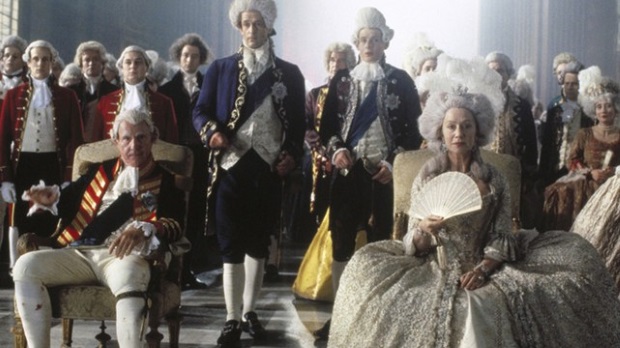
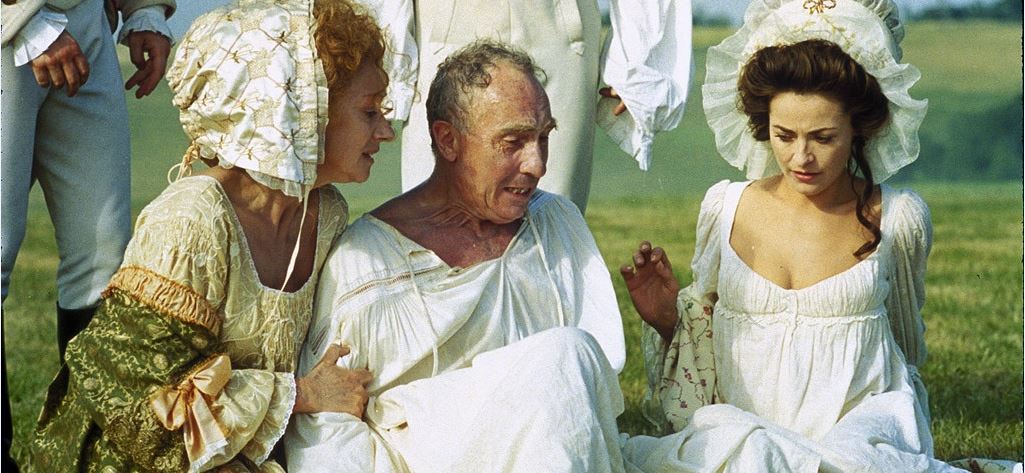
The Madness of King George (1994)

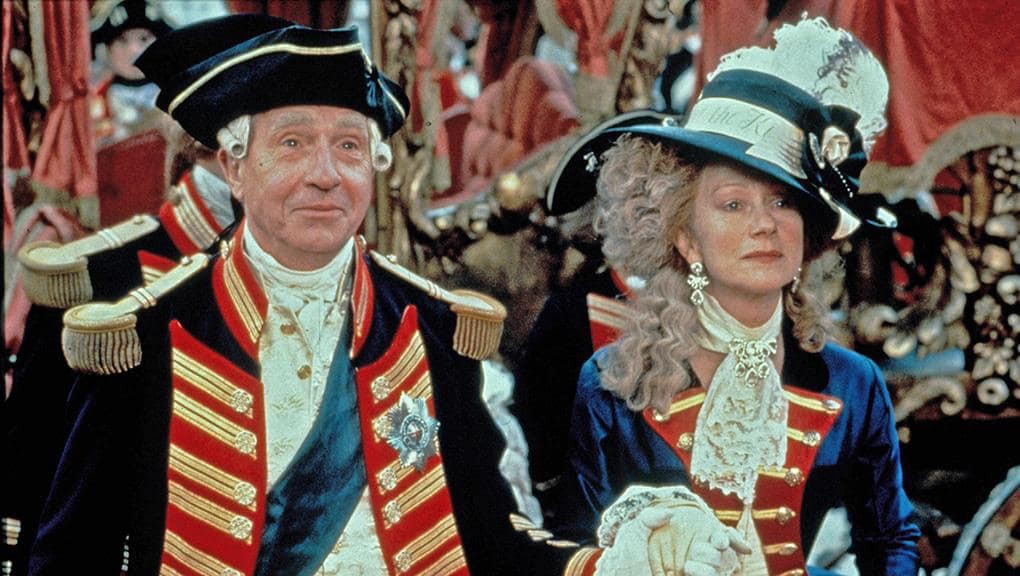
Nigel Hawthorne and Helen Mirren excel in this masterful adaptation of Alan Bennett’s classic play

Director: Nicholas Hytner

Cast: Nigel Hawthorne (King George III), Helen Mirren (Queen Charlotte), Ian Holm (Dr Willis), Rupert Everett (Prince of Wales) Amanda Donohoe (Lady Pembroke), Rupert Graves (Captain Greville), John Wood (Lord Chancellor Thurlow), Geoffrey Palmer (Dr Warren), Jim Carter (Charles James Fox), Julian Rhind-Tutt (Duke of York), Julian Wadham (William Pitt), Anthony Calf (Captain Fitzroy), Adrian Scarborough (Fortnum), Struan Rodger (Henry Dundas), Caroline Harker (Mrs Fitzherbert), Roger Hammond (Dr Baker), Cyril Shaps (Dr Pepys)

Alan Bennett’s The Madness of George III allegedly changed its name for the film adaptation because producers worried American audiences would feel they missed the first two films in the series. It’s not actually true, but it was a lot of free publicity for Nicholas Hytner’s film debut – a marvellous, accomplished and brilliant theatrical adaptation that will always take a firm place on my list of favourite films. It’s an excitingly well-made, hilarious and heartfelt film that captures forever Nigel Hawthorne’s greatest ever performance.

In 1788 King George III (Nigel Hawthorne) is still fuming over the loss of “the colonies” (the film front and centres talk of the plucky United States, to help sell the film in the land of the free) and the behaviour of his ambitious oldest son George (Rupert Everett). Happily married to his wife Queen Charlotte (Helen Mirren), and the father of 15 children, George is a stickler for form and duty. So imagine the shock of his ministers when his behaviour becomes impulsive, irrational and finally obscene. With the king talking non-stop and impossible to control, the Prince of Wales schemes to become Prince Regent. Desperate, the king’s ministers call in Dr Willis (Ian Holm), a professional doctor of the mad, who claims he can (with time) cure the king. But will it be in time to prevent the regency?

Nicholas Hytner has rather charmingly claimed that he knew so little about film-making he didn’t realise the difficulty of many of the things he asked for, and if he had known he would never have asked. He gives much of the credit to the seasoned pros working on the film pulling out the stops to give him what he asked for. The end result is a brilliantly paced, lusciously filmed epic that is both a wonderfully moving personal story of a crotchety but lovable monarch and a witty look at regency politics. Several scenes are shot with an imaginative brilliance, from shots that throw themselves into the middle of scuffles at court with the unbalanced king, to sweeping landscape shots that make it look like the thing cost millions of dollars.

The other advantage of bringing in Hytner (director of the original stage production) was his brilliant understanding of Alan Bennett. Bennett’s script is superb, crammed with sensational lines and brilliant jokes that never get in the way of the humanity. Bennett is always more than radical than his cosy reputation suggests, and King George is a witty deconstruction of the purpose of the Royal family (politicians frequently comment on their pointlessness and George defines it as “smile and wave” and to act as “a model family”). It’s got a great understanding of the frustrating waiting game of long-serving heirs (being Prince of Wales “is not a position, it is a predicament”). The film even lands a cheeky gag at the end with the suggestion that the King’s condition was hereditary.

Hytner’s film uses the trappings of royalty brilliantly, contrasting them to great effect with the later degradation of the king – in an inspired moment, George’s first “enthroning” in the restraint chair Willis uses to condition him into behaving is soundtracked to Handel’s Zadok the Priest. George’s court is an uptight, staid place where people can’t relax (or even sit – George is so adamantly opposed to people sitting in his presence even a heavily pregnant woman is not exempt during an interminable bell-ringing version of Handel). George is a constrained figure – so it’s no wonder his insanity displays itself as an increasingly loose-lipped lack of inhibition.

The question of madness is richly handled. As Willis says, many of the mad consider themselves kings, so what does a king fancy himself as? And how can you tell what is normal for a king anyway? George is an eccentric from the start – and even his recovery at the end is basically eccentricity with an element of self-control rather than a full recovery. The film never shies away from making you invest in the rough treatment the king undergoes to wrestle him back to sanity. The doctors get short shrift, either incompetent or scheming (“When will you get it into your head that one can produce a copious, regular and exquisitely turned evacuation every day of the week and still be a stranger to reason” Geoffrey Palmer’s wonderfully dry Warren tells a toilet-obsessed colleague). 

The film is slightly more confused about Willis. Strongly played, with a twinkly chippiness, by Ian Holm (who is just about perfect) the film can’t quite decide if Willis is responsible for the king’s recovery or not. It’s a battle of wills, but is Willis ahead of his time or as medieval as his colleagues? Does Willis’ aggressive conditioning (punishing bad behaviour with restraints) force the king back into sanity? Or is it George’s love of his wife that provides the final push? Or is the king naturally on an upcycle where madness expresses itself in eccentricity rather than incoherence? It’s not clear (maybe this is deliberate) but Willis’ regime of punishment and reward has a slight air of quackery.

What’s pretty deliberate was Bennett and Hytner’s insistence that only Nigel Hawthorne could play the king. Thank god they did, as Hawthorne is simply brilliant. Cheated of the Oscar in 1994, Hawthorne is compelling. He also conveys the natural authority of a king, and the “grumpy old man” side of the king is mined for brilliant comic effect. But it’s also a beautifully heartfelt and hilarious performance, running the gamut from delight in obscenities to teary fury and fear at the treatment from his doctors and loss of mental control. Such a sublime performance.

And it surely inspired some top work from the brilliant cast around him, many of whom revived their roles from the stage production (chief among these Wadham’s wonderfully dry Pitt).  Helen Mirren is warm, proud and eventually desperate as Charlotte, while Rupert Everett mines the Prince of Wales for all the comic pomposity and childishness he can. Rupert Graves is excellent as a loyal equerry, while John Wood, Jim Carter and Geoffrey Palmer also excel. You’ve rarely seen such a strong cast of British stage notables, and it’s not surprising they were attracted to perform in a script that has as many good lines as this one.

It’s accomplished and luscious, is brilliantly shot and designed, and is packed full of wonderful sequences. It wears its intelligence lightly, with George as a proto-Lear struggling to hold onto his marbles. The characters even sit and read Lear at one point (“Is that wise?” questions Thurlow. “I had no idea what it was about” says the little-read Willis). George may recover his wits in time, but it’s unclear whether this makes him more or less of a human being. In many ways at the height of his insanity, he’s a warmer, friendlier person (if out of control), then he is as his buttoned-up, stickler-for-duty self. 

The Madness of King George is the sort of film all theatre adaptations wish they could be, brilliantly cast, opening out into something that not only feels compelling to watch but also brings out the great depths of the original play. What is monarchy for? How can we tell if the all-powerful are mad or not? What is sanity anyway? All this and with some superb jokes, and a story that really involves you. With Nigel Hawthorne’s simply brilliant performance at the centre, this is one for the ages.