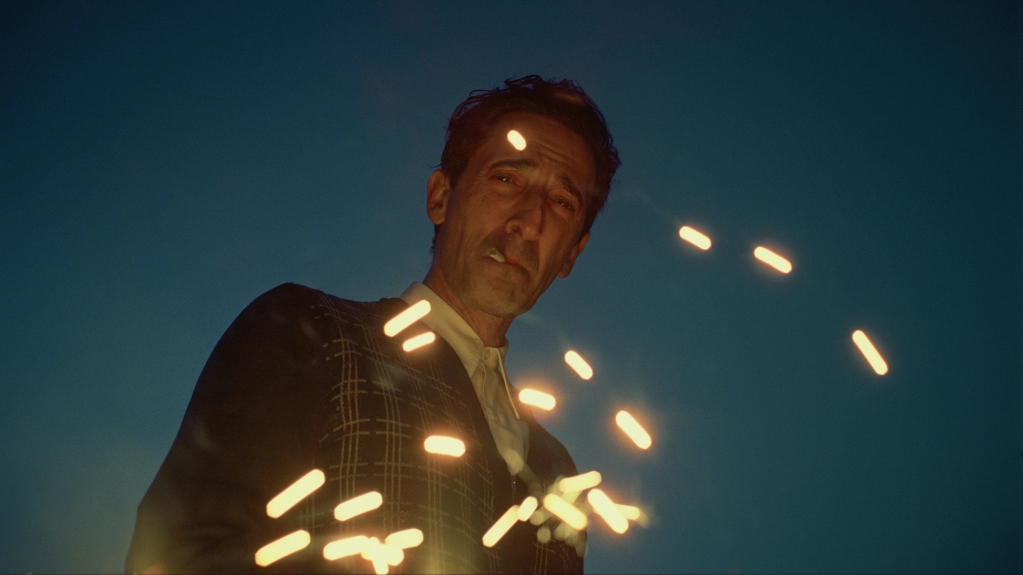
Category: Films about racism

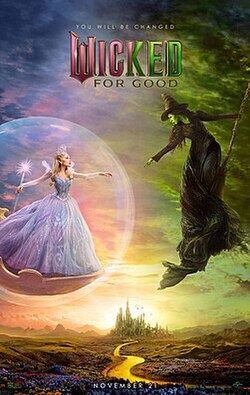
Wicked: For Good (2025)

Wicked: For Good (2025)

Part 2 doesn’t match Part 1 for entertainment or depth, but has enough moments to work

Director: Jon M. Chu

Cast: Cynthia Erivo (Elphaba Thropp), Ariana Grande-Butera (Glinda Upland), Jonathan Bailey (Fiyero Tigelaar), Michelle Yeoh (Madame Morrible), Jeff Goldblum (The Wizard of Oz), Ethan Slater (Boq Woodsman), Marissa Bode (Nessarose Thropp), Bowen Yang (Pfannee), Bronwyn James (ShenShen), Colman Domingo (Cowardly Lion)

Act Two comes to the screen in Wicked: For Good, putting the finishing touches to a five-hour journey through a single stage musical. While there are literally hundreds of millions of reasons for splitting the film in two, you can’t doubt the passion and love for the source material from everyone involved. However, Wicked: For Good, while shorter than the first film, feels longer: more padded but also more aimless, exposing more of the flaws of the musical less apparent when Act Two breezes past in about an hour. It’s still an entertaining watch, but it lacks the explosive, glorious impact of the first film.

Elphaba (Cynthia Erivo) has been firmly branded public enemy number one as the Wicked Witch of the West. Meanwhile, her old friend Glinda (Ariana Grande-Butera) is the universally beloved face of the regime, showmanship and trickery hiding her complete lack of magic. Elphaba is fighting a losing battle for hearts and minds, failint at her attempts to expose the Wizard’s (Jeff Goldblum) lies and to protect the animals of Oz from persecution. Attempts at good deeds constantly go wrong and the arrival of a young girl from Kansas brings chaos. Will Elphaba and Glinda heal their relationship and will Oz be saved?

Wicked: For Good suffers for covering the weaker second act. Most of the best songs were in the first film. The first act also has more interplay between the two leads (whose relationship is the heart of the story) and had a clearer coming-of-age arc with Elphaba’s eyes being opened to the nature of Oz. Wicked: For Good tries to tackle an awful lot (Good and Evil! Animal rights! The Wizard’s oppression and guilt! Propaganda and manipulation! Backstory for every character in The Wizard of Oz! Elphaba and Glinda’s relationships with Fiyero!) But it often ends up under-cooking, hand-waving and fudging many of them. It chops and changes its focus so often, that developments seem sudden or under-explained.

This is where the extended run-time doesn’t help. The logic leaps that can be done in a few minutes of dialogue between songs in an hour of stage-time, make less sense when stretched over two hours plus. One of Elphaba’s main motivations is protecting the animal’s rights, with these creatures literally losing their voice. Despite opening with her trying to free slave-worker animals from building the Yellow Brick Road, eventually this plot-line feels lost in the shuffle. The motivations and mechanisms of the persecution are unclear, and then confusingly bunched in with racist laws against Munchkins. Similarly, Jeff Goldblum’s Wizard switches from a sociopathic arch-manipulator, into a drink-dependent man coated in guilt, without this journey being amply explained.

Wicked: For Good also awkwardly shoe-horns in events from The Wizard of Oz (there is a lot of Dorothy and her companions on the margins) and comes up with not-always-well-developed reasons why Elphaba and Glinda do the things-they-do as required by Wizard of Oz, without contradicting the more complex, interesting characters they are here. Again, these are flaws revealed by the extended run-time which gives more depth to the leads, but little of its added hour to giving more depth and context to the plot and themes the film is trying to handle, making them feel under-powered.

That’s not to say there are not plenty of positives. Wicked: For Good really understands its core strength is the relationship between its leads, and the chemistry between Erivo and Grande is still dynamite. It’s made very clear they are taking opposite approaches in interpreting ‘what’s best for Oz’ (for Elphaba it’s ending the lies, for Glinda it’s keeping people happy – very on brand for both). Their scenes are the film’s emotional heart, whether laughing or crying together, or even (in one laugh-out-loud moment) literally fighting. Just as in the first film, Wicked: For Good demonstrates the different perception an outsider and an insider brings to a situation and how this informs their loyalties and actions.

Erivo’s wonderfully draws on deep loneliness and growing frustration at her inability to change things, capturing the sense of someone certain she’s in the wrong, but who utterly lacks the ability to persuade (be that animals to stay and fight, or Ozians to take another look at the Wizard). Her deep need for friendship (and romance with Jonathan Bailey’s effortlessly charismatic Fiyero – rather short-changed by screen time here) is clear, even if her transition to embracing elements of ‘the villain’ seems rather forced. Her singing remains breathtakingly good with ‘No Good Deed’ an extraordinary show-stopper.

However, the film might just belong to Ariana Grande. If Wicked was Elphaba’s coming-of-age, this is Glinda’s. Grande brilliantly shows how fragile the bubble of happiness Glinda has built is. Glinda’s realisation that from an early age (an excellent childhood flashback scene helps here) she hid her feelings with an immaculate smile is very well explored – as is her realisation that she is universally beloved, but has no real friends. Grande finds a desperation, fragility and sense of pain that only just peak out – feelings covered well in the best of the film’s two new songs ‘The Girl in the Bubble’, with Chu using reflections to stress Glinda’s realisation of the lies she has told herself.

Of the many themes the film tries to cover in a broad sweep, this one comes out best while others fall by the wayside. Propaganda and dictatorship in Oz sort of sits there as a presence without getting real focus. The oppression of the animals (and imagery of them working in whips and chains) makes a big emotional swing the film isn’t willing to commit to. The other new song, ‘No Place Like Home’, is an unforgettable ballad that awkwardly stages Elphaba begging animal users of an Underground Railroad to stay and hope for the best (imagine telling that to real-life Railroad users). There are darker elements I liked (Marissa Boda’s Nessarose and Ethan Slater’s Boq explore jealousy, possessiveness and rage in a surprisingly daring way, told with an effective economy I wish Chu could have found more often).

When Wicked: For Good works, it works. The impressive visual design from the first film is still in place. Chu directs with energy and vibrancy and gets real emotion from the moments between the leads. But I miss the large choreographed numbers here (perhaps expected from a darker Act Two) and its plot is often unfocused, forced and manages to use double the time to barely extend (or make more interesting) the level of thematic exploration the original musical does. I didn’t enjoy it as much as the first one and becomes a little too trapped by fitting into Wizard of Oz but it’s still an entertaining ride.

Nuremberg (2025)

Nuremberg (2025)

Terribly handled drama that accidentally deals a favourable hand to a leading Nazi

Director: James Vanderbilt

Cast: Rami Malek (Dr Douglas Kelley), Russell Crowe (Herman Göring), Leo Woodall (Sgt Howie Triest), Michael Shannon (Justice Robert Jackson), Richard E Grant (David Maxwell Fyfe), John Slattery (Colonel Burton C Andrus), Mark O’Brien (Colonel John Amen), Colin Hanks (Dr Gustave Gilbert), Wrenn Schmidt (Elsie Douglas), Lydia Peckham (Lila), Lotte Verbeek (Emmy Göring)

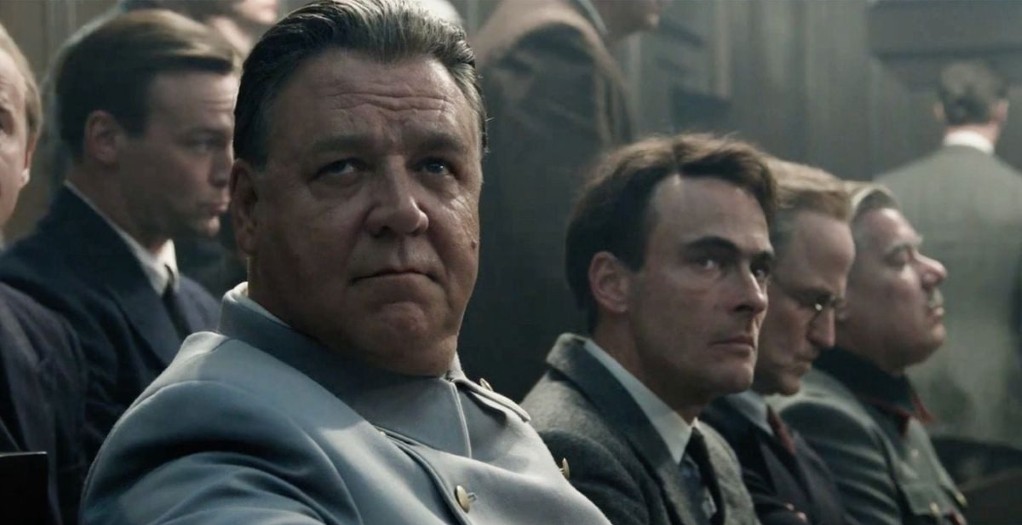
If one thing captures what a miserable failure James Vanderbilt’s Nuremberg is it’s this: if Herman Göring rose from the bowels of whatever Hell he currently resides in and saw it, he’d probably freaking love it. The misguided history lesson has a political and moral message that is obscured and fudged, its points either lost or delivered with thudding obviousness. But the one thing it’s consistent in doing is presenting the most infamous Nuremberg defendant as a fiendishly clever Hannibal Lecter, multiple steps ahead of everyone, whom the film allows to fudge (without sufficient correction) his responsibility for the Holocaust and who goes down due to his loyalty to his lost leader. Ye Gods.

Vanderbilt’s film is an old-fashioned film that simultaneously gives a spotlight to the relationship between Göring (Russell Crowe) and psychiatrist Douglas Kelley (Rami Malek) and attempts to tell the entire history of the set-up, planning, prosecution and judgement of one of the longest trials in history. It succeeds at neither of these things, and does so while cramming dry, exposition-heavy dialogue into its actors’ lips (the sort of speeches where people launch into lists of the Nuremberg Laws or the trial’s legal framework). Much of it is dramatically inert – at least those parts you’ll be able to see through the film’s impossibly murky camerawork (I expected the lights to shoot up in the courtroom in a standard ‘truth-bought-to-the-light’ cliché, but even here it’s hard to see).

The material around the trial set-up essentially takes a fascinating subject – the wrangling of four allies (three of whom didn’t really trust the fourth) to create a legal framework for an international tribunal never attempted before – and makes it dull as ditchwater. Michael Shannon does his best as Justice Jackson, architect of the trial, but the vast majority of his scenes are little more than exposition (his best is a meeting with Pius XII, whom he effectively blackmails into supporting the trial, in recompense for Pius’ lack of action against the Nazis). Richard E Grant adds a little flavour, even though this film’s whisky-from-a-teacup Maxwell Fyfe (in reality, a stern man in his 40s) feels more like Grant-101 than a real person.

While the trial is a drag, the rest is a farce. Rami Malek flails as Douglas Kelley, in a poorly written role. I suspect, based on the film’s final ham-fisted scene, the intention was to suggest Kelley got too close to Göring and bought a little of what he was selling until the scales fell from his eyes during the trial (and the Holocaust evidence). That Kelley would serve as a dark warning that even the brightest can get seduced by charismatic Nazis. This would have added real fire to the film’s closing vision of Kelley as a drunken Cassandra, desperately railing on US public radio that it could happen here. But clearly someone was worried positioning our hero as someone who admired Göring for a while was going to be hard for regular viewers to sympathise with.

Instead, we get a clumsy dance, where its repeatedly stressed Kelley is only getting close to Göring because he wants to exploit him for a best-selling book. That his sticking up for Göring (including giving credence to Göring’s argument that he couldn’t possibly know about the Holocaust, because that was Himmler’s department) and being nice to his wife and child was all part of this.

It then awkwardly tries to have this cake and eat it, by suggesting Kelley also realising the trial is about real people not just turning a buck. It spectacularly lacks the skill to pull this off. Even worse, it hilariously keeps providing evidence that Kelley is a terrible psychiatrist. Göring manipulates him with ease and, in the real low-point, we cut from Kelley blithely saying he spoke to previously-depressed prisoner Robert Ley and he seemed calm – straight to the aftermath of Ley’s grisly suicide.

This is as nothing to the film’s strange admiration for Göring. Not helped by Russell Crowe giving the film’s best performance, it feels like Vanderbilt never realises how quietly favourable the cards he gives Göring are. (It even actively absolves Göring of antisemitism, arguing he was just an opportunist supporting it for advancement.) He has all the best lines and dominates his scenes. The film draws attention to his fiendish cunning (allowing himself to be captured so he can manipulate the trial, hiding his ability to speak English etc.), shows him effortlessly running rings around everyone he talks to, weaning himself off a pills addiction through will alone… It wants the sort of Hans Gruber like villain who controls the whole trial from his cell.

It undersells small moments, such as Göring’s nervous reaction before, and complete denial after, the Holocaust film played in the trial. Even worse it gives Göring wiggle-room, unquestioned, to deny his responsibility for the Holocaust. Let’s not beat about the bush: Göring signed the order authorising it. In the real trial, his charisma butted up against the damning facts of his involvement from everything from petty art thefts, to murder of allied airmen, setting up the Gestapo and ordering the Holocaust. Nuremberg is brave enough to show Jackson’s real-life poor cross-examination of Göring – but allows Göring’s weasel words on a debatable mistranslation of his order on the Final Solution to go unexposed for the bollocks it was.

The film’s ‘gotcha’ moment in the trial is feeble, reduced down to Fyfe getting Göring to say he continued to support Hitler. This is played as the key moment that would turn Germany away from the Nazis, but surely was hardly off-putting to many in a country that had almost literally fought to the death for Hitler less than year earlier. Göring would call it loyalty – another thing he’d be thrilled the film showed him displaying.

It gets worse. A final shot of the executed Nazis’ bodies is in such staggeringly poor taste I almost can’t believe I saw it: laid out exactly like Holocaust victims, they are driven in the back of a van to be incinerated in a concentration camp. I can see Vanderbilt was going for “poetic justice” – but it’s awful. After that gut-punch, watching a drunken Kelley in a coda all-but-say ‘Watch out Trump’s-a-comin’ and he’s a Nazi!’ almost feels okay (except of course it’s awful in a different way, as subtle as every other point in the film).

Nuremberg is terrible. It’s at its best when it’s merely slow and boring. At its worst when it borderline admires Göring. If you want to watch this story, search out the 2000 mini-series Nuremberg with Alec Baldwin as Jackson and a (possibly) career-best Brian Cox as Göring (Cox, and the series, succeed in showing him with surface charm, smart, but full of vicious cruelty and staggering bombastic overconfidence). Don’t watch this.

The Color Purple (1985)

The Color Purple (1985)

Spielberg’s film has many strengths but is a little too sentimental and can’t always grasp everyday horror

Director: Steven Spielberg

Cast: Whoopi Goldberg (Celie Harris-Johnson), Danny Glover (Albert Johnson), Adolph Caesar (Ol’ Mister Johnson), Margaret Avery (Shug Avery), Rae Dawn Chong (Mary ‘Squeak’ Agnes), Oprah Winfrey (Sofia), Akosua Busia (Nettie Harris), Willard Pugh (Harpo Johnson), Dana Ivey (Miss Millie), Desreta Jackson (Young Celie)

The Color Purple was Spielberg’s first foray into making ‘grown-up’ movies. He still seems like an odd choice for it today: author Alicia Walker was very hesitant, until ET proved to her Spielberg could make a film with empathy for a minority outsider. Producer and composer Quincy Jones actively courted Spielberg for the role – after all, this was a period where a mainstream film about the lives of Black people was rarely made without a white POV character (effectively, Spielberg filled that role instead). The Color Purple has several things about it that are hugely effective: but I found it much less moving than many others have. It feels like a film trying too hard, pushing its beats too firmly, sometimes timid and (interestingly) struggling to grasp the horror of relentless, everyday cruelty with the same understanding it gives explosive, violence.

Adapted from Walker’s Pulitzer-prize winning novel, it follows the life of Celie (Whoopi Goldberg) in the opening decades of the twentieth century. The victim of sexual abuse from her father (with whom she has two children, taken from her at birth) she is effectively sold to Mister Johnson (Danny Glover), a terminally inadequate man who violently takes out his frustrations on her. Forcibly separated from her beloved sister Nettie (Akosua Busia), Celie waits for years until she finds closeness with her husband’s lover, singer Shug Avery (Margaret Avery). Meanwhile, her adopted wider family encounter tragedy of their own, not least Sofia (Oprah Winfrey) the strong-willed wife of Johnson’s son Harpo (Willard Pugh) who unjustly finds herself persecuted by the law.

You can’t doubt the passion that’s gone into making The Color Purple. There is much to admire in it, not least the richness of its photography. Several sequences are profoundly affecting. The film constantly places Celie in a vulnerable position – the film’s opening constantly frames Celie and her husband together to stress his height and strength and to accentuate her vulnerability. This slowly inverts in the film as Celie starts to find a strength of character and independence. But the heightened trauma of her forced separation from her sister and the violence her husband is capable of is hard-to-watch.

It also works thanks to a subtle, low-key and tender performance from Whoopi Goldberg as Celie. With impressive restraint, Goldberg creates a woman beaten down by relentless misery who, for years, not only accepts domestic violence as something she deserves but as a regular part of the world (she even advises Harpo that he should exert control over Sofie with his fists). It’s genuinely affecting when, after over an hour, Goldberg finally smiles and begins to flourish as someone takes notice of her for who she is in her friendship with Shug. When years of pent-up fear and anger finally burst out of Celie, Goldberg really sells this cathartic moment that hits home all the more because of her quiet reserve of her performance.

In fact, the film is awash with fine performances. Danny Glover is very good as the weak-willed Mister Johnson, exerting the only power he has (domestic) with brutal force but treating others around him either with love-struck awe (Shug) or deferential fear (his father). Oprah Winfrey is excellent as a strong-willed, independent woman whose force-of-nature personality protects her at home but condemns her in a wider world that still revolves around racism. Margaret Avery carefully develops a woman who at first feels arrogant and self-absorbed into one revealed to be full of humanity (indeed it’s hard to understand what she ever saw in the pathetic Johnson). Adolph Caesar suggests sadism behind every sneer and muttered line as Mister Johnson’s appalling father.

These performances elevate a film that gets a lot right. The Color Purple understands how ashamed the abused can feel: from the guilt Celie feels at her father’s sexual abuse to the cowed, hollow person who feels she is ugly and worthless after years of oppression. It successfully displays a world where women are commodities, bought and sold by fathers and husbands with no say in their own lives. In this male-dominated world, Mr Johnson effectively rules his household like a plantation, treating his wife and children as he pleases. The camera doesn’t flinch when punches lash out.

But The Color Purple is also a sentimental film. Quincy Jones’ overly-empathetic score rings out over every scene, constantly telegraphic what we are meant to be feeling, choking the action. Some moments of humour land: a running-joke about the hapless Harpo falling through the roofs he tries to repair or Mr Johnson’s failed attempt to cook breakfast for Shug (and her furious rejection of this burnt slop) is refreshing. But the faint comic air given to Sofie’s post-jail employer Miss Milley, most crucially at her panic at the prospect of driving herself home alone leading her to insist Sofie breaks off re-uniting with her children after years of separation to take her home, works less well.

What’s fascinating about The Color Purple is that Spielberg, too me, can’t quite fully grasp casual everyday cruelty. Those petty acts of selfish cruelty, and the constant, demeaning talking-down and psychological cruelty of belittling people everyday. There is something about this relentless, unseen, low-key, damaging abuse that’s a little outside his world view. He understands the drama of slaps, punches and rapes but the everyday grind of an abusive partner effectively telling you every day you’re stupid and worthless is something the film can’t grasp (interestingly, the closest it can get to it is in trauma Johnson’s father has given his son). Tiny, reflexive, almost casual acts of cruelty and power play don’t quite land (in many ways, Johnson sleeping through his son’s wedding, is an act of cruel dominance not a gag) in the ways the violence does.

There has been criticism that a Black director should have taken on the project (and that’s fair) but really, I feel what this needs is a female director. Someone who could appreciate, in a way I don’t feel Spielberg quite can, the powerlessness of being a real outsider in a male-controlled world, constantly in danger. Because, in many ways, that constant disparagement is what has crushed Celine, even more than her husband’s fists. Instead the film is more comfortable with highlight moments of oppression, rather than continual misery. It can ‘t deliver on the grim grind of many years, it prefers the key moments that have immediate impact but lack the mortar binding them together.

It’s not the only part of the film where Spielberg blinks. The novel’s sexuality is stripped out, the romantic relationship between Shug and Celine almost completely ejected (you can feel the film’s discomfort whenever sex rears its head – Spielberg has never filmed sex with anything other than awkward embarrassment). It’s a loss of nerve Spielberg has acknowledged, in a film which leans hard into a sentimental and ‘all problems solved’ ending (that even gives a level of redemption to Mr Johnson that the novel avoided).

That’s the flaw with The Color Purple. There is something too well-planned and careful about it, a film building towards key points but which does that at the cost of a lot of the truth that underpins its characters. In the end it offers easier, more digestible versions of every theme it covers. It’s acting and filming is frequently first-class, but as a result I found it far less moving than I feel it should be.

Places in the Heart (1984)

Places in the Heart (1984)

Overcoming adversity and racism are themes not always successfully balanced in Benton’s family epic

Director: Robert Benton

Cast: Sally Field (Edna Spalding), Lindsay Crouse (Margaret Lomax), Danny Glover (Moze Hardner), John Malkovich (Mr Will), Ed Harris (Wayne Lomax), Amy Madign (Viola Kelsey), Yankton Hatten (Frank Spalding), Gennie James (Possum Spalding), Lane Smith (Albert Denby), Ray Baker (Sheriff Royce Spalding), Terry O’Quinn (Buddy Kelsey), De’voreaux White (Wylie)

Partially based on his own childhood memories, set in Texas 1935 as the Depression grips America, Robert Benton’s Places in the Heart is a tear-jerking tale of overcoming adversity, mixed with an earnest attempt to look at Southern racism. It’s often a little heavy-handed in the former, and a little fudged (if very well-meaning) in the second. Places in the Heart is a frustrating film with a genuinely engaging, engrossing story that, for various reasons, the film never manages to quite bring into focus, for all the undoubted skill in its making.

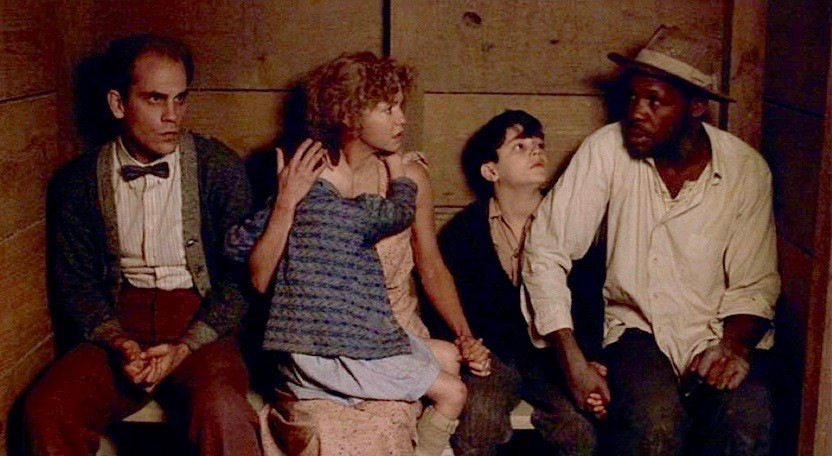
Sally Field plays Edna Spalding, a widow after her sheriff husband (Ray Baker) is accidentally shot and killed by a drunken Black teenager (promptly brutally lynched by the Klan the same day). With the bank pushing to foreclose on the farm she can no longer afford, poverty and homelessness seem certain until a chance meeting with Black drifter Moze (Danny Glover) offers hope. Moze is an experienced cotton worker, and he coaches Edna through getting the fastest cotton crop of the season (and the $100 prize for that feat). Edna and her children throw themselves into the task, and she starts to build a new family with Moze and blind war-veteran lodger Mr Will (John Malkovich). But will weather, the Klan and the banks allow it?

Benton’s film is, in many ways, a master-class in constructing a framework of highly impactful scenes. Places in the Heart is carefully paced with metronomic precision to give us an impactful, powerful scene roughly every ten minutes. From the shockingly sudden shooting of Sheriff Spalding and Edna cleaning his deceased body on her dining room table it gives us scenes that build perfectly to showcase high impact moments. Confrontations, tornadoes that place children in peril, triumphant confrontations with arrogant bankers and facing down corrupt cotton sellers, inevitable fireworks after a disastrous double date and heart-rending racist attacks. It’s a film almost completely constructed of tent-pole moments, to illicit maximum impact.

However, where it fails are the moments in-between. It’s so focused on nailing those big moments, that it allows the emotional journey that should inter-connect them (and make the story truly satisfying) to falter. The clearest example is Malkovich’s blind Mr Will: in no more than three scenes he goes from a man bitter at his disability, dumped on Mrs Spalding by a family who can’t be bothered to care for him, resenting her ‘hooligan’ children to risking his life to becoming their surrogate uncle. It’s a tribute to Malkovich that he sells this lightning fast emotional turn-around, but a more patient film would have spent this change feel organic (rather than, essentially, relying on a tornado act-of-God to complete the arc).

Similarly lightning fast work covers the bond between Edna and Moze: swiftly we go a few scenes from her greeting him with slightly less racist discomfort than her sister, to Jean-Valjean-like claiming she asked him to deliver to a friend the silver spoons he steals from her house, to him becoming another surrogate uncle to the kids and treated in the house like an equal (he notably doesn’t cross the door threshold for the first hour of the film). Now you can admire the efficiency here – for example, the film is good at establishing without fanfare the rope aids hung up around the farm to help Mr Will (vital for a later confrontation). But you can also regret that it is so keen to get to the emotionally cathartic moments, it skims on showing us the journey (after all, a one hundred mile walk seems less impressive if you only see the start and end).

Part of the problem is Benton keeps dragging us away from these engaging plotlines to wallow in a side-plot involving Mrs Spalding’s sister and her wayward husband’s affair with a school teacher. This storyline barely intersects with events on the Spalding farm, in no way serves as a commentary on events there (a braver film would have contrasted it with a romantic relationship between Edna and Moze, which you can be sure would not have been as genteelly resolved as that affair in a South as racist as this). All it really does – for all the efforts of Crouse (Oscar-nominated, presumably due to her husband-slapping confrontation scene), Harris and Madigan, it’s meandering, dull and feels pointless even while you are watching it.

And it always takes us away from the real interest on the farm. The depiction of triumph over adversity is fairly straight-forward – with a host of hissable strawmen, led by Lane Smith’s patronisingly sexist banker – but it’s told with such professional skill it can’t help but land.  Who doesn’t enjoy a woman who never believed she amounted to anything, suddenly discovering an inner-fire and sense of purpose she never knew. You may notice the similarity to Sally Field’s other Oscar-winning role (Norma Rae). Her performance here is cut from the same cloth, only this time she can’t find the same naturalness: she is frequently mannered, precise and actorly when she should feel raw, grounded and real.

The real daring interest here is the way the film tries to address racism. You can’t deny there is a certain romanticism in its looks at the Ol’ South, but its balanced with putting on screen something of the real horrors of racism. Perhaps even more shocking than the sudden shooting of Sheriff Spalding is the sight of young Wylie’s disfigured body dragged behind a truck full of gun-totting racists. (And that this is objected to, not for the violence, but for the poor taste of dragging a dead man to Spalding’s wake). Needless to say there is no investigation or punishment for this crime whatsoever.

Moze’s story captures some of the perils of being Black in Depression-era Texas. Danny Glover, in the film’s finest performance, perfectly captures both the anger of the unjustly oppressed and the fear (and shame of that fear) that death could come from the wrong word or looking at someone the wrong way. Moze constantly shuffles himself to the back, casting his-eyes down and changing the timbre of his voice to something slower and more humble when confronted with white men of power. It’s markedly different from the warmth, decency and sharp opinions he shows with people he trusts. And Places in the Heart’s most appalling moment is when he is confronted with the white-hooded face of the South’s ‘defenders’.

At times this sometimes over-balances a film that, at heart, wants to be optimistic. (As you can tell, all too clearly, from its bizarre, overly demonstrative, deliberately dream-like ‘we-can-all-be-the-same’ ending which must have felt meaningful to Benton but to me feels shockingly trite). Moze’s suffering is shown with real compassion, but he is still presented as a character who magically shows up at exactly the time he is needed and then disappears when his task is done. It’s a film that imagines a utopia where a desperate mother, a blind white man and a Black man can learn all men are equal, while struggling to accept that this is nestled in a land riddled with Klan racists where the n-word is so casually used it doesn’t even raise an eyebrow. In the end cold, hard reality is a little too much for Places in the Heart to digest.

The House of Rothschild (1934)

The House of Rothschild (1934)

Old-fashioned historical melodrama with a well-meaning, earnest political message

Director: Alfred L Werker

Cast: George Arliss (Nathan Rothschild/Mayer Rothschild), Boris Karloff (Count Ledrantz), Loretta Young (Julie Rothschild), Robert Young (Captain Fitztoy), C. Aubrey Smith (Duke of Wellington), Arthur Byron (Baring), Helen Westley (Gudula Rothschild), Reginald Owen (JC Herries), Florence Arliss (Hannah Rothschild), Alan Mowbray (Prince Metternich), Holmes Herbert (Roweth)

It’s 1814 and things are looking tight for the international banking house of Rothschild. With the Napoleonic Wars over, partly thanks to Rothshild financial support of Wellington’s armies, Nathan Rothschild (George Arliss) is pitching to underwrite the loans to help restore France. Problem is, now the merde is out of the European fan, many of the Powers-That-Be don’t want to continue working with a Jewish bank. Led by scowling antisemitic Prussian Count Ledrantz (Boris Karloff), the Rothschilds bid is unjustly rejected. Rothschild outmanoeuvres his enemies to win the contract back, but it leads to a series of revenge pogroms in Prussia. Things change though, when Napoleon escapes from Elba. As all roads lead to Waterloo, will Rothschild back the Allied powers or throw in his lot with Napoleon?

The House of Rothschild is a very well-meaning, old-fashioned historical melodrama, that takes a strong stance against antisemitism. It clearly has more than half-an-eye on events in Germany in the 1930s. As the film’s Prussia of 1814 sinks into mobs hurling stones through windows, smashing up shops and chanting for the expulsion of Jewish people, while families flee across the body leaving their possessions behind (all while the self-satisfied, archly cold Ledrantz pushes his agents to provoke the people to yet more outbursts), surely many people would have seen parallels with Hitler’s Germany.

Throughout the film, the accusations of antisemites are pointedly broken down and strongly rebutted or placed into context. Why do the Rothschilds work in money? Because they are literally banned from any other profession. And money is the only tool they have to defend themselves against 2000 years of persecution; persecution that has made the Rothschilds feel a true affinity for their fellow Jewish people. Indeed, Nathan Rothschild feels a duty to stand firm and do anything he can to help his people: and if that means a bit of financial chicanery or applying heavy pressure to the European powers, then so be it. There is a greater good here when lives are at stake.

The scourge of racism is strongly displayed throughout the film. It opens with a prologue as Nathan’s father Mayer (George Arliss pulling double duty, under a pile of make-up and a wig) struggles to hide his justly-earned fortune from being stolen by corrupt tax collectors who call him ‘Jew’ and smugly tell him the amount he owes to the government is whatever they say it is. It’s a ferocious piece of open antisemitism, but it has genteel echoes when Nathan is later snubbed for an invite to a ball to celebrate Wellington’s victory (a victory he largely paid for) since Jewish people aren’t welcome at such events.

The House of Rothschild places its laudable anti-persecution aim into a very traditional, old-fashioned, costume drama that wouldn’t look out of place on the Victorian stage. It was a passion project of George Arliss’ (who cared deeply about its message), but also fit wonderfully well inside his wheelhouse. You can see its deep similarities to Arliss’ Oscar-winning vehicle Disraeli. Just as there, he plays a twinkly elder statesman, with a touch of the rogue but overflowing with decency and honour. Despite being seen as a suspicious outsider, he out-plays his rivals in an international conspiracy while casting an avuncular eye over a love affair in the family: in this case between his daughter (Loretta Young) and gentile British cavalry officer Captain Fitzroy (a fairly wooden Robert Young). Both films end with our hero celebrated by royalty at a grand ball, while cementing a loving marriage with his wife (played again by Arliss’ wife Florence).

Arliss is, of course, very good in a role tailor made for his mix of playful charm and speechifying. Much of the film is essentially dominated by Arliss, who delivers with his customary skill (even if his performance as Mayer is more than a little ripe) and if his performance feels more than a little like Disraeli #2, his comfort in front of the camera and the naturalness he brings to the role help enormously. Under the playful exterior, Arliss also finds a strength and determination, powered by a real moral fury at the injustices, slights and (eventual) violence perpetuated upon his people.

Few other actors get much to play with here. House of Rothschild is heavily fictionalised, from its invented nemesis in Count Ledrantz (Karloff is good value as the scowling racist) to the build-up to the Waterloo campaign. However, for history buffs like me, there is a fair bit of delight in seeing a parade of great European statesmen pop up in cameos. From Tallyrand to Metternich to Lord Liverpool, these powerhouses of politics fill out the margins, even if they barely come to life as characters. If there is an exception, it’s the customary gruff no-nonsense military bearing C. Aubrey Smith gives Wellington (here a man firmly on the side of decency and honour).

The romantic sub-plot is very disposable, despite the best efforts of all involved. It briefly overlaps with the film’s main themes – Rothschild is less than happy with his daughter marrying a gentile, while he suffers a parade of humiliations from Fitzroy’s compatriots – but otherwise provides little real drama. The various conspiracies are largely resolved through some ingenious Rothschild speeches. The film’s main success is always the creeping dread of antisemitic violence, a candle it keeps alive throughout its old-school, costume-drama melodrama, with just small drops of directorial and cinematic invention. It’s the main reason for remembering a film that’s entertaining enough, in a gentle, classic Hollywood biopic way. It never reinvents the wheel, but it’s passionate about the people who find themselves ground beneath it.

Note: Considering all that, it’s particularly sickening to note that footage from The House of Rothschild of Arliss in full Mayer Rothschild make-up was pinched and repurposed for Joseph Goebbels’ vile antisemitic epic, The Eternal Jew.

Cabaret (1972)

Cabaret (1972)

Fosse’s influential adaptation reinvents the musical into a superb exploration of sexuality and wilful blindness

Director: Bob Fosse

Cast: Liza Minnelli (Sally Bowles), Michael York (Brian Roberts), Helmut Griem (Baron Maximilian von Heune), Joel Grey (MC), Fritz Wepper (Fritz Wendel), Marisa Berenson (Natalia Landauer), Elisabeth Neumann-Viertel (Fräulein Schneider)

Some say Life is a Cabaret (old chum) – but they may well be closing their eyes to what’s really going on around them. Much harder to do that in Cabaret, a dark study of Weimar Germany, the quintessential time-period where everyone was so wrapped up in having a good time they failed to notice the world was beginning to burn down around them. Fosse’s version is a musical, but song and dance fills just over a quarter of the runtime. At its heart, it’s a character study of two young people in a particular time and place with very different perceptions of the dangers around them. It makes for a dark, inventive re-working of the Broadway original with Fosse stretching his wings into the sort of complex work culminating in the forensic self-examination of All That Jazz – and make Cabaret one of the most unique and exceptional of musicals.

Our Babes in 1931 Weimar Berlin are Sally Bowles (Liza Minnelli) and Brian Roberts (Michael York). Sally is a would-be superstar, plying her trade singing and dancing at the Kit Kat Klub. The host of erotic and blackly comic numbers there is the unsettling MC (Joel Grey). Brian is an academic, a reserved and very English young man with a preference for other men. Housemates in the same boarding house, the two become very close – and both very close indeed to happy-go-lucky Baron Maximilian von Heune (Helmet Griem). Sexual, romantic and emotional feelings ebb and flow while in the background the Nazis march relentlessly towards power along a path of violence.

Fosse was desperate to direct Cabaret, a film he felt certain would be a hit– and producer Cy Feuer was keen to bring his raunchy, dynamic choreography to the seamy world of the Kit Kat Klub. But Fosse also wanted to do something very different to the original musical. He wanted to return more to it literary roots, the semi-autobiographical works of Christopher Isherwood. He also felt, based on his experience directing Sweet Charity, that realism and bursting into song didn’t work. So the original script was jettisoned in favour of a new story junking most of the musicals plot (and several key characters), change its male lead from a straight American back to a queer Brit and cut all but one song not inside the Kit Kat Klub, making them a commentary on the action.

It’s a master-stroke, making Cabaret both a compellingly staged musical, but also a dark social issues piece and exploration of sexuality. In fact, you could watch Cabaret and wonder if Fosse didn’t really want to direct a musical at all. His heart, I feel, lies in the increasingly sexually charged and fluidic relationship between the three lovers at its heart: Sally’s vivacious enthusiasm, Brian’s careful guardedness and Maximilian’s shallow glee. It’scaptured beautifully in a late-night drinking scene in Maximilian’s palatial house, with the camera sensually close as the three dance together, their lips inches away from each other, the desire bubbling between them.

There’s a striking comfort with sexual freedom in Cabaret. Brian’s homosexuality – or bisexuality after he and Sally together discover his previous disastrous liaisons were clearly with “the wrong three girls” – is treated unremarkably by all: after all the Kit Kat Klub has its share of drag queens (one of them sharing a telling look with Brian after they surprise each other at the urinal). It’s all part of a wider bohemian lifestyle, exemplified by Sally who is always dreaming that a big break is just around the corner. This is the decent, brave and accepting side of Weimar Germany.

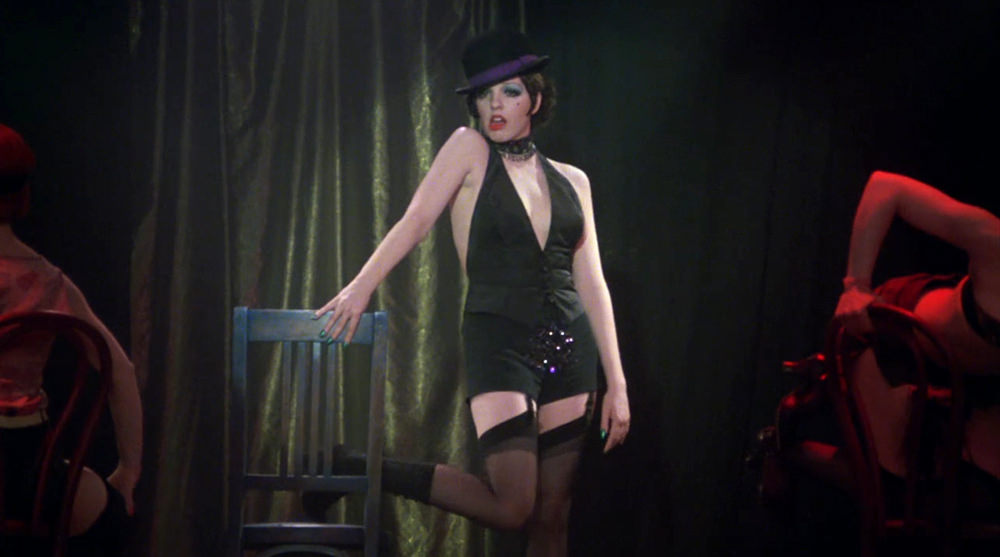
But Cabaret is also about the danger all around the characters, which too many of them ignore. Brian is the most conscious and politically aware, for all his English reserve. But Sally’s major flaw is that she chooses to pretend it’s not happening. Minnelli’s gorgeous rendition of ‘Cabaret’ at the end is so often seen as a triumphant embracing of life on her own terms, that its overlooked Sally performs it having decided to turn her back on broadening her own life outside her comfort zone and is singing to a room increasingly full of Nazis who will stamp out the very life she’s dreaming about.

Sally is bought to life in a superb, Oscar-winning performance by Liza Minnelli. Minnelli’s singing is of course extraordinary – her rendition of ‘Maybe This Time’ is one for the ages – but she’s also superb at bringing to life Sally’s bubbly naivety and kindness while also suggesting the fragility and desperation to be liked under the surface. There’s something very innocent about her, for all her hedonism: her attempted seduction of Brian has the clumsy brashness of an over-eager virgin, and while instinctively keen to help others she’s clueless at dealing with real emotional problems (there’s a wonderful moment when Minnelli looks sideways in panic as Maria Berenson pours her heart out to her, as if trying to find a way to escape). It’s a gorgeous, endearingly sweet performance – and perfectly counterpointed by Michael York’s career-best turn as the sharp, gentle, thoroughly decent Brian, with his own unique moral code.

Around them, Fosse uses the musical numbers to darkly comment on the action, helped by the demonic feel of Joel Grey’s sinister MC (the first real shot of the film is Grey’s face looming up from below to flash a Lucifer grin), whose manner becomes increasingly cruel, Fosse cutting to brief shots of him knowingly grinning as the dangers of Nazism become increasingly hard to avoid. Grey (who originated the part on stage) has a look of Joseph Goebbels about him, and it’s hard not to feel he’s some sort of manic sprite given even more life and energy as the world fills with horrors around him.

The musical numbers are extraordinary, brilliantly assembled by Fosse and full of seedy glamour – there is a gorgeous shot in ‘Willkommen’ when the camera whips around the high-kicking chorus line that’s like a shot of adrenaline. They mix between the darkly funny – the troubling romantic longing of ‘If You Could See Her’ – and the gorgeously inventive, with the tightly choreographed movements of ‘Money, Money’. Grey is a crucial part of this, his charismatic singing and dancing burning through the celluloid – who can forget his cruel glee under the comic interplay of ‘Two Ladies’ – and the use of him as a cryptic chorus who never speaks except on stage is a master stroke.

From its early scenes, we are left in no doubt of the violence many are choosing to ignore. From a street lined with ripped up election posters which Sally and Brian stroll down, to cut aways to stormtroopers brutally beating opponents, we can’t escape the inevitable death of this happy-go-lucky world. It’s also Fosse’s masterstroke to make the only musical ‘number’ outside the Klub not only goose-bumpingly powerful but also a skin-crawling piece of Riefenstahl-framed Nazi triumphalism.

Cabaret superbly captures in this one moment the seductive power of Nazism. As an Aryan boy sings ‘Tomorrow Belongs to Me’ (a slow camera pan reveals his SA uniform) at a beer garden, gradually the crowd joins in. The song builds into a resounding crescendo, people’s faces beaming with pride, full of fixed fanaticism, all of them sharing a special, powerful moment of belonging. Fosse’s unbelievable nerve is to present this utterly straight (someone with no knowledge of Nazism would be deeply moved watching it), making its seductive power even more chilling: because you can’t watch without also feeling a nausea inducing feeling of goose-bumps.

Hard not to agree with Brian when he wryly asks the smug Max whether he’s still sure the Nazis can be controlled. (Max parrots the upper class view that the Nazis are useful tools for getting rid of the socialists). It’s much easier for us to understand why Fritz Webber’s scruffy charmer Fritz (hiding his scuffed shirt cuffs) is scared of revealingly his Jewish heritage, even if it’s all he needs to do to win the love of Marisa Berenson’s shopping mall heiress. You don’t want to pop your head over the parapet in this world.

What’s clear in this superb film, is we can applaud the characters only so far: after all they decide to avoid the obvious that hedonism must be put aside to see the world for what it really is. There is a tragedy, in Sally in particular, that she can’t or won’t do this. As beautiful as her optimism is, it eventually becomes wilful blindness. This is part of what makes Fosse’s extraordinary film one that transcends its source material to become something truly unique. It’s a calling-card of a great director.

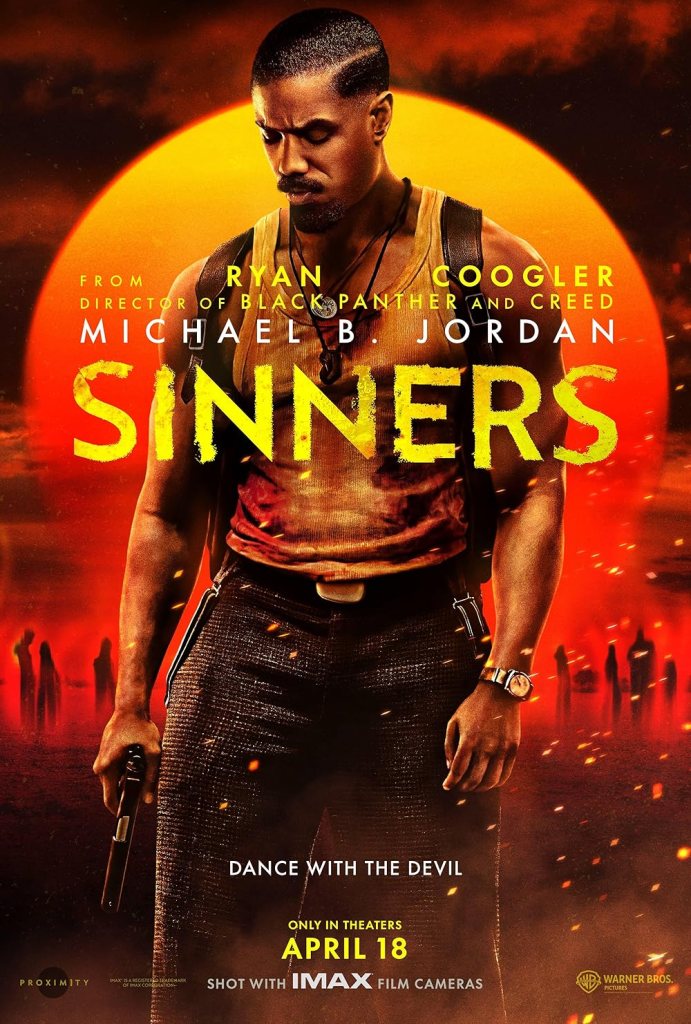
Sinners (2025)

Sinners (2025)

Coogler’s mix of political statement and horror flick is overlong but very effective

Director: Ryan Coogler

Cast: Michael B Jordan (Elijah “Smoke” Moore/Elias “Stack” Moore), Hailee Steinfeld (Mary), Miles Caton (Sammie “Preacher Boy” Moore), Jack O’Connell (Remmick), Wunmi Mosaku (Annie), Jayme Lawson (Pearline), Omar Miller (Cornbread), Delroy Lindo (Delta Slim), Li Jun Li (Grace Chow), Yao (Bo Chow), Buddy Guy (Old Samme)

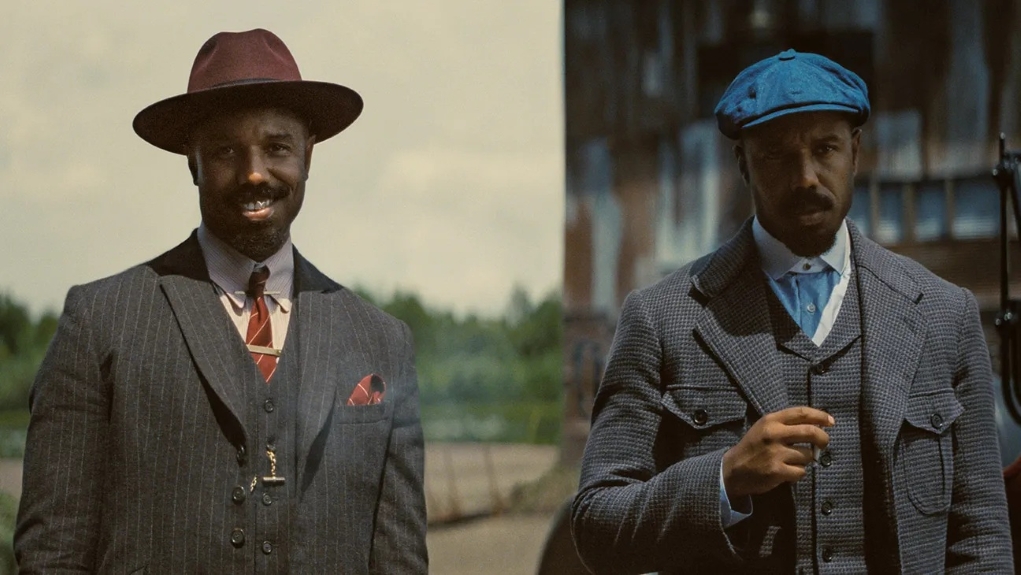
In 1932 twin brothers Smoke and Stack (Michael B Jordan, pulling double duty) return to the racist South of Mississippi after years of war service followed by time spent working for the gangs of Chicago. They dream of setting up a juke joint for the Black community, flying in the face the racism of local Mississippi. But the dangers of the KKK pale slightly, when their opening night coincides with the arrival of vampire Remmick (Jack O’Connell) who dreams of forming a new family of the dead – and wants to recruit Mississippi’s Black community, with promises of equality in his world they could never have in their own. Holed up in their juke joint, can the brothers and their families and friends survive a night long siege until dawn?

The basic set-up of Sinners is, to be honest, familiar. It delights in hueing close to Vampire mythology – garlic, wooden stakes, silver and sunlight are the key weapons here and the vampires are powerless to cross a threshold until they are invited – and the ‘base under siege’ that occupies the film’s final act is essentially taken direct from the sort of set-up John Carpenter excelled at in his heyday. What makes Sinners really stand-out is the richness of its character relationships and its social context.

That social context is, of course, the Jim Crow South. Sinners is a film steeped in the racial injustice of a particular time-and-place. In 1932, Black workers still pick cotton on plantations in exchange for wooden nickels. Families live in shanty towns and use different shops than the white folk (local goods dealers the Chow’s run two convenience stores, on opposite sides of the street, to serve their two clienteles). The danger of lynchings are everyday threats (Delroy Lindo has a haunting monologue, beautifully delivered, as Slim recounts the lynching of a former band partner, who unwisely produced his stuffed wallet at a train station). Virtually the only white people we see (other than Rennick) are KKK members.

In this world of radical injustice, it’s fascinating that Coogler suggests, in some ways, the afterlife of a Vampire is more just and fair than actual life. Rennick, himself the relic of a long-oppressed pagan Irish community, makes solid points about Smoke and Stack facing a losing battle trying to play by the white man’s game as entrepreneurs and would-be local businessmen. He even, genuinely, states he would be happy to kill the entire KKK just to wipe their hatred from the Earth. There is a certain truth in the fact that, in the legions of the undead, all are equal and race means nothing. That getting bit could be a doorway to a new world, free of racial oppression – even if it also seems to mean living in the sort of community Rennick alone crafts.

It becomes a fascinating idea, joined with the fact that Rennick also points out Christianity is a spirituality forced on the Black community. Unlike the blues music, that gifted young cousin to the brothers, Sammie (a lyrical performance in every sense from Miles Caton) plays so well it can cross the bounds of space and time joining Black souls together, the enslaved people didn’t bring Christianity with them across the water. It was forced on them, as much as the labour in the fields. Sinners isn’t quite brave enough to explicitly denounce the Church as just another wing of enslavement (even if Sammie’s preacher father uses trauma to hammer conversion on people, rather than offering comfort). But it does make clear that Sammie’s ‘coming-of-age’ is whether he will choose the culture of his ancestors or the culture of his oppressors.

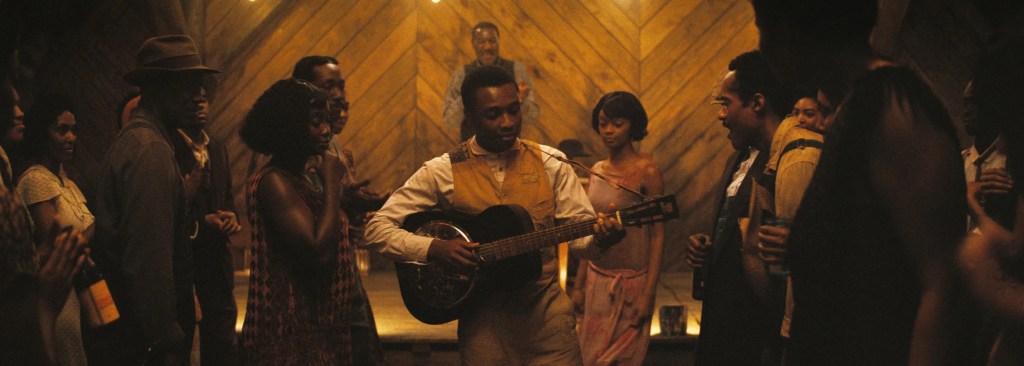
This is thought-provoking stuff – and Coogler does a superb job of threading it through the blood-spurting, neck-biting, stake-hammering action that fills up a large portion of the film’s conclusion. Sinners is dripping in Blues music, which artfully and beautifully wraps itself around the film to perfectly capture its tone and pitch. The sequence where Sammi’s music fills the juke joint, is transcendent in more ways than one, powerful and transporting in its musicality and passion (Ludwig Göransson’s score, created in partnership with several Blues artists and the actors is exceptional). Coogler matches it with one his trademark, virtuoso, one-take shots, the camera seamlessly weaving in and around the juke joint as our 1930s characters dance alongside modern club dancers and musicians as well as tribal African musicians of the distant past.

It also rewards more as Coogler takes his time throughout the film’s long opening act to really establish the characters and their relationships. You can argue that Sinners is over-indulgent in the sometimes overlong (well over an hour) long ‘recruitment’ sequence as Smoke and Stack assemble family and friends for their opening night. But this careful exploration of the closeness and warmth between these people – their loving sense of family, loyalty and sometimes painful shared history – pays off in spades when they begin one-by-one to turn to Rennick and then on each other. Coogler then makes these corruptions of the living into the hungry undead really sting, just as we feel the pain of those left among the living who must stake their nearest and dearest.

That carries further impact from the strength of the acting. Jordan, one of the most charismatic actors out there, gives a superb double-performance as the two twins, expertly sketching out their contrasting personalities and their deep love for each other. He makes Stack charismatic, gregarious and fun, and Smoke gruff, reserved but endlessly loyal and protective. They are too sharply humane turns, with Jordan so naturally playing off himself you forget both are played by the same actor.

Equally fine are the rest of the cast. Miles Caton is youthful idealism being shaken by traumatic events on the greatest night of his life. Wunmi Mosaku gives Smoke’s wife Annie a moral authority and deep sense of lingering grief. Hailee Steinfeld is vivacious but similarly burdened by disappointment and pain at chances lost as Stack’s one-time girlfriend that prejudice thwarted. Delroy Lindo’s soulful skill invests Slim with a real grace under the drunkenness. Even O’Connell, at times transformed into an Orlock-like nightmare, has a lonely humanity behind his ruthless, never-ending desire to build a new community (which he controls) around him.

There are powerful subtexts throughout here, even if parts of Sinners could at times benefit from a little tightening. Coogler effectively gives a rich hinterland to some familiar genre settings: and he surprises us with two codas, one rich in satisfying revenge violence the other with a rhapsodic melancholy which feel like natural ends for both their characters. Sinners mixes its Spike Lee influences with its John Carpenter ones with excellent effect, and is another firm reminder of the visual flair and piercing individualism of Coogler as director.

A Dry White Season (1989)

A Dry White Season (1989)

A passionate, clear-eyed and largely unsentimental denunciation of Apartheid, the best of its kind

Director: Euzhan Palcy

Cast: Donald Sutherland (Ben du Toit), Janet Suzman (Susan du Toit), Zakes Mokae (Stanley), Jürgen Prochnow (Captain Stolz), Susan Sarandon (Melanie Bruwer), Marlon Brando (McKenzie), Winston Ntshona (Gordon), Thoko Ntshinga (Emily), Leonard Maguire (Professor Bruwer), Gerard Thoolen (Colonel Viljoen), Susannah Harker (Suzette de Toit), Andrew Whaley (Chris du Toit), John Kani (Julius), Richard Wilson (Cloete), Michael Gambon (Magistrate), Ronald Pickup (Louw)

The late 1980s saw a small wave of films denouncing the horrors of Apartheid in South Africa, a racist system founded on cruelty and injustice. Many of these films struggled with either being overly earnest or turning their (inevitably) white lead character into a saviour figure. A Dry White Season is perhaps the best of trend, perhaps because it focuses on a fictional story rather than real history (instantly gaining it the sort of dramatic latitude drained out of Cry Freedom) and directed by Euzhan Palcy, the first Black woman (then aged only 32) hired by a major studio, with a cast of the cream of Black South African actors, who knew all too well this world. A Dry White Season is also notable for its critical view of white South Africans who, bar a few exceptions, are presented as tribalist blind-eye-turners, furious at anyone who shakes their world view.

Ben du Toit (Donald Sutherland) is the epitome of smugly complacent Afrikaner (Sutherland even has a plump false belly, to hammer home his cosy self-satisfaction). A former rugby star, teaching white history in a private school, to him the system is always fair and if a Black man is arrested he must have done something wrong. That’s shaken when school gardener Gordon (Winston Ntshona) asks him for help, first after his barely-a-teenager son is beaten by police then again when the same son dies in custody after a protest. Ben’s first reaction is to shrug and say nothing can be done: the scales fall from his eyes when Gordon asks the wrong questions and is in turn murdered in custody by brutal Captain Stolz (Jürgen Prochnow). Working with campaigner Stanley (Zakes Mokae), Ben finds his entire world view falling apart as he is compelled to uncover the truth – to the fury of his wife, daughter, in-laws and colleagues who increasingly see him as a traitorous boat-rocker.

A Dry White Season doesn’t shirk on the violence of Apartheid. It says a lot that an early truncheon-wielding police assault on a township, and the scarred backside of Gordon’s son soon feels everyday. The student protest – many of its attendees literally no more than children – is met with lethal force from white soldiers carrying machine guns, indiscriminately shooting down children at point-blank range. Gordon is waterboarded and brutally tortured. Anyone who crosses the security forces faces violent assassination or fatal beatings. Palcy unflinchingly shows this horror – and frequently cuts away from atrocities to shots of the du Toit’s enjoying their wealthy, contented life of sports and garden parties. The impression is clear: underneath this contented life for the whites is a brutal, violent, repressive system supressing all rights for the many.

Palcy brings the sort of perspective perhaps only a Black film-maker could. There is no attempt in A Dry White Season to shelter the audience. Instead, we are exposed to the worst the system has to offer. Palcy adds impact with her casting of several extraordinary South African actors. Ntshona, Mokes and Kani among others had all experienced this themselves (Kani lost an eye in a police beating). Their performances are superb. Ntshona’s simple, honest bravery is deeply moving while Ntshinga is heart-breaking as his wife. Kani drips moral authority as a solicitor. Best of all Mokae’s activist Stanley is a superb portrait of warm, world-weary wit barely covering a life of fury.

What’s really refreshing is we expect the white characters to feel shame or guilt as the truth edges into their lives. This doesn’t occur: in fact, bar Sutherland’s du Toit and his young son (the same age as Gordon’s child – the film opens with the two of them playing together) all the white characters furiously protect the system. Sides are firmly picked and no blurring of the lines is tolerated. His daughter (Susannah Harker at her most Aryan looking) just wants him to shut up and stop spoiling things. Richard Wilson’s avuncular headmaster can’t hide his anger at du Toit’s ‘treason’. The police’s deference evaporates the second du Toit asks the wrong questions about the wrong people.

Even du Toit’s wife – memorably played with a raw harshness by Janet Suzman – progresses through irritation, horror to outright disgust at du Toit. Suzman – a South African who fled the country and long campaigned against Apartheid – pours all her anger into a show-stoppingly racist speech where she claims Black people are dangerous and don’t deserve any rights, that the Afrikan’s own South Africa and any violence against Black people doesn’t matter so long as the whites continue to live well. She represents a system supporting a boot stamping on Black faces for the rest of time.

It takes time for du Toit to realise there is no justice. Even after Gordon is murdered, he is convinced a trial will reveal the truth. He is of course, fantastically wrong – the trial being rigged from the start to produce a ludicrous suicide verdict. The trial is conducted by human rights lawyer McKenzie, played in a show-stopping cameo by Marlon Brando. Coming out of retirement to support the project (and working at union rate), Brando flexes his muscles one last time to deliver a charismatic, witty turn as a shambling Rumpole-like barrister who knows from the start his only result will be making the powers-that-be faintly embarrassed at their blatant injustice. If Brando’s support didn’t extend to learning his lines – he’s blatantly reading them from off cue cards or having them funnelled to him through a visible ear-piece – he’s still a stand-out in a sequence that makes abundantly clear just how complicit the whole system is in murder.

Sutherland – a fine performance of stunned, sad-eyed bemusement – makes du Toit a well-meaning men who realises he can never go back to his old life after peaking behind the curtain. It’s a nice touch in A Dry White Season that he never becomes a conventional white saviour: most of his actions lead to disaster, he’s reliant on Mokes’ Stanley and (other than his son) he fails to persuade anyone. But what chance does he have? Placy even shows many Black people have given up. At least one of Gordon’s torturers is a Black police officer and Gordon’s son and his friends open the film berating Black workers in a boozer that their apathy only props up the system. After Gordon’s death, a Black priest counsels turning the other cheek. But then the courage needed to protest is immense: Stanley smilingly states he long-ago accepted he was a dead man and it’s that which keeps him going.

A Dry White Season ends with a touch too much melodrama and a slightly too ‘Hollywood’ ending – but then it’s so relentlessly depressing that even a small victory is a relief. But, in the main, while sometimes rough and ready, it actually presents an important message with real dramatic force, stuffed with fine performances and a brutally realistic view of South Africa. It does give us some hope for the future: the only other white persuaded is du Toit’s young son: and it’s the young who are only hope for long-term change.

Cry Freedom (1987)

Cry Freedom (1987)

Highly earnest, well-meaning, but tragically mis-focused biopic that doesn’t have the impact it wants

Director: Richard Attenborough

Cast: Kevin Kline (Donald Woods), Denzel Washington (Steve Biko), Penelope Wilton (Wendy Woods), Alec McCowen (High Commissioner David Aubrey Scott), Kevin McNally (Ken Robertson), Ian Richardson (State Prosecutor), John Thaw (Jimmy Kruger), Timothy West (Captain De Wet), Josette Simon (Dr Mamphela Ramphele), John Hargreaves (Bruce Haigh), Zakes Mokae (Father Kani), John Matsikiza (Mapetla), Julian Glover (Don Card)

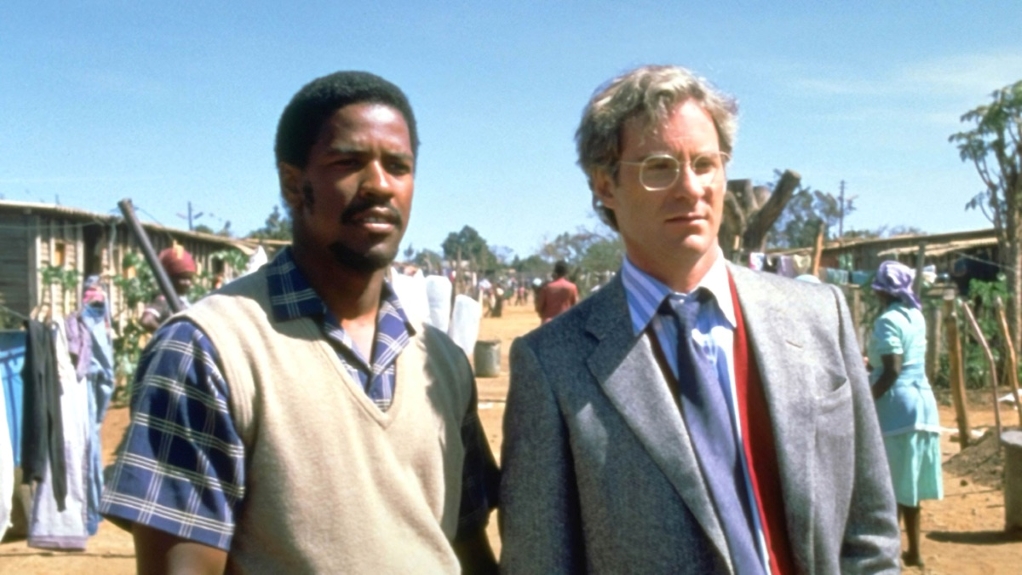
Steve Biko (Denzel Washington) was a leading anti-Apartheid campaigner, driving the Black Consciousness Movement in the repressive racist state of South Africa. Biko called for Black people to organise themselves and rejected the paternalistic concern of hand-wringing white liberals. Biko was ‘banned’ in 1970s by South Africa’s (in)justice department (meaning he could not be in physical proximity with more than one other person at a time) but didn’t let this stop him campaigning – until he was eventually arrested and murdered in custody in August 1977. His story came to international attention with the reporting Donald Woods (Kevin Kline), the white liberal newspaper editor who befriended Biko, later also banned and eventually fled in disguise from South Africa.

All of this makes very ripe ground for Richard Attenborough to make another socially conscious, unreservedly liberal film, very much in the style of Gandhi. Unfortunately, while Gandhi combined epic sweep and drama with its schoolboy history, Cry Freedom is a deathly serious film, straight-jacketed by recreating events as reverentially as possible and focuses itself in all the wrong places. Cry Freedom is the Biko biography in which Biko becomes a supporting character to exactly the sort of white liberal he rejected having African stories filtered through. Admirable as Donald Woods’ efforts to find justice for Biko was, does it feel like he deserved the focus of over half the film? It’s as if Attenborough had decided to frame Gandhi solely from the perspective of Martin Sheen’s journalist rather than the Father of India himself.

Following the trend of many films of the 80s and 90s, Cry Freedom believes that the only way the regular cinemagoer can relate to a minority group is through the filter of a complacent white person having their eyes opened to how unjust everything is. In carefully following this cliché, Cry Freedom does do a decent job. Woods is patronisingly certain of his liberal views, even while he sometimes fails to even acknowledge his live-in Black maid who unquestioningly calls him ‘master’.

Back-slapping himself on writing the odd sympathetic editorial and convinced one of the big problems of South Africa is the danger of anti-white racism, he’s exactly the sort of hero you get in this genre: the guy who assumes, because the system has always worked for him, it will work for everyone. When he resolves to support Biko, he immediately assumes a friendly pow-wow with Justice Minister Jimmy Kruger (a terrifyingly amorally, avuncular John Thaw) will sweep away all the problems (it, of course, makes things immeasurably worse for everyone).

Cry Freedom largely re-creates the oppressive policies of South Africa, through seeing a white character become a victim of the very persecution, bullying and terrorising the Black community has spent its whole life suffering. (With the big exception that Donald Woods never seems to be in danger of being dragged off the streets and beaten to death in a police cell). It feels like a tone-deaf way of exploring these issues. Particularly as Donald Woods’ eventual escape from South Africa is staged and filmed with a singular lack of energy over nearly an hour of screen time, with interest slowly drained out as Attenborough uninventively turns it into an identikit version of any number of bog-standard behind-the-lines Great Escape shenanigans you’ve seen done a million times better before.

Attenborough, to be fair, saves his energy for the re-staging of the brutal repression inflicted on the Black community. Cry Freedom’s opening and closing sequences – a brutal slum clearance in East London and a restaging of the shockingly violent crushing of the 16 June 1976 Soweto uprising (where indiscriminate police automatic weapons fire killed and injured hundreds of children) – are shot with exactly the sort of humanitarian outrage and cold-eyed recognition of the horrors of conflict that Attenborough bought to Gandhi and A Bridge too Far.

It’s not hard to wonder if this is more the sort of film Attenborough wanted to make, but that funding demanded a white lead so as not to panic mainstream cinema audiences. It makes large parts of the film feel like a missed opportunity. A real immersion in the actual day-to-day lives of Black South Africans – not just the beatings, but the unending, casual racism and oppression – would have created a film of even more power. (The fact the film suddenly ends with a flashback to Soweto – an event not central to the plot at all – makes you wonder if Attenborough suddenly realised that, without it, Cry Freedom would have barely shown a Black face for its last twenty minutes).

But too much of the rest of Cry Freedom feels too dry, reserved and lifeless. Even Biko himself falls into this trap. Denzel Washington delivers a very fine performance, full of the sort of effortless charisma and magnetic leadership that makes you believe that so many would follow him and using wit and moral certainty to stand up to the various bullying policeman he encounters. But too much of Biko’s dialogue with Woods is full of the sort of dialogue designed to inform and educate the audience, rather than create good story-telling. Too many scenes in Cry Freedom’s opening hour feel like a South African politics seminar, no matter how much energy Washington gives the dialogue.

It’s part of the feeling the whole film carries: a very serious political ethics class, mixed with an all-too familiar story of a white man learning first hand just how tough his Black friends have had it for years. Attenborough so clearly means well, it feels almost cruel to knock him and his film: but Cry Freedom feels like a film with a lot of blood, sweat and tears invested in it, which then fails to have the emotional heft it really needs and spends a lot of time telling the wrong person’s story.

Nickel Boys (2024)

Nickel Boys (2024)

Beautiful and emotional film, with a unique filming style, at times too overtly arty but truly striking

Director: RaMell Ross

Cast: Ethan Herisse (Elwood), Brandon Wilson (Turner), Aunjanue Ellis-Taylor (Hattie), Hamish Linklater (Spencer), Fred Hechinger (Harper), Jimmie Fails (Mr Hill), Daveed Diggs (Adult Eldwood)

In the Deep South of America in the 1960s, a Black American couldn’t afford a wrong-place-wrong-time situation. That’s what happens though to teenager Elwood (Ethan Herisse). A star student, who firmly believes in civil rights and the power of moral action, he accepts a lift to college in what turns out to be a stolen car and is sentenced to an indefinite time in a Louisiana reform school, the Nickel Academy. Despite its lofty claims, the school is a bastion of racism where the black ‘students’ are housed in shabby huts and subjected to beatings, violence and exploitation as slave labour with almost no chance of leaving. The desperate efforts of his grandmother (Aunjanue Ellis-Taylor) to get his release are doomed to failure and his only friend is cynical Turner (Brandon Wilson). Decades later, an adult Elwood (Daveed Diggs) reacts as shocking news reports of unmarked mass graves of Black inmates are found at the site of old Nickel Academy.

Nickel Boys is adapted by RaMell Ross (making his fiction debut) from a Pulitzer Prize winning novel by Colson Whitehead, itself a fictionalisation of a real-life scandal. Dealing with challenging, difficult subject matter, its remarkable what a poetic, sensitive and subtle film Ross has created. Nickel Boys is a sad, lyrical, deeply tragic film which immerses us in the POV of its lead characters, making us feel the same hopelessness and powerlessness they do in a system designed to make them suffer.

Ross shoots Nickel Boys almost exclusively in POV, initially solely from Elwood’s perspective then switching back-and-forth between him and Turner. The older Elwood is shot as if the camera is strapped to his back (like the weight of the world). Ross commits to an extraordinary degree to this unique look-and-feel, with the camera focusing with the same roaming as a head turn, sometimes frustrating us by looking at the ‘wrong’ thing. What it does, above all, is forces us into the shoes of these boys: we see the sights exactly as we see them, their abusers stare into our eyes, we are made to feel as trapped in this small world as they are.

Ross opens Nickel Boys with its most extraordinary and beautiful sequence – one so perfectly constructed, it’s worth the price of admission alone – as we watch through Elwood’s eyes his growing up through a series of vividly remembered memories, our only glance of him brief reflections. This is a parade of truly striking images: a sidesways horizon with an arm stretched out (Elwood lying on his side); tinsel sprinkling down at us from the tree his grandmother is decorating; hazy soft-focus as a half-asleep Elwood witnesses his parents last-night in town; segregated bus journeys; his first encounters with civil rights; the aggressive searching of himself and another boy by a police officer; and his unjust arrest and imprisonment. It’s a breath-taking sequence, a virtuoso and deeply moving exploration of childhood impressions and contrasting memories.

The rest of Nickel Boys doesn’t quite match this glorious opening, but Ross uses the POV to take a surprisingly brave side-swipe in what we see and don’t see. The film becomes a tour-de-force of half looking, with the horrors of the Nickel Academy largely off-screen and ripe for our interpretation. In that, Nickel Boys would make an astonishing companion piece to The Zone of Interest which similarly took an unusual perspective on atrocity, as something on the edge of our visual and aural perception. When Elwood is beaten, the camera pulls away and cuts to extreme close-ups of black-and-white photos of Nickel Academy students to a cacophony of disjointed sound from Elwood’s thrashing.

Ross turns Nickel Boys into a sensory experience, one of acutely captured sounds and gorgeous imagery. The world of our two protagonists drifts interminably on, from eeking out their labour for the family and friends of the Academy’s staff – and Ross’ film makes clear this is unpaid convict labour – to seeing their ‘education’ ignored. The Black boys are kept at the margins of the grounds, never touching the privileges of the white boys with their football games – the only sport available to them is boxing, and there the school’s Black champ is ordered to take a dive to fix the betting ring among the staff (and ‘disappears’ when he, possibly mistakenly, fails to do so).

In this world Elwood is clinging to the hope that he can make a difference: by keeping a detailed log of the abuses and crimes, he might be able to escape. Elwood is a firm believer in civil rights – in one of the film’s most striking moments he runs across a busy street because he (and us – the visual deception is uncanny) mistakes a cardboard cut-out of his hero Martin Luther King as the real thing. His hope is only dented by the growing despair of his grandmother (a deeply heartfelt performance by Ellis-Taylor) and their swindling by their crooked lawyer.

By contrast, Turner is coldly cynical, convinced they have no chance of escaping the Nick alive. Turner’s bitterness – at one point he holds back Elwood’s precious letters for reasons he barely understands, but linked perhaps to his jealousy at never having any himself – is a sharp counterpoint to Elwood’s optimism, the two finding their contrasting viewpoints draws them closer together.

The legacy of events continues to be felt years later, with Elwood still haunted by his memories, struggling to adjust with his survivor’s guilt. A beautifully judged scene in a bar sees the adult Elwood encounter a fellow survivor (an extremely striking performance by Craig Tate) which not only sees Elwood deeply uncomfortable at this vivid reminder of his past – Tate’s Chicken Pete is fragile, alcoholic and not-all-there – but deeply disconcerted to find Pete has almost no memory of foundational events in Elwood’s life. It’s an affecting reminder that we are seeing one experience, and that the memories of each survivor would be radically different.

Nickel Boys has its flaws. At nearly two hours and twenty minutes, its running time dilutes its impact. Despite fine performances by Ethan Herisse and Brandon Wilson, the POV shooting at times makes it harder to personally engage with their characters, so focused is the film on sharing their experience at the cost of their reactions (which, naturally, we rarely see). Ross is a little too in love of documentary-style montages, which slow the pace rather than enrich the experience and can dilute the impact. A tighter, less at-times wilfully artistic film might have actually carried more force.

But it’s also a film full of deep sensory impact, that builds towards a shocking and deeply affecting climax that causes us to re-interpret much of what we have seen. And for large chunks, the film’s unique filming style creates a movie full of poetic wonder that places us firmly into the experience of living in a racist, unjust system like this one. For that alone, Nickel Boys deserves to be commended as a thought-provoking, striking film, one that leaves a real impact on the viewer.