Category: Films about revenge

The Banshees of Inisherin (2022)

The Banshees of Inisherin (2022)

Director: Martin McDonagh

Cast: Colin Farrell (Pádraic Súilleabháin), Brendan Gleeson (Colm Doherty), Kerry Condon (Siobhan Súilleabháin), Barry Keoghan (Dominic Kearney), Pat Shortt (Jonjo Devine), Jon Kenny (Gerry), Brid Ni Neachtain (Mrs O’Riordan), Gary Lydon (Paedar Kearney), Aaron Monaghan (Declan), Shelia Fitton (Mrs McCormick), David Pearse (Priest)

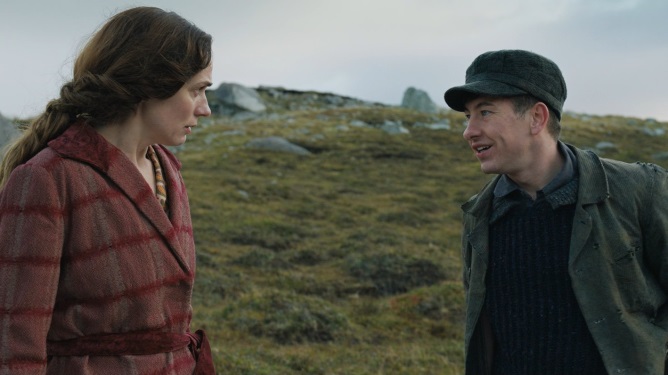
Pádraic (Colin Farrell) and Colm (Brendan Gleeson) are life-long friends on the small Irish island of Inisherin. Until one day, in 1923, Colm bluntly says he won’t speak to Pádraic again as “I just don’t like ya no more”. What on earth has led to this seemingly permanent severance? Did Pádraic do something wrong? The torment of not knowing will create a huge strain on Padraic, who prides himself on “being nice” and can’t understand why the older Colm doesn’t want to chat him. Just as Colm can’t understand why Pádraic can’t leave him alone, especially as he is almost universally agreed to be dull. Eventually this blunt stop to a friendship swiftly escalates out of all control.

McDonagh’s film is packed with the scintillating dialogue you would expect, and he combines it with an intriguing, tragedy-tinged character study where two sympathetic characters tip themselves into destruction through the unwillingness of either of them to compromise. It’s no coincidence that the film is set during the Irish Civil War. Cut off from the mainland on their tranquil island (where life feels like it hasn’t changed for the best part of 100 years), the characters are disturbed from their own civil war, every now and again, by the sound of gunfire and explosions from the mainland. The Banshees of Inisherin can be seen as a commentary on civil wars: don’t they all start, essentially, from someone deciding they have had enough and “just don’t like ya” anymore?

This marvellously rich film boils down a whole country tearing itself apart over what sort of future it wants, into one personal clash over two people’s future. The future increasingly obsesses Colm, a man preoccupied with mortality (who assumes his life can now be counted in years rather than decades), suffering from depression, worried he will disappear leaving no mark. A talented fiddle player, he wants to be like Mozart, remembered decades later – and he can’t do that wasting time every day for hours on end listening to Pádraic talking about his “wee donkey’s shite”.

It’s a perspective on the future, that Pádraic just can’t understand. For him, what does it matter what people you’ll never meet think about you? What matters to him is that the people around him like him and remember him as a “nice fella”. Not in a million years does legacy occur to him: the familiarity of everyday being the same is the most comforting thing, and change a horrific and terrifying thing to be avoided as much as possible.

You can see all this instantly in Colin Farrell’s heart-rending performance as this gentle, fragile but unimaginative soul, heart-broken at the inexplicable loss of his best friend. The film is a striking reminder that, contrary to his looks, Farrell’s best work is in embodying lost souls, the sort of people never ready for the life’s hurdles. Pádraic certainly isn’t, and his attempt to process what has happened defeats him. A man who considers his pet goat his next best friend and is as reliant as a child on his sister, doesn’t have the ability to understand what Colm is driving at about mortality, assuming instead he will stumble across the right words to be welcomed back into Colm’s company. He becomes the unstoppable object, trying to batter down Colm’s wall of silence.

He’s onto a losing battle, as Colm reveals himself to be – either due to his depression or his just not caring any more – the immovable force. Wonderfully played with a tinge of sadness and a depression-induced monomania, by Brendan Gleeson, Colm is a decent guy in many ways but fails to appreciate or consider the effect his actions will have on others. Instead he is focused on achieving at least something notable from his life. It leads to dramatic steps to drive Pádraic away, Colm threatening to cut off one of his fiddle playing fingers every time Pádraic bothers him, a threat he transpires to be more than willing to carry out.

And so civil war breaks out. As well as the parallels with Ireland’s war, I also felt strong echoes of our own poisoned social-media discourse. By his own lights, Colm believes his sudden severing of contact with Pádraic is perfectly reasonable. Many people who have “ghosted” others no doubt feel the same. Colm is reasonable when he explains it, and he still steps in with silent acts of comfort and support when Pádraic falls foul of the island’s brutish police office. But he never considers the traumatic impact this unexplained change will have on Pádraic – or how flashes of kindness can be as cruel as hours of non-acknowledgement.

Radicalism, in civil war and social media, quickly takes hold. What else can you call Colm’s threat to slice off his own fingers (the fingers he needs to live his dream of fiddle-playing legacy)? Just like people blowing hard on Twitter, he needs to deliver or lose face. Pádraic makes angry, passionate condemnations of Colm in the pub, like he’s posting rants online. Things escalate to a point where no-one feels they can step away or backdown.

That’s the tragedy McDonagh identifies here. This one decision of Colm’s – no matter the motives – ends up having disastrous effects on both men. Pádraic changes from a gentle soul to someone capable of wrathful fury and lifelong grudges. Colm literally disfigures himself, guaranteeing he will never achieve the very thing he started this for. Could there be a better parable for the destructive nature of civil combat? Neither Colm or Pádraic are willing to compromise: what if Colm said he would only see Pádraic once or twice a week, eh? Just like Ireland, they burn the world down.

This all takes place in a rich framework, with McDonagh skilfully working in clever, challenging sub-plots. The legend of the banshee, who foretold death and enjoyed watching destruction, is woven throughout, embodied by the sinister Mrs McCormick (a ghostly Shelia Fitton). The most forward-looking person on the island is Pádraic’s sister Siobhan – brilliantly played by Kerry Condon – who finds herself wondering why on earth she stays in such a self-destructive small-world. Barry Keoghan (also superb) plays the universally acknowledged village dunce, who (if you stop and listen to him) quotes French and poetry and (for all his crudeness and lack of social graces) is clearly a man stunted under the heel of his abusive father, the village policeman.

As events escalate and rush out of control – McDonagh’s pacing is very effective here – the film slows for carefully judged moments of emotional power, from the burial of a beloved pet to a character weeping in bed at the painful choices that must be made. McDonagh has created a powerful universal metaphor for the dangers of extreme, definitive choices and a total rejection of compromise by boiling it down to the smallest scale possible.

And your sympathies ebb and flow, due to the beautiful performances from its leads. Farrell is heartbreaking, a memory you carry as he becomes more vengeful. Gleeson is coldly reasonable, even as we grow to understand his crushing sense of mortality and character-altering depression. These two actors power an intelligent and thought-provoking film that achieves a huge amount with subtle and rewarding brushstrokes.

True Grit (1969)

True Grit (1969)

The Duke wins an Oscar in this solid Western (already old-fashioned in 1969) put together with a professional solidity

Director: Henry Hathaway

Cast: John Wayne (Reuben “Rooster” Cogburn), Glen Campbell (La Boeuf), Kim Darby (Mattie Ross), Jeremy Slate (Emmett Quincy), Robert Duvall (Lucky Ned Pepper), Dennis Hopper (Moon), Alfred Ryder (Goudy), Strother Martin (Colonel Stonehill), Jeff Corey (Tom Chaney), John Fiedler (Daggett)

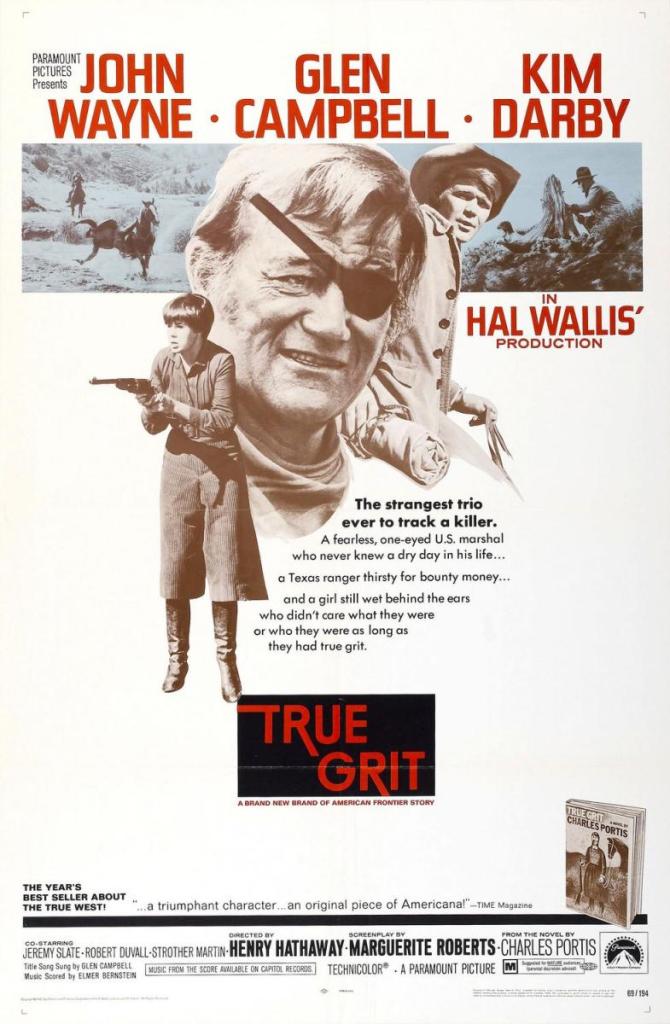
By 1969 John Wayne had been pulling his six shooters against rascals and rapscallions for thirty years, ever since making one of the all-time great entries in Stagecoach. He’d been an American icon, box-office gold and practically the Mount Rushmore of Hollywood. What he never really had was recognition that, underneath the drawl, he was a fine actor who knew his business. He’d only had the single Oscar nomination in 1949, so by 1969 there was a sentimental urge to correct that – especially since illness had already seen the Duke (one of the first major stars to be open and frank about his cancer and urge others to get checks) lose a lung a few years previously.

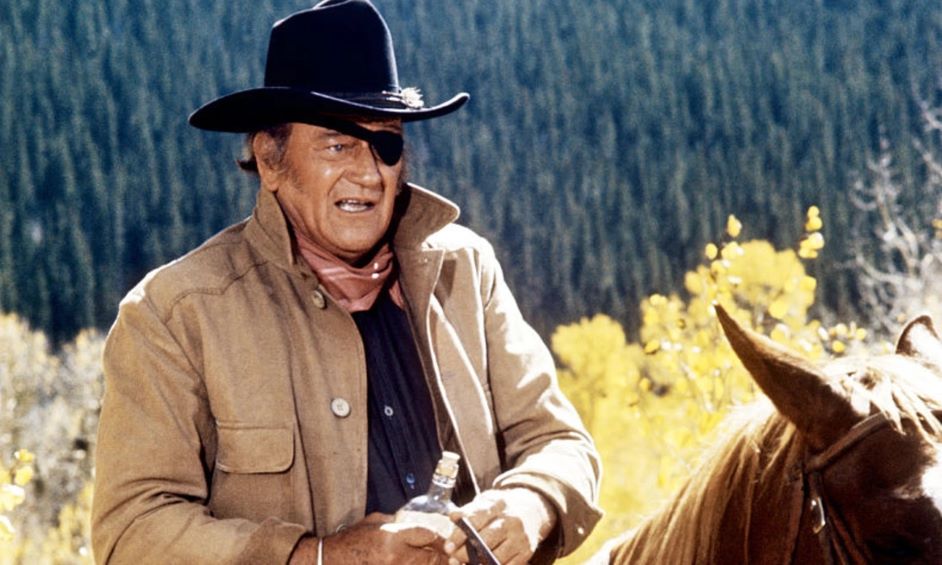
And correct that they did, as Wayne beat out two respected thespians (the perennially unlucky Burton and O’Toole) as well as the whipper-snapper stars of Midnight Cowboy (the sort of cowboy film the Duke would never even consider making!) to scoop the Best Actor prize for taking a character-role lead (all Wayne roles are lead roles) in True Grit. Wayne was “Rooster” Cogburn, a hard-drinking but hard-riding, always-gets-his-man US Marshal, hired by Mattie Ross (Kim Darby) the teenager daughter of a murdered father to track down his killer Tom Chaney (Jeff Corey). Rooster develops an avuncular relationship with Mattie, despite his penchant to get pissed and (of course!) eventually proves he has the ‘true grit’ that made Mattie hire him in the first place.

True Grit is a traditional yarn, directed with a smooth competence (but lack of inspiration) by Henry Hathaway. It must have felt quite a throwback in 1969: you could imagine it pretty much would have been shot-for-shot identical if it had been filmed in 1949 (especially since Wayne had been playing the veteran since at least Fort Apache). Compared to other major Westerns made that year – Butch Cassidy and the Sundance Kid and, especially, the grim nihilism of The Wild BunchTrue Grit looks like the cosiest film imaginable. It even shies away from the book’s ending where Mattie loses an arm after a snake bite (something the, frankly superior, Coen Brother’s remake would not do 40 years later).

It does feel odd to see Wayne, that bastion of old-school Hollywood, sharing the screen with New Hollywood icons like Dennis Hopper (playing a yellow-bellied squealer at the baddies hideout) and Robert Duvall (a belated villain, looking uncomfortable in this genre saddle-flick as a bad-to-the-bone gang leader). But Hathaway makes sure it’s The Duke’s show. Which it is from start-to-finish.

Rooster isn’t really a stretch for Wayne. Compared to his work in The Searchers and Red River, Cogburn is a cosy and straight-forward hero, a straight-shooter who always holds to his word. But it’s a perfect showpiece for his charisma. Wayne shows a decent comic-timing (he has a nice line in deadpan reactions, particularly when he meets Mattie’s famed lawyer Daggett for the first time, discovering far from the imposing figure he imagined he’s actually the mousy John Fiedler) and there’s just a little hint of lonely sadness in Rooster as he talks about the family who left him or the homes he’s never known.

Wayne also has a lovely chemistry with Kim Darby, the relationship flourishing in a rather sweet big-brother-“little sister” (as Rooster calls her) way. Although of course it takes time to form: Rooster spends most of the first half of the film trying his best to shrug her off so he can hunt down the gang Tom Chaney runs with (and collect the bounty for them) unencumbered. The two of them form a tenuous alliance with Texas Ranger La Bouef, who is far keener to deliver Chaney to another state for a higher bounty than that offered for the killing of Mattie’s father.

La Bouef is played with try-hard gameliness by singer Glen Campbell, largely hired to commit him to singing the film’s best-selling theme tune. To be honest, he makes for a weak third wheel – but it’s hard not to hold it against Campbell when he charmingly later said he’d “never acted in a movie…and every time I see True Grit I think my record’s still clean!”. Far better is Kim Darby, who gives a spunky tom-boyish charm to the shrewd and persistent Mattie who is far too-smart to either by cheated by short-changing landlords or to be ditched from the trail by Rooster and La Bouef.

It’s Wayne’s film though, and a final act face-off with the villains shows that there were few people better with a gun on screen (his one-handed shotgun twirling reload while riding a horse is surely the envy of Schwarzenegger’s similar move in Terminator 2). The whole enterprise is carefully framed to showcase Wayne and he rises to the occasion. Think of it like that, and it hardly matters that Hathaway offers uninspired work behind the camera and fails to provide either any moments of visual interest or dynamism (or work effectively with the weaker actors).

True Grit is an entertaining, second-tier Wayne film, lifted by his charisma and enjoyment for playing a larger-than-life gravelly cool-old-timer and cemented in history by his reward with that sparkling gold bald man. Compared to other Westerns – both before and at the time – it’s traditional, straight-forward and unchallenging. But it’s fun, has some good jokes and offers decent action. And it’s a reminder that no one did this sort of thing better than the Duke.

Kinds Hearts and Coronets (1949)

Kinds Hearts and Coronets (1949)

Murder and amorality abound in the darkest (and perhaps Greatest) Ealing comedy ever

Director: Robert Hamer

Cast: Dennis Price (Louis Mazzini), Alec Guinness (The nine members of the d’Ascoyne family), Valerie Hobson (Edith), Joan Greenwood (Sibella), Audrey Fildes (Mama), Miles Malleson (Hangman), Clive Morton (Prison Governor), John Penrose (Lionel), Hugh Griffith (Lord High Steward)

Imagine you’re Louis Mazzini (Dennis Price). Your mother is the outcast daughter of the d’Ascoyne family (all of whom, male or female, bear a striking resemblance to Alec Guinness), Dukes of Chalfort. These vindictive snobs won’t even allow his mother to be buried in the family mausoleum. However, in the event of a series of unlikely deaths, Louis is the eventual heir to the dukedom. That couldn’t happen, could it? Even if they’re all such stuffy, tedious bores that the suave, sophisticated, urbane and witty Louis feels a lot more like what a duke should be.

What to do? Well, it’s obvious really: Louis will have to murder them. Because Louis wants nothing more than the thing he can’t have. It’s the same with the ladies in his life: his childhood sweetheart Sibella (Joan Greenwood), sensual and manipulative, seems all the more tempting when he’s with the refined and austere Edith (Valerie Hobson) and vice versa. We know that the charming Louis’ murderous career will eventually end at the gallows – the film opens with him writing his memoirs and eating his last meal in prison – but what crime will find him there?

Kind Hearts and Coronets is one of the first of the Ealing comedies. It’s also pretty much the one that sets the Gold Standard. I’ll confess I’ve been sceptical in the past, but rewatching it again, its black comic humour, shrewd psychology and delightful amorality delighted me as never before. Kind Hearts is a very, very funny movie: perfectly constructed, gorgeously scripted and supremely sharp, knowing and scintillating. It’s a miraculously marvellous film.

Is there a comedy sharper and more heartless than Kind Hearts? Our hero is, at best, a sociopath who kills without the slightest regret. Murders are frequent punchlines. One of its leading ladies is as selfish, conniving and ruthless as the hero. D’Ascoynes bite the dust regardless of their decency (and some of them are genuinely quite nice). But we don’t care – largely because Louis is such a smoothly charming and amusing person.

Brilliantly played by Dennis Price, even when poverty forces him into the role of draper’s assistant Louis is the genteel duke to his fingertips. His sociopathic focus on his own desires is delivered with such dry wit (“It is so difficult to make a neat job of killing people with whom one is not on friendly terms”) we can’t help but like him, even though he is a remorseless killer. Dispatching one d’Ascoyne and his mistress in a river “accident” he only sighs “I was sorry about the girl, but found some relief in the reflection that she had presumably during the weekend already undergone a fate worse than death.”

Some critics have attempted to position Louis as some sort of class warrior, pruning the nobility. Would that were so, eh? The biggest snob in the film is clearly Louis (compared to him the worst of the d’Ascoynes are more rude and boorish), a man so convinced of his own intellectual and hereditary superiority that even his lowly roots don’t concern him.

Louis really matches our expectations of a duke. He’s refined in voice and manner, dignified in physicality and has the sort of arch wit no one else can compete with (when Sibella tells him her husband wishes to go to Europe to expand his mind, Louis replies “He certainly has room to do so”). He is a million miles from a class warrior: he wants nothing more than to take his place on the velvet cushions of the House of Lords (so much so he insists on being tried there). He’s so convinced of his own superiority, the dispatch of legions of d’Ascoynes cause him to lose not a second of sleep.

He’s also charming, funny and ingenious: we like him. It’s the same reason we like Joan Greenwood’s scheming, sexy and selfish Sibella: what’s more fun than an unashamed baddy? It’s easier to like her more than Valerie Hobson’s staid Edith – though Hobson’s generous performance is spot on for creating the ideal upper-class wife, exactly the sort of refined status symbol Louis would long for.

Hamer’s perfectly paced comedy is largely a triumph of dialogue and characterisation. He shoots much of it in carefully positioned mid-shot. But there are wonderful moments of visual comedy. Who can forget Admiral d’Ascoyne slowly submerging, going down with his sinking ship? Or, best of all, Louis and Edith’s gentle garden conversation about her husband Henry d’Ascoyne’s future while, in the background, over a wall, the small explosion that has just killed him smokes away (“I could hardly point out that Henry now had no time left for any kind of activity, so I continued to discuss his future” Louis observes). But above all, Hamer doesn’t skim on the cold amorality of Louis. While we are never invited to judge him, there are no attempts to hide his sociopathic blankness.

Confronted with real emotion and situations outside his control, Louis is helpless. When his mother dies, he can only mourn her with a flourish straight out of the cheap melodrama he despises. When Sibella’s husband, the dull Lionel, insults his background, he’s reduced to punching him. Caught off guard in his trial, his articulate wit absolutely deserts him. Louis slips on  personae like the fine suits he wears, but his ambitious mind can only travel on his pre-planned route, no others.

But that makes him more than match for the d’Ascoynes. In a masterstroke, all members of this family are played by Alec Guinness, the sort of impish, playful trick Guinness loved. It’s a series of eight distinct comic sketches – to be honest none of them a challenge to Guinness, who is such a great actor that playing these pencil-sketch eccentrics was no-problem-at-all – but still a delightful running gag. His d’Ascoynes include a bumbling vicar, a windbag general forever banging on about his Boer (Bore?) war, a sneering playboy scion, bumbling amateur-photographer Henry (the most sympathetic by a mile), a stuffy banker, an austere suffragette and a bullying duke with a capacity for violence.

Seeing each of these Guinnesses is a neat running joke (not to mention, a little gag at the in-breeding of the upper classes). Price gets in on the act as well, doubling up as Louis’ Italian Tenor father (who dies of shock on Louis’ birth – our hero’s first murder?). But it’s also part of the film’s comedic commentary on construction, duality and falseness. Is it a surprise that the d’Ascoynes are all facets of the same actor, when Louis himself is an entirely self-constructed man, part bitter by-blow, part natural duke? Nothing is ever quite what it seems. Louis lies to everyone he meets, pretends affections he never feels and presents a front to the world totally different from his real self. Even the reason Louis is on death row turns out to be radically different from what we expect.

Kind Hearts and Coronets is a perfect display of arch Wildean front, redirected into sociopathic irritation (I can’t call Louis furious – he’s not got enough depth to him for real anger). It’s a jet-black comedy, crammed with superb lines and brilliantly acted, above all by Price whose tortured unknowability behind his Cowardian suaveness is perfect. Guinness went into film legend, Greenwood is fascinatingly vicious and Hobson the embodiment of polite class. Every scene has a great line and the humour is as dark as it comes. It’s one of the greatest of all Ealing’s comedies –certainly the darkest and most vicious – with a hero who looks, acts and talks like a villain.

Ran (1985)

Ran (1985)

Kurosawa’s epic version of King Lear places style over substance, but offers many glorious visual treats

Director: Akira Kurosawa

Cast: Tatsuya Nakadai (Hidetora Ichimonji), Akira Terao (Taro Ichimonji), Jinpachi Nezu (Jiro Ichimonji), Daisuke Ryu (Saburo Ichimonji), Mieko Harada (Lady Kaede), Yoshiko Miyazaki (Lady Sué), Mansai Nomura (Tsurumaru), Hisashi Igawa (Kurogane), Peter (Kyoami), Masayuki Yui (Hirayama Tango)

An ageing Lord lays down the burdens of office to his three children. Two flatter the old man: the third tells him he’s a fool. The lord banishes the third child and treasures the other two, who betray him tipping him into a lonely madness, screaming on a moor. Sound familiar? Kurosawa takes Shakespeare’s King Lear and transposes it to the final days of Samurai Japan. Lear becomes Hidetora (Tatsuya Nakadai) and his daughters become sons, Taro (Akira Terao), Jiro (Jinpachi Nezu) and Saburo (Daisuke Ryu), with the latter two taking on Hidetora’s land.

Ran translates as “Chaos”. That’s really what the film is about. Kurosawa’s Lear is strikingly nihilistic. Anything from the original play that could be called remotely optimistic – there is no good servant figure, no sensible Albany and no Edgar caring for, and avenging, his blinded father – is removed. Instead, Hidetora’s decision leads to unrelenting death and destruction, a carnival of bodies piling up in burnt out, ruined castles. This is Lear, tinged with the sort of Beckettian-wasteland theorists like Jan Kott would love: bleak and hopeless with only suffering at its heart.

As you expect with Kurosawa, its filmed with poetic beauty. The more frantic, Western-action, stylings of Kurosawa’s youth are gone, a victim perhaps of his auteur reputation. Ran is a self-consciously important film, an epic taking place in a series of stately medium and long-shots (I can barely remember more than a few close-ups), in luscious Japanese countryside, peopled by hundreds of colour-coded extras. Kurosawa’s fault is that he sometimes focuses on this, at the cost of the thematic complexity of Lear.

But what he certainly gets right is the bleakness at its heart. Kurosawa is not remotely seduced by any glamour in Hidetora. Played by Tatsuya Nakadai in a deliberately classical noh­-style (full of elaborate poses and declamatory, plot-heavy dialogue) designed to stress how out-of-touch he is, compared to the more modern styles of the other actors. A vain, proud man who expects to be obeyed without question, Hidetora is never a truly sympathetic figure until his final moments.

Everything we learn about him hammers home his past of violence and brutality – he wiped out of the families of both of his daughters-in-law to steal their lands, he blinded Ran’s prince-turned-beggar Tsurumaru, who wanders the wilderness and gives Hidetora shelter. Falling from power, he’s as stubborn and arrogant than ever, leading his retainers to their death in an ambush. There is none of the “very fond, foolish old man” about him (there isn’t much of that about Lear either), just a tyrant who brings himself low.

Hidetora’s greed has also introduced a serpent into his own nest. Many have seen Taro’s wife Lady Kaede (Mieko Harada) as a Lady Macbeth figure, but really she’s a sort of Edmond or Iago. Seductive, vengeful and interested only in furthering the chaos, she lives in her murdered father’s castle, married to the son of the man who killed him. She schemes to turn both brothers against each other, seduces Jiro and pushes him to murder his wife. Using her body and her brain, she works to destroy the clan, her hatred motivated by Hidetora’s past cruelty.

Chaos is the perfect time for her schemes to take hold. Kurosawa’s setting of Ran near the end of the Samurai era, adds an additional blood-tinged brutality to the film’s battles. This was the time when the Samurai were learning their swords and arrows were poor defence against muskets. The battles are massacres: massacres of people fighting two different kinds of war. One is that of guts and honour: another the brutal long-distance finality of the bullet. Samurai are mowed down in their dozens on futile charges, while two of Hidetora’s sons are shot down from a distance, never seeing their killer’s faces. It’s a million miles from the traditional boar-hunt that opens the film – and it’s a world none of the characters manages to adjust to.

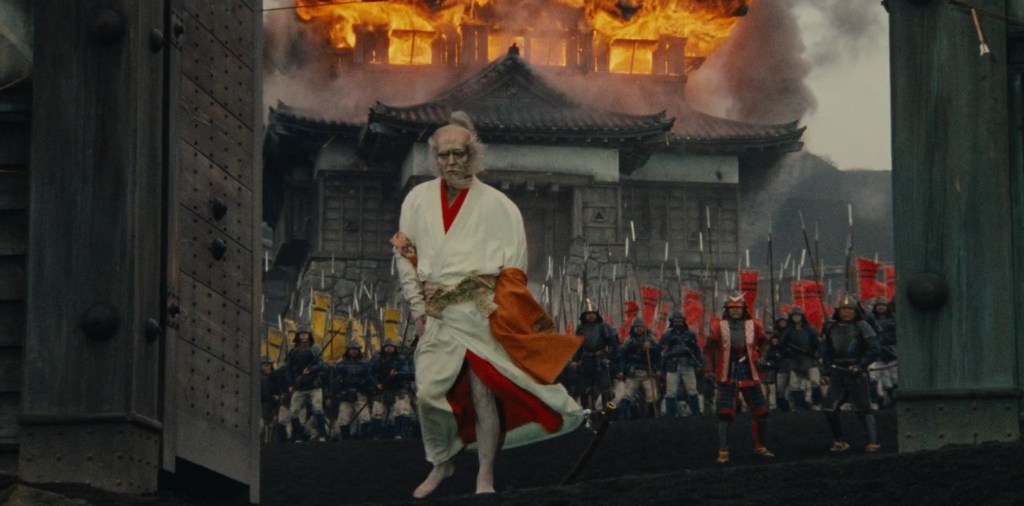
The violence of these battles is the central touch of mastery in Kurosawa’s epic. A whole castle was built – out of plywood – solely so it could be burned down during the pivot sequence at the centre of the film. Hidetora’s last castle is surprised by the armies of both sons, whose soldiers spray it with a never-ending stream of bullets and fire arrows. Playing out in silence under a haunting score, this is a chilling showpiece for Kurosawa’s visual mastery, a terrifyingly nihilistic view of the horror and destructiveness of conflict.

Inside Hidetora’s men are ripped apart or punctured like pin cushions, leaking gallons of crimson blood. His harem commits seppuku. The castle burns down around him. All while Hidetora sits in stoic disbelief at the top of a tower, his connection with reality collapsing. He eventually leaves the castle – walking through the parting invading forces (a shot that could only be attempted once as the set literally burned down around him) and out of the smoking gates. It’s an extraordinary sequence, the finest in the film: wordless, poetic and terrifyingly, hauntingly, brutal.

From here, Kurosawa’s Ran embraces the bleakness of Lear: Hidetora loses all trace of sanity, rages in self-loathing in the same fields he lorded over in the film’s opening sequence, is reduced to pathetically begging for food from the man he blinded and ends the film cradling the body of his murdered son. Around him his fool – an extraordinary performance from Japanese variety performer Peter – mocks his actions and tells bitter jokes about the savagery of the world while despairing and raging at the horrific position he has been reduced to in caring for his master.

Kurosawa embraces that bleakness: but how much does of Shakespeare’s depth does Kurosawa grasp? I’m not sure. In stressing the cruelty and madness of Hidetora, he robs him of Lear’s growing self-realisation about the emptiness of power and his own failings as a ruler. Hidetora is a two-dimensional character, as are most of the others. Kurosawa’s simplification of Lear removes the destructiveness of fate, the grotesqueness of chance and the punishments of loyalty (there is no Gloucester character, while the Kent figure is largely sidelined – both I feel is a real loss).

In making Ran, Kurosawa focused on two things: a depressingly post-Nuclear age vision of the world as a wasteland in waiting, and the pageantry of grand-settings and beautiful imagery. Compare Ran to the faster-paced dynamism of his earlier films (Seven Samurai may be nearly as long, but it doesn’t feel like it compared to the slow-paced Ran). There is a self-important artiness about Ran: it’s more stately style feels like Kurosawa showing he could do Ozu as well as he could Ford, while it’s indulgent run-time (there are many moments of near-silent nihilistic wilderness, that add length and import but not always depth) can test your patience.

Ran is basically a simplification of Lear that takes the core of the story, strips out many of its themes and contrasting sub-plots, and focuses on a single message, of man’s inhumanity to man. In doing that it loses the scope of a play that astutely looks at the personal and the political, the intimate and the epic, that understands the self-deceiving flaws of good and bad men. It’s large and important, but it’s not as powerful a tragedy as Lear because its fundamentally a simple film.

Which is not to say it is a bad film. But it is to say that Kurosawa had perhaps become seduced by his status as a legendary “Great Director” into believing that long and beautiful were synonymous with quality and importance. Ran is a fascinating and chilling film, with many striking and haunting moments. But it also misses some of what made its source material great, and it’s a triumph of moments and visuals than it is of intellect and depth.

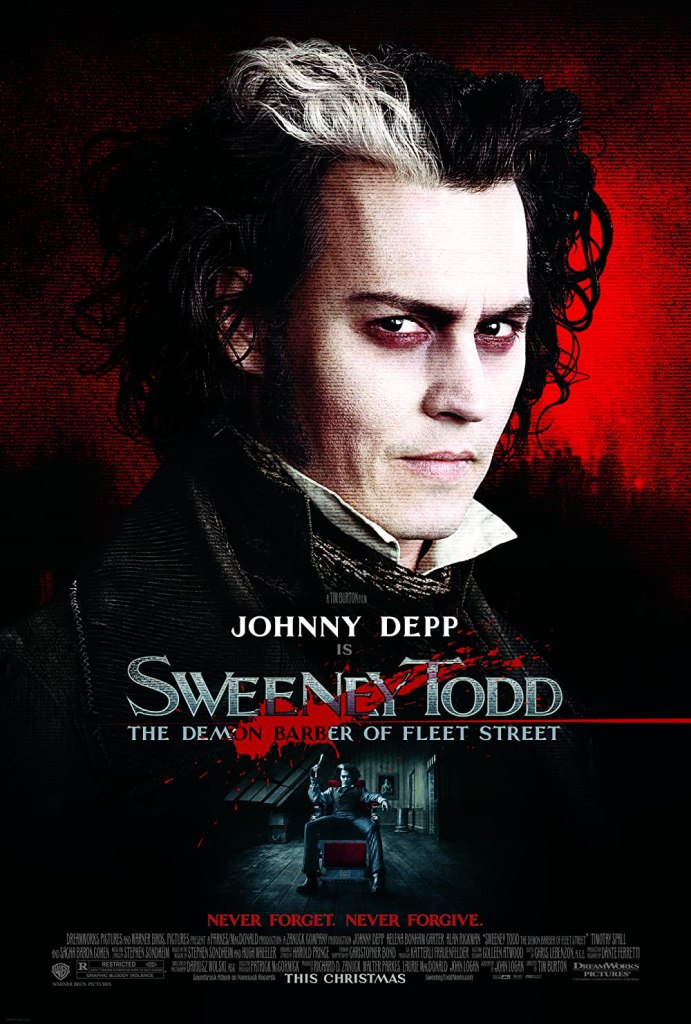
Sweeney Todd: The Demon Barber of Fleet Street (2007)

Sweeney Todd: The Demon Barber of Fleet Street (2007)

Blood, guts and gore in this horror-tinged, claret-dipped Burton adaptation of Sondheim’s musical

Director: Tim Burton

Cast: Johnny Depp (Sweeney Todd), Helena Bonham Carter (Mrs Lovett), Alan Rickman (Judge Turpin), Timothy Spall (Beadle Bamford), Jayne Wisener (Johanna Barker), Sacha Baron Cohen (Adolfo Pirelli), Laura Michelle Kelly (Lucy Barker/Beggar Woman), Jamie Campbell Bower (Anthony Hope), Ed Sanders (Toby Ragg)

Sondheim’s blood-soaked musical about the infamous serial-killing barber, intent on revenge against the judge who transported him to Australia and stole his late wife, took years to make it to screen. His intensely theatrical, intricate musical masterpieces don’t always translate to film – they lack that crowd-pleasing oomph. What with Todd slashing throats with misanthropic glee, aided by besotted neighbour Mrs Lovett baking the bodies into pies, and no wonder Sweeney was a difficult pitch.

However, it’s practically tailor-made for the High Priest of Gothic Oddity, Tim Burton. A lifelong Hammer horror fan, it’s no surprise Burton had loved the musical since first seeing it in 1980. He’s a perfect match for this stuff, and his film is a bleak, heavily desaturated, oppressively grim and strikingly optimism-free descent into a subterranean hell, with almost every scene accompanied by a free-flowing deluge of Shining-style levels of blood.

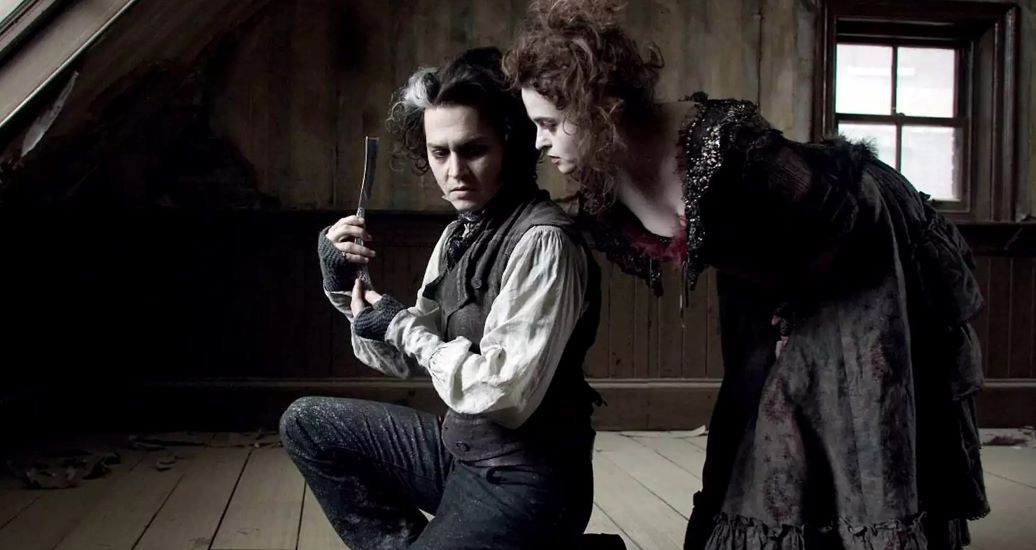
Sweeney Todd is a design triumph (Oscar-winning for its production design and nominated for its costumes). It’s London is like an Oliver! set run through a fevered nightmare slasher film. Everything is grandiose, filthy and above all cold, oppressive and unwelcoming. Most of the light comes from the reflection of moonlight on the blades of Todd’s razors, and the basement of his building is a gruesome horror show, with a pumping furnace and mangled body parts in a mincer.

The film shocked critics expecting a more traditional Broadway musical translation with the dark glee it embraces the gore. When throats are slashed – which occurs as regularly as clockwork – blood sprays over the actors, camera and virtually everything else. Sweeney’s chair drops his victims head-first into the cellar: each fall is seen in terrible detail, bodies landing with a sickening crunch, twisted out of shape and heads smashed open on the stone floor. There is little black comedy, the film embracing flat-out horror.

It also focuses on the black hate in Sweeney’s heart, his fixation on revenge at any costs and the lack of any trace of humanity within him. While Mrs Lovett longs to turn this “relationship” into something more intimate and loving – she even sings about it in By the Sea to the stony-faced indifference of Sweeney – to Sweeney she is little more than a convenient means to an end. Bravely, no real attempt is made to make us feel real sympathy for this brutal killer – and the visceral brutality of his killings only adds to this.

The film is dominated by its two leads, simplifying the musical down to something leaner, swifter and meaner. This is a dark revenge tragedy doubling as a character study of its two leads’ souls. These places a lot of pressure on Depp and Carter. Sweeney Todd was very much at the apex of a trend in musical film-making where stars were trained to sing, rather than casting skilled singers who can act. Sweeney Todd is an immensely complex musical, with deeply challenging lead parts. Even using the intimacy and immediacy of the camera to bring the scale down (they don’t need to hit the back row), it still must have been intimidating to sing with very little experience.

Depp and Carter however acquit themselves well. Working with a director they both trust implicitly, they give dark, twisted performances of unspoken longings. Depp, in one of his finest and most restrained performances (which says a lot about the irritating abandon of many of his other roles) that stresses Sweeney’s sociopathic coldness. He is a tortured man, turning his unhappiness and self-loathing into a weapon to slice open the world. Carter channels sociopathic eccentricity with a tenderness, vulnerability and desperation for love.

As singers however, they are competent rather than inspired. Depp goes for an earthy, Bowie-esque, Rex Harrison-paced growl that conveys the emotion but simplifies the songs and robs them of some of their impact. Carter’s more lively rendition carries more character, but in both cases you wonder what would have happened if the film had married its cinematic visuals with assured Broadway performers. The best singers by far are Jamie Campbell Bower (whose role as the would-be lover of Sweeney’s long-lost daughter is heavily cut) and Ed Sanders, who is excellent as the orphan taken under Mrs Lovett’s wing (West End-star Laura Michelle Kelly, perversely, barely sings a note).

The focus on Sweeney and Mrs Lovett leaves little room for the other actors. Rickman brings a subtle perversion to Judge Turpin – even though, bless him, he’s not the best singer – and Spall a creepy eccentricity to the Beadle. But this is the Sweeney show, a decision that robs the film of any trace of the more hopeful elements of the original, to zero in on the dark horrors.

The film pulls few punches, but never makes us care about Sweeney. For all the trims, it’s surprisingly poorly-paced (especially considering its short run-time). Such little importance is given to the supporting characters, time feels wasted when we are with them. The cuts also stress how little actual plot there is around Sweeney and Mrs Lovett (once they decide to embark on a life of crime, there is little that happens to sustain the film through its middle act).

The film is a Gothic slasher triumph, but it’s perhaps neither a great musical nor a truly engaging tragedy. A slice more humanity, in between the slashed throats, might have helped a great deal.

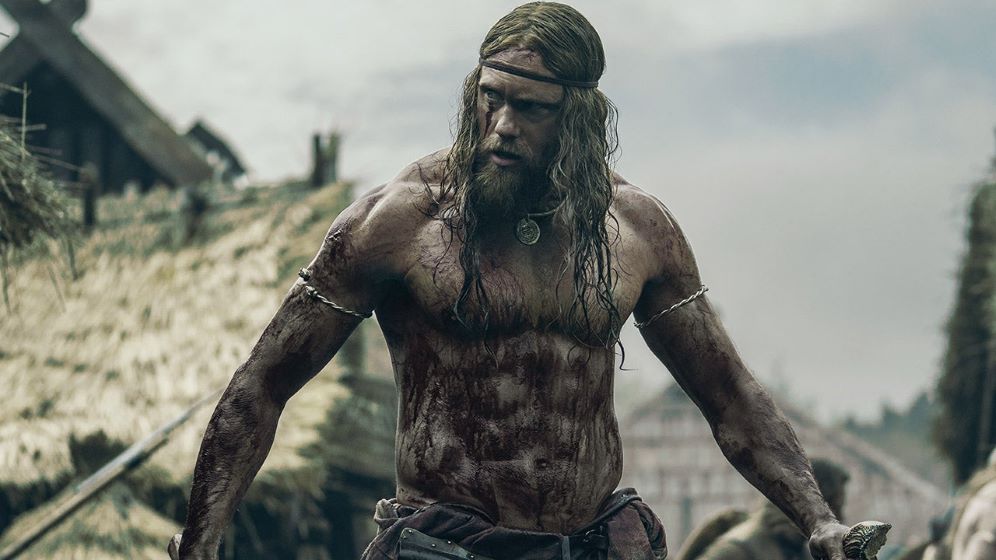
The Northman (2022)

The Northman (2022)

A viking tears through flesh and blood in quest for revenge in this bizarre, fascinating Viking epic

Director: Robert Eggers

Cast: Alexander Skarsgård (Amleth), Nicole Kidman (Queen Gudrún), Claes Bang (Fjölnir the Brotherless), Anya Taylor-Joy (Olga of the Birch Forest), Ethan Hawke (King Aurvandill War-Raven), Björk (The Seeress), Willem Dafoe (Heimir), Oscar Novak (Young Amleth), Gustav Lindh (Thorir), Ingvar Eggert Sigurðsson (He-Witch), Kate Dickie (Halldora), Ralph Ineson (Captain Volodymyr)

Ask people about Hamlet, and they picture a poetic Prince, plagued with doubt and vulnerability, talking to skulls rather than carrying out his mission of revenge. What you probably don’t think about are Vikings on a Berserker rage, slaughtering left, right and centre. But Hamlet has its roots in a bloody Scandinavian legend, where remorseless death is handed out by a ruthless killer. That’s the side of Hamlet, Eggers takes for inspiration in his bloody, bold and resolute Viking film, a blood-soaked acid trip it’s hard to imagine anyone else making.

It’s 895 and King Aurvandill (Ethan Hawke) returns from conquest to his wife Gudrún (Nicole Kidman) and young son Amleth (Oscar Novak). Amleth takes his vows of manhood with his father, guided by a demented He-witch (Willem Dafoe) – only for his father to be almost immediately killed by his half-brother Fjölnir (Claes Bangs), who seizes his throne and wife. Amleth escapes – and years later has grown into a berserker Viking warrior (and Alexander Skarsgård). He sees his chance for revenge when he disguises himself as a slave, and joins a shipment traveling to Fjölnir’s village (Fjölnir having lost his throne). There he forms an alliance with Russian slave Olga (Anya Taylor-Joy) and works to undermine and terrify Fjölnir, before he can enact his revenge and save his mother.

The Northman is, possibly above all, a shocking, absorbing deep-dive into Viking Culture. Eggers doesn’t shirk for a second from the bloody, ruthless mayhem of Viking life. Our introduction to the adult Amleth sees him first whipping himself (and others) into a (possibly magic mushroom fuelled) Berserker rage, dressed as wolves and howling at the fireside, before launching an unbelievably ruthless attack on a Russian village. The desperate peasants are butchered with savage fury (and blood lust). In the aftermath, rape, murder and other horrors occur uncommented on in the background, while those not seen fit for slavery are herded into a barn to be casually burned alive.

Amleth, at no point, expresses a jot of regret for his actions (as a Viking wouldn’t), and even after passing for a slave never questions the institution. His revenge uses the same ruthless, blood-dripping fury as his ravaging and his only passing moment of pause is about directly killing Viking women and children (he gets over it). In all this he is in no way different from the rest – in fact he’s even one of the more sympathetic – Vikings. Fjölnir – revealed as otherwise a wise and generous leader – ruthlessly murders and rapes his slave as he fancies and a weekend’s entertainment for all is watching two teams of slaves beat themselves to death in a no-holds-barred version of hockey.

Eggers leaves you in no doubt that, for all the grim fascination, this is a brutal and savage civilisation that you would in no way want to encounter. Saying that, despite Eggers’ clear intentions, with the film’s cast modelling a sort of chiselled, gym-trained super-human Aryanism, sweeping away Slavic peasants and enforcing a triumph of Nordic culture, parts of this film are surely being channelled into the wet dreams of elements of the right-wing.

The film doesn’t just explore violence. Family bonds are demonstrated to be all important to Vikings – Amleth and Fjölnir are dedicated to their families and go to huge ends to protect and mourn them. (A funeral of one warrior features elaborate blood-letting, as the deceased’s horse is decapitated and his favourite slave willingly butchered so both can join him on the journey to the afterlife). There is a mutual regard and affection between warriors – even opponents – in a culture that puts itself above others. Honoured slaves are respected – though told they can never be equal. Licensed fools and mystics are given a great deal of freedom – Willem Dafoe’s crazed He-witch at Aurvandill’s court mocks all and sundry with no repercussions. There is a huge faith placed in wise men and women who inspire awe and fear – even a slave, such as Olga, with possible mystic powers is treated with caution. Bonds and duties across generations and to the next life are revered. Prophecies and destinies are respected. Poetry and storytelling is highly valued.

For all the killing, there are elements of a rich culture here and strong family bonds. All these combine in the person of Amleth, who will not be shaken from his destiny but will enact it in his own time, in line with the prophecies he of a seeress (an unrecognisable Björk). Eventually it doesn’t matter if Amleth’s idealised memory of his parents turns out to be not the whole story, or if he has a chance to build a new life. Destiny is, in fact, all.

Eggers’ film takes place in what almost a state of heightened, fevered excitement. Beautifully shot by Jarin Blaschke, it mixes expressionistic near-black-and-white, with drained-out shots of violence and flame-lit moments of psychological and body horror. Visions shot in a piercing mix of blues, greys and icey chilliness puncture the film, with strange compositions of characters, Valkyries, Valhalla and the Gods. Supernatural elements pepper the film, with Amleth’s father influencing events in the shape of a raven and Amleth completing a quest for a fateful sword. These moments of hyper-reality are perfectly executed and in a visually unique, blood-drenched nightmare.

Where The Northman is less successful is exploring the inner-depth of its characters. Skarsgård is charismatic and physically perfect, but doesn’t give much inner-life to Amleth. Moments of doubt or uncertainty in Amleth never quite convince and he feels more a force of nature than a person. There are richer performances from others, Kidman in particular a revelation as a cryptic, unknowable woman with a mid-film encounter of heightened emotional (and sexual) tension between her Skarsgård. Bangs’ Fjölnir is strangely sympathetic. Anya Taylor-Joy carries a dominant, mystical force in her performance that helps make her character a bridge between multiple worlds.

All these combine into a film of shocking violence, jaw-dropping beauty and troubling emotional and psychological horror. There is no doubt the film is overlong – there are probably one too many deeply odd segues into drug-induced ravings of various prophets and seers – but as an exploration of a culture so uniquely alien, its sublime. As a piece of work from a truly distinctive and unmatchable director, it’s superb. You look it The Northman and can’t believe anyone else could have made it. If nothing else, that makes it a film worthy of your time.

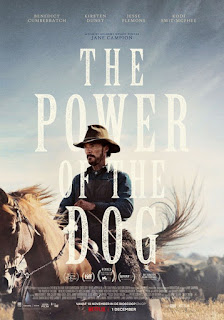
The Power of the Dog (2021)

Power of the Dog header
Benedict Cumberbatch rules his ranch with an iron fist in Jane Campion’s extraordinary The Power of the Dog

Director: Jane Campion

Cast: Benedict Cumberbatch (Phil Burbank), Kirsten Dunst (Rose Gordon), Jesse Plemons (George Burbank), Kodi Smit-McPhee (Peter Gordon), Thomasin McKenzie (Lola), Genevieve Lemon (Mrs Lewis), Keith Carradine (Governor Edward), Frances Conroy (Old Lady), Peter Carroll (Old Gent)

At one point in The Power of the Dog, Phil Burbank, monstrously domineering Montana Rancher, stares out at his beloved hills. Where others see only rocks and peaks, Phil sees how (like a cloud) they form themselves into looking like a howling dog. Seeing things others do not is something Phil prides himself on. It’s also something The Power of the Dog excels out: it’s a continually genre- and tone-shifting film that starts as a gothic, du Maurier-like dance among the plains and ends as something so radically different, with such unexpected character shifts and revelations, you’ll be desperate to go back and watch it again and see if you can see the image of a dog among its rocks.

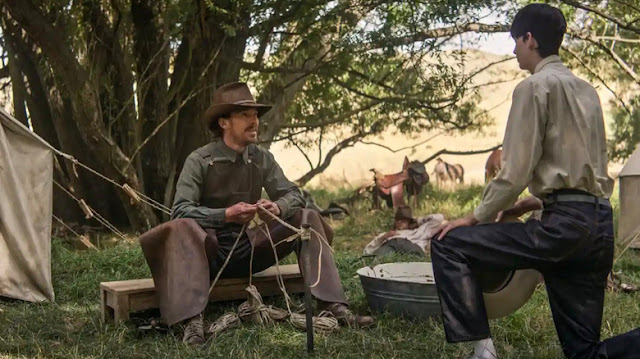
In Montana in 1925, two brothers run a ranch. George (Jesse Plemons) is polite, formal and quiet, seemingly under the thumb of his aggressively macho, bullying brother Phil (Benedict Cumberbatch). Phil is fully “hands-on” on the ranch, priding himself on being able to perform every task, from rope weaving to bull skinning, all of which he learned from his deceased mentor “Bronco” Henry. Things change though when George marries Rose (Kirsten Dunst). Phil takes an immediate dislike to Rose, engaging into a campaign of psychological bullying that drives Rose to drink. However, at the same time a strange bond develops between Phil and Rose’s student son Peter (Kodi Smit-McPhee) – is Phil’s interest in the boy part of a campaign to destroy Rose or are there other forces at work?

Campion’s film (her first in over ten years) is a fascinating series of narrative turns and genre shifts. It opens like a gothic Western. The ranch is a huge, isolated house surrounded by rolling fields and its own rules. Phil is an awe-inspiring, still-living Rebecca with Rose a Second Mrs de Winter having to share a bathroom with the perfect first wife. The psychological war Phil launches against Rose, like a hyper-masculine Mrs Danvers, seems at first to be heading towards a plot where we will see a vulnerable woman either crushed or fighting back. Then Campion shifts gears with incredible professional ease; the kaleidoscope shifts and suddenly our perceptions change along with the film’s genre, which becomes something strikingly different.

This all revolves around the character of Phil. Excellently played (way against type) by Benedict Cumberbatch, in a hugely complex performance, Phil at first seems an obvious character. A bully and alpha male who mocks George as “Fatso”, hurls homophobic slurs at Rose’s sensitive, artistic son and would-be doctor Pete, and treats his duties with such masculine reverence that the idea of wearing gloves to skin a cow or washing the dirt of his labour from him is anathema.

But look at Phil another way and you see his vulnerability. The opening scenes play as a torrent of abuse to George. But look again and you see this is a man desperately trying multiple angles to clumsily engage his brother in joint reminiscences. His emotional dependence on George is so great that they still share a single bedroom in their giant house (and even a bed in a guest house, like Morecambe and Wise) and he weeps on their first night apart. Despite his brutish appearance, his conversation is littered with classical and literary allusions (we discover later he is a Yale Classics graduate). His life is devoid of emotional and physical contact and he maintains a hidden retreat in the woods, a private den the only place we see him relax.

He’s a man clinging desperately to the past. At first it feels like he has never grown up, that he is still a boy at heart. But Campion slowly reveals his emotional bonds to his deceased mentor Bronco (whom he refers to almost constantly in conversation) to be far deeper and more complex than first anticipated. He treats Bronco’s remaining belongings with reverence, maintaining a shrine to him in the barn and cleaning his saddle with more tenderness and care than he feels able to show any human being. The depths of this relationship are crucial to understanding Phil’s character and the emotional barriers he has constructed. His gruff aggression hides a deep isolation and loneliness, feelings Campion explores with profound empathy in the film’s second half.

That doesn’t change the monstrousness of the bullying Phil enacts on Rose. Played with fragile timidity by Kirsten Dunst, Rose becomes so grimly aware of Phil’s loathing that is too paralysed by intimidation to even play Strauss on her newly purchased piano in front of George’s distinguished guests (Phil pointedly plays the music far better on his banjo and takes to whistling in in Rose’s presence) and later tips into alcoholic incoherence.

Despite Dunst’s strong performance, if the film has a flaw it is that we don’t quite invest in Rose enough to empathise fully with her emotional collapse. Both she and George (a fine performance of not-too-bright-decency from Plemons, in the least flashy role) disappear for stretches and play out parts of their relationship off camera, making it harder to bond with them (a bond the earlier part of the film needs). It perhaps might have been more effective to centre the film’s opening act on Rose rather than Phil, allowing us to relate to her better and feel her decline more.

Dunst however nails Rose’s growing fear, desperation and depression while her status as an unwelcome guest is constantly forced on her. Her panic only deepens with the return of her son Peter. This is where the film takes a series of unexpected shifts. To the surprise of all Phil offers to take the sensitive, quiet Pete under his wing: perhaps he’s impressed by Pete’s indifference to the homophobic abuse from the ranch-hands, perhaps he sees a chance to spiritually resurrect his mentor by playing the same role himself to Phil (pointedly, the film implies the younger Phil may not have been dissimilar from Pete). Either way, Campion’s film heads into its extraordinary and deeply impactful second half as an unsettling and uncertain personal drama between two men who seem totally different but may perhaps have more similarities than expected.

As Peter, Kodi Smit-McPhee gives a wonderfully judged performance of inscrutability and reserve. He’s an artistic boy who creates detailed paper flowers and keeps artistic scrapbooks, but can dissect animals without a flinch and snaps the neck of an injured rabbit with ease. He seems alternately devoted to his mother then queasily distant from her, calling her Rose and unsettled by her drunken inappropriateness. His motivations remain enigmatic, just as Phil’s motivations for befriending this isolated and very different boy could fall either way. Smit-McPhee and Cumberbatch are both extraordinarily good in the scenes between this unlikely partnership, and Campion’s artful film keeps us on our toes as to precisely what they want from this friendship. The result is haunting.

It leads into a stunning final act which demands we re-evaluate all we have seen and leaves such a lasting impression I was still re-living the film in my mind days later. Campion’s film is masterfully shot and carries a wonderful atmosphere of intimidation and unease, helped hugely by Johnny Greenwood’s brilliant score with its unsettling piano-inspired cadences. It reinvents itself constantly, Campion’s direction shifting tone and genre masterfully. It’s quite brilliantly acted and provides Cumberbatch in particular with an opportunity he seizes upon to slowly reveal depths of emotion and vulnerability an outwardly straight-forward monster. There won’t be many finer films released in 2021: and this will be a classic to sit alongside The Piano in Campion’s work.

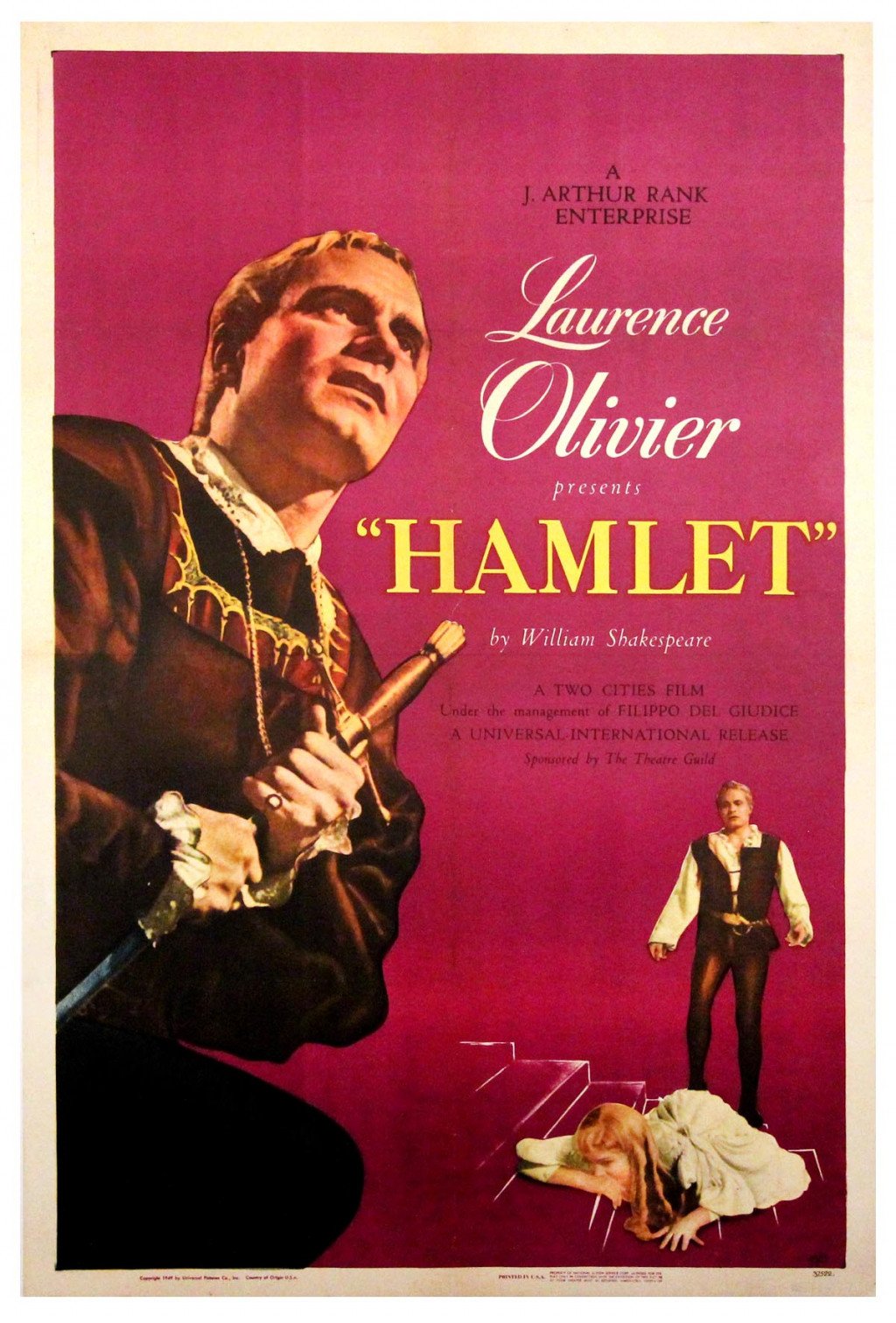
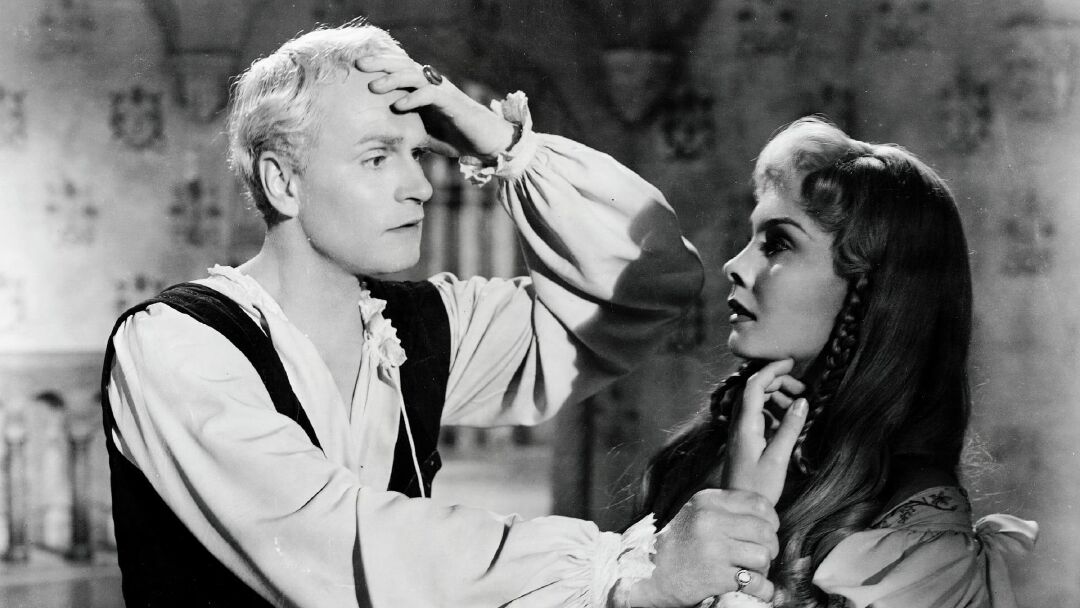
Hamlet (1948)

Laurence Olivier makes Shakespearean cinematic history in Hamlet

Director: Laurence Olivier

Cast: Laurence Olivier (Hamlet), Basil Sydney (Claudius), Eileen Herlie (Gertrude), Jean Simmons (Ophelia), Felix Aylmer (Polonius), Noman Wooland (Horatio), Terence Morgan (Laertes), Peter Cushing (Osric), Stanley Holloway (Gravedigger), Anthony Quayle (Marcellus), Esmond Knight (Bernardo), Russell Thorndike (Priest), Harcourt Williams (Player)

Close your eyes and picture Hamlet – chances are you will see an image inspired by Olivier. Olivier’s second Shakespearean directing outing coated him in plaudits. He became the only actor to win an Oscar for Shakespeare (and, until Roberto Benigni, the only actor to direct himself to an Oscar) and the film itself became the first non-American film to win Best Picture. Hamlet will live forever, a corner-stone production of the play and a part of Shakespearean and cinematic history. It skilfully weaves together theatre and cinema and still works as a cracking production of the play.

To bring it to the screen, Olivier made some big calls. Smaller parts were cut to ribbons (particularly the Player King) or in many cases (I’m looking at you Rosencrantz and Guildenstern) excised all together. Over half the dialogue cut, with the focus being bought onto domestic tragedy (the politics of Fortinbras is never mentioned). This is a family tragedy, and a Hamlet-centric production, where Claudius is a jovial villain and Gertrude a mother with confused feelings for her son.

Oliver set this in a sprawling medieval castle using the best elements of theatre and cinema. The sets are beautifully constructed: winding corridors, towering halls and imperious battlements provide the sort of realist set Olivier could only dream of in the theatre. But Olivier (and photographer Desmond Dickinson), lights this with the moody intensity of film noir. Shadows dominate the castle and the frame, frequently provide hiding places. Olivier’s debt to Wyler (and Welles) can be seen in his pictorial framing and use of deep focus, while domestic tragedy in a grand house has more than a few calls backs to Hitchcock’s Rebecca. Frequently shots show an actor in the foreground, being observed in long shot by a second actor in perfect focus.

It also takes inspiration from expressionist cinema, especially in its mist-laden battlements, with some neatly surreal touches. The Ghost (whose voice, heavily distorted, is also Olivier’s) is a shadowy demonic figure, emerging shrouded in mist. A wonderful series of shots sees the camera seem to soar away from the throne room steps where Ophelia weeps, through the castle towers, into the sky and then down towards Hamlet staring at the waves at the foot of the cliff, passing through his skull where the image of the crashing waves is overlaid across the interior of Hamlet’s skull. It’s a more effective use of visuals than the film gets credit for.

For all its traditional trimmings – cod-pieces and men-in-tights abound – it’s easy to forget how influential this was. It cemented for years a view of Hamlet as a man wracked by indecision and made it standard to see Gertrude and Hamlet locked in Freudian-inspired Oedipal lust. The first idea came from the opening narration’s reductive phrase “This is a tragedy of a man who could not make up his mind”. It’s an odd statement to make – especially as Olivier’s Hamlet hardly seems wracked by indecision – but it matched a perception of the play so, true or not, it stuck.

That relationship between Hamlet and Gertrude adds a perverted romantic twist to the bedroom scene between the two (you can sense the inspiration of Wyler’s Wuthering Heights), with the film frequently framing the encounter with romantic angles. Eileen Herlie, for all the unflattering make-up and filming, looks all too much like Hamlet’s contemporary rather than mother (Herlie was in fact nearly 12 years younger than Olivier). While the scene does have a little too much heavy-breathing – and Olivier overplays the heart-beat soundtrack as white noise – it’s an effectively unsettling balance of intimacy and incest. It also runs through the production – from Gertrude kissing Hamlet on the lips, to her conscious decision to drink the poison and protect Hamlet.

The production – partly driven by cuts – is fiercely Hamlet-centric. Olivier speaks most of the dialogue (all of Olivier’s films revolve around massive star-roles for himself, fitting his competitive dominance). His Hamlet is beautifully thoughtful, but also dynamic and energetic (not much doubt there). Olivier perfectly captures the intellectual, as well as the humanity, grace and charm. Some of the nuance of the soliloquies is lost by Olivier’s decision to deliver them in voice-over (although Olivier does a good job reacting along to the narration) – but fortunately “To Be or Not To Be” and his speech on Yorick’s skull remain delivered ‘live’, and coated in emotional honesty.

The rest of the cast are relegated. Sydney’s Claudius is little more than a scowling villain, Herlie has little presence. Norman Wooland makes a great deal of the loyal Horatio (a famously dull role), while Peter Cushing adds some comic energy as a foppish Osric. The best non-Hamlet moments go to Polonius and his children: Aylmer is the portrait of a doddering interferer nowhere near as smart as he thinks he is, while Morgan has a matinee idol energy as Laertes. Best of all is Jean Simmons, wonderfully heart-felt and fragile as Ophelia, whose gentleness dooms her.

Olivier might give himself most the best moments, but he allows plenty of directorial flourish elsewhere. There is a wonderful shot at Yorick’s tomb, where Hamlet’s shadow is cast over the skull, the skull seeming to become the shadow’s head. While a crane shot during Claudius-Laertes scheming is unwisely used twice in quick succession (more likely to raise chuckles), there is an impressive amount of camera movement and tracking shots. The production ends with a knock-out sword fight – and of course only Olivier would cap that with a life-and-limb risking dive from a platform. Olivier’s charisma is used brilliantly in these scenes, and while it’s not always quite clear emotionally what Hamlet is considering in these moments, his forceful presence drives the action and adds great weight to his final speech.

Because, this isn’t a film about a man not making up his mind. Sure, he’s a thinker – and one of the final shots brings us back to Hamlet’s chair, now empty – but when action is needed, this Hamlet grabs it. Just as Olivier grabbed the tools of cinema to create a production of the play that feels like a film. Some critics at the time were horrified that Hamlet should even be in the crude medium of film (Olivier took to calling it an “essay” on Hamlet) but today it stands quite rightly as both a great film and a key example of how to bring Shakespeare to the screen.

Lifeboat (1944)

The survivors face the weather, the sea and their own suspicions in Hitchcock’s Lifeboat

Director: Alfred Hitchcock

Cast: Tallulah Bankhead (Constance Porter), William Bendix (Gus Smith), Walter Slezak (Willi), Mary Anderson (Alice MacKenzie), John Hodiak (John Kovac), Henry Hull (Charles J Rittenhouse), Heather Angel (Mrs Higley), Hume Cronyn (“Sparks” Garrett), Canada Lee (Joe Spencer)

Spoilers: If you can spoil a film made 76 years ago… but the ending will be discussed

The middle of the Atlantic at wartime. A ship has been sunk by a German U-boat, which was itself sunk in the exchange. A single lifeboat picks up survivors, a mixture of passengers, crewmen – and a German sailor from the U-Boat. Low on food and water, with only a faint idea of where they are, can they survive long enough to find either land or another ship? That’s even before we can overcome questions of trust – or not.

Taken from a scenario written by John Steinbeck, Alfred Hitchcock was originally attracted to Lifeboat because he fancied the idea of directing a film that was set in only one location. And a tiny one at that! Needless to say, such is the imagination and skill the film has been made with that you will soon forgot that it all takes place effectively in one tiny room. Instead, as the camera skilfully cuts and moves through the boat, finding intriguing angles and never once let the pace slip, you’ll be sucked in this intriguing story of survival and morality.

Lifeboat was attacked at the time precisely because of these difficult questions of morality. Unlike many other war films of the time, it wasn’t just interested in propaganda. Instead the German here – later revealed to be the captain of the U-Boat – is not only the films most charming and engaging character, brilliantly played by Walter Slezak, he’s also the only one that has any real idea about how to survive. Need a sailor? He’s best qualified. A navigator? The only man with a clue. Need to lop a gangrenous leg off? Willie can do it with a pen knife. His resourcefulness needs to be weighed in the balance though with his lies, manipulations and hording of supplies.

But the fact the film presents us with a Falstaffianly rogueish German, rather than a monster – and also makes him the most effective of the survivors – was a problem at the time. Combined with the fact that the representatives of the allies are a mixed and divided back. A chippy socialist sailor. A decent but ineffective radio operator. A jobsworth nurse, possibly carrying someone else’s husband’s child. An ambitious gossip columnist. An industrialist who assumes he should call the shots. And a black steward who even needs to take a moment to think about before they decide to treat him as an equal, or even use his real name. A unified and decisive group of allies, this ain’t.

The events of the film then develop in a host of challenging ways. Sure, our heroes eventually come together – but its in a murderous fury that sees them lynch Willie, beat him to death and throw him overboard. Willie saves their lives – but he also hordes water and then persuades the delirious Gus (whose leg he amputated) to throw himself overboard when Gus spies his secret water stash.

This lynching scene is the heart of the film – indeed most of the action is a slow, tension-filled, build towards it. And, for all that Willie is a seemingly unrepentant Nazi (dropping broad hints about having spent some time in Paris) who we are told ordered the shooting of survivors in the water, its hard not to feel some sympathy for him as Hitchcock cuts to a close up of his horrified eyes as he realises what the passengers are about to do. Just as the passengers, waking to find Gus gone and Willie assuring them it was for the best, take a on a monstrous inhumanity as they murder him.

Hitchcock described them later as a pack of dogs. Of the passengers, alarmingly it’s the two most decent (Hume Cronyn’s gentle radio operator and Mary Anderson’s nurse) who turn the most savage in the onslaught. Only Joe – perhaps remembering other lynchings he may have witnessed? – keeps a horrified distance from the slaughter. In a traditional propaganda film, as many critics wanted at the time, this would be a moment of triumph. The allies coming together to vanquish their common foe.

Instead, it intentionally leads a queezy and unsettling taste in the mouth. Hitchcock seems to be challenging us to ask just how we feel about this. Willie has done terrible, greedy, awful things. He’s got a lot of blood on his hands. But do we feel its right for these guys to murder him – and as brutally as they do here? (Hitchcock shoots the lynching at a distance, the passengers descending on Willie like a mob, his bloodied face emerging at one point before being dragged back in). There is nothing really triumphant about this. And, after the deed, no one seems sure how to process it. Rittenhouse even suggests Willie deserved his fate for his ingratitude after they hauled him from the water.

As safety is finally found near the end, it’s not clear what anyone has learned. The whole ghastly cycle looks like it might be repeated when a young German sailor is hauled onboard after another supply ship is sunk. Some passengers are ready to butcher him immediately – the sailor fortunately is armed. Sanity just about prevails, but already the passengers are beginning to revert, right down to starting to address Joe by the common short-hand name for a black steward, George.

But then at the same time, it’s not as simple as that. After all, these German sailors sunk a ship killing hundreds of people. During the first night on the boat a baby dies in his mother’s arms – the mother then throws herself overboard the next night, despite the passengers attempt to restrain her. Those deaths are discussed again at the end when the passengers obliquely wonder if they did the right thing. The film won’t say for sure, but leave it to you to decide. And it’s that rich sense of unease that helps make this a rather overlooked masterpiece for Hitchcock. A lot more than just a technical triumph, it’s a searching and questioning film.

The Searchers (1956)

Searchers header
Jeffrey Hunter and John Wayne on a long search, in John Ford’s exploration of racism in the West The Searchers

Director: John Ford

Cast: John Wayne (Ethan Edwards), Jeffrey Hunter (Martin Pawley), Vera Miles (Laurie Jorgensen), Ward Bond (Reverend Captain Samuel Johnson Clayton), Natalie Wood (Debbie Edwards), John Qualen (Lars Jorgensen), Olive Carey (Mrs Jorgensen), Henry Brandon (Scar), Beulah Archuletta (Look), Ken Curtis (Charlie McCorry), Harry Carey Jnr (Brad Jorgensen), Hank Warden (Mose Harper), Dorothy Jordan (Martha Edwards), Walter Coy (Aaron Edwards), Pippa Scott (Lucy Edwards)

John Ford’s career was a long tribute to the decency of the regular American. How fascinating then that one of his greatest films is in fact a dark investigation into the dangers of obsession, vengeance and prejudice in ordinary Americans. Working with his regular leading man, John Wayne, together they created a character who shared many qualities with Ford’s other leading men – a rugged, determined, taciturn man of the wilderness – but laced him with deeply negative attitudes and a horrendously damaged psyche. The Searchers becomes a masterpiece, presenting how narrow the line between hero and villain can be while – in an admittedly very gentle way – posing questions about the claims of the settlers to moral superiority.

Ethan Edwards (John Wayne) returns to his brother’s homestead from an unspecified (though clearly morally questionable) career as a gun for hire after fighting for the confederacy (a cause he sees no reason to disavow). He’s an awkward presence, with an unspoken love for his brother Aaron’s (Walter Coy) wife Martha (Dorothy Jordan) and a racial hostility towards their adopted son Martin (Jeffrey Hunter) who is one-eighth Cherokee. Shortly after his arrival, an Indian raid draws him and most of the local men on a futile chase. While they are gone, the Edwards’ homestead is destroyed, with the family all murdered except daughter Debbie. Ethan and Martin begin what becomes a five-year quest to find her and bring her home – although as he discovers Debbie has become wife to her kidnapper, the war chief Scar (Henry Brandon), Ethan’s aim shifts from rescue to executing Debbie for racial disloyalty.

Racism is what lies at the heart of The Searchers and around discussions of the film today. Firstly, let’s acknowledge how brave the film is in presenting Ethan’s racially motivated rage without excuse. This was after all John Wayne, the straightest shooter of the lot. Here, in no doubt his greatest ever performance, Wayne’s Mount Rushmore-like qualities are inverted into a bitter, lonely man whose murderous rage against the Native Americans is extreme, even within an environment which sees the tribes as a dangerous “other”.

Edwards’ racism tips into everything and is there right from the start: “I could mistake you for a half breed” he scowls at Martin. Later he will prevent Martin drinking alcohol – a clear reference to the belief among settlers that one drop of alcohol turns Indians into savage beasts. One of his first actions on the trail is to desecrate the buried corpse of an Indian, shooting out his eyes (condemning him to walk sightless in the afterlife). In a gunfight he has to be stopped from shooting retreating Indians in the back. Later, in a crazed fury, he guns down buffalo simply to deny them as food to the tribes. That’s not to mention his disgust with every trace of indigenous culture.

What’s striking watching the film is that, even though he’s the central character and is played by John Wayne, Ethan may well actually be the villain of the piece – or at best an anti-hero wild card. Our actual hero is the kindly, decent and brave Martin Pawley, played with a slight nervousness by Jeffrey Hunter. Martin is appalled by Ethan’s violence, his anger and above all by his plan for enforcing racial harmony by exterminating the niece he sees as a race traitor. It’s not just the fact he has Cherokee blood that makes Martin appalled by the danger in Ethan. It’s the simple fact that he’s just a decent guy, who recognises that good and bad isn’t a question of race but a question of people. And his presence on the quest, it’s made clear, is as much about protecting Debbie from Ethan as it is finding and rescuing her.

You can see these attitudes quite clearly late in the film, where the pair encounter white women who have been recovered from Indian kidnappers. These women are confused and traumatised. But while Martin attempts to communicate with and comfort them, to Ethan they are worse than nothing now. “They ain’t white anymore” he scowls at a soldier. Leaving them, Ford holds the shot on Wayne who turns to look back at them with a face dripping with such disgust and loathing, it sears into the memory.

Does the film condemn these attitudes? You can argue that the film plays into a racial nightmare – white women kidnapped and violated by savage tribesmen. But Ford is, I’d suggest, presenting racism here – and going as far as he could in the 1950s to attack it. Ethan and Martin encounter an Indian settlement that has been attacked by the cavalry. The settlement is a burnt-out husk, with Indian women and children among those indiscriminately slain – visually it is immediately reminiscent of the burnt-out Edwards homestead. Another later cavalry charge against the Indians will again see panicked women and children flee in terror. Even Scar, the villain of the piece, is motivated just like Ethan by anger – his actions are a response to the murder of two of his children. And his scalping, rape and murder don’t look so different from Ethan, who shoots people in the back, plans to murder his niece and later scalps a dead man.

The Searchers takes a slightly nihilistic view that the West was a violent place – for all the beauty Ford discovers in his crisply sublime shots of monument valley – and that many of the people in it had questionable motives and principles. A ”hero” for this time might well be Ethan, a sullen and violent man under a veneer of gentlemanly politeness, clearly motivated from the start far more by a desire for revenge for the murder of the woman he loves. Ford, Wayne and Jordan establish this love between Ethan and Martha subtly but unmistakably – the opening scenes are littered with moments of the two of them sharing glances and a hesitant but unmistakeable physical intimacy.

Again, a lot of the quality of this comes back to the wonderful work Ford draws from Wayne, helping the actor to find the cracks and flaws in this marble bust of Americanism. Wayne’s Ethan is awkward, angry, distant, difficult, cruel – a natural outsider, who has grown bitter against the world. Discovering Martha’s body, Wayne also allows Ethan to crumple into the sort of grief that translates within seconds into an iron loathing for the world and everything in it. He talks of the certainty of finding Debbie – but it’s a certainty born more of his idea of his own superior (white) determination rather than any faith (for all the language could suggest that). Ethan is in fact hostile and contemptuous of faith of any sort.

Ford frames Ethan frequently as an outsider, often framed uncomfortably in doorways, darkened walls seeming to close around him. Nowhere is this more beautifully done than in the film’s final shot which finds Ethan alone and forgotten outside the Jorgensen homestead, a man who has no place in the civilised world of family and friends, but an outsider with no place anywhere who must return to the wilderness. Wayne does this with a quiet, deflating gentleness – a beautiful suggestion of Ethan’s knowledge that the world is leaving him behind. Ford frames this beautifully in mid-shot to create one of the iconic images of cinema.

The Searchers isn’t perfect. There is a prolonged, slightly comic, sub-plot around Martin’s marriage to Laurie Jorgensen (Vera Miles in a thankless part), which culminates in the sort of fisticuff based comic stuff that looks more suited to The Quiet Man than here. The beautiful shots of monument valley are brilliantly done – but they also serve to point out the odd decision to shoot many of the exteriors on such obviously fake soundstages. While the film questions the attitudes and assumptions made about the Native American people in Hollywood films, the violent figure of Scar is the only Native American character given any real screen time (Martin’s accidental “wife” Look is treated as a joke, right up to her surprisingly tragic fate), making it easier to still see the tribes as an existential threat to civilisation, for all that Ford tries to contrast their suffering with the death of the settlers.

But Ford was trying to sneak something in here under the wire, at a time when people would only accept straight-forward stories of goodies and baddies in the West. He did this by turning Wayne for a pillar of taciturn goodness into someone who is almost a mirror image of his nemesis Scar, both men motivated by racial hatred. He parallels the violence of the Indians with the cavalry. He suggests in fact that there was good and bad on both sides. And I can’t think of another film where the viewer is convinced for a huge portion of the runtime that our hero intends to carry out an honour killing. The Searchers presents a man who holds racist views and trusts that we are smart enough to see the danger in Ethan’s extremism. Thankfully most of us are.