Category: Films about science

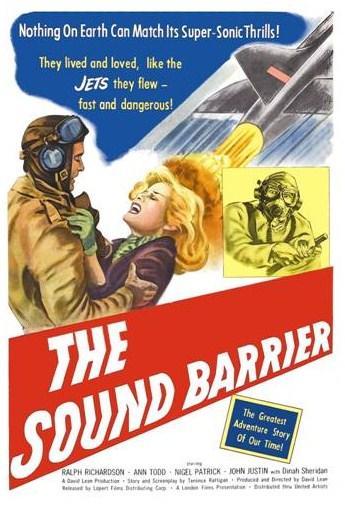
The Sound Barrier (1952)

Sound barrier header
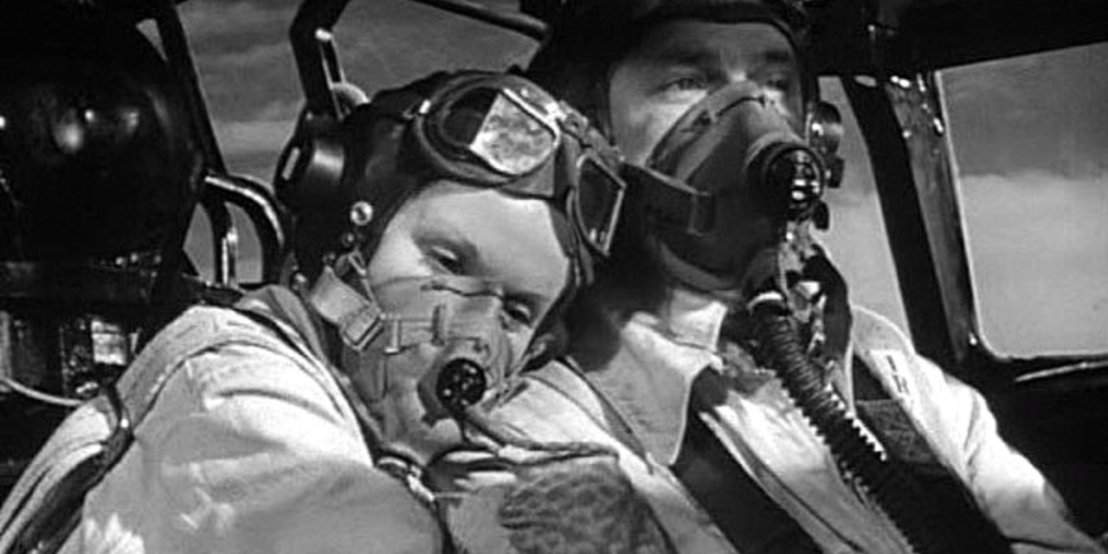
Ann Todd and Nigel Patrick on a dangerous mission to break The Sound Barrier

Director: David Lean

Cast: Ralph Richardson (John Ridgefield), Ann Todd (Susan Garthwaite), Nigel Patrick (Tony Garthwaite), John Justin (Philip Peel), Dinah Sheridan (Jess Peel), Joseph Tomelty (Will Sparks), Denholm Elliott (Christopher Ridgefield), Jack Allen (‘Windy’ Williams), Ralph Michael (Fletcher)

David Lean’s film career can be divided into two eras: his early films are British-based literary adaptations and family dramas, many of them front-and-centring the experiences and tribulations of women. The later era are the jaw-dropping epics he became best known for. The Sound Barrier is towards the end of the first era – and it’s almost a bridge between the two, an impressively filmed story of man’s triumph over nature, that sneaks under the wire an emotional family-in-crisis storyline, with a daughter suffering the damaging impact of her father’s obsession.

That father is John Ridgefield (Ralph Richardson), a famous aeronautical engineer and airline entrepreneur who, with the end of the war, returns to his fixation: discovering a way to make a plane fly so fast it breaks the sound barrier. It’s a vision that has dominated his life, but which his daughter Susan (Ann Todd) finds hard to understand. John is a domineering, demanding father, whose son Christopher (Denholm Elliott) gets himself killed trying to qualify as a pilot to win his father’s respect. In his place, Susan’s husband Tony (Nigel Patrick), a test pilot, is claimed by John as a surrogate son and equally pushed to risk all to try and fly faster than sound.

Lean’s film is a wonderful mix of post-war military-based exploits and stiff-upper lip exploration of family dynamics, where resentments and passions go unspoken but shape everything. With a superb script by Terence Rattigan, whose work is filled with monomaniacs like Ridgefield and sympathetic and emotionally intelligent women like Susan, The Sound Barrier might seem like a celebration of British pluck (it hardly matters that we Brits didn’t actually break the sound barrier first – no mention of Chuck Yaeger here…), with some stunning aerial photography. But it’s a lot more than that.

What’s fascinating about The Sound Barrier – and what makes it such a rewarding watch – is how much it questions the value of these sort of quests. The film’s focus is less on the engineering struggles and the bravery of the pilots (compare and contrast this film with the more straightforwardly triumphant The Dam Busters), and more on the human cost of obsession and this sort of adrenalin-fuelled airborne machismo.

The Ridgefield family has been damaged almost beyond repair – under their wealth and comfort – by their father’s demanding perfectionism. Ralph Richardson is superb as this bluntly-spoken man who sees no reason to sugar coat anything or hide any disappointment. The character has more than a hint of a Gradgrind of engineering – and just like Hard Times patriarch, his well-intentioned but misguided parenting has distorted both his children.

His hero-worshipping son Christopher (a wonderfully fragile and charming Denholm Elliott) pushes himself through chronic air-sickness to lay down his life trying to follow in his father’s footsteps (John greets his death with a sad criticism of his flying skills and goes back to work with his jet-plane models straight after the funeral). Susan has a cold relationship with her father (strikingly she calls him Father while everyone else – even her husband Tony – calls him Dad), and can’t understand why all this goal is worth sacrificing lives and any chance of simple domestic happiness. Her father’s coldness and distance from his children – not to mention his obvious and continual disappointment that she was born a girl – has led her to treat him with respect but not love.

It’s a dynamic completely missed by her husband Tony, played here with a bluff simplicity by Nigel Patrick. But then it’s pretty clear that this risk-taking pilot is quite simply not that bright. His lack of independent thinking is even identified by engineer Will Sparks (a ‘sparkling’ performance of avuncular surrogate fatherdom by Joseph Tomelty) as his major weakness as a test pilot. Tony has no idea of his wife’s concerns or emotional problems with her father, and instead quickly gets sucked into filling the role of “son I never had” for John. But then Tony has everything John wants – the flying skills Christopher never had without the questioning independence of Susan. He’s exactly the sort of weak-willed would-be-hero who can be quickly sucked into taking huge risks.

The film’s sympathies though are with Susan, played with a real warmth tinged with a sad expectation for disaster by Ann Todd, whose presence slowly grows to dominate the film. She can’t understand why it is necessary to risk all for this nebulous goal: it’s a refrain she repeats throughout the film “I wish I knew, I really wish I knew”. We’ve just gone through a second calamitous war – why are we throwing our lives away for a concept? Why should her husband put himself at huge risk like this for a brief mention in the history books and nothing else? Why not be content with a happy family life and living to see his son? Not to mention that the film proves her right – the nice-but-dim Tony isn’t good test pilot material and Susan’s new family is destroyed just like her old one.

At first it might seem that Todd’s character is the stay-at-home “don’t go Darling” type, but the film increasingly shows the validity of her doubts. There is a slightly toxic “carry on” Englishness about Tony and her father. Obsession is shown to drive out all over considerations – and Richardson has a late scene that carefully but brilliantly demonstrates how it has left him isolated and alone. It’s telling the barrier is finally broken by devoted husband and father Philip (a very decent John Justin), who is aware of the danger and has the most settled family life of the lot (and who greets his triumph with tears of relief rather than cheers).

The Sound Barrier could have easily been a “Britain triumphs in the skies!” with soaring music and heroic filming. Instead, it demonstrates the danger of obsession and the damaging impact it can have on people and their families. It concentrates not on the men in the sky, but increasingly the potential widows on the ground, forced to acknowledge that life with the family is less important than the chance of glory. It’s a rich and emotionally intelligent film, very well directed by Lean with warmth and humanity and with three terrific actors leading from the front.

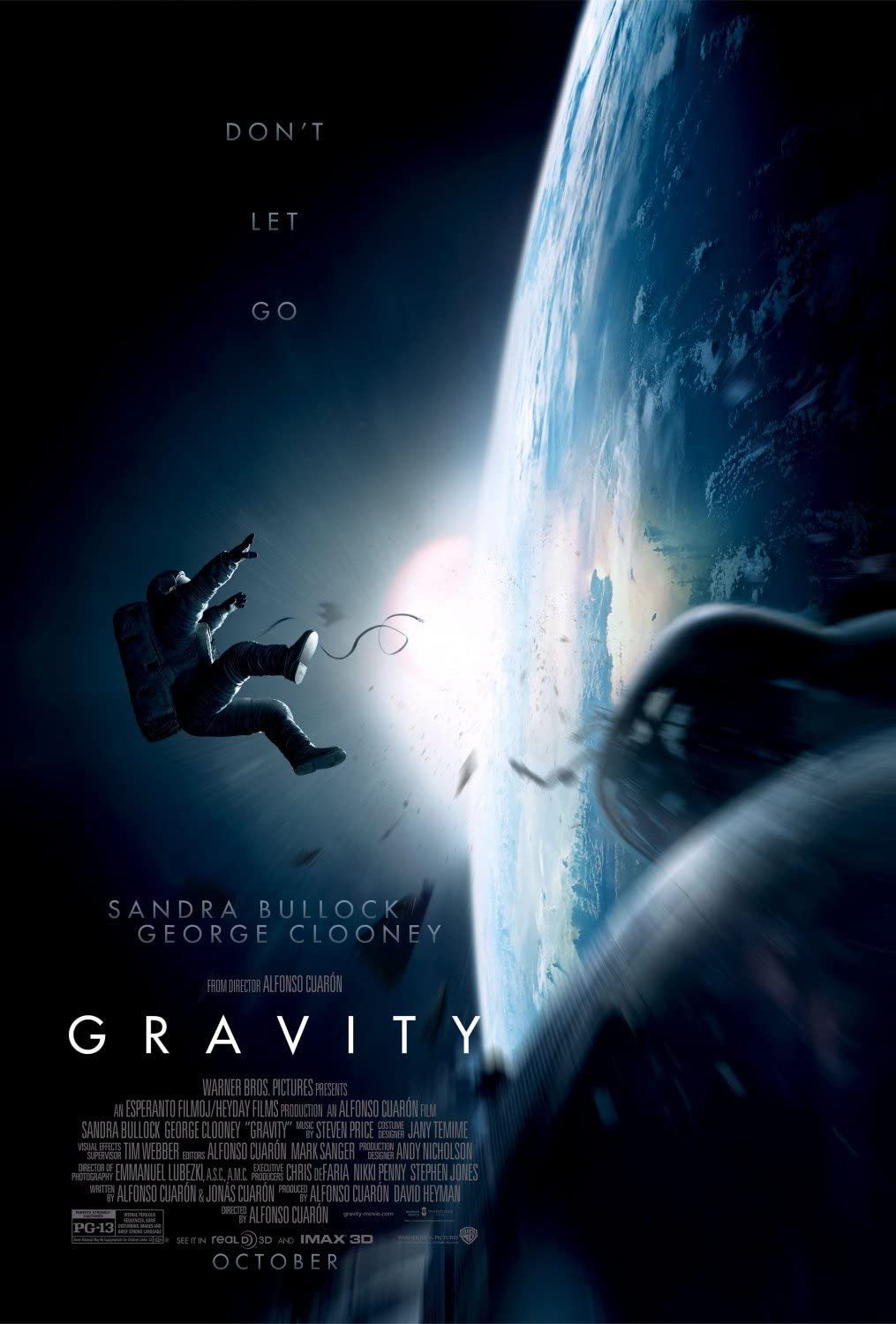
Gravity (2013)

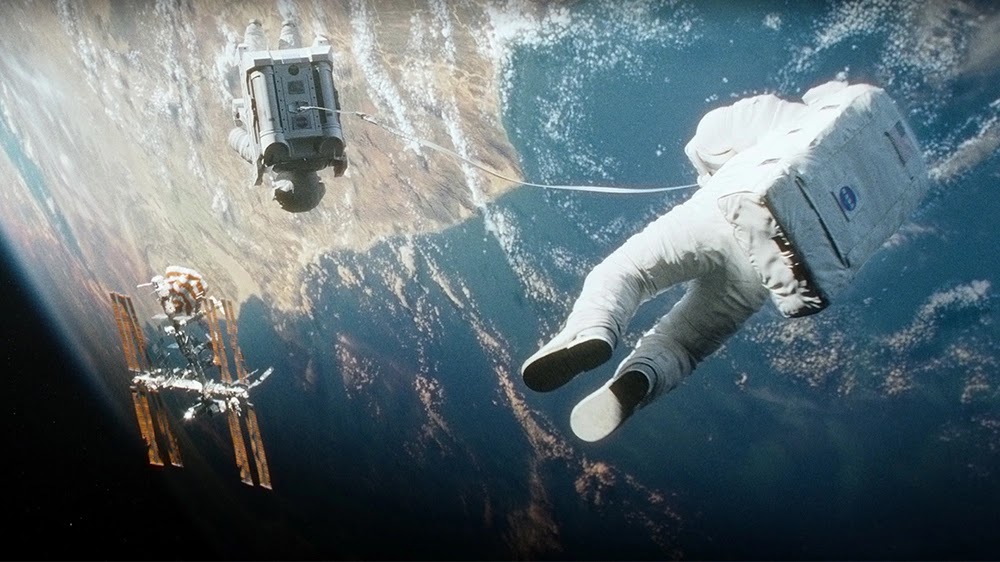
Sandra Bullock is stranded in space in Gravity

Director: Alfonso Cuarón

Cast: Sandra Bullock (Ryan Stone), George Clooney (Matt Kowalski), Ed Harris (Voice of Mission Control)

It’s often been said space is mankind’s final frontier. It’s beautiful and awe-inspiring. But it’s also a terrible place, a void where the normal rules that dictate how our bodies operate are completely suspended. We can only breathe what we carry with us and the lack of any atmosphere or gravity means a few metres might as well be a million miles. It’s in many ways the perfect conditions for a survival film – which, at its heart, is what Gravity is.

On a mission in space to repair the Hubble telescope, a collapsed satellite triggers a chain reaction of space debris hurtling in orbit at extreme velocities. Turned into a vast number of deadly bullets flying completing an orbit once every 90 minutes. This shrapnel destroys the mission, leaving specialist Dr Ryan Stone (Sandra Bullock) and mission commander Matt Kowalski (George Clooney) as the only survivors – and left with their only chance of return to Earth being to travel somehow to one of the other space stations in orbit and hitch a ride home on one of their escape pods.

Cuarón’s film is an engrossing and edge-of-the-seat 90 minute thrill ride, combined with a quietly meditative reflection on how our internal pain can make us drift through life. The film is titled Gravity but it’s there to draw attention to what is missing in the film. Not only the obvious – the lack of pull on her body – but also the lack of grounding in Stone herself. In mourning for the loss of a child, Stone has very little ties to earth or indeed anything. She is drifting through her life emotionally, much as she drifts through space itself. When asked why she likes it up in space, she replies “the silence”. She’s a woman untethered from life on earth in more ways than one.

So this is a film that is not just a survival but also a rebirth. We see Stone go through immense, dangerous moments of tension and terror, battling against all the odds to survive and return home. At the same time, the film carries an emotional weight because it’s also about Stone making a conscious decision to survive, to decide to re-engage with and commit to the world – to choose life if you like. Someone suffering from grief and depression as she does at the start of the film, may well have understandably embraced despair. Instead, the film is her coming to terms with the loss of her daughter, and a resolve to live her life for her.

All of this happens of course in the vast majesty of space, a vision beautifully captured by Cuarón. Filmed in an immersive style, with several long takes that don’t draw attention to themselves – a shot length that serves the purpose of the story not vice versa – and Cuarón is happy to use quicker cuts where needed. The camera follows the journey of Stone in epic and intimate detail, with shots exchanged between vast panamas of the astronauts as dots in space, to extreme close ups that bore into Stone’s eyes and capture her emotions from guilt, to hope, to terror. 

The long opening shot, that ducks and weaves around the weighless astronauts in space as they repair the Hubble telescope is of course a technical marvel, but it also brilliantly established the situation and the joy and fear of being an astronaut, of being allowing in the darkness and emptiness of space. It sets the scene perfectly from later shots that throw you into the adrenalin burning terror of spinning wildly in space with no resistance to slow you down or dodging debris moving at thousands of kilometres per second through space.

In fact the film is almost unbelievably tense – probably the most tense space film since Apollo 13 and in that we actually knew they were coming home alive (in a nice nod to that film, Ed Harris ‘reprises’ his role as mission controller in a voice-only cameo). With its brilliant immersive style, and the emotional bond it swiftly builds with the viewer, it means you will find you hardly draw breath along with the heroes. I’ve seen the film three times and each time after the first viewing I was sure it wouldn’t have the impact the first viewing had. But goddamn it, it works every time. The film is quick – at little under 90 mins – but you won’t feel it (in fact if anything you might be relieved).

Cuarón won the Oscar for direction, and the film is not just a load of flash and technical marvel (although it has a lot of both). It’s grounded in a very simple emotional story of survival, matched with an internal story (not overplayed) of resolving and dealing with grief. A lot of that works from the effectively unflashy performance from Sandra Bullock, who is very good in a part that requires not just physical but also emotional commitment. She’s well supported by George Clooney, who is perfect as the charming but calm and controlled mission commander who mentors her through the early stages of survival in space.

The film has a series of breathtaking set pieces – collapsing Hubbles, spinning astronauts in space, desperate space walks trying to grab any inch of objects to stop them drifting into space, collapsing space stations, burning up on re-entry – all of them shot with an elegance that marries technical excellence and dazzling camerawork and vision with a powerful story. A bag of tricks but one that is delivered with real heart.

The Theory of Everything (2014)

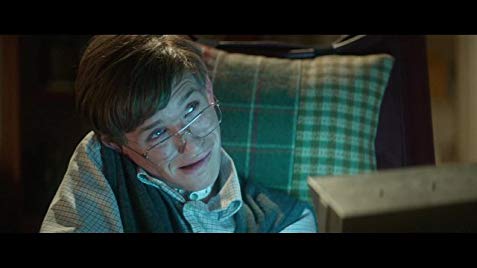
Felicity Jones and  Eddie Redmayne bring to the screen the life of Stephen Hawking

Director: James Marsh

Cast: Eddie Redmayne (Stephen Hawking), Felicity Jones (Jane Hawking), Charlie Cox (Jonathan Jones), David Thewlis (Dennis Sciama), Simon McBurney (Frank Hawking), Emily Watson (Beryl Wilde), Maxine Peake (Elaine Mason), Harry Lloyd (Brian), Guy Oliver-Watts (George Wilde), Abigail Cruttenden (Isobel Hawking), Christian McKay (Roger Penrose), Enzo Cilenti (Kip Thorne)

If you want a story of a triumph over adversity, there are few where adversity was faced off so successfully and publicly than the life of Stephen Hawking. Diagnosed with motor-neurone disease while still a postgraduate, Hawing defied the diagnosis that gave him little more than a few years to live, to shape a life and career that would have a profound impact on the world and make him probably the most famous scientist alive. Not bad for a man who spent a large part of his life confined to a wheelchair, only able to communicate through a synthesised computer voice.

But his life was not just a story where he was the only character. Many of his accomplishments came about because of the unflagging support of his wife Jane. This film takes as its source the book Jane wrote about their life together. And while it arguably sugar-coats or plays down some of the more uncomfortable or divisive elements of their marriage (a marriage that was eventually to end in divorce and several years where they did not speak), it also serves as a warm tribute to the many years they spent together where their support for each other was total and offered with no agenda or demands.

Here in James Marsh’s inventive and well-made film, which manages to more-or-less transcend its “movie of the week” roots, Hawking and Jane are played by Eddie Redmayne and Felicity Jones in performances that scooped an Oscar and a nomination respectively. Both are deserved, as these are rich, dedicated and empathetic performances, crammed with admiration for their subjects. It all fits perfectly well in Marsh’s moving if (at times) rather conventional film, which he directs with a lack of flash and plenty of heart. 

It’s a film that sometimes avoids delving too deeply into the emotional heartlands of its lead characters, and the frequently messy situations that life throws you into (the end of this relationship comes with a remarkably calm sadness, which contrasts heavily with the furious argument Jane describes in her book). It’s also a film that has a very clear agenda of framing Jane as a near saint in her devotion and patience, and Stephen as a brave soul with a superhuman perseverance and regard for his wife. So the introduction of choir leader Jonathan Jones (played with a sweet charm by Charlie Cox) into their domestic life as a surrogate father to the Hawking children and friend to Jane (very definitely not a lover, the film is eager to make clear) is very much something accepted by both without a hint of doubt or recrimination. Similarly, Hawking’s later divorce of Jane is set in a context of “setting her free” rather than the more (allegedly) definitive break it was in real life.

Real life, you suspect, was messier than this. The film does mine some excellent emotional honesty from Jane’s decision to marry Stephen being, at least partly, based on her belief that this man she loves only has a few years to live. From the start she doesn’t anticipate signing up for a lifetime of providing care and abandoning her own aspirations to support Stephen’s (the film makes no real mention of her own dreams of becoming a translator) – but Jane does so with a decided willingness and sense of duty. Similarly, Stephen does not anticipate a life essentially trapped in a wheelchair – finally speechless – and the film allows beats of frustration from him, alongside the determination to not let these problems prevent him from achieving his potential.

The film revolves around Eddie Redmayne’s performance as Hawking. Needless to say it’s a technical marvel, a stunning accomplishment not only in its physical mastery (especially as it was all shot out of sequence, so in each scene Redmayne needed to carefully map how far the symptoms had progressed) and commitment, but also in its searing emotionality. Hawking’s brightness, his bashful playfulness, his intelligence and sense of cheeky charm are all there – and they’re later married with a pained, just-controlled bitterness mixed with stern mouthed resentment and gutsy determination to deal with the hand he has been given. Redmayne’s performance is a superb capturing of the all-consuming feelings of being betrayed by your own body, of no longer being the master of your own frame and being forced to adjust your plans and expectations to meet the limits nature has put on you.

Felicity Jones is equally good in a superbly heartfelt performance as Jane, a woman who gifts Stephen the determination and will to see past the limits the disease places on him. But it’s also a performance that acknowledges the draining burden of having to support someone this ill, of having to constantly be the strong member of the marriage, the one who must always be as ready to save her husband from choking at dinner as she must be to drop everything and fly across Europe to take life-saving medical decisions about him. Jones’ performance never slips into self-pity, but mines a rich vein of willing sacrifice powered by love.

Marsh’s film is largely unflinching around the everyday miseries and sorrow of the terminally ill and restrictingly disabled. We are confronted in every scene with the limits that Hawking’s body places upon him, from deteriorating handwriting and clumsiness to the loss of all speech and movement. This progression is presented with a detail uncoloured by maudlin sentimentality. Doctors are sympathetic but bluntly clear about the dangers and risks of treatment, each adversity is met with a quiet determination to carry on.

The Theory of Everything is a heart-warming watch – and features two superb performances. The portrait of a marriage that works, for the most part of their lives together, despite all obstacles is inspiring. While the film glosses over well-publicised issues over the end of the relationship – and perhaps downplays the emotional strains on both towards its end – it still succeeds in making a largely unsentimental picture of a genius who overcame all, and the brave woman who gave him the dedication he needed to do it.

The Aeronauts (2019)

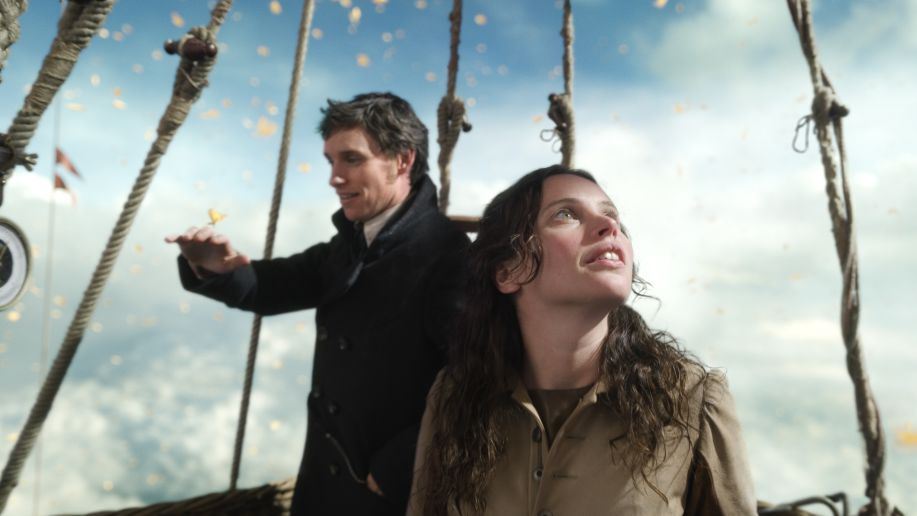
Redmayne and Jones go up, up and away in The Aeronauts

Director: Tom Harper

Cast: Felicity Jones (Amelia Rennes), Eddie Redmayne (James Glaisher), Himesh Patel (John Trew), Tom Courtenay (Arthur Glaisher), Phoebe Fox (Antonia), Vincent Perez (Pierre Wren), Anne Reid (Ethel Glaisher), Rebecca Front (Aunt Frances), Tim McInnerny (Sir George Airy), Robert Glenister (Ned Chambers), Thomas Arnold (Charles Green)

When you have found two actors with such natural and easy chemistry as Felicity Jones and Eddie Redmayne, it makes sense that you would seek other projects for them to star together in. Let’s try and recapture that Theory of Everything magic in the bottle! The Aeronauts brings these two actors back together, but the law of diminishing returns applies in this impressively mounted but rather uninvolving epic that has more in common with Gravity that it does Theory of Everything.

James Glaisher (Eddie Redmayne) is a scientist, one of the first meteorologists, determined to prove that man can predict the weather. While his theories are laughed at by fellow members of the Royal Society, Glaisher raises the cash for a private balloon trip to the heavens to take meteorological readings. But he needs a pilot: who better than Amelia Rennes (Felicity Jones) a famous balloonist and show-woman, the widow of a fellow balloonist (Vincent Perez) who fell to his death in an attempt to break the record ascent. Will the two mismatched aeronauts – the uptight scientist and the freespirit with tragedy at her core – reach an understanding amongst the clouds?

If you got the sense that the story of the film is rather predictable from that paragraph well… you’d be right. It’s the sort of film that has bookend scenes: an early one where our hero desperately tries to make himself heard during a speech at the Royal Society while his colleagues walk out in contemptuous laughter, and then another near the end with the same hero being applauded to the rafters by those same colleagues. Even his harshest critic claps politely – because it’s that sort of film. Meanwhile our other hero overcomes her survivor guilt by heading into the skies. Whenever the story, written by workaholic Jack Thorne, focuses on these personal stories, the film falters into cliché and dull predictability.

It’s told mostly in real time, following the just over 1 hour and 40 minutes of the pair’s ascent in the balloon, with flashbacks to their first meeting and their own backstories plugging the gaps in conversation. No major revelations happen in these flashback sequences, and a host of respected actors go through the motions, filling in the paint-by-numbers stories of bereavement, scientific isolation, an inspirational father with early onset dementia, and pressures to just conform to what women are expected to do. The two leads do their very best to animate these rather dull and tired plotlines but with very little success.

In fact, both actors are largely struggling the whole time to add breadth and depth to thinly sketched characters. Tom Harper leans heavily on their pre-existing chemistry and there is certainly very little in the characters to challenge them, particularly Redmayne who can play these stiff-necked, all-business, shy science types standing on his head. Felicity Jones has by far the better part as a natural adventuress who has locked herself in isolation and guilt (and in a dress) due to her guilt at her husband’s death. Jones gets the best material – and also the best vertigo inducing action sequences – in a film that is most successful when it is far away from the ground.

Harper’s film is by far at its most interesting when extreme altitudes, cold temperatures and reduced oxygen induce crisis in the balloon’s ascent. As Amelia has to go to extreme and dangerous lengths in order to force the balloon to begin its descent, the film finally comes to life. With several terrifying shots of the huge drop to the ground (they certainly made me squirm in my seat) and a compelling feat of bravery and physical endurance to force the balloon to start releasing gas (combined with some horrifyingly close slips and falls) the film works best from this moment of crisis, through to the hurried and panicked attempt of both aeronauts to control the descent of the balloon safely to the ground. The sense of two people struggling with the very outer reaches of mankind’s connection to the Earth – and their terrifying distance from the safety of the ground – really brings Gravity to mind far more than any other film.

It’s a shame then that I came away from the film to find most of it is not true. Glaisher did take to the skies – but with a male companion, Henry Coxwell. Amelia Rennes never existed (and most of the events in the sky never happened), although she is heavily based on a real female aeronaut and professional balloonist who had no connection with Glaisher or science. It shouldn’t really matter, but it kind of does as the film doubles down on Glaisher’s tribute to Rennes at the Roya Society and its general attitude of female pioneers in science. As one critic said: there were genuine pioneering women in science, why not make a film about one of them?

But it’s an only a minor problem really for a film that is impressively made when it is in the air, but dull and uninvolving when it is on the ground. At heart it’s an experience film – you can imagine as one of those immersive rides at Disney it would be amazing – but as a piece of storytelling it’s dull, predictable and uninvolving and largely fails to make the science that was supposed to be at the heart of it clear or significant. Jones and Redmayne do their best but this story never really takes flight (boom boom toosh).

The Dam Busters (1955)

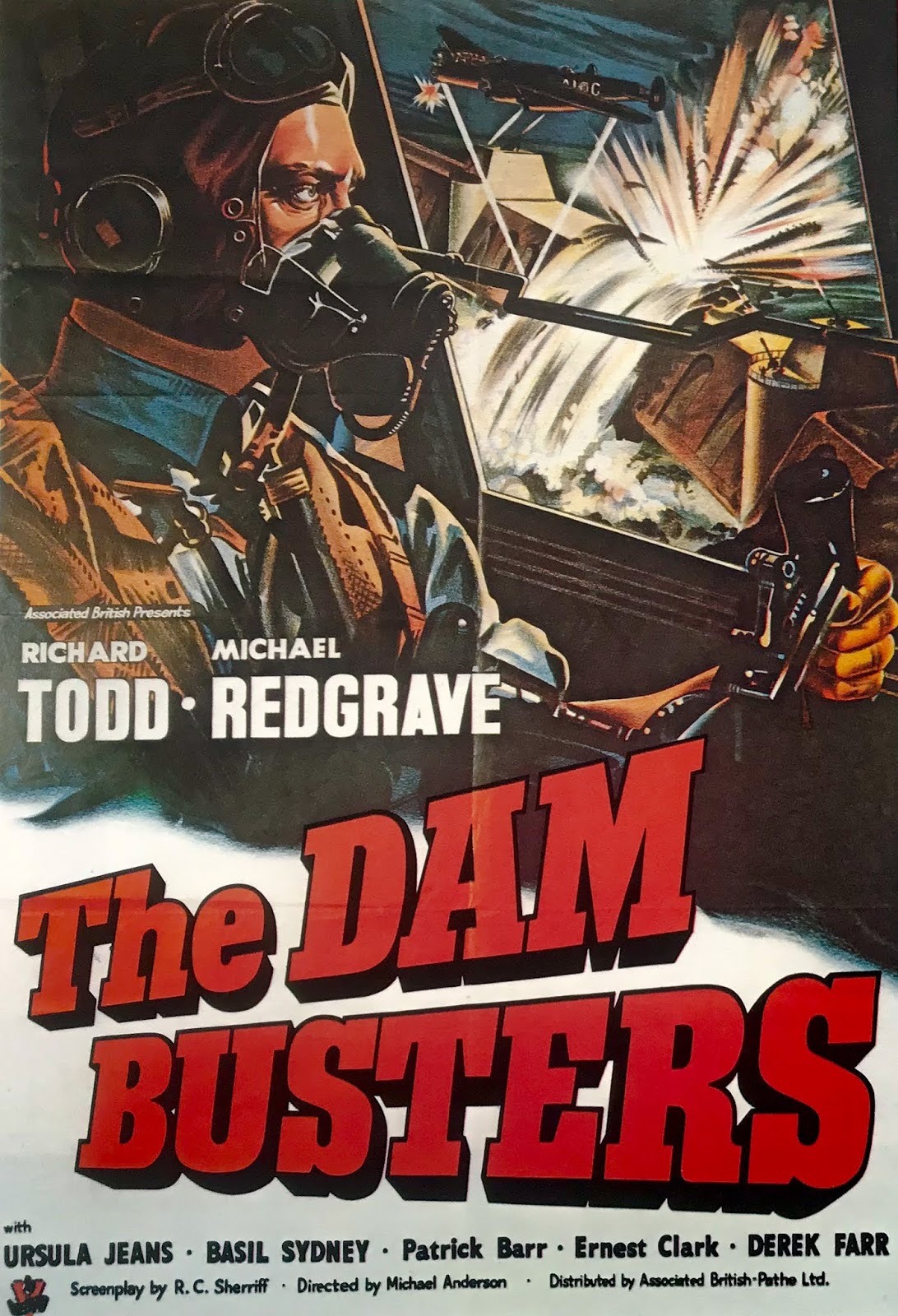
Richard Todd leads the most famous bombing raid ever in The Dam Busters

Director: Michael Anderson

Cast: Richard Todd (Wing Commander Guy Gibson), Michael Redgrave (Barnes Wallis), Ursula Jeans (Mrs Molly Wallis), Basil Sydney (Air Chief Marshal Sir Arthur Harris), Patrick Barr (Captain Joseph “Mutt” Summers), Ernest Clark (Air Vice-Marshal Ralph Cochrane), Derek Farr (Group Captain John Whitworth)

It’s famous for its stirring theme. Those bouncing bombs. The fact that George Lucas, while still completing the special effects, spliced in the final bombing runs into his first cut of Star Wars. But where does The Dam Busters sit today as a film? 

In 1942, aeronautical engineer Barnes Wallis (Michael Redgrave) is working on a plan to take out the German dams on the Ruhr, a strike that could cripple German heavy industry. Conventional bombs can never cause enough damage, and the dams are protected from torpedo attack. So Wallis has a crazy idea – to build a bouncing bomb that will skim the top of the water, hitting the dam, with its top spin taking it down to the base of the dam for detonation. It’s a crazy idea – but it finally wins favour, with Wing Commander Guy Gibson (played by real-life World War II paratroop veteran Richard Todd) given command over an operation that promises to be risky and dangerous beyond belief.

The Dam Busters doesn’t really have much in the way of plot, being instead a rather straight-forward, even dry in places, run through of the mechanics involved in planning the operation and overcoming the engineering difficulties that stood in the way of the operation. Throw into that our heroes overcoming the various barriers and administrative hiccups put in the way by the authorities and you have a pretty standard story of British pluck and ingenuity coming up with a left-field solution that saves the day. (Though Barnes Wallis denied he faced any bureaucratic opposition like the type his fictional counterpart struggled with for most of the first forty minutes).

Of course, the film is also yet another advert for the “special nature” of the British under fire, a national sense of inherent destiny and ingenuity that has frequently done as much harm as good. Made in co-operation with the RAF, it’s also a striking tribute to the stiff-upper-lipped bravery of the RAF during the war, and the sense of sacrifice involved in flying these deadly missions.  

In fact it’s striking that the film’s final few notes are not of triumph after the completion of the operation, and the destruction of the two dams, but instead the grim burden of surviving. After 56 men have been killed on the mission, Barnes Wallis regrets even coming up with the idea. The final action we see Gibson performing is walking quietly back to his office to write letters to the families. Anderson’s camera pans over the empty breakfast table, set for pilots who have not returned, and then over the abandoned belongings of the dead still left exactly where they last placed them. It’s sombre, sad and reflective – and probably the most adult moment of the film.

Because other than that, it’s a jolly charge around solving problems with a combination of Blue Peter invention, mixed with a sort of Top Gear can-do spirit. Michael Redgrave is very good as the calm, professorial, dedicated Barnes Wallis, constantly returning to the drawing board with a reserved, eccentric resignation to fix yet another prototype. The sequences showing the engineering problems being met and overcome are interesting and told with a quirky charm that makes them perhaps one of the best examples of such things made in film. 

The material covering the building of the flight team is far duller by comparison, despite a vast array of soon-to-be-more-famous actors (George Baker, Nigel Stock, Robert Shaw etc.) doing their very best “the few” performances. Basically, generally watching a series of pilots working out the altitude they need to fly at in training situations is just not as interesting as watching the boffins figure out how to make the impossible possible.

The flight parts of the film really come into their own in the final act that covers the operation itself. An impressive display of special effects at the time (even if they look a bit dated now), the attack is dramatic, stirring and also costly (the film allows beats of tragedy as assorted crews are killed over the course of the mission). The attack is brilliantly constructed and shot by Michael Anderson, and very accurate to the process of the actual operation, in a way that fits in with the air of tribute that hangs around the whole film.

All this reverence to those carrying means that we overlook completely the lasting impact of the mission. “Bomber” Harris (here played with a solid gruffness by Basil Sydney) later considered the entire operation a waste of time, money and resources. Barnes Wallis begged for a follow-up to hammer home the advantage, but it never happened. The Germans soon restored their economic capability in the Ruhr. Similarly, today it’s more acknowledged the attack killed over 600 civilians and over 1000 Russian POWs working as slave labour in the Ruhr. Such things are of course ignored – the film even throws in a moment of watching German workers flee to safety from a flooding factory floor, to avoid showing any deaths on the ground.

And of course, the film is also (unluckily) infamous for the name of Gibson’s dog. I won’t mention the name, but when I say the dog is black and ask you to think of the worst possible word to use as its name and you’ve got it. It does mean the word gets bandied about a fair bit, not least when it is used as a code-word for a successful strike against the dam. Try and tune it out.

The Dam Busters is a solid and impressive piece of film-making, even if it is low on plot and more high on documentary ticking-off of facts. But it’s also reverential, a little dry and dated and avoids looking at anything involved in the mission with anything approaching a critical eye. With its unquestioning praise for “the British way”, it’s also a film that reassures those watching it that there is no need for real analysis and insight into the state of our nation, but instead that we should buckle down and trust in the divine guiding hand that always pulls Britain’s irons out of the fire.

First Man (2018)

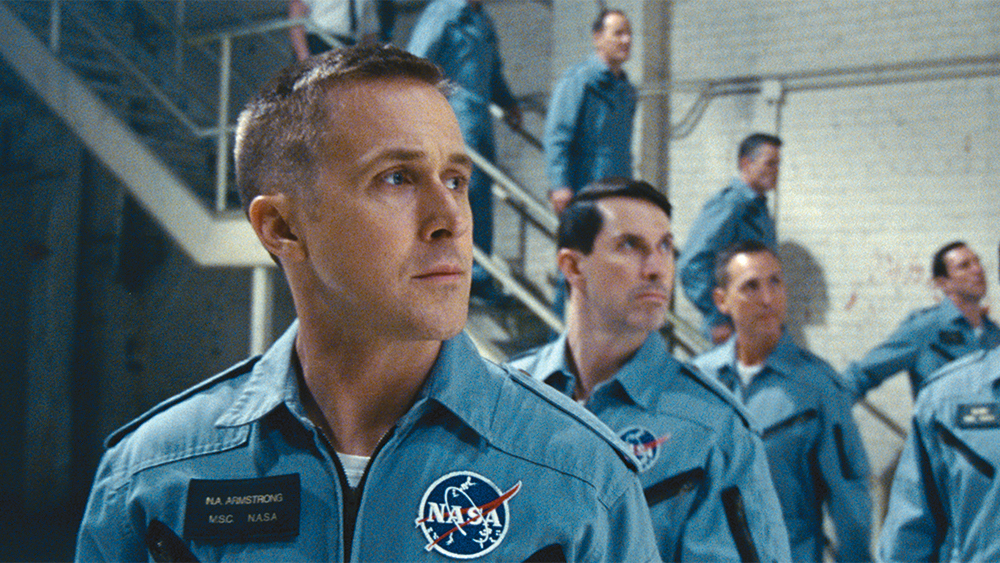
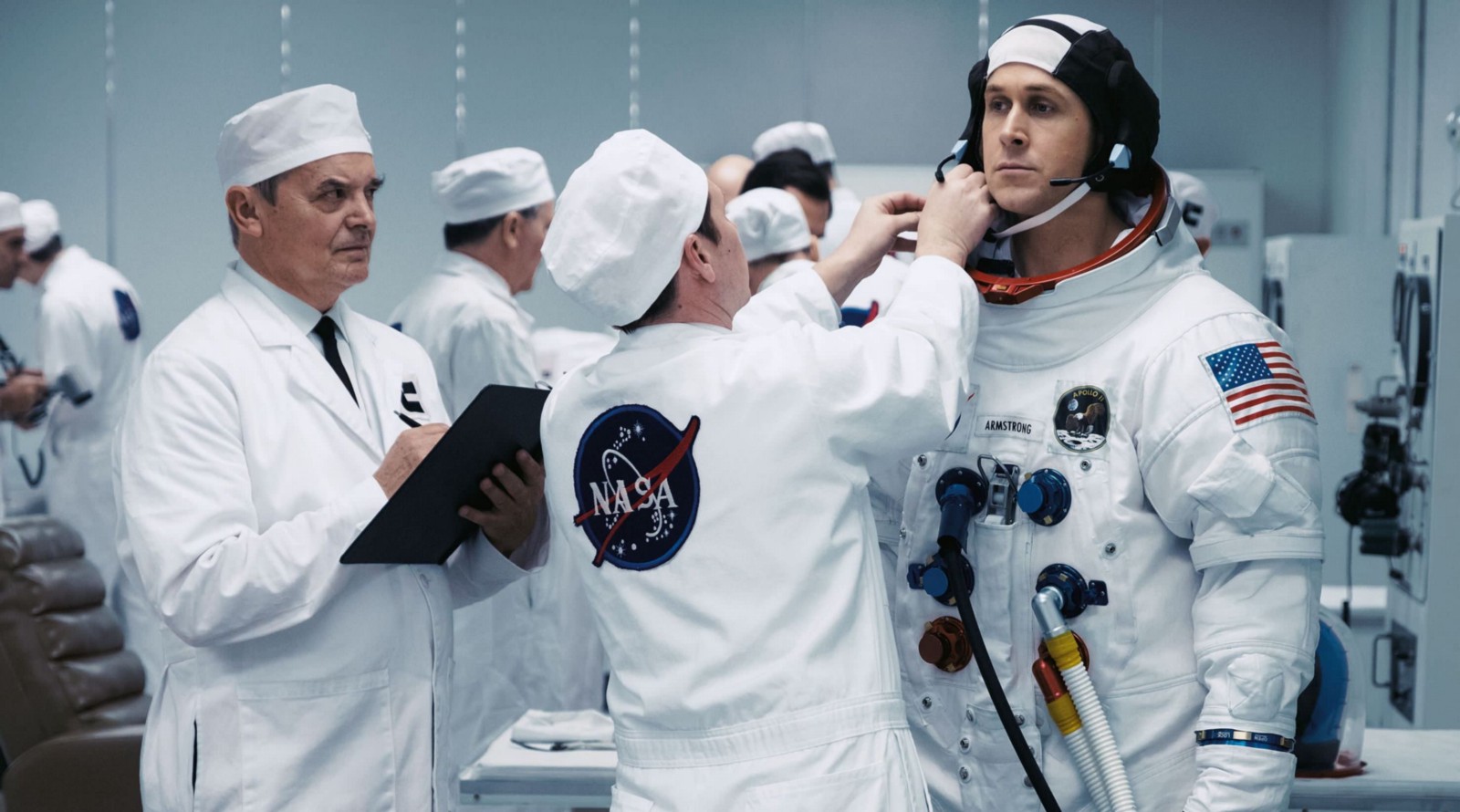
Ryan Gosling as an unreadable Neil Armstrong in the engrossing but cold First Man

Director: Damien Chazelle

Cast: Ryan Gosling (Neil Armstrong), Claire Foy (Janet Armstrong), Jason Clarke (Ed White), Kyle Chandler (Deke Slayton), Corey Stoll (Buzz Aldrin), Pablo Schreiber (Jim Lovell), Christopher Abbott (David Scott), Patrick Fugit (Elliot See), Lukas Haas (Michael Collins), Shea Whigham (Gus Grissom), Brian d’Arcy James (Joseph Walker), Cory Michael Smith (Roger Chaffee), Ciaran Hinds (Robert R Gilruth)

About halfway through this film, it struck me: Neil Armstrong is a not particularly interesting man who experienced the most interesting thing ever. It’s a problem that First Man, an otherwise exemplary film, struggles with: Armstrong himself, put bluntly, is unknowable, undefinable and, in the end, an enigma I’m not sure there is much to unwrap. Which is not to detract one iota from Armstrong’s amazing achievements, or his legendary calmness under pressure or his courage and perseverance. It just doesn’t always make for good storytelling.

First Man charts the years 1961-1969. During these years of professional triumph, Armstrong has success as test pilot, an astronaut on the Gemini programme (including command of Gemini 8, carrying out the first docking in space then saving his own life and the life of his pilot with his quick thinking when the mission nearly encounters disaster) and then the Apollo programme and his own first steps upon the moon. But Armstrong’s life is dogged by loss and tragedy, first his five-year old daughter to cancer, then a string of friends in accidents during the hazardous early days of the NASA space programme, including the deaths of Gus Grissom, Ed White and Roger Chaffee in the Apollo 1 fire. Armstrong becomes a man burdened with these losses.

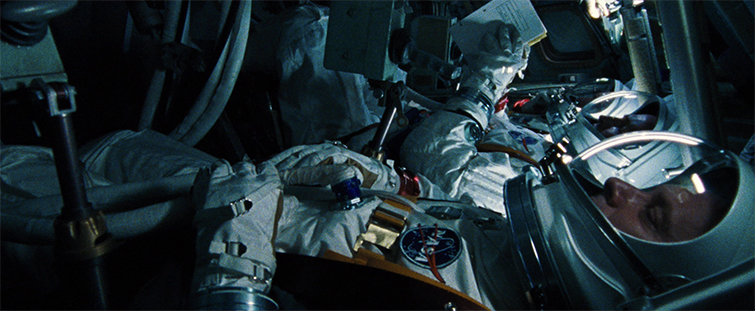
There is very little to fault in the making of First Man – in fact it’s further evidence that Chazelle is a gifted filmmaker with a glittering future of great movies ahead. There are two things this film absolutely nails: the supreme majesty and awe of space and the terrifyingly rickety nature of the spacecraft we send men up into it in. 

Helped hugely by a superb score by Justin Hurwitz, which makes extensive and beautiful use of a theremin, the film captures the sense of mankind’s smallness, our vulnerability, in the face of the overwhelming vastness of space. Mixing goose-bump inducing wailing solos with orchestral sweep, and encapsulating the feeling of how small and lonely man in space is, the score goes a long way to match up with the visuals in creating a sense of space. The Oscar-winning visual effects – mixing computer graphics with some ingenious practical effects – never intrude but bring out the gritty reality of tin cans in space. 

Chazelle also really understands the impact of being so far beyond anything we can imagine, and his moon landing sequence is a thing of beauty. He expertly uses a number of close ups in the confined, claustrophobic campaign and largely eschews exterior shots (most of which only use the perspective of the crew’s view from the tiny windows, or of the cameras mounted on the side of the spacecraft). The moon landing follows suit, as we are thrown in alongside Armstrong and Aldrin as the lunar landing module takes its place on the moon – until the hatch opens with a whoosh of air (and sound) escaping the picture. And with that whoosh, the camera flies out of the hatch and switches – in an astonishing visual trick – from wide screen to IMAX shot to give us our first view of the vastness of space filling the frame. Suddenly, space fills the entire screen and the shocking beauty of the moon is a beautiful touch. We get as close as we can visually to experiencing the switch for Armstrong from confined spaces and beeping switches to vast panoramas and all-consuming silence.

And we really feel the switch, because Chazelle has so completely immersed us into the dangers and insecurities of the space programme. The spacecraft are repeatedly shown as alarmingly shaky, screwed together (the camera frequently pans along lines of bolts inside the cabins), thin, tiny, vulnerable capsules that shake, groan, whine and seem barely able to survive the stresses and strains they are put under. Any doubts about the risks the astronauts are under are dispelled in the opening sequence when Armstrong’s X-15 rocket twice bounces off the atmosphere and the internal cockpit around him glows orange under the extreme heat. But it’s the same on every flight we see – these craft don’t look safe enough for a short hop to the Isle of Wight, let alone hundreds of thousands of miles to the moon and back.

And that’s clear as well from the danger that lurks around every corner of the space programme. Death is a constant companion for these pilots and can come at any time. Armstrong himself escapes only due to a combination of luck and skill. When luck disappears, death follows swiftly for many of his co-pilots. Off-screen crashes claim the lives of three of his friends. Chazelle sensitively handles the horrifying Apollo 1 fire (news reaches Armstrong of the death of several friends, including his closest Ed White, while wining and dining politicians at the White House), and the terrible cost of this tragedy hangs over every single second of the moon programme. Fate or chance at any moment could claim lives. This grim air of mortality hangs over the whole film, a melancholic reminder of the cost of going further and faster to expand mankind’s horizons.

This grief also runs through Armstrong’s life and shapes him into the man he becomes. The death of Armstrong’s daughter at the start of the film sets the tone – the shocking loss of a child at such a young age is tangible – and it seems (in the film) as if this was the moment that led to Armstrong hardening himself against the world. He weeps uncontrollably at the death of his daughter, but later deaths are met with stoic coolness. Armstrong in this film is a cool enigma, who by the end of the film treats concerned questions from his children about whether he will return alive from the moon mission with the same detachment he shows at the official NASA press conference. “We have every confidence in the mission” he tells these two pre-teens, “Any further questions?”

It’s the film’s main problem that in making Armstrong such an unreadable man, who buttons up and represses all emotion, that it also drains some of the drama and human interest from the story. While you can respect Armstrong’s professionalism and coolness under pressure, his icy unrelatability makes him hard to really root for over the course of two hours. The film also strangely only sketches in the vaguest of personalities for the other astronauts (Aldrin gets the most screentime, but is presented as an arrogant, insensitive blowhard) so we hardly feel the loss of the deaths. Its part of the attitude towards Armstrong as a man chiselled from marble, so lofty that the film doesn’t dare to really delve inside his own inner world or feelings but builds a careful front around him to avoid analysis.

It’s not helped by Ryan Gosling, whose skill for blankness makes him somewhat miscast here. Try as he might, he can’t suggest a deeper world of emotional torment below the calm surface, no matter how soulful his eyes. It’s a role you feel needed a British actor, who could really understand this culture of repressed stiff-upper-lipness. Indeed Claire Foy fares much better as his patient, loyal wife who holds her composure (more or less) for the whole film under the same pressures of grief as Armstrong. Gosling just can’t communicate this inner depth, and his blankness eventually begins to crush the film and our investment in its lead character.

First Man in almost every other respect is a great piece of film-making and another sign of Chazelle’s brilliance. But it’s never as dramatic as you feel it should be. Armstrong’s life doesn’t carry enough event outside his moon landing experience, and the film can’t make an emotional connection with the man, for all the loss and suffering it shows for him. For a film that is so close to so perfect on space and the Apollo programme it’s a shame – but makes this more a brilliant dramatized documentary than perhaps a drama.

The Man Who Knew Infinity (2015)


Dev Patel is mathematical genius Srinivasas Ramanujan, struggling against prejudice in The Man Who Knew Infinity

Director: Matthew Brown

Cast: Dev Patel (Srinivasas Ramanujan), Jeremy Irons (GH Hardy), Devika Bhise (Janaki), Toby Jones (John Edensor Littlewood), Stephen Fry (Sir Francis Spring), Jeremy Northam (Bertrand Russell), Kevin McNally (Percy MacMahon), Richard Johnson (Vice Master Henry Jackson), Anthony Calf (Howard), Padraic Delaney (Beglan), Shazad Latif (Chandra Mahalanobis)

The British Empire. It’s a difficult slice of British history, and it undoubtedly contributed to contemporary attitudes of superiority that affected British people and their institutions. It’s these attitudes that form the central themes of The Man Who Knew Infinity, an effective story of a struggle against the odds. 

In the early 1900s, Srinivasas Ramanujan (Dev Patel) works in Madras as a junior accountant – but his superiors quickly realise his mathematical abilities far outstrip his mundane tasks, and encourage him to write to mathematics professors to bring his theoretical work to their attention. Ramanujan starts a correspondence with GH Hardy (Jeremy Irons) of Trinity College, Cambridge, who invites him to England to explore his potential. Once there, Ramanujan quickly proves his genius but, despite Hardy’s support, he struggles to be accepted by the fellows and students of the college, who only see an upstart from the colonies.

The Man Who Knew Infinity is a conventionally structured biography – struggles personal and professional, success followed by setback and a final triumph combined with a bittersweet ending. It’s structurally nothing different from things you’ve seen before, but it’s told with calm, quiet, engrossing dedication, with unflashy direction, a solidly written script and some truly excellent acting. No wheel is reinvented, but it revolves with a highly enjoyable and heartfelt tenderness.

It’s a film that manages to present mathematics without using spurious real-world clunky metaphors, and gets a lovely feel for the hard work and theoretical study that go into mathematical theory. It also brilliantly communicates what the maths is about. I’m no theoretical mathematician (football stats are my limit) but even I could follow (just) why Ramanujan’s insights were so important and what they meant to the field of theoretical mathematics. The film has a real feel, not only for rhythms of academic work, but also the politics of academia (which needless to say are labyrinthine).

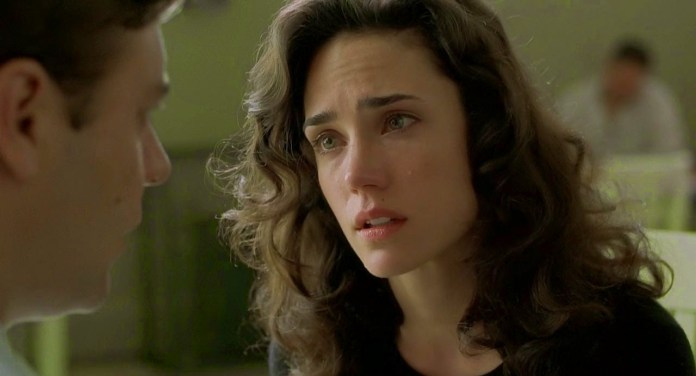
But the film’s main point is the resentment and outright racism Ramanujan must overcome. Played by Dev Patel with a quiet decency and modesty that only rarely bubbles over into bitterness, Ramanujan is constantly hit with everything from misunderstanding to contempt. His every achievement is met by questioning and doubt. His proofs must be demonstrated time and time again. To win the support and respect of his peers, he must constantly revise and revise his work, while the slightest slip is held up as proof his fraudulence or luck. 

If you do want to criticise the presentation of this, you could say that much of the campaigning and struggle for acceptance is championed by the establishment figure of Hardy – it’s he who does most to convert others, and who presents Ramanujan’s key theories to the Royal Society at the end. Stressing Ramanujan’s politeness and humbleness does have the downside of making him a slight passenger at times in his own movie.

But then it’s not just his movie, because this is a story of a deep, near romantic, bond that forms between the gentle Ramanujan and the shy and sensitive Hardy. Hardy, the film implies, was a man uncomfortable with emotional closeness, but he feels a huge bond with Ramanujan, having overcome similar class-based prejudice. The two men have a natural understanding, and support each other, finding themselves in perfect sync in their opinions on mathematics and their outlooks on life. In the nature of the British, nothing is ever said – but it’s clear that both men feel an intense personal connection that, quite possibly in Hardy’s case, mixes with a suppressed romantic yearning.


This relationship largely works so well because Jeremy Irons is quite simply fantastic as Hardy. Cast so often as superior types, here he gets to flex other parts of his arsenal as someone shy, timid, and sensitive. Hardy is so uncomfortable with personal friendships, he can rarely bring himself to look directly at other people. Irons sits on the edges of frames, or hunches and shrinks, his eyes permanently cast down. Saying that, he brings out the inner steel and determination in Hardy, his devotion as an advocate for Ramanujan. Irons is so shyly withdrawn, that the moments he allows emotional openness with Ramanujan, and most movingly with fellow mathematician Littlewood (played with a kindly good nature by Toby Jones), are wonderfully affecting. This might be one of Irons’ finest performances in his career.

The Man Who Knew Infinity is in many ways a conventional film, but performances like Irons’ lift it into something a little bit special. It’s a well-meaning and heartfelt film that embraces some fascinating concepts and also presents a story of triumph against adversity that feels genuinely moving and engaging. Filmically and narratively it’s very much by-numbers at times – but it hits those numbers so well, you’ll certainly have no complaints.