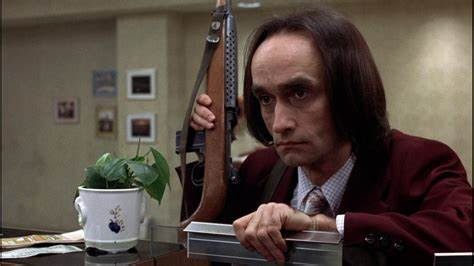
Category: Heist film

The Taking of Pelham 123 (1974)

The Taking of Pelham 123 (1974)

Effective thrills on a well made heist drama with some interesting social points to make

Director: Joseph Sargent

Cast: Walter Matthau (Lt. Zachary Garber), Robert Shaw (Mr. Blue), Martin Balsam (Mr. Green), Héctor Elizondo (Mr. Grey), Earl Hindman (Mr. Brown), James Broderick (Denny Doyle), Dick O’Neill (Correll), Lee Wallace (Mayor), Tony Roberts (Warren LaSalle), Jerry Stiller (Lt. Rico Patrone), Rudy Bond (Police Commissioner), Julius Harris (Inspector Daniels)

Colour coded crooks carry out a crime? Tarantino was clearly a fan of The Taking of Pelham 123. And who can blame him? This is exactly the sort of well-constructed, entertaining thriller Hollywood used to churn out so well. It even manages to mix its cunning crooks with more than a bit of cynical social commentary on the contemporary mess that was New York. It’s grimy, surprisingly hard-edged but with a lean slice of black humour: you can see why it’s a bit of a cult classic.

On the New York City subway, a gang of determined, efficient criminals take control of the front car of downtown train ‘Pelham 1-2-3’ (a train name now banned in New York due to copycat fears!). They are led by polite but utterly ruthless Mr Blue (Robert Shaw) and include nervous train-expert Mr Green (Martin Balsam), loyal Mr Brown (Earl Hindman) and trigger-happy Mr Grey (Hector Elizondo). Their demands are simple: $1million dollars (such humble ambitions these days!) in one hour, or they execute one of their 18 hostages every minute. And no negotiation, no matter how much City Transit Police cop Zachary Garber (Walter Matthau) might try over the radio. With the crooks seemingly having thought of everything, can Garber stop playing catch-up and work out their plan?

You only need to look at the popularity of Die Hard to see what guilty pleasure there is in fanatically prepared criminals trying to get away with it. The Taking of Pelham 123 has all of this. Blue’s team is professional, prepared and have anticipated everything. From calmly telling the passengers how futile any escape attempt would be, to anticipating every single action of the authorities, to delivering (with fatal results) on every one of their promises, these guys have the sort of competence we always sneakly admire in film. Match that with Mr Blue’s strangely samurai-like sense of honour (he’ll keep every deal he makes, despises anger and sadism and respects worthy opponents – even while he emotionlessly executes a hostage) and a bit of you will root for the criminals to get away with it. Right up to, of course, when they start to deliver on their fatal promises.

Of course, it helps that The Taking of Pelham 123 takes some intriguingly sharp pops at the forces ranged against the criminals. The mayor’s ineffectiveness is underlined by having him spend virtually the entire film in bed with a stinking cold. His decision about what to do hinges on how many votes he might get. He resents going to the scene, complaining he’ll get booed (guess what happens!) and is frequently brow-beaten by his more accomplished deputy. When he whines about where they are going to raise the money from (stop to remember for a second what a bankrupt, crime-ridden, mess New York was at the time) it’s even suggested (half-jokingly) he considers cleaning out one of his Swiss bank accounts. Around them many members of the police are heavy-handed, trigger-happy and frequently flustered by the relentless deadlines while the main representative of the train network sees the risk of 18 deaths as an irritating obstacle to an efficient transport system.

This has all been factored into the criminal’s plans. Ask for a big amount, but not so big that the authorities find it politically impossible to deliver. Give a deadline that is achievable but too short to allow anyone the time to make a plan. Count on the general disorganisation of the system being your best ally. Yup The Taking of Pelham 123 is a very 70s crime thriller, when cynical expectations about the efficiency and honesty of the authorities is crucial to the scheme!

Naturally, in a world like this, an awkward looking, scruffy maverick is our hero. Walter Matthau is the man you call for – particularly when the villain is Robert Shaw at his most smooth, clipped and articulate. Matthau’s homespun wisdom and gut instincts are, of course, the only thing the villains haven’t anticipated. It’s Garber’s focus on the people – as opposed to the obsession everyone else has about saving face and passing the buck – that marks him out: that and his authority-shirking cynicism and complete lack of interest in work-place turf battles.

The Taking of Pelham 123 barrels along from there with surprising efficiency and a little dark humour. Some of this humour is even – rather bravely – at the characters own lazy assumptions. One of Garber’s most knuckle-dragging colleagues is seemingly unable to comprehend the idea of a female police-officer. Garber himself isn’t immune: his increasingly rude handling of a group of Japanese transport officials rebounds on him with acute embarrassment when they reveal on departure that they speak perfect English (so understood all his derogatory slurs) and, on meeting his police liaison (Julius Harris) Garber awkwardly fails to hide his astonishment at discovering the authoritative, intelligent man he’s been talking to on the radio is Black (a surprise all too clearly noted by Harris).

Whimsical humour rebounds – not least the impact of the recurring cold of an excellently world-weary and avaricious Martin Balsam’s Mr Green and Garber’s instinctive, polite Gesundheit – among the surprisingly hard-edged violence and no bullets-pulled shootings. But the main thing that ends up compelling you is trying to work out, like Garber, exactly what the criminals are planning and how they intend to get away with it. In that sense, Sargent’s film keeps itself lean, mean and focused and zeroed in on the plot details. A stripped down, always exciting entertainment.
The General (1927)

The General (1927)

Keaton’s masterpiece, less of a comedy and more an inspiration for hundreds of action films

Director: Buster Keatson & Clyde Bruckman

Cast: Buster Keaton (Johnnie Gray), Marian Mack (Annabel Lee), Glen Cavander (Captain Anderson), Jim Farley (General Thatcher), Frederick Vroom (Southern General), Charles Smith (Mr Lee), Frank Barnes (Annabel’s brother), Joe Keaton (Union General)

The General frequently features in the lists of greatest comedies of all-time. It’s a bit of a misnomer: while The General has its fair share of jokes, it’s really a sort of action film. A Mad Max: Fury Road with gags, the greatest chase you’ll ever see and one of the most dynamic stunt spectaculars ever made. It’s Keaton’s apogee, one of the most influential and greatest films ever made. If you’ve ever seen a stunt-filled epic, you’ve seen something that takes inspiration from the tireless physical tricks Keaton pulled here and the stunning, cinematic grace he films it with. The General is a classic that is instantly, and constantly, rewarding.

Keaton plays Johnnie Gray, a respected engine driver of the South with two loves in his life: Annabel (Marian Mack) and his steam engine The General. He’s about to propose to Annabel when the Civil War breaks out. She wants him to enlist: he tries his best but is rejected, unbeknownst to him, because the army considers him more valuable as a train driver. Mistakenly seen as a coward by Annabel, she vows never to speak to him again. A year later The General is hi-jacked by Union soldiers as part of a surprise offensive. Johnnie gives chase in a second engine, The Texas, unaware Annabel is aboard the kidnapped General. The wild chase takes Johnnie North then South again to bring Annabel home and report to the Confederate army the approaching attack.

The General was the most expensive film Keaton’s company had ever made. No expense was spared in bringing two period-accurate engines to the screen, with everything shot in location (in Oregon, admittedly, due to the Tennessee not being keen on staging a Civil War Keaton comedy) and all executed in perfect period detail. The film contained the most expensive single shot ever mounted – costing a whopping $42,000, it would show a real bridge collapse and hurl a real engine into a real river (Keaton filmed in long shot, with real horses moving around near the bridge, to stress this was a real stunt not a model). Despite all this, the film was a box-office disappointment.

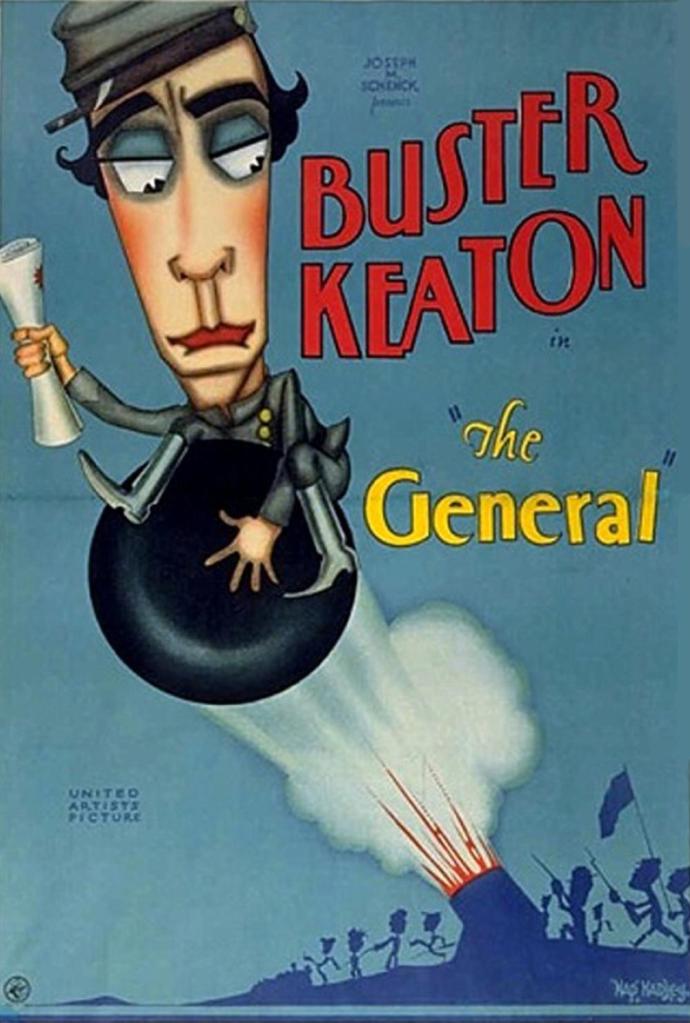
Why? Well frankly, I’m not sure the world was ready for something that promised itself as being a comedy set during what was still a raw scar in the American psyche. The marketing material also promised more laughs than you can shake a stick at – a misrepresentation of a film that is more a stunt-filled poem than a slapstick riot. For those expecting The Navigator, The General was a disappointment. For us today, it is one of the great American films, a piece of cinematic mastery.

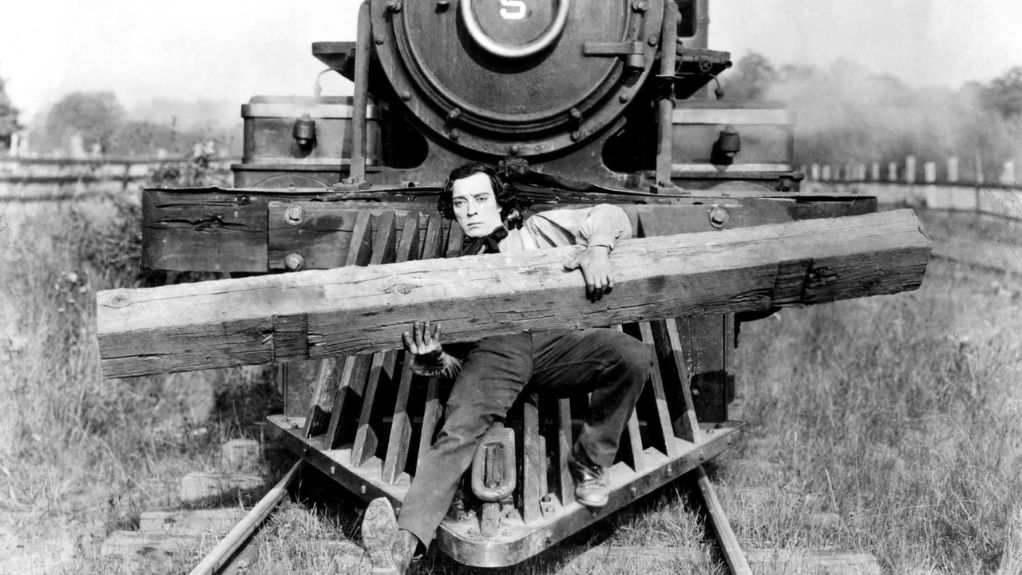
The General is for a large chunk of its run-time (almost 40 of its just under 80 minutes) a glorious chase, in which every sequence show-pieces invention at high-speed. The majority of the stunt filled tricks were executed by Keaton himself, surely at some considerable risk to life and limb. As you watch him bound over railway carriages, dive through port holes, sprint alongside steaming trains or sit atop the hurling railway sleepers to remove obstructions, you can only marvel at his physical dexterity and commitment.

Keaton’s character is also subtly, and impressively, different from his other roles. These were often defined by their haplessness – would-be detectives and empty-headed heirs. But within his professional sphere, Johnnie is a master. He knows the capabilities of engines and dynamics of the railroad better than anyone. He is relentless and endlessly inventive in overcoming myriad problems just as he can use his knowledge to place near-insurmountable barriers in the way of his pursuers.

The opening of the film stresses the respect people hold him in – he’s hero-worshipped by children, greeted warmly by all and has no doubts about asking Annabel to marry him. Sure Johnnie can get pre-occupied and miss the bigger picture – a few times, he is almost left behind by the steaming train while resolving problems on the line – and away from the train, especially when he joins the soldiers in the film’s finale, he suffers from the same clumsy, cluelessness as Keaton did fighting to defend his ship in The Navigator. But he’s also brave, indefatigable, ingenious and relentless. He’s more of a model for every action hero maverick since than you could imagine.

And those stunts! Keaton was a master film-maker, framing the action to accentuate its speed, scale and reality. The camera runs alongside the train, demonstrating its speed by showing objects move by. The action is frequently framed in medium and long shot to demonstrate its scale and the grandness. This goes for Keaton bounding across carriages and for simple gags, such as the famous shot of a forlorn, jilted Johnnie sitting on a drive rod of the moving train, lifted up and down as it shunts forward. The complexities of this chase are always made clear and camera angles are key to the various attempt each train makes to stop the other. This is placed above the standard comedic reaction close-ups audiences expected – but make for a richer, more rewarding film.

In fact, watching the film, you can grow to admire Johnnie so much you start to wonder what he sees in Annabel. Perhaps Keaton, to an extent, wondered the same. Annabel is kidnapped, tied up, caught in a bear trap, tossed around in a sack and doused in engine water. Is this woman being partially punished by the film? After all, it’s her demand that Johnnie turn his life upside down to fight in (what we know) will be a brutal war – and her kneejerk condemnation of him – that sets events in motion. Does she need this humbling to learn her lesson? It perhaps helps her and Johnnie become an ever more effective partnership on their flight back South, setting traps and keeping the engine going (with the odd comic misunderstanding, one of which sees Johnnie running down then back up a hill to reboard the train) that leads to their eventual reconciliation.

Interestingly, what’s less comfortable with The General today is its avoidance of the core issues of the civil war. Slavery never rears its head, and the film takes a largely sympathetic view of the romantic Southern gentlemen vs the nefarious Northerner, with their under-hand schemes. Peter Kramer, in an excellent BFI book, lays out a compelling argument that The General exposes, especially through its final battle sequence which sees real people die and a hapless Johnnie charging into heroics like a lost child, the dangerously blind embrace of violence in the South and a subtle criticism of a horrific war that led to so many needless deaths. While there might be beats of that under the surface here (especially if you are familiar with the shocking death toll of the war), it’s not enough to overcome the generally sympathetic view of the Confederacy and its leaders.

But politics is not at the heart of Keaton’s film. The appeal for him, just as for Johnnie, was that engine and, by extension, the glory of the chase. Only someone who loved trains as much as Keaton could have made such a guilty pleasure of plunging one thirty feet to its doom on camera. And in Johnnie Flynn he created a genuinely little-guy hero, a character who shared his dynamism and pluck and, above all, his love for all things mechanical.

The General isn’t a comedy really – there are few real belly laughs in it, and the film is played straight by all and sundry, devoid of reaction shots. Its laughs come in shock at its audacity, its epic scale and from how much it causes you to invest in the trials and tribulations of its lead character. It’s an action film that you embrace with fervent love, because it’s pure, unadulterated, cinematic beauty. It’s a masterpiece.

Con Air (1997)

Con Air (1997)

Big bangs and silly action abounds in Nicolas Cage’s enjoyable action epic

Director: Simon West

Cast: Nicolas Cage (Cameron Poe), John Cusack (US Marshal Vince Larkin), John Malkovich (Cyrus ‘The Virus’ Grissom), Steve Buscemi (Garland ‘The Marietta Mangler’ Greene), Ving Rhames (Nathan ‘Diamond Dog’ Jones), Colm Meaney (DEA Agent Duncan Malloy), Mykelti Williamson (Mike ‘Baby-O’ O’Dell), Rachel Ticotin (Guard Sally Bishop), Monica Potter (Tricia Poe), Dave Chappelle (Joe ‘Pinball’ Parker), MC Gainey (‘Swamp Thing’), Danny Trejo (‘Johnny 23’)

A rickety plane full of the worst of the worst and very low security. Battles to the death over the fate of a cuddly bunny. A car dragged after a flying plane. On any other day, that might all be considered strange. In Con Air it’s just grist to the mill. Made in the heart of Cage’s post-Oscar swerve from off-the-wall indie star to pumped-up, eccentric action star, Con Air is loud, brash, makes very little sense, feels like it was all made up on the spur of the moment and is rather good fun.

Cameron Poe (Nicholas Cage) is an Army Ranger who ends up in jail after he is forced to protect himself and his wife (Monica Potter), with deadly consequences, in an unprovoked bar brawl. Seven years later he is finally about to be released from prison to meet his young daughter for the first time. To get him to his release though, he’ll need to hitch a ride on a prison transfer plane that is shuttling the ‘worst of the worst’ to a high security prison. With criminal genius Cyrus ‘The Virus’ Grissom (John Malkovich) and his number two ‘Diamond Dog’ (Ving Rhames) on board, what could go wrong? Needless to say, the criminals seize the plane – can Cameron, with help on the ground from US Marshal Vince Larkin (John Cusack) protect the hostages and save the day?

There isn’t really any way of getting around this. Con Air is a very silly film. Nothing in it really bears thinking about logically. To the tune of a soft rock score and Leann Rimes (actually, How Do I Live is a damn good song, and I won’t hear a word otherwise), Simon West shoots the entire thing like it was a primary-coloured advert for action movies. It’s the sort of film that feels like the action set-pieces were written first – “The plane will crash on the in Las Vegas! Right, how do we get the plane to Las Vegas and out of fuel?” – and where the actors thrash around trying to make a plot that feels made-up on the spot full of try-hard dialogue work.

But despite this, Con Air seems to work. Whether it’s because of its brash confidence in its own ridiculousness or because it hired enough scribes to pen one-liners and character quirks to just about give the film a sense of wit and character (Poe’s ongoing effort to protect the cuddly bunny he intends to give his daughter is just one of a decent set of running gags – “Put the bunny. Back. In the box.”). You suspect watching it that there was the intention somewhere along the line to make something darker and more violent – the criminals’ seizure of the plane is surprisingly bloody – that just got forgotten about when it was decided it worked best as a dumb end-of-term panto.

A large part of its success stems from Cage’s droll performance. Turning himself into a sort of every-day action hero with just the odd trace of his famed grand guignol eccentricity here and there, Cage’s Cameron Poe makes for an intriguing lead for a balls-to-the-wall action film. Poe is softly-spoken, invariably polite, sweetly excited about seeing his daughter and pretty much encounters every unlikely event he sees with a laconic dead-pan (“On any other day that might be considered strange” he murmurs when witnessing the plane drag a sports car behind it through the air).

Cage of course looks ridiculously pumped up and spends most of the film in an obligatory Die Hard style vest. He hands out ruthless beatings of ne’er-do-wells – although only Cage could impale a serial killer on a pipe and sadly intone “Why couldn’t you just put the bunny back in the box”. Only Cage would take a part clearly intended as a Bruce Willis smirker and turn it into a sort of kick-boxing Paddington Bear. His stubborn refusal to take the film seriously means he cancels out Simon West’s ridiculously macho aesthetic that otherwise infects almost every frame. While everything else is loud, sharply cut and features actors spouting try-hard tough dialogue, the film’s central character spends the opening of the film learning Spanish and exchanging surprisingly sweet letters with his daughter and strolls around earnestly trying to do the right thing.

John Cusack similarly runs counter to the tone. Clearly counting the minutes until he can cash his cheque, Cusack turns his US Marshal into a laid-back, sandal-wearing boy scout, quietly exasperated about the wildness around him. I suspect half of Cusack’s drily low-key dialogue was written by him just to keep himself interested. Malkovich is cursed with the film’s worst try-hard tough-guy dialogue, but even he enjoys downplaying the role into softly spoken comedy. The three leads leave the blow-hard silliness to their foils Colm Meaney (as a permanently angry DEA agent) and Ving Rhames (as a violent would-be revolutionary).

With most of the people in it not taking it seriously, it generally means the ridiculousness of the plot – an aimless capture of a plane built around a series of set-pieces – and flashes of violence get watered down in favour of comic nonsense that of course ends with a rammed slot machine hitting a jackpot and the villain being stabbed, launched, electrocuted and crushed in a super-display of overkill. Whether this is what West intended who can say? But it’s certainly a lot better this way.

After all who cares if the villain’s masterplan depends on the sudden appearance of a sandstorm or that no war hero would ever go to jail for protecting his wife in a bar (Poe must have the worst lawyer in the world). It’s all about the jokes (a body at one point has a message scrawled on it and is literally posted into thin air), the bangs and, above all, the weary, half-smirking performances of the leads who can’t believe the nonsense they are sitting in the middle of.

The Lavender Hill Mob (1951)

The Lavender Hill Mob (1951)

Delightful but surprisingly subversive Ealing comedy, one of my all-time personal favourites

Director: Charles Crichton

Cast: Alec Guinness (Henry “Dutch” Holland), Stanley Holloway (Alfred Pendlebury), Sid James (Lackery Wood), Alfie Bass (Shorty Fisher), Marjorie Fielding (Mrs Chalk), Edie Martin (Miss Evesham), John Salew (Parkin), Ronald Adam (Turner), Arthur Hambling (Wallis), John Gregson (Inspector Farrow), Clive Morton (Station Sergeant), Sydney Talfer (Clayton)

It’s my personal favourite of all the Ealing comedies. It’s always surprised me it has been so warmly endorsed by the Vatican. Sure, it ends with a cursory “crime doesn’t pay” message – and it’s got a great deal of lightness, affection and wit. You want our seemingly mousey underdog to successfully take on the big banks. But this is a surprisingly dark and subversive film under its cuddly exterior. Much like its lead character, appearances can be deceptive and The Lavender Hill Mob lulls you into a false sense of security to hide its surprisingly darker heart.

Set in post-War London, Henry Holland (Alec Guinness) is a timid bank clerk, paid pocket money to monitor the delivery of hundreds of thousands in gold bullion to his bank. And he’s had enough. Holland plans a heist – he’ll steal the money, escape unsuspected and live the life of Reilly he feels he deserves on the proceeds. The inspiration for how to smuggle the money out presents itself when he befriends artist turned tacky gift manufacturer Alfred Pendlebury (Stanley Holloway) – they’ll melt down the gold and smuggle it as Eiffel Tower models. What could go wrong?

The Lavender Hill Mob fits very neatly into the classic Ealing set-up. The plucky underdog takes on the establishment, in this case the heartless bank run by public-school poshos and the police with their new-fangled technologies. It plays these cards extremely well, poking fun at the set order and building a great deal of empathy with Holland and Pendelbury, the two most unlikely criminal masterminds you can imagine. Middle-aged, middle-class professionals who have led lives of quiet, dutiful anonymity, its huge fun to see them cut loose and embrace the chance to be bad-boys. Who hasn’t wanted to say “to hell with it” and grab the opportunities you want in life?

But TEB Clarke’s superb script, matched with Charles Crichton’s dynamic direction, has a darker heart under the surface charm. Set in a bombed-out post-war London, the film’s design never lets us forget this is an upturned Britain, reeling from years of unimaginable upheaval. A country going through social and political change leaving old, deferential ideas in the past and old principles of morality might not apply. After all, when death was a nightly visitor to the capital, why should you continue to play by the rules? Holland is actually a man who has simmered with quiet, unspoken resentment for decades, who crafts the perfect heist and sees it through with obsessive, almost cold-hearted fanaticism.

Sure, he seems sweet and, yes, he doesn’t half get swept-up in childish excitement in the glamour of crime – who can forget his bashful desire to take on the criminal nom de plume Dutch. But the genius of Guinness’ performance is that he never lets us overlook the ambition, greed and willingness to go to any lengths under Holland’s meek exterior. Watch how Guinness stares with unblinking acquisitiveness at the gold as it melts down. The authoritative command he takes over Pendlebury when a small batch of gold Eiffel towers are accidentally purchased by a group of school children. The demanding perfection he insists on in every step of the heist.

This is Guinness at his absolute best and perhaps only he could combine such a criminal heart with light-comedy. Holland is an immensely endearing character because his success remains so unlikely. His scheme is low-tech and clever so it’s impossible not to end up rooting for it – especially when the resources and technology of the police and the bank are so well sign-posted. Guinness is giddy with excitement at the scheme – but also look at how quickly and coldly he lies, how smug and satisfied he can be in success and how ruthless when the situation calls for it. But yet we love him. This is dramatic and light comic acting distilled in one. He’s superb.

If anyone is a corrupted innocent, it’s Alfred Pendelbury. Played wonderfully by Stanley Holloway as a poetry-quoting dreamer, Pendlebury is the real unlikely criminal here. Holloway and Guinness have a wonderful chemistry, both enjoying the naughtiness of theft, but with Holloway’s star-struck eyes, Pendlebury is the follower, in awe of Holland’s cleverness and determination. Poor Pendlebury almost blows the heist by absent-mindedly wandering away from a newspaper stand still clutching an (unpaid for) newspaper, blithely suggests they let lost Eiffel towers go and bundles around the crime with an optimistic amateurism.

Clarke’s script has a lot of fun with questions of class. The pompous bank managers are exactly the sort of arrogant posh-boys who look down on everyone else with paternal disregard. They are blank, unthinking automatons. Class works both ways. Holland is unsuspected of the crime as he’s the sort of middle-class person who wouldn’t do this sort of thing. Holland and Pendlebury are quietly resentful of those above them – but they assume the same authority over the criminal classes they recruit for the scheme. Sid James (cementing his persona as a cheeky spiv) and Alfie Bass are natural cap-doffers who quickly accept their place in the gang’s hierarchy and even (rather sweetly) trust Holland and Pendelbury to deliver their share from Paris (naturally, as working-class lads, they are suspicious of travelling to France anyway to collect the loot).

The Lavender Hill Mob exposes the assumptions and traps of the class system in this country, and does so with a gentle, sly, subversive wit. Holland is basically the forerunner of the sort of bitter middle and lower middle class ambitious types who would drive change in Britain in the next few decades.

The film also gets a lot of comic mileage out of the smug ineffectiveness of most of the official forces. The police have a raft of technologies – radios, cars, scientific techniques – all of which do very little to help. In a late car chase through London, the radios actively work against them – Holland easily uses the radio in their stolen police car to spread disinformation, the central radio director guides several cars into a collision and eventually scrambled signals lead to “Old MacDonald” being played on all receivers. Optimistic but hopelessly inaccurate bulletins are constantly posted on their progress and only personal inspiration of the lead detective (a colourless John Gregson) and chance leads to the crime being unmasked. As well as looking at the dark bitterness of its lead character, The Lavender Hill Mob is strikingly cynical about officialdom.

Crichton’s direction is visually inventive and at times almost Hitchcockian – Holland and Pendlebury’s dizzying stairway descent from the Eiffel Tower arguably inspired Vertigo. And the film is supremely funny. The heist is planned with perfect comic timing, chase scenes are brilliantly done and there is a superb farcical set-piece as Holland and Pendlebury hurriedly try to negotiate French customs in a rush to catch a boat. Every scene has a funny line or inspired piece of comic business and Clarke’s script perfectly balances this with gentle but intelligent social commentary.

The Lavender Hill Mob is a triumph. From start to finish a delight, insightful and funny, it has superb performances from a faultlessly brilliant Guinness and a bombastically huggable Holloway. It wraps up comedy, social commentary and a surprising cynicism into a complete package. It’s a tour-de-force of charm, shrewdness and grace. It remains my best loved Ealing comedy, and possibly one of my favourite comedies ever made.

Widows (2018)

Widows (2018)

Sexism, racism and corruption get mixed in with crime drama in McQueen’s electric heist film

Director: Steve McQueen

Cast: Viola Davis (Veronica Rawlings), Michelle Rodriguez (Linda), Elizabeth Debicki (Alice), Cynthia Erivo (Belle), Colin Farrell (Jack Mulligan), Brian Tyree Henry (Jamal Manning), Daniel Kaluuya (Jatemme Manning), Jacki Weaver (Agnieska), Carrie Coon (Amanda), Robert Duvall (Tom Mulligan), Liam Neeson (Harry Rawlings), Jon Bernthal (Florek), Garret Dillahunt (Bash), Lukas Haas (David)

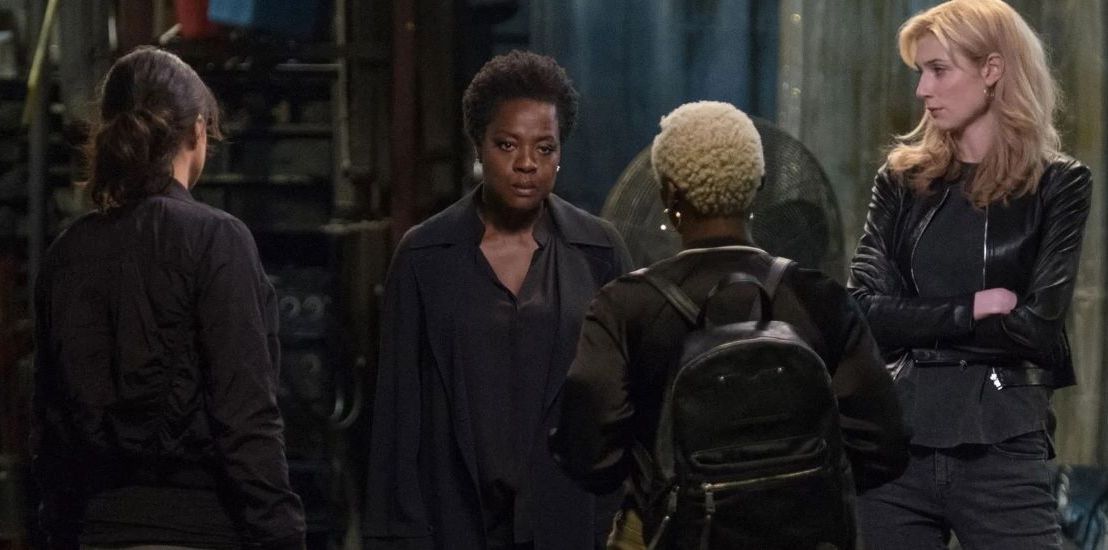
A getaway goes wrong and Harry Rawlings (Liam Neeson) and his criminal gang all wind-up dead and their loot burned up. Their last job was cleaning out the election fund of gangster-turned-electoral-candidate Jamal Manning (Brian Tyree Henry). Manning believes he’s owed a debt by Harry’s widow Veronica (Viola Davis). On the hock for millions, Veronica has no choice but to recruit the widows of Harry’s gang to help her pull off the next job Harry planned: cleaning out the campaign fund of Manning’s electoral rival Jack Mulligan (Colin Farrell).

Adapted from an 80s British TV mini-series, Widows has been run through Steve McQueen’s creative brain, emerging as a compelling, beautifully shot crime drama mixing social, racial and gender commentary with blistering action. It takes a traditionally masculine genre – the crime caper – and places at its heart a group of women motivated by desperation and survival rather than the lure of lucre.

What’s particularly interesting is that none of these women fit the bill of the sort of person you expect to arrange a daring heist. Viola Davis’ Veronica is a retired teachers’ union rep; Elizabeth Debicki an abuse victim, treated terribly by her husband and selfish mother; Michelle Rodriguez a shop owner desperately trying to give her kids a chance, despite her husband’s reckless gambling. Even the driver they hire, played by Cynthia Erivo, is a hairdresser and babysitter. These women are a world away from the ruthless criminals you’d expect to pull off this kind of operation.

It’s probably why they are routinely underestimated and patronised by men. Veronica is advised clear her debt by selling either everything she owns and disappear. As with the rest of the women, the world expects her to put up and shut up. These are women defined by their husbands and the expectation that their needs are subordinate to others’. Debicki’s Alice is all-but pushed into escort work by her demanding mother, while Rodriguez’s Linda is blamed by her mother-in-law for her husband’s death. But these women have a steely survival instinct that makes them determined and (eventually) ruthless enough to take this job on.

Davis is superb as a determined and morally righteous woman, whose principles are more flexible than she thinks. She efficiently (and increasingly sternly) applies her organisational skills to planning the heist, pushing her crew to adapt her own professionalism. Davis wonderfully underplays Veronica’s grief, not only at the loss of her husband but also the recent death of her son (shot by police officers while reaching to answer his phone behind the wheel of an expensive car – in front of a wall of Obama “Hope” posters, a truly striking visual image).

Her co-stars are equally impressive. Debicki has mastered the mix of vulnerability and strength behind characters like this (how many times has she played suffering, glamourous gangster molls?). Her Alice gains the self-belief to push back against those exploiting her. Rodriguez beautifully balances grief at the loss of her husband with fury at the financial hole he has left her in. Erivo gets the smallest role, but makes Bella dry, loyal and sharp. All four of them use the way men underestimate them – seeing them as widows, wives, weak or sex objects – to plan out their heist.

The reversal of gender expectations crosses over with the social political commentary McQueen wants to explore. This sometimes works a treat: the flashback to the shooting of Veronica’s son is shockingly effective. But the film’s dives into the Chicago political scene and the deep class divisions in the city don’t always have the impact they should. There is a marvellous shot – all in one take, mounted on the car bonnet – as Farrell’s Mulligan travels (in a few minutes) from a photo op in a slum back to his palatial family home, emphasising how closely extreme wealth and poverty sit side-by-side in America.

Both candidates are corrupted in different ways. Jamal Manning – a knife behind a smile from Brian Tyree Henry – is a thug talking the talk to line his pockets. Farrell’s Mulligan has more standards – and you wish for more with this fascinating put-upon son part on-the-take, part genuinely wanting to help. His domineering dad – an imperiously terrifying Robert Duvall, who wants to backseat drive his son in office – demeans his son, shouts racial slurs and bullies everyone around him. Politics: your choice is the latest off-spring of a semi-corrupt dynasty or a literal criminal.

But the film doesn’t quite find the room to explore these issues in quite as much detail as you feel it could: it’s a strong hinterland of inequality, but you want more. McQueen however, does have a gift for unique character details that speak volumes: the women’s operation is shadowed by an electric Daniel Kaluuya, as Manning’s calm yet psychotic brother, who listens to self-education podcasts on Black history and shoots people without a second thought. He, of course, underestimates the women as much as everyone else. That’s as much of a political statement as anything else: none of the men in this film seem to even begin to think that they could be in a world which is truly equal.

The film adds a late act reveal that doesn’t quite work – and the film as a whole is trying to do a little too much – but it’s a confirmation of what a gifted and superb film-maker Steve McQueen is. McQueen shoots even conventional scenes in unique and interesting ways – check out his brilliant use of mirrors throughout – uses editing superbly to set tone and is brilliant at drawing the best from talented actors. Widows is crammed full of terrifically staged scenes and gallops along with pace and excitement. It’s a fine example of a great director turning a genre film into something deeper.

The Sting (1973)

Newman and Redford pull the mother of all confidence tricks in The Sting

Director: George Roy Hill

Cast: Paul Newman (Henry Gondorff), Robert Redford (Johnny Hooker), Robert Shaw (Doyle Lonnegan), Charles Durning (Lt William Snyder), Ray Walston (JJ Singleton), Eileen Brennan (Billie), Harold Gould (Kid Twist), John Heffernan (Eddie Niles), Robert Earl Jones (Luther Coleman), Jack Kehoe (Erie Kid), Dimitra Arless (Loretta Salino), Sally Kirkland (Crystal)

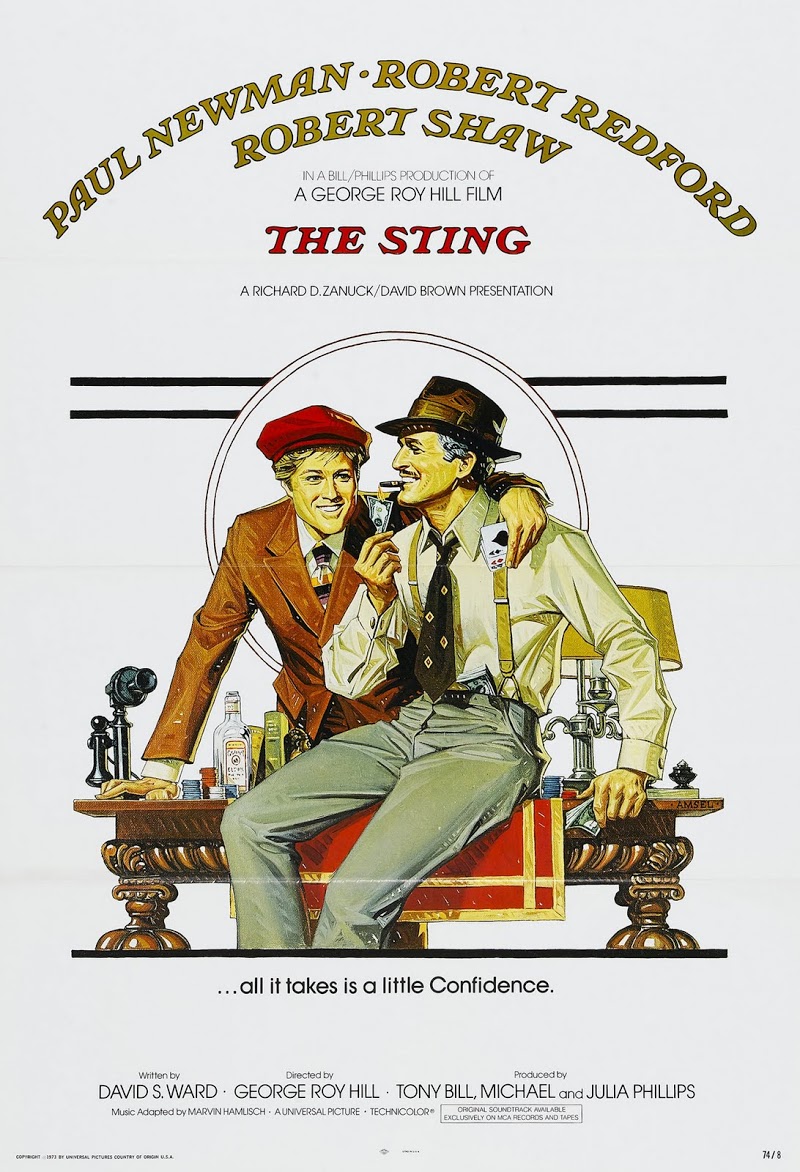
From its opening, to the ragtime charm of Joplin’s The Entertainer, it should be pretty clear what you are in for with The Sting. A nostalgia-tinged star-vehicle, The Sting is gloriously unpretentious, a film that means only to entertain. Charming and good-natured, you can forgive it an awful lot because it wants so little from you: other than to put a smile on your face (a real “aw shucks I never saw that coming!” grin). A slice of pure entertainment, with more than a hint of nostalgia, it hoovered up seven Oscars (in an admittedly weak year – its nearest competitor was The Exorcist and it says something for how eclectic American cinema can be that those two films hailed from the same year) at a time when the nation needed a lift.

The Sting is perhaps the ultimate confidence-trick, caper movie. It’s been effectively remade so many times (it’s basic plot was copied exactly for the first episode of BBC’s confidence trick dramedy series Hustlers among others) it’s likely that you will recognise some of its tricks long before viewers at the time did. But that doesn’t really matter, because like all tricksters, it tells a great story. In 1930s Illinois Johnny Hooker (Robert Redford) is a grifter who makes a score off the wrong guy: a courier for vicious crime boss Doyle Lonnegan (Robert Shaw). In the violent aftermath, his partner and mentor Luther (Robert Earl Jones) is murdered. Hooker heads to Chicago to partner up with famous grifter Henry Gondorff (Paul Newman) to get his revenge. The plot comes together – but can they stay ahead of Lonnegan, the cops (led by Charles Durning’s Lt Snyder) who are after Hooker and the FBI who are hunting Gondorff? Or will they fool everyone?

Well what do you think? Directed with a professional (Oscar-winning) smoothness by George Roy Hill, this is basically Butch and Sundance Go Grifting. The film follows pretty much exactly the same nostalgia soaked journey following two charming Hollywood mates thumbing their nose at authority. The recreation of the period is extremely detailed (it won Oscars for production design and costumes), but above all safe and cosy. For all that it grifts in the rough-end of town, it’s a very clean and uncrowded world (the street scenes are notably empty) and very little reality is allowed to get in the way of what is effectively a shaggy-dog story.

The vision of the past it presents is designed from top-to-bottom to be comforting and the film is devoid of any sense of danger connected with grifting, or any sense of moral complexity around people who make their living from conning others. It’s a world where the only people conned are them-what-deserves-it and the conmen are plucky underdogs, making a buck off the crooked big man while fighting the corner of the little guy. It basically repackages conmen as fairytale heroes – and does so, so successfully most conmen films since have followed its lead.

It’s fairy-tale style is carried across in the chapters (with some lovely nostalgic hand-drawn chapter opener pages) that the film is split into, not to mention the structure of a callow youth, a rough but wise mentor, a hissible villain and righteous mission. The only thing it really misses is a princess to save (although there is the gentlest femme fatale you’ll ever see). But then there isn’t really room as, even more so than Butch and Cassidy this is a bromance played out in the same sepia-toned “good-old-days” warmth.

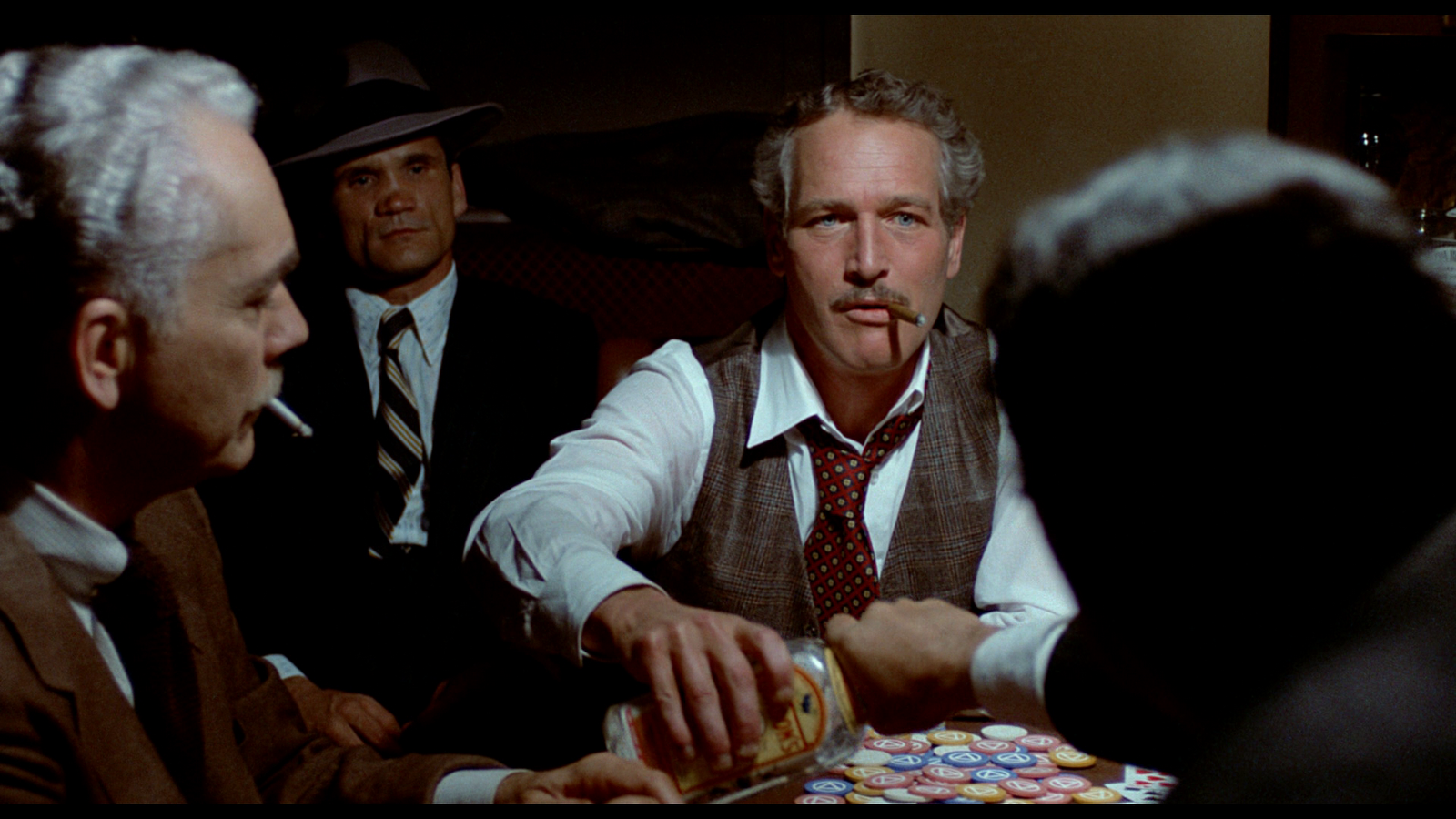
Newman and Redford are of course huge fun, using every inch of star-power gusto and cool. Newman has great fun as the sort of cigar-chomping, hard-drinking maverick only ever seconds away from bounding up from a scruffy sleep to perform all manner of tricks with assured cool. Newman generously cedes most of the richer material to Redford, but he can hardly have minded when he gets such glorious set-pieces as his faux-drunken card-sharp routine when he muscles in on Doyle’s cross-country train card game. I’ll also give a shout out to a wonderful moment when Gondorff goes through an elaborate show-off run-through of his card-sharp skills – only to get over-confident and spill the deck. It’s a good laugh, but also adds a little beat of tension (needless to say he performs flawlessly on the night).

Redford got his only acting Oscar-nomination here and, while it’s not his most challenging role, it’s certainly one where his magnetic Hollywood charm was used to its best effect. He gets the meat of the plot, walking a difficult line between being both an audience surrogate and keeping us uncertain about how much of what we are seeing is true. Redford’s handsome boy-next-door charm works perfectly for Hooker – and he’s got a sweet shocked horror at violence when it comes – and he has a rather winning naivety mixed in with a youthful energy. Sure, it’s hardly Hamlet, but as a riff on his WASPY version of counter-culture cool, it’s pretty much spot-on. (Redford is also of course a very safe presence – there’s nothing dangerous to him, which is of course perfect for the film’s tone.)

These two energetic and charismatic performers – both having a whale of a time – are the main selling point of a movie that rattles through fun set-pieces. Like all the best con movies, it lays out all its pieces and only assembles them all into a picture right at the very end. It makes for something little more than a fairground entertainment – Marvel as Gonrdorff and Hooker Hoodwink a Man Before Your Very Eyes! – but when it’s told with such zip, charm and lightness as this it hardly matters. Even the heavy – a growling Robert Shaw – gets a bit of light-banter under the menace (“What was I supposed to do” he bemoans after Gondroff swops out the crooked cards he’s dealt him “call him for cheating better than me?”).

The Sting isn’t trying to reinvent the wheel or tell you anything serious. It just wants you to grin. While we might be told grifting can be dangerous, the main impression of the film is that it’s matey boys-own blast. And it wants us to enjoy the entertainment as much as the conmen do. It knows that, like a good magic trick, we love to see how the illusion works and there are few things more engrossing than watching professionals execute a difficult task flawlessly. It’s one of the lightest Best Picture winners, but then it’s also one of the most purely enjoyable.

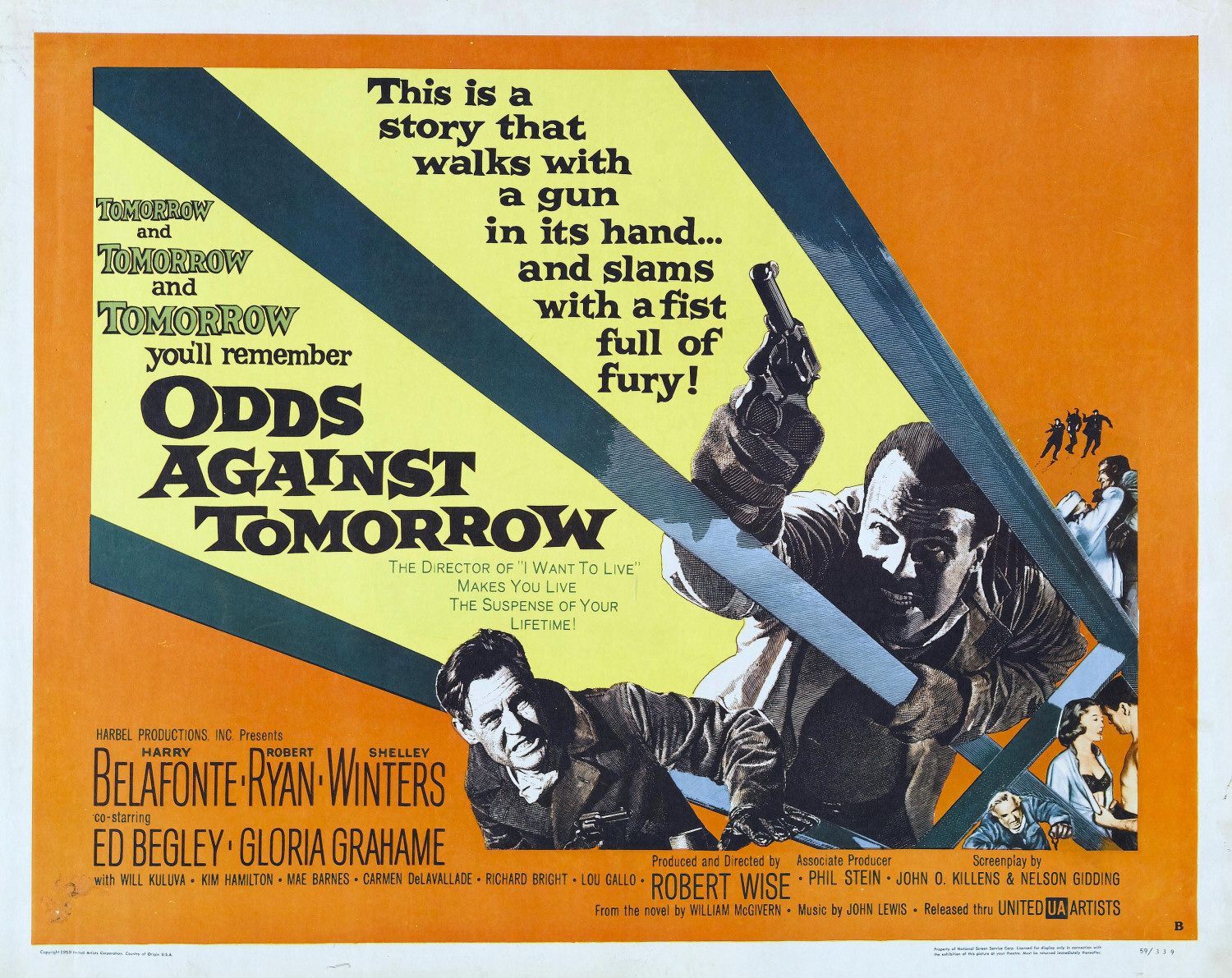
Odds Against Tomorrow (1959)

Harry Belafonte, Ed Begley and Robert Ryan are a mismatched crime team in Odds Against Tomorrow

Director: Robert Wise

Cast: Harry Belafonte (Johnny Ingram), Robert Ryan (Earl Slater), Shelley Winters (Lorry), Ed Begley (Dave Burke), Gloria Grahame (Helen), Will Kuluva (Bacco), Kim Hamilton (Ruth Ingram), Mae Barnes (Annie), Richard Bright (Coco), Carmen de Lavallade (Kitty), Lew Gallo (Moriarty)

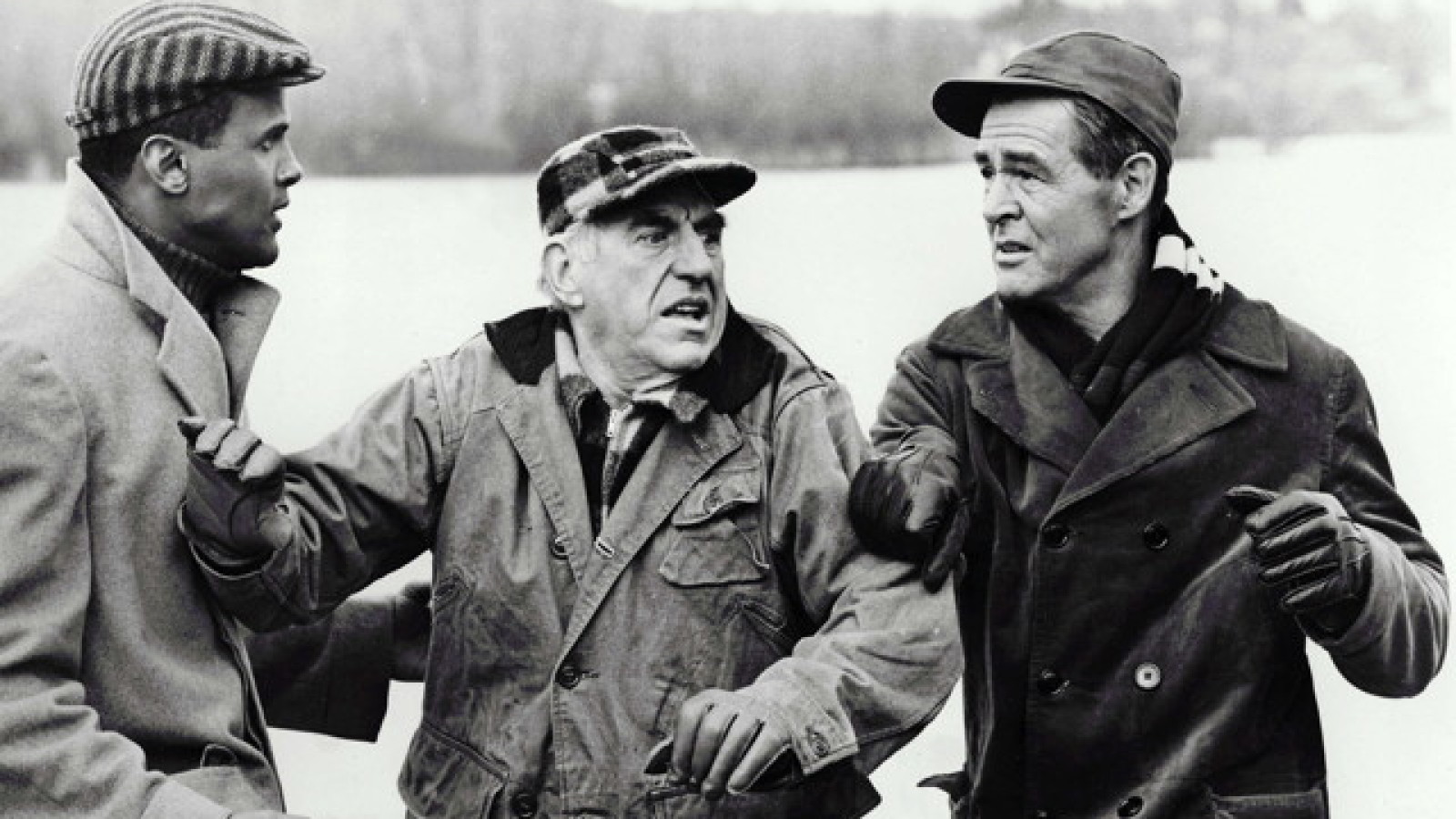
Johnny Ingram (Harry Belafonte) life is on the skids. His career as a singer isn’t bringing in the money to fuel his gambling addiction or help support his ex-wife. Owing money to gangsters, he’s roped into taking part in a bank heist master-minded by bitter ex-cop Dave Burke (Ed Begley). It should all go smoothly. Unfortunately, Burke has also recruited Earl Slater (Robert Ryan) as muscle – and Slater has channelled all his own insecurities and resentments into virulent racism. Can Johnny and Slater work together to make the heist work?

Wise’s picture – with a script by the black-listed Abraham Polonsky – is on paper a crime drama. But it’s really hardly interested in the heist (which is almost laughably simple) the planning of which doesn’t even start until the film is nearly an hour old. Instead, the focus is on putting together a neat parable for racial divide in America. Because if even criminals are more preoccupied with feuding over the question of the colour of each other’s skin than making a score, why on Earth should we be surprised that such problems arise in every walk of life?

Attitudes are mapped out early in the film, largely thanks to Wise’s crisply efficient story-telling. Ingram playfully tips off a group of mixed-race kids to watch his car; Slater singles out a black child from this same group with a smilingly delivered racial epitaph. In the building, they both have strikingly different conversations with a black elevator attendant. Its clear tensions will abound – not least because Slater won’t work a job with a black man and Ingram is rightly disgusted with him.

Belafonte produced the film and he plays a very different type of black American than most films had seen. Black characters frequently fell into being either noble or deferential. Johnny is neither. He’s angry, bitter, drinks and has no interest in compromise of any sort. Johnny is a deeply troubled man, who seems to be making a mess of his life. Above all he doesn’t rise above racial abuse or shrug it off, but angrily confronts it. Fundamentally he’s a chippy screw-up, but he always retains sympathy because we can see he’s really a decent guy, for all his faults.

He’s just not one who’s willing to play the white man’s game to get ahead. He’s quite clear with his wife (very effectively played by Kim Hamilton) that he’s not willing to simply conform with a structurally unfair world. He’s also quite clear with Slater that he doesn’t want to hear whimsical memories of the South during the ‘good old days’. Belafonte does all this with a great deal of energy, even if you feel he doesn’t quite have the range and power for the role.

It’s interesting though that the film finds plenty of room to explore Slater. Played with a fragile self-loathing by Robert Ryan (one of Hollywood’s great liberals, whose career was made up of characters who persecuted minorities), Slater is deeply unsettled and insecure. He’s struggling to adjust to a more modern world where the man isn’t always the hunter-gatherer, and his wife (a rather sweet Shelley Winters) has the fixed job he can’t get. He doesn’t understand the world anymore.

All this makes Slater vulnerable, confused and even a bit pitiable – all qualities Ryan effortlessly brings out in the film’s finest performance – stumbling into bar fights where he responds with far too much violence. His face constantly seems to crumble into something a little like tears. He engages in a brief fling with a flirtatious neighbour (a blowsy Gloria Grahame) simply, it seems, to try and feel better about himself. The only thing that give him strength, it seems, is turning Johnny and all other black people into an alien “other” which he can lambast and attack.

This of course leads to barely concealed tensions during the robbery planning – where Slater repeatedly states he doesn’t trust Johnny to complete anything – and then during the robbery itself when the fundamental distrust between these two leads to a shoot-out and disaster. Caught in the middle, in a polished performance, is Ed Begley’s Burke, lacking the force of character to make this odd couple work together.

Wise’s film sometimes make some obvious choices – after the final climactic shoot-out, a policeman comments “which is which”, which is about as “under the skin we’re all the same” as you can get. But it’s told with a leanness and pace and by focusing on social issues rather than crime, it presents an intriguing snapshot of American attitudes. The vast majority of characters don’t share Slater’s kneejerk racism – but they also don’t even think of challenging it. No wonder Johnny Ingram’s so annoyed – and no wonder he sees that, for all the smiles, it’s a world run by and for the white man where your only chance of success is conform and shut up. Maybe the odds are against tomorrow.

The League of Gentlemen (1960)

The League of Gentlemen (1960)

Gentlemen don’t get mad: they get even in this fun, well-structured heist movie

Director: Basil Dearden

Cast: Jack Hawkins (Lt Col Norman Hyde), Nigel Patrick (Major Peter Race), Roger Livesey (Captain “Padre” Mycroft), Richard Attenborough (Lt Edward Lexy), Bryan Forbes (Captain Martin Porthill), Kieron Moore (Captain Stevens), Terence Alexander (Major Rupert Rutland-Smith), Norman Bird (Captain Frank Weaver), Robert Coote (Brigadier “Bunny” Weaver), Nanette Newman (Elizabeth Rutland-Smith)

You throw a gentleman on the scrap heap at your peril. After a lifetime of service, Lt Colonel Norman Hyde (Jack Hawkins) has been made redundant – and, to put it bluntly, he’s pissed off. However, a gentleman doesn’t get mad, he gets even. And what better way to do that than using your army training to mastermind the finest bank heist Britain has ever seen? To pull it off, Hyde recruits a team of similarly disgruntled Army officers (all cashiered from the army for a range of offences, from theft to implied sexual demeanours) all of them highly trained specialists. What could possibly go wrong?

The League of Gentlemen was the first film from a short-lived British production company Allied Films. The company was a partnership between Dearden, Hawkins, Attenborough (who did a lot of the producing) and Forbes (who wrote the film’s witty, playful script). The film is a delight, a wonderfully executed heist movie, told with an archness that turns its criminals into sympathetic rogues. It’s really a sort of dry comedy and gets a lot of fun out of British attitudes at the time.

For starters, who would think that gentlemen like this (war heroes for goodness sake!) would ever be involved in anything so naughty as armed robbery? Especially in a country so deferential that – in a cunning raid to pinch guns from a military base – conman “Padre” (Roger Livesey, riffing delightfully on his Blimpish persona, as a conman with a shady past) simply turns up dressed as a superior officer and is instantly accepted as such. Just to complete the satire of prejudices at the time, the members of the team lifting the guns are ordered to speak with Irish accents as after all “We British never give the Irish the benefit of the doubt”, and even the a whiff of an Irish accent will whack the blame straight onto the IRA.

But this also a film having a bit of fun with demobilised fellows who have never quite found their place in civvie street – and may even miss the glamour and excitement of the war. Most of the team are clearly veterans of WW2, and many of them are struggling with demanding landlords, unfaithful wives or dismally dull jobs. How could they resist saddling up for one more grand adventure? Especially when there is a huge suitcase of money waiting for them at the end of it.

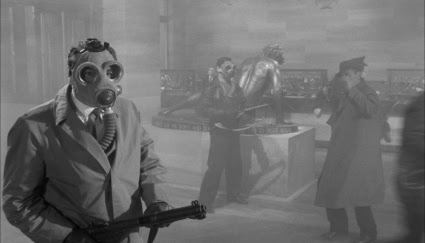
Dearden’s direction is taut, sharp but also gives more than enough room for the character comedy. He stages the heists with a briskness and efficiency that you can imagine Michael Mann being quite pleased with (the gas mask wearing, gun totting soldiers have more than a passing resemblance to the robbers in Heat – enough to make you think Mann may have watched this film somewhere along the line). Dearden’s storytelling is clear, well staged and inventive (the raid on the army base is shown to us without briefing, meaning we work out the plan as it progresses).

He’s helped enormously by Bryan Forbes’ fun and quotable script, that swiftly but skilfully distinguishes the characteristics of each man and their motivations and makes a perfect balance between affectionate comedy and the sharpness of danger (the group make clear they will “do what’s necessary” if pushed, even if they aim is no bloodshed). The film is built around several wonderful set pieces – and has a classic, almost pre-James Bond parody opening as Hawkins emerges from a manhole cover dressed in a dinner suit and climbs into a car.

Hawkins is great here, spoofing the troubled war heroes and authority figures he spent his whole career playing. Here he inverts all this straight-shooting, “Queen and country first” attitude into a man with the outside trappings of decency, but with a bitter heart and cynicism towards the world. He carries most of the film with a deceptive effortlessness, but nails the tone exactly between fun and genuine frustration at the world.

The whole cast follow his lead. Nigel Patrick is very good as a cashiered Major who enjoys mockingly parroting all the eccentric mannerisms of upper-class gentlemen. Livesey enjoys the self-parody almost as much as Hawkins (he spends nearly every seen looking like he’s only a few degrees away from giggling). Attenborough is fun as a chippy junior officer while Terence Alexander is great as a frustrated cuckold lost on civvie street. There isn’t a weak link in the whole cast.

The film is a delight, fun but with more than enough tension. It brilliantly captures a sense of the camaraderie and loyalty between these ex-soldiers, as well as their delight at being used able to use their skills one final time. It’s a film squarely on the side of these criminals thumbing their noses at the system (and who are planning as close as they can get to a victimless crime, albeit at gun point). The film has to give them some sort of comeuppance at the end – but you’ll be sorry to see it, as by then you’ll be invested at pulling off the heist as they are. Well directed, acted and written it’s a perfect entertainment.

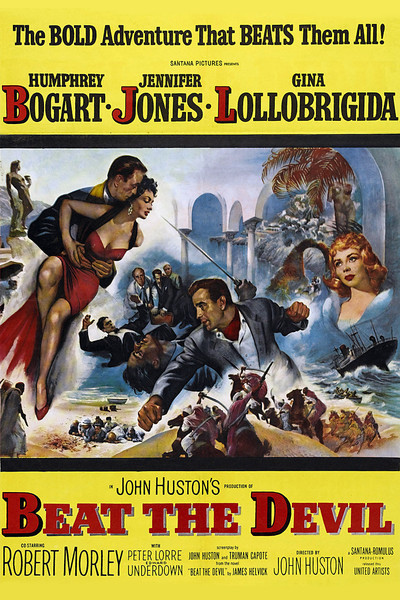
Beat the Devil (1953)

Jennifer Jones, Gina Lollobrigida and Humphrey Bogart in the tongue-in-cheek Beat the Devil

Director: John Huston

Cast: Humphrey Bogart (Billy Dannreuther), Jennifer Jones (Gwendolen Chelm), Gina Lollobrigida (Maria Dannreuther), Robert Morley (Peterson), Peter Lorre (Julius O’Hara), Edward Underdown (Harry Chelm), Ivor Barnard (Major Jack Ross), Marco Tulli (Ravello), Bernard Lee (Inspector Jack Clayton)

Beat the Devil is a curious beast. You could argue it was ahead of its time. Huston and Bogart had started out with the intention of making a straight crime mystery, a sort of Maltese Falcon in Europe. But when they arrived on location, obviously something in the weather got to them and Truman Capote flown in to help redraft the script on a daily basis to turn it into a sort of satirical comedy. For audiences expecting a hard-boiled crime mystery, it left heads scratched and cinema seats empty. Bogart lost a packet on the film – and later claimed to hate it – and it only existed in a badly cut-about version until it was restored in 2016.

The slightly surreal plot hardly really matters. A crowd of unusual people gather in a run-down port in a small Italian town, waiting to take the ship to East Africa. Gwendolen (Jennifer Jones) and Harry Chelm (Edward Underdown) are seemingly upper-class Brits (or are they?). American Billy Dannreuther (Humphrey Bogart) and his European wife Maria (Gina Lollobrigida) might also once have been something, but they sure ain’t now. Peterson (Robert Morley) and his associates the suspiciously un-Irish Julius O’Hara (Peter Lorre), rat-faced bully Major Jack Ross (Ivor Barnard) and nervous Ravello (Marco Tulli) are almost certainly all criminals on their way to a big score in Africa. Thrown together, this unlikely grouping end-up in a heady cocktail of betrayals, schemes, affairs and lies that spools out like a demented shaggy-dog story.

Beat the Devil is really more of an experience, a series of gags and light-hearted scenes played with a grin and a wink. Nothing in it is meant to be taken seriously, and this semi-surreal group of events becomes ever more absurd as it goes on. By the time the cast are abandoning a sinking ship, trudging up a beach to be captured by Arab officials who eventually allow them to row back to port where they find their ship didn’t actually sink…you really should just decide to go with the flow.

Instead the film is about shuffling up familiar tropes from hard-boiled noir with Oscar Wildeish farce. Certainly the Chelms seem to have wandered in from something totally different (not least since Gwendolen’s name is reminiscent of Importance of Being Earnest). Harry (a superbly stiff-upper lipped Edward Underdown) is a blithely unaware would-be English gentleman, pompously aware of his social class and blithely unaware that his wife seems to immediately start an affair with Billy. Gwendolen is the exact sort of character you might expect to see in Wilde, a dreamer tipping into fantasist, who blurts out things she shouldn’t and falls instantly in love with Billy. She’s also whipper-smart – more than capable of defeating Harry at chess without looking (“usually he’s a wonderful loser” she tells Billy, by way of apology for Harry’s strop).

Billy and Gwendolen embark on an immediate affair (although of course, in deference to the Hays Code, its just kept this-side-of-implicit). Mind you the film has a zingy wife-swop feel to it, since it’s pretty clear that Maria is far more interested in the British reserve of Harry (“Emotionally I’m English” she says before eulogising tea and crumpets) than she is in the ordinary-Joe cunning of her husband (although perhaps Harry is just as oblivious to this as everything else around him).

Billy is Bogart deliberately at his most Bogart-ish, channelling every grimy-but-smart dubious-hero the star ever played. Bogart plays the entire film with a grin on his face and delights in lines like “Fat Guys my best friend, and I will not betray him cheaply”. He also sparks delightfully with Jennifer Jones, who seems to having the time of her life as a character so flighty and unpredictable that even she looks like she hasn’t a clue what she is going to do (or feel) from one moment to the next.

The supporting cast of creeps and freaks Dannreuther is conspiring with to make a fortune (its something to do with land and uranium) similarly seem to have walked in from a side-ways Dashiel Hammett universe. For all their dirty deeds – and it seems Petersen had ordered a hit in the UK, although never for a minute would you believe this looking at Robert Morley’s puffed up bluster – they are a rather sweetly naïve and incompetent. Morley’s Petersen, a sort of galloping major, carries no real threat. Peter Lorre is very funny as a suspiciously German sounding Irishman (“Many Germans in Chile have come to be called O’Hara” he comments), prone to flights of verbal fancy and a chronic lack of focus. Ivor Barnard is as close as the film comes to threat as the aggressively incompetent Major Ross, a chippy bully who resents his shortness and eulogises Hitler at the drop of a hat. These heavies are each ridiculous figures.

And it makes sense, since the plot is a great inflated balloon of nonsense. There are chases, sinking ships that stay unsunk, a moment where two major characters are briefly believed dead, obsessive conversations about hot water bottles and reveals that puncture any sense of grandeur for each character. It’s the sort of aimless story you could imagine natural raconteurs like Huston and Capote finding absolutely delightful, and the whole film feels like a dramatization of a dinner-table anecdote.

Take it on those terms and its all rather good fun, even if it makes no sense. The cast look like they are having a whale of a time, and the total lack of seriousness about the whole enterprise generally makes it glide by with ease. Take a couple of drinks, sit back, don’t think about it too much and enjoy the jokes.

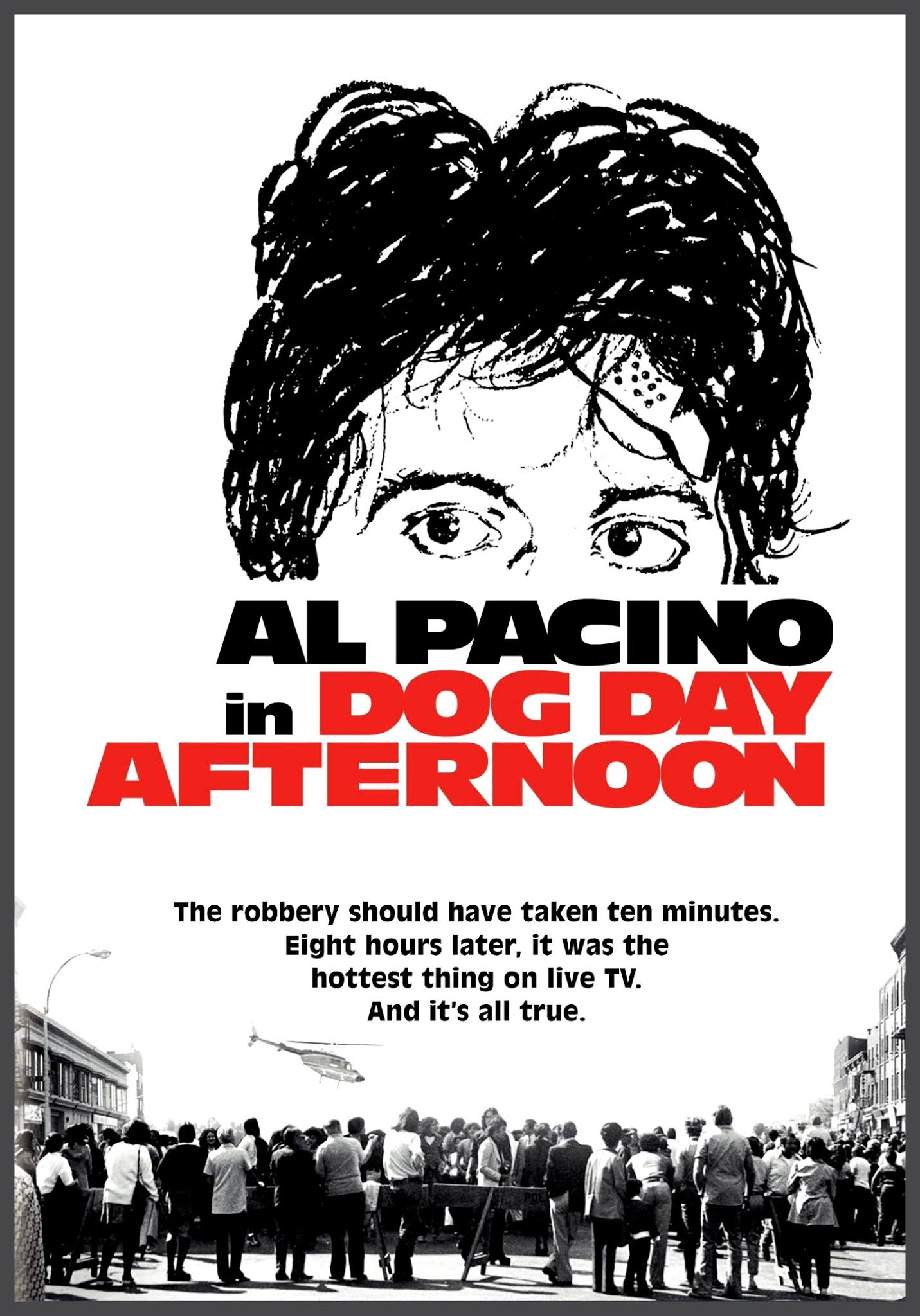
Dog Day Afternoon (1975)

Al Pacino takes a bank hostage in Dog Day Afternoon

Director: Sidney Lumet

Cast: Al Pacino (Sonny Wortzik), John Cazale (Sal Naturile), Charles Durning (Sgt Eugene Moretti), Chris Sarandon (Leon Sharmer), James Broderick (Agent Sheldon), Lance Henriksen (Agent Murphy), Penelope Allen (Sylvia), Sully Boyer (Mulvaney), Susan Peretz (Angie Wortzik), Carol Kane (Jenny)

Perhaps only in the 70s could a failed bank robber have been turned over-night into a counter-culture folk-hero. It’s the subject of Sidney Lumet’s thrilling, heist-gone-wrong movie, set on one sweltering day in New York when Sonny Wortzik (Al Pacino) tried to rob a bank to fund the sex-change operation of his boyfriend Leon (Chris Sarandon). He ends up taking the co-operative bank staff hostage while a media and public firestorm takes place outside the bank, mixed in amongst an army of trigger-happy cops. And it’s all based on a true story.

Sonny is far from your hardened criminal. He doesn’t want anyone to get hurt. He takes care of the hostages, who all become immensely fond of him and his less confident partner-in-crime Sal (John Cazale). When the police and media turn up, Sonny is outraged at the trigger-happy police presence and quickly wins the support of the crowd with his honesty, bluntness and quick wit. With the police incapable of controlling the situation, soon he is actively playing to the crowd, taking phone calls from the press in the bank. He becomes a counter-culture icon, sticking it to the man (his famous chant of “Attica!”, refers to the famous prison riots, where prisoners rioted to secure their rights).

It’s the key topic that fascinates Sidney Lumet, in this brilliantly frentic, edgy and dynamic film, that captures the tension in New York, where it felt like the careful balance between law and order could disintegrate any time. Lumet’s improvisational feel with the crowds, the edgy, raw performances – particularly from Pacino and Durning, both of whom are sensational – and the sense that anything could happen at any time. Dog Day Afternoon is about a city on the edge, combined with the ability of the media to turn regular people into stars. There was little faith in the authorities, and even a little bit of nose thumbing in their direction could sway the crowds.

At the centre of all this is Sonny, a fascinatingly flawed person, partly absorbed with being the centre of attention, part desperately trying to work out what his best move is among an increasingly narrowing number of options. Al Pacino nearly didn’t take the role, after suffering a near nervous collapse from the pressure of Godfather Part II – but, after committing to the film, he gave one of his most extraordinary performances of an era he and a small group of actors dominated.

Sonny feels increasingly trapped in his predicament. The robbery of the bank is hilariously cack-handed from the start – one of the robbers bails in minutes and has to be begged not to go home in the get-away car – and it becomes clear that for Sonny this is all a last desperate throw of the dice. Both of his relationships – with his first wife and his second marriage to Leon – are relationships on the brink of disaster, destabilised by Sonny’s desperate need for prove of love and affection. He’s a man uncertain in his own skin, smart enough to know the world isn’t fair, but not smart enough to know what to do with it. Fundamentally decent, but forced into illegal actions. Pacino delivers this with the expected fireworks, but when we see Sonny away from the public gaze, he’s a sad, broken-down, isolated man who genuinely doesn’t know where his life is going.

Dog Day Afternoon was radical at the time for how it deals with homosexuality. Neither Sonny nor Leon are presented – as might have been expected at the time – as limp-wristed or fey, but just regular guys who happen to want different things from life. Chris Sarandon (Oscar nominated) is strikingly tender, low-key and world-weary as a man resigned to what the world is throwing at him, from the emotional pressure of meeting Sonny’s needs for affection, to spending every day feeling trapped in his body and facing suspicious stares from all around him. Pacino presents Sonny as a masculine, dynamic figure whose sexuality is just part of his personality. It’s a film not afraid to acknowledge the love between men, and never considers this anything other than entirely normal – something extremely unlikely in 70s cinema. Indeed, you can see the mood of the time in the way the crowd changes once the motivations behind Sonny’s actions becomes clear. Hostility grows – through many gay rights activists quickly arrive to bolster the crowd. The films normalising of homosexuality, also serves as a critique for the assumptions and reduced options many identifying as gay had at the time.

Of course, this all makes the entire siege even more attractive to the media. The film is a neat satire of the way the press can turn events like this into entertainment. A pizza delivery guy, sent to feed the hostages, can barely contain his excitement, screaming “I’m a star!”. At least two hostages refuse offers to leave the siege – at least partly, it’s suggested, because there is nowhere better to be than at the centre of the show. Pacino’s electric playing to the crowd demonstrates how Sonny’s firecracker sense of the turmoil of the period – the violence of the authorities and the lack of justice for the regular guy – helps feed this. The media’s eagerness to sensationalise the events, do turn them from real life into entertainment – and the way so many characters and on-lookers yearn to be part of a real-life drama – is sharply critiqued, with truth and humanity sacrificed for prime-time ratings (ideas Lumet would explore even more deeply in his next film Network).

It’s also fascinating to watch the cack-handed police inexperience at handling sieges like this, from the lack of central control to the trigger-happy cops, to allowing public and the media to get within a few metres of the bank entrance. Charles Durning is superb as a frazzled police sergeant, out of his depth, unable to control his colleagues and totally lacking the calm and control needed for hostage negotiations. He’s replaced in the operation by FBI agent Sheldon – played with a chilling distance by James Broderick – who represents the other side of the law at the time: ruthless, cold and very ready to switch from negotiation to execution.

Sonny may look is in control of things, but it’s quickly clear no-one really is. Even Sonny feels this, Pacino delivering with a resigned calm a scene where Sonny asks one of the bank tellers to record his final will. Dog Day Afternoon is also a tragedy, with the real victim being Sal, Sonny’s partner in the robbery. He’s played with an almost childish innocence by John Cazale, as a not very-bright man completely out of his depth, whose idea of a foreign country to escape to is Wyoming (a hilarious piece of improvisation by Cazale). While Sonny is the public face of the situation – and someone law officials figure they can work with – Sal becomes a dangerous unknown quantity for them that they feel needs to be disposed with. An offer they openly make to Sonny, who furiously rejects it (but, tellingly perhaps, doesn’t tell Sal about).

Poor Sal sweetly chats with the staff. He quietly warns about the dangers of smoking. He sweats and timidly waits to be told what to do. He bravely tells Sonny that he is completely ready to shoot the hostages, while clearly having no idea about the emotional reality of doing this. He meekly follows instructions and is responds with panic to almost every situation. Cazale’s flawless performance turns him into the real victim here, completely unprepared in every way for the situation he is in (he whiningly complains about being called gay on the news, and is terrified at the idea of flying with the hostages to a foreign country, having never been in a plane before). It’s a wonderful personal tragedy that plays in the background of the film.

Lumet’s film has the dynamic vibe of a fly-on-the-wall documentary turned drama. Pacino is the perfect actor for this, his performance (Oscar-nominated) sensational, high-octane and demonstrative mixed with confused, vulnerable and eventually traumatised and guilt-ridden. The film brilliantly balances questions of politics, media and sexuality, offering seering critiques of attitudes around all three. Wrapped into a fire-cracker film, this is a brilliant piece of social commentary, personal tragedy and street theatre. Overlooked more than it deserved, it’s a masterpiece of 70s film making.