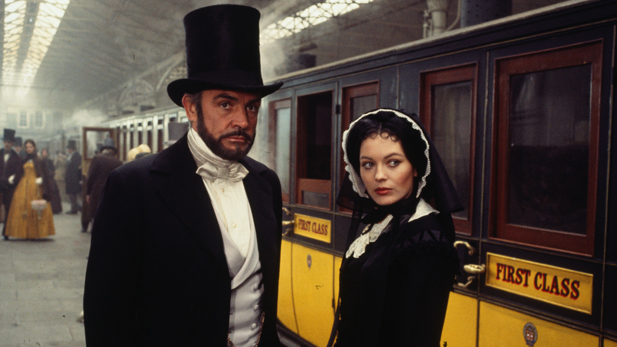
Category: Heist film

The First Great Train Robbery (1978)


Sean Connery and Lesley-Anne Down grab a train ride in The First Great Train Robbery

Director: Michael Crichton

Cast: Sean Connery (Edward Pierce), Donald Sutherland (Robert Agar), Lesley-Anne Down (Miriam) Alan Webb (Trent), Malcolm Terris (Henry Fowler), Robert Lang (Inspector Sharp), Michael Elphick (Burgess), Wayne Sleep (Clean Willy), Pamela Salem (Emily Trent), Gabrielle Lloyd (Elizabeth Trent), James Cossins (Harranby), André Morell (Judge)

When you think about Michael Crichton, it’s easy to forget he had many more strings to his bow than just writing airport plot boilers. He created ER, he wrote and directed a number of films (most famously WestWorld) – and one of his best books is actually a piece of semi-history, The Great Train Robbery. This book – a brilliantly researched and entertaining part history, part fictionalisation – covers the story of the Great Gold Robbery of 1855, a train-based gold heist. 

Crichton’s film of this book takes a slightly different tone – its realism is toned down slightly, its nose-thumbing anti-establishmentism shaved off, in favour of a lighter comic farce, a caper movie. It makes for an enjoyable movie – but it’s less interesting than the book’s documentary realism and its careful construction of the vast number of obstacles the criminals needed to ingeniously overcome.

Edward Pierce (Sean Connery) is a professional criminal who can pose as an upper-class gent. Having befriended a number of senior people from a leading city bank, he plans a daring heist on a train carrying gold from London to Dover – gold bound for the Crimean war. Pierce puts together a detailed plan – that involves gaining possession of copies of four keys essential for getting access to the safe on the train containing the gold – and recruits a team including expert locksmith and pickpocket Robert Agar (Donald Sutherland) and cunning courtesan Miriam (Lesley-Anne Down). 

The First Great Train Robbery is a caper – and it has all the structure and energy you would expect. From Jerry Goldsmith’s lyrical score to the framing device that constantly returns to Pierce’s key box getting fuller and fuller (like fingers flying up when recruiting The Magnificent Seven), the whole shebang is told with real lightness. Nothing is too serious – the criminals’ actions aren’t designed to hurt anyone (apart from one of their number who turns informant) – and the overall mood is a lark, with the criminals engaging in a boys’ own adventure.

This is helped by the excellent light-comedic playing from Sean Connery and Donald Sutherland as the two main architects of the crime. Connery uses his smoothness (hiding a chippy edge) extremely well – he’s the charming man you’d want to spend time with, and he wraps you up in his own sense of fun. Any obstacles are usually met with a wry smile – like some sort of period Danny Ocean, Pierce is always one-step ahead of the game. Sutherland – with an odd, half Irish accent – makes a very good put-upon wingman, grumbling but still enjoying the ride.

Most of the rest of the cast don’t make much of an impact. Lesley Anne-Down gets some comedic business – particularly a seduction that is designed to go wrong to gain possession of a key – but not a lot else to do. Malcolm Terris and Alan Webb bluster as arrogant dupes. Robert Lang growls as an angry cop. Wayne Sleep of all people pops up as an expert burglar.

The film sweeps from set-up to set-up, very competently filmed, with some decent design and photography (it was the last film of legendary photographer Geoffrey Unsworth). Crichton is a decent director, and if some moments look a bit dated or are a little too much (some make-up for Sutherland at one point looks rubbish) it’s still pretty good.

The real problem is that you lose the sense that, by-and-large, a lot of this actually happened – I mean, sure, it was probably with less banter and jokes, but people really did a lot of this stuff. The film doesn’t always dwell enough on the problems the thieves face, and doesn’t always explain why these obstacles are so vital to overcome. It misses a trick here with its eagerness to keep barrelling forward.

What this means is that film sometimes misses the sense of triumph and satisfaction of overcoming real hurdles – or the frisson of having it clear that a lot of these were real solutions that a real person came up with. The film also rushes its final conclusions. Historically we don’t know what happened to the gold and there was a trial of some of those involved – but the film never really makes that clear. Its conclusion zeroes in again on some hi-jinks, but it doesn’t really make clear the impact, the consequences or what happened to the Macguffin at its centre. You also don’t get the sense of hypocrisy the book mines so well, with the corruption of the upper classes being glossed over by society, but the thievery of the working classes being outright condemned. I missed that a lot from the film – fun as it is.

It’s an entertaining film but, to be honest, it’s not as good as the book – which is actually really worth a read. Crichton is a man with more talent than people give him credit for.

Triple 9 (2016)


An all-star cast fail to make Triple 9 a classic, or even a decent watch

Director John Hillcoat

Cast: Casey Affleck (Chris Allen), Anthony Mackie (Marcus Belmont), Chiwetel Ejiofor (Michael Atwood), Clifton Collins Jnr (Franco Rodriguez), Woody Harrelson (Jeffrey Allen), Aaron Paul (Gabe Welch), Kate Winslet (Irina Vlaslov), Gal Gadot (Elena Vlaslov), Norman Reedus (Russell Welch), Michael K Williams (Sweet Pea), Teresa Palmer (Michelle Allen)

Triple 9 that never gets anywhere near fulfilling its potential. You look at the cast and you think “Wow! That has got to be one of the films of the year! Right?” Wrong. Triple 9 is another journey into the macho bullshit of the criminal underworld, where the “good” thieves have honour, the bad thieves are unscrupulous, the cops are all sorts of shades of grey, and the real baddies are foreign gangsters exploiting American criminals. All told with a backdrop of shouting, shooting and doping. You feel, and I suspect the filmmakers feel as well, that the film must be about something – but it really isn’t, it’s a super violent, dark Rififi with none of that classic’s touch.

Michael Atwood (Chiwetel Ejiofor) is a crack crook, leader of a gang that executes difficult jobs on demand for their Russian paymaster, mob boss’ wife Irina (a showboating Kate Winslet). Atwood’s crew includes dirty cops Marcus Belmont (Anthony Mackie) and Franco Rodriguez (Clifton Collins Jnr). Tasked to steal federal investigation data on Irina’s husband, Michael and his crew decide their only chance is to distract the police with a Triple 9 call out – the shooting of a cop. Their target? Belmont’s new partner, hotshot honest cop Chris Allen (Casey Affleck).

Triple 9 isn’t particularly inventive or unique. The problem is it also isn’t very interesting. This is largely because you don’t engage with any of the characters. Atwood is a blank, played by a disengaged Chiwetel Ejiofor. He has a standard sub-plot of a son he isn’t allowed to see. But it’s not enough to get us caring about him. Chris Allen isn’t particularly likeable (Casey Affleck is not the most relatable of actors) so it’s hard to get worked up over whether he’s going to be killed or not. The most interesting character is Anthony Mackie’s Belmont – but he has been saddled with an “I feel growing guilt” sub-plot that you’ve seen dozens of times before.

Perhaps aware that a lot of the writing was paper-thin, the film recruits a number of familiar actors to “do their thing” so that we can shortcut to what sort of person the character is meant to be, by seeing crude drawings of their more famous, nuanced roles. Aaron Paul’s performance will be familiar to anyone who has seen Breaking Bad; Norman Reedus essentially reprises his role from The Walking Dead. Woody Harrelson does his grizzled half-genius, half-dope fiend, difficult man schtick he’s done many times. Only Kate Winslet is cast against her type – and her scenery-chewing enjoyment of the role makes her feel like an actress doing a guest turn, rather than a real person.

Hillcoat’s direction doesn’t bring any of the film’s threads together. It never feels like a film that is about something. Where is the depth, where is the interest? It’s not even a particularly exciting film to watch, with the heist moments not particularly exciting or interesting, and its shot with a wicked darkness that never gets the pulse going. After some initial build-up, the plot never really goes anywhere unexpected, and the final pay-off is stretching for a narrative weight it just doesn’t have. 

Hillcoat and crew obviously feel they are making a higher genre film – but this is really just a pulp thriller, with actors acting tough but never convincing. None of the major events make a massive amount of sense: characters run into each other in a way that stretches credulity, the Russian mob runs its business with a counter-productive brutality, the dirty cops alternate between super cunning and horrendously dumb.  It’s a dumb, badly written movie that never comes to life. It doesn’t even have the real moments of excitement you need to at least grab you while the rest of the film drifts along. Not good. Not good at all. Triple 9? Not even triple stars.

Mission: Impossible (1996)


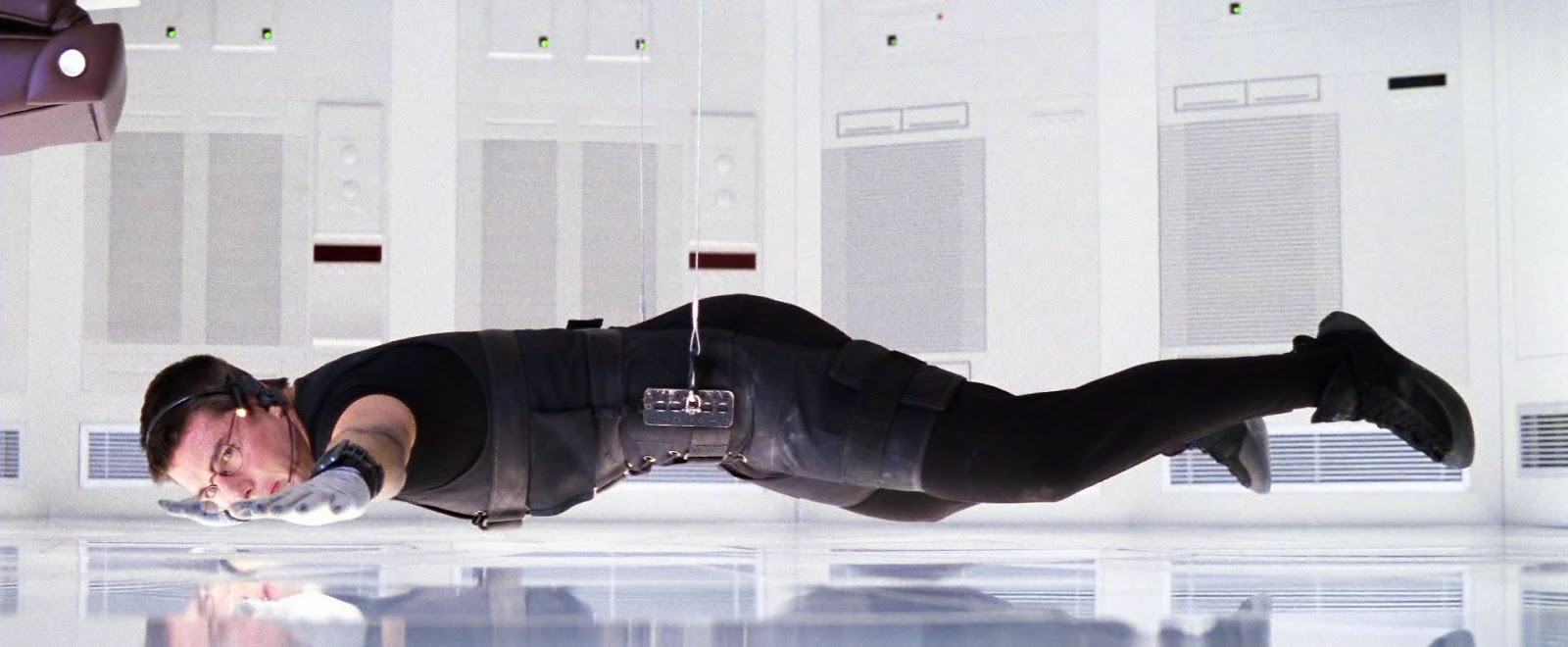
Tom Cruise doesn’t hang about in the most iconic sequence from the first Mission: Impossible

Director: Brian de Palma

Cast: Tom Cruise (Ethan Hunt), Jon Voight (Jim Phelps), Emmanuelle Béart (Claire Phelps), Henry Czerny (Eugene Kittridge), Jean Reno (Franz Kreiger), Ving Rhames (Luther Stickell), Kristin Scott Thomas (Sarah Davies), Vanessa Redgrave (Max), Emilio Estevez (Jack Harmon), Ingeborga Dapkūnaitė (Hannah Williams)

Everyone knows how it goes right? Bum bum bum-ba-bum-bum bum-ba-bum bum… Yup it’s the Mission: Impossible theme tune. Originally a hit TV series, it’s arguably more familiar now as this Tom Cruise-starring film series, a showpiece for his reckless physicality and insane commitment to ever more elaborate stunts.

Ethan Hunt (Tom Cruise) is framed as a traitor after a disastrous mission in Prague. While trying to reclaim a list of agents’ cover names, Cruise and his team are betrayed by a mole within IMF. The rest of his team, including his mentor Jim Phelps (Jon Voight), are killed though Phelps’ wife Claire (Emmanuelle Béart) survives. On the run, he has to steal the real secret list himself to help discover the identity of the traitor.

Who would have thought over 20 years later Tom Cruise would still be heading out on Impossible Missions? The success of the franchise is rooted in this engaging spy thriller. How many times have I seen this film? Countless times. It’s inventive and playful. It’s got a decently intriguing plot that keeps you on your toes.  Above all it’s fun.

At the time of its release people talked about its impenetrable plot, but it’s basically a standard “double cross” film. Someone we think is a hero is basically a wrong ‘un, so our hero has to follow every means in his power to find out who it is – including pretending to be a wrong ‘un himself. Understand that, and the plot is pretty basic. The main reason people find it confusing is the film assumes you’re smart enough to follow what’s going on, without characters sitting down and spelling everything out. Isn’t clumsy exposition the sort of thing we criticise other films for? Isn’t it nice not to have a film that just assumes you can follow the whole thing?

Anyway, the plot and characters are largely there to carry us from one spectacle to another. The film starts with a bang. Can you think of many films that kill off most of the cast (and the recognisable actors) in the opening 15 minutes? It’s such a daring opening it leaves a whiff of peril over everything else – even after we discover some people weren’t actually killed, and despite no other characters dying apart from the baddies.

Killing off the team does mean the film is a bit more “Tom Cruise with some back-up” rather than a team effort – but that doesn’t really matter does it? Wee Tom of course does all his own stunts and looks cracking. Acting wise, he’s “cruising” through his standard turn as a cocky protegee who goes through a steep learning curve. But it doesn’t really matter, because he looks great and everything he does is pretty damn cool. He even manages to mine some real emotional pain when he realise some of the people closest to him have betrayed him.

The film’s centre piece, that famous spiderlike descent from the roof to break into a sealed computer room in Langley, is probably most responsible for making this film a hit. How many times has that scene been spoofed? (So much so people no longer remember its almost completely lifted from 1960s crime caper Topkapi) It carries more impact than the big top-of-the-train scene that ends the film, because we immediately understand the difficulty of what Hunt is trying to do. How many times have we had to balance, played a game where you couldn’t step on something, had to be as quiet as possible, or keep as calm as you can? I’ve never had to balance on top of a speeding train, but I’ve had to do all that stuff. Everyone watching it can relate to the tension of doing this stuff. It’s a little masterpiece scene that also owes a fair deal to Riffi’s silent robbery scene.

The scene also shows what a triumph of style this is. De Palma directs with a breezy lightness and love for the business of spycraft (I suspect he was taking the money big time, as he injects very little of his personality into it, but it works and he has an eye for the memorable shot), Tom Cruise is pretty damn cool. The film understands the simplicity of iconic shots – Cruise jumping away from an exploding aquarium in a restaurant is a simple stunt, but it looks great. The film has a great range of small-scale spycraft as well – from Cruise cracking a bulb and sprinkling the glass outside a door as an early warning detector, to him carefully timing how long to stay on a phone call to allow a trace to go so far.

Of course, some things in the plot make very little sense. The traitor seems rather randomly motivated (he’s basically pissed off at the end of the Cold War, despite earning way more than the average joe and being married to an impossibly attractive younger wife) and his effectiveness and smartness fluctuates according to the demands of the plot (Bond villain-like, he inexplicably leaves Hunt alive at one point for no reason). The idea of a government organisation where missions can be chosen to be accepted or not is in itself rather silly. The use of the internet and e-mail in the film looks hilariously dated today (Hunt basically sends a series of random e-mails to made up addresses – Max@Job314 indeed…).

To be honest, its breakneck pace is probably why some people struggle to keep up with what’s going on, but generally I wouldn’t let it bother you. It helps as well that there is a terrific cast of interesting actors – one of the great strengths of this series has always been its unconventional casting decisions. Would anyone else have thought of Béart and Scott Thomas as secret agents? Each actor has the skill and confidence to invest often paper-thin characters with depth – Rhames plays Luther so well, he stuck around for the rest of the series, despite us learning very little about him here. Voight has a perfect world-weary fixedness as Phelps, Reno is great value as a sociopathic hired gun and Redgrave has a lot of a fun as a cut-glass arms dealer.

Mission: Impossible is, to be frank, tons of fun. It’s basically a simple film disguising itself as a complex one, but it’s rewarding enough that you enjoy working out the plot alongside Hunt. It treats the viewer with a certain rewarding confidence and it’s crammed with distinctive and iconic shots. Is it any wonder Cruise saddled up five more times (and counting) and chose to accept the mission again?

Ant-Man (2015)


Paul Rudd springs into action as Ant-Man

Director: Peyton Reed

Cast: Paul Rudd (Scott Lang), Michael Douglas (Hank Pym), Evangeline Lilly (Hope van Dyne), Corey Stall (Darren Cross), Bobby Cannavale (Paxton), Michael Peña (Luis), Anthony Mackie (Sam Wilson/Falcon), Judy Greer (Maggie), Hayley Atwell (Peggy Carter), John Slattery (Howard Stark)

Back into Marvel’s Cinematic Universe, as yet another comic book hero comes to the big screen. Is there going to be anyone who has appeared in a Marvel comic at any point who isn’t going to find their way into a live action film at some point? It’s looking unlikely!

Hank Pym (Michael Douglas) was formerly Ant-Man, a super-hero who can shrink himself to the size of an ant, with superhuman strength. In the present, he has been forced out of his own company by his former protégé Darren Cross (Corey Stoll) and his estranged daughter Hope van Dyne (Evangeline Lilly). When newly released thief Scott Lang (Paul Rudd), desperate to provide for his daughter, steals Pym’s Ant-Man suit, Pym identifies him as the man who he can train up to take his place as Ant-Man and help to protect the shrinking technology from being misused by Cross.

Ant-Man was a project developed for many years by Edgar Wright, dynamic director of the Cornetto Trilogy with Simon Pegg and Nick Frost. But our old friend Creative Differences reared its head, and studio and director went their separate ways. Which is a real shame as you can’t shake the feeling a director with genuine invention and imagination might have been able to craft something truly original out of this, rather than the essentially solid piece of craftwork it is.

There’s nothing particularly wrong with Ant-Man. It’s just a rather average, forgettable film with moments of interest. It’s a jolly, inoffensive little caper, which goes through the motions of the origins story of a hero without offering anything that different from what we’ve seen dozens of times before now. It’s all very professionally done, and even witty in places, but it’s nothing special.

This is particularly a shame since there are genuine moments of originality. A battle between Lang and Cross, both shrunken, takes place in a child’s train set, with the film cutting between the different scales of events for some effective comic impact (so we see the train crash with seismic impact on small scale, then see the same event at normal scale where it seems laughably minor). Similarly, Michael Peña’s character tells a series of anecdotal stories in voiceover in a laid back, hipster patter, with his words and phrasing exactly lip-synched by the people in the story. It’s a neat little piece of cinematic invention.

The heist structure of the film is good fun, and the pseudo-science of shrinking is entertainingly (and consistently) explained. Even our hero’s ability to control ants doesn’t seem too silly (which is really saying something).

It’s just all pretty much what you would expect. Corey Stoll’s villain in particular seems a slightly contrived after-thought, an antagonist whose existence serves as a contrast to Lang and Pym rather than a character who seems to be organically developed. Their final confrontation is amusingly done – but it’s a familiar Marvel trope now: a hero and villain with the same powers facing off. We’ve seen it done many times since the first Iron Man film.

Saying that, Paul Rudd is a decent and engaging lead (even though he seems to be effectively playing himself) and he makes Lang into a character it’s easy to root for (even if we’ve seen the sort of “Dad wants to prove himself” narrative many, many times before). Michael Douglas could do his mentor role standing on his head, but brings the role a nice lightness of touch. Evangeline Lilly brings a nice mix of resentful and caring to a tricky role as Pym’s overlooked daughter.

The problem you always have is that everything in the film feels a little bit too straight-forward and easy. It’s not a bad thing that this is a film that simply sets out to entertain, but somehow, enjoyable as it is, you want something a little bit more rather than the rather safe concoction that we have here. It’s fun while it lasts but then it disappears from your mind almost completely once it’s finished. Is that a good thing? Well it makes good escapism. But plenty of these films have managed to be more than just something to enjoyably pass the time. Which is all Ant-Man really is.

Die Hard (1988)

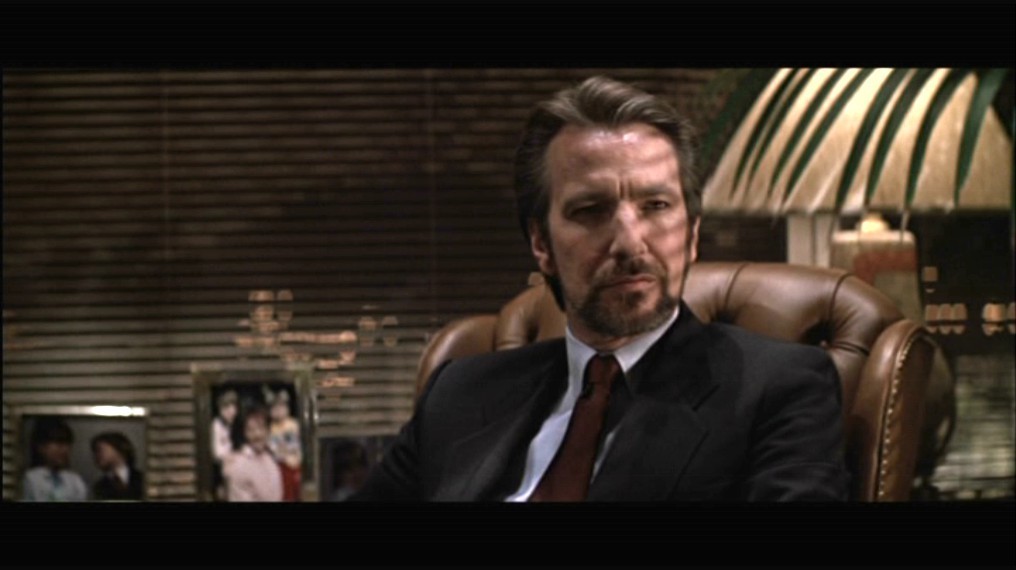
Alan Rickman sets the bar for all Hollywood villains in Die Hard

Director: John McTiernan

Cast: Bruce Willis (John McClane), Alan Rickman (Hans Gruber), Alexander Gudonov (Karl), Bonnie Bedelia (Holly Gennaro McClane), Reginal VelJohnson (Sgt Al Powell), Paul Gleason (Dwayne T. Robinson), De’Voreaux White (Argyle), William Atherton (Richard Thornburg), Clarence Gilyard (Theo), Hart Bochner (Harry Ellis), James Shigeta (Joseph Yoshinobu Takagi)

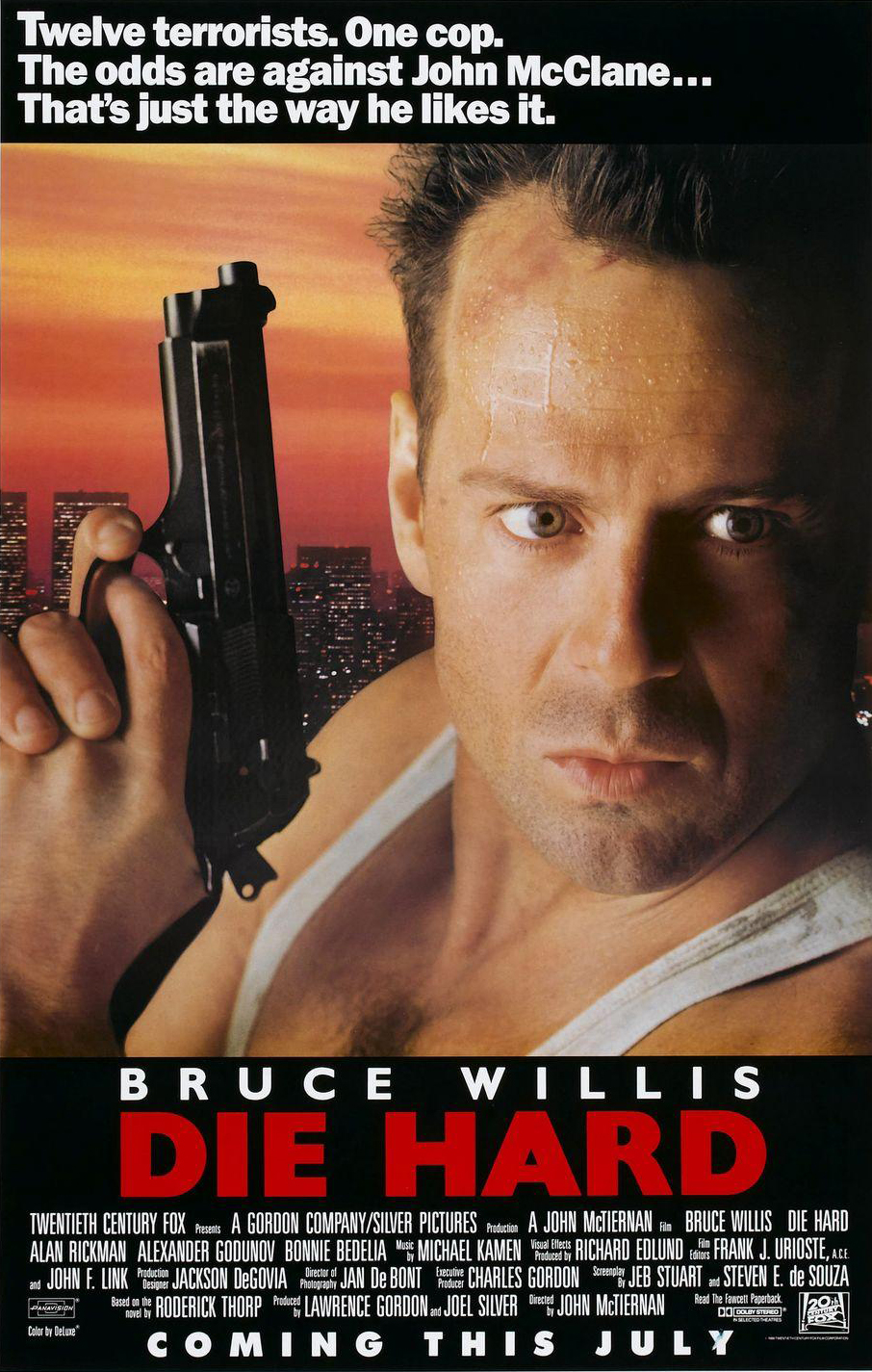
Is there a better action film ever made than Die Hard? In fact, I’m almost tempted to say: has a more influential film emerged from 1980s Hollywood than this masterpiece of tension, action, thrills and wry humour? Die Hard set the template for action: the structure of the hero and villain locked in a battle of wits, claustrophobic locations, one man (sometimes now a woman) against overwhelming odds… There is a reason so many films now have their plot explained as Die Hard on a [insert eccentric location or method of transportation here].

The plot is brilliantly simple and streamlined – so compellingly is the whole enterprise put together that you don’t notice that it was all being made up in the spot (the main hint of that being there is clearly no ambulance in the baddies’ arrival truck). If you don’t know the plot, where have you been since 1988? John McClane (Bruce Willis) is a cop who’s in LA to spend Christmas with his estranged wife Holly (Bonnie Bedelia). Joining her office party at Nakatomi Plaza, a massive skyscraper still partly under construction, their marital discord is interrupted by the building being seized by a group of European terrorists (or are they?) led by urbane sophisticate Hans Gruber (Alan Rickman). Now it’s all down to John, dressed in nothing more than a vest and trousers, without even any shoes to take on a dozen heavily armed baddies single-handed. 

Die Hard is a perfect storm – everyone involved was in the right place, at the right time of their careers, with material they were perfectly able to bend to their skills. There have been so many wonky thematic rip-offs of this film that a lot of credit should go to John McTiernan for setting such a brilliant template that proved irresistible to adapt. It goes without saying that the film is whip-sharp and rattling with tension, and that its action moments are brilliantly shot and choreographed. What makes Die Hardwork so well is that it puts character and performance at its heart. McClane is a character we can root for, a regular guy as far away from an Arnie or Sly superman as you can get; similarly Gruber is so charming and charismatic, part of you wants him to win.

Although there is plenty of blood and violence, McTiernan doesn’t dwell on it (watch the far more brutal Die Hard 2 for contrast), and there is no sadism in the editing. Instead, McTiernan invests the film with a lot of sly humour and wit – and he is not afraid to acknowledge that there is an illicit thrill in watching intelligent people like Gruber put detailed plans into place, executing them perfectly while running rings around the law. The use of Ode to Joy as Gruber’s personal theme tune is incredibly playful, and the film successfully positions itself in its narrative with Gruber as the protagonist and McClane the antagonist (with the difference that McClane is the character we root for) – as such, McClane’s reactive role in the plot constantly stresses his isolation and vulnerability, while Gruber’s control of the narrative positions him as a truly daunting opponent. A modern film would have kept the reveal of Gruber’s plan until the third or fourth reel – here Gruber tells us within five minutes of arriving that he’s there to rob the place; immediately we are connected with him and understand his aims, and understand the structure of the film coming up from the start.

The humour of the film is never heavy handed, and it’s perfectly balanced with the threat – Gruber and McClane are witty and dry but their characters are never undermined. The film never forgets its Christmas setting, which makes for a number of humourous contrasts (altogether now “Now I have a machine gun. Ho-Ho-Ho”). There is no comic relief as such, and every character serves a clear role in the plot – no fat on the bones here. I also really like the fact that the film at many points subtly undercuts machismo: the gung-ho FBI agents Johnson and Johnson are cocksure morons; as the SWAT team storms the building one of them stops to shriek “ow” after pricking his hand on a thorn. Sly comedy runs throughout – preparing to defend the building from the same SWAT attack, one of the terrorists glances around nervously before helping himself to some candy from behind a shop counter (because kidnap and murder are not a problem, but stealing sweets is really naughty). The film is packed with rich incidental moments like this that charm the viewer, even while bodies piles up and parts of the building go up in smoke.

Bruce Willis was also the perfect choice as McClane. Not only does he have the physical capability, but he has the acting skills. Long before he succumbed to the smirk or the grimace as his default settings when bored (watch Die Hard 5 – or rather don’t – to see the comparison between then and now), he makes McClane very real. Yes he’s confident and arrogant, but McClane is also laced with self-loathing (watch him beat himself up after his conversation with Holly) and under the surface he has a deep humanity, which dedicates him to saving lives (twice in this film he lambasts himself for not doing enough to save people). Willis not only takes a physical battering over the course of the film – don’t we all wince at the idea of running barefoot over a floor of glass? – but he’s also half the time desperately scared under the adrenaline, using wit and defiance as a defence mechanism. McClane does things in this film we could never do in real life (jump off an exploding building using a fire hose as rope – yup you’re dead) but Willis always feels like a regular guy – someone we can understand, relate too. He’s as far away from Arnie in, say, Predator as you can get.

Of course we’ve come all this way without mentioning arguably the film’s MVP, the incomparable Alan Rickman. Astonishingly, this was his first ever film, but Rickman is so perfectly brilliant in this film that I don’t think it’s an exaggeration to say every Hollywood villain since has been weighed against his performance here and found wanting. Rickman taps into a truth: wouldn’t we all love to be the baddie? Despite it all, Gruber is clearly enjoying himself throughout: to borrow a phrase, he’s an exceptional thief and since he’s moved up to kidnapping we should all be more polite. He’s also sharply intelligent, his invention and arrogant confidence that he has thought of everythingare actually rather thrilling – while his exasperation at both McClane and the inadequacies of his underlings are oddly charming. Rickman’s arch and clipped delivery turns lines into endlessly quotable bon-mots – he has a perfect sense of timing and says more with an arched eyebrow than other actors could with a page of dialogue.

The film’s master touch is to recognise early the strength of these two characters and to make the main duel not so much a physical fight as a battle of wits. Skilfully navigating the viewer around the building, Gruber and McClane execute move and counter move, both thinking fast on their feet while never losing sight of their main goals. The film also brilliantly allows them to engage in a running verbal battle via walkie-talkie, making their clash increasingly personal – and also allowing both characters to demonstrate their ingenuity. It also allows us to invest in the clash between them – and to make the sense of one-upmanship that runs through the film feel very alive.

The focus here has been on those two characters, who really drive the film – but every member of the rich supporting cast contributes hugely. Bonnie Bedelia is very effective in a difficult part as Holly – assertive, independent but never trying or tiresome (we see her point on McClane as well, who can be a jackass). Alexander Gudonov is perfect as the Han’s macho-but-short-sighted Number Two. William Atherton is gloriously vile as an exploitative reporter. Hart Bochner embodies the shallow, coke-fuelled, Masters of the Universe 80s as Ellis. Reginald VelJohnson adds a lot of humanity as the thoughtful Al Powell.

Okay there are one or two things wrong with the film (I’ve always found Al’s final use of his gun at the film’s end a bit uncomfortable, and I suspect from the conflicted messages of the soaring music and VelJohnson’s sad-faced acting that this was a tricky moment for the producers to get right). But this is an explosion of filmic joy that constantly rewards multiple viewings (god knows how many times I’ve seen this film). The action sequences never tire, the characters never lose their interest. I don’t think it’s a stretch to call it a masterpiece as well as a landmark piece of film-making.

Rififi (1955)


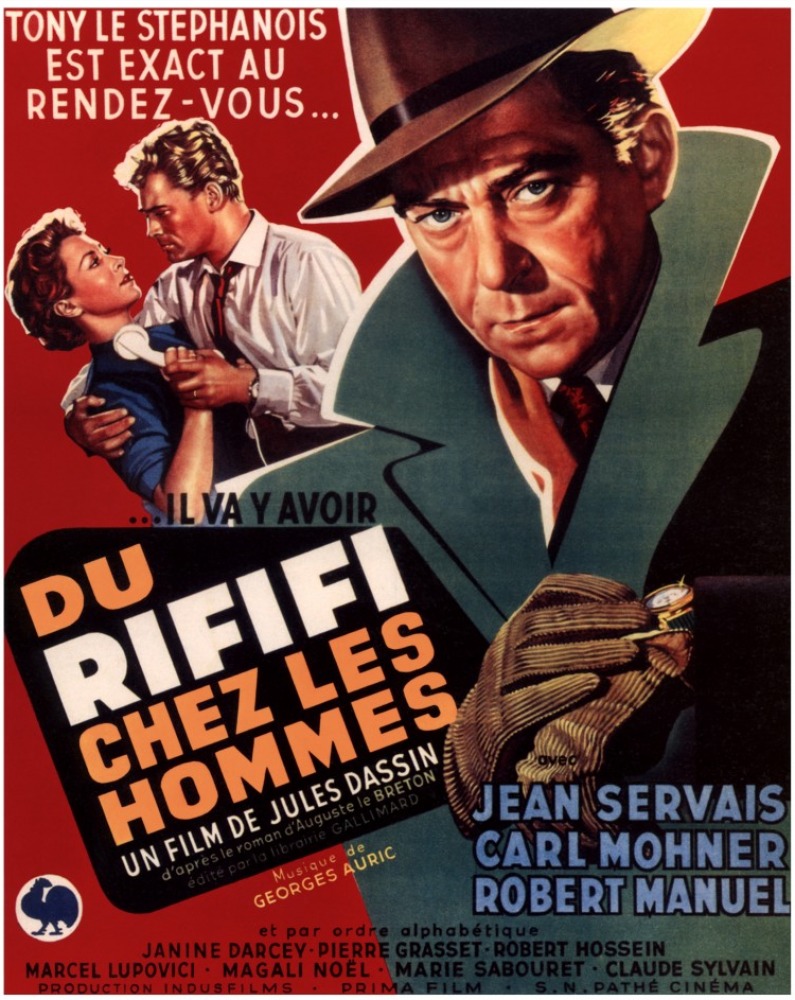
Master thieves at work!

Director: Jules Dassin

Cast: Jean Servais (Tony “le Stéphanois”), Carl Möhner (Jo “le Suédois”), Robert Manuel (Mario Ferrati), Jules Dassin (César “le Milanais”), Magali Noël (Viviane), Claude Sylvain (Ida), Marcel Lupovici (Pierre Grutter), Robert Hossein (Rémy Grutter), Pierre Grasset (Louis Grutter), Marie Sabouret (Mado), Janine Darcey (Louise)

After you’ve spent some time watching some pretty duff films, finally sitting down and watching a masterpiece of any genre is a complete relief. That’s pretty much what this film is. Which is particularly interesting when you learn the film is based on a book that Dassin (it’s director) described as one of the worst books that he had ever read. He took the job only because (with his blacklisting in Hollywood) he was worried he would never work again, and only on condition that he could completely restructure the original script.

Newly released from prison, Tony (Jean Servais) is approached to take part in a smash-and-grab raid on a jewellery store by his old criminal contacts. He rejects the idea, but after discovering his former lover has left him for a gangster rival in his absence he changes his mind, on condition that the smash-and-grab plan is replaced by a complex operation that will clear out the shop’s safe containing over 250 million Francs’ worth of jewels. But in the criminal underworld, they discover there are always bigger fish circling to take their cut by any means they can.

I watched this film three days ago, and its effect was so lasting I feel almost as if I have watched it several times in my mind’s eye since then. Jules Dassin, an under-rated director, has a mastery of visual language and tense narrative that burns nearly every single scene into your retina. Rififi is a technically assured, dazzling piece of cinema that gives heft and weight to a simple story, and also has something interesting to say about human nature and the codes that dictate the lives of thieves.

Any discussion of the film probably needs to start with its highlight: a 28 minute sequence detailing the robbery itself, told in near silence and shot with forensic detail. In fact, so intelligently thought-through was this scene that in many countries it earned the film a ban, as it was feared it was too much of a “how-to” guide for thieves. The scene is a unique creation of Dassin’s – the comparative scene in the book is no more than 2-3 pages. Here it’s a quarter of the movie.

The scene is blisteringly tense, and the decision to keep the action silent means every single noise (a piano key, the whirr of a drill, the bang of a hammer) carries huge tension. There is, as many reviewers have noted, no particular reason for the thieves to keep to strict silence – but it’s dynamite cinema. Dassin combines this tension with a delighted observance of the ingenuity of these criminals. Everyday items are brilliantly repurposed to perform specific tasks (I particularly enjoyed the use of an umbrella as a vital tool). Dassin celebrates the effectiveness and skill of these burglars, and their technique and skill is infectiously entertaining.

Dassin probably invented the genre of the heist movie here – and he encourages us to feel a delight in the accomplishment and ambition of the heist. But he also reminds us that these are criminals: weapons are banned as they will guarantee a long prison stretch; the couple whose house they invade are ruthlessly chloroformed and tied up; a policeman is bludgeoned as part of the get-away. In the third act of the film we see that Tony in particular is no shrinking violet when it comes to violence.

The build-up to the heist establishes each of the characters clearly, along with the flaws that will revisit them later: Tony makes enemies too easily, Jo’s loyalty affects his judgement, Mario is too happy-go-lucky, César has a weakness for women. A number of sequences show us the gang’s preparations – from hours of surveillance, to an amusing sequence where they experiment with methods to beat the store’s top-of-the-line alarm before a moment of inspiration hits them.

The third act of the film however takes us into a dark exploration of the loyalties and codes of honour that govern the criminal underworld. Tony’s enemies try to muscle in on the proceeds, leading to a series of increasingly violent episodes, as move and counter move is made to secure control of the funds. Here Dassin again pulls no punches – we have swearing, we have murder, we have a strung-out junkie kidnapping a child in return for a free hit – and it’s brilliantly put together.

It also tells us something. Tony has a code – and whether we agree with it or not, he’s faithful to it. Dassin himself plays the man whose fondness for a vain singer will leak out the plot details (it’s a lovely performance – and the man who was blacklisted must have had some delight here in playing a grass) and the confrontation scene with Tony is great: “I really liked you” Tony states sadly and regretfully: that doesn’t change his mind. Tony’s rival Grutter lacks even Tony’s sense of fairplay and his ruthlessness puts the other gangsters into perspective and questions Tony’s ideas of a code of honour among thieves: Grutter is a success precisely because he doesn’t give a toss about that sort of thing.

If the film has a flaw, it’s in its treatment of the female characters. Although Dassin arguably suggests that in this mileu many of them are just powerless passengers swept along by the actions of their men, they still seem less than fully formed characters, defined by simple character traits (Louise is a mother, Viviane is shallow, Ida is a flirt). The one dull section of the film follows Viviane singing in a nightclub – a scene introduced solely to drop the title and explain its meaning.

The film is also, at best, neutral in what it expects us to make of Tony brief whipping (off-screen) his ex-girlfriend Mado with a belt, after she betrays him with the gangster Grutter. Particularly as Mado seems to believe herself at fault rather than Tony. The scene is more about Tony – it’s his feeling of powerlessness that the camera focuses on – and Mado seems to shrug off the three blows she receives as just the price of living. Ah well, that’s the fifties for you I guess. And it’s not as if Tony – a moody man perfectly capable of cold blooded killing later – is a saint in any case. We also have the balance of Jo and Mario’s loving regard for their wives – and César’s misguided affection for Viviane.

And of course Tony our “hero” is certainly an anti-hero. In his first scene he’s stroppily demanding “in” on a poker game he doesn’t have the funds for. He’s demanding and surly with everyone except his godson. He is ruthless when he needs to be. Jean Servais’ crumpled, baggy face and dead-eyed stare genuinely make him look like a man who has spent five years inside. His adherence to his moral code is so rigid no level of regret will stop him punishing those whom he deems have deserved death. Dassin also undercuts his potential tragic greatness, as trivial events – a missed phone call principally – lead him to destruction. 

The film’s final sequence is inspired, and again wordless. A dying man races a car through the city to return a child to his mother. Is it devotion to the child? Does he want to get the money back to the only family he has? Has he accepted death? Is he racing for a chance of living? Around him the camera whirls, the editing is frantic and the child cavorts in the car oblivious of the danger. It’s a sequence that is both moving and strangely profound. It’s the final masterstroke in a film full of them.