Category: Historical biography

First Man (2018)

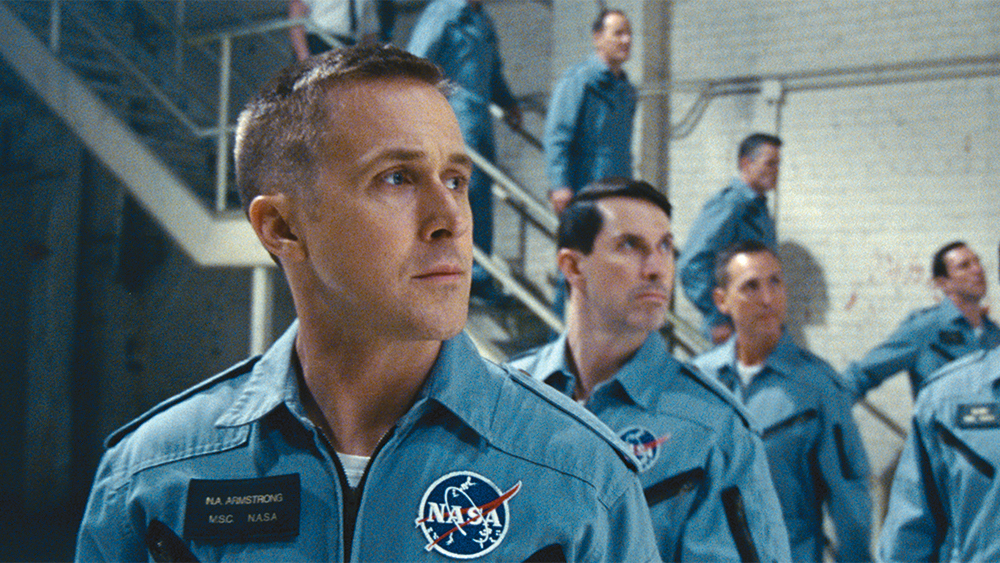
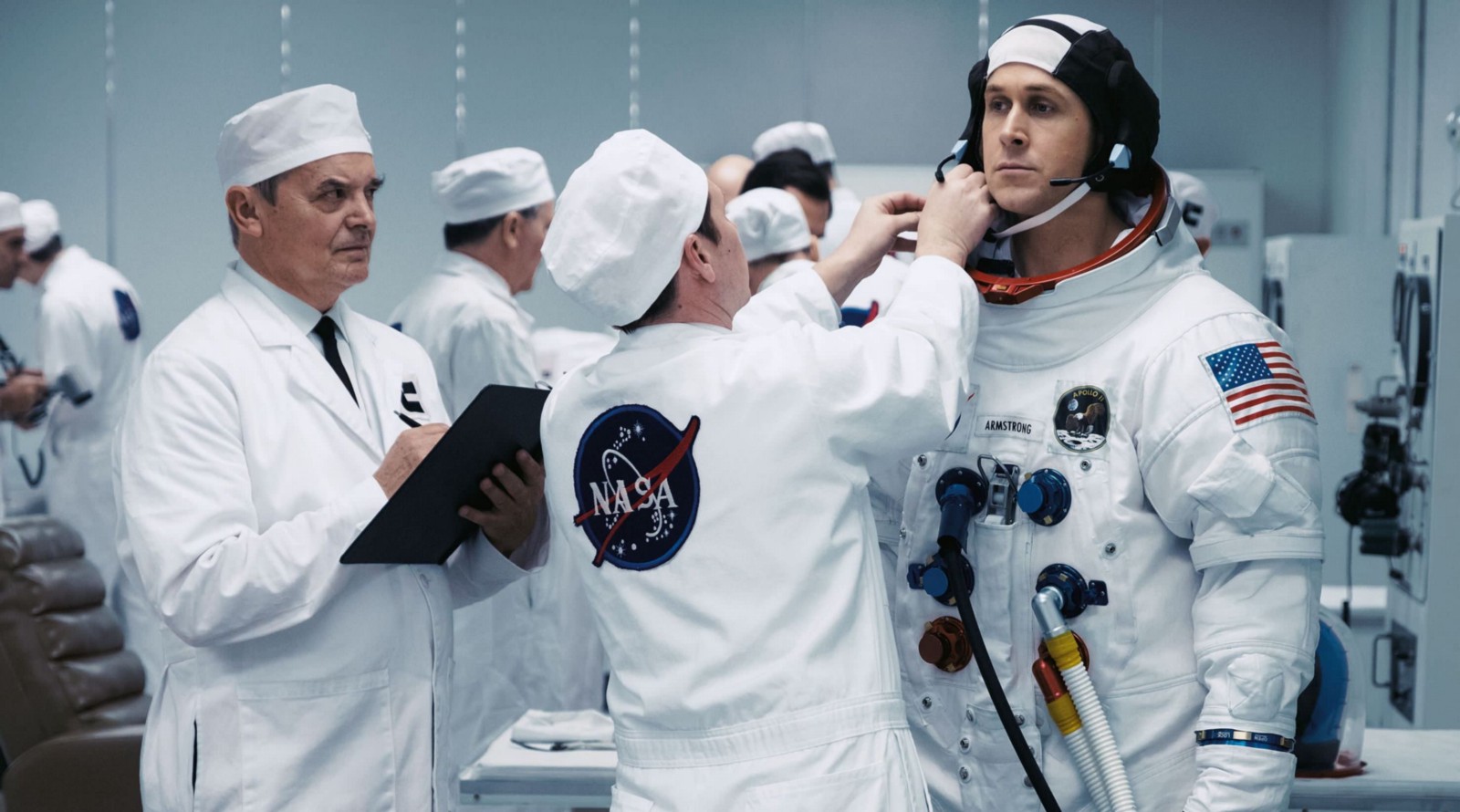
Ryan Gosling as an unreadable Neil Armstrong in the engrossing but cold First Man

Director: Damien Chazelle

Cast: Ryan Gosling (Neil Armstrong), Claire Foy (Janet Armstrong), Jason Clarke (Ed White), Kyle Chandler (Deke Slayton), Corey Stoll (Buzz Aldrin), Pablo Schreiber (Jim Lovell), Christopher Abbott (David Scott), Patrick Fugit (Elliot See), Lukas Haas (Michael Collins), Shea Whigham (Gus Grissom), Brian d’Arcy James (Joseph Walker), Cory Michael Smith (Roger Chaffee), Ciaran Hinds (Robert R Gilruth)

About halfway through this film, it struck me: Neil Armstrong is a not particularly interesting man who experienced the most interesting thing ever. It’s a problem that First Man, an otherwise exemplary film, struggles with: Armstrong himself, put bluntly, is unknowable, undefinable and, in the end, an enigma I’m not sure there is much to unwrap. Which is not to detract one iota from Armstrong’s amazing achievements, or his legendary calmness under pressure or his courage and perseverance. It just doesn’t always make for good storytelling.

First Man charts the years 1961-1969. During these years of professional triumph, Armstrong has success as test pilot, an astronaut on the Gemini programme (including command of Gemini 8, carrying out the first docking in space then saving his own life and the life of his pilot with his quick thinking when the mission nearly encounters disaster) and then the Apollo programme and his own first steps upon the moon. But Armstrong’s life is dogged by loss and tragedy, first his five-year old daughter to cancer, then a string of friends in accidents during the hazardous early days of the NASA space programme, including the deaths of Gus Grissom, Ed White and Roger Chaffee in the Apollo 1 fire. Armstrong becomes a man burdened with these losses.

There is very little to fault in the making of First Man – in fact it’s further evidence that Chazelle is a gifted filmmaker with a glittering future of great movies ahead. There are two things this film absolutely nails: the supreme majesty and awe of space and the terrifyingly rickety nature of the spacecraft we send men up into it in. 

Helped hugely by a superb score by Justin Hurwitz, which makes extensive and beautiful use of a theremin, the film captures the sense of mankind’s smallness, our vulnerability, in the face of the overwhelming vastness of space. Mixing goose-bump inducing wailing solos with orchestral sweep, and encapsulating the feeling of how small and lonely man in space is, the score goes a long way to match up with the visuals in creating a sense of space. The Oscar-winning visual effects – mixing computer graphics with some ingenious practical effects – never intrude but bring out the gritty reality of tin cans in space. 

Chazelle also really understands the impact of being so far beyond anything we can imagine, and his moon landing sequence is a thing of beauty. He expertly uses a number of close ups in the confined, claustrophobic campaign and largely eschews exterior shots (most of which only use the perspective of the crew’s view from the tiny windows, or of the cameras mounted on the side of the spacecraft). The moon landing follows suit, as we are thrown in alongside Armstrong and Aldrin as the lunar landing module takes its place on the moon – until the hatch opens with a whoosh of air (and sound) escaping the picture. And with that whoosh, the camera flies out of the hatch and switches – in an astonishing visual trick – from wide screen to IMAX shot to give us our first view of the vastness of space filling the frame. Suddenly, space fills the entire screen and the shocking beauty of the moon is a beautiful touch. We get as close as we can visually to experiencing the switch for Armstrong from confined spaces and beeping switches to vast panoramas and all-consuming silence.

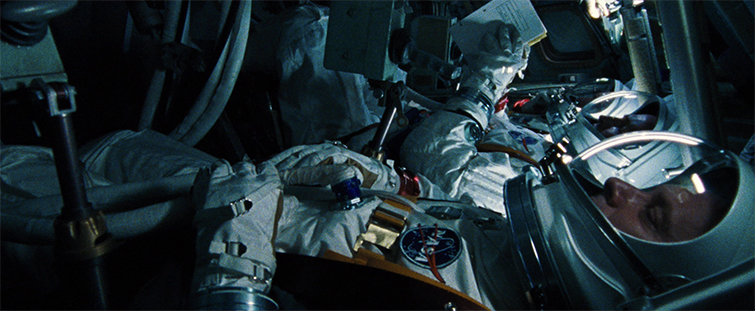
And we really feel the switch, because Chazelle has so completely immersed us into the dangers and insecurities of the space programme. The spacecraft are repeatedly shown as alarmingly shaky, screwed together (the camera frequently pans along lines of bolts inside the cabins), thin, tiny, vulnerable capsules that shake, groan, whine and seem barely able to survive the stresses and strains they are put under. Any doubts about the risks the astronauts are under are dispelled in the opening sequence when Armstrong’s X-15 rocket twice bounces off the atmosphere and the internal cockpit around him glows orange under the extreme heat. But it’s the same on every flight we see – these craft don’t look safe enough for a short hop to the Isle of Wight, let alone hundreds of thousands of miles to the moon and back.

And that’s clear as well from the danger that lurks around every corner of the space programme. Death is a constant companion for these pilots and can come at any time. Armstrong himself escapes only due to a combination of luck and skill. When luck disappears, death follows swiftly for many of his co-pilots. Off-screen crashes claim the lives of three of his friends. Chazelle sensitively handles the horrifying Apollo 1 fire (news reaches Armstrong of the death of several friends, including his closest Ed White, while wining and dining politicians at the White House), and the terrible cost of this tragedy hangs over every single second of the moon programme. Fate or chance at any moment could claim lives. This grim air of mortality hangs over the whole film, a melancholic reminder of the cost of going further and faster to expand mankind’s horizons.

This grief also runs through Armstrong’s life and shapes him into the man he becomes. The death of Armstrong’s daughter at the start of the film sets the tone – the shocking loss of a child at such a young age is tangible – and it seems (in the film) as if this was the moment that led to Armstrong hardening himself against the world. He weeps uncontrollably at the death of his daughter, but later deaths are met with stoic coolness. Armstrong in this film is a cool enigma, who by the end of the film treats concerned questions from his children about whether he will return alive from the moon mission with the same detachment he shows at the official NASA press conference. “We have every confidence in the mission” he tells these two pre-teens, “Any further questions?”

It’s the film’s main problem that in making Armstrong such an unreadable man, who buttons up and represses all emotion, that it also drains some of the drama and human interest from the story. While you can respect Armstrong’s professionalism and coolness under pressure, his icy unrelatability makes him hard to really root for over the course of two hours. The film also strangely only sketches in the vaguest of personalities for the other astronauts (Aldrin gets the most screentime, but is presented as an arrogant, insensitive blowhard) so we hardly feel the loss of the deaths. Its part of the attitude towards Armstrong as a man chiselled from marble, so lofty that the film doesn’t dare to really delve inside his own inner world or feelings but builds a careful front around him to avoid analysis.

It’s not helped by Ryan Gosling, whose skill for blankness makes him somewhat miscast here. Try as he might, he can’t suggest a deeper world of emotional torment below the calm surface, no matter how soulful his eyes. It’s a role you feel needed a British actor, who could really understand this culture of repressed stiff-upper-lipness. Indeed Claire Foy fares much better as his patient, loyal wife who holds her composure (more or less) for the whole film under the same pressures of grief as Armstrong. Gosling just can’t communicate this inner depth, and his blankness eventually begins to crush the film and our investment in its lead character.

First Man in almost every other respect is a great piece of film-making and another sign of Chazelle’s brilliance. But it’s never as dramatic as you feel it should be. Armstrong’s life doesn’t carry enough event outside his moon landing experience, and the film can’t make an emotional connection with the man, for all the loss and suffering it shows for him. For a film that is so close to so perfect on space and the Apollo programme it’s a shame – but makes this more a brilliant dramatized documentary than perhaps a drama.

Young Winston (1972)

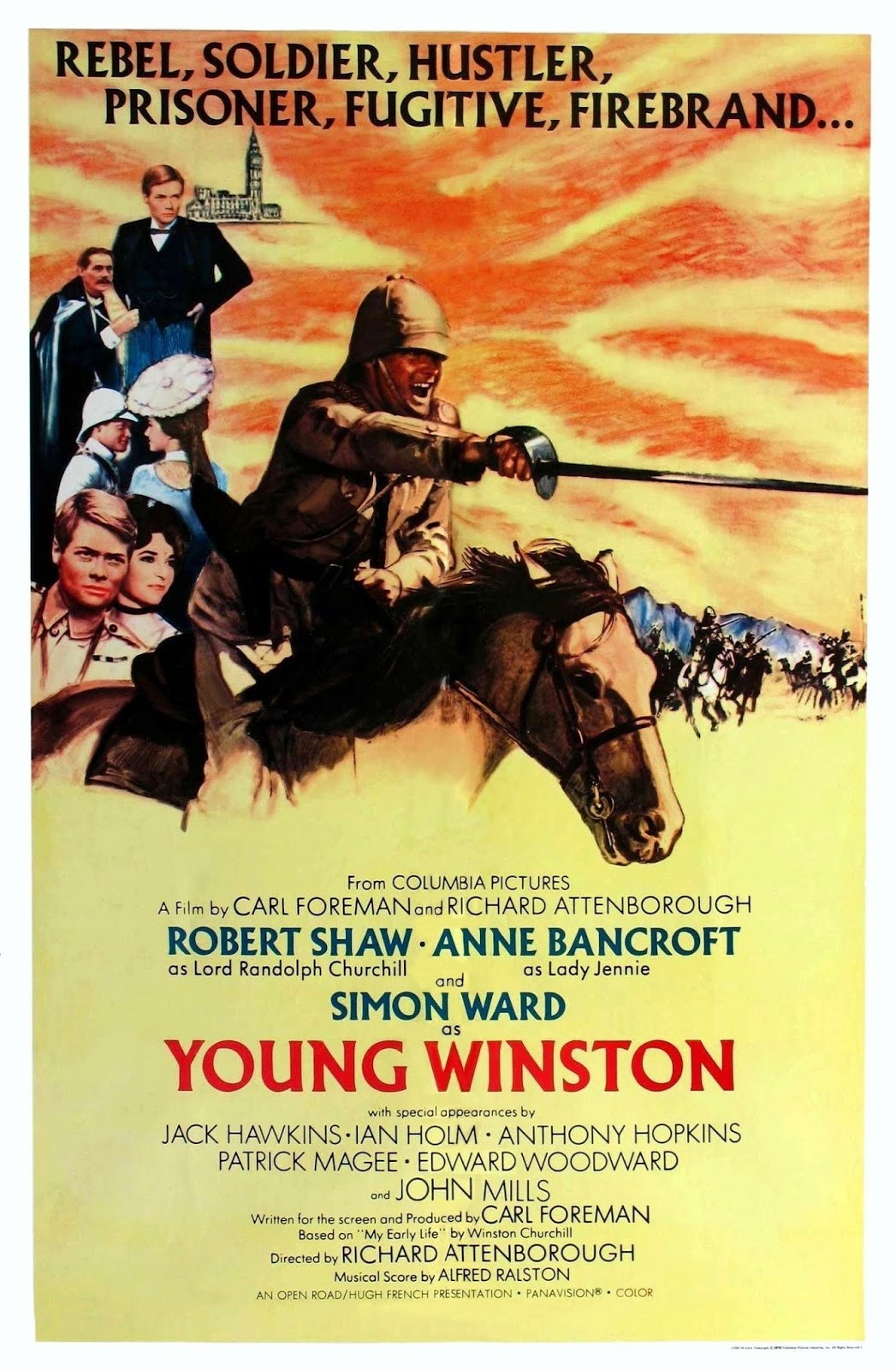
Simon Ward as the Young Winston: episodic but fun look at the early life of the Greatest Briton

Director: Richard Attenborough

Cast: Simon Ward (Winston Churchill), Robert Shaw (Lord Randolph Churchill), Anne Bancroft (Lady Jennie Churchill), John Mills (Lord Kitchener), Jack Hawkins (James Welldon), Ian Holm (George Earle Buckle), Anthony Hopkins (David Lloyd George), Patrick Magee (General Sir Bindon Blood), Edward Woodward (Captain Aylmer Haldane), Pat Heywood (Elizabeth Ann Everest), Laurence Naismith (Lord Salisbury), Basil Dignam (Joseph Chamberlain), Robert Hardy (Headmaster)

Any poll of the Greatest Briton is bound to throw up, near the top, Winston Spencer Churchill. So famous is he, that his surname isn’t even required for Attenborough’s biography of the Great Man – just that name Winston gives you a pretty good idea of what you’re going to get. And you’d be right, because this film gives you a pretty straightforward rundown of Winston Churchill’s early years, in an episodic breakdown that gives us some small insight into what shaped the chap who went on to implore us to “fight them on the beaches”.

Simon Ward is the Young Winston, with Robert Shaw and Anne Bancroft as his parents Lord and Lady Churchill. Lord Randolph is the high-flying MP who throws away his career, catches syphilis, loses his mind and dies aged 37 – all the time disappointed with the son desperate for his approval. Lady Jennie is his loving, supportive but slightly distant mother. Winston himself? A bright lad, but a hopeless academic, struggles at school, needs umpteen attempts to scrap into Sandhurst for a career as a cavalry officer (a dunce’s career in the opinion of Randolph), serves in the Sudan under Kitchener (John Mills) and starts writing books and newspaper articles – because hopeless academic he might be, he’s still gifted with words. A career in Parliament is his dream – helped no end by his escaping captivity during the Boer War, making him a popular hero. 

You can probably tell from that plot summary that this is a somewhat episodic film. Although initially throwing us into a clash in North-West India between the 35th Sikhs regiment and Pashtun rebels – an action during which embedded journalist Churchill wins a mention in dispatches – the film quickly settles into a straight narrative run down of Churchill’s early life, filtered through the great man’s own writings. This makes for an episodic, at times rather dry, box ticking exercise of key moments in his life although it gets enlivened with some decent scenes and some good performances.

The one fact that comes out most strongly from the film is the wretchedly unhappy childhood of Winston himself. A borderline dunce, Churchill is a hopeless student from an early age. His school days are miserable, dispatched to some ghastly boarding school where thrashings from the headmaster (ironically played by later regular – and definitive – Churchill performer Robert Hardy) are handed out as regularly as dollops of gruel. There is a certain emotional impact throughout these scenes, with extensive quotations from the pre-teen Churchill’s letters barely concealing pleas for his parents to visit him (save him) under protestations of his happiness at school.

But this emotional connection doesn’t really last once we get into the adventures of the younger Churchill. This is despite an excellent performance from Simon Ward, who perfectly captures the mood and manner of the more famous older man while splicing in plenty of youthful exuberance and naivete. Ward does a terrific job of holding the film together – so well in fact you are left feeling slightly sorry that he never got a part as good as this ever again. His final speech is a perfect capturing of the speech-making prowess of the young statesman.

The film takes a mixed attitude to Churchill’s parents. It’s very open about the syphilis that afflicted Lord Randolph, and even before that makes clear his career is one governed by rashness and poor judgement. Robert Shaw is excellent as Churchill’s father – a stern taskmaster, constantly disappointed in his dullard, lazy son, but spicing it with enough small moments of affection to make you understand why Churchill worshipped this man whom he surpassed by every measurable factor. Shaw also makes a pre-illness Churchill, sharp, witty and strikingly intelligent: making his later descent into illness and unpredictability all the more affecting. Randolph’s final speech in the House – raddled by syphilis he looks awful and can barely remember his train of thought for longer than a few seconds – is remarkably moving.

The film takes far more of a conventional view of Lady Sarah, presenting her far more as the idealised mother figure she must have been for Churchill. Anne Bancroft is saddled with a rather dull part that never really comes to life, as the more interesting aspects of her colourful life are largely left on the cutting room floor.

Attenborough’s film does try to drill down into the personalities of these three people with a curious device where each character has a scene speaking (direct to the camera) to an unseen journalist asking them questions about themselves and the events around them. This interrogational style looks like a rather dated 1970s innovation today – look how we put the spotlight on these people! – but it does give a chance to see them from another perspective, and give the all-seeing author of the screenplay (Carl Foreman) a chance to ask questions viewers are probably asking. It’s on the nose, but still kind of works, even if the revelations we get barely seem to give us any shocks.

It’s about the only slight moment of invention anyway in a film that is another example of Attenborough’s excellence at marshalling a huge number of actors and locations into something very reassuringly safe and professional that is going to have a long lifespan on Sunday afternoon TV schedules. Young Winston is a decent, enjoyable mini-epic, but it’s not the film for those really wanting to either understand the times or understand the personalities involved.

Vice (2018)

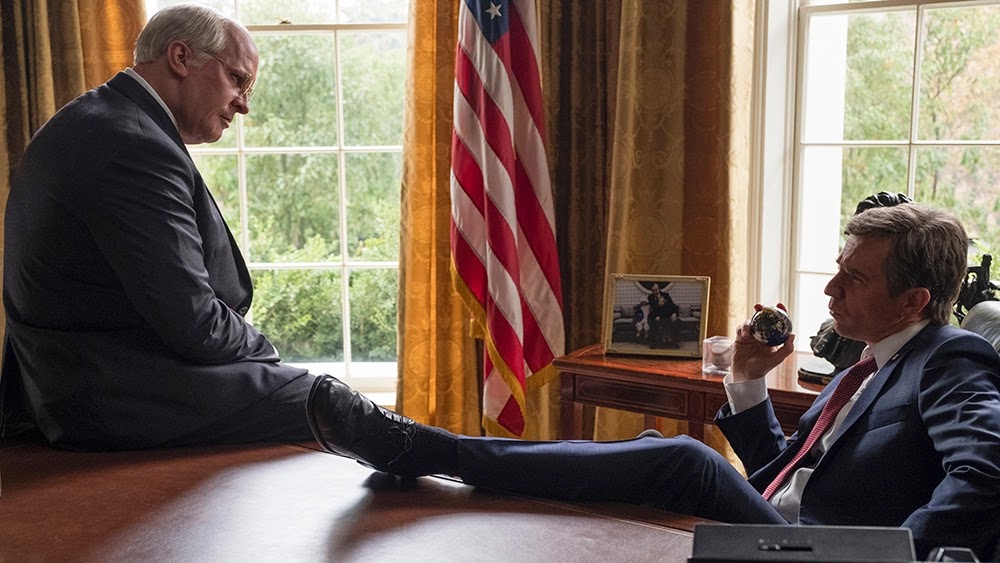
Christian Bale slaps on the make-up as Dick Cheney in Vice

Director: Adam McKay

Cast: Christian Bale (Dick Cheney), Amy Adams (Lynne Cheney), Steve Carell (Donald Rumsfield), Sam Rockwell (George W Bush), Alison Pill (Mary Cheney), Lily Rabe (Liz Cheney), Jesse Plemons (Kurt), Tyler Perry (Colin Powell), Justin Kirk (Scooter Libby), LisaGay Hamilton (Condoleezza Rice), Eddie Marsan (Paul Wolfowitz), Bill Camp (Gerald Ford), Don McManus (David Addington)

There is a film to be made about the turmoil of the Bush presidency. It’s not this film. Adam McKay’s flashy, clumsy, cartoonish, smug, tedious, overlong, arrogant and polemical film quickly outstays its welcome, drowning any legitimate ideas and theories it has under a wave of high-minded, angry shouting at the viewer, frequently mistaking flash and bombast for actual political insight and producing the sort of heavy-handed, angry political commentary that wouldn’t look out of place in a cheap student review. And flipping heck I’m on the liberal left!

Anyway, the film follows the career of Dick Cheney (Christian Bale under an impressive pile of make-up) from his early wash-out days. Told by his wife Lynne (Amy Adams) to buck his ideas up or lose her, Cheney becomes an intern for Congressman Donald Rumsfeld (Steve Carell), rising through the ranks due to his ruthless efficiency and loyalty, becoming Chief of Staff under Ford and Secretary of Defence under Bush. So he’s a natural choice for the inexperienced George W Bush (Sam Rockwell) to balance the presidential ticket. In return, though, Cheney wants control over a few areas – energy, foreign policy, defence etc. etc. – that the lazy Bush has no interest in overseeing. So a quiet, backroom politician changes the office of the Vice President to become the most powerful man in the world. Boo hiss.

McKay’s intention with this film is to reveal the hollowness, greed and utter lack of integrity in its subject. Well he never lets us forget this aim – I don’t think I’ve ever seen a film that so openly hated its lead character, which so completely refused to see any redeeming qualities in him whatsoever. Christ, even Downfall took a few minutes to show Hitler was generally kind to those who worked for him. The film is so unrelenting in its loathing for Cheney that it starts to feel like a being shouted out for over two hours by an “it’s the end of the world” fanatic on a street corner. This does not make for good entertainment.

The film has no subtlety whatsoever. Not for a single second does it even consider the remote possibility that anyone in the Republican party might, perhaps, just maybe, even if it was only some of the time, believe that they were doing something for a principled reason, even if it was a principle those on the left don’t agree with. Instead, all the characters are shown as selfish, greedy and corrupt, using ideology solely to gain power and then using power only to enrich themselves. It’s the sort of lazy political views that turn people off liberals – the idea that anyone who doesn’t share a liberal viewpoint is by definition evil. Some of us grew out of this kneejerk assumption that everyone who doesn’t agree with us is self-serving and cruel. Not McKay. 

On top of which, McKay’s film is made with the overt flash and brio that is the hallmark of the hack director using the tools of cinema with no understanding of their proper use. Wonky camerawork, cutting between timelines, throwing in newsreel footage, breaking the fourth wall, using strange camera angles, chucking in cameo actors to amusingly comment on events (Alfred Molina and Naomi Watts principally) and editing it with flash don’t make you a great director. They make you someone who has seen a lot of films and lot of techniques, but has no understanding of how to use them to craft an overall effect, instead thinking that if you throw all of them at the wall at once, you’ll be a master craftsman.

The film is full of studenty bits of invention that must have seemed oh-so-clever on paper in McKay’s script. Forty minutes in, with Cheney’s career looking over with the end of the Bush presidency, McKay starts running the credits – only to snap back into the film with the fateful phone call from Dubya. It’s clever and raises a quick chuckle, but doesn’t add anything to a sense of turning point in Cheney’s life. It’s followed by a clumsy metaphor of moments being like tea cups balanced on top of each other (inevitably these are later shown tumbling down) to represent how key moments of history build on each other. The real nadir is a moment when Dick and Lynne fall back into cod-Shakespearean dialogue in the bedroom as they discuss a possible vice presidency. ‘We don’t have Shakespeare’s psychologically insightful dialogue’ (I paraphrase) says the voiceover, before this skin-crawling hand-in-mouth sequence that shows McKay knows as much about Shakespeare as he does subtle political commentary.

Ah yes the voiceover. Perhaps not knowing how to marshall his childish political points in actual scenes and dialogue, McKay uses a voiceover from Jesse Plemons’ ground-forces marine to spell out as bluntly and crudely as possible the basic and trivial points it wants to make. The damn film already feels like being hectored by a crank, so why not make it feel even more like a polemic by having a character bitterly explain why everything is wicked and evil at you? The narration bores – and joins the general feeling of the rest of the film, that it goes on forever and ever and ever and never, ever, ever says something really interesting or revealing.

The performances are a mixed bag. Bale gives a decent turn as Cheney, capturing his mannerisms and conveying a sense of dark ambition, but it’s a role he could play standing on his head. Amy Adams turns Lynne into a Lady Macbeth, in a reheat of her performance from Paul Thomas Anderson’s The Master. Every other performance is a crude cartoon – Carell’s Rumsfeld a putty-faced joke, Sam Rockwell’s Bush (an impossibly generous Oscar nomination) a cartoonish buffoon. Everyone else coasts through it, patting themselves on the back.

There is an argument to be made that Cheney’s legacy is far from good, and it’s certain that we are paying a heavy price for interventions in Iraq. Many of the policies were less than savoury and left a less than positive benefit. But this film hammers these points home with all the charm of a ranting, drunk politics student who has read one book and watched a lot of YouTube videos. With McKay’s soulless, clumsy, look-at-me direction layered on top, this is a flat out terrible film. Save yourself what feels like much more than its two hour run time. In fact I’ll summarise it for you: CHENEY IS EVIL AND HORRIBLE AND HE (LITERALLY) HAS NO HEART. There you go. You don’t need to see it now.

The Motorcycle Diaries (2004)

Gael Garcia Bernal and Rodrigo de le Serna go on a road trip in Che Guevera biopic The Motorcycle Diaries

Director: Walter Salles

Cast: Gael Garcia Bernal (Che Guevera), Rodrigo de le Serna (Alberto Granado), Mia Maestro (Chichina), Mercedes Moran (Celia de la Serna), Jean Pierre Noher (Ernesto Guevara Lynch), Facunda Espinosa (Tomas Granado), Lucas Oro (Roberto Guevera), Marina Glezer (Celita Guevara)

In 1952, Che Guevara – posters of whose face are as synonymous with students as baked beans and debt – is a young man in his early 20s, heading out for one final adventure with his friend Alberto Granado. They intend to motorbike the entire length of South America, from Buenos Aires to a leper colony in Peru. The journey will solidify Che’s views on socialism and help to shape him into the legendary idealist socialist revolutionary he will become. That’s the story of Salles’ film, the sort of film that will have a never-ending appeal to anyone who ever had a romantic interest in revolution history.

Sadly I don’t have that sort of passion, so I found it hard to be swept up in the romance of Guevara’s views, and Salles’ ambling, largely plotless film struggles to give you a real reason to care if you haven’t got a pre-existing admiration for its subject. Which isn’t to say this is a bad film – it’s certainly not – but it’s the sort of film that requires the viewer to have an investment from the start. It’s certainly a lot better – and gives a much better sense of Guevara’s character – than Steven Soderbergh’s thuddingly average Che double bill, but it’s still a rather drifting road movie.

The nature of all road movies is of course that they go from location to location, with each one throwing up a different collection of characters. I’ve got to be honest, none of these characters are particularly engaging or interesting, falling as they do into three categories: duped middle classes, attractive women who are duped or charmed by our two heroes, or sickly, poor or dying working classes whose suffering helps shape Che. It’s decent enough, but once you’ve seen it repeated a couple of times you don’t really engage in it much further.

It doesn’t help that the two leads don’t really change that much themselves over the course of the movie. I suppose that is at least a reflection of real life – and it does avoid the film cliché of “one life-changing journey”, but it also has a tendency to suck drama from the film. The real changes you see are that both characters’ pre-existing political views are both solidified – the difference being that for Guevara this will become his life’s work, whereas for Granado it will become a driver for his decision about where to take his work.

All this is no comment on the twin lead performances by Bernal and de la Serna, both of which are excellent. Bernal is wrapped in charisma and youthful idealism, humane concern and empathy in every pore of his character, mixed with a genuine warmth and enthusiasm as well as an excellent sense of humour. You can see why the latter attributes have drawn Granado to Che – and de la Serna is equally wonderful as a charming bon vivant with a heart and conscience. 

Salles’ film is told with sweep and beauty, crammed with excellent camerawork. The road trip looks beautiful, and the film is extremely well cut and paced. While Salles does not quite extend the journey into a real interior exploration of his lead character, it does really capture the romantic poetry both of idealistic socialism and this On the Road type journey. Salles also mixes the tone extremely well of a film that turns from moment to moment from a social issue drama to a near knock-around comedy.

What he does slightly less well is to open the drama up to the unconverted. The moments used to demonstrate the poor and downtrodden essentially boil down to sad scenes where the sick and dying talk through their pain with Che. At several moments, the actors portraying the poor gather in monochrome line-ups to stare soulfully down the lens of the camera. It’s hardly a real search for the reasons or causes of poverty in South America, or an insight into the reasons for the differences between the working classes and the middle classes. It’s not a film that is trying to develop a political understanding, which is ironic considering it explores (or claims to) the life of one of the most political figures of the twentieth century.

Saying that, The Motorcycle Diaries has many, many strengths – even if I didn’t bond with it as much as I imagine many others will do. It’s an extremely well-made, dressed up, road movie that is full of events and a certain level of character insights – but doesn’t scratch down far below the surface to help you really understand the man or the times. It’s beautifully made and wonderfully performed – and it has real moments of youthful joy – but I just didn’t feel as strongly about it as I felt I should.

The Favourite (2018)

Olivia Colman is at the centre of a complex rivalry in The Favourite

Director: Yorgos Lanthimos

Cast: Olivia Colman (Queen Anne), Emma Stone (Abigail Hill), Rachel Weisz (Sarah Churchill, Duchess of Marlborough), Nicholas Hoult (Lord Robert Harley), Joe Alwyn (Colonel Lord Masham), Mark Gatiss (Lord Marlborough), James Smith (Lord Godolphin)

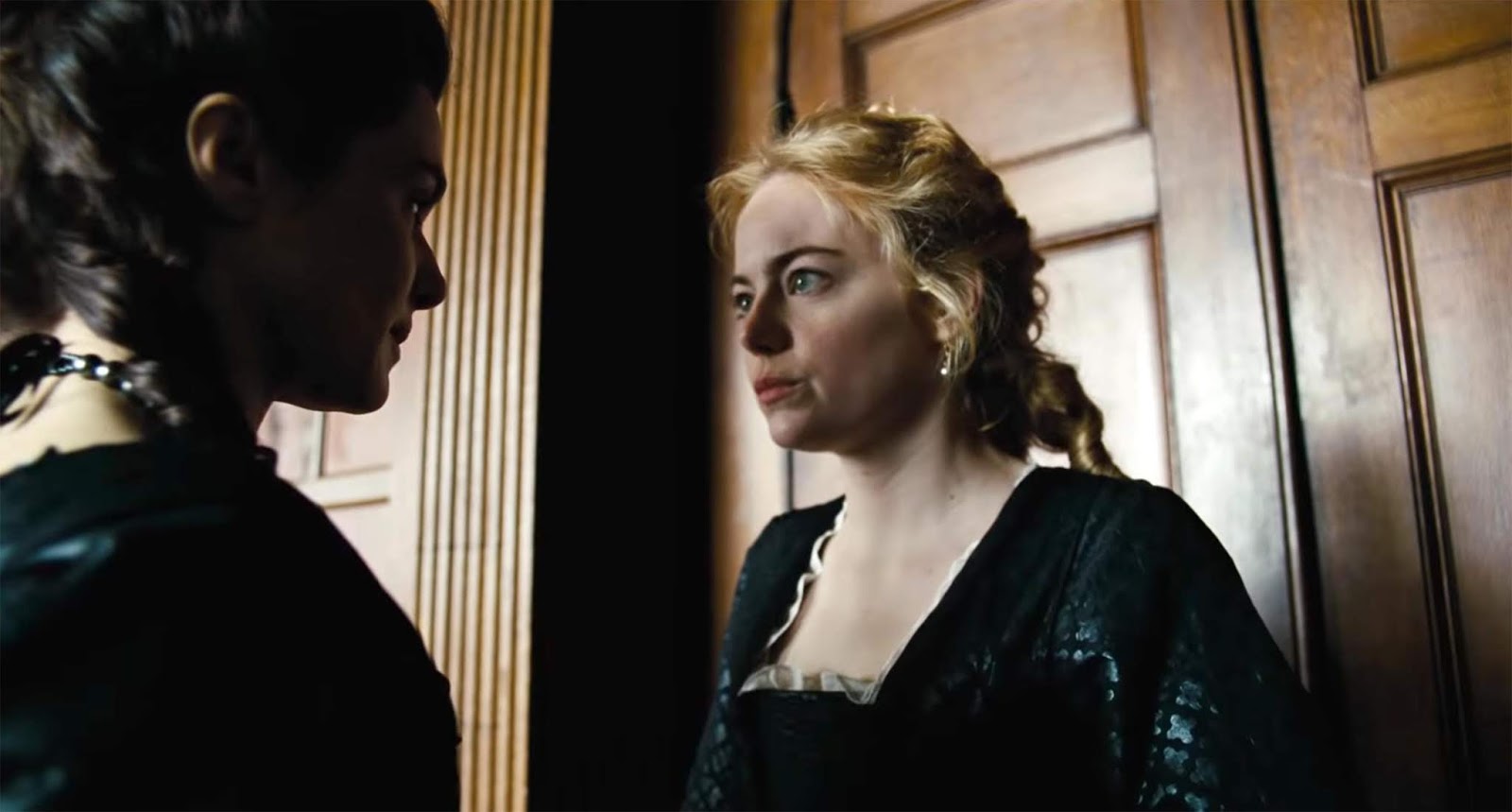
Looking around the cinema, I couldn’t help but wonder how many of the audience were expecting The Favourite to be a Sunday night-style costume drama about Queen Anne. Goodness only knows what they made of this skittishly filmed, acidic, sharp-tongued, very rude drama about squabbles in the court of Queen Anne. The Crown it ain’t.

In 1708, the court of Queen Anne (Olivia Colman) is dominated completely by her head of household, chief advisor, secret lover and domineering best friend Sarah Churchill, Duchess of Marlborough (Rachel Weisz). But Sarah’s control over Queen Anne is set to be challenged by the arrival in court of seemingly charming, but in fact ruthlessly ambitious, cousin Abigail Hill (Emma Stone), a former aristocrat who has fallen on hard times. Soon Sarah and Abigail find themselves in the middle of a bitter, ruthless clash for control over Anne – who, seemingly weak-willed and disinterested in government, in fact takes an eager pleasure from the rivalry of the two women.

The Favourite is a brilliant, acerbic, very dark comedy that treats its period setting with a hilarious lack of reverence. It’s a frequently laugh-out loud comedy, with its often foul-mouthed dialogue just on the edge of being anachronistic (a trait that also comes into the hilarious non-period dancing). It takes a moment to tune up, but leans just enough on the fourth wall to work. Lanthimos’ film doubles down on the insane pressure bowl of Anne’s courts, turning the court of the 1700s into a bizarre, semi-surreal state where you have no idea what insanity you might see around the corner – from racing ducks, to rabbits roaming free, to a naked man being pelted with oranges. 

But then this is the sort of bizarreness that stems from the top, and Olivia Colman’s Queen Anne is a domineering eccentric. In a film-career-making performance from Colman, her Queen Anne is part infantalised puppet, part needy insecure lover, part bitter control freak. Anne will change from scene to scene from a furious, knee-jerk rage to a weeping vulnerability. Her interest in actually ruling the kingdom has been largely beaten out of her, but she still needs to feel that she holds the power. With her body raddled with gout, Anne alternates between demanding independence and being wheeled from place to place. Colman’s performance bravely skits between temper tantrums and a desperate, panicked loneliness and sadness – it’s a terrific performance.

A woman as uncertain and unhappy in herself as Anne is basically pretty ripe for control and manipulation. History has not been kind to Sarah Churchill, who is often seen as a ruthless, power-hungry manipulator only out for what she can get, obsessed with the power her role brings her. This film takes a different, more interesting slant, thanks in part to Rachel Weisz’s superb performance. Weisz plays Churchill as a strong-minded, hard to like woman, who has a genuine bond with Anne, but honestly believes she is better suited to execute the powers of royalty than her lover. But that doesn’t stop her having feelings for her – or priding herself on refusing to lie to Anne about anything (from her appearance to her behaviour). But this doesn’t stop Sarah from ruthlessly bullying Anne or threatening her – though she’s equally happy to climb into bed with her when required.

But Sarah Churchill here is doing the things she is doing because she honestly believes that it is what is best for the kingdom and (by extension) Anne, and the moments of shared remembrance between Anne and Sarah have a genuine warmth and feeling to them. Which makes her totally different from the ruthless Abigail, played with a stunning brilliance by Emma Stone. Abigail doesn’t give a damn about anything or anyone but herself: something the rest of the servants in the household seem to recognise instinctively as soon as she arrives, but a danger Sarah doesn’t detect until too late. Abigail’s every action is to promote her own wealth and prestige, and she’ll do whatever it takes to do that, from crawling through the mud for herbs to crawling between the sheets to pleasure Anne at night. Stone’s Abigail is ruthless, self-obsessed, uncaring and on the make in another terrific performance.

The film focuses in large part on the see-sawing fortunes of these two rivals for the role of favourite – with Anne as the fulcrum in the middle. The film is split into eight chapters, each of which is opened by a quirky quote from the chapter itself. It neatly structures the film, and also gives it a slight off-the-wall quality. The film is packed with electric scenes, as the women wear the trousers in the court (often literally, in Sarah Churchill’s case), riding and shooting in their spare time and slapping down the assorted politicians and lords desperately trying to promote their interests on the edge of the court. This battle of wits and wills is a fabulous, increasingly no-holds barred, rivalry that motors the film brilliantly.

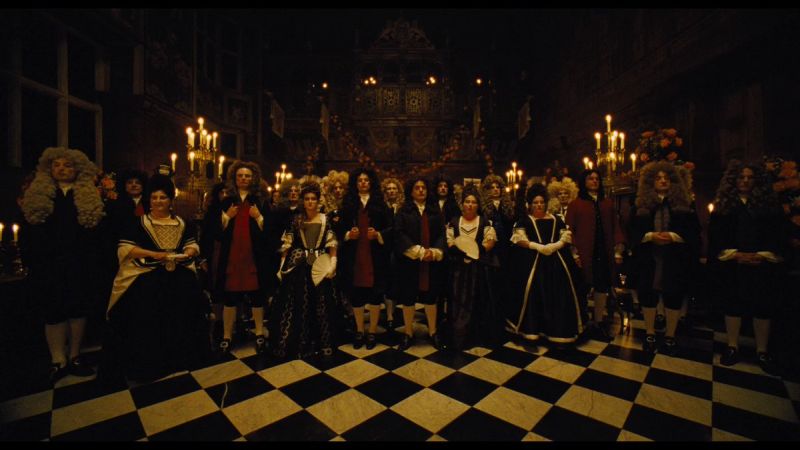
Lanthimos loves every moment of scheming and double crossing the film supplies. He shoots the film with a selection of low-angle and fisheye lenses, which make the palace settings seem as imposing, large and domineering as possible – and also distorts the world just as the feud between the two women is doing. The film looks fabulous, with its intricate design and it’s candle lit lighting. Lanthimos’ court always looks gloomy and secretive, with only a few spots of orange warmth.

Lanthimos also understands that there is very little room for sentiment or feeling here, and the flashes of it we get are never allowed time to really grow. That’s not a negative of course, as this sharp comic drama is also an arch commentary on some of the selfishness and distortion of events that lies under politics (sound familiar?), with the interests of the ordinary people of the realm raising very little interest from any side on the political divide. And Anne is such a bizarre character, so pulled between pillar and post, so desperately unhappy so much of the time, so utterly spoilt the rest, that you understand how she has become such a chew toy for court faction, and why she is happy to tacitly encourage this world where her every whim is played to for advantage.

I laughed out loud several times during The Favourite. It’s obvious to say that it feels like a film for the #metoo era – but it certainly has three fabulous, brilliant, hilarious and strangely heartfelt performances from its three female leads, three of the best actresses in the business. Wonderfully directed, beautifully written and fabulously designed, this is properly fantastic cinema.

Mandela: Long Walk to Freedom (2013)

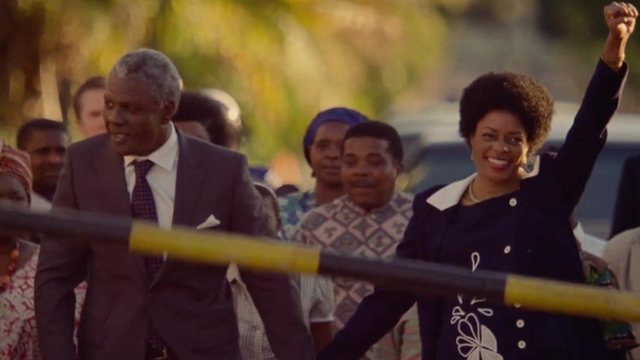
Idris Elba and Naomie Harris reconstruct the life of Nelson Mandela in illustrated slide-show movie Mandela: Long Walk to Freedom

Director: Justin Chadwick

Cast: Idris Elba (Nelson Mandela), Naomie Harris (Winnie Mandela), Tony Kgoroge (Walter Sisulu), S’Thandiwe Kgoroge (Albertina Sisulu), Riaad Moosa (Ahmed Kathada), Zolani Mkiva (Raymond Mhlaba), Jamie Bartlett (James Gregory), Simo Mogwaza (Andrew Mlangeni)

In the 1980s, hagiographic epic biopics that aimed to tell the story of the subject’s whole life were all the rage. In fact they were frequent Oscar behemoths. It’s easy to imagine that, if it had been released 20 years earlier, Mandela: Long Walk to Freedom would have been garlanded with awards for its attempt to capture every major moment in Nelson Mandela’s life from birth to his becoming President of South Africa. Sadly for the film, it wasn’t.

The fashion nowadays, for biographical films about major figures like Mandela, is to make a focused story about one key incident in their lives and from that build up an understanding of what made the man. Spielberg’s Lincoln focused on the immediate struggle to get the abolition bill passed. Du Vernay’s Selma looked at Martin Luther King’s involvement in the Selma marches. Eastwood’s Invictus looked at a newly-elected Mandela trying to use the Rugby World Cup to bring a nation together. Mandela: Long Walk to Freedom ironically goes the opposite way and tries to sprint through every single event of Mandela’s life. Doing so, it manages to be a less affecting, less involving and less engaging film than Invictus.

The rush is so intense to get through events that every scene feels like it has been cut down to deliver the vital bullet points and nothing more. Scenes rarely go over a couple of minutes, and most are comfortably under a minute. The general structure of most of them is roughly the same: a character will argue with Mandela (if black) or say something distasteful or racist (if white), Mandela will say something wise and inspiring that sounds like a direct quote from the book. Cut to the next scene.

This means that events fly by with little context and no real understanding. In fact, it feels like without having read the book and boned up on South African history in advance, most of it will mean nothing to you. Years can go by with a single snip of the editor’s scissors. Clashes and riots – particularly in the final third of the film – take place, but we are given no idea why or what the root causes of them were. 

Other events skim by so quickly that they lose all meaning or dramatic impact – in about 15 minutes of the film we cover Mandela arriving at Robben island, ill treatment and contempt from the guards, Mandela’s resolution that they will gain the right to wear proper trousers as a step towards being treated as humans, abuse from the prison governor, Mandela learning to control his anger, the prison governor leaving, a new governor arriving off camera, the regime lightening and finally the prisoners celebrating getting their trousers. If you think that sounds rushed here, imagine what it feels like watching it. All the narrative links between the scenes are severed – how did Mandela win the right to wear trousers? We have no idea. It sounds like a little thing, but it’s symptomatic of the problems of the film. 

This is despite a promising start, with a young Mandela fighting for justice and against prejudice in the courts of South Africa (winning cases because the racist whites refuse to be questioned by a black lawyer). The film is quite daring in showing the warts and all of the younger Mandela – his affairs, his ill-treatment of his first wife, his flirtations with violence – and there are flashes later on in the increasingly troubled relationship with his second wife, Winnie. But it soon loses these humanising touches under the pressure of ticking off events.

Justin Chadwick’s direction is largely flat – hamstrung as well by the film being cut so tightly to the bone. He fails to add any real epic sweep to the story, and largely struggles to convey the huge social and political issues that were tearing South Africa apart. As such, he’s often forced into holding a largely static camera in place to capture the four or five speeches that form each scene.

The  main bright spark in the film is the two lead performances. Idris Elba captures Mandela’s mannerisms and voice perfectly, but also brings a real humanity and empathy to the role – he largely manages to defy the film’s attempt to turn Mandela into a lofty marble carving of a man, not letting the human realism of his story escape. It’s a performance that feels very real and human – which is a far harder achievement than it sounds. Naomie Harris is all fiery radicalism and growing fury as Winnie (even more striking since she starts so young and naïve). One of the film’s real disappointments is that it rushes so fast through events that we never get a real, clear picture of the turbulent ups and downs of their marriage (the film is reduced to throwing some Mandela dialogue on his feelings into voiceover).

When the film finally ends it feels more like a sprinter with a stitch, too worn out to run any further through more years, than because it feels like it has made a point. It really wants to be Gandhi – but that film, despite its school-boy history faults, was patient, well paced, more focused and (crucially) an hour-plus longer. Mandela: Long Walk to Freedom compounds its feeling of being old-fashioned with being rushed and confused. For all Idris Elba’s admirable efforts, Mandela deserved better.

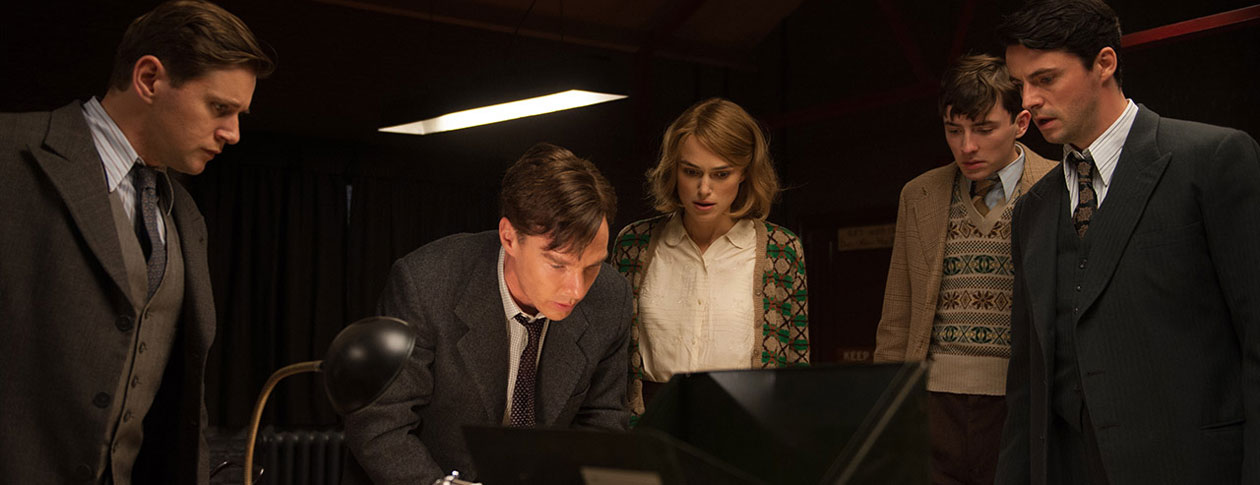
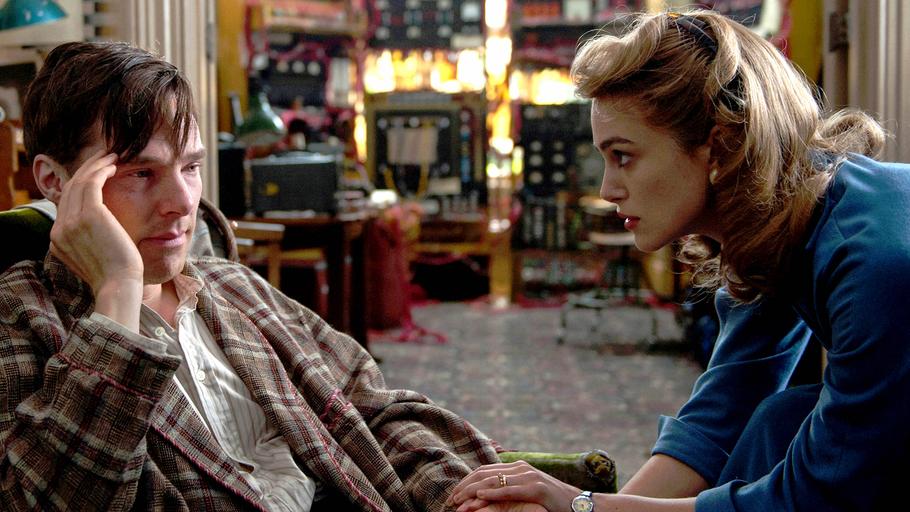
The Imitation Game (2014)

Benedict Cumberbatch saves the world in smug, empty mess The Imitation Game

Director: Morten Tyldum

Cast: Benedict Cumberbatch (Alan Turing), Keira Knightley (Joan Clarke), Matthew Goode (Hugh Alexander), Rory Kinnear (Detective Nock), Allen Leech (John Cairncross), Matthew Beard (Peter Hilton), Charles Dance (Commander Alastair Dennison), Mark Strong (Maj General Stewart Menzies)

“Sometimes it is the people no one imagines anything of who do the things no one can imagine”. If there is anything that captures the smug self-satisfaction of this ludicrously pleased-with-itself film, it’s that convoluted phrase, with which the film is so pleased that it is repeated no fewer than four times. What does it mean really? Nothing of course, it carries all the meaning of a fortune cookie. Turing is certainly someone whom you could expect something of, since the film is at pains from the start to demonstrate he is a maths prodigy and a genius. But then that would spoil the romance of the film suggesting that because Turing is socially maladjusted, he is somehow unlikely to achieve something – or that achieving something would be even more special having overcome the “disability” of his personality.

Alan Turing (Benedict Cumberbatch) is under police suspicion in 1951 after a mysterious break-in at his Manchester home. A keen detective (Rory Kinnear) suspects he may be a Russian agent – why else does he have no military record? But we know different, as flashbacks show Turing working at Bletchley Park on the cracking of the German cipher machine Enigma. Working with the support of an MI6 officer (Mark Strong), Turing has to win the trust of his team – with the support of best friend and maths genius Joan Clarke (Keira Knightley) – to build a ground-breaking computer that could crack the impossible code. But back in 1951, Turing is in trouble: he’s gay and that’s a crime in post-war Britain.

Now, Turing’s personality in this film. In real life, Turing was an eccentric, but perfectly capable of functioning perfectly normally in society. That’s not dramatic enough for the film, so Turing is reimagined as someone practically afflicted by Aspergers syndrome, incapable of understanding or relating to people without severe effort and prompting. Of course this is really there to introduce conflict – first with his team (who need to be won round to loving the old eccentric genius), secondly with his boss (who can’t stand his inability to fit in) and thirdly with the police (who can use it to write him off). It’s a film-disability for a character to overcome, another puffed up triumph that we can celebrate, while at the same time pat ourselves on the back because this is a victory for those “not normal”. But it’s probably bollocks. 

But then that fits in rather nicely with the whole film, which is more or less probably bollocks from start to finish. The film of course can’t dramatise maths or computing very well, so it throws us all sorts of feeble clichés from tired old film genres instead. Charles Dance plays a reimagined Denniston (in real life a cryptographer) as a standard obstructive boss who all but shrieks “you’re off the case Turing!” at the one-hour mark. The key moment of inspiration of course comes from flirty pub conversation with a charming secretary. Running around and frantic throwing of papers takes the place of all that boring maths. 

The film can’t resist any level of dramatic cliché. When a member of the code-breaking team mentions in passing “I have a brother in the navy you know”, as sure as eggs is eggs you can bet the team will decipher a message that could save his life but will be forced to make A Terrible Choice. Of course even this picture of a small code-breaking team making the calls themselves over which messages to act on is nonsense – it’s a decision that would be so far above their pay grade, they should be taking oxygen just thinking about it. But in this bonkers version of the universe, Turing  himself makes the call to keep the initial breaking of the code a secret, and the government happily allows him alone to make the call about which codes to act on. Oh for goodness sake, spare me.

But then this is a film that wants to turn Turing into the man who won the war single-handed. While Turing was one of the key figures who made the breakthrough, this was a massive team effort, not one man’s inspiration, and reducing the victory of the war down to one (film cliché) difficult genius is the same old ripe nonsense we’ve seen many, many times before. The film tries to pretend that Bletchley Park and the breaking of Enigma, and Turing himself, is an unknown story – when it’s been pretty well-known since it was announced by the Government in the 1980s.

The film is rubbish, but it’s also gutless. Of course “fifth man” John Cairncross is part of the team – and of course Turing discovers he is a spy. (The reveal of course is due to the same old tedious movie cliché of “I found a book on his desk that was the key book he used for the code”.) And then in a moment of stunning tastelessness, Cairncross blackmails Turing into keeping his mouth shut which he agrees to do – an action that, if it had ever happened in real life, would have been an appalling moment of treachery from Turing, and reinforces all the suspicions of the time that homosexuals couldn’t be trusted. 

Ah yes, homosexuality. This film is very, very, very proud of its crusading actions to expose the cruel treatment of Turing for his homosexuality. At the same time, the film is of course way too gutless to even begin to show Turing doing anything actually gay (he doesn’t even so much as hold another man’s hand) during the film. The one genuine moment of love the character is allowed to express, is in the form of a crush on a schoolfriend. (The film substitutes renaming Turing’s machine “Victory” after this school friend “Christopher”, the film keen to try and plug the gap of this film featuring virtually no LGBTQ content at all). But the film preaches intensly and proudly about the equal rights of homosexuality, while veering away with squeamishness from putting anything remotely homosexual on the screen.

The shoddy writing, over-written and self-important, is matched up with Morten Tyldum’s flat, “prestige” film-making that reduces everything to a chocolate box. The film does have some acting beyond what it deserves. Benedict Cumberbatch is good as Turing, although his performance is a remix of some of his greatest hits from past projects, from Hawking to Sherlock, and you feel hardly it’s a stretch for him – even if he plays with it real, and genuine, emotional commitment. Keira Knightley’s cut-glass accent is practically a cliché, but this is one of her best performances with real warmth and empathy. Most of the rest of the cast though are serviceable at best.

“Serviceable”, however, is still better than the film itself, which is a cliché-ridden, gutless, plodding and highly average pile of nothing at all – a totally over-hyped, over-promoted and completely empty film that is about a zillion times less interesting, brave or revealing than Hugh Whitemore’s 1980s play Breaking the Code. Not worth your time.

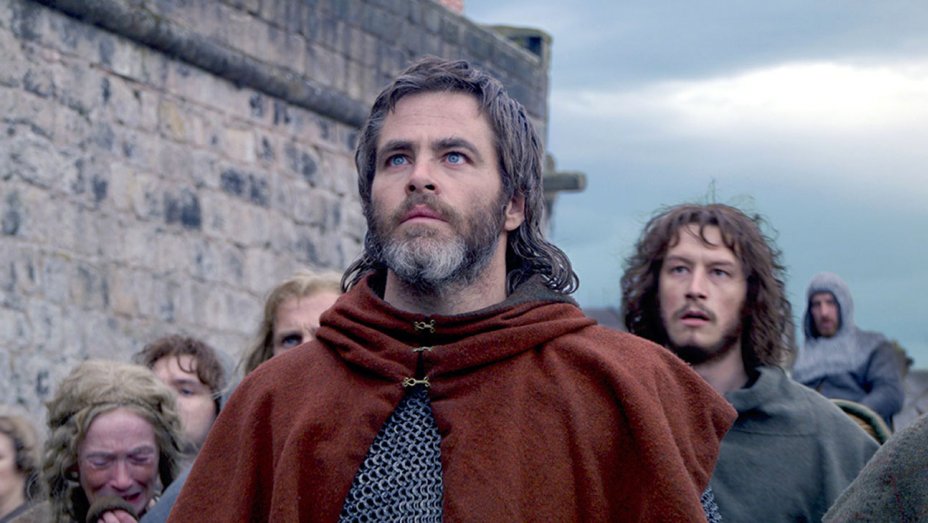
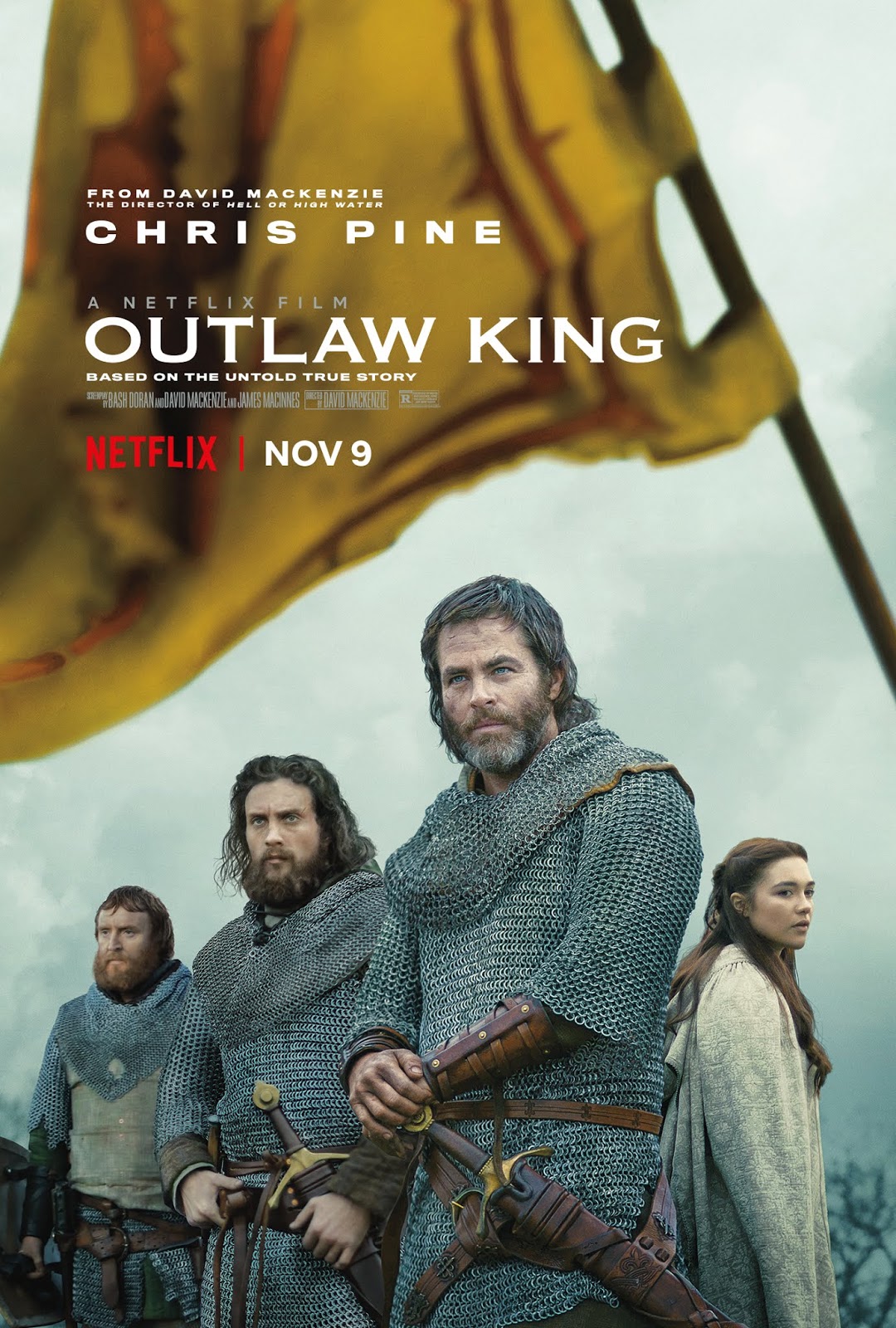
Outlaw King (2018)

Chris Pine leads Scottish rebellion in Netflix’s Outlaw King

Director: David Mackenzie

Cast: Chris Pine (Robert the Bruce), Aaron Taylor-Johnson (James Douglas), Florence Pugh (Elizabeth de Burgh), Stephen Dillane (Edward I), Billy Howle (Edward II), Tony Curran (Angus Macdonald), Sam Spruell (Aymer de Valence), Lorne Macfadyen (Neil Bruce), Alastair Mackenzie (Lord Atholl), James Cosmo (Robert de Bruce), Callan Mulvey (John Comyn)

In 1995 the world went crazy for Mel Gibson’s Braveheart, which turned William Wallace from a largely forgotten historical rebel into a martyr for independence. Outlaw King is an almost spiritual sequel that follows the life of Robert the Bruce, the eventual winner of Scottish independence. It picks up almost immediately from the death of Wallace and follows the struggle of the Bruce to take the throne. But I’d be surprised if it has the same impact.

Outlaw King is a fairly decent pick-up of events, and it tries to get a balance between drama and history – one it more or less manages until the final act. In the aftermath of a failed Scottish rebellion, Robert the Bruce has the advantage of his father (James Cosmo) being an old friend of Edward I (Stephen Dillane). After renewing his oath of loyalty to Edward, Robert is given land, influence and a marriage to wealthy noblewoman Elizabeth de Burgh (Florence Pugh). However, after his father dies regretting the pact and William Wallace is brutally executed by the English, Robert uses the public outrage as a boost to putting together his own claim to the Scottish throne. Murdering his chief rival in a church, he raises the flag of rebellion against the English and leads an army to take back Scotland. But things swiftly go wrong, and Bruce finds himself on the run and declared a rebel.

Outlaw King gets a lot right. It’s impressively filmed and looks fantastic. The photography by Barry Ackroyd is wonderful, in particular the use of candles for interior scenes which bring a brilliant golden glow to the action. Mackenzie is an ambitious and imaginative director, and he pushes himself to the limit here. The opening nine minutes of the film is one long continuous shot that takes in debate, a sword fight, court room intrigue and the firing of the largest trebuchet you are going to see outside of Warwick Castle. With the camera swaying and bobbing around in this sequence you have to admire the chutzpah – even if I can see that some viewers (my wife included!) might think it showing off. 

Mackenzie gets equal flourish out of the film’s many combat scenes. There is, to tell the truth, probably one too many of these bloody melees, but the camera gets a real sense of the blood, mud and gore that medieval battle involved. With brilliant use of hand-held immersive camerawork, each of these battles really gives you a sense of bloo-spattered chaos. Sometimes things are hard to follow – at least one death in combat is met with fury, but I’m not entirely sure who that guy even was (and it’s never mentioned again). But you’ve got to admire the skill of the film-making.

It’s the story itself where the film sometimes falls a bit flat. It does get a really good sense of the medieval, I will certainly give it that. The design and attitudes of the film are pretty perfect, and the stakes that everyone is clashing for feel very real. But the film encounters problems more and more as the film drifts into fiction and away from history. While the realpolitik of Bruce’s move to have himself declared king has a ruthlessness that feels real, the film’s attempt to build a personal rivalry between Bruce and the future Edward II feels forced from the start. By the time the film’s conclusion attempts to boil the entire campaign for Scottish independence into a mano-a-mano clash between the two on the battlefield (that of course never actually happened) you start to feel it’s getting very silly. Not least as figures who in real life would be invaluable bargaining chips are allowed to walk free from the battle field, to demonstrate the moral superiority of our heroes.

It’s a part of the general drift of the storyline that gets a little less compelling the longer it goes on. Maybe this is because once Bruce has his initial army destroyed and his first campaign to grasp power defeated, the story of him being on the run and carrying out guerrilla hits never feels fresh and original. We’ve seen it before – and the way the film generally avoids developing the supporting characters fully often means your focus starts to shift. After a really strong start, the film becomes more and more generic, Bruce himself becomes more and more a perfect leader rather than the almost Machiavellian character he started as, and the focus turns more and more into making it a conventional goodie-vs-baddie clash. It becomes something more forgettable, more like something you’ve seen before, and turns a campaign that took almost ten years into a rushed “and then they won this battle and everything was fine” ending.

There are many strong moments in there though, not least the generally decent performances from the cast. Chris Pine as Robert the Bruce sounds like the sort of casting decision made in hell, but he actually handles himself very well. His accent is very good, he captures a lot of the complexity of Bruce as a man who wants to be good but must sometimes be ruthless, and he brings a large dollop of charisma to the role so that you never really find yourself questioning whether he is a man others would follow. He doesn’t set the world alight, but does a good job.

The film’s stand-out turn however comes from Florence Pugh, who brings her customary intelligence and charisma to the complex part of the Bruce’s wife. At first positioned into an arranged marriage, she quickly proves both her independence and value, but also her strength of character. Far from being just a hostage – the role history largely assigned her – Pugh’s performance always makes her a character with agency, a woman determined enough to be loyal to the end once she has made her choices. There are other decent performances as well, in particular from Stephen Dillane as an authoritarian hard-ass Edward I, while Billy Howle gets to a play an Edward II who feels true (the film avoids references to his homosexuality, but does allow him to be the fearsome warrior – if hopeless general – he was, as opposed to the homophobic cartoon he was in Braveheart).

Outlaw King,though, just isn’t quite good enough. It’s fine for a decent watch on a Saturday night. In fact Netflix is just about its perfect platform: if you stumbled across this while scrolling through the library, and you were in the mood to click on it, you wouldn’t be disappointed. But even though it’s visually impressive and enjoyable, it’s also increasingly predictable and even a little bit empty. It doesn’t quite come to life as much as it should and eventually settles for being something quite traditional.

Scott of the Antarctic (1948)

Scott of the Antarctic (1948)

Captain Scott’s tragic end is bought to life with low-key hero worship

Director: Charles Frend

Cast: John Mills (Robert Falcon Scott), Diana Churchill (Kathleen Scott), Harold Warrander (Dr Edward Wilson), Anne Firth (Oriana Wilson), Derek Bond (Captain Laurence Oates), Reginald Beckwith (Lt Bowers), James Robertson Justice (PO “Taff” Evans), Kenneth More (Lt Teddy Evans), Norman Williams (William Lashly), John Gregson (Tom Crean), James McKechnie (Dr Edward Atkinson), Barry Letts (Apsley Cherry-Gerrard), Christopher Lee (Bernard Day), Clive Morton (Herbert Ponting)

There are perhaps few more controversial figures in historical discussion than Robert Falcon Scott. The great polar explorer was, for most of his career, and for a long period after his death in 1912, a national hero, the man who – with stiff-upper-lip bravery – gave his life struggling against the elements to conquer the South Pole. Scott’s reputation only began to be questioned in the late 1970s, with a series of biographies culminating in a near-vicious – but compelling – anti-Scott argument laid out by Roland Huntford in his book Scott and Amundsen. Scott’s many flaws – both personal and in planning – set a new landscape for seeing his achievements as carrying too high a cost, especially in an atmosphere where the extreme sacrifice was seen as something to be avoided if at all possible, rather than an everyday fact of life for post-war generations.

In this context, watching this Ealing Studios 1948 Scott biopic – one of the biggest box-office hits of its year in the UK – is an interesting experience. While the film’s tone and its depiction of Scott are essentially fairly heroic, the film flirts at points with the errors and misjudgements that led to Scott leading himself and his companions into an icy immolation in a tent eleven miles away from a depot that could have given them a chance to survive.

Frend’s film is very well made and beautifully shot – so perfectly does it capture the look and feel of the Antarctic, and the extreme cold, that you overlook the fact that at no point can you see the actors’ breath – and it covers the main points of the expedition very well. It’s in some ways, today, almost hilariously stiff-upper lip, with the expedition members marching dutifully (and with a self-deprecating smile) to certain death, and the ladies at home speaking with such cut-glass primness you have to keep checking that Celia Johnson isn’t in the film.

There are some strong performances, not least from Mills (a very close physical likeness for Scott himself). Mills was the perfect choice for this role –overflowing with a sense of duty, but with a slight edge of idee fixe pride where it’s clear that he’s not willing to budge from anything to do with his mission. Harold Warrander also makes a strong impression as an artistic spirited scientist, Dr Wilson, who quietly hides his premonitions of disaster and later feelings of regret due to a sense of personal loyalty to Scott. Reginald Beckwith, James Robertson Justice and Kenneth More also give decent performances.

But the main appeal is the glorious technicolour look of the film. The film used no fewer than three photographers and brilliantly mixes together painted backdrops, studio locations and some genuine location footage with skilful and glorious aplomb. The technicolour tinge to the shots is wonderful – watching it in high definition, it’s like a series of polar expedition photos brought skilfully to life. The film in fact apes several of the famous photos from the expedition with such beauty that you feel like they could be printed and framed.

The plot however is more concerned with checking off the events of the expedition – from its conception, through its financing and recruitment, initial excursions and the final (futile?) march to the pole and the death march home. Frend’s film is clearly largely intended to be hagiographic – the men are by-and-large totally committed to the journey, there is nary a cross word between them, and the film never really questions the point or purpose of the journey – or if it was worth the lives of five men to achieve it.

However, there are moments where the film leans towards a more interesting criticism of Scott’s planning and leadership. The funding campaign is largely a disaster, bailed out only by a last minute donation. Scott ignores advice from famed explorer Nansen to take dogs (man hauling is of course more noble) and places far too much faith in motor sledges (he is shown ruefully staring at one after it breaks down). Equipment – not least the vital fuel canisters kept at depots – is shown to be inadequate. The dogs perform extremely well – far better than the horses. The film doesn’t avoid the grisly fate of the horses either – I’ve never understood Scott defenders who claim it would have been cruel for Scott to take dogs to the pole, but never question the working to death and shooting of ponies in conditions they were totally unsuited for. 

The film skirts around the moral responsibility Scott bore for the death of the men who entrusted their lives to his planning. It does show – faithfully – the final depot being placed one degree less further south than originally planned (a shortfall that would contribute heavily to dooming the men later on). But as first Evans then Oates pass away, the film focuses on the tragic loss rather than the planning, preparation and “cut to the wire” contingences Scott was working with that contributed to this (not least his last minute decision to expand his polar party to five from the original number of four, sending three men back to base – with all rations and provisions having been packaged for two teams of four). 

The film is less interested in this, more keen on showing the heroic progression of events. It gives us moments, but the main purpose of the film is to sing the praises of Scott. This means, for me, the film becomes more and more deficient as time goes on and the histographical debate around Scott becomes all the richer and more engaging. For all the qualities of the film itself technically, it doesn’t have anything to contribute towards this and just offers up the straight printing of the legend.

For me, by the way, Scott is almost the ultimate expression of Edwardian amateurness, taking on the most challenging environments of the world with a superb confidence in a “special role” for the British in history. While Huntford’s personal dislike for Scott stings too much, there are legitimate points to be made about Scott’s poor planning, his obsessive disregard for learning from his mistakes and his refusal to engage with or embrace the sort of Inuit techniques that Amundsen learnt from. And, at the end of the day, while you could say Scott was unlucky compared to Shackleton, whose equally disastrous expedition at least saw all his men return alive, the fact remains that Scott’s old-school, old-fashioned, Britain-shall-prevail-attitude led not only to his own death but the deaths of four other people in hellishly cold conditions thousands of miles away from their families. Say what you like for his bravery, but don’t forget the price that others also paid for it.

Becket (1964)

Peter O’Toole and Richard Burton make unlikely friends (and then enemies) in Becket

Director: Peter Glenville

Cast: Richard Burton (Thomas Becket), Peter O’Toole (Henry II), John Gielgud (Louis VII of France), Donald Wolfit (Bishop Gilbert Foliot), Martita Hunt (Empress Matilda), Pamela Brown (Eleanor of Aquitaine), David Weston (Brother John), Sian Phillips (Gwendolen), Felix Aylmer (Archbishop of Canterbury), Paolo Stoppa (Pope Alexander III), Gino Cervi (Cardinal Zambelli)

Burton and O’Toole in the same movie? There must have been a few late night benders on that shoot… You suspect actually that the backstage fun might have been just a little more sprightly and engaging than the movie itself, a lavish 1960s Hollywood Prestige film of English history. Based on Jean Anouilh’s semi-satirical play, it translates the clash between Church and State under Henry II into a very personal conflict between two men who each feel the other has let them down. 

Thomas Becket (Richard Burton) is a Saxon who has risen high in the service of Henry II (Peter O’Toole) at a time when all the top jobs are held by Normans. Becket and Henry do everything together: hunting, hawking, whoring, you name it, the two of them are inseparable. But while both are sharply intelligent men, Henry is basically lazy and principally interested in enjoying life, while Becket always has a slight streak of responsibility for his people and their rights. But despite this, the two men both have England’s interests at heart and a strong friendship. So when Henry makes Becket Archbishop of Canterbury, it should work a treat, right? Well wrong, because Becket quickly begins to feel his loyalty is to the Church and God, not to Henry – and soon a debate over the legal rights of the church has blown up into a full scale clash between the two former friends. Will no one rid Henry of this turbulent priest?

Becket is a fairly sharply written, waspish play about the love/hate relationship between two men, but its themes and ideas are basically secondary to the showcasing opportunities it gives to its two lead actors. That’s pretty much what happens with this film: for all the ups and downs of the plot, the thing that really lifts this film are those two performances. Take that away and you essentially have a stately period pace, flatly and unimaginatively filmed with the look-at-the-scenery-and-costumes steadiness of other films of this genre and time. So it’s just as well that both leads are clearly having a whale of time.

Burton invests Thomas Becket with a quiet authority and a growing sense of something that, if it’s not morality, is at least a sort of moral certitude. Burton’s Becket is not the straightforward good-guy: his stances are always governed at least partly by his own pride and ambition. His defence of the Church is partly motivated by the need to secure his position, and in his career beforehand he constantly shows that he is won’t let doing the right thing damage his position at the court. But there are also touches of genuine faith throughout, and Burton plays the monologues imploring God for guidance with earnest conviction. Alongside this, he plays Becket with a great deal of wry observance and subtle wit that makes this kaleidoscopic character constantly fascinating: you never quite know what he is thinking.

Burton’s restraint also allows O’Toole more room in the more expansive role of Henry II. The powerful king – proud, controlling, intelligent and bombastic – was always a perfect role for O’Toole: indeed he would play it again four years later in another play adaptation, The Lion in Winter (becoming one of the few actors to get two Oscar nominations for the same character). O’Toole roars through the film, bringing immense energy and humour to Henry’s many scenes of intense speechifying. But what O’Toole does so well is balance this with a genuine sense of vulnerability, a genuine pain at losing Becket’s friendship. For all the power and control, O’Toole understands that Henry is essentially a very lonely man with only one man anywhere near his equal. O’Toole’s sharply intelligent, dynamic performance is a real treat.

And it feeds into the underlying theme of the film: this sense of unrequited love between the two men. Henry, for all his egotism, is clearly in love on some level with Becket: a fact that Becket seems aware of, but doesn’t quite return with the same intensity. And in fact, to double Henry’s pain, it feels like the friendship is one partly driven by Henry’s position rather than something genuine between the two men – Becket is always more guarded and more critical as a companion. Though of course that is fair enough: Henry is, however good-naturedly, a supreme ruler who cares little for the welfare of the Saxons under his rule, happy to help himself to attractive women from the peasantry if he wants them. But then perhaps it’s Becket’s very distance, his certain level of speaking truth to power, that makes him so appealing to Henry: when Becket is around, Henry has competition for smartest guy in the room.

There is a lot going on between the two leads, so it’s not surprising that much of the rest of the film doesn’t get a look in. For the other performers, John Gielgud landed an Oscar nomination for his two scenes (barely five minutes) as an arch and manipulative King of France, while Donald Wolfit is all puffed-up pomposity as Becket’s church rival. But the film is only focused on the two men and their political rivalry, so the context is always sketched in quickly, and the energy drops out of the film noticeably when they are apart. The film wants to frame the rivalry so much as a personal one that it doesn’t develop another interest in the political issues – so when scenes are obliged to focus on this, you feel the film starting to drag.

But that might also be because Anouilh’s play is famously historically inaccurate. For starters, Becket wasn’t Saxon, so his early lack of social standing makes no sense. The Constitutions of Clarendon (historically the reason for the falling-out in the first place) don’t merit a mention. Henry’s wife Eleanor of Aquitaine is presented as a shrew rather than one of the most intelligent women of the era, while Henry is also shown to be on poor terms with his mother, again contrary to the truth. 

But that stuff all stems from the play, and in the end it hardly matters as the film is positioning itself as the tale of a friendship turned sour between two men. O’Toole and Burton are sublime, and if the direction and film-making around them is pretty pedestrian (although the film looks great and has an impressive score) it doesn’t really matter in an actors’ piece like this. Most of what is good from the play is carried over to the film, and the dialogue and speeches are often very strong. It’s a very stately and rather overlong play that doesn’t really keep the momentum up. But it’s still enjoyable, still has plenty to admire and even if it’s overlong and dry, it gives you performances that really sing.