Category: Historical epic

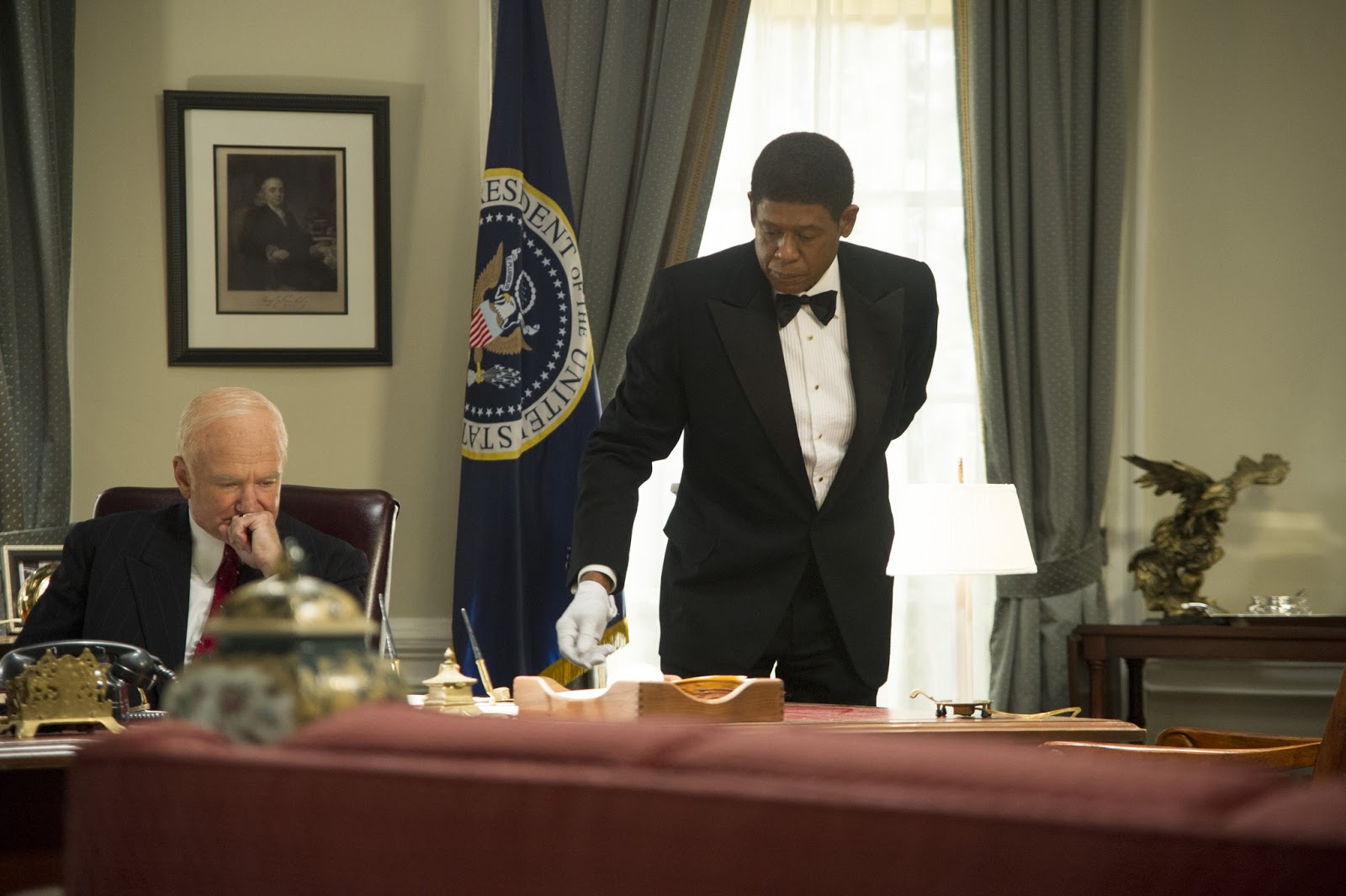
The Butler (2013)


Forest Whitaker takes on a lifetime of service, as the Civil Rights movement meets Downton Abbey

Director: Lee Daniels

Cast: Forest Whitaker (Cecil Gaines), Oprah Winfrey (Gloria Gaines), David Oyelowo (Louis Gaines), Cuba Gooding Jnr (Carter Wilson), Lenny Kravitz (James Holloway), Colman Domingo (Freddie Fallows), Yaya DeCosta (Carol Hammie), Terrence Howard (Howard), Adriane Lenox (Gina), Elijah Kelley (Charlie Gaines), Clarence Williams III (Maynard), John Cusack (Richard Nixon), Jane Fonda (Nancy Reagan), James Marsden (John F. Kennedy), Vanessa Redgrave (Annabeth Westfall), Alan Rickman (Ronald Reagan), Liev Schreiber (Lyndon B. Johnson), Robin Williams (Dwight D Eisenhower)
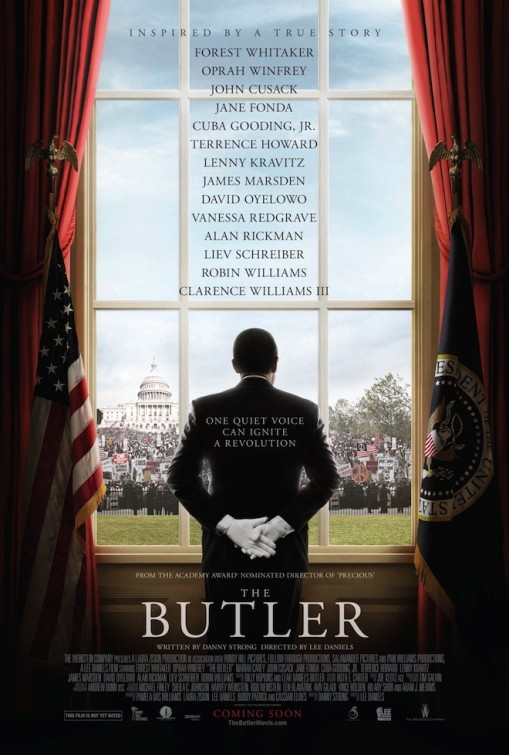
Cecil Gaines (Forest Whitaker) grows up on a plantation in the South; after his mother is raped and his father killed by the son of the house, the family matriarch (Vanessa Redgrave) takes him on as a house servant as a token gesture of regret. His training here sets him on the path to working in a succession of increasingly wealthy hotels and, finally, the White House. Over 30 years, he serves the Presidents in office, never involving himself or commenting on policy, proud of his service to his country. This often puts him in conflict with his Civil Rights activist son Louis (David Oyelowo), with his wife Gloria (Oprah Winfrey) stuck in the middle.

This is the sort of film that feels designed to win awards. It’s based on a vague true story (it changes nearly all the events of course) and it’s about a big subject. It’s got big name actors doing acting. It aims at big themes. What it actually is, is a film that misses its marks. It’s a film that spends time with big themes but has nothing to say about them, or in fact anything interesting to say full stop. It assumes that the historical context will do the work, and leaves it at that. Instead, it settles for trite sentimentality and cliché, personal stories played on a stage that makes those stories seem slight and inconsequential rather than giving them reflective depth.

The biggest problem about the film, leaving aside its heavy-handed sentimentality and mundane predictable storytelling, is that all the way through it feels like we are following the wrong story. It’s such a vibrant and exciting period of history, so full of events, passion and struggle: and instead we follow the story of Cecil, essentially a bland passive character who achieves very little and influences even less. There are vague references to leading “the regular life” and how working in domestic service is like some sort of subversive act to demonstrate the education and hard-working possibilities of the minority, but to be honest it never really convinces.

The film promises that Cecil was a man who had a profound impact on the people he served – but this doesn’t come across at all. Instead, the parade of star turns playing US Presidents are there it seems for little more than box office: we see them speaking about Civil Rights issues or planning policy, but we get very little sense of Cecil having any bond with them. The cameos instead become a rather distracting parade, as if the film was worried (perhaps rightly) that Cecil’s story was so slight and bland that they needed the historical all-stars to drum up any interest in it. It doesn’t help that the cameos are mixed – Rickman, Schreiber and Marsden do okay with cardboard cut-out expressions, but Cusack in particular seems horribly miscast. A braver film would have kept these pointless camoes in the background and focused the narrative on Cecil and his colleagues below stairs, and their struggles to gain equal payment with their white colleagues. This film is seduced by the famous events and names it spends the rest of the time backing away from.

The performance at the centre is also difficult to engage with. Forest Whitaker is such an extreme, grand guignol actor that it’s almost sad to see him squeeze himself into a dull jobsworth such as Cecil. Whitaker seems so determined to play it down that he mumbles inaudibly at great length (it’s genuinely really difficult to understand what he is saying half the time), slouching and buttoning himself into Cecil’s character. It doesn’t come across as a great piece of character creation, more a case of miscasting. Oprah Winfrey does well as his wife, although her character is utterly inconsistent: at times a drunk depressive, at others level-headed and calm. The link of either of these characters to the hardships of life as a Black American or their role in racial politics is murkily unclear.

The star turn of the film – and virtually all its interesting content – is from David Oyelowo, who ages convincingly through the film from idealist to activist to elder statesman. His story also intersects with the actual historical events that are taking place in America and he is an active participant – unlike Cecil the passive viewer, just as likely to switch the TV off as follow the news. Often I found myself wishing the film could follow his character rather than Whitaker’s.

That’s the problem with the film: what point is it trying to make? The film seems to want to honour Cecil’s service in the White house – but the film is a slow journey towards Cecil’s sudden revelation that maybe his son’s campaigning for Civil Rights was the right thing to do. This flies in the face of the film’s tribute to Cecil’s decades of quiet, unjudging service: the film can’t make up its mind whether it wants to salute Cecil for being an unjudging, dedicated servant to a long line of Presidents, or for having the courage to take a political stance towards the end. It’s having its cake and eating it. It’s this shallow lack of stance that finally makes it an empty and rather dull viewing experience.
A Man For All Seasons (1966)


Paul Scofield ways up a difficult demand from a not-so merry monarch

Director: Fred Zinnemann

Cast: Paul Scofield (Sir Thomas More), Wendy Hiller (Alice More), Robert Shaw (Henry VIII), Orson Welles (Cardinal Wolsey), Leo McKern (Thomas Cromwell), Susannah York (Margaret More), Nigel Davenport (Duke of Norfolk), John Hurt (Richard Rich), Corin Redgrave (William Roper), Colin Blakely (Matthew)

Writing these film reviews is sometimes harder when it’s a film you know so well. I was probably in my very early teens when I first saw this and I’ve seen it dozens of times since. I know all the scenes, all the beats, and I love it. This is a brilliant film, and its depth, richness and intelligence are ingrained. It’s a wonderfully written, played and directed piece that transforms a historical event from a history lesson into an endlessly relevant and affecting parable.

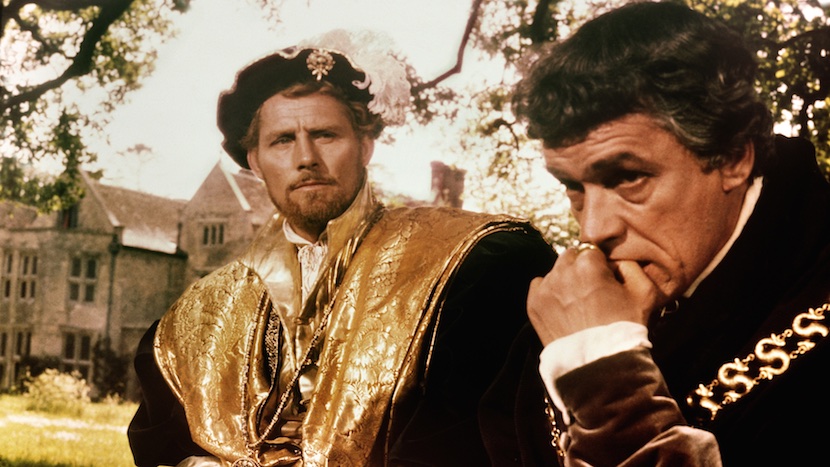
Paul Scofield (simply becoming the man) is Sir Thomas More. With Queen Catherine unable to bear Henry VIII (Robert Shaw) a son, wheels are in motion to ditch the Queen and marry the king to Anne Boleyn (a split second cameo from an unpaid Vanessa Redgrave, making you believe in a moment Anne could split a kingdom). More, however, can’t agree to the divorce – his faith in the Catholic church is non-negotiable, and the church won’t recognise the marriage. So while the rest of the kingdom falls in line, More is arrested and takes refuge in his complete silence – having never spoken of his reasons, he can never be tried for them.

Re-watching this masterful film for the first time in a few years on a newly released, fully restored Blu-ray, I was immediately reminded what a thoughtful, interesting and enjoyable film it is. Having read the play again, I genuinely think (and I’m not alone) Bolt’s script is superior to the original. Several changes have been made, most notably the removal of the “Common Man”, a theatrical device whereby one actor played all the smaller working class roles, while delivering a commentary on the action. It’s a very theatrical device, which Bolt believed wouldn’t work on screen, but its removal also purifies the story, tightens the focus and allows us to focus on More. The commentary on More’s conflicted character is instead provided by Paul Scofield’s superlative performance in close-up. Bolt also removed much of the political background, making the film more of a parable of conscience rather than a “history play”.

The film is a beautiful celebration of old-fashioned Hollywood film making. Fred Zinnemann is sometimes forgotten today, extremely unfairly for a man with a hugely impressive back catalogue. A Man for All Seasons was perfect for a director whose best work saw one man stand alone against a system – be that at Pearl Harbour or the Wild West. Zinnemann was an “actor’s director”, and draws out a series of impressive performances. But his often simple set-ups never feel staged.

He and John Box (production designer) understand the power of claustrophobia, of life and death conversations in small rooms – from Wolsey’s imposing red office that seems an extension of his personality, to Cromwell’s poky office and More’s cell, the sense of being trapped builds throughout the film. By contrast, the final courtroom’s spaciousness only underlines the fact that it’s a fix. Throughout the film looks wonderful and its spare score is a beautiful Tudor-style series of compositions that carry a perfect pitched of awe and doom. It’s so beautiful (and often overlooked) I’ve put a link to the opening here.

 In fact, Zinnermann constructs the film throughout with wonderful beats and telling shots. The first appearance of Henry VIII, his head obstructing the sun, More blinking looking up, is one of the best visual impressions you’ll see of the Icarus nature of the Tudor court. A beautiful cut takes us from More (in a windswept garden, a lovely commentary on the turbulence of his life) wondering if he can find a way to sign the oath, to a shot of the view from behind his prison bars – pages and pages of story told to us in one simple cut. Later, from the same position, we’ll see a whole year pass by in a few moments – simple, unfussy, very effective. The film is packed with small, subtle moments like this that never intrude by themselves, but build to create the effect of the film wonderfully.

And this is a great film, there’s no doubt about that. The story is surprisingly simple, but Bolt and Zinnermann make it feel truly universal: the man against the state, the individual standing for what he believes is right despite all the pressure bought to bear against him. It’s a timeless parable and could be applied to virtually any time or place you could name. It’s also extremely well written: nearly every other line is memorable, the speeches are extraordinary. Every moment of reflection and observation sounds (and is) universal in its application. Its straightforwardness also helps make the story very moving, and it successfully carries out the trick of telling a movie about a saint while making him a living, breathing man we can relate to.

Of course, a large part of its success is due to Paul Scofield’s performance in the lead role. Honed after years of performing the role, it’s again almost hard to talk about individually as Scofield is so central to the film; talking about its success is in many ways to talk about Scofield’s success. Scofield’s performance is one where the actor disappears and the character remains: his More is totally real. You feel throughout not only his dignity and wisdom and his sharply defined sense of private and public morality – but also his warmness, his wit, his benevolent regard for people and those around him. He’s a caring master and friend – but not a push-over; and is adamantine in his decisions. Scofield is also able to show the contradictions of the man: a private man who cannot give up the lure of the limelight. Every beat of the performance is brilliantly observed, a list of highlights would fill a book. He carries the entire film from start to finish and never lets it slip for a second.

He’s helped by some wonderful support (and it’s a testimony to his generosity as an actor that he cedes the screen several times). Robert Shaw’s Henry VIII is a scene stealing tour-de-force. It’s up there with Robert Duvall’s Kilgore as cameos that wrench control of the movie. He’s on-screen for about 12 minutes, but he perfectly captures Henry’s charisma and his childish temper and fury. He’s intelligent (but not that intelligent – I love his sulky response when he is quickly bested by Margaret More in knowledge of Latin) and friendly but not that friendly – the sort of man who literally rips flowers from a tree to show someone how beautiful they are: destruction and excitement combined in one moment. You totally believe that this is a man who could shatter a country in a fit of pique.

Wendy Hillier also deserves notice for what might be the trickiest role in the film as Lady Alice, a woman who lives happily in the shadow of her husband. Ill-educated and lacking any understanding of her husband, it’s a part that could be almost yokel like. But Hillier brings it a world of dignity and fiery defiance, and she brings a completely convincing fury to Alice as she rails against  injustice. The final scene between her and More is a masterclass from both of simple, uncomplicated love that has held two people with very little in common together for a lifetime.

There is literally not a bad performance in this film. Every actor is perfectly cast and completely understands their roles. Nigel Davenport masterfully portrays the pride and dimness that lies under Norfolk’s bluff domineering persona. John Hurt nails Rich’s weakness, selfishness and greed and layers it with a convincing note of underlying self-loathing: a star marking performance. Orson Welles seems to have prepared his whole life for the bloated, corrupt Wolsey. Leo McKern (the only other cast member from the original production) invests Cromwell with a low viciousness and a deadly political savvy that is based exclusively on realpolitik and devoid of decency. Susannah York, Corin Redgrave and Colin Blakely all also excel.

Historically, the character of More has faced far more criticism and scepticism recently. Several historians have bought attention to More’s rigid Inquisition-like Catholicism and his willingness to execute heretics; Hilary Mantel’s equally brilliant Wolf Hall was partly written as a response to Bolt’s presentations of More and Cromwell, lauding the latter at the expense of the former.

But these controversies are not what this film is about – and it’s never trying to be a history lesson. It presents its version of the story on its own terms (very little is ever leaned about the “King’s Great Matter” or the reasons for it) – instead, like The Crucible, it turns a historical event into a deeply moving and profound parable. In doing this it transcends being a simple recounting of events, and instead becomes an independent work of art. Historical accuracy is of no relevance to the audience when viewing Henry IV Part 1: it is of no matter here either, and is something the film never claims. And it’s all the better for it. Still one of my all-time favourites.

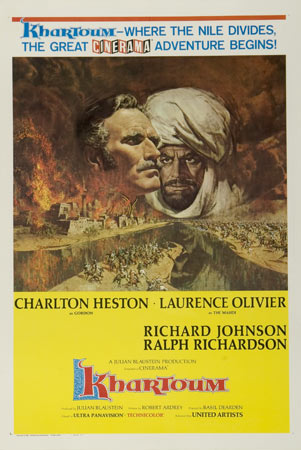
Khartoum (1965)


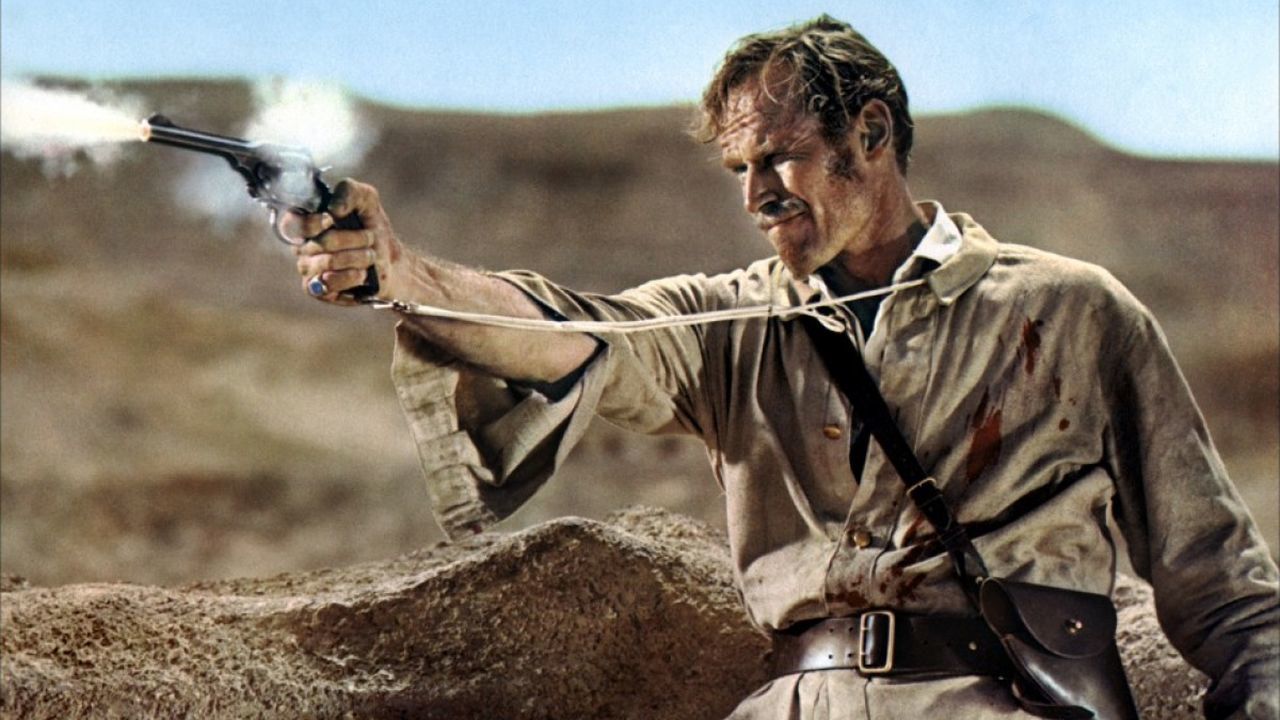
Charlton Heston takes aim in a rare moment of action in Khartoum

Director: Basil Dearden

Cast: Charlton Heston (General Charles Gordon), Laurence Olivier (The Mahdi), Richard Johnson (Colonel John Stewart), Ralph Richardson (William Ewart Gladstone), Alexander Knox (Sir Evelyn Baring), Johnny Sekka (Khaleel), Nigel Green (General Wolseley), Michael Hordern (Lord Granville), Peter Arne (Major Kitchener), Zia Mohyeddin (Zobeir Pasha), Douglas Wilmer (Khalifa Abdullah) 

For me you can’t really beat a big epic film. I love their sweeping vistas, the larger than life personalities, the luxurious running times and the vast array of Brit actors you inevitably find filling out the cast list. There is a lovely Sunday afternoon cosiness about a good epic and, since Hollywood spent large chunks of the end of the 50s and the 60s churning them out, historical events and personages replayed in sweeping panovision, there are plenty to watch.

Khartoum takes as its topic the siege of Khartoum and the death of its commander General Charles Gordon (played here by go-to actor for the big epic, Charlton Heston). Part of the now largely forgotten Sudanese war of the 1870s-80s, the siege was conducted by forces led by The Mahdi (Laurence Olivier) a man convinced that he was a reborn messenger of Muhammed.

Khartoum is a film that means well, but it’s a rather stodgy, po-faced history lesson that struggles with the fact that sieges are rather dull eventless things. Combine this with most of the film’s subplot following faithfully recorded political events back in the UK, and it hardly makes for a event filled spectacular. Instead it’s a slightly muddy lecture, interspersed with invented meetings between characters (Gordon and Gladstone; Gordon and The Mahdi twice!) in which they eloquently talk at each other, mouthing out the writer’s careful research, but give us no real insight into the times or the impact events had on the future.

It’s also rather routinely directed, without any flair or dynamism. It’s clearly aiming to be another Lawrence of Arabia, with everything from its music score to the lingering shots of the desert all aping Lean’s masterpiece. An opening narration (by an uncredited Leo Genn) even mulls over Egyptian and Sudanese history, while lovingly showing the viewer some postcard shots of various Nile attractions, seems particularly dry and dusty.

When the film does allow moments of action (which all seem ill-placed in this seriously serious film) they are rather flat and dull. The final attack on Khartoum has a suddenness about it that works well for the overwhelming force of The Mahdi’s army – and the death of Gordon (inspired by George William Joy’s painting) is rather affecting (although the real Gordon allegedly went down all guns blazing) but this is a film far happier with conversation.

What does work in the film, surprisingly, is Heston, who underplays as an enigmatic Gordon, a quiet, unknowable man addicted to the limelight, a serene soldier with a love of peace and religion, a man of the cloth and accomplished solider. Heston allows his natural charisma to do a lot of the work, and he clearly feels a certain empathy with Gordon, gracing the film with the same determined leadership of the general. Heston is an easy actor to mock, his granite face made for legends, but he’s a quietly assured here.

Olivier’s performance is inevitably more troublesome today, the great man dressed up in blackface and a rum accent as The Mahdi. In fact, as per Hollywood films of the time, most of the major Sudanese characters are played by British actors in blackface. Of course it would never happen today – and it’s tricky not to either gasp or snigger at  Olivier’s first scenes – but looking past that first shock (and his opening speech – “Ohhhhh my belovvvvveed” is too much), Olivier gives a detailed study in ambitious fanaticism which is even more relevant in the age of Al-Qaeda. It’s uncomfortable to see, and Olivier allows the mannerisms too much rein (in particular compared to Heston’s confident underplaying) but it’s a decent performance.

I’ll always have a soft spot for this film as it allows us the chance to see Ralph Richardson as Gladstone, one of my favourite historical figures, and one of the two greatest English statesmen (with Robert Peel) of the 19th century. Richardson would have been brilliant in The Gladstone Story (sadly never made) and he brings to life much of the political scheming back home in Blighty, as a Machiavellian version of the Grand Old Man. Anyway, he’s terrific and the various cabinet room debates are some of the most interesting parts of the film.

It’s a shame that the films gets bogged down too early in Sudanese and Egyptian politics (and still manages to muddle the viewer), before settling into the siege from where, interspersed with slightly repetitive conversations. It’s clear where the film is going, but there isn’t the doom laden dread about this that the film needs. This is a shame, as this story of a colonialist, in love with a colony, killed by colonists while trying to protect other colonists, has a lot to potentially say about the modern world (both now and in the 60s) – it just doesn’t manage to say them.

Note: I was struck in the film by how dangerously many of the horses were thrown about or tackled by soldiers in the battle scenes. “Surely that can’t be safe” I thought as a man knocked over a galloping horse by jumping and tackling its head. Sure enough it wasn’t: allegedly 100 horses bought the farm for this film.

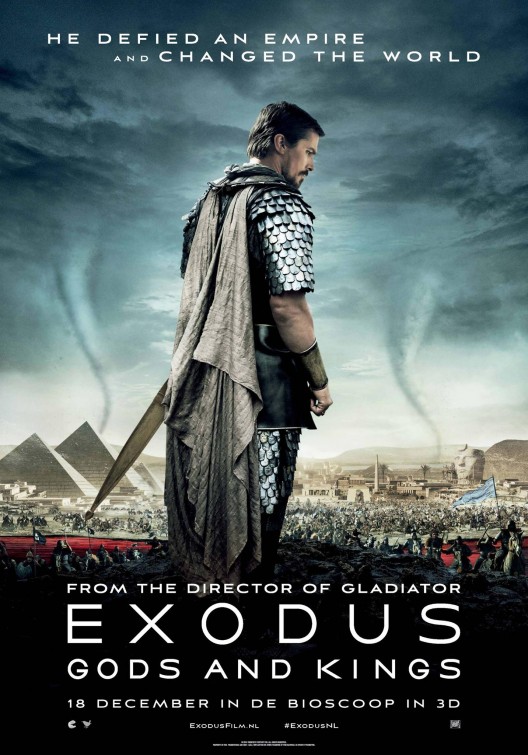
Exodus: Gods and Kings (2014)


Brothers in arms? Christian Bale and Joel Edgerton struggle for chemistry

Director: Ridley Scott

Cast: Christian Bale (Moses), Joel Edgerton (Ramesses II), John Turturro (Seti I), Aaron Paul (Joshua), Ben Mendelsohn (Hegep), Maria Valverde (Zipporah), Sigourney Weaver (Tuya), Ben Kingsley (Nun), Indira Varma (High Priestess), Tara Fitzgerald (Miriam), Hiam Abbass (Bithiah), Dar Salim (Khyan)

There is something quite reassuringly old fashioned about Biblical story films. They have a sweet Sunday reliability about them, an old-fashioned bombastic self importance, mixed with spectacle and often heavy-handed moral messages. They are just quite fun. Biblical epics have always been popular with Hollywood as there can never be any judgement passed on the amount of violence and sex the stories often contain as, hey, it’s all in “the good book”. It worked for Cecil B DeMille and it continues to work today.

Exodus: Gods and Men is an exception to this rule of Hollywood Bible stories because it is neither fun, nor does it have a clear message. It seems to have been made by people doing their very best to pretend the story of Moses has as little to do with the Bible as possible. In effect, if God is the star of the Bible, then this is an adaptation that tries to minimise the star as much as possible. The story has beats (probably the most interesting parts) where Moses and God warily question each other’s motives, but these scenes don’t have enough weight to them, the philosophical arguments are never clearly expressed. Bluntly, if Scott (an aethist) and Bale (a man who described Moses as “one of the most barbaric figures that I ever read about”) don’t have any connection to the story and its themes – why should we?

Exodus is instead a feeble attempt to recapture the magic of Gladiator. Firstly it is an astonishingly badly written film, full of tin-eared, clumsy dialogue (“Listen, from an economic standpoint alone, what you’re asking is problematic to say the least” is Rameses’ response to the let-my-people-go message of Moses). Secondly, it makes little or no attempt to build up its characters. It’s aiming for a “brothers divided” plotline with Moses and Rameses – but neglects to ever show these characters as friends at any point. From the start they are divided, with the introduction of a stupid prophecy plotline at the start of the film existing only to justify a dull battle, a stylistic retread of the Gladiatoropening battle. Having failed to show any reason why these two characters should ever care for each other, the film settles into familiar patterns: Rameses the jealous, petty tyrant, Moses the gruff man with a temper, hiding his morality. Not once is there the feeling of a fractured relationship.

Exodus is also highly confused about its feelings towards Christianity. God is literally voiced by a petulant child. Simultaneously Scott also seems keen to attribute as many of the plagues and partings of the red sea as he can to pseudo-scientific reasons – so some sort of meteor causes a tsunami to part the red sea, crocodiles going crazy leads to the Nile turning into a river of blood, that sort of thing. The most interesting moments involve the debates between Moses and God, the vengeful lord favouring shock and awe over Moses’ long-term guerrilla campaign. There are moments here where the film touches upon a point, questioning if God even needed Moses in the first place. But it never really tackles it properly. I suspect we are supposed to see meaning in the weight given to the point that Hebrew means “he who wrestles with God” and see Moses as a man struggling to understand God’s plans for him – but this never really comes together coherently.

Leaving aside all that, it’s a plain badly structured film. From the pointless opening battle scene, screen time is lavished on massive events, but no time is spent on the characters and motivations. Dialogue scenes seem rushed and heavily cut. As such, bizarrely, the film seems both very long and too abrupt. Characters come and go – Bens Mendelsohn and Kingsley drift in and out of the story, Aaron Paul has barely a line of dialogue and Sigourney Weaver’s character seems little more than a cameo. Bale barely moves out of first gear as Moses, Edgerton does his best with a character that is laughably one-note. The film tries to do far too much, without making us invest in anything that is happening.

Instead there are big events, beautiful photography (you’d expect nothing less from Scott) and little else going on. Plagues in themselves are not interesting – people are, and if the characters aren’t developed as people, we can’t be interested in seeing events happen to them. If the film had something unique to say about religion (as it tries to do at times) it might have survived, but instead it’s a rather portentous action film that isn’t about anything – it’s not clear what we are supposed to think of God, it’s not clear what motivated Moses, we’re not clear how he feels about his mission.

Under the surface of Exodus are the beats you need to make an interesting film. A streamlined film that chose to do one thing could probably have done it well. But the storytelling and plotting are so fudged that the film just rolls from spectacle to spectacle, with no heart.