Category: Horror film

Bram Stoker's Dracula (1992)

Gary Oldman prowls the night as Bram Stoker’s Dracula

Director: Francis Ford Coppola

Cast: Gary Oldman (Count Dracula), Winona Ryder (Mina Murray), Anthony Hopkins (Professor Abraham van Helsing), Keanu Reeves (Jonathan Harker), Richard E. Grant (Dr Jack Seward), Cary Elwes (Lord Arthur Holmwood), Billy Campbell (Quincy P Morris), Sadie Frost (Lucy Westenra), Tom Waits (Renfield)

In the 90s Francis Ford Coppola planned a series of high Gothic films of classic monster stories, kick starting the plans with his own production of Dracula (the only other film that came of this was Kenneth Branagh’s equally operatically overblown Mary Shelley’s Frankenstein). Going back to the story of the original novel (more or less), Coppola presented a deliberately high-intensity, theatrical, over-the-top version of Stoker’s tale that becomes as overbearing as it is visually impressive.

In 1462 Vlad the Impaler (Gary Oldman) renounces God and becomes Dracula, after false news of his death leads to his wife (Winona Ryder) committing suicide and being damned by the church. Over four hundred years later, the immortal vampire Dracula plans to travel to England, with his plans unwittingly aided by his solicitor Jonathan Harker (Keanu Reeves). His interests are peaked all the more when he sees a picture of Harker’s fiancée Mina (Winona Ryder again) – the reincarnation of his dead wife. Dracula heads to England, preying on Mina’s friend Lucy (Sadie Frost) leading to an alliance of Lucy and Mina’s friend, led by Professor van Helsing (Anthony Hopkins) to combat Dracula’s villainy and save Mina from her own dark temptations to join the besotted Vampire.

Coppola’s film doubles down on Gothic romance, thundering through the action with everything dialled up to 11. The (rather good) score hammers home every beat, the camera swoops and zooms through a parade of tricks, wipes and dynamic angles with cross fades frequently throwing two images on screen at the same time. It makes for a sensual – in more ways than one – overload, but also a rather oppressive viewing experience, with no respite or sense of calm but every single scene delivered with stomach churning acceleration.

It’s a film directed with a deliberate operatic style, that celebrates (and makes no attempt to hide) its set-based theatricality. The opening sequence sets the tone with its Kurosawa inspired costumes in front of an Excalibur style blood-red sky, with battle scenes (and impalings) staged as an elaborate puppet show. Oldman – with a hammy Eastern European accent that you could wade through like treacle – then rages and roars over his wives crumpled body, stabbing a cross that leaks blood all while images are cross-cut showing his wives demise and the beginnings of his own monstrous transformation. The film doesn’t ease up from there.

To be honest Coppola massively over-eggs the pudding, producing an over-blown monstrosity of a film that shouts and shouts and shouts and drains all subtlety from every frame. In particular the sexual undertones of Vampirism – and the harsh male judgement of female sexuality – that the book explores are placed unsubtly front and centre. Every vampire attack is presented as a positive ravishing, Frost and Ryder writhing orgasmically (poor Frost has to undergo the indignity of being humped and bitten by a Dracula in part human-part wolf form) while boobs are left on display after every single assault. From an early scenes that sees Lucy and Mina gawping at a pornographically illustrated Arabian Nights, we are left in no doubt that IT’S ABOUT SEX YOU KNOW.

Coppola shows no restraint at all in his directing, which leaves nothing to the imagination, and ends up leaving the actors adrift between a film that is part serious attempt to film the book and part ludicrous bodice ripper, like the cheapest 60s salacious horror film from the worst excesses of Hammer.

It certainly leaves the actors adrift. Oldman gives it a go with gusto, even if he seems completely lost as to what tone this character should hit (is he a monster, a lost soul, a conflicted lover, a megalomaniac – who knows?). Anthony Hopkins channels Orson Welles with the sort of ham that was to become more-and-more his go to in later years. Winona Ryder does her best with a role that oscillates wildly between Good Girl and Minx. She’s saddled with an English accent, which restrains like a straitjacket. Tom Waits has fun as the insane Renfield (here imprisoned in a crazy asylum that resembles a medieval dungeon).

The rest of the performances are pretty much abysmal. Poor Keanu Reeves is left ruthlessly exposed, horrendously miscast as a stiff-upper lip English lawyer in a performance that surely goes down somewhere in history as one of the worst ever. His acting here would barely scrap by in a school play, his delivery of the dialogue wooden beyond belief and some talcum powder added to his hair for the film’s later sections only makes him look ridiculous. Reeves is a decent performer in the right role, but he was never worst case than this. But then the rest of the cast are pretty much just as bad: Frost is out-right awful, hopelessly unable to make Lucy anything other than a slut, while Grant, Campbell and Elwes are all wooden and dull to a man.

The film does get some points for reverting closer to the plot of the book – unlike many versions – although the addition of the love story between Dracula and Mina is marred by tonal problems and the utter lack of chemistry between Oldman and Ryder (they famously fell out on set and the film never recovers). Coppola directs the film with no discipline at all, and no sense of balance between spectacle and story. While it has many merits in its design – it won no less than three Oscars and the costumes, make-up for Oldman and much of its look and style are flawless – it’s basically a pretty over-bearing and dreadful film that shouts at the viewer so long and so hard that it becomes easier in the end to laugh at it rather than with it. A sad misfire.

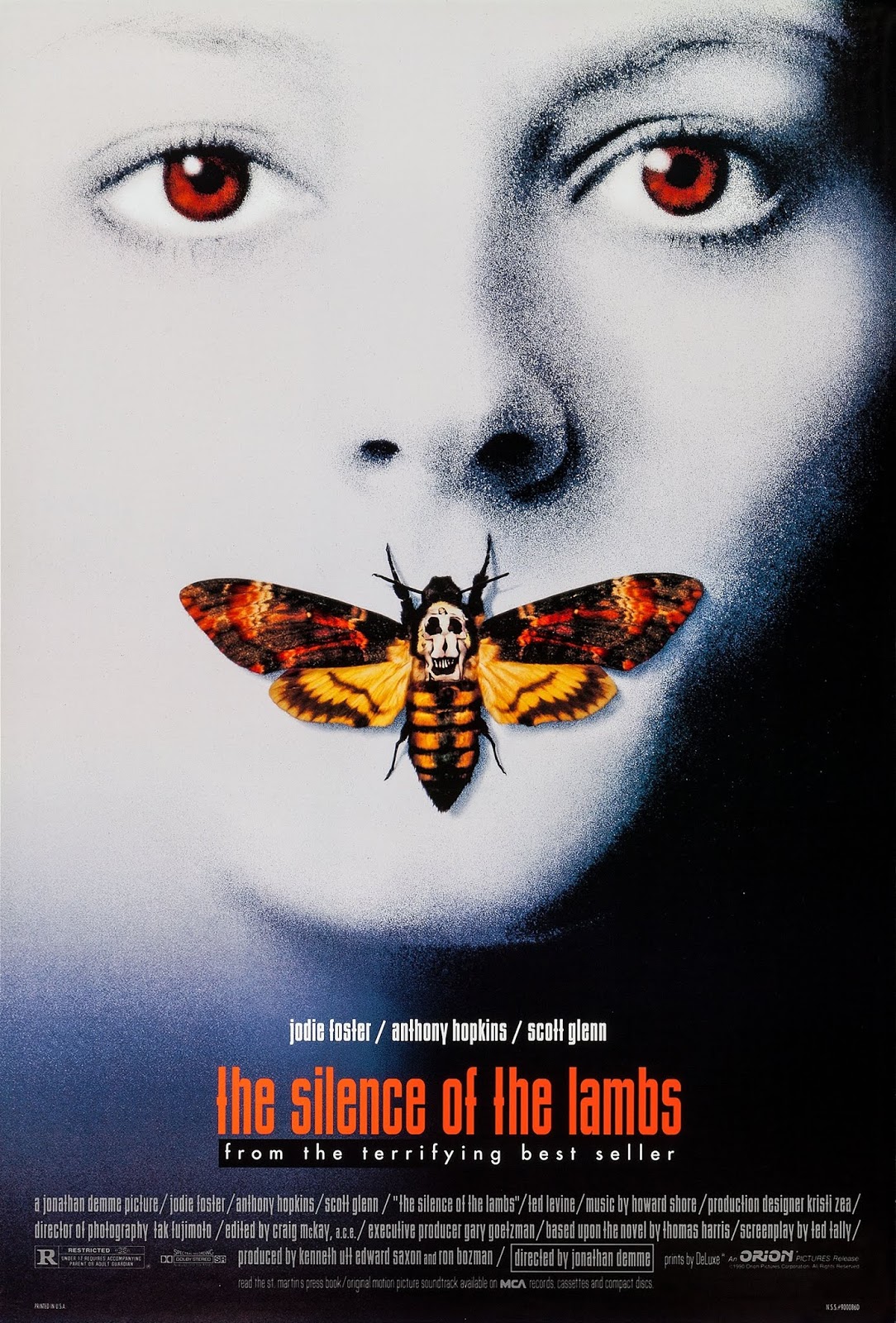
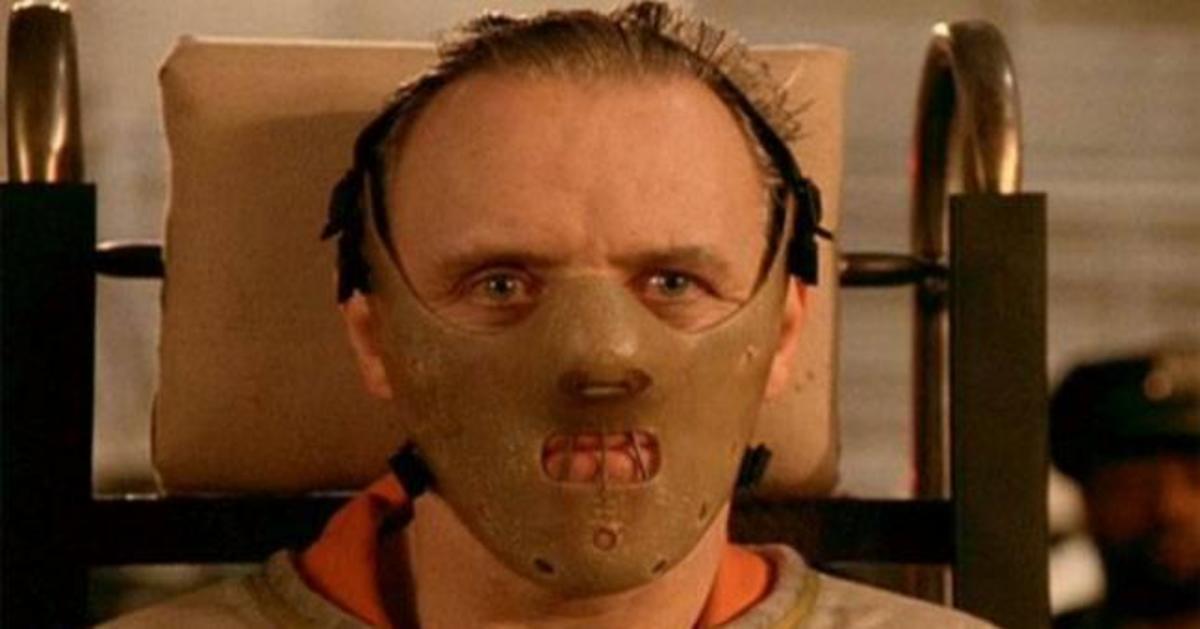
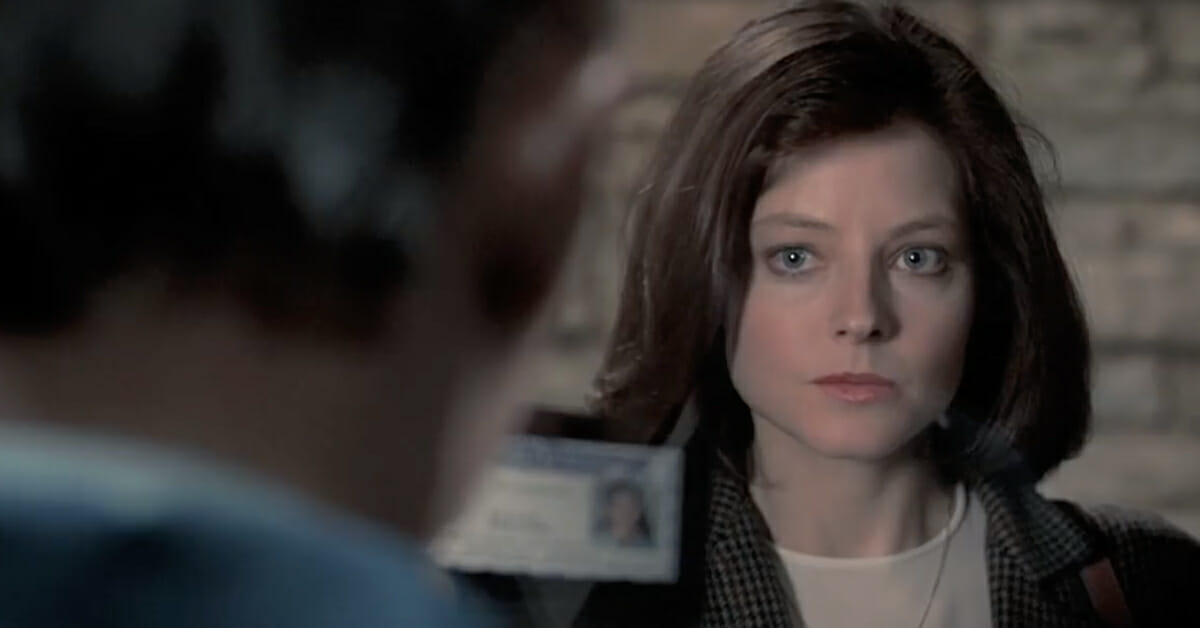
The Silence of the Lambs (1991)

Jodie Foster and Anthony Hopkins carry out a strange dance in the compelling The Silence of the Lambs

Director: Jonathan Demme

Cast: Jodie Foster (Clarice Starling), Anthony Hopkins (Dr Hannibal Lecter), Scott Glenn (Jack Crawford), Ted Levine (James “Buffalo Bill” Gumb), Anthony Heald (Dr Frederick Chilton), Brooke Smith (Catherine Martin), Diane Baker (Senator Ruth Martin), Kasi Lemmons (Ardelia Mapp), Frankie Faison (Barney Matthews)

Is there a more unlikely Oscar winner than The Silence of the Lambs? In fact, double down on that: is there a more unlikely film to have won all five of the Big Ones – Picture, Director, Actor, Actress and Screenplay – only the third film in history to have achieved that (It Happened One Night and One Flew Over the Cuckoo’s Nest being the others)? Re-watching the film, it’s actually a triumphant vindication for Hollywood to have chosen a thriller for the ages, a complex and intriguing puzzle wrapped in an unsettling outer layer of thrills and horror, as if the academy was (late in the day) finally tipping an award-lined hat to the film’s spiritual grandfather, Hitchcock himself.

Clarice Starling (Jodie Foster) is a trainee FBI agent, in the final weeks before her graduation. Out of the blue she is plucked from Quantico by the head of the Behavioural Science Unit, Jack Crawford (Scott Glenn), to interview notorious psychiatrist-turned-cannibalistic-serial-killer Dr Hannibal Lecter (Anthony Hopkins), now interned in a psychiatric prison-cum-dungeon in Baltimore. Crawford hopes the Lecter might be able to shed light on the motives of “Buffalo Bill” (Ted Levine), a serial killer kidnapping and skinning young women across a number of states. Lecter can shed some light – but the price is an opportunity to investigate further into the psyche of the determined and ambitious Starling. A three-way game of cat-and-mouse between Bill, Clarice and Lecter soon starts to emerge.

Demme’s film is a sublimely made entertainment that brilliantly pulls together the trappings of multiple genres (there are splashes of horror, thriller, police procedural, romance and black comedy to name but a few) into an unsettlingly tense and engrossing whole. It’s truly a film Hitchcock would have been proud of, a masterfully assembled thrill ride where every shot serves a purpose, and each scene is carefully constructed to establish a clear story and push the audience’s buttons. It has two of the best tense “prolonged misdirects” in film history (wittily signposted in advance by an early car chase that is revealed in a pull-away to be a training exercise in Quantico – don’t trust your eyes!) and it brilliantly immerses you in the world and emotions of Clarice Starling.

Demme’s aim was to get us to empathise above all with Clarice, as she descends into the dark underbelly of this terrifying world. Demme uses a carefully selected combination of POV shots and straight-to-camera addresses to deliberately put us into the position of actually “being” Clarice Starling. From following her perspective through rooms and corridors, to seeing the characters she is talking to address the camera directly as if talking to us, through to carefully placed close-up shots that allow us to study the thoughts and feelings travelling across Clarice’s face, it brilliantly allows us to invest overwhelmingly in her without us even really noticing we are doing it.

And of course that is put together with Jodie Foster’s extraordinarily brilliant performance in the role. One of the film’s many strengths is exploring the nature of being a determined, brave and ambitious – but still slight and feminine – woman in the alpha-male world of crime investigation. Clarice fends off in virtually every scene not just discrimination and instant judgement, but a parade of half-spoken advances and flirtations from male colleagues. Foster’s brilliance is to make a character who is determined but humane, slightly vulnerable while never weak. She’s the key driver of the story, but also both an insider and outsider in her world, partly motivated by a desire to prove herself, partly by an attempt to vanquish haunting childhood memories of weakness and loss.

It’s these feelings under the surface that attract the interest of Hannibal Lecter, and the strange dance between them is the heart of the film’s appeal and it’s magic. Why does Lecter want to know about the facts of Starling’s life (that quid pro quo he archly asks for)? Does he want to analyse her? Does he want to help? Does he want to amuse himself with her terrible memories? Or is he just bored? He hardly seems to be certain himself, but the intimacy shared revelations provide is neatly played with by Demme in sequences between the two (they barely share the frame by the way more than twice) that hum with a tension of danger, but also a thrill of illicit romance, mixed with incestuous interest (Starling the orphan, Lecter the father-like man of wisdom helping her catch the killer). And it works with us as well – we are so invested in Starling that, just like her, we end up liking Lecter (even though we know we shouldn’t).

Of course it helps that Hannibal Lecter is portrayed in a performance of magnetic, career-defining brilliance by Hopkins. Hopkins modestly claimed playing Lecter was easy once you mastered the voice and the physicality – but that’s to downplay the extraordinary skill mastering those aspects concern, and the bravura brilliance with which Hopkins plays to the camera but never tips into absurdism. It’s an arch, knowing, winking performance that also carries with it an intense, psychotic menace, a delirious capacity for violence (as we find out). Demme introduces the character sublimely – after the build-up, his ram-rod stillness, polite manner and refined behaviour are somehow even more unsettling. Sure Brian Cox in Manhunter may be more conventionally chilling, but Hopkins is like an elemental demon playing with our childhood bogeyman fears, a guy who seems even more dangerous as he playfully chats one minute, then beats you to death with a truncheon the next.

The scenes between these two characters dominate the film (even if they take up no more than ten minutes of its runtime), and their relationship (beautifully shot as a game of one cagey upmanship that turns into semi-flirting, that turns into something in between) defines the movie and its legacy. Lecter’s magnetism was such that in later movies he would increasingly become an anti-hero of sorts, a lord of misrule rather than a brutal and indiscriminate killer, but here he’s terrifying and satanic, just as Starling is courageous and noble as the lady on a quest.

And that quest targets Buffalo Bill – a deeply unsettling performance of psychological unease and self-loathing by Ted Levine. The film was controversial at the time for its killer being both a transsexual and gay (although the film makes clear it’s a desire to be anyone apart from who he is that drives all these feelings), especially as at the time these groups were barely represented positively in the movies. But it also makes for singularly unsettling character, living in a subterranean cave-like basement, surrounded by moths, his voice slurred childishly while carrying no sense of shame or regret for his actions.

The hunt for Bill is the film’s story, and Demme uses the devices of cinema to make this as tense and unsettling an experience as needed. The camera prowls terrifyingly around Bill’s domains. Howard Shore’s score makes a deeply unnerving use of mournful refrains. Frequently scenes – such as the post-mortem inspection of a victim’s body – are often silently scored, making the mechanical noises of the investigator’s trade (such as the loudly clicking and whirring camera) deeply jarring. The film is grim, but relies more on reaction rather than bathing us in horrors, and implication brings the greatest terror. Every sequence of the film is perfectly assembled to leave us struggling to breathe – not least as events place Starling in more and more peril.

With its playful sense of black comedy, mixed with genuine terror and thrills, The Silence of the Lambs genuinely feels like the film Hitchcock was born to make. Everything in the film is perfectly assembled to serve the film’s aims – there is not a foot wrong in its assembly, and it’s sad that Demme never hit these sort of heights again. But the film is like a twisted companion piece to Psycho (only better), and in Hopkins and Foster produced two landmark performances. While the film engrosses us in Starling’s struggles in a man’s world, it also overwhelms us with Hopkins’ devilish magnetism and dark mystery. And what to make of the relationship between Starling and Lecter? It’s a mystery so enigmatic that it continues to grip today and it’s the secret behind the success of this compelling masterpiece.

Parasite (2019)

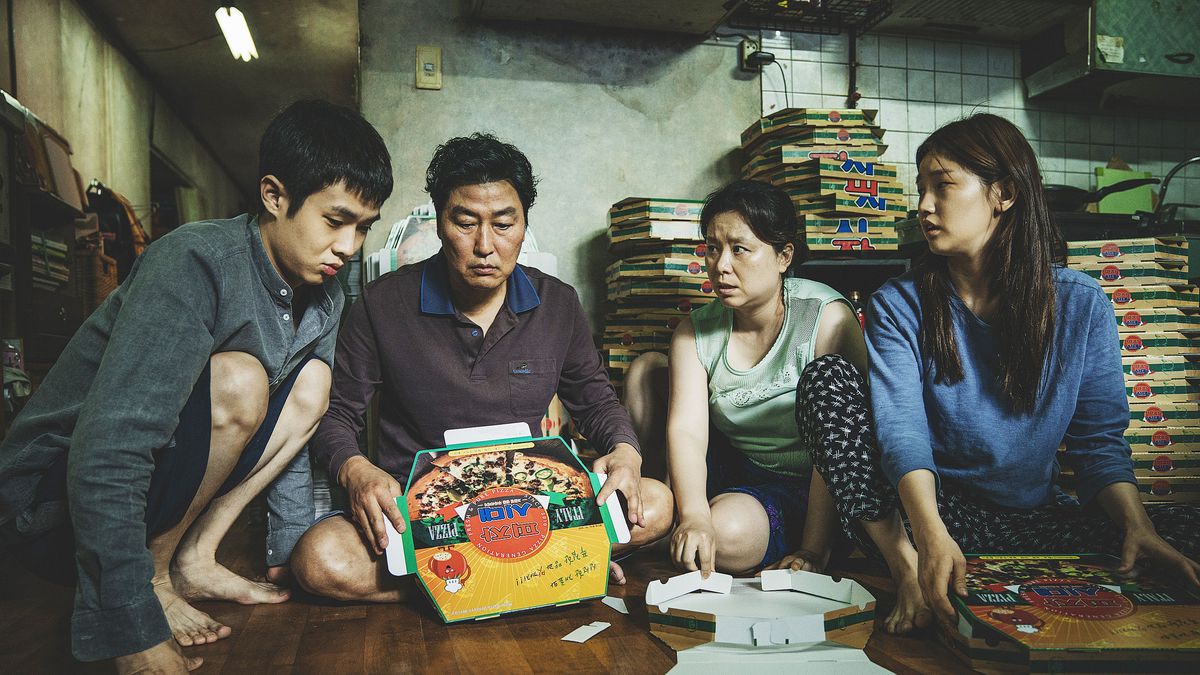
The Kim family juggle poverty with dreams of improvement in the brilliant Parasite

Director: Bong Joon-Ho

Cast: Song Kang-Ho (Kim Ki-taek), Choi Woo-shik (Kim Ki-woo), Park So-dam (Kim Ki-jeong), Jang Hye-jin (Kim Chung-sook), Lee Sun-kyun (Park Dong-ik), Cho Yeo-jeung (Park Yeon-gyo), Jung Ji-so (Park Da-hye), Jung Hyeon-jun (Park Da-song), Lee Jung-eun (Gook Moon-gwang), Park Geun-rok (Yoon), Park Seo-joon (Min-hyuk)

I’m writing this in the glorious after-glow of Parasite’s shock win for Best Picture, finally breaking (after 92 years!) the taboo on foreign language films lifting the Big One at the Hollywood’s annual love in. So let’s just say: not only is it a delight to see Hollywood breaking “the 1-inch barrier of subtitles” (to quote Bong from his Best Director at the Golden Globes), but also it’s a thrill to see the Oscar go to something that can make a legitimate claim to being the Best Picture of the Year – not to mention a film that speaks to the modern world in a way very few nominees have done since Get Out.

Bong’s superb picture has found such universal appeal perhaps because it so completely understands questions of class and wealth in our modern world. Set in an unnamed South Korean city, we are introduced to both the extreme poor and the extreme rich. At the bottom end of the scale – living in a half-basement apartment – are the Kim family. At the top – almost literally, living in a sprawling, modernist apartment bathed in sun with a large private garden at the top of a hill – are the Park family. When son Kim Ki-woo (Choi Woo-Shik) lands a job at the Parks’ teaching English to their daughter, he quickly begins to work with sister Ki-jeong (Park So-dam) to manipulate Park Yeon-gyo (Cho Yeo-jeung) to hire each member of the family in turn in a job in the household. But from there, the best laid plans spiral firmly out of control.

The less you know about the structure and events of Parasite going into it, the more you will gain from the film. What Bong has created here is a superb medley of genres, developing from a black-comedy-heist-caper into thriller territory, with a splash of horror and lashings of intelligently subtle social commentary. This is a film for the modern age, addressing questions of class, cultural resentment, societal divisions and the damaging impact of the super-rich and super-poor living side-by-side in ways that are profoundly insightful and fundamentally universal. 

Who are the parasites in Parasite? You could argue its society itself. At first it seems obvious on the surface that the Kims – living half beneath the surface of the city itself, inveigling their way into homes and roles, ruthless in acquiring their aims – fit the bill. But what about the Parks? So sheltered by money (“She can afford to be nice” says Kim dismissively of Mrs Park) they seem barely able to organise their own lives without the aid of an army of employees, placing no real value on them as people, only as extensions of their own house.

It’s all part of Bong’s skilful shift of perceptions throughout the film: the Kims are in some ways sympathetic (for the extreme poverty and desperation) but also they have no concern about hurting other people or manipulating them to get what they want. At the same time, we invest in seeing the well laid plans come to fruition, despite the impact it has on other people affected by their schemes. But as the film progresses, the innate selfishness and thoughtlessness of the Parks, their assumptions that their problems are of more concern than other people’s, that the world should revolve around them, makes them less sympathetic and the Kims more rounded and human.

Bong’s film brilliantly outlines this class war, every frame enforcing the insane split between such completely different worlds all rammed into the same city. The Parks’ apartment is a triumph of modernist design, the Kims’ flat a lightless dive with a regular tramp who pisses just outside their window. The Kims scurry to distant corners of the apartment to gain access to roving free wifi and stretch limited food supplies and their few pennies to the absolute limit. The family takes menial jobs to make ends meet, including folding a never ending pile of pizza boxes (boxes that seem to grow to dominate their flat).

At one point the camera follows the progress of the Kims as they leave the Park house and scamper, in an almost surreal series of long shots, down a never-ending parade of steps and streets, literally descending further down-and-down into the gutters of the city. It’s superb moments like this in Bong’s intricately designed film that constantly show us the divides between these people, the Parks living practically on Olympus with the Kims in Tartarus. These are problems that infect every society in the world, and the difficulty of making both rich and poor actually understand each other and find common ground to relate on are the problems we all see around us every day.

That’s even leaving aside the triumphs of Bong’s directing confidence, his mastery of tone and genre. The first half of the film is very funny – with Bong even leaning on this by having his characters drop dialogue that subtly refers to the ease with which the Kims’ plans come together – and has a delightful heist movie vibe. But the bubbling barriers between class hint at the tensions and danger that we feel lie in wait in the film, and threaten to break out. Korea is a volcano with the Kims and Parks sitting on the top, but it’s a volcano that the whole world can recognise. As Bong makes the film darker, leaner and even more menacing with hints of tragedy, it feels like the world correcting itself.

The acting is superb across the board with Song Kang-Ho hilarious and then deeply affecting as Mr Kim, a man slowly pushed beyond what he can bear. Cho Yeo-jeung is terrifically endearing and frustratingly thoughtless as the naïve Mrs Park. Park So-dam is brilliant as a super-smart Ki-jeong Kim, brilliantly manipulating left-right-and-centre. There is not a false note in the cast, the entire ensemble perfectly combining to create the class-conscious world of the film. To say too much more would be spoil it!

Bong Joon-ho’s film is Western break-through but really it’s a universal condemnation of the dangerous influence of class. And with Bong’s mastery of cinema – this is such a well directed film, both in terms of tone and every single shot contributing brilliantly to the whole – this has produced a film that feels like a very modern, prescient and profound masterpiece, a film that speaks to and almost defines the problems of the modern world. While at the same time being immensely entertaining and unpreaching. Thank goodness that 1 inch barrier came tumbling down.

Sunshine (2007)

Astronauts head out to restart the sun in Danny Boyle’s Sunshine

Director: Danny Boyle

Cast: Cillian Murphy (Robert Capa), Chris Evans (James Mace), Rose Byrne (Cassie), Michelle Yeoh (Corazon), Cliff Curtis (Searle), Troy Garity (Harvey), Hiroyuki Sanada (Kaneda), Benedict Wong (Trey), Chipo Chung (Icarus), Mark Strong (Pinbacker)

Spoilers: Last act surprises are discussed here. Although they did put them in the trailer at the time as well

What would we do if the sun decided to pack it in? To be fair, probably not build a bomb the size of Manhattan out of all the world’s fissile material and then fly it up to the Sun in a huge spaceship to jump start the sun’s core. Because that idea is pretty much like trying to restart a volcano with a match. To be fair, Professor Brian Cox (for it was he) did come up with an actual concept that did work – something involving a Q-Ball in the sun, whatever the hell that is – that the film never mentions. But then who really cares about the science, we only care about the simple idea of restarting the sun’s engine with a massive nuke. That’s an idea I don’t need a staff pass at the Large Hardron Collider to understand.

Mankind’s final fate is in the hand of a team pulled from across the world’s space agencies, with Professor Robert Capa (played by Cillian Murphy as a figure inspired heavily by Brian Cox himself in looks and style) as the boffin whose job is to blow the bomb when the time comes. The mission, Icarus II, is under the command of Captain Taneka (Hiroyuki Sanada), with engineer Mace (Chris Evans), pilot Cassie (Rose Byrne), biologist Corazon (Michelle Yeoh) whose job is to maintain the oxygen garden, psychiatrist Searle (Cliff Curtis), navigator Trey (Benedict Wong) and second-in-command and comms officer Harvey (Troy Garity). Entering the final days of the mission, near Mercury, the crew discover traces of the first missing mission that carried the first payload to restart the sun, Icarus I. Deciding two payloads are better than one, the crew divert to intercept – and of course from there everything slowly falls apart into increasing chaos, destruction and horror.

Boyle’s film was marketed as a sort of slasher-in-space – which to be fair it only really becomes in its final act, as the crew accidentally take on board captain of Icarus I, Pinbacker (Mark Strong), a man driven mad by proximity to the sun, deluded in the belief that it is God’s will that mankind perish with the sun. In fact for the bulk of its runtime – and its primary themes – are really about the psychological impact of prolonged isolation in space with only a small group of people for company (a heightened submarine claustrophobia), the dangers and damage that obsession can cause and the moral complexities that emerge when the fate of mankind is literally in the hands of eight people.

With an intelligent script by Alex Garland, Boyle’s film is smart, superior sci-fi which asks searching questions of how we might respond in the situations this crew are thrown into. How quickly would you make decisions about who is expendable and who is not when you are mankind’s last chance? How quickly would you be willing to sacrifice yourself? What moral qualms would you feel if the fate of the one was balanced against the many? And how are all these feelings heightened by the intense claustrophobia and isolation of prolonged space travel, interacting with the same few people day-in and day-out in a ship of which every inch you would be intimately familiar within the first few months of a mission lasting years?

It’s a wonder more people don’t go crazy in the film. Boyle’s film makes excellent use of the terrifyingly awesome, good-like power of the sun. Its rays are so intense at the range of the ship, that any exposure over about 2% of its full strength is lethal. But there is something about its mighty power, its all-consuming presence, that draws characters too it like moths to a flame. Psychiatrist Searle (impressively played by Cliff Curtis) already seems to be becoming slowly a slave to an obsession with our star, his skin peeling from too many hours in the ship’s solar observation lounge. Pinbacker (a curiously accented performance of intense insanity from Mark Strong) lost his mind in sun worship, his mind seemingly snapped by coming face-to-face with the powers of the heaven compared to the mini-presence of man.

But it’s that presence of mankind that drives the mission, and lies behind all decisions. Hard-ass engineer Mace (Chris Evans, very good) seems like a jerk, but he simply applies Spock’s maxim of the needs of the many to a logical extreme (correctly) objecting to every course of action that invites unknowns into the equation that endanger the mission. And Mace doesn’t hesitate at any time in the film when asked to balance his own safety against the success of the mission. Each crew member – with the exception of Harvey – places their own survival a distant second behind the completion of the mission, and the film is littered with moments of self-sacrifice and self-imperilment.

It’s this humanistic core to the film, of accepting the world is it and that mankind must be preserved within that, which leads to some of the film’s more weighted points around faith and religion. The film has little time for anything away from pure science, and an interest in higher powers and staring too closely at the bright light, is mixed in heavily with a dangerous fundamentalism that eventually leads to the film’s only spiritual figure Pinbacker becoming a psychopath determined to follow what he sees as God’s plan at the cost of all human life. It’s not a subtle picture of religion – and the film could have balanced it with at least one of these characters expressing some faith in some sort of religion on the ship or gently questioning how humbling being this close to the face of God might feel. The film has no time for that.

But then I suppose this is really a psychologically intense mission film, a sort of big-themes action sci-fi that is the sort of ideas based film you wish was made more often. Boyle’s direction is pinsharp as always, and the moments of dreamy awe and shattering power of the sun (as bodies are vapourised, parts of the ship crumble) or the freezing vastness of space (as one character discovers to their cost) provide a series of haunting scenes. Shooting Pinbacker with a juddering out-of-focus intensity – intended to ape the feeling of starring directly at the sun – is effective in making the character chillingly unknowable.  This moments work very well, as does the superb cast which has not a weak link among them (Cillian Murphy in particular anchors the entire thing extremely well). Sunshine is a thought-provoking and blistering science-fiction film that manages to balance big themes and ideas with horror house jumps and haunting moments of tension.

The Birds (1963)

Tippi Hedron has a bad day at the birdcage in The Birds

Director: Alfred Hitchcock

Cast: Tippi Hedron (Melanie Daniels), Rod Taylor (Mitch Brenner), Jessica Tandy (Lydia Brenner), Suzanne Pleshette (Annie Hayworth), Veronica Cartwright (Cathy Brenner), Charles McGraw (Sebastian Sholes), Lonny Chapman (Deke Carter), Joe Mantell (Cynical Businessman)

Alfred Hitchcock is often seen as the master of technique, the doyen of suspense, the master of the shock twist. Perhaps it was his love of this sort of material that led him to this radical reworking of Daphne du Maurier’s short story The Birds. After all Hitch had already directed the greatest ever du Maurier adaptation (Rebecca), so working with du Maurier was hardly new and turning this English suspense story into a sort of post-apocalyptic, tension-filled plot-boiler was right up his street. The Birds is a master-class in the director’s craft, and a curiously empty experience with barely a human heart in sight.

Melanie Daniels (Tippi Hedron), a slightly spoiled heiress, arrives in a small coastal town in California in order to play a practical trick on lawyer Mitch Brenner (Rod Taylor). Deciding to stay the night, she quickly realises that she has chosen the wrong weekend to get away as, while sparks grow between her and Rod, they also grow between humanity and the birds, as our feathered friends (enemies?) begin a series of escalating attacks on the population of the town that eventually lead to multiple deaths and destruction.

Hitchcock’s film is as masterclass in the slow-burn, deliberately the slowest film the director perhaps ever made. Hitchcock prided himself on his films in suspense being the awaiting of an event to happen. The bomb you know will go off on the bus. The plane circling Cary Grant that seems ripe to attack. The Birds takes this to the nth degree. The film’s very title all but tells you that the birds are going to attack, so Hitchcock takes it nice and slow, letting scenes play out with a breezy lack of pace, almost like a low-rent romantic comedy. But somehow this long unwinding of not a lot happening works well, because every scene somehow becomes a corkscrew as tension as every single bird in shot becomes suspicious. 

This atmosphere is increased by the wide open locations and remote locale the film is set in, with these all-American small town sites seeming to stretch on forever around the characters only serving to stress their isolation and vulnerability in the middle of all this deadly nature. Hitchcock also carefully stripped out all musical score from the film, instead providing a sound track of natural noise complemented by slightly exaggerated bird noise (created by use of a Trautonium, supervised by master composer Bernard Herrmann). The often makes the film eerily and unsettlingly quiet, with the soundtrack only punctured by the frequently (perhaps deliberately) mundane dialogue. Suddenly with this brilliant combination game, the entire film becomes a tense waiting game for the unleashing of avian attacks, every frame a tense waiting for the bang you all know is coming. It’s Hitchcock using every aspect of his reputation, and the film’s promise of violence, to create an overwhelming effect that is deeply unsettling no matter how many times you see the movie. 

Hitchcock also gives a slow build to the bird violence. Events escalate quickly, from the unsettling gathering of the birds in several places (most notably along telephone lines and outside a school playground) to subtle messages about chicken’s refusing food, to first Melanie and the other characters colliding with or being bitten by birds. It all builds to a grim reveal of a local farmer who has been attacked over-night, with Rod’s mother stumbling across the mutilated old man, Hitchcock’s camera delightedly cross cutting onto the man’s pecked out eyes. It’s the most grotesque shot of the film – and coming before we’ve seen our first mass bird attack, leaves us in no doubt as to the danger of these animals.

And when those bird effects come they have a real unsettling violence to them. In a blur of both real birds and super-imposed images (I will admit that the special effects of this film do now look a little dated, with the mixture of real, model and photo trickery birds rather jarring) the birds fly with an almost unimaginable aggression at the human beings. Flocks descend, pecking, biting and clawing, leaving human bodies maimed, blinded and bloodied. Crowds of school children are attacked while fleeing their school. A gas attendant is brutally set upon leading to a firey conflagration. Passers-by and those unable to get refuge are beaten to the ground under a flood of winged assailants.

The film changes tack in its final sequence into a tense series of sieges as Melanie, Rod and his family hole up in Rod’s house by the lake, barricading doors and windows as the birds peck relentlessly at doors and windows, slowly forcing their way in. Rooms that fall to the birds become whirlpools of deadly flying creatures, a tornado of wings and pecks that few can stand against. Hitchcock’s camera cuts rapidly from the flood of birds, to ever increasing pecks at hands and arms, to hands thrown up to protect eyes – a brilliant call back to the eye horror shown earlier in the film that immediately inspires. The birds attack in unpredictable waves, their attacks dying down at moments as the sit calmly and placidly only to expectantly burst back into violence.

It’s just a shame that Hitchcock’s film is so enamoured with its undeniable technique that it neglects to feature any heart or soul at all. The characters are a stock collection of forgettable tropes, most played by forgettable actors, or mute ciphers. The film almost deliberately throws together a truly trivial collection of stories and character motivations to pepper the centre (perhaps this bland self-interest is what pisses the birds off so much) of the film, that frankly are not that interesting. Rod Taylor is a solid but uninspiring performer, Jessica Tandy is saddled with a truly pathetically weak role. So many of the other characters such little impact that they barely warrant names. Rarely in Hitchcock films have the human characters felt so much like devices, square pegs in square holes, totally subservient to the Master’s whims. Put frankly, for all the tension of when the birds will turn, you’ll care very little for any of their victims. 

A lot of focus on the film has been on Tippi Hedron, in particular her accusations of ill-treatment (routed in frustrated sexual obsession) from Hitchcock. These stories – and Hitchcock’s subsequent description of her as little more than an attractive prop (a feeling he tended to have for lots of actors) – have drawn attention away from the fact that she is actually very effective in The Birds, and that her brightness and intelligence makes her the only person who feels real in the whole film. It makes it all the more sad that the final sequence renders her into a mute, shell-shocked victim – but Hedron’s promise (never fulfilled due to Hitchcock’s sabotage of her career) is clear here.

Hitchcock’s film finally ends on a truly nihilistic, Armageddon tinged ending that speaks volumes for the post-apocalyptic nuclear anxiety prevalent in the West in the 1960s. The birds rest, triumphant, over the chilling silence of the world as what remains of our heroes beat a retreat. It’s a chilling flourish in a film that is a stylist’s triumph but lacks any real heart. It’s a film that haunts the memory but it doesn’t win the heart. If Hitchcock really did hate actors and most people, this film makes a good case for arguing that’s a pretty honest insight.

Us (2019)

Lupita Nyong’o prepares to take on the dreaded Us

Director: Jordan Peele

Cast: Lupita Nyong’o (Adelaide Wilson), Winston Duke (Gabe Wilson), Shahadi Wright Joseph (Zora Wilson), Evan Alex (Jason Wilson), Elisabeth Moss (Kitty Tyler), Tim Heidecker (Rosh Tyler), Yahya Abdul-Mateen II (Russel Thomas), Anna Diop (Rayne Thomas), Madison Curry (Young Adelaide)

Jordan Peele’s Get Out is a tough film to follow. Smart, socially aware, funny, scary and haunting, it’s both one of the best horror films in years, and also one of the finest films made about modern America. It means his follow-up has some tough shoes to fill. Us perhaps doesn’t quite fill them as well, but judged on its own terms it’s another example of what a witty, skilled and intelligent film-maker Jordan Peele is and how skilfully he is able to both defy and define genre tropes.

The less you know about the plot the better, but Lupita Nyong’o plays Adelaide Wilson, a woman returning with her family to spend a holiday at Santa Cruz beach. While her husband Gabe (Winston Duke) and children Zora (Shahadi Wright Joseph) and Evan (Jason Wilson) are filled with excitement about the trip away, Adelaide fears returning to the location where she traumatically got lost one night in a hall of mirrors and encountered what felt like a doppelganger of herself. But as strange coincidences begin to mount up on their holiday, Adelaide begins to fear her whole family may in fact be in great danger…

Us mixes moments of unbearable tension with beats of almost slapstick humour. But, like Get Out, it’s also a film that leaves you grasping at the implications of its setting and ideas and opens up an ocean of possible interpretations and meanings. There is no chance at all Jordan Peele is a one-hit wonder, because this film is a blindingly good, brilliantly made chiller/thriller that stays with you once you leave the cinema. 

It has such an impact largely because Peele is such an immersive and mesmerising director. His mastery of the tricks and turns of the genre are obvious, but what really makes this go the extra mile in effectiveness is his brilliant understanding of cinema. The camera work here is superb: he knows exactly how long to let a shot linger, exactly how a slow zoom or pull out can build tension and fear to such excellent effect, how the right choice of music can give a scene anything from an ominous Omen­-like terror to a streak of black comedy (there is one musical choice that is so perfectly hilarious and yet bleakly dark that it will have you laughing out loud despite the horror of the scene it accompanies). Us is a superbly made film by a master movie-maker, with every moment giving some imaginative flourish or striking image.

Us is also a film that works because of its depth and the humanity of its characters. Each character is given establishing moments – big and small – that immediately ring true and allow you to understand and relate to that person in seconds. Peele’s horror comes not from blood and guts – which is present but never exploitative (this is a million miles away from a mindless slasher) – but from watching people we have grown to care for and like going through ghastly events. A prolonged home invasion sequence is almost unbearable to watch in the chilling hopelessness of the family caught up in it: and it works because the empathy we have built up for these people allows us to put ourselves immediately into their shoes. The film has a brilliant understanding of our universal fears, from not being safe in our homes to being powerless to protect our children, and uses these for great effect.

The second half of the film (thankfully!) doesn’t continue this unbearable, stomach pulling dread (if it did you wouldn’t be able to watch it) and probably segues more into science-fiction-thriller territory. Not that that’s a problem as the film remains gripping and compelling throughout. It also delves further into the fascinating themes that Peele is confident enough to place on the table without feeling the need to hammer home an interpretation or meaning for the viewer. There are questions here throughout about the underbelly of America, the unspoken questions of class that run through the country. “We are Americans” the ‘villains’ of the film proudly state at one point – and the more we learn about them, the more we understand about why they cling to this idea of belonging. And of course why they feel the way they feel about their country.

What is class in America? How is this nation divided by the haves and the have nots – and how does it affect the decisions people make about their lives? What impact does commercialisation and the need to both have things and to be part of something have on us? What in modern America can both bring us together and drive us further apart? These are questions that run throughout the film – without clear cut answers – but challenge you to think for yourself.

The performances in amongst all this are brilliant. Lupita Nyong’o probably won’t get the awards recognition she deserves here for an extraordinary performance of empathetic gentleness and distress hardening into a grim determination to do whatever is necessary to protect her family. Nyong’o has a double role in the film, and this second performance is equally wonderful, a triumph not only of physical acting but also of tortured psyche. Winston Duke is equally good as a lovable doofus of a husband, while Wright Joseph and Evan Alex give exceptional performances as their children. 

Peele throws in a late narrative twist – effectively signposted throughout – which challenges many of our assumptions about what we have been watching, but doesn’t distract from the social questions he has been tackling throughout the film in a subtle way. Once again his narrative control is flawless and the depth he can suggest behind horror tropes is staggering. Us is perhaps more of a fairground ride than Get Out, more about the terror of being chased and the black comedy of ordinary people fighting back with extreme violence, but it’s a damn entertaining one and leaves you with more to think about the longer you reflect on it.

The Hunchback of Notre Dame (1939)

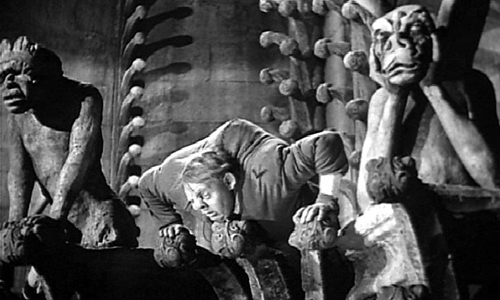
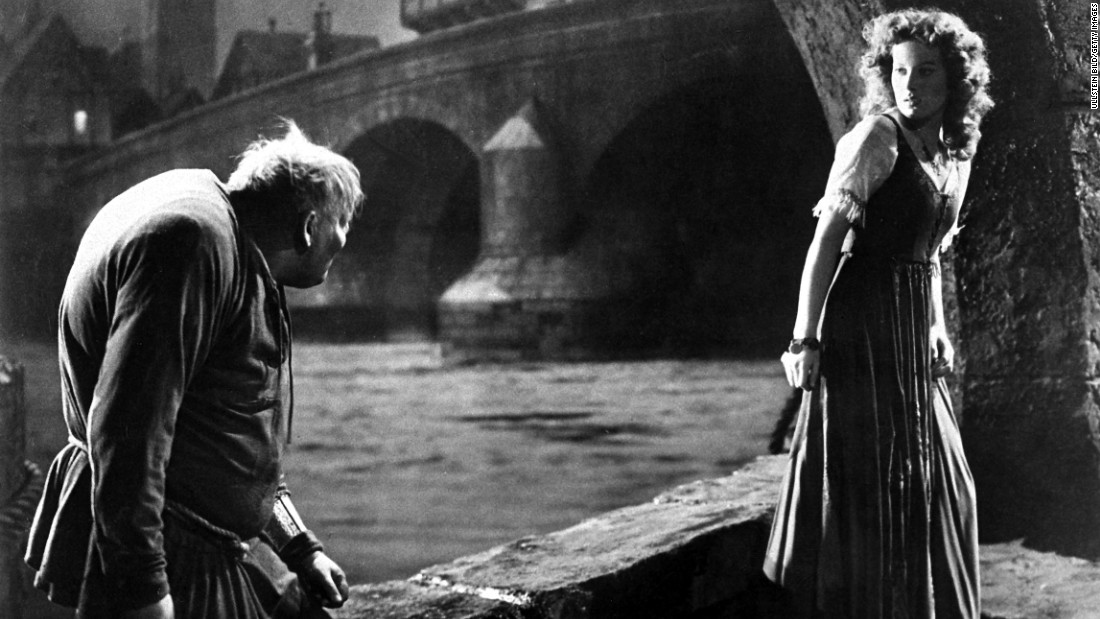
Charles Laughton looks on with longing as The Hunchback of Notre Dame

Director: William Dieterle

Cast: Charles Laughton (Quasimodo), Cedric Hardwicke (Jean Frollo), Thomas Mitchell (Clopin), Maureen O’Hara (Esmeralda), Edmond O’Brien (Pierre Gringoire), Alan Marshal (Captain Phoebus), Walter Hampden (Archbishop Claude Frollo), Harry Davenport (King Louis XI), Katherine Alexander (Madame de Lys), George Zucco (Procurator)

Victor Hugo’s gothic romance–slash-tragedy has been turned into a film so often, it’s a wonder anything that happens in it remains a surprise. But this 1939 version is perhaps the most influential, where Hollywood decided to throw money at the fable and try and make something as close as possible to the spirit of the book. But of course with a happyish ending on the end – because, you know, it’s still Hollywood!

In 1470s Paris, the city is caught between the pressures of religion and new developments such as the printing press. In the centre of the city is the Cathedral of Notre Dame – where the bells are operated by foundling Quasimodo (Charles Laughton), a deformed hunchback driven deaf by the constant ringing of the bells. His benefactor, Judge Jean Frollo (Cedric Hardwicke), is running a vicious campaign to cleanse the city of the gypsies and beggars that make up a large part of its underbelly – but he’s hit for six when he falls in love (or rather lust) with beautiful gypsy woman Esmeralda (Maureen O’Hara). But he’s not alone – equally smitten are naïve young poet Gringoire (Edmond O’Brien), arrogant Captain Phoebus (Alan Marshal), and Quasimodo himself. When Esmeralda rejects Frollo’s advances she soon finds herself in danger – and her only hope of safety comes from unexpected sources.

Dieterle’s background in German expressionism and silent cinema shines through in this visually striking and opulent studio production, with its superbly marshalled crowd scenes, brilliant use of near-impressionistic shadows and fabulous camera work that drifts over the impressive (and hugely expensive) set. Dieterle mixes this technical expertise with a real sense of emotion and character development, helped by some terrific performances from the cast. It’s a film that motors through the story of the novel, but skilfully repackages it as both a fascinating semi-romance and a sort of urban tragedy, as well as a subtle mediation on love and lust.

At the centre of it, you have Charles Laughton giving probably the definitive performance of the hunchback. Sweating under layers of make-up and an artificial hump, Laughton is nearly unrecognisable as the bell-ringer. His triumph is to make a gentle, tragic character emerge from make-up that suggests more Frankenstein’s monster than tragic hero. Nearly wordless for the first hour and a half of the film, Laughton does his magic with an expressiveness that speaks volumes of the loneliness in Quasimodo. Tenderly, he watches people knowing he can never be part of their lives – and look how excitedly he bursts out when he finally gets a chance to speak to Esmeralda one-on-one. Suffering punishment on the wheel, Laughton’s eyes convey the numb acceptance of pain as his natural state of affairs. But he also manages to bring out the gentle, childlike qualities of Quasimodo. It’s a wonderful, wordless, expressionistic performance – a triumph of physical acting and wonderfully judged emotional vulnerability.

The rest of the cast match Laughton stride-for-stride. Censor demands at the time required that Frollo be removed from his position (in the novel) as Archbishop, so the book-version of the character is split in two here. Archbishop Frollo is the sort of pious bore who can keep the Hayes committee happy. But Cedric Hardwicke gets to play the invented evil brother Judge Jean Frollo, the lecherous hypocrite from the novel. An authoritarian ascetic, Hardwicke’s Judge Frollo is lean, mean and utterly ruthless – and totally in denial about both his lustful feelings and hypocrisy. Hardwicke is virtually an archetype of the sinister authoritarian, but he manages to never chew the scenery. Incidentally, knowing the two characters are basically split from the original book, does allow moments of fun imaging the moral debates between the two as a sort of split personality discussion.

But there are plenty of other good performances as well – not least from Maureen O’Hara, who is charming and engaging enough to make you believe that the whole male cast is in love with her. Edmond O’Brian goes large at times with the passionate romance, but he does a very good job in the role. Thomas Mitchell is good value as the leader of the beggars, Clopin. There are strong performances across the whole film.

All these performances are framed within a fabulous design. The trouble and expense that has gone into the construction of the set is inspiring, the sweeping gothic arches and towers giving every shot something exquisite to look at. It also gives never-ending options for camera placement and impressionistic imagery for Dieterle. It works as well – the gloomy, imposing towers of Notre Dame are captured with real artistry, while the shadow it casts over the whole city of Paris serves as a constant reminder of the oppression the city lives in.

Dieterle also brilliantly films the crowd scenes, getting a superb sense of visceral emersion from these sequences. Whether the camera is in the mix, or flying above the crowds from the tops of Notre Dame, these scenes look equally fantastic. Dieterle handles the more action-related scenes with particular skill – Quasimodo’s rescue of Esmeralda from a death sentence is particularly well staged in its dynamism and graceful filming. 

Not every beat works. The portrayal of Louis IX as a sort of kindly old uncle seems off-piste from the very start. The early sequences sometimes get bogged down too quickly in set-up rather than getting into the action. Alan Marshal is rather wooden as Captain Phoebus, although the film goes surprisingly far in suggesting the dark desires and predatory sense of danger that comes from the character. Some of the beggar court sequences get similarly stuck in kitsch.

But these are minor beats. It’s a film that really understands emotions and makes the dramatic thrust work. It also has a dark sexual power, not least in Hardwicke’s Frollo: a seething mess of frustrated desires. It never loses sight of the sadness at the heart of its central character’s story, of his loneliness and isolation, and manages to communicate this brilliantly in every scene where the character appears – he is trapped by his muteness, his ugliness or his sadness at every turn. It’s a development that never fails to be engrossing and finally moving. It’s a film that is brilliantly assembled with real technical skill, very well acted and wonderfully directed.

The Mummy (2017)

Like the film, Annabelle Wallis stares at Tom Cruise in awe in disaster laden (in more ways than one) The Mummy

Director: Alex Kurtzmann

Cast: Tom Cruise (Nick Morton), Sofia Boutella (Ahmanet), Annabelle Wallis (Jenny Halsey), Jake Johnson (Chris Vail), Russell Crowe (Dr Henry Jekyll), Courtney B Vance (Colonel Greenway), Marwan Kenzari (Malik)

Mummy PosterMany films have killed their franchises. It takes a really special film to kill a franchise before it has even started. Welcome to the first, and probably last, entry in Universal’s misguided Dark Universe franchise, a Marvel-style playground for all Universal’s old monsters like Frankenstein, Dracula, the Wolfman etc. etc. And of all of them, The Mummy was the one they decided to start with? 
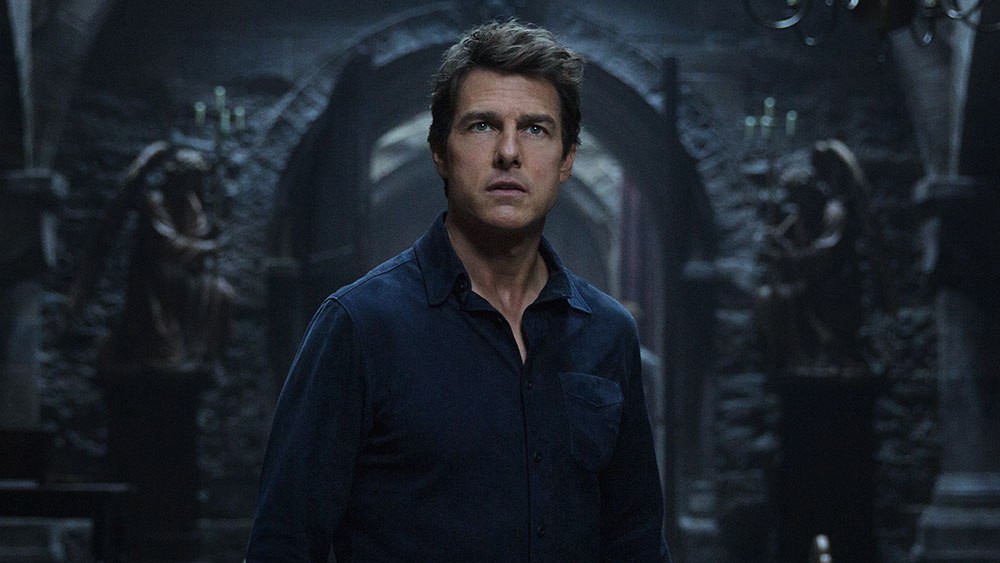
Anyway, our hero is Nick Morton (Tom Cruise) a sort of soldier of fortune in modern day Iraq, plundering antiquities under the banner of the US Army like some low-rent Indiana Jones. He and his hapless sidekick Vail (Jake Johnson) stumble upon a tomb of mysterious lost Egyptian princess Ahmanet (Sofia Boutella) after stealing information from archaeologist Jenny Halsey (Annabelle Wallis). On the clock to take as much as they can from the tomb, Jenny and Nick take home Ahmanet’s sarcophagus. Their plane crashlands in Dover, with Jenny the only survivor – only for Nick to be resurrected in the mortuary. Looks like reborn Ahmanet wants to bring Set, the God of Death, into the world and has chosen Nick as the vessel for Set’s soul. Or something. It’s not really clear. 

In fact the whole film is pretty awful. What sort of film were they trying to make here? Is this a horror or an action film or a buddy film or some sort of black comedy? The tone shifts wildly from moment to moment: one minute Tom Cruise is exchanging Indiana Jones-style banter with his buddy Vail (Jake Johnson). The next he is shooting a possessed Vail at point-blank range (even this is played for laughs a bit). The next he’s being haunted American Werewolf style by a ghost or vision or zombie or somethingversion of wise-cracking Vail. What is going on here? What kind of film is this?

Tom where he normally is – centre of the frame

Well actually we know what kind of film it is: it’s a Tom Cruise starrer. Allegedly, the Cruiser (already quite the control freak perfectionist) took over most of the production from inexperienced, Universal suit Alex Kurtzmann. The DVD’s special features don’t half support this, with Cruise shown effectively directing most of the action sequences while Kurtzmann stands quietly to one side or (best of all!) greeting the star after the opening aircraft crash has been filmed to be told “you’ll love the footage Alex!”. 

Well the studio had doubled-down on Cruise to launch their franchise with his glittering smile and international box-office appeal, so I guess it’s fair enough the guy was shoved square centre. I know the film is called The Mummy but it might as well be Nick Morton. Cruise is in almost every single scene, most of the characters spend the whole time talking about him, and all the action is done by him (every other character is completely useless). The best lines, such as they are, go to him. He’s starting to look a little bit too old for the “young buccaneer” role he has here – and certainly too old to be flirting with Anabelle Wallis – but the film doesn’t care.

Anyway, the plot charges about London with odd time jumps, and unclear character motivations abounding. Why does Ahmanat have such an idee fix that Nick has to be the vessel for Set (other than, of course, his Tom Cruise Awesomeness)? Is it a good or bad thing that Nick could or could not get the powers of a god? Why does Ahmanet need Set in the first place – she “sells her soul” to him in ancient Egypt times for the throne, but basically just cuts the throats of her family at night (hardly requiring the demonic powers of the dead)? In Egypt she’s easily defeated with a blow dart but by the time she’s reborn in London she has incredible powers over minds, matter and animals – why didn’t she use any of this before? 

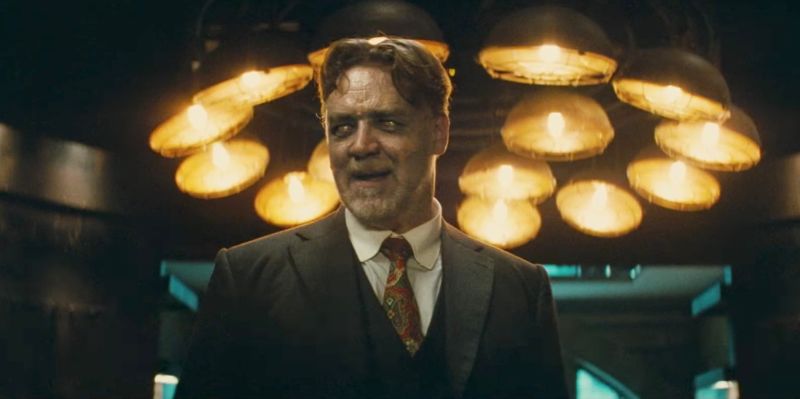
On top of that, we’ve got the incredibly dull Prodigium organisation (a sort of SHIELD for monster fighting) run by Nick Fury-ish arc character Dr Henry Jekyll, played with lumbering crapness by Russell Crowe. Why Russell, why? Crowe plays the part half like a plummy Stephen Fryish professor, the other half like some demented OTT cockney geezer. Of course the film isn’t subtle enough to avoid giving us Jekyll going full Hyde, a laughable moment of cheesy rubbishness with a wild-eyed Crowe reduced to “alrigh’ mate” hamminess while tossing Cruise around in a punch-up that looks like two drunk dads at a wedding going at it.

Oh Russell, why? Why do you make it so difficult for your fans?

The film is also saddled with one of the most inept female characters since Roger Moore’s Bond years. At one point, poor Anabelle Wallis stumbles on Ahmanet and her zombie minions on the verge of stabbing Nick to death and turning him into a demon-host, and Nick’s response is an irritated cry of “Jenny!” as her total lack of proactive response to this, like even he finds her arrival pointless and annoying. I’m afraid to say after that moment, every moment in the film with Wallis weeping, panicking, running away or laughably cheering Nick’s Tom Cruise Awesomeness from the wings (“Kick her arse Nick!”) was met by me and everyone I was watching the film with shouting “Jenny!” at the screen with the same exasperated annoyance.

The only good sequence in the film is the opening plane crash – and that is spoilt as it was all over the trailers. By the time we are in a secret crypt (getting in the way of the crossrail construction) with zombie Templar knights wrestling Nick (no seriously) you’ll have long since ceased caring. Even the fun of saying the next line in the cliché-ridden script before the actors do will be less fun than it used to be.

The Mummy sounds like it should be some sort of camp classic. But it’s really not. It’s ineptly made, poorly written, with a plot that makes no sense and action that varies from dull to laughable. Terrible characters, awful pace, rubbish acting, lousy direction and half-hearted from start to finish – it could barely launch a fart let alone a franchise.

Apocalypse Now (1979)

Martin Sheen heads into insanity in Coppola’s epic pretentious masterpiece Apocalypse Now

Director: Francis Ford Coppola

Cast: Martin Sheen (Captain Willard), Marlon Brando (Colonel Kurtz), Robert Duvall (Lt Col Kilgore), Frederic Forrest (Chef), Albert Hall (Chief), Sam Bottoms (Lance), Laurence Fishburne (Mr Clean), Dennis Hopper (Photojournalist), GD Spradlin (Lt General Corman), Harrison Ford (Colonel Lucas), Scott Glenn (Captain Colby), Christian Marquand (Hubert de Marais), Aurore Clément (Roxanna Sarrault), Jerry Ziesmer (Mysterious Man)

During the 1970s, the director was king in Hollywood. Get a reputation as a visionary director, and Tinseltown fell at your feet. You could spare no expense to put together ambitious, thought-provoking, epic films. If you wanted to shoot on location at huge cost, or reconstruct elaborate sets for single shots, for a huge runtime that catered as much to your ideas of being an artist as it did to crowd-pleasing narrative, then Hollywood would give you keys. It didn’t last: several massive bombs (combined with the huge box office take of Star Wars) shattered the mystique of the director as an ego-mad, flawless genius who had to be indulged, and persuaded Hollywood the future was in big-budget, mass-produced action films (welcome to the 1980s, Hollywood’s nadir).

Apocalypse Now wasn’t one of those flops, like (most infamously) Heaven’s Gate. But, by golly gosh, it really could have been. In fact, in many ways it should have been. It has all the hallmarks: a huge runtime, filmed over a colossal period of time in a difficult location, a plot that mixes action, war and thrills with impenetrably pretentious musings on mankind’s dark soul. A maverick director throwing his own very personal vision at the screen, and damn the consequences. It’s a miracle Apocalypse Now wasn’t a career apocalypse for everyone. It escaped because, despite everything, it more or less gets the balance right between plot and character and pretention and faux-philosophy.

The film is famously a transposing of Joseph Conrad’s Heart of Darkness into Vietnam. Captain Willard (Martin Sheen) is ordered to head down the river to “terminate with extreme prejudice” rogue Special Forces Colonel Kurtz (Marlon Brando), who is conducting his own vigilante war. On the boat trip down the river, Willard encounters a host of increasingly bizarre and surreal scenes, from war-mad Colonel Kilgore (Robert Duvall) to a seemingly leaderless battle over a bridge, a playboy bunny show and a compound of ex-French colonials. And that’s before he even arrives at Kurtz’s compound and things get really strange.

Apocalypse Now is almost impossible to separate from the bizarre, tortuous route it took to get to the screen. Originally scheduled for a few months, the film took over a year to complete. A typhoon destroyed all the sets in the first two months. Original star Harvey Keitel was dismissed after a week (as his performance wasn’t right): his replacement, Martin Sheen, had a near-fatal heart-attack partway through filming. Marlon Brando not only turned up the size of a buffalo but refused to learn (or even speak) his lines. A year into production, the film had no ending. Coppola put his entire fortune up as collateral to complete the film. It was a nightmare.

But yet somehow what emerged has a sort of force-of-nature quality to it. Even though parts are basically pretentious rubbish, despite the fact I have twice fallen asleep in this film, despite the fact it is far from being a film that trades in complex ideas and offers profound insights, it still has a hypnotic quality about it. It’s done with a real force of commitment, a genuine labour of love, a film that doesn’t leave anything in the locker room but throws it all at the screen. The quality of what lands may sometimes be questionable, but the commitment with which it is thrown is beyond doubt.

And in a world of cookie-cutter films, it’s hard to have anything but respect and regard for a film that is so defiantly its own animal, that tells its story in its unique way. It’s perhaps one of the first “experience” films: no film could of course communicate what it was like to serve in Vietnam, but this film perhaps gets close to the surreal, drug-fuelled madness in that conflict.

Because Apocalypse Now is a very surreal film. Its plot is extremely thin, and each section of its (mammoth) runtime is all about experiencing another element of the American experience. In the commentary, Coppola talks about the river trip being partly a journey from the present into the past, a journey back not only into the history of the conflict (and its different stages) but also the regressing of mankind itself into a more primitive, malleable, basic state. It’s a big lump for a film to bite off – and I’m not sure if the idea really comes across without you knowing it. The real impression you get is of rules of society being left further and further behind.

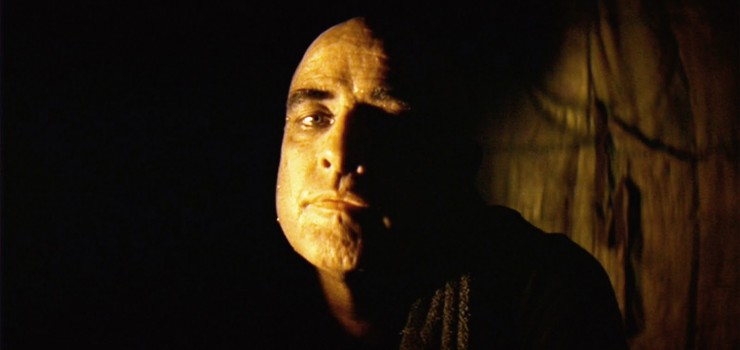
The arrival at Kurtz’s compound is the fufillment of this increasingly unnerving story. We’ve seen the madness on the journey, the pointlessness, and the bemused, carefree confusion of the crew. But at the camp we get the overblown, decadent lunacy of Kurtz. Brando dominates the final 30 minutes of the film, although his monologues are meaningless drivel, the sort of intellectual point-scoring you could hear in a sixth form debating society. To be honest, iconic as Brando’s appearance is, his performance of mumbling battiness is actually a little awful (like one big practical joke from the actor) and the film’s momentum grinds to a halt while he babbles on. 

In fact, so self-indulgent is Brando that in a way it’s a sort of tribute to Coppola’s mastery of cinema that he makes this pompous character make any sense at all – or that he makes this sort of nonsense even remotely watchable. But again it’s the hypnotic pull of the film: Coppola builds towards a chilling, haunting final sequence of Willard and Kurtz’s final confrontation intercut with The Doors’ The End and the real-life slaughtering of an ox by a crowd of real-life villagers (they were going to kill the animal anyway but offered to do it for the camera). Coppola somehow turns all this into iconic cinema, even though, viewed objectively, it’s overblown, indulgent, pretentious rubbish.

The whole film is a testament to hewing compelling filmmaking out of breathtaking insanity. After the film departs in the boat, most of reason, sense and conventional story-telling depart with it. Information only gets conveyed through rambling monologues from Willard. The crew of the boat get into scraps that reflect heightened versions of the American experience in Vietnam – from a war crime as the crew shoot-up what turns out to be an innocent boat, to an attack from unseen tribesmen with spears from the mists of the shore. Sam Bottoms, as surfer-turned-GI Lance, is our guide of a sort here – as he gets more stoned, so narrative logic departs with his senses. 

What keeps the film going throughout is the masterful film-making. Coppola shoots the bizarreness with brilliant, visionary imagination. As a social theorist he’s pretty basic – man is, by the way, a savage animal and the Americans didn’t know what they were getting themselves into in ‘Nam – but as a film-maker he’s one of the best. Who else could have made three hours of episodic boat journeys so strangely compelling? The film is crammed full of great scenes and moments which rarely feel like they tie together – in fact, they could almost be watched in any order – and there is barely a character in there, but the film feels like its throwing you into the madness of Vietnam. 

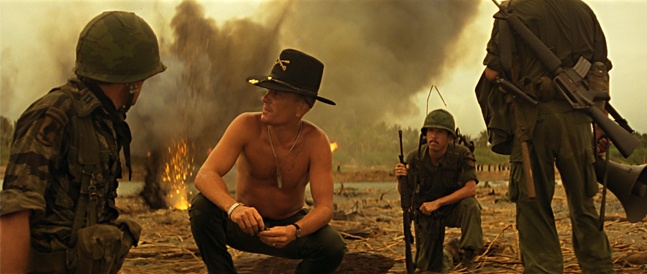
Even the sequence with a bit more narrative is still laced with absurdity. Kilgore’s helicopter assault on a village – and its use of Wagner blaring from helicopters to scare the Vietcong – is justly famous. This is a bravura film-making – and as much a tribute to the astoundingly amazing editing and sound work of Walter Murch as it is the photography of Coppola. Like most of the rest of the film it is visually outstanding, but it also has the film’s best writing (in the quotable but also strangely subtle characterisation of Kilgore) and also the film’s most iconic performance in Robert Duvall. Duvall is terrific as the war-loving, but strangely childish Kilgore, obsessed with surfing and with an ability to live totally in the moment. 

This sequence doesn’t hesitate in showing both the brutality of war – and also the insanity of our commanders. Kilgore is genuinely dreading the end of the war, and you can see why he would since he is clearly having a whale of a time bombing places. Kilgore is a lovable, quotable badass doing what needs to be done – but the film doesn’t forgot that he is also an insane soldier with no off-switch. And Apocalypse Now never really glamourises war, for all the excitement and beauty of watching those helicopters come over the horizon.

It’s the artistry in its film-making, and the genuine effort and work that helps make it a demented classic. Walter Murch’s sound design and editing is possibly flawless – this might be the best edited and sound designed movie ever – from the opening moment when the helicopter blade sounds transform into a hotel room fan you know you are seeing something special. Scenes such as Willard’s hotel-room breakdown hum with intensity as they feel genuinely real – that scene in particular feels like Martin Sheen exposing part of his tortured psyche at the time. Sheen is by the way perfect as Willard, a slightly unknowable killer with dead eyes and a dead soul, still aware of the vileness of his world.

Apocalypse Now is a sprawling batty film – and in many ways an intellectually empty one straining at a depth that ain’t there. But somehow, for all that, it still is a masterpiece. Which is in itself a bit of a miracle as it really should be a disaster. It’s pretentious. It’s overlong. It’s very full of its own importance as a work of art (the re-insertion of the long-winded political discussion at the French Plantation into the Redux version doesn’t help). Some of its performances are plain ridiculous, verging in Brando’s case on outright bad. But yet, it’s delivered with such force of conviction, it’s so wonderfully assembled, so hauntingly shot and edited, that it hammers itself into your brain. You literally can’t forget it, for all its many, many flaws. Despite yourself, you find yourself forgiving it an awful lot – a lot more than you might expect. A mess, but also a classic.

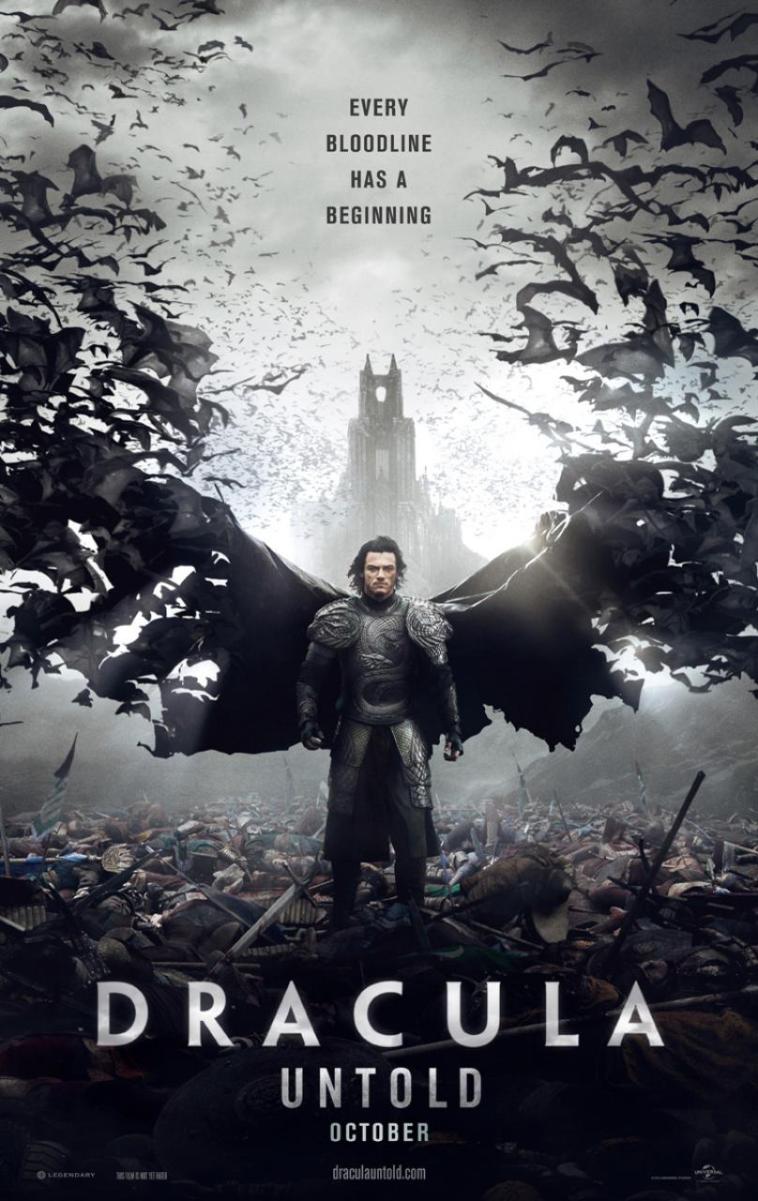
Dracula Untold (2014)


Luke Evans rises above another terrible film in this first terrible attempt to launch a “Dark Universe”

Director: Gary Shore

Cast: Luke Evans (Vlad the Impaler/Dracula), Dominic Cooper (Sultan Mehmet III), Sarah Gadon (Mirena), Art Parkinson (Ingeras), Charles Dance (Master Vampire), William Houston (Cazan), Diarmaid Murtagh (Dumitru), Noah Huntley (Captain Petru), Paul Kaye (Brother Lucian)

Every studio wants its own Cinematic Universe. Because the lesson from Marvel’s patient and excellent build of an entire world is that people will come and see every single film you make in a series. Right? Perhaps that explains the painful attempts of Universal to turn one of their few recognisable assets – monster movies – into some sort of bizarre linked universe. The project is currently in terminal decline after the flop of Tom Cruise’s The Mummy. But before that, a reboot had already been attempted with this bizarre retelling of the Dracula origins story.

Vlad the Impaler (Luke Evans) is a guy who wants to put his life of impaling behind him. All he wants is to lead his people peacefully in Transylvania. So imagine his disappointment when his boyhood rival Sultan Mehmet III (Dominic Cooper) arrives and demands the tribute of the first born sons of Transylvania – including Vlad’s son Ingeras (Art Parkinson). Vlad umms and ahs and then he decides – y’know what – not on his watch. But how can he keep his people, his son and wife (Sarah Gadon) safe? Well the only solution is to take on the mighty Power of the Vampire from a mysterious cave-dwelling creature (Charles Dance). Vlad now has unlimited strength for three days – but can he resist the craving for human blood that will make the transformation permanent? And will the powers last long enough to repel the Turks?

Okay. So obviously this film is complete rubbish. I mean it really is. It’s hilariously overshot – the action sequences are frequently hard to follow, so swiftly does the camera swoop and swirl like the bats Vlad can transform into. Shore is in love with showy shots – one battle is seen through the reflection on a CGI sword that is thrown in the air and twirls in an arc downwards (yes it is as complex and unengaging as I made it sound).

The plot is complete bobbins. It’s all “Forsooth my lord” and “We make for the monastery!” (a building, by the way, of unlimited size that seems genuinely able to accommodate most of the population of Transylvania). The film wants us to remember that Vlad is a cool bad-ass but also that he is ashamed of his life of sticking people on poles (needless to say, his signature move breaks out eventually). Vlad is a vampire and a monster – but he is also someone we need to root for, so he is portrayed as a lovable family man who never really seems that tormented by urgings for blood.

Luke Evans. One day he will be a star. If you could find a good performance in a terrible, stupid film it would be his. He is fully committed and he gives the part so much emotional depth – way more than is in the script. He really, really sells Vlad’s humanity and makes his character feel like a warm, lovable guy – but he mixes it with an edge behind the noble call of duty. Evans is genuinely rather good in this. The guy deserves so much better.

I’ll give a pass as well to Sarah Gadon and Art Parkinson, who at least treat the parts with a certain respect. Charles Dance has fun under bizarre make-up as a wizened monster. Everyone else is here to be as over-the-top and stupid as possible – not least Dominic Cooper, whose ludicrous accent, utterly unimposing frame and inexplicable sudden detailed knowledge of vampires makes for a deeply stupid, bad performance. But then everyone is going for it – Paul Kaye leaves no piece of scenery unchewed in his brief performances – and going for it badly. Everyone comes out of it badly.

The plot makes no sense: a strange gypsy emerges from nowhere to try and serve Vlad (why?) and then only returns at the end to help set up a sequel-that-never-came. Every decision Vlad makes is terrible. The villagers oscillate wildly from pathetically grateful yokels to “burn him!” lunatics to – well it would be spoilers, but let’s just say there is quite the body count. In fact, the only thing really interesting about the story is wondering what will make Vlad remain a vampire (which we all know he will do) – of course it is a “noble sacrifice”.

The biggest problem with the film is that Vlad is both far too powerful and far too noble. Since he can literally kill thousands of people single handed, why does he waste time taking his people into the woods – why not ride out single handed to meet the Turkish force and take them out? If he is so noble that he is never tempted once to keep the powers of a vampire for selfish reasons, where is the dramatic tension?
The film eventually ends in another overblown, stupid fight scene with bats and invulnerable vampires flying about the place. That’s before we head into an unearned coda in the modern age which sets up a sequel that is not coming, and includes a few groan-worthy references back to the original novel. But then this is a cartoon made by people who thought that they didn’t need to bother to make a good movie at all if they slapped the Dracula name on it.  I suppose you could say it’s just trying to entertain: but with no real interest in doing anything other than making more movies off it later, it’s a bit of a pointless mess.