Category: Kidnap drama

The Lady Vanishes (1938)

lady vanishes
May Whitty is searched for by Margaret Lockwood and Michael Redgrave in The Lady Vanishes

Director: Alfred Hitchcock

Cast: Margaret Lockwood (Iris Henderson), Michael Redgrave (Gilbert Redman), Paul Lukas (Dr Hartz), May Whitty (Miss Froy), Cecil Parker (Mr Todhunter), Linden Travers (“Mrs” Tothunter), Naunton Wayne (Caldicott), Basil Radford (Charters), Mary Clare (Baroness), Catherine Lacey (Nun), Googie Withers (Blanche), Sally Stewart (Julie)
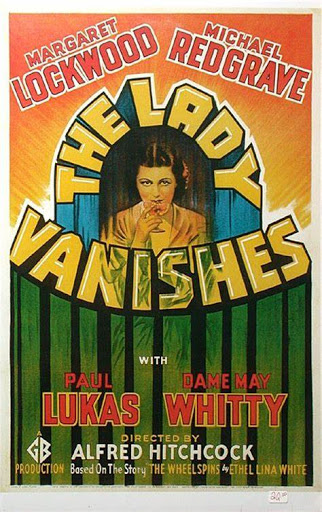
In his conversations with Hitchcock, Francois Truffaut declared every time he tried to study The Lady Vanishes, all its tricks and mechanics, he always ended up too wrapped up in the plot to notice them. It’s about as fitting a tribute as a film can get, that it got one of the world’s ultimate film buffs just sit down and enjoy the ride. The Lady Vanishes is Hitchcock’s penultimate British film and it might well be one of the most enjoyable and entertaining films he ever made.

It’s late 1930s in Europe and a group of mostly British travellers have got stuck waiting for a train in the fictional country of Bandrika (but it’s clearly Germany). Iris Henderson (Margaret Lockwood) is on her way back home to (perhaps somewhat reluctantly) get married, exasperated by the loud noise made in the room above through the night by folk music expert Gilbert (Michael Redgrave). Charters (Basil Radford) and Caldicott (Naunton Wayne) are cricket obsessives, desperate to get home for the big test match. Mr Todhunter (Cecil Parker) is a lawyer, keen not to draw attention to the fact Mrs Todhunter (Linden Travers) isn’t actually his wife. When the train finally leaves the station the next day, Iris is hit on the head by a plant plot (was it pushed?) that very nearly hits governess Miss Froy (May Whitty). Miss Froy takes care of Iris on the train – but when Iris wakes after a rest, she finds Miss Froy has disappeared and – furthermore – everyone denies she ever existed in the first place. While a Bandrikan psychiatrist Dr Hartz (Paul Lukas) claims she may be suffering from concussion, only Gilbert believes her story. Will they be able to prove Miss Froy is real and rescue her from whatever peril she has found herself in?

Hitchcock’s The Lady Vanishes shouldn’t really work – not least since it takes nearly 20 minutes before we get any indication that we are watching anything other than a romantic comedy. But perhaps that’s also why it works, because those first 20 minutes are beautifully scripted, with some cracking dialogue and some skilfully drawn character work that invests us in these people long before any danger arises. It also serves as a brilliant counterpoint to the nearly non-stop tension and action that comes in the final hour of the film – who could have believed that all that light hearted banter in a guest house could end in a ruthless shoot out in the woods?

It all seems to change pace on a classic Hitchcock touch – a folk singer is suddenly, violently, strangled by an unseen assailant (why? I’ve no idea. The film doesn’t think you’ll care about the logic gap, and you don’t). But a large part of the film’s success stems from Hitchcock’s collaboration with Sidney Gilliat and Frank Launder on script-writing duties. Gilliat and Launder made a number of changes to the original novel, adding a greater espionage element. Even more importantly, they overhauled several of the characters, not least changing the Gilbert character from an engineer into a charming (if eccentric) folk music expert with a deadpan wit. Even more successfully, they introduced the hilarious ultra-British Charters and Caldicott, classic eccentric grown-up public schoolboys with a fascination with cricket (the combo was so popular Naunton and Wayne played versions of these characters another eleven times).

The script’s wit, playfulness and scintillating dialogue is what drives most of the film’s energy – and certainly what helps to make it as entertaining as it is. In particular, the dialogue exchanges between Lockwood and Redgrave hum with the sort of love-them-hate-them banter that wouldn’t seem out of place in a screwball comedy (“You’re the most contemptible person I’ve met in all my life!” “Confidentially I think you’re a bit of a stinker as well”), and the two actors shine in roles that start with classic feuding but subtly and beautifully come together as a romantic couple by the film’s end. Lockwood has pluck, guts and determination, a mix of socialite and head girl determination. Redgrave is superb as Gilbert, showing the sort of matinee idol wit and charm – not to mention an unconventional romantic sex appeal – that he very rarely got to exhibit again (sadly he didn’t get on with Hitchcock, and never worked with him again).

The film is full of wit and invention, but mixes it with a properly engrossing mystery. Every character has very clear reasons for denying the existence of Miss Froy (May Whitty is superb as a seemingly dotty old woman, hiding cunning and an unexpected capacity for action). We know that of course Iris is right – but even so, it’s hard not to begin to suspect that maybe the oily Dr Hartz (Paul Lukas whose professional smoothness neatly tips into cruelty) is right and she is suffering from concussion. The unravelling of this mystery is half Agatha Christie (vital clues pop up here and there), half famous five adventure – but the nearly “real time” playing out of the mystery injects huge amounts of tension and excitement, particularly as the villains start to be revealed.

The film also serves, interestingly, as a plea for British invention in European affairs in the era of appeasement. The train is stuffed nearly exclusively by Brits, most of whom are quite content at first to let things drift and not rock the boat. However, when the chips are finally down and its time to make a stand, the majority of the characters knuckle down and get their hands dirty to fight for justice. Even Charters and Caldicott take up arms (with a typical British reserve) to protect their fellow passengers, while Gilbert has already shown himself capable of being a man of action (as well as a pretty neat impressionist and physical comedian) when called upon. It’s telling that Cecil Parker’s Mr Todhunter is the nearest thing we see to an appeaser on the train (with a fear-and-hope-tinged expectation that everyone is playing by his own antiquated rules), and he’s the only one who angrily questions taking a stand.

It’s not surprising from Hitchcock, who made an even more passionate plea for intervention a few years later with Foreign Correspondent. Neither is it a surprise how superbly the film is made. Hitchcock is at the top of his game here, shooting the train brilliantly (the set was tiny, not that you could tell from the number of angles Hitch finds here). His mastery of the pace and tone of the film is spot on: the second half never lets up, and you never for one minute lose the film’s wit, even while the stakes become more bigger and bigger. The film has possibly the most winning romantic pairing in all of Hitch’s movies, helped hugely by the natural and winning playing of Redgrave and Lockwood. It so successfully builds up the possibility of Iris being mistaken, that it makes the audience start to question what they’ve seen.

It’s a superbly directed film, but above all it’s supremely entertaining in a way few other films can hope to be. Its re-watch value – from hearing the jokes again, to spotting the early clues – means it will be rewarding audiences for decades to come.

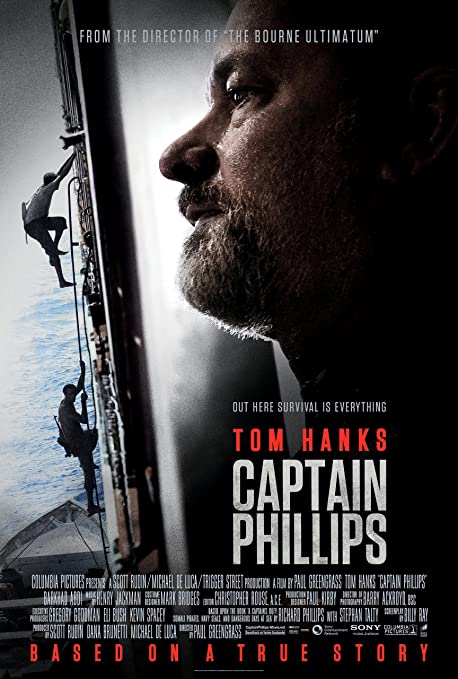
Captain Phillips (2013)

Tom Hanks is kidnapped by pirates in Captain Phillips

Director: Paul Greengrass

Cast: Tom Hanks (Captain Richard Phillips), Barkhad Abdi (Abduwali Muse), Barkhad Abdirahman (Adan Bilal), Faysal Ahmed (Nour Najee), Mahat M, Ali (Walid Elmi), Michael Chernus (Shane Murphy), David Warshofsky (Mike Perry), Corey Johnson (Ken Quinn), Chris Mulkey (John Cronan), Catherine Keener (Andrea Phillips), Max Martini (SEAL commander)

The best of Paul Greengrass’ directorial work brings documentary realism to compelling real-life events, laced with tragedy. He’s made extraordinary films about Bloody Sunday and 9/11 and bought his unique style to Jason Bourne and the Green Zone of Iraq. Captain Phillips continues this, bringing to life the true story of the hijacking of the container ship Maersk Alabama and the kidnapping of its captain Richard Phillips. And this is a brilliantly tense and dynamic film which seizes the viewer in a vice-like grip and never once lets up for a moment of its runtime. 

Tom Hanks plays Richard Phillips, dedicated and professional merchant captain, whose ship is eventually seized by four Somali pirates, led by Abduwali Muse (newcomer Barkhad Abdi, who landed BAFTA and  Oscar nominations for this work here). Phillips is determined to protect the crew (who are hidden around the ship), while the pirates are desperate for a life-changing score that could free them from lives of crushing poverty in Somalia. With such high stakes to play for, Phillips and Muse find themselves engaged in a battle of wills and wits – but with only one of them armed with a gun.

Greengrass’ film is almost unbelievably tense. From the first appearance of Muse’s skiff off the Maersk Alabama to the film’s end, Greengrass manages to keep the audience on a knife edge for over two hours – this despite it being based on a true story where we know the hero will come out in one piece. Shot in the typical Greengrass style, with an at-times jittery handheld camera – brilliantly shot by Barry Ackroyd, a master of this style – this is an immersive drama to an extreme degree. You really do feel part of the action, with the immediacy of the shooting infecting the entire viewing experience.

This is powered further by Greengrass’s superb work with actors – and he draws some marvellous performances here. Tom Hanks – inexplicably not nominated for an Oscar – gives a near career best performance as Phillips. Hanks’ natural skill at playing regular, relatable guys in impossible situations is perfect for Phillips, but he mixes it here first a slightly stern authoritative distance Phillips has with the crew and a deep sense of duty. On top of which, thrown into an impossible situation Hanks has Phillips walking a tight-rope of being seen to co-operate with the hijackers, while trying to work against them, while simultaneously becoming increasingly frayed around the edges. The final sequences alone – of a shocked and emotionally exhausted Phillips – were deserving of the highest honours, raw and honest work from Hanks who confirms he is a great actor.

To go toe-to-toe in scenes with Hanks would be a challenge for most actors – imagine how difficult it must be for a first time performer. Chosen from thousands of applicants, Barkhard Abdi is superb as Muse. Confident, determined but quietly, unspokenly, out of his depth, Muse is determined not to be taken for a ride, but also desperately improvising – a man who feels he doesn’t have choices in his own life, so must cling to an opportunity no matter how remote it becomes, until the bitter end. Abdi is fierce and strong – “Look me in the eye – I’m the captain now!” he firmly tells Phillips – but as the film progresses, it’s clear his control over the other pirates is loose and, smart as Abdi is, he’s also naïve in how much power he holds against the might of the US military sent to free Phillips.

Greengrass’ film skilfully adds enough beats of the poverty and desperation of Somalia to avoid these pirates ever becoming just faceless heavies and thieves. The group are introduced in a poverty-stricken fishing village, Muse choosing from dozens of desperate volunteers to man his crew. Muse stresses to Phillips that while there may be more choices than fisherman and pirate, in Somalia there aren’t – and that international shipping lines have disrupted the traditional fishing areas around the Somali coast. These are desperate and determined men –not blindly evil – and they need a massive score – the $30k they’re offered from the ship’s safe isn’t going to cut it.

The film brings this intensity into play for every action of the pirates. Early on, the smallness and decrepitude of Muse’s skiff is compared frequently with the height and vastness of the Maersk Alabama, with the pirates’ daring and dangerous boarding of the ship as tensely involving as the ship’s crew’s struggle to evade them and protect their own lives.

The wide open vastness and hide-and-seek of the Alabama is then expertly swopped for the claustrophobia of the escape ship that the four hijackers and Phillips spend the final hour of the film on. Here anger rises within the ship – cramped, hot, low on water, with some of those in the ship badly wounded – while outside, the US military masses to prevent the ship making it to the Somali shore. Any idea that the pirates will triumph is removed – but the tension still exists as to how Phillips himself can survive a situation on his small boat that is spiralling faster and faster out of control.

All this superbly marshalled by Greengrass from start to finish, the film a masterclass in wringing every drop of expectation and investment from a compelling real-life story. With wonderful performances from the two lead actors, the film never once lets up in its electric pace and all-pervading sense of danger. With Hanks and Abdi superb, it’s a film that won’t let you go for a second. Inexplicably, despite a Best Picture nomination, the main elements of its success (except Abdi) – Hanks, Greengrass and Ackroyd – all missed out on nominations. That’s the problem when you are so skilled you make it look easy.

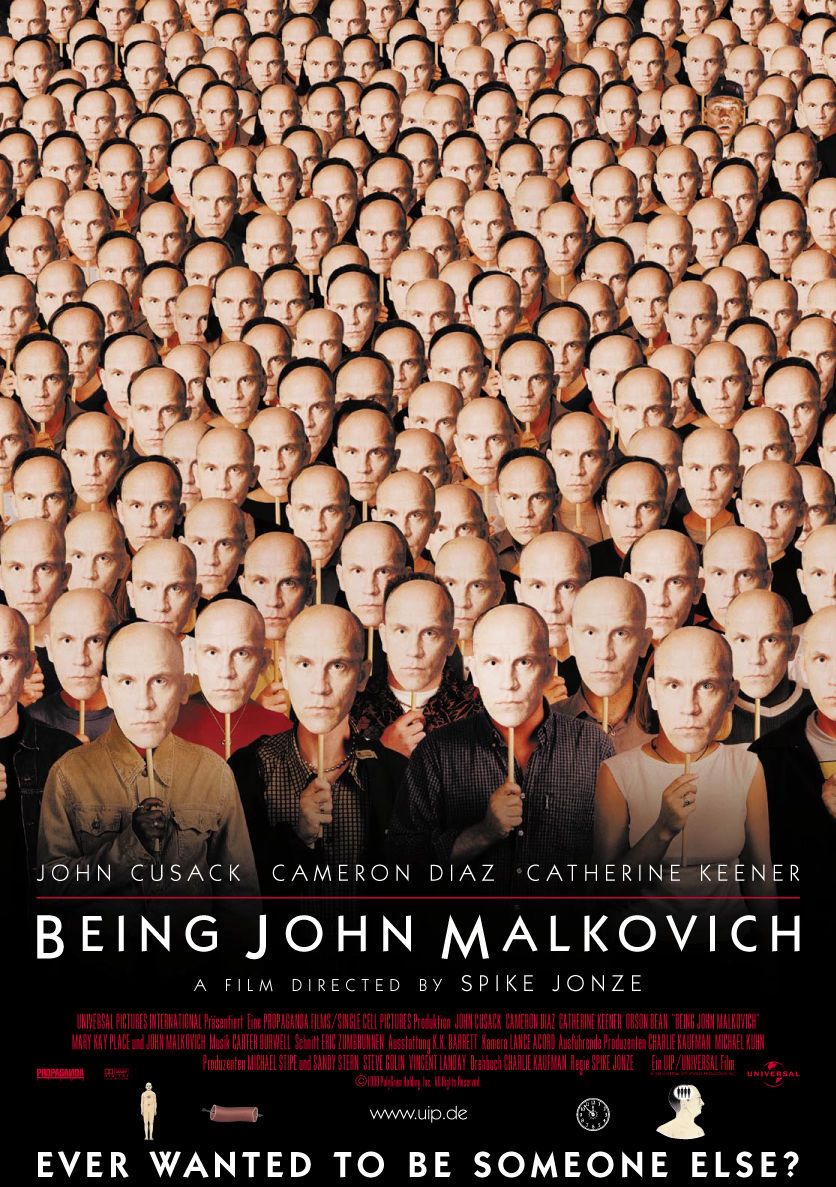
Being John Malkovich (1999)

A portal into the head of a famous actor? What better way to find out what it’s like Being John Malkovich

Director: Spike Jonze

Cast: John Cusack (Craig Schwartz), Cameron Diaz (Lotte Schwartz), Catherine Keener (Maxine Lund), John Malkovich (John Horatio Malkovich), Orson Bean (Dr Lester), Mary Kay Place (Floris), Charlie Sheen (Himself), W Earl Brown (JM Inc Customer)

Is there a more consciously eccentric film ever made than Being John Malkovich? Can you imagine the pitch to the Hollywood suits? 

Our hero, Craig Schwartz (John Cusack) is a weedy, bitter puppeteer (as well as creep and potential stalker), whose wife Lotte (Cameron Diaz) fills their house with rescue animals, from talkative parrots to a chimp with PTSD. Needing to make ends meet, Schwartz takes a filing job at a company based on floor 7½ of an office block (it’s a low ceilinged floor built between the other two floors – it’s cheaper on the rent obviously) where he becomes obsessed with his sexy co-worker Maxine Lund (Catherine Keener), who is resolutely not interested. But all this changes one day when Schwartz finds a fleshy, dark tunnel behind a filming cabinet that takes someone into the mind of actor John Malkovich (John Malkovich) – for 15 minutes, before expelling you onto the New Jersey turnpike. Sounds like a business interest for Schwartz and Maxine (spend 15 minutes in someone else’s body!), but the experience of being in someone’s body slowly begins to change Schwartz, Lotte and Maxine – and having his brain invaded has a terrible impact on Malkovich himself.

If that’s not the oddest plot you’ve ever heard, then I don’t know what films you’ve been watching. The film was the brainchild of Charlie Kaufman, who developed from this into one of the most distinctively gifted screenwriters in Hollywood, a master of the quirky and weird, the off-the-wall and the science fiction tinged everyday fantasy, blessed with the ability to mix in genuine human emotion amongst the oddness. 

Being John Malkovich is an inspired idea and Kaufman’s script is ingenious in its structure and progression. Never once does the film settle for the expected narrative development or the conventional structure. It’s a livewire of a film that constantly leaves you guessing, switching tone and throwing logical but unexpected plot twists at every turn. There are plenty of moments where you could expect events to take a conventional turn, but the film never settles for the obvious.

Kaufman’s inspired script was lucky enough to find a quirky visual stylist who was willing to embrace it as much as Spike Jonze did. Jonze’s direction is a masterclass in small detail, slight twists and little touches of invention that never draw excessive attention to themselves but combine to make a thrillingly off-the-wall final picture. 

Jonze knows that the jokes and surrealism of Kaufman’s script are so effective that they don’t need a firm directorial hand to lean the humour on – they work absolutely fine presented almost as written, and make for terrific entertainment. He shoots the low ceiling of floor 7½ with such straightforward confidence that each scene becomes hilarious for its stooped actors and crammed rooms. Jonze can therefore concentrate the flourishes on core moments, from the puppetry that Schwartz and later a Schwartz-controlled Malkovich make their life’s work, to assorted training and educational videos that pepper the film at key moments.

Like Kaufman as well, Jonze’s storytelling works because he inherently understands human emotion and isn’t afraid to throw it into the film alongside the humour. Plenty of directors would have been happy to have all the principals settle into being comic stereotypes, or overplayed pantomime figures. Jonze encouraged the actors to find the depth – and sometimes the darkness – in their characters, to ground the film effectively with touches of real life tragedy and human flaws that give weight to the surreal sci-fi elements – so much so that they start to feel as real as the rest.

John Cusack’s Schwartz is a bitter, increasingly twisted fantasist and dreamer – the sort of guy who believes that his lack of willingness to compromise his art in any way is a strength (his puppetry shows are highly complex, sexualised, high-blown, poetry-inspired hilarious puffs of pretension). Schwartz could have become a joke or a guy with a big dream – but the film increasingly shows him to be a dark, obsessive, cruel even dangerous outsider, who has no problem with harming other people to get what he wants, his moral compass is driven by his self-assessment of himself as a man treated badly by others, so doing what he wants is somehow deserved. It’s an increasingly dark portrait of a man who has more than hint of danger to him.

Keener, as the focus of his obsession, also does extraordinary work as a woman the film is not afraid to present as unpleasant in her selfishness, casual cruelty and greed – but a woman who slowly allows herself to open up and reveal an emotional openness and romanticism someone watching the start of the film would never expect. Similarly Diaz’s downtrodden, sad wife at home flourishes and grows as a person, as she finds in herself a new comfort and ease with who she is, from inhabiting the mind of another person. Both are excellent.

The film explores fascinating ideas of identity – Lotte and Maxine find a freedom and an exciting otherness in being a passenger in another person’s body, and use it as voyages of self discovery for themselves. Schwartz on the other hand sees this body – just as he sees all human beings – as just another puppet for him to control, another way of adjusting the world to match his requirements, rather than change anything about himself. While some lose themselves in Malkovich’s body and find the experience rewarding, Schwartz can only find happiness when bending the body to his own will.

And what of Malkovich himself?  Well has there ever been a braver performance in film? Malkovich is superb as an arch portrait of himself as a rather self-important actor, with an unknowable coolness about him, an intellectualism that makes him a man easy to respect but strangely hard to relate to, a face that is distinctive but a strangely unrelatable style that makes him hard to remember (it’s really an extraordinarily funny and brave performance). As Malkovich realises what is happening to him, the film plays with real beats of tragedy and even horror – what would it be like to be forced into being a passenger in your own head? This is nothing compared to the horror Malkovich encounters when he enters the tunnel himself – to find himself in a world where everyone looks like Malkovich and can only speak using the word “Malkovich”.

Being John Malkovich uses its surreal ideas to explore profound – and even chilling – ideas of control, destiny, personality and identity. With several superb performances, a brilliant script and controlled and intelligent direction, it’s a film unlike any other – and continues to delight and surprise twenty years on from its release.

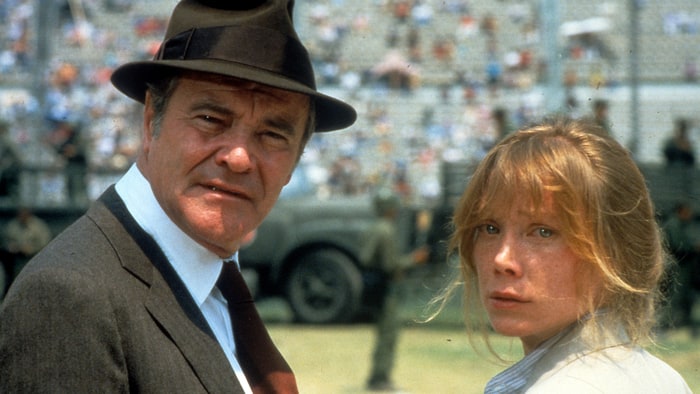
Missing (1982)

Jack Lemmon and Sissy Spacek are on a quest for the Missing

Director: Costa-Gravas

Cast: Jack Lemmon (Edmund Horman), Sissy Spacey (Beth Horman), John Shea (Charles Horman), Melanie Mayron (Terry Simon), Charles Cioffi (Captain Ray Tower), David Clennon (Consul Phil Putnam), Richard Venture (US Ambassador), Jerry Hardin (Colonel Sean Patrick), Janice Rule (Kate Newman), Richard Bradford (Andrew Babcock)

Politically motivated American films are few and far between, especially ones that take such a starkly critical view of American foreign policy. So it’s a testament to the respect given to Greek director Costa-Gravas that his first American film is an angry denunciation of America’s attitude towards Latin and South America and a criticism of the cosy assumption of so many of its citizens that the very fact of their being American will open all doors and make them invulnerable to harm. 

Set in the immediate aftermath of Pinochet’s military coup in Chile in 1973 (although for various legal reasons Chile itself is never named), young American journalist and filmmaker Charles Horman (John Shea) goes missing. His wife Beth (Sissy Spacek) is left alone in the increasingly dangerous city, while his father Ed Horman (Jack Lemmon) flies into the country. Ed assumes his government will swiftly work with him to solve the mystery, and that his son must have been wrapped up in some dodgy dealings to have gone missing. He is to be brutally disabused of both notions with a painful swiftness, as he finds he and his son are insignificant factors in America’s geopolitical interests.

Costa-Gravas’ film wisely avoids focusing too much on the details of Chilean politics, or the causes of the coup, or even really concentrating on the left-wing politics of many of the American citizens wrapped up in the coup. Instead it zeroes in on the human impact of loss and pain, and by focusing less on the politics of a coup but on the impact of it, it places the audience attention instead on the atrocities that military revolutions bring. Alongside this, Costa-Gravas places front-and-centre of the story not a firebrand liberal, or a left-wing polemicist, but a character who could not be more of a strait-laced conservative, a quintessential American who firmly believes his country is the greatest in the world and heads into a foreign land anticipating doors will be opened for him and his government is here to help. 

It’s vital for the film’s success that it’s the experience of Ed Horman that drives the film narrative. First appearing 25 minutes into the film, the rest of the narrative charts Ed’s growing shocked realisation that his government doesn’t give a damn about his son and, even worse, is more than happy to lie to his face about the level of their involvement. While Ed believes America to be the font of all goodness in the world, he is horrified to discover that it is at the centre of a far more shady world of realpolitik. And that his own complacent belief in the country, and unquestioning assumption that it can do no wrong, is part of what empowers its representatives to back murderous regimes. “If you hadn’t been personally involved in this unfortunate incident, you’d be sitting at home complacent and more or less oblivious to all of this” the Ambassador haughtily tells Ed, after the frantic father has angrily denounced America’s policies. And, from what we saw of Ed at the start, he’s right.

It’s a superb role of growing disillusionment and a stunned realisation that his own home-grown principles and believe in truth, justice and the American Way turn out to be just words. And Jack Lemmon is just about the perfect actor for it. This might be Lemmon’s finest performance, superb from start to finish, a perfect emobodiment of All-American principles that disintegrates into someone angry, bitter and disillusioned. But at its heart as well – and the films – is the very real grief of a father who has lost his son. Worse, a father who only feels he grows close to – and understanding of – his son after losing him. Lemmon’s performances mines every ounce of empathetic sympathy from the role, in a series of heartbreaking moments as Ed begins to realise just how much he has lost in a son he begins to feel he never gave a chance.

This very personal story is at the centre of the film, but Costa-Gravas never for one moment allows us to forget – or avert our eyes – from the horrors coups like this bring. By not naming Chile, it manages to make this the face of all brutal revolutions. As characters move through the streets, or squares, in controlled, carefully framed long-shots and takes we see all around, uncommented on by the camera, unfocused on by the director, the signs of brutality. Throughout the film the background action sees casual arrests, violence, assaults, book burnings, bodies being left in the street or thrown into trucks… All around ordinary people keep their heads down or run for terror. Curfews leave people trapped outside – Sissy Spacek (very impressive) as Beth is caught out and is forced to spend a night hiding in the porch of a hotel, while gun shots ring out around the city (a regular soundtrack for every scene).

The investigation into Charles’ disappearance is pushed forward not the embassy – which presents a series of acceptable faces of the new regime and a smiling reassurance that every thing is being done – but by harried and scared survivors and asylum seekers in European embassies, who tell snippets of the events they have seen, the deaths they have seen glimpses off, the horrors of detention centres. It’s finally dragged home to Ed and Beth as they are taken to an office block with every room containing executed corpses, some identified some not, the bodies piled on every floor of the building. 

In all this America – and shady military and industrial interests – are complicit, and the executions and deaths of citizens of this country (and a few Americans who unwisely mixed themselves up in it) are seen as acceptable collateral damage, the price of doing business to protect American financial interests. The Government is happy bed fellows with murderers and crooked officials, and the idea that the death of one American citizen is going to matter at all is nonsense. Costa-Gravas’ film has a firm point to make – but it makes it within the context of a very human and personal story. “They can’t hurt us, we’re Americans!” are Charlie’s final (on-screen) words: in this attitude he’s as naïve as his father, and he clearly believes just as much in the divine goodness and special status of his homeland. America has no special or outstanding moral character: it’s as mired in dirty world realities as anyone else. This rude awakening will cost the son his life and cause untold grief to his father as well as shattering all his cosy greatest generation idealism.

The Collector (1965)

Samantha Eggar is held captive by Terence Stamp in the unsettling The Collector

Director: William Wyler

Cast: Terence Stamp (Freddie Clegg), Samantha Eggar (Miranda Grey), Mona Washbourne (Aunt Annie), Maurice Dallimore (Colonel Whitman)

A lonely butterfly collector wins the pools. He’s rich, he can have everything he wants – but he’s still an outsider who can’t get a girl. Surely if a woman would just get to know him he’d find love. So the easiest way of doing that is probably kidnapping the woman you had a crush on at school, locking her in a carefully furnished basement in your Tudor mansion house and just wait for her to fall in love with you. Sounds like a perfect plan right?

William Wyler’s adaptation of John Fowles’ best-selling literary first novel sees Terence Stamp as the maladjusted loner and Samantha Eggar as his victim. It’s fascinating reading about the film today and the attitudes and perceptions towards it. Today the film is chilling in the obsessive, dangerous, self-pitying self-justifications of Freddie Clegg. But in the mid-60s a number of reviewers commented on the pity they felt for the kidnapper, and even expressed that in many ways he was acting on fantasies every healthy man has had (they haven’t). Quite rightly the film comes across differently today, a far more unsettling and disturbing portrait than it did at the time.

Wyler’s direction is intimate and a fine mixture of the theatrical – with its often single locations and two-actor scenes – and cinematic, particularly in the way he subtly builds up a Hitchcockian level of tension around the possibility of discovery and escape for Miranda. Sure visually he is a little too much in love with the crash zoom on key items (chloroform for example in Freddie’s car), and devices that seem a little too obvious (like the use of black and white for the film’s only significant flashback) but he mounts the entire film with an unsettling claustrophobia that works very well.

Further he draws out two fantastic performances from the leads. Terence Stamp was not a natural choice for the shy, timid outsider turned abductor – he’s obviously way too handsome and physically assured for the role – but he marshals very well the blinded arrogance of a man who believes the whole world would march to his tune if it only stopped and listened. His Freddie Clegg is softly-spoken, polite and controlled – so much so you almost forget how insane he is. Stamp also does a remarkable physical performance, making himself seem shorter and less dynamic than he really is, his body language having more than the hint of the schoolboy about it. Domineering, controlling, bullying and totally incapable of internal analysis of his actions. 

You realise watching the films events unfold – and Freddie’s inability to analyse the emotional truth behind them – that he is alone because he fundamentally doesn’t understand human relationships. While many of the (male) film reviewers at the time found this strangely tragic, today it’s hard to feel anything but contempt for his cruel self-pity.

The more difficult role falls to Samantha Eggar as Miranda. Wyler’s attempt to get the best performance from here seems pretty kin to the abduction the character goes through in the film – she was kept in isolation on the film set, Stamp was instructed to not talk to her outside of shooting while Wyler constantly held the threat of dismissal over her. More than a few echoes of Hitchcock in that – and Wyler’s praise on the film’s completion for Eggar’s (Oscar nominated and Cannes Award winning) performance as more than a whiff of self-praise to it. But Eggar herself is superb as a woman who oscillates between panic, desperation, ingratiating kindness, anger, contempt and fear. Miranda is a woman who tries everything she can to get out of this situation, only to constantly butt heads against the twin devils of her countryside isolation and Freddie’s own lack of emotional and intellectual intelligence.

Because the film interestingly makes clear what a tedious and not-very-bright monomaniacal man Freddie is, compared with the educated and quick-witted Miranda. When she tries to engage him on a discussion about modern art, he is utterly incapable of beginning to appreciate artists such as Picasso (‘It doesn’t look real’), completely fails to grasp any of the ideas in The Catcher in the Rye (the book she suggests he reads) or their relation to him, and is drawn only towards the blandest, most traditional drawings that she creates while whiling away the time in captivity. He fanatically collects butterflies, rooms lined with framed specimens that he can discuss in detail but with no concept of their beauty. Every time Miranda tries to scratch the surface of Freddie to connect with him she constantly discovers he has no depths at all, he’s a little boy lost in the world who can’t understand why he can’t collect people with the ease he catches and kills butterflies.

Whether the film has some sympathy for Freddie is less clear. Maurice Jarre’s luscious score certainly seems to suggest we should feel something for this misguided guy, but today it’s almost impossible to do so. The film works just as well without those feelings of implied sympathy though, which is a tribute to Wyler’s even-handed and controlled direction. Certainly Miranda’s fear and oppression are easy to connect with.

Is this a Stockholm syndrome film? Miranda – an intelligent and cunning woman – quickly realises that while she is the victim, Freddie’s desire to be seen as sort of chivalric gentleman does give her some power over his treatment of her – he wants her to fall in love for real with him. How much does she start to feel sympathy for this misguided loner? Is there any hint of real feeling at any point in her eventual attempt to seduce him (I doubt it heavily watching the film, but I may be adding a modern perspective, as I suspect Wyler wants to leave a hint there – again the score supports this feeling a bit)? I’m not sure – but the film’s eventual ending does leave little doubt that Freddie is a dangerous man, and the world is a less save place with him in it.

The Collector isn’t perfect – and perhaps its attitudes have dated – but it still has a real skill to it, some wonderful scenes – and two terrific performances from its lead actors, who I think have never been better than they are here. Wyler’s last success – and you can see his debt to the later work of Michael Powell and Alfred Hitchcock in each frame, even while he fails to match either of them – it still makes for an unsettling, troubling and fascinating watch.

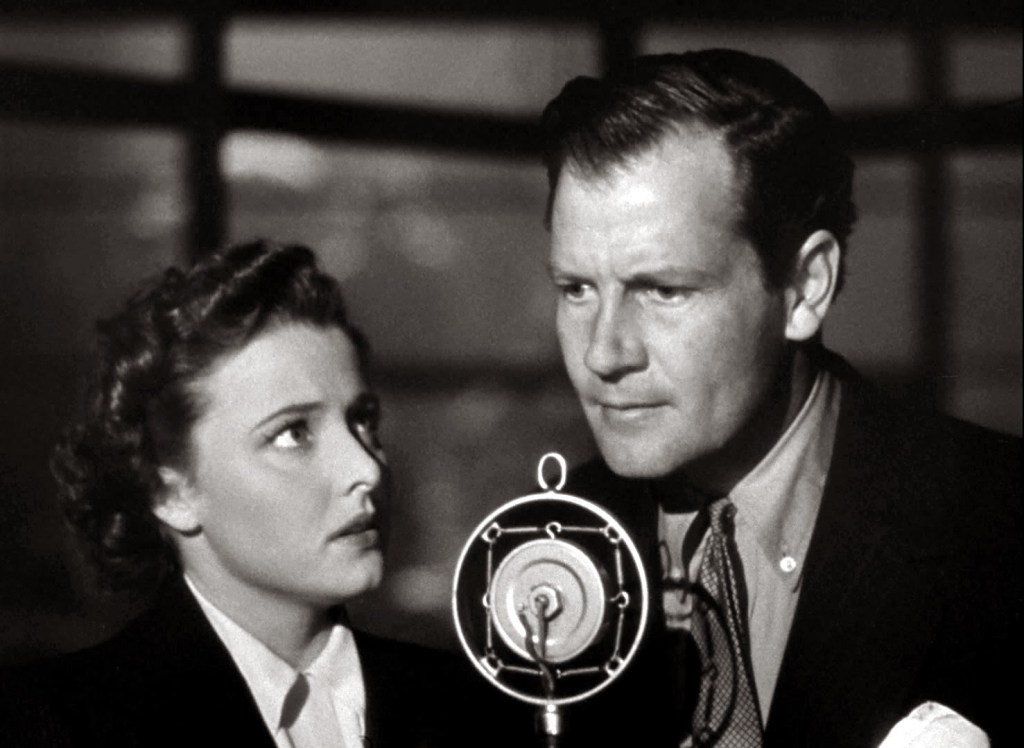
Foreign Correspondent (1940)

Foreign Correspondent (1940)

Hitchcock’s thriller is a stunning adventure story and a passionate call for action

Director: Alfred Hitchcock

Cast: Joel McCrea (John Jones/Huntley Havestock), Laraine Day (Carol Fisher), Herbert Marshall (Stephen Fisher), George Sanders (Scott ffolliott), Albert Basserman (Van Meer), Robert Benchley (Stebbins), Edmund Gwenn (Rowley), Eduardo Cianelli (Mr King), Harry Davenport (Mr Powers), Edward Conrad (Latvian)

In 1940, Hitchcock was new in America, after a parade of successes in Britain. 1940 was a red-letter year for the master, directing not one but two of the films up for Best Picture. The Oscar was carried home for his masterful gothic adaptation of Du Maurier’s Rebecca, but equally memorable was Foreign Correspondent, a stirring, heartfelt thriller about the build-up to war in Britain, a passionate cry for American intervention and brilliant propaganda contribution to the British war effort (even Joseph Goebbels tipped his hat to it).

John Jones (Joel McCrea) is the new foreign correspondent in Europe for the New York Morning Globe. Given the pseudonym “Huntley Havestock” (because it sounds better), Jones is picked out because he’s a hard-boiled crime journalist, practised at winkling out a story, rather than the cozy posh boys usually sent out to Europe. In Amsterdam, Jones attends a peace conference hosted by leader of the British peace party Stephen Fisher (Herbert Marshall), where eminent Dutch diplomat and architect of the fragile European peace Van Meer (Albert Basserman) is due to speak. While Jones falls in love with Fisher’s daughter Carol (Laraine Day), Van Meer mysteriously falls to show at the dinner – and arrives at the conference the next day only to fail to recognise Jones and immediately get assassinated. Suddenly Jones finds himself in the middle of a dangerous game of spies with only British journalist Scott ffolliott (George Sanders) and Carol to help him.

Hitchcock’s Foreign Correspondent is a masterful spy caper, in the style of many of his early successful works such as The Thirty-Nine Steps, superbly assembled by a genius at the top of his game, with access to funding and techniques beyond what he had in Britain. Hitchcock went through several versions of the script – there were no fewer than nine writers who worked on this film, four of whom are credited – but it matters not a jot when the script they finally came up with matched such superb, zingy, screw-ball style dialogue with such brilliant set-pieces.

The film also had a serious purpose as well. From the start, this is a cry of one of Britain’s most prominent ex-pats to his newly adopted nation to join the effort to preserve Western civilisation against the onslaught of Nazi oppression. Joel McCrea’s Jones – a part written for Gary Cooper, who forever regretted turning the role down – is the quintessential American, disinterested in the world, sure of America’s place in it, who has his eyes opened and passion ignited by seeing up-close and personal the dangers from the agents of totalitarianism. The agents of the enemy nation – probably Germany, a country that is referenced in passing, but the film deliberately keeps it shady in an attempt to appear even-handed – are ruthless, brutal and unscrupulous. Their plans are fiendish and they are bent on world domination. But all this is worn very lightly within a caper framework that has as much interest in Jones falling in love with Carol as it does with foiling the baddies.

It also plays neatly on Jones’ very old-school American obsession with fair-play, and bringing down the baddies no matter what. Witnessing Van Meer assassinated before his very eyes, Jones is determined to go to any lengths to ensure both that justice is done and he is the man who gets the story. At the same time, Jones also has an honest and homely sense of romanticism about him. The film gets a tonne of comic and romantic mileage out of the cracking dialogue between McCrea and Loraine Day as Carol, with the sort of intelligent, witty banter that wouldn’t seem out of place in a screwball comedy, with Jones’ blunt “I say what I mean” attitude crashing beautifully against Carol’s more English rectitude. 

Hitchcock shows himself a brilliantly adept director of comedy – something he doesn’t get enough credit for – in these sequences between the two of them sparring over the course of the movie. And it’s not just them, but also his work with George Sanders – cast against type as a cool, noble British agent – brilliantly hilarious as the curiously named “ffiolliott” (the sequence, mid car chase, where he calmly explains to the befuddled Jones while bullets fly why his name has no capital letter is hilarious). Comedy is a rich vein in Foreign Correspondent and it works so well here because it lightens both the drama of the thriller elements and the political message of “pro-intervention”.

The thriller sequences are just as superb. The assassination sequence is a stand-out, a shooting on a rain soaked series of steps outside a conference, with the assassin making his retreat through a crowd of on-lookers carrying umbrellas under hot-pursuit from Jones. Hitchcock takes his camera above the crowd, meaning we only follow its progress through the disruption of the umbrellas, before the two men emerge (bullets flying) and move straight into a breathless car chase through the Dutch countryside. It’s a masterful sequence.

And it’s far from the last. The film has a superb series of tension-filled sequences, from Jones playing an elaborate game of cat-and-mouse in a Dutch windmill, trying to avoid being seen by the German agents occupying it while finding out as much as he can about their plans, to Jones reporting what he has found to a man we already know is a double agent. Edmund Gwenn, cast well-against type as a jovial, remorseless assassin, gets a brilliant sequence of attempts to kill Jones without putting him on guard, culminating in a vertigo inducing sequence at the top of Westminster Tower. It’s the second such sequence, Jones already having to climb over the roof of a hotel in Amsterdam to escape assassins (along the way brilliantly hitting the neon sign of the Hotel Europe so that it reads “Hot Europe”). Hitchcock tops it all with a brilliant plane-crash sequence shot with chutzpah and daring and is a technical marvel considering the resources available in 1940.

All this excitement and adventure helps to deliver the message of the film as strongly pro-interventionist to encourage the Americans to enter the war on the side of the Allies. Van Meer (a fabulous performance from Albert Bassermann of old-school nobility, made even more astonishing by the fact he didn’t speak a word of English and learned it all phonetically) has a brilliant, impassioned speech – all the more affecting for its  lack of histrionics – that condemns the brutality and violence of the dictatorships. The film is capped with Jones’ Ed Murrow-style broadcast from Blitz-besieged London. Both sequences raise genuine lumps to the throat – McCrea’s delivery is perfect – and the final sequence is all the more astonishing when you realise it was conceived and shot before the Blitz even started.

Not that the film is completely obvious in its allegiances. The turn-coat Brit in the film is a complex, even sympathetic figure who is merely serving his actual home country in the best way possible. He’s largely presented as reluctant to commit crimes, but believing that they must be done and is even allowed a heroic death. His identity perhaps is fairly guessable (he even has a Germanic dog!) but it still works very well in the film.

Hitchcock draws superb performances from the cast – helped by that script of zingers. McCrea is just about perfect, Day very sweet, Sanders is brilliant, Herbert Marshall’s Stephen Fisher a brilliant portrait of arrogance and tortured duty, Robert Benchley very funny (and writing his own scenes) as Jones’ colleague who’s struggling to stay on the wagon, Harry Davenport superb as Jones’ His Girl Fridayish editor. Basserman was Oscar nominated – and deserves it for his big speech – but it could have been any of the cast who got that nod, such is the quality here. Foreign Correspondent is often overlooked among the master’s many, many triumphs. But any pro-interventionist, anti-German film that has even Joseph Goebbels singing its praises must have a fair bit going for it.

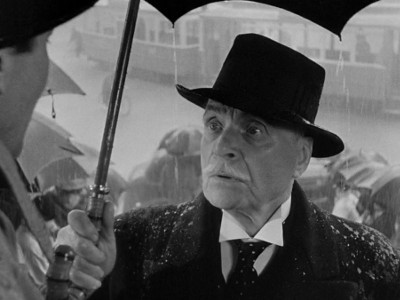
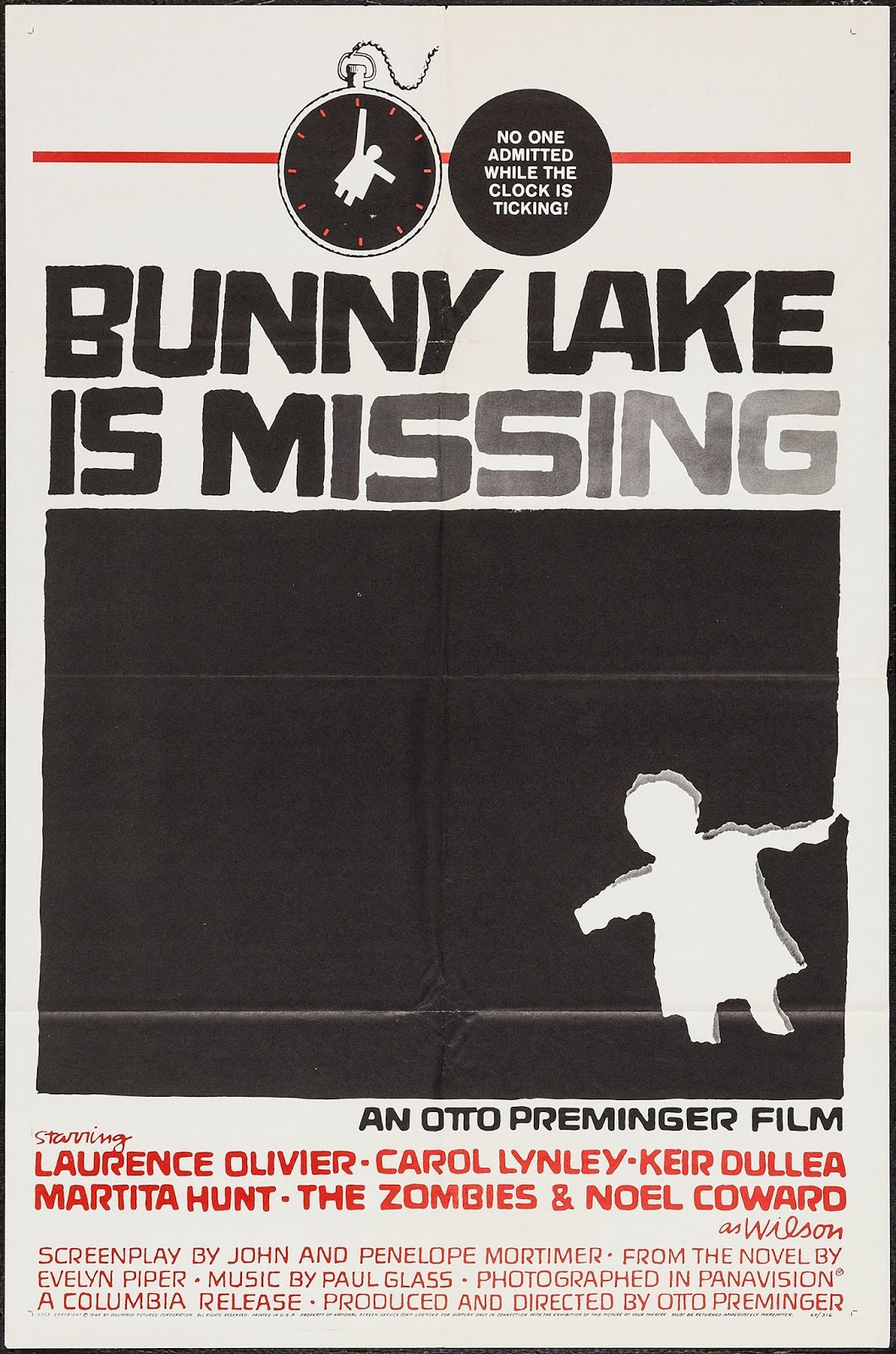
Bunny Lake is Missing (1965)

Carol Lynley’s daughter ‘Bunny’ goes missing – but is the girl real or not? Classic noir mystery Bunny Lake is Missing

Director: Otto Preminger

Cast: Laurence Olivier (Superintendent Newhouse), Carol Lynley (Ann Lake), Kier Dullea (Steven Lake), Martita Hunt (Ada Ford), Anna Massey (Elvira Smollett), Clive Revill (Sergeant Andrews), Finlay Currie (The Doll Maker), Lucia Mannheim (The Cook), Noël Coward (Horatio Wilson)

Otto Preminger’s career was an interesting mixture of high-brow, noirish thrillers and pulpish adaptations. Bunny Lake Is Missing is a mixture of these, a restructuring of a hit novel. Transplanting the novel from New York to London, the film covers a single day and the investigation into a missing child ‘Bunny’ Lake. Her American mother Ann Lake (Carol Lynley) drops her at her new school, and returns at the end of the day to find no one has seen her daughter or any record of her existence. While her protective brother Steven (Kier Dullea) rants and rages, Superintendent Newhouse (Laurence Olivier) leads the investigation. As Newhouse fails to find any evidence for the child’s existence at all, the question is asked: is she a figment of Ann’s fragile imagination?

Preminger plays this delicate game of “guess who” with the audience for a skilled and enjoyable 90 minutes before giving us any form of answer. The film throws us straight into the mystery of whether Bunny is real or not from the off, as our first shot of Ann is her alone in the school after dropping her daughter off. We see as little evidence of Bunny’s existence as the cast does. From there it’s a careful balance between giving us enough reasons to both trust Ann’s conviction her daughter is real and also give us enough reasons to suspect that Ann may be as unbalanced as Newhouse is concerned she might be. 

It’s quite the game the film plays, and Preminger does it very well, the film never tipping the hand too much one way or the other. Shot in luscious black and white, it’s a film of noirish shadows and imposing blackness where everything feels a little bit out of kilter and untrustworthy. Preminger throws us into Ann’s perspective by using a number of clever tracking shots that allow us to follow her through the events of each scenes. These shots are sustained, subtle and also give us a further subconscious reason to trust her – we are effectively seeing the events of the film side-by-side with her. It makes for a rather empathetic film, and one you find yourself investing into.

Not least because it completely understands the twin horrors of both losing a child and not being believed by anyone no matter how desperate you plead that you are telling the truth (no matter how generous people are while doing so). Preminger acutely understands we all deep down worry that we are going to be let down by those we need to believe in – and this feeling of concern, mixed with frustration and pity for Ann is what draws us to her. Even while we think there is more behind Bunny’s existence than meets the eye.

The screenplay by John and Penelope Mortimer also throws plenty of potential suspects at us. These are largely a series of delicious cameos for vintage British actors. These extreme odd-balls also make the two Americans in London (Ann in particular) seem even more like fishes out of water. Martita Hunt is excellent value as a retired school headmistress, seemingly confined to a bedroom in the attic of the school (!) whose hobby is recording children talking about their nightmares. Anna Massey is equally good as a harassed matron more concerned about the negative impact on the school’s reputation than child’s safety. Pick of the bunch of this rogues gallery is Noël Coward (having a whale of a time) as Ann’s drunken landlord, a faded actor and sexually ambiguous seductress who in one priceless scene gleefully shows a group of police detectives some of his favourite whips (“I find the sensation [of being whipped] rather titillating…[this was] reputed to belong to the great one himself. The Marquis de Sade”) from his collection of bizarre sex toys.

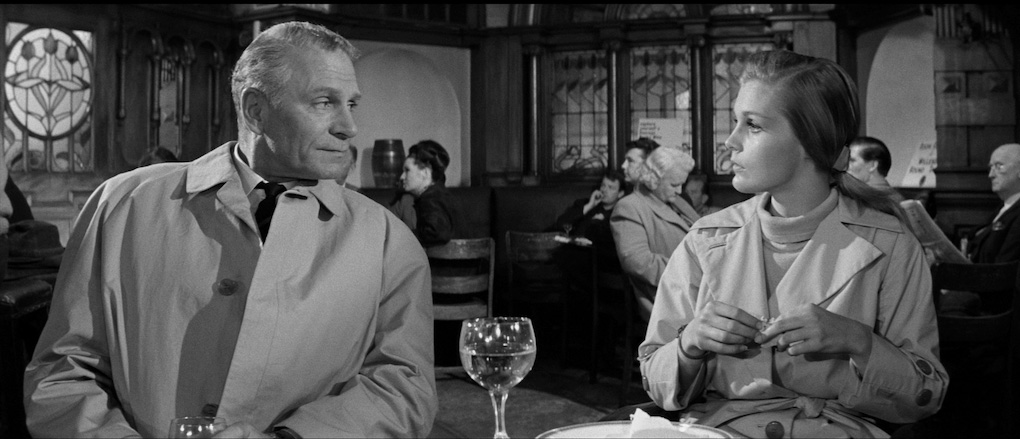
These perverts, oddballs and weirdos are all investigated with a cool professionalism by Laurence Olivier’s Superintendent Newhouse. Olivier gives possibly one of his most humane, restrained and engaging performances: he’s the epitome of caring, dedicated professionalism and a superbly humane detective. Carrying much of the burden of conveying the films narrative, Olivier is superb here – and he manages to make Newhouse exactly the sort of man you would long to investigate your child’s disappearance, even as he starts to doubt the child even exists. Olivier is in fact so strong, that the parts of the film where he disappears suffer noticeably from his absence – no one else among the principles can match him for presence.

Saying that, Carol Lynley does an excellent job as a character we invest in and sympathise with, but can never quite bring ourselves to be sure is reliable. It’s a difficult line she walks between being believably distraught and simultaneously slightly off kilter, enough to make you worry that she be (knowingly or not) making the whole thing up. The feeling may be more than helped by the exceptionally weird relationship between herself and her brother, one of an incestuously unsettling intensity (their relationship as brother and sister isn’t divulged until almost 15 minutes into the film and it’s as much a surprise to the audience as it is to the characters).

Kier Dullea as her brother gives a decent, if rather strained performance, as Steven. Dullea’s slight emptiness in the role can perhaps be partly attributed to his terrible relationship with Preminger, later claiming making the film was the worst experience of his life. (Olivier was also unimpressed calling Preminger a bully). 

It’s a shame as Dullea is crucial to the final sections of the film. I won’t give away the reveal and solution, but Preminger overplays his hand here, stretching the final sequence of the film out to a full 15 minutes which rather overstays its welcome. Maybe the sort of psychological complexity it’s aiming for is a bit more familiar to use today, than it was in 1965, but it certainly feels like a scene overstretched. But that’s a blemish on a very solid mystery before then that brings more than enough pulpish pleasure, fine performances and interesting film making to reward rewatching.

Red Eye (2005)

Rachel McAdams is on the flight to hell with only Cillian Murphy for company in Red Eye

Director: Wes Craven

Cast: Rachel McAdams (Lisa Reisert), Cillian Murphy (Jackson Rippner), Brian Cox (Joe Reiset), Jayma Mays (Cynthia), Jack Scalia (Charles Keefe), Robert Pine (Bob Taylor), Teresa Press-Marx (Marianne Taylor)

Are there any two things in the world we are more unsettled by than plane flights and the possibility that the strangers we meet might turn out to be nutters? Well Red Eye taps into both of those terrors with an effective B-movie of fast-paced brutality, which plays out almost in real time. Lisa Reisert (Rachel McAdams) is catching the red eye flight home to get back to her job managing a five-star hotel in Miami. At the airport bar she meets handsome, charming stranger Jackson (Cillian Murphy), and then finds herself sitting next him to on the plane. Just as things seem to be going well for romance, Jackson reveals he’s a terrorist and he wants Lisa to change the room booking of the Director of Homeland Security so his team can take him out – and if she says no, hitmen will take out her beloved father Joe (Brian Cox). But there may be more to Lisa than Jackson bargained for.

Craven’s film is an extremely efficient, sharp, lean little thriller with a cracking idea at its heart. It’s such a whipper cracker of an idea – the stranger on a plane who turns dangerous – that once the claustrophobia of the flight is removed in the final quarter, the film never quite gets its energy back. It’s Lisa’s mid-flight powerlessness, the self-contained, claustrophobic lack of escape, that makes the first three quarters of the film so compelling. Because as soon as Lisa realises that there is something wrong, there is nothing she can do and nowhere she can go to escape. And Jackson has manoeuvred the situation so she looks like the untrustworthy, awkward one while Jackson seems (outwardly) reasonable and friendly – cutting off any chance of help from fellow passengers.

These sequences in the plane work so well because they are so tightly directed, written, edited and played. Rachel McAdams is very good as a woman who at first seems self-occupied and slightly distant, then weak and vulnerable, before becoming resourceful and courageous. She’s well matched by Cillian Murphy as the smooth, in-control terrorist who begins to crumble as his plans turn against him.

It’s another decent structural twist in the film as it’s Rippner’s own arrogance and pride that eventually proves his undoing, as he drops enough information amongst his hubristic brags and threats for Lisa to work out how she can gain the upper hand. Before that she already shows plenty of invention to try and communicate her situation to the other passengers – and the tension of these cat-and-mouse games of evasion is portrayed perfectly.

It’s not a perfect film. The final quarter too quickly turns Murphy’s character into a psychotic version of his near namesake, Jack the Ripper, while the final cat-and-mouse hunt between these two characters in a new location doesn’t have the same tension as the plane setting. Similarly, the plot hinges on McAdam’s character falling victim to a past sexual assault – and how that event has shaped her later life – that today seems a little uncomfortable in its perfunctory treatment in the story. But these are blemishes – Red Eye is largely a sleek little thriller that makes its points with a nail-biting B-movie meanness. Craven sure knew how to put something like this together.

All the Money in the World (2017)

Christopher Plummer dominates (at short notice!) Ridley Scott’s pedestrian true-life kidnap thriller All the Money in the World

Director: Ridley Scott

Cast: Michelle Williams (Gail Harris), Christopher Plummer (J. Paul Getty), Mark Wahlberg (Fletcher Chace), Romain Duris (Cinquanta), Timothy Hutton (Oswald Hinge), Charlie Plummer (John Paul Getty III), Andrew Buchan (John Paul Getty II), Marco Leonardi (Mammoliti)

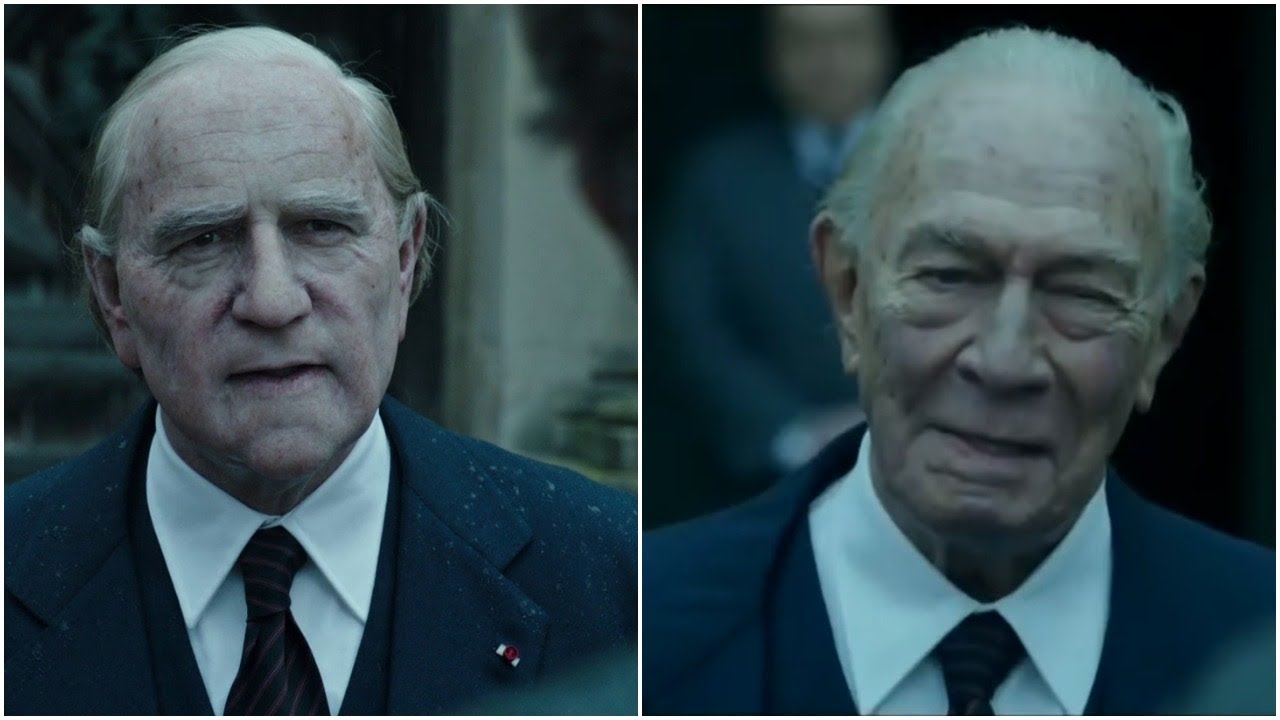
In 2017 something quite extraordinary happened. A string of unpleasant allegations emerged about Kevin Spacey, turning him overnight from the toast of Hollywood into a pariah. Not good news for Ridley Scott’s Getty kidnap drama All the Money in the World, which was only a month away from opening – and had Kevin Spacey in a central, Oscar-bait role as J. Paul Getty. The film looked like box office poison – until Scott decided to reshoot large chunks of the film four weeks before opening, with Christopher Plummer taking over the role of Getty. And of course they would still make the release date.

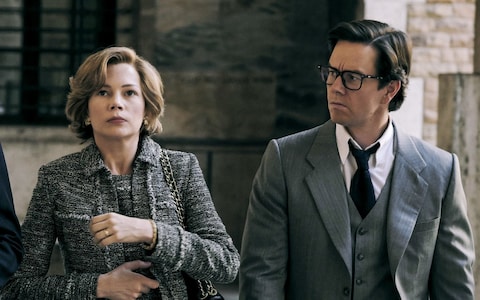
John Paul Getty (Christopher Plummer) is an oil tycoon, and the richest man in history, worth at least a billion dollars (the film opens with a dry history lesson showing how Getty gained a monopoly for selling Saudi oil for the Saudis, thus becoming richer then Croesus and Midas rolled into one). Scott’s drama follows the kidnapping of Getty’s grandson John Paul Getty III (Charlie Plummer – no relation) in Rome in 1973. The kidnappers want $17 million dollars. The famously frugal Getty’s response is that he’s got 13 other grandchildren and won’t run the risk of seeing them all being kidnapped for cash, so he won’t pay a dime. This leaves the kidnapped boy’s mother Gail Harris (Michelle Williams) in despair – after a divorce from Getty’s son, she agreed to not take a penny and can’t pay the ransom. Getty does send his fixer Fletcher Chace (Mark Wahlberg) to work with the police and negotiate – but basically Gail hasn’t a hope unless Getty relents.

Spot the difference: Spacey (left) heavily made up and Plummer

It’s astonishing Scott managed to completely recast, re-shoot and re-edit the second most important part in the film at such short notice – and apparently in eight days. It’s also brilliant that this gives us another vintage Christopher Plummer performance. With cold firmness, gimlet-eyed focus, and a dark twinkly charm which switches in a moment to disengaged indifference, Plummer is so perfectly cast as Getty you wonder why they didn’t get him in the first place. Plummer set a record as the oldest Academy Award nominee for his work on this film – and surely also set some sort of record in being nominated for an Oscar less than two months after he signed on to make the film!

We should be glad that Plummer got this great role – particularly as, to be honest, his performance and the story of how it came about is literally the only reason to remember this film. If it lasts at all it will solely be because of such chutzpah at defying the odds – as a film, this is a dud almost from start to finish.

Long, turgid, dull, lacking in any emotional or human interest, no sense of drama – rarely has a kidnap victim been so boring, or his fate carried so little tension – shot with a lazy blue filter that seems to say “it’s the 1970s, everything was a bit faded”, this turns a compelling story into a viewing chore. How can this happen? How can such an interesting story be made so bloody flat?

A film like this should either be a pressure-cooker, against-the-clock drama or a Faustian journey into the darkness of a man (Getty) who sold his soul for riches, or a sort of dark comedy wherein a billionaire refuses to pay out comparative peanuts. What it becomes is none of those things. It relishes Getty’s greed, but never really gets under the skin of what makes him like this. It gets bogged down in the mechanics of kidnapping but never makes them interesting. It enjoys (and most of this is down to Plummer) Getty’s indifference and selfishness, but doesn’t have the guts to go for black comedy. It’s a nothing film.

Part of it is the film’s odd opening structure. Much of the first 30 minutes is a confusing series of flashbacks and flashforwards, establishing multiple events – Getty’s fortune rising from the 1930s, the story of young Getty’s parents’ divorce in the 60s, the kidnapping of young Getty in 1973 – all are cut together with such a lack of regard for narrative drive that it’s both difficult to follow what is happening and when, and also hard to engage with anyone involved in the story. From there, when we reach a conventional timeline, events feel like they are being ticked off rather than being fashioned into a compelling and tense drama. It’s all just flat and lifeless.

It should be a film where Michelle Williams’ Gail comes to the fore, and we feel her pain, fear and frustration at being unable to save her son. Instead she is competing with so many alternative viewpoints that her story gets truncated down into the sort of performance we admire as being basically good, but develop no real empathy for. It’s a real shame, but she’s a victim of this being such a dry and lifeless film. 

It’s not helped that she also has to share screen time with Wahlberg. The two actors have virtually no chemistry whatsoever, and Wahlberg is way out of his depth here, totally unable to bring anything to the part other than his earthy chippiness. Chase is a dull character who ends up feeling increasingly irrelevant – eventually an invented scene showing him threatening Getty to stump up the cash is thrown in, you feel to give Wahlberg a “moment” rather than because it grows out of a sense that Chase has grown closer to Gail and her family.

But then that’s the whole film – it feels perfunctory and routine where it should be compelling. Rather than building a terrifying momentum as the kidnapping becomes more and dangerous for the young Getty, the tension seems to leak out of the edges. By the end you barely care about anyone involved in it. It really says something that, with only a week’s notice or so, Plummer blows most of the rest of the cast out of the water with his performance. He and his casting are the only reason to ever remember this turgid disappointment.

Gone Girl (2014)

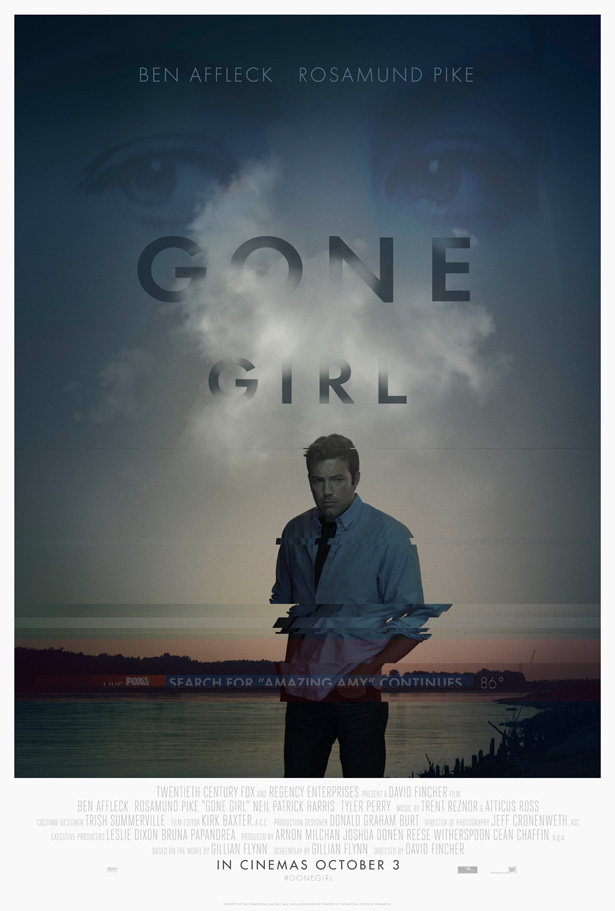
Rosamund Pike is the Gone Girl leaving husband Ben Affleck in a difficult mess

Director: David Fincher

Cast: Ben Affleck (Nick Dunne), Rosamund Pike (Amy Elliott Dunne), Neil Patrick Harris (Desi Collings), Tyler Perry (Tanner Bolt), Carrie Coon (Margo Dunne), Kim Dickens (Detective Rhonda Boney), Patrick Fugit (Officer James Gilpin), Missi Pyle (Ellen Abbott), Emily Ratajkowski (Andie Fitzgerald), Casey Wilson (Noelle Hawthorne), Lola Kirke (Greta), Boyd Holbrook (Jeff), Sela Ward (Sharon Schieber), Lisa Banes (Marybeth Elliott), David Clennon (Rand Elliott)

In our modern media age, we’ve got massive expectations for how people are meant to behave. With so much of our perception of life filtered through the internet and films we’ve seen, we are reassured when we see behaviours we expect to see, and disconcerted when we see those we haven’t been trained to see. Not distraught enough at your wife going missing? Well you must have done it then!

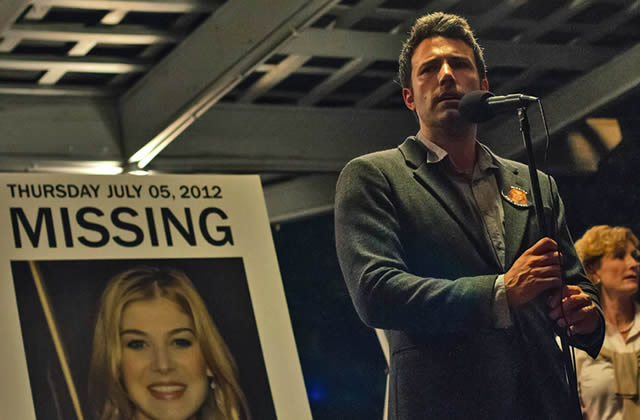
That’s the problem that faces Nick Dunne (Ben Affleck) in this chilling, intricate adaptation of Gillian Flynn’s best-selling book. Nick’s wife Amy (Rosamund Pike) goes missing in mysterious circumstances, possibly a kidnap, possibly a kidnapping gone wrong. The case becomes a media sensation, but the problem is Nick just isn’t expressive enough, won’t play the role of weeping husband. Instead he’s calm, distant and polite. So naturally rumour swirls that he did it – particularly after more and more manufactured evidence rears up to suggest he might have done. But does Amy have darker secrets than anyone might even suspect? Well to say any more would be a spoiler.

Fincher’s film is a tour-de-force of deliberately cold, polished looking perfection – which is designed to reflect back the surface perfection of the Dunnes’ deeply flawed marriage. Fincher’s film is in many ways a jet black social satire, using its almost outlandish shocks and twists to involve the audience in that “oh-no-they-didn’t!” way, in the same way that the Dunne media story fascinates the people in the movie.

“What have we done to each other?” Nick asks in voiceover early in the film, and it’s the question the film tackles obliquely: how much of the flashbacks to the relationship we see between Amy and Nick is real and how much springs from unreliable narration from Amy’s diary? Two handsome people living the American dream, but how much of it is an invented or projected narrative? Is their whole life a performance they are living for themselves and for others? Poor old Amy is even already semi-fictionalised person, a parents using her life as inspiration for a beloved children’s book character Amazing Amy.

So when Amy goes missing, the strain on Nick is very different from what you might expect. Rather than being consumed with grief, he feels wearied and dutiful about continuing a performance of a marriage which has long since ended. Nick’s actually too honest for this world – he won’t put on a show of how he is supposed to feel, he can only try not to make too much of a show of what he really feels. The mystery that builds around his and Amy’s marriage is born in this blunt honesty, of someone who won’t be what people want him to be. Of course that doesn’t stop Nick from being selfish or even a whiner.

Fincher mixes this intelligent commentary on society with, to be honest, the sort of bizarre extremism and bunny-boiling antics that make you unsurprised to hear he was inspired by Paul Verhoeven while making the film. It’s a film that shifts gears notably in the second half to become an increasingly gothic horror-thriller. A lot of this is powered also by Rosamund Pike’s excellent performance as Amy, a woman who seems almost completely cryptically unknowable, whose whole life has been a performance, and for whom taking on a series of roles and personalities is clearly not a challenge. Needless to say the person she turns out to be, and what she is capable of, is completely different from what the film leads you to expect.

It’s no surprise that a relationship featuring a person like Amy could go as south as the Dunnes’ has, but then Nick is hardly a saint either. Ben Affleck is just about perfect casting as a sort of All-American charmer gone to seed, a prickly fellow who wants privacy but also partly grows to enjoy the drama that surrounds him, once he works out the game he is playing. Fincher’s deliberately distant, smoothly clean-surfaced film frames modern day aesthetic perfection all round this seemingly dream couple.

The whole film is a nightmare vision of a love match gone wrong, of the after-effects of a beautiful story that has spiralled out into disappointment and everyday mundane life. And that struggle to keep the romance going in the familiar is at least something many of us can understand right? So it’s enjoyable to see that matched up with the freaky, semi-gothic blood and guts the film serves up in the second half, and the almost surreal Grand Guignol plot developments that power that half of the film (shot and scripted by Fincher and Flynn with a brilliant mixture of tension, horror and black comic delight at its extremity).

Like many Fincher films, there are several delightful performances. Pike is a revelation in a gift of a role, Affleck very good channelling his life lived in the spotlight. Carrie Coon is a stand-out as Nick’s exasperated, down-to-earth and loving twin sister. Kim Dickens is authorative and questioning as the police detective investigating the case, and Tyler Perry assured and cool as a hot-shot lawyer. Playing way against type, Neil Patrick Harris is pretty unforgettable as a slightly self-satisfied rich kid still holding a candle for Amy after all these years.

But the main success of the film is the whipper-sharp coldness of its execution, the cool tension Fincher ekes out of every moment, and the violent, Vertigo-ish obsession he gets out of every moment. Gone Girl works because it’s at first a chilling what-if story of a man in a media storm, which becomes a sort of black comedy so extreme that it pulls a delighted audience in to gasp at audacious characters getting away with outrageous things. As a black comic thriller it’s delightful.rela