Category: LGBTQ+ films

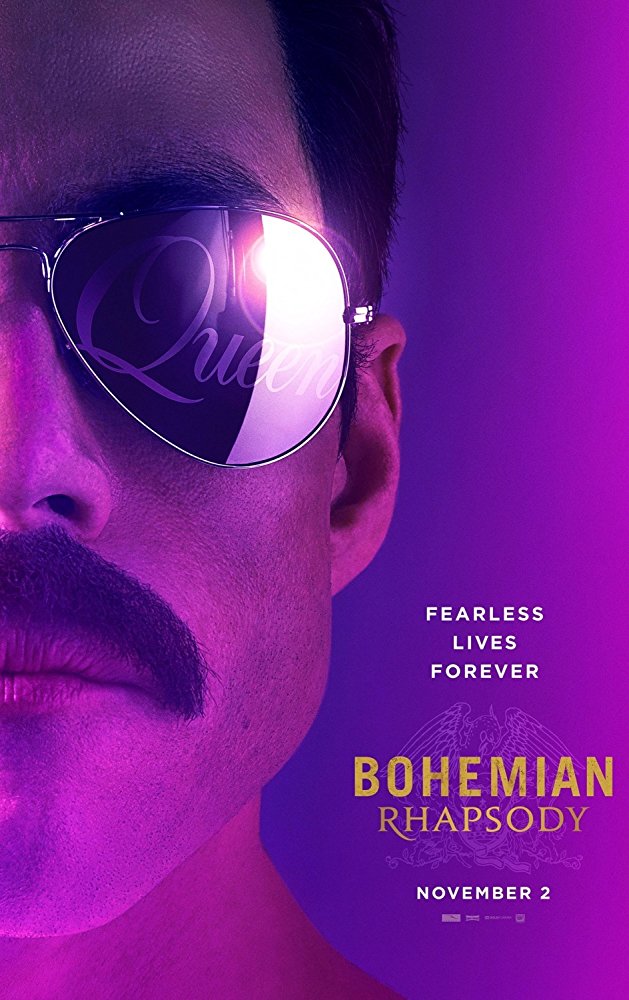
Bohemian Rhapsody (2018)

Rami Malek brings Freddie Mercury to life in crowd-pleaser Bohemian Rhapsody

Director: Bryan Singer (Dexter Fletcher)

Cast: Rami Malek (Freddie Mercury), Lucy Boynton (Mary Austin), Gwilym Lee (Brian May), Ben Hardy (Roger Taylor), Joe Marzello (John Deacon), Aidan Gillen (John Reid), Allen Leech (Paul Prenter), Tom Hollander (Jim Beach), Mike Myers (Ray Foster), Aaron McCusker (Jim Hutton), Ace Bhatti (Bomi Bulsara), Meneda Das (Jer Bulsara)

Biography can be a tricky territory on film. How can you hope to capture a whole life, with all its ups and downs, its shades of grey, in a single sitting of two hours? Well the truth is you can’t really – and Bohemian Rhapsody is an enjoyable but very safe and traditional attempt to tell something of Mercury’s life. It carefully organises his life into a clear five act structure (Beginnings, Early success, Triumph, Temptation and fall, Redemption) that wouldn’t have been unfamiliar to the writer of a medieval mystery play.

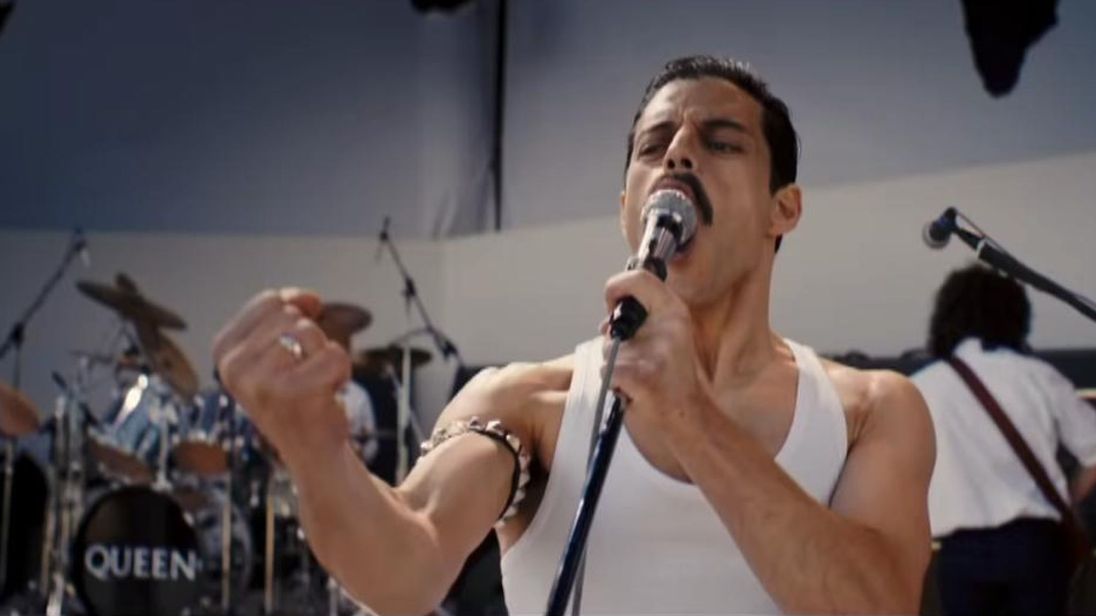
The film uses Queen’s legendary Live Aid performance as the book ends for a story that covers Freddie Mercury (Rami Malek) as he joins Queen, works closely with the band to compose the hit songs that would make them legends, then falls tragically under the influence of band manager Paul Prenter (Allen Leech) and leaves the band to build a solo career and succumbs to those dreaded demons of drink, drugs and sex. The film culminates in a brilliant recreation of Live Aid (by the way, only making the vaguest of passing references to the cause behind Live Aid, with the main motivation for performing seeming to be that everyone else is) which, despite some wonky CGI at points, brilliantly captures the atmosphere of being at an electric live gig. 

Bohemian Rhapsody is an affectionately made crowd-pleaser of a film which has convention running through its soul like sugar at the centre of stick of rock. With the heavy involvement of the surviving members of Queen and their manager, it’s a film that wants to very carefully avoid anything too controversial – which is fair enough when it’s people making a film about their friend – and does its best to shave off his rough edges, and apportion blame for faults anywhere other than Freddie.

As such, the film defines Freddie’s successes as those he achieved as part of “the family” of Queen – and his failures when he fell under the influence of others who were using him. The film draws Freddie as being desperate to find love and acceptance – from his struggles to be accepted by his traditional father (a very good performance by Ace Bhatti), to his deep love for his wife Mary Austin (while guiltily struggling with his homosexuality), to his sometimes prickly relationship with the rest of Queen, who are basically a band of brothers. Is it any wonder that someone as desperate for love as Freddie might fall under the influence of someone offering constant but not genuine affection?

Anyway, the film very carefully spreads the genius of Queen neatly around the band (we see them all chucking in songs and key ideas, even if Freddie is the driving force). Part of the reason the film works is that the band are right – these are songs for everyone. These are songs that make you want to be involved in their performance, that make you want to sing along and stamp your feet. It’s the magic alchemy of the band’s own genius that the film is so dependent on – even if the film does sometimes struggle to dramatise the act of creating art. Early on we see Freddie idly play the opening bars of Bohemian Rhapsody on the piano. “What’s that, it’s beautiful” asks his wife – “It has promise” Freddie shrugs. That’s about par for the course for how the songs come together in this film. What makes it work is the chemistry between the actors and the general lightness of the story telling.

That lightness is largely missing from the sections of the film that chart Freddie’s “dark days”. Keen to absolve Freddie as much as possible from fault, the film largely takes all his negative traits and actions and basically pours them into another man and identifies him as the reason for everything bad that happens in the film. I have no idea if the real Paul Prenter (a moustache twirling performance by Allen Leech) bore any resemblance to the chippy, bitter, scheming, selfish, greedy bad influence who appears in this film – but then Prenter has been dead for over 20 years so we’ll never know. The film blames everything – and I mean everything – on Prenter and paints Freddie as an innocent victim led astray.

The film also shies away as much as possible from showing us anything too gay. In fact, it’s hard not to get the awkward (if no doubt inadvertent) feeling that the film’s implying that the more Freddie got immersed in the gay underworld, the more he was consumed by his flaws and by bad things. In any case we get shots of Freddie at S&M parties, but shot with a dream like wistfulness that concentrates on Freddie walking towards the camera disconnected from his surroundings. The film juggles the timeline of Freddie’s life as much as possible to make for a clean narrative (in actual fact Prenter wasn’t dismissed until two years after Live Aid, Queen never split up and reformed and Freddie wasn’t diagnosed formally with AIDS until 1989), and it adds to a feeling that we are seeing a carefully formed drama that is telling a “better” version of Freddie’s life.

The biggest weapon in the film’s arsenal is Rami Malek’s performance in the lead role. His recreation of Freddie’s style and on-stage swagger is so faultless, you start to believe you are seeing the real thing. He also really adds a vulnerability, loneliness and sensitivity to Freddie’s private life. He can be prickly and arrogant, but it all stems from a deep insecurity that Malek brilliantly builds with a tender empathy. It’s a star-making performance, and he is very well supported by the rest of the cast, including Lucy Boynton as his loving wife, Gwilym Lee, Ben Hardy and Joe Mazzello very good as the other members of the band and Tom Hollander excellent as their eventual manager.

The main issue with the film is its strident conventionality. It obeys all the rules you would expect of a good biopic, and builds a picture of Freddie’s life that perfectly fits an ideal drama structure. Its basically safe, traditional and largely directed with a lack of imagination (although it’s troubled production, Bryan Singer’s dismissal due to “personal problems” and Dexter Fletcher’s late parachuting in to finish the film no doubt contributed to this) which offers very little that will surprise you and, in its quesiness on homosexuality, some that might offend you. But I think it provides enough pleasure from Queen’s wonderful discography that it almost rocks you.

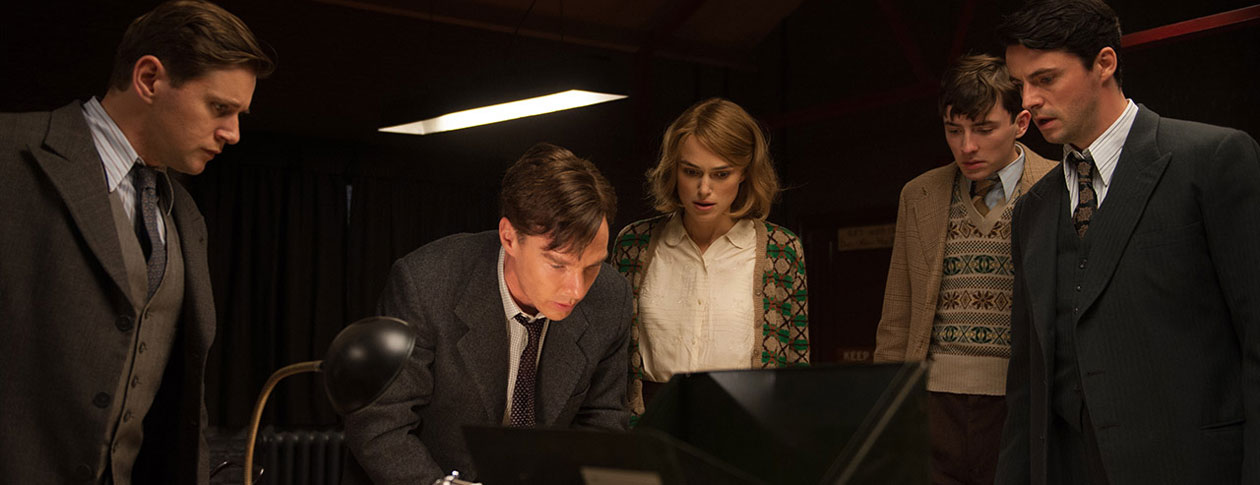
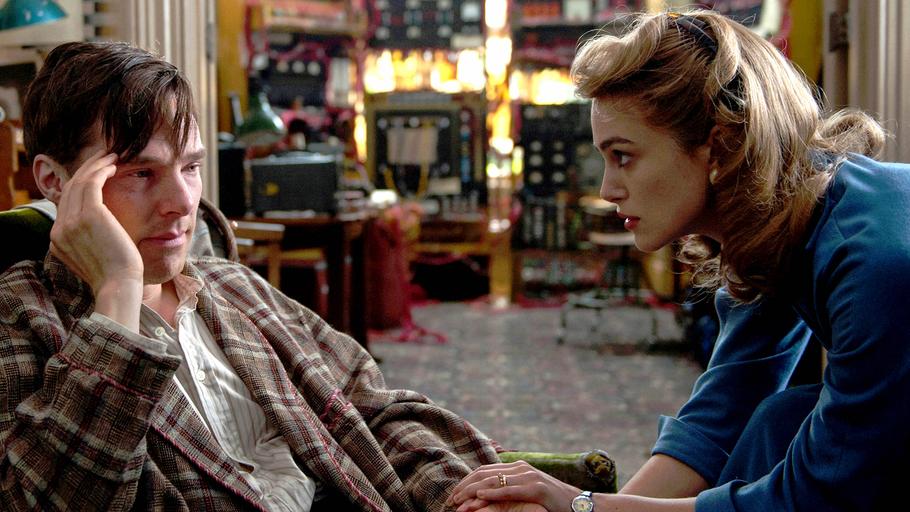
The Imitation Game (2014)

Benedict Cumberbatch saves the world in smug, empty mess The Imitation Game

Director: Morten Tyldum

Cast: Benedict Cumberbatch (Alan Turing), Keira Knightley (Joan Clarke), Matthew Goode (Hugh Alexander), Rory Kinnear (Detective Nock), Allen Leech (John Cairncross), Matthew Beard (Peter Hilton), Charles Dance (Commander Alastair Dennison), Mark Strong (Maj General Stewart Menzies)

“Sometimes it is the people no one imagines anything of who do the things no one can imagine”. If there is anything that captures the smug self-satisfaction of this ludicrously pleased-with-itself film, it’s that convoluted phrase, with which the film is so pleased that it is repeated no fewer than four times. What does it mean really? Nothing of course, it carries all the meaning of a fortune cookie. Turing is certainly someone whom you could expect something of, since the film is at pains from the start to demonstrate he is a maths prodigy and a genius. But then that would spoil the romance of the film suggesting that because Turing is socially maladjusted, he is somehow unlikely to achieve something – or that achieving something would be even more special having overcome the “disability” of his personality.

Alan Turing (Benedict Cumberbatch) is under police suspicion in 1951 after a mysterious break-in at his Manchester home. A keen detective (Rory Kinnear) suspects he may be a Russian agent – why else does he have no military record? But we know different, as flashbacks show Turing working at Bletchley Park on the cracking of the German cipher machine Enigma. Working with the support of an MI6 officer (Mark Strong), Turing has to win the trust of his team – with the support of best friend and maths genius Joan Clarke (Keira Knightley) – to build a ground-breaking computer that could crack the impossible code. But back in 1951, Turing is in trouble: he’s gay and that’s a crime in post-war Britain.

Now, Turing’s personality in this film. In real life, Turing was an eccentric, but perfectly capable of functioning perfectly normally in society. That’s not dramatic enough for the film, so Turing is reimagined as someone practically afflicted by Aspergers syndrome, incapable of understanding or relating to people without severe effort and prompting. Of course this is really there to introduce conflict – first with his team (who need to be won round to loving the old eccentric genius), secondly with his boss (who can’t stand his inability to fit in) and thirdly with the police (who can use it to write him off). It’s a film-disability for a character to overcome, another puffed up triumph that we can celebrate, while at the same time pat ourselves on the back because this is a victory for those “not normal”. But it’s probably bollocks. 

But then that fits in rather nicely with the whole film, which is more or less probably bollocks from start to finish. The film of course can’t dramatise maths or computing very well, so it throws us all sorts of feeble clichés from tired old film genres instead. Charles Dance plays a reimagined Denniston (in real life a cryptographer) as a standard obstructive boss who all but shrieks “you’re off the case Turing!” at the one-hour mark. The key moment of inspiration of course comes from flirty pub conversation with a charming secretary. Running around and frantic throwing of papers takes the place of all that boring maths. 

The film can’t resist any level of dramatic cliché. When a member of the code-breaking team mentions in passing “I have a brother in the navy you know”, as sure as eggs is eggs you can bet the team will decipher a message that could save his life but will be forced to make A Terrible Choice. Of course even this picture of a small code-breaking team making the calls themselves over which messages to act on is nonsense – it’s a decision that would be so far above their pay grade, they should be taking oxygen just thinking about it. But in this bonkers version of the universe, Turing  himself makes the call to keep the initial breaking of the code a secret, and the government happily allows him alone to make the call about which codes to act on. Oh for goodness sake, spare me.

But then this is a film that wants to turn Turing into the man who won the war single-handed. While Turing was one of the key figures who made the breakthrough, this was a massive team effort, not one man’s inspiration, and reducing the victory of the war down to one (film cliché) difficult genius is the same old ripe nonsense we’ve seen many, many times before. The film tries to pretend that Bletchley Park and the breaking of Enigma, and Turing himself, is an unknown story – when it’s been pretty well-known since it was announced by the Government in the 1980s.

The film is rubbish, but it’s also gutless. Of course “fifth man” John Cairncross is part of the team – and of course Turing discovers he is a spy. (The reveal of course is due to the same old tedious movie cliché of “I found a book on his desk that was the key book he used for the code”.) And then in a moment of stunning tastelessness, Cairncross blackmails Turing into keeping his mouth shut which he agrees to do – an action that, if it had ever happened in real life, would have been an appalling moment of treachery from Turing, and reinforces all the suspicions of the time that homosexuals couldn’t be trusted. 

Ah yes, homosexuality. This film is very, very, very proud of its crusading actions to expose the cruel treatment of Turing for his homosexuality. At the same time, the film is of course way too gutless to even begin to show Turing doing anything actually gay (he doesn’t even so much as hold another man’s hand) during the film. The one genuine moment of love the character is allowed to express, is in the form of a crush on a schoolfriend. (The film substitutes renaming Turing’s machine “Victory” after this school friend “Christopher”, the film keen to try and plug the gap of this film featuring virtually no LGBTQ content at all). But the film preaches intensly and proudly about the equal rights of homosexuality, while veering away with squeamishness from putting anything remotely homosexual on the screen.

The shoddy writing, over-written and self-important, is matched up with Morten Tyldum’s flat, “prestige” film-making that reduces everything to a chocolate box. The film does have some acting beyond what it deserves. Benedict Cumberbatch is good as Turing, although his performance is a remix of some of his greatest hits from past projects, from Hawking to Sherlock, and you feel hardly it’s a stretch for him – even if he plays with it real, and genuine, emotional commitment. Keira Knightley’s cut-glass accent is practically a cliché, but this is one of her best performances with real warmth and empathy. Most of the rest of the cast though are serviceable at best.

“Serviceable”, however, is still better than the film itself, which is a cliché-ridden, gutless, plodding and highly average pile of nothing at all – a totally over-hyped, over-promoted and completely empty film that is about a zillion times less interesting, brave or revealing than Hugh Whitemore’s 1980s play Breaking the Code. Not worth your time.

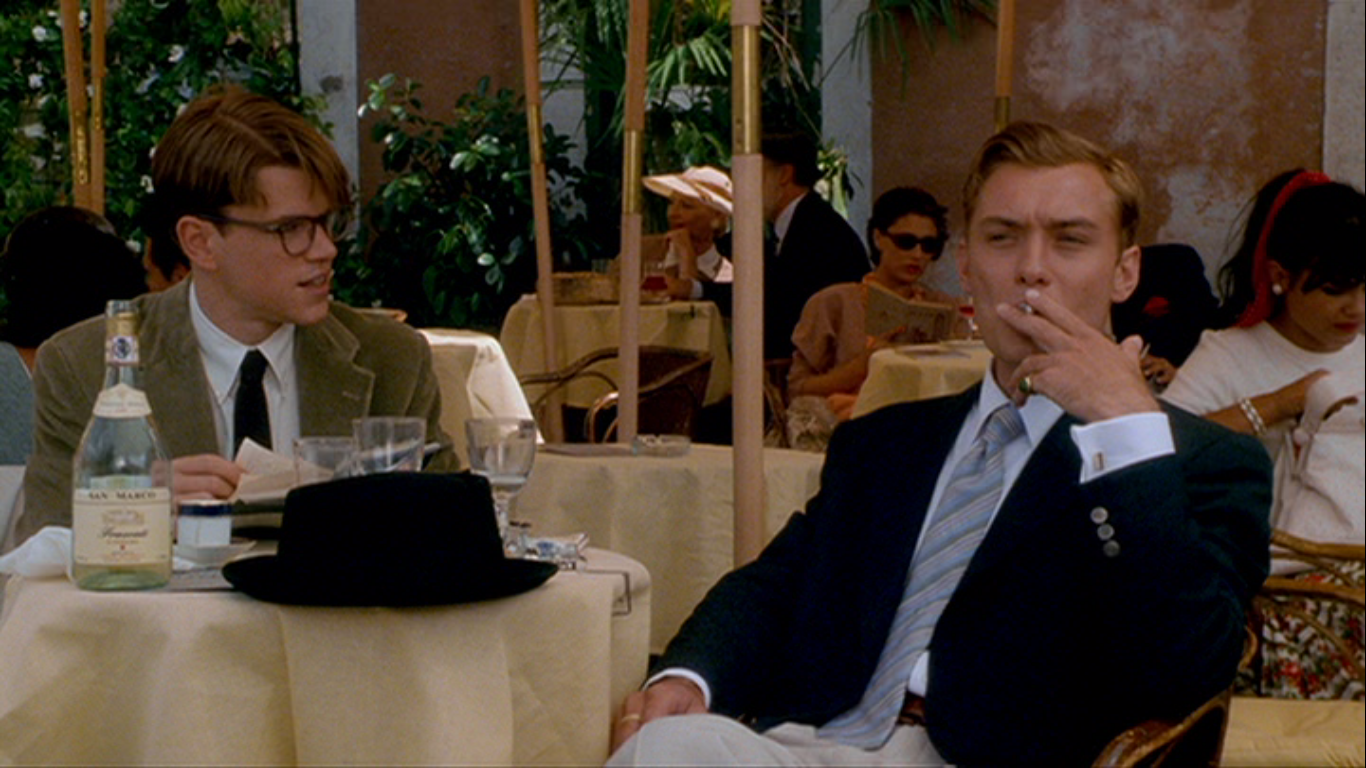
The Talented Mr Ripley (1999)

Matt Damon, Jude Law and Gwyneth Paltrow get wrapped up in murder and mayhem in The Talented Mr Ripley

Director: Anthony Minghella

Cast: Matt Damon (Tom Ripley), Gwyneth Paltrow (Marge Sherwood), Jude Law (Dickie Greenleaf), Cate Blanchett (Meredith Logue), Philip Seymour Hoffman (Freddie Miles), Jack Davenport (Peter Smith-Kingsley), James Rebhorn (Herbert Greenleaf), Sergio Rubini (Inspector Roverini), Philip Baker Hall (Alvin MacCarron), Celia Weston (Aunt Joan)

Patricia Highsmith’s Tom Ripley – sociopath, confidence trickster, human blank piece of paper and murderer – is so unknowable he’s been played on screen by actors as wildly diverse as Alain Delon, Dennis Hopper, John Malkovich, Barry Pepper and, perhaps most famously today, by Matt Damon. Ripley’s complexity – Highsmith described him as “suave, agreeable and utterly amoral” – and his general blankness and ability to adapt to different situations make him a challenging character to bring to the screen. Minghella’s film goes for a dark, Hitchcockian feeling drama that gives a lot of focus to feelings of sexual confusion and inadequacy in Ripley that motivate his actions and increasingly spiral out of control, leaving him isolated and damaged.

Tom Ripley (Matt Damon) allows himself to be mistaken by the owner of a shipping line, Herbert Greenleaf (James Rebhorn), as an old Harvard classmate of his son Dickie (Jude Law). Inveigling his way into Herbert’s trust, he is sent to Italy to persuade Dickie to return to America and take up a job in his father’s company. Happily taking the all-expenses-paid trip, Ripley finds himself besotted with the glamour and easy charm of Dickie, a handsome playboy, and soon positions himself as travelling companion to Dickie and his fiancée Marge Sherwood (Gwyneth Paltrow). But Dickie’s attention is only fleeting, and soon Ripley feels betrayed as Dickie starts to refocus elsewhere – leading eventually to Ripley murdering Dickie in a fit of jealous pique and using his faint resemblance to Dickie’s passport photo to assume his identity and live off his allowance – all the while dodging meeting Marge, friends of Dickie and the police (who are searching for the disappeared Tom Ripley).

Minghella’s film is a complex, psycho-sexual thriller, shot with a sun-kissed warmth that accentuates the glamour and style of the Italian Riviera, while subtly keeping us distant from the characters and their increasingly complex motives. The richness and lushness of these expensive lives look as appealing and seductive to us as Ripley finds them when he arrives. However, its dark undertone is never lost, and the film is edited and assembled with a certain chill and coolness while Gabriel Yared’s score mixes some fun jazz remixes with more a ominous tone as the bodies start to pile up.

I love a lot of Minghella’s work. He’s an intelligent and literate director, and the script he prepared for this film shows that he’s a master of taking complex, multi-layered pieces of fiction and turning them into something impressive and cinematic. But watching The Talented Mr Ripley, with its effective mix of period charm and sixties swing, its clever apeing of sixties filming styles, its riffing on Hitchcockian tropes and its picture book locations around Italy, part of me wonders if this film started pushing him too far down the path of being a “literary” director. His film is intelligent, and alternates between being chilling and fun, but at times it’s also wearing its “important film-making” badge a little heavily. It’s like the film is straining a little too much for prestige, as if the luscious design, complex plotting, sharp dialogue and clever visuals are aiming a little too much for matching The English Patient’s Oscar hoovering.

Maybe that’s why, despite everything that is good here, this film doesn’t have quite the same success as that film. This is, I’ll confess, an odd thing to say in a film that is generally very positive – if a little too long – but there it is. Sometimes these things are intangible in a way. Part of the film’s problem is that very complexity of plotting and motivation that he (arguably) builds on from the book. One of the film’s biggest question marks hangs over Ripley himself.

Imagined here as a slightly diffident, awkward, closeted graduate, he never really convinces as the kind of ruthless opportunist the plot demands him to be. Much as the film – and Damon’s performance – nails the sociopathic blankness of Ripley, his ability to switch smoothly from persona to persona, at the same time Ripley either seems to care too much or too little. Damon never quite convinces as a man so in love with the highlife that he is happy living off the allowance of (and pretending to be) the adored friend he bludgeons to death in a boat. 

This is where the homosexual undertone of the original has been converted into a overtone – and the film’s overplaying of Ripley’s physical, puppy-dog attraction to Dickie make him feel more dependent. The film works really hard to make him as sympathetic and vulnerable as possible, to make him a victim of his own warped circumstances and morality, and it never quite manages to make this make sense, or to carry real consistency. For all you feel Minghella wants us to think we are drilling into what makes a killer, the more we learn about Ripley the less substantial as a character he feels.

Damon, despite this, gives a good and generous performance. Generous because, playing quite a pathetic, indescribably blank man, he really manages to fade into the background of scenes. It does mean that he cedes most of the best work to his co-stars. Jude Law is radiantly cool, fiery, passionate, selfish and hugely attractive in a star-making turn as Dickie. Philip Seymour Hoffman is the epitome of a Bullingdon club bully turned young adult as Dickie’s school friend, seizing scenes with a louche aggressiveness. Cate Blanchett is equally brilliant as a warm, friendly socialite who inadvertently stirs terrible ideas in Ripley.

These actors are all highlights in a superbly mounted production, but one which doesn’t reveal or tell us as much as we might expect. Instead, Minghella gets slightly lost in his own intelligence when adapting the book, pushing the story into deeper, psycho-sexual motivations for its character that end up obscuring and fudging the actions he carries out in the film. It’s a gorgeous looking film, packed with wonderful scenes, but Damon’s Ripley seems too sensitive, too prone to the edge of tears, impossible to see as a man who could become a serial murderer. By giving a greater hinterland to Ripley, Minghella also changes the character fundamentally. It makes for an interesting development – but Ripley’s desperation, his essential weakness, his lack of control make him feel inconsistent with the setting and plot he is in.

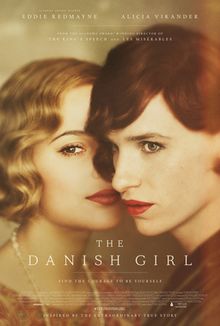
The Danish Girl (2015)

Eddie Redmayne and Alicia Vikander struggle with questions of identity in the overly sentimental The Danish Girl

Director: Tom Hooper

Cast: Eddie Redmayne (Einar Wegener/Lili Elbe), Alicia Vikander (Gerda Wegener), Matthias Schoenaerts (Hans Axgil), Ben Whishaw (Henrik Sandahl), Amber Heard (Ulla Paulson), Sebastian Koch (Dr Kurt Warnekros), Pip Torrens (Dr Jens Hexler), Nicholas Woodeson (Dr Buson), Emerald Fennell (Elsa), Adrian Schiller (Rasmussen)

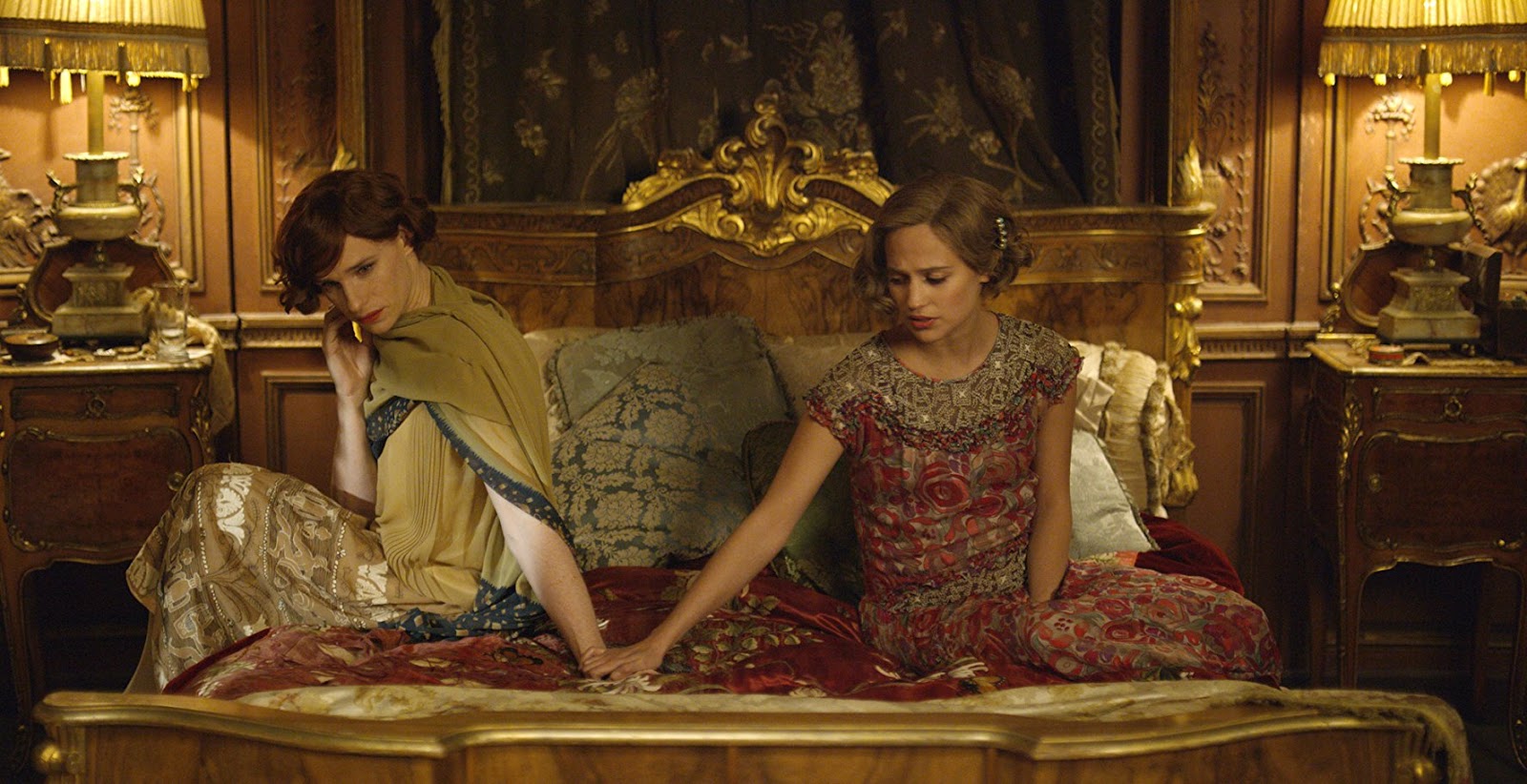
Working out who you are can be a lifetime’s struggle for some people. Finding out that who you are is someone outside the bounds of what society considers normal or acceptable often calls for a special kind of bravery. That’s the kind of bravery that Einar Wegener had when he realised that he felt he was a woman, not a man. Einar became one of the first ever recipients of sex reassignment surgery, becoming Lili Elbe. It’s an inspiring true-life story, fudged in Tom Hooper’s syrupy, sentimental film.

Eddie Redmayne plays Einar/Lili, slowly realising his fascination with women’s clothing is actually part of a far larger realisation, that she identifies as woman rather than a man. Her wife, Gerda (Alicia Vikander), helps Lili explore her identity, herself journeying through pain at losing her husband to final acceptance and support as Lili begins surgery to complete her transition.

Tom Hooper’s film is shot and framed with the magnificence you expect from his previous films. Hooper’s mastery of framing not only presents people in striking contexts (he has a particular eye for positioning people artfully in a frame with fascinating walls behind them), but also uses the camera to drill into its protagonists (throwing backgrounds into soft focus) to help you begin to empathise with them. It’s a great way to build a connection with the lead characters. But the film never quite adds enough depth and real understanding to its beautiful visuals. I’m not sure it really gets inside the mind of Lili and gets a real understanding of her.

For starters, the structure of the film is confused. The main problem is that the dramatic thrust of the film is Lili realising she is a woman. The character’s emotional and psychological conflict is all bound up in struggling to accept this: the journey of the film is Lili’s internal journey to know and accept herself. Once this realisation is made the drama drains out of the film. Try as it might, it can’t make a series of operations to make complete Lili’s transition dramatically interesting. It also fails to really get inside the psychology of Lili at this point, making her feel more like an exotic, occasionally selfish, passenger through a series of treatments, rather than someone who feels like she has real dramatic thrust.

This is partly because the film splits the perspective more or less equally between Lili and Gerda. While the film follows the passage of Lili realising who she is, if anything more of its empathy and understanding (and interest) is invested in how Gerda reacts to this change. You can see the logic of some complaints that the story of this leading LGBT figure is filtered through the perceptions of their heterosexual wife. Gerda’s emotional journey – pain, anger, rejection, sorrow, despair, acceptance and support – is what really drives the film, far more really than Lili’s realisations. 

But this slightly skewed perception is all part of a film that never quite feels true. I appreciate that Lili moved in some bohemian circles, but surely more people would have been more outraged in the 1920s and 30s by this change. The only people in the film we see reacting in any way negatively are two doctors and a pair of thugs in Paris. Other than that, far from a struggle for acceptance, people seem to fall over themselves to tell Lili how wonderful her new identity is.

The most supportive figure of all is Lili’s childhood friend, Hans Axgil (played very well by Mattias Schoenaerts) – who’s the centrepiece of another major issue with the film. This wonderfully warm and kind man befriends and supports both Lili and Gerda. I left the film wanting to find out what happened in real life to this man who seemed too good to be true. Guess what: he was literally too good to be true. He didn’t exist. In fact no one in the film existed other than Lili and Gerda. Furthermore the timeline (and many of the events) of the film have been changed, as have some of the facts around their relationship. For a film pushing itself as an inspiring “true story” this feels more than a little bit like a cop out.

This is part of the film simply trying too hard. From lingering shots of Einar longingly fingering women’s clothing early in the film, to the syrupy music sore that hammers home as many of the emotional beats of the film as possible, it’s a film that wants to do things as obviously as possible for the audience. It wears its “importance” very heavily: you can tell all involved believed that the project they were working on was going to have an impact on viewers across the world.

Not that we should detract at all from two lead performances. Redmayne immerses himself utterly in the role and performs with sensitivity, giving Lili an early sense of fear that develops into an increasingly relaxed and confident determination. Vikander is equally good, running the full gamut of emotions: she probably is the movie’s heart (making her supporting actress Oscar feel even more like character fraud). Two fabulous performances – and plenty of striking visuals, well directed – but it’s a film that really never quite feels like it gets into the heart of its lead, and always feels like it’s pushing you into feeling an emotional reaction, straining for you to shed tears, rather than letting them come naturally.

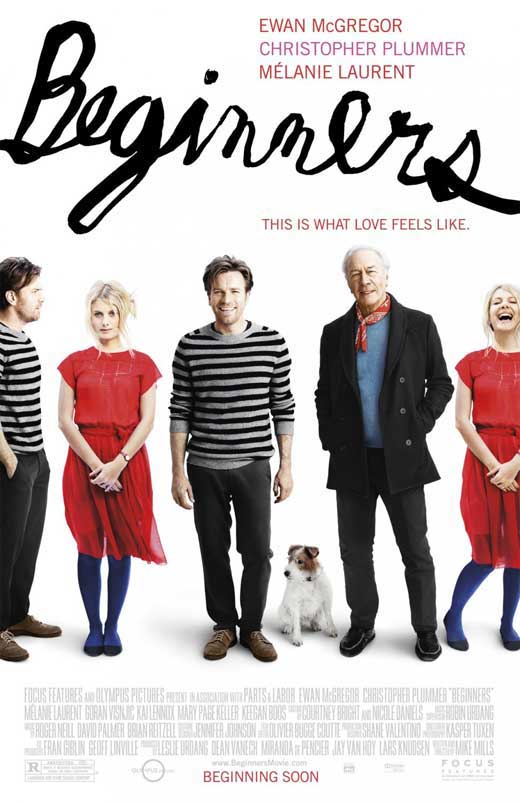
Beginners (2010)

Christopher Plummer and Ewan McGregor are a father and son building a bond in quirky fable Beginners

Director: Mike Mills

Cast: Ewan McGregor (Oliver Fields), Christopher Plummer (Hal Fields), Mélanie Laurent (Anna Wallace), Goran Višnjić(Andy), Mary Page Keller (Georgia Fields), Kai Lennox (Elliot), China Shavers (Shauna)

Oliver Fields (Ewan McGregor) is a reserved man who has struggled to hold a relationship down because of his own emotional distance. His world is shaken when his father Hal (Christopher Plummer) comes out at the age of 75, after the death of his mother, and proceeds to lead an active life in the gay scene of LA, including taking on a boyfriend, Andy (Goran Višnjić). After his father’s death, reflecting on Hal’s love of life and increasing emotional honesty makes Oliver consider his own life and start to tentatively consider a relationship with a French actress, Anna (Mélanie Laurent).

This heavily auto-biographical film was based on the life and experiences of writer-director Mike Mills. It has moments of genuine sweetness and light, occasionally undermined by the slightly smug quirkiness that creeps into the story at several points. Mills sometimes tries a little too hard as a director, using montages of stock footage to place years into context and to add a quirky sheen to the drama.

In fact it’s that quirk that often gets in the way of the drama in the film, Mills relying too often on meet-cutes, a dialogue Oliver has (in subtitles) with his dog, jolly picture montages, the cartoons Oliver draws on themes like “The History of Sadness”, the achingly clever-clever graffiti Oliver sprays on walls etc. etc. Maybe I am just cold of heart but this sort of stuff gets on my nerves rather than awakening my warmer feelings. Clearly I’m getting old.

Someone who isn’t getting old is Hal. Played with Oscar-winning bravado and joie de vivre by Christopher Plummer, the film gets most (if not all) its emotional mileage out of Hal’s embracing of life and his equally profound regret at the years of concealment and emotional distance he inflicted on others. One tearful moment sees the extremely sick Hal holding Oliver’s hand on a bed, sadly reflecting he wanted to do this throughout Oliver’s childhood but didn’t feel he could. 

The film carefully positions Hal’s late acceptance of his personality and explosion of embracing life as an inspiration, and contrasts it with Oliver’s buttoned up repression. To be honest, someone as repressed and traditional as Oliver might well have taken slightly longer (you suspect) to deal with the fact that his dad comes out after the death of his mother – but then this is basically a father-son romance, so you can’t blame Mills for trimming down this expected drama. 

Instead the story focuses largely on Oliver learning to open his heart to a relationship with Melanie Laurent’s French actress (a relationship by the way so impossibly quirky the two of them meet at a fancy dress party – he’s dressed as Freud, she can only communicate through writing notes because she has laryngitis. To be fair it’s marginally less irritating than it sounds). This story is cross-cut with flashbacks to Hal’s last few years that illustrate different lessons Oliver learned from his dad.

This is all rather artfully and gently done, but very traditionally structured. The flashback material with Hal is far stronger and Christopher Plummer’s mix of playfully raging against the dying of the light and gentle emotion and sadness overwhelms the modern plotline. It’s hard to get wrapped up in Oliver’s stumbling shoot-yourself-in-the-foot courtship of Anna, when you have Plummer ripping through a beautiful monologue on how he was desperate not to be as distant as his own father. Even the jokes get overwhelmed – nothing in Oliver’s storyline is as amusing as Hal raving over garage music.

The real interest to be honest is in the relationship between Hal and Oliver, and the late blooming of emotional honesty and love between them (Oliver claims he can barely remember Hal from his childhood, and flashbacks confirm this). Even this however could have had more impact if the film had allowed more of this distance to be seen in the film, as we then lose the impact of the two characters starting to bond. 

In fact I’d love to have seen more of Hal and Oliver together, perhaps more intercut with flash-forwards about Oliver learning to accept love and joy into his life in the same way Hal did in his final years. Reversing the format, effectively. The warmest bond in the story is between Hal and Oliver and this seems a little lost. Ewan McGregor does his best, but he feels slightly constrained by the role, as if aware that he had the pressure of playing the director’s own life story. Melanie Laurent is adorable as Anna, but she feels like the sort of character one only meets in movies – beautiful, sexy, cute, showing the sort of incredible patience for the timid, confused, difficult Oliver that never happens in real life (in my experience).

Such a format change would also mean more Christopher Plummer, which is never a bad thing – and certainly wouldn’t be here, in one of Plummer’s finest performances: fun, witty, warm, kind, sad and gentle with a very touching relationship with his much younger lover (played very well by a sweetly naïve Goran Višnjić). It’s Plummer’s film and he rides above a story that often seems a little too unoriginal and quirky than you might have expected.

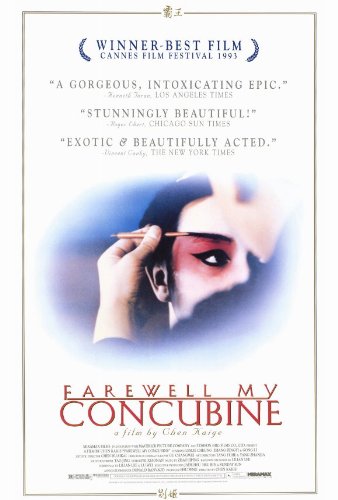
Farewell My Concubine (1993)

Leslie Cheung and Fengyi Zhang are the still centre for decades of Chinese history in Farewell My Concubine

Director: Chen Kaige

Cast: Leslie Cheung (Cheng Dieyi), Fengyi Zhang (Duan Xialou), Gong Li (Juxian), Ge You (Yuan Shquig), Lu Qi (Master Guan), Ying Da (Na Kun), Yidi (Eunuch Zhang), Zhi Yitong (Saburo Aoki), Lei Han (Xiaosi)

Chinese cinema isn’t well-known in the West. Maybe it comes from China so long being behind its own Red Curtain. Farewell My Concubine was pivotal to introducing Chinese cinematic culture to the West, winning a Palme d’Or and nominated for an Oscar. It’s surprising in a way, as Farewell My Concubine is a film that you almost need an intimate knowledge of Chinese history to truly appreciate (which I’m not sure I do!). But not surprising in another, as it is a glorious made, brilliantly acted and directed paean to the warmth of the human spirit.

Told over 52 years, from 1925 to 1977, the film follows two actors in the Peking Opera – Cheng Dieyi (Leslie Cheung) and Duan Xiaolou (Fengyi Zhang). Brought up in a brutally tough actor training school, the two become famous for their performances in the opera, Farewell My Concubine, about the suicide of a king’s concubine. Dieyi plays the concubine, while Xialou plays the king. The two actors are held together with a strong, almost unbreakable bond of brotherhood. But Dieyi also has a romantic longing for Xiaolou. Their relationship is made more complex after Xiaolou’s marriage to former courtesan Juxian (Gong Li) – but the three quickly find a relationship of tolerance, support and understanding that is tense but works. Around them China undergoes the Second World War, Japanese occupation, Mao’s seizure of power and the Cultural Revolution.

Kaige’s film is an epic that places an intimate and personal story at its centre and introduces global and national events which we largely understand from the perspective of our characters. This is a brilliant way of showing the seismic changes in China over this period – from the 1920s, which are so simple and Dickensian in their set-up that they might as well be the fifteenth century, to the increasingly brutal oppression of Mao’s regime. At the centre of all this is the relationship between the three core characters.

This relationship is almost impossible to define, so richly complex and human does it feel. It all rings immediately true – three people who are held very closely together by bonds of family, shared past and mutual dependency, but whose relationships are also rife with jealousies and regrets. Deiyi oscillates between vulnerability and guarded resentment against everyone around him. Xiaolou (brilliantly played by Fengyi Zhang, all warm-hearted charisma but easily led by others) is both annoyed and frustrated by Deiyi, but also goes to extraordinary lengths to protect him. Juxian (an enigmatic intelligent performance from Gong Li) at first seems to be a manipulative presence who wants to split the two of them apart, but comes to an unspoken accommodation with Deiyi that recognises they have a lot of shared interests and love.

All of this is simply beautifully done, subtle, un-obvious and brilliantly restrained, wonderfully acted by the three leads. Deiyi is a fascinating character, struggling with his sense of identity, trained from an early age to look and behave as much like a woman as possible. Is it any wonder that it has had an impact on his sexual identity? (The film’s openness about homosexuality – with Deiyi frequently being used for sex by his patrons – is one of many reasons it was nearly banned in China). Deiyi feels unable to express the feelings he clearly has, frequently falling back on imperiousness and pride. Leslie Cheung is just about perfect in this role: fragile, brittle but also harsh and unforgiving.

Kaige films all this beautifully in this visually striking film, using a host of brilliant images and wonderful lighting. The film’s opening hour covers the characters’ childhoods in the harsh training regime of the opera school, where beatings are common. Every character, by the way, accepts this as totally normal – in a striking later scene, the two adults meet their mentor again and immediately revert back to mutely accepting physical punishment for perceived wasting of their talent. One of the film’s striking commentaries on China in fact is the difference between their deference and the defiance of up-and-comer Xiaosi, who flat out refuses to take part in the harsh regime Deiyi tries to introduce and later becomes a leading light in the Cultural Revolution. It’s one of many ways the film uses the characters to demonstrate the changes in China.

The section covering the childhood of the characters is wonderfully done, a truly Dickensian series of events that will go on to define the lives and impressions of the two characters, skilfully built around the fate of a third friend – a more defiant joker who struggles far more to cope with the discipline of the camp compared to Deiyi’s stoic acceptance and Xiaolou’s matey deference. I truly loved this sequence and would happily have watched it for ever, every moment is so well observed, the child actors are marvellous and the claustrophobic world of the training school is immaculately observed (the outside world is so absent that the appearance of a car is actually a huge surprise as it makes you realise we are in the 20thcentury). 

But then this is a film that is set in a small interior world, which shifts and changes subtly as the wider Chinese world moves around it. The Japanese occupation seems to come from nowhere, a sudden interruption of a world where the two actors struggle to please patrons. The continued re-staging of the opera Farewell My Concubine is striking for how little it changes, a still centre of artistic conventionality (and it is conventional – every moment is handed down from previous generations, with Xiaolou constantly criticised for using five steps at one point where tradition demands seven). The imperious patrons rise and fall around the actors, victims to a China which is shifting quicker than they keep up. 

Kaige’s film also sharply criticises the excesses of the Cultural Revolution, that threaten this relationship and pressure the actors to denounce both themselves and each other. The Chinese government of Mao changes constantly in its views and demands, faster than many can keep up – and what is acceptable one year becomes a capital crime the next year. Deiyi is ordered to perform for the Japanese, and later nearly faces death for this. A patron pivotal in saving him is later a man condemned for having that kind of power. Welcome to China.

Farewell My Concubine works because it puts the sprawling history in the background of this personal story of the relationship between three characters who need each other in ways they can hardly understand, increasingly drawn together as fixed points in a changing world. When the rules of yesterday are the crimes of tomorrow, is it any wonder you cling closer to the few people around you who understand and remember what you were like and where you are from?

Deiyi, Xiaolou and Juxian are characters held together by bonds that seem unshakeable, which allow them to frequently anger and attack each other but constantly draw them back to each other to support and save each other. Kaige’s understanding of this – and his brilliant discipline in refusing to add moments of definition to the feelings between these characters, but allowing us to interpret and form our own opinions of how their relationship works – is brilliant, and Farewell My Concubine is a brilliantly made, fascinating and infinitely rewarding film.

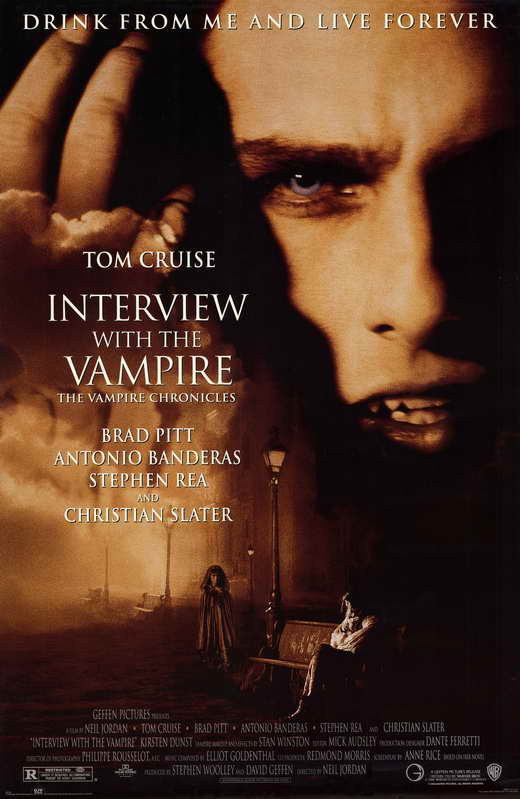
Interview with the Vampire (1994)

Tom Cruise and Brad Pitt bite and flirt in high-minded, but rather camp, Interview with the Vampire

Director: Neil Jordan

Cast: Tom Cruise (Lestat de Lioncourt), Brad Pitt (Louis de Pointe du Lac), Christian Slater (Daniel Molloy), Kirsten Dunst (Claudia), Antonio Banderas (Armand), Stephen Rea (Santiago), Domiziana Giordano (Madeleine), Thandie Newton (Yvette)

Why do vampires constantly keep rearing their ugly heads in films? What is it about them that we seem to find so addictive? Interview with the Vampire is a vampire film that takes a slightly different tone and tries to explore what it might actually be like to live the life of a vampire, the actual psychological impact it might have. It’s just a shame the film also can’t escape the temptation to fall back on the high camp the genre often gets trapped in.

Anyway, the film opens in modern day San Francisco, with young reporter Daniel Molloy (Christian Slater) interviewing a man named Louis (Brad Pitt) who claims to be an ageless vampire from the late 18th century. Louis tells his life story: turned to a vampire by the hedonistic Lestat (Tom Cruise) when he was consumed with grief at the loss of his wife and child. Louis struggles with the morality of taking life, unlike Lestat’s joy in killing. Later they turn a dying girl Claudia (Kirsten Dunst), who over the next 30 years matures psychologically but remains in the body of a 12-year-old. Louis and Claudia slowly begin to fear Lestat’s control and struggle to escape from his shadow.

Interview with the Vampire wants, desperately, to be an intellectual vampire film. A sort of Freudian exploration of the impact of suddenly becoming a creature that can never see daylight, sleeps in a coffin and has an insatiable hunger for human blood. Does it work? Well sort of, I guess. But the problem is most of the depression is carried by Brad Pitt’s Louis and, to put it frankly (as Lestat observes) he’s a whiner. His very human struggle with taking life and his sadness at the loss of his humanity should be engaging, but Louis is not an interesting character. He just mopes around. Rather than being sparked by his predicament, he’s just a boring and frustrating character.

Maybe this is partly Pitt’s performance as well – too withdrawn, too morose. Apparently Pitt hated making the movie (from the long hours of make-up, to the endless night shoots, to the boring character) and it shows in the movie. Pitt just can’t get engaged in the role, his matinee idol looks and rather dull speaking voice combining to make him look like a worse actor than he is. And then Louis keeps banging on and on about how depressed he is. In fact he bangs on so much you start to wonder why everyone – from Tom Cruise’s crazed Lestat, to Antonio Banderas’ ageless vampire – is so obsessed with him.

But then maybe it’s Louis’ looks eh? The film does wallow in the sensuality of sucking on people’s necks, and half the vampires in this seem to be campily metro-sexual. Cruise gives a surprisingly out-there performance of high camp hedonism and preening selfishness, so far out of his expected range that (while not brilliant) it reminds you he is a better actor than he gets credit for. Lestat clearly has a huge crush for Louis, and the orgasmic converting of Louis into a vampire leaves little to the imagination. Later Antonio Banderas as an effeminate, ethereal older vampire also seems to have a huge crush on Louis. The many vampire victims seem to succumb to erotic joy when they are bitten (at least until they die). Sex flows over the whole film, without the film itself ever actually being sexy, and the vampires are all pretty indiscriminate in their tastes.

Unfortunately this all too often tips into pure high camp. Stephen Rea, as a sort of vampire acrobat actor, gives a performance of superb silliness. Banderas lisps and wafts through the picture like a bizarre puff of perfume. Neil Jordan frequently explores the frame with ridiculous overblown action – no less than four times in the picture we watch scenes of operatic fire starting (often with vampires writhing in flamey pain) that suggest Jordan spent too long watching the fire sequence in Gone with the Wind before he made the picture. All the actors (aside from Pitt who barely shows up) dial it up to eleven with their performances, and the long-haired, long finger-nailed vampire representations here are like some sort of odd Halloween dressing up box.

Jordan’s film often trades dark, campy humour in favour of horror or thrills. There are no real jumps or scares in the picture, and the buckets of blood thrown around are more ridiculous than they are disgusting. In fact watching the film, I feel Jordan may have been torn between wanting to do something a little different (a sad vampire film about depression) and having to deliver the blood, guts and gore the genre fans wanted. Certainly, he fails to mine any real poetry from Anne Rice’s source material (although she loved the film, so what do I know) and for all the musings on the tragedies of living a life in the shadow you never really feel that moved by it.

There are however good things. Technically the film is very good. Cruise is surprisingly fun as the colourful Lestat. The film gets stolen by Kirsten Dunst as the physically young, mentally older Claudia, who struggles to find the balance between her teenage blood lust and her later disgust and fury at being trapped forever in the body of a child. But there isn’t enough good stuff among the tosh. Interview with the Vampire is an odd, actually rather bad film that is struggling to be a good one. It has a cast of 1990s heartthrobs who mostly enjoy dressing up and playing at their campy side. But it fails to really be engaging or make someone care about the story it is trying to tell.

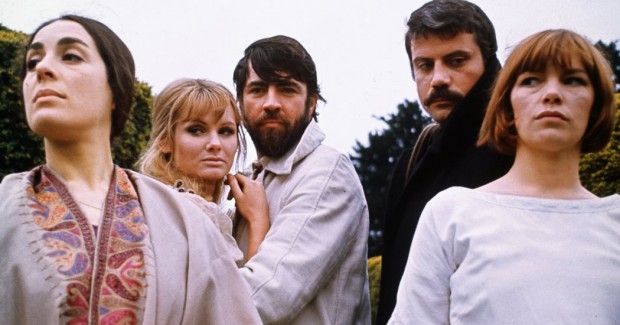
Women in Love (1969)

The stars of Women in Love: this publicity still gives only a hint of the simmering (and slightly strange) heightened passions you find therein

Director: Ken Russell

Cast: Alan Bates (Rupert Birkin), Oliver Reed (Gerald Crich), Glenda Jackson (Gudrun Brangwen), Jennie Linden (Ursula Brangwen), Eleanor Bron (Hermione Roddice), Alan Webb (Thomas Crich), Vladek Sheybal (Loerke), Catherine Wilmer (Christina Crich), Phoebe Nicholls (Winifred Crich), Sharon Gurney (Laura Crich), Christopher Gable (Tibby), Michael Gough (Tom Brangwen), Norma Shebbeare (Mrs Brangwen)

DH Lawrence is an acquired taste. While his writing is undoubtedly brilliant, reading his novels today it’s hard to shake off their sometimes histrionic melodrama – their revelling in all that (at the time) shockingly frank discussion of sex and all that Freudian analysis of fractured personalities against an alien industrial world. So perhaps there is a reason why one of the best interpreters of his work for the screen has been someone as melodramatic and envelope-pushing as Ken Russell.

Women in Love is Russell and Lawrence to the max. In a 1920s mining town, two sisters, Gudrun (an Oscar-winning Glenda Jackson) and Ursula (Jennie Linden) want to make their own way in the world. Local school inspector Robert Birkin (Alan Bates) wants to find perfect love and fulfilment. Alpha-male son-of-the-local-mine-owner Gerald Crich (Oliver Reed) isn’t quite sure what he wants, other than to reinvigorate his father’s business. Naturally all four of these characters come together in romantic, intellectual and sexual tangles that lead to a lot more misery than happiness.

Wow this is a difficult picture to write about. How so? Because it is about two-thirds masterpiece to one-third pretentious, hyperbolical nonsense. That’s quite some tight-rope. Russell walks it pretty well, but his problem has always been he loves being a sort of enfant terrible of British cinema too much. Too often he succumbs to temptation and pushes things a little further, to go for the demented camera or editing trick, or to push the sexual content a little bit further. The whole film has a hint of a cocky teenager, jumping up and down to look cool and catch your attention. 

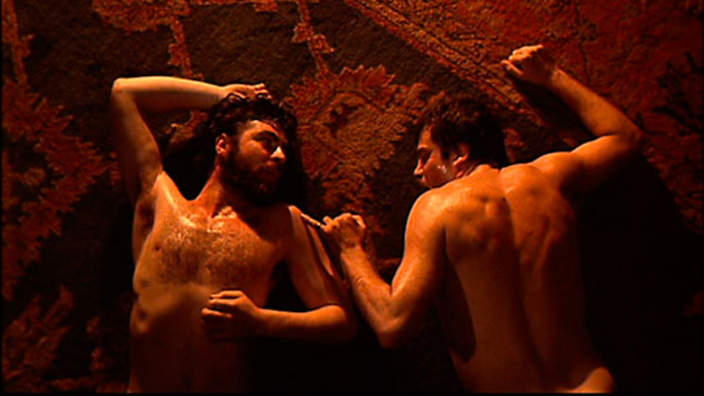
But then on the flipside, sometimes this excess really works (or if you like, sometimes more really is more). Nowhere is this clearer than in the famous naked wrestling scene between Oliver Reed and Alan Bates. It’s a high-blown, tightly edited, single-camera, increasingly artistic sequence that leaves little to the imagination as we wonder how far this nude, willy-waggling, sweaty wrestling turned intimate clinch will go (the final shot sees the characters roll off each other and lie exhausted on a carpet, breathless, in front of a roaring fire). But it works so well because the amped up shooting and content really tells us something about these two characters, their relationship, feelings, viewpoints on life, sexuality – everything. It’s a great scene and it’s a sign of how good this film can be.

And then you get other moments where you sigh and roll your eyes and almost want to say “yeah Ken we get it…”.  As Robert and Ursula roll off each other after an intense sexual encounter in the woods, we cut immediately to two bodies found drowned in a lake, their bodies locked together in exactly the same position. Yup sex ‘n’ death. Gerald and Gudrun have sex, intercut with shots of Gerald’s mother. Other moments ape up stuff that was already pretty ridiculous in the book to the max: Birkin, after a bash on the head, runs naked into the countryside and smears himself with grass and mud and rolls in the dirt. For about three minutes.

But then this is the sort of film where Glenda Jackson tames some bulls by performing a bizarre dance. Why does she do this? Who knows (certainly not the characters). But then the film is full of moments like this. But what kind of makes it work, even when it is so ridiculously over-the-top and dated in its filming, is that there is a smartness in it. It is a film that does, underneath it all, have some profound thoughts about love and relationships.

It manages to bring together the themes that intrigued Lawrence with a bit of coherence. What do we want from life? It focuses overwhelmingly on the men of the story, and in particular Alan Bates (excellent) as Birkin. Made up to look like Lawrence, Birkin also carries a lot of the prose of the novel debating what makes us happy, whether we need equally strong bonds in our life with men and women, and what constitutes our completeness as human beings. 

The film does this to a certain extent with the female characters as well – although we see them almost completely from the perspective of the men (which is interesting – maybe they were worried about making a film called Men in Love…). That’s possibly why Gudrun’s confused desires for Gerald never quite come into focus. Marvellous as Glenda Jackson is – surely an actress born to play this sort of part, marvellously passionate but strangely unknowable, vulnerable but harsh and even a little cruel – it’s hard to understand how Gudrun’s feelings change for Gerald. Maybe she doesn’t know herself. 

Gerald and Gudrun seem to be characters who don’t understand what they want (Gerald even expressly says it). That’s part of the point of the film (and Lawrence’s book) – a yearning, like both these characters have, for freedom and something different from previous generations, but unable to really put their finger on what this is. Gudrun wants a strong, dynamic man – but she also wants freedom and artistic fulfilment, and can’t find this with Gerald.

The film juggles these themes, of people struggling to reach an expression of (or to understand) their desires. Russell understands this – and for all the highblown eccentricity of some of the shooting, he sticks with a brilliant understanding of these personalities and themes. It remains a very caring movie that understands and relates to its characters. It has a lot of heart under the madness of Russell’s shooting.

And it’s superbly acted. Bates and Jackson are both marvellous, as is Jennie Linden in a (to be honest) rather thankless part as the second sister. But it’s a revelation of what a fine actor Oliver Reed could have been, if he had not decided to become a professional drunk. Reed drips charisma and intensity and he gives Gerald a real frustrated, sensual depth – a confused sexual fear mixed with a determined machismo. It’s a brilliant performance. The rest of the cast are also good, even if Eleanor Bron is (partly deliberately) overdone as Birkin’s first lover.

Women in Love is very dated in its style, but still a fascinating and intelligent piece of filmmaking that engages with and juggles with ideas. Despite all its overblown Russell excess, I actually really liked it, it stuck with me and I’ve been thinking about it since it finished. I’d actually like to see it again and see if it unlocks even more for me – and blimey it even makes me want to read Lawrence again, which after The Rainbow I never thought I’d say…

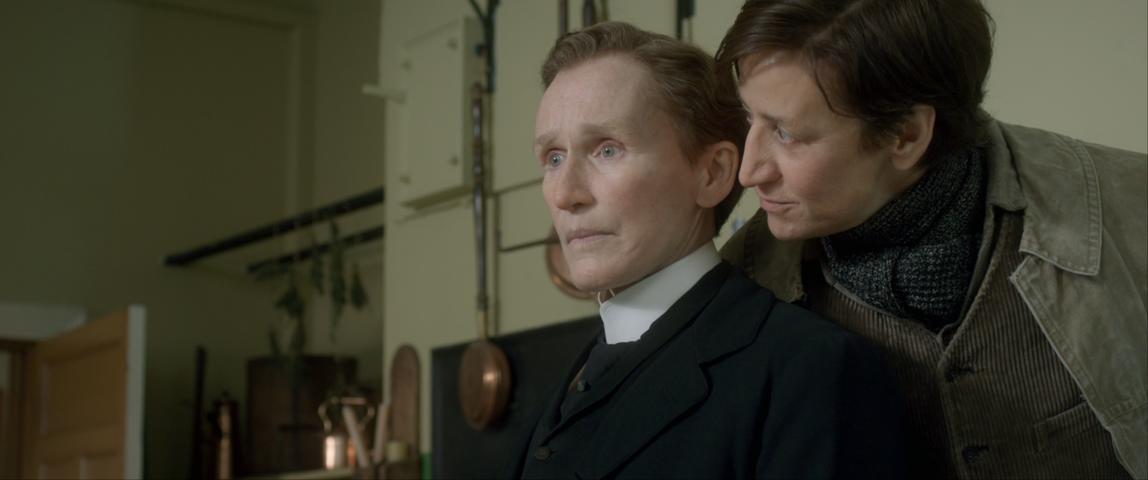
Albert Nobbs (2011)

Glenn Close plays a woman pretending to be a man in the curiously empty Albert Nobbs

Director: Rodrigo Garcia

Cast: Glenn Close (Albert Nobbs), Mia Wasikowska (Helen Dawes), Aaron Taylor-Johnson (Joe Mackins), Janet McTeer (Hubert Page), Pauline Collins (Mrs Baker), Brenda Fricker (Polly), Jonathan Rhys Meyers (Viscount Yarrell), Brendan Gleeson (Dr Holloran), Maria Doyle Kennedy (Mary), Mark Williams (Sean), Bronagh Gallagher (Cathleen Page)

Passion projects are funny things. Everyone has them. And sometimes, when you put them together, other people struggle to see what all the fuss was about. Few films fit that bill more readily than Albert Nobbs. This cross-dressing, Victorian gender curio was something Glenn Close spent decades trying to bring to the screen, after starring in the original play off-Broadway.

Albert Nobbs (Glenn Close) works as a butler at a middling hotel in late 19th-century Dublin. Nobbs keeps himself to himself and saves his tips and wages with the dream of buying his own tobacco shop. Nobbs also has another reason to cling to privacy: Nobbs is actually a woman, masquerading as a man in order to find work. Everyone at the hotel is totally fooled – but his world slowly begins to shift when he meets decorator Hubert Page (Janet McTeer), who similarly is a woman living as man, but who has her own business and a wife and family home. Page’s experiences make Nobbs begin to question this life of isolation – with disastrous consequences.

Albert Nobbs is a carefully filmed, respectful, dry and dull film. It’s nominally a film you might expect to have something to say about gender and sexuality – but its shyness around such matters, its lack of insight, its bashful awkwardness means it already looks like a museum piece. On top of which, most of the characters and situations it covers are frankly not particularly inspiring, dynamic or engaging. There isn’t actually much there to spark your attention.

Which it makes it even more surprising that Close was so drawn to this material. Why? It’s hard to say, as even her performance seems as buttoned up, oblique and distanced as the character she is playing (it doesn’t help that Nobbs is neither an interesting or engaging character, coming across like a person with an ill-formed personality, whom the viewer struggles to understand). You would expect her to have some sort of deep emotional bond with this character – but I’m not sure that really comes across.

The film fundamentally lacks the courage it needs to tackle issues of gender complexity. Nobbs has a troubled background of abuse and rape – but the story never really tackles this, instead using it as a lazy attempt to explain a confused sexuality. The film never really engages with the issue of whether Nobbs likes being a man or feels forced to do to make ends meet. It throws in a curveball scene where Nobbs relaxes on a beach walk wearing women’s clothes. But it never takes any step – even the most tentative ones – of Nobbs laying claim to relating more to being one gender or another. 

Nobbs doesn’t seem to identify as a trans man, a cis-gender woman disguising herself as a man for practical reasons in a patriarchal world, or as someone trying to live outside traditional gender constructs all together. It feels pretty uncomfortable with virtually any formulation along these lines, so avoids exploring any of them. It wants Nobbs to feel comfortable in women’s clothes, but also wants to admire Nobbs for living as a man, while also suggesting Nobbs is trapped by society. It’s a confused film.

In any case, the more time you spend with Nobbs the creepier Nobbs seems. It’s unfortunate that a large chunk of the film is given over to Nobbs’ confusingly motivated courtship of Mia Wasikowska’s maid. Throughout, Nobbs is strangely incapable of understanding any sort of emotional link between two people, and here seems unable to comprehend that Helen may have her own emotions and desires that don’t marry with Nobbs’ functional desire for a wife. This pursuit (seemingly to complete the picture of a desired future) creates an image of a stalker rather than someone really seeking a romantic connection. The fact that Helen and her rakish beau plan to swindle Nobbs hardly helps to make these characters likeable either.

Close’s performance doesn’t help with its locked in reverence. So it’s just as well that Janet McTeer bursts into the film with energy, (literally) baring all in seconds and bringing more vibrancy, dynamism and engagement in her scenes than the rest of the film put together. While Nobbs is a rather dull, empty vessel of a person, Page is a lesbian in a loving relationship, escaping marriage by pretending to be a man. That is a story I can get interested in, that can have relevance today: Nobbs’ isn’t. McTeer is excellent, and I wish the film her been about her.

Albert Nobbs is a worthy, but flat film shot with a slow reverence and delivering a story that promises much but completely fails to deliver. Aside from Janet McTeer’s wonderful performance there is very little reason to visit this film. In fact today its avoidance of even engaging with questions of gender and identity actually make it look rather gutless and pointless. A passion project that really makes no real sense.

J. Edgar (2011)


Leonardo DiCaprio is excellent in Clint Eastwood’s decent J. Edgar

Director: Clint Eastwood

Cast: Leonardo DiCaprio (J. Edgar Hoover), Armie Hammer (Clyde Tolsen), Naomi Watts (Helen Gandy), Judi Dench (Anne Marie Hoover), Josh Lucas (Charles Lindbergh), Dermot Mulroney (Norman Schwarzkopf), Damon Herriman (Bruno Richard Hauptmann), Jeffrey Donovan (Robert F. Kennedy), Zach Grenier (John Condon), Ken Howard (General Harlan F Stone), Stephen Root (Arthur Koehler), Denis O’Hare (Albert S Osborn), Geoff Pierson (A Mitchell Palmer)

J. Edgar Hoover holds a unique place in American history. As the first ever director of the FBI he ruled it as his own personal fiefdom from 1935 to his death in 1972. A workaholic, he revolutionised the investigation of crime in the USA, centralising records, introducing and championing scientific techniques, and working to change the image of lawmen into heroes. On the other hand, Hoover frequently abused his position, used the FBI to investigate rivals and stamp out groups he judged as dissident, and put together secret files of unpleasant and damaging material on political opponents.

Eastwood’s film actually does a pretty good job of balancing these two J. Edgar Hoovers, and of presenting a fairly even-handed portrait of a man most people see now as the worst example of a power-abusing policeman. The film follows the career of Hoover (Leonardo DiCaprio), focusing in particular on the Lindbergh kidnapping, clashes with Presidents, and his relationships with his deputy (and probably long-term lover) Clyde Tolsen (Armie Hammer) and with his domineering mother (Judi Dench). 

The film’s main advantage is a typically power-house performance from Leonardo DiCaprio. His Hoover blusters with insecurity, resentment and a monomaniacal obsession with his own sense of right and wrong. He’s the sort of guy who takes a woman on a date because he thinks it’s time to get married and then takes her to see his filing system. Hoover was a man whose life was work and power – but DiCaprio doesn’t forget that amidst the maniacal power grabbing, he had a confused personal sexuality.

The film suggests Hoover repressed his homosexuality due to the influence of his mother (“I’d rather have a dead son than a daffodil”), and contrasts this painful struggle with the preppy, tender, manly Clyde Tolsen, played with equal skill by Armie Hammer. Tolsen was Hoover’s long-term friend and companion, they holidayed together, ate meals together, lived opposite each other, and Tolsen even accepted the flag after Hoover was buried – neither man married. The film creates a fairly sweet love story of a man who couldn’t fully accept his own feelings falling in love with a man comfortable with who he was. 

The old-married feeling of this couple – whose physical contact never really goes much further than the occasional hand holding – is the emotional heart of the film. Although the repressed Hoover never admits his love openly (to the occasional hurt of Tolsen), it’s actually a fairly good expression of a normalised same-sex marriage, and Eastwood never succumbs to some of the odder gossip about Hoover’s cross-dressing (except in grief at the death of his mother) or sexual preferences.

His relationship with his mother (whom he lived with his whole life until her death) is more predictable: she is demanding and controlling, he is loving, placid and deferential to her. It’s what we’ve seen before several times – and Judi Dench can play this role standing on her head – but it gives us a nice context to get inside Hoover’s head and understand why he behaved the way he did. 

The film doesn’t lose track of Hoover’s ongoing political clashes. We get showpiece senate hearings as Hoover struggles to establish the FBI with the powers it needs to combat crime (DiCaprio is pretty electric in these scenes). Repeated shots show Hoover watching various inauguration parades, or stopping to stare at the same portrait of Washington as he heads in to meet with (and intimidate) various (unseen) presidents. The film hits these beats hard at times – did we need Hoover telling Robert Kennedy that he has information on “your brother, the President of the United States”? But it’s not afraid to show Hoover unsympathetically, particularly in his vindictive campaign against Martin Luther King.

What Dustin Lance Black’s screenplay, and Eastwood’s professional, smooth direction, do well is explain why Hoover may have hated these people so much. The film focuses on Hoover’s early days – full of anarchist bombings, wildfire communist strikes that led to clashes with the police, years of bank robbers and gangsters carrying on unrestricted in America – that makes you at least understand why he felt America was under threat. 

The film’s reconstruction of period detail is exquisite, and much of the photography has a brilliantly murky, sepia tone to it I really liked. The reconstruction of details from the Lindbergh kidnapping is very well done. All this is much better than some of the wonky “old age” make-up Di Caprio, Hammer and Watts (playing Hoover’s faithful secretary) have to labour under towards the end of the film (Hammer in particular looks slightly ridiculous under laboured liver patches). 

In structure, this is a fairly traditional biopic, and in trying to cover Hoover’s entire career it often skips over or misses key incidents. In an era where “modern” biopics tend to focus on dramatizing one key moment in their subject’s life (such as Selma or Lincoln), J. Edgar feels a bit more like a 1990s biopic. It crams so many events in, it sometimes feel like an “and then this happened” sort of film, rather than the more interesting thematic film under the surface.

It’s also struggling to bring more interesting depths out. It has a neat structure of Hoover dictating his biography to a string of indistinguishable “trusted” FBI agents (each scene has a different one, and there is neat visual gag as Eastwood cuts to a series of these guys in a row offering the “wrong” answer to Hoover’s question as to who was the most famous American of the 20th century – the answer being Lindbergh). Interestingly a final speech from Tolsen suggests much of what we have seen is Hoover’s vainglorious “legend building” rather than the “true story” – a theme that you feel could have been explored more.

It’s stuff like this that makes J. Edgar stand out a bit more. That and the wonderful performances from DiCaprio and Hammer, as the truly rather sweet married couple-who-weren’t. The film could make more of exploring the psychology of Hoover – the man who hated anyone different, including homosexuals – but who carried this open secret. But there isn’t time. It’s a film with good ideas and scenes, which could be more than it is. But it’s a decent film for all this. Many won’t like the fact that it takes a sympathetic angle on Hoover. But it shows every life has its right and wrongs.