Category: LGBTQ+ films

Wilde (1997)


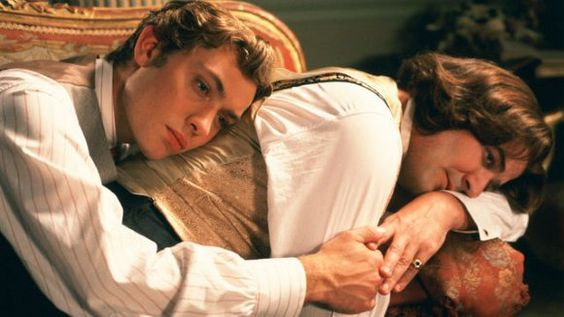
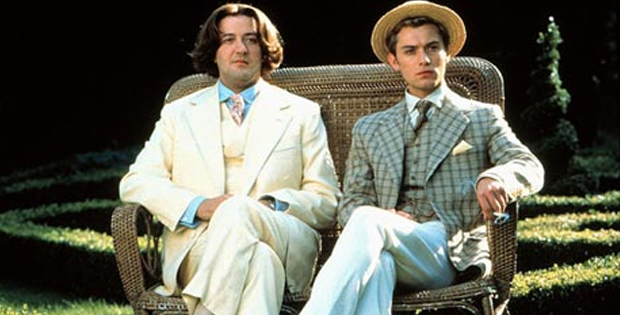
Jude Law and Stephen Fry in a disastrous love affair in sensitive biopic Wilde

Director: Brian Gilbert

Cast: Stephen Fry (Oscar Wilde), Jude Law (Lord Alfred “Bosie” Douglas), Jennifer Ehle (Constance Lloyd Wilde), Vanessa Redgrave (Jane Francesca Agnes “Speranza” Wilde), Gemma Jones (Sibyl Douglas), Judy Parfitt (Lady Mount-Temple), Michael Sheen (Robbie Ross), Zoë Wanamaker (Ada Leverson), Tom Wilkinson (Marquess of Queensbury), Ioan Gruffudd (John Gray)

Could there be a more perfect piece of casting than Stephen Fry as Oscar Wilde? Not only is Fry the spitting image of the famed Irishman, but Fry’s own mercurial talent, his enormous outpouring of novels, articles and screenplays, his skill as a raconteur and his general ubiquitous presence as a personality make him a pretty good modern equivalent of Oscar Wilde. A lifelong admirer of Wilde – and an increasingly vocal proponent of gay rights and mental health awareness – Wilde’s life plugs into many of Fry’s own outlooks on the world. So yeah, perfect casting!

Opening in 1882 with Wilde’s tour of America (he effortlessly charms a group of clichéd “yee-haw!” silver miners – who literally fire their guns into the air in delight at his bon-mots in the film’s crudest touch), the film covers Wilde’s growing career, but focuses on his personal relationships. Unaware of his homosexuality, he marries Constance (Jennifer Ehle), but discovers his true nature with her friend Robbie Ross (Michael Sheen). However, this leads to his destructive, obsessive love for alternately petulant and caring Lord Alfred Douglas (Jude Law), his beloved “Bosie”. When he is accused publically of sodomy by Bosie’s father, the Marquess of Queensbury (a raging Tom Wilkinson, chewing the scenery), Wilde takes the matter to court – a disastrous decision that destroys his life.

Brian Gilbert’s film is a sensitive and lovingly crafted slice of period drama, that movingly demonstrates the hypocrisy of Victorian values. Wilde is celebrated by the public, despite the open secret of his and Bosie’s relationship, while rent boys (including a one-line appearance from Orlando Bloom!) and discrete gay relationships are common place. Wilde is a gentle, naïve man for whom emotional closeness is more important than physical love. He charms a society only too aware of his nature. However, the instant he causes a stink, his reputation is ruined and his life collapses. What the film does so well is give us a sense of the inner vulnerability, doubt and desire for affection at the heart of a man who, perhaps more than any other, lived his life as a public exhibition.

Halliwell’s Film Guide claimed the film attempted to reposition Wilde as a family man, a grossly unfair view of the film’s stance. As if a man who discovers he is gay could not love his children, or that he could no longer care for his wife. Similarly, accusations that the film shows Wilde’s homosexuality as the roots of his downfall are similarly misguided – Robbie Ross is unaffected by legal troubles and he’s openly gay. No, the film is making a far more conventional (in a way) point – Wilde was brought low because he fell hopelessly in love with the wrong guy.

Jude Law’s big break was in this film – and watching it again is a reminder of what a firebrand, dynamic actor he can be. He makes Bosie half monster, half emotionally vulnerable child. He alternates (sometimes within the same scene) between affection, devotion, kindness and wildly petulant rage. He’s overwhelmingly selfish and self-obsessed – even as Wilde’s life collapses, he can only whine that he is furious his father is winning – but then remorseful and guilt-stricken when the consequences of his actions become clear (but not enough to not do it again). Law juggles all these contradictions with astonishing skill – it’s an assured, magnetic performance of brilliance. We can see why Wilde adores him, while at the same time wanting to wring his neck.

It’s also clear why all the other characters around Wilde find him so appalling. Ross (and Sheen is similarly superb as Wilde’s tragically “friend-zoned” devoted admirer) can’t bear the appalling influence Bosie has, but knows he’s powerless to do anything about it. In one great scene, Bosie haughtily says he knows Ross always hated him, before cruelly saying it’s because Wilde loved Bosie, but Ross was only “one of his boys” – the look of pain on Sheen’s face is brilliantly moving. Wilde himself seems almost sadly (if inevitably) drawn into Bosie’s tastes for casual sex and rough trade – often playing voyeur at these events, while sadly accepting Bosie doesn’t find him physically attractive. Wilde’s basically the victim of an abusive relationship – and the film does a brilliant job of demonstrating why a man otherwise so blessed with intelligence can’t see it.

Julian Mitchell’s excellent screenplay (based on Richard Ellman’s award-winning biography) uses Wilde’s The Selfish Giant as a framing device – subtly comparing Wilde and Bosie respectively to the giant and the child. It also brilliantly constructs a sense of Wilde’s quick wit and staggering intelligence, and provides a host of sparkling cameos for some fine character actors. The production design and photography are spot-on, and while Gilbert may be slightly workmanlike in his filming, he certainly lets the story tell itself.

The focus on Wilde’s family life is also reassuringly different – it’s brilliant to see Wilde’s obvious adoration for his children, and plenty of indication that he was actually (much of the time) a very good husband and father. Mitchell’s script softens Constance’s reaction to Wilde’s conviction (she wasn’t as forgiving and forward-thinking in her views as she seems to be here) but it does mean that we are allowed to see the full story of Wilde’s life, rather than having him defined by his sexuality. Jennifer Ehle also does a marvellous job with very little material, and her quiet dignity and support for her husband (despite her anger at his obsession with Bosie) is very affecting.

But at the centre of all this is that perfect casting of Stephen Fry. In all the rest of his career, Fry will never be better than he is here. His Wilde is intellectual, mildly arrogant, but also naïve, gentle and almost unworldly. His voice is perfect for the aphorisms, and he is really striking physically. Above all though, he brings a deep, emotional empathy to the part – you feel how personal this is for Fry the actor, and you feel how closely he identifies with a man who discovered his sexuality late. His besotted, blind love for Bosie is as affecting as it is frustrating. His vulnerability in Reading gaol is deeply moving. It’s a quite marvellous performance, anchoring a movie that is gentle, kindly, caring and sensitive in exploring the inner life of a very public man.

Caravaggio (1986)

Nigel Terry is Caravaggio in Derek Jarman’s extraordinary meditation on art Caravaggio

Director: Derek Jarman

Cast: Nigel Terry (Michelangelo de Caravaggio), Sean Bean (Ranuccio Thomasoni), Tilda Swinton (Lena), Garry Cooper (Davide), Dexter Fletcher (Young Caravaggio), Spencer Leigh (Jerusaleme), Michael Gough (Cardinal del Monte), Nigel Davenport (Giustinani), Robbie Coltrane (Cardinal Scipione Borghese), Dawn Archibald (Pipo), Jonathan Hyde (Baglione), Jack Birkett (Pope)

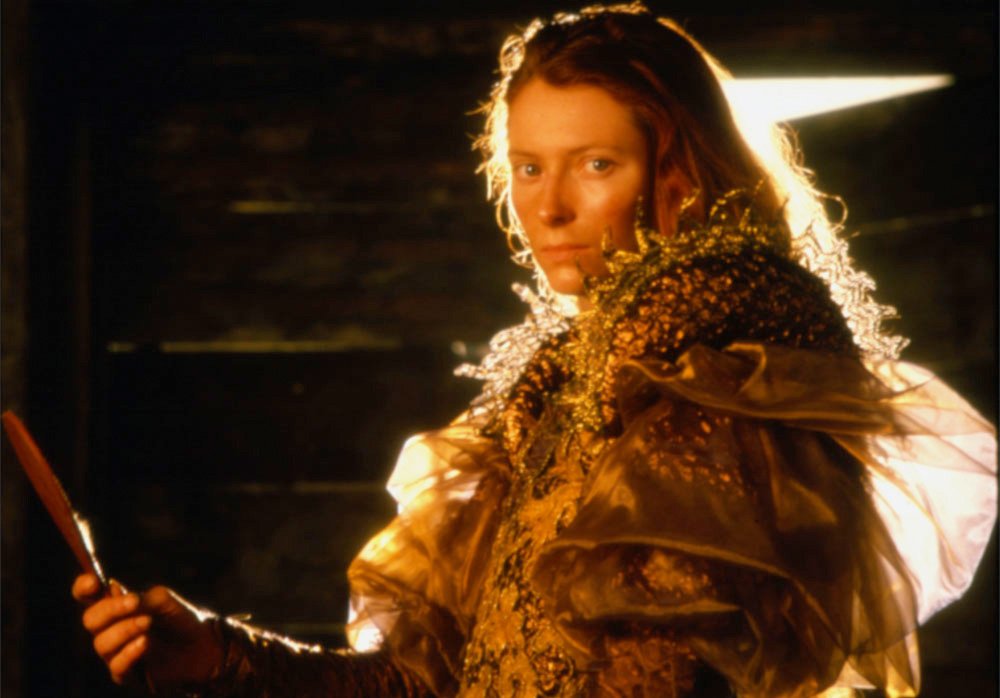
Derek Jarman started his career as a painter, before he began making his own eccentric, art-house films, shot through with a fascination with visual imagery, colliding time periods, abuse of power and homosexuality. For years, Jarman had sought funding to make a biographical film about Caravaggio – one of his (and my) favourite artists. The film he eventually produced, Caravaggio, is quite simply not like anything you’ve really seen before – partly a masterpiece of striking imagery and inventiveness, partly a groaningly semi-pretentious, self-conscious piece of art cinema. What it never is though is dull.

Told in a disjointed series of flashbacks, in which not every scene necessarily connects with the scenes preceding and following it, Caravaggio as a young boy (Dexter Fletcher) is taken under the wing of Cardinal del Monte (an imperiously controlling Michael Gough): creepy part art patron, part pervert. Caravaggio (Nigel Terry) becomes a successful painter, while never losing his taste for the wildness and violence of the streets of Rome. He becomes fascinated by street fighter Ranuccio Thomasoni (Sean Bean) and Thomasoni’s lover Lena (Tilda Swinton), the three of them forming a sensually suggestive menage-a-trois, which eventually leads to tragedy. All this is framed with the dying Caravaggio, remembering in a semi-poetic voiceover feelings and moments from his life.

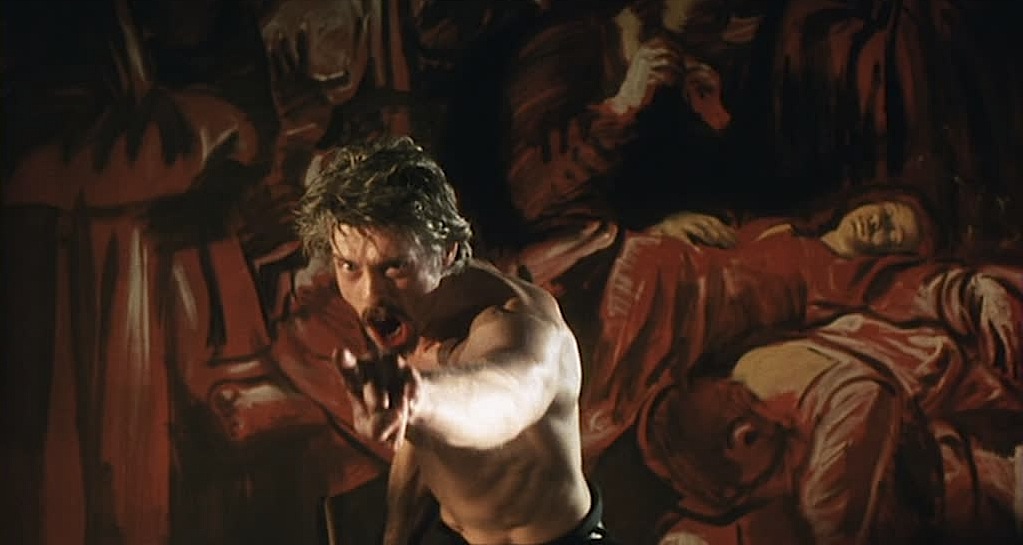
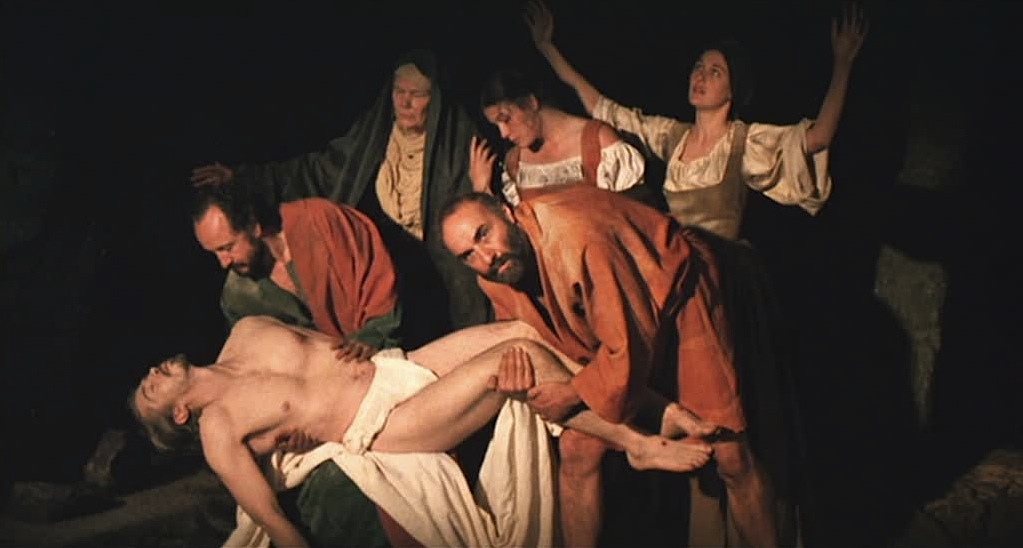
Firstly, for any fan of Caravaggio, this film is a visual treat. Every frame is lit and framed to be as reminiscent as possible of the style of the master. Many scenes are framed either in bare, stone rooms with single windows, or in sets emerging out of an inky blackness. Lighting often strikes diagonally across the frame, just as in Caravaggio’s best work. A number of scenes seem lit from a single source, such as a candle. On top of this, a number of scenes feature either the creation of, or inspiration for, a number of Caravaggio’s most memorable artworks: for those familiar with his work, it’s a delight to see these either recreated in the studio by models, or suggestively composed out of scenes. For an art lover, it’s a visual treat.

Jarman also has an intricate understanding of the creation of art, and when we watch Caravaggio at work it genuinely feels like watching a real artist, engaging with the world, recording images in his mind’s eye, and preparing his next work. The scenes watching Caravaggio create his masterpieces are fascinating in their detail and the careful build-up of paint to create an effect. The effort of models to stay still for the painter is constantly stressed. It’s a tribute to the work that goes into creation, even if the film succumbs to a few pretentious clichés (at one point Caravaggio and Ranuccio fight playfully with knives and Ranuccio cuts Caravaggio: of course Caravaggio smears the blood over Ranucci’s face. That tends to be what artists in films do). 

Jarman, however, makes a film that is deeper and more suggestive than that. This is a fascinating meditation on power and patronage in the world of art. Caravaggio is a genius, but also a tool of the people above him in the pecking order. One of the first things we see is the teenage Caravaggio selling first a painting, then his body, to a pervy art collector. The patrons call the shots here, and if they want to put your work on their wall, or their hands down your pants, the artist just needs to fall into line. Caravaggio himself is little different – the models he works with are treated with a certain warmth, but there is a clear hierarchy here. His relationship with Ranuccio and Lena is rooted initially in power – he can effectively buy them or their bodies, because he controls the money available to them. The renaissance was not a time of equality: everyone is in hock to someone else, and everyone is defined by what they can trade, be that their art, their body or both.

The film has a clear sensual charge to it in every frame, despite not containing a single scene of sex. There are highly suggestive moments of sexual abuse and desire throughout. It’s heavily implied Cardinal del Monte’s interest in the young Caravaggio is not completely innocent, as del Monte sits with him in bed teaching him to read. During their first modelling session, Caravaggio tosses a series of coins at Ranuccio, each of which the man inserts suggestively into his mouth. Every scene with Lena tingles with sensuality – either with Caravaggio, Ranuccio or the mysteriously powerful Cardinal Borghese (a corrupt looking Robbie Coltrane). 

Perhaps the most striking feature of the film though is its highly unique look. Taking his cue from Caravaggio himself – who painted the subjects of his historical pictures in contemporary dress and locations – Jarman and costume designer Sandy Powell dress the cast in a series of shabby, 1940s-1970s clothing (with the exception of a scene in the Vatican, which is established as a fancy dress party). Caravaggio is barely seen without a cigarette in his mouth, and dresses like a bohemian from Montmartre. Plenty of modern props are introduced – a banker fiddles with a pocket calculator, the writer Baglione hammers his criticisms into a typewriter while flicking through a luscious magazine of Caravaggio prints. Ranuccio cleans a motorbike.

All this manages to not only make the film continually visually striking, but also playfully reminds the audience all the time that they are watching a version of a reality – not a true story but a fictionalisation of the painter’s life. It gives Jarman an artistic licence that he exploits to the full, and makes this a film that really sticks in the memory. It’s an inventiveness you wish you saw more in films rather than slavish historical recreation.

Caravaggio is not a masterpiece – it’s a little too self-consciously arty for that. It almost delights at times in being disjointed and hard to follow. Some scenes leap over what seems like years of events. There is no real narrative through-line. The poetic voiceover can start to wear you down – I searched it for meaning, but I’m not sure if there was much there. Saying that, although this is very much a director’s film, there are some fine performances. Terry does a very good job as the artist himself, capturing a sense of the creative spark behind the eyes. Bean is excellent in one of his first roles as the earthy, insecure Ranuccio. Tilda Swinton however steals the film (it’s easy to see why she became Jarman’s muse) as the beguiling and mysterious Lena.

Caravaggio is that rare thing: a film about an artist that seems to understand art, and feel like a work of art itself. It’s unique and eye-catching and memorable as well as having a neat eye for the tragic. I was strangely mesmerised by it throughout. It’s not a perfect film, but it’s a very good one.

Victim (1961)


Dirk Bogarde takes on both blackmailers and the vilest of laws in Victim

Director: Basil Dearden

Cast: Dirk Bogarde (Melville Farr), Sylvia Sims (Laura Farr), Dennis Price (Calloway), Nigel Stock (Phip), Peter McEnery (Boy Barrett), Donald Churchill (Eddy Stone), Anthony Nicholls (Lord Fullbrook), Hilton Edwards (P.H.) Norman Bird (Harold Doe), Darren Nesbitt (Sandy Youth), Alan MacNaughton (Scott Hankin), Noel Howlett (Patterson), Charles Lloyd-Pack (Henry)

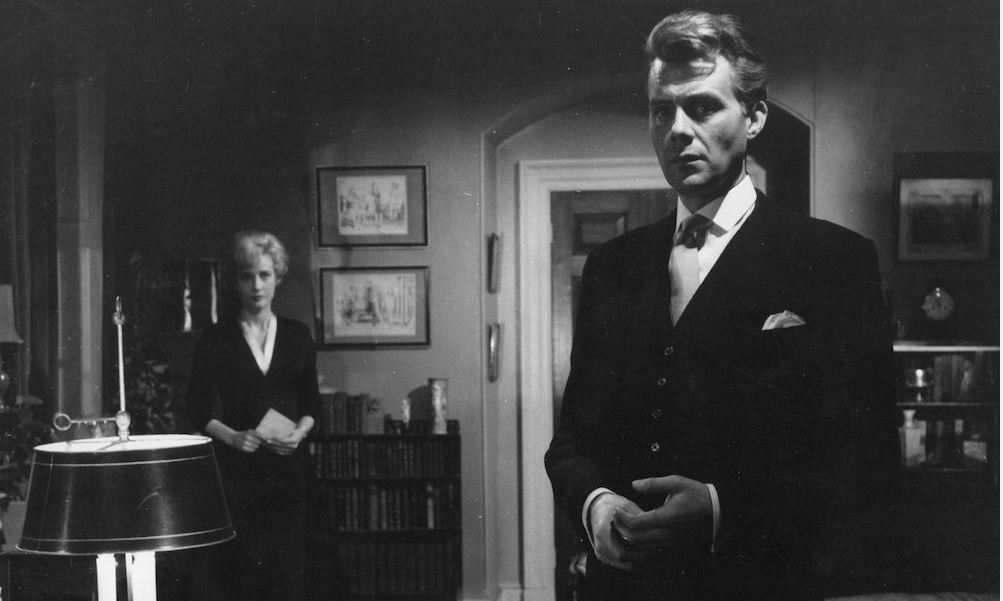
Victim is both a film of its time and hugely daring. It was released in 1961, six years before homosexuality was decriminalised. It feels slightly old-fashioned and coy in its language and style – but at the time would have been almost unbelievably daring. It not only presented gay people as normal people (and not limp-wristed comic figures) but sensitively and sympathetically argues that the law (or “blackmailer’s charter” as the Chief Inspector calls it) was morally wrong.

Melville Farr (Dirk Bogarde) is a married lawyer, about to be offered the position of Queen’s Counsel. One day he rebuffs the entreaties of a young man named Barrett (Peter McEnery). The man later hangs himself in police custody, the victim of blackmail. Farr held deep feelings for Barrett – but cut himself off from contact, having been haunted by his consciously suppressed homosexual feelings. Heartbroken and angered by Barrett’s death, Farr decides to take on the blackmailers – even if it means destroying his career and endangering his marriage to Laura (Sylvia Sims).

In 1961 Dirk Bogarde was one of the most popular actors in the country, a romantic leading man, best known for a series of light British comedies. He was also a gay man, who lived for decades with his manager and partner Anthony Forwood. It’s almost impossible to understand today how brave it was, how much of his career he put on the line, to play Farr. At a time when many people (including characters in this film) considered the very idea of homosexuality a revolting aberration, for Bogarde to play this role could have been career suicide. When even today Hollywood actors are afraid to come out for fear of damaging their careers, here in 1961 was an actor who was actually gay, playing a gay lawyer, at a time when that part of his life was a crime.

What’s particularly impressive about Bogarde’s performance is its calmness, its control. Farr rarely raises his voice, and never hectors us or the characters about the morality of the law. Only once does he show real rage – punching another man after a comment too far about a university “friend” who committed suicide. Bogarde’s Farr is a man, who (the movie implies) has constantly denied that part of himself (much to his pain and of those closest to him). His decision to take a stand is as much accepting a part of himself, as it is doing the right thing.

It’s the scenes with his wife where Bogarde excels. These are deeply, searingly painful scenes of a man struggling to express to his wife his own feelings. Farr makes it clear he ended contact with Barrett because he desired him, because he loved him – more (or rather in a different way) than he loves his wife. Bogarde allegedly wrote his own lines for this key scene, effectively Farr’s coming out. It’s a powerful scene of a man letting a burden fall from his shoulders, of finally saying something he could barely admit to himself. 

The relationship with his wife is one of the central points of interest in the film, the story developing in a way that feels natural and unforced. Sylvia Sims is equally good as a woman who is sympathetic, but can’t completely comprehend the depth of Farr’s feelings. There’s no condemnation or recrimination – but there is a low-key feeling of something being broken, of the two of them realising that they have companionship and a platonic love – but not the passion that marriage should have. It’s a testament to the un-showy realism of the film, that it avoids outbursts and fury in these scenes in favour of a quietly powerful, mutually supportive uncertainty.

The rest of the film treads a fine line between polemic and procedural. It’s a well-written, heartfelt piece that wears its research lightly. It’s crazy to think this is first film to actually use the word “homosexual”. The characters are a neat snapshot of the personalities of the time. Some of the straight characters are violently opposed to the “degenerates”. Others, such as the lead Inspector, enforce the law because they must. The homosexual characters are similarly wide-ranging: some are dignified, many are deeply scared, some have a patrician smugness and arrogance (it’s telling Farr gets more angry at these than anyone else in the movie). 

There are wonderful opportunities for a host of character actors. Charles Lloyd-Pack (as barber Henry) in particular suddenly unleashes a heartfelt, achingly sad speech of defiance in which he says he has been to prison twice for what he is, and will not go again. Norman Bird’s bookshop owner Harold is a mix of guilt, frustrated feeling and fear – a man deeply confused by his feelings. Nigel Stock is also marvellous as a car dealer terrified of losing out on an inheritance from his father-in-law should the truth be known. 

I also loved Noel Howlett’s quiet dignity as Farr’s assistant – and his matter-of-fact statement (after learning the truth) that he has never doubted Farr’s integrity and sees no reason to do so now has a brilliant stiff-upper lip emotion to it. The film contrasts this subtly with Alan MacNaughton’s thinly veiled disgust as Farr’s brother-in-law when he learns the truth.

The film wraps its careful research into the issues of the homosexuality laws – and the dangers of blackmail they expose people to – within an engaging whodunit mystery, set in a very real-feeling London of the sixties. The film has a wonderful eye and ear for the social life of the time, and it throws enough red-herrings and police detective tropes in there to keep the film entertaining. Despite its constant references back to the laws of the time, and the criticisms it makes, it never feels like a polemic – it’s first and foremost a human story.

Yes it is a little dated – very much of its time, and it’s shot with a careful conservatism by Basil Dearden, though he has an expert control of pace and there is no doubting his passionate commitment to this film and its subject matter. That’s what you need to remembe: how daringly, unbelievably controversial this film would have been to make. All the major players put their careers on the line here: and it pays off. It would be six years before the revolting laws were repealed, and this happened for many, many reasons – but this film was a genuine help for making people see the wrongheadedness of these laws.

Love is the Devil: Study for a Portrait of Francis Bacon (1998)


Derek Jacobi plays way against-type in dark art biography, Love is the Devil

Director: John Maybury

Cast: Derek Jacobi (Francis Bacon), Daniel Craig (George Dyer), Tilda Swinton (Muriel Belcher), Anne Lambton (Isabel Rawsthorne), Adrian Scarborough (Daniel Farson), Karl Johnson (John Deakin), Annabel Brooks (Henrietta Moraes)

Maybury’s film about the relationship between the painter Francis Bacon (a revelatory Derek Jacobi) and his lover, small-time crook George Dyer (Daniel Craig), is an overtly arty piece of cinema. It opens with Bacon mourning Dyer’s death – then flashes back to Dyer literally falling into the picture (Maybury films Craig falling through darkness over the credits) before crashing through Bacon’s skylight during a bungled robbery. Here to rob the joint, he ends up getting invited to bed. So Dyer stays on as live-in lover, model and odd-job man.

Maybury’s plans for making a film about Bacon looked like they had been scuppered early, when the Bacon Estate refused permission for a single Bacon to actually appear in the film (there are a few ersatz Bacons at the edges of frames). Maybury gets around this ingeniously: he effectively turns the entire movie into a massive Bacon painting.

Rarely have fish-eyed lenses been used so much. They are all over scenes here, distorting and ballooning faces. Maybury uses shots through pint glasses and lightbulbs to bend images. The lighting (brilliantly shot by John Mathieson) recreates the visual discomfort of Bacon’s work and his use of block background colours (particularly reds and browns). Famous Bacon flourishes are reproduced – lightbulbs and mirrors appear particularly prominently. We may not see Bacon paint, but we watch him paint himself (brushing his teeth with Vim, using spit to curve his eyelashes), all while staring into a three-surface mirror – becoming his own Triptych.

The tragic Dyer even dreams in Bacon paintings: haunted by a crouching flayed man on a diving board (a dark twist on the paintings Bacon would make of him after his death). Dyer even ends the film literally consumed by Bacon’s work – he exits his hotel room into a dreamy reconstruction of Bacon’s Triptych in Memory of George Dyer, effectively recreating the painting in motion before ending it slumped lifelessly forward. It’s a neat visual image for a theme that runs throughout – the weak, pathetic Dyer is consumed by Bacon so completely, he literally becomes a painting.

Triptych in Memory of George Dyer – the visuals and design of which are brilliantly recreated in the movie

Poor George Dyer. It’s hard not to feel sorry for such a weakling, hopelessly out of his depth. Craig’s performance as an incompetent, strangely innocent (“Do you actually make a living from painting?”) petty crook and alcoholic is perfect – a fine reminder of what a great actor he is. He’s mostly a silent passenger when Bacon socialises with the hoi polloi, but this makes it even sadder to see him attempt to take on Bacon’s “life of the party” expressiveness later when regaling his working-class friends, limply imitating Bacon’s “cheerio” as he downs another glass of champagne.

This film doesn’t shy away from the dark destructiveness of the relationship: or from exploring Bacon’s promiscuous sexual masochism, and his emotional sadism. Several sex scenes are modelled after Bacon’s paintings. The roughness of the sex is constantly at the forefront. If you’ve ever wanted to see a naked James Bond preparing to beat a prone, topless Brother Cadfael with a belt, then this is probably the film you’ve been waiting your whole life to see.

Many of the film’s successes are due to Craig – and to Jacobi, who is a revelation in the best film role of his entire career. Not only is he strikingly physically similar to Bacon, but he attacks the part with a waspish bitterness and cruelty, giving a dominant performance of Bacon’s selfishness and malice. The small moments of painting we see are performed more like fights then acts of creation. However, Jacobi allows enough moments of sensitivity – the hints of sadness and regret he feels after another act of dismissive cruelty, the small touches of affection intermixed with rejections. The film makes clear Bacon was an abusive partner, and Jacobi’s performance projects all the dark charisma you could possibly want.

So why isn’t the film better regarded? The answer is there at the top: this is an overtly arty film, in many ways a commentary on the artist and his work rather than a drama. Its visual dynamism is impressive, but wearing. It’s frequently not subtle – if you were in any doubt about Bacon’s semi-sexual arousal at violence, we get to see his jubilant reaction to blood being sprayed across his face at a boxing match. Later Jacobi waxes lyrical over the beauty of a car crash while the camera pans across twisted bodies. The edgy, distorting style and overbearing dirtiness of the action may be true to much of the tone and style of Bacon’s work – but it’s hardly a bundle of fun to watch.

Love is the Devil may get close to an understanding of what drove Bacon, and what lies underneath his art – but it goes about it a very self-important way, in a film that often feels a little too pleased with itself. Craig is very good, and Jacobi an absolute revelation – but it doesn’t change the fact that the film is almost deliberately alienating and difficult. Few other characters (including an unrecognisable Tilda Swinton) get much of a look in, and the claustrophobic focus finally starts to wear the viewer down. It’s a must for admirers of Bacon (though you’ll be hard pressed to admire the man after viewing this!), but it’s a film that delights a little too much in being difficult to watch.

Carol (2015)


Rooney Mara and Cate Blanchett in a moving dance of love and romance

Director: Todd Haynes

Cast: Cate Blanchett (Carol Aird), Rooney Mara (Therese Belivet), Sarah Paulson (Abby Gerhard), Kyle Chandler (Harge Aird), Jake Lacy (Richard Semco), John Magaro (Dannie McElroy), Cory Michael Smith (Tommy Tucker), Carrie Brownstein (Genevieve Cantrell)

It’s the way of things that gay love-stories in Hollywood are invariably relegated to a sub plot – often one that has a certain tragical element to it. This is not the case here in Todd Haynes’ superlative romance, which places a lesbian love story at its centre, sensitively building the characters and romantic journey between them.

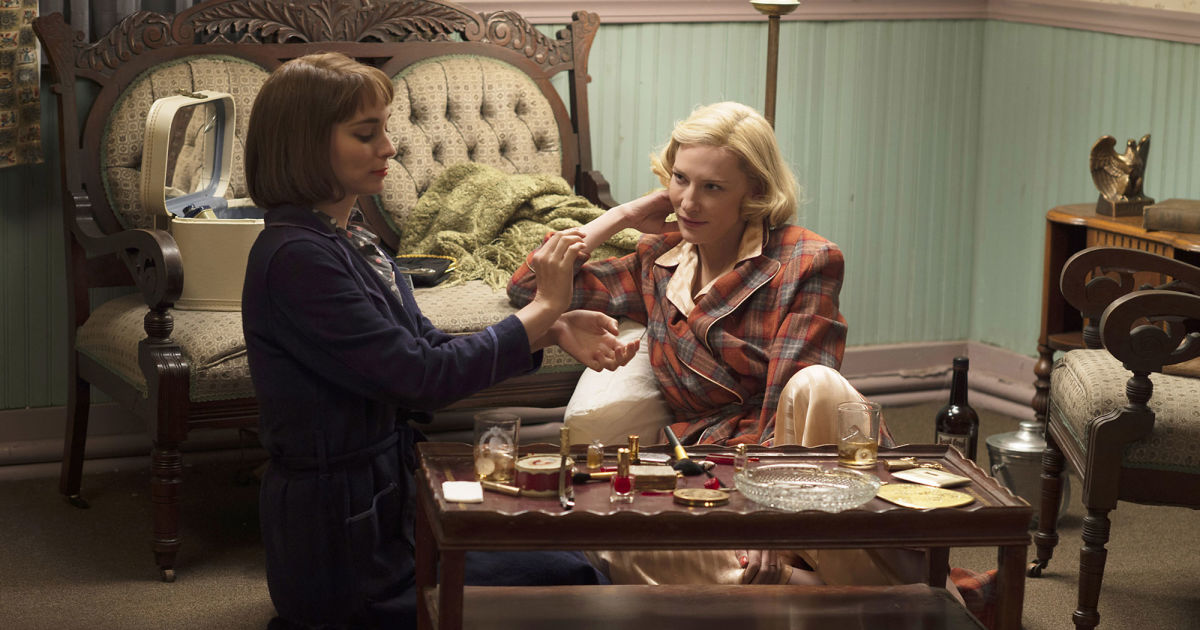
Therese Belivet (Rooney Mara) is a lost department store worker, drifting through life. One Christmas, working on the toy stall, she recommends a toy for the daughter of socialite Carol Aird (Cate Blanchett). A spark of attraction between the two is immediately apparent, and Carol invites Therese first to dinner, then to spend an evening together and finally a Christmas road trip across America, during which their attraction grows and deepens into a flourishing love.

This wonderful love story, almost a twist on Brief Encounter, is a brilliantly done, extremely engrossing and moving romantic film, a film that manages the rare feat in Hollywood movies of not making a homosexual relationship something that requires narrative punishment. Haynes’ luscious 1950s filming style, stressing the aesthetics and manners of the era, combines brilliantly with a subtly murky photography style that darkens and lightens at different points to create an immersive fairy-tale quality. It’s a perfect tapestry for a deeply caring and sensitive story, anchored by a superb script and wonderful performances.

It has now got to the point where it is axiomatic to say Cate Blanchett gives a wonderful performance – she is, after all, one of the best actresses in the world right now. She is quite simply perfectly cast as Carol, her features having the flexibility to appear both cold and distant and soft and caring, a switch she is able to make with the slightest of gestures. Her patrician manner is deconstructed brilliantly. Her character is initially established as an almost predatory figure, a determined and manipulative woman; it’s only over the course of the film that this persona is slowly taken apart, revealing waves of emotion and pain from years of denial, loneliness and a sense of being trapped. Each scene slowly prompts us to reassess and reevaluate her character, and Blanchett handles this journey with astounding skill, revealing a hinterland of pained, self-doubting isolation and desperation to experience real love behind her cool and confident exterior. It’s a performance of phenomenal skill and emotional force.

It’s matched brilliantly by Rooney Mara as the object of Carol’s affections – and it must be said at the very least a co-lead of the film. Therese is a woman sleepwalking through life when we first see her, trotting through the motions of her interactions with others – a clear void in her, waiting for something to happen to her, but clearly with no idea of what that might be. Similar to Blanchett, Mara’s gentle and sensitive exterior deepens over the course of the film as she becomes more assertive to those around her, more of a determiner of what she wants from her own life. Mara’s soulful eyes and gentle face make her a perfect audience surrogate, creating a character whose feelings, doubts, anxieties and growing confidence we become immersed in. The film is in many ways her story, and Mara’s expressive gentleness is vital to our investment in the story.

The road trip at the heart of the movie’s plot is a charming, lyrical dance between two people juggling an unspoken attraction: one of them on the edge of all times of saying it, the other drawn towards an attraction she is still trying to understand and express. Haynes perfectly captures the small playful moments of first love that pepper these scenes, the camera intimately placed to make us part of this growing partnership of equal minds and hearts. Slowly they grow physically closer – both in their ease of body language, and through their slow progress towards sharing hotel rooms and finally (in an achingly romantic scene) a bed.

It’s a film about romantic longing between two people, the instant attraction. Therese’s first glance of Carol is across a crowded room, with the camera panning past Carol in a POV shot and then returning to her, before cutting back to Therese, now seemingly alive with an attraction she doesn’t quite understand. The Brief Encounter structure of the film is established with the film opening with Carol and Therese’s (possible) last meeting in a dinner. We see their interrupted conversation leading to Carol’s departure, leaving after touching a hand on Therese’s shoulder – the camera lingering on Therese’s back and her unseen reaction (and contrasting it with a meaningless similar touch from a male friend). When this scene is replayed later, we see it more from Carol’s perspective – and her pulsating emotion and longing.

The reason these scenes work so well is that the film continually shows Carol and Therese struggling to hide their growing attraction in plain sight, to maintain the balance between expressing their feeling and keeping a plausible deniability. This feeling grows because the film has the patience to take its time with building this relationship– and because we are aware of Therese’s feelings earlier than she is.

The film’s sensitivity extends to the sympathy it feels for all its characters. As useless as many of the men in the story are, they are confused, distressed or lonely rather than malicious or cruel. Carol’s husband Harge could have been a bullying monster, but he actually comes across as a frustrated and deeply hurt man, who understands on some level his wife’s sexual preferences, but is unable to fully comprehend the implications of this. On paper it’s a thankless part, but Kyle Chandler is superb, his Mad Men features perfectly suited to the role of floundering masculine figure. Many of Therese’s would-be suitors are similarly drawn reasonably sympathetically, however laddy, over-keen or dull they may be – Haynes’ film has an understanding that they are products of their time. In a lovely scene Therese talks about homosexuality with one of her male suitors, who can barely countenance its existence, as if she was talking about the man in the moon.

Haynes’s mastery of the aesthetics of the material is present throughout. Haynes increases the feelings of being trapped or surrounded by a number of shots through windows, using mirrors, from the other side of doors – divides that stress the characters’ sense of being trapped and enclosed in their lives. He also carries across just a small teasing touch of the melodrama of 1950s films – though I would argue this is no way a melodramatic film – with a gun making a deliberately misleading appearance, and a few beats that briefly suggest the film is heading in an entirely different direction.

Carol is a wonderful, soulful and entrancing film. It’s about two people showing each other hidden depths about themselves, uncovering truths and building each other’s capacity for love and ability to admit and understand their feelings. It makes this a tender and endearing film, with two characters whose fates we become completely involved with. It also avoids passing any form of judgement over any of the characters. Filled with subtle moments, open to interpretations (even their first meeting is full of code, from the recommendation of a non-gender-conforming train set to Carol’s gloves left invitingly on the counter) that constantly ask us to review how open we feel the characters are being with themselves and others. With brilliant performances by Mara and Blanchett (backed by Chandler and a very sensitive performance from Sarah Paulson as Carol’s former lover), this wonderful film is both profoundly moving and very uplifting.