Category: Literary adaptation

Frankenstein (1931)

Frankenstein (1931)

Iconic monster film, dark expressionist nightmare that totally reinvented the novel’s public image

Director: James Whale

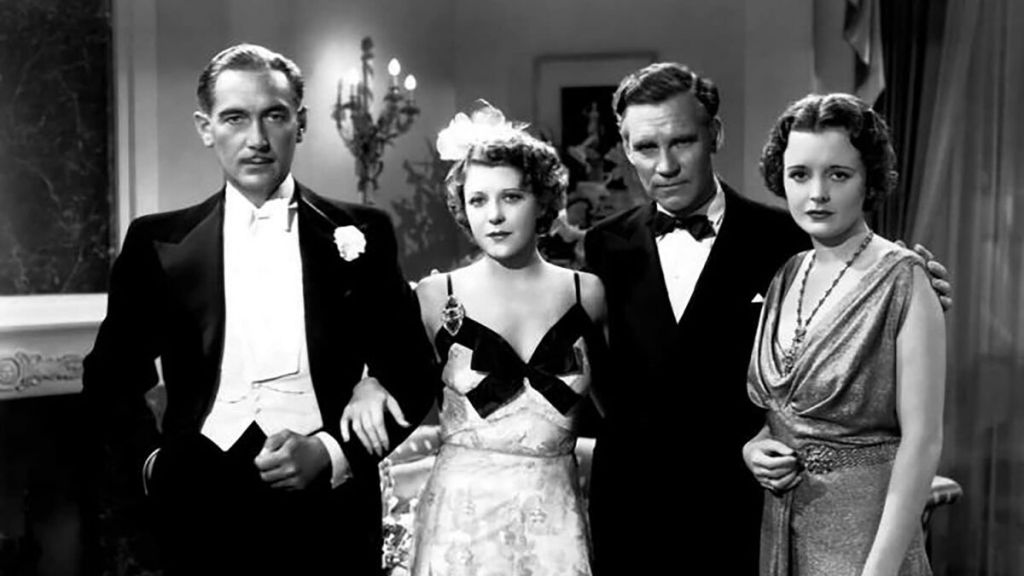
Cast: Colin Clive (Henry Frankenstein), Mae Clarke (Elizabeth Lavenza), John Boles (Victor Moritz), Boris Karloff (The Monster), Edward van Sloan (Dr Waldman), Frederick Kerr (Baron Frankenstein), Dwight Frye (Fritz), Lionel Belmore (The Burgomaster), Marilyn Harris (Maria)

Has any film shaped the popular idea of a book more than Frankenstein? Ask anyone to describe the monster or the book itself, and you’ll not have to wait too long until you start to hear about bolts in the neck, thunder-struck gothic castles, hunchbacked assistants and labs stuffed with bizarre electrical equipment. Of course, none of that is actually in Mary Shelley’s The Post Modern Prometheus. But it is a key part of James Whale’s creative vision in this Hollywood hit. In fact, so much of a hit that it and its army of sequels led to whole generations convinced Frankenstein was the name of the monster, not his creator.

Frankenstein in fact bears almost no similarity to the original novel at all, checking off a few plot points and duplicating some character names. Other than that, it’s very much its own thing, a big expressionistic nightmare, with everything dialled up as high as those lightening-catching electrical machines can cope with. Henry Frankenstein (Colin Clive) – you’ll note the film even changes his name to the more relatable Henry, with Victor given to his dull-as-dish-water pal Moritz (John Boles) – won’t settle down and marry fiancée Elizabeth (Mae Clarke). Instead, he dreams of creating life, to become like God! And to follow that dream, he’ll dig up bodies, steal laboratory brain specimens from his mentor Dr Waldmann (Edward van Sloan) and stitch them together into a creature (Boris Karloff). But then misunderstandings and ill treatment leads to a series of terrible events.

James Whale’s film is a triumph of atmosphere; its images and visual creativity so haunting it’s not a surprise it effectively overwhelmed the novel. Inspired by German expressionist cinema – you can see the fingerprints of Cabinet of Dr Caligari and Fritz Lang all over it – Whale sets this monster tale in a world of towering, angular buildings, looming shadows and vast steampunk (long before it came into fashion) labs in damp-lined medieval castles. There is a strange timeless quality to Frankenstein: it opens with a shadow-laden graveyard dug up by Henry and his assistant Fritz (Dwight Frye), but the village feels like it is set in almost any time from the late nineteenth to early twentieth century (the costumes in particular are a real hodgepodge). Perhaps this was part of Whale’s intention, to create a timeless metaphor for man’s reach exceeding what’s sensible, to disastrous consequences?

It’s also interesting that, for all the warning of the terrors to come the film opens with from Edward van Sloan (who also portrays Waldmann), we actually end up siding with the creature. A lot of this is due to Boris Karloff’s excellent performance. Without a word of dialogue, Karloff makes this lumbering result of stitched together bits and pieces, into something vulnerable, frightened and child-like, whose violent acts only emerge from tragic misunderstandings or gross provocations. Karloff’s physicality is frequently gentle and timid, the few strangled sounds he makes sound almost scared, and his awkward stumbling resembles a deadly, confused toddler. He needs parenting, not chasing down by a mob.

The film’s key moment is Frankenstein introducing the creature to the daylight – the camera following those towering vertical lines of the set up to into a skylight, with the enchanted creature reaching his arms up to try and touch this magic ball of light. Then Frankenstein smugly slaps it shut and Fritz shoves a torch into the poor creature’s face. The monster may be introduced with all the elements of dread – Whale’s classic introduction a series of striking cuts that pull us closer and closer to the reveal of his restitched head – but it doesn’t take long before you feel really sorry for it. Even if it does have a ‘criminal mind’ stitched into it (a development so out of tone with the treatment of the monster, it feels like a fig leaf to reassure the producers it must be the baddie).

Not least because Frankenstein himself is hardly that sympathetic. Colin Clive – a long-term collaborator with Whale – grabs this larger-than-life part and runs with it, oscillating from scenery-chewing self-aggrandizement (his celebratory screaming has rightly passed into cinematic legend) to self-pitying excuses. It’s telling he never takes a jot of responsibility for either creating the monster, or for his inattention and poor treatment of it directly causing the tragedy it unleashes. Unlike his book counterpart, his arrogance requires witnesses – Elizabeth, Victor and Waldmann – to his experiments, entirely due to his arrogant fury at Waldmann’s questioning his sanity. His first solution, as soon as the creature becomes challenging, is to euthanise it and he never confesses to the lynch mob that take on the creature in the film’s final act that he is its creator.

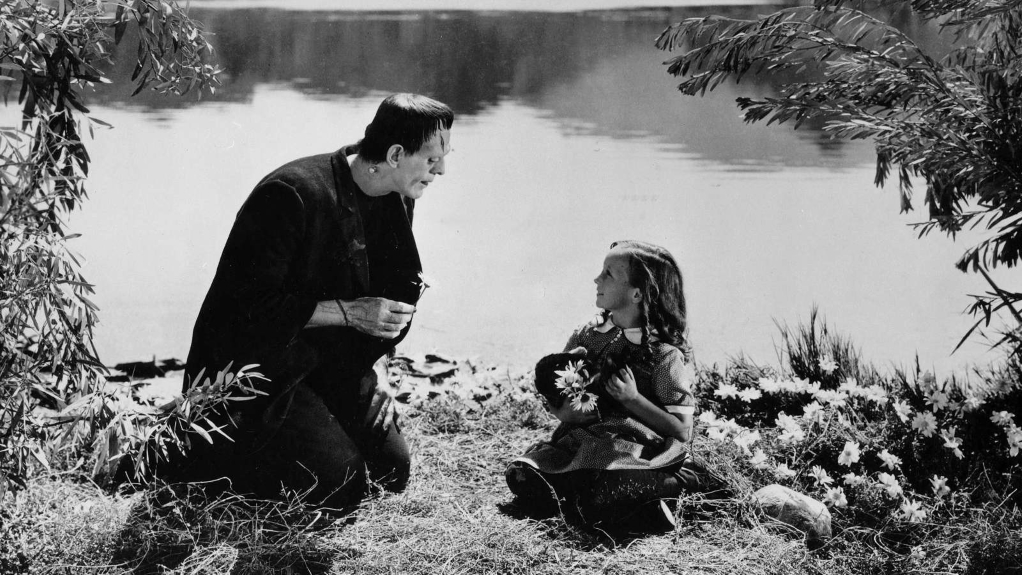
The lynch mob is responding to the creature’s accidental drowning of a small girl. Again, this killing stems from a misunderstanding. Young Marie – the only person in the film who doesn’t react with horror when she sees the creature, suggesting she instead sees a kindred spirit – invites the delighted creature to join her in a game, tossing flowers into the river. Clapping his hands in delight, the creature joins in for a scene directed with bucolic beauty by Whale – right up until the flowers run out and the creature tosses Marie in instead, only to find she doesn’t float artistically.

As the creature flees in confused panic, Whale cuts to the raucous wedding celebrations in the Frankenstein village, which comes to a crashing close as Marie’s father walks with her body through the crowd, that turns from joy to shock around him. It’s one of several striking moments of fluidic camera work in Frankenstein, Whale employing a tracking shot that follows and partially rotates around the father, while keeping him tightly central in the frame as he walks through the crowds. There are similar moments of dynamic camerawork throughout the film, Whale using every opportunity to make this gothic nightmare world as immersive as possible.

The hyper reality of Frankenstein means it doesn’t really matter that much of the skylines are all too clearly cloth (I like to think Whale deliberately kept the multiple points where the cloth has bunched up in shot to stress the artificiality), since everything about this is dialled up to eleven, from performances, to setting to the grandly staged windmill-finale, hugely impressive in its flame-licked excitement. In fact, it’s all so overblown and gothic, in its set design, shooting and performance that the most grounded, human thing in it is Karloff’s beautifully played creature himself. That feels like no accident and makes Frankenstein a surprisingly subversive film. And also perhaps, even though it strips the creature of much that makes him a character in the novel, made him a modern icon.

War and Peace (1967)

War and Peace (1967)

Legendary Soviet Tolstoy adaptation, awe-inspiring in its scale and creative amibition

Director: Sergei Bondarchuk

Cast: Sergei Bondarchuk (Pierre Bezukhov), Ludmila Savelyeva (Natasha Rostova), Vyacheslav Tikhonov (Andrei Bolkonsky), Boris Zakhava (Mikhail Kutuzov), Anatoly Ktorov (Nikolai Bolkonsky), Antonina Shuranova (Maria Bolkonskaya), Oleg Tabakov (Nikolai Rostov), Viktor Stanitsyn (Ilya Rostov), Kira Golovko (Natalya Rostova), Irina Skobtseva (Hélène Kuragina), Vasily Lanovoy (Anatole Kuragin), Irina Gubanova (Sonya Rostova), Oleg Yefremov (Fyodor Dolokhov), Eduard Martsevich (Boris Drubetskoy), Aleksandr Borisov (Uncle Rostov), Nikolai Rybnikov (Vasily Denisov)

During the Cold War, the superpowers had to fight with things other than nukes. They raced to space. They were gripped by chess matches. And they made rival film productions of Tolstoy’s epic novel. War and Peace, a gargantuan production (it’s really four films and took literally years to make) was the Soviet answer to King Vidor’s War and Peace. If Hollywood thought it could own the greatest Russian novel ever written by making it an Audrey Hepburn vehicle, Mosfilm would take it back. The Soviet War and Peace would treat Tolstoy with the respect it deserved, honouring its literary richness, and putting it on a scale no film had ever seen before.

War and Peace was made with the state’s full backing. Its director would have anything he needed. Rebuild Moscow on the backlot (then burn it down)? Sure. Have historical artifacts from dozens of museums shipped to the film set? Boxed up and ready. Use tens of thousands of troops – and three war-hero Generals as assistant directors – to restage the battles of Austerlitz and Borodino? Thousands of horses were shipped to the set, while seamstresses worked on over ten thousand costumes. Moscow even created an arsenal of functioning cannons which shot 23 tons of gunpowder for the recreated battles. It’s no exaggeration that no film before or since could match this for scale. Avengers: Endgame eat your heart out.

To direct this gargantuan operation, Mosfilm and the Ministry of Cuture selected Sergei Bondarchuk, relatively young in his early 40s, over the seasoned veterans who expected the gig. Bondarchuk was by all accounts a hard taskmaster, who fought, bickered and bullied practically everyone on set (burning through three cinematographers), but also had a gift for marshalling effectively a small nation for years (though not without at least two heart attacks, one of which left him clinically dead for five minutes). He also had the chutzpah to audition nearly every actor in Russia before deciding the best man for the leading role of Pierre Bezukhov was none other than… Bondarchuk himself (for good measure, Bezukhov’s seductive screen wife would be played by his own wife Irena Skobtseva).

War and Peace could have gone two ways: its scale could have flattened a lesser director or led to the sort of middle-brow, stale traditionalist fare Hollywood hacks churned out for years. Instead, Bondarchuk was fascinated by the possibility of the medium and swept up in playing with the cinematic tricks explored by his heroes and contemporaries. War and Peace is a strikingly unique, often discordant, meditative film, full of visual invention that pushes the boundaries in the most inventive ways to present its colossal scale.

You can see traces of Abel Gance’s Napoleon in its evocative use of double exposure images (showing ghost like echoes of people appear in frame, most notably the near-death experience of Andrei Bolkonsky) and its extreme close-ups, not to mention the more obvious triptych homages for key moments (such as Napoleon and Alexander III’s meeting at Tilsit). Bondarchuk’s influences went wider than that: there is a social realist immediacy in several scenes, with their jittery camera-work, throwing us into confusing battles, that wouldn’t look out-of-the-ordinary among the Italian Neorealists. There are patches of Welles and Lang in the sweeping camerawork that stress the scale and geography of the sets. Panoramic aerial shots dial up the most ambitious work of Murnau and Gone with the Wind. Bondarchuk’s decision at key emotional moments to fade out all sound except for ambient noises, such as drips, breathing or birdsong feels like he’s been studying Tarkovksy – as does the beautiful, lingering shots of nature. Bondarchuk wasn’t just going to make a stately coffee-table book: he fused distinctive flourishes from the great film-makers, to wonderful effect.

In addition, Bondarchuk (also the co-screenwriter – did his chutzpah influence that similar wunderkind Kenneth Branagh, both obsessed with tricksy, inventive camerawork) wanted to pay tribute to Tolstoy. What’s remarkable about War and Peace is how much of Tolstoy’s meditation on the meaning of life is in the film. Sure, there are cuts – Nikolai Rostov, Sonya and Maria Bolkonskaya are reduced to the bare bones – but this film finds a great deal of time for its characters to muse (either in sometimes portentous voiceover, or a deep-voiced omniscient narrator) over the meaning of life, the quest of happiness and the nature of decency and nobility.

In fact, this is a particular surprise since this version War and Peace had its roots as a patriotic demonstration of Soviet film-making might. It’s particularly striking then that it ends with a sequence that stresses how ordinary soldiers (French and Russian) have more in common than not and how much links mankind together than drives them about. This is not pro-Soviet propaganda.

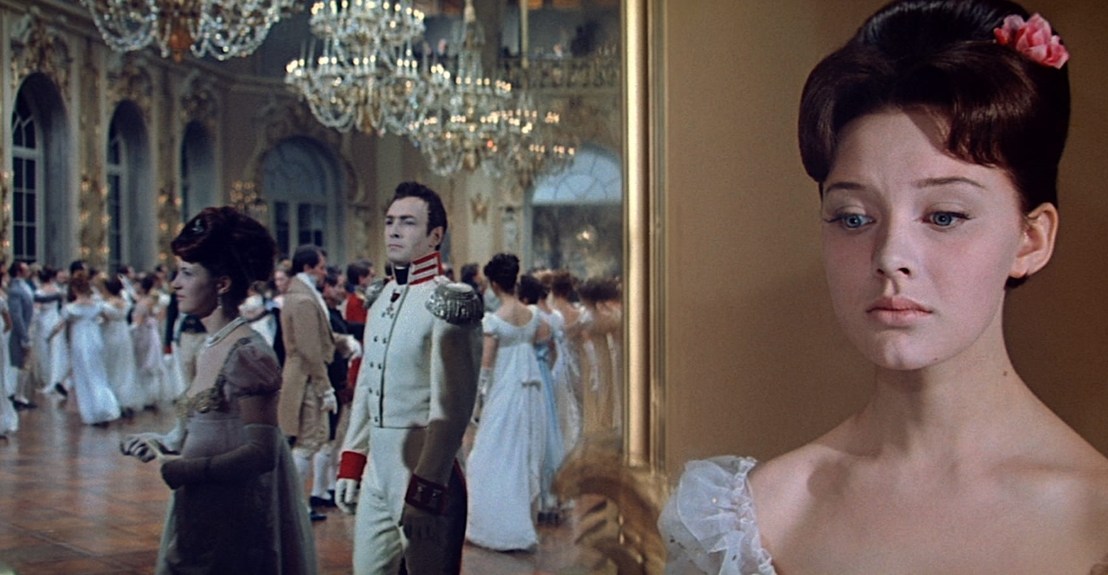
Not that War and Peace doesn’t take a few potshots at the effete, selfish rich, sitting in comfort while soldiers fight at the front. But it also finds time for the Rostov’s decency and self-sacrifice for and it doesn’t stint on the grandiosity of Tsarist Russia. A ballroom scene, site of Natasha’s meeting with Andrei Bolkonsky, is stunningly staged. In a huge mirror-laden ballroom, Bolkonsky’s camera bobs and weaves between dancers. Cinematographer Anatoly Petritsky suggested he filmed it while roller-skating, a genius innovation which creates a visual dancing effect as well as allowing us to be right among the literally hundreds of grandly costumed dancers (Bolkonsky skated alongside Petritsky, at times holding a fan slightly before the camera, to add to the effect).

The magnificence of this often gets forgotten in the awe-inspiring spectacle of the Russian military backed battles. Bondarchuk enlisted the Soviet Air Force for stunning, wide-angled aerial shots that revealed the stunning dimensions of the recreation. Petritsky also introduced a series of diving crane shots – like the camera has been set on a zip wire – that fly down from the heights into the battle’s chaotic maelstrom. (The battles are, as per Tolstoy, confusing messes where no one knows what’s going on but everyone pretends to be in charge). These battle images virtually redefine epic, mind-blowing in their scale – and the managerial and artistic force that must have been needed to organise and capture them all on screen as exquisitely as they are.

The same goes for the burning of Moscow, a dizzying outburst of flame, co-ordinated tracking shots (following Pierre through the burning wreckage) while crowds of extras run and panic. War and Peace also follows Tolstoy in being perhaps one of the grandest scale, anti-war films ever made. There are no real moments of heroism in the battle, soldiers march into injury and death and Bondarchuk frequently pans the camera across mounds of bodies or soldiers left mauled and dying on the ground. The retreat from Moscow sees Hellish suffering for the French, but that is balanced by the horrifying executions of civilians they carry out in Moscow, terrified men and boys led to stakes and gunned down in hard-hitting slow-motion. War and Peace doesn’t shy away from the suffering, pain and death that war brings, with very little glory or pride to show for it.

It’s also a film that’s often strikingly well-acted. Bondarchuk may be too old for Pierre, but his thick-set frame is perfect and his soulful eyes beautifully capture the character of a would-be-philosopher with no purpose. Vyacheslav Tikhonov makes Bolkonsky an imposingly distant man hiding his fragility. Perhaps most strikingly, ballet dancer Ludmila Savelyeva is a radiant Natasha, waif-like but bursting with energy and life, who tackles better than almost anyone else an impossibly difficult character. Bondarchuk frames her perfectly, back-lit to focus on her expressive eyes.

At times there is almost too much to everything in War and Peace. Bondarchuk is at times almost constitutionally incapable of shooting a simple scene, a relentless inventive energy that is perfect for the war but sometimes exhausting for the peace. The all-consuming screentime given to the scale of the battles and balls does eat into the time allowed to character and plot. But this is like complaining about being uncomfortably full after a generous rich meal. There is so much in War and Peace Bondarchuk gets right: from its respect to Tolstoy, but as an intellectual not as heritage figure to its stunning visuals, in every minute of its great length there is something to admire, thrill and strike you with awe. In this instance, the Soviets proved they could do Tolstoy better than the Yanks.

Elmer Gantry (1960)

Elmer Gantry (1960)

Burt Lancaster gives a magnetic, Oscar-winning, performance in this entertaining plot-boiler

irector: Richard Brooks

Cast: Burt Lancaster (Elmer Gantry), Jean Simmons (Sister Sharon Falconer), Arthur Kennedy (Jim Lefferts), Dean Jagger (William L. Morgan), Shirley Jones (Lulu Bains), Patti Page (Sister Rachel), Edward Andrews (George F Babbitt), John McIntire (Rev John Pengilly), Hugh Marlowe (Rev Philip Garrison), Joe Maross (Pete)

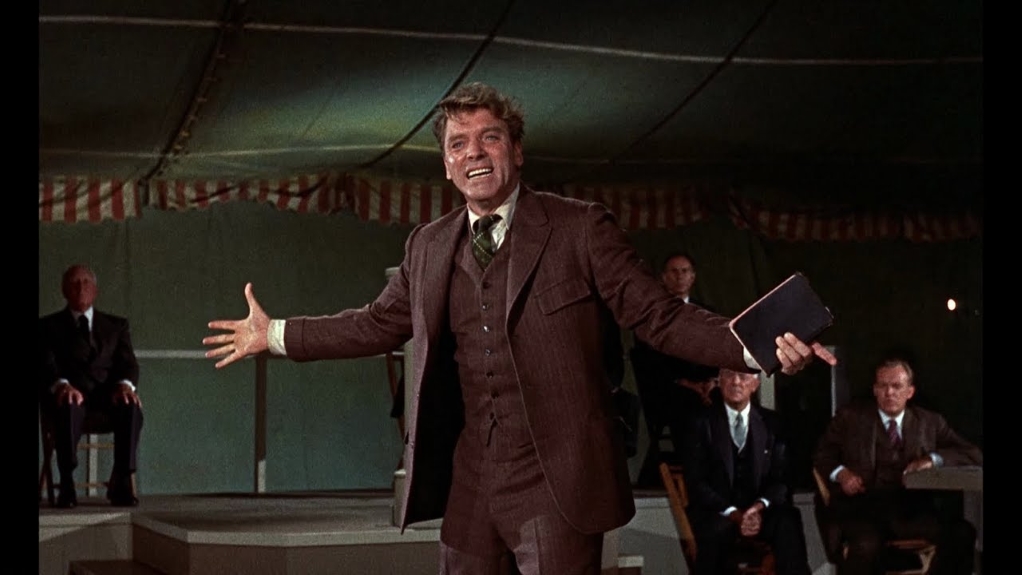
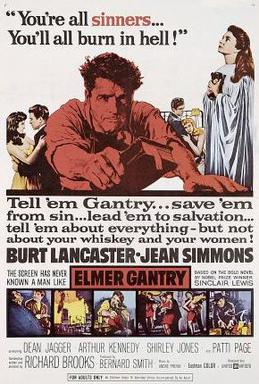
Elmer Gantry (Burt Lancaster) has the patter down perfectly. He can charm, wheedle and turn a phrase to set the whole room alight with laughter. He wants success but the big break never comes, perhaps because he’s selling two-bit vacuum cleaners rather than something people really want. Elmer is smart and works out, when everyone is afraid of dying, it’s a captive market for salvation. With his seminary background, he’s a natural preacher and inveigles himself into the revivalist roadshow of Sister Sharon Falconer (Jean Simmons) which his force of personality shifts into a fire-and-brimstone exhibition of frenzied religious passion – just the sort of thing that gets the punters back into the church. But when the roadshow moves to the big city, will Gantry’s young affair with priest’s-daughter-turned-prostitute Lulu Baines (Shirley Jones) come back to bite him?

Elmer Gantry was seen as controversial and even outlandish at the time of its release – so much so a lengthy pre-credits opening crawl distances it from all those decent servants of the Lord who were worried it was tarring them with the same brush. But with TV evangelists raking in the cash and travelling preachers whipping crowds up into wild-eyed ecstasy, Elmer Gantry doesn’t seem so outlandish these days. Richard Brooks film adapts the middle-act only of Sinclair Lewis’ sharply satirical novel, and while it does smooth down the rough edges and offer touches of redemption for its charismatically selfish hero, it’s still a very entertaining plot-boiler with a well-delivered message and subtle character development.

Above all though it’s a defining star-vehicle for a perfectly cast, Oscar-winning, Burt Lancaster. Elmer Gantry plays to all his strengths: charismatic, larger-than-life and charming, overflowing with boundless energy and nimble, physical grace. Lancaster’s intense eyes and excitable grin burns through the screen and he’s totally believable as the sort of rogue everyone knows is a rogue but give him a pass because he’s so likeable. And he nails the magnetic charisma of fire-and-brimstone preaching, full of self-aggrandising comments about his own holy conversion from salesman to man of God. It helps that Lancaster’s physical prowess (at one point he does a body slide down the full length of the aisle mid-sermon) really helps build Gantry’s magnetic presence.

Elmer Gantry superpower isn’t that he’s shameless – he looks suitably guilty when calling his mother on Christmas day to explain, once again, he isn’t coming home – but that he can compartmentalise and forget shame so quickly. He manipulates and uses people with such charm they either don’t notice or don’t care – from charming clients on Christmas Eve with dirty stories to plugging Sister Sharon’s naïve assistant Sister Ruth (Patti Page) for details on Sharon’s life that he will then use to get his foot in the door of her roadshow. Even cynical journalist Jim Lefferts (Arthur Kennedy, warming up for effectively the same role in Lawrence of Arabia), who knows he’s a complete bastard, still finds him a great guy to hang out with.

But the truth is Gantry corrupts everything he touches. It happens by degrees, pushed along with winning arguments and eager ‘I’m just trying to help’ excitability, but its inevitable. Before he arrives, Sister Sharon’s roadshow is a dry but heartfelt and earnest mission focused on winning converts. Under Gantry’s influence it becomes religious entertainment. Because Gantry knows people need to have their passions stirred to really invest in something, and mesmerising patter is a huge part of that. Lancaster’s delivery of these showpiece sermons drip with eye-catching, inspiring passion – even when we know he’s a hypocritical bullshit artist who probably doesn’t truly believe word he’s saying, but sure does believe it in the moment. When even we feel stirred by it, is it a surprise his audiences start to get whipped into a frenzy, barking at devils and clawing across the floor to be saved by Gantry’s touch?

Sister Sharon’s manager and sponsor William Morgan (Dean Jagger skilfully playing a character who is far more susceptible to manipulation than he thinks) might have his doubts, but it works. Elmer Gantry takes a satirical swing at the Church as the reverends of the town of Zenith swiftly put aside any doubts (other than straight-shooter Garrison, inevitably played by Hugh Marlowe) and bring Sister Sharon’s Gantry-inspired roadshow into the big city to help drag more punters (and it’s quite clear that they see congregations as customers for religion) into their church. Elmer Gantry gets some subtle blows in on the commercialisation of the Church, even if it is careful to largely distance it as a whole from the tactics of Gantry.

Gantry’s corruption also touches Sister Sharon herself. Well-played by Jean Simmons, Sharon is earnest but surprisingly steely but as she lets a little of Gantry’s shallowness into her roadshow, so she starts to compromise on the very qualities that made her stand-out. From entering into a ‘good-cop-bad-cop’ performance for sinners to opening her heart to Gantry’s persistent seduction, Sharon becomes a portrait of corruption by degrees. Brooks’ film also implies in its dark finale that she has allowed herself to absorb Gantry’s spin that she could be a vessel of holy power, which puts her life at deadly risk.

Elmer Gantry is overlong and perhaps relies a little too much on Lancaster’s charisma – it fair to say when he is off-screen it’s energy lags. Its satiric edge is sometimes blunted by focusing on Gantry as the disease rather than a symptom of a church struggling to survive in a secular age. The introduction of Lulu Baines – an Oscar-winning Shirley Jones, playing against type as a bitter floozy – is a little late in-the-day and while her performance is solid enough, the character is more of a cipher in a plot-required final act conundrum than a fully-formed character.

But when the film focuses on Gantry, it’s a fascinating character study. How much does he believe in the things he says? Does he feel shame? How ambitious is he? When he says he loves Sharon, does he? Or does he feel everything he says in the moment, but it never sticks? Either way, it’s at the heart of Burt Lancaster’s compelling, charismatic performance which juggles a mountain of contradictions but never loses the sense of the shallow selfishness that lies behind the charm.

American Fiction (2023)

American Fiction (2023)

Intelligent, challenging satire mixes with moving family drama in this excellent debut

Director: Cord Jefferson

Cast: Jeffrey Wright (Dr Thelonius “Monk” Ellison), Tracee Ellis Ross (Dr Lisa Ellison), Issa Rae (Sintara Golden), Sterling K. Brown (Dr Clifford Ellison), John Ortiz (Arthur), Erika Alexander (Coraline), Leslie Uggams (Agnes Ellison), Adam Brody (Wiley), Keith David (Willy the Wonker), Okrieriete Onaodowan (Van Go Jenkins), Myra Lucretia Taylor (Lorraine), Raymond Anthony Thomas (Maynard)

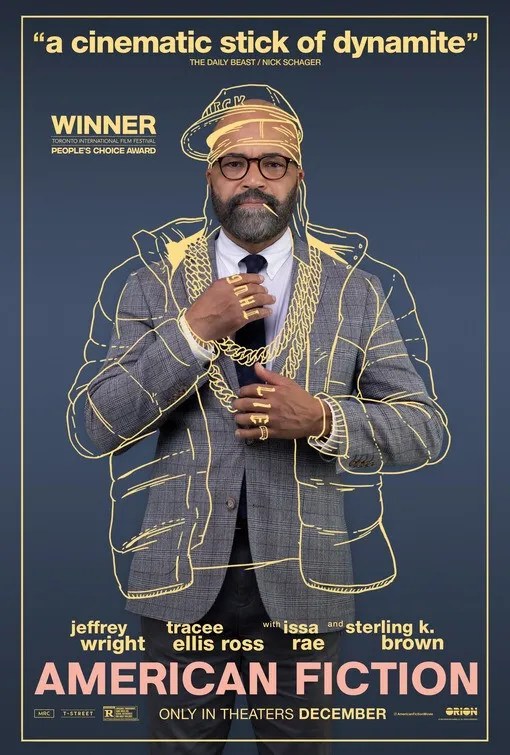
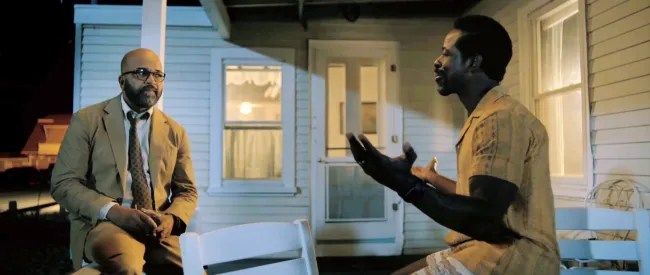
Dr Theolonius “Monk” Ellison (Jeffrey Wright) is fed up. His new book is getting no traction with publishers, who want a “Black book” not the classics-inspired literary novels Monk writes. His family life is at a point of crisis: his mother (Leslie Uggams) has rapidly onset dementia, his doctor sister Lisa (Tracee Ellis Ross) is divorced and tired of being the only child looking after her, his plastic surgeon brother Cliff (Sterling K. Brown) is embracing his coming-out and divorce with drugs and a parade of younger boyfriends. In need of money to pay for his mother’s care, Monk pours his frustrations into writing exactly the sort of book publishers want: My Pafology, a crime-drugs-and-deadbeat filled stereotypical low-brow “Black” novel that he submits as a joke. Needless to say, the liberal white publishers come back with bank-busting advances, wowed by this “authentic Black voice” – much to Monk’s disbelief and self-loathing indignation.

This satire is the flashy clothing American Fiction dresses itself up in. In this impressively confident debut from writer-director Cord Jefferson, it frequently pulls out some whipper-sharp comic lines as it skewers the guilt-ridden pretentions of the liberal white elite, so concerned with being seen to care about embracing Black culture, that they don’t even notice they have effectively ghettoised Black culture into exactly the sort of crime-and-drugs nonsense Monk satirises in his fake novel. It’s a good joke, and the fact that Cord Jefferson’s film wears it a bit thin (the parade of self-congratulatory white people falling over themselves to praise the novel are fundamentally reprising the same joke each time – nothing new is added once you’ve got it the first time) doesn’t change that.

Interestingly, as I sat in an Oxford cinema-screening exclusively filled with white people laughing, I realised American Fiction is its own sort of meta-satire. How many people in the cinema I sat in realised they were proving the point of the film? American Fiction displays to white people a funny sketch about our own concerns to be seen to be saying and doing the right thing. We laugh at these idiots and reassure ourselves that we would never be so utterly unaware about our patronising gate-keeping, while also embodying many of the attitudes the film is skewering. We want to be seen to be right-on and laughing at the right things. It’s a neat way for Jefferson to both entertain and challenge us.

Jefferson’s film is partly about urging us to break beyond our shallow ideas of what “Black America” must be. Monk comes from an affluent middle-class family that, skin colour aside, wouldn’t like out of place in the Hamptons. His background is one of beach-house second-homes, art on the walls, lacrosse sticks in his bedroom and a family where everyone has a doctorate. He even has a devoted housekeeper, expertly played by Myra Lucretia Taylor, who’s both an honorary aunt and also a shrewd commentary on stereotypical Black servants, calling the children “Mr Monk” and “Mr Cliff”.

While Monk writes about the urban ghetto with satiric anger, it’s clear that world is almost totally alien to him. The film itself acknowledges it: in an intriguing exchange, Issa Rae’s author of a more stereotypical ‘Black’ novel (We’s All Lives in the Ghetto) even calls out Monk for us air of class-based judgement around other parts of the Black community, social commentary I would have liked the film to challenge more (The film encourages us to question Monk, a snob and arguably a slight bully, but frequently gives him a pass by contrasting him to the ridiculous and more selfish characters around him). It would have been interesting to see more of the reaction to the book from Black readers, not just white ones eager to show their credentials.

American Fiction though takes on the targets it goes for with a certain aplomb. Publishers, literary prize givers and the overtly-but-dutifully-PC are effectively skewered. It’s also one of the few books that really gives a sense of writing. Monk’s drafting of the novel sees the characters he is bringing life to appear in his study with him, parroting his dialogue and then turning to discuss character, motivation and make suggestions to the author. More of this, giving us more insight into the novel and the assumptions that underline Monk’s writing of it, would have given an interesting extra dimension to the film’s satire.

Jefferson’s clever and vibrant film suckers us in with satire, but really flourishes as a complex family drama. He offers an affecting and compassionate storyline of siblings who have grown apart due to their natural inclination to independence, distance and repressed emotion. (It’s suggested this is a trait inherited from their father, a famed surgeon with a rollcall of infidelities.) American Fiction beautifully sketches very natural portraits of siblings who know exactly how to push each other’s buttons, but also quickly fall back onto a shared language of memories and mutual experience. For all the satire, it’s as a heartfelt, small-scale family piece that the film really excels.

This is partly because it gives such wonderful opportunities to a fabulous array of actors. Jeffrey Wright, so often a supporting player quietly adding depth to a series of under-written franchise films, is excellent as Monk. Wright perfectly captures his hangdog resentments, his bitterness at not getting a fair deal and middle-age ennui. He also brings to life the pre-emptive walls Monk has built up to keep pain (and other people) out, the same intellectual distance that makes his books hard-sells. Combine that with Wright’s expert comic timing – not only his awkwardly uncomfortable shifts into his urban persona, but also his head-in-hands exasperation at the shallowness of the world – and this is a brilliant showcase for a consistently impressive actor.

Equally fine is Sterling K Brown as Monk’s frequently selfish brother Cliff, trying to enjoy life while he can – like Wright, Brown’s comic and emotional touch are spot-on. The film touches on themes of generational homophobia – their increasingly senile mother, sensitively played by Leslie Uggams, is clearly disapproving of his sexuality – but doesn’t hit this beat too hard. Tracee Ellis Ross is a breath of life-filled air as Monk’s sister while Erika Alexander gives emotional weight and depth to a slightly underwritten part as Monk’s new neighbour turned girlfriend Coraline.

American Fiction is frequently stronger when it focuses on crafting this low-key, realistic family drama, refreshingly clear of manufactured drama. What people will remember though is funny (if slightly one-note) satire – Monk even turns his story into exactly the sort of cross-racial appeal movie ready to collect awards, that you could argue American Fiction itself is. American Fiction ends with several alternative endings, each of which just made me feel Jefferson himself wasn’t sure how to end it. But, on the whole, this is a highly promising debut from Cord Jefferson, crammed with excellent dialogue and performances, which casts a fresh and urgent eye on important questions.

The Razor’s Edge (1946)

The Razor’s Edge (1946)

A bubbling soap full of incidents, disguising itself as a meditation on philosophy

Director: Edmund Goulding

Cast: Tyrone Power (Larry Darrell), Gene Tierney (Isabel Bradley), John Payne (Gray Maturin), Anne Baxter (Sophie MacDonald), Clifton Webb (Elliott Templeton), Herbert Marshall (W Somerset Maughm), Lucile Watson (Louisa Bradley), Frank Latimore (Bob MacDonald), Elsa Lanchester (Miss Keith), Cecil Humphreys (Holy Man), Fritz Korner (Kosti)

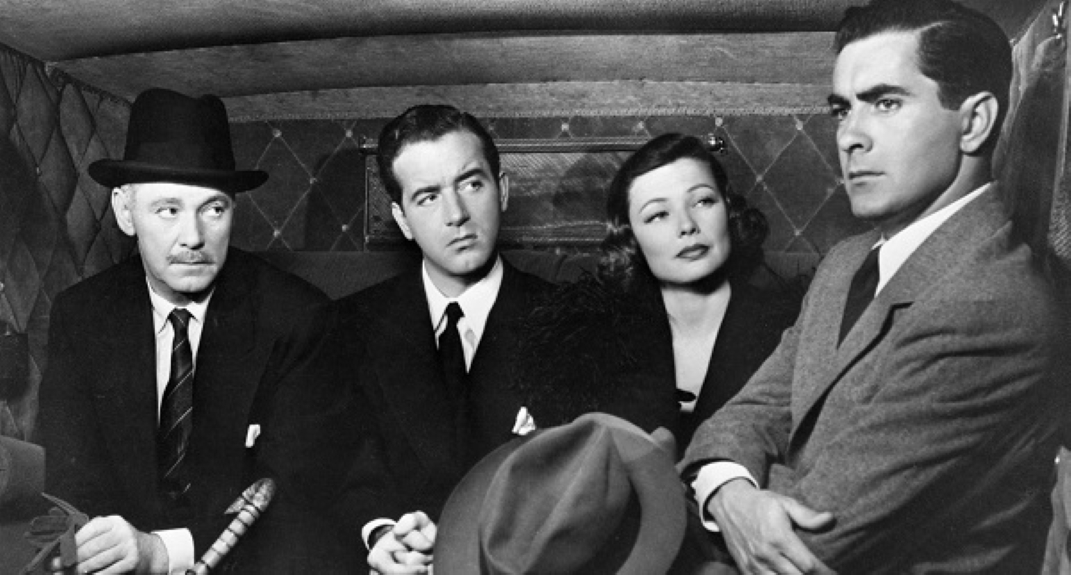
“What’s it all about?”: a question asked long before Alfie and it’s the one asked by Larry Darrell (Tyrone Power) as he returns from World War One to Chicago. Suddenly those garden parties and country clubs all look rather empty and shallow. Larry is engaged to Isabel (Gene Tierney), but he’s not interested in office work and domesticity. He wants to live a little bit, to find out what life is about. Doesn’t he owe that to the man who died in the war to save his life? With just $3k a year (over $50k today, which must help), he heads for the artistic life in Paris. After a year apart, Isabel decides it’s for her (£3k a year? What kind of life is that!) and marries a banker so dull he’s literally named Gray (John Payne). Flash forward to 1929 and the Crash has upturned the lives of the Chicago bourgeoisie – perhaps Larry’s inner contentment will mean more after all?

Adapted from W Somerset Maugham’s novel – with Maugham as a character, played by the unflappably debonair Herbert Marshall – The Razor’s Edge is a luscious period piece with pretentions at intellectualism but, rather like Maugham, is really a sort of a soapy plot-boiler with a veneer of cod-philosophy. Not that there’s anything wrong with that – after all the suds in Razor’s Edge are frequently rather pleasant to relax in – but don’t kid yourself that we are watching a thoughtful piece of cinema. It’s closer in tone to Goulding’s Oscar-winning Grand Hotel than it might care to admit.

Our hero, Larry Darrell, should be a sort of warrior-poet, but to be honest he’s a bit of a self-important bore. Played with try-hard energy by a Tyrone Power desperate to be seen as a proper actor rather than action star, Larry has a blissful “water off a duck’s back” air that sees him meet calamity with a wistful smile and the knowledge that providence evens everything out. Be it the break-up of an engagement or the death of close friend, little fazes Larry who has a mantra or piece of spiritualist advice for every occasion. Bluntly, our hero is a bit of a prig whose middle-class spirituality has all the mystical wisdom of a collection of fortune cookies.

It’s no real surprise that the film’s weakest parts are whenever Larry engages with the vaguely defined collection of homilies and mumbo-jumbo he picks up about spirituality. All this culminates in an almost embarrassingly bad sequence in the Himalayas, where Larry stays under the clichéd tutelage of a shoe-polish-covered Cecil Humphrey as a Holy Man whose every utterance is a vague collection of Diet Yoda aphorisms. Larry, with all the self-importance of the financially secure middle class, returns to the West sublimely certain of his own higher contentment and rather patronisingly looking down on the rest of the characters as shallow, grasping bourgeoisie.

The Razor’s Edge’s insight into human spirituality essentially boils down to “step out of the rat race and you’ll be a better man” – again made much easier, since Larry “forsakes” worldly wealth but can still dapperly turn out to a fancy function in a perfect tux. To be honest it becomes a bit wearing to see the other characters treat him like a sage and more than a bit mystifying why Isabel remains stubbornly obsessed with him for her whole life.

But if she wasn’t, we’d lose a large chunk of the appeal of the movie. The Razor’s Edge’s philosophy may be paper thin, but as a soap it’s spot on. And the scheming, manipulative, vindictive, snobby and entitled Isabel is a gift of a part, seized with relish by Gene Tierney. Isabel wants Larry, not so much because of who he is but because he belongs to her, and she can’t believe he was willing to let her jilt him without a fight. The epitome of the self-obsession of the modern age that Larry has rejected, Isabel consistently puts herself first, clings to the luxuries of high living and can barely hide her bored disinterest in the tedious Gray (a perfect role for the solid but uninspiring John Payne). Isabel schemes and attempts seduction of the saintly Larry, and her hissable antics provides The Razor’s Edge with much of its enjoyable thrust.

Because as a soap is where this film is most happy. It’s actually very well staged and shot by Goulding, full of carefully considered camera moves (including a late “wham” line which we don’t see a character react to, leaving their response open to our interpretation) and skilfully using depth of plain to showcase a series of luscious sets and impressively recreated Parisian streets on sound stages. The Razor’s Edge has a lot of very professional Hollywood craft behind it.

Its event-filled sub plots also give a host of excellent scenes and fun dialogue to its supporting cast. Anne Baxter won an Oscar as the tragic Sophie, a bubbly socialite (and old flame of Larry’s) from Chicago, whose husband and baby are killed in a car accident, tipping her into years of alcoholism and (it’s implied) life as a “good-time-girl” in a seedy Parisian bar. Baxter seizes this role for what it’s worth, from initial charming naivety to tear-streaked discovery of her bereavement to fidgety attempts at sobriety after Larry decides to marry her to keep her on the straight-and-narrow (needless to stay, temptation is put in the way of the pacing, smoking, fist-forming Sophie by the blithely shameless Isabel). It’s a very effective and sympathetic performance.

Clifton Webb, at the time Hollywood’s leading waspish figure of camp, has an Oscar-nominated whale of a time as Elliot Templeton, preening but generous socialite, delighting the finer things in life (from fine wines to perfectly stitched dressing gowns) who provides a catty sounding board to Isabel and whose final hours are spent bemoaning being snubbed by a countess. Herbert Marshall delivers a perfect slice of British reserve and gently arch commentary as Maugham (the real Maugham prepared a script which was junked by the studio, ending his Hollywood career there and then), purring his dialogue with his rich, velvet tones.

It serves to remind you that The Razor’s Edge works best as an event-packed piece of social drama, which it swiftly becomes as deaths, tragedy, alcoholism, scheming and feuds pile on top of each other in the second half with the blissful Larry casting a quietly judgemental but kind eye over everything around him. For all its attempts to look into the human condition, this is where The Razor’s Edge is at its best: engaging supporting characters and a hissable villain, all leading to a series of juicy plot developments. For all its literary pretentions, it’s at best a shallow From Here to Eternity.

Wonka (2023)

Wonka (2023)

Charming but light confection that repackages Wonka into a Paddington type figure

Director: Paul King

Cast: Timothée Chalamet (Willy Wonka), Calah Lane (Noodle), Keegan Michael-Key (Chief of Police), Paterson Joseph (Arthur Slugworth), Matt Lucas (Gerald Prodnose), Mathew Baynton (Felix Fickelgruber), Sally Hawkins (Mrs Wonka), Rowan Atkinson (Father Julius), Jim Carter (Abacus Crunch), Natasha Rothwell (Piper Benz), Olivia Colman (Mrs Scrubit), Hugh Grant (Lofty), Rich Fulcher (Larry Chucklesworth), Rakhee Thakrar (Lottie Bell), Tom Davis (Bleacher)

What did Willy Wonka do, before the factory and the carefully stuffed golden tickets in selected chocolate bars? According to Paul King’s amusingly light confection of a film, he was just a guy with a sweet box and a dream, befuddled by the big city. A bright-eyed, naïve young man, Wonka (Timothée Chalamet) is swiftly bested by the Chocolate Cartel and conned into a life of servitude by his landlady Mrs Scrubit (Olivia Colman), after not reading the contract small print. But Wonka’s invention, good cheer and alliance with put-upon fellow Scrubit victim, orphan Noodle (Calah Lane), sees him turn adversity into cartel-smashing triumph.

It might be clear from that paragraph that the Willy Wonka of this film bears very little resemblance to the figure from the Dahl original who happily allows children to face dangerous punishments in his factory. King’s film has some flourishes of Dahl in its character names and eccentricities but, in terms of tone, it takes far more after his successful Paddington films than anything Dahl wrote. Wonka himself, in his accident-prone naivety, decency and fundamental sense of fair-play, is certainly a figure in the shadow of Peru’s most beloved bear, with the film swiftly also giving him a version of Paddington’s eccentric surrogate family and increasingly comic traps to get out of.

Wonka isn’t really Dahl and doesn’t bother to begin to explore how on earth the man we see here might become the character from the books. Does that really matter? I suppose not. I guess you need to judge each film on its merits, and while the Dahl purists are unlikely to consider this fitting for the great storyteller, I’d point them instead towards Wes Anderson’s gorgeous short films, which are a true blast of Dahlish delight.

Wonka instead is a sweet, bouncy, family-friendly musical with a hero designed to appeal to all ages, carefully set in a non-descript European-ish location that combines elements of multiple cities, regions and periods (so much is the film a higgledy-piggledy fantasia combination of places, all enhanced with CGI, that it’s a surprise to see Oxford’s Radcliffe Camera appear in the film’s conclusion unadjusted and intact). It’s packed with songs – which, if I’m being honest, are mostly clever and decent than catchy or memorable – and is set in a world where corrupt monks and police detectives will bend any rules for another chocolate fix.

At the heart of all this, Timothée Chalamet gives a sprightly and engaging performance. Chalamet dials up the eccentricity of Wonka, creating a character that is whimsical but caring, an innocent abroad who just can’t understand why people would be cruel or lie. Chalamet throws himself into some effective singing and dancing, and generally lands the role pretty much in the sweet spot between sickly sweet and deliciously more-ish. It helps a great deal that he develops a brilliant sibling chemistry with Calah Lane, who is street-smart and a lot of fun as an orphan whom the world has taught to be cunning and creative.

King crafts a number of set-pieces that fit this revisioning of Wonka as a song-and-dance man at the heart of an Arthur Freed-style musical. There is a fine word-play packed song (as Wonka searches for effective rhymes for Noodle) in a giraffe pen, a balloon-carried number in the skies and, best of all, a very funny work song sung by those poor unfortunates conned by Mrs Scrubit into a lifetime of debt. This surrogate family, by the way, is a neat illustration of King and co-writer Simon Farnaby’s trick of turning potential one-note characters into people you care for, ably embodied by Jim Carter as a stuffy accountant, Natasha Rothwell as a bouncy seamstress, Rakhee Thakrar as a nervous telephonist and Rich Fulcher as a past-his-best comedian.

Much like his Paddington films, Wonka takes place in a world of minimal threat. The villains are largely comic – Olivia Colman surely will spend most of the next few years duelling with Helena Bonham Carter to land toothy, sweaty grotesques roles like Mrs Scrubit – with the Chocolate Cartel in particular making a droll collection of smugly superior types, ably played by Paterson Joseph, Matt Lucas and Matthew Baynton. Their operations take place in a surreally complex underground base (under a cathedral guarded by chocolate-obsessed monks naturally), built around a vault full of liquid chocolate. Following the structure of both Paddington films, naturally this becomes the site of an act four heist by our heroes.

Wonka frequently feels a little too often like it is simply repeating and representing stuff that had worked well for King and Farnaby in the past. (You also feel that about the casting of Hugh Grant as an Oompa-Loompa – fundamentally that is the joke, although Grant delivers it repeatedly marvellously.) While few people do this sort of thing better than them, you feel Wonka offered the chance to be something more rather than a spiritual retread of the superior Paddington films.

It’s a film that never quite finds it own identity, or really finds a Dahlish uniqueness. It settles, happily, for being a feel-good confection, a charming series of scenes and songs delivered with just the right level of enthusiasm and glee by a cast who look like they are having a marvellous time. It’s charming enough and I enjoyed it, but I can’t say I loved it like I do Paddington 2. I can’t help but feel that’s because the emotional connection isn’t there. Wonka himself, repackaged as he is, is a little too odd to be as adorable as the Bear, and without really, deeply, caring for Wonka the film itself doesn’t carry the impact it should. It’s entertaining, but it didn’t win a place in my heart.

The Decameron (1971)

The Decameron (1971)

Pasolini’s naughty-boy Boccaccio adaptation, aims for political but in loves with cheek

Director: Pier Paolo Pasolini

Cast: Franco Citti (Ciappelletto of Prato), Ninetto Davoli (Andreuccio), Vincenzo Amato (Masetto), Maria Gabriella Maione (Madonna Fiordaliso), Angela Luce (Peronella), Giuseppe Zigaina (German Monk), Pier Paolo Pasolini (Giotto’s Pupil), Giacomo Rizzo (Friend of Giotto’s Pupil), Guido Alberti (Musciatto), Elisabetta Genovese (Caterina), Giorgio Iovine (Lizio)

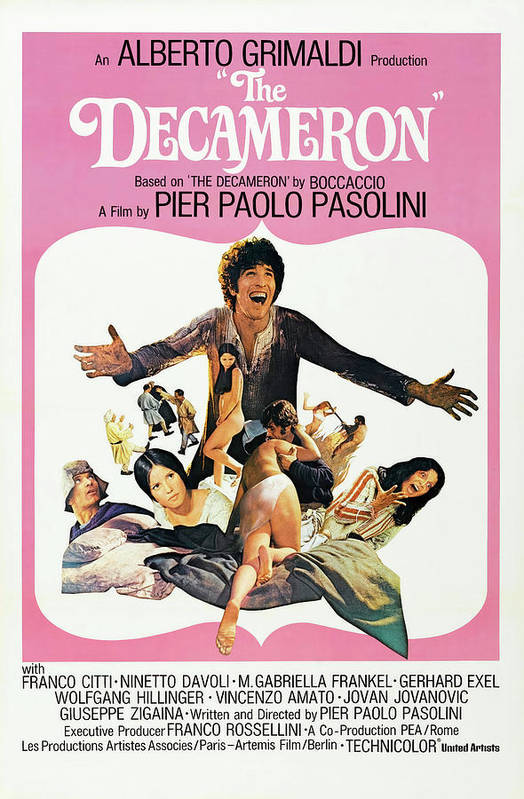
The Decameron is a collection of a hundred tales written by Boccaccio in the 14th century, which offers a rich mosaic of Italian life from the tragic to the comic. But it also has a reputation for a lot of bawdy naughtiness – and perhaps part of that comes from Pasolini’s cheeky, sex-filled adaptation, with its playful lingering on some of the most rumpy-pumpy filled yarns. Scholars of Boccaccio were appalled in 1971; it’s a gag that I think Boccaccio might have appreciated that today Pasolini’s film is required viewing on Boccaccio courses.

Much like with The Gospel According to Matthew, Pasolini shifted the location to fit his themes. Here most of the tales take place in Southern Italy – Neapolitan accents and dialect abound – and the new underlying theme explore the exploitations of simple, honest peasants by cannier, ruthless people from the richer north. Roughly linking the tales together is a pupil of Giotto – played by Pasolini himself – preparing a fresco in a monastery, inspired (it becomes clear) by the stories which may in turn be inspired by ordinary people he sees on the streets. The Decameron is aiming to be a playful musing on the chicken-and-egg nature of artistic inspiration and the way different artists in different genres can inspire and motivate each other to ever greater heights.

Or at least those themes are there. But they can be hard-to-spot beneath the surface, since The Decameron mostly delights in its array of sexual goings-on, which pretty much tick-offs every taste and inclination you can imagine from masturbation to orgies, as well as darker content like rape and paedophilia. To be honest, for all that Pasolini is an artist thinking earnestly about the classics, he’s also a very naughty boy eager to get a few erect penises into mainstream film-making (and The Decameron was a huge hit in Italy and played in arthouse cinemas the world over). The Decameron, for all its pretentions about art, is also a bit of end-of-pier soft-porn – or a hard-core Carry On.

There is something deliberately amateurish about The Decameron in its scatological humour and the bumpy, rushed nature of its film-making. In common with many Euro films at the time, it makes no effort (either in its Italian or English dubs) to match the words we hear with the movement of the actors’ mouths, with most of the sound having a muffled post-recording session feel to it. The camerawork and editing are frequently jolted and rushed, adding to the bawdy sense of things being thrown together, Pasolini using sped-up film and punch-line jumpcuts to keep up the improvisational energy. It makes the film feel at times like a student revue.

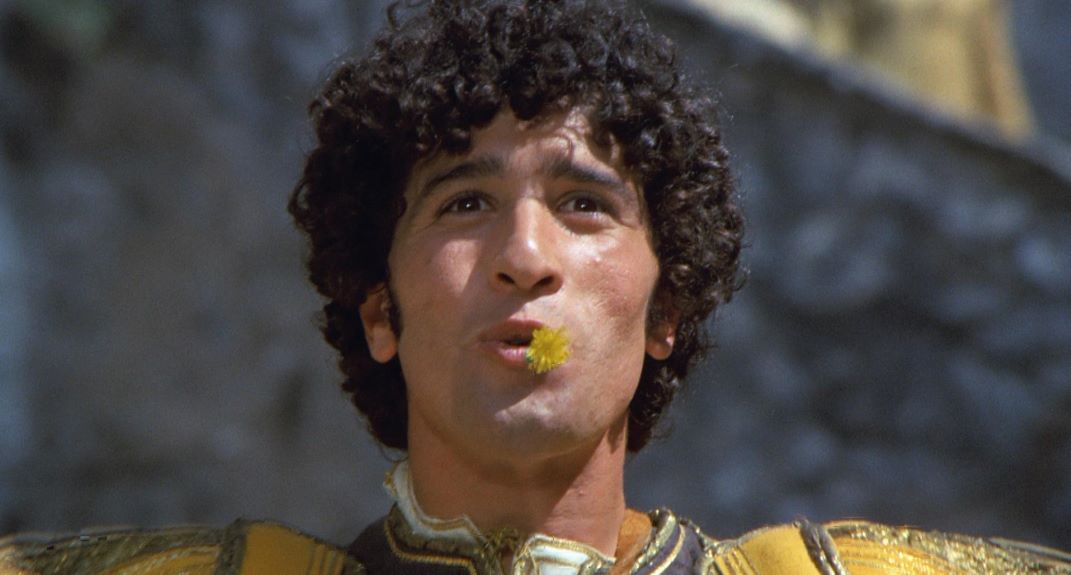
Pasolini shot the film entirely on location, with a cast of actors who were mostly unprofessional. As with many of his films, much of the casting seems to be based on people’s appearances more than anything else. The Decameron has a superfluity of striking faces. Toothy grins or missing teeth, hooded eyes, vacant grins, these faces look like they could have stumbled in from a Brueghel painting. Everyone looks distinctive and this parade of striking faces adds to the film’s wild energy.

It also makes everyone in this Boccaccio cheek and smut stand out. Pasolini’s trick was to argue that the medieval era, in many ways, wasn’t that different from today. He didn’t present it as a high-blown time of men in tights speaking poetry, but one where people were obsessed with money and sex (usually the latter) and showed no shame in chasing it. An era where the medieval world looked dirty, shabby and slightly sordid, rather than what the poets would have us believe.

This informed his choice of stories. When you start with a naïve young man nearly drowned in a pool of shit, you can tell that this isn’t exactly going to be Hollywood medieval epic. Pasolini’s chosen tales involve: a well-endowed gardener pretending to be mute so he can shag a convent full of nuns, a woman boffing her lover while her husband inspects the insides of a large pot, a dying sinner (who we’ve already seen proposition a child for sex) claiming to be a saint, a girl and her lover shagging naked on a rooftop, a monk tricking a man into allowing him to have sex with the man’s wife, and concludes with a man receiving a visit from the ghost of a dead friend telling him that sex is no sin and the angels of heaven say he should certainly give his girlfriend a good pre-marriage seeing to.

Throughout, Pasolini aims to show a world where simple pleasures mix with the exploitation by the rich and powerful of the simple, poor and naïve. It’s a not a theme that comes out all that much, especially since few people are going to remember the political message when we are all much more inclined to focus on the constant in-and-out. The Decameron might want to think it is a grand statement, but its really a great big joke, told by a director who is sort of laughing at us while he does it. It’s a rather juvenile piece of titillation, passing itself off as political statement.

Perhaps that’s why Pasolini felt a bit embarrassed about it all later. After a parade of knock-offs, he effectively disowned the film, claiming low-quality imitators that dialled up the sex even more had missed the point and buried the anti-capitalist message of his own film. Since I can imagine several people watching The Decameron and completely missing the point in the first place, I can’t help but feel he has only himself to blame.

Poor Things (2023)

Poor Things (2023)

Distinctive, challenging and hilarious film that mixes social issues with quotable dialogue

Director: Yorgos Lanthimos

Cast: Emma Stone (Bella Baxter/Victoria Blessington), Mark Ruffalo (Duncan Wedderburn), Willem Dafoe (Dr Godwin Baxter), Ramy Youssef (Max McCandles), Christopher Abbott (Alfie Blessington), Kathryn Hunter (Madame Swiney), Jerrod Carmichael (Harry Astley), Hanna Schygulla (Martha von Kurtzroc), Margaret Qualley (Felicity), Vicki Pepperdine (Mrs Prim), Suzy Bemba (Toinette)

“It’s Alive!” cries Frankenstein as his creation is sparked to life before abandoning it to become a revenging monster. Yorgos Lanthimos’ Poor Things imagines a different creature – nurtured (admittedly as part of an eccentric experiment), maturing at an accelerated rate, discovering physical and intellectual stimulation and deciding they can’t get enough of either of them. Adapted from Alastair Gray’s novel, Poor Things is a vibrant and challenging film that, for all its sex, is a feminism-tinged Frankenstein that says no to societally enforced ideas of shame and conformity.

In Victorian London, Bella Baxter (Emma Stone) is the creature, a stumbling, barely articulate young woman when she is introduced to trainee doctor Max McCandles (Ramy Youssef) by her guardian (her “God”) Dr Godwin Baxter (Willem Dafoe). “Bella” is resurrected corpse – the body of a suicidal pregnant woman, the brain of the child she carried. Developing at an accelerated rate, Bella is both Godwin’s experiment and his surrogate child. But as Bella discovers the pleasures of the body and the wonders of the world around her, she wants to experience life outside of the house. Eloping – with the agreement of her guardian – with roguish lawyer Duncan Wedderburn (Mark Ruffalo), Bella discovers not only sensual pleasures but deeply engaging intellectual pleasures across Europe, determined to become her own woman defined by no-one.

Poor Things is practically a dictionary definition of a Lanthimos epic (fish-eyed lenses, spidery text captions, a jarring mix of period and modern) and is almost impossible to categorise. It is, in turn, serious and thought-provoking, laugh-out-loud funny, uncomfortable and challenging. Shot in a deliberately artificial manner, its cinematography and sets reminiscent of Bram Stoker’s Dracula, it’s Victorian but also a remix of everything from Metropolis to the mansion at the heart of Sunset Boulevard, here turned into a Dr Moreau style den of freakishly spliced animals. It makes for something wildly, unpredictably unique visually, a smorgasbord of the real, the overblown and plain weird.

With a sharp script by Tony MacNamara, crammed with quotable lines (sometimes Lanthimos has a bit too much of an eye on creating GIF moments) Poor Things reinvents itself as constantly as its hero. Opening in rich black-and-white to chronicle Bella’s early years, it explodes into a gorgeously expressive Powell and Pressburger colours as she experiences the world. It superbly mixes the real with the weird, shaping its collection of bizarre characters into living-breathing people while keeping the world around them a melting-pot of styles and genres.

Poor Things has been attacked by some as semi-pornographic or exploitative. In fact, it’s a complex and daring look at female empowerment. On first discovering the pleasures of, well, self-pleasure (with a selection of vegetables), Bella is immediately told such things are not done in polite society. But Bella refuses to see “furious jumping” as shameful, but just a source of pleasure and experience like any other. If she takes pleasure in the act with someone, why should be ashamed? And if she makes all the decisions about what does and doesn’t happen with her body, who should judge her?

Bella is a curious hybrid her whole life: the body and feelings of an adult, with a swiftly developing brain, absorbing understanding of the world around her swiftly. Like a child she lashes out at the rules Godwin and his protégé Max place over her (partly for her protection, partly to continue their psychological development experiment). But this comes from her increasing frustration at having her horizons limited by these men, deciding what and who she can see. Lanthimos takes clear from the start Bella can take as much sensual pleasure in feeling fallen leaves under her body or watching fireworks in the sky as anything else and doesn’t feel she should be denied it.

Poor Things sees Bella demanding, and then making, her own decisions – and to hell with expectations. Whether throwing plates at dinner because she wants to leave or choosing to run away to Europe with caddish Duncan for the experience of it, she shall make her own choices. Decisions being made for her, infuriate her: Max’s refusal to let her leave or Duncan’s decision to take her, unannounced, on a cruise. Bella will talk to who she wants and experience anything she finds curious. If she decides to go on the game in Paris in a high-class brothel (on the basis that she enjoys sex, the hours are short and it pays well) who gives a damn if Duncan is appalled. He doesn’t – for all he might like to think so – own her.

These are complex and challenging ideas, as Bella jokes she has become “the means of her own production”. But Bella believes the only thing in the world should make us ashamed is the suffering of others: witnessing a slum in Alexandria she is moved to tears at the indifference that lets children die in poverty, with only platitudes for these “poor things”. And you can see her point: why flinch at personal misconduct but not even blush at the idea of others dying because of our inaction. That’s why she doesn’t want to be constrained by societies ideal, be that enjoying sex, reading Marxism, dancing all night long or wanting to punch a baby that won’t stop crying in a restaurant.

All these complex ideas are brilliantly captured in Emma Stone’s extraordinary performance. It is, of course, a physical marvel, her body slowly, jerkily, developing, but also a rivetingly complex embodiment of a hugely complex personality, absorbing everything around her, processing it and then shaping it into her own world view. It’s reflected in the gorgeous eccentricity of her dialogue – she is “a changeable feast” of views, peppering her sentences with astute (and funny) unique metaphors “finding being alive fascinating”. She makes Bella determined, naïve, exceptionally wise and insightful, uncertain, kind and unforgiving. It sits perfectly at the heart of a film about a woman refusing to be ashamed and determined to better the world around her. It’s a brilliant creation.

One of many in the film. Godwin, a hideously disfigured famous surgeon, was the subject of his own father’s experiments (Godwin describes with matter-of-fact scientific curiosity a series of repugnant surgical experiments, including the removal of organs to discover if the body needs them – “turns out we do”). Godwin seems at first a blinkered mad scientist, but in Dafoe’s brilliantly layered performance, a humanitarian with a sense of fair play is revealed, who genuinely cares for his creation and refuses to stand in her way. Although she calls him “God” he is far from a messianic tyrant, instead refusing to repeat the mistakes of his own tyrannical parent.

He contrasts neatly with Ruffalo’s rake. Ruffalo has a whale of a time in a ‘leave nothing in the locker room’ performance of comedic excess. Duncan seems at first a threatening rake, but becomes infatuated with the mysterious Bella (something she finds more and more wearing), crumbling from worldly-wise playboy to a spoilt schoolboy whining about things he can’t have. Ruffalo inverts Bella’s development: as she becomes more mature, he degenerates into a dependent child.

Which fits because Poor Things is a Frankenstein-in-reverse story of a woman not being defined by men. Those who try fail, left to choose either to support her or flail against her rights. Lanthimos’ work is striking, original and hugely dynamic, brilliantly mixing striking visuals with searching questions. Why shouldn’t women feel the same lack of shame in their bodies and accomplishments as Bella does? It’s an urgent question – that’s getting lost in discussions about the films. Often as wildly funny as it is freakily weird, its deliberate artificiality and anachronisms help create a film that is a playground of ideas. I’m still working out what I feel about it all now – and how refreshing to have a film as bold as that to consider?

L’Argent (1983)

L’Argent (1983)

Bresson’s final film: challenging, cold, hard to watch, definitely leaves you thinking

Director: Robert Bresson

Cast: Christian Patey (Yvon Targe), Vincent Ricterucci (Lucien), Caroline Lang (Elise), Sylvie van den Elsen (Grey haired woman), Michel Briguet (Grey haired woman’s father), Beatrice Tabourin (Ka photographe), Didier Baussy (Le photographe)

Robert Bresson is today so widely acclaimed as one of the patron saints of cinema, it’s odd to think that in 1983 at Cannes he was furiously booed when he won the director prize for L’Argent. But Bresson’s style had always been divisive – before the vindication of history – and L’Argent, his final picture, is one of the purest, most uncompromising slices of Bressonism you are likely to see, not to mention an uncomfortable and deeply challenging work of art. Uncompromising in almost every sense, it is a film that climbs under your skin and troubles your mind for days after watching.

Based on a short story by Leo Tolstoy, L’Argent’s theme is the corrupting influence of money. Two rich kids, troubled by the small allowance from their parents, forge a 500 Franc note and exchange it for change in a photography shop. The owner, keen to get rid of the offending note, instructs his assistant Lucien (Vincent Ricterucci) to pay working-class Yvon Tonge (Christian Patey) with it. When Yvon uses it in a café, he is arrested and charged, his pleas of innocence ignored. Losing his job, with a wife and child to support, Yvon slides down a slippery slope encompassing theft, jail time, tragic bereavement and murder leaving him a brutal shell of the man he was before.

Bresson’s film deals with the inexorable inevitability of fate, once it is prodded in a certain direction by the destructive forces that govern our world. Those forces are themselves governed by cold, hard mammon and the selfishness and casual cruelty of those who have it or want it. Bresson’s film is littered with shots of hands at work – nearly always that work involves the passing of bank notes from one place to another. Money is what makes the world go around – it dictates power and privilege and it fundamentally decides who is believed and who is punished.

Yvon can plead in vain he is innocent of passing fake notes, because no one is going to listen to a working class joe with scarcely a penny to his name rather than the vouched-for employee of a respectable middle-class businessman. Yvon even ends his first court case by being rebuked for bringing into disrepute the names of such thoroughly respectable people. By contrast, when concerned her son might get caught up in the whole filthy affair, the mother of one of the original forgers simply hands over a wedge of cash to the cheated shop-owner to make the problem go away. Money talks.

And it has cast its verdict on Yvon, deciding he should be chewed up by the system and spat out a very different man. From the moment we first see Yvon arrested for the false note, we know he is doomed. Just as we know, from seeing Yvon’s first reaction to being accused (a violent shove that sends a waiter tumbling and glass smashing on the ground) that there is a capacity for violent revenge in him. Later, like a dim echo of this first moment, glass will shatter again on another floor, dropped by a grey-haired old woman hiding the fugitive Yvon. It’s a salutary reminder (one the film delivers on, with chilling impact, a few minutes later) that Yvon has a darkness that can harm others.

It’s a hardness sharpened by time in prison. Returning to the fertile ground of A Man Escaped, Bresson offers a chilling indictment of the prison system. Formal, cold and uncaring, it is a breeding ground for resentment and rage. The authorities read all incoming mail, but in no way think about its contents and the impact it will have on the receiver (the mail reading room is a voyeur’s paradise, the chance to observe the secret goings on of everyone before they even know it themselves). Incoming mail discovers Yvon’s sick daughter has died and his wife is leaving him for good. No attempt is made to support Yvon who quickly succumbs to rage (looking to strike a mocking fellow inmate with a metal serving spoon), punishment by isolation and a suicide attempt through stockpiling chill-pills (much easier to shut inmates up rather than help them).

Throughout Bresson shows the onslaught of cruel events on Yvon with his characteristic spare style (no music, well drilled actors, perfectly timed shots, composed to convey information in the most economical style possible). But L’Argent is also a film strikingly devoid of moral judgement. It’s very much left open to us when, how and why we may or may not lose sympathy with Yvon. After all we truly see him suffer, after trying his very best to play by all the rules (reporting where he got the fake note from, telling the truth in court) only for him to lose everything.

Is there a chance for redemption for Yvon? He discovers money talks and the world is fundamentally uncaring (after all it took his freedom, child, wife and a large part of his mental health). Photography shop assistant Lucien reaches the same conclusion: he’s been fleecing his crooked boss for weeks (‘I thought crooks looked after each other’ he tells his boss) but decides on one last theft to redistribute the wealth to the needy. Same conclusions, different methods to punish the world.

Yvon however decides to no longer restrain the dark impulses within him. He murders senselessly twice, grabs a few notes from a hotel cash desk and then finds himself protected be a selfless older woman (who he encounters initially eyeing up for theft). Staying in her home, her family in the same house, what will he do with this woman who does good things and expects nothing in return?

L’Argent is far from an optimistic film, with a hard-working family man turned into a family-free convict. In this uncompromising film, the final sequence is almost unwatchable in its bleak, terrible power as Yvon commits his final, inevitable, sins with a passion-free fixity of purpose almost impossibly horrible to watch. Bresson’s perfectly constructed film, full of detailed, clockwork precision has been slowly building to this horrific end, a natural one for a film highlighting the uncaring cruelty of the modern world.

Because money also doesn’t care about the damage it leaves, the collateral deaths or the cost on those on the margins. Was it this hopeless, systemic, inevitability the viewers at Cannes found so worthy of boos? The progress of events, one connected to another (and L’Argent, despite its structured formalism, is full of events of the least-Bressonist you can imagine, including a car chase) that forms a terrible, unsettling and unreassuring picture? Bresson leaves our judgement of Yvon entirely up to us: Tolstoy’s novella looked at the journey of redemption for its lead character. Bresson shows us the crimes and nothing else. If there is to be redemption or forgiveness we must ask ourselves if we can do it.

The Trial (1962)

The Trial (1962)

Welles exploration of paranoia and guilt is an easier film to admire than like (or enjoy)

Director: Orson Welles

Cast: Anthony Perkins (Josef K), Jeanne Moreau (Marika Burstner), Romy Schneider (Leni), Elsa Martinelli (Hilda), Suzanne Flon (Miss Pittl), Orson Welles (The Advocate), Akim Tamiroff (Bloch), Madeline Robinson (Mrs Grubach), Paolo Mori (Court archivist), Michael Lonsdale (Priest), Arnoldo Foa (Inspector A), Fernard Ledoux (Chief Clerk of the Court)

It had never happened to Welles before: in 1960 producer Alexander Salkind shoved a series of literary works at him and said “make one of these into a film! Money no object and complete creative control!”. Welles wasn’t going to say no. It hardly mattered that he’d barely even let Kafka cross his mind before: he could see a way to do The Trial and, by God, he wasn’t going to pass up this chance. To purists, The Trial is one of the few “pure Welles” flicks – the one Welles shepherded from start to finish and more-or-less ended up with what he wanted at the end of it (no wonder he called it “his best picture” – although he said that about all his pictures at one time or another).

The Trial adapts, fairly faithfully, Kafka’s surrealist novel. Josef K (Anthony Perkins), a middle-management pen-pusher, is accused of a terrible crime without being told what it is. He stumbles from encounter to encounter, law court to law court, never given the ability to defend himself, spiralling down the rabbit hole with no sunlight. Welles’ The Trial captures this by turning Kafka’s work into a fever dream. Scenes link together with all the structural logic of a dream – locations seem randomly connected, with Josef turning corners and finding himself in courtrooms or opening cupboards to find surrealist sequences like his prosecutors being whipped by an angry functionary.

Welles shot much of the film on location in a single abandoned Parisian railway station, with the abandoned, decaying rooms redressed into a series of locations from the Advocate’s rooms, to a church to a law court. This was mixed with sequences shot in Zagreb industrial estates and a factory set made up of 850 extras banging typewriters in unison and all rising to end their working day at the same time. There is a horrible un-reality reality to The Trial, a deeply unsettling realisation you are watching something both set in a world real and impossible.

In fact, The Trial may be one of the most uncomfortable films to watch ever made in its innate understanding of the domineering terror of paranoia. Welles used a series of low angles and wide lenses to stress the oppressiveness nearness of walls and ceilings. Rooms always seem to loom in and crush the characters, with K himself frequently framed hemmed in by objects, walls and people. There is a sense of being “watched” in every scene – either from the oppressive bodies that surround K, or the prowling tracking cameras that follow him from location to location.

The Trial is a sort of paranoid’s wet-dream, a nightmare world where logic is gone, our lead character has no control over his movements or destiny and the entire world seems to be constantly bearing down on him and us. Who better to play the twitch-laden centre of this than Anthony Perkins. Awkward, uncomfortable and never anything-less than tense, Perkins features in almost every scene but always feels buffeted by events rather than controlling them. He makes K hugely uncomfortable with others – the many women who throw themselves at K he treats with suspicion mixed with terror. His self-loathing bubbles up whenever confronted with mirror images (such as Akim Tamiroff’s timorous Bloch), invariably reacting with barely disguised contempt.

What’s also interesting in The Trial is the possible insight into Welles’ character. The easy interpretation is to see K as Welles, the court standing in for the Hollywood machine that had shoved Welles from pillar to post and never given him a chance. But, if so, why did Welles urge Perkins to play the role as shiftily and uncomfortably as he does? There is an air of guilt around K throughout – as if The Trial was his nightmare about getting caught for whatever he did. Is this how Welles saw himself? How fascinating that this artistic behemoth read The Trial and seemed to see it as the paranoia of a guilty man. Did the film speak to a deep self-loathing in Welles himself? Did he, in the dark when the demons come, think he’d inflicted his destruction on himself?

It’s a fascinating idea and makes it even more interesting that Welles is all over the film. He plays the corpulent, arrogant advocate, meeting supplicants whole luxuriating in bed with his accustomed bombast. But he also speaks the film’s woodcut-illustrated opening parable (a story of a man waiting at a gate, that he moved from the books Priest to his faceless narrator). Welles’ tones are heard coming from a range of mouths as he overdubbed many of his Euro actors. He even speaks the credits. Everywhere you turn you see and hear Welles and it’s hard not to start to feel perhaps we are stumbling inside his own terrible fantasies. Perhaps The Trial is what Welles’ dreams (or nightmares) were like?

The feel of a nightmare often makes The Trial an uncomfortable and, if I’m honest, less than enjoyable watch for all the undoubted panache it’s made with. In fact, since the panache is partly designed to illicit that response, it’s almost a tribute to the film’s success. The Trial is masterful, but in its unsettling sense of paranoia also uncomfortable, although it’s fascinating to see Welles layering some (perhaps inner) guilt on top of Kafka’s tale of an innocent crushed in the system. Either way, there is plenty to admire if not love about The Trial.