Category: Marvel films

Captain America: Brave New World (2025)

Captain America: Brave New World (2025)

Pure, unfiltered, content nothing more. Full of stuff you’ve seen, doing things you expect.

Director: Julius Onah

Cast: Anthony Mackie (Sam Wilson/Captain America), Harrison Ford (Thaddeus Ross/Red Hulk), Danny Ramirez (Joaquin Torres/Falcon), Tim Blake Nelson (Samuel Sterns), Shira Haas (Ruth Bat-Seraph), Carl Lumbly (Isaiah Bradley), Xosha Roquemore (Leila Taylor), Giancarlo Esposito (Seth Voelker/Sidewinder), Liv Tyler (Betty Ross)

Welcome to a Brave New World of Content. There’s nothing really wrong with Captain America: Brave New World. But there are also feels like no real reason for it to exist. Let it pass before your eyes for a couple of hours and you’ll have a decent time: then you’ll barely remember it, leaving you as brainwashed as it’s villain’s Mr Blue Sky programmed minions. It exists because the MCU is a gargantuan shark that has to keep moving forward, consuming more and more of the cultural conversation to stay alive.

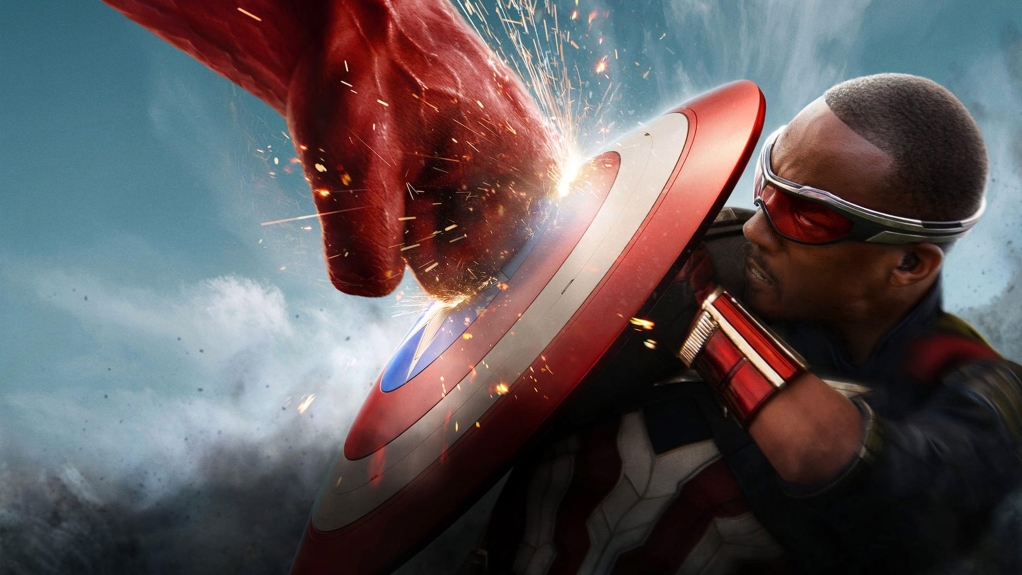
What’s it about? Sam Wilson (Anthony Mackie) is our new Captain America, still air-bound with his Falcon wings (now powered up with some Wakandan science) but without the super-serum that made Steve Rogers near-invulnerable. His new boss, ex-General-now-President Ross (Harrison Ford, replacing the late William Hurt), has his doubts – but is also dealing with his own anger-management issues. Ross is being manipulated by imprisoned evil genius Samuel Sterns (Tim Blake Nelson) who wants Ross’ hypocrisy exposed to the world – and to turn him into Red Hulk for good measure. Since every single scrap of publicity material reassured us Red Hulk appears in the film, it’s not a surprise to find out he succeeds.

It’s all told in a reassuring way: another film pressed out of the MCU cookie-cutter. There is an interesting story dealing with Sam’s doubts about his worthiness, not least since he lacks Steve’s strength and speed. It’s so interesting… that Marvel has already made a TV series about it. Brave New World offers a less interesting, crib notes version of The Falcon and the Winter Soldier, while anxiously dancing round that series’ engagement with the moral complexities of a Black man taking on the name of Captain America, representing a country whose track-record on race is not something to boast about.

All the best stuff has already been rinsed once through the MCU content machine. Sebastian Stan pops up to repeat the moral message of that series in a single scene. Carl Lumbly returns as an aged Black Captain America, ill-treated by the government (although his background is skirted round by a film, terrified of being accused of any form of political statement). Sam, just as he did in the series, wonders about powering himself up to Steve levels and decides not. For anyone who has seen the series, it’s a shallow retread. For anyone who has not seen it, it makes very little impression.

Brave New World struggles to find its purpose and reason for being. There is an astonishingly large amount of exposition in it, constantly explaining and reminding us what everything is. Brave New World serves as a sort of side-ways sequel to two of the franchise’s least liked, least remembered films (The Incredible Hulk and Eternals), as well as being a thematic remake of a TV series. It feels like what it is: a film shot and reshot over years, until all sense of its tone and originality has been ironed out into the most generic, safe and pointless film you can imagine.

Marvel could sort of tell everyone was wondering why on Earth they should make this film, so dangled Red Hulk before us like a hook desperate that it would get bums on seats. There is something quite tragic about the series being reduced to spoiling their own ending. Particularly as all this transformation really just leads into a fairly familiar end-of-film smackdown in an all-too-obviously CGI created backdrop. This was probably a legacy of the years of delays and reshoots, the film tottering awkwardly between various political issues: hence it’s timid handling of issues from #blacklivesmatter, it’s attempt to not put off the anti-Woke brigade, to it’s meek fear of including an Israeli character in a leading role.

Perhaps that’s why we end up with something as formulaic and straight-forward as this. Anthony Mackie gives of his very best (although he has said in interviews, he prefers the long-form character building opportunities of TV shows – and who can blame him) and makes a winning argument for himself as a figurehead for a struggling franchise. Harrison Ford looks slightly bemused that he’s even in here (and I’ll eat my hat if we see him again in an MCU property), autopiloting through his gravelly grumpiness until he transforms into a big red monster with stretchy pants.

There are some decent action sequences. Giancarlo Esposito gets to riff on his Breaking Bad role in a character (again, some what obviously) added in reshoots years after the project completed filming. A mid-air battle over Japanese waters is gripping enough, if nothing special. A chase scene through the White House and across Washington lands well. Tim Blake Nelson does a decent job as a villain powered by intellect rather than strength. None of this is remotely new, original or particularly different from dozens of other MCU films (did they decide on locations based on where they haven’t really been before?) but its all entertaining enough.

It’s also though painfully, pointlessly, predictable. As inevitable as the arrival of the Red Hulk (a sure sign that the MCU was terrified the film was going to bomb, was when they smacked that guy all over the posters and trailers), every beat feels like dozens of other MCU films. It feels like a middling entry that will be easily skippable for what passes now for the series overarching narrative. Every moment feels fundamentally pre-packaged and shorn of any personality. It’s a highly professional, well-oiled, well-assembled film and you’ll forget almost every single thing about it within about an hour of it finishing. It’s just content from a series that needs new stuff like a lung needs oxygen.
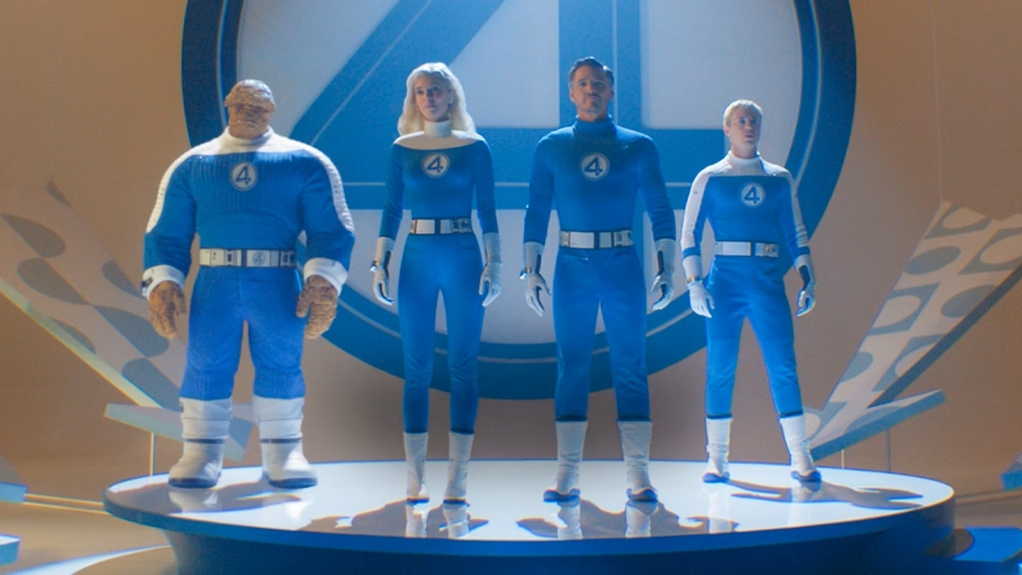
The Fantastic Four: First Steps (2025)

The Fantastic Four: First Steps (2025)

Fun entry in the MCU, bright, pacey and entertaining – but never engages with its deeper issues

Director: Matt Shakman

Cast: Pedro Pascal (Reed Richards / Mister Fantastic), Vanessa Kirby (Sue Storm / Invisible Woman), Ebon Moss-Bachrach (Ben Grimm / The Thing), Joseph Quinn as (Johnny Storm / Human Torch), Julia Garner (Shalla-Bal / Silver Surfer), Ralph Ineson (Galactus), Sarah Niles (Lynne Nichols), Mark Gatiss (Ted Gilbert), Natasha Lyonne (Rachel Rozman), Paul Walter Hauser (Harvey Elder / Mole Man)

It’s taken almost seventeen years (can you believe the MCU has been going for so long?!) but ‘Marvel’s First Family’ finally make it to the party, escaping one of those legacy rights deals the comic giant signed before working out it could make films itself. Since, for those interested, there are already three Fantastic Four origins-films for you to seek out (they gained their powers from flying through a space storm), Fantastic Four throws us straight into the second Act of our heroes lives, communicating their origins in an in-universe TV show celebration of their achievements (including a montage of them defeating a parade of second tier villains, including Mole Man and an army of super-intelligent chimps) before throwing them up against their biggest challenge yet.

For their unofficial leaders, Reed Richards (Pedro Pascal – whose real life super-power seems to be that he appears in all movies) aka Mr Fantastic science super-genius and master strategist with limbs of rubber and Sue Storm (Vanessa Kirby) aka Invisible Woman, the world’s greatest diplomat, who can create forcefields and make herself (and others) invisible) there is the challenge of impending parenthood. And for the whole gang, also including scientist and wild-child Johnny Storm (Joseph Quinn) – he can set his body on fire – and Reed’s best friend, astronaut and Herculean powered made-of-stone Ben Grimm – it’s the threat of Galacticus (Ralph Ineson) a planet-eating giant whose herald (Julia Garner) arrives on a silver surfboard and announces Earth will be his next snack, unless the Four hand over Sue’s unborn child.

The Fantastic Four’s decision to skip the origins story throws us straight into a story that’s a lot of fun. A very enjoyable romp with some well-sketched out characters (played by engaging and charismatic actors), a few extremely well-made set-pieces, plenty of humour, just enough heart and a decent, city-crushing, smackdown at the end. It’s directed with a lot of bounce and joy by Matt Shakman and despite being about literally earth-shattering events manages to keep the focus tightly on the family at its core (perhaps a little too tightly, but more on that later).

It’s also a delightful triumph of design. Set in a sort of cyber-punk 1960s (the idea being that Richard’s intellect has super-powered mankind’s development), it’s a gorgeously realised world of 60s design, all curving surfaces and primary colours, intermixed with souped-up 60s technology like ingenious androids that run on cassette decks and flying cars, like The Jetsons made flesh (doubly engaging as the film so obviously committed to real sets rather than blue-screen invention). I also rather liked the implied joke that the world has progressed only in the areas Richards’ considered worthwhile: so this world has faster-than-light travel, flying cars and abundant energy sources, but totally lacks hi-def television or social media (and who can blame Richards for that).

There is also a certain charm in how the Four are universally beloved heroes. Everywhere they go, they are flooded by admirers and merchandise wearing children (it’s quietly never explored if the Four paid for their colossal, futuristic tower and private space base with a fortune in image deals). Reed fills time between inventing the future with hosting a TV show about science for kids, while Sue essentially runs the United Nations. Johnny is the star of every social event and Ben bashfully lifts the cars for the kids in his Brooklyn neighbourhood and flirts shyly with a primary school teacher (Natasha Lyonne).

This world is pleasingly shaken up by the arrival of the Silver Surfer, a charismatically unreadable turn from Julia Garner (under a CGI naked silver body). First Steps successfully uses this threat to humanise a group of heroes who otherwise might have proved too good to be true. For starters, their confident assurances all will be well when they head for space turns out to be far from the case when they are comprehensively outmatched by an immortal planet eater and his physics-defying silver herald. First Steps most exciting and thrillingly assembled scene is their retreat from a first encounter with this giant, a brilliantly managed high-octane chase around a black hole with a few extra personal perils thrown in on top, made even more gripping by Michael Giacchani’s pitch-perfect score.

That’s before the devilish conundrum of balancing the fate of seven billion people with Sue’s unborn son. If First Steps refuses to really dive fully into it, it does successfully raise the emotional stakes. It’s also a ‘reasonable’ offer from Galactus, a surprisingly soulful anti-villain, played with a mix of disdainful arrogance and death-dreaming melancholy by Ralph Ineson (there is a lovely moment when he takes a break from imminent city-smashing to pick up and sniff a fistful of Earth as if he’s forgotten the smell) desperate to escape the cycle of endlessly devouring planets to maintain his interminable life.

Horrific as it is to imagine a baby taking his place, First Steps avoids really delving into this intergalactic trolley problem. Because, at heart, it’s a film where superheroes alarmingly make decisions for billions of people with no oversight or pushback. Having unilaterally decided to reject Galactus’ offer, the Four seem surprised the rest of Earth are less than thrilled at their impending demise because the Four won’t make a Sophie’s Choice. There is some rich potential here to really delve into the way the Four are, arguably, benign dictators, reshaping this world in their own image and accepting adulation and unquestioning following. First Steps ignores it – the world’s discontent underdone by a single speech from Sue – and only for a split second is the moral quandary treated as something meriting genuine debate. As the surfer points out, if the kid was an adult he would certainly accept: is it right to take that choice from him?

But it’s a comic book movie, right? So, let’s not overthink it. And Marvel was never going to darken its First Family with hints of elitest oppression, demanding sacrifices from others (and the world makes huge sacrifices to protect their child) but not themselves. First Steps is a fun film. I liked its vibe, like a live-action Incredibles (only not that good), I enjoyed the BB4-like robot Herbie, all four of its leads are highly likeable with excellent chemistry. So, I’m trying to just not think about where this onrushing trolley is going and instead enjoy the view.

Thor (2011)

Thor (2011)

Branagh lives his dream by making the most comic-book, bombastic Shakespeare-homage ever

Director: Kenneth Branagh

Cast: Chris Hemsworth (Thor), Natalie Portman (Dr Jane Foster), Tom Hiddleston (Loki), Anthony Hopkins (Odin), Stellan Skarsgård (Dr Erik Selvig), Kat Dennings (Darcy Lewis), Clark Gregg (Phil Coulson), Rene Russo (Frigga), Colm Feore (Laufrey), Ray Stevenson (Volstagg), Idris Elba (Heimdall), Jaimie Alexander (Sif), Josh Dallas (Fandral), Tadanobu Asano (Hogun), Jeremy Renner (Hawkeye)

If you’d told people after Henry V that one day Kenneth Branagh would direct a high-octane comic book movie about a Norse God who bashes things with a hammer, you’d have been laughed outta town. But Branagh was who Marvel called to launch the Thor franchise – and doncha know it turned out to be a pretty shrewd choice.

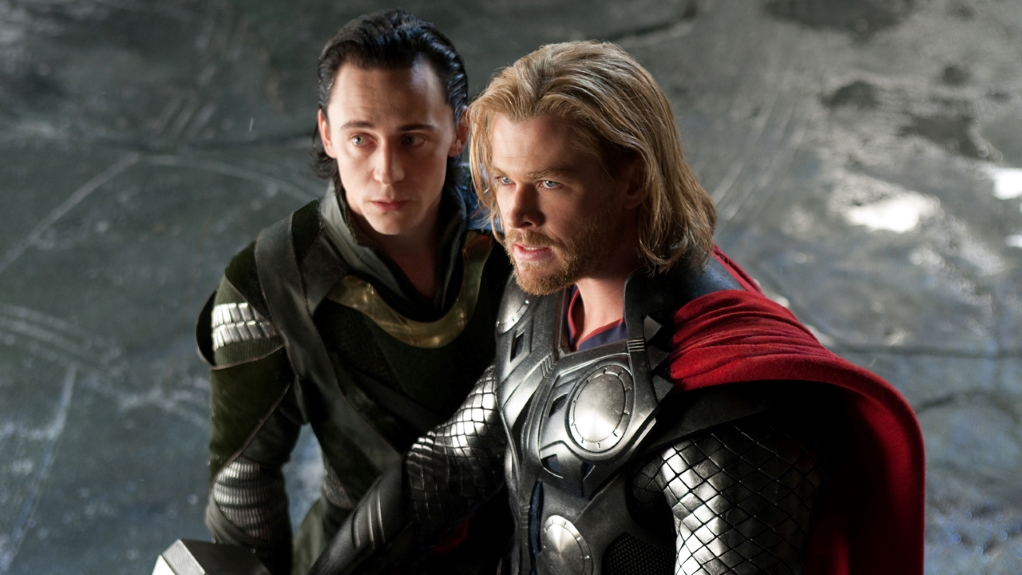
Thor (Chris Hemsworth) is the arrogant son of Odin (Anthony Hopkins) and heir to the throne of Asgard, the planet that keeps peace in the Universe. After an attempt by Asgard’s old enemies, the Frost Giants, to re-capture a stolen super-weapon, Thor leads a reckless attack on their homeworld that threatens to shatter a hard-won peace. Disappointed and furious, Odin strips Thor of his powers and banishes him to Earth, where the fallen God of Thunder must learn humility to be worthy of regaining his powers. On Earth, he falls in love with gifted scientist Jane Foster (Natalie Portman), while on Asgard the realm falls under the control of his brother Loki (Tom Hiddleston), who manipulates events to make his own claim for both the throne and their father’s love.

You can sort of see the Shakespearean bits bubbling away there. Fathers and sons, ambition and power, tragic flaws. Destiny verses desire. Loki as a mix of Edmond, Iago and Cassius. Thor as a Prince Hal earning the maturity to lead. Odin as a kindly Lear. Hell, you could see Thor washing up on the shores of New Mexico, like Twelfth Night’s Viola, forced to pretend to be something he isn’t. He even has his own mini-Falstaff, in gluttonous warrior Volstagg. It’s a heightened story of Kings and Queens, Tempest-style magic and Hamlet­-style family intrigue. Marvel, of course, partly hired Branagh to bring attention to this (effectively, paying Branagh for his Shakespeare-street-cred to make an otherwise snigger-worthy concept of Norse Gods in space get taken seriously), Thor does a great job of bringing this out without drowning the fun.

And of course, for those paying attention, Branagh had been dying to do bombastic nonsense for years. Shakespeare had disguised that Branagh adored loud crashes, big bangs, showy camera work (half of Thor is done in Dutch angles, apeing comic books) and pounding soundtracks. His Hamlet is crammed with half a dozen genres, from romance to action and Mary Shelley’s Frankenstein showed he could fly over the top with the best of them. But he’s also an actor’s director, and he draws performances here from Hemsworth and Hiddleston in particular that would lay the groundwork for making these two of the most popular actors in the whole damn franchise.

Thor above all does a brilliant job of making us care for a lead character initially presented as a likeable but arrogant, immature and cocky hit-first-think-later warrior, cavalier about people’s lives. There is a very funny humiliation conga inflicted upon Thor on arriving on Earth (a classic rule-of-three gag) leaving him successively tasered, tranquilised by a syringe in the ass and knocked over by reversing car. It’s a brilliant way of breaking the haughty – the Mighty Thor, who trashed an army of Frost Giants, laid low by a middle-aged doctor yanking down his hospital pants. But it all sets us on a path for caring about him, helped by how chivalrous and polite he is with Portman’s winning Dr Foster. Sure, he’s still dripping with hubris – assuming once he gets his hands on his hammer Mjolnir again, everything will be as it was – but at wider traces of humanity emerge we start to care for him.

It’s cemented by a very effective scene where Branagh proves his worth as a director of actors. After failing to lift said hammer – being, at this point, unworthy due to having not really learned anything – Thor sits alone in an interrogation room, visited by a disguised Loki. Hemsworth is very good in his scene: he suddenly makes Thor humbled, fragile, accepting his failures, not lashing out but tearfully apologising for his past behaviour, meekly asking to just be allowed to come home then bravely accepts his permanent banishment. It’s actually an effectiveportrait of overcoming hubris: Thor’s true heroism isn’t trashing Loki’s rent-a-robot that is the film’s penultimate foe. It’s accepting, in his depowered state, his role in the battle is to stay out of the way and help get people out of the way before offering his own life as a sacrifice if he will end the robot’s rampage.

If Thor, in Hemsworth’s gently sweet and funny performance, overcomes hubris, Loki succumbs to it. Tom Hiddleston’s charisma here (cemented by his excellent turn in The Avengers) helped him become Marvel’s most popular anti-hero. Like Thor, he’s a complex character: a second brother who secretly resents his brother’s prominence, wants his father’s love, learns things about his past which make him lean into his worst instincts, all to try and be what he mistakenly thinks his family wants. Hiddleston carries all this angst and tragedy with real skill, while also filling the role with wit and playfulness: it’s a great, star-making turn.

It’s a sign of the film’s surprising complexity that it’s hero and villain switch perspectives over its course. Thor starts by dreaming of destroying the Frost Giants to impress Odin while Loki counsels restraint. He ends it by making enormous personal sacrifices to protect them from a genocidal plan unleashed by Loki who wants to prove he’s as tough as Thor. The film ends not with a hero triumphant, but alone and grieving losses. It’s stuff like this that makes Thor a truly interesting, engaging film in a way other MCU outings are not.

And a lot of it comes from Branagh’s skill with actors. Thor might not offer the greatest acting challenges to the rest, but Hopkins in particular was better here than he had been for years (he credited Branagh with helping him rediscover his passion for acting) and Portman and Skarsgård bring a lot of humanity to thinly written roles. Sure, in other ways Thor is less special: it’s action set-pieces are, by and large, fairly uninspired and run-of-the-mill, the small town trashed by a robot looks and feels like a backlot stunt show, some of the comedy lands flatly. But when it focuses on the character drama of two contrasting brothers and their love for their father it’s feels more real and engaging than a host of more technically adept comic book movies.

Thor gets over-looked in the MCU rankings. But it’s a surprisingly thoughtful, well drawn character study about worthiness not being about muscle and force, but on your wisdom, compassion and humility and putting other people before your own needs and desires. All captured in a magic hammer that is otherwise impossible to pick up. Branagh’s film gets that, with added bombastic comic book thrills. Thor has entertained me each time I’ve seen it and will go on doing so.

Deadpool & Wolverine (2024)

Deadpool & Wolverine (2024)

Smug, tiresome gags underpin a shallow piece of fan-pandering that mocks fan-pandering

Director: Shawn Levy

Cast: Ryan Reynolds (Deadpool), Hugh Jackman (Wolverine), Emma Corrin (Cassandra Nova), Matthew Macfadyen (Mr Paradox), Morena Baccarin (Vanessa Carlysle), Rob Delaney (Peter Wisdom), Leslie Uggams (Blind Al), Aaron Stanford (Pyro), Dafne Keen (Laura), Jon Favreau (Happy Hogan)

Deadpool is Marvel Jesus. It’s a joke in the film, but it’s also kinda true. The MCU has struggled in the past few years and it’s hoping the raw-and-ready sociopathic, fourth-wall-breaking merc-with-the-mouth can give its fortunes a jolt. In terms of money take, Deadpool & Wolverine is, I guess, going to do that. In terms of creativity and imagination, we’re still circling the toilet bowl, but hey at least Feige and co are doing it while clutching a wadge of greenbacks.

You say Deadpool’s constant fourth-wall leaning jokes ain’t really funny and that all they do is point out (and neutralising criticism in advance) weaknesses in plot and writing: but that toilet bowl gag was a bit of a turd right?

Wade Wilson aka Deadpool (Ryan Reynolds) has been rejected by the Avengers on Earth-616 “The Sacred Timeline” (otherwise known as the one the MCU happens in) and returns to his friends on Earth-10005 (otherwise known as the 20th Century Fox X-Men Franchise timeline) to retire and work as a used-car salesman. Until he is grabbed by the Time Variance Authority and informed by Mr Paradox (Matthew MacFadyen) his universe is being erased, due to the death of its Anchor Being Wolverine (Hugh Jackman) in Logan. Deadpool’s only chance to save his universe is to find a new Wolverine, eventually pulling in “the worst Wolverine” who failed to save his world. Both are banished to “The Void”, a resting place for “erased” heroes from earlier timelines (aka cancelled movie franchises) run by Cassandra Nova (Emma Corrin), the insane sister of Charles Xavier.

You made that tough to follow on purpose, you absolute bell-end. Ain’t you funny!

Flipping heck. If you think that sounds like a lot going on, don’t worry: it hardly matters. For Deadpool & Wolverine the story is just a very loose framework for a series of slightly smug in-jokes about nineties and noughties nostalgia, and gags about corporate mergers. (In case you missed it, Disney bought 20th Century Fox and swallowed its comic book franchises like a money-Moloch). This matters an awful lot to some. Many others won’t care less. Deadpool & Wolverine very much tailors to the first group. If telling gags about Disney’s caution about jokes on drugs and anal sex, or riffing on the X-Men movies being less-and-less good over many years, sounds like your idea of comedy gold then this is for you.

Moloch and anal sex in the same paragraph – well-read show-off who wants to look cool ain’t ya?

Deadpool & Wolverine prunes a lot of comic mileage (or tries to) from mocking the “special sock” longings of geeks and fanboys, those who wile away hours debating who’s costume looked best or who could beat who in a fight. But this is a film mocking shallow, fanservice wank while itself being a massively shallow, fanservice piece of wank. If the only thing you felt was missing from Hugh Jackman’s previous Wolverine career was that he never wore the yellow-and-blue uniform, then this is the movie for you.

You were so pleased with that fanservice comment I saw you use it several times in Whatsapp hot takes. Twat.

Deadpool & Wolverine mocks fans for their shallow love for the obvious easy hit of seeing Deadpool and Wolverine fight, or a cameo from a well-known actor from an old movie or a celebrity playing a different version of a familiar character, then fills the film with almost literally nothing but this. Am I really meant to get excited seeing an actor revive a comic book role from a noughties superhero film we’ve forgotten and everyone at the time thought was rubbish? For all Deadpool & Wolverine wants to feel like something cheeky and dirty, it’s the safest slab of product out there. Every single thing in it feels like it has been cribbed from a fan’s wishlist on a Reddit thread. It feigns cocking a snook at Disney, but Deadpool is just an in-house jester: tweaking his master’s nose while taking a pay cheque and avoiding anything really pointed in his barbs. After a while you just get tired of it and the film’s embrace of cliché and retreads isn’t justified by Deadpool turning to the camera and pointing it out.

Getting up a head of righteous steam there ain’t you? Still paid to see it didn’t you! Sucker!

Still at least it’s better than when the film tries to have a heart. I’d respect it more if it was willing to make Deadpool a flat-out psychopath with no real sense of morals. Instead, he’s really all (very tiresome) talk, because Deadpool & Wolverine is desperate to turn him into someone the masses can find sympathetic by mixing his mook slaughter with emotive mooning over a group polaroid of the friends he’s trying to save from erasure from existence. Much like Ryan Reynolds’ performance, it often feels like filmmakers enjoying the shock quality of shrieking “FUCK” in a park, before running home to an early bedtime with their families.

Chickened out of writing the C-word there? Guess you don’t want to get blocked.

Deadpool & Wolverine opens with assurance it won’t ‘desecrate’ the legacy of Logan (an actual, good film with a proper story and emotional arc) – before, in one of the film’s better jokes, it has Deadpool dig up the skeleton of the dead Wolverine and use the bones to bloodily slaughter an army of TVA mooks. But then it desecrates it in a different, deliberate, even worse, way by ripping Logan off with shameless abandon. It gives Wolverine pretty much exactly the same plotline, including restaging almost identical emotional conversations, in almost identical locations. In fact, my overwhelming emotion watching Hugh Jackman snooze through this film with a growl was sadness that he came back after his perfect sign-off. But then I guess he get over a dozen million reasons to come back and prostitute himself here for one last runaround.

Like Deadpool doesn’t make that joke himself in the film – if you’re going to knock it, don’t rip it off!

Maybe he thought it was funny. It does feel like a home movie put together by a series of actors in their forties or fifties desperate to show their kids they can do something cool. Is there anything good in Deadpool & Wolverine? There are some good fights, even if Shawn Levy isn’t the best at staging them, but it does spray claret marvellously all over the place to well-chosen Madonna tunes. Matthew MacFadyen, essaying a cartoonish version of Succession’s Tom Wambsgans, is good fun, Emma Corrin makes an effective if under-used villain. There are some good jokes.

Because you gotta give some sugar right?

But the overwhelming air is smugness. None of the fourth-wall, franchise-teasing, corporate digs are that funny and very few of the asides carry any bite (several are about how handsome or muscular its stars are – the only remotely sharp comment is on Hugh Jackman’s divorce). Aside from that it offers nothing new or familiar, its setting is reminiscent of several other films, and it rips off plot galore from Logan and TV’s Loki show. Perhaps worst of all, in a year where an actually original and daring film Mad Max: Fury Road has fatally tanked at the box office, this openly rips off its location and style for The Void and it’s going to make millions.

It’s not as if you were even wild about Furiosa, but like the sanctimonious prick you are, you’ll give a pass to a film from an auteur but then knock a Marvel film. What makes you such a smug, humourless prick eh? Go with the fun!

Look for the last time, it’s not big, clever or funny to just milk some cheap gags out of anticipating the criticism. That’s enough. Fuck off now.

Touchy!

No seriously. Fuck off.

Black Panther: Wakanda Forever (2022)

Black Panther: Wakanda Forever (2022)

Grief and loss are the beating heart of this tender and heartfelt Marvel film, mixed with standard action tropes

Director: Ryan Coogler

Cast: Letitia Wright (Shuri), Lupita Nyong’o (Nakia), Danai Gurira (Okoye), Angela Bassett (Queen Ramonda), Tenich Huerta Mejía (Namor), Dominique Thorne (Riri Williams), Winston Duke (M’Baku), Martin Freeman (Everett K Ross), Julia Louis-Dreyfus (Valentina Allegra de Fontaine), Florence Kasumba (Ayo), Michaela Coel (Aneka)

There is one thing you can never imagine – and never want to – having to plan for in your franchise. The tragic loss of your lynchpin. For Black Panther that man was Chadwick Boseman, and his heart-breaking early passing hangs over the film like a shroud.

Black Panther: Wakanda Forever is two films in one. One is a standard Marvel adventure film, with gags, set pieces and careful groundwork laid for future entries. The other is a heartfelt eulogy, a processing of the raw shock the people making the film – and many watching it – felt at the loss of this fine actor. In universe, T’Challa (Boseman) has passed away. His sister Shuri (Letitia Wright) blames herself for failing to save his life and his mother Queen Ramonda (Angela Bassett) has become protective and unrelenting in her judgements.

With its monopoly on vibranium, Wakanda is now the most powerful nation on Earth. Other powers want a piece of that apple – and the US are plumping the deaths of the oceans for vibranium. But their search intrudes on a secret underwater civilisation led by wing-footed, super-strength Namor (Huerta Mejía). Namor threatens to unleash destruction unless Wakanda deliver him the scientist who created the US’s vibranium detector – who turns out to be a college student genius with Tony Stark vibes, Riri Williams (Dominique Thorne). When Shuri refuses to hand her over, Namor states he is coming for the surface – and will destroy Wakanda, a country he cannot trust.

Black Panther: Wakanda Forever is bookended by two heart-breakingly genuine moments of emotion. The death of T’Challa (off screen) and his funeral – a grief stricken, beautifully filmed funeral procession – carries a great deal of genuine rawness. A final montage of shots of Boseman, presented as the memories of Shuri finally coming to terms with her brother’s death is moving. The strongest parts of the film are these human moments. Wright has been open at her shock and pain at Boseman’s death and this translates beautifully in her affecting performance.

These adjustments to the script are the strongest parts of the film. Letitia Wright and Angela Bassett provide subtle, delicate work as two people affected by grief in very different ways, but both now more reckless, protective and retributive than before. The responses, guilt and pain of several characters carry real force and leave the deepest mark on the audience. It also builds a subtle “passing the torch” narrative, as Wakanda fears they have seen the last of their “Black Panther” who protected their nation through history.

Away from this, the film settles into being a more traditional Marvel franchise extender. Rightly much time has been given to the real-life tragedy, but this means much of the remainder of the plot feels rushed. Our new antagonists are hurriedly introduced – so much so that leader Namor (well played by Tenich Huerta Mejía with a charisma that covers an under-written part) introduces his people’s entire culture in an awkward info dump an hour into the film. Not a single other character of his merman race gets so much as a name (as I can remember) let alone a personality.

Despite being a slightly silly concept of an Atlantan (but definitely not Atlantis because that’s already been claimed by another franchise) underwater city with water pressure having given its inhabitants super-human strength, it is another strong commitment to diversity. These people descend from the Mayan civilisation, meaning they share the same history of persecution by the West as the African nations Wakanda represents. It should make them natural allies, right?

Of course, it doesn’t as this is a film that pivots on the mistakes and miscalculations of political leaders and how these force them into war. The film makes its point about political rivalries early with Ramonda giving the French and US an almighty ticking off at (a surprisingly small) UN for their ruthless attempt to obtain vibranium for themselves. However, Black Panther: Wakanda Forever dodges really delving into the most interesting implications of this.

Because there is a kernel of a really interesting, challenging idea here. In many ways Wakanda behaves with exactly the same domineering arrogance as the Western powers they criticise. The Wakandans take unilateral decisions for the world because they know best, treat other nations like recalcitrant children and horde the world’s most powerful resource for themselves. They are this close to a benign, dictatorial state. But the film isn’t interested in exploring this.

Bringing Wakanda and Talokan into rivalry on the grounds of Talokan seeing them as potential oppressors – as the most powerful among the surface nations they have always feared would crush them – would have been more interesting than the confused, convoluted “with us or against us” war we end up with. But I understand that a film, which prides itself on celebrating African culture, is not going to want to be seen as undermining any of that with something sharper.

Besides, this is all a set-up for the inevitable large scale action sequences. The finest is a haunting attack on a ship, where the Talokans use their siren voices to inspire the crew of an American black ops ship to drown themselves. There’s a decent car chase, some well-choreographed fights a pitched battles that thrill. It’s also notable that the loss of Boseman has led to this franchise being dominated by women of colour, all of whom deal with the sort of dilemmas and consequences that are normally the preserve of male (and white) comic-book heroes.

But the film’s heart is in the personal moments – and more interesting when looking at Shuri’s protective affection for Dominique Thorne’s plucky (sometimes overly so) inventor. It’s also interesting that this is a film that flirts more than I was expecting with its leads choosing anger and vengeance, over forgiveness and conciliation. Shuri and Ramonda lash out, with dangerous consequences, and express minimal regret. Black Panther: Wakanda Forever deserves points for being willing to tackle the negative implications of grief.

That’s the strength of the film, just as a pain of Boseman’s death is the beating heart. Black Panther: Wakanda Forever is overlong and skips more challenging ideas, but it is also shot through with genuine grief. It’s not perfect, but it’s real, well-meaning and (for all its silliness and bombast in places) has a heart firmly in the right place. When a Black Panther rises in the final act, you will feel the film has earned it.

Thor: Love and Thunder (2022)

Thor: Love and Thunder (2022)

Injokes, backslappery and smugness abound in this terrible Thor adventure

Director: Taika Waititi

Cast: Chris Hemsworth (Thor), Natalie Portman (Dr Jane Foster/Mighty Thor), Christian Bale (Gorr the God Butcher), Tessa Thompson (Valkyrie), Jaimie Alexander (Sif), Taika Waititi (Korg), Russell Crowe (Zeus), Kat Dennings (Dr Darcy Lewis)

Okay. Part way through this desperately unfunny tonal mess I wondered: if I had to choose would I watch this again, or Thor: The Dark World? I can’t quite believe it, but I’d rather watch that functional, forgettable, mundane film. At least it doesn’t make me angry as it drifts past my eyes. And I say that as someone who loved Thor: Ragnarok. Thor: Love and Thunder is terrible. So, unlike Star Trek, it looks like even numbered Thor films are awful – so at least Thor Five should be a doozy.

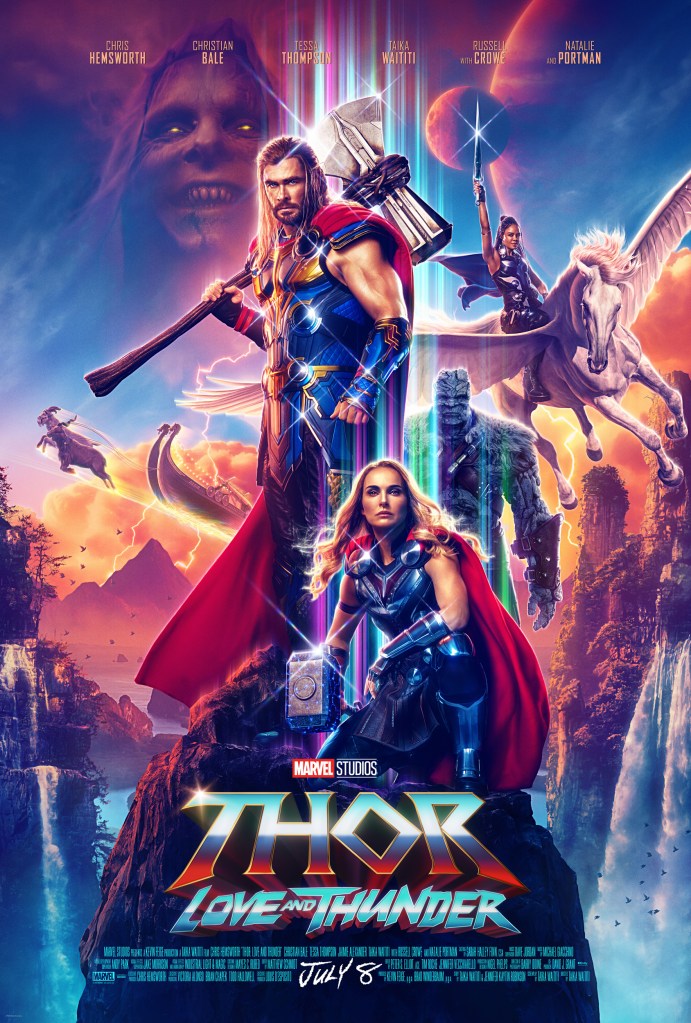
Thor (Chris Hemsworth) is in a state of ennui – although that doesn’t stop him restoring his buff form after we last saw him as a coach potato in Avengers: Endgame. He doesn’t know what to do with his life: he has (and I can’t believe the film doesn’t make this obvious joke considering its jukebox score) “lost that lovin’ feelin’”. Will the arrival of bereaved father Gorr (Christian Bale), and his mission to butcher all Gods because they don’t answer your prayers, give him meaning? Or will it be the chance to finally rekindle his love for Jane Foster (Natalie Portman) when she unexpectantly lands back in his life? However, it’s not the Jane he remembers: unknown to him, she’s dying from cancer, but his old hammer Mjolnir is keeping her alive, transforming her into a female version of Thor.

Thor: Love and Thunder is a bit like attending a victorious Thor: Ragnorak after-show party. Everyone there thinks everything they say is like the funniest thing ever and the air rings to the sound of backs being slapped. It takes everything that it believes worked best in that film and dials it up to eleventy thousand. Waititi doubles down on his quirky, off-the-cuff, shoulder shrugging humour at every turn and you get the feeling that no one once tapped him on the shoulder and said “you know that’s funny to us on set, but are we sure that will be funny in the audience?”

Because, based on the audience I saw it with, it wasn’t. I think I chuckled about three times in the film. Which considering it takes every single bloody opportunity to tell a joke, is damning. Perhaps it fails to land because, unlike in Ragnarok or other Waititi films, its like he’s surgically removed anything emotional or gives a weight to the gags. He’s also sacrificed much of his trademark sweetness. Instead, this is full of incredibly knowing, tip-the-wink gags at the audience, as if trying to say “hey it’s okay, we can’t take this seriously, comic books are all silly, silly shit”.

And you know, that’s fine many people take these things too seriously. But what worked about Thor: Ragnarok was it balanced a quirky sense of humour with genuine stakes and real emotional quandaries. This however is just a tonal mess. We have an opening scene dealing with child death, that shifts swiftly into knock-about farce. A leading character dying of cancer sitting alongside a pair of screaming goats. It is revealed Jane is effectively draining her life source using the hammer (that it is keeping her alive and killing her at the same time). Here’s a chance to explore the cost of heroism and finding a purpose in life (after all isn’t Thor supposed to be depressed? Wouldn’t Jane make a good contrast here?). instead, the film constantly retreats to playing the humour card (worst of all unfunny humour!), as if Waititi perhaps thinks this genre stuff is silly and slightly below him.

Ragnarok allowed moments of impact: this film shits all over any moment of potential emotional reality. Hemsworth’s Thor used to be a guy with a strong moral purpose and seriousness, but allowed to stretch his wings with comedic sharpness. Now he’s a buffoon who interrupts a speech to distraught parents with gags. Any attempt to build an arc of a hero who is internally lonely and searching for purpose is constantly smashed by self-consciously irreverent humour. It says a lot that Thor’s axe Stormbreaker feels as much a character as anyone else – although the film is overly pleased with the gag of the axe being jealous of Thor’s doe-eyes at his old hammer.

The entire film feels like it’s been plotted out in about four minutes. Presumably Waititi was confident “hilarious” off-the-cuff inspiration would solve any problems. Christian Bale struggles manfully with his villain – but it’s like no one gave him the memo that the film was a piss-take. Tedious detours fill the plot – like an un-funny Guardians of the Galaxy cameo at the start, a tiresome trip to an orgy-tastic God planet and the screeching giant goats which feels like a joke whose punchline has been cut. A major plot point about a wish granting Eternity God is suddenly introduced to establish a secret plan for the villain. It’s like no one gave a damn.

Waititi doubles down on funny stuff that worked in small doses in Ragnarok by stretching it past any point of humour here. Liked Neill, Damon and Lesser Hemsworth playing bad actors in that film? Well, you get bucket loads of it here with Melissa McCarthy as a Fat Hela (that’s the joke: she’s fat). Liked Korg’s overly literal asides? Well, he’s in seemingly every second of the bloody film here, including narrating it. Russell Crowe pops up for a cameo that everyone clearly feels was hilarious but really looks like a big-name actor amusing himself with a borderline racist Greek accent. The film is crammed with this crap.

Hemsworth does okay I suppose, but in many ways the film feels as much of an ego-trip for him as it does Waititi. Natalie Portman gets to do some some fun things, but comedy isn’t her natural forte and she struggles with getting the zing in the dialogue that Tessa Thompson manages. It builds towards a big ending where Thor weaponises children and then the film lands on an utterly unearned emotional ending at a secret place – as if Waititi suddenly remembered his films work best when they have a heart – at the centre of the universe that is so easy to reach you wonder why people didn’t go there much earlier in this franchise. Even the final explanation of the title feels thrown in at the last minute and I’ve no idea what we are supposed to make of Thor’s character arc in this film.

The lack of heart is what is missing here. There is nothing heartfelt or emotionally true really in this. Nothing to give you warm feelings or to make you say “ahh”. Instead there are just endless, endless smug insiderish-gags. This is a piece of shit and the silent reaction it got from the full audience I saw it with says it all. A smug, tonal mess by a director who is over-indulged and unrestrained and forgets that humour works best when grounded with some sense of drama. I’d definitely rather watch Thor: The Dark World again.

Doctor Strange in the Multiverse of Madness (2022)

Doctor Strange in the Multiverse of Madness (2022)

Marvel opens up its infinite universes as it lays the groundwork for bringing back old characters with new faces in this corporate outing

Director: Sam Raimi

Cast: Benedict Cumberbatch (Dr Stephen Strange), Elizabeth Olsen (Wanda Maximoff/Scarlet Witch), Rachel McAdams (Dr Christine Palmer), Chiwetel Ejiofor (Karl Mordo), Benedict Wong (Wong), Xochitl Gomez (America Chavez), Michael Stuhlbarg (Dr Nicodemus West)

Spoilers: The main spoiler would be looking at the cast list. I won’t name the cameos are but I do mention a main plot development revealed within 15 minutes.

Parallel universes have infinite possibilities. These are largely not found in this lumpen, fan-service obsessed and (whisper it) slightly dull film that fails to follow-up on either the promise of the first film (to which it makes awkward call-backs) or its main concept. It allows Raimi scope to indulge his Evil Dead style visuals, but all within the confines of producing another entry in the series that feels like a bridge between chapters rather than an interesting story in its own right.

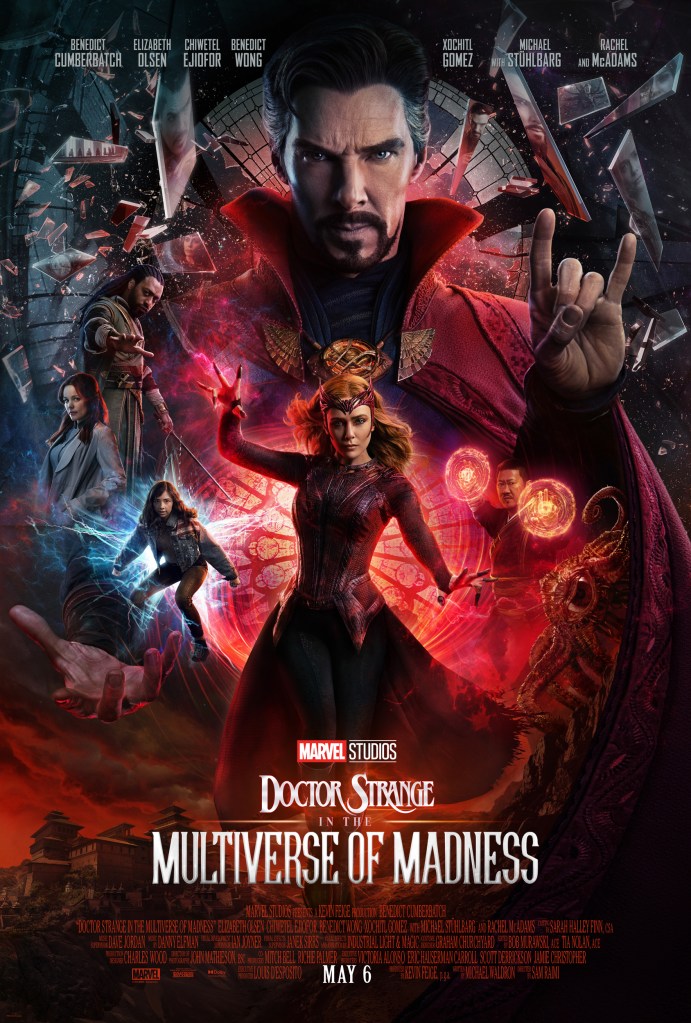
Dr Strange (Benedict Cumberbatch) attends the wedding of former girlfriend Christine Palmer (Rachel McAdams), when he’s torn away to fight a squid monster chasing a teenager, America Chavez (Xochitl Gomez). America has the power to travel between parallel universes – and is dragging behind her the dead body of a parallel Strange who failed to protect her from a mysterious foe trying to steal her power. Strange, Wong (Benedict Wong – the most engaging performance in the film from this under-rated actor) and the Sorcerers protect America – but Strange’s attempt to recruit Wanda Maximoff (Elizabeth Olsen) goes awry when it turns out its she hunting America, using dark magic in an attempt to find her parallel versions of her lost children.

DSITMOM has been called the MCU’s horror film: which by no means makes it The Exorcist. It’s a sort of very, very gentle entrée to the genre – like Cronenberg’s Videodrome was turned into a kid’s TV series or a comic-book version of Raimi’s The Evil Dead. It has a few flourishes, but none of this is allowed to get in the way of the corporate enterprise. It’s more interested in giving people what it feels they want and fitting itself into the timeline of a series.

In fact it sometimes feels like an attempt to mirror the success of Spider-Man: No Way Home (I wonder how many of the cameos were added after that film’s release?). It takes the elements of guest stars and parallel universes and presents them in ways that provide little insight or long-term reward. In No Way Home alternate versions of characters are used to explore how different events could have shaped our heroes. The returning stars aren’t just thrown in, they have arcs and emotional journeys. The whole is both fun and an engaging story but also nostalgic. Compare, as well, the TV series Loki (by the same writer) that brilliantly used parallel versions of its lead to deconstruct and develop his character.

DSITMOM does none of this. There are rich opportunities to see how Strange may have developed in different universes: after all this is the closest thing to an “ends justify the means” character in the MCU. Would different versions of him go more or less further – and how might it make our Strange reflect on his occasionally ruthless ‘big picture’ thinking (this is after all, as the film mentions, the guy who allowed half of all life to blink out of existence as part of a masterplan only he knew). We don’t get nearly enough of that. In fact, we get virtually none of it.

These opportunities are ignored in the two parallel universes we spend the most time in, where Strange is either a dead war hero or an insane hermit corrupted by dark magic. Neither of these characters is really contrasted effectively or interestingly with our version. A faint plotline of Strange learning trust from the mistakes of others is threaded through, but only lightly. Instead, the film focuses more attention on Strange’s lost love for Christine Palmer, an oddly unsatisfying focus since Strange has appeared in at least four films since his first solo effort six years ago, and the franchise has failed to mention this motivating loss once (not even a throwaway line in No Way Home to build it up).

Mind you it’s better than the development Wanda Maximoff gets. DSITMOM is pretty much impenetrable unless you’ve watched WandaVision. Even if you have, as I have, you’ll probably be a little annoyed at the ‘development’ she gets here. At the end of that series, Wanda had accepted the damaging consequences of her grief and started moving on. Here though, she’s a sociopathic monster defined solely by her motherly grief and her ruthless determination to tear universes apart to heal it. It feels retrograde to, essentially, be saying “women who suffer loss go axe-crazy” or to double down on her willingness to harm others to cling to a ‘normal life’ fantasy (as well as contrary to the hopeful tone the series ended on).

That’s not to mention the clumsy fan service peppering the film. The main outing to a parallel universe is basically an excuse for fan-pleasing cameos. These amount to nothing more than a series of actors popping up say “Hello I’m Y” and promptly suffering terrible fates (because it’s a parallel universe and your plot armour means nothing there). Like Yoda fighting Christopher Lee, it’s cool when you first see it but risks becoming less and less rewarding overtime because it’s utterly insubstantial.

DSITMOM is basically insubstantial. It drags on – it’s a chase film that largely lacks momentum – it has a series of slightly bored looking actors (Ejiofor wins, with a Mordo who seems to have become Strange’s nemesis in the interim between this and the first film despite never being mentioned in any other film since), gets absorbed in a MacGuffin filled plot (there are no less than two Magic Books of Wham-a-bam that are being hunted or fought over) and flattens down most of Raimi’s style into a corporate product with little heart (compare this to his Spider-Man films which look like Citizen Kane or Vertigo next to this).

There are about two moments of invention: a sequence when Strange plummets through a series of bizarre parallel universes (including one where he’s made of paint) and a battle between two Stranges that utilises musical notes as weapons. Everything else feels production flattened, as do the actors, and ends teeing you up for a third film with another “whoop” cameo. Flat, lumpen and failing to capitalise on its possibilities, this is a big disappointment, an empty lightshow with brief but shallow pleasures.

Spider-Man: No Way Home (2021)

Spider-Man: No Way Home (2021)

Tom Holland’s Spider-Man encounters friends and enemies from another franchise or two

Director: Jon Watts

Cast: Tom Holland (Peter Parker/Spider-Man), Zendaya (MJ), Benedict Cumberbatch (Dr Stephen Strange), Jacob Batalon (Ned Leeds), Marisa Tomei (May Parker), Jon Favreau (“Happy” Hogan), Jamie Foxx (Max Dillon/Electro), Willem Dafoe (Norman Osborn/Green Goblin), Alfred Molina (Otto Octavius/Doctor Octopus), Benedict Wong (Wong), Tony Revolori (“Flash” Thompson), Andrew Garfield (Peter Parker/Spider-Man), Tobey Maguire (Peter Parker/Spider-Man), Rhys Ifans (Dr Curt Connors/Lizard), Thomas Haden Church (Flint Marko/Sandman), JK Simmons (J Jonah Jameson)

It’s been out long enough now – and Marvel are even advertising the Guest Stars – so I guess we can worry slightly less about spoiling this massive crossover event. Spider-Man: No Way Home became one of the biggest hits of all time. It’s not hard to see why, in our nostalgia-loving times. But its not just about nostalgia – lovely as it is to see all those old characters once again. It’s also a hugely entertaining, rather sweet film, crammed with slick lines and jokes, while also, like the best of Marvel’s films, having a heart. We’ve got a hero here so humanitarian he goes to huge risks to try and save the villains. That’s refreshingly human.

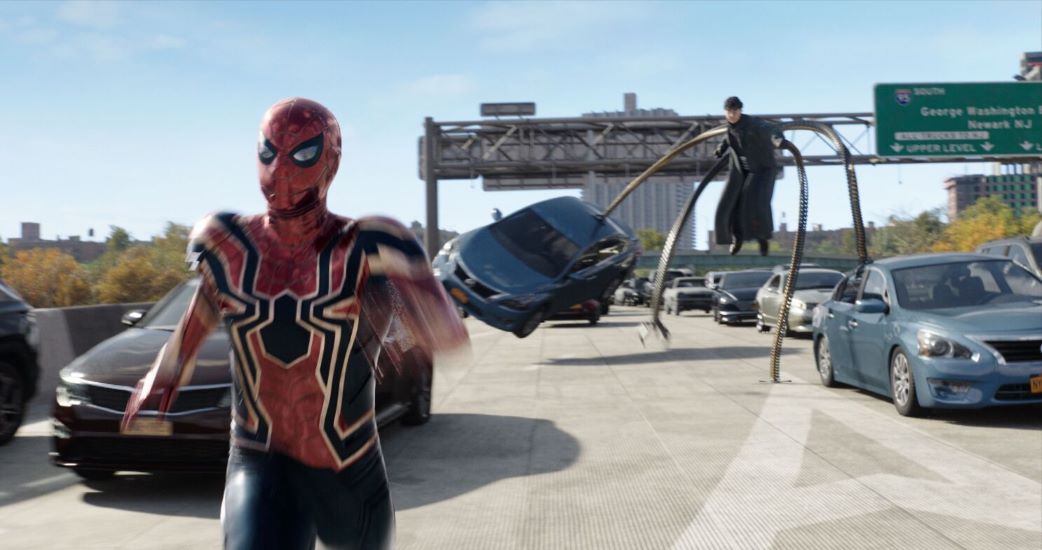
Picking up after the conclusion of Spider-Man: Far From Home, Peter Parker’s (Tom Holland) secret-identity is known. Parker finds himself at the centre of a massive, world-wide scandal, which ends the college chances of him and his friends MJ (Zendaya) and Ned (Jacob Batalon). Peter asks Dr Strange (Benedict Cumberbatch) for help: namely can the world forget who he is? When the spell goes wrong, people who know Parker’s identity from other realities start appearing. And these guys aren’t happy, with villains like Dr Otto Octavius (Alfred Molina), Electro (Jamie Foxx) and psychopath Green Goblin (Willem Dafoe) arriving. But, when Peter discovers sending them back will condemn them to die in the battle against their Spider-man, he decides to do everything he can to try and save them.

No Way Home’s success partly lies on the nostalgia factor, especially for those of us who loved the early Maguire films. And you can sign me up to that: I can’t believe it’s been 20 years since the first one came out! No Way Home throws in characters from all five pre-Holland films and zeros in on the best of the bunch. The films has a lot of fun shuffling and realigning these characters in interesting new combinations, often allowing them to moan about things like origin stories (there is a very funny exchange between Electro and Sandman on the danger of falling into experiments) or just to get on each other’s nerves (Molina’s Doc Ock is spectacularly grumpy).

You pretty much have to have a heart of stone not to enjoy seeing most of these characters again – particularly as they are played with such lip-smacking aplomb. Above all, Dafoe relishes the chance to cement his place as one of the great villains, switching perfectly between gentle and psychotic as the schizophrenic Norman Osborn/Green Goblin (and becoming the nemesis of no-less than two Spider-men). Molina is equally good: pomposity and rage turning into avuncular decency. These two landmark villains from the two best films take most of the limelight, with a smaller share for Jamie Foxx (far more comfortable here than he was in Amazing Spider-Man 2). But every villain is given moments of tragic depth and seeing them react to news of their deaths is strangely moving.

It sets the table rather nicely for a film about redemption. Peter believes he can save these villains from death if he can cure them and restore their humanity. While the pragmatic Strange sees this as pointless, Peter can’t turn his back on a chance to save people. On top of this, No Way Home also serves as a meta-redemption arc for the two previous franchises: Maguire gets a third film worthy of the first two and Garfield is given the sort of rich material he was denied in his failed series.

Which brings us nicely to the biggest returns. Denied by both actors for the best part of a year, this film throws not one, not two but three Spider-men at us, with Maguire and Garfield reprising their incarnations. All three delight in sparking off each other, riffing on everything from web-slingers to making normal life work (“Peter time”) alongside Spider-manning. Maguire settles nicely into the Big-Brother role, giving a worldly experience to the others without losing his gentle idealism. Garfield is sensational – lighter, funnier and warmer than he was in his own films, with a hidden grief that plays out with genuine impact.

Who couldn’t get excited about seeing these three together – or to see the film make these scenes work as well as it does? It shuffles and reassembles things we are familiar with, but presents them in new and intriguing combinations and above all feels true to the characterisations established in previous films. Maguire, Molina and Dafoe in particular feel like they’ve not been away since their own films, while Garfield and Foxx deepen and improve their characters. But it became a mega-hit because it has a truly strong story behind it.

A story staffed by strong, relatable characters. There is a genuine sense of alarm around how Peter and his friends in the film’s opening act are hounded and persecuted by a population scared of them. Even here redemption is key, with Peter going to dangerous lengths to try and get his friends a second chance at getting into MIT. These three characters have a sweet, warm friendship and the chemistry, in particular between Holland (who is sensational, endearing, funny but bringing the role great emotional depth) and Zendaya is stronger than it’s ever been.

And that’s before we hit the film’s genuinely endearing message. Holland’s still-optimistic hero (another excellent contrast with his more damaged alter-egos) is motivated by saving people. And that includes the villains. Maybe it’s the years of Covid, but there is something hugely lovable about a hero who wants to give people a second chance. It’s a living demonstration of “with great power comes great responsibility” (words this film introduces into the Marvel universe with powerful effect, in a mid-film climax). In fact the film is, in some ways, the origin-story Holland’s Spider-Man never had: it gives him a foundational tragedy, leaves him in an isolated position, strips him of his Iron Man style tech and leaves him in a set-up (alone in a cheap apartment, struggling to make ends meet and superheroing on the side) familiar from the comics.

Watts directs the film with real confidence and zest, especially outside the action set-pieces: there is frequent use of ingenious-but-not-flashy single takes and the film’s patient momentum for much of its first half, focusing on character and emotion, really pay off in the second half of fan-service and fights. The camera effects used for Peter’s web-slinging and his spider-sense have a delightful quirky invention. What he really does well though is zero in on the emotion and when events get tragic, he isn’t afraid to commit to that. It gives the film an emotional force that really connected with people.

That heart is what sustains it. It’s a joyful nostalgia trip – that redeems elements of the previous films – but this is a film that really cares about its characters – all of them – and wants you to as well. That gives difficult, emotional struggles to all its Spider-Men, that searches of the humanity in its villains, even the worst of them, making us sympathise with them even as they do dreadful things. Combined with the action and adventure – and the electric pace of the best of Marvel – No Way Home rightly stands as one of the best entries so far.

Eternals (2021)

Eternals (2021)

A cast of diverse actors are totally crushed in this pompous, dull Marvel film

Director: Chloé Zhao

Cast: Gemma Chan (Sersi), Richard Madden (Ikaris), Kumail Nanjiani (Kingo), Lia McHugh (Sprite), Brian Tyree Henry (Phastos), Lauren Ridloff (Makkari), Barry Keoghan (Druig), Don Lee (Gilgamesh), Harish Patel (Karun), Kit Harington (Dane Whitman), Salma Hayek (Ajak), Angelina Jolie (Thena)

It must have seemed like a good idea at the time… Marvel had already turned one little known gang of superheroes into a huge hit with The Guardians of the Galaxy. World defining stakes had been the core of most of The Avengers films. An ensemble cast of diverse actors were pulled together with an acclaimed (and now Oscar winning!) director at the helm. They only forgot one thing: to make the final film interesting, engaging or feel in any way original.

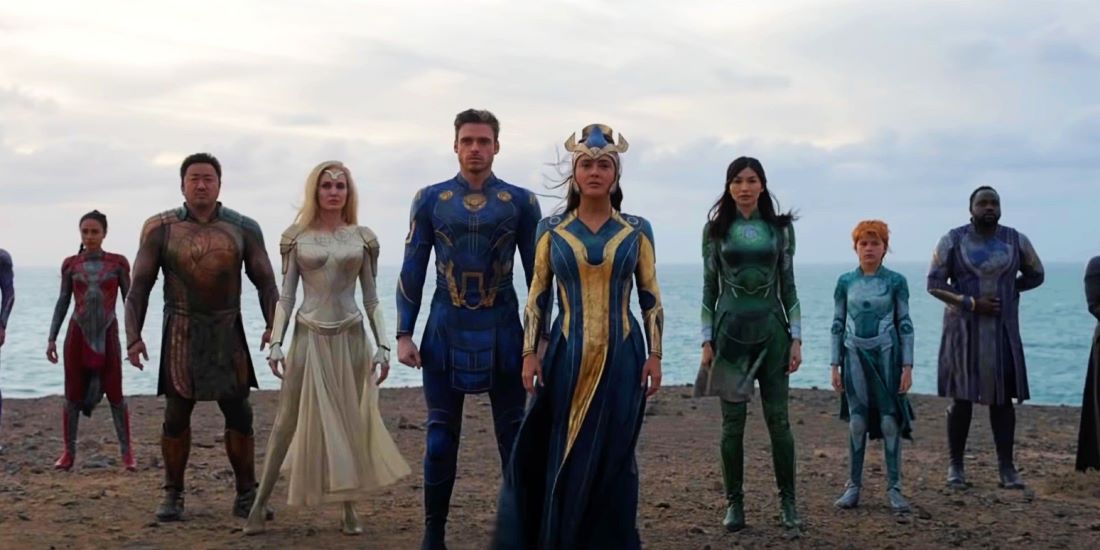
Our heroes are a group of very serious God-like Aliens called Eternals, who have been sent to Earth thousands of years ago by even more God-like Celestrial Aliens to protect humanity from savage monsters called Deviants. By 1521, the Deviants are defeated and our heroes are left unsure of what to do. Ordered to never interfere in the events of humanity, they go their separate ways and settle down into life on Earth. But in the present day the Deviants return – and the Eternals start to uncover dark facts about their mission.

All of this takes place over a runtime which feels pretty bloody eternal itself. Essentially the film opens with an info-dump, then spends a couple of hours getting the gang back together (interspersed with occasional additional info-dumps) before the inevitable final-act smackdown to save the world. The stakes have arguably never been higher: but with the film’s indolent pace and thinly sketched characters it sure-as-hell doesn’t feel like it. There is a lot of uninvolving world-building and its ends up feeling every bloody minute of its epic runtime.

With its group of characters, essentially a loving family that has fallen out, this should really be an intimate, character-driven film. But it never balances the huge cast, the epic action and building relatable characters swiftly. Instead the Eternals rarely seem like anything more than heavy-handed sketches defined by basic character traits: a caring empath, a warrior princess, a slightly austere would-be-leader, a mentor destined to die, an eternal child frustrated about never growing up, a natural showman, a cold mind-controller, a deaf athlete and a gay guilt-ridden inventor. The cast (as very proudly trumpeted in its marketing material) is on paper the most diverse ever in Marvel. But it’s like simply making it representative was enough and they didn’t need to bother creating rich, engaging and multi-faceted characters.

All of them are squashed into a film that really feels like it could have been made by anyone. For all Zhao’s occasional indie visual beauty, this is totally free of authorial voice, with completely routine action set-pieces. There is the odd joke, but Zhao’s attempt to put her own mediative personality on the film only really ends up making the bits between the fights dry and boring. Put quite simply, Marvel seems to have rather crushed any life out of her. We get endless solemn moments, as characters watch with horror the results of the development in mankind they have encouraged (from the genocide of the Incas to the bomb at Hiroshima). These nearly always feel on-the-nose and obvious. It all stems from Zhao failing to make us care about these characters.

So, when they find out they have been betrayed by their masters – that their purpose is to fatten the Earth for feasting, not raise it in good health – its rather hard to feel the impact of the betrayal. The film isn’t even smart, or daring, enough to acknowledge that the same manipulative Gods who have used the Eternals have done the same thing to the Deviants. The film continues to treat these as wicked killers, when in fact they are as much victims as everyone else. Would it have killed Eternals to acknowledge this for a moment, to explore the implications of this more?

Especially since it’s so bloody long. It takes almost two hours for the film to bring the gang back together. Each reunion with a new Eternal is basically played the same – a brief bit of banter and then a horrified reaction as they discover the truth. Which means we basically see versions of the same scene play out six times, with diminishing levels of interest. Can’t these guys conference call?

There is no momentum to this ever. Where is the pace? Where is the urgency? The Eternals have been told they’ve only a few days to save the Earth, but they seem to spend most of it ambling around chatting and catching-up. Even when the end-of-the-world starts, most of them still sit around starring at the middle distance sadly and bemoaning their lot. This – and soft spoken intensity and lackadaisical wandering – are constantly used by the film as a short hand for seriousness, a self-importance the film wears very, very heavily.

All of the actors get crushed under the weight of the film. Nanjiani stands out pretty much as the only one having anything approaching fun while only Lee gets to show some sort of warm, uncomplicated human connection. Keoghan, Ridloff and Henry do decent work, but the rest of the cast seem hampered by how very, very, very serious they need to be all the time. One of them, of course, is a wrong ‘un (you can make a pretty decent guess early on which in it will be), but they turn out to be the dullest most stick-up-the-butt character of the lot. Despite the huge amount of time we spend with them, lead characters like Chan’s Sersei and Madden’s Ikaris remain enigmas we can’t be bothered to find out more about.

Eternals is pretty much a failure. It’s long. It builds an expansive universe with a series of clumsy lectures and fails to make any of these interesting. It’s got long battle scenes which feel like several other films. It’s got no personality or vibe to it. It sets up the odd interesting idea then takes it nowhere. It makes the end of the world a massive yawn, while telling you it’s a hugely important and daring film (it’s neither of those things). You end up feeling this might be the most forgotten Marvel film since The Incredible Hulk.

Black Widow (2021)

Scarlett Johansson crashes through a film that seems to exist by contractual obligation, Black Widow

Director: Cate Shortland

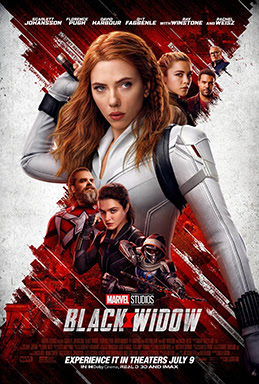
Cast: Scarlett Johansson (Natasha Romanoff), Florence Pugh (Yelena Belova), David Harbour (Alexei Shostakov), O-T Fagbenle (Rick Mason), Olga Kurylenko (Antonia Dreykov), William Hurt (Thaddeus Ross), Ray Winstone (General Dreykov), Rachel Weisz (Melina Vostokoff)

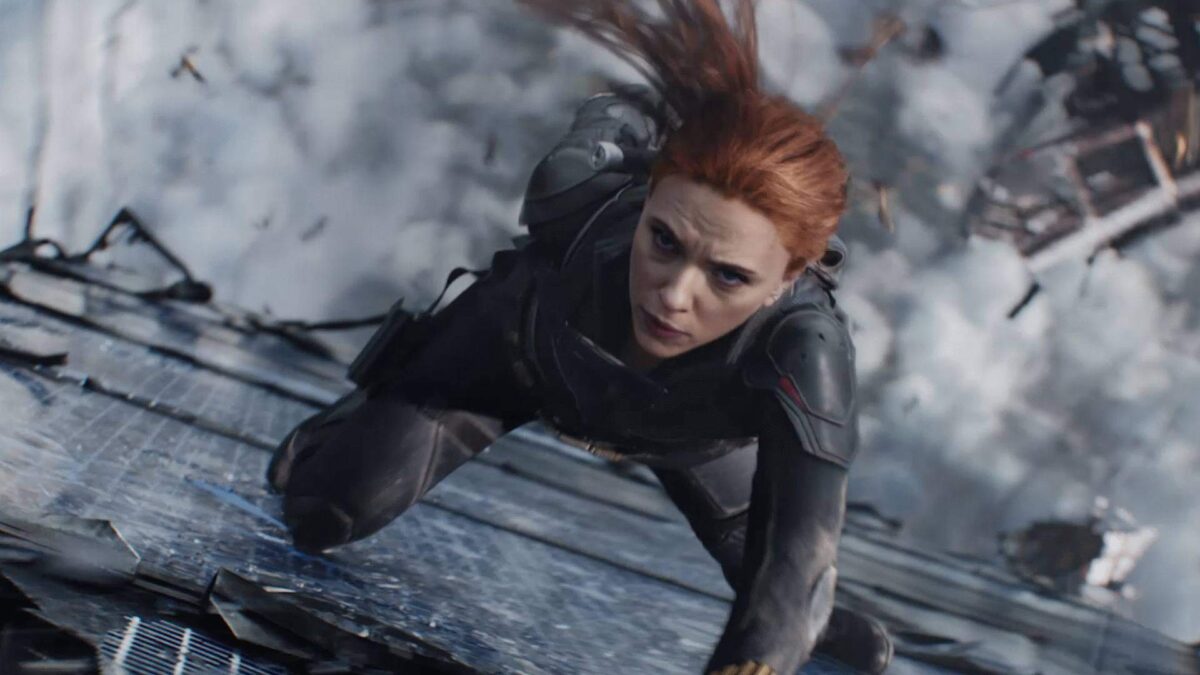
After the events of Captain America: Civil War, Natasha Romanoff (Scarlett Johansson) is on the run, when she receives a mysterious parcel from her “sister” – or rather the young girl she spent a few years with as a “family” of Russian agents undercover in America in the 1980s – Yelena Beloba (Florence Pugh). The parcel contains a drug that can be used to break the mind-control that nasty General Dreykov (Ray Winstone) has over his army of Widows: young girls like Natasha and Yelena, forced to become assassins in a torture chamber/training room called The Red Room. Natasha and Yelena team up to free the other assassins, but they will need the help of their “parents”, Russian super-soldier Shostakov (David Harbour) and genius inventor Melina (Rachel Weisz).

As the credits rolled on this formulaic slice of Marvel adventurism, I couldn’t for the life of me work out why it even existed in the first place. For a film centred around Scarlett Johansson’s Black Widow character, I expected to come out of this epic with some new understanding of her character. Not only do we not learn anything about her at all, we get no additional insight into what makes her tick, no deeper look into her character. We learn nothing about her that we don’t know already: and the film isn’t even smart or profound enough to reflect on the fact that we all know that the character died in the last film we saw her in. Does it exist solely so Marvel can say “Look we made a film about the only female Avenger, so shut up already!”

The film is stuck between being a greatest hits celebration of Johansson’s work elsewhere and providing as much focus as possible for Florence Pugh to take up the mantle in future films. In fact, the focus is so much on Pugh – who is terrific and gets all the best lines – that Johansson becomes a bit of a straight-man in her own damn movie. It’s Black Widow who has to say all the unhip, dull things (“We can’t steal that car!”) while her sister snipes, swears and plays devil-may-care with the consequences. For what should be her moment in the sun, Johansson gets rather short-changed here. But then perhaps she didn’t really care – it certainly never feels that she had anything she was determined to say or do here, other than cash a huge cheque.

The film is framed around a back story of villainy involving the nasty Dollshouse-style assassin school that both sisters were forced to attend, here revealed to still be in operation with a team of brainwashed female assassins. At the centre, like a creepy Charlie with brain-washed Angels, is General Dreykov, played by a barely-even-trying Ray Winstone (his accent is laughably atrocious). Dreykov is such a peripheral figure in the film that he never feels like either a threat or a dark manipulative force and his “plan” is such an after-thought, Winstone has to hurriedly state it for the first time in a final act monologue.

The film is supposed to be about misogyny, and how Dreykov has left a poisonous legacy of abuse of young women for his own ends. This includes forcing his daughter (a thankless mute role under a helmet for Olga Kurylenko) into a killer robber-suit as the sort of uber-assassin. Natasha is plagued with guilt about harming this character in the past – a guilt that would have way more impact on the viewer if we had seen even one bloody scene of them together to establish a relationship. How much more interesting, too, would the film have been if we had seen Kurylenko’s character as the new head of this abusive ring of spies, having taken up her father’s mantle and absorbing his poisonous world view. But no, such nuances are beyond this film.

There are a few moments of emotion and comedy gained from Natasha’s fake family – the parents who are not her parents, the sister who is not her sister. This odd group reunion makes for some laughs, but its noticeable that the main emotional impact is on Pugh’s younger, less settled character rather than the confident, assured Natasha. It’s another major flaw in the film: at the end of the day, I can’t imagine this had any real impact on the character at all. Does Natasha really change her view of herself at the end? No: she talks the talk about having “a new family” but her level of connection with them (certainly with her parents) doesn’t seem to go much beyond patient affection. Again, the real emotional impact is on Pugh’s character who has finally found something to base her life on: this would have worked so much better as an origins story.

Instead, this seems to exist solely to answer a trivia question I’m not sure anyone was asking: “What did Black Widow do in between Captain America: Civil War and Avengers: Infinity War?” If your life really was lacking without the answer to that, this is the film for you. Otherwise, there is little at all to make any of this stand out from any of the other 20+ Marvel films. Its action scenes are cookie-cutter (naturally everywhere Natasha goes, the place is destroyed), the emotional beats are completely unrevealing, the baddie so forgettable you might even miss it when he dies, and we get a few actors (Harbour and Weisz) coasting on a couple of decent lines and bit of comic business. Apart from anything involving Florence Pugh, this film is totally and utterly forgettable.