Category: Movies about movies

The Aviator (2004)

Leonardo DiCaprio excels as Howard Hughes in The Aviator

Director: Martin Scorsese

Cast: Leonardo DiCaprio (Howard Hughes), Cate Blanchett (Katharine Hepburn), John C Reilly (Noah Dietrich), Kate Beckinsale (Ava Gardner), Alec Baldwin (Juan Trippe), Alan Alda (Senator Owen Brewster), Ian Holm (Professor Fitz), Danny Huston (Jack Frye), Gwen Stefani (Jean Harlow), Jude Law (Errol Flynn), Willem Dafoe (Roland Sweet), Adam Scott (Johnny Meyer), Matt Ross (Glen Odekrik), Kevin O’Rourke (Spencer Tracy), Kelli Garner (Faith Domergue), Frances Conroy (Katharine Houghton), Brent Spiner (Robert E Gross), Edward Herrmann (Joseph Breen)

Howard Hughes grew up wanting to make the biggest movies in the world, fly the greatest plans and be the richest man in the world. He achieved all of this. He ended his life a wild-haired long-nailed recluse, terrified of stepping outside his controlled zone, a victim to crippling OCD. Martin Scorsese’s The Aviator is a triumphant, brilliantly engrossing, sumptuous exploration of Hughes’ years of triumph, where everything seemed to go right publicly – even while everything was beginning to go wrong internally.

It’s Scorsese’s second teaming with Leonardo DiCaprio – and while DiCaprio’s boyish good looks don’t really relate to what the real Hughes looked like, his charismatic enthusiasm, passion and determination brings Hughes triumphantly to life. It’s a brilliant performance, which dominates the movie. DiCaprio seems to completely understand power of driving ambition, who will mortgage everything he has time and time again to achieve his dream – and also the force of personality needed to turn those dreams into success. But obsession drives both success and eventual personal disaster. There is always something slightly fragile about DiCaprio – maybe its those boyish good looks – and here he brilliantly captures the tragedy of a man clinging to his sense of self, struggling with the demons within him.

Scorsese’s film gloriously balances the epic with the personal. It so brilliantly relates to the irrational but very convincing fears of those suffering from OCD, that scenes featuring Hughes obsessively plucking tissues from boxes, or stuck in restrooms scared of touching the door carry a real sense of threat. The grandness of much of the rest of the film – and the sense we get have how much more Hughes could have achieved – means the demons he carries are even more affecting. Imagine what he could have done, if he wasn’t terrified of even the smallest germ, or was able to put aside his destructive urge to control every inch of his environment and the people in it.

All this tragedy works because the grandness is so impressive. Scorsese’s film looks beautiful. The filming was inspired by replicating the visual and colour styles of contemporary Hollywood. The early 1930s-set section of the film apes the toned look of early-colour (green appears blue, most strikingly at a golf course) with full colour only appearing when the film hits the years of technicolour. The 1940s sequences are inspired by touches of film noir, leaning into the early days of epic technicolour by the end. It looks striking and also amazing. The production design is similarly breathtaking, while the film is shot and assembled with a wonderfully vibrant energy.

It’s also got plenty of wit. John Logan’s fast-paced script captures the sense of a fun of a man who was determined to turn his dreams into reality. John C Reilly is a lot of a fun as the weary number 2, constantly performing financial gymnastics to keep his bosses dreams afloat. Compulsion and obsession makes Hughes the sort of guy who will rebuild an aeroplane from scratch because of a minor flaw, or will reshoot a film because it will work better with sound. During the shooting of Hell’s Angels he keeps a private fleet of planes on the ground while waiting for clouds that will make the scene work. Frequently thousands of dollars a day are spent keeping projects ticking over, while Hughes waits for perfection. He’s not a man to compromise – and you can see why an artist like Scorsese would relate to that. While the film never lets you forget this obsessive perfectionism cuts both ways – and is as much a symptom of OCD as obsessive handwashing.

Scorsese’s passion for classic Hollywood clearly informs much of the first half of the film, that covers the shooting of Hell’s Angels and Hughes’ relationship with Katharine Hepburn. There are delightful cameos from Hollywood icons like Errol Flynn and Louis B Mayer. Playful references abound. The film’s emotional heart is the bond between the two larger-than-life ambitious figures Hughes and Hepburn. Cate Blanchett (Oscar-winning) is fantastic as Hepburn, a pitch-perfect impersonation that also captures her gsharp, uncompromising intelligence and no-nonsense energy. The chemistry between the two is spot-on.

The film’s second half covers more the aviation of the title, with Hughes’ struggle to break the near-monopoly of the skies owned by PanAm, with his own airline TWA. With Hughes starting to teeter on the edge of OCD collapse, even while energetically setting records in the air and fighting battles in the senate, its perhaps even stronger. It also introduces nemesis in Alec Baldwin’s smoothly manipulative Pan Am chairman Juan Trippe and, most delightfully, an Oscar-nominated Alan Alda as a hypocritically corrupt Senator Brewster. The dinner and senate clashes between Alda and DiCaprio provide glorious energy to power the film’s final act.

It also serves as a last hurrah for Hughes. It’s DiCaprio that really makes the film work as this star burns itself out, finally succumbing to the compulsions that we know will see him end his days locked into a room at the top of a Las Vegas hotel. Moments carry a suggestion of fantasy – is Hughes imagining some of the shady figures he sees at the edges of frames? Are oddly toned late meetings with Ava Gardner (an underpowered Kate Beckinsale) an illusion? It’s all part of the the powerful sense of tragedy of seeing him end, wild-haired, peeing into milk bottles and stuck into loops of repeating phrases over and over again. Scorsese’s film superbly captures the immense sense of lost opportunities.

The Aviator is undeniably grand and triumphant film-making, that looks a million dollars. But it also manages – in thanks to a superb performance from DiCaprio – to capture a tragic sense of a man who burnt himself out at the height of fame and success. It tells two parallel stories without us realising it: a man achieving his dreams, even while his nightmares consume him. With Scorsese’s perfectly judged direction and some wonderful performances, this is both a sprawling epic and a very personal story of loss. While it seems very different from the films we might expect from the master, I think it might be one of his finest works.

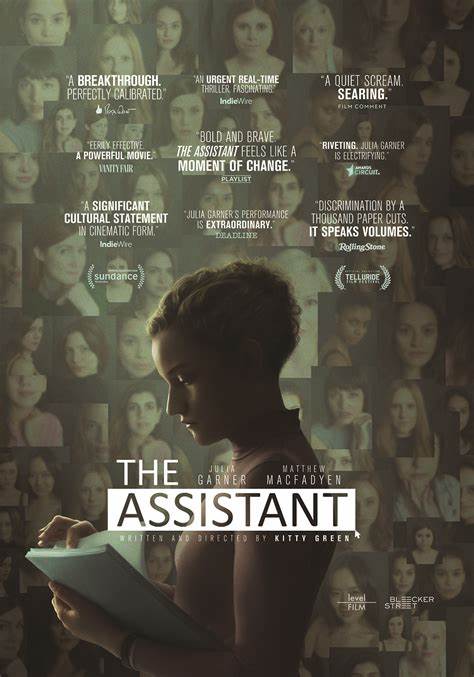
The Assistant (2020)

Julia Garner is a silent witness to monstrous goings-on in a Hollywood studio in The Assistant

Director: Kitty Green

Cast: Julia Garner (Jane), Matthew Macfadyen (Wilcock), Makenzie Leigh (Ruby), Kristine Froseth (Sienna), Alexander Chaplin (Max), Juliana Canfield (Sasha), Dagmara Domińczyk (Ellen), Bregje Heinen (Tatiana), Jon Orsini (Assistant), Noah Robbins (Assistant)

Jane (Julia Garner) is a low-level assistant in a Hollywood production company, run by an unseen movie mogul (but there’s no doubt that it’s Miramax and Harvey Weinstein). First in and last out every night, Jane is silent, downtrodden and treated as little more than a piece of furniture by the rest of the staff. Following her over one working day, from scrubbing semen stains out of her boss’ sofa and ending with her leaving the office as he takes advantage of another aspiring actress, The Assistant doesn’t have a plot as such. Instead it’s an experience film – a glimpse into an industry where abuse of your position is so common-place that it permeates every inch of a company, that is set-up to completely service the greed of its president.

Kitty Green’s film is very good at getting across the grinding, depressing, overbearing misery of entry level jobs. Jane slaves for hours at thankless, menial tasks. Coats are thrown at her, cups dunked down in front of her to clean, she is never addressed by name and barely has eye contact with another member of staff. Her contact with her boss is enraged phone calls after non-existent errors (for which she has to write grovelling email apologies) or tiny moments of praise communicated by third parties. Jane is still clinging to the dream of one day becoming a producer herself – but her day-to-day life is a never-ending stream of insults, misery and exploitation.

The film is also very good at showing how someone like Weinstein got away with it for so long. It’s because everyone knows – so much so that it’s become normalised, a part of everyday life, something that no longer seems outrageous or disgusting but just a part of how the business operates. People joke about not sitting on his sofa. Everyone knows what “private screening” is code for. People book late night flights so their boss can have time for his evening exploitation of young actresses. His erectile dysfunction medicine is delivered to the office. Headshots of actresses are printed off and piled on his desk, like a hardcopy of Tinder. The HR department goes out of its way to cover up his crimes.

Jane’s encounter with Matthew MacFadyen’s slimey HR manager is the film’s highlight. Concerned about a naïve young waitress who has clearly been plucked out of a country diner for the bosses perverse entertainment, Jane tries to raise her concerns with HR. She is promptly told complaints will destroy her career, be seen as her own envy – and that she doesn’t need to worry as she is not “his type”. MacFadyen oozes corrupt indifference.

It’s the film’s highlight, as it’s the closest it gets to a giving Jane a character arc. It’s the only time we see her pushing against her working environment – and then making a conscious decision to do nothing about it. While the film’s idea to cover a single day in Jane’s career, after she has spent weeks at the company, is successful in getting across the grinding monotony and everyday sexism and culture of abuse, it does mean the film effectively makes its point in the first fifteen minutes and then repeats it endlessly for the next 70. It also means that, while Julia Garner is very good her character largely hits the same note of downtrodden concealed pain and anger continually.

A more interesting film – if more conventional – could have charted several weeks, allowing us to see how the optimism and excitement Jane seemed to start with in her career was beaten out of her by her appalling abusive workplace. It would still have allowed us to grasp all the monstrous normality of the boss’ abuse, but we could have had a richer exploration of the impact on her.

As it is, The Assistant instead gives a brilliant sense of how horrible an industry can be when the greedy, destructive, vileness of its head permeates every inch of it. But that’s kind of all it says or tells us. It gives us a wonderful sense of what this workplace might be like – but its lack of event, plot or character dynamics means it doesn’t always make for rewarding drama.

Film Stars Don't Die in Liverpool (2017)

film stars dont die in liverpool
Annette Bening and Jamie Bell as an unconventional couple in Film Stars Don’t Die in Liverpool

Director: Paul McGuigan

Cast: Annette Bening (Gloria Grahame), Jamie Bell (Peter Turner), Julie Walters (Bella Turner), Kenneth Cranham (Joe Turner), Stephen Graham (Joe Turner Jnr), Vanessa Redgrave (Jeanne McDougall), Frances Barber (Joy Hallward), Leanne Best (Eileen)

In 1981, Oscar-winning actress Gloria Grahame (Annette Bening) is performing The Glass Menagerie in Lancaster as part of a UK tour. When she collapses backstage seriously ill, she asks her former lover, young Liverpudlian actor Peter Turner (Jamie Bell), to come to her aid. Peter takes her back to his parents (Julie Walters, Kenneth Cranham) in Liverpool. The two had met a couple of years ago – Grahame the fading star, Turner the would-be actor – and age hadn’t prevented their relationship flourishing into a passionate romance. The film cuts between what pulled them apart in the past, and the present day, where Turner discovers Grahame has been diagnosed with terminal cancer and has at best a few months to live.

Film Stars Don’t Die in Liverpool is based on Turner’s book and is directed with just the right stylistic flourish by Paul McGuigan. Fundamentally a straight-forward (even rather conventional) narrative, McGuigan doesn’t crowd out the action and emotion, but skilfully intercuts past and present together (for instance, characters walk through doors in 1981 and emerge in their memories of 1979). This is pretty subtly done throughout (although the glorious, sun-kissed past and the rain drenched Liverpool present isn’t particularly subtle!) and allows the film to focus on its main strengths – the acting.

The success of the film rests on the chemistry – and skill – of the two leads who both give wonderful performances. Annette Bening excels in nearly a career-best role, as a star clinging to the remnants of her career. Outwardly displaying glamour and confidence – complete with a soft-toned movie star voice – it’s a brilliant study of inner fragility and uncertainty. She carefully reveals a Gloria Grahame who is deeply insecure and fragile.

Bening brings a lot of empathy to the role of a slightly lonely woman who has spent years avoiding questions around her own health, terrified that it could make her unemployable. It’s a fear that has a tendency to make her brittle and defensive. And of course, that’s only added to by her knowing that she is ageing in a young person’s profession. Even jokes about age expose her self-doubt and fear. (Peter drops an early clanger when she tells him after their first date she dreams of playing Juliet with the RSC: “You mean the Nurse?” he says without thinking. She throws him out.)

It’s one of the nice things about the film that the only person who really has a concern about age – or ever seems to mention it as an issue – is the older woman. Nobody else in the film questions the relationship between these two on age grounds (all the doubts raised are based on background and, above all, Grahame’s track record with marriage – four and counting). It’s purely an obsession of Grahame’s – because she doesn’t want to be reminded of her own mortality and, unconsciously, the far younger Turner is a constant reminder of this. And Grahame isn’t really that old anyway: certainly not at heart, her vibrancy being one of the first things that attracts Peter to her.

Peter’s feelings though are heart-breakingly genuine, shown in Bell’s wonderfully compassionate performance. McGuigan frequently allows long reaction shots to study the emotional impact of events on the characters, and no-one benefits from this more than Bell whose face is frequently a picture of conflicted, tortured emotion, of grief that he’s only just managing to hold in. Bell is terrific.

The film charts a romance that starts with a blissful freedom, but ends with a very true and heartfelt declaration of love. The past – saturated with cleanliness and colour as it is – is full of fun, romance and semi-surreal early encounters stuffed with expressive dancing (a great reminder that Bell can really move!) and watching Alien. The time the two spend in New York is similarly golden tinged. What draws it to a close is illness – and Grahame’s fears of how it will affect Turner as well as not wanting to live her last few months being nursed by her lover like an invalid.

It’s an involving romance and relationship piece, and it also gives time to how important families can be. Turner’s parents (lovely work from Walters and Cranham) are supportive and caring of Grahame – and his brother (edgy work from Graham) is only frustrated that they put her before their own interests. It makes quite a contrast with Grahame’s family, a mother who seems more interested in herself (Redgrave at her grand damest, showily quoting Shakespeare) and bitchy, jealous sister (a prickly Frances Barber).

But it’s mainly a film about the two leads and while it doesn’t reinvent anything about biopics or romances (or tragic stories of loss), it tells its story neatly and cleanly and allows scope for the acting to do a lot of the work. Bening and Bell more than rise to the challenge.

Mank (2020)

Mank header
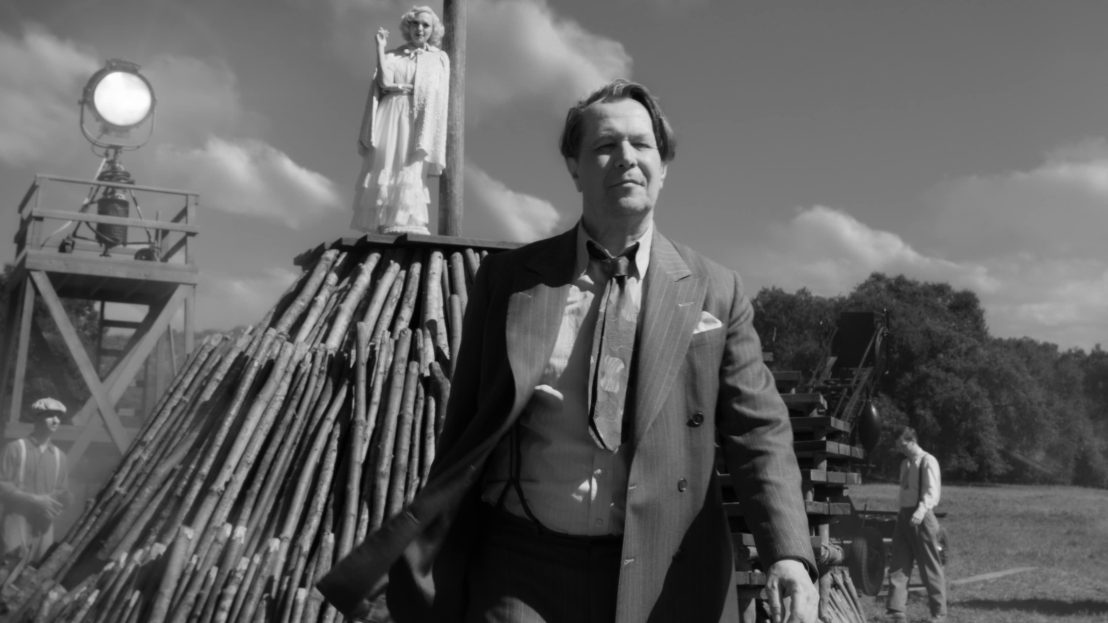
Gary Oldman excels as Herman J Mankiewicz in David Fincher’s bitter Hollywood epic Mank

Director: David Fincher

Cast: Gary Oldman (Herman J Mankiewicz), Amanda Seyfried (Marion Davies), Lily Collins (Rita Alexander), Arliss Howard (Louis B Mayer), Tom Pelphrey (Joseph L Mankiewicz), Charles Dance (William Randolph Hearst), Sam Troughton (John Houseman), Ferdinand Kingsley (Louis B Mayer), Tuppence Middleton (Sara Mankiewicz), Tom Burke (Orson Welles), Joseph Cross (Charles Lederer), Jamie McShane (Shelly Metcalfe), Toby Leonard Moore (David O Selznick)

It’s 80 years old, but age has not withered Citizen Kane’s mystique, still one of the greatest films ever made. The story of its creation has intrigued generations, a fascination only increased by the larger-than-life personalities involved, from Orson Welles down. David Fincher’s lovingly made, but bitingly shrewd deconstruction of classic Hollywood, explores the creation of the film by focusing on its credited co-writer Herman J Mankiewicz, the film neatly intercutting between the alcoholic Mankiewicz drafting the screenplay while in enforced retreat and his prime years as a writer-for-hire to the major Hollywood studios of the 1930s.

Mankiewicz is played by Gary Oldman (at 62, already seven years older than Mankiewicz was when he died). A noted wit, Mankiewicz makes an excellent living running the writers’ room at Louis B Mayer’s (Arliss Howard) MGM. Mankiewicz views the work of writing films as slightly beneath him, easy money (“Millions are to be grabbed out here and your only competition is idiots” he cables Ben Hecht). Mankiewicz’s sociability eventually finds him an informal role as “court jester” to newspaper tycoon (and MGM bank roller) William Randolph Hearst (Charles Dance) and he builds a warm friendship with Heart’s shrewd mistress, actress Marion Davies (Amanda Seyfried). The relationship sours as Mankiewicz grows disgusted by the dirty tricks campaign MGM and Hearst launch against the left-wing candidate for governor in 1936. In 1939 Mankiewicz works on the script for Citizen Kane, hired by Orson Welles (Tom Burke) with the support of an assistant Rita (Lily Collins) who helps him craft the words and stay sober long enough to type them.

Fincher’s film can easily be seen as a loving homage to old-school Hollywood. Certainly, Fincher fully embraces 30s filming style. From the carefully crafted period credits to the slightly distorted sound that apes the echoey on-set recording of classic Hollywood, this is a technical masterpiece. Beautifully shot in a series of sultry black-and-white images, with several visual references to Citizen Kane, it looks simply marvellous. The musical score is a brilliant mixture of Herrmannesque and classic Hollywood symphonic music with an edge. Even the casting has a slight old-school Hollywood unreality about it, from Oldman being at least 30 years too old to Amanda Seyfried being too young. Fincher embraces every flourish and stylistic tic from the Golden Era of Hollywood.

But the film is about as far as you can get from rose-tinted glasses. Instead this is a vicious, angry, look at Hollywood’s corruption, that owes as much to Billy Wilder’s Sunset Boulevard. Hollywood is a carnival of greed and abuse of power, where art takes a second seat to cold hard cash (“This is a business where the buyer gets nothing for his money but a memory. What he bought still belongs to the man who sold it. That’s the real magic of the movies!” Louis B Mayer exclaims). Power is abused, lies are peddled to the public (Upton Sinclair, the Democratic candidate for governor, is subtly savaged by MGM-propaganda films) and the rich shamelessly steal from the rest.

The film doesn’t give a pass to the “talent” either. Mankiewicz and his writers’ room – a who’s who of greats, from Ben Hecht to George S Kaufman, SJ Perelman and Charles MacArthur – are blasé and spend as much time playing cards and seducing broads as they do scribbling ideas. Mankiewicz sets the tone, a super-smart wordsmith who thinks the movies are a joke and never invests himself in any of his work, happy to simply pick up a pay cheque. Mankiewicz doesn’t care about the quality and completely misses (or doesn’t even understand or care about) the power of movies. Anyway, his judgement is terrible, denouncing The Wizard of Oz as an epic disaster in waiting and never bothering to ensure he receives credit.

Oldman perfectly captures the shambling, slightly rotund and scruffy disdain of Mankiewicz, as well as brilliantly suggesting that the booze and cigarettes are an aid to forget his own disgust and self-loathing. With Oldman’s verbal dexterity triumphant (Mankiewicz actually carries more than a few echoes of his Winston Churchill), Mankiewicz’s real gift (and reason for living) is clubability and a skill at getting on with everyone. He’s the ultimate insider in a profession he thinks is an unworthy joke. It’s what gives him the ability to drop perfectly formed, biting bon mots at the drop of the hat – and this devil-may-care attitude amuses William Randolph Hearst (a chillingly still and powerful Charles Dance who can turn from congenial to menacing in a moment).

It’s also what wins the friendship of Marion Davies, who Mankiewicz recognises as a kindred spirit, a woman of intelligence and sensitivity, playing a role in an industry she holds in uncertain affection. This is career best work from Amanda Seyfried, giving Marion intelligence and a touching vulnerability. However, unlike Mankiewicz, she is happy in the role she has been ‘cast in’. It would never occur to her to launch the sort of scathing attack on this gilded set that Mankiewicz’s script for Citizen Kane becomes.

The film is in fact less interested in the writing of Kane than you might expect.Kan, even with Tom Burke making a wonderfully detailed Orson Welles. It does however make sure to give most of the credit for story and dialogue with Mankiewicz, with Welles reduced to a petulant tantrum (the inspiration for Kane’s room wrecking) when Mankiewicz demands credit. (The film is in effect a dramatisation of Pauline Kael’s Raising Kane essay, which attempted to shift the key creative contribution from Welles to Mankiewicz). But then perhaps Mankiewicz finally realised films can be a vehicle for respectable, worthy work.

That is surely the lesson Mankiewicz learnt from the 1936 Gubernatorial campaign. His offhand remark inspires MGM to refashion its news reel department into a propaganda machine. Mankiewicz is plagued by guilt, self-loathing and disgust for his employers over this cynical and destructive abuse of power – but also his own failure to exploit his skills and talent to really make a difference (in a way his brother Joseph manages to do). Again, Fincher’s intelligent and beautifully crafted film leaves all this lingering in the mind, its initial impact only growing over time as you digest its complexities.

However, it is a film perhaps a little too absorbed in its detail to keep an eye on the heart. There are several scenes that feel missing. The film needs more of Mankiewicz as the court jester at Hearst’s. It needs more space to allow us to understand where Mankiewicz’s rage and bitterness really comes from. It needs more time to tackle his mixed feelings about his work. More exploration of the foundations of Citizen Kane. The pace sometimes flags and it’s a cold and admirable film rather than one that can be love, occasionally feeling a little pleased with itself (with its deliberately scuff-marked film and burned reel marks). I can well imagine some people using the dreaded word “boring” and it’s really a film for the cine-buff rather than the casual viewer.

The main flaw – and it might well be a big one – is that there isn’t enough focus given to what motivates Mankiewicz to turn so completely against the gilded in-crowd. Even when haggling over credit with Welles, Mankiewicz still points out he (unlike Welles) is a Hollywood insider and will win any arbitration. But the motivations of the film are hard to find amongst the skilful recreation of its design. The characters at times seem a little to artificial and lifeless.

But it has a host of other positives, all superbly marshalled by Fincher’s pitch perfect direction. The cast is superbly led by Oldman. Among the rest, Arliss Howard is terrific as the venal and hypocritical Louis B Mayer, Tuppence Middleton very affecting as Mankiewicz’s put-upon wife and Lily Collins charming as Mankiewicz’s assistant Rita Alexander. With its evocation of Hollywood style spot on, Fincher’s film also brilliantly deconstructs the dark, corrupt heart of Hollywood where powerful producers and money men are focused on their own ends. Shown through the eyes of one disaffected insider, it makes for a film-buffs delight and an intriguing if sometimes cold viewing.

Whatever Happened to Baby Jane? (1962)

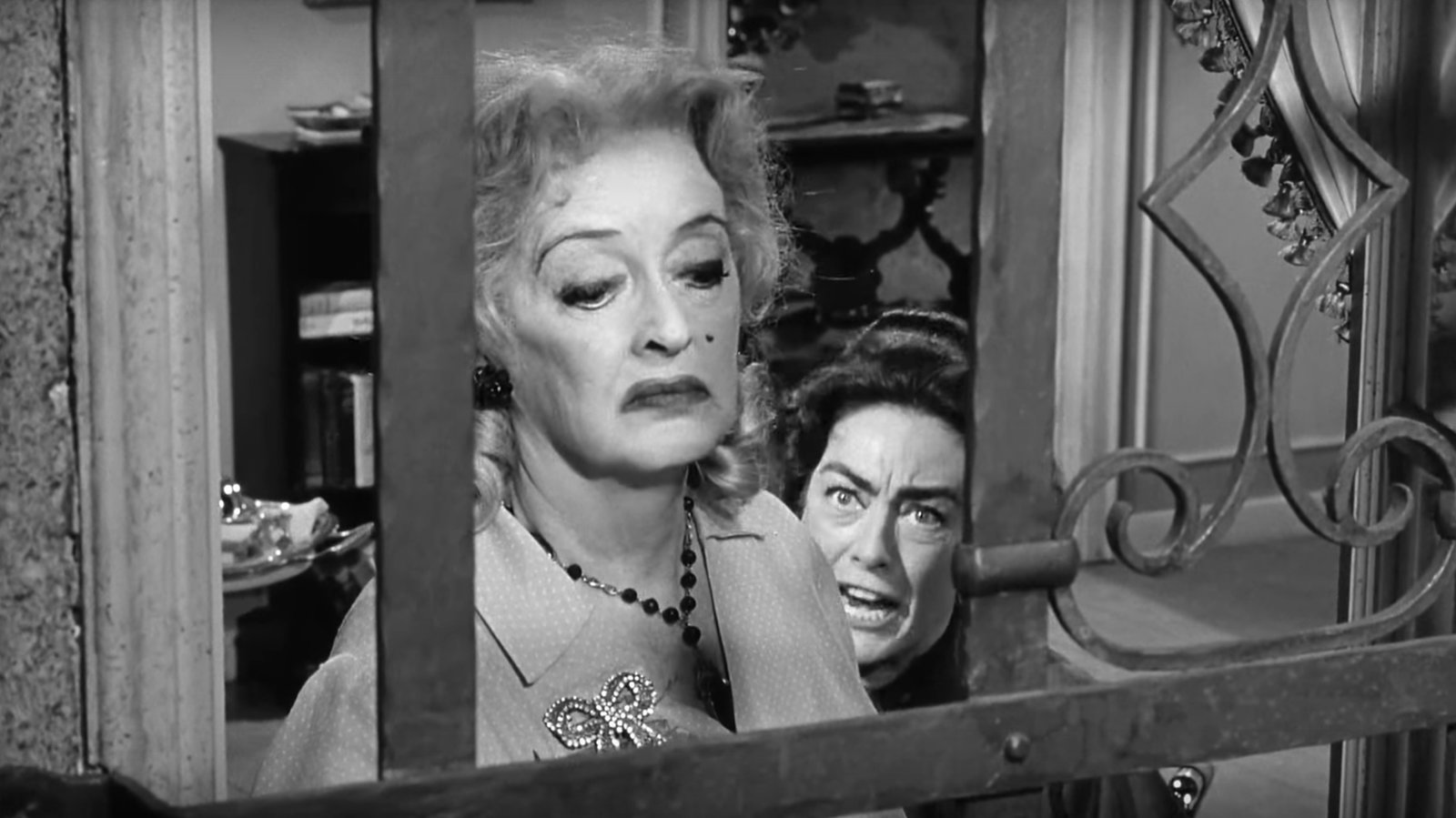
Bette Davis and Joan Crawford rant and rage in Whatever Happened to Baby Jane?

Director: Robert Aldrich

Cast: Bette Davis (Jane Hudson), Joan Crawford (Blanche Hudson), Victor Buono (Edwin Flagg), Marjorie Bennett (Dehlia Flagg), Maidie Norman (Elvira Stitt), Anna Lee (Mrs Bates), BD Merrill (Liza Bates)

Age isn’t kind on the careers of Hollywood actresses. Move into your 40s and the part offered quickly becomes “the grandmother”. It’s a fate that saw the careers of some of the greatest actresses of the Golden Years of Hollywood crash screeching to a halt. However, these actresses remained popular with many cinema goers. So it occurred to Robert Aldrich, why not throw a couple of them into the sort of roles that can riff on their careers and public images? Match that up with jumping on the bandwagon of films like Psycho and you could have a hit on your hands.

That’s what he got as well with Whatever Happened to Baby Jane. Jane Hudson (Bette Davis) is a former “infant phenomenon” on the stage, whose career fell apart as soon as she hit puberty. Her sister Blanche (Joan Crawford), on the other hand, grew up to have a promising career in Hollywood – which then collapsed when a late-night driving accident (which Baby Jane is widely believed to be responsible for) left her paralysed from the waist down. Now in middle age, Jane and Blanche live in domestic disharmony, Blanche trapped upstairs at the mercy of Baby Jane, whose longing to rebuild her career sees her head down an ever steeper spiral of insanity.

Whatever Happened to Baby Jane started a new genre in Hollywood – the freak hag-horror or psycho-biddy genre (those names alone show that at its heart this genre was basically demeaning) which saw Hollywood Grande Dames (frequently Davis and Crawford, though others got a look-in as well) parley their reputations into ever more formulaic riffs. Films like this quickly became cult viewing. Their extremes of make-up and performance, matched with the arch camp of the leading ladies hamming it up, made the genre extremely popular – and left films like Whatever Happened… far more fondly remembered than they deserve.

It’s popular to see Sunset Boulevard as a sort of precursor to this genre, a first try-out in taking an older era of Hollywood and turning it into a ghastly waxwork show. But Sunset still has affection  for what it shows (and above all captures the tragedy of the death of Silent Hollywood, treating its characters as people rather than freaks), while Whatever Happened has none, basically seeing the past as a parade of monsters, and these relics as waxworks to be mocked. There is no affection here for the past successes and glories of either star, instead we are invited to sit back and wonder at how far they might be willing to go to see bums on seats again. All of this to make money for the producers. Far from the art of Sunset Boulevard, this feels more like the exploitation of screen greats.

Although of course both stars were more than happy to get involved, even if they were less than happy working with each other. The background to the film, to be honest, often carries more interest than the very long, often slow, horror/black comedy during the film’s over-extended run time. Famously Davis and Crawford were long-standing rivals and their relationship over the course of making and promoting the film disintegrated into cheap one-upmanship and bitter recrimination. While the feud does probably give some edge to the screen antics, the very fact that it’s nearly the first thing people remember about the film probably tells you how memorable the actual experience is.

Davis throws herself into all this with creditable abandon. (She was Oscar nominated and Crawford wasn’t – although Crawford got the last laugh, having arranged on the night to collect the Oscar on behalf of eventual winner Anne Bancroft, performing on Broadway that night.) Davis designed the freakish but iconic look of Baby Jane, all painted face and little girl mannerisms, and her demented attempts to recreate her childhood act in her 50s (culminating in a bizarre and skin-crawling “Writing a Letter to Daddy” dance which was weird enough watching a 12 year old perform) can’t be faulted for commitment. Davis also manages to invest the bullying and cruel Jane with a deep sense of loss, regret and guilt (for her sister’s accident) that frequently bubbles over into resentment. It’s certainly a larger-than-life performance and Davis frequently dominates the film, even if the role is basically a cartoon invested with Davis’ own grace and glamour.

It doesn’t leave much for Crawford, whose Blanche is frequently left with the more po-faced, dull and reactive lines. Crawford doesn’t often make Blanche as sympathetic as you feel she should be – although the part plays into one of her strong suits of playing the martyr – and the film saddles her with a late act twist that doesn’t have enough time and development to really make much sense. However again you can’t fault her commitment, either to screams or to a scene where she attempts to climb down the bannisters of the stairs from her trap on the upper floor, where the effort, strain and pain on Crawford’s face are astonishingly real.

Those stairs dominate many of the shots of Aldrich’s serviceable and efficient direction – although he lacks any sense of the mix of cruel poetry and dynamite sensationalism that Hitchcock bought to similar material in Psycho. But it works nicely to give a sense of Blanche’s confinement and as a visual metaphor for the trap the house feels like. Aldrich also throws in a couple of other decent flourishes, not least as Davis’ lounge turns into a proscenium stage as she imagines returning to the big time.

But the film itself is, despite it all, lacking in any sense of kindness or warmth really for either its stars or old Hollywood. We are instead invited to gasp at them in horror, while the film drags on at great lengths, stretching a very thin plot (barely a novella) into over two hours of screen time. There are effective moments, but it’s a film that seems barely serviceable today.

8½ (1963)

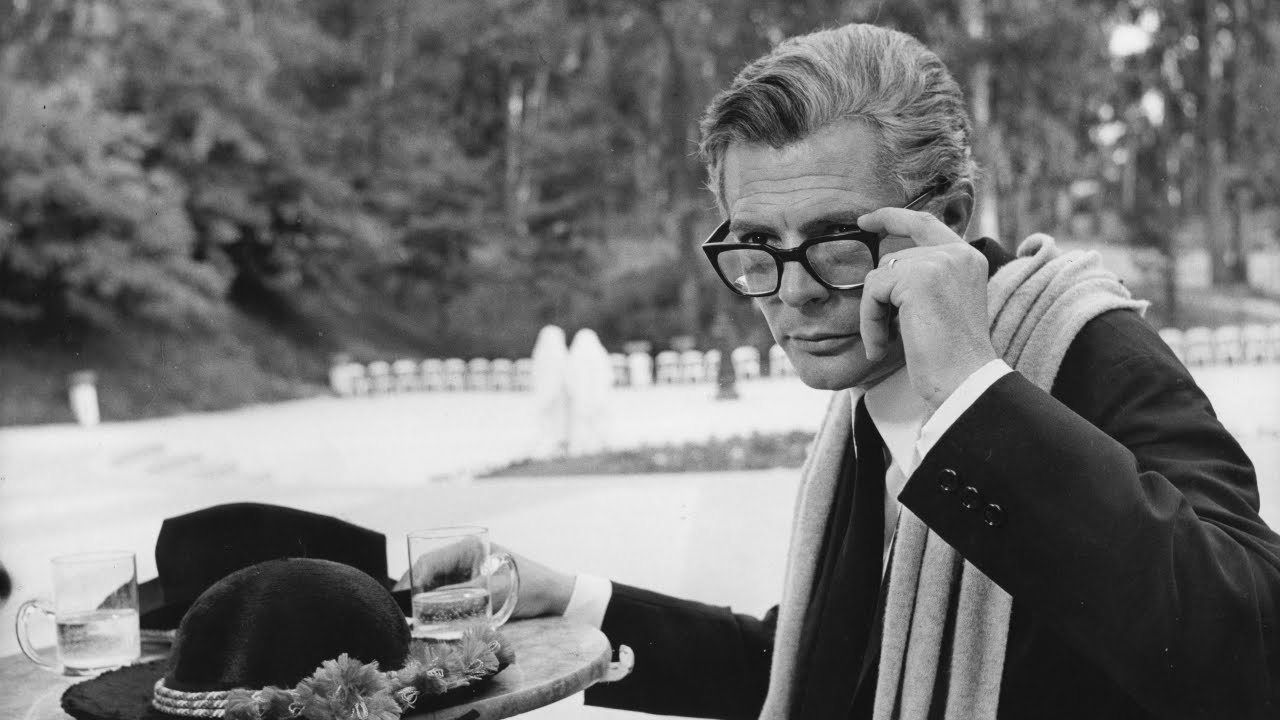
Marcello Mastroianni plays a version of the director in Fellini’s inspiring

Director: Federico Fellini

Cast: Marcello Mastroianni (Guido Anselmi), Anouk Aimée (Luisa Anselmi), Rossella Falk (Rossella), Sandro Milo (Carla), Claudia Cardinale (Herself), Guido Alberti (Pace – Producer), Jean Rougeul (Carini Daumier), Mario Pisu (Mario Messabotta), Barbara Steele (Gloria Morin), Madeline Lebeau (Herself), Eddra Gale (La Saraghina), Ian Dallas (Maurice, clairvoyant’s assistant)

If there is a single director associated with self-reflecting films its Federico Fellini. Frequently recognised as one of the greatest and most influential directors of all time, many of his films use baroque imagery and a masterful interplay of reality and fantasy to delve deep into both its director’s own subconscious and the swirling pressures and internal conflicts that make us the people we are. is, perhaps, the greatest expression of this style of film-making, a giddy sensory delight that demands investment and wisdom to unpeel its layers and give you a chance of finding its meaning.

Frequent Fellini collaborator Marcello Mastroianni plays Guido, a thinly veiled portrait of Fellini himself. Like Fellini, Guido is a successful and visionary director, facing pressure to come up with his ‘next masterpiece’ after the glorious success of his previous film (in Fellini’s case La Dolce Vita). Like Fellini, Guido is struggling to work out exactly what statement he wants to make next, instead allowing himself to become distracted by personal issues and day-dreaming flights of fancy (literally so in the film’s opening, where Guido imagines himself flying through the sky before being tethered and pulled to earth by his producer). Most of all these distractions revolve around women, from his wife Luisa (Anouk Aimée), his mistress Carla (Sandro Milo) and recurring daydreams of Claudia Cardinale (playing herself) who could just be the muse he is looking for. 

To me one of the things that can make a film great, is when the ideas in it are not obvious and tired, but when they defy obvious characterisation but throw themselves open to further thought and different interpretation depending on your mood. definitely meets this criteria, combined with the fact that it’s beautifully made and very entertaining.

Fellini’s deep dive into his own subconscious is deeply involving and intriguing. The film dances from beat to beat between reality, memory and fantasy – often leaving the lines blurred about which of these we are watching at any one time. That’s part of Fellini’s idea, that our minds are complex enough to exist on all three plains at the same time, to juggle within ourselves what’s real, what we remember, what we imagined or wished could happen and how we create our own versions of all these. 

In the build-up to the film, Fellini famously struggled to identify what he wished to make and what it should be about. But while you could say that Fellini turned this creative block into a film – that, when unsure about what to make a film about, he made a film about a director who didn’t know what to make a film about – that’s to suggest a vagueness in its execution that isn’t the case. Fellini knows exactly what he’s doing here: every scene serves its purpose to explore the ennui and feelings of entrapment that an artist feels, both in his life and his craft. Far from being ambling, the film is carefully constructed and brilliantly focused.

Guido is hounded at every corner by people wanting something from him. Be it producers demanding progress, extras looking for roles in his film, actors demanding insight for their characters to his mistress looking for his attention or his wife demanding more focus from him on their marriage. The film is Guido attempting to identity among all these demands what he needs and wants from his own life – and how to build on that. It’s telling that most of Guido’s fantasies that litter the film revolve around his demands for other people to service him – be that romantically, literally or spiritually. Is part of the point of the film that we are all selfish to some extent? 

It’s the film’s exploration of day-dreaming fantasy that gives it some of its most extraordinary work, coupled with Fellini’s superb and striking visuals. The opening sequences of Guido imaging literally flying out of a traffic jam (and away from the stares of the other drivers) into the freedom of the sky – before being literally pulled back down to Earth – shows how these flights of fancy give us windows into our own desires. Guido’s a confused man looking for focus and something to believe in – his constant fantasies of Claudia Cardinale seem in part longing for her to solve his creative problems, part sexual, part almost motherly, as if she can take some decisions away from him.

Other fantasies – such as an imagined conversation with a priest for spiritual guidance – lean on finding the sort of structure his life seems to be missing. (And also, in a fantasy confession of his ennui to the same priest, perhaps a need again to be told what to do.) Most of his fantasies though revolve around romance. He imagines his wife and mistress sharing anecdotes before dancing away arm-in-arm. Most famously, an extended sequence shows Guido imagining a harem containing all the woman in his life, where he is the centre of attention – and women who age beyond his interest are politely banished upstairs “to be well looked after”. The women range from long-standing crushes and mistresses, to half-glimpsed dancers and an air hostess with a sexy voice. 

There is a striking honesty about Fellini putting something like this on film – and then use the fantasy he is displaying to both comment on and criticise his own internal fantasies. In the fantasy, unlike real life, his wife is an almost maternal figure (Guido has already jumped at one point in his reverie earlier in his film, to remember his mother only for her to turn into his wife), the women address Guido with harsh truths about everything from his character to his sexual performance, a revolt breaks out in the fantasy harem at Guido’s banishing of early crushes as they age (one which Guido stamps out). The harem is further set within his childhood home, adding a whole other layer of odd sexuality to it, as part of the women’s duties are to bath and wash him exactly as his grandmother did as a boy. It’s a sequence that lays itself open to multiple interpretations, but never feels exploitative or sleazy.

Large chunks of the rest of the film take place in a hard-to-define space between dream, memory and reality. Frequently scenes shift in nature half way through – Guido is followed throughout the film by a critic-turned-screenwriter, full of criticism of the intellectual shallowness of his work who, mid-rant, he imagines taken away for execution by some toughs. Gentle tracking shots around the retreat Guido is staying at – scored with a mixture of classical music and Nina Rota’s wonderful score – trip a line between real and imaginary in the sights we see. Conversations are intercut with imagined moments or might simply be happening in a pretence rather than a reality.

If it sounds like a difficult view, it’s not. Because for all the intelligent analysis of the ennui that can come from a creative block and the internalised struggle to find a balance between all the impulses that pull on us, it’s also a hugely entertaining film. Funny, wise and superbly acted. Mastroianni is brilliant as Guido, in turns giddy and world-weary, confused and resigned then ambitious and dreamlike. The rest of the cast are also excellent, with Anouk Aimée delightful as his long-suffering wife and Sandro Milo hugely entertaining as a needy but largely ignored mistress.

Fellini’s dives into memory also add both a richness and an emotional heft to the film. There are some beautifully nostalgic sequences that head back into the past. Guido’s childhood is explored with a series of wonderful vignettes. From his childhood in a wine distillery with his grandmother and aunts, full of playful energy, to the first stirring of a sexual awakening watching a prostitute dance on the beach (a quite extraordinary scene of playful flirtation, but still rather oddly innocent in its way). These scenes have captured the imagination of directors across the globe, with their power and ability to capture both the nostalgia of recollection, but also a distant magic of memory and the impact these still have on us in the present. But no body does this better than Fellini.

The best thing that can be said about is that I can imagine watching it hundreds of times, and each time seeing something fresh and new about it. And it works because its ideas are profound without being pretentious and easy enough to engage with, while never shallow. It brings depth and richness to complex internal struggles and repackages these into a rich experience that enlightens both memory and creativity. A great movie.

A Star Is Born (1954)

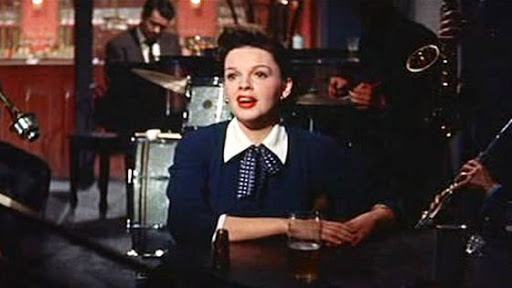
James Mason and Judy Garland deal with ups and downs in Hollywood in A Star is Born

Director: George Cukor

Cast: Judy Garland (Esther Blodgett/Vicki Lester), James Mason (Norman Maine/Ernest Gubbins), Jack Carson (Matt Libby), Charles Bickford (Oliver Niles), Tommy Noonan (Danny McGuire)

A Star is Born’s story had effectively been told twice already in Hollywood – once under the same title in 1937 and once before that as What Price Hollywood?, directed by none other than George Cukor. But Judy Garland’s husband Sid Luft saw the project was perfect for her. Luft thought the volatile Garland needed a director who could draw the best from her – and who better than Cukor, who worked with actors perhaps better than any other director in Hollywood. Cukor had been worried about repeating himself – but the chance to direct his first musical, first technicolour epic and work with Garland was too tempting.

The story is of course familiar. Esther Blodgett (Judy Garland) is an aspiring singer who – with quick thinking and performance nerves of steel – saves drunken Hollywood star Norman Maine (James Mason) from humiliation by involving him in a musical number at a charity event. When he sobers up, Maine goes to visit Esther to thank her – and is blown away when he hears her singing. Convinced she will be a major star, Maine arranges for a screen test with studio head Oliver Niles (Charles Bickford) and later pitches heavily for her to be considered as a last-minute replacement on the studio’s big new musical when the star drops out. Esther – or Vicki Lester as the studio renames her – becomes a major star when the film is a smash hit. But as her career goes up and up, Maine’s alcoholism and unreliability start to catch up with him and his own career hits the skids.

Cukor’s A Star is Born is a big, charming, impressive film that mixes emotional desperation with moments of joyous celebration. The film was not the box-office bomb it’s often believed to be (although it did do disappointing business) but, worried about its length, the studio cut the film several times during its release. The film we have today is a slightly neutered version, with several scenes reassembled by film historian Ronald Haver using audio, the odd clip and still photographs (it adds an impressionistic section of the film which you can’t imagine Cukor would have cared for) – but Haver did locate several missing musical numbers which add to the film’s impact.

Garland sings all the numbers, and some of her best work ever is in this film. Her late night bar rendition of The Man That Got Away (the performance that wins Norman’s heart) is superb. I love the affectionate spontaneity of Someone at Last, Esther’s recreation to amuse Norman of the sequence she has spent the day filming in the studio. This scene is playful, sweet, funny and has a freshness not all the numbers have.

Some of the other numbers go on too long – and it’s hard to escape the feeling that they are in there solely because of Garland and not because they serve the plot. Because this isn’t really a musical as such, more of a romantic tragedy with the odd tune, with each number a performance. It works superbly because Cukor’s sympathetic direction draws some of her best work from Garland – and a truly superb performance from Mason. 

Cukor works particularly effectively with Garland who, in real life at this point, was far more similar to the destructive Maine (she delayed the film frequently with her absences and fluctuations in health). Garland is of course too old for the part – but it doesn’t really matter as she brings it such freshness, naturalness and emotional openness that you can persuade yourself that she’s a young ingénue at least ten years younger than she looks.

Garland was also surely helped by being paired opposite Mason. Not the first choice – that was Cary Grant – or indeed the second, Mason was hired as his professionalism and expertise could deal with Garland’s erraticism. Under Cukor’s direction he gives his finest work on screen here. His turns Maine into someone decent, charming, kind – but overwhelmingly self-destructive. His slightly slurred speech and ability to turn on a sixpence to anger makes for some of the best drunken acting you’ll ever see. But it works especially as we are desperate for Maine to kick the bottle. Because when he’s sober he’s the perfect husband and gentlemen. But Mason uses that to mine the deep tragedy of the character, his intense shame and self-loathing. The later sequences of drunken misbehaviour are heartbreaking (Maine’s drunken interjections at Esther’s Oscar-winning speech are almost unbearably painful to watch), and it’s all powered by Mason’s humanity in the role. It’s a truly great performance.

The film itself is perhaps a little slow and uneven around these performances. The musical numbers – whisper it – frequently slow the action down or grind the plot to a complete halt (none of them add anything to the story at all, and exist to showcase Garland). The film is so tightly focused on its two leads that it never develops any sub-plots to contrast with the main action. There is some light satire on Hollywood studios and their rapacious desire for more money – but not too heavy as the villain here is the odious press man (a weasly Jack Carson) while the studio head is a kindly, affectionate, fatherly figure who would never make a call based on business. The matter of fact way both stars have their names changed (the moment when Esther discovers Norman’s real name is a hilarious throwaway moment) is a neat gag. But the film takes a long time, frequently stopping for another Garland set-piece.

Perhaps the studio instincts were right that the film needed to be tighter – and some of the dialogue sequences reinserted by Haver hardly add much too the plot. Cukor’s direction is calm but assured though and the superb performances of the two leads make the film what it is. It looks fabulous with its technicolour depth, and it carries a genuine emotional force that pays off dramatically by the film’s conclusion. A Star is Born is uneven at times and overindulgent but it has more than enough going for it to reward the viewer.

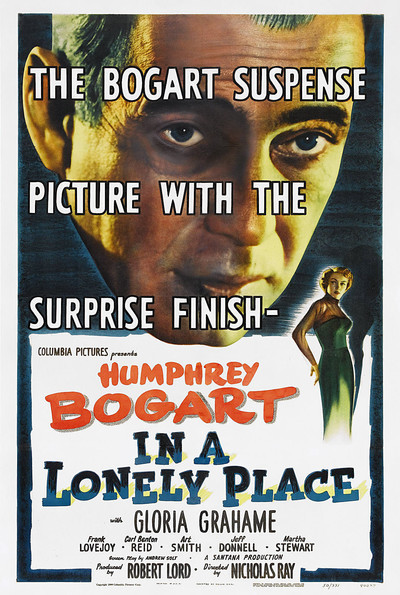
Sunset Boulevard (1950)

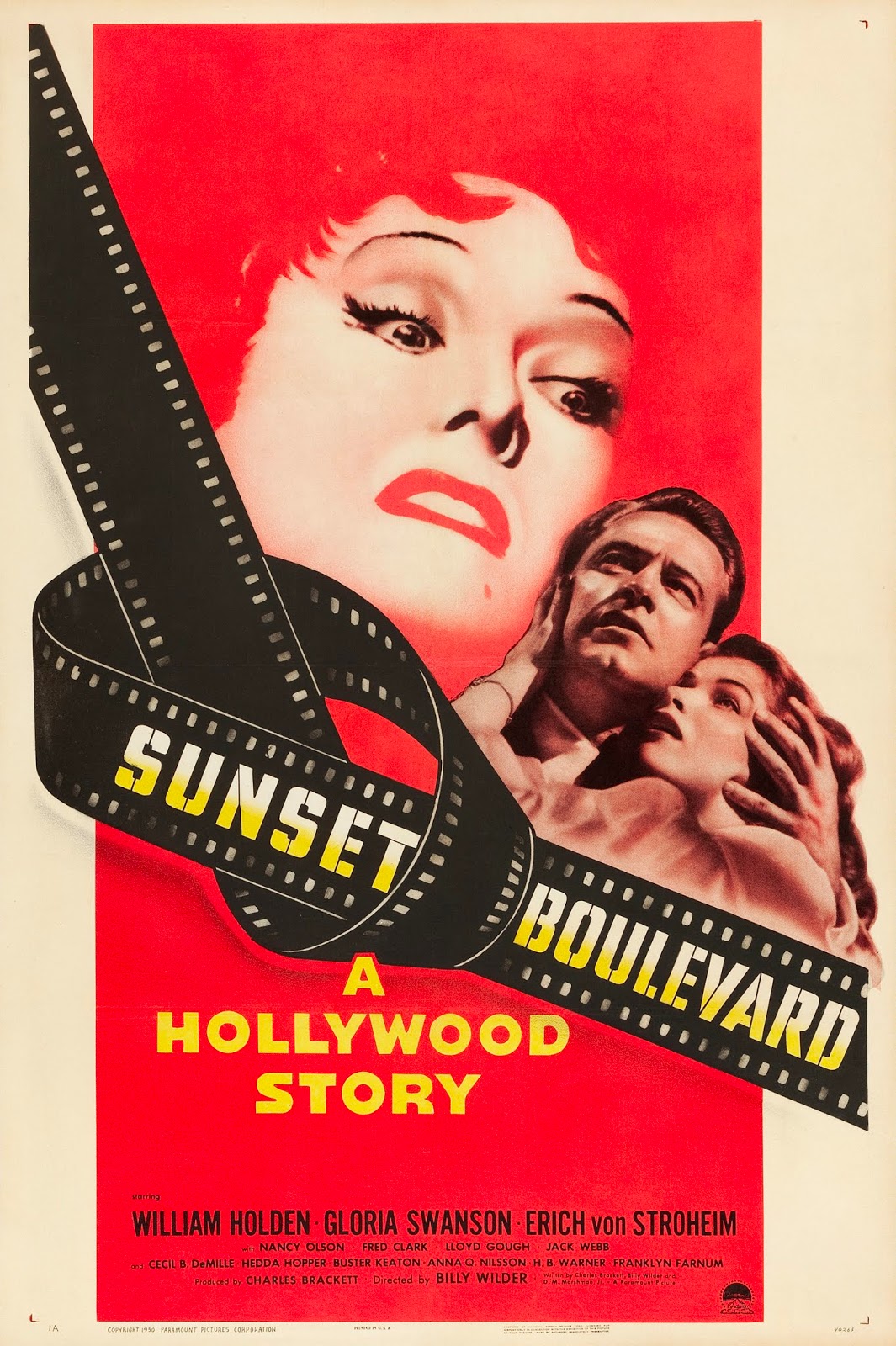
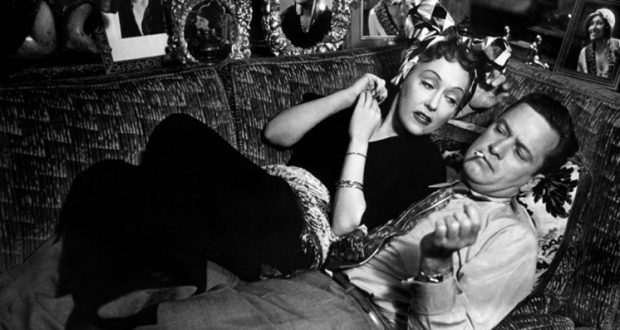
William Holden falls under Gloria Swanson’s spell in Billy Wilder’s superb Hollywood satire Sunset Boulevard

Director: Billy Wilder

Cast: William Holden (Joe Gillis), Gloria Swanson (Norma Desmond), Erich von Stroheim (Max von Mayerling), Nancy Olson (Betty Schaefer), Jack Webb (Artie Green), Fred Clark (Sheldrake), Robert Emmett O’Connor (Jonesy), Lloyd Gough (Morino); as themselves: Cecil B. DeMille, Hedda Hopper, Buster Keaton, Anna Q. Nilsson, HB Warner

Imagine if Charles Dickens had been born a hundred years later. He would surely have headed to Hollywood – and if he had, surely would have written something like Sunset Boulevard. Because who is Joe Gillis but another shallow Pip, dreaming of fortune and wasting his brains, who turns up at Satis House but stays on to become Miss Havisham’s live-in lover? Sure Wilder is more cynical and bitter than Dickens, but I guess even optimist Dickens killed off Little Nell so maybe he too would have had Joe Gillis end (and start) the film face-down in a swimming pool with three bullets in his back?

The cops arrive to find Joe (William Holden) exactly like that, while we hear Joe’s acidic commentary outlining exactly how this state of affairs came about. Joe is a screenwriter in Hollywood (he’s in the second tier of a second tier profession in the movies) who can’t get his latest script made for love nor money. Dodging the debt collectors set on reclaiming his car, he pulls into the drive of a mysterious house. It’s the home of Norma Desmond (Gloria Swanson), a forgotten silent film star who now lives out her days in her mansion, dreaming of her past glories and planning for a return to stardom that will never come, tended to by her loyal butler Max (Erich von Stroheim). Joe is roped in first to rewrite the (terrible) script she has been working on for her comeback, and then to become her live-in lover. But can such a situation survive Hollywood’s cold heart and Joe’s own self-loathing and desires to restart his screenwriting career in partnership with ambitious young studio script reader Betty Schaefer (Nancy Olson)?

Billy Wilder’s poison-pen love letter to Hollywood skewers the coldness at its heart. It does this with a triumphant mix of the grotesque and the heartfelt, the surreal and the coldly realistic, an insider’s guide to the world behind the magic of film-making and a story about those shut out of that very world. Hollywood is a shallow, bitter town where you’re either top of the bill or no-one at all. Would people from any other profession write such a bitter denunciation of their job that is also laced with affection and love? Maybe it has something to do with this being a unique profession which you have to love to enter, but once there you work with people who see it as a business.

The smell of desperation is there from the start, with Joe peddling his dreadful sounding baseball movie The Base Is Loaded to a polite but uninterested producer. Dropping a host of names and accepting any number of changes to the story (including changing it into an all-female sporting musical), Joe might once have had a talent but, as he says, “that was last year, this year I need money”.  William Holden was a late choice for Joe, but he is perfect in the part, capturing the air of the self-loathing cynic, a man bright enough to understand he’s shallow, a hack and desperate for any touch of the fame and fortune Hollywood can bring him.

Just like Pip, Joe is a young man who feels he is entitled to a life he scarcely seems to be qualified for. No wonder he settles into a life as Norma Desmond’s gigolo – it may well damage his sense of masculine pride to be an emasculated house-boy, but my God the suits are nice. And what talent does Joe even really have anyway? The script he is peddling barely seems to have any merit at all, and his extensive polish of Norma’s vehicle is still so alarmingly bad it never even gets the slightest consideration from Cecil B. DeMille. But Joe can’t let it go because he’s like a moth drawn towards those bright Hollywood lights.

And those bright Hollywood lights have consumed forever Norma Desmond. Wilder pulled Gloria Swanson out of an enforced semi-retirement to play the silent screen siren, whose career her own so closely parallels. It’s easy to remember Norma as a sort of Psycho-ish grotesque, a demented Miss Havisham living in her own crazy patchwork world of memory and delusion. Swanson certainly channels brilliantly the expression and body language of silent cinema into the part, and Desmond’s use of the sort of exaggerated gestures from that era in everyday life hammers home how her life hasn’t moved on from her glory days. 

But that would be to overlook the immense skill in Swanson’s performance. Norma may be sad, desperate, probably more than a little unhinged – a larger than life Miss Havisham to whom the “the pictures got small”, but she’s also a real person. Swanson makes it clear she genuinely loves Joe, she’s generous when she wants to be, devoted in her own way and immensely fragile. She takes a delighted pleasure in entertaining – a sequence of her reliving her glory days for Joe’s amusement (he couldn’t give a toss, making it all the more painful), capped with a charmingly delightful Chaplin impersonation shows a Norma who loves entertaining, loves putting a smile on people’s faces. Sure she’s obsessed with fame and desperate to reclaim it, but she’s also deep-down a real person.

But then that’s part also of Wilder’s romantic look at cinema. He can totally understand the bitter, destructive “business” part of it, but he still loves the show. His insiderish film is full of loving tributes to old Hollywood. Norma sits and watches real film footage of the real Gloria Swanson. The visit to Paramount Studios delights not only with its “backstage pass” feel, but also in the excitement with which the ageing extras and stage hands greet Norma. Norma’s weekly card games are staffed with genuine silent movie stars like Buster Keaton. Cecil B DeMille even pops up as himself (on the set of his film Samson and Delilah), kindly trying to guide Norma out of the studio even as he lacks the guts to tell her that her dream of a comeback is stillborn.

So how can you not feel sorry for Norma, who is clearly locked up in her haunted house on the outskirts of town, a million miles from reality, surrounded by endless reminders of her past glories. It’s so all-encompassing it traps Joe as well – at one point Wilder shows him trying to storm out, only for his pocket watch to literally get caught on the door. This place of dreams is staffed by the butler Max, a beautifully judged performance of Germanic chill mixed with doe-eyed devotion from Erich von Stroheim, also playing a dark version of himself as Norma’s pioneering former director (and husband) now reduced to protective butler. The entire house is a mausoleum without any escape.

The only character who seems truly positive is Nancy Olson’s wonderfully sweet Betty Schaefer, passionate about crafting a career for herself in the cinema. But even she is ruthlessly ambitious, a woman quite happy to consider jilting her fiancée for Joe’s attentions and has her eye on the price of success. She may have the talent, but she’s also got the sharpness.

Billy Wilder’s film brilliantly explores all these divides and contradictions in Hollywood and its history. Because what is Hollywood but a town that pays lip service to the past, but only has eyes for the future? Particularly with women. Female stars have a short shelf life and then they are dispatched. Poor Norma is still glamourous, still clearly has star quality – but as far as Hollywood is concerned she may as well be a million years old. No wonder Joe, used to these attitudes, is so ashamed to be kept by her – a woman he constantly refers to as a middle-aged friend. 

The dialogue, as you would expect from Brackett and Wilder, is superb from top to bottom with zingers and well-constructed dialogue exchanges so well placed they will survive for as long as there are movies. The film is beautifully shot by John F Seitz – part gothic horror, part dark romance, part neo-realist. Its pacing is perfect, its four act construction perfectly put together. All four of the principals (all Oscar nominated, none winning) are pitch perfect, sketching out characters that feel real and mixed with tragedy and loss as much as they are larger-than-life otherworldliness.

It’s the mixture of the freak show and the heart, in the massive Havishamesque estate, that marks this out as Hollywood does Dickens. The astute understanding of central characters, with enough depth to understand their shallowness, the grotesques that revolve around them but still have their humanity, it’s all there. Wilder mixes it with his own Hollywood emotions and his dry wit and cynicism to create a damn near perfect movie.

Charlie Bubbles (1968)

Albert Finney and Liza Minnelli deal with ennui in Charlie Bubbles

Director: Albert Finney

Cast: Albert Finney (Charlie Bubbles), Colin Blakely (Smokey Pickles), Billie Whitelaw (Lottie Bubbles), Liza Minnelli (Eliza), Timothy Garland (Jack Bubbles), Richard Pearson (Accountant), Nicholas Phipps (Agent), Peter Sallis (Solicitor), Alan Lake (Airmen), Yootha Joyce (Woman in Café), Wendy Padbury (Woman in Café), Susan Engel (Nanny)

In the late 1960s Albert Finney was possibly the biggest star in British cinema. It was a status that the private and reserved Finney found challenging – and fed heavily into his only directorial effort, Charlie Bubbles, an amiable and whimsical journey through the alienation that afflicts a successful northern writer, bored by the world of success in London but no longer at home in his working class roots. It’s a story that spoke to both Albert Finney and the film’s scriptwriter Shelagh Delaney.

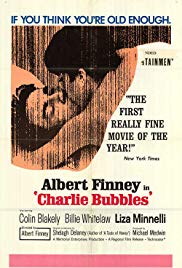
Because writing is really just a hobby, not a viable career path as Charlie Bubbles (Albert Finney) is constantly reminded when he returns to his home in Manchester (“Are you still working sir, or do you just do the writing now?” queries an old friend of his father). Charlie is hugely successful but also hugely bored, wrapped in ennui and barely able to engage in his surroundings be that his wealth, his London settings, working class clubs he visits with fellow writer Smokey (Colin Blakely), the attentions of his enthusiastic secretary Eliza (Liza Minnelli) and his responsibilities to his ex-wife Lottie (Billie Whitelaw) and son Jack (Timothy Garland). (The poster by the way gives a hilariously incorrect idea of the plot as some sort of lothario drama).

The film largely doesn’t really have a plot as such, just follows the drifting lack of engagement Charlie feels for everything around him. It’s largely a showcase for some nifty heartfelt writing and some intriguingly imaginative direction from Finney. It’s actually a bit of a shame watching this that Finney didn’t direct another film, as he not only works well with actors but has an original eye for visuals. One scene is shot entirely through a bank of security cameras, others take interesting angles on everything from lunchtime meetings (with many too-camera addresses) to love scenes (shot with an efficient boredom that hammers home how little Bubbles seem engaged with it). 

It’s also a lovely little showcase for Shelagh Delaney, whose script is crammed with juicy little lines and playful moments, as Charlie struggles from event to event. It’s a very bitty and drifting storyline, that deliberately heads towards no particular destination. In that it reflects the aimlessness of Charlie’s own life. There is nothing particularly wrong with this, as the various sketches of which it is made up work rather well, particularly as they often engagingly switch from style and tone. There are a few other films I can think of that open with a ludicrous food fight between two friends, two guys pretending to be mannequins in a department store, a depressed man shooting pop guns at a video surveillance image, a Manchester United football game, an ex-wife catching chickens and finally the hero drifting away in a balloon.

How you go with this sort of thing really depends how much you engage with the action on offer or the whimsical style of the entire shaggy dog story. It also rather depends on how much sympathy you feel for someone burdened with immense wealth and fame from overwhelming artistic and critical success. The film gives some taste of this – staying with his ex-wife she is pestered by no less than three reporters arriving unannounced eager to hear the words of the boy wonder – but it’s pretty hard for us plebs to understand. Which I guess is the film’s point.

After all every time Charlie heads anywhere around his own working class roots in Manchester, he is met with either a snide insinuation that he has lost touch with his roots or a confused lack of understanding about the London lifestyle he has left behind. Charlie himself feels like he has no empathy for the wealth of London, but struggles to feel at home anymore in a world he has left behind. Interestingly he seems most comfortable in his ex-wife’s country cottage in the middle of nowhere.

Perhaps it’s hard to really understand the feelings you could have about the burdens of success without going through this sort of thing yourself. Finney certainly had – though it’s interesting that he the actor and he the director seem to be on a different page. While the film tries to have an engaging lightness about it, Finney’s own performance is weighted down and overly somber, so low-key as to be almost pushing against the tone of the film. Perhaps it’s a role Finney needed to take in order to get the film made – or perhaps he directed the film because no one else would – but even Finney himself was critical afterwards of his performance as being too heavy for the film.

It does mean however that the lightness and perfect touch of the rest of the actors are needed to balance him out. Liza Minnelli (in nearly her film debut) is superb as an effervescent young woman, delighted with things around her, warm and eager to engage with people around her. Billie Whitelaw is also great (and BAFTA winning) as Charlie’s ex-wife who he continues to share a vast amount of romantic and sexual chemistry with, for all she has no patience for his ennui and the intrusions his fame brings to her life.

The film drifts engagingly along, before finally departing with its star in a hot balloon into the sky. It’s the sort of whimsical fantasy that also feels like a commentary from those wrapped up in the surprising boom of kitchen sink drama British films, that brought fame and wealth to those involved, but also pulled them away from feeling comfortable and happy in their own roots. It’s perhaps hard to understand without having gone through an experience like that, but it works here because most of the rest of the film has an imaginative charm to it.

Pain & Glory (2019)

Antonio Banderas excels as a version of the director in Almodóvar’s Pain & Glory

Director: Pedro Almodóvar

Cast: Antonio Banderas (Salvador Mallo), Penélope Cruz (Jacinta Mallo), Nora Nacas (Mercedes), Asier Etxeandia (Alberto Crespo), Leonardo Sbaraglia (Federico), César Vicente (Eduardo), Cecilia Roth (Zulema), Julieta Serrano (Older Jacinta Mallo), Raúl Arévalo (Salvador’s father)

Every artist in time reflects on his roots, and many explore these reflections in their medium of choice. The master of this in the world of cinema was Fellini, and any film that riffs upon the biography of auteur directors is destined to be described as Fellini-esque. That’s an appropriate title for Pedro Almodóvar’s Pain & Glory, which explores Almodóvar’s childhood spiced with a fictionalised version of himself in the present day, struggling with lack of drive and against a series of crippling illnesses. It makes for a gently structured, quietly moving picture shot with a classic simplicity but filled with genuine emotional feeling.

Salvador Mallo (Antonio Banderas) is our Almodóvar substitute, his body falling apart from a range of illnesses and diseases that have prevented him from directing a film for years. Asked to present a screening of a classic film of his from almost thirty years ago, he contacts the lead actor of the film Alberto Crespo (Asier Etxeandia) who he has not spoken to since making the film. The two quickly re-bond – helped by Mallo’s curiosity about trying the heroin of which Crespo is a habitual user. Mallo finds the drugs not only help to ease his pain, but also bring back a flood of memories about growing up with his mother Jacinta (Penélope Cruz) as a poor peasant boy, educated in a convent school and teaching a young labourer Eduardo (César Vicente) to read and write.

Almodóvar is best known for a electric, dynamically assembled films but he is also a patient and intelligent craftsman and sensitive director with an eye for pace, and Pain & Glory is a far more meditative piece, as befitting the sense that both Almodóvar and Mallo are reflecting on their entire lives. The general structure fits in to a well-worn template of such films, with Mallo dealing with dissatisfaction and frustration in the present day but, through memories, finding a sense of peace and an ability to move on and reconnect with his life and work. But familiar as it is, it is a template that works exceptionally well – and I felt a real sadness and frustration that Mallo is drawn towards the superficial, short-term, comfort that drugs bring him when he is unable to write and direct films.

While I find some of the films attitudes towards drugs a little unsettling (Crespo seems willing to kick them at will, which I find rather hard to believe and even a bit irresponsible), it does show that this is a false nirvana for Mallo and that the more time he spends (as he eventually recognises) wallowing in this rather than finding avenues for artistic creation, is time wasted. Crespo (very well played by Asier Etxeandia, despite the character being a bit of a cliché) may well be a great actor – his performance of a Mallo short story memoir carries real emotional weight – but he is a lightweight human being, the very opposite of the far more deeper feeling (and thinking) Mallo. 

It’s that exploration of Mallo’s personality, art and how the two relate to his memories of his past that really powers the movie. Mallo is of course played by Almodóvar’s muse Antonio Banderas – and this might well be the greatest performance of Banderas’ career. I’m sure he has never been as sensitive, gentle, soft, tender and vulnerable as is here. Looking thinner and more delicate than ever before, Banderas keeps emotion carefully in check but playing constantly in the eyes. He’s fabulous, a wonderfully humane and beautiful performance.

Matching this quality, the sequences that really kick into gear in the modern storyline are those that carry real emotional meaning for Mallo/Almodóvar. The first is a meeting between Mallo and former lover Federico (Leonardo Sbaraglia, quite excellent – tender, heartbreaking and real) , which is an intensely personal, gently played, sad but also affectionate and hopeful conversation about a relationship loved and lost, which belongs in the past but which can bring a certain contentment in the future. It’s also a scene that demonstrates how the past sometimes stays better in the past, and that quieter reflections on lost relationships can be better and richer than restarting them. 

This also mixes in well with Mallo’s yearning to be free to continue his creative output, unburdened by disease and illness, mixed with a loving guilt for his mother who sacrificed so much to give him chances in life and whom he feels he failed in her final years (despite spending them caring for her in his home). The later sequences showing Mallo looking after his mother (a wonderful performance by Julieta Serrano) hum with an intimacy and emotional honesty that work all the better for the film’s careful interweaving of past and present.

Extended flashbacks – driven perhaps by Mallo’s exploration of his past fuelled by drugs – chronicle his childhood with his mother, marvellously played by Penélope Cruz, Almodóvar’s other muse. Cruz’s maternal, caring but strong-willed embodiment of Mallo’s mother is exquisite, from singing while washing laundry at the lake to sadly encouraging her son to believe convent school is his best chance of a full education. It’s clear that Mallo’s mother believes she knows what is best for her son – and, as a late sting shows, sometimes mean she takes drastic decisions without her son’s knowledge. The flashbacks cover everything from Mallo’s education to his first infatuation (and realisation of his sexuality) with a young married labourer who he teaches to read and write.

Pain & Glory explores all these memories with a touching intimacy but also a clear-eyed reality, and Almodóvar’s honesty in these scenes and with his own feelings about his past and how it has powered his art have a real emotional force to them. With superb performances throughout the cast, the film is a testament to the restraint and careful lack of flash, of a director willing to explore his life without flash or bangs. At one point Mallo opines “a great actor is not the one who cried, but the one who knows how to contain the tears”. It could be a strapline for the whole movie.